


Abstract
Orthopedic implant infections—including prosthetic joint infections (PJI), fracture-related infections (FRI), and spinal implant infections (SII)—represent a spectrum of biofilm-associated infections that are associated with substantial morbidity, prolonged antimicrobial therapy, and frequent need for surgical intervention. Rifampin is often incorporated into antimicrobial treatment regimens for orthopedic implant infections due to its potent biofilm-penetrating properties and has been most studied in the treatment of staphylococcal PJIs, though the majority of data is observational. Its use is frequently complicated by adverse effects and significant drug–drug interactions, and the role of rifampin beyond staphylococcal PJIs managed with implant retention or one-stage exchange remains controversial. In this review, we critically evaluate the evidence for use of rifampin in PJI, with additional consideration of its role in FRIs, SIIs, and PJIs caused by staphylococcal and other Gram-positive organisms. Using illustrative cases, we provide a practical framework for navigating common clinical scenarios and challenges involving the use of rifampin in orthopedic implant infections.
1. Introduction
Prosthetic joint infections (PJIs) remain a major complication of arthroplasty and are associated with substantial patient morbidity and health care costs [1]. Staphylococci—including coagulase-negative staphylococci (CoNS), methicillin-susceptible Staphylococcus aureus (MSSA), and methicillin-resistant S. aureus (MRSA)—are predominant pathogens, accounting for over half of hip and knee PJIs. Other causative organisms include streptococci, enterococci, Gram-negative bacilli, and anaerobes, including Cutibacterium species [1,2]. Implant-associated infections caused by these organisms are driven by the formation of biofilms, which consist of a protective extracellular matrix produced by bacteria within which a community of organisms is embedded. Because this matrix acts as a barrier—and because bacteria within biofilms often exist in a slow-growing or dormant state—these infections are particularly difficult to eradicate. Antibiotic therapy alone, without surgical intervention, fails in most cases; surgical debridement and consideration of implant removal and reimplantation are considered standard of care [1].
One of the few antibiotics with activity in this setting is rifampin, which can penetrate biofilms and target bacteria in their sessile phase [3]. It is most often used in combination with other antibiotics due to the rapid development of resistance when used as monotherapy. This combination approach is recommended for treatment of staphylococcal PJIs managed with debridement and implant retention (DAIR) or one-stage exchange arthroplasty [3]. However, there is limited data to support the use of rifampin in two-stage exchange arthroplasty or in orthopedic infections with non-staphylococcal species.
In addition, the use of rifampin is frequently complicated by adverse events and significant drug–drug interactions. In one study, only 49% of patients who met guideline-based criteria for rifampin initiation were ultimately prescribed therapy [4]. Further complicating its use are several unresolved practical considerations, including the optimal timing of rifampin initiation and the selection of an appropriate companion antibiotic.
In this review, we evaluate the evidence supporting the use of rifampin in orthopedic implant infections and use illustrative cases to provide a framework for its application across a variety of challenging clinical scenarios.
2. Methods
We conducted a narrative review of the literature evaluating rifampin-containing antimicrobial regimens for orthopedic implant infections, with a primary focus on PJI. MEDLINE (via PubMed) was searched using combinations of “rifampin” with “prosthetic joint infection,” “PJI,” “orthopedic implant infection,” “fracture-related infection,” and “spinal implant infection,” as well as organism-specific terms for staphylococci, streptococci, enterococci, and Cutibacterium species. We included clinical studies evaluating rifampin-containing regimens, including randomized trials, prospective and retrospective cohort studies, and relevant systematic reviews and meta-analyses. We also considered in vitro and experimental studies when relevant to rifampin activity, dosing, and selection of companion antimicrobial agents. Given the narrative scope of the review, studies were selected for their relevance to common clinical decision points, with consideration of both evidence supporting and questioning the use of rifampin. The clinical cases presented throughout the review were developed by the authors as illustrative scenarios to contextualize the available evidence and do not represent individual patients.
3. Staphylococcal Orthopedic Implant Infections
A 68-year-old male with left knee osteoarthritis underwent a primary left total knee arthroplasty (TKA). One week after surgery, he developed increasing left knee pain and swelling. Blood tests showed a white blood cell count of 11.8 × 10⁹/L and C-reactive protein (CRP) of 142 mg/L. Arthrocentesis yielded 65,000 leukocytes/µL with 92% neutrophils. He underwent DAIR, and intraoperative cultures grew MSSA. The patient was started on intravenous (IV) cefazolin 2 g every 8 h. On day 6 post-operatively, rifampin 300 mg twice a day was added. After completing two weeks of IV therapy, he was transitioned to oral levofloxacin 750 mg daily plus rifampin to complete a total of six months of antimicrobial therapy. At 1-year follow-up, his pain had resolved, and he had resumed his normal activity level.
This case illustrates an early TKA PJI managed with DAIR. For infections involving a stable, well-fixed prosthesis that occur within 30 days of implantation or present with fewer than 3 weeks of infectious symptoms, DAIR is often considered the preferred surgical approach. Patients who do not meet these criteria are considered for one- or two-stage exchange, which involves implant removal, washout, and re-implantation—either during the same procedure or after a period with an antibiotic spacer [5]. The choice of surgical management has significant implications for antimicrobial therapy, particularly because the evidence supporting rifampin in orthopedic implant infections is primarily established in the setting of retained hardware. Accordingly, we distinguish between rifampin use in infections managed with hardware retention versus hardware removal.
3.1. Rifampin in Staphylococcal Orthopedic Implant Infections with Hardware Retention
Foreign bodies represent a unique challenge in infection management, as they create a niche for bacterial persistence through local impairment of host defenses and protection from immune clearance. Furthermore, biofilm formation and the low metabolic activity of surface-adherent microorganisms reduce susceptibility to many antimicrobial agents [6]. In staphylococcal infections involving retained orthopedic implants, the now archived Infectious Diseases Society of America (IDSA) guideline recommends the use of rifampin in combination with other biofilm-active agents [5].
This recommendation is based largely on a small randomized controlled trial (RCT) performed by [7], which compared a 3-to-6-month regimen of ciprofloxacin and rifampin to ciprofloxacin alone in patients with staphylococcal infection of prosthetic knees, hips, or osteosynthetic implants managed with DAIR. All 12 patients in the rifampin group had successful salvage of the implant compared to only seven of 12 in the non-rifampin group (p = 0.02). However, this trial had notable limitations, including small sample size, mixed implant types, and use of fluoroquinolone monotherapy as the comparator, which is not considered optimal therapy for this clinical scenario [7]. A subsequent RCT conducted by Karlsen et al. did not show benefit from rifampin combination therapy compared to vancomycin or cloxacillin monotherapy for staphylococcal PJI but also had notable limitations, including small sample size and lack of fluoroquinolone as a partner drug [8].
The remaining evidence is largely derived from observational studies and meta-analyses, which generally favor the use of rifampin for staphylococcal orthopedic implant infections with retained hardware, though the magnitude and certainty of benefit is variable [3,9,10,11,12,13,14]. One study compared a prospective cohort of patients with staphylococcal PJI managed with DAIR treated according to guideline-recommended oral levofloxacin plus rifampin to historical cohorts receiving treatment with or without rifampin. Patients who received rifampin and levofloxacin had a lower risk of treatment failure compared to patients in the historical cohort who did not receive rifampin (HR 0.11; 95% CI 0.01–0.84) [15]. In the largest multicenter observational study of 669 patients with acute staphylococcal PJI treated with DAIR, rifampin-containing regimens were associated with a significantly lower rate of treatment failure compared with non-rifampin-containing regimens (28.6% vs. 63.9%, respectively) [9]. These observational data should be interpreted cautiously given the potential for confounding by indication, as the clinical factors influencing whether rifampin is prescribed may also independently influence treatment outcomes.
In other types of orthopedic implant infections with retained hardware, including FRIs and SIIs, rifampin is thought to have a similar anti-biofilm effect. While the landmark Zimmerli RCT included patients with FRIs, no RCTs have investigated the role of rifampin in SIIs. A recent meta-analysis evaluating orthopedic implant infections, including FRIs and SIIs, found that regimens containing rifampin were associated with higher cure rates in cohort studies, with statistical significance observed in both staphylococcal infection and DAIR subgroup analyses [12]. A retrospective study of S. aureus SII found that recurrence rates were lower in patients who received a rifampin-containing regimen [16].
3.2. Rifampin in Staphylococcal Orthopedic Implant Infections Following Hardware Removal
The role of rifampin following implant removal is less well-defined. Since the benefit of rifampin in orthopedic implant infections is largely driven by its activity against biofilm-associated organisms, the relevance of this anti-biofilm effect after complete removal of infected hardware is uncertain.
In one-stage exchange arthroplasty, a new prosthesis is immediately placed into the same operative field and is therefore at risk of colonization by residual organisms in the surrounding tissue [6]. Accordingly, rifampin-combination therapy is recommended for staphylococcal PJI following one-stage exchange, although supporting clinical data remains limited [5]. A meta-analysis found that rifampin-combination therapy was associated with higher cure rates than regimens without rifampin following one-stage exchange, although this analysis included non-staphylococcal orthopedic implant infections [12]. Similarly, a recent observational study found that omission of rifampin in staphylococcal PJI managed with DAIR or one-stage exchange was associated with a greater risk of subsequent revision for infection, although the number of one-stage exchanges included in this study was small [17]. Most of the remaining data supporting rifampin use in one-stage exchange is extrapolated from the DAIR literature.
For two-stage exchanges, adjunctive rifampin has not been associated with improved therapeutic success [3]. This is attributed in part to the surgical technique, which involves removal of the infected prosthesis and associated biofilm during the first stage, followed by implantation of an antibiotic-impregnated spacer. Rarely, the spacer becomes the functional endpoint, and no second-stage surgery is performed. However, in most cases, a second-stage reimplantation is performed after a period of months to weeks [5].
A retrospective study of patients with chronic staphylococcal PJI treated with two-stage exchange showed lower failure rates in treatment regimens containing rifampin [11]. However, this difference was not statistically significant and conflicts with other data, including a meta-analysis that showed no association between rifampin use and therapeutic success for patients who underwent a two-stage exchange [3]. Due to an overall lack of evidence, the use of rifampin following two-stage exchange arthroplasty is not a guideline-based recommendation.
4. Non-Staphylococcal Orthopedic Implant Infections
A 72-year-old woman with atrial fibrillation on apixaban presents 4 years after an uncomplicated right total hip arthroplasty (THA) with acute onset of fevers and right hip pain. Arthrocentesis of the prosthetic joint yields 55,000 leukocytes/µL with 95% neutrophils, and synovial fluid cultures grow Streptococcus agalactiae (group B streptococci). She undergoes DAIR and is started on IV ceftriaxone 2 g every 24 h. Rifampin was considered but ultimately deferred in the setting of drug–drug interactions with her anticoagulation and uncertain benefit. After 2 weeks of IV therapy, she was transitioned to oral amoxicillin 1000 mg three times a day to complete a 12-week course. At 1-year follow-up, her inflammatory markers have normalized, and her pain has resolved.
After staphylococci, streptococci and enterococci represent the second most common causes of PJI, followed by Cutibacterium species and Gram-negative bacilli [1]. In contrast to staphylococcal PJI, the evidence supporting adjunctive rifampin for non-staphylococcal orthopedic implant infections is limited, largely observational, and heterogeneous across pathogens. We therefore review the available evidence for rifampin by organism below.
4.1. Streptococci
Streptococci account for about 9–10% of PJIs, most commonly due to hematogenous spread [2,18]. Current guidelines recommend β-lactams as first-line therapy for streptococcal PJI; however, their activity may be reduced against slow-growing bacteria within mature biofilms [5,19]. In vitro data investigating the role of rifampin in streptococcal PJI are conflicting. One study showed synergistic antibiofilm activity when rifampin was used in combination with gentamicin or benzylpenicillin against biofilm-embedded laboratory strains of S. agalactiae, S. pyogenes, and S. oralis [20]. In contrast, a study evaluating 59 streptococcal PJI isolates found that rifamycins exhibited low in vitro antibiofilm activity against most streptococcal species, with the exception of the S. mitis group [21].
Observational clinical data are also mixed, with some smaller observational studies showing no difference in outcomes with the use of rifampin in streptococcal PJI [3,22,23] and others showing a benefit [12]. A large multicenter study retrospectively evaluated outcomes in 462 cases of streptococcal PJI managed with DAIR. Of the 37% of patients who received rifampin, early use of rifampin (within the first 30 days of debridement) was an independent predictor of success. In addition, long-duration β-lactam therapy combined with rifampin had the lowest failure rate (10%) compared with β-lactam monotherapy (16.8%), though this was not statistically significant [24]. A meta-analysis pooling data from 483 patients with streptococcal PJI found a trend favoring the use of rifampin-containing regimens, though this was not statistically significant [13]. Other meta-analyses have reached statistical significance in terms of the benefit of rifampin-containing regimens for streptococcal PJIs, though the certainty and quality of evidence is low [9,11].
Given the limited and conflicting evidence, the role of rifampin in streptococcal PJI remains uncertain. In our practice, we do not routinely use rifampin in this setting but may consider it on a case-by-case basis when the potential risks of toxicity and drug–drug interactions (DDIs) are low.
4.2. Enterococci
Enterococci are responsible for about 3–10% of PJIs and are associated with high rates of treatment failure, with management complicated by antimicrobial intolerance and the limited bactericidal activity of β-lactams and glycopeptides [2,18,25]. Preclinical evidence regarding rifampin activity against enterococcal biofilms is conflicting. In vitro studies have demonstrated antibiofilm activity of certain rifampin-containing combinations, including those with ciprofloxacin, linezolid [26], and daptomycin [27]. Conversely, other in vitro studies have demonstrated limited rifampin activity against biofilms formed by both E. faecalis and E. faecium [21,28]. The relevance of these conflicting in vitro findings to patient outcomes remains uncertain.
Clinical evidence for rifampin in enterococcal PJI is similarly inconclusive and limited to retrospective observational studies. One study reported a trend toward improved outcomes with rifampin combination therapy in enterococcal PJI; however, most patients were co-infected with Staphylococcus species, limiting attribution of any observed benefit specifically to rifampin activity against enterococci [29]. A retrospective cohort involving 36 patients with various enterococcal orthopedic implant infections showed no difference in clinical failure rates at 1 year with the use of rifampin combination therapy [30]. Another multicenter retrospective study showed lower rates of failure with rifampin-containing regimens for enterococcal PJI, but only in early-onset infections [31].
Overall, although rifampin-containing regimens have demonstrated variable activity against enterococcal biofilms in vitro, a clinical benefit in enterococcal orthopedic implant infections has not been established. In the absence of high-quality clinical data, the authors of this review do not routinely use rifampin for enterococcal PJI. Other reviews have noted that rifampin may be considered in select enterococcal PJI cases with a high risk of clinical failure [32].
4.3. Cutibacterium spp.
Cutibacterium species (mainly C. acnes and C. avidum) are also common causes of PJI. C. acnes is most commonly implicated in shoulder PJI and C. avidum in hip PJI [33,34]. Preclinical studies provide evidence of rifampin activity against Cutibacterium biofilms. In a foreign-body animal model, rifampin-containing regimens demonstrated greater activity against Cutibacterium biofilm than the comparator regimens studied, and rifampin was required for biofilm eradication under the in vitro conditions evaluated [35]. Whether these in vitro findings translate into improved clinical outcomes remains uncertain, as clinical evidence is limited to retrospective observational studies.
A multicenter retrospective study evaluating 187 patients with Cutibacterium PJI found fewer treatment failures among patients who received rifampin, but the difference was not statistically significant [36]. Two meta-analyses reported a significant association between rifampin-containing regimens and improved outcomes in Cutibacterium PJI; however, these analyses included only observational studies, with small event size and lack of adjustment limiting clinical interpretation of these results [9,11].
Overall, rifampin demonstrates antibiofilm activity against Cutibacterium in experimental models, while observational clinical data suggests a possible benefit of rifampin in Cutibacterium PJI; however, the available clinical evidence remains insufficient to support its routine use.
5. Rifampin: A User’s Manual
A 68-year-old man with a history of right TKA two years ago presents with 5 days of worsening knee pain, swelling, and erythema. Arthrocentesis demonstrates 85,000 WBC/µL with 92% neutrophils, and synovial fluid cultures grow Staphylococcus epidermidis. He undergoes a one-stage exchange and is started on IV cefazolin 2 g every 8 h. On postoperative day 3, the wound remains swollen with moderate serosanguinous drainage. The surgical team is concerned about the possibility of a hematoma and plans to return to the operating room for additional debridement. The Infectious Diseases (ID) team recommends waiting to add rifampin until adequate surgical debridement is obtained.
This case introduces the importance of timing when considering the use of rifampin. In this clinical scenario, rifampin initiation is delayed until adequate surgical source control is achieved.
5.1. Timing of Rifampin Initiation
Current guidelines do not provide recommendations regarding the optimal timing of rifampin initiation following debridement, though a recent review in Clinical Infectious Diseases suggested waiting at least until 3 to 4 days post-operatively [32]. In an RCT involving patients with staphylococcal PJI managed with DAIR, rifampin was initiated 3 to 5 days after surgical debridement following a 2-to-3-day course of IV antibiotics. The per-protocol cure rate was 100% in the rifampin group; however, the trial was not designed to test timing as a variable [7]. A multicenter observational study found that initiation of rifampin within ≤5 days of surgical debridement was an independent predictor of treatment failure on multivariate analysis [9].
One rationale for delaying rifampin until adequate source control is that exposure in the setting of a high residual bacterial burden may promote selection of rifampin resistance, which has been associated with higher initial bacterial burden [37,38]. In one study, treatment conditions characterized by high initial bacterial burden, including inadequate surgical debridement and <2 weeks of IV combination therapy, were independently associated with the development of rifampin resistance [37].
On the other hand, it remains unclear whether delaying rifampin initiation results in decreased efficacy. Animal models suggest that rifampin may be more effective against “young” biofilms [6]. However, there is no clinical data to demonstrate reduced efficacy when rifampin is initiated later in the postoperative course (e.g., 2–3 weeks). When deciding to use rifampin, the authors of this review generally aim to initiate rifampin once source control has been achieved and prior to patient discharge. From a practical standpoint, delaying rifampin initiation until after discharge can prove to be challenging: patients may be less familiar to outpatient providers, transitioning from facilities without shared electronic health records and updated medication lists, and have other competing concerns related to their treatment and recovery.
5.2. Duration of Rifampin Therapy
Once initiated for orthopedic implant infections, rifampin is generally continued for the duration of antibiotic therapy, which is determined by the choice of surgical intervention. For staphylococcal PJI (following an initial IV antibiotic phase), the IDSA recommends rifampin-based combination therapy for 3 months for hip or shoulder PJI treated with DAIR or one-stage exchange. For knee PJI, rifampin-based combination therapy is recommended for 3 months following one-stage exchange and 6 months following DAIR [5].
These longer treatment durations are supported in part by the recent Duration of Antibiotic Treatment in Prosthetic Joint Infection (DATIPO) trial, which randomized patients undergoing surgical treatment of PJI to 6 versus 12 weeks of total antibiotic therapy. Patients receiving 6 weeks of therapy had higher rates of persistent infection at 2 years than those receiving 12 weeks (18.1% vs. 9.4%), and the 6-week strategy failed to meet prespecified criteria for noninferiority. Notably, treatment failures with 6 weeks of therapy occurred predominantly among patients managed with DAIR, with the greatest difference observed in knee PJI (38.2% vs. 13.5% failure with 12 weeks), supporting longer treatment durations in this population, though rifampin duration was not investigated specifically [39].
However, the recommendation for 6 months of rifampin-combination therapy for staphylococcal knee PJI managed with DAIR is largely based on expert consensus. In a retrospective cohort of patients with S. aureus PJI managed with DAIR, rifampin use was associated with a reduced risk of recurrent infection through 180 days, with no statistically significant benefit observed beyond this period [40]. Conversely, an RCT by Lora-Tamayo et al. found that 8 weeks of rifampin plus levofloxacin was noninferior to longer-duration therapy (3 months for hip and 6 months for knee PJI) in the intention-to-treat analysis of 63 patients with early staphylococcal PJI who underwent DAIR. However, the trial was stopped before its planned enrollment of 195 patients and failed to meet its prespecified 15% noninferiority margin in the per-protocol analysis, limiting definitive conclusions [41].
For one-stage exchange, evidence supporting 12 weeks of antibiotic therapy is less robust. In the DATIPO trial, treatment failure rates did not differ significantly between patients receiving 6 versus 12 weeks of therapy following one-stage exchange; however, the study was underpowered to detect a difference between treatment durations within this subgroup [39]. More recently, Wikiguidelines noted that some authors favored 12 weeks of antibiotics following one-stage exchange, whereas others considered there to be equipoise between 6 and 12 weeks, particularly for infections caused by non-S. aureus organisms [42]. A recently published RCT comparing one- versus two-stage exchange arthroplasty for chronic PJI reported a high rate of clinical success (97%) following one-stage exchange. Patients undergoing one-stage exchange received 6 weeks of IV antibiotics followed by 6 months of oral therapy; however, only a minority of those with staphylococcal PJI received rifampin, limiting conclusions regarding the optimal duration of rifampin-based therapy [43]. Taken together with findings from DATIPO, current evidence does not support routinely extending antibiotic therapy beyond 12 weeks following one-stage exchange.
5.3. Dosing of Rifampin
Rifampin has dose-dependent bactericidal activity against gram-positive bacteria including most staphylococcal species, and the ratio of the area under the concentration-time curve to the minimum inhibitory concentration (AUC/MIC) is the best predictor of antimicrobial activity [44]. Most guidelines recommend using 10 to 15 mg/kg per day for staphylococcal PJI, which translates to a total daily dose of 600 to 900 mg, which is usually given daily or divided into two doses (e.g., 300–450 mg twice daily) [5].
There are some concerns about whether standard dosing regimens allow for adequate penetration of rifampin into bone. A study using a radiolabeled rifampin analog and positron emission tomography (PET) imaging to characterize bone penetration of rifampin found that at standard dosing (10–15 mg/kg/day), bone concentrations of rifampin are likely <0.2 mg/L, which may be insufficient for optimal biofilm penetration. In a mouse model, high-dose rifampin (35 mg/kg/day) increased bone concentrations to 2 mg/L and achieved superior bacterial killing [38].
However, a retrospective study of 411 patients with Staphylococcus PJI found no significant difference in patient recovery outcomes amongst patients receiving rifampin dosed at <10, 10–20, or >20 mg/kg/day [45]. Similarly, a multicenter observational study with 407 patients receiving rifampin found that the dosing of rifampin had no effect on outcome [9]. Therefore, while we know that higher doses of rifampin can be tolerated in humans with tuberculosis, given the risk of side effects and lack of clinical data to support higher doses, 10 to 15 mg/kg/day is the standard dosing recommendation for rifampin in orthopedic implant infections.
5.4. Companion Antibiotic
Rifampin should always be used in combination due to rapid emergence of resistance when used as monotherapy [6]. While the choice of oral companion antibiotic ultimately depends on drug susceptibilities and patient tolerability, fluoroquinolones have the strongest clinical evidence as companion agents for rifampin staphylococcal orthopedic implant infections. A meta-analysis of 27 studies found that rifampin and a fluoroquinolone in combination was more effective than a fluoroquinolone alone, whereas rifampin in combination with other agents showed no significant benefit compared to monotherapy [12]. In a large observational study, rifampin had the greatest efficacy for staphylococcal PJI when combined with a fluoroquinolone [9]. In a smaller cohort of patients with staphylococcus PJI, rifampin-containing regimens achieved higher success rates than non-rifampin regimens (88.5% versus 62.9%; OR 4.53, 95% CI 1.13–18.09, p = 0.038), with the highest success rate when rifampin was combined with a fluoroquinolone. However, the aforementioned small sample sizes limited comparison between individual companion agents [46]. Taken together, the available evidence supports fluoroquinolones as the best-studied companion agents for rifampin, although alternative agents remain appropriate when fluoroquinolones cannot be used.
The apparent benefit of using fluoroquinolones as a partner drug must also consider the potential toxicities and intolerances associated with fluoroquinolone use [47,48]. Alternative companion antibiotics when fluoroquinolones cannot be used include clindamycin, anti-staphylococcal penicillins, daptomycin, tetracyclines, linezolid, and trimethoprim/sulfamethoxazole (TMP-SMX). It should be noted that rifampin can decrease the concentration of some partner drugs, including linezolid, doxycycline, clindamycin, and TMP-SMX; however, the clinical significance of these pharmacokinetic interactions remains uncertain. Although observational data suggest the potential for reduced clinical efficacy [49], these agents are still considered appropriate companion antibiotics for rifampin [32].
6. Rifampin: Balancing Benefit, Toxicity, and Drug–Drug Interactions
A 72-year-old woman with a history of left THA undergoes a one-stage exchange arthroplasty following a diagnosis of PJI. Intraoperative cultures grow MSSA. Following 2 weeks of IV therapy, she is transitioned to oral levofloxacin 750 mg once daily and rifampin 300 mg twice daily. One week later, she develops severe nausea and diarrhea. Levofloxacin is discontinued and replaced with high-dose cefadroxil 1000 mg twice a day; rifampin is continued. Her nausea continues to worsen and begins to significantly affect her quality of life. After discussion with the patient, the ID team ultimately decides to discontinue rifampin. The patient completes 3 months of cefadroxil monotherapy with resolution of her nausea and improvement in her joint pain.
Adverse effects of rifampin are well-described, and significant DDIs are a common barrier to administration. In a systematic review of rifampin use in PJI, eight studies reported rifampin-related adverse events; across these studies, 20.5% of patients experienced an adverse event and 11.7% discontinued rifampin as a result [10]. Older age and greater comorbidity burden may complicate rifampin use, in part because these patients are more likely to have clinically significant DDIs [50,51]. A recent study found that only 49% of patients meeting IDSA criteria for rifampin in orthopedic implant infections received it, with drug interactions and hepatotoxicity concerns being the most documented reasons for withholding therapy [4]. Here, we discuss the toxicity profile of rifampin and offer an approach to commonly encountered DDIs.
6.1. Toxicity Profile of Rifampin
6.1.1. Gastrointestinal Effects
Gastrointestinal effects are the most common side effect of rifampin and are mediated by direct irritation of the gastric mucosa [52]. In a prospective study of patients receiving rifampin for orthopedic implant infections, 28% reported gastrointestinal side effects at least once. Symptoms were most commonly reported as nausea, vomiting, epigastric discomfort, diarrhea, and cramps [53]. Gastrointestinal side effects accounted for 63% of premature discontinuations among patients who did not complete rifampin for PJI [4].
6.1.2. Hepatotoxicity
Transient elevations in bilirubin may occur during the first few days of rifampin therapy due to inhibition of hepatocellular bilirubin excretion [54]. Data regarding the frequency of rifampin-associated hepatotoxicity are derived largely from studies of patients receiving rifampin-containing regimens for tuberculosis rather than PJIs. In this population, mild elevations in serum aminotransferase levels have been reported in approximately 10% of patients receiving long-term rifampin therapy [54], while serious hepatotoxicity has been reported in 1.1% [55]. The Food and Drug Administration (FDA) label carries a warning that ranges from isolated hyperbilirubinemia to fatal liver failure, with the highest risk being in patients with pre-existing liver disease or those taking concomitant hepatotoxic agents [56].
6.1.3. Hematologic Toxicity
Hematologic side effects of rifampin include thrombocytopenia and hemolysis, though this primarily occurs at high doses or with intermittent therapy [56]. The etiology is thought to be immune-mediated formation of antigen–antibody complexes that bind to circulating erythrocytes and platelets [54]. There have also been rare reports of thrombotic thrombocytopenic purpura and hemolytic uremic syndrome [57].
6.1.4. Other Adverse Reactions
Allergic reactions to rifampin are uncommon, ranging from 0.01 to 0.26%, usually in patients who were previously treated or with intermittent dosing. Rifampin can also cause a flu-like syndrome consisting of fever, chills, myalgias, and headache several hours after dosing. This reaction is most commonly seen in patients who receive higher daily dosing and is thought to be due to immune complex deposition and cytokine release [54]. Rarely, drug reaction with eosinophilia and systemic symptoms (DRESS) has been described as a side effect of rifampin when used in anti-tuberculosis regimens [58]. The FDA label carries a contraindication of rifampin in patients with a history of hypersensitivity reaction to rifampin or any of the rifamycins [56].
In June 2020, the FDA identified elevated levels of potentially carcinogenic nitrosamine impurities in certain rifampin products; the agency raised the acceptable cutoff to 5 ppm for rifampin in order to maintain drug supply [59]. Given the limited treatment duration for PJI, the potential clinical benefits are thought to outweigh the theoretical carcinogenic risk associated with nitrosamine exposure.
6.2. An Approach to Laboratory Monitoring
Patients receiving rifampin for orthopedic implant infections should undergo laboratory monitoring for hepatotoxicity and hematologic toxicity, although the optimal monitoring frequency is not well established. In practice, monitoring is often guided by the companion antibiotic (e.g., vancomycin, beta-lactams, or fluoroquinolones) and individualized based on patient-specific risk factors, such as underlying chronic liver disease. The authors of this study generally recommend that patients receiving rifampin for orthopedic implant infections undergo laboratory monitoring at least monthly, including a complete blood count with differential and hepatic enzyme levels. A similar approach is outlined in a recent review on complex outpatient antibiotic therapy (COpAT) [60].
6.3. An Approach to Counseling
When initiating rifampin, patients should be counseled on common side effects and advised to take rifampin on an empty stomach if possible, 1 h before or 2 h after a meal, for optimal absorption. Patients should also be aware that rifampin is a potent inducer of drug-metabolizing enzymes and thus should make the treating provider aware of any medication changes that may occur during therapy. While the FDA label advises abstaining from alcohol, the risk of liver injury is highest in patients with pre-existing liver disease or when rifampin is used in combination with other hepatotoxic agents (e.g., isoniazid) [56]. In the absence of other hepatotoxic risk factors and normal baseline liver function, counseling should focus on avoidance of heavy or regular alcohol consumption. We offer a guide to patient counseling below.
3 Things to Know Before You Leave
🟠 1. Orange is expected.
It is normal for your urine, sweat, saliva, and tears to turn an orange color when taking this medicine. Contact lenses may also become discolored.
💊 2. Inform us of any medication changes.
Rifampin has significant drug–drug interactions; therefore, please keep us informed of any medication changes that may occur during therapy, including any over-the-counter medications or herbal remedies.
🍷 3. Be cautious with alcohol.
Rifampin can cause liver injury, so avoid heavy or regular consumption of alcohol. Occasional alcohol consumption is acceptable if you do not have any pre-existing liver problems.
🚩 Call your doctor right away if you experience: yellowing of your skin, severe abdominal upset, unusual tiredness or loss of appetite, and fevers or chills.
6.4. Rifampin Drug–Drug Interactions and Rifabutin
A 43-year-old woman with opioid use disorder (OUD) on methadone and a history of right THA presents with sepsis and MSSA bacteremia. She reports recent injection drug use. She is found to have right hip PJI and undergoes a one-stage exchange. Operative cultures grow S. aureus, and she is initially treated with IV cefazolin. Given the one-stage exchange and staphylococcal infection, the team would like to add rifampin to her antibiotic regimen. The patient is actively engaged in addiction treatment and strongly wishes to continue methadone without interruption. The team elects to use rifabutin instead of rifampin to minimize the risk of DDIs with methadone. Her methadone dose and clinical status are monitored closely, with particular attention to symptoms of opioid withdrawal and the potential need for methadone dose adjustment.
DDIs remain the most significant barrier to rifampin administration. Rifampin is a potent inducer of various hepatic and intestinal enzymes, including CYP3A4 and other CYP enzymes, as well as the transmembrane protein transporter P-glycoprotein. Most drug interactions therefore result as a consequence of rifampin induction of metabolic enzymes, usually resulting in a reduction in the area under the curve (AUC) or serum concentration of the other drug. There are multiple drugs in the rifamycin class with the same mechanism of action, including rifampin, rifabutin, and rifapentine. Of the rifamycins, rifampin is considered the most potent cytochrome P450 enzyme inducer and rifabutin the least [61]. In scenarios where drug interactions preclude the use of rifampin, rifabutin can sometimes be considered as an alternative. We offer an approach to management of common DDIs below (Table 1).
Table 1.
Clinical management of selected rifampin drug–drug interactions in patients with PJIs.
6.5. Rifabutin as an Alternative to Rifampin
Rifabutin, which shares rifampin’s mechanism of action and clinical spectrum of activity, may be considered for orthopedic implant infections when rifampin cannot be used. Compared with rifampin, rifabutin has fewer CYP-mediated drug–drug interactions and is associated with fewer adverse effects, making it a potential alternative for biofilm-associated infections [70]. In one PJI cohort, only 3.4% of patients had a DDI contraindication to rifabutin compared to 18.4% to rifampin [4]. A model-based analysis of 217 CYP substrates found that DDIs from rifampin were on average twice as potent as those from rifabutin, and that rifabutin was unlikely to cause severe interactions even with sensitive substrates [71].
Multiple in vitro studies have demonstrated the antibiofilm activity of rifabutin against planktonic and biofilm forms of rifampin-susceptible staphylococci [70,72,73,74,75]. In an experimental rat model of MRSA foreign body osteomyelitis, rifabutin demonstrated activity comparable to rifampin when administered as part of combination therapy [76]. Rifabutin can be considered an alternative to rifampin in staphylococcal PJI when rifampin is contraindicated or not tolerated [32]. However, given that its supporting evidence is largely in vitro, rifampin should still be considered first-line when indicated for orthopedic implant infections.
7. Discussion
Orthopedic implant infections remain among the most challenging infections encountered in clinical practice because successful treatment requires eradication of bacteria protected within biofilms while balancing the need for complex surgical management and prolonged antimicrobial therapy. Rifampin plays a unique role in this setting given its potent anti-biofilm activity. However, the clinical benefit of rifampin is highly dependent on the clinical scenario in which it is used and needs to be weighed against the toxicity profile and DDIs.
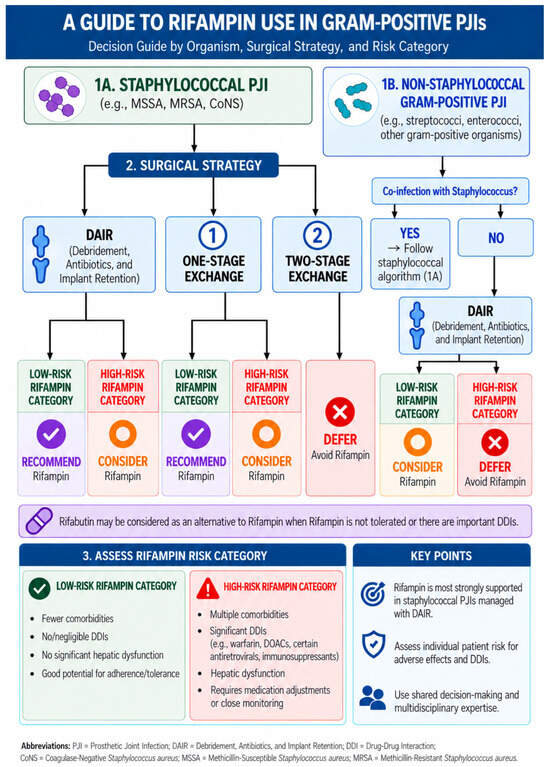
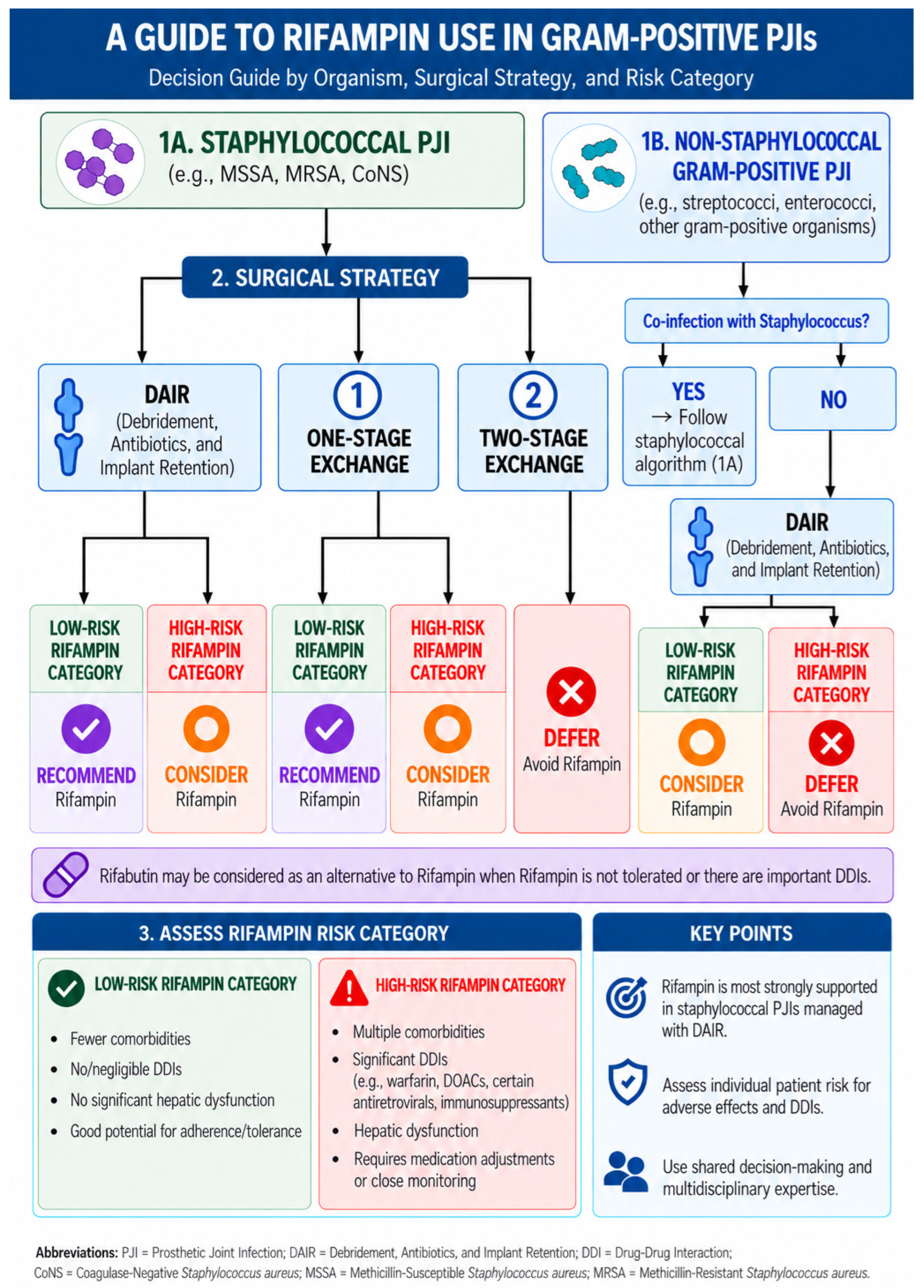
The most robust evidence supporting rifampin in orthopedic implant infections exists for staphylococcal PJIs managed with DAIR, where the available literature predominantly demonstrates improved treatment success when rifampin is combined with an appropriate companion antibiotic, particularly a fluoroquinolone. This data underpins the guideline recommendation of rifampin combination therapy in staphylococcal PJI managed with DAIR. This practice has been extrapolated to other orthopedic implant infections managed with hardware retention, including FRIs and SIIs, although the supporting evidence is less robust. In our practice, we generally favor rifampin-containing regimens for staphylococcal orthopedic implant infections when hardware is retained, while individualizing treatment when the anticipated benefit is outweighed by adverse effects, clinically significant DDIs, or other patient-specific considerations (Figure 1).
Figure 1.
Practical framework for rifampin use in PJIs. The proposed algorithm integrates available clinical evidence, guideline recommendations where applicable, and the authors’ clinical approach. Evidence supporting rifampin is most robust for staphylococcal infections managed with implant retention; recommendations for other organisms and surgical strategies are based on more limited evidence and should be individualized according to antimicrobial susceptibility, potential toxicity, DDIs, and availability of an appropriate companion antibiotic.
The role of rifampin becomes less certain when the infected implant is removed. Following one-stage exchange arthroplasty, a biologic rationale for adjunctive rifampin remains because a new prosthesis is implanted immediately into a potentially contaminated surgical field; however, direct clinical evidence supporting its benefit in this setting is limited. Although rifampin remains guideline-recommended for staphylococcal PJI managed with one-stage exchange, in our practice we have a lower threshold to defer rifampin when the risk of adverse effects or DDIs is substantial. Following two-stage exchange arthroplasty, the rationale for rifampin is less compelling, as removal of the infected prosthesis substantially reduces the biofilm burden that rifampin is intended to target, and available clinical data have not demonstrated a consistent benefit. We therefore do not routinely use rifampin following two-stage exchange.
Evidence supporting rifampin for non-staphylococcal orthopedic implant infections is substantially weaker. Although in vitro and observational studies suggest potential benefit in selected non-staphylococcal Gram-positive infections, particularly when hardware is retained, the available data is insufficient to support routine rifampin use in these settings. Rifampin may be considered on a case-by-case basis when the potential for toxicity or DDIs is low; however, in our practice, we rarely use rifampin for non-staphylococcal Gram-positive orthopedic implant infections.
This review has several limitations. First, as a narrative review, the literature search was not conducted using a systematic review methodology, and relevant studies may therefore have been missed. We attempted to reduce selection bias by searching for evidence both supporting and questioning the use of rifampin and by including randomized trials, observational studies, systematic reviews, and relevant guidelines where available. Second, much of the evidence supporting rifampin use in orthopedic implant infections is observational and therefore susceptible to confounding by indication. The decision to prescribe rifampin is influenced by factors including DDIs, tolerability, rifampin susceptibility, comorbidities, and the intended treatment strategy, which may themselves be associated with treatment outcomes. Although some studies have attempted to account for measured differences between treatment groups, residual confounding remains possible. These limitations are particularly important when interpreting the magnitude of benefit associated with rifampin and the limited evidence supporting its use outside of staphylococcal infections managed with implant retention.
Even in staphylococcal orthopedic implant infections managed with implant retention–where the evidence for rifampin use is the most robust–rifampin is only one component of successful treatment. Appropriate patient selection for DAIR and adequate surgical source control remain the cornerstones of effective treatment. The decision to use rifampin should ultimately be individualized, weighing the potential benefits of therapy against the risk of adverse effects. When rifampin is selected, its benefit can be maximized by considering the appropriate timing of initiation, selection of an effective companion antibiotic, and proactive monitoring and management of adverse effects and DDIs.
Author Contributions
Conceptualization, O.M. and J.L.; methodology, O.M. and J.L.; software, O.M.; validation, O.M., J.L. and W.S.; formal analysis, O.M. and J.L.; investigation, O.M., J.L. and W.S.; resources, O.M. and J.L.; writing—original draft preparation, O.M.; writing—review and editing, J.L. and W.S.; visualization, O.M.; supervision, J.L. and W.S.; project administration, J.L.; funding acquisition, W.S. All authors have read and agreed to the published version of the manuscript.
Funding
This research received no external funding.
Institutional Review Board Statement
Not applicable.
Informed Consent Statement
Not applicable.
Data Availability Statement
No new data were created or analyzed in this study. Data sharing is not applicable to this article.
Acknowledgments
The authors developed the content, data, and clinical recommendations presented in Figure 1. ChatGPT-5.6 (OpenAI) was used solely to assist with visual refinement and presentation of the figure.
Conflicts of Interest
The authors declare no conflicts of interest.
References
- Patel, R. Periprosthetic joint infection. N. Engl. J. Med. 2023, 388, 251–262. [Google Scholar] [CrossRef] [Scilit] [PubMed]
- Peel, T.N.; Cheng, A.C.; Buising, K.L.; Choong, P.F.M. Microbiological aetiology, epidemiology, and clinical profile of prosthetic joint infections: Are current antibiotic prophylaxis guidelines effective? Antimicrob. Agents Chemother. 2012, 56, 2386–2391. [Google Scholar] [CrossRef] [Scilit] [PubMed]
- Yusuf, E.; Bramer, W.; Anas, A.A. Clinical outcomes of rifampicin combination therapy in implant-associated infections due to staphylococci and streptococci: A systematic review and meta-analysis. Int. J. Antimicrob. Agents 2024, 63, 107015. [Google Scholar] [CrossRef] [Scilit] [PubMed]
- Kugelman, D.N.; Leal, J.; Shah, S.; Wrenn, R.; Mackowiak, A.; Ryan, S.P.; Jiranek, W.A.; Seyler, T.M.; Seidelman, J. How often is rifampin therapy initiated and completed in patients with periprosthetic joint infections? Clin. Orthop. Relat. Res. 2025, 483, 1215–1221. [Google Scholar] [CrossRef] [Scilit] [PubMed]
- Osmon, D.R.; Berbari, E.F.; Berendt, A.R.; Lew, D.; Zimmerli, W.; Steckelberg, J.M.; Rao, N.; Hanssen, A.; Wilson, W.R.; Infectious Diseases Society of America. Diagnosis and management of prosthetic joint infection: Clinical practice guidelines by the Infectious Diseases Society of America. Clin. Infect. Dis. 2013, 56, e1–e25. [Google Scholar] [CrossRef] [Scilit] [PubMed]
- Zimmerli, W.; Sendi, P. Role of rifampin against staphylococcal biofilm infections in vitro, in animal models, and in orthopedic-device-related infections. Antimicrob. Agents Chemother. 2019, 63, e01746-18. [Google Scholar] [CrossRef] [Scilit] [PubMed]
- Zimmerli, W.; Widmer, A.F.; Blatter, M.; Frei, R.; Ochsner, P.E. Role of rifampin for treatment of orthopedic implant-related staphylococcal infections: A randomized controlled trial. JAMA 1998, 279, 1537–1541. [Google Scholar] [CrossRef] [Scilit] [PubMed]
- Karlsen, Ø.E.; Borgen, P.; Bragnes, B.; Figved, W.; Grøgaard, B.; Rydinge, J.; Sandberg, L.; Snorrason, F.; Wangen, H.; Witsøe, E.; et al. Rifampin combination therapy in staphylococcal prosthetic joint infections: A randomized controlled trial. J. Orthop. Surg. Res. 2020, 15, 365. [Google Scholar] [CrossRef] [Scilit] [PubMed]
- Beldman, M.; Löwik, C.; Soriano, A.; Albiach, L.; Zijlstra, W.P.; Knobben, B.A.S.; Jutte, P.; Sousa, R.; Carvalho, A.; Goswami, K.; et al. If, when, and how to use rifampin in acute staphylococcal periprosthetic joint infections, a multicentre observational study. Clin. Infect. Dis. 2021, 73, 1634–1641. [Google Scholar] [CrossRef] [Scilit] [PubMed]
- Kruse, C.C.; Ekhtiari, S.; Oral, I.; Selznick, A.; Mundi, R.; Chaudhry, H.; Pincus, D.; Wolfstadt, J.; Kandel, C.E. The use of rifampin in total joint arthroplasty: A systematic review and meta-analysis of comparative studies. J. Arthroplast. 2022, 37, 1650–1657. [Google Scholar] [CrossRef] [Scilit] [PubMed]
- Kramer, T.S.; Soriano, A.; Tedeschi, S.; Chen, A.F.; Tattevin, P.; Senneville, E.; Gomez-Junyent, J.; Birlutiu, V.; Petersdorf, S.; de Brito, V.D.; et al. Should we use rifampicin in periprosthetic joint infections caused by staphylococci when the implant has been exchanged? A multicenter observational cohort study. Open Forum Infect. Dis. 2023, 10, ofad491. [Google Scholar] [CrossRef] [Scilit] [PubMed]
- Kobayashi, N.; Matsushita, K.; Kamono, E.; Matsumoto, H.; Saka, N.; Uchiyama, K.; Suzuki, K.; Akiyama, Y.; Onuma, H.; Yamada, K. Effectiveness of rifampicin combination therapy for orthopaedic implant-related infections: A systematic review and meta-analysis. Int. J. Antimicrob. Agents 2024, 64, 107359. [Google Scholar] [CrossRef] [Scilit] [PubMed]
- Aydın, O.; Ergen, P.; Ozturan, B.; Ozkan, K.; Arslan, F.; Vahaboglu, H. Rifampin-accompanied antibiotic regimens in the treatment of prosthetic joint infections: A frequentist and Bayesian meta-analysis of current evidence. Eur. J. Clin. Microbiol. Infect. Dis. 2021, 40, 665–671. [Google Scholar] [CrossRef] [Scilit] [PubMed]
- Scheper, H.; Gerritsen, L.M.; Pijls, B.G.; van Asten, S.A.; Visser, L.G.; de Boer, M.G.J. Outcome of debridement, antibiotics, and implant retention for staphylococcal hip and knee prosthetic joint infections, focused on rifampicin use: A systematic review and meta-analysis. Open Forum Infect. Dis. 2021, 8, ofab298. [Google Scholar] [CrossRef] [Scilit] [PubMed]
- El Helou, O.C.; Berbari, E.F.; Lahr, B.D.; Eckel-Passow, J.E.; Razonable, R.R.; Sia, I.G.; Virk, A.; Walker, R.C.; Steckelberg, J.M.; Wilson, W.R.; et al. Efficacy and safety of rifampin containing regimen for staphylococcal prosthetic joint infections treated with debridement and retention. Eur. J. Clin. Microbiol. Infect. Dis. 2010, 29, 961–967. [Google Scholar] [CrossRef] [Scilit] [PubMed]
- Cho, O.H.; Bae, I.G.; Moon, S.M.; Park, S.Y.; Kwak, Y.G.; Kim, B.N.; Yu, S.N.; Jeon, M.H.; Kim, T.; Choo, E.J.; et al. Therapeutic outcome of spinal implant infections caused by Staphylococcus aureus: A retrospective observational study. Medicine 2018, 97, e12629. [Google Scholar] [CrossRef] [Scilit] [PubMed]
- Leal, J.; Kugelman, D.N.; Shah, S.; Mackowiak, A.; Wrenn, R.; Jiranek, W.A.; Seyler, T.M.; Ryan, S.P.; Seidelman, J. Outcomes of staphylococcal periprosthetic joint infections treated with rifampin and the potential role of rifabutin as a substitute when high-risk drug-drug interactions exist. Orthopedics 2025, 48, 239–247. [Google Scholar] [CrossRef] [Scilit] [PubMed]
- Benito, N.; Franco, M.; Ribera, A.; Soriano, A.; Rodriguez-Pardo, D.; Sorlí, L.; Fresco, G.; Fernández-Sampedro, M.; Dolores del Toro, M.; Guío, L.; et al. Time trends in the aetiology of prosthetic joint infections: A multicentre cohort study. Clin. Microbiol. Infect. 2016, 22, 732.e1–732.e8. [Google Scholar] [CrossRef] [Scilit] [PubMed]
- Rottier, W.; Seidelman, J.; Wouthuyzen-Bakker, M. Antimicrobial treatment of patients with a periprosthetic joint infection: Basic principles. Arthroplasty 2023, 5, 10. [Google Scholar] [CrossRef] [Scilit] [PubMed]
- Gonzalez Moreno, M.; Trampuz, A.; Di Luca, M. Synergistic antibiotic activity against planktonic and biofilm-embedded Streptococcus agalactiae, Streptococcus pyogenes and Streptococcus oralis. J. Antimicrob. Chemother. 2017, 72, 3085–3092. [Google Scholar] [CrossRef] [Scilit] [PubMed]
- Albano, M.; Karau, M.J.; Greenwood-Quaintance, K.E.; Osmon, D.R.; Oravec, C.P.; Berry, D.J.; Abdel, M.P.; Patel, R. In vitro activity of rifampin, rifabutin, and rifapentine against enterococci and streptococci from periprosthetic joint infection. Microbiol. Spectr. 2021, 9, e0007121. [Google Scholar] [CrossRef] [Scilit] [PubMed]
- Akgün, D.; Trampuz, A.; Perka, C.; Renz, N. High failure rates in treatment of streptococcal periprosthetic joint infection: Results from a seven-year retrospective cohort study. Bone Jt. J. 2017, 99, 653–659. [Google Scholar] [CrossRef] [Scilit] [PubMed]
- Mahieu, R.; Dubée, V.; Seegers, V.; Lemarié, C.; Ansart, S.; Bernard, L.; Le Moal, G.; Asseray, N.; Arvieux, C.; Ramanantsoa, C.; et al. The prognosis of streptococcal prosthetic bone and joint infections depends on surgical management—A multicenter retrospective study. Int. J. Infect. Dis. 2019, 85, 175–181. [Google Scholar] [CrossRef] [Scilit] [PubMed]
- Lora-Tamayo, J.; Senneville, É.; Ribera, A.; Bernard, L.; Dupon, M.; Zeller, V.; Li, H.K.; Arvieux, C.; Clauss, M.; Uçkay, I.; et al. The not-so-good prognosis of streptococcal periprosthetic joint infection managed by implant retention: The results of a large multicenter study. Clin. Infect. Dis. 2017, 64, 1742–1752. [Google Scholar] [CrossRef] [Scilit] [PubMed]
- Zimmerli, W.; Trampuz, A.; Ochsner, P.E. Prosthetic-joint infections. N. Engl. J. Med. 2004, 351, 1645–1654. [Google Scholar] [CrossRef] [Scilit] [PubMed]
- Holmberg, A.; Mörgelin, M.; Rasmussen, M. Effectiveness of ciprofloxacin or linezolid in combination with rifampicin against Enterococcus faecalis in biofilms. J. Antimicrob. Chemother. 2012, 67, 433–439. [Google Scholar] [CrossRef] [Scilit] [PubMed]
- Oliva, A.; Furustrand Tafin, U.; Maiolo, E.M.; Jeddari, S.; Bétrisey, B.; Trampuz, A. Activities of fosfomycin and rifampin on planktonic and adherent Enterococcus faecalis strains in an experimental foreign-body infection model. Antimicrob. Agents Chemother. 2014, 58, 1284–1293. [Google Scholar] [CrossRef] [Scilit] [PubMed]
- Holmberg, A.; Rasmussen, M. Antibiotic regimens with rifampicin for treatment of Enterococcus faecium in biofilms. Int. J. Antimicrob. Agents 2014, 44, 78–80. [Google Scholar] [CrossRef] [Scilit] [PubMed]
- Thompson, O.; Rasmussen, M.; Stefánsdóttir, A.; Christensson, B.; Åkesson, P. A population-based study on the treatment and outcome of enterococcal prosthetic joint infections. J. Bone Jt. Infect. 2019, 4, 285–291. [Google Scholar] [CrossRef] [Scilit] [PubMed]
- Maurille, C.; Michon, J.; Isnard, C.; Rochcongar, G.; Verdon, R.; Baldolli, A. Interest in the combination of antimicrobial therapy for orthopaedic device-related infections due to Enterococcus spp. Arch. Orthop. Trauma Surg. 2023, 143, 5515–5526. [Google Scholar] [CrossRef] [Scilit] [PubMed]
- Tornero, E.; Senneville, E.; Euba, G.; Petersdorf, S.; Rodriguez-Pardo, D.; Lakatos, B.; Ferrari, M.; Pilares, M.; Bahamonde, A.; Trebse, R.; et al. Characteristics of prosthetic joint infections due to Enterococcus sp. and predictors of failure: A multi-national study. Clin. Microbiol. Infect. 2014, 20, 1219–1224. [Google Scholar] [CrossRef] [Scilit] [PubMed]
- Nelson, S.B.; Pinkney, J.A.; Chen, A.F.; Tande, A.J. Periprosthetic joint infection: Current clinical challenges. Clin. Infect. Dis. 2023, 77, e34–e45. [Google Scholar] [CrossRef] [Scilit] [PubMed]
- Bossard, D.A.; Ledergerber, B.; Zingg, P.O.; Gerber, C.; Zinkernagel, A.S.; Zbinden, R.; Achermann, Y. Optimal length of cultivation time for isolation of Propionibacterium acnes in suspected bone and joint infections is more than 7 days. J. Clin. Microbiol. 2016, 54, 3043–3049. [Google Scholar] [CrossRef] [Scilit] [PubMed]
- Achermann, Y.; Liu, J.; Zbinden, R. Propionibacterium avidum: A virulent pathogen causing hip periprosthetic joint infection. Clin. Infect. Dis. 2018, 66, 54–63. [Google Scholar] [CrossRef] [Scilit] [PubMed]
- Furustrand Tafin, U.; Corvec, S.; Betrisey, B.; Zimmerli, W.; Trampuz, A. Role of rifampin against Propionibacterium acnes biofilm in vitro and in an experimental foreign-body infection model. Antimicrob. Agents Chemother. 2012, 56, 1885–1891. [Google Scholar] [CrossRef] [Scilit] [PubMed]
- Kusejko, K.; Auñón, Á.; Jost, B.; Natividad, B.; Strahm, C.; Thurnheer, C.; Pablo-Marcos, D.; Slama, D.; Scanferla, G.; Uckay, I.; et al. The impact of surgical strategy and rifampin on treatment outcome in Cutibacterium periprosthetic joint infections. Clin. Infect. Dis. 2021, 72, e1064–e1073. [Google Scholar] [CrossRef] [Scilit] [PubMed]
- Achermann, Y.; Eigenmann, K.; Ledergerber, B.; Derksen, L.; Rafeiner, P.; Clauss, M.; Nüesch, R.; Zellweger, C.; Vogt, M.; Zimmerli, W. Factors associated with rifampin resistance in staphylococcal periprosthetic joint infections (PJI): A matched case-control study. Infection 2013, 41, 431–437. [Google Scholar] [CrossRef] [Scilit] [PubMed]
- Gordon, O.; Lee, D.E.; Liu, B.; Langevin, B.; Ordonez, A.A.; Dikeman, D.A.; Shafiq, B.; Thompson, J.M.; Sponseller, P.D.; Flavahan, K.; et al. Dynamic PET-facilitated modeling and high-dose rifampin regimens for Staphylococcus aureus orthopedic implant-associated infections. Sci. Transl. Med. 2021, 13, eabl6851. [Google Scholar] [CrossRef] [Scilit] [PubMed]
- Bernard, L.; Arvieux, C.; Brunschweiler, B.; Touchais, S.; Ansart, S.; Bru, J.P.; Oziol, E.; Boeri, C.; Gras, G.; Druon, J.; et al. Antibiotic therapy for 6 or 12 weeks for prosthetic joint infection. N. Engl. J. Med. 2021, 384, 1991–2001. [Google Scholar] [CrossRef] [Scilit] [PubMed]
- Suzuki, H.; Goto, M.; Nair, R.; Livorsi, D.J.; Sekar, P.; Ohl, M.E.; Diekema, D.J.; Perencevich, E.N.; Alexander, B.; Jones, M.P.; et al. Effectiveness and optimal duration of adjunctive rifampin treatment in the management of Staphylococcus aureus prosthetic joint infections after debridement, antibiotics, and implant retention. Open Forum Infect. Dis. 2022, 9, ofac473. [Google Scholar] [CrossRef] [Scilit] [PubMed]
- Lora-Tamayo, J.; Euba, G.; Cobo, J.; Horcajada, J.P.; Soriano, A.; Sandoval, E.; Pigrau, C.; Benito, N.; Falgueras, L.; Palomino, J.; et al. Short- versus long-duration levofloxacin plus rifampicin for acute staphylococcal prosthetic joint infection managed with implant retention: A randomised clinical trial. Int. J. Antimicrob. Agents 2016, 48, 310–316. [Google Scholar] [CrossRef] [Scilit] [PubMed]
- Spellberg, B.; Aggrey, G.; Brennan, M.B.; Footer, B.; Forrest, G.; Hamilton, F.; Minejima, E.; Moore, J.; Ahn, J.; Angarone, M.; et al. Use of novel strategies to develop guidelines for management of pyogenic osteomyelitis in adults: A WikiGuidelines Group consensus statement. JAMA Netw. Open 2022, 5, e2211321. [Google Scholar] [CrossRef] [Scilit] [PubMed]
- Fehring, T.K.; Otero, J.E.; Fehring, K.A.; Curtin, B.M.; Springer, B.D.; Della Valle, C.J.; Parvizi, J.; Hietpas, K.; Ready, A.; Odum, S.M.; et al. One-stage versus two-stage exchange arthroplasty for periprosthetic joint infection: A prospective randomized trial. J. Bone Jt. Surg. Am. 2026, 108, 1070–1082. [Google Scholar] [CrossRef] [Scilit] [PubMed]
- Hirai, J.; Hagihara, M.; Kato, H.; Sakanashi, D.; Nishiyama, N.; Koizumi, Y.; Yamagishi, Y.; Suematsu, H.; Hanaki, H.; Mikamo, H. Investigation on rifampicin administration from the standpoint of pharmacokinetics/pharmacodynamics in a neutropenic murine thigh infection model. J. Infect. Chemother. 2016, 22, 387–394. [Google Scholar] [CrossRef] [Scilit] [PubMed]
- Tonnelier, M.; Bouras, A.; Joseph, C.; Samad, Y.E.; Brunschweiler, B.; Schmit, J.L.; Mabille, C.; Lanoix, J.P. Impact of rifampicin dose in bone and joint prosthetic device infections due to Staphylococcus spp.: A retrospective single-center study in France. BMC Infect. Dis. 2021, 21, 174. [Google Scholar] [CrossRef] [Scilit] [PubMed]
- Lucas, J.; Queirós, J.; Soares, D.; Carvalho, A.; Pereira, F.; Santos, C.; Sousa, R.; Abreu, M.A. The impact of antibiotic therapy options and multidisciplinary approach in prosthetic joint infections. Microorganisms 2025, 13, 2241. [Google Scholar] [CrossRef] [Scilit] [PubMed]
- Vollmer, N.J.; Rivera, C.G.; Stevens, R.W.; Oravec, C.P.; Mara, K.C.; Suh, G.A.; Osmon, D.R.; Beam, E.N.; Abdel, M.P.; Virk, A. Safety and tolerability of fluoroquinolones in patients with staphylococcal periprosthetic joint infections. Clin. Infect. Dis. 2021, 73, 850–856. [Google Scholar] [CrossRef] [Scilit] [PubMed]
- Mahoney, M.V.; Swords, K.E. Fluoroquinolones: Friends or foes? Clin. Infect. Dis. 2021, 73, 857–858. [Google Scholar] [CrossRef] [Scilit] [PubMed]
- Tornero, E.; Morata, L.; Martínez-Pastor, J.C.; Angulo, S.; Combalia, A.; Bori, G.; García-Ramiro, S.; Bosch, J.; Mensa, J.; Soriano, A. Importance of selection and duration of antibiotic regimen in prosthetic joint infections treated with debridement and implant retention. J. Antimicrob. Chemother. 2016, 71, 1395–1401. [Google Scholar] [CrossRef] [Scilit] [PubMed]
- Campbell, J.R.; Trajman, A.; Cook, V.J.; Johnston, J.C.; Adjobimey, M.; Ruslami, R.; Eisenbeis, L.; Fregonese, F.; Valiquette, C.; Benedetti, A.; et al. Adverse events in adults with latent tuberculosis infection receiving daily rifampicin or isoniazid: Post-hoc safety analysis of two randomised controlled trials. Lancet Infect. Dis. 2020, 20, 318–329. [Google Scholar] [CrossRef] [Scilit] [PubMed]
- Valour, F.; Karsenty, J.; Bouaziz, A.; Ader, F.; Tod, M.; Lustig, S.; Laurent, F.; Ecochard, R.; Chidiac, C.; Ferry, T. Antimicrobial-related severe adverse events during treatment of bone and joint infection due to methicillin-susceptible Staphylococcus aureus. Antimicrob. Agents Chemother. 2014, 58, 746–755. [Google Scholar] [CrossRef] [Scilit] [PubMed]
- Lin, M.Y.; Lin, S.J.; Chan, L.C.; Lu, Y.C. Impact of food and antacids on the pharmacokinetics of anti-tuberculosis drugs: Systematic review and meta-analysis. Int. J. Tuberc. Lung Dis. 2010, 14, 806–818. [Google Scholar] [PubMed]
- Roblot, F.; Besnier, J.; Giraudeau, B.; Simonnard, N.; Jonville-Bera, A.P.; Coipeau, P.; Choutet, P.; Autret-Leca, E.; Le Guellec, C. Lack of association between rifampicin plasma concentration and treatment-related side effects in osteoarticular infections. Fundam. Clin. Pharmacol. 2007, 21, 363–369. [Google Scholar] [CrossRef] [Scilit] [PubMed]
- Blaser, M.J.; Cohen, J.I.; Holland, S.M. (Eds.) Mandell, Douglas, and Bennett’s Principles and Practice of Infectious Diseases, 10th ed.; Elsevier: Philadelphia, PA, USA, 2025. [Google Scholar]
- Yew, W.W.; Leung, C.C. Antituberculosis drugs and hepatotoxicity. Respirology 2006, 11, 699–707. [Google Scholar] [CrossRef] [Scilit] [PubMed]
- U.S. Food and Drug Administration. Rifampin Capsules, USP [Prescribing Information]; U.S. Food and Drug Administration: Silver Spring, MD, USA, 2024.
- U.S. Food and Drug Administration. Rifampin Capsule [Prescribing Information]; U.S. Food and Drug Administration: Silver Spring, MD, USA, 2023.
- Curry International Tuberculosis Center; California Department of Public Health, Tuberculosis Control Branch. Drug-Resistant Tuberculosis: A Survival Guide for Clinicians, 3rd ed.; Curry International Tuberculosis Center: San Francisco, CA, USA, 2016. [Google Scholar]
- U.S. Food and Drug Administration. Laboratory Analysis of Rifampin/Rifapentine Products [Internet]; U.S. Food and Drug Administration: Silver Spring, MD, USA, 2021.
- Pertzborn, M.; Rivera, C.G.; Tai, D.B.G. Taking the route less traveled: On the way to COpAT. Ther. Adv. Infect. Dis. 2023, 10, 20499361231192771. [Google Scholar] [CrossRef] [Scilit] [PubMed]
- MacDougall, C.; Canonica, T.; Keh, C.; Phan, B.A.; Louie, J. Systematic review of drug-drug interactions between rifamycins and anticoagulant and antiplatelet agents and considerations for management. Pharmacotherapy 2022, 42, 343–361. [Google Scholar] [CrossRef] [Scilit] [PubMed]
- Wiggins, B.S.; Dixon, D.L.; Neyens, R.R.; Page, R.L., 2nd; Gluckman, T.J. Select drug-drug interactions with direct oral anticoagulants: JACC review topic of the week. J. Am. Coll. Cardiol. 2020, 75, 1341–1350. [Google Scholar] [CrossRef] [Scilit] [PubMed]
- Yang, C.S.; Boswell, R.; Bungard, T.J. A case series of the rifampin-warfarin drug interaction: Focus on practical warfarin management. Eur. J. Clin. Pharmacol. 2021, 77, 341–348. [Google Scholar] [CrossRef] [Scilit] [PubMed]
- Kinney, E.M.; Vijapurapu, S.; Covvey, J.R.; Nemecek, B.D. Clinical outcomes of concomitant rifamycin and opioid therapy: A systematic review. Pharmacotherapy 2021, 41, 479–489. [Google Scholar] [CrossRef] [Scilit] [PubMed]
- Xu, Q.; Sang, Y.; Gao, A.; Li, L. The effects of drug-drug interaction on linezolid pharmacokinetics: A systematic review. Eur. J. Clin. Pharmacol. 2024, 80, 785–795. [Google Scholar] [CrossRef] [Scilit] [PubMed]
- Colmenero, J.D.; Fernández-Gallardo, L.C.; Agúndez, J.A.; Sedeño, J.; Benítez, J.; Valverde, E. Possible implications of doxycycline-rifampin interaction for treatment of brucellosis. Antimicrob. Agents Chemother. 1994, 38, 2798–2802. [Google Scholar] [CrossRef] [Scilit] [PubMed]
- Zeller, V.; Magreault, S.; Heym, B.; Salmon, D.; Kitzis, M.D.; Billaud, E.; Marmor, S.; Jannot, A.-S.; Salomon, L.; Jullien, V. Influence of the clindamycin administration route on the magnitude of clindamycin-rifampicin interaction: A prospective pharmacokinetic study. Clin. Microbiol. Infect. 2021, 27, 1857.e1–1857.e7. [Google Scholar] [CrossRef] [Scilit] [PubMed]
- Houwen, J.P.A.; de Vries Schultink, A.H.M.; Peters, B.J.M.; Ruigrok, D.; Schönwetter, R.H.J.; Uijtendaal, E.V.; Sikma, M.A. Challenges in optimizing tacrolimus therapy in patients treated with rifampin: A case series. Br. J. Clin. Pharmacol. 2025, 91, 3542–3548. [Google Scholar] [CrossRef] [Scilit] [PubMed]
- Osuala, E.C.; Nkuhairwe, I.N.; Letsoalo, M.P.; Naidoo, K.; Perumal, R.; Rooney, J.F.; Wiesner, L.; Wasmann, R.E.; Denti, P.; Dooley, K.E.; et al. Pharmacokinetics of twice-daily tenofovir alafenamide in adults with HIV-associated tuberculosis on bictegravir/emtricitabine/tenofovir alafenamide and rifampicin. Clin. Infect. Dis. 2026, 82, e720–e727. [Google Scholar] [CrossRef] [Scilit] [PubMed]
- Albano, M.; Karau, M.J.; Greenwood-Quaintance, K.E.; Osmon, D.R.; Oravec, C.P.; Berry, D.J.; Abdel, M.P.; Patel, R. In vitro activity of rifampin, rifabutin, rifapentine, and rifaximin against planktonic and biofilm states of staphylococci isolated from periprosthetic joint infection. Antimicrob. Agents Chemother. 2019, 63, e00959-19. [Google Scholar] [CrossRef] [Scilit] [PubMed]
- Tuloup, V.; France, M.; Garreau, R.; Bleyzac, N.; Bourguignon, L.; Tod, M.; Goutelle, S. Model-based comparative analysis of rifampicin and rifabutin drug-drug interaction profile. Antimicrob. Agents Chemother. 2021, 65, e0104321. [Google Scholar] [CrossRef] [Scilit] [PubMed]
- Abad, L.; Josse, J.; Tasse, J.; Lustig, S.; Ferry, T.; Diot, A.; Laurent, F.; Valour, F. Antibiofilm and intraosteoblastic activities of rifamycins against Staphylococcus aureus: Promising in vitro profile of rifabutin. J. Antimicrob. Chemother. 2020, 75, 1466–1473. [Google Scholar] [CrossRef] [Scilit] [PubMed]
- Fisher, C.; Patel, R. Rifampin, rifapentine, and rifabutin are active against intracellular periprosthetic joint infection-associated Staphylococcus epidermidis. Antimicrob. Agents Chemother. 2021, 65, e01275-20. [Google Scholar] [CrossRef] [Scilit] [PubMed]
- Sanchez, C.J.; Shiels, S.M.; Tennent, D.J.; Hardy, S.K.; Murray, C.K.; Wenke, J.C. Rifamycin derivatives are effective against staphylococcal biofilms in vitro and elutable from PMMA. Clin. Orthop. Relat. Res. 2015, 473, 2874–2884. [Google Scholar] [CrossRef] [Scilit] [PubMed]
- Thill, P.; Robineau, O.; Roosen, G.; Patoz, P.; Gachet, B.; Lafon-Desmurs, B.; Tetart, M.; Nadji, S.; Senneville, E.; Blondiaux, N. Rifabutin versus rifampicin bactericidal and antibiofilm activities against clinical strains of Staphylococcus spp. isolated from bone and joint infections. J. Antimicrob. Chemother. 2022, 77, 1036–1040. [Google Scholar] [CrossRef] [Scilit] [PubMed]
- Karau, M.J.; Schmidt-Malan, S.M.; Albano, M.; Mandrekar, J.N.; Rivera, C.G.; Osmon, D.R.; Oravec, C.P.; Berry, D.J.; Abdel, M.P.; Patel, R. Novel use of rifabutin and rifapentine to treat methicillin-resistant Staphylococcus aureus in a rat model of foreign body osteomyelitis. J. Infect. Dis. 2020, 222, 1498–1504. [Google Scholar] [CrossRef] [Scilit] [PubMed]

Disclaimer/Publisher’s Note: The statements, opinions and data contained in all publications are solely those of the individual author(s) and contributor(s) and not of MDPI and/or the editor(s). MDPI and/or the editor(s) disclaim responsibility for any injury to people or property resulting from any ideas, methods, instructions or products referred to in the content. |
© 2026 by the authors. Licensee MDPI, Basel, Switzerland. This article is an open access article distributed under the terms and conditions of the Creative Commons Attribution (CC BY) license.