


Abstract
Fragmentary forelimb elements, including part of an ulna and the proximal region of a humerus, from the lower Barremian Papo-Seco Formation (Areia do Mastro, Cabo Espichel, Sesimbra, Portugal) are described and evaluated in the context of Early Cretaceous maniraptoran diversity. The elements were recovered in proximity within lagoonal–deltaic deposits, suggesting they may belong to a single individual approximately the size of a modern male turkey (Meleagris gallopavo). An additional element, identified as a carpal bone, was recovered from the talus deposits at the cliff. Morphological and size comparisons rule out a volant enantiornithine affinity and instead support assignment to a non-avialan paravian theropod. The combination of a gracile but unspecialized ulna and modest humeral development is consistent with a Paraves indet., maybe an early-branching dromaeosaurid theropod. Given the scarce record of small maniraptorans in Iberia, this material may represent a previously unrecognized basal European lineage. Although insufficient to erect a new taxon, the remains highlight the potential presence of endemic small-bodied maniraptorans in Barremian Iberia.
1. Introduction
Maniraptoran theropods represent a crownward coelurosaurian clade characterized by numerous anatomical innovations, including modifications related to the forelimb, wrist, and feather evolution, encompassing both non-avialan Paraves, such as Dromaeosauridae and Troodontidae, and avialan groups, including Enantiornithes and Ornithuromorpha [1,2,3]. Although the Early Cretaceous record of the Iberian Peninsula has yielded a diverse theropod assemblage [4,5], small-bodied maniraptorans remain comparatively rare and typically known from fragmentary material. The Papo-Seco Formation (lower Barremian) has produced a rich vertebrate fauna from lagoonal–deltaic deposits, yet small theropods remain poorly documented [6,7,8,9,10,11,12,13,14,15].
Palaeontological research in the Cabo Espichel area dates to the nineteenth century, during mapping for the Portuguese Geological Survey [13,14], with historical specimens housed at the Museu Geológico in Lisbon. Over time, material collected across key localities within the Early Cretaceous sediments of the region, including the Areia do Mastro, Papo Seco and Boca do Chapim Formations, has undergone significant re-evaluation, revealing a remarkably diverse fossil record [6,8,11,12,16,17,18]. Early theropod discoveries were originally assigned to Megalosaurus are now reclassified as Allosauroidea indet. [15,19]. Material from the putative crocodylomorph Suchosaurus girardi [13,14] was reclassified as belonging to the theropod Baryonyx [20]. The spinosaurid Iberospinus natarioi [21] was established from partial skeletal material previously attributed to B. walkeri [22]. These specimens should therefore be reassessed or, at the very least, referred to as Spinosauridae indet., as a recent review of the occurrence of this group in the Iberian Peninsula concluded that there is currently no material from the region that can be confidently assigned to Baryonyx [23]. The broader vertebrate fauna encompasses sauropods (historically reported as Astrodon valdensis [14] or cf. Pelorosaurus [24], ornithopods (including Iguanodon [14] and the recently described Cariocecus bocagei [25], pterosaurs (Ornithocheiridae and Ctenochasmatoidea indet.) [6], crocodyliforms (cf. Anteophthalmosuchus sp.) [6], turtles (Plesiochelyidae and Sinemydidae) [26], and fishes such as Lepidotes sp. [6]. Within the marly intervals of the Papo Seco Formation, invertebrate assemblages are dominated by bivalves (trigoniids and marine oysters) [18], gastropods (Tylostoma and naticids) [11], and microfossil ostracods [27,28,29]. Bound at its top by bioturbated, oyster-bearing silty limestones indicating a marine transgression [27], the depositional setting reflects a dynamic continuum from restricted lagoonal to estuarine and marginal marine environments characterized by fluctuating salinity and episodic terrestrial input [17,26].
The Cabo Espichel region is also notable for its ichnological record. Dinosaur trackways discovered during the 1970s and 1980s at Praia do Cavalo and Pedra da Mua (Upper Jurassic) and at Lagosteiros (Lower Cretaceous) have been described in several works [30,31,32,33,34,35], highlighting the long-standing importance of this area for the study of Mesozoic terrestrial ecosystems in Portugal. Recent ichnological studies have documented abundant dinosaur tracks (assigned to sauropod, ornithopod, and theropod) from the uppermost beds of the Areia do Mastro Formation and lowermost beds of the Papo-Seco Formation, representing the largest Lower Cretaceous tracksite known from Portugal [10,36,37].
Systematic fieldwork conducted by the CPGP since 1998 along the Lower Cretaceous cliffs between Praia do Guincho and Boca do Chapim, within a broader palaeontological and archaeological research project at Cabo Espichel, has yielded a diverse and significant vertebrate assemblage, including somatofossils and ichnofossils [6,7,8,9,10,11,12], that has substantially improved our knowledge of Portuguese Cretaceous faunas.
Herein, we describe forelimb elements recovered from lower Barremian levels of the Papo-Seco Formation at Areia do Mastro. These specimens bear upon the question of avialan versus non-avialan affinities and provide an opportunity to evaluate their systematic position within Paraves.
Geological Setting
Praia do Areia do Mastro is a small beach situated ~1.5 km north of Cabo Espichel (Sesimbra, Portugal), bordered by cliffs reaching approximately 60 m in height. The exposed Lower Cretaceous succession comprises limestones, marls, sandstones and conglomerates deposited in shallow marine, lagoonal and estuarine settings within the Lusitanian Basin, a rift basin that developed along the western Iberian margin during the Mesozoic break-up of Pangaea [27,28,29]. The strata examined here belong to the Papo-Seco Formation, formally defined by Rey [38] and dated to the early Barremian [27,28,29,39], approximately 125 Ma [40] (Figure 1). This formation is positioned stratigraphically between the underlying Areia do Mastro Formation (upper Hauterivian–lower Barremian) and the overlying Boca do Chapim Formation (middle Barremian), representing a critical interval of the fourth rifting episode associated with the opening of the North Atlantic [10,28,29,38,39].
Figure 1.
Location and geological setting of the area of Cabo Espichel. (A) Orography of the Iberian Peninsula (AI-generated); (B) Simplified geological map of the Lusitanian Basin; (C) Detailed geological map of Cabo Espichel (red star marks Areia do Mastro locality) [40]; (D) Lower Cretaceous stratigraphic succession of the Cabo Espichel sequence, showing the position of the Papo-Seco Formation within the Areia do Mastro sequence [38]. The ages assigned to the different stratigraphic stages were updated following the most recent version of the International Chronostratigraphic Chart of the International Commission on Stratigraphy (ICS), UNESCO [41].
Historically, the Papo-Seco Formation was referred to by various informal names, including “Grês marneux à grands sauriens” [42,43], “Grês aux dinosauriens” [42,43], and “Camadas com Iguanodon mantelli” [42,43], reflecting its long-recognized palaeontological significance [18]. At Areia do Mastro beach, the formation reaches a thickness of ~18.5 m and is characterized by greenish-gray to dark marls and silty clays with subordinate lignite horizons and gypsum precipitates, intercalated with medium- to coarse-grained, horizontally stratified sandstones that commonly display ribbon-shaped geometries and limited lateral continuity [28,29,30,31,32,33,34,35,36,37,38,39,40]. Sedimentological analysis indicates three distinct sand facies within the formation, recording transitions from restricted lagoonal environments (dominated by fine-grained deposits with high organic content) through estuarine settings (sandy loams with increased carbonate content) to shallow marine conditions (bioturbated marly limestones) [18,27,28,29,38,39,44,45].
The basal transition into the Papo-Seco Formation is well exposed above the marine carbonate limestones of the underlying Areia do Mastro Formation. This transition is expressed by the abrupt appearance of sandstone beds indicative of estuarine influence, followed upward by marly intervals that locally yield mixed marine and terrestrial vertebrate remains [6,26,44]. The Areia do Mastro Formation comprises brackish-water estuarine sandstones and silty marls passing upward into marine bioclastic limestones with dasycladacean algae, orbitolinid foraminifera, and echinoids, deposited in shallow subtidal to intertidal lagoon environments [6,27,28,29,38,39,44,45]. The material described in this study derives from these lower Barremian lagoonal deltaic deposits of the lowermost beds of the Papo-Seco Formation, at the Praia do Areia do Mastro site.
2. Materials and Methods
The study is based on three isolated forelimb elements recovered from the lower Barremian Papo-Seco Formation at the Areia do Mastro site. The osteological material comprises a left ulna lacking the proximal epiphysis (CPGP.1.99.4) [7], a proximal epiphysis of a left humerus (CPGP.1.17.6), and a carpus bone (CPGP.1.99.8) from the upper cliff sediments. The fossils are housed in the collection of the Centro Português de Geo-História e Pré-História.
To characterize the depositional context of the fossil-bearing level and to support paleoenvironmental interpretation, sediment samples were analyzed using a combined approach of carbonate dissolution, decantation, and sieving. Rock samples were subjected to carbonate dissolution (HCl—15%) for 72 h to disaggregate and dissolve the carbonate fraction, thereby freeing the siliciclastic residue. The resulting sediment was then processed by decantation to separate fine suspended fractions from coarser particles, followed by sieving to quantify and characterize the sand-sized component and to retain any larger biogenic or lithic particles. The proportions of carbonate versus siliciclastic residues, together with grain-size distribution inferred from the decanted and sieved fractions, were used to interpret energy conditions and the relative influence of marine versus terrestrial inputs within the estuarine–lagoonal system.
All observations and comparisons were performed directly on the original material. Specimens were examined primarily through macroscopic observation under controlled lighting, with attention to overall proportions, cortical surface texture, form of fractures, and the preservation of muscle attachment sites, articular surfaces, and other morphological features informative for the identification and comparison of maniraptoran forelimb elements. Standard descriptive terminology was used consistently across elements and views to facilitate comparisons [46], and osteological nomenclature follows that used in [47].
Photographic documentation was produced using a Canon 100D digital camera (Canon Inc., Taichung, Taiwan). Microscopic observations and photographs were made using an EduBlue digital binocular stereo microscope with a 5 MP camera (Euromex, Arnhem, the Netherlands),Images were taken in multiple orientations to capture diagnostic features and to provide a permanent visual record supporting the anatomical descriptions.
Anatomical descriptions and any taxonomic statements were prepared with reference to the International Code of Zoological Nomenclature (ICZN; [46]). Nomenclatural practice follows Articles 16–72, emphasizing the requirements relevant to name-bearing types, where applicable.
3. Results
3.1. Sedimentological and Paleoecological Characterization
The fossil-bearing bed, in which the humerus and ulna were uncovered, is approximately 25 cm thick and dips at c. 10° (Figure 2). It conformably overlies a limestone unit and consists of fine-grained, carbonate-rich marly limestone. Sedimentological data indicate deposition in a protected estuarine setting under clear marine influence, as reflected by the carbonate facies.
Figure 2.
(A,B) Detailed stratigraphic log of the fossil collection site, illustrating the uppermost beds of the Areia do Mastro Formation (AM) and the lowermost beds of the Papo-Seco Formation (PS). Lithological variations and bed thicknesses are indicated. The fossil specimens CPGP.1.99.4 and CPGP.1.17.6 were collected from the lowermost bed of the Areia do Mastro Formation. Stratigraphic position and relative thickness are shown, with the contact between formations clearly marked. The two faults deforming the fossil-bearing layer are indicated in red (lines in (A); dashed trace in (C)). In (A), the red star marks the precise location where specimens CPGP.1.99.4 and CPGP.1.17.6 were collected. (C) General view of the outcrop at Praia do Areia do Mastro. On the left side, the stratigraphic units present at the site are indicated (BC—Boca do Chapim Formation; PS—Papo-Seco Formation; AM—Areia do Mastro Formation). The formations are separated by yellow lines. The blue dotted line marks the fossil-bearing bed from which specimens CPGP.1.99.4 and CPGP.1.17.6 were recovered. The green dashed line indicates the inferred bed of provenance of specimen CPGP.1.99.8, as determined by comparing the rock matrix adhering to the specimen with the sedimentological characteristics of the strata exposed in the cliff. The blue star marks the location of CPGP.1.99.4 and CPGP.1.17.6, and the green star indicates the location of CPGP.1.99.8. Symbols: 1—vertebrates; 2—bivalves; 3—gastropods; 4—invertebrates; ichnofossils; 5—dinosaur tracks.
The sedimentological analysis of the three samples, collected vertically from the bed: base (A1), middle (A2), and top (A3), from the PS1 layer of the Papo-Seco Formation reveals significant variations in their physical and chemical properties (Table 1). The samples were characterized based on their color and subjected to various tests, including total weight, reaction with hydrochloric acid (HCl), carbonate content, decanting, and grain-size analysis.
Table 1.
Granulometric and compositional analysis of sediment samples from the PS1 layer of the Papo-Seco Formation. Total Weight = total sample mass in grams (g); Reaction HCl = acid reaction values with standard deviation in parentheses; Carbonate = carbonate percentage; Decanting = mass of clay/silt fraction after decantation in grams (g); % clays/silts = relative abundance of fine fraction; Sand = mass of sand fraction in grams (g); % sand = relative abundance of coarse fraction. Samples A1, A2, and A3 correspond to orange-, brown-, and reddish-brown-colored sediments, respectively.
The results show that the percentage of carbonates increases from sample A1 (orange) to A3 (reddish-brown), ranging from 10.20% to 16.30%. In contrast, the percentage of sand decreases from 11.40% in A1 to 8.10% in A3. The samples are predominantly composed of clays and silts, with percentages above 88%, indicating a low-energy depositional environment.
Because all samples derive from the same thin bed, the observed differences are best interpreted as lateral facies variability, a common feature in estuarine systems [48,49]. Such heterogeneity likely reflects minor shifts in proximity to siliciclastic sources (e.g., tidal channels, crevasse splays, or sheet-flow events), fluctuations in marine influence contributing carbonate-rich suspended or chemical components, and variations in redox and early diagenetic conditions. The color differences may reflect variations in oxygen availability and early diagenetic pathways, with reddish-brown tones suggesting more oxidizing conditions or enhanced iron oxyhydroxide precipitation [50,51].
The identification of internal molds attributable to Tylostoma (Figure 3) within the PS1 fossil-bearing bed provides an additional and independent palaeoecological proxy. Representatives of this genus are stenohaline marine gastropods, typically associated with shallow subtidal settings under fully marine salinity regimes, often in inner platform to proximal shelf environments characterized by relatively low to moderate hydrodynamic energy [51,52]. Their occurrence in the studied layer is therefore indicative of sustained marine incursions into the depositional system, supporting the interpretation of a marginal-marine setting with significant marine connectivity. The association of these molluscs with fine-grained, carbonate-rich sediments further reinforces the interpretation of a protected estuarine to lagoonal setting, where reduced hydrodynamic energy allowed for the preservation of delicate internal molds and the accumulation of mud-dominated facies.
Figure 3.
(A,B) Specimens of Tylostoma identified in the fossil-bearing layer that yielded CPGP.1.99.4 (ulna) and CPGP.1.17.6 (humerus).
The preservation as internal molds suggests early post-depositional dissolution of originally aragonitic shells, likely driven by pore-water undersaturation during early diagenesis in a mixed carbonate–siliciclastic context. This taphonomic signature is consistent with fluctuating geochemical conditions, potentially linked to variations in organic matter degradation, redox gradients, and episodic freshwater input typical of estuarine environments [53]. From a paleoenvironmental standpoint, the occurrence of Tylostoma not only corroborates the sedimentological and geochemical evidence but also points to a significant marine influence within the depositional system. As this genus is typically associated with warm, well-oxygenated shallow-marine environments developed on tropical carbonate platforms, its presence indicates episodic marine incursions and faunal exchange between the estuarine–lagoonal setting and adjacent coastal to inner neritic habitats.
3.2. Systematic Paleontology
Dinosauria Owen, 1842 [54].
Theropoda Marsh, 1881 [55].
Coelurosauria Huene, 1914 [56].
Maniraptora Gauthier, 1986 [1].
Paraves indet.
Referred specimens
An epiphysis of a left humerus (CPGP.1.17.6), a diaphysis and distal epiphysis of a left ulna, lacking the proximal epiphysis (CPGP.1.99.4), and a carpal bone (CPGP.1.99.8).
Locality and horizon
Praia do Areia do Mastro, Cabo Espichel, Portugal. Layer PS1, Papo-Seco Formation, Barremian (Lower Cretaceous).
Specimens CPGP.1.99.4 and CPGP.1.17.6 (Figure 4) consist of forelimb elements recovered in close association and in situ from a marly limestone bed near the base of the coastal cliff in the southern sector of Areia do Mastro beach. Specimen CPGP.1.99.8 was discovered in the cliffs; based on its color and the surrounding rock matrix, it most likely originated from a stratigraphic horizon displaying characteristics similar to those of the layer that yielded the other two specimens. The similar size of the ulna and humerus and spatial association of the elements suggest they may pertain to a single small-bodied individual (approximately turkey-sized), although limited transport and some degree of time-averaging cannot be excluded. Although the carpus bone (CPGP.1.99.8) was recovered from a distinct stratigraphic horizon and spatial context, it belongs to an equivalent stratigraphic interval within the lower Papo-Seco Formation, precluding its attribution to the same individual, but its size, morphology, and osteological features are consistent with those of the other elements analyzed herein, suggesting taxonomic affinity.
Figure 4.
Forelimb elements from the studied specimen. (A) Proximal fragment of left humerus, specimen CPGP.1.17.6, shown in five views: 1–anterior view; 2–lateral view; 3–posterior view; 4–medial view; and 5–proximal view. The white portion of the humerus in the photographs represents the reconstructed area. It was intentionally left uncolored to clearly distinguish the restored morphology from the preserved fossil material. (B) Ulna, specimen CPGP.1.99.4, shown in five views: 1–anterior view; 2–dorsal view; 3–posterior view; 4–ventral view; and 5–distal view. (C) Carpal element, specimen CPGP.1.99.8, shown in four views. Abbreviations: cp, caput humeri; cdp, crista deltopectoralis; tv, tuberculum ventrale; td, tuberculum dorsale; cvu, condylus ventralis ulnaris; cdu, condylus dorsalis ulnaris; dr, depressio radialis; si, sulcus intercondylaris; tc, tuberculum carpale; pm, processus medialis; im, incisura medialis. Scale bar equals 20 mm.
3.3. Description
Humerus
Left humerus (CPGP.1.17.6) represented by an isolated proximal fragment preserving the humeral head and adjacent proximal section of the diaphysis (Figure 4A (1–5)). In anterior view, the caput humeri (cp) is poorly developed, moderately globose and sub-ovoid, forming a smooth articular surface with limited medial projection. Adjacent to the humeral head, both the tuberculum dorsale (td) and tuberculum ventrale (tv) are identifiable. These structures produce a distinct relief surrounding the articular region and likely served as attachment areas for the shoulder musculature.
The proximally preserved portion of the deltopectoral crest (cdp) is located on the posterior surface of the proximal shaft, whereas its distal extremity is fractured; it can be discerned that it projects anterolaterally. Preservation of the basal portion permitted an approximate three-dimensional reconstruction of the missing portion using restoration filler (white portion in Figure 4A (1, 3, 4)). This reconstruction indicates that the deltopectoral crest projected anterolaterally from the proximal shaft, although its exact orientation and full extent cannot be established with confidence because the distal portion of the crest is not preserved. The preserved and reconstructed morphology suggests a relatively short and moderately developed deltopectoral crest compared with that of several well-known dromaeosaurids and troodontids [56,57,58].
Ontogenetic variation may contribute to differences in the development of the deltopectoral crest among non-avialan theropods. Juvenile dromaeosaurids, including Bambiraptor feinbergorum, show a less developed deltopectoral crest, and ontogenetic changes in humeral morphology have also been documented in Deinonychus antirrhopus [58,59,60,61]. The poorly developed humeral head of CPGP.1.17.6 is consistent with incomplete ossification of the proximal chondroepiphysis, a hallmark of juvenile archosaurs, as documented in juvenile birds (Struthio, Numida), alligators, and non-avialan theropods [62]. However, we consider ontogenetic variation only as a possible explanation and do not use it to explain the morphology definitively. No pneumatic openings are visible on the preserved surfaces. Because the diaphysis and distal portion of the bone are not preserved, humeral torsion, shaft proportions, and distal morphology cannot be assessed.
Ulna
Left distal ulna (CPGP.1.99.4) is preserved as a partial element (Figure 4B (1–5)). It is slender and only slightly curved along its longitudinal axis, displaying a gentle posterior bowing of the shaft, which is elongated and relatively gracile, with a subcircular to weakly oval cross-section. The preserved length of the element is 106.4 mm, and the distal extremity reaches a maximum width of 25.4 mm. The shaft gradually expands toward the distal end. The shaft surface is generally smooth; however, examination under a stereomicroscope reveals a series of six distinct ulnar papillae along the posterior margin of the preserved portion of the diaphysis (Figure 5), indicating the attachment sites of the secondary remiges.
Figure 5.
(A) Enlarged views of the ulnar papillae preserved on the ulna (Left: CPGP.1.99.4; right: extant white-fronted goose, Anser albifrons). (B,C) Close-up views of selected ulnar papillae at higher magnification: CPGP.1.99.4 (B) in comparison with the ulna of Anser albifrons (C), showing homologous ulnar papillae. The circles highlight the ulnar papillae. Scale: 5 mm.
The distal extremity is clearly expanded and flattened mediolaterally. In the distal aspect, the articular outline is asymmetric and subtriangular, with two distinct condylar regions. The ventral ulnar condyle (condylus ventralis ulnaris; cvu) forms a broad, smoothly convex articular surface, whereas the dorsal ulnar condyle (condylus dorsalis ulnaris; cdu) is slightly more prominent and projects dorsally relative to the ventral condyle. The two condyles are separated by a distinct intercondylar sulcus (sulcus intercondylaris; si), which is clearly visible in distal view. Adjacent to the radial contact area, a well-defined radial depression (depressio radialis; dr) is present, indicating the articulation with the distal radius. The carpal tubercle (tuberculum carpale; tc) is present but weakly developed. Although the distal articular surface shows minor erosion, the preserved morphology indicates a relatively slender ulna lacking pronounced specializations.
Carpus
The preserved element is tentatively interpreted as a distal carpal based on its overall morphology, size, and congruence with the associated forelimb elements. The carpus is preserved as a single, small, flattened element shown in four aspects (Figure 4C (1–4)). In the overall outline, it is subtriangular to suboval and markedly compressed dorsoventrally. One margin bears a low, elongate projection corresponding to the processus medialis (pm), whereas the opposite side presents a shallow concavity interpreted as the incisura medialis (im). The articular surfaces are gently convex to nearly planar, and the margins are rounded, with no pronounced crests or deep fossae evident.
Although minor abrasion is present, the element appears essentially complete and preserves the main morphological features of the carpal ossification. The preserved morphology suggests an unspecialized distal carpal element with modest process development, consistent with a relatively gracile forelimb.
3.4. Comparative Analysis
3.4.1. Comparison with Enantiornithes
Enantiornithes represent the most diverse clade of Mesozoic avialans, characterized by a suite of forelimb adaptations related to powered flight. The humerus in enantiornithines typically bears a moderately developed deltopectoral crest, often extending for approximately one-third of the humeral shaft length. This crest forms the principal attachment site for the m. pectoralis and m. deltoideus, reflecting the development of the forelimb musculature. However, its morphology alone is insufficient to infer volant capability [57,58,59]. In addition, the new material can be excluded from Enantiornithes based on several key humeral features, including the morphology of the humeral head and the dorsal and ventral tubercles, as well as the absence of a capital incision. These features differ from the condition observed in Enantiornithes and support the exclusion of an enantiornithine affinity [57,63,64,65].
The CPGP.1.17.6 lacks a strongly developed and distally expanded deltopectoral crest. The preserved morphology suggests a comparatively modest muscular insertion area, inconsistent with the robust pectoral musculature required for sustained powered flight. Moreover, proximal morphology does not exhibit clear avialan specializations such as a distinctly offset humeral head or derived tubercular configuration [66]. The ulna similarly lacks clear distal modifications or evidence of feather attachment structures.
The ulna in enantiornithines is likewise modified in relation to flight. It is frequently bowed and may bear ulnar papillae in some taxa, indicating the attachment of secondary feathers [59,63,66]. The distal ulna also exhibits distinctive morphological features in several enantiornithines, including a well-developed external (semilunate) condylar ridge, while the distal radioulnar region shows adaptations related to stabilization of the forearm during wing folding [61,63,64,65]. In contrast, CPGP.1.17.6 lacks these enantiornithine specializations: the shaft is not bowed, and the pronounced distal modifications documented in volant enantiornithines are absent. Although preservation may obscure subtle features, the absence of these characteristic features indicates that the ulna CPGP.1.17.6 exhibits no diagnostic characters supporting an assignment to Enantiornithes [66,67]. These observations argue against referral to Enantiornithes and suggest that the specimen does not belong to a derived avialan exhibiting fully developed flight adaptations.
3.4.2. Comparison with Dromaeosauridae
Dromaeosaurids are non-avialan paravians characterized by forelimbs that combine grasping capability with, in some taxa, an incipient adaptation for aerial locomotion. The humerus typically exhibits a moderately developed deltopectoral crest that is less expanded than in avialans but clearly defined, reflecting powerful forelimb musculature without full specialization for flight [2,65]. In dromaeosaurids, the proximal humerus generally bears a distinct deltopectoral crest that projects away from the humeral head, although its development and orientation vary among taxa and ontogenetic stages [56,57,58]. In Deinonychus, for example, the deltopectoral crest is clearly differentiated from the humeral head, whereas juvenile individuals may show a comparatively less developed crest [56,58]. The humeral head is generally not as strongly offset or globose as in avialans, and the proximal morphology retains a more plesiomorphic theropod configuration. The proximal humerus of CPGP.1.17.6 differs in having a comparatively short deltopectoral crest, with its reconstructed portion extending anterolaterally. Although this condition is broadly compatible with a non-avialan paravian humerus, the incomplete preservation of the crest prevents a confident assessment of its original orientation and proportions. Therefore, this feature is considered informative at a comparative level but is not regarded as diagnostic of Dromaeosauridae.
The ulna in dromaeosaurids is commonly slender with a moderately developed olecranon region, consistent with a forelimb primarily adapted for grasping and predatory manipulation rather than sustained flapping flight. Although some derived paravians exhibit ulnar papillae, these are not widely observed among Dromaeosauridae and do not necessarily imply powered flight [2,63].
The ulna in dromaeosaurids is commonly slender, with an expanded proximal and distal region. In Deinonychus, the distal ulna forms an asymmetrical, transversely compressed condylar region, with a distinct rugose lip along the medial margin interpreted as the attachment site of the distal radioulnar ligament [58]. The distal radioulnar region is therefore morphologically differentiated in dromaeosaurids, although the degree and configuration of these features vary among taxa. In CPGP.1.99.4, the distal ulna is also expanded and mediolaterally flattened, with distinct ventral and dorsal condyles separated by an intercondylar sulcus, a well-defined radial depression, and a weakly developed carpal tubercle. However, it lacks the more pronounced distal modifications documented in some dromaeosaurids, particularly those associated with ligamentous attachment and strongly differentiated distal articular morphology [58,65]. The overall morphology is nevertheless compatible with a gracile non-avialan paravian forelimb.
A distinguished feature of CPGP.1.99.4 is the presence of a pronounced longitudinal ridge extending toward the dorsal ulnar condyle. This ridge is clearly visible in the preserved distal region and is distinct from the intercondylar sulcus and radial depression described above. Comparable longitudinal ridges are not readily apparent in the available descriptions of the distal ulna of Deinonychus and other non-avialan paravians, although variation in the morphology of the distal articular region is evident among these taxa [60,68]. We therefore regard this structure as a potentially informative morphological feature but refrain from interpreting it as a diagnostic character at present. Its functional significance is uncertain; it may have been associated with soft-tissue attachment or stabilization of the distal radioulnar joint, but this interpretation requires further comparative study.
Within Dromaeosauridae, Bambiraptor feinbergi offers a particularly relevant comparative benchmark, as it combines an elongate, gracile forelimb with a humerus bearing a moderately developed deltopectoral crest. A high forelimb-to-femur ratio in Bambiraptor, reflected by the combined length of the humerus and ulna relative to femoral length [59,60]. This demonstrates that elongate forelimb proportions are compatible with small-bodied, non-avialan paravians and should not, in isolation, be interpreted as evidence of avialan affinities or powered flight capability [60].
The presence of six distinct ulnar papillae in CPGP.1.99.4 provides tangible evidence for the attachment of secondary remiges. Comparable structures are documented in several paravians and have traditionally been interpreted as indicating the presence of pennaceous feathers. Nevertheless, the occurrence of ulnar papillae should not, by itself, be regarded as evidence for sustained powered flight, since feathered forelimbs and associated attachment structures are known to occur in non-volant paravians [60,68]. Thus, whilst the ulnar papillae support the interpretation of a feathered forelimb, they do not independently establish avialan affinities.
3.4.3. Comparison with Troodontidae
Troodontids are generally small-bodied, gracile maniraptorans with proportionally elongate forelimbs. However, the most reliable diagnostic features of Troodontidae are cranial and dental, including closely spaced, numerous denticles and distinctive maxillary morphology [2,67]. Postcranial synapomorphies are comparatively subtle and often overlap with those of other paravian clades. Forelimb elements in troodontids are typically slender, and the deltopectoral crest is usually moderate in development. The ulna does not exhibit uniquely diagnostic features at the family level. Therefore, the following comparisons are intended to evaluate its general morphological affinities within Paraves rather than to justify a definitive assignment to any particular group. Distinguishing it from small dromaeosaurids may ultimately require associated cranial material or a more complete skeletal context [2,68,69].
The Papo-Seco material lacks cranial elements and does not preserve forelimb characters that can be regarded as unambiguous synapomorphies of either Troodontidae or Dromaeosauridae. The available morphology falls within the broader range of small paravians and does not allow discrimination between these clades based on forelimb anatomy alone. Consequently, the comparisons presented here are intended only to evaluate the overall morphological affinities of the material rather than to support a definitive family-level assignment.
Comparative morphology of the troodontid forelimb provides a useful framework for interpreting these similarities. Troodontids exhibit a combination of features in the humerus, ulna, and manus that distinguish their forelimbs from those of avialans, including differences in the proportions and morphology of the proximal and distal elements [70]. Although some troodontid taxa share individual features with avialans, their overall forelimb morphology remains distinct from that of volant avialans. Accordingly, the gracile proportions of the Papo-Seco humerus and ulna are compatible with a paravian affinity and do not, by themselves, require an avialan interpretation.
Morphological comparisons with other non-avialan paravians likewise demonstrate that individual avialan-like features can occur outside Avialae. Several non-avialan paravians exhibit morphological features of the pectoral girdle and forelimb that converge on conditions observed in avialans [58]. Such similarities are therefore best evaluated in the context of the overall morphology and combination of characters rather than interpreted in isolation as evidence of an avialan affinity.
3.4.4. Comparison with Other Maniraptoriformes
Comparison of the forelimb elements described in this work with homologous elements in representatives of the principal non-paravian maniraptoriform clades indicates that these groups provide, overall, poorer morphological matches for the material from Praia do Areia do Mastro, than do paravian maniraptoriforms. Although the fragmentary nature of the material precludes the definitive exclusion of Ornithomimosauria, Oviraptorosauria, Therizinosauria, and Alvarezsauria, several anatomical differences distinguish these groups from the forelimb elements described here.
Ornithomimosauria typically possess elongated forelimbs with a slender humerus [70] and a low deltopectoral crest extending distally for approximately one-quarter of the shaft length, as in Beishanlong, Archaeornithomimus, Struthiomimus, and other derived ornithomimosaurs [59,60,71]. The distal ulna is generally less mediolaterally expanded than in paravians and lacks the combination of a pronounced radial depression and differentiated distal condyles [72,73] observed in specimen CPGP.1.99.4.
Oviraptorosauria differ in possessing a proportionally shorter and more robust humerus, with a strongly developed deltopectoral crest [74,75]. Carpal morphology in Maniraptoriformes is typically modified by the presence of an enlarged semilunate carpal associated with enhanced manual flexion, a feature widespread among Maniraptora and not restricted to Oviraptorosauria [74]. Although the isolated carpal element described here cannot be confidently homologized with specific maniraptoriform carpal elements, its simple morphology and limited development contrast with the derived carpal morphology of oviraptorosaurs, in which the semilunate carpal is enlarged relative to the radiale and, in caenagnathoids, strongly convex with a well-developed trochlear groove [72,73,74,75,76]. The ulna of oviraptorosaurs is typically short and stout [71,75]. In caenagnathoids such as Khaan, Citipati, Heyuannia, and Anzu, the distal end is strongly dorsoventrally compressed and plate-like, a modification related to enhanced wrist mobility [71,74,75]. CPGP.1.17.6 differs from this condition in lacking the pronounced distal compression of caenagnathoid oviraptorosaurs. As the proximal region is not preserved in CPGP.1.17.6, further comparisons are not possible. Together with the carpal evidence, the morphology of the preserved ulna argues against an oviraptorosaurian affinity for this specimen.
Therizinosauria are readily distinguished by their highly specialized forelimbs. The humerus is generally massive, with a broad and strongly projecting deltopectoral crest, reflecting powerful forelimb musculature, whereas the ulna is comparatively robust and associated with hypertrophied manual unguals. None of these specializations are present in the specimens described, whose humerus and ulna are comparatively slender and lack the robust muscle attachment areas typical of therizinosaurs [73,76].
Alvarezsauria exhibit one of the most specialized forelimb morphologies among theropods, including a short and robust humerus, a strongly enlarged deltopectoral crest, and an extremely modified manus adapted for scratch-digging. The ulna is likewise short and robust. These derived adaptations differ markedly from the elongated and gracile forelimb elements described, effectively excluding an alvarezsaurian affinity [77,78].
Taken together, these comparisons indicate that the material from Praia do Areia do Mastro lacks the characteristic forelimb specializations that diagnose the principal non-paravian maniraptoriform clades. Instead, the preserved morphology is more congruent with the range of morphologies currently documented in basal paravians than with the highly derived forelimb anatomies of the remaining maniraptoriform clades [2,68,69]. However, the available material remains insufficient to demonstrate an unequivocal affinity with Paraves. Nevertheless, because the available material does not preserve unequivocal paravian synapomorphies, this assignment is regarded as provisional and is based on the overall anatomical combination rather than on any single diagnostic feature.
Comparative studies of Deinonychus, Bambiraptor, Unenlagia, and Troodon demonstrate that forelimb proportions, shoulder morphology, manual configuration, and range of motion varied considerably within Paraves [58,59,60,67,70]. Consequently, the combination of traits observed in the Papo-Seco material: a relatively gracile humerus and ulna, a moderately developed deltopectoral crest, differentiated distal ulnar morphology, and ulnar papillae, is more appropriately interpreted as falling within the broad morphological spectrum of paravian forelimbs than as representing a uniquely diagnostic morphology of Dromaeosauridae, Troodontidae, or Avialae.
The ulnar papillae are particularly significant in this context. Their presence indicates that the forelimb supported a feathered integumentary structure; however, comparable feather-attachment structures are known among non-avialan paravians and therefore cannot be used alone to infer powered flight capability [59,69]. The available evidence instead supports the presence of a feathered, functionally active forelimb in the Papo-Seco material, whilst leaving its precise aerodynamic capabilities unresolved.
Likewise, the relatively modest development of the deltopectoral crest should not be interpreted as evidence against a paravian affinity. In small-bodied taxa such as Bambiraptor, the development of the deltopectoral crest may be affected by ontogeny, with juveniles exhibiting proportionally less prominent crests than adults [59,60]. Given the incomplete nature of CPGP.1.17.6 and the absence of independent indicators of ontogenetic stage, the taxonomic significance of crest size should therefore be treated with caution.
The referral to Paraves is not based on a single diagnostic character but on the overall combination of preserved anatomical features. These include the gracile humerus, the moderately developed deltopectoral crest, the slender ulna with a distally expanded articulation, and the absence of the marked forelimb specializations observed in other maniraptoriform clades. Individually, these characters are not diagnostic. However, taken together, they are more consistent with the morphology of basal paravians than with currently known representatives of Ornithomimosauria, Oviraptorosauria, Therizinosauria or Alvarezsauria. We acknowledge that the preserved material does not preserve unambiguous paravian synapomorphies. Consequently, the proposed taxonomic assignment should be regarded as tentative. The present specimen is interpreted as exhibiting the closest anatomical affinity with Paraves, but additional material preserving cranial, pelvic, or hindlimb elements will be required to test this hypothesis rigorously. Overall, the available evidence supports the interpretation of the Papo-Seco material as belonging to a small-bodied, feathered, non-avialan paravian. The present specimens do not, however, permit a more precise assignment within Paraves.
3.5. Implications for Early Cretaceous European Theropod Diversity
Small-bodied theropods are a persistently under-represented component of Early Cretaceous European faunas. In many basins, the record of large-bodied theropods is dominated by comparatively diagnostic material, whereas small coelurosaurs and paravians are typically documented by isolated teeth, fragmentary limb bones, or single vertebrae. This taphonomic and collection bias reduces taxonomic resolution and can make the small-theropod component appear artificially impoverished when diversity is assessed primarily from named taxa [71,72,73,74,75,76,77,78,79].
Within this European framework, the Papo-Seco forelimb elements described here provide a useful point of comparison with other occurrences of small theropods because they represent postcranial material attributable to Maniraptora, recovered from a well-constrained Barremian horizon. Although the specimen cannot be diagnosed beyond Paraves indet., its presence is congruent with a wider European pattern in which small theropods are demonstrably present but rarely preserved in forms that permit confident assignment to family or genus level [80].
Across Europe, the clearest Early Cretaceous signal for small paravian predators comes from the United Kingdom, where the Wealden record includes velociraptorine-like teeth from the Barremian Wessex Formation (Isle of Wight) [71] and the Berriasian Purbeck Limestone Group taxon Nuthetes destructor, interpreted as a probable dromaeosaurid theropod [81]. These occurrences are important not only as taxonomic data points but also because they demonstrate the mode of preservation typical for European small theropods: isolated elements and fragmentary remains that rarely overlap in the anatomical regions most useful for diagnosis. The material from the Papo-Seco Formation closely mirrors this pattern. Like most Wealden dromaeosaurid evidence, it documents presence and body-size class, but its incompleteness constrains taxonomic precision.
Eric Buffetaut and collaborators have long emphasized that European small theropods, particularly dromaeosaurids, tend to be represented by fragmentary material and are often best tracked through isolated remains in mixed assemblages [82,83,84]. Much of the formally named French dromaeosaurid record is Late Cretaceous (e.g., Variraptor, Pyroraptor) [83], but those discussions are still relevant here because they highlight the structural problem: small paravian theropods in Europe are frequently known from incomplete material, making endemism vs. dispersal difficult to test [85,86,87,88]. This same problem applies to the Early Cretaceous interval because diagnostic skeletons of small theropods are rarer still.
Spain provides a second, complementary line of evidence for small theropods in the Early Cretaceous through tooth assemblages and occasional fragmentary postcrania. The Barremian locality of Uña (Cuenca) illustrates how isolated teeth can reveal a diverse theropod signal even when articulated skeletons are absent [89]. Many Iberian Wealden-type successions similarly yield small-theropod remains that are difficult to classify beyond broad coelurosaur/maniraptoran categories, again emphasizing that European small-theropod diversity is often “known to exist” but hard to partition into named taxa [89].
While the extraordinary fossil record of the Jehol Biota and other Chinese deposits has rightfully dominated discussions of small paravian theropods, our knowledge of this group during this time remains geographically skewed [79,90]. In that context, the Papo-Seco specimen is valuable because it adds forelimb anatomy, not just teeth, to the Iberian small-theropod record. Postcranial elements can provide functional and proportional information that tooth-only records cannot, helping refine ecological interpretation (e.g., grasping capacity, relative robustness, joint stabilization), even if phylogenetic resolution remains limited [91,92]. This is particularly relevant in Europe, where many discussions of small theropods are forced to rely heavily on dental datasets and their associated convergence risks, and where material such as the Papo-Seco forelimb elements helps to broaden the geographical and morphological sampling of Paraves beyond the China-centric perspective.
The Papo-Seco remains support the inference that Barremian European ecosystems contained a multi-tiered predatory guild, including small maniraptoran theropods alongside larger forms. Importantly, they reinforce a key interpretive point: the apparent scarcity of named small theropod taxa in the European Early Cretaceous is likely not a faithful reflection of biological reality, but rather a consequence of preservational regimes that favor disarticulation and selective loss of the most diagnostic regions (skull, pelvis, hindlimb/pes). As a result, the small-theropod component is often expressed as a scatter of isolated teeth and limb fragments across basins. The Papo-Seco specimen fits squarely within this European signal and strengthens it by adding a new occurrence from the western margin of Iberia.
The lagoonal–deltaic setting of the Papo-Seco Formation (Figure 4) is consistent with a preservational pathway that can capture small terrestrial theropods as isolated elements introduced during episodic terrestrial input. Similar mechanisms likely underpin some of the microvertebrate-rich horizons that have been so productive for small theropod teeth in other European successions [91]. Therefore, the Portuguese material also underscores that marginal-marine systems can be particularly informative for detecting small theropods, even if they often yield disarticulated remains that limit taxonomic assignment.
4. Discussion
The forelimb material described here (ulnar shaft/distal fragments and an isolated proximal humerus) is informative at a broad comparative level but does not preserve a unique suite of characters that would justify the assignment of it to an already known taxon or the erection of a new one. The material is insufficient to assign it confidently to a particular paravian clade.
The absence of demonstrably autapomorphic features, together with the lack of overlapping skeletal regions that typically yield high phylogenetic signals (e.g., skull, pelvis, hindlimb, and articulated manus), precludes a diagnosis at low taxonomic rank. In line with standard systematic practice, the most defensible assignment is therefore Paraves indet., pending discovery of additional diagnostic elements [2,56,63,66,71]. Specimen CPGP.1.99.8 was discovered in the cliffs and likely derives from a stratigraphic horizon sharing characteristics with that yielding the other two specimens. In addition, the fossil diagenetic features observed in this specimen are similar to those identified in the other two specimens, suggesting broadly comparable taphonomic pathways. Taken together, these observations may indicate that the three fossils were deposited under similar environmental conditions. Furthermore, the morphological characteristics of specimen CPGP.1.99.8 (carpal bone) suggest that it may belong to the same or a taxon closely related to CPGP.1.99.4 and CPGP.1.17.6 (ulna and humerus) described herein, although its recovery from a different stratigraphic layer precludes a direct association with those specimens.
Even with this cautious taxonomic treatment, the preserved morphology is consistent with non-avialan paravian affinities (Figure 6). The ulna is gracile and only weakly curved, yet the distal region is expanded and exhibits a well-defined articular architecture, including a deep radial groove and differentiated condylar surfaces. Such a configuration is consistent with a forearm capable of stable flexion–extension and robust joint stabilization under torsional and bending loads, functional demands commonly inferred for predatory or manipulative behaviors in small theropods [56,67]. In addition, the preserved proximal humerus shows a moderately developed humeral head and a deltopectoral crest that is present but not hypertrophied, supporting an interpretation of an actively used forelimb without the pronounced flight-related specializations expected in volant birds.
Figure 6.
Hypothetical reconstruction of a Paraves indet. in the paleoenvironment of the PS1 layer of the Papo-Seco Formation (Barremian). The reconstruction is intended for illustrative purposes only and is necessarily speculative given the fragmentary nature of the available material. The paleoenvironment and vegetation are also represented schematically, as current data on the vegetation of the PS1 layer are limited (illustration by Mafalda Paiva).
Critically, the specimen lacks clear indicators of volant avialan identity. More broadly, the inferred limitation on forearm pronation and supination is consistent with the forelimb mechanics of theropods, including non-avialan paravians, although this feature is not exclusive to that clade, in which hand orientation is achieved largely through coordinated movements at the shoulder and elbow rather than the independent radioulnar rotation characteristic of mammals [56,77]. This functional context, together with the overall unspecialized distal ulna morphology, makes a volant enantiornithine interpretation less parsimonious, although a definitive exclusion of Avialae would require more complete material, particularly of the wrist and manus [2,57,63].
From a regional perspective, the record of small-bodied maniraptorans in the Iberian Barremian remains comparatively sparse relative to large-bodied dinosaurs, a pattern widely attributed to a combination of sampling, depositional bias, and taphonomic filtering against delicate skeletons in many continental and marginal-marine successions. Against this background, even fragmentary remains can be important as indicators of faunal composition, especially when recovered from well-constrained stratigraphic levels. The Papo-Seco Formation represents a lagoonal–deltaic system with marine influence and episodic terrestrial input; such settings can concentrate transported vertebrate remains but also promote disarticulation and abrasion, thereby reducing the likelihood of recovering articulated, diagnostic skeletons of small theropods. Consequently, the presence of these forelimb elements supports the inference that small non-avialan paravians formed part of Barremian coastal-plain and estuarine ecosystems in western Iberia, even if their diversity cannot yet be resolved taxonomically.
At a broader evolutionary scale, the specimen is consistent with the expectation that paravian theropods (including dromaeosaurid forms) were geographically widespread by the Early Cretaceous and capable of occupying a range of terrestrial habitats, including marginal coastal environments. However, because forelimb proportions and individual characters can converge among different maniraptoran lineages, the current material cannot discriminate reliably between a basal dromaeosaurid taxon and other non-avialan paravians. Progress on this question will depend on the recovery of additional, phylogenetically informative elements. In particular, cranial material (tooth and maxillary morphology, braincase features), pelvic characters, and hindlimb/pes morphology (including metatarsal proportions and pedal ungual specializations) would allow a more rigorous test of dromaeosaurid affinities and could clarify whether the specimen belongs to a lineage already known from Europe or represents a yet-unrecognised endemic component of Barremian Iberian faunas [2,89]. Finally, targeted fieldwork at the same horizon, coupled with fine-scale taphonomic documentation (orientation, abrasion, articulation, and associated microvertebrates), would help determine whether the ulna and humerus represent a single individual and would strengthen the palaeoecological interpretation.
The faunal assemblage associated with the stratigraphic horizon from which the humerus and ulna were recovered also yielded internal molds of Tylostoma (Tylostomatidae). This complementary fauna reinforces the interpretation of a coastal lagoonal environment with intermittent marine influence. Tylostoma is a mesogastropod characteristic of estuarine and marginal environments in the Early Cretaceous; its occurrence is typically associated with variable salinity conditions and substrates ranging from soft to semi-consolidated, which are typical of tidal flats and tidal channels in deltaic systems [52,93].
The co-occurrence of these gastropods with remains of maniraptoran theropods suggests that these small dinosaurs frequented transitional marine–continental ecosystems, likely exploiting the high biological productivity and diversity of available prey (small vertebrates and invertebrates) in these marginal environments. This paleoecological interpretation aligns with patterns observed in other Barremian localities of the Iberian Peninsula, where non-avialan maniraptorans occur in association with coastal invertebrates, indicating that these theropods were not exclusively terrestrial inland inhabitants but also occupied ecological niches in complex coastal landscapes [26,44,45,93].
5. Conclusions
Areia do Mastro (Cabo Espichel, Sesimbra) is a significant Lower Cretaceous vertebrate locality, yielding a diverse assemblage that includes fishes and several reptile groups (crocodyliforms, turtles, pterosaurs, and dinosaurs). The fossil material (left proximal humerus, distal ulna, and a carpal bone) derives from two main collecting contexts. The carpal bone was recovered from slope debris and cliff-derived reworking, reflecting the instability of the outcrop and the alternating marine–continental successions exposed along the cliffs. In contrast, the left proximal humerus and the distal ulna were collected from a single fossiliferous stratum, providing a more robust snapshot of the local association, which includes crocodilians, turtles, pterosaurs, dinosaurs, and fishes.
Sedimentological analyses of this fossil-bearing layer indicate a fine-grained, carbonate-influenced deposit dominated by silts and clays, consistent with deposition in a low-energy estuarine to lagoonal setting with marine influence and episodic siliciclastic input. The lateral variability in carbonate content and sand fraction within the bed supports interpretation as a transitional marginal environment in which quiet-water settling was punctuated by short-lived pulses of terrigenous sediment. Stratigraphic observations further suggest that, over time, the lagoonal system became increasingly open to marine influence.
The forelimb material described here from the lower Barremian Papo-Seco Formation is best interpreted as belonging to a small non-avialan paravian. Although some features are compatible with a dromaeosaurid morphology, the remains are too fragmentary to support confident referral to Dromaeosauridae or to diagnose a new species. Accordingly, the specimen is most conservatively assigned to Paraves indet. Even so, it provides important evidence that small-bodied maniraptorans formed part of Barremian ecosystems in western Iberia, complementing the broader European pattern in which small theropods are present but are often represented only by isolated or incomplete remains.
Overall, this study strengthens the palaeoenvironmental and faunal characterization of the basal Papo-Seco succession at Areia do Mastro and highlights the potential of targeted, horizon-controlled sampling (including microvertebrate recovery) to improve the documentation of small theropod diversity in the Early Cretaceous of Europe.
Author Contributions
Conceptualization, S.D.F.; investigation, S.D.F., P.R., O.L.A. and A.D.; methodology, S.D.F.; resources, S.D.F. and O.L.A.; supervision, S.D.F.; data analysis; S.D.F. and P.R.; writing—original draft preparation, S.D.F.; writing—review and editing, S.D.F., P.R., O.L.A. and A.D.; Figures: S.D.F. and M.P. All authors have read and agreed to the published version of the manuscript.
Funding
This research was funded by Fundação para a Ciência e a Tecnologia, I.P (FCT). (Portugal) in the frame of UID/00073/2025, UID/PRR/00073/2025 (DOI:10.54499/UID/00073/2025) and UID/PRR2/00073/2025 (DOI: 10.54499/UID/PRR/00073/2025) projects of the R&D unit of Geosciences Center and Centro Português de Geo-História e Pré-História (under the project: VBCE/PAL05/21).
Data Availability Statement
All data resulting from the study, including microscopic photographic data and stratigraphic data, are presented in this article in the figures and tables. Further inquiries can be directed to the corresponding author.
Acknowledgments
The authors sincerely thank the team of the Centro Português de Geo-História e Pré-História (CPGP), who have carried out systematic and sustained fieldwork in the Papo-Seco Formation since 1998. Their long-term commitment, dedication, and scientific efforts were instrumental in the discovery and recovery of the material described in this study. The authors gratefully acknowledge the Instituto da Conservação da Natureza e das Florestas (ICNF) for authorizing the fieldwork and for its continued support of our palaeontological research. The authors are deeply grateful to the anonymous reviewers for their careful evaluation, constructive criticism, and valuable suggestions, all of which substantially improved the scientific quality and presentation of this manuscript.
Conflicts of Interest
The authors declare no conflict of interest. No financial or personal relationships have influenced the research presented here. All fieldwork and collections were undertaken under appropriate permits and institutional frameworks established by the Centro Português de Geo-História e Pré-História (CPGP).
Abbreviations
The following abbreviations are used in this manuscript:
| CPGP | Centro Português de Geo-História e Pré-História |
| FCT | Fundação para a Ciência e a Tecnologia |
| AM | Areia do Mastro Formation |
| PS | Papo-Seco Formation |
| BC | Boca do Chapim Formation |
References
- Gauthier, J. Saurischian monophyly and the origin of birds. Mem. Calif. Acad. Sci. 1986, 8, 1–55. [Google Scholar]
- Turner, A.H.; Makovicky, P.J.; Norell, M.A. A review of dromaeosaurid systematics and paravian phylogeny. Bull. Am. Mus. Nat. Hist. 2012, 371, 1–206. [Google Scholar] [CrossRef] [Scilit]
- Brusatte, S.L.; Lloyd, G.T.; Wang, S.C.; Norell, M.A. Gradual assembly of avian body plan culminated in rapid rates of evolution across the dinosaur-bird transition. Curr. Biol. 2014, 24, 2386–2392. [Google Scholar] [CrossRef] [Scilit] [PubMed]
- Malafaia, E.; Gasulla, J.M.; Escaso, F.; Narváez, I.; Ortega, F. An update of the spinosaurid (Dinosauria: Theropoda) fossil record from the Lower Cretaceous of the Iberian Peninsula: Distribution, diversity, and evolutionary history. J. Iber. Geol. 2020, 46, 431–444. [Google Scholar] [CrossRef] [Scilit]
- Pereda-Suberbiola, X.; Ruiz-Omeñaca, J.I.; Canudo, J.I.; Torcida, F.; Sanz, J.L. Dinosaur faunas from the Early Cretaceous (Valanginian-Albian) of Spain. In Bernissart Dinosaurs and Early Cretaceous Terrestrial Ecosystems; Godefroit, P., Ed.; Indiana University Press: Bloomington, IN, USA, 2012; pp. 379–407. [Google Scholar]
- Figueiredo, S.; Rosina, P.; Figuti, L. Dinosaurs and other vertebrates from the Papo-Seco Formation (Lower Cretaceous) of southern Portugal. J. Iber. Geol. 2015, 41, 301–314. [Google Scholar] [CrossRef] [Scilit]
- Figueiredo, S.D. Sobre o estudo preliminar de um fragmento de ulna de pequeno Terópode de Areia do Mastro—Sesimbra. Bol. Do Cent. Port. De Geo-História E Pré-História II-2 2007, 21–28. [Google Scholar] [CrossRef]
- Figueiredo, S.D. Breve Notícia sobre a Descoberta de um Novo Dinossáurio Ornitópode no Cabo Espichel. Bol. Do Cent. Port. De Geo-História E Pré-História 2010, 3, 7–15. [Google Scholar]
- Figueiredo, S.D.; Dinis, P.; Belo, J.; Rosina, P.; Bachtsevanidou Strantzali, I. A new record of a possible ornithopod footprint from the Lower Cretaceous of Cabo Espichel (Sesimbra, Portugal). Boll. Della Soc. Paleontol. Ital. 2017, 56, 217–231. [Google Scholar] [CrossRef] [Scilit]
- Figueiredo, S.D.; Carvalho, I.S.; Pereda-Suberbiola, X.; Cunha, P.P.; Antunes, V.; Dıaz-Martínez, I. New ornithopod footprints from the Areia do Mastro Formation (Lower Cretaceous), Cabo Espichel (Portugal, Western Iberia) and their context in the Iberian ichnological ornithopod record. Cretac. Res. 2022, 131, 105069. [Google Scholar] [CrossRef] [Scilit]
- Figueiredo, S.D.; Carvalho, I.S.; Pereda-Suberbiola, X.; Proença Cunha, P.; Bachtsevanidou Strantzali, I.; Antunes, V. Ornithopod dinosaur remains from the Papo Seco Formation (lower Barremian, Lusitanian Basin, Portugal): A review of old and new finds. Hist. Biol. 2022, 35, 2181–2192. [Google Scholar] [CrossRef] [Scilit]
- Figueiredo, S.D.; Silva, C.M.; Rosa, I.M.; Cunha, P.P.; Souza Carvalho, I. Sauropod dinosaur remains from the Papo-Seco formation (lower Barremian, Lusitanian Basin, Cabo Espichel, Portugal): Previous and new discoveries. Cretac. Res. 2023, 151, 105657. [Google Scholar] [CrossRef] [Scilit]
- Sauvage, H.E. Vertébrés Fossiles du Portugal. Contributions à L’étude des Poissons et des Reptiles du Jurassique et du Crétacique; Mémoires de la Commission du Service Géologique du Portugal; Forgotten Books: London, UK, 1897–1898; pp. 1–46. [Google Scholar]
- de Lapparent, F.; Zbyszewki, G. Les Dinosauriens du Portugal. In Memórias dos Serviços Geológicos de Portugal; Serviços Geológicos de Portugal: Lisbon, Portugal, 1957; p. 102. [Google Scholar]
- Galton, P.M. Notes on Dinossauria anda Pterodactyla from the Cretaceous of Portugal. Neues Jahrb. Für Geol. Und Paläontologie Abh. 1994, 194, 253–267. [Google Scholar]
- Rodrigues, P.C.; Buscalioni, Á.D.; Santos, V.F.; Fregenal-Martínez, M.A. Vertebrate microremains from the Lower Barremian at N of Cabo Espichel (Sesimbra, Portugal): Historical review and preliminary results. In Proceedings of the Documents des Laboratoires de Géologie, Lyon, n 164. Mid-Mesozoic Life and Environments, Cognac, France, 24–28 June 2008; pp. 79–82. [Google Scholar]
- Figueiredo, S. Os dinossauros do Cabo Espichel. In Paleontologia e Arqueologia do Estuário do Tejo, Actas do I Seminário; Colecção estudos locais cultura; Edições Colibri: Montijo, Portugal, 2005; pp. 81–90. [Google Scholar]
- Figueiredo, S.; Strantzali, I.; Rosina, P.; Gomes, M. New data about the paleo environment of the Papo-Seco Formation (Lower Cretaceous) of Southern Portugal. J. Environ. Sci. Eng. A 2016, 5, 463–470. [Google Scholar] [CrossRef] [Scilit]
- Malafaia, E.; Mocho, P.; Escaso, F.; Narvaéz, I.; Ortega, F. Taxonomic and stratigraphic update of the material historically attributed to Megalosaurus from Portugal. Acta Palaeontol. Pol. 2024, 69, 127–171. [Google Scholar] [CrossRef] [Scilit]
- Buffetaut, E. The spninosaurid dinosaur Baryonyx (Saurischia, Theropoda) in the Early Cretaceous of Portugal. Geol. Mag. 2007, 144, 1021–1025. [Google Scholar] [CrossRef] [Scilit]
- Mateus, O.; Estraviz-López, D. A new theropod dinosaur from the early cretaceous (Barremian) of Cabo Espichel, Portugal: Implications for spinosaurid evolution. PLoS ONE 2022, 17, e0262614. [Google Scholar] [CrossRef] [Scilit] [PubMed]
- Mateus, O.; Araújo, R.; Natário, C.; Castanhinha, R. A new specimen of the theropod dinosaur Baryonyx from the Early Cretaceous of Portugal and taxonomic validity of Suchosaurus. Zootaxa 2011, 2827, 54–68. [Google Scholar] [CrossRef] [Scilit]
- Isasmendi, E.; Cuesta, E.; Díaz-Martínez, I.; Company, J.; Sáez-Benito, P.; Viera, L.I.; Torices, A.; Pereda-Suberbiola, X. Increasing the theropod record of Europe: A new basal spinosaurid from the Enciso Group of the Cameros Basin (La Rioja, Spain). Evolutionary implications and palaeobiodiversity. Zool. J. Linn. Soc. 2024, 202, zlad193. [Google Scholar] [CrossRef] [Scilit]
- Figueiredo, S. Classificação do Dente nº 10 do Museu Geológico. In Boletim do Centro Português de Geo-História e Pré-História, III Série n.º. 1; Centro Português de Geo-História e Pré-História: Lisboa, Portugal, 2000. [Google Scholar]
- Bertozzo, F.; Camilo, B.; Araújo, R.; Manucci, F.; Kullberg, J.C.; Cerio, D.G.; Carvalho, V.F.; Marrecas, P.; Figueiredo, S.D.; Godefroit, P. Cariocecus bocagei, a new basal hadrosauroid from the Lower Cretaceous of Portugal. J. Syst. Palaeontol. 2025, 23, 2536347. [Google Scholar] [CrossRef] [Scilit]
- Duraud, A.V. First Report of Plesiochelyidae and Sinemydidae Turtles from the Lower Cretaceous of Portugal. Master’s Thesis, Universidade Nova de Lisboa, Lisbon, Portugal, 2025. [Google Scholar]
- Manuppella, G.; Antunes, M.T.; Pereira, E.; Ramalho, M.M.; Rey, J.; Zbyszewski, G. Notícia Explicativa da Folha 32-B (Sesimbra) da Carta Geológica de Portugal na Escala 1:50.000; Instituto Geológico e Mineiro: Lisboa, Portugal, 1999. [Google Scholar]
- Rey, J.; de Graciansky, P.C.; Jacquin, T. Les séquences de dépôt dans le Crétacé inférieur du Bassin Lusitanien. Comun. Do Inst. Geológico E Min. 2003, 90, 15–42. [Google Scholar]
- Dinis, J.L.; Rey, J.; Cunha, P.P.; Callapez, P.; Pena dos Reis, R. Stratigraphy and allogenic controls of the western Portugal Cretaceous: An updated synthesis. Cretac. Res. 2008, 29, 772–780. [Google Scholar] [CrossRef] [Scilit]
- Antunes, M.T. Dinossáurios Eocretácicos de Lagosteiros. Ciênc. DA Terra 1976, 1, 1–35. [Google Scholar]
- Antunes, M.T. Dinossáurios em Sesimbra e Zambujal—Episódios de há cerca de 140 milhões de anos. Sesimbra Cult. 1990, 12–14. [Google Scholar]
- Antunes, M.T.; Mateus, O. Dinosaurs of Portugal. Comptes Rendus Palevol 2003, 2, 77–95. [Google Scholar] [CrossRef] [Scilit]
- Dantas, P. Dinossaurios de Portugal. Gaia 1990, 2, 17–26. [Google Scholar]
- Carvalho, A.M.G.; Santos, V. Sesimbra, um pólo importante para o conhecimento da história dos dinossauros em Portugal. Sesimbra Cult. 1992, 2, 6–9. [Google Scholar]
- Carvalho, A.M.G.; Santos, V. Pegadas de Dinossáurios de Sesimbra. Sesimbra Cult. 1993, 3, 10–14. [Google Scholar]
- Figueiredo, S.D. Dinosaur Tracks of the Areia do Mastro and Papo-Seco Formations (Lower Cretaceous, Cabo Espichel): Paleobiological and Paleoenvironmental Continuities and Discontinuities. Foss. Stud. 2025, 3, 18. [Google Scholar] [CrossRef] [Scilit]
- Figueiredo, S.D.; Carvalho, C.N.; Cunha, P.P.; Carvalho, I.S. New Dinosaur Tracks from the Lower Barremian of Portugal (Areia do Mastro Formation, Cabo Espichel). J. Geosci. Environ. Prot. 2021, 9, 84–96. [Google Scholar]
- Kullberg, J.C. Evolução Tectónica Mesozóica da Bacia Lusitaniana. Ph.D. Thesis, Universidade Nova de Lisboa, Monte da Caparica, Caparica, Portugal, 2000. [Google Scholar]
- Rey, J. Les unités lithostratigraphiques du Crétacé Inférieur de la région de Lisbonne. Comun. Dos. Serviços Geológicos De Port. 1992, 78, 103–124. [Google Scholar]
- Manupella, G.; Pais, J.; Legoinha, P.; Rey, J.; Bartolomeu, A.; Rodrugues, A.; Ramalho, M.M.; Leinfelder, R.; Antunes, M.T.; Dias, R.P.; et al. Carta Geológica de Portugal, Folha 38-B–Setúbal, Escala 1:50,000; Instituto Geológico e Mineiro: Lisbon, Portugal, 1994. [Google Scholar]
- International Chronostratigraphic Chart. International Commission on Stratigraphy. 2024. Available online: https://stratigraphy.org/ (accessed on 22 February 2026).
- Choffat, P.L. Recueil de Monographies Stratigraphiques sur le Système Crétacique du Portugal; Direção/Serviços Geológicos de Portugal: Lisboa, Portugal, 1885–1900. [Google Scholar]
- Rey, J. Recherches Géologiques sur le Crétacé Inférieur de l’Estremadura (Portugal); Mémoires dos Serviços Geológicos de Portugal: Lisbonne, Portugal, 1972; 477p. [Google Scholar]
- Figueiredo, S.D.; Rosina, P.; Strantzali, I.; Antunes, V.; Figueiredo, S. Paleoenvironmental Changing Approach on the Lower Cretaceous Sequences of Areia do Mastro (Cabo Espichel, Southern Portugal). J. Environ. Sci. Eng. 2020, 9, 66–71. [Google Scholar] [CrossRef] [Scilit] [PubMed]
- Aillud, G.F. Palaeoecology, Palaeoenvironmental Analysis and Their Application to Sequence Stratigraphy: Lower Cretaceous, Lusitanian Basin. Ph.D. Thesis, University of Plymouth, Devon, UK, 2001. [Google Scholar]
- International Commission on Zoological Nomenclature. International Code of Zoological Nomenclature, 4th ed.; International Trust for Zoological Nomenclature: London, UK, 1999; p. 306. [Google Scholar]
- Baumel, J.; Witmer, L.M. Osteology. In Handbook Ofavian Anatomy: Nomina Anatomica Avium; Baumel, J., King, A., Breazile, J.E., Evans, H., Vanden Bergue, J.C., Eds.; Cambridge University Press: Cambridge, MA, USA, 1993; pp. 45–132. [Google Scholar]
- Dalrymple, R.W.; Zaitlin, B.A.; Boyd, R. Estuarine facies models: Conceptual basis and stratigraphic implications. J. Sediment. Res. 1992, 62, 1130–1146. [Google Scholar] [CrossRef] [Scilit]
- Dalrymple, R.W.; Zaitlin, B.A. High-resolution sequence stratigraphy of a complex, incised valley succession, Cobequid Bay-Salmon River estuary, Bay of Fundy, Canada. Sedimentology 1994, 41, 1069–1091. [Google Scholar] [CrossRef] [Scilit]
- Berner, R.A. A new geochemical classification of sedimentary environments. J. Sediment. Res. 1981, 51, 359–365. [Google Scholar] [CrossRef] [Scilit]
- Canfield, D.E. Sulfate reduction and oxic respiration in marine sediments: Implications for organic carbon preservation in euxinic environments. Deep. Sea Res. Part A 1989, 36, 121–138. [Google Scholar] [CrossRef] [Scilit] [PubMed]
- Kiel, S.; Bandel, K. Caenogastropoda during the Mesozoic: Diversification in shallow marine environments. J. Paleontol. 2004, 78, 1020–1030. [Google Scholar]
- Cherns, L.L.; Wright, V.P. Missing molluscs as evidence of large-scale, early skeletal aragonite dissolution in a Silurian sea. Geology 2000, 28, 791–794. [Google Scholar] [CrossRef] [Scilit]
- Owen, R. Report on British fossil reptiles. Part II. In Report of the Eleventh Meeting of the British Association for the Advancement of Science, Held at Plymouth, July 1841; John Murray: London, UK, 1842; p. 103. [Google Scholar]
- Marsh, O.C. Principal characters of American Jurassic dinosaurs. Part V. Am. J. Sci. Arts 1881, 3, 417–423. [Google Scholar] [CrossRef] [Scilit]
- von Huene, F. Das natürliche System der Saurischia. Zentralblatt Für Mineral. Und Paläontologie B 1914, 154–158. [Google Scholar]
- Burch, S.H. Complete forelimb myology of the basal theropod dinosaur Tawa hallae based on a novel robust muscle reconstruction method. J. Anat. 2014, 225, 271–297. [Google Scholar] [CrossRef] [Scilit] [PubMed]
- Novas, F.E.; Agnolín, F.L.; Motta, M.J.; Brissón Egli, F. Osteology of Unenlagia comahuensis (Theropoda, Paraves, Unenlagiidae) from the Late Cretaceous of Patagonia. Anat. Rec. 2021, 304, 2741–2788. [Google Scholar] [CrossRef] [Scilit] [PubMed]
- Gao, C.; Morschhauser, E.M.; Varricchio, D.J.; Liu, J.; Zhao, Q. A Second Soundly Sleeping Dragon: New Anatomical Details of the Chinese Troodontid Mei long with Implications for Phylogeny and Taphonomy. PLoS ONE 2012, 7, e45203. [Google Scholar] [CrossRef] [Scilit] [PubMed]
- Burnham, D.A. New information on Bambiraptor feinbergi (Theropoda: Dromaeosauridae) from the Late Cretaceous of Montana. In Feathered Dragons; Currie, P.J., Koppelhus, E.E., Shugar, M.A., Wright, J.L., Eds.; Indiana University Press: Bloomington, IN, USA, 2004; pp. 67–111. [Google Scholar]
- Burnham, D.A.; Derstler, K.; Currie, P.J.; Bakker, R.T.; Zhou, Z.; Ostrom, J.H. Remarkable New Birdlike Dinosaur (Theropoda: Maniraptora) from the Upper Cretaceous of Montana. Univ. Kans. Paleontol. Contrib. 2000, 13, 1–14. [Google Scholar]
- Bonnan, M.F.; Willey, P.; Masters, S.; Yates, A.M. Calcified cartilage shape in archosaur long bones reflects overlying joint shape in stress-bearing elements: Implications for nonavian dinosaur locomotion. Anat. Rec. 2010, 293, 2044–2055. [Google Scholar] [CrossRef] [Scilit] [PubMed]
- Carpenter, K. Forelimb biomechanics of nonavian theropod dinosaurs in predation. Senckenberg. Lethaea 2002, 82, 59–75. [Google Scholar] [CrossRef] [Scilit]
- O’Connor, J.K.; Chiappe, L.M. A revision of enantiornithine (Aves: Ornithothoraces) skull morphology. J. Syst. Palaeontol. 2011, 9, 135–157. [Google Scholar] [CrossRef] [Scilit]
- Chiappe, L.M.; Walker, C.A. Skeletal morphology and systematics of the Cretaceous Euenantiornithes. In Mesozoic Birds: Above the Heads of Dinosaurs; Chiappe, L.M., Witmer, L.M., Eds.; University of California Press: Berkeley, CA, USA, 2002; pp. 240–267. [Google Scholar]
- Serrano, F.J.; Chiappe, L.M.; Palmqvist, P.; Figueirido, B.; Marugán-Lobón, J.; Sanz, J.L. Flight reconstruction of two European enantiornithines (Aves, Pygostylia) and the achievement of bounding flight in Early Cretaceous birds. Palaeontology 2018, 61, 359–368. [Google Scholar] [CrossRef] [Scilit]
- O’Connor, J.K.; Chiappe, L.M.; Bell, A. Pre-modern birds: Avian divergences in the Mesozoic. In Living Dinosaurs: The Evolutionary History of Modern Birds; Dyke, G., Kaiser, G., Eds.; Wiley-Blackwell: Oxford, UK, 2011; pp. 39–114. [Google Scholar] [CrossRef] [Scilit]
- Ostrom, J.H. Osteology of Deinonychus antirrhopus, an unusual theropod from the Lower Cretaceous of Montana. Bull. Peabody Mus. Nat. Hist. 1969, 30, 1–165. [Google Scholar]
- Hartman, S.; Mortimer, M.; Wahl, W.R.; Lomax, D.R.; Lippincott, J.; Lovelace, D.M. A new paravian dinosaur from the Late Jurassic of North America supports a late acquisition of avian flight. PeerJ 2019, 7, e7247. [Google Scholar] [CrossRef] [Scilit] [PubMed]
- Serio, M.; Heers, A.; Varricchio, D.; Hu, H. First forelimb reconstruction and range of motion assessment of the Late Cretaceous dinosaur Troodon formosus. PeerJ 2026, 14, e20987. [Google Scholar] [CrossRef] [Scilit] [PubMed]
- Naish, D.; Sweetman, S.C. English Wealden fossils: An overview. In English Wealden Fossils; Batten, D., Ed.; The Palaeontological Association: London, UK, 2011; pp. 1–16. [Google Scholar]
- Balanoff, A.M.; Norell, M.A. Osteology of Khaan mckennai (Oviraptorosauria: Theropoda). Bull. Am. Mus. Nat. Hist. 2012, 372, 1–77. [Google Scholar] [CrossRef] [Scilit]
- Zanno, L.E. A taxonomic and phylogenetic re-evaluation of Therizinosauria (Dinosauria: Maniraptora). J. Syst. Palaeontol. 2010, 8, 503–543. [Google Scholar] [CrossRef] [Scilit]
- Osmólska, H.; Currie, P.J.; Barsbold, R. Oviraptorosauria. In The Dinosauria, 2nd ed.; Weishampel, D.B., Dodson, P., Osmólska, H., Eds.; University of California Press: Berkeley, CA, USA, 2004; pp. 165–183. [Google Scholar]
- Funston, G.F.; Mendonca, S.E.; Currie, P.J.; Barsbold, R. Oviraptorosaur anatomy, diversity and ecology in the Nemegt Basin. Palaeogeogr. Palaeoclimatol. Palaeoecol. 2018, 494, 101–120. [Google Scholar] [CrossRef] [Scilit]
- Clark, J.M.; Maryańska, T.; Barsbold, R. Therizinosauroidea. In The Dinosauria, 2nd ed.; Weishampel, D.B., Dodson, P., Osmólska, H., Eds.; University of California Press: Berkeley, CA, USA, 2004; pp. 151–164. [Google Scholar]
- Longrich, N.R.; Currie, P.J. Albertonykus borealis, a new alvarezsaur (Dinosauria: Theropoda) from the Late Cretaceous of Alberta, Canada. Cretac. Res. 2009, 30, 239–252. [Google Scholar] [CrossRef] [Scilit]
- Chiappe, L.M.; Norell, M.A.; Clark, J.M. The Cretaceous, Short-Armed Alvarezsauridae. In Mesozoic Birds: Above the Heads of Dinosaurs; University of California Press: Berkeley, CA, USA, 2002; pp. 87–120. [Google Scholar]
- Xu, X.; Norell, M.A.; Wang, X.L.; Makovicky, P.J.; Wu, X.C. A basal troodontid from the Early Cretaceous of China. Nature 2002, 415, 780–784. [Google Scholar] [CrossRef] [Scilit] [PubMed]
- Allain, R.; Vullo, R.; Le Loeuff, J.; Tournepiche, J.-F. European ornithomimosaurs (Dinosauria, Theropoda): An undetected record. Geol. Acta 2014, 12, 127–135. [Google Scholar] [CrossRef] [Scilit]
- Cau, A. The assembly of the avian body plan: A 160-million-year long process. Boll. Della Soc. Paleontol. Ital. 2018, 57, 1–25. [Google Scholar] [CrossRef]
- Le Loeuff, J.; Buffetaut, E. A new dromaeosaurid theropod from the Upper Cretaceous of southern France. Oryctos 1998, 1, 105–112. [Google Scholar]
- Chanthasit, P.; Buffetaut, E. New data on the Dromaeosauridae (Dinosauria: Theropoda) from the Late Cretaceous of southern France. Bull. De La Société Géologique De Fr. 2009, 180, 145–154. [Google Scholar] [CrossRef] [Scilit]
- Ősi, A.; Buffetaut, E. Additional non-avian theropod and bird remains from the early Late Cretaceous (Santonian) of Hungary and a review of the European abelisauroid record. Ann. DE Paléontol. 2011, 97, 35–49. [Google Scholar] [CrossRef] [Scilit]
- Longrich, N.R.; Martill, D.M.; Jacobs, M.L. A new dromaeosaurid dinosaur from the Wessex Formation (Lower Cretaceous, UK). Cretac. Res. 2022, 134, 105123. [Google Scholar] [CrossRef] [Scilit]
- Benson, R.B.J.; Choiniere, J.N. Rates of dinosaur limb evolution provide evidence for exceptional radiation in Mesozoic birds. Proc. R. Soc. B Biol. Sci. 2013, 280, 20131780. [Google Scholar] [CrossRef] [Scilit] [PubMed]
- Sweetman, S.C. The first record of velociraptorine dinosaurs (Saurischia, Theropoda) from the Wealden (Early Cretaceous, Barremian) of southern England. Cretac. Res. 2004, 25, 353–364. [Google Scholar] [CrossRef] [Scilit]
- Milner, A.C. Theropod dinosaurs of the Purbeck Limestone Group, southern England. In Life and Environments in Purbeck Times. Special Papers in Palaeontology; Milner, A.R., Batten, D.J., Eds.; The Palaeontological Association: London, UK, 2002; Volume 68, pp. 191–201. [Google Scholar]
- Rauhut, O.W.M. Dinosaur teeth from the Barremian of Uña, Province of Cuenca, Spain. Cretac. Res. 2002, 23, 255–263. [Google Scholar] [CrossRef] [Scilit]
- Godefroit, P.; Cau, A.; Hu, D.-Y.; Escuillié, F.; Wu, W.; Dyke, G. A Jurassic avialan dinosaur from China resolves the early phylogenetic history of birds. Nature 2013, 498, 359–362. [Google Scholar] [CrossRef] [Scilit] [PubMed]
- Gishlick, A.D.; Gauthier, J.A. On the manual morphology of Compsognathus longipes and its bearing on the diagnosis of Compsognathidae. Zool. J. Linn. Soc. 2007, 149, 569–581. [Google Scholar] [CrossRef] [Scilit][Green Version]
- Rogers, R.R.; Eberth, D.A.; Fiorillo, A.R. Bonebeds: Genesis, Analysis, and Paleobiological Significance; University of Chicago Press: Chicago, IL, USA, 2007. [Google Scholar]
- Callapez, P.M.; Ferreira-Soares, A.F. O género Tylostoma Sharpe, 1849 (Mollusca, Gastropoda) no Cenomaniano de Portugal. Memórias E Notícias Mus. E Laboratório Miner. E Geológico Da Univ. De Coimbra 1991, 111, 169–182. [Google Scholar]
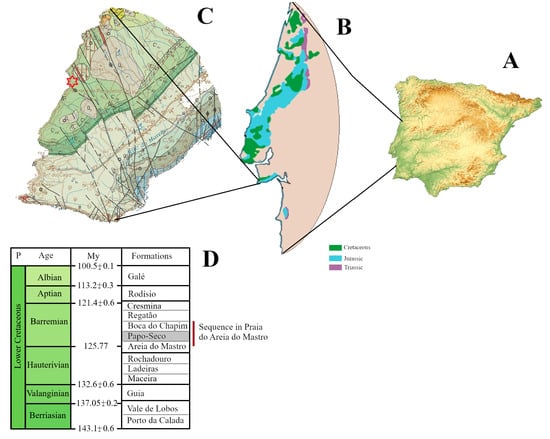
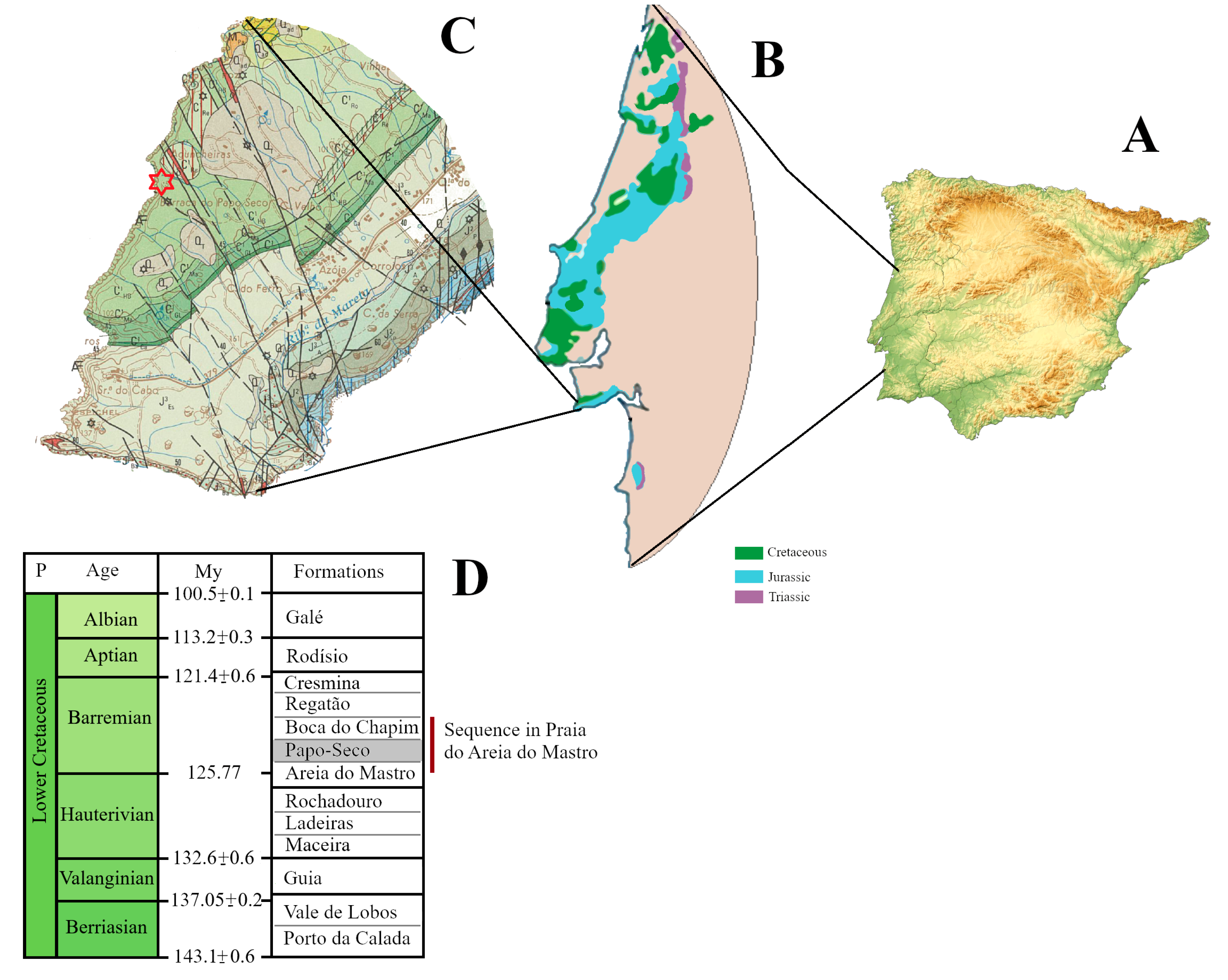
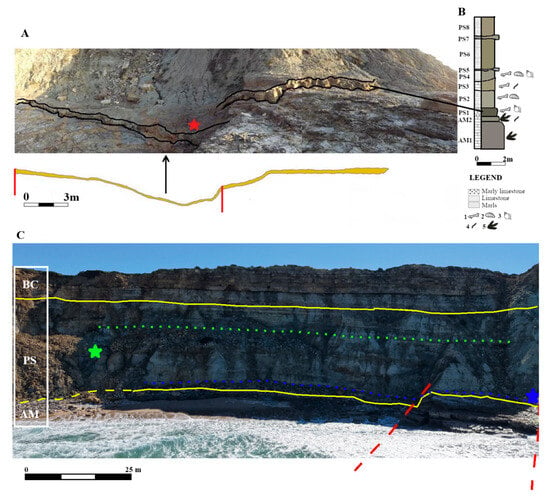
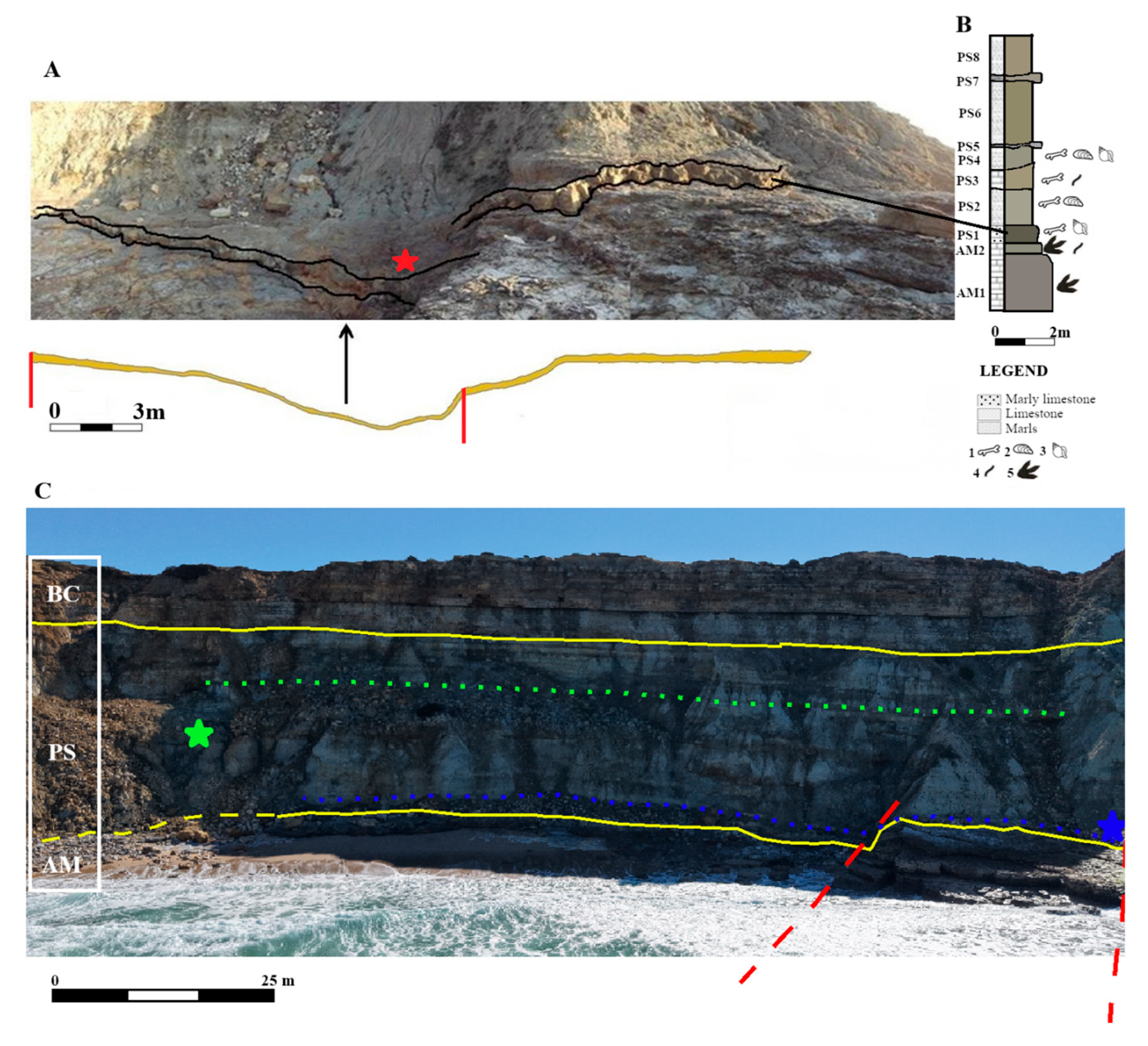
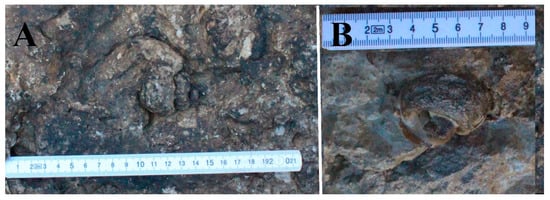
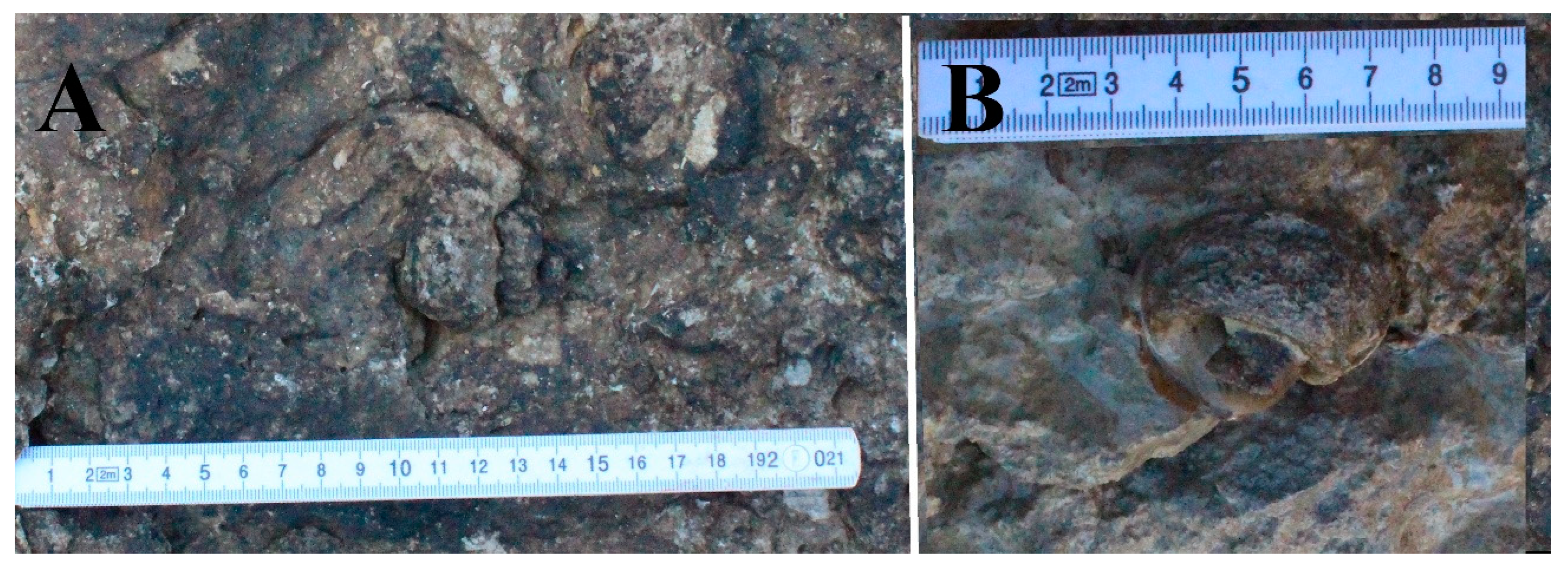
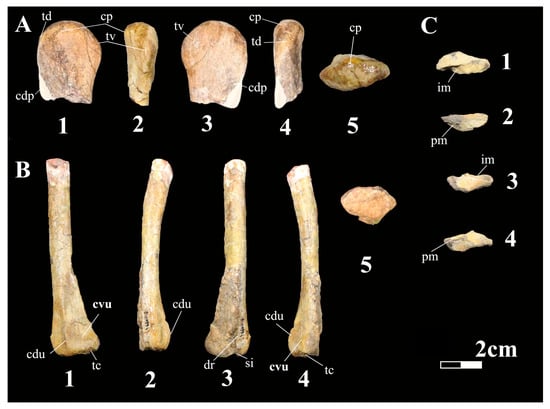
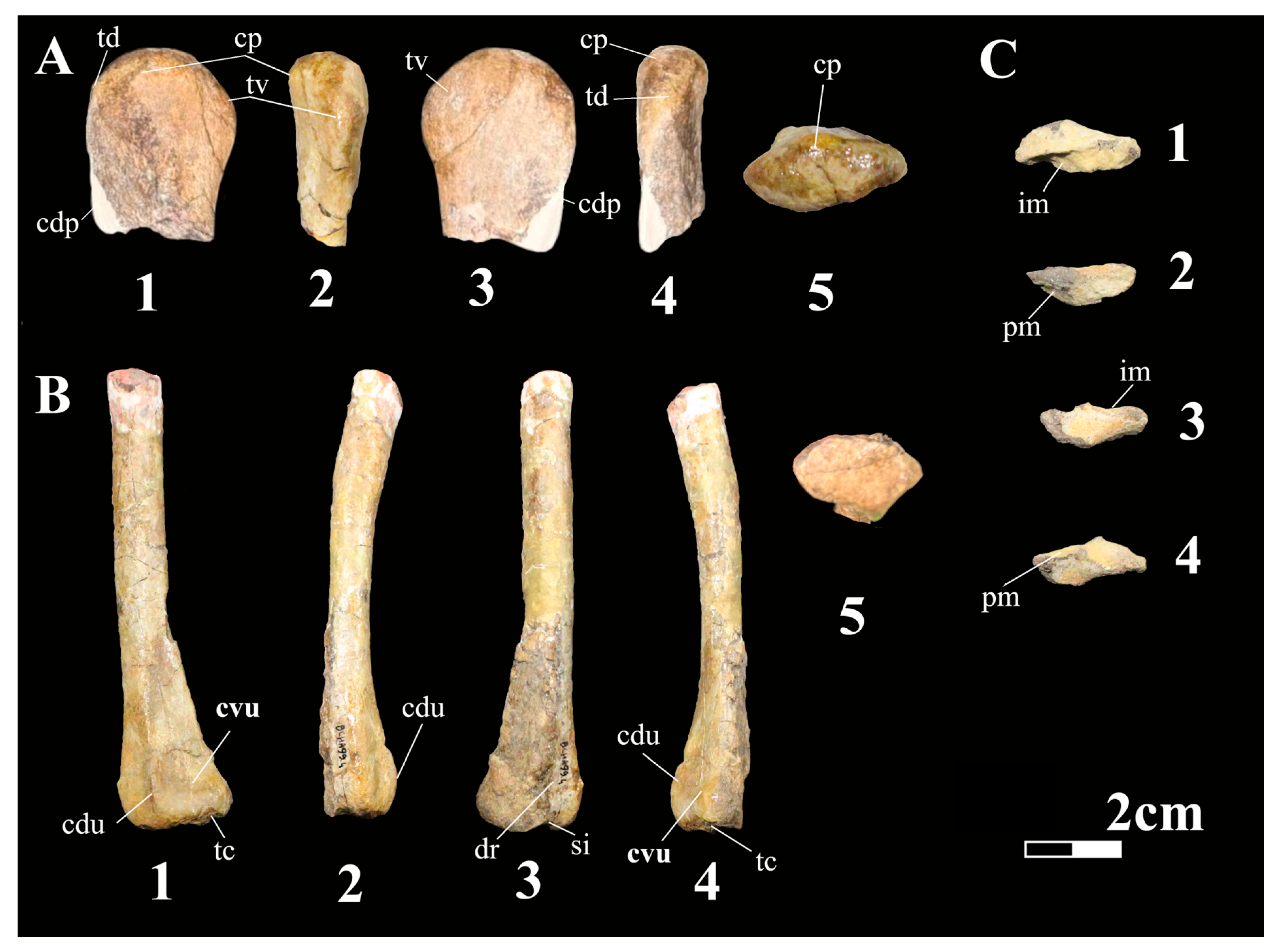
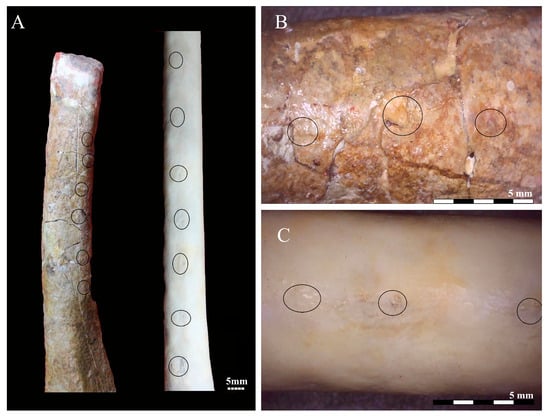
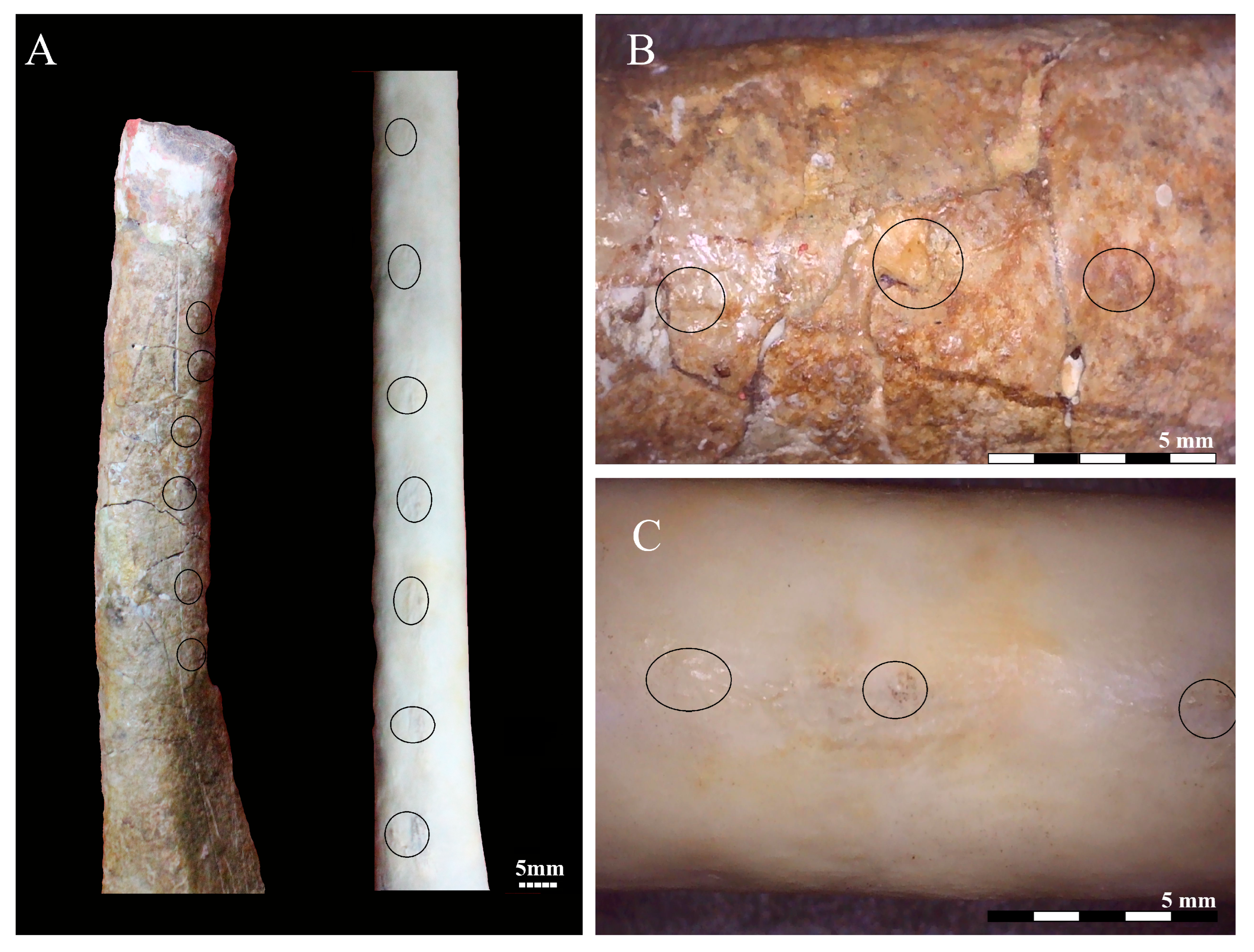
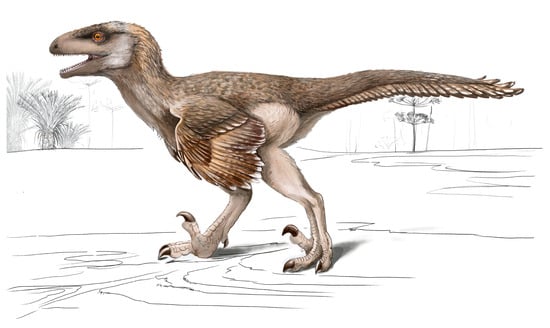
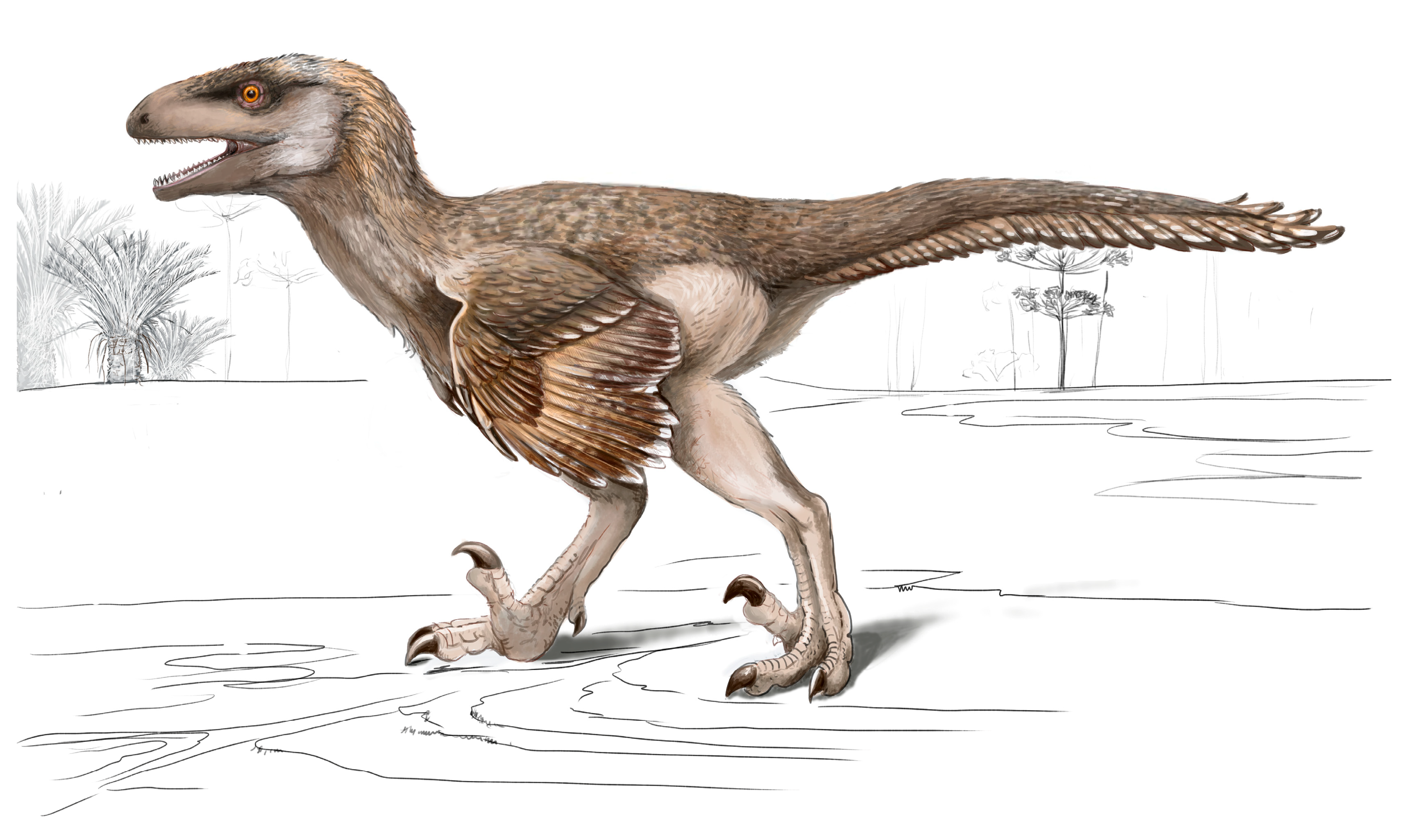

Disclaimer/Publisher’s Note: The statements, opinions and data contained in all publications are solely those of the individual author(s) and contributor(s) and not of MDPI and/or the editor(s). MDPI and/or the editor(s) disclaim responsibility for any injury to people or property resulting from any ideas, methods, instructions or products referred to in the content. |
© 2026 by the authors. Licensee MDPI, Basel, Switzerland. This article is an open access article distributed under the terms and conditions of the Creative Commons Attribution (CC BY) license.