


Abstract
The fossil record of Cretaceous avian dinosaurs in Mexico remains limited compared with that of other vertebrate groups, but provides important evidence on the distribution, taxonomy, and paleoecology of birds in southern North America during the Late Cretaceous. Here, we critically review the currently known Mexican record, integrating osteological remains from Baja California and Coahuila with avian and avian-like ichnofossils from northeastern Mexico. Confirmed skeletal records include the enantiornithine Alexornis antecedens from the Campanian La Bocana Roja Formation and Ichthyornis sp. from the Coniacian–Campanian Austin Group. The ichnological record comprises several Campanian and Maastrichtian occurrences from the Cerro del Pueblo and Las Encinas formations, including the formally recognized ichnotaxon Leptoptilostipus isp. and additional footprint morphotypes. Critical reassessment indicates that footprint morphotypes cannot be equated directly with biological taxa because substrate properties, preservation, locomotor behavior, and other extramorphological factors may influence track morphology. Nevertheless, the combined osteological and ichnological evidence documents the recurrent presence of avian trackmakers across non-marine, marine, deltaic, wetland, and marginal environments in Mexico. The Mexican record therefore provides an important southern North American perspective on Cretaceous avian distribution while also highlighting substantial preservational and sampling biases. Future progress will depend on the renewed study of existing collections, targeted recovery of small vertebrate remains, and systematic reassessment of historically important tracksites.
1. Introduction
Birds represent the only surviving lineage of dinosaurs and constitute one of the most successful vertebrate radiations in Earth history. Their evolutionary origins, diversification, and ecological expansion during the Mesozoic have been the focus of intensive research over the past several decades, resulting in a rapidly growing fossil record from Asia, Europe, North America, South America, and Antarctica [1,2,3]. These discoveries have significantly improved our understanding of the transition from non-avian theropod dinosaurs to crownward avialans and have revealed a remarkable diversity of Mesozoic avian lineages occupying a wide variety of terrestrial, coastal, and marine ecosystems.
Among Mesozoic birds, Enantiornithes and Ornithurae represent the most diverse and widespread avian clades during the Cretaceous. Enantiornithines dominated many terrestrial ecosystems throughout the Early and Late Cretaceous and are known from nearly every continent, whereas ornithurines include taxa more closely related to modern birds and achieved a broad geographic distribution prior to the end-Cretaceous mass extinction [1,2,4]. In North America, the avian fossil record includes numerous osteological and ichnological occurrences from the Western Interior Basin, providing important information regarding avian diversity, ecology, and paleobiogeography during the Late Cretaceous [5,6].
Mexico occupies a key paleogeographic position within the southern portion of Laramidia and preserves extensive Upper Cretaceous sedimentary sequences that have yielded a diverse vertebrate fauna, including fishes, amphibians, reptiles, pterosaurs, dinosaurs, and mammals [7,8]. Despite the abundance of vertebrate fossils documented from Mexican Cretaceous deposits, the avian record remains comparatively sparse and has received considerably less attention than other vertebrate groups. Nevertheless, several important discoveries have demonstrated the presence of both osteological and ichnological evidence of birds in the country, including the enantiornithine Alexornis antecedens from Baja California [9], the ornithurine Ichthyornis sp. from Coahuila [10], and multiple avian track-bearing localities in the Cerro del Pueblo and Las Encinas formations of northeastern Mexico [11,12,13,14,15].
Although these occurrences collectively indicate that birds were recurrent components of Mexican Late Cretaceous ecosystems, no comprehensive synthesis of the Cretaceous avian record of Mexico has previously been undertaken. Consequently, the diversity, geographic distribution, paleoecological significance, and paleobiogeographic implications of these records remain poorly understood.
The purpose of this paper is to review the currently available evidence of Cretaceous birds from Mexico, including both osteological and ichnological records, evaluate their taxonomic and stratigraphic significance, and discuss their implications for understanding avian evolution and biogeography in the southern regions of Laramidia. Additionally, we identify major gaps in current knowledge and highlight priorities for future research on the Mexican avian fossil record.
2. Geological Setting
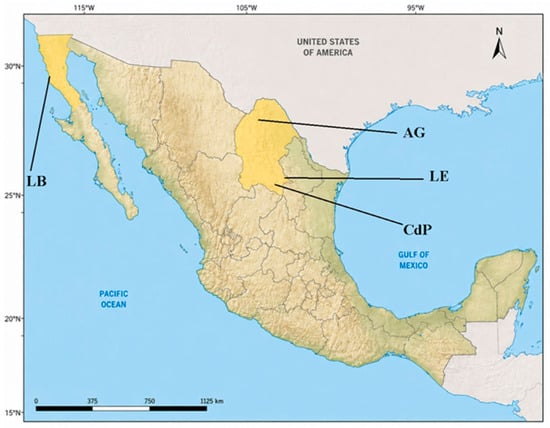
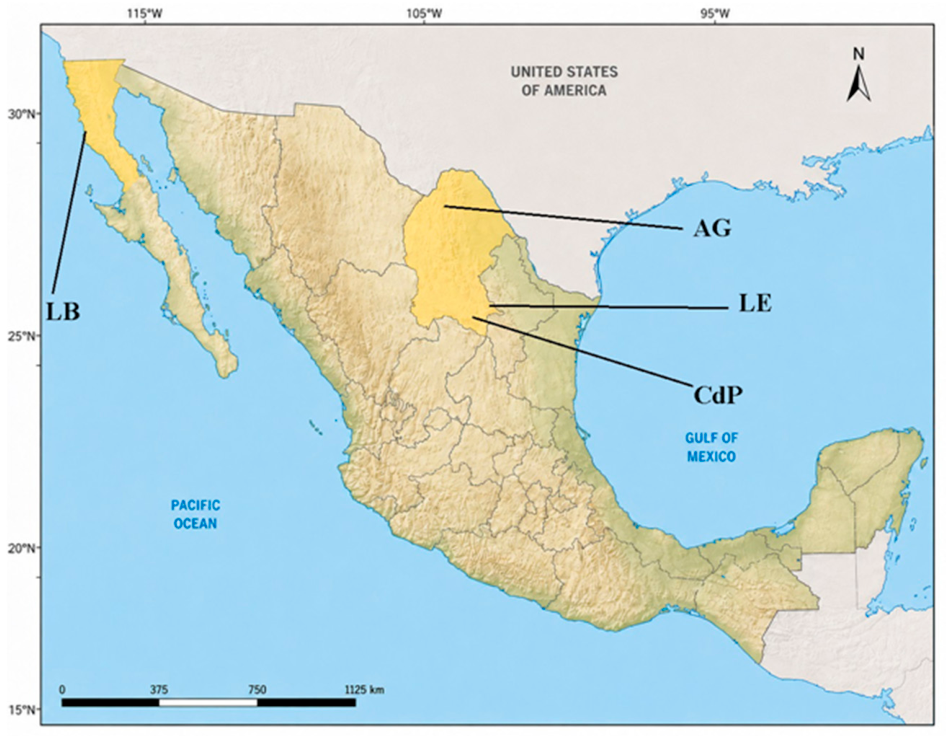
The Cretaceous avian record of Mexico is currently restricted to a limited number of fossiliferous units exposed in Baja California and northeastern Mexico (Figure 1). These deposits span much of the Late Cretaceous and represent a variety of depositional environments, including continental floodplains, deltaic systems, coastal settings, and shallow marine environments. Together, these formations provide the geological context for the osteological and ichnological evidence of birds reported from the country.
Figure 1.
Geographic distribution of Mexican geological units yielding osteological and ichnological remains: (AG) Austin Group (Coniacian-Campanian); (LB) La Bocana Roja Formation (Campanian); (CdP) Cerro del Pueblo Formation (Campanian); (LE) Las Encinas Formation (Maastrichtian).
The oldest osteological record is represented by Alexornis antecedens Brodkorb, 1976, recovered from the La Bocana Roja Formation near El Rosario, Baja California. The specimen was originally documented from Upper Cretaceous strata regarded as Campanian in age [9]. Although the age of some units exposed in the El Rosario region has been the subject of discussion, the vertebrate assemblage, including the tyrannosaurid Labocania, supports a Late Cretaceous age consistent with Campanian faunas of western North America [9,16,17].
The second osteological occurrence corresponds to Ichthyornis sp., identified from Upper Cretaceous deposits of Coahuila, northeastern Mexico. The specimen was recovered from the Austin Group near Ocampo and represents the southernmost occurrence of this widespread ornithurine taxon in North America. Sediments of the Austin Group were deposited within the Western Interior Seaway and record open marine conditions that characterized much of the region during the Late Cretaceous.
The Cerro del Pueblo Formation, which has yielded the oldest avian ichnological record currently known from Mexico, forms part of the Difunta Group in southern Coahuila and is generally regarded as late Campanian in age [18]. The unit consists predominantly of fluvial, deltaic, lagoonal, and coastal-plain deposits accumulated along the western margin of the Western Interior Seaway. These environments supported a highly diverse vertebrate fauna that includes fishes, turtles, crocodyliforms, pterosaurs, dinosaurs, and mammals [8,18].
The younger Las Encinas Formation is Maastrichtian in age and crops out in northeastern Coahuila. This unit records continental and marginal-marine environments developed during the final stages of the Cretaceous and preserves a diverse assemblage of vertebrate and invertebrate trace fossils, including some of the most informative avian ichnofossils currently known from Mexico [14,15].
The currently known avian-bearing localities therefore span a broad paleogeographic range extending from the Pacific margin of Baja California to the eastern margin of Laramidia adjacent to the Western Interior Seaway. This distribution provides a unique opportunity to examine the diversity and paleobiogeographic significance of Cretaceous birds in the southern regions of North America.
3. Results
3.1. Osteological Record of Cretaceous Birds in Mexico
Aves [19]
Enantiornithes [20]
Alexornis antecedens [9]
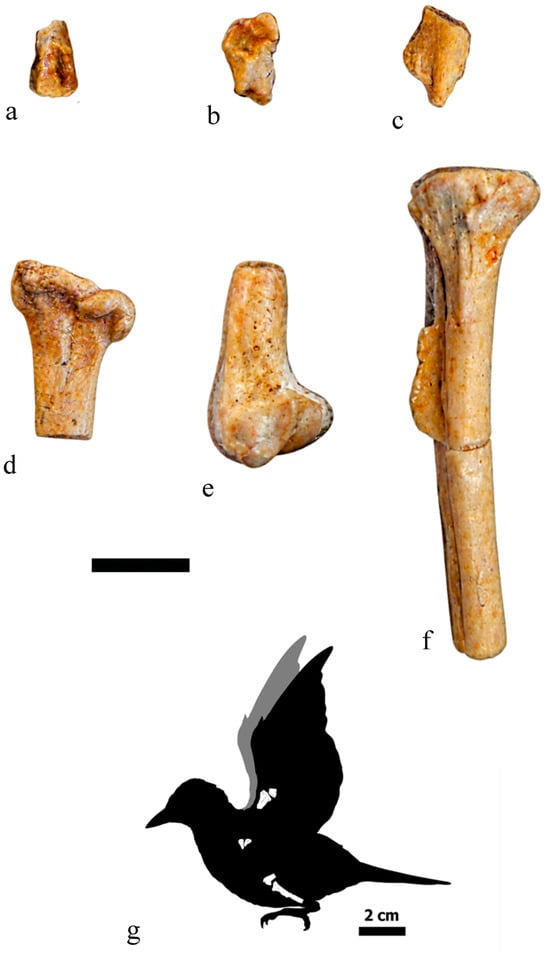
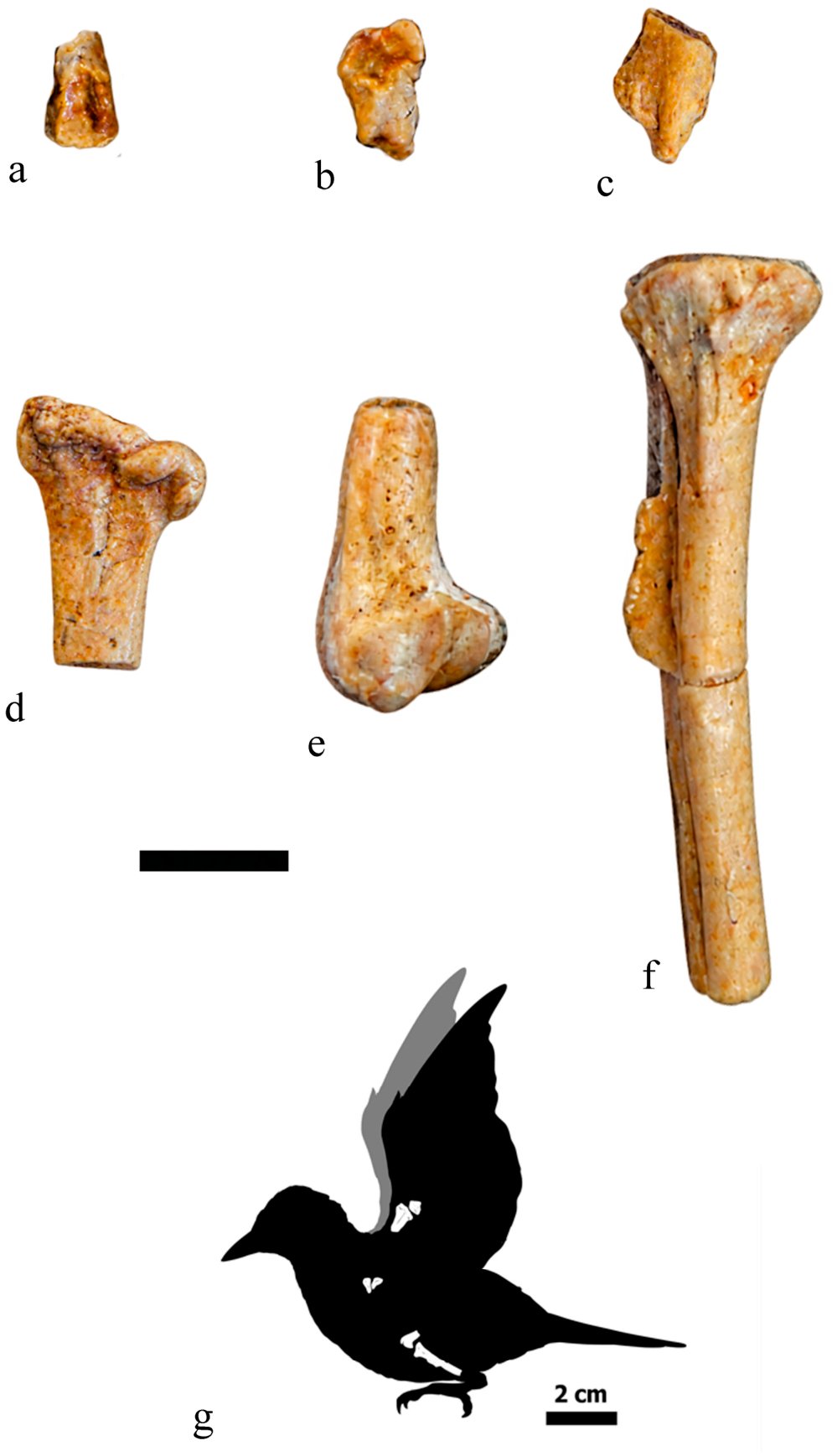
Alexornis antecedens [9] is based on IGM 2900 (formerly LACM 33213) (Figure 2), comprising the distal 10 mm of a right humerus (holotype), an associated distal left humerus (paratype), and referred elements including portions of the scapula, coracoid, ulna, femur, and tibiotarsus, together with additional unidentified fragments recovered in association [9]. The material was collected from LACM locality 7256, approximately 6 miles southwest of El Rosario, Baja California, from the Campanian La Bocana Roja Formation. Brodkorb [9] originally interpreted Alexornis as a representative of a distinct family and order, Alexornithidae and Alexornithiformes, respectively, and suggested affinities with Coraciiformes and Piciformes. This interpretation preceded the recognition of Enantiornithes as a major clade of Cretaceous birds.
Figure 2.
Skeletal elements of Alexornis antecedens IGM 2900 (formerly LACM 33213). (a) coracoid; (b) scapula; (c) ulna; (d) distal left humerus (paratype); (e) femur; (f) tibiotarsus; (g) silhouette reconstruction showing the approximate anatomical positions of the preserved elements. Scale bar for (a–f) = 5 mm. Scale bar for (g) = 2 cm.
Subsequent studies substantially revised the systematic interpretation of Alexornis, recognizing it as an enantiornithine rather than a stem representative of modern coraciiform or piciform birds [4,20,21]. Similarities between the humerus of Alexornis and enantiornithine material had already been recognized following the establishment of Enantiornithes by Walker [20], and later studies incorporated Alexornis within this characteristic Cretaceous avian radiation. More recent treatments continue to recognize Alexornis antecedens as an enantiornithine, although its fragmentary preservation limits assessment of its relationships within the clade [4,21,22,23].
Consequently, the original diagnosis proposed by Brodkorb [9], which emphasized comparisons with extant Momotidae and Bucconidae, should be regarded in its historical systematic context rather than as a modern diagnosis of the taxon’s phylogenetic affinities. Nevertheless, the associated postcranial material remains important because it documents an enantiornithine component of the Campanian avifauna of northwestern Mexico and represents one of the relatively few records of Enantiornithes from the Late Cretaceous of North America.
The geological age of Alexornis has been discussed in relation to the stratigraphic interpretation of Upper Cretaceous deposits exposed in the El Rosario region of Baja California. Brodkorb [9] considered the fossil-bearing strata to be Campanian in age, and this interpretation has generally been followed in subsequent reviews of the Mexican dinosaur and avian record. Additional support for a Late Cretaceous age is provided by the associated vertebrate fauna, including the tyrannosaurid Labocania, which exhibits affinities with Campanian dinosaur assemblages from western North America [7,16,17].
Despite its historical importance, Alexornis remains poorly known relative to many other North American enantiornithines. No substantial additional material has been documented since its original description, and several aspects of its anatomy and phylogenetic position would benefit from re-examination using modern comparative frameworks. Nevertheless, the taxon remains a key component of the Mexican avian fossil record and provides important evidence for the presence of enantiornithine birds in the southern regions of Laramidia during the Late Cretaceous.
Ornithurae [24]
Ichthyornis [25]
Ichthyornis sp.
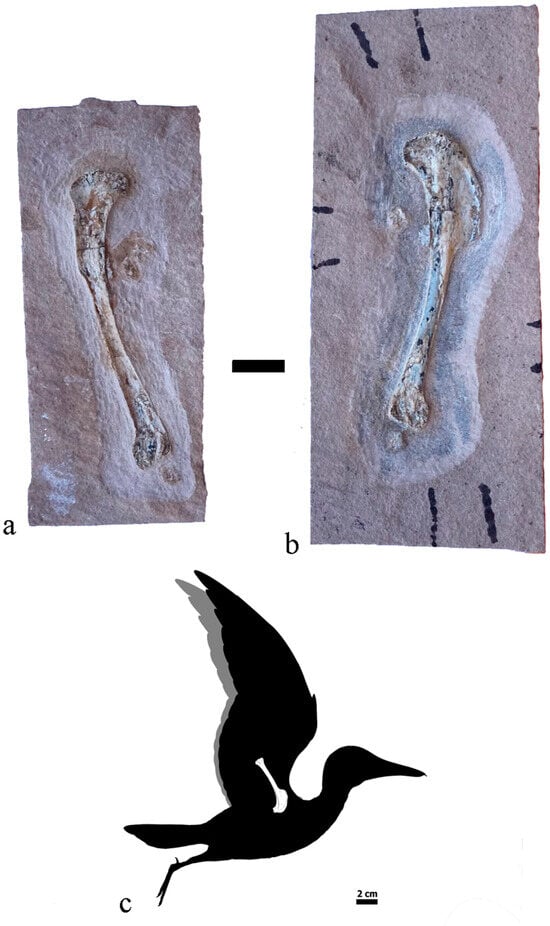
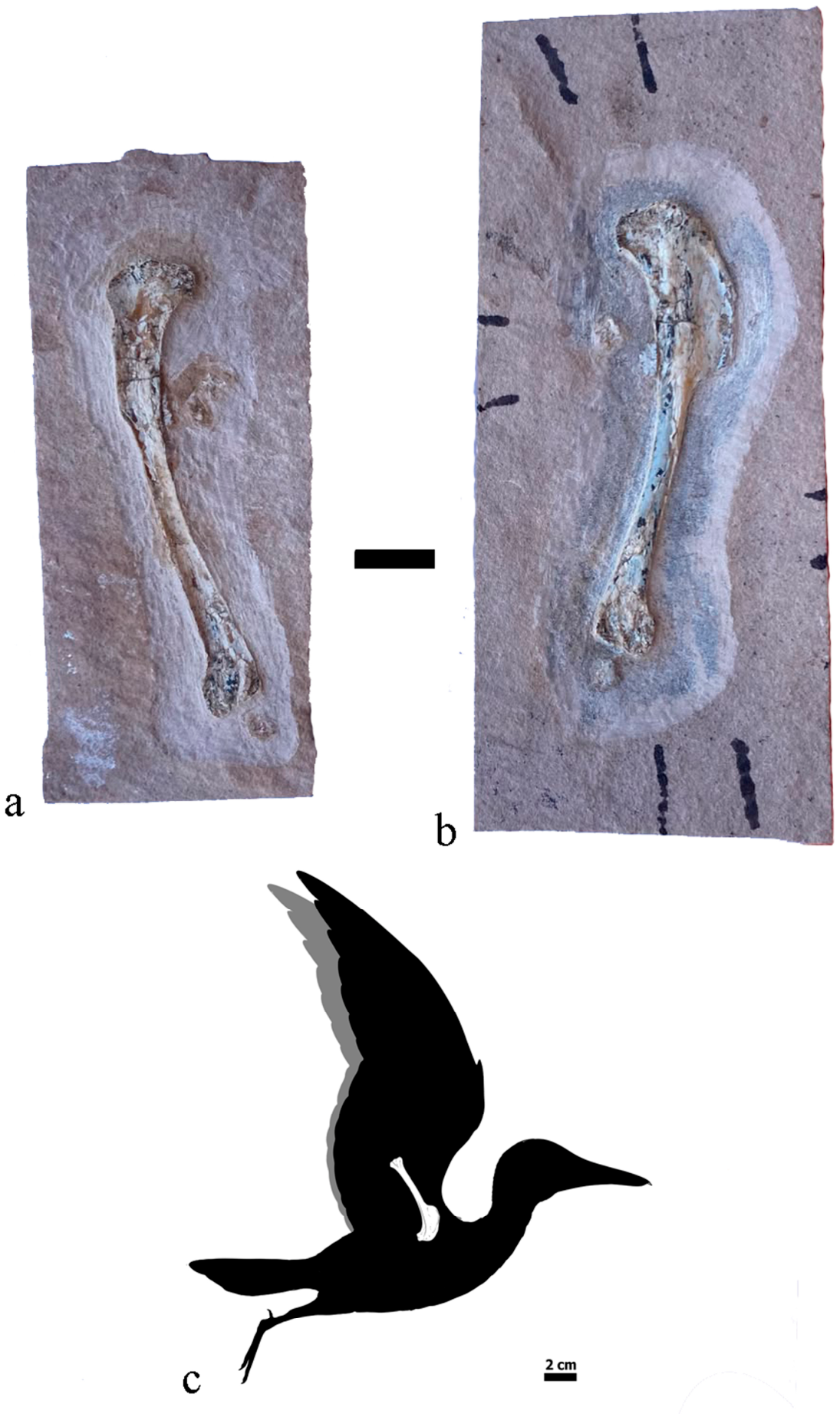
The Mexican record consists of MUZ-689, a nearly complete right humerus preserved in part (MUZ-689A; Figure 3) and counterpart (MUZ-689B) from the upper Austin Group at Ejido Piedritas, Coahuila [10]. The specimen is approximately 56 mm long and preserves most of the proximal and distal morphology. Porras-Múzquiz et al. [10] referred MUZ-689 to Ichthyornis dispar based on a combination of humeral features, including a globose proximal head, a strongly developed deltopectoral crest, a prominent bicipital crest, a long and slender shaft, a prominent ectepicondyle, a weak entepicondyle, a shallow olecranon fossa, and a well-developed radial condyle. Most importantly, the specimen possesses an oval pit-shaped fossa opening distally at the distal end of the bicipital crest, a feature regarded by Clarke [5] as an autapomorphy of Ichthyornis.
Figure 3.
Right humerus of Ichthyornis sp. (MUZ-689) from the Austin Group of Coahuila, Mexico. (a,b) Part and counterpart of the isolated right humerus; (c) silhouette reconstruction showing the approximate anatomical position of the preserved element. Scale bar for (a,b) = 2 cm; scale bar for (c) = 2 cm.
Originally described by Marsh [25], Ichthyornis is one of the best-known ornithurine birds from the Late Cretaceous of North America. The genus is characterized by a mosaic of primitive and derived features, including a toothed jaw combined with a highly modern avian flight apparatus [5,26].
The referral warrants reconsideration in light of the substantially expanded anatomical record of Cretaceous ornithurines and other ornithothoracines available since the original description. Isolated humeri can be difficult to assign confidently at generic level because several aspects of proximal humeral morphology overlap among Cretaceous avialans. Nevertheless, recent revision of the postcranial anatomy of Ichthyornis, based on 40 additional specimens, continues to recognize the pit-shaped fossa at the distal end of the bicipital crest as an autapomorphy of Ichthyornis dispar [27].
MUZ-689 therefore preserves the principal humeral character currently regarded as diagnostic of Ichthyornis, in addition to showing close agreement in overall morphology and size with referred specimens. On the available evidence, we consider referral of MUZ-689 to Ichthyornis to remain well supported. Although I. dispar is currently the only recognized species of the genus, we retain MUZ-689 as Ichthyornis sp. because it represents an isolated referred element and species-level identification cannot be independently supported by additional diagnostic anatomy. This differs from the treatment of Alexornis antecedens, for which IGM 2900 constitutes the type material upon which the species itself was established. Thus, the use of A. antecedens for IGM 2900 does not represent the referral of an isolated specimen to a previously established species, whereas assignment of MUZ-689 to I. dispar would require such a referral. We therefore consider Ichthyornis sp. to be the more conservative identification for the Mexican specimen [5,10,26].
3.2. Ichnological Record of Cretaceous Birds in Mexico
The ichnological record of Cretaceous birds in Mexico is considerably more extensive than the osteological record and provides important evidence for the presence, distribution, and paleoecology of avian dinosaurs in the southern regions of Laramidia. Avian footprints have been documented from several Upper Cretaceous localities in Coahuila, primarily within the Cerro del Pueblo and Las Encinas formations. These occurrences indicate that birds were recurrent components of terrestrial and marginal environments throughout the Campanian–Maastrichtian interval and occupied a variety of ecological settings ranging from delta plains and floodplains to coastal wetlands.
3.2.1. Cerro del Pueblo Formation
The first report of avian tracks from the Cerro del Pueblo Formation was presented by Aguillón-Martínez et al. [11], who documented a dinosaur track-bearing locality at Rincón Colorado. Among the vertebrate footprints identified at the site were small tridactyl tracks interpreted as avian in origin. Although these tracks were only briefly mentioned in an abstract and were not formally described, they constitute the earliest published record of avian ichnofossils from Mexico.
Additional evidence was later summarized by Rodríguez-de la Rosa et al. [12] in their review of the Mexican vertebrate ichnological record. These authors reported avian footprints from the locality of El Pelillal, also within the Cerro del Pueblo Formation. The occurrence further expanded the geographic distribution of birds within the Campanian ecosystems of Coahuila and suggested that avian trackmakers were relatively widespread within the delta-plain environments represented by the formation.
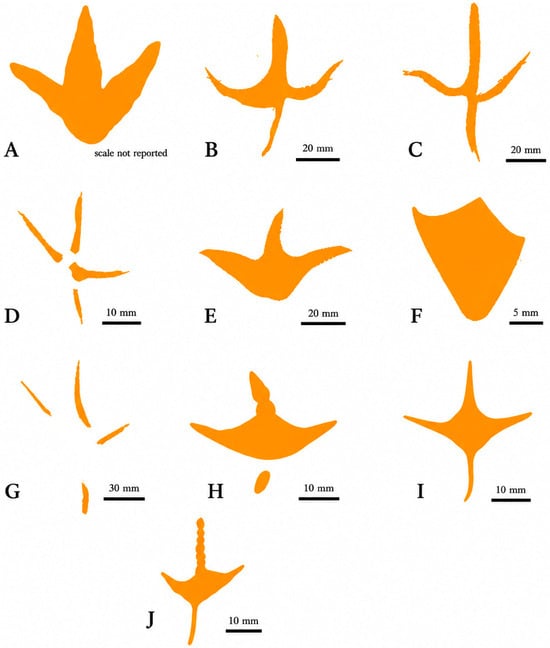
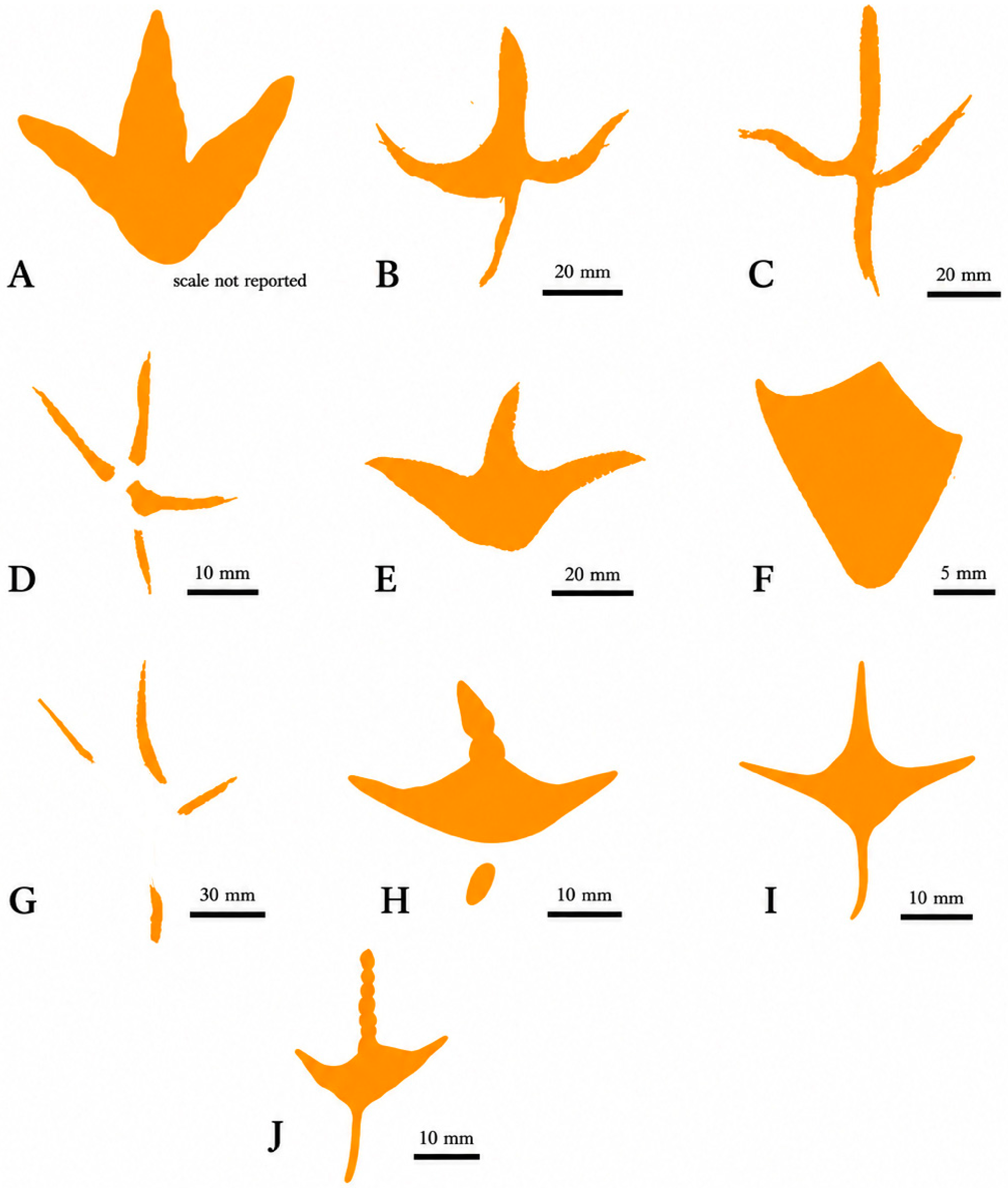
Further avian footprints were subsequently reported from the locality of Las Águilas [13] (Figure 4A). The association of avian tracks with abundant vertebrate remains and other trace fossils indicates that birds formed part of a complex ecosystem inhabited by dinosaurs, crocodyliforms, turtles, and other vertebrates [8]. Although detailed systematic descriptions of these footprints remain unavailable, the repeated occurrence of avian traces in multiple localities demonstrates that birds were persistent elements of the Cerro del Pueblo fauna.
Figure 4.
Representative avian and avian-like footprint morphotypes from the Upper Cretaceous of Mexico. (A) Morphotype from Las Águilas locality; (B) Morphotype 1; (C) Morphotype 2; (D) Morphotype 3; (E) Morphotype 4; (F) Morphotype 5; (G) Morphotype 6; (H) Leptoptilostipus isp. (BENC 22/20-0018); (I) Morphotype A; (J) Morphotype B. Footprints are illustrated at different magnifications; individual scale bars are provided where metric information is available in the original sources. Scale information for (A) was not reported. (Redrawn after [13,14,15]).
Taken together, the avian track record from Rincón Colorado, El Pelillal, and Las Águilas suggests that birds were widely distributed across the coastal plain and deltaic environments of northeastern Mexico during the late Campanian. Moreover, the presence of avian traces at several independent localities indicates that the scarcity of skeletal remains probably reflects preservational and sampling biases rather than a genuine absence of birds within these ecosystems.
3.2.2. Las Encinas Formation
The Las Encinas Formation preserves the most extensively documented Cretaceous avian ichnological record currently known from Mexico. One of its principal avian track localities is Rancho San Francisco, near Ramos Arizpe, Coahuila, where Stinnesbeck et al. [14] described an extensive assemblage of vertebrate footprints from this locality, including tracks attributed to theropod dinosaurs, birds, pterosaurs, and other organisms. The avian tracks are represented by small tridactyl footprints that occur in association with other vertebrate traces and provide direct evidence for the presence of birds in the latest Cretaceous ecosystems of northeastern Mexico.
The avian ichnological record of Las Encinas was substantially expanded by Serrano-Brañas et al. [15] (Figure 4H–J), who described new web-footed bird tracks from Rancho San Francisco. These authors recognized several morphotypes characterized by the presence of interdigital webbing, indicating the activity of aquatic or semi-aquatic birds in shallow-water environments. Comparisons with modern birds suggested ecological similarities with shorebirds and waterfowl inhabiting coastal wetlands and low-energy aquatic settings.
3.2.3. Critical Assessment of the Avian Ichnological Record
Identification of avian trackmakers in the Mesozoic ichnological record requires particular caution because small tridactyl footprints may overlap morphologically with those produced by small non-avian theropods. Consequently, small size and tridactyly alone cannot be regarded as sufficient evidence for avian affinity. Features that strengthen an avian interpretation include high total divarication between digits II and IV, slender digit impressions, the presence and orientation of a hallux, interdigital web impressions, and trackway parameters consistent with the locomotor morphology of birds. Nevertheless, preservation, substrate consistency, depth of penetration, and locomotor behavior may substantially alter the morphology of individual footprints and potentially produce distinct extramorphological variants within a single trackmaker population.
This problem is particularly relevant to the Mexican record. Some tracks previously interpreted as avian from the Upper Cretaceous of Coahuila were subsequently reassigned to small non-avian theropods, demonstrating that avian affinity cannot be assumed solely from general footprint morphology. Serrano-Brañas et al. [15], for example, noted that purported bird tracks from Rancho Soledad in the Escondido Formation were later interpreted as tracks of a slender-footed non-avian theropod. Accordingly, the records discussed here are evaluated on the basis of the combination of digit proportions, total and interdigital divarication, hallux morphology, webbing, trackway configuration, and preservation quality rather than size alone.
Among the Mexican records, Leptoptilostipus isp. from Rancho San Francisco provides one of the strongest cases for an avian trackmaker. The tracks are small, asymmetrical and tetradactyl, with three widely splayed forward-directed digits, a posteromedially directed hallux, and semipalmate web impressions. The mean divarication between digits II and IV is 135.5°, and the footprints are wider than long. These features, particularly the combination of a functional hallux, broad digital divarication and interdigital webbing, strongly support an avian origin [15]. The assignment to Leptoptilostipus isp. was based on comparisons with other Cretaceous web-footed avian ichnotaxa, including Ignotornis, Hwangsanipes, Goseongornipes, Sarjeantopodus, Gyeongsangornipes, and Uhangrichnus.
Morphotypes A and B from the same locality also possess characteristics consistent with avian trackmakers, including tetradactyly, elongated halluces, large digital divarication and interdigital webbing [15]. However, these morphotypes have not been formally assigned to ichnotaxa, and their morphological distinctiveness should not be equated directly with taxonomic diversity. Differences in web development, digit proportions and track dimensions may reflect genuine anatomical differences among trackmakers, but they may also have been influenced by substrate rheology, depth of impression, locomotor behavior, ontogenetic variation or preservation.
Stinnesbeck et al. [14] distinguished six avian footprint morphotypes from the uppermost Maastrichtian Las Encinas Formation, five from Rancho San Francisco and one from San Juan Amargos. These morphotypes differ in size, digit proportions, hallux morphology, degree of interdigital divarication, and presence or absence of webbing. However, these morphological differences should not be interpreted directly as evidence for six distinct avian taxa. Indeed, Stinnesbeck et al. [14] explicitly noted that morphotypes 1 and 2 could potentially represent the same trackmaker, with the apparent absence of webbing in morphotype 2 resulting from differences in substrate properties.
Morphotype 1 is a tetradactyl semipalmate footprint approximately 65 mm long and equally wide, characterized by stout digits and basal interdigital webbing. Digit I reaches approximately half the length of digit II, which is also the longest and most robust digit. Stinnesbeck et al. [14] regarded this as the most abundant avian footprint morphology in the assemblage. Serrano-Brañas et al. [15] later noted similarities between morphotype 1 and tracks assigned to Ignotornidae, although no formal ichnotaxonomic assignment has been proposed.
Morphotype 2 is also tetradactyl and approximately 65 mm long but narrower (~50 mm) and lacks preserved interdigital webbing. Digit I is approximately half the length of digit II, as in morphotype 1. Importantly, Stinnesbeck et al. [14] considered the possibility that morphotypes 1 and 2 were produced by the same biological taxon and that the absence of webbing in morphotype 2 resulted from substrate-related preservation. Consequently, these two morphotypes cannot presently be regarded as independent evidence of taxonomic diversity.
Morphotype 3 is considerably smaller, measuring approximately 30 mm in length and 25 mm in width. It is tetradactyl, apalmate, and strongly asymmetrical, with a relatively reduced digit I and, in some specimens, a visible metatarsal pad. Stinnesbeck et al. [14] interpreted the morphology as indicating digitigrade locomotion with an elevated metatarsus. Although morphologically distinct from morphotypes 1 and 2, its biological distinctiveness cannot be established without additional trackway and morphometric data.
Morphotype 4 is a tridactyl footprint approximately 35 mm long and ~60 mm wide, with strongly divergent and relatively stout digit impressions. Stinnesbeck et al. [14] explicitly suggested that the apparent stoutness of the digits could be preservational. Subsequent comparison by Serrano-Brañas et al. [15] recognized this morphology as semipalmate, with interdigital webbing between digits II–III and III–IV. Its tridactyl morphology and broad footprint distinguish it from the tetradactyl morphotypes, but preservation-related effects must be considered when assessing its distinctiveness.
Morphotype 5 is represented by a faint, small tridactyl palmate footprint. The footprint is only approximately 16 mm wide, and interdigital angles are approximately 30°. Webbing extends almost to the distal ends of the straight digit impressions, and no claw traces extend beyond the web margin. This morphology is clearly different from the larger tetradactyl semipalmate forms, although the specimen’s faint preservation limits detailed ichnotaxonomic comparison.
Morphotype 6, recorded from San Juan Amargos, is the largest avian footprint morphology reported by Stinnesbeck et al. [14], exceeding 85 mm in length and measuring approximately 70 mm in width. It is tetradactyl and palmate, with strongly asymmetrical digital divarication and a greatly reduced digit I represented by a subcircular to elongate impression. The absence of a metatarsal pad and basal phalangeal impressions was interpreted as evidence of digitigrade locomotion. Its dimensions and morphology distinguish it substantially from the smaller Rancho San Francisco footprints, although its trackmaker cannot presently be identified beyond a broad avian affinity.
These six morphotypes therefore document substantial morphological variation within the Las Encinas avian ichnofauna, but the minimum number of biological trackmakers cannot be established directly from the number of morphotypes. Substrate consistency, depth of penetration, preservation quality, behavior, and potentially ontogenetic variation may contribute to apparent morphological differences. Accordingly, we regard the Las Encinas record as evidence for a diverse assemblage of avian footprint morphologies rather than evidence for six discrete avian taxa. Formal ichnotaxonomic revision supported by standardized morphometric analysis is required to determine how much of this variation reflects biological versus extramorphological diversity.
4. Discussion
4.1. Diversity, Paleoecology, and Taphonomic Biases
The currently documented Cretaceous avian record of Mexico comprises two osteological occurrences and several ichnological records distributed across Baja California and Coahuila. The skeletal record confirms the presence of both Enantiornithes and Ornithurae, whereas the footprint record provides independent evidence that avian trackmakers occurred repeatedly in Campanian and Maastrichtian environments of northeastern Mexico [5,9,10,14,15].
The numerical predominance of ichnological occurrences over skeletal specimens should not, however, be interpreted directly as evidence of greater taxonomic diversity or abundance. A single trackmaker may produce numerous footprints, and footprint morphology can vary substantially as a consequence of substrate consistency, penetration depth, locomotor behavior, ontogeny, and preservation. Accordingly, the Mexican ichnological record demonstrates a greater geographical and ecological occurrence of avian trackmakers than would be apparent from body fossils alone, but the number of footprint morphotypes cannot presently be translated into a corresponding number of biological taxa. The disparity between the osteological and ichnological records is therefore better interpreted as reflecting the fundamentally different preservational and biological information represented by these two types of evidence.
The available evidence also indicates that Mexican Cretaceous birds occupied a variety of ecological settings. Alexornis was recovered from non-marine deposits of the La Bocana Roja Formation along the Pacific region of Baja California, whereas Ichthyornis occurs in marine deposits associated with the Western Interior Seaway. Similarly, avian footprints from the Cerro del Pueblo Formation occur in fluvial, deltaic, and coastal-plain deposits, while the web-footed tracks from the Las Encinas Formation demonstrate the presence of aquatic or semi-aquatic birds inhabiting wetlands and shallow-water environments [10,14,15]. Collectively, these occurrences suggest a greater ecological diversity than would be inferred from the skeletal record alone.
An additional factor contributing to the apparent rarity of Cretaceous birds in Mexico is the historical emphasis placed on larger vertebrates, particularly dinosaurs, crocodyliforms, turtles, and marine reptiles. Numerous field projects conducted in northern Mexico over the past several decades have focused primarily on collecting larger and more conspicuous fossils. Small vertebrate remains, including avian material, have often received less attention or have been recovered only through incidental collection. Consequently, targeted microvertebrate sampling and systematic screen-washing programs may significantly increase the number of avian specimens known from Mexican Cretaceous deposits.
Taken together, the available osteological and ichnological evidence strongly suggests that the diversity of Cretaceous birds in Mexico has been underestimated. Future discoveries will likely reveal additional representatives of both Enantiornithes and Ornithurae and may document other avian lineages currently unknown from the country.
4.2. Paleobiogeographic Implications
The Mexican record of Cretaceous birds occupies a strategically important position within western North America and provides a valuable perspective on avian distribution patterns during the Late Cretaceous. Although limited in terms of taxonomic diversity and specimen abundance, the available osteological and ichnological evidence indicates that birds formed part of a widespread continental fauna extending from the Pacific margin to ecosystems associated with the Western Interior Seaway [5,9,10,14,15].
During much of the Late Cretaceous, North America was divided by the Western Interior Seaway into the western landmass of Laramidia and the eastern landmass of Appalachia [28,29]. Most avian fossils from this interval have been recovered from the United States and Canada, whereas northern Mexico remains comparatively under-sampled despite preserving extensive Upper Cretaceous exposures [5,6,26]. Consequently, Mexican occurrences provide an important geographic link between northern avian assemblages and those documented farther south in the Americas.
The occurrence of Alexornis antecedens in Baja California demonstrates the presence of enantiornithine birds along the Pacific margin of southern Laramidia. Enantiornithines are known from a broad range of environments throughout the Cretaceous and achieved a nearly global distribution prior to their extinction at the end of the Mesozoic [1,2]. The presence of Alexornis in northwestern Mexico extends the geographic record of North American enantiornithines into the southern part of the western North American landmass.
Similarly, the occurrence of Ichthyornis sp. in the Austin Group of Coahuila represents the southernmost documented occurrence of the genus in North America [10]. Ichthyornis is otherwise well known from marine deposits associated with the Western Interior Seaway, particularly those of Kansas and the central United States [5,26]. Its presence in northeastern Mexico indicates that ornithurine birds were distributed throughout much of the seaway system and reinforces the interpretation of extensive faunal connectivity between northern and southern marine ecosystems during the Late Cretaceous.
An additional aspect of the Mexican avian record is that it encompasses three distinct paleoenvironmental settings. Alexornis was recovered from deposits associated with the Pacific margin of western North America, Ichthyornis inhabited marine environments linked to the Western Interior Seaway, and the avian footprints from the Cerro del Pueblo and Las Encinas formations document birds living in continental, deltaic, and wetland ecosystems. Consequently, the Mexican record provides a rare opportunity to examine avian occurrences across a broad spectrum of Late Cretaceous environments and suggests that birds occupied virtually all major ecological settings represented in the region during this interval.
The avian ichnological record provides additional evidence for this continuity. Footprints from the Cerro del Pueblo and Las Encinas formations demonstrate that birds occupied coastal plains, deltaic systems, wetlands, and fluvial environments across northeastern Mexico during both the Campanian and Maastrichtian. Similar avian ichnofaunas have been reported from contemporaneous deposits elsewhere in North America, suggesting that birds exploited comparable ecological niches throughout much of Laramidia. Although direct taxonomic identification of trackmakers remains difficult, these occurrences indicate that avian dinosaurs were persistent components of terrestrial ecosystems across a broad latitudinal gradient.
The Mexican record is also significant because it helps fill a geographic gap between better-known avian assemblages from the United States and more southern records from Central and South America. Although the fossil evidence remains fragmentary, it supports the interpretation that avian dispersal across western North America was not restricted to northern regions and that southern Laramidia participated in the same broad biogeographic patterns recognized elsewhere on the continent.
4.3. Future Perspectives
Despite more than five decades of research, the Cretaceous avian record of Mexico remains remarkably limited in comparison with the diversity of non-avian dinosaurs and other vertebrates documented from the same stratigraphic units. This scarcity should not necessarily be interpreted as evidence of genuinely low avian diversity. Rather, the Mexican record appears to reflect a combination of preservational, collecting, and research biases. The available evidence nevertheless identifies several formations, localities, and existing collections where targeted work could substantially improve knowledge of Cretaceous avian diversity in Mexico.
The La Bocana Roja Formation of Baja California represents a particularly important target for renewed investigation. Alexornis antecedens remains the only formally named Cretaceous avian dinosaur based on skeletal material from western Mexico, despite the occurrence of a diverse terrestrial vertebrate assemblage in the same unit [9]. The original discoveries included not only Alexornis but also dinosaurs and numerous small vertebrate remains, some of which were still unstudied when Brodkorb [9] described the taxon. Consequently, renewed examination of material collected from the formation, together with targeted screen-washing and microvertebrate sampling at appropriate terrestrial horizons, may provide one of the most promising approaches for recovering additional small-bodied avialan remains. Particular attention should also be directed toward relocating and documenting the original Alexornis locality and evaluating whether additional material attributable to this taxon or other small theropods occurs in existing collections.
The marine deposits of the Austin Group at Piedritas, Coahuila, provide a different but equally important opportunity. The occurrence of MUZ-689 demonstrates that avian remains can be preserved within this marine depositional setting [10]. Importantly, paleontological investigation of Piedritas has continued: Alvarado-Ortega and Porras-Múzquiz [30] described additional vertebrate material from the locality and documented a diverse marine assemblage including fishes, marine reptiles, pterosaurs, and Ichthyornis. The continued recovery of vertebrate fossils therefore indicates that the occurrence of MUZ-689 need not represent an isolated collecting event. Detailed examination of existing slabs and newly collected material from the finely laminated limestone, marl, and shale sequence may reveal additional isolated avian elements. Because small and delicate bird bones can be easily overlooked during collection focused on larger vertebrates, systematic examination specifically directed toward small skeletal elements may be particularly productive.
In the Cerro del Pueblo Formation, future work should focus primarily on reassessment and documentation of the historical ichnological record. Avian or avian-like footprints have been reported from Rincón Colorado, El Pelillal, and Las Águilas, but several of these records remain incompletely described or have subsequently been questioned. This is especially significant because footprints originally interpreted as avian can overlap morphologically with those of small non-avian theropods, emphasizing the need for explicit anatomical and ichnological criteria when assigning isolated tridactyl tracks to avian trackmakers. The El Pelillal locality preserves a diverse vertebrate ichnofauna within freshwater to tidally influenced deposits, demonstrating the potential of these environments for preserving small vertebrate traces [31,32]. Re-examination of original specimens, field photographs, molds, and locality data from the historically reported avian tracks would therefore be valuable. Where the original surfaces remain accessible, new photogrammetric documentation and standardized morphometric analysis could test previous avian assignments and determine whether any of these footprints warrant formal ichnotaxonomic recognition.
The Las Encinas Formation presently provides the richest and best-documented avian ichnological record in Mexico. Continued work at Rancho San Francisco has already demonstrated that additional material can substantially refine interpretations of the assemblage: Serrano-Brañas et al. [15] described Leptoptilostipus isp. and two additional web-footed morphotypes from uppermost Maastrichtian strata, expanding the previously recognized footprint record. Future studies should therefore prioritize the discovery of trackways and well-preserved individual footprints rather than simply increasing the number of recognized morphotypes. Trackways preserving repeated impressions from the same individual would be particularly informative because they could help distinguish anatomical characters from variation generated by substrate consistency, penetration depth, locomotor behavior, and preservation. Three-dimensional photogrammetry and standardized measurements of newly discovered surfaces would further permit quantitative comparisons among Mexican and other Cretaceous avian ichnofaunas.
Existing museum collections constitute another potentially important source of information. Small isolated avian elements are readily overlooked or identified only broadly as theropod or indeterminate vertebrate remains, particularly in assemblages dominated by large dinosaurs. Re-examination of microvertebrate and small-theropod collections from the Cerro del Pueblo, La Bocana Roja, and other Upper Cretaceous formations should therefore specifically consider avialan morphology. Such work is particularly relevant given the fragmentary nature of both currently recognized Mexican skeletal records. Future identifications should, however, adopt conservative taxonomic criteria: isolated elements should not be assigned to genus or species solely on overall similarity when diagnostic character combinations cannot be demonstrated.
More broadly, future research should integrate osteological and ichnological evidence while recognizing the fundamentally different biological information provided by these records. Footprint morphotypes should not be treated as direct equivalents of biological taxa, and the numerical predominance of footprints over skeletal occurrences should not itself be interpreted as evidence of exceptional avian abundance or diversity. Instead, tracks provide independent evidence of avian presence, locomotor and pedal morphology, habitat use, and potentially behavior. Skeletal remains, although substantially rarer, provide the principal basis for phylogenetic and taxonomic assessment. Integrating these complementary datasets within well-constrained stratigraphic and paleoenvironmental frameworks offers the most promising route toward reconstructing the Cretaceous avifauna of Mexico.
Finally, the most productive strategy for expanding the Mexican avian record will likely involve targeted rather than opportunistic collecting. Microvertebrate sampling in terrestrial units, systematic examination of finely laminated marine deposits, renewed documentation of historically important tracksites, and revision of existing museum collections all represent testable research priorities. These approaches may determine whether the scarcity of Cretaceous avian skeletal remains in Mexico primarily reflects genuine biological patterns or the strong preservational and sampling biases that currently characterize the record.
5. Conclusions
The currently documented record of Cretaceous avian dinosaurs from Mexico comprises two osteological occurrences, Alexornis antecedens and Ichthyornis sp., together with several ichnological records from the Cerro del Pueblo and Las Encinas formations of Coahuila. The skeletal record confirms the presence of Enantiornithes and Ornithurae, while the ichnological evidence demonstrates the recurrent presence of avian trackmakers in northeastern Mexico during the Campanian and Maastrichtian.
Critical reassessment of the ichnological record emphasizes that footprint morphotypes cannot be equated directly with biological taxa. Nevertheless, the occurrence of tridactyl, tetradactyl, and web-footed morphologies, including Leptoptilostipus isp., documents substantial morphological and ecological variation among Cretaceous avian trackmakers in Mexico. Osteological and ichnological evidence therefore provide complementary, rather than directly comparable, records of Mexican avian diversity.
The Mexican record also encompasses markedly different depositional settings, ranging from non-marine deposits in Baja California to marine deposits of the Western Interior Seaway and continental to marginal environments in northeastern Mexico. Despite its limited size, this record expands the geographic documentation of Cretaceous birds in southern North America and provides an important basis for evaluating avian distribution and paleoecology in southern Laramidia.
Future progress will depend particularly on the renewed study of existing collections, targeted sampling for small vertebrates in the La Bocana Roja Formation, systematic examination of fossiliferous deposits at Piedritas, reassessment of historical Cerro del Pueblo track records, and continued ichnological investigation of the Las Encinas Formation. These approaches will be essential for distinguishing genuine biological patterns from the strong preservational and sampling biases that currently characterize the Mexican Cretaceous avian record.
Author Contributions
Conceptualization, H.E.R.-S. and J.R.G.-G.; methodology, H.E.R.-S.; investigation, H.E.R.-S. and J.R.G.-G.; writing—original draft preparation, H.E.R.-S.; writing—review and editing, H.E.R.-S., J.R.G.-G. and A.A.R.-M.; visualization, H.E.R.-S., J.R.G.-G. and A.A.R.-M.; supervision, H.E.R.-S. All authors have read and agreed to the published version of the manuscript.
Funding
This research received no external funding.
Data Availability Statement
No new data were created or analyzed in this study. Data sharing is not applicable to this article.
Acknowledgments
The authors thank María del Carmen Perrillat, for facilitating access to the specimen of Alexornis antecedens and allowing its photographic documentation during her tenure as curator, and also thank Héctor Porras-Múzquiz, for kindly providing photographs of the Ichthyornis specimen housed in the institution and for authorizing their publication in this study. We also thank the anonymous reviewers and editors whose comments helped improve the presentation of this work. All scientific content, interpretations, conclusions, and final editorial decisions were reviewed and approved by the authors, who take full responsibility for the content of this publication.
Conflicts of Interest
The authors declare no conflicts of interest.
Abbreviations
The following abbreviations are used in this manuscript:
| LACM | Los Angeles County Museum |
| IGM | Instituto de Geología de la UNAM |
| BENC | Benemérita Escuela Normal de Coahuila |
| MUZ | Museo Paleontológico de Múzquiz |
References
- Chiappe, L.M. Glorified Dinosaurs: The Origin and Early Evolution of Birds; John Wiley & Sons: Hoboken, NJ, USA, 2007; p. 263. [Google Scholar]
- O’Connor, J.K. A Systematic Review of Enantiornithes (Aves: Ornithothoraces). Ph.D. Dissertation, University of Southern California, Los Angeles, CA, USA, 2009; 457p. [Google Scholar]
- Brusatte, S.L.; O’Connor, J.K.; Jarvis, E.D. The origin and diversification of birds. Curr. Biol. 2015, 25, R888–R898. [Google Scholar] [CrossRef] [Scilit] [PubMed]
- Chiappe, L.M.; Walker, C.A. Skeletal morphology and systematics of Cretaceous Euenantiornithes (Ornithothoraces: Enantiornithes). In Mesozoic Birds: Above the Heads of Dinosaurs; Chiappe, L.M., Witmer, L.M., Eds.; University of California Press: Berkeley, CA, USA, 2002; pp. 240–267. [Google Scholar]
- Clarke, J.A. Morphology, phylogenetic taxonomy, and systematics of Ichthyornis and Apatornis (Avialae: Ornithurae). Bull. Am. Mus. Nat. Hist. 2004, 286, 1–179. [Google Scholar] [CrossRef] [Scilit]
- Longrich, N.R.; Tokaryk, T.; Field, D.J. Mass extinction of birds at the Cretaceous–Paleogene boundary. Proc. Natl. Acad. Sci. USA 2011, 108, 15253–15257. [Google Scholar] [CrossRef] [Scilit] [PubMed]
- Weishampel, D.B.; Barrett, P.M.; Coria, R.A.; Le Loeuff, J.; Xu, X.; Zhao, X.; Sahni, A.; Gomani, E.M.P.; Noto, C.R. Dinosaur distribution. In The Dinosauria, 2nd ed.; Weishampel, D.B., Dodson, P., Osmólska, H., Eds.; University of California Press: Berkeley, CA, USA, 2004; pp. 517–606. [Google Scholar]
- Rivera-Sylva, H.E.; Frey, E.; Stinnesbeck, W.; Amezcua-Torres, N.; Flores-Huerta, D. Terrestrial vertebrate paleocommunities from the Cerro del Pueblo Formation (Late Cretaceous; Late Campanian) at Las Águilas, Coahuila, Mexico. Palaeovertebrata 2019, 42, e1. [Google Scholar] [CrossRef] [Scilit]
- Brodkorb, P. Discovery of a Cretaceous bird, apparently ancestral to the Orders Coraciformes and Piciformes (Aves: Carinatae). Smithson. Contrib. Paleobiol. 1976, 27, 67–73. [Google Scholar] [CrossRef] [Scilit]
- Porras-Múzquiz, H.G.; Chatterjee, S.; Lehman, T.M. The carinate bird Ichthyornis from the Upper Cretaceous of Mexico. Cretac. Res. 2014, 51, 148–152. [Google Scholar] [CrossRef] [Scilit]
- Aguillón-Martínez, M.C.; Vallejo-González, I.; Hernández-Rivera, R.; Kirkland, J.I. Dinosaur trackway from the Cerro del Pueblo Formation, Difunta Group (latest Campanian, Cretaceous), Coahuila, Mexico. J. Vertebr. Paleontol. 1998, 18, 23A. [Google Scholar]
- Rodríguez de la Rosa, R.A.; Aguillón-Martínez, M.C.; López-Espinosa, J.; Eberth, D.A. The fossil record of vertebrate tracks in Mexico. Ichnos 2004, 11, 27–34. [Google Scholar] [CrossRef] [Scilit]
- Rodríguez de la Rosa, R.A.; Eberth, D.A.; Sampson, S.D.; Brinkman, D.B.; Vallejo-González, I. Huellas fósiles de vertebrados y aspectos paleoecológicos de un sitio del Cretácico Tardío de Coahuila, México. In X Congreso Nacional de Paleontología; Sociedad Mexicana de Paleontología A.C.: Mexico City, Mexico, 2006; p. 69. [Google Scholar]
- Stinnesbeck, W.; Frey, E.; Espinoza-Chávez, B.; Zell, P.; Flores-Ventura, J.; Rivera-Sylva, H.E.; González-González, A.H.; Padilla-Gutiérrez, J.M.; Vega-Vera, F.J. Theropod, avian, pterosaur, and arthropod tracks from the uppermost Cretaceous Las Encinas Formation, Coahuila, northeastern Mexico, and their significance for the end-Cretaceous mass extinction. Geol. Soc. Am. Bull. 2017, 129, 331–348. [Google Scholar] [CrossRef] [Scilit]
- Serrano-Brañas, C.I.; Espinosa-Chávez, B.; Ventura-Flores, J.; Barrera-Guevara, D.; Torres-Rodríguez, E.; Vega-Vera, F.J. New insights on the avian trace fossil record from NE Mexico: Evidences on the diversity of latest Maastrichtian web-footed bird tracks. J. S. Am. Earth Sci. 2022, 113, 103686. [Google Scholar] [CrossRef] [Scilit]
- Molnar, R.E. A distinctive theropod dinosaur from the Upper Cretaceous of Baja California, Mexico. J. Paleontol. 1974, 48, 1009–1017. [Google Scholar]
- Rivera-Sylva, H.E.; Longrich, N.R. A new tyrant dinosaur from the Late Campanian of Mexico reveals a tribe of southern tyrannosaurs. Foss. Stud. 2024, 2, 245–272. [Google Scholar] [CrossRef] [Scilit]
- Eberth, D.A.; Delgado-de Jesús, C.R.; Lerbekmo, J.F.; Brinkman, D.B.; Rodríguez-de la Rosa, R.A.; Sampson, S.D. Cerro del Pueblo Formation (Difunta Group, Upper Cretaceous), Parras Basin, southern Coahuila, Mexico: Reference sections, age and correlation. Rev. Mex. Cienc. Geol. 2004, 21, 335–352. [Google Scholar]
- Linnaeus, C. Systema Naturae per Regna Tria Naturae, Secundum Classes, Ordines, Genera, Species, cum Characteribus, Differentiis, Synonymis, Locis, 10th ed.; Laurentii Salvii: Holmiae, Sweden, 1758; Volume 1. [Google Scholar]
- Walker, C.A. New subclass of birds from the Cretaceous of South America. Nature 1981, 292, 51–53. [Google Scholar] [CrossRef] [Scilit]
- Chiappe, L.M. Cretaceous birds of Latin America. Cretac. Res. 1991, 12, 55–63. [Google Scholar] [CrossRef] [Scilit]
- Tykoski, R.S.; Fiorillo, A.R. An enantiornithine bird from the lower middle Cenomanian of Texas. J. Vertebr. Paleontol. 2010, 30, 288–292. [Google Scholar] [CrossRef] [Scilit]
- Atterholt, J.; Hutchison, J.H.; O’Connor, J.K. The most complete enantiornithine from North America and a phylogenetic analysis of the Avisauridae. PeerJ 2018, 6, e5910. [Google Scholar] [CrossRef] [Scilit] [PubMed]
- Haeckel, E. Generelle Morphologie der Organismen. Allgemeine Grundzüge der Organischen Formen-Wissenschaft, Mechanisch Begründet Durch die von Charles Darwin Reformirte Descendenz-Theorie; Georg Reimer: Berlin, Germany, 1866; Volumes 1–2. [Google Scholar]
- Marsh, O.C. Notice of a new and remarkable fossil bird. Am. J. Sci. 1872, 4, 344. [Google Scholar] [CrossRef] [Scilit]
- Field, D.J.; Hanson, M.; Burnham, D.; Wilson, L.E.; Super, K.; Ehret, D.; Ebersole, J.A.; Bhullar, B.A.S. Complete Ichthyornis skull illuminates mosaic assembly of the avian head. Nature 2018, 557, 96–100. [Google Scholar] [CrossRef] [Scilit] [PubMed]
- Benito, J.; Chen, A.; Wilson, L.E.; Bhullar, B.-A.S.; Burnham, D.; Field, D.J. Forty new specimens of Ichthyornis provide unprecedented insight into the postcranial morphology of crownward stem group birds. PeerJ 2022, 10, e13919. [Google Scholar] [CrossRef] [Scilit] [PubMed]
- Kauffman, E.G. Geological and biological overview: Western Interior Cretaceous Basin. Mt. Geol. 1977, 14, 75–99. [Google Scholar]
- Slattery, J.; Cobban, W.; McKinney, K.; Harries, P.; Sandness, A. Early Cretaceous to Paleocene paleogeography of the Western Interior Seaway: The interaction of eustasy and tectonism. Wyo. Geol. Assoc. Guideb. 2013, 68, 22–60. [Google Scholar]
- Alvarado-Ortega, J.; Porras-Múzquiz, H.G. On the presence of Xiphactinus (Teleostei, Ichthyodectiformes) in the Coniacian-Campanian marine deposits of the Piedritas site, Coahuila, northern Mexico. Rev. Mex. Cienc. Geol. 2022, 39, 142–150. [Google Scholar] [CrossRef] [Scilit]
- Rodríguez-de la Rosa, R.A.; Cevallos-Ferriz, S.R.S. Vertebrates of the El Pelillal locality (Campanian, Cerro del Pueblo Formation), southeastern Coahuila, Mexico. J. Vertebr. Paleontol. 1998, 18, 751–764. [Google Scholar] [CrossRef] [Scilit]
- Rodríguez-de la Rosa, R.A. Pterosaur tracks from the latest Campanian Cerro del Pueblo Formation of southeastern Coahuila, Mexico. Geol. Soc. Lond. Spec. Publ. 2003, 217, 275–282. [Google Scholar] [CrossRef] [Scilit]
Disclaimer/Publisher’s Note: The statements, opinions and data contained in all publications are solely those of the individual author(s) and contributor(s) and not of MDPI and/or the editor(s). MDPI and/or the editor(s) disclaim responsibility for any injury to people or property resulting from any ideas, methods, instructions or products referred to in the content. |
© 2026 by the authors. Licensee MDPI, Basel, Switzerland. This article is an open access article distributed under the terms and conditions of the Creative Commons Attribution (CC BY) license.