


Abstract
Background/Objectives: Obesity is a chronic and multifactorial disease, and the global prevalence of obesity-induced metabolic and systemic complications is expected to rise. Current peptide-based drugs that mainly target glucagon-like peptide-1 receptor activation have shown unprecedented efficacy in body weight reduction. Nevertheless, they show undesirable adverse effects including gastrointestinal effects, lean mass reduction, and rebound weight gain after ending pharmacotherapy. These underscore the medical need for additional anti-obesity drugs with novel pathways. Methods: Literature updating current anti-obesity pharmacotherapy and reporting potential drug targets and candidates in the last five years was searched across PubMed. The resulting literature was classified into working mechanisms and target receptors. Results: Recent research on incretin-based peptide drugs has focused on developing more convenient regimens by introducing longer-acting once-monthly injection or oral formulation. Novel anti-obesity targets other than incretin receptors have also been suggested. This narrative review summarizes recent research updates on peptide-based drugs and upcoming anti-obesity drug candidates tested in clinical and in vivo studies. Conclusions: Beyond the current peptide-based pharmacotherapy, novel anti-obesity drug candidates are waiting for further validation in clinical trials. When used alone or combined with the available drugs, these candidates may produce more effective and safer pharmacotherapy for obesity treatment.
1. Introduction
Obesity is defined as a chronic and relapsing disease by the World Health Organization [1]. In recent years, obesity prevalence has been expected to rise in many countries, where greater food sources are secured. Modern lifestyle modifications, characterized primarily by desk-bound or sedentary employment, have led to a marked reduction in habitual physical energy expenditure. This makes obesity a global public health issue, producing more than 1 billion people globally with obesity [2,3]. Obesity serves as a primary driver for the pathogenesis of other complications such as diabetes, cardiovascular diseases, obstructive sleep apnea, osteoarthritis, and even cancers [4]. Accordingly, there is a critical need for effective pharmacological options for obesity treatment.
Incretin refers to peptide hormones released from gut endocrine cells to stimulate insulin secretion [5]. Recently, incretin-based peptide drugs have been dominating in the drug market for obesity treatment due to their unprecedentedly enhanced efficacy in body weight control compared with traditional small molecule drugs. Semaglutide is a representative peptide drug for obesity treatment targeting glucagon-like peptide-1 (GLP-1) receptors [6]. It reduces body weight by decreasing food appetite [7]. Tirzepatide is another peptide drug that functions as a dual agonist for the GLP-1 receptor and the glucose-dependent insulinotropic polypeptide (GIP) receptor. This pharmacological trait is considered for its clinical efficacy in body weight control distinct from semaglutide [8].
Recent research has focused on developing next-generation peptide drugs for obesity treatment. The combination strategy of novel candidates with the currently available peptide drugs is currently subject to intense clinical investigation. Oral semaglutide formulation has been available for diabetes treatment [9], and in 2025, it was also approved for obesity treatment. The semaglutide pill provides another option for obesity patients that do not prefer injections. More recently, a non-peptide GLP-1 receptor agonist orforglipron was FDA-approved and is available as a once-daily oral administration [10]. Apparently, non-peptide small molecules for oral formulation can activate the GLP-1 receptor, suggesting the potential of developing non-peptide activators for other peptide receptors [11].
However, the current anti-obesity peptide drugs induce gastrointestinal adverse effects including nausea, vomiting, and diarrhea that make obesity patients uncomfortable during the drug therapy [12]. More importantly, significant lean mass reduction was observed either by semaglutide or tirzepatide treatment [13,14]. Although fat mass reduction is much greater than lean mass loss, there is a strong need for novel anti-obesity drugs with desirable adverse effect profiles.
This review summarizes the recent research updates on peptide-based pharmacotherapy, oral formulation development, drug combination strategy, and emerging novel anti-obesity drug targets and candidates. Since the current drug therapy has been limited to once-weekly subcutaneous injection, recent research has focused on developing ultralong-acting once-monthly injection or oral formulation. In addition, multiple drug targets have been tested for protecting lean mass while losing body weight. Targeting several peptide hormone receptors with one drug entity has also been tested to maximize body weight reduction. We aim to provide recent research updates on improving current peptide-based pharmacotherapy and on upcoming novel anti-obesity drug targets that may produce next generation anti-obesity drugs. This narrative review delivers a scientific introduction for scientists who plan to explore up-to-date anti-obesity drug targets and expand their research to developing anti-obesity drugs.
2. Methodology
For this narrative review, recent research and review articles on obesity drug development published in leading scientific journals such as Science, Cell, and Nature were retrieved in PubMed by using keywords such as obesity, obesity drug target, anti-obesity and so on. We focused on the articles published in the last five years from 2022 to 2026. In addition, a web-based search and Gemini free version were used to obtain recent updates on the results of clinical trials and the up-to-date information posted by pharmaceutical companies. Scientific posters and oral presentations revealed at professional meetings were also included, if available.
3. Research Updates on Current Peptide-Based Pharmacotherapy
3.1. Ultralong-Acting Peptide Drugs for Once-Monthly Injections
Peptide-based drug candidates show a short biological half-life of generally less than an hour. Protraction of the peptidal half-life in human bodies is required for clinical application. Current peptide drugs for obesity treatment are modified with lipidation (also known as fattigation) [15]. Adding a long fatty acid to peptide drugs has shown significant protraction of a peptide half-life, enabling once-weekly injections for clinical efficacy [15]. For better patient compliance, once-monthly injections with consistent efficacy have been tested in clinical trials [16,17].
An ultralong-acting GLP-1R agonist maridebart cafraglutide (MariTide) was tested in clinical trials as once-monthly (once every four weeks) subcutaneous injections [16,18]. MariTide is a peptide antibody conjugate that performs dual actions by activating GLP-1 receptors and by antagonizing GIP receptors [18]. It consists of a human monoclonal antibody that targets GIP receptors for inhibition and two GLP-1 analog peptides attached to the antibody for GLP-1 receptor activation. An in vitro functional study clearly showed that MariTide performed dual actions for the human and murine GLP-1 and GIP receptors [18]. Interestingly, GIP receptor antagonism by MariTide appears paradoxical for body weight loss since tirzepatide, a dual activator for GLP-1 and GIP receptors, is used for obesity treatment. Since GIP is essential for lipid production in adipose tissue, the concern of lipodystrophy by antagonizing GIP receptors abundant in adipose tissue was raised [19]. A further safety profile with long-term treatment of MariTide will address the potential health risk mediated by GIP receptor antagonism. The role of the GIP receptor in food appetite regulation in the brain will be discussed in a later section.
A Phase I clinical trial with MariTide showed that its half-life as an intact form (GIP receptor antibody with two GLP-1 analogs) was 14 to 16 days and its half-life as a total including a GIP receptor antibody with or without GLP-1 analogs was 21 to 24 days. These suggest that once-monthly injections are feasible for MariTide. The clinical results also supported the efficacy of once-monthly MariTide injections for body weight control. The highest dose of 420 mg of MariTide produced maximal 14.5% body weight reduction at three months after once-monthly treatment [18]. A recent Phase II clinical trial with once-monthly MariTide treatment produced 12.3% to 16.2% body weight reduction from baseline at week 52 in the obesity cohort [16]. At a 420 mg dose, vomiting and nausea were the common adverse effects shown in the treatment cohort, ranging from 14% to 24% of the cohort, although having a four-week dose escalation period reduced the frequency of these adverse effects to 2% to 6% of the cohort [16].
Another ultralong-acting GLP-1 receptor agonist, PF-08653944, was developed by Pfizer [17]. PF-08653944 (PF’3944, also known as MET-097i) is known as a GLP-1 receptor agonist for once-monthly maintenance dosing by subcutaneous injection. Molecular details on what enabled once-monthly dosing of PF’3944 have not been disclosed yet. A Phase II clinical trial showed up to 12.3% placebo-adjusted weight loss at week 28 by PF’3944. The trial consisted of two steps: once-weekly dosing with two titration steps until week 12 and once-monthly dosing from week 13 to week 28. This trial is currently ongoing through week 64, and the currently available data suggest the continued weight loss by once-monthly injections of PF’3944. Gastrointestinal adverse effects such as nausea and vomiting were also observed with PF’3944 treatment.
3.2. Semaglutide Pill for Oral Administration
Semaglutide for oral formulation has been approved in the United States (US) as Rybelsus® for type II diabetes treatment in 2019 [20]. This is the first oral formulation of a GLP-1 receptor agonist. Semaglutide is a modified 31-amino acid peptide analog of human GLP-1(7–37). Since endogenous GLP-1 is rapidly degraded by dipeptidyl peptidase-4 (DPP-4), semaglutide has α-aminoisobutyric acid at position 8 to protect from the rapid degradation mediated by DPP-4. It also has a C18-fatty diacid at position 26 to enhance its biological half-life for once-weekly subcutaneous injection.
When semaglutide is formulated with the absorption enhancer sodium N-[8-(2-hydroxybenzoyl)aminocaprylate] (SNAC), the tablet with semaglutide is dissolved in the stomach, where most semaglutide is absorbed transcellularly [21]. In contrast to intestinal absorption, where the massive surface area dominates the absorption rate of drug molecules, SNAC confines semaglutide absorption to the stomach. SNAC protects semaglutide degradation by buffering low pH in the stomach and transiently enhances semaglutide absorption through the cell membrane. Interestingly, a small molecular change in SNAC markedly diminished its absorption-enhancing effect. In addition, SNAC did not help the stomach absorption of another GLP-1 receptor agonist liraglutide (a peptide-based drug similar to semaglutide). These suggest that the absorption-enhancing effect of SNAC is compound-specific and that a delicate match between a delivery molecule and an absorption enhancer is necessary. Other oral delivery options through buccal and sublingual routes might also be explored with SNAC for enhancing absorption of peptide drugs.
Oral semaglutide (Wegovy® pill) has also been approved in the US for the treatment of obesity in late 2025 [22]. Nevertheless, some instructions should be strictly followed to maximize drug absorption, such as having an empty stomach in the morning before administration and refraining from any food consumption for 30 min after taking the pill [23]. These generate potential disadvantages when taking semaglutide orally, indicating the need for novel obesity drugs for better patient compliance.
3.3. Non-Peptide Agonists for Once-Daily Oral Administration
In addition to the oral formulation of semaglutide, a non-peptide GLP-1 receptor agonist, orforglipron (FoundayoTM), has been recently approved in the US for once-daily administration [24]. Orforglipron (originally OWL833 or LY3502970) was developed as a small molecule activator for the GLP-1 receptor from molecular screening followed by traditional structural activity relationship studies [25]. It is a potent GLP-1 receptor agonist with partial intrinsic activity compared with endogenous GLP-1. Orforglipron potency for cAMP production mediated by the GLP-1 receptor was much weaker than the potency of the GLP-1 peptide by 9- to 80-fold when tested with different receptor expression levels [25]. Interestingly, orforglipron did not activate β-arrestin signaling by the GLP-1 receptor, making it a G protein (or cAMP-)-biased agonist. Nevertheless, orforglipron was able to induce glucose-stimulated insulin secretion and reduce food intake in non-human primates. In vivo efficacy of orforglipron was equivalent to a GLP-1 receptor agonist exenatide that was approved for diabetes treatment. Consistently with relatively weak receptor activation potency of orforglipron, a later study by Sloop et al. suggested that orforglipron was predicted to occupy a small fraction of GLP-1 receptors (1.7%) and that this was sufficient to yield the full biological response in vivo [11]. Clinical trials with orforglipron showed significant body weight reduction by daily oral administration, and it is currently approved for obesity treatment.
Likewise, danuglipron (PF-06882961) was developed as a small molecule activator of GLP-1 receptors from screening and optimization by Pfizer [26]. It is orally available and retains nanomolar potency for cAMP production mediated by human GLP-1 receptors [26]. However, danuglipron development has ceased due to the potential liver injury observed from a patient who participated in a clinical trial [27]. Together, orally available small molecules activating GLP-1 receptors have shown clinical efficacy for body weight reduction, challenging the traditional notion that small molecules are not suitable for activating incretin receptors.
3.4. Targeting Two or Three Incretin Receptors for Greater Clinical Efficacy
3.4.1. Targeting GLP-1 and GIP Receptors
As mentioned in the introduction, tirzepatide (Mounjaro® for diabetes treatment and Zepbound® for obesity treatment) is a dual agonist for GLP-1 and GIP receptors [28,29]. It was developed by engineering GLP-1 receptor activity into the GIP sequence. The GIP receptor activation potency of tirzepatide was equal to GIP potency, while tirzepatide has 13-fold weaker potency for GLP-1 receptor activation than GLP-1 [30]. Dual agonism of tirzepatide appears to induce higher efficacy in body weight reduction than the efficacy of a selective GLP-1 receptor agonist semaglutide.
The role of the GIP receptor activation in obesity treatment has been controversial. The peptide hormone GIP is secreted from enteroendocrine cells located in the duodenum and activates GIP receptors located in pancreatic β-cells. GIP receptor activation is well known for stimulating insulin secretion [31]. GIP receptors are also expressed in the brain, and hypothalamic GIP receptor activation was reported to suppress food intake in vivo [32]. GIP receptor antagonism in the brain also produces food intake suppression (exemplified with MariTide) [18,33]. Although a hypothesis to compromise this controversy has been suggested [34], how both GIP agonism and antagonism in the brain provide a similar beneficial effect on body weight control remains to be fully addressed. In addition, GIP receptors are expressed in adipose tissue, and GIP receptor activation promotes lipid storage. This effect appears to induce weight gain by storing fat to our body. However, GIP also reduces inflammation and enhances insulin sensitivity in adipose tissue [35]. It has been hypothesized that these beneficial effects may contribute to tirzepatide’s efficacy in losing body weight by improving adipose tissue health and function [36].
Tirzepatide is also a biased agonist for GLP-1 receptor-mediated cAMP production versus β-arrestin recruitment to the receptor [29]. This trait suggests weaker ability to drive GLP-1 receptor internalization, making tirzepatide action superior to endogenous GLP-1 [29].
In addition to tirzepatide, ribupatide (KAI-9531) as a GLP-1/GIP receptor dual agonist has been initially developed by Hengrui Pharmaceuticals in China [37]. A Phase III international trial with ribupatide is ongoing by Kailera Therapeutics. A Phase II clinical trial performed in China showed significant 23.6% weight loss from baseline at week 36 by 8 mg ribupatide once-weekly injections [37]. The company expects that ribupatide can be a category-leading option for obesity treatment. Viking therapeutics is also testing a GLP-1/GIP receptor dual agonist VK2735 in clinical trials for obesity treatment [38]. Once-weekly subcutaneous injection of VK2735 showed 14.7% body weight reduction from baseline at week 13 with the highest dose tested (15 mg/week). Roche also posted updates on a GLP-1/GIP receptor dual agonist CT-388 whose 24 mg once-weekly injection showed significant placebo-adjusted weight loss of 22.5% at week 48 [39].
3.4.2. Targeting GLP-1 and Glucagon Receptors
The idea of targeting both GLP-1 and glucagon receptors originated from an endogenous peptide oxyntomodulin (OXM). OXM is a 37-amino acid peptide that contains a full glucagon sequence [40]. It is generated in the gut by being cleaved from a preproglucagon peptide. Since OXM also has sequence similarity to GLP-1, OXM activates both glucagon and GLP-1 receptors despite its relatively weaker potency than endogenous peptides [41]. Nevertheless, OXM was reported to suppress appetite and to reduce food intake in humans [42]. Due to its short plasma half-life (~11 min) [43], long-acting OXM analogs were developed [41]. Having a cholesterol moiety at the C-terminus of OXM enhanced metabolic stability, and the long-acting OXM analog with the cholesterol moiety was used as a GLP-1 and glucagon receptor dual agonist. The dual agonist showed superior weight loss to a selective GLP-1 receptor activator in mice [41]. In addition, the dual agonist induced glucose tolerance comparable with a selective GLP-1 receptor agonist [41]. These results clearly suggest the potential of producing greater efficacy in body weight control by using dual agonism of the GLP-1 and glucagon receptors.
Traditionally, glucagon is well known for its hyperglycemic effects. Since GLP-1 receptor activation mediates insulin secretion and decreases blood glucose, the hyperglycemic effects of glucagon can be counteracted by GLP-1 receptor activation. Glucagon signaling is also known to play a critical role in insulin secretion [44]. In addition, glucagon inhibits food intake and controls meal size [45,46]. Accordingly, the efficacy of a GLP-1 receptor agonist is expected to be reinforced by glucagon receptor activation.
In 2025, a GLP-1/glucagon receptor dual agonist mazdutide (Xinermei®) has been approved for obesity treatment in China [47]. Mazdutide (also known as IBI362 or LY3305677, developed by Innovent Biologics and Eli Lilly and Company) is the peptide analog of mammalian OXM with a fatty acyl side chain to extend its half-life to being suitable for once-weekly injection. It has nanomolar affinity for human glucagon and GLP-1 receptors (KI 17.7 nM and 28.6 nM, respectively) [48]. Once-weekly subcutaneous injection of mazdutide in clinical trials showed efficacy in treating diabetes and in reducing body weight [49,50]. Mazdutide 6 mg once-weekly injection showed significant 14.1% body weight reduction from baseline at week 48. A bit higher dose of mazdutide (9 mg/week) than that used in previous clinical trials (4 mg to 6 mg/week) was also reported to show 12.8% body weight reduction at week 24, although the gastrointestinal side effects were reported in more than 30% of the treatment cohort [51].
Several other investigational drug candidates are being tested in clinical trials for obesity treatment such as survodutide (BI 456906, developed by Zealand/Boehringer-Ingelheim) [52,53,54], pemvidutide (ALT-801, developed by Altimmune) [55,56,57,58], and efinopegdutide (MK-6024, developed by Merck and Hanmi Pharmaceutical) [59,60]. Since glucagon receptor activation is well known for its role in liver fat reduction [61], these GLP-1/glucagon receptor dual agonists are currently tested in clinical trials for the treatment of metabolic dysfunction-associated steatohepatitis (MASH).
3.4.3. Targeting GLP-1/GIP/Glucagon Receptors
Retatrutide (LY-3437943, developed by Eli Lilly and Company) is the peptide agonist targeting three types of receptors: GLP-1/GIP/glucagon receptors. It is acylated with a fatty acid for its long-acting property and once-weekly injection [62]. When the receptor activation was measured with cAMP production, retatrutide showed 9-fold higher potency for GIP receptor activation than endogenous GIP [62]. In contrast, retatrutide showed more than 2-fold weaker activation potency for GLP-1 and glucagon receptors than the respective endogenous peptide, suggesting that it has more GIP activity than GLP-1 and glucagon receptor activation [62]. In obese mice, daily treatment of retatrutide (10 nmol/kg) showed greater weight loss than the same dose of tirzepatide [62]. Glucagon receptor activation by retatrutide was shown to increase energy expenditure [62]. The increased energy expenditure contributed to greater efficacy of retatrutide in body weight reduction than tirzepatide, which lacked glucagon receptor agonism. Recently, the results of the Phase III clinical trial with retatrutide showed significant reduction in body weight and HbA1C (glycated hemoglobin representing the level of blood glucose) [63,64]. Once-weekly subcutaneous injection of 12 mg of retatrutide reduced 28.7% body weight reduction from baseline at week 68 in obesity and overweight populations with osteoarthritis [63]. For diabetes patients, it showed 16.8% body weight reduction from baseline at week 40 [64]. These results suggest the strong potential of retatrutide for treating obesity and type II diabetes [64]. Consistent with other incretin-based therapy, retatrutide also showed adverse effects such as nausea, diarrhea, and vomiting in 17% to 26% of the treatment group [64]. More clinical results of retatrutide are expected for the next year.
Novo Nordisk is also developing a triple agonist UBT251 with United Biotechnology that has shown significant efficacy for HbA1C and body weight reduction in the Phase II clinical trial performed in China [65,66]. The safety and tolerability profile of UBT251 was consistent with what was previously reported with other triple agonists. Novo Nordisk expects to initiate global Phase II trials with UBT251 with diabetes and obesity populations [65].
3.4.4. Benefits of Targeting Multiple Receptors
Targeting multiple incretin receptors at the same time has shown greater efficacy in body weight reduction than monotherapy. Tirzepatide is a dual agonist for GLP-1/GIP receptors, and it showed greater efficacy than a selective GLP-1 receptor agonist, semaglutide. Once-weekly injection of tirzepatide (10 mg or 15 mg/week as the maximal tolerated dose) reduced body weight from baseline by 20.2% at week 72, while semaglutide (1.7 mg or 2.4 mg/week as maximal tolerated dose) showed a 13.7% reduction [67]. The two drugs produced comparable gastrointestinal adverse effects [67].
GLP-1/glucagon receptor dual agonists also showed promising results in clinical efficacy compared with semaglutide. When the clinical efficacy of the dual agonist mazdutide (6 mg/week injection) or survodutide (1.8 mg/2 weeks injection) was compared with semaglutide (1 mg/week injection), they showed greater efficacy in reducing body weight and blood glucose than semaglutide alone [68,69]. Moreover, the triple agonist retatrutide for GLP-1/GIP/glucagon receptors showed body weight reduction by up to 28% from baseline at week 68 [63]. Unfortunately, gastrointestinal adverse effects were observed in the treatment cohorts more frequently than those shown in the placebo group.
The combination strategy of adding novel drug candidates to currently approved semaglutide or tirzepatide is used to achieve greater efficacy in body weight reduction. The leading example is CagriSema, a regimen of dual injections with cagrilintide (an amylin analog) and semaglutide. Although CagriSema showed greater body weight reduction than semaglutide alone, gastrointestinal adverse effects were still reported [70]. Thus, novel drug candidates beyond the current incretin-based drugs will be necessary to provide reduced adverse effects while achieving significant body weight loss.
3.5. Lean Mass Protective Agents with Semaglutide
One of the concerning adverse effects of semaglutide is lean mass reduction. A recent clinical study showed that once-weekly 2.4 mg semaglutide injection decreased about 3 kg of lean mass at month 7, which constituted 5% of total body weight of the participants [14]. Although most of the body weight reduction was from fat mass, the significant lean mass reduction indicates the strong need for preserving muscle mass during semaglutide administration.
Several agents for preserving lean body mass have been tested in obesity populations [71]. Blocking type II activin receptors (ActRIIA/B) with an investigational antibody bimagrumab was reported to produce significant muscle growth in animals and humans by inhibiting muscle degradation [72,73]. Bimagrumab has been tested with or without semaglutide co-treatment in a Phase II clinical trial [74]. The intravenous injection of bimagrumab (30 mg/kg every 12 weeks) itself was able to significantly reduce total body weight by 9.7% from baseline, while the placebo group showed only 2.5% reduction at week 48. Once-weekly 2.4 mg semaglutide injection and its combination with bimagrumab reduced total body weight by 14.8% and 20.2% from baseline at week 48, respectively. As expected, semaglutide treatment reduced lean body mass by 7.9% from baseline at week 48. However, the bimagrumab co-treatment group maintained lean body mass and showed only 2.6% reduction at week 48. This significant protection of the lean body mass suggests the potential of bimagrumab co-treatment for preserving lean mass while losing body weight. The beneficial effect of bimagrumab appears promising for testing further in a Phase III clinical trial. Table 1 summarizes the current development status of the approved drugs and potential drug candidates for obesity treatment targeting GLP-1, GIP, and/or glucagon receptors.
Table 1.
Current anti-obesity pharmacotherapy and drug candidates targeting GLP-1, GIP, and/or glucagon receptors.
4. Recent Anti-Obesity Drug Candidates Targeting Other Receptors
4.1. Amylin Receptor Activators
Amylin is a 37-amino acid peptide hormone secreted from pancreatic β-cells with insulin after meals [75]. Secreted amylin activates its receptors and provides benefits for the control of blood glucose and body weight by reducing food appetite, slowing gastric emptying, and inhibiting glucagon secretion [75]. Several amylin receptor agonists were developed as once-weekly subcutaneous injections. The most advanced drug candidate is cagrilintide, developed by Novo Nordisk [76] and its combination with a GLP-1 receptor agonist semaglutide (CagriSema). CagriSema is a combination regimen of once-weekly injections with 2.4 mg of cagrilintide and 2.4 mg of semaglutide. Recent Phase III clinical trials with CagriSema showed 20.4% body weight reduction in overweight and obesity populations and 13.7% body weight reduction in overweight or obesity populations with type II diabetes [70,77]. Novo Nordisk has filed for FDA approval of CagriSema for weight management [78], and CagriSema is expected to be approved in late 2026.
Other long-acting amylin analogs have also been tested in clinical trials [79], such as eloralintide (Eli Lilly and Company) [80], petrelintide (Zealand Pharma and Roche) [81,82], AZD6234 (AstraZeneca) [83], GUB014295 (Gubra, also recently labeled as ABBV-295 by AbbVie) [84,85], and amycretin (a single molecule with dual agonism developed by Novo Nordisk) [86].
4.2. Melanocortin 4 Receptor (MC4R) Agonists
MC4R belongs to the class A G protein-coupled receptors (GPCRs). MC4R is expressed in the central nervous system, where it plays a critical role in energy homeostasis and satiety [87,88]. It has been reported that MC4R loss of function was implicated in early-onset severe obesity [89], whereas gain of function mutations of MC4R were linked to low body mass index [90].
Interestingly, MC4R is known to have an agonist and an antagonist, both of which are endogenously expressed. MC4R is activated by α-melanocyte-stimulating hormone (α-MSH) for anorexic effects and is antagonized by the agouti-related peptide (AgRP) for promoting appetite [91,92]. Based on MC4R regulation of food appetite, a potent α-MSH analog setmelanotide was developed and has been approved for the treatment of obesity induced by genetic variations in MC4R [93]. Setmelanotide is a cyclic peptide consisting of eight amino acids with an internal disulfide bond [94]. Setmelanotide was 13-fold more potent than α-MSH for cAMP production mediated by MC4R [94]. A recent study also showed the binding mode of setmelanotide for MC4R that initiates satiety signaling [94]. By activating MC4R, setmelanotide decreases hunger and increases satiety. Recent studies are trying to develop oral formulation [95] and to expand the use of setmelanotide to broader obesity [96,97]. The combination with a GLP-1/GIP receptor dual agonist tirzepatide with MC4R agonists has also been tested for anti-obesity efficacy [98].
4.3. Dual Agonism of GLP-1 and Leptin Receptors
Adipose tissue releases leptin that circulates in blood and acts on leptin receptors in the brain. Leptin receptor activation is known to suppress food intake and to reduce body weight [99]. However, exogenous leptin rarely affects body weight in leptin-sufficient conditions such as obesity. The lack of efficacy is caused by leptin resistance, which is associated with decreased leptin receptor expression, leptin signaling dysfunction, and others [100]. Nevertheless, leptin signaling was reported to enhance body weight loss when used in combination with other therapies [101]. The recent study with tirzepatide and leptin co-administration showed synergistic effects on body weight reduction in mice [102], suggesting the potential benefit of using leptin with other anti-obesity drugs.
Polex-Wolf et al. designed a GLP-1/leptin receptor dual agonist by linking a GLP-1 receptor agonist with leptin [103]. The dual agonist markedly reduced body weight in a leptin-sensitive animal model, and the reduction was greater than the leptin conjugate with inactive GLP-1. A previous report showed that there were hypothalamic neurons marked by both GLP-1 and leptin receptor expression [104]. The dual agonist efficacy appeared to be mediated by these neurons expressing both GLP-1 and leptin receptors. Although these results were based on the in vivo model, leptin receptor signaling in the brain may be useful for producing greater anti-obesity efficacy when added to GLP-1 receptor agonist monotherapy.
4.4. Peptide YY (PYY)
PYY is co-secreted with GLP-1 and OXM from enteroendocrine L cells located in intestines after meals. PYY activates neuropeptide Y Y2 receptor (Y2R), which are expressed in the hypothalamus [105,106], and Y2R activation reduces food intake [107]. A recent study targeted Y2R and developed potent long-acting PYY analogs with selective Y2R affinity through extensive peptide variation screening [108]. These PYY analogs (analog number 15 and number 5) showed significant efficacy in body weight reduction in genetically mutated diabetic db/db mice [108]. When PYY analog number 15 was used with semaglutide, the combination showed body weight reduction greater than the effect of the PYY analog or semaglutide alone in diet-induced obesity mice [108]. Interestingly, the body weight reduction of the combination was largely from fat loss, and the lean mass was maintained in the mice [108].
PYY analog number 15 (PYY1875, developed by Novo Nordisk) was able to progress into clinical trials for obesity treatment. Although a PYY1875 add-on to semaglutide showed clinically meaningful body weight reduction in a Phase II clinical trial, the clinical efficacy of the combination was less than what was expected [109]. In addition, gastrointestinal-related adverse effects were commonly observed by PYY1875 treatment, and the PYY1875 doses used in the trial were not well tolerated [109]. Based on the tolerability issue from the Phase II clinical trial, it appears that Novo Nordisk holds further PYY analog development for obesity treatment [110].
4.5. Corticotropin-Releasing Hormone (CRH) Receptor 2 Agonism
CRH (or corticotropin-releasing factor) is secreted from the hypothalamus and is well known for its role in initiating stress responses through the hypothalamic–pituitary–adrenal axis [111]. CRH activates the corticotropin-releasing hormone receptor 1 and 2 (CRHR1 or CRHR2) to mediate its physiological effects. CRHR1 is mainly expressed in the brain, whereas CRHR2 is strongly expressed in peripheral tissue such as skeletal muscles and blood vessels [112]. CRHR2 activation in skeletal muscles is known to induce muscle hypertrophy [113] and it was also reported to reduce food intake in rodents through gastric vagal nerve activation [114,115,116]. Since lean mass loss is a concerning adverse effect of the current peptide-based therapy, CRHR2 activation has become an attractive drug target that can reduce body weight without losing lean mass.
Urocortin (UCN) is a neuropeptide that activates CRHR1/2 receptors making it belong to the CRH family [117]. UCN has three types in humans: UCN1/2/3. UCN has shown beneficial effects on the treatment of heart failure, diabetes, and obesity [118]. Since UCN2 selectively binds and activates CRHR2 compared with UCN1/3 [112], several UCN2 analogs have been developed for body weight reduction [119,120,121,122]. The most advanced candidate appears to be HM17321 developed by Hanmi Pharmaceutical. Once-weekly injections of HM17321 (0.5 mg/kg) showed promising results in obese monkeys, where a significant body weight loss was observed while lean mass was increased up to 8% from baseline at week 12 [123]. A Phase I clinical trial with once-weekly HM17321 injection is ongoing in the US to test HM17321 efficacy in body weight reduction with the hope of gaining lean mass [121].
4.6. Cholecystokinin (CCK) 1 Receptor Agonism
CCK belongs to gastrointestinal hormones and is known for its effects on promoting digestion, such as gallbladder emptying and pancreatic enzyme secretion [124,125]. Later studies found that CCK also promotes insulin secretion [126] and reduces food appetite through vagal nerve activation [127]. CCK elicits its effects by activating CCK 1 and 2 receptors in gastrointestinal tracts and the central nervous system. The CCK 1 receptor is responsible for stimulating insulin secretion [128], and its activation in vagal afferent nerves reduces food appetite for anti-obesity effects. CCK 2 receptors are related to gastric acid secretion and other brain functions [127]. Accordingly, CCK 1 receptor activation has been targeted for anti-obesity drug development.
Novo Nordisk developed multiple CCK 1 receptor-selective peptide agonists in 2019 based on systemic investigation of a native CCK 1 receptor ligand CCK-8 [129]. CCK-8, consisting of eight amino acids, is the shortest bioactive form of CCK that is processed from the translational product of CCK gene (Prepro-CCK) [124]. One of the developed CCK 1 receptor-selective peptides is NN9056. It showed strong food intake reduction in pigs and had a plasma half-life of 113 h in minipigs, which was enabled by the fatty acid linkage to NN9056 [129,130]. However, chronic administration of NN9056 showed the potential risk of pancreatitis and tropic actions of the exocrine pancreas in monkeys [131]. Novo Nordisk decided to halt further development of NN9056 due to the translatable risk to humans.
More recent studies developed a single molecule agonist that activates both GLP-1 and CCK 1 receptors by linking a GLP-1 analog to NN9056 [132,133]. Interestingly, the dual agonists for GLP-1 and CCK 1 receptors showed superior hypoglycemic and insulinotropic effects and superior body weight loss to NN9056 or semaglutide alone in vivo [132,133]. These results suggest that GLP-1/CCK 1 receptor dual agonism may provide a potential benefit for diabetes and obesity treatment. The dual agonist was also reported to improve cognitive performance in an Alzheimer’s disease mouse model by protecting neurons [134,135].
4.7. Fibroblast Growth Factor (FGF) 21
FGF21 is a protein hormone consisting of 181 amino acids produced mainly from liver and adipose tissue. FGF21 increases fatty acid oxidation and reduces lipids in liver [136]. In addition, it enhances insulin sensitivity and decreases body weight [136,137]. The physiological activity of FGF21 is mediated by the activation of the FGF receptor 1c, 2c, and 3c expressed in the liver and other tissues. In addition to FGF receptors, a co-receptor called β-klotho is required for FGF21 function by serving as a high-affinity trap for FGF21 [138]. The potential of FGF21 for treating metabolic diseases such as fatty liver, diabetes, and obesity has been investigated. Long-acting FGF21 analogs were developed and have been tested for treating MASH.
Currently leading FGF21 analogs are efruxifermin and pegozafermin [136]. Efruxifermin developed by Akero Therapeutics (recently acquired by Novo Nordisk [139]) is the fusion protein of a modified human FGF21 and the fragment crystallizable (Fc) region of human IgG1 [140]. This fusion protein is available as once-weekly injections for clinical trials. Weekly efruxifermin injection (70 mg/week) decreased hepatic fat fraction by 14% at week 12, while the placebo group showed a 0.3% increase [141]. Efruxifermin (50 mg/week) also improved glycemic control by increasing insulin sensitivity and induced body weight loss at week 24 [142]. However, the weight loss with efruxifermin treatment at week 24 was just 2.9 kg. These results suggest that efruxifermin is more suitable for reducing liver fat in MASH populations than for body weight loss in obesity patients.
Pegozafermin is a long-acting glyco-pegylated recombinant FGF21 analog developed by 89 Bio that was recently acquired by Roche [136,143]. Pegozafermine greatly reduced plasma triglyceride and liver fat fraction in the patients with severe hypertriglyceridemia that was characterized by high plasma triglyceride levels (above 500 mg/dL) [144]. In addition, pegozafermin once-weekly injections (30 mg) or injections every 2 weeks (44 mg) showed over 26% fibrosis improvement in nonalcoholic steatohepatitis patients at week 24, compared with only 7% in the placebo group [145]. Efruxifermin and pegozafermin are currently in Phase III clinical trials for MASH treatment [136,146,147]. Another FGF21 analog BOS-580 was developed by Boston Pharmaceuticals [136,148]. A recent Phase II clinical trial with BOS-580 reported that once-monthly subcutaneous injection of BOS-580 (300 mg/month) significantly improved liver fibrosis and increased MASH resolution compared with the placebo group [149]. Dual agonism for GLP-1 and FGF21 receptors has also been tested for treating liver fibrosis and metabolic diseases [150,151,152].
4.8. Growth Differentiation Factor 15 (GDF15)
GDF15 is a cysteine-rich dimeric 25 kDa protein hormone originally reported as macrophage inhibitory cytokine 1 [153]. It is widely expressed across various organs and tissues, and once expressed, it activates glial cell line-derived neurotrophic factor receptor α-like (GFRAL) to mediate its biological functions [154]. GDF15 induced weight loss in diet-induced obesity mice and in non-human primates [154]. GDF15 reduces food intake by activating GFRAL in the brain [155] and enhances energy expenditure in skeletal muscles promoting body weight reduction [156].
Since GDF15 has a short half-life (about 3 h in mice and non-human primates) [157] and a low stability due to proteolytic cleavage, multiple long-acting GDF15 analogs with improved pharmacokinetic properties were developed [158,159]. Although long-acting GDF15 analogs showed the potential for obesity treatment in animal models, they failed to produce meaningful weight loss in clinical trials [159]. LY3463251 (developed by Eli Lilly and Company) and MBL949 (developed by Novartis) both were unable to show meaningful weight loss in humans. Body weight reduction by once-weekly LY3463251 injections was modest, with only a 2.74 kg reduction at week 12 compared with the placebo group [160]. Consistently, bi-weekly injection of MBL949 produced clinically small and minimal weight loss until week 16 [161].
The fusion protein of GLP-1 and GDF15 (QL1005) was developed by Beijing QL Biopharmaceutical [162]. QL1005 showed promising and superior efficacy in body weight reduction to semaglutide in mice and produced significant body weight loss dose-dependently in non-human primates. QL1005 was also reported to decrease inflammation and fibrosis in MASH in animal models [163]. Anti-obesity and other beneficial effects of QL1005 remain to be validated in humans.
4.9. Ghrelin Receptor Antagonism
Ghrelin is a 28-amino acid peptide secreted from the stomach [164]. It activates ghrelin receptors (also known as growth hormone secretagogue receptors) expressed in the hypothalamus acting as a ‘hunger’ hormone [165]. Ghrelin receptor activation stimulates food appetite and promotes fat storage. In Japan, a ghrelin receptor agonist anamorelin was approved and is available to treat cancer cachexia (loss of appetite) by stimulating food intake [166]. In contrast, ghrelin receptor antagonism has been targeted for obesity treatment.
Liver-expressed antimicrobial peptide 2 (LEAP2) is an endogenously expressed 40-amino acid peptide that antagonizes the ghrelin receptor [167]. LEAP2 fully inhibited ghrelin receptor activation and blocked the major effects of ghrelin in mice such as stimulating food intake. A recent clinical trial reported that LEAP2 intravenous infusion (infusion rate 40 pmol/kg/min for 320 min) to non-diabetic men with obesity significantly reduced ad libitum food intake by 12% compared with the placebo group [168]. In addition, LEAP2 infusion limited postprandial glucose elevation, suggesting its anti-diabetic efficacy. Although this early stage-clinical trial had some limitations (such as excluding females from the study), this proof-of-concept study provided evidence that LEAP2 may be useful for obesity and diabetes treatment. A long-acting LEAP2 analog consisting of 11 amino acids with chemical modifications was recently reported [169], and the combination of the long-acting LEAP2 analog and other anti-obesity molecules has been investigated for body weight reduction in vivo [169,170].
4.10. Adenosine Receptor Agonists
While adenosine is well known as an inhibitory neurotransmitter, its receptor activation has been involved in cancer, inflammation, cardiovascular and respiratory systems, and metabolic regulation [171]. Adenosine activates four types of adenosine receptors: A1, A2A, A2B, and A3. These receptors belong to the class A GPCR and are expressed in diverse areas in humans [171]. Adenosine receptor activation was reported to mediate glucose and lipid metabolism [172]. Human A3 adenosine receptors (A3ARs) are expressed mainly in lung and liver [173], and its activation also reduces inflammation in the diseased liver [174]. Previous studies have highlighted the therapeutic potential of A3AR agonists for MASH and obesity treatment [174,175,176].
Namodenoson (CF102) is a selective small molecule A3AR agonist that has demonstrated anti-obesity effects [175]. Namodenoson treatment reduced body weight by 6.1% in diet-induced obesity mice. The anti-obesity effects of namodenoson appear to be mediated by adiponectin upregulation that is associated with improved insulin sensitivity and anti-inflammation [175]. Since adenosine receptor activation can reduce liver fat, a clinical study tested the efficacy of namodenoson in MASH treatment [177]. This Phase II clinical study also reported body weight reduction by namodenoson. Unfortunately, namodenoson (25 mg twice a day) showed a modest 2.1 kg reduction from baseline at week 12. Can-Fite BioPharma is organizing several clinical trials with namodenoson for the treatment of MASH and some cancers [178].
4.11. Adrenergic Agonism Biased for GPCR Kinases (GRKs)
GRKs activated by the β2-adrenergic receptor (β2AR) are known to mediate glucose uptake in muscles [179]. Nevertheless, β2AR agonists are considered unsuitable for clinical candidates to control blood glucose due to G protein/cAMP-induced cardiac side effects and β-arrestin-dependent receptor desensitization. Generally, a receptor expressed in cells can trigger multiple signaling pathways. Activating one signaling pathway selectively over others occurs in cells [180]. The ligands that selectively trigger one pathway activation are called functionally selective or biased agonists. Thus, GRK-selective (GRK-biased) β2AR agonists were developed and were tested for diabetes and obesity treatment [181].
GRK-biased β2AR agonists were found through extensive pharmacophore screening [181]. Several biased agonists demonstrated the significant glucose control in mouse models, with reduced cardiovascular side effects compared with conventional β2AR agonists. When one of the biased agonists (Compound 15) was combined with liraglutide (a GLP-1 receptor agonist), the biased agonist reversed muscle atrophy induced by liraglutide treatment in mice [181]. This result suggests that Compound 15 may be able to preserve lean mass while reducing body weight. Compound 15 progressed to a Phase I clinical trial where once-daily dosing with 2.5 mg for up to 28 days was well tolerated in healthy volunteers and type II diabetes patients [181]. Future Phase II clinical trials would reveal the clinical efficacy of Compound 15 in the treatment of type II diabetes and obesity.
4.12. Growth Differentiation Factor-8 (GDF8) and Activin A (ActA)-Blocking Antibodies
GDF8 (or myostatin) and ActA have been reported as two major ligands that mediate the muscle-minimization actions of ActRIIA/B [182,183]. As mentioned earlier, bimagrumab that blocks ActRIIA/B showed significant protection from lean mass loss mediated by semaglutide [74]. Whether direct blocking of either GDF8 or ActA can prevent muscle loss mediated by a GLP-1 receptor agonist was examined. As expected, blocking two ligands together with the respective antibody (trevogrumab for GDF8 and garetosmab for ActA) prevented muscle loss and even increased muscle mass from baseline in vivo during GLP-1 receptor agonist administration [184]. A Phase I clinical trial showed that using two types of antibodies led to greater muscle growth than using either antibody alone and that the increase in muscle mass was accompanied by fat reduction [185]. A Phase II clinical trial is ongoing, and the interim results confirmed the therapeutic potential of the antibodies for improving the quality of semaglutide-induced weight loss [186]. These results suggest that the combining blockage of GDF8 and ActA may be a promising therapeutic approach for obesity management without muscle loss.
4.13. Small Interfering RNA (siRNA)-Based Therapy Targeting the INHBE Gene
Extensive gene sequencing studies reported that the loss of function of the INHBE gene was associated with favorable fat distribution [187,188]. Inhibin βE (or hepatokine activin E), the protein product of the INHBE gene, is expressed in liver, and it promotes adipose fat storage [189]. Blocking inhibin βE function may contribute to the treatment of metabolic diseases related to fat distribution and storage. The clinical trial with ARO-INHBE (siRNA that blocks the expression of inhibin βE) is ongoing to test the safety and efficacy of siRNA-based therapy [190]. The clinical trial is sponsored by Arrowhead Pharmaceuticals. Table 2 summarizes the current development status of anti-obesity drugs or drug candidates targeting others than GLP-1/GIP/glucagon receptors. In addition, Table 3 compared anti-obesity clinical efficacy of the drugs and drug candidates described in the present study.
Table 2.
Potential anti-obesity drug candidates targeting others than GLP-1/GIP/glucagon receptors.
Table 3.
Recent clinical efficacy of current drugs and candidates in body weight reduction and their adverse effect profiles.
4.14. Early-Stage Novel Preclinical Drug Targets and Candidates for Obesity Treatment
There are early-stage drug targets and candidates whose anti-obesity effects were reported in preclinical studies. Genome-wide association and genetic mutagenesis studies have produced several key proteins that are associated with protection against obesity. Inhibition of glutamate receptor scaffolding proteins (PSD-95 and PICK1) [198] and deficiency of G protein-coupled receptor 75 (GPR75) [199] showed weight-lowering effects and obesity protection, while the loss of function of neuronal G protein-coupled receptor 45 (GPR45) [200] and of serotonin 2C receptors [201] caused obesity.
Long-acting agonists for neurokinin 2 receptor reduced body weight by suppressing appetite centrally and by increasing energy expenditure peripherally [202]. An odor receptor Or5v1/Olfr110 was identified as the oxylipin receptor, and the receptor activation by either an oxylipin 12(S)-hydroxyeicosapentaenoic acid or a synthetic receptor agonist (HOR1-C59) reduced obesity and improved glucose homeostasis [203]. An exercise-induced myokine irisin expression in mice ameliorated obesity by inhibiting inflammation, enhancing the survival of T cells, and inducing IL-33 expression in adipose tissue [204]. The nanoemulsion loaded with the X-box binding protein 1 inhibitor KIRA6 and α-Tocopherol impeded obesity progression by inhibiting adipose tissue expansion [205]. Several compounds such as annonaceous acetogenins mimic AA005 [206], artesunate [207], mitochondrially targeted tamoxifen [208], a nitroalkene derivative of salicylate (SANA) [209], and adipose-targeted triiodothyronine [210] were also reported for anti-obesity efficacy in vivo.
5. Conclusions
Incretin-based pharmacotherapy has revolutionized the global obesity drug market with its unprecedented high efficacy in body weight reduction compared with traditional small molecule drugs. Nevertheless, gastrointestinal adverse effects and loss of lean mass have been the concerns of the GLP-1-based therapy. Recent research has focused on developing ultralong-acting peptide drugs suitable for once-monthly injections and on preserving and further increasing muscle mass by regulating cell signaling for muscle growth.
Novel anti-obesity drug targets have been reported, and corresponding drug candidates are being tested in preclinical or clinical studies. Figure 1 summarizes potential anti-obesity drug targets and their physiological effects for body weight reduction. Decreasing food appetite and increasing satiety centrally or peripherally appear to be the main drug target. In addition, stimulating lipid oxidation and decreasing inflammation in liver and adipose tissue have been targeted, and several novel drug candidates regulating the activity of GCGR, FGFR, A3AR, and the INHBE gene are extensively tested for their clinical efficacy. Targeting GCGR and FGFR is also of interest since their activation significantly improves liver function in MASH. Current anti-obesity drugs can decrease muscle mass while mostly reducing fat mass. Protecting muscle mass is also necessary for obesity patients with diabetes since muscles can uptake glucose from blood vessels. Accordingly, drug targets that can protect and even enhance muscle mass have been reported, and drug candidates targeting CRHR2, ActA, and GDF8 are currently being tested in preclinical and clinical trials.
Figure 1.
Target receptors of current anti-obesity drugs and potential drug candidates. Yellow boxes indicate the target receptors that mediate physiological changes, which are shown in gray boxes. Arrows (↑↓) in the yellow and gray boxes indicate the increase or decrease in receptor or ligand activity and in physiological changes. GDF8 and ActA are the ligands for ActRIIA/B, and direct antibodies for GDF8 and ActA were developed as anti-obesity drug candidates. Refer to the abbreviation section for abbreviations used in Figure 1.
Losing body weight turns out to be beneficial for other diseases beyond diabetes and obesity. Peptide-based anti-obesity drugs have expanded their indications to cardiovascular diseases and obstructive sleep apnea, and their efficacy has been tested for treating chronic kidney disease, MASH, substance use disorder, and others [211]. In addition, personalized pharmacotherapy based on personal genetic information or drug response histories may be developed in the future by analyzing personal health information with the help of artificial intelligence. We hope that more effective and safer anti-obesity pharmacotherapy targeting incretin or non-incretin receptors will be available in the coming years and that in the future, the global epidemiological trend will show a marked decrease in the burden of obesity.
Author Contributions
Conceptualization, S.L.; methodology, S.L.; data curation, S.L., H.S. and Y.K.; writing—original draft preparation, S.L., H.S. and Y.K.; writing—review and editing, S.L., H.S. and Y.K.; supervision, S.L.; project administration, S.L.; funding acquisition, S.L. All authors have read and agreed to the published version of the manuscript.
Funding
This work was supported by the Brain Busan (BB) 21 plus funded by Busan Metropolitan City and Busan Techno Park. Followings are the results of a study on the “Busan Regional Innovation System & Education (RISE)” Project, supported by the Ministry of Education and Busan Metropolitan City. This study was also supported by Dong-A University. The APC was funded by the BB21plus program.
Data Availability Statement
No new data were created or analyzed in this study. Data sharing is not applicable to this article.
Acknowledgments
During the preparation of this manuscript, the authors used Google Gemini free version for the purposes of recent literature search and news collection regarding current states of drug development. The human body shape with organs in Figure 1 was drafted by the authors, and the draft was improved by Gemini free version. The authors have reviewed and edited the output and take full responsibility for the content of this publication. We thank Hallim Library at Dong-A University for providing the articles used for this review article.
Conflicts of Interest
S.L. has submitted patent applications to Korean Intellectual Property Office (application number 10-2025-0026636, 10-2025-0154757, 10-2025-0208978) with the development of novel amylin receptor activators. The funders had no role in the design of the study, in the writing of the manuscript, or in the decision to publish the results.
Abbreviations
The following abbreviations are used in this manuscript:
| GLP-1 | Glucagon-like peptide-1 |
| GIP | Glucose-dependent insulinotropic polypeptide |
| MariTide | Maridebart cafraglutide |
| US | United States |
| DPP-4 | Dipeptidyl peptidase-4 |
| SNAC | Sodium N-[8-(2-hydroxybenzoyl)aminocaprylate] |
| OXM | Oxyntomodulin |
| MASH | Metabolic dysfunction-associated steatohepatitis |
| ActRIIA/B | Type II activin receptors |
| MC4R | Melanocortin 4 receptor |
| GPCRs | G protein-coupled receptors |
| α-MSH | α-melanocyte-stimulating hormone |
| AgRP | Agouti-related peptide |
| PYY | Peptide YY |
| Y2R | Neuropeptide Y Y2 receptor |
| CRH | Corticotropin-releasing hormone |
| UCN | Urocortin |
| CCK | Cholecystokinin |
| FGF | Fibroblast growth factor |
| GDF15 | Growth differentiation factor 15 |
| GFRAL | Glial cell line-derived neurotrophic factor receptor α-like |
| LEAP2 | Liver-expressed antimicrobial peptide 2 |
| A3AR | A3 adenosine receptors |
| GRKs | GPCR kinases |
| β2AR | β2-adrenergic receptor |
| GDF8 | Growth differentiation factor-8 |
| ActA | Activin A |
| siRNA | Small interfering RNA |
| GPR75 | G protein-coupled receptor 75 |
| GPR45 | G protein-coupled receptor 45 |
| SANA | A nitroalkene derivative of salicylate |
References
- WHO. Obesity and Overweight. 2025. Available online: https://www.who.int/news-room/fact-sheets/detail/obesity-and-overweight (accessed on 25 May 2026).
- NCD Risk Factor Collaboration (NCD-RisC). Worldwide Trends in Underweight and Obesity from 1990 to 2022: A Pooled Analysis of 3663 Population-Representative Studies with 222 Million Children, Adolescents, and Adults. Lancet 2024, 403, 1027–1050. [Google Scholar] [CrossRef] [Scilit]
- GBD 2021 Risk Factors Collaborators. Global Burden and Strength of Evidence for 88 Risk Factors in 204 Countries and 811 Subnational Locations, 1990–2021: A Systematic Analysis for the Global Burden of Disease Study 2021. Lancet 2024, 403, 2162–2203.
- Bluher, M. An Overview of Obesity-Related Complications: The Epidemiological Evidence Linking Body Weight and Other Markers of Obesity to Adverse Health Outcomes. Diabetes Obes. Metab. 2025, 27, 3–19. [Google Scholar] [PubMed]
- Nauck, M.A.; Meier, J.J. Incretin Hormones: Their Role in Health and Disease. Diabetes Obes. Metab. 2018, 20, 5–21. [Google Scholar] [CrossRef] [Scilit] [PubMed]
- Novo Nordisk. Novo Nordisk Receives FDA Approval for Wegovy™ to Treat Adults with Obesity Based on Unprecedented Efficacy for a Prescription Medicine in Clinical Trials. 2021. Available online: https://www.novomedlink.com/content/dam/wegovy/pdf/Wegovy%20Press%20Release_6.4_FINAL.pdf (accessed on 25 May 2026).
- Kim, K.S.; Park, J.S.; Hwang, E.; Park, M.J.; Shin, H.Y.; Lee, Y.H.; Kim, K.M.; Gautron, L.; Godschall, E.; Portillo, B.; et al. GLP-1 Increases Preingestive Satiation Via Hypothalamic Circuits in Mice and Humans. Science 2024, 385, 438–446. [Google Scholar] [CrossRef] [Scilit] [PubMed]
- Zufry, H.; Hariyanto, T.I. Head-to-Head Comparison of Tirzepatide and Semaglutide for Weight Loss: A Systematic Review and Meta-Analysis. Obes. Res. Clin. Pract. 2026, 20, 92–102. [Google Scholar] [PubMed]
- Volpe, S.; Lisco, G.; Fanelli, M.; Racaniello, D.; Colaianni, V.; Lavarra, V.; Triggiani, D.; Crudele, L.; Triggiani, V.; Sabba, C.; et al. Oral Semaglutide Improves Body Composition and Preserves Lean Mass in Patients with Type 2 Diabetes: A 26-Week Prospective Real-Life Study. Front. Endocrinol. 2023, 14, 1240263. [Google Scholar] [CrossRef] [Scilit]
- FDA News Release. FDA Approves First New Molecular Entity Under National Priority Voucher Program. 2026. Available online: https://www.fda.gov/news-events/press-announcements/fda-approves-first-new-molecular-entity-under-national-priority-voucher-program (accessed on 25 May 2026).
- Sloop, K.W.; Cox, A.L.; Wainscott, D.B.; White, A.; Droz, B.A.; Stutsman, C.; Showalter, A.D.; Suter, T.M.; Dunbar, J.D.; Snider, B.M.; et al. The Pharmacological Basis for Nonpeptide Agonism of the GLP-1 Receptor by Orforglipron. Sci. Transl. Med. 2024, 16, eadp5765. [Google Scholar] [CrossRef] [Scilit] [PubMed]
- Fahim, S.A.; Attia, Y.M.; Messiha, A.; Nabawy, A.Y.; Refaat, F.; El-Maadawy, W.H. Comparative Safety and Side Effects of Semaglutide and Tirzepatide: Implications for Clinical Decision-Making in Obesity Management. Biomed. Pharmacother. 2025, 193, 118731. [Google Scholar] [CrossRef] [Scilit] [PubMed]
- Bikou, A.; Dermiki-Gkana, F.; Penteris, M.; Constantinides, T.K.; Kontogiorgis, C. A Systematic Review of the Effect of Semaglutide on Lean Mass: Insights from Clinical Trials. Expert Opin. Pharmacother. 2024, 25, 611–619. [Google Scholar] [CrossRef] [Scilit] [PubMed]
- Alissou, M.; Demangeat, T.; Folope, V.; Van Elslande, H.; Lelandais, H.; Blanchemaison, J.; Cailleaux, P.; Guney, S.; Aupetit, A.; Aubourg, A.; et al. Impact of Semaglutide on Fat Mass, Lean Mass and Muscle Function in Patients with Obesity: The SEMALEAN Study. Diabetes Obes. Metab. 2025, 28, 112–121. [Google Scholar] [CrossRef] [Scilit] [PubMed]
- Kurtzhals, P.; Ostergaard, S.; Nishimura, E.; Kjeldsen, T. Derivatization with Fatty Acids in Peptide and Protein Drug Discovery. Nat. Rev. Drug Discov. 2023, 22, 59–80. [Google Scholar] [PubMed]
- Jastreboff, A.M.; Ryan, D.H.; Bays, H.E.; Ebeling, P.R.; Mackowski, M.G.; Philipose, N.; Ross, L.; Liu, Y.; Burns, C.E.; Abbasi, S.A.; et al. Once-Monthly Maridebart Cafraglutide for the Treatment of Obesity—A Phase 2 Trial. N. Engl. J. Med. 2025, 393, 843–857. [Google Scholar] [PubMed]
- Pfizer Inc. Pfizer’s Ultra-Long-Acting Injectable GLP-1 RA Shows Robust and Continued Weight Loss with Monthly Dosing in Phase 2b Trial. 2026. Available online: https://www.pfizer.com/news/press-release/press-release-detail/pfizers-ultra-long-acting-injectable-glp-1-ra-shows-robust (accessed on 25 May 2026).
- Veniant, M.M.; Lu, S.; Atangan, L.; Komorowski, R.; Stanislaus, S.; Cheng, Y.; Wu, B.; Falsey, J.R.; Hager, T.; Thomas, V.A.; et al. A GIPR Antagonist Conjugated to GLP-1 Analogues Promotes Weight Loss with Improved Metabolic Parameters in Preclinical and Phase 1 Settings. Nat. Metab. 2024, 6, 290–303. [Google Scholar] [CrossRef] [Scilit] [PubMed]
- Liu, Q.K. Once-Monthly Maridebart Cafraglutide in Obesity—A Phase 2 Trial. N. Engl. J. Med. 2025, 393, 2274. [Google Scholar] [PubMed]
- Andersen, A.; Knop, F.K.; Vilsboll, T. A Pharmacological and Clinical Overview of Oral Semaglutide for the Treatment of Type 2 Diabetes. Drugs 2021, 81, 1003–1030. [Google Scholar] [CrossRef] [Scilit] [PubMed]
- Buckley, S.T.; Baekdal, T.A.; Vegge, A.; Maarbjerg, S.J.; Pyke, C.; Ahnfelt-Ronne, J.; Madsen, K.G.; Scheele, S.G.; Alanentalo, T.; Kirk, R.K.; et al. Transcellular Stomach Absorption of a Derivatized Glucagon-Like Peptide-1 Receptor Agonist. Sci. Transl. Med. 2018, 10, eaar7047. [Google Scholar] [CrossRef] [Scilit] [PubMed]
- Novo Nordisk. Novo Nordisk A/S: Wegovy® Pill Approved in the US as First Oral GLP-1 for Weight Management. 2025. Available online: https://www.novonordisk.com/content/nncorp/global/en/news-and-media/news-and-ir-materials/news-details.html?id=916472 (accessed on 25 May 2026).
- Hughes, S.; Neumiller, J.J. Oral Semaglutide. Clin. Diabetes 2020, 38, 109–111. [Google Scholar] [CrossRef] [Scilit] [PubMed]
- Kansakar, U.; Jankauskas, S.S.; Pande, S.; Mone, P.; Varzideh, F.; Santulli, G. Orforglipron: A Comprehensive Review of an Oral Small-Molecule GLP-1 Receptor Agonist for Obesity and Type 2 Diabetes. Int. J. Mol. Sci. 2026, 27, 1409. [Google Scholar] [CrossRef] [Scilit] [PubMed]
- Kawai, T.; Sun, B.; Yoshino, H.; Feng, D.; Suzuki, Y.; Fukazawa, M.; Nagao, S.; Wainscott, D.B.; Showalter, A.D.; Droz, B.A.; et al. Structural Basis for GLP-1 Receptor Activation by LY3502970, an Orally Active Nonpeptide Agonist. Proc. Natl. Acad. Sci. USA 2020, 117, 29959–29967. [Google Scholar] [CrossRef] [Scilit] [PubMed]
- Griffith, D.A.; Edmonds, D.J.; Fortin, J.; Kalgutkar, A.S.; Kuzmiski, J.B.; Loria, P.M.; Saxena, A.R.; Bagley, S.W.; Buckeridge, C.; Curto, J.M.; et al. A Small-Molecule Oral Agonist of the Human Glucagon-Like Peptide-1 Receptor. J. Med. Chem. 2022, 65, 8208–8226. [Google Scholar] [PubMed]
- Pfizer. Pfizer Provides Update on Oral GLP-1 Receptor Agonist Danuglipron. 2025. Available online: https://www.pfizer.com/news/press-release/press-release-detail/pfizer-provides-update-oral-glp-1-receptor-agonist (accessed on 25 May 2026).
- FDA News Release. FDA Approves New Medication for Chronic Weight Management. 2023. Available online: https://www.fda.gov/news-events/press-announcements/fda-approves-new-medication-chronic-weight-management (accessed on 25 May 2026).
- Willard, F.S.; Douros, J.D.; Gabe, M.B.; Showalter, A.D.; Wainscott, D.B.; Suter, T.M.; Capozzi, M.E.; van der Velden, W.J.; Stutsman, C.; Cardona, G.R.; et al. Tirzepatide is an Imbalanced and Biased Dual GIP and GLP-1 Receptor Agonist. JCI Insight 2020, 5, e140532. [Google Scholar] [CrossRef] [Scilit] [PubMed]
- Coskun, T.; Sloop, K.W.; Loghin, C.; Alsina-Fernandez, J.; Urva, S.; Bokvist, K.B.; Cui, X.; Briere, D.A.; Cabrera, O.; Roell, W.C.; et al. LY3298176, a Novel Dual GIP and GLP-1 Receptor Agonist for the Treatment of Type 2 Diabetes Mellitus: From Discovery to Clinical Proof of Concept. Mol. Metab. 2018, 18, 3–14. [Google Scholar] [CrossRef] [Scilit] [PubMed]
- Seino, Y.; Fukushima, M.; Yabe, D. GIP and GLP-1, the Two Incretin Hormones: Similarities and Differences. J. Diabetes Investig. 2010, 1, 8–23. [Google Scholar] [PubMed]
- Adriaenssens, A.E.; Biggs, E.K.; Darwish, T.; Tadross, J.; Sukthankar, T.; Girish, M.; Polex-Wolf, J.; Lam, B.Y.; Zvetkova, I.; Pan, W.; et al. Glucose-Dependent Insulinotropic Polypeptide Receptor-Expressing Cells in the Hypothalamus Regulate Food Intake. Cell Metab. 2019, 30, 987–996.e6. [Google Scholar] [PubMed]
- Liu, C.M.; Killion, E.A.; Hammoud, R.; Lu, S.; Komorowski, R.; Liu, T.; Kanke, M.; Thomas, V.A.; Cook, K.; Sivits, G.N.J.; et al. GIPR-Ab/GLP-1 Peptide-Antibody Conjugate Requires Brain GIPR and GLP-1R for Additive Weight Loss in Obese Mice. Nat. Metab. 2025, 7, 1266–1281. [Google Scholar] [PubMed]
- Campbell, J.E.; Drucker, D.J. Therapeutic Targeting of the GIP Receptor-Revisiting the Controversies. Diabetes 2025, 74, 1320–1325. [Google Scholar] [PubMed]
- Varol, C.; Zvibel, I.; Spektor, L.; Mantelmacher, F.D.; Vugman, M.; Thurm, T.; Khatib, M.; Elmaliah, E.; Halpern, Z.; Fishman, S. Long-Acting Glucose-Dependent Insulinotropic Polypeptide Ameliorates Obesity-Induced Adipose Tissue Inflammation. J. Immunol. 2014, 193, 4002–4009. [Google Scholar] [PubMed]
- Samms, R.J.; Sloop, K.W. A Contemporary Rationale for Agonism of the GIP Receptor in the Treatment of Obesity. Diabetes 2025, 74, 1326–1333. [Google Scholar] [CrossRef] [Scilit] [PubMed]
- Kailera. Ribupatide: An Injectable GLP-1/GIP Receptor Dual Agonist. 2026. Available online: https://www.kailera.com/ribupatide/ (accessed on 25 May 2026).
- Bays, H.E.; Toth, P.; Alkhouri, N.; Pullman, J.; Freilich, B.; Neutel, J.; Ji, S.; Stubbe, S.; Hedges, P.; Lian, B. Weekly Subcutaneous VK2735, a GIP/GLP-1 Receptor Dual Agonist, for Weight Management: Phase 2, Randomized, 13-Week VENTURE Study. Obesity 2026, 34, 537–549. [Google Scholar] [PubMed]
- Roche. Roche Announces Positive Phase II Results for Its Dual GLP-1/GIP Receptor Agonist CT-388 in People Living with Obesity. 2026. Available online: https://www.roche.com/investors/updates/inv-update-2026-01-27 (accessed on 25 May 2026).
- Holst, J.J.; Rosenkilde, M.M. Oxyntomodulin—Past, Present and Future. Peptides 2025, 188, 171393. [Google Scholar] [PubMed]
- Pocai, A.; Carrington, P.E.; Adams, J.R.; Wright, M.; Eiermann, G.; Zhu, L.; Du, X.; Petrov, A.; Lassman, M.E.; Jiang, G.; et al. Glucagon-Like Peptide 1/Glucagon Receptor Dual Agonism Reverses Obesity in Mice. Diabetes 2009, 58, 2258–2266. [Google Scholar] [CrossRef] [Scilit] [PubMed]
- Cohen, M.A.; Ellis, S.M.; Le Roux, C.W.; Batterham, R.L.; Park, A.; Patterson, M.; Frost, G.S.; Ghatei, M.A.; Bloom, S.R. Oxyntomodulin Suppresses Appetite and Reduces Food Intake in Humans. J. Clin. Endocrinol. Metab. 2003, 88, 4696–4701. [Google Scholar] [CrossRef] [Scilit] [PubMed]
- Schjoldager, B.T.; Baldissera, F.G.; Mortensen, P.E.; Holst, J.J.; Christiansen, J. Oxyntomodulin: A Potential Hormone from the Distal Gut. Pharmacokinetics and Effects on Gastric Acid and Insulin Secretion in Man. Eur. J. Clin. Invest. 1988, 18, 499–503. [Google Scholar] [CrossRef] [Scilit] [PubMed]
- Svendsen, B.; Larsen, O.; Gabe, M.B.N.; Christiansen, C.B.; Rosenkilde, M.M.; Drucker, D.J.; Holst, J.J. Insulin Secretion Depends on Intra-Islet Glucagon Signaling. Cell Rep. 2018, 25, 1127–1134.e2. [Google Scholar] [CrossRef] [Scilit] [PubMed]
- Al-Massadi, O.; Ferno, J.; Dieguez, C.; Nogueiras, R.; Quinones, M. Glucagon Control on Food Intake and Energy Balance. Int. J. Mol. Sci. 2019, 20, 3905. [Google Scholar] [CrossRef] [Scilit] [PubMed]
- Geary, N.; Le Sauter, J.; Noh, U. Glucagon Acts in the Liver to Control Spontaneous Meal Size in Rats. Am. J. Physiol. 1993, 264, R116–R122. [Google Scholar] [CrossRef] [Scilit] [PubMed]
- Shirley, M. Mazdutide: First Approval. Drugs 2025, 85, 1621–1627. [Google Scholar] [CrossRef] [Scilit] [PubMed]
- Chen, Y.; Mezo, A.; Coskun, T.; Song, M.; Roell, W.C.; Bokvist, K.B.; Moyers, J.S.; Thomas, M.K.; Valenzuela, F.; Qu, H. Novel Dual Glucagon and Glucagon-Like Peptide-1 Receptor Agonist LY3305677 Improves Glucose Control, Reduces Body Weight, and Increases Energy Expenditure in Mice. Diabetes 2021, 70, 682-P. [Google Scholar] [CrossRef] [Scilit]
- Ji, L.; Jiang, H.; Bi, Y.; Li, H.; Tian, J.; Liu, D.; Zhao, Y.; Qiu, W.; Huang, C.; Chen, L.; et al. Once-Weekly Mazdutide in Chinese Adults with Obesity Or Overweight. N. Engl. J. Med. 2025, 392, 2215–2225. [Google Scholar] [CrossRef] [Scilit] [PubMed]
- Guo, L.; Zhang, B.; Xue, X.; Zhang, X.; Cai, H.; Jiang, H.; Zhang, L.; Jin, P.; Wang, X.; Cheng, Z.; et al. Mazdutide Versus Dulaglutide in Chinese Adults with Type 2 Diabetes. Nature 2025, 652, 181–188. [Google Scholar] [CrossRef] [Scilit] [PubMed]
- Ji, L.; Jiang, H.; Cheng, Z.; Li, X.; Pang, S.; Zhang, Y.; Qiu, W.; Ma, Q.; Liu, Z.; Wang, Y.; et al. Mazdutide 9 mg in Chinese Adults with a Body Mass Index ≥30 kg/m2 but without Diabetes: A Phase 2 Randomized Controlled Trial. Med 2026, 7, 101063. [Google Scholar] [CrossRef] [Scilit] [PubMed]
- le Roux, C.W.; Wharton, S.; Bozkurt, B.; Platz, E.; Bleckert, G.; Ajaz Hussain, S.; Brueckmann, M.; Startseva, E.; Kloer, I.M.; Kaplan, L.M. Survodutide for Treatment of Obesity: Baseline Characteristics of Participants in a Randomized, Double-Blind, Placebo-Controlled, Phase 3 Trial (SYNCHRONIZE-1). Diabetes Obes. Metab. 2025, 28, 337–346. [Google Scholar] [PubMed]
- le Roux, C.W.; Steen, O.; Lucas, K.J.; Startseva, E.; Unseld, A.; Hennige, A.M. Glucagon and GLP-1 Receptor Dual Agonist Survodutide for Obesity: A Randomised, Double-Blind, Placebo-Controlled, Dose-Finding Phase 2 Trial. Lancet Diabetes Endocrinol. 2024, 12, 162–173. [Google Scholar] [PubMed]
- Sanyal, A.J.; Bedossa, P.; Fraessdorf, M.; Neff, G.W.; Lawitz, E.; Bugianesi, E.; Anstee, Q.M.; Hussain, S.A.; Newsome, P.N.; Ratziu, V.; et al. A Phase 2 Randomized Trial of Survodutide in MASH and Fibrosis. N. Engl. J. Med. 2024, 391, 311–319. [Google Scholar] [CrossRef] [Scilit] [PubMed]
- Harrison, S.A.; Browne, S.K.; Suschak, J.J.; Tomah, S.; Gutierrez, J.A.; Yang, J.; Roberts, M.S.; Harris, M.S. Effect of Pemvidutide, a GLP-1/Glucagon Dual Receptor Agonist, on MASLD: A Randomized, Double-Blind, Placebo-Controlled Study. J. Hepatol. 2024, 82, 7–17. [Google Scholar] [PubMed]
- Altimmune. What Is Pemvidutide. 2026. Available online: https://altimmune.com/pemvidutide/ (accessed on 25 May 2026).
- Suschak, J.J.; Andrade, M.L.; Georges, B.; Alonso, C.; Roberts, M.S.; Harris, M.S.; Browne, S.K. 228-OR: Effects of Pemvidutide, a GLP-1/Glucagon Dual Receptor Agonist, on Cardioinflammatory Lipids in Subjects with Obesity or Overweight. 2025. Available online: https://diabetesjournals.org/diabetes/article/74/Supplement_1/228-OR/159178/228-OR-Effects-of-Pemvidutide-a-GLP-1-Glucagon (accessed on 25 May 2026).
- Aronne, L.; Harris, M.S.; Roberts, M.S.; Suschak, J.J.; Tomah, S.; Kasper, J.; He, L.; Yang, J.; Frias, J.P.; Browne, S.K. 262-OR: Pemvidutide, a GLP-1/Glucagon Dual Receptor Agonist, in Subjects with Overweight or Obesity—A 48-Week, Placebo-Controlled, Phase 2 (MOMENTUM) Trial. 2024. Available online: https://diabetesjournals.org/diabetes/article/73/Supplement_1/262-OR/155168/262-OR-Pemvidutide-a-GLP-1-Glucagon-Dual-Receptor (accessed on 25 May 2026).
- Romero-Gomez, M.; Lawitz, E.; Shankar, R.R.; Chaudhri, E.; Liu, J.; Lam, R.L.H.; Kaufman, K.D.; Engel, S.S.; MK-6024 P001 Study Group. A Phase IIa Active-Comparator-Controlled Study to Evaluate the Efficacy and Safety of Efinopegdutide in Patients with Non-Alcoholic Fatty Liver Disease. J. Hepatol. 2023, 79, 888–897. [Google Scholar] [PubMed]
- ClinicalTrials.gov. A Clinical Study of Efinopegdutide in Participants with Precirrhotic Nonalcoholic Steatohepatitis (NASH) (MK-6024-013). 2026. Available online: https://clinicaltrials.gov/study/NCT05877547 (accessed on 25 May 2026).
- Galsgaard, K.D.; Pedersen, J.; Knop, F.K.; Holst, J.J.; Wewer Albrechtsen, N.J. Glucagon Receptor Signaling and Lipid Metabolism. Front. Physiol. 2019, 10, 413. [Google Scholar] [CrossRef] [Scilit] [PubMed]
- Coskun, T.; Urva, S.; Roell, W.C.; Qu, H.; Loghin, C.; Moyers, J.S.; O’Farrell, L.S.; Briere, D.A.; Sloop, K.W.; Thomas, M.K.; et al. LY3437943, a Novel Triple Glucagon, GIP, and GLP-1 Receptor Agonist for Glycemic Control and Weight Loss: From Discovery to Clinical Proof of Concept. Cell Metab. 2022, 34, 1234–1247.e9. [Google Scholar] [CrossRef] [Scilit] [PubMed]
- Eli Lilly and Company. Lilly’s Triple Agonist, Retatrutide, Delivered Weight Loss of Up to an Average of 71.2 Lbs Along with Substantial Relief from Osteoarthritis Pain in First Successful Phase 3 Trial. 2025. Available online: https://investor.lilly.com/news-releases/news-release-details/lillys-triple-agonist-retatrutide-delivered-weight-loss-average (accessed on 25 May 2026).
- Eli Lilly and Company. Lilly’s Triple Agonist, Retatrutide, Demonstrated Significant Reductions in A1C and Weight in First Phase 3 Trial for Treatment of Type 2 Diabetes. 2026. Available online: https://investor.lilly.com/news-releases/news-release-details/lillys-triple-agonist-retatrutide-demonstrated-significant (accessed on 25 May 2026).
- Novo Nordisk Global. Novo Nordisk A/S: Triple Agonist UBT251 Showed a Mean HbA1c Reduction of Up to 2.16% After 24 Weeks in Phase 2 Trial in Chinese Patients with Type 2 Diabetes. 2026. Available online: https://www.novonordisk.com/content/nncorp/global/en/news-and-media/news-and-ir-materials/news-details.html?id=916519 (accessed on 25 May 2026).
- Novo Nordisk. Novo Nordisk: Triple Agonist UBT251 Delivers Up to 19.7% Mean Weight Loss After 24 Weeks in Phase 2 Trial in China. 2026. Available online: https://www.novonordisk.com/content/nncorp/global/en/news-and-media/news-and-ir-materials/news-details.html?id=916503 (accessed on 25 May 2026).
- Aronne, L.J.; Horn, D.B.; le Roux, C.W.; Ho, W.; Falcon, B.L.; Gomez Valderas, E.; Das, S.; Lee, C.J.; Glass, L.C.; Senyucel, C.; et al. Tirzepatide as Compared with Semaglutide for the Treatment of Obesity. N. Engl. J. Med. 2025, 393, 26–36. [Google Scholar] [CrossRef] [Scilit] [PubMed]
- Innovent Biologics. Innovent’s Mazdutide Shows Superiority in Glycemic Control with Weight Loss over Semaglutide in a Head-to-Head Phase 3 Clinical Trial DREAMS-3. 2025. Available online: https://www.prnewswire.com/news-releases/innovents-mazdutide-shows-superiority-in-glycemic-control-with-weight-loss-over-semaglutide-in-a-head-to-head-phase-3-clinical-trial-dreams-3-302594633.html (accessed on 25 May 2026).
- Bluher, M.; Rosenstock, J.; Hoefler, J.; Manuel, R.; Hennige, A.M. Dose-Response Effects on HbA(1c) and Bodyweight Reduction of Survodutide, a Dual Glucagon/GLP-1 Receptor Agonist, Compared with Placebo and Open-Label Semaglutide in People with Type 2 Diabetes: A Randomised Clinical Trial. Diabetologia 2024, 67, 470–482. [Google Scholar] [PubMed]
- Garvey, W.T.; Bluher, M.; Osorto Contreras, C.K.; Davies, M.J.; Winning Lehmann, E.; Pietilainen, K.H.; Rubino, D.; Sbraccia, P.; Wadden, T.; Zeuthen, N.; et al. Coadministered Cagrilintide and Semaglutide in Adults with Overweight or Obesity. N. Engl. J. Med. 2025, 393, 635–647. [Google Scholar] [CrossRef] [Scilit] [PubMed]
- Arora, G.; Conde, K.R.; Desouza, C.V. Pharmacologic Treatments for the Preservation of Lean Body Mass during Weight Loss. J. Clin. Med. 2026, 15, 541. [Google Scholar] [CrossRef] [Scilit] [PubMed]
- Morvan, F.; Rondeau, J.; Zou, C.; Minetti, G.; Scheufler, C.; Scharenberg, M.; Jacobi, C.; Brebbia, P.; Ritter, V.; Toussaint, G.; et al. Blockade of Activin Type II Receptors with a Dual Anti-ActRIIA/IIB Antibody is Critical to Promote Maximal Skeletal Muscle Hypertrophy. Proc. Natl. Acad. Sci. USA 2017, 114, 12448–12453. [Google Scholar] [PubMed]
- Rooks, D.; Praestgaard, J.; Hariry, S.; Laurent, D.; Petricoul, O.; Perry, R.G.; Lach-Trifilieff, E.; Roubenoff, R. Treatment of Sarcopenia with Bimagrumab: Results from a Phase II, Randomized, Controlled, Proof-of-Concept Study. J. Am. Geriatr. Soc. 2017, 65, 1988–1995. [Google Scholar] [PubMed]
- Heymsfield, S.B.; Aronne, L.J.; Montgomery, P.; Klickstein, L.B.; Coleman, L.A.; Dole, K.; Mindeholm, L.; Spruill, S.; Li, X.; Attie, K.M.; et al. Bimagrumab Plus Semaglutide Alone Or in Combination for the Treatment of Obesity: A Randomized Phase 2 Trial. Nat. Med. 2026, 32, 869–882. [Google Scholar] [CrossRef] [Scilit] [PubMed]
- Hay, D.L.; Chen, S.; Lutz, T.A.; Parkes, D.G.; Roth, J.D. Amylin: Pharmacology, Physiology, and Clinical Potential. Pharmacol. Rev. 2015, 67, 564–600. [Google Scholar] [CrossRef] [Scilit] [PubMed]
- Kruse, T.; Hansen, J.L.; Dahl, K.; Schaffer, L.; Sensfuss, U.; Poulsen, C.; Schlein, M.; Hansen, A.M.K.; Jeppesen, C.B.; Dornonville de la Cour, C.; et al. Development of Cagrilintide, a Long-Acting Amylin Analogue. J. Med. Chem. 2021, 64, 11183–11194. [Google Scholar] [CrossRef] [Scilit] [PubMed]
- Davies, M.J.; Bajaj, H.S.; Broholm, C.; Eliasen, A.; Garvey, W.T.; le Roux, C.W.; Lingvay, I.; Lyndgaard, C.B.; Rosenstock, J.; Pedersen, S.D.; et al. Cagrilintide-Semaglutide in Adults with Overweight Or Obesity and Type 2 Diabetes. N. Engl. J. Med. 2025, 393, 648–659. [Google Scholar] [PubMed]
- Novo Nordisk Global. Novo Nordisk Files for FDA Approval of CagriSema, the First Once-Weekly Combination of GLP-1 and Amylin Analogues for Weight Management. 2025. Available online: https://www.novonordisk.com/content/nncorp/global/en/news-and-media/news-and-ir-materials/news-details.html?id=916470 (accessed on 25 May 2026).
- Lee, S. A Review of Amylin Peptide Receptor Activators for Obesity Pharmacotherapy. Curr. Drug Targets 2025, 26, 980–991. [Google Scholar] [CrossRef] [Scilit] [PubMed]
- Billings, L.K.; Hsia, S.; Bays, H.; Tidemann-Miller, B.; O’Hagan, J.; Tham, L.S.; Butler, A.; Kazda, C.; Mather, K.J.; Coskun, T. Eloralintide, a Selective Amylin Receptor Agonist for the Treatment of Obesity: A 48-Week Phase 2, Multicentre, Double-Blind, Randomised, Placebo-Controlled Trial. Lancet 2025, 406, 2631–2643. [Google Scholar] [PubMed]
- Fischer Munch, H.; Just, R.; Mosolff Mathiesen, J.; Eriksson, P.; Skodborg Villadsen, J.; Vestergaard, B.; Deryabina, M.; Demmer, O.; Skarbaliene, J.; Hamprecht, D.W.; et al. Development of Petrelintide: A Potent, Stable, Long-Acting Human Amylin Analogue. J. Med. Chem. 2025, 68, 23925–23940. [Google Scholar] [CrossRef] [Scilit] [PubMed]
- Roche. Roche Announces Positive Phase II Results for Petrelintide, an Amylin Analog Developed for People Living with Overweight and Obesity. 2026. Available online: https://www.roche.com/media/releases/med-cor-2026-03-05 (accessed on 25 May 2026).
- AstraZeneca. Efficacy, Safety and Tolerability of AZD6234 in Participants Living with Overweight or Obesity with Type 2 Diabetes Who Are on a Stable Dose of GLP-1 Receptor Agonist—ARAY. 2026. Available online: https://www.astrazenecaclinicaltrials.com/study/D8750C00005/ (accessed on 25 May 2026).
- Gubra. Gubra Announces Positive GUBamy Phase 1 Interim MAD Results. 2025. Available online: https://www.gubra.dk/mfn_news/gubra-announces-positive-gubamy-phase-1-interim-mad-results/ (accessed on 25 May 2026).
- AbbVie News Center. AbbVie Announces Positive Topline Results from a Phase 1 Multiple Ascending Dose Study of ABBV-295, a Long-Acting Amylin Analog, in Adults. 2026. Available online: https://news.abbvie.com/2026-03-09-AbbVie-Announces-Positive-Topline-Results-from-a-Phase-1-Multiple-Ascending-Dose-Study-of-ABBV-295,-a-Long-Acting-Amylin-Analog,-in-Adults (accessed on 25 May 2026).
- Dahl, K.; Toubro, S.; Dey, S.; Duque do Vale, R.; Flint, A.; Gasiorek, A.; Heydorn, A.; Jastreboff, A.M.; Key, C.; Petersen, S.B.; et al. Amycretin, a Novel, Unimolecular GLP-1 and Amylin Receptor Agonist Administered Subcutaneously: Results from a Phase 1b/2a Randomised Controlled Study. Lancet 2025, 406, 149–162. [Google Scholar] [CrossRef] [Scilit] [PubMed]
- Shah, B.P.; Vong, L.; Olson, D.P.; Koda, S.; Krashes, M.J.; Ye, C.; Yang, Z.; Fuller, P.M.; Elmquist, J.K.; Lowell, B.B. MC4R-Expressing Glutamatergic Neurons in the Paraventricular Hypothalamus Regulate Feeding and are Synaptically Connected to the Parabrachial Nucleus. Proc. Natl. Acad. Sci. USA 2014, 111, 13193–13198. [Google Scholar] [PubMed]
- Rossi, J.; Balthasar, N.; Olson, D.; Scott, M.; Berglund, E.; Lee, C.E.; Choi, M.J.; Lauzon, D.; Lowell, B.B.; Elmquist, J.K. Melanocortin-4 Receptors Expressed by Cholinergic Neurons Regulate Energy Balance and Glucose Homeostasis. Cell Metab. 2011, 13, 195–204. [Google Scholar] [CrossRef] [Scilit] [PubMed]
- Farooqi, I.S.; Keogh, J.M.; Yeo, G.S.H.; Lank, E.J.; Cheetham, T.; O’Rahilly, S. Clinical Spectrum of Obesity and Mutations in the Melanocortin 4 Receptor Gene. N. Engl. J. Med. 2003, 348, 1085–1095. [Google Scholar] [CrossRef] [Scilit] [PubMed]
- Lotta, L.A.; Mokrosinski, J.; Mendes de Oliveira, E.; Li, C.; Sharp, S.J.; Luan, J.; Brouwers, B.; Ayinampudi, V.; Bowker, N.; Kerrison, N.; et al. Human Gain-of-Function MC4R Variants show Signaling Bias and Protect Against Obesity. Cell 2019, 177, 597–607.e9. [Google Scholar] [PubMed]
- Ollmann, M.M.; Wilson, B.D.; Yang, Y.K.; Kerns, J.A.; Chen, Y.; Gantz, I.; Barsh, G.S. Antagonism of Central Melanocortin Receptors in Vitro and in Vivo by Agouti-Related Protein. Science 1997, 278, 135–138. [Google Scholar] [CrossRef] [Scilit] [PubMed]
- Suzuki, I.; Tada, A.; Ollmann, M.M.; Barsh, G.S.; Im, S.; Lamoreux, M.L.; Hearing, V.J.; Nordlund, J.J.; Abdel-Malek, Z.A. Agouti Signaling Protein Inhibits Melanogenesis and the Response of Human Melanocytes to Alpha-Melanotropin. J. Investig. Dermatol. 1997, 108, 838–842. [Google Scholar] [PubMed]
- Markham, A. Setmelanotide: First Approval. Drugs 2021, 81, 397–403. [Google Scholar] [CrossRef] [Scilit] [PubMed]
- Israeli, H.; Degtjarik, O.; Fierro, F.; Chunilal, V.; Gill, A.K.; Roth, N.J.; Botta, J.; Prabahar, V.; Peleg, Y.; Chan, L.F.; et al. Structure Reveals the Activation Mechanism of the MC4 Receptor to Initiate Satiation Signaling. Science 2021, 372, 808–814. [Google Scholar] [CrossRef] [Scilit] [PubMed]
- Rhythm Pharmaceuticals. Rhythm Pharmaceuticals Announces Oral MC4R Agonist Bivamelagon Achieved Statistically Significant, Clinically Meaningful BMI Reductions in Placebo-Controlled Phase 2 Trial in Acquired Hypothalamic Obesity. 2025. Available online: https://ir.rhythmtx.com/news-releases/news-release-details/rhythm-pharmaceuticals-announces-oral-mc4r-agonist-bivamelagon/ (accessed on 25 May 2026).
- Palatin. Palatin Presents Data at ObesityWeek® 2025 Highlighting Promise of Melanocortin-Based Therapies for Obesity. 2025. Available online: https://palatin.com/press_releases/palatin-presents-data-at-obesityweek-2025-highlighting-promise-of-melanocortin-based-therapies-for-obesity/ (accessed on 25 May 2026).
- Prindle, C.R.; Bennett, T.L.; Rajewski, B.H.; Kelley, K.J.; Impastato, A.C.; Potterfield, R.; Marks, D.L.; Delev, J.Y. The Melanocortin Receptors as Targets for General Obesity: Contextualizing Clinical Failures and Analyzing Future Perspectives. Front. Endocrinol. 2026, 17, 1797586. [Google Scholar] [CrossRef] [Scilit]
- Palatin. Palatin Announces MC4R Agonist Bremelanotide Co-Administered with GLP-1/GIP Tirzepatide Meets Primary Endpoint in Phase 2 Obesity Study. 2025. Available online: https://palatin.com/press_releases/palatin-announces-mc4r-agonist-bremelanotide-co-administered-with-glp-1-gip-tirzepatide-meets-primary-endpoint-in-phase-2-obesity-study/ (accessed on 25 May 2026).
- Perakakis, N.; Mantzoros, C.S. Evidence from Clinical Studies of Leptin: Current and Future Clinical Applications in Humans. Metabolism 2024, 161, 156053. [Google Scholar] [CrossRef] [Scilit] [PubMed]
- Hu, W.; Zhu, H.; Gong, F. Leptin and Leptin Resistance in Obesity: Current Evidence, Mechanisms and Future Directions. Endocr. Connect. 2025, 14, e250521. [Google Scholar] [CrossRef] [Scilit]
- Ravussin, E.; Smith, S.R.; Mitchell, J.A.; Shringarpure, R.; Shan, K.; Maier, H.; Koda, J.E.; Weyer, C. Enhanced Weight Loss with Pramlintide/Metreleptin: An Integrated Neurohormonal Approach to Obesity Pharmacotherapy. Obesity 2009, 17, 1736–1743. [Google Scholar] [CrossRef] [Scilit] [PubMed]
- Sun, X.; Yin, Y.; Song, M.; Droz, B.A.; Lin, Y.; Beaty, K.N.; Zhou, B.; Roh, H.C.; Wilson, J.M.; Cain, P.F.; et al. Tirzepatide Synergizes with Leptin on Weight Loss and Restoring Metabolic Homeostasis in Diet-Induced Obesity Model. bioRxiv 2025. [Google Scholar] [CrossRef] [Scilit] [PubMed]
- Polex-Wolf, J.; Deibler, K.; Hogendorf, W.F.J.; Bau, S.; Glendorf, T.; Stidsen, C.E.; Tornoe, C.W.; Tiantang, D.; Lundh, S.; Pyke, C.; et al. Glp1r-Lepr Coexpressing Neurons Modulate the Suppression of Food Intake and Body Weight by a GLP-1/Leptin Dual Agonist. Sci. Transl. Med. 2024, 16, eadk4908. [Google Scholar] [PubMed]
- Rupp, A.C.; Tomlinson, A.J.; Affinati, A.H.; True, C.; Lindsley, S.R.; Kirigiti, M.A.; MacKenzie, A.; Li, C.; Knudsen, L.B.; Olson, D.P.; et al. Leptin-Mediated Suppression of Food Intake by Conserved Glp1r-Expressing Neurons Prevents Obesity. bioRxiv 2021. [Google Scholar] [CrossRef] [Scilit]
- Parker, S.L.; Balasubramaniam, A. Neuropeptide Y Y2 Receptor in Health and Disease. Br. J. Pharmacol. 2007, 153, 420–431. [Google Scholar] [PubMed]
- Schwartz, M.W.; Woods, S.C.; Porte, D.J.; Seeley, R.J.; Baskin, D.G. Central Nervous System Control of Food Intake. Nature 2000, 404, 661–671. [Google Scholar] [CrossRef] [Scilit] [PubMed]
- Batterham, R.L.; Cowley, M.A.; Small, C.J.; Herzog, H.; Cohen, M.A.; Dakin, C.L.; Wren, A.M.; Brynes, A.E.; Low, M.J.; Ghatei, M.A.; et al. Gut Hormone PYY(3-36) Physiologically Inhibits Food Intake. Nature 2002, 418, 650–654. [Google Scholar] [PubMed]
- Ostergaard, S.; Jessen, C.; Paulsson, J.F.; Kasimova, M.A.; Conde-Frieboes, K.W.; Straarup, E.M.; Skyggebjerg, R.B.; Ynddal, L.; Sanfridson, A.; Wulff, B.S.; et al. Variant Screening of PYY(3-36) Leads to Potent Long-Acting PYY Analogs with Superior Y(2) Receptor Selectivity. Sci. Transl. Med. 2025, 17, eadq6392. [Google Scholar] [PubMed]
- Wulff, B.S.; Chambers, A.P.; Osorto Contreras, C.K.; Kirkeby, K.; Rinnov, A.R.; Sustarsic, R.K.; Ostergaard, S.; Laabs, J.E.; O’Neil, P.M. Long-Acting PYY3–36 Analogue with Semaglutide for Obesity: From Preclinical Assessment through Randomized Clinical Studies. Obesity 2025, 33, 1457–1474. [Google Scholar] [PubMed]
- Pash, H. Adding PYY1875 to Semaglutide Yields Limited Weight Loss Gains in Obesity Study. 2025. Available online: https://www.docwirenews.com/post/adding-pyy1875-to-semaglutide-yields-limited-weight-loss-gains-in-obesity-study (accessed on 25 May 2026).
- Vale, W.; Spiess, J.; Rivier, C.; Rivier, J. Characterization of a 41-Residue Ovine Hypothalamic Peptide that Stimulates Secretion of Corticotropin and Beta-Endorphin. Science 1981, 213, 1394–1397. [Google Scholar] [PubMed]
- Deussing, J.M.; Chen, A. The Corticotropin-Releasing Factor Family: Physiology of the Stress Response. Physiol. Rev. 2018, 98, 2225–2286. [Google Scholar] [CrossRef] [Scilit] [PubMed]
- Lautherbach, N.; Goncalves, D.A.P.; Silveira, W.A.; Paula-Gomes, S.; Valentim, R.R.; Zanon, N.M.; Pereira, M.G.; Miyabara, E.H.; Navegantes, L.C.C.; Kettelhut, I.C. Urocortin 2 Promotes Hypertrophy and Enhances Skeletal Muscle Function through cAMP and Insulin/IGF-1 Signaling Pathways. Mol. Metab. 2022, 60, 101492. [Google Scholar] [PubMed]
- Fekete, E.M.; Zhao, Y.; Szucs, A.; Sabino, V.; Cottone, P.; Rivier, J.; Vale, W.W.; Koob, G.F.; Zorrilla, E.P. Systemic Urocortin 2, but Not Urocortin 1 Or Stressin 1-A, Suppresses Feeding Via CRF2 Receptors without Malaise and Stress. Br. J. Pharmacol. 2011, 164, 1959–1975. [Google Scholar] [PubMed]
- Wang, L.; Stengel, A.; Goebel, M.; Martinez, V.; Gourcerol, G.; Rivier, J.; Tache, Y. Peripheral Activation of Corticotropin-Releasing Factor Receptor 2 Inhibits Food Intake and Alters Meal Structures in Mice. Peptides 2011, 32, 51–59. [Google Scholar] [CrossRef] [Scilit] [PubMed]
- Li, H.; Page, A.J. Activation of CRF2 Receptor Increases Gastric Vagal Afferent Mechanosensitivity. J. Neurophysiol. 2019, 122, 2636–2642. [Google Scholar] [CrossRef] [Scilit] [PubMed]
- Vaughan, J.; Donaldson, C.; Bittencourt, J.; Perrin, M.H.; Lewis, K.; Sutton, S.; Chan, R.; Turnbull, A.V.; Lovejoy, D.; Rivier, C. Urocortin, a Mammalian Neuropeptide Related to Fish Urotensin I and to Corticotropin-Releasing Factor. Nature 1995, 378, 287–292. [Google Scholar] [CrossRef] [Scilit] [PubMed]
- Vidal, P.; Janzen, N.; Brozinick, J.T. The Metabolic Role of Corticotropin-Releasing Hormone Receptor 2 and its UCN Peptides: Emerging Therapeutic Potential. Skelet. Muscle 2025, 16, 2. [Google Scholar] [CrossRef] [Scilit] [PubMed]
- Corteria. CRF2. 2025. Available online: https://corteriapharma.com/science/crf2/ (accessed on 25 May 2026).
- Gubra. Gubra Unveils UCN2 as Novel Anti-Obesity Drug Candidate for Healthy Weight Loss. 2024. Available online: https://www.gubra.dk/mfn_news/gubra-unveils-ucn2-as-novel-anti-obesity-drug-candidate-for-healthy-weight-loss/ (accessed on 25 May 2026).
- Hanmi Pharmaceutical. Hanmi R&D Becomes Stronger Through Cooperation with Partners. 2025. Available online: https://www.hanmipharm.com/science/pipeline/focused/hm17321.hm (accessed on 25 May 2026).
- Lee, S.M.; Kim, J.K.; Kim, E.; Lee, D.; Lee, J.; Kwon, H.; Park, E.; Kim, J.A.; Han, S.; Park, J.; et al. A Novel CRFR2 Selective UCN2 Analog, HM17321, Facilitates Weight Loss and Improves Body Composition Across Animal Models of Obesity. 2025. Available online: https://www.hanmi.co.kr/science-pdf/HM17321/2025_ADA_Poster_HM17321_843-P.pdf (accessed on 25 May 2026).
- Kim, E.; Lee, S.M.; Kim, J.K.; Lee, D.; Kim, W.; Park, E.; Kim, J.A.; Hong, S.H.; Bae, S.; Lee, S.H.; et al. Overcoming Muscle Loss in Obesity Treatment: HM17321 Promoted High-Quality Weight Loss and Improved Metabolic Health. 2025. Available online: https://www.hanmipharm.com/science-pdf/HM17321/2025_ObesityWeek_Poster_HM17321_105.pdf (accessed on 25 May 2026).
- Rehfeld, J.F. Cholecystokinin: Clinical Aspects of the New Biology. J. Intern. Med. 2025, 298, 251–267. [Google Scholar] [CrossRef] [Scilit] [PubMed]
- Miller, L.J.; Harikumar, K.G.; Wootten, D.; Sexton, P.M. Roles of Cholecystokinin in the Nutritional Continuum. Physiology and Potential Therapeutics. Front. Endocrinol. 2021, 12, 684656. [Google Scholar] [CrossRef] [Scilit]
- Rossetti, L.; Shulman, G.I.; Zawalich, W.S. Physiological Role of Cholecystokinin in Meal-Induced Insulin Secretion in Conscious Rats. Studies with L 364718, a Specific Inhibitor of CCK-Receptor Binding. Diabetes 1987, 36, 1212–1215. [Google Scholar] [PubMed]
- Owyang, C.; Heldsinger, A. Vagal Control of Satiety and Hormonal Regulation of Appetite. J. Neurogastroenterol. Motil. 2011, 17, 338–348. [Google Scholar] [CrossRef] [Scilit] [PubMed]
- Karlsson, S.; Sundler, F.; Ahren, B. CCK Receptor Subtype in Insulin-Producing Cells: A Combined Functional and in Situ Hybridization Study in Rat Islets and a Rat Insulinoma Cell Line. Regul. Pept. 1998, 78, 95–103. [Google Scholar] [CrossRef] [Scilit] [PubMed]
- Sensfuss, U.; Kruse, T.; Skyggebjerg, R.B.; Uldam, H.K.; Vestergaard, B.; Huus, K.; Vinther, T.N.; Reinau, M.E.; Scheele, S.; Clausen, T.R. Structure-Activity Relationships and Characterization of Highly Selective, Long-Acting, Peptide-Based Cholecystokinin 1 Receptor Agonists. J. Med. Chem. 2019, 62, 1407–1419. [Google Scholar] [PubMed]
- Christoffersen, B.O.; Skyggebjerg, R.B.; Bugge, A.; Kirk, R.K.; Vestergaard, B.; Uldam, H.K.; Fels, J.J.; Pyke, C.; Sensfuss, U.; Sanfridson, A.; et al. Long-Acting CCK Analogue NN9056 Lowers Food Intake and Body Weight in Obese Gottingen Minipigs. Int. J. Obes. 2019, 44, 447–456. [Google Scholar] [CrossRef] [Scilit]
- Nyborg, N.C.B.; Kirk, R.K.; de Boer, A.S.; Andersen, D.W.; Bugge, A.; Wulff, B.S.; Thorup, I.; Clausen, T.R. Cholecystokinin-1 Receptor Agonist Induced Pathological Findings in the Exocrine Pancreas of Non-Human Primates. Toxicol. Appl. Pharmacol. 2020, 399, 115035. [Google Scholar] [CrossRef] [Scilit] [PubMed]
- Zhou, C.; Sun, L.; Hu, G.; Gong, B.; Wang, T.; Sun, X.; Long, Q. Discovery of Novel Glucagon-Like Peptide 1/Cholecystokinin 1 Receptor Dual Agonists. Eur. J. Pharm. Sci. 2024, 199, 106818. [Google Scholar] [CrossRef] [Scilit]
- Yang, Q.; Zhou, F.; Tang, X.; Wang, J.; Feng, H.; Jiang, W.; Jin, L.; Jiang, N.; Yuan, Y.; Han, J.; et al. Peptide-Based Long-Acting Co-Agonists of GLP-1 and Cholecystokinin 1 Receptors as Novel Anti-Diabesity Agents. Eur. J. Med. Chem. 2022, 233, 114214. [Google Scholar] [PubMed]
- Ma, H.; Chang, Z.; Sun, H.; Ma, D.; Li, Z.; Hao, L.; Zhang, Z.; Holscher, C.; Zhang, Z. A Novel Dual GLP-1/CCK Receptor Agonist Improves Cognitive Performance and Synaptogenesis in the 5 X FAD Alzheimer Mouse Model. Mol. Neurobiol. 2025, 62, 11920–11934. [Google Scholar] [PubMed]
- Luo, R.; Kang, Y.; Ma, H.; Zhang, Z.; Holscher, C.; Hao, L.; Zhang, Z. A Novel Dual CCK/GLP-1 Receptor Agonist Ameliorates Cognitive Impairment in 5 X FAD Mice by Modulating Mitophagy Via the PINK1/Parkin Pathway. Int. Immunopharmacol. 2025, 154, 114612. [Google Scholar] [PubMed]
- Harrison, S.A.; Rolph, T.; Knott, M.; Dubourg, J. FGF21 Agonists: An Emerging Therapeutic for Metabolic Dysfunction-Associated Steatohepatitis and Beyond. J. Hepatol. 2024, 81, 562–576. [Google Scholar] [CrossRef] [Scilit] [PubMed]
- Andersen, B.; Straarup, E.M.; Heppner, K.M.; Takahashi, D.L.; Raffaele, V.; Dissen, G.A.; Lewandowski, K.; Bodvarsdottir, T.B.; Raun, K.; Grove, K.L.; et al. FGF21 Decreases Body Weight without Reducing Food Intake Or Bone Mineral Density in High-Fat Fed Obese Rhesus Macaque Monkeys. Int. J. Obes. 2018, 42, 1151–1160. [Google Scholar] [CrossRef] [Scilit]
- Ogawa, Y.; Kurosu, H.; Yamamoto, M.; Nandi, A.; Rosenblatt, K.P.; Goetz, R.; Eliseenkova, A.V.; Mohammadi, M.; Kuro-o, M. BetaKlotho is Required for Metabolic Activity of Fibroblast Growth Factor 21. Proc. Natl. Acad. Sci. USA 2007, 104, 7432–7437. [Google Scholar] [PubMed]
- Novo Nordisk. Novo Nordisk to Acquire Akero Therapeutics and Its Promising Phase 3 FGF21 Analogue to Expand MASH Portfolio. 2025. Available online: https://www.novonordisk.com/content/nncorp/global/en/news-and-media/news-and-ir-materials/news-details.html?id=916433 (accessed on 25 May 2026).
- Stanislaus, S.; Hecht, R.; Yie, J.; Hager, T.; Hall, M.; Spahr, C.; Wang, W.; Weiszmann, J.; Li, Y.; Deng, L.; et al. A Novel Fc-FGF21 with Improved Resistance to Proteolysis, Increased Affinity Toward Beta-Klotho, and Enhanced Efficacy in Mice and Cynomolgus Monkeys. Endocrinology 2017, 158, 1314–1327. [Google Scholar] [PubMed]
- Harrison, S.A.; Ruane, P.J.; Freilich, B.L.; Neff, G.; Patil, R.; Behling, C.A.; Hu, C.; Fong, E.; de Temple, B.; Tillman, E.J.; et al. Efruxifermin in Non-Alcoholic Steatohepatitis: A Randomized, Double-Blind, Placebo-Controlled, Phase 2a Trial. Nat. Med. 2021, 27, 1262–1271. [Google Scholar] [PubMed]
- Harrison, S.A.; Frias, J.P.; Neff, G.; Abrams, G.A.; Lucas, K.J.; Sanchez, W.; Gogia, S.; Sheikh, M.Y.; Behling, C.; Bedossa, P.; et al. Safety and Efficacy of Once-Weekly Efruxifermin Versus Placebo in Non-Alcoholic Steatohepatitis (HARMONY): A Multicentre, Randomised, Double-Blind, Placebo-Controlled, Phase 2b Trial. Lancet Gastroenterol. Hepatol. 2023, 8, 1080–1093. [Google Scholar] [PubMed]
- Roche Media Release. Roche Enters into a Definitive Merger Agreement to Acquire 89bio, and Its Phase 3 FGF21 Analog for the Therapy of Moderate to Severe MASH. 2025. Available online: https://www.roche.com/media/releases/med-cor-2025-09-18 (accessed on 25 May 2026).
- Bhatt, D.L.; Bays, H.E.; Miller, M.; Cain, J.E., III; Wasilewska, K.; Andrawis, N.S.; Parli, T.; Feng, S.; Sterling, L.; Tseng, L.; et al. The FGF21 Analog Pegozafermin in Severe Hypertriglyceridemia: A Randomized Phase 2 Trial. Nat. Med. 2023, 29, 1782–1792. [Google Scholar] [CrossRef] [Scilit] [PubMed]
- Loomba, R.; Sanyal, A.J.; Kowdley, K.V.; Bhatt, D.L.; Alkhouri, N.; Frias, J.P.; Bedossa, P.; Harrison, S.A.; Lazas, D.; Barish, R.; et al. Randomized, Controlled Trial of the FGF21 Analogue Pegozafermin in NASH. N. Engl. J. Med. 2023, 389, 998–1008. [Google Scholar] [CrossRef] [Scilit] [PubMed]
- Akero Therapeutics, Inc. We Have Designed a Comprehensive Clinical Development Program to Deliver EFX, If Approved, as Quickly as Possible to Patients in Need. 2026. Available online: https://akerotx.com/clinical-trials/ (accessed on 25 May 2026).
- 89bio. 89bio Initiates Phase 3 ENLIGHTEN-Fibrosis Trial of Pegozafermin in Non-Cirrhotic Metabolic Dysfunction-Associated Steatohepatitis (MASH) Patients with Fibrosis. 2024. Available online: https://ir.89bio.com/news-releases/news-release-details/89bio-initiates-phase-3-enlighten-fibrosis-trial-pegozafermin/ (accessed on 25 May 2026).
- Rader, D.J.; Maratos-Flier, E.; Nguyen, A.; Hom, D.; Ferriere, M.; Li, Y.; Kompa, J.; Martic, M.; Hinder, M.; Basson, C.T.; et al. LLF580, an FGF21 Analog, Reduces Triglycerides and Hepatic Fat in Obese Adults with Modest Hypertriglyceridemia. J. Clin. Endocrinol. Metab. 2022, 107, e57–e70. [Google Scholar] [PubMed]
- Noureddin, M.; Kowdley, K.V.; Odrljin, T.; Bain, G.; Zhao, J.; Jeglinski, B.; Koziel, M.J.; Loomba, R. Efimosfermin Alfa (BOS-580) Once Per Month in People with Metabolic Dysfunction-Associated Steatohepatitis with F2 Or F3 Fibrosis: Results from a 24-Week, Randomised, Double-Blind, Placebo-Controlled, Phase 2 Trial. Lancet 2026, 407, 794–804. [Google Scholar] [PubMed]
- Loomba, R.; Sanyal, A.J.; Gottwald, M.D.; Feng, S.; Tseng, L.; Hartsfield, C.L.; Mansbach, H.; Margalit, M.; Bhatt, D.L. Pegozafermin Added to Background GLP-1 Therapy Led to Greater Improvement in Non-Invasive Markers of Liver Fat, Injury and Fibrosis as Well as Glycemic Control in NASH Patients with F2/F3 Fibrosis at 24 Weeks: A Posthoc Analysis from ENLIVEN. Metabolism 2024, 153, 155847. [Google Scholar]
- Nam, S.Y. YH25724, a Novel Long-Acting GLP-1/FGF21 Dual Agonist Provides Potent and Sustained Glycaemic Control, Body Weight Loss and Lipid Profile Improvement in Animal Models. 2016. Available online: https://www.easd.org/media-centre/#!resources/yh25724-a-novel-long-acting-glp-1-fgf21-dual-agonist-provides-potent-and-sustained-glycaemic-control-body-weight-loss-and-lipid-profile-improvement-in-animal-models-bc9eb19a-1e7b-4cb7-a5ac-d19dc0e7d04d (accessed on 25 May 2026).
- Hong, H.N.; Kim, J.H.; Choi, H.H.; Kim, D.; Kim, T.W.; Tølbøl, K.S.; Feigh, M.; Illemann, M.; Rigbolt, K.; Vrang, N.; et al. YH25724, a Novel Long-Acting GLP-1/FGF21 Dual Agonist Lowers both Non-Alcoholic Fatty Liver Disease Activity Score and Fibrosis Stage in a Diet-Induced Obese Mouse Model of Biopsy-Confirmed Non-Alcoholic Steatohepatitis. J. Hepatol. 2017, 66, S16–S17. [Google Scholar]
- Bootcov, M.R.; Bauskin, A.R.; Valenzuela, S.M.; Moore, A.G.; Bansal, M.; He, X.Y.; Zhang, H.P.; Donnellan, M.; Mahler, S.; Pryor, K.; et al. MIC-1, a Novel Macrophage Inhibitory Cytokine, is a Divergent Member of the TGF-Beta Superfamily. Proc. Natl. Acad. Sci. USA 1997, 94, 11514–11519. [Google Scholar] [PubMed]
- Mullican, S.E.; Lin-Schmidt, X.; Chin, C.; Chavez, J.A.; Furman, J.L.; Armstrong, A.A.; Beck, S.C.; South, V.J.; Dinh, T.Q.; Cash-Mason, T.D.; et al. GFRAL is the Receptor for GDF15 and the Ligand Promotes Weight Loss in Mice and Nonhuman Primates. Nat. Med. 2017, 23, 1150–1157. [Google Scholar] [CrossRef] [Scilit] [PubMed]
- Emmerson, P.J.; Wang, F.; Du, Y.; Liu, Q.; Pickard, R.T.; Gonciarz, M.D.; Coskun, T.; Hamang, M.J.; Sindelar, D.K.; Ballman, K.K.; et al. The Metabolic Effects of GDF15 are Mediated by the Orphan Receptor GFRAL. Nat. Med. 2017, 23, 1215–1219. [Google Scholar] [CrossRef] [Scilit] [PubMed]
- Wang, D.; Townsend, L.K.; DesOrmeaux, G.J.; Frangos, S.M.; Batchuluun, B.; Dumont, L.; Kuhre, R.E.; Ahmadi, E.; Hu, S.; Rebalka, I.A.; et al. GDF15 Promotes Weight Loss by Enhancing Energy Expenditure in Muscle. Nature 2023, 619, 143–150. [Google Scholar] [CrossRef] [Scilit] [PubMed]
- Xiong, Y.; Walker, K.; Min, X.; Hale, C.; Tran, T.; Komorowski, R.; Yang, J.; Davda, J.; Nuanmanee, N.; Kemp, D.; et al. Long-Acting MIC-1/GDF15 Molecules to Treat Obesity: Evidence from Mice to Monkeys. Sci. Transl. Med. 2017, 9, eaan8732. [Google Scholar] [CrossRef] [Scilit] [PubMed]
- Zhang, J.; Sun, J.; Li, J.; Xia, H. Targeting the GDF15 Signalling for Obesity Treatment: Recent Advances and Emerging Challenges. J. Cell. Mol. Med. 2024, 28, e70251. [Google Scholar] [CrossRef] [Scilit] [PubMed]
- Di Santo, A.; Tarchi, L.; Villa, G.; Castellini, G.; Ricca, V.; Squecco, R.; Papini, A.M.; Real-Fernandez, F.; Rovero, P. GDF15 Analogues Acting as GFRAL Ligands. ChemMedChem 2025, 20, e202400961. [Google Scholar] [CrossRef] [Scilit] [PubMed]
- Benichou, O.; Coskun, T.; Gonciarz, M.D.; Garhyan, P.; Adams, A.C.; Du, Y.; Dunbar, J.D.; Martin, J.A.; Mather, K.J.; Pickard, R.T.; et al. Discovery, Development, and Clinical Proof of Mechanism of LY3463251, a Long-Acting GDF15 Receptor Agonist. Cell Metab. 2023, 35, 274–286.e10. [Google Scholar] [CrossRef] [Scilit] [PubMed]
- Smith, W.B.; Nguyen, D.; Clough, T.; Schofield, J.; Kagan, M.R.; Kompa, J.; He, Y.; Maratos-Flier, E.; Jamontt, J.; Vong, L.; et al. A Growth Differentiation Factor 15 Receptor Agonist in Randomized Placebo-Controlled Trials in Healthy Or Obese Persons. J. Clin. Endocrinol. Metab. 2025, 110, 771–786. [Google Scholar] [PubMed]
- Zhang, Y.; Zhao, X.; Dong, X.; Zhang, Y.; Zou, H.; Jin, Y.; Guo, W.; Zhai, P.; Chen, X.; Kharitonenkov, A. Activity-Balanced GLP-1/GDF15 Dual Agonist Reduces Body Weight and Metabolic Disorder in Mice and Non-Human Primates. Cell Metab. 2023, 35, 287–298.e4. [Google Scholar] [PubMed]
- BioWorld. GLP-1/GDF15 Dual Agonist Reduces Inflammation and Fibrosis in MASH. 2025. Available online: https://www.bioworld.com/articles/720073-glp-1-gdf15-dual-agonist-reduces-inflammation-and-fibrosis-in-mash?v=preview (accessed on 25 May 2026).
- Inui, A. Ghrelin: An Orexigenic and Somatotrophic Signal from the Stomach. Nat. Rev. Neurosci. 2001, 2, 551–560. [Google Scholar] [CrossRef] [Scilit] [PubMed]
- Shiimura, Y.; Im, D.; Tany, R.; Asada, H.; Kise, R.; Kurumiya, E.; Wakasugi-Masuho, H.; Yasuda, S.; Matsui, K.; Kishikawa, J.; et al. The Structure and Function of the Ghrelin Receptor Coding for Drug Actions. Nat. Struct. Mol. Biol. 2025, 32, 531–542. [Google Scholar] [CrossRef] [Scilit] [PubMed]
- Taniguchi, J.; Mikura, S.; da Silva Lopes, K. The Efficacy and Safety of Anamorelin for Patients with Cancer-Related Anorexia/Cachexia Syndrome: A Systematic Review and Meta-Analysis. Sci. Rep. 2023, 13, 15257. [Google Scholar] [PubMed]
- Ge, X.; Yang, H.; Bednarek, M.A.; Galon-Tilleman, H.; Chen, P.; Chen, M.; Lichtman, J.S.; Wang, Y.; Dalmas, O.; Yin, Y.; et al. LEAP2 is an Endogenous Antagonist of the Ghrelin Receptor. Cell Metab. 2017, 27, 461–469.e6. [Google Scholar] [PubMed]
- Englund, A.; Lange, A.H.; Hagemann, C.A.; Kizilkaya, H.S.; Rosenkilde, M.M.; Hartmann, B.; Holst, J.J.; Dela, F.; Lund, A.B.; Gasbjerg, L.S.; et al. LEAP2 Reduces Ad Libitum Food Intake and Attenuates Postprandial Glucose Excursions in Men with Obesity. Diabetes 2026, 75, 925–937. [Google Scholar] [CrossRef] [Scilit] [PubMed]
- Holm, S.K.; Johansen, V.B.I.; Ranea-Robles, P.; Svendsen, C.; Merrild, C.; Rohlfs, R.; Lo Conte, M.; Hogendorf, W.F.J.; Merkestein, M.; Zaykov, A.N.; et al. Sustained Weight Loss with Combined LEAP2 and Semaglutide Treatment in Mice. Diabetes 2025, 74, 2089–2100. [Google Scholar] [CrossRef] [Scilit] [PubMed]
- Petelakova, M.; Bouacha, C.; Neprasova, B.; Sopko, Z.; Acova, A.; Mrazikova, L.; Kozak, J.; Zavrel, M.; Cantel, S.; Fehrentz, J.; et al. Additive Effect of Leptin and Palm-LEAP2(1–14) Ameliorates Obesity-Induced Metabolic Stress in Ob/Ob Mice. Eur. J. Pharmacol. 2026, 1014, 178542. [Google Scholar] [PubMed]
- Effendi, W.I.; Nagano, T.; Kobayashi, K.; Nishimura, Y. Focusing on Adenosine Receptors as a Potential Targeted Therapy in Human Diseases. Cells 2020, 9, 785. [Google Scholar] [CrossRef] [Scilit] [PubMed]
- Koupenova, M.; Ravid, K. Adenosine, Adenosine Receptors and their Role in Glucose Homeostasis and Lipid Metabolism. J. Cell. Physiol. 2013, 228, 1703–1712. [Google Scholar] [CrossRef] [Scilit]
- Salvatore, C.A.; Jacobson, M.A.; Taylor, H.E.; Linden, J.; Johnson, R.G. Molecular Cloning and Characterization of the Human A3 Adenosine Receptor. Proc. Natl. Acad. Sci. USA 1993, 90, 10365–10369. [Google Scholar] [CrossRef] [Scilit] [PubMed]
- Etzion, O.; Bareket-Samish, A.; Yardeni, D.; Fishman, P. Namodenoson at the Crossroad of Metabolic Dysfunction-Associated Steatohepatitis and Hepatocellular Carcinoma. Biomedicines 2024, 12, 848. [Google Scholar] [CrossRef] [Scilit] [PubMed]
- Fishman, P.; Itzhak, I.; Safadi, R.; Amer, J.; Salhab, A.; Bareket-Samish, A. The Anti-Obesity Effect of Namodenoson, an A3 Adenosine Receptor Agonist. Int. J. Obes. 2026, 50, 869–872. [Google Scholar] [CrossRef] [Scilit]
- Kim, K.; Im, H.; Son, Y.; Kim, M.; Tripathi, S.K.; Jeong, L.S.; Lee, Y. Anti-Obesity Effects of the Dual-Active Adenosine A(2A)/A(3) Receptor-Ligand LJ-4378. Int. J. Obes. 2022, 46, 2128–2136. [Google Scholar]
- Safadi, R.; Braun, M.; Francis, A.; Milgrom, Y.; Massarwa, M.; Hakimian, D.; Hazou, W.; Issachar, A.; Harpaz, Z.; Farbstein, M.; et al. Randomised Clinical Trial: A Phase 2 Double-Blind Study of Namodenoson in Non-Alcoholic Fatty Liver Disease and Steatohepatitis. Aliment. Pharmacol. Ther. 2021, 54, 1405–1415. [Google Scholar] [PubMed]
- Can-Fite BioPharma. Namodenoson (CF102). 2026. Available online: https://www.canfite.com/category/Namodenoson (accessed on 25 May 2026).
- Ham, S.; Mukaida, S.; Sato, M.; Keov, P.; Bengtsson, T.; Furness, S.; Holliday, N.D.; Evans, B.A.; Summers, R.J.; Hutchinson, D.S. Role of G Protein-Coupled Receptor Kinases (GRKs) in Beta(2) -Adrenoceptor-Mediated Glucose Uptake. Pharmacol. Res. Perspect. 2024, 12, e1176. [Google Scholar] [PubMed]
- Kenakin, T.; Christopoulos, A. Signalling Bias in New Drug Discovery: Detection, Quantification and Therapeutic Impact. Nat. Rev. Drug Discov. 2013, 12, 205–216. [Google Scholar] [PubMed]
- Motso, A.; Pelcman, B.; Kalinovich, A.; Kahlous, N.A.; Bokhari, M.H.; Dehvari, N.; Halleskog, C.; Waara, E.; de Jong, J.; Cheesman, E.; et al. GRK-Biased Adrenergic Agonists for the Treatment of Type 2 Diabetes and Obesity. Cell 2025, 188, 5142–5156.e23. [Google Scholar] [CrossRef] [Scilit] [PubMed]
- Latres, E.; Mastaitis, J.; Fury, W.; Miloscio, L.; Trejos, J.; Pangilinan, J.; Okamoto, H.; Cavino, K.; Na, E.; Papatheodorou, A.; et al. Activin A More Prominently Regulates Muscle Mass in Primates than does GDF8. Nat. Commun. 2017, 8, 15153. [Google Scholar] [CrossRef] [Scilit] [PubMed]
- Lee, S.; Lehar, A.; Liu, Y.; Ly, C.H.; Pham, Q.; Michaud, M.; Rydzik, R.; Youngstrom, D.W.; Shen, M.M.; Kaartinen, V.; et al. Functional Redundancy of Type I and Type II Receptors in the Regulation of Skeletal Muscle Growth by Myostatin and Activin A. Proc. Natl. Acad. Sci. USA 2020, 117, 30907–30917. [Google Scholar] [CrossRef] [Scilit] [PubMed]
- Mastaitis, J.W.; Gomez, D.; Raya, J.G.; Li, D.; Min, S.; Stec, M.; Kleiner, S.; McWilliams, T.; Altarejos, J.Y.; Murphy, A.J.; et al. GDF8 and Activin A Blockade Protects Against GLP-1-Induced Muscle Loss while Enhancing Fat Loss in Obese Male Mice and Non-Human Primates. Nat. Commun. 2025, 16, 4377. [Google Scholar] [PubMed]
- Gonzalez Trotter, D.; Donahue, S.; Wynne, C.; Ali, S.; Parasoglou, P.; Boyapati, A.; Mohammadi, K.; Musser, B.J.; Meier, P.; Mastaitis, J.; et al. GDF8 and Activin A are the Key Negative Regulators of Muscle Mass in Postmenopausal Females: A Randomized Phase I Trial. Nat. Commun. 2025, 16, 4376. [Google Scholar] [CrossRef] [Scilit] [PubMed]
- Regeneron. Interim Results from Ongoing Phase 2 COURAGE Trial Confirm Potential to Improve the Quality of Semaglutide (GLP-1 Receptor Agonist)-Induced Weight Loss by Preserving Lean Mass. 2025. Available online: https://newsroom.regeneron.com/node/31061/pdf (accessed on 25 May 2026).
- Akbari, P.; Sosina, O.A.; Bovijn, J.; Landheer, K.; Nielsen, J.B.; Kim, M.; Aykul, S.; De, T.; Haas, M.E.; Hindy, G.; et al. Multiancestry Exome Sequencing Reveals INHBE Mutations Associated with Favorable Fat Distribution and Protection from Diabetes. Nat. Commun. 2022, 13, 4844. [Google Scholar] [CrossRef] [Scilit] [PubMed]
- Deaton, A.M.; Dubey, A.; Ward, L.D.; Dornbos, P.; Flannick, J.; AMP-T2D-GENES Consortium; Yee, E.; Ticau, S.; Noetzli, L.; Parker, M.M.; et al. Rare Loss of Function Variants in the Hepatokine Gene INHBE Protect from Abdominal Obesity. Nat. Commun. 2022, 13, 4319. [Google Scholar] [CrossRef] [Scilit] [PubMed]
- Adam, R.C.; Pryce, D.S.; Lee, J.S.; Zhao, Y.; Mintah, I.J.; Min, S.; Halasz, G.; Mastaitis, J.; Atwal, G.S.; Aykul, S.; et al. Activin E-ACVR1C Cross Talk Controls Energy Storage Via Suppression of Adipose Lipolysis in Mice. Proc. Natl. Acad. Sci. USA 2023, 120, e2309967120. [Google Scholar] [PubMed]
- Arrowhead Pharmaceuticals. A First-in-Human Study of ARO-INHBE in Adults with Obesity with and Without Type 2 Diabetes Mellitus. 2026. Available online: https://clinicaltrials.gov/study/NCT06700538 (accessed on 25 May 2026).
- Wilding, J.P.H.; Batterham, R.L.; Calanna, S.; Davies, M.; Van Gaal, L.F.; Lingvay, I.; McGowan, B.M.; Rosenstock, J.; Tran, M.T.D.; Wadden, T.A.; et al. Once-Weekly Semaglutide in Adults with Overweight Or Obesity. N. Engl. J. Med. 2021, 384, 989–1002. [Google Scholar] [CrossRef] [Scilit] [PubMed]
- Jastreboff, A.M.; Aronne, L.J.; Ahmad, N.N.; Wharton, S.; Connery, L.; Alves, B.; Kiyosue, A.; Zhang, S.; Liu, B.; Bunck, M.C.; et al. Tirzepatide Once Weekly for the Treatment of Obesity. N. Engl. J. Med. 2022, 387, 205–216. [Google Scholar] [CrossRef] [Scilit] [PubMed]
- Wharton, S.; Lingvay, I.; Bogdanski, P.; Duque do Vale, R.; Jacob, S.; Karlsson, T.; Shaji, C.; Rubino, D.; Garvey, W.T.; OASIS 4 Study Group. Oral Semaglutide at a Dose of 25 mg in Adults with Overweight Or Obesity. N. Engl. J. Med. 2025, 393, 1077–1087. [Google Scholar] [PubMed]
- Wharton, S.; Aronne, L.J.; Stefanski, A.; Alfaris, N.F.; Ciudin, A.; Yokote, K.; Halpern, B.; Shukla, A.P.; Zhou, C.; Macpherson, L.; et al. Orforglipron, an Oral Small-Molecule GLP-1 Receptor Agonist for Obesity Treatment. N. Engl. J. Med. 2025, 393, 1796–1806. [Google Scholar] [CrossRef] [Scilit] [PubMed]
- Altimmune. MOMENTUM—Pemvidutide Phase 2 Obesity Trial. 2023. Available online: https://altimmune.com/wp-content/uploads/2024/02/MOMENTUM_topline_results-2023-11-30-.pdf (accessed on 25 May 2026).
- Lau, D.C.W.; Erichsen, L.; Francisco, A.M.; Satylganova, A.; le Roux, C.W.; McGowan, B.; Pedersen, S.D.; Pietilainen, K.H.; Rubino, D.; Batterham, R.L. Once-Weekly Cagrilintide for Weight Management in People with Overweight and Obesity: A Multicentre, Randomised, Double-Blind, Placebo-Controlled and Active-Controlled, Dose-Finding Phase 2 Trial. Lancet 2021, 398, 2160–2172. [Google Scholar] [PubMed]
- Clement, K.; van den Akker, E.; Argente, J.; Bahm, A.; Chung, W.K.; Connors, H.; De Waele, K.; Farooqi, I.S.; Gonneau-Lejeune, J.; Gordon, G.; et al. Efficacy and Safety of Setmelanotide, an MC4R Agonist, in Individuals with Severe Obesity due to LEPR Or POMC Deficiency: Single-Arm, Open-Label, Multicentre, Phase 3 Trials. Lancet Diabetes Endocrinol. 2020, 8, 960–970. [Google Scholar] [PubMed]
- Fadahunsi, N.; Petersen, J.; Metz, S.; Jakobsen, A.; Vad Mathiesen, C.; Silke Buch-Rasmussen, A.; Kurgan, N.; Kjaergaard Larsen, J.; Andersen, R.C.; Topilko, T.; et al. Targeting Postsynaptic Glutamate Receptor Scaffolding Proteins PSD-95 and PICK1 for Obesity Treatment. Sci. Adv. 2024, 10, eadg2636. [Google Scholar] [CrossRef] [Scilit] [PubMed]
- Sun, X.; Funcke, J.; Joung, C.; Li, C.; Cobb, A.; Onodera, T.; Velasco, J.; Wang, M.; Antonellis, P.J.; Mazzone, C.; et al. Neuronal GPR75 Deficiency Protects Against Diet-Induced Obesity in a Humanized Mouse Model. Sci. Adv. 2026, 12, eady7993. [Google Scholar] [CrossRef] [Scilit] [PubMed]
- Xun, Y.; Jiang, Y.; Xu, B.; Tang, M.; Ludwig, S.; Nakamura, K.; Mukhopadhyay, S.; Liu, C.; Beutler, B.; Zhang, Z. GPR45 Modulates Galpha(s) at Primary Cilia of the Paraventricular Hypothalamus to Control Food Intake. Science 2025, 388, eadp3989. [Google Scholar] [PubMed]
- He, Y.; Brouwers, B.; Liu, H.; Liu, H.; Lawler, K.; Mendes de Oliveira, E.; Lee, D.; Yang, Y.; Cox, A.R.; Keogh, J.M.; et al. Human Loss-of-Function Variants in the Serotonin 2C Receptor Associated with Obesity and Maladaptive Behavior. Nat. Med. 2022, 28, 2537–2546. [Google Scholar] [PubMed]
- Sass, F.; Ma, T.; Ekberg, J.H.; Kirigiti, M.; Urena, M.G.; Dollet, L.; Brown, J.M.; Basse, A.L.; Yacawych, W.T.; Burm, H.B.; et al. NK2R Control of Energy Expenditure and Feeding to Treat Metabolic Diseases. Nature 2024, 635, 987–1000. [Google Scholar] [CrossRef] [Scilit] [PubMed]
- Ge, X.; Cheng, J.; Zhang, L.; Guo, L.; Xiang, R.; Lu, Y.; Ning, S.; Wang, K.; Zhu, K.; Gao, M.; et al. Identification of Or5v1/Olfr110 as an Oxylipin Receptor and Anti-Obesity Target. Cell 2026, 189, 1481–1498.e22. [Google Scholar] [PubMed]
- A, M.; Wang, G.; Zammit, N.W.; Roth, L.; Maierhaba, Y.; Bogoslavski, D.; Cai, C.; Langston, P.K.; Zhang, Q.; Afonina, I.S.; et al. Irisin Ameliorates Obesity and Insulin Resistance Via Adipose Tissue IL-33 and Regulatory T Cells. Nat. Metab. 2026, 8, 885–901. [Google Scholar] [CrossRef] [Scilit] [PubMed]
- Lu, Y.; Luo, Z.; Zhou, H.; Shi, Y.; Zhu, Y.; Guo, X.; Huang, J.; Zhang, J.; Liu, X.; Wang, S.; et al. A Nanoemulsion Targeting Adipose Hypertrophy and Hyperplasia shows Anti-Obesity Efficiency in Female Mice. Nat. Commun. 2024, 15, 72. [Google Scholar] [CrossRef] [Scilit] [PubMed]
- Han, B.; Li, Z.; Zhao, X.; Liang, K.; Mao, Y.; Zhang, S.; Huang, L.; Kong, C.; Peng, X.; Chen, H.; et al. Annonaceous Acetogenins Mimic AA005 Targets Mitochondrial Trifunctional Enzyme Alpha Subunit to Treat Obesity in Male Mice. Nat. Commun. 2024, 15, 9100. [Google Scholar] [CrossRef] [Scilit] [PubMed]
- Guo, X.; Asthana, P.; Zhai, L.; Cheng, K.W.; Gurung, S.; Huang, J.; Wu, J.; Zhang, Y.; Mahato, A.K.; Saarma, M.; et al. Artesunate Treats Obesity in Male Mice and Non-Human Primates through GDF15/GFRAL Signalling Axis. Nat. Commun. 2024, 15, 1034. [Google Scholar] [PubMed]
- Vacurova, E.; Trnovska, J.; Svoboda, P.; Skop, V.; Novosadova, V.; Reguera, D.P.; Petrezselyova, S.; Piavaux, B.; Endaya, B.; Spoutil, F.; et al. Mitochondrially Targeted Tamoxifen Alleviates Markers of Obesity and Type 2 Diabetes Mellitus in Mice. Nat. Commun. 2022, 13, 1866. [Google Scholar] [CrossRef] [Scilit] [PubMed]
- Cal, K.; Leyva, A.; Rodriguez-Duarte, J.; Ruiz, S.; Santos, L.; Garat, M.P.; Colella, L.; Ingold, M.; Benitez-Rosendo, A.; Perez-Torrado, V.; et al. A Nitroalkene Derivative of Salicylate, SANA, Induces Creatine-Dependent Thermogenesis and Promotes Weight Loss. Nat. Metab. 2025, 7, 1550–1569. [Google Scholar] [CrossRef] [Scilit] [PubMed]
- Chen, K.; Cheong, L.Y.; Gao, Y.; Zhang, Y.; Feng, T.; Wang, Q.; Jin, L.; Honore, E.; Lam, K.S.L.; Wang, W.; et al. Adipose-Targeted Triiodothyronine Therapy Counteracts Obesity-Related Metabolic Complications and Atherosclerosis with Negligible Side Effects. Nat. Commun. 2022, 13, 7838. [Google Scholar] [PubMed]
- Sheth, K.; Kim, S.; Porterfield, L.; Virani, S.S.; Wadhwani, S.; Vaughan, E.M. The Expanding Scope of GLP-1 Receptor Agonists: Six Uses Beyond Diabetes. Curr. Atheroscler. Rep. 2025, 27, 76. [Google Scholar] [CrossRef] [Scilit] [PubMed]
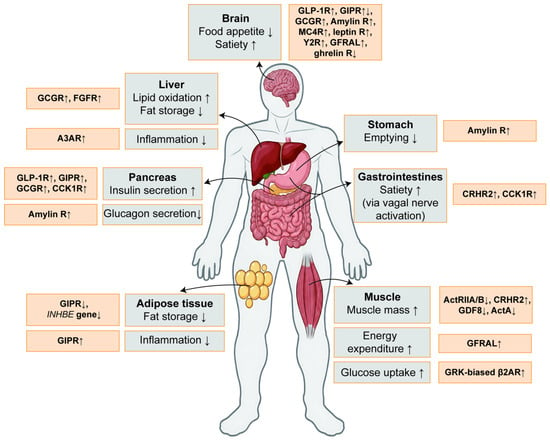
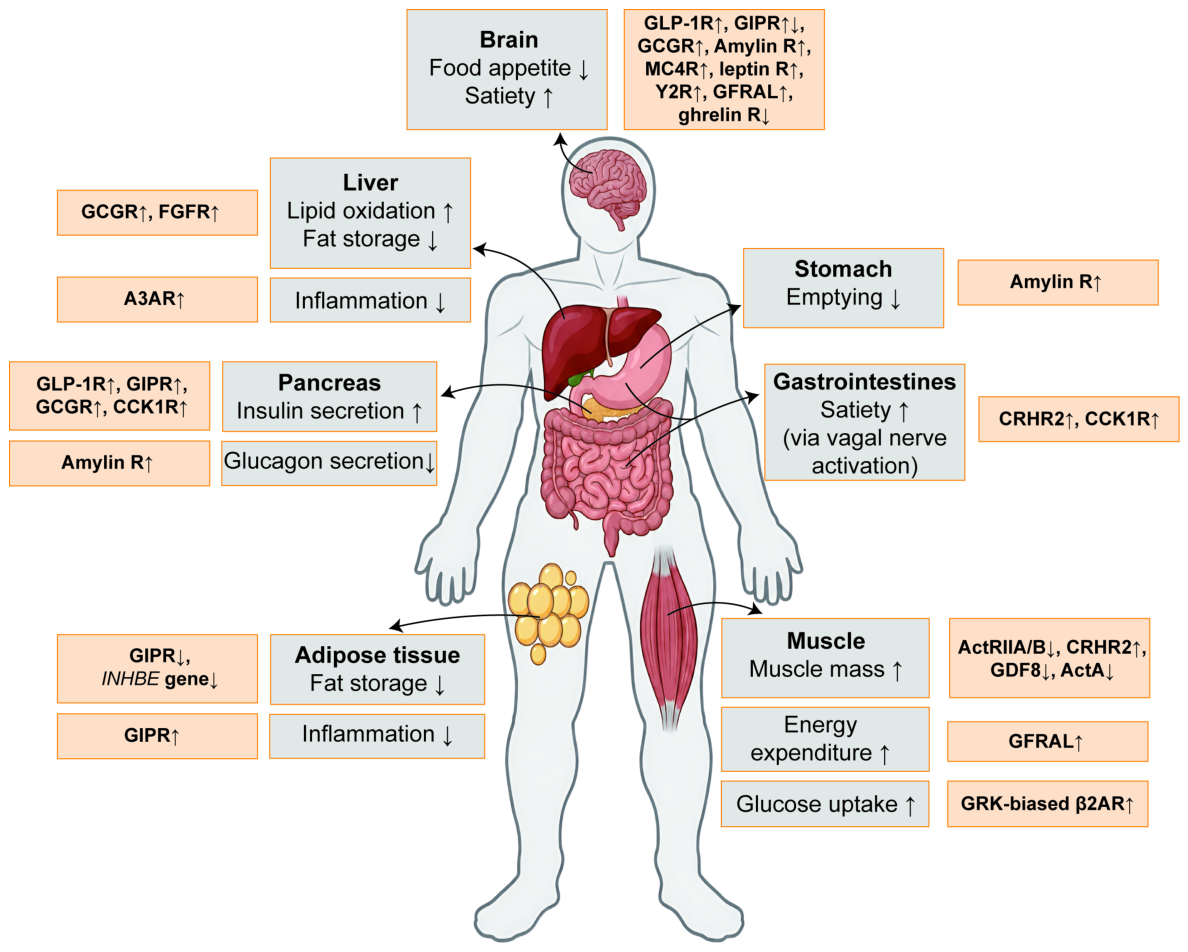

Disclaimer/Publisher’s Note: The statements, opinions and data contained in all publications are solely those of the individual author(s) and contributor(s) and not of MDPI and/or the editor(s). MDPI and/or the editor(s) disclaim responsibility for any injury to people or property resulting from any ideas, methods, instructions or products referred to in the content. |
© 2026 by the authors. Licensee MDPI, Basel, Switzerland. This article is an open access article distributed under the terms and conditions of the Creative Commons Attribution (CC BY) license.