


Abstract
The camera is a core device for modern surveillance and data collection, widely used in various fields including security, transportation, and healthcare. However, their widespread deployment has proportionally escalated associated security risks. This paper initially examines the current state of research on attack methods targeting camera systems, providing a comprehensive review of various attack techniques and their security implications. Subsequently, we focus on a specific attack method against universal serial bus (USB) cameras, known as electromagnetic pulse (EMP) attacks, which utilize EMP to prevent the system from detecting the cameras. We simulated EMP attacks using a solar insecticidal lamp (which generates EMP by releasing high-voltage pulses) and a commercially available EMP generator. The performance of the cameras under various conditions was evaluated by adjusting the number of filtering magnetic rings on the USB cable and the distance between the camera and the interference source. The results demonstrate that some USB cameras are vulnerable to EMP attacks. Although EMP attacks might not invariably cause image distortion or permanent damage, their covert nature can lead to false detection of system failures, data security, and system maintenance. Based on these findings, it is recommended to determine the optimal number of shielding rings for cameras or their safe distance from EMP sources through the experimental approach outlined in this study, thereby enhancing the security and resilience of USB camera enabled systems in specific scenarios.
1. Introduction
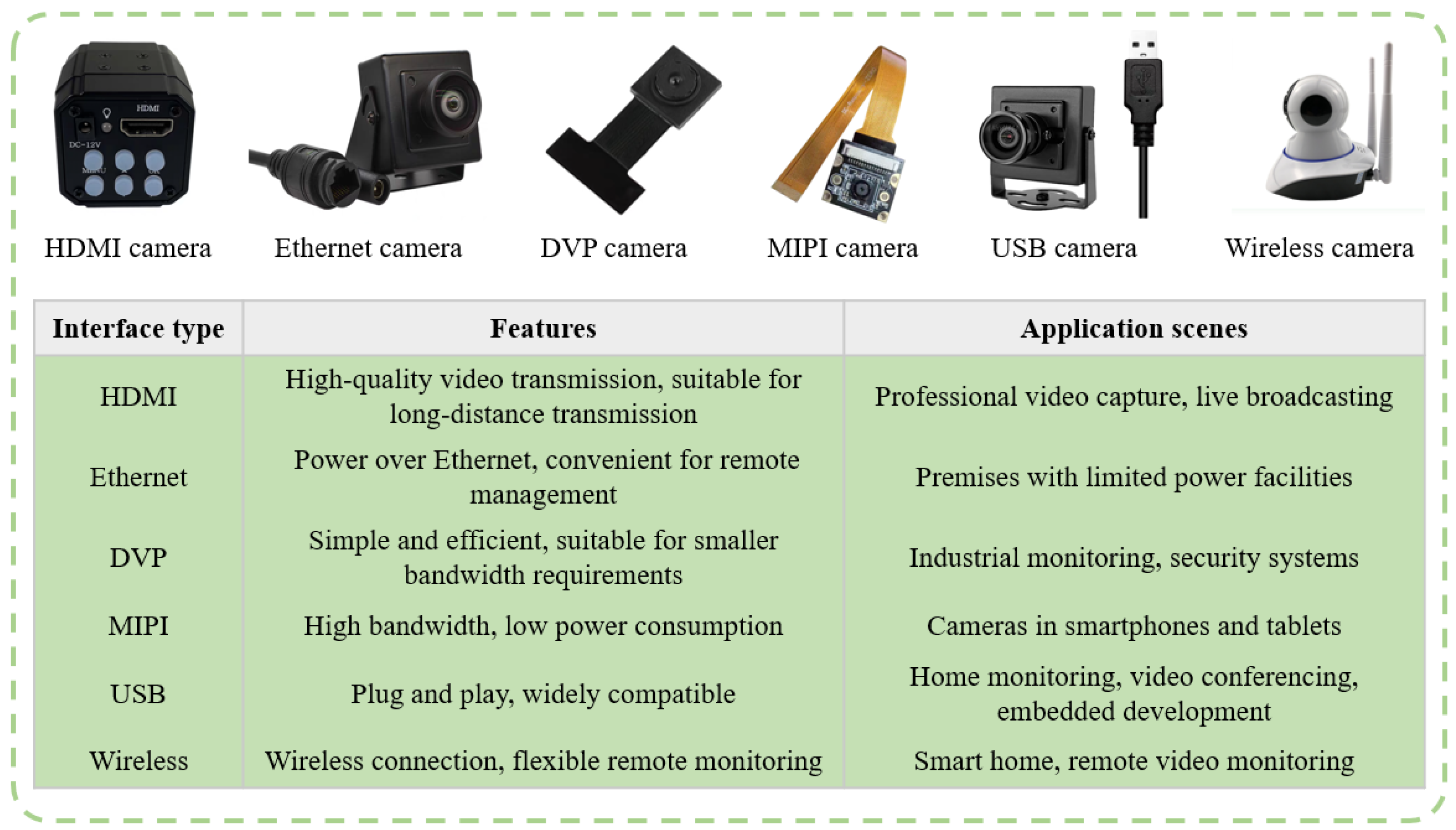
Since the inception of camera technology, it has undergone continuous evolution. Early cameras were based on analog technology, primarily used for capturing static images. With the advancement of digital technology, cameras have transitioned from analog to digital, expanding their functions from simple photography to include video recording, real-time monitoring, and more. In recent years, improvements in sensors and the evolution of algorithms have further expanded the application range of cameras, extending from personal devices [1] to various fields, including industry [2], agriculture [3,4], and urban management [5]. Therefore cameras have become key components in modern visual information systems. Throughout this technological evolution, the forms of interfaces have also diversified. Based on the type of data transmission interfaces, cameras can be roughly categorized into the following types: high definition multimedia interface (HDMI), ethernet, digital video port (DVP), mobile industry processor interface (MIPI), universal serial bus (USB), and wireless interfaces. As shown in Figure 1, each type of camera interface is suited for specific application scenarios based on its features.
Figure 1.
Features and application scenes of cameras with various interfaces.
With the widespread adoption of cameras in various scenes, their security has attracted increasing attention. In the modern network environment, cameras, as important components of cyber-physical systems, face various potential attacks. Current research has identified and explored several types of cyber-physical attacks related to cameras, including unauthorized access [6], video stream tampering [7], malware injection [8], denial-of-service (DoS) attacks [9], and physical tampering [10]. These attacks not only threaten the normal operation of camera devices but may also lead to sensitive data leaks and even large-scale system failures. In terms of physical attacks, electromagnetic interference (EMI) can be used as a method to disable camera devices. For example, research [11] has developed an electromagnetic pulse (EMP) device aimed at disabling wireless surveillance cameras to protect privacy. An EMP is a powerful form of EMI that can instantly impact and damage electronic devices. The unique aspect of EMP is its ability to affect the normal operation of electronic devices without direct contact, making it an effective attack method. However, to our knowledge, there has been no research focusing on the impact of EMP on USB cameras.
1.1. Motivation
The motivation for this study stems from an incidental discovery made during the development of a pest monitoring system based on the solar insecticidal lamp internet of things (SIL-IoT). In this system, we employed a USB camera to capture images of the pests that were killed. However, when the high-voltage metal mesh was in operation (which generates localized EMP), the system frequently encountered issues with detecting the USB camera. Based on our previous research [12], strong EMP have been shown to significantly interfere with Zigbee-based devices. Therefore, we propose the “USB Camera Failure Hypothesis”, suggesting that this failure may be caused by EMP interference. This hypothesis prompted us to conduct an in-depth study of the performance of USB cameras under EMP attacks to reveal their potential vulnerabilities.
1.2. Contribution & Organization
This paper reports on the physical security issues of USB cameras through specific experiments on EMP interference. The main contributions of the paper are summarized as follows:
- We systematically explored the performance of USB cameras under EMP interference, revealing the threat of EMP as an attack method against USB cameras.
- During this exploration, we proposed effective protection strategies that provide important references for USB cameras to defend against EMP attacks.
The rest of this paper is organized as follows. The study of the existing technologies is discussed in Section 2. Section 3 presents the discovery and exploration of the issue regarding the vulnerability of USB cameras to EMP attacks. Section 4 presents a detailed discussion. Finally, the conclusions are drawn in Section 5.
2. The Current Situation of Camera Attacks
The increasing integration of cameras into various aspects of life has led to a rise in the number and sophistication of attacks targeting these devices. As outlined in the review presented in [13], several cyber attack methods have been identified, including steganography attacks, covert channel attacks, pan–tilt–zoom (PTZ) attacks, malware attacks, and privilege escalation attacks. These attacks are designed to be stealthy, allowing attackers to gain control or extract information without being detected. The specific descriptions are as follows:
- Steganography attacks refer to malicious activities that exploit steganographic techniques to hide, intercept, extract, or manipulate hidden information or payloads within seemingly innocuous media files (such as images, videos, or network data). These attacks often aim to bypass traditional security measures, compromise systems, steal sensitive data, or undermine the integrity of communication channels. For example, one method of malware implantation involves embedding malicious payloads into a set of PNG files, which can then be compiled into a legitimate application, allowing malware to be extracted and inserted into the system. In the context of cameras, when User A (the homeowner or office owner) approaches an internet protocol (IP) camera, the camera is capable of recognizing and storing their facial image while capturing a cover image that does not contain a face. Subsequently, steganographic techniques are used to combine these two images into a stego image (with the actual facial image hidden within the cover image). Attacker B can intercept the data transmission between the IP camera and the home server, gaining access to the hidden facial image. Then, Attacker B can use this decrypted facial image to attack the home security system and gain access to the home or office.
- Covert channel attacks are a type of attack that utilizes channels within systems, networks, or applications that are not designed for information transmission to transfer data. By using this method, attackers can retrieve or transmit sensitive information undetected, thereby bypassing security mechanisms. Attackers can use these types of attacks to communicate with malware embedded within the system. In closed-circuit television and video surveillance systems, attackers can manipulate infrared LEDs to send specific commands and control data to the cameras, achieving communication with the embedded malware.
- PTZ is a functional characteristic of surveillance cameras that allows for zooming and adjusting the camera’s field of view, including horizontal (left and right) and vertical (up and down) angles. Camera models utilize built-in stepper motors and employ PTZ data protocols to achieve this functionality. PTZ-capable cameras can be controlled using keyboard shortcuts or a specially designed joystick with PTZ commands. When a PTZ camera is compromised, attackers can access the camera’s PTZ coordinate data and other information. When users view the live feed from the camera via a mobile application, all PTZ requests are routed through the cloud server to the camera. Suppose this communication occurs at intervals of a few seconds. In that case, an attacker intercepting this communication may not be able to decode the PTZ data but can accurately determine the intervals at which communication occurs. The attacker can then launch an attack that aligns with the communication intervals, thereby avoiding detection.
- Malware attacks involve inserting malicious code into devices to control their functions. Malware comes in many forms, including viruses, Trojans, ransomware, and spyware. Once a device is successfully infected, attackers can remotely control it. In 2016, the infamous Mirai malware attack infected a large number of IoT devices—primarily IoT cameras and digital video recorders—and used them as part of a botnet to carry out large-scale network attacks [14]. The Mirai attack caused many major internet services, such as Twitter, Netflix, and Reddit, to be disrupted in Europe and the United States [15]. Additionally, if security cameras or smartphone cameras fall victim to malware attacks, users’ privacy is severely threatened, with the potential for daily life or intimate photos to be leaked on social media, resulting in irreversible consequences.
- Privilege escalation attacks refer to the actions taken by unauthorized entities (such as users or applications) to gain system permissions that exceed their original authorization. These attacks can be broadly categorized into two types: vertical privilege escalation and horizontal privilege escalation. Vertical privilege escalation occurs when a low-privilege entity exploits system vulnerabilities or design flaws to perform high-privilege operations, such as executing system-level functions. In contrast, horizontal privilege escalation involves entities at the same privilege level accessing data or functions of other entities without authorization. In the Android system, privilege escalation attacks typically exploit vulnerabilities to bypass built-in security measures, allowing malicious applications to access sensitive user data, such as location information, camera permissions, and user passwords.When using the Android camera, there is a resource contention issue. When multiple applications request access to the same camera, the application with the higher priority will be granted access. In this context, a privilege escalation attack can enable a malicious application to quietly seize control of the camera while a legitimate application is using it. This type of attack does not directly interfere with the functionality of the victim application but can impact user experience. Once the attack is successful, the attacker may capture the camera view and discreetly obtain private information from the user, such as facial features or sensitive data represented by QR codes [16].
To further deepen our understanding of camera attack methods, we conducted a comprehensive investigation. In addition to the five network attack methods summarized in [13], we identified another ten major attack types. Based on the survey results, we categorize the stages of camera attacks into three:
- 1.
- Data acquisition stage: Attackers interfere with the normal functioning of the camera through physical means, such as obstructing the camera to prevent it from capturing images. This type of attack not only affects the camera’s real-time monitoring capabilities but may also prevent it from recording crucial information, thereby posing serious risks to security monitoring.
- 2.
- Data transmission stage: Attackers can use various methods to tamper with the data being uploaded, misleading monitoring personnel or systems and causing them to fail to accurately identify the current real situation. This method is highly covert and easy to execute, often posing potential security threats to the system.
- 3.
- Data processing stage: Attackers can introduce perturbations to alter the image before the original data is processed by the model. By modifying the input data, attackers can mislead the final output results, impacting subsequent decision-making processes. This type of attack not only undermines data integrity but may also affect the learning and recognition accuracy of the algorithms.
Based on the analysis of the state of camera devices after being attacked, we summarize the results of the attacks into four categories:
- 1.
- Operational: Some attacks may not affect the basic functionality of the camera, allowing it to continue operating normally. This situation enables attackers to observe the monitored area without raising suspicion;
- 2.
- Temporarily blinded: In certain cases, the camera may temporarily lose vision and then recover.
- 3.
- Temporary malfunction: Attacks may cause the camera to lose functionality for a short period; however, the device can return to normal operation through rebooting or repairs. While this situation does not cause permanent damage, it may impact monitoring effectiveness at critical moments.
- 4.
- Destroyed: In extreme cases, attacks may completely damage the camera, rendering it unable to function. Such damage typically requires replacement of the device.
Moreover, attacks not only affect the device itself but also severely impact the quality of the images or videos output by the camera. We classify the output results into three types:
- 1.
- Distorted output: The attack may cause distortion in the images or videos output by the camera. This distortion affects the effectiveness of monitoring, making it difficult to discern critical information;
- 2.
- False output: Attacks may cause the camera to output data that contradicts the actual situation. This kind of incorrect output can lead monitoring personnel to make erroneous judgments, thereby impacting emergency response and decision-making.
- 3.
- No output: In some attacks, the camera may fail to output any images or videos at all. This situation severely impacts monitoring capabilities, potentially creating blind spots in the monitored area and increasing security risks.
As shown in Table 1, we provided a detailed description of the 10 types of camera attack methods identified in the survey. It is noteworthy that although [11] and this paper address the same type of attacks, the former focuses on wireless cameras, whereas this paper concentrates on USB cameras.
Table 1.
Description of camera attack methods.
2.1. Laser Blinding
Laser blinding is a type of attack that damages a camera’s optical sensor using a high-intensity laser beam. Yan et al. [17] investigated the effects of a 650 nm red laser on cameras and found that laser exposure can temporarily blind the camera, rendering it unable to capture clear images for a certain period. If exposed at a distance of 0.5 m for a few seconds, irreversible damage may occur to the complementary metal oxide semiconductor (CMOS) or charge-coupled device (CCD) optical sensors. Additionally, Kuantamaa et al. [26] pointed out that lasers from the visible and near-infrared spectrum can distort image quality and can damage the camera’s optical sensor when sufficient power is applied.
2.2. Video Replay Attack
In a video replay attack, the attacker intercepts a portion of the genuine video transmitted between the sender and the receiver, then replays the intercepted video to deceive the receiver into believing that the attacker is a legitimate user. This can potentially lead to erroneous decisions or security vulnerabilities. For example, research [18] highlights the dangers of this attack in the drone field, indicating that it could lead operators to receive incorrect video information, causing the drone to deviate from its intended flight path.
2.3. Tampering with Video Feeds
Tampering with video feeds refers to unauthorized modifications, insertions, or deletions made by an attacker to single or multiple video frames, with the aim of altering the authenticity or integrity of the video content [27,28,29,30]. Attackers can infiltrate the surveillance system by exploiting vulnerabilities in the monitoring cameras or hijacking the connected Ethernet cables, allowing them to alter the real-time video stream to conceal illicit human activities within the monitored area [31]. In addition, the review [19] provides a comprehensive investigation of video forgery techniques and reviews various machine learning and deep learning methods used for forgery detection. The review emphasizes the significant threat that video feed tampering poses to video forensics. Such attacks can undermine the credibility of video evidence used in court, impacting judicial fairness. For example, if tampered videos are used for prosecution or defense, they may lead to wrongful convictions or unjust accusations against innocent individuals.
2.4. Adversarial Attacks
In adversarial attacks, attackers make small modifications to the input data, causing machine learning models to produce abnormal results. Adversarial attacks can be divided into two types: digital adversarial attacks and physical adversarial attacks. Digital adversarial attacks disrupt models by adding slight perturbations to the input data in the digital domain, while physical adversarial attacks interfere by modifying the visual characteristics of real objects [20,22]. For instance, attackers can place stickers on camera lenses or apply perturbations to the objects being photographed. These attack methods include adversarial patches [32,33], adversarial stickers [34], adversarial camouflage [35], and adversarial beams [36]. Additionally, physical adversarial attacks may involve malicious configuration changes [37], such as tampering with the camera’s recording coverage, position, or adjusting focus and zoom settings. Compared to digital adversarial attacks, physical adversarial attacks pose a greater risk to social security [38].
Recently, Yang et al. [39] proposed a physical adversarial attack method called Adv-Sticker, which uses small printed stickers (3 × 3 cm) to mislead face recognition systems. Evaluations on four common face recognition algorithms (Facenet, Mobile-Facenet, Ir152, and Irse50) indicate that Adv-Sticker can achieve physical spoofing of face recognition systems. This attack may pose serious risks to financial payments, device unlocking, and personnel access. Additionally, Hu et al. [40] developed a neon light-based adversarial attack method that leverages the ubiquitous presence of neon lights in urban environments as an effective means of interference. Research indicates that attackers can use carefully designed neon light beams to confuse the perception systems of autonomous vehicles. This type of attack could lead to erroneous decisions made by the autonomous driving system, potentially resulting in traffic hazards.
2.5. Intense Light Attack
When cameras are exposed to intense light, they temporarily lose their visual capability and require a recovery period. This type of attack is relatively straightforward, as an attacker only needs to intermittently turn a light source on and off to create a momentary flash of brightness, thereby disrupting the camera’s normal operation. Such an attack poses significant safety risks, as during the recovery period, the autonomous vehicle may be unable to promptly recognize its surroundings, increasing the risk of collisions with unperceived obstacles [21].
2.6. False Data Injection Attack
In the context of industrial internet of things (IIoT) systems, false data injection attacks (FDIAs) represent a sophisticated and stealthy cyberattack strategy where adversaries inject manipulated or falsified data into the communication stream between IIoT devices. The message queuing telemetry transport (MQTT) protocol, commonly employed for lightweight communication in IIoT environments, often serves as a critical attack vector for executing such attacks. MQTT operates on a publish-subscribe model, enabling devices to exchange messages asynchronously, which is highly efficient but inherently vulnerable to security risks if adequate protections are not in place.
FDIA targeting IIoT cameras capitalizes on these vulnerabilities, particularly those associated with MQTT’s lack of encryption, insecure message integrity checks, and authorization weaknesses. By intercepting MQTT packets, attackers can analyze the topic structure, message payloads, and protocol behavior to craft manipulated data that mimics legitimate messages [23]. Specifically, MQTT-enabled camera systems transmit encoded images or video streams to a central dashboard, updating the user with real-time camera views. Attackers exploit this mechanism by injecting falsified payloads into the relevant topics, tricking the system into processing and displaying fake camera views as if they were authentic. The attack enables attackers to conceal illegal activities occurring in the monitored area or mislead operators into making incorrect decisions based on forged visual data.
2.7. Distributed Denial of Service Attack
A DoS attack is an assault aimed at rendering a server or network incapable of providing normal services. A DoS attack occurs only when access to the server or network resources is intentionally obstructed or degraded due to malicious actions taken by other users. These attacks do not necessarily directly or permanently damage data, but they deliberately impair the availability of resources. The most common DoS attacks target the bandwidth or connections of computer networks. Bandwidth attacks overwhelm the network with a large volume of traffic, consuming all available network resources, thereby preventing legitimate user requests from getting through and resulting in decreased productivity. Connection attacks send a large number of connection requests to the target server, consuming all available operating system resources and preventing it from processing legitimate user requests [41].
Distributed denial of service (DDoS) attacks utilize multiple computers to launch coordinated DoS attacks against one or more targets, making it a more advanced form of DoS attack. Research by Ibrahim et al. [24] found that when a Slowloris attack—a specific type of DDoS attack—was launched against IP-based cameras, it established multiple low-rate connections with the target server and kept these connections open by periodically sending incomplete hypertext transfer protocol (HTTP) requests. This attack can cause the cameras to operate inefficiently or crash directly.
2.8. Electromagnetic Signal Injection Attack
This attack injects electromagnetic signals to interfere with the circuit’s electrical signals, leading to distorted images captured by the cameras [25]. Such attacks enable attackers to remotely manipulate images, leading artificial intelligence to make erroneous decisions. For instance, Attackers can deploy small attack devices, no larger than a credit card, to get close to the car’s camera and trigger the attack while the vehicle is in operation. The electromagnetic signal injection attack could mislead the visual recognition models in autonomous driving systems, leading to erroneous decisions that pose potentially catastrophic consequences for road safety [42].
3. Verification and Analysis of EMP Effects on USB Camera Performance
3.1. EMP Overview
EMP is a type of electromagnetic shock wave that produces energy pulses capable of generating a powerful electromagnetic field, particularly near weapon explosions or other high-energy events. The intensity of this electromagnetic field may be sufficient to induce transient voltages of several thousand volts in exposed conductors, such as the wires or conductive traces on printed circuit boards. The occurrence of transient voltages can lead to abnormal operation, damage, or even complete failure of electronic devices. Based on their origins, EMPs can be classified into two categories: natural electromagnetic pulses and man-made electromagnetic pulses [43].
Natural electromagnetic pulses primarily originate from intense events in nature, such as geomagnetic disturbance, solar flare and lightning. These natural phenomena can induce instantaneous strong electromagnetic fields in the Earth’s electromagnetic environment, posing serious threats to electronic devices and communication systems. In particular, solar flares can cause planetary-scale electromagnetic interference, potentially impacting satellite communications, navigation systems, and electrical grids.
Man-made electromagnetic pulses can be further divided into nuclear electromagnetic pulses (NEMP) and non-nuclear electromagnetic pulses (NNEMP), each with distinct characteristics and impacts in artificial environments.
- NEMP: When a nuclear weapon detonates at high altitudes, it releases intense gamma rays. These rays enter the unevenly dense atmosphere, causing air molecules to ionize and producing a large number of free electrons. These electrons escape the detonation point at nearly the speed of light, creating a strong positive ion region and generating a powerful electromagnetic field. This electromagnetic field radiates outward at a high speed, forming a strong electromagnetic pulse. When this strong electromagnetic pulse affects electronic devices, communication systems, and electrical infrastructure, it can induce high transient voltages and currents, resulting in equipment damage, data loss, or system failure. The impact range of NEMP can extend up to hundreds of kilometers, threatening a wide array of infrastructure and civilian facilities [44].
- NNEMP: Non-nuclear electromagnetic pulses are generated in the absence of nuclear elements. Such pulses can be produced by high-voltage discharges. When current suddenly changes or increases sharply, it releases intense electromagnetic waves, which can affect surrounding electronic devices in pulse form, potentially leading to device failure or interference.
3.2. EMP Protection Techniques
After gaining an understanding of EMP, we can explore how to effectively protect against the impacts these pulses can have. There are various electromagnetic pulse protection technologies available for different coupling pathways. Below is an overview of the classification of these technologies and their specific methods of implementation.
Electromagnetic radiation can enter electronic devices primarily through two coupling pathways: the front door and the back door. The front door coupling pathway refers to the signal channels that are open to the outside, such as radio frequency pathways and photodetection windows. In contrast, the back door coupling pathway refers to the non-signal channels of electronic devices, such as ventilation holes and gaps in the casing. Moreover, due to the penetrating nature of electromagnetic waves, for devices with non-metallic casings, the casing material and connecting cables also serve as back door coupling pathways for electromagnetic waves [45]. Based on these coupling pathways, EMP protection measures can be categorized into front door protection methods and back door protection methods. Classic front door protection methods include amplitude limiting, frequency domain filtering, and circulators. The mechanism of these methods is to differentiate between EMP attacks and the normal signals sent and received by electronic devices. However, since EMP attacks and normal signals may occupy the same frequency band, it can be challenging to accurately differentiate between the two, potentially leading to unreliable situations. In contrast, back door protection methods are simpler and more reliable. Back door protection only requires filtering all electromagnetic waves without considering the presence of normal signals. This can be achieved through methods such as shielding, absorption, grounding, and increasing distance from the source, which effectively isolate all electromagnetic waves from entering electronic devices and provide more comprehensive protection [46].
3.3. Experimental Setup
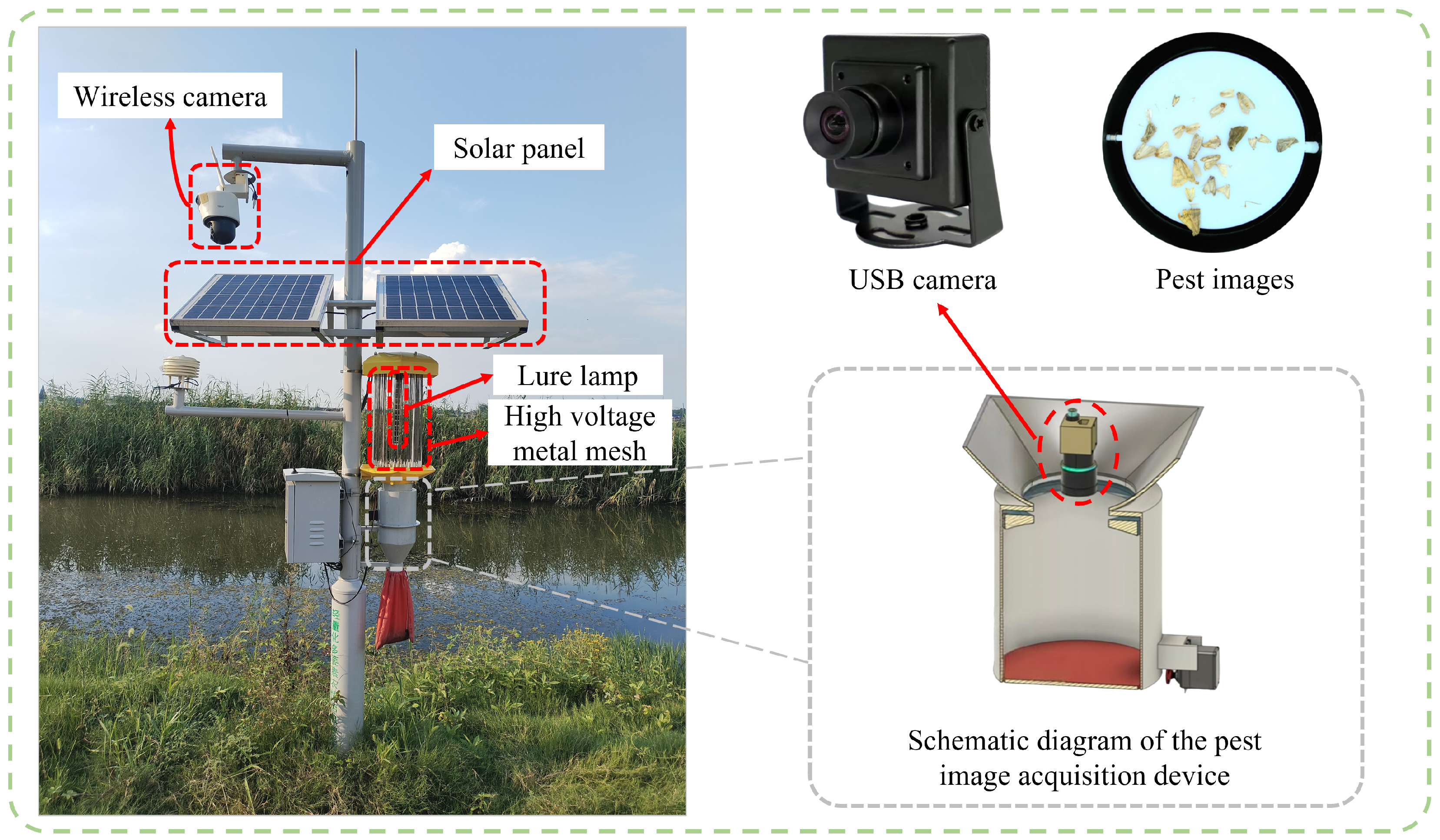
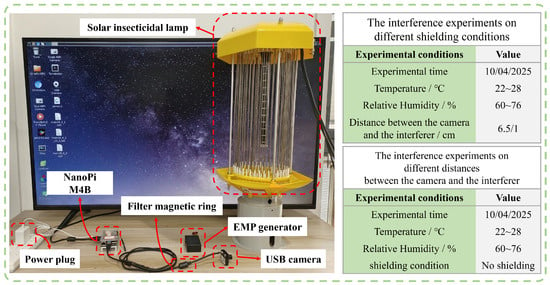
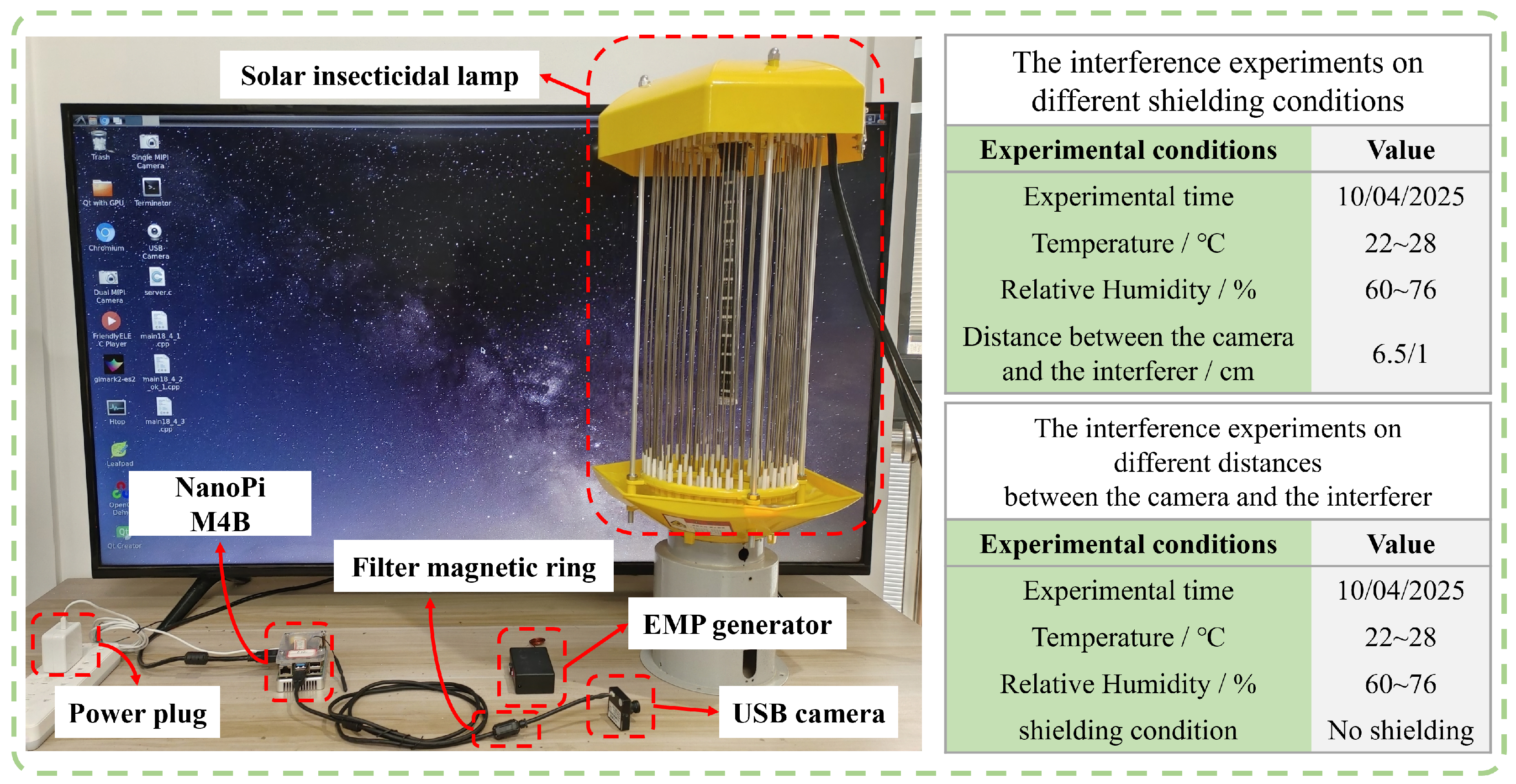
During the development of a pest monitoring system based on the SIL-IoT, we made an incidental discovery that when pests struck the high-voltage metal mesh (which generates EMP), the system frequently encountered issues with detecting the USB camera. We believe that this failure of the USB camera is due to EMP interference, prompting us to conduct a series of experiments for validation. This experiment utilized two types of EMP sources to simulate different intensities of EMP attacks to validate the assumption of USB camera malfunction: one is a commercial EMP generator that simulates low-intensity EMP (Zhanjing Xianfeng TS, produced by Sirmer Electronics Technology), and the other is a high-voltage discharge circuit sourced from a solar insecticidal lamp (SIL) that simulates high-intensity EMP, which was the environment where we first identified the issue. Figure 2 shows the overall structure of the experimental platform. We conducted two independent verification series. The conditions for validating the hypothesis of USB camera failure are shown in Figure 3, and all processes were conducted in a controlled indoor environment to minimize external interference and ensure stable testing conditions. Additionally, all validation videos have been uploaded online [47]. The first series investigated the effects of EMP under different electromagnetic shielding configurations, while the second series examined the impact of spatial separation between the USB camera and the interference source on its performance. If the USB camera fails in an EMP environment but operates normally after implementing anti-interference measures, we can conclude that the previous malfunction was indeed caused by the EMP. The verification conditions are as follows:
Figure 2.
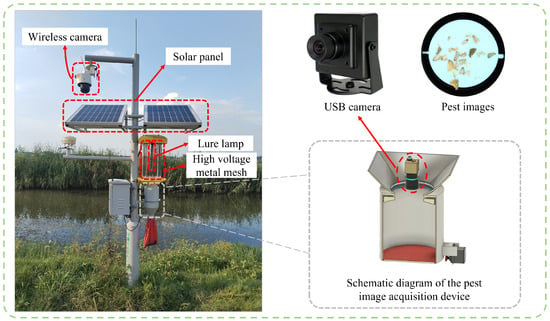
The structural diagram of the solar insecticidal lamp illustrates that the device absorbs energy through solar panels during the day and is equipped with a wireless camera to observe the surrounding environment. At night, it uses a lure lamp to attract pests and eliminates them with a high-voltage metal mesh. Meanwhile, the USB camera captures images of the pests, processes them, and uploads them to the cloud.
Figure 3.
Verification conditions for simulating EMP interference using SIL and EMP generator. The power plug is connected to the NanoPi M4B to provide it with power.
- 1.
- The USB camera was placed at a fixed distance from the interference source (1 cm from the EMP generator and 6.5 cm from SIL). At the same time, the effectiveness of anti-interference was modulated by varying the quantity of filter magnetic rings on the USB cable.
- 2.
- Without any shielding implementation, the separation distance between camera and interference source was incrementally increased until complete EMI immunity was achieved.
It should be noted that although the camera may be subject to mechanical damage, the reason for conducting tests at a specified distance is that the impact of EMP interference is closely related to distance. By evaluating the performance of the USB camera at a specific distance, we can gain a more accurate understanding of how the device responds in environments with different intensities of EMP. Additionally, finding effective protection methods to ensure the stable operation of the device is also an important goal of our research.
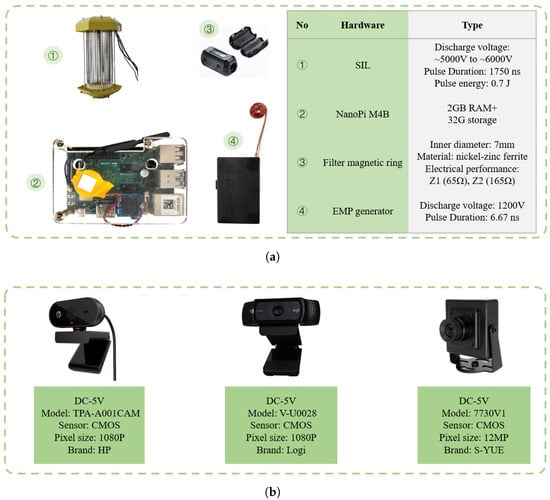
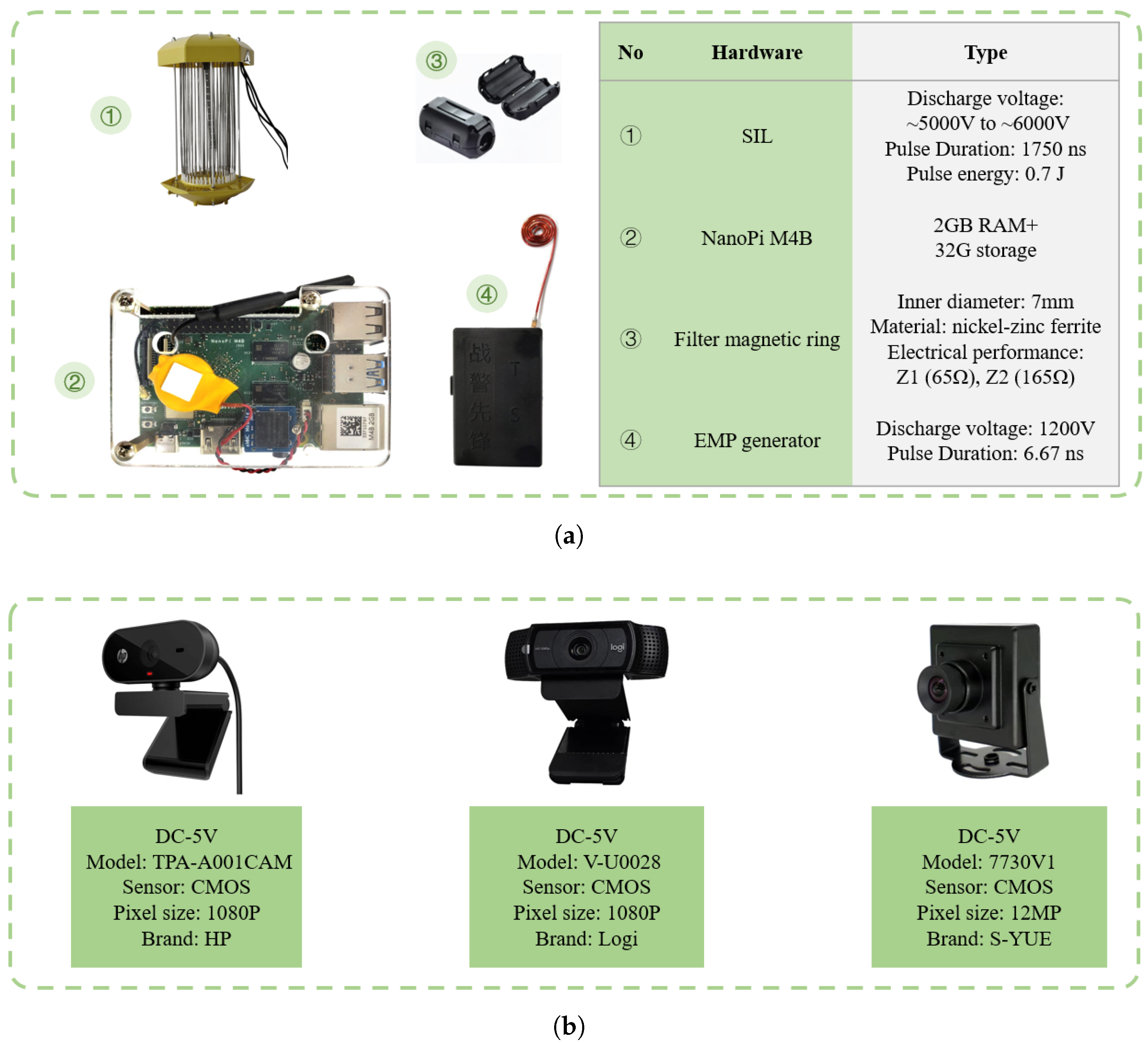
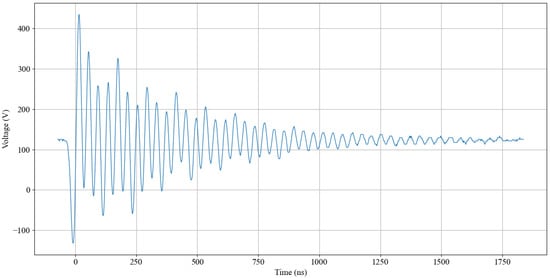
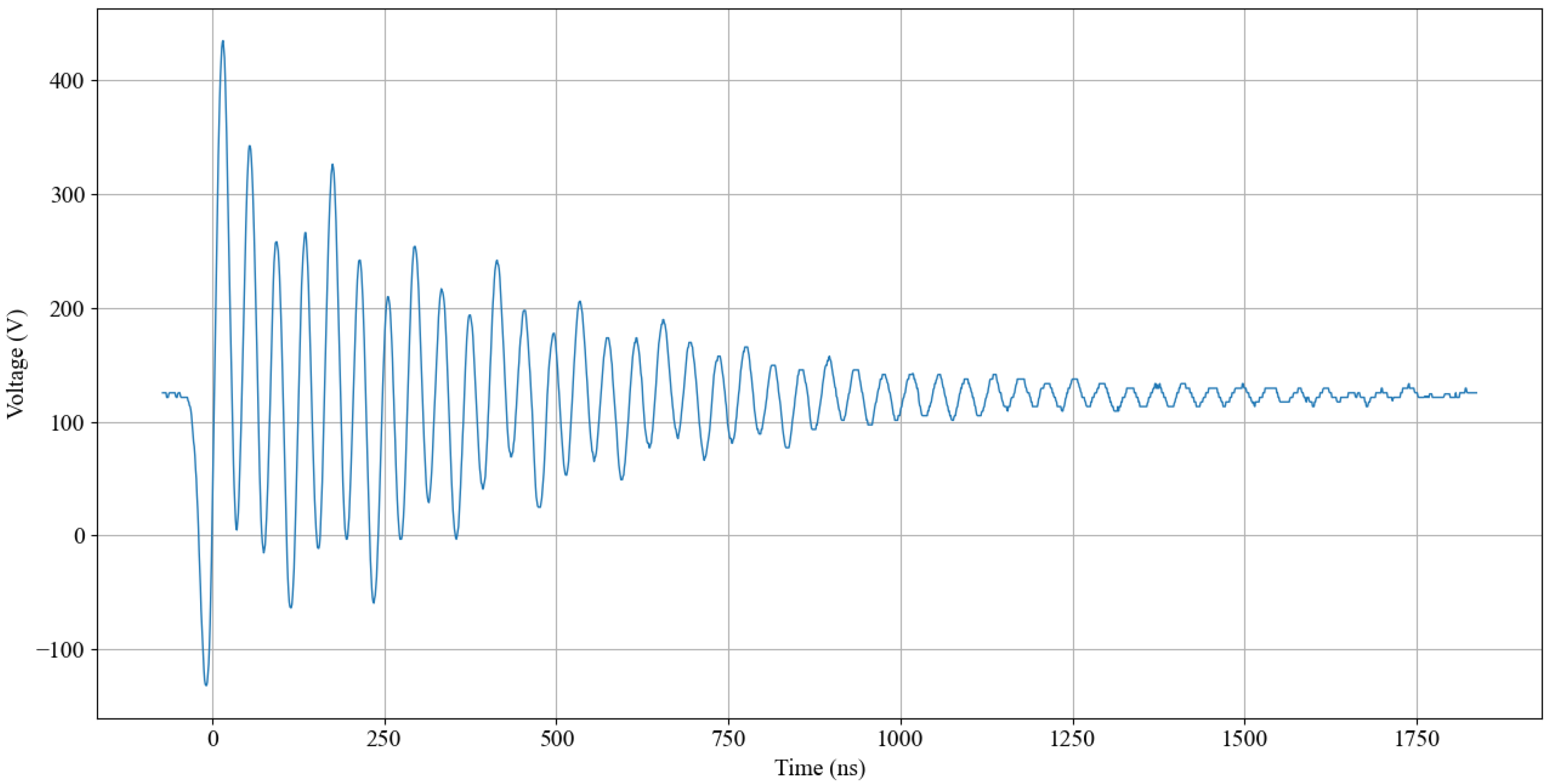
Figure 4a shows a detailed schematic of the devices used for exploring the impact of EMP attacks on USB cameras, excluding the cameras themselves. In this setup, the SIL is powered by a battery. Strong EMP emissions can be generated by touching the SIL metal mesh with a screwdriver, while relatively weak EMP emissions are generated by a professional EMP generator. The energy of a single discharge from the SIL has been measured in a study [48] to be 0.7 J, and the pulse duration was measured using an oscilloscope, as shown in Figure 5, which is approximately 1750 ns. Unfortunately, the manufacturer of this commercially available EMP generator has not provided any data on the pulse energy. The verification platform integrates a NanoPi M4B, a compact and powerful single-board computer renowned for its high performance and versatility, which is interfaced with both a USB camera module and a display unit. A real-time vision system implemented on the NanoPi M4B continuously assesses the operational status of the USB camera. We installed multiple filter magnetic rings (purchased from Hai Que Digital Specialty Store) along the USB camera cable to improve electromagnetic protection effectiveness and mitigate interference.These magnetic rings, functioning as toroidal filters, block common-mode currents and sometimes act as low-pass filters. Figure 4b provides detailed information on USB camera modules from three brands: HP, Logi, and S-YUE. All three camera models comply with european conformity (CE) certification, which includes EMI testing, specifically Radiated Emission (30 MHz–6 GHz), conducted at distances of 3/10 m in an anechoic chamber. Additionally, they meet the requirements for electrostatic discharge testing, specifically contact discharge at ±4 kV. In contrast, the discharge voltage and testing distance employed in this study are more extreme, and the pulse frequency of the SIL falls outside the requirements set by CE certification. This setup aims to simulate potential attack scenarios that could occur in real-world environments, allowing for a deeper understanding of the vulnerabilities of these camera modules when subjected to severe electrical stress.
Figure 4.
(a) Devices for exploring the impact of EMP attacks on USB cameras (excluding the cameras). Z1 represents the test frequency of 25 MHz, while Z2 indicates the test frequency of 100 MHz. (b) Detailed information on various USB camera modules.
Figure 5.
Pulse waveform of SIL discharge measured by oscilloscope with a sampling frequency of 2 GSa/s.
To define the criteria for determining whether a camera is affected by EMP, we refer to the international electrotechnical commission 61000-4-2 standard, which outlines the methods for testing the EMI performance of electronic devices. During the experiments, this standard requires that at least 10 single discharges be applied to each pre-selected point, with an interval of at least 1 s between consecutive discharges. Under natural circumstances, SIL usually kills up to 4 pests in a time interval of 5 s. Based on this, we have established a new standard: during the experiments, at least 15 single discharges should be applied to each pre-selected point. Specifically, we conduct three tests for each duration of 1 s, 2 s, 3 s, 4 s, and 5 s for the single discharges, while ensuring that there is an interval of at least 1 s between consecutive discharges. If the camera operates normally under this new standard, it is deemed unaffected by EMP.
3.4. Experimental Results
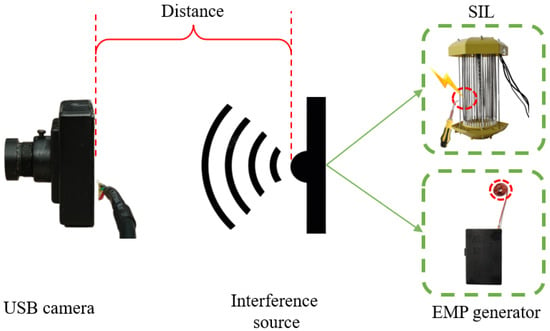
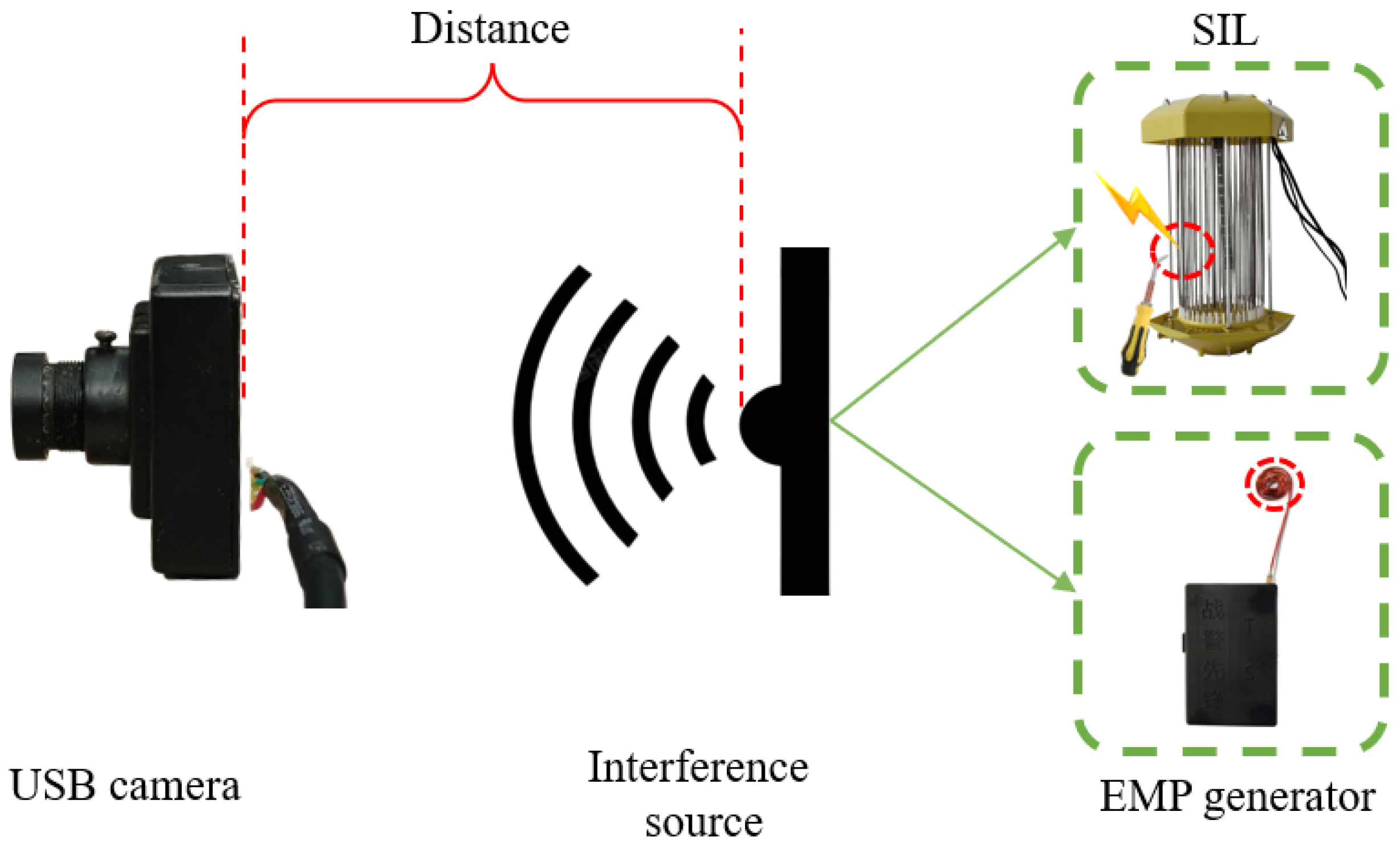
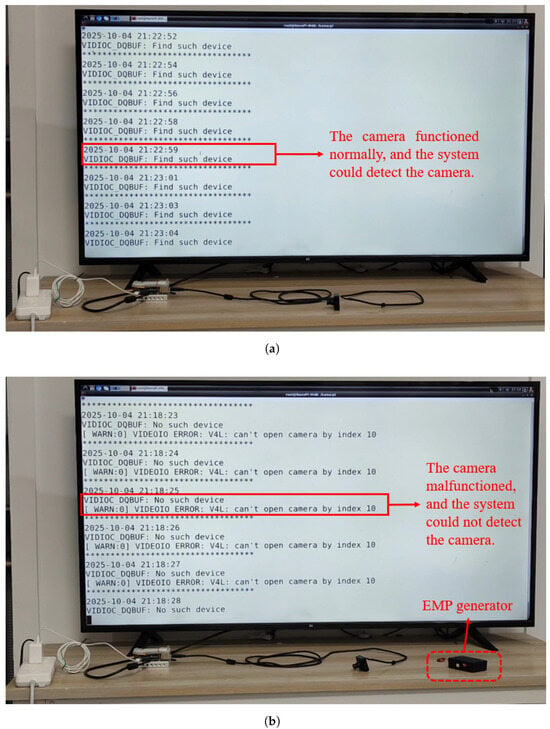
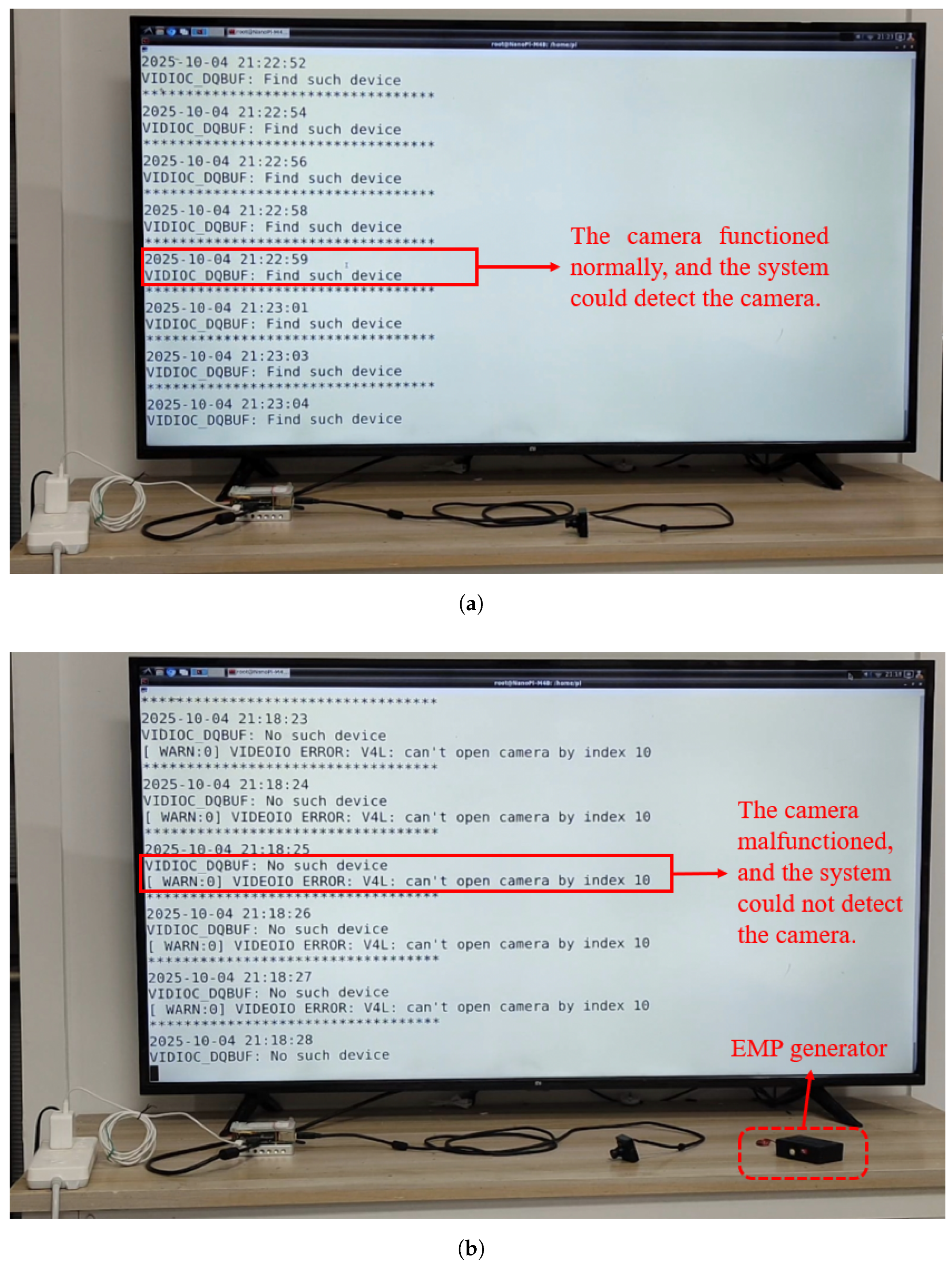
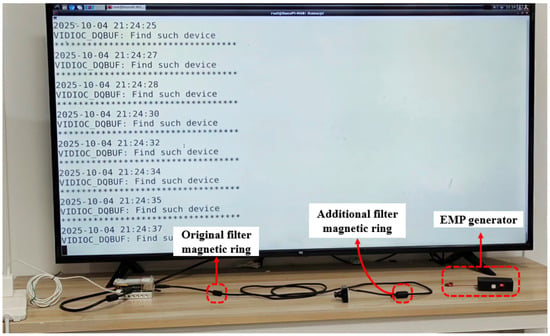
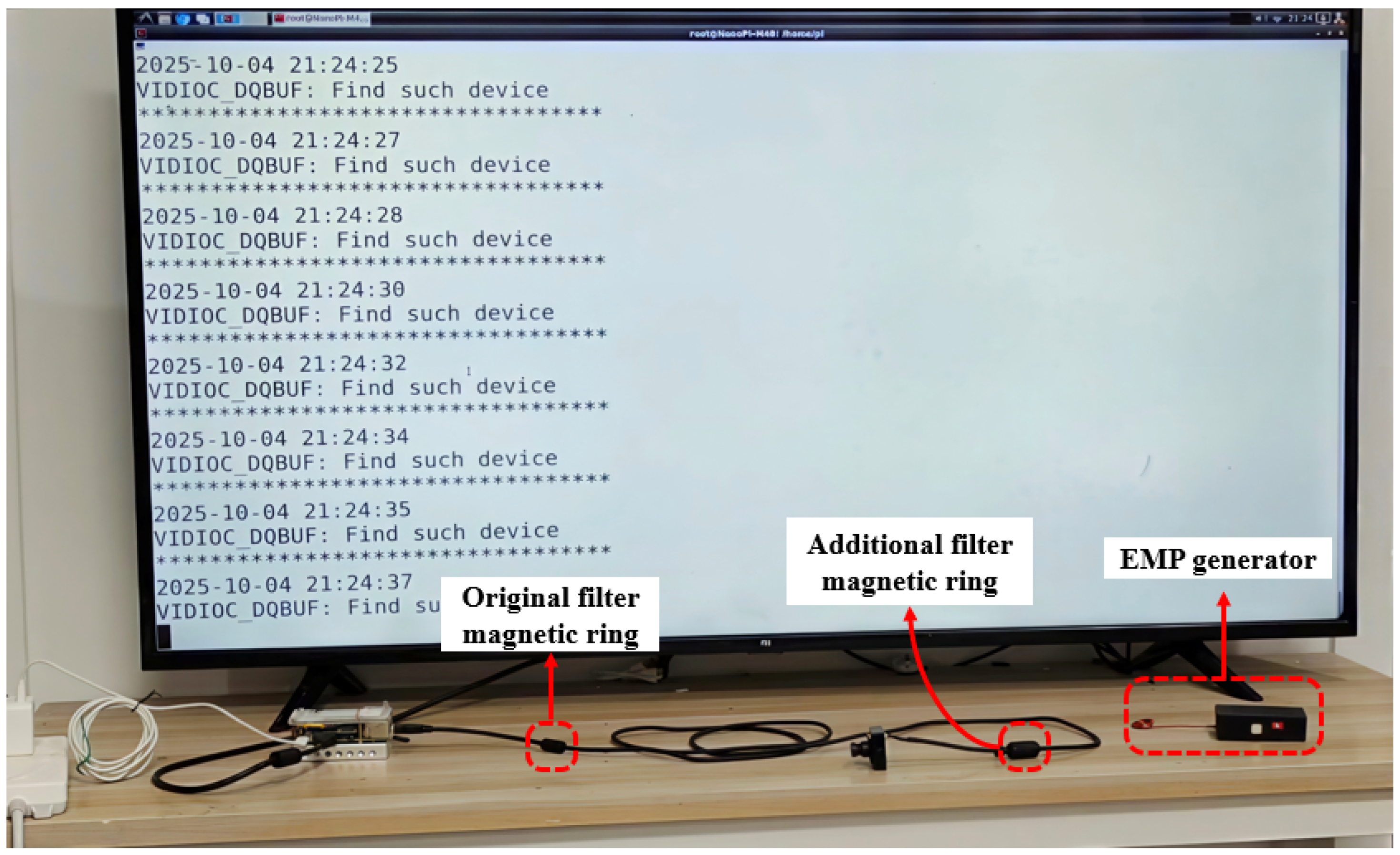
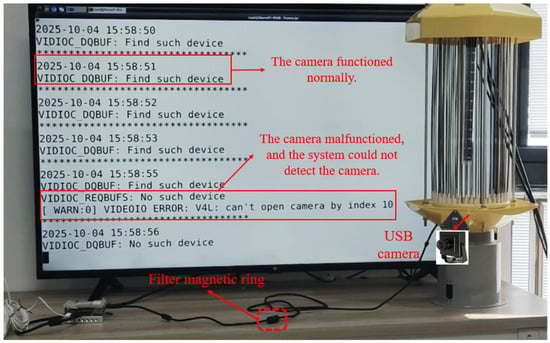
When the fixed EMP generator was positioned 1 cm away from the USB camera, both the HP and Logi cameras operate normally, while the S-YUE camera malfunctions, and the system failed to detect the device. The distance defined here is illustrated in Figure 6. In the subsequent verification, all distances referenced in this paper will correspond to this specific measurement method, and the wiring method of the USB camera connection will remain unchanged. The two outcomes of the camera functioning normally and malfunctioning are depicted in Figure 7. After adding an additional filter magnetic ring to the cable, the S-YUE camera resumed normal functionality. A schematic diagram of the filter magnetic ring installation is shown in Figure 8. Without any shielding, when varying the distance between the camera and the EMP generator, both the HP and Logi USB cameras remain unaffected, regardless of how far apart they are. However, for the S-YUE camera, reducing the distance between the EMP generator and the camera to less than 2 cm leads to a malfunction.
Figure 6.
The definition of the distance between the USB camera and the EMP interference source, where the red circle indicates the specific location emitting EMP.
Figure 7.
Effects of EMP generator on USB camera operation: (a) normal working, (b) failure.
Figure 8.
Schematic diagram of adding a filter magnetic ring on the USB camera cable when the interference source is an EMP generator.
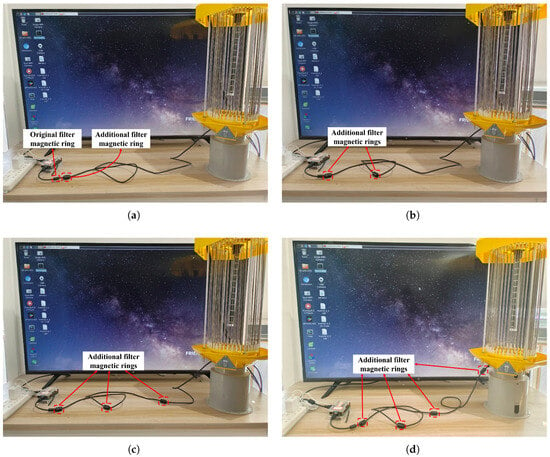
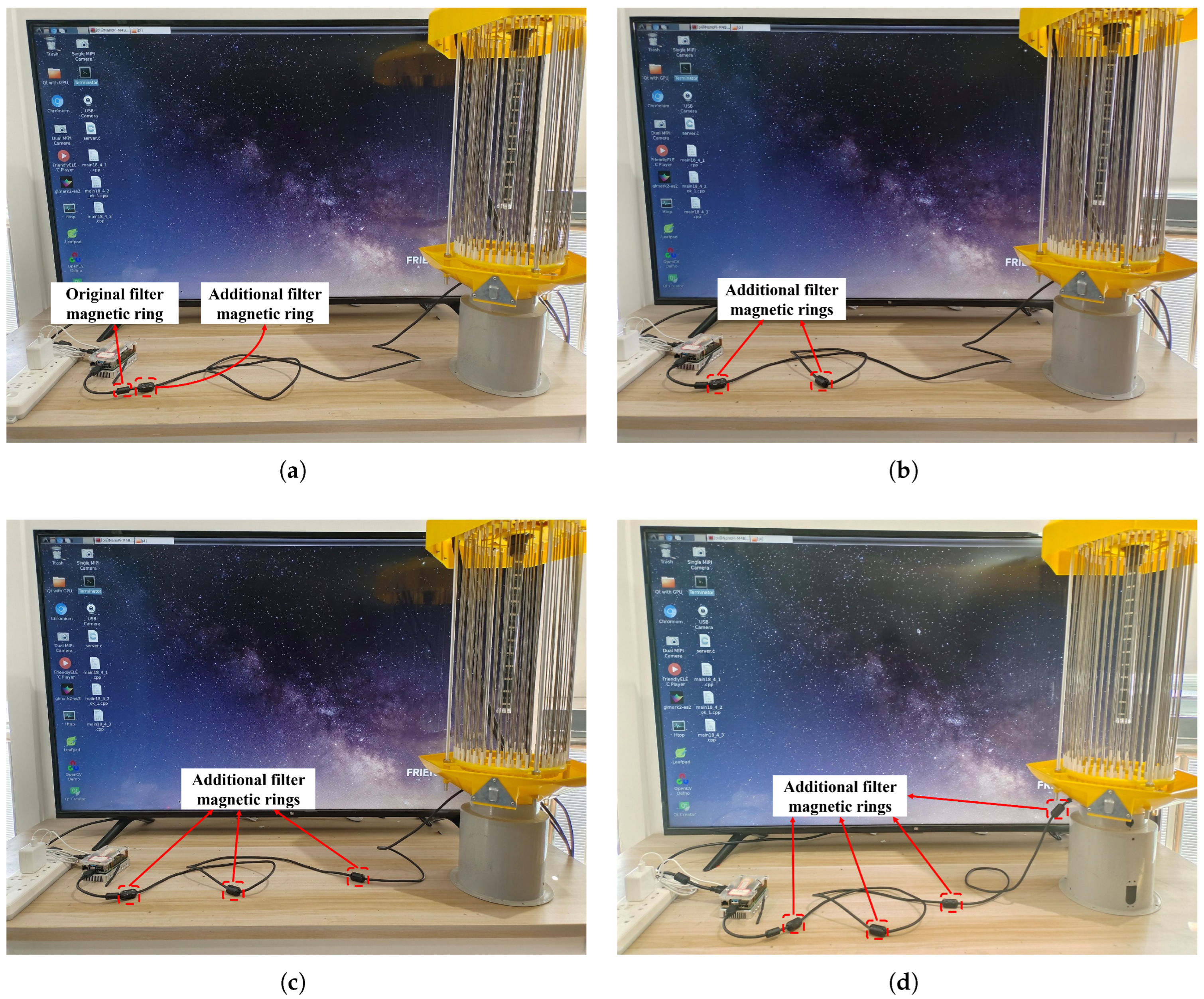
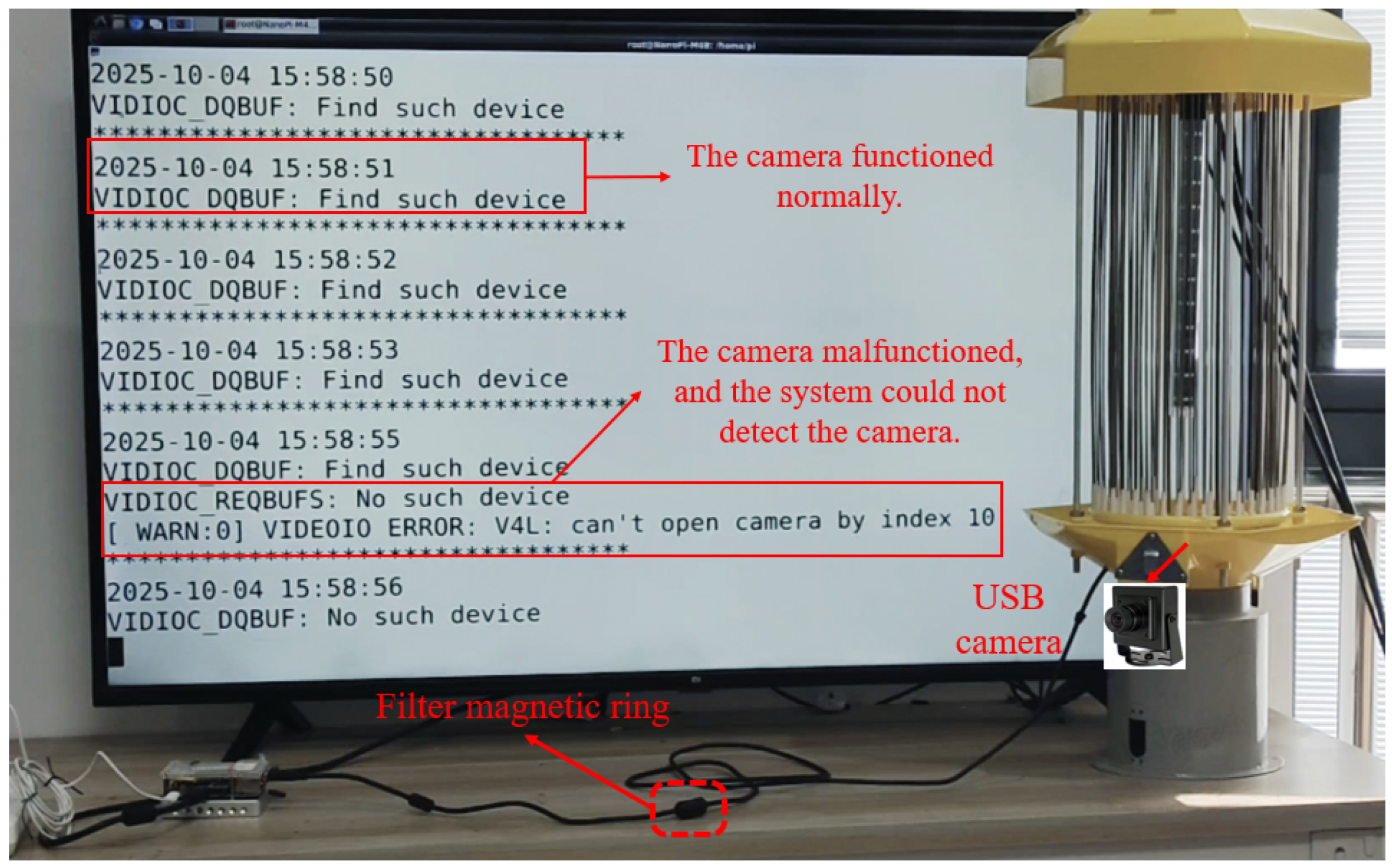
When the fixed SIL metal mesh was placed 6.5 cm away from the USB cameras (the distance at which we first noticed the camera malfunctions), the results are illustrated in Table 2. The installation diagrams of different numbers of filter magnetic rings are shown in Figure 9. Both the HP and Logi USB cameras demonstrated strong resistance to EMP interference, functioning reliably with just one filter magnetic ring, whereas the S-YUE camera required four rings to operate normally. The malfunctioning of the cameras is shown in Figure 10. The results for unshielded USB cameras at various distances are presented in Table 3. The data in Table 3 indicate that the HP camera malfunctioned at 6.5 cm but operated normally at distances of 7 cm and beyond. Similarly, the Logi camera experienced a malfunction at 7 cm but functioned properly at distances of 8 cm and greater. On the other hand, the S-YUE camera malfunctioned between 7 cm and 10 cm, only resuming normal operation at 11 cm. These findings validate our USB camera malfunction assumption. Moreover, these results demonstrate that EMP can be used as an effective method to attack USB cameras. Notably, among the three camera brands tested, the HP camera exhibited the strongest resistance to EMP attacks, while the S-YUE camera was the most sensitive, necessitating higher shielding measures for normal operation and showing a tendency to fail at shorter distances. This may be due to differences in design and materials among various brands that affect their sensitivity to EMP attacks. These results highlight the crucial need to incorporate EMP protection measures into camera system design considerations.
Table 2.
Status of USB cameras from different brands under various shielding strengths.
Figure 9.
Schematic diagram of adding different numbers of filter magnetic rings on the USB camera cable when the interference source is SIL. (a) Add one filter magnetic ring. (b) Add two filter magnetic rings. (c) Add three filter magnetic rings. (d) Add four filter magnetic rings.
Figure 10.
Effects of SIL on USB camera operation, with the camera installed inside SIL.
Table 3.
Status of USB cameras from different brands under various shielding strengths.
In all EMP attack processes, the USB camera maintained normal image transmission until a complete device detection failure occurred. Notably, the EMP-induced disruptions were non-permanent, with full functionality restored upon system reboot. Although the EMP attack does not permanently damage the device or distort images, it significantly increases system maintenance complexity. The transient nature of EMP effects may lead maintenance personnel to misinterpret the failure as loose connections or peripheral device malfunctions, rather than recognizing the EMP attack vector as the cause. This observation underscores the covert characteristics of EMP attacks on USB cameras.
Based on the verification results, it is advisable to apply protection methods to ensure that USB cameras work reliably in a high-intensity EMP environment. Effective mitigation strategies include installing multiple filter magnetic rings and maintaining a proper separation distance. In a low-intensity EMP environment, installing one or two filter magnetic rings is sufficient.
4. Discussion
In Section 3, we provide a detailed analysis of the behavior of various brands of USB cameras under EMP attacks. The HP camera demonstrates strong resistance to EMP, while the S-YUE camera exhibits relatively weak resilience, showing significant interference even at greater distances and higher shielding levels. Additionally, it is noteworthy that EMP attacks possess stealth, making preventive and responsive measures particularly crucial in real-world applications. Our results indicate that the addition of filter magnetic rings can mitigate the effects of EMP. However, their effectiveness varies depending on specific devices and configurations.
To illustrate broader implications, we analyze typical application scenarios, emphasizing the potential risks posed by EMP attacks on USB cameras. In industrial environments, USB cameras are used to monitor equipment and production lines, ensuring product quality and operational efficiency [49]. Failures resulting from EMP may lead to undetected defects or even production interruptions. Our experiments highlight the particular vulnerability of certain brands, such as S-YUE, indicating significant risks in industrial applications where uninterrupted operation is essential. This finding highlights the need for developing more resilient camera technologies for industrial applications.
In automated guided vehicle systems, USB cameras are used as sensors for position and path control. As a visual guidance system, they offer lower costs, higher levels of intelligence, and more convenient maintenance compared to laser and magnetic methods [50,51]. EMP attacks could disrupt these USB cameras, potentially causing accidents. Our research indicates that during EMP attacks, cameras may experience temporary failures, which further emphasizes the importance of developing highly reliable camera systems in automated driving scenarios. Even brief interruptions can result in severe consequences.
The protection measures proposed in this paper are primarily engineering solutions. However, they may not fully meet the requirements of the application scenarios mentioned earlier. There may not be enough space to incorporate filter rings during the deployment and design phases of the device. Therefore, it is important to explore more effective solutions. Additionally, these measures are still temporary responses. They have not been thoroughly validated for their effectiveness in providing long-term EMP protection for equipment. This study tested only three commercially available brands of USB cameras. While the results showed significant differences, testing a wider range of brands and models would help establish more universal conclusions. Currently, we can only infer the failure mechanisms from external observations and protective effects. The lack of reverse engineering and real-time monitoring of the internal circuits leaves us uncertain about which specific circuit modules (such as the image sensor, data lines, or USB connection points) are affected by EMP attacks. Hence, an in-depth analysis of the internal structures of the devices is necessary, and this issue will be further explored in future research.
5. Conclusions
In this paper, we examine various attack methods targeting cameras, offering a comprehensive perspective on the security threats they pose. These attack techniques each have their unique characteristics, exploiting different vulnerabilities within the system to gain unauthorized access or cause damage. Additionally, we conduct a focused analysis of the effectiveness of EMP as a physical attack method against USB cameras, highlighting the significant differences in EMP resistance among devices from different brands. The results indicate that EMP attacks can actively induce transient failures in devices, manifested as sudden disconnections without accompanying physical damage to the hardware. This stealthy nature may be misidentified as conventional connection failures, significantly increasing the complexity of system operation and maintenance. These findings provide attackers with a reproducible physical-layer intrusion path, establishing the technical feasibility of EMP as a non-contact attack vector against cameras. Effective protective measures against this type of attack include electromagnetic shielding (such as magnetic filter rings) and spatial isolation between the cameras and EMP sources. However, these engineering solutions have limitations in space-constrained scenarios. Therefore, there is a need for more effective solutions. In future research, we plan to disassemble a USB camera to identify the specific electronic components affected by EMP. By precisely identifying the sources of failure, we aim to provide a basis for optimizing circuit design and enhancing the security capabilities of the camera system.
Author Contributions
Conceptualization, G.W., L.S. and W.L.; methodology, G.W., W.L. and X.Y.; software, W.L.; validation, G.W.; formal analysis, G.W. and W.L.; investigation, G.W. and W.L.; resources, L.S.; data curation, W.L.; writing—original draft preparation, G.W.; writing—review and editing, G.W., L.S., X.Y., W.L., R.H. and K.H.; visualization, K.L.; supervision, L.S.; project administration, L.S.; funding acquisition, L.S. All authors have read and agreed to the published version of the manuscript.
Funding
This research was supported by the Research Start-Up Fund for Talent Introduction of Guangdong University of Petrochemical Technology, under Grant Number: 2023rcyj2012, titled “Agricultural Behavior Data Collection and Dataset Production”.
Institutional Review Board Statement
Not applicable.
Informed Consent Statement
Not applicable.
Data Availability Statement
The original contributions presented in this study are included in the article. Further inquiries can be directed to the corresponding author.
Conflicts of Interest
The authors declare no conflicts of interest.
Abbreviations
The following abbreviations are used in this manuscript:
| USB | Universal Serial Bus |
| EMP | electromagnetic pulse |
| HDMI | High Definition Multimedia Interface |
| DVP | Digital Video Port |
| MIPI | Mobile Industry Processor Interface |
| DoS | denial-of-service |
| EMI | electromagnetic interference |
| SIL-IoT | solar insecticidal lamp Internet of Things |
| PTZ | pan–tilt–zoom |
| IP | internet protocol |
| CMOS | complementary metal oxide semiconductor |
| CCD | charge coupled device |
| IIoT | Industrial Internet of Things |
| FDIA | False Data Injection Attack |
| MQTT | Message Queuing Telemetry Transport |
| DDoS | Distributed denial of service |
| HTTP | hypertext transfer protocol |
| NEMP | nuclear electromagnetic pulses |
| NNEMP | non-nuclear electromagnetic pulses |
| SIL | solar insecticidal lamp |
| CE | european conformity |
References
- Allifah, N.M.; Zualkernan, I.A. Ranking Security of IoT-Based Smart Home Consumer Devices. IEEE Access 2022, 10, 18352–18369. [Google Scholar] [CrossRef] [Scilit]
- D’Avella, S.; Avizzano, C.A.; Tripicchio, P. ROS-Industrial based robotic cell for industry 4.0: Eye-in-hand stereo camera and visual servoing for flexible, fast, and accurate picking and hooking in the production line. Robot. Comput.-Integr. Manuf. 2023, 80, 102453. [Google Scholar] [CrossRef] [Scilit]
- Ding, Q.; Zheng, F.; Liu, L.; Li, P.; Shen, M. Swift Transfer of Lactating Piglet Detection Model Using Semi-Automatic Annotation Under an Unfamiliar Pig Farming Environment. Agriculture 2025, 15, 696. [Google Scholar] [CrossRef] [Scilit]
- Yang, X.; Zhang, L.; Shu, L.; Jing, X.; Zhang, Z. SILF Dataset: Fault Dataset for Solar Insecticidal Lamp Internet of Things Node. Sensors 2025, 25, 2808. [Google Scholar] [CrossRef] [Scilit] [PubMed]
- Su, Q.; Shu, L.; Hancke, G.; Huang, K.; Nurellari, E.; Zhao, Q.; Choudhury, N.; Hazarika, A. Camera Planning for Physical Safety of Outdoor Electronic Devices: Perspective and Analysis. IEEE/CAA J. Autom. Sin. 2025, 12, 1530–1543. [Google Scholar] [CrossRef] [Scilit]
- Vakaliuk, T.; Talchenko, D.; Osadchyi, V.; Bailiuk, Y.; Pokotylo, O. Vulnerabilities and Methods of Unauthorized Gaining Access to Video Surveillance Systems. In Proceedings of the CPITS 2023: Workshop on Cybersecurity Providing in Information and Telecommunication Systems, Kyiv, Ukraine, 28 February 2023; pp. 174–181. [Google Scholar]
- Sitara, K.; Mehtre, B.M. Digital Video Tampering Detection: An Overview of Passive Techniques. Digit. Investig. 2016, 18, 8–22. [Google Scholar] [CrossRef] [Scilit]
- Mohd, M.; Zahari, L.H.; Ridzuan, F.; Basir, N.; Pitchay, S.A. A New Mobile Malware Classification for Camera Exploitation Based on System Call and Permission. In Proceedings of the World Congress on Engineering and Computer Science, San Francisco, CA, USA, 25–27 October 2017; Volume 1. [Google Scholar]
- Trabelsi, Z. Investigating the Robustness of IoT Security Cameras Against Cyber Attacks. In Proceedings of the 2022 5th Conference on Cloud and Internet of Things (CIoT), Marrakech, Morocco, 28–30 March 2022; pp. 17–23. [Google Scholar]
- Mantini, P.; Shah, S.K. Camera Tampering Detection Using Generative Reference Model and Deep Learned Features. In Proceedings of the VISIGRAPP 2019—14th International Joint Conference on Computer Vision, Imaging and Computer Graphics Theory and Applications, Prague, Czech Republic, 25 February 2019; Volume 5, pp. 85–95. [Google Scholar]
- Basha, K.; Sathish, M. A Novel Hidden Camera Destroyer to Avoid Un-Lawful Activity. In Proceedings of the 2019 International Conference on Smart Structures and Systems (ICSSS), Chennai, India, 14–15 March 2019; pp. 1–4. [Google Scholar]
- Huang, K.; Li, K.; Shu, L.; Yang, X.; Gordon, T.; Wang, X. High Voltage Discharge Exhibits Severe Effect on ZigBee-Based Device in Solar Insecticidal Lamps Internet of Things. IEEE Wirel. Commun. 2020, 27, 140–145. [Google Scholar] [CrossRef] [Scilit]
- Vennam, P.; T. C., P.; B. M., T.; Kim, Y.-G.; B. N., P.K. Attacks and Preventive Measures on Video Surveillance Systems: A Review. Appl. Sci. 2021, 11, 5571. [Google Scholar] [CrossRef] [Scilit]
- Vlajic, N.; Zhou, D.; Tung, J. IoT Cameras and DVRs as DDoS Reflectors: Pros and Cons from Hacker’s Perspective. In Proceedings of the 2018 IEEE International Conference on Industrial Internet (ICII), Seattle, WA, USA, 22–24 October 2018; pp. 181–187. [Google Scholar]
- Jerkins, J.A. Motivating a Market or Regulatory Solution to IoT Insecurity with the Mirai Botnet Code. In Proceedings of the 2017 IEEE 7th Annual Computing and Communication Workshop and Conference (CCWC), Las Vegas, NV, USA, 9–11 January 2017; pp. 1–5. [Google Scholar]
- Cai, Y.; Tang, Y.; Li, H.; Yu, L.; Zhou, H.; Luo, X.; He, L.; Su, P. Resource Race Attacks on Android. In Proceedings of the 2020 IEEE 27th International Conference on Software Analysis, Evolution and Reengineering (SANER), London, ON, Canada, 18–21 February 2020; pp. 47–58. [Google Scholar]
- Yan, C.; Xu, W.; Liu, J. Can You Trust Autonomous Vehicles: Contactless Attacks Against Sensors of Self-Driving Vehicle. DEF CON 2016, 24, 109. [Google Scholar]
- Krishna, C.G.L.; Murphy, R.R. A Review on Cybersecurity Vulnerabilities for Unmanned Aerial Vehicles. In Proceedings of the 2017 IEEE International Symposium on Safety, Security and Rescue Robotics (SSRR), Shanghai, China, 1–13 October 2017; IEEE: Shanghai, China, 2017; pp. 194–199. [Google Scholar]
- Javed, A.R.; Jalil, Z.; Zehra, W.; Gadekallu, T.R.; Suh, D.Y.; Piran, M.J. A Comprehensive Survey on Digital Video Forensics: Taxonomy, Challenges, and Future Directions. Eng. Appl. Artif. Intell. 2021, 106, 104456. [Google Scholar] [CrossRef] [Scilit]
- Guesmi, A.; Hanif, M.A.; Ouni, B.; Shafique, M. Physical Adversarial Attacks for Camera-Based Smart Systems: Current Trends, Categorization, Applications, Research Challenges, and Future Outlook. IEEE Access 2023, 11, 109617–109668. [Google Scholar] [CrossRef] [Scilit]
- Giannaros, A.; Karras, A.; Theodorakopoulos, L.; Karras, C.; Kranias, P.; Schizas, N.; Kalogeratos, G.; Tsolis, D. Autonomous Vehicles: Sophisticated Attacks, Safety Issues, Challenges, Open Topics, Blockchain, and Future Directions. J. Cybersecur. Priv. 2023, 3, 493–543. [Google Scholar] [CrossRef] [Scilit]
- Alharthi, N.W.; Brandão, M. Physical and Digital Adversarial Attacks on Grasp Quality Networks. In Proceedings of the 2024 IEEE International Conference on Robotics and Automation (ICRA), Yokohama, Japan, 13–17 May 2024; pp. 1902–1907. [Google Scholar]
- Alsabbagh, W.; Kim, C.; Patil, N.S.; Langendörfer, P. Beyond the Lens: False Data Injection Attacks on IIoT-Cameras through MQTT Manipulation. In Proceedings of the 2024 7th Conference on Cloud and Internet of Things (CIoT), Montreal, QC, Canada, 29–31 October 2024; pp. 1–7. [Google Scholar]
- Ibrahim, M.I.; Darus, M.Y. DDoS Attack Analysis on IoT Device for Smart Home Environment and A Proposed Detection Technique. JOIV Int. J. Inform. Vis. 2024, 8, 2104–2110. [Google Scholar] [CrossRef] [Scilit]
- Liao, W.; Yan, S.; Zhang, Y.; Zhai, X.; Wang, Y.; Fu, E. Is Your Autonomous Vehicle Safe? Understanding the Threat of Electromagnetic Signal Injection Attacks on Traffic Scene Perception. Proc. Conf. AAAI Artif. Intell. 2025, 39, 27464–27472. [Google Scholar] [CrossRef] [Scilit]
- Kuantamaa, E.; Zhang, Y.; Rahman, F.; Han, R.; Dawes, J.; Mildren, R.; Abir, T.A.; Nguyen, P. Laser-based drone vision disruption with a real-time tracking system for privacy preservation. Expert Syst. Appl. 2024, 255, 124626. [Google Scholar] [CrossRef] [Scilit]
- El-Shafai, W.; Fouda, M.A.; El-Rabaie, E.S.M.; El-Salam, N.A. A Comprehensive Taxonomy on Multimedia Video Forgery Detection Techniques: Challenges and Novel Trends. Multimed. Tools Appl. 2024, 83, 4241–4307. [Google Scholar] [CrossRef] [Scilit]
- Akbari, Y.; Najeeb, A.A.; Al Maadeed, S.; Elharrouss, O.; Khelifi, F.; Lawgaly, A. A New Dataset for Forged Smartphone Videos Detection: Description and Analysis. IEEE Access 2023, 11, 70387–70395. [Google Scholar] [CrossRef] [Scilit]
- Aberna, P.; Agilandeeswari, L. Digital Image and Video Watermarking: Methodologies, Attacks, Applications, and Future Directions. Multimed. Tools Appl. 2024, 83, 5531–5591. [Google Scholar] [CrossRef] [Scilit]
- Ulutas, G.; Ustubioglu, B.; Ulutas, M.; Nabiyev, V. Frame Duplication/Mirroring Detection Method with Binary Features. IET Image Process. 2017, 11, 333–342. [Google Scholar] [CrossRef] [Scilit]
- Huang, Y.; Li, X.; Wang, W.; Jiang, T.; Zhang, Q. Forgery Attack Detection in Surveillance Video Streams Using Wi-Fi Channel State Information. IEEE Trans. Wirel. Commun. 2022, 21, 4340–4349. [Google Scholar] [CrossRef] [Scilit]
- Bai, T.; Luo, J.; Zhao, J. Inconspicuous Adversarial Patches for Fooling Image-Recognition Systems on Mobile Devices. IEEE Internet Things J. 2022, 9, 9515–9524. [Google Scholar] [CrossRef] [Scilit]
- Sharma, A.; Bian, Y.; Munz, P.; Narayan, A. Adversarial Patch Attacks and Defences in Vision-Based Tasks: A Survey. arXiv 2022, arXiv:2101.12345. [Google Scholar] [CrossRef] [Scilit]
- Wei, X.; Guo, Y.; Yu, J. Adversarial Sticker: A Stealthy Attack Method in the Physical World. IEEE Trans. Pattern Anal. Mach. Intell. 2023, 45, 2711–2725. [Google Scholar] [CrossRef] [Scilit] [PubMed]
- Duan, R.; Ma, X.; Wang, Y.; Bailey, J.; Qin, A.K.; Yang, Y. Adversarial Camouflage: Hiding Physical-World Attacks with Natural Styles. arXiv 2020, arXiv:2003.08757. [Google Scholar] [CrossRef] [Scilit]
- Duan, R.; Mao, X.; Qin, A.K.; Yang, Y.; Chen, Y.; Ye, S.; He, Y. Adversarial Laser Beam: Effective Physical-World Attack to DNNs in a Blink. arXiv 2021, arXiv:2103.06504. [Google Scholar] [CrossRef] [Scilit]
- Pan, J. Physical Integrity Attack Detection of Surveillance Camera with Deep Learning Based Video Frame Interpolation. In Proceedings of the 2019 IEEE International Conference on Internet of Things and Intelligence System (IoTaIS), Bali, Indonesia, 5–7 November 2019; pp. 79–85. [Google Scholar]
- Wei, H.; Tang, H.; Jia, X.; Wang, Z.; Yu, H.; Li, Z.; Satoh, S.; Van Gool, L.; Wang, Z. Physical Adversarial Attack Meets Computer Vision: A Decade Survey. IEEE Trans. Pattern Anal. Mach. Intell. 2024, 46, 9797–9817. [Google Scholar] [CrossRef] [Scilit] [PubMed]
- Yang, J.; Cheng, Y.; Ji, X.; Xu, W. A Small Sticker is Enough: Spoofing Face Recognition Systems via Small Stickers. In Proceedings of the 2022 6th International Conference on Electronic Information Technology and Computer Engineering, New York, NY, USA, 15 May 2023; pp. 1075–1082. [Google Scholar]
- Hu, C.; Shi, W.; Tian, L.; Li, W. Adversarial Neon Beam: A Light-Based Physical Attack to DNNs. Comput. Vis. Image Underst. 2024, 238, 103877. [Google Scholar] [CrossRef] [Scilit]
- Douligeris, C.; Mitrokotsa, A. DDoS Attacks and Defense Mechanisms: Classification and State-of-the-Art. Comput. Netw. 2004, 44, 643–666. [Google Scholar] [CrossRef] [Scilit]
- Zhang, Y.; Cheung, M.; Yang, C.; Zhai, X.; Shen, Z.; Ji, X.; Fu, E.Y.; Chau, S.Y.; Luo, X. Modeling Electromagnetic Signal Injection Attacks on Camera-Based Smart Systems: Applications and Mitigation. arXiv 2024, arXiv:2408.05124. [Google Scholar] [CrossRef] [Scilit]
- Rashid, R.; Gilani, S.A.A. Electromagnetic Pulse (EMP): A Study of General Trends, Simulation Analysis of E1 HEMP Coupling and Protection Strategies. In Proceedings of the 2021 International Conference on Cyber Warfare and Security (ICCWS), Islamabad, Pakistan, 23–24 November 2021; pp. 106–111. [Google Scholar]
- Wang, D.; Li, Y.; Dehghanian, P.; Wang, S. Power Grid Resilience to Electromagnetic Pulse (EMP) Disturbances: A Literature Review. In Proceedings of the 2019 North American Power Symposium (NAPS), Wichita, KS, USA, 13–15 October 2019; pp. 1–6. [Google Scholar]
- Gao, Y. Systematic Analysis of the Development of Strong EMP Protection. In Proceedings of the 2024 International Conference on Mechanics, Electronics Engineering and Automation (ICMEEA 2024), Singapore, 26–28 July 2024; pp. 464–470. [Google Scholar]
- Wu, Z.; Xu, Y.; Liu, P.; Zha, S. Review and Prospect of Electromagnetic Protection Technology Development. High Power Laser Part. Beams 2024, 36, 043001–043013. [Google Scholar]
- Weigang-Nj/SIL-USBCamera. Available online: https://github.com/weigang-nj/SIL-USBCamera (accessed on 18 November 2025).
- Guo, X.; Shu, L.; Yang, X.; Nurellari, E.; Li, K.; Du, B.; Yao, H. Two-Hop Energy Consumption Balanced Routing Algorithm for Solar Insecticidal Lamp Internet of Things. Sensors 2022, 22, 154. [Google Scholar] [CrossRef] [Scilit] [PubMed]
- Lee, S.-H.; Yang, C.-S. A Real Time Object Recognition and Counting System for Smart Industrial Camera Sensor. IEEE Sens. J. 2017, 17, 2516–2523. [Google Scholar] [CrossRef] [Scilit]
- Puppim de Oliveira, D.; dos Reis, W.P.N.; Morandin Junior, O. A Qualitative Analysis of a USB Camera for AGV Control. Sensors 2019, 19, 4111. [Google Scholar] [CrossRef] [Scilit]
- Munadi, M.; Radityo, B.; Ariyanto, M.; Taniai, Y. Automated Guided Vehicle (AGV) Lane-Keeping Assist Based on Computer Vision and Fuzzy Logic Control Under Varying Light Intensity. Results Eng. 2024, 21, 101678. [Google Scholar] [CrossRef] [Scilit]


Disclaimer/Publisher’s Note: The statements, opinions and data contained in all publications are solely those of the individual author(s) and contributor(s) and not of MDPI and/or the editor(s). MDPI and/or the editor(s) disclaim responsibility for any injury to people or property resulting from any ideas, methods, instructions or products referred to in the content. |
© 2025 by the authors. Licensee MDPI, Basel, Switzerland. This article is an open access article distributed under the terms and conditions of the Creative Commons Attribution (CC BY) license.