


Abstract
Achieving the United Nations Sustainable Development Goals (UNSDGs) is considered to be imperative for the future security and sustainability of the world. Universities are viewed as being a key industry to support the achievement of the goals by the target date of 2030. Previous research undertaken has attempted to understand how the goals can be successfully implemented within the university curricula, and although various processes for implementation have been suggested, no previous studies have examined the role of identity or the impact that this may have on the implementation of the UNSDGs. In this study, specific attention has been applied to the existing literature relating to the barriers to implementation, the role of identity, and the impact on implementation to understand the roles that personal, academic, and organizational identities play when implementing UNSDGs within higher education. The research undertaken has employed a qualitative inductive approach focused specifically upon the marketing curriculum. Semi-structured interviews were conducted with the academics working at UK higher education institutions. Findings from the thematic analysis undertaken found that there is a complex interchange between these identities that significantly influences the extent to which the goals have been implemented successfully. In addition, multiple barriers have been identified that prevent successful implementation of the goals.
1. Introduction
The United Nations (UN) Sustainable Development Goals (SDGs) are imperative when helping companies to both establish the importance of sustainability, alongside delivering authenticity in marketing activities [1]. The UNSDGs were set up in 2015 to “provide a global blueprint for dignity, peace and prosperity for people and the planet, now and in the future” [2], with a total of 169 targets across the 17 SDGs being proposed by the UN. The UNSDGs have been identified as being the key blueprint by which achieving sustainability can occur [3]. Presently, at the mid-way point in the SDGs’ cycle, initial research suggests that complete goal achievement is not likely to occur within the planned timeframe [4].
Higher education institutions have a pivotal role to play in the achievement of the UNSDGs, since they educate and train future professionals who will then go on to influence sustainability practices in the workplace across their future professional careers [5]. Within the UK, the SDG framework is presently at the forefront of many universities’ operational and pedagogical strategies, with sustainability forming a core part of their institutional identities. However, the focus of these activities is mostly directed towards campus greening approaches, and the integration of UNSDGs into the curriculum is not an explicit strategic priority [6]. Because of this, previous research has examined how academic institutions can implement the UNSDGs on a university wide basis [7], and within specific fields such as management [8], engineering [9], and business [5]. However, a key discipline in which integrating the UNSDGs is considered to be of paramount importance is that of marketing, as this is viewed as being a ‘common ground’ initiative positioned between the government and top marketing firms. As a result, promoting business engagement, using the UNSDGs as a mechanism to do so, is now considered to be possible [10]. Given that the UNSDG delivery is behind schedule, the implementation of the goals within marketing curricula provides a unique opportunity to enhance the effectiveness of achieving the 2030 goals and has therefore become of increasing importance to strategy and policy makers [11].
Initial research on this topic previously undertaken has accordingly been focused on the incorporation of sustainability within marketing curricula [12,13], but evidence suggests that this has been less than successful to date. For example, only 38% of students feel that sustainability is sufficiently covered by their course [12], with marketing students admitting having limited knowledge of sustainability issues [14]. More surprisingly, simply offering courses around sustainability issues has been demonstrated to not result in an increase in coverage of sustainability issues [15].
In recent years, many UK business schools have attempted to create an organizational identity that has sustainability at its forefront. However, barriers to the successful implementation of sustainability within the marketing curricula are thought to exist, and an organizational identity focused on sustainability only considers top-level implementation and support.
Given that actual course content is largely designed by individual academics [12], the identify of academics may play a role in how successful the implementation of sustainability within marketing curriculum actually is in practice [16]. Academics work within complex roles, with multiple pressures and tensions, and how they see themselves within their roles may significantly impact their behavior.
Lastly, their own identity may also influence academic preferences towards the content being taught. Such preferences may be based upon values and upbringing. For example, it may be that those for an academic with an identity that is more sustainability orientated, they may more successfully integrate the UNSDGs within their marketing curriculum compared to another academic who is less sustainability orientated [17].
The interplay between personal, academic, and organizational identities therefore is thought to create a complicated scenario that impacts the effectiveness of UNSDG implementation within the marketing curriculum. To investigate this further, this paper draws on interviews with 15 marketing academics from various UK universities to critically assess how these educators are incorporating UNSDGs into their curricula. The findings of this single-country study offers insights, and recommendations, on how to integrate the UNSDGs more effectively into marketing education. However, given its UK focus, the results taken on their own are generalizable to other contexts.
There are numerous institutional barriers that may hinder the full integration of sustainability into university curricula and research. These include entrenched faculty mindsets [18] and underlying philosophical assumptions within business studies [19,20,21]. Additionally, sustainability worldviews can vary significantly based on socio-demographic and contextual factors such as age, gender, education, and culture [22,23]. Specifically in academia, the values and intentions of educators, shaped by their discipline and national culture, may also play a key role in shaping student perspectives [24].
While prior research has examined the perceptions of academics across disciplines regarding sustainability [25,26,27], little attention has been given to the sustainability views specifically of marketing faculty members, especially those who do not publish extensively in associated subject areas [28]. This gap in research highlights the need for a deeper understanding of how marketing educators’ own identities may influence the integration of sustainability and the UNSDGs into their teaching practices. This paper therefore uses an interpretive classification schema as the analytical framework in which the categories of (1) barriers to integrating UNSDGs within the university curricula, (2) the role of organizational and personal identities, and (3) the impact on implementing UNSDGs in the curriculum are each considered.
2. Review of Literature
In this section, the main constructs derived from the literature are discussed. Firstly, this study examines how universities integrate UNSDGs into their teaching, highlighting current strategies and challenges. Secondly, the research discusses the role of organizational and personal identity in shaping the extent to which academics engage with sustainability in their curriculum. Finally, this review of the associated literature explores the connection between identity and the successful implementation of UNSDGs in higher education, emphasizing the interplay between institutional direction and individual motivations.
2.1. Barriers to Integrating UNSDGs in the University Curricula
Integrating the UNSDGs into university curricula presents numerous challenges for higher education institutions [29]. Some argue that universities, particularly academics, are increasingly being forced to incorporate sustainability and UNSDGs into their programs in order to mitigate criticism regarding the societal impact of marketing education [2,12]. Despite a growing body of literature on the integration of UNSDGs into curricula, many studies focus broadly on how UNSDGs can be incorporated, neglecting the critical role of academics as drivers of this process. Prior research has also recognized this gap, calling for further exploration of the individuals responsible for designing and delivering curricula that align with sustainability principles [30].
The role of individual academics in shaping university curricula cannot be overstated. They are the key players, operating within the frameworks established by higher education institution’s leadership and organizational agendas [12]. When tasked with designing courses, these educators must navigate a range of pressures, including faculty workload, the overall mission and focus of their department, the flexibility of the curriculum, and the availability of relevant textbooks and pedagogical support [31]. Additionally, bureaucratic structures, leadership decisions, market-driven imperatives, professional goals, what the university stands for in terms of its own values, and the broader learning community influence on curriculum content which includes that of external accrediting organizations. This suggests that a university’s organizational identity can play a significant role in determining its approach to sustainability education.
2.2. Identity as Explanatory Framework
While the existing literature documents well-known institutional barriers to UNSDG integration, including time constraints, resource limitations, and bureaucratic structures [29], these factors alone cannot fully explain the differences in how academics engage with sustainability curricula. Identity theory offers critical explanatory power by revealing why academics facing similar institutional constraints make contradictory curricular choices. Understanding identity dynamics reveals the underlying mechanisms through which institutional barriers are interpreted, negotiated and either reinforced, or overcome by individual actors.
2.2.1. The Multilayer Nature of Identity in Higher Education
Academic engagement with UNSDGs occurs at the intersection of three distinct, yet interconnected, identity levels, these being organizational, academic, and personal [32,33]. Organizational identity encompasses the distinct characteristics of an institution as perceived by its members, establishing norms and behavioral expectations while shaping how universities define and communicate their mission [34,35]. This identity emerges from leadership decisions, institutional history, and societal expectations, and directly influences faculty attitudes and behaviors [36].
Academic identity, by contrast, centers on disciplinary affiliations and subject-based research and teaching activities. Drawing from Giddens [37] and MacIntyre [38], academic identity functions as an actively constructed narrative shaped by disciplinary communities, professional structures, and institutional values [39]. Critically, academic identity is inherently dynamic rather than fixed, evolving as individuals navigate competing demands of teaching, research, and service while negotiating their position within the broader organizational context [40].
Personal identity, how individuals perceive themselves and their ideal selves, represents the third dimension [33]. Identity theory posits that individuals associate category labels with themselves, such as ‘environmentalist’ or ‘sustainable educator’, and these self-categorizations fundamentally influence subsequent behaviors [41,42]. This process is neither passive nor stable as individuals continuously engage in identity work constructing, repairing, maintaining and revising their identities to preserve coherence and distinctiveness [43]. When external pressures, or life transitions, unsettle one’s sense of self, concentrated identity-building work intensifies, with potential breakdowns occurring when this work falters [44].
2.2.2. Theorizing Identity Tensions
Identity tensions emerge when the values, expectations and priorities embedded within multiple identities diverge [33]. These tensions are not merely obstacles, but constitute productive sites where curriculum decisions are actively negotiated. As a result, it is possible to theorize that four distinct configurations of identity patterns, and their consequences for UNSDG integration, may occur:
- (a)
- Pattern 1: Strong personal-weak organizational alignment—when academics possess strong personal sustainability identities but work within institutions with weak or absent sustainability commitments, they face identity dissonance. This configuration may produce isolated ‘sustainability champions’ who integrate UNSDGs despite institutional indifference, often at personal cost through increased workload and limited collegial support. However, this misalignment can also trigger departure, burnout or strategic silence as academics protect their personal identity by minimizing visibility of their sustainability commitments.
- (b)
- Pattern 2: Weak personal-strong organizational alignment—conversely, when institutions mandate sustainability integration, but academics lack personal identification with these goals, compliance may be superficial. Faculty may engage in ‘performative sustainability’ adopting UNSDG language without substantive pedagogical transformation, thereby satisfying institutional requirements, while preserving their academic identity centered on traditional disciplinary concerns. This configuration reveals how strong organizational identity cannot, by itself, ensure deep curricular change without corresponding shifts in individual identity.
- (c)
- Pattern 3: Academic identity as mediator—academic identity, particularly disciplinary affiliation, can either bridge, or amplify, tensions between personal and organizational identities. Academics in fields with established sustainability discourse, e.g., environmental science, may experience coherence across all three identity levels, whereas those in disciplines traditionally distant from sustainability, e.g., pure mathematics, may face greater identity work to reconcile UNSDG integration with their disciplinary identity. This configuration explains why interdisciplinary UNSDG implementation remains uneven, with different faculties addressing only goals aligned with their disciplinary identity [45].
- (d)
- Pattern 4: Triple alignment as catalyst—when personal commitment to sustainability, academic disciplinary identity, and organizational priorities meet, academics become powerful agents of curricular transformation. This rare pattern reduces identity work demands, and enables academics to leverage institutional resources, while maintaining personal authenticity and disciplinary credibility. Understanding conditions that raise such alignment represents a critical pathway for effective UNSDG integration.
These patterns explain why institutional barriers affect academics differentially. Time constraints impact sustainability integration more severely when academics must also navigate identity misalignment, whereas those experiencing identity congruence may creatively repurpose existing resources to advance sustainability goals. Thus, identity dynamics do not simply add to institutional barriers, but instead they fundamentally shape how those barriers are experienced and addressed.
2.2.3. Identity Work in Evolving Contexts
Contemporary higher education has experienced rapid transformation through technological advancement, digital revolution and the COVID-19 pandemic, alongside generational shifts with Generation Z students (born 1997–2012) bringing heightened expectations for connectivity, fairness and institutional sustainability commitments [46]. These contextual changes intensify identity work demands on academics, who must continuously reconstruct their professional narratives to maintain coherence amidst shifting expectations [40].
The UNSDG integration mandate represents one such pressure point, requiring academics to reconcile new sustainability expectations with established teaching identities. Critically, this is not a one-time adjustment, but instead is an ongoing negotiation, as the meaning of ‘sustainable education’ itself evolves. Organizational identity influences this process when leaders emphasize sustainability values [47], potentially catalyzing individual identity shifts. However, the relationship is reciprocal as academics collectively shape organizational identity through their teaching choices, research priorities and public scholarship.
2.3. The Impact on Implementing UNSDGs in the Curriculum
Having established identity as the central analytical framework, the research can now examine its implications for UNSDG implementation in marketing curricula. Sustainability has emerged as a defining societal challenge, with universities positioned to prepare students for navigating complex environmental, social and economic interdependencies [48]. The UNSDGs, encompassing seventeen interconnected goals addressing hunger, health, education, equality, climate action and beyond, represent the international community’s consensus framework for sustainable development [49]. Yet global awareness remains below 50% [50], highlighting universities’ critical role in raising consciousness and building capacity.
Existing implementation research has primarily adopted top-down perspectives, examining institutional strategies and leadership initiatives, while undertheorizing the role of individual academics [30]. Successful implementation requires multi-stakeholder participation, with both management support and faculty engagement being essential [51,52]. However, stating that ‘academics play a key role’, without examining the identity mechanisms through which they engage with, or resist, UNSDGs leaves explanatory gaps. Various guides exist to support institutional integration [53] and some progress is evident with 46% of UK universities rank highly with regard to their UNSDG impact [54], yet effectiveness varies considerably, suggesting that factors beyond resource availability and institutional commitment shape outcomes.
It is proposed that identity dynamics constitute these missing factors. When academics experience alignment between their personal values, academic disciplinary identity and organizational sustainability commitments, they become active curriculum innovators who embed UNSDGs meaningfully into their teaching. This explains why, within single institutions with uniform resources and policies, some faculty deeply integrate sustainability while others offer token acknowledgment. The identity lens also reveals the interdisciplinary challenge, i.e., that disciplinary identity mediates which UNSDGs faculty perceive as relevant and legitimate, producing uneven implementation patterns across departments [45].
Moreover, identity theory reveals why generic implementation strategies often fail. Training programs and policy mandates that ignore identity dynamics may produce superficial compliance rather than authentic engagement. When organizational sustainability identity develops, without attention to academic and personal identity cultivation, the result is often a performative, rather than a transformative, pedagogy. In contrast, initiatives that explicitly address identity, creating spaces for faculty to explore personal sustainability values, facilitating disciplinary conversations about sustainability relevance, and improving organizational cultures that value this work, may catalyze deeper integration.
The contemporary higher education context magnifies these identity dynamics. Generation Z students increasingly expect sustainability integration and hold institutions accountable for their environmental and social impacts [46]. This generational shift creates both opportunity and pressure, and as a result: academics whose personal and academic identities already embrace sustainability find institutional legitimacy for their work, while those with traditional disciplinary identities may experience this as unwelcome pressure requiring defensive identity work.
In summary, it has been revealed that UNSDG integration is not merely a technical curriculum design challenge, but an identity-mediated process. Progress requires moving beyond documenting institutional barriers, or celebrating exemplary practices, toward understanding how academics negotiate identity tensions when confronting sustainability mandates. Thus, this study addresses a critical gap by bringing identity scholarship at the forefront to explain variance in UN SDG implementation.
3. Materials and Methods
Given the emerging body of literature on how organizational, academic and identity factors influence the integration of UNSDGs into marketing curricula, an interpretative qualitative research method was selected to gain deeper theoretical insights. The flexible and inductive nature of the method enabled the authors to understand the nuances of the responses to add to the existing knowledge [55].
3.1. Approach
The qualitative research method used in this study was the most suitable for capturing in-depth experiential insights [56]. Qualitative research is widely used in business and education research to explore complex decision-making processes in both for-profit and non-for-profit settings. Semi-structured interviews have shown to be an effective method for understanding the perceptions and experiences of individuals involved in organizational and academic decision-making [57].
There are various examples in which qualitative methods, particularly semi-structured interviews, have contributed to advancing research on sustainability and marketing education [58,59]. For instance, Lozano [58] conducted interviews to examine how universities incorporate sustainability principles into their curricula, revealing insights that would not have been possible through purely quantitative approaches. Similarly, Leal Filho et al. [59] conducted semi-structured interviews with faculty members across various institutions to investigate the challenges and drivers of integrating sustainability into higher education. Tomasellea et al. [60] applied a qualitative interview approach to provide insights into the integration of UNSDGs within marketing curricula.
Furthermore, the qualitative method is particularly relevant given the exploratory nature of this research. The flexible structure of semi-structured interviews allows participants to elaborate on their experiences whilst simultaneously providing researchers with the opportunity to probe deeper into emerging themes [61].
3.2. Recruitment and Sampling
Specifically, fifteen semi-structured interviews were conducted with academics in the UK between February–March 2023. Participants were assured of a confidential, safe and non-judgmental environment during the interviews to ensure openness and free flowing discussion [62]. Interviewers were all also academics in UK universities, and this important information was clearly explained to participants when they were invited to the study. Efforts were made to build rapport with the participants so that they felt comfortable expressing their views confidently without the fear of being judged. Furthermore, questions about sustainability in relation to their own identities were asked repeatedly in diverse ways to avoid social desirability bias [63]. This method also enabled the authors to probe the academics to understand their process of developing their marketing curriculum, their awareness and understanding of the UNSDGs, and the role of their own academic identities when considering the inclusion of sustainability within marketing curriculum design.
Potential participants in different UK higher education institutions were contacted and invited by email, or LinkedIn messages, to participate in the study. Care was taken to ensure that participants had an educational background in marketing, and that they represented varying aspects of the marketing discipline. Details of the participant selection are presented in Table 1. Interviews were conducted online via Zoom to allow a more diverse sample across the UK, with purposive sampling utilized to recruit the participants. As a result, 15 participants from six different institutions were finally selected to be interviewed based on the criteria of ‘being an academic in a UK Higher Education institution who taught marketing curriculum’.
Table 1.
List of Study Participants and Their Key Demographic Characteristics.
All participants were provided with an information sheet prior to the interviews that detailed the opportunities and risks of being involved in the research. Participants each voluntarily signed a consent form agreeing to their involvement in the study. Interviews were audio recorded and transcribed automatically using Zoom’s transcription feature. Later, all transcriptions were manually checked and corrected by researchers after listening to the audio recordings.
To ensure consistency across the two interviewers, a semi-structured interview guide was developed with broad, open-minded and flexible prompts to explore the research topic in detail [64]. Two pilot interviews were then conducted to remove any misunderstandings and to improve clarity and consistency of the questions in the presence of both interviewers [65]. The interview guide was divided into three sections. It started with exploring academics’ backgrounds to understand them better and their identities. This also helped to place participants at ease. Furthermore, interviewees were asked about their time in academia, their motivation to join higher education, and their current teaching modules etc. Secondly, interviews discussed the concept of sustainability and what it means to them personally. Thirdly, participants were asked about their understanding of UNSDGs in relation to marketing curriculum. The importance of the topic, their teaching practices, curriculum design and any potential barriers to including these the UN goals in their modules were explored. Discussions probed each interviewee’s views and attitudes towards their module content development. The interview questions used can be accessed in Appendix A.
The sample included higher education academics from a range of universities within the UK to understand the wider practices of teaching UNSDGs in the UK higher education system. Table 1 provides an overview of the participants interviewed, outlining their gender, their field and marketing modules taught, and years of experience in teaching. Ethical approval, and respondents’ consent, were both obtained before the data collection, and the participants were assured of the anonymity and confidentiality of their responses.
Interviews lasted around 45 min on average. After conducting the 15 interviews, theoretical saturation of the data, as defined by Fusch & Ness [66], was deemed to have been achieved. Had this not been the case, then further participants would have been included in the study.
Interviewers worked on thematic coding using a shared file, and they agreed that there was data saturation after 15 interviews as there were no additional issues, or novel concepts, identified, confirming that the dataset was sufficiently rich [67]. The continuous discussion among the interviewers helped in conducting interviews smoothly, in reducing interviewer bias and in improving internal reliability [68].
3.3. Analytical Approach
The interviews were transcribed verbatim including annotation of hesitation, intonation, and humor to ensure that the full meaning of the discussions was captured. Each interviewer conducted their allocated interviews, and later discussed their respective interviews with each other to share learning and understanding. These continuous discussions, repetitive reading of transcripts, and noting down initial commonalities and ideas, helped to achieve data familiarization [69].
The data were then processed and analyzed using theoretical and inductive six-stage thematic analysis following the guidance offered by Braun and Clarke [62]. Data analysis was undertaken using computer assisted qualitative analysis software NVivo Pro 12.5 to enable the organization and sharing of the data, and to improve data validity [70]. The first two transcripts were coded by all interviewers for consistency and to ensure appropriate meaning was drawn from the data. Intercoder checks were made, and any inconsistencies were discussed, before moving to theme development stage. Inter-coder reliability was ensured by using the coding comparison query feature of Nvivo Pro 12.5 data analysis software. Percentage agreement, and Kappa coefficient scores, achieved were over the thresholds of 0.8 which is accepted as being representative of good inter-coder reliability [71]. Coding was then undertaken independently while keeping the whole research team ‘in the loop’. After initial codes of interest were identified, emergent codes were collated into broader themes with corresponding data gathered by theme following an inductive approach. To maintain team-based reflexivity, regular and structured discussions between researchers took place in which they critiqued each other’s interpretations, and challenged potential biases [72]. Repetitious reading and coding of the data enabled each theme to be refined, and the emerging story within the themes to be clarified.
4. Results
Responses from the 15 participants were analyzed using six-stage thematic analysis [62] and developed into a conceptual framework detailed in Figure 1 based on the identified themes. In the analysis, two higher-order themes related to identities, and three higher-order themes related to barriers and facilitators, were identified. Subthemes of identity and barrier types were developed based on the thematic analysis to illustrate the common aspects within each theme (Table 2). Cluster analysis results based on coding similarity on NVivo are presented in Figure 2.
Figure 1.
Conceptual Framework for UNSDG Implementation within Marketing Curricula.
Table 2.
Higher-Order Themes and Sub-Themes Frequency Table.
Figure 2.
Cluster Analysis Based on Coding Similarity.
In the following sections, quotations from participants are presented in verbatim format to be as transparent as possible [73] and to enhance the confirmability of the findings [74]. Each higher-order theme, and subtheme, are presented with supporting sample quotes starting with identity types and the corresponding subthemes, followed by barrier types and the remaining subthemes.
4.1. Higher Order Theme 1: Identities
Data analysis revealed that the participants of this study held distinct types of identities, the most relevant to this study being ‘personal’ and ‘academic’. These identities have influenced how the UNSDGs have been implemented within marketing curricula. In some cases, the implementation is sourced by one type of identity, e.g., personal identity. However, it is challenging to single out one identity over the other due to their overlapping nature.
4.1.1. Personal Identity and UNSDG Implementation
In this first type of identity, the research identified that factors such as growing up years, education, personal values, and participants’ knowledge of the UNSDGs, had key roles to play in the implementation of UNSDGs within marketing curricula. All the responses referring to participants’ personal values and their life perceptions about themselves were coded under personal identity subthemes.
We identified that personal UNSDG orientation of the individual academics led to different approaches in how they designed their module content related to the UNSDGs. While there were academics who perceived UNSDGs from a business, or broader perspectives (e.g., P12) such as protecting future generations, many academics (e.g., participants P1 and P2) perceived UNSDGs from an environmental aspect aligning with their personal values. For example:
“When I think about sustainability, usually it’s not economic, social ones, it’s more the environmental one… I know that they are at least the three dimensions. But I usually think about the environmental one. So, [I have] respect for nature, and all the practices that companies must implement for being sustainable. It is about my own responsibility as a professional, as an academic, but also as a person, also as a friend, and [I have] a role in power for improving sustainability in the world. This is about respect and proximity to nature” (participant P2).
Similarly, another participant (participant P1) noted their personal experience of a boat trip which brought their attention to all the plastic waste in water, which made them value sustainability and UNSDGs in their own life, and hence they then reflected this in their marketing curricula as well. In our analysis, it is also identified that the personal experience of an academics shapes their UNSDG orientation. Participants’ growing-up years also made a huge impact on their orientation toward UNSDGs. For example, participant P2 shared that their parents had a keen interest in sustainability since an early age, and how they had seen this in practice at home, which shaped their awareness of the topic. They noted:
“I mean… for my mother it is very important to respect the nature, and to do very small actions, to help with sustainable development, like avoiding wasting water, or don’t consume too much. Don’t buy too many clothes etc., so it’s something that my mother, I think, shared with me since I was very young… [that] I can help by creating a more sustainable economy” (participant P2).
The same participant then went ahead and made a conscious choice to study sustainability in their later life which aligned with their personal values of taking care of nature in their own way. Thus, participants with strong personal commitment and values demonstrated more knowledge of UNSDGs than the others as can be seen in the following quotes:
“I heard about it, but I don’t know much about it” (participant P7).
“UNSDGs, they are goals which encapsulate principles that would make the world a better place. Well-articulated goals that do not conflict each other” (participant P15)
In contrast, some academics in the study became aware of the goals due to their research, teaching area, organization they work for, or from personal interest. This also reflects the evolving nature of their identity since professional knowledge then becomes the bridge between personal identity and other identities.
These findings indicate that personal identity, shaped by personal experiences, values, and early life exposure to sustainability, plays a crucial role in how marketing academics engage with the UNSDGs. Academics with strong personal commitments to sustainability, often rooted in their upbringing or personal encounters with environmental issues, were more likely to integrate UNSDGs into their curricula. This aligns with identity theory, which suggests that individuals’ self-perception and personal values are key drivers in shaping their professional actions and decision-making processes [75]. For instance, participants who had personal experiences related to environmental degradation or sustainability, such as Participant 1’s observation of plastic pollution during a boat trip, were more inclined to incorporate UNSDGs into their teaching.
Similarly, the literature on environmental psychology emphasizes that individuals who perceive environmental issues as being aligned with their personal identity are more likely to engage in pro-environmental behaviors [76]. This notion is reflected in the findings in which academics with a strong personal connection to sustainability were more motivated to integrate these goals into their teaching practices, viewing it as part of their responsibility, not only as academics, but also as global citizens.
However, the findings also indicate that some academics had minimal engagement with UNSDGs due to a lack of personal interest or awareness. This lack of alignment between personal identity and sustainability has been noted in previous studies as a significant barrier to the adoption of pro-sustainability practices [77]. Academics who did not view sustainability as part of their personal identity were less likely to invest time and resources into incorporating UNSDGs into their curricula, viewing them as external or irrelevant to their professional role.
4.1.2. Academic Identity and UNSDG Implementation
As stated earlier, due to overlapping nature of personal and academic identities, it is challenging to single out one identity over the other. For the course of this study, all the responses regarding participants’ professions, and their understanding of their academic roles and expectations, were coded under academic identity subtheme. Based on the strength of their academic identities, the participants were likely to integrate UNSDGs in their marketing curricula.
Participants of this study had different understandings, or expectations, of themselves as academics. Some participants (e.g., participants P1, P4, P7) viewed themselves as ‘teachers’, some (e.g., participants P2 and P9) as ‘researchers’, some (e.g., participants P3 and P6) as ‘both’, whereas others were categorized as conflicted in their understanding and/or expectations. However, it was interesting to note that participants with more experience in academia had a better understanding of their academic roles than their counterparts who had less experience. The following quotes illustrate examples of each role orientation:
Teacher: “Most important to see the light in the student eyes when teaching… and that moment is a precious, probably the biggest, reward in the teaching side” (participant P11).
Researcher: “Well, my profile is more research oriented because I have a high research allowance, and this is the part of my job I prefer” (participant P2).
Mixed: “I just described myself as a mixed academic, including research and teaching by the way, this is very much depending on the workload I have” (participant P6).
Conflicted: “It is really doing a good job on as many fronts as I can, and that’s not a good thing, because I don’t think it’s possible at all to be excellent in all three areas. I think you’d be excellent on two… but I think that’s hard to do [it] in three ways, very difficult” (participant P1).
“I came into academia as a person who wants to teach, because I love engaging with students, and I think that this is more rewarding than the publishing, because the effect is immediate… Well, now I love research, so you can see that now I’m twisting from teaching to research, and I find it a bit annoying that I don’t have enough time to actually do my research, that I stuck within my teaching… I also went for the course leadership. I am like thinking that you cannot balance the teaching and research life… but I would really identify myself, I would love to be identified as a researcher. However, currently, I am not even a teacher. I’m the admin worker… However, the desired identification is to be seen as a researcher. So, then you can see that the actual and ideal does not match” (participant P14).
The theme of competing priorities emerged strongly in participants’ accounts. For instance, Participant P1 expressed frustration with the expectation of excelling equally across all professional areas. This sentiment reflects a broader recognition of the structural tension within academic roles, where individuals are expected to deliver outstanding results in research, teaching, and administration duties simultaneously. The participant’s tone conveys both ambition and resignation, illustrating the emotional strain associated with balancing multiple, and often conflicting, institutional demands. It was identified that some participants were implementing UNSDGs more than the others based on their personal interests and their teaching orientation. These participants demonstrated three types of teaching orientation namely (1) practitioner oriented, (2) student oriented and (3) research oriented. It is worth noting that despite believing in the inclusion of UNSDGs in the marketing curricula, each participant had different motivations regarding how they should/could implement them. Examples of these motivations included the contemporary nature of the topic and seeing this as being a ‘hot topic’ in the news (participant P1), the desire to ensure that students become educated citizens taking a responsible approach to support future generations (participant P12), or the relevance of the topic with their own personal research and thus their career aspirations (participant P14).
According to these findings, not only personal identity, but also academic identity, played a pivotal role in UNSDG implementation. Participants in the study had varied understandings of their roles as academics, with some seeing themselves primarily as teachers, others as researchers, and some as a combination of both. This diversity in academic identity influenced how UNSDGs were integrated into curricula, with research-oriented academics more likely to align their teaching with their research on sustainability-related topics, whilst teaching-oriented academics focused more on embedding UNSDGs to enhance student learning outcomes.
These findings echo the work of Becher and Trowler [78], and Dickinson et al. [79], who argued that academic identity is shaped by disciplinary cultures, professional roles, and institutional expectations. Academics who identify strongly with their role as educators may prioritize teaching content that aligns with their pedagogical goals, whereas those with a research focus may view the UNSDGs through the lens of their research interests. The overlap between teaching and research identities further complicates the implementation of UNSDGs, as academics may struggle to balance competing demands and expectations.
Additionally, more experienced academics demonstrated a clearer understanding of their academic roles, which facilitated UNSDG implementation. This finding aligns with the literature on professional identity development, which suggests that academic identity evolves over time as individuals gain more experience, and confidence, in their roles [80]. Experienced academics were better able to navigate the complexities of integrating UNSDGs into their curricula, as they had a more established sense of their professional responsibilities and expectations.
4.2. Higher Order Theme 2: Barriers/Facilitators
Another higher-order theme that emerged from our data analysis was that of ‘barriers/facilitators’ which is thought to have a substantial impact on the implementation of UNSDGs in marketing curricula. Most of the participants of this study, the majority of whom were working at post 1992 Universities in the UK, stated that they did not feel forced to implement UNSDGs within their teaching or research. Yet, they nevertheless provided examples of how UNSDGs were promoted, and academics were encouraged to implement them in their curricula. Despite the encouragement from their organizations, they also had to face various barriers, namely, ‘personal’, ‘academic’ and ‘organizational’ in UNSDGs implementation. These factors, if they played a positive role, were considered to be the ‘facilitators’, and conversely, if they had a negative impact, they were termed ‘barriers’ to UNSDG implementation. Because of this reason, in our conceptual framework (Figure 1), it is proposed that barriers/facilitators have a moderator role between the identities and the implementation of UNSDGs within marketing curricula. First among these are the self-barriers subtheme.
4.2.1. Self-Barriers
Participants of this study reflected on individual challenges that prevent them from implementing UNSDGs more effectively. Despite being in academia, not all of the participants believed in the concept of the UNSDGs and their alignment with marketing curricula. Similarly, this was seen as a rather ‘buzz’ word or as a ‘current trend’. These participants shared their personal experiences and observations. Among others, the first barrier was considered to be a ‘lack of awareness’ of this concept. Most participants admitted to not having enough information relating to the concepts which caused a barrier preventing them from implementing the UNSDGs within their curricula. Some participants (e.g., participants P1, P10 and P14) mentioned a lack of awareness, especially regarding the details of UNSDGs, and they were quite open about how this created a barrier when they wanted to integrate the goals in their content. The quotes below illustrate this issue:
“I’m not aware of it… it’s an interesting one, because I guess it might come back to not reading enough about it. So, being interested in the goal that it seems to link to, but without knowing the specifics, I mean, do you [even] need to know the specifics?” (participant P1).
The above quote, and other similar quotes, reflect not only the academics’ lack of knowledge but also their discomfort in teaching these topics as they wanted to avoid any difficulties in the classroom, including questions from students that they are unable to answer with any degree of confidence. It was clear to participants that if they didn’t know about something, they would not want to share that topic in the classroom.
Another self-barrier in implementing UNSDGs was participants ‘lack of interest’ in the topic. The findings showed that organizations had attempted to increase the awareness of UNSDGs. However, academics in the study pointed out the lack of their personal interest as one of the barriers to implementing UNSDGs, as illustrated in the following quote:
“You know the UN is big and powerful. Sometimes you may feel very distant, so you may think that it’s just a source of institution greenwashing. I don’t know. So maybe [I] don’t trust them” (participant P2).
Participants P7, P9 and P10 had also concurred with the above quote where they revealed their mistrust in this whole campaign of UNSDG. The participants were of the view that the topics do not interest them at all, thus they don’t see any point in learning about it. Although only a few participants had interest in sustainability as their research area, the majority of the participants were not eager to learn about another topic even though it was being showcased as a key priority.
Apart from lack of interest and awareness, participants also majorly showed their mistrust in the topic of UNSDG’s. For some participants, the impact of UNSDG implementation is questionable, as seen from this example:
“What would that impact be on the institution? You mean beyond just changing… you see universities want to have this profile of being sustainable, and we want to promote sustainability, [but] is there room to do it in any way that takes into account sustainable practices? I guess it does eventually in every single way. Even I don’t know how realistic it is, how honest it is, that’s why I’m not persuaded” (participant P9).
UNSDGs were considered by some to be a ‘trendy’ topic or ‘buzz’ word that will go away after certain time with the arrival of the next new term/concept. It was evident from the participants that they were not ready to trust the authenticity of the topic, thus they were refusing to preach about it. This also raised questions regarding the transparency of the UNSDG’s and the extent to which they are true to their message.
As a result, a key barrier identified in the findings was the lack of personal interest or awareness of UNSDGs among some marketing academics. This mirrors findings in the literature, which highlight the role of individual motivation and knowledge in shaping pro-sustainability behaviors [81]. Academics who lacked awareness of the specifics of the UNSDGs were less likely to incorporate them into their teaching, as they felt uncomfortable addressing topics they did not fully understand. This highlights the need for professional development and training programs to increase academics’ knowledge and confidence in teaching sustainability-related content.
Furthermore, the perception of the UNSDGs as being a ‘buzzword’, or ‘trendy topic’, also acted as a barrier, with some participants expressing skepticism about the long-term impact of these goals. This finding aligns with studies on the adoption of sustainability practices in higher education, which have found that faculty members often resist implementing new initiatives if they perceive them as fads rather than meaningful, long-term commitments [82].
4.2.2. Academic Barriers
Apart from personal barriers, participants of the study also identified academic barriers which could also act as facilitators if dealt with positively. The first of these was ‘perceived relevance’.
Perceived Relevance: Most participants in the study pointed out that perceived relevance of the goals to their teaching modules made it challenging to integrate goals:
“I would immediately see some as more immediately relevant to marketing, and the marketing syllabus, you know. So, for me, things like safe cities. It wouldn’t feature heavily in the marketing syllabus, but the whole idea of health and well-being, definitely addressing poverty… I don’t see them all as equally priority areas, or even equally applicable to marketing syllabus” (participant P1).
Some academics mentioned that it was challenging to make their research relevant to the goals, which put them in a disadvantaged position in funding opportunities:
“But you know, where you are bidding for funding, for example, those who are working in environmental things… they can easily get the funding, but not the others” (participant P3).
There were also examples of participants who struggled to fit the goals into their teaching modules due to the expected content of the modules themselves:
“It is very difficult, really, because trying to find the balance between the academic content and the sustainability, it’s not that easy. I don’t think I can. It’s speaking about all my own modules for example, I don’t think I can implement more, because already we are giving their assignment on sustainability and social issues” (participant P7).
Resource Availability: Academics in the study pointed out challenges due to resource availability. In some cases, these challenges were related to time constraints:
“I intend to make some changes. If I had time, I’d love to change a lot of what I do to reflect strategies on sustainability” (participant P1).
“You just have to show some connections… time, time of course we don’t get enough. We don’t get time to prepare to be honest, [or] to change” (participant P9).
“…time, definitely is something that I did not have, time to incorporate this one” (participant P14).
“You know very well in the context of where we all dream [but] we are all busy people. Sometimes we might be tempted to look for some shortcuts to deliver our module objectives without having to do extra work, to seek relevant material content regarding those UNSDGs, [but] we need a lot of support” (participant P15).
For some academics, the resource challenges were sourced by the lack of examples or case studies related to UNSDGs, as illustrated in the following quotes:
“I said I tried to give examples that students could easily relate to. OK, so if you’re in the UK, you could easily give examples from the fields of football. More examples or diverse examples from different parts of the world should be included. Because you think that’s not helping them to relate to the concept. On the other hand, it’s really important that wherever you come from, it’s really important that you understand about the problems in the other parts of the world” (participant P12).
“What is sustainable? How can I incorporate [it] honestly?…but sometimes, if you do see a good case study, or a good example, then you can think ‘oh, that’s something I was looking for’ then that could be another option to incorporate sustainability into the modules” (participant P13).
Perceived Priorities: Furthermore, perceived priorities have been identified that academics considered can create barriers when implementing UNSDGs. The following quotes are examples of some perceived priorities:
“If you’re teaching a 10-credit type module where you’ve got limited time to get through your syllabus, you struggle to get through the core stuff that you feel a student needs, without then throwing in just the a separate topic, or separate weeks on sustainability, which probably explains why I talk about the issues in the context of the other topics that are already in there” (participant P1).
“For the global marketing, I think I haven’t included the sustainability, because this is [a] six weeks module, so obviously because we have quite hectic weeks. So, I haven’t” (participant P13).
In addition to self-barriers, the study identified these academic barriers that hindered the implementation of UNSDGs. One of the most prominent academic barriers was the perceived relevance of the UNSDGs to specific marketing modules. Academics who did not see a clear connection between the goals, and their course content, were less likely to integrate them into their teaching. This is consistent with the literature on curriculum development, which suggests that faculty members are more likely to adopt new content when they perceive it as relevant, and aligned with their disciplinary norms and pedagogical goals [83].
4.2.3. Organizational Barriers
For many academics, their organizations put barriers in place when implementing UNSDGs within marketing curricula. Although they state that these could be turned into facilitators, leadership and a general lack of support are the subthemes that are brought out particularly by participants as being obstacles in their current state.
Leadership: As can be seen in the following quotes, academics expect leadership and structure from their organizations when trying to implement UNSDGs into their module content:
“Leadership will be a facilitator. You know, if you got leadership at all levels down from a school, from Dean level, down to the discipline level. If leadership will walk you in that direction, then that would be a facilitator, [but] if that leadership isn’t there, I think that would be a barrier” (participant P1).
“…if my university gives me direct instructions to teach something else, if it’s relevant to the course I will teach it” (participant P8).
Lack of Support: Several academics mentioned that a lack of support from their host organizations made it difficult to implement UNSDGs within marketing curricula. Support in the form of training and idea exchange were common examples of when support was provided as can be seen in the quotes below:
“We could, ourselves, receive better education on what this [is], what these issues, principles, factors are. It might then encourage us to think about how we might incorporate this in our teaching” (participant P1).
“They have to complete [some] sort of like a training, and so, this is for staff and students, so that everyone is aware of the issues and sustainability, etc., but not necessarily [that] we have to integrate it in the modules” (participant P7).
“Task forces … where everyone comes together, and they could even brainstorm [and] give feedback to one another, even for other modules, you know. So maybe get some ideas” (participant P9).
These findings indicate that organizational barriers, such as a lack of leadership and support, played a significant role in shaping academics’ ability to implement UNSDGs. Participants expressed frustration with the lack of institutional guidance and resources, which made it difficult to incorporate sustainability into their curricula. This echoes previous research on the challenges of implementing sustainability in higher education, which has highlighted the importance of institutional support, leadership and clear policies in facilitating the integration of sustainability into teaching and research [84].
4.2.4. Facilitators of UNSDG Implementation
Despite these barriers, the study also identified several facilitators that supported the implementation of UNSDGs. One of the most significant facilitators was the presence of a strong personal or academic identity aligned with sustainability. Academics who identified themselves as being sustainability advocates were more likely to seek out opportunities to integrate UNSDGs into their teaching, even in the absence of institutional support. This finding aligns with the literature on identity and agency, which suggests that individuals who strongly identify with a cause are more likely to take proactive steps to promote it, regardless of external constraints [85].
Additionally, participants noted that institutional encouragement, even if not formalized, played a role in facilitating UNSDG integration. Departments that promoted sustainability as part of their broader mission helped to create an environment in which academics felt more motivated and supported in their efforts to include UNSDGs in their curricula. This finding aligns with studies on organizational change, which emphasize the role of institutional culture and values in shaping faculty behavior [86].
5. Discussion
This study has presented three key educational contributions. Firstly, the present study makes an original contribution to help understand the impact of multiple identities on the implementation of the UNSDGs within marketing curriculum. The study outlines that personal identity and academic identity play a role in the extent to which UNSDGs are implemented within marketing modules. More specifically, how oriented an individual is towards sustainability, and their knowledge of UNSDGs influences the level of implementation within their marketing modules. In addition, the teaching orientation of the academics within the present study demonstrated a preference for a more practitioner-oriented approach to teaching, with sustainability being implemented where consistent with this approach. Additionally, research-oriented staff implemented the UNSDGs to a lesser extent, unless they were personally sustainability-focused, alongside their research. Furthermore, the strategic direction of the organization, alongside that of the business school, was positively related to greater implementation of the UNSDGs.
Secondly, previous literature has sought to understand processes by which business schools can integrate the UNSDGs within marketing curriculum, however the present study shows that this process seems to have been ignored, with UNSDGs being assigned on an ad-hoc basis to teaching modules rather than being put at the forefront of a strategy. This reality also seems to be in contrast to the overall strategies presented by the UK universities represented in this study, each of which claims to place a key importance on sustainability within their own university strategies.
Thirdly, regardless of the identity of the academics in the present study, and the process undertaken to implement UNSDGs within marketing curriculum, many barriers exist to successful implementation. These can also be found at the personal, academic and individual levels. The self-level barriers consist of a lack of knowledge and/or interest or a skepticism around sustainability in general. It is interesting that, at the halfway stage to the 2030 achievement goal, a lack of knowledge still exists within the academic community. Even more worrying is that the credibility of the goals seems to be in question for many academics, with some remaining uninterested, or not believing in the potential impact that the goals may have. At the academic level, academics are not always convinced of their relevance, are not prioritizing UNSDGs, or even sustainable content in general, and do not consistently feel they have the resources required to successfully implement the goals.
Lastly, organizational barriers exist in that the leadership for UNSDG implementation agendas within institutions seem to be applying little pressure to achieve the desired outcomes, with formal rules and processes absent in many universities included within this study. In addition, it would appear that many universities are unwilling to provide additional time for teaching content to be refreshed to include the necessary UNSDG content. Accordingly, Table 3 presents recommendations that may assist institutions in enhancing the implementation of UNSDGs within the marketing curriculum within their own organization.
Table 3.
Recommendations for UNSDG Implementation.
Future research should look to quantitatively test antecedents to, and consequences of, UNSDG implementation within marketing curriculum. The study suggests that UNSDG implementation within marketing curriculum is limited in general, and that business schools need to re-evaluate the effectiveness of UNSDG implementation within their departments and teaching teams, and consider how, and the extent to which, UNSDGs are actually implemented. Further research is now recommended to generate a better understanding of UNSDGs implementation within the marketing curriculum.
6. Conclusions
In this study, two main themes have been identified that influence integration of UNSDGs into marketing curriculum in the UK, these being (1) Identities and (2) Barriers/facilitators. Under identities (personal/academic), academics who are personally committed to sustainability and have a strong understanding of UNSDGs are more likely to embed these principles in their teaching. Teaching-focused academics incorporate UNSDGs when they align with industry practices, while research-oriented academics engage with them only if sustainability is relevant to their research. Additionally, the strategic priorities of universities and departments have been seen to play a crucial role in shaping how extensively UNSDGs are implemented, as institutional support can encourage greater adoption.
Some factors played the role of barrier/facilitator depending on the context. For example, many academics lack awareness, interest, or belief in the effectiveness of UNSDGs. Despite being halfway to the 2030 target date, knowledge gaps persist, and some academics remain skeptical about UNSDGs’ credibility, reducing their motivation to engage (or otherwise) based on their awareness level. Academically, UNSDGs are not always considered relevant, nor are they prioritized in teaching. Many academics feel under-resourced, leading to ad hoc integration rather than structured curriculum development. At the institutional level, universities may lack formal policies or leadership pressure to enforce UNSDG adoption. Limited time and support for content updates further restrict implementation, despite universities emphasizing sustainability in their broader strategies. Without structured support, integration of the UNSDGs within teaching modules remains inconsistent.
For those interested in further reading on this topic, the authors direct you to the work of Adams et al. [87], and that of Chang and Lien [88], who both present comprehensive ideas for mapping taught module sustainability against the UNSDGs to ensure that it is fully embedded across the curriculum. Furthermore, the work of Collier et al. [89] may be helpful with regard to supporting, and implementing, changes of this nature, and the work of Lei et al. [90] to then evaluate the success of such implementation of thereafter.
7. Limitations
The present study has several limitations. The study was conducted only within the UK. Further studies could examine the implementation of the UNSDGs within different countries. It should be noted that the operational definition of ‘identity’ has a theoretical basis, it therefore remains abstract in practical application and its direct impact on curriculum design requires more explicit quantitative evidence.
Data was collected from 15 participants. At this point data saturation was deemed to have occurred with no new data being presented. However, a larger future study may reveal additional considerations.
The study employed a qualitative approach, incorporating academics from six different universities, and accordingly, the generalizability of the findings is unclear at this time. Further research could take a quantitative approach to validate the findings through a quantitative analysis. In addition, the study could conduct a wider review of practices within the UK and include different countries to develop cross-national comparisons between findings. However, interview questions asked to participants were designed for a marketing specific context which limits the transfer of findings to other disciplines.
The results of the present study involved subjective interpretation, and although every effort was made to ensure their validity, no causal relationships were tested. Furthermore, although the data analysis undertaken is comprehensive, it is entirely based upon qualitative interviews undertaken and so lacks quantitative validation, or cross-national comparisons, both of which would add to the validity of the study.
In addition, inter-coder reliability and reflexivity can inherently add variation as even though those undertaking the data analysis operated as a close team, their own positionality can sometimes influence data interpretation.
Considering these limitations, the present study is both interesting and useful and provides an initial insight into the factors influencing UNSDG adoption within the marketing curriculum, but as such, it is only the start of a journey which now needs to be adopted by other researchers to broaden the understanding of this phenomenon.
Author Contributions
Conceptualization, S.A. and E.E.A.; methodology, S.A. and E.E.A.; formal analysis, S.A. and E.E.A.; investigation, S.A. and E.E.A.; data curation, S.A. and E.E.A.; writing—original draft preparation, S.A. and E.E.A.; writing—review and editing, M.P.; project administration, M.P. All authors have read and agreed to the published version of the manuscript.
Funding
This research received no external funding.
Institutional Review Board Statement
The study was conducted in accordance with the Declaration of Helsinki and approved by the Ethics Committee of BOURNEMOUTH UNIVERSITY (reference identification number 46611 and date of approval 1 January 2023).
Informed Consent Statement
Informed consent was obtained from all subjects involved in the study.
Data Availability Statement
The raw data supporting the conclusions of this article will be made available by the authors on request.
Conflicts of Interest
The authors declare no conflicts of interest.
Appendix A. Interview Guide Extract
Below is an extra from the interview guide used for this study:
Appendix A.1. Opening Questions
- Can you please introduce yourself?
- What did you do before joining academic?
- Why did you become an academic?
- Have your expectations been met (as an academic)?
- How would you define yourself as an academic?
- What are the most important things for you as an academic?
- Have you noticed any changes in yourself since you started as an academic?
- What are those and why do you think these changes have occurred?
Appendix A.2. Academic Identity (Teaching Profile)
- What is your job role?
- How long have you been working in academia?
- What department do you work in?
- What modules do you teach?
- What is the size of the modules you teach on?
- How long have you been teaching marketing modules?
- Who is responsible for designing your modules?
Appendix A.3. Developing Marketing Curriculum
- What do you consider when designing your module content?
- How often do you update the content?
- Why do you make these changes?
- What inspired these changes? And why these changes?
- Have you noticed any changes over time in the content being delivered in modules?
- Are you satisfied with the current content in your modules? If no, why not?
- Do you plan to make any changes going forward? If yes, why?
Appendix A.4. Academic’s Understanding of UNSDGs
- What does sustainability mean to you?
- Is sustainability important to you personally?
- How does this reflect in what you do as an academic?
- Is sustainability important at your institution?
- Are they doing anything to promote sustainability?
- Are you aware of the UNSDGs?
- What is your understanding of UNSDGs?
- How did you become familiar with them?
- Do you think they are important? And why?
Note: If participant has no knowledge of UNSDGs—use alternative question set:
Do you have content on:
- Poverty;
- Hunger;
- Quality education;
- Sustainable Production;
- Sustainable Consumptions;
- Safe City;
- Equality;
- Health and Well-being;
- Responsible Business;
- Decent Work and Economic Conditions;
- Environmental Sustainability;
- Peace and Justice;
- Climate Action.
Appendix A.5. Motivation Behind Using UNSDGs in Marketing Curriculum
- Do you integrate UNSDGs in your module content? (Content, assignment, activities)If so,
- -
- What extent do you integrate them?
- -
- Does this vary across modules?
- -
- Why do you include UNSDGs in your content?
- -
- When did you first do this?
- Are there any requirements from your institution to include SDGs into your modules?
- -
- Would they have done it without?
- -
- Do you plan to implement/continue implementing them into your teaching?
- -
- Has this had any impact at all?
- -
- On your institution? If yes, how or what kind of impact?
- -
- On you? If yes, how or what kind of impact?
- -
- On your module? If yes, how or what kind of impact?
- Have you implemented them in any innovative ways?
- What could be done to further your implementation of the UNSDGs into your teaching?
- Where do you think they would fit into your module?
- What are the barriers to including them?
- -
- Why are these barriers?
- -
- Can you do something to overcome them?
Appendix A.6. Other
- Is there anything else you would like to mention regarding the UNSDGs?
References
- Yeomans, M. Trust Inc.: How Business Wins Respect in a Social Media Age; Routledge: Abingdon, UK, 2018. [Google Scholar]
- United Nations Department of Economic Affairs—Sustainable Development. Available online: https://sdgs.un.org/goals (accessed on 16 August 2025).
- Voola, R.; Carlson, J.; Azmat, F.; Viet Ngo, L.; Porter, K.; Sinha, A. Re-imagining Marketing Scholarship in the era of the UN Sustainable Development Goals. Aus. Market. J. 2022, 30, 97–106. [Google Scholar] [CrossRef] [Scilit]
- Moyer, J.; Hedden, S. Are we on the right path to achieve the sustainable development goals? World Develop. 2020, 127, 104749. [Google Scholar] [CrossRef] [Scilit]
- García-Feijoo, M.; Eizaguirre, A.; Rica-Aspiunza, A. Systematic review of sustainable-development-goal deployment in business schools. Sustainability 2020, 12, 440. [Google Scholar] [CrossRef] [Scilit]
- Sule, O.; Greig, A. Embedding education for sustainable development (ESD) within the curriculum of UK Higher Educational Institutions (HEIs): Strategic priorities. In Sustainable Development Research at Universities in the United Kingdom: Approaches, Methods and Projects; Springer: Cham, Switzerland, 2017; pp. 91–107. [Google Scholar] [CrossRef] [Scilit]
- Holmes, J.; Moraes, O.; Rickards, L.; Steele, W.; Hotker, M.; Richardson, A. Online learning and teaching for the UNSDGs–exploring emerging university strategies. Int. J. Sust. High. Educ. 2021, 23, 503–521. [Google Scholar] [CrossRef] [Scilit]
- Moratis, L.; Melissen, F. Bolstering responsible management education through the sustainable development goals: Three perspectives. Manag. Learn. 2022, 53, 212–222. [Google Scholar] [CrossRef] [Scilit]
- Gómez-Martín, M.; Gimenez-Carbo, E.; Andrés-Doménech, I.; Pellicer, E. Boosting the sustainable development goals in a civil engineering bachelor degree program. Int. J. Sust. High. Educ. 2021, 22, 125–145. [Google Scholar] [CrossRef] [Scilit]
- Jones, P.; Comfort, D.; Hillier, D. Common ground: The sustainable development goals and the marketing and advertising industry. J. Public. Aff. 2018, 18, e1619. [Google Scholar] [CrossRef] [Scilit]
- Geldard, R.; Ellerbeck, S. How Much Progress is Being Made on the UN’s Sustainable Development Goals? World Economic Forum: Geneva, Switzerland, 2022. [Google Scholar]
- Chomová, K. The Need for More and Better Implementation of Sustainability in The Marketing Curriculum. In Proceedings of the 25th International Joint Conference: Central and Eastern Europe in the Changing Business Environment, Prague, Czechia, 22–23 May 2025. [Google Scholar]
- Perera, C.; Hewege, C. Integrating sustainability education into international marketing curricula. Int. J. Sustain. High. Educ. 2016, 17, 123–148. [Google Scholar] [CrossRef] [Scilit]
- Brennan, R.; Kapetanaki, A.; Eagle, L.; Hay, R.; Low, D. Sustainability in the business marketing curriculum: An exploratory study. In Proceedings of the Academy of Marketing Conference 2017, Hull, UK, 3–6 July 2017. [Google Scholar]
- Weber, J. Advances in graduate marketing curriculum: Paying attention to ethical, social, and sustainability issues. J. Market. Educ. 2013, 35, 85–94. [Google Scholar] [CrossRef] [Scilit]
- Hegarty, K. Shaping the self to sustain the other: Mapping impacts of academic identity in education for sustainability. Env. Educ. Res. 2008, 14, 681–692. [Google Scholar] [CrossRef] [Scilit]
- Soron, D. Sustainability, self-identity and the sociology of consumption. Sustain. Develop. 2010, 18, 172–181. [Google Scholar] [CrossRef] [Scilit]
- Doh, J.; Tashman, P. Half a world away: The integration and assimilation of corporate social responsibility, sustainability, and sustainable development in business school curricula. Corp. Soc. Respon. Environ. Manag. 2014, 21, 131–142. [Google Scholar] [CrossRef] [Scilit]
- Borland, H.; Lindgreen, A. Sustainability epistemology ecocentric business marketing strategy: Ideology reality vision. J. Bus. Ethics 2013, 117, 173–187. [Google Scholar] [CrossRef] [Scilit]
- Painter-Morland, M.; Sabet, E.; Molthan-Hill, P.; Goworek, H.; de Leeuw, S. Beyond the curriculum: Integrating sustainability into business schools. J. Bus. Ethics 2016, 139, 737–754. [Google Scholar] [CrossRef] [Scilit]
- Springett, D. Education for sustainability in the business studies curriculum: Ideological struggle. In Sustainability Education; Routledge: Abingdon, UK, 2010; pp. 75–92. [Google Scholar]
- Dunlap, R.; Van Liere, K.; Mertig, A.; Jones, R. New trends in measuring environmental attitudes: Measuring endorsement of the new ecological paradigm: A revised NEPscale. J. Soc. Iss. 2000, 56, 425–442. [Google Scholar] [CrossRef] [Scilit]
- Hawcroft, L.; Milfont, T. The use (and abuse) of the new environmental paradigm scale over the last 30 years: Ameta-analysis. J. Environ. Psych. 2010, 30, 143–158. [Google Scholar] [CrossRef] [Scilit]
- Moosmayer, D. Professors as value agents: A typology of management academics’ value structures. High. Educ. 2011, 62, 49–67. [Google Scholar] [CrossRef] [Scilit]
- Christie, B.; Miller, K.; Cooke, R.; White, J. Environmental sustainability in higher education: What do academics think? Environ. Educ. Res. 2015, 21, 655–686. [Google Scholar] [CrossRef] [Scilit]
- Cotton, D.; Warren, M.; Maiboroda, O.; Bailey, I. Sustainable development, higher education and pedagogy: A study of lecturers’ beliefs and attitudes. Environ. Educ. Res. 2007, 13, 579–597. [Google Scholar] [CrossRef] [Scilit]
- Reid, A.; Petocz, P. University lecturers’ understanding of sustainability. High. Educ. 2006, 51, 105–123. [Google Scholar] [CrossRef] [Scilit]
- Kemper, J.; Ballantine, P.; Hall, C. The role that marketing academics play in advancing sustainability education research. J. Clean. Prod. 2020, 248, 119229. [Google Scholar] [CrossRef] [Scilit]
- Pálsdóttir, A.; Jóhannsdóttir, L. Signs of the United Nations UNSDGs in University Curriculum: The case of the University of Iceland. Sustainability 2021, 13, 8958. [Google Scholar] [CrossRef] [Scilit]
- Wood, B.; Cornforth, S.; Beals, F.; Taylor, M.; Tallon, R. Sustainability champions? Academic identities and sustainability curricula in higher education. Int. J. Sustain. High. Educ. 2016, 17, 342–360. [Google Scholar] [CrossRef] [Scilit]
- Borin, N.; Metcalf, L.; Tietje, B. A replicable, zero-based model for marketing curriculum innovation. J. Mark. Educ. 2007, 29, 164–174. [Google Scholar] [CrossRef] [Scilit]
- Albert, S.; Whetten, D. Organizational identity. Res. Org. Behav. 1985, 7, 263–295. [Google Scholar]
- Ashraf, S. The Role of Consumer Multiple Identities in Bank Choice in Pakistan. Ph.D. Thesis, Bournemouth University, Bournemouth, UK, 2021. [Google Scholar]
- Puusa, A.; Kekäle, J. Feelings over facts–a university merger brings organizational identity to the forefront. J. High. Educ. Policy Manag. 2015, 37, 432–446. [Google Scholar] [CrossRef] [Scilit]
- Schultz, M.; Hatch, M.; Larsen, M. (Eds). The Expressive Organization: Linking Identity, Reputation, and the Corporate Brand; Oxford University Press: Oxford, UK, 2000. [Google Scholar]
- McDonald, J. Coming out in the field: A queer reflexive account of shifting researcher identity. Manag. Learn. 2013, 44, 127–143. [Google Scholar] [CrossRef] [Scilit]
- Giddens, A. Modernity and Self-Identity; Polity: Cambridge, UK, 1991. [Google Scholar]
- MacIntyre, A. The Nature of the Virtues. Hastings Cent. Rep. 1981, 11, 27–34. [Google Scholar] [CrossRef] [Scilit]
- Borlaug, S.; Gulbrandsen, M. Researcher identities and practices inside centres of excellence. Triple Helix 2018, 5, 14. [Google Scholar] [CrossRef] [Scilit]
- Borlaug, S.; Tellmann, S.; Vabø, A. Nested identities and identification in higher education institutions—The role of organizational and academic identities. High. Educ. 2023, 85, 359–377. [Google Scholar] [CrossRef] [Scilit]
- Reed II, A.; Forehand, M.; Puntoni, S.; Warlop, L. Identity-based consumer behavior. Int. J. Res. Market. 2012, 29, 310–321. [Google Scholar] [CrossRef] [Scilit]
- Oyserman, D. Identity-based motivation and consumer behavior. J. Cons. Psych. 2009, 19, 276–279. [Google Scholar] [CrossRef] [Scilit]
- Alvesson, M.; Willmott, H. Identity regulation as organizational control: Producing the appropriate individual. J. Manag. Stud. 2002, 39, 619–644. [Google Scholar] [CrossRef] [Scilit]
- Watson, I. Class memory: An alternative approach to class identity. Labour Hist. 1994, 67, 23–41. [Google Scholar] [CrossRef] [Scilit]
- Fia, M.; Ghasemzadeh, K.; Paletta, A. How higher education institutions walk their talk on the 2030 agenda: A systematic literature review. High. Educ. Policy 2022, 36, 599–632. [Google Scholar] [CrossRef] [Scilit] [PubMed]
- Schwieger, D.; Ladwig, C. Reaching and retaining the next generation: Adapting to the expectations of Gen Z in the classroom. Inform. Syst. Educ. J. 2018, 16, 45. [Google Scholar]
- Bartels, J.; Peters, O.; De Jong, M.; Pruyn, A.; van der Molen, M. Horizontal and vertical communication as determinants of professional and organizational identification. Pers. Rev. 2010, 39, 210–226. [Google Scholar] [CrossRef] [Scilit]
- Hübscher, C.; Hensel-Börner, S.; Henseler, J. Social marketing and higher education: Partnering to achieve sustainable development goals. J. Soc. Market. 2022, 12, 76–104. [Google Scholar] [CrossRef] [Scilit]
- Storey, M.; Killian, S.; O’Regan, P. Responsible management education: Mapping the field in the context of the UNSDGs. The Int. J. Manag. Educ. 2017, 15, 93–103. [Google Scholar] [CrossRef] [Scilit]
- Frank, T.; Cort, T. Report of Results Global Survey on Sustainability and the UNSDGs. Clean. Resp. Cons. 2020, 14, 100223. [Google Scholar] [CrossRef] [Scilit]
- Blasco, N.; Brusca, I.; Labrador, M. Drivers for universities’ contribution to the sustainable development goals: An analysis of Spanish public universities. Sustainability 2020, 13, 89. [Google Scholar] [CrossRef] [Scilit]
- Weybrecht, G. From challenge to opportunity—Management education’s crucial role in sustainability and the Sustainable Development Goals—An overview and framework. Int. J. Manag. Educ. 2017, 15, 84–92. [Google Scholar] [CrossRef] [Scilit]
- Kestin, T.; van den Belt, M.; Denby, L.; Ross, K.; Thwaites, J.; Hawkes, M. Getting Started with the SDGs in Universities: A Guide for Universities, Higher Education Institutions, and the Academic Sector; Sustainable Development Solutions Network: Melbourne, VIC, Australia, 2017. [Google Scholar]
- Times Higher Education Impact Rankings 2023. Available online: https://www.timeshighereducation.com/rankings/impact/overall/2023 (accessed on 21 August 2025).
- Tomaszewski, L.; Zarestky, J.; Gonzalez, E. Planning qualitative research: Design and decision making for new researchers. Int. J. Qual. Meth. 2020, 19, 1–7. [Google Scholar] [CrossRef] [Scilit]
- Corbin, J.; Strauss, A. Basics of Qualitative Research: Techniques and Procedures for Developing Grounded Theory; SAGE: London, UK, 2014. [Google Scholar]
- Bell, E.; Bryman, A.; Harley, B. Business Research Methods; Oxford University Press: Oxford, UK, 2018. [Google Scholar]
- Lozano, R. Diffusion of sustainable development in universities’ curricula: An empirical study. J. Clean. Prod. 2010, 18, 637–644. [Google Scholar] [CrossRef] [Scilit]
- Leal Filho, W.; Aina, Y.; Dinis, M.; Purcell, W.; Nagy, G. Climate change: Why higher education matters? Sci. Total Env. 2023, 892, 164819. [Google Scholar] [CrossRef] [Scilit] [PubMed]
- Tomasella, B.; Akbar, B.; Lawson, A.; Howarth, R.; Bedford, R. Embedding the sustainable development goals into higher education institutions’ marketing curriculum. J. Market. Educ. 2024, 46, 155–174. [Google Scholar] [CrossRef] [Scilit]
- Bryman, A. Social Research Methods; Oxford University Press: Oxford, UK, 2016. [Google Scholar]
- Braun, V.; Clarke, V. Using thematic analysis in psychology. Qual. Res. Psych. 2006, 3, 77–101. [Google Scholar] [CrossRef] [Scilit]
- Grimm, P. Social Desirability Bias; Wiley International Encyclopedia of Marketing: Hoboken, NJ, USA, 2010. [Google Scholar] [CrossRef] [Scilit]
- Roulston, K.; Choi, M. The SAGE Handbook of Qualitative Data Collection; SAGE: London, UK, 2018; pp. 233–249. [Google Scholar]
- Saunders, M.; Lewis, A.; Thornhill, A. Research Methods for Business Students, 8th ed.; Pearson: London, UK, 2019. [Google Scholar]
- Fusch, P.; Ness, L. Are we there yet? Data saturation in qualitative research. Qual. Rep. 2015, 20, 1408–1416. [Google Scholar] [CrossRef] [Scilit]
- Hennink, M.M.; Kaiser, B.N.; Marconi, V.C. Code Saturation Versus Meaning Saturation: How Many Interviews Are Enough? How Many Interviews Are Enough? Qual. Health Res. 2016, 27, 591–608. [Google Scholar] [CrossRef] [Scilit]
- Golafshani, N. Understanding reliability and validity in qualitative research. Qualit. Rep. 2003, 8, 597–607. [Google Scholar] [CrossRef] [Scilit]
- Clarke, V.; Braun, V.; Hayfield, N. Thematic analysis. In Qualitative Psychology: A Practical Guide to Research Methods; SAGE: London, UK, 2015; pp. 222–248. [Google Scholar]
- Allsop, D.; Chelladurai, J.; Kimball, E.; Marks, L.; Hendricks, J. Qualitative methods with Nvivo software: A practical guide for analyzing qualitative data. Psych 2022, 4, 142–159. [Google Scholar] [CrossRef] [Scilit]
- Halpin, S.N. Inter-coder agreement in qualitative coding: Considerations for its use. Am. J. Qual. Res. 2024, 8, 23–43. [Google Scholar] [CrossRef] [Scilit]
- Rankl, F.; Johnson, G.A.; Vindrola-Padros, C. Examining What We Know in Relation to How We Know It: A Team-Based Reflexivity Model for Rapid Qualitative Health Research. Qual. Health Res. 2021, 31, 1358–1370. [Google Scholar] [CrossRef] [Scilit] [PubMed]
- Nascimento, L.; Steinbruch, F. “The interviews were transcribed”, but how? Reflections on management research. RAUSP Manag. J. 2019, 54, 413–429. [Google Scholar] [CrossRef] [Scilit]
- Eldh, A.; Årestedt, L.; Berterö, C. Quotations in qualitative studies: Reflections on constituents, custom, and purpose. Int. J. Qual. Methods 2020, 19, 1–6. [Google Scholar] [CrossRef] [Scilit]
- Stets, J.; Burke, P. Identity theory and social identity theory. Social Psych. Quart. 2000, 63, 224–237. [Google Scholar] [CrossRef] [Scilit]
- Clayton, S. Environmental identity: A conceptual and operational definition. In Identity and the Natural Environment; Clayton, S., Opotow, S., Eds.; MIT Press: Cambridge, MA, USA, 2003; pp. 45–65. [Google Scholar]
- Howell, R.; Allen, S. People and planet: Values, motivations and formative influences of individuals acting to mitigate climate change. Environ. Val. 2017, 26, 131–155. [Google Scholar] [CrossRef] [Scilit]
- Becher, T.; Trowler, P. Academic Tribes and Territories; McGraw-Hill: Maidenhead, UK, 2001. [Google Scholar]
- Dickinson, J.; Fowler, A.; Griffiths, T. Pracademics? Exploring transitions and professional identities in higher education. Stud. High. Educ. 2022, 47, 290–304. [Google Scholar] [CrossRef] [Scilit]
- Henkel, M. Academic identity in transformation? The case of the United Kingdom. High. Educ. Manag. Policy 2002, 14, 137–147. [Google Scholar] [CrossRef] [Scilit]
- Kollmuss, A.; Agyeman, J. Mind the gap: Why do people act environmentally and what are the barriers to pro-environmental behavior? Env. Educ. Res. 2002, 8, 239–260. [Google Scholar] [CrossRef] [Scilit]
- Leal Filho, W.; Shiel, C.; Paço, A.; Mifsud, M.; Ávila, L.; Brandli, L.; Molthan-Hill, P.; Pace, P.; Azeiteiro, U.; Vargas, V.; et al. Sustainable Development Goals and sustainability teaching at universities: Falling behind or getting ahead of the pack? J. Clean. Prod. 2019, 232, 285–294. [Google Scholar] [CrossRef] [Scilit]
- Barnett, R.; Coate, K. Engaging the Curriculum in Higher Education; McGraw-Hill: Maindenhead, UK, 2005. [Google Scholar]
- Sterling, S. Sustainable education. In Science, Society and Sustainability; Routledge: Abingdon, UK, 2010; pp. 127–140. [Google Scholar]
- Emirbayer, M.; Mische, A. What is agency? Am. J. Sociol. 1998, 103, 962–1023. [Google Scholar] [CrossRef] [Scilit]
- Kezar, A. Bottom-up/top-down leadership: Contradiction or hidden phenomenon. J. High. Educ. 2016, 83, 725–760. [Google Scholar] [CrossRef] [Scilit]
- Adams, T.; Jameel, S.; Goggins, J. Education for sustainable development: Mapping the SDGs to university curricula. Sustainability 2023, 15, 8340. [Google Scholar] [CrossRef] [Scilit]
- Chang, Y.; Lien, H. Mapping course sustainability by embedding the SDGS inventory into the university curriculum: A case study from national university of Kaohsiung in Taiwan. Sustainability 2020, 12, 4274. [Google Scholar] [CrossRef] [Scilit]
- Collier, E.; Odell, K.; Rosenbloom, A. Teaching sustainable development: An approach to rapidly introducing the UN sustainable development goals into an undergraduate business curriculum. J. Glob. Resp. 2022, 13, 361–379. [Google Scholar] [CrossRef] [Scilit]
- Lei, C.; Chan, W.; Wang, Y. Evaluation of UNSDG-related formal learning activities in a university common core curriculum. Int. J. Sustain. High. Educ. 2024, 25, 821–837. [Google Scholar] [CrossRef] [Scilit]
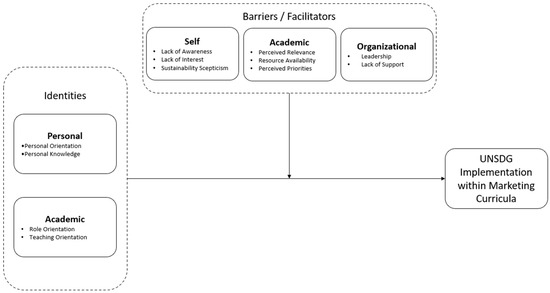
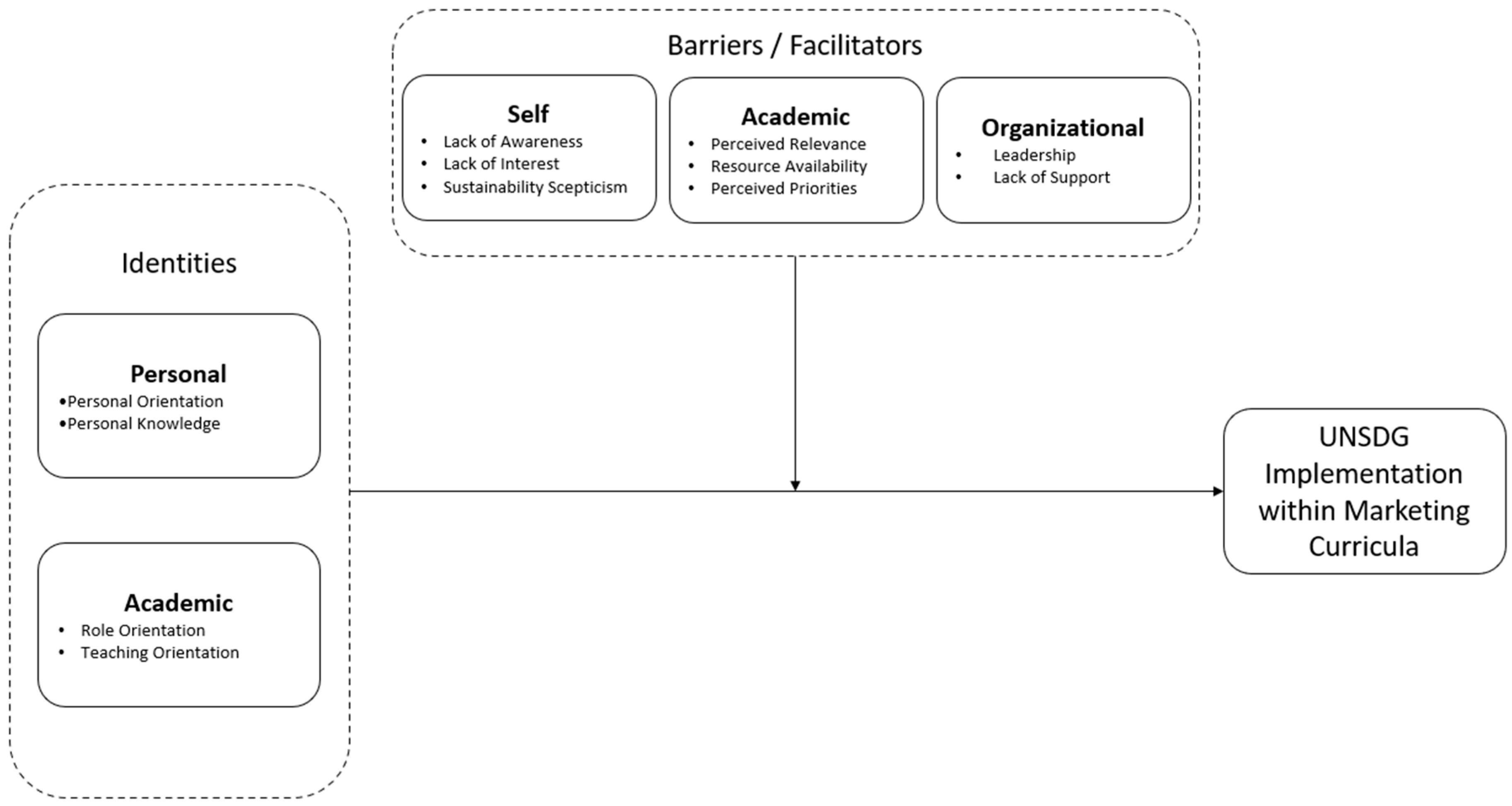
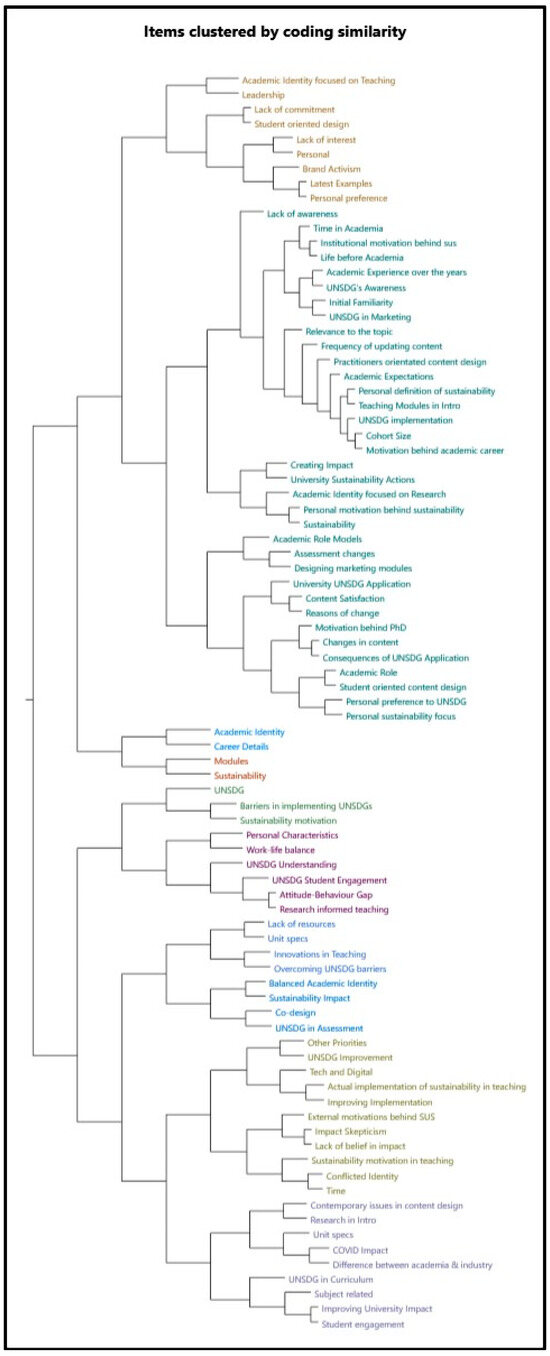
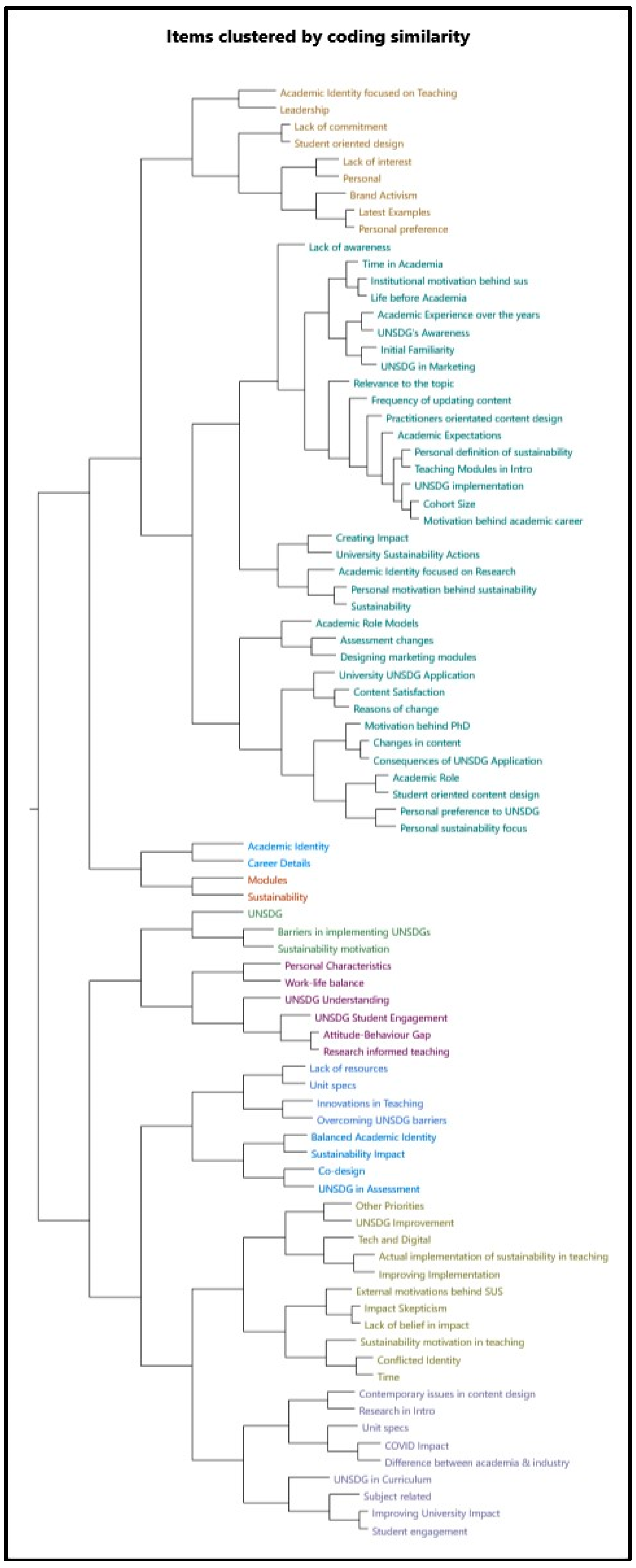

Disclaimer/Publisher’s Note: The statements, opinions and data contained in all publications are solely those of the individual author(s) and contributor(s) and not of MDPI and/or the editor(s). MDPI and/or the editor(s) disclaim responsibility for any injury to people or property resulting from any ideas, methods, instructions or products referred to in the content. |
© 2025 by the authors. Licensee MDPI, Basel, Switzerland. This article is an open access article distributed under the terms and conditions of the Creative Commons Attribution (CC BY) license (https://creativecommons.org/licenses/by/4.0/).