


Abstract
Meta-couplers capable of engineered spectral responses are increasingly important for photonic and sensing applications. Laser interference lithography was used to fabricate metasurface couplers (meta-couplers) by sequentially superimposing parallel surface relief gratings onto azobenzene thin films. Up to nine parallel superimposed gratings were successfully inscribed within the same physical region while retaining the optical and structural properties of each consecutive inscription. The resulting meta-couplers produced tailored spectral fingerprints across the visible and near-infrared, demonstrating a scalable platform for passive optical signature enhancement, wavelength-selective filtering, and compact photonic devices.
1. Introduction
Miniaturized optical devices are increasingly relevant across multiple domains that rely on spectroscopic signature management, including photonics [1], sensing [2], and defence applications [3]. Diffraction gratings are capable of wavelength-dependent optical responses [4], which enables them to be used in a range of applications such as spectroscopy [5], optical waveguide coupling [6], and wavelength-selective spectral filtering [7]. By engineering multiple nanoscale grating structures within a single area, more complex optical functionalities can be achieved through metasurface-based waveguide couplers, referred to herein as meta-couplers [8].
Surface relief gratings (SRGs) are periodic surface modulations that can couple light into a thin film through waveguiding modes, as determined by the grating periodicity, refractive index and illumination geometry [9]. The ability to tailor specific optical responses through nanoscale surface modification makes SRGs attractive for compact photonic devices and engineered spectral response surfaces. Laser interference lithography (LIL) is a common fabrication technique used to create SRGs [10]. In LIL, two coherent monochromatic laser beams with identical irradiances, polarization, and wavelength interfere to generate a spatially periodic optical intensity distribution. When exposed onto photo-responsive materials such as azobenzene thin films, the incident optical pattern induces trans–cis photoisomerization of the azobenzene molecules which initiates directional mass transport within the material, from high to low irradiance zones, leading to the formation of periodic surface structures corresponding to the interference pattern [11]. Azobenzene materials are particularly well-suited for complex metasurface fabrication since they permit the consecutive superposition of different interference patterns while preserving the optical and structural properties of the previous exposures. This process enables the sequential superposition of multiple stacked gratings, or meta-couplers on the same azobenzene thin film while retaining the diffraction and optical behaviour of each grating [12].
Although superimposed grating structures have been previously reported in various photoresist materials [13], maintaining multiple independently-functioning gratings within the same physical region remains a challenge. When using azobenzene materials, as the number of stacked superimposed gratings increases, structural overlap, mode crowding, and degradation of the previously inscribed features can hinder the formation of engineered meta-couplers. While azobenzene thin films have been shown to support the inscription of up to 80 gratings [14], these reported structures were arranged in particular patterns that spatially separated the individual gratings without independently resolving the optical response. In contrast, fabricating multiple stacked superimposed gratings within the same physical region requires that each successive laser inscription preserves the optical functionality of all previously inscribed gratings. Therefore, it is essential to develop novel fabrication methods to increase the number of stacked gratings while maintaining control over the optical behaviour of the resulting meta-coupler [15].
In this work, LIL was utilized to develop a nanofabrication method for creating metasurface couplers, or in short meta-couplers. Sequential sinusoidal SRGs were inscribed onto azobenzene thin films through repeated superimposed exposures, with varying the periodicity, producing a stacked metasurface capable of generating wavelength-selective coupling and retroreflection under broadband white light illumination. This method enables passive spectral signature enhancement across a broad optical bandwidth. The grating periodicity was systematically increased by 30 nm for each consecutive grating exposure to generate discrete retroreflection waveguiding modes with up to nine distinct retroreflection peaks spanning the 590–860 nm spectral range. Overall, nine stacked parallel-superimposed gratings were inscribed on the same area of an azobenzene thin film, exceeding the highest number of linearly-parallel superimposed gratings inscribed on an azobenzene film as reported in the literature to date, which is three superimposed parallel gratings [14,16]. These results establish meta-couplers as miniaturized, scalable optical devices capable of producing engineered spectral fingerprints for passive optical signature enhancement, tunable photonic filtering, and other applications.
2. Numerical Considerations
The spectral response of each grating component within a meta-coupler can be estimated using the grating coupling equation expressed in wave-vector form [17],
where β is the propagation constant of the guided mode, is the free-space wave vector, λ is the wavelength, ni is the refractive index of the incident medium, θi is the angle of the incident ray, m is the diffraction order, K is the grating vector corresponding the grating pitch, Λ. Within a meta-coupler, each superimposed grating possesses a unique pitch and therefore a unique grating vector. The grating vector for the αth grating can therefore be expressed as,
where Λα is the corresponding pitch for a particular grating inscription in the meta-coupler stack. Therefore, each grating contributes an independent phase-matching condition to the overall waveguiding response, and each grating selectively couples incident light inside the azobenzene thin film into a guided mode at a distinct resonance wavelength. In this study, broadband white light was normally incident on the meta-coupler (i.e., θi = 0) and measurements were collected in reflection. When a grating component couples light into a waveguiding mode within the thin film, it can also re-emit that same coupled light at the same incidence angle, thus showing up as a positive peak in reflection. This phenomenon is known as retroreflection [12]. For a thin azobenzene film with only ~300 nm in thickness, only first-order coupling exists (i.e., m = 1), and Equation (1) can be simplified as follows:
where neff is the effective refractive index of the guided mode. The resonance wavelength is given by the following equation:
β = k0nisinθi ± K m,
β = kαneff = Kα
λα = Λαneff
Equation (4) was used to estimate the target grating pitches required to produce retroreflection at specific wavelengths. The surface profile of a meta-coupler may be approximated as the superposition of all inscribed sinusoidal gratings [18]:
where Aα is the modulation amplitude and Kα is the spatial frequency of the αth grating. Consequently, the meta-coupler contains multiple spatial frequencies, each contributing a distinct momentum for coupling incident light into the supported guided modes. The superposition of these periodic structures therefore enables multiple wavelength-selective coupling to be generated simultaneously within a single azobenzene thin film.
3. Materials and Methods
3.1. Meta-Coupler Fabrication
A Disperse Red 1 (gDR1) azobenzene compound was synthesized according to the literature [19]. A 3% wt concentration solution was prepared by dissolving the resulting azobenzene gDR1 fine powder in dichloromethane (DCM). Soda lime glass slides (Corning 0215, Ted Pella, Redding, CA, USA) were cut into 3 × 3 cm substrates, cleaned with soap and water, and dried at 85 °C for 5 min to remove any residual moisture. Next, 75 µL of the azobenzene solution was deposited onto each substrate and spin-coated at 1200 rpm for 35 s, yielding uniform thin films approximately 350 nm thick, measured using a stylus profilometer (DektakXT, Bruker, San Jose, CA, USA).
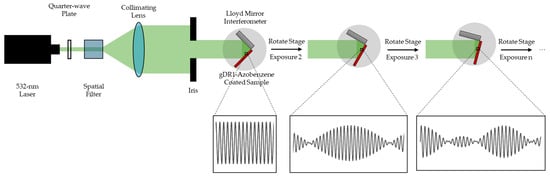
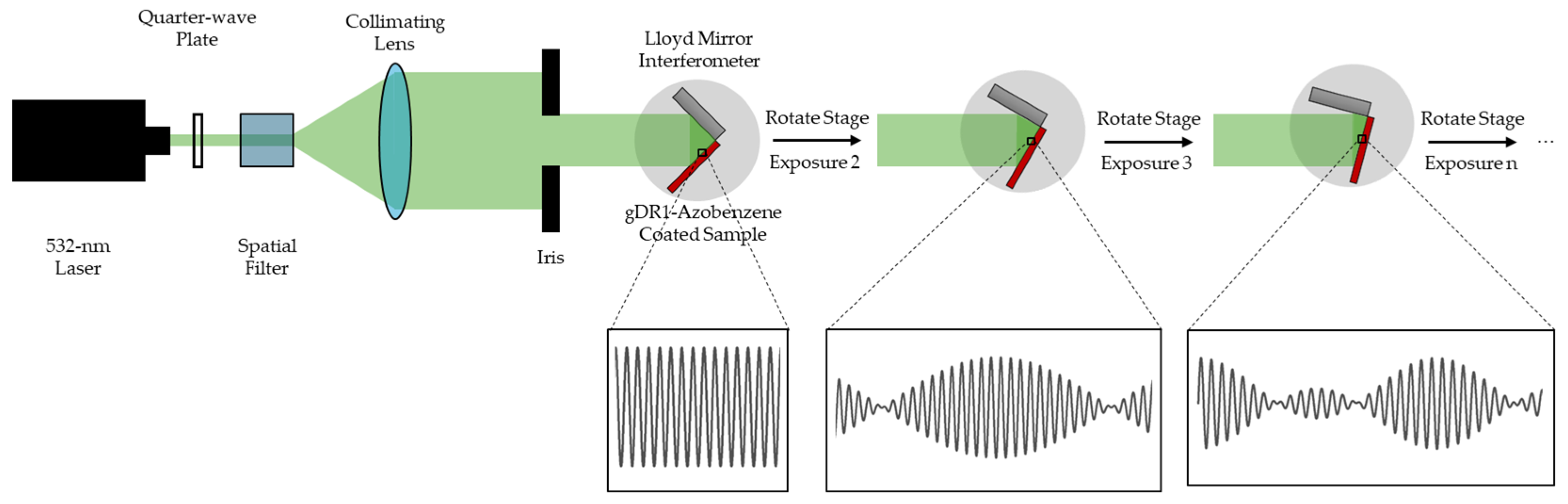
The SRGs were then fabricated using LIL in a Lloyd mirror interferometer configuration. A coherent 532 nm diode-pumped solid-state laser (Verdi V6, Coherent, Santa Clara, CA, USA) was circularly polarized using a quarter wave plate, then spatially filtered and collimated to an operating irradiance of 300 mW/cm2. The azobenzene-coated substrate was mounted on a rotating stage positioned perpendicular to the Lloyd mirror. Grating periodicity was controlled by adjusting the substrate angle relative to the incident beam, while the modulation depth was controlled through the illumination time. Meta-couplers were fabricated through sequential exposures at progressively increasing laser incidence angles, thereby producing stacked parallel-superimposed gratings of differing periodicities within the same area of the azobenzene thin film. The grating period for each subsequent grating was increased by approximately 30 nm. The illumination time was set to 200 s for the first grating and reduced to 60 s for subsequent gratings to retain the optical properties of the previously inscribed structures.
3.2. Surface Characterization
The surface morphology of each meta-coupler was analyzed using an atomic force microscope (AFM) (Dimension Edge AFM, Bruker, San Jose, CA, USA) to evaluate grating modulation depth, surface profile, pitch, and uniformity. For each meta-coupler, three scans were acquired at multiple reference points across the sample. Each scan was obtained from a 25 × 25 µm2 area with 256-point resolution. The resulting images were used to assess structural consistency across the fabricated gratings.
3.3. Experimental Setup
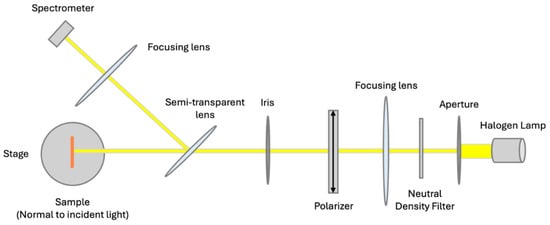
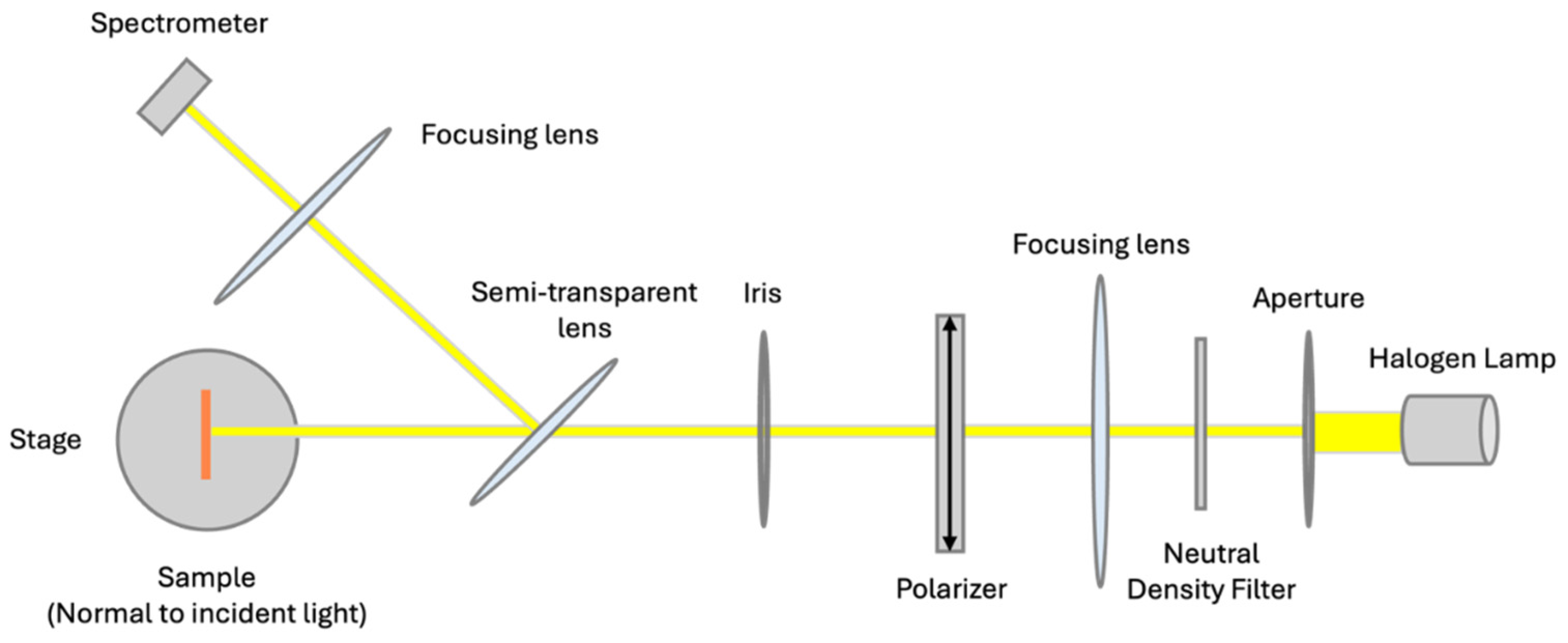
The reflection measurement setup is illustrated in Figure 1. Broadband light from a halogen source (SLS301, Thorlabs, Newton, CA, USA) was passed through an aperture and a neutral density filter before being focused by a lens. The beam was then linearly polarized in the vertical direction and passed through an iris to reduce its diameter. A semi-transparent beam splitter directed the transmitted light onto the sample at normal incidence, while simultaneously redirecting the retroreflected light from the sample. The reflected light was collected using a focusing lens into a spectrometer (QE Pro, Ocean Insight, Orlando, FL, USA) for spectral analysis. For all measurements, the grating vectors were oriented perpendicular to the polarization direction of the incident beam.
Figure 1.
Schematic illustration of the LIL setup and sequential fabrication process. A 532 nm laser is circularly polarized using a quarter-wave plate, spatially filtered, and collimated before illuminating the azobenzene-coated substrate. Multiple sequential exposures are performed on the same region to fabricate the superimposed gratings comprising the meta-coupler.
4. Results and Discussion
4.1. Surface Topography and Analysis
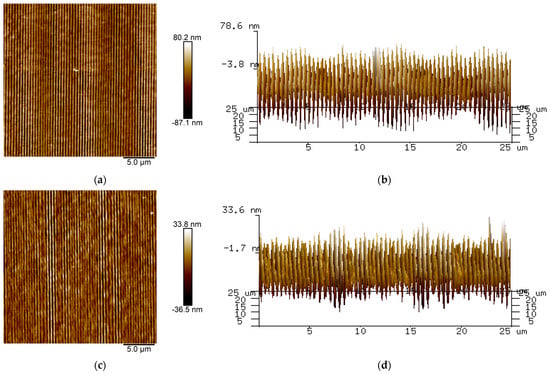
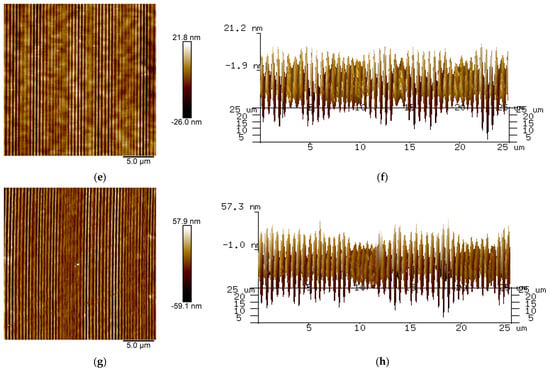
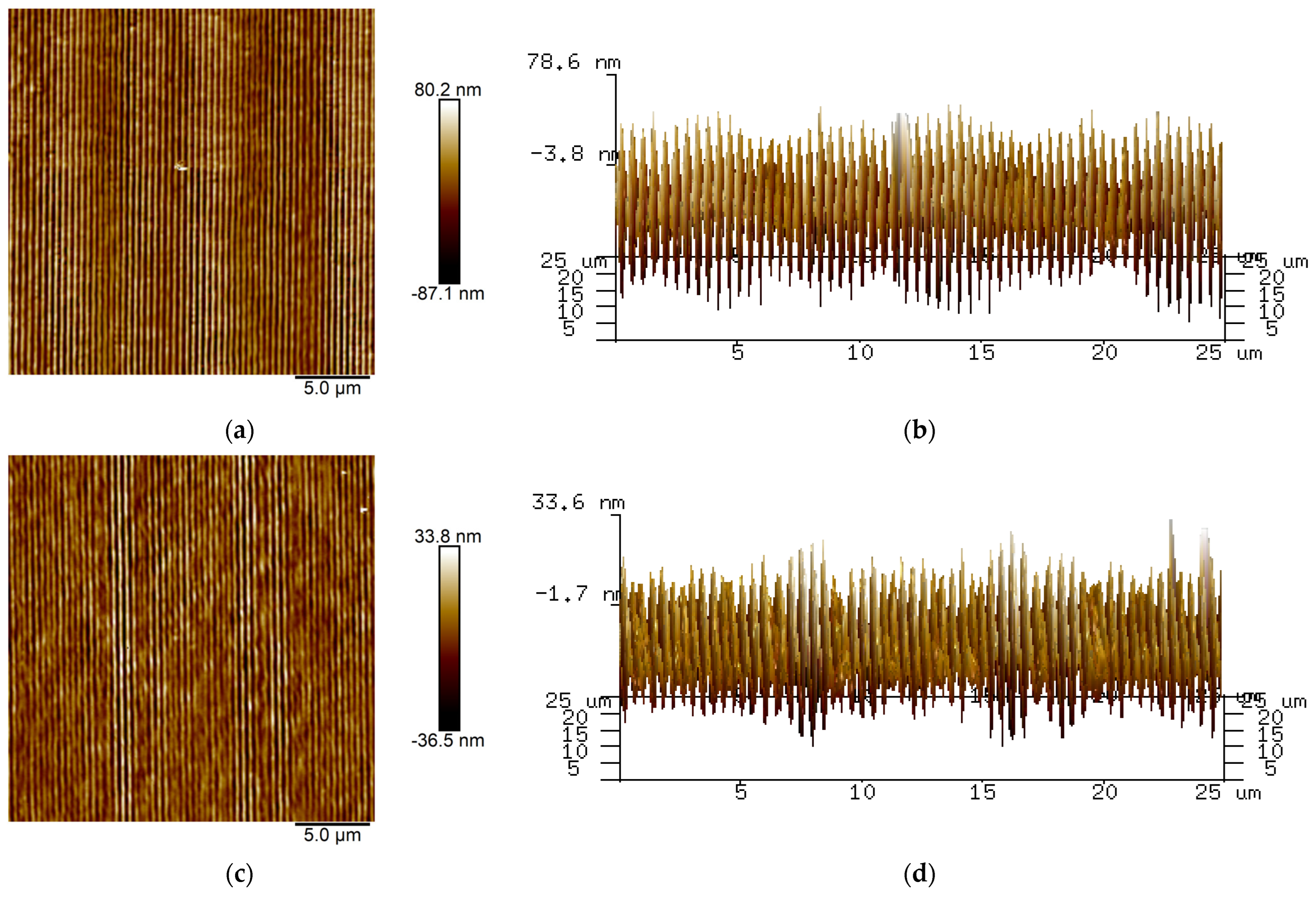
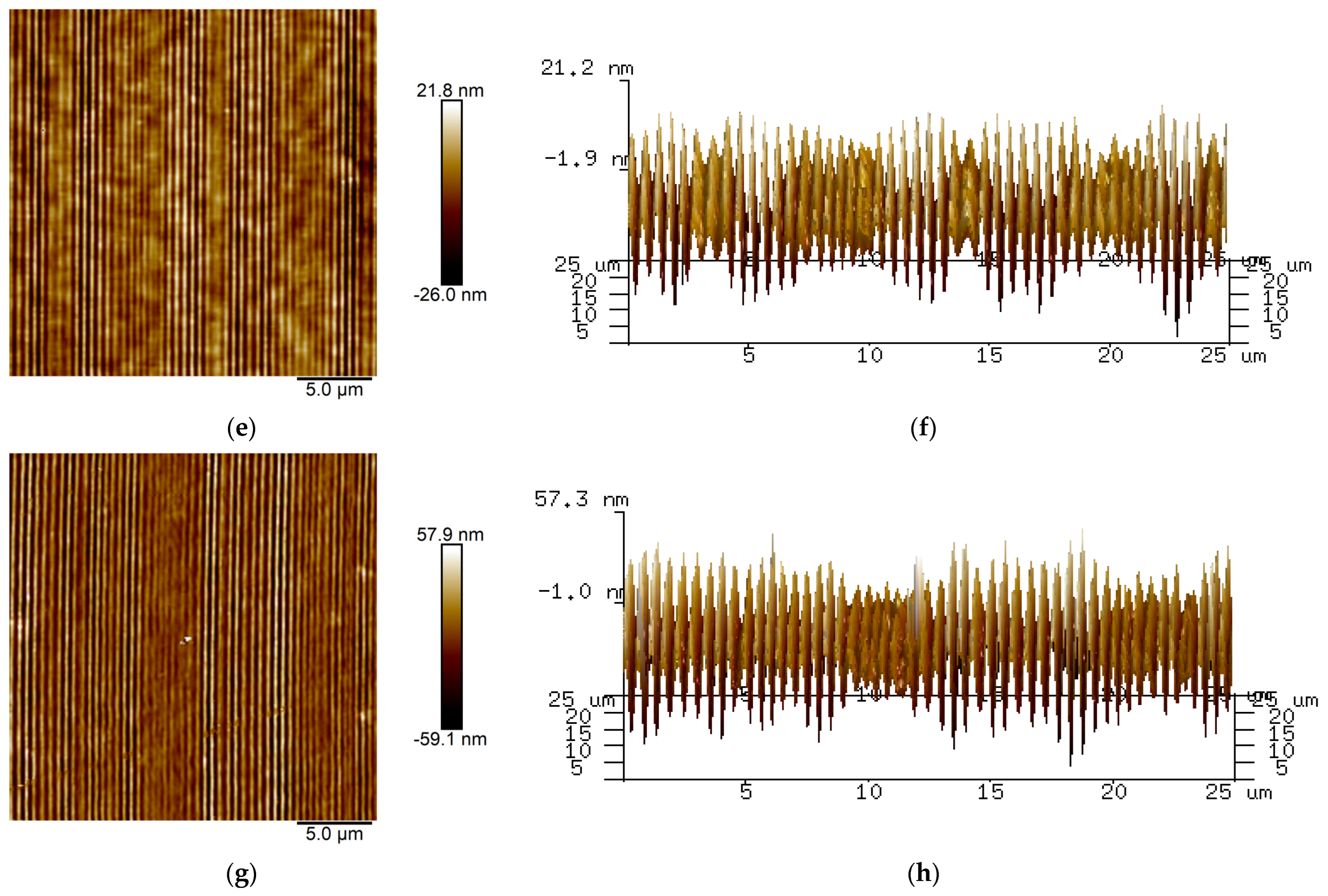
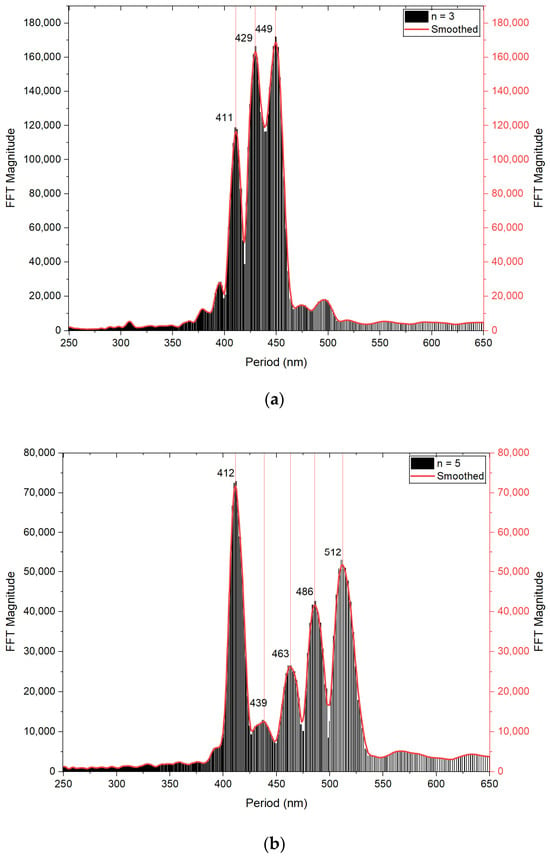
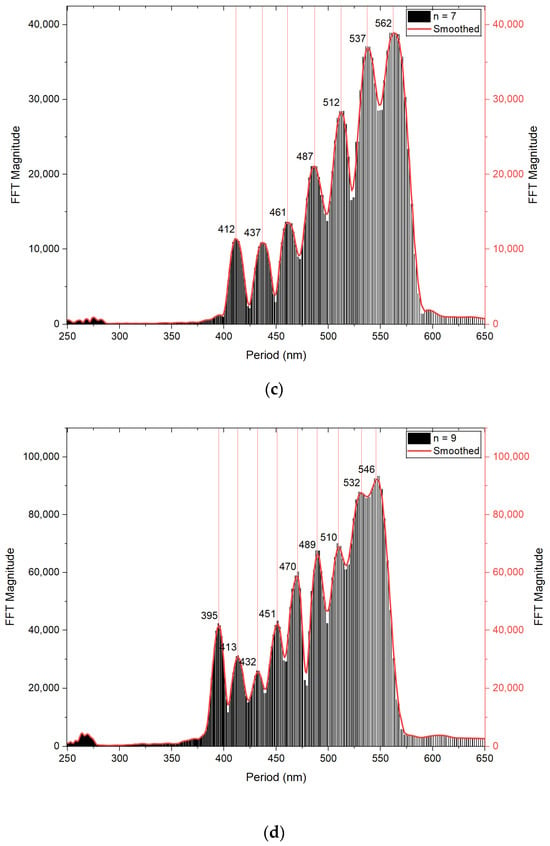
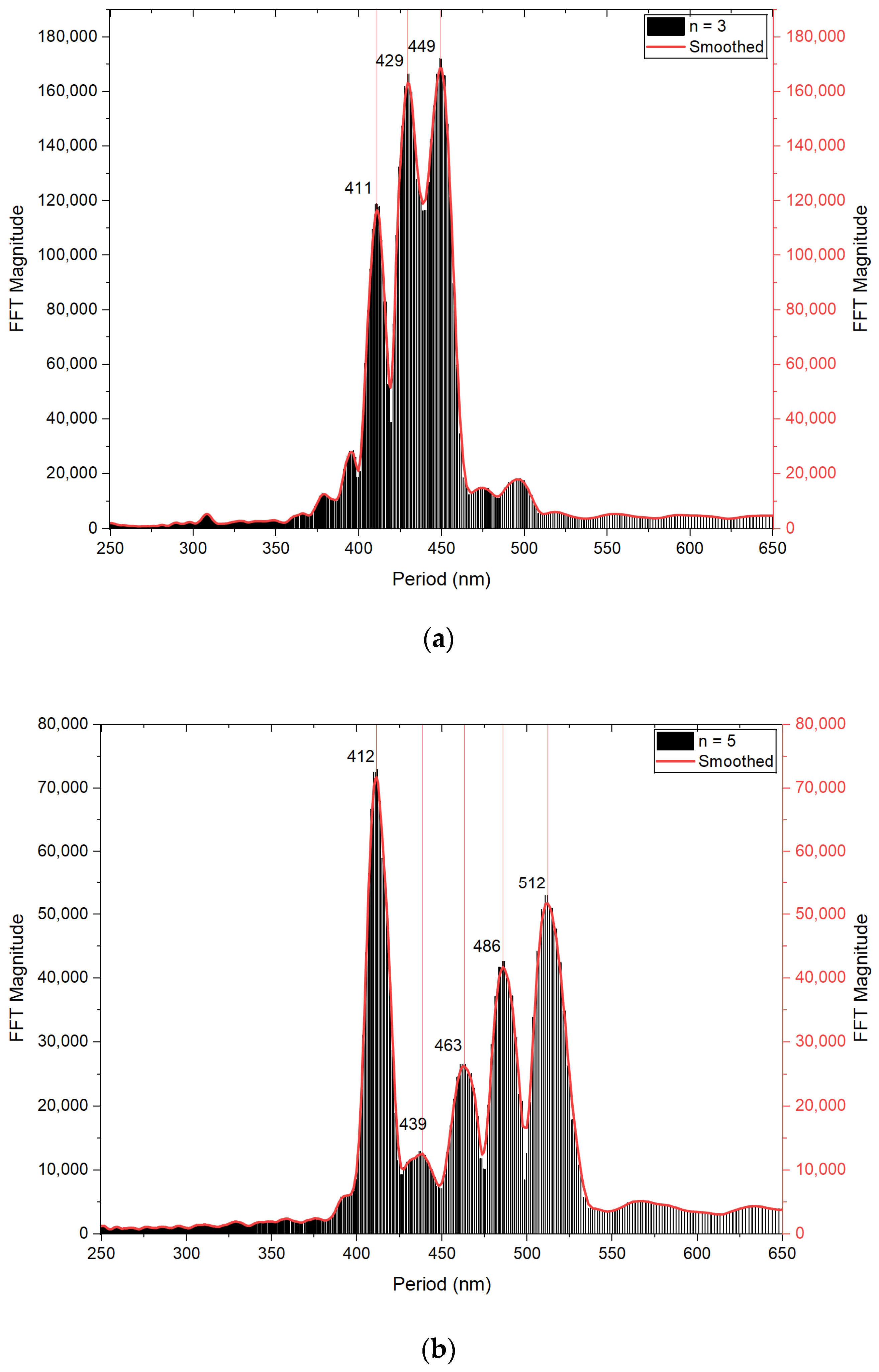
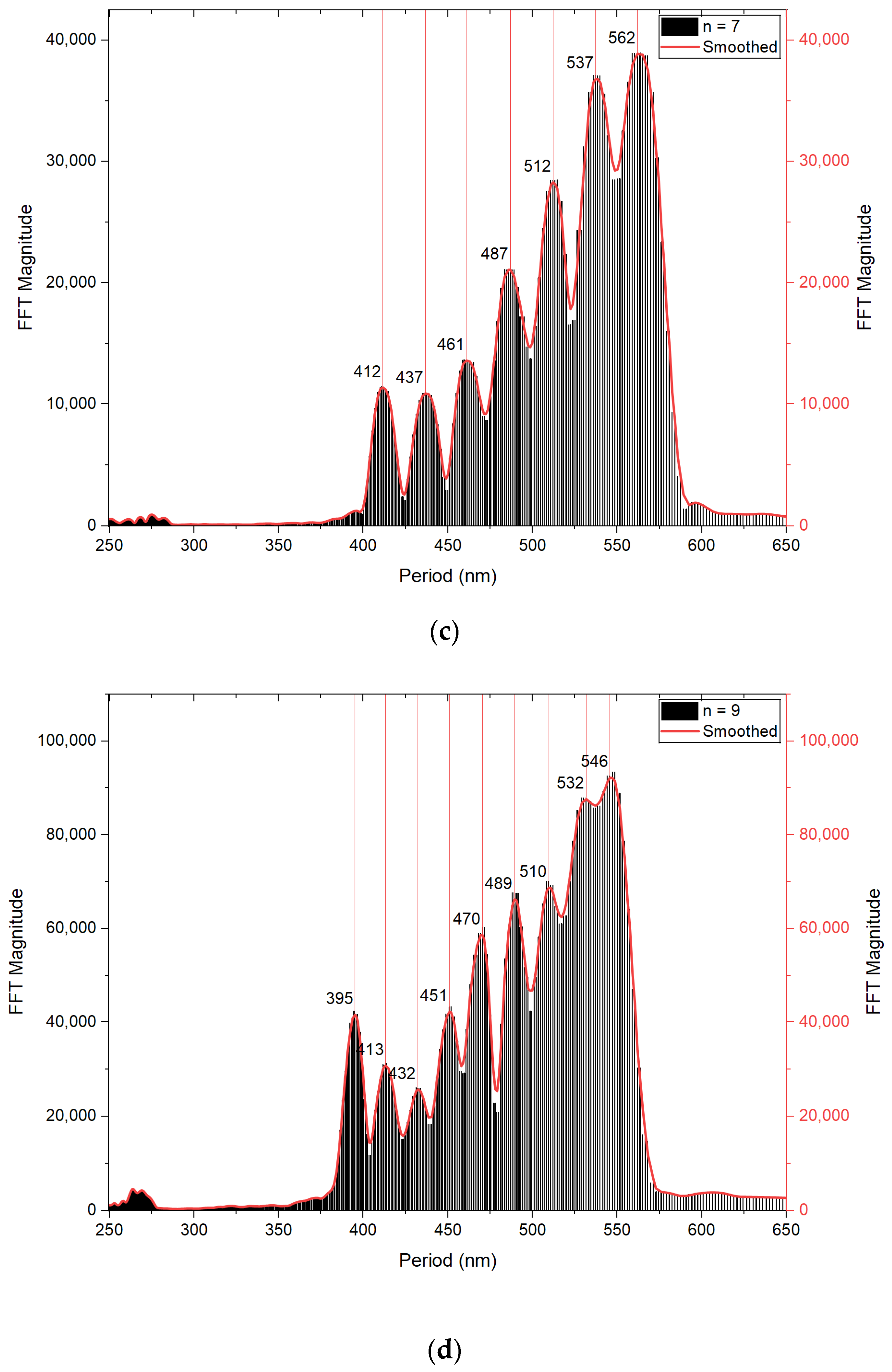
The surface morphology of the fabricated meta-couplers was characterized using AFM to evaluate the physical evolution of the meta-coupler as additional superimposed gratings were inscribed. Representative AFM images for the meta-coupler containing n = 3, 5, 7 and 9 gratings are shown in Figure 2, while the complete set of AFM images (i.e., n = 1–10) is provided in the Supplementary Information, Figure S1. As the number of superimposed gratings increases, the surface morphology evolves from well-defined periodic structures to more complex composite profiles. At lower n values, individual grating periodicities are readily identifiable, whereas at higher n values the surface profile becomes increasingly congested, making individual gratings difficult to distinguish by direct inspection. Fast Fourie transform (FFT) analysis was performed using Nanoscope Analysis V2 software with a Hann window and 2D polynomial plane fit for tilt correction on each AFM surface profile to quantitatively resolve the individual gratings. The FFT decomposes the surface profile into its constituent spatial frequency components, thus enabling identification of each grating independent of the real-space morphology. Representative FFT spectra for n = 3, 5, 7 and 9 are presented in Figure 3, while the complete dataset is provided in Figure S2.
Figure 2.
Spectrometer setup for retroreflection spectra measurement. White light is filtered, polarized and illuminated onto the sample at a normal angle of incidence. The reflected light from the sample is redirected using a semi-transparent mirror onto the spectrometer.
Figure 3.
AFM images surface topography and side profile scans of (a,b) n = 3, (c,d) n = 5, (e,f) n = 7, and (g,h) n = 9 meta-couplers.
The FFT analysis shows that each successive exposure generated a new periodic structure within the azobenzene film while preserving previously inscribed gratings. With increasing n, additional FFT peaks emerged, confirming the successful inscription of multiple independent periodic structures. As shown in Figure 4a,b, where n = 3 and n = 5, respectively, the number of resolved spatial frequency peaks is consistent with the number of designed gratings, indicating good agreement between the intended and fabricated structures. At higher grating numbers, as shown in Figure 4c,d, the FFT spectra became increasingly congested. Although additional spatial frequency components remained identifiable, neighboring peaks exhibited noticeable broadening and partial overlap, making individual gratings progressively more difficult to resolve. This behavior is attributed to the combined effects of the finite spatial resolution of the AFM scans, the decreasing separation between neighboring grating pitches, and the cumulative modification of previously inscribed gratings during repeated photoinduced mass transport. Consequently, the distinction between adjacent spatial frequencies becomes increasingly challenging as the structural complexity of the meta-coupler increases.
Figure 4.
FFT bar graph along with a smoothed approximation of the curve are presented for (a) n = 3, (b) n = 5, (c) n = 7 and (d) n = 9.
For the highest-order sample n = 10 provided in Figure S2j, although the designed structure contained ten superimposed gratings, only eight spatial frequency peaks could be confidently identified in the FFT spectrum. The remaining expected peaks could not be unambiguously resolved due to significant peak overlap and reduced spectral separation. Consequently, it cannot be conclusively determined from the AFM measurements alone whether all ten gratings were successfully retained following the sequential inscription process. This observation suggests that the present fabrication and characterization technique is approaching its practical resolution limit for independently distinguishing superimposed gratings separated by approximately 30 nm in pitch.
Overall, the FFT analysis confirms that multiple gratings are successfully inscribed and retained within each meta-coupler, with each grating contributing a distinct spatial frequency component to the overall surface structure.
4.2. Observed Spectroscopy
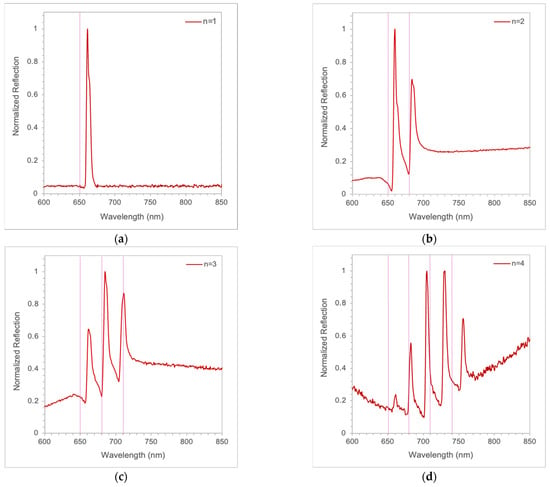
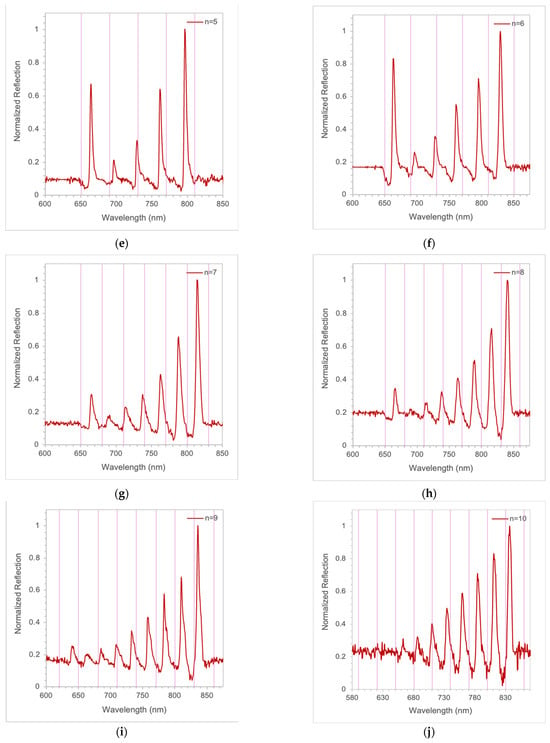
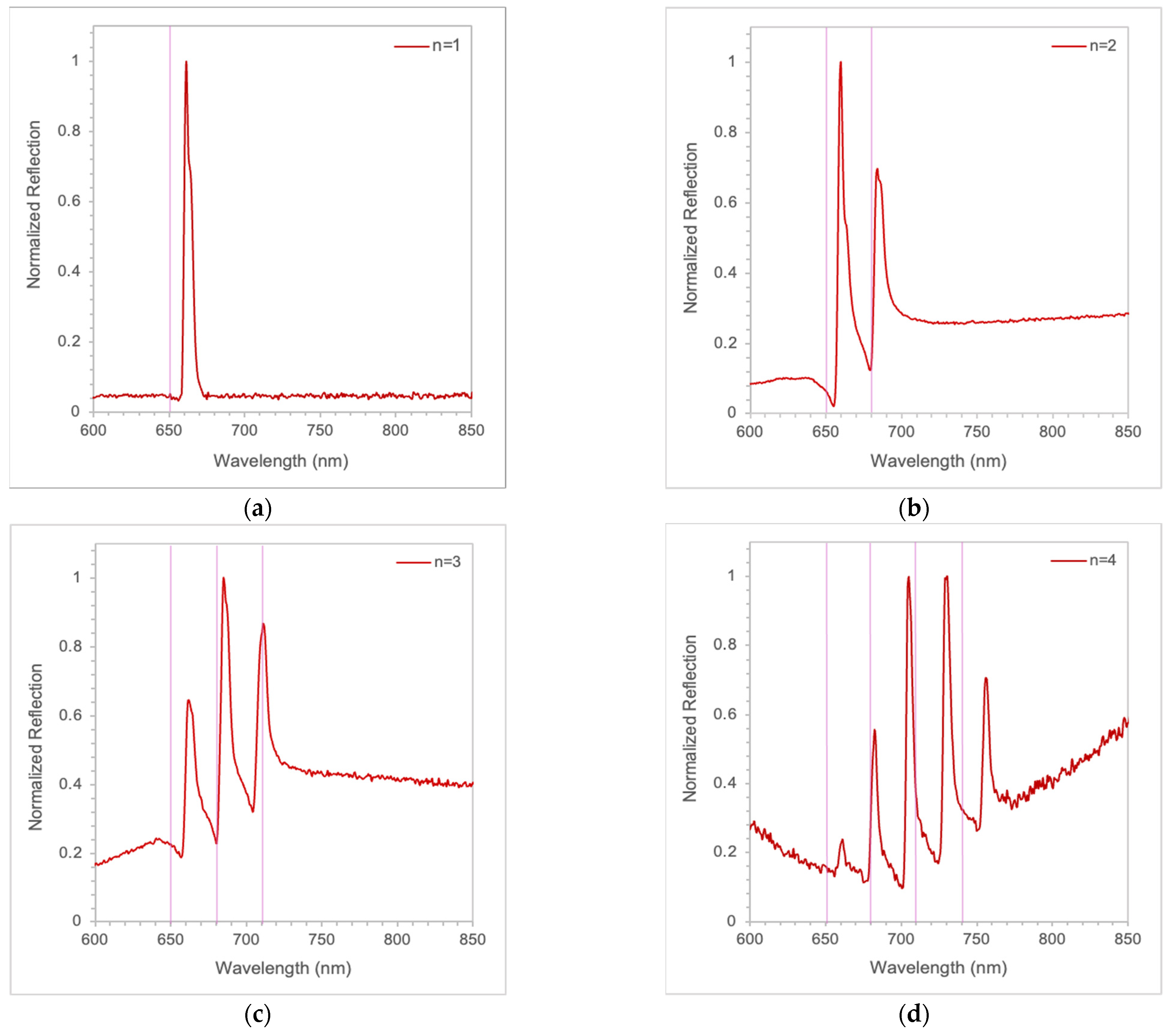
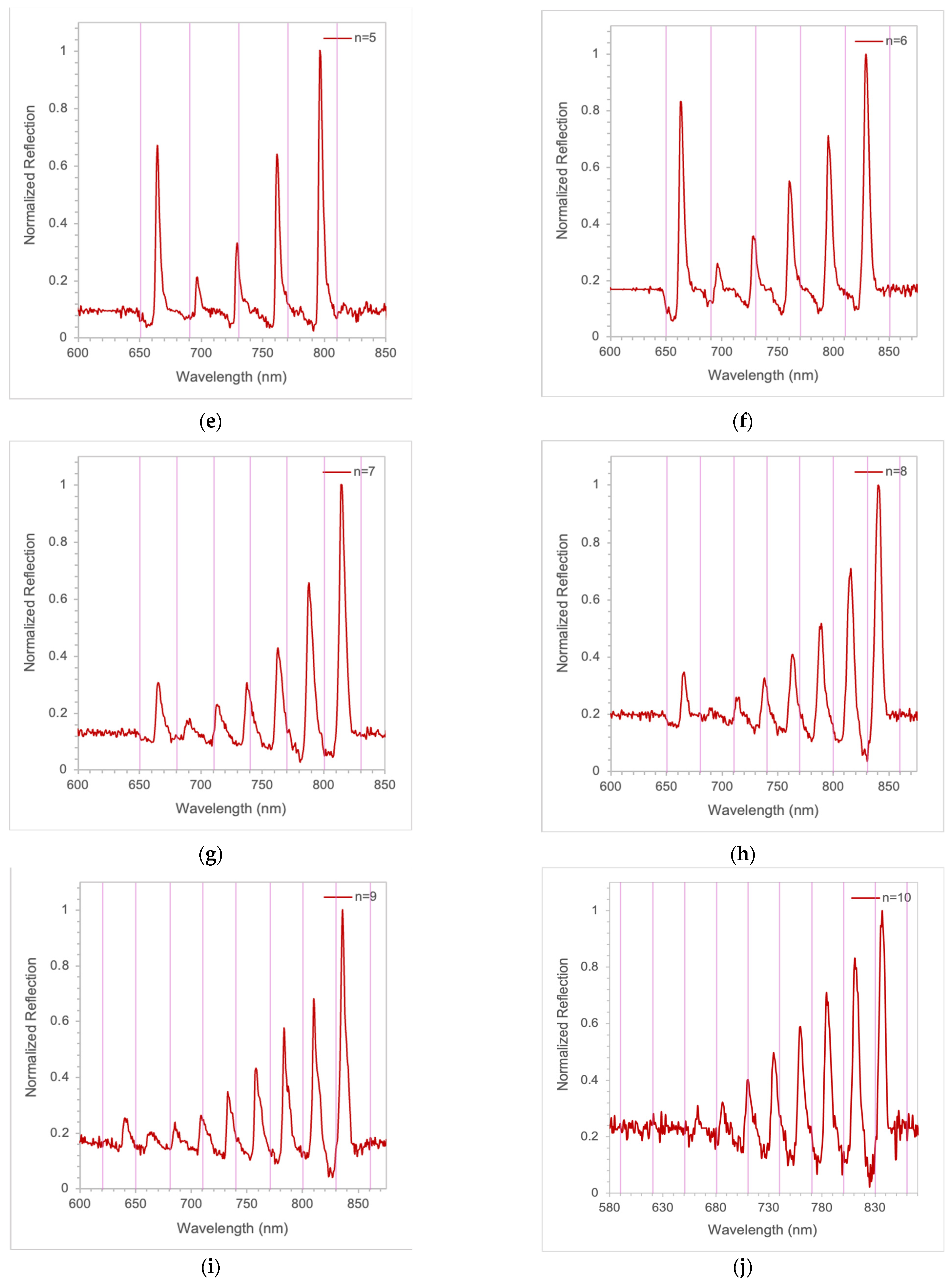
The sequential exposure fabrication method was developed to achieve broadband signature enhancement by distributing multiple wavelength-selective coupling resonances across the 590–860 nm band at 30 nm increments. Figure 5a–j presents the relative normalized reflection spectra for meta-couplers containing n = 1 to n = 10 parallel superimposed gratings, illustrating the progressive evolution of the optical response as additional gratings were sequentially inscribed within the same azobenzene thin film.
Figure 5.
Normalized reflectance spectra versus wavelength for (a) n = 1, (b) n = 2, (c) n = 3, (d) n = 4, (e) n = 5, (f) n = 6, (g) n = 7, (h) n = 8, (i) n = 9 and (j) n = 10 meta-couplers.
As shown in Figure 5, as the number of superimposed gratings increased, additional reflection resonances appeared at the design wavelengths, demonstrating that each successive inscription introduced a new wavelength-selective coupling mode while preserving the optical response of the previously inscribed gratings. The vertical lines in Figure 5 indicate the theoretical design wavelengths at which a retroreflection peak is expected to occur according to the theory. The measured resonance wavelengths were in excellent agreement with the theoretical design, exhibiting an average deviation of approximately ±10 nm from the target resonance wavelengths. This close agreement confirms that the discrete fabrication strategy successfully reproduced the intended grating periodicities despite repeated inscription within the same physical region. For meta-couplers containing up to nine superimposed gratings, the individual reflection resonances remained well resolved across the investigated spectral range. Although minor compression in the spacing between neighbouring resonances was observed for the higher-order structures, each coupling mode remained distinguishable, indicating that the constituent gratings largely retained their independent optical coupling characteristics. These results further demonstrate that the optimized exposure protocol, achieved via trial-and-error optimization of the exposure time, effectively minimized degradation of previously inscribed gratings during successive fabrication steps.
However, for the n = 10 meta-coupler, only eight distinct reflection resonances could be confidently identified, consistent with the FFT analysis. The absence of the remaining expected resonances suggests that one or more gratings were either insufficiently preserved during the sequential inscription process or produced coupling responses too weak to be experimentally resolved. Combined with the increasingly overlapping FFT peaks observed for this sample, these results indicate that the present fabrication methodology is approaching its practical limit for producing independently resolvable parallel superimposed gratings with approximately 30 nm spacing between adjacent periods. At the same time, this behavior highlights the highly dynamic nature of the photoactive azobenzene molecules, in which continued photoinduced mass transport during successive exposures can gradually redistribute previously formed surface structures.
The stability of the fabricated structures was also observed during the period of experimental characterization. The samples retained their surface morphology and optical response while being stored in Petri dishes and exposed to ambient laboratory lighting, including fluorescent and white LED illumination, over several weeks. No obvious physical degradation or loss of the grating structures was observed during this period.
Overall, the reflection spectra in combination with the FFT analysis reveals a qualitative correlation between the FFT peak amplitudes and the intensities of the corresponding optical coupling resonances. The meta-coupler method demonstrates that broadband spectral enhancement can be achieved through the controlled superposition of multiple narrowband coupling resonances within a single thin film. By tailoring the number and periodicity of the constituent gratings, customized optical spectral fingerprints can be engineered while maintaining a compact device footprint. This capability provides a scalable platform for passive optical signature enhancement, wavelength-selective filtering, sensing, and optical signature management.
5. Conclusions
Overall, multi-superimposed parallel gratings were successfully fabricated within a single azobenzene thin film capable of wavelength-selective optical functionality. The sequential fabrication approach produced up to nine targeted coupling resonances in a single meta-coupler spanning the 590–860 nm spectral range. AFM and FFT analyses confirmed the successful inscription of multiple spatial frequency components within the same physical region on the sample surface, while optical characterization demonstrated strong agreement between the designed and measured spectral responses. As the number of superimposed gratings increased, structural and optical measurements indicated that the present fabrication methodology approaches its practical limit at a total exposure of nine, thus highlighting both the photoresponsive capabilities of azobenzene and the challenges associated with preserving independently functioning gratings during repeated laser exposures. These results establish meta-couplers as a scalable platform for engineering customized optical spectral fingerprints, which could potentially be designed within a small physical footprint. The wavelength-selective response may be applicable to spectral filtering and wavelength-selective sensing. Further investigation provides a potential route for spectral coding toward passive spectral authentication and anti-counterfeiting and multi-channel SPRi imaging biosensors.
Supplementary Materials
The following supporting information can be downloaded at: https://www.mdpi.com/article/10.3390/joptm1020005/s1, Figure S1: AFM images surface topography scans of (a) n = 1, (b) n = 2, (c) n = 3, (d) n = 4, (e) n = 5, (f) n = 6, (g) n = 7, (h) n = 8, (i) n = 9, and (j) n = 10 stacked gratings meta-couplers; Figure S2: FFT bar graph along with a smoothed approximation of the curve are presented for (a) n = 1, (b) n = 2, (c) n = 3, (d) n = 4, (e) n = 5, (f) n = 6, (g) n = 7, (h) n = 8, (i) n = 9, and (j) n = 10.
Author Contributions
Conceptualization, R.G.S.; methodology, A.A.; software, A.A. and Y.B.; validation, A.A.; formal analysis, A.A. and R.G.S.; investigation, A.A.; resources, R.G.S.; data curation, A.A.; writing—original draft preparation, A.A.; writing—review and editing, Y.B. and R.G.S.; visualization, A.A. and Y.B.; supervision, R.G.S.; project administration, R.G.S.; funding acquisition, R.G.S. All authors have read and agreed to the published version of the manuscript.
Funding
This research was funded by Natural Sciences and Engineering Research Council of Canada (NSERC) RGPIN-2026-05986, and the Defence Research and Development Canada.
Data Availability Statement
Data underlying the results presented in this paper are not publicly available at this time but may be obtained from the authors upon reasonable request.
Conflicts of Interest
The authors declare no conflicts of interest.
Abbreviations
The following abbreviations are used in this manuscript:
| SRGs | Surface Relief Gratings |
| LIL | Laser Interference Lithography |
| gDR1 | Glass Dispersed Red 1 |
| DCM | Dichloromethane |
| AFM | Atomic Force Microscope |
| FFT | Fast Fourie Transform |
References
- Li, C.; Yu, P.; Huang, Y.; Zhou, Q.; Wu, J.; Li, Z.; Tong, X.; Wen, Q.; Kuo, H.-C.; Wang, Z.M. Dielectric metasurfaces: From wavefront shaping to quantum platforms. Prog. Surf. Sci. 2020, 95, 100584. [Google Scholar] [CrossRef] [Scilit]
- Qi, J.; Li, C.; Xia, Y.; Fang, B.; Hong, Z.; Chen, L.; Jing, X. Research progress of biomolecular detection based on metasurfaces. Infrared Phys. Technol. 2024, 136, 105111. [Google Scholar] [CrossRef] [Scilit]
- Iwaszczuk, K.; Strikwerda, A.C.; Fan, K.; Zhang, X.; Averitt, R.D.; Jepsen, P.U. Flexible metamaterial absorbers for stealth applications at terahertz frequencies. Opt. Express 2011, 20, 635–643. [Google Scholar] [CrossRef] [Scilit] [PubMed]
- Loewen, E.G.; Popov, E. Diffraction Gratings and Applications; CRC Press: Boca Raton, FL, USA, 2018. [Google Scholar]
- Zhang, X.; Dai, J.; Li, C.; Ma, H. Characterizing thermal energy materials using transient grating spectroscopy: A comprehensive review of principles, techniques, and applications. J. Laser Appl. 2025, 37, 021202. [Google Scholar] [CrossRef] [Scilit]
- Zhong, L.; Guo, M.; Li, S.; Chen, Y.; Li, J.; Li, J.; Yang, D. Progress of Grating Couplers for Light Exchange between Space and On-Chip. Adv. Opt. Mater. 2025, 13, e01171. [Google Scholar] [CrossRef] [Scilit]
- Song, Q.; Dai, Y.; Xiao, X.; Chen, H.; Liu, C.; Shu, X.; Sun, Q.; Zhou, K.; Zhang, L.; Wan, Z. Compact broadband wavelength selective switch based on in-fiber diffraction device. J. Light. Technol. 2024, 42, 5311–5316. [Google Scholar] [CrossRef] [Scilit]
- Chen, Y.; Zheng, X.; Zhang, X.; Pan, W.; Wang, Z.; Li, S.; Dong, S.; Liu, F.; He, Q.; Zhou, L. Efficient meta-couplers squeezing propagating light into on-chip subwavelength devices in a controllable way. Nano Lett. 2023, 23, 3326–3333. [Google Scholar] [CrossRef] [Scilit] [PubMed]
- Porfirev, A.P.; Khonina, S.N.; Ivliev, N.A.; Porfirev, D.P.; Kazanskiy, N.L. Stacked polarizing elements for controlling parameters of surface relief gratings written in photosensitive materials. Sensors 2024, 24, 1166. [Google Scholar] [CrossRef] [Scilit] [PubMed]
- Porfirev, A.; Khonina, S.; Popov, V.; Bugakov, M.; Boiko, N.; Ivliev, N.; Porfirev, D. Control of surface relief grating profiles in azopolymer thin films using polarization projection lithography. Opt. Laser Technol. 2025, 192, 113477. [Google Scholar] [CrossRef] [Scilit]
- Rochon, P.; Batalla, E.; Natansohn, A. Optically induced surface gratings on azoaromatic polymer films. Appl. Phys. Lett. 1995, 66, 136–138. [Google Scholar] [CrossRef] [Scilit]
- Dollar, M.; Bdour, Y.; Rochon, P.; Sabat, R.G. Surface plasmon mediated angular and wavelength tunable retroreflectors using parallel-superimposed surface Relief Bi-gratings. Appl. Sci. 2025, 15, 339. [Google Scholar] [CrossRef] [Scilit]
- Arigiris, A.; Konstantaki, M.; Ikiades, A.; Chronis, D.; Florias, P.; Kallimani, K.; Pagiatakis, G. Fabrication of high-reflectivity superimposed multiple-fiber Bragg gratings with unequal wavelength spacing. Opt. Lett. 2002, 27, 1306–1308. [Google Scholar] [CrossRef] [Scilit] [PubMed]
- Berdin, A.; Rekola, H.T.; Priimagi, A. Complex Fourier surfaces by superposition of multiple gratings on azobenzene thin films. Adv. Opt. Mater. 2024, 12, 2301597. [Google Scholar] [CrossRef] [Scilit]
- Yoon, J.; Kim, J.-Y.; Kim, J.; Yoon, H.; Neşeli, B.; Park, H.-H.; Kurt, H. Inverse design of a Si-based high-performance vertical-emitting meta-grating coupler on a 220 nm silicon-on-insulator platform. Photonics Res. 2023, 11, 897–905. [Google Scholar] [CrossRef] [Scilit]
- Mazloumi, M.; Bdour, Y.; Escobedo, C.; Sabat, R.G. Biomimetic macroscopic hierarchical moire gratings. Appl. Opt. 2022, 61, 5428–5434. [Google Scholar] [CrossRef] [Scilit] [PubMed]
- Butt, M.A.; Kazanskiy, N.L.; Khonina, S.N. Advances in waveguide Bragg grating structures, platforms, and applications: An up-to-date appraisal. Biosensors 2022, 12, 497. [Google Scholar] [CrossRef] [Scilit] [PubMed]
- Marshall, S. On the analytical summation of Fourier series and its relation to the asymptotic behaviour of Fourier transforms. J. Phys. A Math. Gen. 1998, 31, 9957–9973. [Google Scholar] [CrossRef] [Scilit]
- Kirby, R.; Sabat, R.G.; Nunzi, J.-M.; Lebel, O. Disperse and disordered: A mexylaminotriazine-substituted azobenzene derivative with superior glass and surface relief grating formation. J. Mater. Chem. C 2014, 2, 841–847. [Google Scholar] [CrossRef] [Scilit]
Disclaimer/Publisher’s Note: The statements, opinions and data contained in all publications are solely those of the individual author(s) and contributor(s) and not of MDPI and/or the editor(s). MDPI and/or the editor(s) disclaim responsibility for any injury to people or property resulting from any ideas, methods, instructions or products referred to in the content. |
© 2026 by the authors. Licensee MDPI, Basel, Switzerland. This article is an open access article distributed under the terms and conditions of the Creative Commons Attribution (CC BY) license.