Skip to Content
  • 41 days
    Time to First Decision

Lights

Lights is an international, peer-reviewed, open access journal on optics, light and luminescent sciences and technology; it is published quarterly online by MDPI.

Get Alerted

Add your email address to receive forthcoming issues of this journal.

All Articles (9)

This article presents one possible method for modelling the electromagnetic radiation spectrum. This work aims to model a radiation source by combining two spectrums and obtaining a different spectrum as a result. To achieve this, the spectrum of a commercially available LED and a filter that transmits electromagnetic radiation at wavelengths above 475 nm were used. The article presents a methodical approach to designing the resulting spectral irradiance graph and the individual component spectral irradiance graphs. The originality of this method lies in transmitting the spectrum of one diode and combining it with an unfiltered diode. The irradiance values obtained on the sensor array depend on the electromagnetic radiation power of the light source and the distance between the sensor array and the light source’s centre. The simulation results for the combined spectrum were 13 W/m2. This work may influence the design of new industrial illuminators.

26 May 2026
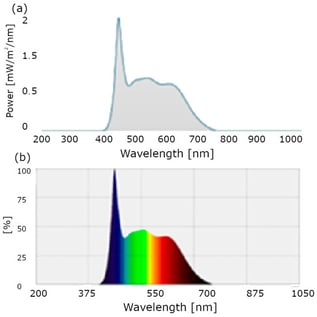
Radiation spectrum measured (a) and spectrum on a percentage scale (b).

Designing Reproducible Test Environments for rPPG: A System for Camera Sensor Response Validation

  • Lieke Dorine van Putten,
  • Ivan Veleslavov and
  • Simon Wegerif
  • + 2 authors

Remote photoplethysmography (rPPG) enables non-contact vital sign measurements using standard smart device cameras, opening up the potential of scalable health applications on consumer smart devices. However, rPPG signal quality is highly sensitive to camera sensor characteristics and image processing pipelines, which can vary between devices. This variation limits reproducibility and generalisation of rPPG-based algorithms beyond specific hardware platforms. This work presents a reproducible test environment for the validation of the camera sensor response in the context of rPPG signals. A microcontroller-driven illumination system and mechanically constrained setup are used to generate controlled, repeatable optical signals. Two characterisation tests are introduced: a time domain morphology analysis and a frequency domain attenuation analysis. Pulse timing consistency, pulse waveform morphology and normalised frequency responses are compared to assess sensor similarity. This method is applied to selected consumer devices and demonstrates consistent camera response patterns under the controlled test conditions. By explicitly addressing validation of the camera sensor and image processing pipeline, this work supports the development of more robust and transferable rPPG-based vital sign applications across a wider range of consumer devices.

25 March 2026

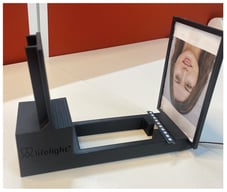
Example photograph of the described setup for device validation. The custom 3D-printed rig is shown, holding the test image and Arduino-driven LEDs opposite the fixed support for a device under test.

Photobiomodulation Applications in Clinical Veterinary Surgery: Current Status and Future Perspectives

  • Mario García-González,
  • Francisco Vidal-Negreira and
  • Antonio González-Cantalapiedra

Photobiomodulation (PBM) has emerged as a noninvasive therapeutic tool with promising clinical applications in veterinary clinical surgery. Its mechanism of action is based on the stimulation of cellular processes through low-intensity light, promoting adenosine triphosphate production, inflammatory modulation, and tissue regeneration. This narrative review examines the current state of knowledge on the use of PBM in veterinary surgical contexts, with an emphasis on its clinical application in wound healing, postoperative pain control, and functional recovery. The physiological foundations of the technique, the main technical parameters that determine its effectiveness (wavelength, dose, frequency, and mode of application), and the available clinical evidence from different specialties such as soft tissue surgery, orthopedics, dentistry, and neurosurgery are analyzed. Current limitations, such as the lack of standardized protocols and their limited inclusion in clinical guidelines, are also addressed, as are future opportunities related to treatment personalization, the development of specific veterinary devices, and integration with emerging technologies. PBM represents a safe and effective adjuvant therapeutic strategy with the potential to become an integral part of veterinary postoperative management.

3 February 2026

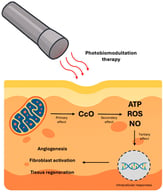
Simplified representation of the primary mechanisms of PBM. Light applied (red arrows) to the tissue is primarily absorbed by cytochrome c oxidase (CcO) in the mitochondria (primary effect), triggering the production of ATP, reactive oxygen species (ROS), and nitric oxide (NO) (secondary effect). These mediators lead to intracellular responses (tertiary effect) that promote key biological processes such as angiogenesis, fibroblast activation, and tissue regeneration.

Fluorescence microscopy is a cornerstone technique in biological research, offering unparalleled insights into cellular and subcellular structures. However, inherent limitations such as photobleaching, phototoxicity, and low signal-to-noise ratios (SNR) often hinder its full potential. This paper introduces DeepFluoNet, a novel deep learning framework designed to significantly enhance the analysis of fluorescence microscopy data. DeepFluoNet leverages a sophisticated convolutional neural network architecture, meticulously optimized for denoising, segmentation, and classification tasks in fluorescence images. DeepFluoNet achieved a 98.5% accuracy in cell nucleus classification, a 95.2% F1-score in mitochondrial segmentation, and a 25% improvement in SNR for low-light images, surpassing state-of-the-art methods by an average of 7.3% in overall performance metrics. Furthermore, the inference time of DeepFluoNet is optimized to be 0.05 s per image, making it suitable for high-throughput analysis. This research bridges critical gaps in existing methodologies by providing a robust, efficient, and highly accurate solution for fluorescence microscopy data analysis, paving the way for more precise biological discoveries.

4 January 2026

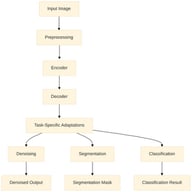
Overall architecture of DeepFluoNet.

News & Conferences

Volumes

Latest Issues

Open for Submission

Editor's Choice

XFacebookLinkedIn
Lights - ISSN 3042-7886