


Simple Summary
This study examines how Indigenous Quijos Runa farmers of Mondayacu, in the Ecuadorian Amazon, understand plant sex, reproduction, inheritance, and variation. Through interviews and participant observation, we explored how participants distinguish male and female plants, explain fruit production, and describe resemblances and differences between plants and their offspring. Participants widely recognized male and female plants but differed over whether males were necessary for females to produce fruit or new plants. Their accounts included differences in plant vigor, yield, and fruiting, alongside explanations involving plant care, growth, soil, and other growing conditions. The study shows how shared observations can coexist with different explanations grounded in everyday relationships with plants. It contributes to discussions of Indigenous science by emphasizing that differences between Indigenous and globalized scientific explanations should not automatically be taken to mean that Indigenous knowledge is not based on causal reasoning, experiment, or observation.
Abstract
Indigenous peoples’ understandings of plant sex, reproduction, inheritance, and variation remain comparatively understudied in ethnobotanical research, which has more extensively documented plant classification, nomenclature, and use. We examine how Quijos Runa farmers in the Ecuadorian Amazon recognize and explain reproductive processes, parent–offspring relationships, and inherited variation, and how these understandings relate to cultivation practices. Drawing on participant observation of 60 adult participants and structured interviews of 30 of these participants, we analyzed coded responses using descriptive frequencies and percentages of the sample for thematic analysis as well as their co-occurrence analysis. Most participants (28/29; 96.6%) recognized male and female plants, frequently distinguishing them through flowering and fruit production. Papaya was the most frequently identified plant that was thought to have male and female individuals, mentioned by 26/30 or 87% percent of participants. However, explanations concerning male reproductive necessity varied: 18/30 (60%) rejected male necessity, 7/30 (23%) affirmed it, and 4/30 (13%) described it as conditional on particular crops requiring males. Participants also described parent–offspring resemblance and variation in vigor, yield, and fruiting characteristics, alongside cultivation practices including plant care, selection, and propagation. Co-occurrence analysis identified recurring combinations of explanations concerning reproductive characteristics, inheritance, and cultivation, illustrating how these understandings were expressed together across participants’ responses. Together, these findings demonstrate that shared recognition of reproductive phenomena can coexist with diverse causal explanations of reproductive processes. We contribute to ongoing efforts to decolonialize science while aiming to advance Indigenous science studies by documenting Runa reproductive reasoning and its potential relevance to cultivation decisions and the management of plant diversity.
1. Introduction
Plant reproduction and inheritance are fundamental biological processes that influence plant use, cultivation, conservation, and diversification. Although these processes have been extensively studied within Western botanical sciences, comparatively less is known about how Indigenous people recognize, conceptualize, and explain them through their own systems of knowledge and experience with plants. Ethnobotanical research has extensively documented Indigenous classifications of plant forms, uses, and characteristics, but less attention has been directed toward how people understand the processes through which plants reproduce, produce offspring, and exhibit variation across generations. This distinction is important because recognizing reproductive characteristics does not necessarily imply shared explanations of how reproductive processes occur. Understanding these explanations may help clarify how people reason about plant reproduction and inheritance, and how such reasoning informs decisions concerning cultivation, selection, and propagation, with potential implications for plant diversity over time.
Indigenous and local environmental knowledge has often been contrasted with Western science as a distinct form of knowledge. Indigenous and other decolonial scientists increasingly disagree, emphasizing the “multiple domains and types of science, with differing logics and epistemologies” [1,2]. Ethnobotanical research, for example, has documented Indigenous classifications of plant forms and uses [3,4,5], including understandings of plant sex, pollination, fruiting, inheritance, and variation [6,7,8], as well as Indigenous modifications to plant diversity depending on these classifications akin to globalized plant breeders [9,10,11,12]. This raises questions about the timelines and distribution of knowledge worldwide concerning sexual reproduction, evolution, and inheritance. This may have potential consequences for knowledge of plant diversity over time and contemporary conservation, while better decolonizing historical and contemporary plant sciences [8,13,14,15].
Here, we examine how Runa community members in Mondayacu conceptualize plant sex, reproduction, inheritance, and variation through their knowledge and experience with locally important plants. We ask how people understand relationships between seeds and their parent plants, including expectations of offspring resemblance and explanations for variation. We also examine how people understand the requirements for reproduction and fruit production, if male and female plants are recognized and distinguished, and whether male plants are considered necessary for female plants to produce fruit or offspring. By examining these accounts, we distinguish the reproductive characteristics participants recognize from the explanations they offer for fruit production, reproductive requirements, and offspring resemblance. This research aims to engage with Indigenous science and biocultural diversity studies by discussing Runa systematic observation, interpretation, experimentation, and knowledge-making grounded in relationships with particular environments and biota [1,2,16].
2. Study Setting and Contemporary Community Context
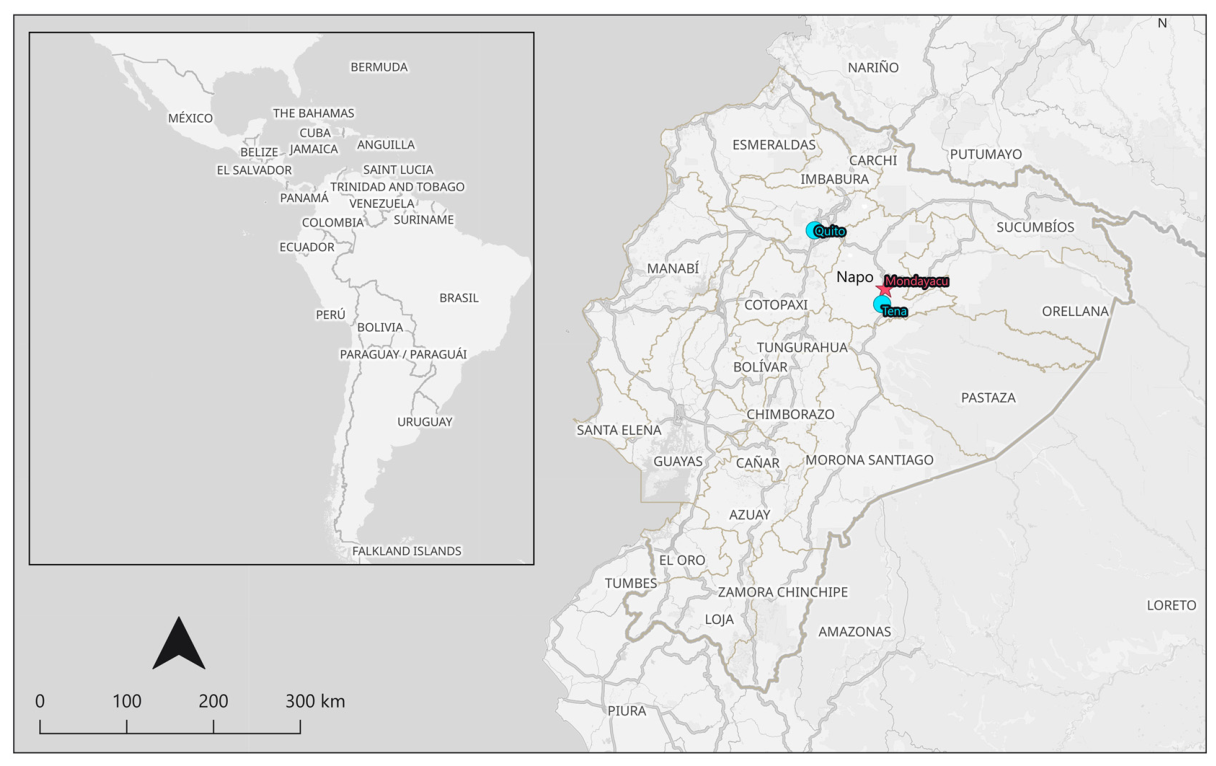
Fieldwork was conducted from 2019 to 2022 with members of the Runa community of Mondayacu in Amazonian Ecuador (Figure 1). Mondayacu is located in the Upper Napo region on the western edge of the Ecuadorian Amazon, in Napo Province, approximately 20 km from Tena, the provincial capital and nearest major urban center, and is approximately 165 km from Quito, Ecuador’s capital city. The community lies along the Tena–Baeza–Quito road in the parish of Cotundo, canton of Archidona, and was selected for research due to previous baseline data there from research in anthropology and ethnobiology [17]. Contemporary census data [18] of Mondayacu reports the broader dispersed community as 469 individuals with the community center containing 150 of them. White’s fieldwork experiences and Tanguila’s opinions, however, suggest population numbers may be higher than officially reported. Likewise, Perreault in 2005 [17] described the community population of approximately 1100–1300 people, distributed among 150–175 households. The population was entirely Kichwa-speaking, with Kichwa used exclusively or primarily in virtually all households in 2005. Only one surveyed family reported using Kichwa and Spanish in equal amounts, while no families reported Spanish as the primary language spoken at home. The community association, ACOPUKI (Asociación de Comunidades del Pueblo Kijus) at the time was comprised of approximately 70 households, each of which were allotted access to 100 hectares of land. Although the land is communally titled under ACOPUKI, individual households hold usufruct rights to their respective plots [17].
Figure 1.
Map of research area in Ecuador, showing Mondayacu in relation to other cities and provinces mentioned in the text.
The following account of contemporary community conditions draws on coauthor Roxana Tanguila’s knowledge of the area. The Mondayacu community is now part of the ACOKI Commune (Asociación de Comunidades Kijus). ACOKI encompasses their legally titled territory covering 8898.63 hectares, under community governance of Mondayacu, Shikayaku, Instandi (Cari Istandi), Lukmapamba, Pachalutik/Pachakutik, and Pakchayaku. Their total population in 2022 was estimated at 1065 people [19]. New housing construction has undergone changes in recent years. Houses with thatched roofs have been replaced, in many cases, by zinc roofs and mixed structures of wood, boards, and cement, with concrete or wooden foundations. This type of construction has become increasingly common because of road development, the growth of local commerce, and greater connectivity to urban centers. The influence of cities has led many families to try to replicate housing models associated with urban development, viewing these materials as a symbol of progress, comfort, and security reflecting an inherent and ongoing dynamism in Runa culture and knowledge. However, this transformation has also contributed to the gradual shift away from traditional landscape management techniques and the use of locally sourced materials. The need to access stable income, cover basic services, and improve their living conditions drives young people to seek employment in other provinces and in various extractive or monoculture activities. In many cases, the income they earn allows them to acquire means of transportation, such as a motorcycle, which facilitates their daily commute to different workplaces and strengthens their job mobility. However, this migration also has effects on community life, as it reduces youth participation in local activities, Kichwa language acquisition, the transmission of ancestral knowledge, and local organizational processes. These new mobility and lifestyle patterns have resulted in parts of ACOKI and other communities becoming increasingly composed of older adults. Many ACOKI communities are experiencing a gradual loss of biocultural ancestral resources in their landscapes, which not only were well adapted to the environmental and climatic conditions of the Amazon, but also represented knowledge, biota, cultural practices and collective identity passed down from generation to generation.
3. Methods
3.1. Participants and Sampling
Sixty adult Runa participated in this research’s participant observation. Structured interviews were conducted with a subset composed of 30 participants, with sample size guided by similar methodological thematic analysis sample norms, data saturation, and time remaining in study [20]. Snowball sampling was used to recruit for both samples [21,22,23] and the only rationale was opportunistic and the only requirements for inclusion was living in Mondayacu, wanting to participate, and being 18+. Recruitment was facilitated through relationships established during fieldwork and through members of the Mondayacu community who assisted with introductions and communication. Responses containing unintelligible or potentially identifying information were excluded from the analysis and are preserved as black boxes in Table S1. The number of final respondents (N = 29–30) for each question after this cleaning is reported in Table S1. The sample purpose was to foster inclusion on study interest rather than construct a statistically representative sample of the Mondayacu population. Accordingly, the participant group should not be interpreted as representative of all Runa people or of all residents of Mondayacu. Mondayacu is an increasingly globalized agricultural community (i.e., one with high ecotourism, internationally connected business and schooling, as well as increasing internet and cell phone usage). Our age and gender ratios among participants spanned 19–89 years of age across 16 men and 14 women.
3.2. Participant Observation and Structured Interviews
Interviews and participant observation were conducted in homes, gardens, food-production fields, and forest environments. These settings allowed participants to discuss plants and reproductive processes in their own terms and allowed us to gain familiarity with and to pursue topics that arose during everyday interactions. Attention was given to discussions of plant sex, flowering, fruit production, seeds, parent–offspring relationships, propagation, and differences among plants. Observed activities included interactions with plants and activities associated with cultivation, garden maintenance, propagation, harvesting, and seed trends. Observations were recorded in field notes and were used to contextualize interview responses and identify practices relevant to participants’ understandings of plant reproduction and variation. Participant observational material was not converted into any table, figure, or structured interview counts and was treated as a complementary qualitative source (CQS). The structured interviews focused on several related areas. First, participants were asked about the existence and characteristics of male and female plants. Second, questions addressed what plants require to reproduce or produce fruit. Third, participants were asked about relationships between male and female plants and whether male plants were necessary for female plants to produce fruit or new plants. Fourth, participants were asked whether plants produced from seeds differ from the plants from which those seeds were obtained. These questions were designed to distinguish recognition of reproductive characteristics from explanations of reproductive processes and from perceptions of inheritance and variation. For example, participants could recognize male and female individuals while disagreeing about whether male plants are required for fruit production. Similarly, participants could describe similarities between parent plants and offspring while also recognizing differences among plants produced from seeds. The interview design therefore allowed variation and disagreement to remain visible in the dataset.
The structured interview questions were locally adapted and translated from Kichwa and English into Spanish with assistance from Mondayacu collaborators. This process involved attention to Kichwa terminology used by participants to describe plants, reproduction, sex, seeds, offspring, and fruit production. Where wording or terminology was unclear, meanings were considered in relation to the surrounding participant observation or conversation and, when necessary, clarified through further discussion with local collaborators and participants. Kichwa was used in daily field conversations, but structured interviews were conducted primarily in Spanish because this was the interview script approved by the relevant Institutional Review Board (IRB) and the potential stigma of participants speaking Kichwa in public places. A secondary consideration was data standardization, given orthographic and dialectal variation across Kichwa.
Responses were retained in their original written form in Spanish with some Kichwa as inserted by participants during data collection, organization, and analyses and subsequently translated to English for presentation. Quotations are presented as English translations from Spanish and Kichwa intended to preserve the substantive meaning of participants’ statements. Participant quotations were anonymized and systematically serialized. Quotations were selected to illustrate recurring responses, important contrasts, uncertainty, or particularly clear explanations. Contradictory responses were retained where they were analytically relevant rather than selecting only quotations that supported the predominant interpretation.
3.3. Qualitative Coding and Analysis
Data analysis combined analytical note-taking with qualitative coding in Microsoft Excel Version 2609 and descriptive analysis of structured interview responses by White [22,23]. Some responses could reasonably have been assigned to more than one coding category; however, codes were retained as unique counts to avoid inflating response frequencies and to preserve methodological transparency. Potentially overlapping categories were defined according to the respondent’s primary stated claim. For example, “never” was used when a participant rejected a general requirement for male plants, “sometimes” when the requirement was explicitly described as conditional, and species-specific codes when the requirement was tied to a named taxon. Ambiguous responses were reviewed during coding to determine the most defensible primary category while retaining the original response text for verification. Analytical notes were developed throughout fieldwork to record observations, emerging concepts, questions, and relationships among plant-related practices and participant explanations. Indexical codes were developed from three sources: the topics established by the interview questions; observations and theoretical frameworks developed during the research; and concepts that emerged directly from participant responses [24]. Initial codes addressed plant sex, reproduction, fruit production, seeds, inheritance, and variation. Additional distinctions were developed where participants’ responses indicated different explanations or conditions. The coding structure was reviewed as the material was analyzed. Related codes were combined where they represented the same analytical concept, while codes were distinguished where participants used similar terms to describe different processes or where an initially broad category obscured potentially meaningful variation. The resulting categories were organized around recognition of plant sex, explanations of reproduction, relationships between male and female plants, fruit production, parent–offspring relationships, perceived inheritance, and variation among offspring. Our analysis emphasized both convergence and variation. Responses were not treated as evidence of a single, internally uniform Runa model of plant reproduction. Instead, agreement, disagreement, conditional responses, and uncertainty were retained as analytically meaningful. This approach was particularly important for questions concerning whether male plants are required for reproduction or fruit production and whether offspring resemble or differ from parent plants.
Structured interview responses were coded according to the thematic categories developed during qualitative analysis. Closely synonymous response labels were standardized for figures only during coding for analytical consistency (e.g., “female nature” with “being female” and “growth” with “plant growth”). Minor wording variants were collapsed into standardized coding categories for visualization (e.g., “Women Fruit” and “Women Fruits”). This standardization did not change the total number of coded responses, average responses per participant, or response range. The figures report coded responses to individual questions from the structured interview data. Unless otherwise indicated, response counts represent unique participants rather than the number of times a topic was mentioned in aggregate (e.g., if one participant mentioned X multiple times). The denominator could vary among questions because not every participant provided an interpretable response to every question. Responses with clarity or participant-security concerns were excluded. Where a participant provided more than one distinct answer to a question, multiple codes were permitted in the analysis. Consequently, a single participant could be assigned more than one code, which means that the sum of category counts may exceed the total number of participants. This distinction is important because the figures are descriptive summaries of coded responses rather than statistical estimates of population-level beliefs.
The coded data was used to conduct co-occurrence analysis for participants’ responses in aggregate by matching coded participant identifier tags [25]. Responses of participants in Spanish and English to each interview question are displayed in Table S1. Table S1 also contains percentages of total participants who gave a particular coded response. All participant sample sizes are listed, as well as the denominators of response percentage calculations, in Table S1. The data in Table S1 facilitate exploration of participant-specific answers in relation to their direct quotations and preserve the transparency of our coding schema. We did not collapse counts that had potential for distinct nuances. For example, in Q3 Table S1, we did not collapse the answer yes if plants differed from their parents into the response of always differed. This means some counts may have higher support. Total responses, average response number, and response range as well as bar graphs of specific coded responses in relation to all coded responses for given questions are also included in our Supplementary Figures S1–S6.
Table 1 summarizes the frequency and percentage of each of these participants’ responses in Table 1. For example, in the first row of Table 1, 29/30 participants (96.7%) were coded as reporting “Women Fruit” when asked about the differences between male and female plants. Excel was used to calculate the frequency and percentage of all coded responses displayed in Table S1, Table 1 and Table 2. Microsoft Excel was also used to calculate co-occurrence analysis of codes (Code B-occurrence Mentions [Numerator]/Code A Total Independent Mentions [Denominator] of all question pairs including zero counts to explore the presence of negative or absent scenarios. This allows for a greater detailed examination of which responses to questions co-occurred across all participants. For example, in Table 2 under the first data row, we see when responding to the differences in male/female plants, 86.2% of all participants (25/29) that responded with “Women Fruit” also gave the response “Papaya” to question 6 on “Fruits with male and female plants.”
Table 1.
Thematic analysis code frequency summary.
Table 2.
Thematic co-occurrence analyses.
3.4. Biological, Cultural and Geospatial Data Integration
The study integrated structured interviews with participant observation and unstructured interviews while maintaining distinctions among the different sources of evidence. Structured interviews demarcated by quotes and figures provided comparable responses to common questions, whereas informal interviews and participant observation comments contextualize information about how participants discussed and enacted plant-related knowledge. Participant quotations (identified by participant code) were selected to represent recurring patterns as well as disagreement and uncertainty. A quotation was considered particularly useful when it clearly expressed a common explanation, illustrated an important alternative interpretation, or demonstrated a condition under which a participant’s response changed. This approach reduced the risk of presenting only responses that conformed to the dominant pattern.
Plant material encountered during the research was documented through ethnobotanical observation and voucher collection. A total of 64 crop and crop-wild-relative specimens were deposited in the Herbario Nacional del Ecuador (QCN; National Herbarium of Ecuador) under deposit number QCNE-019-2021. Forty-four duplicate specimens were subsequently released from QCN for deposit in the Harvard University Herbaria under authorization number 001-2022. Voucher specimens provided botanical documentation for material encountered during the broader ethnobotanical research. Where voucher specimens were not directly used in the analysis presented here, their role was limited to documenting the botanical materials encountered during the research. The specimen collection was not used to infer genetic relationships, reproductive compatibility, inheritance, allele frequencies, or evolutionary change but instead to triangulate biota identification better between scientific and Indigenous taxonomic systems. QGIS software was used to map the research sites and provide geographic context for the field study. QuickMapServices Version 1.5.2 and QuickOSM Version 2.5.4 were used to access and incorporate relevant geographic datasets, and ESRI satellite imagery, VersaTiles Version 5.4.0, and Google Labels were used via QuickMapServices as the underlying basemap with point annotation labeling via Geomark Version 1.2.0. Spatial data were used descriptively to represent research locations and their environmental context.
3.5. Ethics, Positionality, Community Research Registration, and Permits
The research received approval from the Tulane University Institutional Review Board under IRB reference number 2018-011. Informed consent was obtained from the community of Mondayacu and from all individual participants before the research began in writing or orally for those unable to read and write. The research was registered in Ecuador through the Instituto Nacional de Investigaciones Agropecuarias (INIAP) under project No. MAE-DNB-2019-0176-O, “Conceptualization of the Domestication and Diversification of Crops among the Runa of the Amazon of Ecuador.” Plant collection and specimen deposition were conducted under the relevant Ecuadorian authorizations, including authorization number 001-2022 and associated documentation (Patent 025-VS-OTQ-DZ2E-MAATE-2021; INIAP-EESE_DENAREF-2021-0004-OF; MAE-SPN-2020-139-W). Participant quotations and interview responses were anonymized and systematically serialized.
We write as a collaborative author team including both non-Indigenous and Indigenous researchers working with Indigenous peoples and on Indigenous lands. We explicitly situate this work within the continuing realities of settler colonialism and uneven power relations in research. As authors, our training, institutional affiliations, and access to funding and publication infrastructures can unintentionally reproduce differentials in knowledge production, particularly when Indigenous knowledge is translated into academic categories, or when external timelines or institutional conventions shape what is documented and how. We therefore understand positionality not as a disclaimer, but as an ongoing responsibility. This includes approaching collaboration with humility, recognizing partners as intellectual contributors and knowledge holders (not “informants” or “assistants”), and remaining accountable to community priorities in how knowledge is recorded, interpreted, stored, and shared. Roxana Tanguila Alvarado is an Indigenous Quijos researcher, based in Cotundo and Archidona. Her contributions to this paper draw on community-based knowledge and lived experience in Quijos territory and are offered as interpretive insight to inform relational and decolonial analyses, rather than as formally elicited ethnographic data. In practice, our collaboration aims to prioritize relationship-based research, consent and local protocols, fair recognition and compensation for coresearchers where applicable, and transparent decision-making about what information is appropriate to publish versus what remains under community control. We acknowledge that no positionality statement can resolve the structural asymmetries that shape Indigenous–non-Indigenous research. Any errors, omissions, or misinterpretations in this manuscript remain our own, and we welcome correction and continued dialogue in ways that support the long-term goals of the Mondayacu community and our Indigenous collaborators.
4. Results
Table S1 displays the six questions utilized in our structured interviews and analyses (Q1–Q6) broken down by participants quotations, their English translations, topical codes and code occurrence metrics on a participant-by-participant basis. Mentioned common names of plants have been recorded in Spanish and given. Table S1 Q1 and its summary in Table 1 shows a high percentage (96.7%) of participants were coded as responding to the difference between male and female plants with the code “Women fruit.” In total, 26.7% of participants reported that male and female plants were the same until fruiting and 13.3% reported that it was women plants who flower. Participant 2, for example, remarked that “the males do not carry and the females grow, flourish and bear fruit.” Participant 21 similarly reports “male only blooms and falls female flowers bear fruit” as shown in Table S1.
Q2 on whether females need male plants to reproduce had 60% of participants responding “no” and 23.3% responding “yes.” In total, 13.3% of people stated that Papaya needs males to reproduce, however, while another 13.3% of people stated sometimes. Participant one for example stated, “No, because the only thing that helps us identify a male plant is that it is not useful, does not produce, and is cut down in the chacra.” However, we also see responses like participant 11, “Yes, they need them because without them they cannot produce,” as well as plant-specific responses to the question like participant 14: “Yes, they say that you should not cut down the male papaya plant because otherwise the female will no longer bear fruit.”
Q3 results on whether seeds are the same as their parent plants had 41% of participants responding that they always resembled their parents and 27.6% stating that they were different. Some respondents state “It cannot produce a different seed” or “Only a grafted plant might change the seeds” with 13.8% of participants stating that grafting changes seeds. However, some did respond in the affirmative with responses such as “Yes, it can be different when it grows because some plants bear fruit and others do not.”
In Q4, responding to the question of if plants needed anything to reproduce, being female was mentioned by 10% of participants with another 10% mentioning that males and females were needed. Plant care, however, was mentioned by 60% of participants, weeding by 20%, and land quality by 20%. Some participants had responses that combined plant sex and care, like participant 2, “First, the plant must be female and cared for by us so that it does not die and can produce fruit” and participant 23, “When they grow and when male and female plants are together, as with humans.”
In Q5, responding to whether male and female plants make children together like humans, over half reported no (51.7%), with quotations like “Because they do not necessarily need a male (kari) to produce new plants; the female (warmi) alone is sufficient,” whereas 27.6% reported “yes.” Response quotes varied, with some refusing to speculate more than a yes or no and others having more detailed responses like “Yes, through pollination. That is the only way I know. Male and female plants must be together.” and “When offspring or new seeds are produced.”
Finally, Table S1 and Table 1 highlights the varied Q6 taxa-level responses on which fruits can have men and women plants. Papaya was reported by 86.7% percent, with pacai, aguacate, and uvilla being reported by 10% of participants.
Table 2 shows which codes co-occurred across a participant’s total responses, ranked first by the most common co-occurrences and then by the least frequent. Our Q1 co-occurrence terms on the differences between male and female plants had an 82% co-occurrence rate with responding with papaya to Q6: which plants have males and females. However, we also see 62.1% percent co-occurrence rate of participants responding to differences between male and female plants in Q1 with “women fruit” alongside responses in the negative to Q2 that females need males to reproduce.
The same co-occurrence rate (62.1%) was calculated for Q1 respondents stating that “women fruit” as well as responding to Q4 that “plant care” is needed to reproduce. Papaya here too co-occurs as an example of a fruit with male and female in Q5 by participants responding to Q4 with “plant care.” This echoes Q2 responses on if males are needed to reproduce with respondents stating “no” (83.3%) and also responding to Q6 on papaya as being an example of a plant with male and female individuals (77.8%). Similarly, we see in Q5 that people responding that plants do not reproduce like children also reported that papaya is an example of a plant that has male and female individuals (73.3%).
A full 100% of participants who mentioned that the differences between male and female plants were nonexistent and they appeared the same until fruiting also reported that papaya was an example of a plant with a male and female individual in Q6. Several low or no co-occurrence results also prove interesting. Respondents who replied that weeding was a factor necessary for reproduction in Q4 had 0/6 co-occurrence with individuals who stated that, yes, plants reproduced children like humans. This percentage and N count was also present in respondents to Q4, none of whom who mentioned land quality as a factor needed to reproduce answered “yes” to Q3, seeds are different from parents.
5. Discussion
Table S1, Table 1 and Table 2 help demonstrate that Quijos Runa farmers recognize and explain biological processes involving plant sex, reproduction, inheritance, and variation; however, this differed among participants. Participants distinguished male and female plants through reproductive characteristics, Q1, explained conditions necessary for fruit production, Q2;Q4, and described how plant characteristics persist or change across generations, Q3. Papaya was the most often cited taxa to demonstrate both the need and lack of need for males for female reproduction (Table 2 Q1;Q6). These understandings also concerned cultivation, including plant care, propagation, and the evaluation of reproductive characteristics.
We found that recognition of male and female plants was associated with flowering, fruit production, and reproductive development (Q1–Q6). We interpret these patterns as evidence that observations of particular plants provide important contexts for understanding sexual differentiation. This builds on research among Yucatec Maya gardeners documenting relationships between local plant-sex categories, floral morphology, and reproductive functions [26,27,28]. Our findings add attention to reproductive development, showing how participants recognize sexual differences through changes in flowering and fruiting over a plant’s life history (Q1–Q6). This complements research on perceptually salient characteristics in Indigenous classification [4,5] by connecting reproductive categories with observations of biological processes. Recognition of sexual differentiation, however, did not necessarily correspond with agreement about reproductive requirements as seen in Table 2. These patterns show that recognizing reproductive characteristics does not necessarily establish how their biological functions are explained. Together, these findings extend ethnobotanical research on Indigenous classification, reproductive morphology, and crop management [3,4,5,8,26] by examining how reproductive processes are understood in relation to one another and to cultivation itself.
Previous studies have documented Indigenous and local knowledge of plant sex, pollination, and reproductive requirements [29,30,31,32]. We build on this research by examining how reproductive theories relate to explanations of male–female relationships and fruit production. Reproductive explanations also involved plant development, environmental conditions, and cultivation (Table 1 Q2;Q4). Its connections with sexual differentiation and reproductive requirements indicate that cultivation-related explanations occurred alongside observations of reproductive characteristics. We therefore interpret plant care as an important component of participants’ accounts of reproductive success, rather than a separate subject unrelated to plant sex. We distinguish between understandings of reproductive capacity, associated with characteristics such as plant sex, and understandings of reproductive success, which participants also related to cultivation, maturity, and environmental conditions. This complements research on Indigenous ecological knowledge and management ([8,13,33,34]) by illustrating how farmers understand reproduction through relationships among plant development, environmental conditions, and human care.
Our findings also contribute to research on Indigenous understandings of inheritance and variation. Participants recognized continuity between parent plants and offspring alongside differences in productivity, vigor, fruiting, and other characteristics relevant to cultivation (Table S1, Table 1 and Table 2 Q3). These observations build on research documenting Indigenous knowledge of hybridity, trait variation, and relationships among cultivated and surrounding plant populations [8,13,14,34,35,36]. By examining expectations of parent–offspring resemblance alongside explanations of variation, we move beyond documenting the recognition of crop diversity toward understanding how farmers conceptualize its reproduction and potential modification across generations. We found that inheritance-related understandings overlapped with other reproductive explanations, without establishing that participants connected them through a common causal model (Table 1 Q3). Examining these relationships together provides a broader account of Indigenous understandings of reproductive processes than treating inheritance as an isolated subject. These understandings may also be relevant to the selection and propagation of plants. Expectations of offspring resemblance and variation can inform how reproductive material is evaluated, particularly when characteristics concern productivity or fruiting. Some participants also associated grafting with changes in subsequent plant characteristics, indicating attention to relationships among propagation, parentage, and variation (Table S1 and Table 2 Q3). Studies of graft-associated variation and sexual reproduction provide biological contexts for comparison [37,38,39], although our interviews do not establish that participants identified the same genetic mechanisms. Instead, we document how farmers interpret relationships between propagation practices and the continuity or alteration of plant characteristics.
Previous ethnobotanical research has documented how Indigenous farmers maintain and modify crop diversity through selection and propagation [8,14,40]. Our findings (Table S1, Table 1 and Table 2) complement this work by examining reproductive explanations potentially relevant to such practices. The strongest quantitative pattern in the dataset is the recognition of whether plants can have male and female individuals. Twenty-eight of 29 participants (96.6%) answered “yes” when asked whether some plants have separate male and female individuals, with only one participant answering “no” (Table S1). This agreement concerns the existence of male and female plants; it does not establish that participants applied these categories to the same taxa or used identical diagnostic criteria. This is stronger agreement than appears in the questions concerning the mechanisms or requirements of reproduction. The finding suggests that sexual differentiation is a widely shared observational category, even though participants differ in how they explain what that differentiation means. The plant taxa associated with this category were unevenly distributed (Table S1 and Table 1 Q6). Papaya (Carica species) received 26 mentions, making it by far the most frequently cited plant. Aguacate/palta (Persea species) followed with 11 mentions, pacai/pakay (Inga species) with nine, and uvilla (likely Pourouma but unknown) with eight. Uva (Pourouma species), morete (Mauritia species), plátano (Musa species), chonta (Bactris species), café (Coffea species), and ají (Capsicum species), for example, each received two mentions, while the remaining responses occurred only once. Thus, recognition of male and female plants was distributed across numerous plants but was not evenly represented among them. The prominence of papaya is particularly notable: its 26 mentions account for 25.2% of the 103 coded responses and are more than twice the frequency of either aguacate/palta or pacai/pakay. This concentration suggests that papaya provides a particularly salient context for discussing plant sex. It would nevertheless be inappropriate to assume that the same reproductive distinction has equivalent meaning across all taxa.
The quotations in Table S1 and Table 2 Q1 show that participants most consistently distinguish male and female plants according to flowering and fruiting. One participant stated, “Males only flower and the flowers fall; females bear fruit” (participant 21). Another explained, “The male does not bear fruit, it only flowers. The female plant bears fruit for consumption” (participant 14). Similarly, another participant stated, “Male plants only flower and then the flowers fall and they do not bear fruit. Female plants do flower and bear fruit.” (participant 18). The implications of these repeated statements indicate that some Runa male/female distinction is grounded in an observable repeated reproductive contrast: males flower without producing the fruit that participants value, whereas females produce fruit. The papaya-specific quotation provides additional detail: “For example, in papaya we call it male because it produces up to the flower but does not bear fruit like the female, having the same characteristics” (participant 1). Here, flowering is understood as a shared characteristic, while subsequent fruit production differentiates the two categories. Another participant described female plants as “more robust than the males” (participant 5), demonstrating that morphological characteristics may also contribute to the distinction.
These observations are consistent with ethnobotanical research showing that local plant-sex categories may be based on combinations of reproductive and morphological characteristics rather than mapping directly onto globalized scientific botanical categories [26,27,28] A local distinction between “male” or “female” plants should not automatically be equated with dioecy, nor dismissed because it differs from botanical classifications. The biological correspondence of these categories nevertheless warrants further investigation. Papaya is famously trioecious (having distinct male, female, and hermaphroditic individuals). Crucially, its sex expression is highly unstable and environmental factors like extreme heat, moisture stress, or structural damage can cause a “male” papaya tree to undergo a seasonal sex reversal and suddenly produce fruit from modified flowers [41,42]. The other taxa identified by participants may involve dioecy, monoecy, hermaphroditism, or other reproductive systems. Because the reproductive biology of many tropical plant species are comparatively under-documented [43], species-specific examination of the relevant genera, cultivated species, varieties, and wild relatives is necessary before drawing strong conclusions about the biological basis of the Runa categories. The significance of the categories also extends beyond classification. Some participants reported removing male plants from gardens to make room for additional fruit-bearing females. In such cases, a reproductive classification becomes directly connected to cultivation decisions. The recognition of plant sex may therefore have consequences for which individual plants are retained within managed populations, as discussed further below.
Table 1 Q2 showcases 18 responses that indicated that female plants do not need males to reproduce, while seven indicated that they do. A further four responses described the requirement as conditional. Five responses specifically identified papaya as requiring a male, one identified maize (Zea species), one stated that male and female plants are necessary for reproduction, and one expressed uncertainty. Although “no” was the largest individual category, accounting for 18 of the 37 coded responses, the remaining 19 codes indicated a male requirement, qualified that requirement as conditional, identified particular crops for which males were considered necessary, or expressed uncertainty. The resulting pattern is therefore not one of simple agreement or disagreement, but of variation in how male reproductive requirements are understood across plants. The quotations demonstrate this more clearly. One participant stated, “Yes, if they are not together, no female plant bears fruit” (participant 11). Another participant stated that a male was not necessarily required: “They [female plants] do not necessarily need a kari [Kichwa for man] to create new plants with, the warmi [Kichwa for woman] is enough” (participant 18). A third participant offered a conditional explanation: “Some do need things like maize and papaya, others don’t” (participant 21). Some differences among responses may reflect the particular plants participants had in mind, rather than incompatible explanations of the same reproductive process. Still, the statement is particularly relevant because it shifts the question from whether males are universally necessary to whether reproductive requirements differ among plants.
Table 1 Q5 reinforces this plurality. Of 36 coded responses from 29 participants, 15 were coded as “no,” indicating that male and female plants do not reproduce children together like humans. Eight responses were coded simply as “yes,” while four were uncertain and two reflected misunderstanding of the question. Smaller numbers referred to planting next to one another (two) or to pollination, female sufficiency, grafting, the female plant providing seeds for new plants, or the need for plants to unite to bear fruit (one each). Thus, even the human analogy itself was used in different ways: some participants invoked it to explain male–female reproduction, while others explicitly distinguished plant reproduction from human reproduction.
The contrast concerning Runa plant sex and the plurality of explanations concerning reproductive requirements is further clarified in Table 1 Q4. Most participants (60%) identified plant care as a requirement for reproduction or fruit production. This was followed by weeding (20%), land quality (20%), and plant growth/maturity (16.7%). By comparison, being female represented 10% or any male–female association were mentioned more infrequently (10%). While our sample size/response rate is comparatively low, this qualitatively opens the discussion to how reproductive capacity and reproductive outcome may be conceptually distinguished as participants mentioned both plant sex and cultivation conditions when describing reproductive requirements. Being female may identify an individual’s capacity to bear fruit, while plant care, maturity, soil, land quality, and other environmental factors may determine whether that capacity is realized. The response from participant 2 again captures this relationship: “First, that she is a female [e.g., not a male], that she is taken care of so that she doesn’t die, and that she manages to produce products.” The plant is simultaneously a reproductive individual and a cultivated being whose survival and productivity depend on care. Similarly, participant 23 linked reproductive activity to growth and maturity as well as male–female association. These accounts place reproduction within the broader life history of the plant rather than treating it as an isolated biological event. The findings therefore suggest that Runa plant reproductive knowledge encompasses observations about what makes fruiting possible, what conditions support it, what happens when plants are propagated, how offspring compare with their parents, and how human can affect these processes.
Sex, reproduction, fruiting, and parentage may be related without being interchangeable concepts. Papaya again provides a particularly salient example. One participant stated, “yes, they say the male papaya plant should not be cut down because the female [will] no longer bear fruit” (participant 19). This statement links sex retaining male papaya plants with their expected contribution to female fruit production. In contrast, another participant stated, “They don’t need them because the female plants bear fruit on their own” (participant 18). The fact that both accounts occur within the dataset indicates that the meaning of male–female relationships cannot be inferred simply from the widespread recognition of plant sex. Several biological processes could contribute to the different observations underlying these explanations. Depending on species, fruit production can occur through self-compatibility, parthenocarpy, changes in sexual expression, or reproductive systems in which male and female functions occur on the same individual [44]. Depending on the plant, pollen can also travel beyond the immediate area in which plants are cultivated, including across tropical forest environments [45]. A female plant fruiting after nearby males have been removed therefore does not necessarily demonstrate reproductive isolation from male pollen, again depending on each organism’s reproductive biology. The spatial scale of reproduction is then sometimes important. A participant observing a female plant fruit after a male has been removed is observing a genuine sequence of events, but the garden may not encompass the entire reproductive landscape involved. Pollen may originate from plants outside the immediate cultivation area. Conversely, repeated observations of fruit production in the presence of male plants may provide a strong empirical basis for associating the two without requiring direct observation of pollen movement. This is not to say that Runa were unaware of pollination and throughout White’s participant observation references and encounters featured it. Other ethnobotanical research also evidences Indigenous understandings of plant sex, pollination, inheritance, and trait variation [26,29,30,31,32,46]. Assyrian representations have been interpreted as possible evidence of artificial pollination in date palms [47], while classical accounts describe plant sex and reproductive relationships in several agricultural contexts [48]. Historical accounts of fig cultivation similarly document practical knowledge of pollination and fruit production [49].
The broader significance of our findings concerns the relationship between reproductive knowledge and the management of biological diversity. Research on Amazonian plant domestication has established that Indigenous selection, propagation, and environmental modification have shaped cultivated populations over an extended period [9,10,12,40]. In Table 2 our Q2 and Q1 co-occurrence, frequency, and quotation analyses contribute to understanding the reproductive knowledge potentially informing plant selection. Knowledge of fruit production, reproductive requirements, and offspring characteristics may influence which individuals are retained, which reproductive materials are propagated, and which traits are valued. The co-occurrence in Table S1 and Table 2 illustrates recurring overlaps between reproductive and cultivation-related explanations, potentially evidencing co-occurrence of the theme and rationale across participants responses but does not establish that these understandings directly determined management decisions. We therefore identify potential relationships between reproductive knowledge and selection that warrant investigation through direct observation and longitudinal research.
Our findings also contribute to debates concerning Indigenous science and its relationship to globalized science. El-Hani and de Ferreira Bandeira [16] emphasize explanation, prediction, and reasoning about observable and unobservable phenomena in discussions of scientific knowledge. Quijos Runa accounts of reproductive requirements, parentage, inheritance, and variation provide evidence of reasoning about biological processes also investigated through botany, genetics, and ecology. We do not assume that these explanations correspond directly with contemporary scientific models, but argue that Indigenous reproductive knowledge should be examined through its observations and explanations rather than evaluated solely through classification or practical outcomes. This interpretation builds on Agrawal’s [1] critique of rigid distinctions between Indigenous and scientific knowledge and Whyte’s [2] emphasis on the plurality of scientific traditions. The co-occurrence analyses illustrate recurring combinations of reproductive observations and explanations without indicating a single model shared by all participants (Table 2). We do not interpret this variation as evidence of inadequate observation or reasoning. Rather, it illustrates why Indigenous biological knowledge should be investigated through the relationships among observations, explanations, and cultivation experiences, without assuming uniformity within a knowledge tradition. Finally, our findings reinforce Stein et al.’s [50] concern that Indigenous knowledge may be selectively incorporated into globalized scientific frameworks as observations detached from their explanatory contexts. Documenting the recognition of male and female plants or offspring variation captures only part of Quijos Runa reproductive knowledge. Explanations of fruit production, reproductive necessity, inheritance, and cultivation are equally important for understanding how these observations are interpreted. Comparisons with globalized botany, evolution, and genetics may clarify biological phenomena, but should complement rather than replace investigation of Indigenous explanations within their own contexts [2,51]. Differences between Indigenous and globalized scientific approaches should not, in themselves, be interpreted as evidence that Indigenous knowledge is less rigorous or grounded in less careful observation.
Some limitations qualify these interpretations. Our structured interview sample was relatively small. We also did not experimentally assess reproductive mechanisms or evaluate the biological consequences of cultivation decisions. Future research combining ethnographic observation, propagation experiments, and biological monitoring could investigate how reproductive understandings develop through experience and influence plant selection and cultivated diversity. Overall, our study advances ethnobotanical research by examining Quijos Runa understandings of the processes through which plants reproduce, transmit characteristics, and develop variation. By investigating these processes together, we extend established research on Indigenous classification systems and crop management while identifying potential relationships between reproductive knowledge, cultivation, and plant selection. We also contribute to discussions of Indigenous science by documenting biological observation and explanation within a particular knowledge tradition, including how shared reproductive observations occur alongside different interpretations and practical experiences.
6. Conclusions
This study documents Runa conceptualizations of plant sex, reproduction, parent–offspring relationships, inheritance, and trait variation. Participants had recognition of plant sex and reproductive differences while offering multiple explanations for reproduction, male–female requirements, and offspring resemblance and variation. These findings show that Runa plant knowledge extends beyond identification and classification to observations, relationships, causal explanations, and inferences about biological processes across generations. The study therefore contributes to limited research on Indigenous conceptualizations of plant reproduction and inheritance while engaging contemporary debates over what constitutes Indigenous science [2,51,52,53,54]. Although recognition of Indigenous science is growing, questions remain over whose methods, concepts, and standards define legitimate scientific knowledge. The plurality of ideas related to sex and reproduction documented here does not indicate an absence of systematic knowledge; it reflects knowledge generated through different plants, experiences, and cultivation contexts. This challenges approaches that distinguish Indigenous knowledge from science primarily through formal theory, terminology, or conformity with globalized scientific frameworks [16,53] as well as interpretations that reduce Indigenous knowledge to products of poverty or limited alternatives rather than treating it as explanatory knowledge in its own right [55,56].
Our findings support approaches that examine how knowledge is generated, tested, interpreted, and used within its own context [2,51]. Recognizing knowledge of plant reproduction and inheritance as a form of Indigenous science does not require equating them with contemporary genetics or botany, but it does require evaluating Indigenous and globalized sciences without assuming that one provides an inherently neutral standard for judging the other. Future research could build on these findings by examining more closely how shared recognition of reproductive phenomena can coexist with diverse causal explanations grounded in relationships with plants and cultivation practices. Such work may also help clarify how differences between Indigenous and globalized scientific explanations relate to distinct interpretive frameworks rather than differences in observational rigor. Further investigations into how these understandings inform cultivation, propagation, and selection and, in turn, may affect the biocultural processes through which plant diversity is perceived, maintained, and transformed are consequently needed.
Supplementary Materials
The following supporting information can be downloaded at: https://www.mdpi.com/article/10.3390/wild3040042/s1, Supplementary Figure S1: Coded interview responses from structured interviews on “Do seeds ever differ from the parent plants they were collected from?” N = 29; total responses = 38; average responses = 1.31; response range = 1–2. Supplementary Figure S2: Coded interview responses to “Do plants need anything to reproduce?” N = 30; total coded responses = 48; mean responses per participant = 1.60; range = 1–3. Supplementary Figure S3: Coded interview responses from structured interviews on “if a plant can have male and females, what are the differences?” N = 30; total responses = 43; average responses = 1.43; response range = 1–2. Supplementary Figure S4: Coded interview responses from structured interviews on “Do male and female plants reproduce children like humans?” N = 29; total responses = 36; average responses = 1.24; response range = 1–2. Supplementary Figure S5: Coded interview responses from structured interviews on “Do Female Plants Need Male Plants to Reproduce?” N = 30; total responses= 37; average responses = 1.23; response range = 1–3. Supplementary Figure S6: Coded interview responses from structured interviews on “What plants can have male and female individuals?” N = 30; total responses = 103; average responses = 3.43; response range = 1–7.
Author Contributions
Conceptualization, J.R.W., S.Z., A.M.C. and R.T.; methodology, J.R.W.; investigation, J.R.W. and Á.M.-A.; data curation, J.R.W.; formal analysis, J.R.W.; visualization, J.R.W.; writing—original draft preparation, J.R.W.; writing—review and editing, J.R.W., Á.M.-A., S.Z., A.M.C. and R.T.; resources, Á.M.-A. All authors have read and agreed to the published version of the manuscript.
Funding
This work was supported by the Fulbright DDRA, Division of Social and Economic Sciences, (grant number P022A180024-001, 1823229); The National Science Foundation Doctoral Research Improvement Grant, Division of Behavioral and Cognitive Science, (grant number 1823229), Lewis and Clark Fund for Exploration and Field Research, and the Jacobs Research Funds Kinkade Award. Revision and publication of the manuscript was made possible through the postdoctoral fellowship of Dr. John Robert White at the Prentice Institute for Global Population and Economy (UofL).
Institutional Review Board Statement
The research received approval from the Tulane University Institutional Review Board under IRB reference number 2018-011.
Informed Consent Statement
Informed consent was obtained from the community of Mondayacu and from all individual participants before the research began in writing or orally for those unable to read and write. The research was registered in Ecuador through the Instituto Nacional de Investigaciones Agropecuarias (INIAP) under project No. MAE-DNB-2019-0176-O, “Conceptualization of the Domestication and Diversification of Crops among the Runa of the Amazon of Ecuador.” Plant collection and specimen deposition were conducted under the relevant Ecuadorian authorizations, including authorization number 001-2022 and associated documentation (Patent 025-VS-OTQ-DZ2E-MAATE-2021; INIAP-EESE_DENAREF-2021-0004-OF; MAE-SPN-2020-139-W). Participant quotations and interview responses were anonymized and systematically serialized.
Data Availability Statement
The datasets used and/or analyzed during the current study are available from the corresponding author on reasonable request due to privacy and ethical restrictions.
Acknowledgments
This research would not have been possible without the contributions and support of many people and organizations. We are grateful to the community of Mondayacu, for their hospitality, work, and insights.
Conflicts of Interest
The authors declare no conflicts of interest.
References
- Agrawal, A. Dismantling the Divide Between Indigenous and Scientific Knowledge. Dev. Change 1995, 26, 413–439. [Google Scholar] [CrossRef] [Scilit]
- Whyte, K.P. On the role of traditional ecological knowledge as a collaborative concept: A philosophical study. Ecol. Process. 2013, 2, 7. [Google Scholar] [CrossRef] [Scilit]
- Atran, S. Folk biology and the anthropology of science: Cognitive universals and cultural particulars. Behav. Brain Sci. 1998, 21, 547–569. [Google Scholar] [CrossRef] [Scilit] [PubMed]
- Berlin, B. Ethnobiological Classification: Principles of Categorization of Plants and Animals in Traditional Societies; Princeton University Press: Princeton, NJ, USA, 2014. [Google Scholar]
- Gibson, R.W. A Review of Perceptual Distinctiveness in Landraces Including an Analysis of How Its Roles Have Been Overlooked in Plant Breeding for Low-Input Farming Systems. Econ. Bot. 2009, 63, 242–255. [Google Scholar] [CrossRef] [Scilit]
- Bogoni, J.A.; Graipel, M.E.; Peroni, N. The Human Dimension of Araucaria Forest: Resource Uses, Landscape Management, and Ethnozoology. Hum. Ecol. 2026, 54, 100. [Google Scholar] [CrossRef] [Scilit]
- Emperaire, L.; Peroni, N. Traditional Management of Agrobiodiversity in Brazil: A Case Study of Manioc. Hum. Ecol. 2007, 35, 761–768. [Google Scholar] [CrossRef] [Scilit]
- Rival, L.; McKey, D. Domestication and Diversity in Manioc (Manihot esculenta Crantz ssp. esculenta, Euphorbiaceae). Curr. Anthropol. 2008, 49, 1119–1128. [Google Scholar] [CrossRef] [Scilit] [PubMed]
- Balée, W.; Swanson, T.; Zurita-Benavides, M.G.; Ruiz Macedo, J.C. Evidence for Landscape Transformation of Ridgetop Forests in Amazonian Ecuador. Lat. Am. Antiq. 2023, 34, 842–856. [Google Scholar] [CrossRef] [Scilit]
- Clement, C.R.; Levis, C.; Cabral de Oliveira, J.; Fausto, C.; Mendes dos Santos, G.; Fontes Baniwa, F.; Mehinaku, M.; Wajãpi, A.; Wajãpi, R.; Sodré Maia, G. Naturalness Is in the Eye of the Beholder. Front. For. Glob. Change 2021, 4, 800294. [Google Scholar] [CrossRef] [Scilit]
- Clement, C.R.; Casas, A. Plant Domestication in Four Cultures: Agri-, Arbori-, Horti-, and Silviculture. In Biodiversity Management and Domestication in the Neotropics; Casas, A., Peroni, N., Parra-Rondinel, F., Lema, V., Aguirre-Dugua, X., Arévalo-Marín, E., Alvarado-Sizzo, H., Blancas, J., Eds.; Springer Nature: Cham, Switzerland, 2025; pp. 1–18. [Google Scholar] [CrossRef] [Scilit]
- Levis, C.; Rezende, J.S.; Barreto, J.P.L.; Barreto, S.S.; Baniwa, F.; Sateré-Mawé, C.; Zuker, F.; Alencar, A.; Mugge, M.; de Moraes, R.S.; et al. Indigenizing conservation science for a sustainable Amazon. Science 2024, 386, 1229–1232. [Google Scholar] [CrossRef] [Scilit] [PubMed]
- José, J.; Fernando, G.; Catalina, C.; Tania, G. Antropologías Hechas en Ecuador: Antología. Volumen I; Editorial Abya-Yala: Quito, Ecuador, 2022. [Google Scholar]
- Scarcelli, N.; Cubry, P.; Akakpo, R.; Thuillet, A.-C.; Obidiegwu, J.; Baco, M.N.; Otoo, E.; Sonké, B.; Dansi, A.; Djedatin, G.; et al. Yam genomics supports West Africa as a major cradle of crop domestication. Sci. Adv. 2019, 5, eaaw1947. [Google Scholar] [CrossRef] [Scilit] [PubMed]
- White, J.R.; Zarrillo, S.; Altamirano, Á.M.; Cevallos, M.P.; Tanguila, R.; Cuéllar, A.M. Refocusing the study of human–plant relations to the genus scale: Indigenous selection pressures in Xanthosoma. J. Ethnobiol. Ethnomed. 2026, 22, 86. [Google Scholar] [CrossRef] [Scilit] [PubMed]
- El-Hani, C.N.; Souza De Ferreira Bandeira, F.P. Valuing indigenous knowledge: To call it “science” will not help. Cult. Stud. Sci. Educ. 2008, 3, 751–779. [Google Scholar] [CrossRef] [Scilit]
- Perreault, T. Why Chacras (Swidden Gardens) Persist: Agrobiodiversity, Food Security, and Cultural identity in the Ecuadorian Amazon. Hum. Organ. 2005, 64, 327–339. [Google Scholar] [CrossRef] [Scilit]
- Gobierno Autónomo Descentralizado Parroquial Rural de Cotundo. Actualización del Plan de Desarrollo y Ordenamiento Territorial de la Parroquia Rural de Cotundo, Cantón Archidona, Provincia de Napo 2023–2027; Gobierno Autónomo Descentralizado Parroquial Rural de Cotundo: Cotundo, Ecuador, 2024. Available online: https://gadcotundo.gob.ec/wp-content/uploads/2024/12/PDOT_COTUNDO13_06_2024_2-signed-signed-signed-signed-signed-1.pdf (accessed on 1 September 2026).
- Torres, A.d.C.J.; Castillo-Acaro, E.; Jiménez-Jiménez, L.; Pucha-Cofrep, D. Adaptación de sistemas naturales y sociales al cambio climático en el Ecuador: Una revisión. Bosques Latid. Cero 2022, 12, 54–71. [Google Scholar] [CrossRef] [Scilit]
- Ahmed, S.K. Sample size for saturation in qualitative research: Debates, definitions, and strategies. J. Med. Surg. Public Health 2025, 5, 100171. [Google Scholar] [CrossRef] [Scilit]
- Alexiades, M.N. Collecting Ethnobotanical Data: An Introduction to Basic Concepts and Techniques. Adv. Econ. Bot. 1996, 10, 53–94. [Google Scholar]
- Bernard, H.R.; Gravlee, C.C. Handbook of Methods in Cultural Anthropology; Bloomsbury Publishing PLC: London, UK, 2014. [Google Scholar]
- Bernard, H.R. Research Methods in Anthropology: Qualitative and Quantitative Approaches; Bloomsbury Academic: London, UK, 2018. [Google Scholar]
- Musante (DeWalt), K.; DeWalt, B.R. Participant Observation: A Guide for Fieldworkers; Bloomsbury Publishing PLC: London, UK, 2010. [Google Scholar]
- Guest, G.; MacQueen, K.M.; Namey, E.E. Applied Thematic Analysis; SAGE: Newcastle upon Tyne, UK, 2012. [Google Scholar]
- Rico-Gray, V.; Rico-Gray, V.; García-Franco, J.G.; Chemas, A. Yucatecan Mayas knowledge of pollination and breeding systems. J. Ethnobiol. 1988, 8, 203–204. [Google Scholar]
- Brown, J.E.; Bauman, J.M.; Lawrie, J.F.; Rocha, O.J.; Moore, R.C. The Structure of Morphological and Genetic Diversity in Natural Populations of Carica papaya (Caricaceae) in Costa Rica. Biotropica 2012, 44, 179–188. [Google Scholar] [CrossRef] [Scilit]
- Moo-Aldana, R.D.; Munguía-Rosas, M.A.; Serralta, L.P.; Castillo-Burguete, M.T.; Vega-Frutis, R.; Martínez-Natarén, D. Can the Introduction of Modern Crop Varieties in their Centre of Origin Affect Local Ecological Knowledge? A Case Study of Papaya in the Yucatan Peninsula. Hum. Ecol. 2017, 45, 367–375. [Google Scholar] [CrossRef] [Scilit]
- Gouwakinnou, G.N.; Lykke, A.M.; Djossa, B.A.; Sinsin, B. Folk perception of sexual dimorphism, sex ratio, and spatial repartition: Implications for population dynamics of Sclerocarya birrea [(A. Rich) Hochst] populations in Benin, West Africa. Agrofor. Syst. 2011, 82, 25–35. [Google Scholar] [CrossRef] [Scilit]
- Munyuli, T. Farmers’ perceptions of pollinators’ importance in coffee production in Uganda. Agric. Sci. 2011, 2, 318–333. [Google Scholar]
- Tamiru, M.; Becker, H.C.; Maass, B.L. Comparative Analysis of Morphological and Farmers; Cognitive Diversity in Yam andraces (Dioscorea spp.) from Southern Ethiopia. Trop. Agric. Dev. 2011, 55, 28–43. [Google Scholar] [CrossRef]
- Zango, O.; Rey, H.; Bakasso, Y.; Lecoustre, R.; Aberlenc, F.; Pintaud, J.C. Local Practices and Knowledge Associated with Date Palm Cultivation in Southeastern Niger. Agric. Sci. 2016, 7, 586–603. [Google Scholar]
- Berkes, F. Sacred Ecology: Traditional Ecological Knowledge and Resource Management; Taylor & Francis: Abingdon, UK, 1999. [Google Scholar]
- Rival, L. Amazonia’s Cassava and Manioc Through Historical Times. J. Lat. Am. Caribb. Anthropol. 2025, 30, e70034. [Google Scholar] [CrossRef] [Scilit]
- Scarcelli, N.; Tostain, S.; Baco, M.N.; Agbangla, C.; Daïnou, O.; Vigouroux, Y.; Pham, J.L. Does agriculture conflict with in situ conservation? A case study on the use of wild relatives by yam farmers in Benin. In Crop Wild Relative Conservation and Use; Maxted, N., Ford-Lloyd, B.V., Kell, S.P., Iriondo, J.M., Dulloo, M.E., Turok, J., Eds.; CABI: Wallingford, UK, 2007; pp. 331–339. [Google Scholar] [CrossRef] [Scilit]
- Scarcelli, N.; Tostain, S.; Vigouroux, Y.; Agbangla, C.; Daïnou, O.; Pham, J. Farmers’ use of wild relative and sexual reproduction in a vegetatively propagated crop. The case of yam in Benin. Mol. Ecol. 2006, 15, 2421–2431. [Google Scholar] [CrossRef] [Scilit] [PubMed]
- Tsaballa, A.; Athanasiadis, C.; Pasentsis, K.; Ganopoulos, I.; Nianiou-Obeidat, I.; Tsaftaris, A. Molecular studies of inheritable grafting induced changes in pepper (Capsicum annuum) fruit shape. Sci. Hortic. 2013, 149, 2–8. [Google Scholar] [CrossRef] [Scilit]
- Flores, W.B.; Yuyama, K.; Silva, R.G.D. Asexual propagation of peach palm by division of the clump and extraction of the off-shoots. Hortic. Bras. 2012, 30, 151–154. [Google Scholar] [CrossRef] [Scilit]
- Mora-Urpí, J.; Weber, J.C.; Clement, C.R. Peach Palm, Bactris Gasipaes Kunth; IPK and IPGRI: Rome, Italy, 1997. [Google Scholar]
- White, J.R.; Monteros Altamirano, Á. Genes in the Chagra: Crop and Crop Wild Relative Landesque Capital among Amazonian Runa in Ecuador. J. Ethnobiol. 2024, 44, 172–187. [Google Scholar] [CrossRef] [Scilit]
- Aryal, R.; Ming, R. Sex determination in flowering plants: Papaya as a model system. Plant Sci. 2014, 217–218, 56–62. [Google Scholar] [CrossRef] [Scilit] [PubMed]
- Storey, W.B. Genetics of the Papaya. J. Hered. 1953, 44, 70–78. [Google Scholar] [CrossRef] [Scilit]
- Bawa, K.S.; Perry, D.R.; Beach, J.H. Reproductive biology of tropical lowland rain forest trees. I. Sexual systems and incompatibility mechanisms. Am. J. Bot. 1985, 72, 331–345. [Google Scholar] [CrossRef] [Scilit]
- Picarella, M.E.; Mazzucato, A. The Occurrence of Seedlessness in Higher Plants; Insights on Roles and Mechanisms of Parthenocarpy. Front. Plant Sci. 2019, 9, 1997. [Google Scholar] [CrossRef] [Scilit] [PubMed]
- Ward, M.; Dick, C.W.; Gribel, R.; Lowe, A.J. To self, or not to self… A review of outcrossing and pollen-mediated gene flow in neotropical trees. Heredity 2005, 95, 246–254. [Google Scholar] [CrossRef] [Scilit] [PubMed]
- Smith, B.M.; Chakrabarti, P.; Chatterjee, A.; Chatterjee, S.; Dey, U.K.; Dicks, L.V.; Giri, B.; Laha, S.; Majhi, R.K.; Basu, P. Collating and validating indigenous and local knowledge to apply multiple knowledge systems to an environmental challenge: A case-study of pollinators in India. Biol. Conserv. 2017, 211, 20–28. [Google Scholar] [CrossRef] [Scilit]
- Sneep, J. Some facts about plant breeding before the discovery of mendelism. Euphytica 1966, 15, 135–140. [Google Scholar] [CrossRef] [Scilit]
- Thanos, C.A. Aristotle and Theophrastus on plant-animal interactions. In Plant-Animal Interactions in Mediterranean-Type Ecosystems; Arianoutsou, M., Groves, R.H., Eds.; Springer: Dordrecht, The Netherlands, 1994; Volume 31, pp. 3–11. [Google Scholar]
- Cook, J.M.; Rasplus, J.-Y. Mutualists with attitude: Coevolving fig wasps and figs. Trends Ecol. Evol. 2003, 18, 241–248. [Google Scholar] [CrossRef] [Scilit]
- Stein, S.; Ahenakew, C.; Valley, W.; Sherpa, P.Y.; Crowson, E.; Robin, T.; Mendes, W.; Evans, S. Toward more ethical engagements between Western and Indigenous sciences. FACETS 2024, 9, 1–14. [Google Scholar] [CrossRef] [Scilit]
- Ludwig, D.; El-Hani, C.N. Transformative Transdisciplinarity: An Introduction to Community-Based Philosophy; Oxford University Press: Oxford, UK, 2025. [Google Scholar]
- Chaulk, K.; Ballard, M.; Hill, S.; Wolfrey, D.; Campbell, M.; Sutherland, M.; Wawatie, S.; Auger, L. Bridging, Braiding, and Weaving Indigenous and Western Science to Understand and Make Predictions About Weather and Climate Change. Ecol. Evol. 2025, 15, e72085. [Google Scholar] [CrossRef] [Scilit] [PubMed]
- Whyte, K.; Sherpa, P.Y. Indigenous Peoples’ Leadership in Environmental Science Assessments; Taylor & Francis: Abingdon, UK, 2024. [Google Scholar] [CrossRef] [Scilit]
- Whyte, K. Indigenous Climate Change Studies: Indigenizing Futures, Decolonizing the Anthropocene. Engl. Lang. Notes 2017, 55, 153–162. [Google Scholar] [CrossRef] [Scilit]
- Abdullah, A.; Khan, S.M. Traditional ecological knowledge sustains due to poverty and lack of choices rather than thinking about the environment. J. Ethnobiol. Ethnomed. 2023, 19, 65. [Google Scholar] [CrossRef] [Scilit] [PubMed]
- Saavedra, F.; Buschbacher, R.; Nemogá-Soto, G.R.; Alvira, D.; Athayde, S.; Campbell, J.M.; Michaelsen, A.B.C.; Corntassel, J.G.; Correia, J.E.; Dacks, R.; et al. On tap, not on top: An urgent call for academia to support Indigenous science and equitable conservation. Earth Steward. 2026, 3, e70038. [Google Scholar] [CrossRef] [Scilit]

Disclaimer/Publisher’s Note: The statements, opinions and data contained in all publications are solely those of the individual author(s) and contributor(s) and not of MDPI and/or the editor(s). MDPI and/or the editor(s) disclaim responsibility for any injury to people or property resulting from any ideas, methods, instructions or products referred to in the content. |
© 2026 by the authors. Licensee MDPI, Basel, Switzerland. This article is an open access article distributed under the terms and conditions of the Creative Commons Attribution (CC BY) license.