2. Literature Review
Artificial intelligence (AI) has become a transformative force within tourism, enabling the automation of services, personalisation of experiences and more efficient information processing [
3,
15]. Through technologies such as machine learning, natural language processing (NLP) and recommendation systems, AI supports tourists throughout the travel journey, from information search and planning to on-site experiences and post-trip engagement [
16,
17]. More recently, generative AI tools such as ChatGPT have expanded these capabilities by providing conversational, human-like interactions and personalised recommendations based on user prompts [
18,
19]. Unlike traditional search engines, generative AI systems can interpret user intentions; generate tailored responses; assist with complex travel decisions, including itinerary creation, destination recommendations, and accommodation selection [
20,
21]; and offer during-trip support as a real-time travel companion [
22].
The growing importance of AI is closely linked to developments in recommendation systems and information search behaviour. Recommendation systems use user preferences, behavioural patterns and contextual information to provide personalised suggestions [
23,
24]. Recent advances in large language models (LLMs) have further enhanced personalisation by enabling conversational interactions and adaptive recommendations that respond to user feedback in real time [
2]. Consequently, AI not only facilitates information retrieval but also actively shapes consumer decision-making by reducing search costs and influencing the evaluation of alternatives [
25,
26].
Unlike traditional search engines, which primarily retrieve and rank existing information, generative AI enables interactive and conversational information search. Rather than requiring users to independently synthesise information from multiple sources, generative AI can integrate information into a single personalised response [
2,
18,
20]. Similarly, while social media platforms and online review sites provide valuable user-generated content and social proof, generative AI differs in its ability to generate tailored recommendations, adapt to follow-up questions, and iteratively refine outputs based on evolving user preferences [
2,
25]. Recent research suggests that AI-driven personalisation can increase the perceived relevance of recommendations and influence consumer evaluation and decision-making processes by aligning information more closely with individual preferences and contextual needs [
26]. Similarly, personalisation has been shown to enhance decision-making efficiency by providing consumers with more relevant, timely, and context-specific information throughout the customer journey [
27]. Consequently, generative AI may be conceptualised not only as an information retrieval tool but also as an interactive decision-support intermediary that influences information search, evaluation, and expectation formation [
25,
28].
Within tourism, these developments are particularly relevant for culinary tourism, which has emerged as a rapidly growing segment driven by travellers seeking authentic food and beverage experiences [
4,
29]. Culinary tourism extends beyond food consumption and encompasses cultural heritage, local traditions and destination identity and travellers typically seek personalised, authentic, and context-specific food experiences [
30,
31]. Previous studies show that tourists are motivated by both internal factors, such as novelty seeking and cultural exploration, and external factors, including destination image and gastronomic reputation [
32,
33]. Nevertheless, scholarly inquiry into the use of AI technologies in the culinary tourism and gastronomy field is still in its infancy [
11,
12], although AI-driven technologies have increasingly been integrated into culinary tourism through personalised restaurant recommendations, virtual food experiences and chatbot-assisted services, enhancing tourist engagement and satisfaction [
34,
35,
36].
Generation Z represents a particularly relevant cohort in this context. As digital natives, Generation Z has grown up with continuous access to digital technologies and highly personalised online environments [
13,
37]. Their travel decisions are strongly influenced by social media, online reviews and digital content, with inspiration often emerging before a conscious travel need is recognized [
38,
39]. This generation values convenience, personalisation, authenticity and efficient access to information, making them particularly receptive to AI-powered travel planning tools [
40,
41]. In culinary tourism, Generation Z actively seeks authentic and shareable food experiences while relying heavily on digital platforms for restaurant discovery and travel inspiration [
42,
43].
Together, these streams of research suggest that generative AI has the potential to fundamentally reshape how travellers search for information, evaluate alternatives, and construct travel expectations. However, despite growing scholarly interest in AI within tourism, culinary tourism, and Generation Z travel behaviour, limited research has examined how Generation Z uses generative AI during the pre-trip planning phase of culinary tourism. In particular, little is known about how generative AI influences culinary travel inspiration, information search, decision-making, and the formation of expectations regarding food-related experiences. Given the increasing adoption of conversational AI tools such as ChatGPT and their potential to reshape how younger travellers discover and evaluate culinary experiences, this represents an important research gap. The principal contribution of this study therefore lies in the development of a process-based framework that explains how Generation Z integrates generative AI into culinary travel planning. By conceptualising AI-assisted culinary travel planning as an iterative process involving information search, inspiration, trust evaluation, external validation, decision-making, and expectation formation, the study seeks to provide new insights into the role of generative AI in tourism planning. To explore this, a qualitative research approach was adopted.
4. Results
4.1. Generation Z’s Travel Behaviour and AI Familiarity
Participants demonstrated a high level of familiarity with generative AI applications, including ChatGPT and Google Gemini, prior to the study. All participants reported previous experience using these technologies in academic, professional, or personal contexts (P1–P10), suggesting that generative AI had already become integrated into their everyday digital practices. Rather than approaching AI as a novel technology, participants viewed it as a familiar tool that could be readily extended to pre-trip culinary travel planning. This finding reflects the broader characteristics of Generation Z as digitally native users who are accustomed to adopting emerging technologies and navigating digital information environments [
13,
37].
Although participants were familiar with generative AI, their initial expectations of its role in travel planning were relatively limited. Most expected the technology to function primarily as a source of inspiration by suggesting destinations, restaurants, or local dishes while reducing the time required to search across multiple online platforms (P1, P2, P3, P5, P7, P8, P10). These expectations largely reflected a perception of AI as an efficient information retrieval tool rather than an active planning resource.
However, participants’ experiences frequently exceeded these initial expectations. Instead of merely generating ideas, generative AI became integrated into the broader planning process by assisting with itinerary development, recommending restaurants and regional dishes, explaining local food cultures, and organising travel-related information into coherent plans. As participants interacted with the system through follow-up prompts, AI evolved from a source of isolated recommendations into a conversational planning assistant that supported multiple stages of the planning process. P3 described this transition by explaining:
“AI massively helped with all aspects of the planning. Like for example, with the flights, it helped connect me with the most efficient options and timelines, that saved me so much time. Instead of opening ten tabs and comparing everything manually, it kind of structured everything for me in one place.”
(P3)
Similarly, P1 highlighted how AI supported the gradual development of a food-centred itinerary rather than simply providing restaurant suggestions:
“So at the beginning I started by building some ideas, just kind of exploring what I would like and not like. I gave it a rough direction and then slowly built up a draft itinerary. The stops and routes were kind of built around restaurants and shops I wanted to visit along the way […].”
(P1)
These accounts indicate that participants did not simply replace conventional search engines with generative AI. Instead, they used AI to structure the planning process itself by integrating inspiration, information retrieval, and itinerary development within a single conversational environment. This represents an important shift in pre-trip culinary travel planning, as participants no longer viewed information search and planning as separate activities but as interconnected processes that evolved through continuous interaction with the AI system.
Overall, the findings suggest that Generation Z’s familiarity with generative AI extended beyond technological competence to include confidence in incorporating AI into complex travel-related tasks. Rather than serving solely as a faster search tool, generative AI functioned as an integrated planning companion that supported the exploration of local cuisines, restaurants, and culinary experiences while simplifying the organisation of travel plans. This finding supports previous research suggesting that younger travellers demonstrate strong openness towards digital technologies and personalised information environments [
40,
41], while also indicating that Generation Z increasingly expects digital technologies to actively assist, rather than merely facilitate, travel planning.
4.2. AI for Information Search, Inspiration, and Planning
A central finding of the study is that generative AI changed how participants approached culinary travel information search. Rather than using AI solely to retrieve specific information, participants described it as an interactive environment where exploration, inspiration, and planning occurred simultaneously. Conventional search engines were primarily associated with locating individual pieces of information, whereas generative AI was perceived as a conversational system capable of synthesising diverse information sources and transforming broad interests into structured culinary travel ideas (P1, P2, P5, P7, P8).
Participants frequently highlighted that generative AI reduced the complexity associated with traditional online information search. When planning culinary experiences, travellers typically need to combine information from multiple platforms, including restaurant websites, review platforms, social media, and travel blogs. Participants perceived generative AI as valuable because it reduced the need to navigate between different sources by providing initial recommendations and contextual explanations within a single interaction (P3, P5, P6, P8, P9, P10). However, the value of AI was not limited to convenience. Instead, participants emphasised that the conversational nature of the technology enabled them to progressively refine their searches by adjusting preferences, asking follow-up questions, and exploring alternative options.
This interactive process clearly distinguished generative AI from traditional search engines. While conventional search behaviour often requires users to formulate precise queries and independently evaluate large amounts of information, participants described AI-supported search as a collaborative process in which recommendations evolved through dialogue. This finding suggests that generative AI changes the role of the traveller from an information seeker who retrieves and evaluates separate sources into an active participant who co-constructs travel knowledge through interaction with the system.
Several participants compared this experience to receiving recommendations from a knowledgeable local person, such as a friend or resident familiar with the destination (P2, P7, P8). The ability to ask follow-up questions and request adjustments contributed to this perception, as participants felt that AI could adapt recommendations according to their interests, budget, travel style, and desired level of authenticity. Additional features such as links, images, and contextual explanations further supported this perception by providing opportunities to explore and evaluate recommendations.
Beyond information retrieval, generative AI also played an important role in culinary inspiration. Participants reported that AI introduced them to regional dishes, restaurants, and food experiences they would not necessarily have discovered through conventional search methods alone (P2, P4, P5, P7, P9). Rather than searching for a predetermined restaurant or dish, participants often used AI to explore possibilities and develop a broader understanding of the culinary identity of a destination. In this way, generative AI supported a more exploratory form of information seeking, where inspiration and planning developed together.
Personalisation represented another important factor shaping participants’ experiences with AI-assisted culinary planning. Participants explained that recommendations became more relevant when they provided information regarding preferences such as budget, dietary requirements, preferred atmosphere, authenticity expectations, and travel context (P4, P6, P8).
For example, P9 described how AI expanded the request beyond a simple restaurant recommendation:
“I also asked for a lunch restaurant that was more affordable but still authentic and offered national dishes. Again, ChatGPT told me without me explicitly asking which South African dishes are the most popular and which ones I should definitely try. That means it gave me a lot more information than I actually asked for.”
(P9)
This example illustrates that participants valued not only the ability of AI to answer direct questions but also its capacity to anticipate related information needs. Consequently, generative AI functioned as a tool for expanding culinary awareness by providing additional cultural and contextual knowledge alongside practical recommendations.
Overall, the findings indicate that generative AI transforms culinary information search from a fragmented and primarily retrieval-based activity into a more interactive and exploratory process. Generation Z participants used AI not simply because it provided faster access to information, but because it supported the interpretation, organisation, and discovery of culinary experiences. This highlights an important distinction between generative AI and existing digital information sources: while traditional platforms primarily provide access to available information, generative AI assists users in constructing personalised knowledge and developing travel plans through ongoing interaction and iterative refinement of recommendations [
2,
25,
28,
56,
57,
58,
59].
4.3. Trust, Verification and Hybrid Information Behaviour
Trust emerged as a central factor influencing how participants evaluated and incorporated generative AI into culinary travel planning. Although participants generally expressed confidence in AI-generated restaurant recommendations, local food suggestions, and culinary itineraries, this trust was conditional rather than absolute (P1–P10). Participants did not perceive generative AI as a fully independent authority but evaluated its usefulness based on the quality, relevance, and verifiability of the information provided.
Participants indicated that trust increased when AI-generated recommendations were accompanied by supporting information, such as direct links, images, ratings, Google Maps references, and explanations regarding restaurants or local food cultures (P1, P2, P3, P5, P6, P7, P8, P9). These elements provided additional context and allowed participants to assess the credibility of recommendations before incorporating them into their travel plans. This suggests that trust in generative AI was not primarily developed through technological familiarity alone, but through the perceived transparency and traceability of the information provided. This finding is consistent with research on digital information credibility, which suggests that transparency, source availability, and opportunities for verification are important determinants of perceived information quality and trustworthiness [
60,
61,
62,
63,
64].
Despite generally positive perceptions of AI-generated recommendations, participants consistently engaged in verification practices before making final decisions regarding restaurants and culinary experiences (P1–P10). Participants commonly cross-checked AI outputs using platforms such as Google Maps, Instagram, TikTok, TripAdvisor, online reviews, and official restaurant websites. However, these verification behaviours did not necessarily indicate a rejection of AI. Instead, they represented a complementary strategy that allowed participants to benefit from AI’s efficiency while maintaining confidence in the accuracy and reliability of their final choices. P3 described this relationship between trust and verification:
“I made sure to double check everything from the AI but it was pretty easy because of all the links, pictures and detail that it provided. I did place a lot of trust in the AI though because of how easy it was to double check everything.”
(P3)
This finding highlights that verification was not a replacement for trust but rather a mechanism through which trust was established and maintained. Participants appeared to accept that generative AI could provide valuable recommendations while recognising that final evaluation remained their own responsibility. This reflects a more complex relationship with AI in which users neither fully accept nor reject AI-generated information but instead incorporate it into existing evaluation practices.
Several participants reported concerns regarding outdated restaurant information, inaccurate recommendations, and potentially misleading websites generated through AI-supported searches (P2, P4, P5, P6). These concerns were particularly relevant in culinary tourism, where restaurant availability, opening hours, popularity, and reputation can change rapidly. As a result, participants continued to rely on external platforms for validation, particularly when assessing authenticity, current information, and social proof.
Consequently, participants demonstrated a hybrid information behaviour in which generative AI and traditional digital sources served complementary functions. Generative AI was primarily used for exploration, recommendation generation, and structuring culinary travel ideas, while external platforms were used for confirmation, visual evaluation, and credibility assessment (P1, P2, P3, P5, P7, P8, P9). Rather than replacing existing information sources, AI became integrated into a broader information ecosystem where different platforms fulfilled different stages of the decision-making process.
This finding contributes to a more nuanced understanding of AI adoption among Generation Z travellers. Participants’ behaviour suggests that successful integration of generative AI does not depend on users developing complete trust in the technology. Instead, adoption is supported by a balance between perceived usefulness and critical evaluation. Generative AI functions as a supportive decision-making partner that enhances information accessibility and exploration, while traditional sources continue to provide validation and reduce uncertainty. This supports previous research suggesting that trust in AI develops through ongoing evaluation, interaction, and verification rather than unconditional acceptance of AI-generated outputs [
65,
66].
4.4. Influence of Generative AI on Culinary Travel Decision-Making
The findings suggest that generative AI influenced culinary travel decision-making by shaping how participants evaluated and prioritised different options. However, participants did not perceive AI as replacing their personal judgement or making decisions on their behalf. Instead, AI functioned as a decision-support tool that helped participants structure alternatives, compare options, and identify experiences that aligned with their individual preferences. One of the key ways in which generative AI influenced decision-making was by reducing the cognitive effort associated with evaluating multiple culinary options. Participants explained that AI simplified complex comparisons by summarising restaurant characteristics, price levels, locations, and recommended dishes within a structured response (P3, P5, P6, P8, P9, P10). Rather than manually collecting and comparing information from different websites, participants used AI to create an initial overview of available choices, allowing them to focus their attention on evaluating the most relevant options. P6 described this benefit:
“Especially when it summarized several restaurant options with short descriptions, price levels, and recommended dishes. That saved me from opening many different websites.”
(P6)
These findings indicate that the main influence of AI on decision-making was not the direct selection of restaurants or experiences, but the simplification of the evaluation process. By organising dispersed information into a more accessible format, generative AI reduced the effort required to compare alternatives and supported more efficient decision formation.
Authenticity emerged as one of the most important criteria influencing participants’ culinary decisions, which is consistent with previous research suggesting that Generation Z values authentic, meaningful, and experience-oriented food encounters when making consumption choices [
67]. Participants consistently expressed a preference for restaurants and food experiences that reflected local traditions, regional cuisines, and everyday food practices rather than highly commercialised tourist experiences (P2, P4, P6, P7, P9). In this context, participants valued AI’s ability to provide contextual explanations regarding why certain restaurants, dishes, or experiences could be considered culturally meaningful. P4 highlighted this aspect:
“What felt especially useful was that the AI didn’t just list restaurants. It explained why they are authentic or culturally relevant.”
(P4)
This finding suggests that generative AI influenced decision-making not only by providing additional options but also by adding interpretative value. Participants used AI to understand the cultural significance of culinary experiences, allowing them to evaluate choices beyond practical factors such as price or location. Therefore, AI contributed to a more meaning-oriented decision process in which culinary experiences were assessed according to their perceived cultural value.
Price sensitivity also represented an important factor affecting culinary decisions, particularly because several participants identified themselves as students with limited travel budgets (P1, P4, P5, P6). Participants appreciated AI’s ability to incorporate financial preferences into recommendations by suggesting restaurants within specific price ranges and comparing alternatives according to perceived value (P3, P5, P8, P9, P10). However, price was rarely considered independently. Instead, participants evaluated affordability together with other factors, including authenticity, quality, and uniqueness of the experience.
In addition to practical and cultural considerations, social proof remained an influential factor in final decision-making. This finding aligns with previous research demonstrating that online reviews play an important role in shaping tourist evaluations and travel-related decision-making [
68]. Although AI generated initial recommendations, participants frequently considered reviews, ratings, and user-generated content before committing to a specific restaurant or culinary activity (P2, P3, P5, P6, P7, P8, P9, P10). This demonstrates that AI-generated suggestions entered an existing decision-making process rather than replacing established evaluation criteria.
Importantly, participants reported that generative AI expanded their awareness of culinary possibilities by introducing restaurants, dishes, and regional specialties that they may not have encountered through conventional search behaviour alone (P2, P4, P5, P7, P9). This indicates that AI influenced decision-making at an earlier stage by shaping the range of options considered. By increasing exposure to less familiar culinary experiences, generative AI had the potential to broaden participants’ engagement with destination gastronomy. P7 explained how AI influenced the range of options considered:
“It really influenced me, like I think I wouldn’t have looked anywhere else than for other activities or restaurants because the way ChatGPT also described it was very appealing to me.”
(P7)
Overall, the findings suggest that generative AI influences culinary travel decision-making through three interconnected mechanisms: reducing cognitive effort, enhancing the interpretation of culinary options, and expanding the range of experiences considered. Rather than acting as an autonomous decision-maker, AI functions as a decision-support system that helps Generation Z travellers navigate complex choices while maintaining personal control over final decisions. This highlights a shift in travel planning behaviour, where digital technologies increasingly influence not only access to information but also how travellers evaluate and construct meaningful culinary experiences [
25,
28,
59,
69,
70].
4.5. Expectations and Experiences with Generative AI
Beyond supporting information search and decision-making, the findings demonstrate that generative AI influenced how participants imagined and anticipated culinary experiences before travelling. Through descriptions of restaurants, regional dishes, food traditions, and destination-specific culinary characteristics, AI contributed to the formation of expectations regarding what travellers might encounter during their trips (P2, P4, P5, P6).
Participants explained that interactions with generative AI created more detailed mental representations of destinations and their culinary identities. Rather than simply identifying where to eat, AI-generated descriptions helped participants develop expectations regarding atmosphere, authenticity, cultural significance, and the overall character of potential food experiences. In this sense, generative AI functioned as a source of pre-trip interpretation by transforming abstract destination information into more concrete expectations of future experiences. For some participants, AI challenged existing assumptions about destination gastronomy by introducing alternative perspectives on local food cultures. P4 described how interactions with ChatGPT changed their expectations of Copenhagen’s culinary identity:
“I think it clearly shaped my expectations of Copenhagen’s food culture. Before using it, I mostly expected trendy Nordic fine dining and very expensive design heavy restaurants. After the interaction with ChatGPT, my expectations shifted towards a very clear picture of what I could expect when visiting Copenhagen.”
(P4)
This example illustrates that generative AI can influence destination image formation by expanding travellers’ understanding of local gastronomy beyond previously held assumptions. Rather than simply confirming existing expectations, AI-generated narratives provided alternative interpretations of culinary destinations and encouraged participants to consider a wider range of food experiences.
Participants also indicated that AI contributed to expectations regarding authenticity and cultural immersion. Recommendations that included explanations of local dishes, traditional practices, and neighbourhood-based dining experiences shaped perceptions of what constituted a meaningful culinary encounter (P2, P5). Consequently, AI influenced not only which experiences participants considered but also the criteria through which those experiences were evaluated before travel.
These findings demonstrate that generative AI has an increasingly important role in the pre-experience stage of culinary tourism. Previous research has highlighted that information obtained before travel contributes significantly to destination image formation and anticipated experiences [
71,
72]. The present findings extend this understanding by demonstrating that generative AI does not merely provide information about destinations but actively participates in constructing narratives through which travellers interpret and imagine future culinary experiences.
Despite these positive experiences, participants also recognised limitations associated with AI-generated expectations. Concerns were raised regarding outdated information, inaccurate recommendations, artificial websites, and the possibility that AI systems may favour highly visible or popular establishments rather than genuinely local culinary experiences (P2, P3, P4, P6, P10). These concerns indicate that AI-generated expectations may also create risks if recommendations are perceived as overly standardised or disconnected from the evolving realities of local food environments. Participants further expressed concerns that widespread reliance on AI for discovering hidden culinary experiences could reduce the uniqueness of certain recommendations. If many travellers receive similar suggestions from the same AI systems, previously distinctive or less-known experiences may become increasingly exposed and potentially lose aspects of their perceived authenticity (P2, P10). This highlights a tension between AI’s ability to increase culinary discovery and its potential influence on the homogenisation of tourism experiences. To improve future AI-supported culinary travel planning, participants suggested integrating stronger verification mechanisms, real-time restaurant information, interactive maps, reservation capabilities, live transport updates, and improved safeguards against misleading content (P2, P4, P5, P6, P7, P8, P9, P10). These suggestions reinforce the importance of combining AI’s exploratory capabilities with reliable and current information sources.
Overall, the findings confirm that generative AI influences culinary tourism beyond practical planning tasks by shaping how travellers imagine, interpret, and anticipate future experiences [
28,
59,
72,
73]. For Generation Z participants, AI served as a tool for constructing pre-trip culinary narratives that influenced expectations of authenticity, cultural connection, and destination identity. However, these expectations remained subject to evaluation and adjustment, reflecting the broader pattern identified throughout the study: participants actively integrated AI into their travel planning practices while maintaining a critical approach towards its outputs.
5. Discussion
The findings demonstrate that Generation Z’s engagement with generative AI in culinary tourism is best understood as an iterative and dynamic process through which travellers search for information, explore culinary possibilities, evaluate AI-generated recommendations, validate information across external sources, and transform these inputs into travel decisions and expectations.
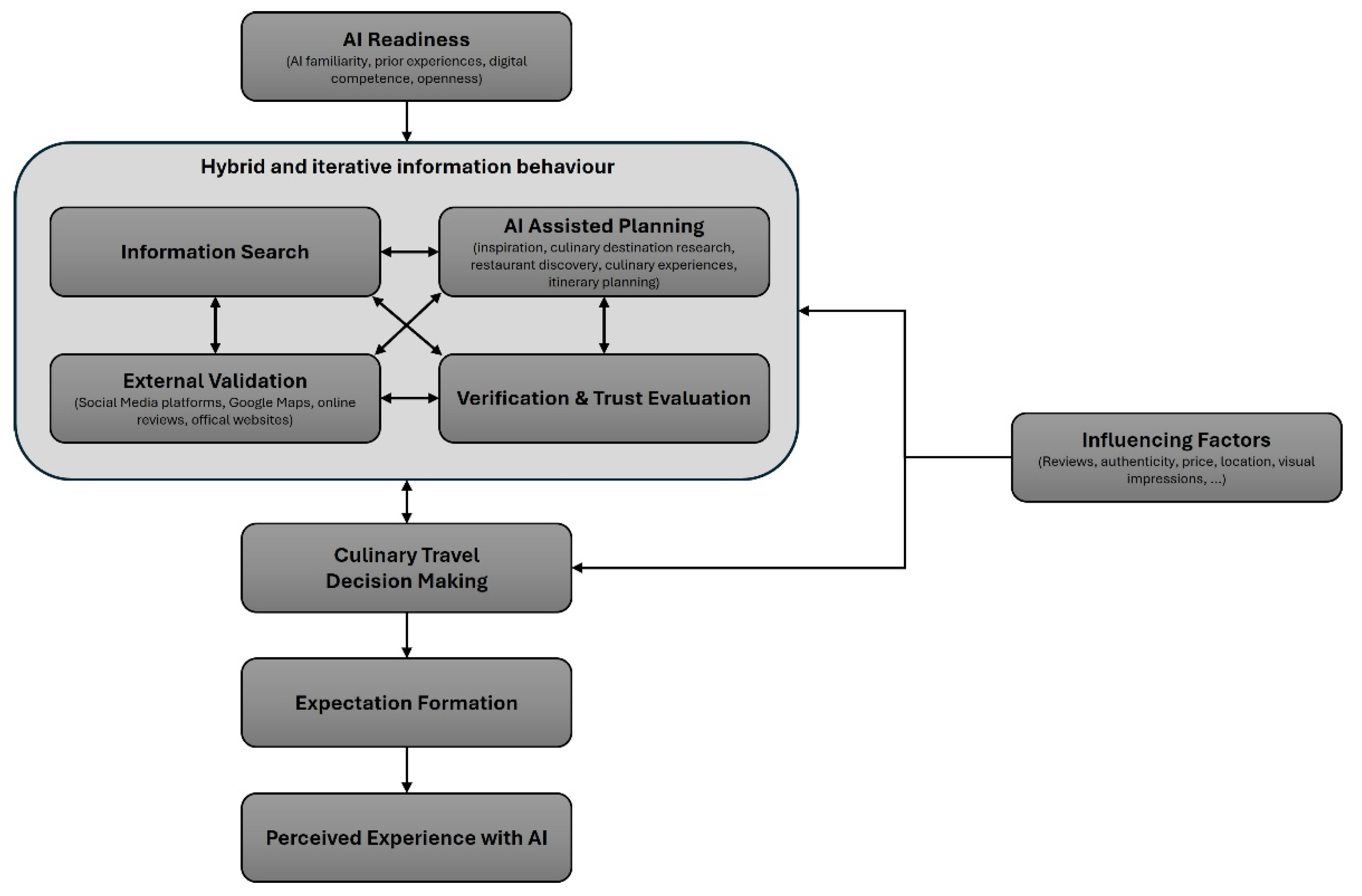
Figure 2 presents a conceptual framework of generative AI-assisted culinary travel planning among Generation Z. The framework positions generative AI as a digital intermediary embedded throughout the pre-trip planning process rather than as a standalone information retrieval tool. It conceptualises culinary travel planning as an iterative process in which travellers repeatedly move between information search, AI-assisted planning, verification and trust evaluation, and external validation. AI readiness serves as an enabling condition for engagement with generative AI, while influencing factors shape culinary travel decision-making, expectation formation, and travellers’ overall perceived experience with AI.
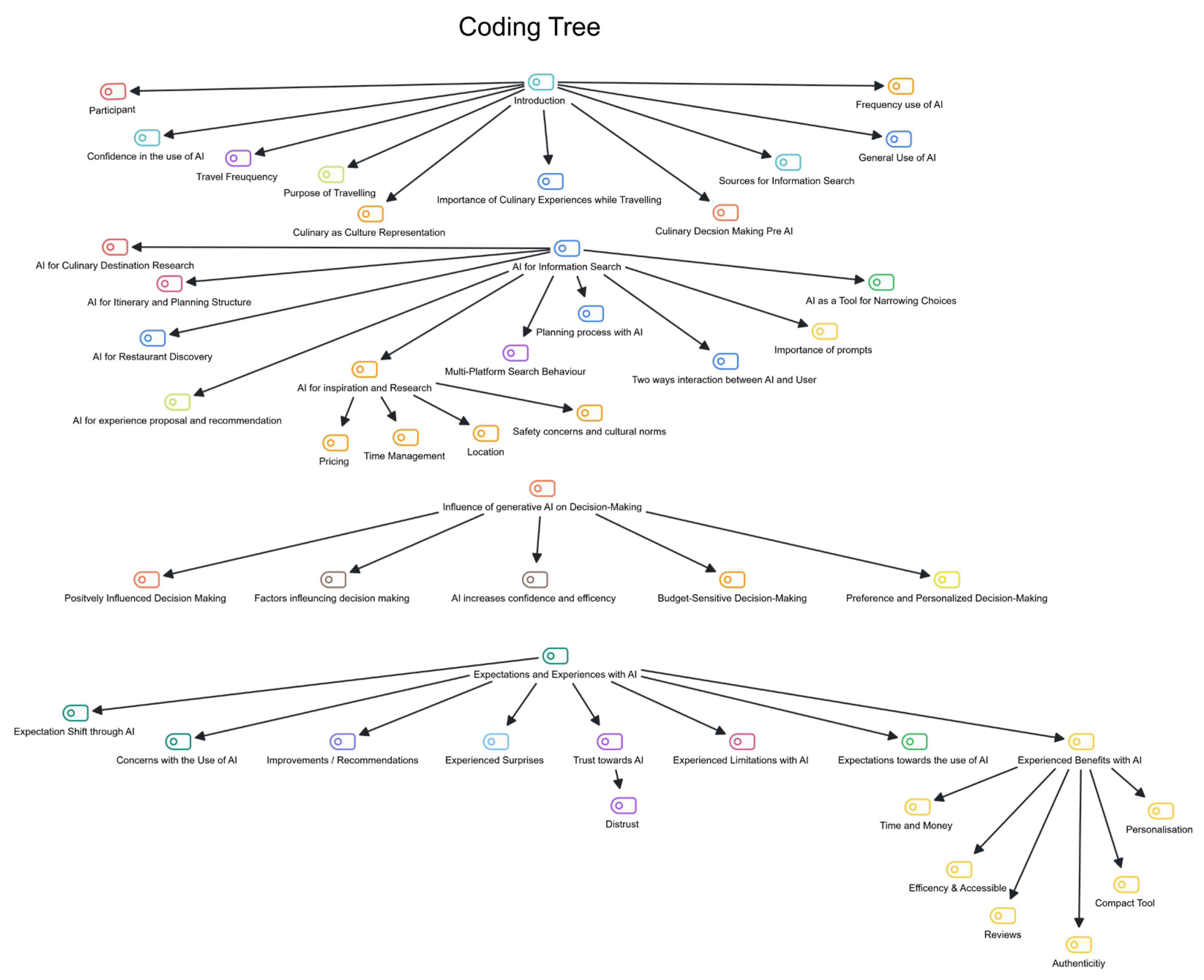
The framework was developed through an integration of deductive and inductive analytical processes. Existing literature on technology adoption, tourism information search, trust formation, and travel decision-making informed the initial analytical perspective and guided the deductive coding process. At the same time, the empirical findings revealed patterns that further developed these theoretical perspectives, particularly concerning the conversational, iterative, and complementary role of generative AI in culinary travel planning. The framework therefore did not emerge exclusively from either prior theory or the empirical data. Rather, it represents a theory-informed and empirically refined framework that integrates established theoretical concepts with patterns identified in participants’ experiences and reported planning practices.
Importantly,
Figure 2 should not be interpreted as a strictly sequential decision-making model. Although the framework is presented through interconnected components, the findings indicate that participants repeatedly moved between AI-assisted planning, verification, external validation, and decision-making as their preferences and plans developed. An AI-generated recommendation could lead to external verification, which could subsequently result in the refinement of an AI prompt, the rejection of a recommendation, or the generation of alternative options. Similarly, new information obtained through external sources could lead participants to return to AI for further clarification or additional recommendations. The framework therefore reflects a process of continuous exploration, evaluation, validation, and adjustment rather than a linear progression from information search to decision-making.
5.1. AI Readiness and the Changing Nature of Information Search
Within the framework, AI readiness represents an important enabling condition for engagement with generative AI. Participants’ previous experience with AI technologies in academic, professional, and personal contexts appeared to increase their confidence and willingness to incorporate these tools into culinary travel planning. AI readiness therefore influences whether travellers perceive generative AI as an appropriate and useful tool for planning activities. In line with previous technology adoption research, perceived usefulness and ease of use remain important drivers of adoption [
74]. However, the findings suggest that familiarity with AI enables Generation Z travellers to experiment with AI-supported exploration and planning and to incorporate generative AI into information-search activities that previously relied more heavily on conventional digital platforms.
This finding is important because it challenges a simple replacement perspective in which generative AI is assumed to displace established search engines, social media, review platforms, or destination websites. Instead, the findings suggest a reorganisation of information search. Generative AI became an additional layer through which participants could formulate questions, synthesise information, generate options, and structure their planning, while established digital platforms continued to fulfil functions that participants perceived as important for verification and evaluation.
Following initial engagement, generative AI transformed culinary information search from a primarily retrieval-based activity into a conversational and exploratory process. Participants used AI not only to locate specific information but also to generate inspiration, identify unfamiliar culinary experiences, explore destinations, and develop personalised travel ideas. Rather than requiring travellers to formulate separate searches and independently compare multiple results, conversational AI allowed participants to interact with recommendations and refine their requests through successive prompts.
This finding extends conventional tourism information-search perspectives by suggesting that generative AI changes how information is processed, rather than simply increasing the number of available information sources. Traditional digital platforms generally provide access to discrete pieces of information, user-generated content, visual material, reviews, or official information, whereas generative AI can synthesise different aspects of a request into a conversational response. The traveller can then modify the request and obtain a further response without restarting the search process. Generative AI therefore reduces some of the effort involved in information aggregation and comparison while simultaneously creating new requirements for verification.
This distinction is particularly relevant to culinary tourism, where information search often involves highly contextual and subjective considerations. Travellers may simultaneously seek information about local food traditions, restaurants, prices, authenticity, location, cultural experiences, and personal preferences. Generative AI allows these dimensions to be incorporated into a single conversational planning process. However, the findings indicate that this convenience did not eliminate the perceived value of established digital sources. Instead, AI and conventional platforms were assigned different functions within the same planning process.
5.2. AI-Assisted Planning and the Complementary Role of Generative AI
Information obtained through AI was subsequently translated into a range of planning activities captured in the AI-Assisted Planning component of
Figure 2. Participants used generative AI for inspiration, culinary destination research, restaurant discovery, culinary experience recommendations, and itinerary planning. This demonstrates that the role of AI extended beyond answering individual questions to supporting multiple interconnected aspects of culinary travel preparation.
The findings suggest that the particular value of generative AI within culinary tourism lies in its ability to connect and synthesise planning activities. An initial interest in a destination could lead to questions about local cuisine, which could then lead to restaurant recommendations and suggestions for culinary experiences that could subsequently be incorporated into an itinerary. AI therefore supported participants in connecting individual pieces of information into broader culinary travel plans.
Personalisation was particularly relevant within this process. Participants could provide information about their preferences, budgets, interests, and travel requirements and subsequently request modified or alternative recommendations. This iterative prompting allowed planning outputs to become increasingly aligned with individual preferences. Generative AI therefore functioned as an interactive planning partner [
70], while the traveller remained responsible for evaluating and selecting the proposed options.
These findings suggest that generative AI is best understood as complementary rather than substitutive within the digital tourism information environment. Participants did not abandon existing platforms after adopting AI. Instead, generative AI assumed functions associated primarily with exploration, synthesis, personalisation, and planning, while other platforms remained important for visual inspiration, social proof, practical information, and credibility assessment. The emergence of generative AI therefore appears to redistribute functions across information sources rather than eliminate the need for those sources.
This distinction is theoretically relevant. If generative AI were simply replacing conventional search, the increasing use of AI would be expected to reduce travellers’ reliance on platforms such as Google Maps, Instagram, TikTok, TripAdvisor, reviews, and official websites. The findings do not support such a substitution. Rather, they indicate that travellers integrated AI into an existing multi-platform environment and used each source according to its perceived strengths. Generative AI thus appears to reorganise the sequence and function of information search: instead of independently searching multiple platforms from the outset, travellers could begin with AI to generate and structure possibilities and subsequently move to specialised platforms to assess those possibilities.
5.3. Verification and Trust Evaluation
The findings demonstrate that increased interaction with AI did not result in unconditional trust. Instead, verification and trust evaluation constituted an ongoing component of the planning process. Participants assessed AI-generated information according to perceived relevance, quality, plausibility, and opportunities for verification. Trust was therefore not established solely through the initial interaction with the technology but developed through repeated evaluation of AI-generated outputs.
The most significant finding in this regard concerns participants’ hybrid information behaviour. Participants used generative AI for inspiration and planning but continued to rely on Google Maps, online reviews, Instagram, TikTok, TripAdvisor, and official websites for verification and decision support. This indicates that the introduction of generative AI does not necessarily produce a binary choice between “AI” and “traditional” digital information sources. Instead, travellers combine sources within a broader information ecosystem in which different platforms perform different informational functions.
For example, generative AI could provide a personalised list of restaurants or culinary experiences, but participants could subsequently use Google Maps to check location and practical details, review platforms to assess customer experiences, Instagram or TikTok to obtain visual impressions, TripAdvisor to compare traveller evaluations, and official websites to confirm menus, opening hours, or other factual information. The value of these sources therefore did not disappear when AI was introduced. Rather, their role shifted within the overall information-search process.
This finding extends previous research that conceptualises tourism information search as a multi-source activity by demonstrating how generative AI can become an intermediary between information sources and the traveller. Rather than simply adding another platform to an existing list of sources, AI can influence which information travellers seek, which alternatives they compare, and which external sources they subsequently consult. In this sense, generative AI reorganises the architecture of information search by potentially becoming the starting point for exploration while leaving specialised platforms responsible for validation.
The relationship between verification and external validation is therefore reciprocal. An AI-generated recommendation could trigger external verification, while information discovered through external sources could subsequently influence participants’ confidence in the original recommendation. If information was confirmed, participants could proceed with greater confidence; if discrepancies were identified, they could modify the recommendation, reject it, or return to AI for alternative suggestions. External validation therefore functioned as a mechanism through which participants managed uncertainty and negotiated trust in AI-generated information.
The hybrid nature of this behaviour also indicates that trust is distributed across the digital information ecosystem rather than located exclusively in the AI system. Participants did not necessarily determine whether an AI response was trustworthy based solely on the response itself. Instead, credibility could emerge from convergence across several sources. An AI recommendation that was supported by reviews, maps, visual content, or an official website could become more credible, whereas contradictions across platforms could reduce confidence. Trust therefore emerged through cross-platform comparison and triangulation.
This finding is particularly important in culinary tourism. Restaurant availability, opening hours, prices, location, reviews, menu information, and the characteristics of culinary experiences can directly influence travel decisions and the quality of the anticipated experience. Verification therefore served not only as a general trust-building mechanism but also as a form of risk mitigation. In culinary contexts, where expectations regarding authenticity and quality are highly subjective, the ability to compare AI-generated representations with independent sources becomes particularly important.
The findings therefore suggest that generative AI should not be conceptualised as a replacement for the existing digital tourism information environment. Instead, it functions as a complementary and reorganising intermediary that changes how travellers navigate that environment. This distinction represents an important contribution of the study: AI adoption does not necessarily reduce multi-source information behaviour; it may instead make such behaviour more structured, sequentially differentiated, and purpose-driven.
5.4. Influencing Factors
Although generative AI supported the planning process, participants did not delegate final decisions to the technology. The findings demonstrate that culinary travel decisions continued to be influenced by factors such as authenticity, price, location, reviews, personal preferences, and visual impressions of food or venues. These influencing factors represent the criteria through which participants evaluated and prioritised the alternatives generated or organised through AI.
Generative AI primarily functioned as a decision-support mechanism rather than an autonomous decision-maker. Its contribution lay in reducing the effort required to identify and compare alternatives and in structuring complex information into more manageable options. Participants nevertheless retained control over the final selection and evaluated AI recommendations against their own preferences and established decision criteria.
Therefore, it extends traditional tourism decision-making perspectives [
75,
76,
77] by demonstrating that generative AI can influence the information environment surrounding decision-making without replacing human judgement. AI can facilitate the identification and comparison of culinary experiences, but the final decision remains dependent on the traveller’s subjective evaluation of authenticity, affordability, convenience, credibility, and personal relevance.
The continued use of external platforms is particularly relevant here. Participants’ final decisions were not based solely on AI-generated recommendations but on the convergence of information across multiple sources. Reviews, visual content, maps, official information, and personal preferences could confirm, challenge, or contextualise AI recommendations. Decision-making can therefore be understood as the outcome of a hybrid information evaluation process, rather than the direct consequence of AI recommendation.
Importantly, decision-making did not necessarily represent the endpoint of the planning process. A potential decision could lead to further questions, additional verification, or revised preferences. Discovering that a recommended restaurant was unavailable, unsuitable, or inconsistent with expectations could result in a return to AI-assisted planning. Culinary travel decision-making should therefore be understood as a point within an iterative process rather than as a final stage that terminates information search.
5.5. Expectation Formation and Perceived Experience with AI
The framework further highlights expectation formation as an important outcome of AI-assisted culinary travel planning. Generative AI did not only support participants in deciding where to go or what to do; it also contributed to how they imagined destinations and anticipated culinary experiences. Through detailed descriptions, contextual explanations, and personalised recommendations, AI contributed to participants’ expectations regarding food, restaurants, culinary traditions, authenticity, and cultural immersion.
It extends destination image research [
72] by demonstrating the role of interactive AI systems in shaping pre-travel perceptions. Unlike static information sources, generative AI allows travellers to actively request descriptions and interpretations that correspond to their individual interests. Consequently, AI-generated content can contribute to the construction of personalised destination narratives before travel takes place.
However, the hybrid information behaviour identified in this study suggests that these expectations are not necessarily constructed by AI alone. Visual content on Instagram and TikTok, reviews on platforms such as TripAdvisor, practical information from Google Maps, and official destination or business websites can reinforce, challenge, or modify AI-generated representations. Expectations therefore emerge through interactions between AI-generated narratives and information encountered across the broader digital ecosystem.
Expectation formation is consequently interconnected with the earlier stages of the framework. Initial AI-generated descriptions may create expectations that influence which culinary experiences travellers investigate further. External validation may then confirm, modify, or challenge these expectations. Similarly, further AI interactions can reshape expectations as travellers obtain more detailed information. Expectation formation should therefore not be understood solely as a final outcome of decision-making but as an ongoing process that develops throughout planning.
The final component of the framework, perceived experience with AI, reflects participants’ broader evaluation of their interaction with the technology. Their experiences with AI during planning contributed to perceptions of its usefulness, convenience, personalisation, and suitability for culinary travel planning. Thus, experiences with AI may influence future willingness to engage with generative AI, creating a potential feedback relationship between AI-supported planning and AI readiness.
5.6. The Iterative and Non-Linear Nature of Hybrid Information Search
Taken together, the relationships identified in
Figure 2 demonstrate that generative AI-assisted culinary travel planning is characterised by iteration rather than linear progression. AI readiness facilitates initial engagement, while information search provides the basis for AI-assisted planning. The resulting recommendations are continuously evaluated through trust assessment and external validation, while factors such as authenticity, price, location, reviews, and personal preferences shape the selection of culinary experiences. Ultimately, these processes contribute to culinary travel decision-making, expectation formation, and travellers’ overall perceived experience with AI. Collectively, these interactions reflect a pattern of hybrid and iterative information behaviour in which travellers move repeatedly between AI-supported planning and traditional information sources as their preferences and decisions evolve. Crucially, external platforms are not positioned outside the AI-supported planning process. They become integrated into it. Participants could move from AI to Google Maps, from AI to Instagram or TikTok, from AI to reviews or TripAdvisor, and from official websites back to AI for further interpretation or comparison. This demonstrates that the emergence of generative AI does not eliminate the multi-platform character of tourism information search. Instead, it changes the logic by which platforms are combined.
The findings therefore suggest a shift from a model of sequential platform searching towards a model of hybrid, purpose-driven information navigation. Participants appeared to use AI when they required synthesis, personalisation, brainstorming, or planning assistance, while they relied on established platforms when they required visual evidence, user-generated evaluations, practical information, or authoritative confirmation. Generative AI consequently reorganised the distribution of informational functions across platforms. This non-linear structure reflects the specific affordances of generative AI. Because users can engage in conversational interaction and continuously modify their prompts, the boundaries between information search, planning, evaluation, and decision-making become less distinct. Rather than moving through predetermined stages, travellers can revisit earlier activities whenever new information or preferences emerge. Generative AI therefore becomes embedded within an ongoing process of culinary travel planning while simultaneously connecting travellers to, rather than replacing, the broader digital information environment.
5.7. Theoretical Contributions
The principal contribution of this study is the development of a process-based framework that advances understanding of how Generation Z integrates generative AI into culinary travel planning. The framework highlights that generative AI reorganises existing information ecosystems and gives rise to a hybrid and iterative planning process characterised by continuous interactions between information search, AI-assisted planning, trust evaluation, external validation, decision-making, and expectation formation.
The framework is informed by established technology acceptance and tourism decision-making perspectives. In particular, the concept of AI readiness is consistent with technology acceptance research, which emphasises perceived usefulness and ease of use as important drivers of technology adoption [
74], while trust evaluation and external validation draw on digital credibility and the information-search literature [
60]. At the same time, the framework extends traditional tourism decision-making models by conceptualising information search, evaluation, and decision-making as an iterative and AI-mediated process characterised by trust evaluation, external validation, and hybrid information behaviour. Thus, the framework should be understood as theory-informed and empirically refined rather than purely descriptive.
Building on these theoretical foundations, the study contributes to the emerging literature on generative AI and culinary tourism in several ways:
First, it advances understanding of AI in tourism by conceptualising generative AI as a digital intermediary and information-search organiser rather than merely an information retrieval technology. The framework extends traditional tourism decision-making models [
75,
76,
77] by incorporating AI-mediated information search, conversational planning, trust evaluation, external validation, and hybrid information behaviour.
Second, the study contributes a process-based perspective on Generation Z’s interaction with generative AI. The framework demonstrates that AI-supported culinary travel planning involves interconnected processes of AI readiness, information search, AI-assisted planning, verification and trust evaluation, external validation, decision-making, and expectation formation. These processes are not independent or strictly sequential but interact dynamically throughout the planning process.
Third, and most importantly, the findings contribute to theorising the relationship between generative AI and existing digital information sources. The results do not support a straightforward replacement effect. Instead, they indicate that generative AI complements and reorganises existing information practices. AI assumes a stronger role in inspiration, synthesis, personalisation, and planning, while established platforms continue to provide visual evidence, social proof, practical information, user evaluations, and authoritative confirmation. The resulting hybrid information behaviour suggests that AI adoption may transform the division of labour between digital information sources rather than eliminate established platforms.
Fourth, the study provides new insights into trust formation in AI-supported tourism contexts. Trust in generative AI developed through continuous evaluation and cross-platform verification rather than through the AI interaction alone. This suggests that trust is not exclusively a property of the AI system but can emerge through the convergence of information across multiple digital sources. The findings therefore extend technology-mediated trust perspectives by highlighting the importance of cross-platform validation and distributed credibility in AI-supported travel planning.
Finally, the study contributes to culinary tourism research by demonstrating that generative AI influences not only the selection of culinary experiences but also the ways in which travellers imagine, interpret, and anticipate those experiences. By shaping destination narratives and perceptions of authenticity before travel occurs, while simultaneously interacting with information from reviews, social media, maps, and official sources, generative AI becomes part of a broader digital culinary tourism information ecosystem.
Overall, the findings position generative AI as an increasingly influential component of contemporary culinary travel planning among Generation Z, but not as a replacement for established digital information sources. Instead, AI appears to function as a conversational intermediary that reorganises how travellers access, combine, and evaluate information. Participants used AI to generate inspiration, structure options, personalise recommendations, and develop travel plans while continuing to rely on Google Maps, reviews, Instagram, TikTok, TripAdvisor, and official websites to verify and contextualise these recommendations. The resulting hybrid information behaviour represents a central contribution of the study and suggests that the impact of generative AI in tourism may lie less in eliminating existing information sources than in changing how, when, and why travellers use them.
5.8. Practical Recommendations
The results indicate that destinations should move beyond general promotion and strategically emphasise authentic gastronomic experiences in their digital communication. In particular, structured, detailed, and descriptive content on local cuisine, traditional dishes, food markets, and regional producers should be provided in formats that are easily interpretable by AI systems. This increases the likelihood that destinations are accurately represented in AI-generated recommendations and supports the visibility of local gastronomy in travellers’ early decision-making processes.
For destination management organisations, restaurants and culinary tourism providers, the results highlight the critical importance of maintaining consistent, up-to-date, and verifiable digital information across multiple platforms. As Generation Z travellers actively cross-check AI-generated suggestions, businesses should ensure alignment between official websites, Google Maps, review platforms, and social media. High-quality images, transparent menu and pricing information, and clear descriptions of dishes and dining concepts act as key trust signals. Encouraging authentic customer reviews and actively managing online presence can further strengthen credibility within both AI-supported and traditional search processes.
Moreover, the findings emphasise that authenticity is a central determinant in gastronomic decision-making. Food service providers should therefore prioritise communicating local identity, regional ingredients, and cultural food practices rather than relying on generic or standardised promotional content. Storytelling that conveys culinary heritage, preparation methods, and connections to local producers can enhance perceived authenticity and increase relevance for Generation Z travellers.
The nature of information search also has important implications for digital marketing strategies. Businesses should not treat generative AI as a substitute for established platforms. Instead, they should adopt a multi-platform digital visibility strategy in which information is consistent and complementary across AI-accessible content, Google Maps, review platforms, social media, and official websites. Since travellers may encounter a business through AI but subsequently verify it elsewhere, inconsistencies between platforms may undermine trust and reduce the likelihood of conversion.
Finally, gastronomy businesses should recognise that digital visibility increasingly depends not only on being present online but also on how effectively information can be discovered, interpreted, and validated across the digital ecosystem. Integrating consistent, rich, current, and trustworthy content across platforms will therefore be key to remaining visible, credible, and competitive in increasingly AI-mediated culinary travel planning environments.
5.9. Limitations and Recommendations for Future Research
This study is subject to several limitations that should be considered when interpreting its findings. First, the study is explicitly exploratory and draws on a small sample of ten Generation Z participants. While the sample enabled an in-depth examination of participants’ experiences and planning practices, its size limits the transferability of the findings to Generation Z travellers more broadly. The study therefore does not aim to provide statistical generalisation but rather to generate theoretically informed insights into how generative AI may be incorporated into culinary travel planning.
Second, the use of purposive sampling through academic and personal networks may have introduced sampling bias. Participants were recruited from networks accessible to the researcher, which may have resulted in similarities in educational background, digital familiarity, geographical context, or technology use. In particular, individuals who were already comfortable with digital technologies or interested in generative AI may have been more willing to participate. This potential selection bias may have contributed to the relatively positive perceptions of AI observed in the findings and should therefore be considered when interpreting participants’ reported confidence and willingness to use generative AI.
Third, the sample was restricted to a limited age range within Generation Z. Although this focus was intentional and aligned with the research objective, Generation Z should not be considered a homogeneous group. Differences in age, professional background, digital literacy, travel experience, and previous exposure to AI may influence how individuals engage with generative AI. Future research should therefore investigate whether the observed patterns remain consistent across broader age groups and compare Generation Z with other generations.
Fourth, the geographical composition of the sample may have resulted in a European sample bias. Participants’ experiences of tourism information search, culinary authenticity, digital platforms, and AI may be influenced by the European context in which they live and travel. Consequently, the findings may not fully reflect experiences in destinations with different technological infrastructures, cultural understandings of food and authenticity, or patterns of social-media and platform use. Comparative research across different geographical and cultural contexts would therefore be valuable.
Fifth, the study focused on pre-trip culinary travel planning, and the planning activities examined may not necessarily have resulted in actual travel or consumption of the recommended culinary experiences. Where participants engaged in hypothetical or prospective trip planning, their responses reflect anticipated decision-making rather than behaviour observed during an actual trip. This limits the extent to which the study can determine whether AI-generated recommendations translate into real restaurant visits, culinary experiences, satisfaction, or perceptions of authenticity. Future research should therefore examine AI use across the entire travel journey, including before, during, and after travel.
Sixth, the study relied substantially on self-reported data obtained through interviews and digital diaries. Participants’ accounts may have been influenced by recall bias, social desirability, or differences in how extensively they documented their interactions with AI. Although screenshots and diary activities provided additional insight into participants’ planning practices, the study did not continuously observe all interactions between participants and AI or between participants and external platforms. Future research could combine interviews with behavioural data, screen recordings, digital trace data, or direct observation to examine how travellers actually navigate between generative AI and other information sources.
Seventh, the qualitative analysis was conducted through a single-coder process. While systematic coding procedures and the established analytical framework supported consistency, the absence of an independent second coder means that alternative interpretations of the data cannot be completely excluded. The researcher’s own perspective and familiarity with the topic may also have influenced interpretation, particularly given the researcher’s position within the Generation Z demographic examined. Future studies could strengthen analytical credibility through multiple coders, intercoder comparison, peer debriefing, or other forms of researcher triangulation.
Eighth, the rapidly evolving nature of generative AI technologies represents an important limitation. AI models, interfaces, search capabilities, training data, platform integrations, and recommendation mechanisms continue to change rapidly. The specific ways in which participants interacted with generative AI during the period of data collection may therefore differ from future user experiences. The findings should consequently be understood as a contextual snapshot of Generation Z’s engagement with generative AI rather than a fixed representation of long-term AI-supported travel behaviour. Longitudinal and repeated studies will be necessary to determine whether the patterns identified here remain stable as generative AI technologies develop.
Ninth, the findings also highlight several risks inherent in generative AI-supported culinary tourism that were not examined experimentally in this study. AI-generated information may contain hallucinated recommendations, inaccurate descriptions, or outdated information concerning restaurant availability, opening hours, prices, menus, and culinary experiences. Although participants’ use of external platforms for verification provides evidence of how travellers may manage these risks, the study did not systematically assess the factual accuracy of the AI outputs encountered. Future research should therefore investigate the prevalence of inaccurate culinary recommendations and examine how AI literacy, trust, and previous experience influence travellers’ ability and willingness to identify and verify such information.
Tenth, the study did not directly examine the algorithmic processes underlying AI-generated recommendations. The findings suggest that generative AI may influence which culinary experiences enter travellers’ consideration sets, but the study cannot determine whether certain restaurants, destinations, cuisines or experiences are systematically favoured because of their digital visibility or representation within the underlying information environment. This is particularly relevant to smaller businesses and local culinary providers with limited digital presence. Future research should investigate whether generative AI contributes to unequal visibility among culinary businesses and whether this may reinforce existing platform-based inequalities.
Eleventh, the potential implications for culinary authenticity and standardisation warrant further investigation. Participants used AI to discover and imagine culinary experiences, meaning that AI-generated descriptions and recommendations may influence how concepts such as “authentic,” “local,” and “traditional” are understood before travel. Generative AI may simplify complex food cultures into easily communicated tourism narratives or repeatedly recommend highly visible and commercially established experiences. If similar recommendations are generated for different travellers, AI-mediated planning could potentially contribute to the standardisation of tourist choices. Future research should therefore examine whether generative AI broadens culinary discovery or, conversely, reinforces commercially dominant representations of local gastronomy.
Twelfth, the study’s findings regarding hybrid information behaviour warrant further empirical investigation. Participants used generative AI for inspiration, exploration, and planning while continuing to rely on Google Maps, reviews, Instagram, TikTok, TripAdvisor, and official websites for verification and decision support. This study identifies this behaviour qualitatively but does not quantify how frequently travellers move between different platforms or which types of information trigger external verification. Future research could investigate these behaviours through experimental or behavioural studies comparing AI-only, platform-only, and hybrid information-search conditions. Such research could determine whether generative AI genuinely reduces overall search effort or instead redistributes information-search activities across different platforms.
Future research should also examine the long-term relationship between AI-generated expectations and actual culinary experiences. Longitudinal research following travellers throughout the entire travel journey could explore whether AI-generated expectations correspond with actual dining experiences and how discrepancies influence satisfaction, perceived authenticity, trust in AI, and subsequent technology use. This would be particularly valuable because the current study focuses primarily on the pre-trip formation of expectations rather than their confirmation or disconfirmation during the actual culinary experience.
Finally, future research should expand beyond the traveller perspective by examining the experiences of restaurants, chefs, food producers, local communities, and destination organisations. These actors may experience both opportunities and risks resulting from increasing AI-mediated visibility. On the one hand, generative AI may increase exposure for businesses with accurate and rich digital information; on the other hand, businesses with weaker digital representation may become less visible within AI-generated recommendation environments. Research from the supply side could therefore provide important insights into how generative AI is reshaping the gastronomy sector, digital marketing practices, competitive visibility, and the representation of local culinary cultures. Overall, future research should move beyond examining whether travellers use generative AI and increasingly investigate how AI reorganises information search, shapes trust and expectations, influences culinary visibility, and potentially transforms the representation and consumption of local food cultures. Comparative studies across generations, destinations, cultural contexts, and AI systems, together with longitudinal and behavioural research, would help establish whether the hybrid and iterative information behaviour identified in this exploratory study represents a broader transformation in culinary tourism decision-making or a transitional stage in the ongoing development of generative AI technologies.