


Abstract
The growing demand for food production has increased the pressure on soil and fertilizer use, often leading to nutrient losses, soil degradation, and environmental pollution. Green chemistry offers practical solutions to these challenges by encouraging cleaner, safer, and more efficient ways of producing and using fertilizers. This review summarizes recent advances in multi-nutrient sustainable fertilizers developed through green chemistry principles, including renewable raw materials, low-toxicity synthesis methods, and environmentally friendly delivery systems. Different approaches, such as controlled-release carriers, nano-enabled formulations, chelated nutrients, and bio-based coatings, are discussed with a focus on how they reduce nutrient losses and improve soil and plant health. The review also highlights the benefits and limitations of these technologies, gaps in current research, and the need for long-term field studies to assess their safety and effectiveness. Overall, green chemistry-guided fertilizer development shows strong potential to support sustainable agriculture by improving nutrient efficiency while reducing environmental impacts.
1. Introduction
The accelerating global demand for food, driven by population growth, urbanization, and shifting dietary preferences, continues to pressure agricultural systems [1]. By 2050, food production may need to increase by up to 50% to meet these demands [2]. Fertilizers are essential to replenish soil nutrients and sustain crop yields. However, unregulated and excessive use of conventional fertilizers (N, P, K) has caused significant environmental impacts. Excessive and imbalanced fertilizer application can cause nutrient leaching, water eutrophication, soil acidification, greenhouse gas emissions, and disruption of soil microbial communities. Non-targeted fertilizer use reduces nutrient use efficiency, as significant amounts are lost through leaching, volatilization, runoff, or microbial degradation [3,4]. Further, the undesirable loss of resources causes economic loss to the stakeholder, including farmers [5]. Over time, these impacts erode the sustainability of farming systems and destabilize ecosystems, ultimately harming human health [6].
Farmers and scientists are now prioritizing a shift towards nutrient management methods for both crops and the environment [7], and the promising alternative is multi-nutrient fertilizers [8]. Unlike conventional fertilizers, they provide a balanced supply of macronutrients, secondary nutrients, and micronutrients, including sulfur, magnesium, zinc, boron, and iron [9]. Plants need a mix of nutrients to grow well, to survive under stress conditions, and to improve yield [10]. Unlike single-nutrient conventional fertilizers, multi-nutrient fertilizers are designed to improve the nutrient use efficiency of plants, address soil micronutrient deficiencies, and even make crops more nutrient-enriched [11]. However, developing these fertilizers is not easy; it involves complex formulations, higher production costs, and the strict need to fulfill environmental standards [12].
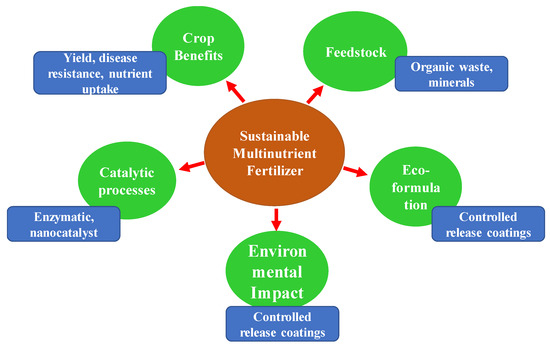
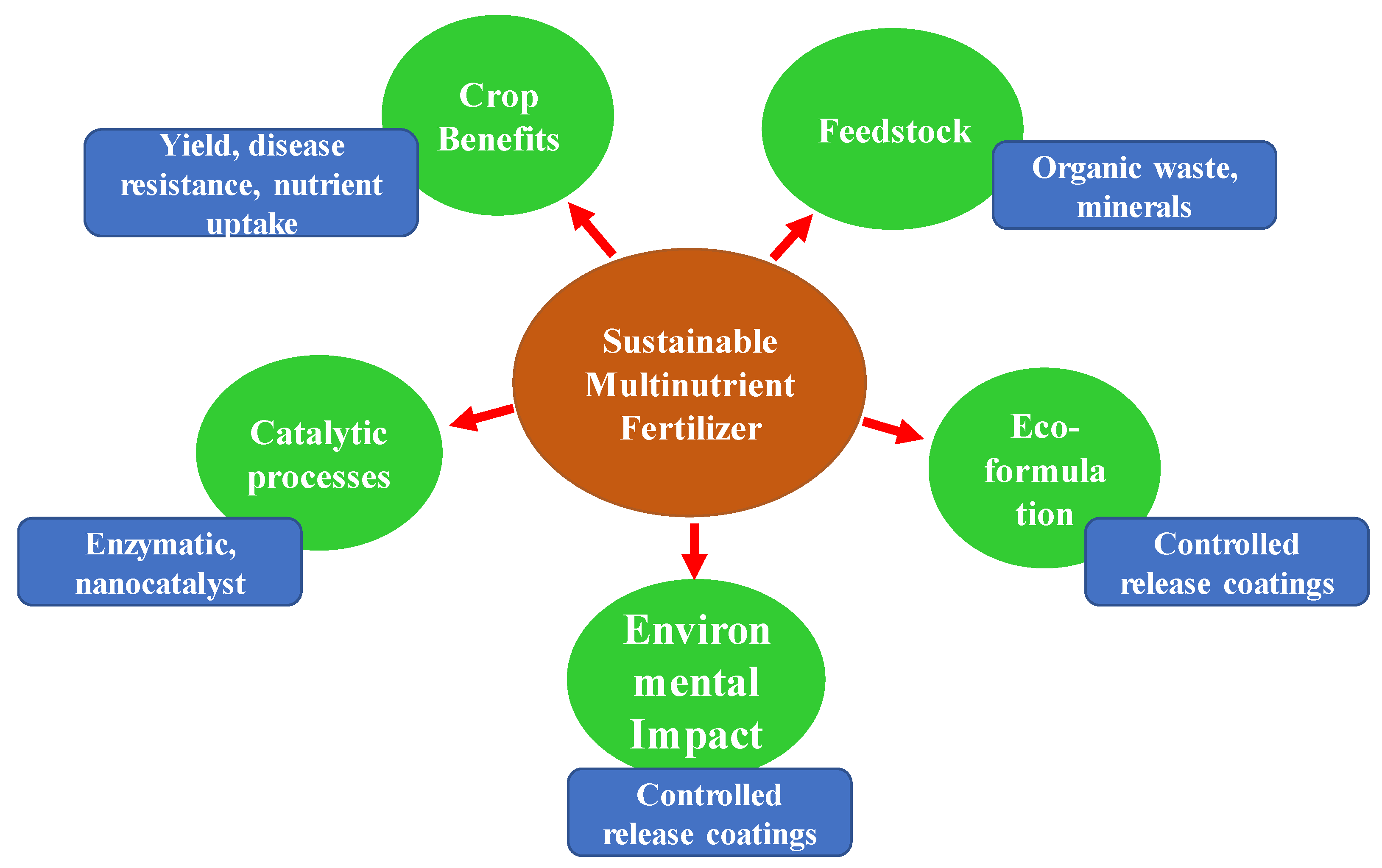
This is where green chemistry steps in as a novel approach to design fertilizers that help crops grow well without harming the environment [13]. The idea is to design fertilizers with eco-friendly or biodegradable coatings, renewable resources, using energy-efficient processes and clean methods to produce them, and designing them in a way that plants get sufficient nutrients slowly over time. The development of fertilizers is guided by principles such as atom economy, reduced toxicity, renewable feedstock utilization, and energy-efficient methods (as shown in Figure 1) to minimize ecological harm [14]. This approach improves fertilizer utilization by crops, as and when required, and a minimum amount is wasted through leaching or volatilization [15].
Figure 1.
Conceptual framework illustrating the development of sustainable multi-nutrient fertilizers based on green chemistry principles. Different colors represent key components (raw materials, synthesis processes, and delivery systems), while arrows indicate the flow of nutrients and transformation pathways leading to improved soil and crop health.
Combining green chemistry, circular economy, and climate-smart agriculture has sped up the development of eco-friendly multi-nutrient fertilizers [16]. These biodegradable controlled-release fertilizers are made from natural polymers, biochar, and organic waste-based carriers [17]. These materials not only provide nutrients to soil but also improve the soil by making it stronger, improving its structure, boosting microbial activity, and improving water retention [18]. Moreover, fertilizers can also be tailored specifically for certain crops and soil, which saves resources and reduces environmental damage [19].
This review explains how green chemistry is helping to make better multi-nutrient fertilizers. Instead of using conventional raw materials, it uses renewable resources and cleaner methods. With the help of controlled-release fertilizers and nanotechnology, it delivers the plant nutrients more slowly and efficiently, thus boosting soil health, improving nutrient uptake in plants, and enhancing agricultural resilience, while tackling technical and scale-up challenges [20].
Nanofertilizers deliver the plant nutrients more precisely and efficiently, in a controlled manner, and increase their efficiency by upto 30%, thus helping in reducing environmental impact by up to 50%. Nano-biofertilizers, which combine biological agents with nanomaterials, further enhance nutrient delivery and promote plant growth while being safe for the environment [21]. Novel nanoformulations are designed to materials and reduce greenhouse gas emissions. These innovations are essential for their widespread acceptance and for improved crop performance [22].
Nano-biofertilizer can be defined as the intentional coexistence of a nanomaterial and a fertilizer derived from a biological source (wholly organic) that has high efficacy and improved nutrient use efficiency of both materials is included in the definition of nano-biofertilizer. These features serve to increase crop efficiency and nutrient uptake by facilitating the slow release of nutrients over an extended period of crop growth. For example, a nano-biofertilizer using Azospirillum brasilense (strains AbV5 and AbV6) and chitosan nanomaterial was developed by [23]. Application of the developed nano-biofertilizer improved root length (19%) and shoot fresh weight (17%) on the Maize plant. Further, the chlorophyll b content also showed improvement by 71%, as compared to the control. Additionally, the use of nanotechnology prolonged the A. brasilense strains’ life in the soil by a minimum of 60 days [23]. Utilizing nano-biofertilizer greatly enhances plant development. When nanoparticles are coated with biofertilizers, the biofertilizers work better, and the nanoparticles are released gradually and continuously into the rhizosphere of the plant. They keep the fertilizer dissolved and lessen the likelihood of leaching. Additionally, they improve the quality of crops by increasing the production of secondary metabolites, including enzymatic antioxidants like catalase, superoxide dismutase, and peroxidase, as well as nonenzymatic antioxidants like flavonoids and phenols. These metabolites have several health advantages and extend the shelf life of fruits and vegetables [24]. Nano-biofertilizers assist in bioremediation and replenish vital nutrients in the soil. They upregulate genes involved in the production of antioxidants, osmolytes, and stress-related proteins, minimize the detrimental effects of ROS on plants, and maintain the structural integrity and function of the cell. Additionally, they maintain the activity and increased hormone production of membrane transporters [25]. These approaches activate the plants’ antioxidant mechanisms, shielding the organelles and cell membrane from the damaging effects of stress. Additionally, they produce fewer stress hormones (abscisic acid) and more growth hormones, such as cytokinin and indole acetic acid. These modifications boost the plant’s ability to withstand stress and raise the likelihood that it will establish a crop in adverse environmental circumstances [25]. Despite these innovations, the adoption of green-chemistry-based multi-nutrient fertilizers remains limited due to field-scale uncertainties, cost, and regulatory constraints.
2. Concept and Principles of Green Chemistry
The relevant literature was collected from scientific databases such as Web of Science, Scopus, and Google Scholar using keywords related to multi-nutrient fertilizers, green chemistry, and sustainable agriculture. AI-based tools (e.g., ChatGPT–GPT5, OpenAI) assisted in organizing the literature and summarizing key findings. Figures and illustrations were created using Canva. All data interpretation, synthesis, and conclusions presented in this review were independently performed and verified by the authors.
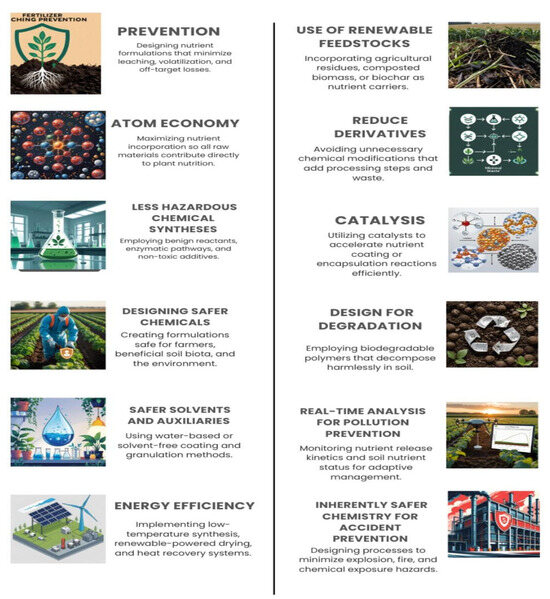
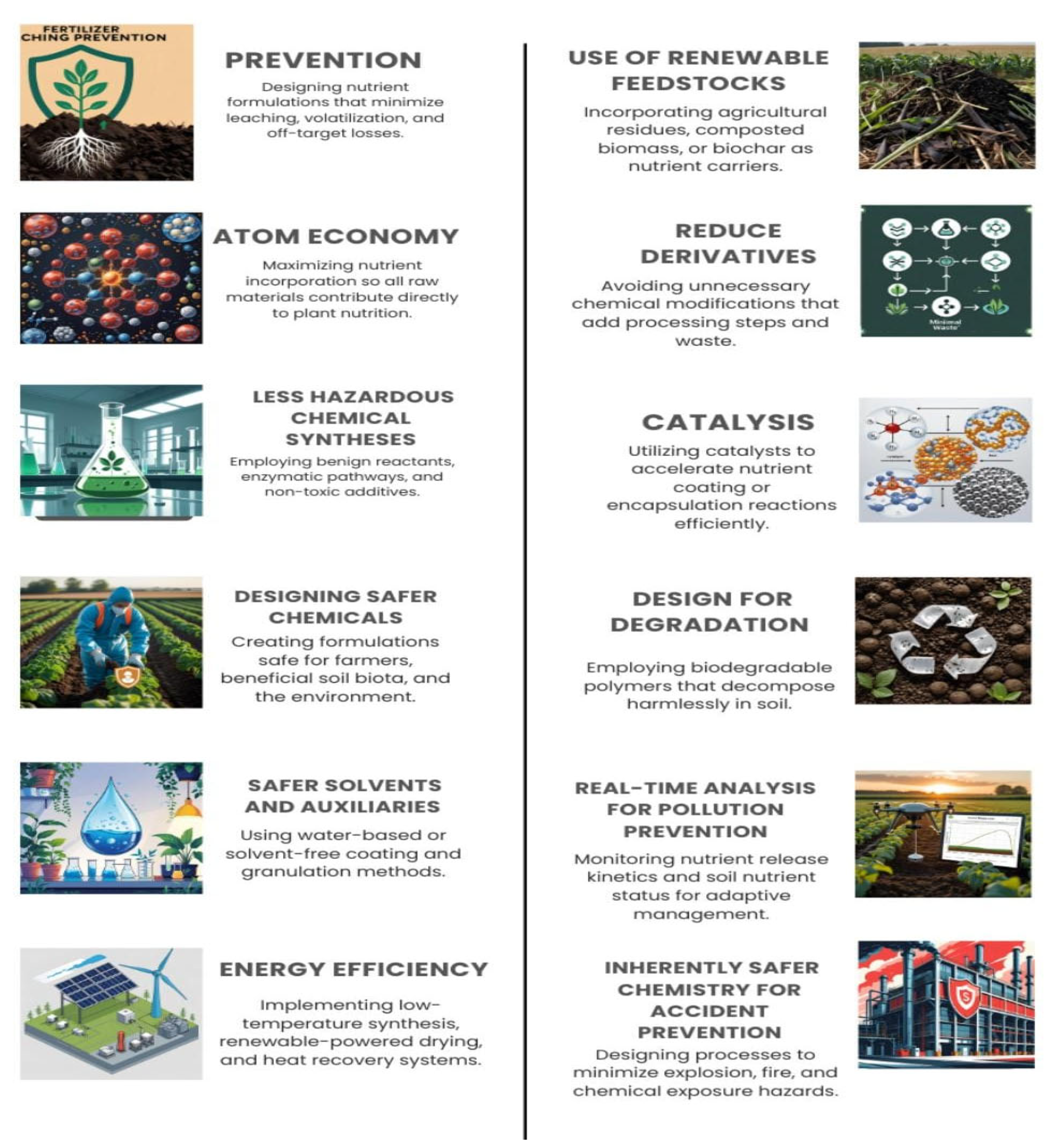
Green chemistry is all about designing chemicals in an eco-friendly manner that are safe and sustainable. The main focus is on preventing pollution right from the design stage, instead of focusing on it after it has had its adverse impacts on the environment. This concept is guided by the twelve principles [26] as given in Figure 2. In fertilizer production, these principles encourage maximizing atom economy, which ensures that every input has a functional role, and removal of toxic components that could damage the environment or harm human health [27].
Figure 2.
Twelve principles of green chemistry.
The focus is shifting to using renewable resources such as crop residues, compost, or carbon material (such as biochar) as nutrient carriers, reducing the dependence on limited mineral reserves. It also promotes the use of methods that consume less energy and green solvents, instead of energy-intensive processes and harmful solvents. These methods include mechano-chemical synthesis, low-temperature drying, and the use of biological catalysts, which help to cut down emissions during manufacturing [28]. New techniques like biodegradable polymer coatings, controlled-release granules, and nano-enabled carriers ensure that the nutrients are released slowly and gradually over time as and when required by plants. It ensures minimum loss of nutrients through leaching and volatilization, prevents eutrophication, and makes farming systems stronger and more tolerant to stress conditions [29].
By using fewer solvents and using less energy, recent developments in mechanochemistry are consistent with the ideas of green chemistry [30,31]. Mechano-chemical processes are more environmentally friendly because they frequently run in mild environments and produce fewer by-products [32]. Ostwald, who examined chemical reactions from an energy perspective, coined the word “mechanochemistry” in 1887 [33]. Heinicke developed a concept in 1984 that is now recognized by the scientific community. According to him, mechanochemistry is a field of chemistry where materials undergo chemical and physical changes when mechanical energy is applied, independent of the state of aggregation [34]. Mechano-chemical processes can be divided into two processes: primary and secondary. The primary mechanisms include a material’s reactivity via a rise in surface and internal energies, the expansion of surface area, and the fall in cohesive energy of solids. In activated systems, secondary reactions such as aggregation, adsorption, and crystallization occur naturally while or after grinding is finished. Dry milling (DM) and wet milling (WM) are the two main routes in mechano-chemical applications for extractive metallurgy [35]. While milling and leaching are carried out simultaneously in a single phase in wet milling processes, they are separate operations in dry milling processes. Retch mills, tumbling mills, stirring ball mills, vibratory mills, pin mills, rolling mills, and planetary ball mills are among the tools used to accomplish mechanical activation. Numerous engineering fields, including chemistry, materials science, mineral processing, coal industry, construction, pharmacy, agriculture, and metallurgy, have been using mechanochemistry. For instance, the mechano-chemical reaction to create slow-release potassium fertilizers is by co-grinding KH2PO4 with other chemical reagents like γ-Al2O3, Mg(OH)2, and Al2Si2O6(OH)4 [36]. The primary feature of these fertilizers is the delay in the availability of nutrients for plant uptake and utilization following application and/or the extension of their availability in the soil. With the use of scalable machinery like twin-screw extruders (TSEs), continuous industrial mills, and vibratory or attrition mills designed for high-throughput operation, recent developments show that the mechano-chemical synthesis can be transferred from laboratory-scale ball mills to industrial production [37]. To guarantee consistent mechanical energy input and reproducibility at scale, equipment adaptation mainly entails optimizing screw configurations, residence periods, torque capacities, and heat management systems [37]. The removal of bulk solvents, quicker reaction times, and streamlined downstream purification processes are examples of cost-reduction strategies that minimize operational expenditure (OPEX) [38]. Additionally, because extruders and continuous mills can be included in established process lines with little retrofit, mechanical and chemical techniques have demonstrated good compatibility with current manufacturing systems, especially in the pharmaceutical and materials sectors. Continuous mechanical extrusion is a promising method for sustainable large-scale synthesis since it can attain kilogram-to-tonne throughput while retaining reaction efficiency, according to reports from both academic and industrial groups [39].
Major issues like climate change and declining soil fertility can be addressed by adopting green chemistry in fertilizer production, as it supports the circular economy, helps farmers cope with climate challenges, and ensures food security for the future.
3. Nutrient Loss Minimization
Fertilizers help to keep soil healthy, increase crop yields, and are essential for ensuring enough food for the growing world population. Historically, the market has focused on single-nutrient formulas that provide nitrogen, phosphorus, or potassium. This was based on the idea that farmers could add other nutrients on their own. While this method has helped intensive farming for many years, research in soil science and plant physiology shows it can upset the balance of nutrients in the soil [40]. This imbalance can lower overall fertilizer efficiency and limit crop yield potential [41,42]. Multi-nutrient formulations using different materials/carriers have been shown in Table 1.
Multi-nutrient fertilizers have become a more complete option by combining macronutrients, secondary nutrients, and essential micronutrients in one formulation. This method not only addresses several nutrient deficiencies at the same time but also improves how plants take up nutrients and supports their overall growth. The advantages go beyond just higher yields; these fertilizers help revive damaged soils, boost crop resistance to stress, and even increase the nutritional value of what we harvest. For example, zinc-enriched multi-nutrient fertilizers have been shown to raise both crop productivity and the zinc concentration in grains, which helps to improve human nutrition and tackle micronutrient malnutrition [43]. In recent years, there has been impressive innovation in how multi-nutrient fertilizers are designed and delivered. Some of the key innovations, like controlled-release fertilizers, ensure that nutrients are delivered to plants as and when required. This helps in minimizing nutrient loss that occurs through leaching and volatilization. Another innovation is using chelated forms of micronutrients, which remain soluble and available to plants even in tough soil conditions. Additionally, nanofertilizers are being used to deliver nutrients precisely and more effectively, ensuring the minimum application [44].
Environmentally safe methods, such as bio-based carriers like biochar, lignin, and natural polysaccharides, are being used to deliver nutrients precisely as they can improve soil water retention, aeration, and microbial activity, making them well-suited for eco-friendly fertilizer solutions. Although multi-nutrient fertilizers have greater potential, their widespread use is still limited because of high production costs, limited awareness among farmers, and the need to adjust formulations to meet the specific nutrient needs of different soils and crops [45]. Still, combining these technologies with principles of green chemistry presents a promising way to make these fertilizers a core part of sustainable farming practices.
Table 1.
Innovation in a sustainable fertilizer delivery system.
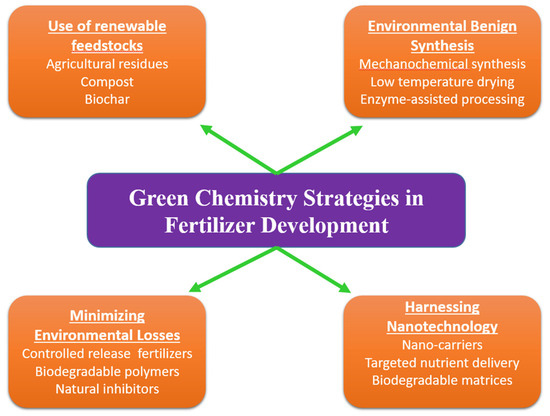
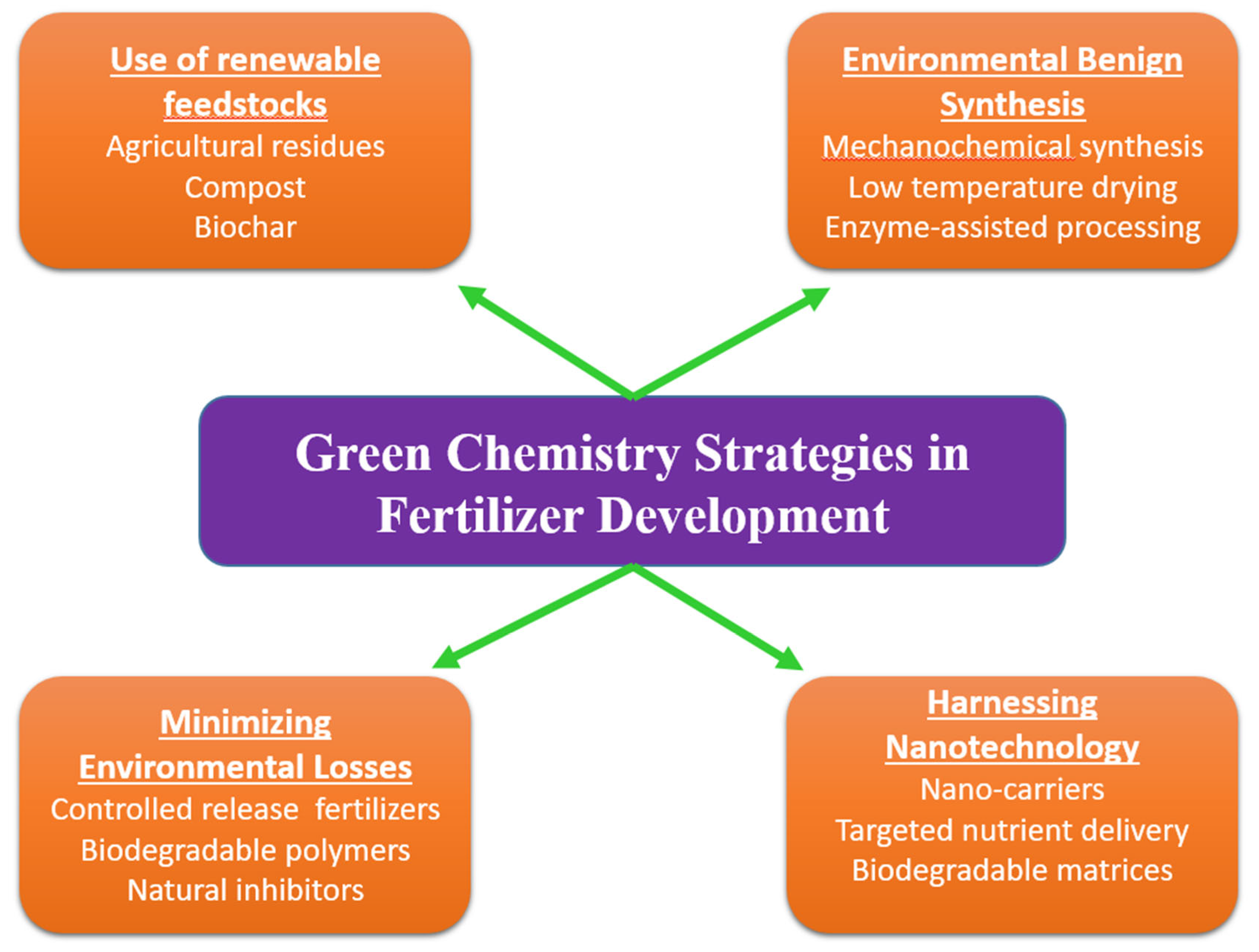
Integrating green chemistry principles in fertilizer development involves changes in the formulation, production, and delivery of nutrients, and it improves efficiency, reduces waste, and supports agricultural productivity, while protecting the environment [52]. By following principles like atom economy, renewable inputs, safer synthesis, and energy efficiency, green chemistry provides a practical way for creating fertilizers that support both healthy crops while also protecting the environment. Some of the green chemistry strategies in fertilizer development are discussed here and shown in Figure 3.
Figure 3.
Green chemistry strategies in fertilizer development.
3.1. Use of Renewable Feedstocks
A major change in fertilizer development is moving from limited, non-renewable materials to sustainable, bio-based options. Agricultural residues, compost, algae biomass, and biochar are being increasingly studied as sources of nutrients [53]. These materials provide essential macro-, secondary-, and micronutrients. They also improve soil organic matter, enhance structure, and increase water-holding capacity. Turning agricultural and industrial by-products into valuable inputs reduces the waste, lowers production impacts, and supports circular economy practices [54]. For instance, nutrient-rich biochar made from crop residues has shown promise as both a slow-release carrier and a soil conditioner. It reduces nutrient loss while promoting helpful soil microbes.
3.2. Environmentally Benign Synthesis Routes
Green chemistry encourages manufacturing methods that cut down or eliminate harmful intermediates, toxic solvents, and high energy demands. New methods, like solvent-free mechano-chemical synthesis, low-temperature drying, and enzyme-assisted processing, are appearing as cleaner and more efficient options compared to traditional approaches. These techniques lower greenhouse gas emissions and keep sensitive compounds stable, leading to high-quality nutrient products. For instance, enzyme-mediated synthesis allows for the gentle addition of micronutrients without losing their effectiveness. At the same time, mechano-chemical processes produce uniform nutrient blends without the environmental issues tied to solvent use [55].
3.3. Minimizing Environmental Losses
Integration of green chemistry in fertilizers is vital to improve nutrient use efficiency and reduce environmental losses. Controlled-release systems that use biodegradable polymer coatings, natural hydrogels, or layered granules regulate nutrient availability to match crop uptake patterns [56]. The precise nutrient delivery minimizes leaching, volatilization, and runoff. It helps by preventing eutrophication and groundwater contamination. Natural nitrification and urease inhibitors can also increase the amount of nutrient availability. This limits nitrogen losses and lowers greenhouse gas emissions [57].
3.4. Harnessing Nanotechnology
Green chemistry, when combined with nanotechnology, brings more accuracy to fertilizers. Nano-enabled carriers and coatings improve nutrient dissolution, stability, and precise delivery to plants. This helps plants take in essential nutrients more effectively and with lower application rates. Some examples are nano-hydroxyapatite for phosphorus and nano-chelated zinc and iron formulations. When these materials are added to biodegradable compounds and carefully tested for environmental safety, they can significantly improve how efficiently nutrients are used. However, for these technologies to be widely accepted, we need thorough evaluations of their environmental impact, risks of bioaccumulation, and compliance with changing regulatory requirements [58].
4. Impact on Soil and Crop Health
Multi-nutrient fertilizers developed using green chemistry principles can greatly improve both crop productivity and soil health. Unlike conventional fertilizers, these formulations release nutrients slowly, as and when required by plants [59,60]. These fertilizers provide a balanced mix of macronutrients, secondary nutrients, and micronutrients. This balance helps plants carry out photosynthesis better, activate important enzymes, and stay stronger against stress. Field trials show that significant yield increases in cereals, legumes, and horticultural crops occur when micronutrient deficiencies like zinc, iron, or boron, along with macronutrient needs, are addressed. Furthermore, the slow and precise nutrient delivery reduces the application frequency of fertilizers, which saves time, reduces cost, and ensures higher yield and better soil health [61]. The fertilizers also benefit the soil by improving its structure, supporting good microbes, and keeping it healthy for future crops.
The incorporation of bio-based carriers, such as nutrient-enriched biochar and compost-amended granules, contributes to increasing soil organic matter content, augmented cation exchange capacity (CEC), enhanced water retention, improved soil structural integrity and soil microbial population as shown in Table 2. For example, one of the research groups reported that the application of biochar improved the activities of almost all soil enzymatic groups involved in carbon (C), phosphorus (P) and nitrogen (N) acquisition, extracellular soil enzymes, and dehydrogenase (DHA) with mean effect sizes of 4%, 12%, 23% and 22%, respectively [62]. Controlled-release mechanisms mitigate nutrient losses through leaching and volatilization, consequently reducing groundwater contamination risks and diminishing nitrous oxide emissions. Importantly, the utilization of non-toxic and biodegradable materials supports the preservation of soil microbial diversity and activity, which are critical for nutrient cycling and the maintenance of long-term soil fertility [63].
However, the extent and consistency of these benefits are contingent upon site-specific variables, including soil characteristics, climatic conditions, and crop nutrient demands. While investigations across varied agro-ecological environments have demonstrated the agronomic efficacy of these fertilizers, it remains imperative to conduct comprehensive, long-term, system-level research to fully characterize their ecological consequences and to optimize their implementation across diverse agricultural frameworks [64].
Table 2.
Case studies of green-chemistry-based fertilizers and their agronomic impacts.
5. Challenges and Perspectives
Although green-chemistry-based multi-nutrient fertilizers offer compelling agronomic and environmental benefits, their widespread implementation is hindered by a series of interrelated economic, technical and institutional challenges. A primary constraint is the elevated production cost associated with the use of biodegradable carriers, renewable feedstocks, and advanced nutrient delivery systems. While these inputs can improve nutrient efficiency and reduce environmental losses over time, their higher initial price often discourages adoption, particularly in resource-limited farming systems where capital investment capacity is low [74].
Limited awareness and technical familiarity among farmers are major challenges with these innovations. The benefits of controlled-release formulations, nanostructured carriers, and bio-based nutrient sources are not always clear without accessible training programs, local demonstrations, and performance data in specific farming conditions. Moreover, the variety of soils, climate, and cropping patterns requires specifically tailored formulations, instead of one that fits all products. This situation complicates supply chain logistics and increases production complexity. Regulators are becoming stricter with safety rules for nano-enabled and bioengineered fertilizers, which means these products must go through detailed environmental risk checks before they can be sold in the market. The major concerns are how they might affect the environment in the long run, whether they could build up in living organisms, and what impact they might have on ecosystems overall [75].
The absence of standardized international guidelines adds to the challenge for manufacturers aiming for expansion to access global markets. On the technological side, the transition from small-scale lab prototypes to large-scale production presents a significant challenge. Techniques like enzyme-assisted synthesis or mechano-chemical processes look promising at the trial stage, but they still need to ensure cost-effectiveness, consistent quality, and compatibility with current manufacturing setups. In the future, combining these fertilizers with smart agriculture tools, such as precise nutrient mapping, variable-rate application systems, and AI-assisted recommendations, could significantly enhance their performance in agriculture and the environment. To make this happen, researchers, industry players, policymakers, and farmer groups will be required to work collectively to bridge the gap between innovation and practical use. Additionally, incorporating these products into circular economy practices, like transforming agricultural waste or industrial by-products into nutrient carriers, can help tackle resource limitations and waste management issues [76].
Overcoming these barriers will require a strategy that combines technology improvements, supportive policies, focused training programs, and financial tools. These tools will ensure that these effective fertilizers are also affordable and suitable for different farming environments [77]. The goal of bio-based fertilizers (BBFs) is to recycle and reuse nutrient-rich by-products in order to lessen the EU’s reliance on imported mineral fertilizers. In order to implement the zero-waste program, the first Circular Economy Action Plan was put in place in 2015. It included 54 actions that supported the transition to the circular economy model. Moreover, the EU targets to replace chemical fertilizers by up to 30% using BBFs. It employs a combination of research funding, eco-schemes, CAP conditionality, regulatory targets, and assistance for bio-based fertilizer value chains. The focus of implementation is on low-input agricultural incentives, nutrient loss reduction, and substitution (bio-based goods). The Ministry of Agriculture and Rural Affairs of China implemented the two actions, including “Action Plan for Replacing Chemical Fertilizer with Organic Fertilizer Regarding Fruit, Vegetables and Tea” and the “Action Plan for Zero-Growth in Fertilizer Use by 2020” in 2015 with the aim of reducing fertilizer usage, improving efficiency, and reducing nitrogen loss through the modification of fertilizer application strategy. These findings were based on the goal of green agricultural development [78]. It uses action plans that were provided centrally in addition to provincial implementation, farmer education, reorientation of subsidies, demonstration projects, and more stringent measures (such as encouraging soil testing and formula fertilization). It is a top-down strategy with local execution and oversight.
6. Concluding Remarks and Future Outlook
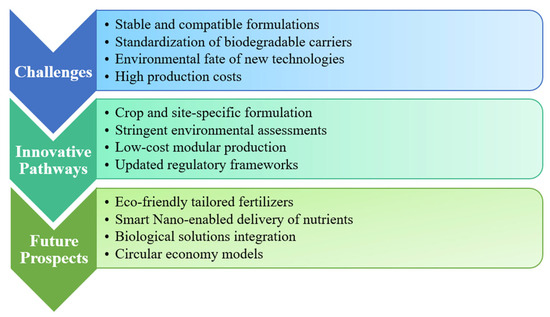
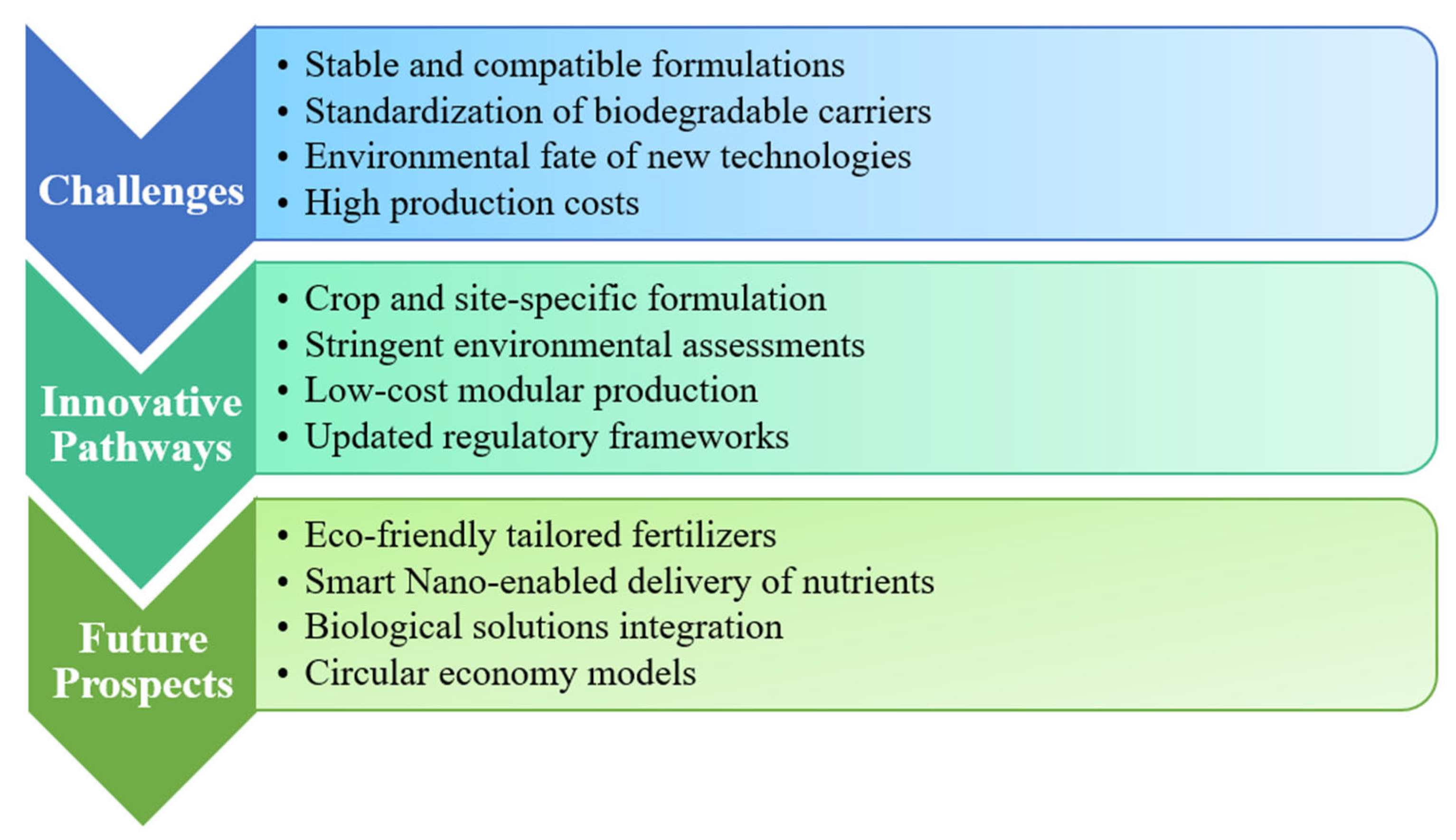
Despite significant progress, the widespread adoption of sustainable multi-nutrient fertilizers faces numerous interconnected scientific, technical, economic, and policy challenges as shown in Figure 4. A primary technical hurdle is the creation of stable, compatible formulations that can effectively deliver diverse nutrients. Differences in nutrient solubility, reactivity, and interactions with carrier materials complicate development, while micronutrients such as iron, zinc, and boron often become fixed or precipitated in the soil, limiting plant availability [79,80]. The development of biodegradable carriers from materials such as chitosan, cellulose, and starch-based polymers shows promise; however, their degradation rates, mechanical strength, and nutrient compatibility vary significantly with processing methods and soil conditions, requiring further research into their interactions with soil microbes and nutrient cycling [81,82].
Figure 4.
Challenges, innovative pathways, and future prospects in green chemistry adoption.
Novel nano-enabled fertilizers and advanced coating methods demonstrate improved nutrient use efficiency, but concerns regarding their long-term environmental impact, bioaccumulation potential, and effects on non-target species necessitate comprehensive environmental safety assessments before widespread implementation [83,84]. Economically, higher production costs present another significant barrier, as these fertilizers require expensive raw materials, careful synthesis, and advanced blending methods, making them less affordable, particularly for resource-limited, smallholder farming systems. Overcoming cost constraints will require innovative manufacturing approaches, locally sourced renewable materials, and decentralized production models [85].
Regulatory frameworks have failed to keep pace with technological advancements, as most current standards were designed for traditional mineral fertilizers and do not adequately address biodegradable carriers, bio-based additives, or nano-structured formulations. Updating these frameworks through certification schemes, labeling standards, and financial incentives is crucial for ensuring a safe market entry [86]. Future research should focus on developing crop- and site-specific formulations by integrating detailed soil data, plant nutrient modeling, and precision agriculture technologies [87,88]. Combining biological solutions such as biofertilizers, microbial inoculants, and plant growth-promoting rhizobacteria with green-chemistry-based formulations can enhance nutrient cycling, improve plant stress tolerance, and enrich soil biodiversity. Policy measures, including subsidies, carbon credits—particularly for biochar application—and public–private partnerships can reduce initial costs and encourage farmer adoption [89]. The use of biochar offers a viable option for carbon offset programs, providing people and companies with a concrete way to get involved in the fight against climate change. Biochar is in line with sustainable development principles, as it reduces emissions and improves soil health simultaneously, providing a solution that benefits the agricultural and environmental sectors [90].
Scaling up production and use will require strong cooperation among scientists, industry leaders, policymakers, and farmers, linking technological innovation with cost-effectiveness, clear regulations, and farmer-friendly design to transform these fertilizers into powerful tools for building climate-resilient, resource-efficient agricultural systems that strengthen global food security while protecting environmental health [91].
Author Contributions
Conceptualization, Y.B. and R.M.; methodology, Y.B. and V.R.; software, Y.B.; validation, Y.B., R.M. and V.R.; formal analysis, R.M.; investigation, Y.B.; resources, R.M.; data curation, V.R.; writing—original draft preparation, V.R.; writing—review and editing, Y.B. and V.R.; visualization, Y.B.; supervision, R.M.; project administration, R.M. All authors have read and agreed to the published version of the manuscript.
Funding
This research received no external funding.
Institutional Review Board Statement
Not applicable.
Informed Consent Statement
Not applicable.
Data Availability Statement
The original contributions presented in this study are included in the article. Further inquiries can be directed to the corresponding author.
Acknowledgments
The authors sincerely thank all colleagues and technical staff who contributed to discussions, feedback, and preparation of this manuscript. The authors have reviewed and edited the output and take full responsibility for the content of this publication. During the preparation of this manuscript, the author(s) used Canva AI tool for the purposes of generating images. The AI tool, ChatGPT/Google gemini was used for the purpose of paraphrasing only. Author have used Google scholar for data design and collection. The authors have reviewed and edited the output and take full responsibility for the content of this publication.
Conflicts of Interest
The authors declare no conflicts of interest.
References
- Ayalp, E.K.; Yılmaz, M.C.; Sargın, F.G.; Kuban, B.; Mahrebel, G.A. Roadmaps to Foster Urban Food System Transitions: Multi-level Implementations in Nilüfer, Turkey. Eur. J. Res. Dev. 2022, 2, 400–410. [Google Scholar] [CrossRef] [Scilit]
- Alexandratos, N.; Bruinsma, J. World Agriculture Towards 2030/2050: The 2012 Revision; Food and Agriculture Organization of the United Nations: Rome, Italy, 2012. [Google Scholar]
- Duhan, J.S.; Kumar, R.; Kumar, N.; Kaur, P.; Nehra, K.; Duhan, S. Nanotechnology: The new perspective in precision agriculture. Biotechnol. Rep. 2017, 15, 11–23. [Google Scholar] [CrossRef] [Scilit]
- Rashid, M.; Hussain, Q.; Khan, K.S.; Alwabel, M.I.; Hayat, R.; Akmal, M.; Ijaz, S.S.; Alvi, S.; Rehman, O.U. Carbon-based slow-release fertilizers for efficient nutrient management: Synthesis, applications, and future research needs. J. Soil Sci. Plant Nutr. 2021, 21, 1144–1169. [Google Scholar] [CrossRef] [Scilit]
- Lawrencia, D.; Wong, S.K.; Low, D.Y.S.; Goh, B.H.; Goh, J.K.; Ruktanonchai, U.R.; Soottitantawat, A.; Lee, L.H.; Tang, S.Y. Controlled release fertilizers: A review on coating materials and mechanism of release. Plants 2021, 10, 238. [Google Scholar] [CrossRef] [Scilit]
- Penuelas, J.; Coello, F.; Sardans, J. A better use of fertilizers is needed for global food security and environmental sustainability. Agric. Food Secur. 2023, 12, 5. [Google Scholar] [CrossRef] [Scilit]
- Sagar, A.; Sayyed, R.Z.; Ramteke, P.W.; Ramakrishna, W.; Poczai, P.; Al Obaid, S.; Ansari, M.J. Synergistic effect of Azotobacter nigricans and nitrogen phosphorus potassium fertilizer on agronomic and Yield traits of maize (Zea mays L.). Front. Plant Sci. 2022, 13, 952212. [Google Scholar] [CrossRef] [Scilit]
- Nongbet, A.; Mishra, A.K.; Mohanta, Y.K.; Mahanta, S.; Ray, M.K.; Khan, M.; Baek, K.-H.; Chakrabartty, I. Nanofertilizers: A smart and sustainable attribute to modern agriculture. Plants 2022, 11, 2587. [Google Scholar] [CrossRef] [Scilit] [PubMed]
- Bekele, D.; Birhan, M. The impact of secondary macro nutrients on crop production. Int. J. Res. Stud. Agric. Sci. 2021, 7, 37–51. [Google Scholar] [CrossRef] [Scilit]
- Kumar, S.; Kumar, S.; Mohapatra, T. Interaction between macro-and micro-nutrients in plants. Front. Plant Sci. 2021, 12, 665583. [Google Scholar] [CrossRef] [Scilit] [PubMed]
- Saurabh, K.; Prakash, V.; Dubey, A.K.; Ghosh, S.; Kumari, A.; Sundaram, P.K.; Jeet, P.; Sarkar, B.; Upadhyaya, A.; Das, A.; et al. Enhancing sustainability in agriculture with nanofertilizers. Discov. Appl. Sci. 2024, 6, 559. [Google Scholar] [CrossRef] [Scilit]
- Gu, B.; Zhang, X.; Lam, S.K.; Yu, Y.; van Grinsven, H.J.M.; Zhang, S.; Wang, X.; Bodirsky, B.L.; Wang, S.; Duan, J.; et al. Cost-effective mitigation of nitrogen pollution from global croplands. Nature 2023, 613, 77–84. [Google Scholar] [CrossRef] [Scilit]
- Babcock-Jackson, L.; Konovalova, T.; Krogman, J.P.; Bird, R.; Díaz, L.L. Sustainable fertilizers: Publication landscape on wastes as nutrient sources, wastewater treatment processes for nutrient recovery, biorefineries, and green ammonia synthesis. J. Agric. Food Chem. 2023, 71, 8265–8296. [Google Scholar] [CrossRef] [Scilit]
- Muscolo, A.; Mauriello, F.; Marra, F.; Calabrò, P.S.; Russo, M.; Ciriminna, R.; Pagliaro, M. AnchoisFert: A new organic fertilizer from fish processing waste for sustainable agriculture. Glob. Chall. 2022, 6, 2100141. [Google Scholar] [CrossRef] [Scilit] [PubMed]
- Kekeli, M.A.; Wang, Q.; Rui, Y. The role of nano-fertilizers in sustainable agriculture: Boosting crop yields and enhancing quality. Plants 2025, 14, 554. [Google Scholar] [CrossRef] [Scilit]
- Bashiru, M.; Ouedraogo, M.; Ouedraogo, A.; Läderach, P. Smart farming technologies for sustainable agriculture: A review of the promotion and adoption strategies by smallholders in Sub-Saharan Africa. Sustainability 2024, 16, 4817. [Google Scholar] [CrossRef] [Scilit]
- Fertahi, S.; Ilsouk, M.; Zeroual, Y.; Oukarroum, A.; Barakat, A. Recent trends in organic coating based on biopolymers and biomass for controlled and slow release fertilizers. J. Control. Release 2021, 330, 341–361. [Google Scholar] [CrossRef] [Scilit]
- Ghumman, A.S.M.; Shamsuddin, R.; Sabir, R.; Waheed, A.; Sami, A.; Almohamadi, H. Synthesis and performance evaluation of slow-release fertilizers produced from inverse vulcanized copolymers obtained from industrial waste. RSC Adv. 2023, 13, 7867–7876. [Google Scholar] [CrossRef] [Scilit] [PubMed]
- Kazlauskas, M.; Bručienė, I.; Jasinskas, A.; Šarauskis, E. Comparative analysis of energy and GHG emissions using fixed and variable fertilization rates. Agronomy 2021, 11, 138. [Google Scholar] [CrossRef] [Scilit]
- Ha, B.Y.; Kim, H.R.; Kim, D.H.; Woo, J.W.; Jo, Y.J.; Kwon, S.I. Growth effects of the application of new controlled-release fertilizers on Phalaenopsis spp. Appl. Biol. Chem. 2018, 61, 625–633. [Google Scholar] [CrossRef] [Scilit]
- Tang, Y.; Zhao, W.; Zhu, G.; Tan, Z.; Huang, L.; Zhang, P.; Gao, L.; Rui, Y. Nano-pesticides and fertilizers: Solutions for global food security. Nanomaterials 2023, 14, 90. [Google Scholar] [CrossRef] [Scilit]
- Taha, A.A.; Omar, M.M. Nanoparticle Applications in Plant Nutrition: A Comprehensive Review and Future Perspectives. J. Soil Sci. Agric. Eng. 2024, 15, 25–30. [Google Scholar]
- Lima-Tenório, M.K.; Furmam-Cherobim, F.; Karas, P.R.; Hyeda, D.; Takahashi, W.Y.; Junior, A.S.P.; Galvão, C.W.; Tenório-Neto, E.T.; Etto, R.M. Azospirillum brasilense AbV5/6 encapsulation in dual-crosslinked beads based on cationic starch. Carbohydr. Polym. 2023, 308, 120631. [Google Scholar] [CrossRef] [Scilit]
- Paschalidis, K.; Fanourakis, D.; Tsaniklidis, G.; Tzanakakis, V.A.; Bilias, F.; Samara, E.; Kalogiannakis, K.; Debouba, F.J.; Ipsilantis, I.; Tsoktouridis, G.; et al. Pilot cultivation of the vulnerable cretan endemic Verbascum arcturus L. (scrophulariaceae): Effect of fertilization on growth and quality features. Sustainability 2021, 13, 14030. [Google Scholar] [CrossRef] [Scilit]
- Akhtar, N.; Ilyas, N.; Meraj, T.A.; Pour-Aboughadareh, A.; Sayyed, R.Z.; Mashwani, Z.U.R.; Poczai, P. Improvement of plant responses by nanobiofertilizer: A step towards sustainable agriculture. Nanomaterials 2022, 12, 965. [Google Scholar] [CrossRef] [Scilit] [PubMed]
- Anastas, P.T.; Warner, J.C. Green Chemistry: Theory and Practice; Oxford University Press: Oxford, UK, 1998. [Google Scholar]
- Kurul, F.; Doruk, B.; Topkaya, S.N. Principles of green chemistry: Building a sustainable future. Discov. Chem. 2025, 2, 68. [Google Scholar] [CrossRef] [Scilit]
- Liao, F.; Zheng, Y.; Wang, X. Promoting the replacement of chemical fertilizer with organic fertilizer: The role of policy incentives and digital technology. Front. Sustain. Food Syst. 2025, 9, 1527913. [Google Scholar] [CrossRef] [Scilit]
- Maaz, T.M.; Dobermann, A.; Lyons, S.E.; Thomson, A.M. Review of research and innovation on novel fertilizers for crop nutrition. npj Sustain. Agric. 2025, 3, 25. [Google Scholar] [CrossRef] [Scilit]
- Ardila-Fierro, K.J.; Hernández, J.G. Sustainability assessment of mechanochemistry by using the twelve principles of green chemistry. ChemSusChem 2021, 14, 2145–2162. [Google Scholar] [CrossRef] [Scilit] [PubMed]
- Arfelis, S.; Martín-Perales, A.I.; Nguyen, R.; Pérez, A.; Cherubin, I.; Len, C.; Malpartida, I.; Bala, A.; Fullana-I-Palmer, P. Linking mechanochemistry with the green chemistry principles: Review article. Heliyon 2024, 10, e34655. [Google Scholar] [CrossRef] [Scilit] [PubMed]
- Chetry, A.B. Mechanochemistry: A new frontier in chemical synthesis. J. Chem. Res. 2025, 49, 17475198251339299. [Google Scholar] [CrossRef] [Scilit]
- Ostwald, W. Lehrbuch der allgemeinen Chemie; Wilhelm Engelmann: Leipzig, Germany, 1910; Volume 1. [Google Scholar]
- Fischer, T.E. Tribochemistry. Annu. Rev. Mater. Sci. 1988, 18, 303–323. [Google Scholar] [CrossRef]
- AlShamaileh, E.; Al-Rawajfeh, A.E.; Alrbaihat, M. Mechanochemical synthesis of slow-release fertilizers: A review. Open Agric. J. 2018, 12, 11–19. [Google Scholar] [CrossRef] [Scilit]
- Minjigmaa, A.; Temuujin, J.; Khasbaatar, D.; Oyun-Erdene, G.; Amgalan, J.; MacKenzie, K.J.D. Influence of mechanical distortion on the solubility of fluorapatite. Miner. Eng. 2007, 20, 194–196. [Google Scholar] [CrossRef] [Scilit]
- Reynes, J.F.; Isoni, V.; García, F. Tinkering with mechanochemical tools for scale up. Angew. Chem. Int. Ed. 2023, 62, e202300819. [Google Scholar] [CrossRef] [Scilit] [PubMed]
- Tan, D.; García, F. Main group mechanochemistry: From curiosity to established protocols. Chem. Soc. Rev. 2019, 48, 2274–2292. [Google Scholar] [CrossRef] [Scilit]
- Geib, R.; Colacino, E.; Gremaud, L. Sustainable Beckmann rearrangement using bead-milling technology: The route to paracetamol. ChemSusChem 2024, 17, e202301921. [Google Scholar] [CrossRef] [Scilit] [PubMed]
- Ishfaq, M.; Wang, Y.; Xu, J.; Hassan, M.U.; Yuan, H.; Liu, L.; He, B.; Ejaz, I.; White, P.J.; Cakmak, I.; et al. Improvement of nutritional quality of food crops with fertilizer: A global meta-analysis. Agron. Sustain. Dev. 2023, 43, 74. [Google Scholar] [CrossRef] [Scilit]
- Boru, M. Review of Organic Fertilizer and Its Role in Organic Farming. Int. J. Energy Environ. Sci. 2025, 10, 31–37. [Google Scholar] [CrossRef] [Scilit]
- Bhokare, P.R.; Wankhade, R.R. Assessment of Chemical Fertilizer and Biofertilizer of Agricultural Soil of Arni Region, Yavatmal District, Maharashtra (India). J. Agric. 2025, 4, 1–9. [Google Scholar]
- Ali, M.A.; Naeem, F.; Tariq, N.; Ahmed, I.; Imran, A. Bioactive nutrient fortified fertilizer: A novel hybrid approach for the enrichment of wheat grains with zinc. Front. Plant Sci. 2021, 12, 743378. [Google Scholar] [CrossRef] [Scilit]
- Demeke, E.D.; Benti, N.E.; Terefe, M.G.; Anbessa, T.T.; Mengistu, W.M.; Mekonnen, Y.S. A comprehensive review on nano-fertilizers: Preparation, development, utilization, and prospects for sustainable agriculture in Ethiopia. Nanoscale Adv. 2025, 7, 2131–2144. [Google Scholar] [CrossRef] [Scilit] [PubMed]
- Tarafder, C.; Daizy, M.; Alam, M.M.; Ali, M.R.; Islam, M.J.; Islam, R.; Ahommed, M.S.; Aly Saad Aly, M.; Khan, M.Z.H. Formulation of a hybrid nanofertilizer for slow and sustainable release of micronutrients. ACS Omega 2020, 5, 23960–23966. [Google Scholar] [CrossRef] [Scilit]
- Azeem, B.; KuShaari, K.; Man, Z.B.; Basit, A.; Thanh, T.H. Review on materials & methods to produce controlled release coated urea fertilizer. J. Control. Release 2014, 181, 11–21. [Google Scholar] [CrossRef] [Scilit]
- Assunção, A.G.L.; Cakmak, I.; Clemens, S.; González-Guerrero, M.; Nawrocki, A.; Thomine, S. Micronutrient homeostasis in plants for more sustainable agriculture and healthier human nutrition. J. Exp. Bot. 2022, 73, 1789–1799. [Google Scholar] [CrossRef] [Scilit]
- Garg, D.; Sridhar, K.; Stephen Inbaraj, B.; Chawla, P.; Tripathi, M.; Sharma, M. Nano-biofertilizer formulations for agriculture: A systematic review on recent advances and prospective applications. Bioengineering 2023, 10, 1010. [Google Scholar] [CrossRef] [Scilit]
- Luo, P.; Zhang, W.; Xiao, D.; Hu, J.; Li, N.; Yang, J. Biochar-Based Fertilizers: Advancements, Applications, and Future Directions in Sustainable Agriculture—A Review. Agronomy 2025, 15, 1104. [Google Scholar] [CrossRef] [Scilit]
- Zhang, Y.; Jiao, G.; Wang, J.; She, D. Preparation of lignin-based slow-release nitrogen fertilizer. Sustainability 2024, 16, 10289. [Google Scholar] [CrossRef] [Scilit]
- Javazmi, L.; Young, A.; Ash, G.J.; Low, T. Kinetics of slow release of nitrogen fertilizer from multi-layered nanofibrous structures. Sci. Rep. 2021, 11, 4871. [Google Scholar] [CrossRef] [Scilit] [PubMed]
- Venkatesan, K.; Sundarababu, J.; Anandan, S.S. The recent developments of green and sustainable chemistry in multidimensional way: Current trends and challenges. Green Chem. Lett. Rev. 2024, 17, 2312848. [Google Scholar] [CrossRef] [Scilit]
- Chojnacka, K. Sustainable chemistry in adaptive agriculture: A review. Curr. Opin. Green Sustain. Chem. 2024, 46, 100898. [Google Scholar] [CrossRef] [Scilit]
- De Keyser, E.; Farahbakhsh, S.; Mathijs, E.; Vranken, L. Farmers’ decision-making dynamics in bio-based fertilizer adoption: An agent-based model. Agric. Food Econ. 2025, 13, 25. [Google Scholar] [CrossRef] [Scilit]
- Mohammed, J.; Osuegba, O.S.; Bulus, Y.E. Mechanochemistry: A green chemistry for green technology. Res. J. Chem. Sci. 2024, 2231, 606X. [Google Scholar]
- Xiang, Y.; Liu, Y.; Gong, M.; Tong, Y.; Liu, Y.; Zhao, G.; Yang, J. Preparation of novel biodegradable polymer slow-release fertilizers to improve nutrient release performance and soil phosphorus availability. Polymers 2023, 15, 2242. [Google Scholar] [CrossRef] [Scilit]
- Di Rago, S.; Morandi, F.; Pizzetti, F.; Rossi, F. Advances in Controlled Release Systems for Sustainable Crop Production: A Review of Nano-, Micro-, and Macro-formulations. Adv. Agrochem. 2025, 4, 188–206. [Google Scholar] [CrossRef] [Scilit]
- Goyal, A.; Chavan, S.S.; Mohite, R.A.; Shaikh, I.A.; Chendake, Y.; Mohite, D.D. Emerging trends and perspectives on nano-fertilizers for sustainable agriculture. Discov. Nano 2025, 20, 97. [Google Scholar] [CrossRef] [Scilit]
- Asadu, C.O.; Ezema, C.A.; Ekwueme, B.N.; Onu, C.E.; Onoh, I.M.; Adejoh, T.; Ezeorba, T.P.C.; Ogbonna, C.C.; Otuh, P.I.; Okoye, J.O.; et al. Enhanced efficiency fertilizers: Overview of production methods, materials used, nutrients release mechanisms, benefits and considerations. Environ. Pollut. Manag. 2024, 1, 32–48. [Google Scholar] [CrossRef] [Scilit]
- Arora, P.K.; Tripathi, S.; Omar, R.A.; Chauhan, P.; Sinhal, V.K.; Singh, A.; Srivastava, A.; Garg, S.K.; Singh, V.P. Next-generation fertilizers: The impact of bionanofertilizers on sustainable agriculture. Microb. Cell Fact. 2024, 23, 254. [Google Scholar] [CrossRef] [Scilit] [PubMed]
- Shanmugavel, D.; Rusyn, I.; Solorza-Feria, O.; Kamaraj, S.K. Sustainable SMART fertilizers in agriculture systems: A review on fundamentals to in-field applications. Sci. Total Environ. 2023, 904, 166729. [Google Scholar] [CrossRef] [Scilit]
- Liao, X.; Kang, H.; Haidar, G.; Wang, W.; Malghani, S. The impact of biochar on the activities of soil nutrients acquisition enzymes is potentially controlled by the pyrolysis temperature: A meta-analysis. Geoderma 2022, 411, 115692. [Google Scholar] [CrossRef] [Scilit]
- Ma, Q.; Qian, Y.; Yu, Q.; Cao, Y.; Tao, R.; Zhu, M.; Zhu, X. Controlled-release nitrogen fertilizer application mitigated N losses and modified microbial community while improving wheat yield and N use efficiency. Agric. Ecosyst. Environ. 2023, 349, 108445. [Google Scholar] [CrossRef] [Scilit]
- Li, X.; Li, Z. Global trends and current advances in slow/controlled-release fertilizers: A bibliometric analysis from 1990 to 2023. Agriculture 2024, 14, 1502. [Google Scholar] [CrossRef] [Scilit]
- Li, X.; Mao, N.; Jiang, H.; Jiang, X.; Li, C.; Gong, X.; Liu, T.; Cheng, J. Synergistic effects of straw and earthworm addition on microbial diversity and microbial nutrient limitation in a subtropical conservation farming system. Soil Tillage Res. 2022, 224, 105500. [Google Scholar] [CrossRef] [Scilit]
- Lundin, O.; Raderschall, C.A. Landscape complexity benefits bumble bee visitation in Faba bean (Vicia faba minor L.) but crop productivity is not pollinator-dependent. Agric. Ecosyst. Environ. 2021, 314, 107417. [Google Scholar] [CrossRef] [Scilit]
- Álvarez-Ayuso, E.; Murciego, A. Assessment of industrial by-products as amendments to stabilize antimony mine wastes. J. Environ. Manag. 2023, 343, 118218. [Google Scholar] [CrossRef] [Scilit]
- Rguez, S.; Ben Slimene, I.; Abid, G.; Hammemi, M.; Kefi, A.; Elkahoui, S.; Ksouri, R.; Sellami, I.H.; Djébali, N. Tetraclinis articulata essential oil reduces Botrytis cinerea infections on tomato. Sci. Hortic. 2020, 266, 109291. [Google Scholar] [CrossRef] [Scilit]
- Moreira, B.R.; Breitkreitz, M.C.; Simister, R.; McQueen-Mason, S.J.; Gomez, L.D.; Rezende, C.A. Improved hydrolysis yields and silica recovery by design of experiments applied to acid-alkali pretreatment in rice husks. Ind. Crops Prod. 2021, 170, 113676. [Google Scholar] [CrossRef] [Scilit]
- Pilotto, L.; Scalera, F.; Piccirillo, C.; Marchiol, L.; Zuluaga, M.Y.A.; Pii, Y.; Cesco, S.; Civilini, M.; Fellet, G. Phosphorus release from nano-hydroxyapatite derived from biowastes in the presence of phosphate-solubilizing bacteria: A soil column experiment. J. Agric. Food Chem. 2025, 73, 3918–3929. [Google Scholar] [CrossRef] [Scilit] [PubMed]
- Hu, S.; Li, K.; Zhang, X.; Yang, C.; Zhang, R.; Guo, H. The impact of the foliar application of amino acid aqueous fertilizer on the flavor of potato tubers. Foods 2023, 12, 3951. [Google Scholar] [CrossRef] [Scilit] [PubMed]
- Luqman, M.; Ahmad, M.; Dar, A.; Hussain, A.; Zulfiqar, U.; Mumtaz, M.Z.; Mustafa, A.; Mustafa, A.E.-Z.M.A.; Elshikh, M.S. PGPR and nutrient consortia promoted cotton growth, antioxidant enzymes, and mineral uptake by suppressing sooty mold in arid climate. Front. Microbiol. 2025, 16, 1551465. [Google Scholar] [CrossRef] [Scilit] [PubMed]
- Bonanomi, G.; Iacomino, G.; Idbella, A.; Amoroso, G.; Staropoli, A.; De Sio, A.; Saccocci, F.; Abd-ElGawad, A.M.; Moreno, M.; Idbella, M. Compost Tea Combined with Fungicides Modulates Grapevine Bacteriome and Metabolome to Suppress Downy Mildew. J. Fungi 2025, 11, 527. [Google Scholar] [CrossRef] [Scilit]
- Gupta, P.; Dhar, H.; Bagal, Y.S.; Jaglan, S. Smart nano-fertilizers: A path to sustainable agriculture. Environ. Geochem. Health 2025, 47(10), 443. [Google Scholar] [CrossRef] [Scilit]
- Ravindran, A.; Manivannan, A.C.; Kandaiah, R.; Kulanthaisamy, M.; Indirathankam, S.C.; Nachimuthu, G.; Panneerselvan, L.; Palanisami, T. Advancements and challenges in controlled-release fertilizers: An approach to integrate biopolymer-based strategies. Ind. Crops Prod. 2025, 233, 121349. [Google Scholar] [CrossRef] [Scilit]
- Brekalo, I.; Martinez, V.; Karadeniz, B.; Orešković, P.; Drapanauskaite, D.; Vriesema, H.; Stenekes, R.; Etter, M.; Dejanović, I.; Baltrusaitis, J.; et al. Scale-up of agrochemical urea-gypsum cocrystal synthesis using thermally controlled mechanochemistry. ACS Sustain. Chem. Eng. 2022, 10, 6743–6754. [Google Scholar] [CrossRef] [Scilit]
- Jha, G.K.; Velayudhan, P.K.; Bhatia, A.; Laishram, C.; Kumar, D.; Begho, T.; Eory, V. Transitioning towards sustainable agriculture: Analysing the factors and impact of adopting multiple sustainable inputs by paddy farmers in India. Front. Sustain. Food Syst. 2024, 8, 1–19. [Google Scholar] [CrossRef] [Scilit]
- Yu, Y.; Wang, Y.; Yang, B.; Yang, L.; Xue, L.; Han, X.; Huang, L. Effects of organic fertilizer substitution strategies on nitrogen loss from crop production in Taihu Lake Basin: A case study of Jinting Town, Suzhou, China. Sustain. Horiz. 2025, 13, 100132. [Google Scholar] [CrossRef] [Scilit]
- Beig, B.; Niazi, M.B.K.; Sher, F.; Jahan, Z.; Malik, U.S.; Khan, M.D.; Américo-Pinheiro, J.H.P.; Vo, D.V.N. Nanotechnology-based controlled release of sustainable fertilizers. A review. Environ. Chem. Lett. 2022, 20, 2709–2726. [Google Scholar] [CrossRef] [Scilit]
- Mikula, K.; Izydorczyk, G.; Skrzypczak, D.; Mironiuk, M.; Moustakas, K.; Witek-Krowiak, A.; Chojnacka, K. Controlled release micronutrient fertilizers for precision agriculture–A review. Sci. Total Environ. 2020, 712, 136365. [Google Scholar] [CrossRef] [Scilit]
- Dutta, S.; Pal, S.; Panwar, P.; Sharma, R.K.; Bhutia, P.L. Biopolymeric nanocarriers for nutrient delivery and crop biofortification. ACS Omega 2022, 7, 25909–25920. [Google Scholar] [CrossRef] [Scilit]
- Jariwala, H.; Santos, R.M.; Lauzon, J.D.; Dutta, A.; Chiang, Y.W. Controlled release fertilizers (CRFs) for climate-smart agriculture practices: A comprehensive review on release mechanism, materials, methods of preparation, and effect on environmental parameters. Environ. Sci. Pollut. Res. 2022, 29, 53967–53995. [Google Scholar] [CrossRef] [Scilit] [PubMed]
- Nederstigt, T.A.P.; Brinkmann, B.W.; Peijnenburg, W.J.G.M.; Vijver, M.G. Sustainability claims of nanoenabled pesticides require a more thorough evaluation. Environ. Sci. Technol. 2024, 58, 2163–2165. [Google Scholar] [CrossRef] [Scilit]
- Zhang, T.; Wang, Q.; Rui, Y. The impact of nanomaterials on plant health: A review of exposure, toxicity, and control. Environ. Sci. Nano 2025, 12, 2965–2982. [Google Scholar] [CrossRef] [Scilit]
- Bindraban, P.S.; Dimkpa, C.O.; Pandey, R. Exploring phosphorus fertilizers and fertilization strategies for improved human and environmental health. Biol. Fertil. Soils 2020, 56, 299–317. [Google Scholar] [CrossRef] [Scilit]
- Subramanian, K.S.; Rajkishore, S.K.; Praghadeesh, M.; Pradeep, D.; Srinivasan, G. Regulatory Frameworks, Guidelines, and Policies to Promote Nanofertilizers: Current Status in India and Abroad. In Nanofertilizers in Agriculture; Springer Nature: Singapore, 2025; pp. 113–154. [Google Scholar]
- Zain, M.; Ma, H.; Rahman, S.U.; Nuruzzaman, M.; Chaudhary, S.; Azeem, I.; Mehmood, F.; Duan, A.; Sun, C. Nanotechnology in precision agriculture: Advancing towards sustainable crop production. Plant Physiol. Biochem. 2024, 206, 108244. [Google Scholar] [CrossRef] [Scilit]
- Ayenew, B.M.; Satheesh, N.; Zegeye, Z.B.; Kassie, D.A. A review on the production of nanofertilizers and its application in agriculture. Heliyon 2024, 11, e41243. [Google Scholar] [CrossRef] [Scilit]
- Shahwar, D.; Mushtaq, Z.; Mushtaq, H.; Alqarawi, A.A.; Park, Y.; Alshahrani, T.S.; Faizan, S. Role of microbial inoculants as bio fertilizers for improving crop productivity: A review. Heliyon 2023, 9, e16134. [Google Scholar] [CrossRef] [Scilit] [PubMed]
- Salma, A.; Fryda, L.; Djelal, H. Biochar: A key player in carbon credits and climate mitigation. Resources 2024, 13, 31. [Google Scholar] [CrossRef] [Scilit]
- Bacheva, V.; Madison, I.; Baldwin, M.; Baker, J.; Beilstein, M.; Call, D.F.; Deaver, J.A.; Efimenko, K.; Genzer, J.; Grieger, K.; et al. Transdisciplinary collaborations for advancing sustainable and resilient agricultural systems. Glob. Change Biol. 2025, 31, e70142. [Google Scholar] [CrossRef] [Scilit] [PubMed]
Disclaimer/Publisher’s Note: The statements, opinions and data contained in all publications are solely those of the individual author(s) and contributor(s) and not of MDPI and/or the editor(s). MDPI and/or the editor(s) disclaim responsibility for any injury to people or property resulting from any ideas, methods, instructions or products referred to in the content. |
© 2026 by the authors. Licensee MDPI, Basel, Switzerland. This article is an open access article distributed under the terms and conditions of the Creative Commons Attribution (CC BY) license.