


Abstract
Pre-incubation sorting for infertile and non-viable eggs could save significant resources in quail farming. Previous research has revealed often contradictory correlations between egg morphometric parameters used to assess incubation success. The current pilot study aimed to identify these correlations for eggs from an F2 quail resource population. The most significant parameter, demonstrating the highest correlation (Rp = −0.625) with egg fertility (F), was egg density (D). A similar, albeit less pronounced, relationship (Rp = −0.329) was observed between this parameter and hatchability (H). That is, eggs with low D values had a high probability of being either infertile or containing non-viable embryos. A similar relationship was tested for quail eggs from purebred breeds (English White, Radonezh, Estonian, Pharaoh, and Tuxedo), but this did not reveal such a strong relationship. The correlation between D and F was Rp = −0.313, and Rp = −0.201 between D and H. Although results from studies examining the relationship between the morphometric parameters of quail eggs and their fertility and/or hatchability can vary, this may be explained by the fact that different breeds possibly display varying correlations between oological parameters and their incubation properties. Our preliminary findings suggest that more studies are needed in large-scale trials to clarify the relationships between density and morphometrics with egg fertility and hatchability.
1. Introduction
Among the many categories of studies examining poultry eggs, the process of their incubation is probably the one that has, historically, involved the greatest technological intervention [1,2,3,4,5]. A large part of the efficiency of the entire poultry industry (both table egg and meat production) rests on the results of individual egg examination, much of which involves the analysis of morphometric characteristics [6,7,8]. The economic impact of incubation is especially pronounced for those types of poultry in which the hatchability (H) results are low [4,9,10,11,12,13]. These include the eggs of Japanese quails (Coturnix japonica), the main incubation characteristics of which are their fertility (F) and H. Both indicators have room for improvement (e.g., [14,15]). A possible solution may involve the pre-incubation removal of eggs whose characteristics suggest that the successful completion of the hatching process is in question. The rationale is that material and energy resources pertaining to hatching eggs can be saved by not including those whose embryonic development may be in doubt. For such selection to be efficient, however, it is imperative to know, with a high degree of probability, which set of morphometric parameters (and their values) will not result in a hatched chick.
In quail eggs, the most popular parameter used to establish a relationship with H is egg weight (W). No definite formula predicting a close relationship between W and H has, however, yet been found, even though some studies [16,17,18,19,20,21,22] report that heavier eggs exhibited higher rates of H. In contrast, others [23,24,25,26] indicated a more successful hatching rate of quail eggs from the lower W category. Finally, there were studies [14,27,28,29,30,31,32] that demonstrated the maximum H outcome from eggs with average W values. Most likely, such cardinal differences are largely due to genetic factors inherent in layer birds of a particular quail breed. Such conclusions were reached by Wahab et al. [33], Ahmad et al. [34], Taha et al. [35], Ibrahim and Alneemy [36] and Chimezie et al. [37].
Other common parameters used to find a relationship with H and/or F are certain geometric features of the egg. Some authors used streamlined, descriptive shape characteristics (e.g., [38]), while others (e.g., [39]) used the shape index, i.e., the ratio of the maximum breadth of the egg to its length (B/L). Herewith, despite the approach used to assess egg shape, the concluding opinions among the varying studies, again, diverged. In the experiments of Idahor et al. [38], round-shaped quail eggs demonstrated the highest percentage of H (81.8%). This fact was also confirmed by the results of Alasahan and Copur [40], in whose studies an increase in the B/L value (i.e., the corresponding rounding of eggs) contributed to an increased H level. At the same time, Kruenti et al. [39], relying on both their own results and other studies [41,42,43,44], demonstrated the opposite effect, justifying such a relationship by the fact that “round eggs are known to break easier than elongated ones” and “low hatchability had been associated with rounder eggs because they fit improperly into setter trays during incubation.” A similar negative relationship between H and B/L values was noted in earlier studies [23,45]. The results of studies by Kostaman and Sopiyana [21], however, did not demonstrate any significant relationship between B/L size and H.
Other parameters, perhaps not as popular as the above, but nevertheless with some promise for increasing the efficiency of pre-incubation egg sorting, have also been tested. For example, Kostaman and Sopiyana [21] found that the egg surface area (S) has a positive effect on H results. Earlier studies by MacLaury et al. [45] found that the higher the ratio of S to egg volume (V), the higher the H of quail eggs. This ratio (S/V) turned out to be very effective in predicting other aspects of embryonic development [46,47,48], which makes it a promising indicator of pre-incubation selection. Another promising index that has been shown, according to Alabdallah et al. [6], to be significantly related to incubation efficiency is egg density (D), referred to by the authors [6] as “the ratio of the mass and volume of quail eggs.”
Most likely, different quail breeds have not yet been subject to such a strong selection effect of a genetic nature as have chickens. If they had, this likely would have led to uniform principles of morphometric interrelations of eggs being correlated more thoroughly with their embryonic development. Therefore, the correlation between the morphometric parameters of eggs and their incubation properties differs between breeds. The inconsistency of experimental data obtained by different research groups on the influence of W and/or morphometric parameters of eggs on embryogenesis and H of quails may be associated with both the used methodological approaches and the experimental group of birds. As a result of selective breeding, various breeds are also typically characterized by uniformity in the selected morphological egg traits and W [49]. Therefore, using quail from a single breed or purebred lines significantly limits the phenotypic variability of the evaluated traits.
With the above in mind, our previous investigations were undertaken on both purebred quails of different productivity levels, and on a specially generated an F2 quail reference population. This was achieved by crossing two breeds that contrast in growth rate and meat quality traits, i.e., Japanese (slow growth) and Texas (fast growth) [50,51,52]. F2 resource populations are widely used in molecular genetic studies to obtain a sample of individuals with significant phenotypic variability for the assessed parameters [53,54,55]. These model populations are obtained by crossing two breeds with contrasting traits, allowing for a wide range of phenotypic variability to be obtained from a relatively small sample. The study of the morphological parameters of eggs obtained from layers of this population enabled us to develop several mathematical dependences to describe the geometric features of the egg shape [56], non-invasive determination of V and S [57], shell parameters [58] and egg content [59].
The possibility of non-destructive prediction of these values before putting eggs into an incubator can then become the basis for an extremely effective technological method for establishing potential incubation defects, i.e., those eggs from which chicks would not hatch. The objective of our current pilot investigation was therefore to search for morphological parameters and/or their relationships in the eggs from the F2 quail reference population that have the greatest impact on their incubation properties.
2. Materials and Methods
2.1. Pilot Study Flocks
We used quails of the F2 reference population [50,51,52] and, for comparative assessment of incubation parameters, representatives of the following five purebred breeds: English White, Radonezh, Estonian, Pharaoh, and Tuxedo [60,61,62,63,64]. Thus, a total of six groups of quails were involved in the experiment. The age of quails was 4–5 months. The assessed criteria of incubation parameters were the ratio of fertile eggs to their total number, i.e., F, and the ratio of hatched chicks to the sample of fertile eggs, i.e., H. In order to secure the representativeness of the sample of infertile eggs and eggs with failed development of embryos during incubation, we used the technological method of increasing the insemination load. The recommended ratio of males to females in quails ranges from 1:2 [65] to the maximum permissible 1:4 [66]. Exceeding this leads to an increased proportion of infertile eggs [13], which is what we needed in the conditions of this pilot experiment. Thus, the male-to-female ratio, for both the F2 reference population and the control breeds, was set at 1:5. Increasing the workload on males was not unusual and could not have negatively impacted the experimental results. A male-to-female ratio of 1:5 is perfectly acceptable in real industrial settings and has been repeatedly investigated in a number of studies on this topic. In fact, in a study by Dudusola et al. [67], a ratio of 1:5 was generally considered optimal among all other variants, ranging from 1:1 to 1:6. Amrutkar et al. [68] argue that, for economic reasons, this ratio could even be increased to 1:6. Results of scientific research conducted on this issue have also been implemented in standard quail husbandry practices. According to the Food and Agriculture Organization (FAO) recommendations [69], “male:female ratios from 1:2 to 1:5 appear to yield comparable fertility results, while extreme ratios of 1:1 or 1:6 usually result in much lower rates.” In our experiments, we chose the upper limit of the acceptable range. Thus, a ratio of approximately 1 male to 5 females may be a compromise between F and production efficiency.
All other conditions of maintenance did not differ from the generally accepted ones. The birds were hatched and reared at the L. K. Ernst Federal Research Center for Animal Husbandry (LKEFRCAH) in accordance with the widely recognized maintenance and feeding guidelines outlined elsewhere [70,71,72]. Specifically, quails were housed in groups using battery cages divided into sections measuring 42 × 22.5 cm (i.e., 0.09 m2). Each cage section was equipped with one drinking water nipple. Feeders were located on the outer front mesh above the egg chute. Feeding and watering were ad libitum. The birds were fed a commercial compound feed for productive laying quails. The ration included wheat, barley, corn, soybean meal, sunflower meal, raw materials of animal origin, limestone flour, vegetable oil, antioxidant, phosphates, salt, soda, vitamins (including vitamin E analog), minerals, amino acids, enzymes, phytogenics, and some other trace ingredients. The diet nutritional values were as follows: metabolizable energy, 12.13 (2900) MJ/kg (Kcal/kg); crude protein, minimum 180 g/kg; crude fat, minimum 25 g/kg; crude fiber, maximum 50 g/kg; moisture, maximum 14%; calcium, minimum 33 g/kg; calcium + enzyme, minimum 34.5 g/kg; digestible phosphorus, minimum 5 g/kg; lysine, minimum 10 g/kg; methionine + cystine, minimum 7.6 g/kg; copper, 12 mg/kg; manganese, 70 mg/kg; and zinc, 80 mg/kg. The commercial feed also contained vitamins A (minimum 8000 IU/kg), D3 (minimum 3500 IU/kg), and E (minimum 60 mg/kg). The room temperature varied from 20 to 25 °C with an average humidity of 60%. The light regime was 16 h long with subdued lighting intensity. The room was provided with supply and exhaust ventilation without creating drafts.
To obtain hatching eggs, hens were housed with males for at least 5 days, after which they were transferred to individual cages for individual egg counting. Egg collection was carried out over a period of 3–5 days. We were guided by the fact that ejaculated sperms in birds, including quail, do not travel directly to the site of fertilization but are initially stored in specialized structures called sperm storage tubules (STTs). In these, the ability to fertilize is maintained for a long period that can be 2–15 weeks in domestic birds such as chickens, turkeys, quail, and ducks (e.g., [73]). Studies of this effect in Japanese quail demonstrated that the probability of egg fertilization declined with time after mating, and this probability became below 20% after 9 days [74]. After this period, the females returned to the males, i.e., in their original conditions, and the period of fertilization and egg collection was consequently repeated.
2.2. Pre-Incubation Assessment of Egg Characteristics
A total of 106 eggs from 8 females and 2 males of the F2 reference population were collected. The body weight of F2 females varied from 137 to 292 g, and that of F2 males from 138 to 146 g. Each F2 laying hen produced 3 to 22 eggs.
From purebred quail groups, 119 eggs were collected, including 46 eggs of the English White, 16 eggs of the Radonezh, 23 eggs of the Estonian, 25 eggs of the Pharaoh, and 9 eggs of the Tuxedo. Body weight and number (in parentheses) of purebred birds involved in the pilot experiment for the respective group were as follows: English White, 135–161 g for hens (n = 8) and 122–128 g for males (n = 2); Radonezh, 306–342 g for hens (n = 7) and 268–379 g for males (n = 2); Estonian, 216–250 g for hens (n = 4) and 185 g for male (n = 1); Pharaoh, 292–332 g for hens (n = 8) and 255–267 g for males (n = 2); and Tuxedo, 152–171 g for hens (n = 4) and 133 g for male (n = 1).
When reporting the number of males in each group, both for the F2 reference population and for purebred birds, we avoided fractional numbers, as this could distort the true 1:5 ratio observed for all experimental groups. Technologically, a quail group, e.g., from the F2 reference population, consisted of 10 females and 2 males. However, only 8 females were removed from this group, and their eggs were subsequently used for analysis. A similar situation occurred for other quail groups.
The laid eggs were photographed in a horizontal position. A smartphone camera was used to take photographs, positioned on a tripod at a height of 20 cm from the surface on which the egg was placed. The photographs were taken under natural light. Then, eggs were weighed (W) with an accuracy of 0.01 g. Using an RGK SC-150 digital vernier caliper (Guilin Guanglu Measuring Instrument Co., Ltd., Dingjiang Town, China), the length (L) and maximum breadth (B) of the eggs were determined within an accuracy of 0.1 mm. Other geometric dimensions were estimated from the egg images using Microsoft Picture Manager software (version 14.0.4750.1000). The L and B values, as well as the distance (w) of the displacement of the B axis from the egg center [75] and the egg diameter (Dp) at a point located at a distance of L/4 from the pointed end [76,77], were measured within an accuracy of 1 pixel. To verify the correct, i.e., horizontal, positioning of the egg during photographing, we calculated the B/L ratio as measured in mm with a caliper and in pixels during software-assisted image processing. If this ratio was inconsistent, the egg in question was re-photographed until the desired result was achieved. Knowing the L size in mm and pixels, respectively, we converted the geometric parameters w and Dp into the metric system of measurement.
The measured geometric parameters of the egg are shown in Figure 1.
Figure 1.
Measured geometric parameters of quail eggs. The following measured parameters are shown with black lines: B, egg maximum breadth; Dp, diameter of the egg at a point L/4 from its pointed end; L, egg length; w, distance by which the maximum breadth of the egg is shifted from its center, i.e., from the point x = L/2.
The V and S values of eggs were calculated using previously derived universal formulae [57], the adequacy of which was assessed, among other avian eggs, on quail eggs, as follows:
The D value of eggs was calculated as the ratio of W to V. The value of W conformed to that measured on the day it was laid.
After candling the egg and taking two measurements with a vernier caliper that had an accuracy of 0.1 mm, the air cell diameter (d) was calculated and averaged. Using the formulae from Narushin et al. [78], the values of air cell height (h) and volume (Vac) were determined as follows:
where h is the air cell height (cm), d is its diameter (cm), and Vac is its volume (cm3).
To assess the possible correlation of the F and H indices with the weight of the internal structures of the egg, i.e., that of shell (Ws), yolk (Wy) and albumen (Wa), they were calculated using previously derived formulae [58,59]:
in which Ws, Wy and W are measured in g, V in cm3, S in cm2, and D in g/cm3.
Wa was calculated as the difference between W and (Ws + Wy).
Although Equations (5) and (6) are empirical in nature, their adequacy was tested on an independent control sample [59], which enabled us to use them in this pilot experiment.
The original dataset on egg characteristics, measured and computed, is contained within the Supplementary Materials.
2.3. Incubation Procedure and Outcome Measured
For each incubation, eggs were collected over a period of 3–5 days. Eggs were collected individually from each hen under stable conditions. Prior to setting, the eggs were stored at a temperature of 15–20 °C and a relative humidity of 60–70% within 1–5 days. Storage conditions were standardized as much as possible for all eggs in all incubations. Each egg was reweighed before being placed in the incubator. If the resultant value differed from W measured immediately after laying by more than 1%, the egg was rejected. Eggs from each hen were uniquely labeled.
The eggs were placed in an Rcom Maru 190 Deluxe MAX incubator (Autoelex Co., Gyeongsangnam-do, Republic of Korea), with a capacity of 300 quail eggs, and incubated for 17 days. A two-stage differentiated mode was used for incubating quail eggs. From Days 1 to 15, the incubator temperature was 37.5 ± 0.1 °C and humidity 50–55%, with trays automatically turned every 3 h. When transferring eggs to hatchery, the turn signals were disabled on days 16–17, and the incubator control panel was set to a temperature of 37.2 ± 0.1 °C and humidity of 65%. Ventilation was provided continuously through an open vent near the incubator control panel.
On Days 2, 5, 9, and 15, the eggs were removed from the incubator and weighed (W2, W5, W9, and W15, respectively). On Days 3 and 8 of incubation, the eggs were candled using an Rcom Candler 200 ovoscope (Autoelex Co.) for the presence of an embryo and its viability. During egg candling, the presence and development of the vascular network (i.e., visualization of the embryo and its viability), the size of the air cell and the dynamics of its enlargement. The latter were evaluated by measuring d using a QST EXPRESS 0.01–150 mm (Stainless Hardened) digital caliper (QST EXPRESS, Guangzhou, China), which allowed for an indirect assessment of W loss and compliance of the incubation regime (temperature and humidity) with optimal values. Monitoring embryonic development by candling allowed for the timely detection of fertilized eggs and embryos that had stopped developing (i.e., died). At the end of incubation (on Day 17), the number of quail chicks that hatched was recorded. All fertilized eggs that did not hatch were dissected. All eggs were classified into the following categories: infertile, i.e., no visible signs of embryo development; died at an early stage (before Day 7), i.e., the presence of an embryo or vascular network in the initial stages of development, without signs of further growth, or a blood ring; died at a middle stage (Days 8–14), i.e., a formed embryo with signs of developmental arrest (growth retardation); and died at a late stage (Days 15–17), i.e., a fully formed embryo that did not hatch (incorrect position, suffocated in the shell membrane, untimely puncture of the air cell, etc.).
After the hatching, a final conclusion was made about the number of eggs included in each of the samples, which were conditionally distributed between the following three groups: (I) infertile eggs; (M) eggs with dead embryos; and (A) living embryo eggs, i.e., successfully hatched.
2.4. Statistical Analyses
Each of the samples was statistically assessed for representativeness. For this purpose, we assumed the margin of error (E) and employed the minimum sample calculation algorithm from Cochran [79]. The author [79] left the choice of the acceptable value of Emax to the discretion of researchers, however, recommending its value at the level of 5% (0.05). Thus, our task was reduced to calculating the E value and comparing it with the acceptable one (Emax). If the calculated E value does not exceed Emax, i.e., 0.05, the sample can be considered representative. In this case, the calculation formula for the minimum sample from Cochran [79] can be transformed into the following one:
where N is the total number of eggs used in the experiment, n is the number of eggs in the corresponding experimental sample, and σy is the standard deviation of the studied parameter.
Several mathematical and statistical procedures found in the STATISTICA 5.5 program (StatSoft, Inc./TIBCO, Palo Alto, CA, USA) and Microsoft Excel applications were utilized to process the data. To assess the tightness of the relationship between the morphological parameters of eggs and the values of interest to us, i.e., F and H, both the Pearson correlation coefficient (Rp) and the Spearman correlation coefficient (Rs) were used. Their significance was confirmed at the p < 0.05 level. This choice was motivated by the fact that the Rp value is more informative in the case of a possible predictive calculation of the indicator of interest (F and/or H), since it can easily be transformed into a determination coefficient (R2) by squaring. Analysis of Rs smooths out possible parameter outliers, takes into account their nonlinear relationships, and is more reliable when selecting the F and/or H parameters by rank (e.g., [80]).
Given that this pilot experiment involved 8 laying quails from the F2 reference population, we tested the statistical feasibility of examining eggs from this group within a single flock. This meant examining possible statistical differences between females in the assessed incubation parameters, i.e., F and H. This test allowed us to determine whether there were any differences between the birds in their physiological or other characteristics leading to the laying of infertile or non-hatched eggs. Since F and H were assessed using a scoring system reflecting “Yes” or “No” results, the chi-squared (χ2) test (e.g., [81,82]) was chosen for this test. The same test was also conducted to identify possible differences in F and H parameters between quails from different pure breeds.
In addition to the χ2 test, we decided to perform a statistical test of the homogeneity of quail groups, both for some initial parameters and for the incubation results, using the Intraclass Correlation Coefficient (ICC) value (e.g., [83,84,85]). Considering that the parameters used for the subsequent analysis can have both a continuous measurement scale (geometric and physical parameters of eggs) and a binomial one (F and H), the ICC value calculation, characteristic of LMM (Linear Mixed Models) or GLMM (Generalized Linear Mixed Models), was taken into account accordingly. For mixed-effects logistic models, ICC was calculated as the proportion of between-group variance relative to the total (between- and within-group) variance [83,84,85]:
For binary/ordinal mixed-effects logistic models, the level-1 residual variance is not estimated but fixed at π2/3 ≈ 3.29, following the latent-variable formulation of the logistic distribution ([83,84]):
According to [85], “ICC values less than 0.5 are indicative of poor reliability, values between 0.5 and 0.75 indicate moderate reliability, values between 0.75 and 0.9 indicate good reliability, and values greater than 0.90 indicate excellent reliability.” To visualize the obtained results, which have score values, a graphical representation technique was used on a coordinate grid with equal values of datasets of the estimating parameters along the abscissa and ordinate axes.
3. Results and Discussion
3.1. F2 Reference Population Data
Of the 106 eggs obtained from the F2 reference population and picked for this pilot experiment, 33 chicks hatched successfully, 17 embryos died at different stages of incubation, and 56 eggs were infertile. Thus, the F value was 52.8%, and H = 34%. Such lower rates were the result of our targeted effort to increase the representativeness of the samples, although the produced data are not unusual in the incubation of quail eggs (e.g., [14]). Another reason for the low F rate may be the fact that females were separated from males during the laying of a certain number of experimental eggs. In this situation, it was impossible to control precisely the end date of the pre-fertilized eggs. However, the obtained samples, which we conditionally designated as (I), (A) and (M), demonstrated their representativeness with the corresponding E values of 0.002, 0.005 and 0.009, which was significantly below the acceptable threshold of Emax = 0.05.
The χ2 test revealed that the incubation rates for all 8 quails whose eggs were used in this pilot experiment were statistically indistinguishable. For example, when evaluating the F parameter, the χ2 value was 9.52, with a table value of 14.07 (for 7 degrees of freedom). For the H group of eggs, χ2 was 5.38, with a table value of 12.59 (for 6 degrees of freedom). Thus, none of the quails stood out from the group due to their individual ability to lay infertile eggs or those in which embryonic development deviated from the norm typical for a given flock.
Calculation of the ICC index according to Equation (9) yielded values of 0.002 for the F group and 0.001 for the H group of eggs. These results indicate that there were no significant differences between quails from the F2 reference population in these parameters.
The analysis of the obtained results was carried out by comparing the morphometric parameters of eggs (measured and calculated) in the conforming groups, as well as by evaluating the correlation coefficients (Rp and Rs) that characterize the degree of influence of the corresponding parameter on the observed incubation result.
3.1.1. Fertility
To evaluate this parameter, all fertile eggs, i.e., those belonging to groups (A) and (M), were mathematically designated by the conditional number 1, while eggs of group (I) were designated by the conditional number 2. As a result, our digital series characterizing the parameter F consisted of 50 ones and 56 twos. The greatest significant differences (p < 0.01) were recorded between the groups for D, the average value of which for fertile eggs was 1.085 ± 0.021 g/cm3, and for infertile eggs, 1.039 ± 0.035 g/cm3. In addition to such striking differences, we also noted an equally significant value of Rp = −0.625 and Rs = −0.683 between D and F (p < 0.01). Visualization of the obtained data is presented in Figure 2.
Figure 2.
Visualization of the results of density values (D) from the fertile (A + M) and infertile (I) groups in the F2 quail reference population eggs.
It can be summarized that eggs of lower D are almost guaranteed to indicate that the egg is infertile.
A small but significant difference (p < 0.05) was recorded between the W values of fertile and infertile eggs (10.7 ± 1.2 and 10.1 ± 1.1 g, respectively). Hereby, significant differences (p < 0.05) also remained in the W values measured during incubation (Days 2, 5, 9 and 15). Nevertheless, the correlation of this parameter with the F value was extremely small, although significant (p < 0.05), amounting to approximately Rp = −0.25…−0.28 and Rs = −0.26…−0.30 for all measurement days. To demonstrate the inappropriateness of using the W value as a possible predictive parameter by which infertile eggs could be separated, we visualized the produced results in Figure 3.
Figure 3.
Visualization of the results of the mass values (W) from the fertile (A + M) and infertile (I) group of eggs in the F2 quail reference population.
Another parameter that demonstrated significant differences (p < 0.05) between the two categories of eggs was Wa, with values of 6.8 ± 0.9 and 6.3 ± 0.7 g, respectively. This parameter belongs to the category of calculated ones, and its value is influenced by three key indicators: W, V and S. The correlation of Wa with the F value was slightly higher than for W (Rp = −0.317, Rs = −0.318, p < 0.05), but insufficient to make a more or less accurate prediction that would allow this parameter to be used for practical purposes.
None of the other measured and/or calculated parameters showed significant differences between the egg groups (I) and (A + M).
3.1.2. Hatchability
To assess the hatching results (H), the score number 1 was mathematically assigned to all eggs that successfully hatched, or those in group (A), and the score number 2 was assigned to all eggs that failed to hatch, or those in group (M). Accordingly, our numerical series characterizing the parameter H included 33 ones and 17 twos. The only parameter that demonstrated significant differences (p < 0.01) between groups (A) and (M) was the D value, which conformed to an average of 1.090 ± 0.018 g/cm3 for successfully hatched eggs, and 1.075 ± 0.023 g/cm3 for the group with dead embryos. The correlations between the parameters D and H were Rp = −0.329, Rs = −0.323 (p < 0.01). Visualization of this relationship is provided in Figure 4.
Figure 4.
Visualization of the results of density values (D) from the groups of eggs with viable (A) and dead (M) embryos in the F2 quail reference population.
The difference in the D value is not as obvious as for the infertile group of eggs; however, it is present and indicates that eggs with lower D values may not be so desirable for subsequent incubation. However, it is too early to discuss a quantitative indicator of the D value that could be used for practical purposes. This preliminary analysis only reveals a clear tendency for eggs with low D values to be infertile or doomed to incubation failure. A threshold D value that would serve as an indicator of good eggs and hatching failures should be determined through a larger-scale experiment.
No other egg parameter differed for these egg categories, including geometric indicators. Most likely, this was due to the even shape of the eggs obtained from quails of this reference population.
We also assessed how much the D value varied between eggs of individual females in the F2 reference population. Computing the ICC index using Equation (8) yielded a value of 0.083, indicating virtually no significant differences. However, calculating the component parameters revealed significant differences between quails in these parameters. The ICC value for W was 0.782, and that for V 0.832, respectively.
Research into the possible relationship between fertilization and egg parameters is limited and mixed. Some studies show no effect; others suggest only trends. Although W, egg shape and shell thickness appear to be commonly studied parameters, even these results vary (some show no effect on F, others show a trend). Possible physiological reasons for this interaction may include the following: All three of these egg parameters, i.e., W, shape, and shell thickness, are key indicators of the female’s physiology and are determined by reproductive hormone levels, the condition of the liver and oviduct, and the body’s age and energy balance (e.g., [86]). Physiologically, the mechanism of egg fertilization is as follows. According to Sasanami et al. [87], “female birds store sperm in specialized structures called sperm storage tubules (SSTs), which are located in the utero-vaginal junction (UVJ) of their oviduct. When the timing is right, hormones, particularly progesterone, signal the release of sperm from the SSTs into the oviduct lumen.” Any disturbances in the sperm release process associated with stress, maternal physiological characteristics, or environmental influences [88,89] may be accompanied by similar effects on egg parameters, in particular, W [90] and/or shell thickness [91,92]. As for the egg shape, its formation occurs due to the muscular action of a certain part of the oviduct [93,94,95], and therefore, it can be assumed that a disturbance in its activity leads to atypical changes in the egg shape. The influence of hormones on oviduct muscle activity in birds remains unclear; however, similar trends in other animals (e.g., [96]) may support this assumption. Molecular mechanisms of gene effects on the reproductive system of birds that influence the characteristics of egg laying, including incubation properties, are considered in a study by Ichikawa et al. [97] conducted on Japanese quail, as well as in a few reviews [98,99].
Regarding the relationship between D and H of eggs, the obtained results demonstrated a low, but still significant correlation between D and H. In previous studies [100,101], based on both theoretical and experimental studies, it was demonstrated that D is a unique integral criterion, including indicators of the quality of the content, shell and geometric features of the egg. Namely, these parameters (W and, accordingly, its internal structures, its shape and shell thickness), in most cases, are the key factors in the unsuccessful incubation of quail eggs [102,103,104,105,106].
Is this correlation between D and egg incubation properties unique to the F2 quail reference population, or is it also present in other purebred breeds of this species? The results of the second part of our research helped answer this question.
3.2. Quails of Purebred Breeds
Of the five breeds represented at this stage of our pilot experiment, only two (English White and Pharaoh) demonstrated significant representativeness of the samples (I), (A), and (M). Therefore, we combined eggs from individual breeds into a single group. Of the 119 eggs sampled for this stage of the study, 32 hatched successfully, 24 embryos died at various stages of incubation, and 63 eggs were infertile. Thus, the F value was 52.9%, and H = 42.9%, which was within the range of the egg group from the F2 quail reference population. The resultant samples, which we designated similarly to the F2 reference population as (I) for infertile eggs, (A) for successfully hatched and (M) for stillborn embryos, demonstrated their representativeness with corresponding E values equal to 0.002, 0.005, and 0.006, which were also significantly below the acceptable threshold of Emax = 0.05.
The χ2 test showed that the incubation rates for all quails of the five breeds used in this pilot experiment were not statistically different. For example, when assessing the F indicator, the χ2 value was 9.46, with a table value of 9.5 (for 4 degrees of freedom). For the H group of eggs, χ2 = 4.9, with a table value of 9.5 (for 4 degrees of freedom). The χ2 criterion value for the F indicator, although not exceeding the table value, was quite close to it. Therefore, we decided to evaluate the degree of breed homogeneity using another characteristic, the so-called incubation defect, which combines groups of infertile eggs (I) and eggs with dead embryos (M). For eggs of this category, we identified χ2 = 2.2, with a table value of 9.5 (for 4 degrees of freedom). Thus, it can be summarized that none of the quail breeds stood out from the general population due to their individual characteristics of laying infertile eggs or those in which embryonic development occurred with some deviation from the norm inherent in a given flock.
Computation of the ICC index according to Equation (9) yielded values of 0.006 for the F group and 0.002 for the H group of eggs. These results suggest that there were no significant differences between quails of the purebred breeds for these parameters.
3.2.1. Fertility
Like the previous analysis, all fertilized eggs, i.e., those belonging to groups (A) and (M), were mathematically designated by the number 1, and eggs of group (I) by 2. As a result, this digital series characterizing the F parameter consisted of 56 ones and 63 twos. We were primarily interested in the differences in the D values. They were, indeed, significant (p < 0.01): the average value for fertilized eggs was 1.078 ± 0.055 and for infertile eggs 1.047 ± 0.068 g/cm3. However, the correlation between the digital series D and F was not as high as for the previous group of eggs (from the F2 population) and was for Rp = −0.313 and Rs = −0.320 (p < 0.05), as a result of which, it is difficult to use this parameter to separate eggs of these two groups. A visualization of the relationship between D and F is presented in Figure 5.
Figure 5.
Visualization of the results of density values (D) from a group of infertile (I) and fertilized (A + M) eggs of the English White, Radonezh, Estonian, Pharaoh and Tuxedo quail breeds.
Significant differences (p < 0.05) were also found in the values of W, the average of which for the fertilized eggs was 10.7 ± 1.5 g, and for the infertile ones, 10.1 ± 1.3 g. However, these differences are far from their practical use, due to the rather low, although significant (p < 0.05) correlation between W and F (Rp = −0.246 and Rs = −0.224), which is clearly demonstrated in Figure 6.
Figure 6.
Visualization of the results of egg weights (W) from a group of infertile (I) and fertilized (A + M) eggs of the English White, Radonezh, Estonian, Pharaoh and Tuxedo quail breeds.
Significant (p < 0.05) differences between groups (I) and (A + M) were also demonstrated by the calculated internal egg parameters: Ws and Wa, the values of which for the group of fertilized eggs were higher than for infertile ones, both for the shell (0.84 ± 0.06 g vs. 0.81 ± 0.06 g) and for the albumen (7.05 ± 1.07 g vs. 6.55 ± 0.93 g). However, the correlations between the series of the values of Ws and Wa, and F were quite low (respectively, Rp = −0.268; Rs = −0.262 and Rp = −0.277; Rs = −0.255), which calls into question the practical use of these parameters for the possible identification of fertilized eggs.
3.2.2. Hatchability
To evaluate H, all eggs from which embryos were successfully hatched, i.e., belonging to group (A), were mathematically designated by the number 1, while eggs that did not successfully complete the incubation process, i.e., belonging to group (M), were designated by the number 2. As a result, our digital series characterizing the parameter H consisted of 32 ones and 24 twos.
Unlike similar egg groups of the F2 quail reference population, for the examined eggs from the purebred English White, Radonezh, Estonian, Pharaoh, and Tuxedo breeds, the D value did not differ significantly between eggs with live and dead embryos. However, differences in the B/L values were significant (p < 0.05), with the value for eggs in group (A) being 0.782 ± 0.025 and for group (M) being 0.805 ± 0.028. The correlation coefficient (Rp = 0.408; Rs = 0.406) between B/L and H was also significant (p < 0.05). A visualization of this relationship is shown in Figure 7.
Figure 7.
Visualization of the results of the shape index values (B/L) from a group of eggs with alive (A) and dead (M) embryos of the English White, Radonezh, Estonian, Pharaoh and Tuxedo quail breeds.
Figure 7 demonstrates that the geometry of eggs from the English White, Radonezh, Estonian, Pharaoh, and Tuxedo quail breeds, which successfully hatched, tends toward an elongated shape rather than a rounded one. However, the relationship between this parameter and H is not strong or clear enough to use this index as a predictor or as an indicator for the possible division of eggs into groups (A) and (M).
Following the conducted assessment of the differences in the D value between quail eggs of different breeds based on the ICC index (Equation (8)), the obtained value of 0.051 confirmed the virtually complete absence of any significant differences. Similar results indicating the absence of differences were obtained for W (ICC = 0.129) and V (ICC = 0.153).
Although the ICC values obtained for egg parameters from the selected quail breeds indicate their independence, potential limitations arising from pooling heterogeneous genetic groups should be considered. At the same time, when using a single breed as a grouping factor, the ICC value demonstrates the share of variation explained by differences between breeds.
3.3. Comparative Morphometric Analysis of Eggs from the F2 Population and Purebred Breeds
To address any potential initial morphometric differences in eggs obtained from the F2 quail reference population and purebred breeds, which could have caused a more significant relationship between D and F in the F2 reference population, we compared eggs for each group: fertilized, infertile, and with alive and dead embryos. A t-test showed that none of these groups, whether from the F2 quail reference population or purebred breeds, showed significant (p < 0.05) differences in any of the following parameters: W, L, B, V, S, and D. This means that we can confidently assert that eggs from each sample were quite similar in their morphometric characteristics, and that none of the quail populations was in a clearly advantageous (or, conversely, disadvantaged) position, which would have caused a close relationship between D and F.
A somewhat unexpected finding was the fact that the calculated parameters Ws and Wy differed significantly (p < 0.05) for each of the groups. Moreover, for all groups (I, F, A, and M), the eggs of the F2 reference population had higher values. What was surprising was that the calculation of Ws and Wy was based on parameters W, V, and S, whose values (W = 6.6–14.8 g, V = 7.2–13.9 cm3, and S = 18.9–28.6 cm2) were consistent across the different samples of the studied breeds. However, their comprehensive recalculation resulted in significant differences in the main internal structures of the egg.
The variation in the D value in the F2 quail reference population was within normal and entirely acceptable limits (±3.5%). This may occur due to an insufficient number of males, forcing the female to use all available resources to maximize the efficient use of available sperm, ensuring successful reproduction. It is possible that this physiological function was exacerbated by certain genetic factors involved in the selection of this F2 population. The absence of gene modification in the F2 quail reference population would be important, even though genome-edited birds are now increasingly used as models for disease resistance and biological research [107]. Alternatively, the resultant population has a unique structure of internal organs that react acutely to deviations from a certain optimal value of key parameters of the laid eggs.
3.4. Is the Correlation with D a Mathematical Artifact?
The experimental results demonstrated here that D may be a key parameter for the potential culling of quail eggs. However, D is not an independently measured variable but is calculated as the ratio of W and V. This raises the possibility that the reported correlations between D and F or H may partly represent mathematical artifacts arising from derived variables rather than independent biological relationships. Therefore, we decided to conduct an additional analysis to confirm or refute this hypothesis.
Analyzing the obtained Pearson (Rp) and Spearman (Rs) correlation coefficients, we found that their values were quite close. This suggests that the obtained relationships are monotonically linear, with no outliers. Therefore, to test the effect of the possible mathematical artifact, we performed a multivariate regression analysis, including W and V as separate predictors, as well as using the combination of W, V and D. The results were as follows:
- Egg fertility (F2 reference population):
R2 = 0.390;
R2 = 0.409.
- Egg hatchability (F2 reference population):
R2 = 0.115;
R2 = 0.189.
The obtained results can be interpreted as follows. The coefficients of W and V in Equations (10) and (12) have virtually close values and differ in sign. This means that it is advisable to use not individual parameters W and V, but their ratio, i.e., parameter D. This can be confirmed by using logarithmic values of the data series. In this case, lnD can be expressed as ln(W/V) = lnW − lnV. The negative sign of the coefficient at W indicates that the values of F and/or H are functionally dependent on 1/D. That is, there is an inverse relationship yielding a negative correlation. To confirm this fact, we also approximated the dependences for F and H with corresponding linear dependences on the value of D:
R2 = 0.390;
R2 = 0.132.
If the accuracy of calculating the value of F using the values of D (Equation (14)) did not differ from that for the pair W and V (Equation (10)), then the calculation of H on D (Equation (15)) was somewhat more accurate than dependence (12).
In Equations (11) and (13), the influence of three parameters (W, V and D) is considered. The influence of each input parameter (W, V and D) on the response function (F and/or H) can be assessed by calculating the significance of their coefficients. For this purpose, the t-test was used. The significance of each coefficient was determined as the ratio of the coefficient itself to its standard error and then compared with the tabulated value, which for p = 0.05 was 1.983. For Equation (11), the significance of the coefficients was as follows: tW = 0.28, tV = 0.33, and tD = 1.10. Even though the significance of the coefficient for D did not reach the standard value, its value was still three times or more higher than the significance of the coefficients of its component parameters, which may already indicate in favor of considering the D value as an independent variable. As for Equation (13), the significance of the coefficients was tW = 1.80, tV = 1.80, and tD = 2.05. That is, the coefficient for D was significant (exceeding the standard t-value), unlike those for W and V. Again, including the D values (Equations (11) and (13)) in the calculation improved the calculation accuracy (R2) compared to using only the pair of parameters, W and V (Equations (10) and (12)).
Whereas W and V of eggs showed marginal effects, D was a significant predictor. This suggests that D captures biologically meaningful variation not explained by W or V alone. This parameter can reflect shell thickness, yolk-to-white ratio, hydration level, and gas exchange. It should also be noted that biological systems are often regulated not by absolute values, but by their ratios. For example, the S/V ratio, metabolic scaling, and feed conversion ratio have long established themselves as reliable and statistically valid indices. That is, the ratios of parameters are a valid biological tool, not a statistical error. Therefore, D is an integral quality indicator, not just a fraction.
4. Conclusions
Diverse and often contradictory results from studies investigating the relationship between morphometric parameters of quail eggs and their F and/or H suggest that different breeds have different correlations between oological parameters and their incubation properties. In this pilot study involving the recently established F2 quail reference population, D was identified as a key parameter in the distribution of quail eggs into fertile (higher D values) and infertile (lower D values). The correlation between D and F was Rp = −0.625 and Rs = −0.683. A similar correlation, although somewhat weaker, was nevertheless significant between D and H (Rp = −0.329, Rs = −0.323).
The analysis of a possible similar relationship in quails of purebred breeds (English White, Radonezh, Estonian, Pharaoh and Tuxedo) did not reveal such a close relationship as in F2, although a significant (p < 0.05) correlation was present, amounting to Rp = −0.313 and Rs = −0.320 between the parameters D and F. The correlation between D and H in the eggs of quails of purebred breeds was extremely low (Rp = −0.201 and Rs = −0.167) and insignificant.
We emphasize that this study is purely exploratory, and the results obtained cannot serve as definitive support for any coherent biological theory. Therefore, we were only able to establish that the purebred quail breeds studied (English White, Radonezh, Estonian, Pharaoh, and Tuxedo) did not demonstrate the same high correlation as the F2 reference population, which was generated by interbreeding of layer (of Japanese breed) and meat (of Texas breed) types. It would be hasty to make any assumptions that this characteristic is inherent to this population only. In this regard, our preliminary results will lead to further research opportunities involving larger-scale experiments to elucidate the relationships between the morphometrics and D of avian eggs in relation to their F and H.
Supplementary Materials
The following supporting information can be downloaded at: https://www.mdpi.com/article/10.3390/poultry5030042/s1. Supplementary Material (original dataset).
Author Contributions
Conceptualization, V.G.N.; methodology, V.G.N. and N.A.V.; software, V.G.N.; validation, V.G.N., A.Y.D., D.A.S., D.K.G. and M.N.R.; formal analysis, V.G.N.; investigation, V.G.N., N.A.V., D.A.S. and A.Y.D.; resources, V.G.N.; data curation, V.G.N. and N.A.V.; writing—original draft preparation, V.G.N. and M.N.R.; writing—review and editing, V.G.N., N.A.V., D.K.G., M.N.R. and N.A.Z.; visualization, V.G.N.; supervision, N.A.V., D.K.G. and N.A.Z.; project administration, N.A.V., M.N.R. and N.A.Z.; funding acquisition, N.A.V. and N.A.Z. All authors have read and agreed to the published version of the manuscript.
Funding
This research work was supported by the Russian Science Foundation (Grant No. 24-16-00294).
Institutional Review Board Statement
The study was conducted according to the guidelines of the Declaration of Helsinki and the LKEFRCAH ethical guidelines. Protocol No. 4 was approved by the LKEFRCAH Commission on the BioEthics of Animal Experiments on 13 June 2024.
Informed Consent Statement
Not applicable.
Data Availability Statement
The original contributions presented in this study are included in the article/Supplementary Material. Further inquiries can be directed to the corresponding authors.
Conflicts of Interest
The authors declare no conflicts of interest. The funders had no role in the design of the study; in the collection, analyses or interpretation of the data; in the writing of the manuscript; or in the decision to publish the results.
Abbreviations
The following abbreviations are used in this manuscript:
| B | Egg maximum breadth |
| d | Air cell diameter |
| D | Egg density |
| Dp | Diameter of the egg at a point L/4 from its pointed end |
| h | Air cell height |
| L | Egg length |
| S | Egg surface area |
| V | Egg volume |
| Vac | Air cell volume |
| w | Distance by which the maximum breadth of the egg is shifted from its center, i.e., from the point x = L/2 |
| W | Egg weight |
| W, W2, W5, W9, W15 | Egg weight immediately after laying and on Day 2, 5, 9 and 15, respectively |
| Wa | Albumen weight |
| Ws | Shell weight |
| Wy | Yolk weight |
References
- Ahmed, M.W.; Song, D.; Ahmed, M.T.; Kamruzzaman, M. Hyperspectral imaging dataset for non-destructive fertility and structural evaluation of chicken eggs. Sci. Data 2026, 13, 237. [Google Scholar] [CrossRef] [Scilit]
- Chekh, O.O.; Bondarenko, Y.V.; Bordunova, O. Influence of pre-incubation storage conditions and calibration of eggs on differential mortality of embryos of different sex. Vìsn. Sumsʹkogo Nac. Agrar. Unìv. Ser. Tvarynnytstvo [Bull. Sumy Natl. Agrar. Univ. Ser. Livest.] 2025, 1, 105–110. [Google Scholar] [CrossRef] [Scilit]
- Nakaguchi, V.M.; Liu, Z.; Abeyrathna, R.R.D.; Kuo, Y.F.; Genkawa, T.; Ahamed, T. A thermal machine vision sensing system for quality assurance of quail eggs—freshness assessment and grading. Comput. Electron. Agric. 2026, 240, 111189. [Google Scholar] [CrossRef] [Scilit]
- Prokudina, N.A.; Duyunova, A.A.; Ogurtsova, N.S.; Ryabokon, Y.A.; Artyomenko, A.B.; Ivko, I.I.; Melnik, V.A.; Bondarenko, Y.V. Turkey Egg Incubation Guide: Methodological Recommendations; Poultry Research Institute, Ukrainian Academy of Agrarian Sciences: Borki, Ukraine, 2007. [Google Scholar]
- Artemenko, O.B.; Tereshchenko, O.V.; Shomina, N.V.; Baidevlyatova, O.M.; Gavilei, O.V. Study of the Effect of Circadian Temperature Stimuli on the Results of Egg Incubation. In Proceedings of the Materials of the XIII International Conference “Poultry Industry 2017”, Truskavets, Ukraine, 19–21 September 2017; pp. 83–88. [Google Scholar]
- Alabdallah, Z.A.; Nikishov, A.A.; Daniel, A.P.U.; Lenon, J.C.J.; Candelaria, L.C.H.; Stella, D.N.S.D. Influence of the ratio of the mass and volume of quail eggs on their morphometric indicators and incubation results. Casp. J. Environ. Sci. 2023, 21, 629–646. [Google Scholar] [CrossRef]
- Bondarenko, Y.V.; Tkachik, T.E.; Zakharchenko, O.P.; Ruda, S.V.; Katerinich, O.O.; Shekhovtsov, S.S.; Kutnyuk, P.I. Morphological quality traits of eggs of subpopulations of Birky meat-egg type chickens. Ptakhivnytstvo [Poult. Farm.] 2007, 59, 29–36. [Google Scholar]
- Narushin, V.G.; Romanov, M.N.; Lu, G.; Cugley, J.; Griffin, D.K. How oviform is the chicken egg? New mathematical insight into the old oomorphological problem. Food Control 2021, 119, 107484. [Google Scholar] [CrossRef] [Scilit]
- Abd El-Hack, M.E.; Hurtado, C.B.; Toro, D.M.; Alagawany, M.; Abdelfattah, E.M.; Elnesr, S.S. Fertility and hatchability in duck eggs. Worlds Poult. Sci. J. 2019, 75, 599–608. [Google Scholar] [CrossRef] [Scilit]
- Ostryakova, O.E.; Gadyuchko, O.T.; Bondarenko, Y.V.; Podstreshny, O.P.; Katerynych, O.O. Using genetic methods in predicting selection changes based on oomorphological indicators in ducks. Ptakhivnytstvo [Poult. Farm.] 2010, 66, 232–240. [Google Scholar]
- Ostryakova, O.E.; Podstreshny, O.P.; Gadyuchko, O.T.; Bondarenko, Y.V. The use of genetic markers in the selection of ducks based on oomorphological indicators. Suchasne Ptakhivnytstvo [Mod. Poult. Farm.] 2011, 5–6, 33–39. [Google Scholar]
- King’ori, A.M. Review of the factors that influence egg fertility and hatchabilty in poultry. Int. J. Poult. Sci. 2011, 10, 483–492. [Google Scholar] [CrossRef] [Scilit]
- Haghighi, M.; Irani, M.; Jafari, M.; Firouzi, S.; Habibi, H. Effect of sex ratio on the production and hatchability of broiler breeder flock. J. World Poult. Res. 2016, 6, 14–17. [Google Scholar]
- Galíndez, R.; De Basilio, V.; Martínez, G.; Vargas, D.; Uztariz, E.; Mejía, E.U.P. Evaluation of the fertility and hatchability in Japanese quails. Zootec. Trop. 2009, 27, 7–15. Available online: http://hdl.handle.net/1807/64322 (accessed on 15 May 2026).
- González-Redondo, P.; Robustillo, P.; Caravaca, F.P. Effects of long-term storage on hatchability and incubation length of game farmed quail eggs. Animals 2023, 13, 2184. [Google Scholar] [CrossRef] [Scilit]
- Petek, M.; Baspinar, H.; Ogan, M. Effects of egg weight and length of storage on hatchability and subsequent growth performance of quail. S. Afr. J. Anim. Sci. 2003, 33, 242–247. Available online: https://hdl.handle.net/10520/EJC94350 (accessed on 15 May 2026). [CrossRef] [Scilit]
- Nowaczewski, S.; Witkiewicz, K.; Kontecka, H.; Krystianiak, S.; Rosiński, A. Eggs weight of Japanese quail vs. eggs quality after storage time and hatchability results. Arch. Anim. Breed. 2010, 53, 720–730. [Google Scholar] [CrossRef] [Scilit]
- Hegab, I.M.; Hanafy, A.M. Effect of egg weight on external and internal qualities, physiological and hatching success of Japanese quail eggs (Coturnix coturnix japonica). Braz. J. Poult. Sci. 2019, 21, eRBCA-2018-0777. [Google Scholar] [CrossRef] [Scilit]
- Abo-Samaha, M.I.; El-kazaz, S.E. Egg weight affects hatching results, body weight and fear-related behavior in Japanese quails. Slov. Vet. Res. 2020, 57, 15–24. [Google Scholar] [CrossRef] [Scilit]
- Uçar, A.; Erensoy, K.; Sarıca, M.; Boz, M.A. The effect of egg weight on hatching in Pharoah and Italian Japanese quails. Int. J. Poult. Ornam. Birds Sci. Technol. 2020, 1, 18–23. Available online: http://www.ijapob.com/index.php/IJAPOB/article/view/2 (accessed on 15 May 2026).
- Kostaman, T.; Sopiyana, S. The weight and hatchability of quail egg viewed from the weight, index, and surface area of the egg. IOP Conf. Ser. Earth Environ. Sci. 2021, 788, 012128. [Google Scholar] [CrossRef] [Scilit]
- Abou-Kassem, D.E.; El-Sayiad, G.A.; El-Samahy, R.A.; Abd El-Hack, M.E.; Taha, A.E.; Kamal, M.; Alfassam, H.E.; Rudayni, H.A.; Allam, A.A.; Moustafa, M.; et al. Impacts of storage period and egg weight on hatching and growth performance of growing Japanese quails. Poult. Sci. 2024, 103, 103772. [Google Scholar] [CrossRef] [Scilit]
- Başpinar, E.; Yildiz, M.A.; Özkan, M.M.; Kavuncu, O. The effect of egg weight and shape index on hachability in Japanese quail eggs. Turk. J. Vet. Anim. Sci. 1997, 21, 53–56. [Google Scholar] [CrossRef] [Scilit]
- Saylam, S.K. The effects of egg weight and storage time on egg weight loss and hatchability traits in Japanese quail. Turk. J. Vet. Anim. Sci. 1999, 23, 10. Available online: https://journals.tubitak.gov.tr/veterinary/vol23/iss4/10 (accessed on 15 May 2026).
- Şeker, İ.; Kul, S.; Bayraktar, M. Effects of storage period and egg weight of Japanese quail eggs on hatching results. Arch. Anim. Breed. 2005, 48, 518–526. [Google Scholar] [CrossRef] [Scilit]
- Coban, O.; Lacin, E.; Sabuncuoglu, N. Effect of some parental and environmental factors on some reproductive traits of Japanese quails. Ital. J. Anim. Sci. 2008, 7, 479–486. [Google Scholar] [CrossRef] [Scilit]
- Adeyanju, T.M.; Abiola, S.S.; Adegbite, J.A.; Adeyanju, S.A. Effect of egg size on hatchability of Japanese quail (Coturnix coturnix japonica) chicks. J. Emerg. Trends Eng. Appl. Sci. 2014, 5, 133–135. Available online: https://hdl.handle.net/10520/EJC156923 (accessed on 15 May 2026).
- El-Samahy, R.A.; El-Sayiad, G.A.; Abou-Kassem, D.E.; Ashour, E.A. Pre-hatch performance of Japanese quail egg weight categories incubated after several storage periods. Zagazig J. Agric. Res. 2017, 44, 563–570. Available online: https://www.researchgate.net/publication/320696508 (accessed on 15 May 2026). [CrossRef] [Scilit]
- Alissa, B.; Ahmad, J. Effect of weight and storage period of hatching eggs on hatching parameters of the Japanese Quail (Coturnix japonica). Tishreen Univ. J. Res. Sci. Stud. Biol. Sci. Ser. 2022, 44, 253–266. [Google Scholar]
- Özçalışan, G.; Şahin, F.; Karakelle, H.; Narinç, D. Comparison of hatching results, growth traits, and slaughter-carcass characteristics of Japanese quails classified by hatching egg weight. Tekirdag Ziraat Fak. Derg. 2022, 19, 668–677. [Google Scholar] [CrossRef] [Scilit]
- Zurina, R.; Malianti, L.; Definiati, N.; Rita, W.; Suliasih, S. Effect of egg weight on hatchability and hatching weight of Quail (Cortunix cortunix japonica). SINTA J. (Sci. Technol. Agric. J.) 2023, 4, 209–214. [Google Scholar] [CrossRef] [Scilit]
- Eldein, S.M.; Abdel-Azeem, F.; El-Gamal, M.A. Hatchability parameters, chick quality traits and progeny subsequent growth performance of Japanese quail (Coturnix Coturnix Japonica) affected by some egg quality traits. Fayoum J. Agr. Res. Dev. 2024, 38, 138–162. [Google Scholar] [CrossRef] [Scilit]
- Wahab, M.A.; Mat, K.; Nor, M.F.M.; Adam, M.A.; Ramli, M.S.; Rusli, N.D.; Hasnita, C.H.; Khalif, R.I.A.R. Comparative study of hatchability rate and egg quality between different strains of Japanese Quail (Coturnix japonica). J. Trop. Resour. Sustain. Sci. 2018, 6, 68–72. [Google Scholar] [CrossRef] [Scilit]
- Ahmad, S.; Hussain, J.; Mahmud, A.; Ishaq, H.M.; Rehman, A.; Usman, M.; Ghayas, A.; Haider, M.F.; Zaid, M. Different selection strategies for improvement of egg quality and hatching traits of Japanese quail. Eur. Poult. Sci. 2019, 83, 1–15. [Google Scholar] [CrossRef] [Scilit]
- Taha, A.E.; El-Tahawy, A.S.; Abd El-Hack, M.E.; Swelum, A.A.; Saadeldin, I.M. Impacts of various storage periods on egg quality, hatchability, post-hatching performance, and economic benefit analysis of two breeds of quail. Poult. Sci. 2019, 98, 777–784. [Google Scholar] [CrossRef] [Scilit]
- Ibrahim, F.K.; Alneemy, M.A.S. The relationship between plumage color, genetic group and their interaction on quail’s performance. IOP Conf. Ser. Earth Environ. Sci. 2023, 1259, 012066. [Google Scholar] [CrossRef] [Scilit]
- Chimezie, V.O.; Fayeye, T.R.; Ayorinde, K.L. Effects of divergent selection for 35-day body weight on fertility and hatchability of Japanese quail. Niger. J. Anim. Prod. 2024, 51, 966–971. [Google Scholar] [CrossRef] [Scilit]
- Idahor, K.O.; Dogara, M.U.; Shinkpe, F.; Mwadkon, P.B.; Ejidare, A.D. Influence of Japanese quail egg shape indices on chick sex ratio. Niger. J. Anim. Prod. 2024, 51, 628–631. [Google Scholar] [CrossRef] [Scilit]
- Kruenti, F.; Lamptey, V.K.; Okai, M.A.; Adu-Aboagye, G.; Oduro-Owuso, A.D.; Bebanaayele, F.; Suurbessig, B. The influence of flock age and egg size on egg shape index, hatchability and growth of Japanese quail chicks. J. Innov. Agric. 2022, 9, 8–16. [Google Scholar] [CrossRef] [Scilit]
- Alaşahan, S.; Copur, A. Hatching characteristics and growth performance of eggs with different egg shapes. Braz. J. Poult. Sci. 2016, 18, 1–8. [Google Scholar] [CrossRef] [Scilit]
- Icken, W.; Schmutz, M.; Preisinger, R. Dynamic stiffness measurements with the “crack detector”: A new method to improve egg shell strength. Lohmann Inf. 2006, 41, 13–19. Available online: https://lohmann-breeders.com/wp-content/uploads/pdfs-tecnicos/Dynamic%20stiffness%20measurements%20with%20the%20%E2%80%9Ccrack%20detector%E2%80%9D-2006.pdf (accessed on 15 May 2026).
- Cavero, D.; Schmutz, M. Relationship between Egg Quality Traits and Hatchability in Pure-line White Layer Strains. In Proceedings of the European Poultry Symposium on Quality of Poultry Meat, and Quality of Eggs and Egg Production, Turku, Finland, 21–25 June 2009; World’s Poultry Science Association: Turku, Finland, 2009; pp. 1–7. Available online: https://www.cabi.org/Uploads/animal-science/worlds-poultry-science-association/WPSA-finland-2009/34_eggmeat2009_cavero_EO10.pdf (accessed on 15 May 2026).
- Alsobayel, A.A.; Albadry, M.A. Effect of storage period and strain of layer on internal and external quality characteristics of eggs marketed in Riyadh area. J. Saudi Soc. Agric. Sci. 2011, 10, 41–45. [Google Scholar] [CrossRef] [Scilit]
- Blanco, A.E.; Icken, W.; Ould-Ali, D.; Cavero, D.; Schmutz, M. Genetic parameters of egg quality traits on different pedigree layers with special focus on dynamic stiffness. Poult. Sci. 2014, 93, 2457–2463. [Google Scholar] [CrossRef] [Scilit]
- MacLaury, D.W.; Insko, W.M., Jr.; Begin, J.J.; Johnson, T.H. Shape index versus hatchability of fertile eggs of Japanese quail (Coturnix coturnix japonica). Poult. Sci. 1973, 52, 558–562. [Google Scholar] [CrossRef] [Scilit]
- Blackburn, D.G.; Stewart, J.R. Morphological research on amniote eggs and embryos: An introduction and historical retrospective. J. Morphol. 2021, 282, 1024–1046. [Google Scholar] [CrossRef] [Scilit] [PubMed]
- Narushin, V.G.; Romanov, M.N.; Griffin, D.K. Pear-shaped eggs evolved to maximize the surface area-to-volume ratio, increase metabolism, and shorten incubation time in birds. Integr. Zool. 2024, 20, 1098–1109. [Google Scholar] [CrossRef] [Scilit] [PubMed]
- Atanasov, A.T. Allometric relationship between volume to surface ratio and incubation days in bird’s eggs. AIP Conf. Proc. 2019, 2186, 110002. [Google Scholar] [CrossRef] [Scilit]
- Moiseeva, I.G.; Tolokonnikova, E.V. The heritability of morphological and biochemical characters of hen’s eggs. Sel’skokhozyaistvennaya Biol. [Agric. Biol.] 1968, 3, 120–124. [Google Scholar]
- Volkova, N.A.; German, N.Y.; Larionova, P.V.; Vetokh, A.N.; Romanov, M.N.; Zinovieva, N.A. Identification of SNPs and candidate genes associated with abdominal fat deposition in quails (Coturnix japonica). Sel’skokhozyaistvennaya Biol. [Agric. Biol.] 2023, 58, 1079–1087. [Google Scholar] [CrossRef] [Scilit]
- Volkova, N.A.; Romanov, M.N.; Abdelmanova, A.S.; Larionova, P.V.; German, N.Y.; Vetokh, A.N.; Shakhin, A.V.; Volkova, L.A.; Sermyagin, A.A.; Anshakov, D.V.; et al. Genome-wide association study revealed putative SNPs and candidate genes associated with growth and meat traits in Japanese quail. Genes 2024, 15, 294. [Google Scholar] [CrossRef] [Scilit]
- Volkova, N.A.; Romanov, M.N.; German, N.Y.; Larionova, P.V.; Vetokh, A.N.; Volkova, L.A.; Sermyagin, A.A.; Shakhin, A.V.; Griffin, D.K.; Sölkner, J.; et al. Genome-wide association studies in Japanese quails of the F2 resource population elucidate molecular markers and candidate genes for body weight parameters. Int. J. Mol. Sci. 2025, 26, 8243. [Google Scholar] [CrossRef] [Scilit]
- Ishikawa, A. An integrative genetic strategy for identifying causal genes at quantitative trait loci in chickens. Animals 2026, 16, 155. [Google Scholar] [CrossRef] [Scilit]
- Ruckman, S.N.; Long, A.D. Leveraging low-cost short-read sequencing: Revolutionizing complex trait genetics. Mol. Biol. Evol. 2026, 43, msag025. [Google Scholar] [CrossRef] [Scilit]
- Cao, M.; Yuan, T.; Li, D.; Li, X.; Huang, Y.; Sun, J.; Wang, Y.; Yu, T. The hybridization analysis of pedigree: Whole-genome re-sequencing reveals genomics characterization and genetic basis of growth trait of Qinchuan black pigs. BMC Genom. 2026, 27, 239. [Google Scholar] [CrossRef] [Scilit]
- Narushin, V.G.; Volkova, N.A.; Vetokh, A.N.; Sotnikov, D.A.; Volkova, L.A.; Griffin, D.K.; Romanov, M.N.; Zinovieva, N.A. ‘Eggology’ and mathematics of a quail egg: An innovative non-destructive technology for evaluating egg parameters in Japanese quail. Food Bioprod. Process. 2024, 146, 49–57. [Google Scholar] [CrossRef] [Scilit]
- Narushin, V.G.; Volkova, N.A.; Vetokh, A.N.; Dzhagaev, A.Y.; Sotnikov, D.A.; Volkova, L.A.; Orszulik, S.T.; Griffin, D.K.; Romanov, M.N.; Zinovieva, N.A. Reimagining Archimedes: An innovative and accurate calculation of volumes and asserting another standard method for defining the surface area of quail and any avian eggs. Food Bioprod. Process. 2024, 147, 327–334. [Google Scholar] [CrossRef] [Scilit]
- Narushin, V.G.; Volkova, N.A.; Dzhagaev, A.Y.; Gagieva, Z.V.; Volkova, L.A.; Griffin, D.K.; Romanov, M.N.; Zinovieva, N.A. What’s in a quail shell? That which we call an egg by any other means can be described. Food Bioprod. Process. 2025, 153, 266–274. [Google Scholar] [CrossRef] [Scilit]
- Narushin, V.G.; Volkova, N.A.; Dzhagaev, A.Y.; Gagieva, Z.V.; Volkova, L.A.; Griffin, D.K.; Romanov, M.N.; Zinovieva, N.A. Shell quality parameters of Japanese quail (Coturnix japonica) eggs as estimated by non-destructive testing technology. J. Food Process Eng. 2025, 48, e70219. [Google Scholar] [CrossRef] [Scilit]
- Volkova, N.A.; Romanov, M.N.; Abdelmanova, A.S.; Larionova, P.V.; German, N.Y.; Vetokh, A.N.; Shakhin, A.V.; Volkova, L.A.; Anshakov, D.V.; Fisinin, V.I.; et al. Genotyping-by-sequencing strategy for integrating genomic structure, diversity and performance of various Japanese quail (Coturnix japonica) breeds. Animals 2023, 13, 3439. [Google Scholar] [CrossRef] [Scilit] [PubMed]
- Baumgartner, J.; Bondarenko, Y.V. Search for Autosexing Strains and Crosses in Japanese Quail. In Proceedings of the 8th International Symposium on Actual Problems of Avian Genetics; Slovak Society for Agriculture, Forestry, Food and Veterinary Sciences of Slovak Academy of Sciences; Poultry Research and Production Institute; Czechoslovak Branch of WPSA: Smolenice, Czechoslovakia, 1989; pp. 262–265. Available online: https://www.cabidigitallibrary.org/doi/full/10.5555/19890171986 (accessed on 15 May 2026).
- Narushin, V.G.; Volkova, N.A.; Vetokh, A.N.; Dzhagaev, A.Y.; Volkova, L.A.; Griffin, D.K.; Romanov, M.N.; Zinovieva, N.A. Metabolic rate and egg production in Japanese quails can be predicted by assessing growth parameters of laying hens. Animals 2024, 14, 258. [Google Scholar] [CrossRef] [Scilit]
- Volkovoy, S.; Bondarenko, Y. Japanese quail plumage rainbow. Priusadebnoye Khozyaystvo [Allot. Husb.] 1989, 5, 14–15. Available online: https://yablonka.net/world/zh/686-raduga-opereniya-yaponskogo-perepela.html (accessed on 15 May 2026).
- Ryabokon, Y.O.; Pabat, V.O.; Mykytyuk, D.M.; Frolov, V.V.; Katerynych, O.O.; Bondarenko, Y.V.; Mosyakina, T.V.; Gadyuchko, O.T.; Kovalenko, G.T.; Gritsenko, D.M.; et al. Catalog of Poultry Breeding Resources of Ukraine; Ryabokon, Y.O., Ed.; Poultry Research Institute: Kharkiv, Ukraine, 2005; Available online: http://avianua.com/archiv/plevreestr/per.pdf (accessed on 25 September 2023).
- Narinc, D.; Aygun, A.; Sari, T. Effects of cage type and mating ratio on fertility in Japanese quails (Coturnix coturnix japonica) eggs. Agric. Sci. Dev. 2013, 2, 4–7. Available online: https://www.researchgate.net/publication/259485051 (accessed on 15 May 2026).
- Wilson, H.R.; Holland, M.W. Male to female ratios for bobwhite quail breeders. Poult. Sci. 1974, 53, 1571–1575. [Google Scholar] [CrossRef] [Scilit]
- Dudusola, I.O.; Ayo-olowo, A.O.; Adeyemi, E.A. Effects of mating ratio, housing type and photoperiod on the reproductive performance of Japanese quail (Coturnix coturnix japonica). Trop. Anim. Prod. Investig. 2019, 22, 8–15. Available online: https://tapianimalsci.ui.edu.ng/index.php/journal/article/view/168 (accessed on 15 May 2026).
- Amrutkar, S.A.; Leo, J.; Jalaludeen, A. Influence of mating ratio on fertility and hatchability in Japanese quail. Indian J. Poult. Sci. 2013, 48, 145–148. Available online: https://indianjournals.com/article/ijps-48-2-002 (accessed on 15 May 2026).
- Shanaway, M.M. Quail Production Systems: A Review; Food and Agriculture Organization of the United Nations: Rome, Italy, 1994; Available online: https://books.google.com/books?id=-MSy78He6-wC&printsec=frontcover&source (accessed on 15 May 2026).
- Podstreshnyi, O.P.; Tereshchenko, O.V.; Katerynych, O.O.; Tkachyk, T.E.; Podstreshna, I.O. Production of Quail Eggs and Meat: Methodical Recommendations, 2nd ed.; Tereshchenko, O.V., Ed.; Poultry Research Institute, NAAS of Ukraine: Birky, Ukraine, 2010; Available online: https://www.researchgate.net/publication/342802513 (accessed on 15 May 2026).
- Podstreshnyi, O.; Tereshchenko, O. Feeding young quails. Ahrar. Krayina [Agrar. Country] 2012, 7, 6. Available online: https://www.researchgate.net/publication/342832583 (accessed on 15 May 2026).
- Podstreshnyi, O.; Tereshchenko, O. Maintenance of adult quails. Ahrar. Krayina [Agrar. Country] 2012, 6, 8–9. Available online: https://www.researchgate.net/publication/342832587 (accessed on 15 May 2026).
- Matsuzaki, M.; Hirohashi, N.; Mizushima, S.; Sasanami, T. Effect of sperm surface oligosaccharides in sperm passage into sperm storage tubules in Japanese quail (Coturnix japonica). Anim. Reprod. Sci. 2021, 227, 106731. [Google Scholar] [CrossRef] [Scilit] [PubMed]
- Santos, T.C.; Murakami, A.E.; Oliveira, C.A.L.; Giraldelli, N. Sperm-egg interaction and fertility of Japanese breeder quails from 10 to 61 weeks. Poult. Sci. 2013, 92, 205–210. [Google Scholar] [CrossRef] [Scilit] [PubMed]
- Narushin, V.G.; Romanov, M.N.; Lu, G.; Cugley, J.; Griffin, D.K. Digital imaging assisted geometry of chicken eggs using Hügelschäffer’s model. Biosyst. Eng. 2020, 197, 45–55. [Google Scholar] [CrossRef] [Scilit]
- Cook, J.D. Empirical Formula for the Shape of An Egg. Blog, John D. Cook Consulting, 2021. Available online: https://www.johndcook.com/blog/2021/08/28/empirical-egg-formula/ (accessed on 15 May 2026).
- Narushin, V.G.; Orszulik, S.T.; Romanov, M.N.; Griffin, D.K. A novel approach to egg and math: Improved geometrical standardization of any avian egg profile. Ann. N. Y. Acad. Sci. 2023, 1529, 61–71. [Google Scholar] [CrossRef] [Scilit]
- Narushin, V.G.; Romanov, M.N.; Griffin, D.K. Non-destructive evaluation of the volumes of egg shell and interior: Theoretical approach. J. Food Eng. 2021, 300, 110536. [Google Scholar] [CrossRef] [Scilit]
- Cochran, W.G. Sampling Techniques, 3rd ed.; John Wiley & Sons Inc.: New York, NY, USA, 1977; Available online: https://www.scribd.com/document/534046574/Cochran-1977-Sampling-Techniques-Third-Edition (accessed on 15 May 2026).
- Bocianowski, J.; Wrońska-Pilarek, D.; Krysztofiak-Kaniewska, A.; Matusiak, K.; Wiatrowska, B. Comparison of Pearson’s and Spearman’s correlation coefficients for selected traits of Pinus sylvestris L. Biom. Lett. 2024, 61, 115–135. [Google Scholar] [CrossRef] [Scilit]
- McHugh, M.L. The Chi-square test of independence. Biochem. Med. 2013, 23, 143–149. [Google Scholar] [CrossRef] [Scilit]
- Ugoni, A.; Walker, B.F. The Chi square test: An introduction. COMSIG Rev. 1995, 4, 61–64. Available online: https://pmc.ncbi.nlm.nih.gov/articles/PMC2050386/ (accessed on 15 May 2026).
- Snijders, T.A.B.; Bosker, R. Multilevel Analysis: An Introduction to Basic and Advanced Multilevel Modeling; Sage: London, UK, 1999; Available online: https://www.researchgate.net/profile/Tom-Snijders-2/publication/44827177_Multilevel_Analysis_An_Introduction_to_Basic_and_Advanced_Multilevel_Modeling/links/0c96051ffabd4ca210000000/Multilevel-Analysis-An-Introduction-to-Basic-and-Advanced-Multilevel-Modeling.pdf (accessed on 15 May 2026).
- Raykov, T.; Marcoulides, G.A. Intraclass correlation coefficients in hierarchical design studies with discrete response variables: A note on a direct interval estimation procedure. Educ. Psychol. Meas. 2015, 75, 1063–1070. [Google Scholar] [CrossRef] [Scilit]
- Koo, T.K.; Li, M.Y. A guideline of selecting and reporting intraclass correlation coefficients for reliability research. J. Chiropr. Med. 2016, 15, 155–163. [Google Scholar] [CrossRef] [Scilit]
- Etches, R.J. Reproduction in Poultry; CAB International: Oxon, UK, 1996. [Google Scholar]
- Sasanami, T.; Matsuzaki, M.; Mizushima, S.; Hiyama, G. Sperm storage in the female reproductive tract in birds. J. Reprod. Dev. 2013, 59, 334–338. [Google Scholar] [CrossRef] [Scilit]
- Ito, T.; Yoshizaki, N.; Tokumoto, T.; Ono, H.; Yoshimura, T.; Tsukada, A.; Kansaku, N.; Sasanami, T. Progesterone is a sperm-releasing factor from the sperm-storage tubules in birds. Endocrinology 2011, 152, 3952–3962. [Google Scholar] [CrossRef] [Scilit] [PubMed]
- Hiyama, G.; Matsuzaki, M.; Mizushima, S.; Dohra, H.; Ikegami, K.; Yoshimura, T.; Shiba, K.; Inaba, K.; Sasanami, T. Sperm activation by heat shock protein 70 supports the migration of sperm released from sperm storage tubules in Japanese quail (Coturnix japonica). Reproduction 2013, 147, 167–178. [Google Scholar] [CrossRef] [Scilit] [PubMed]
- Etches, R.J.; MacGregor, H.E.; Morris, T.F.; Williams, J.B. Follicular growth and maturation in the domestic hen (Gallus domesticus). J. Reprod. Fert. 1983, 67, 351–358. [Google Scholar] [CrossRef] [Scilit]
- Nys, Y.; Hincke, M.T.; Arias, J.L.; García-Ruiz, J.M.; Solomon, S.E. Avian eggshell mineralization. Poult. Avian Biol. Rev. 1999, 10, 143–166. Available online: https://www.researchgate.net/publication/279562431 (accessed on 15 May 2026).
- Zhang, J.; Wang, Y.; Zhang, C.; Xiong, M.; Rajput, S.A.; Liu, Y.; Qi, D. The differences of gonadal hormones and uterine transcriptome during shell calcification of hens laying hard or weak-shelled eggs. BMC Genom. 2019, 20, 707. [Google Scholar] [CrossRef] [Scilit]
- Smart, I.H.M. The method of transformed co-ordinates applied to the deformations produced by the walls of a tubular viscus on a contained body: The avian egg as a model system. J. Anat. 1969, 104, 507–518. Available online: https://pmc.ncbi.nlm.nih.gov/articles/PMC1231951/ (accessed on 15 May 2026).
- Smart, I.H.M. Egg-shape in birds. In Egg Incubation: Its Effects on Embryonic Development in Birds and Reptiles; Deeming, D.C., Ferguson, M.W.J., Eds.; Cambridge University Press: Cambridge, UK, 1991; pp. 101–116. [Google Scholar] [CrossRef] [Scilit]
- Mao, K.M.; Sultana, F.; Howlider, M.A.R.; Iwasawa, A.; Yoshizaki, N. The Magnum-isthmus junction of the fowl oviduct participates in the formation of the avian-type shell membrane. Zool. Sci. 2006, 23, 41–47. [Google Scholar] [CrossRef] [Scilit]
- Spilman, C.H.; Harper, M.J.K. Effects of prostaglandins on oviductal motility and egg transport. Gynecol. Investig. 1975, 6, 186–205. [Google Scholar] [CrossRef] [Scilit]
- Ichikawa, Y.; Matsuzaki, M.; Mizushima, S.; Sasanami, T. Egg envelope glycoproteins ZP1 and ZP3 mediate sperm-egg interaction in the Japanese quail. J. Poult. Sci. 2017, 54, 80–86. [Google Scholar] [CrossRef] [Scilit]
- Bello, S.F.; Adeola, A.C.; Nie, Q. The study of candidate genes in the improvement of egg production in ducks—A review. Poult. Sci. 2022, 101, 101850. [Google Scholar] [CrossRef] [Scilit]
- Ichikawa, Y.; Matsuzaki, M.; Hiyama, G.; Mizushima, S.; Sasanami, T. Sperm-egg interaction during fertilization in birds. J. Poult. Sci. 2016, 53, 173–180. [Google Scholar] [CrossRef] [Scilit] [PubMed]
- Narushin, V.G.; Kent, J.P.; Salamon, A.; Romanov, M.N.; Griffin, D.K. Density of egg interior: Looking inside an egg while keeping it intact. Innov. Food Sci. Emerg. Technol. 2023, 87, 103387. [Google Scholar] [CrossRef] [Scilit]
- Gao, Z.; Zheng, J.; Xu, G. Research progress and technological application prospects of comprehensive evaluation methods for egg freshness. Foods 2025, 14, 1507. [Google Scholar] [CrossRef] [Scilit] [PubMed]
- Insko, W.M.; MacLaury, D.W.; Begin, J.J.; Johnson, T.H. The relationship of egg weight to hatchability of coturnix eggs. Poult. Sci. 1971, 50, 297–298. [Google Scholar] [CrossRef] [Scilit]
- Soliman, F.N.K.; Rizk, R.E.; Brake, J. Relationship between shell porosity, shell thickness, egg weight loss, and embryonic development in Japanese quail eggs. Poult. Sci. 1994, 73, 1607–1611. [Google Scholar] [CrossRef] [Scilit]
- Türkyılmaz, M.K.; Dereli, E.; Şahin, T. Effects of shell thickness, shell porosity, egg shape index and egg weight loss on hatchability in Japanese quail (Coturnix coturnix japonica). Kafkas Univ. Vet. Fak. Derg. 2005, 11, 147–150. Available online: https://vetdergikafkas.org/uploads/pdf/pdf_KVFD_322.pdf (accessed on 15 May 2026).
- Ergun, O.F.; Yamak, U.S. The effect of eggshell thickness on hatchability of quail eggs. Vet. World 2017, 10, 1114–1117. [Google Scholar] [CrossRef] [Scilit]
- Akpinar, G.C.; Alasahan, S.; Ayasan, T. Selected traits of hatched and unhatched eggs and growth performance of yellow Japanese quails. Rev. Bras. Cienc. Avic. 2017, 19, 527–536. [Google Scholar] [CrossRef] [Scilit]
- Kim, Y.M.; Woo, S.J.; Han, J.Y. Strategies for the generation of gene modified avian models: Advancement in avian germline transmission, genome editing, and applications. Genes 2023, 14, 899. [Google Scholar] [CrossRef] [Scilit]
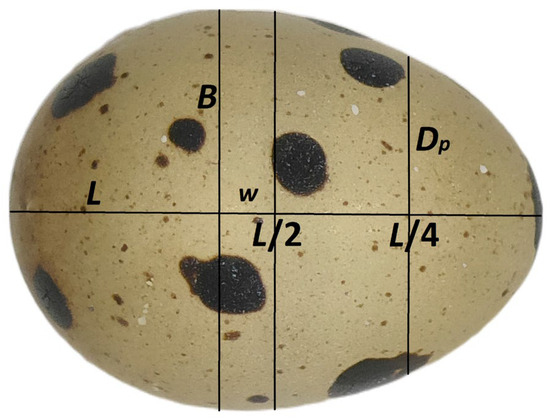
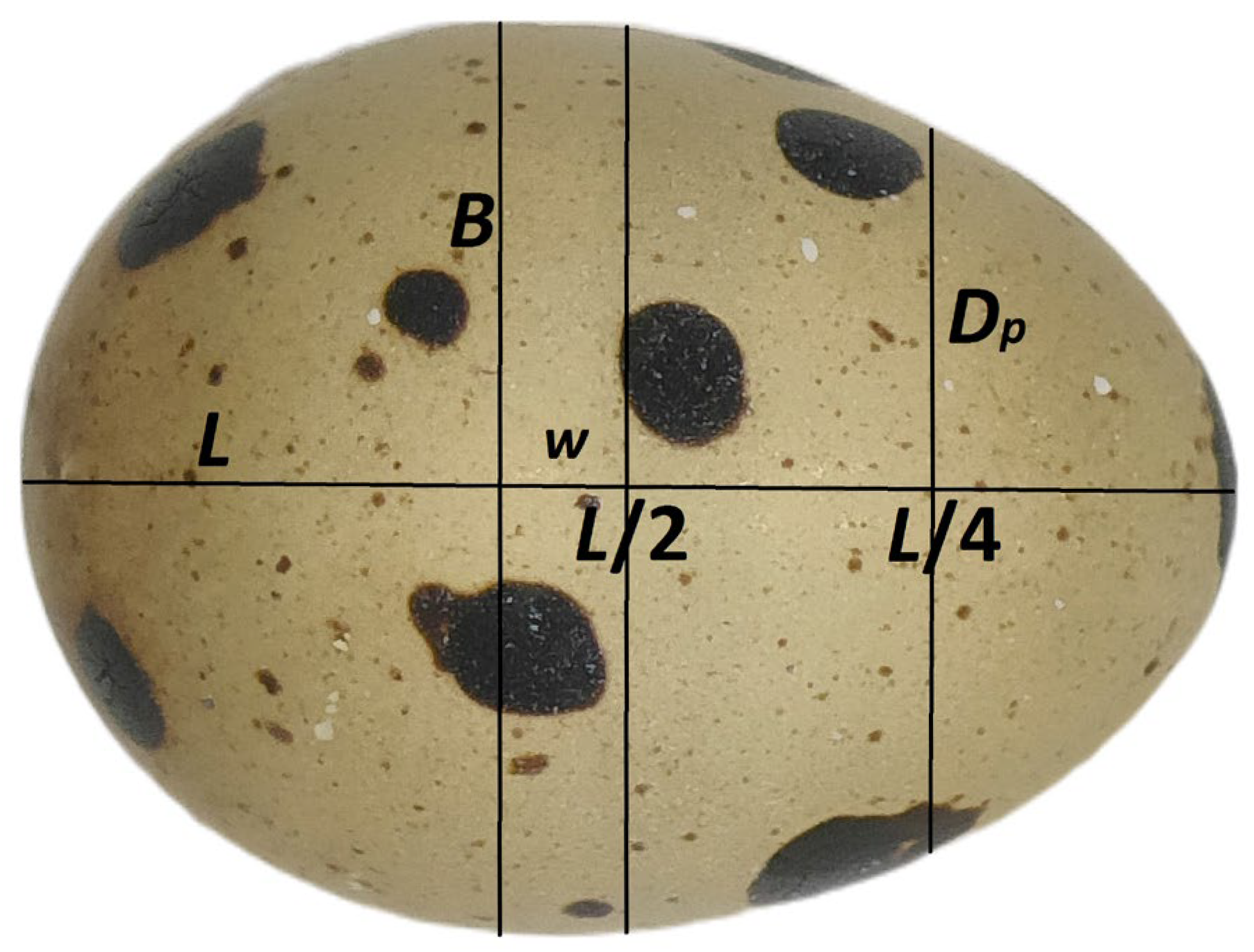
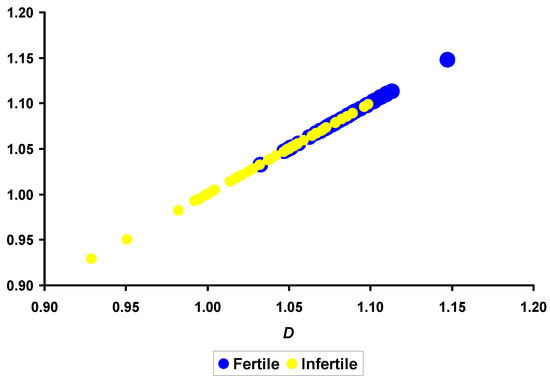
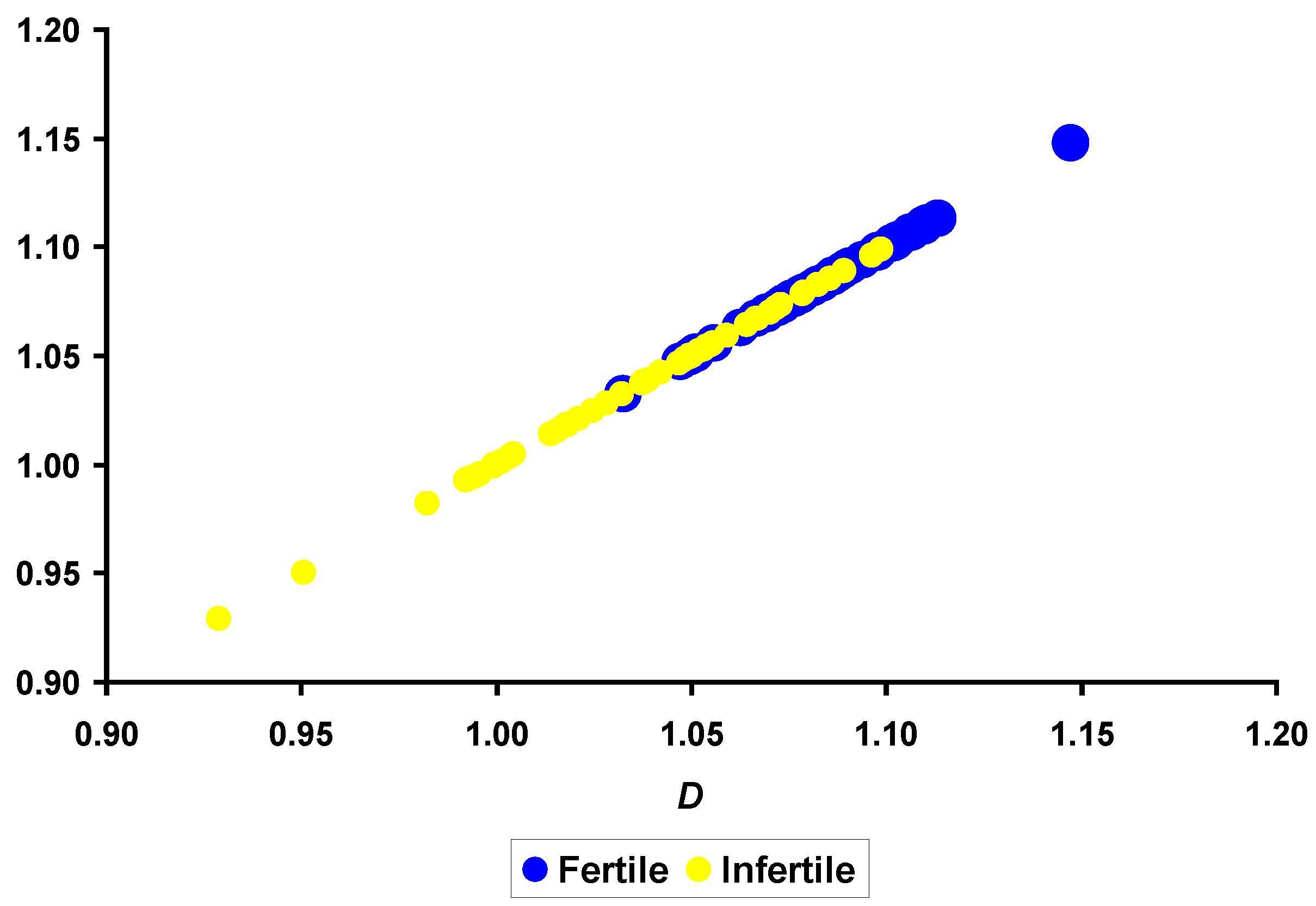
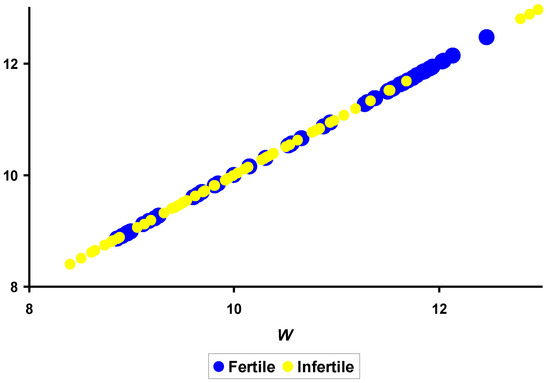
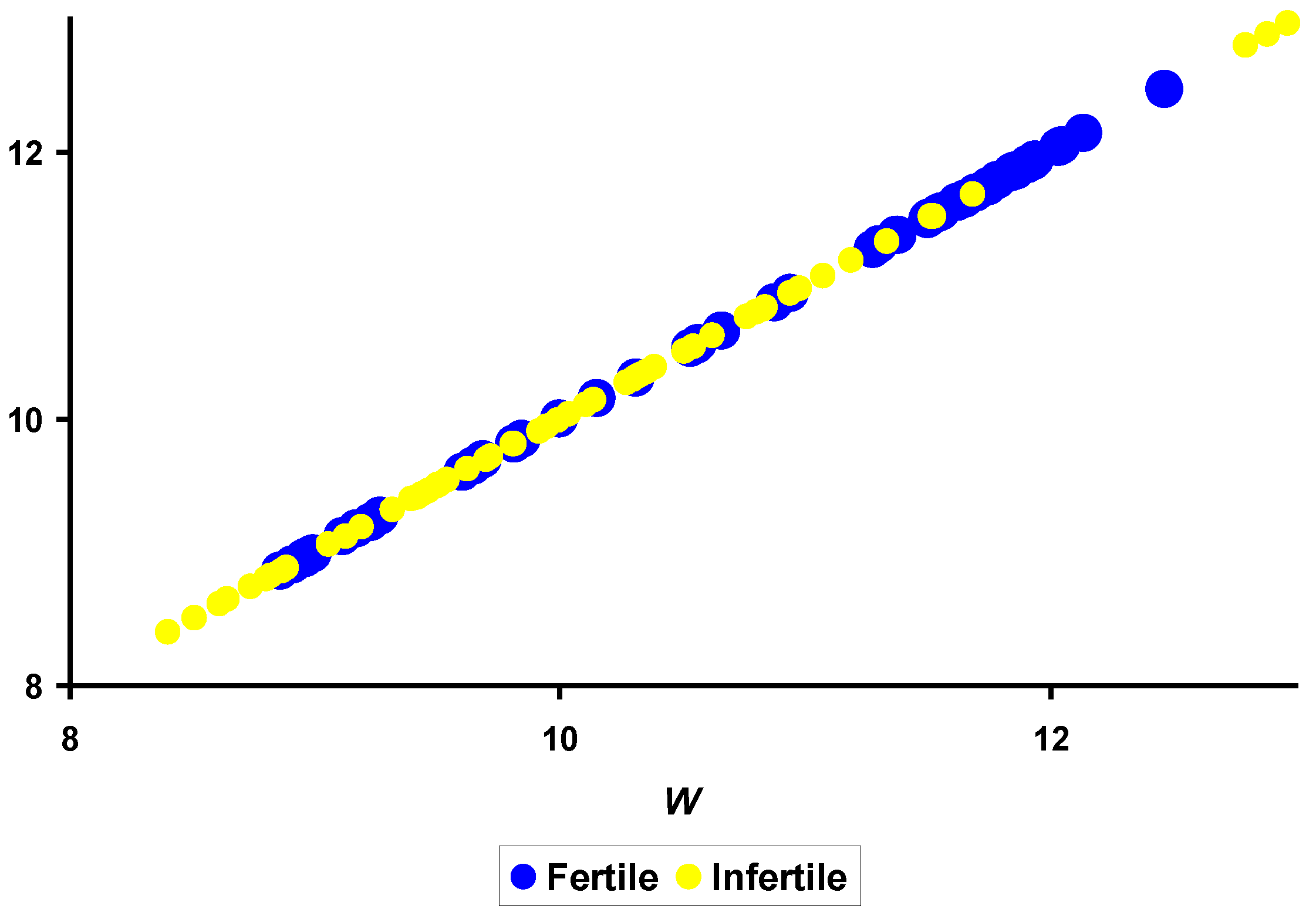
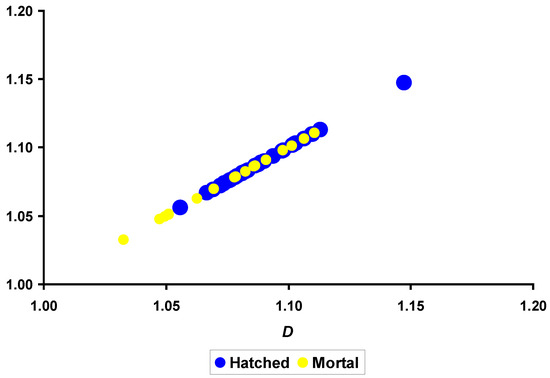
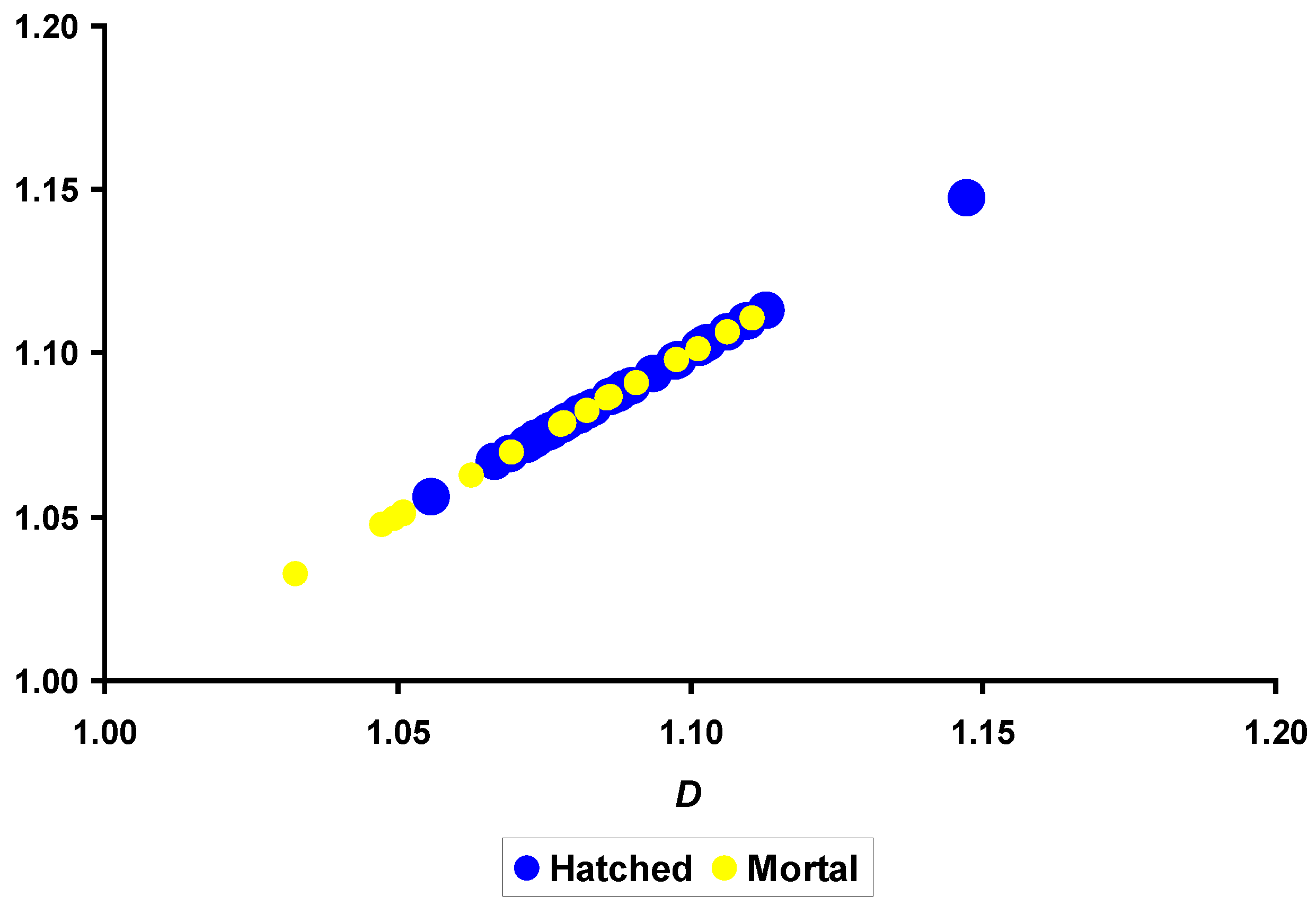
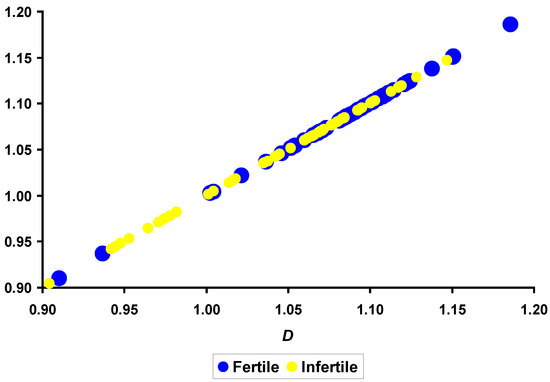
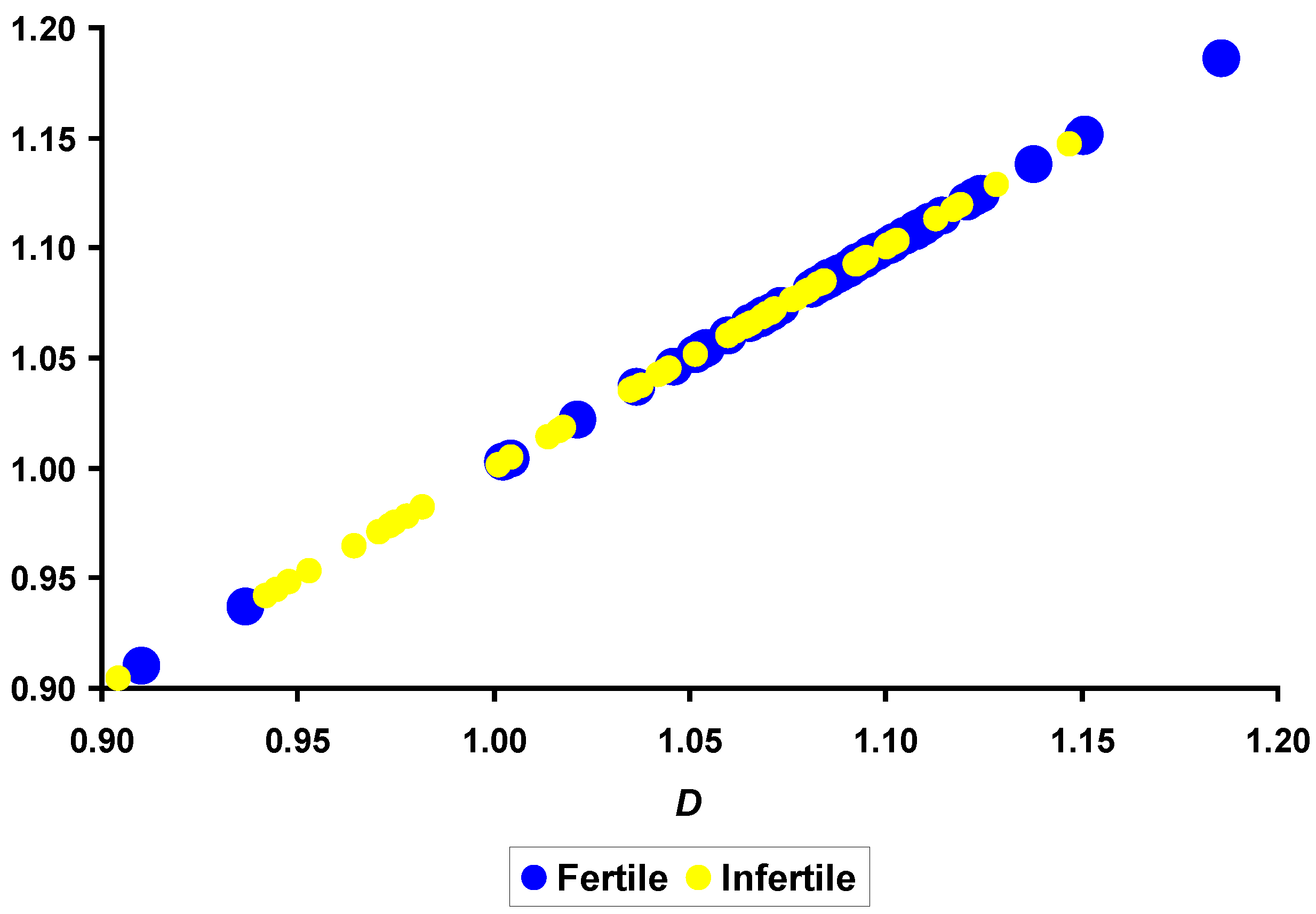
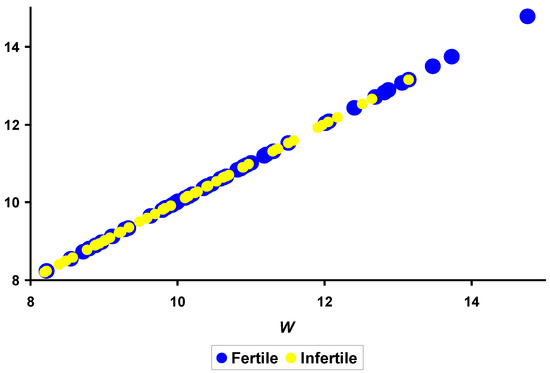
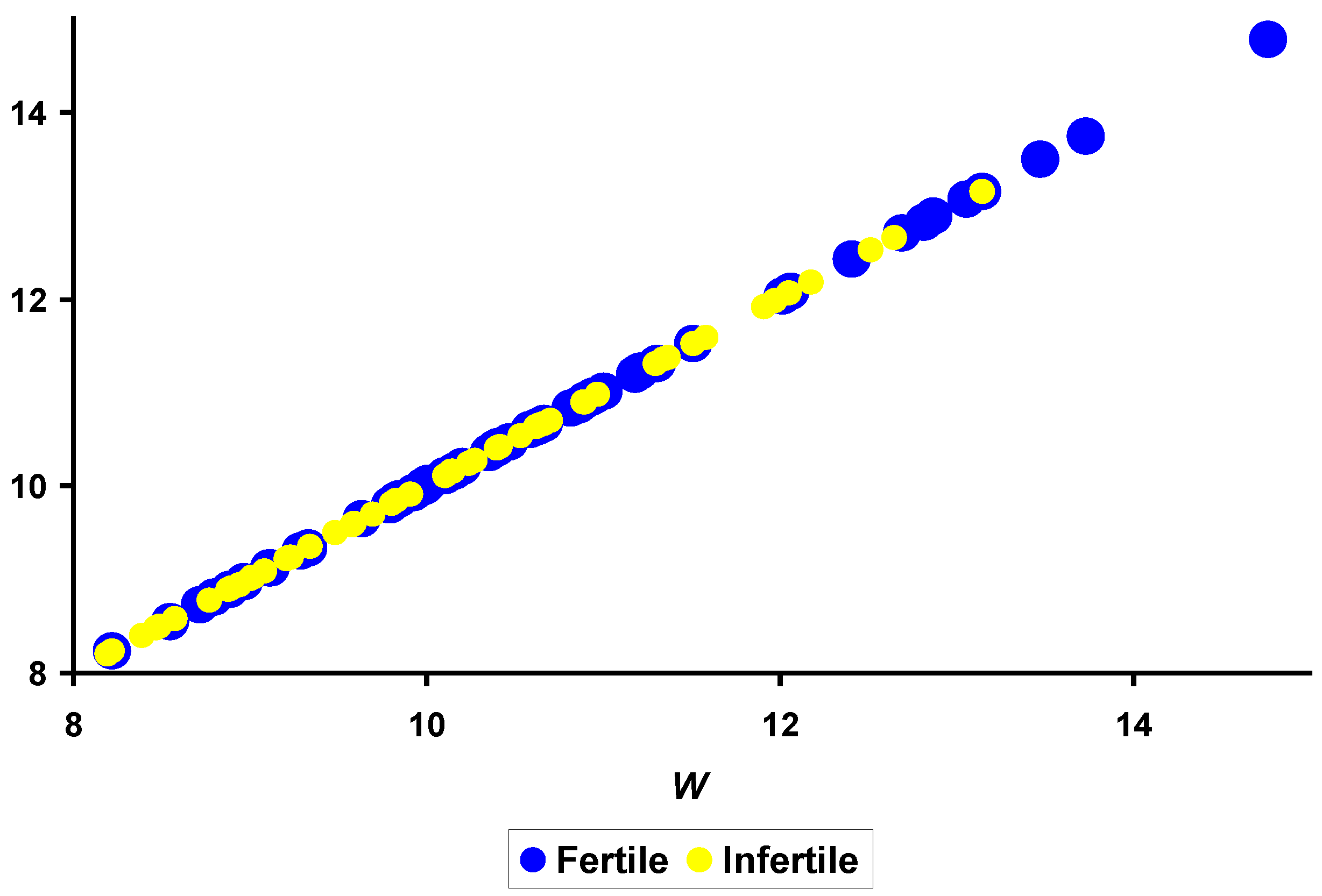
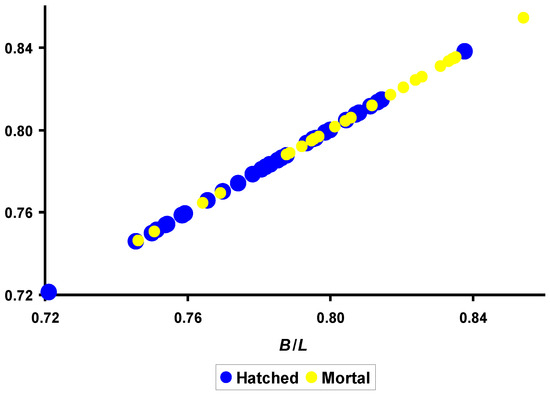
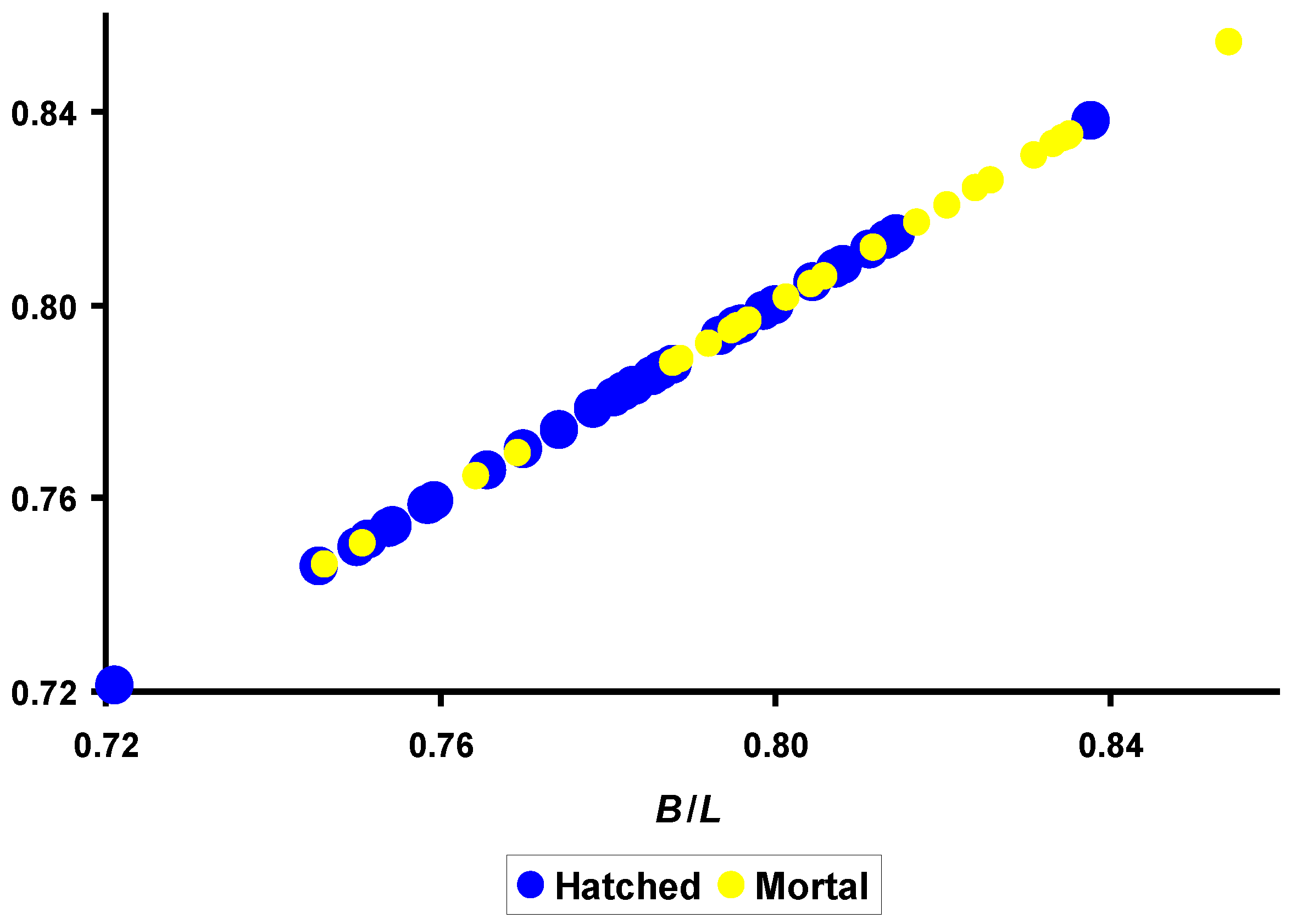
Disclaimer/Publisher’s Note: The statements, opinions and data contained in all publications are solely those of the individual author(s) and contributor(s) and not of MDPI and/or the editor(s). MDPI and/or the editor(s) disclaim responsibility for any injury to people or property resulting from any ideas, methods, instructions or products referred to in the content. |
© 2026 by the authors. Licensee MDPI, Basel, Switzerland. This article is an open access article distributed under the terms and conditions of the Creative Commons Attribution (CC BY) license.