


Abstract
Artificial intelligence (AI) and machine learning (ML) are increasingly applied to road traffic congestion prediction, but heterogeneous outcomes, models, horizons, and evaluation practices limit comparability. The objective of this study was to synthesize methods, applications, validation, explainability, and reproducibility in AI/ML-based road traffic congestion prediction and forecasting. Following PRISMA 2020, Scopus, Web of Science Core Collection, and IEEE Xplore were searched through 5 July 2026 for English-language journal articles and full conference papers published from 2000 to 2026. Two external reviewers independently screened 734 unique records and assessed the retrieved full texts, while the author resolved disagreements against the predefined eligibility criteria. Study characteristics, prediction tasks, congestion indicators, model families, metrics, explainability, validation, and data/code availability were synthesized descriptively and narratively. Of 1131 records identified, 397 duplicates were removed and 734 records were screened. Full-text retrieval was sought for 339 reports; 195 could not be retrieved, 144 were assessed for eligibility, and 129 were included. Congestion level was the main prediction task, while traffic flow and speed were the most frequent indicators. Heterogeneity and the absence of verified numerical performance values precluded meta-analysis or model ranking. Explainability was limited, and external validation, transferability, and reproducibility were insufficiently documented. Progress requires standardized outcomes, transparent validation, reproducible workflows, explainable models, and independent testing across networks and cities.
1. Introduction
Road traffic congestion remains one of the most persistent challenges affecting contemporary urban transportation systems. Rapid urbanization, increasing travel demand, growing motorization, and the limited capacity of existing road infrastructure have intensified the frequency and severity of congestion in many cities. Beyond increasing travel times, recurrent and non-recurrent congestion can reduce network reliability, increase fuel consumption and emissions, constrain economic productivity, and negatively affect the quality of urban life. These impacts have made the timely identification and forecasting of congestion a central priority for intelligent transportation systems and data-informed mobility management. Consequently, transportation agencies increasingly require predictive tools capable of anticipating critical traffic conditions before network performance deteriorates substantially [1,2].
The growing availability of traffic sensors, connected vehicles, geographic information, mobile devices, cameras, weather records, and other digital data sources has expanded the possibilities for congestion prediction. Traditional statistical models remain useful for representing relatively stable and interpretable traffic patterns, but they may have difficulty capturing the nonlinear, dynamic, and interdependent behavior of complex road networks. Artificial intelligence and machine learning methods offer alternative mechanisms for learning relationships among traffic flow, speed, occupancy, weather, incidents, temporal patterns, and network characteristics. In particular, conventional machine learning algorithms, artificial neural networks, convolutional and recurrent architectures, graph-based models, reinforcement learning, transformers, and hybrid approaches have progressively diversified the methodological landscape. This development has positioned congestion prediction at the intersection of transportation engineering, urban computing, data science, and intelligent decision support [2].
Despite these advances, the available evidence remains fragmented across prediction tasks, operational definitions of congestion, data sources, spatial scales, forecasting horizons, model architectures, and evaluation strategies. Some studies predict congestion occurrence or severity directly, whereas others estimate traffic flow, speed, density, occupancy, or travel time as proxies for future congestion conditions. Model performance is also reported through heterogeneous classification and regression metrics, often using different datasets, prediction horizons, targets, validation schemes, and evaluation subsets. In addition, concerns regarding interpretability, external validation, transferability, computational requirements, data availability, and code accessibility complicate the assessment of whether technically accurate models can be reproduced or deployed in contexts other than those in which they were developed. Therefore, comparing algorithms exclusively through isolated accuracy measures may produce misleading conclusions when the underlying prediction problems and evaluation conditions are not equivalent [2,3].
The importance of this study lies in its attempt to move beyond a model-centered description of the literature and towards an evidence-based assessment of how congestion prediction studies are designed, validated, interpreted, and reported. Such a synthesis can help researchers select modelling approaches that are consistent with the target variable, data structure, spatial scale, and intended forecasting horizon rather than selecting algorithms solely because of their popularity. It can also support practitioners and transportation authorities in evaluating whether reported models provide sufficient transparency, external validity, and operational relevance for decision-support applications. Moreover, examining data and code availability contributes to identifying barriers to reproducibility and independent verification within this rapidly developing field. The review is thus relevant not only for measuring methodological progress but also for determining whether that progress can support reliable, explainable, and transferable congestion-management solutions.
Previous reviews have examined artificial intelligence applications in traffic congestion and traffic-state prediction from different methodological perspectives. Attioui and Lahby [4] conducted a PRISMA-based systematic review covering the 2010–2024 period and included 115 studies from 9695 initially identified records, while a subsequent review by the same authors examined 100 peer-reviewed publications published between 2014 and 2024. Other contributions have focused on AI-based congestion detection, broader traffic prediction methods, or the scientometric evolution of traffic forecasting research. However, these reviews differ substantially in their definitions, analytical units and methodological objectives. Some address direct congestion forecasting, whereas others examine congestion detection or use traffic flow, speed and travel time as proxy outcomes.
Table 1 summarizes the scope and methodological coverage of the most relevant previous reviews. Collectively, these studies provide valuable taxonomies of algorithms, data sources and application scenarios. Nevertheless, the available evidence does not show a consistent review-level assessment of prediction horizons, external spatial and temporal validation, cross-city transferability, model explainability, data and code availability, and computational reproducibility. Moreover, bibliometric records, systematically included studies and studies discussed in narrative surveys represent different units of analysis and therefore should not be compared as equivalent evidence volumes.
Table 1.
Scope and methodological coverage of previous reviews related to AI-based traffic congestion prediction.
Against this background, the present systematic review focuses specifically on AI-, machine learning- and deep learning-based road traffic congestion prediction. Beyond identifying model families and performance metrics, it evaluates the operational and methodological maturity of the evidence by examining prediction horizons, validation design, transferability, explainability, data and code accessibility, and reproducibility. This scope enables a distinction between models that perform well within a particular dataset and models supported by evidence of generalizability, transparency and potential real-world deployment.
Accordingly, this systematic review aims to synthesize and critically examine the application of artificial intelligence and machine learning methods to road traffic congestion prediction and forecasting. Specifically, it characterizes the geographical and methodological distribution of the evidence, congestion definitions and indicators, prediction tasks, input data, model families, forecasting horizons, performance metrics, explainability techniques, external validation practices, and data and code availability. The review followed the PRISMA 2020 reporting framework and applied a structured process of record identification, screening, full-text eligibility assessment, study linkage, data extraction, and human verification [10]. Extracted evidence was organized into study-characteristic, model, performance, and quality or risk-of-bias datasets, followed by descriptive and narrative synthesis; quantitative performance comparisons were restricted to results with explicit numerical values and sufficiently comparable outcomes, units, datasets, horizons, targets, and evaluation subsets. Through this approach, the study provides a structured account of the current evidence while distinguishing between the frequency with which methods are reported and the strength, comparability, reproducibility, and operational relevance of their reported performance.
2. Materials and Methods
2.1. Review Design and Reporting Framework
This systematic review examined the application of artificial intelligence and machine learning methods to road traffic congestion prediction and forecasting. The review was reported in accordance with the Preferred Reporting Items for Systematic Reviews and Meta-Analyses 2020 statement, hereafter PRISMA 2020 [10]. The reporting of the literature search was additionally informed by the PRISMA-S extension, which provides specific recommendations for documenting information sources, database-specific search strategies, search dates, limits, deduplication, and supplementary searching procedures [11].
The review addressed the following research question: How have artificial intelligence and machine learning methods been applied to road traffic congestion prediction and forecasting?
The question was operationalized around four elements: the phenomenon of interest, road traffic congestion; the analytical methods, including artificial intelligence, machine learning, deep learning, and neural networks; the predictive task, including prediction, forecasting, and anticipation of congestion states; and the application context, comprising road and vehicular traffic systems.
2.2. Eligibility Criteria
Studies were considered eligible when they met all of the following criteria:
- The study explicitly addressed road traffic congestion or a traffic state operationally and directly connected with congestion.
- The principal task involved predicting, forecasting, or anticipating the occurrence, level, category, spatial distribution, temporal evolution, or duration of congestion.
- Artificial intelligence, machine learning, deep learning, neural networks, or a hybrid method incorporating one or more of these approaches represented a substantial component of the predictive model.
- The application concerned road or vehicular traffic, including urban roads, road networks, intersections, corridors, highways, or expressways.
- The proposed method was applied to empirical, experimental, or simulated road traffic data.
- The report provided sufficient information to identify the prediction problem, input data or variables, modelling approach, and congestion-related prediction target.
- The document was a journal article or a full conference paper.
Traffic flow, speed, travel time, density, or general traffic-state prediction studies were not considered eligible solely because the predicted variable could potentially be associated with congestion. Such studies were included only when the report explicitly defined the predicted variable as a congestion indicator, used it to classify congestion states, or linked it directly to congestion prediction or forecasting.
Reports were excluded when they: (a) addressed road traffic without analyzing congestion; (b) investigated congestion without a predictive or forecasting task; (c) did not employ an artificial intelligence or machine learning method; (d) concerned non-road domains, such as air, maritime, railway, telecommunications, or computer-network traffic; (e) used artificial intelligence for an unrelated transport task, such as vehicle detection or route optimization, without predicting congestion; (f) reported a predictive outcome without an explicit relationship to congestion; (g) did not correspond to an eligible publication type; (h) duplicated another bibliographic record; or (i) provided insufficient information for evaluating eligibility.
Only studies published in English were included, and the publication period was restricted to studies published between 2000 and 2026.
During title and abstract screening, records were provisionally classified as unclear when the available information was insufficient to determine whether the traffic state, predicted outcome, modelling role, or application domain met the eligibility criteria. An unclear classification was not treated as an exclusion decision. Instead, these records advanced to full-text assessment under a conservative inclusion rule.
2.3. Information Sources and Search Strategy
The literature search was conducted in Scopus, Web of Science Core Collection, and IEEE Xplore. The search strategy combined terms describing road traffic congestion prediction with terms representing artificial intelligence and machine learning. Search syntax was adapted to the indexing structure and search fields available in each database.
- The final Scopus query was: TITLE (“traffic congestion” OR “congestion prediction” OR “traffic congestion prediction” OR “traffic congestion forecasting” OR “congestion forecasting”) AND TITLE-ABS-KEY(“artificial intelligence” OR “machine learning” OR “deep learning” OR “neural network*”)
- The final Web of Science Core Collection query was: TI = (“traffic congestion” OR “congestion prediction” OR “traffic congestion prediction” OR “traffic congestion forecasting” OR “congestion forecasting”) AND TS = (“artificial intelligence” OR “machine learning” OR “deep learning” OR “neural network” OR “neural networks”)
- In IEEE Xplore, the congestion-related terms were applied to the Document Title field: “traffic congestion” OR “congestion prediction” OR “traffic congestion prediction” OR “traffic congestion forecasting” OR “congestion forecasting”. These terms were combined with the following artificial intelligence terms applied to All Metadata: “artificial intelligence” OR “machine learning” OR “deep learning” OR “neural network” OR “neural networks”
All searches were last run on 05 July 2026. The complete search histories, including the platform used, date of execution, applied limits, and number of retrieved records, are reported in the supplementary search strategy file.
The search strings were intentionally restrictive in the congestion component. Congestion-related terms were required in the title to prioritize studies explicitly framed around congestion prediction, whereas artificial intelligence terms were searched in broader bibliographic fields to capture variations in the terminology used to describe the modelling methods.
2.4. Record Management and Deduplication
The database searches yielded 1131 records: 620 from Scopus, 323 from IEEE Xplore, and 188 from Web of Science Core Collection. Records were consolidated into a unified dataset and assessed for duplication using DOI and normalized bibliographic metadata. The procedure identified 370 duplicate groups, including 343 groups containing two records and 27 groups containing three records. One representative record was retained from each validated group. In total, 397 duplicate records were removed, leaving 734 unique records for title and abstract screening. The selected record identifiers and the evidence supporting each duplicate decision were retained in the audit files.
The deduplication and final selection counts were documented in the PRISMA 2020 flow diagram. Automated tools were not used to determine study eligibility. Any automated procedures employed for database consolidation, data cleaning, or duplicate detection supported record management rather than replacing human eligibility decisions. All computational procedures were performed in R version 4.4.3 (R Foundation for Statistical Computing, Vienna, Austria) [12] using RStudio version 2026.08.2 (Posit Software, PBC, Boston, MA, USA) [13]. The workflow used dplyr 1.2.1, tidyr 1.3.1, stringr 1.6.0, lubridate 1.9.4, readr 2.2.0, data.table 1.17.8, janitor 2.2.1, openxlsx 4.2.8, ggplot2 3.5.2, scales 1.4.0, RColorBrewer 1.1-3, svglite 2.1.3, PRISMA2020 1.1.4, revtools 0.4.1, and pdftools 3.8.0.
2.5. Study Selection
Screening was conducted in two stages. First, the 734 unique records remaining after deduplication were assessed by title and abstract against the predefined eligibility criteria. Records classified as eligible or unclear advanced to full-text retrieval, whereas records were excluded at this stage only when the available title and abstract provided sufficient evidence that at least one essential eligibility criterion was not met. Second, the retrieved full-text reports were evaluated using the same eligibility framework. For each report excluded after full-text assessment, one primary exclusion reason was assigned to support mutually exclusive and reproducible PRISMA reporting. Reports for which the full text could not be obtained were documented separately and were not treated as full-text exclusions.
Full-text retrieval was attempted through the institutional library’s available subscriptions and the publisher or bibliographic access links associated with each record. When a full text could not be obtained through institutional access, a copy was requested through ResearchGate when an author or publication record was available on that platform. Access difficulties particularly affected records hosted in IEEE Xplore for which the required publication was not covered by the institutional subscription. Although the institution provided access to other IEEE collections, it did not provide access to all the required documents identified through IEEE Xplore. The ResearchGate requests did not yield the outstanding full texts. Interlibrary loan was not used, and no additional direct requests were sent to authors outside ResearchGate. Reports that remained inaccessible were classified as “not retrieved” rather than excluded on the basis of the eligibility criteria.
Two professionals with expertise relevant to the review topic assisted with study selection. Before screening, both reviewers received the research question, predefined eligibility criteria, and written screening guidance. They assessed the records independently and submitted their decisions separately, without access to the other reviewer’s classifications. Screening decisions were recorded as include, exclude, or unclear. The author did not participate in the initial independent classifications but examined the discordant decisions, evaluated the reviewers’ supporting comments, and made the final eligibility decision. The reviewers were not blinded to author names, institutional affiliations, journals, or publication years.
During title and abstract screening, the reviewers independently assessed 734 records. The observed agreement was 88.6%, and Cohen’s kappa was 0.779, indicating substantial agreement beyond chance. After consensus resolution, 339 records advanced to full-text retrieval. At the full-text eligibility stage, 144 retrieved reports were independently assessed, with agreement on 129 reports and disagreement on 15, corresponding to 89.6% observed agreement. Cohen’s kappa was −0.055 because the expected agreement was 90.1%, reflecting the highly imbalanced distribution of eligibility decisions and the predominance of include classifications. Therefore, the full-text agreement is reported using both the observed proportion and the complete decision distribution, rather than interpreting kappa in isolation. All disagreements were resolved by the author after reviewing both assessments against the predefined eligibility criteria. Reviewer-level decisions, agreement calculations, and consensus outcomes are provided in the supplementary screening files.
2.6. Data Extraction
Data from the included full-text reports were extracted using a structured workbook organized into four interconnected components:
- Study and report characteristics: bibliographic information, study aim, study design, transport context, road type, spatial scale, prediction task, operational definition of congestion, congestion indicator, prediction horizon, temporal and spatial resolution, data source, and external factors.
- Model characteristics: model name, artificial intelligence family, architecture, hybrid or ensemble status, input and target variables, methods for representing spatial and temporal dependencies, training strategy, explainability method, and real-time or online capability.
- Performance reporting: dataset or application site, prediction horizon, target variable, evaluation subset, metric name, direction of the metric, and the main finding reported by the authors.
- Methodological appraisal information: applicability criteria and report-level evidence relevant to methodological quality or risk of bias.
Each extracted row was linked to its source report through a record identifier. Extracted entries used in the synthesis were marked as verified following human checking against the available source material. Missing information was retained as unavailable rather than inferred from related studies, model conventions, or external sources.
The extraction files contained 129 rows in each of the four principal sheets. Nevertheless, completion varied substantially among variables. Accordingly, analyses were based on the number of reports containing verified information for each variable, and missing values were not interpreted as evidence that a method or practice was absent.
Data extraction was conducted by one reviewer, the author of this review, using a structured workbook. An R-based workflow pre-populated selected fields from bibliographic metadata, titles, abstracts, and available full-text PDFs; PDF text extraction was performed using pdftools version 3.8.0 in isolated subprocesses managed with callr version 3.7.6. Automation was limited to locating, organizing, and suggesting potentially relevant information and did not make eligibility, interpretation, or verification decisions. All pre-populated entries were checked against the available source report and corrected by the reviewer before being marked as verified. Information that could not be confirmed was recorded as “not reported” or “not available” and was not inferred. No study investigators were contacted to obtain or confirm missing data, and no independent duplicate extraction was performed.
Five variables relating to validation and reproducibility were subjected to explicit decision rules: external validation, transferability assessment, uncertainty quantification, code availability, and data availability. External validation was coded as “yes” only when a model was evaluated using data independent of the model-development data, such as data from a different city, road network, geographical area, independently collected period, or external data source. Evaluation on a held-out subset drawn from the same dataset was classified as internal rather than external validation. Transferability assessment required an explicit evaluation of model performance across locations, networks, datasets, traffic conditions, or operational contexts; statements suggesting potential generalizability without empirical testing were not considered sufficient.
Uncertainty quantification was coded as present only when the report provided an explicit numerical or methodological assessment of predictive uncertainty, such as prediction intervals, probabilistic forecasts, posterior distributions, calibration analyses, uncertainty bounds, or comparable measures. Variation in point estimates across models or datasets was not, by itself, classified as uncertainty quantification.
Code availability was coded as “yes” when the report provided an accessible repository, supplementary code, or a sufficiently explicit code-access statement. Data availability was coded separately and required an accessible dataset, repository, supplementary data source, or an explicit mechanism through which the analytical data could be obtained. The use of a named public benchmark was recorded separately from availability of the exact dataset, sample, preprocessing steps, and data partition used in the study.
For each variable, “not reported” indicated that no relevant statement or accessible resource was identified in the material reviewed, whereas “unclear” indicated that potentially relevant information was present but insufficient for a definitive classification. Neither category was interpreted as confirmation that the corresponding practice was absent.
2.7. Methodological Quality and Risk-of-Bias Assessment
A formal risk-of-bias or methodological-quality assessment was not incorporated into the present synthesis because the structured appraisal table did not contain complete study-level judgements based on a specified and validated appraisal instrument. Methodological limitations were therefore described narratively using only information explicitly reported in the included reports. No study was excluded solely on the basis of methodological quality.
2.8. Data Synthesis
A descriptive and narrative synthesis was undertaken because the included reports differed in their definitions of congestion, prediction targets, input variables, spatial and temporal scales, prediction horizons, datasets, modelling architectures, evaluation subsets, and performance metrics.
Categorical variables were summarized using absolute and relative frequencies when the corresponding data were available and verified. The synthesis examined publication year, study design, transport context, spatial scale, prediction task, congestion definition and indicator, artificial intelligence family, model architecture, reported performance metrics, explainability, external validation, and data and code availability. Findings were interpreted using the number of reports with available data as the denominator for each variable.
A pooled meta-analysis or quantitative ranking of predictive models was not performed. The structured performance table did not contain verified numeric metric values, and meaningful comparison would additionally have required compatible outcome definitions, units, prediction horizons, datasets, target variables, and evaluation subsets. Consequently, model frequency was treated as an indicator of research attention rather than evidence of superior accuracy, generalizability, or operational suitability.
External validation, transferability, uncertainty quantification, code availability, and data availability were summarized only when their classifications had been verified against the source reports using the decision rules specified in Section 2.6. Unpopulated, “not reported,” and “unclear” fields were treated as missing or indeterminate information and were not counted as confirmed absence. Consequently, no prevalence estimate was calculated when the available extraction did not permit reliable differentiation between absence of the practice and absence of reporting or verification.
Prediction horizons were standardized and synthesized using four operational bands: less than 15 min, 15–60 min, more than 1 h and up to 6 h, and more than 6 h. Numerical values reported in hours were converted to minutes before classification. When a study reported multiple valid horizons, it was counted once in each applicable band; therefore, the horizon categories were not mutually exclusive. Repeated values within the same study and band were counted only once. Numerical ranges were represented in every band covered by their reported limits. Qualitative descriptions, such as “short-term” or “long-term,” were retained separately when no coherent numerical duration could be verified.
Before classification, the extracted values were subjected to plausibility checks. Zero values were excluded because they did not represent a future prediction interval. Values exceeding 168 h, equivalent to seven days, and malformed numerical expressions reproducing publication years, page ranges, article numbers, or DOI components were treated as extraction artefacts and excluded from the quantitative synthesis. Importantly, valid values from the same cell were retained even when another value in that cell was excluded. All retained and excluded values, together with their reasons for exclusion, were preserved in an audit file.
2.9. Reproducibility and Data Management
The analytical workflow generated structured outputs for study characteristics, model characteristics, performance reporting, study selection, exclusion reasons, verification checks, and descriptive synthesis. PRISMA arithmetic and correspondence between the final included reports and the extraction tables were checked using exported audit files.
A RIS file containing the included reports was generated for reference management. The export contained 129 references, comprising 108 journal articles and 21 conference papers. Of these, 122 contained a DOI and seven lacked a DOI. Bibliographic fields, particularly author order, publication year, source title, DOI, and document type, were checked before preparation of the final reference list.
The review data, analytical scripts, screening decisions, supplementary tables, and search histories are available from the corresponding author upon reasonable request.
3. Results
3.1. Study Selection Results
The database searches identified 1131 records. After the removal of 397 duplicates, 734 unique records underwent title and abstract screening, of which 395 were excluded. Full-text retrieval was attempted for 339 potentially eligible reports. Of these, 195 reports, representing 57.5% of those sought, could not be retrieved through the available institutional subscriptions or subsequent ResearchGate requests. Consequently, 144 reports underwent full-text eligibility assessment. Fifteen reports were excluded at this stage because they did not perform prediction (n = 5), were outside the language criterion (n = 4), did not address the review question (n = 2), did not apply an artificial intelligence or machine learning method (n = 2), or examined a different domain (n = 2). The final synthesis comprised 129 reports corresponding to 129 individual studies. A list of the 195 reports not retrieved, including the available record identifier, title, publication year, source or venue, and DOI or another identifier, is provided in Supplementary Materials Table S2.
Reports that could appear potentially eligible on the basis of their titles or abstracts were assessed against the complete eligibility criteria, and one primary reason for exclusion was assigned to each report. The individual reports and their corresponding exclusion reasons are documented in Supplementary Materials Table S3.
The complete identification, screening, retrieval, and eligibility process is presented in Figure 1. Because the figure contains every numerical transition in the selection process, these counts should not be reproduced in an additional table.
Figure 1.
PRISMA 2020 flow diagram for the identification, screening, eligibility assessment, and inclusion of studies.
The bibliographic and methodological characteristics of all 129 included studies are reported in Appendix A.1, Table A1. The table presents the article title, publication year, authors, journal, DOI, study aim, transport context, spatial scale, prediction task, congestion indicator, and prediction horizon for each included study.
3.2. Temporal Development and Characteristics of the Evidence Base
The included literature covered publications from 2009 to 2026, although production was limited during the earlier years. Only six reports were published between 2009 and 2017, followed by four in 2018 and eight in 2019. Research activity increased from 2020 onwards, with 13 reports in 2020, 14 in 2022, 19 in 2023, 17 in 2024, 22 in 2025, and 18 in 2026. Overall, 111 of the 129 included reports were published between 2020 and 2026, representing 86.0% of the corpus. The temporal distribution is shown in Figure 2; therefore, the annual frequencies are not repeated in a separate table.
Figure 2.
Annual distribution of studies on artificial intelligence and machine learning for road traffic congestion prediction.
All 129 investigations were classified as methodological studies. Urban road networks were the dominant application context, accounting for 98 reports, followed by general road traffic networks with 20 reports. Only a small part of the corpus explicitly examined highways, intersections, freeways, or motorways. Among the 105 studies for which spatial scale was extracted, network-level prediction predominated, while road-segment, intersection-level, and citywide applications were less frequent. These findings indicate that the evidence base principally addressed congestion as a network-scale urban prediction problem rather than as a phenomenon restricted to individual intersections or isolated road segments.
Table 2 summarizes the transport contexts and spatial scales. The denominators differ because the transport context was available for all studies, whereas an explicit spatial scale was available for 105 studies.
Table 2.
Transport contexts and spatial scales represented in the included studies.
The corpus included studies using conventional machine learning, fuzzy evaluation, artificial neural networks, recurrent structures, convolutional architectures, graph-based learning, reinforcement learning, transformers, and combinations of several methods. Illustrative applications included fuzzy and machine learning frameworks, decentralized neural prediction, image-based citywide forecasting, spatiotemporal graph learning, congestion propagation modelling, vehicular ad hoc networks, and real-time multisource-data frameworks [14,15,16]. These examples illustrate the breadth of the corpus but should not be interpreted as a ranking of model performance.
3.3. Prediction Tasks and Operationalization of Congestion
An explicit prediction task was available for 111 of the 129 studies. Prediction of congestion level was the most frequently identified task, followed by prediction of congestion occurrence, congestion state, and congestion propagation. Eighteen reports could not be assigned to one of these task categories from the extracted information. The distribution of the 111 studies with an identifiable task is shown in Figure 3, so the corresponding frequencies are not duplicated in a table.
Figure 3.
Distribution of road traffic congestion prediction tasks in the included studies.
The operationalization of congestion was markedly heterogeneous. Of the 76 studies with a structured congestion indicator, traffic flow was the most frequently identified measure, followed by speed, travel time, density, congestion indices, and occupancy. Multiple indicators could be reported by the same study, making these categories non-mutually exclusive. Some investigations directly classified congestion levels or states, whereas others inferred congestion from continuous traffic variables or combined speed, density, flow, occupancy, spatial relations, and temporal information. This heterogeneity affects comparability because studies predicting a categorical congestion level do not necessarily address the same outcome as studies forecasting speed, flow, density, or travel time.
To preserve this distinction, Table 3 reports the congestion indicators separately from the prediction tasks shown in Figure 3. The table should not be interpreted as a mutually exclusive distribution, as a single study could define congestion using several indicators.
Table 3.
Indicators used to operationalize road traffic congestion.
Prediction horizon information was reported for 126 of the 129 included studies. After applying the predefined cleaning and plausibility rules, 102 studies, or 79.1% of the corpus, contained at least one valid numerical horizon. Twenty-four studies, or 18.6%, provided only qualitative descriptions such as “short-term” or “long-term,” and three studies, or 2.3%, did not report horizon information.
Among all 129 included studies, 59 studies (45.7%) reported at least one horizon below 15 min, 60 (46.5%) reported a horizon from 15 to 60 min, 52 (40.3%) reported a horizon above 1 h and up to 6 h, and 45 (34.9%) reported a horizon above 6 h. Seventy-one studies contributed to more than one band. Therefore, these categories were not mutually exclusive, and their frequencies and percentages should not be summed. Figure 4 presents the overall distribution, while Table 4 summarizes the distribution across model families.
Figure 4.
Distribution of verified numerical prediction horizons. Multi-band studies were counted once in each applicable horizon band. Percentages were calculated using all 129 included studies as the denominator; consequently, the categories are not mutually exclusive and the percentages do not sum to 100%.
Table 4.
Distribution of verified numerical prediction horizons by model family.
Graph-neural-network labels were the most frequently represented across all four horizon bands, followed generally by recurrent-neural-network and conventional-machine learning labels. However, these findings represent absolute frequencies rather than within-family proportions because individual studies could report multiple model families and multiple prediction horizons. Accordingly, the table describes the coverage of each model family across horizon bands but should not be interpreted as a comparison of the relative propensity of model families to operate at specific horizons.
3.4. Artificial Intelligence and Machine Learning Approaches
The reviewed studies were methodologically diverse and frequently combined several learning paradigms within the same model or comparison framework. Graph neural networks, recurrent neural networks, conventional machine learning, convolutional neural networks, artificial neural networks, fuzzy or neuro-fuzzy approaches, transformers, and reinforcement-learning methods were all identified in the extracted model records. The category counts exceed the number of included studies because each model row could contain multiple families derived from the model description, architecture, baselines, or hybrid components. Accordingly, these counts represent occurrences of model-family labels rather than 129 mutually exclusive study classifications. The distribution of model-family labels is presented in Figure 5 and should not be interpreted as evidence that the most frequent family achieved the highest predictive performance.
Figure 5.
Frequency of artificial intelligence and machine learning model-family labels identified in the included studies.
The extracted evidence documented a gradual diversification of modelling approaches. Earlier and comparatively conventional applications used neural networks, fuzzy systems, decision trees, logistic regression, Bayesian models, and other established machine learning algorithms. Later investigations increasingly explored recurrent and convolutional architectures, graph-based spatiotemporal models, hybrid methods, transformers, federated learning, reinforcement learning, and explainable artificial intelligence. Several model descriptions combined spatial and temporal components, while others integrated traffic variables with weather, calendar, incident, event, image, simulation, GPS, or floating-car information. The evidence therefore reflects methodological convergence towards hybrid and spatiotemporal modelling, but the current extraction structure does not provide a valid basis for ranking those approaches.
Temporal changes in the use of model families are visualized in Figure 6. This figure complements Figure 5 by displaying the evolution of the categories rather than repeating their overall totals.
Figure 6.
Evolution of artificial intelligence and machine learning model-family labels by publication year.
Although the figure identifies changes in the frequency of model-family labels, interpretation should remain cautious. Each study was represented by one model row, but the model family field could contain multiple semicolon-separated categories. For example, a hybrid model could contribute simultaneously to recurrent, convolutional, graph-based, or conventional machine learning categories. Thus, Figure 5 depicts the expansion and coexistence of methodological families over time rather than the annual number of unique algorithms.
3.5. Performance Metrics and Comparability of Results
Performance reporting included both classification and regression metrics. Accuracy was the most frequently identified label, while precision, recall, F1-score, and area under the curve represented classification-oriented assessment. Regression-oriented studies commonly referred to root mean square error, mean absolute error, mean square error, mean absolute percentage error, and the coefficient of determination. Several reports referred to more than one metric, so metric frequencies do not correspond to mutually exclusive groups of studies. Figure 7 presents the complete distribution of metric labels, and the same data are therefore not repeated in a table.
Figure 7.
Performance metrics reported in the road traffic congestion prediction literature.
Despite the frequent identification of metric names, no verified numerical metric values were available in the structured performance-result table. Metric names were populated in 124 records, but metric values, units, comparator values, confidence intervals, and reported improvements were absent from all 129 structured rows. Dataset or study-site information was populated in only 26 performance rows, and the evaluation subset was populated in one row. Consequently, a meta-analysis, pooled performance estimate, or reliable quantitative ranking of model families could not be performed. The evidence supports a descriptive account of the evaluation measures used, but not the conclusion that any model family consistently outperformed another.
Several individual abstracts reported that proposed models outperformed selected comparators or improved computational efficiency. For instance, favorable performance was reported for the proposed LSTM-SPRVM framework [14], while a hybrid CNN-LSTM-transpose-CNN architecture was compared with other deep neural networks [15]. Improvements relative to a standard LSTM model were also reported [16]. These findings are study-specific and are not directly comparable because the extracted evidence does not establish equivalent datasets, prediction targets, forecasting horizons, measurement units, baseline models, or evaluation subsets. Therefore, these results should be retained as narrative findings rather than interpreted as a cross-study numerical performance hierarchy.
3.6. Explainability, Real-Time Capability, Validation, and Reproducibility
Explainability remained limited within the structured model evidence. An explainability method was populated for 23 of the 129 model rows, representing 17.8% of the corpus. The extracted categories included attention visualization, feature importance, SHAP, and LIME, although their summed occurrences exceed 23 because some records contained more than one technique. Real-time or online capability was identified in 43 model rows, equivalent to one-third of the corpus. The relative reporting coverage of these deployment-related dimensions is summarized in Table 5. The aggregate structured classifications for external validation, transferability assessment, uncertainty quantification, code availability, and data availability are presented in Appendix A.2, Table A2.
Table 5.
Verified reporting of explainability, deployment, and model-development characteristics in the structured extraction.
The initial structured extraction contained no confirmed positive classifications for external validation, transferability assessment, uncertainty quantification, code availability, or data availability. However, these fields were recorded as “unclear,” “not reported,” or unpopulated rather than as confirmed absence. Therefore, the initial extraction does not support the conclusion that none of the 129 studies implemented these practices. It instead identifies an unresolved reporting and extraction gap. Accordingly, zero-prevalence estimates for these dimensions were removed, and no frequency is reported until the relevant study-level classifications can be verified using the explicit decision rules described in Section 2.6.
The use of a public or named benchmark dataset was not treated automatically as evidence of data availability. A public benchmark may establish that a general data source is accessible, but reproducibility also depends on whether the report identifies the exact version, sample, preprocessing procedure, feature construction, data partition, and evaluation protocol used. Similarly, evaluation on more than one subset of the same dataset was not classified automatically as external validation unless the evaluation data were demonstrably independent of the model-development context.
3.7. Completeness and Reliability of the Evidence
All 129 records were represented in the study-characteristics, model, performance, and quality datasets, and all rows used in the synthesis were marked as verified after human checking. Titles, abstracts, publication years, authors, journals, study aims, study designs, transport contexts, congestion definitions, model families, model names, and narrative main findings were complete for all records. DOI information was available for 122 studies, equivalent to 94.6% of the corpus, while the prediction horizon was populated for 126 studies and the target variable for 111. Full-text processing extracted text successfully for 129 reports.
Completeness was substantially lower for several fields required for comparative modelling and reproducibility assessment. Dataset or study-site information was available in 26 performance rows, whereas no structured values were available for train-validation-test splitting, cross-validation, hyperparameter optimization, comparator metrics, confidence intervals, uncertainty, code accessibility, or data accessibility. In addition, the country or region field was not populated, preventing geographical synthesis. No appraisal-tool names or overall quality or risk-of-bias judgements were available in the quality summary. Accordingly, the current corpus supports a verified descriptive and narrative synthesis of topics, tasks, model labels, metrics, and reporting practices, but it does not support geographical comparisons, formal quality stratification, or pooled quantitative performance estimates.
4. Discussion
4.1. General Interpretation of the Findings in Relation to Previous Evidence
This systematic review provides a broad synthesis of 129 studies examining artificial intelligence and machine learning approaches for road traffic congestion prediction and forecasting. The evidence shows a marked expansion of the field since 2020, accompanied by increasing methodological diversity and a predominance of applications addressing urban road networks at the network scale. Congestion-level prediction was the most frequently identified task, although congestion occurrence, state, and propagation were also examined. Traffic flow and speed were the most commonly reported congestion indicators, followed by travel time, density, congestion indices, and occupancy. Taken together, these findings portray congestion prediction as a heterogeneous family of classification, regression, and spatiotemporal forecasting problems rather than as a single, consistently defined modelling task.
This interpretation is consistent with previous reviews describing traffic congestion prediction as an expanding area driven by stationary sensors, probe-vehicle information, large traffic datasets, and the development of increasingly sophisticated artificial intelligence models. Earlier congestion prediction studies predominantly relied on historical traffic information and short-term forecasting, while comparatively few addressed real-time prediction. More recent evidence has similarly emphasized that traffic prediction requires the integration and processing of multiple inputs, including historical traffic patterns, temporal conditions, weather, and other external factors, and that machine learning, deep learning, and ensemble approaches are increasingly used to represent complex and changing traffic conditions [2]. The present review extends this literature by distinguishing direct congestion tasks from the broader field of traffic flow prediction and by jointly examining operational definitions, model families, prediction horizons, performance metrics, explainability, validation, and reproducibility. The resulting synthesis confirms the continuing methodological expansion of the field while demonstrating that this expansion has not been matched by comparable standardization in outcome definitions and evaluation practices.
The diversity of model-family labels identified in the review reflects the gradual transition from conventional machine learning and artificial neural networks towards recurrent, convolutional, graph-based, transformer, reinforcement-learning, fuzzy, and hybrid approaches. This evolution is theoretically coherent with the networked and dynamic nature of road traffic, since congestion develops through interactions across locations and time rather than through independent observations at isolated points. Recent reviews of traffic flow forecasting likewise give particular attention to graph neural networks, attention mechanisms, adaptive graph structures, and hybrid deep learning architectures because these methods are designed to represent spatial links and temporal dependencies in road networks [17]. However, the high frequency of a model-family label in the present corpus must not be interpreted as evidence that the corresponding approach provides greater predictive accuracy, operational value, or transferability. The extracted categories were non-mutually exclusive, and individual studies frequently combined several architectures within hybrid models or comparison frameworks.
The findings also indicate that congestion was not operationalized consistently across the included studies. Some investigations predicted categorical congestion levels, occurrence, or states, whereas others forecast traffic flow, speed, density, occupancy, travel time, or composite congestion indices as proxies for future congestion. Similarly identified traffic volume, density, occupancy, congestion indices, and travel time among the principal parameters used to evaluate and predict congestion [7]. This diversity is substantively important because two models can use the same metric while predicting conceptually different outcomes, and two studies can address nominally similar outcomes at different spatial scales or prediction horizons. Consequently, methodological progress cannot be evaluated solely through headline accuracy or error values without considering the congestion definition, target variable, dataset, prediction horizon, validation design, and intended application.
Although accuracy, RMSE, precision, MAE, recall, MSE, MAPE, F1-score, the coefficient of determination, and AUC were frequently identified, the structured evidence did not contain verified numerical metric values suitable for quantitative synthesis. This prevented pooled estimates and direct comparisons among model families, but it also revealed an important characteristic of the literature: performance is reported through a wide range of classification and regression measures that are not inherently interchangeable. Previous reviews have also recognized that statistical, machine learning, deep learning, and ensemble models address different traffic patterns and that their relative performance depends on the complexity of the prediction problem and evaluation setting [2]. Accordingly, the present findings do not support designating graph, recurrent, convolutional, transformer, or conventional machine learning models as universally superior. A defensible conclusion is instead that model suitability is conditional on the prediction target, available data, network representation, forecasting horizon, computational constraints, and operational purpose.
The prediction horizon synthesis adds an operational perspective to the comparison of modelling approaches. Numerical horizons were available for 79.1% of the included studies, and the two most frequently represented bands were 15–60 min and less than 15 min. This concentration indicates that much of the retrieved evidence addressed immediate or near-term traffic-management needs. Nevertheless, substantial numbers of studies also examined horizons above 1 h, including 45 studies with at least one horizon above 6 h. These longer horizons may support planning and anticipatory management applications that differ from real-time detection or immediate control.
The model-family comparison showed broad representation of graph neural networks and recurrent neural networks across the four bands. However, several studies combined model families and evaluated multiple horizons. The absolute counts should therefore be interpreted as evidence of methodological coverage rather than as proof that one model family is preferentially associated with, or performs better at, a particular horizon. Assessing comparative performance by horizon would additionally require sufficiently comparable datasets, targets, evaluation designs, and performance metrics.
4.2. Limitations of the Evidence Included in the Review
The principal limitation of the included evidence was the substantial methodological and reporting heterogeneity across studies. Congestion was defined through multiple categorical and continuous indicators, prediction horizons ranged from minute-based intervals to qualitative short- and long-term formulations, and the available studies addressed different transport contexts and spatial scales. Performance metrics were similarly diverse, with classification and regression measures sometimes appearing within the same evidence base. These differences prevented meaningful aggregation because apparent differences in predictive performance may reflect outcome formulation, data characteristics, spatial resolution, temporal resolution, or evaluation design rather than intrinsic differences among algorithms. Therefore, the available literature supports methodological mapping and narrative interpretation, but not a universal quantitative ranking of models.
A second limitation concerns the incomplete reporting of information required to evaluate internal and external validity. Although metric names were identified in 124 of the 129 structured performance rows, none contained verified metric values or units, and information on evaluation subsets was available in only one row. Structured entries were also absent for baseline or comparator models, train-validation-test splits, cross-validation, hyperparameter optimization, confidence intervals, uncertainty estimates, and reported improvements. Dataset or study-site information was populated in only 26 performance rows, limiting assessment of whether reported findings arose from independent test sets, benchmark data, simulated environments, or local observational data. As a result, strong performance claims reported by individual studies cannot be compared reliably across the corpus, even when those studies use nominally identical metrics.
The initial structured extraction did not permit reliable estimation of the prevalence of external validation, transferability assessment, uncertainty quantification, code availability, or data availability. The corresponding fields were predominantly classified as “unclear” or “not reported,” rather than as confirmed absence. Therefore, the present review cannot conclude that the included studies universally omitted these practices. Instead, the findings reveal that the available extraction was insufficiently granular to distinguish consistently among non-reporting, incomplete extraction, inaccessible supplementary resources, and confirmed absence.
This distinction is particularly relevant for data availability. Several studies referred to public benchmarks or named traffic datasets, but use of a public source does not necessarily make the exact analytical dataset reproducible. Replication may additionally require the dataset version, selected locations and periods, exclusion criteria, preprocessing operations, feature engineering procedures, target construction, and training–validation–test partitions. Dataset use and analytical-data availability should therefore be treated as related but separate dimensions.
The same caution applies to external validation and transferability. A model tested on a held-out subset of the same dataset was considered internally validated unless the evaluation involved an independent geographical, temporal, network, or data-source context. Transferability required an explicit empirical cross-context assessment rather than a general claim that the model could be applied elsewhere. Consequently, the revised review avoids interpreting empty structured fields as evidence that external validation or transferability was absent from every included report.
The evidence base contained further limitations related to interpretability and reproducibility. An explainability method was recorded in 23 model rows, while structured information on code and data availability was absent across the synthesis dataset. Attention visualization and feature importance were the most frequently identified explanation methods, with fewer occurrences of SHAP and LIME. Recent individual studies demonstrate that explainability can be combined with congestion prediction through feature importance, SHAP, LIME, partial-dependence analysis, and lightweight deployment strategies, but these examples remain insufficient to establish widespread adoption across the corpus [18,19]. Furthermore, the presence of an explainability technique does not by itself demonstrate that the explanation was stable, operationally relevant, understandable to transport practitioners, or independently validated.
A formal synthesis of methodological quality or risk of bias could not be completed because the structured quality dataset did not contain a named appraisal tool, domain-level judgements, or overall evaluations. Consequently, the review could not determine whether the observed findings changed according to study quality or whether particular conclusions were driven by studies with weaker validation practices. The evidence should therefore be interpreted as a description of reported methodological tendencies rather than as a certainty-graded assessment of predictive effectiveness. This limitation is especially relevant in a literature in which high reported accuracy may coexist with small or local datasets, non-independent temporal splits, limited comparator selection, or incomplete reporting, although those specific conditions must be verified study by study. No study should be classified as high quality or low risk of bias until a defined and appropriate appraisal framework has been applied consistently to the full corpus.
4.3. Limitations of the Review Processes
A major limitation of the review was the non-retrieval of 195 of the 339 reports sought for full-text assessment, corresponding to 57.5%. Retrieval was attempted through the institutional library’s available subscriptions and the access links associated with the bibliographic records. When institutional access was insufficient, copies were requested through ResearchGate when possible. Access difficulties particularly affected documents identified through IEEE Xplore that were not covered by the institutional subscription, and the ResearchGate requests did not yield the remaining full texts. Interlibrary loan was not used, and no additional direct author contact was undertaken outside ResearchGate. The unretrieved reports were not excluded because they had been demonstrated to be ineligible; rather, their eligibility could not be independently confirmed.
This substantial non-retrieval may have introduced availability bias. The direction and magnitude of this bias could not be established because the variables needed to characterize transport context, geographical setting, prediction task, model family, validation design, and study findings generally required examination of the full report. Although bibliographic characteristics such as publication year and source title were available for many unretrieved records, these variables alone were insufficient to determine whether inclusion of the missing reports would have changed the substantive distributions reported in the review. Consequently, the distributions of contexts, tasks, indicators, model families, and methodological characteristics presented in this review apply to the retrieved and eligible evidence base and should not be interpreted as estimates for all 339 potentially eligible reports.
The assessment of availability bias was therefore limited to examining the bibliographic characteristics available for the unretrieved reports. Country could not be compared reliably because this information was not consistently available in the bibliographic records. Transport context, prediction task, model family, and study methodology were not inferred from titles or abstracts solely for this purpose. This conservative approach reduces the risk of misclassification but limits the ability to quantify how the unretrieved reports might have affected the review findings.
The extraction process also depended partly on automated processing of titles, abstracts, metadata, and locally available PDF text. Although all rows included in the final synthesis were marked as verified after human checking, several extracted variables contained semicolon-separated categories, combined qualitative and numerical expressions, or implausible machine-parsed prediction horizons. These anomalies required a specific cleaning and plausibility-assessment procedure before prediction horizons could be synthesised quantitatively. Furthermore, each included study was represented by one model row and one performance-result row, even though some articles evaluated multiple models, datasets, horizons, targets, and metrics. This structure may underrepresent within-study complexity and may inflate category frequencies when several model-family labels are stored in the same row.
Prediction horizon extraction was particularly susceptible to numerical parsing artefacts because publication years, page ranges, article numbers, and DOI components could be misidentified as durations. To reduce this risk, the horizon synthesis excluded zero values, malformed multi-number expressions, and durations above a predefined upper plausibility threshold of seven days. This threshold was selected as an operational cleaning rule rather than as a universal definition of the maximum meaningful congestion prediction horizon. Consequently, a small number of genuine horizons exceeding seven days could have been excluded. To preserve transparency, all removed values and their exclusion reasons were retained in the audit file, and valid values from the same study record were preserved.
Several variables remained incomplete after the initial extraction, particularly external validation, transferability, uncertainty quantification, code availability, data availability, validation design, and methodological appraisal. The earlier version summarized unpopulated structured fields as zero values, which could incorrectly imply that the corresponding practices had been verified as absent from all included reports. In the revised manuscript, these values are treated as indeterminate information, and the zero-prevalence interpretation has been removed. Explicit coding rules have been added to facilitate a subsequent source-level verification and to distinguish confirmed absence from non-reporting, incomplete extraction, and inaccessible supplementary information.
The review also did not conduct a quantitative meta-analysis. This decision was not based solely on statistical heterogeneity, but on the absence of verified numerical performance values and the lack of sufficient information on units, targets, datasets, comparators, horizons, and evaluation subsets. Combining results under those conditions would have generated a numerically precise but methodologically invalid estimate. PRISMA 2020 emphasizes transparent reporting that allows users to assess the trustworthiness and applicability of review findings, and the decision not to pool incomparable evidence is consistent with that objective [10]. The review should nevertheless be updated if study-level numerical values and corresponding evaluation conditions are subsequently extracted and independently verified.
4.4. Implications for Practice, Policy, and Future Research
For transport practice, the findings indicate that model selection should begin with the operational decision problem rather than with the popularity of an algorithm. Agencies should define whether the required output is a congestion warning, severity level, continuous traffic indicator, propagation forecast, travel time estimate, or network-wide risk representation. The prediction horizon, spatial unit, acceptable response time, available data streams, computing environment, and consequences of false positive and false negative predictions should then guide the choice of model and evaluation metrics. Accurate prediction on a historical or benchmark dataset should not be assumed to guarantee operational usefulness, particularly when external validation, real-time processing, interpretability, and maintenance requirements have not been demonstrated. Pilot implementation should therefore assess not only predictive error but also latency, robustness to missing data, computational demand, explanation quality, integration with existing traffic-management systems, and stability under changing traffic conditions.
For public policy, congestion prediction systems should be treated as decision-support infrastructure rather than autonomous evidence of where or how to intervene. Procurement and deployment requirements could specify transparent congestion definitions, documented training data, independent temporal and geographical validation, uncertainty reporting, model monitoring, and traceable human oversight. Data-governance provisions are also needed when models combine sensor streams, camera information, connected-vehicle data, location traces, weather information, or user-generated mobility data. Requiring documentation of dataset provenance, model changes, performance degradation, and explanation methods would make predictions more auditable and facilitate comparison between competing systems. Policy evaluation should additionally examine whether predictive interventions improve network performance and accessibility without merely transferring congestion, delay, exposure, or environmental impacts from one location or user group to another.
Future primary studies should adopt more standardized and complete reporting practices. At minimum, researchers should state the operational definition of congestion, target variable, prediction horizon, temporal and spatial resolution, data collection period, sample size, missing data treatment, training–validation–test strategy, comparator models, hyperparameter procedures, and complete metric values with units. Performance should be reported separately for each dataset, site, horizon, target, and evaluation subset rather than merging results across non-equivalent conditions. Temporal splitting should preserve the forecasting order of observations, and external evaluation should include independent periods, corridors, networks, or cities whenever feasible. Studies should also report computational requirements, inference time, uncertainty, model calibration, sensitivity to disruptions, and degradation under incomplete or shifted data.
Model comparison should move beyond determining which architecture achieves the lowest prediction error on a single dataset. Research designs should evaluate whether performance gains remain when models are compared under identical preprocessing, inputs, prediction horizons, train-test splits, and computational budgets. Strong conventional baselines should be retained because simpler approaches may offer advantages in interpretability, training cost, latency, maintenance, and deployment even when more complex models produce marginally lower error. Ablation studies are needed to establish whether spatial modules, temporal modules, attention mechanisms, graph construction, data fusion, or external variables provide genuine incremental value. Multi-city and cross-dataset evaluations would be particularly valuable for distinguishing models that learn transferable traffic relationships from those that reproduce local historical patterns.
Explainability and reproducibility represent further priorities. Future studies should evaluate whether feature attribution, attention visualization, SHAP, LIME, partial-dependence methods, or inherently interpretable models produce explanations that are stable, technically valid, and useful to traffic operators. Explanation quality should be assessed alongside accuracy rather than added only as a visual supplement after model training. Authors should make data, code, preprocessing scripts, model configurations, random seeds, and evaluation protocols available whenever legal and ethical restrictions permit. When data cannot be released, studies should provide synthetic examples, executable workflows, detailed data dictionaries, or controlled-access mechanisms sufficient to support independent verification.
Finally, future systematic reviews should extract numerical model results at the level of each model–dataset–horizon–target–metric combination. Such a structure would permit stratified comparisons while preserving critical contextual differences and avoiding invalid aggregation. A field-specific quality-appraisal framework is also needed to assess dataset representativeness, leakage risk, validation independence, comparator adequacy, metric completeness, external validity, explainability, reproducibility, and operational deployment. Updating the present review after completing those assessments could support subgroup synthesis by prediction task, transport context, spatial scale, horizon, dataset type, and validation design. Until such evidence is available, the principal conclusion is not that one artificial intelligence family is universally preferable, but that trustworthy congestion forecasting depends on the alignment of the model, data, validation procedure, reporting quality, and intended transportation decision.
5. Conclusions
This systematic review synthesized 129 studies on artificial intelligence and machine learning methods for road traffic congestion prediction and forecasting. The evidence base expanded substantially from 2020 onwards and was dominated by methodological studies conducted in urban road networks and at the network scale. Congestion-level prediction was the most frequently identified task, while traffic flow and speed were the principal indicators used to operationalize congestion. The reviewed literature encompassed conventional machine learning, artificial neural networks, recurrent and convolutional architectures, graph-based learning, fuzzy systems, transformers, reinforcement learning, and hybrid approaches. This methodological diversity demonstrates the rapid development of the field but also confirms that congestion prediction cannot be treated as a single, uniformly defined modelling problem.
The available evidence did not support identifying a universally superior model family. Differences in congestion definitions, target variables, datasets, spatial scales, forecasting horizons, validation strategies, and performance metrics restricted direct comparison among studies. Although metric names were available for most performance records, the structured dataset contained no verified numerical metric values, units, confidence intervals, or comparator results suitable for quantitative synthesis. Consequently, the frequency of a model family should not be interpreted as evidence of greater accuracy, robustness, or operational transferability. Model suitability should instead be assessed in relation to the prediction task, data structure, computational resources, validation context, and intended transportation application.
The synthesis also identified limitations in the structured information available for evaluating validation, interpretability, and reproducibility. Explainability information was recorded for a limited subset of model reports. However, the initial extraction did not provide sufficiently verified classifications to estimate the prevalence of external validation, transferability assessment, uncertainty quantification, or data and code availability. These fields therefore represent unresolved reporting and extraction gaps rather than evidence that all included studies omitted the corresponding practices. Further source-level verification using explicit decision rules is needed before their prevalence can be quantified. In addition, the high proportion of reports not retrieved limits the completeness of the evidence base and means that the reported distributions should be interpreted as characteristics of the retrieved and eligible studies rather than of all potentially relevant reports.
Prediction horizon synthesis showed that immediate and near-term applications were strongly represented, with 59 studies reporting horizons below 15 min and 60 reporting horizons from 15 to 60 min; nevertheless, 52 studies included horizons above 1 h and up to 6 h, and 45 included horizons above 6 h. Because 71 studies contributed to multiple bands, these frequencies describe overlapping areas of application rather than mutually exclusive groups.
Future research should adopt standardized reporting of congestion definitions, prediction targets, spatial and temporal resolutions, forecasting horizons, datasets, evaluation subsets, validation procedures, comparator models, metric values, and computational requirements. Independent temporal and geographical validation is required to determine whether models can generalize across periods, corridors, networks, and cities. Researchers should also report model uncertainty, calibration, inference time, sensitivity to missing or shifted data, and the operational consequences of prediction errors. Explainability techniques should be evaluated for stability, validity, and usefulness to transport practitioners rather than included solely as descriptive visualizations. Whenever possible, data, code, preprocessing workflows, model configurations, and evaluation protocols should be made available to support replication and cumulative evidence development.
Overall, artificial intelligence and machine learning offer a diverse and rapidly developing set of methods for anticipating road traffic congestion. However, methodological sophistication alone is insufficient to establish practical value. Trustworthy congestion forecasting requires alignment among the prediction objective, congestion definition, data, model architecture, validation design, explanation strategy, and intended decision context. Progress in the field will therefore depend less on identifying a universally best-performing algorithm and more on developing transparent, comparable, reproducible, and externally validated systems that can support real-world traffic management and mobility planning.
Supplementary Materials
The following supporting information can be downloaded at https://www.mdpi.com/article/10.3390/encyclopedia6090205/s1. Table S1: PRISMA 2020 checklist; Table S2: Reports not retrieved for full-text eligibility assessment, with the available bibliographic metadata; Table S3: Reports excluded after full-text assessment and primary reasons for exclusion.
Funding
This research was funded by Universidad Técnica Particular de Loja, grant number POA VIN-56.
Institutional Review Board Statement
Not applicable.
Informed Consent Statement
Not applicable.
Data Availability Statement
The original contributions presented in this study are included in the article/Supplementary Material. Further inquiries can be directed to the corresponding author.
Acknowledgments
The author gratefully acknowledges the assistance of two professionals with expertise relevant to the review topic, who independently applied the predefined eligibility criteria during title and abstract screening and full-text eligibility assessment. Their contribution was limited to study-selection support. The author resolved disagreements, conducted the data extraction and synthesis, interpreted the findings, and prepared the manuscript, and assumes full responsibility for all decisions and conclusions.
Conflicts of Interest
The author declares no conflicts of interest.
Appendix A
Appendix A.1
Table A1.
Bibliographic and methodological characteristics of the 129 studies included in the systematic review.
Appendix A.2
Appendix A.2 summarizes the structured assessment of external validation, transferability, uncertainty quantification, code availability, and data availability. The assessment distinguished confirmed presence, confirmed absence, information not reported, and information that remained unclear. “Not reported” indicates that no explicit statement or accessible resource was identified in the reviewed material, whereas “unclear” indicates that the available information did not permit a definitive classification. Neither category was interpreted as confirmed absence. Because the classifications were identical across most records, Table A2 presents aggregate counts rather than repeating the same classifications for all 129 studies.
Table A2.
Summary of structured classifications for validation, transferability, uncertainty quantification, and reproducibility characteristics.
References
- Faheem, H.B.; El Shorbagy, A.M.; Gabr, M.E. Impact Of Traffic Congestion on Transportation System: Challenges and Remediations—Review. Mansoura Eng. J. 2024, 49, 18. [Google Scholar] [CrossRef] [Scilit]
- Mystakidis, A.; Koukaras, P.; Tjortjis, C. Advances in Traffic Congestion Prediction: An Overview of Emerging Techniques and Methods. Smart Cities 2025, 8, 25. [Google Scholar] [CrossRef] [Scilit]
- Bakir, D.; Moussaid, K.; Chiba, Z.; Abghour, N. A Comprehensive Review of Traffic Congestion Prediction Models: Machine Learning and Statistical Approaches. In 2024 IEEE International Conference on Computing, ICOCO; IEEE: New York, NY, USA, 2024; Volume 2024, pp. 539–545. [Google Scholar] [CrossRef] [Scilit]
- Attioui, M.; Lahby, M. Congestion Forecasting Using Machine Learning Techniques: A Systematic Review. Future Transp. 2025, 5, 76. [Google Scholar] [CrossRef] [Scilit]
- Attioui, M.; Lahby, M. A Systematic Literature Review of Traffic Congestion Forecasting: From Machine Learning Techniques to Large Language Models. Vehicles 2025, 7, 142. [Google Scholar] [CrossRef] [Scilit]
- Bakir, D.; Moussaid, K.; Chiba, Z.; Abghour, N.; El Omri, A. A SPAR-4-SLR Systematic Review of AI-Based Traffic Congestion Detection: Model Performance Across Diverse Data Types. Smart Cities 2025, 8, 143. [Google Scholar] [CrossRef] [Scilit]
- Akhtar, M.; Moridpour, S. A Review of Traffic Congestion Prediction Using Artificial Intelligence. J. Adv. Transp. 2021, 2021, 8878011. [Google Scholar] [CrossRef] [Scilit]
- Shaygan, M.; Meese, C.; Li, W.; Zhao, X.G.; Nejad, M. Traffic Prediction Using Artificial Intelligence: Review of Recent Advances and Emerging Opportunities. Transp. Res. Part C Emerg. Technol. 2022, 145, 103921. [Google Scholar] [CrossRef] [Scilit]
- Liu, J.; Wu, N.; Qiao, Y.; Li, Z. A Scientometric Review of Research on Traffic Forecasting in Transportation. IET Intell. Transp. Syst. 2021, 15, 1–16. [Google Scholar] [CrossRef] [Scilit]
- Page, M.J.; McKenzie, J.E.; Bossuyt, P.M.; Boutron, I.; Hoffmann, T.C.; Mulrow, C.D.; Shamseer, L.; Tetzlaff, J.M.; Akl, E.A.; Brennan, S.E.; et al. The PRISMA 2020 Statement: An Updated Guideline for Reporting Systematic Reviews. BMJ 2021, 372, n71. [Google Scholar] [CrossRef] [Scilit] [PubMed]
- Rethlefsen, M.L.; Kirtley, S.; Waffenschmidt, S.; Ayala, A.P.; Moher, D.; Page, M.J.; Koffel, J.B.; Blunt, H.; Brigham, T.; Chang, S.; et al. PRISMA-S: An Extension to the PRISMA Statement for Reporting Literature Searches in Systematic Reviews. Syst. Rev. 2021, 10, 39. [Google Scholar] [CrossRef] [Scilit] [PubMed]
- R Core Team A Language and Environment for Statistical Computing; R Foundation for Statistical Computing: Vienna, Austria, 2026.
- Team Posit RStudio: Integrated Development Environment for R; Team Posit Rstudio: Boston, MA, USA, 2026.
- Li, T.; Ni, A.N.; Zhang, C.Q.; Xiao, G.N.; Gao, L.J. Short-Term Traffic Congestion Prediction with Conv-BiLSTM Considering Spatio-Temporal Features. IET Intell. Transp. Syst. 2020, 14, 1978–1986. [Google Scholar] [CrossRef] [Scilit]
- Ranjan, N.; Bhandari, S.; Zhao, H.P.; Kim, H.; Khan, P. City-Wide Traffic Congestion Prediction Based on CNN, LSTM and Transpose CNN. IEEE Access 2020, 8, 81606–81620. [Google Scholar] [CrossRef] [Scilit]
- Xu, Y.; Li, Y. A Real-Time Urban Traffic Congestion Prediction Framework Based on Dynamic Risk Field and Multi-Source Data Fusion. IEEE Access 2025, 13, 172471–172495. [Google Scholar] [CrossRef] [Scilit]
- Wang, Q.; Ju, X.F.; Wu, H.; Lou, Q.D.; Ullah, F. DCSD-Net: Density-Classification, Contrastive and Self-Distillation Network for Traffic Congestion Prediction. IET Intell. Transp. Syst. 2026, 20, e70261. [Google Scholar] [CrossRef] [Scilit]
- Attioui, M.; Lahby, M. Sustainable Traffic Congestion Forecasting Through Lightweight Explainable AI and TinyML Edge Deployment: A Casablanca Case Study. Sustainability 2026, 18, 4439. [Google Scholar] [CrossRef] [Scilit]
- Muneer, S.; Muneer, H.; Munir, A.; Naz, N.S.; Mazhar, T.; Saeed, M.M.; Khan, M.A.; Hamam, H. An Intelligent Approach to Predict the Traffic Congestion Level Entangled With Machine Learning and Explainable Artificial Intelligence. IET Intell. Transp. Syst. 2026, 20, e70200. [Google Scholar] [CrossRef] [Scilit]
- Li, L.; Lin, H.; Wan, J.; Ma, Z.; Wang, H. MF-TCPV: A Machine Learning and Fuzzy Comprehensive Evaluation-Based Framework for Traffic Congestion Prediction and Visualization. IEEE Access 2020, 8, 227113–227125. [Google Scholar] [CrossRef] [Scilit]
- Fouladgar, M.; Parchami, M.; Elmasri, R.; Ghaderi, A. Scalable Deep Traffic Flow Neural Networks for Urban Traffic Congestion Prediction. In Proceedings of the 2017 International Joint Conference on Neural Networks (IJCNN); IEEE: New York, NY, USA, 2017; pp. 2251–2258. [Google Scholar]
- Mehdi, M.Z.; Kammoun, H.M.; Benayed, N.G.; Sellami, D.; Masmoudi, A.D. Entropy-Based Traffic Flow Labeling for CNN-Based Traffic Congestion Prediction From Meta-Parameters. IEEE Access 2022, 10, 16123–16133. [Google Scholar] [CrossRef] [Scilit]
- Zhang, T.; Xu, J.; Cong, S.; Qu, C.; Zhao, W. A Hybrid Method of Traffic Congestion Prediction and Control. IEEE Access 2023, 11, 36471–36491. [Google Scholar] [CrossRef] [Scilit]
- Park, J.; Chen, Z.; Kiliaris, L.; Kuang, M.L.; Masrur, M.A.; Phillips, A.M.; Murphey, Y.L. Intelligent Vehicle Power Control Based on Machine Learning of Optimal Control Parameters and Prediction of Road Type and Traffic Congestion. IEEE Trans. Veh. Technol. 2009, 58, 4741–4756. [Google Scholar] [CrossRef] [Scilit]
- Saleem, M.; Farooq, M.S.; Shahzad, T.; Hassan, A.; Abbas, S.; Ali, T.; Aggoune, E.-H.M.; Khan, M.A. Secure and Transparent Mobility in Smart Cities: Revolutionizing AVNs to Predict Traffic Congestion Using MapReduce, Private Blockchain, and XAI. IEEE Access 2024, 12, 131541–131555. [Google Scholar] [CrossRef] [Scilit]
- Shin, D.-H.; Chung, K.; Park, R.C. Prediction of Traffic Congestion Based on LSTM Through Correction of Missing Temporal and Spatial Data. IEEE Access 2020, 8, 150784–150796. [Google Scholar] [CrossRef] [Scilit]
- Yanru, C.; Shuilin, L.; Kejia, Z.; Zihe, H.; Tao, W. A Highway Congestion Prediction Method Based on CNN-LightGBM. J. Syst. Eng. Electron. 2025, Early Access. [Google Scholar] [CrossRef] [Scilit]
- Chen, Z.; Jiang, Y.; Sun, D. Discrimination and Prediction of Traffic Congestion States of Urban Road Network Based on Spatio-Temporal Correlation. IEEE Access 2020, 8, 3330–3342. [Google Scholar] [CrossRef] [Scilit]
- Basak, S.; Dubey, A.; Bruno, L. Analyzing the Cascading Effect of Traffic Congestion Using LSTM Networks. In Proceedings of the 2019 IEEE International Conference on Big Data (Big Data); IEEE: New York, NY, USA, 2019; pp. 2144–2153. [Google Scholar]
- Logesh Babu, R.; Jagannadha Naidu, K.; Jeya Ramya, V.; Regan, D. Prediction of Traffic Congestion in Vehicular Ad-Hoc Networks Employing Extreme Deep Learning Machines (Edrlm). J. Cybersecur. Inf. Manag. 2024, 14, 218–226. [Google Scholar] [CrossRef] [Scilit]
- Pan, Z.; Sharma, A.; Hu, J.Y.-C.; Liu, Z.; Li, A.; Liu, H.; Huang, M.; Geng, T. Ising-Traffic: Using Ising Machine Learning to Predict Traffic Congestion under Uncertainty. Proc. AAAI Conf. Artif. Intell. 2023, 37, 9354–9363. [Google Scholar] [CrossRef] [Scilit]
- Yang, L.; Pan, Y. Multimodal Traffic Flow Analysis and Congestion Prediction on Expressways: Evaluating the Importance of Machine Learning Models and Features for Improving Prediction Accuracy in Urban Traffic Management. J. Eng. Appl. Sci. 2026, 73, 129. [Google Scholar] [CrossRef] [Scilit]
- Arabiat, A.; Hassan, M.; Almomani, O. WEKA-Based Machine Learning for Traffic Congestion Prediction in Amman City. IAES Int. J. Artif. Intell. 2024, 13, 4422–4434. [Google Scholar] [CrossRef] [Scilit]
- Alabido, Z. Data-Driven Machine Learning Models for Predicting CO2 Emission Rates Combustion from Grey Hydrogen and Classification of Traffic Congestion Level for Enhanced Smart Mobility. Transp. Res. Procedia 2026, 96, 119–125. [Google Scholar] [CrossRef] [Scilit]
- Talluri, K.; Weidl, G. Bayesian Network for Analysis and Prediction of Traffic Congestion Using the Accident Data. In Proceedings of the 10th International Conference on Vehicle Technology and Intelligent Transport Systems; SCITEPRESS—Science and Technology Publications: Setubal, Portugal, 2024; pp. 19–30. [Google Scholar]
- Gupta, K.; Lee, C.-N. A Vehicle Congestion Prediction Approach for Smart City Traffic Management. Procedia Comput. Sci. 2025, 260, 675–682. [Google Scholar] [CrossRef] [Scilit]
- Pholpol, C.; Sanguankotchakorn, T. Traffic Congestion Prediction Using Deep Reinforcement Learning in Vehicular Ad-Hoc Networks (VANETS). Int. J. Comput. Netw. Commun. 2021, 13, 1–19. [Google Scholar] [CrossRef] [Scilit]
- Tomas, J.P.Q.; Tibig, R.P.C.; Ibojos, P.Q.S.; Mortel, J.J.M. Determining the Role of Alternative Roads in Traffic Congestion Using Neural Networks. In Proceedings of 2022 6th International Conference on E-Education, E-Business and E-Technology; ACM: New York, NY, USA, 2022; pp. 126–130. [Google Scholar]
- Zang, D.; Qu, X.; Fang, Y. Traffic Congestion Analysis Based on Deep Neural Networks. In Proceedings of 2020 the 10th International Workshop on Computer Science and Engineering; WCSE: Fukuoka, Japan, 2020. [Google Scholar]
- Zang, D.; Qu, X.; Ding, Y.; Chen, X.; Tang, K.; Zhang, J. Traffic Congestion Propagation Prediction Based on Multi-Vector Deep Neural Networks. In Proceedings of the 2022 7th International Conference on Big Data and Computing; ACM: New York, NY, USA, 2022; pp. 51–57. [Google Scholar]
- Omar, T.; Bovard, D.; Tran, H. Smart Cities Traffic Congestion Monitoring and Control System. In Proceedings of the Proceedings of the 2020 ACM Southeast Conference; ACM: New York, NY, USA, 2020; pp. 115–121. [Google Scholar]
- Wang, M.; Yan, H.; Wang, H.; Li, Y.; Jin, D. Contagion Process Guided Cross-Scale Spatio-Temporal Graph Neural Network for Traffic Congestion Prediction. In Proceedings of the Proceedings of the 31st ACM International Conference on Advances in Geographic Information Systems; ACM: New York, NY, USA, 2023; pp. 1–11. [Google Scholar]
- Madhusoodhanan, P.; Felixia, S.; Janaki, K.; Kumari, R.K. Leveraging Graph Machine Learning for Predicting Traffic Congestion and Optimizing Vehicle Routing. Asia Pac. J. Math. 2024, 11, 1. [Google Scholar] [CrossRef] [Scilit]
- Jenifer, J.; Jemima Priyadarsini, R. Empirical Research on Machine Learning Models and Feature Selection for Traffic Congestion Prediction in Smart Cities. Int. J. Recent Innov. Trends Comput. Commun. 2023, 11, 269–275. [Google Scholar] [CrossRef] [Scilit]
- Motlhabane, K.; Xiangxing, T. Optimising Traffic Congestion in Lagos Using Machine Learning: A Case Study on Impacts on Students, Health, Education, and Businesses. WSEAS Trans. Bus. Econ. 2025, 22, 2677. [Google Scholar] [CrossRef] [Scilit]
- Zarbakhsh, N.; McArdle, G. Predicting Traffic Congestion During COVID-19 Using Human Mobility And Street-Waste Features. ISPRS Ann. Photogramm. Remote Sens. Spat. Inf. Sci. 2022, X-4/W3-202, 301–308. [Google Scholar] [CrossRef] [Scilit]
- Jenolin Rex, M.; Sree Kumar, K. Forecasting VANET Traffic Congestion Employing Extreme. Int. J. Comput. Inf. Syst. Ind. Manag. Appl. 2026, 18, 341–353. [Google Scholar] [CrossRef] [Scilit]
- Tamir, T.S.; Xiong, G.; Li, Z.; Tao, H.; Shen, Z.; Hu, B.; Menkir, H.M. Traffic Congestion Prediction Using Decision Tree, Logistic Regression and Neural Networks. IFAC-PapersOnLine 2020, 53, 512–517. [Google Scholar] [CrossRef] [Scilit]
- Mei, Y.; Hu, T.; Yang, L.C. Research on Short-Term Urban Traffic Congestion Based on Fuzzy Comprehensive Evaluation and Machine Learning. In Data Mining and Big Data; Communications in Computer and Information Science; Springer: Berlin/Heidelberg, Germany, 2020. [Google Scholar] [CrossRef] [Scilit]
- Fahs, W.; Chbib, F.; Rammal, A.; Khatoun, R.; Attar, A.E.; Zaytoun, I.; Hachem, J. Traffic Congestion Prediction Based on Multivariate Modelling and Neural Networks Regressions. Procedia Comput. Sci. 2023, 220, 202–209. [Google Scholar] [CrossRef] [Scilit]
- Jasim, M.S.; Zaghden, N.; Bouhlel, M.S. Improving Detection and Prediction of Traffic Congestion in VANETs: An Examination of Machine Learning. Int. J. Comput. Digit. Syst. 2024, 15, 947–960. [Google Scholar] [CrossRef] [Scilit]
- Huang, J.; Huang, Z.; Fang, X.; Feng, S.; Chen, X.; Liu, J.; Yuan, H.; Wang, H. DuETA: Traffic Congestion Propagation Pattern Modeling via Efficient Graph Learning for ETA Prediction at Baidu Maps. In Proceedings of the Proceedings of the 31st ACM International Conference on Information & Knowledge Management; ACM: New York, NY, USA, 2022; pp. 3172–3181. [Google Scholar]
- Kamble, S.J.; Kounte, M.R. Machine Learning Approach on Traffic Congestion Monitoring System in Internet of Vehicles. Procedia Comput. Sci. 2020, 171, 2235–2241. [Google Scholar] [CrossRef] [Scilit]
- Zhang, S.; Li, S.; Li, X.; Yao, Y. Representation of Traffic Congestion Data for Urban Road Traffic Networks Based on Pooling Operations. Algorithms 2020, 13, 84. [Google Scholar] [CrossRef] [Scilit]
- Chen, M.; Ogasawara, M.; Dzieminska, E.; Yilmaz, E.; Gao, S.; Cao, W. Routes Optimization for Electric Power Delivery EVs Considering Predicted Traffic Congestion Conditions. In Proceedings of the 2025 SICE Festival with Annual Conference, Chiang Mai, Thailand, 12 September 2025. [Google Scholar]
- Zhao, J.; Zou, F.; Cai, Q.; Lai, S.; Luo, Y. STG-LAL: An Online Learnable Activation Spatio-Temporal Graph Network for End-to-End Traffic Congestion Forecasting. Future Gener. Comput. Syst. 2026, 182, 108474. [Google Scholar] [CrossRef] [Scilit]
- Nandi, A.; Banerjee, S.; Das, A.K.; Dutta, S. Traffic Congestion Management Using Attention Based Federated Hybrid Deep Learning Model in Vehicle-to-Everything (V2X) Systems. Neural Comput. Appl. 2026, 38, 634. [Google Scholar] [CrossRef] [Scilit]
- Jin, G.; Liu, L.; Li, F.; Huang, J. Spatio-Temporal Graph Neural Point Process for Traffic Congestion Event Prediction. Proc. AAAI Conf. Artif. Intell. 2023, 37, 14268–14276. [Google Scholar] [CrossRef] [Scilit]
- Wang, X.; Chai, Y.; Li, H.; Wang, W.; Sun, W. Graph Convolutional Network-Based Model for Incident-Related Congestion Prediction: A Case Study of Shanghai Expressways. ACM Trans. Manag. Inf. Syst. 2021, 12, 1–22. [Google Scholar] [CrossRef] [Scilit]
- P, R.; Azhagiri, M. Deep Learning Based Predicting Urban Traffic Congestion with RGB-Coded Images Using GRU-CNN and LSTM. Multimed. Tools Appl. 2024, 83, 86261–86280. [Google Scholar] [CrossRef] [Scilit]
- Puttima, P.; Zhou, T.; Chen, Z. Interpretable Ensemble Architectures with Theory-Informed Features for High-Fidelity Real-Time Congestion Forecasting on the Chalong Rat Expressway. Sensors 2025, 25, 7090. [Google Scholar] [CrossRef] [Scilit] [PubMed]
- Arabiat, A.; Altayeb, M. Assessing the Effectiveness of Data Mining Tools in Classifying and Predicting Road Traffic Congestion. Indones. J. Electr. Eng. Comput. Sci. 2024, 34, 1295–1303. [Google Scholar] [CrossRef] [Scilit]
- Kumar, K.D.; Anitha, M.L.; Veena, M.N. Real-Time Bengaluru City Traffic Congestion Prediction Using Deep Learning Models. Int. J. Transp. Dev. Integr. 2025, 9, 619–628. [Google Scholar] [CrossRef] [Scilit]
- Liu, J.; Li, L.; Chen, B.; Li, Y. CLSM: A Collaborative LLM-SM Framework for Road Network Congestion Prediction. In Proceedings of the 2026 3rd International Conference on Autonomous Driving and Intelligent Sensing Technology; ACM: New York, NY, USA, 2026; pp. 154–160. [Google Scholar]
- Mu, B.; Huang, Y. A Deep Learning Urban Traffic Congestion Forecast Model Blending the Temporal Continuity and Periodicity. In Proceedings of the 2022 2nd International Conference on Control and Intelligent Robotics; ACM: New York, NY, USA, 2022; pp. 602–607. [Google Scholar]
- Hernando, L.; Permatasari, R.D.; Melia, S.D.A.; Bora, M.A.; Dermawan, A.A. Artificial Intelligence-Based Intelligent Navigation System for Alleviating Traffic Congestion: A Case Study in Batam City, Indonesia. Int. J. Comput. Methods Exp. Meas. 2025, 13, 309–321. [Google Scholar] [CrossRef] [Scilit]
- Li, F.; Yan, H.; Sui, H.; Wang, D.; Zuo, F.; Liu, Y.; Li, Y.; Jin, D. Periodic Shift and Event-Aware Spatio-Temporal Graph Convolutional Network for Traffic Congestion Prediction. In Proceedings of the 31st ACM International Conference on Advances in Geographic Information Systems; ACM: New York, NY, USA, 2023; pp. 1–10. [Google Scholar]
- Theodoropoulos, G.S.; Nikolarakis, Z.; Theodoridis, Y. Short-Term Traffic Congestion Prediction Using Machine Learning: XGBoost vs. Deep Neural Networks. In Proceedings of the EDBT/ICDT Workshops, Tampere, Finland, 24 March 2026. [Google Scholar]
- Hassan, M.; Arabiat, A. An Evaluation of Multiple Classifiers for Traffic Congestion Prediction in Jordan. Indones. J. Electr. Eng. Comput. Sci. 2024, 36, 461–468. [Google Scholar] [CrossRef] [Scilit]
- Xing, X.; Li, X. Recommendation of Urban Vehicle Driving Routes under Traffic Congestion: A Traffic Congestion Regulation Method Considering Road Network Equilibrium. Comput. Electr. Eng. 2023, 110, 108863. [Google Scholar] [CrossRef] [Scilit]
- Asif, S.; Kartheeban, K. CNN-RNN Algorithm-Based Traffic Congestion Prediction System Using Tri-Stage Attention. Int. J. Sens. Wirel. Commun. Control 2023, 13, 89–98. [Google Scholar] [CrossRef] [Scilit]
- Wu, Y. Real Time Traffic Flow Monitoring and Congestion Prediction Driven by Deep Learning. In Proceedings of the The 3rd International Conference on Electronic Information Technology and Smart Agriculture; ACM: New York, NY, USA, 2023; pp. 406–410. [Google Scholar]
- Pawar, G.; Saritha, B.; Uyyala, R.; Jadala, V.C.; Veeranjaneyulu, R.; Bhutia, R.; Rao, N.S. AI-Powered Smart City Evacuation Planning: Traffic Congestion Prediction Using Deep Belief Networks. J. Theor. Appl. Inf. Technol. 2025, 103, 9383–9392. [Google Scholar]
- Florido, E.; Castañeda, O.; Troncoso, A.; Martínez-Alvarez, F. Data Mining for Predicting Traffic Congestion and Its Application to Spanish Data. In 10th International Conference on Soft Computing Models in Industrial and Environmental Applications; Advances in Intelligent Systems and Computing; Springer: Berlin/Heidelberg, Germany, 2015. [Google Scholar] [CrossRef] [Scilit]
- Wang, G.; Kim, J. The Prediction of Traffic Congestion and Incident on Urban Road Networks Using Naive Bayes Classifier. In Proceedings of the ATRF 2016—Australasian Transport Research Forum 2016, Melbourne, Australia, 16–18 November 2016. [Google Scholar]
- Elleuch, W.; Wali, A.; Alimi, A.M. Towards an Efficient Traffic Congestion Prediction Method Based on Neural Networks and Big GPS Data. IIUM Eng. J. 2019, 20, 108–118. [Google Scholar] [CrossRef] [Scilit]
- Iyer, S.R.; Boxer, K.; Subramanian, L. Urban Traffic Congestion Mapping Using Bus Mobility Data. In Proceedings of the KDD 2018 Workshop on Knowledge Discovery and User Modelling for Smart Cities, London, UK, 18 August 2018; pp. 7–40. [Google Scholar]
- Wang, J.; Wang, B.; Zhou, S.; Li, C. Prediction Model for Traffic Congestion Based on the Deep Learning of Convolutional Neural Network. In Proceedings of the CICTP 2017; American Society of Civil Engineers: Reston, VA, USA, 2018; pp. 2494–2505. [Google Scholar]
- Kwoczek, S.; Di Martino, S.; Nejdl, W. Predicting and Visualizing Traffic Congestion in the Presence of Planned Special Events. J. Vis. Lang. Comput. 2014, 25, 973–980. [Google Scholar] [CrossRef] [Scilit]
- Zhang, X.; Zhang, Q. Short-Term Traffic Flow Prediction Based on LSTM-XGBoost Combination Model. CMES-Comput. Model. Eng. Sci. 2020, 125, 95–109. [Google Scholar] [CrossRef] [Scilit]
- Zhong, Y.; Xie, X.; Guo, J.; Wang, Q.; Ge, S. A New Method for Short-Term Traffic Congestion Forecasting Based on LSTM. IOP Conf. Ser. Mater. Sci. Eng. 2018, 383, 012043. [Google Scholar] [CrossRef] [Scilit]
- Sun, S.M.; Chen, J.; Sun, J. Traffic Congestion Prediction Based on GPS Trajectory Data. Int. J. Distrib. Sens. Netw. 2019, 15. [Google Scholar] [CrossRef] [Scilit]
- de la Cruz-Nicolás, E.; Estrada-Esquivel, H.; Martínez-Rebollar, A.; Pliego-Martínez, O.; Clemente, E. Adaptive Traffic Congestion Prediction Using LSTM Networks and Physics-Based Models. Int. J. Comb. Optim. Probl. Inform. 2025, 16, 212–232. [Google Scholar] [CrossRef] [Scilit]
- Hajar, O.; Abdellah, N.; Ahmed, E.M. Enhancing Traffic Congestion Forecasting with Explainable Deep Learning: A Framework Using LIME for Transparent Intelligent Transportation Systems. Int. J. Adv. Comput. Sci. Appl. 2026, 17, 479–486. [Google Scholar] [CrossRef] [Scilit]
- Bereczki, N.; Simon, V. Novel V2X-Based Traffic Congestion Prediction System. Big Data Res. 2026, 43, 100577. [Google Scholar] [CrossRef] [Scilit]
- Tu, Y.; Lin, S.K.; Qiao, J.Z.; Liu, B. Deep Traffic Congestion Prediction Model Based on Road Segment Grouping. Appl. Intell. 2021, 51, 8519–8541. [Google Scholar] [CrossRef] [Scilit]
- Zhang, S.; Yao, Y.; Hu, J.; Zhao, Y.; Li, S.B.; Hu, J.J. Deep Autoencoder Neural Networks for Short-Term Traffic Congestion Prediction of Transportation Networks. Sensors 2019, 19, 2229. [Google Scholar] [CrossRef] [Scilit] [PubMed]
- Kumar, M.; Kumar, K. Hytranet: A Deep Learning Model for Traffic Congestion Prediction in Road Networks. J. Comb. Optim. 2026, 51, 11. [Google Scholar] [CrossRef] [Scilit]
- Zhang, T.; Wang, J.L.; Wang, T.; Pang, Y.W.; Wang, P.X.; Wang, W.S. A Deep Marked Graph Process Model for Citywide Traffic Congestion Forecasting. Comput.-Aided Civ. Infrastruct. Eng. 2024, 39, 1180–1196. [Google Scholar] [CrossRef] [Scilit]
- Tsalikidis, N.; Mystakidis, A.; Koukaras, P.; Ivaskevicius, M.; Morkunaite, L.; Ioannidis, D.; Fokaides, P.A.; Tjortjis, C.; Tzovaras, D. Urban Traffic Congestion Prediction: A Multi-Step Approach Utilizing Sensor Data and Weather Information. Smart Cities 2024, 7, 233–253. [Google Scholar] [CrossRef] [Scilit]
- Gollapalli, M.; Atta-ur-Rahman; Musleh, D.; Ibrahim, N.; Khan, M.A.; Abbas, S.; Atta, A.; Farooqui, M.; Iqbal, T.; Ahmed, M.S.; et al. A Neuro-Fuzzy Approach to Road Traffic Congestion Prediction. CMC-Comput. Mater. Contin. 2022, 73, 295–310. [Google Scholar] [CrossRef] [Scilit]
- Anjaneyulu, M.; Kubendiran, M. Short-Term Traffic Congestion Prediction Using Hybrid Deep Learning Technique. Sustainability 2023, 15, 74. [Google Scholar] [CrossRef] [Scilit]
- Berrouk, S.; El Fazziki, A.; Sadgal, M. Hybrid Deformable Convolutional with Recurrent Neural Network for Optimal Traffic Congestion Prediction: A Fuzzy Logic Congestion Index System. Int. J. Adv. Comput. Sci. Appl. 2022, 13, 635–651. [Google Scholar] [CrossRef] [Scilit]
- Pandey, S.C.; Kumari, P.V. Quantum-Enhanced Transformer Network Model for Traffic Congestion Prediction in Smart Transportation Systems. Int. J. Intell. Transp. Syst. Res. 2025, 23, 951–971. [Google Scholar] [CrossRef] [Scilit]
- Vatambeti, R.; Reddy, N.V.R.; Ibrahim, S.H.S.; Kocherla, R.; Shareef, S.K.K.; Yerragudipadu, S.; Jagadesh, B.N. Enhancing Urban Traffic Congestion Prediction through Efficientnet and Optimized Ensemble Learning Models. Sci. Rep. 2025, 15, 40224. [Google Scholar] [CrossRef] [Scilit] [PubMed]
- Wang, X.; Zeng, R.H.; Zou, F.M.; Liao, L.Y.C.; Huang, F.L. STTF: An Efficient Transformer Model for Traffic Congestion Prediction. Int. J. Comput. Sci. Eng. 2023, 16, 2. [Google Scholar] [CrossRef] [Scilit]
- Ranjan, S.; Kim, Y.C.; Ranjan, N.; Bhandari, S.; Kim, H. Large-Scale Road Network Traffic Congestion Prediction Based on Recurrent High-Resolution Network. Appl. Sci. 2023, 13, 5512. [Google Scholar] [CrossRef] [Scilit]
- Bai, M.T.; Lin, Y.X.; Ma, M.; Wang, P.; Duan, L.H. PrePCT: Traffic Congestion Prediction in Smart Cities with Relative Position Congestion Tensor. Neurocomputing 2021, 444, 147–157. [Google Scholar] [CrossRef] [Scilit]
- Li, L.C.; Dai, F.; Huang, B.; Wang, S.; Dou, W.C.; Fu, X.D. AST3DRNet: Attention-Based Spatio-Temporal 3D Residual Neural Networks for Traffic Congestion Prediction. Sensors 2024, 24, 1261. [Google Scholar] [CrossRef] [Scilit] [PubMed]
- Xing, Y.M.; Ban, X.J.; Liu, X.; Shen, Q. Large-Scale Traffic Congestion Prediction Based on the Symmetric Extreme Learning Machine Cluster Fast Learning Method. Symmetry 2019, 11, 730. [Google Scholar] [CrossRef] [Scilit]
- Alanazi, M.D.; Elsayed, G.; Alanazi, T.M.; Sahbani, A.; Yousef, A. Graph Neural Network-Assisted Lion Swarm Optimization for Traffic Congestion Prediction in Intelligent Urban Mobility Systems. CMES-Comput. Model. Eng. Sci. 2025, 145, 2277–2309. [Google Scholar] [CrossRef] [Scilit]
- Huang, Z.; Xia, J.Z.; Li, F.; Li, Z.; Li, Q.Q. A Peak Traffic Congestion Prediction Method Based on Bus Driving Time. Entropy 2019, 21, 709. [Google Scholar] [CrossRef] [Scilit] [PubMed]
- Sreelekha, M.; Janarthanan, D.M. Enhanced Traffic Congestion Prediction Using Attention-Based Multi-Layer GRU Model with Feature Embedding. Int. J. Adv. Comput. Sci. Appl. 2025, 16, 969–983. [Google Scholar] [CrossRef] [Scilit]
- Xing, X.; Li, X.Y.; Zhai, Y.Q. GRU-CNN Neural Network Method for Regional Traffic Congestion Prediction Serving Traffic Diversion Demand. Wirel. Commun. Mob. Comput. 2022, 2022, 8164105. [Google Scholar] [CrossRef] [Scilit]
- Chahal, A.; Gulia, P.; Gill, N.S.; Priyadarshini, I. A Hybrid Univariate Traffic Congestion Prediction Model for IoT-Enabled Smart City. Information 2023, 14, 268. [Google Scholar] [CrossRef] [Scilit]
- Balasubramani, K.; Natarajan, U. A Cascaded Transition Recurrent Feature Network (CTRFN) Based Paramount Transfer Learning (PTL) Model for Traffic Congestion Prediction. Expert Syst. Appl. 2024, 248, 123446. [Google Scholar] [CrossRef] [Scilit]
- Krishnasamy, L.; Siva, C.; Dhanaraj, R.K.; Al-Khasawneh, M.A.; Al-Shehari, T.; Alsadhan, N.A.; Selvarajan, S. Intelligent Traffic Congestion Forecasting Using BiLSTM and Adaptive Secretary Bird Optimizer for Sustainable Urban Transportation. Sci. Rep. 2025, 15, 18423. [Google Scholar] [CrossRef] [Scilit] [PubMed]
- Ali, A.; Nadeem, A.; Zafar, N.; Shiraz, M. F-GGRU: A Sensor-Driven Deep Learning Framework for Smart City Weather-Aware Traffic Congestion Prediction. Front. Commun. Netw. 2025, 6, 1666487. [Google Scholar] [CrossRef] [Scilit]
- Chen, G.; Zhang, J.W. Applying Artificial Intelligence and Deep Belief Network to Predict Traffic Congestion Evacuation Performance in Smart Cities. Appl. Soft Comput. 2022, 121, 108692. [Google Scholar] [CrossRef] [Scilit]
- Ata, A.; Khan, M.A.; Abbas, S.; Ahmad, G.; Fatima, A. Modelling Smart Road Traffic Congestion Control System Using Machine Learning Techniques. Neural Netw. World 2019, 29, 99–110. [Google Scholar] [CrossRef] [Scilit]
- Khan, S.; Ghazal, T.M.; Alyas, T.; Waqas, M.; Raza, M.A.; Ali, O.; Khan, M.A.; Abbas, S. Towards Transparent Traffic Solutions: Reinforcement Learning and Explainable AI for Traffic Congestion. Int. J. Adv. Comput. Sci. Appl. 2025, 16, 503–511. [Google Scholar] [CrossRef] [Scilit]
- Aburasain, R.Y. Enhanced Congestion Prediction of Traffic Flow Using a Hybrid Attention-Based Deep Learning Model. PeerJ Comput. Sci. 2025, 11, e3224. [Google Scholar] [CrossRef] [Scilit]
- Jha, M.K.; Jaiswal, R.; Varma, D.S.K.; Rankavat, S.; Bachu, A.K.; Jha, P.K. A Machine Learning Approach to Traffic Congestion Hotspot Identification and Prediction. Future Transp. 2025, 5, 161. [Google Scholar] [CrossRef] [Scilit]
- Abdullah, S.M.; Periyasamy, M.; Kamaludeen, N.A.; Towfek, S.K.; Marappan, R.; Raju, S.K.; Alharbi, A.H.; Khafaga, D.S. Optimizing Traffic Flow in Smart Cities: Soft GRU-Based Recurrent Neural Networks for Enhanced Congestion Prediction Using Deep Learning. Sustainability 2023, 15, 5949. [Google Scholar] [CrossRef] [Scilit]
- Qi, Y.Y.; Cheng, Z.S. Research on Traffic Congestion Forecast Based on Deep Learning. Information 2023, 14, 108. [Google Scholar] [CrossRef] [Scilit]
- Siddiqui, S.Y.; Ahmad, I.; Khan, M.A.; Khan, B.S.; Ali, M.N.; Naseer, I.; Parveen, K.; Usama, H.M. AIoT Enabled Traffic Congestion Control System Using Deep Neural Network. EAI Endorsed Trans. Scalable Inf. Syst. 2021, 8, e7. [Google Scholar] [CrossRef] [Scilit]
- Majumdar, S.; Subhani, M.M.; Roullier, B.; Anjum, A.; Zhu, R.B. Congestion Prediction for Smart Sustainable Cities Using IoT and Machine Learning Approaches. Sustain. Cities Soc. 2021, 64, 102500. [Google Scholar] [CrossRef] [Scilit]
- Dumitrescu, C.; Tabîrca, A.I.; Stanciu, A.; Nemtoi, L.; Radu, V.; Gore, B.E. AI-Based Decision Support System for Attenuating Traffic Congestion. Appl. Sci. 2025, 21, 1470. [Google Scholar] [CrossRef] [Scilit]
- Mohanty, S.; Pozdnukhov, A.; Cassidy, M. Region-Wide Congestion Prediction and Control Using Deep Learning. Transp. Res. Part C-Emerg. Technol. 2020, 116, 102624. [Google Scholar] [CrossRef] [Scilit]
- Nasir, I.M.; Alshaya, H.; Tehsin, S.; Bouchelligua, W. Cross-View Remote Sensing and Street-Level Data Fusion for Intelligent Traffic Congestion Analysis. AIMS Math. 2026, 11, 1547–1589. [Google Scholar] [CrossRef] [Scilit]
- Liu, Q.C.; Liu, T.; Cai, Y.F.; Xiong, X.X.; Jiang, H.B.; Wang, H.; Hu, Z.N. Explanatory Prediction of Traffic Congestion Propagation Mode: A Self-Attention Based Approach. Phys. A-Stat. Mech. Its Appl. 2021, 573, 125940. [Google Scholar] [CrossRef] [Scilit]
- Shepelev, V.; Glushkov, A.; Vorobyev, A.; Ivanova, O.; Alferova, I. Predicting Urban Traffic Congestion Through Deterministic and Stochastic Modeling Using LSTM Neural Networks. Sustainability 2025, 17, 10655. [Google Scholar] [CrossRef] [Scilit]
- Zhang, K.; Chu, Z.X.; Xing, J.P.; Zhang, H.G.; Cheng, Q.X. Urban Traffic Flow Congestion Prediction Based on a Data-Driven Model. Mathematics 2023, 11, 4075. [Google Scholar] [CrossRef] [Scilit]
- Kothai, G.; Poovammal, E.; Dhiman, G.; Ramana, K.; Sharma, A.; AlZain, M.A.; Gaba, G.S.; Masud, M. A New Hybrid Deep Learning Algorithm for Prediction of Wide Traffic Congestion in Smart Cities. Wirel. Commun. Mob. Comput. 2021, 2021, 5583874. [Google Scholar] [CrossRef] [Scilit]
- Liu, Y.T.; Gong, J.; Huang, T.J.; Cao, J.D. Traffic Congestion Predictor: A Spatiotemporal Graph Neural Network with Congestion-Conditional Adaptive Mechanism and Optimization Algorithm. Expert Syst. Appl. 2025, 277, 127200. [Google Scholar] [CrossRef] [Scilit]
- Jha, A.; Pandey, R.S.; Tiwary, G.; Londhe, G. V Prediction of Traffic Congestion through Decision Tree, Queuing Theory, Deep Belief Network and Random Forest Methods. Discov. Appl. Sci. 2026, 8, 535. [Google Scholar] [CrossRef] [Scilit]
- Park, H.; Haghani, A.; Samuel, S.; Knodler, M.A. Real-Time Prediction and Avoidance of Secondary Crashes under Unexpected Traffic Congestion. Accid. Anal. Prev. 2018, 112, 39–49. [Google Scholar] [CrossRef] [Scilit] [PubMed]
- Asencio-Cortés, G.; Florido, E.; Troncoso, A.; Martínez-Alvarez, F. A Novel Methodology to Predict Urban Traffic Congestion with Ensemble Learning. Soft Comput. 2016, 20, 4205–4216. [Google Scholar] [CrossRef] [Scilit]
- Cheng, W.; Li, J.L.; Xiao, H.C.; Ji, L.N. Combination Predicting Model of Traffic Congestion Index in Weekdays Based on LightGBM-GRU. Sci. Rep. 2022, 12, 2912. [Google Scholar] [CrossRef] [Scilit] [PubMed]
- Gal-Tzur, A.; Bekhor, S.; Barsky, Y. Feature Engineering Methodology for Congestion Forecasting. J. Traffic Transp. Eng.-Engl. Ed. 2022, 9, 1055–1068. [Google Scholar] [CrossRef] [Scilit]
- ShirMohammadi, M.M.; Esmaeilpour, M. The Traffic Congestion Analysis Using Traffic Congestion Index and Artificial Neural Network in Main Streets of Electronic City (Case Study: Hamedan City). Program. Comput. Softw. 2020, 46, 433–442. [Google Scholar] [CrossRef] [Scilit]
- Gazzawe, F.; Albahar, M. Reducing Traffic Congestion in Makkah during Hajj through the Use of AI Technology. Heliyon 2024, 10, e23304. [Google Scholar] [CrossRef] [Scilit] [PubMed]
- Shi, T.T.; Wang, P.; Qi, X.D.; Yang, J.C.; He, R.; Yang, J.W.; Han, Y. CPT-DF: Congestion Prediction on Toll-Gates Using Deep Learning and Fuzzy Evaluation for Freeway Network in China. J. Adv. Transp. 2023, 2023, 2941035. [Google Scholar] [CrossRef] [Scilit]
- Zhu, H.; Wei, M.Y.; Yang, L.; Zhang, T.P. Forecasting Traffic Congestion Caused by Urban Renewal: Analysing the Predictive Influence of Land Use Changes Based on Explainable Machine Learning Methods. Appl. Spat. Anal. Policy 2026, 19, 164. [Google Scholar] [CrossRef] [Scilit]
- Bokaba, T.; Doorsamy, W.; Paul, B.S. A Comparative Study of Ensemble Models for Predicting Road Traffic Congestion. Appl. Sci. 2022, 12, 1337. [Google Scholar] [CrossRef] [Scilit]
- Munadi, R.; Ramadan, D.N.; Sussi; Fitriyanti, N.; Nuha, H.H. Ensemble Machine Learning Approach for Traffic Congestion and Travel Time Prediction in Urban Bus Rapid Transit Systems: A Case Study of Trans Metro Bandung. IOT 2026, 7, 22. [Google Scholar] [CrossRef] [Scilit]
- Mahapatra, S.; Rath, K.C.; Pattnaik, S. Regression Based Neural Network Model for Prediction of Road Traffic Congestion: A Case Study of Bhubaneswar. J. Stat. Manag. Syst. 2023, 26, 107–116. [Google Scholar] [CrossRef] [Scilit]
- Li, Y.X.; Xu, Y.M.; He, X.Y.; Zhu, D.; Zhang, Y.C.; Zhang, J.Q. A Security-Oriented Four-Factor Spatio-Temporal Framework for Assessing and Mitigating Traffic Congestion Risks. Sci. Rep. 2026, 16, 9548. [Google Scholar] [CrossRef] [Scilit] [PubMed]
- Chahal, A.; Gulia, P.; Gill, N.S.; Sultana, N. Aquila Optimizer-Based Hybrid Predictive Model for Traffic Congestion in an IoT-Enabled Smart City. Int. J. Intell. Syst. 2024, 2024, 5577278. [Google Scholar] [CrossRef] [Scilit]
- Odiagbe, M.; Osanaiye, O.; Oshiga, O. An Effective Traffic Management Framework for Congestion Prediction and Re-Routing Using Hybridized Techniques. Int. J. Intell. Transp. Syst. Res. 2024, 22, 687–706. [Google Scholar] [CrossRef] [Scilit]
- Zhai, Y.J.; Wan, Y.; Wang, X.X. Optimization of Traffic Congestion Management in Smart Cities under Bidirectional Long and Short-Term Memory Model. J. Adv. Transp. 2022, 2022, 3305400. [Google Scholar] [CrossRef] [Scilit]
- Jlifi, B.; Medini, M.; Duvallet, C. A Guided Genetic Algorithm-Based Ensemble Voting of Polynomial Regression and LSTM (GGA-PolReg-LSTM) for Congestion Prediction Using IoT and Air Quality Data in Sustainable Cities. J. Supercomput. 2024, 80, 18797–18837. [Google Scholar] [CrossRef] [Scilit]
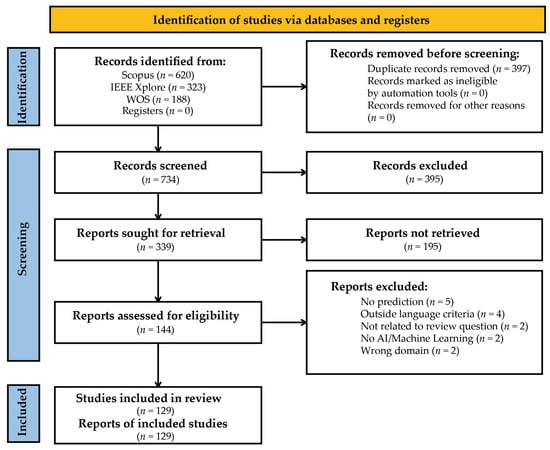
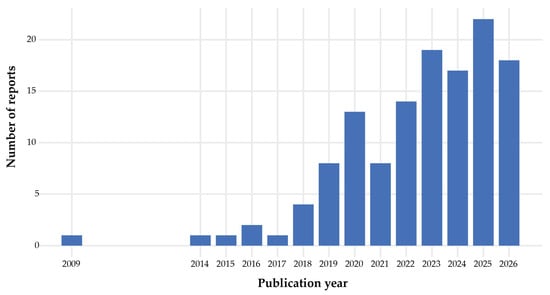
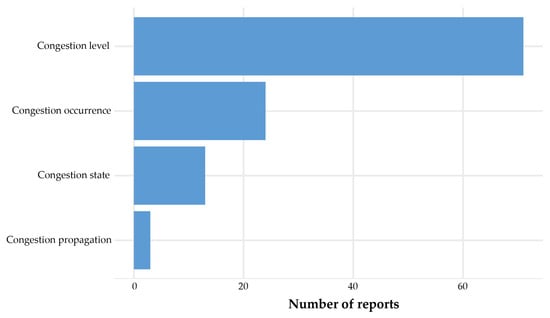
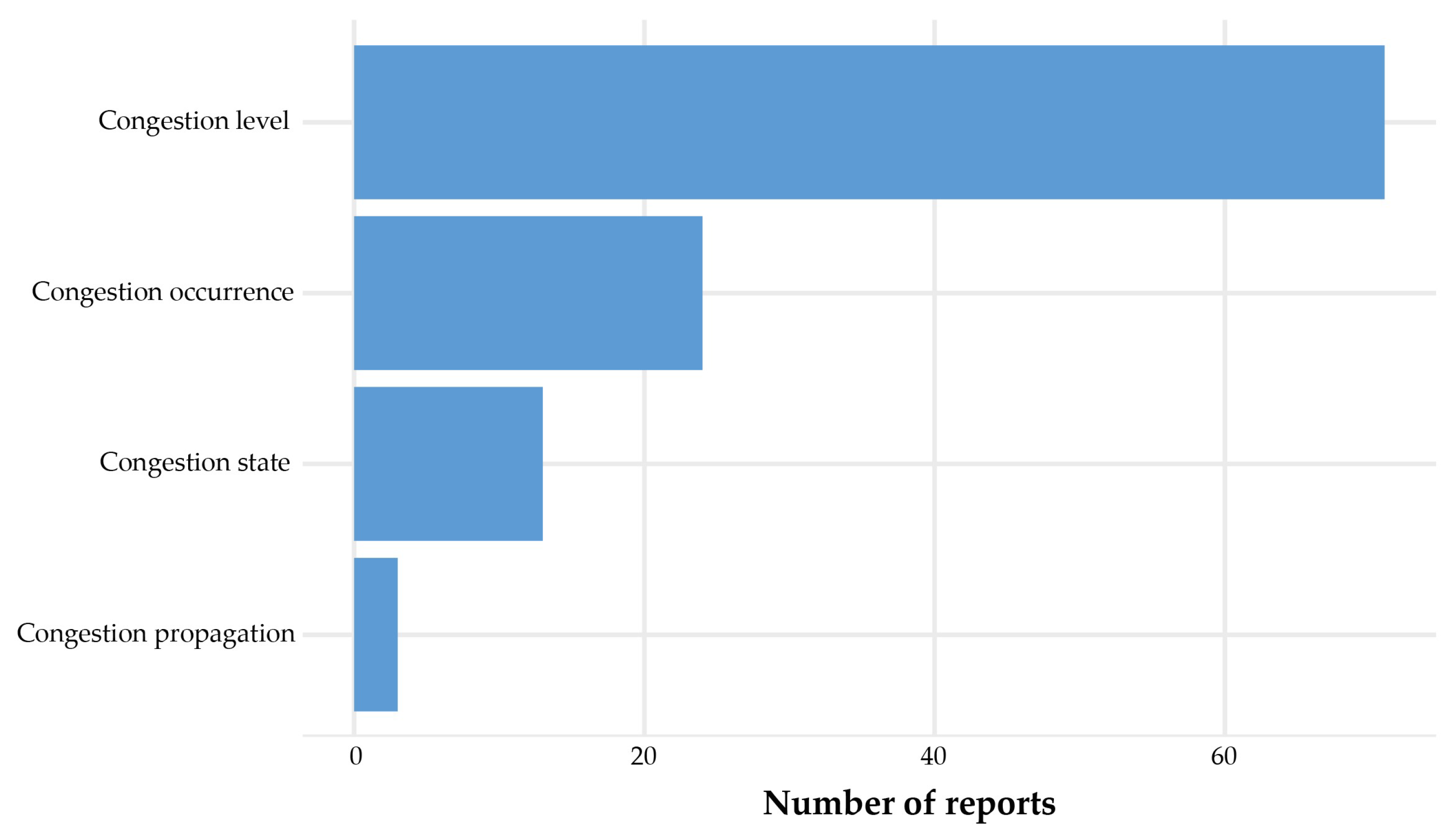
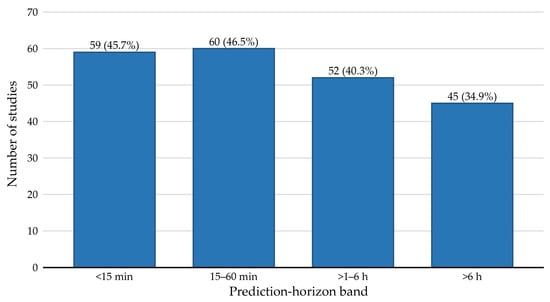
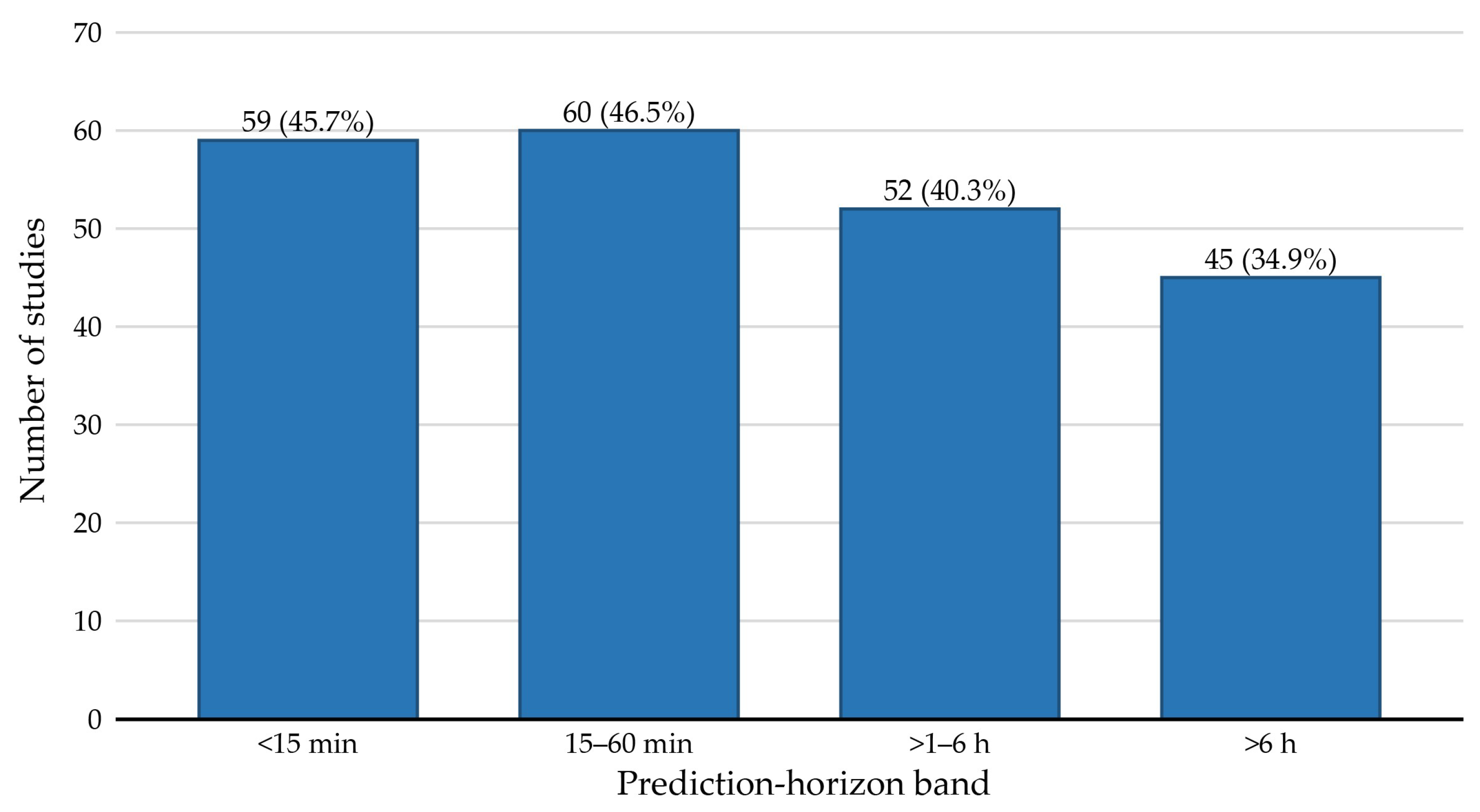
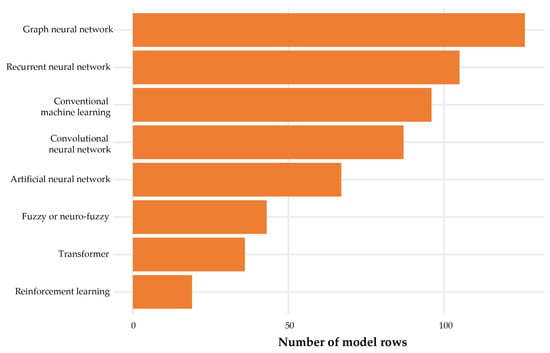
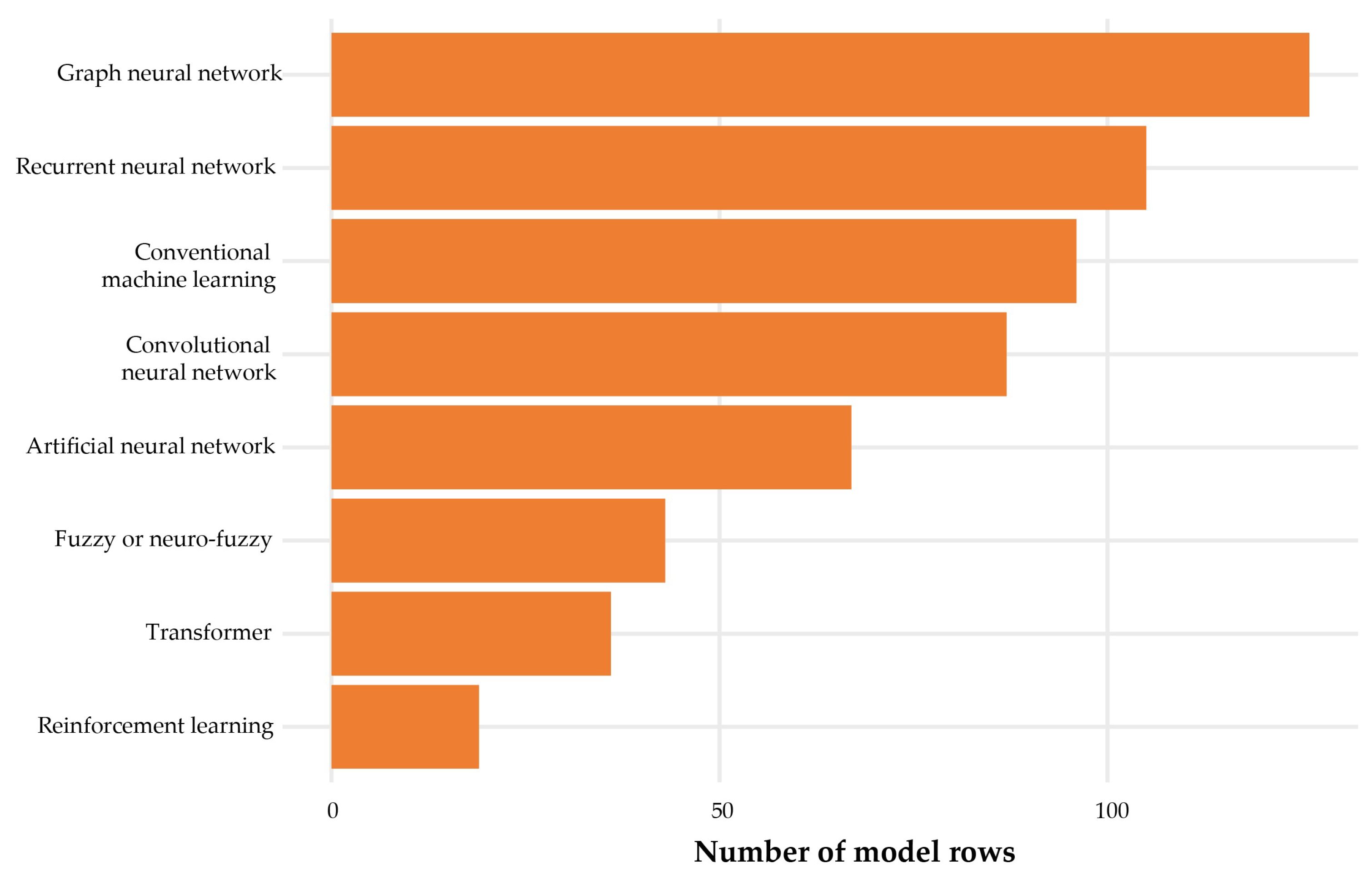
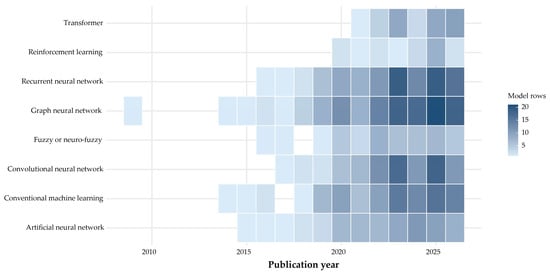
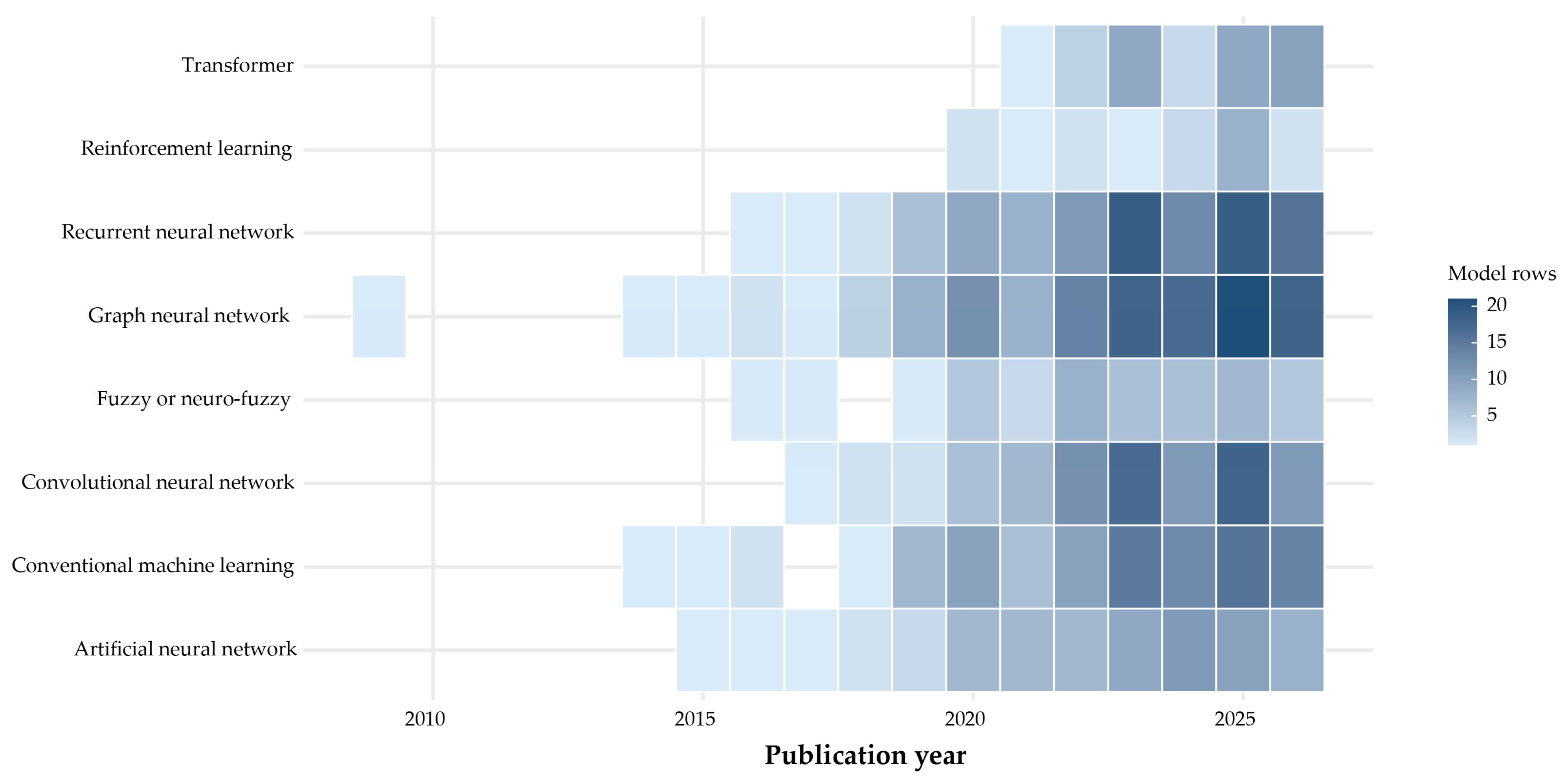
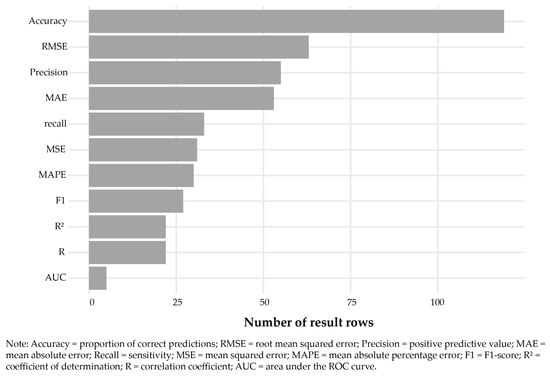
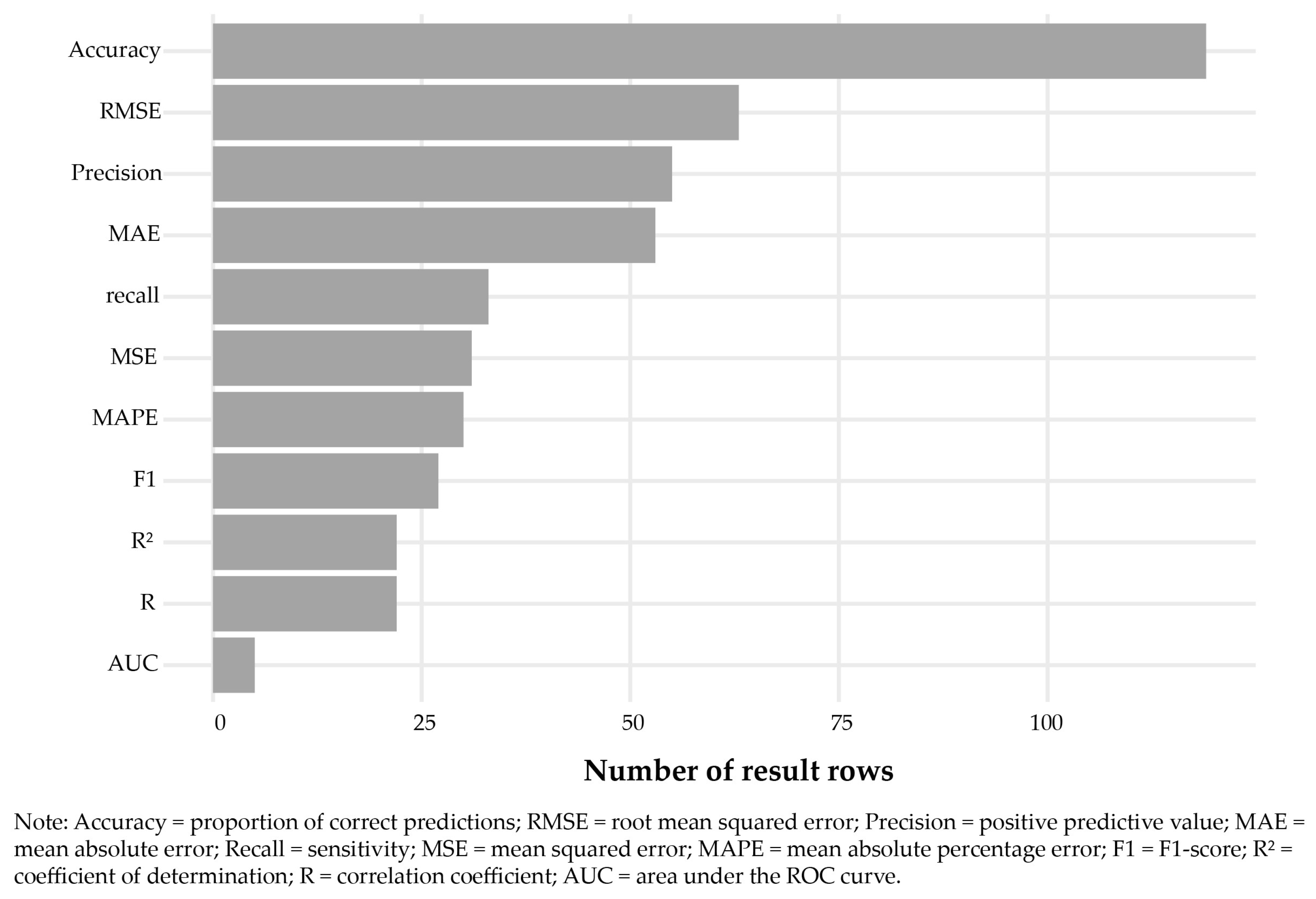

Disclaimer/Publisher’s Note: The statements, opinions and data contained in all publications are solely those of the individual author(s) and contributor(s) and not of MDPI and/or the editor(s). MDPI and/or the editor(s) disclaim responsibility for any injury to people or property resulting from any ideas, methods, instructions or products referred to in the content. |
© 2026 by the author. Licensee MDPI, Basel, Switzerland. This article is an open access article distributed under the terms and conditions of the Creative Commons Attribution (CC BY) license.