


Abstract
Cytokines are key mediators of immune responses and have been extensively investigated as diagnostic, prognostic, predictive, and monitoring biomarkers. However, biological associations do not necessarily translate into clinical utility. This narrative review critically evaluates cytokine biomarkers across major disease groups, focusing on their performance, validation, and clinical implementation. PubMed/MEDLINE, Scopus, Web of Science, and Embase were searched, prioritizing human studies published between 2015 and 2026, with earlier foundational studies included where relevant. Across infectious, autoimmune, malignant, neurological, cardiovascular, metabolic, and endocrine diseases, altered cytokine concentrations have been associated with disease activity, severity, treatment response, and outcomes. IL-6 has accumulated particularly broad evidence, while IL-8, IL-10, TNF-α, IL-1β, IL-17, and IL-18 show potential in selected settings. Nevertheless, limited disease specificity, biological variability, analytical heterogeneity, inconsistent thresholds, and insufficient external validation hinder clinical translation. Multicytokine panels and longitudinal measurements may improve performance, although evidence of incremental value remains limited. Cytokines show potential for prognostic assessment and inflammatory phenotyping, while their utility for longitudinal treatment monitoring remains less established than associations with disease status or clinical outcomes. Routine implementation requires standardized measurement, prospective validation, and demonstrated clinical value beyond established biomarkers.
1. Introduction
Cytokines are soluble signaling proteins involved in immune regulation, inflammation, hematopoiesis, and tissue homeostasis. Their concentrations change in response to infection, tissue injury, immune dysregulation, and malignant transformation, making them attractive candidates for biomarkers reflecting ongoing pathological processes [1]. Accordingly, cytokines have been extensively investigated for diagnostic, prognostic, predictive, and monitoring purposes across a broad spectrum of diseases.
In infectious and critical care settings, inflammatory mediators such as interleukin (IL)-6, IL-8, IL-10, tumor necrosis factor alpha (TNF-α), and IL-1β have been evaluated for diagnosis, severity assessment, and outcome prediction, particularly in sepsis [2,3]. In autoimmune and inflammatory disorders, circulating cytokine concentrations have been associated with disease presence and activity, including IL-17 in inflammatory arthritis and IL-18 in systemic lupus erythematosus [4,5]. Cytokine alterations have likewise been investigated in neurological and metabolic diseases [6,7]. In oncology, circulating IL-6, IL-8, IL-10, and other mediators have been evaluated as prognostic biomarkers and, increasingly, as potential predictors of response to immune checkpoint inhibitors [8,9].
Cytokine measurements have also been investigated in the context of cytokine release syndrome (CRS), a potentially severe inflammatory complication of immunotherapies, particularly chimeric antigen receptor (CAR) T-cell therapy and T-cell-engaging bispecific antibodies. Although IL-6 and other inflammatory mediators contribute to CRS pathophysiology and may reflect inflammatory severity, CRS diagnosis and grading remain primarily clinical. Therefore, routine cytokine quantification has not been established as a standalone tool for CRS diagnosis or treatment decisions [10].
Despite this extensive evidence, an association between a cytokine and a disease does not necessarily establish a clinically useful biomarker. Many studies demonstrate differences in cytokine concentrations between patients and controls or associations with disease severity, whereas fewer establish clinically applicable cut-off values, quantify diagnostic or prognostic performance, demonstrate incremental value over established markers, or provide external validation [11]. Cytokine measurements are also affected by preanalytical and analytical factors, including biological matrix, sample processing and storage, freeze–thaw cycles, assay platform, detection limits, and inter-laboratory variability [12,13,14]. These factors hinder comparison between studies, establishment of clinically meaningful cut-offs, and translation into routine practice.
The limitations of individual cytokines have contributed to growing interest in multiplex cytokine profiling. Simultaneous measurement of multiple mediators may better characterize disease-associated inflammatory patterns and has facilitated the development of cytokine signatures and multivariable biomarker models [15]. In some clinical settings, combinations of circulating cytokines have shown greater discriminatory potential than individual analytes [16]. However, multiplex approaches introduce additional challenges related to standardization, multiple testing, model overfitting, reproducibility, and external validation. Their clinical value therefore depends on demonstrating robust performance beyond established biomarkers and clinical models.
The purpose of this narrative review is to critically examine the clinical applicability of cytokine measurements across different disease settings, with particular emphasis on the distinction between biological associations and clinically actionable biomarkers. Rather than providing another descriptive overview of cytokine alterations, this review integrates evidence on diagnostic and prognostic performance, analytical limitations, external validation, and incremental value over established clinical markers. Its principal contribution is to identify the methodological and clinical requirements that must be addressed before cytokine measurements can be reliably incorporated into routine decision-making. By comparing evidence across disease groups within a common biomarker-development framework, we aim to clarify which applications show the greatest potential for clinical translation and where substantial evidence gaps remain.
The literature search was conducted between 10 July and 21 August 2026 using PubMed/MEDLINE, Embase, Scopus, and Web of Science, focusing primarily on publications from 2015 to 2026. Search strategies combined cytokine-related terms, including “cytokine”, “interleukin”, “chemokine”, “cytokine profile”, and “cytokine signature”, with terms describing clinical biomarker applications, such as “biomarker”, “diagnosis”, “prognosis”, “prediction”, “disease severity”, “treatment monitoring”, and “clinical outcomes”. Studies investigating cytokine concentrations in serum, plasma, saliva, cerebrospinal fluid, and other body fluids were considered. Priority was given to human clinical studies reporting diagnostic, prognostic, predictive, or monitoring-related outcomes, alongside relevant systematic reviews and meta-analyses. Additional publications were identified through reference-list screening, while selected earlier studies were included where necessary to provide foundational context. Given the narrative design of this review, literature selection was based on clinical relevance, methodological considerations, and the contribution of individual studies to evaluating the clinical utility and limitations of cytokines as biomarkers.
2. Cytokines as Biomarkers: From Biological Association to Clinical Utility
The potential value of a cytokine as a biomarker depends not only on its association with a pathological process but also on the clinical context in which it is intended to be used. Cytokines may serve as diagnostic biomarkers by distinguishing individuals with and without a disease, as prognostic biomarkers by identifying patients at increased risk of adverse outcomes, or as monitoring biomarkers reflecting changes in disease activity or response to treatment. Predictive biomarkers represent a more specific category, identifying patients who are more likely to benefit from a particular therapeutic intervention. These roles should be distinguished when interpreting cytokine studies, as evidence supporting one application does not necessarily establish usefulness in another [17]. In particular, cross-sectional comparisons between patients and controls cannot establish monitoring utility, which requires longitudinal assessment of within-patient cytokine changes in relation to disease progression or treatment response.
A statistically significant difference in cytokine concentration between study groups represents an initial level of evidence rather than demonstration of biomarker performance. Such associations should be interpreted with consideration of potential confounding factors, including biological sex, age, comorbidities, and other determinants of baseline cytokine concentrations. For diagnostic applications, clinically relevant evaluation generally requires measures of discrimination such as sensitivity, specificity, receiver operating characteristic (ROC) curves, area under the curve (AUC), and an appropriately validated decision threshold. Prognostic studies similarly require quantitative assessment of the association with clinically relevant outcomes, commonly using hazard ratios or odds ratios, preferably after adjustment for established prognostic factors. Importantly, performance observed in the cohort in which a biomarker or multivariable model was developed may overestimate its performance in new populations, particularly in small studies or when numerous candidate cytokines are evaluated simultaneously [18,19].
Clinical relevance therefore requires progressively stronger evidence. After an initial biological or clinical association is identified, a candidate biomarker should demonstrate reproducible analytical measurement, clinically meaningful discrimination or prognostic value, and validation in populations independent of those used for its development. An additional consideration is whether cytokine measurement provides information beyond routinely available parameters. A novel biomarker with statistically significant associations may have limited practical value if established laboratory markers or clinical models provide comparable information at lower cost and with greater standardization. Assessment of incremental value is particularly important for inflammatory biomarkers, as cytokine concentrations frequently correlate with conventional indicators of systemic inflammation [11].
The same principles apply to multicytokine panels. Combining several weakly or moderately informative biomarkers can improve discrimination, but performance estimates derived from high-dimensional datasets are particularly susceptible to overfitting when the number of candidate variables is large relative to the study population. Consequently, improvements in AUC within a derivation cohort should not alone be interpreted as evidence of clinical utility. Independent validation, comparison with existing standards of care, and demonstration that biomarker-guided information can meaningfully influence clinical decisions represent progressively stronger evidence for implementation. For clarity, the development of cytokine biomarkers can be conceptualized as six successive stages: (1) identification of a biological or clinical association; (2) demonstration of analytical reliability; (3) evaluation of diagnostic or prognostic performance; (4) independent external validation; (5) demonstration of incremental value over established clinical parameters; and (6) evidence of clinical utility through improved decision-making or patient-relevant outcomes. These stages represent a conceptual framework rather than a formal evidence-grading system. Importantly, the developmental stage of a cytokine depends on its specific clinical indication, and evidence supporting one application cannot automatically be extrapolated to another.
From this perspective, cytokine biomarker research can be considered along a continuum from biological association, through clinical association and biomarker performance, to independent validation, incremental clinical value, and ultimately clinical implementation. This framework is used throughout this review to distinguish cytokines that primarily represent markers of altered disease biology from those supported by evidence approaching clinically actionable biomarker status. This proposed continuum from biological association to clinical implementation is summarized in Figure 1.
Figure 1.
Proposed continuum from biological association to clinical implementation of cytokine biomarkers: (1) biological or clinical association; (2) analytical reliability; (3) diagnostic or prognostic performance; (4) independent external validation; (5) incremental value over established clinical parameters; and (6) clinical utility.
3. Analytical and Preanalytical Considerations in Cytokine Measurement
The clinical interpretation of cytokine concentrations depends strongly on the analytical and preanalytical conditions under which they are measured. Cytokines are typically present at low concentrations and may be affected by sample collection, processing, storage, and assay characteristics, creating substantial variability between studies [13,20]. Consequently, differences in reported concentrations may partly reflect methodological rather than biological variation.
The choice of biological matrix is particularly important. Serum and plasma are the most commonly used materials, but cytokine concentrations obtained from these matrices are not necessarily interchangeable. Coagulation, platelet activation, anticoagulant selection, and delays between collection and processing may alter measured concentrations of individual mediators [14,21]. Cytokine stability may also be affected by storage temperature and repeated freeze–thaw cycles, although the magnitude and direction of these effects differ between analytes [20]. Standardized collection and processing protocols are therefore essential, particularly when absolute concentrations or clinical cut-off values are compared across cohorts.
Assay methodology represents another major source of heterogeneity. Enzyme-linked immunosorbent assays (ELISA) remain widely used for individual cytokine measurements, whereas bead-based and other multiplex platforms allow simultaneous quantification of multiple analytes from small sample volumes. Multiplex assays are particularly suitable for cytokine profiling but may differ from single-analyte assays in analytical sensitivity, dynamic range, antibody specificity, calibration, and susceptibility to matrix effects [14,15]. Measurements obtained using different commercial platforms can show substantial variation in absolute cytokine concentrations, even when correlations between platforms are acceptable [13]. Thus, results generated using different assays should not be considered directly interchangeable.
These methodological differences have direct implications for biomarker development. A clinically applicable biomarker requires reproducible measurement across laboratories and populations, whereas platform-dependent concentrations complicate the establishment of universal reference ranges and decision thresholds. Reporting of sample handling, assay characteristics, limits of detection, values below the detection range, and quality-control procedures is therefore important for evaluating the reproducibility and potential clinical transferability of cytokine studies. Standardization remains particularly relevant for multiplex panels, in which analytical variability affecting individual components may propagate into the resulting biomarker signature.
4. Clinical Applications of Cytokines as Biomarkers
The clinical evidence supporting cytokines as biomarkers varies considerably across disease groups and intended applications. Representative examples of diagnostic, prognostic, predictive, disease activity, and monitoring applications discussed in the following sections are summarized in Table 1, with particular emphasis on biomarker performance and current limitations to clinical interpretation. In interpreting the available evidence, particular attention was given to study design, sample size, independent validation, and methodological limitations to distinguish exploratory findings from more robust evidence supporting the clinical utility of cytokines as biomarkers. Accordingly, the clinical examples presented below are interpreted in relation to their methodological maturity and intended biomarker application, rather than assigning each cytokine a single developmental stage across all diseases.
Table 1.
Representative clinical applications of cytokines as biomarkers across disease groups.
4.1. Infectious Diseases and Sepsis
Among infectious diseases, sepsis represents one of the most extensively studied settings for cytokine-based biomarkers. Circulating IL-6, IL-8, IL-10, TNF-α, and IL-1β have been investigated for diagnosis, severity assessment, and outcome prediction. A meta-analysis of 25 studies found significantly higher concentrations of all five mediators in non-survivors than in survivors, supporting their association with adverse outcomes [2].
However, associations with sepsis do not necessarily translate into adequate diagnostic discrimination. For example, Moniruzzaman et al. reported only modest diagnostic performance for IL-6 (AUC 0.710; sensitivity 54.2%; specificity 59.1%), highlighting the limitations of individual cytokines as standalone diagnostic biomarkers [22].
The evidence appears stronger for prognostic and severity assessment. IL-6 has received particular attention, although its performance varies substantially across studies. A meta-analysis of 31 studies including 4566 patients found moderate discrimination of baseline IL-6 for 28–30-day mortality (AUC 0.701), whereas 96-h IL-6 clearance showed better discrimination (AUC 0.828) [3]. These findings suggest that cytokine kinetics may provide more clinically relevant information than isolated measurements. Similarly, TNF-α and IL-8 have been associated with disease severity and mortality; in one recent study, their integration with procalcitonin, heparin-binding protein, and Acute Physiology and Chronic Health Evaluation II (APACHE II) resulted in an AUC of 0.913 for mortality prediction [33].
Beyond sepsis, cytokine profiling has been investigated in more specific infectious settings. In a cohort of 390 hospitalized patients undergoing blood culture, combinations of inflammatory mediators showed potential for differentiating Gram-negative, Gram-positive, and fungal bloodstream infections, although individual biomarkers generally provided only moderate discrimination [34]. In necrotizing soft-tissue infections (NSTIs), multiplex analysis in discovery and validation cohorts identified distinct biomarker patterns associated with infection type and septic shock; IL-6 was among the markers shared by different NSTI types for prediction of septic shock [35].
COVID-19 provides another example of the potential clinical relevance of cytokine measurements in infectious diseases. Elevated circulating IL-6 concentrations have been reported in severe and critical COVID-19, although their magnitude varies substantially and should be interpreted in the context of the broader inflammatory response. These findings support the biological relevance of cytokine profiling but do not, by themselves, establish the clinical utility of individual cytokine measurements for diagnosis or prognostic decision-making [36].
Selected cytokines may also have diagnostic value in narrowly defined clinical settings. In suspected nosocomial meningitis, cerebrospinal fluid (CSF) IL-6 showed high specificity but limited sensitivity, while its combination with IL-8 and D-lactate improved overall diagnostic discrimination [23]. In patients with acute-on-chronic liver failure, IL-33 differentiated invasive pulmonary aspergillosis from bacterial pneumonia and non-infectious controls with an AUC of 0.871, although only 16 patients with invasive pulmonary aspergillosis were included [37]. Such findings suggest that cytokines may have greater diagnostic potential in specific, well-defined clinical scenarios than as universal markers of infection.
Overall, cytokines appear more consistently useful as markers of host-response intensity, disease severity, and prognosis than as stand-alone diagnostic markers of infection. IL-6 has the largest evidence base, while IL-8, IL-10, TNF-α, and selected disease-specific mediators may provide complementary information. Current evidence increasingly supports serial measurements and integration with established biomarkers or clinical scores. However, heterogeneous populations, sampling times, assay methods, and thresholds, together with limited external validation, continue to restrict routine clinical implementation.
4.2. Autoimmune and Inflammatory Diseases
Cytokines have been extensively investigated as biomarkers in autoimmune and chronic inflammatory diseases, where their concentrations may reflect persistent immune activation and disease activity. In inflammatory arthritis, IL-17 is among the most consistently studied mediators; the designation IL-17 is retained here in accordance with the terminology used in the cited meta-analysis, without assuming that all included studies specifically quantified the IL-17A isoform. A meta-analysis including 83 records demonstrated significantly elevated circulating IL-17 concentrations in rheumatoid arthritis (RA), ankylosing spondylitis, psoriatic arthritis, and osteoarthritis, with positive associations between IL-17 and disease activity in RA and ankylosing spondylitis [4]. The IL-23/IL-17 axis is also central to the pathogenesis of several immune-mediated inflammatory diseases, particularly psoriasis and psoriatic arthritis. IL-23 contributes to the maintenance of pathogenic type 17 immune responses, and the therapeutic relevance of this pathway has stimulated the development of targeted treatments [38]. Nevertheless, the pathogenic and therapeutic significance of IL-23 should be distinguished from the clinical utility of its circulating concentrations as a biomarker, which requires separate evaluation of diagnostic performance, reproducibility, and independent validation. Similarly, a meta-analysis of 14 studies including 890 patients with RA and 441 controls showed substantially higher serum IL-6 and TNF-α concentrations in RA [39]. These findings support cytokines as markers of inflammatory activity, although differences between patients and healthy controls do not by themselves establish diagnostic utility.
This distinction is apparent in individual RA studies. Serum IL-40, for example, was elevated in patients with RA but showed only moderate diagnostic performance (AUC 0.74; sensitivity 73.2%; specificity 66.7%) [40]. Conversely, several smaller studies have reported associations between IL-17, IL-1β, TNF-α, or other cytokines and conventional indicators of disease activity, but frequently without validated cut-offs or comparison with established markers such as C-reactive protein (CRP), erythrocyte sedimentation rate (ESR), rheumatoid factor, or anti-cyclic citrullinated peptide (anti-CCP) antibodies. In this context, cytokine measurement currently appears more informative as a reflection of inflammatory phenotype or activity than as an independent diagnostic test.
A similar pattern is observed in systemic lupus erythematosus (SLE). A meta-analysis of 30 studies found substantially higher circulating IL-18 concentrations in patients with SLE than in healthy controls, although heterogeneity was considerable (I2 = 94.9%) [5]. Importantly, the reported IL-18 concentrations should not be interpreted as measurements of biologically active free IL-18 unless this was specifically established by the assay. IL-18 binding protein (IL-18BP) regulates IL-18 bioavailability, and the distinction between free, bound, and total IL-18 may affect the interpretation and comparability of biomarker findings. The cited meta-analysis does not establish a uniform distinction between these fractions across the included studies. More recent longitudinal evidence illustrates the difficulty of translating such associations into monitoring biomarkers. In patients with SLE, serum IL-10 correlated with SLEDAI but did not reliably distinguish active from inactive disease or predict subsequent flares [41]. Thus, even cytokines associated with established activity indices may provide limited incremental clinical information.
Inflammatory bowel disease (IBD) provides another setting in which multicytokine assessment may be more informative than individual measurements. In Crohn’s disease, circulating interferon gamma (IFN-γ), IL-6, IL-17A, and TNF-β correlated with fecal calprotectin, suggesting that systemic cytokine profiles reflect intestinal inflammatory activity [24]. In a separate cohort, a combination of serum amyloid A (SAA), IL-6, IL-8, and eotaxin-1 predicted endoscopic disease activity with an optimism-adjusted AUC of 0.84, compared with 0.57 for CRP [42]. Nevertheless, a recent systematic evaluation of interleukins as histology-aligned biomarkers in IBD concluded that substantial heterogeneity in biological matrices, assays, and reporting prevented valid quantitative pooling, highlighting persistent barriers to clinical standardization [43].
Periodontitis provides an additional example of cytokine assessment using a non-invasive, disease-proximal biological matrix. Salivary cytokines may reflect local inflammatory activity and have been investigated for both disease detection and severity assessment. In a recent study, salivary IL-1β, IL-6, and IL-10 were significantly associated with periodontal status and clinical measures of disease severity, supporting the potential of multiplex salivary cytokine assessment [44]. A systematic review and meta-analysis of 27 studies similarly demonstrated significantly higher salivary IL-1β concentrations in patients with periodontitis than in periodontally healthy individuals, although substantial between-study heterogeneity was observed [45]. In a cross-sectional comparative study involving 240 participants with varying periodontal and glycemic status, Sangappa et al. evaluated salivary IL-6 as a non-invasive diagnostic biomarker and reported a sensitivity of 53.3%, specificity of 68.6%, and overall accuracy of 60%, indicating limited discriminatory performance despite its association with periodontal inflammation [25]. These findings highlight saliva as an attractive non-invasive matrix for cytokine-based biomarkers, particularly for repeated measurements, while differences in sampling procedures, analytical methods, and diagnostic thresholds currently limit standardization and clinical implementation.
Overall, cytokine alterations are consistently associated with autoimmune and inflammatory disease presence and activity, but evidence for their incremental value over established disease-specific biomarkers and activity measures remains considerably more limited. Their potential may therefore lie primarily in multibiomarker signatures, disease phenotyping, and monitoring selected inflammatory pathways rather than in replacing established diagnostic tests. Prospective validation against clinically relevant comparators and demonstration of added value over conventional markers remain necessary before routine cytokine measurement can be recommended.
4.3. Cancer
Cancer represents one of the most extensively investigated areas of cytokine biomarker research. Circulating IL-6, IL-8, IL-10, TNF-α, and other mediators have been associated with tumor burden, disease stage, treatment response, and survival across multiple malignancies. However, the clinical relevance of these associations varies considerably. An early systematic evaluation found that elevated circulating IL-6 and IL-10 were independently associated with poorer survival, while evidence for IL-1, IL-8, IL-12, TNF-α, transforming growth factor beta (TGF-β), and IFN-γ was less consistent [8]. Other systematic evidence has particularly supported the association between circulating IL-6 and adverse outcomes across different cancer types [46].
For diagnostic purposes, individual cytokines frequently show only moderate discrimination, whereas combinations may perform better. In colorectal cancer (CRC), Yamaguchi et al. evaluated 27 plasma cytokines and found AUCs of 0.657–0.755 for individual mediators, compared with 0.819 and 0.832 for selected multicytokine panels [16]. In endometrial cancer, a multivariable model incorporating IL-8 with age, leptin, and granulocyte colony-stimulating factor (G-CSF) achieved an AUC of 0.94 in the training cohort and 0.81 in the test cohort [27]. These studies illustrate the potential of cytokines as components of diagnostic signatures; however, findings from individual model-development studies remain exploratory and require independent external validation before clinical implementation.
The evidence is generally more consistent for prognosis. In a prospective cohort of 767 patients with hepatocellular carcinoma, elevated circulating IL-1R1, IL-6, IL-8, IL-10, IL-15, IL-16, and IL-18 were associated with inferior overall survival [47]. Similar associations have been reported across numerous individual malignancies, although the prognostic contribution of specific cytokines differs between tumor types and studies. Importantly, elevated cytokine concentrations may also reflect tumor burden, systemic inflammation, cachexia, or poor performance status, making it difficult to determine whether they provide clinically relevant information beyond established prognostic variables [47].
A particularly promising application is the prognostic assessment of patients receiving immune checkpoint inhibitors (ICIs). A meta-analysis of 24 studies found that higher pretreatment IL-6 and IL-8 concentrations were independently associated with worse overall survival during ICI therapy, with multivariable HRs of 2.21 and 1.88, respectively [9]. A subsequent meta-analysis focusing on IL-8 included 3190 patients from 14 studies and similarly associated higher IL-8 with poorer response and survival during ICI treatment [48]. Primary studies support this concept; in patients with non-small-cell lung cancer (NSCLC) treated with immune checkpoint inhibitors, baseline plasma IL-6 demonstrated moderate prognostic discrimination for progression-free survival (AUC 0.779), with higher concentrations associated with shorter progression-free survival [26]. These findings support the prognostic relevance of cytokines in ICI-treated patients, while their ability to predict treatment-specific benefit remains insufficiently established.
Overall, circulating cytokines show substantial prognostic potential in cancer, while their stand-alone diagnostic value is less consistent. Multicytokine signatures may improve discrimination, but frequently require validation and comparison with established tumor markers and clinical models. The association of IL-6 and IL-8 with outcomes during ICI therapy supports their prognostic potential, although predictive utility and longitudinal treatment-monitoring applications require further validation. Nevertheless, heterogeneous cancer types, therapies, assay platforms, thresholds, and sampling schedules currently preclude standardized implementation in routine oncology practice.
4.4. Neurological and Psychiatric Diseases
Cytokine alterations have been extensively investigated in neurological diseases, particularly in multiple sclerosis (MS) and neurodegenerative disorders. Interpretation is complicated by the compartmentalization of inflammation within the central nervous system (CNS), as cytokine concentrations measured in peripheral blood may not directly reflect inflammatory processes occurring in the brain or cerebrospinal fluid (CSF). This distinction is evident in MS, where a meta-analysis of 226 studies including 13,526 patients demonstrated significant alterations in numerous cytokines in both blood and CSF, although the magnitude and pattern of these changes differed between biological compartments [6].
The use of multicytokine profiles may offer greater discriminatory potential than individual mediators. Martynova et al. analyzed 45 cytokines in serum and CSF from patients with MS and non-MS controls and subsequently incorporated selected biomarkers into machine-learning models. Diagnostic accuracy was ≥92% for models using selected five-cytokine combinations, reaching 99% when CCL27, IFN-γ, and IL-4 were included among the selected markers. However, discrimination between progressive and relapsing-remitting forms was substantially lower, with accuracies of 70–78% in serum and 60–69% in CSF [28]. These findings from a relatively small model-development study suggest the potential of multiplex cytokine signatures; however, independent external validation is required before their clinical utility can be established.
Inflammatory alterations have also been consistently reported in neurodegenerative diseases. A meta-analysis of 175 studies involving 13,344 patients with Alzheimer’s disease (AD) identified increased peripheral concentrations of several inflammatory mediators, including IL-1β, IL-2, IL-6, IL-18, and IFN-γ, while IL-6 concentrations were inversely associated with cognitive performance measured by the Mini-Mental State Examination [49]. In Parkinson’s disease (PD), pooled evidence similarly demonstrated increased peripheral IL-6, TNF-α, IL-1β, IL-2, and IL-10 concentrations [50]. In amyotrophic lateral sclerosis (ALS), elevated peripheral TNF-α, IL-6, IL-1β, and IL-8 have also been reported [51].
Importantly, CSF studies do not always reproduce cytokine alterations observed in peripheral blood. A meta-analysis of 71 studies including 2629 patients with AD, PD, or ALS found disease-specific patterns of CSF inflammatory mediators. In AD, TGF-β, MCP-1, and YKL-40 were increased, whereas IL-1β, IL-6, and IL-8 were not significantly different from controls. In contrast, CSF IL-6 and IL-1β were increased in PD, while a broader inflammatory signature including IL-17 and TNF-α was observed in ALS [52]. These discrepancies emphasize that the biological matrix is particularly relevant when cytokines are evaluated as biomarkers of CNS disorders.
Cytokine alterations are also observed in psychiatric disorders, although their limited disease specificity represents an important barrier to diagnostic application. A meta-analysis of 82 studies in major depressive disorder demonstrated alterations in multiple peripheral inflammatory mediators, supporting the presence of a systemic inflammatory component in at least a subset of patients [53]. However, similar changes occur in numerous inflammatory, metabolic, and neurological conditions, limiting their usefulness as stand-alone diagnostic biomarkers. Cytokine profiles may therefore be more relevant for identifying inflammatory phenotypes or patient subgroups than for establishing psychiatric diagnoses.
Overall, cytokine measurements provide consistent evidence of altered inflammatory signaling across neurological and psychiatric disorders, but biological association currently exceeds demonstrated clinical utility. Their potential appears greatest in multibiomarker signatures, disease phenotyping, and possibly monitoring, rather than as isolated diagnostic markers. The choice between peripheral blood and CSF, together with assay heterogeneity, disease heterogeneity, and limited external validation of multivariable models, remains central to their clinical translation.
4.5. Cardiovascular Diseases
Inflammatory cytokines have been investigated as biomarkers across a broad spectrum of cardiovascular diseases, including atherosclerosis, acute coronary syndromes (ACS), and heart failure (HF). Among them, IL-6 has accumulated the strongest evidence, although its clinical role appears predominantly prognostic rather than diagnostic. Population-based studies have consistently associated higher circulating IL-6 with subsequent cardiovascular events. An updated meta-analysis of prospective studies reported an adjusted relative risk of 1.25 for non-fatal myocardial infarction or coronary heart disease death per one-standard-deviation (SD) increase in IL-6, with weaker but significant associations also observed for IL-18 and TNF-α [54].
The prognostic association of IL-6 is particularly well documented in ACS. A meta-analysis of 13 studies including 30,289 patients demonstrated that individuals in the highest IL-6 category had increased risks of major adverse cardiovascular events (RR 1.29), all-cause mortality (RR 1.50), and cardiovascular mortality (RR 1.55) compared with those in the lowest category [29]. These findings support IL-6 as a marker of cardiovascular risk after an acute coronary event. However, its incremental value over established clinical variables, cardiac troponins, natriuretic peptides, and routinely available inflammatory markers remains more important for clinical translation than the association with outcomes itself.
Cytokines have also been extensively evaluated in HF, where chronic systemic inflammation is associated with disease progression and adverse outcomes. IL-6 and TNF-α concentrations increase with HF severity and have repeatedly been associated with mortality. Recent pooled evidence from prospective cohorts found that elevated IL-6 was independently associated with mortality and HF-related adverse outcomes, with a pooled adjusted HR of 1.44, including associations observed across both reduced and preserved ejection fraction phenotypes [55]. Earlier studies additionally demonstrated prognostic associations for TNF-α and soluble TNF receptors, indicating that several components of inflammatory signaling may reflect HF severity and progression [56].
Importantly, the availability of well-established cardiovascular biomarkers creates a particularly high threshold for demonstrating the clinical utility of cytokine measurements. In acute and chronic HF, natriuretic peptides already provide standardized diagnostic and prognostic information, while cardiac troponins dominate the assessment of myocardial injury. Cytokines would therefore be most clinically relevant if they provided incremental information beyond these established markers rather than merely demonstrating independent statistical associations. This concept is supported by studies in acute decompensated HF in which combined assessment of IL-6 and N-terminal pro-B-type natriuretic peptide (NT-proBNP) provided stronger prognostic stratification than either inflammatory assessment alone [57].
Large contemporary datasets further illustrate both the potential and limitations of IL-6. A 2026 individual-participant analysis of 59,396 participants from 14 prospective cohorts found higher IL-6 concentrations to be associated with all nine evaluated cardiovascular and mortality outcomes. The strongest association was observed for coronary heart disease mortality, while associations were also present for myocardial infarction, stroke, atrial fibrillation, and HF. Nevertheless, adding IL-6 to established risk models produced only modest improvements in discrimination beyond high-sensitivity C-reactive protein (hsCRP) [58]. This distinction between strong epidemiological association and comparatively modest incremental predictive performance is particularly relevant when evaluating cytokines as clinically applicable biomarkers.
Overall, cytokines—particularly IL-6—provide reproducible prognostic information across coronary artery disease and HF, but their role as stand-alone diagnostic biomarkers remains limited. The principal challenge is no longer demonstrating an association between inflammation and cardiovascular outcomes, but establishing whether cytokine measurements meaningfully improve risk stratification beyond readily available clinical variables and established biomarkers. Future applications may therefore depend on selected high-risk populations, serial measurements, or incorporation of cytokines into multimarker models rather than routine measurement of individual cytokines.
4.6. Metabolic and Endocrine Diseases
Chronic low-grade inflammation accompanies several metabolic and endocrine disorders, but the extent to which circulating cytokines provide clinically useful information beyond established biochemical markers remains uncertain. The largest body of evidence concerns type 2 diabetes mellitus (T2DM), particularly IL-6 and IL-1β. An overview of 34 meta-analyses found associations between circulating interleukins and both diabetes and its complications, with increased IL-6 and IL-1β associated with incident diabetes [59]. Importantly, associations differed according to the complication and biological matrix, illustrating that cytokine alterations in metabolic disease are heterogeneous rather than disease-specific.
Prospective evidence is particularly informative for IL-6. A meta-analysis of 15 prospective studies comprising 5421 incident T2DM cases and 31,562 non-cases found that higher circulating IL-6 was associated with subsequent T2DM development (RR 1.24 per log pg/mL increase; 95% CI 1.17–1.32) [30]. The study additionally incorporated genetic analyses of the IL6R Asp358Ala variant, supporting a role of IL-6-mediated inflammation in T2DM development. Nevertheless, the authors concluded that the estimated contribution of this pathway to population-level diabetes risk was relatively small. Thus, IL-6 provides an example of a biologically and epidemiologically relevant marker whose incremental clinical value must still be considered against inexpensive and highly standardized measures of glycemic and metabolic risk [30].
Obesity and insulin resistance further complicate interpretation of cytokine concentrations. Because adipose tissue contributes to systemic inflammatory signaling, metabolic phenotype may modify circulating cytokine levels independently of the disease for which a biomarker is being evaluated. This issue is particularly apparent in polycystic ovary syndrome (PCOS). A meta-analysis of 25 case–control studies involving 1618 women found significantly higher circulating IL-6 in PCOS (SMD 0.78; 95% CI 0.41–1.16), but heterogeneity was substantial (I2 = 91%) [31]. Meta-regression indicated that insulin resistance contributed importantly to this heterogeneity. Consequently, elevated IL-6 may characterize the inflammatory-metabolic phenotype accompanying PCOS, but current evidence does not establish sufficient specificity or incremental value for its use as an independent diagnostic biomarker.
Cytokine changes have also been observed in autoimmune endocrine disorders. In a study of 29 patients with untreated Graves’ disease and 25 controls, serum IL-1β, soluble IL-2 receptor, IL-5, IL-6, and TNF-α were elevated before treatment. After restoration of euthyroidism with methimazole, concentrations of all five mediators decreased significantly and approached those observed in controls [60]. Moreover, selected cytokines were associated with thyroid hormone concentrations or TSH-receptor antibodies. These findings suggest potential utility for reflecting disease activity or treatment-related changes, but the availability of well-established thyroid function tests and disease-specific autoantibodies substantially limits the rationale for cytokines as primary diagnostic biomarkers.
Primary hyperparathyroidism (PHPT) provides a particularly relevant example of cytokine alterations associated with endocrine and mineral metabolism. Grey et al. demonstrated elevated circulating IL-6, soluble IL-6 receptor, and TNF-α in untreated PHPT, while IL-1β was not significantly different from controls. IL-6 correlated with parathyroid hormone (PTH) and biochemical markers of bone resorption, and IL-6 and TNF-α decreased after successful parathyroidectomy [61]. Subsequent evidence in asymptomatic PHPT similarly demonstrated higher IL-6 concentrations than in matched controls (4.50 vs. 2.56 pg/mL), with a strong correlation between IL-6 and PTH (r = 0.787, p < 0.001) [62]. More recently, a prospective study of 70 newly diagnosed patients with PHPT and 70 age- and body mass index (BMI)-matched controls found elevated IL-6 and monocyte chemoattractant protein-1 (MCP-1), but not IL-10. Among 28 patients reassessed three months after parathyroidectomy, IL-6 and MCP-1 concentrations decreased, supporting a relationship between parathyroid disease and systemic inflammatory signaling [32].
However, findings in PHPT have not been entirely consistent. In a study of 45 patients with PHPT and 40 matched controls, TNF-α was elevated whereas IL-6 was not significantly different between groups; among 17 surgically treated patients, inflammatory markers did not decrease significantly during postoperative follow-up [63]. Taken together, available studies support an association between PHPT and altered inflammatory signaling, particularly involving IL-6 and TNF-α, but do not yet establish cytokines as diagnostic or monitoring biomarkers. Their potential value may instead lie in characterizing systemic manifestations of PHPT and relationships between PTH, mineral metabolism, inflammation, and bone turnover. Nevertheless, evidence in PHPT remains based on relatively small observational cohorts, in contrast to the larger prospective datasets available for T2DM.
Overall, metabolic and endocrine diseases illustrate particularly clearly the distinction between cytokines as indicators of altered disease biology and cytokines as clinically useful biomarkers. IL-6 and other inflammatory mediators show reproducible associations with metabolic risk, endocrine activity, and treatment-related changes, but their limited disease specificity and susceptibility to confounding by obesity, insulin resistance, and other metabolic factors restrict their stand-alone diagnostic value. Future applications are more likely to involve inflammatory phenotyping, risk stratification, monitoring, or multivariable biomarker models. Demonstrating incremental value over established disease-specific biochemical markers remains essential for clinical translation.
5. Current Limitations and Gaps in Evidence
Despite extensive evidence linking cytokine alterations with disease presence, severity, treatment response, and clinical outcomes, several limitations continue to restrict their translation into routine clinical practice. A central problem is the gap between statistical association and clinically meaningful biomarker performance. Many studies identify significant differences in cytokine concentrations between patients and controls or associations with clinical outcomes, but substantially fewer establish validated decision thresholds, quantify incremental value over existing biomarkers, or demonstrate that cytokine measurement improves clinical decision-making [11]. Consequently, biological relevance should not be considered equivalent to clinical utility.
A second major limitation is the lack of disease specificity. Cytokines such as IL-6, IL-8, IL-10, TNF-α, and IL-1β participate in broad inflammatory responses and are altered across infectious, autoimmune, malignant, cardiovascular, neurological, and metabolic conditions. Their concentrations may additionally be influenced by biological sex, age, adiposity, metabolic status, medication, acute infection, and other comorbid conditions. This limits the diagnostic value of isolated cytokine measurements and complicates interpretation of differences between heterogeneous patient populations. In many settings, cytokines may therefore function more effectively as markers of host-response intensity or inflammatory phenotype than as disease-specific biomarkers.
Substantial preanalytical and analytical heterogeneity represents another barrier. Cytokine concentrations depend on biological matrix, sample handling, storage conditions, and assay methodology. Serum and plasma measurements cannot necessarily be used interchangeably, and handling conditions may alter measured concentrations of individual analytes [21]. Furthermore, proficiency-testing data demonstrate substantial variability between analytical methods and laboratories, particularly for IL-6, IL-8, and TNF-α [13]. Comparisons between multiplex assays and ELISAs have likewise shown that agreement is analyte-dependent and that absolute concentrations obtained using different platforms may differ considerably [15]. These issues directly limit the transferability of proposed reference ranges and clinical cut-offs between laboratories.
The development of multicytokine signatures introduces additional methodological challenges. Multiplex platforms enable simultaneous assessment of numerous inflammatory mediators from relatively small sample volumes, but increasing the number of candidate biomarkers also increases the risk of multiple testing, data-driven marker selection, and model overfitting. This is particularly relevant when complex panels are developed in relatively small cohorts without adequate internal or external validation. High values of the area under the receiver operating characteristic curve (ROC AUC) obtained in derivation datasets may substantially overestimate diagnostic discrimination in independent populations; ROC AUC measures biomarker performance rather than cytokine biological activity. Biomarker panels should consequently be evaluated using appropriately separated development and validation cohorts and compared directly with established clinical models rather than assessed only against healthy controls.
Another important limitation is heterogeneity in clinical context and sampling time. Cytokines are dynamic mediators whose concentrations may change rapidly during disease progression or treatment. A single measurement may therefore provide different information depending on when it is obtained. This issue is particularly evident in acute conditions such as sepsis, where serial IL-6 measurements may provide different prognostic information from baseline concentrations, but it is also relevant to chronic inflammatory diseases and treatment monitoring. Variation in disease stage, treatment status, sampling schedules, outcome definitions, and follow-up duration further complicates comparisons between studies and contributes to inconsistent thresholds.
Finally, external validation and evidence of incremental clinical value remain insufficient for many proposed cytokine biomarkers. Even when a cytokine or multicytokine panel demonstrates good discrimination, its clinical relevance depends on whether it adds useful information beyond routinely available parameters. This requirement is especially important in fields with established biomarkers, such as troponins in myocardial injury, natriuretic peptides in heart failure, CRP and procalcitonin in infectious and inflammatory settings, or disease-specific biochemical and immunological markers in endocrinology and autoimmune disease. Few cytokine candidates have progressed from exploratory association studies through independent validation to prospective assessment of biomarker-guided clinical decisions. The principal barriers to the clinical translation of cytokine biomarkers and priorities for addressing them are summarized in Table 2.
Table 2.
Key barriers to the clinical translation of cytokine biomarkers and priorities for their further development.
Overall, the principal limitation of cytokine biomarker research is therefore not a lack of biological signal, but insufficient evidence that this signal can be measured reproducibly and translated into additional clinically actionable information. Greater standardization of sampling and analytical procedures, predefined clinical contexts of use, validation of thresholds and multivariable models in independent populations, and direct comparison with established biomarkers are required to bridge the gap between cytokine research and routine clinical implementation.
6. Future Perspectives
The future clinical value of cytokine biomarkers will likely depend on validated, disease-specific strategies rather than the identification of additional isolated cytokine–disease associations. Multiplex cytokine panels may capture complex inflammatory phenotypes more effectively than individual analytes, particularly when integrated with established clinical markers. Combining cytokine measurements with proteomic, transcriptomic, metabolomic, cellular, imaging, and clinical data may further improve disease characterization. Advances in single-cell and spatial multi-omics could help link circulating cytokine profiles to specific immune-cell states and tissue-level signaling networks [64].
Machine-learning methods may facilitate the identification of clinically relevant patterns within multidimensional datasets. Although cytokine-based classifiers have shown promise in systemic lupus erythematosus and other inflammatory conditions [65], their clinical application requires adequate sample sizes, transparent model development, assessment of discrimination and calibration, and independent validation. Particular attention should be paid to overfitting, model stability, and whether complex approaches provide meaningful improvements over simpler clinical models.
Longitudinal cytokine profiling represents another promising direction. Serial measurements may better reflect changes in inflammatory activity, treatment response, or disease progression than isolated baseline concentrations. Advances in digital immunoassays, point-of-care testing, and multiplex biosensing technologies could facilitate such monitoring [66,67]. The integration of artificial intelligence with biosensing platforms may further support rapid cytokine analysis [68]. However, these technologies remain largely developmental, and prospective evidence demonstrating that serial cytokine measurements improve clinical decisions is limited. Their potential evolution toward integrated and dynamic biomarker strategies is illustrated in Figure 2.
Figure 2.
Future directions for the clinical development and implementation of cytokine biomarkers.
Ultimately, clinical translation requires prospective studies with clearly defined diagnostic, prognostic, predictive, or monitoring applications. Standardized measurement protocols, externally validated thresholds or models, and direct comparisons with established biomarkers are essential. Most importantly, future research should determine whether incorporating cytokine measurements into clinical decision-making improves patient-relevant outcomes. Cytokines are therefore more likely to complement established biomarkers within integrated, disease-specific decision-support strategies than to replace them.
7. Conclusions
Cytokines are biologically informative biomarkers that reflect immune and inflammatory processes across a wide spectrum of diseases. Evidence reviewed across infectious, autoimmune and inflammatory, malignant, neurological, cardiovascular, metabolic, and endocrine disorders demonstrates consistent associations between altered cytokine concentrations and disease presence, activity, severity, treatment response, or clinical outcomes. However, the strength of these biological and clinical associations substantially exceeds the evidence supporting their routine clinical utility.
Individual cytokines, particularly IL-6, IL-8, IL-10, TNF-α, IL-1β, IL-17, and IL-18, have shown diagnostic or prognostic potential in selected settings, but their limited disease specificity, substantial biological variability, and dependence on sampling and analytical methodology restrict the applicability of universal thresholds. Across many disease groups, cytokines appear more promising for prognostic assessment, inflammatory phenotyping, and treatment monitoring than as stand-alone diagnostic biomarkers. Multicytokine panels may provide greater discriminatory information, although their apparent performance requires rigorous external validation and comparison with established clinical and laboratory markers.
Future translation will depend on standardized preanalytical and analytical procedures, clearly defined clinical contexts of use, prospective multicenter validation, and demonstration of incremental value over current standards of care. Integration of cytokine profiles with conventional biomarkers, longitudinal measurements, and other molecular or clinical data may ultimately provide greater clinical value than isolated cytokine measurements. Thus, the principal challenge is no longer demonstrating that cytokines are altered in disease but establishing when their measurement provides reproducible, additional, and clinically actionable information.
Author Contributions
Conceptualization, Ł.C.; methodology, Ł.C. and A.G.; literature search, Ł.C. and A.G.; data curation, Ł.C. and A.G.; validation, G.K. and J.G.; writing—original draft preparation, Ł.C.; writing—review and editing, Ł.C., A.G., G.K. and J.G.; visualization, Ł.C.; supervision, G.K. and J.G.; project administration, Ł.C. and J.G. All authors have read and agreed to the published version of the manuscript.
Funding
This research received no external funding.
Institutional Review Board Statement
Not applicable.
Informed Consent Statement
Not applicable.
Data Availability Statement
No new data were created or analyzed in this study. Data sharing is not applicable to this article.
Conflicts of Interest
The authors declare no conflicts of interest.
Abbreviations
The following abbreviations are used in this manuscript:
| ACS | Acute coronary syndrome |
| AD | Alzheimer’s disease |
| ALS | Amyotrophic lateral sclerosis |
| APACHE II | Acute Physiology and Chronic Health Evaluation II |
| AS | Ankylosing spondylitis |
| AUC | Area under the curve |
| CNS | Central nervous system |
| CRP | C-reactive protein |
| CSF | Cerebrospinal fluid |
| ELISA | Enzyme-linked immunosorbent assay |
| ESR | Erythrocyte sedimentation rate |
| HF | Heart failure |
| HR | Hazard ratio |
| IBD | Inflammatory bowel disease |
| ICI | Immune checkpoint inhibitor |
| IFN-γ | Interferon gamma |
| IL | Interleukin |
| MACE | Major adverse cardiovascular event |
| MCP-1 | Monocyte chemoattractant protein-1 |
| MS | Multiple sclerosis |
| NSCLC | Non-small cell lung cancer |
| NSTI | Necrotizing soft-tissue infection |
| OA | Osteoarthritis |
| OS | Overall survival |
| PCOS | Polycystic ovary syndrome |
| PD | Parkinson’s disease |
| PFS | Progression-free survival |
| PHPT | Primary hyperparathyroidism |
| PsA | Psoriatic arthritis |
| RA | Rheumatoid arthritis |
| ROC | Receiver operating characteristic |
| RR | Relative risk |
| SAA | Serum amyloid A |
| SLE | Systemic lupus erythematosus |
| SLEDAI | Systemic Lupus Erythematosus Disease Activity Index |
| SMD | Standardized mean difference |
| T2DM | Type 2 diabetes mellitus |
| TGF-β | Transforming growth factor beta |
| TNF-α | Tumor necrosis factor alpha |
References
- Liu, C.; Chu, D.; Kalantar-Zadeh, K.; George, J.; Young, H.A.; Liu, G. Cytokines: From Clinical Significance to Quantification. Adv. Sci. 2021, 8, e2004433. [Google Scholar] [CrossRef] [Scilit] [PubMed]
- Li, J.; Xiao, C.; Zheng, H. Prognostic Value of Inflammatory Cytokine Detection for Sepsis Patients in ICU: A Meta-Analysis. Am. J. Transl. Res. 2024, 16, 2612–2621. [Google Scholar] [CrossRef] [Scilit] [PubMed]
- Varga, N.-I.; Bagiu, I.C.; Vulcanescu, D.D.; Lazureanu, V.; Turaiche, M.; Rosca, O.; Bota, A.V.; Horhat, F.G. IL-6 Baseline Values and Dynamic Changes in Predicting Sepsis Mortality: A Systematic Review and Meta-Analysis. Biomolecules 2025, 15, 407. [Google Scholar] [CrossRef] [Scilit] [PubMed]
- Zhang, X.; Yuan, Y.; Pan, Z.; Ma, Y.; Wu, M.; Yang, J.; Han, R.; Chen, M.; Hu, X.; Liu, R.; et al. Elevated Circulating IL-17 Level Is Associated with Inflammatory Arthritis and Disease Activity: A Meta-Analysis. Clin. Chim. Acta 2019, 496, 76–83. [Google Scholar] [CrossRef] [Scilit] [PubMed]
- Xiang, M.; Feng, Y.; Wang, Y.; Wang, J.; Zhang, Z.; Liang, J.; Xu, J. Correlation between Circulating Interleukin-18 Level and Systemic Lupus Erythematosus: A Meta-Analysis. Sci. Rep. 2021, 11, 4707. [Google Scholar] [CrossRef] [Scilit] [PubMed]
- Bai, Z.; Chen, D.; Wang, L.; Zhao, Y.; Liu, T.; Yu, Y.; Yan, T.; Cheng, Y. Cerebrospinal Fluid and Blood Cytokines as Biomarkers for Multiple Sclerosis: A Systematic Review and Meta-Analysis of 226 Studies with 13,526 Multiple Sclerosis Patients. Front. Neurosci. 2019, 13, 1026. [Google Scholar] [CrossRef] [Scilit] [PubMed]
- Qiao, Y.-C.; Shen, J.; He, L.; Hong, X.-Z.; Tian, F.; Pan, Y.-H.; Liang, L.; Zhang, X.-X.; Zhao, H.-L. Changes of Regulatory T Cells and of Proinflammatory and Immunosuppressive Cytokines in Patients with Type 2 Diabetes Mellitus: A Systematic Review and Meta-Analysis. J. Diabetes Res. 2016, 2016, 3694957. [Google Scholar] [CrossRef] [Scilit] [PubMed]
- Visconti, L.; Nelissen, K.; Deckx, L.; van den Akker, M.; Adriaensen, W.; Daniels, L.; Matheï, C.; Linsen, L.; Hellings, N.; Stinissen, P.; et al. Prognostic Value of Circulating Cytokines on Overall Survival and Disease-Free Survival in Cancer Patients. Biomark. Med. 2014, 8, 297–306. [Google Scholar] [CrossRef] [Scilit] [PubMed]
- Mao, X.-C.; Yang, C.-C.; Yang, Y.-F.; Yan, L.-J.; Ding, Z.-N.; Liu, H.; Yan, Y.-C.; Dong, Z.-R.; Wang, D.-X.; Li, T. Peripheral Cytokine Levels as Novel Predictors of Survival in Cancer Patients Treated with Immune Checkpoint Inhibitors: A Systematic Review and Meta-Analysis. Front. Immunol. 2022, 13, 884592. [Google Scholar] [CrossRef] [Scilit] [PubMed]
- Lee, D.W.; Santomasso, B.D.; Locke, F.L.; Ghobadi, A.; Turtle, C.J.; Brudno, J.N.; Maus, M.V.; Park, J.H.; Mead, E.; Pavletic, S.; et al. ASTCT Consensus Grading for Cytokine Release Syndrome and Neurologic Toxicity Associated with Immune Effector Cells. Biol. Blood Marrow Transplant. 2019, 25, 625–638. [Google Scholar] [CrossRef] [Scilit] [PubMed]
- Monastero, R.N.; Pentyala, S. Cytokines as Biomarkers and Their Respective Clinical Cutoff Levels. Int. J. Inflamm. 2017, 2017, 4309485. [Google Scholar] [CrossRef] [Scilit] [PubMed]
- Keustermans, G.C.E.; Hoeks, S.B.E.; Meerding, J.M.; Prakken, B.J.; de Jager, W. Cytokine Assays: An Assessment of the Preparation and Treatment of Blood and Tissue Samples. Methods 2013, 61, 10–17. [Google Scholar] [CrossRef] [Scilit] [PubMed]
- Knight, V.; Long, T.; Meng, Q.H.; Linden, M.A.; Rhoads, D.D. Variability in the Laboratory Measurement of Cytokines. Arch. Pathol. Lab. Med. 2020, 144, 1230–1233. [Google Scholar] [CrossRef] [Scilit] [PubMed]
- Rosenberg-Hasson, Y.; Hansmann, L.; Liedtke, M.; Herschmann, I.; Maecker, H.T. Effects of Serum and Plasma Matrices on Multiplex Immunoassays. Immunol. Res. 2014, 58, 224–233. [Google Scholar] [CrossRef] [Scilit] [PubMed]
- Dossus, L.; Becker, S.; Achaintre, D.; Kaaks, R.; Rinaldi, S. Validity of Multiplex-Based Assays for Cytokine Measurements in Serum and Plasma from “Non-Diseased” Subjects: Comparison with ELISA. J. Immunol. Methods 2009, 350, 125–132. [Google Scholar] [CrossRef] [Scilit] [PubMed]
- Yamaguchi, M.; Okamura, S.; Yamaji, T.; Iwasaki, M.; Tsugane, S.; Shetty, V.; Koizumi, T. Plasma Cytokine Levels and the Presence of Colorectal Cancer. PLoS ONE 2019, 14, e0213602. [Google Scholar] [CrossRef] [Scilit] [PubMed]
- FDA-NIH Biomarker Working Group. BEST (Biomarkers, EndpointS, and Other Tools) Resource; Food and Drug Administration (US): Silver Spring, MD, USA; National Institutes of Health (US): Bethesda, MD, USA, 2016. Available online: https://www.ncbi.nlm.nih.gov/books/NBK326791/ (accessed on 19 November 2026).
- Steyerberg, E.W. Clinical Prediction Models: A Practical Approach to Development, Validation, and Updating; Springer: New York, NY, USA, 2009; ISBN 978-0-387-77243-1. [Google Scholar] [CrossRef] [Scilit]
- Moons, K.G.M.; de Groot, J.A.H.; Bouwmeester, W.; Vergouwe, Y.; Mallett, S.; Altman, D.G.; Reitsma, J.B.; Collins, G.S. Critical Appraisal and Data Extraction for Systematic Reviews of Prediction Modelling Studies: The CHARMS Checklist. PLoS Med. 2014, 11, e1001744. [Google Scholar] [CrossRef] [Scilit] [PubMed]
- Zhou, X.; Fragala, M.S.; McElhaney, J.E.; Kuchel, G.A. Conceptual and Methodological Issues Relevant to Cytokine and Inflammatory Marker Measurements in Clinical Research. Curr. Opin. Clin. Nutr. Metab. Care 2010, 13, 541–547. [Google Scholar] [CrossRef] [Scilit] [PubMed]
- Parkitny, L.; McAuley, J.H.; Kelly, P.J.; Di Pietro, F.; Cameron, B.; Moseley, G.L. Multiplex Cytokine Concentration Measurement: How Much Do the Medium and Handling Matter? Mediat. Inflamm. 2013, 2013, 890706. [Google Scholar] [CrossRef] [Scilit] [PubMed]
- Moniruzzaman, M.; Chowdhury, A.K.; Ahsan, A.A.; Rahman, M.Z.; Rumana, S.N.; Yusuf, M.A.; Saha, G.C. Role of Interleukin-6 and Interleukin-8 Cytokines as Early Diagnostic Markers of Sepsis. Bangladesh J. Infect. Dis. 2019, 6, 34–38. [Google Scholar] [CrossRef] [Scilit]
- Goktas, S.Y.; Oral, A.Y.; Yılmaz, E.; Akalın, E.H.; Guvenc, F.; Ozkaya, G.; Kocaeli, H.; Dogan, S.; Yılmazlar, S.; Oral, H.B. Diagnostic Value of Cerebrospinal Fluid Levels of D-Lactate, Tumour Necrosis Factor-Alpha and Interleukin-6, -8, and -17 in Suspected Nosocomial Meningitis. Singap. Med. J. 2024, 65, 430–437. [Google Scholar] [CrossRef] [Scilit] [PubMed]
- Bourgonje, A.R.; von Martels, J.Z.H.; de Vos, P.; Faber, K.N.; Dijkstra, G. Increased Fecal Calprotectin Levels in Crohn’s Disease Correlate with Elevated Serum Th1- and Th17-Associated Cytokines. PLoS ONE 2018, 13, e0193202. [Google Scholar] [CrossRef] [Scilit] [PubMed]
- Sangappa, S.B.; Babu, H.M.; Savadi, R.C.; Krishnamurthy, P.T.; Ravi Kiran, A.V.V.V. Salivary Interleukin-6 as a Non-Invasive Biomarker for Chronic Periodontitis and Tooth Loss in Type 2 Diabetes. Indian J. Dent. Res. 2024, 35, 28–33. [Google Scholar] [CrossRef] [Scilit] [PubMed]
- Liu, C.; Yang, L.; Xu, H.; Zheng, S.; Wang, Z.; Wang, S.; Yang, Y.; Zhang, S.; Feng, X.; Sun, N.; et al. Systematic Analysis of IL-6 as a Predictive Biomarker and Desensitizer of Immunotherapy Responses in Patients with Non-Small Cell Lung Cancer. BMC Med. 2022, 20, 187, Correction in BMC Med. 2022, 20, 265. https://doi.org/10.1186/s12916-022-02492-0. [Google Scholar] [CrossRef] [Scilit] [PubMed]
- Roškar, L.; Pušić, M.; Roškar, I.; Kokol, M.; Pirš, B.; Smrkolj, Š.; Rižner, T.L. Models Including Preoperative Plasma Levels of Angiogenic Factors, Leptin and IL-8 as Potential Biomarkers of Endometrial Cancer. Front. Oncol. 2022, 12, 972131. [Google Scholar] [CrossRef] [Scilit] [PubMed]
- Martynova, E.; Goyal, M.; Johri, S.; Kumar, V.; Khaibullin, T.; Rizvanov, A.A.; Verma, S.; Khaiboullina, S.F.; Baranwal, M. Serum and Cerebrospinal Fluid Cytokine Biomarkers for Diagnosis of Multiple Sclerosis. Mediat. Inflamm. 2020, 2020, 2727042. [Google Scholar] [CrossRef] [Scilit] [PubMed]
- Li, H.; Cen, K.; Sun, W.; Feng, B. Predictive Value of Blood Interleukin-6 Level in Patients with Acute Coronary Syndrome: A Meta-Analysis. Immunol. Investig. 2021, 50, 964–976. [Google Scholar] [CrossRef] [Scilit] [PubMed]
- Bowker, N.; Shah, R.L.; Sharp, S.J.; Luan, J.; Stewart, I.D.; Wheeler, E.; Ferreira, M.A.R.; Baras, A.; Wareham, N.J.; Langenberg, C.; et al. Meta-Analysis Investigating the Role of Interleukin-6 Mediated Inflammation in Type 2 Diabetes. eBioMedicine 2020, 61, 103062. [Google Scholar] [CrossRef] [Scilit] [PubMed]
- Peng, Z.; Sun, Y.; Lv, X.; Zhang, H.; Liu, C.; Dai, S. Interleukin-6 Levels in Women with Polycystic Ovary Syndrome: A Systematic Review and Meta-Analysis. PLoS ONE 2016, 11, e0148531. [Google Scholar] [CrossRef] [Scilit] [PubMed]
- Meng, L.; Shapses, S.A.; Wang, X. Parathyroidectomy Reduces Inflammatory Cytokines and Increases Vitamin D Metabolites in Patients with Primary Hyperparathyroidism. Endocr. Pract. 2025, 31, 52–58. [Google Scholar] [CrossRef] [Scilit] [PubMed]
- Guo, S.; Liao, C.; Liu, Q. Prognostic Value of TNF-α, PCT, IL-8, and HBP, Combined with APACHE II Score in Patients with Sepsis. J. Infect. Dev. Ctries. 2025, 19, 439–445. [Google Scholar] [CrossRef] [Scilit] [PubMed]
- Li, X.; Yuan, X.; Wang, C. The Clinical Value of IL-3, IL-4, IL-12p70, IL17A, IFN-γ, MIP-1β, NLR, P-Selectin, and TNF-α in Differentiating Bloodstream Infections Caused by Gram-Negative, Gram-Positive Bacteria and Fungi in Hospitalized Patients: An Observational Study. Medicine 2019, 98, e17315. [Google Scholar] [CrossRef] [Scilit] [PubMed]
- Palma Medina, L.M.; Rath, E.; Jahagirdar, S.; Bruun, T.; Madsen, M.B.; Strålin, K.; Unge, C.; Hansen, M.B.; Arnell, P.; Nekludov, M.; et al. Discriminatory Plasma Biomarkers Predict Specific Clinical Phenotypes of Necrotizing Soft-Tissue Infections. J. Clin. Investig. 2021, 131, e149523. [Google Scholar] [CrossRef] [Scilit] [PubMed]
- Leisman, D.E.; Ronner, L.; Pinotti, R.; Taylor, M.D.; Sinha, P.; Calfee, C.S.; Hirayama, A.V.; Mastroiani, F.; Turtle, C.J.; Harhay, M.O.; et al. Cytokine Elevation in Severe and Critical COVID-19: A Rapid Systematic Review, Meta-Analysis, and Comparison with Other Inflammatory Syndromes. Lancet Respir. Med. 2020, 8, 1233–1244. [Google Scholar] [CrossRef] [Scilit] [PubMed]
- Huang, L.; Zhang, M.; Liu, W.; Liu, Y.; Chen, L.; Niu, Y.; Feng, Y.; Cheng, Q.; Liu, T.; Wang, P.; et al. Novel Diagnostic Marker Interleukin-33 for Invasive Pulmonary Aspergillosis in Acute-on-Chronic Liver Failure: A Proof-of-Concept Prospective Study. Infect. Dis. Ther. 2026, 15, 561–576. [Google Scholar] [CrossRef] [Scilit] [PubMed]
- McGeachy, M.J.; Cua, D.J.; Gaffen, S.L. The IL-17 Family of Cytokines in Health and Disease. Immunity 2019, 50, 892–906. [Google Scholar] [CrossRef] [Scilit] [PubMed]
- Wei, S.-T.; Sun, Y.-H.; Zong, S.-H.; Xiang, Y.-B. Serum Levels of IL-6 and TNF-α May Correlate with Activity and Severity of Rheumatoid Arthritis. Med. Sci. Monit. 2015, 21, 4030–4038. [Google Scholar] [CrossRef] [Scilit] [PubMed]
- AG Al Ghuraibawi, Z.; Sharquie, I.K.; Gorial, F.I. Diagnostic Potential of Interleukin-40 (IL-40) in Rheumatoid Arthritis Patients. Egypt. Rheumatol. 2022, 44, 377–380. [Google Scholar] [CrossRef] [Scilit]
- Rybka, G.; Dziedzic, R.; Węglarczyk, K.; Milewski, M.; Siwiec-Koźlik, A.; Dziedzina, S.; Sanak, M.; Musiał, J.; Siedlar, M.; Korkosz, M.; et al. Serum Levels of APRIL, BAFF, and IL-10 in Systemic Lupus Erythematosus Have Limited Utility as Biomarkers for Disease Activity or Flare Prediction. Clin. Rheumatol. 2026, 45, 163–177, Correction in Clin. Rheumatol. 2026, 45, 4733–4734. https://doi.org/10.1007/s10067-026-08065-3. [Google Scholar] [CrossRef] [Scilit] [PubMed]
- Bourgonje, A.R.; von Martels, J.Z.H.; Gabriëls, R.Y.; Blokzijl, T.; Buist-Homan, M.; Heegsma, J.; Jansen, B.H.; van Dullemen, H.M.; Festen, E.A.M.; Ter Steege, R.W.F.; et al. A Combined Set of Four Serum Inflammatory Biomarkers Reliably Predicts Endoscopic Disease Activity in Inflammatory Bowel Disease. Front. Med. 2019, 6, 251. [Google Scholar] [CrossRef] [Scilit] [PubMed]
- Martinos, N.; Lazaris, A.C.; Kroupis, C.; Kranidiotis, G.; Thomopoulou, G.-E. Interleukin Signatures as Histology-Aligned Biomarkers in Inflammatory Bowel Disease. Inflamm. Intest. Dis. 2026, 11, 210–221. [Google Scholar] [CrossRef] [Scilit] [PubMed]
- Relvas, M.; Mendes-Frias, A.; Gonçalves, M.; Salazar, F.; López-Jarana, P.; Silvestre, R.; Viana da Costa, A. Salivary IL-1β, IL-6, and IL-10 Are Key Biomarkers of Periodontitis Severity. Int. J. Mol. Sci. 2024, 25, 8401. [Google Scholar] [CrossRef] [Scilit] [PubMed]
- Alarcón-Sánchez, M.A.; Rodríguez-Montaño, R.; Mosaddad, S.A.; Heboyan, A. Levels of IL-1β, MMP-8, and MMP-9 in the Saliva of Subjects with Periodontitis: A Systematic Review and Meta-Analysis. J. Clin. Lab. Anal. 2025, 39, e70040. [Google Scholar] [CrossRef] [Scilit] [PubMed]
- Lippitz, B.E. Cytokine Patterns in Patients with Cancer: A Systematic Review. Lancet Oncol. 2013, 14, e218–e228. [Google Scholar] [CrossRef] [Scilit] [PubMed]
- Chamseddine, S.; Mohamed, Y.I.; Lee, S.S.; Yao, J.C.; Hu, Z.I.; Tran Cao, H.S.; Xiao, L.; Sun, R.; Morris, J.S.; Hatia, R.I.; et al. Clinical and Prognostic Biomarker Value of Blood-Circulating Inflammatory Cytokines in Hepatocellular Carcinoma. Oncology 2023, 101, 730–737. [Google Scholar] [CrossRef] [Scilit] [PubMed]
- Zou, D.; Song, A.; Yong, W. Prognostic Role of IL-8 in Cancer Patients Treated with Immune Checkpoint Inhibitors: A System Review and Meta-Analysis. Front. Oncol. 2023, 13, 1176574. [Google Scholar] [CrossRef] [Scilit] [PubMed]
- Lai, K.S.P.; Liu, C.S.; Rau, A.; Lanctôt, K.L.; Köhler, C.A.; Pakosh, M.; Carvalho, A.F.; Herrmann, N. Peripheral Inflammatory Markers in Alzheimer’s Disease: A Systematic Review and Meta-Analysis of 175 Studies. J. Neurol. Neurosurg. Psychiatry 2017, 88, 876–882. [Google Scholar] [CrossRef] [Scilit] [PubMed]
- Qin, X.-Y.; Zhang, S.-P.; Cao, C.; Loh, Y.P.; Cheng, Y. Aberrations in Peripheral Inflammatory Cytokine Levels in Parkinson Disease: A Systematic Review and Meta-Analysis. JAMA Neurol. 2016, 73, 1316–1324. [Google Scholar] [CrossRef] [Scilit] [PubMed]
- Hu, Y.; Cao, C.; Qin, X.-Y.; Yu, Y.; Yuan, J.; Zhao, Y.; Cheng, Y. Increased Peripheral Blood Inflammatory Cytokine Levels in Amyotrophic Lateral Sclerosis: A Meta-Analysis Study. Sci. Rep. 2017, 7, 9094. [Google Scholar] [CrossRef] [Scilit] [PubMed]
- Chen, X.; Hu, Y.; Cao, Z.; Liu, Q.; Cheng, Y. Cerebrospinal Fluid Inflammatory Cytokine Aberrations in Alzheimer’s Disease, Parkinson’s Disease and Amyotrophic Lateral Sclerosis: A Systematic Review and Meta-Analysis. Front. Immunol. 2018, 9, 2122. [Google Scholar] [CrossRef] [Scilit] [PubMed]
- Köhler, C.A.; Freitas, T.H.; Maes, M.; De Andrade, N.Q.; Liu, C.S.; Fernandes, B.S.; Stubbs, B.; Solmi, M.; Veronese, N.; Herrmann, N.; et al. Peripheral Cytokine and Chemokine Alterations in Depression: A Meta-analysis of 82 Studies. Acta Psychiatr. Scand. 2017, 135, 373–387. [Google Scholar] [CrossRef] [Scilit] [PubMed]
- Kaptoge, S.; Seshasai, S.R.K.; Gao, P.; Freitag, D.F.; Butterworth, A.S.; Borglykke, A.; Di Angelantonio, E.; Gudnason, V.; Rumley, A.; Lowe, G.D.O.; et al. Inflammatory Cytokines and Risk of Coronary Heart Disease: New Prospective Study and Updated Meta-Analysis. Eur. Heart J. 2014, 35, 578–589. [Google Scholar] [CrossRef] [Scilit] [PubMed]
- Pah, A.-M.; Serban, S.; Mateescu, D.-M.; Cotet, I.-G.; Muresan, C.-O.; Ilie, A.-C.; Buleu, F.; Craciun, M.-L.; Crisan, S.; Avram, A. Systemic Inflammatory Biomarkers (Interleukin-6, High-Sensitivity C-Reactive Protein, and Neutrophil-to-Lymphocyte Ratio) and Prognosis in Heart Failure: A Meta-Analysis of Prospective Cohort Studies. J. Clin. Med. 2025, 14, 8610. [Google Scholar] [CrossRef] [Scilit] [PubMed]
- Rauchhaus, M.; Doehner, W.; Francis, D.P.; Davos, C.; Kemp, M.; Liebenthal, C.; Niebauer, J.; Hooper, J.; Volk, H.-D.; Coats, A.J.S.; et al. Plasma Cytokine Parameters and Mortality in Patients with Chronic Heart Failure. Circulation 2000, 102, 3060–3067. [Google Scholar] [CrossRef] [Scilit] [PubMed]
- Miettinen, K.H.; Lassus, J.; Harjola, V.-P.; Siirilä-Waris, K.; Melin, J.; Punnonen, K.R.; Nieminen, M.S.; Laakso, M.; Peuhkurinen, K.J. Prognostic Role of Pro- and Anti-Inflammatory Cytokines and Their Polymorphisms in Acute Decompensated Heart Failure. Eur. J. Heart Fail. 2008, 10, 396–403. [Google Scholar] [CrossRef] [Scilit] [PubMed]
- Yao, Z.; Dardari, Z.A.; LaMonte, M.J.; Matsushita, K.; Ballantyne, C.M.; Lima, J.A.; Vasan, R.S.; Simonsick, E.M.; Appel, L.J.; Cohen, D.L.; et al. The Prognostic Value of Serum Interleukin-6 Concentrations for 9 Cardiovascular and Mortality Outcomes: The Cross Cohort Collaboration (CCC). J. Am. Coll. Cardiol. 2026, 88, 282–298. [Google Scholar] [CrossRef] [Scilit] [PubMed]
- Jin, Z.; Zhang, Q.; Liu, K.; Wang, S.; Yan, Y.; Zhang, B.; Zhao, L. The Association between Interleukin Family and Diabetes Mellitus and Its Complications: An Overview of Systematic Reviews and Meta-Analyses. Diabetes Res. Clin. Pract. 2024, 210, 111615. [Google Scholar] [CrossRef] [Scilit] [PubMed]
- Pedro, A.B.B.; Romaldini, J.H.; Takei, K. Changes of Serum Cytokines in Hyperthyroid Graves’ Disease Patients at Diagnosis and during Methimazole Treatment. Neuroimmunomodulation 2011, 18, 45–51. [Google Scholar] [CrossRef] [Scilit] [PubMed]
- Grey, A.; Mitnick, M.A.; Shapses, S.; Ellison, A.; Gundberg, C.; Insogna, K. Circulating Levels of Interleukin-6 and Tumor Necrosis Factor-Alpha Are Elevated in Primary Hyperparathyroidism and Correlate with Markers of Bone Resorption--a Clinical Research Center Study. J. Clin. Endocrinol. Metab. 1996, 81, 3450–3454. [Google Scholar] [CrossRef] [Scilit] [PubMed]
- Emam, A.A.; Mousa, S.G.; Ahmed, K.Y.; Al-Azab, A.A. Inflammatory Biomarkers in Patients with Asymptomatic Primary Hyperparathyroidism. Med. Princ. Pract. 2012, 21, 249–253. [Google Scholar] [CrossRef] [Scilit] [PubMed]
- Ogard, C.G.; Engelmann, M.D.; Kistorp, C.; Nielsen, S.L.; Vestergaard, H. Increased Plasma N-Terminal pro-B-Type Natriuretic Peptide and Markers of Inflammation Related to Atherosclerosis in Patients with Primary Hyperparathyroidism. Clin. Endocrinol. 2005, 63, 493–498. [Google Scholar] [CrossRef] [Scilit] [PubMed]
- Schäfer, P.S.L.; Dimitrov, D.; Villablanca, E.J.; Saez-Rodriguez, J. Integrating Single-Cell Multi-Omics and Prior Biological Knowledge for a Functional Characterization of the Immune System. Nat. Immunol. 2024, 25, 405–417. [Google Scholar] [CrossRef] [Scilit] [PubMed]
- Pattanaik, S.S.; Das, B.K.; Tripathy, R.; Prusty, B.K.; Parida, M.K.; Tripathy, S.R.; Panda, A.K.; Ravindran, B.; Mukherjee, R. Machine Learning Identifies Cytokine Signatures of Disease Severity and Autoantibody Profiles in Systemic Lupus Erythematosus—A Pilot Study. Sci. Rep. 2024, 14, 28765. [Google Scholar] [CrossRef] [Scilit] [PubMed]
- Zhang, Y.; Gu, H.; Xu, H. Recent Progress in Digital Immunoassay: How to Achieve Ultrasensitive, Multiplex and Clinical Accessible Detection? Sens. Diagn. 2024, 3, 9–27. [Google Scholar] [CrossRef] [Scilit]
- Liu, G.; Jiang, C.; Lin, X.; Yang, Y. Point-of-Care Detection of Cytokines in Cytokine Storm Management and beyond: Significance and Challenges. View 2021, 2, 20210003. [Google Scholar] [CrossRef] [Scilit] [PubMed]
- Icoz, K.; Tas, Z.; Azizieh, F. Transforming Cytokine Diagnostics: AI, Multiplexing, and Point-of-Care Biosensing Technologies. Mikrochim. Acta 2025, 192, 784. [Google Scholar] [CrossRef] [Scilit] [PubMed]
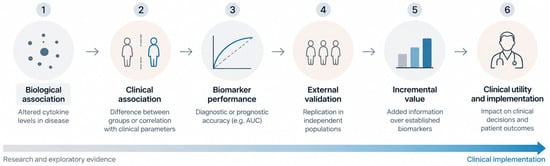
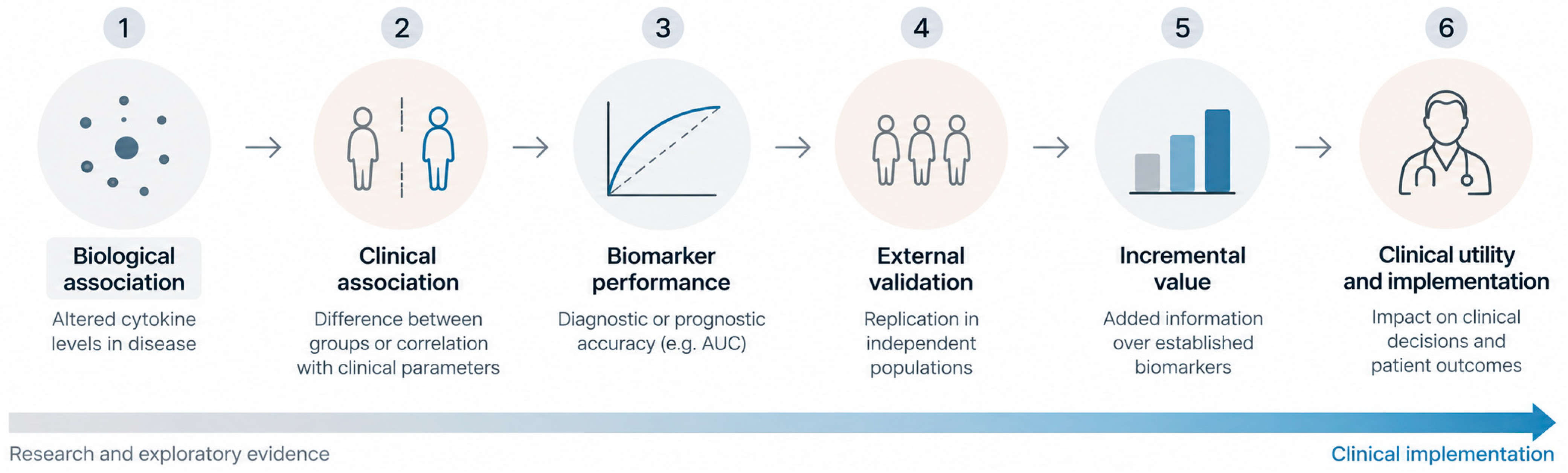
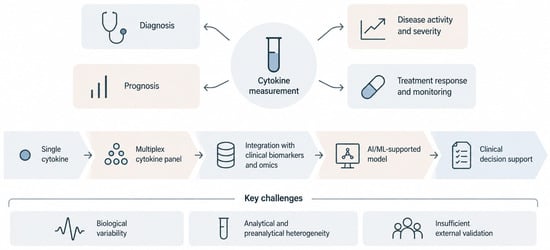
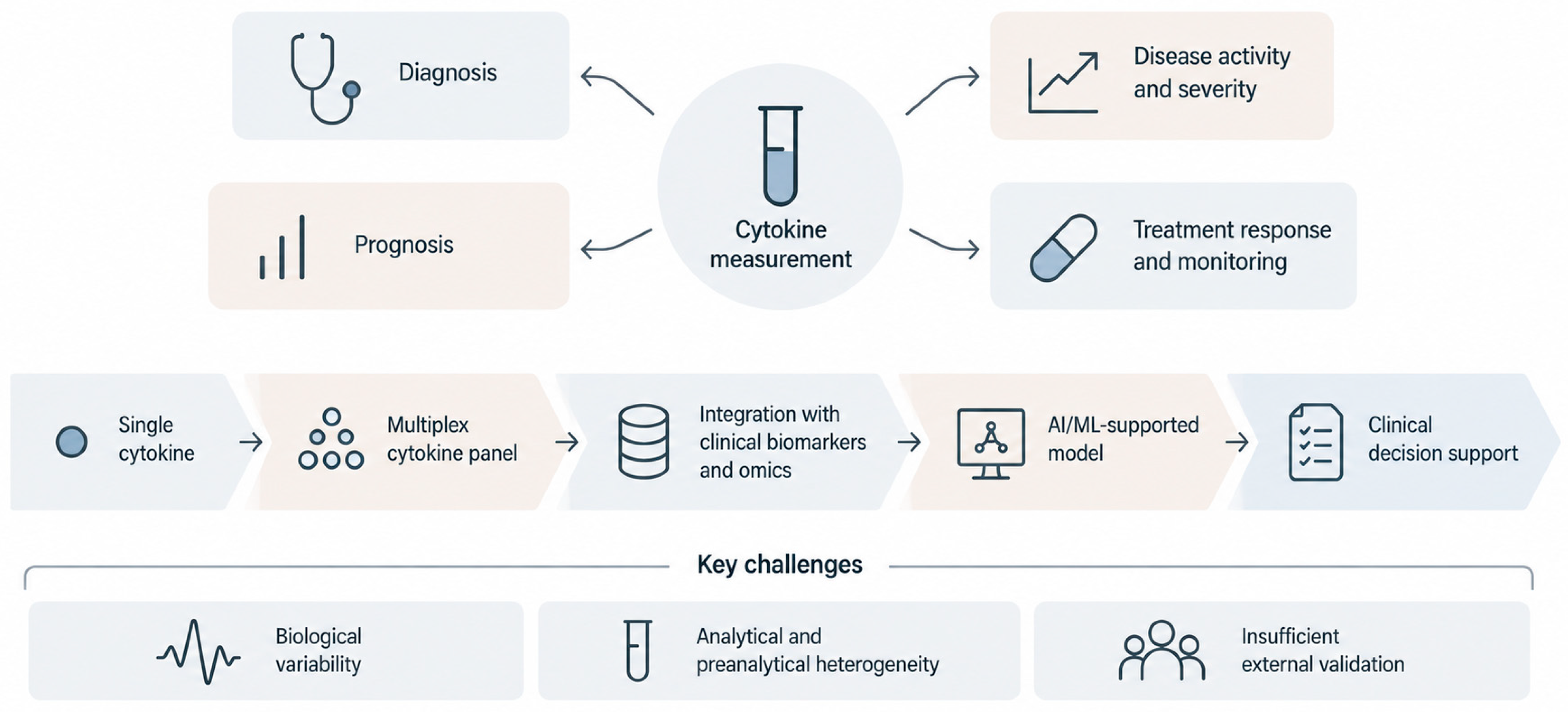

Disclaimer/Publisher’s Note: The statements, opinions and data contained in all publications are solely those of the individual author(s) and contributor(s) and not of MDPI and/or the editor(s). MDPI and/or the editor(s) disclaim responsibility for any injury to people or property resulting from any ideas, methods, instructions or products referred to in the content. |
© 2026 by the authors. Licensee MDPI, Basel, Switzerland. This article is an open access article distributed under the terms and conditions of the Creative Commons Attribution (CC BY) license.