


Abstract
Fungal infections and their pathogens have become a significant global public health issue, with 6.5 million invasive cases and 3.8 million deaths annually, particularly affecting individuals with weakened immune systems or underlying health conditions. This narrative review aims to describe current knowledge (2010–2026) on the most clinically relevant fungal pathogens (WHO list) and traditional antifungals and innovations, including rezafungin, ibrexafungerp, olorofim, and isavuconazole. Kazakhstan’s roseofungin presents as a broad-spectrum polyene for candidiasis and dermatomycoses, limited by producer productivity; however, it is promising for local markets. The review also emphasizes novel antifungal probiotic methods and their potential use as adjuncts to conventional therapy. Antifungal probiotics (Lactobacillus spp., Saccharomyces boulardii) reduce Candida biofilms and colonization as adjunctive therapies, corroborated by randomized controlled trials and meta-analyses. The rising resistance to current antifungal drugs, along with toxicity, limited pharmacological diversity, and restricted access in numerous places, continues to impede the successful management of mycoses.
1. Introduction
Fungal infections represent an escalating and underappreciated menace to public health, with around 6.5 million instances of invasive infections documented each year, resulting in 3.8 million fatalities [1]. The fatality rate in these instances frequently surpasses 50%. Individuals with weaker immune systems or underlying medical conditions, such as diabetes mellitus, HIV, cancer, chronic lung disease, or previous tuberculosis, are especially vulnerable. Critically ill patients in intensive care units, patients getting broad-spectrum antibiotics and invasive medical procedures, and individuals on immunosuppressive medications are also at risk. The 2022 WHO report identified Cryptococcus neoformans, a pathogen of essential priority, which causes meningoencephalitis, particularly in those with HIV. Candidozyma auris (Candida auris, a multidrug-resistant nosocomial pathogen), Aspergillus fumigatus, responsible for invasive aspergillosis, and Candida albicans, a prevalent pathogen in invasive candidiasis [2].
Fungal diseases spread mainly through direct contact and inhalation, but transmission varies by pathogen. Dermatophytic fungi of the genera Microsporum, Epidermophyton, and Trichophyton infect the injured skin by direct contact. They produce a variety of proteolytic enzymes to cause superficial mycoses in keratinized tissues. The other main mode of transmission is inhalation of spores or conidia that cause lung infections. Blastomycosis, P. brasiliensis, Paracoccidioidomycosis, Histoplasmosis, P. jirovecii, Aspergillus fumigatus and Aspergillosis, Coccidioides immitis and Coccidioidomycosis, C. neoformans and Cryptococcosis are transmitted mainly by inhalation.
In contrast, the transmission of Talaromyces marneffei (talaromycosis) occurs by both direct touch and inhalation. Clinical manifestations depend on the pathogen, the site of infection, and the host immune status. Superficial infections can present with pruritus, erythema, scaling, changes in hair or nails, and localized mucosal discomfort. Invasive disease may cause persistent fever and organ-specific signs: pulmonary mycoses commonly present with cough and dyspnea, whereas cryptococcal central nervous system infection may manifest with headache and meningeal symptoms. Pneumocystis jirovecii pneumonia can cause fever, cough, dyspnea, and, in severe cases, respiratory failure [3,4,5,6].
The body’s immune defenses play a key role in preventing fungal invasion. The barrier functions of the skin and mucous membranes provide the first line of defense. Neutrophils and macrophages recognize and respond to fungal cells via pattern recognition receptors. Cytokine-mediated innate and adaptive immune responses also provide antifungal protection. Therefore, defects in phagocytic or cellular immunity increase susceptibility to invasive fungal infections [4].
Diagnostic evaluation combines clinical assessment and host risk factors with laboratory confirmation. Depending on the specimen and suspected pathogen, the workflow may include direct microscopy of skin scrapings, respiratory samples, or other clinical material; fungal culture for isolation and species identification; histopathology; serological or antigen-based testing; and molecular assays, including PCR, where available. Results should be interpreted alongside the anatomical site, the likelihood of colonization versus infection, and, when indicated, antifungal susceptibility testing [4,7,8]. Significantly, diagnostic accuracy may be influenced by specimen quality, host immune status, and prior antifungal exposure, highlighting the need for a context-dependent interpretation of laboratory findings [9].
Established therapy is tailored to the clinical syndrome. Topical azoles or allylamines are commonly used for localized superficial infections; systemic azoles may be required for selected mucosal or more extensive infections. Echinocandins are standard initial agents for invasive candidiasis, with a possible change to a susceptible azole according to clinical response and microbiological findings. Mold-active triazoles, including voriconazole or isavuconazole, are important in aspergillosis; liposomal amphotericin B and flucytosine-containing combinations remain important for selected severe invasive infections, including cryptococcosis. Drug choice also depends on renal and hepatic function, interactions, site of infection, and susceptibility [8,10,11,12]. Recent international guidelines further emphasize that treatment selection should account for the specific fungal syndrome, patient characteristics, and the availability of appropriate antifungal agents [13].
In recent decades, the pharmaceutical industry has accelerated the development of antifungal therapies due to rising rates of fungal infections, driven by expanded antimicrobial use, a broader range of pathogenic fungi, increasing immunodeficiency, and heightened resistance to current medications. However, the rapid development of antifungal resistance, coupled with the scarcity of new medicines that complete clinical trials and reach the market, has led to a shortage of effective current drugs and underscores the need for innovative antifungal approaches [14,15]. The situation remains difficult in Kazakhstan’s antifungal drug market: a significant portion of it, especially for topical use, is imported, while the share of domestic products is only about 3% [16].
A critical area is the development of antifungal drugs based on roseofungin, first synthesized by Kazakhstani scientists in 1970. In the early 2000s, Roseofungin-AS ointment (2%) was developed, demonstrating strong competitiveness due to its broad-spectrum antifungal activity and fungicidal resistance. Addressing the shortage of affordable and cost-effective drugs in the Kazakhstan pharmaceutical market, technological improvements for roseofungin production have become a strategic priority. Successful clinical trials validate the drug’s therapeutic efficacy, making it promising for further scaling. Optimizing production processes is expected to ensure consistent quality and reduce costs, thereby bolstering the competitiveness of the domestic pharmaceutical industry in both domestic and export markets [17,18].
This review aims to examine the major fungal pathogens, current therapeutic options, the limitations of traditional therapies, mechanisms of antifungal resistance, and emerging strategies, such as natural products and probiotics. This review seeks to identify current research gaps and opportunities for improving the prevention and management of fungal infections in Kazakhstan and globally.
2. Methods of Literature Search
The literature search was conducted using PubMed, Scopus, and Web of Science to identify relevant publications published between January 2010 and July 2026. The search focused on the principal topics of this review, including human fungal pathogens and fungal diseases, antifungal agents and resistance mechanisms, probiotic-based approaches to fungal infections, and roseofungin.
The search strategy combined Medical Subject Headings (MeSH), where applicable, with free-text keywords using the Boolean operators AND and OR. The search strategy included combinations of the following keywords and terms: “human fungal pathogens,” “fungal infections,” “mycoses,” “candidiasis,” “aspergillosis,” “cryptococcosis,” “antifungal agents,” “antifungal resistance,” “probiotics,” “probiotic-based antifungal strategies,” and “roseofungin.”
An example of the PubMed search strategy was as follows: (“Fungal Infections”[Mesh] OR “fungal infection”[tiab] OR “fungal infections”[tiab] OR mycoses[tiab] OR candidiasis[tiab] OR aspergillosis[tiab] OR cryptococcosis[tiab]). Searches in Scopus and Web of Science were used to complement the identification of literature relevant to the review objectives.
The inclusion of literature was conducted through a stepwise screening process. Initially, article titles, abstracts, and keywords were evaluated, followed by examination of the full texts of potentially eligible publications where necessary. Priority was given to original English-language articles, review articles, and clinical guidelines. Information concerning the antifungal drug market in Kazakhstan and roseofungin was additionally obtained from national regulatory documents and local publications in Kazakh and Russian languages, which were also considered in this manuscript. Additional relevant sources were identified through reference-list screening. Publications were excluded if they fell outside the defined publication period without providing relevant historical evidence, were not relevant to the review objectives, or failed to meet the established eligibility criteria.
The review is narrative rather than systematic: it does not claim exhaustive retrieval, protocol registration, formal risk-of-bias scoring, or quantitative pooling.
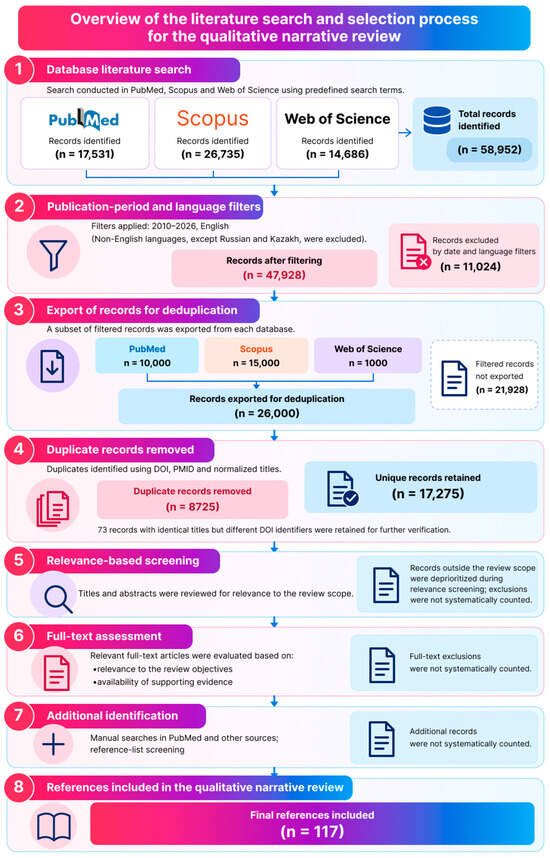
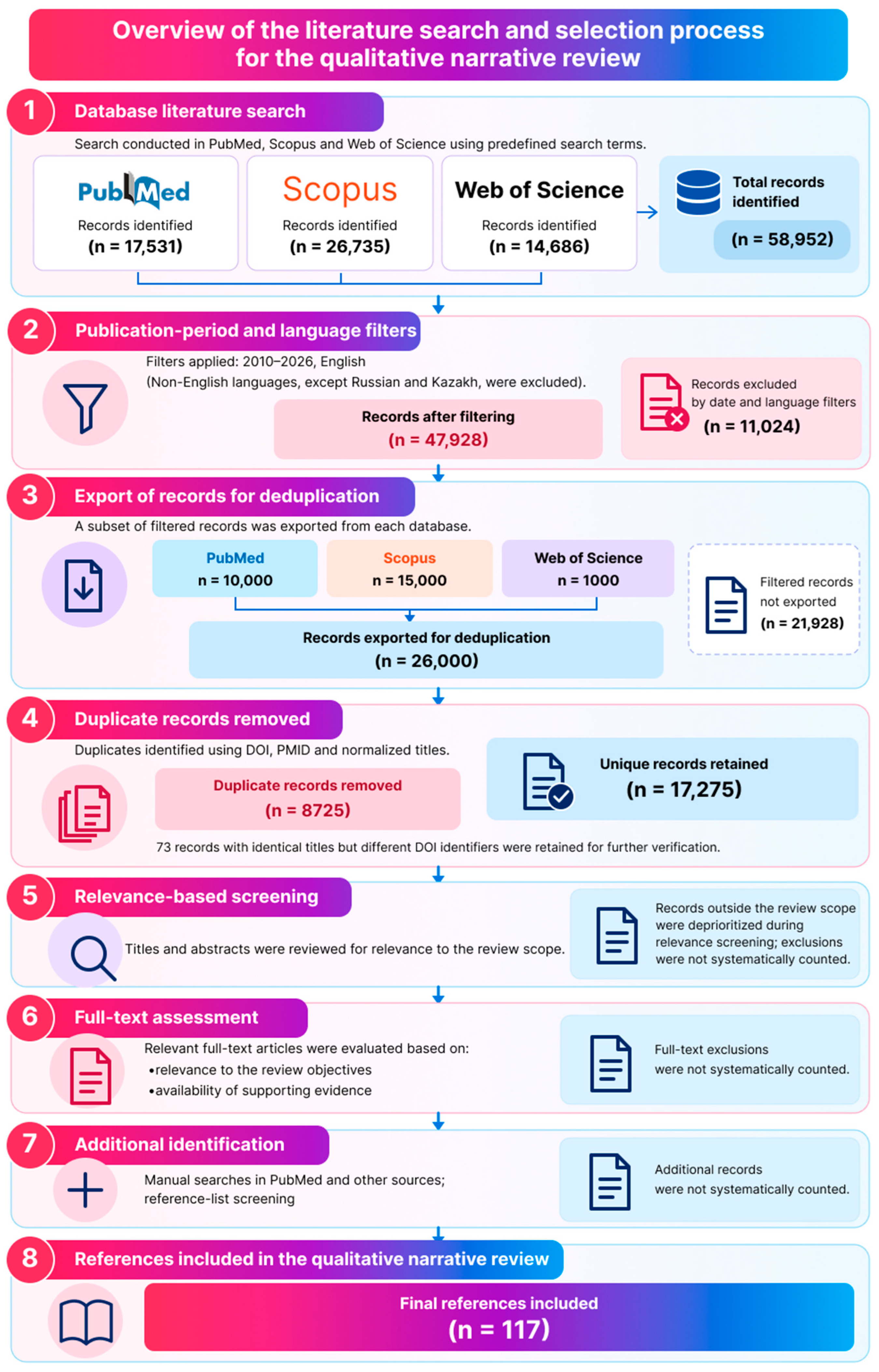
By applying this methodology, the references mentioned in the reference list were the ones finally used for this review paper. Figure 1 demonstrates an overview of the literature search and relevance-based selection process.
Figure 1.
Overview of the literature search and relevance-based selection process. The search strategy, selection workflow, and scientific content were developed by the authors. The figure was created using Figma.com.
3. Pathogens and Fungal Diseases
Fungal infections, or mycoses, are caused by various pathogenic fungi infecting the skin, mucous membranes, and internal organs of humans [4]. Mushrooms occupy a special position in the kingdom of Fungi (or Mycota) as immobile, predominantly aerobic eukaryotic organisms. Parasitic fungi are divided into three key groups: yeasts, mold fungi, and dimorphs [3,19].
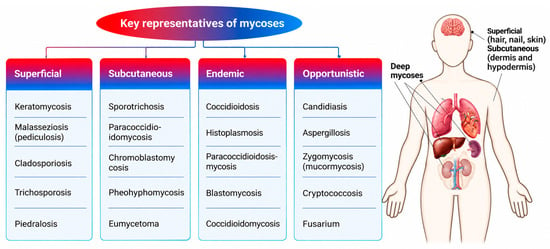
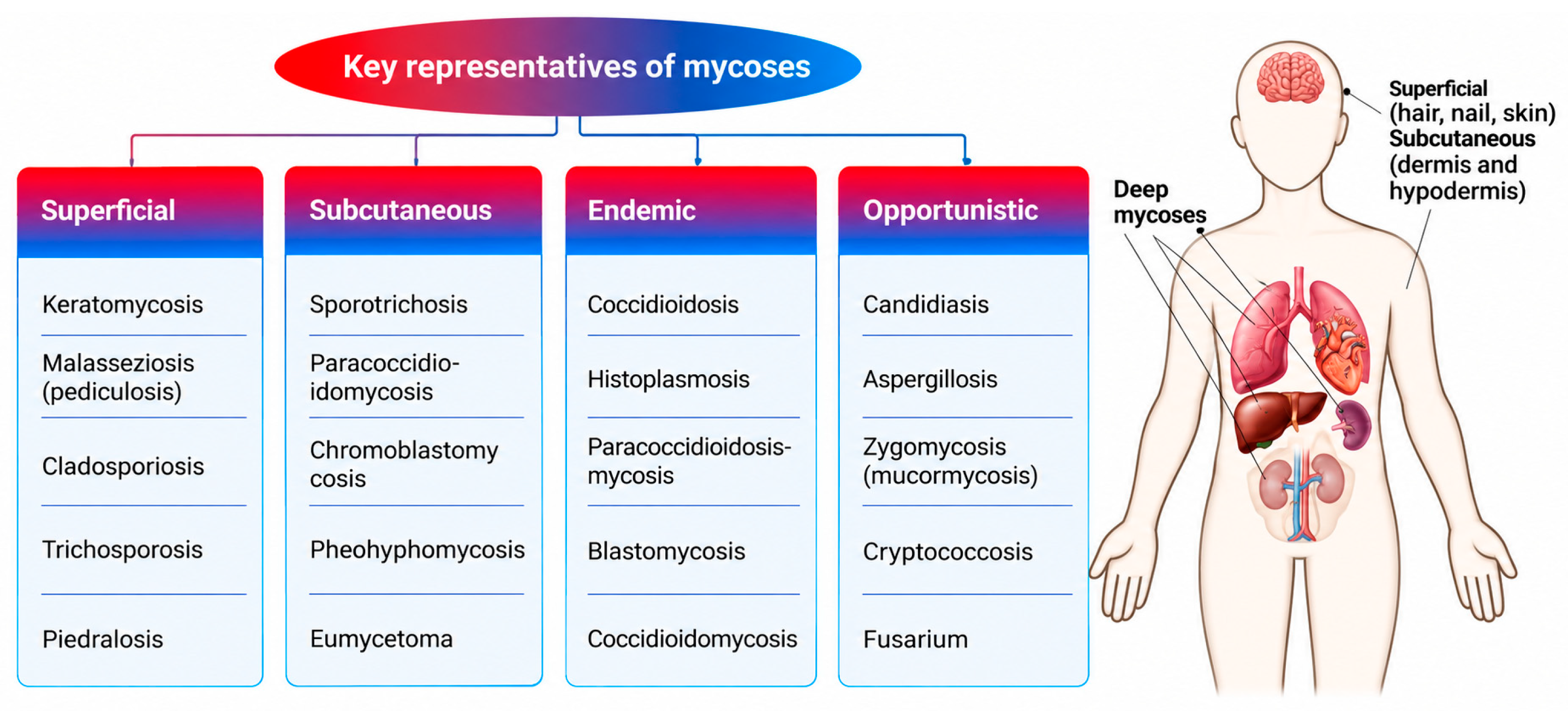
Mycoses are infectious diseases caused by parasitic fungi. Four main categories of mycoses are distinguished: superficial, subcutaneous, endemic, and opportunistic mycoses [4,20]. Key representatives of these categories and the depth of penetration into human tissues are illustrated in Figure 2.
Figure 2.
Classification of mycoses and their principal anatomical sites of infection. The anatomical illustration on the right highlights the distinction between infections affecting superficial tissues and those involving deeper organs. The examples are representative rather than exhaustive, and the anatomical distribution may vary according to the fungal pathogen and the host’s immune status. The concept and scientific content were developed by the authors, and the illustration was created using Figma.com.
Superficial mycoses are typically characterized mainly by lesions of the hair and the superficial stratum corneum of the epidermis. Infection occurs via direct contact with the infected areas. Skin lesions are called dermatomycoses, hair infections—trichomycoses, and nail infections—onychomycoses [21].
Subcutaneous mycoses, or implantation mycoses, arise from the traumatic introduction of fungal elements into the skin, typically affecting the dermis and subcutaneous tissue. This can result in the formation of nodules, abscesses, or vertical plaques that may ulcerate and disseminate via the lymphatic vessels. Transmission to deeper structures, including muscles, bones, and joints, as well as systemic dissemination, is infrequent; however, it can lead to considerable morbidity, disfigurement, and, in advanced instances, mortality, particularly in tropical and subtropical areas with constrained resources [22].
Infection with endemic deep mycoses occurs through airborne dust. Damage in this type of mycosis is characterized by involvement of internal organs and tissues, including the lungs. Deep mycoses resemble chronic bacterial infections caused by mycobacteria or actinomycetes. Primary lesions usually affect the lungs and present as acute pneumonia [22].
Opportunistic infections frequently occur in immunocompromised hosts, such as individuals with HIV/AIDS, and include diseases like candidiasis, aspergillosis, and other opportunistic mycoses. Comprehensive diagnosis and treatment of fungal diseases require consideration of the specific fungal pathogen, the extent and site of infection, and the patient’s immune status [4,7]. The host organism’s immune system has a direct impact on the clinical importance of opportunistic fungal pathogens. Invasive fungal infections are especially dangerous for patients with compromised immune systems. When evaluating infection risk, these clinical situations highlight the need to consider host-related risk [4,8].
Pathogens of Critical Priority
The WHO has classified 19 fungal pathogens into three categories according to their public health importance and the associated risks of antifungal resistance. The subsequent pathogens have been categorized as critical priorities based on the information from the sources [2].
Cryptococcus neoformans is a causative agent of meningoencephalitis, particularly in individuals with HIV. Initial infections caused by C. neoformans are prevalent and predominantly asymptomatic in the pulmonary region. Disseminated cryptococcal infection might develop clinical manifestations in the skin, eye, soft tissue, or bones and joints [4].
Candida auris is a multidrug-resistant pathogen associated with nosocomial infections. The Centers for Disease Control and Prevention (USA) has identified C. auris as a category of infectious agents that poses a significant threat to public health [2].
Aspergillus fumigatus is responsible for invasive aspergillosis. The heightened resistance of A. fumigatus to azoles is linked to the imprudent application of antifungal agents in agricultural practices [2,23].
Candida albicans is a prevalent causative agent of invasive candidiasis [2,23].
In addition to the WHO list, numerous publications identify other clinically significant fungal pathogens, particularly those responsible for invasive mycoses. This list is illustrated in Table 1.
Table 1.
Clinically significant fungal pathogens.
Pneumocystis jirovecii causes Pneumocystis jirovecii pneumonia (PCP), primarily affecting immunocompromised hosts, where it can be life-threatening. Patients at risk are usually those with underlying illness conditions that affect host immunity, such as HIV, cancer, transplant recipients, or those receiving immunosuppressive treatments and drugs. Symptoms of PCP might include fever, cough, dyspnea, and, in extreme situations, respiratory failure [5].
4. Traditional Antifungal Drugs and Recent Advances
Antimycotics, also called antifungal agents, are used to prevent and treat mycoses. These drugs have a fungicidal (destroying fungal pathogens) or fungistatic (suppressing their reproduction) effect. The chemical structure, mechanism of action, spectrum of activity, pharmacokinetics, tolerability, and clinical applications are just some of the characteristics used to classify drugs in the antimycotic group. The potential of biotechnological applications in managing fungal pathogens and developing novel antifungal agents is underscored by microorganisms with specialized metabolic capabilities, such as thermotolerant strains employed in the degradation of hydrocarbons [32]. Microbial biocontrol in agriculture has demonstrated efficacy in suppressing fungal infections. It provides a sustainable alternative or supplement to chemical antifungal treatments [33].
Antifungal agents used for the prevention and treatment of mycoses are categorized into polyenes (e.g., amphotericin B, nystatin, natamycin), azoles (triazoles and imidazoles), allylamines (terbinafine, naftifine, butenafine), echinocandins (caspofungin, micafungin, anidulafungin), and the fluoropyrimidine flucytosine, which exhibit either fungicidal or fungistatic properties contingent upon the target and dosage (Table 2) [10,34].
Table 2.
Main classes of traditional antifungal drugs.
In clinical practice, polyenes and triazoles are fundamental for treating invasive mold and yeast infections; allylamines are favored for dermatophytosis; echinocandins serve as first-line therapy for invasive candidiasis and are significant alternatives for azole-resistant aspergillosis; while flucytosine is predominantly utilized in combination therapies for cryptococcosis and specific refractory Candida infections [8,11,12,35,36].
Table 3 presents the range of in vitro and in vivo efficacy of selected novel antifungal medicines that have either recently received approval or are presently in clinical development, highlighting studies that have exhibited substantial activity against the pertinent fungal infections.
Table 3.
Selected novel antifungal agents and their reported activity.
Beyond the causative pathogen and the antifungal therapy used, clinicians should consider the patient’s underlying immunological condition when managing invasive fungal infections. Immunosuppression and other host-related variables complicate therapeutic care in patients with hematological malignancies or after hematopoietic stem cell transplantation. Subsequently, the clinical status of the patient and immune-related risk factors should be taken into account when making decisions about antifungal therapy [8].
4.1. New Perspective Triazoles
Isavuconazole is the latest triazole antifungal and is a broad-spectrum, water-soluble triazole for the management of severe systemic infections. Isavuconazole demonstrates high activity against numerous fungal species, including C. albicans (C. glabrata and C. krusei), Aspergillus, and Cryptococcus. It appears to offer therapeutic benefits comparable to those of fluconazole for the treatment of uncomplicated esophageal candidiasis [56,57,58].
Isavuconazole has demonstrated efficacy comparable to that of voriconazole and liposomal amphotericin B, with a more favorable safety profile. The predictable linear pharmacokinetics, diminished hepatotoxicity and nephrotoxicity, the absence of cyclodextrin in the intravenous formulation, and the propensity to shorten rather than prolong the QT interval facilitate straightforward once-daily dosing, rendering it especially appealing for patients with comorbidities and polypharmacy [59,60].
The introduction of delayed-release oral tablets and an intravenous formulation of Posaconazole has addressed the limitations of the original oral suspension, resulting in enhanced and more consistent systemic exposure and thereby improving efficacy for the primary prophylaxis of invasive fungal infections in high-risk hematology and transplant populations [61,62,63,64].
Voriconazole, available in oral and intravenous formulations, is a principal mold-active azole; clinical research supports its use for both primary and secondary prophylaxis of invasive fungal infections in individuals with hematologic malignancies and allogeneic stem-cell transplantation, demonstrating superior long-term tolerability compared to itraconazole in this context [65,66].
4.2. Novel Echinocandins
The expanded echinocandin class includes caspofungin, micafungin, and anidulafungin, which are first-line treatments for invasive candidiasis and critical alternatives for salvage therapy in invasive aspergillosis, especially in patients with azole-resistant isolates or triazole intolerance [10,67].
Rezafungin is a novel echinocandin characterized by an extended half-life, enabling once-weekly intravenous administration [68,69].
Pharmacokinetic and preliminary clinical data demonstrate persistent fungicidal efficacy against a wide array of Candida species, including instances of chronic, refractory invasive candidiasis where conventional echinocandins or azoles have proven ineffective. Long-acting echinocandins are being developed to streamline treatment and prevention protocols, enhance adherence, and minimize the necessity for central venous access in invasive candidiasis [12,68].
4.3. Novel Polyenes
Polyenes were the first class of antifungal drugs identified in the 1940s and used in clinical practice by the 1950s. Currently, only three polyenes—amphotericin B, nystatin, and natamycin—are used. Amphotericin B is the most commonly used polyene for treating systemic infections currently. Contemporary models of Amphotericin B highlight membrane disruption through the “sponge” effect and pore creation as the principal mechanism of antifungal activity, whereas the significance of reactive oxygen species-mediated damage has diminished. The mechanisms have been recently examined by Bajaj et al. and Cowen et al. [25,70,71].
Liposomal amphotericin B (AmBisome) is a lipid-based formulation of the broad-spectrum polyene antifungal drug amphotericin B. It is effective against clinically significant yeasts and molds, including Candida spp., Aspergillus spp., and filamentous molds such as Zygomycetes, and is authorized for the treatment of invasive fungal infections in numerous countries globally. It was designed to enhance the tolerability profile of amphotericin B deoxycholate, which, for many decades, was regarded as the gold standard of antifungal therapy, despite its association with infusion-related reactions and nephrotoxicity [72].
4.4. Olorofim
Olorofim, a new orotamine analog, inhibits pyrimidine synthesis by targeting the dihydroorotic acid dehydrogenase in fungi, hence interrupting fungal nucleic acid biosynthesis and impeding mycelial elongation [73,74].
Olorofim is a crucial antifungal agent in pyrimidine biosynthesis and demonstrates significant in vitro and in vivo efficacy against Aspergillus spp. (including azole-resistant A. fumigatus), uncommon molds, and many endemic dimorphic fungi. Preclinical and early clinical investigations indicate that olorofim may offer a significant alternative for invasive aspergillosis and other mold infections that exhibit inadequate response to current azoles or amphotericin B [75,76].
4.5. Ibrexafungerp
Ibrexafungerp is an orally administered triterpenoid β-1,3-D-glucan synthase inhibitor and the inaugural non-echinocandin glucan synthase inhibitor. Ibrexafungerp is approved for the treatment of acute vulvovaginal candidiasis, following randomized trials that demonstrated enhanced clinical and mycological cure rates compared to placebo, along with a satisfactory safety profile. Ibrexafungerp received FDA approval for the treatment of vulvovaginal candidiasis in June 2021 and was later approved for recurrent vulvovaginal candidiasis in December 2022 [25,77].
Ibrexafungerp offers a significant alternative for healthcare providers in the management of acute conditions in women. The population that stands to gain the most includes individuals with azole allergies or other contraindications to azoles, such as drug interactions with statins and tricyclics, as well as those affected by non-albicans Candida species, including C. glabrata, for which consistently effective oral treatments are not otherwise accessible. Ibrexafungerp provides an oral treatment option for women with fluconazole-resistant C. albicans [78].
4.6. Limitations of Current Antifungal Therapies
One of the most significant problems with current antifungal drugs is drug resistance. A small number of antifungal classes, including polyenes, azoles, and echinocandins, are used depending on the circumstances of invasive Candida infections. Current antifungal treatment for invasive mycoses relies primarily on triazoles, echinocandins, and amphotericin B (including lipid formulations), which improve outcomes but remain effective against only a limited range of fungal pathogens [79].
Multiple strains of Candida have evolved resistance to various medications, presenting a public health danger [80].
Observational data from medical facilities indicated extensive resistance to fluconazole among clinical isolates of both C. albicans and non-albicans Candida species [81,82,83].
Recently, multidrug-resistant Candida auris has emerged as a “superbug” that presents significant clinical challenges and a grave threat to public health. Candida auris frequently causes nosocomial bloodstream infections globally [84].
Moreover, surveillance studies indicate a rise in azole-resistant Aspergillus fumigatus, alongside the emergence of echinocandin resistance in Candida glabrata and related species, resulting in acute infections and a progressive reduction in the spectrum of effective treatments. The primary categories of pharmaceuticals are constrained by toxicity and pharmacokinetic issues—nephrotoxicity and infusion reactions associated with amphotericin B, hepatotoxicity and numerous drug interactions linked to triazoles, infusion-related adverse effects and hepatic complications related to echinocandins, in addition to the prohibitive expense of novel agents like isavuconazole and long-acting echinocandins, which restricts their accessibility. In numerous low- and middle-income nations, novel compounds, such as the oral glucansynthase inhibitor ibrexafunger and the first-in-class dihydroorotate dehydrogenase inhibitors (e.g., olorofim), only partially mitigate these deficiencies and fail to comprehensively resolve the intricate challenges of resistance, toxicity, and cost-effectiveness.
These limitations have generated interest in naturally occurring antifungal agents and probiotic-based techniques as adjuncts to conventional systemic medications. Polyene macrolides synthesized by Streptomyces spp., such as Kazakhstan polyene roseofungin, along with other microbial metabolites and phytochemicals, offer structurally diverse frameworks exhibiting extensive antifungal efficacy and comparatively low resistance, facilitating further optimization for both local and systemic applications.
Simultaneously, an increasing body of experimental and clinical evidence suggests that probiotic bacteria (notably, Lactobacillus rhamnosus, L. reuteri, and L. salivarius) and probiotic yeasts (Saccharomyces boulardii and food strains of Saccharomyces) can diminish Candida colonization, inhibit biofilm formation, and mitigate mucosal diseases [85,86,87].
At the same time, in certain instances, they may augment the activity of fungal infections. Azoles and other antifungal agents are utilized as supplementary therapy. The limited and increasingly compromised arsenal of antifungal drugs, coupled with promising data on natural products and probiotics, presents a compelling rationale for incorporating these methods into future antifungal drug research and development to mitigate colonization pressure, prevent relapses, and broaden the spectrum of safe and effective treatments [87,88].
Consequently, there is an urgent need for efficient alternatives to conventional treatments for candidal infections.
5. Antifungal Probiotics as a New Complementary Therapy
Probiotics are living microorganisms that confer health benefits when consumed in adequate amounts [89].
Numerous studies demonstrate that probiotic bacteria are effective in addressing gastrointestinal complications, including diarrhea, intestinal obstruction syndrome, and infections caused by Helicobacter pylori and Clostridium difficile [90,91].
Currently, Saccharomyces boulardii is the most extensively researched yeast probiotic utilized in humans. Experimental studies indicate that it effectively suppresses critical virulence factors of Candida albicans, including adhesion, filamentation, and biofilm formation. Additionally, in mouse models of C. albicans infection, S. boulardii reduces intestinal colonization, prevents translocation to internal organs, and decreases inflammation, thereby supporting its potential role as an adjunctive treatment for candidiasis [92,93,94].
In recent years, zinc nanoparticles have attracted considerable attention due to their antibacterial and antifungal properties. According to Hosseini et al. (2019), zinc nanoparticles damage fungal membranes, thereby compromising cell structure and function and ultimately leading to cell death [95]. A variety of antibiotic compounds produced by lactic acid bacteria can prevent the growth, adhesion, and biofilm formation of Candida albicans [95,96,97].
According to De Gregorio et al. (2019), Vazquez-Munoz et al. (2021), and El-Ashmony et al. (2023), strains including Lactobacillus rhamnosus, Lactobacillus reuteri, and Lactobacillus salivarius exhibit significant inhibitory effects against Candida albicans and other Candida species [98,99,100]. Besides their direct antifungal properties, several Lactobacillus strains have been linked to alterations in local inflammatory responses in experimental settings. De Gregorio et al. reported that the simultaneous preventative and therapeutic intravaginal application of L. reuteri CRL1324 or L. rhamnosus CRL1332 decreased C. albicans colonization and leukocyte infiltration in a mouse model of vulvovaginal candidiasis. L. reuteri CRL1324 reduced leukocyte infiltration sooner, but L. rhamnosus CRL1332 had a more pronounced suppressive impact on fungal colonization. These data indicate a potential correlation between probiotic use and localized inflammatory reactions. However, the specific immunomodulatory pathways remain unidentified, and the findings cannot be directly applied to therapeutic effectiveness in people [98].
Cell-free supernatants from L. salivarius inhibit Candida growth through lactic acid accumulation, whereas organic acids from Lactobacillus spp. enhance fungal membrane permeability, facilitating azole absorption [101].
However, these factors (lactic acid, low pH, and other metabolites) are also detected by C. albicans, influencing gene expression and morphogenesis towards hyphal forms. Furthermore, probiotic benefits may be facilitated by ecological factors, including competition for mucosal niches and the inhibition of Candida adherence to host surfaces [102].
Recent systematic reviews and meta-analyses of randomized controlled trials indicate that probiotic interventions can decrease oral Candida spp. counts and, when used alongside conventional antifungal medications, may reduce the treatment duration for oral candidiasis. This effect is particularly noted with strains such as Lactobacillus reuteri DSM 17938, Lactobacillus johnsonii MT4, and multi-strain combinations of Lactobacillus and Bifidobacterium. Simultaneously, multiple trials involving denture wearers and immunocompromised patients have shown no significant benefit, and the overall evidence is constrained by small sample sizes, variability in strains and dosing regimens, as well as indications of potential publication bias. Current data support the use of probiotics as adjuncts rather than as standalone therapies. They demonstrate short-term safety in low-risk populations. However, there are ongoing concerns regarding rare instances of probiotic-associated bacteremia or fungemia, as well as the potential transfer of antimicrobial resistance genes in severely ill patients. Robustly designed randomized controlled trials with standardized protocols, sufficient power, and extended follow-up are essential to determine optimal strains, dosages, and treatment durations, as well as to elucidate the risk-benefit ratio of probiotic therapy for oral candidiasis and other fungal infections [103]. The summary of reviewed probiotic microorganisms is described in Table 4.
Table 4.
Probiotic microorganisms reviewed for antifungal activity, their reported actions, and delivery information.
6. Roseofungin: A Polyene Antibiotic from Kazakhstan
Roseofungin is a pentaene antibiotic belonging to the subgroup of carbonyl-conjugated pentaenes. Roseofungin is derived from a strain of soil microorganisms and exhibits significant efficacy against pathogenic fungi responsible for human mycoses [104].
Roseofungin was initially derived from IMV A-23/791 of Streptomyces roseoflavus. The pentaene macrocyclic derivative impedes the viability of many phytopathogenic fungi, dermatophytes, and yeast-like fungi [105].
Novel pharmaceutical compound invented by Kazakhstani scientists, which serves as the foundation for the external antifungal formulation “Roseofungin-AS, ointment 2%”. The originality and innovativeness of the strain Streptomyces roseoflavus var. roseofungini AS-20.14, which generates the antibiotic roseofungin, have been demonstrated. The examination of physico-chemical properties established the novelty and originality of the antibiotic roseofungin, along with its empirical formula and chemical structure. The potent efficacy of the antibiotic roseofungin was evidenced against 39 species of pathogenic fungi, encompassing the most perilous pathogens associated with superficial and systemic fungal diseases, including trichophytosis, microsporia, favus, candidiasis, cryptococcosis, sporotrichosis, chromomycosis, aspergillosis, and various other human fungal infections [106].
Table 5 provides a comparative review of the following polyene antibiotics: amphotericin B, natamycin, nystatin, and roseofungin. The structure is based on essential criteria, including the producer (Streptomyces spp.), primary clinical application against fungal infections, usage limits, and pertinent references. The data is supplemented with current information for 2026 derived from scientific reviews and clinical trials.
Table 5.
Comparison of polyene antibiotics with Roseofungin.
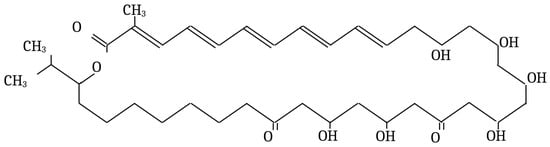
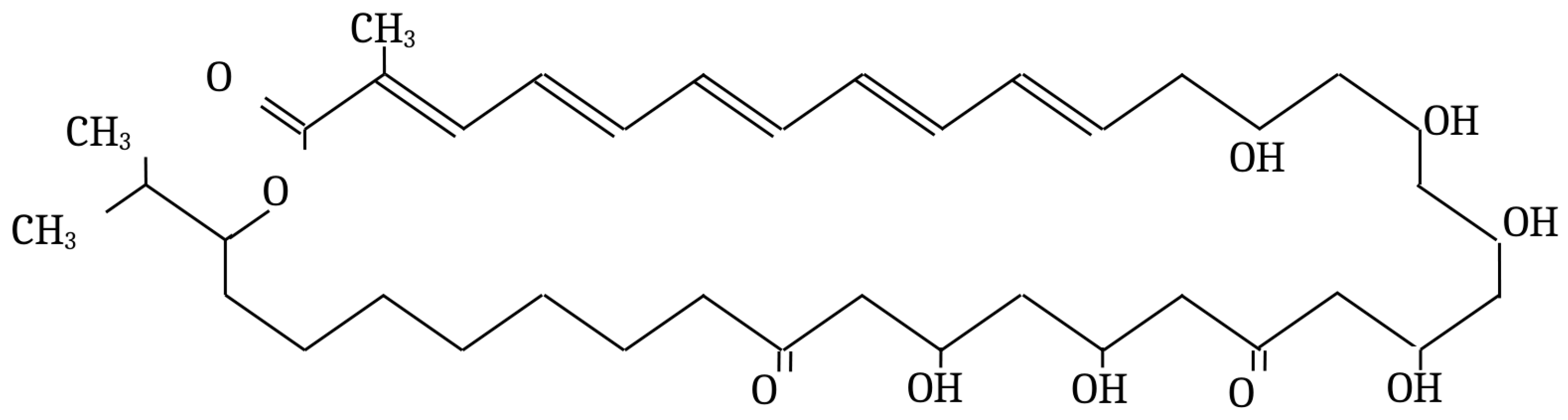
The chemical structure of roseofungin has been determined through the analysis of the oxidative degradation products of decahydrorozeofungin and the ozonolysis products of antibiotics. Research has demonstrated that roseofungin possesses a specific structure. 13,15,19,21,23,25-hexahydroxy-2,36-dimethyl-27-oxo-2,4,6,8,10-pentaene-17,21-epoxyheptatriacontan-35-olide. The chemical structure of roseofungin is shown in Figure 3.
Figure 3.
Chemical structure of Roseofungin. The structure was illustrated by the authors based on previously published data [104,111].
A comprehensive investigation of the physico-chemical properties of the antibiotic roseofungin was conducted, its chemical structure elucidated, and extensive research on its antifungal activity spectrum was performed. Roseofungin is identified as a carbonyl-conjugated pentaene and is classified within the category of polyene antibiotics. Comparative investigations indicate that the antifungal spectrum of roseofungin significantly surpasses that of other polyene antibiotics utilized in clinical settings, such as nystatin, amphotericin B, and levorin. In comparison to other members of the polyene antibiotic class, roseofungin exhibits superior efficacy against pathogenic fungi, enhanced stability, and reduced toxicity. The antifungal mechanism of the antibiotic roseofungin has been investigated. The antibiotic alters the permeability of the plasma membrane of cells, impacts the release of potassium and phosphorus, and suppresses the respiration of fungal cells [106].
Roseofungin holds considerable relevance for pharmaceutical development. The producer’s low productivity continues to hinder the scaling of the technology. Induced mutagenesis methods, encompassing chemical and physical factors, are considered among the most effective means to enhance genetic variation [112,113,114,115].
7. Discussion
The treatment of fungal infections depends on the causative pathogen, the site of infection, and the patient’s clinical condition. Superficial dermatophytosis, invasive candidiasis, and suspected mold disease have different therapeutic requirements. Clinical examination, direct microscopy, culture, and, where indicated, antigen-based or molecular tests help establish the diagnosis and guide treatment selection. Depending on the infection, treatment may involve topical antifungals, echinocandins, triazoles, or polyenes. The choice of therapy should also consider antifungal susceptibility and the patient’s immune system [4,7,8,10,12]. Recent international guidelines for cryptococcosis further demonstrate that treatment strategies must account for infection site, disease severity, and host immune status, reinforcing the importance of syndrome-specific management [13].
Appropriate antifungal use involves initiating effective treatment without unnecessary exposure to broad-spectrum agents or prolonged therapy. The emergence of azole-resistant Aspergillus fumigatus, resistant Candida species, and Candida auris supports species-level diagnosis, susceptibility-guided adjustment where feasible, and close evaluation of treatment response. Importantly, antifungal resistance is not limited to invasive fungal pathogens; emerging terbinafine-resistant Trichophyton infections also complicate the management of superficial dermatophytoses [116]. Treatment decisions are further complicated by renal toxicity associated with amphotericin B, hepatic adverse effects, and differences in access to antifungal medicines [79,80,81,82,83,84].
New antifungal agents provide additional treatment options, although their clinical roles differ. Once-weekly intravenous rezafungin may reduce the frequency of infusions; oral ibrexafungerp offers an alternative for defined vulvovaginal candidiasis indications. Isavuconazole is another option for selected invasive infections, particularly when tolerability and potential drug interactions influence treatment methods. Olorofim is still under investigation, and its place in antifungal treatment has not yet been established. These agents should therefore be evaluated according to their approved or investigational indications, susceptibility profiles, safety, cost, and availability rather than considered universal alternatives to existing treatments [12,56,57,58,59,60,68,69,73,74,75,76,77,78].
The probiotic literature has a different level of clinical readiness. Experimental inhibition of Candida adhesion, filamentation, or biofilms does not by itself establish better clinical outcomes. Some trials and pooled analyses suggest reductions in oral Candida counts or shorter treatment courses when probiotics are used alongside antifungal drugs, whereas others show no clear benefit. Effects cannot be generalized across genera, species, strains, delivery vehicles, or patient groups. Rare bacteremia or fungemia and other safety concerns are especially relevant for severely immunocompromised or critically ill patients. Findings from studies of vulvovaginal candidiasis should be evaluated separately from those involving candidiasis, as the clinical conditions, treatment approaches, and measured outcomes differ [117]. At present, probiotics may be considered potential adjuncts for further clinical investigation [85,86,87,92,93,94,95,96,97,98,99,100,101,102,103].
For Kazakhstan, roseofungin illustrates the relevance of local pharmaceutical development, especially for topical candidiasis and dermatomycoses. The reported antifungal spectrum must be considered alongside the need to optimize production yield and manufacturing scalability, and the distinction between experimental activity and documented clinical effectiveness. Further standardized clinical evaluation, access assessment, and comparative safety data are needed before broader therapeutic implications can be drawn. Across all approaches, patient-centered outcomes include resolution of infection, prevention of recurrence, adverse-event burden, and practical access to effective treatment [17,18,106,111].
8. Conclusions
Traditional antifungals like polyenes, azoles, and echinocandins serve as the foundation of treatment for systemic mycoses but encounter increasing resistance (azole-resistant A. fumigatus, echinocandin-resistant C. glabrata), toxicity (amphotericin B nephrotoxicity), and accessibility challenges in Kazakhstan. Innovative medicines such as rezafungin (a long-acting echinocandin) and ibrexafungerp (an oral glucan inhibitor) enhance therapeutic choices against C. auris and molds, demonstrating superior pharmacokinetics and safety. Roseofungin demonstrates competitive broad-spectrum efficacy through Streptomyces optimization, in accordance with domestic requirements. Probiotics impede biofilm formation and adhesion, shortening candidiasis therapy as adjuncts. However, randomized controlled trials are necessary for high-risk populations. Future strategies emphasize the development of multi-target pharmaceuticals, production in Kazakhstan, and the incorporation of probiotics to reduce resistance.
Author Contributions
Conceptualization, A.B. (Aigerim Bazaraliyeva), A.S. (Amankeldi Sadanov), and S.A.R.; methodology, A.B. (Aigerim Bazaraliyeva) and A.T.; formal analysis, A.B. (Aigerim Bazaraliyeva) and E.S.; investigation, A.B. (Aigerim Bazaraliyeva), A.T., B.B., A.B. (Assya Balgimbaeva), G.B., S.O., A.S. (Aisha Sultanova); resources, A.S. (Amankeldi Sadanov), B.B.; data curation, A.S. (Amankeldi Sadanov); writing—original draft preparation, A.B. (Aigerim Bazaraliyeva); writing—review and editing, A.S. (Amankeldi Sadanov), S.A.R., E.S., L.T., B.B.; visualization, A.B. (Aigerim Bazaraliyeva); supervision, A.S. (Amankeldi Sadanov), S.A.R., A.T.; funding acquisition, A.S. (Amankeldi Sadanov). All authors have read and agreed to the published version of the manuscript.
Funding
This work was funded by the Ministry of Science and Higher Education, Kazakhstan. Grant number [BR28712749] «A prospective comparative randomised study of therapeutic efficacy/safety of a medicinal product involving patients with gastrointestinal diseases (phase 3 clinical trial)» Industrial Microbiology.
Institutional Review Board Statement
Not applicable.
Informed Consent Statement
Not applicable.
Data Availability Statement
The original contributions presented in this study are included in the article. Further inquiries can be directed to the corresponding author.
Conflicts of Interest
Amankeldi Sadanov, Baiken Baimakhanova, Aigerim Bazaraliyeva, Lyudmila Trenozhnikova, Asya Balgimbayeva, Gul Baimakhanova, Saltanat Orasymbet and Aisha Sultanova were employed by the company Industrial Microbiology LLP. The remaining authors declare that the research was conducted in the absence of any commercial or financial relationships that could be construed as a potential conflict of interest.
Abbreviations
The following abbreviations are used in this manuscript:
| HIV | Human Immunodeficiency Virus |
| AIDS | Acquired Immune Deficiency Syndrome |
| PCP | Pneumocystis jirovecii pneumonia |
References
- Denning, D.W. Global incidence and mortality of severe fungal disease. Lancet Infect. Dis. 2024, 24, e428–e438. [Google Scholar] [CrossRef] [Scilit] [PubMed]
- World Health Organization. Available online: https://iris.who.int/bitstream/handle/10665/363682/9789240060241-eng.pdf?sequence= (accessed on 24 June 2025).
- Jain, A.; Jain, S.; Rawat, S. Emerging fungal infections among children: A review on its clinical manifestations, diagnosis, and prevention. J. Pharm. Bioallied Sci. 2010, 2, 314–320. [Google Scholar] [CrossRef] [Scilit] [PubMed]
- Badiee, P.; Hashemizadeh, Z. Opportunistic invasive fungal infections: Diagnosis & clinical management. Ind. J. Med. Res. 2014, 139, 195–204. [Google Scholar]
- Toda, Y.; Fujiwara, S.; Honda, S.; Tominaga, R.; Yokoyama, D.; Furuki, S.; Kanda, Y. Pneumocystis jirovecii infection in autologous hematopoietic stem cell transplantation. Leuk. Lymphoma 2026, 67, 889–897. [Google Scholar] [CrossRef] [Scilit] [PubMed]
- Hsu, T.J.; Lee, C.H. Implantation Mycoses and Invasive Fungal Infections with Cutaneous Involvement in Tropical Taiwan: An 11-Year Retrospective Study of a Medical Center. J. Fungi 2023, 9, 322. [Google Scholar] [CrossRef] [Scilit] [PubMed]
- Arendrup, M.C. Epidemiology of invasive candidiasis. Curr. Opin. Crit. Care 2010, 16, 445–452. [Google Scholar] [CrossRef] [Scilit] [PubMed]
- Tissot, F.; Agrawal, S.; Pagano, L.; Petrikkos, G.; Groll, A.H.; Skiada, A.; Lass-Flörl, C.; Calandra, T.; Viscoli, C.; Herbrecht, R. ECIL-6 guidelines for the treatment of invasive candidiasis, aspergillosis and mucormycosis in leukemia and hematopoietic stem cell transplant patients. Haematologica 2017, 102, 433–444. [Google Scholar] [CrossRef] [Scilit] [PubMed]
- Lass-Flörl, C. Beyond guidelines: What do I need to know when dealing with fungal diagnostics? Clin. Microbiol. Infect. 2025, 31, 1980–1984. [Google Scholar] [CrossRef] [Scilit] [PubMed]
- Szymański, M.; Chmielewska, S.; Czyżewska, U.; Malinowska, M.; Tylicki, A. Echinocandins—Structure, mechanism of action and use in antifungal therapy. J. Enzym. Inhib. Med. Chem. 2022, 37, 876–894. [Google Scholar] [CrossRef] [Scilit] [PubMed]
- Lakhani, P.; Patil, A.; Majumdar, S. Challenges in the Polyene- and Azole-Based Pharmacotherapy of Ocular Fungal Infections. J. Ocul. Pharmacol. Ther. 2019, 35, 6–22. [Google Scholar] [CrossRef] [Scilit] [PubMed]
- Pappas, P.G.; Kauffman, C.A.; Andes, D.R.; Clancy, C.J.; Marr, K.A.; Ostrosky-Zeichner, L.; Reboli, A.C.; Schuster, M.G.; Vazquez, J.A.; Walsh, T.J.; et al. Clinical Practice Guideline for the Management of Candidiasis: 2016 Update by the Infectious Diseases Society of America. Clin. Infect. Dis. 2016, 62, e1–e50. [Google Scholar] [CrossRef] [Scilit] [PubMed]
- Chang, C.C.; Harrison, T.S.; Bicanic, T.A.; Chayakulkeeree, M.; Sorrell, T.C.; Warris, A.; Hagen, F.; Spec, A.; Oladele, R.; Govender, N.P.; et al. Global guideline for the diagnosis and management of cryptococcosis: An initiative of the ECMM and ISHAM in cooperation with the ASM. Lancet Infect. Dis. 2024, 24, e495–e512. [Google Scholar] [CrossRef] [Scilit] [PubMed]
- Uy, I.A.; Dapar, M.L.G.; Aranas, A.T.; Mindo, R.A.R.; Cabrido, C.K.; Torres, M.A.J.; Demayo, C.G. Qualitative assessment of the antimicrobial, antioxidant, phytochemical properties of the ethanolic extracts of the roots of Cocos nucifera L. Pharmacophore 2019, 10, 63–75. [Google Scholar]
- Europe has an Increasing Prevalence of Fungal Resistance, Warns ESCMID. Available online: http://www.news-medical.net/news/20150728/Europe-has-increasing-prevalence-of-fungal-resistance-warns-ESCMID.aspx (accessed on 12 May 2025).
- Pharmacy Sales of Antifungal Drugs for the Treatment of Skin Diseases. Available online: http://viortis.kz/files/40_aptech_prodazhi.pdf (accessed on 10 April 2025).
- Sadanov, A.K.; Berezin, V.E.; Trenozhnikova, L.P.; Balgimbaeva, A.S. Strain Streptomyces roseoflavus var. roseofungini AS-20.14—A Highly Active Production-Valuable Producer of Polyene Antibiotic Roseofungin. Republic of Kazakhstan Patent No. 31866, 28 February 2017. [Google Scholar]
- Sadanov, A.K.; Berezin, V.E.; Kulmagambetov, I.R.; Trenozhnikova, L.P.; Balgimbaeva, A.S. Roseofungin-AS, Ointment 2% for the Treatment of Tinea Pedis and Tinea Corporis: Results of a Randomized, Blinded, Prospective, Multicenter Phase III Clinical Trial. Farmatsiya Kazakhstana 2021, 2, 29–39. (In Russian) [Google Scholar] [CrossRef] [Scilit]
- Donetsk, E.G.A. Clinical Microbiology: A Guide for Specialists in Clinical Laboratory Diagnostics; GEOTARMedia: Moscow, Russia, 2011; pp. 20–222. [Google Scholar]
- Munkvold, G.P. Fusarium Species and Their Associated Mycotoxins. Methods Mol. Biol. 2017, 1542, 51–106. [Google Scholar] [CrossRef] [Scilit] [PubMed]
- Thomas, J.; Jacobson, G.A.; Narkowicz, C.K.; Peterson, G.M.; Burnet, H.; Sharpe, C. Toenail onychomycosis: An important global disease burden. J. Clin. Pharm. Ther. 2010, 35, 497–519. [Google Scholar] [CrossRef] [Scilit] [PubMed]
- Bonifaz, A.; Vázquez-González, D.; Perusquía-Ortiz, A.M. Endemic systemic mycoses: Coccidioidomycosis, histoplasmosis, paracoccidioidomycosis and blastomycosis. J. Dtsch. Dermatol. Ges. 2011, 9, 705–714. [Google Scholar] [CrossRef] [Scilit] [PubMed]
- Avtonomova, A.B.; Kisil, O.V.; Zagaynova, A.V.; Makarov, V.V. Current Trends in the Development of Antifungal Agents. Hum. Ecol. 2025, 32, 25–30. [Google Scholar] [CrossRef] [Scilit]
- Susan, V.; Lang, M.; Sabou, M.; Bourel-Bonnet, L. Antifungal Drugs for the Treatment of Invasive Fungal Infections-A Limited Therapeutic Toolbox Facing Growing Resistances. Pharmaceuticals 2025, 18, 1220. [Google Scholar] [CrossRef] [Scilit] [PubMed]
- Miceli, M.H.; Díaz, J.A.; Lee, S.A. Emerging opportunistic yeast infections. Lancet Infect. Dis. 2011, 11, 142–151. [Google Scholar] [CrossRef] [Scilit] [PubMed]
- Pfaller, M.A.; Diekema, D.J. Epidemiology of invasive candidiasis: A persistent public health problem. Clin. Microbiol. Rev. 2007, 20, 133–163. [Google Scholar] [CrossRef] [Scilit] [PubMed]
- Brown, G.D.; Denning, D.W.; Levitz, S.M. Tackling human fungal infections. Science 2012, 336, 647. [Google Scholar] [CrossRef] [Scilit] [PubMed]
- Blyth, C.C.; Gilroy, N.M.; Guy, S.D.; Chambers, S.T.; Cheong, E.Y.; Gottlieb, T.; McGuinness, S.L.; Thursky, K.A. Consensus guidelines for the treatment of invasive mould infections in haematological malignancy and haemopoietic stem cell transplantation. Intern. Med. J. 2014, 44, 1333–1349. [Google Scholar] [CrossRef] [Scilit] [PubMed]
- Kauffman, C.A. Fungal infections. Proc. Am. Thorac. Soc. 2006, 3, 35–40. [Google Scholar] [CrossRef] [Scilit] [PubMed]
- Cighir, A.; Mare, A.D.; Vultur, F.; Cighir, T.; Pop, S.D.; Horvath, K.; Man, A. Fusarium spp. in Human Disease: Exploring the Boundaries between Commensalism and Pathogenesis. Life 2023, 13, 1440. [Google Scholar] [CrossRef] [Scilit] [PubMed]
- Wang, F.; Han, R.; Chen, S. An Overlooked and Underrated Endemic Mycosis—Talaromycosis and the Pathogenic Fungus Talaromyces marneffei. Clin. Microbiol. Rev. 2023, 36, e0005122. [Google Scholar] [CrossRef] [Scilit] [PubMed]
- Aitkeldiyeva, S.A.; Faizulina, E.R.; Tatarkina, L.G.; Spankulova, G.A.; Sadanov, A.K. Degradation of petroleum hydrocarbons with thermotolerant microorganisms. RASAYAN J. Chem. 2020, 13, 1271–1282. [Google Scholar] [CrossRef] [Scilit]
- Smirnova, I.; Sadanov, A. Application of Agriculturally Important Microorganisms for Biocontrol of Root Rot Infection of Sugar Beet. Arch. Phytopathol. Plant Prot. 2019, 52, 698–713. [Google Scholar] [CrossRef] [Scilit]
- Zobi, C.; Algul, O. The Significance of Mono- and Dual-Effective Agents in the Development of New Antifungal Strategies. Chem. Biol. Drug Des. 2025, 105, 70045. [Google Scholar] [CrossRef] [Scilit] [PubMed]
- Hainer, B.L. Dermatophyte infections. Am. Fam. Physician 2003, 67, 101–108. [Google Scholar] [PubMed]
- Toepfer, S.; Keniya, M.V.; Lackner, M.; Monk, B.C. Azole Combinations and Multi-Targeting Drugs That Synergistically Inhibit Candidozyma auris. J. Fungi 2024, 10, 698. [Google Scholar] [CrossRef] [Scilit] [PubMed]
- Chen, Y.; Lu, Z.Y.; Jin, Y.; Han, L.; Huang, L.Y. Progress of research on azole resistance in Aspergillus fumigatus. Chin. J. Epidemiol. 2016, 37, 1687–1692. [Google Scholar] [CrossRef] [PubMed]
- Boakye-Yiadom, E.; Odoom, A.; Osman, A.H.; Ntim, O.K.; Kotey, F.C.N.; Ocansey, B.K.; Donkor, E.S. Fungal infections, treatment and antifungal resistance: The sub-Saharan African context. Ther. Adv. Infect. Dis. 2024, 11, 20499361241297525. [Google Scholar] [CrossRef] [Scilit] [PubMed]
- Chia, S.K.; Dinesh, S.R.; Syed, S.H.; Kaeshaelya, T. Ibrexafungerp for the treatment of vulvovaginal candidiasis: A systematic review and meta-analysis of randomized placebo-controlled trials. J. Med. Mycol. 2025, 35, 101534. [Google Scholar] [CrossRef] [Scilit] [PubMed]
- Robbins, N.; Cowen, L.E. Antifungal drug resistance: Deciphering the mechanisms governing multidrug resistance in the fungal pathogen Candida glabrata. Curr. Biol. 2021, 31, 1520–1523. [Google Scholar] [CrossRef] [Scilit] [PubMed]
- Chen, P.; Liu, J.; Zeng, M.; Sang, H. Exploring the molecular mechanism of azole resistance in Aspergillus fumigatus. J. Med. Mycol. 2020, 30, 100915. [Google Scholar] [CrossRef] [Scilit] [PubMed]
- Lamb, D.C.; Kelly, D.E.; White, T.C.; Kelly, S.L. The R467K amino acid substitution in Candida albicans sterol 14alpha-demethylase causes drug resistance through reduced affinity. Antimicrob. Agents Chemother. 2000, 44, 63–67. [Google Scholar] [CrossRef] [Scilit] [PubMed]
- Beyda, N.D.; John, J.; Kilic, A.; Alam, M.J.; Lasco, T.M.; Garey, K.W. FKS mutant Candida glabrata: Risk factors and outcomes in patients with candidemia. Clin. Infect. Dis. 2014, 59, 819–825. [Google Scholar] [CrossRef] [Scilit] [PubMed]
- Shields, R.K.; Nguyen, M.H.; Press, E.G.; Kwa, A.L.; Cheng, S.; Du, C.; Clancy, C.J. The presence of an FKS mutation rather than MIC is an independent risk factor for failure of echinocandin therapy among patients with invasive candidiasis due to Candida glabrata. Antimicrob. Agents Chemother. 2012, 56, 4862–4876. [Google Scholar] [CrossRef] [Scilit] [PubMed]
- Ostrosky-Zeichner, L. Candida glabrata and FKS mutations: Witnessing the emergence of the true multidrug-resistant Candida. Clin. Infect. Dis. 2013, 56, 1733–1734. [Google Scholar] [CrossRef] [Scilit] [PubMed]
- Sipos, G.; Kuchler, K. Fungal ATP-binding cassette (ABC) transporters in drug resistance & detoxification. Curr. Drug Targets 2006, 7, 471–481. [Google Scholar] [CrossRef] [Scilit] [PubMed]
- Kriegl, L.; Egger, M.; Boyer, J.; Hoenigl, M.; Krause, R. New treatment options for critically important WHO fungal priority pathogens. Clin. Microbiol. Infect. 2025, 31, 922–930. [Google Scholar] [CrossRef] [Scilit] [PubMed]
- Boyer, J.; Feys, S.; Zsifkovits, I.; Hoenigl, M.; Egger, M. Treatment of invasive aspergillosis: How it’s going, where it’s heading. Mycopathologia 2023, 188, 667–681. [Google Scholar] [CrossRef] [Scilit] [PubMed]
- A, K.R.; Shah, A.H.; Prasad, R. MFS transporters of Candida species and their role in clinical drug resistance. FEMS Yeast Res. 2016, 16, fow043. [Google Scholar] [CrossRef] [Scilit] [PubMed]
- Corrales, J.; Ramos-Alonso, L.; González-Sabín, J.; Ríos-Lombardía, N.; Trevijano-Contador, N.; Berg, H.E.; Skottvoll, F.S.; Moris, F.; Zaragoza, O.; Chymkowitch, P.; et al. Characterization of a selective, iron-chelating antifungal compound that disrupts fungal metabolism and synergizes with fluconazole. Microbiol. Spectr. 2024, 12, e0259423. [Google Scholar] [CrossRef] [Scilit] [PubMed]
- Zhu, X.; Wang, A.; Zheng, Y.; Li, D.; Wei, Y.; Gan, M.; Li, Y.; Si, S. Anti-biofilm activity of cocultimycin against Candida albicans. Int. J. Mol. Sci. 2023, 24, 17026. [Google Scholar] [CrossRef] [Scilit] [PubMed]
- Nett, J.E.; D, R.A. Fungal biofilms: In vivo models for discovery of antibiofilm drugs. Microbiol. Spectr. 2015, 3, E30. [Google Scholar] [CrossRef] [Scilit] [PubMed]
- Verma, R.; Pradhan, D.; Nayek, A.; Singh, H.; Jain, A.K.; Khan, L.A. Target-based drug repurposing against Candida albicans―A computational modeling, docking, and molecular dynamic simulations study. J. Cell Biochem. 2022, 123, 289–305. [Google Scholar] [CrossRef] [Scilit] [PubMed]
- Shao, F.; Li, H.; Hsieh, K.; Zhang, P.; Li, S.; Wang, T.H. Automated and miniaturized screening of antibiotic combinations via robotic-printed combinatorial droplet platform. Acta Pharm. Sin. B 2024, 14, 1801–1813. [Google Scholar] [CrossRef] [Scilit] [PubMed]
- Campoy, S.; Adrio, J.L. Antifungals. Biochem. Pharmacol. 2017, 133, 86–96. [Google Scholar] [CrossRef] [Scilit] [PubMed]
- Park, N.H.; Shin, K.H.; Kang, M.K. Antifungal and antiviral agents. In Pharmacology and Therapeutics for Dentistry, 7th ed.; Dowd, F.J., Johnson, B.S., Mariotti, A., Eds.; Elsevier: St. Louis, MO, USA, 2017; pp. 488–503. [Google Scholar] [CrossRef] [Scilit]
- Yamazaki, T.; Inagaki, Y.; Fujii, T.; Ohwada, J.; Tsukazaki, M.; Umeda, I.; Kobayashi, K.; Shimma, N.; Page, M.G.; Arisawa, M. In vitro activity of isavuconazole against 140 reference fungal strains and 165 clinically isolated yeasts from Japan. Int. J. Antimicrob. Agents. 2010, 36, 324–331. [Google Scholar] [CrossRef] [Scilit] [PubMed]
- Pfaller, M.A.; Rhomberg, P.R.; Messer, S.A.; Jones, R.N.; Castanheira, M. Isavuconazole, micafungin and eight comparator antifungal agents: Susceptibility profiles for common and uncommon opportunistic fungi collected in 2013 using CLSI species-specific breakpoints and epidemiological cutoff values. Diagn. Microbiol. Infect. Dis. 2015, 82, 303–313. [Google Scholar] [CrossRef] [Scilit] [PubMed]
- Natesan, S.K.; Chandrasekar, P.H. Isavuconazole for the treatment of invasive aspergillosis and mucormycosis: Current evidence, safety, efficacy, and clinical recommendations. Infect. Drug Resist. 2016, 9, 291–300. [Google Scholar] [CrossRef] [Scilit] [PubMed]
- Jenks, J.D.; Salzer, H.J.; Prattes, J.; Krause, R.; Buchheidt, D.; Hoenigl, M. Spotlight on isavuconazole in the treatment of invasive aspergillosis and mucormycosis: Design, development, and place in therapy. Drug Des. Dev. Ther. 2018, 12, 1033–1044. [Google Scholar] [CrossRef] [Scilit] [PubMed]
- Wong, T.Y.; Loo, Y.S.; Veettil, S.K.; Wong, P.S.; Divya, G.; Ching, S.M.; Menon, R.K. Efficacy and safety of posaconazole for the prevention of invasive fungal infections in immunocompromised patients: A systematic review with meta-analysis and trial sequential analysis. Sci. Rep. 2020, 10, 14575. [Google Scholar] [CrossRef] [Scilit] [PubMed]
- Soysal, A. Prevention of invasive fungal infections in immunocompromised patients: The role of delayed-release posaconazole. Infect. Drug Resist. 2015, 8, 321–331. [Google Scholar] [CrossRef] [Scilit] [PubMed]
- Pagano, L.; Maschmeyer, G.; Lamoth, F.; Blennow, O.; Xhaard, A.; Spadea, M.; Busca, A.; Cordonnier, C.; Maertens, J. Primary antifungal prophylaxis in hematological malignancies. Updated clinical practice guidelines by the European Conference on Infections in Leukemia (ECIL). Leukemia 2025, 39, 1547–1557. [Google Scholar] [CrossRef] [Scilit] [PubMed]
- Maertens, J.; Cornely, O.A.; Ullmann, A.J.; Heinz, W.J.; Krishna, G.; Patino, H.; Caceres, M.; Kartsonis, N.; Waskin, H.; Robertson, M.N. Phase 1B Study of the Pharmacokinetics and Safety of Posaconazole Intravenous Solution in Patients at Risk for Invasive Fungal Disease. Antimicrob. Agents Chemother. 2014, 58, 3610–3617. [Google Scholar] [CrossRef] [Scilit] [PubMed]
- Zabalza, A.; Gorosquieta, A.; Equiza, E.P.; Olavarria, E. Voriconazole and its clinical potential in the prophylaxis of systemic fungal infection in patients with hematologic malignancies: A perspective review. Ther. Adv. Hematol. 2013, 4, 217–230. [Google Scholar] [CrossRef] [Scilit] [PubMed]
- Catherine-Audrey, B.; Florence, D.; Stéphanie, B.; Daniela, Z.; Claire Nour, A.C.; Simon, F.D. Breakthrough Invasive Fungal Infections in Patients With High-Risk Hematological Disorders Receiving Voriconazole and Posaconazole Prophylaxis: A Systematic Review. Clin. Infect. Dis. 2024, 79, 151–160. [Google Scholar] [CrossRef] [Scilit] [PubMed]
- A Cornely, O.; Sprute, R.; Bassetti, M.; Chen, S.C.-A.; Groll, A.H.; Kurzai, O.; Lass-Flörl, C.; Ostrosky-Zeichner, L.; Rautemaa-Richardson, R.; Revathi, G.; et al. Global guideline for the diagnosis and management of candidiasis: An initiative of the ECMM in cooperation with ISHAM and ASM. Lancet Infect. Dis. 2025, 25, e280–e293. [Google Scholar] [CrossRef] [Scilit] [PubMed]
- Andes, D.; Brüggemann, R.J.; Flanagan, S.; Lepak, A.J.; Lewis, R.E.; Ong, V.; Rubino, C.M.; Sandison, T. The distinctive pharmacokinetic profile of rezafungin, a long-acting echinocandin developed in the era of modern pharmacometrics. J. Antimicrob. Chemother. 2025, 80, 18–28. [Google Scholar] [CrossRef] [Scilit] [PubMed]
- Keck, J.M.; Dare, R.K.; Jenkins, M.B.; Rico, J.C.; Grisham, L.; McDonald, J.; Viteri, A.; Bradsher, R.W. It’s Here, It’s There, There’s Fungi Everywhere: A Case Series Utilizing Rezafungin for Invasive Candidiasis. Infect. Dis. Ther. 2025, 14, 889–895. [Google Scholar] [CrossRef] [Scilit] [PubMed]
- Mehta, D.; Saini, V.; Bajaj, A. Recent developments in membrane targeting antifungal agents to mitigate antifungal resistance. RSC Med. Chem. 2023, 14, 1603–1628. [Google Scholar] [CrossRef] [Scilit] [PubMed]
- Puumala, E.; Fallah, S.; Robbins, N.; Cowen, L.E. Advancements and challenges in antifungal therapeutic development. Clin. Microbiol. Rev. 2024, 37, e0014223. [Google Scholar] [CrossRef] [Scilit] [PubMed]
- Moen, M.D.; Lyseng-Williamson, K.A.; Scott, L.J. Liposomal amphotericin B: A review of its use as empirical therapy in febrile neutropenia and in the treatment of invasive fungal infections. Drugs 2009, 69, 361–392. [Google Scholar] [CrossRef] [Scilit] [PubMed]
- Oliver, J.D.; Sibley, G.E.M.; Beckmann, N.; Dobb, K.S.; Slater, M.J.; McEntee, L.; du Pré, S.; Livermore, J.; Bromley, M.J.; Wiederhold, N.P.; et al. F901318 represents a novel class of antifungal drug that inhibits dihydroorotate dehydrogenase. Proc. Natl. Acad. Sci. USA 2016, 113, 12809–12814. [Google Scholar] [CrossRef] [Scilit] [PubMed]
- Wiederhold, N.P. Review of the novel investigational antifungal olorofim. J. Fungi 2020, 6, 122. [Google Scholar] [CrossRef] [Scilit] [PubMed]
- Michaela, L.; Mike, B.; Verena, N.; Denise, G.; Nicola, B.; Peter, W.; Julie, G.; Derek, L.; Cornelia, L.; Ulrike, B. Dihydroorotate dehydrogenase inhibitor olorofim exhibits promising activity against all clinically relevant species within Aspergillus section Terrei. J. Antimicrob. Chemother. 2018, 73, 3068–3073. [Google Scholar] [CrossRef] [Scilit] [PubMed]
- Vanbiervliet, Y.; Van, N.T.; Aerts, R.; Lagrou, K.; Spriet, I.; Maertens, J. Review of the novel antifungal drug olorofim (F901318). BMC Infect. Dis. 2024, 24, 1256, Erratum in BMC Infect. Dis. 2024, 24, 1395. https://doi.org/10.1186/s12879-024-10295-2. [Google Scholar] [CrossRef] [Scilit] [PubMed]
- Phillips, N.A.; Rocktashel, M.; Merjanian, L. Ibrexafungerp for the Treatment of Vulvovaginal Candidiasis: Design, Development and Place in Therapy. Drug Des. Dev. Ther. 2023, 17, 363–367. [Google Scholar] [CrossRef] [Scilit] [PubMed]
- Marchaim, D.; Lemanek, L.; Bheemreddy, S.; Kaye, K.S.; Sobel, J.D. Fluconazole-resistant Candida albicans vulvovaginitis. Obstet. Gynecol. 2012, 120, 1407–1414. [Google Scholar] [CrossRef] [Scilit] [PubMed]
- Berman, J.; Krysan, D.J. Drug resistance and tolerance in fungi. Nat. Rev. Microbiol. 2020, 18, 319–331. [Google Scholar] [CrossRef] [Scilit] [PubMed]
- Centers for Disease Control and Prevention (CDC). Candida auris. Available online: https://www.cdc.gov/fungal/candida-auris/candida-auris-qanda.html (accessed on 22 July 2020).
- Shi, C.; Liu, J.; Li, W.; Zhao, Y.; Meng, L.; Xiang, M. Expression of fluconazole resistance-associated genes in biofilm from 23 clinical isolates of Candida albicans. Braz. J. Microbiol. 2019, 50, 157–163. [Google Scholar] [CrossRef] [Scilit] [PubMed]
- Rybak, J.M.; Muñoz, J.F.; Barker, K.S.; Parker, J.E.; Esquivel, B.D.; Berkow, E.L.; Lockhart, S.R.; Gade, L.; Palmer, G.E.; White, T.C.; et al. Mutations in tac1b: A novel genetic determinant of clinical fluconazole resistance in Candida auris. mBio 2020, 11, 0036520. [Google Scholar] [CrossRef] [Scilit] [PubMed]
- Castanheira, M.; Deshpande, L.M.; Messer, S.A.; Rhomberg, P.R.; Pfaller, M.A. Analysis of global antifungal surveillance results reveals predominance of Erg11 Y132F alteration among azole-resistant Candida parapsilosis and Candida tropicalis and country-specific isolate dissemination. Int. J. Antimicrob. Agents. 2020, 55, 105799. [Google Scholar] [CrossRef] [Scilit] [PubMed]
- Ben-Ami, R.; Berman, J.; Novikov, A.; Bash, E.; Shachor-Meyouhas, Y.; Zakin, S.; Maor, Y.; Tarabia, J.; Schechner, V.; Adler, A.; et al. Multidrug-Resistant Candida haemulonii and Candida auris. Emerg. Infect. Dis. 2017, 23, 195. [Google Scholar] [CrossRef] [Scilit] [PubMed]
- Jørgensen, M.R.; Kragelund, C.; Jensen, P.Ø.; Keller, M.K.; Twetman, S. Probiotic Lactobacillus reuteri has antifungal effects on oral Candida species in vitro. J. Oral Microbiol. 2017, 9, 1274582. [Google Scholar] [CrossRef] [Scilit] [PubMed]
- El-Gazzar, N.; Elez, R.M.M.A.; Attia, A.S.A.; AbdelWarith, A.-W.A.; Darwish, M.M.; Younis, E.M.; Eltahlawi, R.A.; Mohamed, K.I.; Davies, S.J.; Elsohaby, I. Antifungal and antibiofilm effects of probiotic Lactobacillus salivarius, zinc nanoparticles, and zinc nanocomposites against Candida albicans from Nile tilapia (Oreochromis niloticus), water and humans. Front. Cell. Infect. Microbiol. 2024, 14, 1358270. [Google Scholar] [CrossRef] [Scilit] [PubMed]
- Matsubara, V.H.; Bandara, H.M.; Mayer, M.P.; Samaranayake, L.P. Probiotics as Antifungals in Mucosal Candidiasis. Clin. Infect. Dis. 2016, 62, 1143–1153. [Google Scholar] [CrossRef] [Scilit] [PubMed]
- Diego, R.S.; Janaína, C.O.S.; Nayla, S.P.; Sindy, M.R.; Andréa, C.B.S.; Pedro, L.R. Probiotics as an alternative antimicrobial therapy: Current reality and future directions. J. Funct. Foods 2020, 73, 104080. [Google Scholar] [CrossRef] [Scilit]
- Morelli, L.; Capurso, L. FAO/WHO guidelines on probiotics: 10 years later. J. Clin. Gastroenterol. 2012, 46, S1–S2. [Google Scholar] [CrossRef] [Scilit] [PubMed]
- Tung, J.M.; Dolovich, L.R.; Lee, C.H. Prevention of Clostridium difficile infection with Saccharomyces boulardii: A systematic review. J. Can. Gastroenterol. 2009, 23, 817–821. [Google Scholar] [CrossRef] [Scilit] [PubMed]
- Terciolo, C.; Dapoigny, M.; Andre, F. Beneficial effects of Saccharomyces boulardii CNCM I-745 on clinical disorders associated with intestinal barrier disruption. Clin. Exp. Gastroenterol. 2019, 12, 67–82. [Google Scholar] [CrossRef] [Scilit] [PubMed]
- Krasowska, A.; Murzyn, A.; Dyjankiewicz, A.; Łukaszewicz, M.; Dziadkowiec, D. The antagonistic effect of Saccharomyces boulardii on Candida albicans filamentation, adhesion and biofilm formation. FEMS Yeast Res. 2009, 9, 1312–1321. [Google Scholar] [CrossRef] [Scilit] [PubMed]
- Jawhara, S.; Poulain, D. Saccharomyces boulardii decreases inflammation and intestinal colonization by Candida albicans in a mouse model of chemically-induced colitis. Med. Mycol. 2007, 45, 691–700. [Google Scholar] [CrossRef] [Scilit] [PubMed]
- Bahuguna, N.; Venugopal, D.; Rai, N. Biotherapeutic Potential of Probiotic Yeast Saccharomyces boulardii Against Candida albicans Biofilm. Indian J. Microbiol. 2025, 65, 1534–1545. [Google Scholar] [CrossRef] [Scilit] [PubMed]
- Hosseini, S.S.; Ghaemi, E.; Noroozi, A.; Niknejad, F. Zinc Oxide nanoparticles inhibition of initial adhesion and ALS1 and ALS3 Gene expression in Candida albicans strains from urinary tract infections. Mycopathologia 2019, 184, 261–271. [Google Scholar] [CrossRef] [Scilit] [PubMed]
- Matsubara, V.H.; Wang, Y.; Bandara, H.; Mayer, M.P.A.; Samaranayake, L.P. Probiotic lactobacilli inhibit early stages of Candida albicans biofilm development by reducing their growth, cell adhesion, and filamentation. Appl. Microbiol. Biotechnol. 2016, 100, 6415–6426. [Google Scholar] [CrossRef] [Scilit] [PubMed]
- Osman, A.; El-Gazzar, N. Lipolytic postbiotic from Lactobacillus paracasei manages metabolic syndrome in Albino Wistar Rats. Molecules 2021, 26, 472. [Google Scholar] [CrossRef] [Scilit] [PubMed]
- De Gregorio, P.R.; Silva, J.A.; Marchesi, A.; Nader-Macías, M.E.F. Anti-Candida activity of beneficial vaginal lactobacilli in in vitro assays and in a murine experimental model. FEMS Yeast Res. 2019, 19, foz008. [Google Scholar] [CrossRef] [Scilit] [PubMed]
- Vazquez-Munoz, R.; Dongari-Bagtzoglou, A. Anticandidal activities by Lactobacillus species: An update on mechanisms of action. Front. Oral Health 2021, 16, 689382. [Google Scholar] [CrossRef] [Scilit] [PubMed]
- El-Ashmony, M.; Rasslan, F.; Abdelhamid, D.; Hafez, H.; Abd El-Rahman, O. Potential antifungal activity of Lactobacilli Probiotic against Fluconazole Resistant Candida albicans clinical isolates. Azhar Int. J. Pharm. Med. Sci. 2023, 3, 120–131. [Google Scholar] [CrossRef] [Scilit]
- Zangl, I.; Pap, I.J.; Aspöck, C.; Schüller, C. The role of Lactobacillus species in the control of Candida via biotrophic interactions. Microb. Cell 2019, 7, 1–14. [Google Scholar] [CrossRef] [Scilit] [PubMed]
- Krzyściak, W.; Kościelniak, D.; Papież, M.; Vyhouskaya, P.; Zagórska-Świeży, K.; Kołodziej, I.; Bystrowska, B.; Jurczak, A. Effect of a Lactobacillus salivarius probiotic on a double-species Streptococcus mutans and Candida albicans caries biofilm. Nutrients 2017, 9, 1242. [Google Scholar] [CrossRef] [Scilit] [PubMed]
- Li, P.; Yu, X.; Chen, C.; Zhao, Z.; Lu, X.; Fan, Y. Efficacy of probiotics for oral candidiasis management: A systematic review. BMC Oral Health 2025, 25, 1067. [Google Scholar] [CrossRef] [Scilit] [PubMed]
- Shenin, I.D.; Daurenbekova, A.S.; Morgunova, A.F.; Vetlugina, L.A.; Iakovlev, A.A. Struktura pentaenovogo antibiotika rozeofungina [Structure of the pentaene antibiotic roseofungin]. Antibiot. Med. Biotekhnol. 1986, 31, 341–349. (In Russian) [Google Scholar] [PubMed]
- Berillo, D.; Malika, T.; Baimakhanova, B.B.; Sadanov, A.K.; Berezin, V.E.; Trenozhnikova, L.P.; Baimakhanova, G.B.; Amangeldi, A.A.; Kerimzhanova, B. An Overview of Microorganisms Immobilized in a Gel Structure for the Production of Precursors, Antibiotics, and Valuable Products. Gels 2024, 10, 646. [Google Scholar] [CrossRef] [Scilit] [PubMed]
- Sadanov, A.K.; Berezin, V.E.; Kulmagambetov, I.R.; Trenozhnikova, L.P.; Balgimbayeva, A.S. A new original medicinal product “Roseofungin-AS, ointment 2%”. Farm. Kaz. 2021, 5, 55–64. [Google Scholar] [CrossRef] [Scilit]
- Caffrey, P.; Lynch, S.; Flood, E.; Finnan, S.; Oliynyk, M. Amphotericin biosynthesis in Streptomyces nodosus: Deductions from analysis of polyketide synthase and late genes. Chem. Biol. 2001, 8, 713–723. [Google Scholar] [CrossRef] [Scilit] [PubMed]
- Zhang, B.; Zhou, Y.T.; Jiang, S.X.; Zhang, Y.H.; Huang, K.; Liu, Z.Q.; Zheng, Y.G. Amphotericin B biosynthesis in Streptomyces nodosus: Quantitative analysis of metabolism via LC-MS/MS based metabolomics for rational design. Microb. Cell Fact. 2020, 19, 18. [Google Scholar] [CrossRef] [Scilit] [PubMed]
- Qiu, S.; Zhao, G.Q.; Lin, J.; Wang, X.; Hu, L.T.; Du, Z.D.; Wang, Q.; Zhu, C.C. Natamycin in the treatment of fungal keratitis: A systematic review and Meta-analysis. Int. J. Ophthalmol. 2015, 8, 597–602. [Google Scholar] [CrossRef] [Scilit] [PubMed]
- Ngece, K.; Ntondini, T.L.; Khwaza, V.; Paca, A.M.; Aderibigbe, B.A. Polyene-Based Derivatives with Antifungal Activities. Pharmaceutics 2024, 16, 1065. [Google Scholar] [CrossRef] [Scilit] [PubMed]
- Sadanov, A.; Berillo, D.; Bagimbayeva, A.; Baimakhanova, G.; Ibragimova, L.N.; Kulmaganbetov, I.R.; Nurmaganbetova, F.; Sarsenbaeva, G.; Orazymbet, S.; Baimakhanova, B.; et al. Pharmaco-Technological Characterization, Structural Analysis, and Toxicological Evaluation of the Novel Polyene Antibiotic Roseofungin for Drug Development. Pharmaceutics 2025, 17, 430. [Google Scholar] [CrossRef] [Scilit] [PubMed]
- Parekh, S.; Vinci, V.A.; Strobel, R.J. Improvement of microbial strains and fermentation processes. Appl. Microbiol. Biotechnol. 2000, 54, 287–301. [Google Scholar] [CrossRef] [Scilit] [PubMed]
- Feng, W.M.; Liang, J.R.; Wang, B.B.; Chen, J.H. Improvement of kojic acid production in Aspergillus oryzae AR-47 mutant strain by combined mutagenesis. Bioprocess Biosyst. 2019, 42, 753–761. [Google Scholar] [CrossRef] [Scilit] [PubMed]
- Wang, L.; Xiao, W.; Qiu, T.; Zhang, H.; Zhang, J.; Chen, X. Enhanced Natamycin production in Streptomyces gilvosporeus through phosphate tolerance screening and transcriptome-based analysis of high-yielding mechanisms. Microb. Cell Fact. 2025, 24, 79. [Google Scholar] [CrossRef] [Scilit] [PubMed]
- Alam, K.; Mazumder, A.; Sikdar, S.; Zhao, Y.-M.; Hao, J.; Song, C.; Wang, Y.; Sarkar, R.; Islam, S.; Zhang, Y.; et al. Streptomyces: The biofactory of secondary metabolites. Front. Microbiol. 2022, 13, 968053. [Google Scholar] [CrossRef] [Scilit] [PubMed]
- Jegathees, T.; Holmes, Z.P.; Martin, C.; Kalai, C.; Voutier, C.; Spelman, D.; Robertson, G.; Kern, J.S. Emerging terbinafine-resistant Trichophyton dermatophytosis, testing options and alternative treatments: A systematic review. Australas. J. Dermatol. 2025, 66, 377–387. [Google Scholar] [CrossRef] [Scilit] [PubMed]
- Chen, R.; Qing, W.; Xu, N.; Wang, L.; Chen, Z.; Chen, M.; Wu, S. Probiotics for the treatment of vulvovaginal candidiasis in nonpregnant women: A systematic review and meta-analysis of randomized controlled trials. Am. J. Obstet. Gynecol. 2026, 234, 1604–1622. [Google Scholar] [CrossRef] [Scilit] [PubMed]

Disclaimer/Publisher’s Note: The statements, opinions and data contained in all publications are solely those of the individual author(s) and contributor(s) and not of MDPI and/or the editor(s). MDPI and/or the editor(s) disclaim responsibility for any injury to people or property resulting from any ideas, methods, instructions or products referred to in the content. |
© 2026 by the authors. Licensee MDPI, Basel, Switzerland. This article is an open access article distributed under the terms and conditions of the Creative Commons Attribution (CC BY) license.