


Abstract
This study evaluated the influence of Pseudocnus dubiosus density on the bioremediation of organically enriched marine sediments collected from El Ferrol Bay (Áncash, Peru). A laboratory experimental design was applied, comprising one control treatment without organisms and three treatments with increasing densities of P. dubiosus (27, 41 and 54 individuals per experimental unit), each with three replicates. The physicochemical parameters of the system, sediment organic matter reduction and the organoleptic changes associated with the process were assessed. The results showed that the presence of the organism significantly enhanced organic matter removal compared with the control, which achieved only a 0.97% cumulative reduction, whereas the treatments with organisms reached 34.42%, 40.97% and 43.36%, respectively. In the higher-density treatments, turbidity increased, while nitrate, phosphate and chemical oxygen demand (COD) decreased, suggesting intensified bioturbation, particle resuspension and transformation of organic compounds at the sediment–water interface. Although all evaluated densities produced a favourable functional response, the greatest numerical efficiency was recorded at the highest density. Overall, the findings support the potential of P. dubiosus as a benthic organism for application in bioremediation strategies aimed at coastal ecosystems degraded by organic matter accumulation.
1. Introduction
Sediments in coastal zones play a fundamental role in the ecology of nearshore ecosystems, as they act as reservoirs of nutrients, organic carbon and diverse contaminants [1]. However, when excessive organic matter and su bstances derived from urban, industrial or port-related activities accumulate, these sediments can become sources of environmental degradation, affecting water quality, sediment oxygenation and the composition of benthic communities [2]. In this context, El Ferrol Bay, located in Chimbote, is of relevance because of the sedimentation processes, waste accumulation and environmental degradation observed in this coastal environment, making it an important site for assessing ecological restoration approaches [3].
Organic matter enrichment in sediments causes physical, chemical and biological changes that influence ecosystem functioning. Among the most notable effects are increases in oxidisable compounds, alterations to biogeochemical cycles and changes at the sediment–water interface [4]. The intensity of these processes is strongly influenced by physicochemical factors such as pH, temperature, turbidity and dissolved nutrient concentrations, all of which are important for organic matter mineralisation and the stability of the benthic environment [5]. Therefore, analysing these variables together provides a more comprehensive understanding of both the condition of the system and the magnitude of sediment transformation processes. In response to this issue, sea cucumbers have attracted considerable attention as organisms with bioremediation potential. Their ecological relevance derives from their activity as deposit feeders and bioturbators: they ingest sediment, redistribute fine particles, facilitate seabed aeration and promote nutrient recycling [6]. Several studies have indicated that holothurians can improve sediment conditions by enhancing organic matter mineralisation and mitigating the effects of waste accumulation on the seafloor [7]. This ecological role positions them as ecosystem engineers capable of actively modifying the structure and functioning of aquatic substrates.
Within this group, Pseudocnus dubiosus is of particular interest for impacted coastal systems. Its deposit-feeding strategy, direct interaction with sediment and potential role in organic matter recycling suggest considerable promise for benthic bioremediation processes [8]. Nevertheless, despite the ecological relevance of sea cucumbers, experimental evidence on the effect of P. dubiosus density on organic matter reduction in marine sediments remains limited, particularly in degraded ecosystems along the Peruvian coast. Likewise, El Ferrol Bay still requires scientific evidence linking the behaviour of benthic organisms with sustainable alternatives for environmental recovery.
For this reason, the present study aimed to evaluate the effect of Pseudocnus dubiosus density on the bioremediation of organic matter in marine sediments from El Ferrol Bay (Áncash, Peru), through the analysis of system physicochemical parameters, sediment organic matter reduction and organoleptic changes associated with the experimental process. It was hypothesised that increasing organism density would promote greater benthic sediment processing and, consequently, a greater reduction in the accumulated organic load.
2. Materials and Methods
2.1. Study Area
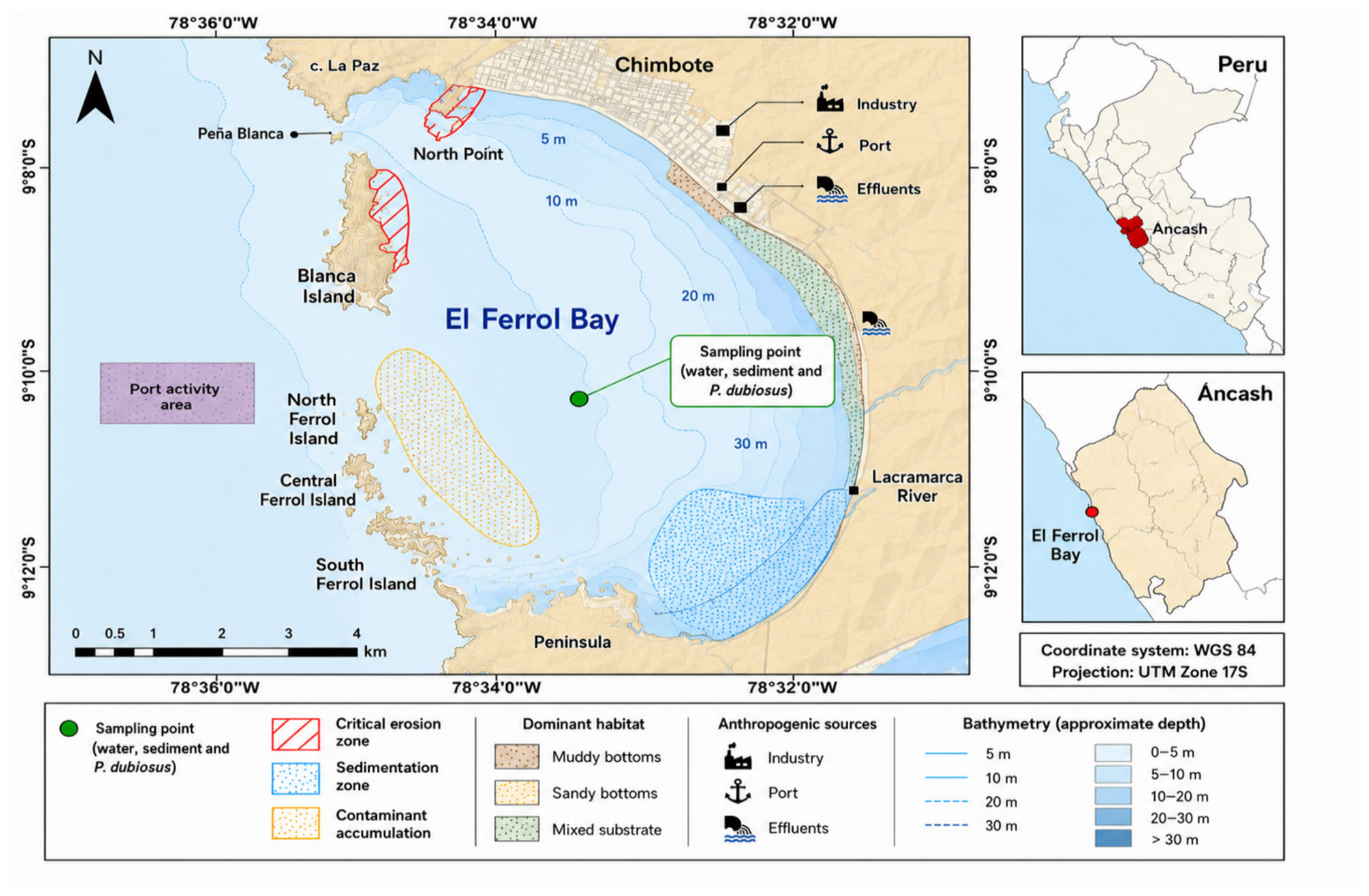
The study was conducted using marine sediment samples collected from El Ferrol Bay, located in the province of Santa, Áncash, on the north-central coast of Peru, adjacent to the city of Chimbote. The sampling point was located at 9°09′49.6″ S and 78°34′36.2″ W. El Ferrol Bay is a semi-enclosed coastal embayment characterised by restricted water exchange, a shallow-to-deeper bathymetric gradient and heterogeneous benthic habitats, including muddy, sandy and mixed substrates. These environmental features favour the deposition of fine sediments and organic matter, creating suitable conditions for contaminant accumulation and for evaluating bioremediation processes in marine sediments.
Historically, the bay has been exposed to several anthropogenic pressures associated with urban wastewater, fish-processing effluents, industrial discharges, port operations and inputs from the Lacramarca River. These pressures may influence sediment quality through organic enrichment, nutrient inputs and pollutant accumulation. Therefore, the selected sampling site represents a sedimentary environment affected by both natural deposition dynamics and human-induced disturbance. Figure 1 shows the sampling location, approximate bathymetry, dominant substrate types, sedimentation areas, contaminant accumulation zones and nearby anthropogenic sources.
Figure 1.
Study area and sampling site in El Ferrol Bay (Áncash, Peru).
2.2. Sample Collection and Conditioning
For this study, seawater samples, marine sediments and Pseudocnus dubiosus specimens were collected directly from the seabed of El Ferrol Bay. Sediment was collected using a 0.05 m2 Van Veen grab, whereas live organisms were collected by diving and transported in seawater containers to the Limnology and Environmental Impact Laboratory of the Universidad Nacional del Santa. In the laboratory, the specimens were maintained under controlled conditions before allocation to the experimental units.
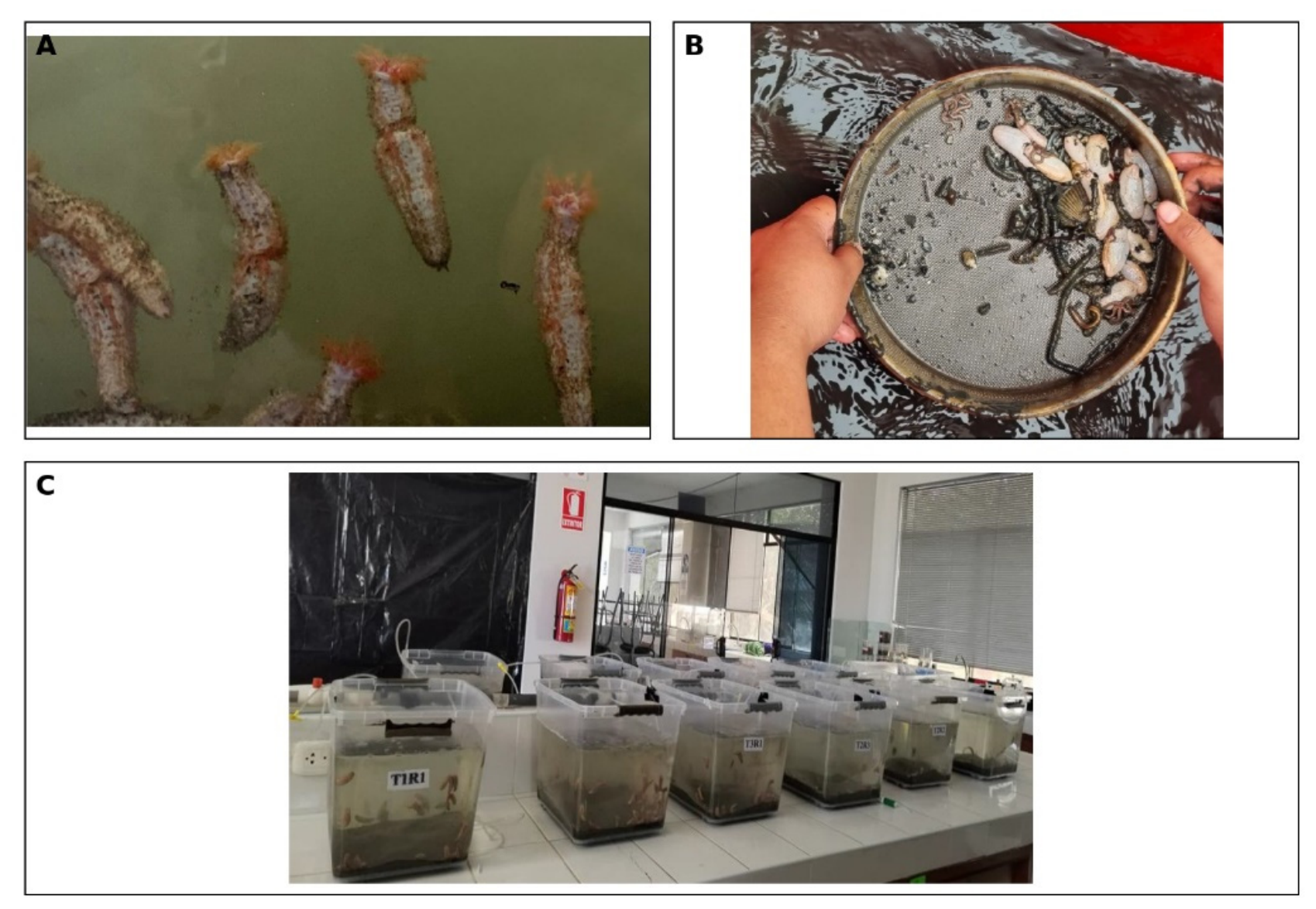
The collected sediments were sieved through a 1 mm mesh with seawater to remove associated benthic organisms and coarse particles and to obtain a homogenised sediment sample for the experiment. Only live P. dubiosus specimens showing suitable external condition and an active response were selected for the experimental treatments. Organism allocation to each experimental density is described in Section 2.3. The conditioning of organisms, sediment treatment and preparation of the experimental units are shown in Figure 2.
Figure 2.
Experimental set-up and sample preparation. (A) Live specimens of Pseudocnus dubiosus selected for the experimental treatments; (B) Preparation and handling of sediment samples containing Pseudocnus dubiosus before allocation to experimental units; (C) Experimental units established under controlled laboratory conditions for the bioremediation assay.
2.3. Experimental Design
An experimental approach was used, comprising one control group and three treatments with increasing species densities, each with three replicates. The experimental units were established in plastic containers containing 20.5 kg of marine sediment and 18.5 L of seawater per unit. The control group contained no organisms, whereas treatments T1, T2 and T3 included 27, 41 and 54 individuals per experimental unit, respectively. The treatment structure, number of replicates, number of organisms and nominal densities are summarised in Table 1.
Table 1.
Densities used in the treatments and control group of the experimental design.
The selected densities were established as a progressive experimental gradient to evaluate whether organic matter reduction in marine sediments was influenced by the abundance of this deposit-feeding holothurian. Thus, T1, T2 and T3 corresponded to nominal densities of 200, 300 and 400 organisms m−2, respectively, according to the effective sediment surface area available in each experimental unit. These densities were not intended to reproduce natural field abundances directly; rather, they were designed to test low, intermediate and high experimental densities under controlled laboratory conditions.
The selection of these density levels was based on the original experimental design and on previous evidence indicating that the density of deposit-feeding holothurians can influence sediment ingestion, bioturbation intensity, nutrient recycling and organic matter removal. Therefore, the use of increasing densities enabled the assessment of a possible density-dependent bioremediation response and helped determine whether a greater abundance of organisms enhanced organic matter reduction in sediments from El Ferrol Bay.
Experimental conditions were controlled throughout the evaluation period, including continuous aeration and monitoring of physicochemical water parameters. This design enabled comparison between a control system without organisms and three increasing density levels in order to determine the contribution of the species to sediment organic matter reduction.
2.4. Evaluation of the Organoleptic Characteristics of the Sediment
The organoleptic properties of the sediment were assessed using colour and odour descriptors, following the scale proposed by [9]. The apparent colour of the sediment was classified using a visual scale, and odour was recorded according to its degree of decomposition, with the aim of identifying qualitative changes associated with the benthic activity of Pseudocnus dubiosus.
2.5. Determination of Physicochemical Parameters
Physicochemical monitoring was performed in the overlying water column of each experimental unit throughout the experimental period. Sediment organic matter was evaluated separately using the loss-on-ignition method [10], as described in the corresponding methodological section. Water sampling, handling and organisation of the analytical procedures were aligned with the general principles for water sampling design, preservation, handling, transport and storage established in ISO 5667-1:2023 and ISO 5667-3:2024 [11,12].
2.5.1. Determination of Temperature
Water temperature was recorded daily in the overlying water column of each experimental unit using calibrated laboratory equipment. Measurements were taken directly in the experimental containers after allowing the sensor to stabilise and avoiding disturbance of the sediment layer. Temperature monitoring followed the standard procedures for water temperature measurement established in Standard Methods 2550 B [13].
2.5.2. Determination of pH
pH was measured daily in the overlying water column using a calibrated pH metre. Before each measurement sequence, the equipment was calibrated with standard buffer solutions within the expected pH range of the samples, and readings were recorded once the electrode response had stabilised. The methodological procedure followed the potentiometric principle for pH determination in water established in ISO 10523:2008 [14].
2.5.3. Determination of Turbidity
Turbidity was recorded daily in the overlying water of each experimental unit using calibrated optical equipment. This parameter was used to assess suspended particles and possible sediment resuspension associated with benthic activity in the experimental system. The methodological approach was aligned with the quantitative optical methods for determining turbidity in water by turbidimetry or nephelometry established in ISO 7027-1:2016 [15].
2.5.4. Determination of Nitrite
Nitrite concentration was determined in water samples collected from the overlying water column of each experimental unit. The analysis was performed using colourimetric procedures with the available laboratory equipment, following the manufacturer’s instructions and standard analytical procedures. The methodological interpretation was aligned with the photometric detection principles for selected water quality parameters, including nitrite, established in ISO 15923-1:2013 [16].
2.5.5. Determination of Nitrate
Nitrate concentration was measured in water samples collected from the overlying water column of each experimental unit. The analysis was performed using colourimetric procedures with the available laboratory equipment, following the manufacturer’s instructions and standard analytical procedures. The methodological interpretation was aligned with the photometric detection principles for selected water quality parameters, including nitrate, established in ISO 15923-1:2013 [16].
2.5.6. Determination of Phosphate
Phosphate concentration was determined in water samples collected from the overlying water column of each experimental unit. The analysis was performed using colourimetric procedures with the available laboratory equipment, following the manufacturer’s instructions and standard analytical procedures. The methodological interpretation was aligned with the photometric detection principles for selected water quality parameters, including orthophosphate, established in ISO 15923-1:2013 [16].
2.5.7. Determination of Biochemical Oxygen Demand After Five Days
Biochemical oxygen demand after five days was determined in water samples collected from the overlying water column of each experimental unit. BOD5 was measured using a BOD Trak II system, following the manufacturer’s technical instructions. Corrected BOD5 values were calculated according to the equation provided in the equipment protocol. The methodological interpretation was aligned with the principles for determining biochemical oxygen demand in water after five or seven days of incubation established in ISO 5815-1:2019 [17].
2.5.8. Determination of Chemical Oxygen Demand
Chemical oxygen demand was determined in water samples collected from the overlying water column of each experimental unit using commercial SQA kits (20–800 mg/L; Soluciones Químicas Ambientales S.A.C., Lima, Peru), according to the manufacturer’s instructions. Samples were digested at 150 °C for two hours, and, after cooling, absorbance was recorded using a DR900 colourimeter (HACH, Loveland, CO, USA). The procedure was consistent with the small-scale sealed-tube method for determining the chemical oxygen demand index in aqueous samples established in ISO 15705:2002 [18].
2.5.9. Sampling Frequency and Interpretation of Physicochemical Variables
Temperature, pH and turbidity were monitored daily, whereas nitrite, nitrate, phosphate, BOD5 and COD were determined periodically according to treatment and sampling date during the experimental period. It should be noted that nitrite, nitrate, phosphate, BOD5 and COD were measured in the overlying water column rather than directly in sediment pore water or in the sediment matrix. Therefore, these variables were interpreted as water quality indicators and as indirect evidence of biogeochemical changes occurring at the sediment–water interface. Direct sediment changes were assessed through organic matter determination.
2.6. Statistical Analysis
Statistical analyses were performed in R. Data normality was assessed using the Shapiro–Wilk test at a significance level of 0.05. Variables that met the normality assumption were analysed using one-way ANOVA, followed by Tukey’s post hoc test for pairwise comparisons of means among treatments. Variables that did not meet the normality assumption were analysed using the non-parametric Kruskal–Wallis test, complemented by multiple comparisons using Dunn’s test. In all cases, p < 0.05 was considered the criterion for statistical significance. For the cumulative reduction in organic matter, normality was not met (W = 0.88; p = 0.0029); therefore, the Kruskal–Wallis test was applied and showed significant differences among treatments (p = 0.0113).
3. Results and Discussion
3.1. Evaluation of Physicochemical Parameters
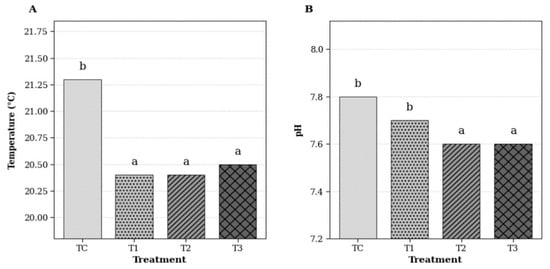
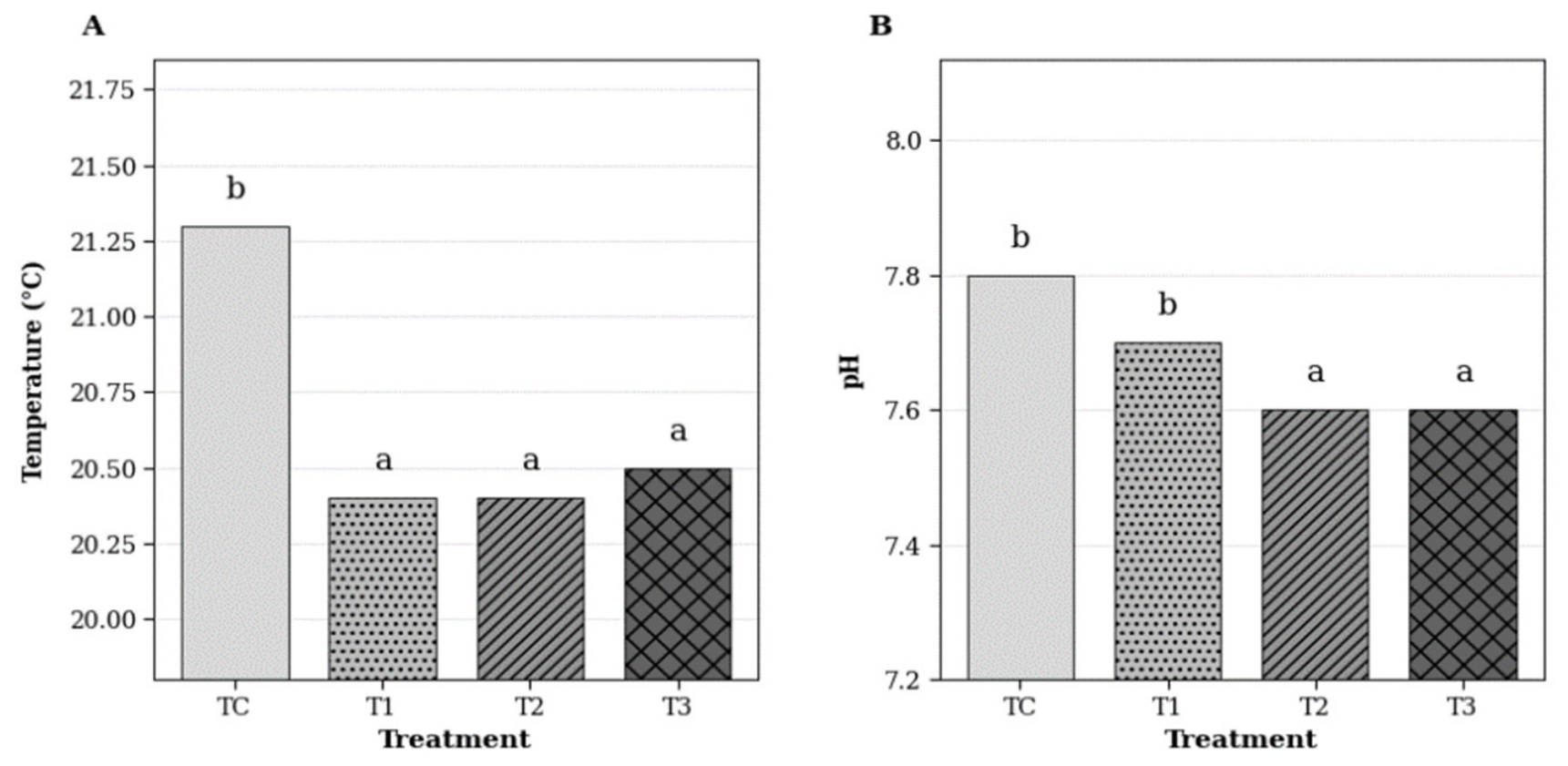
The physicochemical conditions of the experimental system remained relatively stable throughout the evaluation period; however, differences among treatments became evident as Pseudocnus dubiosus density increased. Temperature and pH showed slight variations among treatments are show in Figure 3. The control recorded the highest mean temperature, 21.3 °C, whereas the treatments with organisms ranged between 20.4 and 20.5 °C. Similarly, pH showed a slight decrease from 7.8 in the control to 7.6–7.7 in the treatments with organisms. Although these differences were small, they suggest that the presence of P. dubiosus generated minor adjustments in the experimental microenvironment without compromising the overall stability of the system [19].
Figure 3.
Variation in temperature (A) and pH (B) among treatments with different densities of Pseudocnus dubiosus. Different lowercase letters indicate statistically significant differences among treatments (p < 0.05).
Temperature was slightly higher in the control, 21.3 °C, than in the treatments with organisms, 20.4–20.5 °C, indicating a low-magnitude difference with limited likelihood of generating, by itself, a physiologically relevant differential response [19]. Studies on holothurians have shown that the most marked thermal effects on growth, metabolism and oxidative stress usually occur at considerably higher temperatures, mainly under warming scenarios or acute exposure conditions [20]. Therefore, the range observed in this experiment is more consistent with thermal stability than with significant environmental stress.
In contrast, pH declined slightly from 7.8 in the control to 7.6–7.7 in the treatments with P. dubiosus. Although this pattern suggests moderate acidification of the medium, the magnitude of the change was small and did not reach levels that, in other experimental studies, have been associated with severe physiological alterations in sea cucumbers, such as reduced growth, acid-base imbalance or impairment of antioxidant defence [21]. In this context, the slight decrease in pH could be interpreted as a local consequence of organism metabolism and organic matter processing at the sediment–water interface, rather than as evidence of systemic deterioration.
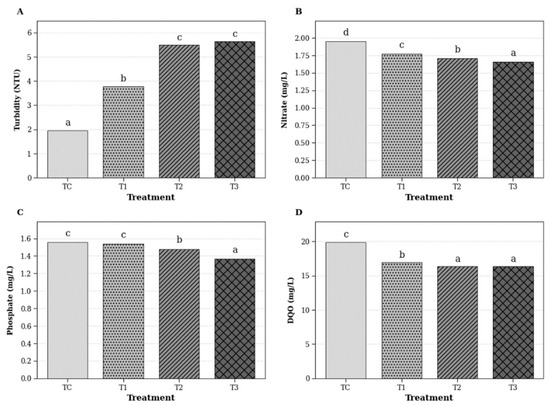
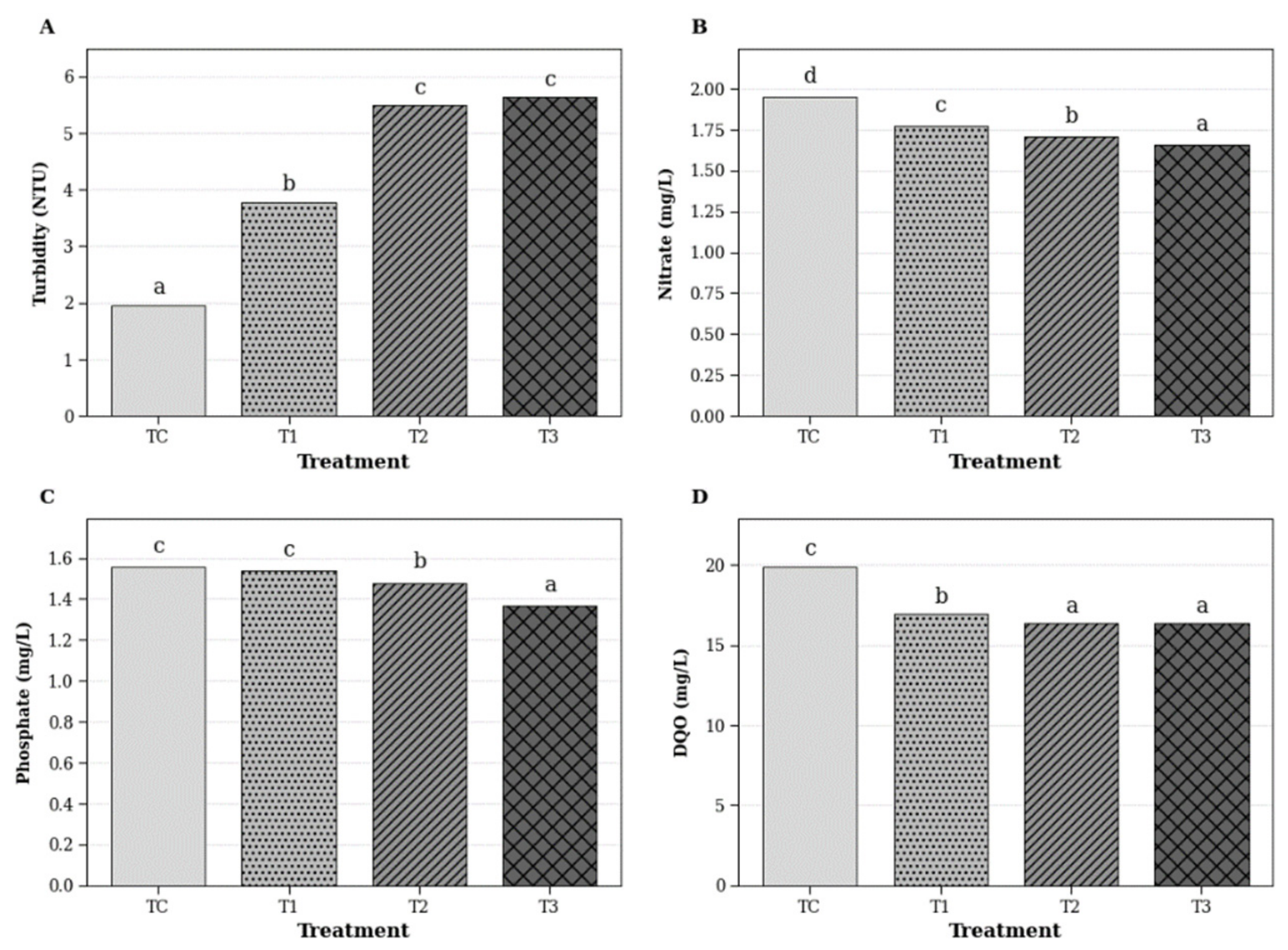
The differences observed among treatments for turbidity, nitrate, phosphate, and chemical oxygen demand are presented in Figure 4, highlighting the variation in these parameters under the different experimental conditions.
Figure 4.
Response of turbidity (A), nitrate (B), phosphate (C) and COD (D) in the experimental system under different densities of Pseudocnus dubiosus. Different lowercase letters indicate statistically significant differences among treatments; treatments sharing the same letter are not significantly different (p < 0.05).
Turbidity was the physicochemical variable most sensitive to the presence of Pseudocnus dubiosus, showing a progressive increase from the control, 1.96 NTU, to the higher-density treatments, 3.78, 5.49 and 5.64 NTU in T1, T2 and T3, respectively. This pattern suggests that organism activity intensified the removal and resuspension of fine particles into the water column [22], probably because of surface sediment processing during feeding and the physical disturbance generated by movement across the substrate [23]. Given that deposit-feeding holothurians preferentially exploit fine sediment fractions rich in organic matter, the increase in turbidity observed in this study is consistent with greater sediment reworking intensity as organism density increased [24].
This interpretation is consistent with reports on sea cucumber systems, in which turbidity is identified as an important factor for both water quality and monitoring under culture conditions. Although current studies do not directly demonstrate a cause-and-effect relationship between holothurian bioturbation and increased turbidity under experimental conditions comparable to this assay, they suggest that suspended particles, particulate organic matter and variations in water clarity are closely linked to sediment dynamics and benthic activity [25]. In this context, the turbidity observed in this study should not be viewed solely as an indicator of deterioration, but rather as a functional indicator of organism–sediment interaction.
Nitrate concentrations decreased as organism density increased. The control treatment showed the highest value, 1.95 mg/L, followed by T1, 1.77 mg/L, T2, 1.71 mg/L, and T3, 1.66 mg/L. This pattern suggests that the deposit-feeding and bioturbation activity of P. dubiosus promoted nitrogen recycling and transformation at the sediment–water interface [26]. In other words, the greater the interaction between the organism and the sediment, the greater the mobilisation and processing of nitrogenous compounds, which may explain the progressive reduction in nitrate in the treatments containing organisms [27].
The recent literature indicates that sea cucumbers can modify the availability of inorganic nitrogen through sediment reworking, organic matter remineralisation and alteration of microbial processes associated with nitrogen transformation [28]. Moreover, these effects tend to intensify as density increases, owing to greater bioturbation and organism–sediment contact [29]. In this context, the progressive reduction in nitrate from the control to T3 suggests a density-dependent response in which the species may have promoted more active nitrogen recycling and lower nitrate accumulation in the overlying water [30]. Nevertheless, because benthic fluxes and specific rates of nitrogen transformation were not assessed, this result should be interpreted as functional evidence of modified nitrogen dynamics rather than as conclusive proof of a specific biogeochemical pathway [31].
A similar pattern was observed for phosphate, which declined from 1.56 mg/L in the control to 1.54 mg/L in T1, 1.48 mg/L in T2 and 1.37 mg/L in T3. The Kruskal–Wallis test showed significant differences among treatments, and Dunn’s comparison indicated a progressive separation, with the lowest value occurring in the highest-density treatment. This indicates that the organism also modified phosphorus dynamics, probably by promoting organic matter mineralisation and nutrient exchange between the sediment and the water column [31]. Thus, the decline in phosphate reinforces the idea that the species not only physically reworked the sediment but also promoted biogeochemical changes within the system [32].
Previous studies on holothurians have suggested that higher densities may enhance the transformation of sedimentary phosphorus and contribute to lower phosphate concentrations in water, particularly in systems with organic accumulation [33]. However, in the present study, sedimentary phosphorus fractions and the specific pathways of biogeochemical transformation were not assessed directly [6]. Therefore, the result should be understood as functional evidence that P. dubiosus modified phosphorus dynamics in the experimental system, rather than as conclusive proof of the precise mechanism responsible for that decline.
Chemical oxygen demand (COD) also decreased clearly in the presence of P. dubiosus. The control showed the highest value, 19.90 mg/L, whereas T1 recorded 16.92 mg/L and T2 and T3 showed the lowest values, 16.33 mg/L in both cases, indicating a lower load of chemically oxidisable compounds in the treatments containing organisms. This behaviour is consistent with the role of holothurians as deposit feeders and bioturbators, since their activity promotes the processing of accumulated organic matter, improves sediment oxygenation dynamics and may reduce other indicators associated with organic enrichment [34]. Therefore, the decrease in COD suggests that the species not only physically reworked the sediment but also promoted a functional transformation of the organic load, consistent with a bioremediation effect in the experimental system [35]. However, in the absence of direct measurements of sediment oxygen consumption or microbial activity, this result should be understood as functional evidence of improved sediment condition rather than as definitive proof of a particular biogeochemical pathway [36].
Taken together, these results show that Pseudocnus dubiosus can actively modify the sediment–water interface. While turbidity increased because of sediment resuspension and mixing, nitrate, phosphate and COD decreased because of biological organic matter processing and nutrient recycling. This confirms that the species did not remain passive on the substrate but acted as a deposit-feeding bioturbator capable of inducing physical and chemical changes consistent with a bioremediation process.
3.2. Integrated Physicochemical Response
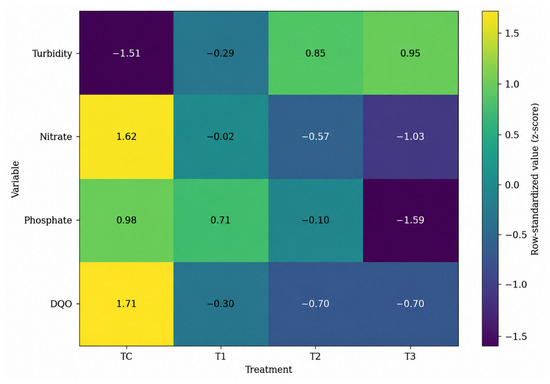
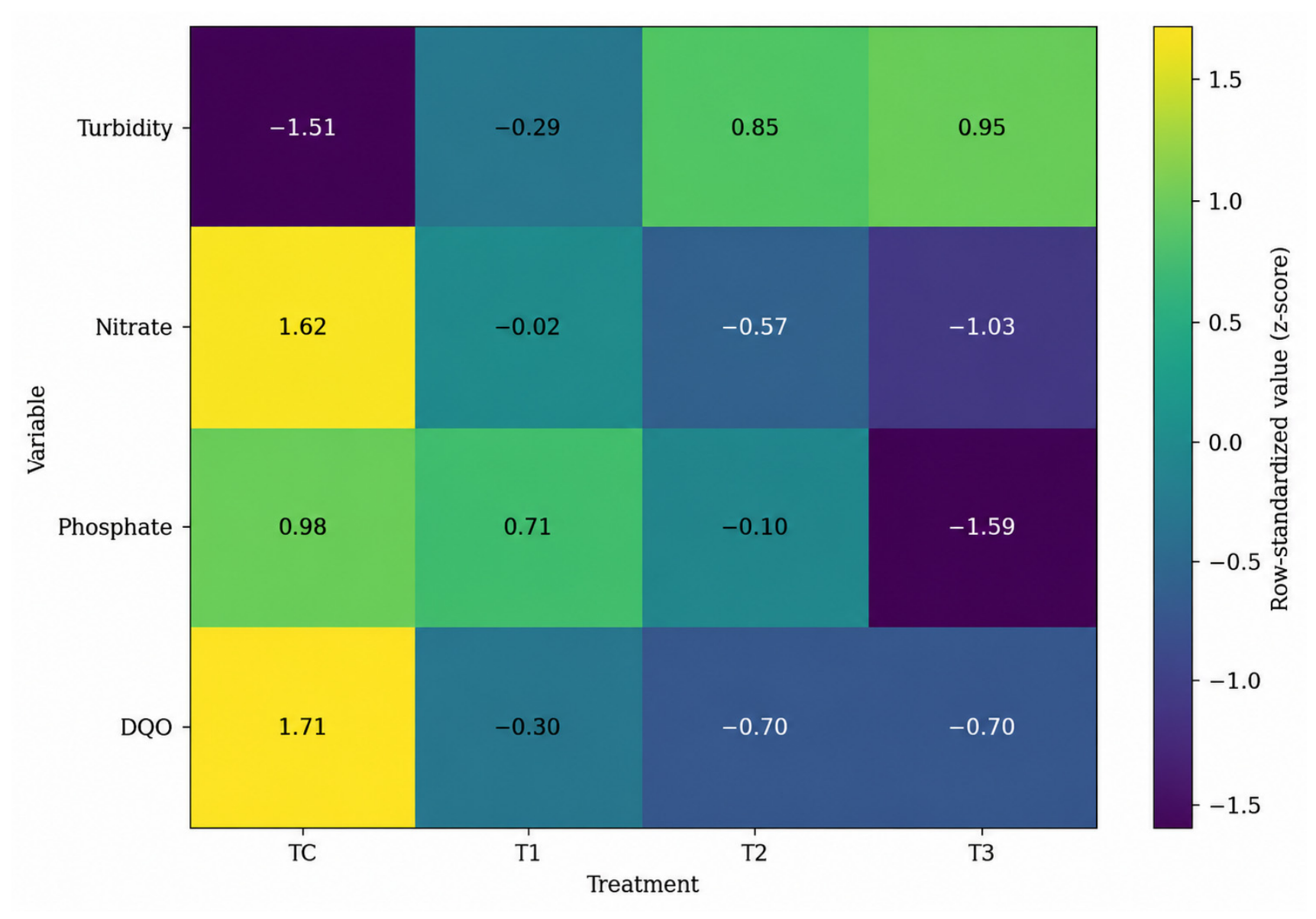
As shown in Figure 5, the combined behaviour of turbidity, nitrate, phosphate and COD revealed a clear differentiation between the control treatment and the treatments with Pseudocnus dubiosus. The control was associated with the lowest relative turbidity values and the highest relative values of nitrate, phosphate and COD, whereas the treatments with organisms, particularly T2 and T3, showed the opposite pattern: higher turbidity and lower relative values of the chemical variables. This behaviour indicates that the presence of P. dubiosus actively modified the sediment–water interface by increasing particle resuspension while promoting a reduction in dissolved compounds related to the organic load of the system [8].
Figure 5.
Heatmap of the integrated physicochemical response across treatments with different densities of Pseudocnus dubiosus.
The higher turbidity observed in T2 and T3 can be explained by the deposit-feeding and bioturbation activity of the organism, since, during feeding and movement across the sediment, it removes fine particles and promotes their resuspension into the water column [37]. Therefore, turbidity should not be interpreted solely as a sign of deterioration, but also as an indirect indicator of sediment reworking and intense benthic activity [38]. Likewise, the reduction in nitrate, phosphate and COD suggests that this same activity favoured nutrient recycling and the transformation of accumulated organic matter, decreasing the amount of chemically oxidisable compounds and modifying the biogeochemical dynamics of the system.
Treatment T1 showed an intermediate condition, suggesting that even at low density Pseudocnus dubiosus could generate changes in the experimental system, although with lower intensity than in T2 and T3. By contrast, the higher-density treatments displayed a more marked pattern, with high turbidity and lower relative values of nitrate, phosphate and COD, evidencing a functional response associated with increased organism abundance. Overall, the figure summarises that the species not only interacted physically with the sediment but also promoted chemical changes consistent with a bioremediation process, reinforcing its role as a deposit-feeding bioturbator and ecosystem engineer within the experimental system.
3.3. Organic Matter Removal as a Function of Density
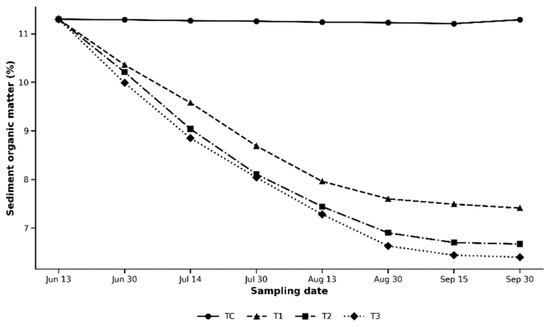
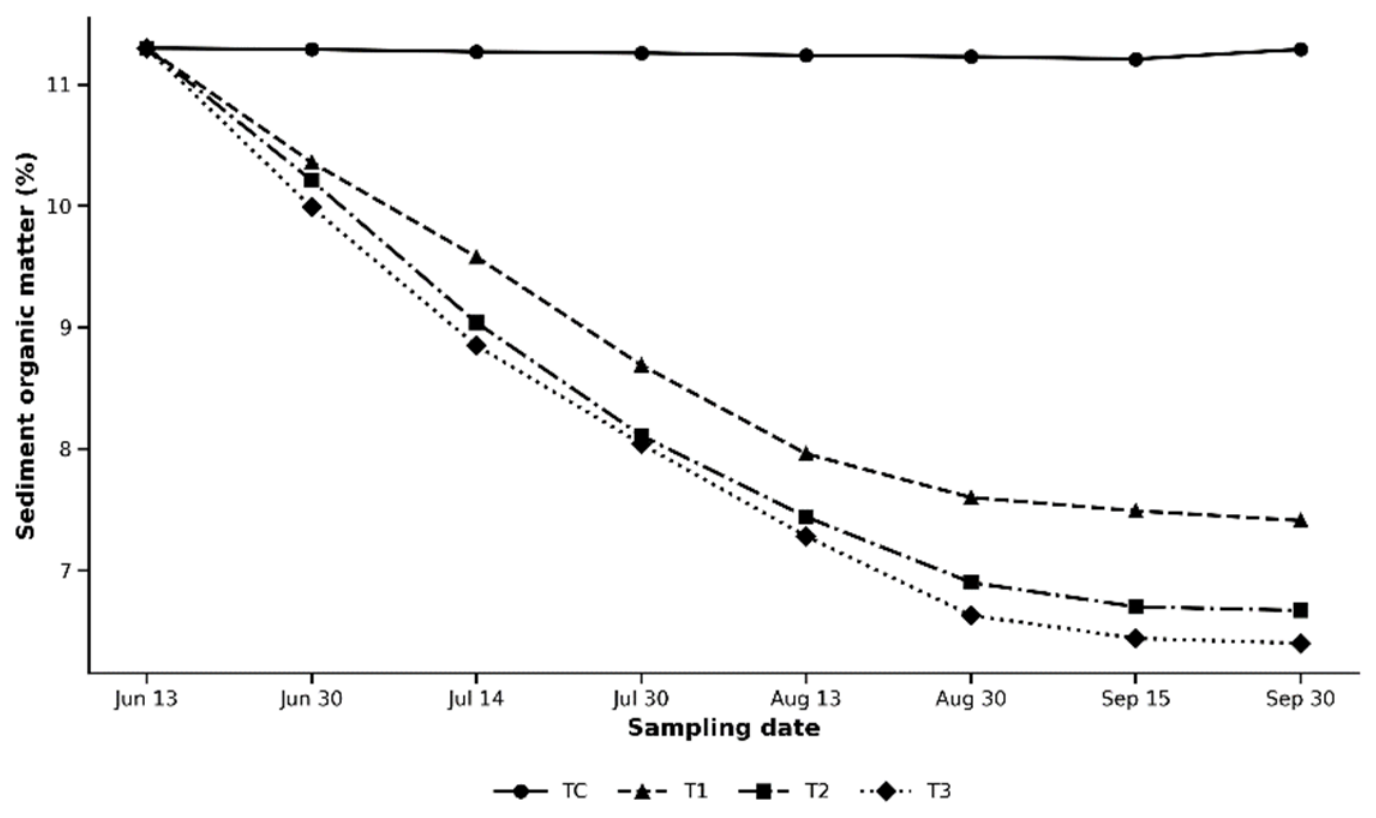
The cumulative reduction in organic matter was minimal in the control treatment and substantially greater in the treatments with Pseudocnus dubiosus. The temporal dynamics of sediment organic matter reduction throughout the experimental period are presented in Figure 6. The control achieved only a 0.97% reduction at the end of the assay, whereas T1, T2 and T3 recorded reductions of 34.42%, 40.97% and 43.36%, respectively. This demonstrates that the greater decrease in organic matter was not attributable to incubation time alone, but rather to the active presence of the organism in the sediment [8].
Figure 6.
Temporal dynamics of sediment organic matter (%) under different densities of Pseudocnus dubiosus.
This pattern suggests that P. dubiosus effectively increased the consumption, reworking and transformation of organic material accumulated in the sediment. The marked difference between the control and the treatment with organisms indicates that, in the absence of the holothurian, organic matter remained virtually unchanged; by contrast, when the organism was present, the sediment underwent continuous processing that promoted degradation and recycling [39]. This interpretation is consistent with the ecological role described for sea cucumbers as deposit feeders and bioturbators, capable of ingesting sediment, selectively processing particles enriched in organic matter and promoting remineralisation, thereby improving seabed quality and nutrient dynamics [40]. In this context, the cumulative reduction in organic matter may be regarded as direct functional evidence of the bioremediation potential of P. dubiosus.
Although T1, T2 and T3 were statistically grouped within the same category, the numerical reduction increased with density, reaching its highest value in T3. This indicates that all evaluated densities were functionally effective; however, higher densities tended to intensify sediment processing [41]. This behaviour is consistent with reports from integrated culture and polyculture systems, where greater holothurian abundance is associated with more efficient organic load removal and improved sediment characteristics. Therefore, the results suggest that organism abundance regulates the intensity of bioturbation and, consequently, the rate of organic matter removal [37], although the present study did not directly assess ingestion, assimilation or mineralisation rates.
Therefore, the cumulative reduction confirms the pattern observed in the temporal dynamics of the sediment: P. dubiosus acted as a biological agent capable of substantially reducing seabed organic load, thereby supporting its potential for bioremediation processes in impacted marine sediments [31]. Moreover, the gradient observed among treatments suggests that its effect was not simply a matter of presence versus absence but rather followed a density-dependent functional pattern. This reinforces the interest in this species as a benthic organism with possible application in management and recovery strategies for sediments enriched with organic matter.
3.4. Organoleptic Changes in the Sediment
Table 2 shows that the organoleptic characteristics of the sediment changed among treatments at the end of the experiment. The control treatment presented a slight sulphidic odour and a dark grey colour with faint reddish hues, whereas the treatments with Pseudocnus dubiosus exhibited greater odour intensity and more pronounced sediment colouration. T1 and T2 showed a moderate sulphidic odour, while T3 presented an intense sulphidic odour, suggesting greater substrate modification in the treatments with organisms and a more evident response at higher densities [42].
Table 2.
Final organoleptic characteristics of sediment under different densities of Pseudocnus dubiosus.
These changes are consistent with the deposit-feeding and bioturbation activity of P. dubiosus. By feeding and mobilising the surface particles of the seabed, the organism promotes sediment mixing, redistribution of decomposing organic matter and alteration of microbial and geochemical processes associated with the substrate [42]. In this context, increased sulphidic odour intensity may be interpreted as a qualitative sign of greater sediment processing [43,44], while the dark grey colour with reddish hues suggests a visible modification of sediment surface conditions.
Although these changes do not in themselves constitute quantitative proof of bioremediation, they meaningfully complement the results obtained for physicochemical parameters and organic matter reduction. In the treatments with P. dubiosus, the sediment showed not only greater turbidity and lower concentrations of compounds associated with organic load, but also perceptible changes in odour and appearance. Therefore, this pattern reinforces the interpretation that the species actively interacted with the substrate and promoted a benthic reworking process consistent with its bioremediation potential.
4. Conclusions
Pseudocnus dubiosus had a significant effect on the bioremediation of marine sediments with high organic matter content, as the treatments containing organisms exhibited a markedly greater cumulative reduction than the control group. This finding indicates that the reduction in sediment organic load was mainly associated with the activity of the species on the seabed.
The presence of P. dubiosus actively altered the sediment–water interface, as reflected in increased turbidity together with decreased nitrate, phosphate and COD levels in the treatments containing organisms. These changes indicate that the species promoted processes such as bioturbation, particle resuspension, nutrient recycling and transformation of compounds related to organic matter, without seriously compromising the overall stability of the experimental system.
The evaluated densities of P. dubiosus proved functionally effective for sediment treatment; however, the greatest numerical response was observed in the highest-density treatment. In summary, the changes in physicochemical properties, organic matter reduction and organoleptic alterations of the sediment support the potential of this species as a benthic organism for use in bioremediation strategies for affected marine sediments, particularly in degraded coastal ecosystems such as El Ferrol Bay.
Author Contributions
Conceptualization, Y.A.-R., M.V.-G. and C.M.-L.; Methodology, M.V.-R. and L.T.-C.; Formal analysis, L.T.-C. and C.B.-G.; Investigation, M.V.-R., L.T.-C., C.B.-G., M.V.-G. and C.M.-L.; Data curation, Y.A.-R.; Interpretation of results and scientific validation, C.B.-G. and L.T.-C.; Writing—review and editing, L.T.-C., C.B.-G. and all authors; Project administration, C.M.-L. All authors have read and agreed to the published version of the manuscript.
Funding
This research was funded by the National Council for Science, Technology and Technological Innovation (CONCYTEC), Peru, through the National Programme for Scientific Research and Advanced Studies (PROCIENCIA), within the framework of the 2024-01 Applied Research Projects Call, under Contract No. PE501087345-2024-PROCIENCIA, for the project entitled “Study of the capacity of Pseudocnus dubiosus as a bioremediation organism for heavy metals and organic matter in the sediments of El Ferrol Bay”. The APC was funded by PROCIENCIA through the aforementioned project.
Institutional Review Board Statement
Ethical review and approval were not required for this study because the experimental work involved the marine invertebrate Pseudocnus dubiosus and did not involve humans. The collection, handling, and experimental maintenance of the organisms were conducted under the institutional procedures applicable to the study.
Informed Consent Statement
Not applicable.
Data Availability Statement
The original contributions presented in this study are included in the article. Further inquiries can be directed to the corresponding author.
Acknowledgments
The authors gratefully acknowledge the National Council for Science, Technology and Technological Innovation (CONCYTEC), Peru, and the National Programme for Scientific Research and Advanced Studies (PROCIENCIA) for their institutional support. The authors also acknowledge the Universidad Nacional del Santa and the Environmental Impact and Limnology Laboratory for providing the facilities required for the experimental work. Generative AI tools (ChatGPT, GPT-5.6 Sol, OpenAI) were used exclusively for grammatical corrections and language refinement.
Conflicts of Interest
The authors declare no conflicts of interest.
References
- Zhong, J.; Tan, E.; Fu, C.; Ma, G.; Chang, Y.; Huang, Z.; Yin, J.; Li, F.; Su, J.; Xu, M.; et al. Organic matter determines the exchange of nutrients at sediment-water interface in coastal bays. Acta Oceanol. Sin. 2025, 44, 72–85. [Google Scholar] [CrossRef] [Scilit]
- Kurinnaya, Y.; Orekhova, N. Coastal Hypoxia in Areas Under Anthropogenic Pressure; SGEM: Vienna, Austria, 2020; pp. 823–830. [Google Scholar] [CrossRef] [Scilit]
- Romero, D.; Merma, L.; Marquina, R.; Flores, G.; Quipúzcoa, L.; Solís, J.; Cardich, J. Living benthic foraminifera from El Ferrol Bay. Rev. Peru. Biol. 2023, 30, e24425. [Google Scholar] [CrossRef] [Scilit]
- Shukla, B.; Joshi, A. Nutrient cycling in aquatic ecosystems and the role of benthic microorganisms in ecosystem functioning. Int. J. Aquat. Res. Environ. Stud. 2025, 5, 513–522. [Google Scholar] [CrossRef] [Scilit]
- Santhanam, H.; Karthikeyan, A.; Raja, M. Saturation indices of aqueous mineral phases as proxies of seasonal dynamics of a transitional water ecosystem using a geochemical modeling approach. Model Earth Syst. Environ. 2021, 7, 1813–1829. [Google Scholar] [CrossRef] [Scilit]
- Gao, F.; Xu, Q.; Li, X.; He, L.; Wang, A. Habitat preference and ecological function of sea cucumber in the tropical coral reef ecosystem. Acta Ecol. Sin. 2022, 42, 4301–4312. [Google Scholar] [CrossRef] [Scilit]
- Chatzivasileiou, D.; Dimitriou, P.D.; Tsikopoulou, I.; Lampa, M.; Papageorgiou, N.; Tsapakis, M.; Karakassis, I. Holothurians play an im-portant role in mitigating the impacts of aquaculture on sediment conditions. Mar. Pollut. Bull. 2024, 198, 115856. [Google Scholar] [CrossRef] [Scilit] [PubMed]
- Yu, Y.; Wang, M.; Wang, J.; Meng, X.; Fan, R.; Li, Q.; Ren, Y. The roles of sea cucumber Apostichopus japonicas mediating functional microbial communities to promote sediment N cycling. Mar. Pollut. Bull. 2026, 225, 119276. [Google Scholar] [CrossRef] [Scilit] [PubMed]
- Chavez, J.H.; Baltazar, K.L. Bioecología de la Laguna Challhuacocha y su Potencial de uso, en Periodo de Sequía, Distrito de Conchucos, Ancash, Perú, 2014; Universidad Nacional del Santa: Nuevo Chimbote, Peru, 2016. [Google Scholar]
- Hrdlička, J.; Mrákota, V. Optimisation of Loss on Ignition at Soil for Application at School Lab. J. Phys. Conf. Ser. 2025, 3037, 012012. [Google Scholar] [CrossRef] [Scilit]
- ISO 5667-1; Water Quality—Sampling—Part 1: Guidance on the Design of Sampling Programmes and Sampling Techniques. ISO: Geneva, Switzerland, 2023.
- ISO 5667-3; Water Quality—Sampling—Part 3: Preservation and Handling of Water Samples. ISO: Geneva, Switzerland, 2024.
- American Public Health Association; American Water Works Association; Water Environment Federation. Standard Methods for the Examination of Water and Wastewater, 24th ed.; Method 2550 B: Temperature; APHA: Washington, DC, USA, 2023. [Google Scholar]
- ISO 10523:2008; Water Quality—Determination of pH. ISO: Geneva, Switzerland, 2008.
- ISO 7027-1; Water Quality—Determination of Turbidity—Part 1: Quantitative Methods. ISO: Geneva, Switzerland, 2016.
- ISO 15923-1; Water Quality—Determination of Selected Parameters by Discrete Analysis Systems—Part 1: Ammonium, Nitrate, Nitrite, Chloride, Orthophosphate, Sulfate and Silicate with Photometric Detection. ISO: Geneva, Switzerland, 2013.
- ISO 5815-1; Water Quality—Determination of Biochemical Oxygen Demand After n Days (BODn)—Part 1: Dilution and Seeding Method with Allylthiourea Addition. ISO: Geneva, Switzerland, 2019.
- ISO 15705:2002; Water Quality—Determination of the Chemical Oxygen Demand Index (ST-COD)—Small-Scale Sealed-Tube Method. ISO: Geneva, Switzerland, 2002.
- Yuan, X.; Shao, S.; Yang, X.; Yang, D.; Xu, Q.; Zong, H.; Liu, S. Bioenergetic trade-offs in the sea cucumber Apostichopus japonicus (Echinodermata: Holothuroidea) in response to CO2-driven ocean acidification. Environ. Sci. Pollut. Res. 2016, 23, 8453–8461. [Google Scholar] [CrossRef] [Scilit] [PubMed]
- Li, Z.; Xue, X.; Yang, H.; Liao, M.; Han, Y.; Jiang, Z.; Ren, T. Effect of dietary carbohydrate levels on growth performance, non-specific immune enzymes and acute response to low salinity and high temperature of juvenile sea cucumber Apostichopus japonicus. Aquac. Nutr. 2020, 26, 683–692. [Google Scholar] [CrossRef] [Scilit]
- Zhang, C.; Li, H.; Che, H.; Xie, W.; Qi, H.; Sun, Y.; Ju, W.; Dong, X. Effects of Ca2+ on the cross-linking of sea cucumber collagen fibers during thermal processing. Sci. Technol. Food Ind. 2025, 46, 199–205. [Google Scholar]
- Baure, J.G.; Roleda, M.Y.; Juinio-Meñez, M.A. Short-term exposure to independent and combined acidification and warming elicits differential responses from two tropical seagrass-associated invertebrate grazers. Mar. Biol. 2023, 170, 114. [Google Scholar] [CrossRef] [Scilit]
- Smits, A.P.; Durand, J.R.; Williamshen, B.O.; Luke, K.; O’Rear, T. Drought and aquatic vegetation alter water clarity and fish as-semblages in freshwater tidal ecosystems of the Sacramento-San Joaquin River Delta. Estuaries Coasts 2025, 48, 120. [Google Scholar] [CrossRef] [Scilit]
- Pan, W.; Wang, X.; Ren, C.; Jiang, X.; Gong, S.; Xie, Z.; Wong, N.-K.; Li, X.; Huang, J.; Fan, D.; et al. Sea cucumbers and their symbiotic microbiome have evolved to feed on seabed sediments. Nat. Commun. 2024, 15, 8825. [Google Scholar] [CrossRef] [Scilit] [PubMed]
- Rasoamihaingo, L.A.; Razafindrajao, F.; Andriambelo, H.; de Roland, L.A.R.; Bamford, A.J. Effects of turbidity and introduced tilapia (Oreochromis spp.) on macrophytes and invertebrates in a shallow tropical lake. Knowl. Manag. Aquat. Ecosyst. 2023, 424, 2. [Google Scholar] [CrossRef] [Scilit]
- Taupp, T.; Hellmann, C.; Gergs, R.; Winkelmann, C.; Wetzel, M.A. Life under exceptional conditions—Isotopic niches of benthic invertebrates in the estuarine maximum turbidity zone. Estuaries Coasts 2017, 40, 502–512. [Google Scholar] [CrossRef] [Scilit]
- Zhang, S.; Tang, M.; Lu, J.; Huang, H. Effects of Sinonovacula constricta bioturbation and ammonia excretion on the content and flux of nitrogen nutrients in overlying water. J. Shanghai Ocean Univ. 2021, 30, 113–119. [Google Scholar]
- Wu, Z.; Tian, Z.; Ma, J.; Chen, S.; Xu, S.; Liu, H.; Chen, Y. Response of organic matter decomposition and nitrogen transformation in surface sediment to Hyriopsis cumingii bioturbation. J. Clean. Prod. 2026, 538, 147423. [Google Scholar] [CrossRef] [Scilit]
- Shan, E.; Li, Y.; Meng, L.; Yang, Z.; Yuan, X. Water temperature influences holothurian bioturbation and benthic habitat with special reference to the impact of ocean warming. Mar. Environ. Res. 2025, 210, 107260. [Google Scholar] [CrossRef] [Scilit] [PubMed]
- Purcell, S.W.; Conand, C.; Uthicke, S.; Byrne, M. Oceanography and Marine Biology; Hughes, R.N., Hughes, D.J., Smith, I.P., Dale, A.C., Eds.; CRC Press: Boca Raton, FL, USA, 2016; Volume 54. [Google Scholar] [CrossRef] [Scilit]
- Viyakarn, V.; Chavanich, S.; Heery, E.; Raksasab, C. Distribution of sea cucumbers, Holothuria atra, on reefs in the upper Gulf of Thailand and the effect of their population densities on sediment microalgal productivity. Estuar. Coast. Shelf Sci. 2020, 235, 106514. [Google Scholar] [CrossRef] [Scilit]
- Supriyono, E.; Nirmala, K.; Sabilu, K.; Iba, W.W.; Sabilu, M. Capability of sea cucumber Holothuria scabra to remove nitrogen and phosphor waste from shrimp ponds culture. Indones. Aquac. J. 2023, 18, 17. [Google Scholar] [CrossRef] [Scilit]
- Xie, Y.; Qin, X.; Fang, J.; Zhang, Y.; Tong, R.; Xu, J.; Wang, J.; Zhang, X. Ecological functions of sea cucumber Apostichopus japonicus in oyster–kelp–sea cucumber IMTA mode: Organic matter extracting and disturbance-driven nutrient release. Mar. Environ. Res. 2026, 218, 108035. [Google Scholar] [CrossRef] [Scilit] [PubMed]
- Maritan, A.J.; Clements, C.S.; Pratte, Z.A.; Hay, M.E.; Stewart, F.J. Sea cucumber grazing linked to enrichment of anaerobic microbial metabolisms in coral reef sediments. ISME J. 2025, 19, wraf088. [Google Scholar] [CrossRef] [Scilit] [PubMed]
- Lee, S.; Ford, A.K.; Mangubhai, S.; Wild, C.; Ferse, S.C.A. Effects of sandfish (Holothuria scabra) removal on shallow-water sediments in Fiji. PeerJ 2018, 6, e4773. [Google Scholar] [CrossRef] [Scilit] [PubMed]
- Cheng, S.; Meng, F.; Wang, Y.; Zhang, J.; Zhang, L. The potential linkage between sediment oxygen demand and microbes and its contribution to the dissolved oxygen depletion in the Gan River. Front. Microbiol. 2024, 15, 1413447. [Google Scholar] [CrossRef] [Scilit] [PubMed]
- Balakrishnan, A.; Kanchinadham, S.B.K.; Kalyanaraman, C. Nutrient requirement of tannery wastewater containing tannins. Environ. Technol. Innov. 2021, 23, 101776. [Google Scholar] [CrossRef] [Scilit]
- Van der Meer, T.V.; de Baat, M.L.; Verdonschot, P.F.M.; Kraak, M.H.S. Benthic invertebrate bioturbation activity determines spe-cies-specific sensitivity to sediment contamination. Front. Environ. Sci. 2017, 5, 83. [Google Scholar] [CrossRef] [Scilit]
- Gautreau, E.; Volatier, L.; Nogaro, G.; Gouze, E.; Marmonier, P.; Mermillod-Blondin, F. Interactions between microbial activity and bioturbation modes of benthic invertebrates determine nutrient releases from reservoir sediments. Freshw. Biol. 2023, 68, 245–259. [Google Scholar] [CrossRef] [Scilit]
- Pasquini, V.; Addis, P.; Giglioli, A.A.; Moccia, D.; Pusceddu, A. Outcomes of feeding activity of the sea cucumber Holothuria tubulosa on quantity, biochemical composition, and nutritional quality of sedimentary organic matter. Front. Mar. Sci. 2023, 9, 1010014. [Google Scholar] [CrossRef] [Scilit]
- Magdy, M.; Grosso, L.; Pensa, D.; Ciriminna, L.; Fianchini, A.; Vizzini, S.; Cataudella, S.; Rakaj, A. How sediment granulometry affects feeding behaviour in sea cucumbers: A case study on Holothuria sanctori. Sci. Rep. 2025, 15, 9837. [Google Scholar] [CrossRef] [Scilit] [PubMed]
- Liu, X.; Fan, D.; Zhang, X.; Zhang, W. Bioturbation patterns in the modern subaqueous Yellow River Delta and their implication for sedimentary environment changes. J. Ocean Univ. China 2024, 23, 1488–1502. [Google Scholar] [CrossRef] [Scilit]
- Isibor, P.O.; Akinsanya, B.; Babarinde, D.A. Benthic macroinvertebrates as bioindicators of pollution. In Pollution Tolerance of Freshwater Ecosystems and Biomonitoring; CRC Press: Boca Raton, FL, USA, 2025; pp. 115–138. [Google Scholar] [CrossRef] [Scilit]
- Hamoda, M.F.; Alshalahi, S.F. Assessment of hydrogen sulfide emission in a wastewater pumping station. Environ. Monit. Assess. 2021, 193, 352. [Google Scholar] [CrossRef] [Scilit] [PubMed]

Disclaimer/Publisher’s Note: The statements, opinions and data contained in all publications are solely those of the individual author(s) and contributor(s) and not of MDPI and/or the editor(s). MDPI and/or the editor(s) disclaim responsibility for any injury to people or property resulting from any ideas, methods, instructions or products referred to in the content. |
© 2026 by the authors. Licensee MDPI, Basel, Switzerland. This article is an open access article distributed under the terms and conditions of the Creative Commons Attribution (CC BY) license.