


Abstract
The ocean is increasingly affected by the rise in maritime activities. Increased anthropogenic pressures have led to environmental impacts and also intensified competition for space and resources among various socioeconomic sectors. To mitigate these impacts on marine ecosystems and reduce conflicts, management tools and processes such as marine protected areas (MPAs) and maritime spatial planning (MSP) have become more prevalent. Trade-offs are inherent to these, and necessary to meet specific conservation and socioeconomic goals. In response, understanding and managing these trade-offs has become crucial to achieving ocean sustainability. This study performs a bibliometric review to identify the types of trade-offs discussed in the marine literature and examines their operationalization for the conservation and sustainable use of marine resources. The analysis reveals that trade-offs, particularly those between conservation and development, and the interests of specific stakeholders, are most frequently addressed in the trade-off literature and are typically approached through integrative methods. This comprehensive examination highlights the significance of recognizing and addressing trade-offs to achieve effective marine management and conservation, aligning ecological integrity with socioeconomic interests.
1. Introduction
Covering 70% of the Earth’s surface, oceans provide a vast array of ecosystem services, including provisioning, regulating, maintenance, and cultural services. These services play a critical role in climate regulation, coastal protection, food supply, marine ecotourism, and various other functions that benefit human health and well-being [1,2]. However, the exploitation of coastal and marine ecosystems has been increasing significantly [3,4]. Consequently, marine environments are facing escalating threats from human activities such as overfishing, pollution, climate change, habitat destruction, and ocean acidification [5,6,7]. These threats have led to a decline in marine biodiversity, impacting essential biotic functions, preventing the spread of harmful species, and affecting ecosystem engineers and keystone species. As a result, ecosystem services are also at risk [6,8,9], endangering both natural environments and the human communities that depend on them.
The increasing impacts on marine ecosystems, coupled with growing competition for space and resources from multiple sectors, such as marine renewable energy, seabed mining, large-scale fisheries, shipping, and oil and gas companies [10], have heightened concerns regarding social, ecological, and economic sustainability. This has intensified the necessity of implementing effective maritime spatial planning (MSP), as well as conservation and management measures [3,11]. Additionally, the rising interest in sustainability has led to increased pressure from society and stakeholders in economic sectors to address social and ecological concerns [12].
MSP is a relatively new strategic planning process essential for analyzing and allocating the spatial and temporal distribution of human activities in marine areas, with the goal of sustainability [13,14,15]. This process is particularly important in regions with intensive marine resource use, where balancing conservation efforts with human activities is crucial [3]. It also facilitates the identification and consideration of various trade-offs, integrating them into the public decision-making agenda, which can be a decisive factor for its success [11]. Currently, MSP initiatives are implemented in nearly half of the world’s nations, each facing multiple and varied challenges [16]. The growing adoption of MSP, including those taking an ecosystem-based approach, reflects its importance as a management strategy to promote the sustainable and balanced use of oceans [15,17,18,19,20], underscoring the relevance of the blue economy.
Among the area-based management approaches to biodiversity conservation, marine protected areas (MPAs) have been recognized as highly effective tools to achieve sustainability [18,21]. Proposed in the late 20th century, MPAs were initially conceived to overcome the limitations of traditional marine management methods by focusing on the protection of specific species or habitats [22]. Over time, however, the concept of MPAs has evolved significantly, expanding to embrace a broader spectrum of ecological, economic, and social objectives. The establishment of the first MPA in 1935 in the United States served as a pioneering model. Since then, international agreements, such as the Convention on Biological Diversity (CBD) and various United Nations conferences, have been instrumental in promoting the establishment of MPAs worldwide [23,24].
MPAs are frequently advocated as solutions that can simultaneously enhance biodiversity and improve livelihoods [25,26,27]. Well-managed MPAs have demonstrated the potential to increase fish stocks, benefiting local fisheries over the long term [28,29], while also stimulating tourism and providing economic opportunities for adjacent communities [30]. However, even though it is imperative to meet the social, economic, and ecological objectives outlined in the Sustainable Development Goals (SDGs) set forth by the United Nations in 2015 as part of the 2030 Agenda for Sustainable Development, aligning these diverse objectives can be challenging and is sometimes considered unattainable [31,32,33].
Despite their potential benefits, MPAs encounter significant challenges and limitations in practical implementation. Increasingly, researchers have called into question the universal benefits of MPAs, arguing that many MPAs fail to achieve simultaneous ecological and economic benefits. Instead, there is the claim that trade-offs are inherent and necessary to achieve specific conservation and socioeconomic objectives [25,31,32]. ‘Trade-offs’ occur, temporally and spatially, when advancements toward certain goals are achieved at the expense of others [32].
Conflicts and trade-offs emerge during decision-making processes due to stakeholder groups’ diverse preferences and interests regarding ecosystem services and benefits [34,35]. These tensions can be exacerbated by inadequate stakeholder engagement and the imposition of top-down management approaches [36,37]. For example, conflicts may arise between conservation priorities and economic development, as well as between environmental preservation and recreational or tourism uses, illustrating the inherent challenges in marine conservation efforts [34,35].
Frequently, political decision-makers face the difficult task of making choices about which parties will benefit and which will bear the costs [25]. As a result, decision-makers need guidance on how to strategically zone the ocean to simultaneously minimize conflicts, accommodate multiple uses, and conserve biodiversity. Despite the growing focus on trade-offs in conservation science [38,39], practitioners frequently lack the essential tools and decision-making processes to consider stakeholders’ values adequately. This shortfall hinders stakeholder participation and prevents the equitable allocation of benefits and costs among them [34].
Considering the importance of recognizing trade-offs for identifying and managing potential negative impacts, unintended consequences, and outcomes [40], the overarching goals of this study were to enhance the understanding of trade-offs in marine environment and to provide insights for improving biodiversity preservation and sustainable management of marine ecosystems. To achieve these goals, the research objectives included (a) performing a bibliometric review to identify and understand the types of trade-offs addressed in the marine environment literature, (b) examining how these trade-offs are operationalized in MPAs and MSP, and (c) synthesizing the current state of knowledge to maximize the effectiveness of MPAs and other marine conservation strategies.
2. Materials and Methods
A bibliometric analysis method was employed to pursue the established objectives. This technique has gained considerable popularity in academic research due to its robust capability to synthesize extensive datasets gathered through systematic literature reviews. By leveraging this method, researchers can systematically compile and analyze large volumes of data from various digital sources, such as Scopus (https://www.scopus.com) and Web of Science (WoS; https://www.webofscience.com, accessed on 30 June 2024), to draw meaningful conclusions about specific research areas, contexts, or topics [41]. The bibliometric analysis enables the identification of trends, patterns, and relationships within the literature, providing a full overview of the research landscape and facilitating a deeper understanding of the subject matter under investigation.
2.1. Data Collection
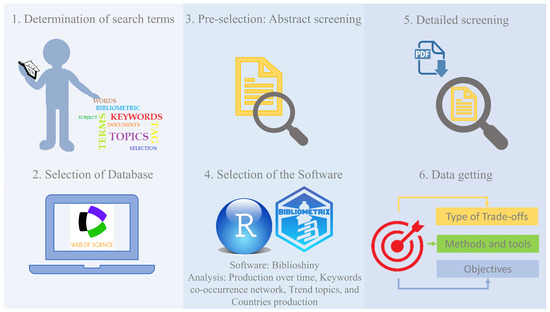
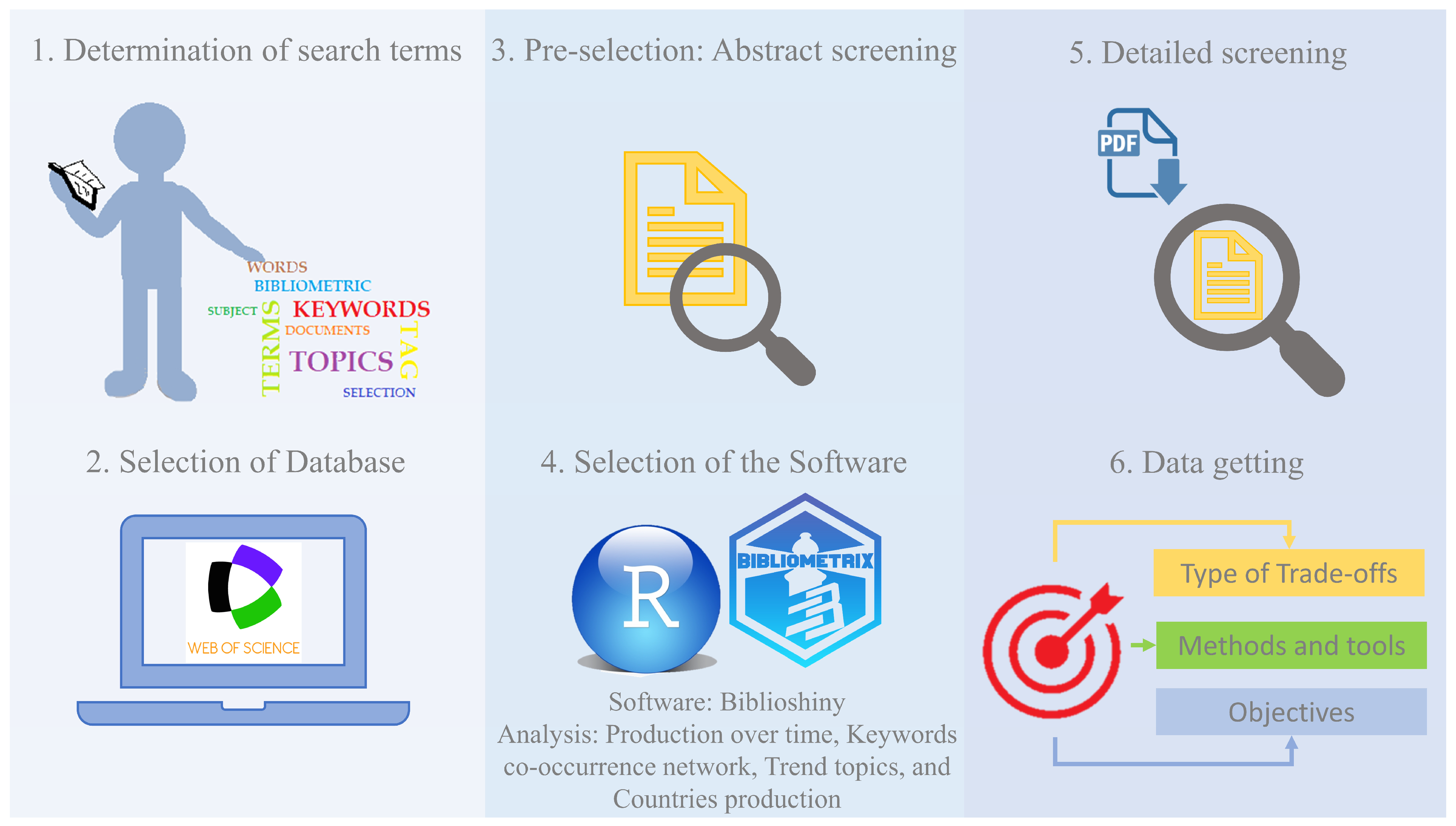
The initial phase of the research involved conducting an extensive literature review (Figure 1). In March 2024, a search was conducted using the ISI WoS database, covering publications from 2014 to 2024. The search was conducted in the “TOPIC” arena, which encompasses the title, abstract, author keywords, and keywords plus published documents to ensure complete coverage of relevant scientific publications. The search query employed a combination of keywords and Boolean operators: TS = ((trade-off* OR tradeoff* OR negotiat*) AND (“Marine governance” OR “Ocean governance” OR “Marine protected area*” OR “Mari* spatial planning” OR “Mari* spatial manag*” OR “Marine biodiversity” OR “Marine conservation” OR “Maritime sector*” OR “Marine manag*” OR “Mari* policy”)). A new survey was conducted in June 2024 to include the articles published this year. This systematic approach yielded a total of 529 bibliographic records. Subsequently, all available data from this database were downloaded in Bibtex and CSV formats for further analysis.
Figure 1.
Trade-offs: bibliometric analysis and process steps.
2.2. Articles Pre-Selection
To target articles specifically addressing trade-offs, a preliminary screening process was implemented by evaluating the abstracts of the retrieved publications (Figure 1). Abstracts that addressed challenges, strategies, the necessity of achieving a balance between different goals, or reconciling conflicting interests, as well as those discussing negotiations between stakeholder objectives, implications of prioritizing one goal over others, methodologies for facilitating negotiation and/or identifying trade-offs were selected for further examination. This pre-selection process resulted in the identification of 219 articles deemed relevant for detailed analysis and in-depth review. During this process, articles that only mentioned trade-offs or potential tools without directly applying them were excluded. The selected articles (n = 185) formed the basis for the subsequent phases of data analysis and synthesis within the study.
2.3. Assessment Process
The resulting set of publications was evaluated using a two-step process. In the first phase, a detailed bibliometric analysis was conducted using Biblioshiny software (part of the bibliometrix package, version 4.0) in R Studio [41] to uncover prevalent patterns within the bibliographic records and to offer relevant insights into the data (Figure 1). This analysis focused on different important elements, including the spatial and temporal distribution of the publications, which provided insights into where and when the research was concentrated. Additionally, the main authors’ keywords used in the publications were evaluated using a co-occurrence network to identify the focal topics and trends over time. In order to give a clearer overview of the predominant keywords, similar terms, such as “maritime spatial planning” and “marine spatial planning”, were combined. In addition, incomplete terms were removed (see list of synonyms and terms removed in Table A1). The spatial distribution of the publications was mapped using QGIS version 3.28.0 [42].
In the second phase of the study, the selected publications underwent a detailed screening process to delve deeper into their content and characteristics (Figure 1). This analysis aimed to identify several key aspects within each study, including the specific types of trade-offs addressed; the methodologies used in negotiations or assessments of trade-offs, with the tools utilized in the process; and the specific objectives requiring trade-offs. This screening enabled a nuanced understanding of how trade-offs are envisioned, studied, and managed across different contexts within the realm of MSP and conservation.
The types of trade-offs addressed in the literature were grouped, based on Fortnam et al. [34] and Gutierrez et al. [43], into the following categories: management strategies; conservation/ecosystem services versus development outcomes; specific stakeholder interests; short-term versus long-term benefits; and local versus regional/global interests. The categories encompassed various subcategories that were incorporated in the study, as they appeared in the publication, following the description presented in Table A2. Importantly, the category of short-term versus long-term benefits appears across various contexts, such as conservation and development. Therefore, only publications that explicitly mentioned the terms ‘short-term’ and/or ‘long-term’ in relation to trade-offs were included in this category.
The tools identified in the reviewed articles were systematically categorized into six distinct groups based on their primary applications (Table 1) to clarify the diverse range of the available ones. These categories include an integrated approach, which combines multiple components to create comprehensive frameworks for addressing complex, multi-faceted interactions, as well as strategies that use more than one type of model or approach; analytical and simulation tools, which focus on analyzing specific datasets or simulating particular scenarios; mathematical and statistical models, generic models that use mathematical equations and statistical methods to represent and analyze systems; geospatial and Geographical Information Systems (GIS) tools, designed to analyze spatial data and facilitate the visualization and mapping of marine areas; frameworks and conceptual models, which provide structured approaches and theoretical foundations for understanding complex systems; and participatory and stakeholder engagement tools, which include varying degrees of stakeholder participation.
Table 1.
Tools applied in the publications on trade-offs.
A similar categorization process was applied to the objectives identified in the reviewed publications, resulting in five distinct groups (Table 2). These groups include Marine Protected Areas and other effective area-based conservation measures (MPAs and OECMs), focusing on the protection and management of specific marine areas; Maritime Spatial Planning and zoning (MSP and Zoning), involving the strategic allocation of marine space to balance various uses and activities; Resource Use and Sustainable Development (RUSD), addressing the sustainable exploitation and management of marine resources; Policy, Governance, and Conservation Initiatives (PGCI), encompassing regulatory frameworks, governance strategies, and international agreements; and Tourism, Recreation, and Cultural Impact (TRCI), considering the effects of tourism and/or recreational activities on marine ecosystems, and the integration of cultural values in marine management.
Table 2.
Objectives identified in the publications on trade-offs.
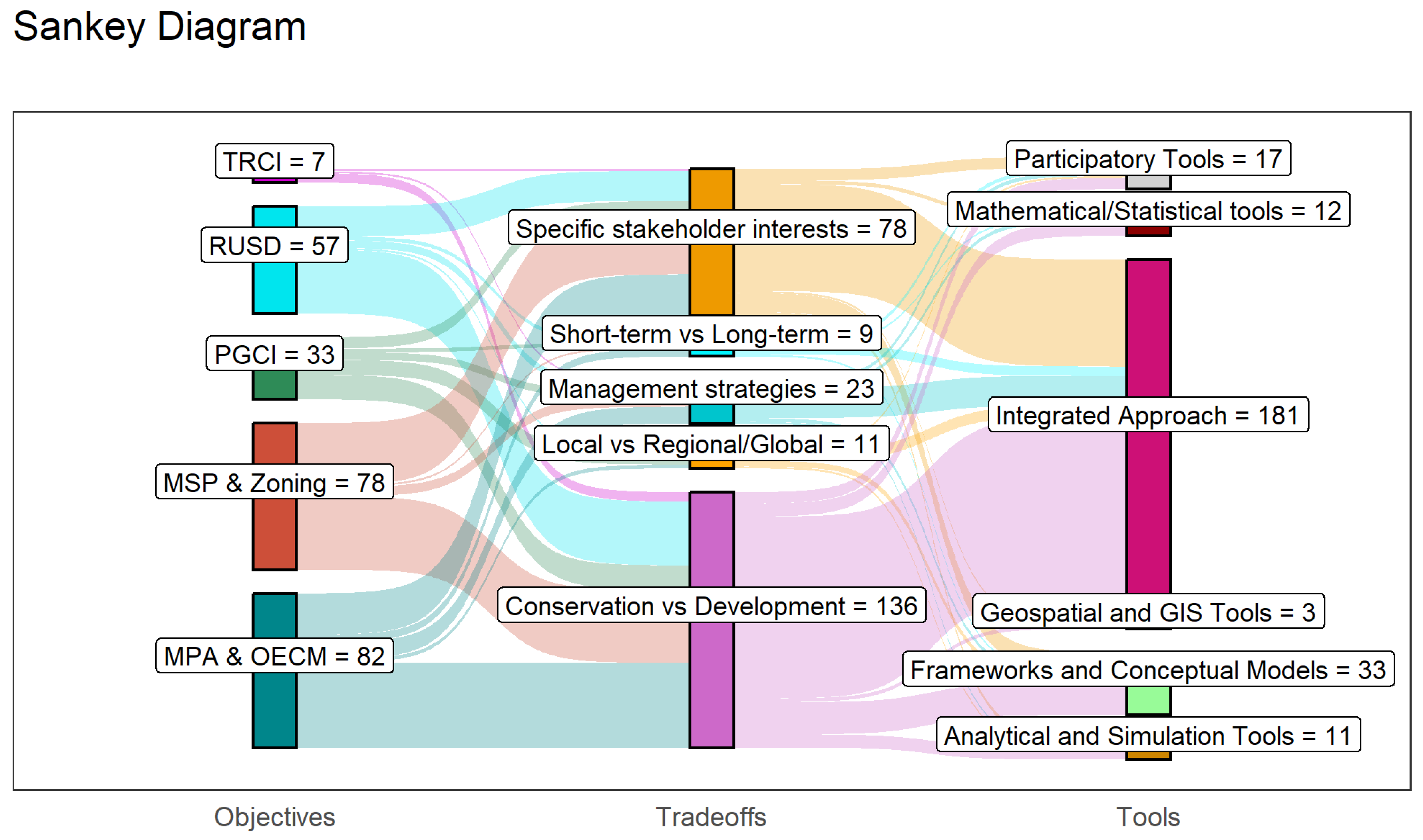
A logistic model was fitted to each trade-off category to assess the effect of the objective of the publications on the different trade-offs. Additionally, a Sankey chart was created to effectively visualize the connections between the five main categories of trade-offs, their associated objectives, and the tools used in the publications. This visualization, based on articles that included tools (n = 158), illustrates the flow and relationships among these elements, providing a clearer understanding of the various trade-offs involved in each objective and the methods employed to assess and operationalize them. Both the model and the chart were performed in R software (version 4.4.1), the latter being created using the packages ggsankey and ggplot2. Flourish, a simple online tool, was also used for data visualization (https://flourish.studio, accessed on 15 August 2024).
3. Results
3.1. Bibliometric Analysis
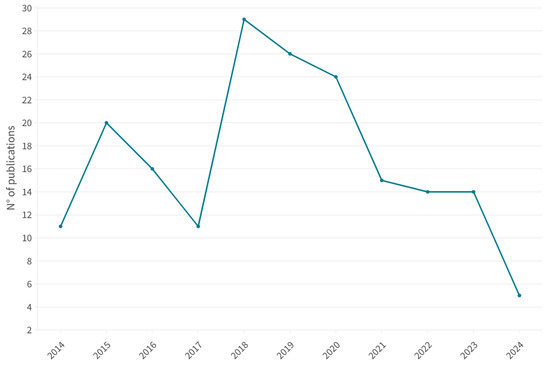
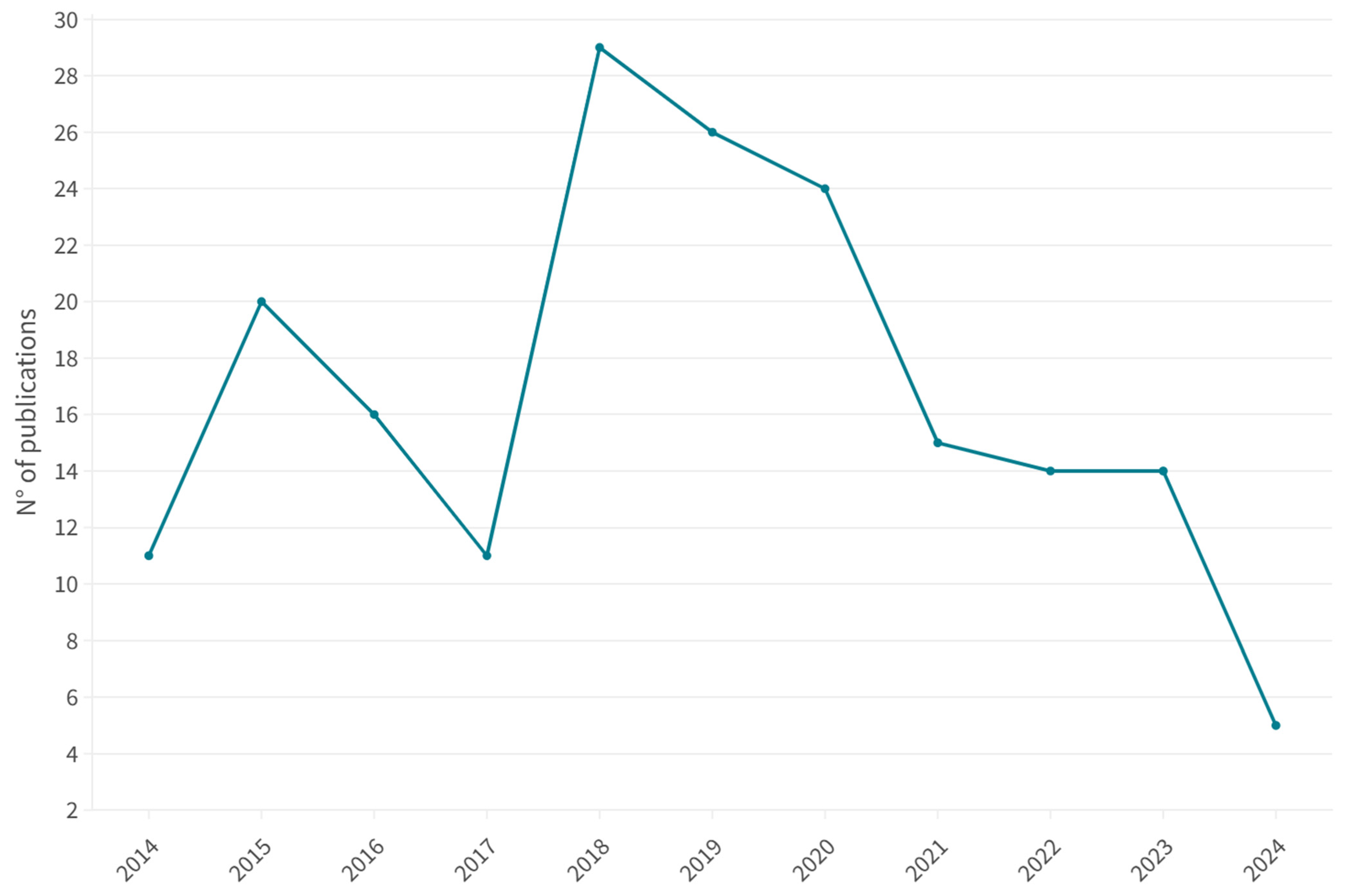
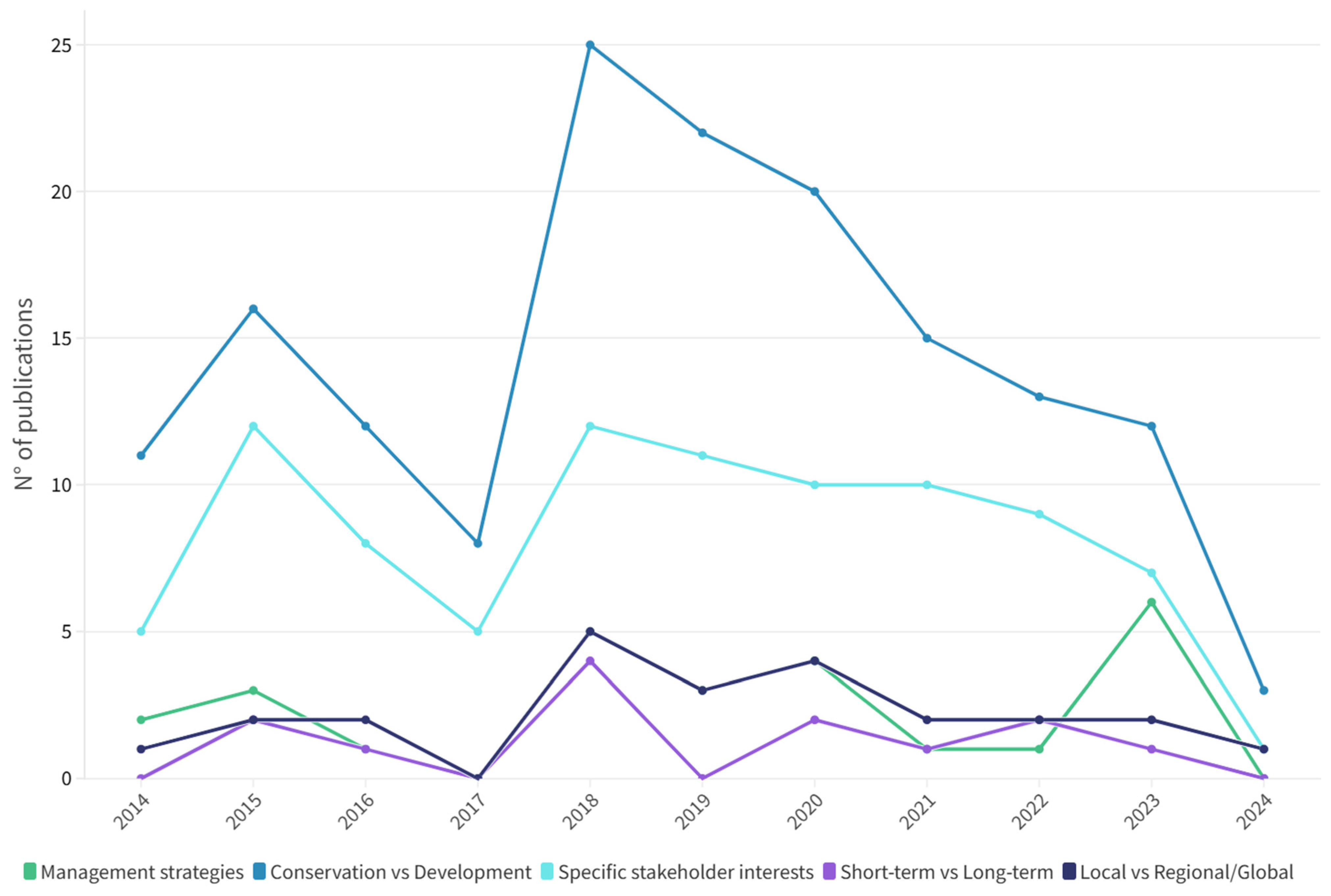
The compiled bibliometric database consisted of 171 articles, 11 reviews, 1 book chapter, 1 editorial, and 1 letter, in accordance with the WoS classification. Analyzing the trend in annual scientific production, publications addressing trade-offs peaked in 2018 and have gradually declined since then (Figure 2).
Figure 2.
Annual scientific publications addressing trade-offs (2014–2024).
3.1.1. Co-Occurrence Network
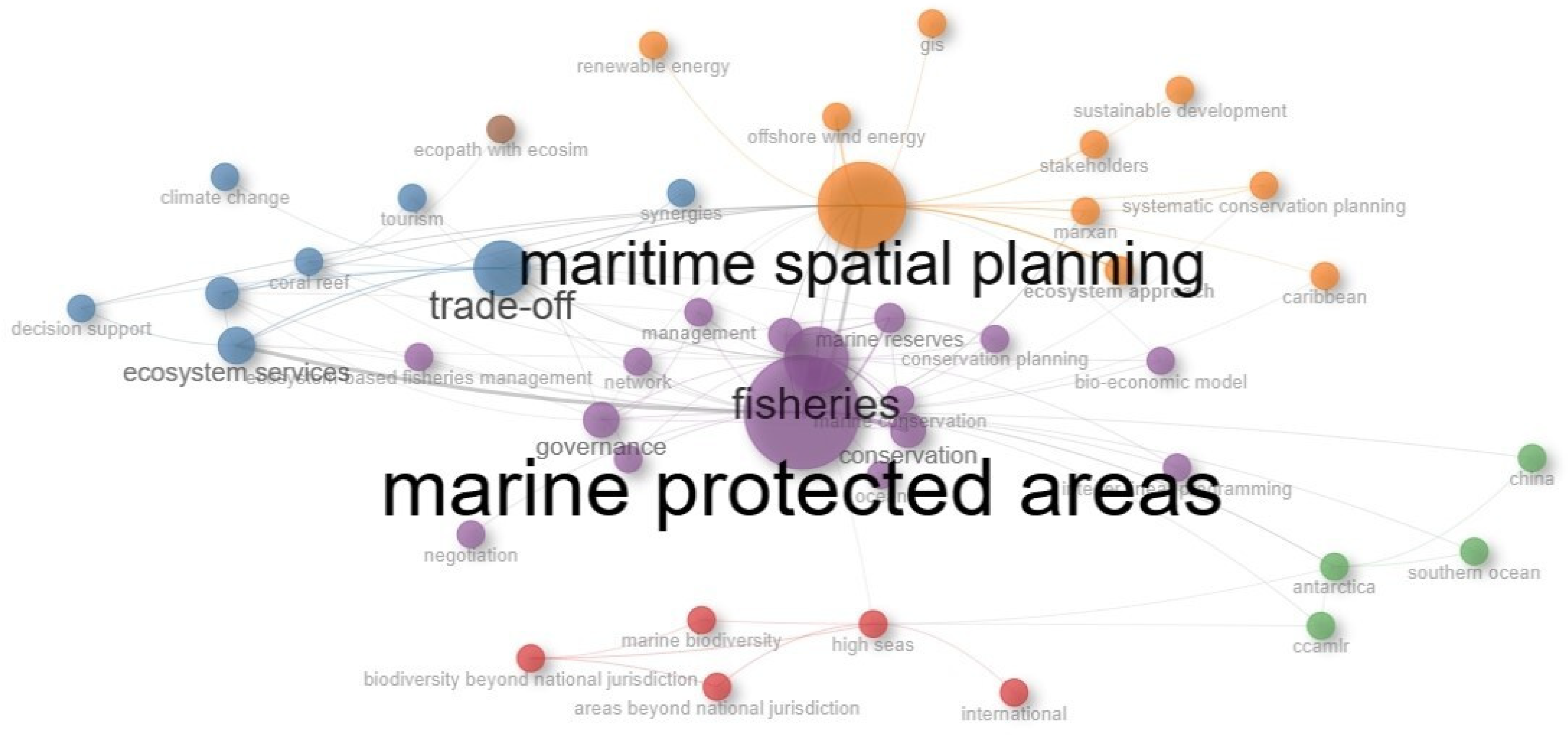
The co-occurrence network of keywords comprised a total of 60 individual keywords. It illustrates the links and strengths of connection among research topics, which is indicated by the proximity of the nodes and width of connecting lines, respectively. The size of the node represents the prevalence of keywords. The network map revealed six clusters, with “marine protected areas” being the most prevalent term, followed by “maritime spatial planning”. MPA and MSP were grouped separately but showed a connection; they also share common terms such as “management”, “governance”, and “systematic conservation planning”. The term “marine protected areas” appeared closely related to “fisheries” and “conservation”, with these terms being strongly connected. They were also linked to many other relevant terms, such as “fisheries management”, “governance”, “marine reserves”, “conservation planning”, “ecosystem-based fisheries management”, and “negotiation”. The second most used term, “maritime spatial planning”, appeared linked to “offshore wind energy”, “renewable energy”, “stakeholders”, “systematic conservation planning”, “ecosystem approach”, “sustainable development”, “bio-economic model”, “marxan”, “caribbean”, and “gis” (Figure 3).
Figure 3.
Co-occurrence network of the main keywords from publications on trade-offs. Note: This figure represents the co-occurrence network of keywords specifically selected by the authors of the publications, rather than Keywords Plus, which are algorithmically generated by the platform. The colors represent the different clusters of keywords identified in the analysis.
3.1.2. Trend Topics
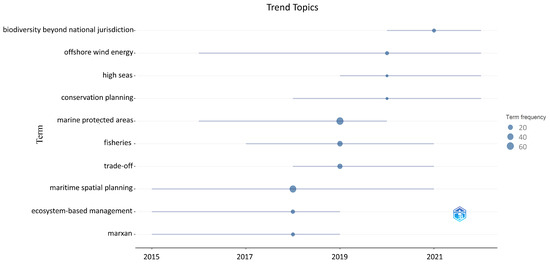
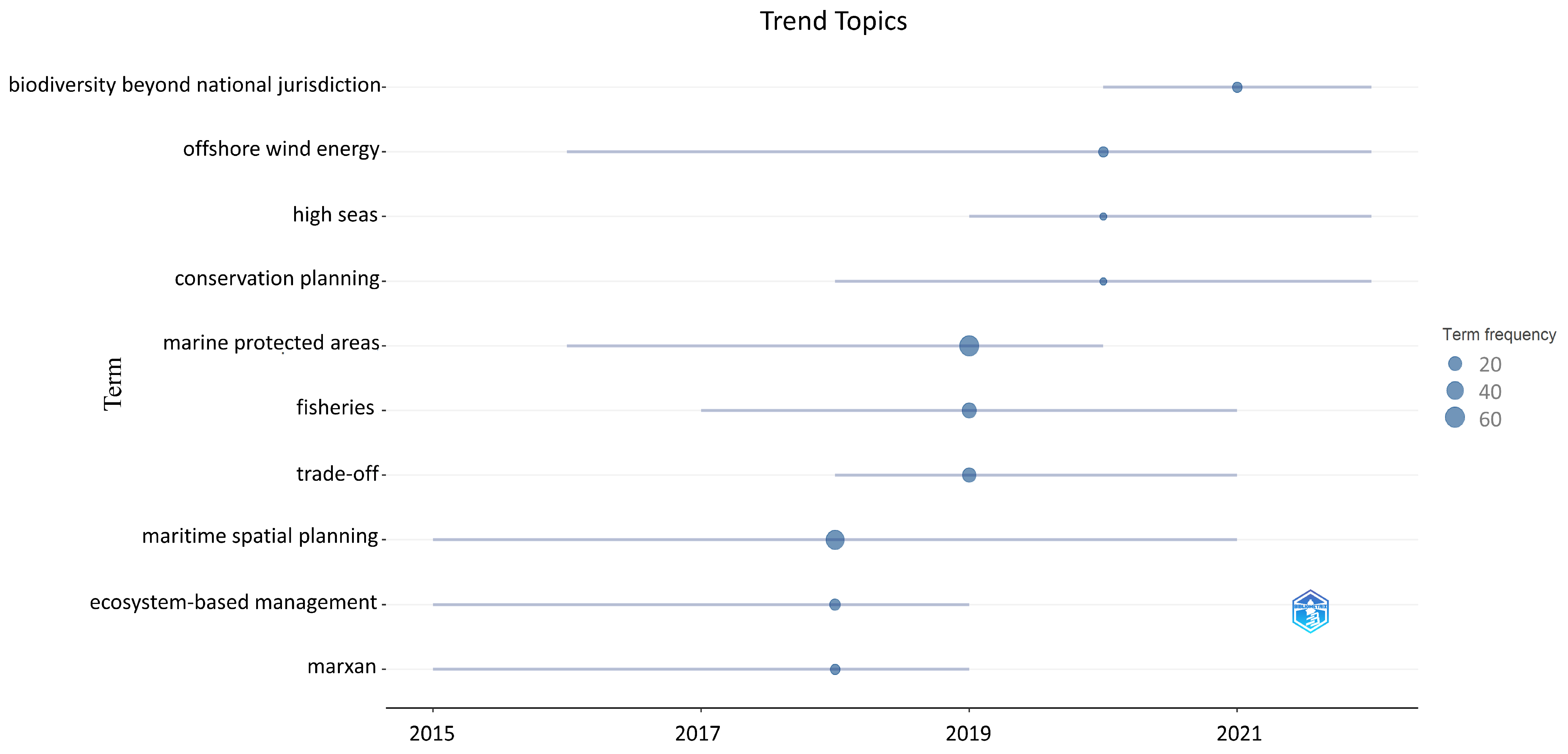
Regarding the trend topics in publications discussing trade-offs, there has been a change in the terms used over the years. The most prominent terms, “marine protected areas” and “maritime spatial planning”, were highly used in 2019 and 2018, respectively. Although they continued to be used afterward, other terms began to gain prominence. From 2020 onwards, topics related to the “high seas” started to become more frequent, with “offshore wind energy” and “biodiversity beyond national jurisdiction” standing out in 2020 and 2021, respectively (Figure 4).
Figure 4.
Temporal variation of terms used as keywords by authors in publications on trade-offs, demonstrating trending topics.
3.1.3. Countries of the Authors’ Affiliations
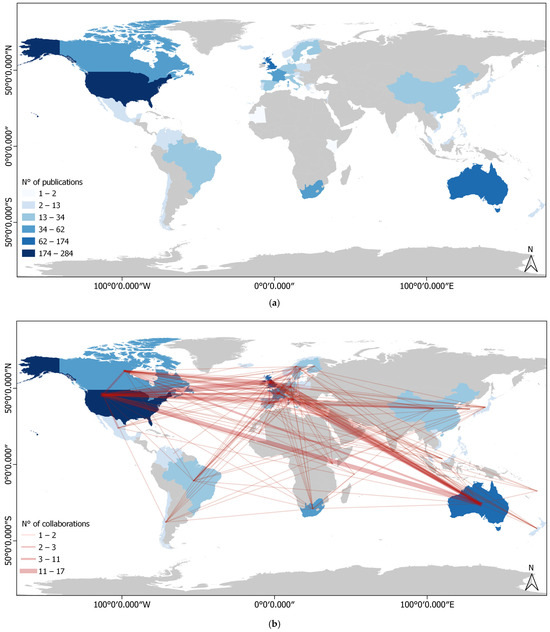
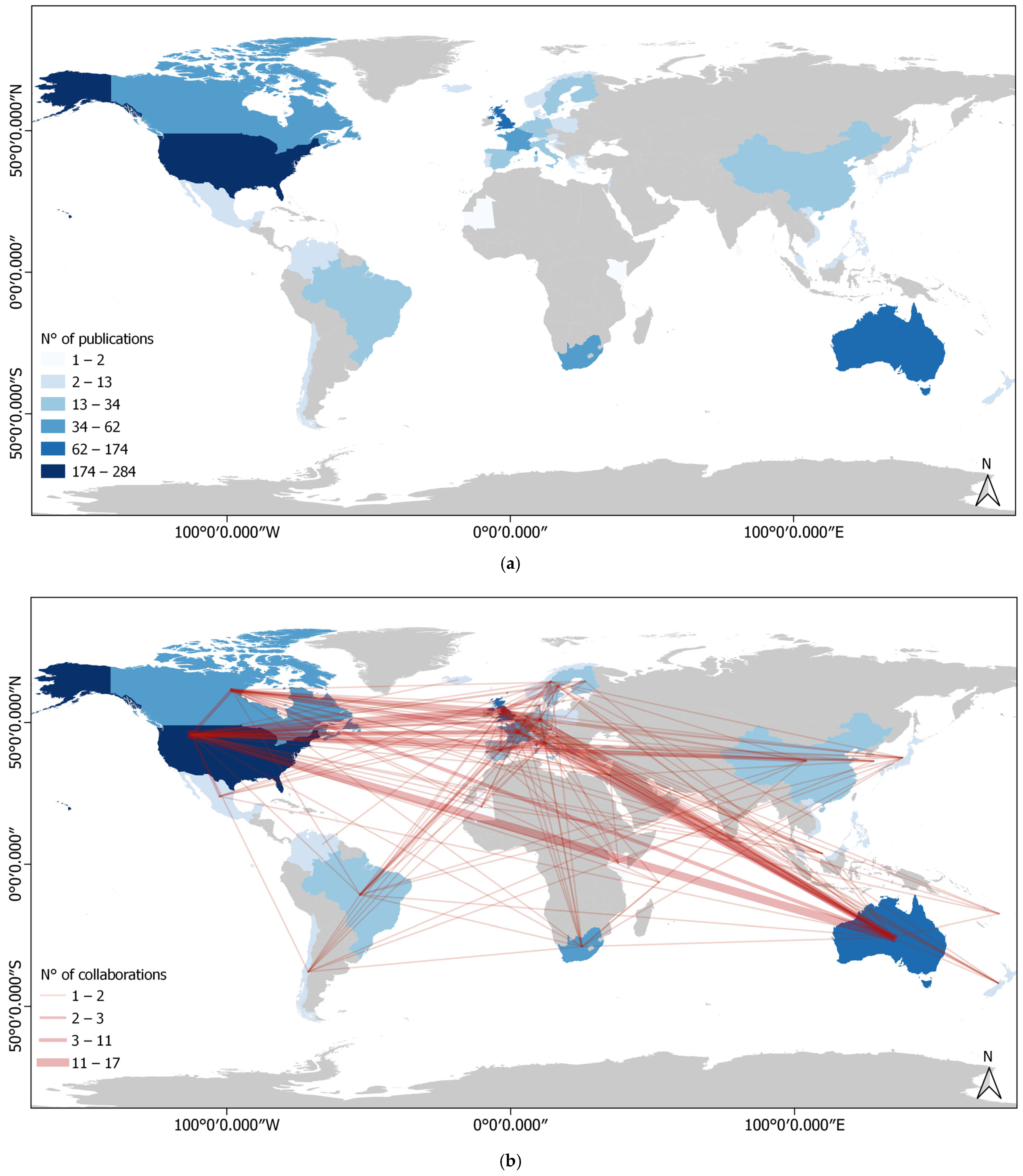
Trade-off publications are authored by researchers affiliated with institutions across various countries or territories (Figure 5a). The majority of these publications originate from institutions in the Global North, with the USA (284), Australia (170), and the UK (108) leading in the number of publications. Notably, some countries in the Global South, such as South Africa (44) and Brazil (24), also rank among the top 15 contributors to this topic, likely reflecting collaborative efforts with institutions in developed nations, including those three most productive countries in trade-off publications (Figure 5b). This argument builds upon the results of Chalastani et al. [15] and is supported by the fact that the Global South Authors are not often first authors on this theme, and/or are co-authoring larger groups of Global North authors.
Figure 5.
Publications on trade-offs (a) and collaboration networks (b) among countries.
3.2. Navigating Trade-Offs
3.2.1. Types of Trade-Offs
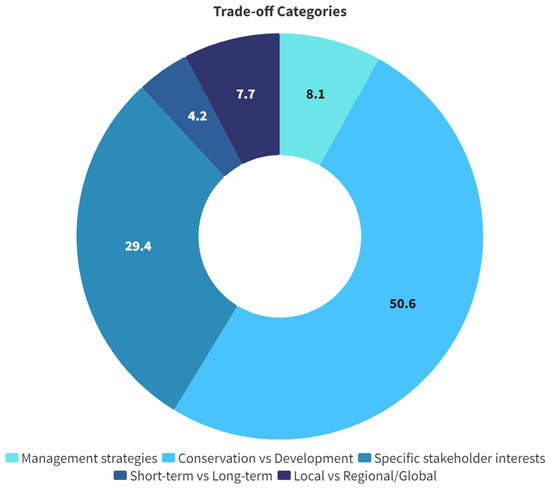
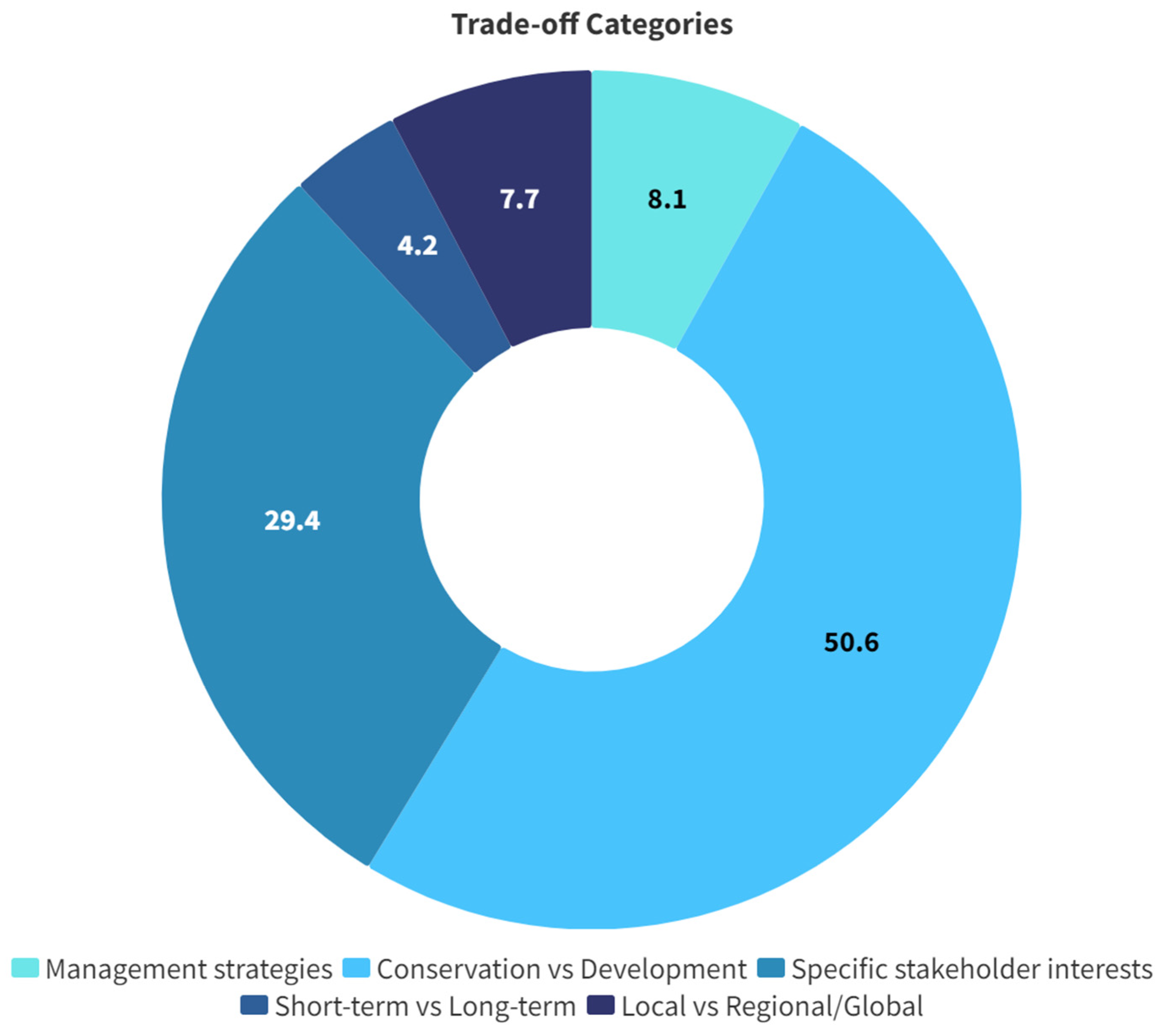
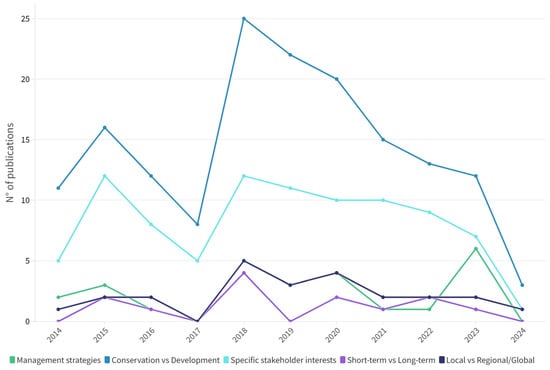
A total of 5 categories and 25 subcategories of trade-offs were identified in the publications (Table A2). The most prevalent trade-offs were conservation/ecosystem services versus development outcomes and specific stakeholder interests, present in 50.6% and 29.4% of the publications, respectively (Figure 6). Publications addressing conservation trade-offs peaked in 2018, the year with the highest number of publications, and progressively decreased afterward. Trade-offs related to stakeholders’ interests increased in 2015 and 2018 and have remained relatively stable over the years (Figure 7).
Figure 6.
Percentage of publications addressing each trade-off category.
Figure 7.
Temporal variation in the number of publications addressing each trade-off category.
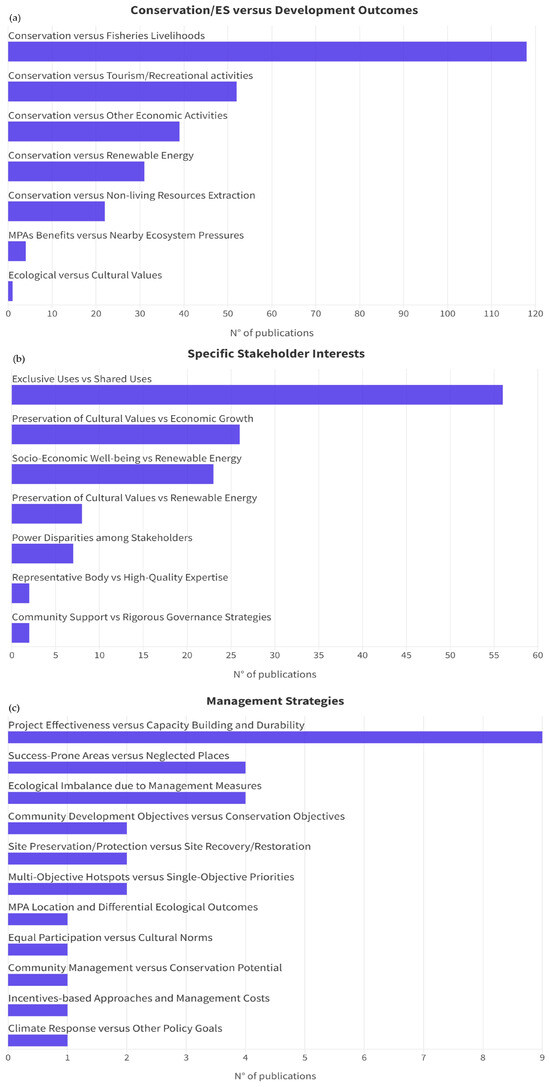
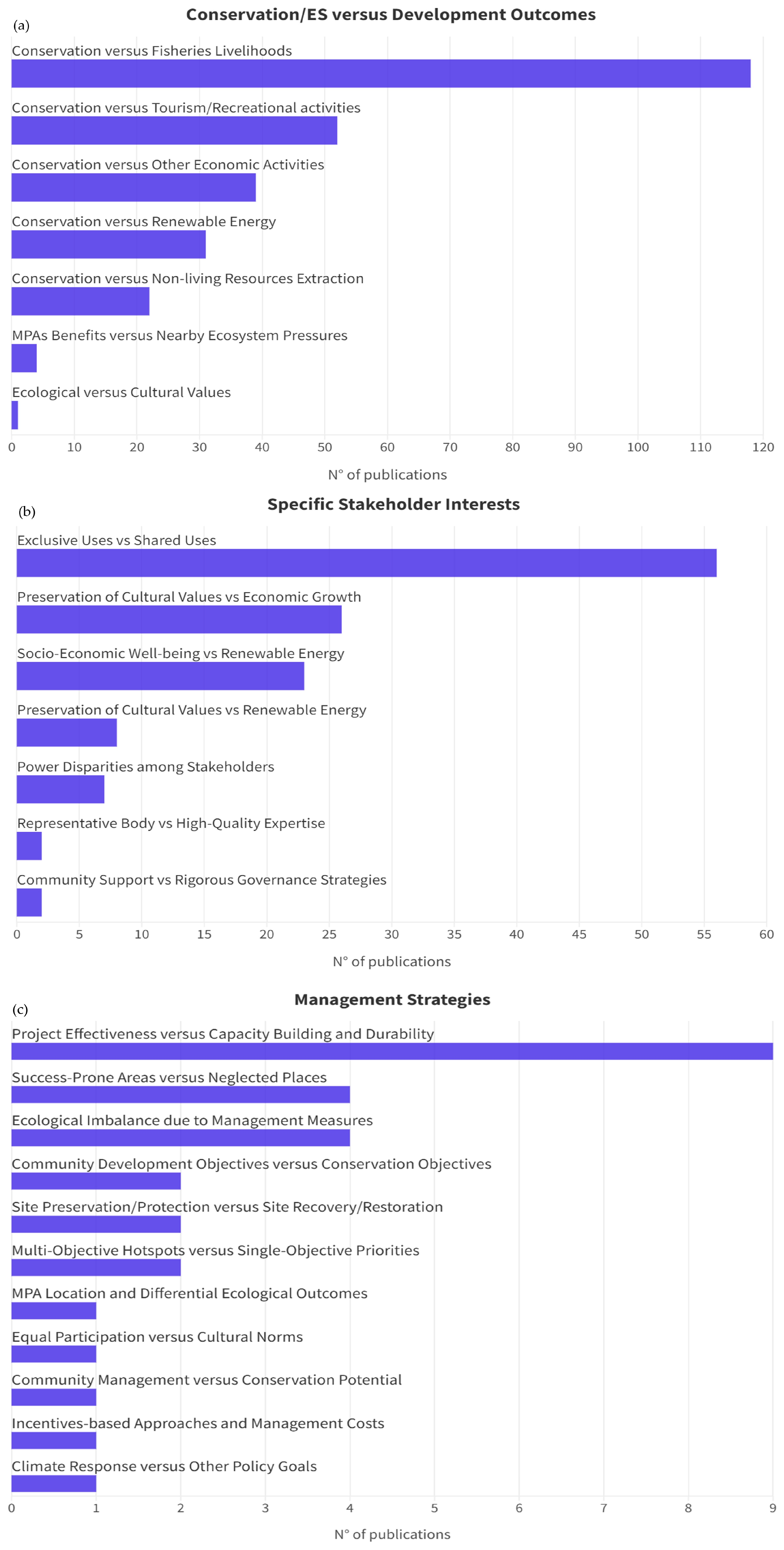
Regarding conservation trade-offs, the most discussed subcategories were ‘Conservation versus Fisheries Livelihoods’ (n = 118), followed by ‘Conservation versus Tourism and Recreational activities’, ‘Conservation versus Other Economic Activities’, and ‘Conservation versus Renewable Energy’ (52, 39, and 31 publications, respectively) (Figure 8a). Among stakeholder interests, the most frequently discussed subcategory was ‘Exclusive Uses versus Shared Uses’ (n = 56), representing 46% of the category (Figure 8b). In management strategies’ trade-offs, ‘Project Effectiveness versus Capacity Building and Durability’ was the most discussed subcategory (n = 9), followed by ‘Ecological Imbalance due to Management Measures’ (n = 4), ‘Success-Prone Areas versus Neglected Places’ (n = 4), and ‘Community Development Objectives versus Conservation Objectives’ (n = 3) (Figure 8c).
Figure 8.
Number of publications addressing subcategories in conservation vs. development (a), specific stakeholder interests (b), and management strategies (c).
3.2.2. Focal Objectives
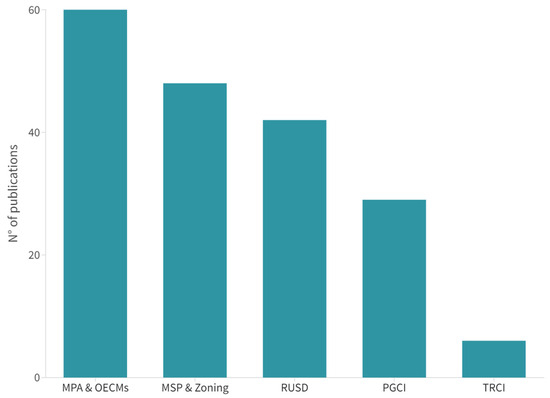
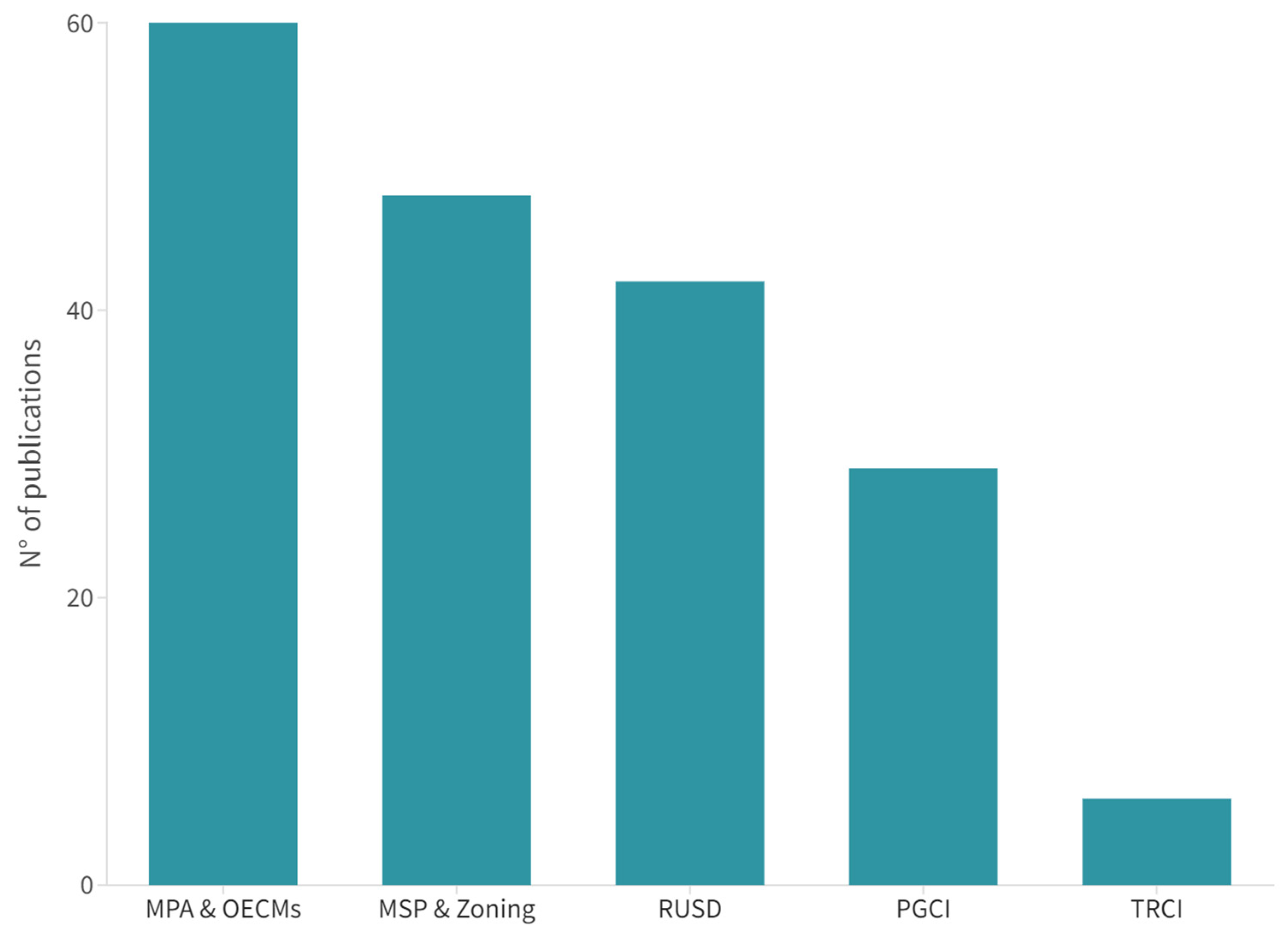
The primary focus in the publications was on MPAs and OECMs (n = 60), which explains the high prevalence of the term ’marine protected areas’ in the authors’ keywords. This trend likely reflects the crucial role of trade-offs in conservation strategies. The second most frequently addressed category, MSP and Zoning (n = 48), also appears frequently in the authors’ keywords (Figure 9), suggesting an increasing recognition of spatial planning tools as essential mechanisms for managing conflicting stakeholder interests. Following this, the third major category, RUSD (n = 42), underscores the importance of balancing ecological sustainability with resource use, highlighting the delicate trade-offs necessary to achieve both objectives. According to the logistic model, there is a significant positive difference in addressing specific stakeholder interests between publications focused on MSP and Zoning compared to those focused on MPAs and OECMs (beta = 0.97, p = 0.030). Besides the two most prevalent categories of trade-offs, another commonly addressed category within these three main objectives was ’management strategies’ (Figure 10).
Figure 9.
Number of publications on trade-offs that addressed each type of objective.
3.2.3. Tools Assessment
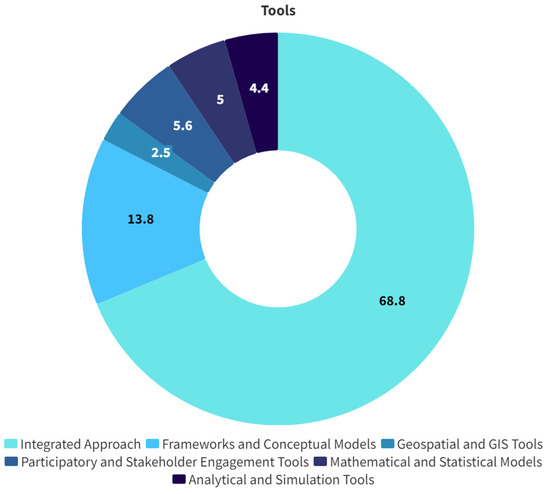
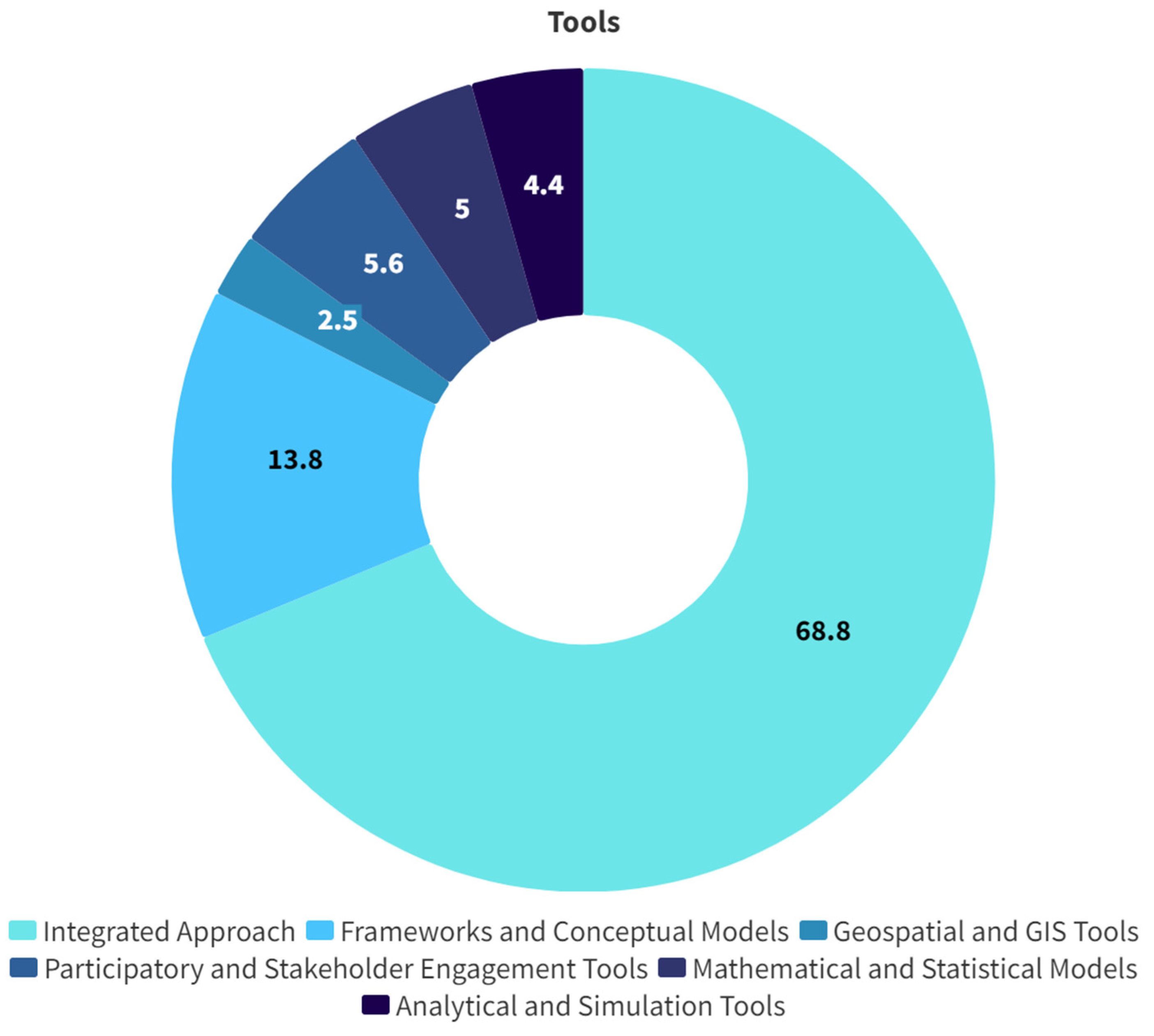
The most frequently used tool in trade-off publications was the integrated approach, presented in 68.8% of the studies (Figure 11). This approach demonstrates its prevalence and versatility and is applied across a wide range of trade-off scenarios. Additionally, the second most commonly used tool was ‘Frameworks and Conceptual Models,’ which appeared in 13.8% of the publications (Figure 11). Notably, both of these prevalent approaches were applied across all categories of trade-offs (Figure 10), underscoring their versatility and importance in addressing diverse trade-off scenarios. Their widespread use highlights the need for holistic and structured methodologies to effectively analyze and manage the complexities associated with trade-offs in marine management and conservation.
Figure 11.
Percentage of publications on trade-offs using each type of tool.
Figure 10.
Link between categories of trade-offs, their associated objectives, and the tools used in the publications.
4. Discussion
4.1. Bibliographic Trends
The analysis of bibliographic patterns reveals that scientific publications addressing trade-offs peaked in 2018, followed by a gradual decline. This peak likely corresponds with the growing interest in marine ecosystem conservation, bolstered by international agreements such as the CBD Aichi Biodiversity Targets also peaking at that time [23,24]. This trend also explains the similar pattern observed for publications addressing conservation-related trade-offs. Furthermore, the initial rapid growth of publications on MSP in the literature is probably another factor contributing to this increase [15]. The impact of these topics is further supported by the importance of the terms “marine protected areas” and “maritime spatial planning” in the keywords used by authors in trade-off publications.
In addition to the strong prevalence of the term “marine protected areas”, MPAs and OECMs have also emerged as the primary focal objective addressed in the literature. This, combined with the association between MPAs and the term “negotiation”, emphasizes the inherent nature of trade-offs in conservation plans [34,35]. Conservation efforts often conflict with development goals, which explains the prevalence of the conservation/ecosystem services versus development outcomes category. Therefore, it is necessary to carefully balance the interests of these sectors to ensure that both ecological integrity and human socioeconomic well-being are maintained [43]. In addition, including trade-off analysis in conservation planning is crucial, as it helps to identify the extent to which commercial activities must be reduced to meet biodiversity objectives [43,44].
4.2. Balancing Conservation with Socioeconomic Development
Numerous studies have approached the trade-offs associated with fishing and marine conservation [45,46]. This trend is also evident in this study, where the subcategory ‘Conservation versus Fisheries Livelihoods’ emerged as the most frequently discussed among the 25 identified subcategories. Additionally, RUSD, which addresses the regulation and management of marine resources to ensure sustainable exploitation, was the third most discussed objective in the literature. This underscores the close relationship between MPAs and fisheries, as well as their connection to concepts such as “ecosystem-based fisheries management”, “fisheries management”, and “conservation”. This relationship clearly demonstrated the critical necessity of balancing ecological preservation with the economic and social needs of fishing communities.
The need to balance conservation with socioeconomic development extends beyond fisheries, as evidenced by the high occurrence of subcategories such as ‘Conservation versus Tourism’ and ‘Conservation versus Other Economic Activities’, the latter including navigation, aquaculture, military activities, and more. Similarly, the large number of publications addressing trade-offs related to specific stakeholder interests, including the frequently discussed subcategory ‘Exclusive Uses versus Shared Uses’, likely reflects the increasing competition for space and resources among various sectors [10]. This competition heightens the interest in balancing the different socioeconomic activity goals.
4.3. Maritime Spatial Planning as a Key Strategy
MSP emerged in the past decade as a pivotal strategy for integrated ocean management and has been adopted as a primary approach worldwide [47]. It provides a comprehensive planning process that considers diverse perspectives and balances competing objectives [48]. This may explain the prominence of MSP and Zoning as key objective discussed in trade-off publications, as well as why publications addressing this objective approached more specific stakeholder trade-offs compared to those with MPAs and OECMs as their primary focus. However, a decline in the number of publications addressing MSP since 2020, as noticed by Lukambagire et al. [49], likely indicates stabilization after an initial surge. This decline may hinder the identification of essential processes and mechanisms for promoting sustainable ocean governance, especially in the Global South [49].
Analyzing the co-occurrence network of keywords reveals insightful connections. For instance, MSP appeared connected to the term ‘stakeholders’. Since MSP involves stakeholder engagement to address ecological, social, and economic objectives transparently [19], this connection was expected. Stakeholder participation is critical in legitimizing trade-offs in conservation decisions and enhancing sustainability [13]. Furthermore, stakeholders can contribute to MSP by helping to determine priorities and goals, implement and enforce plans, and evaluate outcomes [50,51]. Working in collaboration with stakeholders can improve the understanding of the costs and benefits of each conservation intervention [52], allowing for an equitable distribution of outcomes and, consequently, contributing to the effectiveness of marine conservation planning and management [44].
4.4. Emerging Topics in Trade-Off Literature
Despite the widespread use of the terms “marine protected areas” and “maritime spatial planning”, in recent years, certain topics have gained prominence in trade-off literature. Notably, “offshore wind energy” has become increasingly prevalent, reflecting global efforts to mitigate climate change impacts. The growth in offshore wind energy installations, particularly in Europe, highlights its role in achieving carbon neutrality goals and meeting the objectives of the Green Deal [53,54]. This trend aligns with the urgency to transition towards sustainable energy sources. Importantly, this growth also necessitates considering factors such as potential environmental impacts and inherent conflicts of interest within the sector. This may shape discussions in MSP and conservation strategies [55], explaining the considerable occurrence of the subcategory ‘Conservation versus Renewable Energy’, as well as the link between the terms “offshore wind energy” and “renewable energy” with “maritime spatial planning”.
Another significant topic that recently gained attention was Biodiversity Beyond National Jurisdiction (BBNJ). The substantial gaps in institutional frameworks for negotiating conflicting interests in Areas Beyond National Jurisdiction (ABNJ) accentuate the importance of addressing trade-offs resulting from sector interactions in these areas [56,57]. The urgent call to advocate for the sustainable use and conservation of marine biodiversity in ABNJ has driven negotiations for an international legally binding instrument (ILBI) on BBNJ [58,59]. These negotiations, which continued until 2023, have elevated BBNJ into a widely discussed and contemporary issue [60]. Despite this and the recognized importance of participatory approach, stakeholders’ participation is still not fully integrated at all levels of the policy process [61]. In the future, this gap might create more opportunities for trade-offs.
The observed increase in publications on conservation-development trade-offs, as well as specific stakeholder interests, in 2015 and 2018, likely reflects a combination of key factors. The adoption of the SDGs in 2015, which included specific targets for marine conservation, along with the Paris Agreement, heightened the need to balance diverse interests to achieve these global objectives [62]. Furthermore, the expansion of MSP initiatives, particularly in Europe following the EU directive on MSP in 2014, emphasized the importance of addressing specific stakeholder concerns [15], potentially leading to a rise in studies focused on these trade-offs. The growth of infrastructure projects, such as offshore wind energy and marine resource exploration, has also exacerbated conflicts over space use [63], increasing the demand for detailed analyses on reconciling these competing interests. Finally, the emerging discussions on the conservation and sustainable use of BBNJ have likely contributed to the surge in the literature on these trade-offs. This process began in 2015 with the UN General Assembly’s adoption of a resolution focused on conserving and sustainably using marine biodiversity. Preparatory committee meetings were held between 2016 and 2017 to develop procedural recommendations for an ILBI, with formal negotiations officially commencing in 2018 [56].
To fulfill the SDGs in line with the commitment to leave no one behind, trade-off analysis must integrate principles of equity, justice, and acceptability into decision-making processes and program development [34]. However, trade-offs related to management strategies and subcategories such as ‘Representative Body versus High-Quality Expertise’, ‘Community Support versus Rigorous Governance Strategies’, and ‘Power Disparities among Stakeholders’ have been insufficiently addressed. This highlights the need for greater emphasis on these fundamental trade-offs.
There has been a slight increase in publications addressing trade-offs in management strategies in 2023, which may suggest a growing interest in addressing these complexities. This category was the third most frequently covered in publications focusing on MPAs and OECMs, MSP and Zoning, and RUSD, pointing out its relevance in balancing socioeconomic and ecological goals. Additionally, ’Project Effectiveness versus Capacity Building and Durability’ emerged as the most commonly addressed subcategory of management strategies, emphasizing the importance of capacity-building of stakeholders and the durability of conservation projects for their success. Education and capacity-building initiatives are particularly promising, as they foster collaboration, cultivate a sense of responsibility for marine conservation, empower stakeholders, and promote the adoption of alternative and sustainable livelihoods [64].
The trade-off between short-term and long-term benefits was the least addressed in the publications. Despite the difficulty of thinking and planning for the long term, it is important to recognize that this trade-off is present in various categories, including conservation and development, which was the most prevalent category in the literature. Therefore, the relatively low number of publications explicitly mentioning this trade-off, which accounted for only 4.2% of the total, does not necessarily reflect a lack of interest in it. Instead, it is likely a consequence of its broad distribution across other categories, making it less prominent as a distinct focus in the literature.
4.5. Spatial Distribution of Trade-Off Research
Scientific research on trade-offs in marine areas was more prevalent in the Global North. Countries such as the USA, Australia, the UK, and Canada have notably advanced in investigating and documenting trade-offs. This is likely driven by the demands of international agreements such as the SDGs, since navigating these complex trade-offs has been identified as a major governance challenge in achieving these goals [33]. It is important to note that international agreements, when integrated into other international commitments (such as the entire European Union Member States block), become binding instruments that must be developed within a set deadline, thus making them a strong stress/driver. In contrast, academic production on this topic is less prevalent in the Global South. This may be partly due to the predominance of top-down governance approaches, where the need to negotiate the interests of various stakeholders is often neglected [65,66]. In such contexts, decisions are centralized, with local communities and other interest groups having little influence on planning and management processes. This probably reduces the perceived need to analyze and document trade-offs as extensively. Moreover, investment in research in Global South countries is relatively low, and the presence of countries such as South Africa and Brazil among those with a high number of publications is likely a result of collaboration with developed countries, highlighting the importance of these connections. This argument is based on the findings of Chalastani et al. [15], who observed that Global South authors are frequently underrepresented as first authors in this field and often participate as co-authors in larger teams led by researchers from the Global North.
4.6. Tools for Addressing Trade-Offs in Marine Environment
Addressing trade-offs can be challenging, especially when selecting the most appropriate tools. The integrated approach was the most commonly employed tool in trade-off studies and was applied across all types of trade-offs identified in this study. This approach emphasizes the importance of considering multiple factors simultaneously, providing a comprehensive perspective on the complex interactions involved in trade-offs. Integrated methods are essential for gaining a deep understanding of the diverse values that shape human–nature interactions. These methods must take into account both socioeconomic and cultural factors that influence the use of resources and lead to disputes over shared resources in coastal and marine environments [67].
The second most commonly used tool was Frameworks and Conceptual Models. This approach, which was also applied to all types of trade-offs, offers structured ways to understand and analyze the dynamics of trade-offs, often providing theoretical foundations and systematic methods for assessment. Some studies have demonstrated that combining ecosystem-based management with an ecosystem services framework can help in identifying trade-offs and guiding the management of human activities [68,69]. Furthermore, some frameworks, such as the well-being framework, can facilitate the social process of negotiating trade-offs among various management options and assist individuals who have faced negative impacts in accepting policy decisions [70].
To align conservation efforts with socioeconomic interests, the environmental decision-making process should be based on a robust conservation planning framework and effective stakeholder engagement [71], emphasizing the importance of integrated approaches. An inclusive and transparent decision-making process is fundamental to creating a harmonious balance between these interests and promoting long-term ecological and economic resilience [19,72]. It is important to emphasize that for more inclusive and effective management, it is essential to consider the local context, as socioeconomic factors influence stakeholders’ attitudes towards conservation measures [5,73].
The growing interest in participatory mapping, which integrates participatory and GIS tools [51], further underscores the importance of stakeholder participation. Participatory mapping is a direct method for collaboratively generating knowledge with stakeholders and community members [74], enabling precise local-scale mapping of ecosystem utilization and values. This approach provides a comprehensive dataset on these aspects [75], optimizing trade-offs between conservation and socioeconomic interests. Hence, it can enhance the success of protected areas and reduce enforcement costs over time; however, it is frequently overlooked in MSP [76]. Importantly, assessing trade-offs can reveal planning solutions that minimize conflicts and understand inevitable trade-offs among objectives that efficient MSP alone cannot resolve [77]. For example, Gusatu et al. [78] demonstrated how multi-use strategies in the North Sea Offshore Grid helped balance space for offshore wind farms, marine protected areas, and fisheries, optimizing energy deployment while reducing conflicts with ecological and economic interests.
5. Conclusions
This study reveals the central role of MPAs and MSP in the discourse on trade-offs in marine conservation. Additionally, the high presence of the term “marine protected areas” in the literature underscores the ongoing challenge of balancing conservation with developmental goals, reinforced by the prevalence of trade-offs related to these objectives. Trade-offs between fishing and marine conservation are particularly prominent, underscoring the critical need to consider both ecological preservation and the socioeconomic needs of fishing communities. This delicate balance extends beyond fishing communities to encompass a wider range of stakeholders, such as those in tourism and other economic activities. The challenge lies in balancing diverse socioeconomic interests while safeguarding the integrity of marine environments.
The high occurrence of specific stakeholder trade-offs, such as ’Exclusive Uses versus Shared Uses’, illustrates the intensifying competition among various socioeconomic activities. This category frequently emerged in publications focused on MSP and Zoning, emphasizing the relevance of MSP in navigating these competing interests and optimizing the allocation of marine spaces. The importance of the MSP is further highlighted by its association with renewable energy developments, including offshore wind energy. A notable trend towards incorporating renewable energy development into trade-off publications was observed, reflecting the urgent global shift towards sustainable energy solutions and the need to address the associated environmental and socioeconomic trade-offs. Furthermore, the emergence of BBNJ as an important topic for trade-off analysis accentuates the necessity for robust international frameworks to sustainably manage these areas, evidenced by the recent ILBI negotiations. The successful implementation of this measure will undoubtedly require trade-offs to achieve global objectives.
Despite the advancements in trade-off research, some gaps remain, such as those concerning community support, power disparities, and management strategies. This underrepresentation underscores the need for a more comprehensive and inclusive approach that equitably engages diverse stakeholders. The predominance of integrated approaches and frameworks in the literature reflects a growing recognition of the complexity of marine ecosystems and the necessity of holistic management strategies. Holistic approaches can optimize decision-making processes by guaranteeing comprehensive consideration of all relevant factors. Moreover, participatory mapping and stakeholder engagement are pivotal in enhancing the effectiveness of marine conservation efforts, ensuring that diverse interests are considered and conflicts minimized.
In conclusion, to advance sustainable ocean governance, it is crucial to foster a more inclusive and integrative approach to trade-off analysis, ensuring that conservation efforts are aligned with socioeconomic development goals. Continued research and international collaboration are indispensable to developing innovative solutions that balance ecological integrity with the sustainable use of marine resources, thereby securing the health of the ocean for future generations.
Author Contributions
Conceptualization, J.D.G.R.d.Q., D.G. and H.M.G.P.C.; methodology, J.D.G.R.d.Q., D.G. and H.M.G.P.C.; formal analysis, J.D.G.R.d.Q.; investigation, J.D.G.R.d.Q.; writing—original draft preparation, J.D.G.R.d.Q.; writing—review and editing, J.D.G.R.d.Q., D.G. and H.M.G.P.C.; visualization, J.D.G.R.d.Q. and D.G.; supervision, H.M.G.P.C. All authors have read and agreed to the published version of the manuscript.
Funding
This study was funded by the EU HORIZON-RIA project Improved science-based maritime spatial planning to safeguard and restore biodiversity in a coherent European MPA network (MSP4BIO, Project ID 101060707).
Institutional Review Board Statement
Not applicable.
Data Availability Statement
Restrictions apply to the availability of these data. Data were obtained from Web of Science, a subscription-based database that is not freely accessible to the general public (available at https://www.webofscience.com, accessed on 30 June 2024). Requests to access the datasets should be directed to the authors.
Acknowledgments
The author(s) would like to thank the Erasmus Mundus Joint Master Degree in Marine Environment (MER2030) for their support throughout the academic journey. Special thanks are also extended to the Faculty of Science and Technology (FCT) at the University of the Azores for providing a welcoming environment during the internship while writing this paper.
Conflicts of Interest
The authors declare no conflicts of interest.
Appendix A
Table A1.
List of synonyms used for the bibliometric assessment on trade-offs.
Table A2.
Categories and subcategories of trade-offs identified in the literature.
References
- Barbier, E.B. Progress and Challenges in Valuing Coastal and Marine Ecosystem Services. Rev. Environ. Econ. Policy 2012, 6, 1–19. [Google Scholar] [CrossRef] [Scilit]
- Liquete, C.; Piroddi, C.; Drakou, E.G.; Gurney, L.; Katsanevakis, S.; Charef, A.; Egoh, B. Current Status and Future Prospects for the Assessment of Marine and Coastal Ecosystem Services: A Systematic Review. PLoS ONE 2013, 8, e67737. [Google Scholar] [CrossRef] [Scilit]
- White, C.; Halpern, B.S.; Kappel, C.V. Ecosystem Service Tradeoff Analysis Reveals the Value of Marine Spatial Planning for Multiple Ocean Uses. Proc. Natl. Acad. Sci. USA 2012, 109, 4696–4701. [Google Scholar] [CrossRef] [Scilit]
- Grant, S.M.; Hill, S.L.; Trathan, P.N.; Murphy, E.J. Ecosystem Services of the Southern Ocean: Trade-Offs in Decision-Making. Antarct. Sci. 2013, 25, 603–617. [Google Scholar] [CrossRef] [Scilit]
- de Oliveira Júnior, J.G.C.; Campos-Silva, J.V.; Santos, D.T.V.; Ladle, R.J.; da Silva Batista, V. Quantifying Anthropogenic Threats Affecting Marine Protected Areas in Developing Countries. J. Environ. Manag. 2021, 279, 111614. [Google Scholar] [CrossRef] [Scilit]
- Hall-Spencer, J.M.; Harvey, B.P. Ocean Acidification Impacts on Coastal Ecosystem Services Due to Habitat Degradation. Emerg. Top. Life Sci. 2019, 3, 197–206. [Google Scholar] [CrossRef] [Scilit]
- O’Leary, B.C.; Hoppit, G.; Townley, A.; Allen, H.L.; McIntyre, C.J.; Roberts, C.M. Options for Managing Human Threats to High Seas Biodiversity. Ocean Coast. Manag. 2020, 187, 105110. [Google Scholar] [CrossRef] [Scilit]
- Hall-Spencer, J.; Allen, R. The Impact of CO2 Emissions on “nuisance” Marine Species. Res. Rep. Biodivers. Stud. 2015, 4, 33–46. [Google Scholar] [CrossRef] [Scilit]
- Milazzo, M.; Rodolfo-Metalpa, R.; Chan, V.B.S.; Fine, M.; Alessi, C.; Thiyagarajan, V.; Hall-Spencer, J.M.; Chemello, R. Ocean Acidification Impairs Vermetid Reef Recruitment. Sci. Rep. 2014, 4, 4189. [Google Scholar] [CrossRef] [Scilit]
- Vierros, M.; Cresswell, I.D.; Bridgewater, P.; Smith, A.D.M. Ecosystem Approach and Ocean Management. In Ocean Sustainability in the 21st Century; Aricó, S., Ed.; Cambridge University Press: Paris, France, 2015; pp. 127–145. [Google Scholar]
- McLeod, K.L.; Lubchenco, J.; Palumbi, S.R.; Rosenberg, A.A. Scientific Consensus Statement on Marine Ecosystem-Based Management; Signed by 217 Academic Scientists and Policy Experts with Relevant Expertise and Published by the Communication Partnership for Science and the Sea; Communication Partnership for Science and the Sea: Washington, DC, USA, 2005. [Google Scholar]
- Garcia, S.; Cintra, Y.; Torres, R.d.C.S.R.; Lima, F.G. Corporate Sustainability Management: A Proposed Multi-Criteria Model to Support Balanced Decision-Making. J. Clean. Prod. 2016, 136, 181–196. [Google Scholar] [CrossRef] [Scilit]
- Ehler, C.; Douvere, F. Marine Spatial Planning, a Step-by-Step Approach Towards Ecosystem-Based Management; Unesco: Paris, France, 2009. [Google Scholar]
- UNESCO-IOC/European Commission. MSPglobal International Guide on Marine/Maritime Spatial Planning; Iglesias-Campos, A., Rubeck, J., Sanmiguel-Esteban, D., Schwarz, G., Eds.; UNESCO: Paris, France, 2021; ISBN 9788409331970. [Google Scholar]
- Chalastani, V.I.; Tsoukala, V.K.; Coccossis, H.; Duarte, C.M. A Bibliometric Assessment of Progress in Marine Spatial Planning. Mar. Policy 2021, 127, 104329. [Google Scholar] [CrossRef] [Scilit]
- Santos, C.F.; Ehler, C.N.; Agardy, T.; Andrade, F.; Orbach, M.K.; Crowder, L.B. Marine Spatial Planning. In World Seas: An Environmental Evaluation Volume III: Ecological Issues and Environmental Impacts; Elsevier: Amsterdam, The Netherlands, 2019; pp. 571–592. ISBN 9780128050521. [Google Scholar]
- Guerreiro, J.; Carvalho, A.; Casimiro, D.; Bonnin, M.; Calado, H.; Toonen, H.; Fotso, P.; Ly, I.; Silva, O.; da Silva, S.T. Governance Prospects for Maritime Spatial Planning in the Tropical Atlantic Compared to EU Case Studies. Mar. Policy 2021, 123, 104294. [Google Scholar] [CrossRef] [Scilit]
- Katsanevakis, S.; Stelzenmüller, V.; South, A.; Sørensen, T.K.; Jones, P.J.S.; Kerr, S.; Badalamenti, F.; Anagnostou, C.; Breen, P.; Chust, G.; et al. Ecosystem-Based Marine Spatial Management: Review of Concepts, Policies, Tools, and Critical Issues. Ocean Coast. Manag. 2011, 54, 807–820. [Google Scholar] [CrossRef] [Scilit]
- Lombard, A.T.; Ban, N.C.; Smith, J.L.; Lester, S.E.; Sink, K.J.; Wood, S.A.; Jacob, A.L.; Kyriazi, Z.; Tingey, R.; Sims, H.E. Practical Approaches and Advances in Spatial Tools to Achieve Multi-Objective Marine Spatial Planning. Front. Mar. Sci. 2019, 6, 166. [Google Scholar] [CrossRef] [Scilit]
- Kirkfeldt, T.S.; van Tatenhove, J.P.M.; Calado, H.M.G.P. The Way Forward on Ecosystem-Based Marine Spatial Planning in the EU. Coast. Manag. 2022, 50, 29–44. [Google Scholar] [CrossRef] [Scilit]
- Gonçalves, E.J. Marine Protected Areas as Tools for Ocean Sustainability. In Blue Planet Law; Springer: Cham, Switzerland, 2023; p. 131. [Google Scholar]
- Jones, P.J.S. Marine Protected Area Strategies: Issues, Divergences and the Search for Middle Ground. Rev. Fish Biol. Fish. 2002, 11, 197–216. [Google Scholar] [CrossRef] [Scilit]
- Vierros, M.; Cicin-Sain, B.; Aricó, S.; Lefebvre, C. Marine Biodiversity and Networks of Marine Protected Areas in 2010 and Beyond. In Proceedings of the the Tenth Meeting of the Conference of the Parties to the Convention on Biological Diversity (CBD COP 10), Nagoya, Aichi Prefecture, Japan, 18–29 October 2010. [Google Scholar]
- Coad, L.; Leverington, F.; Burgess, N.D.; Cuadros, I.C.; Geldmann, J.; Marthews, T.R.; Mee, J.; Nolte, C.; Stoll-Kleemann, S.; Vansteelant, N.; et al. Progress towards the CBD Protected Area Management Effectiveness Targets. Parks 2013, 19, 13–24. [Google Scholar] [CrossRef] [Scilit]
- Hogg, K.; Gray, T.; Noguera-Méndez, P.; Semitiel-García, M.; Young, S. Interpretations of MPA Winners and Losers: A Case Study of the Cabo De Palos- Islas Hormigas Fisheries Reserve. Marit. Stud. 2019, 18, 159–171. [Google Scholar] [CrossRef] [Scilit]
- Chambers, J.; Aguila Mejía, M.D.; Ramírez Reátegui, R.; Sandbrook, C. Why Joint Conservation and Development Projects Often Fail: An in-Depth Examination in the Peruvian Amazon. Environ. Plan. E Nat. Space 2020, 3, 365–398. [Google Scholar] [CrossRef] [Scilit]
- Evans, L.S.; Cohen, P.J.; Vave-Karamui, A.; Masu, R.; Boso, D.; Mauli, S. Reconciling Multiple Societal Objectives in Cross-Scale Marine Governance: Solomon Islands’ Engagement in the Coral Triangle Initiative. Soc. Nat. Resour. 2018, 31, 121–135. [Google Scholar] [CrossRef] [Scilit]
- Lester, S.E.; Halpern, B.S.; Grorud-Colvert, K.; Lubchenco, J.; Ruttenberg, B.I.; Gaines, S.D.; Airamé, S.; Warner, R.R. Biological Effects within No-Take Marine Reserves: A Global Synthesis. Mar. Ecol. Prog. Ser. 2009, 384, 33–46. [Google Scholar] [CrossRef] [Scilit]
- Russ, G.R.; Alcala, A.C.; Maypa, A.P.; Calumpong, H.P.; White, A.T. Marine Reserve Benefits Local Fisheries. Ecol. Appl. 2004, 14, 597–606. [Google Scholar] [CrossRef] [Scilit]
- Bich Xuan, B.; Armstrong, C.W. Trading off Tourism for Fisheries. Environ. Resour. Econ. 2019, 73, 697–716. [Google Scholar] [CrossRef] [Scilit]
- Chaigneau, T.; Brown, K. Challenging the Win-Win Discourse on Conservation and Development: Analyzing Support for Marine Protected Areas. Ecol. Soc. 2016, 21, 36. [Google Scholar] [CrossRef] [Scilit]
- Howe, C.; Suich, H.; Vira, B.; Mace, G.M. Creating Win-Wins from Trade-Offs? Ecosystem Services for Human Well-Being: A Meta-Analysis of Ecosystem Service Trade-Offs and Synergies in the Real World. Glob. Environ. Change 2014, 28, 263–275. [Google Scholar] [CrossRef] [Scilit]
- Bowen, K.J.; Cradock-Henry, N.A.; Koch, F.; Patterson, J.; Häyhä, T.; Vogt, J.; Barbi, F. Implementing the “Sustainable Development Goals”: Towards Addressing Three Key Governance Challenges—Collective Action, Trade-Offs, and Accountability. Curr. Opin. Environ. Sustain. 2017, 26, 90–96. [Google Scholar] [CrossRef] [Scilit]
- Fortnam, M.; Chaigneau, T.; Evans, L.; Bastian, L. Practitioner Approaches to Trade-off Decision-Making in Marine Conservation Development. People Nat. 2023, 5, 1636–1648. [Google Scholar] [CrossRef] [Scilit]
- Gill, D.A.; Cheng, S.H.; Glew, L.; Aigner, E.; Bennett, N.J.; Mascia, M.B. Social Synergies, Tradeoffs, and Equity in Marine Conservation Impacts. Annu. Rev. Environ. Resour. 2019, 44, 347–372. [Google Scholar] [CrossRef] [Scilit]
- Lopes, P.F.M.; Rosa, E.M.; Salyvonchyk, S.; Nora, V.; Begossi, A. Suggestions for Fixing Top-down Coastal Fisheries Management through Participatory Approaches. Mar. Policy 2013, 40, 100–110. [Google Scholar] [CrossRef] [Scilit]
- Calado, H. Better Participation Means Better Governance. Ocean Governance in Archipelagic Regions. In Proceedings of the Ocean Governance in Archipelagic Regions Conference, Horta, Azores, Portugal, 7–10 October 2019; Arquipelago. Life and Marine Sciences. Supplement 11. 2020; pp. 59–60. [Google Scholar]
- Bennett, N.J.; Di Franco, A.; Calò, A.; Nethery, E.; Niccolini, F.; Milazzo, M.; Guidetti, P. Local Support for Conservation is Associated with Perceptions of Good Governance, Social Impacts, and Ecological Effectiveness. Conserv. Lett. 2019, 12, e12640. [Google Scholar] [CrossRef] [Scilit]
- Law, E.A.; Bennett, N.J.; Ives, C.D.; Friedman, R.; Davis, K.J.; Archibald, C.; Wilson, K.A. Equity Trade-Offs in Conservation Decision Making. Conserv. Biol. 2018, 32, 294–303. [Google Scholar] [CrossRef] [Scilit]
- Stephenson, R.L.; Hobday, A.J. Blueprint for Blue Economy Implementation. Mar. Policy 2024, 163, 106129. [Google Scholar] [CrossRef] [Scilit]
- Aria, M.; Cuccurullo, C. Bibliometrix: An R-Tool for Comprehensive Science Mapping Analysis. J. Informetr. 2017, 11, 959–975. [Google Scholar] [CrossRef] [Scilit]
- QGIS Development Team QGIS Geographic Information System. Open Source Geospatial Foundation Project. 2022. Available online: http://www.qgis.org/ (accessed on 21 July 2024).
- Mazor, T.; Possingham, H.P.; Edelist, D.; Brokovich, E.; Kark, S. The Crowded Sea: Incorporating Multiple Marine Activities in Conservation Plans Can Significantly Alter Spatial Priorities. PLoS ONE 2014, 9, e104489. [Google Scholar] [CrossRef] [Scilit]
- Halpern, B.S.; Klein, C.J.; Brown, C.J.; Beger, M.; Grantham, H.S.; Mangubhai, S.; Ruckelshaus, M.; Tulloch, V.J.; Watts, M.; White, C.; et al. Achieving the Triple Bottom Line in the Face of Inherent Trade-Offs among Social Equity, Economic Return, and Conservation. Proc. Natl. Acad. Sci. USA 2013, 110, 6229–6234. [Google Scholar] [CrossRef] [Scilit]
- Erisman, B.E.; Grüss, A.; Mascareñas-Osorio, I.; Lícon-González, H.; Johnson, A.F.; López-Sagástegui, C. Balancing Conservation and Utilization in Spawning Aggregation Fisheries: A Trade-off Analysis of an Overexploited Marine Fish. ICES J. Mar. Sci. 2020, 77, 148–161. [Google Scholar] [CrossRef] [Scilit]
- Brown, C.J.; Mumby, P.J. Trade-Offs between Fisheries and the Conservation of Ecosystem Function Are Defined by Management Strategy. Front. Ecol. Environ. 2014, 12, 324–329. [Google Scholar] [CrossRef] [Scilit]
- Ehler, C.; Zaucha, J.; Gee, K. Maritime/Marine Spatial Planning at the Interface of Research and Practice. In Maritime Spatial Planning: Past, Present, Future; Zaucha, J., Gee, K., Eds.; Springer: Cham, Switzerland, 2019; pp. 1–21. [Google Scholar]
- Lester, S.E.; White, C.; Mayall, K.; Walter, R.K. Environmental and Economic Implications of Alternative Cruise Ship Pathways in Bermuda. Ocean Coast. Manag. 2016, 132, 70–79. [Google Scholar] [CrossRef] [Scilit]
- Lukambagire, I.; Matovu, B.; Manianga, A.; Bhavani, R.R.; Anjana, S. Towards a Collaborative Stakeholder Engagement Pathway to Increase Ocean Sustainability Related to Marine Spatial Planning in Developing Coastal States. Environ. Chall. 2024, 15, 100954. [Google Scholar] [CrossRef] [Scilit]
- Pomeroy, R.; Douvere, F. The Engagement of Stakeholders in the Marine Spatial Planning Process. Mar. Policy 2008, 32, 816–822. [Google Scholar] [CrossRef] [Scilit]
- Gutierrez, D.; Calado, H.; de Bruyn, A.; Pegorelli, C.; Sanábria, J.G.; Stancheva, M.; Stanchev, H.; Boudy, C.; Alloncle, N.; Magaldi, M.; et al. Trade-Offs Method for Protection and Restoration in MSP–ESE3 (Deliverable–D4.3., Under the WP4 of MSP4BIO Project (GA N° 101060707)). Ponta Delgada, Portugal: MSP4BIO Project. 2024. Available online: https://msp4bio.eu/wp-content/uploads/2024/11/Deliverable4.3_Trade-offs-method-for-protection-and-restoration-in-MSP-ESE3.pdf (accessed on 21 July 2024).
- Klein, C.J.; Steinback, C.; Watts, M.; Scholz, A.J.; Possingham, H.P. Spatial Marine Zoning for Fisheries and Conservation. Front. Ecol. Environ. 2010, 8, 349–353. [Google Scholar] [CrossRef] [Scilit]
- Freeman, K.; Frost, C.; Hundleby, G.; Roberts, A.; Valpy, B.; Holttinen, H.; Ramírez, L.; Pineda, I. Our Energy, Our Future. How Offshore Wind Will Help Europe Go Carbon Neutral; Wind Europe: Brussels, Belgium, 2019. [Google Scholar]
- Fetting, C. The European Green Deal; ESDN Report; ESDN Office: Vienna, Austria, 2020; Volume 2. [Google Scholar]
- Virtanen, E.A.; Lappalainen, J.; Nurmi, M.; Viitasalo, M.; Tikanmäki, M.; Heinonen, J.; Atlaskin, E.; Kallasvuo, M.; Tikkanen, H.; Moilanen, A. Balancing Profitability of Energy Production, Societal Impacts and Biodiversity in Offshore Wind Farm Design. Renew. Sustain. Energy Rev. 2022, 158, 112087. [Google Scholar] [CrossRef] [Scilit]
- De Santo, E.M. Implementation Challenges of Area-Based Management Tools (ABMTs) for Biodiversity beyond National Jurisdiction (BBNJ). Mar. Policy 2018, 97, 34–43. [Google Scholar] [CrossRef] [Scilit]
- Crona, B.; Wassénius, E.; Lillepold, K.; Watson, R.A.; Selig, E.R.; Hicks, C.; Österblom, H.; Folke, C.; Jouffray, J.B.; Blasiak, R. Sharing the Seas: A Review and Analysis of Ocean Sector Interactions. Environ. Res. Lett. 2021, 16, 063005. [Google Scholar] [CrossRef] [Scilit]
- United Nations. UNCLOS United Nations Convention on the Law of the Sea; United Nations: New York, NY, USA, 1982. [Google Scholar]
- United Nations General Assembly (UNGA). Revised Draft Text of Un Agreement Under the United Nations Convention on the Law of the Sea on the Conservation and Sustainable Use of Marine Biological Diversity of Areas Beyond National Jurisdiction; United Nations: New York, NY, USA, 2020; A/Conf.232/2019/3. [Google Scholar]
- Caldeira, M.; Ferreira Lopes, V. Voice, Capacity, Awareness: Early Career Ocean Professionals’ Perspectives on the Equitable Implementation of the Biodiversity Beyond National Jurisdiction Agreement. Aquat. Conserv. 2024, 34, e4045. [Google Scholar] [CrossRef] [Scilit]
- Gutierrez, D.; Calado, H.; García-Sanabria, J. A Proposal for Engagement in MPAs in Areas beyond National Jurisdiction: The Case of Macaronesia. Sci. Total Environ. 2023, 854, 158711. [Google Scholar] [CrossRef] [Scilit]
- Roberts, E.; Andrei, S.; Huq, S.; Flint, L. Resilience Synergies in the Post-2015 Development Agenda. Nat. Clim. Change 2015, 5, 1024–1025. [Google Scholar] [CrossRef] [Scilit]
- Mackinson, S.; Curtis, H.; Brown, R.; Mctaggart, K.; Taylor, N.; Neville, S.; Rogers, S. A Report on the Perceptions of the Fishing Industry into the Potential Socio-Economic Impacts of Offshore Wind Energy Developments on Their Work Patterns and Income; Science Series Technical Report no. 133; CEFAS: Lowestoft, UK, 2006; Volume 133, p. 99. [Google Scholar]
- Lucrezi, S.; Esfehani, M.H.; Ferretti, E.; Cerrano, C. The Effects of Stakeholder Education and Capacity Building in Marine Protected Areas: A Case Study from Southern Mozambique. Mar. Policy 2019, 108, 103645. [Google Scholar] [CrossRef] [Scilit]
- Hind, E.J.; Hiponia, M.C.; Gray, T.S. From Community-Based to Centralised National Management—A Wrong Turning for the Governance of the Marine Protected Area in Apo Island, Philippines? Mar. Policy 2010, 34, 54–62. [Google Scholar] [CrossRef] [Scilit]
- Bennett, N.J.; Dearden, P. Why Local People Do Not Support Conservation: Community Perceptions of Marine Protected Area Livelihood Impacts, Governance and Management in Thailand. Mar. Policy 2014, 44, 107–116. [Google Scholar] [CrossRef] [Scilit]
- Outeiro, L.; Rodrigues, J.G.; Damásio, L.M.A.; Lopes, P.F.M. Is It Just about the Money? A Spatial-Economic Approach to Assess Ecosystem Service Tradeoffs in a Marine Protected Area in Brazil. Ecosyst. Serv. 2019, 38, 100959. [Google Scholar] [CrossRef] [Scilit]
- Guerry, A.D.; Ruckelshaus, M.H.; Arkema, K.K.; Bernhardt, J.R.; Guannel, G.; Kim, C.K.; Marsik, M.; Papenfus, M.; Toft, J.E.; Verutes, G.; et al. Modeling Benefits from Nature: Using Ecosystem Services to Inform Coastal and Marine Spatial Planning. Int. J. Biodivers. Sci. Ecosyst. Serv. Manag. 2012, 8, 107–121. [Google Scholar] [CrossRef] [Scilit]
- Martin, S.L.; Ballance, L.T.; Groves, T. An Ecosystem Services Perspective for the Oceanic Eastern Tropical Pacific: Commercial Fisheries, Carbon Storage, Recreational Fishing, and Biodiversity. Front. Mar. Sci. 2016, 3, 50. [Google Scholar] [CrossRef] [Scilit]
- Gollan, N.; Barclay, K. “It’s Not Just about Fish”: Assessing the Social Impacts of Marine Protected Areas on the Wellbeing of Coastal Communities in New South Wales. PLoS ONE 2020, 15, e0244605. [Google Scholar] [CrossRef] [Scilit]
- Moore, C.H.; Radford, B.T.; Possingham, H.P.; Heyward, A.J.; Stewart, R.R.; Watts, M.E.; Prescott, J.; Newman, S.J.; Harvey, E.S.; Fisher, R.; et al. Improving Spatial Prioritisation for Remote Marine Regions: Optimising Biodiversity Conservation and Sustainable Development Trade-Offs. Sci. Rep. 2016, 6, 32029. [Google Scholar] [CrossRef] [Scilit]
- Stephenson, R.L.; Hobday, A.J.; Butler, I.; Cannard, T.; Cowlishaw, M.; Cresswell, I.; Cvitanovic, C.; Day, J.; Dobbs, K.; Dutra, L.X.; et al. Integrating Management of Marine Activities in Australia. Ocean Coast. Manag. 2023, 234, 106465. [Google Scholar] [CrossRef] [Scilit]
- de Oliveira Júnior, J.G.C.; de Oliveira Santos, A.P.; Malhado, A.C.M.; Souza, C.N.; Bragagnolo, C.; dos Santos, A.O.; de Barros, E.L.d.S.F.C.; Vieira, F.A.d.S.; Dantas, I.F.V.; Aldabalde, J.C.; et al. Local Attitudes towards Conservation Governance in a Large Tropical Multiple-Use Marine Protected Area in Brazil. Ocean Coast. Manag. 2024, 248, 106974. [Google Scholar] [CrossRef] [Scilit]
- Burdon, D.; Potts, T.; Mckinley, E.; Lew, S.; Shilland, R.; Gormley, K.; Thomson, S.; Forster, R. Expanding the Role of Participatory Mapping to Assess Ecosystem Service Provision in Local Coastal Environments. Ecosyst. Serv. 2019, 39, 101009. [Google Scholar] [CrossRef] [Scilit]
- Klain, S.C.; Chan, K.M.A. Navigating Coastal Values: Participatory Mapping of Ecosystem Services for Spatial Planning. Ecol. Econ. 2012, 82, 104–113. [Google Scholar] [CrossRef] [Scilit]
- Teixeira, J.B.; Moura, R.L.; Mills, M.; Klein, C.; Brown, C.J.; Adams, V.M.; Grantham, H.; Watts, M.; Faria, D.; Amado-Filho, G.M.; et al. A Habitat-Based Approach to Predict Impacts of Marine Protected Areas on Fishers. Conserv. Biol. 2018, 32, 1096–1106. [Google Scholar] [CrossRef] [Scilit]
- Lester, S.E.; Costello, C.; Halpern, B.S.; Gaines, S.D.; White, C.; Barth, J.A. Evaluating Tradeoffs among Ecosystem Services to Inform Marine Spatial Planning. Mar. Policy 2013, 38, 80–89. [Google Scholar] [CrossRef] [Scilit]
- Guşatu, L.F.; Zuidema, C.; Faaij, A.; Martínez-Gordón, R.; Santhakumar, S. A Framework to Identify Offshore Spatial Trade-Offs in Different Space Allocation Options for Offshore Wind Farms, as Part of the North Sea Offshore Grid. Energy Rep. 2024, 11, 5874–5893. [Google Scholar] [CrossRef] [Scilit]
- Shears, N.T.; Babcock, R.C. Continuing Trophic Cascade Effects after 25 Years of No-Take Marine Reserve Protection. Mar. Ecol. Prog. Ser. 2003, 246, 1–16. [Google Scholar] [CrossRef] [Scilit]
- Sink, K.J.; Lombard, A.T.; Attwood, C.G.; Livingstone, T.C.; Grantham, H.; Holness, S.D. Integrated Systematic Planning and Adaptive Stakeholder Process Support a 10-Fold Increase in South Africa’s Marine Protected Area Estate. Conserv. Lett. 2023, 16, e12954. [Google Scholar] [CrossRef] [Scilit]
- Ayer, A.; Fulton, S.; Caamal-Madrigal, J.A.; Espinoza-Tenorio, A. Halfway to Sustainability: Management Lessons from Community-Based, Marine No-Take Zones in the Mexican Caribbean. Mar. Policy 2018, 93, 22–30. [Google Scholar] [CrossRef] [Scilit]
- Booth, H.; Arlidge, W.N.S.; Squires, D.; Milner-Gulland, E.J. Bycatch Levies Could Reconcile Trade-Offs between Blue Growth and Biodiversity Conservation. Nat. Ecol. Evol. 2021, 5, 715–725. [Google Scholar] [CrossRef] [Scilit]
- Cinner, J.E.; Maire, E.; Huchery, C.; Aaron MacNeil, M.; Graham, N.A.J.; Mora, C.; McClanahan, T.R.; Barnes, M.L.; Kittinger, J.N.; Hicks, C.C.; et al. Gravity of Human Impacts Mediates Coral Reef Conservation Gains. Proc. Natl. Acad. Sci. USA 2018, 115, E6116–E6125. [Google Scholar] [CrossRef] [Scilit]
- Röschel, L.; Neumann, B. Ocean-Based Negative Emissions Technologies: A Governance Framework Review. Front. Mar. Sci. 2023, 10, 995130. [Google Scholar] [CrossRef] [Scilit]
- Beger, M.; McGowan, J.; Treml, E.A.; Green, A.L.; White, A.T.; Wolff, N.H.; Klein, C.J.; Mumby, P.J.; Possingham, H.P. Integrating Regional Conservation Priorities for Multiple Objectives into National Policy. Nat. Commun. 2015, 6, 8208. [Google Scholar] [CrossRef] [Scilit]
- Weigel, J.Y.; Mannle, K.O.; Bennett, N.J.; Carter, E.; Westlund, L.; Burgener, V.; Hoffman, Z.; Simão Da Silva, A.; Kane, E.A.; Sanders, J.; et al. Marine Protected Areas and Fisheries: Bridging the Divide. Aquat. Conserv. 2014, 24, 199–215. [Google Scholar] [CrossRef] [Scilit]
- Karlõševa, A.; Nõmmann, S.; Nõmmann, T.; Urbel-Piirsalu, E.; Budziński, W.; Czajkowski, M.; Hanley, N. Marine Trade-Offs: Comparing the Benefits of off-Shore Wind Farms and Marine Protected Areas. Energy Econ. 2016, 55, 127–134. [Google Scholar] [CrossRef] [Scilit]
- Kark, S.; Brokovich, E.; Mazor, T.; Levin, N. Emerging Conservation Challenges and Prospects in an Era of Offshore Hydrocarbon Exploration and Exploitation. Conserv. Biol. 2015, 29, 1573–1585. [Google Scholar] [CrossRef] [Scilit] [PubMed]
- Püts, M.; Kempf, A.; Möllmann, C.; Taylor, M. Trade-Offs between Fisheries, Offshore Wind Farms and Marine Protected Areas in the Southern North Sea–Winners, Losers and Effective Spatial Management. Mar. Policy 2023, 152. [Google Scholar] [CrossRef] [Scilit]
- King, J.K.K.; Riera, L. The ‘Right Place’ for Sharks in the South Pacific: Marine Spatial Planning in a More-Than-Human Ocean. Plan. Pract. Res. 2022, 37, 299–316. [Google Scholar] [CrossRef] [Scilit]
- Stefanski, S.F.; Villasante, S. Whales vs. Gulls: Assessing Trade-Offs in Wildlife and Waste Management in Patagonia, Argentina. Ecosyst. Serv. 2015, 16, 294–305. [Google Scholar] [CrossRef] [Scilit]
- Rempis, N.; Alexandrakis, G.; Tsilimigkas, G.; Kampanis, N. Coastal Use Synergies and Conflicts Evaluation in the Framework of Spatial, Development and Sectoral Policies. Ocean Coast. Manag. 2018, 166, 40–51. [Google Scholar] [CrossRef] [Scilit]
- Bennett, E.M.; Peterson, G.D.; Gordon, L.J. Understanding Relationships among Multiple Ecosystem Services. Ecol. Lett. 2009, 12, 1394–1404. [Google Scholar] [CrossRef] [Scilit]
- Johnson, A.E.; McClintock, W.J.; Burton, O.; Burton, W.; Estep, A.; Mengerink, K.; Porter, R.; Tate, S. Marine Spatial Planning in Barbuda: A Social, Ecological, Geographic, and Legal Case Study. Mar. Policy 2020, 113, 103793. [Google Scholar] [CrossRef] [Scilit]
- Tafon, R.; Howarth, D.; Griggs, S. The Politics of Estonia’s Offshore Wind Energy Programme: Discourse, Power and Marine Spatial Planning. Environ. Plan. C Politics Space 2019, 37, 157–176. [Google Scholar] [CrossRef] [Scilit]
- Bellanger, M.; Speir, C.; Blanchard, F.; Brooks, K.; Butler, J.R.A.; Crosson, S.; Fonner, R.; Gourguet, S.; Holland, D.S.; Kuikka, S.; et al. Addressing Marine and Coastal Governance Conflicts at the Interface of Multiple Sectors and Jurisdictions. Front. Mar. Sci. 2020, 7, 544440. [Google Scholar] [CrossRef] [Scilit]

Disclaimer/Publisher’s Note: The statements, opinions and data contained in all publications are solely those of the individual author(s) and contributor(s) and not of MDPI and/or the editor(s). MDPI and/or the editor(s) disclaim responsibility for any injury to people or property resulting from any ideas, methods, instructions or products referred to in the content. |
© 2024 by the authors. Licensee MDPI, Basel, Switzerland. This article is an open access article distributed under the terms and conditions of the Creative Commons Attribution (CC BY) license (https://creativecommons.org/licenses/by/4.0/).