


Abstract
In the paper, two kinds of Woven Heated Fabrics (WHFs) were prepared and evaluated. WHFs were fabricated by integrated silver filaments into fabrics with the same interval distance, and silver paste was coated on the crossing points of some WHFs to decrease contact resistance. Subsequently, surface infrared temperature images and temperature simulated by finite element method were utilized to evaluate the performance of WHFs. Experimental results showed surface temperature of WHFs is non-linear correlation with time when voltage was loaded on two ends of WHFs, but the surface equilibrium temperature of WHFs is linear correlation with loaded voltage and power consumption. However, simulated surface temperature is highly consistent with the measured surface temperature of silver filaments by adjusting the Heat Transfer Convection Coefficient (HTCC) at different loaded voltage. WHFs have wide application prospect in Electric Heating Garment (EHG) in the future. Infrared temperature images and finite element simulation can decrease the cost and enhance design efficiency of WHFs.
1. Introduction
Smart textiles and garments that can monitor change of environment parameters, such as temperature and press, etc, and make timely response to protect human body will have wide application prospect in the future. Metals and conducting polymers filament or yarn have already been widely applied in many smart textiles and garments, for example, heating garment, antistatic materials, electromagnetic interference shielding, transport of electrical signals, sensors, etc [1,2,3,4,5,6,7]. Heating fabrics and heating garments were paid increasing attention by many researchers in the last decades. F. W. Hewitt [8] fabricated a flexible electric heating pads by using resistance wire and a flexible fabric support as early as 1929, André B. [9] developed a heating fabric by arranging non-conductive threads as warp, and non-conductive threads strip and conductive threads strip as weft alternately, more and more heating fabrics and heating garments were springing up, especially in recent years. N. V. Bhat [10] fabricated a cotton fabric which can possess electric conductivity by impregnating polypyrrole. Such fabrics can be used as heating pads and integrated into the apparel to keep the wearer warm. Performances of the heating garments were evaluated on a thermal mannequin in cold weather environments [11]. Electrical characterization of heating fabric with stainless steel yarns was investigated, and results showed performances of the heating fabric were closely correlative with power supply and current amount [12]. Stainless steel yarns with comb structure were arranged in cotton yarn fabric during the weaving process to acquire heating element [13]. Liu Hao et al. [14] integrated superfine silver filament in woven fabric and fabricated a resistance adjustable flexible heating fabric, subsequently, the performance of heating fabric was investigated in detail by experiments. Result showed strong positive linear correlations are between rated power and utmost ascending temperature of flexible heating fabric and between power consumption and presetting equilibrium temperatures of flexible heating fabric. Syed Talha Ali Hamdani [15] conducted on a study of the thermo-mechanical properties of knitted structures, the methods of manufacture, effect of contact pressure at the structural binding points and on the degree of heating, and utilized infrared images to study the heat distribution over the surface of the knitted fabric. In this paper, thermo-stability test of non-conductive yarns were investigated by a series of ageing tests. Simultaneously, two kinds of heating fabrics which are Woven Heating Fabric (WHF) without silver paste on crossing point and Woven Heating Fabric with Silver Paste on crossing point (WHF-SP) will be developed and their properties will be measured and analyzed by temperature measurement system and power consumption measuring system developed in our laboratory.
2. Experimental Method and Principle
2.1. Thermo-stability Test of Non-conductive Yarns
Application security is the crucial performance index for heating fabrics and heating garments. When a big current was loaded on silver filaments in heating fabric, surface temperature of silver filaments will be very high, but the non-conductive yarns which comprise main support of heating fabric can’t withstand so high temperature. Therefore, study of correlation between thermo-stability of non-conductive yarns and surface temperature is very important for designing and using heating fabrics. In this section, polyester yarn with 22.5 tex was selected as warp yarn and weft yarn of heating fabric, environment temperatures of 3 ageing oven were set at 80, 100 and 120 degrees Celsius respectively. 120 polyester yarns with 80 cm length were put into each ageing oven and performed ageing testing of 264 hours, two ends of each yarn were fixed on a wood board by adhesive tape to avoid back-twisting, 10 yarns in each ageing oven were token out and performed strength testing on universal strength tester (Instron 3369, USA) after 24 hours ageing testing. Breaking strength and elongation at break of each yarn were acquired and utilized to analyze the correlation between mechanical properties and ageing temperature.
2.2. Design and Fabrication of Two Kinds of WHFs
Fabrication method and procedure of WHF had been introduced in detail in [10], and performance of WHFs was also preliminary investigated.
However, the surface temperature field of heating fabrics, which can be utilized to observe the local overheat phenomenon in heating fabrics and heating garments, can’t be obtained in above literature. Resistance Heterogeneous Distribution (RHD) in heating fabrics that caused by contact resistance in crossing point of a weft and a warp silver filament is the main reason of local overheat. The contact resistance can be influenced by many factors, such as pressure between yarns, warp density and weft density. Obviously, interweaving of multiple warp and weft silver filament on crossing point will have a more stable contact resistance. Furthermore, silver paste with excellent electric conductivity was coated on cross points of warp and weft silver filament to reduce the contact resistance.
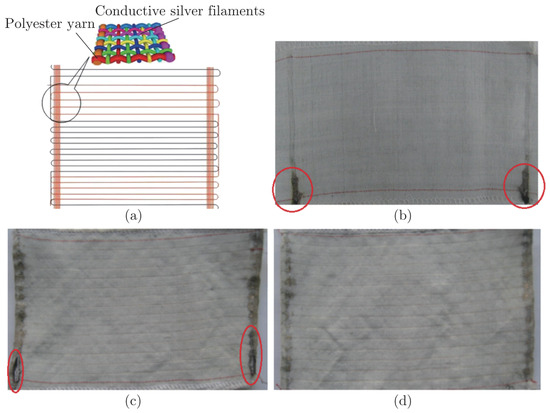
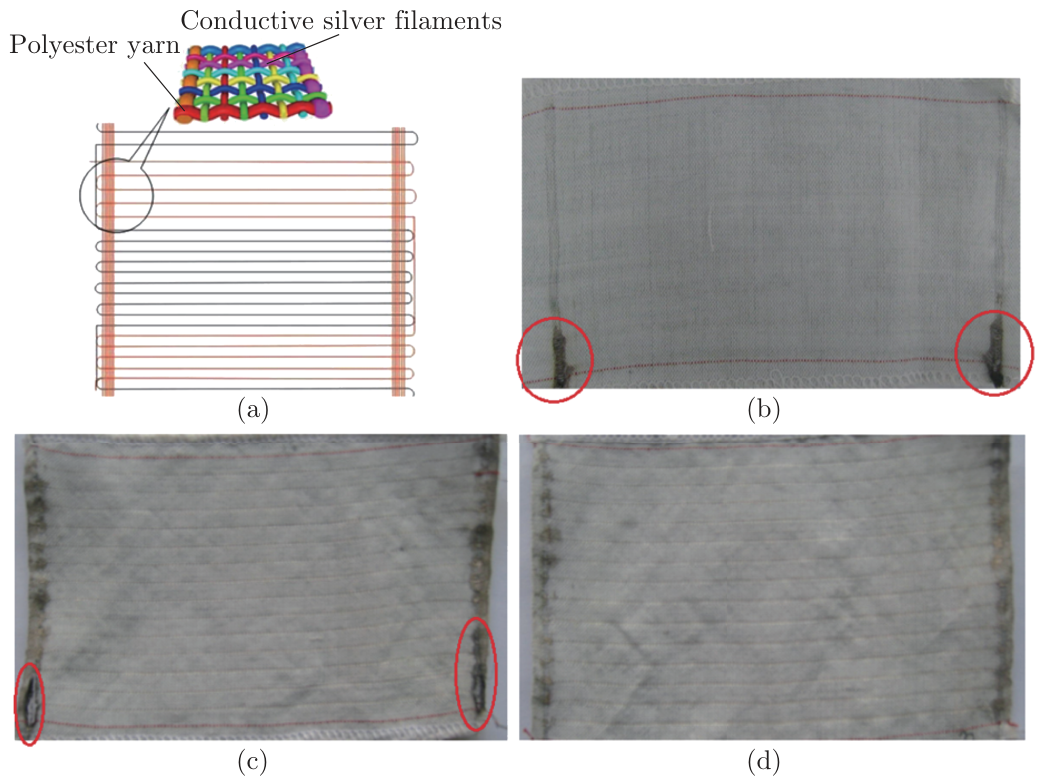
In this experiment, two sides of heating fabric along warp yarn direction distributed 6 silver filaments with 0.05 mm diameter as bus, 3 to 5 silver filaments were woven continuously into heating fabric along weft yarn direction as resistors, and these silver filaments formed strip and distributed intermittently on heating fabric according to predetermined spacing dimension. Figure 1 (a) showed interweaving 3D image of silver filaments in crossing point, Figure 1 (b) showed WHF without silver paste on crossing points, and Figure 1 (c) and 1 (d) showed WHF with silver paste on crossing points.
Figure 1.
(a) Distribution of silver filaments (b) WHF without silver paste (c) (d) WHF with silver paste.
2.3. Structure and Principle of Fabric Thermal Performance Apparatus (FTPA)
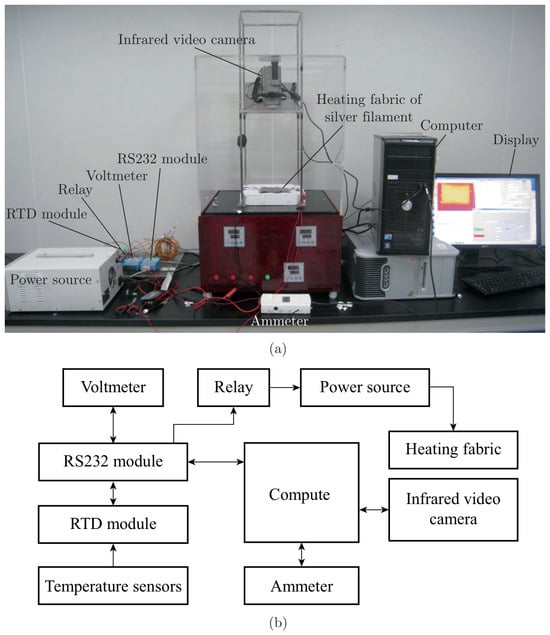
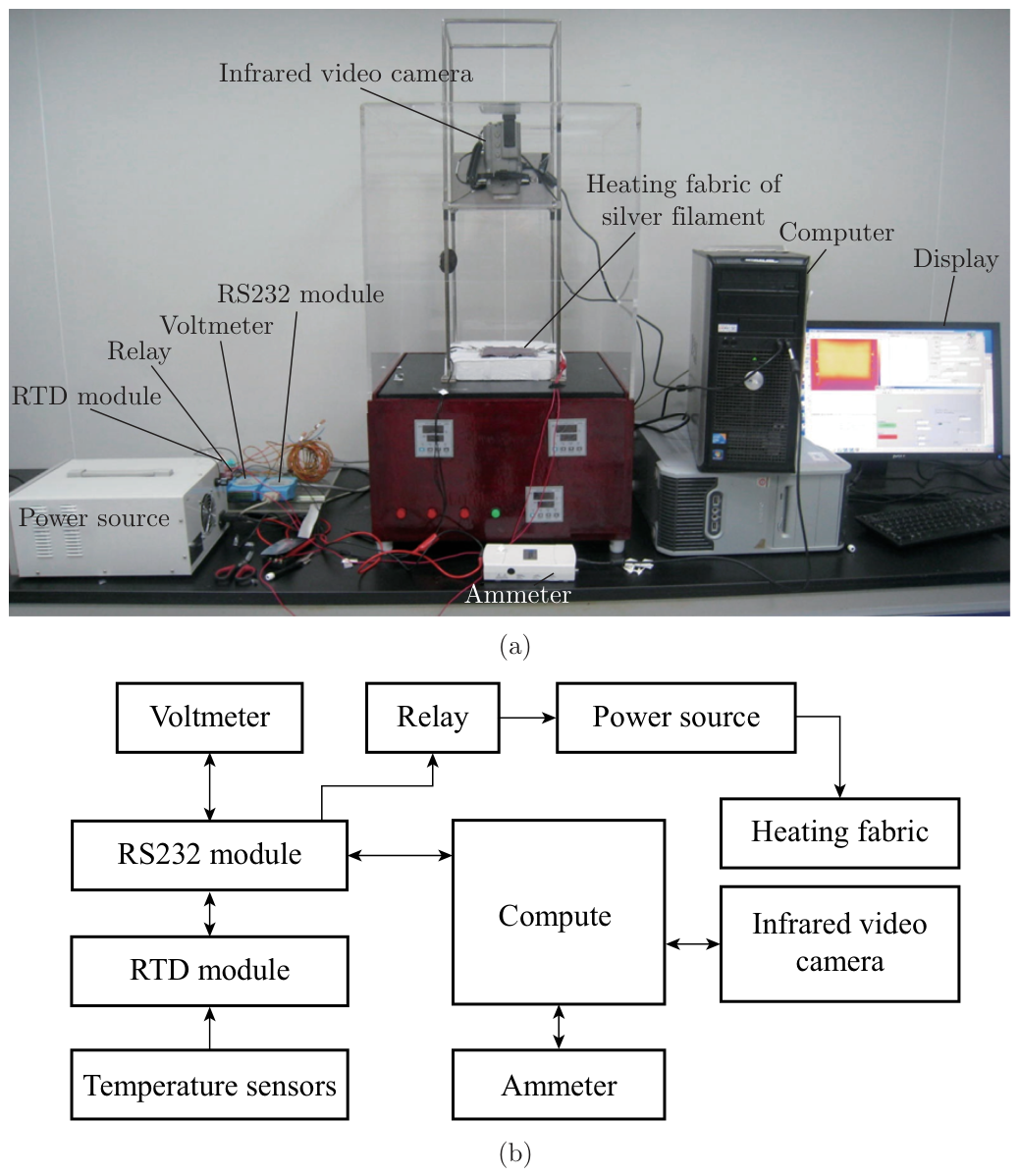
Infrared temperature image is a powerful tool for investigating surface temperature field of silver filament and WHF. Overall view and schematic diagram of FTPA developed in our laboratory were shown in Figure 2 (a) and 2 (b) respectively. A TP8 infrared video camera (WuHan GaoDe Ltd., Chana) was utilized to acquire the surface temperature of WHFs, ADAM 4015 RTD module (Advantech, Taiwan of China) with 6 channels high accuracy resolution was utilized for conditioning temperature signal, relay module with 4 channels was utilized for controlling the switch of power source, ADAM 4017 voltmeter with 8 channels (Advantech, Taiwan of China) and USB 4065 multi-meters (NI, USA) were utilized for measuring voltage and current of WHFs respectively. The software of infrared temperature image collection, voltage measurement, current measurement and switch controlling was developed by Visual Studio 2008.
Figure 2.
(a) Overall view and (b) schematic diagram of Fabric Thermal Performance Apparatus (FTPA).
2.4. Testing of Surface Temperature Field on Filament and Construction of Finite Element Simulation
A silver filament with 100 mm length and 0.05 mm diameter was fixed on an insulator plate, two ends connected with voltmeter, power source and relay. Infrared images of silver filament were acquired continuously by infrared video camera. Infrared video camera connected with computer by USB interface, actual maximum frequency of image collection is 16 frames/s, loaded voltages in silver filament were performed from 1 to 5 volts. Correlation between maximum surface temperature and voltage will be investigated.
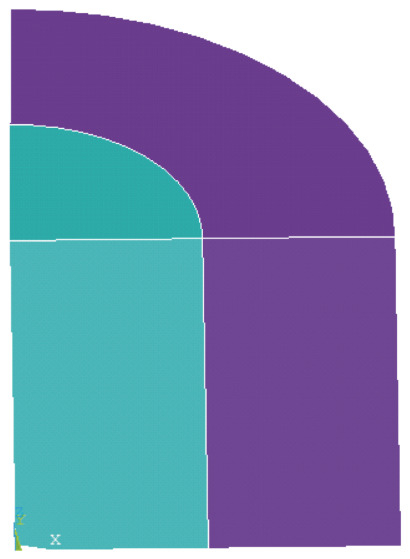
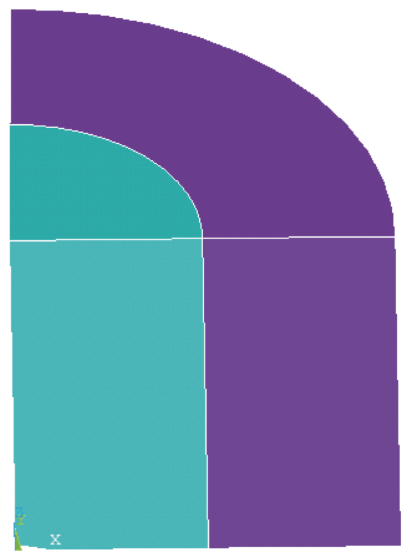
Temperature simulation in silver filament was utilized for investigating the mechanism of heat transfer between conductive filaments, the finite element model as shown in Figure 3 was constructed, the blue area in Figure 3 denoted the cross-section of conductive filaments, and the purple area denoted the air layer with 0.05 mm on the surface of conductive filament. Table 1 exhibited the parameters of air and silver filament.
Figure 3.
The finite element model of conductive filament and air layer.
Table 1.
Properties of model.
2.5. Resistance Stability Testing of WHFs
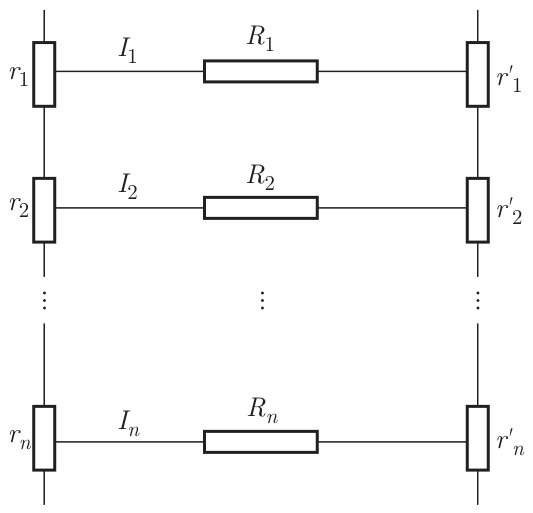
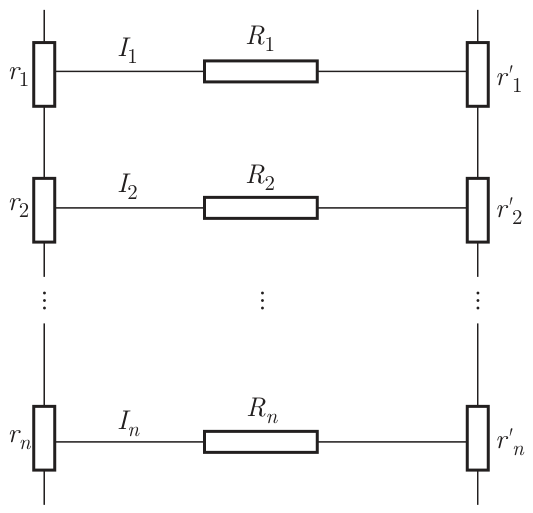
Equivalent circuit diagram of WHFs was shown in Figure 4, where rn and denote resistance of crossing point and bus, Rn denotes resistance of weft conductive strip. The resistances of crossing points were closely relative with temperature, pressure, and density. In order to study the correlation between resistance of heating fabric and loaded voltage, infrared images of heating fabrics with or without silver paste were obtained when loaded voltages were from 1 to 5 volts.
Figure 4.
Equivalent circuit diagram of WHFs.
2.6. Power Consumption Measurement Device and Method
The correlation between rated power and utmost ascending temperatures was an important parameter for selecting the appropriate power source and designing the EHG. A temperature controlling and power measuring device was developed in our laboratory for measuring power consumption and equilibrium temperature of WHFs. The schematic diagram of measuring unit was shown in Figure 5, and its function was to simulate static working state of the WHFs.
Figure 5.
Schematic diagram of power consumption measurement of WHFs.
Relation function of power consumption and equilibrium temperature is significant for designing WHFs and EHG. Three kinds of covering fabrics (A, B and C) were fabricated in our lab, Acovering fabric was composed of three layers fabrics: cotton plain fabric, 1 cm thickness floccule polyester/cotton fabric and thin cotton fabric, B-covering fabric had the same structure as Acovering fabric, but its floccule polyester/cotton fabric is 2 cm thickness, C-covering was polyester spun polar fleece with 1 cm thickness. Parameters of these fabrics are shown in Table 2.
Table 2.
Parameters of covering fabric.
3. Result and Discussion
3.1. Ageing Testing of Polyester Yarn
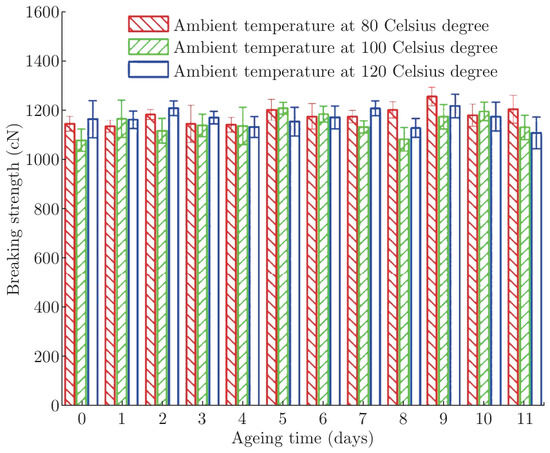
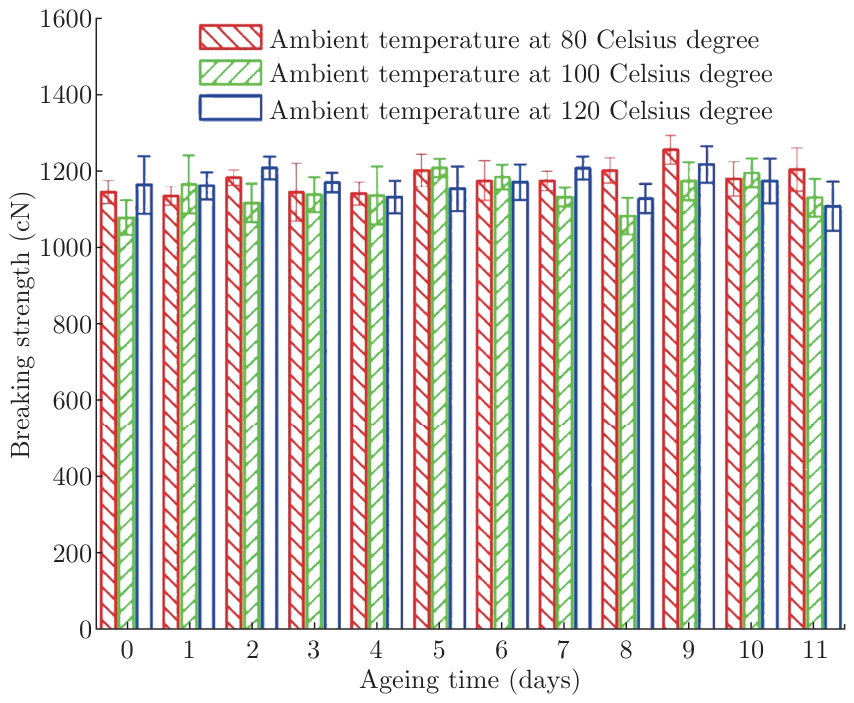
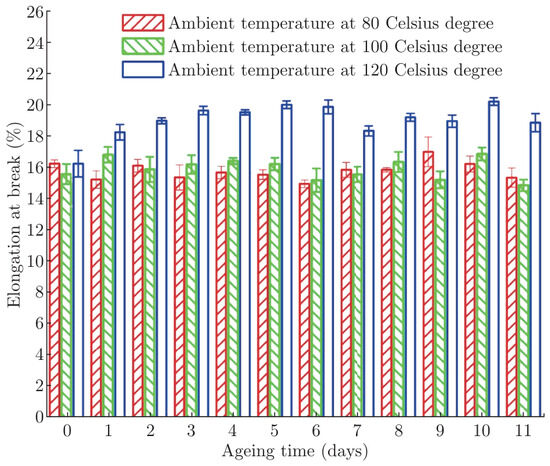
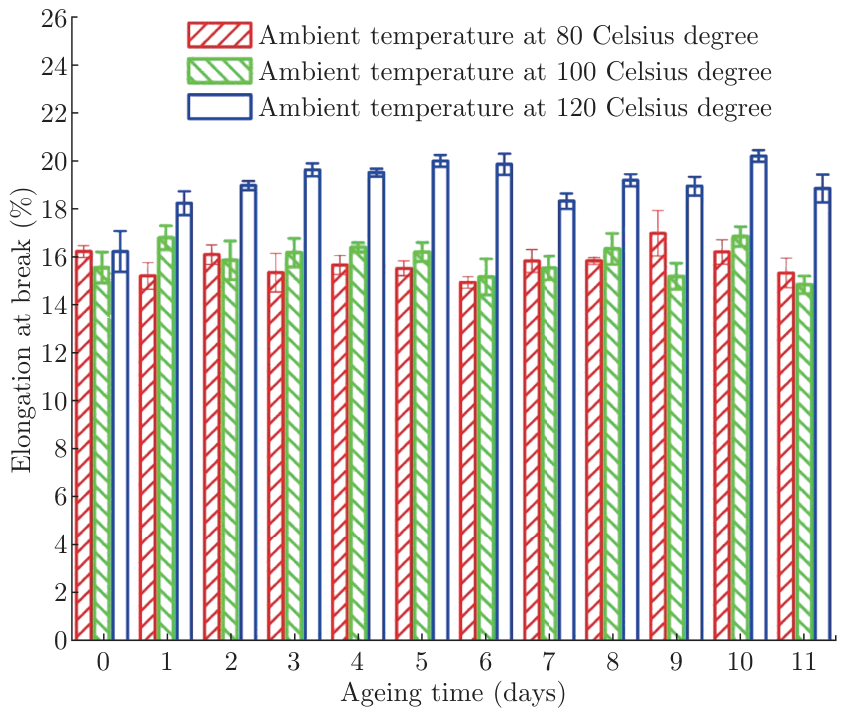
Figure 6 showed the breaking strength of polyester yarns has not obvious decreasing or increasing trend with increasing of ageing time and ageing temperature, fluctuation of breaking strength is in rational range. Figure 7 showed the elongation at break of polyester yarns has also not obvious decreasing or increasing trend with ageing time, but elongation at break of polyester yarns in 120 degrees Celsius is more 15% than that of polyester yarns in 80 and 100 degrees Celsius. Experimental results showed the polyester yarns in heating fabrics were not destroyed in working process when surface maximum temperature of silver filament is less than 100 degree Celsius.
Figure 6.
Breaking strengths vs. ageing time of polyester yarns.
Figure 7.
Elongation at break vs. ageing time of polyester yarns.
3.2. Resistance Stability of WHFs
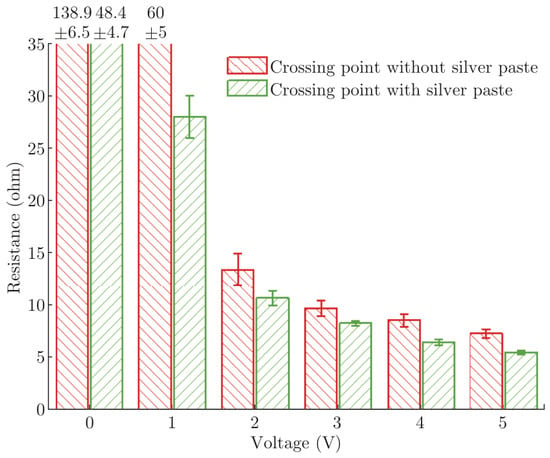
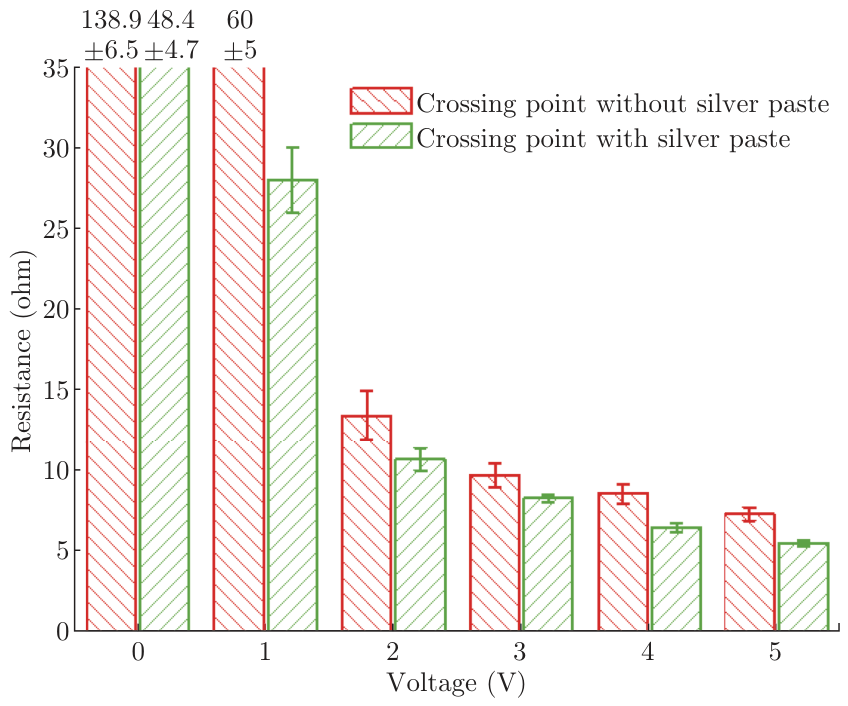
Figure 8 showed average resistances and deviation of 10 pieces of heating fabrics from 0 to 5 volts voltage. The resistance of WHFs reached 138.9 ± 6.5 ohm when loaded voltage was zero, outdistanced their designing resistance and resistance (48.4±4.7 ohm) of WHF-SP. This is because the contact resistance is too large on crossing points between silver filaments in WHF. The surface temperature on silver filaments will increase with the increase of loaded voltage, volume expansion of silver filament increase the contact area between silver filaments, so the resistance of WHF-SP is smaller. Density increasing of heating fabric and more crossing points will be also in favor of stability of resistance.
Figure 8.
Resistance vs. loading voltage of WHF and WHF-SP.
3.3. Relation Between Maximum Surface Temperature and Loaded Voltage
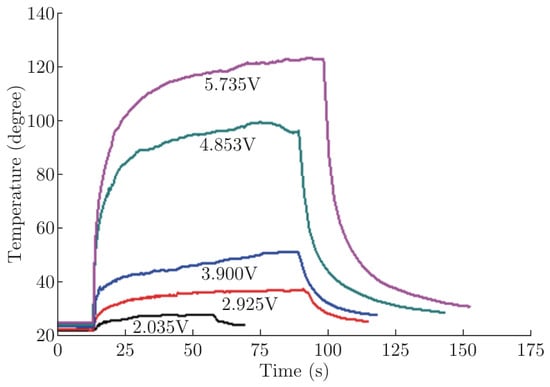
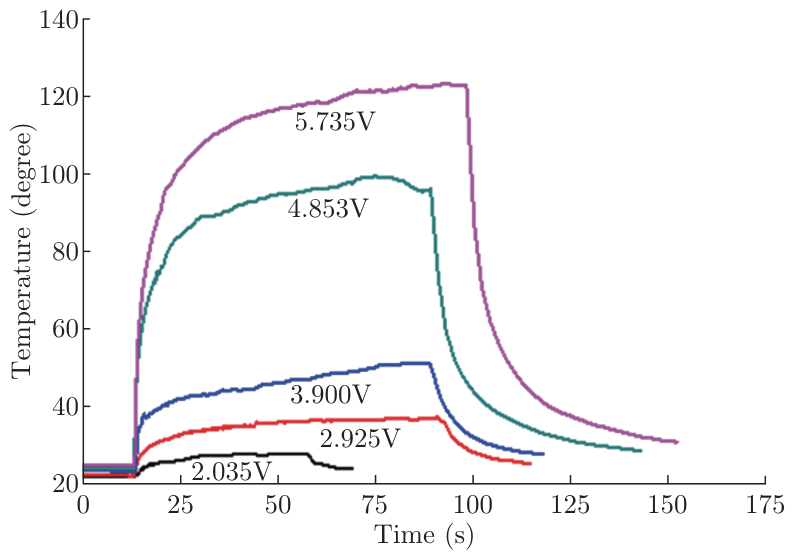
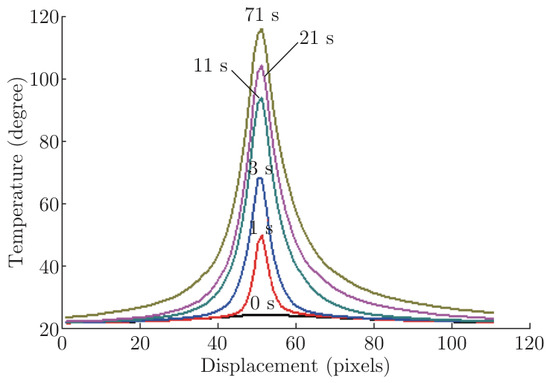
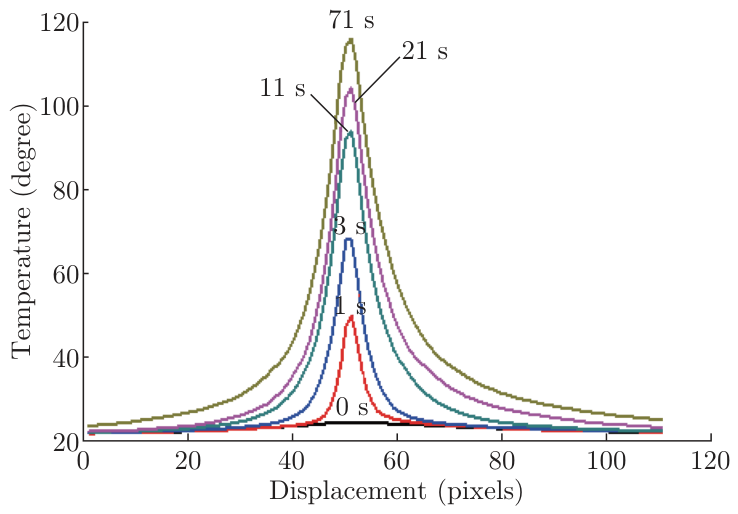
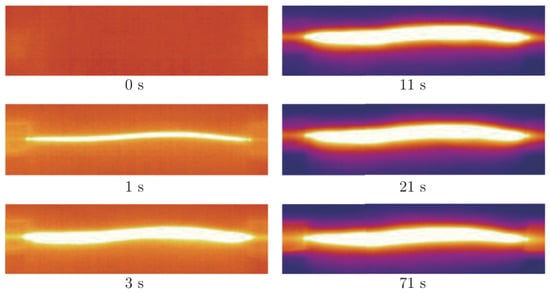
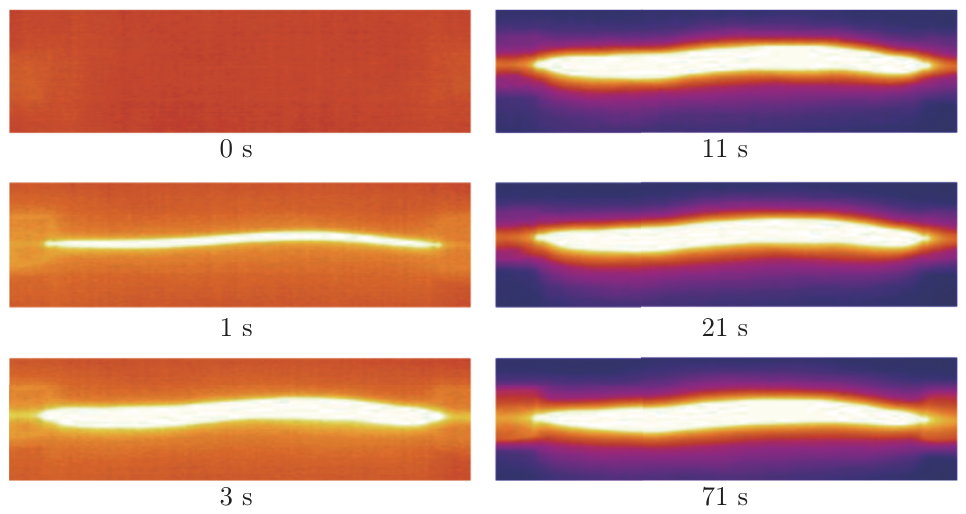
The correlation between maximum surface temperature and loaded voltage can provide help for designing of density and power of silver filament in WHF. Figure 9 showed relation diagram between surface temperature and time, surface maximum temperature of silver filament increases sharply with time at preliminary stage, surface maximum temperature reached 123.17 degrees Celsius when loading voltage was 5.735 volts. Figure 10 showed intuitively the temperature of two sides of silver filament increased symmetrically with time. Figure 11 showed surface temperature images of silver filament at different time points, this experiment provided data and method for simulating process of heat transfer of heating fabrics.
Figure 9.
Surface temperatures vs. time under different loaded voltages.
Figure 10.
Temperature distribution of crossing section of silver filament (4.853 V loaded voltage).
Figure 11.
Infrared image of silver filament at different time (4.853 V loaded voltage).
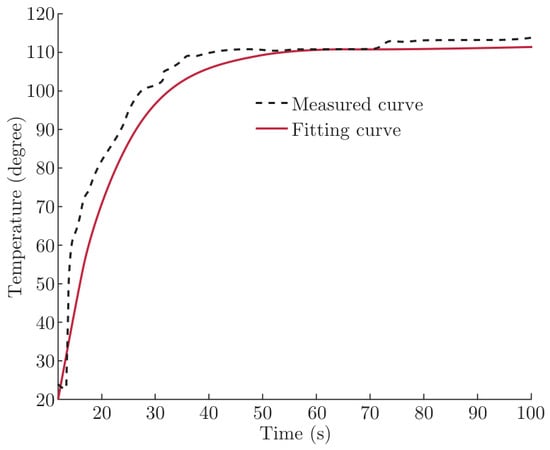
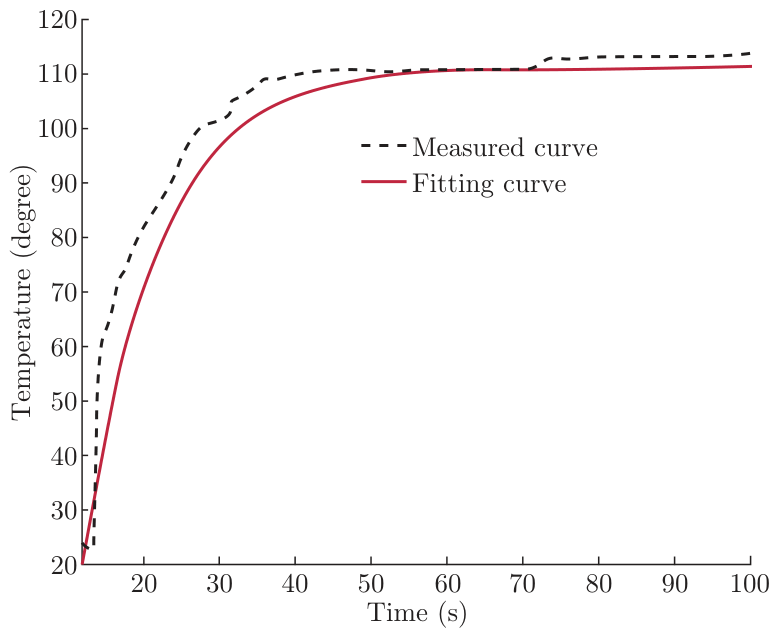
Table 3 showed surface maximum temperatures of silver filament calculated by finite element method were highly linear correlative with those of silver filament measured by apparatus at different loaded voltages, correlation coefficients reached 0.9994, and the correlation coefficient between maximum temperatures and loaded voltages also reached 0.9951. Figure 12 showed that measured temperature was approximately consistent with the simulated temperature, when the model and its parameters were appropriate. Furthermore, inner temperature field of WHFs and silver filaments that can’t be directly measured by an instrument can be also simulated by finite element method. Hence, combination of simulation temperature by finite element method and actual surface measuring temperature will be in favor of construction of heat transfer model of silver filaments and WHFs, moreover, this model can provide help for the optimization design of WHFs.
Table 3.
Heat transfer convection coefficient at different loaded voltage.
Figure 12.
Simulated temperature vs. measured temperature of silver filament at 4 V loaded voltage.
3.4. Relation Between Surface Temperature of Heating Fabric and Time
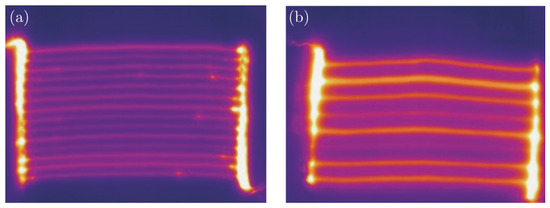
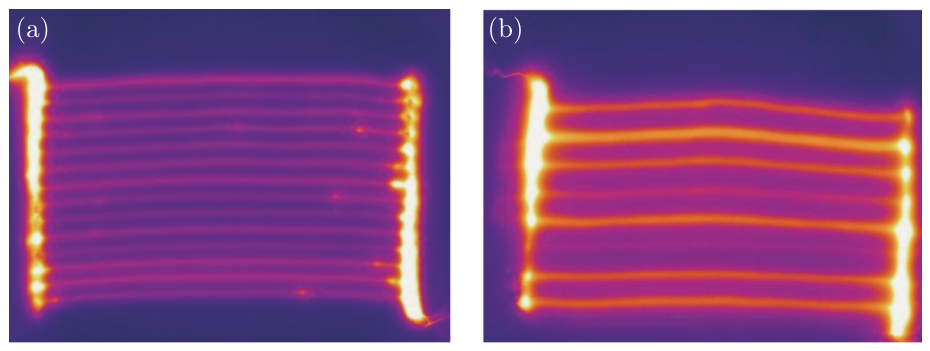
Figure 13 (a) and 13 (b) showed the infrared temperature images of WHF-SP and WHF, higher temperature appeared on bus of WHF, but the surface temperature of weft silver filament strips in WHF-SP is evener than that of weft silver filament strips in WHF, however, the surface temperature of warp bus in WHF-SP is more regular than that of warp bus in WHF. The reason is that the contact state on cross point of warp and weft silver filaments was not stable in WHF. Obviously, the silver paste is in favor of improving the stability of contact resistance.
Figure 13.
Infrared image of (a) WHF-SP (b) WHF.
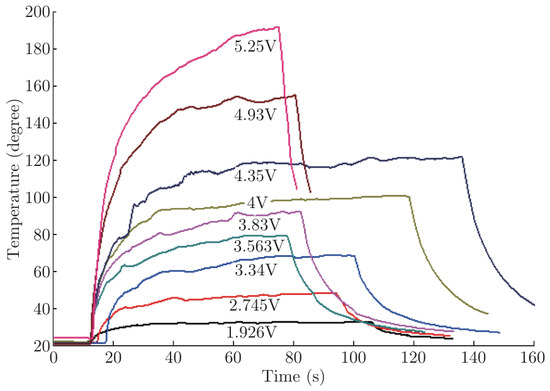
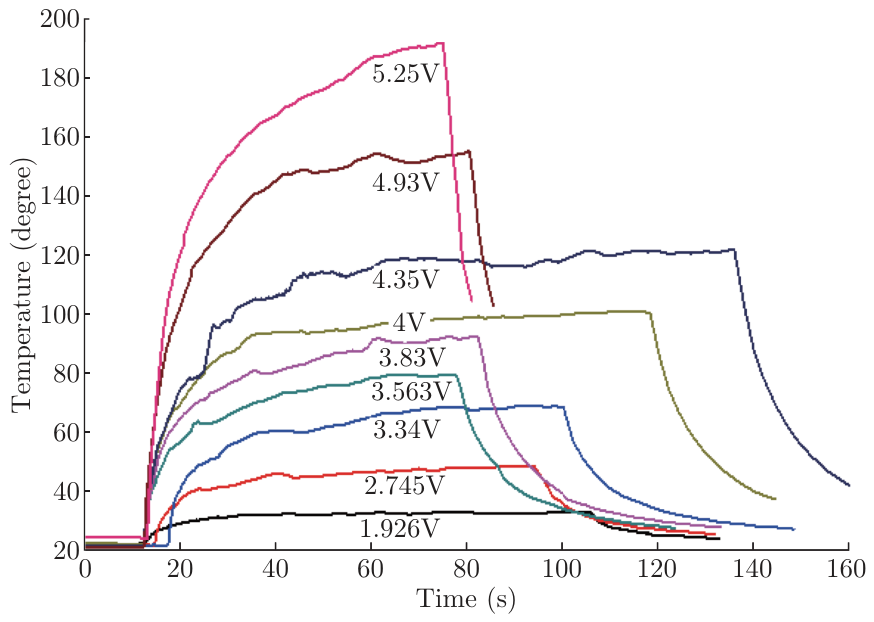
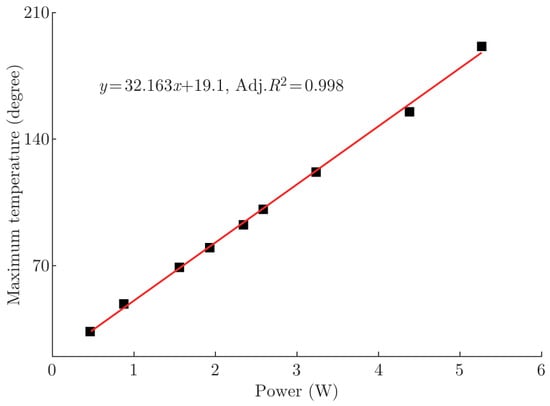
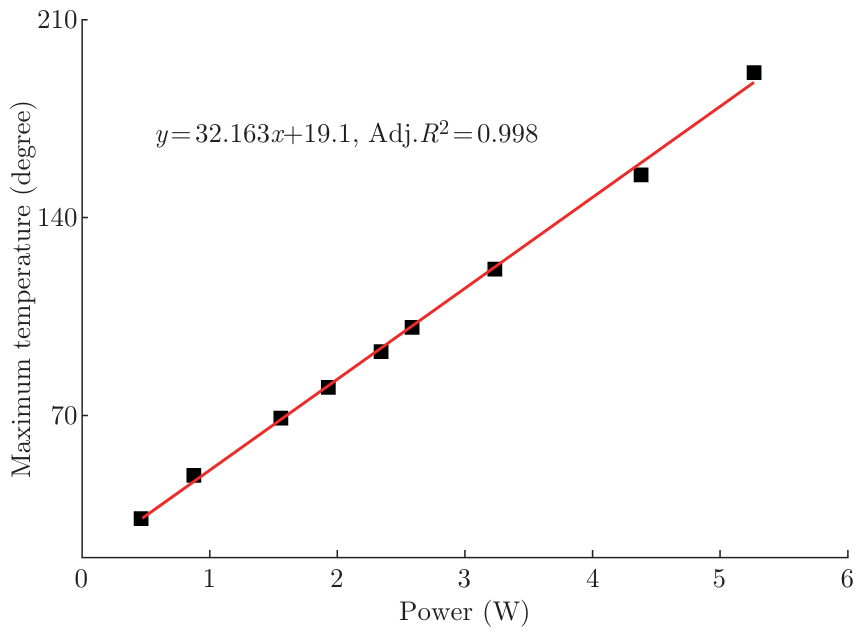
Figure 14 showed surface temperature of WHF-SP sharply increased with time in preliminary stage, then reached an equilibrium temperature after about 50 seconds. Conversely, surface temperature of WHF rapidly decreased and gradually reached room temperature after opening power source. When loaded voltage was too large, the WHF-SP and WHF as shown in Figure 1 would be destroyed due to local high temperature. Figure 15 illuminated the surface temperature of WHF-SP was strongly linear correlative with loaded power. The result can provide help for design of WHFs and EHG.
Figure 14.
Maximum surface temperature vs. time at different loading voltages (using WHF-SP).
Figure 15.
Maximum surface temperatures vs. power consumption at equilibrium status.
4. Conclusion
We presented fabrication methods of two kinds of WHFs, subsequently, a series of experiments were performed for evaluating the performance of polyester yarns, silver filaments and WHFs. Experimental results showed the polyester yarns in heating fabrics were not destroyed in working process when surface temperature of silver filament is less than 100 degrees Celsius. When a constant voltage was loaded on WHF, the surface temperature of WHF is non-linear correlative with time, and the surface maximum equilibrium temperature of WHF is also linearly correlative with loading voltage and power consumption. However, simulated surface temperature is highly consistent with the measured surface temperature of silver filaments by adjusting the HTCC at different loaded voltage. Infrared temperature images and finite element simulation can decrease the cost and enhance efficiency for designing new WHFs.
References
- X. M. Tao, Smart Fibres, Fabrics and Clothing — Fundamentals and Applications, Woodhead Publishing Co., Cambridge, 2001.
- X. M. Tao, Wearable Electronics and Photonics, Woodhead Publishing Co., Cambridge, 2005.
- S. Park, S. Jayaraman, Enhancing the quality of life through wearable technology, IEEE Eng. Med. Biol. Mag., 3 (2003) 41-48.
- C. R. Merritt, H. T. Nagle, E. Grant, Fabric-based active electrode design and fabric for health monitoring clothing, IEEE T. Inf. Technol. Biomed, 13 (2009) 274-280.
- K. Tae-Ho, C. R. Merritt, G. Edward, P. Behnam, N. H. Troy, Nonwoven fabric active electrodes for biopotential measurement during normal daily activity, IEEE Transactions on Biomedical Engineering, 55 (2008) 199-195.
- P. J. Xu, H. Zhang, X. M. Tao, Textile-structured electrodes for electrocardiogram, Textile Progress, 40 (2008) 183-213.
- H. Liu, X. M. Tao, P. J. Xu, H. Zhang, Z. Q. Bai, A dynamic measurement system for evaluating dry, bio-potential surface electrodes, Measurement, 46 (2013) 1904-1913.
- F. W. Hewitt, Electric Heating Pad and Fabric, Patent, Patent Number 1703005, 1929.
- André B. de la Bretoniére, Electric Heating Fabric, Patent, Number: 4, 538, 054, 1985.
- N. V. Bhat, D. T. Seshadri, M. M. Nate, A. V. Gore, Development of conductive cotton fabrics for heating devices, J. Appl. Polym. Sci., 102 (2006) 4690-4695.
- K. Ozan, B. Ender, S. Ozge, Implementation of steel-based fabric panels in a heated garment design, Text. Res. J., 79 (2009) 1427-1437.
- K. Ozan, Y. B. Ender, Heating behaviors of metallic textile structures, Int. J. Cloth Sci. Technol., 21 (2009) 127-136.
- Cristian, S. Nauman, C. Cochrane, V. Koncar, Electro-conductive sensors and heating elements based on conductive polymer composites in woven fabric structures, Advances in Modern Woven Fabrics Technology, InTech, Vienna, 2011, 1-24.
- H. Liu, Y. Zhang, L. Chen, X. J. Li, Y. X. Wang, Y. Gao, Development and characterization of flexible heating fabric based on conductive filaments, Measurement, 45 (2012) 1865-1875.
- S. T. A. Hamdani, P. Potluri, A. Fernando, Thermo-mechanical behavior of textile heating fabric based on silver coated polymeric yarn, Materials, 6 (2013) 1072-1089.

© 2016 Textile Bioengineering and Informatics Society. This article is an open access article distributed under the terms and conditions of the Creative Commons Attribution (CC BY) license (https://creativecommons.org/licenses/by/4.0/).