


Abstract
An environmental-friendly electroless copper plating process was employed in preparing copper-coated polyester fabric with excellent conductivity. The effects of bath temperature on the plating rate, compositions and crystal structure of the electroless copper deposits were studied. The results showed the deposition rate increased with the rise of the bath temperature. X-ray Diffraction (XRD) scan indicated that the copper coating deposited was well crystallized and Scanning Electron Microscopy (SEM) scan showed copper coating had good surface morphology. Surface resistance of copper plated polyester fabric was evaluated. The surface resistance was 16.5 mΩ/sq as the temperatue was 65 °C.
1. Introduction
Metallization of non-conductive surfaces is important in many industrial applications as it allows more flexibility in parts design, and reduces weight compared to its metal counterpart [1,2,3]. In recent years, a great interest in the deposition of metallic coatings on fabric has gradually been increased for either decorative or functional purposes in applications such as food packaging, microelectronics packaging, Electromagnetic Interference (EMI) shielding and wear protection [4,5,6]. Copper (Cu) has been widely studied and a variety of fabric have been plated with Cu such as cotton, glass fiber, and polyester due to its excellent electrical conductivity and relatively inexpensive [7,8,9]. To alter and tailor properties of non-conductive surfaces, several copper coating techniques have been developed such as sputtering [10], electrodeposition [11], Physical Vapor Deposited (PVD) [12] and electroless deposition [13,14,15]. Electroless copper deposition, which is a self-initiating, autocatalytic process, has become popular for many industrial applications because of their stability, ease of operation and cost effectiveness. However, traditional electroless copper plating uses formaldehyde or its derivatives as reducing agents. As is well known, formaldehyde is volatile, flammable and possibly carcinogen liquid, which is hazardous to health. Hence, researches are developing towards alternative reducing agents such as potassium borohydride [16], Fe(II) [17], Co(II) [18], dimethylamine borane [19], glyoxylic alcohol or glyoxylate [20], and sodium hypophosphite [21] for electroless copper deposition. Among them, glyoxylic acid (CHOCOOH) is considered as a good choice with its higher deposition rate and less environmental pollution. In addition, the plating bath is easily stable with glyoxylic acid as a reducing agent [22,23,24].
The aim of this study is to develop an efficient and environmental-friendly method to deposit copper coating on the polyester fabric by electroless plating using glyoxylic acid as a reducing agent. The effects of bath temperature on deposition rate, surface morphology, crystal structure, chemical composition and surface resistance of copper plated polyester fabric were investigated.
2. Experimental
2.1. Material
Plain weave 100% polyester fabric (47 × 40 counts/cm2, 84 g/m2) in white color was used as the substrate. All chemicals were of analytical grade.
2.2. Electroless Copper Plating
Polyester fabrics were washed with deionized water. The fabrics were impregnated into 5 g/l copper sulfate solution for 10 min, and then they were placed into 5 g/l sodium borohydride solution for 10 min without being washed. After that, the fabrics were impregnated into copper plating solution at different temperature. The solution for copper plating was prepared by copper sulfate, EDTA, potassium ferrocyanide, deionized water and glyoxylic acid. Sodium hydroxide was used to adjust the pH of the plating solution. After copper plating, the fabrics were washed by deionized water and dried at 70 °C.
2.3. Characterization
The electronic balance (HangPing FA2004N) was used to weigh the fabrics before and after copper plating. The deposition rate was calculated by the following equation.
where d is deposition rate; m1 and m2 are the weight of fabrics before and after copper plating, respectively; S is area of the fabrics and t is time of copper plating.
SEM images were obtained using TM-3000 Tabletop Microscope with various magnifications to study the surface morphology of the polyester fibers and the copper coated polyester fibers. Elemental composition of the copper plated fabrics was obtained by EDX Detector on JEOL JSM6490.
Crystal structure of copper deposits on the polyester fabrics was characterized by D8 DISCOV-ER X-Ray Diffractometer. Surface resistance of the copper coated polyester fabrics was measured by RTS-9 Dual Electric Logging Four Point Probe Tester, produced by Guangzhou Four-point Probe Technology Company.
3. Results and Discussion
3.1. Deposition Rate
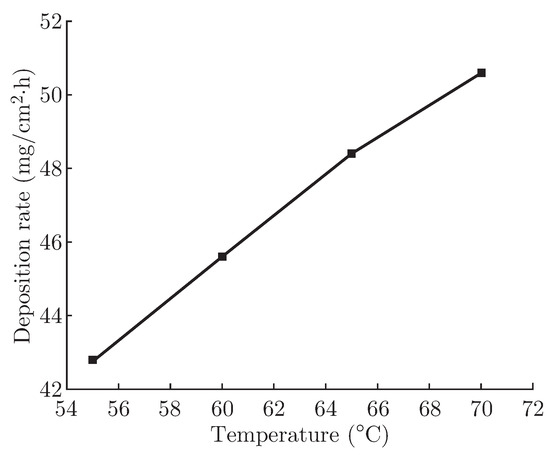
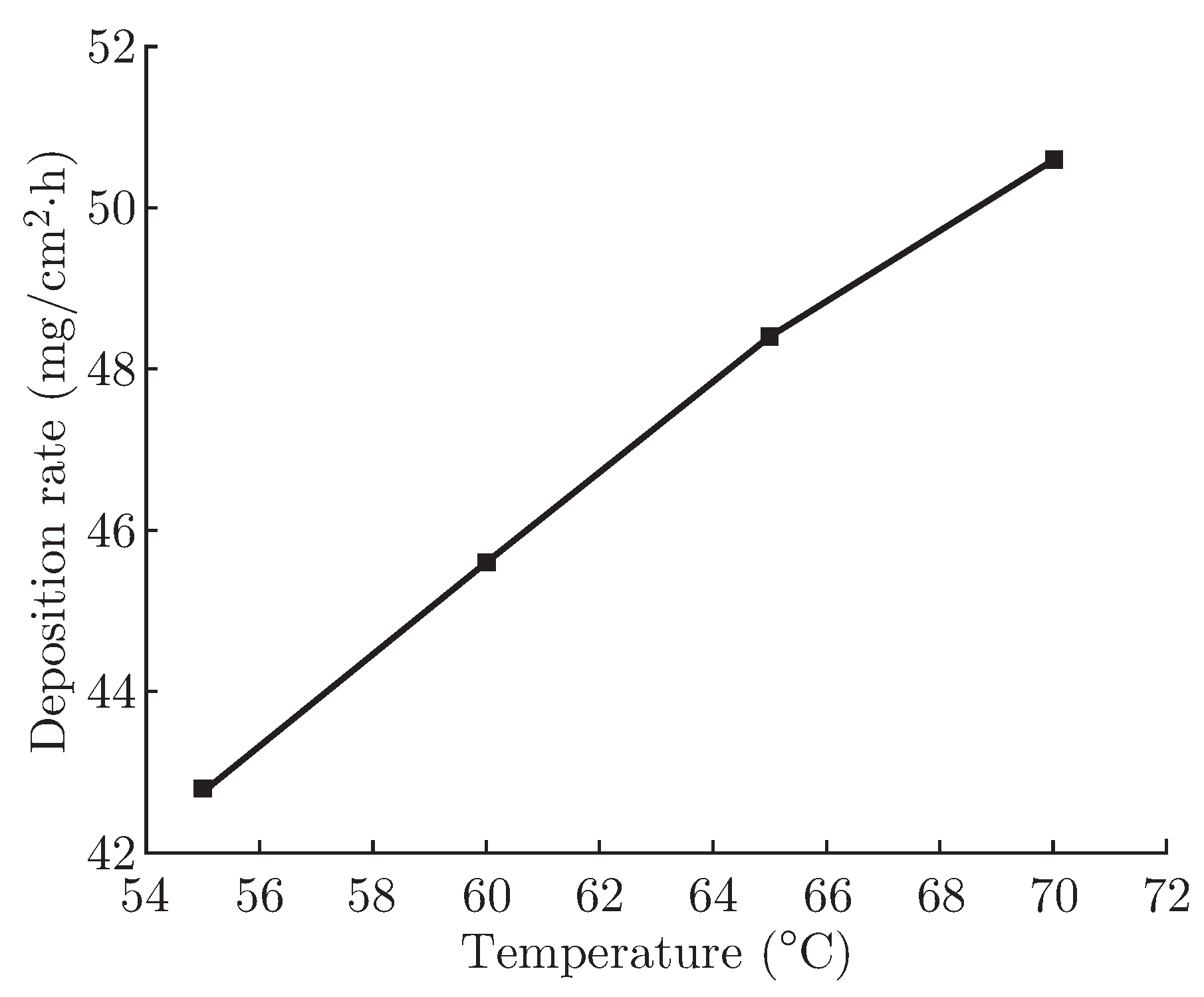
Temperature is one of the important factors for electroless copper plating, and the influence of the temperature on the deposition rate is illustrated in Figure 1. The results showed that the bath temperature had a significant effect on the copper deposition rate. For a given bath concentration in the solution and pH value, a tendency shown was that coating growth rate became faster as temperature became higher. According to Arrhenius Equation (2), activation energy Ea is function of temperature and higher temperature can increase electromotive force which has an effect on the reaction rate.
where k, A, Ea, R and T are rate constant, prefactor, activation energy, gas constant and temperature, respectively. It is explained that the reducing power of the bath increases when the temperature is raised according to Equation (3),
k = Ae−Ea/(RT)
Cu(EDTA)2− + 2CHOCOOH + 4OH− → Cu + 2HC2O4− + 2H2O + H2 ↑ +4EDTA−
Figure 1.
Effect of temperature on deposition rate.
3.2. Surface Morphology of Copper Plated Fibers
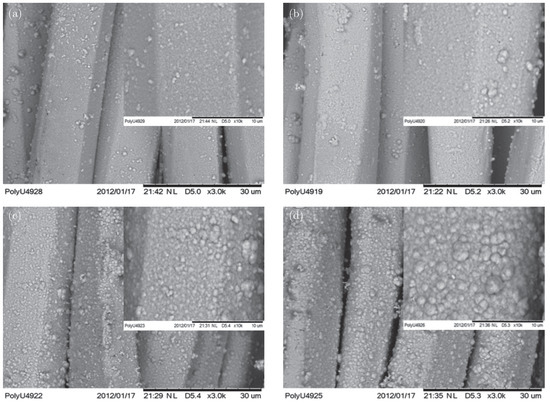
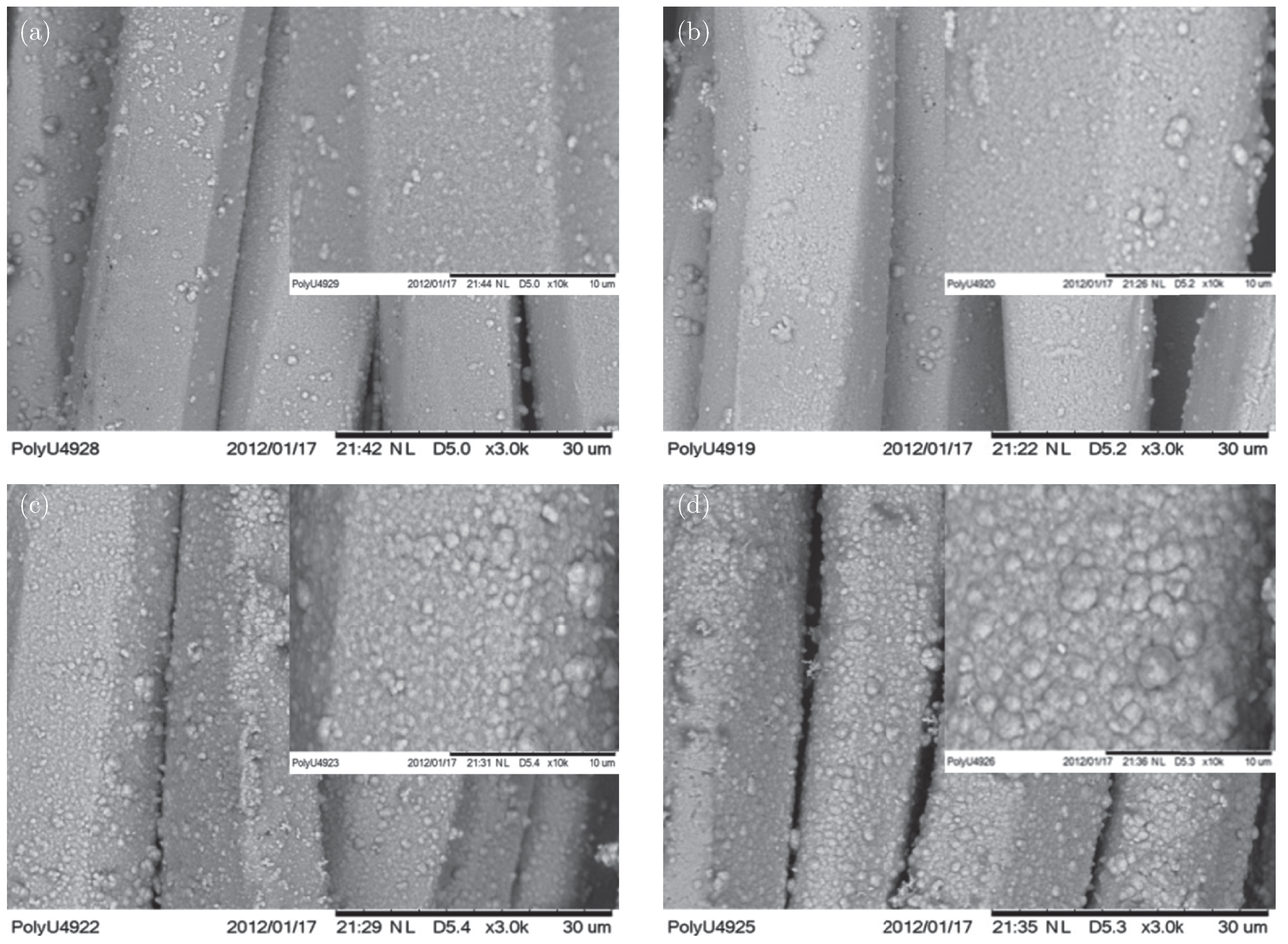
The surface micrographs of copper coated polyester fabric at temperatures of 55 °C, 60 °C, 65 °C and 70 °C, are presented in Figure 2, respectively. The polyester fibers were completely covered with copper particles. The grain size of the copper coatings increased with increasing deposition temperature due to greater thermal activation and diffusion. However, micropores could be observed throughout the structure.
Figure 2.
SEM micrographs of as-deposited copper plating layers. (a) 55 °C, (b) 60 °C, (c) 65 °C and (d) 70 °C.
According to polymorphous transformation kinetics,
where D, Q, k and T are particle size, activation energy, the Boltzmann constant, and temperature, respectively. The equation indicates that particle size is a function of temperature.
D = exp(−Q/kT)
3.3. Chemical Composition of Copper Plated Fabrics
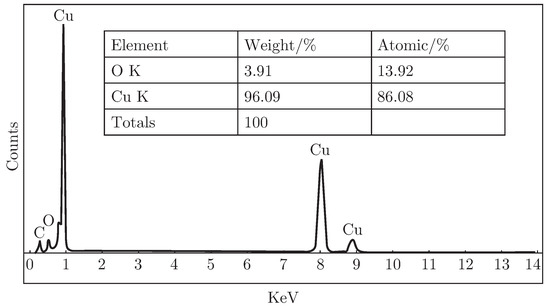
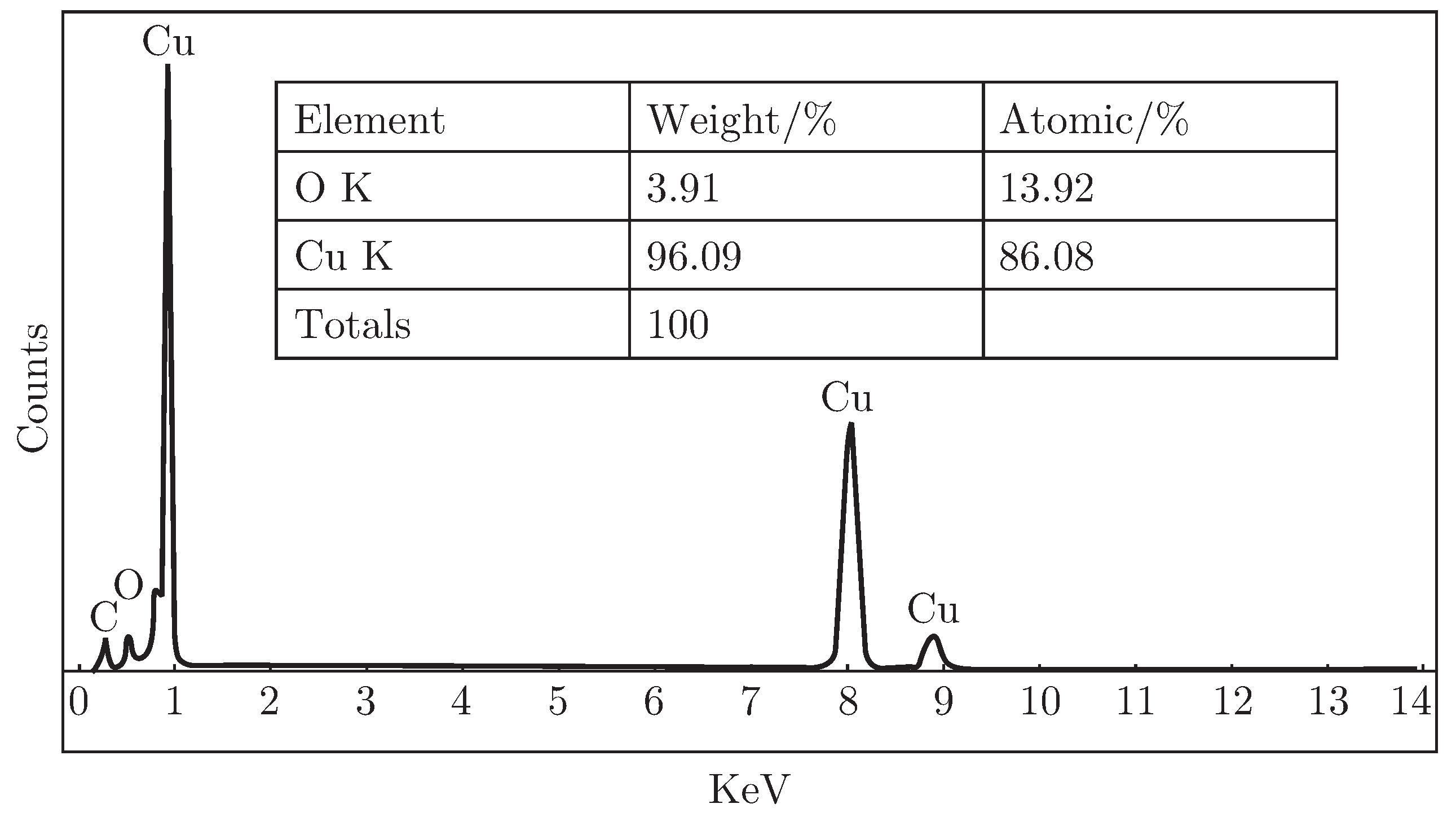
The composition of copper deposits was tested by EDX Detector. The EDX spectrum of the copper plated polyester fabrics at temperatures of 65 °C is shown in Figure 3. It is obvious that there are three characteristic peak of copper and one characteristic peak of oxygen. From the data of EDX spectrum, there are only the element of copper (96.09%) and oxygen (3.91%) in the deposition, besides the element of carbon and hydrogen. The results suggested that the copper deposits on the polyester fabric obtained using CHOCOOH as reducing agent was mainly composed of metallic copper, and other possible ingredient such as Cu2O. No impurities are observed in the copper plating, within the resolution limit of EDX, which further indicates a high purity copper coating is obtained using CHOCOOH as a reducing agent.
Figure 3.
EDX image of copper plated polyester fabric.
3.4. Crystal Structure
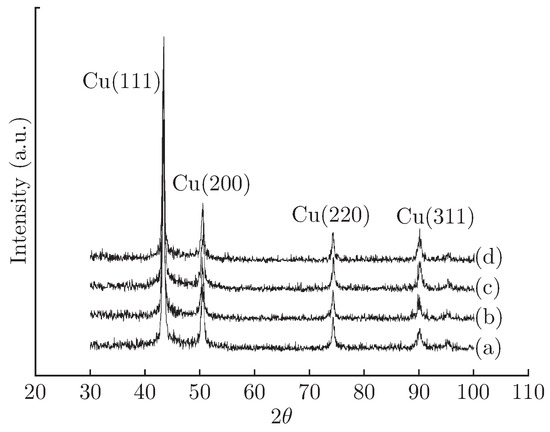
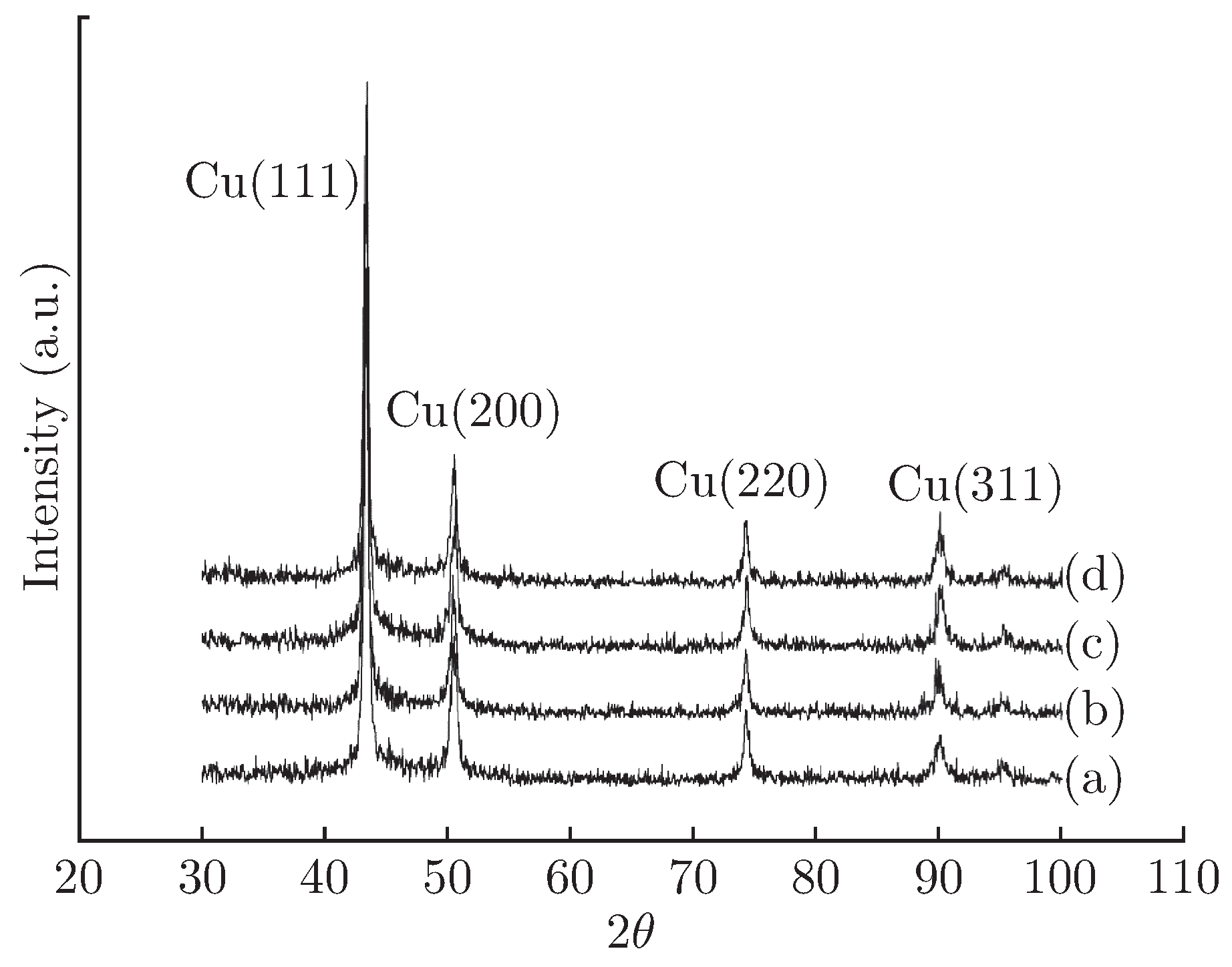
The crystalline structure of the copper coatings was examined by XRD analysis. Figure 4 shows the XRD pattern of the electroless plating copper on polyester fabric. From the pattern, the peaks that appear at 2θ = 43°, 50°, 74°, and 90° represent (111), (200), (220) and (311) planes of copper, respectively. The XRD patterns identified by the PDF card of the JADE-SCAN software reveal that the deposited copper film exhibits a characteristic face-centered cubic crystalline structure, implying that the copper-plated polyester fabrics have a perfect conductivity property.
Figure 4.
XRD pattern of copper plated polyester fabric using CHOCOOH as a reducing agent at different temperature. (a) 55 °C, (b) 60 °C, (c) 65 °C and (d) 70 °C.
3.5. Surface Resistance
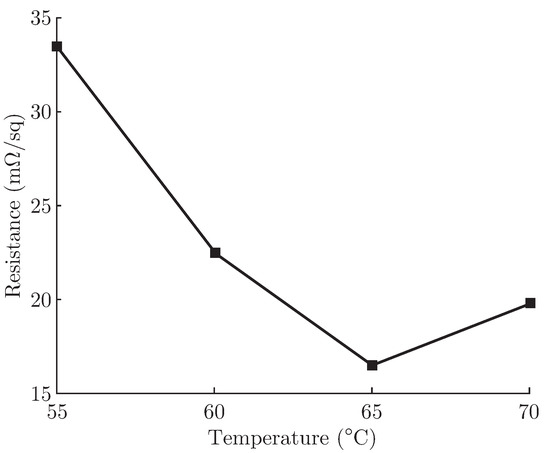
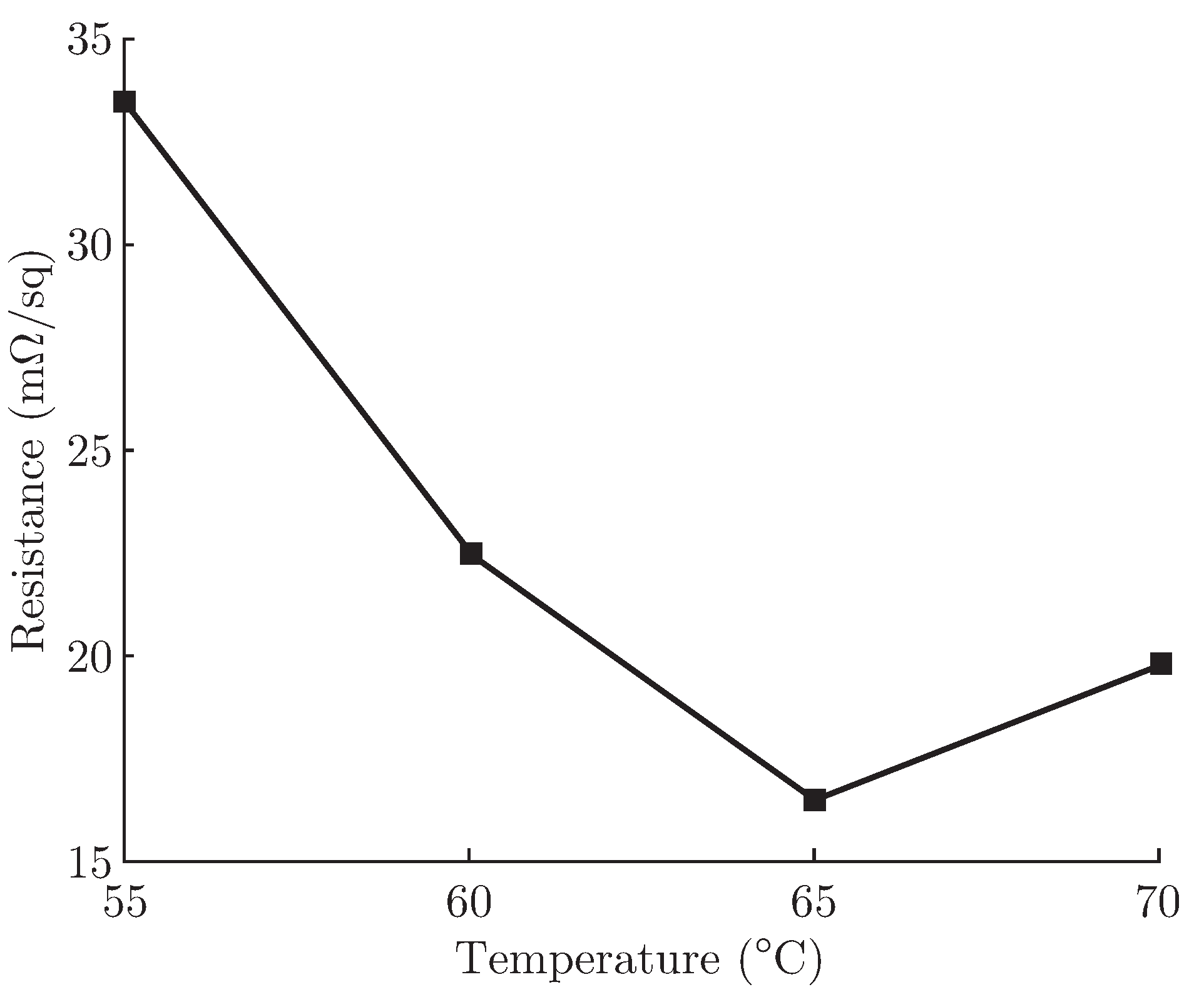
Figure 5 shows the surface resistance of copper plated polyester fabric obtained at different temperature. The surface resistance became lower when the temperature increased from 50 °C to 65 °C. The decrease in resistance is mostly attributed to the increase in the weight of copper deposits, particle size and crystallinity in the present study. The surface resistance is related to the copper deposits on polyester fabric. It can be explained that the copper coating on polyester fabric is thicker because higher deposition rate and well crystallized with the temperature increases as shown in Figure 1 and Figure 3. Surface resistance is only 16.5 mΩ/sq when temperature arrives at 65 °C. However, the surface resistance increases when the temperature is over 70 °C. This is attributed to more void obtained the reaction (3).
Figure 5.
The surface resistance of copper coating on polyester fibers with CHOCOOH as a reducing agent at different temperature.
4. Conclusion
Copper was deposited on polyester fabric using glyoxylic acid as a reducing agent with different temperature by electroless plating. Within certain concentration range and pH, the deposition rate obviously increased with the rise of deposition temperature. Copper coating in the plated polyester fabrics mainly contained metallic copper with good crystallinity. The surface resistance became lower when the temperature increased. The surface resistance decreased to 16.5 mΩ/sq when the temperature arrived at 65 °C.
References
- Murase, K.; Yanase, K.; Ichii, T.; et al. Potentiostatic Cu-Zn alloying for polymer metallization using medium-low temperature ionic liquid baths. J. Electrochem. Soc. 2013, 160, D417–D421. [Google Scholar] [CrossRef] [Scilit]
- Guo, R.H.; Jiang, S.X.; Yuen, C.W.M.; et al. Metallized textile design through electroless plating and tie-dyeing technique. J. Text. I. 2013, 104, 1049–1055. [Google Scholar] [CrossRef] [Scilit]
- Guo, R.H.; Jiang, S.X.; Yuen, C.W.M.; et al. Effect of copper content on the properties of Ni–Cu–P plated polyester fabric. J. Appl. Electrochem. 2009, 39, 907–912. [Google Scholar] [CrossRef] [Scilit]
- Jiang, S.Q.; Yuen, C.W.M.; Kan, C.W.; et al. Design application of polyester with chemical silver plating. Fiber. Polym. 2007, 8, 313–318. [Google Scholar] [CrossRef] [Scilit]
- Guo, R. H.; Jiang, S. X.; Yuen, C. W. M.; et al. An alternative process for electroless copper plating on polyester fabric. J. Mater. Sci. Mater. Electron. 2009, 20, 33–38. [Google Scholar] [CrossRef] [Scilit]
- Shi, G. Q.; Li, W. L.; Lu, Y. X. Fe-based surface activator for electroless nickel deposition on polyester: Application to electromagnetic shielding. Surf. Coat. Tech. 2014, 253, 221–226. [Google Scholar] [CrossRef] [Scilit]
- Sedighi; Montazer, M.; Hemmatinejad, N. Copper nanoparticles on bleached cotton fabric: In situ synthesis and characterization. Cellulose 2014, 21, 2119–2132. [Google Scholar] [CrossRef] [Scilit]
- Xu; Liu, G.; Chen, H.; et al. Fabrication of conductive copper-coated glass fibers through elec-troless plating process. J. Mater. Sci. Mater. Electron. 2014, 25, 2611–2617. [Google Scholar] [CrossRef] [Scilit]
- Huang, X.; Meng, L.; Wei, Q.; et al. Morphology and properties of nanoscale copper films deposited on polyester substrates. Int. J. Cloth. Sci. Tech. 2014, 26, 367–376. [Google Scholar] [CrossRef] [Scilit]
- Meng, L.; Wei, Q.; Huang, X. Characterization of polyester fabric covered with copper film by radio frequency magnetron sputtering. Ind. Textia. 2012, 65, 232–237. [Google Scholar]
- Zouaoui; Stephan, O.; Carrier, M.; et al. Electrodeposition of copper into functionalized polypyr-role films. J. Electroanal. Chem. 1999, 474, 113–122. [Google Scholar] [CrossRef] [Scilit]
- Wang; Eberhardt, W.; Ku¨ck, H. Plasma pre-treatment of liquid crystal polymer and subsequent metallization by PVD. Vacuum 2006, 81, 325–328. [Google Scholar] [CrossRef] [Scilit]
- Yen, P. C. Improved ABS plastic activating treatment for electroless copper plating. Polymer 1995, 36, 3399–3400. [Google Scholar] [CrossRef] [Scilit]
- Tao, D.; Wei, Q.; Cai, Y.; et al. Functionalization of polyamide 6 nanofibers by electroless deposition of copper. J. Coat. Technol. Res. 2008, 5, 399–403. [Google Scholar] [CrossRef] [Scilit]
- Liao, Y. C.; Kao, Z. K. Direct writing patterns for electroless plated copper thin film on plastic substrates. ACS Appl. Mater. Interfaces. 2012, 24, 5109–5113. [Google Scholar] [CrossRef] [Scilit] [PubMed]
- Zhang, Q.; Yang, Z.; Ding, B.; et al. Preparation of copper nanoparticles by chemical reduction method using potassium borohydride. T. Nonferr. Metal. Soc. 2010, 20, s240–s244. [Google Scholar] [CrossRef] [Scilit]
- Michinari, S.; Koichi, K.; Makoto, S.; et al. Electroless copper plating using FeII as a reducing agent. Electrochimi. Acta 2004, 49, 233–238. [Google Scholar] [CrossRef] [Scilit]
- Norkus, E.; Vaˇskelis, A.; Jagminien¯e Y., A.; et al. Kinetics of electroless silver deposition using cobalt(II)-ammonia complex compounds as reducing agents. J. Appl. Electrochem. 2001, 31, 1061–1066. [Google Scholar] [CrossRef] [Scilit]
- Plana, D.; Campbell, A. I.; Patole, S. N. Kinetics of electroless deposition: The copper-dimethylamine borane system. Langmuir 2010, 26, 10334–10340. [Google Scholar] [CrossRef] [Scilit] [PubMed]
- Honma, H.; Kobayashi, T. Electroless copper deposition process using glyoxylic-acid as a reducing agent. J. Electrochem. Soc. 1994, 141, 730–733. [Google Scholar] [CrossRef] [Scilit]
- Gan, X.; Zhou, K.; Hu, W.; et al. Role of additives in electroless copper plating using hypophosphite as reducing agent. Surf. Coat. Tech. 2012, 206, 3405–3409. [Google Scholar] [CrossRef] [Scilit]
- Shacham-Diamond, Y.Y. Electroless copper deposition using glyoxylic acid as reducing agent for ultralarge scale integration metallization. Electrochem. Solid-State Lett. 2000, 3, 279–282. [Google Scholar] [CrossRef] [Scilit]
- Inoue, F.; Philipsen, H.; Radisic, A.; et al. Electroless copper bath stability monitoring with UV-VIS spectroscopy, pH, and mixed potential measurements. J. Electrochem. Soc. 2012, 159, D437–D441. [Google Scholar] [CrossRef] [Scilit]
- Yu, L.; Guo, L.; Preisser, R.; et al. Autocatalysis during electroless copper deposition using glyoxylic acid as reducing agent. J. Electrochem. Soc. 2013, 160, D3004–D3008. [Google Scholar] [CrossRef] [Scilit]
© 2015 Textile Bioengineering and Informatics Society. This article is an open access article distributed under the terms and conditions of the Creative Commons Attribution (CC BY) license (https://creativecommons.org/licenses/by/4.0/).