


Abstract
The purpose of this study is the pursuance of useful evaluation index which can estimate the different impression obtained by inhalation of several olfactory stimuli. For this purpose, the principal factors which could determine the impression of olfactory stimulus were attempted to identify. Then the heart rate variability and the cerebral nervous activity were monitored as physiological response. Furthermore the relationship among the factor scores of principal factors and these physiological responses were investigated. As the result, the principal factor of ‘relaxation’ could be estimated accurately with the concentration of the oxy haemoglobin in comparison with index of heart rate variability.
1. Introduction
According to the previous study, it is well known that the changes of autonomic nervous function are largely influenced by conscious or unconscious stress [1]. Hence the scale of hedonic induced by inhalation of odorants has been evaluated quantitatively by power spectral analysis of heart rate variability [2,3,4,5,6,7]. According to these facts, heart rate variability is one of the effective measurement techniques to assess the inclusive effect reaction obtained from several stimuli. However taking consideration of a practical industrial use, the evaluation method which can estimate not only the scale of hedonic but also the difference of impression induced by inhalation of various odorants.
Therefore an investigation of novel physiological information which can interpret a psychological aspect is necessary. Duan, et al. monitored the cerebral nervous activity by using Positron Emission Tomography (PET) in addition to heart rate variability [3,4]. We have also focused on monitoring the cerebral nervous activity in Near Infrared Spectroscopy (NIRS) with heart rate variability [5]. However in either previous report, kinds of olfactory stimulus have been quite limited.
The purpose of this study is the pursuance of useful evaluation index which can estimate the different impression obtained by inhalation of various olfactory stimuli. For this purpose, the principal factors which could determine the impression of olfactory stimulus were attempted to identify. Then the cerebral nervous activity was monitored with near Infrared Spectroscopy (NIRS). Furthermore the relationship between the factor scores of principal factors and cerebral nervous activity was investigated. Finally usefulness of impression estimation by physiological response such as the autonomic nervous activity or the cerebral nervous activity was discussed.
2. Experimental
2.1. Olfactory Stimulus and Experimental Protocol
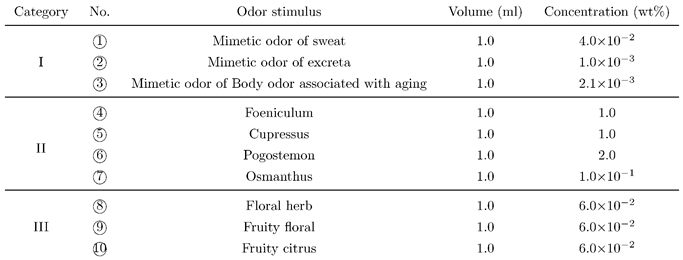
Ten olfactory stimuli which were expected to induce the different ratings of hedonic and impressions were chosen from following three categories (cf. Table 1). Category I involves three olfactory stimuli (i.e. Valeric acid, Nonenal and Indole provided by Lion Co., Tokyo Japan) which are prescribed everyday odors in deodorant processed textiles certification criteria by Japan Textile Evaluation Technology Council. Hence those were expected to induce uncomfortable impression. Category II involves four olfactory stimuli (i.e. Foeniculum, Cupressus, Pogostemon and Osmanthus provided by Diwa chemical industries Co. Ltd, Tokyo Japan) which are originated from natural plants. It was reported that these odorants activate sympathetic nervous system by inhalation of them [8,9]. Category III involves three olfactory stimuli (i.e., Floral herb, Fruity floral and Fruity citrus provided by Lion Co., Tokyo Japan) which are designed as the fragrance of household softener for additional value of products. Hence these were expected to induce comfortable impression.
Table 1.
Olfactory stimuli.
All the olfactory stimuli were prepared in solution with pure water. The concentration of these solutions was decided so as to become same psychological intensity (i.e. an odor of moderate intensity that would be readily detected (grade-3)) from the result of pre-test by six grades odor intensity measurement method.
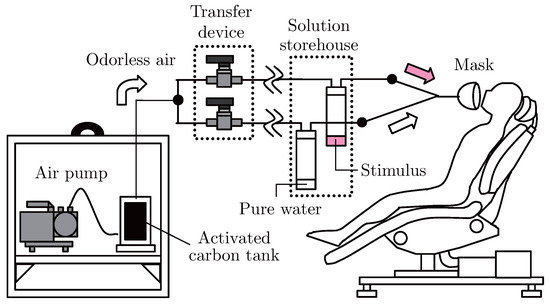
The olfactory stimuli were provided by own providing system which was composed of the air pump, activated carbon tank, transfer device with valves, solution storehouse and mask. The volume of the flowing air was fifteen litters per minute for the purpose of providing sufficient intake of breath for adults (cf. Figure 1).
Figure 1.
Providing system of olfactory stimulus.
Experimental protocol was described below. That is to say, (1) Persons entered the electromagnetic shield room which maintained at 23 °C, 50% R.H., (2) Persons wore the sensors of ECG and that of NIRS, (3) Persons wore the mask so as to cover their nose and mouth, (4) Persons sitting on a relaxation chair inhaled air flow which passed through the pure water for 3 minute (hereinafter referred to as the ‘rest phase’), (5) Persons inhaled the air flow which passed through the solution of the olfactory stimulus for 2 minute (hereinafter referred to as the ‘stimulus phase’), (6) Persons inhaled the air flow through pure water for 2 minute again (hereinafter referred to as the ‘after stimulus phase’), (7) Persons assessed subjective intensity, scale of hedonic and impression induced by inhalation of the olfactory stimulus.
At the intake of the air involving odorants, persons have consciously kept the consistent rhythm on expiration and intake of their breath, because of reducing any affects on HRV.
2.2. Sensory Evaluation
Sensory evaluation is a method for assigning a score according to the impression obtained from olfactory stimulus. Semantic Differential Method (SDM) was used. The impression denoted by twelve adjectives (cf. Table 2) was assessed with 5-point scale (e.g., +2 pt: much relaxed, +1 pt: slightly relaxed, 0 pt: neither, −1 pt: slightly stressed, −2 pt: much stressed) to each olfactory stimulus. In addition to SDM, the six grades Odor Intensity Measurement (OIM) and the seven grades Odor Hedonic scale Measurement (OHM) were examined with the olfactory stimuli.
Table 2.
Adjective-pairs used for SDM.
Ten healthy male university students aged 21 to 25 were enrolled as evaluators. The average height was 173.5 cm, the average weight was 56.5 kg, and the average Body Mass Index (BMI) calculated as body weight divided by height squared was 20.9 kg/m2. The World Health Organization (WHO) defines BMI 20–25 kg/m2 as the normal weight. All the evaluators did not have the habit of smoking.
2.3. Measurement of Physiological Response
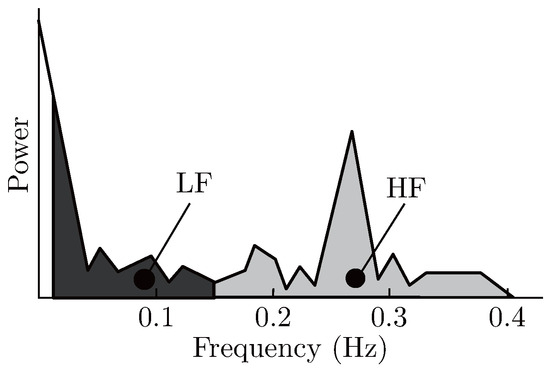
Heart rate rhythm is under an influence of the autonomic nervous system. The variability in heart rate is known to reflect the balance of the autonomic system. Frequency analysis of oscillation in R-R intervals of Electrocardiography (ECG) has been widely applied to assess HRV as a marker of autonomic nervous activity. LF component (0.04–0.15 Hz) mainly reflects both sympathetic and parasympathetic nervous activities, while HF component (0.15–0.40 Hz) reflects parasympathetic nervous activities (cf. Figure 2) [10]. In addition LF/HF is widely used as a relative marker of sympathetic nervous activities or sympathovagal balance.The electrodes were located according to the precordial lead law. The ECG signals was digitized in 200 Hz and amplified by using Biopack MP150. The R-R intervals obtained from the ECG signals were re-sampled with the spline interpolation method. Thereafter, FFT analysis was conducted for the purpose of obtaining the scores of HRV.
Figure 2.
Spectral analysis of HRV.
The brain blood flow was calculated as the index that reflects state of activation in the brain nerve cells.
Harada [11] have investigated experimentally the suitable location of detectors for monitoring brain blood flow evoked by olfactory stimulus. And he reported the gyri orbitales is the location at where the signal induced by inhalation of olfactory stimulus is finally transmitted, namely it is the olfactory centre. Based on the findings, two pairs of incidence and detection sensors were placed at the left and right of gyri orbitales of frontal cortex. The light intensity which was in proportion to the volume of oxy haemoglobin was detected by using Omega wave fNIRS (BOML1TR). Then the concentration of oxy haemoglobin was calculated by using Matlab. Both the HRV and the concentration of oxy haemoglobin were standardized by the calculated values in the ‘rest phase’ for each person.
3. Results and Discussion
3.1. Sensory Evaluation
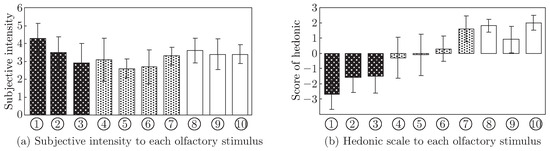
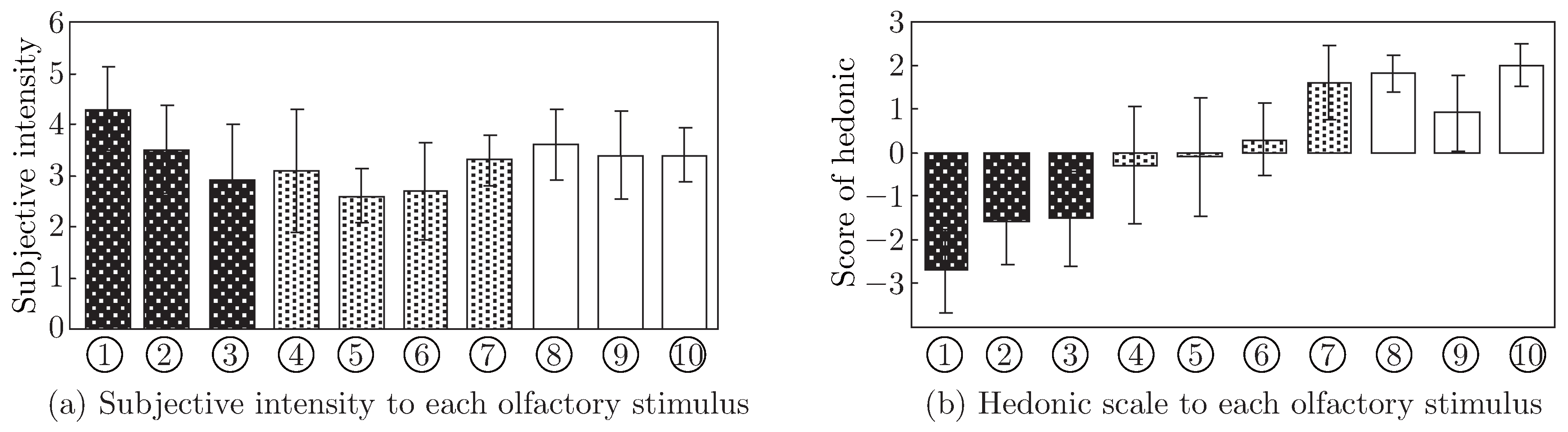
The result of OIM and OHM were shown in Figure 3. The subjective intensity was in the range of grade 2 and grade 4 and no significant difference was found among them by Tukey’s multiple comparison test [12] except No. ①. On the other hand, hedonic score of the olfactory stimuli was dispersed in the scale of hedonic. That is to say, there was few influence of the subjective intensity on the scores of hedonic.
Figure 3.
Results of OIM and OHM.
Mean rating scores of twelve adjectives were calculated from the individual score of SDM. Then factor analysis was applied to the mean rating scores to identify the principal factors which can determine the impression of various olfactory stimuli. Factor loadings based on the correlation matrix of the mean rating scores were calculated with varimax rotation (cf. Table 3).
Table 3.
Factor loadings.
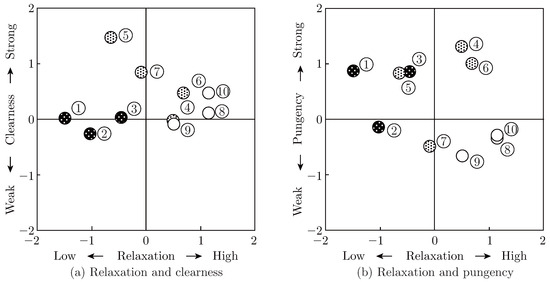
As a result, three principal factors were extracted based on eigenvalues greater than 1.0 and cumulative percentage greater than 80%. Factor 1 had high positive factor loadings among the adjectives which were related with ‘relaxation’ (i.e., ‘Stressed-Relaxed’, ‘Antsy-Composed’). Similarly, factor 2 had high positive factor loadings among the adjectives which were related with ‘clearness’ (i.e., ‘Impure-Distinct’, ‘Stuffy-Clear’), and factor 3 had a high positive or high negative factor loadings among the adjectives which were related with ‘pungency’ (i.e., ‘DullSharp’, ‘Pungent-Mellow’). Therefore these principal factors were interpreted as ‘relaxation’, ‘clearness’ and ‘pungency’ respectively.
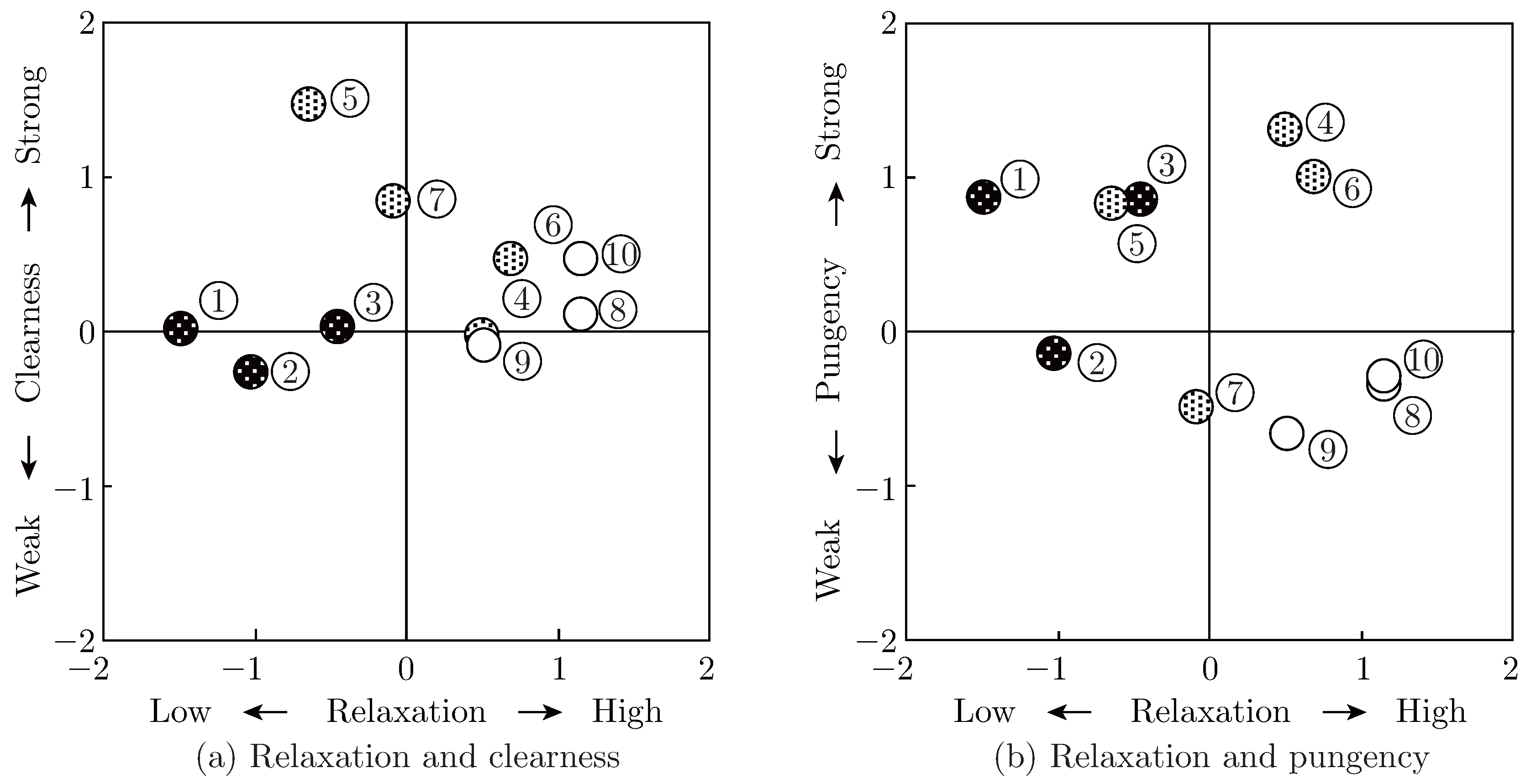
Factor scores were calculated by Anderson and Rubin method for above three factors. The factor score of each olfactory stimulus was shown in Figure 4. It was found that the olfactory stimulus of the category I (i.e., No. ① to ③), that of the category II (i.e., No. ④ to ⑦) and that of the category III (i.e., No. ⑧ to ⑩) had high scores of ‘pungency’, ‘clearness’ and ‘relaxation’ relatively.
Figure 4.
Factor scores of olfactory stimuli.
All the factor scores had no significant correlation with the scores of subjective intensity (i.e. ‘relaxation’: r=−0.261, p=0.465, ‘clearness’: r=−0.523, p=0.120, ‘pungency’: r=−0.330, p=0.350). Hence it was found that the changes of each factors induced by inhalation of olfactory stimuli were not attributable to subjective intensity. However the factor scores of ‘relaxation’ had a significant positive correlation with scores of hedonic (r=0.849, p=0.001). That is to say, change of relaxation scores which were induced by inhalation of olfactory stimuli attributed to the scores of hedonic.
Incidentally, the factor scores of ‘clearness’ and that of ‘pungency’ had no significant correlation with scores of hedonic relatively (‘clearness’: r=0.342, p=0.332, ‘pungency’: r=−0.589, p=0.073).
3.2. Results of Physiological Response
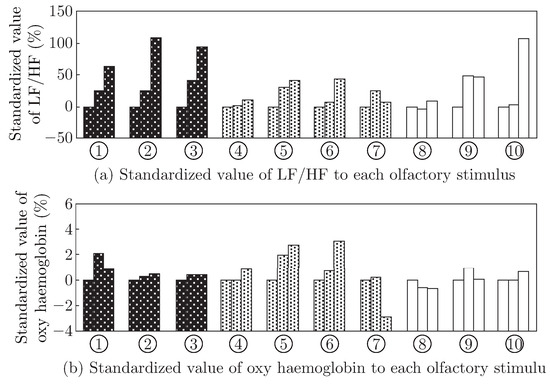
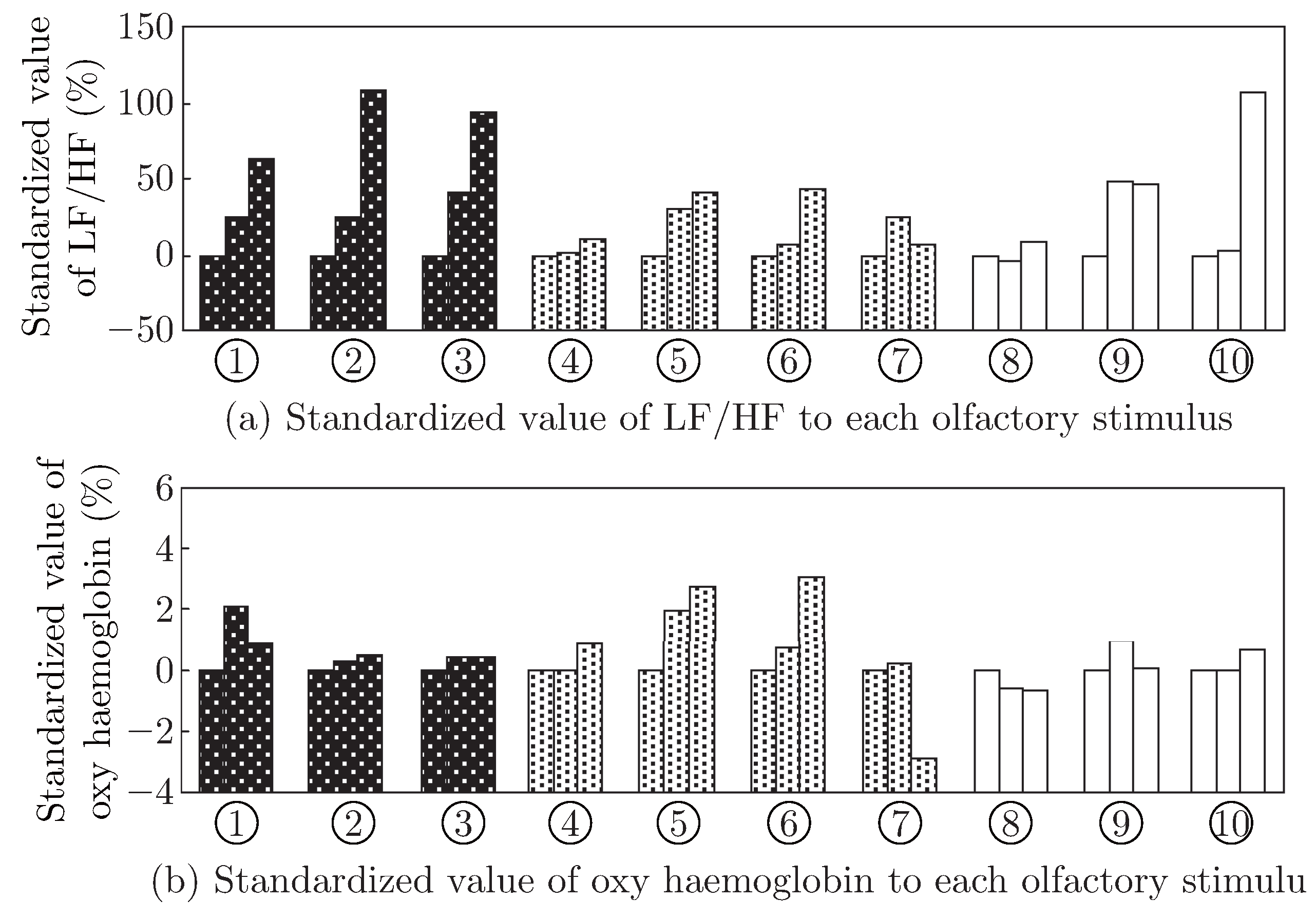
The calculated value of the LF/HF and the concentration of oxy haemoglobin were shown in Figure 5. The three bars on each olfactory stimulus denoted the average value of ‘rest phase’, ‘stimulus phase’ and ‘after stimulus phase’ respectively.
Figure 5.
Results of physiological response.
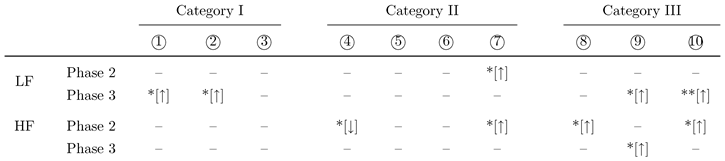
When the evaluators inhaled the uncomfortable olfactory stimuli, obvious increments were observed on the index of LF/HF and concentration of oxy haemoglobin. On the other hand, when the evaluators inhaled the comfortable olfactory stimulus, decrements were observed on the index of LF/HF and concentration of oxy haemoglobin. The LF in mimetic odor of sweat, mimetic odor of excreta, fruity floral and fruity citrus after stimulus phase were significantly increased, while HF in fruity floral was significantly increased from the statistical investigation of t-test (p<5%) (see Table 4). In other words, the inhalation of mimetic odor of sweat, mimetic odor of excreta and fruity citrus activated sympathetic nervous system, while the inhalation of fruity floral activated parasympathetic nervous system.
Table 4.
Result of t-test on LF or HF.
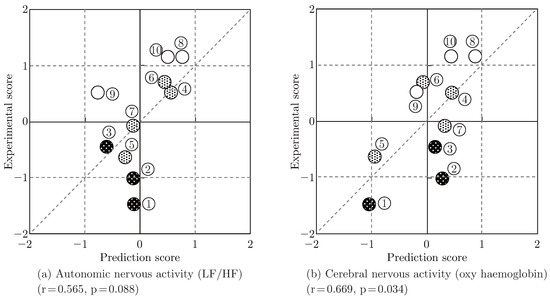
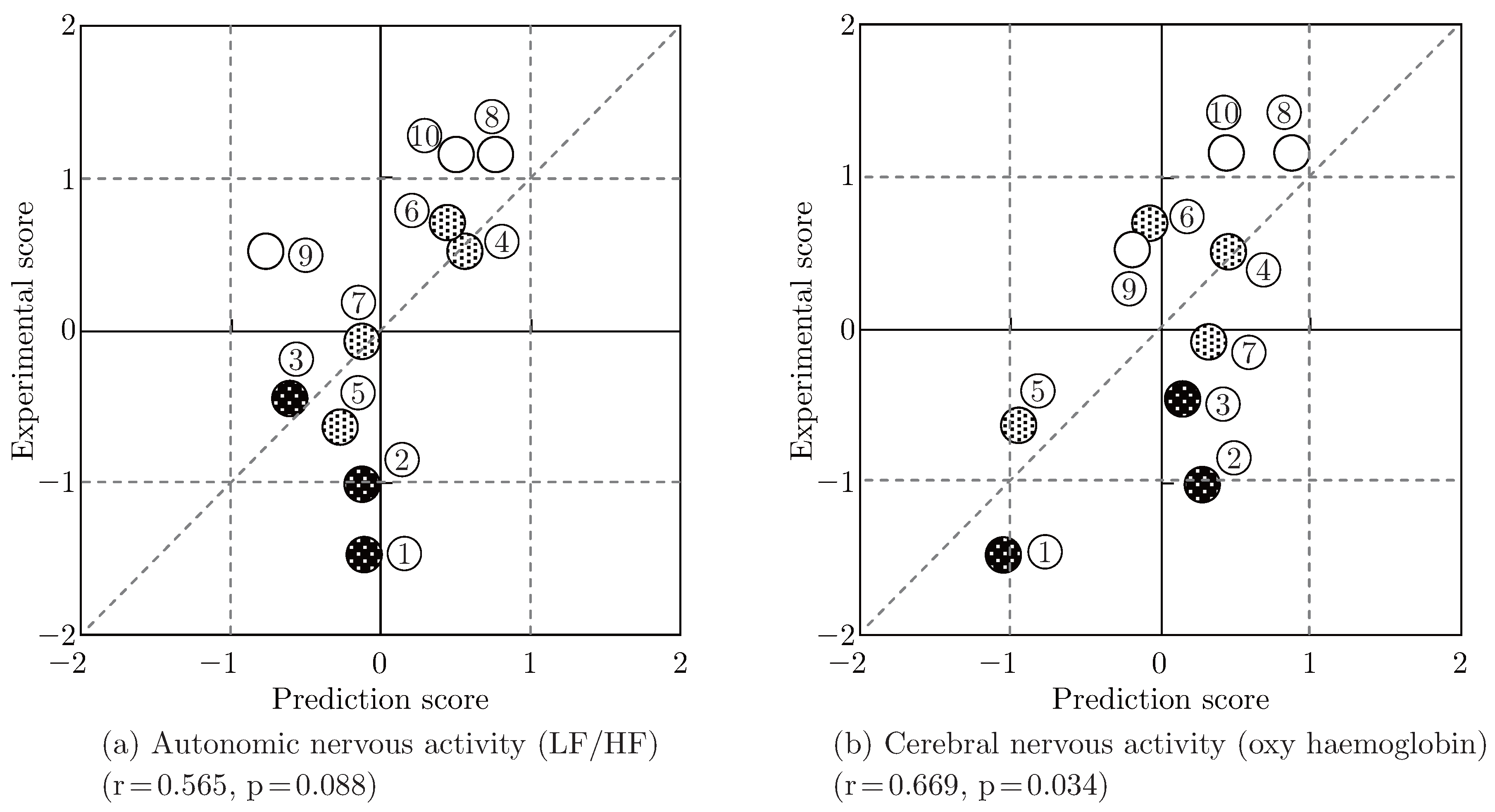
The relationship between the experimental factor scores and predicted factor scores by the physiological response were shown in Figure 6. The factor scores of ‘relaxation’ were correlated significantly with the concentration of oxy haemoglobin (r=0.669, p=0.034). However a tendency was found that the lower the score of ‘relaxation’, the lower the index of LF/HF (r=0.565, p=0.088). From the results, the inhalation of the olfactory stimuli affected both autonomic nervous system and the cerebral nervous system.
Figure 6.
Estimation with physiological response.
Incidentally, the factor scores of ‘clearness’ and that of ‘pungency’ had no significant correlation with the index of LF/HF (‘clearness’: r=−0.003, p=0.992, ‘pungency’: r=−0.127, p=0.724) and with the concentration of oxy haemoglobin (‘clearness’: r=0.349, p=0.321, ‘pungency’: r=0.396, p=0.256) relatively.
As the result, the principal factor of ‘relaxation’ could be estimated accurately with the concentration of oxy haemoglobin in comparison with index of LF/HF. However either physiological response could not estimate other principal factors (i.e. ‘clearness’ and ‘pungency’).
4. Conclusions
In this study, in order to pursue the evaluation index which can estimate the different impression obtained by inhalation of several olfactory stimuli, the principal factors which can determine the impression of olfactory stimulus were attempted to identify. Then the heart rate variability and the cerebral nervous activity were monitored as physiological response. Following conclusions were obtained.
(1) The principal factors which can determine the impression of olfactory stimulus are identified as ‘relaxation’, ‘clearness’ and ‘pungency’ by factor analysis.
(2) The concentration of oxy haemoglobin which denotes the cerebral nervous activity is correlated with the factor scores of ‘relaxation’. That is to say, the usefulness of the cerebral nervous activity is validated for quantitative evaluation of ‘relaxation’.
(3) The cerebral nervous activity and the autonomic nervous system which is investigated in this study are not collated with the factors scores of ‘clearness’ or ‘pungency’.
Acknowledgments
We wish to thank Takehiko Miyahara, Hiyori Fujii, Ayumi Saito researchers at Lion Corporation, for their advice.
References
- Kawano T, et al., Handbook of stress diagnosis and therapy, Tokyo, Medical Science International, 1990. 5-13.
- Moriya K, Oda S, Nakamura H, Yano E, Kakuta H, Correlation between the indices of autonomic nervous system and mood after drinking chamomile tea, JSBR 2002; 28: 61-70.
- Duan X, Tashiro M, Wu D, Yambe T, Nitta S, Itoh M, Heart rate variability in autonomic function and localization of cerebral activity during inhalation of perfumed fragrances, J Intl Soc Life Info Sci 2006; 24(2): 383-395.
- Duan X, Tashiro M, Wu D, Yambe T, Wang Q, Sasaki T, Kumagai K, Luo Y, Nitta S, Itoh M, Autonomic nervous function and localization of cerebral activity during lavender aromatic immersion, Technology and Health Care 2007; 15: 69-78.
- Kanai H, Ishizawa H, Nishimatsu T, Miyasaka H, Influence of Fragrance of Household Fabric Softener on Preference and Autonomic Nervous Activity, JTE 2007; 53: 37-41.
- Sano F, Maeda A, Yamasaki K, Kakimoto Y, The Effects of Smell Stimulus on HRV before and after Eating, JSPA 2000; 5(2): 24-25.
- Aoki Takashi, Adachi Y, Influence of Jasmine Fragrance on Heartbeat Fluctuation, ISLIS 2006; 24(1): 121-125.
- Haze S, Aromachological fragrance for body care, Fragrance Journal 2003; 31: 32-37.
- Motonaga C, Kawano S, Harada K, Watanabe H, Kunieda S, Sakurai K, A novel anti-obesity strategy through stress relaxation by essential oils, Aroma Research 2007; 8(2): 164-167.
- Task Force of The European Society of Cardiology and The North American Society of Pacing and Electrophysiology, Heart rate variability Standard measurement, physiological interpretation, and clinical use, European Heart Journal 1996; 17: 34-381.
- Harada H, Tanaka M, Katou T, Mouri T, Rikimaru F, Cerebral oxygenated hemoglobin changes during the olfactory stimulations in humans, JASTS: 2002; 9(3): 353-356.
- John AR, Martha LA, James PB, Multiple Comparison Methods for Means, SIAM Review 2002; 44: 259-278.

© 2012 Textile Bioengineering and Informatics Society. This article is an open access article distributed under the terms and conditions of the Creative Commons Attribution (CC BY) license (https://creativecommons.org/licenses/by/4.0/).