


Abstract
Influenced by clothing style and fit, as well as human body contour, the distribution of air gaps entrapped between human body skin and inner surface of clothing is complex and difficult to measure. The threedimensional body scanning technology provides a realistic method to quantify the air gap volume by scanning the surface image of human body and clothing. This research measures the air gap volume of thirty experimental clothing using a 3D body scanner and analyzes the effect of clothing size and mechanical property of fabric on air gap volume under clothing. The experimental clothing is made of different fabrics with increasing chest circumference from 92 cm to 108 cm. To investigate the relationship between air gap volume and thermal property of clothing, a thermal manikin is used to measure the thermal insulations of experimental clothing. As the air gap volume increases with the garment size, the thermal insulations of clothing do not linearly increase. The thermal insulation begins to decrease when the chest circumference of experimental garments becomes more than 100 cm due to the onset of natural convection. This research is helpful to study the affecting factors of air gap volume under clothing and estimate the effect of air gap volume on the thermal property of clothing.
1. Introduction
The air gap under clothing is a critical factor to the thermal property of clothing due to the good thermal resistance ability of static air. Influenced by body contour, fabric physical property, clothing style and size, the volume of air gap is varying and difficult to measure. Hein Daanen et al. [1] summarized three common methods to quantify the volume of air layer under clothing, that is, vacuum suit method, cylinder model and 3D scanning method. He concluded that the vacuum suit method [2] is accurate but time consuming and complex, the cylinder model [3] is easy to operate but rough in results, and the 3D scanning is the most accurate and reproducible method. In recent years, 3D scanning technique has been widely used in apparel design and human engineering research [4], especially in heat transfer analysis of clothed human body. Some researchers investigated the relationship between air gap distribution and fire protective performance of clothing. Using a 3D body scanner and flash fire manikin, Song [5] analyzed the influence of fabric material and garment size on air gap layers under single layer thermally protective coveralls, the relationship between the burn patterns and air gap layers was also examined. Lee and Hong [6] measured the air volume by using 3D phase-shifting moiré topography and investigated the relationship between the air volume and clothing insulation value, but the effect of fabric mechanical property on air gap volume was not discussed. In this article, the influence of fabric mechanical property (KES) and garment size on air gap volume is analyzed. The regression model between air gap volume and thermal insulation of clothing is also established.
2. Problem Formulation
2.1. Experimental Materials
To investigate the effect of fabric property and garment size on the volume of air gap under clothing, six kinds of fabrics are selected to make thirty clothing with five sizes from tight to loose. The specifications of six fabrics are shown in Table 1. Every kind of fabric is made into five different sized clothing as shown in Table 2, thus in total thirty garments are prepared for experimental investigation. For example, W-B96 means the garment is made of wool and its breast girth is 96 cm.
Table 1.
Fabric specification.
Table 2.
The size of experimental garments.
2.2. Mechanical Performance
As different types of fibres have different mechanical properties, they may show various appearances and formability after being made into clothing. We test the mechanical performance of six kinds of fabrics by KES. The KES tester includes tensile & shear tester KES-FB-1, pure bending tester KES-FB-2, compression tester KES-FB-3 and surface tester KES-FB-4. Table 3 shows the testing results of six experimental fabrics by KES. The data can be used to analyze the relationship between fabric mechanical performance and the air gap distribution under clothing.

Table 3a.
The KES testing results of experimental fabrics (FB-1and FB-2).
Table 3b.
The KES testing results of experimental fabrics (FB-3and FB-4).
2.3. Air Gap Between Skin and Clothing
Six healthy male undergraduates are scanned by a 3D human body scanner (BMS from TC2). The details of the participants are as follows: age, (25±2) years; height, (170±3) cm, bust circumference, (88±2) cm; waist circumference, (76±2 cm), hip circumference, (95±2) cm. To obtain the air gap volume under clothing, every participant is scanned twice. Firstly, the participants dress only tight pants and are scanned to obtain the surface image of naked body. Secondly, they put on the experimental clothing and are scanned again to obtain the surface image of clothed body. The body posture and position should be fixed during each scanning. The volumes and surface areas of the naked body and clothed body can then be calculated by use of Reverse Engineering software Geomagic. In this way, the clothing area factor and the volume of air gap under clothing can be calculated by the following formula:
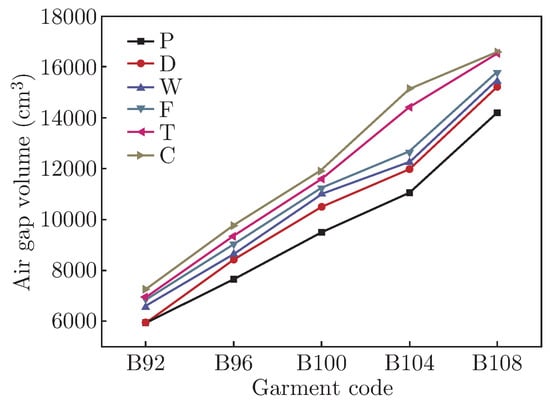
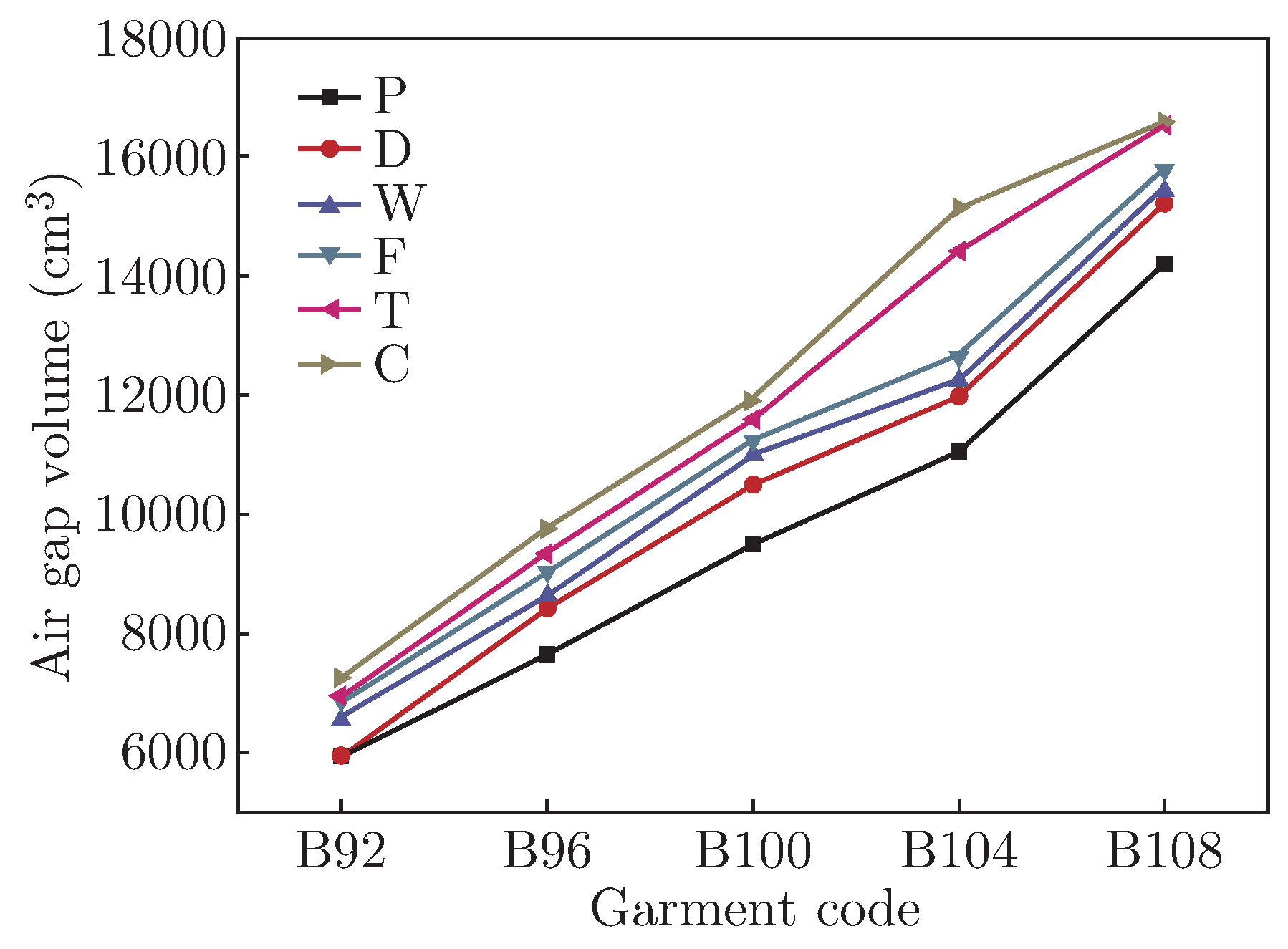
where, Vair is the volume of air gap under clothing; Vcl is the volume of clothed body; Vbody is the volume of naked body; fcl is clothing area factor; Acl is the surface area of clothed body; As is the surface area of the naked body. Figure 1 shows the volumes of air gap under thirty clothing.
Vair = Vcl − Vbody
fcl = Acl/As
Figure 1.
The air gap volume of thirty clothing.
2.4. Thermal Insulation of Clothing
Both fabric mechanical properties and garment size influence the volume of air gap under clothing, which generates different thermal insulation as the result of thermal resistance effect of static air. A thermal manikin with eleven independent controlled segments is used to test the dry thermal insulation of clothing. The test is conducted in a climatic chamber at constant ambient temperature and relative humidity of 25±2℃ and 65±5%, air velocity of 0.5 m/s respectively. Garments are hung in the chamber for at least 24 h before testing. Firstly, the thermal manikin is dressed with long pants and on the naked upper body to obtain the thermal insulation of boundary air layer. Secondly, the thermal manikin is dressed with each experimental garments and uniform pants to test the total thermal insulation. Every test is conducted three times to eliminate system error. According to ISO 15831, the parallel model is adopted to calculate the thermal insulation of experimental garments as follows:
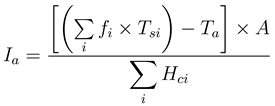

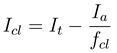
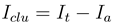 where, Icl is the basic thermal insulation of clothing in clo; Iclu is the effective thermal insulation of clothing in clo; It is the total thermal insulation of clothing in clo; Ia is the thermal insulation of boundary air layer in clo; ai is the surface area of the body segment i of the manikin in m2; A is the total body surface area of the manikin in m2; fi is the fraction of the total manikin surface area represented by the surface area of segment i; Hci is the heating power supplied to the body segment i of the manikin in W; Ta is the air temperature within the climatic chamber in ℃; Tsi is the skin surface temperature of the body segment i of the manikin in ℃; fcl is the clothing area factor and can be determined as described in ISO 9920:
fcl = 1 + 0.28 × Icl
3. Problem Solution
3.1. Influencing Factors of Air Gap Volume
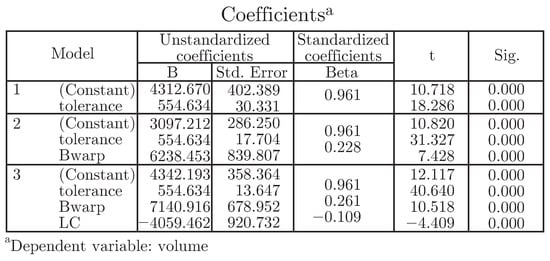
It is evident that clothing style and size may influence the air gap volume significantly, but for the same sized clothing, the kinds of fabric will also bring different distribution of air gap under clothing. As shown in Figure 1, the air gap volumes linearly increase with the increase in clothing size from B92 to B108. For the clothing with the same size, it seems that thin polyester fabric has the smallest air gap volume and thick cotton fabric has the largest air gap volume. To further analyze the common effect of fabric property and clothing size on air gap volume, the linear regression analysis (Figure 2) is made to estimate the air gap volume on the basis of KES performance and clothing tolerance. As all the experimental garments have the same style, the chest girth difference will represent the tolerance between clothing and body, which is 4 cm, 8 cm, 12 cm, 16 cm and 20 cm for garments B92, B96, B100, B104 and B108. The seventeen KES mechanical properties listed in Table 3 are used as independent variables in regression model and the regression equation of air gap volume is written as:
where, y is volume of air gap under clothing in cm3; x1 is chest tolerance between clothing and body in cm; x2 is the bending rigidity of warp in (gf·cm2)/cm; x3 is the linear degree of compression. It seems that bending rigidity (B) and linear degree (LC) are the most influencing factors to air gap volume in seventeen KES index.
y = 4342.193 + 554.634x1 + 7140.916x2 − 4059.462x3
Figure 2.
The linear regressive coefficients.
3.2. The Effect of Air Gap on Thermal Insulation
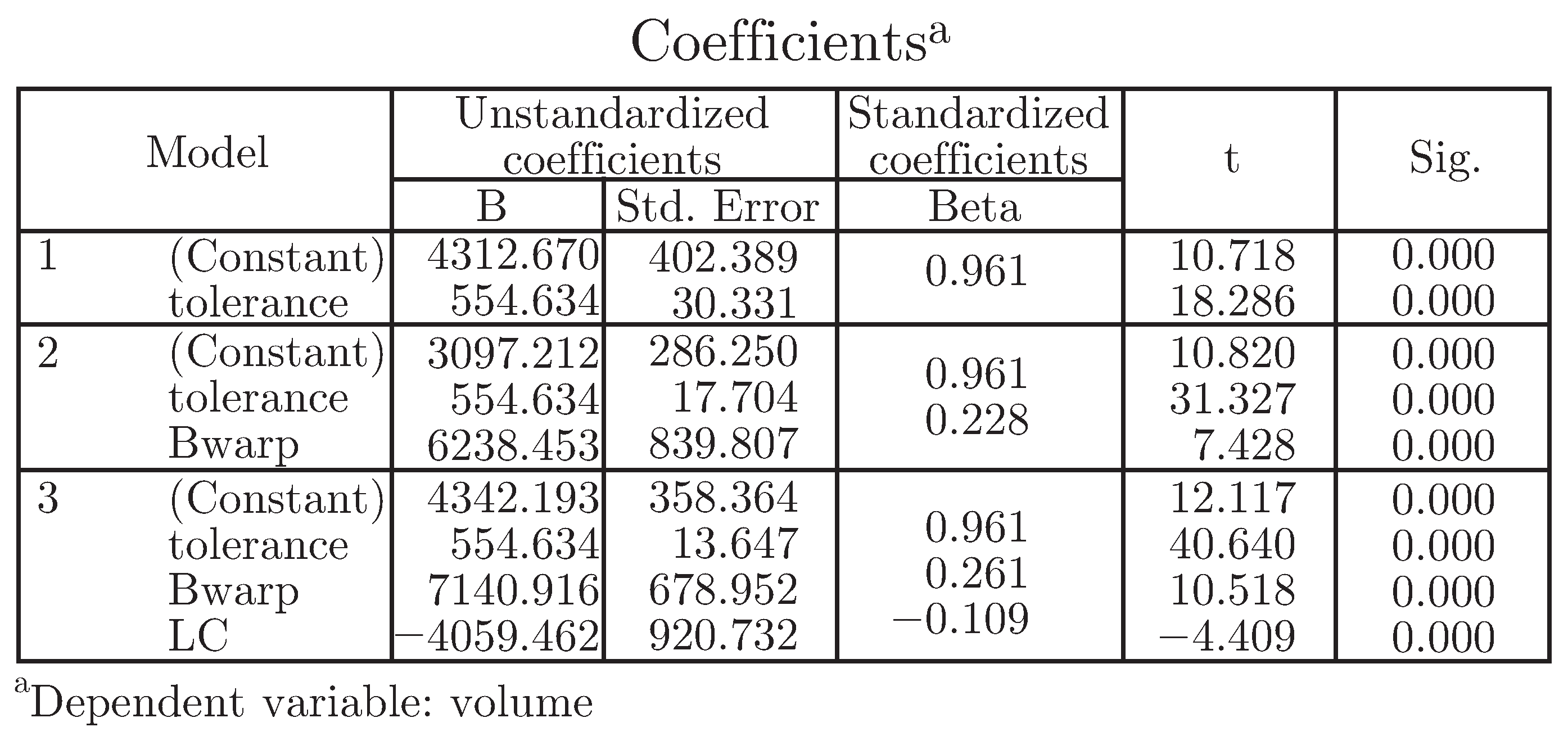
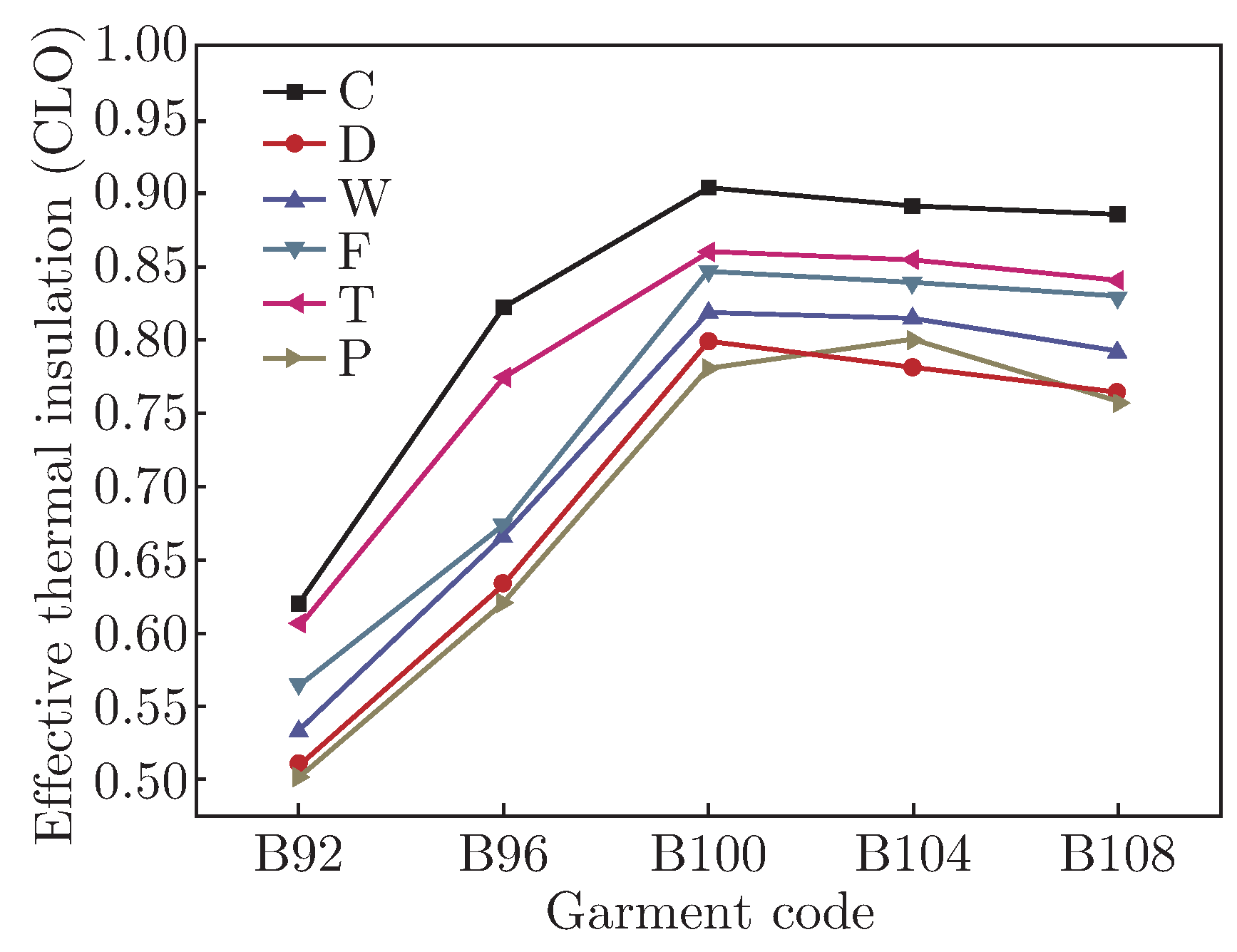
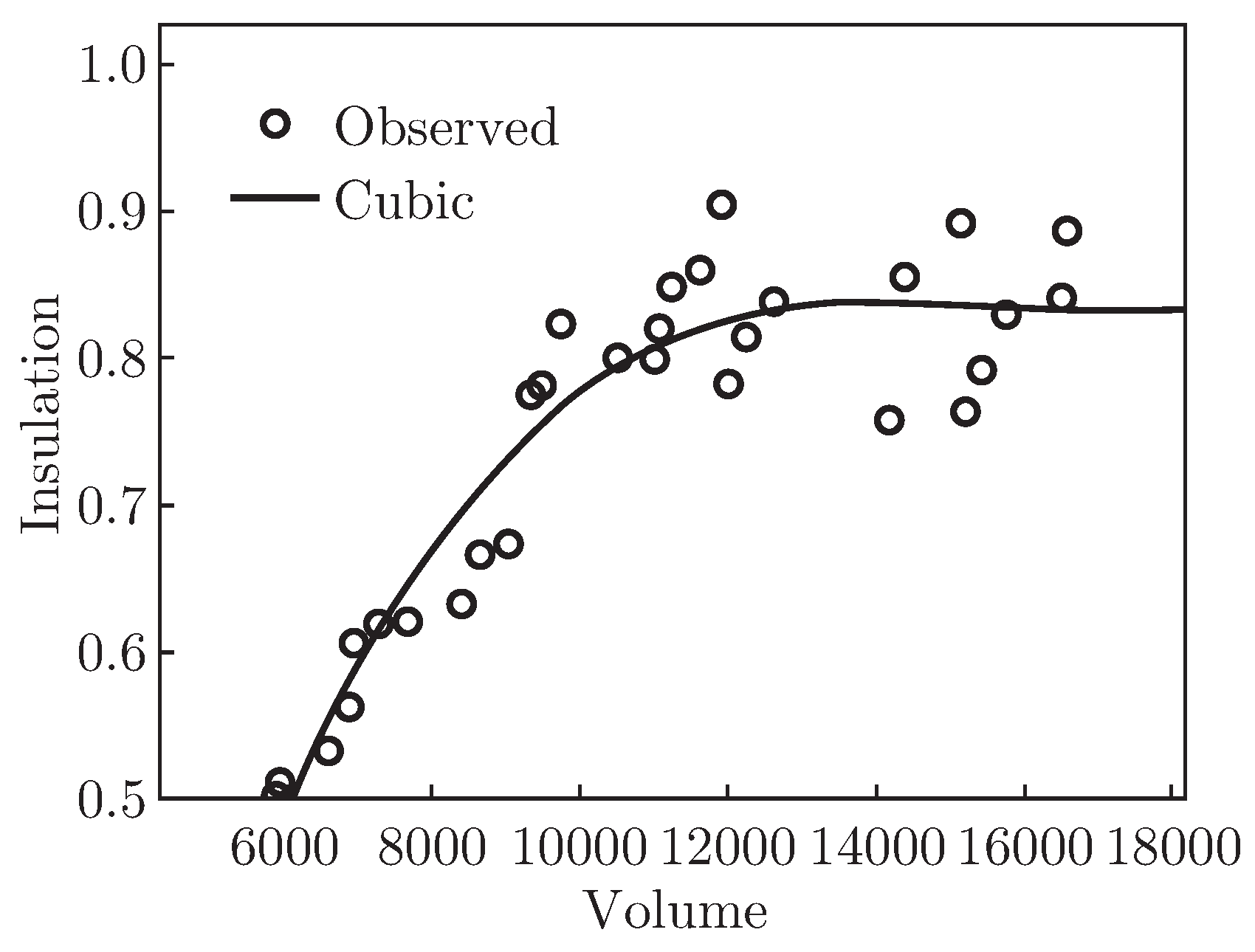
The effective thermal insulation of thirty experimental garments are shown in Figure 3. It can be seen that the thermal insulation does not linearly increase with the garment size. For the garments made of fabric C, D, W, F and T, the thermal insulation reaches its maximum when the garment size increases to B100. But the maximum thermal insulation appears at B104 for the garment made of fabric P. By contrast with the air gap volume as thermal insulation, we found that the thermal insulation begins to decrease when the air gap volume reaches 11900 cm3. To further analyze the effect of air gap volume on the thermal insulation of clothing, the curve estimation is used to build a regression equation about thermal insulation and air volume:
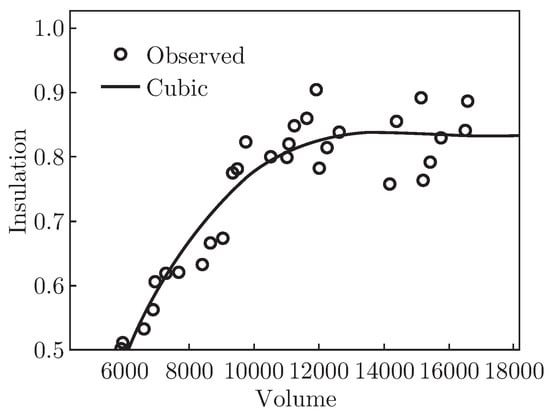
where y is the thermal insulation of clothing in clo; x is the volume of air gap under clothing in cm3. The fitting effect of the cubic regression model is shown in Figure 4.
y = −0.703 − 1.9 × 10−8x2 + 4.08 × 10−13x3
Figure 3.
The thermal insulation of clothing.
Figure 4.
The fitting effect of cubic regression.
3.3. Clothing Area Factor Analysis
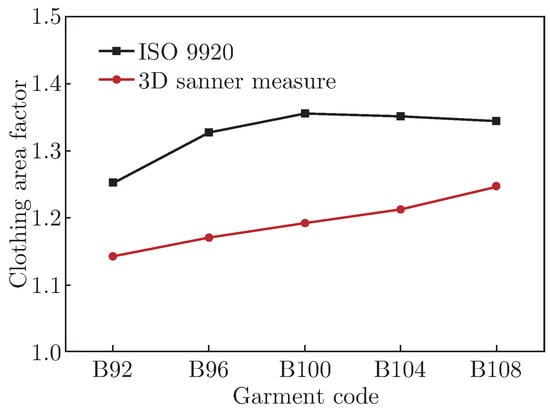
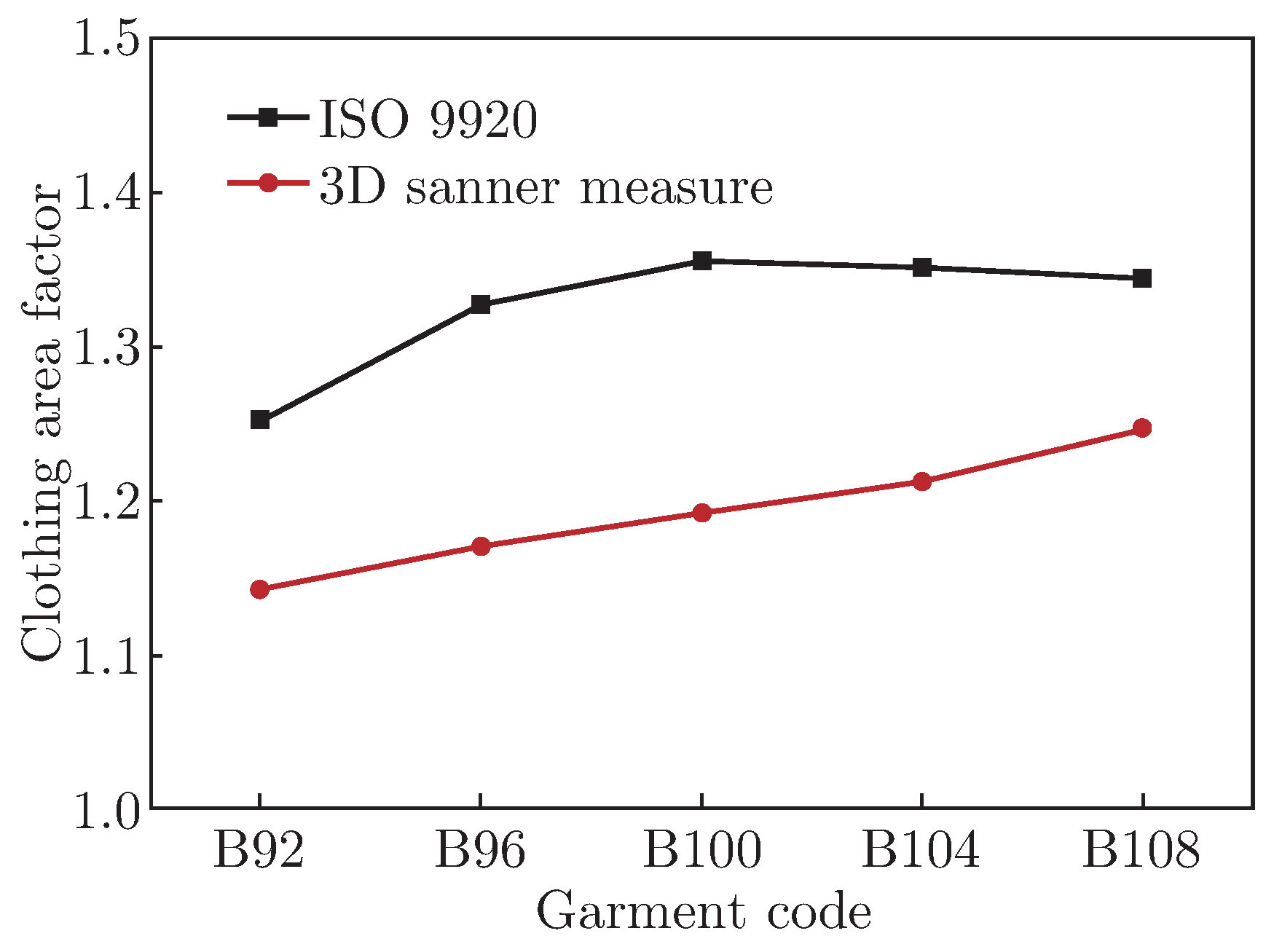
According to the international standard of ISO 9920, the clothing area factor can be calculated by Eq. 7 when the basic thermal insulation of clothing is known. It is obvious that the clothing area factor will increase with garment size. But according to the experimental results, thermal insulation of clothing is not correspondingly increased with the garment size. So the calculation of clothing area factor based on basic thermal insulation may produce some error. The clothing area factor calculated by ISO 9920 is contrasted with 3D body scanner method. Figure 5 shows the area factor of clothing made of fabric C. It can be seen that the clothing area factor calculated by ISO standard begins to reduce when the garment size is larger than B100, which is the result of decrease in clothing thermal insulation. This is obviously contrary to the common sense that large garment size usually has large clothing area factor.
Figure 5.
The clothing area factor of fabric C.
4. Conclusion
Based on a three-dimensional human body scanner and Reverse Engineering software, the volumes and surface area of thirty experimental clothing are obtained. The 3D body scanner can quantify air gap under clothing without contacting the clothing surface, which is accurate and efficient. The effect of fabric KES performance and garment size on air gap volume is analyzed. The regression model shows that bending property and compressive linear degree will influence the air gap under clothing, which is related to the drapability of fabric. The thermal insulations of clothing are also tested by thermal manikins in a controlled climatic chamber. With the increase of garment size, the thermal insulation is not linearly increased but reaches its maximum when the air gap volume is 11900 cm3. This is because of the onset of natural convection when the air gap is large enough. The traditional methods to decide clothing area factor are by ISO 9920 calculation and photographs. With the nonlinear relationship between thermal insulation and garment size, the clothing area factor calculated by thermal insulation is not accurate. A better way to decide the clothing area factor is by 3D scanning method. The article investigates the affecting factors of air gap volume under clothing and establishes the regression model about thermal insulation and air gap volume. It can be used to analyze the thermal performance of different sized garments made from various fabrics at the product design stage.
Acknowledgments
This work was financially supported by National Natural Science Foundation (project 50876019) and Program for New Century Excellent Talents in University of Ministry of Education of China (project NCET-10-2100).
References
- Daanen, Hein; Hatcher, Kent; Havenith, George. Determination of clothing microclimate volume. Environ. Ergon. 2005, 4, 361–365. [Google Scholar] [CrossRef] [Scilit]
- Sullivan, P. J.; Mekjavic, Igor B.; Kakitsuba, Naoshi. Determination of clothing microenvironment volume. Ergonomics 1987, 30, 1043–1051. [Google Scholar] [CrossRef] [Scilit] [PubMed]
- McCullough, E. A.; Hong, S. A data base for determining the decrease in clothing insulation due to body motion. ASHRAE Trans. 1994, 100, 765–775. [Google Scholar]
- Paquette, Steven. 3D scanning in apparel design and human engineering. IEEE Comput. Graph. Appl. 1996, 16(5), 11–15. [Google Scholar] [CrossRef]
- Song, Guowen. Clothing Air Gap Layers and Thermal Protective Performance in Single Layer Garment. J. Ind. Text. 2007, 36, 193–205. [Google Scholar] [CrossRef] [Scilit]
- Lee, Yejin; Hong, Kyunghi; Hong, Sung-Ae. 3D quantification of microclimate volume in layered clothing for the prediction of clothing insulation. Ergonomics 2007, 383, 49–355. [Google Scholar]
© 2011 Textile Bioengineering and Informatics Society. This article is an open access article distributed under the terms and conditions of the Creative Commons Attribution (CC BY) license (https://creativecommons.org/licenses/by/4.0/).