


Abstract
Fabric tactile comfort is an important component of apparel wearability. Still, its objective evaluation remains challenging because tactile perception is shaped by textile material properties, fabric–skin interaction, and human sensory processing. Although neurophysiological techniques offer a complementary approach to characterising human responses to fabric-induced tactile stimulation, it remains unclear how these indicators can be appropriately linked to textile material parameters and used to support the objective evaluation of fabric tactile comfort. To address this gap, this review clarifies the methodological value, application boundaries, and interpretative constraints of neurophysiological indicators for evaluating fabric tactile comfort. We conducted a bibliometric analysis of a focused dataset of 100 publications from 2004 to 2025, followed by a critical assessment of major neurophysiological measurement approaches. The bibliometric results suggest an increasing focus on research in textile-related tactile perception, wearable sensing, and smart textile applications. These patterns reflect thematic associations rather than direct evidence of a linear disciplinary transition. This review further examines EEG and ERP-based analysis, functional near-infrared spectroscopy, and functional magnetic resonance imaging in terms of their measurement principles, application scenarios, and methodological limitations. EEG and ERP-based analysis is well suited to capturing rapid responses to controlled tactile events, whereas fNIRS and fMRI provide complementary haemodynamic or spatial information under different experimental constraints. This review pays particular attention to the mismatch between textile material parameters and neurophysiological indicators. This review concludes that future studies should integrate material testing, fabric–skin interaction protocols, peripheral sensory encoding, subjective evaluation, and central neurophysiological responses within a textile–skin–nervous system framework.
1. Introduction
Fabric tactile comfort is an important component of apparel wearability and is closely related to consumers’ wearing experience and product acceptance. In textile and clothing research, sensory properties such as fabric hand, softness, surface smoothness, pressure sensation, and thermal contact sensation have been widely examined as factors affecting perceived comfort and product evaluation [1,2]. Previous studies have further examined pressure-related comfort in supportive garments, tactile sensation and warm retention in bilayer knitted fabrics, and thermal–moisture management in protective clothing systems [3,4,5,6]. However, fabric tactile comfort should not be treated as a single physical property or as a broad affective response. It is better understood as a perceptual outcome arising from direct interaction between fabric and human skin, in which material-induced mechanical and thermal stimuli are encoded by peripheral sensory receptors and then processed by the somatosensory system.
In this review, fabric tactile comfort is defined as the perceived pleasantness, acceptability, or discomfort arising from fabric–skin contact. It mainly involves several measurable tactile dimensions, including softness, smoothness, roughness, prickliness, pressure-related comfort, and thermal contact sensation. These dimensions are related but not equivalent. For example, smoothness and roughness are closely associated with surface topography and frictional interaction; prickliness is often linked to fibre ends, hairiness, and localised mechanical irritation; pressure-related comfort depends on compression behaviour, load distribution, and contact duration; and thermal contact sensation reflects heat exchange at the initial stage of contact [7,8]. Thermal-moisture regulation, visual appearance, emotional preference, and well-being may influence the overall wearing experience, but they should not be used interchangeably with tactile comfort itself.
Traditional approaches to evaluating fabric tactile comfort primarily rely on subjective sensory assessments and instrumental measurements of material properties. These approaches remain essential because they provide direct information on perceived fabric hand and measurable textile parameters. Nevertheless, they also have limitations when used alone. Subjective assessment may be affected by individual differences, prior experience, and evaluation criteria. In contrast, instrumental tests often describe isolated material properties under controlled conditions and may not fully capture dynamic fabric–skin interaction during actual wear. [9,10]. Traditional textile engineering studies, such as the work by Yu et al [5], are important for establishing relationships among fabric structure, material properties, and sensory outcomes. Building on this foundation, neurophysiological methods provide a complementary perspective by examining how fabric-induced tactile stimuli are reflected in human nervous system responses.
Despite the increasing use of neurophysiological techniques, such as electroencephalography (EEG) and functional magnetic resonance imaging (fMRI), in studies of tactile perception and fabric-related sensory evaluation [11]. The current research landscape remains fragmented. Existing studies differ in textile stimuli, contact conditions, perceptual descriptors, signal acquisition methods, and interpretation frameworks. More importantly, the relationship between textile material parameters, peripheral sensory encoding, and central neurophysiological responses remains insufficiently clarified. This limitation makes it difficult to determine how to use neurophysiological indicators appropriately to objectively evaluate fabric tactile comfort.
Related studies have provided valuable insights into pressure comfort, tactile sensation, thermal retention, thermal–moisture comfort, and functional clothing evaluation. However, these studies have mainly focused on textile material performance, sensory evaluation, functional requirements, or specific comfort scenarios. In contrast, the connection between neurophysiological indicators and textile-induced tactile mechanisms remains insufficiently synthesised. This review therefore integrates bibliometric evidence with a methodological discussion of neurophysiological techniques and, more importantly, frames fabric tactile comfort within a textile–skin–nervous system pathway. This perspective helps clarify how material parameters, peripheral sensory encoding, and central neurophysiological responses may be jointly considered in future objective evaluations of comfort.
Therefore, this study adopts a dual-methodological framework. First, we use bibliometric analysis with CiteSpace to identify major research themes and thematic associations in the existing literature. Second, guided by these findings, this review critically examines EEG and ERP-based analysis, functional near-infrared spectroscopy (fNIRS), and fMRI, with particular attention to their measurement principles, applicable scenarios, and methodological limitations. Rather than treating multimodal fusion as a universal solution, this review examines how different neurophysiological methods may contribute to evaluating fabric tactile comfort under specific experimental and application conditions.
2. Methods
2.1. Data Acquisition and Search Strategy
A systematic literature search was conducted in the Web of Science Core Collection and CNKI databases to identify studies related to the neurophysiological evaluation of fabric tactile comfort. The search period covered publications from January 2004 to November 2025. The final search was conducted in November 2025. We selected two databases because Web of Science provides broad coverage of international peer-reviewed literature. In contrast, CNKI includes Chineselanguage studies in textile engineering, clothing comfort, and neurophysiological evaluation that may not be fully indexed in international databases.
The search strategy was constructed around three groups of terms: textile-related terms, tactileperception terms, and neurophysiological measurement terms. For the Web of Science Core Collection, the search was performed in the Topic field, including title, abstract, author keywords, and Keywords Plus. The search string was as follows:
TS = ((fabric* OR textile∗ OR clothing OR garment∗ OR apparel OR “fabric hand” OR handfeel OR “textile fabric*”) AND (tactile OR touch OR haptic∗ OR softness OR smoothness OR roughness OR prickliness OR friction OR “pressure comfort” OR “tactile comfort”) AND (EEG OR electroencephalograph∗ OR “event-related potential∗” OR ERP OR fNIRS OR “functional near-infrared spectroscopy” OR fMRI OR “functional magnetic resonance imaging” OR “brain activation” OR “cortical activation” OR neurophysiolog∗))
For CNKI, the search was conducted in the title, abstract, and keyword fields using Chinese terms corresponding to the following English search expression:
(fabric OR textile OR textile product OR clothing OR garment) AND (tactile OR touch OR fabric hand OR tactile comfort OR contact comfort OR softness OR smoothness OR roughness OR prickliness OR friction OR pressure comfort) AND (EEG OR electroencephalography OR event-related potential OR ERP OR fNIRS OR functional near-infrared spectroscopy OR fMRI OR functional magnetic resonance imaging OR cortical activation OR neurophysiology).
The search included journal articles, full-text conference papers, and dissertations when they provided empirical data, theoretical analysis, or methodological discussion relevant to fabric tactile comfort and neurophysiological measurement. Abstract-only papers, posters without full-text availability, animal studies without direct relevance to human textile perception, and studies focusing on general neuroimaging or emotion recognition without fabric-related stimuli were excluded.
2.2. Screening Criteria and Study Selection
To ensure the relevance and transparency of the bibliometric dataset, we screened the retrieved records against predefined inclusion and exclusion criteria, as shown in Table 1. The screening followed a PRISMA-informed workflow, including duplicate removal, title and abstract screening, full-text eligibility assessment, and final inclusion. We retained records that addressed textileor clothing-related tactile stimuli and included neurophysiological measurements, analyses, or methodological discussions relevant to human tactile perception. Studies focusing solely on general neuroimaging, emotion recognition, rehabilitation, or non-textile haptic interfaces were excluded unless they provided direct methodological relevance to evaluating fabric tactile comfort.
Table 1.
Inclusion and exclusion criteria for study selection.
After removing duplicates and assessing eligibility, 100 publications were retained as the core dataset for subsequent CiteSpace-based bibliometric analysis. This dataset was used to identify keyword co-occurrence patterns, cluster structure, and timeline distribution. For the critical methodological review, we further selected representative studies from the bibliometric dataset and closely related methodological literature based on their relevance to textile material parameters, fabric–skin interaction, neurophysiological measurement, and multimodal fusion. Finally, the manuscript cites 40 references to support the narrative synthesis and discussion. Therefore, the number of publications included in the bibliometric dataset should be distinguished from the number of references cited in the final manuscript.
2.3. Scientometric Configuration and Term Normalisation
The bibliometric analysis was conducted using CiteSpace v.6.3.R1. Before analysis, we performed basic term normalisation to reduce fragmentation caused by spelling variants, abbreviations, and synonymous expressions. For example, “electroencephalography” and “EEG” were merged; “event-related potential”, “event-related potentials”, and “ERP” were standardised as ERP-based analysis; “functional near-infrared spectroscopy” and “fNIRS” were treated as equivalent; and “functional magnetic resonance imaging” and “fMRI” were merged. We also checked textilerelated variants such as “fabric”, “textile fabric”, and “textiles” for consistency. However, terms representing different tactile dimensions, such as softness, smoothness, roughness, prickliness, pressure comfort, and thermal contact sensation, were not merged because they refer to distinct perceptual or physiological constructs.
In CiteSpace, we set the time slice to one year to preserve the temporal distribution of publications from 2004 to 2025. The node type was selected according to the specific analysis, including keywords and cited references. We used a Top N = 50 selection strategy for each time slice to retain representative high-frequency or high-impact nodes while avoiding excessive network density in this focused dataset. Pathfinder pruning simplified the network structure and reduced redundant links, improving the interpretability of major co-occurrence relationships. The analysis focused on cluster structure, timeline distribution, and keyword co-occurrence patterns.
Selecting Top N = 50 and applying Pathfinder pruning aimed to balance information retention and visual interpretability. A smaller Top N value may yield a clearer but more selective network, potentially excluding less frequent yet relevant terms. In contrast, a larger Top N value may increase network density and include more peripheral nodes, potentially reducing cluster clarity. Similarly, different pruning strategies may affect link visibility and the apparent boundaries between clusters. Therefore, the bibliometric maps were interpreted as exploratory visualisations of thematic associations rather than as direct evidence of causal mechanisms, stable trend boundaries, or linear research evolution. The CiteSpace results guided the subsequent critical review of neurophysiological methods, rather than independently determining the field’s developmental trajectory.
3. Results and Analysis
3.1. CiteSpace Analysis of Research Trends
The CiteSpace analysis identified major thematic associations among studies on fabric tactile comfort and neurophysiological evaluation. The cluster and timeline maps provide a visual summary of keyword co-occurrence and temporal distribution. Therefore, interpret the results as exploratory evidence of research themes rather than direct proof of causal mechanisms, technological evolution, or linear disciplinary development.
3.1.1. CiteSpace Cluster Analysis
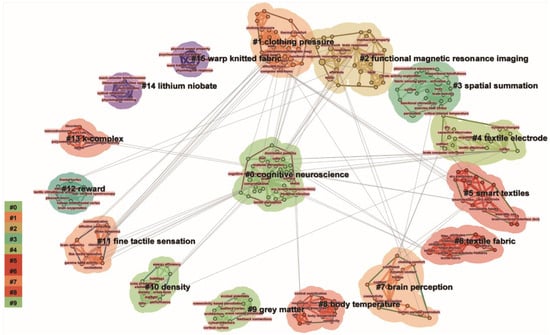
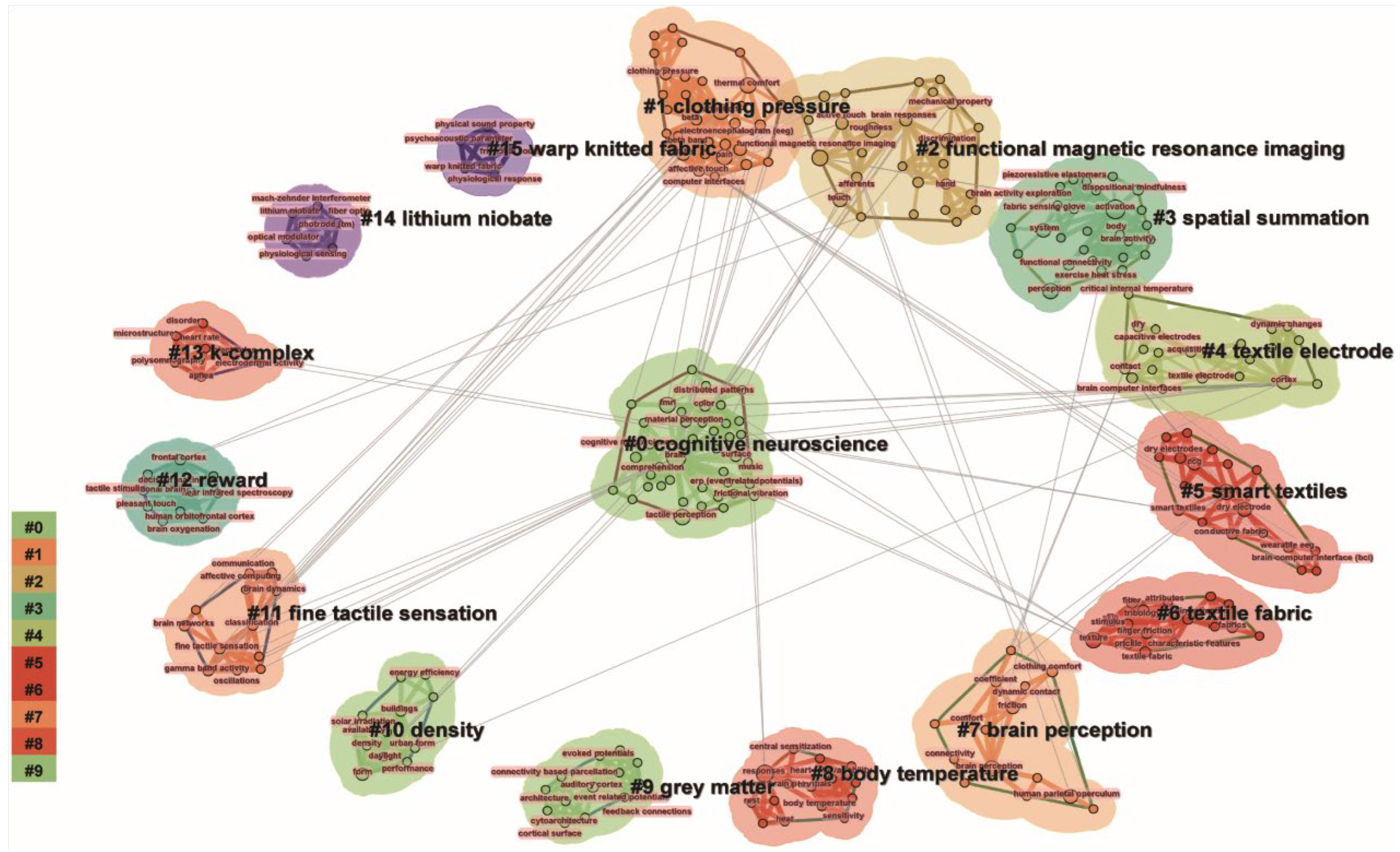
As shown in Figure 1, the cluster map presents several co-occurring themes related to neurophysiological measurement, textile materials, tactile perception, and wearable applications. Clusters such as “functional magnetic resonance imaging”, “clothing pressure”, “textile fabric”, “body temperature”, and “fine tactile sensation” indicate that the literature spans both neuroscienceoriented and textile-oriented topics. These clusters suggest that the literature discusses fabric tactile comfort in relation to material-induced tactile stimuli, somatosensory processing, and emerging wearable technologies.
Figure 1.
CiteSpace cluster graph (source: drawn by the authors).
The cluster map reflects keyword co-occurrence rather than causal relationships among research topics. Therefore, the association between neurophysiological terms and textile-related terms cannot be interpreted as direct evidence of a completed methodological transition from basic neuroscience to textile applications. Instead, it indicates that researchers have increasingly sought to link tactile perception to specific fabric–skin interaction conditions, including pressure, friction, surface texture, and thermal contact.
The cluster labelled “fine tactile sensation” appears to connect terms related to somatosensory processing and textile application contexts. This suggests that fine tactile discrimination may serve as a useful conceptual link between studies of controlled tactile perception and applied fabric evaluation. However, the bibliometric map alone cannot determine how peripheral receptors encode specific textile parameters or how these are reflected in neural signals. This issue requires further discussion from the perspective of textile material properties, skin receptors, and neurophysiological indicators.
3.1.2. CiteSpace Timeline Analysis
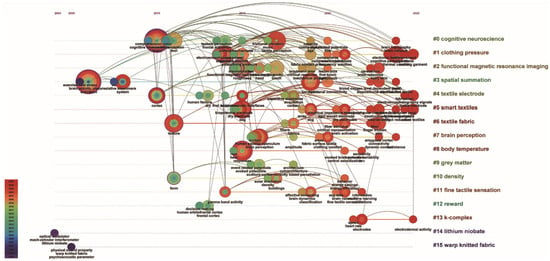
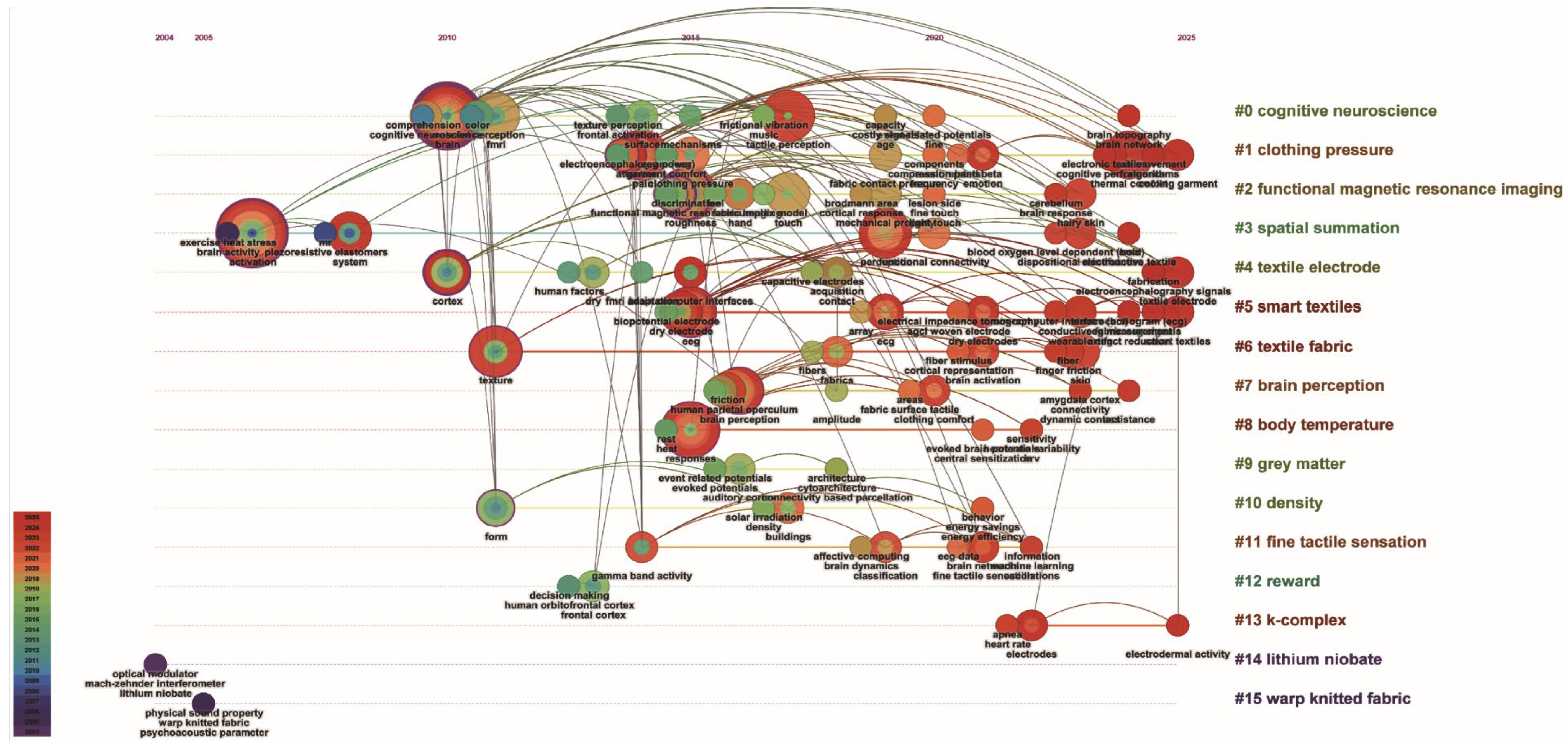
As shown in Figure 2, the timeline map provides an approximate view of when major keywords appeared or became more closely connected within the dataset. Earlier records were more frequently associated with general terms such as “cognitive neuroscience” and “brain perception”. In contrast, later records showed increased co-occurrence with terms such as “textile fabric”, “clothing pressure”, “smart textiles”, and “textile electrode”. This pattern suggests that research attention has gradually extended from general tactile and neural processing toward more application-oriented textile and wearable contexts.
Figure 2.
CiteSpace Timeline graph (Source: Drawn by the authors.).
Nevertheless, the timeline map should not be interpreted as a strict chronological pathway of disciplinary evolution. The colour distribution and node positions indicate temporal occurrence and co-occurrence patterns, but they do not demonstrate causal transitions between research stages. Therefore, the timeline analysis identifies emerging topics and guides the subsequent methodological review, rather than inferring a fixed developmental trajectory.
From this perspective, the recent appearance of terms related to smart textiles and textile electrodes suggests growing interest in wearable sensing and textile-integrated measurement. However, whether these technologies can reliably indicate fabric tactile comfort depends on methodological factors such as stimulus control, signal quality, ecological validity, and the mapping between textile parameters and physiological responses. The following sections examine these issues.
3.2. Neurophysiological Techniques for Fabric Tactile Comfort Evaluation
Current neurophysiological studies of tactile perception mainly rely on electrophysiological and haemodynamic measurement approaches. In this review, EEG, fNIRS, and fMRI are treated as neurophysiological measurement techniques. In contrast, ERP is considered an EEG-derived analytical approach based on time-locked averaging of neural responses to repeated stimuli. This distinction matters because ERP is not an independent recording modality, but a method for extracting event-related components from continuous EEG signals.
For evaluating fabric tactile comfort, these techniques provide different types of information. EEG and ERP-based analyses are better suited to examining rapid temporal responses to controlled tactile stimulation. fNIRS offers a relatively portable haemodynamic measurement approach for studies conducted under less restrictive experimental conditions. fMRI provides stronger spatial localisation for mechanism-oriented research, but its experimental constraints limit its direct applicability to naturalistic fabric-wearing scenarios. Therefore, the following section evaluates these techniques according to their measurement principles, potential textile-related applications, and methodological limitations.
3.2.1. EEG and ERP-Based Analysis
Electroencephalography (EEG) records scalp electrical potentials generated by synchronised neuronal activity. Its main methodological advantage is high temporal resolution, which makes it suitable for examining rapid cortical responses induced by fabric–skin contact. In textile-related studies, EEG indicators such as frequency-band activity have been used to analyse neural responses associated with fabric softness, roughness, or contact comfort under controlled stimulation conditions [12].
Event-related potential (ERP) analysis is derived from EEG. It extracts time-locked neural responses by averaging EEG signals across repeated tactile events, thereby allowing researchers to examine different temporal stages of tactile processing [13]. In fabric tactile evaluation, ERPbased analysis has been discussed as a potential approach for analysing event-locked neural responses to fabric-induced tactile stimulation and for identifying components related to tactile discrimination and cognitive evaluation [14]. However, its interpretation requires caution. ERP analysis depends on repeated and precisely timed stimulation, and trial averaging may obscure meaningful trial-to-trial variability. Moreover, ERP components should not be interpreted as direct markers of tactile comfort unless linked to clearly defined tactile dimensions, behavioural responses, or subjective ratings.
Accordingly, EEG- and ERP-based analyses are useful for controlled laboratory studies that examine the timing of neural responses to fabric contact. Their main limitations include low spatial localisation accuracy, susceptibility to muscle and movement artefacts, and limited generalisability to dynamic wearing conditions.
3.2.2. Functional Near-Infrared Spectroscopy
Functional near-infrared spectroscopy (fNIRS) measures changes in cortical oxygenated and deoxygenated haemoglobin through near-infrared light. Compared with fMRI, fNIRS is more portable and less restrictive, which makes it potentially useful for studying tactile perception under relatively naturalistic or wearable-related conditions.[15]. For fabric tactile comfort evaluation, this feature is relevant because prolonged contact, body movement, and garment-wearing conditions are difficult to reproduce in highly constrained imaging environments.
Nevertheless, fNIRS measures haemodynamic responses rather than neural electrical activity directly. Its temporal response is delayed relative to rapid tactile events, and its spatial coverage is largely limited to superficial cortical regions. It is also sensitive to systemic physiological noise, optode placement, hair interference, and motion artefacts. Therefore, fNIRS may be better suited to examining sustained or relatively slow comfort-related responses than to capturing immediate tactile encoding during brief fabric contact.
3.2.3. Functional Magnetic Resonance Imaging
Functional magnetic resonance imaging (fMRI) detects blood-oxygen-level-dependent signals and provides relatively high spatial localisation of brain regions involved in tactile processing [16,17]. In mechanism-oriented textile studies, fMRI can examine how fabric-related physical stimuli, such as surface texture, friction, or pressure, are associated with activation in somatosensory cortical regions. This makes fMRI useful for investigating the neural representation of specific tactile attributes under controlled experimental conditions.
However, fMRI measures an indirect haemodynamic response, and the delayed BOLD signal limits its temporal sensitivity. Therefore, it is poorly suited to resolving rapid neural dynamics during transient tactile contact. More importantly, fMRI imposes substantial experimental constraints, including a fixed body posture, restricted movement, scanner noise, high cost, and limited compatibility with natural garment-wearing situations. These factors reduce its ecological validity for fabric tactile comfort evaluation in realistic wearable scenarios. Thus, fMRI should be regarded as a tool for controlled mechanistic investigation rather than as a routine method for practical textile comfort assessment.
3.2.4. Summary of Measurement Characteristics
As summarised in Table 2, each neurophysiological technique provides different information about tactile processing and has distinct methodological constraints. EEG and ERP-based analysis are suitable for examining temporal characteristics of tactile responses, but their spatial localisation is limited, and they are sensitive to artefacts. fNIRS offers a more portable haemodynamic approach, but its delayed response and limited cortical coverage limit its use in rapid tactile events. fMRI offers stronger spatial localisation, but its low ecological validity and strict experimental constraints limit its application to naturalistic fabric-wearing conditions.
Table 2.
Comparison of neurophysiological techniques for fabric tactile comfort evaluation.
Therefore, no single technique can fully characterise fabric tactile comfort across material, peripheral, and central levels. The choice of method should depend on the specific research question, tactile dimension, stimulation protocol, and application scenario.
From an application perspective, EEG- and ERP-based analyses are better suited to controlled experiments involving short-duration or event-locked fabric contact, such as comparing rapid neural responses to smooth, rough, or prickly surfaces. fNIRS is more appropriate when the research focus is prolonged contact, relatively naturalistic posture, or wearable-related comfort evaluation, although its haemodynamic delay limits the analysis of transient tactile events. fMRI is best suited to mechanism-oriented studies that require spatial localisation of cortical responses to well-controlled fabric texture, pressure, or friction stimuli. Still, it is less appropriate for dynamic wearing scenarios. Therefore, the choice of neurophysiological methods should be guided by the tactile dimension, contact protocol, ecological validity requirements, and the expected type of physiological information.
3.3. Multimodal Fusion and Methodological Constraints
The measurement characteristics summarised in Table 2 indicate that different techniques capture different aspects of tactile processing. Multimodal fusion may help combine complementary information, such as the temporal sensitivity of EEG and the haemodynamic or spatial information provided by fNIRS or fMRI. However, multimodal fusion should not be regarded as an inherently superior or universally applicable solution. Its value depends on the compatibility of signal sources, experimental constraints, synchronisation accuracy, artefact control, and the relevance of the fused indicators to clearly defined tactile dimensions.
Accordingly, this section discusses EEG-fNIRS and EEG-fMRI as representative fusion strategies, emphasising both their potential value and methodological constraints in evaluating fabric tactile comfort.
3.3.1. EEG-fNIRS Fusion
EEG-fNIRS fusion combines electrical and haemodynamic measurements. EEG provides high temporal sensitivity to rapid neural responses, whereas fNIRS provides information on cortical haemodynamic changes under relatively less restrictive experimental conditions. Existing EEGfNIRS studies have explored cross-modal signal fusion and feature integration methods, including wavelet-based fusion and graph-neural-network-based modelling approaches [18,19]. These studies provide useful methodological references for integrating electrophysiological and haemodynamic signals, although their direct transfer to evaluating fabric tactile comfort still requires textilespecific validation.
However, EEG-fNIRS fusion involves substantial methodological challenges. The two signals are based on different physiological processes: EEG reflects electrical activity, while fNIRS reflects delayed vascular responses. Their temporal scales and noise sources therefore do not directly align. In addition, motion artefacts, sensor placement conflicts, optode–electrode arrangement, and synchronisation errors may affect data quality. For fabric tactile comfort evaluation, these issues become more pronounced with movement, garment contact, or long-duration wearing. Therefore, select EEG-fNIRS based on specific experimental requirements rather than treating it as a default solution.
3.3.2. EEG-fMRI Fusion
EEG-fMRI fusion combines EEG’s temporal sensitivity with fMRI’s spatial localisation. It can be valuable for mechanism-oriented research aimed at linking rapid electrophysiological responses to activity in specific cortical regions. In fabric-related tactile studies, this approach may help examine how controlled material stimuli are represented in somatosensory networks.
Nevertheless, EEG-fMRI should not be described as a universal “gold standard” for evaluating fabric tactile comfort. Its use is constrained by severe MRI-induced artefacts in EEG recordings, including gradient and ballistocardiogram artefacts, as well as by the need for MRI-compatible equipment, strict movement restrictions, scanner noise, high operational costs, and complex data processing [20,21]. These constraints substantially reduce its ecological validity in textile and clothing research, especially when the target scenario involves handling natural fabrics, body movement, or wearing garments. Therefore, EEG-fMRI is better suited to controlled mechanistic studies than to routine or wearable textile comfort assessment.
3.3.3. Technical Barriers in Multimodal Fusion
Although multimodal fusion can provide complementary information, its implementation in fabric tactile comfort evaluation remains technically demanding. First, different modalities measure different physiological processes, making direct feature integration difficult. Second, fusion models may improve classification or prediction performance without necessarily improving the interpretability of textile–skin–nervous system mechanisms. Third, multimodal systems increase the burden of experimental control, artefact removal, signal synchronisation, and cross-subject standardisation. Finally, the practical value of multimodal fusion depends on whether the selected indicators correspond to clearly defined tactile dimensions, such as smoothness, prickliness, pressure comfort, or thermal contact sensation. For these reasons, multimodal fusion should be considered a conditional methodological strategy rather than an inevitable direction for all fabric tactile comfort studies.
Table 3.
Comparison of Multimodal Fusion Strategies.
3.4. Textile–Skin–Nervous System Pathway: From Material Parameters to Neurophysiological Indicators
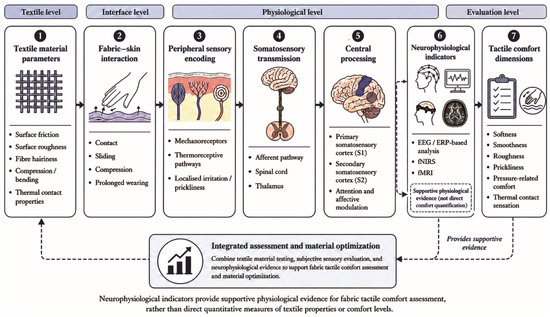
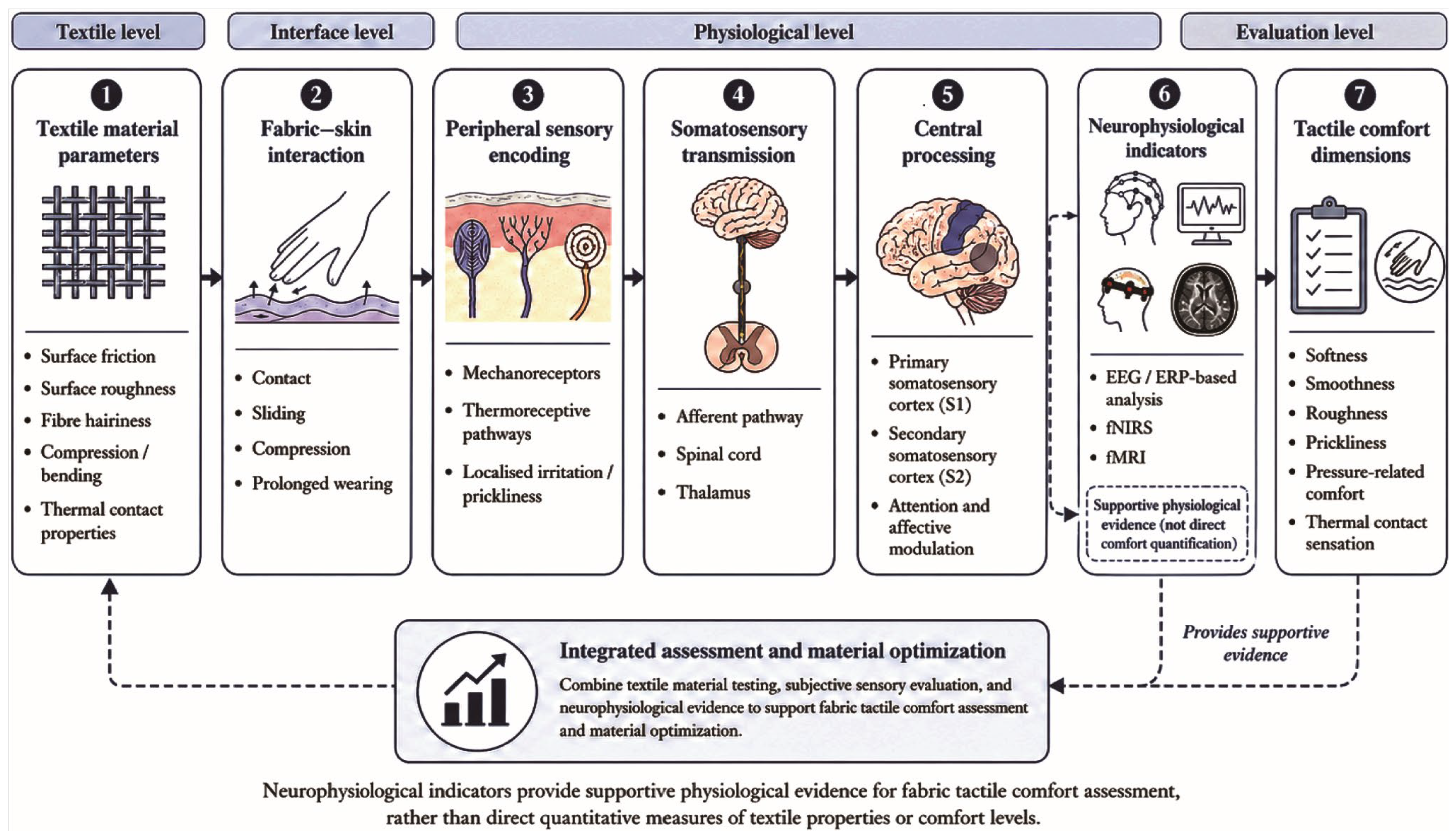
Fabric tactile comfort should be understood within a textile–skin–nervous system pathway rather than being inferred directly from neural measurements alone. As shown in Figure 3, textile material parameters first determine the mode of fabric–skin interaction, which in turn induces peripheral sensory encoding and subsequent somatosensory processing. Within this framework, neurophysiological indicators provide physiological evidence for evaluating tactile comfort, rather than direct quantitative measures of comfort itself. This framework aligns with previous studies linking textile material properties, fabric–skin friction, contact pressure, and cortical responses to tactile stimulation [22,23,24,25].
Figure 3.
Textile-skin-nervous system pathway for evaluating fabric tactile comfort. (Source: Drawn by the authors.).
3.4.1. Textile Material Parameters and Fabric-Skin Interaction
At the material level, fabric tactile perception is influenced by surface friction, surface roughness, fibre hairiness, bending stiffness, compression behaviour, thickness, pressure distribution, and thermal contact properties. These parameters determine how a fabric interacts with the skin during contact, sliding, compression, or prolonged wearing. Previous studies have shown that tactile comfort in fabrics and clothing is closely related to fabric surface mechanics, frictional behaviour, thermal–tactile properties, and dynamic textile–skin interaction [26,27,28].
For instance, surface roughness and protruding fibre ends may increase local mechanical stimulation and contribute to roughness or prickliness. Frictional properties influence the resistance generated during fabric–skin sliding and may affect perceived smoothness or stickiness [29]. Compression behaviour and load distribution are more directly related to pressure comfort, particularly in fitted garments, supportive textiles, or prolonged contact conditions. Thermal contact properties influence the initial cool or warm sensation during fabric contact. They can be assessed alongside mechanical sensory properties using integrated testing systems such as the Fabric Touch Tester [30,31,32].
These material parameters should not be regarded as direct equivalents of tactile comfort. Rather, they represent external stimulus conditions that may contribute to different tactile dimensions. The same fabric may elicit different perceptual responses under varying contact pressures, movement states, humidity levels, body sites, and evaluation tasks. This explains why instrumental textile tests are necessary but insufficient for fully characterising human tactile comfort.
3.4.2. Peripheral Encoding of Tactile Stimuli
The skin is the first biological interface between textile materials and the nervous system. Cutaneous mechanoreceptors detect mechanical stimuli from fabric contact, whereas thermoreceptive pathways detect thermal stimuli. Different tactile dimensions may involve different receptor activation patterns. Dynamic fabric–skin sliding may produce rapidly changing mechanical input; sustained pressure may induce more prolonged afferent activity; and localised stimulation from fibre ends or rough surface asperities may contribute to prickliness or irritation.
After peripheral encoding, tactile information is transmitted through somatosensory afferent pathways to the spinal cord and then to cortical regions involved in sensory discrimination and perceptual evaluation. This means that EEG, fNIRS, and fMRI signals are not direct measurements of textile material properties. They reflect nervous-system responses to material-induced stimulation under specific experimental conditions. Therefore, a robust interpretation of neurophysiological indicators requires explicit consideration of the stimulus source, contact protocol, body site, and perceptual dimension being evaluated.
3.4.3. Central Processing and Neurophysiological Indicators
At the central level, the brain processes tactile information through a distributed somatosensory network. The primary somatosensory cortex mainly encodes stimulus location, intensity, and surface features. In contrast, the secondary somatosensory cortex and associated regions may contribute to higher-level integration, memory, attention, and affective evaluation. Fabric-related fMRI studies have reported cortical responses associated with contact pressure, surface roughness, and fabric touch [33]. EEG and ERP studies have further examined electrophysiological responses to fabric–skin contact, fabric tactile perception, and clothing contact comfort [34,35,36,37].
However, cortical activation should not be interpreted as a direct indicator of comfort or discomfort without behavioural or subjective validation. Higher-level processing may also involve multisensory integration across different temporal scales, but this process should be distinguished from direct quantification of tactile comfort [38]. In this context, neurophysiological methods provide indirect indicators of tactile processing. EEG and ERP-based analysis may reveal rapid temporal responses to fabric contact, but their spatial localisation is limited, and they are sensitive to movement and muscle artefacts. fNIRS and fMRI may provide information about cortical activation patterns, but they measure delayed haemodynamic responses rather than neural activity directly. Consequently, interpret neurophysiological data as part of a textile–skin–nervous system pathway rather than as standalone evidence of tactile comfort.
3.4.4. Mismatch Between Textile Parameters and Neurophysiological Indicators
A key methodological challenge is the mismatch between textile material parameters and neurophysiological indicators. Although previous studies have linked textile friction, surface roughness, contact pressure, and fabric-specific properties with tactile perception or brain responses, these relationships remain dependent on contact protocol, body site, stimulus intensity, and experimental context [39]. Material properties are typically measured under controlled laboratory conditions, whereas neural responses are influenced by individual sensory sensitivity, prior experience, attention, contact force, movement, body site, and environmental conditions. Previous neuroimaging evidence also suggests that action state can modulate somatosensory processing [40]. As a result, a single textile parameter, such as friction coefficient or surface roughness, cannot be expected to map consistently onto a single EEG feature, haemodynamic response, or cortical activation pattern.
Future studies should therefore avoid treating neurophysiological measurement as a replacement for textile material testing or subjective sensory evaluation. A more appropriate strategy is to develop multi-level evaluation models that integrate material properties, fabric–skin interaction conditions, peripheral sensory mechanisms, subjective perception, and neurophysiological indicators. Such models may help clarify which neural features are associated with specific tactile dimensions and under what experimental conditions these associations remain stable. This framework also helps bridge the gap between neuroengineering and textile science by grounding neural measurements in realistic fabric–skin interaction conditions.
4. Discussion
4.1. Methodological Implications of Neurophysiological Evaluation
The reviewed studies suggest that neurophysiological techniques can provide useful insights into human responses to fabric-induced tactile stimulation. However, their value depends strongly on the research question, stimulation protocol, and application context. EEG and ERP-based analyses suit rapid temporal responses to controlled tactile events, whereas fNIRS and fMRI provide complementary haemodynamic or spatial information under different experimental constraints. These methodological differences indicate that no single technique can fully characterise fabric tactile comfort across material, peripheral, and central levels.
Rather than a universal solution, multimodal fusion should be considered a condition-dependent strategy. EEG-fNIRS and EEG-fMRI may help combine complementary physiological information. However, they also introduce additional challenges related to signal synchronisation, artefact correction, sensor compatibility, and interpreting signals with different physiological origins. Therefore, the selection of single- or multimodal methods should be guided by clearly defined tactile dimensions, such as smoothness, roughness, prickliness, pressure-related comfort, or thermal contact sensation, rather than by the assumption that more modalities necessarily provide more valid evaluation results.
4.2. Linking Textile Parameters with Neurophysiological Indicators
A central issue in applying neurophysiological methods to evaluate fabric tactile comfort is the relationship between textile material parameters and nervous system responses. Fabric properties such as friction, roughness, fibre hairiness, compression behaviour, pressure distribution, and thermal contact characteristics generate mechanical or thermal stimuli at the fabric–skin interface. Peripheral receptors then encode these stimuli, and somatosensory pathways further process them. Neurophysiological signals, therefore, represent indirect responses to material-induced stimulation, rather than direct measurements of textile properties themselves.
This distinction is important for avoiding overinterpretation. A change in EEG rhythm, ERP component, fNIRS haemodynamic response, or fMRI activation pattern should not be interpreted as a direct marker of comfort unless it is linked with material parameters, controlled contact conditions, behavioural responses, and subjective sensory evaluation. Future research should therefore focus on establishing multi-level mappings among textile properties, fabric–skin interaction, peripheral sensory encoding, subjective perception, and neurophysiological indicators. Such an approach may help clarify the conditions under which neural indicators are stable, interpretable, and useful for evaluating textile comfort.
4.3. From Laboratory Measurement to Textile Application
Although neurophysiological techniques have shown potential in controlled studies of tactile perception, their translation into textile and clothing applications remains limited. Laboratory protocols often rely on controlled contact force, fixed stimulation duration, repeated trials, and restricted body movement. In contrast, real-world wearing conditions involve complex, variable interactions among fabric movement, body posture, humidity, skin condition, pressure distribution, and individual sensory sensitivity. These differences reduce the direct transferability of laboratory findings to real-world fabric comfort evaluation.
Several practical issues, therefore, need to be addressed before neurophysiological indicators can be widely used in textile research and product evaluation. These include improving the portability and usability of measurement systems, reducing motion and muscle artefacts, standardising tactile stimulation protocols, and developing models that can account for inter-individual variability. Wearable sensing technologies and textile-integrated electrodes may provide useful opportunities, but their reliability, comfort, signal stability, and compatibility with fabric testing protocols still require systematic validation.
4.4. Limitations of This Review
This review has several limitations. First, the bibliometric dataset was limited to English- and Chinese-language publications retrieved from Web of Science and CNKI. Relevant studies published in other languages or indexed in other databases may therefore have been omitted. Second, although CiteSpace was used to identify thematic associations, bibliometric maps cannot establish causal relationships or definitive developmental trajectories. Therefore, interpret clusters and timelines as exploratory.
Third, the reviewed literature covers diverse textile stimuli, contact protocols, neurophysiological methods, and perceptual descriptors, thereby limiting direct comparison across studies. Finally, this review focuses on the methodological and conceptual relationship between neurophysiological indicators and fabric tactile comfort, rather than providing a detailed analysis of every fabric category or material structure. Future reviews may further examine specific textile systems, such as knitted fabrics, supportive garments, protective clothing, or smart textiles, using more narrowly defined tactile dimensions and evaluation protocols.
5. Conclusions
Objective evaluation of fabric tactile comfort remains challenging because textile material parameters, fabric–skin interaction, peripheral sensory encoding, and central neurophysiological responses have not yet been sufficiently integrated into a unified framework. To address this gap, this review aimed to clarify how neurophysiological indicators can support evaluations of fabric tactile comfort and to examine the methodological value, application boundaries, and interpretation constraints of EEG/ERP-based analyses, fNIRS, fMRI, and multimodal fusion strategies.
By combining bibliometric analysis with a critical assessment of measurement techniques, this review found that research attention has increasingly extended toward textile-related tactile perception, wearable sensing, and smart textile applications. However, these bibliometric patterns should be understood as thematic associations rather than as evidence of a fixed developmental trajectory.
The review further clarified that EEG, fNIRS, and fMRI provide distinct physiological information, whereas ERP should be regarded as an EEG-derived analytical approach rather than an independent measurement modality. EEG and ERP-based analyses are better suited to capturing rapid responses to controlled tactile events; fNIRS may be useful for more naturalistic or prolonged-contact conditions; and fMRI is mainly appropriate for controlled, mechanism-oriented studies requiring spatial localisation. Multimodal fusion may provide complementary information, but its effectiveness depends on signal compatibility, artefact control, experimental design, and the interpretability of the resulting indicators.
A key conclusion of this review is that fabric tactile comfort should be understood within a textile–skin–nervous system framework. Neurophysiological indicators do not directly measure textile properties; rather, they reflect nervous-system responses to material-induced stimulation under specific conditions. Therefore, future research should place greater emphasis on linking material testing, fabric–skin interaction protocols, peripheral sensory encoding, subjective perception, and neurophysiological responses. Such integration may support more reliable and interpretable approaches to objectively evaluating fabric tactile comfort.
Future work may benefit from three directions. First, standardised tactile stimulation and reporting protocols are needed to improve comparability across studies. Second, researchers should develop multi-level datasets that combine textile material parameters, subjective ratings, and neurophysiological signals to support model validation. Third, wearable and textile-integrated sensing systems should be evaluated not only for signal acquisition performance, but also for ecological validity, user comfort, and relevance to specific tactile dimensions. Through these efforts, neurophysiological methods may become a useful complement to traditional textile testing and sensory evaluation, rather than a replacement.
Acknowledgments
This work was supported by the 2025 Graduate Research and Innovation Project of Beijing Institute of Fashion Technology (Project No. X2025-007).
References
- Utkun, E. Comparison of sensorial comfort properties of different cotton fabrics using the Kawabata Evaluation System [J]. Ind. Text. 2021, 72(6), 483–489. [Google Scholar] [CrossRef] [Scilit]
- Zhou, Y.N. Development and properties of comfortable home textile fabric modified by protein [J]. Xi’an University of Engineering, 2021. [Google Scholar]
- Liu, H.X.; Yang, X.X.; Yin, Y.; Guo, J. Pressure comfort evaluation for supportive waist protections [J]. J. Fibre Bioeng. Inform. 2024, 17(3), 163–177. [Google Scholar] [CrossRef] [Scilit]
- Yang, X.X.; Yin, Y.; Guo, J. Evaluation of pressure comfort of supportive waist protections with different supporting bars [J]. Textile Bioengineering and Informatics Symposium Proceedings, 2024; 2024-August; pp. 302–309. [Google Scholar]
- Yu, A.; Li, J.H.; Shen, H.; et al. Effect of structure and material of bilayer knitted fabric on tactile sensation and warm retention [J]. Textile Bioengineering and Informatics Symposium Proceedings, 2024; 2024-August; pp. 277–284. [Google Scholar]
- Zeng, W.; Liu, Z.; Duan, J. A review on medical protective fabric in thermal and moisture management by membrane-based clothing systems towards personal comfort [J]. Textile Bioengineering and Informatics Symposium Proceedings, 2024; 2024-August; pp. 249–256. [Google Scholar]
- Zhang, M.M. Research on fabric adhesive touch and characterization [J]. China University of Mining and Technology, 2022. [Google Scholar]
- Chen, N.N. Process and performance of developing super-soft yarns and fabrics based on vinyl on companion spinning [J]. Xi’an University of Engineering, 2021. [Google Scholar]
- Zhang, H.; Gao, Y.; Zhang, J. Evaluation of handfeel of brocade/cotton blended fabrics [J]. Shanghai Text. Sci. Technol. 2020, 48(9), 57–59. [Google Scholar]
- Liu, S. The somatosensory system encodes afferent tactile stimuli in a topologically combinatorial manner [J]. Chin. J. Pain Med. 2023, 29(4), 241–243. [Google Scholar]
- López-Larraz, E.; Escolano, C.; Robledo-Menéndez, A.; et al. A garment that measures brain activity: proof of concept of an EEG sensor layer fully implemented with smart textiles [J]. Front. Hum. Neurosci. 2023, 17, 1135153. [Google Scholar] [CrossRef] [Scilit] [PubMed]
- Zhang, X.; Yue, J.; Jia, J.; et al. An electroencephalogram study on softness cognition of silk fabric hand [J]. J. Text. Inst. 2016, 107(12), 1601–1606. [Google Scholar] [CrossRef] [Scilit]
- Zhao, J.; Liu, X.B.; Li, J.; et al. Visual analysis of event-related potentials applied to cognitive function research. Chin. Rehabil. Theory Pract. 2022, 28(1), 69–78. [Google Scholar]
- Zhai, S.N.; Yuan, J.; Lou, L. Research progress of event-related potential technology in fabric tactile comfort evaluation [J]. Mod. Text. Technol. 2023, 31(1), 73–81. [Google Scholar]
- Krampe, C. The application of mobile functional near-infrared spectroscopy for marketing researcha guideline [J]. Eur. J. Mark. 2022, 56(13), 236–260. [Google Scholar] [CrossRef] [Scilit]
- Chen, H.; Fu, S.; Zhi, X.; et al. Research progress on neural processing of hand and forearm tactile sensation: a review based on fMRI research [J]. Neuropsychiatr. Dis. Treat. 2025, 21, 193–212. [Google Scholar] [CrossRef] [Scilit] [PubMed]
- Puckett, A.M.; Sanchez Panchuelo, R.M. Imaging somatosensory cortex: human functional magnetic resonance imaging (fMRI) [J]. Somatosens. Res. Methods 2023. [Google Scholar] [CrossRef] [Scilit]
- Li, L.Z.; Meng, M.; Gao, Y.Y.; et al. Wavelet transform-based multimodal data fusion method for EEG-fNIRS [J]. J. Sens. Technol. 2023, 36(7), 1064–1072. [Google Scholar]
- Xue, Y.L. Research on EEG-fNIRS emotion recognition based on graph neural network [J]. Southeast University, 2023. [Google Scholar]
- Lin, G.; Zhang, J.; Liu, Y.; et al. Ballistocardiogram artifact removal in simultaneous EEG-fMRI using generative adversarial network [J]. J. Neurosci. Methods 2022, 371, 109498. [Google Scholar] [CrossRef] [Scilit] [PubMed]
- Kuroda, T.; Kobler, R.J.; Ogawa, T.; et al. Test-retest reliability of EEG microstate metrics for evaluating noise reductions in simultaneous EEG-fMRI [J]. Imaging Neurosci. 2024, 2, 1–20. [Google Scholar] [CrossRef] [Scilit] [PubMed]
- Das, A.; Alagirusamy, R. Improving tactile comfort in fabrics and clothing [M]. Improving Comfort in Clothing. Elsevier, 2011; pp. 216–244. [Google Scholar]
- Tang, W.; Zhang, S.; Yu, C.; et al. Tactile perception of textile fabrics based on friction and brain activation [J]. Friction 2022, 11(7), 1320–1333. [Google Scholar] [CrossRef] [Scilit]
- Yuan, J.; Yu, W.; Chen, K.; et al. A potential new fabric evaluation approach by capturing brain perception under fabric contact pressure [J]. Text. Res. J. 2018, 89(16), 3312–3325. [Google Scholar] [CrossRef] [Scilit]
- Wang, Q.; Tao, Y.; Yuan, J.; et al. Application of Brodmann’s area maps for cortical localization of tactile perception evoked by fabric touch [J]. Fibers Polym. 2019, 20(4), 876–885. [Google Scholar] [CrossRef] [Scilit]
- Temel, M.; Johnson, A.A.; Lloyd, A.B. Body mapping of skin friction coefficient and tactile perception during the dynamic skin-textile interaction [J]. Ergonomics 2022, 66(10), 1449–1464. [Google Scholar] [CrossRef] [Scilit] [PubMed]
- Guo, M.; Zhang, Z. Effect of fabric-skin frictional force and temperature on surface roughness and wetness perception [J]. Perception 2025, 54(7), 518–533. [Google Scholar] [CrossRef] [Scilit] [PubMed]
- Liao, X.; Li, Y.; Hu, J.; et al. Psychophysical relations between interacted fabric thermal-tactile properties and psychological touch perceptions [J]. J. Sens. Stud. 2016, 31(3), 181–192. [Google Scholar] [CrossRef] [Scilit]
- Mondal, S.; Reddy, V.; Sarkar, A.; et al. Effect of surface modification on frictional properties of polyester fabric [J]. Tribol. Int. 2016, 97, 38–48. [Google Scholar] [CrossRef] [Scilit]
- Hu, J.Y.; Hes, L.; Li, Y.; et al. Fabric Touch Tester: integrated evaluation of thermal-mechanical sensory properties of polymeric materials [J]. Polym. Test. 2006, 25(8), 1081–1090. [Google Scholar] [CrossRef] [Scilit]
- Yao, B.G.; Peng, Y.L.; Yang, Y.J. Mechanical measurement system and precision analysis for tactile property evaluation of porous polymeric materials [J]. Polymers 2018, 10(4), 373. [Google Scholar] [CrossRef] [Scilit] [PubMed]
- Akgül, E.; Kizilkaya Aydoğan, E.; Sinanoğlu, C. Investigation of different denim fabrics with fabric touch tester and sensory evaluation [J]. J. Nat. Fibers 2021, 19(13), 5551–5565. [Google Scholar] [CrossRef] [Scilit]
- Yuan, J.; Xu, C.; Wang, Q.; et al. Brain signal changes in the sensory cortex according to the surface roughness of boneless corsets [J]. Text. Res. J. 2019, 90(1), 76–90. [Google Scholar] [CrossRef] [Scilit]
- Yuan, J.; Xu, C.; Fang, J.; et al. Investigation of fabric tactile perception using the event-related potential method [J]. Text. Res. J. 2024, 94(19-20), 2107–2116. [Google Scholar] [CrossRef] [Scilit]
- Ye, T.; Liu, F.; Liu, G.; et al. Categorization of different types of people based on their electroneurophysiological responses to fabric-skin contact [J]. Text. Res. J. 2022, 93(7-8), 1747–1759. [Google Scholar] [CrossRef] [Scilit]
- Li, Y.; Li, Y.; Zhang, Y. Clothing contact comfort based on electroencephalogram [J]. J. Text. Inst. 2025, 1–14. [Google Scholar] [CrossRef] [Scilit]
- Balasubramanian, M.; Periyaswamy, T. Specific fabric properties elicit characteristic neuro and electrophysiological responses [J]. Fibers Polym. 2024, 25(4), 1279–1289. [Google Scholar] [CrossRef] [Scilit]
- Senkowski, D.; Engel, A.K. Multi-timescale neural dynamics for multisensory integration [J]. Nat. Rev. Neurosci. 2024, 25(9), 625–642. [Google Scholar] [CrossRef] [Scilit] [PubMed]
- Camillieri, B.; Bueno, M.A.; Fabre, M.; et al. From finger friction and induced vibrations to brain activation: tactile comparison between real and virtual textile fabrics [J]. Tribology International, 2018; Volume 126, pp. 283–296. [Google Scholar]
- Shergill, S.S.; White, T.P.; Joyce, D.W.; et al. Modulation of somatosensory processing by action [J]. NeuroImage 2013, 70, 356–362. [Google Scholar] [CrossRef] [Scilit] [PubMed]

© 2026 Textile Bioengineering and Informatics Society. This article is an open access article distributed under the terms and conditions of the Creative Commons Attribution (CC BY) license (https://creativecommons.org/licenses/by/4.0/).