


Abstract
The jersey knitwear market occupies most of the knitting market due to its relatively simple manufacturing process and high public acceptance. Pattern design composed of some simple lines and geometric patterns usually applied to jersey knitwear, but it can not take advantage of knitting fabrics as much as possible. Therefore, in order to combine the merit of knitwear, the research process is as follows: firstly, learning about women’s preferences for knitwear in their 30s and 50s through questionnaire distribution and in-store inquiries. Secondly, designing and producing urban women’s knitwear collections with optical illusion patterns. The yarn used in this design experiment is mostly 100% 80s Australian wool, and the equipment is STOLL M1 plus—a computerized flat knitting machine, all of which are provided and assisted by the FSF factory, Suzhou, China. It is finally determined that the jacquard pattern put into production is double-sided birdeye jacquard and air layer jacquard. In terms of the final collection effect, the design ideas of “Fake Two Pieces” and “Simulated Pleated Skirt” are reflected in the collection named “chengSHi”. The combination of knitwear and optical illusion patterns dramatically simplifies the production process and improves production efficiency owing to knitwear’s one-piece weaving. Moreover, it also provides new inspiration for knitwear design.
1. Introduction
With the improvement of people’s consumption power and the changes in consumption habits over recent years, the apparel and apparel market has shown a diversified development trend. In modern, fast-paced life, people no longer blindly pursue fashion circles but focus more on personal experience [1]. Investigation and research show that due to the skin-friendly, breathable and soft texture of knitwear, people have become more inclined to choose knitted garments. The knitting market is expanding year by year, and it still has great potential in the future [2]. Although China is a big country in the production of knitwear, the knitting factories are faced with many problems, such as small production scale, single styles of garments and hard to keep up with international trends, unstable yarn quality, lack of major design innovations. Under this circumstance, integrating fascinating visual illusions with larger design space into traditional knitted garments can improve the current predicament of the knitting industry.
Based on the knitting effect, the types of knitwear can be classified into the types of handknitting, crochet, and jersey knitting [3,4]. In recent years, full-body knitted suits have become fashionable in women’s clothing market. The typical patterns applied in this type of knitted garments consist of stripes and simple geometric patterns, which shows a lack of creative innovation. Some research have been conducted to investigate the effect of knitwear designs, such as knitting pattern weaving, knitwear design, and modern knitting technology [5,6,7,8,9,10,11]. Although various results have been acquired, there are but few specific instances of research on designing and integrating optical illusion patterns to knitwear designs [12,13,14,15,16,17,18].
In this study, an age-based sample consisting of consumers of 30 to 50 years old who prefer high-quality materials of knitwear is defined, and 100% 80s Australian wool is applied for the experiments and design applications. Merino wool, thick, heavy, comfortable but not accessible to balling up, is particularly sought-after by urban women. It has better air permeability when compared with other conventional materials. Combining knitwear with visual illusion patterns is the innovation of this article. Optical illusion patterns were programmed through the Stoll M1 plus software, then woven together with the knitted fabric. On the one hand, it is concluded that optical illusion patterns could be designed and applied in stylish knitwear to fully cater consumers’ needs with unique aesthetics while improving production efficiency and simplifying the production process. On the other hand, it is also a sustainable design avoiding excessive yarns dyeing and printing molds making.
2. Methodology
This study is conducted by following the criteria of knitwear design proposed by Eckert C. And its process is divided into eleven steps, including source reviewing, fashion research, theme selection, yarn selection, design framework, swatch sampling, shape design, garment design, detailed design, prototyping, and communicating with buyers [19]. In accordance with the above steps, the design process is developed and simplified as shown in Table 1.
Table 1.
Research process.
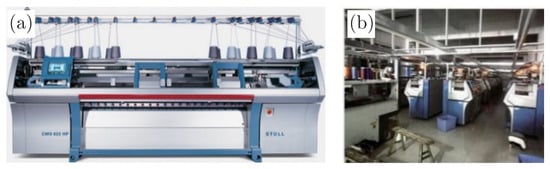
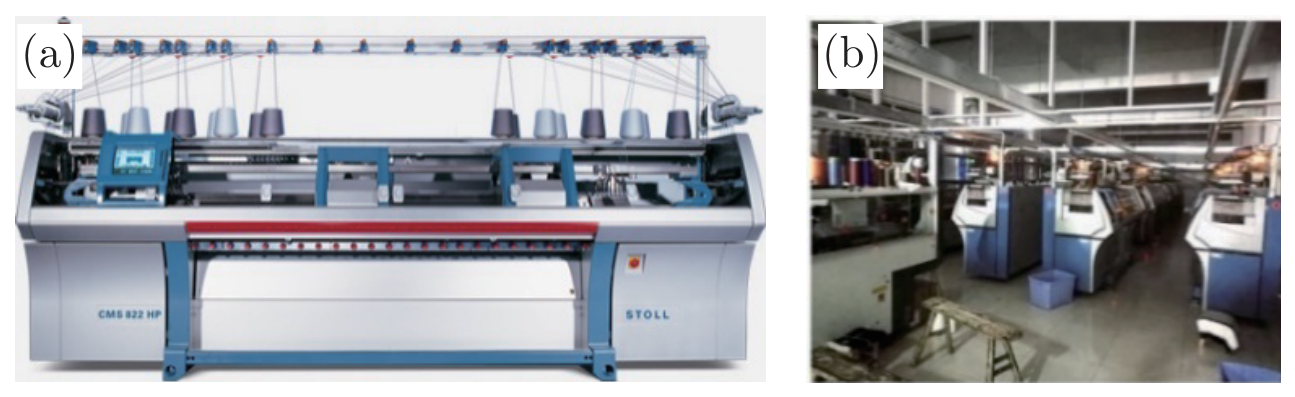
All the computer-based tasks were carried out by using STOLL M1 plus, a high-quality computerized flat knitting machine made by Germany, as shown in Figure 1. Figure 1(b) showcases the machines in FSF, a knitting factory in Suzhou, China.
Figure 1.
A STOLL M1 plus computerized flat knitting machine (a) (From https://ishapka.com.ua/) and such machines in FSF factory (b).
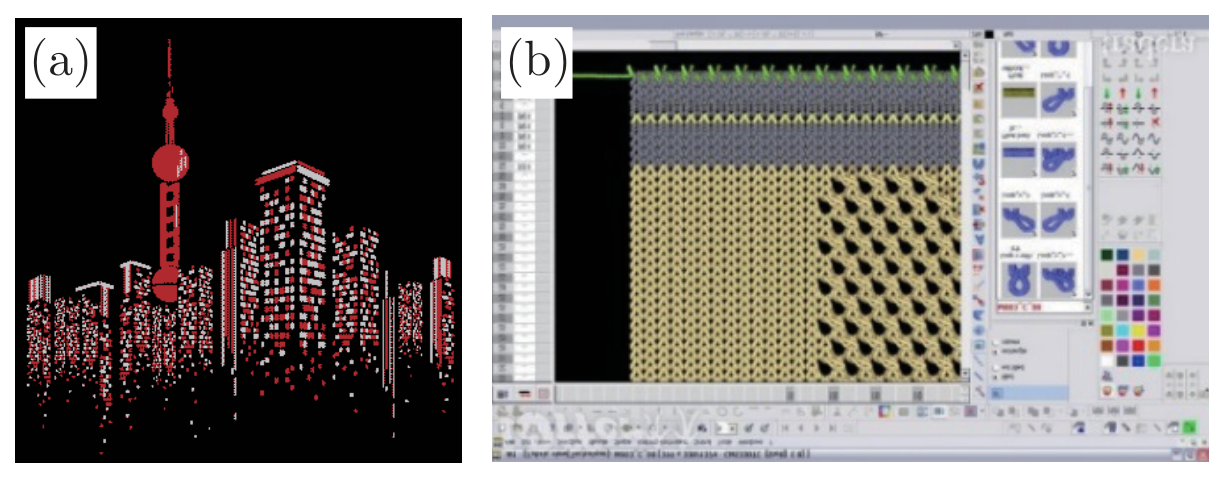
The operation process is as follows: firstly, a design pattern is drawn using Photoshop, using a limited quantity of colors (optimally limited to one to five colors). Then, the finished image is exported into a BMP format. Finally, the image is imported into Stoll M1 plus software, so as to weave the fabric samples or ready-made garment pieces.
Figure 2.
A pattern of high-rise buildings in Shanghai drawn with Photoshop (a) and the operation interface of STOLL M1 plus software (b) (From https://diegomancinelli.it/).
3. Market research
3.1. Questionnaire distribution
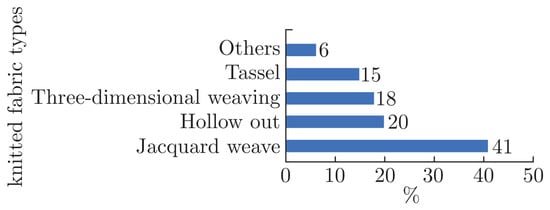
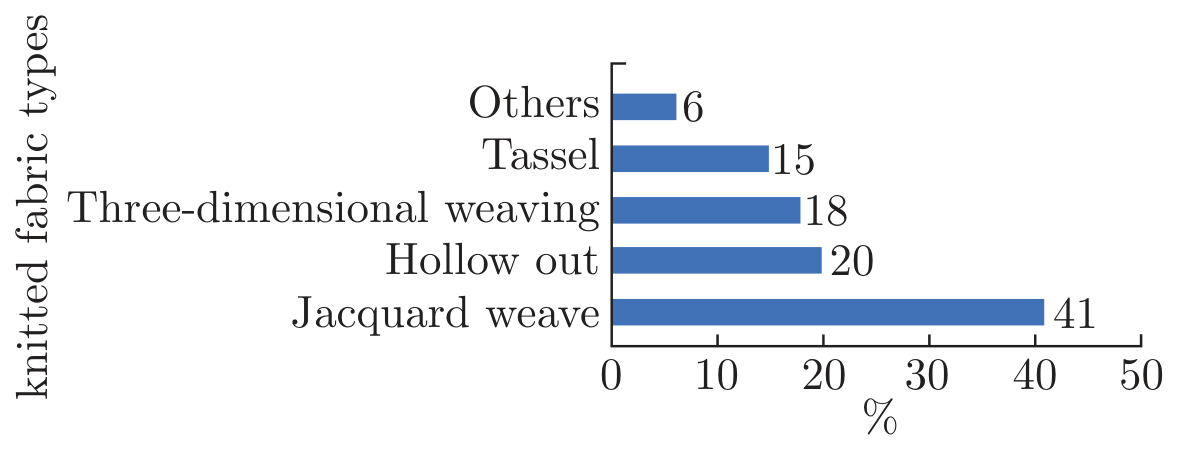
To identify current consumers’ preference for knitwear, this study asks its participants to respond by ticking on a pie chart about the popular knitwear design forms, as shown in Figure 3. The initial sample consisted of 280 participants, 180 of whom participated online and 100 through offline methods. The survey respondents were divided into students and social workers (e.g., teaching staff, fashion sales, IT engineers, civil servants, lawyers, doctors, and nurses from urban and rural areas in Shanghai, Beijing, Nantong, Funding and so on). Despite their relatively low consumption level, the student group often follows fashion trends closely and is engaged in every fashion cycle. In contrast, the latter group, made up of comparatively mature working-class individuals have high consumption capacity but tend to pay more attention to clothing quality.
Figure 3.
An analysis of the subjects’ preferences for the performance of knitted fabrics.
As shown in Figure 3, 41% of the subjects prefer jacquard in knitwear design, and 53% prefer the hollow-out, three-dimensional weaving and tassel. These findings indicate that people are more willing to choose flat knitted clothing. A survey into clerks and customers in a fashion store also shows that consumers prefer knitwear with flat patterns. The surveyed female consumers aged between 30 to 50 years old in the knitwear store said they were fond of thin, texture and decent knitwear.
Different groups have different views on knitwear. As shown in the more in-depth analysis below (Table 2), the groups of students and social workers have significantly different preferences in their favorite knitted fabric: Students’ favorite is three-dimensional weaving (34%), while social workers favor jacquard (39%), proving that a preference for flat knitting is dominant in the older-consumer groups.
Table 2.
The two groups’ preference for knitwear.
3.2. Case Analysis——EP YAYING & Marisfrolg.SU
In addition to the necessary information mentioned in Table 3, it is found that EP YAYING has the following four outstanding characteristics through online and offline research and analysis:
Table 3.
A brief analysis of EP YAYING.
- Oriental aesthetics: EP YAYING is good at combining oriental elements with the brand’s advanced craftsmanship and materials, making a refined, elegant and artistic aesthetic impression on people.
- High-quality material: EP YAYING attaches great importance to the use of upscale natural fabrics, such as 6A grade silk and top goat hair.
- Well-cutting: EP YAYING’s design is non-cumbersome, smooth and straightforward outlines.
- Good visual illusion effect: EP YAYING is skillful at using color optical illusion, geometric optical illusion and other techniques to create high-level sense knitwear.
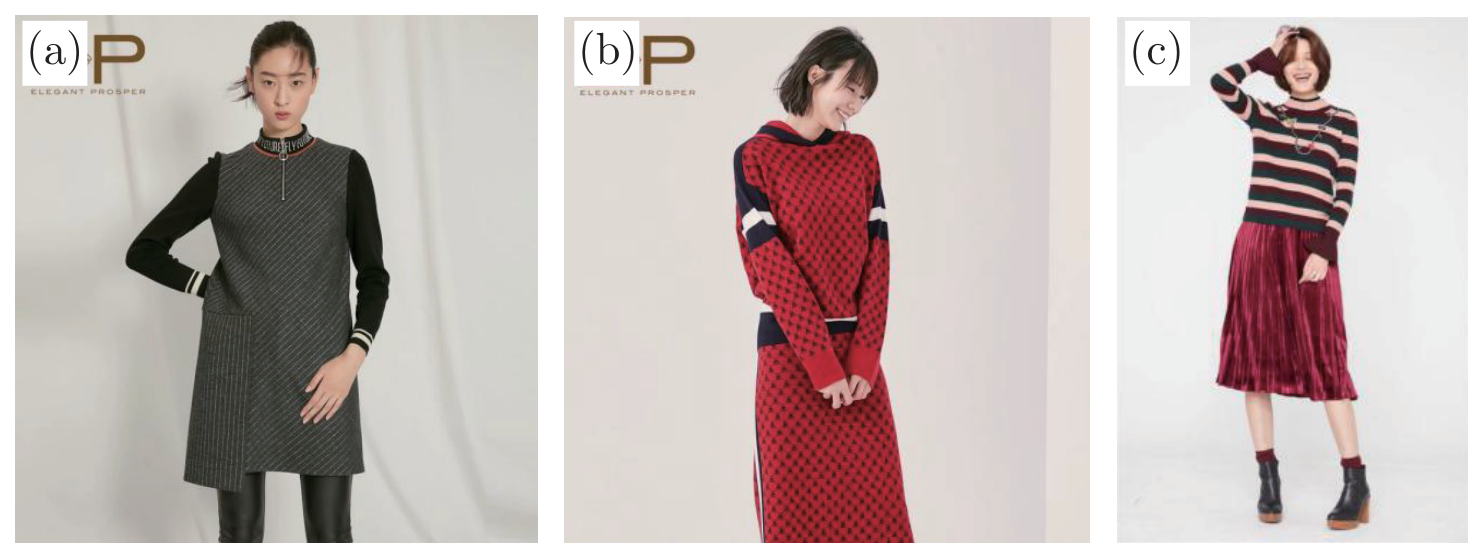
In Figure 4(a), diagonal stripes and vertical stripes splitting the waistcoat skirt, changing the arrangement direction of the stripes, and break the balance of the patterns. The stripes bring this dark gray waistcoat skirt more fun. In Figure 4(b), the patterns are tiled on the knitted fabric, and the color block (the sleeve part) is used to imitate the drop-shoulder sleeve sweater of woven clothing. In Figure 4(c), the necklace pattern is woven into the top, which gave people the wrong feeling that the model is wearing a real necklace.
Figure 4.
Optical illusion patterns applied in EP YAYING.
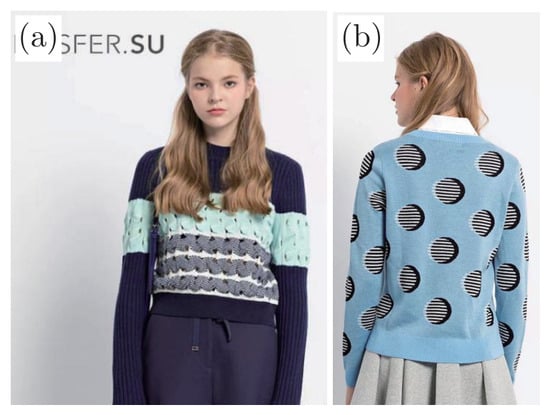
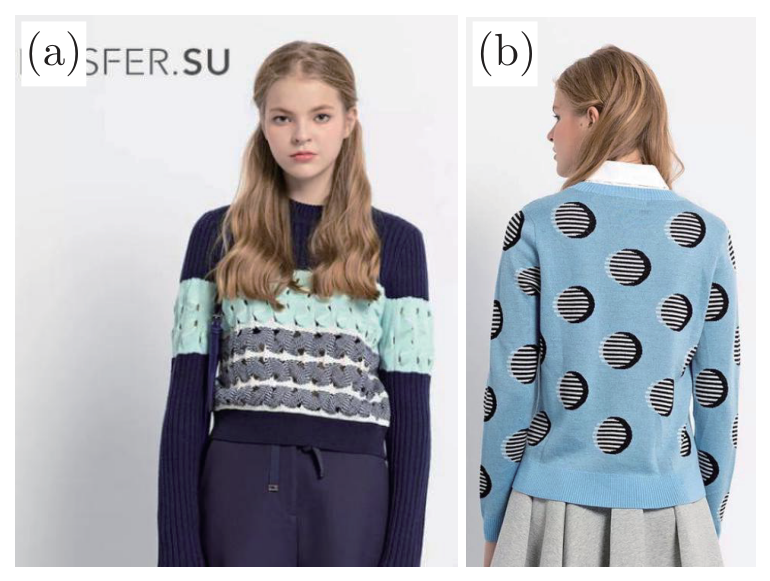
In Figure 5(a), Marisfrolg.SU shows a color matching way like using dark colors such as black and navy blue as the background color, and bright colors such as white, red, orange, and mint green are regarded as the color of the pattern. In Figure 5(b), Marisfrolg.SU uses elements such as stripes and houndstooth to achieve a classic, atmospheric, and attractive effect by “shifting” or “splicing” the visual illusions in different directions. Three colors are used in, blue is used as the background color, and black and white constitute the “hole” of the “hollow”, which makes the sweater “hollowed out” or even wearing a multi-layer sweater. It is imaginative, and it also increases the level of knitwear.
Figure 5.
Marisfrolg.SU with bold and advanced colors.
3.3. International brand
When considering fashion designs, such as the 2017 SS Pringle of Scotland, 2017 SS Thom Browne, 2019 FW Y/Project, 2019 SS Poustovit, and 2020/21 FW PH5, visual effects of suitable clothing are presented by designers. Smart clothing structure proportion and collection are applied to fashion designs so that the functional visual effect of each piece of clothing is presented. Designers adjust the contour lines of clothes with different colors. In this way, the qualities of the wearer’s body will be magnified, and any deficiency will be covered. The design of visual illusion patterns would not change the structure of the clothing itself, but it can achieve illusory effects visually through simple plane pattern designs.
The most prominent finding emerging from this market research is that the application of visual illusion patterns in knitwear design also follows the “formal beauty” rule, which is compatible with the target customer’s requirements for knitwear.
4. Jacquard Weave
During the weaving process, the most commonly used patterns are the birdeye jacquard and the tubular jacquard. Two or three colors (instead of four or five ones) are suitable so that the Birdeye jacquard weaving would not make the fabric too thick. Among all jacquard tissues, the doublesided jacquard structure (instead of the single-sided structure) is used in the trouser sample so that the trouser may stay upright.
The knitting principle of the birdeye jacquard: when the loops that need to be shown are knitted into a loop on the front needle bed, the yarns of other colors will be knitted in a “one by one” manner, instead of using the horizontal jacquard, in which each yarn is formed into loops separately. The thinness of the birdeye jacquard is also related to its yarn count. The thread is relatively thin, so is the fabric. Moreover, the color number of each fabric should be limited to three or less, to ensure that the yarn number involved in weaving in each row is relatively minimal, thus making it thin.
With a specific thickness, the fabric is crisp. The birdeye jacquard stitch is relatively tight, not loose, with a stable structure. Furthermore, the double-sided structure is not easy to skew. This feature is also related to its yarn composition, which contains wool with a certain degree of fastness and elasticity. Therefore, the woven knitted garments will not seem soft and sloppy. While ensuring elasticity, the garment (such as knitted pants) would also stay upright.
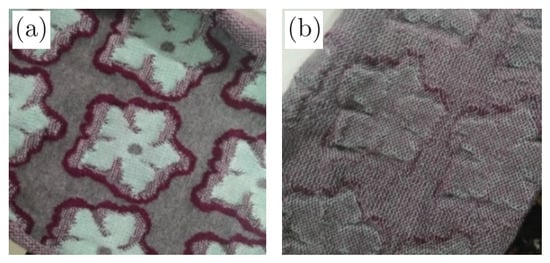
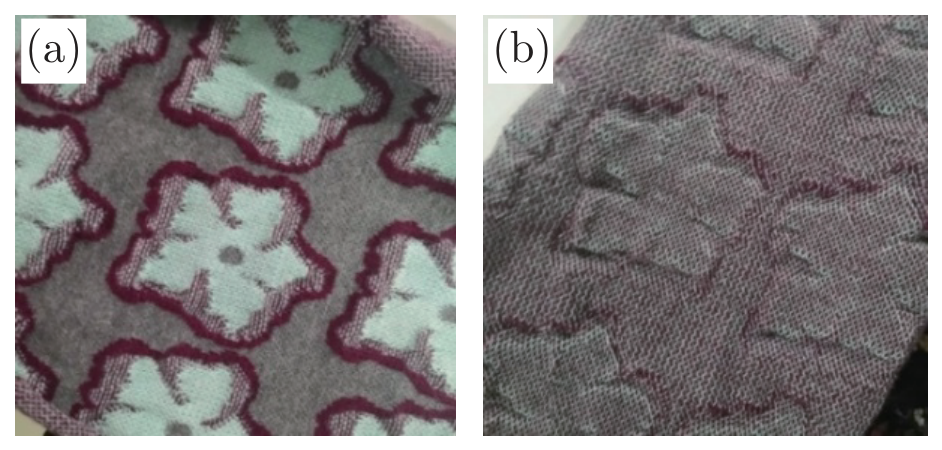
As shown in Figure 6, the fabric with birdeye jacquard pattern presents four color grades on the front side, while the backside exhibits a birdeye pattern in order. After mastering this jacquard, researchers can design intricate patterns with yarn of only two colors. Thus, by using fewer materials, rich effects will be rendered, thus saving time and effort.
Figure 6.
Birdeye jacquard’s front and back side.
Try to weave samples before making finished garments. Not only does this allow us to understand the actual effect of the designs, but creating samples can also avoid wasting fabrics in the later actual production of finished garments. To make a sample, the first step is to choose three to five kinds of typical patterns and to weave them into fabric samples. A size of 10 × 10 cm is suitable, but the fabric size can be adjusted according to the pattern content. Then, the pattern is drawn on Photoshop, while making sure that there are only two or three colors, without any variegation after drawing. Next, save it in BMP format and import it directly to Stoll M1 plus computer software via a USB flash drive. Finally, the operator should set up the data required for machine operation.
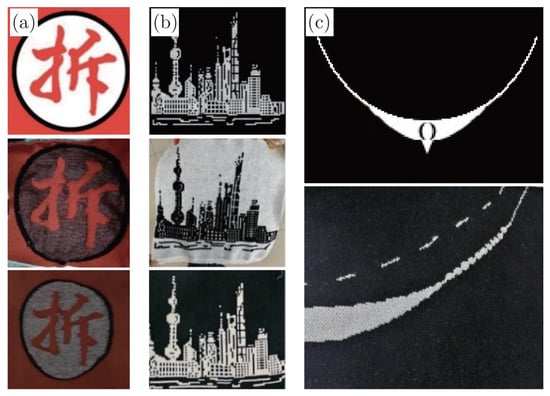
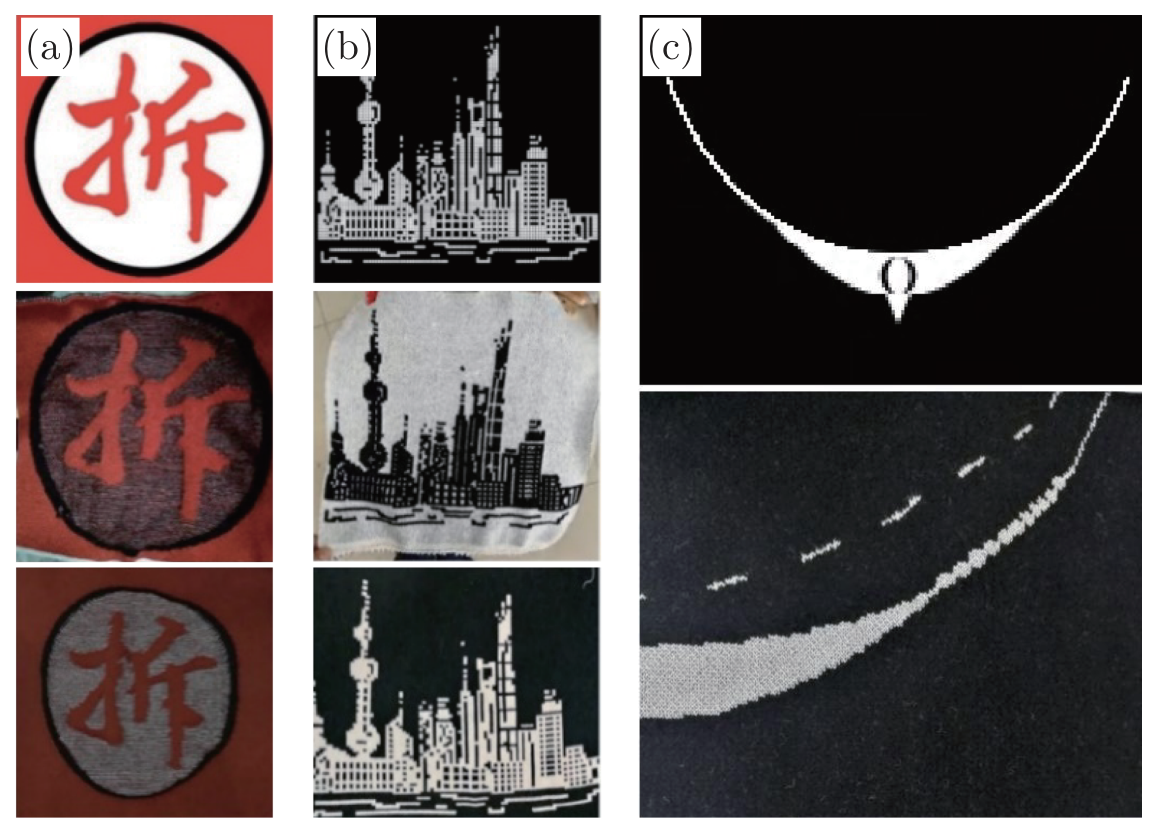
As shown in Figure 7(a), there is a significant orange-red Chinese character “拆” (meaning “demolition”) on the sample fabric. In China, whenever an old house is to be dismantled, this Chinese character would be drawn in red on the building. Therefore, this pattern is particularly representative of Chinese culture. After testing on four unequal yarns twice, a flat and thick fabric was finally acquired, as shown in the bottom picture of the leftmost column. In Figure 7(c), silver wires are used to simulate high-rise buildings at night in Shanghai. Similarly, for tubular jacquard, silver wires are also used to design a mimic necklace brooch. Graphs are printed on the fabric by using dyes or pigments with bright and vibrant colors. Jacquard weave is composed of changes in the fabric structure, with a sense of decoration and quality; its embroidery patterns are made by embroidering on the fabric with embroidery threads, with the pattern changeable as needed. Although the jacquard’s mechanism is complicated, it is most suitable for machine-based bulk production in these three patterns.
Figure 7.
Birdeye jacquard (a and b), and tubular jacquard (c).
5. Design Approach
Due to the flexibility of the knitted fabric, knitwear can even fit the curve of the human body. In some woven clothing, a mold is needed to print patterns. Nevertheless, if “patterns” are printed by knitting, it is possible to reduce the complexity in making clothes and make clothes more personalized and exciting.
5.1. Geometric Optical Illusion
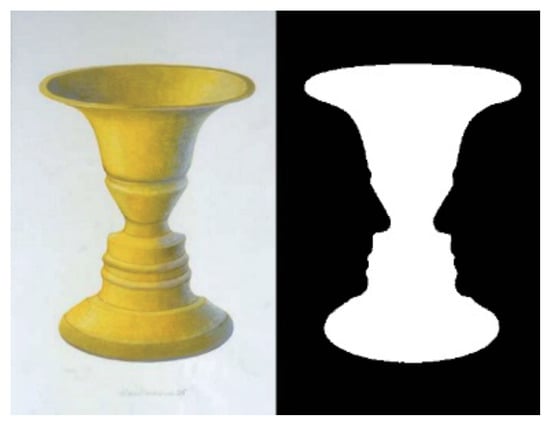
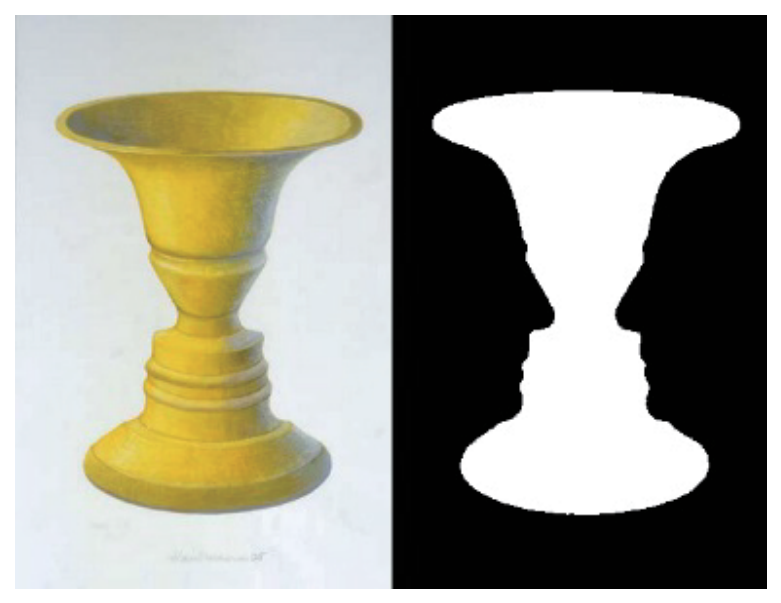
As a combination of geometric shapes and lines, the geometric illusion can create an exceptional environment that leads to visual illusions. Some optical illusion patterns are rendered by the relative sizes of contrasts surrounding things. For the organization of perceptual forms, Gestalt theory believes that human’s visual perception is concentrated on the part of things in their visual domain, and this part becomes a figure, while the part about fish and shrimp becomes a background. In Figure 8, take the Rubin vase. For example, the graphics share the outline, so it forms the background. Therefore, the figure and the background will be reversed when the gaze shifts, and then the outline will be converted from one figure to another [20], which is Double Image, a visual illusion pattern that is seen as two opposing black faces or a white vase.
Figure 8.
The Rubin vase (From https://www.illusionsindex.org/i/rubin-s-vase).
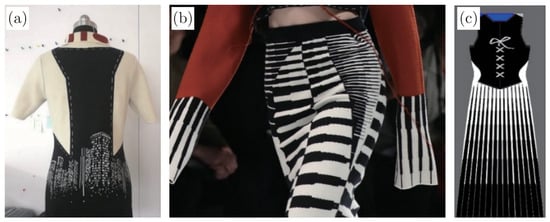
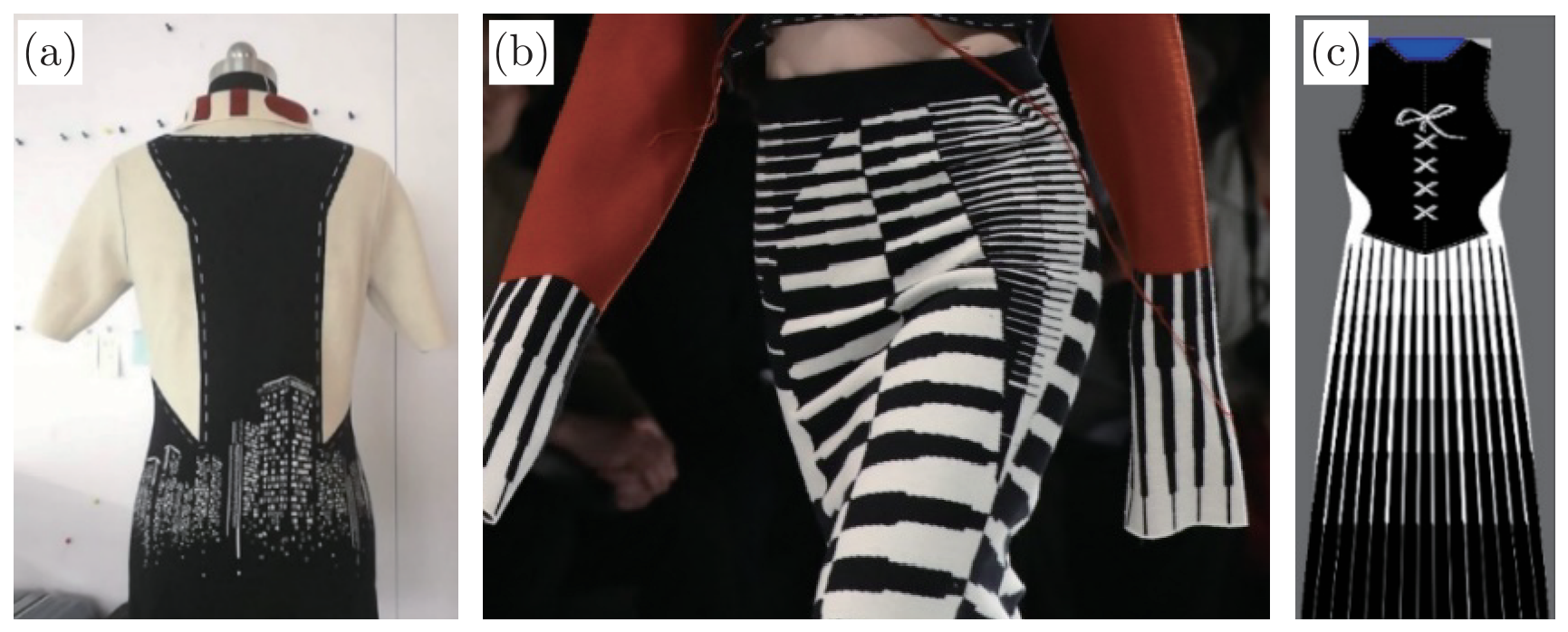
This study applies this theory to women’s knitted designs, especially in such sections as shoulder, waist, hip and abdomen. The final knitwear appearance will be affected by the density of lines and the position of geometric figures. As shown in Figure 9(a), the waist seems to be narrowed, so do the shoulders, due to the geometric optical illusion.
Figure 9.
Application of illusion patterns on knitted garments.
On the right two pictures, Figure 9(b) & (c), stripes on the skirt are arranged to change from dense patterns to sparse ones from top to bottom, delivering the effect of narrowing the waist visually.
5.2. Color Optical Illusion
The visual perceptions of people on different colors vary. For example, fat persons prefer to wear dark clothes, so that they may look less bloated, while the skinny people prefer light clothes, so that they may appear less cowardly. So, it is a convenient and straightforward way to correct people’s figures by using colors. Due to specific wavelengths of different colors, people may feel a variety of emotions when exposed to a range of color spectrums. For example, warm feelings are associated with bright colors, while cold ones relate to dark colors. When in colorful clothes, the wearers may express bright feelings visually. On the contrary, when in dark gray or black clothes, an emotion of calm and severity will be shown. These are the most intuitive feelings generated by clothing colors [21], which also play an essential role in optimizing the wearers’ skins visually. For instance, individual differences make some Asians look like the white or black; and white clothes with lower color purity are not suitable for the black because white clothes will make them look darker than the black ones, but it will look brighter for the whites.
6. Design Application
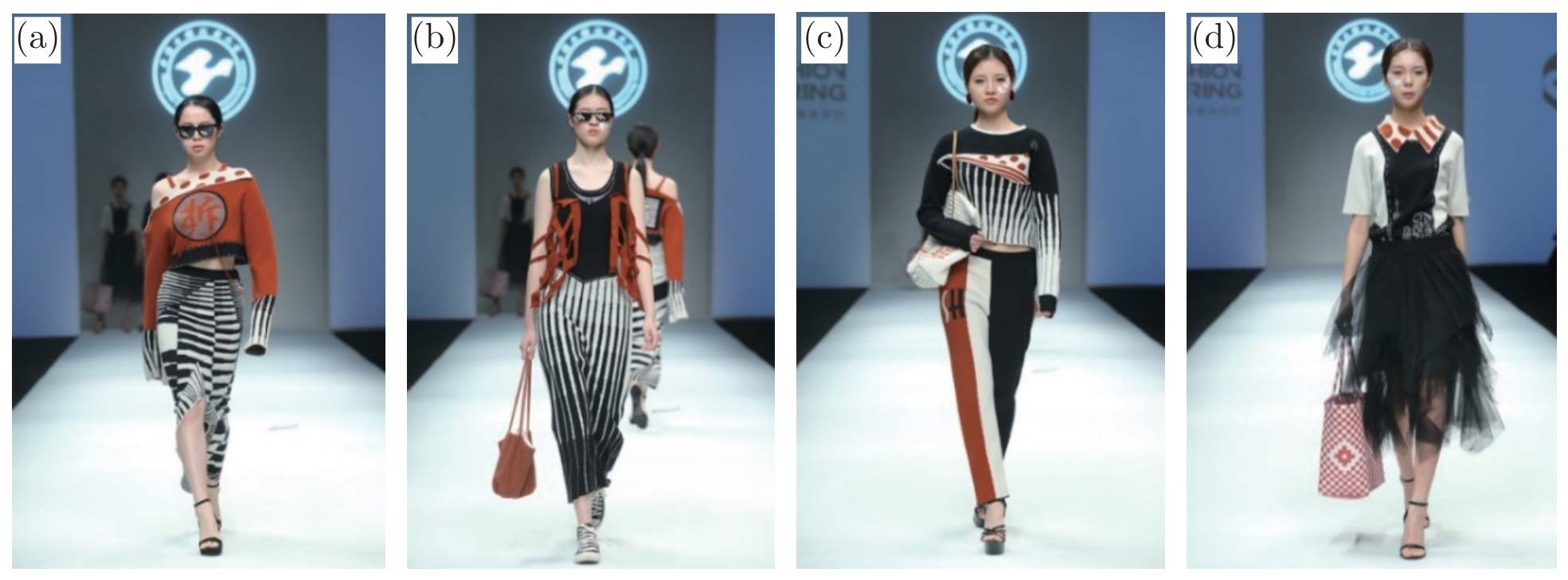
The designs shown in Figure 10 demonstrate some applications of knitwear designs with optical illusion pattern integration. The colors used mainly include white, black, and brick red; the silhouettes are relatively thin and long, and the fabric exhibit some knitted textures. In terms of fabrics, merino wool and black yarn are used, is suitable for design applications in the early spring season. The design inspiration originates from the demolition in Shanghai. With the development of China, for city construction, the original buildings will be demolished or relocated in. “Demolition” can be regarded as a national policy and social phenomenon in China, especially in big cities. Over recent years, the concept of the knitted “suit” has become popular. Accordingly, in this collection, knitted clothes are almost designed as “suits”. The styles include dresses, half skirts, long sleeves, short sleeves and pants; the collar shapes include lapels, round necks and no-collars, all suitable for urban women. Although the whole series draws inspiration from severe social topics, many specific designs with misinterpreted patterns bring a sense of fun and warmth to citizens in the city.
Figure 10.
Knitwear designs that combine visual illusion effects and knitted garments.
6.1. Design 1-Off-shoulder Tops and Knitted Skirts with Irregular Skirts
Design 1 shown in Figure 10(a) consists of a long sleeve top and knitted skirt. The asymmetric white collar at the front of the jacket can be turned over, and the baldric can be twisted by hand.
The Chinese character “拆” in the front signifies “demolition”, and the pattern of two people embracing behind illustrates the connotation of people relying on each other and making each other warm when facing urban demolition. The half skirt seems to be made up of cut pieces of many different sizes. There are only two pieces in the skirt (plus the rib part in the middle at the front and back — the illusion of “multi-cut” completed by the design of an optical illusion pattern. The irregular wavy part of the skirt hem is also embedded into the stage of fabric weaving.
6.2. Design 2-One-piece Dress and Hollow Coat
Design 2 as shown in Figure 10(b), consists of a sleeveless dress with a small cutout jacket. The composition of the dress is divided into the upper and lower parts by color, which makes people mistakenly think that it is the combination of top and long skirts. Besides, the “necklace” at the neckline is woven silver. Throughout the waistline, different colors are also used to segment the color blocks based on the human body curves, well highlighting the model’s waist curves. The back of the dress has a bow design like the laces, but it is only a pattern and a planar design. Meanwhile, a short white line pattern is adopted to simulate the stitch in woven clothing. In the second half of the dress, a striped pattern is designed to give the model a visual illusion effect resembling a pleated skirt when it is displayed on the runway. Such a design can reduce some of the complexities in technology and achieve similar visual results. In the end, the decoration function of the small coat is more important than its practical function, with the inspiration sourcing from the square windows of modern urban architecture.
6.3. Design 3-Long Sleeve Top and Straight Knit Pants
Design 3 in Figure 10(c) consists of a suit with a round neck, long sleeve top and straight trousers. In the top part, the brick red dots and the black part are woven together, while the asymmetric brick red stripe falsely collar at the bottom can be turned over. In the lower part of the top, the stripe shape gradually changes from thick patterns to light ones, delivering an illusion that the waist was closing. Besides, there is a hollow portion in the middle of the coat’s back, and the black yarn is sewn manually, making the suit not too serious but more interesting. More skin exposed makes women more attractive. The lower section of the back part of the jacket has an optical illusion pattern design of English letters “chengSHi”. The bottom is tricolor straight tube trousers. Although they are soft and comfortable knitted fabrics, they are made of tricolor jacquard. The pants of knitted fabrics also appear crisp, with high quality.
6.4. Design 4-Short Sleeve Top and Black Gauze Skirt
Figure 10(d) shows a design consisting of a top with a lapel and short sleeves, and a black yarn skirt. The coat collar is woven and fixed on the body. The coat seems to have a white short-sleeve Tshirt under the black vest. However, it is two pieces of fake one-piece. The front of the coat is woven with beige wool and silver silk into the black knitted fabric of the background, creating a scene of Shanghai’s office buildings shining like stars in the night.
7. Discussion
Optical illusion patterns can render a surprising effect on the use of simple shapes and colors. Coupled with knitting designs that fit the human body shape, more results can be achieved with less effort. Besides, the pattern design of knitwear does not require customized molds, but it is recommended that the pattern be woven into the clothing pieces through a computer-based flat knitting machine. Such practice can improve production efficiency to a certain extent and simplify the production process. Finally, relatively few colors are needed in the optical illusion pattern, one to three colors being sufficient. Therefore, the color choice of the yarn is not much difficult. In an era when people generally value health and personal experience, by combining optical illusion patterns with knitwear design, the problem of single design form in today’s knitwear market could be solved partly, and the advantages such as softness and comfort of knitwear can be inherited. The development prospects of knitwear will become brighter and brighter.
Acknowledgments
This work was supported by China Education Association for International Exchange (The China-CEEC Joint Education Project of Institutions of Higher Education – Sustainable Surface Treatment for Garment and Design Innovation - 201911, ZX202005070044); and Shanghai Summit Discipline in Design. Besides, this design is also helped by Professor Song Xiaoxia in Shanghai University of Engineering and Technology, thanks for her careful guidance.
References
- Corkhill, B.; Hemmings, J.; Maddock, A.; Riley, J. Knitting and well-being. Textile 2014, 12(1), 34–57. [Google Scholar] [CrossRef] [Scilit]
- Kosui, T. Research and development for smart textiles. J. Fiber Sci. Technol. 2017, 73(12), 353–354. [Google Scholar] [CrossRef] [Scilit][Green Version]
- Twigger Holroyd, A. Reknit revolution: knitwear design for the domestic circular economy. Tex. Des. Res. Pract. 2018, 6(1), 89–111. [Google Scholar] [CrossRef] [Scilit]
- Affin, L.; Giovanni, M.C.; Martina, M. New vision on knitwear design: how the traditional craft methodologies are evolving into fashion international scenarios. Des. J. 2017, 20(1), 2760–2770. [Google Scholar] [CrossRef] [Scilit]
- Berna, A.; Bodei, C.; Pagli, L. On formal descriptions for knitting recursive patterns. J. Math. Arts 2008, 2(1), 9–27. [Google Scholar] [CrossRef] [Scilit]
- Kraft, K. Textile patterns and their epistemological functions. Cloth. Cult. 2004, 2(3), 274–289. [Google Scholar] [CrossRef] [Scilit]
- Gschw, S. Knitting is …. J. Mod. Craft 2008, 1(2), 271–278. [Google Scholar]
- Matkovi’c, V.M.P. The power of fashion: the influence of knitting design on the development of knitting technology. Cloth. Cult. 2010, 8(2), 122–146. [Google Scholar] [CrossRef] [Scilit]
- Song, G.; Wu, J.; Wei, Y. Computer-aided design of three-dimensional knitwear. J. Text. I 2006, 97(6), 549–552. [Google Scholar] [CrossRef] [Scilit]
- Hausding, J.; Cherif, C. Improvements in the warp-knitting process and new patterning techniques for stitch-bonded textiles. J. Text. I 2010, 101(3), 187–196. [Google Scholar] [CrossRef] [Scilit]
- Fan, Y.; Xu, J.; Liang, X.; Li, X. Design of ottoman stitch in knit CAD for computer flat machine. Adv. Mater. Res. 2013, 9(821-822), 694–697. [Google Scholar] [CrossRef] [Scilit]
- Pottmann, H.; Liu, Y.; Wallner, J.; Bobenko, A.; Wang, W. Geometry of multi-layer freeform structures for architecture. Acm Trans. Graph 2007, 26(3), 65. [Google Scholar] [CrossRef] [Scilit]
- Pottmann, H.; Schiftner, A.; Bo, P.; Schmiedhofer, H.; Wang, W.; Baldassini, N.; Wallner, J. Freeform surfaces from single curved panels. Acm Trans. Graph 2008, 27(3), 1–10. [Google Scholar] [CrossRef] [Scilit]
- Grego, Richa; Krist, Arni. Review: trick eyes: magical illusions that will activate the brain, trick’ eyes graphics, theories of visual perception. Perception 2006, 35(7), 999–1002. [Google Scholar] [CrossRef] [Scilit]
- Inglis, Tiffany C; Inglis, Stephen; Kaplan, Craig S. Op art rendering with lines and curves. Comput Graph-UK 2012, 36(6), 607–621. [Google Scholar] [CrossRef] [Scilit]
- Li, Y.Y.; Bao, F.; Zhang, E.; Kobayashi, Y.; Wonka, P. Geometry synthesis on surfaces using field-guided shape grammars. Ieee T Vis. Comput GR 2011, 17(2), 231–243. [Google Scholar] [CrossRef] [Scilit] [PubMed]
- Kolomenkin, M.; Shimshoni, I.; Tal, A. Demarcating curves for shape illustration. Acm Trans. Graph 2008, 27(5), 1–9. [Google Scholar] [CrossRef] [Scilit]
- Li, Y.; Miao, X.; Raji, R. Flexible knitted sensing device for identifying knee joint motion patterns. Smart Mater. Struct. 2019, 28(11), 115042. [Google Scholar] [CrossRef] [Scilit]
- Eckert, C. Managing effective communication in knitwear design. Des. J. 1999, 2(3), 29–42. [Google Scholar] [CrossRef] [Scilit][Green Version]
- Xu, H. Design aesthetics; Tsinghua University Press: Beijing, 2006; pp. 23–24. [Google Scholar]
- Newington, L. “In the loop”: challenging and disrupting the stereotypes of knitting. Cloth. Cult. 2014, 12(1), 8. [Google Scholar] [CrossRef] [Scilit]

© 2021 Textile Bioengineering and Informatics Society. This article is an open access article distributed under the terms and conditions of the Creative Commons Attribution (CC BY) license (https://creativecommons.org/licenses/by/4.0/).