


Abstract
We examined the relationship between ease of pyjamas and body on the thermal insulation of men’s pyjamas made from a knitted fabric of a new cotton-based non-twisted hollow yarn to obtain design guidelines for higher heat retention. We made six sets of men’s pyjamas that have different ease for the circumferences of chest, hip, and sleeve. We measured the heating power required for different parts of a thermal manikin to remain at a constant temperature when the manikin wore the pyjamas. We also measured the thermal insulation when the cuffs of the upper garment and the hems of the lower garment were closed with belts. To evaluate the effect of ease of wearing state on thermal insulation quantitatively, the differences of circumference and area of the cross-section between thermal manikin and a pyjama worn on the manikin were calculated from those 3D scanned data. We investigated the relationship between the heating power and the differences. As a result, the heat retention increased as the differences increased although there are variations depending on the location. There was almost no effect of convection from the cuffs and hems in the experimental environment without wind.
1. Introduction
The physical properties of fabric and the shape of clothing affect the thermal comfort of clothing. The physical properties of a fabric depend on the properties of the fibre and yarn material. The thermal properties of fabrics made from various materials have been measured to make clothing that is more comfortable [1]. In addition to material properties, the thickness of the air gap between clothing and the body strongly affects the thermal comfort of clothing. Several studies have investigated the relationship between the thickness of the air gap and the heat retention of clothing [2,3,4,5,6,7,8,9]. Mert et al. [2] conducted three-dimensional body scanning to investigate the distribution of the air gap thickness and the contact area for the male lower body in relation to the garment fit and style. They analysed relationships between the distribution of the air gap thickness/area of contact and the physiological response of the lower body through physiological modelling. Li et al. [3] investigated the relationship between the thermal insulation of fabric and that of clothing and the relationship between the air gap and thermal insulation. They reported that heat retention depended more on the gap between clothing and body than the insulation of the fabric. They also reported that the gap required for clothing to have high heat retention depends on the clothing type and fabric type. According to the type of fabric, the required air gap will be different even for the same ease. The effect of ease on the thermal insulation of clothing thus depends on the type of fabric. Research on the gap for various types of clothing with a specified fabric is needed.
Pyjamas are usually designed to have larger ease to allow better movement. The thermal comfort of pyjamas is also important [10], especially in winter. To guide the design of men’s pyjamas with high heat retention, the present paper investigates how the ease of pyjamas affects heat retention. The designated ease on a pattern and air gap between body and clothing while wearing clothing could be different and the difference will affect the thermal insulation of clothing.
A knitted fabric made of a new non-twisted hollow cotton yarn was recently developed. Kim et al. [11] investigated the mechanical properties of this fabric and reported high thermal insulation. The knitted fabric is soft, such that the air gap in accordance with the form of clothing is different from that of other fabrics. Using the fabric, we can provide a new design of pyjamas for those who prefer pyjamas made from cotton fabrics. Manabe et al. [12] investigated the heat retention of the pyjamas made from the fabrics and reported high heat retention. However, the relationship between the ease of the pyjamas and those heat retentions is still unclear.
The present paper examines the effect of the ease between pyjamas and body on the thermal insulation of men’s pyjamas made from the recently developed knitted fabric so as to provide design guidelines that achieve high heat retention. To evaluate the effect of ease of wearing state on thermal insulation quantitatively, circumference difference between thermal manikin and a pyjama worn on the manikin was calculated using the circumference obtained from those 3D scanned data. The air gap between thermal manikin and a pyjama worn on the manikin was also calculated using an area of cross-section of those 3D scanned data. Using those air gap and circumference differences, we investigated the relationship between the heating power and the air gap. We also investigated the effect of ventilation from cuffs of the upper garment and the hems of the lower garment on the insulation of the pyjamas.
2. Experimental
2.1. Thermal Insulation of Pyjamas with Different Ease
To investigate the thermal insulation of pyjamas, we measured a heating power of a thermal manikin required to maintain a surface temperature. A thermal manikin (Kyoto Denshi Kogyo Co., Ltd, Kyoto, Japan, THM-117S) operating in a constant-temperature mode was dressed in pyjamas, and the heating power required to maintain a constant temperature for each part of the manikin was recorded. The thermal manikin had a built-in planar heater and planar temperature sensor at 19 locations.
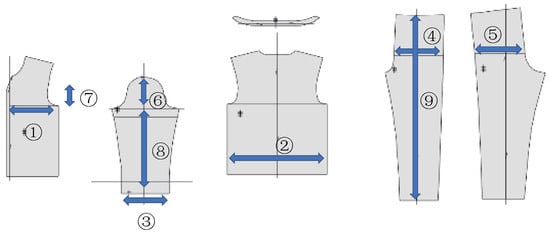
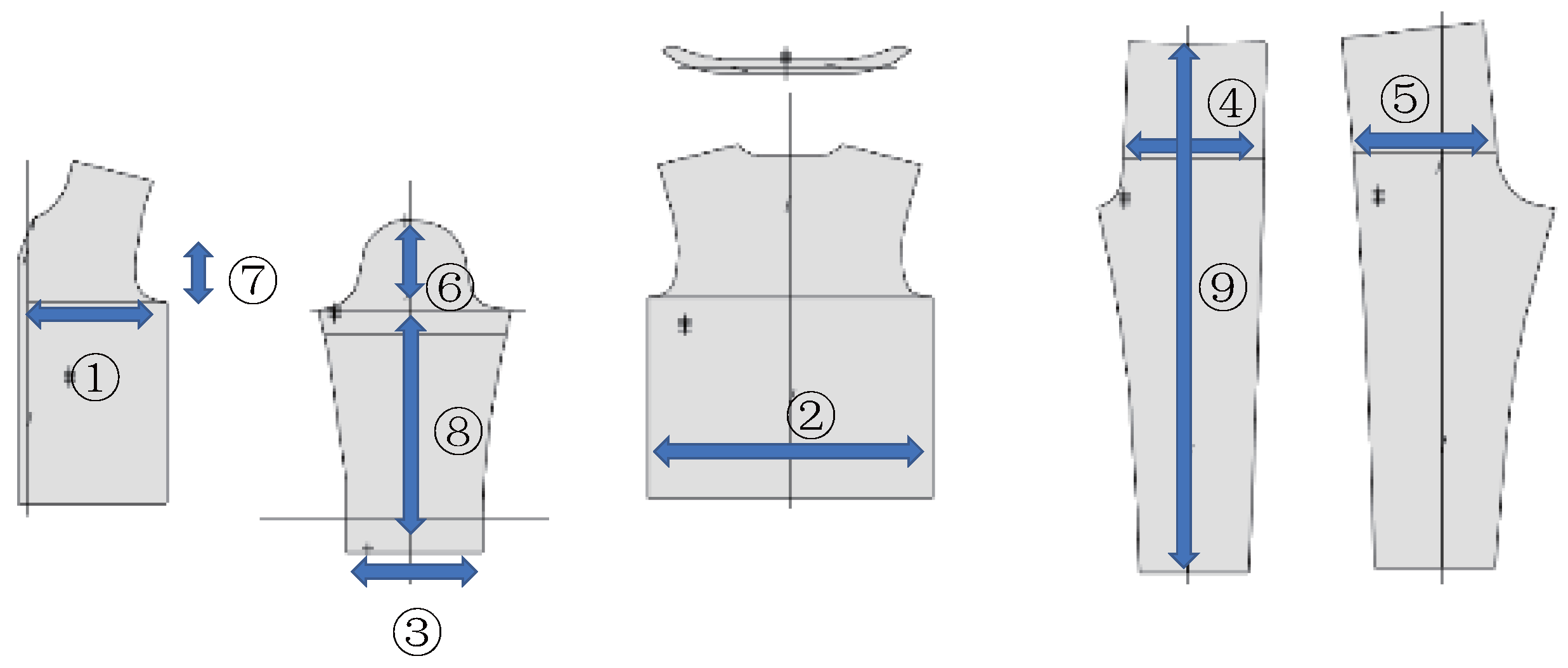
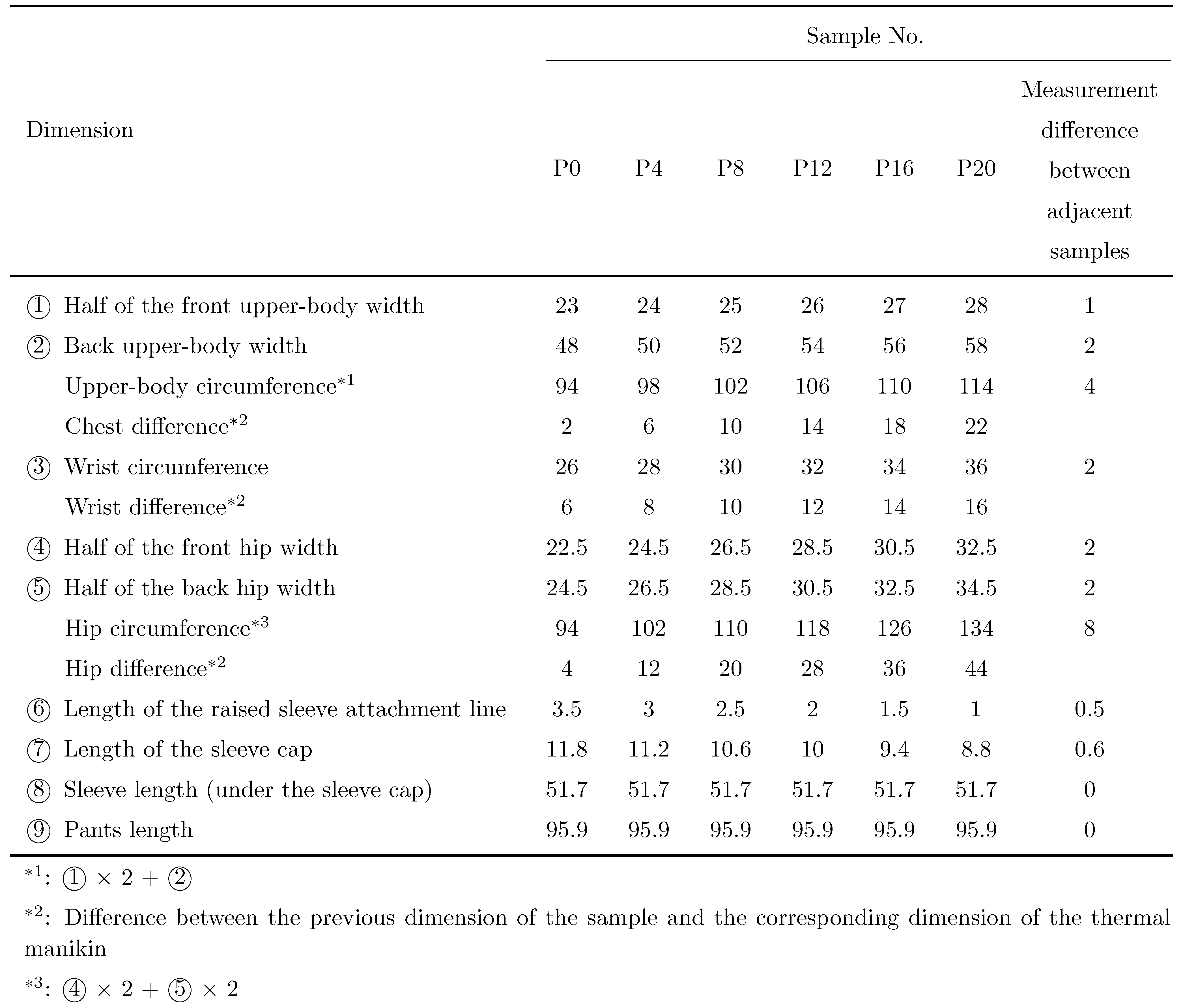
Six pyjama patterns were produced by adjusting the ease. The pyjama pattern with the least ease was created according to the dimensions of the thermal manikin and named P0. The pattern P0 is shown in Figure 1. Five patterns, P4, P8, P12, P16, and P20, were created by adding ease of 4 cm for the chest, 8 cm for the hip and 2 cm for the sleeves to the circumference of P0. The specification of a knitted fabric of a new cotton non-twisted hollow yarn is given in Table 1 [11]. We used two layers of this fabric without bonding or stitching due to the thin thickness of the fabric. The dimensions of each sample are given in Table 2.
Figure 1.
Pattern and dimensions.
Table 1.
Specification of knitted fabric of a new cotton non-twisted hollow yarn [11].
Table 2.
Dimensions of samples (cm).
The experimental environment had a room temperature of 20 ± 1◦C and a relative humidity of 55%±4% without wind. The thermal manikin had a controlled constant surface temperature of 32◦C. The manikin was allowed to heat for 45 minutes before it was dressed in pyjamas. The heating power required to maintain the surface temperature was measured once every 30 seconds for a period of 5 minutes that commenced 10 minutes after the manikin was dressed, and the average value was taken for that period. The experiment was performed five times for each pyjama sample, and data were tested in an analysis of variance.
2.2. Relationship between Thermal Insulation of Pyjamas and Air Gap
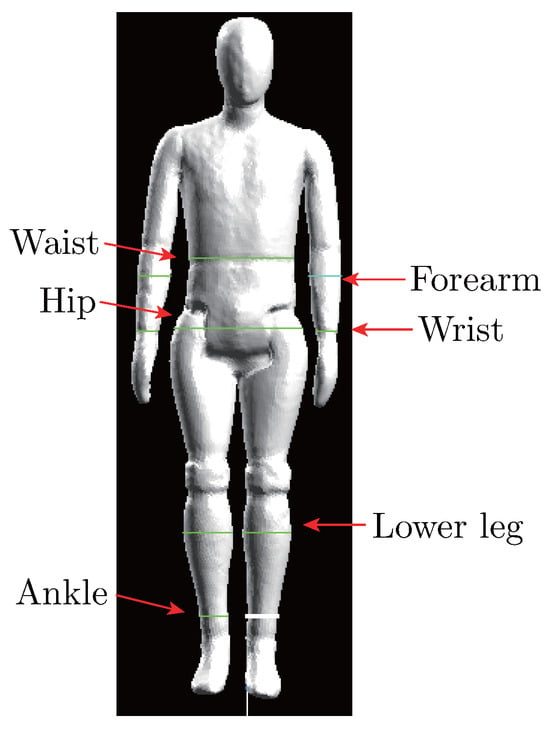
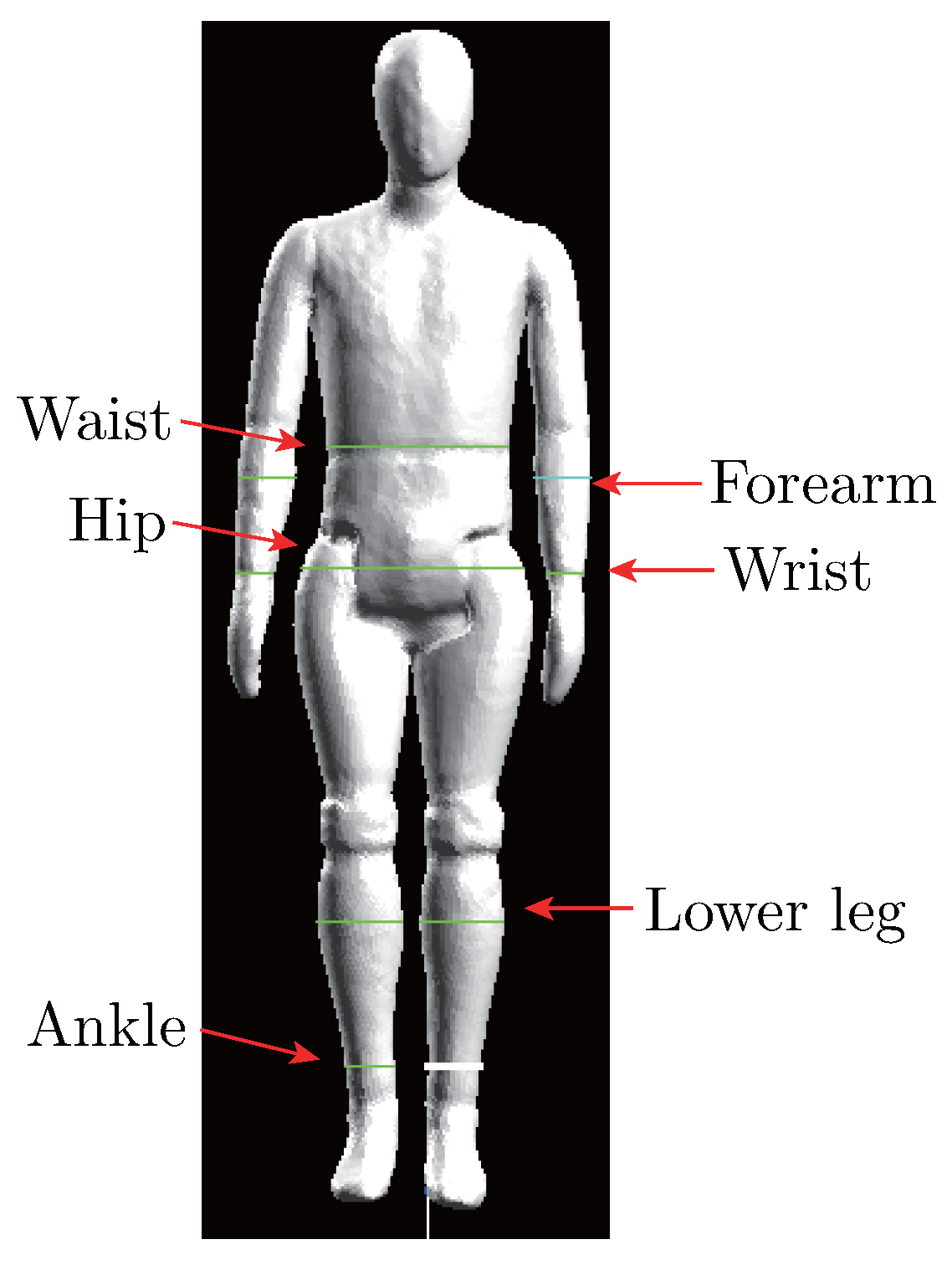
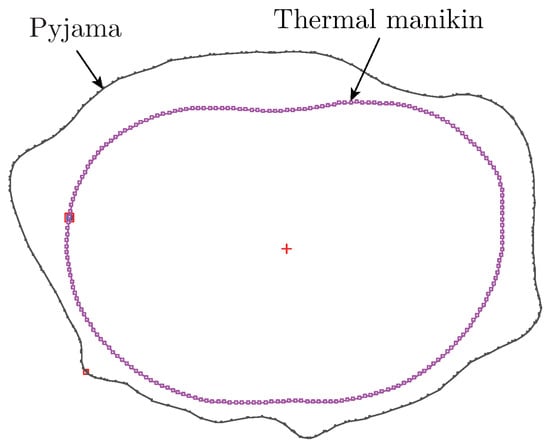
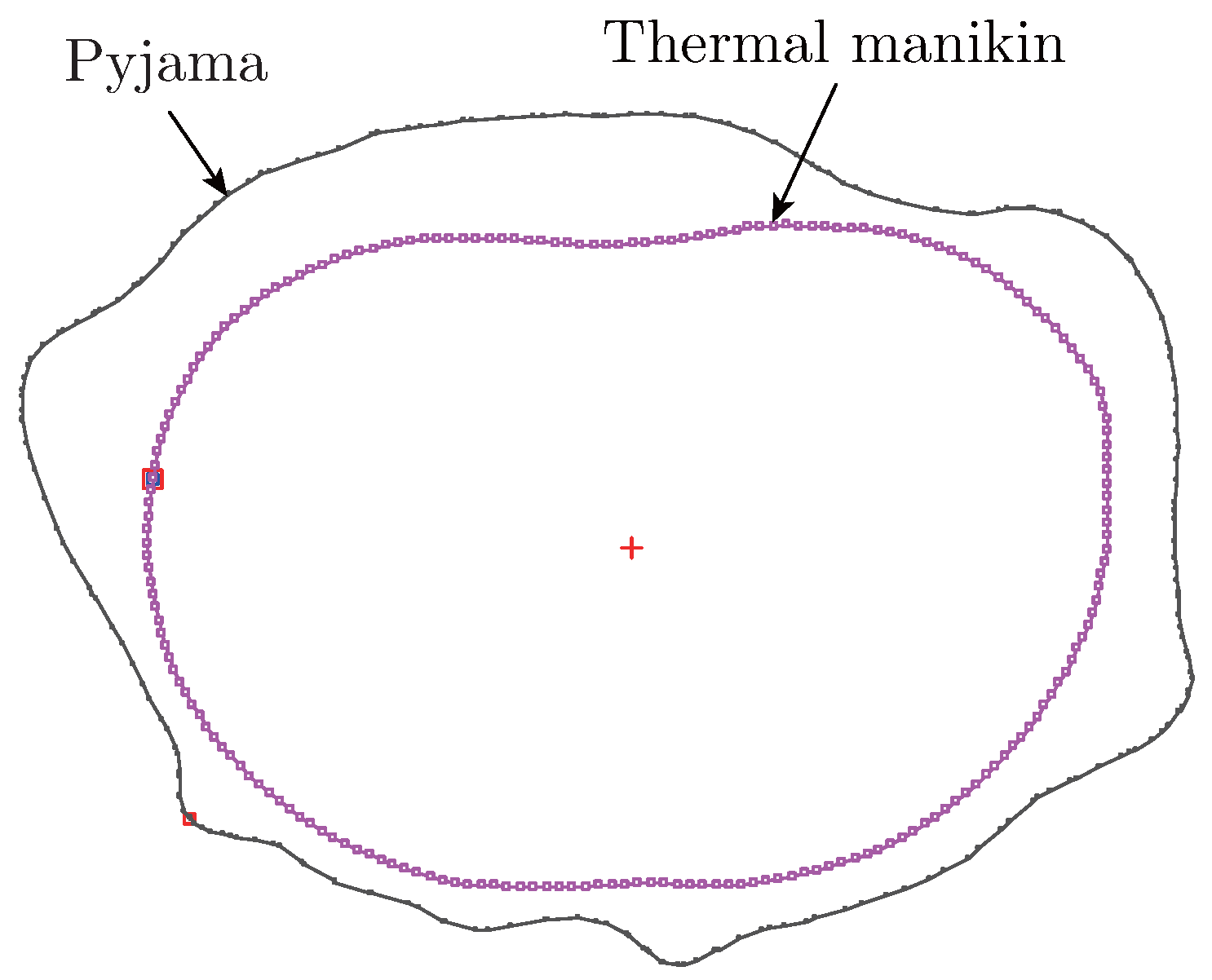
To investigate the relationship between thermal insulation of pyjamas and the air gap between thermal manikin and a pyjama, we measured the air gap while wearing pyjamas using a 3D scanner (SPASEVISION Co., Ltd./SCUVE G4 3D BODY SCANNER). We measured area of cross-sections of the thermal manikin at 10 parts where would have large air gaps (waist, right and left forearms, hip, right and left wrists, right and left lower legs, right and left ankles) as shown in Figure 2. Area of cross-sections of a pyjama worn on the thermal manikin at the same part were also measured. Figure 3 shows the cross-sections of the thermal manikin and pyjama worn on the manikin at the same part. Those area difference between the thermal manikin and a pyjama worn on the manikin were calculated as an air gap. The circumference difference between the thermal manikin and a pyjama worn on the manikin was also calculated.
Figure 2.
Measurement part on thermal manikin.
Figure 3.
Cross-section of thermal manikin and pyjama.
2.3. Effects of Convection from Cuffs and Hems
When pyjamas are worn, convection from the cuffs of the upper garment and the hems of the lower garment affects the thermal comfort of the pyjamas. We, therefore, measured the thermal insulation when the cuffs of the upper garment and the hems of the lower garment were closed with belts. The experiment environment and procedure were the same as those in Experiment 2.1. We used P4, P12, and P20 as experimental samples, and the samples with belts were respectively labelled P4B, P12B, and P20B. We also calculated the difference of a cross-sectional area and circumference with and without belts using the same 3D scanner as in Experiment 2.2.
3. Results and Discussion
3.1. Thermal Insulation of Pyjamas versus the Thickness of the Air Gap
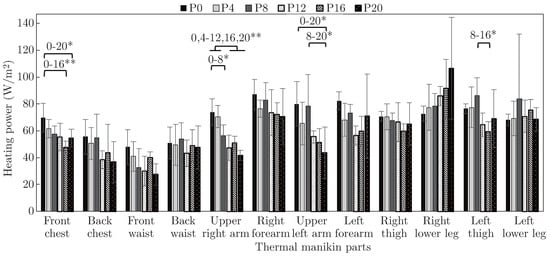
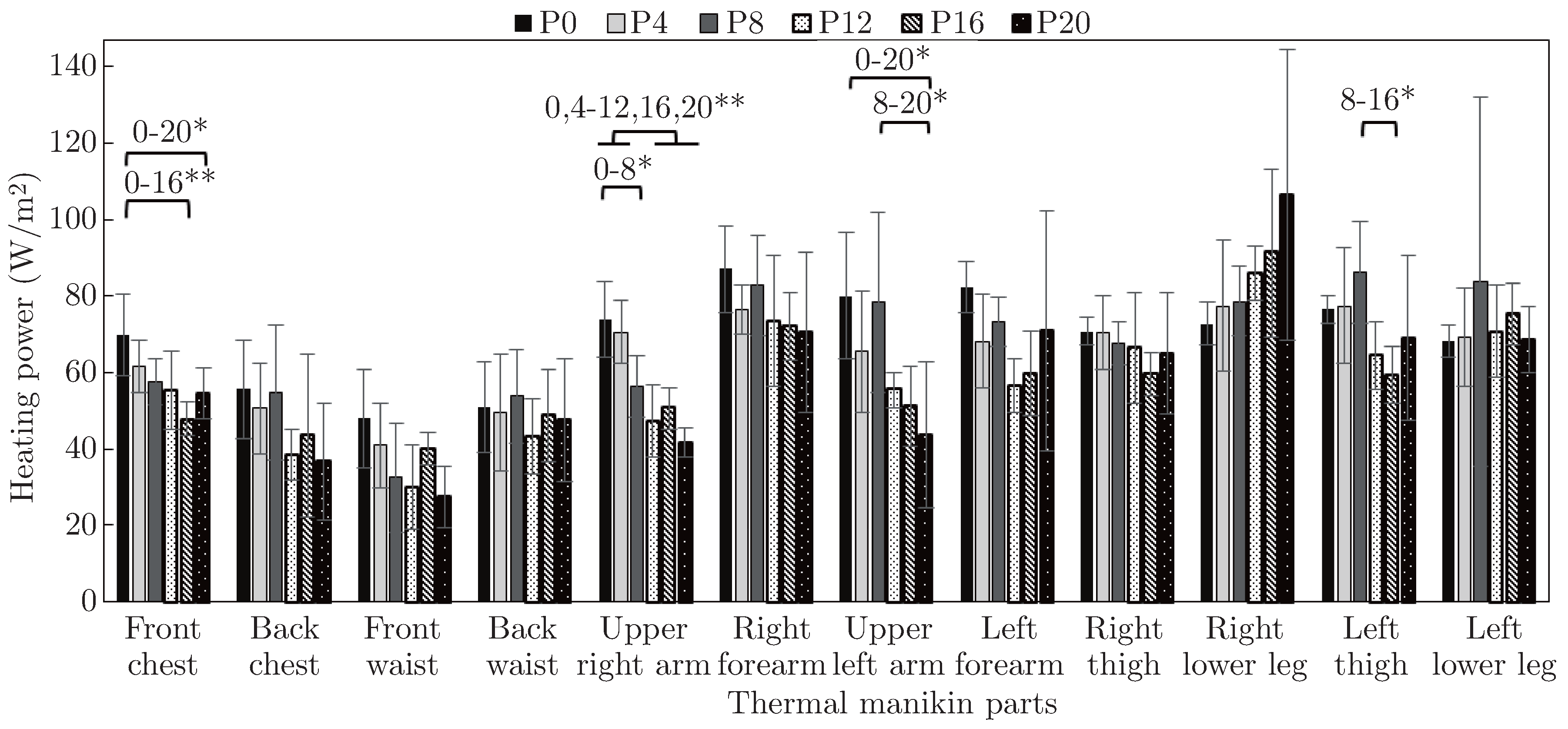
Figure 4 shows the heating power required for representative parts of the thermal manikin. Higher heat retention is indicated by lower heating power. The heating power decreased as the ease increased, except for the lower right and left legs. The heating power increased with the ease for the lower left leg owing to the presence of electrical wires running from the thermal manikin to the control box. It is considered that the heat retention of the right lower leg decreased because the air gap exceeded a specific air gap that maximizes the heat retention [13]. There were significant differences between P0 and P8-P20 in the chest, upper arm, and forearm. Although there are variations depending on the location, the heating retention increased as the ease increased. The variation could be due to the wrinkling when wearing pyjamas.
Figure 4.
Heating power of the thermal manikin (∗ significant difference at the 5% level, ∗∗ significant difference at the 1% level).
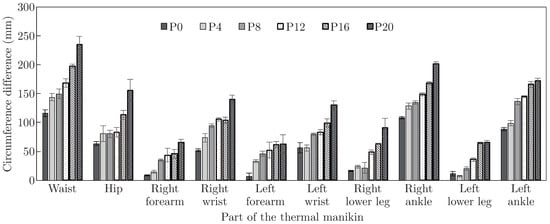
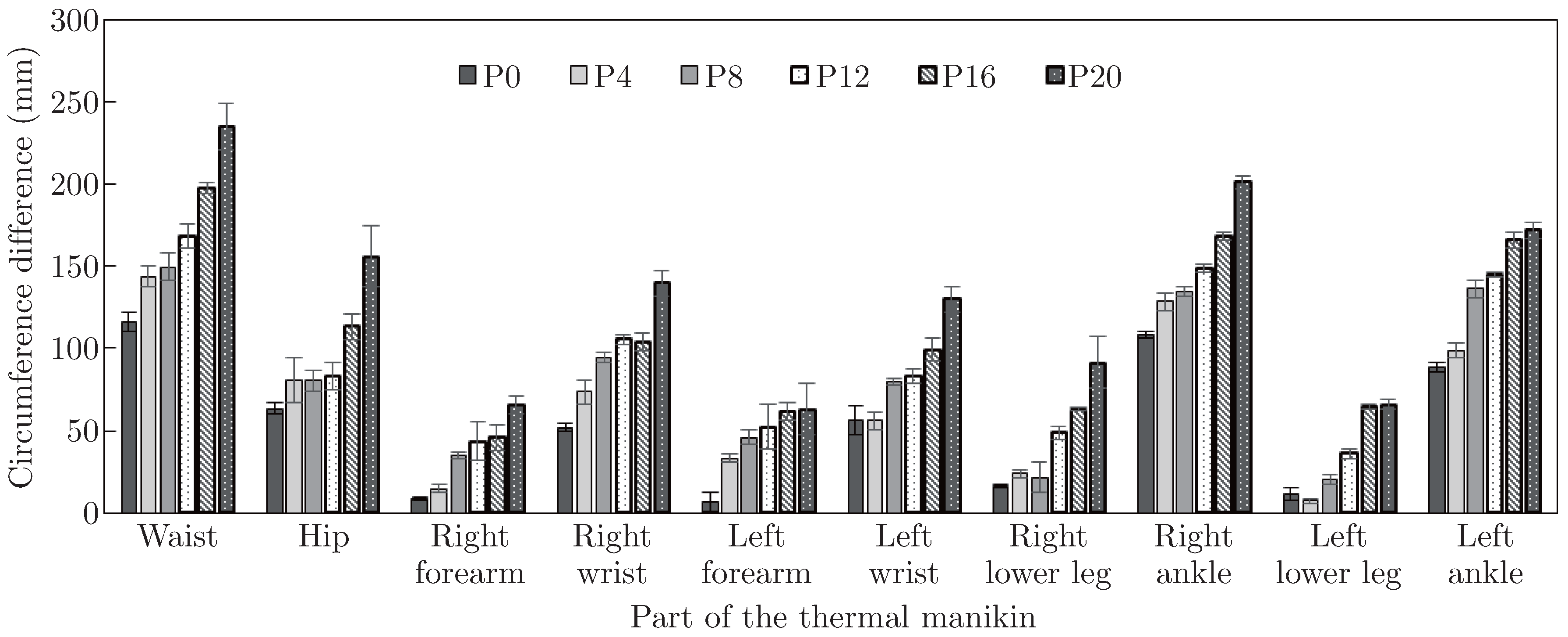
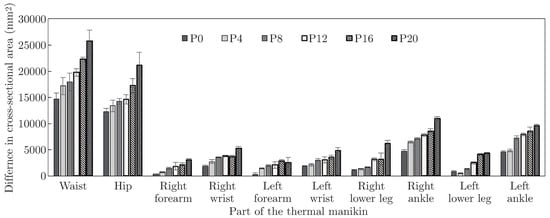
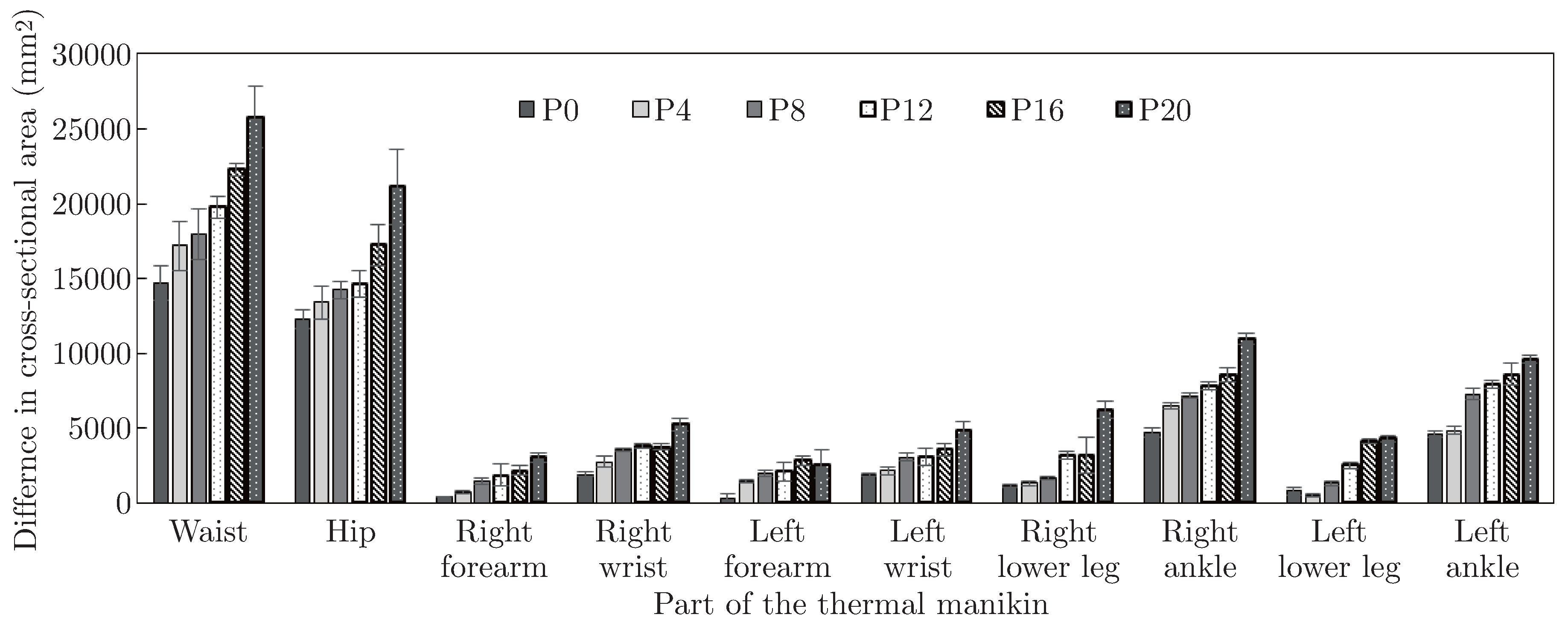
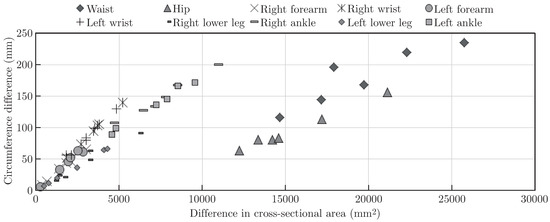
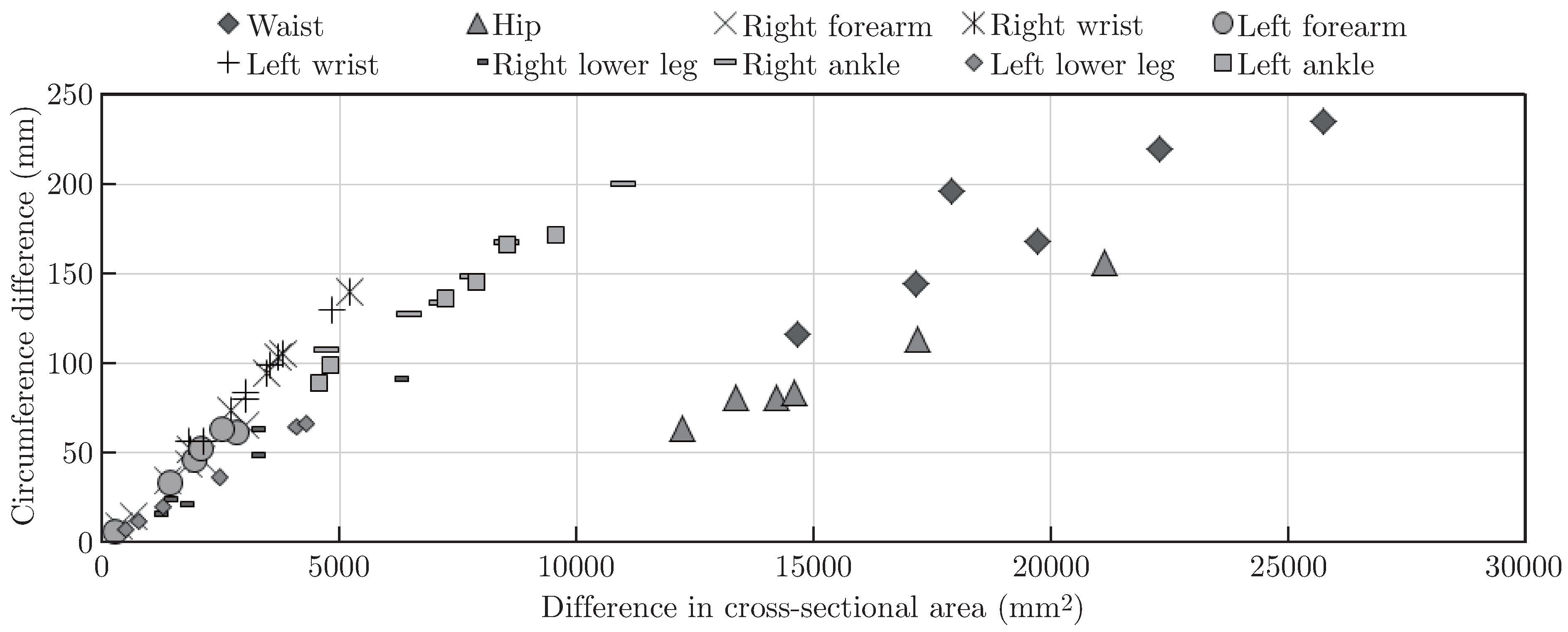
Figure 5 and Figure 6 shows the circumference differences and difference in cross-sectional area between the manikin and the pyjamas worn on the manikin. The circumference difference and differences in the cross-sectional area showed linear relationships as shown in Figure 7. As an increase in the ease of the pattern, those differences showed an increasing tendency as shown in Figure 5 and Figure 6. However, some parts such as right and left lower legs of P0, P4, and P8 did not show the tendency. It could be the effect of wrinkles by wearing. The largest air gap is observed at the waist area where showed the lowest heating power which means high thermal insulation. Thus, it was found that the air gap affects the thermal insulation of pyjama’s waist part. The circumference of the ankle showed large circumference differences. However, the heat retention did not increase which is a different result with the waist. The reason could be the outside air from the hem.
Figure 5.
Circumference differences between pajama worn on the manikin and the manikin.
Figure 6.
Difference in cross-sectional area between pajama worn on the manikin and the manikin.
Figure 7.
Relationship between circumference difference and differences in cross-sectional area.
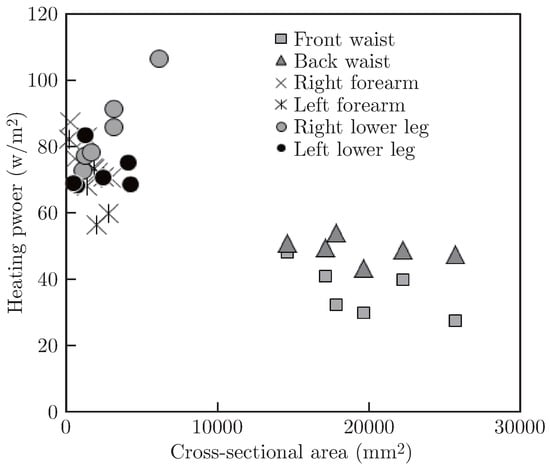
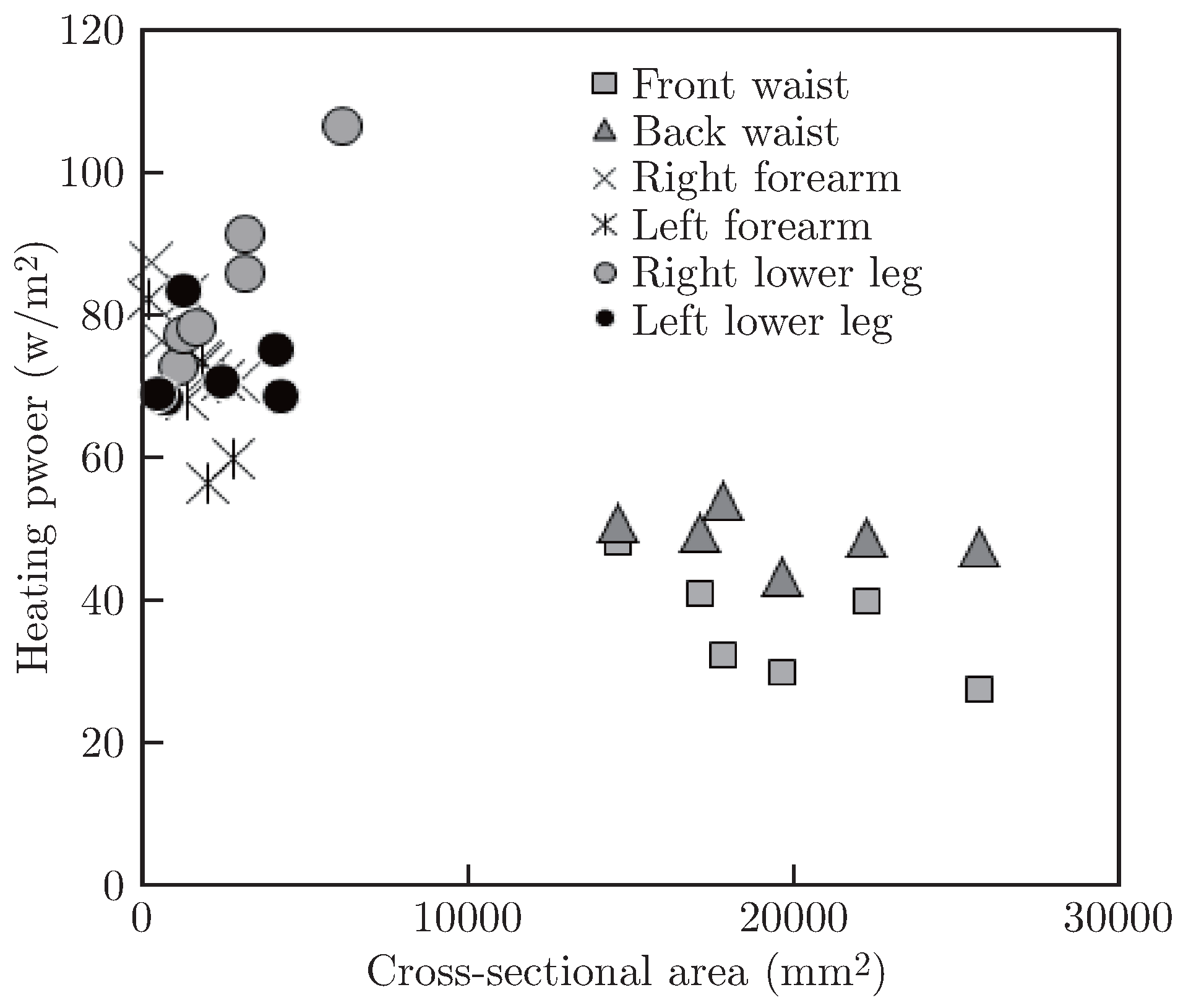
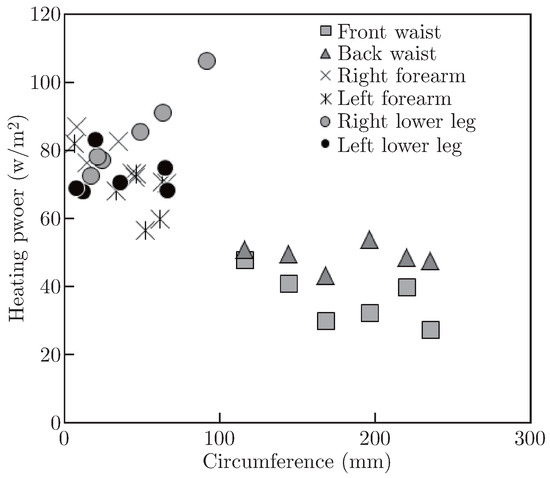
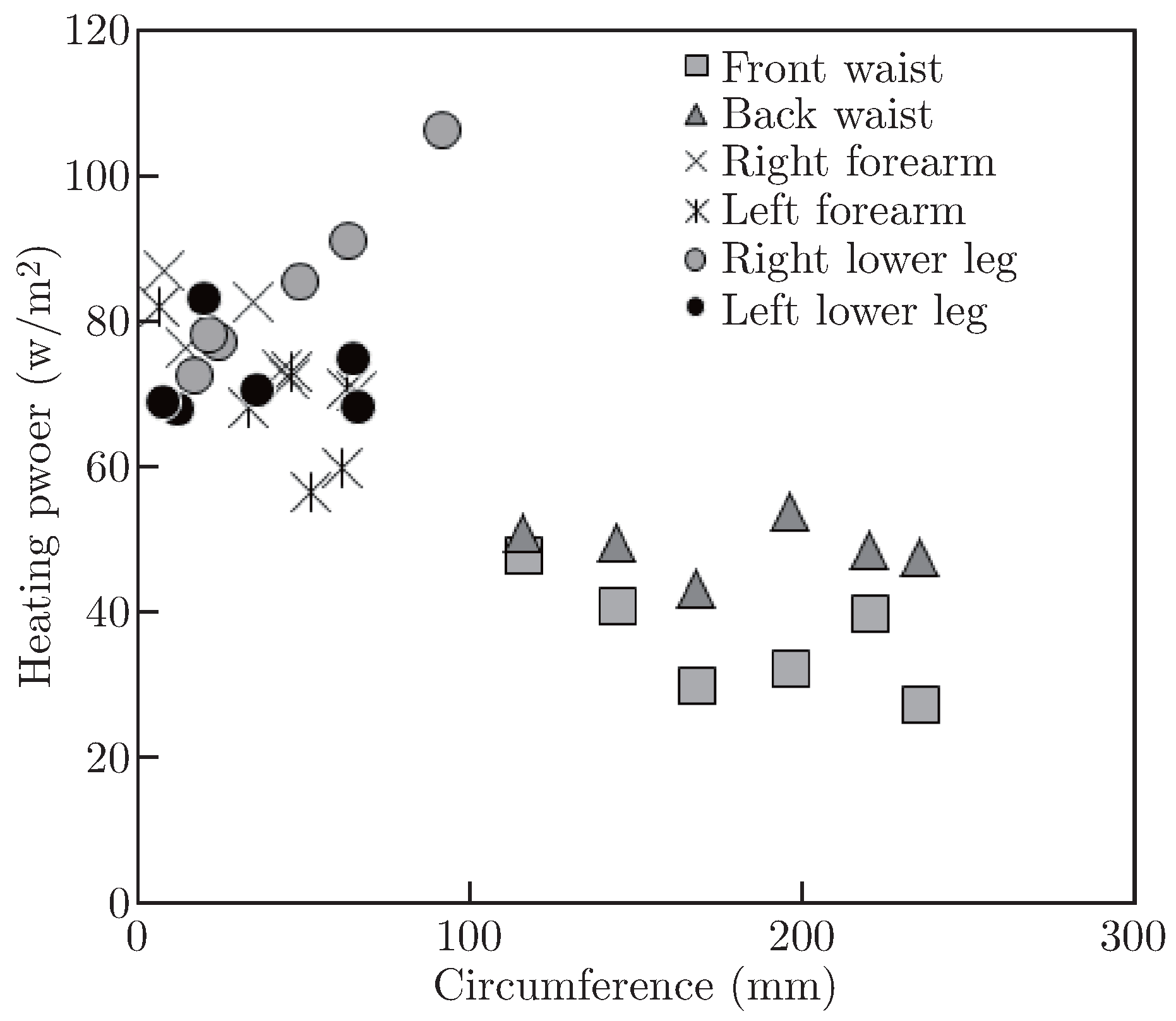
Figure 8 and Figure 9 show the relationships between heating power and the difference in cross-sectional area and circumference difference, respectively. Except for the right lower leg, as the differences in cross-sectional area and circumference differences increase, heating power increases in all parts. Thus, those differences affect the thermal insulation of the pyjamas. It was presented that heat retention of clothing decreases as ease increase above the specific gap [13]. The right lower limb is affected by this. However, heat retentions of the pyjamas monotonically increased as the eases increases. The reason could be the fabric made of a knitted fabric with new cotton non-twisted hollow yarn which shows a higher retention ratio [11]. For the left lower leg, it is due to the presence of electrical wires running from the thermal manikin to the control box. Thus, it showed different results.
Figure 8.
Relationship between heating power and difference in cross-sectional area.
Figure 9.
Relationship between heating power and circumference difference.
3.2. Effects of Convection from the Cuffs and Hems
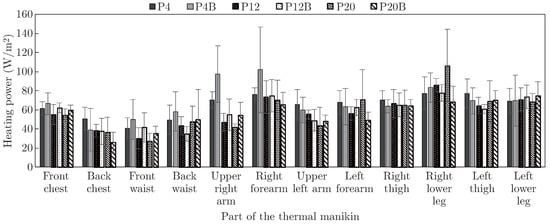
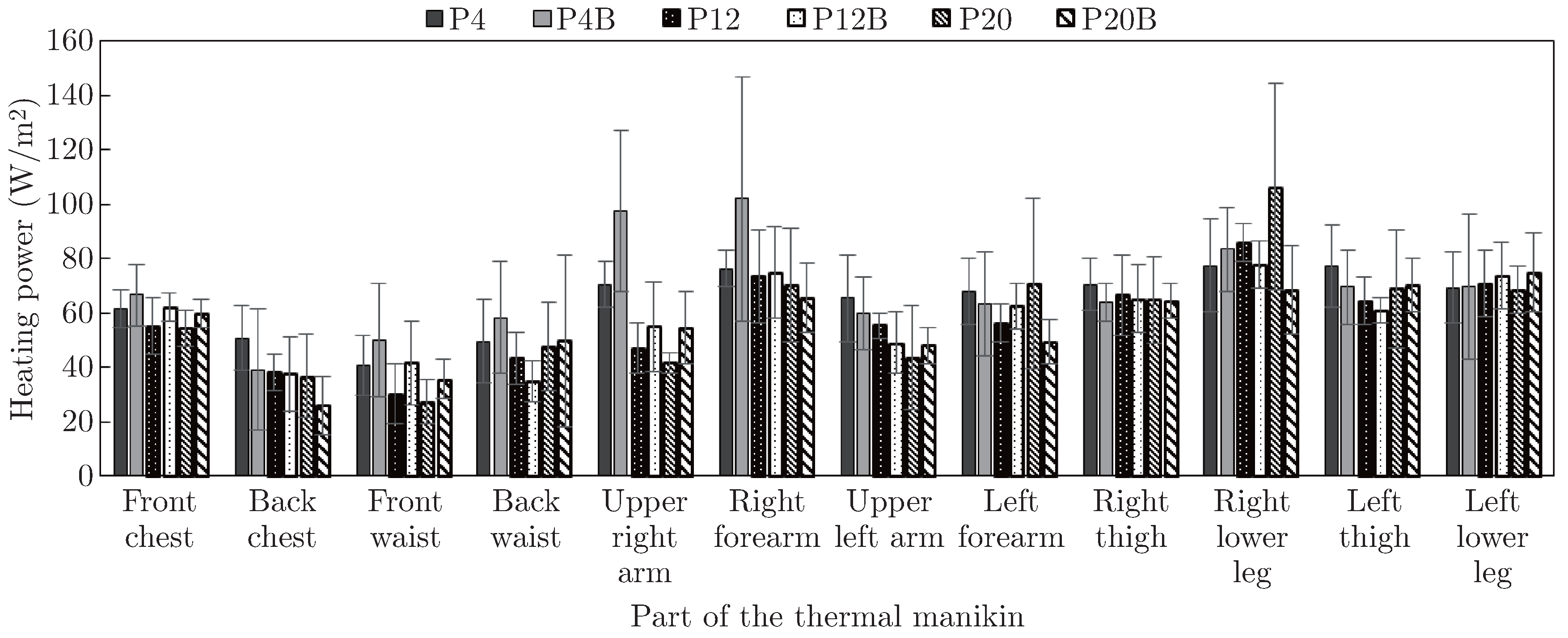
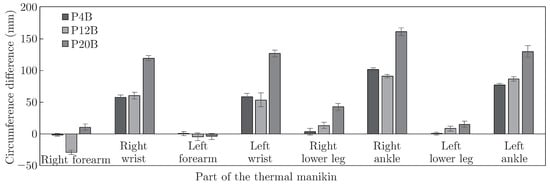
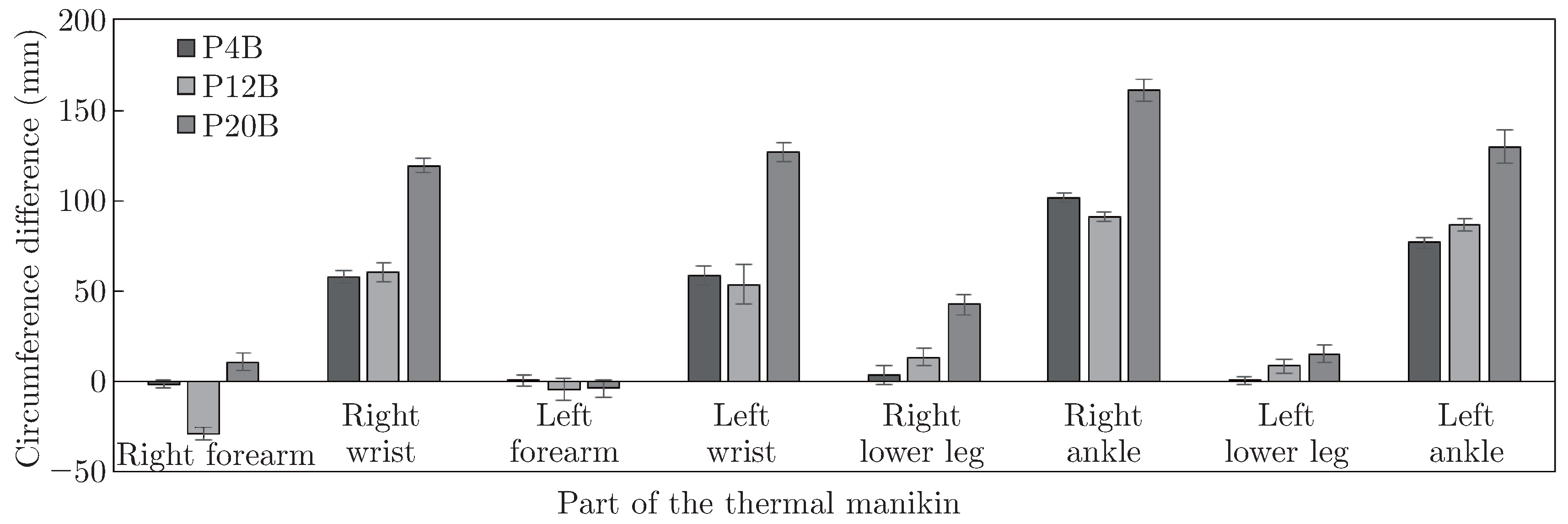
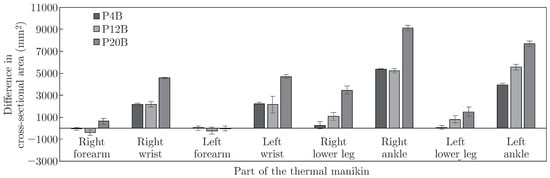
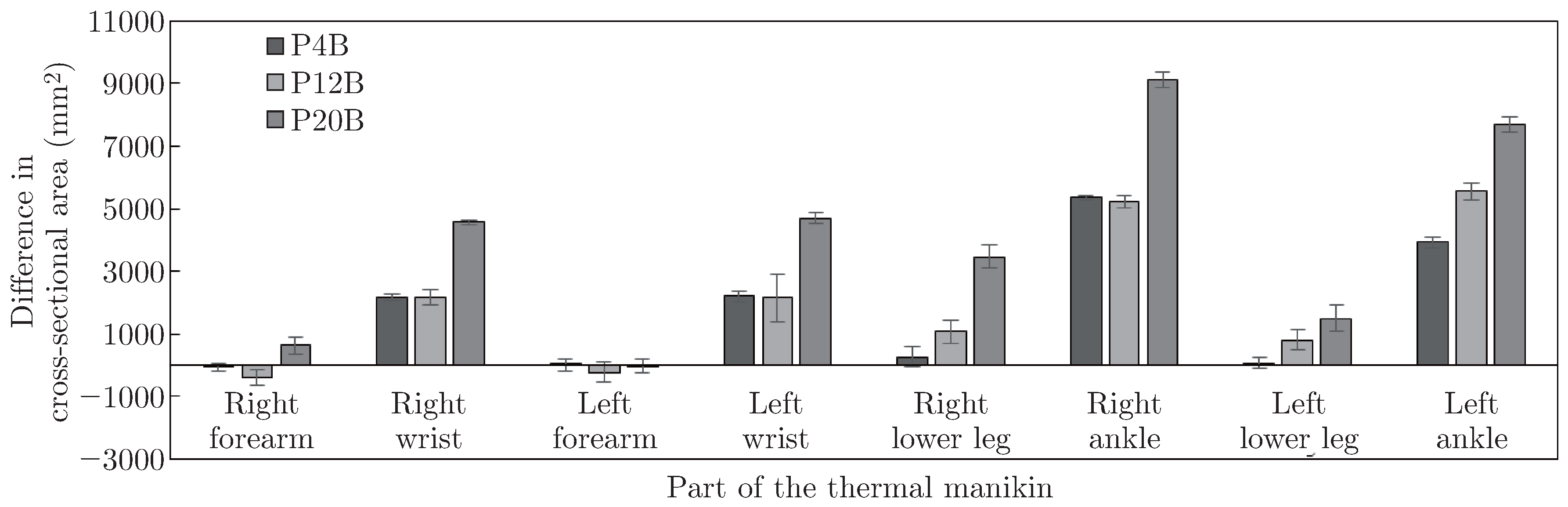
Figure 10 shows the comparison of the heating power with and without the hem and cuff belt. There were no significant differences between those heating powers regardless of parts and pyjama types. Figure 11 shows the difference in the circumference of the arms and legs with and without the cuff and hem belt. Figure 12 shows the difference in the cross-sectional area. With the belt, air gap at wrists and ankles became smaller but ones at the other parts were similar. However, there were no effects on the thermal insulation of pyjamas. There was thus almost no effect of convection from the cuffs and hems in the testing environment without wind.
Figure 10.
Heating power with and without belts at hem and cuffs.
Figure 11.
Circumference differences between without belts and with belts.
Figure 12.
Differences in cross-sectional area between without belts and with belts.
4. Conclusion
The heating retention of men’s pyjamas with a knitted fabric made of new cotton non-twisted hollow yarn monotonically increased as the ease increased. The reason could be the fabric made of a knitted fabric with new cotton non-twisted hollow yarn which shows a higher retention ratio [11].
There are variations in the heat retention of the pyjamas depending on the location. The most heat-retaining part was the waist where was the largest ease. There is also large ease in the circumference of the ankle without the belt. However, those heat retentions did not increase with increases in the ease. With the belt, air gap at wrists and ankles became smaller but one at the other parts were similar. There were no effects on the thermal insulation of pyjamas with the belt. Therefore, there was almost no effect of convection from the cuffs and hems in the experimental environment without wind.
References
- The Society of Fiber Science and Technology, Japan, Fibers Handbook (Sen’i binran). MaruzenJunkudo Bookstores Co., Ltd.: 1994.
- Mert, E.; B¨ohnisch, S.; Psikuta, A.; Bueno, M.A.; Rossi, R.M. Contribution of garment fit and style to thermal comfort at the lower body. Int. J. Biometeorol. 2016, 60(12), 1995–2004. [Google Scholar] [CrossRef] [Scilit] [PubMed]
- Li, J.; Zhang, Z.; Wang, Y. The relationship between air gap sizes and clothing heat transfer performance. J. Text. I 2013, 104(12), 1327–1336. [Google Scholar] [CrossRef] [Scilit]
- Lee, Y.; Hong, K.; Hong, S.A. 3D quantification of microclimate volume in layered clothing for the prediction of clothing insulation. Appl. Ergon. 2007, 38, 349–355. [Google Scholar] [CrossRef] [Scilit] [PubMed]
- Chu, M.S.; Kato, T.; Kamata, Y.; Nakajima, T. Thickness effect of the air layer on the microclimate within the ease between a human body and the clothes. Sen’i Gakkaishi 1994, 50(7), 298–305. [Google Scholar] [CrossRef] [Scilit] [PubMed][Green Version]
- Psikuta, A.; Frackiewicz-Kaczmarek, J.; Frydrych, I.; Rossi, R. Quantitative evaluation of air gap thickness and contact area between body and garment. Text. Res. J. 2012, 82(14), 1405–1413. [Google Scholar] [CrossRef] [Scilit]
- Frackiewicz-Kaczmarek, J.; Psikuta, A.; Bueno, M.A.; Rossi, R.M. Effect of garment properties on air gap thickness and the contact area distribution. Text. Res. J. 2015, 85(18), 1907–1918. [Google Scholar] [CrossRef] [Scilit]
- Zhang, Z.H.; Wang, Y.; Li, J. Model for predicting the effect of an air gap on the heat transfer of a clothed human body. Fibres Text. East Eur. 2011, 19(4), 105–110. [Google Scholar]
- Zhang, Z.; Li, J. Volume of air gaps under clothing and its related thermal effects. J. Fiber Bioeng. Inform. 2011, 4(2), 137–144. [Google Scholar] [CrossRef] [Scilit]
- Yao, L.; Tokura, H.; Li, Y.; Newton, E.; Gohel, M.D.I.; Chung, W.J. Mechanism of pajama material on stratum corneum water content under mild cold conditions: explored by hierarchical linear regression. Skin. Res. Technol. 2007, 13(4), 412–416. [Google Scholar] [CrossRef] [Scilit] [PubMed]
- Kim, K.O.; Manabe, T.; Takatera, M.; et al. Thermal and Mechanical Characteristics of Cotton Knitted Fabric Made of Non-twisted Hollow Yarn for Inner Wear. J. Fiber Bioeng. Inform. 2020, 13(2), 89–99. [Google Scholar] [CrossRef] [Scilit]
- Manabe, T.; Kim, K.O.; Takatera, M.; et al. Effect of Ease on Thermal Insulation of Men’s Pajamas With A Knitted Fabric Made of New Cotton Non-twisted Hollow Yarn. In: Yi L, Meifang Z, Xianyi Z, editors. Textile Bioengineering and Informatics Symposium Proceedings: 2020, 246-250.
- Tamura, T.; Koshiba, T.; Hirata, K. Science of clothing environment (I kankyo no kagaku). Kenpakusha Co., Ltd.: 2014. p.15, p.41.


© 2021 Textile Bioengineering and Informatics Society. This article is an open access article distributed under the terms and conditions of the Creative Commons Attribution (CC BY) license (https://creativecommons.org/licenses/by/4.0/).