


Abstract
Recently, the use of co-catalysts has been an important alternative method to improve the visible light photocatalytic activity of pure semiconductor materials. A novel photocatalyst AgBr/BiVO4 was prepared by hydrothermal synthesis and chemical deposition method. The degradation of acid orange 7 was enhanced by AgBr/BiVO4 than pure BiVO4, which was eliminated 92.96% within 80 min under visible light irradiation. It was found that the doping of AgBr could greatly improve the photocatalytic activity of BiVO4 by reducing the recombination of electrons and holes. Prepared photocatalysts were characterized by X-ray diffraction (XRD), scanning electron microscopy (SEM), UV-vis diffuse reflectance spectra techniques (UV-vis) and X-ray photoelectron spectroscopy (XPS).
1. Introduction
With the development of economy and society, environmental pollution is increasing seriously, especially in water pollution. Dye pollution is an important source of water pollution which is difficult to eliminate with conventional water treatment technologies [1]. Recently, photocatalytic technology is a very effective method for degrading organic water pollutants. It not only degrades different dyes, but also causes their complete mineralization to carbon dioxide (CO2), water (H2O) and mineral acids [2]. According to common understanding of the photocatalytic reactions based on outstanding discovery of semiconductors, they are initiated by the absorption of a photon with appropriate energy that is equal to or higher than the band gap energy of the photocatalyst. The absorbed photon creates a charge separation as the electron (e−) is elevated from the valence band (VB) of a semiconductor to the conduction band (CB), creating a hole (h+) in the VB, initiating several reducing or oxidizing processes. Monoclinic bismuth vanadate (BiVO4) has attracted much attention due to its relatively narrow band gap (Eg = 2.4 eV), high chemical stability and nontoxic [3,4,5]. However, photocatalytic activity of pure BiVO4 is relatively low due to its poor adsorptive performance and difficult migration of electron-hole pairs [6]. Currently, there are two major methods to improve its photocatalytic activity. The first method is to increase the specific surface area by producing BiVO4 with different morphologies and smaller size, such as spheres, sheets and tubes [7,8,9]. On the other hand, researchers found that some noble metals (Ag, Pt, Pd) loaded on the BiVO4 surface or coupling with other semiconductors could efficiently improve its photocatalytic activity, such as CuO/BiVO4 [10,11], Co/BiVO4 [12], TiO2/BiVO4 [13], BiVO4/ZnO [14] and Cu2O/BiVO4 [15].
In recent years, the use of co-catalysts (metals or metal oxides) [16,17,18] has been an important alternative method to improve the visible-light photocatalytic activity of pure semiconductor materials. In comparison with conventional semiconductor photocatalysts, the coupling semiconductor has been proved to be an effective way to develop high performance photocatalysts for the decomposition of various organic contaminants, attributing to improve charge separation efficiency and multifunctional spectral response. Until now, various coupled photocatalysts based on constituted semiconductors with matched band potentials, such as TiO2-SnO2 [19,20] and CuBi2O4/BiVO4 [21], have been designed and investigated. The silver/silver halides (denoted as Ag/AgX, X = Cl, Br) is one type of plasmonic photocatalysts which can work under visible light for pollutant degradation, water disinfection, and carbon dioxide reduction [22,23]. For example, a plasmonic Ag-AgBr/TiO2 [24] composite photocatalysts exhibited obviously enhanced photocatalytic activity for the degradation of MB dye in the visible light. AgI/TiO2 [25,26], Ag/BiVO4 [27,28,29], AgBr/BiOBr [30] and other composite photocatalysts are synthesized, these photocatalysts containing silver halide maintained a good stability and photocatalytic ability. In Chen’s paper [31], AgI/BiVO4 was synthesized by an in situ precipitation, which exhibited higher degradation efficiency (94.91%) within 1 h of visible light irradiation.
In this paper, AgBr modified BiVO4 composite photocatalysts were prepared by hydrothermal synthesis method and chemical deposition method. Prepared photocatalysts were characterized by X-ray diffraction (XRD), scanning electron microscopy (SEM), UV-vis diffuse reflectance spectra techniques (UV-vis) and X-ray photoelectron spectroscopy (XPS). The photocatalytic performance of AgBr/BiVO4 was evaluated by the photodegradation of Acid Orange 7 under visible light irradiation.
2. Experimental
2.1. Materials
All of the reagents are analytical grade and used without further purification. Solutions were freshly prepared with distilled water. Bismuth nitrate pentahydrate (Bi(NO3)3·5H2O), ammonium vanadate (NH4VO3), nitric acid (HNO3), ammonia (NH3·H2O), sodium hydroxide (NaOH), silver nitrate(AgNO3), potassium bromide (KBr) and ethanol (C2H5OH) were purchased from standard sources (China National Medicines Corporation Ltd.)
2.2. Preparation of Composite Photocatalyst
BiVO4 photocatalysts were synthesized through a hydrothermal process. 5 mmol Bi(NO3)3·5H2O was initially dissolved in 40 mL of nitric acid, followed by addition of 5 mmol NH4VO3 and stirred at room temperature for 30 min. The pH value was adjusted to 7 with aqueous ammonia during continuous stirring for 30 min. Then this solution is transferred to a 100 mL Teflon-lined stainless-steel autoclave, and incubated at 130 °C for 24 h. After this autoclave is cooled down to room temperature, the vividly yellow powder was filtered by vacuum filtration and washed with distilled water for more than 3 times. Finally, the prepared catalyst was dried under vacuum drying box at 80 °C for 4 h.
The AgBr/BiVO4 photocatalysts were prepared by chemical deposition method. Typically, 0.2 g prepared BiVO4 catalyst was dispersed in 20 mL distilled water by ultrasonic for 10 min, followed by the addition of 0.0147 g KBr, and then ultrasonic treated for 10 min (marked solution A). 0.021 g AgNO3 was dispersed in 10 mL distilled water, followed by addition of 1 mL (25%) ammonia to form [Ag(NH3)2]+ solution which was rapidly added to the solution A. The mass fraction of Ag is 5% (noted AgBr/BiVO4). Then the mixed solution was magnetically stirred in the dark for 4 h, and then washed with distilled water and ethanol for several time respectively.
Finally, the prepared catalyst AgBr/BiVO4 was dried under vacuum drying box at 80 °C for 4 h.
2.3. Characterization of Catalysts
Phase analysis of the catalysts was performed by using powder X-ray diffraction technique, the Dutch X’Pert Pro X-ray diffractometer; morphology of the samples was received from scanning electron microscopy analysis (SEM), Phenom desktop scanning electron microscope; UV-vis spectrophotometry of dye solutions was performed by SPECORD@210 Plus, Analytikjena; CELHXUV300 Xenon lamp was used as visual light source; the elemental analysis was carried out by energy dispersive X-ray fluorescence spectrometer (EDX); X-ray photoelectron spectroscopy (XPS) was performed by VG Multilab 2000.
2.4. Photocatalytic Performance
The photocatalytic activities of the as-obtained AgBr/BiVO4 photocatalysts were evaluated through the degradation of Acid Orange 7 under visible light irradiation. Photocatalytic reactions were carried out in a 100 mL reactor. In all experiments, the 0.02 g catalyst was added into 50 mL dye solutions in a glass reaction vessel with a circular condensate water system. The initial concentration of the dye solution was 20 mg/L. No more pH adjustment was used during the entire course of the degradation process. Dye solution with the catalyst was stirred in the dark for 30 min in order to achieve equilibrium of dye adsorption on the catalyst, then dye solution was exposed to light source which induces photocatalytic reaction of dye destruction. Residual dye concentration was achieved by taking 4 mL solutions from the reaction vessel at a certain time interval, centrifugal separation of the liquid and spectrophotometric analysis of the solution. Extent of dye degradation for a certain time was evaluated by the following formula:
 where C0 and C—initial and current concentrations of dye solution, respectively; A0 and A—correspondent initial and current absorbance of dye solution at the wave length of 485 nm, respectively.
3. Results and Discussion
3.1. XRD Analysis
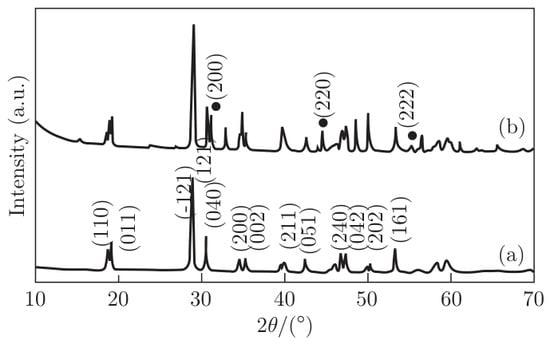
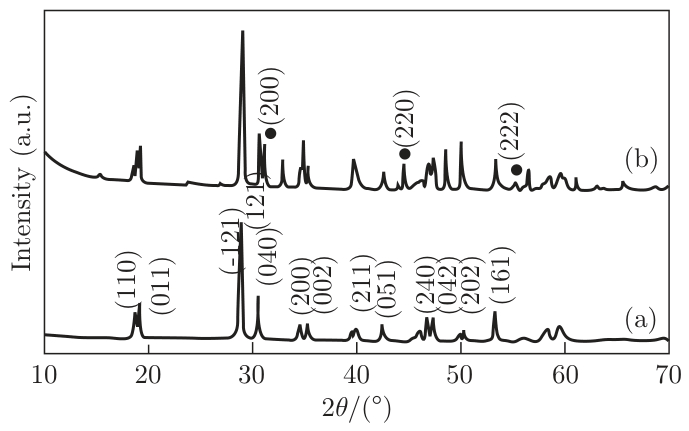
Phase analysis of the prepared catalysts was done by using powder X-ray diffraction technique, the Dutch X’PertPro X-ray diffractometer. Figure 1 showed the crystal structure and phase purity of the AgBr/BiVO4 samples and pure BiVO4 samples. The majors diffraction peaks of pure BiVO4 (Figure 1a) were observed clearly with 2θ at 19.0°, 28.9°, 30.5°, 39.9° and 53.3°, which consisted with the basis of monoclinic BiVO4 JCPDS No: 14-0688 (cell parameter a = 0.5195 nm, b = 0.1701 nm, c = 0.5092 nm), so the pure BiVO4 was monoclinic. Diffraction peaks of pure BiVO4 catalyst had high strength, so the catalyst had good crystallinity. Compared with pure BiVO4, diffraction peaks (200), (220) and (222) appeared in AgBr/BiVO4 (Figure 1b) composite photocatalysts, which consisted with the basis of AgBr standard pattern JCPDS No: 06-0438 (cell parameter a = b = c = 0.5774 nm). This result showed that AgBr was successfully introduced into the composite photocatalyst AgBr/BiVO4. The results above showed that the composite photocatalysts AgBr /BiVO4 maintained the pure monoclinic structure of BiVO4, so AgBr were complex with BiVO4 on the surface of BiVO4 crystal to form a heterojunction structure.
Figure 1.
XRD patterns of photocatalysts: (a) BiVO4, (b) AgBr/BiVO4.
3.2. SEM Analysis
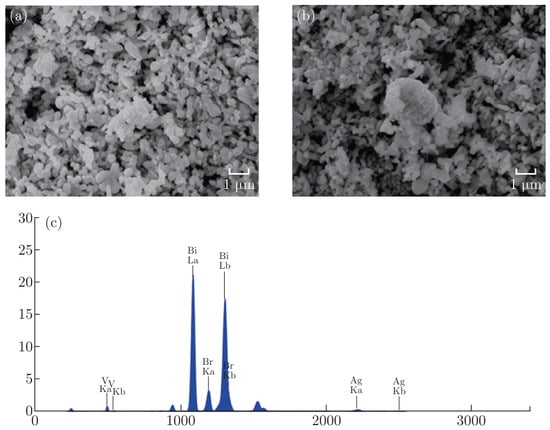
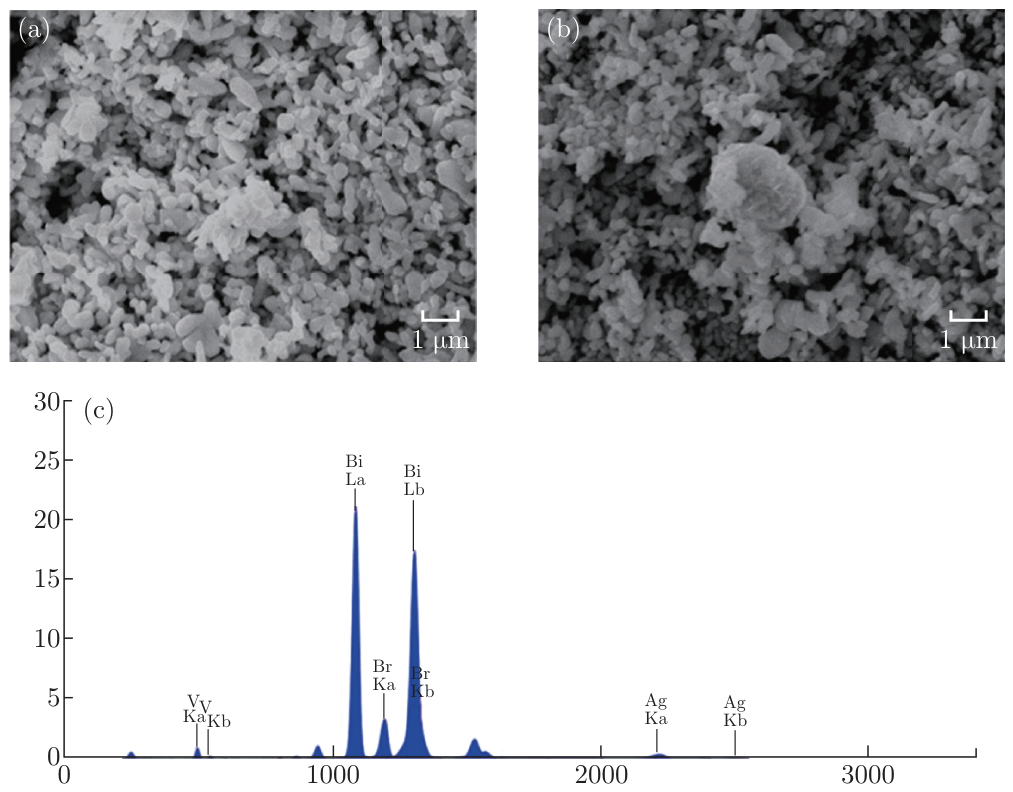
Scanning electron microscope (SEM) was utilized to study the morphology and dispersion of the prepared photocatalysts. Figure 2 showed the SEM picture and EDX energy spectrum of pure BiVO4 and AgBr/BiVO4 composite photocatalysts. As can be observed in the Figure 2, the composite photocatalyst AgBr/BiVO4 obviously appeared irregular solid particles on the surface of BiVO4. So the AgBr didn’t change the original shape of pure BiVO4, and only scattered in the BiVO4 samples. The energy spectra of Ag and Br elements appeared in the composite photocatalyst AgBr/BiVO4 samples (Figure 2c). This result is consisted with XRD result, which proved that the prepared composite catalysts contained AgBr.
Figure 2.
The SEM and EDX of composite photocatalysts: (a) BiVO4, (b) AgBr/BiVO4.
3.3. UV-vis Diffuse Reflection Spectra
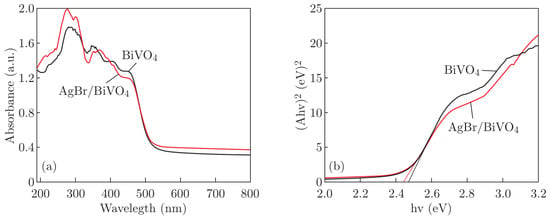
Optical absorption property of the catalyst has been recognized as the key factor affecting its photocatalytic performance. Figure 3 showed the UV-vis diffuse reflectance spectra of pure BiVO4 and AgBr/BiVO4 composite photocatalyst. In Figure 3a, it can be seen that pure BiVO4 and AgBr/BiVO4 composite photocatalysts had great absorption in the ultraviolet region and visible light. The difference between the observed absorption of photocatalyst samples was due to the different band gap transition between each sample. UV-vis diffuse absorption of AgBr/BiVO4 composite photocatalyst was better than pure BiVO4 in the visible light range.
Figure 3.
UV-vis diffuse reflectance spectrum of BiVO4 and Ag-X(BrI)/BiVO4.
Moreover, the band energy of catalyst is important in determining its photocatalytic activity. The relationship of absorbance and incident photon energy hν can be described as:
 where A represent the absorption coefficient; Eg represent the band gap energy; h represent Planck’s constant; ν represent the incident light frequency; A0 denotes a constant.
Calculated band gap energy of the samples was depicted in Figure 3b. The band gap energy (Eg) of the obtained catalysts can be estimated from a plot depicting (Ahν)2 versus hν. Estimated band gap energies for BiVO4, AgBr/BiVO4 were 2.47 eV and 2.44 eV respectively. The band gap level reflected the bond strength degree of the valence electrons. The results showed that the introduction of AgBr narrowed the band gap of the photocatalysts.
3.4. XPS Analysis
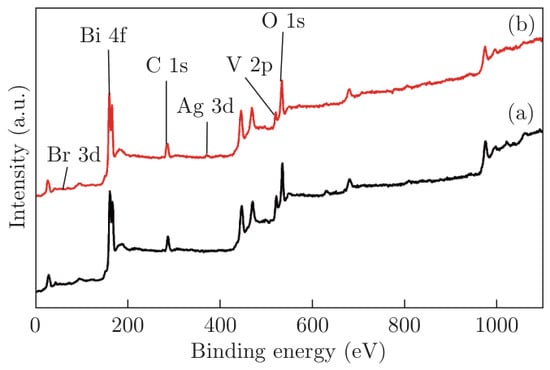
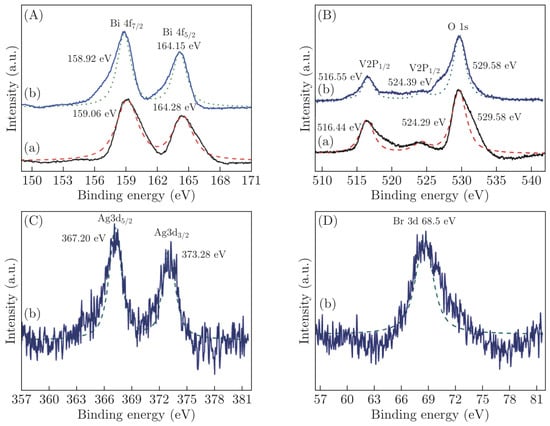
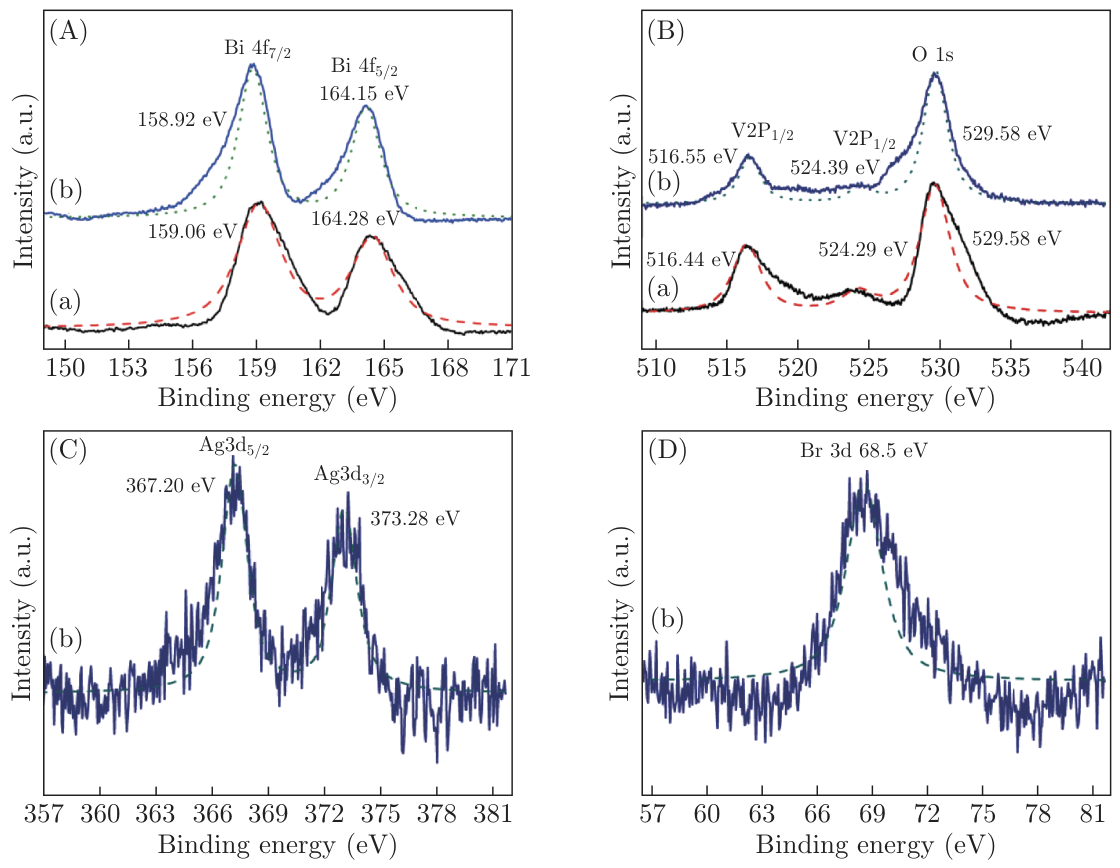
In order to analyze the chemical composition and chemical binding valence of the prepared photocatalysts, the XPS spectra of pure BiVO4 and AgBr/BiVO4 composite photocatalysts was analyzed. As showed in Figure 4, there are Bi, V, O and a few C elements on the surface of samples. In the Figure 4b, there is Ag and Br elements appear in the catalyst AgBr/BiVO4, which further showed that the composite photocatalysts AgBr/BiVO4 were prepared successfully. In the Bi spectrum (Figure 5A), binding energy is about 159 eV and 164 ev for two samples, which correspond to Bi4f5/2 and Bi4f7/2 respectively, so the Bi present in the samples with the form of Bi3+. In the Figure 5B, there are peaks appeared at binding energy around 524.3 eV and 516.5 eV, which correspond to V2p1/2 and V2p3/2 respectively, so the V existed in the samples with the form of V5+. In the Figure 5B, the binding energy 529.58 corresponds to O1s in the layered structure unit Bi2O2+2. By comparing two samples, the binding energy of Bi, V, O in composite photocatalysts is the same with pure BiVO4, which indicate that the AgBr loading has no influence on the chemical state of the elements in BiVO4.
Figure 4.
The XPS spectra of the composite photocatalysts: (a) BiVO4; (b) AgBr/BiVO4.
Figure 5.
XPS spectra of photocatalysts elements: (a) BiVO4; (b) AgBr/BiVO4; (A) Element Bi; (B) Element V; (C) Element Ag in AgBr/BiVO4; (D) Element Br in AgBr/BiVO4.
In the AgBr/BiVO4-Ag 3D XPS spectra (Figure 5C), signal peak at binding energy 373.28 eV and 367.20 eV correspond to Ag3d3/2 and Ag3d5/2, so silver existed in form of Ag+ in the composite photocatalyst AgBr/BiVO4. In Figure 5D, there is a peak at binding energy 68.5 eV, which is consistent with the binding energy of Br− in AgBr. According to XRD, SEM and XPS results, the composite photocatalyst AgBr/BiVO4 was successfully prepared.
3.5. Photocatalytic Mechanism
Coupling with two semiconductors could efficiently improve photocatalytic activity by reducing the recombination of electrons and holes. In the AgBr/BiVO4 composite photocatalysts system, BiVO4 and AgBr was combined, the heterojunction would be produced. The conduction band edge (ECB) and value band edge (EVB) of a semiconductor was calculated by the following formulas:

 where X is the absolute electronegativity of the atom semiconductor; EC is the energy of free electrons of the hydrogen scale (4.5 eV); Eg is the band gap of semiconductor; EVB is the VB edge potential and the ECB is the CB edge potential. The energy band of semiconductor was shown in Table 1. In the AgBr/BiVO4 composite photocatalysts system (Figure 6), nano silver was generated by light reduction reaction in visible light. Then silver nanoparticle was excited by visible light to generate electrons and holes, which could be transmitted to the electronic conduction band of silver halide (CB). Then part of the electronic conduction band could continue to transfer BiVO4 (CB), this leaded to the photogenerated electrons and holes effectively separated, thereby improving its photocatalytic degradation ability. In the process of reaction, the metal ions were reduced from the dye molecules, thus maintaining a balance of the whole system.
Table 1.
Absolute electronegativity, estimated band gap, conduction band edge, and valence band.
Figure 6.
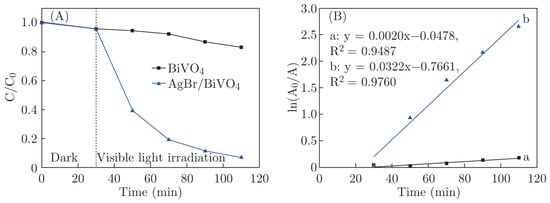
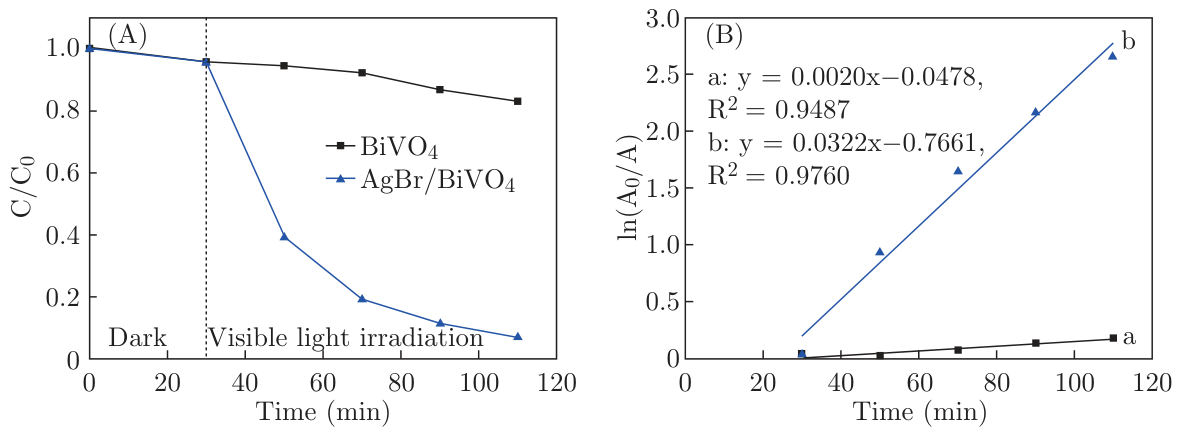
Degradation of Acid Orange 7 by photocatalysts: (a) BiVO4; (b) AgBr/BiVO4.
3.6. Photocatalytic Activity
Figure 6 shows the photocatalytic degradation of Acid Orange 7 with different prepared photocatalysts in the visible light. It was found that pure BiVO4 and AgBr/BiVO4 composite photocatalyst samples had different effects on the degradation of Acid Orange 7. As can be seen in Figure 6A, the degradation ratio of Acid Orange 7 for pure BiVO4 and AgBr/BiVO4 samples was 16.9% and 92.96% respectively after 80 min visible light irradiation. So the photocatalytic degradation of Acid Orange 7 was enhanced by composite catalyst AgBr/BiVO4 compared with pure BiVO4.
In order to further evaluate the photocatalytic activity of BiVO4 and AgBr/BiVO4, the firstorder kinetics reaction of the catalyst for Acid Orange 7 was shown in Figure 6B. The first order kinetic reaction equation follows:
 As showed in Figure 6B, the catalytic degradation of Acid Orange 7 was in accordance with the first-order kinetic reaction. The reaction rate of pure BiVO4, AgBr/BiVO4 was 0.002 min−1 and 0.032 min−1 respectively. It can be seen that the photocatalytic activity of AgBr/BiVO4 was better than pure BiVO4. It can be explained that after loading AgBr, part of AgBr was reduced to nano silver in the light, which was adsorbed on the surface of photocatalyst. The AgBr/BiVO4 light response range extended to the visible light region due to the plasma resonance effect produced by Ag nanoparticle. Under visible light irradiation, the photogenerated electron hole pairs were formed on the Ag nanoparticle, which firstly transferred to the conduction band of silver halide (CB), and then continued to conduction band of BiVO4 (CB), leading to separate electrons and holes effectively. Therefore, the photocatalytic degradation of Acid Orange 7 was enhanced by AgBr/BiVO4 than pure BiVO4 under visible light.
4. Conclusion
AgBr modified BiVO4 composite photocatalyst were prepared by hydrothermal synthesis and chemical deposition method. The results of XRD and SEM showed that doping of AgBr didn’t change the crystal structure of BiVO4, and AgBr were complex with BiVO4 on the surface of BiVO4 crystal to form a heterojunction structure. UV-vis diffuse reflectance (UV-vis) reflected that AgBr/BiVO4 composite photocatalyst extended the light response region and improved the visual light utilization ability, because these catalysts can effectively separate the photoelectrons and holes. Under visible light, it was found that the doping of AgBr could greatly improve the degradation of Acid Orange 7, AgBr/BiVO4 yielded 92.96% degradation of Acid Orange 7 after 80 min of visible light irradiation. In the visible light, AgBr was partly reduced to Ag0 formed resonance effect between them, which greatly promoted its degradation of Acid Orange 7 by separating photoelectrons and holes.
Acknowledgments
Authors acknowledge the financial support from Hubei Key Laboratory of Biomass Fibers and Eco-dyeing & Finishing of Wuhan Textile University. We also would like to thank the cooperation of Ivanovo State University of Chemistry and Technology in Russia.
References
- Yagub, M.T.; Sen, T.K.; Afroze, S.; Ang, H.M. Dye and its removal from aqueous solution by adsorption: a review. Adv. Colloid Interface Sci. 2014, 209, 172–184. [Google Scholar] [CrossRef] [Scilit] [PubMed]
- Forgacs, E.; Cserhati, T.; Oros, G. Removal of synthetic dyes from wastewaters: a review. Environ. Int. 2004, 30, 953–971. [Google Scholar] [CrossRef] [Scilit] [PubMed]
- Zeng, J.; Zhong, J.; Li, J.; Xiang, Z.; Liu, X.; Chen, J. Improvement of photocatalytic activity under solar light of BiVO4 microcrystals synthesized by surfactant-assisted hydrothermal method. Mater. Sci. Semicond. Process 2014, 27, 41–46. [Google Scholar] [CrossRef] [Scilit]
- Zhang, A.; Zhang, J.; Cui, N.; Tie, X.; An, Y.; Li, L. Effects of pH on hydrothermal synthesis and characterization of visible-light-driven BiVO4 photocatalyst. J. Mol. Catal. A-Chem. 2009, 304, 28–32. [Google Scholar] [CrossRef] [Scilit]
- Zhang, X.; Ai, Z.; Jia, F.; Zhang, L.; Fan, X.; Zou, Z. Selective synthesis and visible-light photocatalytic activities of BiVO4 with different crystalline phases. Mater. Chem. Phys. 2007, 103, 162–167. [Google Scholar] [CrossRef] [Scilit]
- Xue, Y.; Wang, X. The effects of Ag doping on crystalline structure and photocatalytic properties of BiVO4. Int. J. Hydrogen Energy 2015, 40, 5878–5888. [Google Scholar] [CrossRef] [Scilit]
- Abdullah, A.H.; Moey, H.J.M.; Yusof, N.A. Response surface methodology analysis of the photocatalytic removal of Methylene Blue using bismuth vanadate prepared via polyol route. J. Environ. Sci. 2012, 24, 1694–1701. [Google Scholar] [CrossRef] [Scilit] [PubMed]
- García Pérez, U.M.; Sepúlveda-Guzmán, S.; La Martínez-de Cruz, A.; Ortiz Méndez, U. Photocatalytic activity of BiVO4 nanospheres obtained by solution combustion synthesis using sodium carboxymethylcellulose. J. Mol. Catal. A-Chem. 2011, 335, 169–175. [Google Scholar] [CrossRef] [Scilit]
- Li, H.; Liu, G.; Duan, X. Monoclinic BiVO4 with regular morphologies. Mater. Chem. Phys. 2009, 115, 9–13. [Google Scholar] [CrossRef] [Scilit]
- Li, J.; Cui, M.; Guo, Z.; Liu, Z.; Zhu, Z. Synthesis of dumbbell-like CuO-BiVO4 heterogeneous nanostructures with enhanced visible-light photocatalytic activity. Mater. Lett. 2014, 130, 36–39. [Google Scholar] [CrossRef] [Scilit]
- Yu, C.; Yang, K.; Yu, J.C.; Cao, F.; Li, X.; Zhou, X. Fast fabrication of Co3O4 and CuO/BiVO4 composite photocatalysts with high crystallinity and enhanced photocatalytic activity via ultrasound irradiation. J. Alloys Compd. 2011, 509, 4547–4552. [Google Scholar] [CrossRef] [Scilit]
- Geng, Y.; Zhang, P.; Li, N.; Sun, Z. Synthesis of Co doped BiVO4 with enhanced visible-light photocatalytic activities. J. Alloys Compd. 2015, 651, 744–748. [Google Scholar] [CrossRef] [Scilit]
- Tong, R.; Wang, X.; Zhou, X.; Liu, Q.; Wang, H.; Peng, X.; Liu, X.; Zhang, Z.; Wang, H.; Lund, P.D. CobaltPhosphate modified TiO2/BiVO4 nanoarrays photoanode for efficient water splitting. Int. J. Hydrogen Energy 2016, 1–9. [Google Scholar]
- Yang, J.S.; Wu, J.J. Low-potential driven fully-depleted BiVO4/ZnO heterojunction nanodendrite array photoanodes for photoelectrochemical water splitting. Nano Energy 2017, 32, 232–240. [Google Scholar] [CrossRef] [Scilit]
- Min, S.; Wang, F.; Jin, Z.; Xu, J. Cu2O nanoparticles decorated BiVO4 as an effective visible-lightdriven p-n heterojunction photocatalyst for methylene blue degradation. Superlattices Microstruct. 2014, 74, 294–307. [Google Scholar] [CrossRef] [Scilit]
- Qiu, P.; Park, B.; Choi, J.; Cui, M.; Kim, J.; Khim, J. BiVO4/Bi2O3 heterojunction deposited on graphene for an enhanced visible-light photocatalytic activity. J. Alloys Compd. 2017, 706, 7–15. [Google Scholar] [CrossRef] [Scilit]
- Mao, M.; Chen, F.; Zheng, C.; Ning, J.; Zhong, Y.; Hu, Y. Facile synthesis of porous Bi2O3-BiVO4 p-n heterojunction composite microrods with highly efficient photocatalytic degradation of phenol. J. Alloys Compd. 2016, 688, 1080–1087. [Google Scholar] [CrossRef] [Scilit]
- Xu, J.; Wang, W.; Wang, J.; Liang, Y. Controlled fabrication and enhanced photocatalystic performance of BiVO4@CeO2 hollow microspheres for the visible-light-driven degradation of rhodamine B. Appl. Surf. Sci. 2015, 349, 529–537. [Google Scholar] [CrossRef] [Scilit]
- Farhadi, A.; Mohammadi, M.R.; Ghorbani, M. On the assessment of photocatalytic activity and charge carrier mechanism of TiO2@SnO2 core-shell nanoparticles for water decontamination. J. Photochem Photobiol. A 2017, 338, 171–177. [Google Scholar] [CrossRef] [Scilit]
- Lei, C.X.; Huang, X.; Liu, X.; Wang, L.S.; Zhang, G.S.; Peng, D.L. Photoelectrochemical performances of the SnO2-TiO2 bilayer composite films prepared by a facile liquid phase deposition method. J. Alloys Compd. 2017, 692, 227–235. [Google Scholar] [CrossRef] [Scilit]
- Nishikawa, M.; Hiura, S.; Mitani, Y.; Nosaka, Y. Enhanced photocatalytic activity of BiVO4 by cografting of metal ions and combining with CuBi2O4. J. Photochem Photobiol. A 2013, 262, 52–56. [Google Scholar] [CrossRef] [Scilit]
- Liu, L.; Xu, H.; Li, H.; Xu, Y.; Xia, J.; Yin, S. Synthesis and characterization of the efficient visible-lightinduced photocatalyst AgBr and its photodegradation activity. J. PhysChem Solids 2012, 73, 523–529. [Google Scholar] [CrossRef] [Scilit]
- Amornpitoksuk, P.; Suwanboon, S. Photocatalytic decolorization of methylene blue dye by Ag3PO4AgX (X=Cl−, Br− and I−) under visible light. Adv. Powder Technol. 2014, 25, 1026–1030. [Google Scholar] [CrossRef] [Scilit]
- Sui, Y.; Su, C.; Yang, X.; Hu, J.; Lin, X. Ag-AgBr nanoparticles loaded on TiO2 nanofibers as an efficient heterostructured photocatalyst driven by visible light. J. Mol. Catal. A-Chem. 2015, 410, 226–234. [Google Scholar] [CrossRef] [Scilit]
- Wang, Q.; Chen, M.; Zhu, N.; Shi, X.; Jin, H.; Zhang, Y.; Cong, Y. Preparation of AgI sensitized amorphous TiO2 as novel high-performance photocatalyst for environmental applications. J. Colloid Interface Sci. 2015, 448, 407–416. [Google Scholar] [CrossRef] [Scilit] [PubMed]
- Xue, B.; Sun, T.; Wu, J.K.; Mao, F.; Yang, W. AgI/TiO2 nanocomposites: ultrasound-assisted preparation, visible-light induced photocatalytic degradation of methyl orange and antibacterial activity. Ultrason Sonochem. 2015, 22, 1–6. [Google Scholar] [CrossRef] [Scilit] [PubMed]
- Gao, X.M.; Fu, F.; Zhang, L.P.; Li, W.H. The preparation of Ag-BiVO4 metal composite oxides and its application in efficient photocatalytic oxidative thiophene. Physica B Condens. Matter 2013, 419, 80–85. [Google Scholar] [CrossRef] [Scilit]
- Zhu, S.; Li, Q.; Li, F.; Cao, W.; Li, T. One-pot synthesis of Ag+ doped BiVO4 microspheres with enhanced photocatalytic activity via a facile hydrothermal method. J. Phys. Chem. Solids 2016, 92, 11–18. [Google Scholar] [CrossRef] [Scilit]
- Fan, H.; Wang, D.; Xie, T.; Lin, Y. The preparation of high photocatalytic activity nano-spindly Ag-BiVO4 and photoinduced carriers transfer properties. Chem. Phys. Lett. 2015, 640, 188–193. [Google Scholar] [CrossRef] [Scilit]
- Gupta, G.; Kaur, A.; Sinha, A.; Kansal, S.K. Photocatalytic degradation of levofloxacin in aqueous phase using Ag/AgBr/BiOBr microplates under visible light. Mater. Res. Bull. 2017, 88, 148–155. [Google Scholar] [CrossRef] [Scilit]
- Chen, F.; Yang, Q.; Sun, J.; Yao, F.B.; Wang, S.N.; Wang, Y.L.; Wang, X.L.; Li, X.M.; Niu, C.G.; Wang, D.B.; Zeng, G.M. Enhanced photocatalytic degradation of tetracycline by AgI/BiVO4 heterojunction under visible-light irradiation: mineralization efficiency and mechanism. ACS Appl. Mat. Interfaces 2016, 8, 32887–32900. [Google Scholar] [CrossRef] [Scilit] [PubMed]

© 2018 Textile Bioengineering and Informatics Society. This article is an open access article distributed under the terms and conditions of the Creative Commons Attribution (CC BY) license (https://creativecommons.org/licenses/by/4.0/).