


Abstract
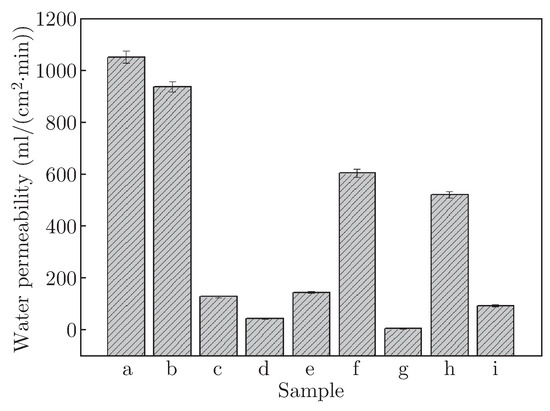
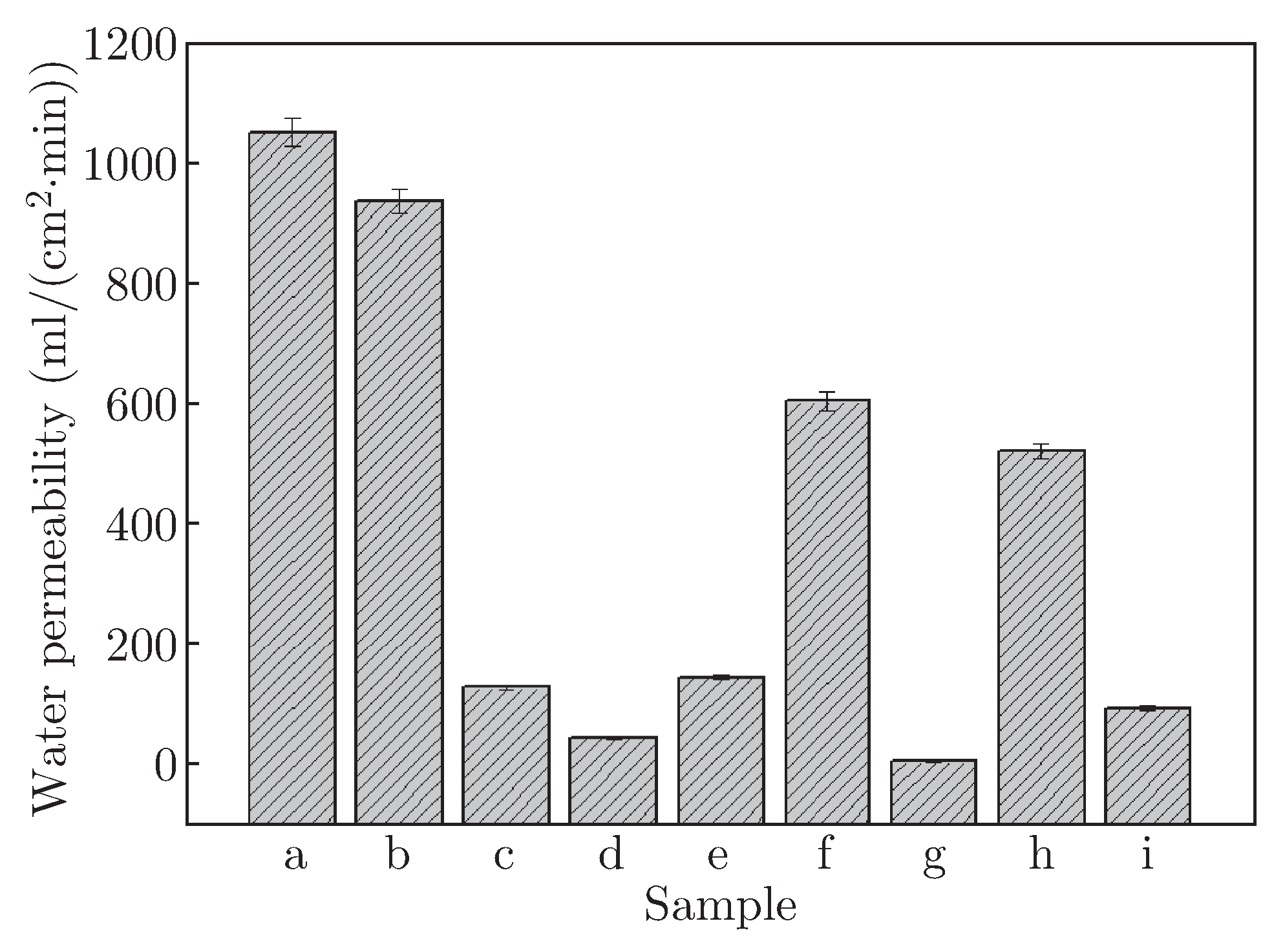
The present paper describes the structural design and fabrication of silk fibroin (SF)/polyester (PET)-based bifurcated stent-graft (BSG) using orthogonal experimental design (OED) and range analysis (RA). An orthogonal design comprising of three factors was used, including basic weave, warp × weft density and warp × weft materials, each factor contains three different levels. As a result, nine kinds of BSGs with different weaves, densities and materials were prepared using a modified rigid rapier weaving loom. Water permeability and wall thickness were evaluated according to standard protocols (ISO 7198: 2016). Furthermore, weaving process was optimized and RA was used to detect how performance was affected by factors. The results showed that the thickness of almost all samples is near or less than 0.1 mm, which is required for BSG used in endovascular graft exclusion. Whereas, the water permeability is with a large variation compared to thickness, because BSGs made of pure SF possess significant lower water permeability than that made of pure PET or SF-PET mixed. The water permeability of sample g is only 5.19 mL/(cm2 × min), which can prevent blood leakage after transplantation according to the standard. In conclusion, the SF-based BSG has better performance in terms of water permeability, which is more suitable as BSG used in endovascular exclusion.
1. Introduction
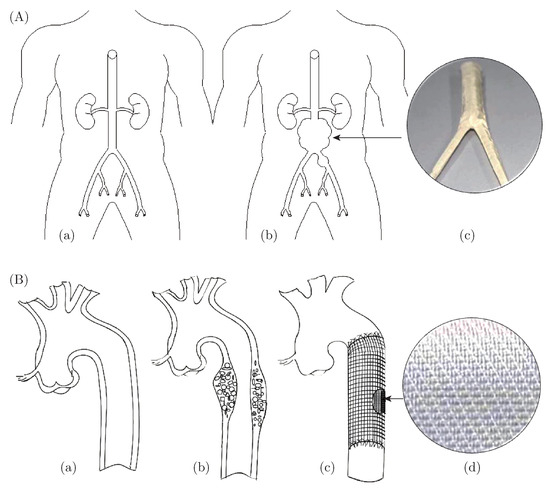
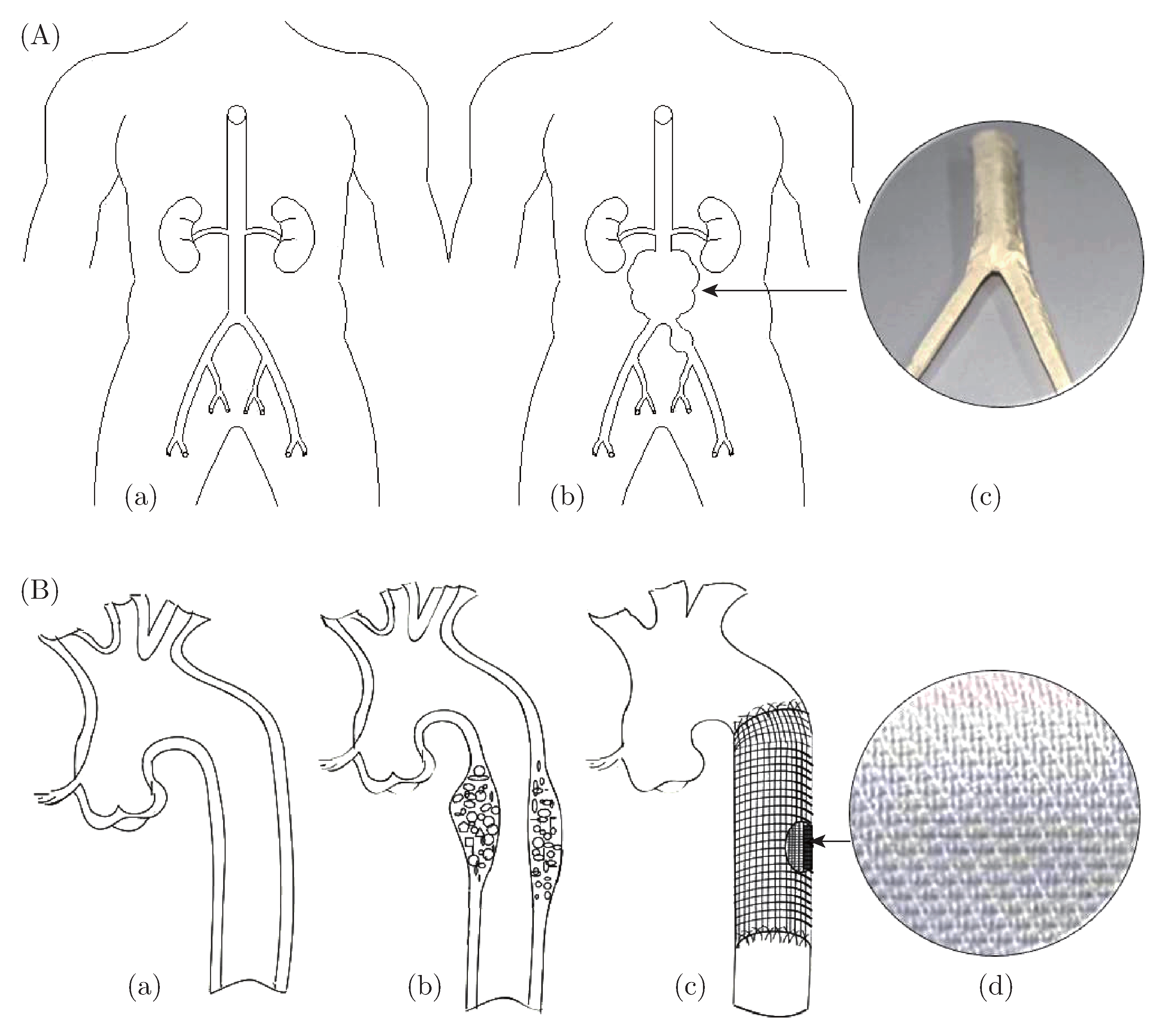
Endovascular graft exclusion has appeared for arteriosclerosis, thromboembolism, intracranial aneurysm and other artery expansion diseases. It has the advantages of micro trauma, less bleeding, faster recovery and less complication compared with traditional remedy [1,2]. Diagrams of endovascular graft exclusion and traditional remedy were shown in Figure 1. It can be seen from Figure 1(A) that lesions’ vascular tissue would be segregated by bifurcated stent-graft (BSG) rather than being excised. In fact, a small mouth would be opened at the patients’ arteries of the limbs, and then BSG would be guided into the lesion area with a catheter [3]. BSG expands through a balloon assisted technique to get back into shape, so as to isolate lesion blood vessel, ensuring the pathway. By contrast, lesions’ vascular tissue would be replaced by artificial vascular prosthesis from surgical operation (Figure 1(B)). As a consequence, traditional remedy is with lager injury, which is not suitable for the weak and the elder patients. Endovascular prosthesis is made up of metal stent and stent-graft. Metal stent is usually made of titanium, stainless steel and nickel alloy. The stent-graft in commercial field used to be prepared through sewing a flat woven fabric into a tube, which is not satisfactory because it may lead to exudation in the stitched line and branched part after transplanting. Structural design and preparation of BSG is different from ordinary artificial blood vessels, higher performance is required. It should not only meet the general performance of the artificial blood vessels such as biocompatibility and long-term stability, but also should have good permeability resistance under the condition of thinner tube wall. Based on previous studies [4,5], the water permeability should be lower than 300 mL/(cm2×min) and the wall thickness should be less than 0.1 mm, otherwise, exudation would happen after transplantation or guiding is hard during surgery procedures. However, there are internal conflicts between thinner thickness and higher anti-permeability. It is not easy to balance the relationship between them, because if the thickness of BSG is too thin, good anti-permeability function cannot be guaranteed. In fact, because of human’s own individual differences, it is even better if the BSG is with thinner thickness as well as better anti-permeability, so that there would not be any difficulties during leading-in process.
Figure 1.
Schematic diagram of endovascular stent (A) and replacement artificial vascular prosthesis (B): (a) normal blood vessel, (b) abnormal vessel, (c) and (d) artificial blood vessels prototyped in our team.
Biomedical polyester (PET) has been widely used as the materials of artificial blood vessel for many years because it has remarkable mechanical properties and good chemical stability [6,7]. Studies have shown that a layer of coagulation would arise after PET-based artificial blood vessel transplanted, which is advantageous to the vascular endothelial cells attachment and growth [8,9]. Silk fibers that are composed of a large portion of silk fibroin (SF) have been widely used in the field of biomedical materials such as suture, artificial vascular prosthesis and artificial nerve [10,11,12]. It is favorable for endothelial cell proliferation because of its good stability, blood compatibility, biocompatibility and appropriate mechanical properties [13,14,15]. SF-based artificial blood vessel possesses a moderate amount of pores, showing less tissue reaction and more complete tissue lining in vivo [16,17,18,19].
In this paper, nine kinds of seamless BSGs with special woven design were developed to avoid blood leakage of branched part through an OED which contains three factors, including basic weave, warp × weft density and warp × weft materials. PET and SF are used to prepare pure PET-based BSG, pure SF-based BSG and SF-PET mixed BSG. Then the samples were prepared using a modified rigid rapier loom. After a serious of post-treatment process for instance cleaning, degumming and heat setting, final samples were prepared. And then wall thickness and permeability were characterized according to the international standard for cardiovascular implants and extracorporeal systems (ISO 7198: 2016). The results were analyzed from RA in order to detect the relationship between factors and performance of BSGs, which provided reference for woven vascular prosthesis preparation, especially the development of BSG which is used in endovascular graft exclusion.
2. Materials & Methods
2.1. Materials
100% raw silk (2.4 tex) (RS) and silk (2.4 tex) (DS) filament (Bombyx mori) were supplied by Xiehe Silk Co., Ltd., (Zhejiang China). Monofilament and multifilament PET (2.4 tex) were purchased from New Material Technology Co., Ltd., (Jiaxing, China). Na2CO3 and all other chemicals of analytical grade were purchased from Sinopharm Chemical Reagent Co., Ltd., (Shanghai China).
2.2. Design of Experiment
The main factors which affect the wall thickness and water permeability of BSG are fabric weave, warp × weft density and warp × weft materials. As a result, they were chosen as the factors of OED. In order to develop an ideal BSG that can meet transplant requirements, there are three levels for each factor. The artificial blood vessels with plain weave have been applied to vascular disease therapy for many years, so it can be one of fabric weaves. The choices of the other two factors (2/2 twill and 3/1 twill) are not only to contrast, but also for their similar structure to plain weave. Warp × weft density is of great importance as it is the influential factor of water permeability. Based on the previous studies, the warp × weft density of 1100/10 cm × 800/10 cm, 1100/10 cm × 1400/10 cm and 1100/10 cm × 2000/10 cm were determined in our study. As we know that the thickness of fabric is two to three times thicker than the yarn. For this reason, 2.4 tex yarn was chosen as both warp and weft of BSGs. It must be mentioned that warp and weft materials selection is not only to achieve good compatibility as well as permeability but also ensure weaving process successfully. Warping machine was used for the PET monofilament and RS before weaving. In view of the low strength of the material used, the warping rate should be used in a low range, which was set at 20 r/min. A modified rigid rapier weaving loom (China Patent: CN101215749A), suitable for BSG weaving, was used for the preparation. The factors and levels for OED were given in Table 1.
Table 1.
Factors and levels for OED.
2.3. Post-treatment of BSG
There were three kinds of BSGs, pure PET-based, PET × DS-based and RS × DS-based. Ultrasonic cleaning was used to rinse all samples in distilled water for 30 minutes to remove rust, dirt and other impurities which were attached on the fabric surface due to reed’s friction and static adsorption during weaving process. Then BSGs made from PET × DS and RS × DS were degummed by treating two and four times, respectively, with 0.05% (w/w) Na2CO3 solution at 98 °C to remove surface sericin, each time was for 20 min. The degumming time of BSG was determined by degumming study on RS and DS. The effectiveness and accomplishment of the degumming course were confirmed by picric acid-carmine dye liquor. After cleaning and degumming process, all samples were placed under the condition of 120 °C for 30 minutes to finalize the design.
2.4. Characterization of wall Thickness and Water Permeability
According to the international standard for cardiovascular implants and extracorporeal systems (ISO 7198: 2016), the wall thickness of BSGs was tested by fabric thickness tester (YG-B 141D, Guoliang Compamy, China) under the pressure of 981 Pa, and the sampling area is 0.5 cm2. Five parallel samples were characterized to get reasonable results. The water permeability device was set up according to ISO 7198: 2016. It can meet the requirements of the transplantation when the water permeability is lower than 300 mL/(cm2×min) under the 120 mmHg hydrostatic pressure.
2.5. Statistical Analysis
The RA method described in SPSS (16.0) was used for the OED to identify the significant factor influencing the performance of BSGs. The size of range “R” reflected the influence of the corresponding factors. The bigger the value of R is, the more powerful the factor influencing the target in different levels, it is usually the major factor of all. The smaller the value of R is, the less powerful the factor influencing the target in different levels, it is usually the minor factor of all.
3. Results & Discussion
3.1. Fabrication of BSGs
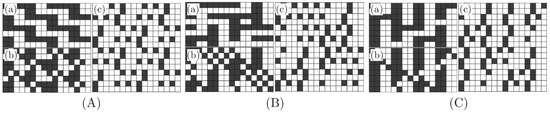
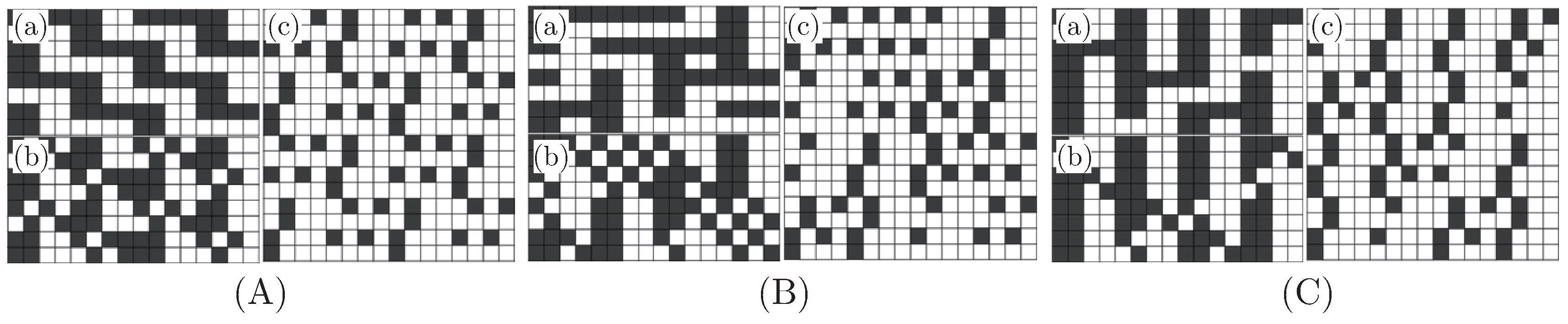
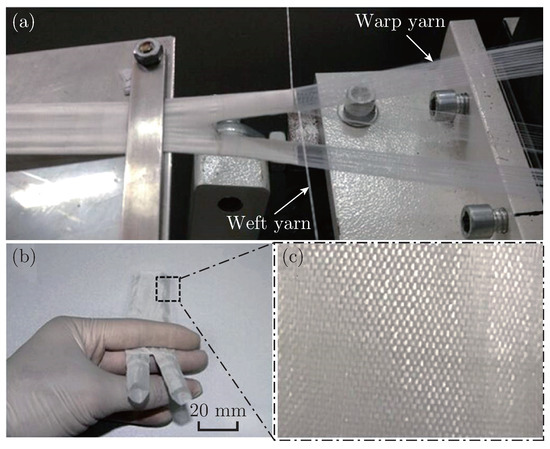
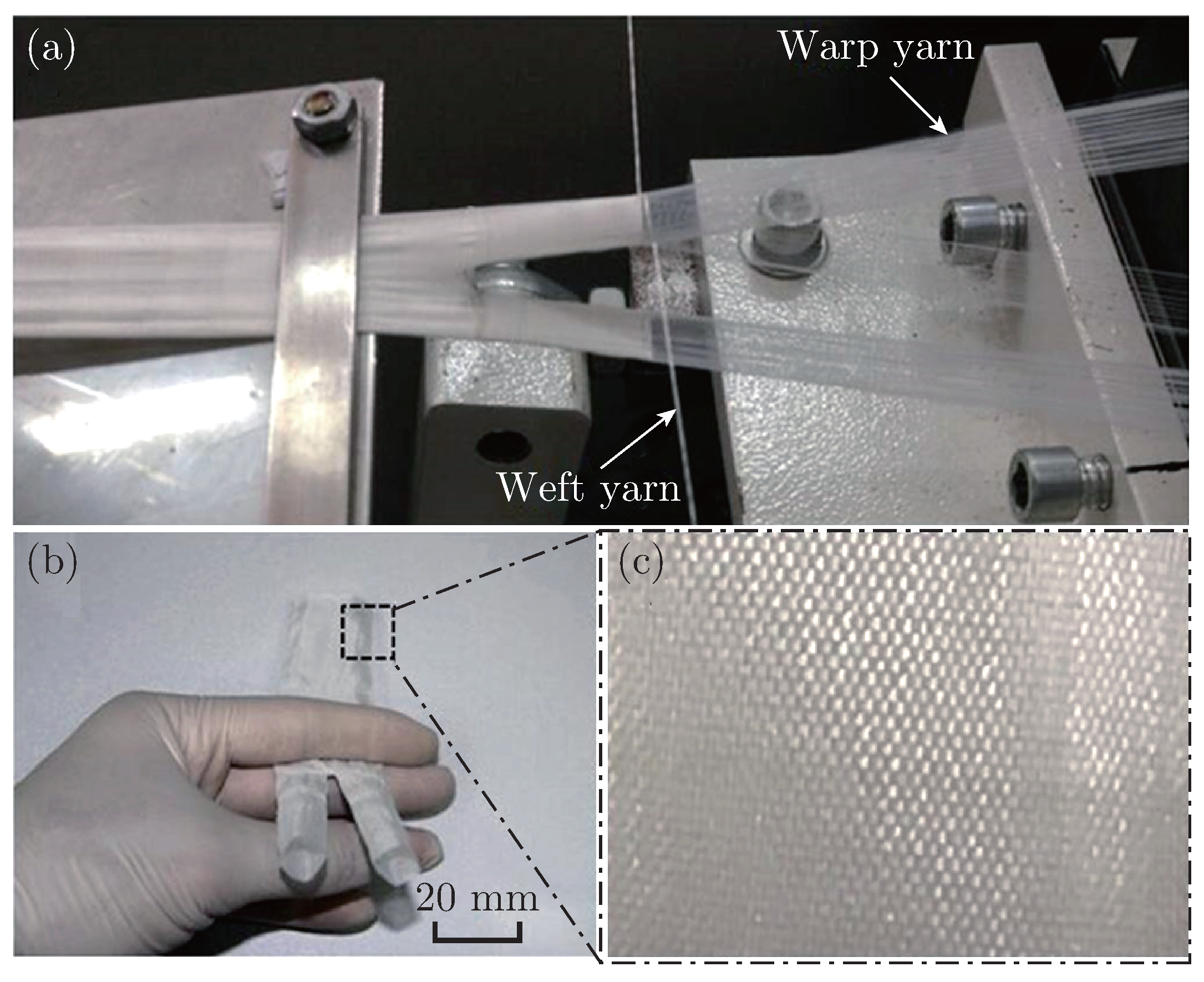
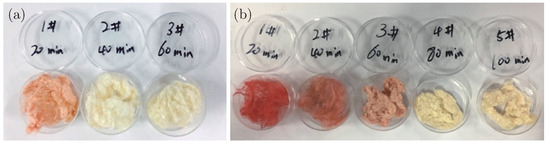
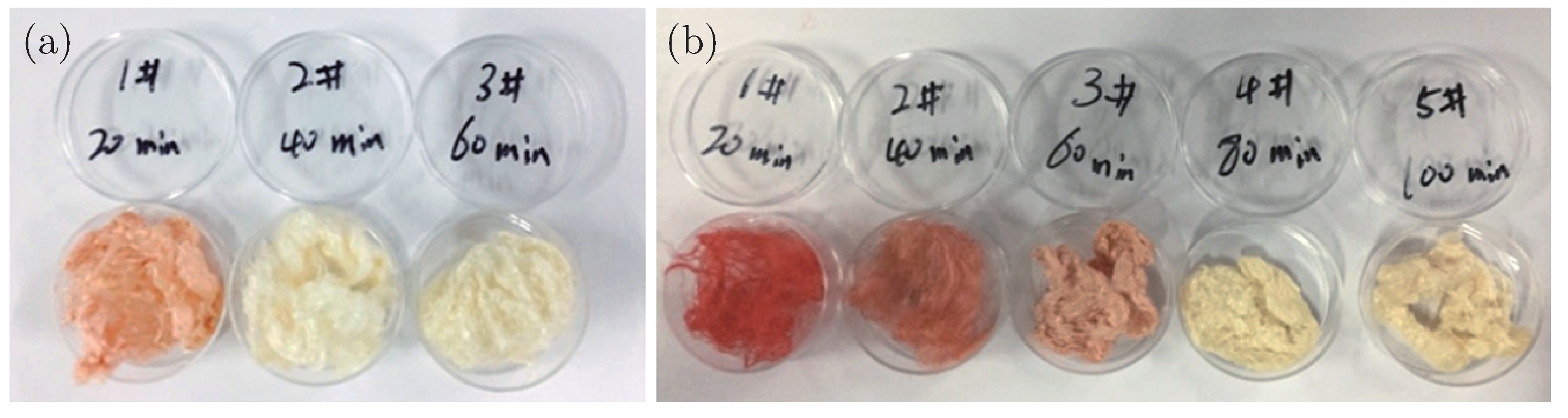
According to the design principle of three factors and three levels OED, the OED specifications of experiment were given in Table 2. There are three parts for BSG fabrics: straight tube part, transitional part and bifurcation part according to the design principle of BSG fabric we have published before [20]. Weaving diagrams of three basic weaves was showed in Figure 2. The main trunk and transition can be weaved by choosing one of shuttles on the machine while two shuttles must be used for branched part. In order to achieve a good water permeability resistance in the transition part, the integrated structure can be used. Diagram of sample view and weaving process using the modified loom were shown in Figure 3. It should be mentioned that electrostatic attraction and unmatched warp tension are frequent during weaving process, which can be solved by moisturizing the air and applying loads on the less tension yarn. After preparation, degumming process is necessary for the BSGs made of pure silk and silk-PET mixed, the time is determined by measuring degumming time of RS and DS. It can be seen from Figure 4 that color of DS and RS turned to be unchanged after 40 and 80 mins degumming process respectively, which showed that sericin was completely removed during this process. Based on this result, some BSGs which should have degumming process were treated in homologous condition, after that the final BSGs can be obtained.
Table 2.
The specifications of BSGs.
Figure 2.
Weaving diagrams of BSG: plain weave (A), 2/2 twill weave (B) and 3/1 twill weave (C); weave designs of different BSG: (a) main trunk, (b) transition, (c) branch.
Figure 3.
Sample design and weaving process using the modified loom: (a) image of weaving process, (b) full view of the sample, (c) surface of the sample.
Figure 4.
Color of degummed silk (a) and raw silk (b) by picric acid-carmine dye liquor dyeing at different time.
3.2. Wall Thickness
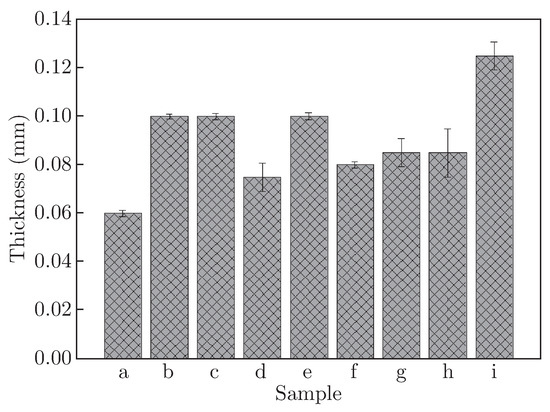
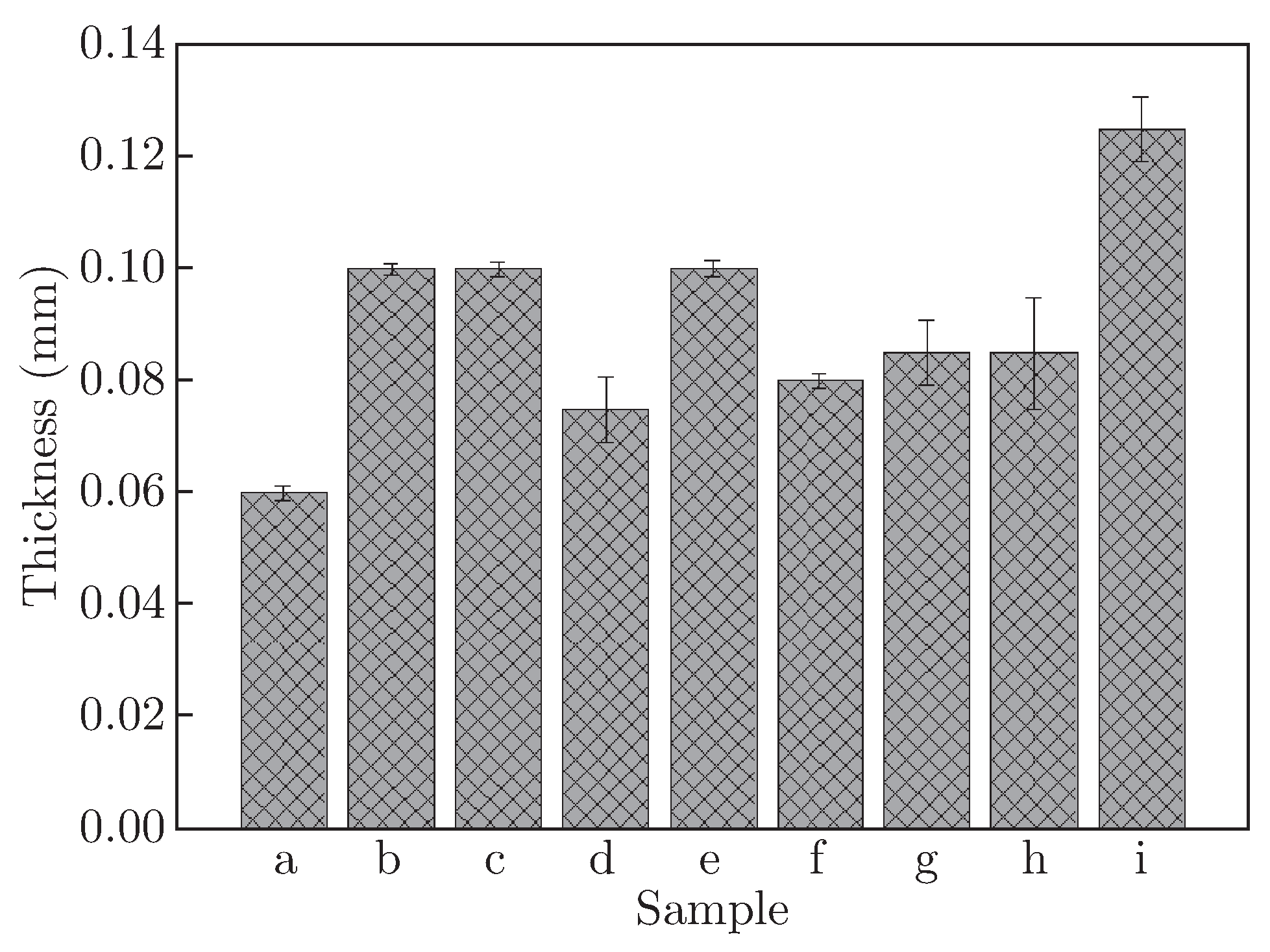
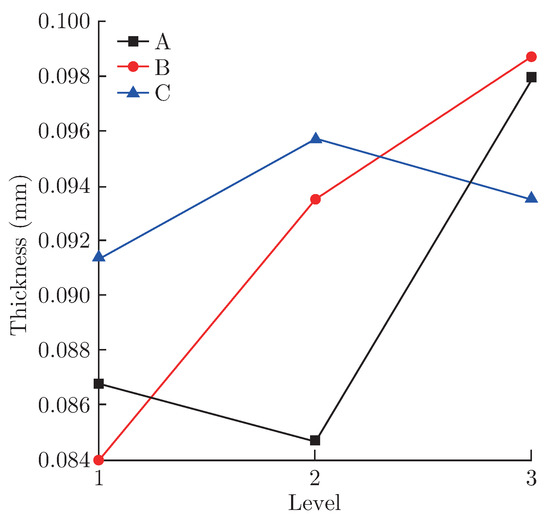
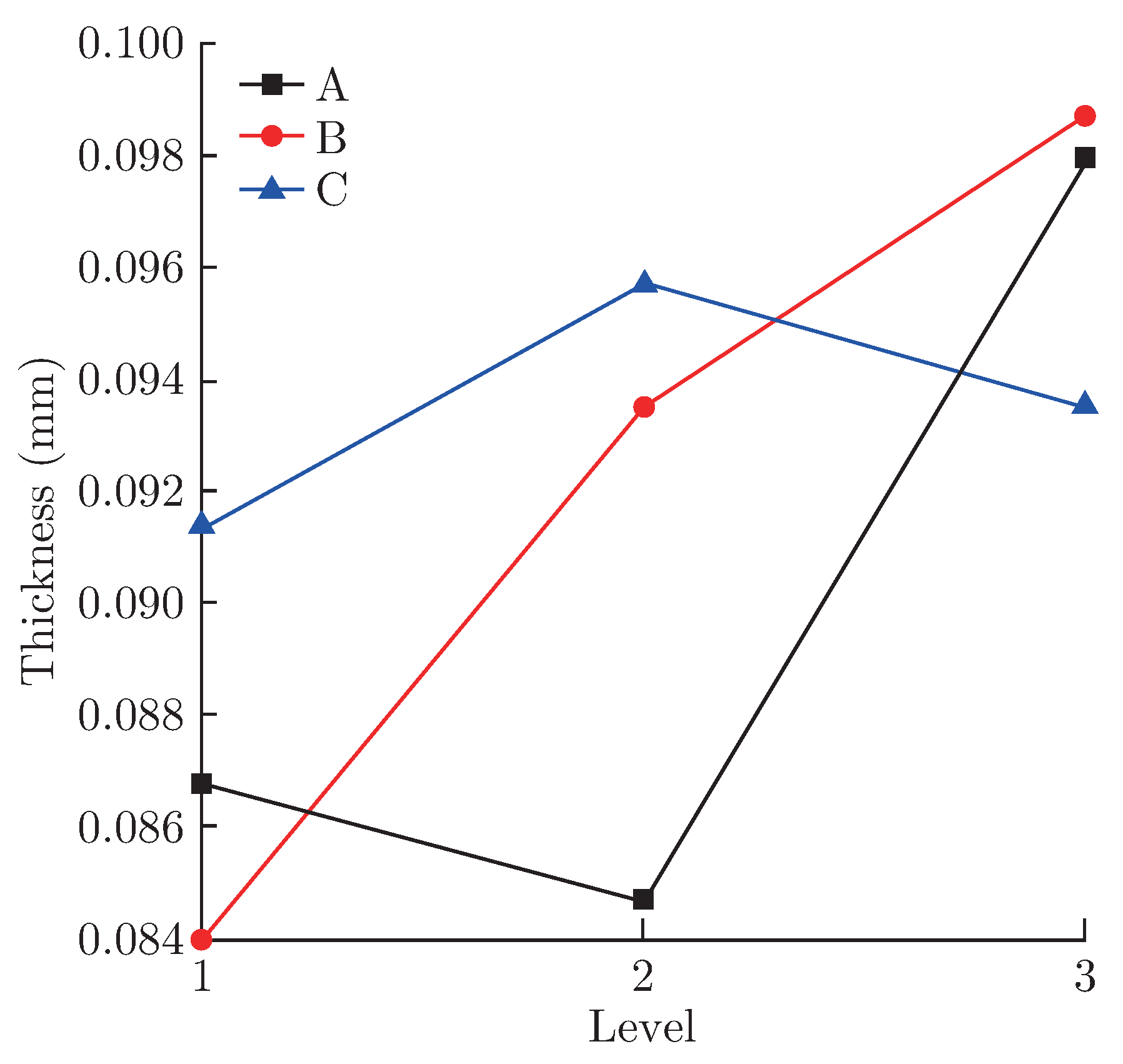
Thickness of BSGs is of great importance because it would be difficult when guided into human body if it is too thick. The wall thickness of different kinds of BSGs was shown in Figure 5. The BSG we have prepared can almost meet the thickness requirements of lumen isolation technique as thickness of almost all BSGs was near or less than 0.1 mm except sample (i). Moreover, the thickness of all samples is around 0.1 mm (0.06 mm–0.125 mm), which proved the rationality of OED. In fact, the higher thickness can provide better mechanical property, ensuring long-term stability, but it must be under the condition of being less than 0.1 mm to avoid the difficulty of leading-in process. The RA results of wall thickness and diagram of factors and level effects on the thickness were shown in Table 3 and Figure 6, respectively. It can be concluded that the thickness increased when the density is from 800/cm to 1400/cm while it declined when the density is from 1400/10 cm to 2000/10 cm. The decreasing trend from 800/cm to 1400/cm can be attributed to cross wave highness. In other words, the cross wave is higher when weft density is 800/10 cm. Nonetheless, this trend changed from 1400/10 cm to 2000/10 cm. It indicated that the cross wave highness increases firstly, and then decreases when weft density changed from 800/10 cm to 2000/10 cm. The (C) fabric materials were with less effect when compared to fabric density in term of determining thickness of BSGs, in that the materials were all with the same diameter. The marginal difference can be attributed to the discrepancy of their different yield stress, which affected the cross wave during weaving process. The (B) fabric weave was the most significant which determined the fabric floating, so as to determine the thickness of BSGs.
Figure 5.
Wall thickness of different BSGs: (a-i) the samples given into Table 2.
Table 3.
Results of wall thickness from range analysis.
Figure 6.
Diagram of factor and level effect on the thickness of BSGs.
RA results of BSG thickness showed that (B) fabric weave, (A) weft density and (C) warp × weft materials were with a gradual declining influence on BSG thickness. What is more, factor B (R=0.034) processed a more significant effect by comparing to factors A (R=0.013) and C (R=0.01) as the R of it was several times larger than the other two. Furthermore, factor C was with less influence on thickness in that the R is just 0.01. From the analysis, we can summarize that just take fabric weave and weft density into consideration in terms of determining thickness when prepare woven artificial vascular, while warp × weft materials were ignorable as long as they are with the same diameter.
3.3. Water Permeability
There is no denying that blood leakage would not happen after transplant if BSG is with an ideal permeability, so permeability of BSG plays vital role in transplantation. As can be seen from Figure 7, water permeability of BSG made from pure PET was far above 300 mL/(cm2×min), whatever their fabric density and weave are, which cannot meet application requirement. However, BSGs possessed a better water permeability as long as it is constituted with silk. It should also be mentioned that pure silk-based BSG has ideal water permeability, especially for sample (g), with just only 5.19 mL/(cm2×min). They fully manifested that silk-based BSG can easily meet permeability requirements while pure PET-based BSG cannot. Furthermore, results of water permeability confirmed rationality of the OED again in that water permeability of some samples is less than 300 mL/(cm2×min). Analysis in Table 4 showed that there were big gaps among (A) weft density, (B) fabric weave and (C) warp × weft materials because the R of them with significant difference. What is more, factor C is critical and factor A is medium while factor B is not so significant in water permeability determining.
Figure 7.
Water permeability of different BSGs: (a-i) the samples given into Table 2.
Table 4.
Results of water permeability from range analysis.
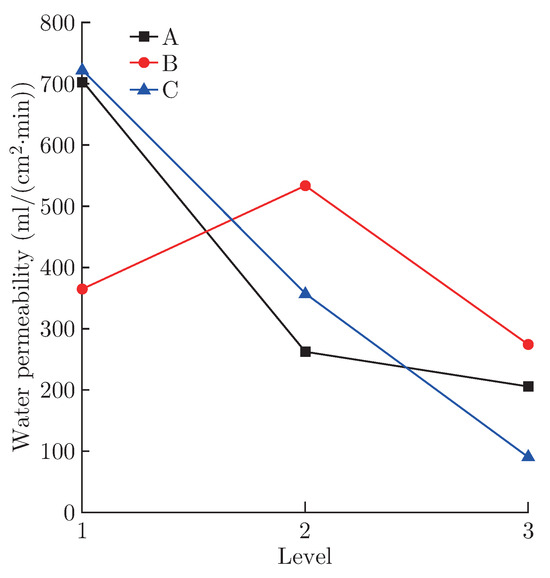
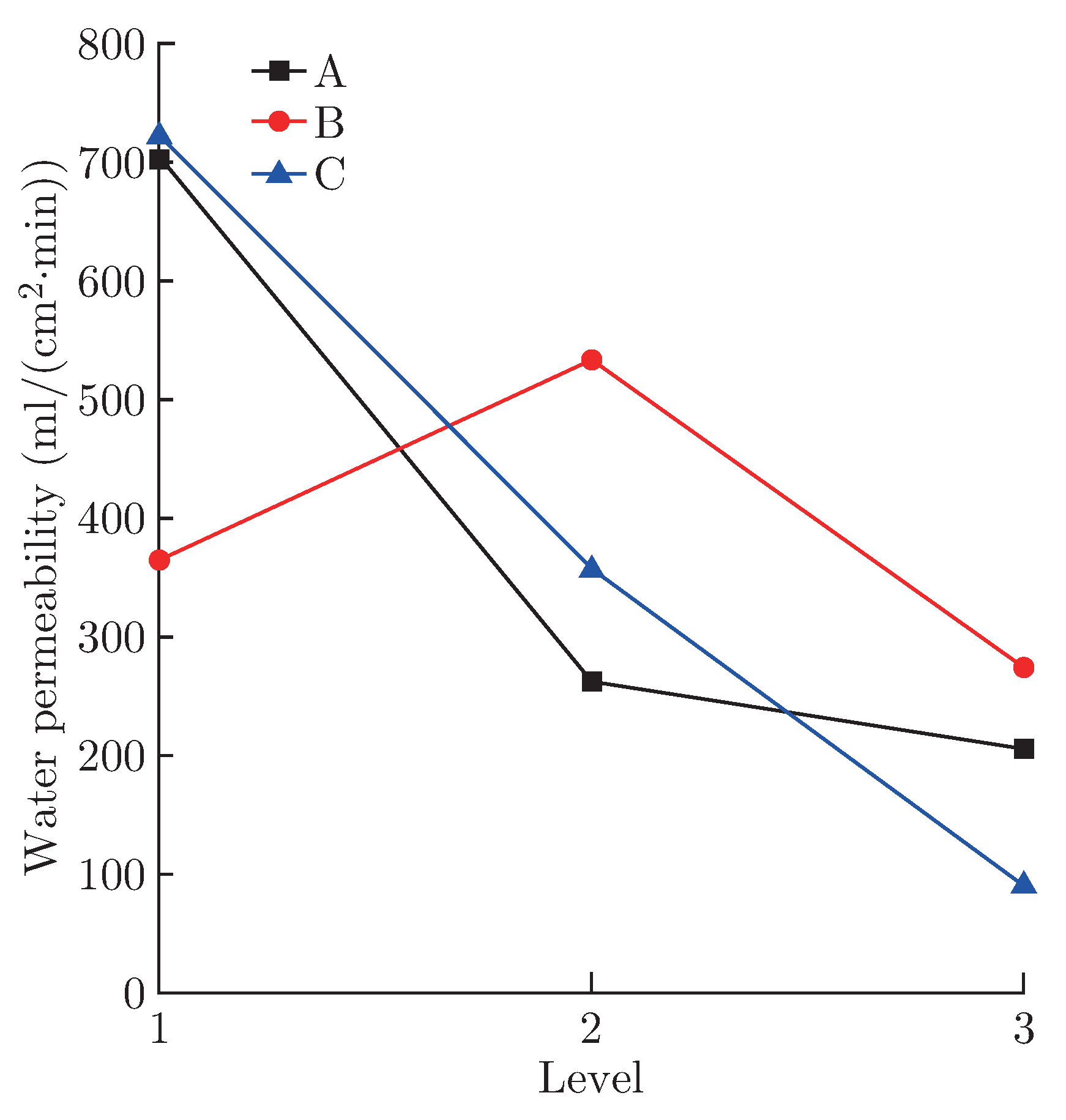
Water permeability is not only related to fabric porosity but also surface energy. Fabric porosity determined the water permeability from proportion of blank area while surface energy influenced it from the different ability combining with water among BSGs. As can be seen from Figure 8, the water permeability would be lower with fabric density increasing, which resulted from higher density providing less porosity. The (C) warp × weft materials were the most significant as there is essential difference of surface energy between silk and PET, which can be attributed to more hydrophilic groups in silk than that of PET. In addition, the better water permeability of silk-based BSG indicated the ability of silk combining with water is much better than that of PET. By contrast, the (B) fabric weave was not as significant as warp × weft materials and fabric density, in that there were no distinct differences between porosity and surface energy resulted from fabric weave for each BSG.
Figure 8.
Diagram of factor and level effect on the water permeability of BSG.
RA results of water permeability showed that (C) warp × weft materials, (A) weft density and (B) fabric weave were with a gradual declining influence on the water permeability. What is more, factor A (R=498) and C (R=633) processed a more significant effect by comparing to factor B (R=259). It can be summarized that BSGs with density of 1100×2000, weave of 2/2 twill and materials of pure silk processed better performance in terms of water permeability.
4. Conclusions
In the present study, novel seamless BSGs with special woven design were successfully developed using a modified rigid rapier loom. Using the method of orthogonal design and RA, it was found that the factors influenced the thickness of BSG in the order of importance were: (B) fabric weave > (A) weft density > (C) warp × weft materials while they were (C) warp × weft materials > (A) weft density > (B) fabric weave in terms of determining water permeability of BSG. The results provided references for the development of woven artificial blood vessels, especially for BSGs. Furthermore, three types of weaving diagrams of BSG were designed in this study, which was of great importance for the study of woven fabric with bifurcated structure. In addition, the BSG we developed with 1100 × 1400 density, plain weave and pure PET materials processed better performance in terms of wall thickness while it with 1100 × 2000 density, 2/2 twill weave and pure silk materials processed better performance of water permeability. However, the BSGs made of silk owned better performance overall, as the water permeability and thickness of it can synchronously meet general requirements while PET-based BSG cannot. Further study will be focused on others properties of the BSG such as mechanical property, degradation and biocompatibility in vitro and in vivo.
Acknowledgments
Thanks for the support of Natural Science Foundation of China (51603140), Sino-German CenterProject (GZ1094), Natural Science Foundation of Jiangsu Province (BK20150372), University Science Research Project of Jiangsu Province (16KJB540003), Key industry technology innovation, Science and technology project of Suzhou (SYG201638). We would like to thank the support of China Postdoctoral Science Foundation and Municipal Science and Technology Project of Nantong.
References
- Chuter, T.A.M.; Ivancev, K.; Lindblad, B.; Brunkwall, J.; Arén, C.; Bo, R. Endovascular Stent-Graft Exclusion of an Aortobronchial Fistula. J. Vasc. Interv. Radiol. 1996, 7, 357–369. [Google Scholar] [CrossRef] [Scilit] [PubMed]
- Marty, B.; Sanchez, L.A.; Ohki, T.; Wain, R.A.; Faries, P.L.; Cynamon, J. Endoleak after endovascular graft repair of experimental aortic aneurysms: Does coil embolization with angiographic “seal” lower intraaneurysmal pressure. J. Vasc. Surg. 1998, 27, 454–462. [Google Scholar] [CrossRef] [Scilit] [PubMed][Green Version]
- Bray, P.J.; Robson, W.J.; Bray, A.E. Percutaneous treatment of long superficial femoral artery occlusive disease: efficacy of the Hemobahn stent-graft. J. Endovasc. Ther. 2003, 10, 619–628. [Google Scholar] [CrossRef] [Scilit] [PubMed]
- Rousseau, H.; Puel, J.; Joffre, F.; Sigwart, U.; Duboucher, C.; Imbert, C. Self-expanding endovascular prosthesis: an experimental study. Radiology 1987, 164, 709–714. [Google Scholar] [CrossRef] [Scilit] [PubMed]
- Zhao, J.; Jing, Z.P.; Wang, Z.T.; Ye, H. Value of digital subtraction angiography in endovascular graft exclusion for abdominal aortic aneurysms. J. Med. Colle PLA 2000, 11, 13–26. [Google Scholar]
- Cheng, S.T.; Chen, Z.F.; Chen, G.Q. The expression of cross-linked elastin by rabbit blood vessel smooth muscle cells cultured in polyhydroxyalkanoate scaffolds. Biomaterials 2008, 29, 4187–4194. [Google Scholar] [CrossRef] [Scilit] [PubMed]
- Blanchemain, N.; Haulon, S.; Martel, B.; Traisnel, M.; Morcellet, M.; Hildebrand, H.F. Vascular PET Prostheses Surface Modification with Cyclodextrin Coating: Development of a New Drug Delivery System. Eur. J. Vasc. Endovasc. 2005, 29, 628–632. [Google Scholar] [CrossRef] [Scilit] [PubMed]
- Wang, S.G. Investigation of Relationship between Surface Properties and Blood Compatibility of Blended Polyether Polyester Block Copolymer. Polym. J. 1989, 21, 179–183. [Google Scholar] [CrossRef] [Scilit]
- Kadono, H.; Furuzono, T.; Masuda, M.; Okada, M.; Ueki, M.; Takamizawa, K. In vivo evaluation of hydroxyapatite nanocoating on polyester artificial vascular grafts and possibility as soft-tissue compatible material. Asaio J. 2010, 56, 61–66. [Google Scholar] [CrossRef] [Scilit] [PubMed]
- Li, G.; Li, F.; Zheng, Z.; Luo, T.; Liu, J.; Wu, J. Silk microfiber-reinforced silk composite scaffolds: fabrication, mechanical properties, and cytocompatibility. J. Mate Sci. 2015, 51, 3025–3035. [Google Scholar] [CrossRef] [Scilit]
- Li, G.; Jian, L.; Zheng, Z.; Wang, X.; Kaplan, D.L. Structural Mimetic Silk Fiber-Reinforced Composite Scaffolds Using Multi-Angle Fibers. Macromol. Biosci. 2015, 15, 1125–1133. [Google Scholar] [CrossRef] [Scilit] [PubMed]
- Zhao, Z.; Li, Y.; Xie, M.B. Silk fibroin-based nanoparticles for drug delivery. Int. J. Mol. Sci. 2015, 16, 4880–4903. [Google Scholar] [CrossRef] [Scilit] [PubMed]
- Lovett, M.L.; Cannizzaro, C.M.; Vunjak-Novakovic, G.; Kaplan, D.L. Gel spinning of silk tubes for tissue engineering. Biomaterials 2008, 29, 4650–4657. [Google Scholar] [CrossRef] [Scilit] [PubMed]
- Wang, H.Y.; Zhang, Y.Q. Processing silk hydrogel and its applications in biomedical materials. Biotechnol. Prog. 2015, 31, 630–640. [Google Scholar] [CrossRef] [Scilit] [PubMed]
- Li, G.; Chen, Y.; Hu, J.; Wu, X.; Hu, J.; He, X.; Li, J.; Zhao, Z.; Chen, Z.; Li, Y.; Hu, H.; Li, Y.; Lan, P. A 5-fluorouracil-loaded polydioxanone weft-knitted stent for the treatment of colorectal cancer. Biomaterials 2013, 34, 9451–9461. [Google Scholar] [CrossRef] [Scilit] [PubMed]
- Ding, X.; Zou, T.; Gong, X.; Ren, C.; Kang, H.; Xu, P. Trilayered sulfated silk fibroin vascular grafts enhanced with braided silk tube. J. Bioact. Compat. Pol. 2016, 31, 886–898. [Google Scholar] [CrossRef] [Scilit]
- Li, G.; Li, Y.; Chen, G.; He, J.; Han, Y.; Wang, X. Silk-Based Biomaterials in Biomedical Textiles and Fiber-Based Implants. Adv. Healthc. Mater. 2015, 4, 1134–1151. [Google Scholar] [CrossRef] [Scilit] [PubMed]
- Liu, Q.; Zhou, S.; Zhao, Z.; Wu, T.; Wang, R.; Xu, S.; Liu, L.; Xie, R.; Zheng, Z.; Li, G. SF/polyethylene glycol nano-fibrous membranes loaded with curcumin. Therm. Sci. 2017, 21, 39–39. [Google Scholar]
- He, C.; Zheng, Z.; Zhang, J.; Li, G.; Wang, X. Controlled Release of Natural Antibacterial Drug Loaded by Silk Biomaterials. J Fib Bioeng Inform 2017, 10, 77–90. [Google Scholar] [CrossRef] [Scilit]
- Li, G.; Liu, Y.; Lan, P.; Li, Y.; Li, Y. A prospective bifurcated biomedical stent with seamless woven structure. J. Text. Inst. 2013, 104, 1017–1023. [Google Scholar] [CrossRef] [Scilit]

© 2017 Textile Bioengineering and Informatics Society. This article is an open access article distributed under the terms and conditions of the Creative Commons Attribution (CC BY) license (https://creativecommons.org/licenses/by/4.0/).