


Abstract
With an increasing ageing population, the incidence of pressure sores and incontinence is becoming an increasing burden on the health sector and requires new forms of intervention. Three dimensional knitted spacer fabrics can afford a range of properties making them ideal for use against the skin in a variety of medical applications. Fabrics can be engineered with the appropriate choice of yarns to meet a range of product specifications with each layer having a different characteristic. Spacer fabrics are washable and thus reusable making them viable alternatives to disposable products in the medical sector, at a time when there is great emphasis on sustainability and the environmental impact of textile products. Focusing on medical applications requiring bulk liquid absorption, a range of three dimensional weft knitted spacer fabrics were produced and evaluated for desirable properties such as high absorbency and liquid retention using standard test methods. The surface of the fabric was engineered to afford rapid liquid transfer. The level of liquid spreading on the surface of the fabric could be measured using conventional test methods, however to understand how the liquid spreads at different points through the thickness of the fabric a new test method was designed. Results of testing showed good repeatability and use of the prototype test method offering scope for further development.
Keywords:
spacer fabric; absorbency; liquid; spreading; incontinence; three dimensional; medical; test method 1. Introduction
With an increasing ageing population, the incidence of pressure sores and incontinence is becoming an increasing burden on the health sector and requires new forms of intervention. The use of textiles is commonplace with a growing emphasis on disposable items. However with the economic downturn and the interest in more environmentally friendly and sustainable products, reusability and recycling are creating new market opportunities.
2. Incontinence and The Elderly
The population of the UK was 60,975,000 in mid2007 [1]. Within 20 years half of the adult UK population will be over 50 and one in four children born today will live beyond 100. This creates an everincreasing need for society to adapt to new challenges and opportunities [2]. By 2025, more than a third of the UK’s population will be over 55 [3]. A similar picture exists across Europe and North America, people are living longer and staying active until * Corresponding author’s email: amdavies@dmu.ac.uk much later in life. In a dramatic and unprecedented demographic shift the number of young people is dwindling while the older sector of the population rapidly expands. In the UK the underlying cause is that the population are living longer and having fewer children [3].
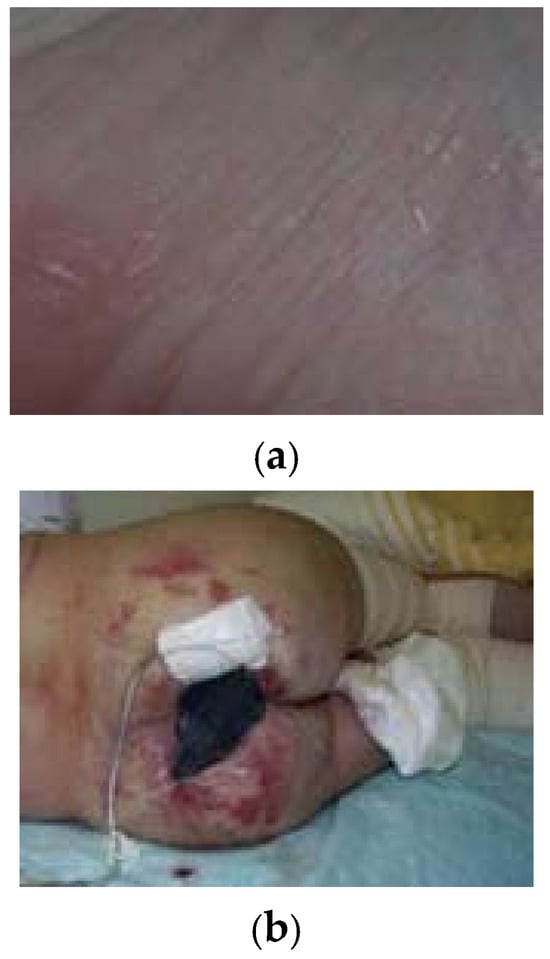
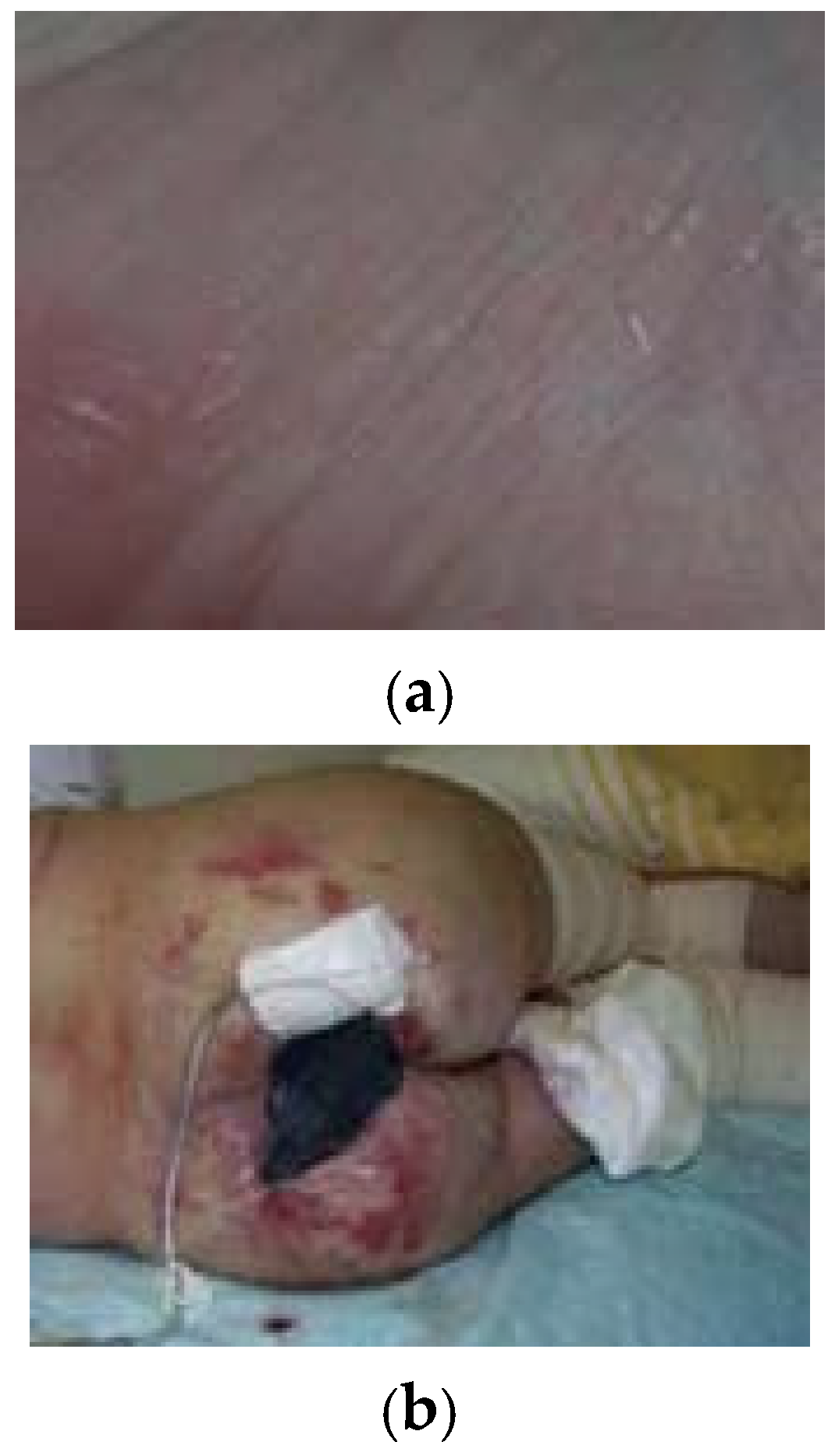
Medical advances are one of the key factors for this longevity, however it follows that these advances and technologies should also keep people healthier for longer, allowing them to live more independent lives and even work for longer. Although people in the UK today are living longer than ever, latest figures show that on average older men and women will live 6.8 and 9.1 years respectively of their lives with a limiting long term illness. Moreover, it is estimated that 50% of people over 75 currently suffer with long term infirmity [4]. With the increased numbers of infirm people having limited mobility or being completely bed bound, the number of elderly suffering from bed sores and other skin related conditions is rising. The health of skin is dependent on age, and for old people the process of damage is exacerbated by the fact that the skin is less resistant to shear forces, and that the healing process is much slower than for young skin. Many of the elderly suffering from an infirmity also suffer from some form of incontinence, which can increase the risk of skin conditions, as wet skin is more susceptible to damage, Figure 1a,b.
Figure 1.
(a) Wet sore skin. (b) pressure sore [5].
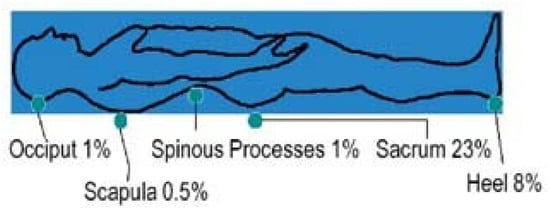
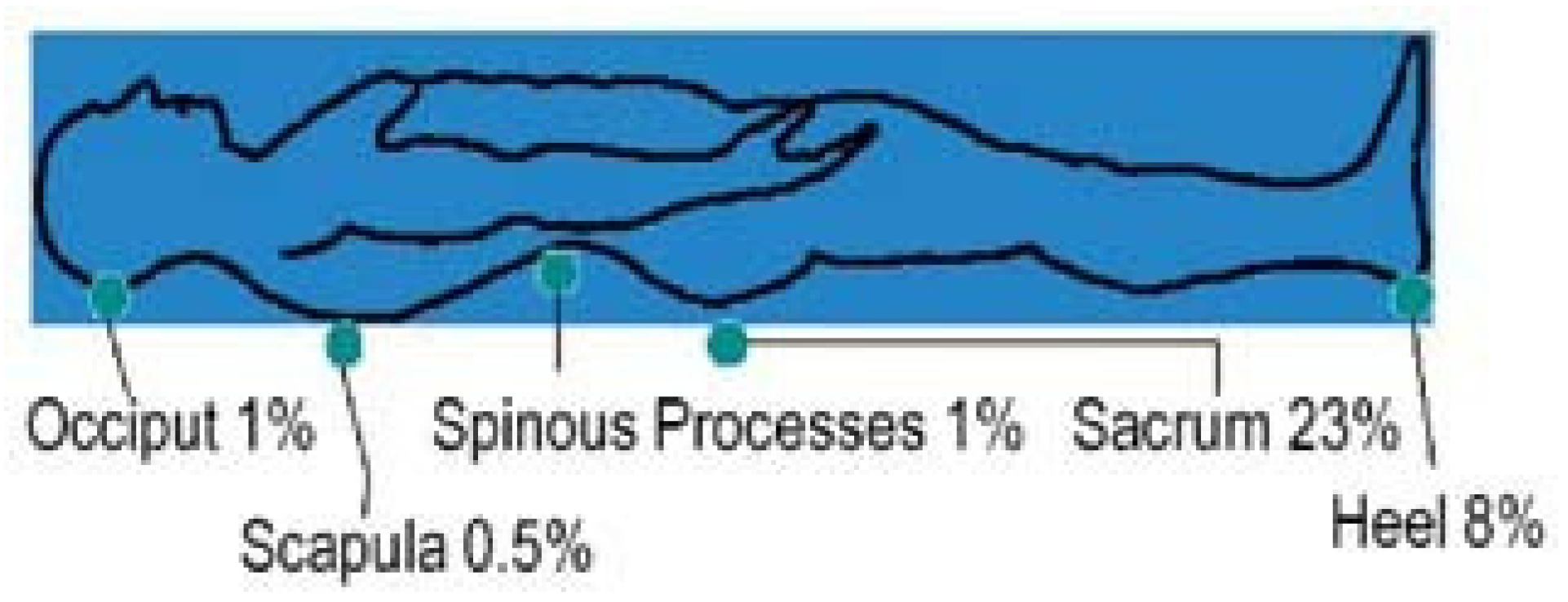
When skin is hydrated, for example by the continuous wearing of incontinence pads, it is vulnerable to frictional damage. The skin is softened by the water, providing greater contact area between the pad and skin so increasing the frictional resistance between the surfaces [6]. Incontinence and excessive skin moisture have been identified as key factors in the development of pressure ulcers. If the patient is lying flat on a bed for long periods, pressure exerted by the body onto the mattress creates pressure points which can cause discomfort. When lying flat on a standard hospital mattress in the supine position, most pressure is exerted at the sacrum (bottom) with 23% of the body’s weight being distributed at this point which would be in contact with an incontinence product. Hospital tests have shown that pressure areas above 32 mm of mercury (4.27kPa) shut off capillary blood flow causing muscle pain and potential pressure sore development exasperated by wet skin from the use of incontinence pads [7]. Figure 2 shows the main areas of pressure when the body lies flat on a bed.
Figure 2.
Pressure points [8].
Over 200 million people worldwide have a significant urinary incontinence (UI) and many more with mild bladder problems [9]. In the UK over 3million people suffer from some form of incontinence with this figure predicted to rise dramatically to over 4 million by 2025 [10].
Although incontinence is not life threatening it does present high costs to health services. This is indicative of a total expenditure for the UK of more than £420 million (approximately 0.85% of the total cost of the NHS) [11]. Incontinence is a common problem affecting both sexes and all age groups, but at all ages UI is more common in females. Prevalence increases with advancing age and with a growing older population there is an increase in incontinence occurrence with over 60% of elderly in nursing homes experiencing incontinence. Urine incontinence affecting the older population is predominantly urge incontinence (detrusor instability and bladder hyperactivity) accounting for two thirds of cases followed by prostate gland enlargement problems in older men. An increasing number of elderly people are being admitted into nursing homes due to incontinence. If exercises and drug treatments fail, the use of catheters or surgery offers an alternative but with the risks of complications becoming more prevalent with age, the use of body worn pads and bed pads are the best option. It is not just the elderly who suffer from urinary incontinence, it can affect all age groups as a temporary condition especially stress incontinence which is commonly seen in women after child birth due to weakened pelvic floor muscles.
3. Incontinence Products
Successful patient friendly incontinence products have only been available since the start of the twenty first century [12]. These are either bed pads or body worn pads, often similar to a baby’s nappy. During the 1980s, producers failed to consider the effect of wetness on the skin [13]. Incontinence pads should not only be absorbent and move liquid quickly into the pad, but should consider other factors such as skin dryness and comfort to prevent incontinence associated conditions namely skin degradation and potential pressure sores.
The current problem with bed pads as identified by Cottenden [12], is when the patient lying down urinates the downward force of the body causes the urine to firstly collect around the abdominal area on the bed sheet and then moving towards the shoulders and head area of the body which produce a higher force on the bed than the legs.
There are many bed pads on the European market both disposable and reusable which aim to keep the skin dry but do not necessarily take in to account the tracking of liquid up the body under pressure. However most of these products do not offer compression resistance to assist in the prevention of bed sores. Pressure sores are normally prevented or treated separately to incontinence with the use of specialist mattresses although medical sheepskin products can be used for both, offering a very dense pile for compression resistance and moisture absorption [14]. Three dimensional knitted spacer fabrics presented in section 4 could be used as an improved product for incontinence as well as offering pressure sore prevention.
4. Spacer Fabrics for Medical Usage
A number of researchers [15,16,17,18] describe spacer fabrics as materials, which consist of two ground fabrics simultaneously woven or knitted and connected together to form a structure in three directions in a single process. Fabrics consist of upper and lower fabric layers interconnected by a resilient yarn in the z direction, which represents the height of the spacer fabric. Three dimensional spacer structures have created much interest in the textile industry offering unique properties and great opportunities for modification to suit a growing number of end uses. The basis of this study focused upon knitted spacer fabrics, which are the most advanced of these three dimensional textile structures and also causing the most market interest.
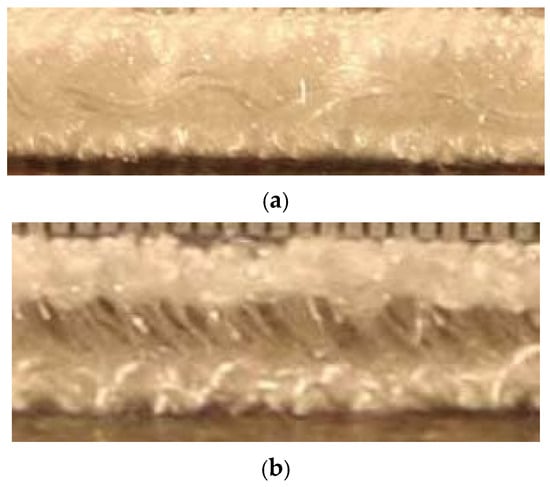
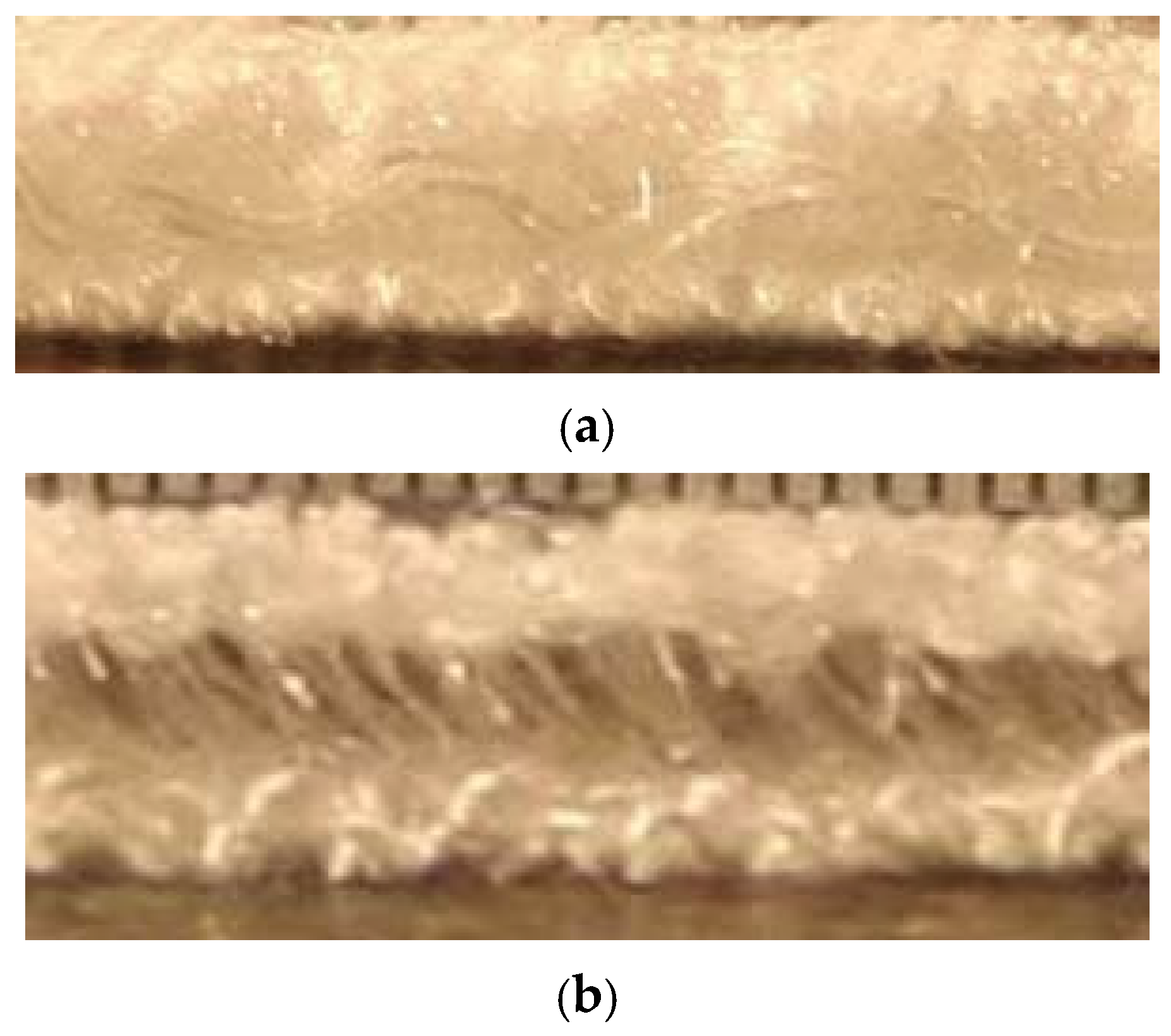
Knitted spacer fabrics are a stable knit construction consisting of two surface fabrics which are connected together in the middle by monofilament pile yarns used as spacers. The two outer fabrics can consist of differing fibres and structures (open or closed) as well as different colours, pattern or surface texture. The fabric can therefore be engineered for specific characteristics such as the direction of stretch, absorbency, liquid movement and other useful characteristics depending on the yarns used [19]. The pile yarns which connect the two outer fabrics together can be set to hold the fabrics at a specified distance from each other and chosen by thickness and spacing to give requisite compression resistance, Figure 3.
Figure 3.
(a) Knitted spacer fabric with inlay. (b) Knitted spacer fabric side view.
Many claims have been made over recent years [20,21] of the ability of spacer fabrics to move heat and moisture away from a source such as the skin and leaving the body comfortable. These properties are desirable for many end use applications including medical uses where comfort, pressure, bacteria control and moisture/liquid management are all critical and where there is scope for spacer fabrics to offer enhanced properties over conventional fabrics.
Many medical applications are demanding better bioclimatic and hygienic properties such as protecting the skin from liquids and particles whilst enabling it to regulate heat and moisture, effective barrier against bacteria and fungal infections, and thermoregulatory characteristics and liquid absorption. Applications also need other desirable attributes such as ease of laundering and sterilisation at high temperatures, antistatic behaviour, and high mechanical and chemical stability [22].
Knitted spacer fabrics appear to be able to offer an ideal alternative for many medical applications according to Wollina et al. [20], in many respects offering superiority over single layer woven fabrics, nonwovens, foams and composites. The application of spacer fabrics for the prevention of chronic wounds is relatively new. Pressure sore prevention on beds in the operating theatre and for wheelchair patients are primary applications. The use of spacer fabrics to absorb moisture and liquid could be considered for such applications as nappies and incontinence products. Spacer fabrics have been used in the prevention of plantar ulcers in patients with diabetic foot syndrome, bandages for the treatment of oedema treatment in cases of chronic venous insufficiency and chronic lymphatic insufficiency [20].
4.1. Spacer Fabrics for Incontinence
Knitted spacer fabrics can be warp or weft knitted. Warp knitted spacer fabrics are the most popular choice and are produced on double needle bar Raschel knitting machines at thicknesses of 1.5mm to 10mm although up to 60mm is possible for certain special applications. Weft knitted spacer fabrics can be produced on either cylinder or dial double jersey circular knitting machines with thickness normally limited to approximately 5mm however 10mm can be produced on certain machines. Weft knitted spacer fabrics can offer a wider range of design and patterning possibilities and are inherently more flexible than warp knitted versions. Two-way stretch makes weft knits appealing to both the fashion and lingerie industries.
The structure of the spacer fabric is vital when aiming to meet the needs of a particular end use. Different fibres used for the layers of the fabric, the thickness of fabric, design, surface construction, and monofilament selection can be altered or modified to produce a fabric with specific desirable characteristics. One of the primary reasons why spacer fabrics are so useful for many end uses is due to their moisture transporting and absorbing properties. Space between the two fabric layers allows air and heat to circulate and move through the material.
The incorporation of moisture conducting yarn system in the pile yarn structure enhances moisture transport through the material. Moisture has to be conducted to the outside away from the side next to the skin. Therefore the textile next to the skin must have a low water absorption capacity yet have high water vapour permeability. Using the right yarn combinations, spacer fabrics can be produced to enhance absorption, wicking and liquid movement properties which would allow these materials to compete with conventional fabrics for medical end uses requiring bulk liquid movement such as urinary incontinence.
Weft knitted spacer fabrics were chosen for investigation into their use as an absorbent material, as to date these spacer fabrics are the least developed thus offering scope for experimental work. Weft knitting machinery also allows for the easy incorporation of fibrous material into the internal space to increase liquid absorption. Inlay yarn and potentially roving can be fed into the centre of a spacer fabric to act as an absorbent medium to meet the needs of an incontinence product.
Incontinence bed pads which are often used as a back up system on a patient’s bed to absorb bulk liquid are an ideal end use for spacer fabrics as they are flat and offer the body a cushioning effect. A bed pad could act in one of two ways, the pad could consist of a spacer fabric which draws urine into the pad to the absorbed or the spacer fabric could act as a filter by drawing the fabric into the pad and moving the liquid through into a separate storage area for disposal. The liquid could be moved through the fabric to the bottom layer of the spacer fabric where it is absorbed. A waterproof breathable fabric could act as a barrier to the liquid leaking onto the bed below. This method would allow liquid to be moved away from the skin and held for a period of time within the layers until the pad is washed.
Controlling the liquid movement could be an area where spacer fabrics could offer enhanced properties over conventional materials. The speed at which the urine is moved from one layer of the spacer fabric to another is important to restrict liquid movement up the length of the fabric and towards the head area of the body. Fast absorption allows urine to move quickly to the storage area but this storage area must be able to hold the capacity of urine expelled to ensure that no wetback occurs. A system of staggering the filtration of urine from the second layer which is away from the skin to a third layer could allow for small amounts of urine at a time to be dispersed and evaporated into the atmosphere ready for the next void. Ridges or channels across the fabric could also act as natural barriers to liquid movement.
The role of spacer fabrics for incontinence is relatively new and only a small amount of work has been carried out in this area with few products available on the market to date. Rock and Lohmueller [22] patented a method of producing a knitted spacer fabric for an incontinence bed pad. Miskie [23,24] patented two spacer fabrics for use as body worn incontinence pads. The focus of all three patents was the use of warp knitted spacer fabrics and not weft knitted materials. Penrick [25] patented a method of producing a weft knitted spacer fabric for use as an incontinence product however the patent does not focus on the inclusion of inlay yarns or roving within the centre of the fabric.
5. Engineered Spacer Fabrics
A range of spacer fabrics were produced for bulk liquid absorption and liquid movement which could be suitable for uses requiring liquid retention properties. Off the shelf fabrics were not used as these would limit the investigation of bulk liquid movement and restrict the control and study of fabric parameters.
Fabrics were engineered with the aim of meeting certain requirements of an absorbent product. These include high absorbency with the top surface drying as fast as possible, rapid entry of liquid through the contact layer, good absorption and liquid spreading through the layers of the spacer fabric and good compression resistance.
Development was carried out using circular weft knitting machinery provided by a local company. Measurements of absorbency and liquid spreading were seen as key attributes. The fabrics also needed to afford an acceptable level of compression resistance to consider the effect of pressure on the skin and the prevention of pressure sores which are often exasperated by incontinence and the effects of wet skin.
To limit the number of variables when designing and analysing the fabrics, certain constant features were established prior to production. These constants were the fabric thickness, the monofilament thickness, and the yarn used for the top surface of the fabric to be in contact with the skin.
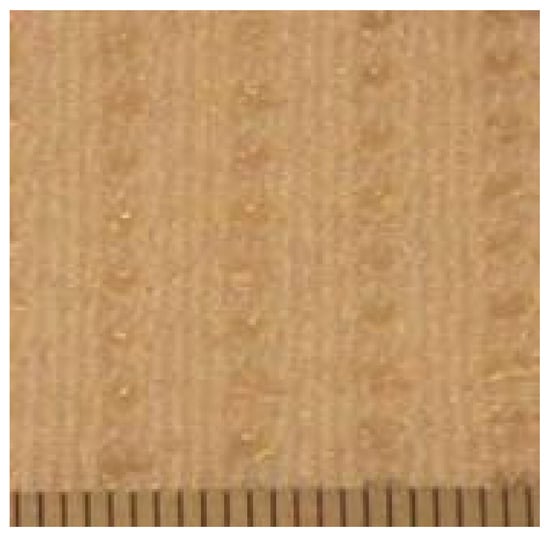
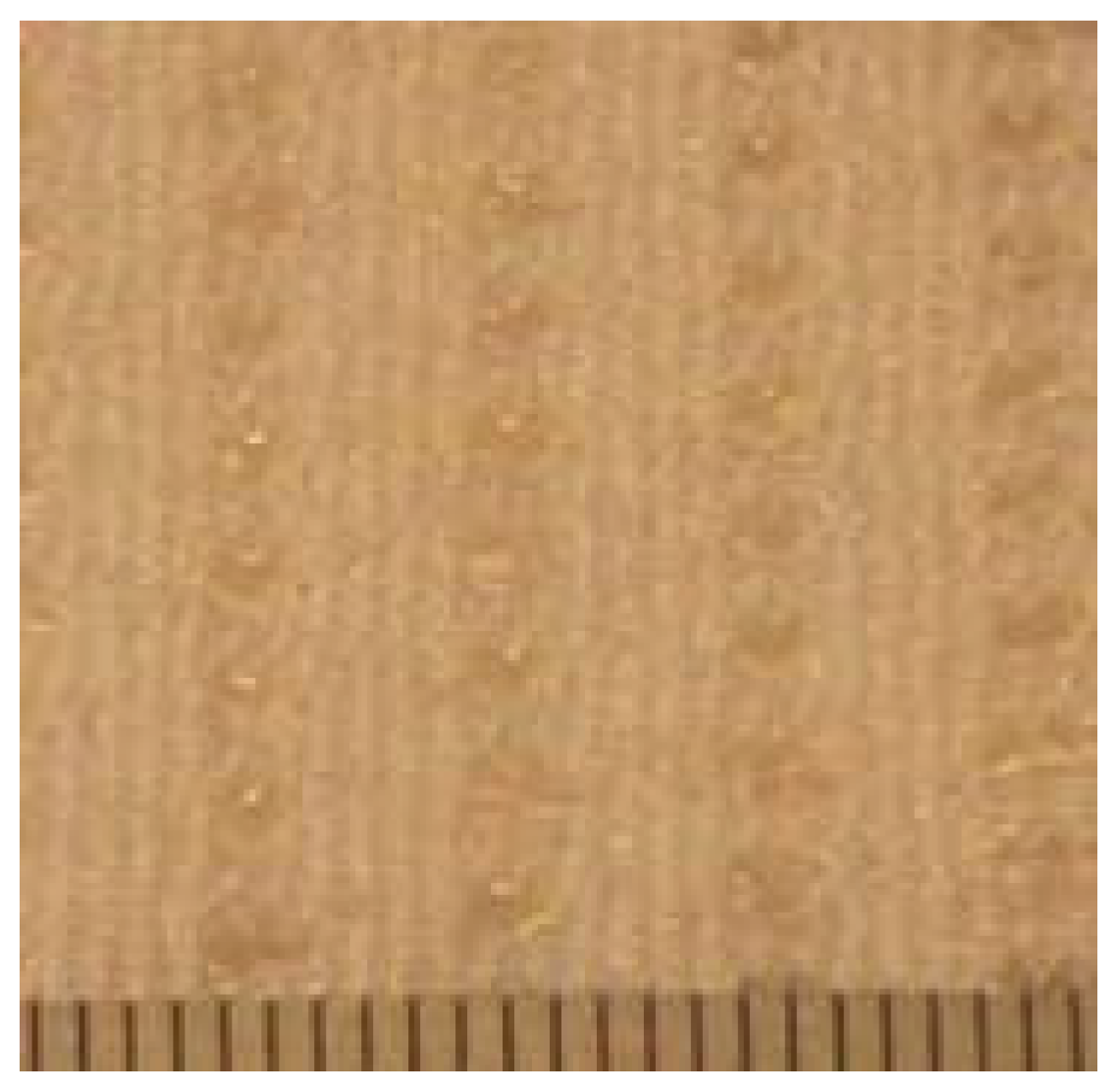
Jacquard patterning can be easily achieved by weft knitting offering scope for a range of designs and constructions to be produced on the top surface (cylinder) of the spacer fabric. Various surface designs (hole size and density) were used on the fabrics to allow fast liquid movement through the material and to enhance ventilation in comparison to a closed surface, Figure 4. This egg box effect is a manipulation of a plain structure and is produced using a two colour jacquard structure on the cylinder of a cylinder and dial weft knitting machine.
Figure 4.
Surface pattern of spacer fabric.
Various yarn combinations were examined for the top and bottom surfaces to maximise liquid movement from the top surface into the centre and base of the fabric for storage. To enable a large quantity of liquid to be stored within the spacer fabric, various absorbent fibres in the form of yarn and roving were studied for use within the central void area. The yarn and roving thickness to be fed into the centre of the fabric was restricted to that capable of being inserted through the feed tube. Although yarn is often inserted into the centre of spacer fabrics especially in the production of mattress ticking materials, roving had not been attempted previously. Nearly 40 fabrics were produced in total which were constructed at various stages based on results from fabric testing.
5.1. Fabric Testing
Fabrics were subjected to a range of standard laboratory tests to establish performance and suitability. All were tested in both an unwashed (unfinished) state and after various wash cycles to establish if washing had an impact on any fabric properties other than dimensional change. Each fabric was tested for absorbency, wetting and compression resistance unwashed and after 1, 2 and 5 wash cycles in accordance to the standard foul wash procedure (hospital wash) specified by the NHS Executive (1995) (which includes heat disinfection at 71 °C for 3 minutes). Each wash cycle was followed by 1 hour tumble drying at 70C in accordance to BS ISO 6330:2001. Although fabrics received were in a greige state meaning that no stabilisation procedure was used after production, fabrics were assessed for dimensional stability in accordance with BS 25077:1994 to establish the maximum degree of shrinkage which may occur when the fabric is subjected to washing and the impact of this shrinkage.
The fabric thickness was measured in accordance to BS EN ISO 5084:1997 upon receipt to establish any fluctuation dependant on construction, fibre content and machine variation. The compression resistance of all fabrics was assessed to establish the impact of loading on the thickness of the spacer fabrics and to assess the suitability of the materials to withstand the weight of a body lying on top of the material.
Both absorbency and wetting tests were carried out using both a 0.9% saline solution and distilled water using BS7959: 2004 determination of sorbency and BS 4554: 1970 method of wettability of textile fabrics respectively. Further to the British Standard methods of assessment, the commercially available ATS600 absorbency testing system was used for later testing. The ATS measures absorbent capacity and rate of absorption of samples over a small test area in two ways, either a timed test or a slope test. The timed test assesses absorbency and spreading over a set time period whereas the slope test measures absorbency and spreading until there is a natural slow down in the absorbency rate.
5.2. Fabric Test Results
The thickness of the spacer yarn used to maintain a set distance between the two outer skins of the spacer fabric impacted on the compression resistance of the material. The steaming process, often used to set spacer fabrics after production, increased the thickness of the fabric and the ability of the fabric to retain thickness under loading.
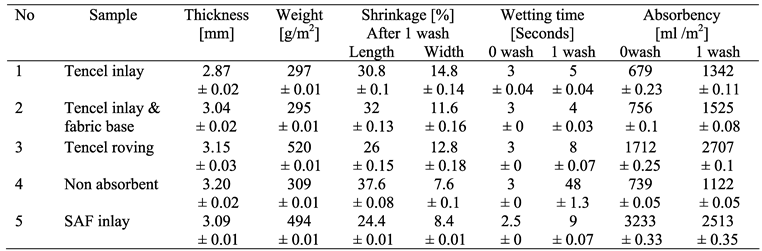
The speed of wetting and the absorbency of the spacer fabrics were influenced by the fibre content of the materials. The face of the material, which was to be in contact with the skin was hydrophobic to minimise wetting and allow liquid to be drawn quickly into the fabric without absorption. The base of the material could be absorbent or hydrophobic. The presence of an absorbent fabric base assisted not only with increased fabric absorbency but also with speed of wetting by drawing the liquid quickly from the top layer into the central spacer zone and towards the base of the material. The presence of an absorbent inlay yarn impacted positively on the speed of wetting and absorbency. With repeated washing causing the fabrics to shrink thus compacting the inlay yarn, absorbency was increased however wetting reduced in some materials especially those without an open holed surface as the compacted hydrophobic surface yarns inhibited the quick transfer of liquid into the material. Super Absorbent Fibre (SAF) yarns demonstrated the greatest absorbency of all fibres in an unwashed state however were not deemed feasible due to their inability to withstand repeated wash cycles with most SAF being removed from the fabric after contact with excess liquid. Tencel fibre, although absorbing less than SAF, demonstrated excellent washability and increased in absorbency after washing as the yarns compacted together within the reduced fabric dimensions.
Tencel roving when used as an inlay demonstrated enhanced absorbency due to the open structure of the roving, however direct comparisons between roving and yarn could not be carried out due to the difference in thickness between the two. Roving although difficult to insert demonstrated excellent absorbency and ability to withstand repeated washing.
The ATS absorbency testing system was used to assess fabric absorbency and liquid spreading. Results showed that the slope method of test was the best method to use as it measured the point when liquid uptake peaked and naturally slowed down. Results suggested that the greater the absorbent medium within the centre of the spacer fabric, the greater the absorbent capacity. Fabrics containing superabsorbent yarn displayed the greatest level of absorbency as expected however performed poorly after washing and exhibited gel leakage during the test, which would be unacceptable within a finished product, Table 1.
Table 1.
Indicative fabric results (including standard deviation).
The liquid spreading element of the test proved useful in showing how liquid moved over the base of the material. As the test area was relatively small with sensor pins located at only one distance from the liquid source the test was unable to predict the spreading behaviour shown by fabrics in use. The ATS although useful was limited as liquid was applied to the fabric from below the test sample rather than from above. It proved difficult to modify the equipment to solve this problem. In order to evaluate the rate of spread of liquid across the surface of a fabric, different methods of assessment were considered.
5.3. Mapping Liquid Spreading
Often liquid spreading is best assessed at a separate time to absorbency so that the focus of the test is on only one aspect. The aforementioned ATS was used to measure both fabric absorbency and radial spreading of liquid over a small test area.
Video imaging was used as an alternative to the ATS to capture liquid spreading over the surface of the fabric. The method indicated that the individual fabrics showed very different spreading characteristics over a larger test area, which the ATS was unable to measure. The video imaging although able to map liquid movement on the surface of the fabric was unable to record the movement of liquid within the centre of the spacer fabrics, an important characteristic when eliminating fabrics to meet the needs of a specific end use.
These two approaches were modified to map spreading at different set distances from the liquid source, and thereby generating spreading rate data. To enable a more accurate measurement of liquid spreading both on the surface of spacer fabrics and through the fabric thickness a new technique developed in house was created. Video imaging was compared with the new modified test method to assess validity.
When designing spacer fabrics for liquid absorption it is of interest to analyse how liquid spreads through the three layers of a fabric. Currently there are no test methods used to assess spreading at set points through the thickness of a spacer fabric specifically within the centre of the fabric where an absorbent yarn may be inserted, although electrical sensors have been used to measure on surface.
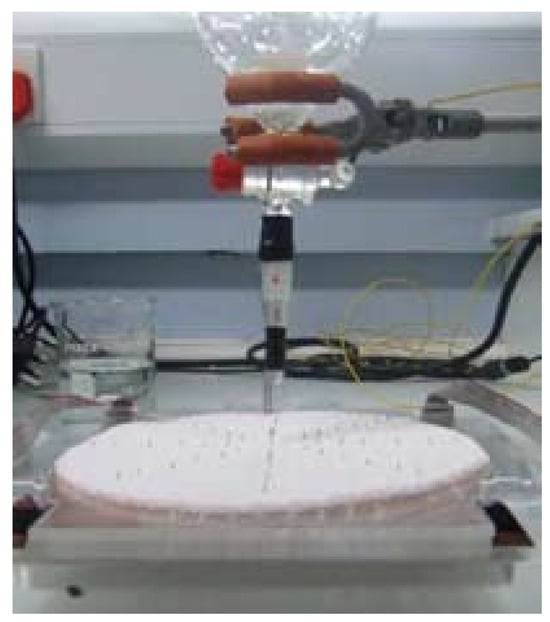
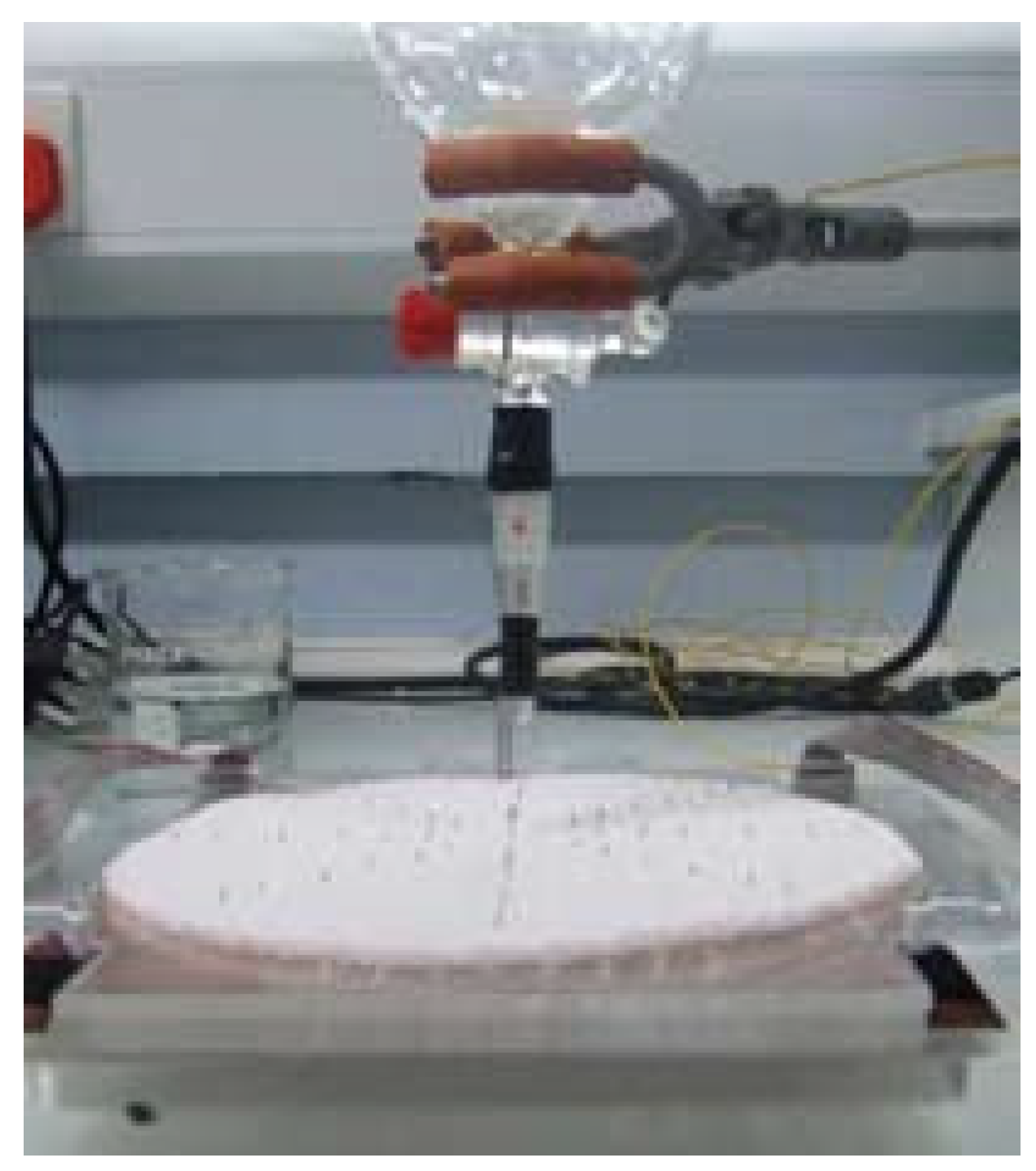
The method was based on conductive sensors similar to the ATS test method however positioning sensor pins at set distances away from a liquid source and allowing different sections of a spacer fabric to be assessed with pins set at specific heights. The method was devised using arrays of conductive sensors which could be set using spacer plates to assess wetting at different heights depending on the area of fabric which needed to be assessed. Figure 5 shows the test rig.
Figure 5.
Test rig.
Raw spreading times can be plotted easily onto radar plots to view either spreading over a range of distances or spreading though the fabric at a specific distance however not the two together as the graphs would become overcrowded and confusing. To map the actual distance of spreading across and through a fabric at specific times rather than using times taken to reach a given distance, statistics can be used.
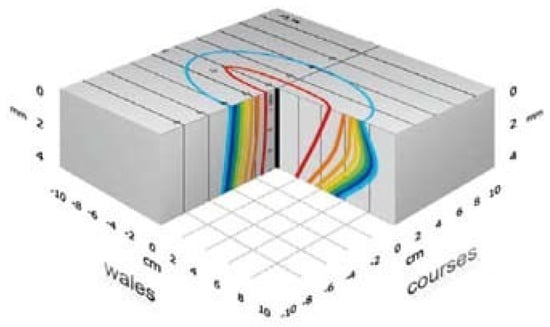
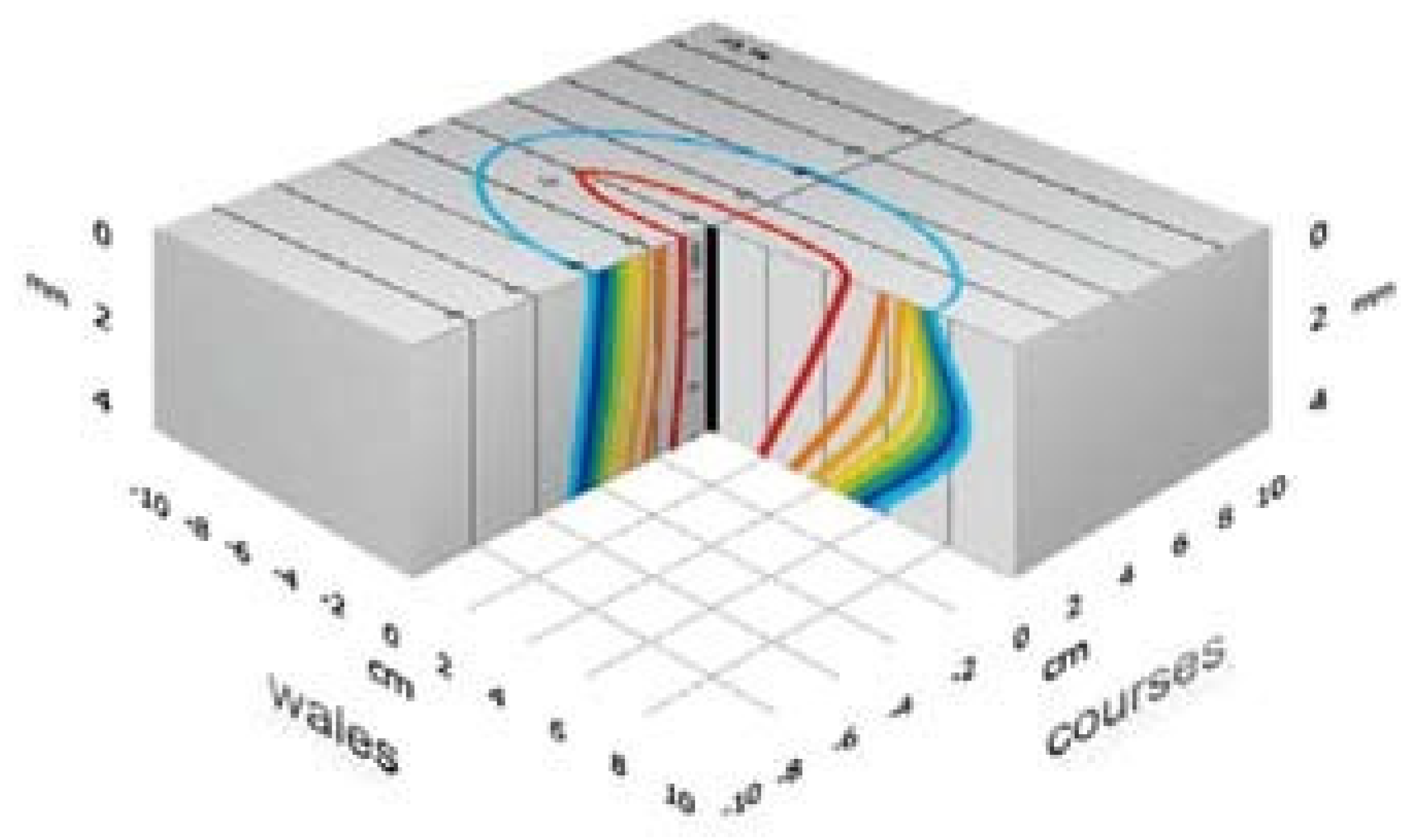
Two methods of mapping liquid spreading were used to enable spreading through the thickness of a spacer fabric to be displayed with ease and meaning for direct comparison between fabrics. The first method displayed spreading every 5 seconds (5-50s) through the fabric in horizontal and vertical directions. The second method displayed spreading at set times (snap shots) through the fabric (mapping top, middle and bottom of fabric) through 360o. Figure 6 shows the two approaches displayed together to indicate clearly how liquid spreads across and through a spacer fabric.
Figure 6.
Liquid spreading.
The two methods when compared together showed good correlation suggesting that either method could be used to measure the distance and direction of spreading depending on preference.
6. Conclusion
A range of weft knitted spacer fabrics were produced and assessed for desirable properties using both standardised tests and an in-house method of assessment for mapping liquid movement across and through a three dimensional spacer fabric. Results of extensive testing demonstrated that spacer fabrics containing absorbent inlay yarn and roving afforded good absorbent properties and that fabrics could be engineered to store liquid in specific areas within the spacer fabric.
The in-house test method developed for mapping liquid spreading demonstrated reliable and useful results. Further testing revealed that fabrics had very different liquid spreading characteristics dependent on construction and fibre. Two methods of displaying spreading were produced demonstrating how liquid moved through a 3D fabric.
From the fabrics tested, the spacer fabric containing roving in the central spacer zone afforded the best absorbency and control over the area of spreading. The fabric retained the largest quantity of liquid within a controlled area of the fabric without leakage after a laundering cycle. The fabric offered properties suitable for use as an incontinence bed pad with the potential to offering scope as a solution to the problem identified by Cottenden [11] of tracking of liquid moving up the body of an incontinent patient.
One of the other key fabrics tested, demonstrated good absorbency however not to the extent of the spacer fabric containing roving. The fabric containing thick Tencel yarn within the central spacer zone and on the base of the spacer fabric showed potential. The fabric could be used for an end use where fast wicking within the central spacer zone and across the base of the spacer fabric is important.
References
- Information on http://www.statistics.gov.uk/cci/nugget.asp?ID=949.
- Information on http://www.govnet.co.uk/ageing/.
- Information on http://news.bbc.co.uk/1/hi/uk/4012797.stm.
- General Household Survey 2006, ONS, 2008, figures for UK.
- Available online: http://www.epuap.org/aberdeen /page4.htm.
- Wong, W.K.R.; Cottenden, A.M. The influence of skin hydration on friction with incontinence pad material, In: Proceedings of Incontinence: the engineering challenge, London, November,. London, The Institution of Mechanical Engineers. 2005.
- Edsberg, L.E.; et al. Mechanical characteristics of human skin subjected to static versus cyclic normal pressures. J. Rehabil. R&D 1999, 36(2), 133–141. [Google Scholar]
- Bonner, A.; et al. Pressure ulcer prevention and care, University of Massachusetts, Graduate school of nursing. 2004.
- Abrams, P.; et al. (Eds.) Incontinence Report of the second International Consultation on Incontinence, Health Publication Ltd, Plymbridge Distributors Ltd, Plymouth. 2000.
- Information on http://press.helptheaged.org.uk/_press/Releases/_items/_Help+The+Aged+Warns+That+Age-related+Long+Term+Illness +Is +The+Single+Greatest+Health+Issue.htm.
- Continence Foundation. Making a case for investment in continence services; Continence foundation: London, 2000. [Google Scholar]
- Cottenden, A.M. Personal Communication, January 2005.
- Penn, E. District nurse, personal communication, October 2003.
- Information on http://www.medicalsheepskins.com.
- Bawadi, S. Development of the weaving machine and 3D woven spacer fabric structures for lightweight composites materials. (PhD), Technische Universität Dresden, 2007; p. 19. [Google Scholar]
- Yip, J.; Ng, S.P. Study of three-dimensional spacer fabrics: Physical and mechanical properties. J. Mater. Process Tech 2008, 206, 359–364. [Google Scholar]
- Denton, M.J. Textile terms and definitions; Textile Institute: Manchester, UK, 2002. [Google Scholar]
- Bruer, S.M. Three dimensional knit spacer fabrics-A review of production techniques and applications. JTATM 2005, 4(4), 1–31. [Google Scholar]
- Textilberichte, M. New spacer knit product for medical bandages. Melliand Engl. 2003, 84(6), E87–E88. [Google Scholar]
- Wollina, A.; Heide, M.; Swerev, M. Spacer fabrics- a potential tool in the prevention of chronic wounds. Exog. Dermatol. 2002, 1, 276–278. [Google Scholar] [CrossRef] [Scilit]
- Heide, M. Spacer fabrics for medical applications. Kettenwirk Prax. 1998, 32(4), E15–E19. [Google Scholar]
- Rock, M.; Lohmueller, K. Three dimensional knit spacer fabric for bed pads. US patent No. 5817391, 1998. [Google Scholar]
- Miskie, M. Multi-layer moisture management fabric composite. US patent No. 0100597, 2006. [Google Scholar]
- Miskie, M. Invertible multi-layer moisture management fabric pad. US patent No. 0189955, 2006. [Google Scholar]
- Pernick, B.M. Weft knit wicking fabric and method of producing the same. US patent No. 5735,145, 1998. [Google Scholar]

© 2009 Textile Bioengineering and Informatics Society. This article is an open access article distributed under the terms and conditions of the Creative Commons Attribution (CC BY) license (https://creativecommons.org/licenses/by/4.0/).