


Abstract
Background: The management of pediatric microtia and congenital hearing loss typically necessitates coordinated multidisciplinary input. Traditional fragmented care pathways across multiple specialties may contribute to delayed diagnosis and treatment intervention, inconsistent counselling, increased logistical burden, and suboptimal care integration. Objectives: We aimed to evaluate family-reported outcomes following implementation of a multidisciplinary Hearing Disorder and Microtia (HDM) clinic, focusing on family satisfaction, perceived care efficiency, understanding of disease and treatment, and early uptake of hearing rehabilitation. Methods: A prospective observational study was conducted on families attending the HDM clinic at a tertiary pediatric center between 2022 and 2024. A structured post-visit survey assessed satisfaction, perceived efficiency, understanding of disease and treatment options, and overall experience. Quantitative data were analyzed descriptively, while qualitative responses underwent thematic analysis. Results: Twenty families were included. Overall satisfaction was high, with 95% rating the clinic experience as very good to excellent and expressing willingness to recommend the service. Improved care coordination and clarification of counselling were reported by the majority of respondents, alongside reduced logistical burden. Notably, 65% of families initiated hearing rehabilitation at the first visit. Thematic analysis identified convenience, unified specialist communication, and clarity of management planning as key strengths of the multidisciplinary model. Conclusions: A structured multidisciplinary HDM clinic significantly improves caregiver experience and facilitates earlier hearing rehabilitation in children with microtia and congenital hearing loss. Integrated care delivery enhances communication, reduces fragmentation, and supports timely, family-centered decision-making. This model may serve as a framework for other complex pediatric otologic conditions requiring longitudinal multidisciplinary management.
1. Introduction
Paediatric microtia and congenital conductive hearing loss represent complex congenital conditions requiring long-term multidisciplinary management. Microtia encompasses a spectrum of external ear deformities ranging from mild auricular hypoplasia to complete absence of the auricle, and is frequently associated with external auditory canal atresia or stenosis, resulting in varying degrees of conductive hearing loss [1]. The reported incidence of microtia varies geographically, ranging from approximately 1 to 5 per 10,000 live births, with higher prevalence observed in certain Asian and Hispanic populations [1,2,3]. Although unilateral disease is more common, bilateral involvement can occur and may significantly impact early auditory and speech development.
Children with congenital conductive hearing loss secondary to microtia and aural atresia often require coordinated assessment involving otolaryngologists, audiologists, facial plastic surgeons, speech therapists, radiologists, and, in selected cases, geneticists and psychologists. Management extends beyond restoration of hearing alone and includes optimization of speech and language development, psychosocial support, educational integration, and reconstructive planning [3,4,5]. These patients frequently undergo longitudinal follow-up across childhood and adolescence, with interventions occurring at different developmental stages depending on hearing needs, craniofacial growth, and reconstructive readiness.
Early hearing rehabilitation is particularly important in the pediatric population because auditory stimulation during infancy and early childhood is critical for normal cortical auditory pathway maturation and speech-language acquisition [5,6]. Even unilateral conductive hearing loss, previously thought to have limited functional consequence, has increasingly been associated with deficits in sound localization, speech discrimination in noisy environments, classroom participation, and increased listening fatigue [6,7,8]. Such findings have contributed to growing advocacy for earlier diagnosis and treatment with hearing amplification through structured multidisciplinary intervention.
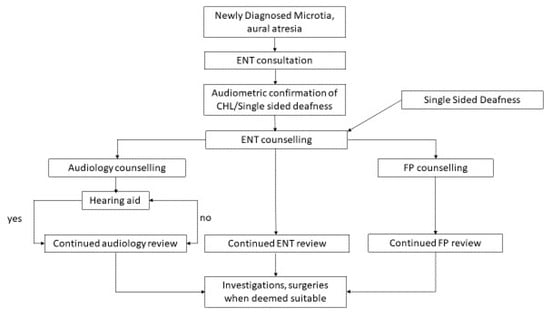
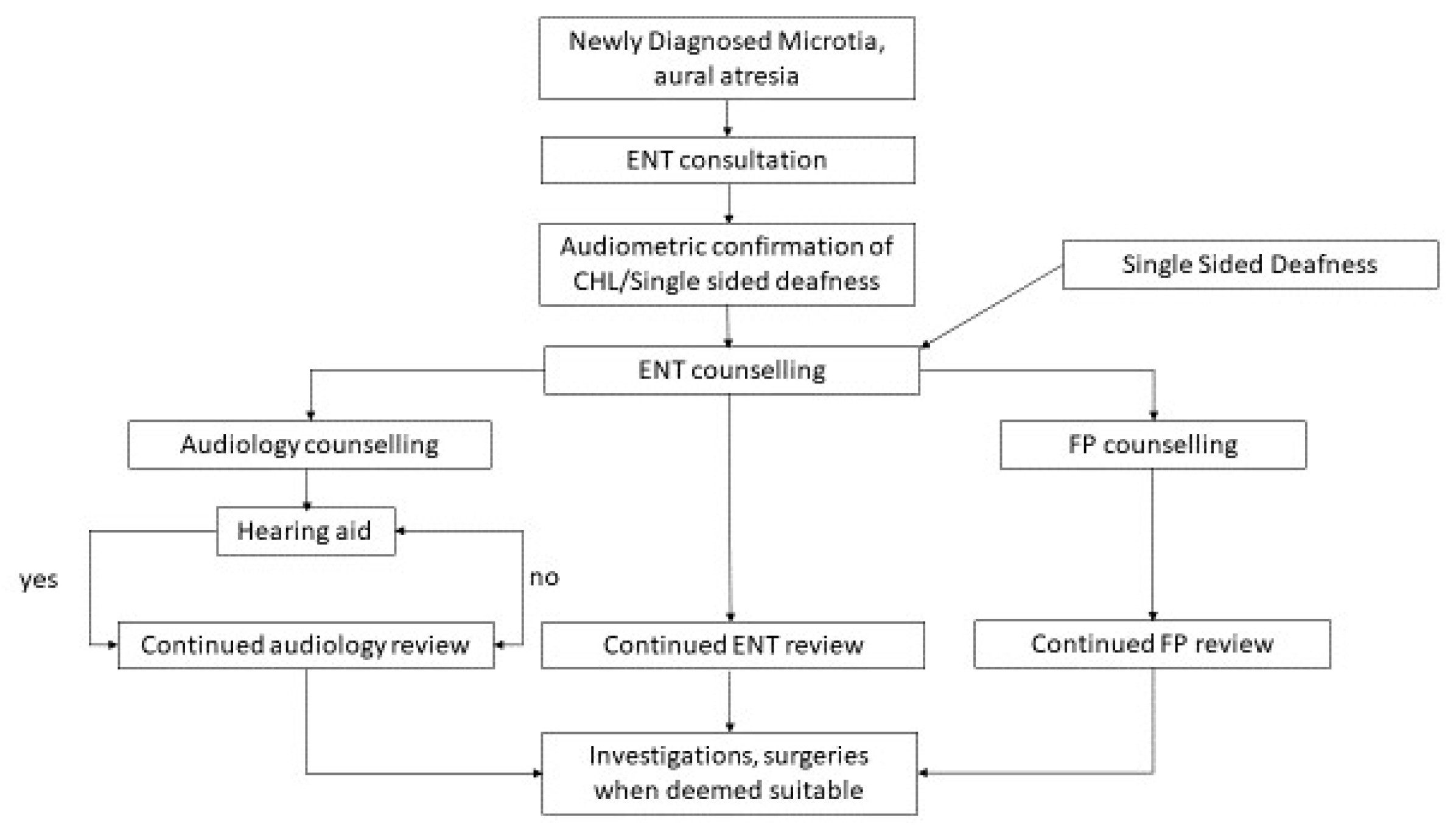
Despite the complexity of management, care delivery for children with microtia and hearing disorders remains fragmented in many healthcare systems. Families commonly attend multiple appointments across separate specialties over prolonged periods of time, as illustrated in Figure 1. This traditional model may result in repeated hospital visits, inconsistent counselling, delayed diagnosis and decision-making, and increased caregiver burden. The logistic demands are particularly significant for families with infants and young children, especially when appointments require coordination between audiological testing, surgical consultations, and hearing rehabilitation trials. Additionally, caregivers are often expected to assimilate large amounts of information from different specialists independently while simultaneously navigating uncertainty regarding reconstructive timing, hearing rehabilitation options, educational implications, and long-term developmental outcomes. These often lead to delays in intervention and reduced adherence to follow-up.
Figure 1.
Workflow of the traditional (conventional) care pathway for pediatric microtia and hearing loss.
The multidisciplinary clinic model has therefore emerged as an increasingly important strategy in the management of complex pediatric conditions. Such models facilitate coordinated assessment, unified counselling, and collaborative decision-making between specialties. In otolaryngology, multidisciplinary approaches have been successfully implemented in areas including cleft care, airway disorders, cochlear implantation, and craniofacial reconstruction. However, there remains limited literature specifically evaluating multidisciplinary clinics dedicated to pediatric microtia and hearing disorders, particularly within Asian healthcare settings.
To address these challenges, the Hearing Disorder and Microtia (HDM) clinic was established at KK Women’s and Children’s Hospital, Singapore, in 2022. The clinic provides integrated services from otolaryngology, audiology, and facial plastic surgery (FP) into a coordinated single-visit model designed to streamline disease evaluation and counselling for children with congenital hearing disorders and auricular anomalies. The clinic aims to promote collaboration across specialties to enhance patient and family experiences by developing a cohesive approach to diagnosis, disease understanding, and treatment planning.
The objective of this study was therefore to evaluate the caregiver-reported experiences following attendance at the HDM clinic. Specifically, this study aimed to assess family satisfaction, perceived efficiency of care delivery, understanding of disease and treatment options, and the perceived impact of this integrated multidisciplinary care model on early hearing rehabilitation uptake. Through this evaluation, we aim to examine whether an integrated multidisciplinary clinic model can enhance patient-family experience and serve as a framework for future pediatric otologic care delivery.
2. Materials and Methods
2.1. Study Design and Ethical Approval
This prospective observational study included all respondents who attended the HDM clinic between 2022 and 2024. A customized HDM clinic survey form, adapted from a similar survey used for cardiac patients, was administered following the clinic visit to collect real-time feedback on patient satisfaction, understanding of the disease, perceived quality of care, and overall experience [2].
Ethical approval for this study was obtained from the SingHealth Centralised Institutional Review Board, Singapore (CIRB Ref. No. 2024/2078). Written informed consent was obtained from all participants or their legal guardians.
2.2. Clinic Workflow
Eligibility included all patients referred to the paediatric otolaryngology department for external or middle ear anomalies or single-sided deafness unsuitable for conventional behind-the-ear hearing aids. Common diagnoses included microtia, aural atresia or stenosis, canal wall down mastoidectomy, and cochlear nerve aplasia.
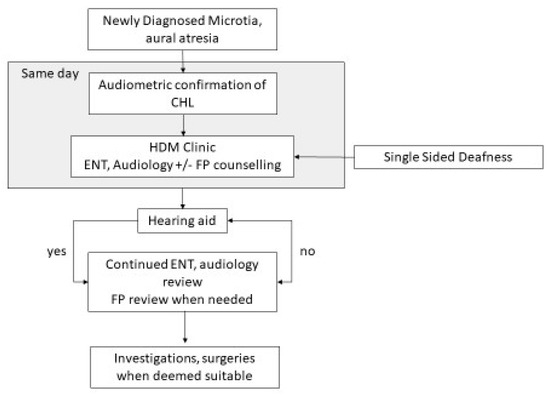
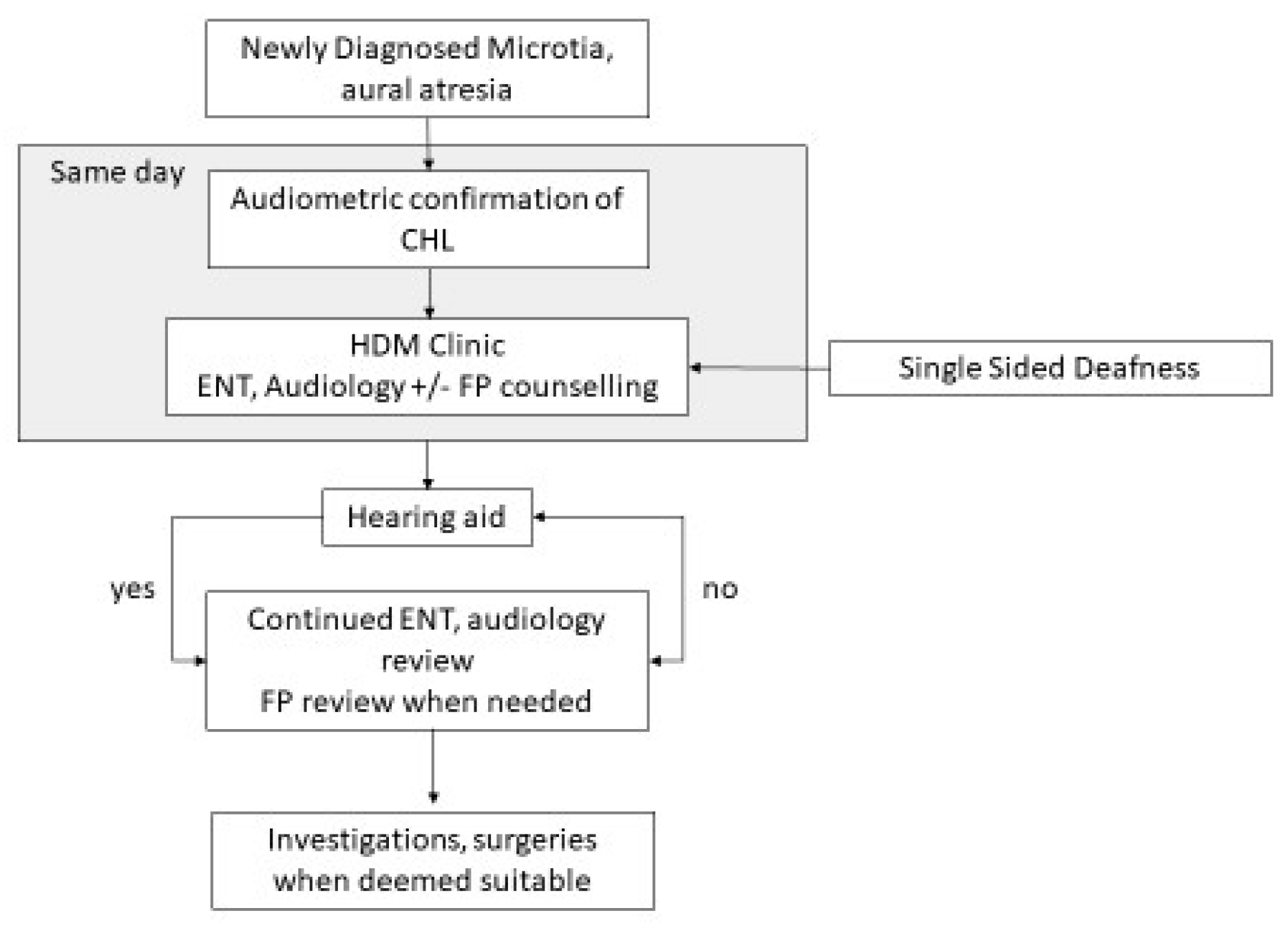
The HDM clinic operates through a structured workflow designed for comprehensive same-day evaluation in a single visit. Upon arrival, families are seen by relevant specialists in a coordinated manner, including the otolaryngologist, audiologist, and facial plastic surgeon if reconstruction is required, as illustrated in Figure 2.
Figure 2.
Workflow of the Hearing Disorder and Microtia (HDM) multidisciplinary clinic pathway.
For infants with newly diagnosed conditions, audiometric testing using audiometric brainstem response (ABR) testing is conducted during the same visit. For older children who have previously undergone audiometric testing, consultations proceed directly without the need for repeat testing. Specialists review the clinical history, perform examinations, discuss the audiometric results, and provide condition-specific counselling.
Key counselling points include:
- -
- Structured counselling regarding natural history of congenital hearing disorders and expected developmental implications with or without treatment.
- -
- Importance of early intervention for hearing loss to mitigate speech and language delay
- -
- Hearing rehabilitation options including bone-anchored hearing aids (BAHA), contralateral routing of signal (CROS) devices, and frequency modulation (FM) systems. On-site trials of hearing devices are offered.
- -
- Surgical hearing rehabilitation, such as bone-anchored hearing implantation if indicated
- -
- Counselling regarding realistic expectations of hearing outcomes, device or treatment compliance and long-term follow-up
- -
- Reconstructive options for microtia and optimal timing of intervention by facial plastic surgeon for patients with microtia requiring reconstructive evaluation
The multidisciplinary format also enabled real-time discussion between specialists during the clinic encounter. This facilitated alignment of treatment recommendations, reduced conflicting information, and allowed development of an individualised management plan tailored to each patient’s anatomical findings, hearing profile, developmental stage, and family preferences.
2.3. Data Collection
The survey comprised three sections:
- -
- Demographic and Clinical Details: patient age, microtia type, and type of hearing loss.
- -
- Quantitative Metrics: a 5-point Likert scale assessing satisfaction, perceived ease of process, understanding of disease and rehabilitation options, and likelihood of recommending the clinic.
- -
- Qualitative Feedback: open-ended questions exploring family experiences and overall impressions, with suggestions for improvement.
The surveys were distributed and collected by clinic patient service assistants in the waiting area without the involvement of clinical staff. Responses were collected anonymously to minimize potential response bias and social desirability bias.
2.4. Data Analysis
Quantitative data was analyzed with descriptive statistics to determine satisfaction levels and identify trends. Qualitative responses were analyzed to identify common themes, providing deeper insights into families’ experiences.
3. Results
3.1. Demographics and Clinical Data
Twenty families participated in the study. The cohort comprised 60% male and 40% female patients. The age distribution was as follows: 0–12 months (40%), 1–3 years (15%), 3–7 years (15%), and >7 years (30%) as illustrated in Table 1. All patients had conductive hearing loss (CHL) associated with microtia, external or middle ear anomalies. All cases involve unilateral microtia with at least moderate CHL. Although these patients had been diagnosed with microtia at birth, none had undergone hearing rehabilitation prior to referral to our clinic.
Table 1.
Demographics and Clinical Data of all participants.
3.2. Satisfaction Metrics
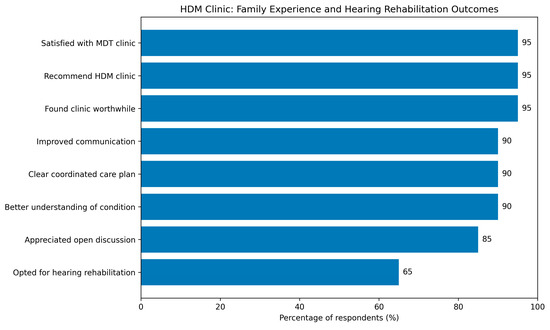
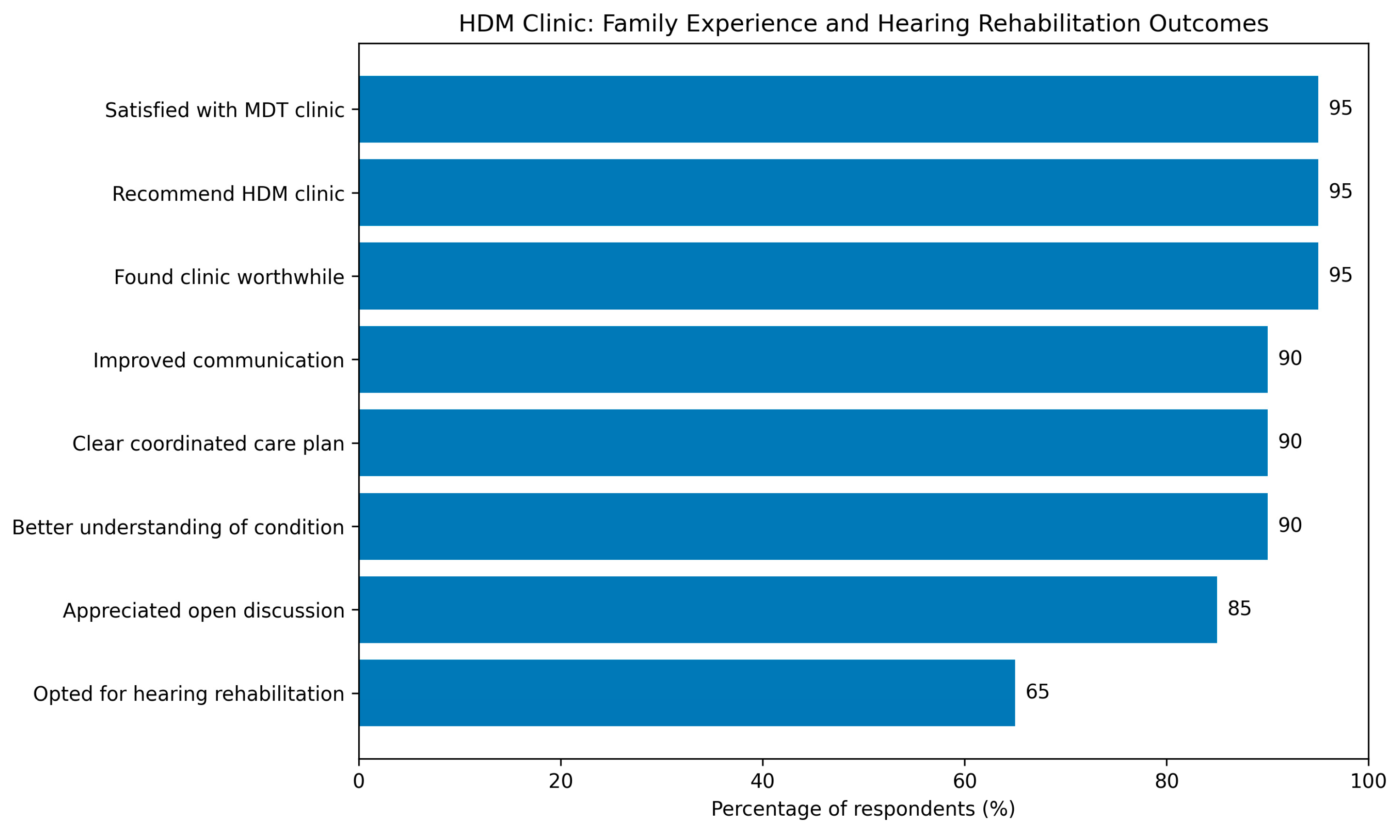
Survey results demonstrated a high level of satisfaction with the HDM multidisciplinary clinic model. Ninety-five percent of respondents felt the clinic was worthwhile and rated their satisfaction with the multidisciplinary team (MDT) setting as very good to excellent. Ninety-five percent would strongly recommend the clinic to other families. Improved care coordination between specialties was reported by 90% of respondents, while 85% felt more empowered to ask questions and engage in decision-making.
Notably, 65% of families proceeded with hearing rehabilitation at the first visit, highlighting the clinic’s potential in facilitating timely intervention. These patients underwent a softband bone conduction hearing device trial and elected to proceed with fitting of the device following the trial. Figure 3 illustrates these findings, emphasizing high satisfaction levels and perceived benefits among families.
Figure 3.
Family-reported outcomes following attendance at the Hearing Disorder and Microtia (HDM) multidisciplinary clinic.
Qualitative responses additionally suggested that families valued receiving coordinated counselling from multiple specialists during a single visit. Several caregivers reported improved understanding of hearing rehabilitation options, reconstructive timelines, and overall management pathways following attendance at the HDM clinic.
3.3. Qualitative Outcomes
Thematic analysis identified three primary areas of positive feedback. Eighty-five percent of families highlighted the convenience of consulting multiple specialists on a single visit, reducing travel burden and repeated appointments. Importantly, 90% praised the professionalism and attentiveness of the multidisciplinary team, valuing the clarity and cohesion of information shared during consultations. 90% also appreciated that a clear and structured treatment plan was formulated during the visit, helping families understand the child’s ongoing management and long-term care. Suggestions for improvement included enhanced pre-visit educational materials and financial counselling support to enhance preparedness and engagement during the consultation.
4. Discussion
This study demonstrates the value of a structured multidisciplinary clinic model in the management of pediatric microtia and associated hearing loss. High levels of caregiver satisfaction support the growing body of evidence that integrated care pathways improve both healthcare delivery and patient-reported experience in complex pediatric conditions [1,2]. Families consistently reported improved clarity of management plans, streamlined consultations, and enhanced confidence in decision-making following attendance at the HDM clinic.
Children with microtia and congenital aural atresia often require longitudinal care involving otolaryngology, audiology, and facial plastic surgery, with additional input from speech and language therapy and radiology in selected cases. Traditionally, care is fragmented across multiple visits and specialties, which often results in inconsistent counselling and delayed intervention. Such fragmentation is particularly challenging in early childhood, where timely auditory stimulation through hearing rehabilitation is critical for speech and language development [3,4,5]. The HDM clinic addresses these limitations by consolidating assessment, counselling, and decision-making into a single coordinated encounter.
A key finding of this study was that 65% of families initiated hearing rehabilitation at the first visit, likely reflecting the efficiency of same-day multidisciplinary counseling and immediate access to device trials. Early auditory rehabilitation is well established as essential for optimizing neurodevelopmental outcomes in children with hearing impairment, particularly during the critical period of language acquisition [5,6]. The observed uptake likely reflects improved decision-making efficiency facilitated by same-day multidisciplinary counselling, combined audiological and surgical input, and immediate access to device trials. This integrated approach reduces decisional delay and may enhance acceptance of hearing rehabilitation strategies.
Although unilateral conductive hearing loss in microtia has historically been considered minimally disabling, current evidence demonstrates measurable functional deficits in sound localization, speech perception in noise, classroom performance, and listening fatigue [7,8]. These challenges support a paradigm shift toward earlier and more proactive intervention. The HDM clinic model facilitates this by providing structured counselling on a full spectrum of rehabilitation options, including bone conduction devices, CROS systems, and implantable hearing solutions, tailored to anatomical suitability, age, and family preference.
Beyond auditory rehabilitation, microtia management requires careful consideration of reconstructive timing and psychosocial impact. Visible auricular differences may contribute to reduced self-esteem, social anxiety, and peer-related stress during school age [9]. Early involvement of facial plastic surgery within a multidisciplinary framework allows families to understand staged reconstructive options, including autologous costal cartilage reconstruction, porous polyethylene frameworks, and prosthetic approaches [9,10,11]. Importantly, integrated counselling ensures alignment between hearing rehabilitation and reconstructive planning, which often occur on different developmental timelines.
From a systems perspective, multidisciplinary clinics also improve inter-specialty communication and treatment coherence. Joint consultations facilitate real-time alignment of management strategies, reduce contradictory recommendations, and promote unified counselling. Similar benefits have been reported in other pediatric multidisciplinary models, where structured team-based care improves caregiver satisfaction, reduces variability in management, and enhances continuity of care [2]. In the context of microtia, this is particularly relevant given the interplay between functional hearing outcomes and reconstructive decision-making.
Qualitative feedback in this study further highlighted an important strength of the HDM clinic in its emphasis on family-centered care. Parents of children with congenital hearing disorders frequently experience uncertainty and emotional stress following diagnosis, particularly during infancy when concerns regarding speech and language development, educational outcomes, and future reconstructive needs are most pronounced. Multidisciplinary clinics may help alleviate this burden by improving accessibility of disease information and enabling caregivers to receive consistent recommendations from multiple specialists simultaneously. The positive qualitative feedback observed in this study suggests that coordinated counselling contributes substantially to caregiver reassurance and confidence.
The psychosocial dimensions of microtia management should also not be underestimated. Children with visible craniofacial differences may encounter social stigma, bullying, impaired self-esteem, and emotional distress during school-age years and adolescence [9,10,11]. Parents often face difficult decisions balancing timing of reconstruction, hearing rehabilitation, and the child’s psychological readiness. Early multidisciplinary involvement allows these discussions to occur longitudinally and proactively rather than reactively. Importantly, integrating reconstructive counselling with hearing rehabilitation planning ensures that families receive a holistic understanding of both functional and aesthetic management pathways [12,13].
From a healthcare systems perspective, multidisciplinary clinics may additionally improve operational efficiency and reduce healthcare utilization burden. Consolidating multiple consultations into a single coordinated visit reduces duplication of appointments, administrative burden, and repeated hospital attendance for families. This may be particularly relevant in tertiary pediatric centers managing complex congenital conditions requiring repeated longitudinal review. Although formal cost-effectiveness analysis was beyond the scope of this study, reduced fragmentation of care may potentially translate into improved clinic utilization and lower indirect societal costs associated with travel, caregiver work absence, and delayed intervention.
Another notable finding was the high proportion of families who proceeded with hearing rehabilitation during the initial clinic encounter. Traditional pathways often involve sequential consultations across multiple appointments before hearing rehabilitation decisions are made. In contrast, the HDM model allows audiological evaluation, specialist counselling, hearing device demonstration, and multidisciplinary discussion to occur during the same visit. This streamlined process may reduce decisional uncertainty and accelerate intervention during critical developmental windows. Families valued the ability to receive consolidated explanations from multiple specialists with an improved perceived understanding of long-term management trajectories. Such findings reinforce the importance of family-centered counselling in conditions requiring prolonged and staged intervention across childhood and adolescence.
The findings of this study are consistent with broader literature supporting multidisciplinary pediatric care models. Integrated clinics have demonstrated improved patient satisfaction, care coordination, and communication across specialties including cleft palate care, craniofacial services, pediatric airway disorders, congenital cardiac disease, and cochlear implant programs [14,15,16,17,18,19]. Multidisciplinary cleft and craniofacial teams have been associated with improved surgical timing, coordinated longitudinal care, and reduction in healthcare disparities [15,16]. Similarly, multidisciplinary airway programs facilitate coordinated decision-making in children with complex airway disorders [17], while integrated cochlear implant programs improve early identification and rehabilitative planning for pediatric hearing loss [18].
The present study additionally contributes regional data from Singapore, where literature regarding multidisciplinary pediatric microtia services remains limited. The positive outcomes observed in this study suggest that similar integrated models may be successfully adapted within other tertiary pediatric otology services in the region.
Despite these strengths, several limitations should be acknowledged. Firstly, no comparative control group was included in the data; therefore, the survey findings primarily reflect perceived benefits rather than objective improvements attributable to the multidisciplinary clinic model. Secondly, the study was limited by its small sample size and single-center design, which may restrict generalizability of the findings.
In addition, outcomes were based on short-term post-visit perceptions and did not capture longitudinal outcomes such as hearing device compliance, speech and language development, educational performance, long-term psychosocial impact, and healthcare utilization metrics. Future comparative studies evaluating multidisciplinary versus conventional fragmented care pathways would further clarify the long-term clinical and economic impact of integrated models.
Future studies should incorporate larger multicenter cohorts and longitudinal outcome measures, including age at intervention, device usage adherence, educational performance, and cost-effectiveness analyses. Further expansion of multidisciplinary involvement to include speech therapy, psychology, and genetic counselling may enhance holistic care delivery. Objective evaluation of healthcare utilization and long-term developmental outcomes will be essential to validate the clinical impact of this model.
5. Conclusions
The HDM clinic exemplifies the perceived benefits of a multidisciplinary model in pediatric otolaryngology. By integrating multiple specialties in a single clinic setting, the HDM clinic delivers cohesive, family-centered care that enhances communication and facilitates early diagnosis and treatment, building family confidence in navigating complex treatment pathways.
This study demonstrates that a structured multidisciplinary approach improves caregiver experience, facilitates earlier hearing rehabilitation, and enhances coordination of care for children with microtia and hearing loss. The overwhelmingly positive feedback from families, combined with strong indicators of care efficiency and satisfaction from the feedback survey, supports the broader adoption of integrated care models in pediatric otology.
Overall, the HDM clinic demonstrates how an integrated multidisciplinary approach can streamline care, improve caregiver experience, and facilitate timely intervention for children with complex hearing disorders. This model may provide a useful framework for future multidisciplinary pediatric services aimed at delivering more coordinated and family-centered care.
Author Contributions
All authors contributed equally to this work. S.J.S. compiled, analyzed and organized the data. S.H.C. wrote the main first draft of the paper. C.Y.C. reviewed data and provided interpretive analysis. All authors discussed the results and implications and edited the manuscript at all stages. All authors have read and agreed to the published version of the manuscript.
Funding
This research received no external funding.
Institutional Review Board Statement
The study was conducted in accordance with the Declaration of Helsinki and approved by the Institutional Review Board of SingHealth (CIRB Ref. No. 2024/2078, approved on 18 February 2025).
Informed Consent Statement
Informed consent was obtained from all subjects involved in the study.
Data Availability Statement
The data presented in this study are available on request from the corresponding author due to privacy and ethical restrictions.
Conflicts of Interest
The authors declare no conflicts of interest.
Abbreviations
The following abbreviations are used in this manuscript:
| HDM | Hearing Disorder and Microtia |
| PS | Plastic Surgery |
| BAHA | Bone-anchored hearing aids |
| CROS | Contralateral routing of signal |
| FM | Frequency modulation |
| MDT | Multidisciplinary team |
References
- Abrol, A.; Bly, R.; Sie, K.C.Y.; Bhrany, A.D. Contemporary management of microtia. Facial Plast. Surg. 2022, 38, 393–404. [Google Scholar] [CrossRef] [Scilit] [PubMed]
- Wolfe, K.R.; Kelly, S.L.; Liptzin, D.R.; Brigham, D.; Rafferty, C.; Younoszai, A.K.; Di Maria, M.V. Patient and family experience in a multidisciplinary clinic for children with single-ventricle heart disease. J. Patient Exp. 2020, 7, 1384–1390. [Google Scholar] [CrossRef] [Scilit] [PubMed]
- Kelley, P.E.; Scholes, M.A. Microtia and congenital aural atresia. Otolaryngol. Clin. N. Am. 2007, 40, 61–80. [Google Scholar] [CrossRef] [Scilit]
- Antonelli, P.J.; Varela, A.E.; Mancuso, A.A. Diagnostic evaluation of congenital aural atresia and microtia. Otolaryngol. Clin. N. Am. 2002, 35, 733–744. [Google Scholar]
- Jensen, D.R.; Grames, L.M.; Lieu, J.E.C. Effects of aural atresia on speech development and educational outcomes. Curr. Opin. Otolaryngol. Head Neck Surg. 2013, 21, 482–485. [Google Scholar]
- Briggs, L.; Davidson, L.; Lieu, J.E.C. Outcomes of conventional amplification for pediatric unilateral hearing loss. Ann. Otol. Rhinol. Laryngol. 2011, 120, 448–454. [Google Scholar] [CrossRef] [Scilit] [PubMed]
- Colletti, V.; Carner, M.; Mandalà, M.; Veronese, S.; Colletti, L. Cochlear implantation in children with unilateral hearing loss: A preliminary report. Laryngoscope 2010, 120, 1761–1768. [Google Scholar]
- Zernotti, M.E.; Sarasty, A.B. Active bone conduction prosthesis: Bonebridge™. Int. Arch. Otorhinolaryngol. 2015, 19, 343–348. [Google Scholar] [CrossRef] [Scilit] [PubMed]
- Brent, B. Auricular repair with autogenous rib cartilage grafts: Two decades of experience with 600 cases. Plast. Reconstr. Surg. 1992, 90, 355–374. [Google Scholar] [CrossRef] [Scilit] [PubMed]
- Nagata, S. Modification of the stages in total reconstruction of the auricle: Part I. Plast. Reconstr. Surg. 1993, 93, 221–230. [Google Scholar]
- Romo, T.; Presti, P.M.; Yalamanchili, H.R. Medpor alternative for microtia repair. Facial Plast. Surg. Clin. N. Am. 2006, 14, 129–136. [Google Scholar] [CrossRef] [Scilit]
- Kesser, B.W.; Krook, K.; Gray, L.C. Impact of unilateral conductive hearing loss in children with microtia and aural atresia. Int. J. Pediatr. Otorhinolaryngol. 2013, 77, 1630–1635. [Google Scholar]
- Lawlor, C.M.; Choi, S. Diagnosis and management of congenital aural atresia. Otolaryngol. Clin. N. Am. 2018, 51, 1085–1101. [Google Scholar]
- American Academy of Pediatrics Joint Committee on Infant Hearing. Year 2019 position statement: Principles and guidelines for early hearing detection and intervention programs. J. Early Hear. Detect. Interv. 2019, 4, 1–44. [Google Scholar]
- Praveen, H.; Dorjsuren, N.; De Oliveira, N.; Braun, S.; Galdyn, I.; Golinko, M.; Pontell, M.; Phillips, J.D.; Belcher, R.H. Cleft lip/palate multidisciplinary team effectiveness on appropriate surgery timing and improving disparities. J. Craniofac. Surg. 2024, 35, e45–e50. [Google Scholar] [CrossRef] [Scilit]
- Strauss, R.P. The organization and delivery of craniofacial health services: The state of the art. Cleft Palate-Craniofac. J. 1999, 36, 189–195. [Google Scholar] [CrossRef] [Scilit] [PubMed]
- Hartnick, C.J.; Bissell, C.; Parsons, S.K. The multidisciplinary approach to pediatric airway disorders. Curr. Probl. Pediatr. Adolesc. Health Care 2007, 15, 405–408. [Google Scholar]
- Young, N.M.; Reilly, B.K.; Burke, L. Limitations of universal newborn hearing screening in early identification of pediatric cochlear implant candidates. Arch. Otolaryngol.-Head Neck Surg. 2011, 137, 230–234. [Google Scholar] [CrossRef] [Scilit] [PubMed]
- Fearon, J.A. Evidence-based medicine: Craniofacial surgery. Plast. Reconstr. Surg. 2014, 133, 1261–1275. [Google Scholar] [CrossRef] [Scilit] [PubMed]

Disclaimer/Publisher’s Note: The statements, opinions and data contained in all publications are solely those of the individual author(s) and contributor(s) and not of MDPI and/or the editor(s). MDPI and/or the editor(s) disclaim responsibility for any injury to people or property resulting from any ideas, methods, instructions or products referred to in the content. |
© 2026 by the authors. Licensee MDPI, Basel, Switzerland. This article is an open access article distributed under the terms and conditions of the Creative Commons Attribution (CC BY) license.