


Highlights
What are the main findings?
- E’CHIT provides an identity-stabilised, detector-assisted UAV tracking framework for disaster-response applications. The evaluated implementation combines YOLOv8-seg proposals, Custom-RE3 continuation, EOMC verification, and scene-cut hygiene.
- Results obtained on D’RespNeT and authentic disaster-response UAV footage demonstrate improved identity stability: Success@0.5 increases from 0.62 to 0.79, identity switches decrease by approximately 71%, and real-time 1080p operation is maintained.
What are the implications of the main findings?
- Identity-stable UAV tracks make aerial detections more dependable for operator-in-the-loop SAR tasks, including target monitoring, entry-point assessment, waypoint cueing, and UAV–UGV/ground-team coordination.
- The identity-stabilisation wrapper is tracker-adaptable. Custom-RE3 is the evaluated continuation module; integrating another compatible tracker requires an interface adapter, method-specific tuning, and independent validation. D’RespNeT, the auxiliary RL warm start, the HUD, and the logging facilities support application-oriented deployment.
Abstract
Search-and-rescue (SAR) missions following earthquakes and other disasters require aerial video perception systems that do more than detect objects in isolated frames. Operators must maintain the identities of access points, vehicles, responders, hazards, and other mission-relevant targets despite UAV ego-motion, dust, debris, occlusion, scale variation, and abrupt scene transitions. This paper presents E’CHIT (Edge-Oriented Colour Histogram Instance-Guided Tracking), a deployment-oriented, operator-centric UAV tracking framework for real-world disaster-response applications. Its primary scientific contribution is an identity-stabilised, detector-assisted tracking methodology. YOLOv8-seg proposals trained on D’RespNeT initialise and refresh tracks; a Custom-RE3 recurrent module propagates target states through short detector dropouts; and a lightweight EOMC verifier, based on edge orientation, mean colour, and shape consistency, determines whether tracks should be accepted, refreshed, or reacquired. A scene-cut watchdog that combines luminance mean absolute difference (MAD) with HSV histogram divergence prevents stale identities from carrying over after hard edits or sudden feed changes. Custom-RE3 is the continuation module implemented and evaluated in this study. The surrounding E’CHIT wrapper follows an initialise–reseed–verify–reset cycle and is tracker-adaptable at the software-interface level: another compatible SOT or MOT continuation module can be integrated through adapter modifications, state and bounding-box conversion, and method-specific retuning, followed by independent validation. All reported quantitative results therefore apply to the Custom-RE3 implementation. D’RespNeT, the optional reinforcement learning (RL) warm start, the HUD, and the deployment stack support this central tracking contribution. D’RespNeT provides 28 polygon-annotated SAR classes. An author-developed PPO/SAC script is used only during offline detector training. In the reported runs, it produces different early optimisation trajectories for selected difficult or under-represented classes, while the default supervised schedule remains the strongest final global mAP reference. No RL policy runs during deployment; the detector architecture, parameter count, and inference graph remain unchanged. Evaluation on D’RespNeT and authentic disaster-response UAV footage shows that E’CHIT increases Success@IoU ≥ 0.5 from 0.62 to 0.79, reduces identity switches by approximately 71%, and maintains real-time 1080p performance, achieving 164–330 FPS for single-target tracking and 24–100+ FPS for end-to-end multi-target operation on an RTX-class GPU using FP16. The VOT2014, NT-VOT211, and VOTS2024 figures reproduce historical result spaces reported in the literature and include a clearly labelled, non-official E’CHIT operating-point marker solely for context. This marker was not produced using the corresponding official datasets, toolkits, reset rules, or submission routes; it is excluded from the primary quantitative claims and must not be interpreted as a leaderboard rank or a protocol-identical comparison. Overall, the system demonstrates how identity-stable UAV tracks can provide actionable operator cues for target monitoring, entry-point assessment, and UAV–UGV/ground-team coordination in cluttered disaster scenes.
Keywords:
post-earthquake UAV search and rescue (SAR); visual object tracking; detector-assisted tracking; tracker-adaptable identity stabilisation; Custom-RE3; identity preservation; instance segmentation; disaster response robotics; human–robot interaction; heads-up display (HUD); D’RespNeT dataset; operator-in-the-loop autonomy 1. Introduction
In the aftermath of large-scale disasters, including major earthquakes, rapid aerial situational awareness can substantially influence how search-and-rescue (SAR) teams prioritise access routes, inspect damaged structures, and coordinate ground operations. UAVs can provide close-range views of collapsed buildings, debris fields, emergency vehicles, responders, civilians, and possible ingress points that may be difficult or unsafe to inspect from the ground. To be operationally useful, however, a perception system must do more than detect objects frame by frame: it must maintain target identity as the UAV moves, targets become occluded, or the video feed changes abruptly. An access gap, responder, or vehicle that reappears under a different ID provides a less reliable basis for waypoint generation or handover to ground teams and unmanned ground vehicles (UGVs).
Conventional disaster-scene assessment has often relied on satellite imagery, high-altitude remote sensing, or object-detection pipelines that describe individual frames without preserving the identities of mission-relevant targets over time. Standard visual trackers, including correlation-filter methods, Siamese trackers, recurrent trackers, and tracking-by-detection multi-object trackers, can perform well in controlled benchmark settings. Post-disaster UAV footage, however, presents a challenging combination of unstable camera motion, clutter, repeated façades, dust, partial occlusion, hard cuts in publicly available footage, and small objects viewed from oblique angles. The original RE3 tracker [1], for example, uses recurrent regression to maintain a target through short-term visual changes, but it begins with a manually specified bounding box and lacks the detector-assisted reseeding, semantic class control, scene-cut hygiene, and operator-facing verification required for SAR operations. Similarly, tracking-by-detection methods such as DeepSORT and ByteTrack may fragment identities when the detector briefly misses a target, whereas online patch-based trackers may drift towards visually similar rubble, windows, vehicles, or façade regions.
The present work addresses these limitations by focusing on a deployment question: how can UAV detections in damaged environments be converted into identity-stable tracks that operators can act upon? The central scientific contribution is neither the dataset, the RL warm start, nor a generic benchmark comparison. It is E’CHIT, an identity-stabilised, detector-assisted tracking methodology with an operator-facing implementation for post-disaster UAV video. E’CHIT combines a SAR-specific YOLOv8-seg detector trained on D’RespNeT with temporal target continuation, edge-, colour-, and shape-based identity verification, controlled reseeding and merging, and cut-aware state hygiene. Custom-RE3 is the temporal predictor implemented and evaluated in this manuscript; however, the outer E’CHIT identity-stabilisation layer is tracker-adaptable at the software-interface level. Integrating another compatible tracker requires adaptation of its initialisation/reseed, frame-to-frame prediction, reset, and box/state exchange interfaces, followed by tracker-specific threshold and association tuning. All quantitative results reported here remain specific to the Custom-RE3 implementation. The dataset, RL warm start, HUD, and deployment stack are included to demonstrate the approach as a realistic SAR workflow rather than an isolated tracking demonstration. Figure 1 illustrates the disaster-scene segmentation outputs and their operational role within the wider perception stack.
Figure 1.
A representative post-earthquake frame (top-left) is processed by the YOLOv8-seg–based Detection–Refinement Network trained on the D’RespNeT corpus. The panels show the raw UAV image (top-left), colour-coded instance masks (top-right), polygon masks and instance boundaries overlaid on the RGB image (bottom-left), and dense class labels and detections rendered on the scene (bottom-right). Colours distinguish semantic classes consistently across the masks, boundaries, and labels; each colour corresponds to the class name displayed in the panel and has no ordinal meaning. D’RespNeT provides polygon-level annotations for SAR-relevant classes—including accessible and blocked entry points, structural damage and debris levels, rescue personnel, vehicles, and other operational context—derived from real post-disaster UAV footage. These annotations support operational situational awareness and the training and evaluation of the perception stack. The outputs also feed a traversability module: obstacles are identified during the UAV’s approach, and once the UAV reaches a bird’s-eye vantage point, the same perception stack generates an operator-in-the-loop ground-path cue to guide the UGV and support response teams.
D’RespNeT serves as the disaster-domain semantic foundation of the tracking pipeline. It provides high-resolution UAV imagery and polygon-level instance annotations for 28 SAR-relevant classes, including accessible and blocked entry points, structural damage, debris severity, vehicles, rescue teams, human presence, and landing-zone context. These labels are important because many targets that matter in SAR are not generic COCO-style objects; they include small access points, damaged façades, blocked openings, and mission cues that may determine whether responders can enter or should avoid a structure. The D’RespNeT-trained YOLOv8-seg model therefore supplies the semantic detections used by E’CHIT for track initialisation, reseeding, and operator-defined class filtering.
The auxiliary RL component is deliberately limited in scope. PPO [2] and SAC [3] are used only during detector training through a custom script that treats short supervised YOLOv8 training cycles as a warm-start/meta-optimisation environment. The purpose is not to suggest that RL replaces standard supervised training or achieves the strongest final global mAP. Instead, the observed practical benefit is faster and steadier early convergence and improved learning behaviour for selected difficult or under-represented SAR classes, particularly entry/access-point and rescue-team categories that were learned less reliably under conventional schedules. The deployed tracker uses only the resulting fixed detector weights and therefore incurs no RL-related inference overhead.
The manuscript makes the following contributions:
- Identity-stabilised detector-assisted tracking. E’CHIT combines YOLOv8-seg proposals, Custom-RE3 recurrent continuation, greedy reseed/merge logic, and EOMC identity verification to reduce drift and ID fragmentation in cluttered disaster-response UAV footage.
- Tracker-adaptable identity-stabilisation interface. Custom-RE3 is the evaluated temporal module. The reseed/merge, EOMC, scene-cut-hygiene, and operator-control logic can be adapted to other compatible trackers through interface conversion and tracker-specific retuning.
- Scene-cut and state-hygiene mechanism. A watchdog based on luminance MAD and HSV histogram divergence detects abrupt feed changes and clears stale recurrent tracks, thereby limiting ghost boxes and false identity carry-over after hard cuts.
- SAR-specific perception foundation. D’RespNeT provides 28 polygon-level disaster-response classes and supports the detector used for semantic track initialisation and operator-defined filtering.
- Training-time RL warm start for difficult classes. A custom PPO/SAC training script is used as an auxiliary warm-start tool to support early convergence and learning of selected under-represented classes without adding inference-time computational cost.
- Operator-centric real-world deployment. The TerraGuardAI HUD provides class selection, confidence/IoU/LIMIT controls, target focus, reacquisition, zoom/EDSR inspection, perspective tools, logging, and after-action review. These functions allow identity-stable UAV tracks to serve as mission cues for responders and UGV coordination.
On D’RespNeT and authentic post-disaster UAV footage, E’CHIT increases Success@IoU ≥0.5 from 0.62 for the RE3 baseline to 0.79 and reduces identity switches by approximately 71%, while maintaining real-time throughput at native 1080p. The VOT2014, NT-VOT211, and VOTS2024 figures are retained as historical context because they reproduce result spaces reported in previous studies and help readers interpret familiar tracking metrics and trade-offs. Their E’CHIT markers are explicitly labelled as non-official, cross-protocol operating-point illustrations derived from the mission-oriented SAR evaluation. They are not challenge submissions, are not used to rank E’CHIT, and are excluded from the primary quantitative claims. This separation preserves useful visual context without implying protocol-identical benchmark evidence.
Table 1 distinguishes the primary scientific contribution from the experimental, training, and deployment components that support it.
Table 1.
Contribution hierarchy used in this study. The primary scientific contribution is separated from the supporting components to present the paper as a focused tracking study rather than a collection of independent modules.
2. Related Work
Persistent real-time visual tracking remains difficult in UAV-based disaster response because of severe occlusion, rapid viewpoint changes, hard scene cuts, and repeated visual structures. This section positions E’CHIT relative to classical and recurrent trackers, modern transformer-based SOT/MOT methods, UAV-specific benchmarks, and operator-centric SAR deployment.
2.1. Classical Online and Offline Visual Trackers
Correlation-filter trackers such as MOSSE, KCF, DSST, and CSRT are attractive for real-time use because they are computationally efficient and can update their target models online [4,5,6,7]. Forward–backward consistency has also been used to detect tracking failures automatically [8], motivating explicit failure detection rather than unchecked online updates. However, online adaptation can amplify drift when a target is partially occluded, the UAV viewpoint changes rapidly, or visually similar debris, windows, vehicles, or façade regions appear near the selected target. Offline-trained deep trackers, including GOTURN and Siamese-network trackers, shift most learning to the training stage and can run quickly at inference time [9,10]. In disaster footage, however, they may not adapt sufficiently when target appearance changes abruptly because of dust, scale variation, hard cuts, or prolonged occlusion.
RE3 addresses some of these issues through recurrent regression, in which an LSTM carries target state across frames without online back-propagation [1]. E’CHIT adopts this recurrent principle but extends it to a different operational setting. Rather than relying solely on a manually initialised patch tracker, E’CHIT adds SAR-specific detector proposals, reseed/merge logic, EOMC identity verification, and scene-cut hygiene. RE3 is therefore used as a temporal component and baseline rather than as the complete proposed method. Figure 2 summarises the E’CHIT architecture and its integration with the non-causal operator-interface layer.
Figure 2.
TerraGuardAI: E’CHIT hybrid–recurrent tracking and UI integration. YOLOv8-seg (DRN) provides detections to a Reseed/Merge Gate that updates the RE3 state. Two crops centred on the previous bounding box are processed by weight-shared CNN towers and a recurrent head (RE3 LSTM) to regress the next box. A scene-cut detector (MAD + HSV histogram) clears recurrently continued tracks and triggers re-initialisation. An EOMC verifier (edge-orientation histogram + mean colour + shape) returns an identity-integrity score . The operator UI layer (EDSR × 4 zooms, multi-zoom windows, focus/warp tools, visual analytics, symbology/HUD, and reacquisition controls) consumes tracker outputs but is non-causal to the tracking process. Legend: Green = proposed contribution; Grey = prior art; dotted arrows = UI-only flow; dashed arrows = control signals.
A representative single-target tracking output and its primary HUD readouts are shown in Figure 3.
Figure 3.
Real-time single-object tracking from a UAV viewpoint. The overlay shows the target bounding box, crosshairs, and HUD readouts. The tracker sustains 164–330 FPS on single-object sequences (frame shown: ≈327 FPS).
2.2. Tracking-by-Detection and Modern Multi-Object Tracking
Tracking-by-detection methods such as DeepSORT and ByteTrack associate detector outputs across frames and are widely used for multi-object tracking [11,12]. These methods can be effective when detections remain reliable; however, identity continuity may degrade when detections are missed because of occlusion, smoke, motion blur, or rapid UAV motion. A target that disappears for only a few frames may be assigned a new ID when it is detected again, which is operationally problematic when the track represents an entry point, vehicle, or responder cue.
Modern MOT increasingly uses transformer- and memory-based formulations. TransTrack combines detection and association through transformer queries [13]; TrackFormer performs tracking by attention using object and track queries [14]; MOTR introduces track queries for end-to-end multi-object tracking [15]; and MeMOT uses memory to improve association across longer temporal gaps [16]. These approaches underscore the importance of attention, persistent queries, and memory for maintaining identity. However, they are typically evaluated on pedestrian, vehicle, or generic MOT benchmarks rather than operator-in-the-loop disaster-response UAV scenes containing semantic access-point classes, hard cuts in public video footage, and mission-control constraints. E’CHIT therefore follows a lighter, deployment-oriented design: a recurrent continuation module is paired with semantic detector reseeding and a transparent handcrafted identity verifier that operates in real time and exposes interpretable evidence to the HUD.
SORT-Family and Recent Tracking-by-Detection Baselines
Contemporary MOT baselines are also relevant when positioning E’CHIT. ByteTrack associates both high- and low-confidence detections to recover objects that would otherwise be discarded [12]. OC-SORT improves SORT-style tracking through observation-centric updates that reduce error accumulation during occlusion and non-linear motion [17]. BoT-SORT combines motion and appearance cues with camera-motion compensation and a refined Kalman-state representation [18]. StrongSORT revisits DeepSORT using stronger detection, embedding, and trajectory-association components, including plug-in modules that recover missing associations and detections [19]. These methods are strong baselines for generic multi-object tracking, particularly in MOTChallenge-style pedestrian and vehicle settings. The disaster-response setting considered here differs because the target classes include access points, debris, structural damage, rescue personnel, and operator-selected mission cues, while the footage contains sparse labels, public-video cuts, and HUD-mediated intervention. The Results section therefore provides a protocol-aware comparison without implying dense-MOT benchmark equivalence.
2.3. Transformer-Based Single-Object Tracking
Recent single-object trackers have also moved towards transformer-based template–search reasoning. TransT introduced transformer-based feature fusion between template and search regions [20]; STARK uses an encoder–decoder transformer for direct bounding-box prediction [21]; MixFormer unifies feature extraction and target-search integration through mixed attention [22]; and OSTrack proposes a one-stream architecture for joint feature learning and relation modelling [23]. These methods represent important state-of-the-art trends and provide strong generic tracking performance. Nevertheless, their primary contribution is usually benchmark accuracy on established SOT datasets rather than an integrated SAR workflow. The present work does not claim to outperform them under their official protocols. Instead, it addresses a different operational gap: identity-stable tracking of disaster-response semantic targets in UAV footage, supported by operator controls, logging, scene-cut handling, and downstream air–ground coordination.
2.4. UAV-Specific Tracking Benchmarks and Disaster Response Gap
UAV-specific datasets and benchmarks such as UAV123, UAVDT, VisDrone, and Anti-UAV capture the distinctive visual challenges of aerial platforms, including altitude variation, camera motion, small targets, occlusion, and weather effects [24,25,26,27]. These benchmarks are essential to aerial-tracking research, but they generally focus on generic objects, vehicles, pedestrians, or UAV targets rather than post-earthquake SAR semantics such as accessible or blocked entry points, debris severity, damaged structures, rescue teams, and traversability cues.
Recent UAV-tracking and deployment studies also show that real-world aerial tracking is moving beyond isolated measures of tracker accuracy. Wang et al. [28] integrate UAV target detection and tracking with a dynamic brain–computer interface, demonstrating the importance of stable target association in human-supervised UAV operations. Liu et al. [29] propose a search-region-guided adaptive template-update strategy for robust multimodal UAV tracking, highlighting the value of context-conditioned updating and memory management under occlusion, illumination variation, and scale change. E’CHIT complements these efforts. Rather than focusing on BCI command recognition or RGB–thermal template updating, it addresses post-disaster SAR semantics, detector-assisted recurrent continuation, explicit identity verification, scene-cut hygiene, and an operator-facing HUD for UAV–UGV/ground-team coordination.
D’RespNeT and E’CHIT therefore address a complementary problem: a UAV perception-and-tracking stack that converts disaster-scene objects into mission cues that operators can act upon.
2.5. Reference Audit and Source Types
The reference list was audited to reduce reliance on non-peer-reviewed material. Wherever possible, the scientific background is supported by journal articles, conference papers, books, or benchmark publications. Non-peer-reviewed URLs are retained only to identify public source footage, official benchmark instructions and toolkits, or dataset and software access points; they are not used as primary evidence for scientific claims.
2.6. Position of E’CHIT
The novelty of E’CHIT lies in a deployment-oriented, system-level tracking contribution with an algorithmic core for identity stabilisation. The method is not presented as a new transformer architecture or a universal SOT/MOT leaderboard approach. Its distinctive contribution is the combination of (i) SAR-specific detector proposals, (ii) temporal continuation through detector gaps, (iii) EOMC identity verification, (iv) scene-cut hygiene, and (v) an operator-facing HUD that converts stable tracks into practical SAR cues. Custom-RE3 is used because its recurrent state is well suited to bridging short detector gaps. The surrounding E’CHIT wrapper, however, is not restricted to RE3: other compatible trackers may be substituted after adapter-level modifications and retuning, but each alternative must be validated independently. The manuscript therefore focuses on identity-stable, real-world UAV tracking and operator interaction for disaster response, while the dataset, RL warm start, and deployment stack support this central contribution.
3. D’RespNeT: Post-Earthquake UAV Data and Instance Segmentation Annotation
The E’CHIT tracking framework uses a detection backbone trained on D’RespNeT, a high-resolution UAV dataset curated for post-earthquake SAR operations. The dataset was designed around the visual evidence required by responders and robotic platforms in damaged urban environments. In such settings, the system must distinguish usable access points from blocked openings, detect debris and structural hazards, and maintain contextual awareness of rescue personnel, vehicles, human presence, and landing-zone constraints. A dedicated companion preprint provides the complete DRespNeT rationale, annotation protocol, 28-class SAR taxonomy, YOLOv8-DRN training setup, and detector-level evaluation [30]. To improve transparency and accessibility, the released dataset and model resources are also available through Figshare [31] and Roboflow Universe [32]. These external resources are cited only to document access to the dataset and model; the primary contribution of this manuscript remains E’CHIT identity-stable, detector-assisted UAV tracking and operator-centric deployment for disaster-response video.
The per-class instance distribution is reported in Table 2.
Table 2.
Per-class polygon-instance distribution in the D’RespNeT snapshot used for detector training. The counts total 6288 instances across 28 SAR-relevant classes.
D’RespNeT contains polygon-level instance-segmentation annotations for 28 disaster-relevant classes. These include accessible and blocked doors, windows, and gaps; categories of debris and structural damage; rescue personnel; vehicles; and context for candidate safe landing zones. This level of annotation is important because SAR operations often depend on fine, mission-critical distinctions. For example, a visible but blocked opening should not be treated in the same way as an accessible entry gap, and a missed rescue-team instance may change how an operator interprets activity around a collapse site.
The 205 original images were curated from approximately 30 publicly available UAV, news, and livestream videos. Sampling was scene-driven rather than uniform: most source videos contributed approximately 2–5 representative frames, whereas longer or more visually diverse videos contributed additional non-duplicate frames. This process yielded the 205-frame source set used for splitting and annotation. The source-video count refers to dataset curation; held-out stress-test clips used only for generalisation checks are described separately in the experimental protocol.
The 205 original frames were split before augmentation. Preprocessing standardised the source imagery for the YOLOv8-seg input. Augmentation was then applied only to the 164-frame training split, producing five training variants per original frame and 820 training images in total. The 21 validation frames and 20 test frames remained unaugmented; therefore, the final count of 861 images does not inflate validation or test performance through augmented copies.
The labels are derived from real post-earthquake aerial footage, including imagery associated with the 2023 Türkiye earthquake [30,33] and comparable disaster events. In validation experiments, the YOLOv8-seg model trained on D’RespNeT, following the real-time detector family reviewed in [34], achieved 92.7% mAP50 while meeting the operational target of less than 50 ms per frame. These detector results provide the semantic proposals used by E’CHIT. The tracking system itself is evaluated separately in terms of identity stability, Success@0.5, ID switches, and runtime. The resulting train, validation, test, and instance totals are summarised in Table 3.
Table 3.
D’RespNeT dataset statistics used by the detector-to-tracker pipeline. The frame-based dataset was curated from approximately 30 publicly available source videos. The frame, split, and instance counts are exact, whereas the number of source videos is approximate.
The geographic and event-source diversity and the role of each source type are summarised in Table 4.
Table 4.
Geographic and event-source coverage used for D’RespNeT training and E’CHIT stress testing. The primary quantitative split is reported in Table 3; this table summarises source diversity and the operational role of each source type.
Representative source images, annotations, predictions, and overlays are shown in Figure 4.
Figure 4.
Representative samples from D’RespNeT showing diverse post-earthquake urban scenes and their instance-segmentation annotations. Each row presents a different UAV-captured disaster site. The columns show the original input frame, ground-truth polygon annotations, class-labelled predictions, YOLO inference with instance masks and class labels, a colour-coded mask visualisation, and a combined RGB–mask overlay. The dataset contains fine-grained polygon-level labels for 28 SAR-relevant classes, supporting detailed scene interpretation and UAV-based situational awareness in disaster-response operations.
Auxiliary RL Warm Start for Difficult Classes
To improve robustness for difficult and under-represented classes, an auxiliary RL-assisted warm start was also evaluated for the YOLOv8 backbone. A custom training script developed for this study wraps short supervised YOLOv8 training cycles as a PPO/SAC meta-optimisation environment and exposes selected training hyperparameters, including the learning rate and augmentation probabilities. This component is not used during inference and is not presented as the paper’s primary contribution. Its purpose is to identify promising early training trajectories and intermediate checkpoints for subsequent supervised training, particularly for entry/access-point and rescue-related classes that were learned less reliably under conventional schedules.
In the current experiments, RL warm starts showed their clearest effects on difficult or minority classes rather than on the final aggregate mAP. Categories such as entry_gap_accessible and rescue_team are operationally important but may be under-represented or visually ambiguous in disaster imagery. PPO produced visually smoother early behaviour in the displayed run, whereas SAC explored a broader range of schedules. Because the default schedule achieved the strongest final global mAP, the interpretation is deliberately limited: RL is retained as an auxiliary training-time aid for convergence and difficult-class learning, particularly for challenging entry/access-point classes. It is neither the central novelty nor an inference-time module.
Table 5.
Axis and metric definitions for Figure 5. This table distinguishes the metric and loss scales and clarifies that RL is used only during training.
Figure 5.
YOLOv8 training metrics comparing default training (Model A) with RL-initialised fine-tuning using PPO (Model C) and SAC (Model E). Models C and E begin from checkpoints generated by the custom PPO/SAC warm-start script before supervised fine-tuning. The upper panels report mAP, precision, and recall on their native scales, whereas the lower panels report validation losses on their native loss scales. The default schedule achieves the strongest final global mAP in the displayed experiment; RL is therefore not presented as the main driver of final accuracy. Its practical interpretation is narrower: the displayed warm starts produce different, and during some intervals smoother, early optimisation trajectories that may benefit selected difficult or under-represented SAR classes. The figure does not establish statistically significant stability or per-class superiority.
4. Method
The TerraGuardAI tracking pipeline, shown in Figure 2, combines instance segmentation, recurrent prediction, and lightweight identity verification. Class-filtered instance proposals are first generated by a YOLOv8-based Detection–Refinement Network (DRN). The proposals are then passed to a Reseed/Merge Gate, which associates them with active tracks and refreshes the recurrent state when a reliable match is available. When detections are unavailable, the Custom-RE3 recurrent head, implemented using an LSTM [35], predicts the next target bounding box from the stored motion and appearance history. To reduce identity drift, an Edge-Orientation and Mean-Colour (EOMC) verifier assigns each candidate continuation an identity-quality score . A frame-wise scene-cut detector based on luminance mean absolute difference (MAD) and HSV histogram divergence removes stale recurrently continued tracks after abrupt visual transitions. During evaluation, the learned model weights remain fixed. Adaptation occurs only through the recurrent hidden state and per-target statistics updated during the forward pass. This avoids online back-propagation while allowing the tracker to respond to short-term changes in target appearance and motion (Section 4.2).
Demonstration and comparison videos are available in three short parts, one complete SAR demonstration, and two additional application demonstrations:
- Part-1 (baseline):https://youtu.be/Kh-9-rl9cVI (accessed on 1 August 2026).
- Part-2 (E’CHIT improvements):https://youtu.be/4HC2Mq0eDDs (accessed on 1 August 2026).
- Part-3 (multi-target and scene-cut hygiene):https://youtube.com/shorts/vHTv5QNA99E (accessed on 1 August 2026).
- Full demo—E’CHIT: UAV Tracking and HUD Interface for SA in Post-Earthquake SAR:https://www.youtube.com/watch?v=zaZF62Zf3_g (accessed on 1 August 2026).
- Additional application demo—E’CHIT-VG: Robust Manual Vision-Guided Tracking for High-Manoeuvre Aerial Targets:https://www.youtube.com/watch?v=CHbC4V1mWY0 (accessed on 1 August 2026).
- Additional application demo—E’CHIT Tracking on Reference CUAS Footage: Fast Drone Interception for Small, Fast Objects:https://www.youtube.com/watch?v=Mr4Swbb5kQo (accessed on 1 August 2026).
Custom-RE3 is the temporal predictor evaluated in this manuscript. At the software level, the surrounding E’CHIT wrapper requires four operations from the temporal tracker: (i) initialise or reseed from a trusted box, (ii) predict a box for the next frame, (iii) reset the tracker state, and (iv) return the current box together with any internal state required by the adapter. Replacing Custom-RE3 with a compatible SOT or MOT tracker therefore requires bounding-box conversion, revised state management, and retuning of the association, EOMC, and reacquisition thresholds. This portability is an architectural property of the wrapper, not a claim that every substituted tracker will improve performance automatically; each alternative implementation requires independent validation. All measured results in this paper use Custom-RE3.
4.1. Overview, Notation, and Mathematical Reporting
Numbered equations are used throughout the Method section so that the detector, recurrent tracker, verifier, scene-cut watchdog, and RL warm start can be referenced unambiguously. Let denote the input video stream. For each frame , the Detection–Refinement Network (DRN, YOLOv8-seg) returns the detection set . Each detection is represented as
where is the predicted class, is the confidence score, and is the associated instance mask. At time t, E’CHIT maintains the following set of active tracks:
where denotes the EOMC identity quality score, indicates whether a track is detection-supported or recurrently continued, and stores the LSTM hidden and cell states. The notation denotes intersection-over-union, denotes the Euclidean norm, and denotes truncation to .
4.2. Custom-RE3 Recurrent Regressor Architecture and Tracker Interface
The Custom-RE3 module is an RE3-style recurrent bounding-box regressor embedded within the detector-assisted E’CHIT wrapper. It does not update network weights online. Instead, it preserves short-term, target-specific memory through the LSTM state and resets or refreshes that state only through detector reseeding, EOMC gating, or scene-cut hygiene. This distinction is important: supervised and RL-assisted training affect the detector weights before deployment, whereas Custom-RE3 inference uses fixed learned weights and updates only the recurrent state. The equations below describe the implementation evaluated in this paper. E’CHIT’s surrounding identity-stabilisation logic interacts with the tracker through the adapter operations defined above.
The recurrent regressor architecture and its state-handling interface are summarised in Table 6.
Table 6.
Architecture and state handling of the Custom-RE3 recurrent regressor used within E’CHIT.
For track k, let denote the crop operator that extracts a padded search region around box b using padding factor . The paired crops are
A shared CNN encoder produces the fused feature vector
where denotes concatenation and is a normalised geometric descriptor of the previous box. The recurrent update is
and the regression head predicts a normalised displacement vector
For , the predicted box is decoded as
The decoded box is then clipped to the image boundary. Detector reseeding overwrites with a trusted detector box and resets or refreshes . During detector dropouts, Equation (7) propagates the target until EOMC or the operator requests reacquisition.
4.3. Detector-Assisted Hybrid Tracking (DRN ↔ Custom-RE3)
- Class filters and DRN outputs
During operation, the operator can restrict the active classes and adjust the confidence threshold, NMS IoU threshold, and per-class LIMIT through the HUD controls. These settings produce the filtered detection set
with additional NMS and per-class LIMIT constraints applied before association.
- Greedy reseed/merge gate
For each detection , the best same-class track is selected by
If the matched overlap exceeds and the detection confidence satisfies , the corresponding track is reseeded or merged:
Unmatched detections initialise new tracks when the relevant per-class LIMIT permits. Duplicate tracks of the same class are merged when
When this condition is met, the system retains either the older track or the track with the higher identity-quality score q.
- Recurrent continuation
Tracks without detector support are continued using Custom-RE3:
where is decoded by Equation (7). An optional constant-velocity Kalman smoother can reduce jitter after recurrent prediction; however, it is not required for detector reseeding or identity verification.
4.4. EOMC Identity Verifier (Corner-Guided)
To reduce ID drift during occlusion and appearance change, each track stores a reference appearance descriptor when confidence is high. At frame t, appearance evidence is extracted from the current ROI and its four corner patches , each of which occupies a fraction of the current box. The corner-based representation reduces dependence on unstable central texture and increases sensitivity to structural boundaries.
- Edge-orientation histograms
Let denote the gradient orientation and the gradient magnitude. The B-bin, L1-normalised edge histogram for a patch R is defined as
The four corner descriptors are combined by averaging:
The edge distance to the reference descriptor is measured using the chi-square distance:
- Mean colour in CIE Lab and shape ratio
Let denote the mean Lab colour over the ROI mask and let denote the bounding box aspect ratio. The colour and shape deviations are
Each raw distance is normalised to by
where is the corresponding scale constant.
- Quality score and track decisions
The normalised distances are converted into the fused EOMC identity quality score
with default weights . The track update is accepted when . If , the track is marked for automatic or manual reacquisition. When , the reference appearance is refreshed as
4.5. Scene-Cut Detector and State Hygiene
- Cut score
Sudden feed changes are detected by combining a luminance jump and HSV histogram divergence between consecutive frames:
where is the luma image and is an HSV histogram. The fused cut score is
and a reset is triggered when .
- Adaptive thresholding
To avoid spurious resets, is estimated using a robust procedure over an initial calibration window:
with . During long runs, an EWMA update keeps the estimate current:
- Cut state hygiene
Let the state of track i at time t be , where denotes the current support status. When , the state is updated as
All recurrently continued normal tracks are removed, whereas detector-locked tracks are retained with their recurrent states reset to zero and can be reseeded immediately in the next frame.
- Continuous state hygiene
Beyond hard cuts, EOMC quality is smoothed to prevent ghosting, drift, and ID splits. Let be the instantaneous integrity score from edge, colour, and shape evidence. Exponential smoothing gives
If for consecutive frames, the track is marked as reseed-pending and recurrent updates are suppressed. If for frames, with , the reference appearance is refreshed. A detector box may reseed a pending track only when
Duplicate tracks of the same class are merged according to Equation (11). Tracks with out-of-bounds boxes, degenerate areas, or extreme aspect ratios are retired. These hygiene rules prevent identity carry-over across hard cuts, remove ghost tracks, merge duplicate detector bursts, and ensure that only appearance-consistent tracks continue under recurrent prediction.
4.6. Auxiliary RL-Assisted DRN Training (Training-Time Only)
The RL component is used only during detector training and is not part of the deployed E’CHIT inference loop. A custom training script developed for this study wraps short supervised DRN training cycles as a PPO/SAC meta-optimisation environment. The agent adjusts selected hyperparameters , such as the learning rate and augmentation probabilities, over a small number of mini-epochs. For an episode of E mini-epochs, the environment returns a reward
where the validation terms are monitored alongside training cost and instability. The resulting checkpoint is used only to initialise subsequent supervised training. For policy episodes, the offline cost can be expressed as
where is the cost of one supervised detector mini-epoch and is the cost of a PPO/SAC update. This one-time pre-deployment cost neither alters the deployed detector architecture nor occurs within the tracker, HUD, or UAV control loop.
The claims concerning RL are deliberately limited. In the displayed experiment, the default supervised schedule remains the strongest final global detector-mAP reference. PPO and SAC are therefore not presented as replacements for supervised training or as universally beneficial accuracy-improvement methods. They serve as an optional warm-start/meta-optimisation aid that modifies early optimisation behaviour and may be useful when selected difficult or minority SAR classes are not learned reliably under conventional schedules. An RL-generated checkpoint is retained only when supported by validation evidence. Because the deployed pipeline loads fixed detector weights and fixed Custom-RE3 parameters, RL adds no inference-time burden to E’CHIT.
4.7. Operator-in-the-Loop UI Layer
The UI layer does not participate in causal state estimation; instead, it displays tracker outputs and provides explicit controls for (i) class filters and per-class LIMIT values; (ii) AUTO, SINGLE, and MULTI modes; (iii) manual and automatic reacquisition; (iv) multi-zoom and EDSR previews; (v) perspective warping and edge, heatmap, and shape overlays; and (vi) detailed logging of per-frame and per-track states for after-action analysis.
4.8. E’CHIT Tracking Workflow During Inference
Algorithm 1 summarises the frame-by-frame operation of E’CHIT. Each incoming frame is first checked for abrupt scene changes, after which YOLOv8-seg detections are filtered according to the operator-selected class and confidence settings. Reliable detections reseed or update active tracks. When detector support is unavailable, the recurrent tracker propagates the target estimate, and the EOMC verifier determines whether the predicted region remains consistent with the expected target appearance. Tracks with weak evidence are marked for reacquisition, whereas stable tracks are refreshed when the identity evidence is sufficiently strong.
4.9. Complexity and Runtime
The DRN runs in FP16 on the GPU. For K active tracks and D filtered detections, the deployed frame-level cost can be expressed as
where the greedy same-class association term is at most before class filtering and gating. Each Custom-RE3 update has constant recurrent depth with respect to sequence length; consequently, recurrent and EOMC computation scales approximately linearly with the number of active tracks. EOMC remains lightweight because it uses a small set of histograms and statistics derived from four compact corner patches. The offline PPO/SAC term in Equation (28) does not appear in Equation (29). The measured end-to-end loop maintains real-time multi-target throughput on the tested RTX-class GPU.
| Algorithm 1: Main E’CHIT detector-assisted recurrent tracking loop |
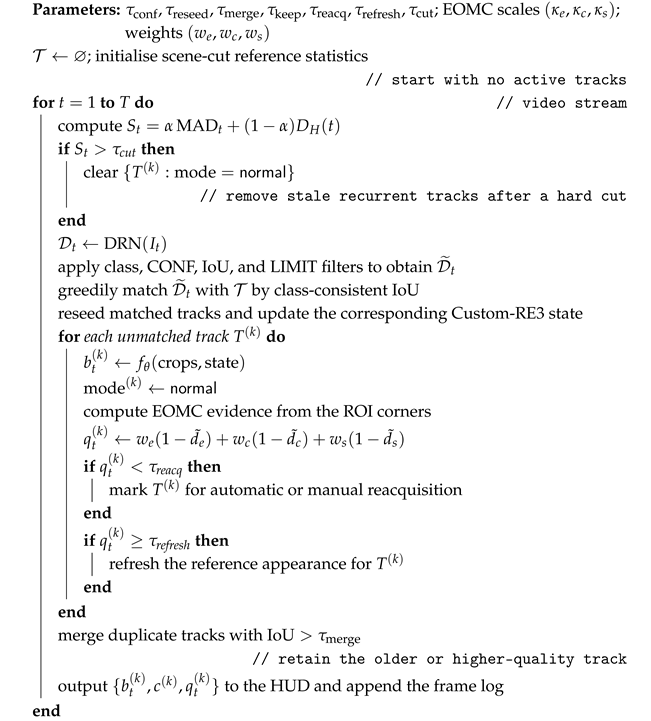 |
- Legend. DRN refers to the YOLOv8-seg Detection–Refinement Network. Custom-RE3 denotes the adapted recurrent bounding-box regressor used in this study. EOMC refers to the edge-orientation, mean-colour, and shape verifier. A det-track is supported by a detector output, whereas a normal track is continued by the recurrent predictor when detector support is temporarily unavailable.
5. Experiments
This section evaluates the TerraGuardAI tracking system using publicly available 1080p post-earthquake UAV footage acquired at different altitudes. Because direct data collection in disaster-response zones typically requires formal authorisation, the videos were obtained from reputable news outlets and livestream archives covering the 2023 Türkiye earthquake and comparable post-disaster environments. The D’RespNeT image set was curated from approximately 30 public source videos and contains 205 original frames, as described in Table 3. Most source videos contributed approximately 2–5 representative images, whereas longer or more visually diverse videos contributed additional non-duplicate images. This dataset-curation procedure is distinct from the selection of 3–5 labelled tracking checkpoints within each dataset-linked sequence.
Two complementary evaluation regimes are considered. Dataset-linked sequences provide sparse manual checkpoints for assessing Success@0.5 and identity consistency. Additional held-out public clips, excluded from detector training, support diagnostic checks of generalisation, occlusion, scene cuts, and operator workflow. The approximate total of 30 videos describes the public source pool; it is not presented as a fixed competition test set, and no unsupported regime-specific clip count is reconstructed. The primary quantitative analysis is based on the labelled-checkpoint comparison, while the held-out clips provide complementary stress-test evidence.
The available evaluation quantities and the associated claim boundaries are summarised in Table 7.
Table 7.
Evaluation inventory and claim boundaries. Exact frame and split quantities are reported where available; the total number of source videos is approximate, and held-out clips are excluded from the labelled-frame Success@0.5 denominator.
The evaluation adopts an operations-oriented perspective. It examines operator-supervised, detector-assisted tracking of potential building entry points, stationary and moving targets, hazards, vehicles, and responders. The resulting cues are communicated to ground teams and UGVs operating within each UAV’s assigned sector. The same footage supports broader situational awareness, primary-target selection, HUD-based inspection, and navigation assistance. The system also provides traversability cues and preliminary obstacle-aware path guidance for bird’s-eye and oblique views. Occlusion robustness is assessed in both regimes under partial or complete loss of visibility, while scene-cut logs show how stale or false tracking boxes are suppressed during UAV motion and in edited footage. The fully measured ablation compares RE3-only with full E’CHIT; leave-one-component variants are interpreted diagnostically where dense labels are unavailable.
5.1. Experimental Setup
System under test. The experiments evaluate the TerraGuardAI/E’CHIT pipeline configured for real-time aerial search-and-rescue (SAR) using streaming UAV video. The architecture combines a YOLOv8-seg Detection–Refinement Network (DRN), a Custom-RE3 recurrent regressor that maintains predictions during temporary detector dropouts, an edge-orientation and mean-colour (EOMC) identity verifier, and a scene-cut watchdog that combines luminance change (mean absolute difference; MAD) with HSV histogram divergence. An operator heads-up display (HUD) provides mission-relevant controls, including AUTO/SINGLE/MULTI tracking modes, class filters with CONF/IoU/LIMIT settings, and optional super-resolution previews, without directly altering the causal tracking process. Figure 2 presents the complete architecture, and Algorithm 1 details the execution loop.
Operational context and inputs. The evaluation targets post-earthquake and related post-disaster environments recorded by UAV platforms at 1080p. Two complementary regimes are considered. The first comprises dataset-linked sequences with sparse ground truth; each video contains 3–5 labelled checkpoint frames, with the number selected according to sequence length. This tracking-evaluation annotation density is distinct from the 2–5-frame-per-source sampling used for most videos during initial dataset curation. The second regime comprises held-out public UAV videos of disaster zones that were not used during detector training, providing a practical assessment of generalisation under mission-like conditions. The scenarios include dense urban rubble with dust and active rescue teams, high-rise structural collapse, wide-area destruction, occlusion-heavy streets and façades, and weather-affected ruins such as snow-covered buildings.
Hardware and runtime configuration. All experiments process native 1080p frames in FP16 on an NVIDIA RTX-class GPU (NVIDIA Corporation, Santa Clara, CA, USA), with pre- and post-processing performed on the CPU. For each frame, the DRN performs instance segmentation and class filtering; the Custom-RE3 head advances active tracks using paired crops and recurrent state; EOMC estimates identity quality from compact regions of interest; and the scene-cut module applies state hygiene after abrupt transitions. Runtime is reported as the observed FPS range for each configuration shown in the manuscript. Per-frame latency is recorded in the logs, but a pooled 95th-percentile value is not reported because run duration, active-track count, detector cadence, and enabled inspection modules vary across the available sequences.
Parameterisation. EOMC combines corner-based edge-orientation histograms, mean colour in Lab space, and bounding box shape ratio into a single quality score . The thresholds control track retention, automatic reacquisition, and reference-appearance refresh, respectively. Abrupt scene changes are detected using
where denotes the HSV histogram divergence between consecutive frames. A scene cut is declared when . Reseeding and merging are handled through class-consistent greedy matching with confidence gating, controlled by . The Method section defines these parameters and provides the default EOMC weights and scene-cut calibration range. Association and reacquisition thresholds were held fixed within each comparison, and any deliberate departures are stated with the corresponding result.
Baselines and variants. The fully quantified system-level comparison is between RE3-only and full E’CHIT. RE3-only disables detector reseeding/merging, EOMC gating, and scene-cut hygiene, whereas full E’CHIT enables the complete pipeline. Additional configurations—detector-only association, EOMC disabled, and cut detector disabled—are retained as diagnostic variants that expose characteristic failure modes. Unsupported aggregate scores are not assigned where the archived sparse-label evidence lacks a complete, matched denominator. ByteTrack, OC-SORT, BoT-SORT, and StrongSORT are included as protocol-aware literature baselines. They were not rerun as dense MOT benchmarks in this study, and no MOTChallenge-style or leaderboard-equivalent numerical comparison is claimed.
Measurement protocol and metrics. The primary labelled-frame measures are Success@0.5, defined as IoU, and identity-switch consistency between checkpoints. The aggregate comparison between RE3-only and full E’CHIT, together with its absolute and relative effect sizes, is reported directly. Track fragmentation, time-to-reacquire, ghost-box suppression, and actions per minute are defined and instrumented through the logging architecture. When the event denominator is incomplete, these are treated as diagnostic measures rather than complete aggregate estimates. Runtime is reported as observed FPS ranges for the stated active-target and module configurations.
Statistical treatment and sparse-label limits. A frame-sparse design requires caution when interpreting robustness. The measured mission results are therefore presented as descriptive aggregate evidence rather than as closed-benchmark significance claims. The manuscript reports absolute and relative effect sizes for the primary comparison, but does not infer a confidence interval from the two aggregate values alone; doing so would require the underlying per-sequence observations and their dependence structure. Dense frame-by-frame labels, fixed event denominators, and repeated detector-training seeds are identified as future requirements for HOTA/IDF1/MOTA-style analysis, bootstrap confidence intervals, and formal significance testing.
- Mission-Oriented Evaluation Protocols and Metrics
- 1.
- Objectives. This protocol evaluates two behaviours that are central to aerial SAR operations: stable target identity and timely system response. The assessment is tied directly to the frame-level behaviour of the E’CHIT tracking loop in Algorithm 1, with particular attention to the EOMC verifier and scene-cut hygiene. The aim is to measure how reliably the tracker preserves identity during occlusion, detector dropout, and viewpoint change, and how quickly it recovers when a target is lost or a hard scene transition occurs. The measures reflect operational needs in post-disaster zones: maintaining a consistent ID through occlusions and edits, reacquiring targets quickly after loss, avoiding ghost boxes at cuts, and sustaining real-time throughput under multi-target load.
- 2.
- Ground-truth association at sparse labels. Dataset-linked sequences contain 3–5 labelled frames per video, with the number selected according to sequence length. At each labelled frame g, predicted boxes are associated with ground-truth objects of the same class using IoU-gated Hungarian matching, with a gate of IoU . This association maps each ground-truth object to a tracker ID at g and thereby supports identity metrics across labelled frames. Held-out UAV sequences use internal signals from Algorithm 1—EOMC quality, reacquisition flags, and scene-cut events—to support diagnostic assessment of robustness and responsiveness; these sequences are excluded from the primary labelled-frame denominator.
- 3.
- Accuracy at labelled frames. Success@0.5:ID switches: For identity o with labelled frames , let denote the matched tracker ID at :Track fragmentation: If is the number of contiguous runs of successful matches across labelled frames, the fragmentation count is .
- 4.
- Robustness to occlusions and hard cuts. Time-to-reacquire (TTR): A loss event at is declared when no IoU-valid match exists at a labelled frame or when EOMC quality falls below . Reacquisition time is the number of frames until the next correct lock with IoU :Ghost box suppression at cuts: For cut score and threshold , define at each cut time t. The suppression for each cut isThe reported rate is .
- 5.
- System performance under load. Throughput is reported as observed FPS ranges for the tested configurations. Per-frame latency is measured from frame ingestion to log append, but no pooled percentile is reported across runs with different numbers of active tracks and enabled inspection modules. The reported ranges are interpreted together with the active-track count and the enabled HUD and inspection features.
- 6.
- Operator workload proxy. A lightweight proxy records actions per minute (APM), including mode toggles, class-filter/LIMIT adjustments, manual reacquisition requests, and threshold changes. Lower APM, when accompanied by equal or better identity metrics, indicates lower operator burden.
- 7.
- Computation and aggregation. All quantities are derived from per-frame logs:Metrics are computed for each sequence and macro-averaged within each regime. Labelled-frame metrics are reported for the dataset-linked regime, whereas robustness and performance are reported for both regimes.
As illustrated in Figure 6, the system operates in a hybrid Auto + Multi-Target mode with single-target prioritisation. Across the complete multi-target pipeline, the observed throughput is 24–100+ FPS. In the example shown, in which 34 targets are tracked simultaneously, the pipeline maintains 71–100+ FPS. The HUD also enables the operator to select a primary target and adjust the principal tracking, detection, and system parameters during operation.
Figure 6.
Operator logging, scene-change capture, and track hygiene. The operator can log data for either a selected target or all targets, while adaptive scene-change detection saves a snapshot at the moment of transition. Track-hygiene rules remove duplicate and overlapping boxes, retire boxes that remain at the frame boundary for a configurable patience window (50 frames by default), clear all recurrently continued boxes after a scene change and trigger reacquisition, and provide HUD controls for manual removal or cancellation. The test video is derived from aerial UAV footage of Antakya, Turkey, recorded more than two months after the February 2023 earthquakes [37].
Data logging and reproducibility. Runtime logging is controlled using the E key. When logging is switched off, the buffered records are written to a timestamped CSV file with the format log_YYYYMMDD_HHMMSS.csv. Each row represents one frame–target pair, enabling the tracking behaviour to be reviewed after the experiment. The file is saved in a mode-specific experiment directory.
For each run, the system creates a root folder named video_output_normal_and_ tracking_version_<YYYYMMDD_HHMMSS>/. This folder contains separate Auto/ and Manual/ directories, each organised into single-target and multi-target hybrid-tracking outputs. It also contains a histogram/ folder for representative frame snapshots, a normal_video_save/ folder for the raw video stream, a tracking_video_save/ folder for the annotated tracking video, and the consolidated CSV log. This structure keeps visual outputs, tracking records, and experiment metadata together, making results easier to inspect, reproduce, and compare across runs. To preserve real-time throughput, high-frequency diagnostics (e.g., EOMC quality q, scene-cut scores and flags, per-detection confidence, and end-to-end latency) are omitted from the release build but remain available in debug builds.
The frame-level fields retained in the release CSV are listed in Table 8.
Table 8.
Frame-level CSV schema, with one row for each frame–target pair.
Operator controls and saved artefacts. Press U to record the raw feed and the HUD/track overlay (normal_video_save/raw_video.avi and tracking_video_save/tracked_video.avi). Press S to save paired PNG snapshots (raw + overlay) to .../normal_image_save/ and .../calibration_image_save/. When the scene-cut module is enabled, one JPEG per cut is written to .../histogram/.
The resulting directory structure, recordings, scene-cut images, and CSV output are illustrated in Figure 7.
Figure 7.
Test video-3: output structure and logs. The composite screenshot shows artefacts produced during a single run. Top-left: the root output directory contains the per-mode folders Auto and Manual, the histogram directory for scene-cut snapshots, and a timestamped run folder (e.g., video_output_normal_and_tracking_version_20250823_173507). Within the run folder, dual recordings are saved as normal_video_save/raw_video.avi (raw feed) and tracking_video_save/tracked_video.avi (HUD overlay). Top-right: example scene-cut JPEGs and the mode-specific logging roots for Multi- and Single-Target operation. Bottom: an excerpt from the frame-wise CSV log (e.g., log_20250823_173749.csv) showing the fields FrameIndex, VideoSpeed, FPS, NumTargets, TargetID, ClassName, X1, Y1, X2, Y2, CenterX, CenterY, and Size. These fields support after-action analysis and metric recomputation, including Success@0.5, ID switches, and throughput. Hotkeys: U for dual recording, E to toggle CSV logging (the file is written when logging is switched off), and S to save PNG snapshots to .../normal_image_save/ and .../calibration_image_save/.
The corresponding controls and output paths are summarised in Table 9.
Table 9.
Operator controls and saved artefacts.
Precision and numerical settings. Unless otherwise stated, GPU experiments use mixed precision. Network forward passes (detector and re-ID/SR) run in FP16 with automatic mixed precision (autocast), while post-processing (NMS), geometric calculations, tracking-state updates, and logging remain in FP32. TF32 remains enabled to accelerate FP32 matrix operations on supported NVIDIA hardware. This configuration provides the highest observed throughput without a measurable loss of accuracy on the evaluated sequences. For CPU runs, or when numerical issues are detected, the pipeline is executed in pure FP32 by disabling half precision and autocast. If a qualitative degradation is observed for small or low-contrast targets, only the affected model is reverted to FP32, while the remainder of the pipeline continues to use FP16. A/B comparisons are performed on the same sequences to confirm accuracy stability before the faster configuration is adopted.
Scope. The setup assesses whether detector-assisted recurrent tracking with EOMC identity safeguards and scene-cut hygiene can provide identity-stable, real-time operation suitable for guiding ground teams and unmanned ground vehicles in cluttered, dynamic disaster zones.
5.2. Test Scenarios and Data Regimes
Scope and context. Evaluation targets post-earthquake and comparable post-disaster urban environments captured by UAV platforms at 1080p. The emphasis is on operator-relevant performance in field robotics rather than closed-world benchmarking, reflecting an operations-oriented evaluation. The evaluation framework and data descriptions are provided in Section 5.
Data regimes. Two complementary regimes are employed. (i) Dataset-linked sequences: videos that also appear in the annotation set and contain sparse ground truth (3–5 labelled frames per sequence, selected according to video length), enabling accuracy checks without constructing a closed benchmark.
(ii) Held-out public UAV videos: additional UAV sequences from post-disaster events, excluded from training, are used to assess generalisation under realistic mission conditions. Drawn from reputable news and livestream archives, these videos include material from the 2023 Türkiye earthquake and comparable disaster contexts. The held-out set is used to examine detection fidelity, identity continuity, and operational relevance in scenes that more closely resemble deployment footage than curated training data.
Scenario archetypes. As shown in Figure 8, the sequences are grouped into scenario archetypes that reflect common aerial SAR workloads after major earthquakes:
Figure 8.
Scenario archetypes representing typical post-earthquake SAR environments: dense urban rubble with dust and rescue teams, high-rise structural collapse, wide-area destruction, occlusion-heavy streets and façades, and weather-affected ruins such as snow-covered buildings.
- Dense urban rubble with active rescue efforts: collapsed multi-storey buildings, heavy debris fields, rescue teams in high-visibility clothing, and dust or smoke that reduces visibility.
- High-rise structural collapse: tall buildings that remain partially standing but show severe damage, exposed interiors, façade openings, and unstable vertical debris.
- Wide-area destruction zones: large neighbourhoods that are flattened or heavily damaged, requiring broad aerial coverage and often containing crowd movement, emergency activity, and irregular ground traffic.
- Street-level occlusion corridors: narrow urban passages affected by rubble, partially blocked roads, and obstructed façades, where UAV line-of-sight, target continuity, and path interpretation become more difficult.
- Snow-covered or weather-affected ruins: damaged structures covered by snow or affected by adverse weather, creating additional challenges for visual detection, access point assessment, and safe navigation.
Ground-truth strategy for the dataset-linked evaluation. As illustrated in Figure 9, each dataset-linked sequence is annotated at 3–5 selected frames. This sparse ground-truth design provides sufficient reference points to measure Success@0.5, the ID-switch rate, and track fragmentation, while avoiding the impractical cost of annotating every frame in long UAV video sequences. Ground-truth frames are distributed across each sequence to capture representative stages before occlusion, during occlusion (including potential detector dropout), and after reacquisition.
Figure 9.
Examples of ground-truth annotations in D’RespNeT. Each image shows polygon-level masks and bounding boxes assigned to 28 disaster-response classes, including collapsed and damaged buildings, blocked and accessible entry points, debris categories, vehicles, and human presence. These examples illustrate the fine-grained instance-level detail required for reliable UAV-based situational awareness in post-earthquake environments. Colours correspond to the displayed semantic class labels and do not encode an additional rank or score; severity is conveyed only by the class name.
Operational events of interest. In both regimes, sequences are tagged for (i) partial or complete occlusions and re-entry, (ii) hard scene cuts caused by editing or source switching, and (iii) rapid camera manoeuvres such as fast pans and tilts. These tags support targeted analyses of time-to-reacquire, ghost-box suppression at cuts, and identity stability under challenging conditions.
Rationale. The combined design—sparse-ground-truth checks on dataset-linked videos together with unconstrained held-out UAV footage—supports both measurement discipline and ecological validity. It is aligned with the intended use of maintaining identity-consistent tracks of SAR-critical targets in dynamic, cluttered, and partially observed disaster scenes.
5.3. Annotation Density, Temporal Coherence, and Occlusion Checks
The evaluation therefore examines whether the limited number of annotated frames per sequence can support claims about tracking quality, temporal coherence, identity switches, and occlusion handling. Sparse labels are useful for mission-linked checkpoint analysis, but their limitations are stated explicitly. Three to five labels per sequence can establish whether the same object is recovered before, during, and after an event, but they cannot replace dense MOT-style frame-by-frame annotations. The primary claims are therefore restricted to metrics that can be measured responsibly from the available evidence: Success@0.5 on labelled frames, changes in ID switches between labelled checkpoints, time-to-reacquire from logged events, ghost-box suppression around detected cuts, and runtime under load.
The resulting evidence boundaries are consolidated in Table 10.
Table 10.
Evidence matrix for the experimental protocol. The table distinguishes directly measured quantities from current limitations and targets for future dense annotation.
5.4. Operator-Centric HUD: Scientific Role and Summarised Controls
The TerraGuardAI human–machine interface (HMI) is implemented as an operator-centred heads-up display (HUD), as shown in Figure 10. It presents perception, tracking, and logging information without interfering with the underlying estimator. Within the integrated pipeline, the YOLOv8-seg Disaster Response Network (DRN) generates class-filtered proposals, while the Custom-RE3 recurrent regressor helps preserve target identity when detector outputs are temporarily unavailable. The EOMC verifier evaluates edge-orientation, colour, and shape consistency and assigns each active track a quality score ; the scene-cut watchdog clears stale tracking states after abrupt visual transitions. The HUD uses these signals to provide mission controls and operator feedback while remaining separate from the tracker’s causal processing loop. This separation supports repeatability, auditability, and clearer after-action review during SAR operations.
Figure 10.
TerraGuardAI HUD keyboard and mouse controls. The up- and down-arrow keys increase and decrease the currently selected parameter, respectively.
A quick-reference summary of the controls is provided in Figure 10, and the interface’s role is also reflected in Algorithm 1. To avoid an overly software-manual style, implementation-level key bindings are confined to the control figure. The surrounding text instead emphasises the scientific role of the HUD: authority gating, non-causal visualisation, target stewardship, reproducible logging, and operator-facing verification evidence. The detailed control figure, CSV schema, and saved-artefact table are retained because they define reproducible operator interventions, output records, and after-action evidence rather than merely listing features.
- Deployment variants
Two deployment configurations are supported. The onboard UAV build displays only the HUD overlay, prioritising low-latency status information and essential authority controls during autonomous or pilot-assisted flight. The ground-control build adds a companion GUI in which buttons, sliders, and menu actions mirror the keyboard and mouse controls shown in Figure 10. A function can therefore be activated either through the GUI or by direct input, and its effect is displayed immediately on the main video frame. To improve operational reliability, the input layer uses event debouncing and rising-edge gating. These mechanisms prevent repeated triggers from rapid button presses, suppress bounce artefacts, and keep the displayed state aligned with the most recent authorised command. The input layer is also buffered so that rapid command sequences, such as class-filter changes during target handover, do not interrupt or delay the tracking loop.
- Mode gating and target stewardship
Operational authority is managed through explicit mode gates. The SAFE, MANUAL, and AUTO states define the permitted level of autonomy, while NO, SINGLE, and MULTI select the active tracking regime. Mode transitions are latched by the HUD and applied only at well-defined handover points, thereby separating user intent from estimator updates. Within each mode, target-stewardship tools allow the operator to cycle through pending focus targets, promote one target to MAIN focus, request one-shot RE3 reacquisition, and enable a quality-driven auto-reacquire watchdog that reseeds tracks when q falls below the threshold. This structure reduces inadvertent ID fragmentation by ensuring that manual interventions are subject to quality gating rather than applied during transient estimator states.
The principal interface mechanisms and their operational benefits are summarised in Table 11.
Table 11.
HUD design choices that establish the operator interface as a systems-level contribution rather than a passive visualisation layer.
- Mission-aware perception controls
A two-column class popover provides class selection together with per-class LIMIT, CONF (detector confidence), and IOU (NMS IoU) controls. These parameters act immediately on the DRN output (Det in Algorithm 1), enabling the operator to emphasise SAR-critical categories—such as entry points, personnel, and vehicles—while suppressing distractors. The HUD can display raw frame-level detections, instance-segmentation masks, and EOMC evidence overlays (edges, edge heatmaps, and shape masks) within each ROI. These displays help explain why a track is retained or flagged for reacquisition and support informed in-the-loop decisions without compromising estimator stability.
- Zoom, super-resolution, and perspective tools
Pinned multi-zoom windows support close inspection of small or obliquely viewed targets. Each pin can request EDSR × 4 super-resolution on demand and apply a perspective warp to normalise slanted façades or rooftop views, facilitating the assessment of access points, debris interfaces, and moving personnel. Pop-out windows enable side-by-side inspection while the main frame preserves global context. These tools provide visual support only and do not feed back into the tracking state. They improve the operator’s understanding of the scene without changing estimator outputs or modifying active tracks.
- Video transport, image processing, and scale tools
The interface also provides controls for video review and image inspection. Playback speed, audio, and a central reference rectangle can be adjusted to support consistent review across different sequences. A lightweight image-processing mode provides luminance and black-and-white display options for scenes with low contrast or poor visibility. The scale tool allows the main inspection box to be enlarged or reduced temporarily for closer examination without reseeding the tracker or changing the stored target state. Debounced input handling prevents rapid toggles from generating conflicting commands or queued state changes.
- Recording, logging, and after-action review (AAR)
The system records both the raw video stream and the HUD/tracking overlay, allowing the original footage and the interpreted tracking output to be reviewed side by side. CSV logging can be enabled on demand and is written to file when logging is switched off. Each entry records frame-level and target-level information, including bounding box coordinates, class labels, instantaneous FPS, and the number of active targets. Scene-cut snapshots are also saved when cut events are detected, providing visual evidence for checking ghost-track suppression and track-state cleanup during after-action review. These artefacts support metric recomputation (e.g., Success@0.5 and ID-switch counts) and mission debriefing while maintaining real-time throughput in release builds.
- Concurrency and performance under multi-target load
In MULTI mode, the tracker instantiates a lightweight parallel E’CHIT path for each object. Every instance advances through the DRN↔Custom-RE3 reseed/predict cycle and is quality-gated by EOMC. The scheduler is designed to maintain bounded per-frame latency as the number of targets increases. Manual and automatic modes share the same underlying primitives, allowing corrective actions to be interleaved with autonomous reseeding without timing conflicts. With overlays enabled, the observed throughput remains within the real-time range reported in Section 5.
- Integration with AI-driven traversability for disaster response
The HUD is integrated with TerraGuardAI’s AI-driven traversability stack for post-earthquake environments. Instance and semantic segmentation, trained on D’RespNeT, are used jointly to address class imbalance and modelling gaps, producing access-point, debris, and hazard cues as actionable overlays. These cues support UGV ingress planning and operator tasking, while identity-stable tracks preserve continuity for stationary and moving targets. Together, these functions provide mission-relevant situational awareness where ground access or line of sight is limited.
- Fielded variant for autonomy-enabled safe landing (GoAero/CraneAero)
A competition-specific HUD+GUI variant has been integrated into the CraneAero platform for the GoAero global search-and-rescue challenge, emphasising autonomy-enabled safe landing. GUI controls expose landing-relevant parameters, including candidate-zone thresholds, target lock, and exclusion masks. Through debounced events, these controls update their HUD counterparts and the E’CHIT-assisted selection pipeline. Online segmentation proposes landing zones, while E’CHIT maintains a lock on the selected touchdown target as the UAV continues to scan. A public validation video from DroneX Expo London documents the Stage-2 prototype from approximately 3:30 onward (https://www.youtube.com/watch?v=THSYSmAdF80; accessed on 1 August 2026). Development and integration of this work package were led by Aykut Sirma. A separate article will describe the safe-landing methodology and results in detail.
- Summary
The TerraGuardAI HUD consolidates mission-critical controls and analytics within a predictable, low-latency interface. Its functions include explicit mode gating for authority management; class-aware filtering with live CONF/IOU/LIMIT adjustment; per-ROI verification overlays that expose the EOMC evidence trail; multi-zoom, EDSR, and perspective tools for close inspection; and robust recording and logging for after-action review. By keeping the interface separate from the estimator, the HUD allows the operator to adjust mission controls without disturbing the tracking state. Debounced and mirrored inputs across the onboard and ground-control versions promote command consistency, prevent unintended repeated triggers, and preserve stable estimator behaviour. This design gives the operator direct control over target selection, thresholds, and mission cues while supporting identity-stable guidance and traversability-aware decision-making in cluttered, rapidly changing post-disaster scenes.
6. Results and Literature-Derived Benchmark Context
This section first reports the measured evidence for E’CHIT and then presents historical external benchmark result spaces as a separate contextual comparison. The primary quantitative claims are based on the D’RespNeT mission-linked evaluation, while held-out authentic UAV footage provides diagnostic stress-test and qualitative generalisation evidence. The VOT2014, NT-VOT211, and VOTS2024 background values shown later were transcribed or reconstructed from published studies and benchmark summaries. E’CHIT was not evaluated using the complete official datasets, reset rules, toolkits, aggregation procedures, or submission routes of those benchmarks. The added E’CHIT points are therefore clearly labelled as non-official operating-point illustrations. They are not used to calculate the D’RespNeT effect sizes, are not included in any ranking table, and do not support claims of protocol-identical superiority.
The evaluation adopts an operations-oriented perspective. It asks whether E’CHIT improves identity-stable tracking and operator responsiveness in real post-earthquake UAV footage, where dust, occlusion, rapid viewpoint changes, repeated structures, and hard edits are common. Two regimes are used: (i) mission-linked sequences with sparse manual labels (3–5 labelled frames per video, selected according to video length), and (ii) held-out public UAV videos from disaster scenes not used during detector training. All experiments use native 1080p footage to preserve small cues such as access points, hazards, and partially visible people, and report both tracker-level and end-to-end system throughput.
6.1. Benchmark Reporting Policy
The following reporting policy preserves the informative figures while preventing cross-protocol overstatement:
- Official or protocol-identical benchmark claims require the same dataset and version, split, initialisation and reset rules, output format, evaluator or toolkit, aggregation procedure, and submission route used by the target benchmark [38,39,40].
- The historical tracker series in the VOT2014, NT-VOT211, and VOTS2024 figures are derived from the literature. They reproduce result spaces reported in previous papers and public benchmark summaries and are not newly generated competition runs by the present authors.
- E’CHIT has not been submitted as an official result to those benchmarks. Its plotted marker is an indicative, cross-protocol placement based on the internally measured SAR operating regime and is explicitly excluded from leaderboard, ranking, and protocol-identical comparison claims.
- The availability of published result plots is not equivalent to reproducing every historical sequence version, reset rule, evaluator, and challenge-submission route. The external figures are therefore used to communicate scale and trade-offs, not as substitutes for official reruns.
- The paper’s primary quantitative claims remain the D’RespNeT mission comparison: Success@0.5, normalised identity-switch reduction, descriptive effect sizes, and observed runtime ranges. Held-out clips and event logs provide complementary diagnostic evidence.
- Why the contextual figures are retained
These figures provide limited but useful context by showing where the internally measured E’CHIT operating point lies relative to familiar historical tracking results. They do not indicate how E’CHIT would rank after an official benchmark submission. Retaining them, while repeating this interpretation boundary in the text and captions, communicates the authors’ application-oriented perspective without presenting the mapped point as an official competition score.
- Requirements for direct external-benchmark comparison
A future protocol-identical comparison will require a complete rerun of E’CHIT on each target benchmark’s official sequences, data split, initialisation/reset rules, output format, evaluation toolkit, and prescribed submission or aggregation route. Until then, the literature-derived figures are contextual visualisations only.
6.2. Evaluation Protocol and Mission-Oriented Metrics
Because dense frame-by-frame annotation is rarely feasible for post-disaster UAV footage, the protocol emphasises identity continuity and operational responsiveness, rather than per-frame overlap alone. At labelled frames, predicted boxes are associated with ground-truth instances through IoU-gated matching (IoU ), enabling calculation of Success@0.5 and the ID switch count. The ID-switch metric is particularly important in SAR because an identity error can generate an incorrect operational cue, such as the wrong entry point, vehicle, or person of interest.
- Variability reporting
Results are reported as descriptive mission evidence because the available comparison contains sparse checkpoints rather than a complete vector of dense frame-wise tracks. Absolute and relative effect sizes are reported for the primary aggregate comparison. A confidence interval is not reconstructed from the two aggregate values alone because the number and dependence structure of the underlying per-sequence observations are required; treating all checkpoints as independent would create pseudo-replication. No formal significance or population-wide superiority claim is made.
6.3. End-to-End Real-Time Performance Under Operational Load
A core design requirement of E’CHIT is interactive operation at 1080p while tracking multiple targets and rendering operator overlays. In operational runs, the single-target tracking loop sustains 164–330 FPS. End-to-end multi-target throughput varies with the number of active tracks and enabled modules, including detector cadence, HUD overlays, zoom and inspection features, and logging, but typically remains within the real-time range. Multi-target scenes often contain more than five targets and may include substantially larger numbers in crowded disaster footage. These results support the intended operator-facing use case by maintaining stable, low-latency feedback at the native 1080p resolution used in deployment-style UAV footage.
6.4. Primary Mission Benchmark: D’RespNeT Results (Accuracy and Identity Stability)
Figure 11 presents the fully quantified mission-oriented comparison on D’RespNeT: RE3-only tracking versus full E’CHIT. Success@0.5 increases from 0.62 to 0.79, while the normalised ID switch count decreases from 1.00 to approximately 0.29. Table 12 reports the corresponding descriptive effect sizes. These aggregate mission-level effects are not accompanied by a confidence interval because the per-sequence observation vector required for resampling is not part of the available evidence package.
Figure 11.
D’RespNeT mission-oriented comparison of the RE3 baseline and full E’CHIT using Success@0.5 (higher is better) and the normalised ID-switch count (lower is better). This comparison supports the paper’s primary quantitative claims.
Table 12.
Descriptive effect sizes for the primary measured comparison. The normalised IDSW measure uses the RE3-only value as the reference value of 1.00.
- Why these two metrics matter together
Disaster footage contains frequent occlusions, dust bursts, abrupt viewpoint changes, and visually repetitive structures. A tracker may achieve temporarily acceptable overlap while drifting towards a similar window, vehicle, or rubble region. For SAR operators, this is a matter of trust because actionable guidance requires stable identity rather than merely a momentarily accurate bounding box. E’CHIT is therefore evaluated on its ability to maintain the same object identity under difficult conditions.
6.5. Comparison with Contemporary Tracking-by-Detection Baselines
The comparison also considers recent tracking-by-detection baselines, including ByteTrack, OC-SORT, BoT-SORT, and StrongSORT, within a protocol-aware framework. These trackers are strong and appropriate baselines for densely annotated MOT datasets; however, the available SAR annotations are sparse, and their class semantics differ from those of pedestrian and vehicle MOT benchmarks. The table therefore separates the measured E’CHIT/RE3 mission results from the literature-based and protocol-level positioning of contemporary MOT methods. This avoids reporting unsupported numerical scores that would require dense track-level labels.
Table 13 provides a protocol-aware comparison that separates directly measured mission results from literature-based methodological positioning.
Table 13.
Protocol-aware comparison with contemporary tracking-by-detection methods. The table explains why dense-MOT leaderboard scores are not reported directly and clarifies how each method relates to the E’CHIT design.
This comparison clarifies the scientific position of E’CHIT: it is not proposed as a replacement for all modern MOT baselines under their official benchmark protocols. Its contribution is the mission-oriented combination of semantic detector reseeding, recurrent continuation, interpretable identity verification, scene-cut hygiene, and a non-causal operator HUD for disaster response UAV footage.
6.6. Relative Gains Summary (Interpretable At-a-Glance)
Figure 12 restates the aggregate comparison as descriptive relative factors referenced to the RE3 baseline, with RE3 normalised to 1.0. It summarises tracking success, the inverse identity-switch factor, and single-target speed. The plot is a transformation of the reported aggregate values rather than an independent experiment or significance analysis.
Figure 12.
Descriptive relative factors on D’RespNeT (RE3 baseline = 1.0). E’CHIT increases Success@0.5 and the inverse identity-switch factor (higher values indicate fewer switches). The speed factor summarises the observed single-target configuration. The grey dashed horizontal line marks the RE3-normalised reference value of 1.0. The plot visualises the aggregate results and does not constitute a separate statistical test.
6.7. Component Contributions in the E’CHIT Pipeline
Figure 13 presents the system-level ablation comparison on D’RespNeT, using RE3-only as the minimal baseline and full E’CHIT as the complete configuration. It focuses on tracking success, the inverse identity-switch factor, and real-time throughput. Only the contrast between RE3-only and full E’CHIT is fully quantified; the effects of the detector, EOMC, and scene-cut hygiene are supported by diagnostic variants and logs rather than by unsupported numerical allocations of the total gain.
Figure 13.
System-level ablation-style comparison on D’RespNeT: RE3-only versus full E’CHIT. The plot reports Success@0.5, an inverse ID-switch indicator (higher values imply fewer switches), and single-target FPS on the right axis. Only the complete baseline-to-system contrast is fully quantified; the figure should not be interpreted as a factorial numerical decomposition of the individual modules.
- What the comparison shows
The complete E’CHIT system achieves higher Success@0.5 and fewer normalised identity switches than RE3-only while retaining real-time throughput. Detector reseeding, EOMC quality gating, controlled reacquisition, and scene-cut hygiene provide plausible and observable mechanisms for this system-level result. However, the current sparse-label evidence does not isolate the numerical causal contribution of each module. The manuscript therefore reports the total measured effect and describes component-level evidence conservatively.
The evidence available for each component and the corresponding quantitative claim boundary are summarised in Table 14.
Table 14.
Component evidence and quantitative status. Only the comparison between RE3-only and full E’CHIT has complete aggregate numerical results; the remaining rows report diagnostic evidence for the corresponding mechanisms.
6.8. Statistical Variability and Strength of Evidence
The current evidence constitutes a descriptive aggregate mission comparison rather than a repeated-trial statistical experiment. The manuscript therefore reports effect sizes and observed ranges and explicitly identifies quantities for which uncertainty cannot be reconstructed. In particular, a confidence interval for Success@0.5 cannot be calculated responsibly from the aggregate values 0.62 and 0.79 alone. Such a calculation requires the number and dependence structure of the underlying per-sequence observations; treating checkpoints from the same sequence as independent would create pseudo-replication.
The appropriate next statistical design is a fixed, public sequence inventory with dense annotations, sequence-level bootstrap resampling, complete event denominators, and repeated runs for stochastic detector training. These additions are future work rather than values reconstructed retrospectively from incomplete raw data.
Table 15 distinguishes measured aggregate effects from diagnostic quantities and future statistical targets.
Table 15.
Statistical status of the reported evidence. The table distinguishes measured aggregate effects from diagnostic quantities and targets for future evaluation.
6.9. Historical Literature-Derived Benchmark Context and Indicative E’CHIT Placement
The six figures in this subsection are retained because they show historical tracking-result landscapes reported in previous studies and public benchmark summaries. The background tracker values are not new experimental results produced in this work. The added E’CHIT markers indicate only where the magnitude of the internally measured SAR operating point would lie for visual orientation. E’CHIT was not evaluated using the corresponding official sequences, toolkits, reset rules, output formats, aggregation procedures, or evaluation servers. Consequently, the markers are not official benchmark values, do not establish numerical equivalence between metrics, and are excluded from all primary effect-size and ranking claims.
For these historical comparisons, the authors relied on values and visual summaries reported in the published literature. Such plots provide useful context, but they are not equivalent to regenerating every historical result using a complete end-to-end challenge package. The paper therefore retains the figures transparently and states their interpretation boundary rather than presenting the contextual placement as a competition submission.
The protocol status and interpretation boundary of each retained external benchmark source are summarised in Table 16.
Table 16.
Interpretation and protocol status of the retained external benchmark figures. The background values are derived from the literature, and the E’CHIT markers indicate cross-protocol placements rather than official scores.
- VOT2014 historical context
Figure 14 and Figure 15 reproduce the Accuracy–Robustness–Speed terminology used in historical RE3/VOT2014 analyses. The E’CHIT marker indicates only an approximate operating region and must not be interpreted as evidence that E’CHIT outperforms an official VOT2014 method under VOT2014 conditions.
Figure 14.
Historical, literature-derived RE3/VOT2014 contextual line plot (variants A–K). The background values reproduce results reported in previous research. The E’CHIT marker is an indicative, non-official cross-protocol placement based on the internal SAR evaluation; it is neither a VOT2014 run nor a score, rank, or protocol-identical comparison.
Figure 15.
Historical, literature-derived RE3/VOT2014 Accuracy–Robustness context, with bubble size representing FPS. The E’CHIT marker is included solely for visual orientation and is excluded from official benchmark and superiority claims.
- NT-VOT211 historical context (AUC, Precision, OP50)
Figure 16 and Figure 17 reproduce representative tracker values from the published NT-VOT211 result space. The E’CHIT point is an indicative contextual marker based on the mission-oriented SAR evaluation; it is not an output from the NT-VOT211 evaluator or a leaderboard entry.
Figure 16.
Historical, literature-derived NT-VOT211 contextual line plot showing AUC, Precision, and OP50 for representative trackers. Any E’CHIT marker is non-official and cross-protocol and is not presented as an NT-VOT211 score, rank, or direct-comparison result.
Figure 17.
Historical, literature-derived NT-VOT211 contextual bubble plot showing AUC versus Precision, with bubble size representing OP50. The E’CHIT marker indicates only the internal SAR operating point and is not an official benchmark submission.
- VOTS2024 historical context (Accuracy A, Robustness R, Quality Q)
Figure 18 and Figure 19 present the corresponding published metric landscape for VOTS2024. The E’CHIT marker is an indicative cross-protocol placement; this study did not produce a protocol-compliant VOTS2024 segmentation submission.
Figure 18.
Historical, literature-derived VOTS2024 contextual line plot showing Accuracy (A), Robustness (R), and Quality (Q). Any E’CHIT marker is a non-official operating-point illustration rather than a VOTS2024 score, rank, or protocol-identical result.
Figure 19.
Historical, literature-derived VOTS2024 contextual bubble plot showing Accuracy versus Robustness, with bubble size representing Quality. The E’CHIT marker provides visual context only and is excluded from official benchmark and superiority claims.
Interpretation boundary.Figure 14, Figure 15, Figure 16, Figure 17, Figure 18 and Figure 19 show how the authors situate the application-oriented operating regime within familiar historical metric spaces. The scientific evidence for E’CHIT itself is provided by Figure 11, Figure 12 and Figure 13, the corresponding tables, the held-out diagnostic footage, and the reported runtime observations.
6.10. RL Warm Start Results and Bounded Interpretation
The RL warm-start experiments are interpreted conservatively. The author-developed script uses PPO/SAC only to explore short-horizon warm-start schedules before continued supervised detector training. The default YOLOv8 schedule remains the strongest final global mAP reference in the displayed experiment; RL is therefore not presented as the principal accuracy contribution or as a replacement for conventional supervised training. The displayed PPO/SAC curves document different early optimisation trajectories that may benefit selected difficult or under-represented SAR classes. No universal or statistically established per-class gain is claimed without repeated seeds and a complete per-class table. Because RL is absent from inference, it contributes only the offline cost in Equation (28) and does not alter the deployed architecture or real-time tracking loop.
6.11. Operational Challenges and How the System Addresses Them
Designing and benchmarking a UAV tracking stack for post-earthquake SAR introduces challenges that are under-represented in standard tracking benchmarks.
- Sparse labels and uncontrolled data
Real disaster footage is difficult to obtain and even harder to annotate densely. Sparse labelled frames are therefore used for quantitative checks, while held-out real footage and system logs provide complementary evidence of robustness.
- Occlusions, dust, and visually repetitive structures
Collapsed buildings and urban scenes contain repeated patterns, including windows, balconies, vehicles, and rubble textures. These patterns can increase drift and identity switches. The improvements shown in Figure 11 and Figure 13 support the conclusion that E’CHIT reduces these failures by combining fast recurrent tracking with detector-assisted verification and reacquisition.
The bounded role, evidence, and deployment status of the PPO/SAC warm start are summarised in Table 17.
Table 17.
RL interpretation and deployment scope. PPO/SAC are auxiliary offline training tools and are neither the central contribution nor an inference-time module.
- Hard cuts and edited UAV/news footage
Public disaster videos frequently contain hard edits. Without scene-cut hygiene, trackers may produce ghost boxes or carry identities into a different scene. E’CHIT incorporates cut-aware state cleanup to remove stale recurrent tracks and support reliable reseeding.
- Throughput under multi-target load
SAR scenes may contain many candidate objects. E’CHIT separates computationally heavier detection and inspection operations from the fast tracking loop, allowing the system to remain responsive under multi-target conditions at 1080p. This systems-level separation is consistent with recent UAV-tracking research that treats tracking as part of a broader operational loop: Wang et al. [28] combine UAV detection and tracking with dynamic human-command input, while Liu et al. [29] show that adaptive template and memory updates improve UAV-tracking robustness. E’CHIT extends this direction to post-disaster SAR by combining identity-stable recurrent tracking with an operator HUD, disaster-specific semantic filters, and cut-aware state hygiene.
- Known limitations
Prolonged full occlusions combined with dense dust or repeated edits can still induce fragmentation, and very small or deformable targets may challenge the EOMC verifier. The current evaluation uses sparse labelled checkpoints rather than dense frame-by-frame tracklets, which limits confidence-interval reconstruction, complete event statistics, factorial module ablation, and direct dense-MOT comparison. The literature-derived external figures remain contextual rather than official. Future work will therefore prioritise denser temporal annotation, fixed sequence manifests, direct public benchmark runs under complete official protocols, stronger re-identification, thermal/NIR sensing, and embedded edge-GPU optimisation.
6.12. Summary of Evidence
The results support five deliberately bounded conclusions. First, the fully measured system comparison shows a absolute gain in Success@0.5 ( relative) and an approximately 71% reduction in normalised identity switches. Second, diagnostic variants and logs clarify the intended roles of detector reseeding, Custom-RE3 continuation, EOMC, and scene-cut hygiene, although no isolated numerical contribution is assigned to any individual module. Third, the system retains real-time 1080p performance for operator use under the tested RTX-class configurations. Fourth, the operator-centric HUD provides mode gating, debounced inputs, non-causal inspection, reproducible logging, and after-action evidence without silently modifying estimator state. Fifth, the historical external benchmark figures are retained as literature-derived contextual visualisations with clearly labelled, non-official E’CHIT markers. They provide perspective but do not constitute official VOT2014, NT-VOT211, or VOTS2024 scores, rankings, or superiority claims.
7. Usage Notes
7.1. Operational Scope and Real-World Use Cases
Intended purpose. TerraGuardAI combines a YOLOv8-seg–based Detection–Refinement Network (DRN), a Custom-RE3 recurrent regressor, an edge-orientation and mean-colour (EOMC) identity verifier, and a scene-cut watchdog to maintain ID-consistent tracks during occlusions and abrupt edits (Figure 2; Algorithm 1). The system is designed for operator-in-the-loop UAV search and rescue (SAR), where preserving identity through debris, dust, rapid camera motion, and hard cuts is essential for converting detections into actionable waypoints. The HUD exposes mission controls, including mode switching, per-class confidence/IoU/LIMIT filters, and EDSR × 4 previews, without altering the causal tracking process. Custom-RE3 is the temporal module evaluated in this study; the outer E’CHIT wrapper can be adapted to other compatible trackers through interface modifications and tracker-specific retuning.
Primary use cases.
- Post-earthquake sector sweeps. Persistently track entry points and obstacles to guide UGVs and ground teams, while presenting detections as actionable waypoints in the operator HUD.
- Occlusion-heavy corridors and façades. Preserve target identity across detector dropouts using the recurrent head, while the EOMC verifier suppresses drift (Section 4.4).
- Rapid scene changes (hard cuts). Apply scene-cut state hygiene to prevent ghost boxes and ID carry-over (Section 4.5 and Section 5).
- Broader disaster contexts. Apply D’RespNeT’s categories and the same identity-preservation logic to tsunami, cyclone, and other SAR footage with comparable visual challenges.
Expected operational performance. With FP16 inference and code optimisation, the tracker sustains 164–330 FPS for single-object tracking, while the end-to-end system achieves 24–100+ FPS in multi-target modes on an RTX-class GPU, supporting real-time operator workflows. On D’RespNeT, E’CHIT increases Success@0.5 from 0.62 to 0.79 and reduces ID switches by approximately 71%, supporting identity-stable guidance in cluttered environments.
Limitations and challenges.
- Data and annotation constraints. Sparse ground truth (approximately 3–5 labels per sequence in the dataset-linked regime) supports operational metrics but limits dense benchmarking; parts of the evaluation rely on internal signals, such as EOMC quality and scene-cut flags, rather than exhaustive labels.
- Class imbalance/minority classes. PPO/SAC warm starts provide alternative early training trajectories, but the default schedule remains the strongest final global mAP reference. Repeated per-class evidence is still required, and minority classes may remain difficult to model robustly.
- Generalisation and sensing. The pipeline is tuned for 1080p RGB UAV footage; without adaptation, performance may degrade with different sensors (thermal/NIR), severe weather (snow/smoke), or very long-range and oblique views.
- Domain shift. New geographical regions, building typologies, or camera payloads may require fine-tuning using local examples.
- Compute and deployment. Reported real-time throughput assumes an NVIDIA RTX-class GPU and FP16; embedded edge-GPU or CPU-only platforms may require pruning or quantisation.
- Operator dependence. The system is operator-in-the-loop by design; usability and workload are represented by the actions-per-minute (APM) proxy rather than evaluated through a full user study.
- Failure modes. Prolonged complete occlusions, heavy dust, or repeated hard cuts can still induce fragmentation; very small or highly deformable targets may violate the assumptions underlying EOMC.
7.2. Deployment Guidance
- Train or adapt the DRN. Begin with D’RespNeT-trained YOLOv8-seg weights. For new regions or hazards, collect a small pilot dataset and either use the RL-assisted warm start (PPO/SAC) to explore hyperparameters or fine-tune the model using class-balanced sampling.
- Calibrate EOMC and scene-cut thresholds. Use short clips containing occlusions and scene changes, together with the built-in logs and snapshots, to verify quality gating, duplicate merging, and ghost-suppression behaviour.
- HUD workflow. Begin in auto+multi mode with filters for SAR-critical categories, such as entry points, debris, personnel, and vehicles. Promote a primary target and use EDSR zoom or multi-zoom windows for inspection at standoff distance.
- Throughput budgeting. Minimise overlays when the number of active tracks is high, and measure 95th-percentile latency as the track count increases.
- Handover to ground assets. Use waypoint overlays and obstacle flags to plan UGV ingress routes from the UAV’s vantage point.
7.3. Future Work
Future work will develop E’CHIT and D’RespNeT from a real-time perception–tracking–HUD prototype into a deployment-ready, operator-supervised autonomy stack for post-disaster SAR. First, D’RespNeT will be extended with (i) denser temporal coverage, including more labelled frames per sequence and optional short contiguous clips, to support stronger video-level evaluation; and (ii) additional sensing channels, including thermal/NIR and, where available, depth cues, to improve robustness under dust, smoke, low light, and long-range viewing. Metadata and domain descriptors will also be expanded, where available, to support systematic analysis of domain shift across geographies, building typologies, and sensor payloads.
Second, embedded and field validation will benchmark end-to-end latency and energy consumption on edge GPUs. Pruning, quantisation, and lightweight architectural choices will be investigated to preserve identity stability under resource constraints.
Third, tracking research will focus on stronger multi-target identity preservation through improved re-identification and uncertainty-aware quality gating. More demanding failure cases will also be examined, including prolonged occlusion, repeated hard scene cuts, small targets, and deformable objects that are difficult to track consistently in aerial SAR footage.
Fourth, the existing AI-driven decision layer provides a foundation for bounded, operator-supervised autonomy. This layer will translate perception outputs and confidence estimates into practical operator assistance, including task-conditioned sensing schedules, update-rate selection, active re-observation or viewpoint recommendations, and safety-aware navigation cues. Learning-based meta-optimisation methods, such as reinforcement learning for training-time scheduling and policy selection, will be investigated while ensuring that deployed inference remains transparent, auditable, and fully overrideable by the operator.
Fifth, aerial–ground coordination will be expanded by linking identity-stable tracks with ground response teams, UGVs, and other robotic platforms. Planned capabilities include cooperative planning, multi-UAV handover and deconfliction, and structured outputs such as waypoints, hazard flags, and target summaries. Deployment data and operator feedback will guide these developments so that future autonomy remains aligned with real SAR workflows rather than operating as an isolated decision module.
Finally, future experiments will use a fixed public sequence manifest, denser temporal annotations for HOTA/IDF1/MOTA-style evaluation, sequence-level bootstrap confidence intervals, repeated detector-training seeds, complete event denominators, direct public benchmark runs where official protocols can be followed end to end, and dense-tracklet evaluations of ByteTrack, OC-SORT, BoT-SORT, StrongSORT, and transformer-based trackers. These additions will strengthen the current sparse-label mission evaluation while retaining the application-centred evidence and literature-context figures presented in this study.
8. Conclusions
This paper presented E’CHIT, an identity-stabilised, detector-assisted tracking framework for operator-centric disaster-response applications. Its primary contribution is a tracking and operator-interface methodology for real-world SAR operations. Semantic YOLOv8-seg proposals trained on D’RespNeT initialise and refresh tracks; a Custom-RE3 recurrent module bridges short detector dropouts; EOMC verifies edge-, colour-, and shape-based identity consistency; and scene-cut hygiene prevents stale tracks from carrying over after abrupt feed changes. Custom-RE3 is the temporal module evaluated in this study, whereas the surrounding E’CHIT wrapper is tracker-adaptable at the software-interface level. Other compatible trackers may be integrated through state and bounding-box conversion and tracker-specific tuning, but each alternative requires independent validation. The TerraGuardAI HUD exposes these capabilities through controls for class filtering, target focus, reacquisition, zoom and inspection, logging, and after-action review.
The supporting components are deliberately limited in scope. D’RespNeT provides the disaster-specific semantic foundation required for SAR-relevant proposals. PPO and SAC are optional offline warm-start/meta-optimisation tools: the default supervised schedule remains the strongest final global mAP reference, no universal or statistically established per-class gain is claimed, and no policy runs during deployment. ByteTrack, OC-SORT, BoT-SORT, StrongSORT, and transformer-based trackers are discussed as contemporary, protocol-aware references, while dense numerical comparison remains future work. The VOT2014, NT-VOT211, and VOTS2024 figures are retained because their literature-reported historical result spaces provide useful visual context. Every E’CHIT point is explicitly non-official, cross-protocol, excluded from the primary claims, and not presented as a leaderboard result.
On D’RespNeT and authentic post-disaster UAV footage, E’CHIT increased Success@0.5 from 0.62 to 0.79, corresponding to an absolute gain of and a relative gain of , while reducing the normalised identity-switch count by approximately 71%. On the tested RTX-class GPU, the implementation sustained approximately 164–330 FPS for single-target tracking, 24–100+ FPS for end-to-end multi-target operation, and 71–100+ FPS in the illustrated 34-target case. These values are descriptive mission-level effects derived from sparse checkpoints, logs, and held-out stress-test footage. No confidence interval, complete factorial ablation, or external-protocol ranking is inferred when the required evidence is unavailable. The results support the central claim that identity-stable, operator-in-the-loop UAV tracking can make aerial detections more dependable as actionable cues for entry-point assessment, target monitoring, and UAV–UGV/ground-team coordination in cluttered, dynamic disaster scenes. A practical demonstration of the proposed system operating in a post-earthquake environment is provided in Supplementary Video S1; see the Supplementary Materials section for further details. The demonstration illustrates how E’CHIT can be used to establish and maintain a tracking lock on potential access and entry points, as well as to track operator-designated object classes using the proposed hybrid tracking approach. The demonstrated results show stable target tracking and identity maintenance under the evaluated operating conditions. The lower frame rate observed in the supplementary video is primarily associated with the additional computational and I/O overhead introduced by simultaneous real-time recording of both the raw video stream and the tracking-annotated output. Despite this recording overhead, the system remained operational and responsive during the demonstrated experiment, without observable disruption to the tracking process.
Future work will focus on denser annotation of long video sequences, formal user studies of the HUD, embedded Jetson-class deployment, thermal/NIR fusion, stronger re-identification under prolonged occlusion, direct official protocol benchmark runs, and closer coupling between aerial tracking outputs and ground-robot traversability planning.
Supplementary Materials
The following supporting information can be downloaded at: https://www.mdpi.com/article/10.3390/drones10080637/s1, Supplementary Video S1: Operational demonstration of the proposed system and its use in a post-earthquake environment.
Author Contributions
Conceptualization, A.S. and A.Z.; methodology, A.S.; software, A.S.; validation, A.S., A.P. and G.T.; formal analysis, A.S.; investigation, A.S.; resources, A.S.; data curation, A.S.; writing—original draft preparation, A.S.; writing—review and editing, A.S., A.P., G.T. and A.Z.; visualization, A.S.; supervision, A.Z.; project administration, A.Z.; funding acquisition, A.Z. All authors have read and agreed to the published version of the manuscript.
Funding
This research received no external funding.
Institutional Review Board Statement
Not applicable. The study uses only publicly available UAV imagery and does not involve prospective experiments on human participants or animals.
Informed Consent Statement
Not applicable. No individual-level data or direct interaction with human participants were involved in this study.
Data Availability Statement
The D’RespNeT instance-segmentation dataset used in this study is publicly available from Roboflow at https://universe.roboflow.com/cranfield-university-dwusz/phd-project-instance-segmentation (accessed on 1 August 2026) and from its Figshare mirror at https://figshare.com/s/66d3116a0de5b7d827fb (accessed on 1 August 2026). Additional qualitative test videos and tracking demonstrations of the TerraGuardAI/E’CHIT system are available on the authors’ YouTube channel at https://www.youtube.com/@ryu-hanbin-Aeric (accessed on 1 August 2026).
Acknowledgments
The authors gratefully acknowledge Cranfield University and the Centre for Autonomous and Cyberphysical Systems for providing the computing infrastructure and laboratory resources used in this research. The authors also thank the colleagues and students who assisted with data curation, annotation, and software testing during the development of the D’RespNeT dataset and the TerraGuardAI/E’CHIT release build used in the reported experiments. The authors are grateful to the organisations and media outlets that made post-disaster UAV footage available for the experimental evaluation, and to the organisers and technical teams involved in the GoAero/CraneAero search-and-rescue challenge for valuable discussions concerning the operational requirements of autonomy-enabled safe landing.
Conflicts of Interest
The authors declare no conflict of interest. The funders had no role in the design of the study; in the collection, analysis, or interpretation of the data; in the writing of the manuscript; or in the decision to publish the results.
Abbreviations
The following abbreviations are used in this manuscript:
| SAR | Search and Rescue |
| UAV | Unmanned Aerial Vehicle |
| UGV | Unmanned Ground Vehicle |
| DRN | Detection–Refinement Network |
| HUD | Heads-Up Display |
| HMI | Human–Machine Interface |
| CNN | Convolutional Neural Network |
| LSTM | Long Short-Term Memory |
| EDSR | Enhanced Deep Super-Resolution |
| EOMC | Edge-Orientation and Mean-Colour |
| MAD | Mean Absolute Difference |
| HSV | Hue, Saturation, Value |
| IoU | Intersection over Union |
| NMS | Non-Maximum Suppression |
| SOT/MOT | Single-/Multi-Object Tracking |
| PPO | Proximal Policy Optimization |
| SAC | Soft Actor–Critic |
| APM | Actions per Minute |
| FP16 | 16-bit Floating Point Precision |
| FP32 | 32-bit Floating Point Precision |
References
- Gordon, D.; Farhadi, A.; Fox, D. Re3: Real-Time Recurrent Regression Networks for Visual Tracking of Generic Objects. IEEE Robot. Autom. Lett. 2018, 3, 788–795. [Google Scholar] [CrossRef] [Scilit]
- Schulman, J.; Wolski, F.; Dhariwal, P.; Radford, A.; Klimov, O. Proximal Policy Optimization Algorithms. arXiv 2017, arXiv:1707.06347. [Google Scholar] [CrossRef] [Scilit]
- Haarnoja, T.; Zhou, A.; Abbeel, P.; Levine, S. Soft Actor-Critic: Off-Policy Maximum Entropy Deep Reinforcement Learning with a Stochastic Actor. In Proceedings of the 35th International Conference on Machine Learning, Stockholm, Sweden, 10–15 July 2018; PMLR: Cambridge, MA, USA, 2018; Volume 80, pp. 1861–1870. Available online: https://proceedings.mlr.press/v80/haarnoja18b.html (accessed on 1 August 2026).
- Bolme, D.S.; Beveridge, J.R.; Draper, B.A.; Lui, Y.M. Visual Object Tracking Using Adaptive Correlation Filters. In Proceedings of the IEEE Conference on Computer Vision and Pattern Recognition, San Francisco, CA, USA, 13–18 June 2010; pp. 2544–2550. [Google Scholar] [CrossRef] [Scilit]
- Henriques, J.F.; Caseiro, R.; Martins, P.; Batista, J. High-Speed Tracking with Kernelized Correlation Filters. IEEE Trans. Pattern Anal. Mach. Intell. 2015, 37, 583–596. [Google Scholar] [CrossRef] [Scilit] [PubMed]
- Danelljan, M.; Häger, G.; Shahbaz Khan, F.; Felsberg, M. Discriminative Scale Space Tracking. IEEE Trans. Pattern Anal. Mach. Intell. 2017, 39, 1561–1575. [Google Scholar] [CrossRef] [Scilit] [PubMed]
- Lukežič, A.; Vojíř, T.; Čehovin Zajc, L.; Matas, J.; Kristan, M. Discriminative Correlation Filter with Channel and Spatial Reliability. Int. J. Comput. Vis. 2018, 126, 671–688. [Google Scholar] [CrossRef] [Scilit]
- Kalal, Z.; Mikolajczyk, K.; Matas, J. Forward-Backward Error: Automatic Detection of Tracking Failures. In Proceedings of the 20th International Conference on Pattern Recognition (ICPR), Istanbul, Turkey, 23–26 August 2010; pp. 2756–2759. [Google Scholar] [CrossRef] [Scilit]
- Held, D.; Thrun, S.; Savarese, S. Learning to Track at 100 FPS with Deep Regression Networks. In Computer Vision–ECCV 2016; Springer: Cham, Switzerland, 2016; pp. 749–765. [Google Scholar] [CrossRef] [Scilit]
- Bertinetto, L.; Valmadre, J.; Henriques, J.F.; Vedaldi, A.; Torr, P.H.S. Fully-Convolutional Siamese Networks for Object Tracking. In Computer Vision–ECCV 2016 Workshops; Springer: Cham, Switzerland, 2016; pp. 850–865. [Google Scholar] [CrossRef] [Scilit]
- Wojke, N.; Bewley, A.; Paulus, D. Simple Online and Realtime Tracking with a Deep Association Metric. In Proceedings of the IEEE International Conference on Image Processing, Beijing, China, 17–20 September 2017; pp. 3645–3649. [Google Scholar] [CrossRef] [Scilit]
- Zhang, Y.; Sun, P.; Jiang, Y.; Yu, D.; Weng, F.; Yuan, Z.; Luo, P.; Liu, W.; Wang, X. ByteTrack: Multi-Object Tracking by Associating Every Detection Box. In Computer Vision–ECCV 2022; Springer: Cham, Switzerland, 2022; pp. 1–21. [Google Scholar] [CrossRef] [Scilit]
- Sun, P.; Cao, J.; Jiang, Y.; Zhang, R.; Xie, E.; Yuan, Z.; Wang, C.; Luo, P. TransTrack: Multiple Object Tracking with Transformer. arXiv 2020, arXiv:2012.15460. [Google Scholar] [CrossRef] [Scilit]
- Meinhardt, T.; Kirillov, A.; Leal-Taixé, L.; Feichtenhofer, C. TrackFormer: Multi-Object Tracking with Transformers. In Proceedings of the IEEE/CVF Conference on Computer Vision and Pattern Recognition (CVPR), New Orleans, LA, USA, 18–24 June 2022; pp. 8844–8854. Available online: https://openaccess.thecvf.com/content/CVPR2022/html/Meinhardt_TrackFormer_Multi-Object_Tracking_With_Transformers_CVPR_2022_paper.html (accessed on 1 August 2026).
- Zeng, F.; Dong, B.; Zhang, Y.; Wang, T.; Zhang, X.; Wei, Y. MOTR: End-to-End Multiple-Object Tracking with Transformer. In Computer Vision–ECCV 2022; Springer: Cham, Switzerland, 2022; pp. 659–675. [Google Scholar] [CrossRef] [Scilit]
- Cai, J.; Xu, M.; Li, W.; Xiong, Y.; Xia, W.; Tu, Z.; Soatto, S. MeMOT: Multi-Object Tracking with Memory. In Proceedings of the IEEE/CVF Conference on Computer Vision and Pattern Recognition (CVPR), New Orleans, LA, USA, 18–24 June 2022; pp. 8090–8100. Available online: https://openaccess.thecvf.com/content/CVPR2022/html/Cai_MeMOT_Multi-Object_Tracking_With_Memory_CVPR_2022_paper.html (accessed on 1 August 2026).
- Cao, J.; Pang, J.; Weng, X.; Khirodkar, R.; Kitani, K. Observation-Centric SORT: Rethinking SORT for Robust Multi-Object Tracking. In Proceedings of the IEEE/CVF Conference on Computer Vision and Pattern Recognition (CVPR), Vancouver, BC, Canada, 17–24 June 2023; pp. 9686–9696. Available online: https://openaccess.thecvf.com/content/CVPR2023/html/Cao_Observation-Centric_SORT_Rethinking_SORT_for_Robust_Multi-Object_Tracking_CVPR_2023_paper.html (accessed on 1 August 2026).
- Aharon, N.; Orfaig, R.; Bobrovsky, B.-Z. BoT-SORT: Robust Associations Multi-Pedestrian Tracking. arXiv 2022, arXiv:2206.14651. [Google Scholar] [CrossRef] [Scilit]
- Du, Y.; Zhao, Z.; Song, Y.; Zhao, Y.; Su, F.; Gong, T.; Meng, H. StrongSORT: Make DeepSORT Great Again. IEEE Trans. Multimed. 2023, 25, 8725–8737. [Google Scholar] [CrossRef] [Scilit]
- Chen, X.; Yan, B.; Zhu, J.; Wang, D.; Yang, X.; Lu, H. Transformer Tracking. In Proceedings of the IEEE/CVF Conference on Computer Vision and Pattern Recognition (CVPR), Nashville, TN, USA, 20–25 June 2021; pp. 8126–8135. Available online: https://openaccess.thecvf.com/content/CVPR2021/html/Chen_Transformer_Tracking_CVPR_2021_paper.html (accessed on 1 August 2026).
- Yan, B.; Peng, H.; Fu, J.; Wang, D.; Lu, H. Learning Spatio-Temporal Transformer for Visual Tracking. In Proceedings of the IEEE/CVF International Conference on Computer Vision (ICCV), Virtual, 11–17 October 2021; pp. 10448–10457. [Google Scholar] [CrossRef] [Scilit]
- Cui, Y.; Jiang, C.; Wang, L.; Wu, G. MixFormer: End-to-End Tracking with Iterative Mixed Attention. In Proceedings of the IEEE/CVF Conference on Computer Vision and Pattern Recognition (CVPR), New Orleans, LA, USA, 18–24 June 2022. [Google Scholar] [CrossRef] [Scilit]
- Ye, B.; Chang, H.; Ma, B.; Shan, S.; Chen, X. Joint Feature Learning and Relation Modeling for Tracking: A One-Stream Framework. In Computer Vision–ECCV 2022; Springer: Cham, Switzerland, 2022; pp. 341–357. [Google Scholar] [CrossRef] [Scilit]
- Mueller, M.; Smith, N.; Ghanem, B. A Benchmark and Simulator for UAV Tracking. In Computer Vision–ECCV 2016; Springer: Cham, Switzerland, 2016; pp. 445–461. [Google Scholar] [CrossRef] [Scilit]
- Yu, H.; Li, G.; Zhang, W.; Huang, Q.; Du, D.; Tian, Q.; Sebe, N. The Unmanned Aerial Vehicle Benchmark: Object Detection, Tracking and Baseline. Int. J. Comput. Vis. 2020, 128, 1141–1159. [Google Scholar] [CrossRef] [Scilit]
- Wen, L.; Du, D.; Cai, Z.; Lei, Z.; Chang, M.-C.; Qi, H.; Lim, J.; Yang, M.-H.; Lyu, S. VisDrone-MOT2019: The Vision Meets Drone Multiple Object Tracking Challenge Results. In Proceedings of the IEEE/CVF International Conference on Computer Vision Workshops, Seoul, Republic of Korea, 27–28 October 2019; Available online: https://openaccess.thecvf.com/content_ICCVW_2019/html/VISDrone/Wen_VisDrone-MOT2019_The_Vision_Meets_Drone_Multiple_Object_Tracking_Challenge_Results_ICCVW_2019_paper.html (accessed on 13 July 2026).
- Jiang, N.; Wang, K.; Peng, X.; Yu, X.; Wang, Q.; Xing, J.; Li, G.; Zhao, J.; Guo, G.; Han, Z. Anti-UAV: A Large Multi-Modal Benchmark for UAV Tracking. arXiv 2021, arXiv:2101.08466. [Google Scholar] [CrossRef] [Scilit]
- Wang, J.; Li, Z.; Yan, L.; Imtiaz, M.; Li, H.; Shoukat, M.U.; Jinsihan, J.; Feng, B.; Yang, Y.; Yan, F.; et al. UAV Target Detection and Tracking Integrating a Dynamic Brain–Computer Interface. Drones 2026, 10, 222. [Google Scholar] [CrossRef] [Scilit]
- Liu, L.; Li, Q.; Lv, J.; Wang, J. Search Region-Guided Adaptive Template Update for Robust Multi-Modal UAV Tracking. Remote Sens. 2026, 18, 1817. [Google Scholar] [CrossRef] [Scilit]
- Sirma, A.; Plastropoulos, A.; Tang, G.; Zolotas, A. DRespNeT: A UAV Dataset and YOLOv8-DRN Model for Aerial Instance Segmentation of Building Access Points for Post-Earthquake Search-and-Rescue Missions. arXiv 2025, arXiv:2508.16016. [Google Scholar] [CrossRef] [Scilit]
- Sirma, A.; Plastropoulos, A.; Tang, G.; Zolotas, A. D’RespNeT Instance-Segmentation Dataset and Detector Resources. Figshare Dataset Record. 2026. Available online: https://figshare.com/s/66d3116a0de5b7d827fb (accessed on 1 July 2026).
- Cranfield University. PhD Project—Instance Segmentation Dataset. Roboflow Universe. 2026. Available online: https://universe.roboflow.com/cranfield-university-dwusz/phd-project-instance-segmentation (accessed on 1 July 2026).
- Yu, X.; Hu, X.; Song, Y.; Xu, S.; Li, X.; Song, X.; Fan, X.; Wang, F. Intelligent Assessment of Building Damage of 2023 Turkey–Syria Earthquake by Multiple Remote Sensing Approaches. npj Nat. Hazards 2024, 1, 3. [Google Scholar] [CrossRef] [Scilit]
- Terven, J.; Córdova-Esparza, D.-M.; Romero-González, J.-A. A Comprehensive Review of YOLO Architectures in Computer Vision: From YOLOv1 to YOLOv8 and YOLO-NAS. Mach. Learn. Knowl. Extr. 2023, 5, 1680–1716. [Google Scholar] [CrossRef] [Scilit]
- Hochreiter, S.; Schmidhuber, J. Long Short-Term Memory. Neural Comput. 1997, 9, 1735–1780. [Google Scholar] [CrossRef] [Scilit] [PubMed]
- LeCun, Y.; Bottou, L.; Bengio, Y.; Haffner, P. Gradient-Based Learning Applied to Document Recognition. Proc. IEEE 1998, 86, 2278–2324. [Google Scholar] [CrossRef] [Scilit]
- Oruç, E. Antakya Drone Footage, Türkiye Earthquake 2023. YouTube 2023. Available online: https://www.youtube.com/watch?v=UdofvSZCciA&t=1s (accessed on 1 December 2025).
- VOT Challenge. The Official VOT Challenge Evaluation and Analysis Toolkit. Available online: https://github.com/votchallenge/toolkit (accessed on 29 June 2026).
- VOT Challenge. VOTS2024 Challenge Participation and Submission Instructions. Available online: https://votchallenge.net/vots2024/participation.html (accessed on 29 June 2026).
- Liu, Y.; Mahmood, A.; Khan, M.H. NT-VOT211: A Large-Scale Benchmark for Night-Time Visual Object Tracking. In Computer Vision–ACCV 2024; Springer: Singapore, 2025; pp. 314–332. [Google Scholar] [CrossRef] [Scilit]
- Kristan, M.; Pflugfelder, R.; Leonardis, A.; Matas, J.; Čehovin, L.; Nebehay, G.; Vojíř, T.; Fernández, G.; Lukežič, A.; Dimitriev, A.; et al. The Visual Object Tracking VOT2014 Challenge Results. In Computer Vision–ECCV 2014 Workshops; Springer: Cham, Switzerland, 2015; pp. 191–217. [Google Scholar] [CrossRef] [Scilit]
- Kristan, M.; Matas, J.; Tokmakov, P.; Felsberg, M.; Čehovin Zajc, L.; Lukežič, A.; Tran, K.-T.; Vu, X.-S.; Björklund, J.; Chang, H.J.; et al. The Second Visual Object Tracking Segmentation VOTS2024 Challenge Results. In Computer Vision–ECCV 2024 Workshops; Springer: Cham, Switzerland, 2025; pp. 357–383. [Google Scholar] [CrossRef] [Scilit]
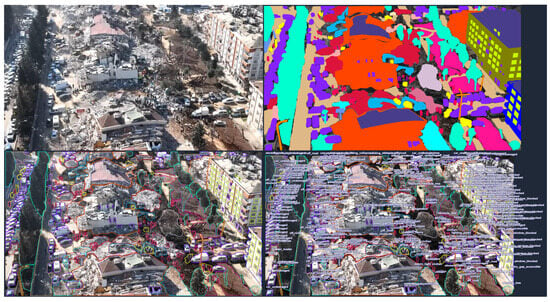
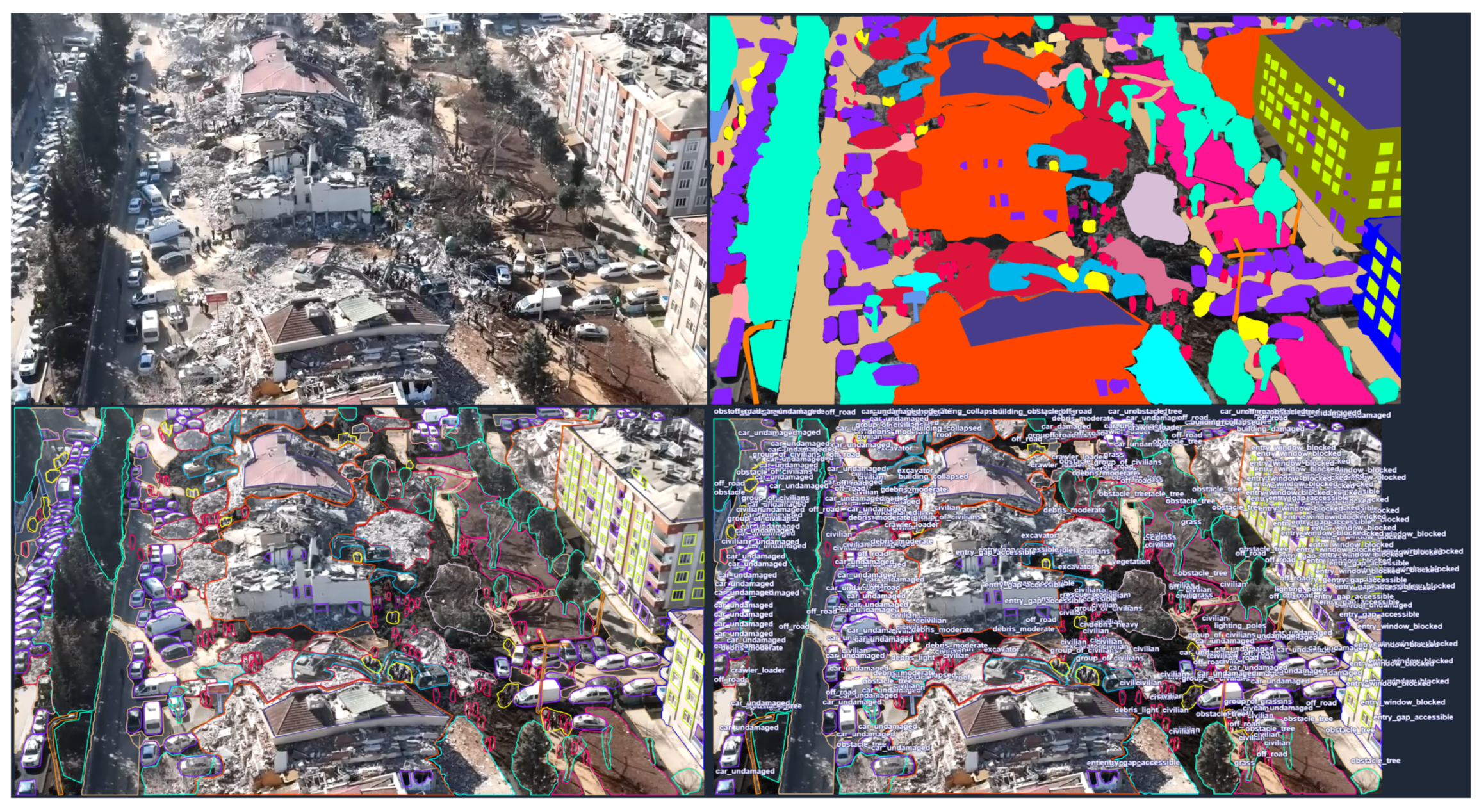
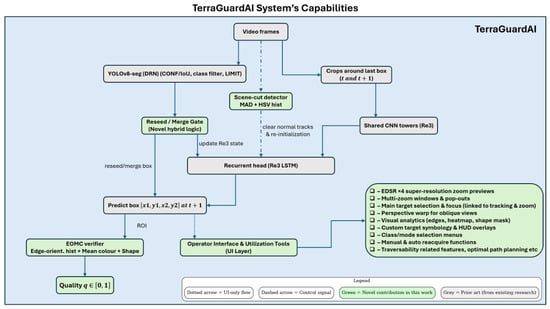
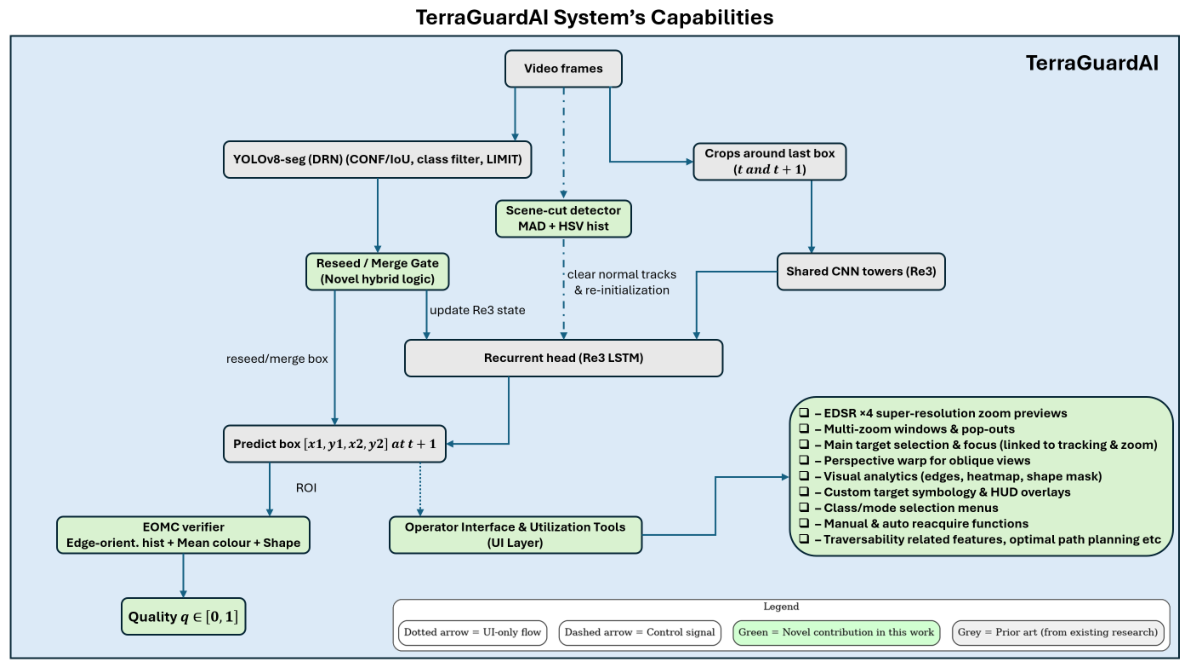
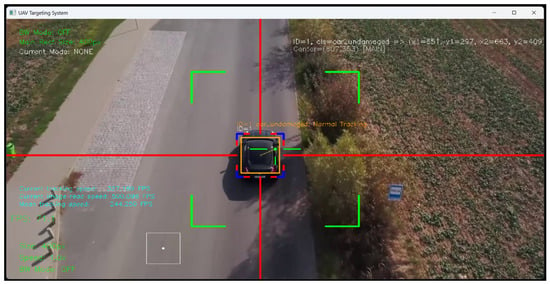
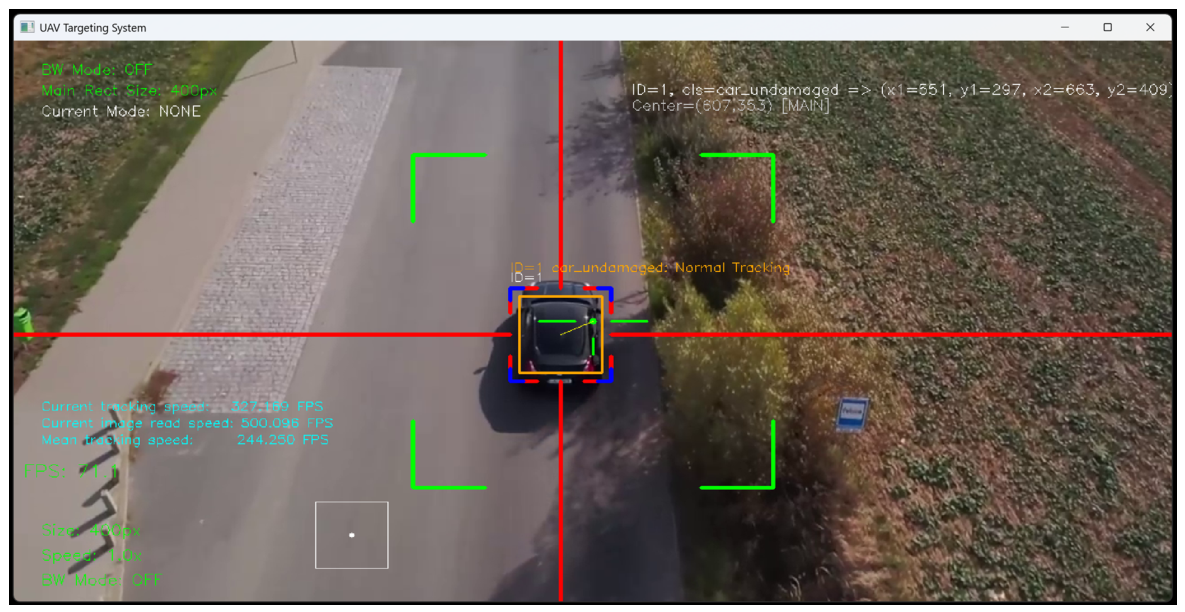
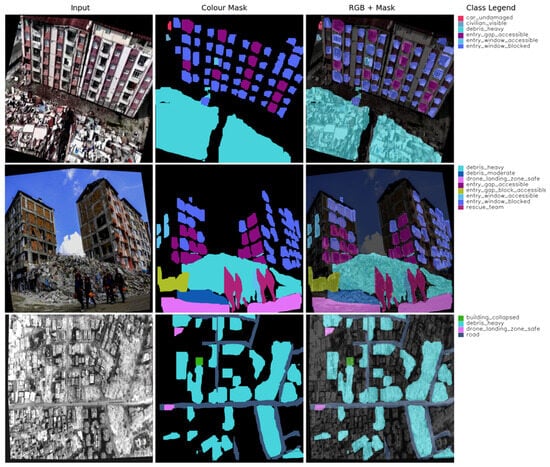
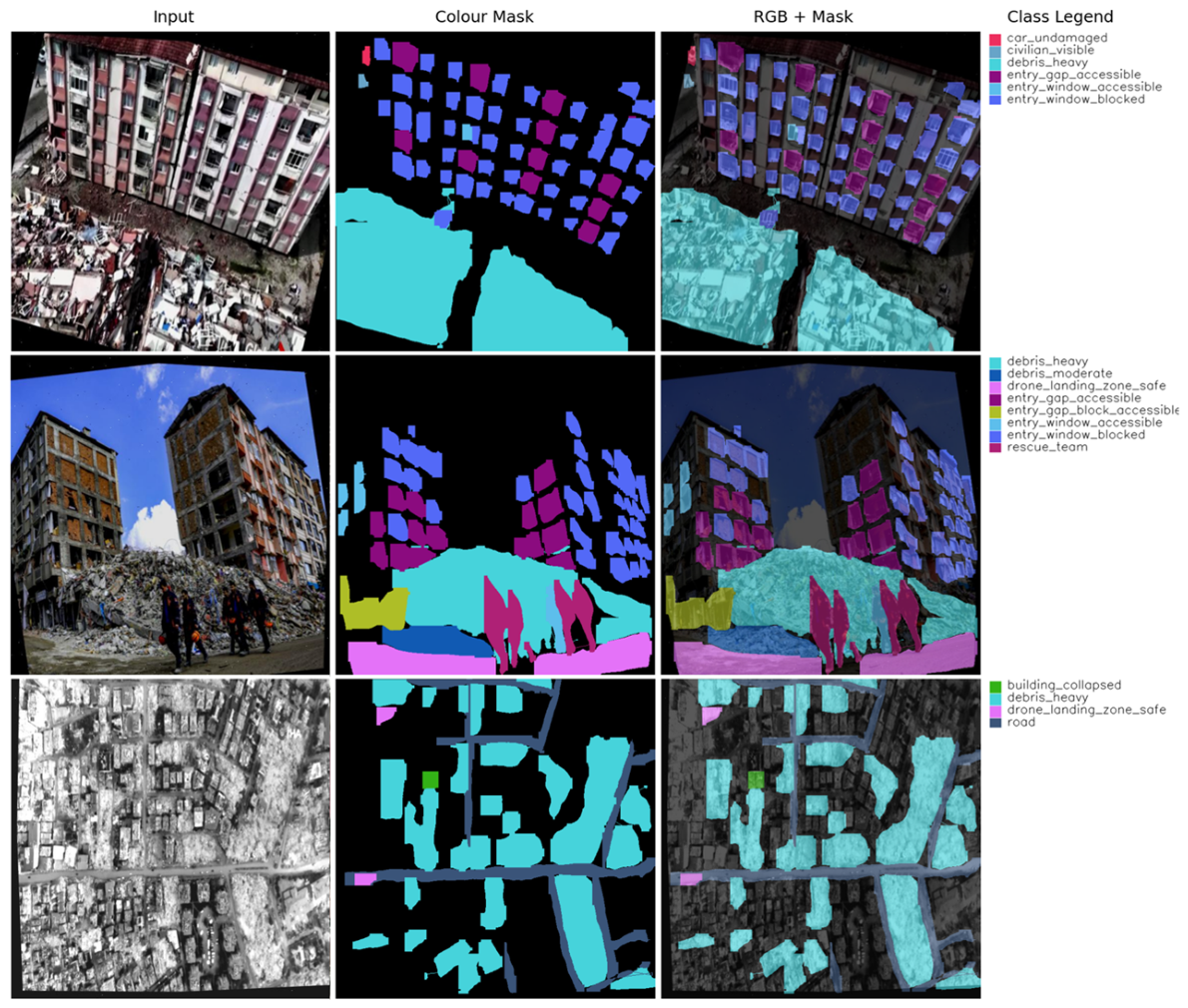
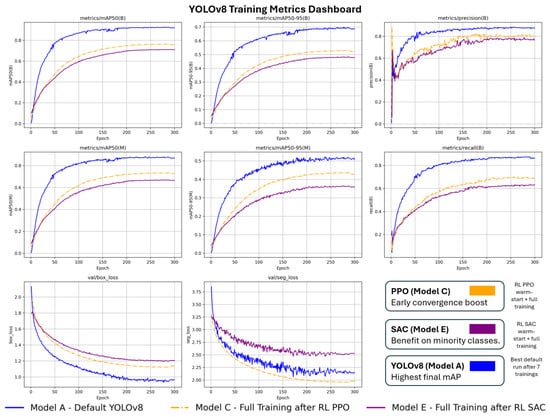
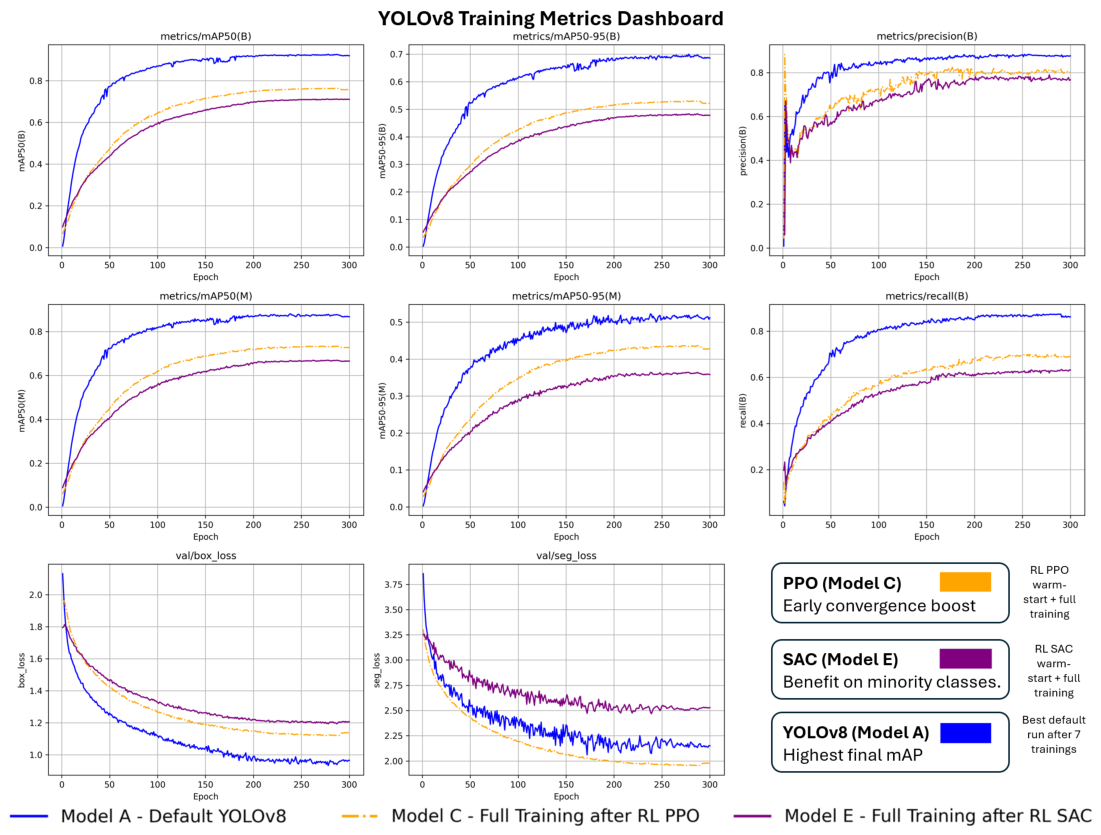
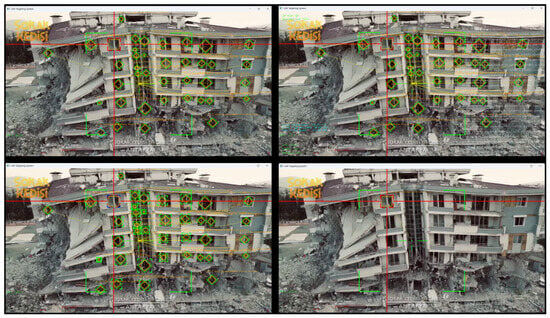
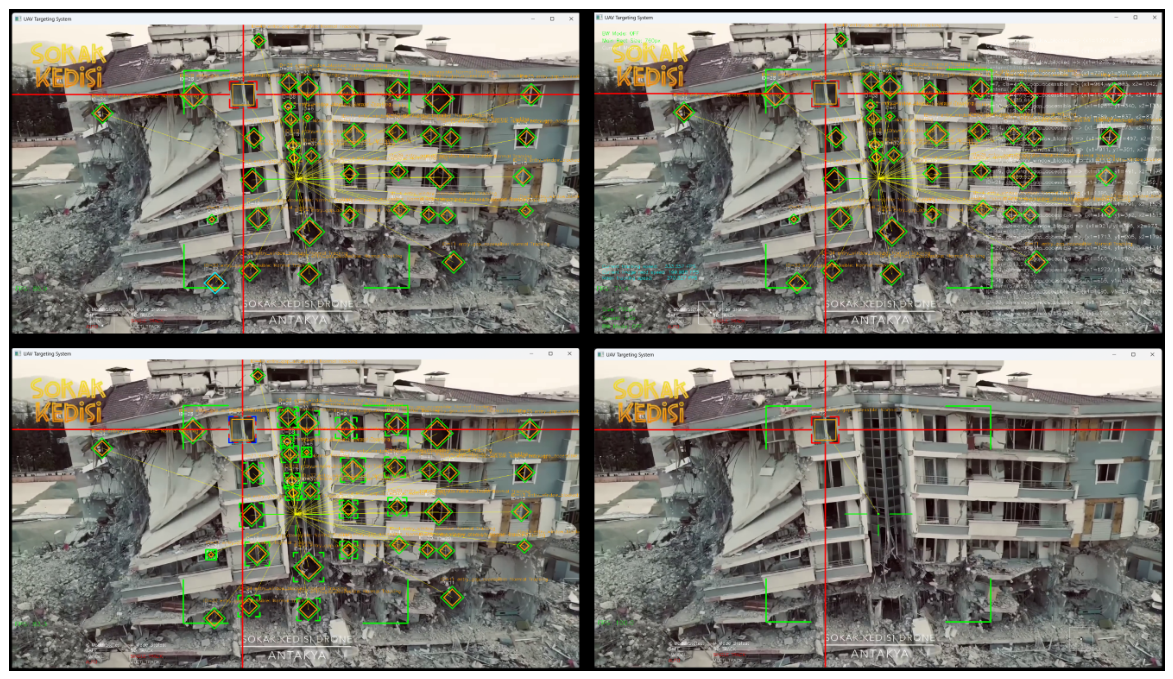
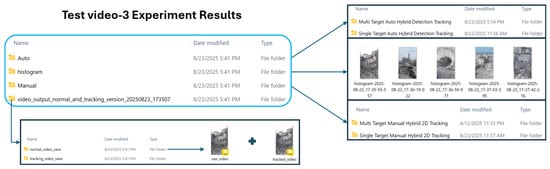
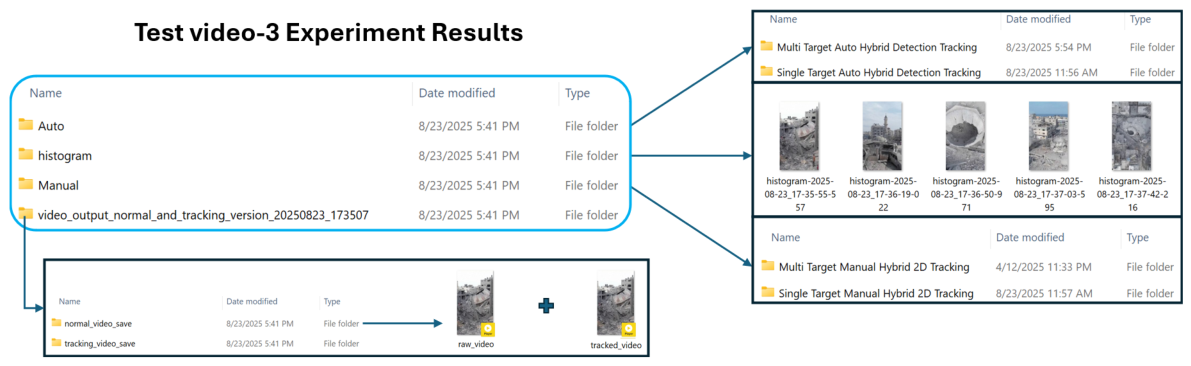
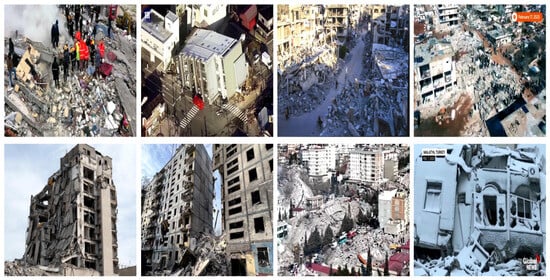
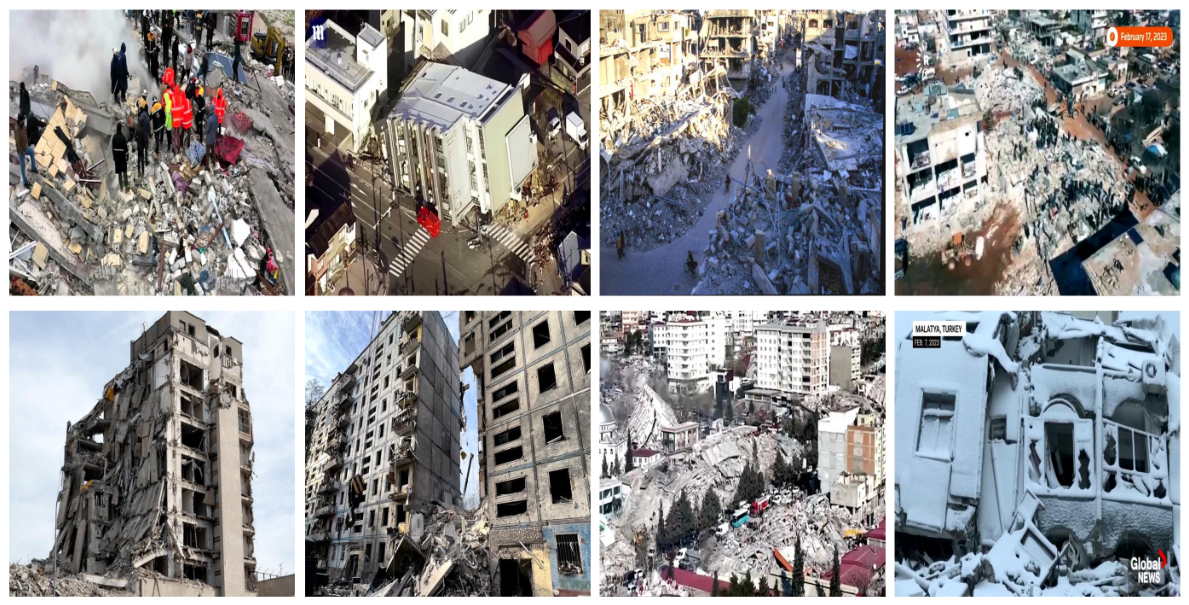
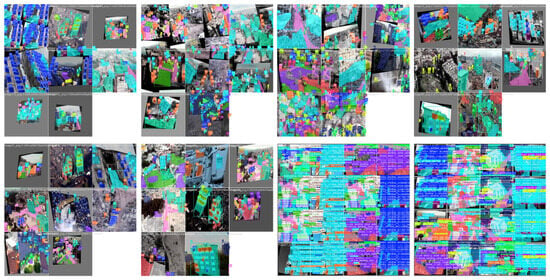
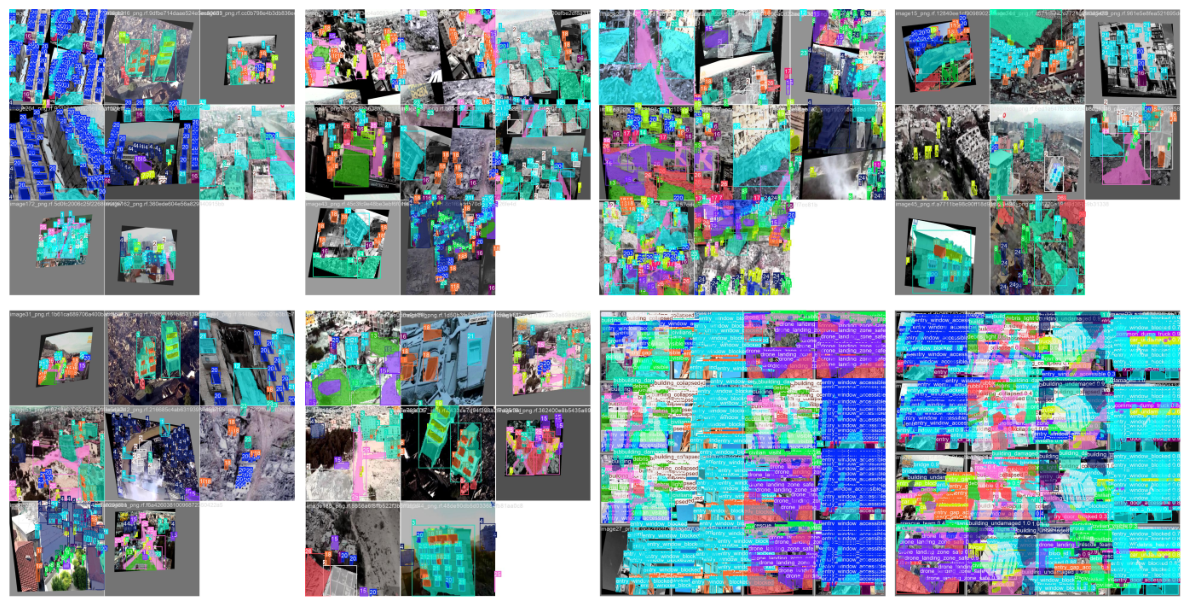
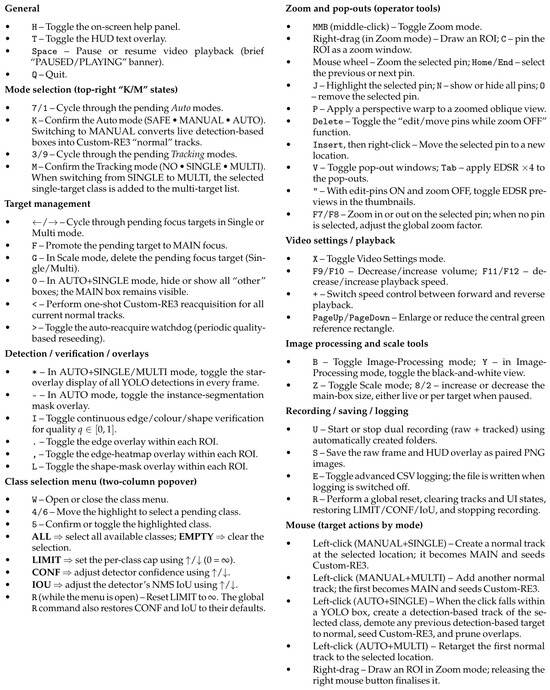
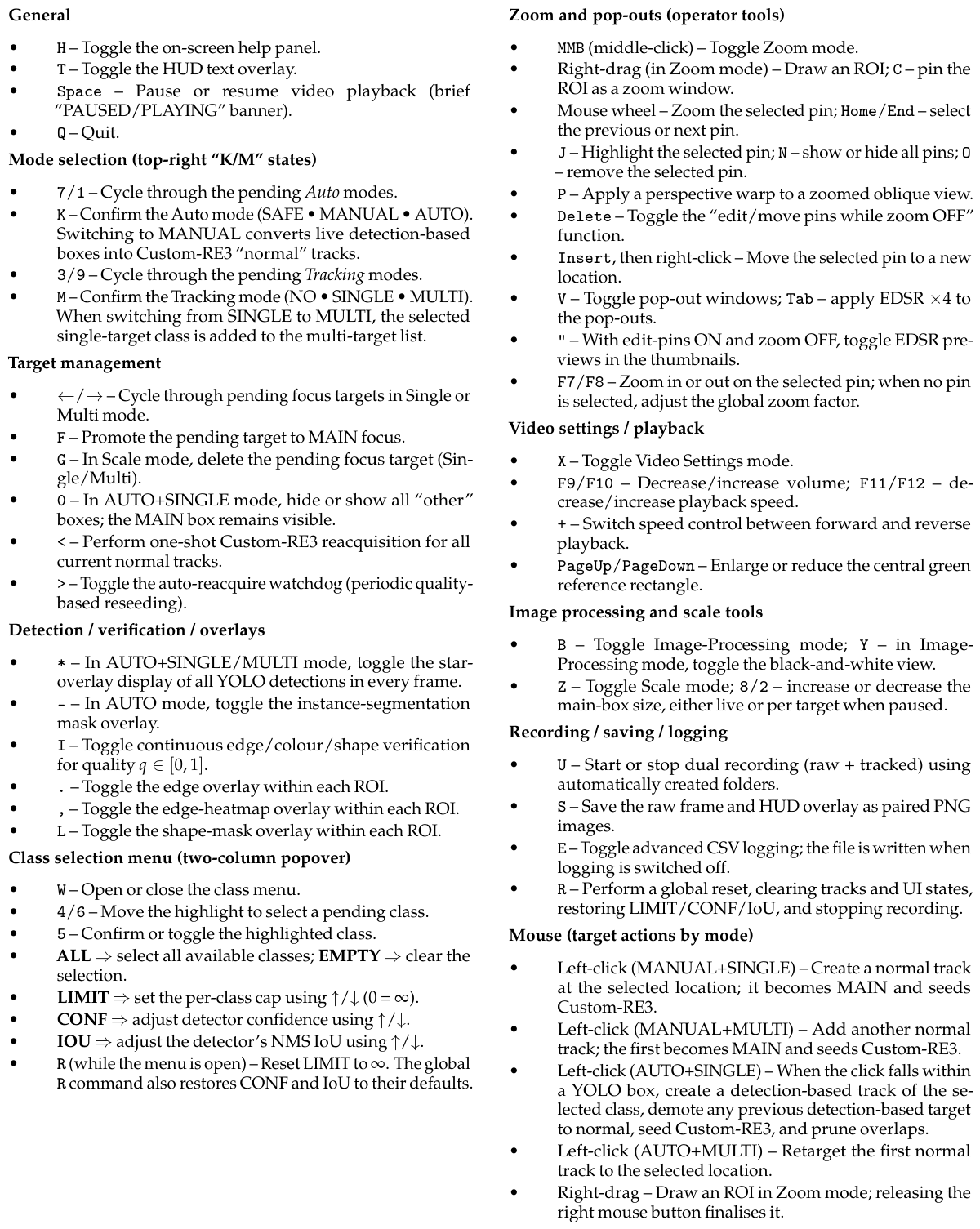
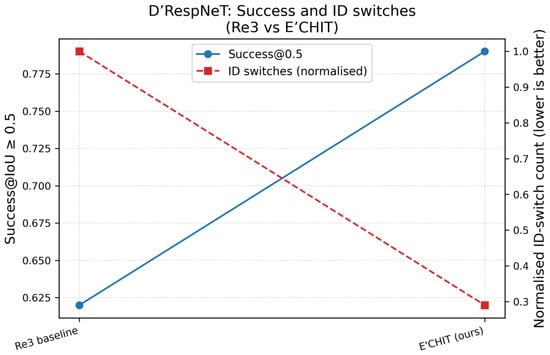
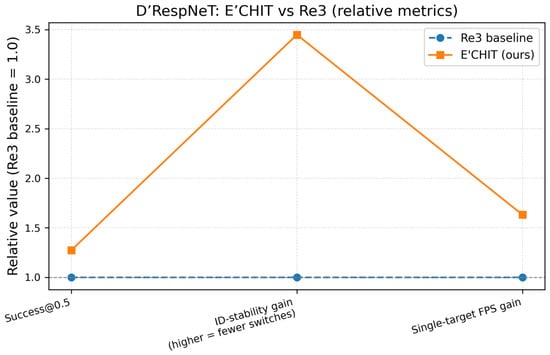
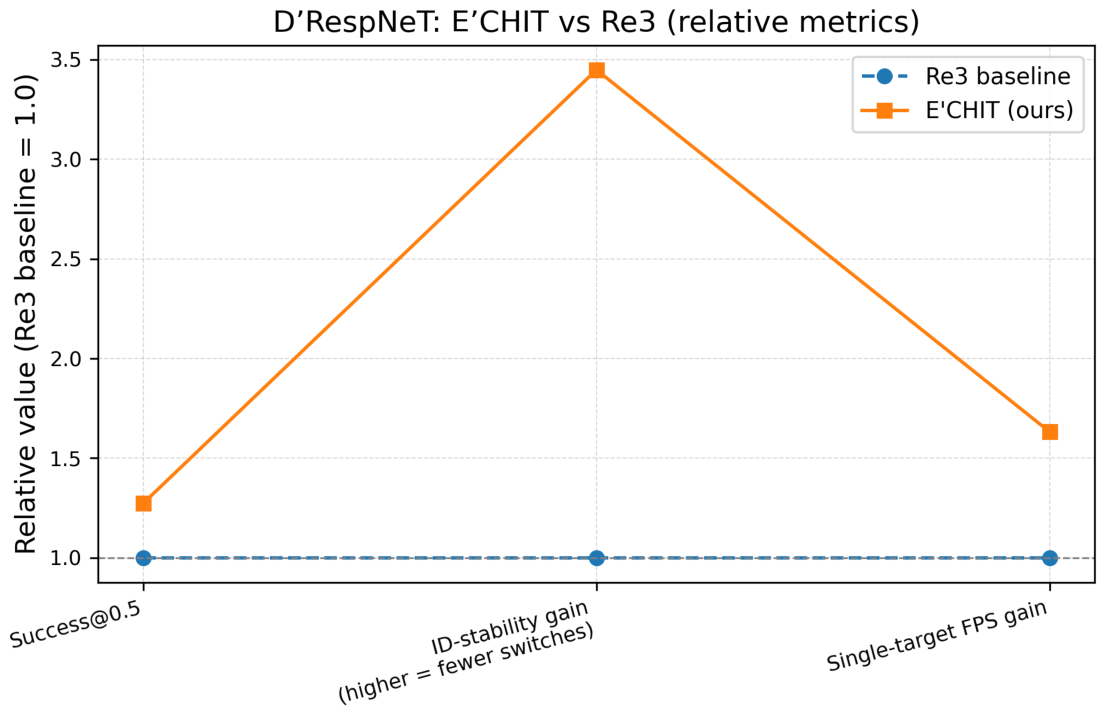
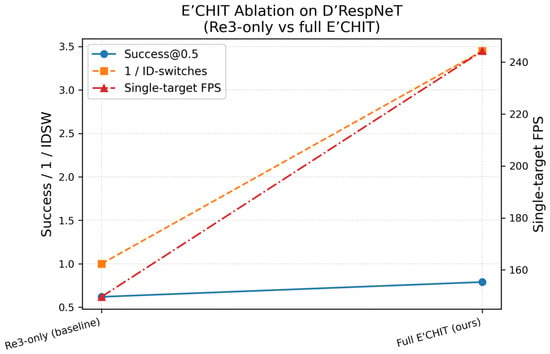
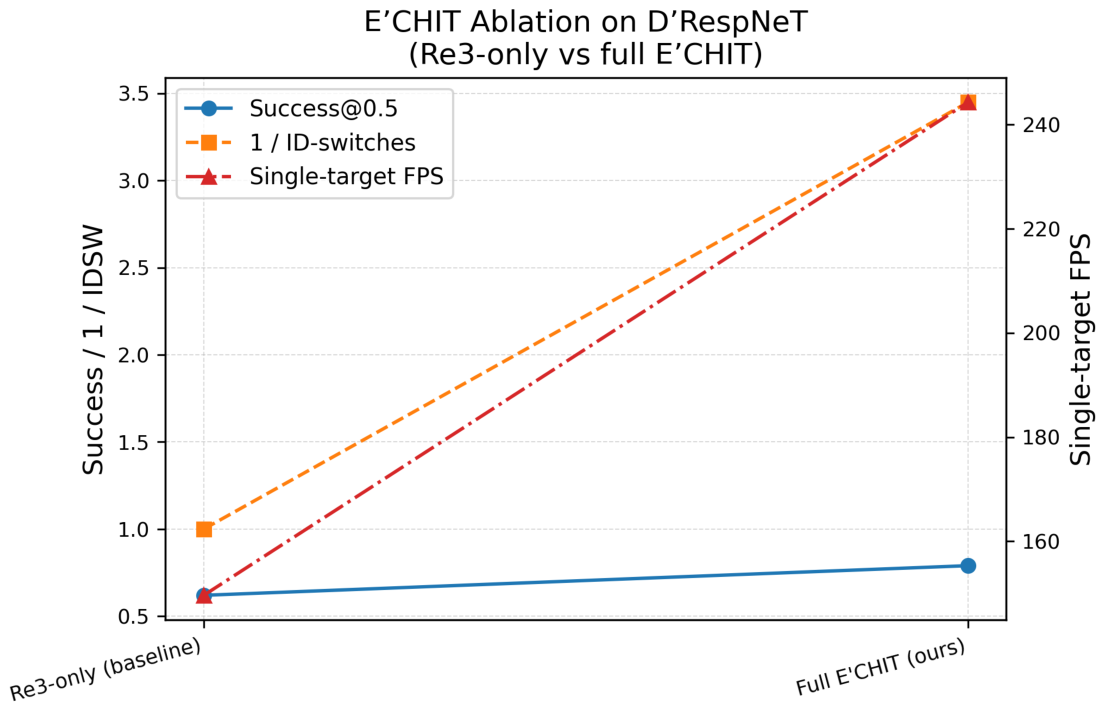
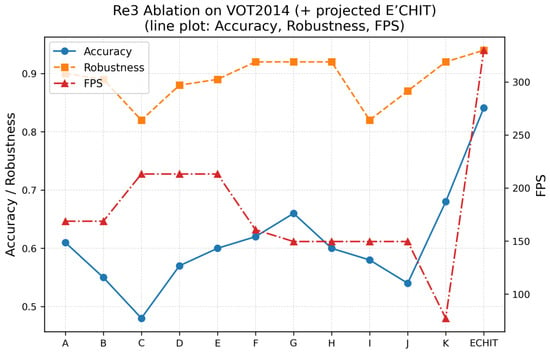
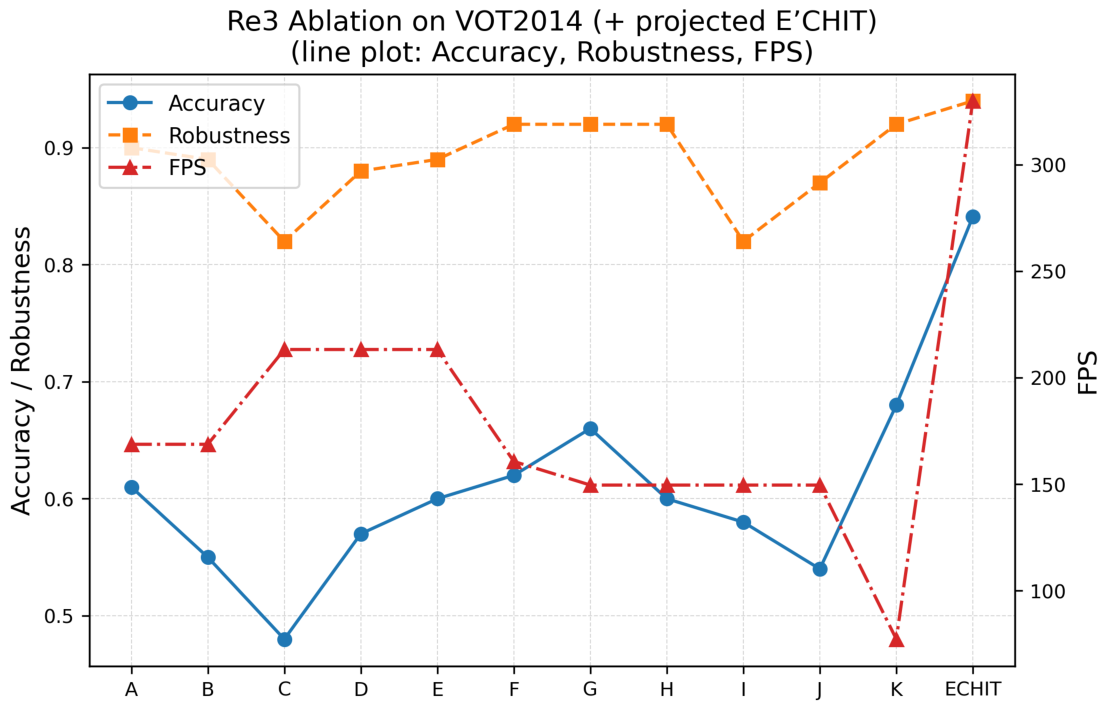
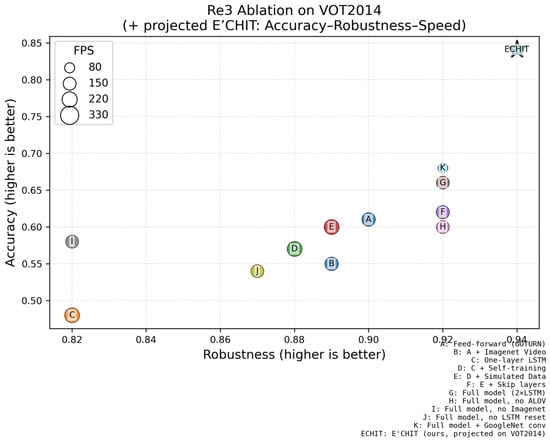
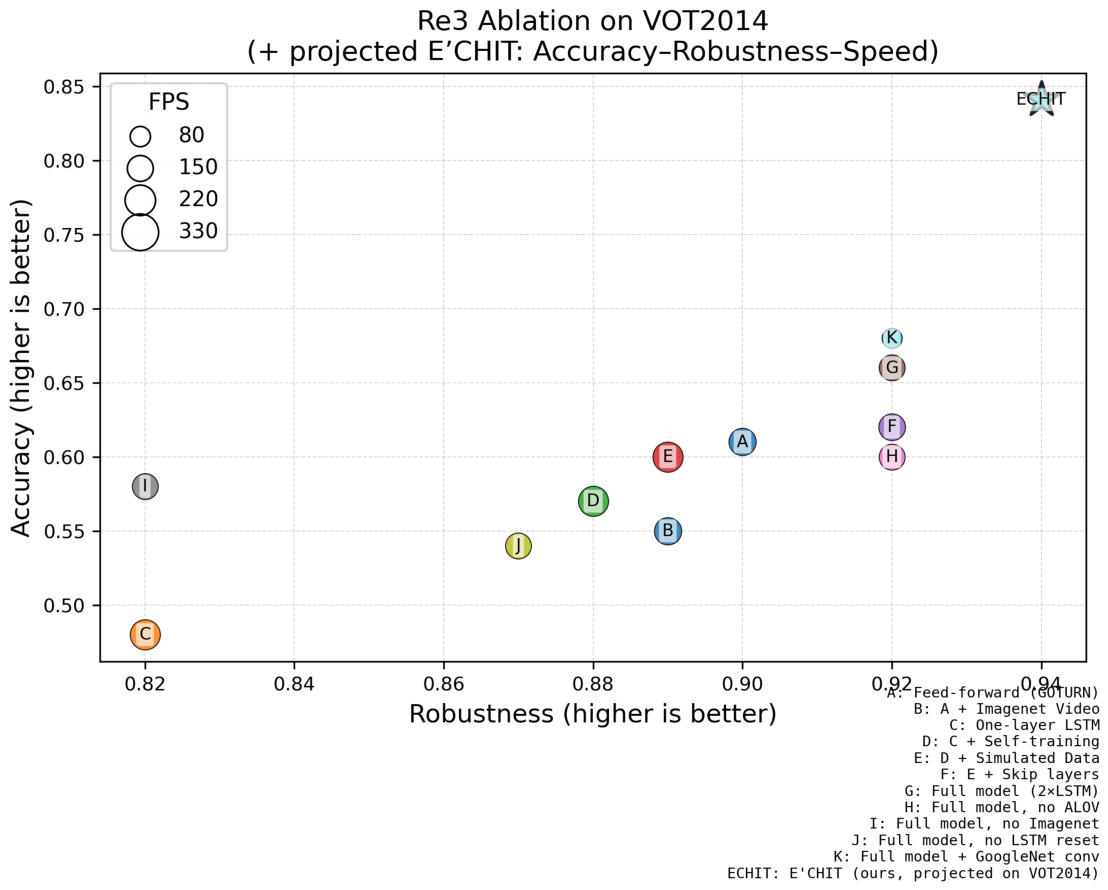
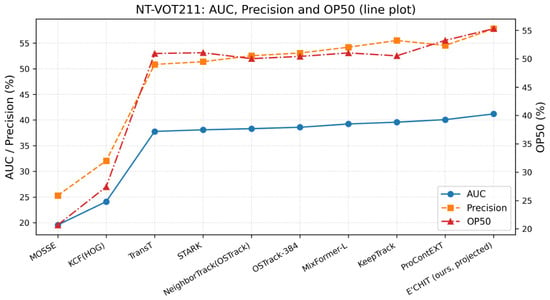
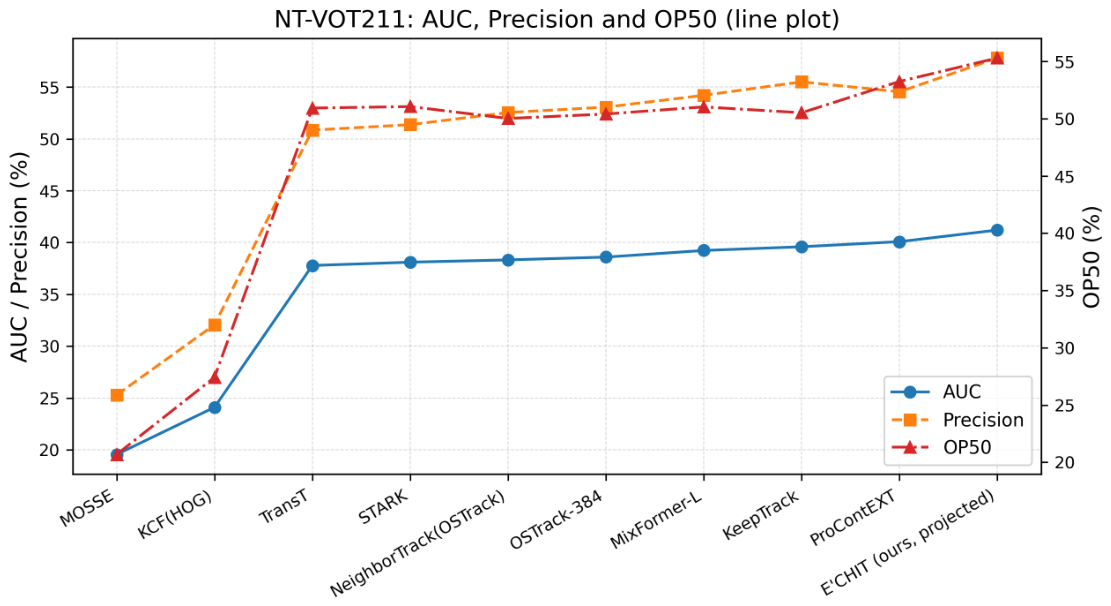
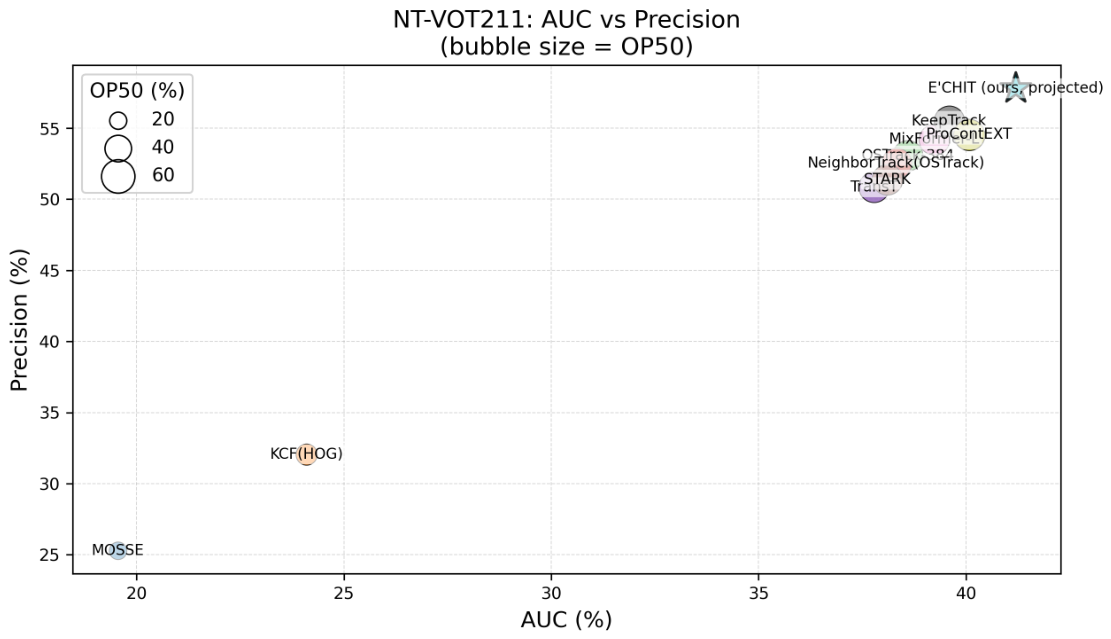
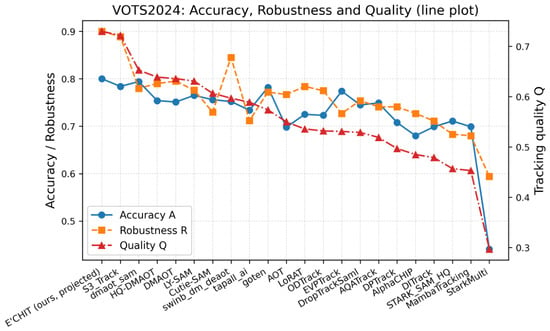
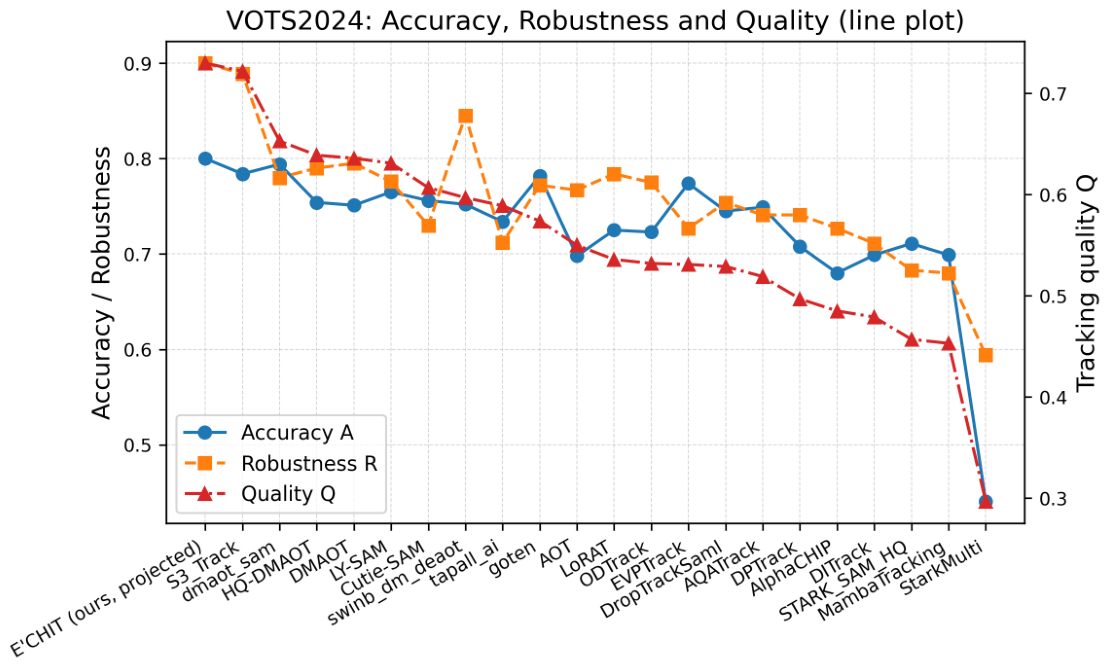
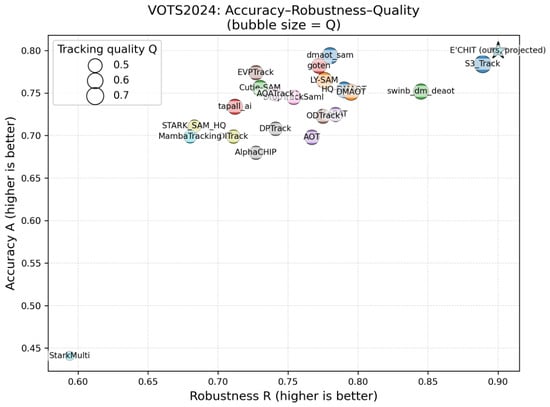
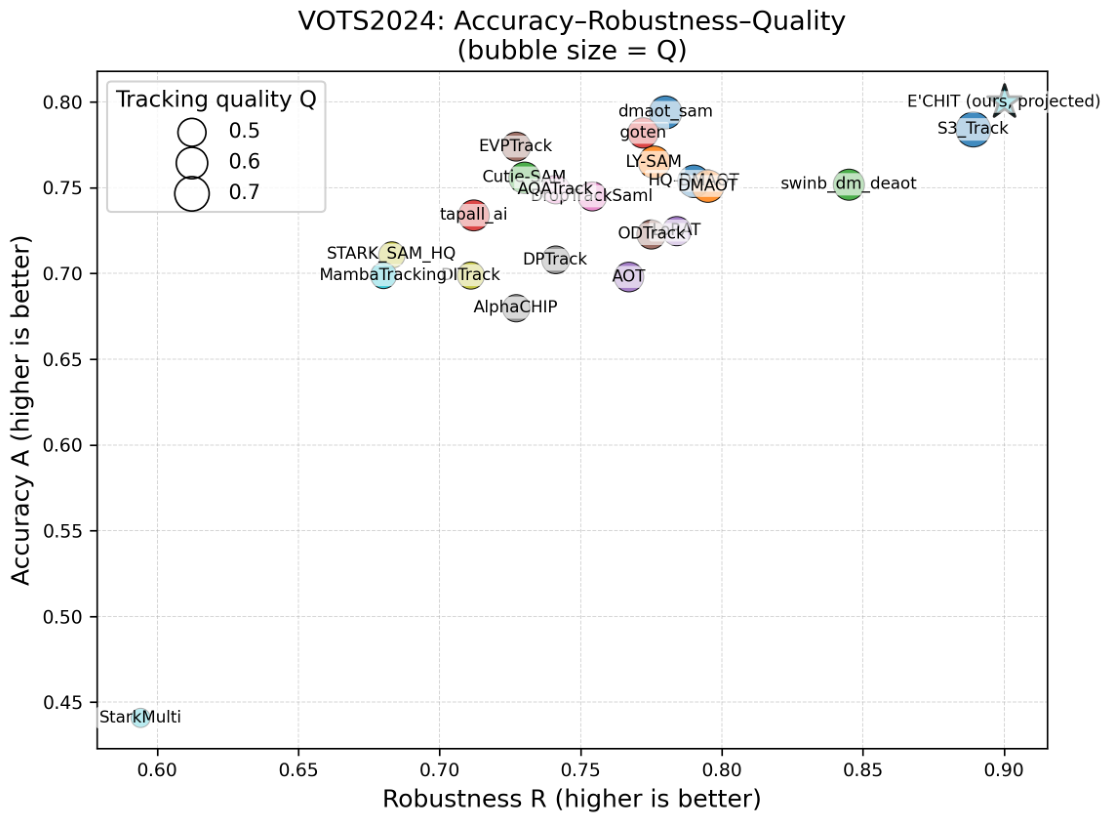

Disclaimer/Publisher’s Note: The statements, opinions and data contained in all publications are solely those of the individual author(s) and contributor(s) and not of MDPI and/or the editor(s). MDPI and/or the editor(s) disclaim responsibility for any injury to people or property resulting from any ideas, methods, instructions or products referred to in the content. |
© 2026 by the authors. Licensee MDPI, Basel, Switzerland. This article is an open access article distributed under the terms and conditions of the Creative Commons Attribution (CC BY) license.