


Abstract
Sexual well-being extends beyond the absence of sexual dysfunction and includes relational, emotional, and autonomy-related dimensions. This integrative narrative review synthesised direct evidence concerning Type D personality, attachment, intimacy, and sexuality, and considered it alongside complementary literature on emotion regulation, communication, self-disclosure, and partner responsiveness. Direct evidence was identified through PubMed/MEDLINE and Scopus, supplemented by Google Scholar and backward and forward citation searching. Seventeen peer-reviewed empirical studies met the eligibility criteria. The evidence was limited, heterogeneous, and predominantly cross-sectional, with only limited prospective data. Most studies operationalised Type D personality categorically, and current evidence does not establish that the co-occurrence or interaction of negative affectivity and social inhibition contributes beyond their independent effects. Outcomes included erectile functioning, premature-ejaculation-related outcomes, female sexual functioning, sexual satisfaction, sexual symptoms, and sexual quality of life; these narrower outcomes should not be equated with broader multidimensional sexual well-being, which has not been comprehensively assessed. Differences in populations and outcome measures, together with scarce formal sex-based interaction analyses and limited assessment of gender-related constructs, preclude robust conclusions about sex- and gender-related differences. We therefore propose two candidate pathways: an emotional pathway linking negative affectivity with distress, negative self-evaluation, performance-related concerns, and cognitive distraction, and an interpersonal pathway linking social inhibition with restricted communication, limited self-disclosure, reduced partner support, and difficulties in intimacy. Attachment insecurity is considered a distinct relational context and a potential moderator of associations between Type D personality dimensions and sexual outcomes, while perceived partner responsiveness is proposed as a candidate moderator of interpersonal processes. The framework is heuristic and hypothesis-generating rather than sequential, mediational, or causal.
1. Introduction
Sexuality is an important dimension of adult health and quality of life, yet its assessment is still often reduced to sexual functioning and the presence or absence of dysfunction. This approach does not reflect the multidimensional nature of sexual well-being, which includes not only physiological functioning but also satisfaction, a sense of safety, autonomy, sexual self-esteem, the ability to express needs, and the experience of respect in sexual relationships [1,2]. Sexual functioning, sexual satisfaction, sexual distress, and sexual well-being are therefore related but distinct constructs. The absence of a clinically identifiable dysfunction does not necessarily indicate high sexual well-being, just as difficulty in one domain of the sexual response does not have to result in an overall negative evaluation of one’s sexuality.
Sexual experiences are embedded in an emotional and interpersonal context. Intimacy develops through self-disclosure and the perception of the partner as understanding, accepting, and responsive [3]. From an attachment theory perspective, individual differences in relational security may be associated with how emotions are regulated, how individuals respond to threat, and how they seek closeness [4]. These processes may be relevant to communicating sexual needs, tolerating vulnerability, and interpreting a partner’s responses. However, the attachment perspective provides an interpretive framework rather than evidence for the etiology of a particular personality profile or sexual difficulty.
One construct that may link the emotional and interpersonal aspects of sexuality is Type D personality. It involves the co-occurrence of negative affectivity, defined as a relatively stable tendency to experience dysphoria, anxiety, and irritability, and social inhibition, understood as the restriction of expression and behaviour in relationships due to fear of disapproval or rejection [5]. This construct is most commonly assessed using the 14-item Type D Scale (DS14). In the present review, Type D personality is considered a personality profile comprising negative affectivity and social inhibition, while attachment is examined separately as a conceptually distinct relational framework.
Previous studies have examined Type D personality in relation to a range of attachment-related, relational, and sexual outcomes [6,7,8,9,10]. However, findings have not been consistent across outcomes or populations. Most studies are cross-sectional, although limited prospective evidence is available, and the literature includes both non-clinical young adults and heterogeneous clinical populations. Interpretation is further complicated by the potential influence of depression, anxiety, somatic illness, treatment, body image, physical functioning, and relationship-related factors.
The aim of this integrative narrative review is to critically organise the direct evidence concerning Type D personality, relational functioning, intimacy, and sexuality, and to consider it alongside complementary literature on emotion regulation, communication, self-disclosure, and partner responsiveness. On this basis, we propose a testable heuristic framework comprising two partially overlapping candidate pathways—emotional and interpersonal—linking the components of Type D personality with relational and sexual outcomes. The framework is intended to organise the available evidence and support hypothesis development rather than to present an established causal sequence.
2. Type D Personality: Construct, Components, and Measurement
The construct of Type D personality originates from health psychology and was initially developed to describe a profile of psychological vulnerability in patients with cardiovascular disease. The term “D” refers to distressed and denotes the co-occurrence of two relatively stable personality dimensions: negative affectivity and social inhibition [5,11]. Although initially studied mainly in cardiology, the construct has subsequently been examined in general-population samples and across a range of clinical conditions [12]. Type D personality is conceptualised as a personality profile rather than a psychiatric diagnosis.
Negative affectivity refers to a relatively stable tendency to experience negative emotions across situations, including dysphoria, worry, tension, and irritability [5]. Within broader personality models, negative affectivity is strongly related to neuroticism and is also associated with depressive and anxiety symptoms [13,14]. These relationships are important when interpreting associations between Type D personality and health or psychosocial outcomes, because co-occurring psychological distress may partly account for some observed effects.
Social inhibition refers to the tendency to restrain emotional and behavioural expression in social interactions, particularly when negative evaluation or disapproval is anticipated [5]. It is characterised by interpersonal discomfort, reticence, and reduced social confidence and is associated with lower extraversion [5,13]. Social inhibition also shows conceptual overlap with constructs such as shyness, social anxiety, and avoidant interpersonal tendencies, while its defining feature within the Type D framework is the inhibition of self-expression in social contexts. Previous research suggests that it captures interpersonal anxiety, restricted expression, and loneliness beyond general negative affect [15].
The most commonly used instrument for assessing Type D personality is the 14-item Type D Scale (DS14), which comprises two seven-item subscales measuring negative affectivity and social inhibition [5]. Validation studies have supported the two-factor structure of the DS14, adequate internal consistency, and temporal stability of both dimensions [5,16]. In the conventional categorical operationalisation, scores of at least 10 on both subscales are used to classify an individual as having a Type D personality profile [5]. The prevalence of this classification varies across populations and should therefore be interpreted in relation to the population and setting studied [17]. Type D personality can be operationalised using either categorical or dimensional approaches. The categorical approach is straightforward to apply and interpret descriptively, but dichotomising continuous scores results in a loss of information and does not demonstrate the existence of a natural boundary between qualitatively distinct personality groups. Dimensional approaches retain the continuous scores for negative affectivity and social inhibition and permit their independent and combined effects to be examined. To test whether the co-occurrence of both dimensions has a specific effect beyond their individual contributions, continuous main effects of negative affectivity and social inhibition and their interaction should be modelled simultaneously [18]. Methodological work has shown limited agreement between categorical and dimensional approaches and indicates that effects attributed to the Type D profile may in some studies be primarily explained by one of its constituent dimensions [18,19].
This distinction is important for interpreting the literature reviewed here. Findings based on categorical Type D classification remain informative, but they do not necessarily demonstrate an effect that is specific to the co-occurrence of negative affectivity and social inhibition. In the remainder of this review, the term Type D personality is used according to the operationalisation adopted in each study. Where dimensional analyses were reported, findings concerning negative affectivity and social inhibition are considered separately. This is particularly relevant to the proposed conceptual model, in which negative affectivity may be more closely related to distress, negative self-evaluation, and the cognitive processing of sexual experiences, whereas social inhibition may be more closely related to communication, self-disclosure, and support seeking. The specific contribution of their co-occurrence remains an empirical question requiring direct testing.
3. Identification and Selection of Literature
3.1. Review Design and Reconstruction of the Direct-Evidence Search
This article was prepared as an integrative narrative review aimed at critically synthesising heterogeneous evidence concerning Type D personality, relational functioning, intimacy, and sexual outcomes, and at developing a conceptual framework for candidate emotional and interpersonal pathways. A narrative format was retained because the direct evidence base is limited and heterogeneous with respect to study populations, research designs, operationalisation of Type D personality, and relational and sexual outcomes. Elements of quality assessment described in the Scale for the Assessment of Narrative Review Articles (SANRA) [20], together with broader guidance on the preparation of narrative biomedical reviews [21,22], informed the planning and critical revision of the review. Particular attention was given to transparency of literature identification, explicit eligibility criteria, appropriate referencing, and separation of direct empirical evidence from complementary literature and conceptual interpretation.
The literature search and initial selection of studies were conducted by IF. The selected literature and preliminary narrative synthesis were subsequently reviewed independently by GW and PG. Findings and their interpretation were discussed by the full author team, and the final synthesis was agreed by consensus.
Because a prospective screening log had not been maintained for the original narrative search, the direct-evidence search was retrospectively reconstructed and rerun during revision to improve methodological transparency and reproducibility. The reconstructed audit used predefined eligibility criteria and documented database-specific search strategies. Searches were conducted in PubMed, including MEDLINE, and Scopus on 4 October 2026. Complete search strings, Boolean operators, field restrictions, and database-specific search details are provided in Supplementary Table S1. No language restrictions or publication-date limits were applied.
The reconstructed database searches identified 848 records before deduplication (PubMed/MEDLINE, n = 360; Scopus, n = 488). After removal of 347 duplicate records, 501 unique records underwent title and abstract screening. Of these, 479 were excluded at this stage and 22 reports were assessed in full text. Five full-text reports were excluded because they did not meet the predefined direct-evidence criteria used in the reconstructed audit, leaving 17 publications in the final direct-evidence synthesis. Reasons for full-text exclusion are provided in Supplementary Table S2, and the reconstructed study-selection process is presented in Supplementary Figure S1. These counts should be interpreted as retrospective audit counts generated during revision rather than as prospectively recorded systematic-review screening data.
3.2. Eligibility Criteria for Direct Evidence
For the direct-evidence synthesis, eligible publications were peer-reviewed empirical studies that examined an association between Type D personality, or both of its constituent dimensions—negative affectivity and social inhibition—and at least one attachment-related, close-relationship, intimacy-related, or sexual outcome. Eligible relational outcomes included attachment characteristics and measures specifically addressing functioning within close, romantic, marital, or partner relationships, including relationship adjustment, marital intimacy, and dyadic processes. General measures of social or family support were not regarded as direct relational evidence unless they specifically assessed functioning within a close or partner relationship.
Eligible sexual outcomes included sexual functioning or dysfunction, specific sexual symptoms, sexual satisfaction or enjoyment, sexual distress, sexual relationship functioning, sexual quality of life, and broader measures explicitly addressing sexual well-being. Studies in which Type D personality and an eligible relational or sexual variable were both measured, but no association between them was analysed or reported, were not classified as direct evidence.
Only peer-reviewed empirical publications available in full text were eligible for the direct-evidence synthesis. Reviews, theoretical articles, editorials, conference abstracts, case reports, and grey literature were not included as direct evidence, although relevant reviews and theoretical publications could be used as complementary sources for conceptual interpretation.
3.3. Supplementary Searching
Google Scholar was used as a supplementary discovery source rather than as a primary bibliographic database. Four predefined searches were performed using combinations of “Type D personality” with terms relating to sexuality, sexual functioning and satisfaction, relationships and intimacy, and attachment. For each query, the first 100 results ranked by relevance were screened. The exact queries are reported in Supplementary Table S1. No additional eligible direct studies were identified through Google Scholar beyond those retrieved through PubMed/MEDLINE and Scopus.
The database search was additionally supplemented by backward reference searching of included and potentially relevant publications and by forward citation searching of these articles. These procedures did not identify any additional publications meeting the criteria for direct evidence.
3.4. Selection of Complementary Literature and Development of the Conceptual Framework
Complementary literature was selected separately from the direct-evidence synthesis and was used to evaluate the plausibility of candidate mechanisms rather than as evidence of Type D-specific associations. The selection was purposive and iterative rather than systematic. After synthesis of the direct Type D evidence, targeted searches focused on constructs relevant to the two constituent dimensions of Type D personality and to the candidate pathways considered in the review, including emotion regulation, negative self-evaluation, neuroticism, social anxiety, fear of negative evaluation, expressive suppression, cognitive distraction and performance-related concerns, sexual communication, sexual self-disclosure, attachment, support seeking, and perceived partner responsiveness.
Priority was given to systematic reviews, meta-analyses, established theoretical frameworks, and representative empirical studies that directly informed the mechanisms under consideration. Because this complementary search was intended to support conceptual development rather than to provide an exhaustive second systematic review, no formal saturation threshold was prespecified. Searching was considered sufficiently complete when additional targeted searches and citation checking no longer identified conceptually distinct mechanisms, substantially different interpretations, or competing explanations likely to alter the proposed framework.
To reduce the risk of confirmation bias, the synthesis did not require findings to be consistent with the emerging conceptual model. Null and inconsistent direct findings were retained. Alternative explanations were considered throughout the interpretation, including depressive and anxiety symptoms, broader personality characteristics, social anxiety, somatic disease burden, physical symptoms, treatment-related factors, body image, relationship context, and the possibility of reciprocal or reverse directions of association. The independent contributions of negative affectivity and social inhibition were also considered separately from the categorical Type D classification.
For the direct studies, the review considered study design, population, sample size, operationalisation of Type D personality, relational or sexual outcome domain, measurement instruments, relevant covariates, adjusted and unadjusted findings, and principal interpretative limitations. Because of substantial heterogeneity in study designs, populations, exposure operationalisation, and outcomes, no quantitative synthesis or formal risk-of-bias assessment was undertaken. Detailed study-level characteristics, including Type D operationalisation, outcome domains, covariate adjustment, principal findings, and interpretative limitations, are presented in Supplementary Tables S3 and S4.
4. Direct Evidence Linking Type D Personality with Attachment, Relationships, and Sexuality
Seventeen peer-reviewed empirical studies were included as direct evidence. These studies examined associations between Type D personality or its constituent dimensions and at least one eligible attachment-related, close-relationship, intimacy-related, or sexual outcome and are summarised in Supplementary Tables S3 and S4. They included heterogeneous populations and examined outcomes spanning attachment, relationship adjustment, marital intimacy, dyadic coping, erectile functioning, sexual relationship functioning, sexual symptoms, sexual satisfaction, sexual enjoyment, female sexual functioning, and sexual quality of life [6,7,8,9,10,23,24,25,26,27,28,29,30,31,32,33,34]. The studies were observational and predominantly cross-sectional, although limited prospective evidence was also identified. This heterogeneity in populations, designs, and outcome measures limits conclusions about the direction and mechanisms of the observed associations.
4.1. Attachment and Relational Functioning
Direct evidence concerning the association between Type D personality and attachment remains limited to two identified cross-sectional studies. Huis in ’t Veld et al. [6] reported associations between Type D classification, attachment styles, and self-esteem, whereas a more recent study by Çıkrıkçı and Erzen [25] found that Type D personality was positively associated with avoidant and anxious-ambivalent attachment but not with secure attachment. Both studies were cross-sectional, and the latter assessed general attachment styles rather than specifically romantic attachment. These findings support an empirical association between Type D-related characteristics and attachment insecurity but do not justify treating Type D personality as an attachment style or inferring an attachment-related etiology of the Type D profile.
Studies of relational functioning suggest that Type D personality may be associated with lower social support, poorer relationship adjustment, and lower marital intimacy [9,23]. However, the similar findings observed among individuals with Type D personality and participants characterised only by high negative affectivity indicate that some of these associations may be related primarily to negative affectivity [23]. Data from couples undergoing infertility treatment further show that correlates of Type D personality may include both actor and partner effects [24]. However, the main outcome in that study was infertility-related quality of life rather than intimacy or relationship satisfaction.
Overall, the findings support the possibility that Type D personality has interpersonal relevance, but they are derived mainly from clinical populations in which relationships may also be shaped by illness, treatment, caregiving burden, and health-related stress.
4.2. Sexual Functioning and Other Sexual Outcomes
Direct evidence concerning male sexual functioning includes studies of young men. In a Taiwanese sample, Type D personality remained associated with moderate-to-severe erectile dysfunction after multivariable adjustment [7]. Social inhibition showed a stronger association with erectile dysfunction than negative affectivity, and a cross-sectional indirect-effect analysis indicated an indirect statistical association between Type D personality and erectile dysfunction through depressive symptoms. This finding does not establish, however, whether interpersonal inhibition, depression, performance-related concerns, or a response to pre-existing sexual difficulties was of primary importance.
A different pattern was found for premature ejaculation. Associations of Type D personality and both DS14 dimensions with premature ejaculation were observed in unadjusted analyses but did not remain after depressive symptoms and erectile dysfunction were taken into account [8]. Similarly, in a recent non-clinical study of Polish university students, Type D personality was not associated with premature-ejaculation-related outcomes measured with the IPE after adjustment for available covariates [32]. Together, these findings suggest that associations between Type D personality and male sexual functioning may differ across specific domains and underline the importance of accounting for co-occurring psychological and sexual difficulties.
The same study extended the available evidence to young women from a non-clinical population. Among women, Type D personality remained associated with lower overall FSFI scores after adjustment for available covariates. Type D personality was also associated with lower lifetime sexual satisfaction in both women and men [32]. However, the cross-sectional and self-selected nature of the sample, the use of different instruments to assess sexual functioning in women and men, and the absence of dedicated measures of current depression and anxiety limit causal and sex-specific interpretation. Type D personality was additionally associated with lower scores on the Sexual Risk Survey, representing a separate behavioural-risk domain rather than an indicator of sexual well-being, although the incremental contribution of Type D was small.
Evidence concerning women from clinical populations remains more limited. Type D personality was associated with greater bothersomeness of menopausal sexual symptoms, although the measure used covered only a restricted range of sexual symptoms rather than comprehensive female sexual functioning [26]. In women treated for ovarian cancer, the more consistent findings concerned marital intimacy and quality of life rather than an independent association between Type D personality and sexual functioning [9]. These findings indicate that associations may depend substantially on the sexual outcome assessed and on the clinical context.
Prospective evidence is available from colorectal cancer survivors. In a population-based study with repeated assessments, individuals with Type D personality reported more sexual problems and lower sexual enjoyment than the reference group, and these differences formed part of a broader pattern of poorer disease-specific health status that remained relatively stable over time [31]. However, participants characterised by high negative affectivity without high social inhibition also showed broadly adverse health outcomes. Moreover, sexual problems and sexual enjoyment were assessed as components of the EORTC QLQ-CR38 rather than as comprehensive measures of sexual functioning or sexual well-being. The findings therefore support an association with selected sexual outcomes but do not demonstrate a specific synergistic effect of the Type D profile.
Dermatological studies have produced inconsistent findings. Type D personality was associated with poorer sexual quality of life or more frequent difficulties concerning sexual interest in some samples of patients with psoriasis [10,27], but no consistent differences were found in erectile functioning, orgasm, or overall satisfaction. Studies of chronic urticaria and alopecia areata did not confirm a direct association between Type D personality and sexual dysfunction [28,29]. The more frequent presence of both problems within the same clinical population does not, by itself, provide evidence that they are related to each other.
Evidence concerning sexual satisfaction remains comparatively limited. In addition to the lower lifetime sexual satisfaction observed among young women and men with Type D personality in the Polish student sample [32], patients with non-cardiac chest pain and Type D personality reported lower satisfaction with their sexual lives [30]. In the latter study, however, sexual satisfaction was based on a group comparison and was not shown to be independent of depression, somatization, and other psychological problems.
4.3. Interpretation of Direct Evidence
The direct literature indicates that Type D personality may be associated with selected aspects of relational functioning, intimacy, and sexuality, but the pattern of findings differs across populations and outcomes. Adjusted associations have been reported for erectile dysfunction in young men [7], female sexual functioning and lifetime sexual satisfaction in young adults [32] and selected sexual outcomes in colorectal cancer survivors [31]. By contrast, associations with premature-ejaculation-related outcomes have not remained significant after adjustment in available studies [8,32] and studies in several dermatological populations have produced inconsistent or null findings [10,27,28,29].
The inclusion of prospective evidence from colorectal cancer survivors broadens the literature beyond exclusively cross-sectional designs, but most direct studies remain cross-sectional and predominantly involve selected clinical or young-adult populations. Moreover, the available studies differ substantially in how sexuality is operationalised, ranging from specific sexual functions and symptoms to sexual satisfaction, sexual enjoyment, and sexual quality of life. These outcomes should not be treated as interchangeable. No identified direct Type D study assessed sexual well-being as a broad multidimensional positive construct encompassing domains such as autonomy, safety, self-acceptance, and the ability to express sexual needs. References to broader sexual well-being within the proposed framework should therefore be understood as conceptual extrapolations rather than as direct empirical findings.
Interpretation is further limited by the predominant categorical operationalisation of Type D personality and inconsistent adjustment for depression, anxiety, somatic condition, treatment, body image, and relationship-related factors. Findings showing broadly similar adverse outcomes among individuals with high negative affectivity alone also raise the possibility that some associations attributed to the Type D profile may primarily reflect negative affectivity rather than the synergistic effect of negative affectivity and social inhibition. It is therefore not yet possible to determine whether Type D personality provides specific explanatory value beyond its constituent dimensions, related personality traits, and co-occurring psychological distress.
No studies were identified that directly assessed sexual communication, sexual self-disclosure, performance-related concerns, cognitive distraction, a sense of safety during sexual activity, or perceived partner responsiveness in relation to Type D personality. The available evidence therefore does not confirm a sequence leading from Type D personality through limited intimacy to lower sexual well-being. It does, however, provide a basis for formulating such pathways as testable hypotheses whose plausibility can be evaluated by integrating direct findings with the broader literature on emotion regulation, attachment, and interpersonal processes.
The studies summarised in this section constitute the direct empirical evidence considered in this review. The following section examines complementary literature that was not required to assess Type D personality but was used to evaluate the plausibility of the emotional and interpersonal mechanisms incorporated into the proposed conceptual model.
5. Development of the Heuristic Conceptual Framework and Complementary Evidence
5.1. Development of the Heuristic Conceptual Framework
The heuristic conceptual framework was developed iteratively during the synthesis of the evidence reviewed above rather than being specified a priori. Its organising principle was derived from the two constituent dimensions of Type D personality. Negative affectivity provided the basis for a candidate emotional pathway, whereas social inhibition provided the basis for a candidate interpersonal pathway. This organisation does not imply that the two pathways have been demonstrated empirically or that the co-occurrence of negative affectivity and social inhibition produces an established synergistic effect.
The direct Type D literature identified associations with selected relational and sexual outcomes but did not establish the psychological or interpersonal processes underlying these associations. Complementary literature was therefore examined to evaluate the plausibility of candidate mechanisms. These included psychological distress, emotion regulation, negative self-evaluation, performance-related concerns, and cognitive distraction within the emotional pathway, and communication, self-disclosure, support seeking, and intimacy within the interpersonal pathway.
Attachment insecurity was retained as a distinct relational context and candidate moderator of associations between Type D personality dimensions and intimate or sexual outcomes, whereas perceived partner responsiveness was considered a candidate moderator of the association between social inhibition and sexual communication or self-disclosure. Sexual functioning, sexual satisfaction, sexual distress, and broader sexual well-being are treated as related but non-equivalent outcomes [1,2]. Section 4 summarised the direct Type D evidence. Section 5.2, Section 5.3, Section 5.4 and Section 5.5 draw on complementary literature to evaluate candidate mechanisms and relational contexts; the resulting pathways should therefore be regarded as hypotheses for direct testing rather than as additional Type D-specific evidence.
5.2. Emotional Pathway: Negative Affectivity
No identified study has directly tested the proposed emotional pathway as a mechanistic pathway linking negative affectivity with sexual outcomes. The evidence below is therefore complementary. We hypothesise that negative affectivity may be relevant through greater vulnerability to distress, negative self-evaluation, performance-related concerns, and cognitive distraction. Within the framework, negative affectivity is treated as a dispositional vulnerability that may operate through these more proximal emotional and cognitive processes rather than as a demonstrated mediator.
5.2.1. Emotion Regulation and Psychological Distress
Complementary evidence supports the plausibility of emotion-regulation processes in sexual functioning. Among women with female sexual interest/arousal disorder and their partners, difficulties in emotion regulation and greater expressive suppression were associated with selected indicators of poorer psychological, relational, or sexual functioning, whereas cognitive reappraisal was associated with more favourable outcomes [35]. A cross-sectional indirect-effect analysis indicated a statistical indirect association between emotion-regulation difficulties and sexual functioning through sexual communication [36]. These studies did not assess Type D personality and therefore support emotion regulation only as a candidate mechanism; whether negative affectivity within the Type D framework is associated with sexual outcomes through these processes remains to be tested directly.
5.2.2. Performance-Related Concerns and Cognitive Distraction
Complementary literature indicates that cognitive distraction and performance-related concerns are relevant to sexual functioning. Among university students, women reported greater appearance-related distraction, whereas performance-related distraction was stronger among men [37]. A systematic review further identified distraction, automatic thoughts, beliefs, and performance expectations as relevant to sexual functioning in women and men [38]. In a dyadic study of 228 couples, higher sexual performance anxiety was associated with greater sexual distress and lower sexual and relationship satisfaction in both partners [39].
These studies did not assess Type D personality. Within the proposed framework, we therefore hypothesise that negative affectivity may contribute to negative expectations and self-evaluation, while social inhibition may make concerns more difficult to disclose or regulate jointly with a partner. Performance-related concerns and cognitive distraction are thus retained as candidate mechanisms requiring direct testing. Their temporal position should not be assumed, as they may precede sexual difficulties or develop in response to them.
5.3. Interpersonal Pathway: Social Inhibition
No identified Type D study has directly tested the proposed interpersonal pathway through sexual communication, self-disclosure, support seeking, or intimacy. We hypothesise that social inhibition may become relevant to sexuality through fear of negative evaluation, restricted expression, and reluctance to disclose needs or concerns, potentially affecting communication, self-disclosure, support seeking, and intimacy. These processes are treated as candidate interpersonal mechanisms rather than demonstrated mediators.
5.3.1. Sexual Communication and Self-Disclosure
Sexual communication includes expressing preferences, pleasure, discomfort, and boundaries, whereas sexual self-disclosure more specifically involves sharing desires, fantasies, concerns, difficulties, and information about what is pleasurable or unwanted. Complementary evidence from the social-anxiety literature suggests that higher social anxiety may be associated with poorer sexual communication and lower sexual satisfaction [40], while daily process research has linked social anxiety and depressive symptoms with the frequency and quality of sexual experiences [41]. More broadly, meta-analyses indicate positive associations of sexual communication with sexual functioning and sexual and relationship satisfaction [42,43].
Dyadic studies have similarly linked sexual communication and sexual self-disclosure with sexual and relational outcomes [44,45]. These findings do not establish the same mechanism for social inhibition measured with the DS14. Within the proposed framework, we therefore hypothesise that social inhibition may be particularly associated with less direct and lower-quality sexual communication and with restricted self-disclosure when disclosure carries a perceived risk of negative evaluation.
5.3.2. Intimacy and Support Seeking
Intimacy can be understood as an interpersonal process in which self-disclosure is met with a partner response perceived as understanding, accepting, and caring [3]. In a diary study of 211 couples, greater daily intimacy was associated with stronger attention to positive sexual cues and, indirectly, with greater desire and satisfaction and lower sexual distress; some associations with well-being remained evident at follow-up [46]. These findings do not establish directionality, as positive sexual experiences may also strengthen intimacy.
Broader relationship research indicates that support seeking, support provision, and perceived support are relevant to relational functioning [47,48]. Within the proposed framework, we hypothesise that social inhibition may restrict disclosure of needs and the use of partner support, thereby limiting opportunities for intimacy and mutual regulation. This Type D-specific pathway has not been tested directly, and whether it is amplified by co-occurring negative affectivity remains an empirical question.
5.4. Attachment Insecurity as a Distinct Relational Context
Direct evidence linking attachment with Type D personality remains limited to two identified cross-sectional studies [6,25]. Both reported associations between Type D-related characteristics and insecure attachment patterns, but neither establishes temporal, developmental, or causal ordering. The available evidence therefore supports an association between the constructs, but does not show that attachment insecurity precedes Type D personality or explains its associations with intimate or sexual outcomes.
Complementary literature nevertheless suggests some partly overlapping features. Attachment anxiety and negative affectivity may both involve heightened vulnerability to distress and negative self-evaluation, whereas attachment avoidance and social inhibition may both involve reduced emotional expression or support seeking. Their conceptual basis remains distinct: attachment orientations concern expectations and strategies within close relationships, whereas negative affectivity and social inhibition represent broader personality tendencies [4,47,48,49,50,51,52]. Adult attachment itself reflects complex developmental and relational influences rather than a simple deterministic pathway from early caregiving [53].
Attachment insecurity is therefore treated in the present framework as a distinct relational characteristic that may provide context for associations between Type D personality dimensions and intimate or sexual outcomes. More specifically, attachment insecurity may act as a potential moderator, influencing the strength or direction of these associations. This possibility remains hypothetical and has not been directly tested in the identified Type D studies. Although mediation could also be examined in future longitudinal research, the available evidence does not establish the temporal ordering required to support such a pathway. Accordingly, attachment insecurity is not conceptualised here as an antecedent, component, or established mediator of Type D personality-related associations.
5.5. Partner Responsiveness as a Potential Moderator
Perceived partner responsiveness refers to the sense that one’s partner understands, accepts, and treats one’s needs as important [3]. No identified Type D study has directly tested partner responsiveness as a moderator of relational or sexual outcomes. Complementary evidence nevertheless supports its relevance to sexuality: greater partner responsiveness has been associated with sexual desire [54], and with sexual functioning and satisfaction among couples experiencing genito-pelvic pain [55]. In couples affected by sexual interest/arousal disorder, self-disclosure, partner disclosure, and perceived responsiveness showed differing associations with sexual functioning, satisfaction, and distress [56].
Within the proposed framework, perceived partner responsiveness is therefore considered a candidate moderator of the association between social inhibition and communication or sexual self-disclosure. Greater perceived acceptance may reduce the anticipated interpersonal cost of disclosure, but this hypothesis requires direct dyadic testing. The candidate emotional and interpersonal pathways, together with the proposed relational contexts and hypothesised moderating relationships, are summarised in Figure 1.
Figure 1.
Heuristic conceptual framework illustrating candidate emotional and interpersonal pathways linking the dimensions of Type D personality with relational and sexual outcomes. Negative affectivity (NA) and social inhibition (SI) are presented as constituent dimensions of Type D personality; their joint presentation does not imply an established additive or synergistic effect. The proposed emotional and interpersonal pathways are informed primarily by complementary literature and have not been established as mediating or causal mechanisms in Type D-specific studies. Attachment insecurity is considered a distinct relational context and candidate moderator of associations between Type D personality dimensions and intimate or sexual outcomes. Perceived partner responsiveness is proposed specifically as a candidate moderator of the association between social inhibition and sexual communication or self-disclosure. Neither moderating relationship has been directly tested in the identified Type D studies. The outcome domains shown were examined in direct empirical studies, but the reported associations were heterogeneous, including mixed and null findings after covariate adjustment. These outcomes should not be equated with broader multidimensional sexual well-being, which has not been comprehensively assessed. Solid arrows indicate proposed pathways, whereas dashed arrows represent hypothetical contextual or moderating relationships requiring direct empirical testing.
6. Sex, Gender, and Other Potential Boundary Conditions
6.1. Sex and the Direct Evidence Base
Sex and gender should be distinguished when interpreting associations between Type D personality and sexual outcomes. Following the Sex and Gender Equity in Research (SAGER) guidelines, sex refers primarily to biological attributes, whereas gender encompasses socially constructed roles, behaviours, expressions, and identities [57]. In the direct evidence reviewed here, sex was generally recorded as a participant characteristic, whereas gender-related constructs were rarely assessed directly.
The direct literature is asymmetrical across sex and sexual outcomes. Studies focusing specifically on male sexual functioning have examined erectile dysfunction and premature-ejaculation-related outcomes, particularly among young men from Taiwan [7,8]. Evidence concerning women includes studies of menopausal symptoms and ovarian cancer [9,26], as well as a recent non-clinical study of Polish university students in which Type D personality was associated with lower female sexual functioning and lower lifetime sexual satisfaction, while no adjusted association with premature-ejaculation-related outcomes was observed among men [32]. Other studies included mixed-sex clinical populations but did not necessarily test whether associations differed between women and men.
These findings should not be interpreted as evidence of sex-specific effects. The available studies differ simultaneously in age, health status, life stage, cultural context, sampling methods, and outcome measures. Moreover, sex-stratified associations do not demonstrate moderation unless a formal Type D × sex interaction is tested. At present, the evidence is therefore insufficient to determine whether sex modifies associations between Type D personality and sexual outcomes.
6.2. Gender, Gender Identity, and Sexual Orientation
The remaining factors considered in this section have not been established as moderators in Type D sexuality research and are discussed as potential contextual or boundary conditions. Gender-related processes may influence how negative affectivity and social inhibition are expressed in intimate and sexual contexts. Gendered norms concerning emotional control, self-sufficiency, sexual performance, initiation of sexual activity, or the expression of vulnerability may affect communication, support seeking, and performance-related concerns. These processes remain hypothetical within the Type D framework, however, because the DS14 does not assess gender norms or gender-role expectations, and the identified direct studies did not formally test these variables as moderators.
Gender identity should be considered separately from gendered social expectations. No direct studies were identified that examined Type D personality and sexual outcomes while explicitly analysing gender identity as a potential moderator. Similarly, no direct evidence was identified concerning whether associations between Type D personality and sexual outcomes differ according to sexual orientation.
Complementary literature indicates that sexual experiences may vary according to sexual orientation, sexual practices, relationship structure, minority stress, and body image, while their assessment may also depend on the suitability of the instruments used [58,59,60]. Among transgender and gender-diverse individuals, assessment of sexual functioning may additionally depend on anatomy, hormonal treatment, gender-affirming procedures, sexual practices, and personally relevant sexual goals [59]. These findings should not be interpreted as evidence of Type D-specific effects. Rather, they illustrate contextual factors that future studies should consider when examining the generalisability of the proposed associations. In populations exposed to stigma or discrimination, expectations of rejection, negative affect, or restricted self-disclosure may also partly reflect responses to adverse social experiences rather than stable dispositional tendencies alone [60]. Future research should therefore distinguish personality-related social inhibition from contextually adaptive or protective inhibition where possible.
6.3. Age, Health Status, and Cultural Context
Age, life stage, health status, and cultural context may represent additional boundary conditions. Menopause, chronic illness, treatment effects, changes in physical functioning, relationship duration, and changes in the meaning or importance of sexuality across adulthood may influence both sexual outcomes and the relational processes considered in the proposed model. A review of adults and couples aged over 60 years indicates that intimacy and relationship satisfaction remain relevant to sexual well-being in later life, while research in this population has often emphasised dysfunction from a predominantly biomedical perspective [61]. Findings obtained among university students or young men should therefore not be generalised automatically to middle-aged or older adults or to individuals with chronic illness.
Cultural context may also influence both the prevalence of Type D classification and the social meaning of inhibition, intimacy, and sexual communication. A cross-cultural analysis of the DS14 in a large multinational sample of patients with ischaemic heart disease supported measurement equivalence across cultural settings while also identifying regional variation in the prevalence of Type D personality [62]. Measurement equivalence does not imply, however, that self-disclosure, interpersonal inhibition, or sexual satisfaction have identical meanings across cultural contexts.
Sex, gender-related processes, gender identity, sexual orientation, age, health status, and cultural context should therefore be treated as potential boundary conditions rather than established moderators. Their moderating role requires direct interaction testing.
7. Discussion
The available direct evidence suggests that Type D personality and its constituent dimensions may be associated with selected relational and sexual outcomes, but the findings do not support a uniform association across populations or outcome domains. Associations have been reported for attachment-related and relational functioning, erectile functioning, female sexual functioning, sexual satisfaction, sexual symptoms, sexual enjoyment, and sexual quality of life, whereas other findings have been null or attenuated after adjustment for psychological or clinical factors [6,7,8,9,10,23,24,25,26,27,28,29,30,31,32,33,34]. Most of the evidence remains cross-sectional, although limited prospective data are available. The observed associations should therefore be interpreted as indicating a possible vulnerability marker rather than evidence of a Type D-specific causal effect.
An important interpretative issue is whether the observed associations reflect the Type D profile as such or the independent contributions of negative affectivity and social inhibition. Available studies provide limited evidence that the co-occurrence or interaction of these dimensions contributes beyond their individual effects. Negative affectivity may be particularly relevant to distress-related and cognitive processes, whereas social inhibition may be more relevant to interpersonal expression and relational processes, but these propositions remain to be tested directly. Future studies should therefore distinguish categorical Type D classification from dimensional, additive, and interaction effects of negative affectivity and social inhibition.
7.1. Interpretation of the Heuristic Conceptual Framework
The heuristic conceptual framework developed in Section 5 and summarised in Figure 1 organises the direct evidence alongside candidate mechanisms derived from complementary literature while preserving their different evidential status. Accordingly, associations observed in studies directly assessing Type D personality are distinguished from candidate mechanisms extrapolated from adjacent studies and from contextual or moderating relationships that remain hypothetical. Its principal value is to distinguish two candidate routes through which the constituent dimensions of Type D personality might become relevant to intimate and sexual functioning: an emotional pathway organised around negative affectivity and an interpersonal pathway organised around social inhibition. These pathways represent conceptual distinctions rather than mutually exclusive processes, and reciprocal relationships are plausible. For example, negative affectivity may influence interpersonal interpretations and communication, whereas social inhibition may restrict access to support that could otherwise facilitate regulation of distress. Importantly, the framework should not be interpreted as demonstrating a sequential or mediational process. Most of the proposed mechanisms—including emotion regulation difficulties, cognitive distraction, performance-related concerns, sexual communication, self-disclosure, and support seeking—have not been examined directly within studies simultaneously assessing Type D personality and sexual outcomes. Their inclusion is based on complementary literature and is intended to generate testable hypotheses. Similarly, attachment insecurity is positioned as a distinct relational context rather than as an antecedent or component of Type D personality, and perceived partner responsiveness is considered a potential moderator rather than an established mechanism.
The model also highlights that sexual functioning, sexual satisfaction, sexual distress, intimacy, and broader sexual well-being should not be treated as interchangeable outcomes. The relevance of the proposed pathways may differ across these domains and may further depend on sex, gender-related processes, age, health status, relationship context, sexual orientation, gender identity, and culture. At present, these variables should be regarded as potential boundary conditions rather than established moderators.
7.2. Potential Implications for Assessment and Hypothesis Development
Given the preliminary nature of the evidence, Type D classification should not be used as a sexual-health screening instrument or as a basis for Type D-specific treatment decisions. The present findings may instead support consideration, where clinically appropriate, of domains such as psychological distress, depressive and anxiety symptoms, sexual communication, self-disclosure, relationship context, and perceived partner support. These domains should be assessed directly rather than inferred from DS14 scores. No intervention studies have demonstrated that targeting these processes provides specific benefit for individuals with Type D personality; therefore, no Type D-specific clinical recommendations can currently be made.
8. Limitations of the Evidence and Directions for Future Research
The principal limitation of the proposed heuristic framework is that most candidate mechanisms—including sexual communication, sexual self-disclosure, cognitive distraction, performance-related concerns, and perceived partner responsiveness—have not been directly tested in studies assessing Type D personality and sexual outcomes. Their inclusion is based on complementary literature and should therefore be regarded as hypothesis-generating rather than confirmatory.
Most direct studies remain cross-sectional, although limited prospective evidence is now available. The prospective study of colorectal cancer survivors showed relatively stable differences in selected sexual and disease-specific outcomes over repeated assessments [31], but such observational evidence does not establish the direction of the proposed psychological and interpersonal pathways. Cross-sectional studies cannot determine whether the components of Type D personality precede relational and sexual difficulties or whether chronic distress, somatic illness, relationship problems, or previous adverse sexual experiences influence the observed associations. Cross-sectional indirect-effect models require particular caution because they do not reliably represent the temporal ordering of processes and may produce biased estimates of indirect effects [63,64]. Testing the pathways presented in Figure 1 requires longitudinal studies with repeated measurement of predictors, proposed mediators, and sexual outcomes, adjustment for their baseline levels, and comparison of alternative and reciprocal models.
Another problem concerns the operationalisation of Type D personality. Most previous studies used a dichotomous classification based on DS14 cut-off scores, although this approach results in a loss of information about the severity of negative affectivity and social inhibition. An effect attributed to the overall profile may in fact be related primarily to one of its components [18,19]. Future analyses should include the continuous main effects of both dimensions and their interaction, while treating categorical classification as a supplementary approach. Repeated assessment of the DS14 would also be valuable in longitudinal studies, as the relative stability of the construct does not imply complete invariance over time [65].
The incremental value of Type D personality in relation to associated constructs also remains unclear. Future studies should examine whether negative affectivity and social inhibition explain sexual outcomes beyond depression, anxiety symptoms, neuroticism, social anxiety, fear of negative evaluation, attachment insecurity, and difficulties in emotion regulation. In clinical populations, additional consideration should be given to somatic condition, pain, fatigue, physical functioning, body image, pharmacotherapy, hormonal changes, and co-occurring sexual dysfunctions. The role of these variables should follow from theoretical assumptions, because depending on the model, they may represent confounders, mediators, moderators, or alternative explanations for the observed association.
Different sexual outcomes should also be consistently distinguished. Findings obtained using instruments assessing a specific sexual function or symptom are not equivalent to sexual satisfaction, sexual enjoyment, sexual distress, intimacy, or broader sexual well-being. Future studies should use separate validated measures of functioning, satisfaction, distress, and positive aspects of well-being, such as autonomy, safety, self-acceptance, and the ability to express needs [1,2,66]. The measurement equivalence of instruments should also be assessed across groups differing in sex, gender identity, sexual orientation, age, and cultural context.
The predominance of clinical populations and selected samples of young adults limits the generalisability of current findings. In oncological, dermatological, metabolic, and pain-related conditions, sexual experiences may be directly shaped by symptoms, treatment, changes in body image, and strain within the relationship. Recent evidence from a non-clinical sample of university students broadens the populations studied but does not resolve this limitation because of convenience sampling and the restricted age and educational range [32]. Community-based studies are therefore needed across different stages of adulthood and relationship statuses. Cross-cultural studies should additionally assess the comparability of the measures used. The cross-cultural applicability of the DS14 does not guarantee that social inhibition, intimacy, and sexual communication have identical meanings across different social contexts [62].
Sexuality and intimacy are often dyadic, whereas most studies of Type D personality have relied on data from one individual. Such designs do not allow actor effects to be distinguished from partner effects or determine whether a partner’s behaviour strengthens or weakens associations involving Type D personality. Future studies should use the Actor–Partner Interdependence Model and its mediation extensions [67]. Multi-wave studies of couples, daily diary studies, ecological momentary assessment, and observations of conversations concerning sexual needs and difficulties would be particularly valuable. These methods could help test whether social inhibition restricts self-disclosure, whether partner responsiveness modifies its consequences, and whether short-term changes in distress and intimacy predict subsequent sexual outcomes.
The programme of future research should proceed in stages. First, the direct associations of both components of Type D personality with separately measured sexual functioning, satisfaction, distress, and well-being should be replicated in large and diverse samples. Potential emotional and interpersonal mechanisms should then be assessed simultaneously, including emotion regulation, performance-related concerns, cognitive distraction, sexual communication, self-disclosure, and partner responsiveness. The next stage should involve longitudinal dyadic studies testing temporal ordering, actor and partner effects, and competing directions of association. Experimental and intervention studies would be better justified once such an empirical basis has been established.
This review also has limitations. Its narrative and integrative character enabled heterogeneous areas of the literature to be considered together, but the selection of complementary literature was guided by the mechanisms included in the proposed model. No formal risk-of-bias assessment or systematic identification of all publications concerning each of the complementary mechanisms discussed was undertaken. The framework may therefore represent one way of organising the available evidence, and its value depends on future comparison with competing emotional, interpersonal, somatic, and relational explanations.
9. Conclusions
The available evidence indicates that Type D personality may be associated with selected aspects of relational functioning, intimacy, sexual functioning, sexual symptoms, sexual satisfaction, sexual enjoyment, and sexual quality of life in adults. However, the evidence remains heterogeneous and predominantly cross-sectional, with only limited prospective data available. The observed associations may also be partly explained by negative affectivity, depression, anxiety, somatic condition, treatment, and relationship-related factors.
Negative affectivity and social inhibition may be related to sexuality through partly different processes. Negative affectivity may be more relevant to distress, performance-related concerns, and cognitive distraction, whereas social inhibition may be more closely related to communication, self-disclosure, support seeking, and the development of intimacy. These pathways are informed mainly by complementary literature and have not yet been tested as a coherent mechanistic model. Current evidence also does not establish that the co-occurrence or interaction of negative affectivity and social inhibition confers explanatory value beyond their independent effects.
Future studies should examine both components of Type D personality dimensionally, distinguish sexual functioning, satisfaction, distress, and sexual well-being, and apply longitudinal and dyadic designs. The proposed framework should therefore be treated as a tool for formulating and comparing testable hypotheses rather than as a confirmed causal sequence linking Type D personality with relational and sexual outcomes.
Supplementary Materials
The following supporting information can be downloaded at: https://www.mdpi.com/article/10.3390/sexes7040058/s1. Table S1. Search strategies used to identify direct evidence. Figure S1. Retrospective audit flow for the identification and selection of direct-evidence studies. Table S2. Full-text reports excluded from the direct-evidence synthesis and reasons for exclusion. Table S3. Detailed characteristics of direct empirical studies examining Type D personality, attachment, and relational functioning. Table S4. Detailed characteristics of direct empirical studies examining Type D personality and sexual outcomes.
Author Contributions
Conceptualization, I.F. and G.W.; methodology, I.F., G.W. and P.G.; investigation, I.F.; validation, G.W. and P.G.; data curation, I.F.; writing—original draft preparation, I.F.; writing—review and editing, I.F., G.W. and P.G.; visualization, I.F.; supervision, G.W. and P.G.; project administration, I.F. All authors have read and agreed to the published version of the manuscript.
Funding
This research received no external funding.
Institutional Review Board Statement
Not applicable.
Data Availability Statement
No new data were created or analysed in this study. Data sharing is not applicable to this article.
Conflicts of Interest
The authors declare no conflicts of interest.
Abbreviations
The following abbreviations are used in this manuscript:
| IPE | Index of Premature Ejaculation |
| FSFI | Female Sexual Function Index |
| DS14 | 14-item Type D Scale |
| EORTC QLQ-CR38 | EORTC colorectal cancer quality-of-life module |
| MEDLINE | Medical Literature Analysis and Retrieval System Online |
| SAGER | Sex and Gender Equity in Research |
| SANRA | Scale for the Assessment of Narrative Review Articles |
References
- Mitchell, K.R.; Lewis, R.; O’Sullivan, L.F.; Fortenberry, J.D. What is sexual wellbeing and why does it matter for public health? Lancet Public Health 2021, 6, e608–e613. [Google Scholar] [CrossRef] [Scilit] [PubMed]
- Lorimer, K.; DeAmicis, L.; Dalrymple, J.; Frankis, J.; Jackson, L.; Lorgelly, P.; McMillan, L.; Ross, J. A rapid review of sexual wellbeing definitions and measures: Should we now include sexual wellbeing freedom? J. Sex Res. 2019, 56, 843–853. [Google Scholar] [CrossRef] [Scilit] [PubMed]
- Laurenceau, J.P.; Barrett, L.F.; Pietromonaco, P.R. Intimacy as an interpersonal process: The importance of self-disclosure, partner disclosure, and perceived partner responsiveness in interpersonal exchanges. J. Pers. Soc. Psychol. 1998, 74, 1238–1251. [Google Scholar] [CrossRef] [Scilit] [PubMed]
- Mikulincer, M.; Shaver, P.R. Attachment orientations and emotion regulation. Curr. Opin. Psychol. 2019, 25, 6–10. [Google Scholar] [CrossRef] [Scilit] [PubMed]
- Denollet, J. DS14: Standard assessment of negative affectivity, social inhibition, and Type D personality. Psychosom. Med. 2005, 67, 89–97. [Google Scholar] [CrossRef] [Scilit] [PubMed]
- Huis, E.M.; Vingerhoets, A.J.; Denollet, J. Attachment style and self-esteem: The mediating role of Type D personality. Personal. Individ. Differ. 2011, 50, 1099–1103. [Google Scholar] [CrossRef] [Scilit]
- Fan, Y.H.; Liou, Y.J.; Cheng, W.M. Type D personality independently predicts erectile dysfunction in Taiwanese young men. J. Sex. Med. 2022, 19, 1397–1403. [Google Scholar] [CrossRef] [Scilit] [PubMed]
- Liao, W.C.; Cheng, W.M.; Fan, Y.H.; Liou, Y.J. Impact of Type D personality and depressive symptoms on premature ejaculation in young adult males. Sex. Med. 2023, 11, qfad055. [Google Scholar] [CrossRef] [Scilit] [PubMed]
- Nho, J.H.; Kim, S.R.; Choi, W.K. Relationships among sexual function, marital intimacy, Type D personality and quality of life in patients with ovarian cancer, with spouses. Eur. J. Cancer Care 2022, 31, e13760. [Google Scholar] [CrossRef] [Scilit] [PubMed]
- Aguayo-Carreras, P.; Ruiz-Carrascosa, J.C.; Molina-Leyva, A. Type D personality is associated with poor quality of life, social performance, and psychological impairment in patients with moderate to severe psoriasis: A cross-sectional study of 130 patients. Indian J. Dermatol. Venereol. Leprol. 2020, 86, 375–381. [Google Scholar] [CrossRef] [Scilit] [PubMed]
- Denollet, J. Type D personality: A potential risk factor refined. J. Psychosom. Res. 2000, 49, 255–266. [Google Scholar] [PubMed]
- Mols, F.; Denollet, J. Type D personality in the general population: A systematic review of health status, mechanisms of disease, and work-related problems. Health Qual. Life Outcomes 2010, 8, 9. [Google Scholar] [CrossRef] [Scilit] [PubMed]
- De Fruyt, F.; Denollet, J. Type D personality: A Five-Factor Model perspective. Psychol. Health 2002, 17, 671–683. [Google Scholar] [CrossRef] [Scilit]
- Howard, S.; Hughes, B.M. Construct, concurrent and discriminant validity of Type D personality in the general population: Associations with anxiety, depression, stress and cardiac output. Psychol. Health 2012, 27, 242–258. [Google Scholar] [CrossRef] [Scilit] [PubMed]
- Timmermans, I.; Versteeg, H.; Duijndam, S.; Graafmans, C.; Polak, P.; Denollet, J. Social inhibition and emotional distress in patients with coronary artery disease: The Type D personality construct. J. Health Psychol. 2019, 24, 1929–1944. [Google Scholar] [CrossRef] [Scilit] [PubMed]
- Emons, W.H.M.; Meijer, R.R.; Denollet, J. Negative affectivity and social inhibition in cardiovascular disease: Evaluating Type-D personality and its assessment using item response theory. J. Psychosom. Res. 2007, 63, 27–39. [Google Scholar] [CrossRef] [Scilit] [PubMed][Green Version]
- Grande, G.; Romppel, M.; Glaesmer, H.; Petrowski, K.; Herrmann-Lingen, C. The Type-D Scale (DS14)—Norms and prevalence of Type-D personality in a population-based representative sample in Germany. Personal. Individ. Differ. 2010, 48, 935–939. [Google Scholar] [CrossRef] [Scilit]
- Lodder, P. Modeling synergy: How to assess a Type D personality effect. J. Psychosom. Res. 2020, 132, 109990. [Google Scholar] [CrossRef] [Scilit] [PubMed]
- Lodder, P.; Kupper, N.; Antens, M.; Wicherts, J.M. A systematic review comparing two popular methods to assess a Type D personality effect. Gen. Hosp. Psychiatry 2021, 71, 62–75. [Google Scholar] [CrossRef] [Scilit] [PubMed]
- Baethge, C.; Goldbeck-Wood, S.; Mertens, S. SANRA—A scale for the quality assessment of narrative review articles. Res. Integr. Peer Rev. 2019, 4, 5. [Google Scholar] [CrossRef] [Scilit] [PubMed]
- Green, B.N.; Johnson, C.D.; Adams, A. Writing narrative literature reviews for peer-reviewed journals: Secrets of the trade. J. Chiropr. Med. 2006, 5, 101–117. [Google Scholar] [CrossRef] [Scilit] [PubMed]
- Gasparyan, A.Y.; Ayvazyan, L.; Blackmore, H.; Kitas, G.D. Writing a narrative biomedical review: Considerations for authors, peer reviewers, and editors. Rheumatol. Int. 2011, 31, 1409–1417. [Google Scholar] [CrossRef] [Scilit] [PubMed]
- Spek, V.; Nefs, G.; Mommersteeg, P.M.C.; Speight, J.; Pouwer, F.; Denollet, J. Type D personality and social relations in adults with diabetes: Results from Diabetes MILES–The Netherlands. Psychol. Health 2018, 33, 1456–1471. [Google Scholar] [CrossRef] [Scilit] [PubMed]
- Wang, J.Y.; Wang, C.Y.; Cheng, J.X.; Wang, D.N.; Chen, C.E.; Pang, J.J.; Han, J.Y.; Luo, G.Y. Type D personality and quality of life in couples undergoing in vitro fertilization treatment: The role of dyadic coping. Psychol. Health Med. 2025, 30, 1560–1572. [Google Scholar] [CrossRef] [Scilit] [PubMed]
- Çıkrıkçı, O.; Erzen, E. The Mediating Role of Problem Fields and Type D Personality in the Relationship Between Attachment Styles and Phubbing. J. Technol. Behav. Sci. 2026. [Google Scholar] [CrossRef] [Scilit]
- Borkoles, E.; Reynolds, N.; Ski, C.F.; Stojanovska, L.; Thompson, D.R.; Polman, R.C.J. Relationship between Type-D personality, physical activity behaviour and climacteric symptoms. BMC Womens Health 2015, 15, 18. [Google Scholar] [CrossRef] [Scilit] [PubMed]
- Molina-Leyva, A.; Caparrós-delMoral, I.; Ruiz-Carrascosa, J.C.; Naranjo-Sintes, R.; Jimenez-Moleon, J.J. Elevated prevalence of Type D (distressed) personality in moderate to severe psoriasis is associated with mood status and quality of life impairment: A comparative pilot study. J. Eur. Acad. Dermatol. Venereol. 2015, 29, 1710–1717. [Google Scholar] [CrossRef] [Scilit] [PubMed]
- Sánchez-Díaz, M.; Salazar-Nievas, M.C.; Molina-Leyva, A.; Arias-Santiago, S. Type D personality is associated with poorer quality of life in patients with chronic spontaneous urticaria: A cross-sectional study. Acta Derm. Venereol. 2022, 102, adv00734. [Google Scholar] [CrossRef] [Scilit] [PubMed]
- Sánchez-Díaz, M.; Montero-Vílchez, T.; Cuenca-Barrales, C.; Molina-Leyva, A.; Arias-Santiago, S. Prevalence and implications of Type D personality in patients with alopecia areata: A marker of quality-of-life impairment and mood status disturbances, a comparative study. J. Eur. Acad. Dermatol. Venereol. 2023, 37, 1064–1070. [Google Scholar] [CrossRef] [Scilit] [PubMed]
- Roohafza, H.; Bagherieh, S.; Feizi, A.; Khani, A.; Yavari, N.; Saneian, P.; Teimouri, Z.; Sadeghi, M. How is Type D personality associated with the major psychological outcomes in noncardiac chest pain patients? Personal. Ment. Health 2022, 16, 70–78. [Google Scholar] [CrossRef] [Scilit] [PubMed]
- Husson, O.; Vissers, P.A.J.; Denollet, J.; Mols, F. The role of personality in the course of health-related quality of life and disease-specific health status among colorectal cancer survivors: A prospective population-based study from the PROFILES registry. Acta Oncol. 2015, 54, 669–677. [Google Scholar] [CrossRef] [Scilit] [PubMed]
- Florczyk, I.; Stokłosa, M.; Więckiewicz, G.; Dębski, P.; Gorczyca, P. Type D personality, sexual functioning, sexual satisfaction, and risky sexual behaviors among Polish university students: A cross-sectional study. Front. Psychiatry 2026, 17, 1866935. [Google Scholar] [CrossRef] [Scilit] [PubMed]
- Lemogne, C.; Ledru, F.; Bonierbale, M.; Consoli, S.M. Erectile dysfunction and depressive mood in men with coronary heart disease. Int. J. Cardiol. 2010, 138, 277–280. [Google Scholar] [CrossRef] [Scilit] [PubMed]
- Lee, S.G.; Kim, S.R. Predictors of psychosocial adjustment and its subdomains in young adults with hematologic malignancy: A cross-sectional study. Eur. J. Oncol. Nurs. 2024, 70, 102571. [Google Scholar] [CrossRef] [Scilit] [PubMed]
- Dubé, J.P.; Corsini-Munt, S.; Muise, A.; Rosen, N.O. Emotion regulation in couples affected by female sexual interest/arousal disorder. Arch. Sex. Behav. 2019, 48, 2491–2506. [Google Scholar] [CrossRef] [Scilit] [PubMed]
- Falgares, G.; Costanzo, G.; Fontanesi, L.; Verrocchio, M.C.; Bin, F.; Marchetti, D. The role of sexual communication in the relationship between emotion regulation and sexual functioning in women: The impact of age and relationship status. Int. J. Clin. Health Psychol. 2024, 24, 100482. [Google Scholar] [CrossRef] [Scilit] [PubMed]
- Meana, M.; Nunnink, S.E. Gender differences in the content of cognitive distraction during sex. J. Sex Res. 2006, 43, 59–67. [Google Scholar] [CrossRef] [Scilit] [PubMed]
- Tavares, I.M.; Moura, C.V.; Nobre, P.J. The role of cognitive processing factors in sexual function and dysfunction in women and men: A systematic review. Sex. Med. Rev. 2020, 8, 403–430. [Google Scholar] [CrossRef] [Scilit] [PubMed]
- Bockaj, A.; Muise, M.D.; Belu, C.F.; Rosen, N.O.; O’Sullivan, L.F. Under pressure: Men’s and women’s sexual performance anxiety in the sexual interactions of adult couples. J. Sex Res. 2025, 62, 1442–1454. [Google Scholar] [PubMed]
- Montesi, J.L.; Conner, B.T.; Gordon, E.A.; Fauber, R.L.; Kim, K.H.; Heimberg, R.G. On the relationship among social anxiety, intimacy, sexual communication, and sexual satisfaction in young couples. Arch. Sex. Behav. 2013, 42, 81–91. [Google Scholar] [CrossRef] [Scilit] [PubMed]
- Kashdan, T.B.; Adams, L.; Savostyanova, A.; Ferssizidis, P.; McKnight, P.E.; Nezlek, J.B. Effects of social anxiety and depressive symptoms on the frequency and quality of sexual activity: A daily process approach. Behav. Res. Ther. 2011, 49, 352–360. [Google Scholar] [CrossRef] [Scilit] [PubMed]
- Mallory, A.B.; Stanton, A.M.; Handy, A.B. Couples’ sexual communication and dimensions of sexual function: A meta-analysis. J. Sex Res. 2019, 56, 882–898. [Google Scholar] [CrossRef] [Scilit] [PubMed]
- Mallory, A.B. Dimensions of couples’ sexual communication, relationship satisfaction, and sexual satisfaction: A meta-analysis. J. Fam. Psychol. 2022, 36, 358–371. [Google Scholar] [CrossRef] [Scilit] [PubMed]
- Jones, A.C.; Robinson, W.D.; Seedall, R.B. The role of sexual communication in couples’ sexual outcomes: A dyadic path analysis. J. Marital Fam. Ther. 2018, 44, 606–623. [Google Scholar] [CrossRef] [Scilit] [PubMed]
- Rehman, U.S.; Rellini, A.H.; Fallis, E. The importance of sexual self-disclosure to sexual satisfaction and functioning in committed relationships. J. Sex. Med. 2011, 8, 3108–3115. [Google Scholar] [CrossRef] [Scilit] [PubMed]
- Bergeron, S.; Vaillancourt-Morel, M.P.; Péloquin, K.; Rosen, N.O. Intimacy promotes couples’ sexual well-being on a daily basis and over one year: The role of positive sexual cues. Arch. Sex. Behav. 2024, 53, 2737–2749. [Google Scholar] [CrossRef] [Scilit] [PubMed]
- Collins, N.L.; Feeney, B.C. A safe haven: An attachment theory perspective on support seeking and caregiving in intimate relationships. J. Personal. Soc. Psychol. 2000, 78, 1053–1073. [Google Scholar] [CrossRef] [Scilit] [PubMed]
- McLeod, S.; Berry, K.; Hodgson, C.; Wearden, A. Attachment and social support in romantic dyads: A systematic review. J. Clin. Psychol. 2020, 76, 59–101. [Google Scholar] [CrossRef] [Scilit] [PubMed]
- Simpson, J.A.; Rholes, W.S. Adult attachment, stress, and romantic relationships. Curr. Opin. Psychol. 2017, 13, 19–24. [Google Scholar] [CrossRef] [Scilit] [PubMed]
- Zhang, X.; Li, J.; Xie, F.; Chen, X.; Xu, W.; Hudson, N.W. The relationship between adult attachment and mental health: A meta-analysis. J. Personal. Soc. Psychol. 2022, 123, 1089–1137. [Google Scholar] [CrossRef] [Scilit] [PubMed]
- Overall, N.C.; Fletcher, G.J.O.; Simpson, J.A.; Fillo, J. Attachment insecurity, biased perceptions of romantic partners’ negative emotions, and hostile relationship behavior. J. Personal. Soc. Psychol. 2015, 108, 730–749. [Google Scholar] [CrossRef] [Scilit] [PubMed]
- Eilert, D.W.; Buchheim, A. Attachment-related differences in emotion regulation in adults: A systematic review on attachment representations. Brain Sci. 2023, 13, 884. [Google Scholar] [CrossRef] [Scilit] [PubMed]
- Fraley, R.C.; Roisman, G.I. The development of adult attachment styles: Four lessons. Curr. Opin. Psychol. 2019, 25, 26–30. [Google Scholar] [CrossRef] [Scilit] [PubMed]
- Birnbaum, G.E.; Reis, H.T.; Mizrahi, M.; Kanat-Maymon, Y.; Sass, O.; Granovski-Milner, C. Intimately connected: The importance of partner responsiveness for experiencing sexual desire. J. Personal. Soc. Psychol. 2016, 111, 530–546. [Google Scholar] [CrossRef] [Scilit] [PubMed]
- Bergeron, S.; Pâquet, M.; Steben, M.; Rosen, N.O. Perceived partner responsiveness is associated with sexual well-being in couples with genito-pelvic pain. J. Fam. Psychol. 2021, 35, 628–638. [Google Scholar] [CrossRef] [Scilit] [PubMed]
- Perrier Léonard, D.; Rosen, N.O.; Bigras, N.; Massé-Pfister, M.; Bergeron, S. Intimacy and sexual well-being in couples coping with sexual interest/arousal disorder: The importance of perceived partner responsiveness. J. Sex. Med. 2025, 22, 1093–1105. [Google Scholar] [CrossRef] [Scilit] [PubMed]
- Heidari, S.; Babor, T.F.; De Castro, P.; Tort, S.; Curno, M. Sex and Gender Equity in Research: Rationale for the SAGER guidelines and recommended use. Res. Integr. Peer Rev. 2016, 1, 2. [Google Scholar] [CrossRef] [Scilit] [PubMed]
- Macedo, A.; Capela, E.; Peixoto, M. Sexual satisfaction among lesbian and heterosexual cisgender women: A systematic review and meta-analysis. Healthcare 2023, 11, 1680. [Google Scholar] [CrossRef] [Scilit] [PubMed]
- Mattawanon, N.; Charoenkwan, K.; Tangpricha, V. Sexual dysfunction in transgender people: A systematic review. Urol. Clin. N. Am. 2021, 48, 437–460. [Google Scholar] [PubMed]
- Nicholas, J.; Bresin, K. Everyday sexual and gender minority stress and health: A systematic review of experience sampling studies. Arch. Sex. Behav. 2024, 53, 1221–1243. [Google Scholar] [CrossRef] [Scilit] [PubMed]
- Bigras, N.; Popova, N.; Pedneault, L.; Brassard, A.; Bergeron, S. Sexual well-being among partnered adults and couples over 60: A scoping review. Sex. Med. Rev. 2024, 12, 611–622. [Google Scholar] [CrossRef] [Scilit] [PubMed]
- Kupper, N.; Pedersen, S.S.; Höfer, S.; Saner, H.; Oldridge, N.; Denollet, J. Cross-cultural analysis of Type D personality in 6222 patients with ischemic heart disease: A study from the International HeartQoL Project. Int. J. Cardiol. 2013, 166, 327–333. [Google Scholar] [CrossRef] [Scilit] [PubMed]
- Maxwell, S.E.; Cole, D.A. Bias in cross-sectional analyses of longitudinal mediation. Psychol. Methods 2007, 12, 23–44. [Google Scholar] [CrossRef] [Scilit] [PubMed]
- Maxwell, S.E.; Cole, D.A.; Mitchell, M.A. Bias in cross-sectional analyses of longitudinal mediation: Partial and complete mediation under an autoregressive model. Multivar. Behav. Res. 2011, 46, 816–841. [Google Scholar] [CrossRef] [Scilit] [PubMed]
- Kupper, N.; Boomsma, D.I.; de Geus, E.J.C.; Denollet, J.; Willemsen, G. Nine-year stability of Type D personality: Contributions of genes and environment. Psychosom. Med. 2011, 73, 75–82. [Google Scholar] [CrossRef] [Scilit] [PubMed]
- Skałacka, K.; Filipkowski, J.; Pajestka, G. Multidimensional Sexual Well-being Scale for Older Adults: Validity evidence from a Polish sample. J. Sex Marital Ther. 2022, 48, 295–308. [Google Scholar] [CrossRef] [Scilit] [PubMed]
- Ledermann, T. Detecting, measuring, and testing dyadic patterns in the Actor–Partner Interdependence Model. J. Fam. Psychol. 2010, 24, 359–366. [Google Scholar] [CrossRef] [Scilit] [PubMed]
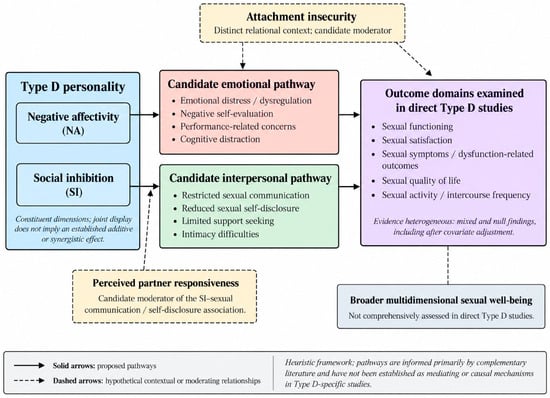
Disclaimer/Publisher’s Note: The statements, opinions and data contained in all publications are solely those of the individual author(s) and contributor(s) and not of MDPI and/or the editor(s). MDPI and/or the editor(s) disclaim responsibility for any injury to people or property resulting from any ideas, methods, instructions or products referred to in the content. |
© 2026 by the authors. Licensee MDPI, Basel, Switzerland. This article is an open access article distributed under the terms and conditions of the Creative Commons Attribution (CC BY) license.