


Abstract
Several of the rice quality parameters are nowadays determined manually or partly manually, which leads to subjective results. In order to analyse the rice quality and avoid most of the manual handling, the PaddyCheck instrument was mainly developed to measure the paddy/rough rice kernels. However, the design and technique of the instrument are also suitable for brown rice kernels. The PaddyCheck instrument measures the physical properties of the rice kernels as well as texture properties and translucency. Initial calibrations have been developed to correlate these properties with the Head Rice Yield and Chalkiness, which are two of the most common and important quality parameters for rice.
1. Introduction
Rice is the 3rd most produced grain in the world [1]. The three largest producers are China with 28% of the total rice production, India with 22% and Indonesia with 10% [2]. From the global rice production, 80% is used for food, while 3.5% is used for feed [2]. Therefore, it is of immense interest to have good quality control methods for the rice. The quality of rice is determined by the physical, physicochemical and the functional properties. These properties include the variety, kernel size and size homogeneity, aroma, panicles properties, shape type, head rice yield (HRY), chalkiness and cooking properties (gelatinization, retrogradation, stickiness etc.). Several of these properties require manual evaluations, which can affect the objectivity and will differ between different evaluators worldwide [3,4].
Since some of these properties, such as HRY, can be directly related to the value that the crop will have for the miller, a quick and objective quality control determination is needed that can be performed directly on paddy kernels in more facilities and closer to the farmers. Nowadays, samples are sent away to different reference labs to be test-milled, which can result in the farmer waiting 4–5 days to obtain the results. The ISO 6646:2011 standard method used for the HRY determination procedure consists of several subjective, manual and time-consuming steps, including preparations, de-husking and milling, before the HRY can be calculated [5].
Several factors affect the HRY measurement. Cracking and fissures can appear before and during harvest, during storage and during the drying process, which results in kernel breakage [6,7]. Furthermore, the degree of milling, handling procedures, harvest moisture and moisture content, immature kernels, diseases, chalkiness and mixture of slender type influences the HRY [8,9,10,11,12,13,14].
The quality parameter chalkiness, which is also called white belly, is a measurement of the opacity of the endosperm, which can reduce the hardness of the kernels [15,16]. Chalkiness can occupy >50% of the kernel area and can be caused by both varietal and environmental factors, such as the packing degree and morphology of the starch granules, high temperature, insufficient nutrition supply and the durability of the ripening [17,18,19,20]. Traditionally, chalkiness was measured manually, although the use of image analysis methods has been very convenient and are now commonly used [21,22].
The aim of and motivation behind the development of the first PaddyCheck instrument was to develop a portable instrument that can measure physical properties, crack resistance and translucency of paddy rice samples in a fast, objective and easy way. The measurement of the physical properties would provide information about the length and shape (i.e., the ratio between the length and the width), which is an important characteristic for determining quality [4]. Lu and Siebenmorgen [23] found a good correlation between the HRY and compression force, which shows that the texture measurement can be used in the determination of the HRY. The crack resistance uses the texture measurement to determine the break resistance with a force up to 17 N of each kernel in the sample. Chalky kernels have higher opacity than non-chalky kernels and by measuring the translucency of the kernels, the chalkiness of the kernels might be determined. Fang et al. [24] showed that multiple rice quality parameters, such as size, HRY and chalkiness, could be determined by using image analysis on the milled rice. However, since the degree of milling affects the HRY [8], it would be preferable to measure the paddy rice directly. Thus, an instrument that combines texture measurements, colour, size and shape as well as translucency of the kernels with limited manual handling and preparations of the samples would have a great potential for measuring the quality of rice kernels. Today rice is typically analysed as brown rice or milled rice with scanner type of instruments. The PaddyCheck is the first instrument to analyse the paddy rice and to determine the main quality parameters for the paddy rice trade.
2. Materials and Methods
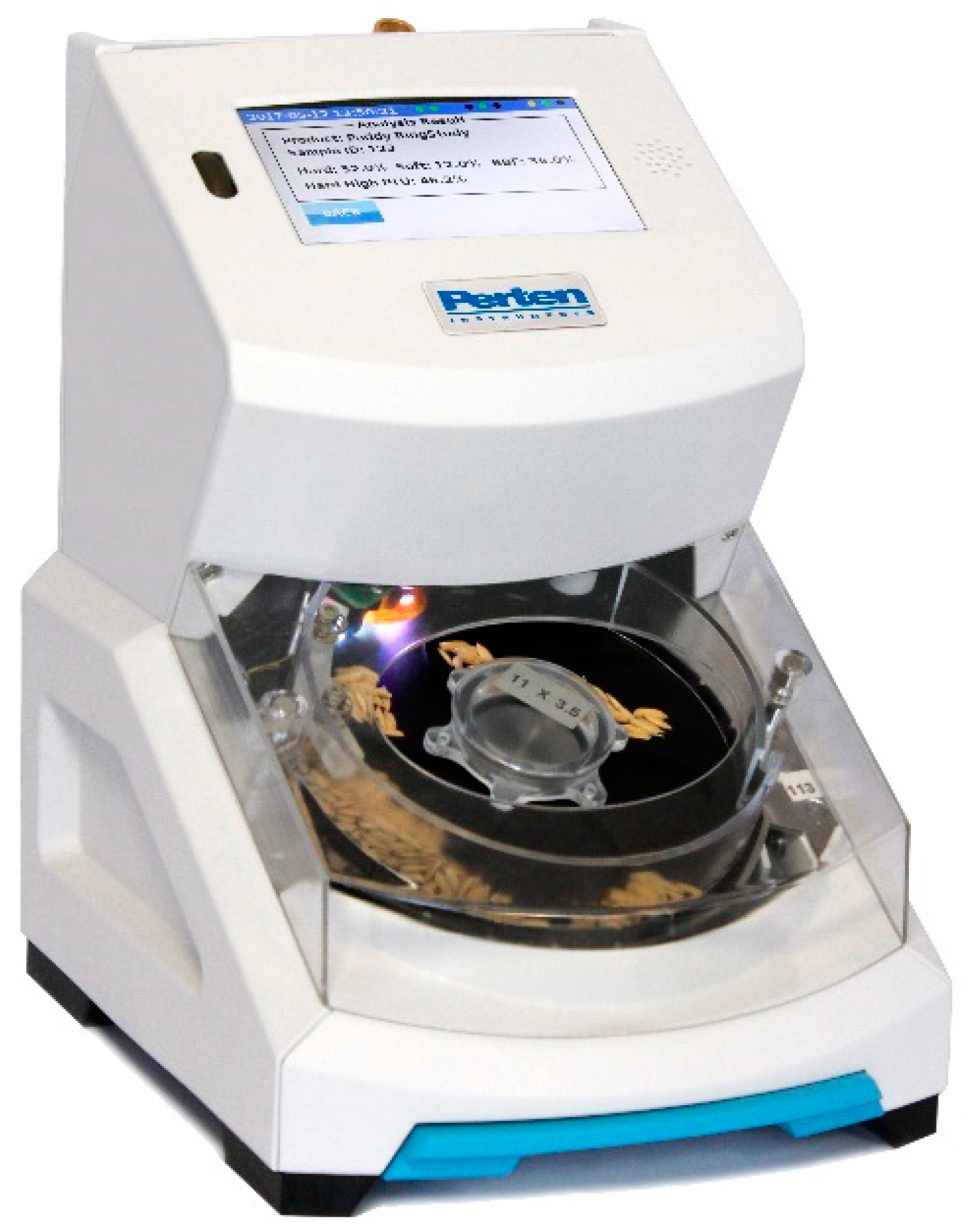
The PaddyCheck instrument (Figure 1) is designed to be used for both paddy/rough rice kernels and brown rice kernels. Kernels of both Indica and Japonica rice have been used during the development, while the size dimensions of the paddy and brown rice used during the development are shown in Table 1. The operator pours the kernels manually into the instrument and there are a range of discs with different cavity sizes for different sorts of rice.

Figure 1.
The PaddyCheck Instrument.

Table 1.
Size dimensions of paddy and brown rice used.
2.1. Mechanics
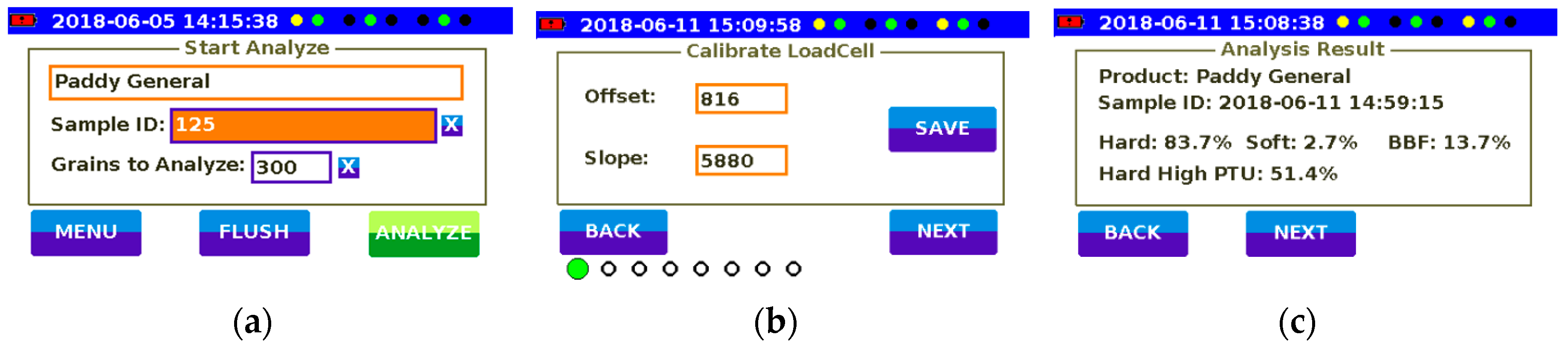
The PaddyCheck instrument is designed to be a standalone instrument. It has a built-in chargeable battery and is equipped with a touchscreen, on which the test profiles are selected. The calibration values and results are displayed in Figure 2. In addition, the instrument also has USB-ports to be used for saving and processing raw data; and for connecting barcode readers or keyboards.

Figure 2.
Touchscreen with selectable menus and displays. (a) Settings to define before analysis; (b) Settings to calibrate the load cell; (c) The results.
2.2. Singulation
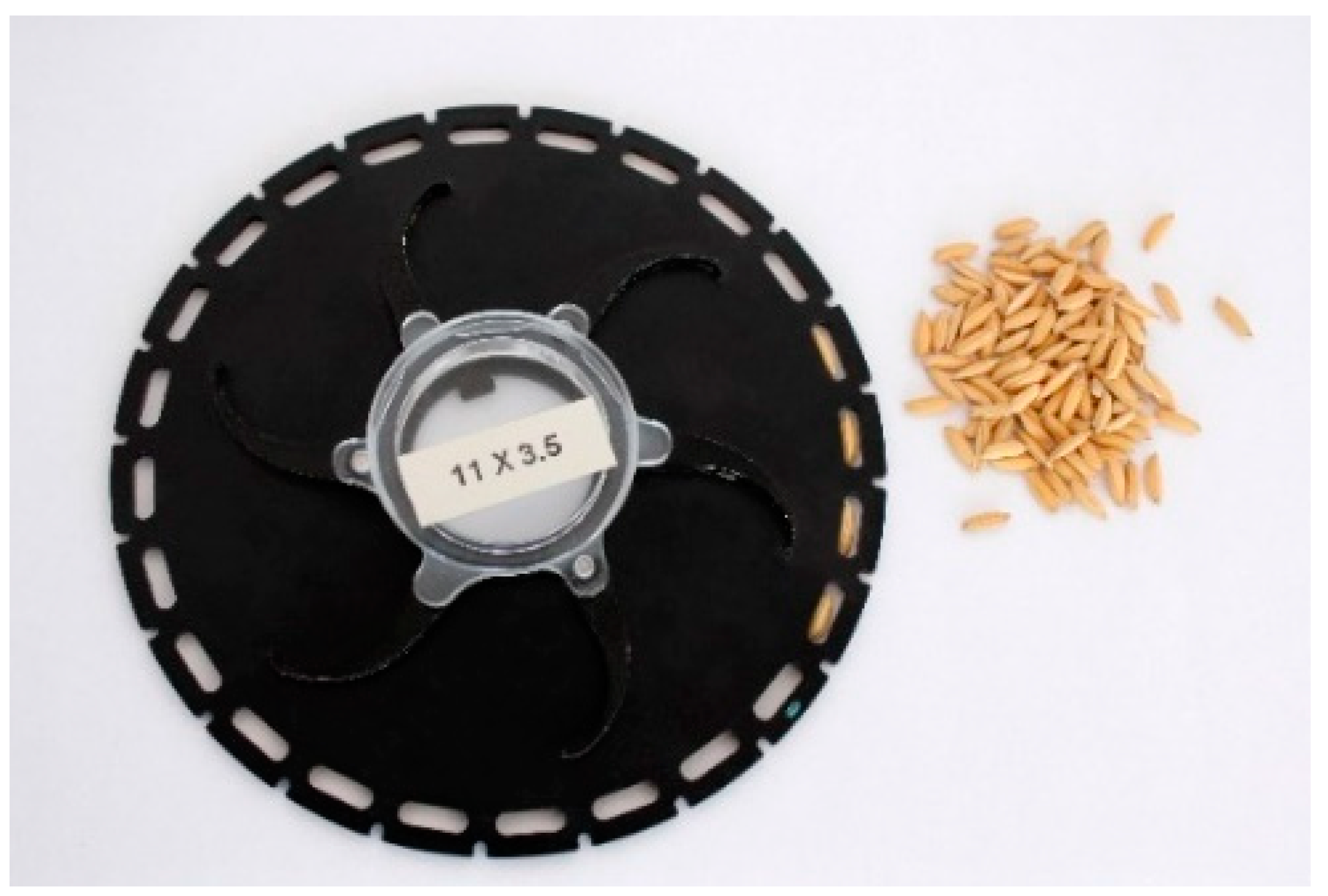
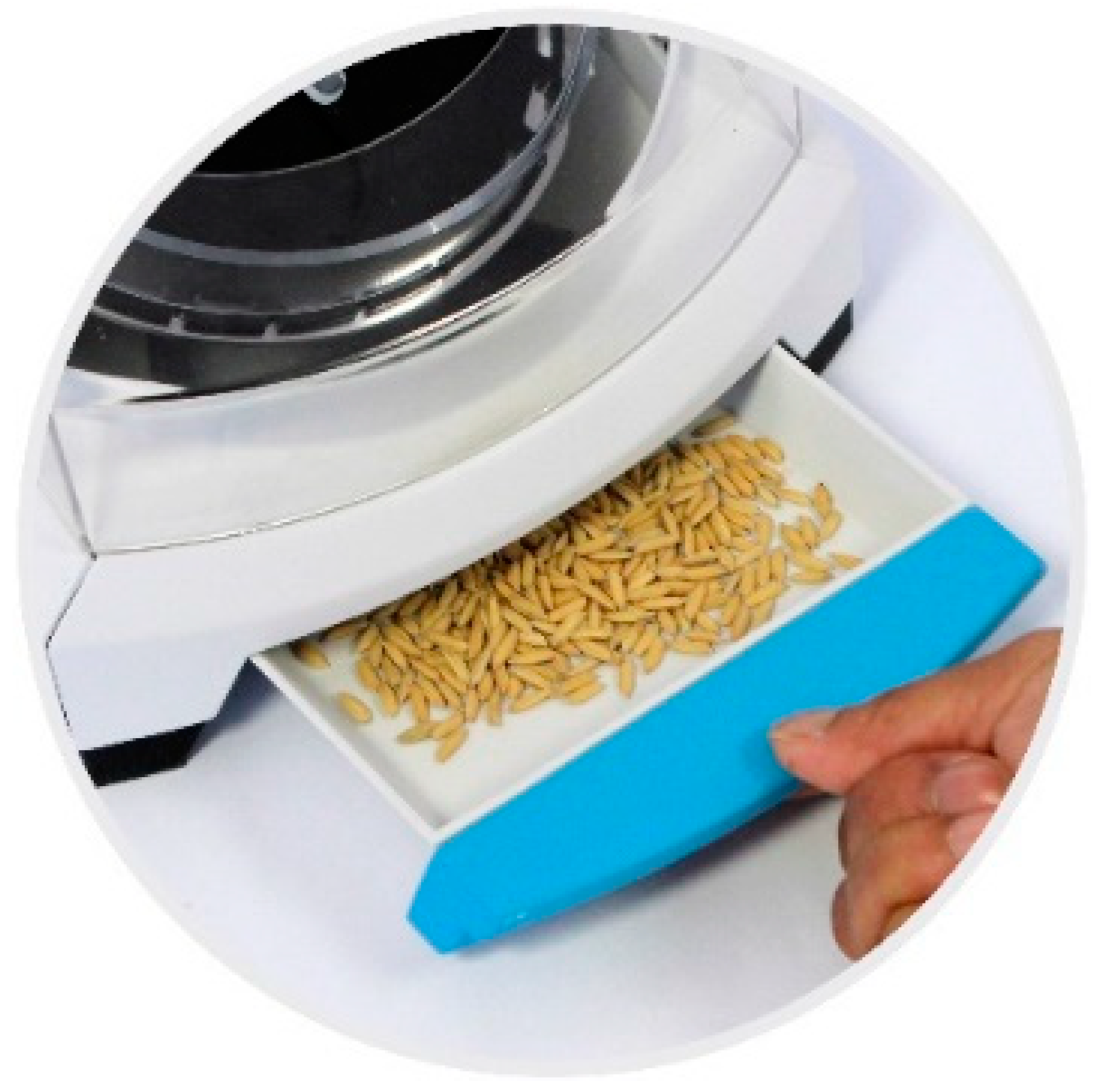
The instrument measures each kernel of the sample separately. The kernels are separated and transported by a disc containing cavities to fit single rice kernels (Figure 3). Each disc has a specific cavity size and the selection of disc can be optimized for the kernel size, which thus enhances the analysis of the kernels. By choosing a suitable disc for the sample, the camera functions will be improved as fewer kernels become stuck in the cavities and double kernels can be avoid. Four metal scrapes are used to brush the singulation disc to get the kernel into the cavity in a correct position. If the kernel sticks out from the cavity, the scrapes either swipes the kernel into the cavity or the kernel will be removed by the scrapes and end up with the rest of the kernels to be measured. After the measurements of a kernel are obtained, a small ejector pushes the used kernel out of the cavity, so it ends up in the collecting tray (Figure 4).

Figure 3.
Singulation disc with cavity size of 11 × 3.5 mm.

Figure 4.
Collecting tray.
2.3. Measurements
The instrument consists of three different sensors: one for force measurement, one for capturing visual images and the third is for capturing see-through polarized images of the rice kernels. The camera for visual images is also used for determining the size dimensions and positioning the individual kernels so that the force measurement is performed at the gravity point of the kernel. The camera used to obtain polarized images has blue, green and red-light channels. The translucency is determined by measuring the amount of red light that goes through the kernel.
The force measurement is a 3-point bend texture measurement with probe and gap dimensions, which are the same as in Lu and Siebenmorgen [23]. Different speeds have been tested, although 1 mm/sec was used for the development of the instrument.
2.4. Calibration Procedure
Each instrument has individual camera and load cell calibration settings from production. These calibrations can be checked and to some extent, they can be adjusted if needed. The camera calibration procedure consists of two parts. The first part automatically adjusts the integration time per pixel and colour using a special reference disc, while the second part adds a bias and slope to each colour and camera using a reference disc that mimics the real sample with large variation. The load cell is calibrated in regard to the bias and slope using a two-point calibration, which is created using a special equipment in production. The calibration of the thickness is performed by measuring the thickness of a special reference device with minimal deflection.
2.5. Firmware
Since the PaddyCheck is a standalone instrument, all sorting, definitions and calculations are built into the firmware. Some of the sorting features involve: checking that the disc inserted is correlating to the profile selected; and detecting double kernels, kernel movements during measurement, kernels that are not correctly located inside the cavities, shells and kernel fragments etc. These kernels should not be included in the test and therefore, are sorted into a separate folder. In some samples, the excluded kernels could be up to 20% of the total kernels and therefore, it is recommended to have more kernels in the sample than the test profile requires. The firmware defines and calculates the ratios of Hard, Soft, BBR (broken by force) and HHPTU (Hard High Perten Translucency Unit) kernels in the sample.
2.6. Software
The raw data can be downloaded to a computer and after this, more information can be accessed through the Perten Singulator Plus software. The software provides both graphical and numerical data and results. There are five menus containing graphical information and results, while there are four menus containing numerical information and results (Table 2).
Table 2.
Software information and result menus.
3. Results
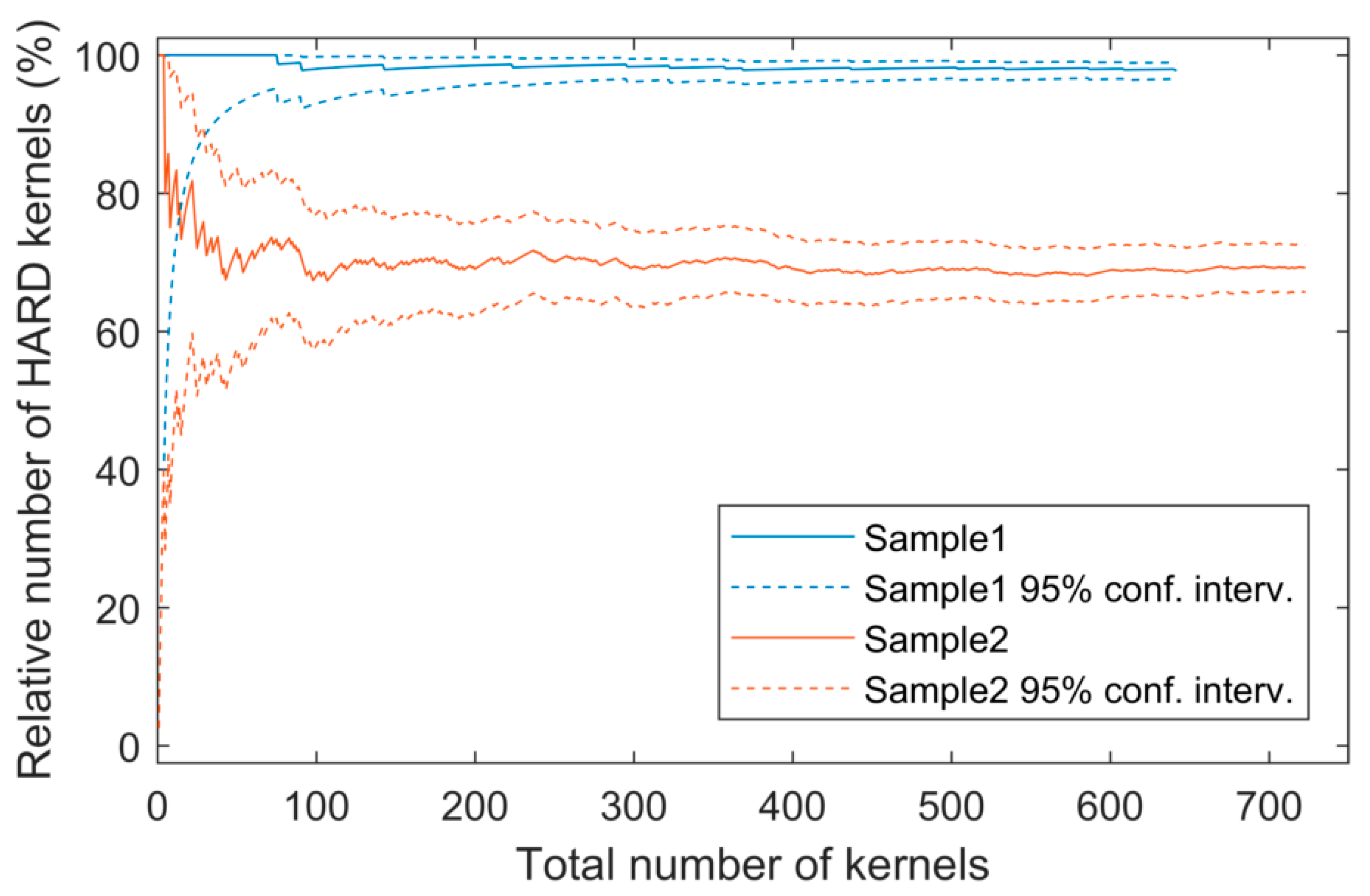
The recommended number of kernels for a measurement is in the range of 200–300. This level is set by considering the variance, measurement time and volume. Figure 5 shows the variance of the crack-resistant kernels (Hard kernels) in percentages vs. the total numbers of kernels for two different qualities.

Figure 5.
Percentage of Hard kernels vs. the total numbers of kernels for two samples with two different qualities. The 95% confidence intervals are marked with dotted lines. Note that the confidence intervals decrease with the number of kernels.
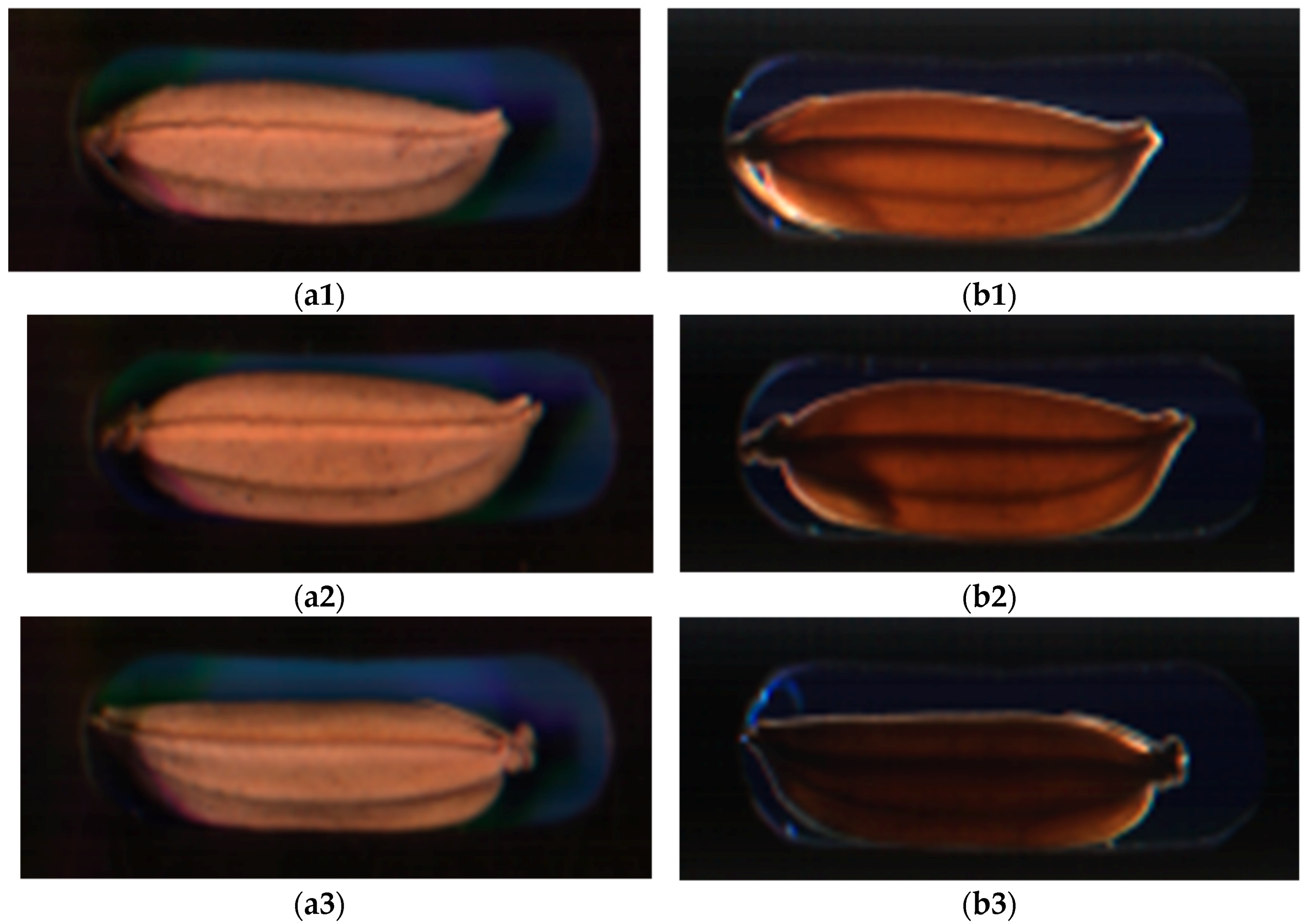
The two cameras provide the visual and translucency pictures, from which the size dimensions and translucency values are calculated. In Figure 6, the visual (a1–a3) and translucency (b1–b3) pictures from the three different rice kernels can be seen. A dark kernel in the translucency picture indicates that the kernel is more opaquer and thus, less light goes through. Different definitions for chalkiness in different countries will require different application settings in the PaddyCheck when defining percent dark pixels versus chalkiness.

Figure 6.
Pictures of the paddy rice kernels from the visual camera (a) and translucency camera using polarized light (b). The first kernel is a perfect kernel without dark areas. The bottom kernel is completely dark which indicates high chalkiness. The middle kernel has a local dark region, which indicates a chalky area close to the germ.
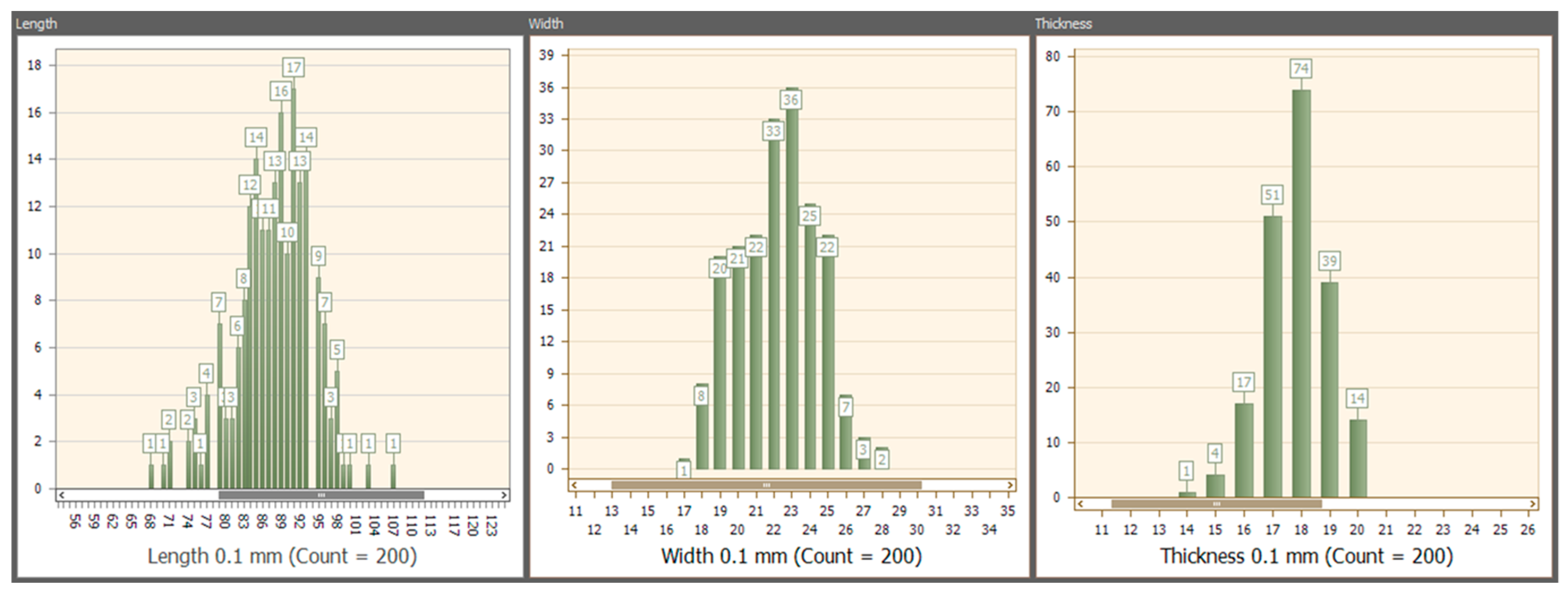
The size dimensions (length and width) are calculated from the visual picture and displayed in the additional software, which provides values for each individual kernel and as histogram plots for the whole sample. The thickness of the sample is obtained during the texture measurement at the trigger point of the measurement. In the histograms (Figure 7), the user can easily see if the sample has a normal distribution or not. Thickness measurement is made with a resolution of 0.00635 mm and length and width with a resolution of 0.1 mm.

Figure 7.
Histograms showing the size dimensions of length, width and thickness.
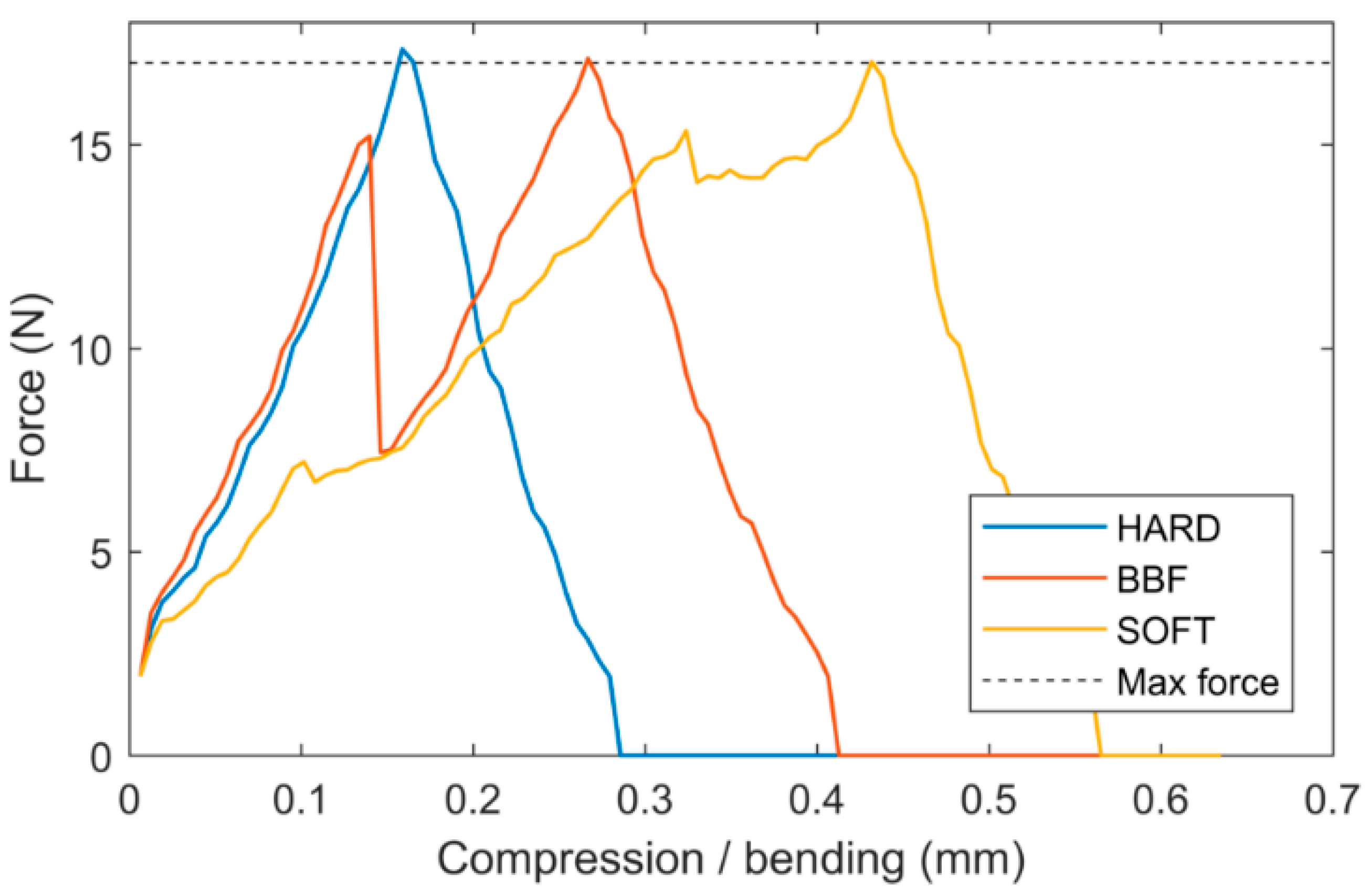
The texture measurement is a compression/bending measurement using a force of 17 N. Depending on the outcome of the measurement, the kernels are divided into three groups: hard, broken by force (BBF) and soft kernels. An example graph can be seen in Figure 8. The x-axis shows compression/bending deformation of the kernel and the y-axis shows the measured force.

Figure 8.
Example of texture measurement of a Hard kernel, a BBF kernel and a Soft kernel. The x-axis shows compression/bending deformation of the kernel and the y-axis shows the measured force. Note that the Hard kernel requires a high force for a small deformation, whereas the Soft kernel deforms much more before reaching the max force. The BBF kernel broke after 0.14 mm deformation.
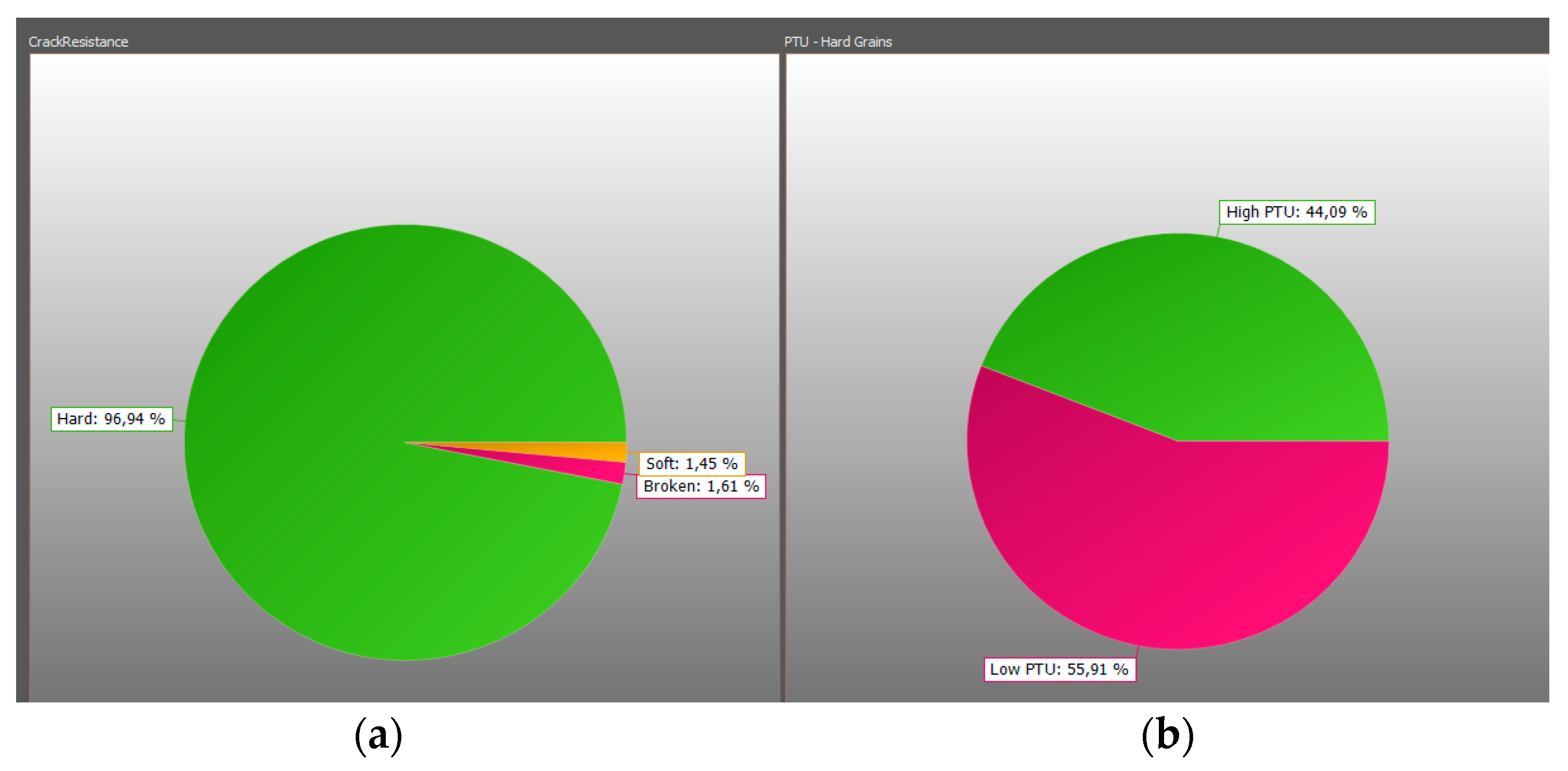
The software also provides the circle diagrams of the sample, in which the percentages of Hard, BBF and soft kernels are displayed as well as the percentage of high and low translucency of the hard kernels (Figure 9).

Figure 9.
(a) Crack resistance parameters of Hard (green), broken (BBF) (pink) and Soft (orange) kernels; and (b) PTU in hard kernels, which can be High PTU (green) or Low PTU (pink).
In addition to the determination of the hard, BBF and soft kernels, the different qualities of the sound (hard) kernels can also be distinguished. If the kernel is both hard and have high translucency then it is defined as HHPTU.
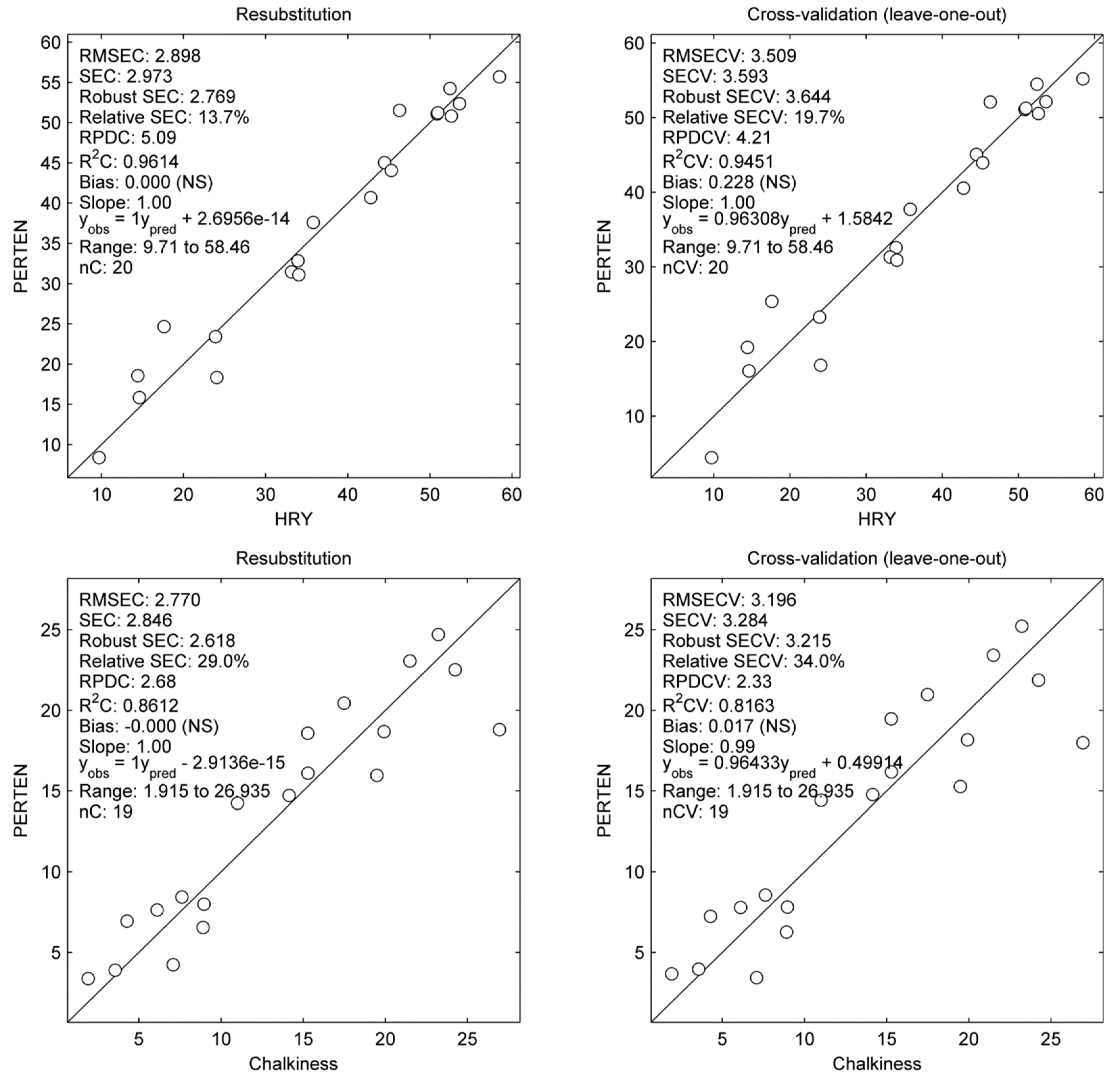
Furthermore, the initial studies that showed the correlation of the crack resistance and HHPTU with HRY and chalkiness, respectively, have been performed using Multiple Linear Regression (MLR) in the MatLab environment. The study was based on 20 samples including Australian paddy rice, Indica type or long slender rice. Reference methods were McGill #2 for HRY and FOSS Cervitec for chalk on de-husked brown rice. The calibrations were developed for each constituent using the predictor variables and the HRY and chalkiness levels as response variables, which was subsequently validated using both re-substitution and leave-one-out (LOO) cross-validation. The estimated performances of the calibrations are summarized in Figure 10. The SECVs (Standard Error of Cross Validation) of the calibrations are around 3.6 and 3.3 for HRY and Chalkiness, respectively. Although the calibrations are very preliminary at this stage, it is quite clear that the PaddyCheck can estimate both the HRY and Chalkiness of rice samples. Additional studies are required before the full incorporation of the calibrations in the PaddyCheck.

Figure 10.
Observed vs. estimated HRY (top row) and Chalkiness (bottom row). The performances were estimated using re-substitution (left column) and leave-one-out (LOO) cross-validation (right column).
4. Discussion
The PaddyCheck instrument has been proven to be useful for evaluating the physical properties of paddy rice kernels as well as texture properties and translucency. In addition, the initial calibration development for correlating the properties measured by the PaddyCheck to HRY and chalkiness has shown promising results. Thus, the next generation of PaddyCheck will contain HRY and chalkiness calibrations in addition to the existing parameters. The PaddyCheck can be used for both paddy and brown kernels.
Acknowledgments
The authors would like to thank all people around the project and specially thanks to the rice suppliers from Australia, China, Philippines and USA. This research received no external funding.
Conflicts of Interest
The authors declare no conflict of interest.
References
- USDA Foreign Agricultural Service. Grain: World Markets and Trade; USDA Foreign Agricultural Service: Washington, DC, USA, 2018.
- Food and Agriculture Organization of the United Nations. Rice Market Monitor; Food and Agriculture Organization of the United Nations: Rome, Italy, 2017. [Google Scholar]
- Bhattacharya, K.R. Rice Quality—A Guide to Rice Properties and Analysis; Woodhead Publishing: Cambridge, UK, 2011. [Google Scholar]
- Fitzgerald, M. Rice: Grain-quality characteristics and management of quality requirements. In Cereal Grains—Assessing and Managing Quality, 2nd ed.; Wrigley, C., Batey, I., Miskelly, D., Eds.; Woodhead Publishing: Cambridge, UK, 2017; pp. 291–314. [Google Scholar]
- ISO Copyright Office. Rice—Determination of the Potential Milling Yield from Paddy and from Husked Rice; ISO Copyright Office: Berne, Switzerland, 2011. [Google Scholar]
- Bonazzi, C.; du Peuty, M.A.; Themelin, A. Influence of drying conditions on the processing quality of rough rice. Dry. Technol. 1997, 15, 1141–1157. [Google Scholar] [CrossRef]
- Cnossen, A.G.; Jiménez, M.J.; Siebenmorgen, T.J. Rice fissuring response to high drying and tempering temperatures. J. Food Eng. 2003, 59, 61–69. [Google Scholar] [CrossRef]
- Cooper, N.T.W.; Siebenmorgen, T.J. Correcting head rice yield for surface lipid content (degree of milling) variation. Cereal Chem. 2007, 84, 88–91. [Google Scholar] [CrossRef]
- Mobasher Amini, M.; Alizadeh, M.R.; Padasht, F.; Elahinia, S.A.; Khodaparast, S.A. Rice grain discoloration effect on physical properties and head rice yield in three rice cultivars. Q. Assur. Saf. Crops Foods 2016, 8, 283–288. [Google Scholar] [CrossRef]
- Aquerreta, J.; Iguaz, A.; Arroqui, C.; Vírseda, P. Effect of high temperature intermittent drying and tempering on rough rice quality. J. Food Eng. 2007, 80, 611–618. [Google Scholar] [CrossRef]
- Buggenhout, J.; Brijs, K.; Delcour, J.A. The breakage susceptibility of raw and parboiled rice: A review. J. Food Eng. 2013, 117, 304–315. [Google Scholar] [CrossRef]
- Goodman, D.E.; Rao, R.M. Effect of grain type and milled rice kernel hardness on the head rice yields. J. Food Sci. 1985, 50, 840. [Google Scholar] [CrossRef]
- Qin, G.; Siebenmorgen, T.J. Harvest location and moisture content effects on rice kernel-to-kernel breaking force distributions. Appl. Eng. Agric. 2005, 21, 1011–1016. [Google Scholar] [CrossRef]
- Zhou, L.; Liang, S.; Ponce, K.; Marundon, S.; Ye, G.; Zhao, X. Factors affecting head rice yield and chalkiness in indica rice. Field Crops Res. 2015, 172, 1–10. [Google Scholar] [CrossRef]
- Nagato, K. On the hardness of rice endosperm. Jpn. J. Crop Sci. 1962, 31, 102–107. [Google Scholar] [CrossRef]
- Ashida, K.; Iida, S.; Yasui, T. Morphological, physical and chemical properties of grain and flour from chalky rice mutants. Cereal Chem. 2009, 86, 225–231. [Google Scholar] [CrossRef]
- Lisle, A.J.; Martin, M.; Fitzgerald, M.A. Chalky and translucent rice ggrains differ in starch composition and structure and cooking properties. Cereal Chem. 2000, 77, 627–632. [Google Scholar] [CrossRef]
- Tashiro, T.T.; Wardlaw, I.F. The effect of high temperature on kernel dimensions and the type and occurrence of kernel damage in rice. Aust. J. Agric. Res. 1991, 42, 485–496. [Google Scholar] [CrossRef]
- Del Rosario, A.R.; Briones, V.P.; Vidal, A.J.; Juliano, B.O. Composition and endosperm structure of developing and mature rice kernel. Cereal Chem. 1968, 45, 225–235. [Google Scholar]
- Tashiro, T.; Ebata, M. Studies on white belly rice kernel iii. Effect of ripening conditions on occurrence of white belly kernel. Proc. Crop Sci. Soc. 1975, 44, 86–92. [Google Scholar] [CrossRef]
- Ikehashi, H.; Khush, G.S. Methodology of assessing appearance of the rice grain, including chalkiness and whiteness. In Proceedings of the Workshop on Chemical Aspects of Rice Grain Quality; International Rice Research Institute: Los Baños, Philippines, 1979; pp. 223–229. [Google Scholar]
- Guangrong, L. Detection of chalk degree of rice based image processing. In Proceedings of the International Conference on Intelligence Science and Information Engineering (ISIE), Wuhan, China, 20–21 August 2011; pp. 515–518. [Google Scholar]
- Lu, R.; Siebenmorgen, T.J. Correlation of head rice yield to selected physical and mechanical properties of rice kernels. Trans. ASAE 1995, 38, 889–894. [Google Scholar] [CrossRef]
- Fang, C.; Hu, X.; Sun, C.; Duan, B.; Xie, L.; Zhou, P. Simultaneous determination of multiple rice quality parameters using image analysis method. Food Anal. Methods 2015, 8, 70–78. [Google Scholar] [CrossRef]
© 2018 by the authors. Licensee MDPI, Basel, Switzerland. This article is an open access article distributed under the terms and conditions of the Creative Commons Attribution (CC BY) license (http://creativecommons.org/licenses/by/4.0/).