


Abstract
When interpreting the evolution of science, it is essential not only to know its history in terms of the foundational facts or the advances in the global theories that define it but also to understand how the subordinate theories, methodologies, and particular values within a field of knowledge configure themselves over the years. Insofar as this is achieved, it is possible to think of history and philosophy as optimal didactic tools for teaching science. Much more so in subjects such as Organometallic Chemistry, where solid foundations can ensure improvements in the teaching-learning process in college education. In this sense, the present article aims to perform a Micro-Theoretical analysis of the history of this discipline in terms of the research lines that have shaped it (i.e., Metal-CO, Metal-Olefin, Metal-Alkyl, Metal-Carbene, Sandwich Type). For this purpose, relevant aspects from each line are analyzed using an adaptation of Laudan’s Research Traditions (RT) model. This analysis is complemented by a brief discussion of the epistemological relevance of historical reconstruction regarding contemporary challenges in chemical progress. Finally, some comments are presented as conclusions and perspectives.
1. Introduction
The history of science is considered the primary source of information for building and testing the founding theories of any science [1]. Its relevance in chemistry teaching is enhanced because it allows us to consider this discipline a multidimensional science in endless transformation. Furthermore, the dialogue between the history and philosophy of chemistry makes it possible to understand scientific progress and chemical phenomena from a holistic perspective [2], especially by discussing the potential barriers that may arise when learning chemistry [3]. Therefore, an analysis from this perspective would contribute to understanding how science has progressed and discover new strategies of knowledge construction based on an interdisciplinary approach [4].
The foregoing becomes even more relevant when considering the possible transformation of traditional teaching models that still define higher education and have been forgotten even by research on the Didactics of Science [5,6,7,8]. These models consist of a static, uncritical, and repetitive teaching of science that reinforces the idea that it is not enough to know the discipline to teach it. As a result, noteworthy conceptual errors appear in the teaching practice of science teachers, and a diversity of anomalous epistemological imaginaries settle in university educational processes [9]. In this sense, reevaluating the articulation of the history and philosophy of science within subjects taught in higher education becomes a pivotal point in achieving meaningful transformations inside and outside the classroom. Promoting such modifications becomes much more critical in areas that tend to lose their epistemological status and are considered simple subjects of “upper-level” subjects. Such is the case of Organometallic Chemistry (OC), which is a branch of chemistry that deals with the study, synthesis, and reactivity of chemical compounds with at least one bond between a carbon atom of a ligand and a metal. OC conceptual framework is usually relegated to a brief space within the Inorganic Chemistry curriculum in several university institutions [10] despite responding to the new challenges of chemistry [11] and promoting teaching-learning processes through integrative knowledge and complex chemistry [10].
Hence, to promote the epistemological recognition of OC as a field on its own and to consolidate its status within the curriculum of programs such as Chemistry or Chemical Engineering, this work, being an extension of a previous study [12], aims to develop an interpretation of the history of Organometallic Chemistry from Larry Laudan’s perspective [13]. Therefore, it is possible to understand the importance of OC from its historical development interpreted under specific philosophical positions. It is essential to clarify that the interpretation process can be carried out at two levels, according to Laudan’s proposal for the evolution of Research Traditions (RT). On the one hand, the Macro-Theoretical analysis focuses on the model’s generalities and the understanding of Coordination Theory as a Research Tradition (RT1) in which organometallic chemistry is ascribed. On the other hand, the Micro-Theoretical analysis corresponds to the evolution of an RT by modifying its subordinate theories. In this case, it is necessary to disclose the evolution of the multifarious theories that respond to a particular field of knowledge and belong to a particular RT. This second level is precisely where this article is situated.
In this regard, the following text is organized as follows. First, a brief overview of traditional approaches to scientific progress, in particular Larry Laudan’s philosophical position, is provided to contextualize the reader. In addition, we present an expanded model of scientific change, built on a reinterpretation of Laudan’s approaches. This expanded model will be helpful in the historical-philosophical analysis of the five research lines that have configured the OQ (i.e., Metal-CO, Metal-Olefin, Metal-Alkyl, Metal-Carbene, Sandwich Type). Finally, some comments are presented as conclusions and perspectives.
2. Traditional Approaches to Scientific Progress
When it comes to teaching chemistry, it often seems that the knowledge conveyed in the classroom is presented as imposed truths. Thus, the teaching and learning process is rooted in a strategy of replicating knowledge established by a group of scientists, which must be learned word-for-word. However, today it is essential to understand scientific knowledge in its historical and philosophical context, so that we can truly grasp how these concepts, formulas, and reactions were developed. As these processes of historical development and scientific change are addressed in the classroom, it is possible to generate significant transformations in chemistry education [14]. This is particularly true from a philosophical perspective, which broadens our understanding of what it means to ‘do chemistry’, enabling us to approach this discipline as a dynamic enterprise in constant flux. In other words, the possibility of understanding scientific progress within chemistry and, from there, generating transformative educational knowledge that drives pedagogical changes in the science classroom.
The problem is that, to date, there is no widely accepted conception of how science functions and evolves [1]. Hence, since the 1970s, several proposals have emerged to understand this phenomenon. One of the best-known approaches is that of Thomas Kuhn, who, to understand scientific progress, develops a model based on large-scale units, which he calls paradigms or disciplinary frameworks, within which normal science unfolds [15]. However, at a certain point, a period of crisis arises that shakes the fundamental principles of the prevailing worldview. Thus, a process of scientific revolution unfolds, involving a total and abrupt break with the previous framework and a new one that is empirically more adequate. Once this new paradigm is accepted (mature science), a new period of normal science begins, in which the foundational theories are unalterable and immune to criticism.
Although Kuhn’s proposal represented a decisive shift away from cumulative conceptions of science, his primary focus is on explaining the transformations associated with paradigm shifts and the dynamics of scientific revolutions. Consequently, his model offers fewer tools for analyzing gradual processes of conceptual reorganization within a single paradigm or for situations in which multiple theoretical lines coexist without a scientific revolution. Furthermore, although Kuhn proposed criteria for choosing between paradigms, such as precision, consistency, scope, simplicity, and fecundity, he abstained from formulating a rational decision-making algorithm, emphasizing that these criteria could be weighed differently by dissimilar scientists [16]. This has given rise to various interpretations regarding the rational nature of scientific change in his proposal. Hence, he is considered a non-rationalist philosopher of science. Despite this, Kuhn’s work inspired a subsequent generation to improve the understanding of scientific change from a philosophical perspective.
Members of this generation were classified as rationalist philosophers of science, as they sought to provide a reasonable explanation for scientific change. This is the case with Imre Lakatos [17], who, building on Kuhn’s ideas, developed a new model of scientific change centered on supra-units known as research programs. These comprise an essential set of principles that cannot be abandoned without abandoning the program, and a series of theories that correspond to them. It is worth noting that Lakatos conceives scientific progress in terms of the empirical growth of the tradition, which implies that the greater the empirical content of one theory compared to another, the greater its capacity to respond to change within the discipline. In this regard, Lakatos’s proposal represents a significant advance by introducing rational criteria for evaluating research programs in terms of their progressiveness or degeneration. However, its structure continues to assign a privileged role to the hard core of the program, the modification of which, in principle, implies the abandonment of the research program itself. This characteristic is particularly useful for analyzing episodes of competition between programs, but it offers less flexibility when attempting to reconstruct historical processes in which concepts, methods, and objectives evolve simultaneously within the same disciplinary tradition, as occurs in various episodes in organometallic chemistry.
All of these issues lead us to consider an alternative model that, following the tradition of rationalist philosophers, allows us to understand the history of OC from the perspective of scientific progress, thereby overcoming many of the problems inherent in existing models. This is the case with the Laudanian perspective, which offers particular analytical advantages for this study. The choice of this philosophical framework is not intended to replace or invalidate the proposals of Kuhn or Lakatos, but rather to address the specific historical questions that guide this study. While Kuhn is particularly well-suited for analyzing large-scale revolutionary processes and Lakatos provides tools for examining competition among research programs, the aim of this work is to reconstruct the evolution of OC as a discipline characterized by gradual changes, the coexistence of alternative explanations, and continuous readjustments among theories, methods, objectives, and applications. These characteristics make Laudan’s approach particularly relevant, as it allows for an analysis of how different components of a research tradition mutually influence one another without presupposing that scientific change must necessarily take the form of a revolution or the complete replacement of a research program. This perspective may lead to an integral philosophical analysis guided by the complexity of multidirectional transformations that characterize the historical evolution of fields such as organometallic chemistry. For this reason, although a Laudanian account is not the only possible characterization, it provides a particularly suitable framework for examining the internal evolution of OC as it is described below.
3. Larry Laudan’s Philosophical Model Overview
Laudan proposes a model of scientific progress based on solving scientific problems as the pivotal factor. In fact, for the author, “science is essentially a problem-solving activity” [13]. Although it is not limited thereto, thinking of science from this perspective allows us to recognize its genuine characteristics. In this sense, science’s primary aim is to propose theories that, as the author states, “maximize the number of empirical problems solved and minimize the appearance of anomalies or conceptual problems” [13] within any discipline. In other words, as long as we can recognize the efficiency of a theory in solving specific problems, it will be possible to understand the history of science more rationally.
In this respect, Laudan focused on the analysis of scientific progress by evaluating and comparing theories. Laudan understands the concept of theories in two ways. On the one hand, theories as a set of specific doctrines (i.e., hypotheses, axioms, principles) used to make predictions and give explanations of natural phenomena. Take, for example, the theory of multiple proportions proposed by Dalton. On the other hand, theories as general doctrines (i.e., atomic theory, relativity theory, coordination theory) to which other specific subordinate theories subscribe, which are historically and conceptually related. Laudan provides the latter with the moniker of Research Traditions (RT).
An RT is a set of general guidelines about the entities and processes of a field of study [13]. It is composed of three sets of principles that define it: ontological, as it specifies the types of fundamental entities that exist in the conceptual domain and their interactions; methodological, since it establishes procedures or research methods that respond to the RT; and axiological, by setting out the teleological guidelines and the final objectives expected inside the discipline. In addition, each RT possesses a specific number of theories that exemplify and partially constitute it, some of which are contemporary and others temporary successors of the previous ones. Therefore, understanding the RT’s subordinate theories from a historical-philosophical stance would allow a rational evaluation of how any discipline, in this case, organometallic chemistry, has advanced over time. Furthermore, comprehending these evolutionary transformations would provide an overview of where this chemistry unit is today and its direction in the coming years. Hence, studies such as the one presented are relevant not only to the scholastic field but also at the theoretical and industrial levels.
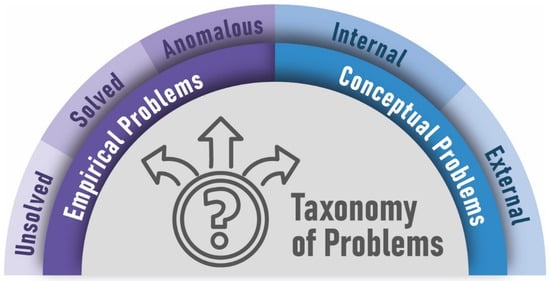
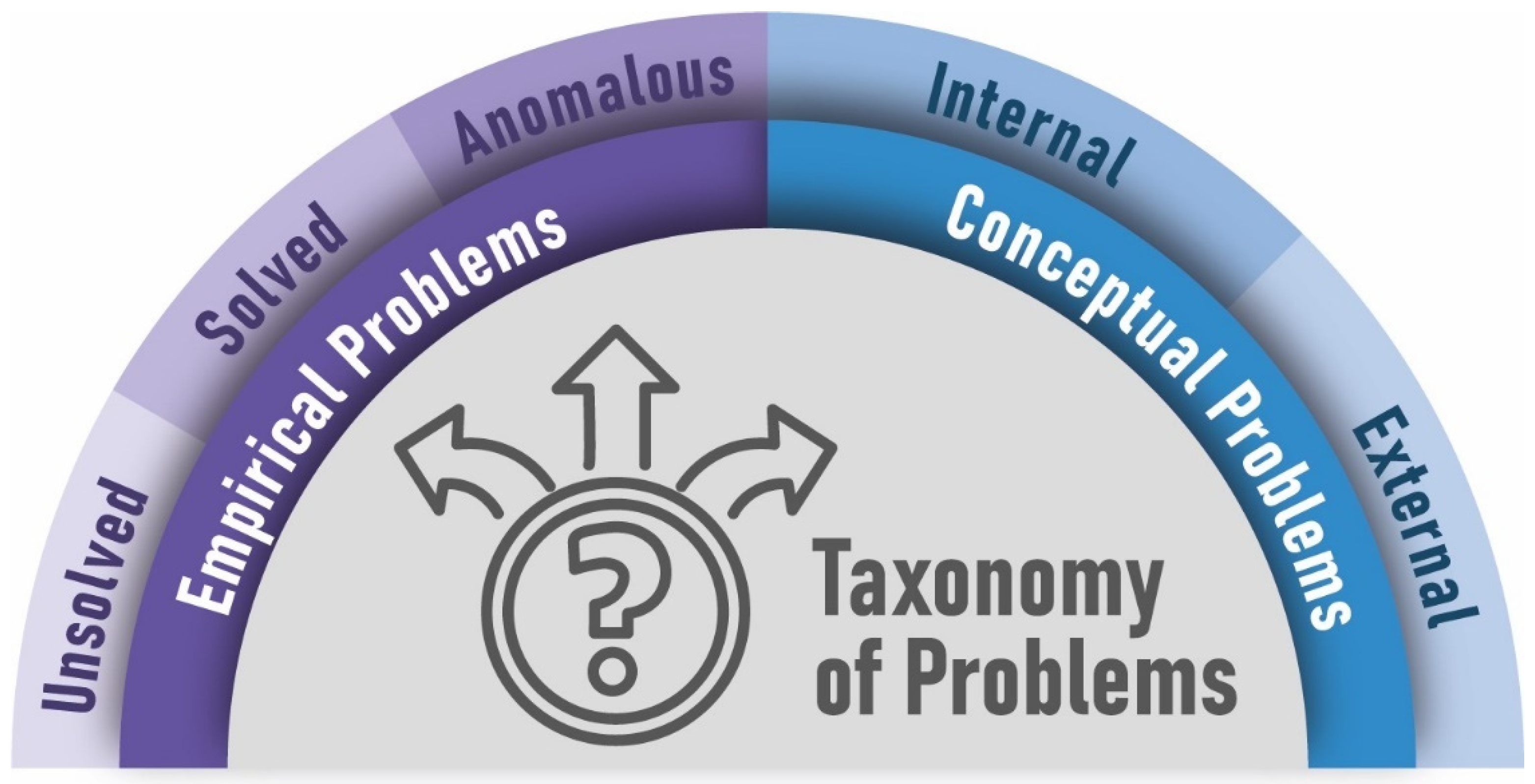
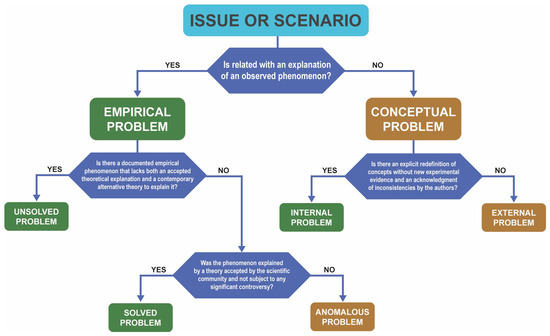
That said, the central role of Research Traditions is to guide the determination of relevant problems for scientific progress, identify parts of a theory that present conflicts and must be reoriented, and establish rules for data collection and contrasting theories [18,19]. Accordingly, Laudan sets out a taxonomy (Figure 1), classifying problems into two classes that motivate the scientific change process. On the one hand, empirical problems include those facts that seem strange within a discipline and so far, have no explanation. This category is subdivided into three. First, unsolved [20] or potential [1] problems refer to those facts that have not been solved by any theory and have no explanation. This kind of problem is crucial for the rational evaluation of any theory. Secondly, the solved problems comprise the facts that have been solved satisfactorily by a theory, which does not imply that it is possible to assign a value of truth or falsity to the theory involved. Thirdly, anomalous problems include those phenomena that a particular theory could not solve but one or more alternative theories could.
Figure 1.
Taxonomy of problems proposed by Laudan. Adapted from [13].
On the other hand, conceptual problems arise within a theory in terms of its inconsistencies, gaps, contradictions, or theoretical conflicts. Recognizing this type of problem suggests that the conceptual factor acquires greater relevance within the Laudasian model, demonstrating the existing complementarity between theory and practice. Surplus highlights that scientific progress may be gradual or simultaneous, not necessarily global or total. This type of problem, in turn, is divided into two. On one side, internal problems imply the presence of many inconsistencies, vague and confusing categories of analysis, or ambiguities within a subordinated theory to an RT. Conversely, external problems reflect those theoretical tensions and methodological conflicts with another theory that the scientific community accepts as rationally founded or with other non-scientific philosophical, theological, or social beliefs. This set of problems determines the possibility of proposing a method of comparing theories within an RT since the more empirical problems it solves and the more conceptual problems it avoids; the more progressive it will be.
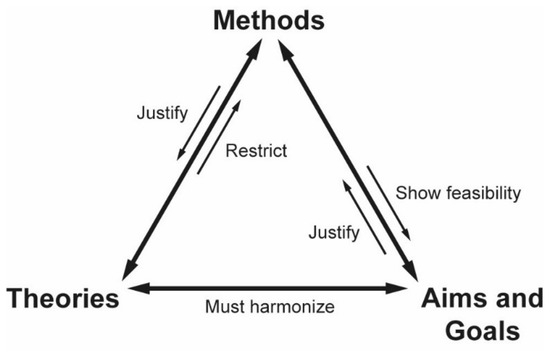
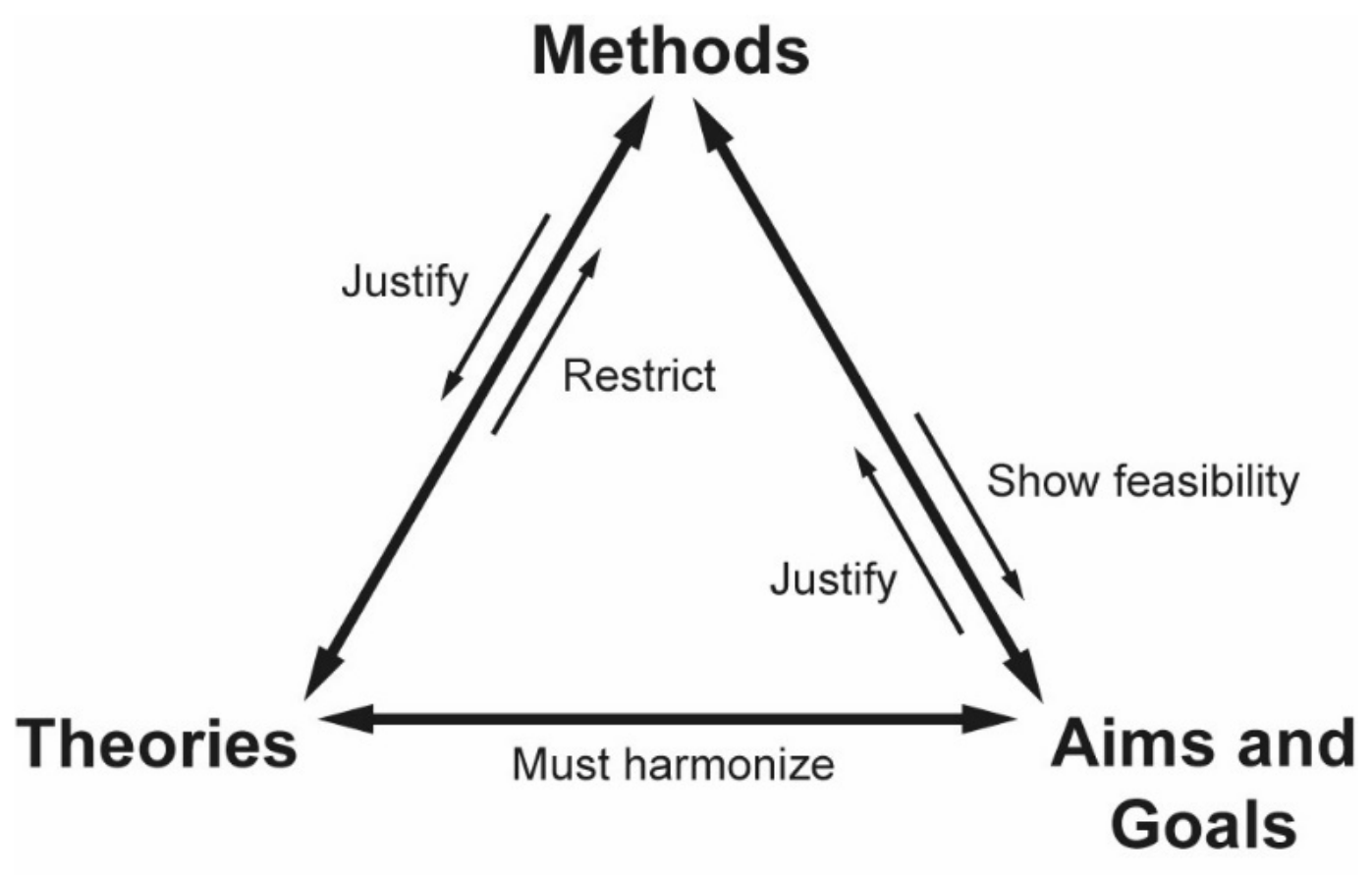
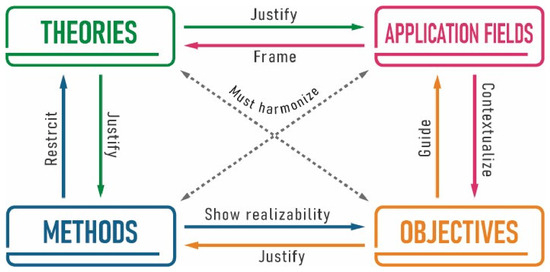
As hinted above, the heart of the model of scientific change proposed by Laudan is the rational understanding of how empirical and conceptual transformations occur within a discipline. The traditional or hierarchical model of scientific progress, which includes Kuhn [15] or Lakatos [17] proposals, presented a unidirectional justification in which the changes began with modifying the scientific goals, leading to a transformation of methods and, consequently, its theories. Contrary to this empirical perspective, Laudan proposes a Reticular Model of Justification (Figure 2) in which there is a complex process of mutual adjustment at the three levels of scientific commitment, which are none other than the components of all RT (ontology, methodology, and axiology). Thus, he argues that none is privileged, but the discipline’s theories, methods, and objectives are interdependent [21]. Prior implies that there should not be a change at all three levels simultaneously, nor is there a specific point at which to begin or end a cycle of transformation to speak of a relevant change. For this reason, we selected Laudan’s proposal to analyze the internal evolution of OQ.
Figure 2.
Reticular Model of Scientific Change proposed by Laudan. Adapted from [21].
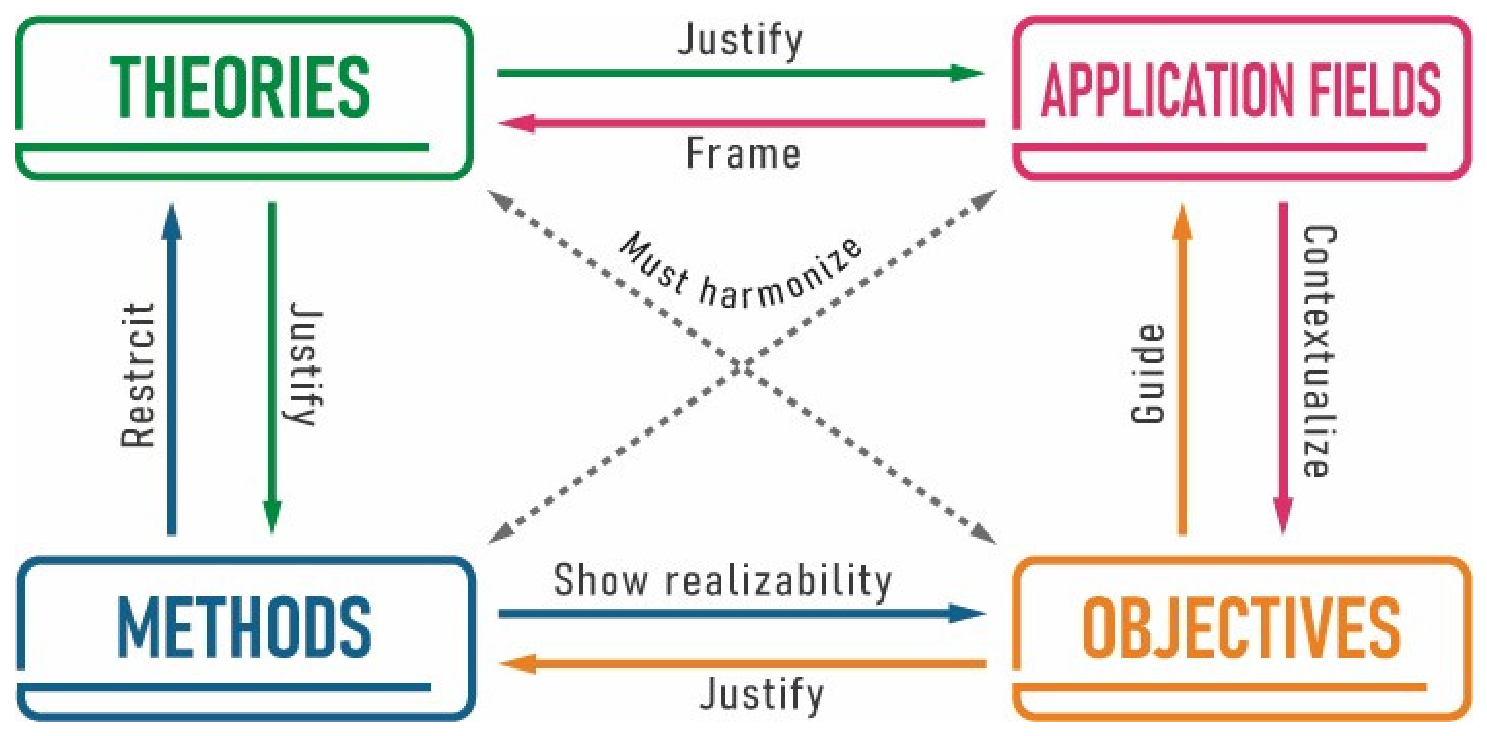
However, despite being one of the most conceptually rich proposals and introducing typological concepts of scientific problems, as stated by Estany [22], it is possible to propose new interpretations of Laudan’s model that allow a much deeper understanding of the historical phenomena that this philosophical vision seeks to explain. Thus, based on this author’s work, an Expanded Model of Scientific Change has been proposed (Figure 3) in which a fourth vertex is included in the scheme, namely, the Application Fields of the scientific discipline studied. These fields have a significant role within RT as they interact with the other three classical components of the reticular model. Thus, they frame the theories, harmonize with the methods, and contextualize the objectives of science itself. Furthermore, theories justify these fields, and the objectives guide them to establish an applied science.
Figure 3.
Expanded Model of Scientific Change based on Laudan’s guidelines.
Considering that the fields of application actively reshape the development of a research tradition, it is essential to provide a philosophical justification for their inclusion in the proposed expanded model. In this sense, fields of application, as a fourth vertex, do not constitute an independent criterion of epistemological validation in the same sense as theories or methods; rather, they represent a structural component of scientific change insofar as they establish new constraints and opportunities for the evolution of research traditions. Their justification is, therefore, indirect and relational, stemming from their ability to demonstrate the explanatory scope and utility of a research tradition through the resolution of problems in specific contexts. It is indisputable that a field of application alone does not determine the acceptance of a theory; however, the possibility of successfully extending a research tradition into new experimental, technological, or industrial areas provides additional reasons to maintain, modify, or replace it. This interpretation is consistent with contemporary viewpoints from the philosophy of science, as scientific development can be linked to practices, instrumentation, and contexts of application, rather than to the evolution of abstract theories [23,24,25].
Likewise, fields of application can become a source of scientific problems, albeit of a different nature than the empirical and conceptual problems described by Laudan. As a research tradition extends into new fields of application, unforeseen phenomena, technical limitations, social demands, or industrial needs may emerge, revealing weaknesses in existing theories or demanding the development of new experimental methods. Consequently, fields of application not only receive scientific knowledge but also provide feedback to basic research by generating new questions, redefining priorities, and guiding the formulation of scientific objectives. From this perspective, fields of application serve as places where problems manifest, whose resolution can trigger simultaneous modifications to the theoretical, methodological, and axiological components of a research tradition, thereby justifying their incorporation as a fourth vertex within the expanded reticular model.
4. Analysis Methodology
The expanded model explained in the previous section was used for carrying out the historical interpretation of organometallic chemistry in such a way that it was possible to observe the theoretical, methodological, axiological, and applicative transformations of the theories subordinated to RT1. These theories are inscribed in five research lines to be analyzed: M-CO, M-Olefin, M-Alkyl, M-Carbene, and Sandwich Type [26]. Each research line deals with a type of organometallic complex that configures OC into what is known today. The analysis of each research line consisted of a review of their historical evolution based on previous studies [26] and a subsequent interpretation under the model mentioned above. This interpretation involved the comparison of the emerging subordinate theories with those established at the time. The fundamental parameter of comparison, which indicates the evolution of a subordinate theory, is the solution of existing scientific problems (Pi), which, according to Laudan [13], motivates scientific progress. For each line, a scheme that summarizes the evolution of global theories (Ti), subordinated theories (ti), methodologies (Mi), global values (Ai), subordinated values (ai), and application fields (Ci) is presented. Table 1 may serve as a guide to improve the reader’s understanding as long as it presents the conventions of the diagrams in the following section.
Table 1.
Problems (Pi), global theories (Ti), subordinated theories (ti), methodologies (Mi), global values (Ai), subordinated values (ai), and application fields (Ci) used in this text.
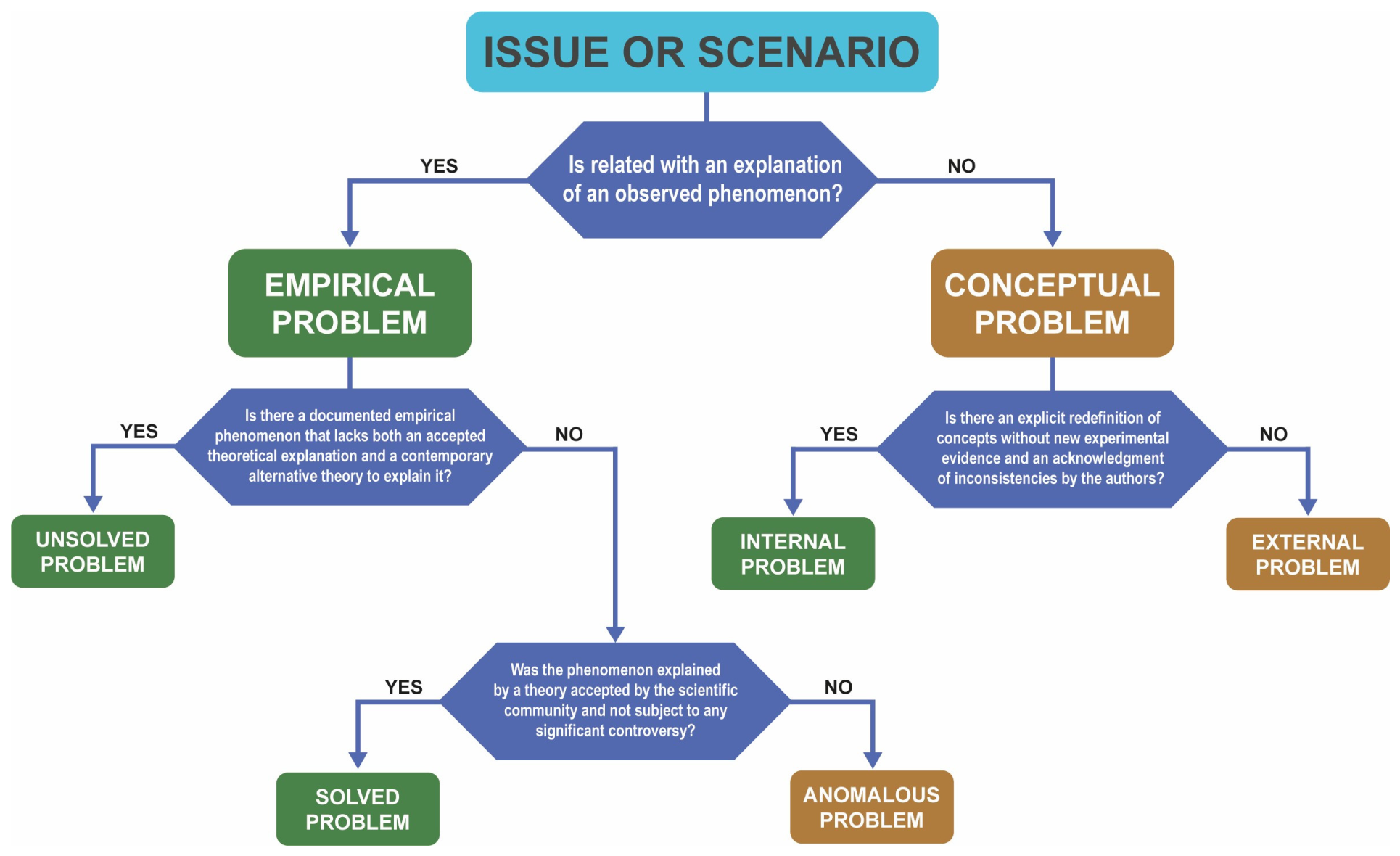
The analysis of the scientific problems encountered throughout the history of OC was conducted using a decision-based analytical protocol grounded in Laudan’s taxonomy (Figure 1). Figure 4 presents a diagram that guides the analysis and decision-making process used for each problem. The first step was to determine whether the problem concerned the explanation of an observed phenomenon or the conceptual structure of a theory. When the problem involved the relationship between theory and experimental evidence, it was classified as an empirical problem. Conversely, if the problem concerned the internal organization of theoretical knowledge, it was considered a conceptual problem. Second, each problem was placed in the corresponding subcategory. To ensure the consistency and reproducibility of the classification process, two operational criteria were defined for each problem subcategory.
Figure 4.
Decision-making protocol for the classification of problems in the history of organo-metallic chemistry according to Laudan’s taxonomy.
For empirical problems, the following criteria were established. An empirical problem was considered unsolved if it involved (i) the existence of an empirical phenomenon clearly documented in the historical literature without an accepted theoretical explanation during the period under analysis, and (ii) the absence of a contemporary alternative theory that explained the phenomenon. To determine whether a problem was solved, it was assessed whether (i) the phenomenon had been explained by a theory accepted by the scientific community of the time and (ii) that explanation was not the subject of significant controversy in the secondary sources analyzed; that is, there was historical consensus on its resolution. Finally, an empirical problem would be considered anomalous when there was (i) an explicit conflict between a theory and the experimental data available at the historical time in question and (ii) at least one alternative theory that explained the same phenomenon with greater empirical fit or greater acceptance within the scientific community.
As for conceptual problems, a distinction was made between internal problems, those arising from inconsistencies, ambiguities, or gaps within the research tradition itself; and external problems, those reflecting incompatibilities with other theories or conceptual frameworks accepted by the scientific community. The criteria selected to determine which subcategory of problem each situation fell into were (i) the explicit redefinition of concepts or assumptions of the theory without incorporating new experimental evidence, (ii) the explicit acknowledgment of inconsistencies or limitations by the theory’s own proponents, (iii) the use of incompatible theoretical principles from two research traditions to explain the same phenomenon, and (iv) the emergence of critiques directed at the theoretical or methodological foundations of another theory, rather than at its experimental evidence. Criteria (i) and (ii) correspond to internal conceptual problems, while criteria (iii) and (iv) correspond to external conceptual problems.
As an example, P8, “Lack of experimental verification of Dewar’s olefin coordination model”, is analyzed using the described protocol. First, the existence of a clearly defined empirical phenomenon was verified, corresponding to the nature of the metal–olefin bond and its observed behavior in organometallic complexes. For this reason, P8 was classified as an empirical problem. Second, it was found that Dewar’s model lacked sufficient direct experimental evidence to corroborate its structural and electronic predictions during the period analyzed, revealing a conflict between the theoretical proposal and the available evidence. Finally, the existence of a contemporary rival theory, the Chatt–Duncanson model, was confirmed. This model explained the same phenomenon with greater experimental support and broader acceptance by the scientific community. Since the two operational criteria for the category were met, namely: (i) a conflict between a theory and experimental evidence and (ii) the existence of an alternative explanation with better empirical fit, the episode was classified as an anomalous empirical problem. The protocol also made it possible to rule out the other subcategories of the taxonomy, since the phenomenon was not considered an unresolved empirical problem, as it did not have an accepted alternative explanation, nor was it considered a resolved empirical problem, because the theory under analysis had not successfully resolved it.
5. Micro-Theoretical Analysis of the History of Organometallic Chemistry
5.1. M-Carbonyl Complexes
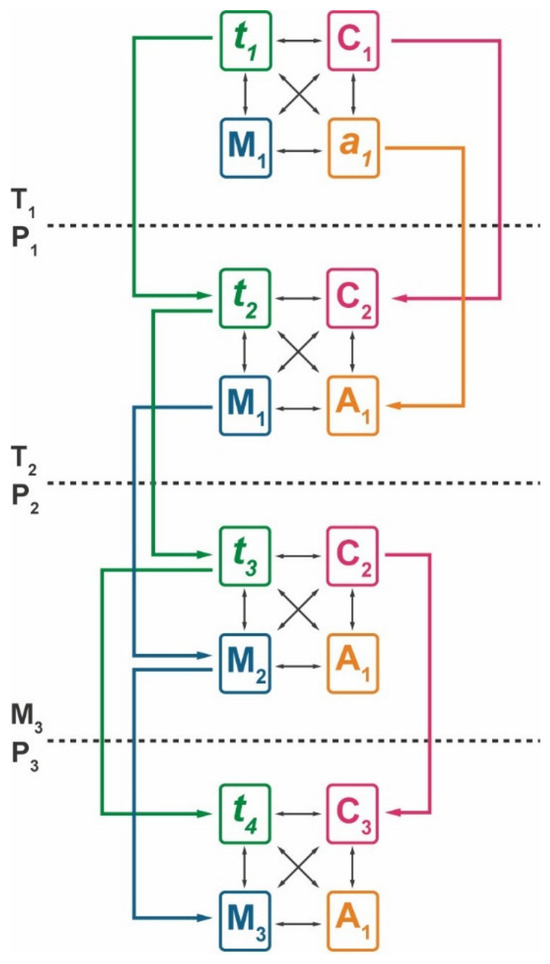
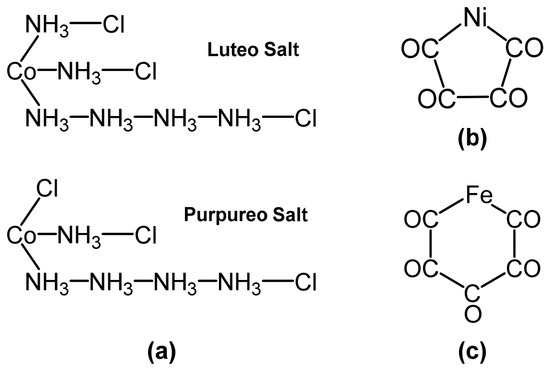
Metal-carbonyl complexes (M-CO) history dates back a few years before the consolidation of RT1. Figure 5 shows that the insights about M-CO compounds were already congruent with the principles of RT1 regarding methodology (M1) and application fields (C1). However, the ultimate goal of working with this type of compound was not to understand their structure, properties, and reactivity (A1) but to focus on the physical characteristics of these substances and their synthesis for several contextual applications (a1). For example, Mond’s interest in finding new ways to synthesize carbonyl complexes relied on its use in refining nickel extraction and purification processes [27]. Furthermore, based on Frankland [28] and Kekulé’s [29] proposals on valence, the structure of the first M-CO compounds, found by Berthelot [30], was an analogy of organic chemistry alkyls (Figure 6). Hence, studying those M-CO compounds under organic principles led to the first subordinate theory of the research tradition (t1). As in the case of Jørgensen with the ammonium salts of Co, Cr, and Rh [31], these structures had serious empirical difficulties since their behavior and molecular organization were not fully understood (P1), which generated an unsolved empirical problem.
Figure 5.
Evolution pathway of subordinate theories concerning M-CO complexes based on Laudan’s model of scientific progress (Problems (Pi), global theories (Ti), subordinated theories (ti), methodologies (Mi), global values (Ai), subordinated values (ai), and application fields (Ci)).
Figure 6.
Structural formulas of the ammonium salts proposed by Jørgensen (a), as well as the structure of Ni(CO)4 (b) and FeCO5 (c) complexes proposed by Mond.
Nevertheless, the appearance and acceptance of T1 introduced some changes, such as (C1 → C2), which reflected the impact that transformations in the conceptual principles of an RT can cause. In addition, a series of particular values or goals (a1) gradually adhere to the overall objectives within that tradition (A1), reflecting scientific change as a dynamic process where the evolution of science responds to the internal configuration of its parts. Thereafter, the approaches of T1 generated new ways of thinking about the molecular organization of M-CO compounds [32]. In this context, Hieber’s work on synthesizing M-CO compounds with hydride became the basis for achieving the aims of the tradition [33]. These contributions came to constitute a new subordinated theory on M-CO complexes (t2) and, more interestingly, led to the appearance of new complexes of the form M(CO)x(NO)y, which, from other theoretical positions, would have been impossible to achieve. Thus, it was a rational science evolutional process since it was the product of developing more progressive theories within the research line analyzed.
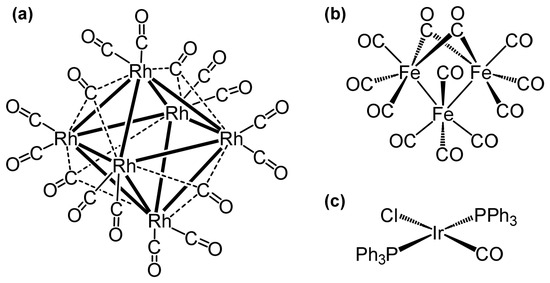
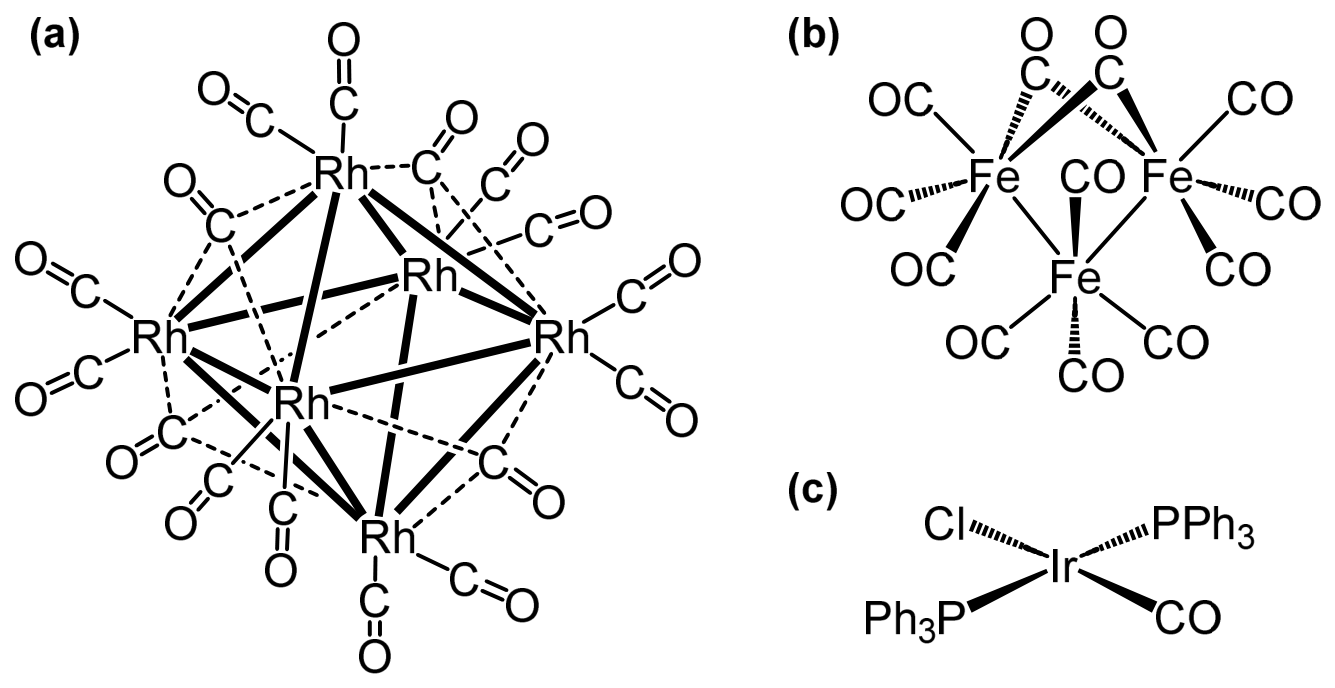
Despite the consolidation of a robust comprehension of these compounds, several problems continued to appear. Prior agrees with Laudan’s proposals since a theory is not accepted irrefutably without being subject to further criticism and debate [13]. For instance, the fact that, at the University of Wisconsin, Larry Dahl [34] had shown the possibility of having CO ligands as bridges between three metal centers (Figure 7a) became a problem (P2) because it was inconceivable that carbon could have a valence greater than four. It was only with the transformation (T1 → T2) that it was possible to understand the stability of this type of compound and to consolidate a t3 capable of responding to the drawbacks presented. At this point, P2 became a solved problem, which allowed RT1 further consolidation as a progressive tradition, given that the rate of solved problems kept increasing. Furthermore, t3 enabled Cotton’s studies [35] on bridging carbonyls through new methodological research techniques (M2) that RT1 had put forward. These techniques forged the structural elucidation of complexes such as Fe3(CO)12 [36] (Figure 7b) or the Vaska salt [trans-IrCl(CO)(PPh3)2] [37] (Figure 7c), the compound par excellence for the understanding of oxidative addition reactions within OQ.
Figure 7.
Examples of (a) Rhodium-, (b) Iron-, and (c) Iridium-carbonyl type organometallic complexes.
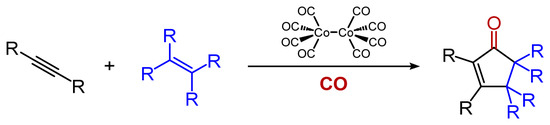
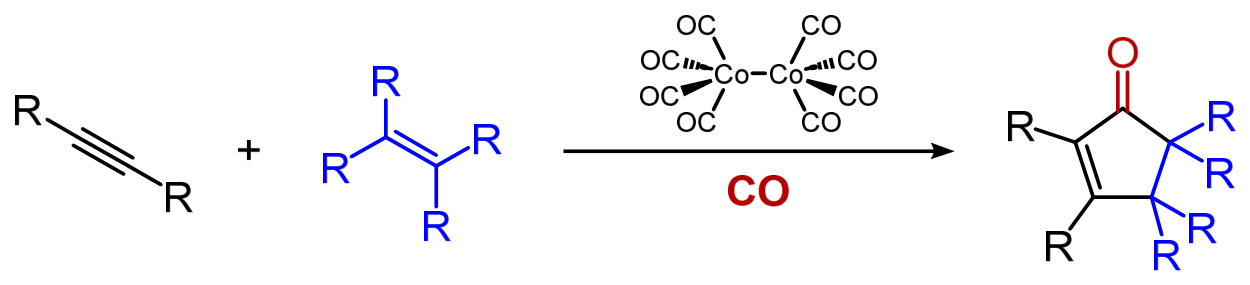
There was still a problem to be solved: comprehending the interaction between the CO and the metal atom. It became an internal conceptual problem within t3 as it reflected a vague category of analysis that prevented understanding all phenomena related to this kind of compound. Only with the implementation of M3, RT1 would solve this problem. Therefore, it was possible to study, experimentally, how the metal and the CO group acted within the same coordination sphere (t4), which allowed the consolidation of all the theoretical constructs currently appearing in the specialized literature on M-CO complexes. Consider, for example, the retro donation π interactions or M-C or C-O distances that IR studies demonstrate in these complexes. It should be said that the implementation of M3 brought about a conceptual change and consolidated a progressive transformation at the praxeological level (C2 → C3). Indeed, understanding these molecules from the RT1 axiology allowed their application in fields such as industrial catalysis. The development of the Pauson-Khand reaction [38], a [2 + 2 + 1] cycloaddition between an alkene, an alkyne, and carbon monoxide (CO) for the formation of cyclopentenones (essential compounds in drug manufacture), which is catalyzed by octacabonyldicobalt(0) [Co2(CO)8] (Scheme 1), serves as an example.
Scheme 1.
General Pauson-Khand reaction to obtain cyclopentenones.
5.2. Sandwich Type Complexes
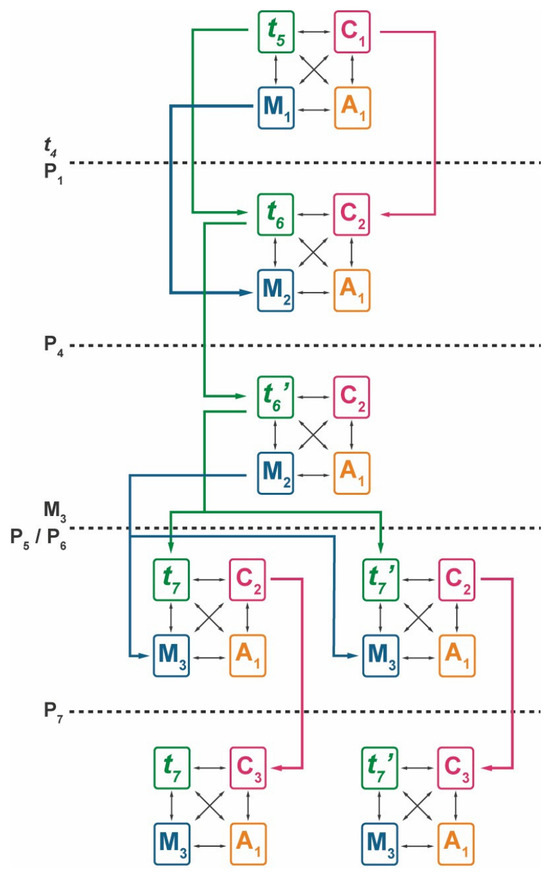
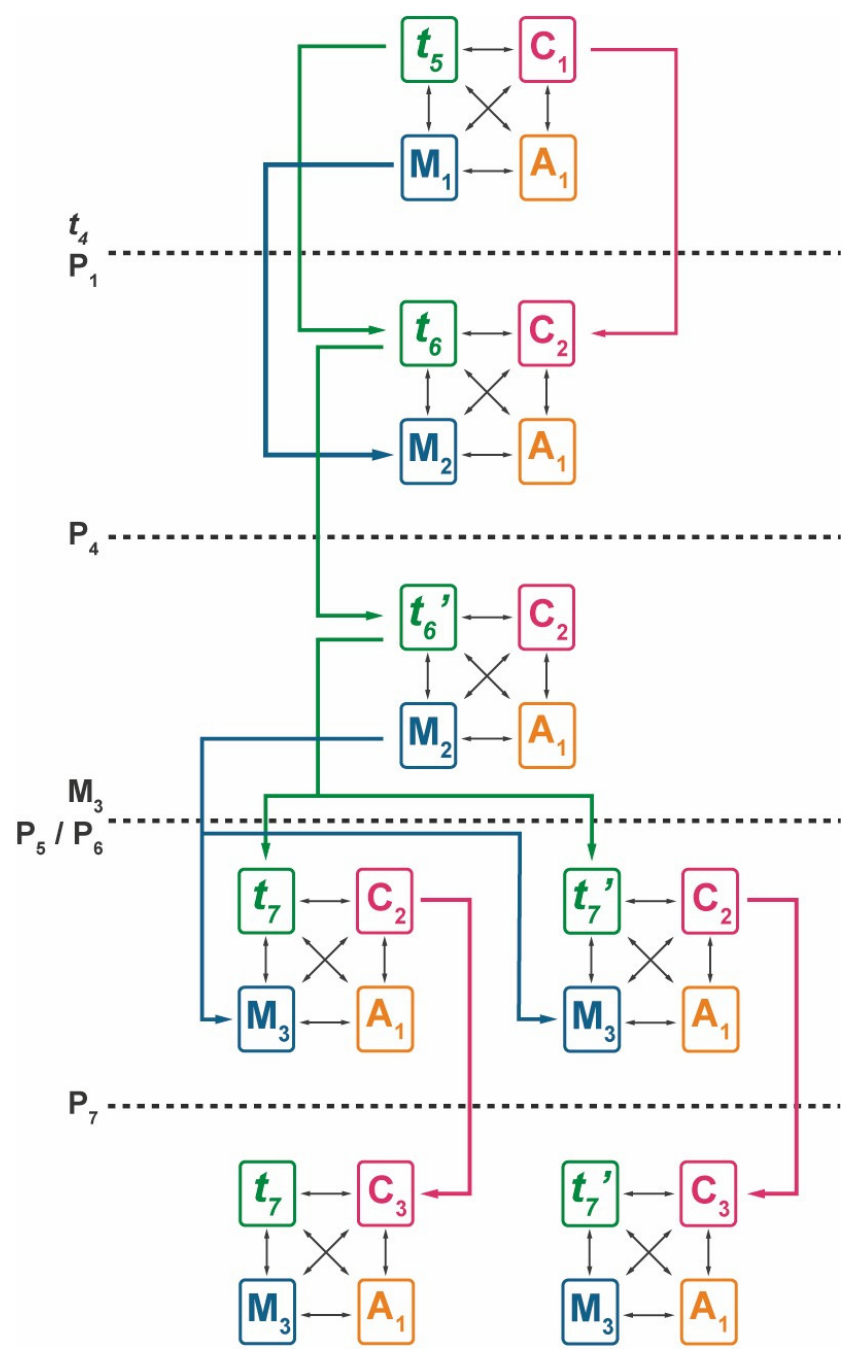
The history of sandwich complexes extends back to the middle of the 20th century. Although it is part of RT1, it has a series of particular theories that characterize it (Figure 8). In this sense, t5 constitutes itself as a subordinated theory related to the studies on the aromaticity of fulvalene (C10H8) by Pauson [39] at Pittsburgh University (Figure 9); and those of Miller [40] at the British Oxygen Company, whose purpose was the preparation of a new catalyst for the synthesis of amines and ammonia. Since it responded to the axiology of the tradition (A1), t5 addressed the structural question of the compounds obtained from the Pauson and Miller studies. However, P1 was present again because the structure proposed by both of them did not agree with the theoretical construct of the M-CO complexes (t4). It was then necessary to correct the proposal of these authors on the structure of the complex obtained [FeC10H10], a matter that reached two critical locations where new approaches would appear to solve this unresolved empirical problem.
Figure 8.
Evolution pathway of subordinate theories concerning Sandwich Type complexes based on Laudan’s model of scientific progress (Problems (Pi), global theories (Ti), subordinated theories (ti), methodologies (Mi), global values (Ai), and application fields (Ci)).
Figure 9.
Structure of Fe(C5H5)2 proposed by Pauson. Adapted from [39].
On the one hand, in Munich, Fischer [41] was interested in the properties of the new complex after finishing his doctoral studies on Fe(CO)5. These studies and knowledge about this type of complexes (t4) forged in him a vast theoretical field with which he interpreted the experimental results that Reinhard, his student, had obtained concerning the compound of Pauson and Miller. Fischer realized these results were unusual in complexes possessing a σ Fe-C bond. The fact that he used his previous knowledge about other compounds to explain the new structure, where a set of six pairs of π electrons participated in the bond (t6), can be regarded as scientific progress. In other words, when confronting t5 and t6 subordinated theories, it is rational to think that t6 is much more progressive because it can solve P1 and develop logical explanations for the questions t5 addressed. The finding of “ferrocene” and, together with it, a new type of complexes generated a modification at the methodological (M1 → M2) and praxeological (C1 → C2) levels.
On the other hand, at Harvard, two figures were also interested in elucidating prior compounds. Like his contemporaries, Wilkinson thought it was impossible to have stable complexes of the M-R or M-Ph type, so the structure of Pauson and Miller seemed unlikely. The same reasoning had Woodward, who claimed that the proposal was wrong and required new approaches. By working together, Wilkinson, Woodward, and Rosenblum [42] arrived at the same structure Fischer proposed (Figure 10). However, Woodward’s interests were very different from Wilkinson’s. The former wanted to use the complex in Friedel-Crafts reactions, while the latter wanted to expand the synthesis of these complexes to metals other than Fe. Hence, the direct competition in sandwich complexes synthesis and comprehension was between Fischer and Wilkinson, both of whom were awarded the Chemistry Nobel Prize in 1973 for their achievements within this domain.
Figure 10.
Structure of Fe(C5H5)2 proposed by (a) Fischer and (b) Woodward and Wilkinson.
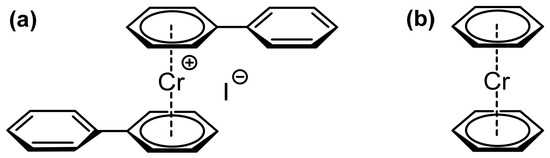
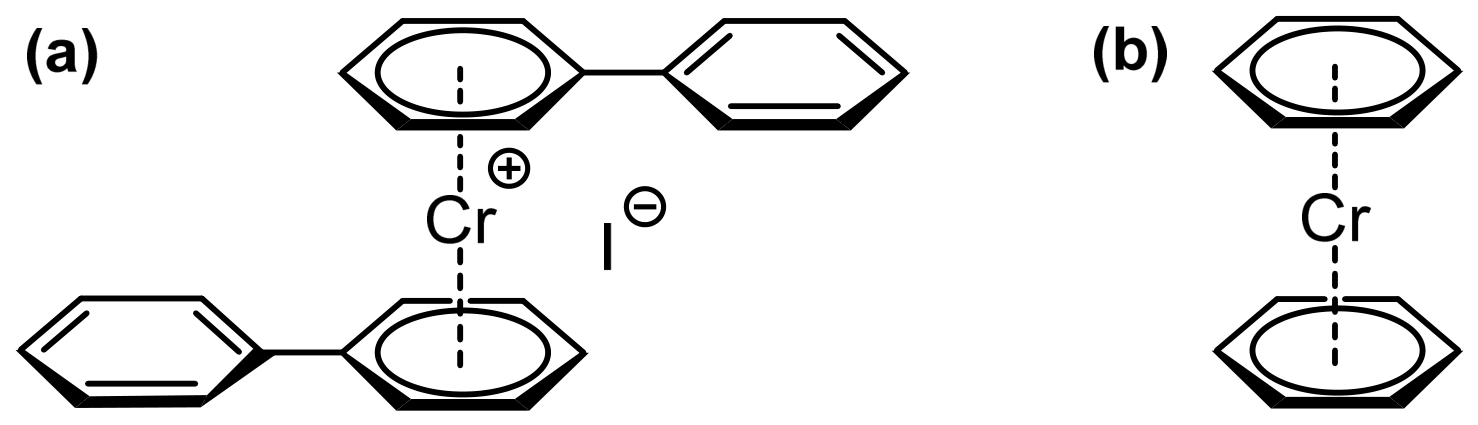
By the time t6 came to play an essential role in RT1 evolution, a new unsolved problem appeared (P4). Although they had not realized it, this problem had been around for almost 30 years. It concerned the structure of the compounds Hein [43] had named pentaphenylchromium (Figure 11a). It was only through the synthesis of bis(benzene)chromium(0) (Figure 11b), carried out by Fisher and Hafner [44] that the possibility of the existence of complexes with metals whose oxidation state is zero (t6’) arose. This outcome was possible because Hafner was aware of the theoretical and experimental work carried out by Zeiss and Tsutsui [45] in previous years on the Hein series. Thus, if one compares t6 and t6’, it is rational to think that the latter leads to discipline progress insofar as it solves the ancient problem of the structure of the complexes proposed by Hein. Moreover, there are both conceptual and methodological reasons that support this theory. Hence, it was logical to think that the presence of metals in a zero oxidation state was possible, an issue that expanded research in the sandwich complexes area.
Figure 11.
Structure of a pentaphenylchromium salt as proposed by Hein [43] (a) and of bis(benzene)chromium(0) as proposed by Fisher and Hafner [45] (b).
While the race between Wilkinson and Fisher regarding the synthesis of sandwich-type complexes was taking place, the generation of a methodological change (M2 → M3) within RT1 motivated the appearance of three exciting problems. The first one, which was considered an unresolved problem (P5), was related to the development of these new M3 methodologies, especially nuclear magnetic resonance (NMR). For example, Fischer’s studies showed that the 1H-NMR signals did not correspond to the complexes studied. This fact caused confusion when analyzing those compounds. The second one was an internal conceptual problem (P5’) centered on the proposal presented by Longuet-Higgins and Orgel, which suggested the existence of complexes with cyclobutadiene groups, an antiaromatic compound. Thirdly, an empirical problem (P6) connected to the possibility of obtaining complex structures from aromatic nucleophilic substitution reactions analogous to benzene reactions.
An answer to the first problem posed (P5) arises when Albert Cotton [46] achieves the study of bis(cyclopentadienyl)dicarbonyliron(0) [(η5-C5H5)Fe(CO)2(η1-C5H5)]. Cotton realizes that this complex executed a 1,2 rearrangement faster than NMR could detect. In addition, the rotation of cyclopentadienyl groups generated unusual signals in the spectra. Hence, a theory on the fluxionality of complexes was developed. Meanwhile, at the University of Texas, Rowland Pettit [47] developed the chemistry of complexes with cyclobutadiene, succeeded in their synthesis, and used them in organic synthesis. This work proved the theory of Longuet-Higgins and Orgel and became the statement of P5’. Thus, the theory of fluxionality and the existence of a complex with antiaromatic groups, precursors of complex molecules in organic synthesis, became the new theory (t7) that coexists with another theory within the same research line answering the P6 problem.
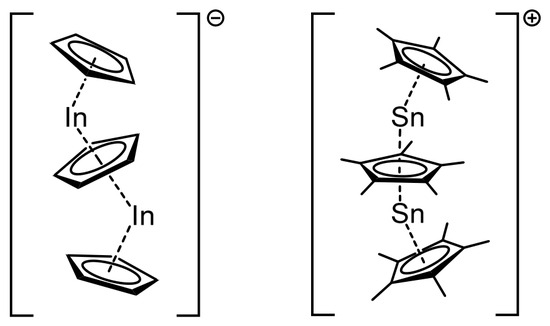
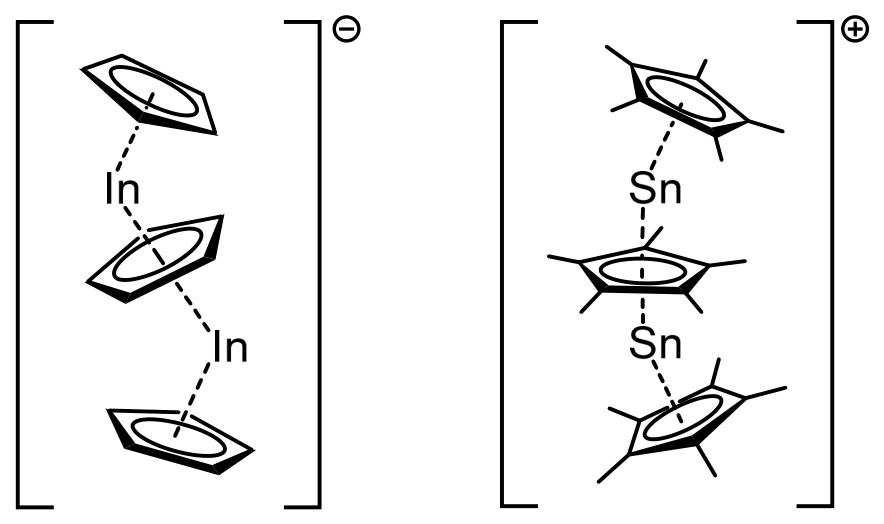
This coexisting theory refers to the theoretical proposals generated from the synthesis of the first triple sandwich complex by Helmut Werner and Albrecht Salzer [48]. These experimental developments brought with them the consolidation of a new conceptual framework (t7’) that allowed the obtention of more advanced sandwich complexes such as those developed by Cowley (Figure 12). Despite so much progress, there was still a step to be taken. Thus, the praxeological transformation (C2 → C3) of RT1 application fields allowed the incursion into solving industrial problems regarding catalytic processes (P7). For example, sandwich-type complexes were critical in several industrial reactions [26], such as hydroformylation and olefin polymerization (i.e., Ziegler-Natta or Brintzinger catalysts).
Figure 12.
Triple-decker sandwich-type complexes synthesized by Cowley. Adapted from [49].
5.3. M-Olefin Complexes
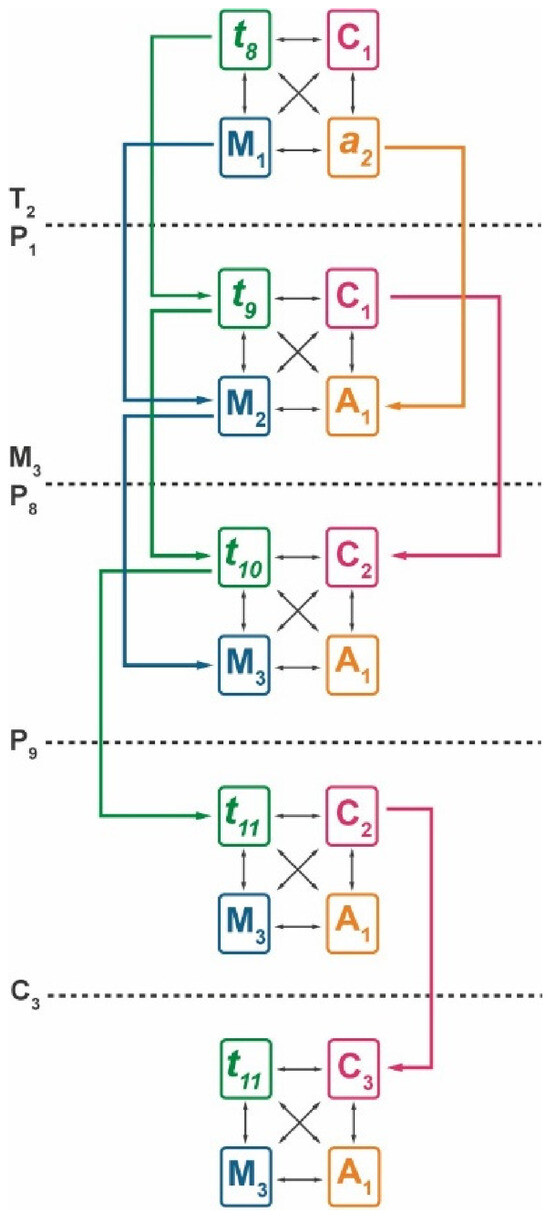
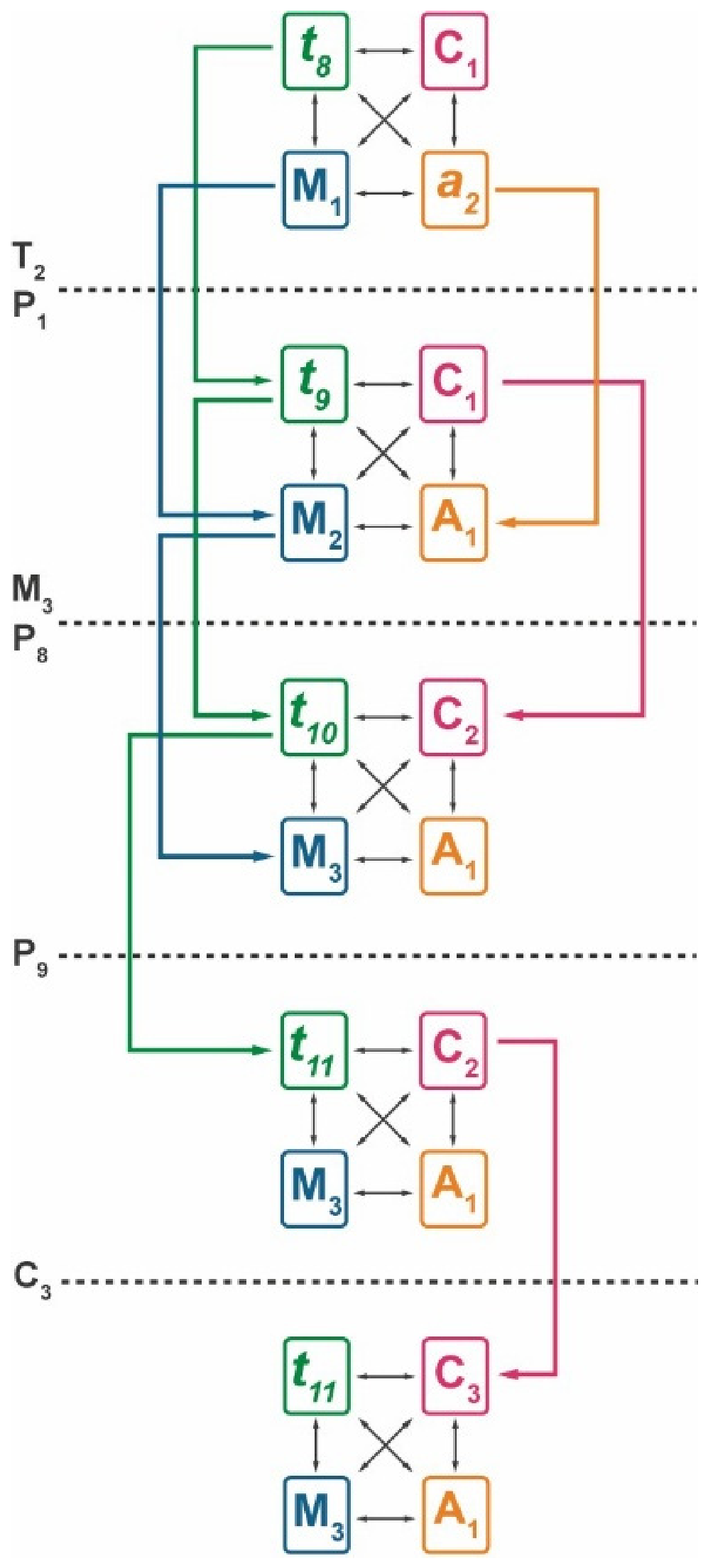
Regarding longevity, the metal-olefin complexes (M-Olefin) research line is the oldest one. Since synthesizing the Zeise salt [50], discussions on the properties, structure, and bonding form of each metal to carbon within this kind of complex have been essential points that determined the progress within this line of action (Figure 13).
Figure 13.
Evolution pathway of subordinate theories concerning M-Olefin complexes based on Laudan’s model of scientific progress (Problems (Pi), global theories (Ti), subordinated theories (ti), methodologies (Mi), global values (Ai), subordinated values (ai), and application fields (Ci)).
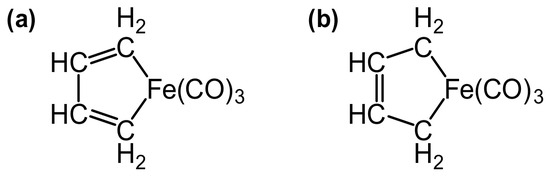
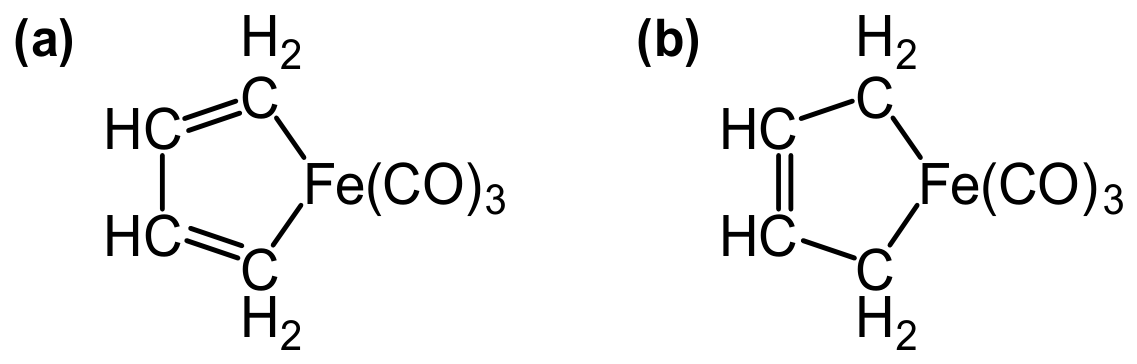
At the beginning of the research line, the prevailing theory over olefin coordination (t8) did not satisfy the doubts many scientists, such as Liebig, had. Moreover, the highest interest of the studies on M-Olefin complexes was approaching the olefin bonding mode to the metal center. However, all the efforts consisted of an organic chemistry perspective interpretation (a2). Hence, many proposals considered analogous structures to the alkylic chains in organic chemistry. Think, for example, of Reihlen’s designs [51] on the coordination of cyclobutene to an iron atom (Figure 14). The comprehension of M-Olefin complexes as mere organic compounds was mainly due to the theoretical, methodological (M1), and praxeological (C1) conceptions in which the reflection on these complexes took place. It was only after the acceptance of T3 that it was possible to respond to P1, which appeared again in this research line.
Figure 14.
Possible cyclic structures (a,b) proposed by Reihlen for the (C4H6)Fe(CO)3 complex. Adapted from [51].
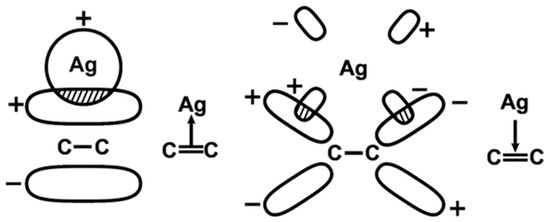
Indeed, there was a long period between the appearance of the first olefinic complex and the research development in this line. The main reason for this standby years is that it was impossible to understand the bonding interaction of an olefin to a metal center. Although t8 provided some insight, experimental studies on M-alkene complexes in the first half of the 20th century did not agree with the proposed theory. Hence, under the T3 framework, Michael Dewar [52] presented a text entitled A Review of the π-Complex Theory, in which he debated the idea of comparing π electrons of ethene with those of ammonia insofar as they occupied an orbital with a similar ionization potential. Furthermore, Dewar presented a possible way to understand the M-Olefin bond (t9) using the Molecular Orbitals Theory (Figure 15). This new theory, supported by a methodological transformation (M2), projected the course of action about RT1 objectives (a2 → A1). However, there was a remaining empirical problem related to the experimental verification of what Dewar proposed (P8).
Figure 15.
Binding model for Ag(I) complexes, proposed by Dewar. It shows the orbitals used by the olefin and the metal. Adapted from [26].
Only a few years later, after implementing methodologies such as IR (M2 → M3), Chatt and Duncanson [53] succeeded in studying complexes of the olefin-Pt(II) kind. They realized that Dewar’s model allowed them to interpret not only the physical properties but also the reactivity and stability of those compounds. In addition, Chatt expanded the model to understand other phenomena, such as the trans effect (t10). A comparison between t9 and t10, to evaluate the evolution of this research line rationally, will show that the latter solves the experimental aspect that was becoming a problem for t9. Prior implies that P8 is an anomaly for t9 since the “rival” theory solves it. It is important to note that they were not opposed. However, the latter one was an expansion of the Dewar model. Consequently, since then, many books have considered the Dewar-Chatt-Duncanson model to explain the behavior of M-Olefin complexes. Furthermore, the appearance and acceptance of t10 brought with it the widening of the application fields of M-Olefin complexes (C2) since, after such a long time, it was possible to understand the form of olefin coordination and to control the properties of the complex in order to achieve multifarious and much more efficient organic syntheses.
Although a solution for this fundamental problem was developed, an internal conceptual issue remained related to understanding ligand substitution reactions (Scheme 2) using olefins as groups within the metal coordination sphere (P9). The work by Gunther Wilke [54] unlocked new conceptual outcomes related to olefins as groups exhibiting facile substitution (t11). Thus, synthesizing complexes such as Ni(acac)2 and Ni(COD)2 was the key to comprehending the mechanisms that allowed easy substitution of olefinic ligands. This last conceptual change generated a praxeological transformation (C2 → C3), which enabled the spread of the horizon of applications of M-Olefin complexes to a diversity of catalytic processes (i.e., butadiene tetramerization).
Scheme 2.
Example of ligand substitution reaction from Ni(COD)2 complex.
5.4. M-Alkyl Complexes
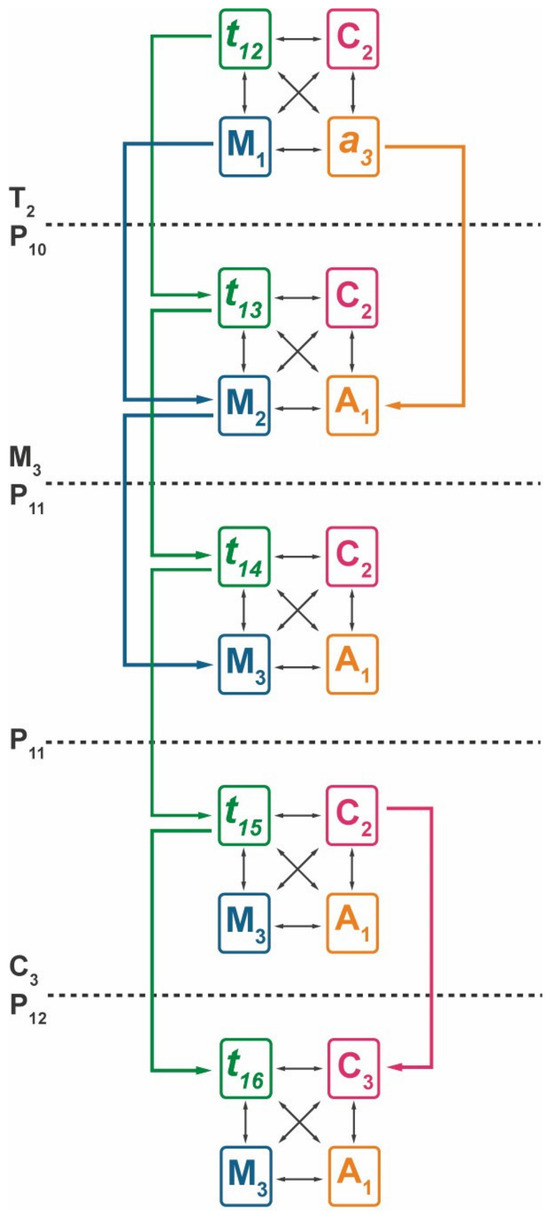
Some years before the consolidation of RT1, the metal-alkyl complexes (M-Alkyl) research line appeared (Figure 16). Assisted by Kolbe, Edward Frankland [55] achieved the synthesis and isolation of Zn(CH3)2, the first M-Alkyl complex. Studies on the properties of these complexes (i.e., oxygen affinity) led him to consolidate a theoretical corpus (t12) on these compounds that became important for organic chemistry synthesis (C2). However, despite this being their purpose (a3) and responding to a particular methodology (M1), by the beginning of the century, Grignard’s compounds replaced the usefulness of Frankland’s M-alkyl complexes as they were much more stable to air.
Figure 16.
Evolution pathway of subordinate theories concerning M-Alkyl complexes based on Laudan’s model of scientific progress (Problems (Pi), global theories (Ti), subordinated theories (ti), methodologies (Mi), global values (Ai), subordinated values (ai), and application fields (Ci)).
Years later, Chatt, together with Bernard Shaw [56], used the Ligand Field Theory to conclude that some ligands, such as alkyls or aryls, caused large separations of metal’s d energy, which led to a stabilization of octahedral and square planar configurations of d3 and d8 metals (t13). These statements allowed them to explain how alkyl substituents coordinated to a metal sphere, an internal conceptual problem present since Frankland’s research (P10). When comparing t12 and t13, it is possible to state that t13 represents a more progressive theory since it can solve the problems or anomalies that t12 could not, which permitted the evolution of the line. Furthermore, the theoretical change generated by Chatt and Shaw (t12 → t13) brought with it not only a methodological change (M1 → M2) but also an axiological one (a3 → A1). These modifications aligned the M-Alkyl research line to be consistent with the general objectives and aims of RT1.
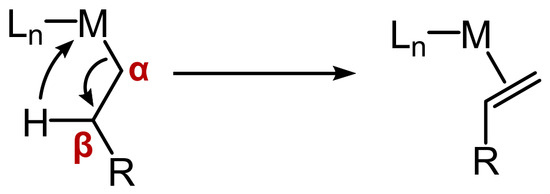
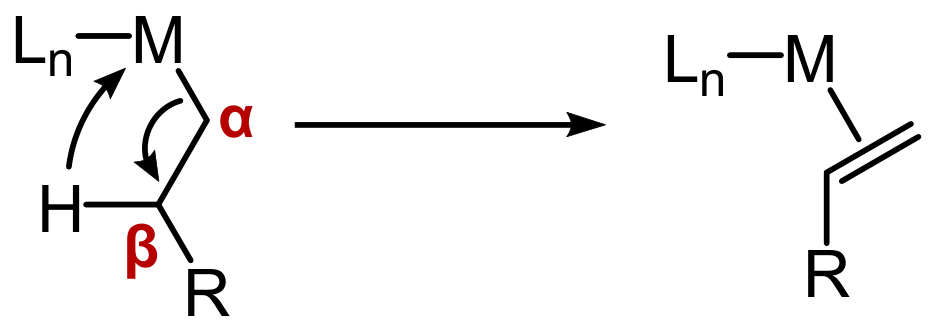
Despite this breakthrough, some problems emerged with the acceptance of t13. Thus, the mechanisms for understanding the synthesis of these M-Alkyl complexes came to play a fundamental role in the evolutionary discussion of M-Alkyl complexes (P11). The emergence of new methodologies (M3) managed the elucidation of P11 as an unresolved problem. These findings took place in two successive stages of theoretical change. In the first, George Whitesides [57], in his laboratory, found that Cu(n-Bu)(P(n-Bu)3) decomposed into 1-butene, P(n-Bu)3, and CuH. From these experimental results, he proposed that, on the one hand, the decomposition of the M-CH3 bond occurred through a homolytic cleavage; on the other hand, for those groups having hydrogen in beta, a β-elimination occurred (t14). Thus, he thought that the transfer of the alkyl group to the metal center occurred through a four-membered transition state, from which the decomposition of the metal complex occurred, followed by the olefin decoordination and H2 production. This new theory generated a better understanding of M-alkyl complexes but did not fully answer P11.
Therefore, in the second stage, the interpretations of Lappert [58] and Wilkinson [59], based on t14, played a fundamental role (t15). Thus, on the one hand, Wilkinson was sure there was no reason to assume that carbon could differ appreciably in its ability to bind transition metals compared to other elements of the first series, such as oxygen, nitrogen, or halogens. He argued that the binding energies of these elements to metal were similar to those of M-C. Consequently, he concluded that the instability of these compounds was not thermodynamic but kinetic, which reflects a rational and well-founded basis that allows progress in the discipline. On the other hand, Lappert realized which radicals should be used to produce MRn-type complexes by understanding the β-elimination process proposed by Whitesides (Figure 17). In this way, he initiated experimental work on synthesizing these complexes, which complemented the transmetallation experiments that were in vogue then.
Figure 17.
General representation of the β-hydride elimination reaction proposed by Whitesides.
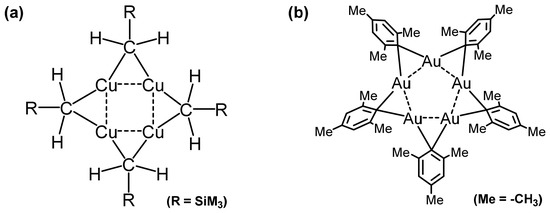
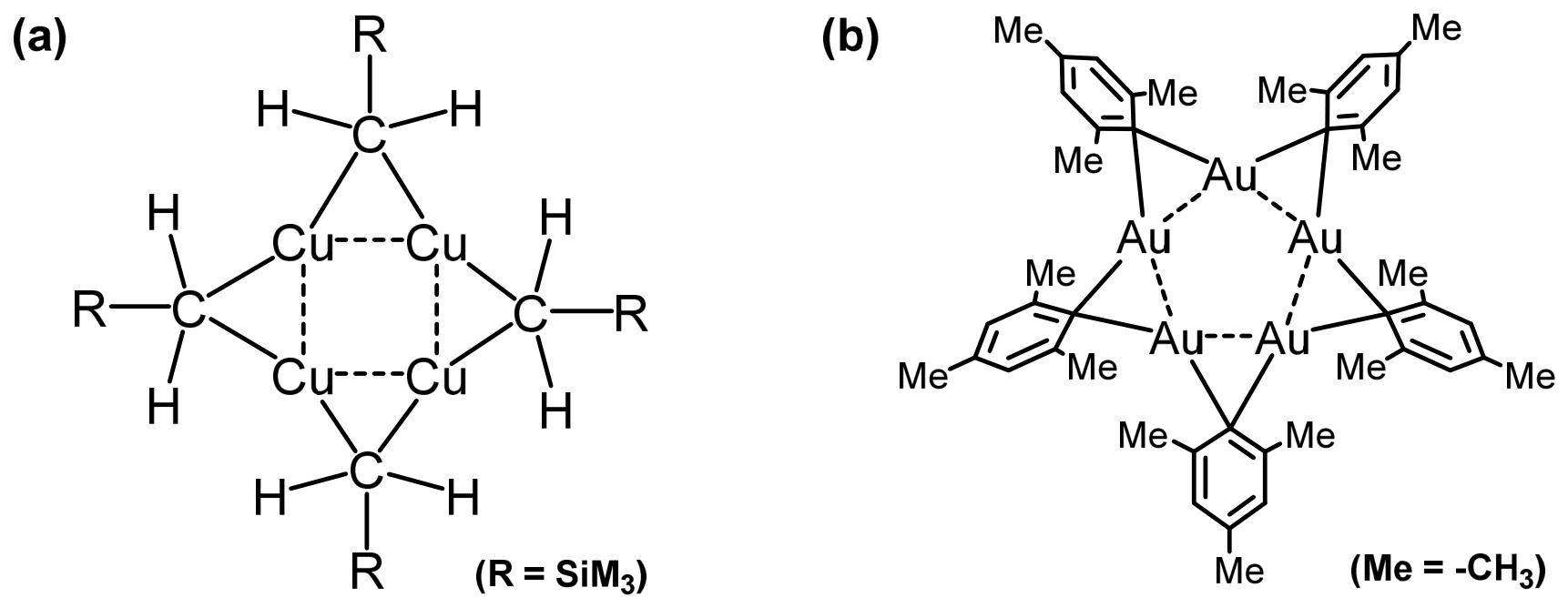
Before proceeding further, one striking aspect stands out in Lappert’s approaches [60]. In one of his experiments, structural analysis using X-ray Diffraction of Cu4(CH2SiMe3)4, prepared from CuI and Me3SiCH2Li, revealed that this was a planar tetramer in which the alkyl formed single bridges between two copper metal centers. Similarly, Wilkinson, together with Puddephatt [59], found that the Au5(Mes)5 complex was the most stable among other Au(II) derivatives, where a mesityl group serves as a bridge (Figure 18). When looking closely at these structures, it becomes evident that the valence of the carbon in these two cases is five. This higher carbon valence breaks all the classical rules, as in the case of bridging carbonyls, but it is possible to understand them within RT1. Thus, these compounds become a clear example of RT1 scope and, simultaneously, a challenge to work within the chemistry classroom to understand other valence states of carbon different from the classical ones (±2, ±4).
Figure 18.
Schematic representation of the molecular structures of (a) Cu4(CH2SiMe3)4 and (b) Au5(Mes)5 (the dotted lines indicate a presumed weak metal-metal interaction).
Despite overcoming these two stages of theoretical change to solve P11, a final advance would be needed to consolidate the M-Alkyl research line within OQ. Based on a praxeological change (C2 → C3), a new empirical problem related to the activations of C-H and C-C bonds (P12) appeared. Several works in this line discovered that electronically rich metals could react with unsubstituted alkanes to form the metal-alkyl bond (t16). Take, for example, the appearance of complexes with multiple metal-metal bonds or the work of Bergman [61] and Graham [62], who proved that transition metals could activate the C-H bond by oxidative addition. However, more interestingly, they proved that CH4 could be transformed using a 16-electron intermediate complex. This new performance of M-alkyl complexes allowed their application in several reactions, among which it is possible to mention: the OXO reaction to obtain aldehydes and ketones, catalyzed with Co; the carbonylation of methanol to generate CH3COOH using Rh (Monsanto Process) or Ir (Cativa Process); and the Heck, Sonogashira, and Suzuki reactions.
5.5. M-Carbene Complexes
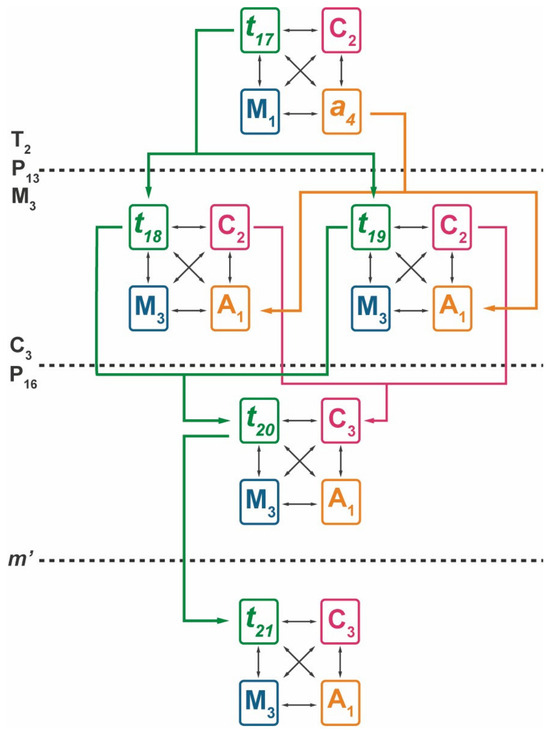
The importance of metal-carbene (M-Carbene) complexes over the last 30 years is indisputable, especially as ligands in various complexes used in several reactions, including the oxidation of alcohols [63], C-H bond activation, and amine alkylation [64]. The desire to synthesize methylene (a4), as a final product or key reactant in other processes, dates back many years before the first diaminocarbene was isolated. Think, for example, of the attempts by Dumas [65] and Staudinger [66] to achieve this goal. These authors established an early theory (t17) in the M-Carbene research line because they considered it possible to obtain CR2 or CRR’ where R was monovalent (Figure 19). These postulates remained latent within a particular methodology (M1) and praxeology (C2) until the appearance of an imminent transformation.
Figure 19.
Evolution pathway of subordinate theories concerning M-Carbene complexes based on Laudan’s model of scientific progress (Problems (Pi), global theories (Ti), subordinated theories (ti), methodologies (Mi), global values (Ai), subordinated values (ai), and application fields (Ci)).
This transformation was motivated by the presence, towards the middle of the 20th century, of an empirical problem (P13). While studying the synthesis of M-alkyl complexes, two theoretical frameworks emerged to explain the appearance of complexes not foreseen in the reactions proposed by the chemists who headed the respective research. These frameworks materialized thanks to general theoretical (T3) and methodological (M3) advances. On the one hand, Fischer [67] synthesized a carbene of the form C(OMe)R. This experimental result implied the consolidation of a theoretical corpus (t18) to explain the structure and reactivity of singlet-type carbenes, thus responding to the axiology of a tradition in which this finding was incorporated (a4 → A1). Moreover, this theoretical development solved P13 by explaining the presence of new compounds found in previous experiments and accounting for their properties. Among them, the electrophilicity of the carbon in the carbene, the small M-C and C-O distances, and the retro donation π of the metal to the empty p orbital of the carbene stand out.
On the other hand, Schrock [68] was interested in the synthesis of an M-alkyl complex. However, in his experimental outcome, he realized that the mass spectrum of the synthesized complex did not reveal what he expected [Ta(CH2CMe3)5], but a compound of the form [(Me3CCH2)3Ta(CHCMe3)]. This discovery gave rise to another theoretical construction (t19) that characterizes what is known as Schrock carbenes, where, unlike Fischer’s, the carbene carbon is in the triplet state, making it nucleophilic. Moreover, the metal is relatively positive, which makes it an excellent catalyst for oxidative addition reactions. It is important to note that both Schrock and Fischer stood in the same methodology (M3), axiology (A1) and praxeology (C2) principles. Prior indicates, as proposed by Laudan, that different theories can coexist with the same fundamental principles within an RT and not be contradictory but complementary. Thus, as both of them progress, so does the research tradition.
Interestingly, research on carbenes applications led to a particular interest in olefin metathesis (P14). The problem resided in the scarce reaction yields obtained using known carbenes; therefore, several proposals arose to forge optimized catalytic processes (C2 → C3). In order to solve this empirical difficulty, the proposals of Wanzlick [69] and Öfele [70], related to N-heterocyclic carbenes (NHC) as ligands within a metal complex, were taken up. This theory was articulated with the research done by Fischer and Schrock (t20) but had no impact on the resolution of P14 until 1991, when Anthony Arduengo [71] was able to isolate the first diaminocarbene (m’) (Scheme 3). This methodological breakthrough brought about significant developments because it could be possible to handle those molecules better. Thus, again, methodological progress can cause advancement in other commitments within a research line, in this case, a new theory (t21) that fully responds to the aims (A1) of RT1. Thereafter, Grubbs was in charge of systematically studying the M-NHC complexes, constituting them as second-generation complexes. These complexes are essential, even nowadays, in several industrial processes such as olefin metathesis.
Scheme 3.
Preparation of the first diaminocarbene isolated by Arduengo [71].
The foregoing finally solves P14 and prepares the road to new research in the field, a matter that has been carried out to this day, considering these M-Carbene complexes as the novelty of the 21st century. Furthermore, it is undeniable that the work with Fischer and Schrock carbenes continues to be a daily bread. The use of Fischer carbenes for organic synthesis is almost unlimited straightaway. For example, Dötz [72] showed that the complex Cr[C(OMe)Ph](CO)5 reacts with enynes (i.e., [RCH2C(CH3)=CHCHCH2C≡CCH3]) to give vitamin K1 and K2 essential supplements in daily life (Scheme 4).
Scheme 4.
Dötz reaction for preparing naphthol chromium(0) complexes and displacement of free naphthol by oxidative degradation. Adapted from [26].
6. Historical-Philosophical Analysis and Contemporary Chemical Progress Challenges
Beyond its implications for the teaching of chemistry, the historical-philosophical reconstruction presented in this study shows that the OC progress cannot be understood exclusively as an accumulation of experimental data or a gradual refinement of existing theories. On the contrary, the five lines analyzed show that the most significant advances arose through the redefinition of relevant problems, the reformulation of concepts, the incorporation of new methods, and the expansion of fields of application, leading to the evolution of research traditions. This interpretation takes on special relevance in light of contemporary debates regarding the role of artificial intelligence (AI) in chemical progress. Recent studies distinguish between the ability of AI systems to optimize molecular search, prediction, or design processes within already established conceptual frameworks and the difficulty of explaining how they might contribute to generating new conceptual structures or new forms of scientific understanding [73]. From this perspective, the historical-philosophical reconstruction presented here provides evidence that the major changes in organometallic chemistry did not consist solely of solving previously defined problems, but also of transforming how those problems were formulated and interpreted.
In this context, the Expanded Model of Scientific Change serves as a particularly useful epistemological framework for interpreting the scope and limitations of AI in chemical discovery. Its emphasis on problem-solving through the dynamic interaction among theories, methods, objectives, and fields of application helps us understand that scientific progress does not depend exclusively on generating new predictions or optimizing solutions, but also on processes of conceptual reorganization that alter the very structure of a research tradition. Likewise, recent debates on the relationship between AI and chemical explanation have pointed out that the production of predictive models does not, in and of itself, guarantee an explanatory understanding of chemical phenomena or the justification of new theories [74]. In this regard, the historical-philosophical reconstruction carried out in this study illustrates how chemical explanations acquire legitimacy through a continuous process of problem assessment, methodological testing, and adjustment among the different components of a research tradition. Therefore, the Laudanian approach is not only suitable for reconstructing the historical evolution of organometallic chemistry but also offers a conceptual framework for critically analyzing future AI-assisted discoveries, distinguishing between the optimization of knowledge within an existing tradition and cases in which genuine scientific change emerges through the establishment of a new research tradition.
7. Conclusions
Summing up, prior analysis, using Larry Laudan’s perspective, shows the evolution of Organometallic Chemistry from the research lines that define it. Throughout the text, observing how this discipline has advanced in the last two centuries in terms of empirical and conceptual problem-solving and the acceptance of rational theories that respond to chemistry theoretical frameworks was possible. It is important to mention that the analysis presented reinforces the idea that the history of any discipline must use the philosophy of science so that it does not become an empty and meaningless discourse [17]. By understanding this historical-philosophical dialectic, it is possible to use these meta-disciplines [75] as didactic strategies for teaching chemistry at the university level and as tools for promoting scientific innovation through the recognition of the advances that have occurred throughout history. In short, this approach paves the way for future research in this exciting field of knowledge.
Author Contributions
Conceptualization, A.C.-A., C.J.M. and E.A.B.; methodology, A.C.-A.; formal analysis, A.C.-A. and E.A.B.; investigation, A.C.-A. and C.J.M.; resources, C.J.M. and E.A.B.; writing—original draft preparation, A.C.-A.; writing—review and editing, C.J.M. and E.A.B.; visualization, A.C.-A. and C.J.M.; supervision, C.J.M. and E.A.B.; project administration, E.A.B.; funding acquisition, E.A.B. All authors have read and agreed to the published version of the manuscript.
Funding
This research was funded by the Vicerrectoría de Investigación and División de Investigación de Bogotá of Universidad Nacional de Colombia (project with HERMES 66085 and 63330).
Institutional Review Board Statement
Not applicable.
Informed Consent Statement
Not applicable.
Data Availability Statement
Dataset available on request from the authors.
Acknowledgments
This work was supported by the Vicerrectoría de Investigación and División de Investigación de Bogotá of Universidad Nacional de Colombia (project with HERMES 66085 and 63330).
Conflicts of Interest
The authors declare no conflicts of interest.
References
- Pérez Ransanz, A.R. Modelos de Cambio Científico. In La Ciencia: Estructura y Desarrollo; Moulines, C.U., Ed.; Editorial Trotta: Madrid, Spain, 2013; pp. 181–202. [Google Scholar]
- Erduran, S.; Mugaloglu, E.Z. Philosophy of Chemistry in Chemical Education: Recent Trends and Future Directions. In International Handbook of Research in History, Philosophy and Science Teaching; Matthews, M.R., Ed.; Springer: Dordrecht, The Netherlands, 2014; pp. 287–315. [Google Scholar]
- Niaz, M. History and Philosophy of Science as a Guide to Understanding Nature of Science. Rev. Científica 2016, 1, 7–16. [Google Scholar] [CrossRef] [Scilit][Green Version]
- Siegel, H. The Bearing of Philosophy of Science on Science Education, and Vice Versa: The Case of Constructivism. Stud. Hist. Philos. Sci. A 2004, 35, 185–198. [Google Scholar] [CrossRef] [Scilit]
- Porlán Ariza, R. Didáctica de las Ciencias con Conciencia. Enseñ. Cienc. 2018, 36, 5–22. [Google Scholar] [CrossRef] [Scilit]
- Stains, M.; Harshman, J.; Barker, M.K.; Chasteen, S.V.; Cole, R.; DeChenne-Peters, S.E.; Eagan, M.K.; Esson, J.M.; Knight, J.K.; Laski, F.A.; et al. Anatomy of STEM Teaching in North American Universities. Science 2018, 359, 1468–1470. [Google Scholar] [CrossRef] [Scilit] [PubMed]
- Henderson, C.; Dancy, M.; Niewiadomska-Bugaj, M. Use of Research-Based Instructional Strategies in Introductory Physics: Where Do Faculty Leave the Innovation-Decision Process? Phys. Rev. Spec. Top.-Phys. Educ. Res. 2012, 8, 020104. [Google Scholar] [CrossRef] [Scilit]
- Andrews, T.C.; Speer, N.M.; Shultz, G.V. Building Bridges: A Review and Synthesis of Research on Teaching Knowledge for Undergraduate Instruction in Science, Engineering, and Mathematics. Int. J. STEM Educ. 2022, 9, 66. [Google Scholar] [CrossRef] [Scilit]
- Campanario, J.M. Asalto al Castillo: ¿A Qué Esperamos Para Abordar En Serio La Formación Didáctica de Los Profesores Universitarios de Ciencias? Enseñ. Cienc. 2002, 90, 315–325. [Google Scholar] [CrossRef] [Scilit]
- Reisner, B.A.; Stewart, J.L.; Williams, B.S.; Goj, L.A.; Holl, P.L.; Eppley, H.J.; Johnson, A.R. Virtual Inorganic Pedagogical Electronic Resource Learning Objects in Organometallic Chemistry. J. Chem. Educ. 2012, 89, 185–187. [Google Scholar] [CrossRef] [Scilit]
- Whitesides, G.M. Reinventing Chemistry. Angew. Chem. Int. Ed. 2015, 54, 3196–3209. [Google Scholar] [CrossRef] [Scilit] [PubMed]
- Cárdenas-Acero, A.; Mosquera, C.J.; Baquero, E.A. Hacia una historia epistemológica de la Química Organometálica: Interpretación filosófica desde Larry Laudan (I). Educ. Quim. 2023, 34, 189–202. [Google Scholar] [CrossRef] [Scilit]
- Laudan, L. Progress and Its Problems Towards a Theory of Scientific Growth, 1st ed.; University of California Press: Berkeley, CA, USA, 1977; Volume 1. [Google Scholar]
- Garritz, A.; Sosa, P.; Hernández-Millán, G.; López-Villa, N.M.; Nieto-Calleja, E.; de María Reyes-Cárdenas, F.; Haro, C.R. Una Secuencia de Enseñanza/Aprendizaje Para los Conceptos de Sustancia y Reacción Química Con Base en la Naturaleza de la Ciencia y la Tecnología. Educ. Quim. 2013, 24, 439–450. [Google Scholar] [CrossRef] [Scilit]
- Kuhn, T.S. The Structure of Scientific, 2nd ed.; International Encyclopedia of Unified Science: Chicago, IL, USA, 1970; Volume 2. [Google Scholar]
- Velasco, J.M. El Cambio Científico y El Modelo de Solución de Problemas de L. Laudan. Thémata Rev. Filos. 2004, 33, 369–374. [Google Scholar]
- Lakatos, I. History of Science and Its Rational Reconstructions. In Boston Studies in the Philosophy of Science; Buck, R.C., Cohen, R.S., Eds.; Springer: Dordrecht, The Netherlands, 1971; pp. 91–136. [Google Scholar]
- Pesa, M.A. La Ciencia Como Actividad de Resolución de Problemas: La Epistemología de Larry Laudan y Algunos Aportes Para las Investigaciones Educativas en Ciencias. Cad. Bras. Ensino Física 2002, 19, 84–99. [Google Scholar]
- Laudan, L.; Laudan, R. The Re-Emergence of Hyphenated History-and-Philosophy-of-Science and the Testing of Theories of Scientific Change. Stud. Hist. Philos. Sci. A 2016, 59, 74–77. [Google Scholar] [CrossRef] [Scilit] [PubMed]
- Calvés, J.A. Modelos de Cambio Científico a Partir de la Selección Natural: Análisis y Propuestas. Llull Rev. Soc. Esp. Hist. Cienc. Y Técnicas 2006, 29, 221–257. [Google Scholar] [CrossRef] [Scilit]
- Colombo de Cudmani, L. Ideas Epistemológicas de Laudan y Su Posible Influencia en la Enseñanza de las Ciencias. Enseñanza Cienc. 1997, 17, 327–331. [Google Scholar]
- Estany, A. Reconstrucción de Casos Históricos a Partir Del Modelo de Progreso Científico de L. Laudan. In El Pensamiento de L. Laudan. Relaciones Entre Historia de la Ciencia y Filosofía de la Ciencia; González, W.J., Ed.; Universidad da Coruña: Coruña, Spain, 1998; pp. 87–104. [Google Scholar]
- Elliott, K.C. Douglas on Values: From Indirect Roles to Multiple Goals. Stud. Hist. Philos. Sci. Part A 2013, 44, 375–383. [Google Scholar] [CrossRef] [Scilit]
- Chang, H. The Philosophical Grammar of Scientific Practice. Int. Stud. Philos. Sci. 2011, 25, 205–221. [Google Scholar] [CrossRef] [Scilit]
- Schickore, J. Studying Justificatory Practice: An Attempt to Integrate the History and Philosophy of Science. Int. Stud. Philos. Sci. 2009, 23, 85–107. [Google Scholar] [CrossRef] [Scilit]
- Werner, H. Landmarks in Organo-Transition Metal Chemistry, 1st ed.; Fackler, J.P., Ed.; Springer: Würzburg, Germany, 2009. [Google Scholar]
- Mond, L. The History of My Process of Nickel Extraction. J. Sot. Chem. Ind. 1895, 14, 945–946. [Google Scholar]
- Frankland, E. Ueber Die Isolirung Der Organischen Radicale. In Annalen der Chemie und Pharmacie; Wöhler, F., Liebig, J., Eds.; Band LXXI: Heidelberg, Germany, 1849; Volume 1, pp. 171–212. [Google Scholar]
- Kekulé, A. Sur La Constitution Des Substances Aromatiques. In Bulletin de la Societe Chimique de Paris; Barreswil, C.H., Bouis, J., Friedel, C.H., Kopp, E., Le Blanc, F., Scheurer-Kestner, A., Wurtz, A.D., Eds.; Librairie De L. Hachette: Paris, France, 1865; Volume 1, pp. 98–110. [Google Scholar]
- Berthelot, M. Sur Une Combinaison Volatile de Fer et d’oxyde de Carbone, Le Fer Carbonyl, et Sur Le Nickel-Carbonyle. Comptes Rendus L’académie Sci. 1891, 112, 1343–1348. [Google Scholar]
- Ramberg, P.J. Alfred Werner and Coordination Chemistry, 1893–1914. In Chemical Structure, Spatial Arrangement; Taylor & Francis Group: New York, NY, USA, 2017; pp. 277–319. [Google Scholar]
- Werner, A. Beitrag Zur Konstitution Anorganischer Verbindungen. Z. Anorg. Allg. Chem. 1893, 3, 267–330. [Google Scholar] [CrossRef] [Scilit]
- Hieber, W. Metal Carbonyls, Forty Years of Research. In Advances in Organometallic Chemistry; Stone, F.G.A., West, R., Eds.; Academic Press: New York, NY, USA, 1970; Volume 8. [Google Scholar]
- Corey, E.R.; Dahl, L.F.; Beck, W. Rh6(CO)16and Its Identity with Previously Reported Rh4(CO)11. J. Am. Chem. Soc. 1963, 85, 1202–1203. [Google Scholar] [CrossRef] [Scilit]
- Cotton, F.A. Bonding of Cyclo-Octatetraene to Metal Atoms: Simple Considerations. J. Chem. Soc. 1960, 163, 400–406. [Google Scholar] [CrossRef] [Scilit]
- Braga, D.; Grepioni, N.F.; Farrugiab, L.J.; Johnsonc, B.F.G. Effect of Temperature on the Solid-State Molecular Structure of [Fe3(CO)12]. J. Chem. Soc. Dalton Trans. 1994, 23, 2911–2918. [Google Scholar] [CrossRef] [Scilit]
- Brothers, P.J.; Roper, W.R. Transition-Metal Dihalocarbene Complexes. Chem. Rev. 1988, 88, 1293–1326. [Google Scholar] [CrossRef] [Scilit]
- Gibson, S.E.; Stevenazzi, A. The Pauson-Khand Reaction: The Catalytic Age Is Here! Angew. Chem. Int. Ed. 2003, 42, 1800–1810. [Google Scholar] [CrossRef] [Scilit] [PubMed]
- Kealy, T.J.; Pauson, P.L. A New Type of Organo-Iron Compound. Nature 1951, 168, 1039. [Google Scholar] [CrossRef] [Scilit]
- Miller, S.A.; Tebboth, J.A.; Tremaine, J.F. Dicyclopentadienyliron. J. Chem. Soc. 1952, 155, 632–635. [Google Scholar] [CrossRef] [Scilit]
- Fischer, E.O.; Ab, W.P. Cyclopentadien-Metallkomplexe, Ein Neuer Typ Metallorganischer Verbindungen. Z. Naturforschung 1952, 7, 377–379. [Google Scholar] [CrossRef] [Scilit]
- Wilkinson, G.; Rosenblum, M.; Whiting, M.C.; Woodward, R.B. The Structure of Iron Bis-Cyclopentadienyl. J. Am. Chem. Soc. 1952, 74, 2125–2126. [Google Scholar] [CrossRef] [Scilit]
- Hein, F. Notiz Über Chromorganoverbindungen. Berichte Dtsch. Chem. Ges. 1919, 52, 195–196. [Google Scholar] [CrossRef] [Scilit]
- Fischer, E.O.; Hafner, W. Di-Benzol-Chrom. Über Aromatenkomplexe von Metallen I. Z. Naturforschung 1955, 10, 665–668. [Google Scholar] [CrossRef] [Scilit]
- Zeiss, H.H.; Tsutsui, M. π-Complexes of the Transition Metals. I. Hein’s Polyaromatic Chromium Compounds1,2. J. Am. Chem. Soc. 1957, 79, 3062–3066. [Google Scholar] [CrossRef] [Scilit]
- Cotton, F.A. Fluxionality in Organometallics and Metal Carbonyls. J. Organomet. Chem. 1975, 100, 29–41. [Google Scholar] [CrossRef] [Scilit]
- Pettit, R.; Emerson, G.F. Diene-Iron Carbonyl Complexes and Reluted Species. In Advances in Organometallic Chemistry; Academic Press: New York, NY, USA, 1964; Volume 1, pp. 1–46. [Google Scholar] [CrossRef] [Scilit]
- Salzer, A.; Werner, H. Untersuchungen Zur Reaktivität von Metall-π-Komplexen: XVIII. Elektrophile Und Nucleophile Additionsreaktionen an Siebenringliganden in Tricarbonylmolybdän-Komplexen: Synthese von [C7H9Mo(CO)3]BF4, C7H9Mo(CO)3Cl Und [C7H9P(C6H5)3]BF4. J. Organomet. Chem. 1975, 87, 101–108. [Google Scholar] [CrossRef] [Scilit]
- Cowley, A.H.; Macdonald, C.L.B.; Silverman, J.S.; Gorden, J.D.; Voigt, A. Triple-Decker Main Group Cations. Chem. Commun. 2001, 37, 175–176. [Google Scholar] [CrossRef] [Scilit]
- Zeise, W.C. Ueber Acechlorplatin, Nebst Bemerkungen Über Einige Andere Producte Der Einwirkung Zwischen Platinchlorid Und Aceton. J. Prakt. Chem. 1840, 20, 193–234. [Google Scholar] [CrossRef] [Scilit]
- Reihlen, H.; Gruhl, A.; Heßling, G.; Pfrengle, O. Über Carbonyle Und Nitrosyle. IV. Justus Liebigs Ann. Chem. 1930, 482, 161–182. [Google Scholar] [CrossRef] [Scilit]
- Dewar, M.J.S. A Review of the π-Complex Theory. Bull. Soc. Chim. Fr. 1951, 18, C79. [Google Scholar]
- Chatt, J.; Duncanson, L.A. Olefin Co-Ordination Compounds. Part III. Infra-Red Spectra and Structure: Attempted Preparation of Acetylene Complexes. J. Chem. Soc. 1953, 156, 2939–2947. [Google Scholar] [CrossRef] [Scilit]
- Wilke, G. Cyclooligomerization of Butadiene and Transition Metal Π-Complexes. Angew. Chem. Int. Ed. Engl. 1963, 2, 105–164. [Google Scholar] [CrossRef] [Scilit]
- Frankland, E. On a New Series of Organic Bodies Containing Metals. Philos. Trans. R. Soc. 1852, 142, 417–444. [Google Scholar] [CrossRef] [Scilit]
- Chatt, B.J.; Shaw, B.L. Alkyls and Aryls of Transition Metals. Part I. Complex Methylplatinum(II) Derivatives. J. Chem. Soc. 1959, 162, 705–716. [Google Scholar] [CrossRef] [Scilit]
- Whitesides, G.M.; Stedronskyl, E.R.; Casey, C.P.; San Filippo, J., Jr. Mechanism of Thermal Decomposition of N-Butyl(Tri-n-Butylphosphine) Copper(I). J. Am. Chem. Soc. 1970, 92, 1426–1427. [Google Scholar] [CrossRef] [Scilit]
- Davidson, P.J.; Lappert, M.F.; Pearce, R. Stable Homoleptic Metal Alkyls. Acc. Chem. Res. 1974, 7, 209–217. [Google Scholar] [CrossRef] [Scilit]
- Puddephatt, R.J. Gold. In Comprehensive Organometallic Chemistry; Wilkinson, G., Stone, F.G.A., Abel, E.W., Eds.; Pergamon Press: Oxford, UK, 1982; Volume 2, p. 861. [Google Scholar]
- Lappert, M.F.; Jarvis, J.J.; Kilbourn, B.T.; Pearce, R. Crystal Structure (at-40′) of Tetrakis[Trimethylsilylmethylcopper(I)], an Alkyl Bridged, Square Planar, Tetranuclear Copper(I) Cluster. J. Chem. Soc. Chem. Commun. 1973, 9, 475–476. [Google Scholar] [CrossRef] [Scilit]
- Janowicz, A.H.; Bergman, R.G. Activation of Carbon-Hydrogen Bonds in Saturated Hydrocarbons on Photolysis of (.Eta.5-C5Me5)(PMe3)IrH2. Relative Rates of Reaction of the Intermediate with Different Types of Carbon-Hydrogen Bonds and Functionalization of the Metal-Bound Alkyl Groups. J. Am. Chem. Soc. 1983, 105, 3929–3939. [Google Scholar] [CrossRef] [Scilit]
- Hoyano, J.K.; Graham, W.A.G. Oxidative Addition of the Carbon-Hydrogen Bonds of Neopentane and Cyclohexane to a Photochemically Generated Iridium(I) Complex. J. Am. Chem. Soc. 1982, 104, 3723–3725. [Google Scholar] [CrossRef] [Scilit]
- Hafeez, J.; Bilal, M.; Rasool, N.; Hafeez, U.; Adnan Ali Shah, S.; Imran, S.; Amiruddin Zakaria, Z. Synthesis of Ruthenium Complexes and Their Catalytic Applications: A Review. Arab. J. Chem. 2022, 15, 104165. [Google Scholar] [CrossRef] [Scilit]
- Zhang, Y.; Chan, J.Y.G. Sustainable Chemistry: Imidazolium Salts in Biomass Conversion and CO2 Fixation. Energy Environ. Sci. 2010, 3, 408–417. [Google Scholar] [CrossRef] [Scilit]
- Dumas, J.B.; Peligot, E. Mémoire Sur l’Esprit-de-Bois et Les Divers Composés Éthéres Qui En Proviennent. Ann. Chim. Phys. 1835, 58, 5–74. [Google Scholar]
- Staudinger, H.; Reber, T. Ketene Und Aliphatisehe Diazoverbindungen. Helv. Chim. Acta 1921, 4, 3–23. [Google Scholar] [CrossRef] [Scilit]
- Fischer, E.O.; Maasböl, A. On the Existence of a Tungsten Carbonyl Carbene Complex. Angew. Chem. Int. Ed. 1964, 3, 580–581. [Google Scholar] [CrossRef] [Scilit]
- Schrock, R.R. An “Alkylcarbene” Complex of Tantalum by Intramolecular a-Hydrogen Abstraction. J. Am. Chem. Soc. 1974, 96, 6796–6797. [Google Scholar] [CrossRef] [Scilit]
- Wanzlick, H.W.; Schönherr, H.J. Direct Synthesis of a Mercury Salt-Carbene Complex. Angew. Chem. Int. Ed. 1968, 7, 141–142. [Google Scholar] [CrossRef] [Scilit]
- Öfele, K. 1,3-Dimethyl-4-Imidazolinyliden-(2)-Pentacarbonylchrom Ein Neuer Übergangsmetall-Carben-Komplex. J. Organomet. Chem. 1968, 12, 42–43. [Google Scholar] [CrossRef] [Scilit]
- Arduengo, A.J.; Harlow, R.L.; Kline, M. A Stable Crystalline Carbene. J. Am. Chem. Soc. 1991, 113, 361–363. [Google Scholar] [CrossRef] [Scilit]
- Dötz, K.H. Synthesis of the Naphthol Skeleton from Pentacarbonyl-[Methoxy(Phenyl)Carbene]Chromium (O) and Tolan. Angew. Chem. Int. Ed. Engl. 1975, 14, 644–645. [Google Scholar] [CrossRef] [Scilit]
- Battleday, R.M.; Gershman, S.J. Artificial Intelligence for Science: The Easy and Hard Problems. Phil. Trans. R. Soc. A 2026, 384, 20240530. [Google Scholar] [CrossRef] [Scilit] [PubMed]
- Ferraz-Caetano, J. The Artificial Intelligence Explanatory Trade-Off on the Logic of Discovery in Chemistry. Philosophies 2023, 8, 17. [Google Scholar] [CrossRef] [Scilit]
- Mora, W.; Parga, D. El Conocimiento Didáctico Del Contenido En Química: Integración de Las Tramas de Contenido Histórico-Epistemológicas Con Las Tramas de Contexto-Aprendizaje. TED Tecné Epistem. Y Didaxis 2008, 24, 56–81. [Google Scholar] [CrossRef] [Scilit]









Disclaimer/Publisher’s Note: The statements, opinions and data contained in all publications are solely those of the individual author(s) and contributor(s) and not of MDPI and/or the editor(s). MDPI and/or the editor(s) disclaim responsibility for any injury to people or property resulting from any ideas, methods, instructions or products referred to in the content. |
© 2026 by the authors. Licensee MDPI, Basel, Switzerland. This article is an open access article distributed under the terms and conditions of the Creative Commons Attribution (CC BY) license.