


The Special Issue “Feature Papers 2025” of Allergies comprises nine contributions that cover a wide range of allergy-related concerns.
Two articles address the recurring issues of improving the labeling of baby foods and the techniques used to significantly improve the detection of trace amounts of allergens in processed food.
An evaluation of the recommended age-of-introduction labeling of commercially available complementary foods (CACFs) in the Portuguese market, in light of current infant weaning recommendations, was reported in the article by Barros et al. (“Recommended age of introduction on commercial baby food labels: Alignment with allergy prevention guidelines”) (contribution 1). For 458 of the 539 products analyzed, the recommended age for introduction ranged from 4 to 12 months, with significant variations between food product categories and depending on the presence of absence of major allergens. This study identified an age-segmented approach to complementary feeding recommendations in CACF labeling that does not reflect current infant feeding guidelines. The results from this survey highlight a growing need for relevant scientific information and health guidelines in the labeling of baby foods.
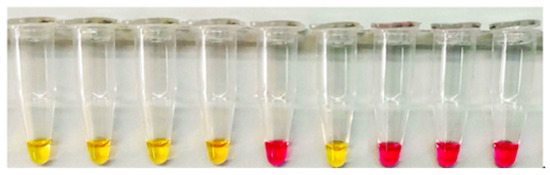
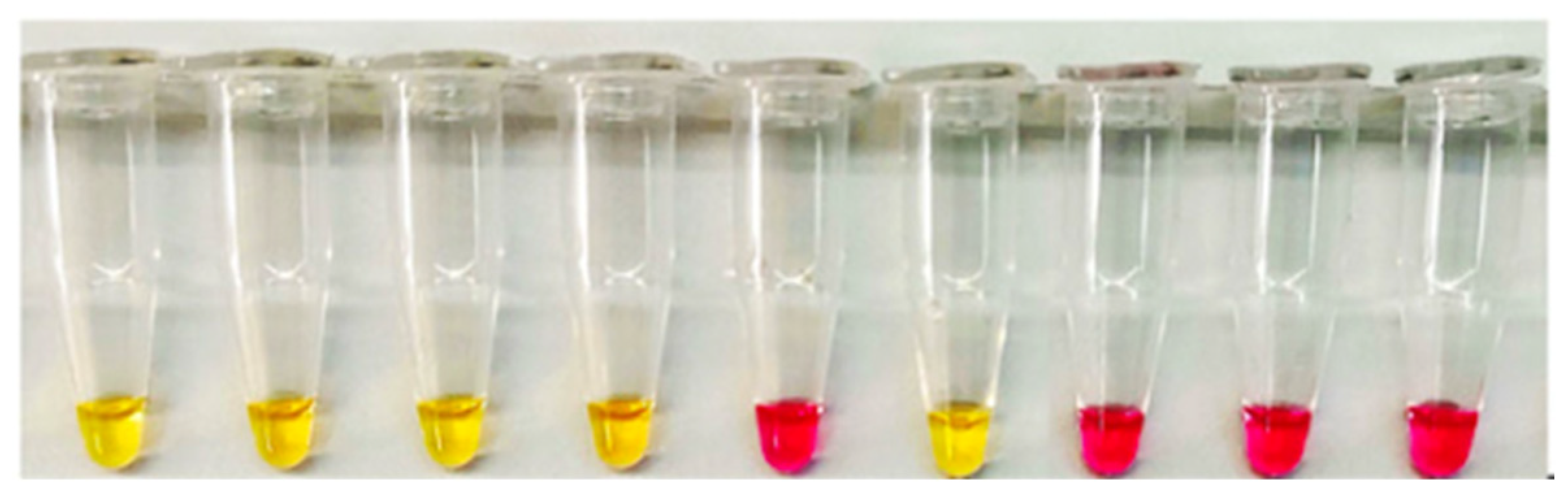
In the article by Trujillo et al. (“Development and optimization of a LAMP assay for lupin detection in foods”) (contribution 2), a colorimetric loop-mediated isothermal amplification (LAMP) assay [1] was used to design DNA primers for Lup a 1, a 7S globulin allergen, to detect lupin traces in complex food matrices. The LAMP assay was highly reliable, with a detection limit of 25 pg of lupin (Figure 1). Lupin traces were successfully detected in food mixtures containing as little as 10 mg lupin/kg food. When applied to either declared or undeclared commercial food samples, the assay confirmed the presence of lupin in the declared samples but revealed the presence of lupin in some undeclared samples.
Figure 1.
Colorimetric LAMP reactions showing the pink (negative) to yellow (positive) color change.
Two articles highlight the complexity of allergic diseases and the importance of considering numerous factors to improve their diagnosis and treatment.
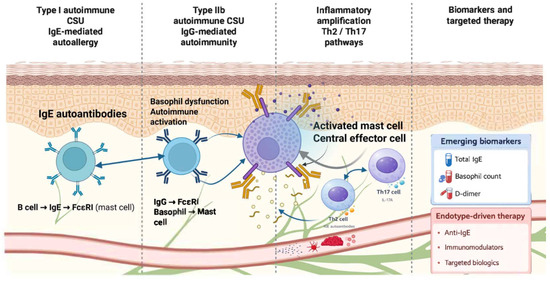
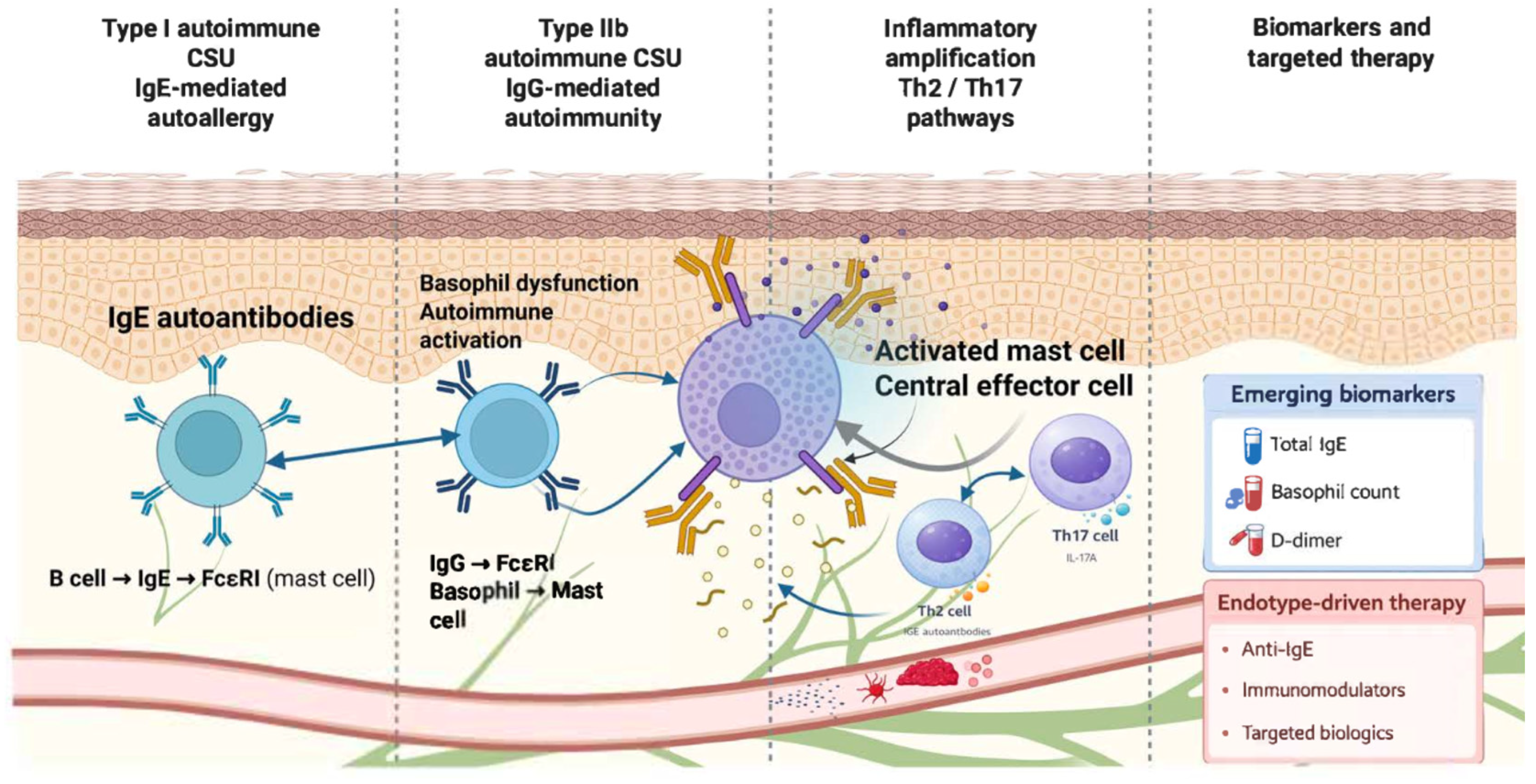
In their review (“Chronic Spontaneous Urticaria: Pathophysiological Mechanisms, Emerging Biomarkers, and Therapeutic Advances”), de Paiva et al. (contribution 3) present a synthesis of the current concepts in chronic spontaneous urticaria (CSU), emphasizing the role of mast cell biology, autoimmune endotypes [2], and Th2/Th-17-driven inflammatory amplification in the disease (Figure 2). Despite a lack of specificity, elevated and low levels of total serum IgE represent the most accessible clinically relevant biomarkers for type-I autoimmune CSU (IgE>) and type-IIb autoimmune CSU (<IgE), respectively. Other potential biomarkers, including the extracellular matrix protein periostin, IL-31, eosinophil count and other chemokines and cytokines, are currently under investigation, with the aim of improving the established treatment of CSU and identifying novel therapeutic strategies targeting key pathogenic pathways.
Figure 2.
Immunopathogenic mechanisms underlying chronic spontaneous urticaria (CSU).
The complex relationship between rhinitis and asthma is discussed in the review by Alexandru et al. (“Are rhinitis and asthma just one disease affecting different parts of the respiratory tract?”) (contribution 4). The authors develop both supporting arguments (simultaneity, similar pathogenesis processes, synergistic effects on clinical manifestations, and common treatment approaches) and counterarguments (different embryologic and anatomic origins, cases where events are not simultaneous, and cases requiring a different treatment for both affections) in relation to the concept of a unique “united airway disease”, encompassing allergic rhinitis and chronic rhinosinusitis with or without nasal polyps [3]. These considerations are integrated to highlight the complexity of the topic.
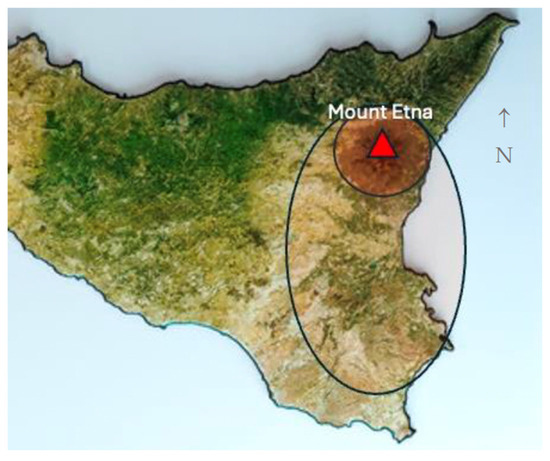
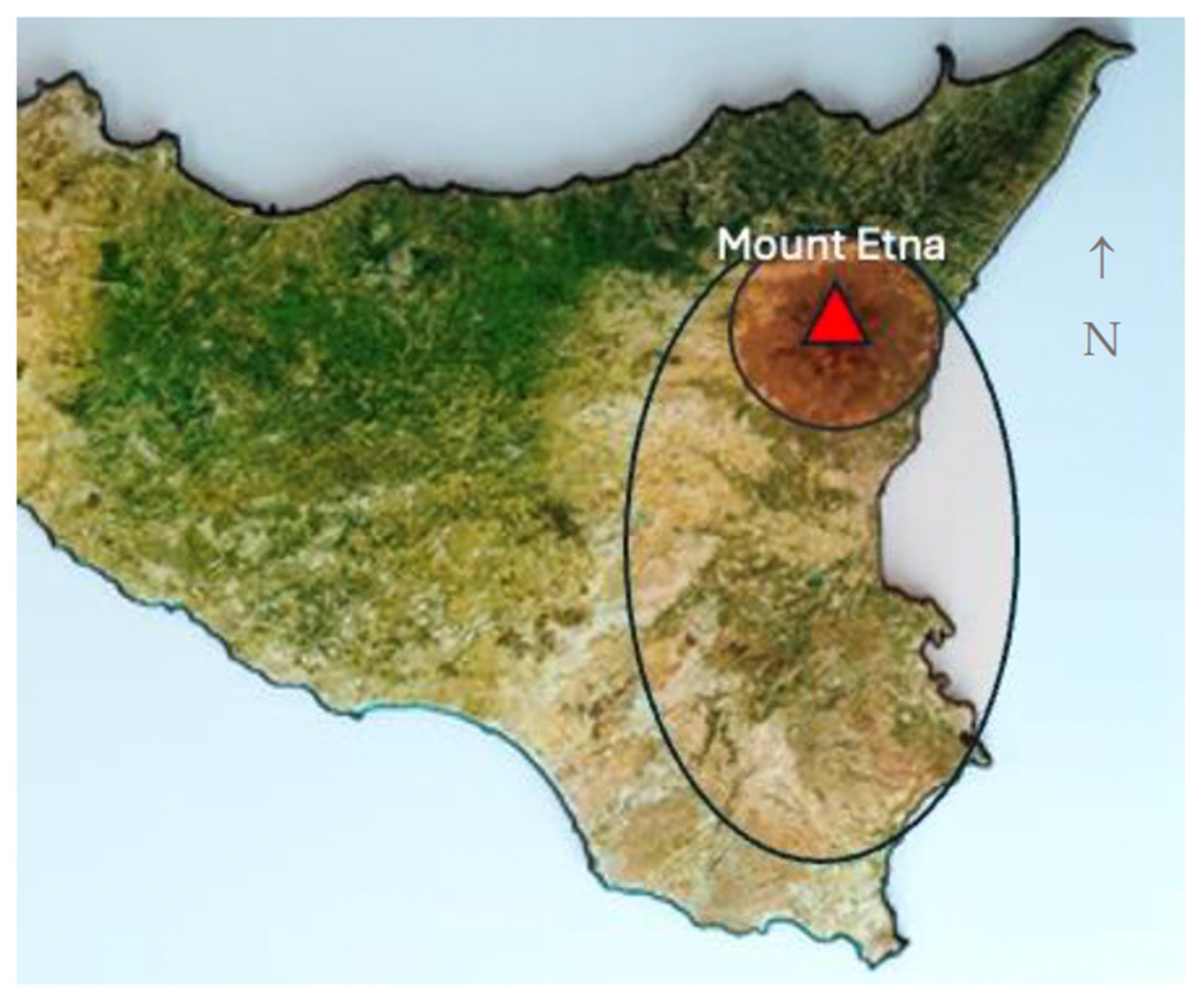
Another article revealed the impact of environmental factors on chronic inflammation in atopic individuals. The effects of exposure to volcanic ash from the eruptive episode of Mount Etna in 2024 on a cohort of 67 patients with atopic dermatitis from the province of Catania are reported in the article of Trovato et al. (“Retrospective study on acute effects of Mont Etna volcanic eruption in patients with atopic dermatitis”) (contribution 5) (Figure 3). Exposure to volcanic ash was associated with a significant increase in respiratory (58.9%) and skin (26.9%) symptoms among exposed patients, as well as a significant increase in EASI scores over an eight-week period. No differences were found according to treatment type or mask use.
Figure 3.
Area of exposition to volcanic ash.
The following two contributions explore the links between allergies and other diseases.
In the review by Cofone and Sabato (“The potential link between food allergies and the insurgence of allergic and rheumatoid arthritis: A systematic review”) (contribution 6), a systematic review of the literature up to December 2025 was conducted to explore the influence of food allergy/hypersensitivity on rheumatic arthritis (RA) physiopathology. Only eight studies met the inclusion criteria used in the research. The retrieved studies indicated that dietary intervention may have symptomatic effects, but only in a minority of RA patients. However, these studies have limited interest due to methodological constraints and inconsistent outcomes. Trials in modern cohorts are necessary to clarify the influence of food allergies on RA pathophysiology.
The review by Saramak (“Exploring the link between allergies and neurological diseases: Unveiling the hidden connections”) (contributions 7), is a well-documented article on the possible interplay between allergic diseases—including asthma, eczema and allergic rhinitis—and neurological disorders via shared common pathophysiological pathways such as inflammation and immune responses. Some evidence suggests that various neurological diseases, including multiple sclerosis, migraine, epilepsy, neurodegenerative disease and neurodevelopmental disorders, should be influenced by the inflammatory and immunoreactive conditions caused by allergies [4]. A deeper understanding of the complex relationships between allergies and neurological diseases could improve both the treatment and quality of life of patients.
The last two contributions address the treatment of allergic diseases through stimulation of the immune response.
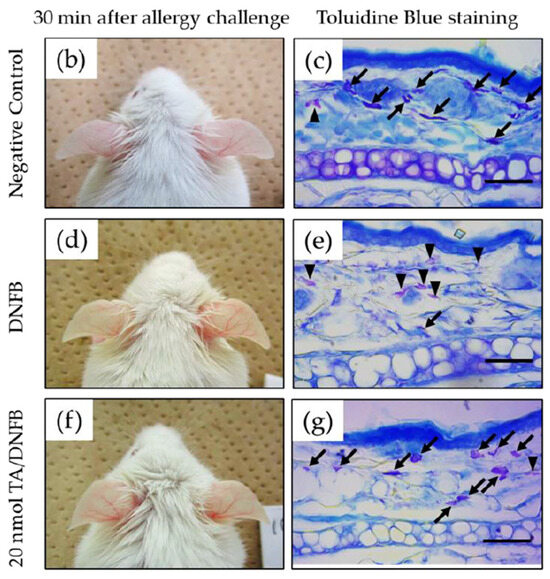
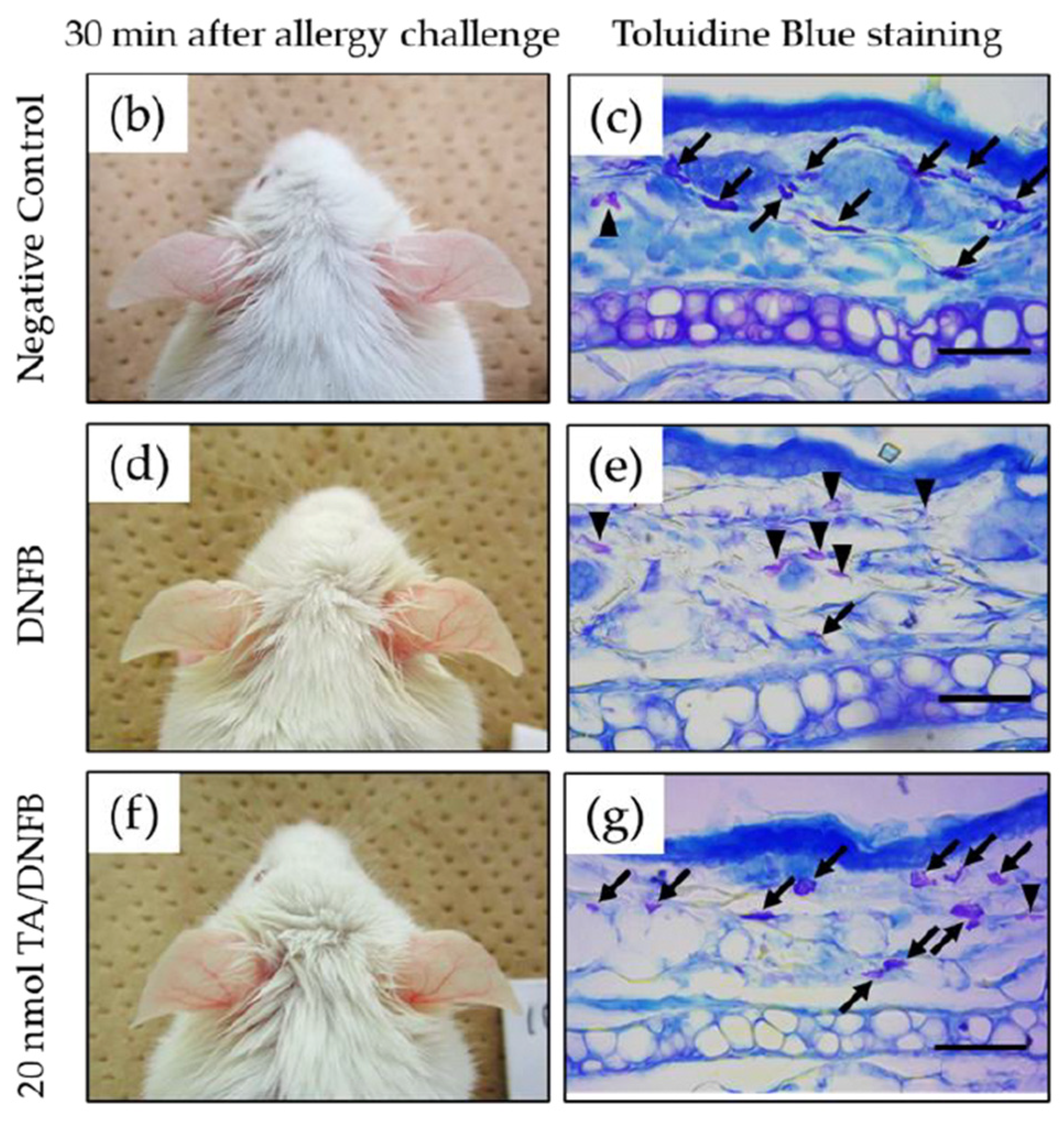
In the article of Yoshimura and Takahashi (“Effects of triacetin on AMPK activation and immune responses in allergic contact dermatitis”) (contribution 8), the immediate and long-term effects of triacetin [5], a triglyceride metabolite, were analyzed by topical application on a 2,4-dinitrofluorobenzene-induced rodent model mimicking allergic contact dermatitis (ACD) (Figure 4). Both inflammation and mast cell degranulation were significantly inhibited in a dose-dependent manner by triacetin, the most efficient effects occurring at a concentration of 0.25 mmol/L. Triacetin also activated AMP-activated protein kinase (AMPK), while the inhibition of AMPK dorsomorphin reversed the effects of triacetin. These results suggest that triacetin could be used as a non-steroidal alternative for the treatment of allergic contact dermatitis (ACD).
Figure 4.
Effects of 20 nmol TA on DNFB-induced immediate allergic responses 30 min post-DNFB application.
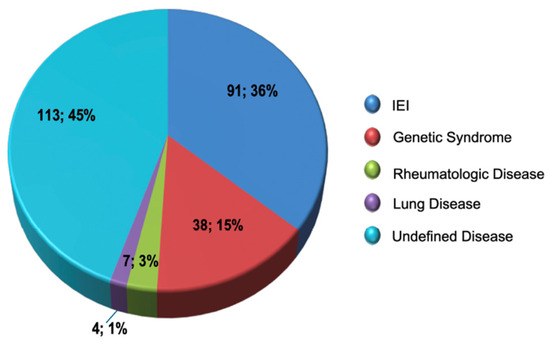
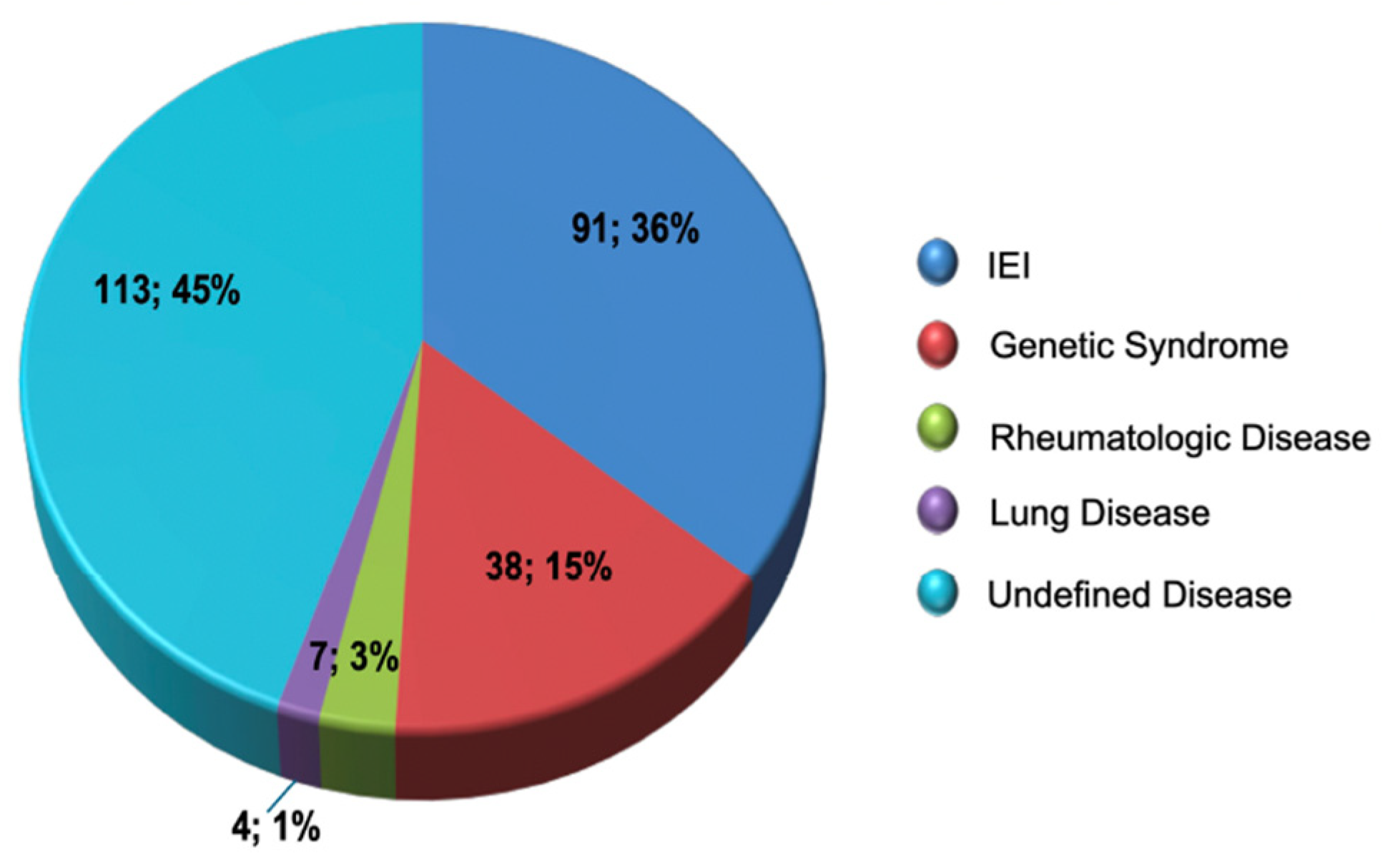
The evaluation of the immunological response to the 23-valent pneumococcal polysaccharide vaccine (PPV23) [6] in patients with recurrent infections was conducted through a longitudinal retrospective study from 2012 to 2020 by de Gouveia-Pereira Pimentel et al. (“Pneumococcal vaccine in patients with recurrent infections”) (contribution 9) (Figure 5). Of the 390 patients who received the PPV23 vaccine, 63.6% of them demonstrated an adequate immunological response and presented a notable decrease in the risk of upper respiratory infection by 66%, of tonsillitis by 74%, of otitis by 76%, of sinusitis by 49% and uncomplicated pneumonia by 77%, thus probing the efficacy of the vaccine. For invasive infections, the reduction in risk reached 95% for pneumonia and 93% for meningitis. The authors recommend including PPV23 in the vaccination schedule for patients with recurrent pneumococcal infections to enhance their protection and prevent complications.
Figure 5.
Distribution of diagnoses in patients with adequate response to PPV23.
Conflicts of Interest
The author declares no conflicts of interest.
List of Contributions
- Barros, L.; Arantes, D.; Nora, L.; Pádua, I. Recommended Age of Introduction on Commercial Baby Food Labels: Alignment with Allergy Prevention Guidelines. Allergies 2026, 6, 9. https://doi.org/10.3390/allergies6010009.
- Trujillo, M.; Beroiz, B.; Cuadrado, C.; Linacero, R.; Ballesteros, I. Development and Optimization of a LAMP Assay for Lupin Detection in Foods. Allergies 2026, 6, 1. https://doi.org/10.3390/allergies6010001.
- De Paiva, M.J.M.; de Araújo, L.C.; de Oiveira Marinho, M.; de Paiva, R.F.D.; Costa, V.P.; de Faria, G.P.S.; de Souza, G.S.; Herrera, S.D.S.C.; de Melo Damasceno, I.A.; dos Santos, T.T.; Farinelli Panontin, J.; Bezerra D’Alessandro, W. Chronic Spontaneous Urticaria: Pathophysiological Mechanisms, Emerging Biomarkers, and Therapeutic Advances. Allergies 2026, 6, 11. http://doi.org/10.3390/allergies6020011.
- Alexandru, V.; Manole, F.; Manole, A. Are Rhinitis and Asthma Just One Disease Affecting Different Parts of the Respiratory Tract? Allergies 2025, 5, 34. http://doi.org/10.3390/allergies5040034.
- Trovato, F.; Di Guardo, A.; Rallo, A.; Dattola, A.; Zappia, E.; Nisticò, S.P.; Pellacani, G. Retrospective Study on Acute Effects of Mount Etna Volcanic Eruption in Patients with Atopic Dermatitis. Allergies 2025, 5, 27. http://doi.org/10.3390/allergies5030027.
- Cofone, L.; Sabato, M. The Potential Link Between Food Allergies and the Insurgence of Allergic and Rheumatoid Arthritis: A Systematic Review. Allergies 2026, 6, 6. https://doi.org/10.3390/allergies6010006.
- Saramak, K. Exploring the Link Between Allergies and Neurologiocal Diseases: Unveiling the Hidden Connections. Allergies 2025, 5, 18. https://doi.org/10.3390/allergies5020018.
- Yoshimura, Y.; Takahashi, M. Effects of Triacetin on AMPK Activation and Immune Responses in Allergic Contact Dermatitis. Allergies 2024, 4, 254–267. https://doi.org/10.3390/allergies4040017.
- De Gouveia-Pereira Pimentel, M.; Sanchez Aranda, C.; Guimarães, R.R.; Ishizuka, E.K.; Solé, D.; Condino-Neto, A. Pneumococcal Vaccine in Patients with Recurrent Infections. Allergies 2025, 5, 21. https://doi.org/10.3390/allergies5020021.
References
- Notomi, T. Loop-Mediated Isothermal Amplification of DNA. Nucleic Acids Res. 2000, 28, e63. [Google Scholar] [CrossRef] [Scilit] [PubMed]
- Bartosik, B.; Kapeluszna, K.; Bartosik, D.; Chobot, A.; Ciszewska-Hołda, P.; Gawrylak-Dryja, E.; Klus, A.; Bułdak, R.; Brzoza, Z. Chronic Spontaneous Urticaria—New Predictor on the Horizon? J. Clin. Med. 2024, 13, 6812. [Google Scholar] [CrossRef] [Scilit] [PubMed]
- Cho, H.J.; Ha, J.G.; Lee, S.N.; Kim, C.H.; Wang, D.Y.; Yoon, J.H. Differences and similarities between the upper and lower airway: Focusing on innate immunity. Rhinology 2021, 59, 441–450. [Google Scholar] [CrossRef] [Scilit] [PubMed]
- Houghton, V.; Eiwegger, T.; Florsheim, E.B.; Knibb, R.C.; Thuret, S.; Santos, A.F. From bite to brain: Neuro-immune interactions in food allergy. Allergy 2024, 79, 3326–3340. [Google Scholar] [CrossRef] [Scilit] [PubMed]
- Fujii, A.; Kimura, R.; Mori, A.; Yoshimura, Y. Sucrose Solution Ingestion Exacerbates Dinitrofluorobenzene-Induced Allergic Contact Dermatitis in Rats. Nutrients 2024, 16, 1962. [Google Scholar] [CrossRef] [Scilit] [PubMed]
- Wang, Y.; Lib, J.; Wang, Y.; Gu, W.; Zhu, F. Effectiveness and practical uses of 23-valent pneumococcal polysaccharide vaccine in healthy and special populations. Hum. Vaccines Immunother. 2018, 14, 1003–1012. [Google Scholar] [CrossRef] [Scilit] [PubMed]
Disclaimer/Publisher’s Note: The statements, opinions and data contained in all publications are solely those of the individual author(s) and contributor(s) and not of MDPI and/or the editor(s). MDPI and/or the editor(s) disclaim responsibility for any injury to people or property resulting from any ideas, methods, instructions or products referred to in the content. |
© 2026 by the author. Licensee MDPI, Basel, Switzerland. This article is an open access article distributed under the terms and conditions of the Creative Commons Attribution (CC BY) license.