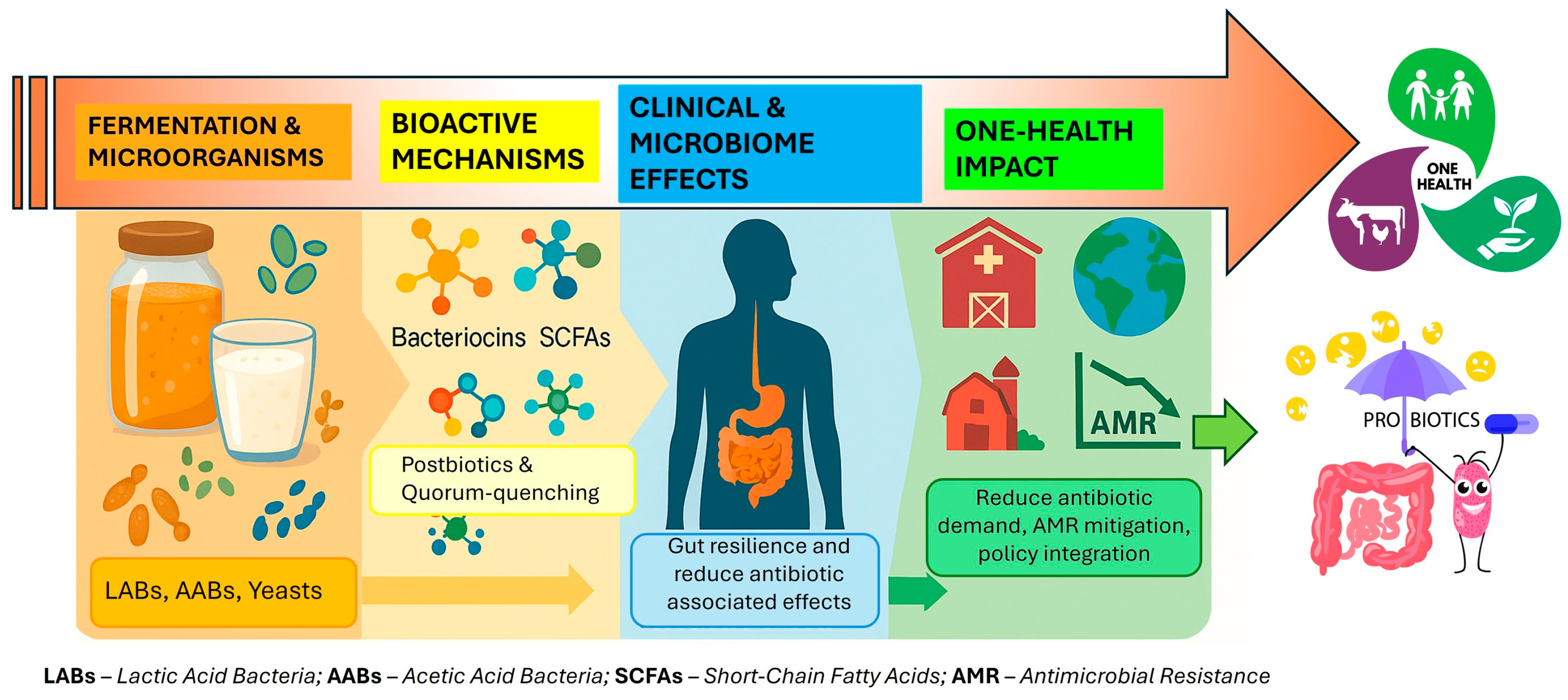

Probiotic-Fermented Foods and Antimicrobial Stewardship: Mechanisms, Evidence, and Translational Pathways Against AMR


Abstract
1. Introduction
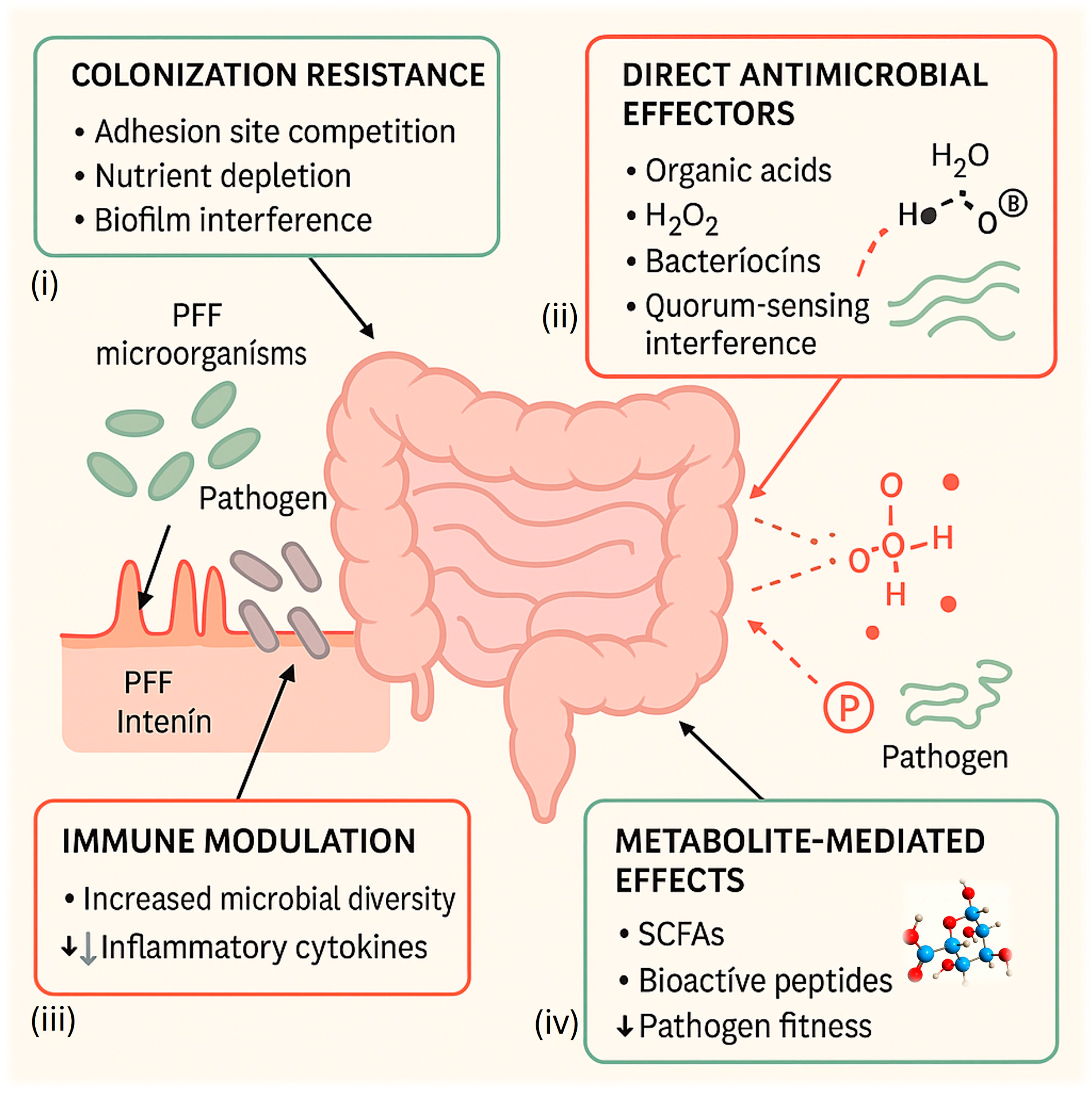
2. Mechanistic Landscape: How Probiotic-Fermented Foods (PFFs) Can Counter Pathogens and Antibiotic Pressure
2.1. Colonization Resistance and Ecological Competition
2.2. Direct Antimicrobial Effectors: Organic Acids, Hydrogen Peroxide, and Bacteriocins
2.3. Immune Modulation: Fermented-Food Diets Increasing Diversity and Lowering Inflammatory Cytokines (Human RCT)
2.4. Metabolite-Mediated Effects: SCFAs, Bioactive Peptides, and Acidification That Lowers Pathogen Fitness
2.5. Potential Anti-AMR Leverage: Shorter Illness → Fewer Prescriptions in Mild URTIs (Caveats Apply)
3. Evidence Base
3.1. Dietary Fermented Foods
3.2. Probiotics in Antibiotic-Associated Diarrhea (AAD) and Infection Outcomes
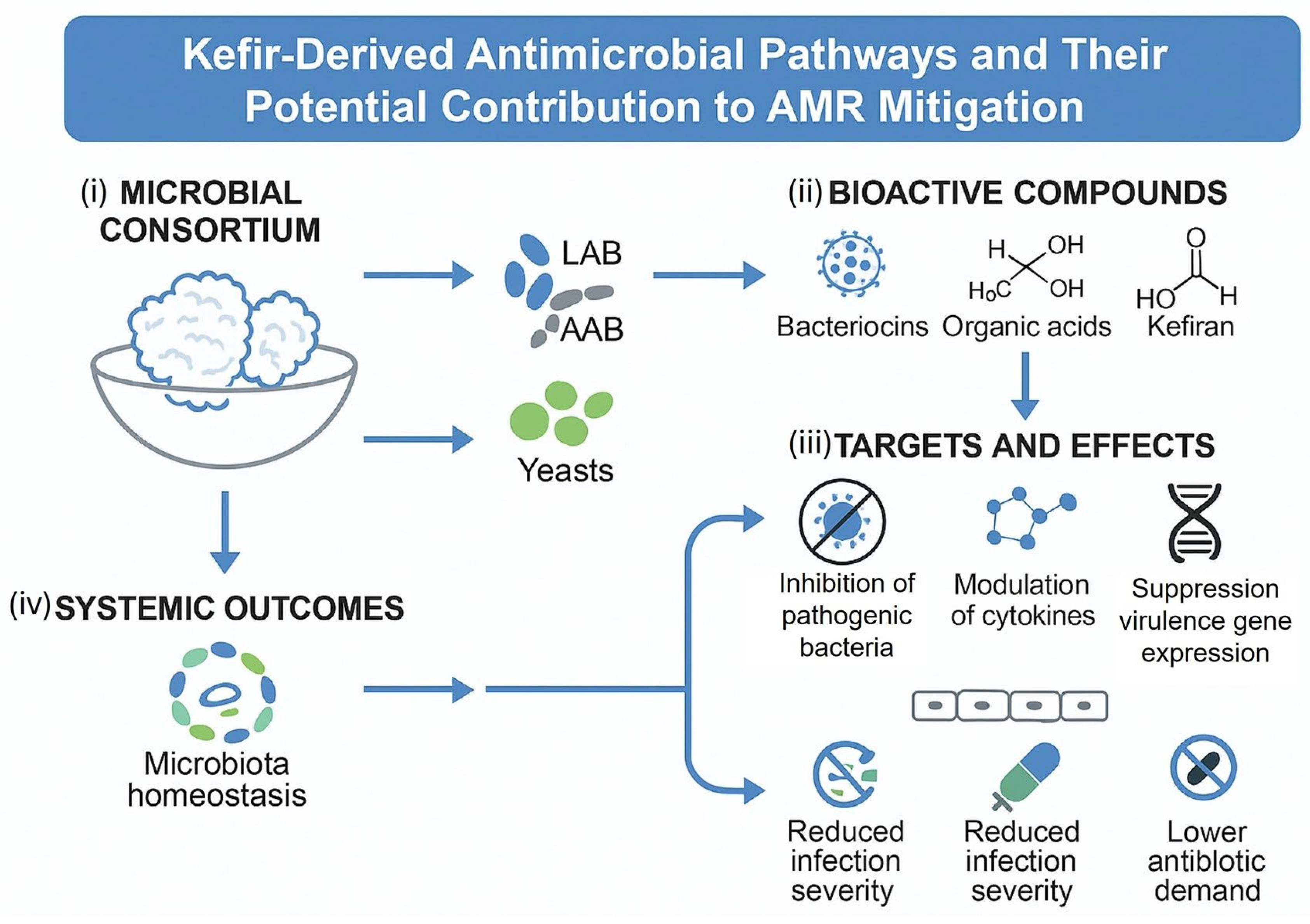
3.3. Ferment-Derived Antimicrobials: The Kefir Model
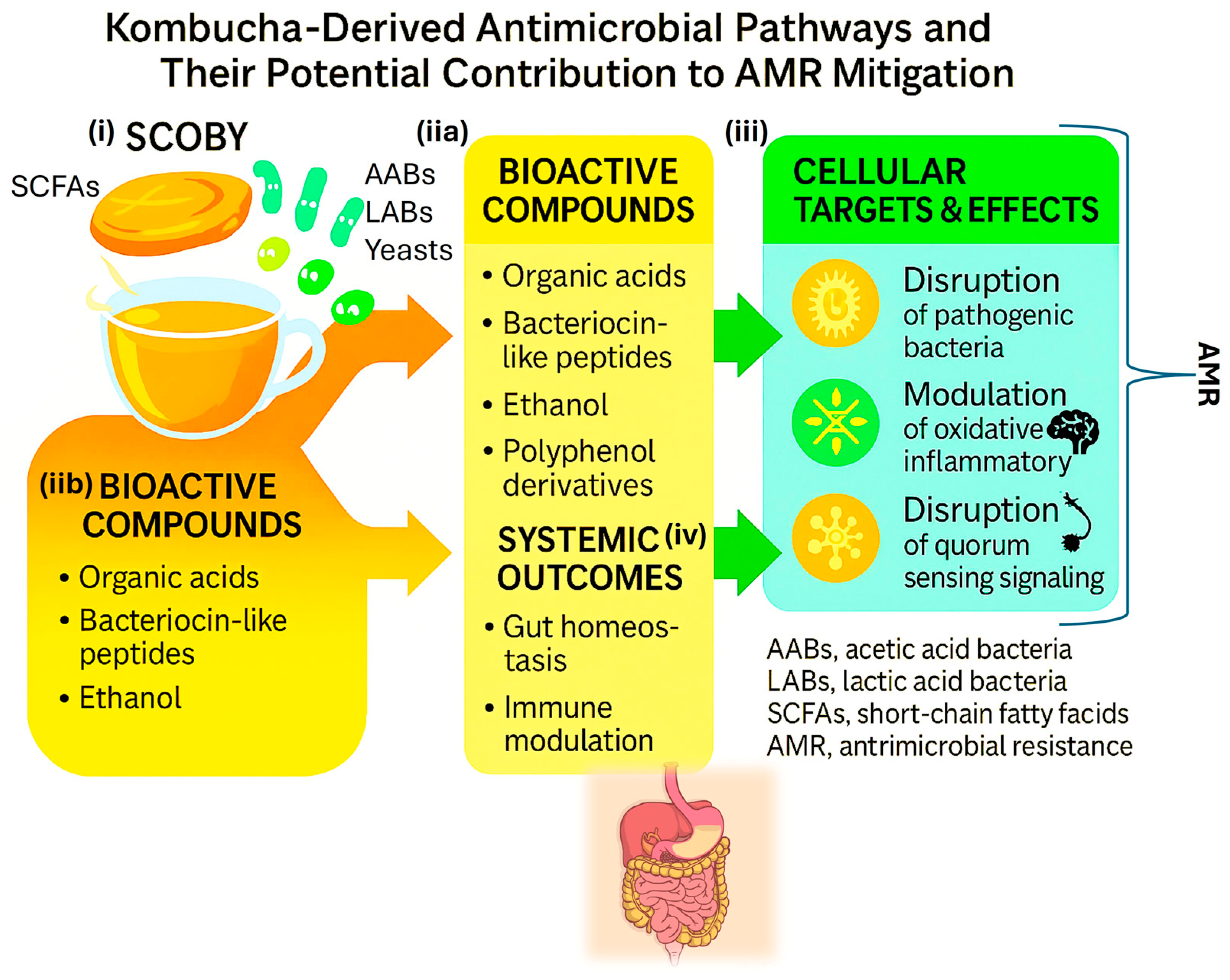
3.4. Ferment-Derived Antimicrobials: The Kombucha Model
4. Safety, AMR Risk, and Regulatory Guardrails
4.1. ARGs in Fermented Foods and Supplements: Prevalence, Context, and HGT Conditions
4.2. Screening Frameworks (GRAS/QPS) and Genome-Resolved Oversight
4.3. Risk–Benefit Balance and Standardization Needs
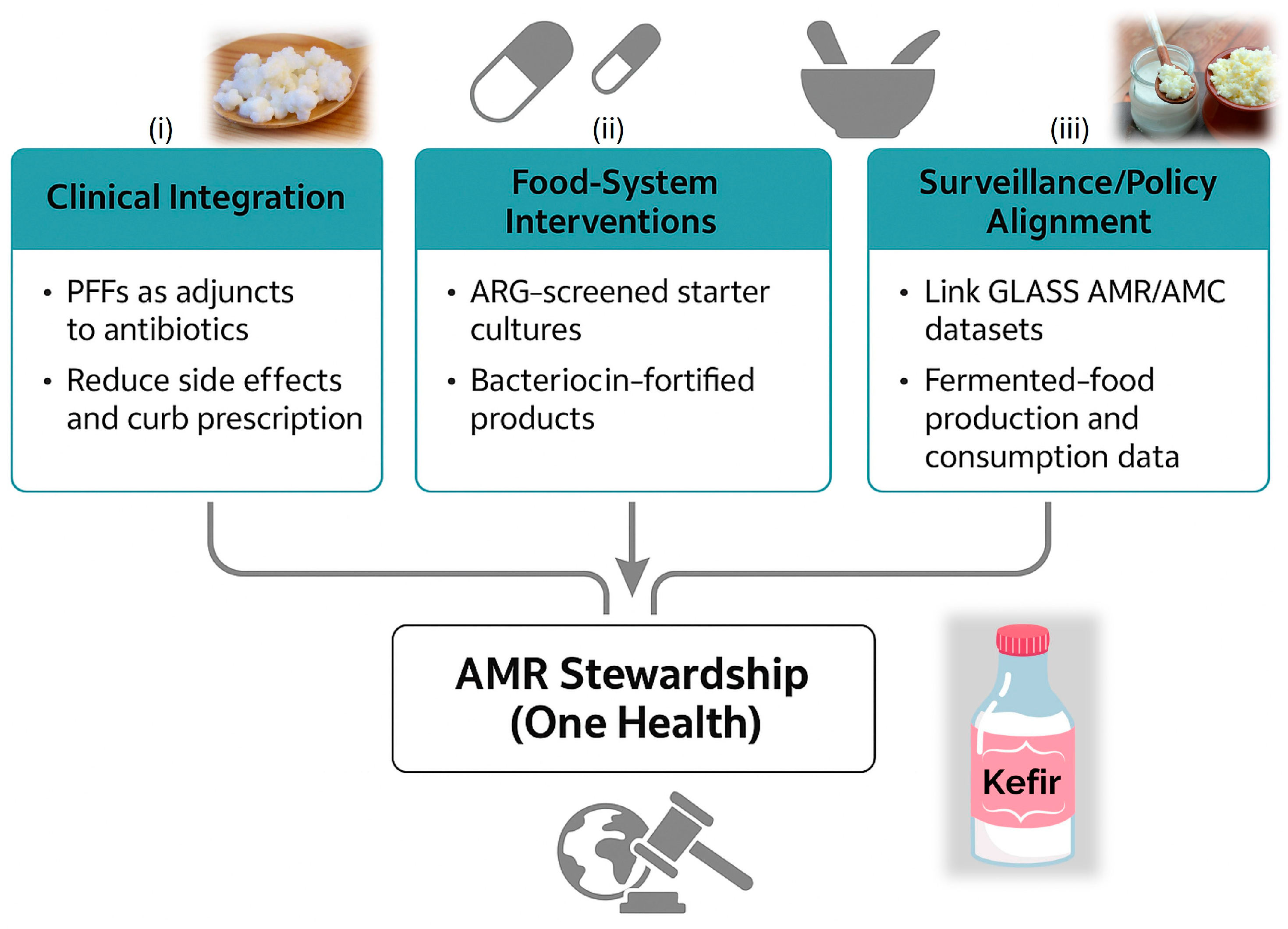
5. Translational Pathways for Stewardship (One Health)
5.1. Clinical Integration
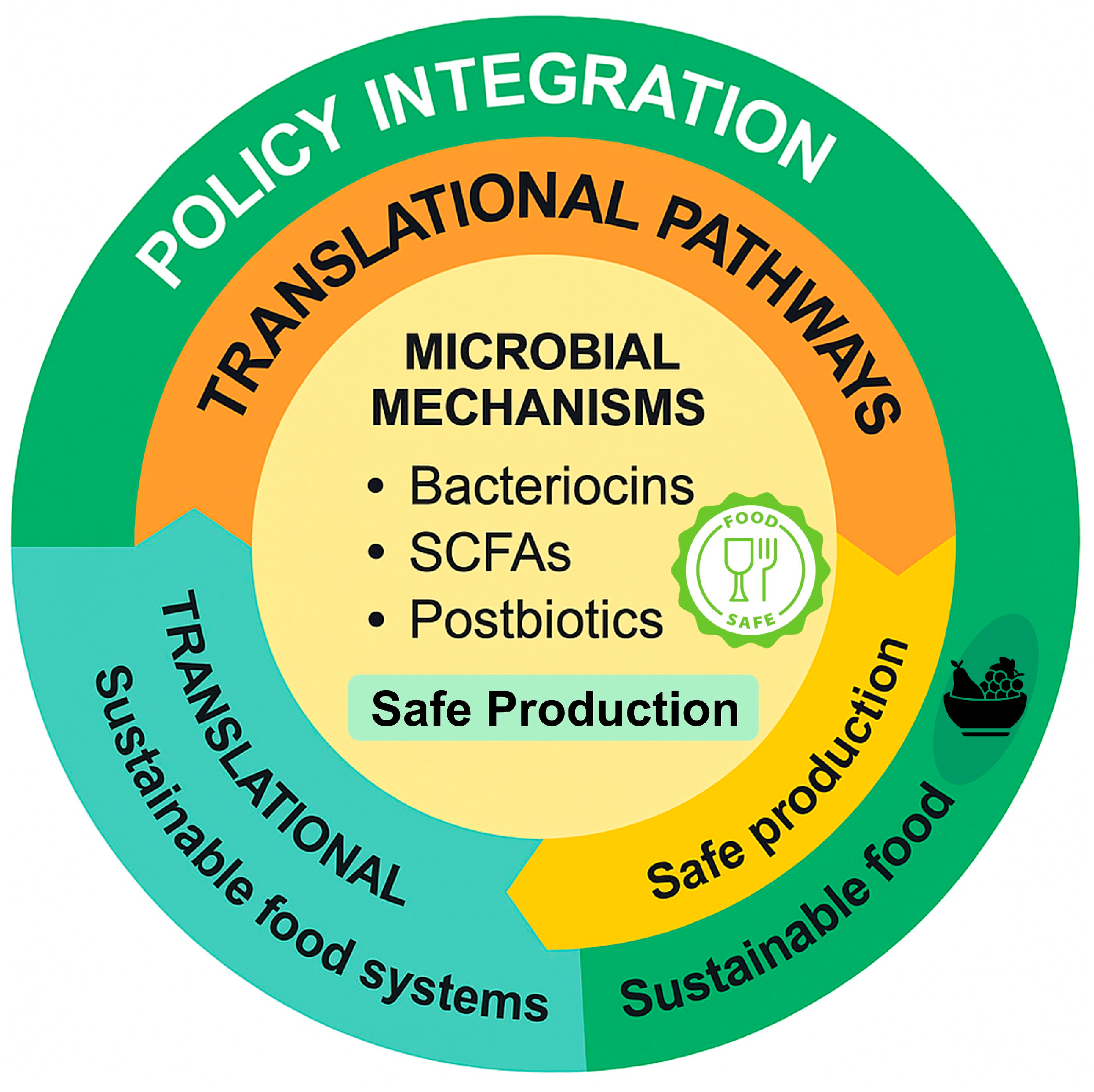
5.2. Food-System Interventions
5.3. Surveillance and Policy Alignment
- (i)
- Inhibition of pathogenic bacteria through acidification, membrane disruption, and organic acid-mediated metabolic suppression;
- (ii)
- Modulation of cytokine responses, reducing inflammatory signaling pathways that otherwise predispose the host to infection; and
- (iii)
- Suppression of virulence gene expression, which diminishes pathogen aggressiveness, biofilm formation, and overall infective capacity.
6. Research Gaps and Priorities
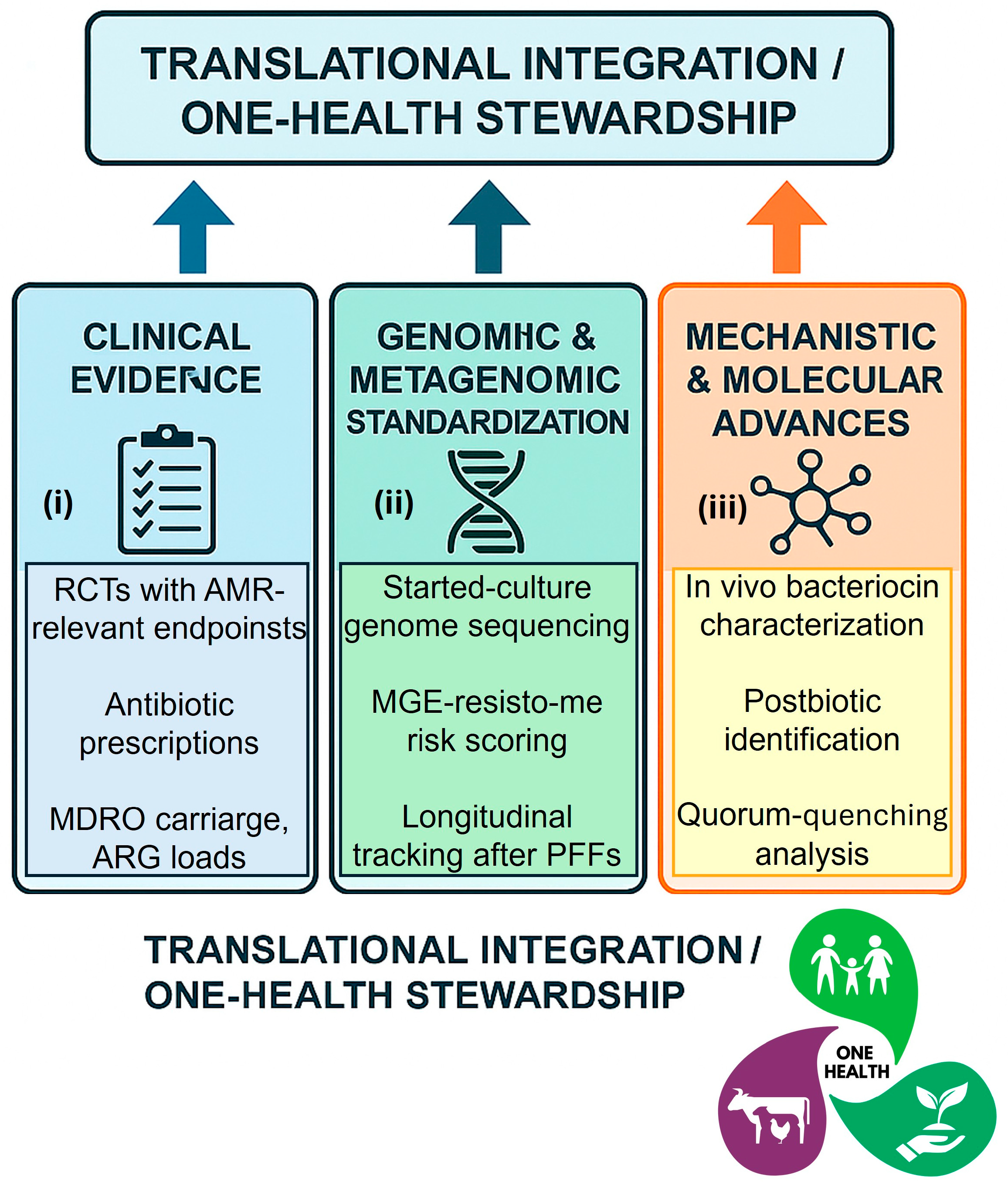
6.1. Randomized Clinical Trials with AMR-Relevant Endpoints
6.2. Standardized Starter Culture Genomics and Resistome Monitoring
6.3. Mechanistic Studies on Kefir and Kombucha Bioactives
7. Conclusions
8. Future Perspectives
- Clinical validation: Designing multicenter randomized controlled trials (RCTs) with AMR-relevant endpoints, such as antibiotic-prescription frequency, multidrug-resistant organism (MDRO) carriage, and antimicrobial-resistance gene (ARG) load in stool samples.
- Genomic standardization: Implementing genome-resolved monitoring of starter cultures and consumer microbiomes to ensure the absence of transferable resistance determinants.
- Sustainability and policy: Integrating PFF innovation within circular-bioeconomy frameworks and national AMR action plans to enhance food security, stewardship efficiency, and environmental sustainability.
Funding
Institutional Review Board Statement
Informed Consent Statement
Data Availability Statement
Acknowledgments
Conflicts of Interest
Abbreviations
| AAD | Antibiotic-Associated Diarrhea |
| AAB | Acetic Acid Bacteria |
| AMC | Antimicrobial Consumption |
| AMR | Antimicrobial Resistance |
| ARG | Antimicrobial-Resistance Gene |
| CFU | Colony-Forming Unit |
| EFSA | European Food Safety Authority |
| FDA | Food and Drug Administration (U.S.) |
| GLASS | Global Antimicrobial Resistance and Use Surveillance System |
| GRAS | Generally Recognized as Safe |
| HGT | Horizontal Gene Transfer |
| LAB | Lactic Acid Bacteria |
| MDRO | Multidrug-Resistant Organism |
| MGE | Mobile Genetic Element |
| One Health | Integrated approach linking human, animal, and environmental health |
| PFF | Probiotic-Fermented Foods |
| QPS | Qualified Presumption of Safety |
| RCTs | Randomized Controlled Trials |
| SCFAs | Short-Chain Fatty Acids |
| WHO | World Health Organization |
References
- Wastyk, H.C.; Fragiadakis, G.K.; Perelman, D.; Dahan, D.; Merrill, B.D.; Parker, S.C.; Mills, D.A.; Sonnenburg, E.D.; Gardner, C.D.; Sonnenburg, J.L. Gut-Microbiota-Targeted Diets Modulate Human Immune Status. Cell 2021, 184, 4137–4153. [Google Scholar] [CrossRef] [PubMed]
- Leeuwendaal, N.K.; Stanton, C.; O’Toole, P.W.; Beresford, T.P. Fermented Foods, Health and the Gut Microbiome. Nutrients 2022, 14, 1527. [Google Scholar] [CrossRef] [PubMed]
- Rani, P.; Tiwari, S.K. Health Benefits of Bacteriocins Produced by Probiotic Lactic Acid Bacteria. In Developments in Applied Microbiology and Biotechnology: Microbial Biomolecules; Kumar, A., Bilal, M., Ferreira, L.F.R., Kumari, M., Eds.; Academic Press: Cambridge, MA, USA, 2023; pp. 97–111. ISBN 978-0-323-99476-7. [Google Scholar] [CrossRef]
- Ismael, M.; Huang, M.; Zhong, Q. The Bacteriocins Produced by Lactic Acid Bacteria and the Promising Applications in Promoting Gastrointestinal Health. Foods 2024, 13, 3887. [Google Scholar] [CrossRef] [PubMed]
- Yee, C.S.; Zahia-Azizan, N.A.; Abd Rahim, M.H.; Mohd Zaini, N.A.; Raja-Razali, R.B.; Ushidee-Radzi, M.A.; Ilham, Z.; Wan-Mohtar, W.A.A.Q.I. Smart Fermentation Technologies: Microbial Process Control in Traditional Fermented Foods. Fermentation 2025, 11, 323. [Google Scholar] [CrossRef]
- Marco, M.L.; Sanders, M.E.; Gänzle, M.; Arrieta, M.C.; Cotter, P.D.; De Vuyst, L.; Hill, C.; Holzapfel, W.; Lebeer, S.; Merenstein, D.; et al. The International Scientific Association for Probiotics and Prebiotics (ISAPP) Consensus Statement on Fermented Foods. Nat. Rev. Gastroenterol. Hepatol. 2021, 18, 196–208. [Google Scholar] [CrossRef]
- Ibrahim, S.A.; Yeboah, P.J.; Ayivi, R.D.; Eddin, A.S.; Wijemanna, N.D.; Paidari, S.; Bakhshayesh, R.V. A Review and Comparative Perspective on Health Benefits of Probiotic and Fermented Foods. Int. J. Food Sci. Technol. 2023, 58, 4948–4964. [Google Scholar] [CrossRef]
- da Anunciação, T.A.; Guedes, J.D.S.; Tavares, P.P.L.G.; de Melo Borges, F.E.; Ferreira, D.D.; Costa, J.A.V.; Umsza-Guez, M.A.; Magalhães-Guedes, K.T. Biological Significance of Probiotic Microorganisms from Kefir and Kombucha: A Review. Microorganisms 2024, 12, 1127. [Google Scholar] [CrossRef]
- do Nascimento, A.S.M.; da Silva, R.N.A.; Tavares, P.P.L.G.; Borges, A.S.; Cardoso, M.P.S.; Lobato, A.K.C.L.; Almeida, R.C.C.; Magalhães-Guedes, K.T. Kefir Probiotic-Enriched Non-Alcoholic Beers: Microbial, Genetic, and Sensory-Chemical Assessment. Beverages 2025, 11, 75. [Google Scholar] [CrossRef]
- Magalhães, K.T.; da Silva, R.N.A.; Borges, A.S.; Siqueira, A.E.B.; Puerari, C.; Bento, J.A.C. Smart and Functional Probiotic Microorganisms: Emerging Roles in Health-Oriented Fermentation. Fermentation 2025, 11, 537. [Google Scholar] [CrossRef]
- Wolfe, B.E.; Dutton, R.J. Fermented Foods as Experimentally Tractable Microbial Ecosystems. Cell 2015, 161, 49–55. [Google Scholar] [CrossRef]
- Bisht, V.; Das, B.; Hussain, A.; Kumar, V.; Navani, N.K. Understanding of Probiotic Origin Antimicrobial Peptides: A Sustainable Approach Ensuring Food Safety. npj Sci Food 2024, 8, 67. [Google Scholar] [CrossRef] [PubMed]
- González-Orozco, B.D.; García-Cano, I.; Jiménez-Flores, R.; Alvárez, V.B. Invited Review: Milk Kefir Microbiota—Direct and Indirect Antimicrobial Effects. J. Dairy Sci. 2022, 105, 3703–3715. [Google Scholar] [CrossRef] [PubMed]
- Erginkaya, Z.; Yalanca, İ.; Ünal Turhan, E. Antibiotic Resistance Profile of Lactic Acid Bacteria from Traditional Meat Products. Pamukkale Univ. J. Eng. Sci. 2019, 25, 834–838. [Google Scholar] [CrossRef]
- Sankarganesh, P.; Bhunia, A.; Kumar, A.G.; Babu, A.S.; Gopukumar, S.T.; Lokesh, E. Short-Chain Fatty Acids (SCFAs) in Gut Health: Implications for Drug Metabolism and Therapeutics. Med. Microecol. 2025, 25, 100139. [Google Scholar] [CrossRef]
- Kadry, A.A.; El-Antrawy, M.A.; El-Ganiny, A.M. Impact of Short-Chain Fatty Acids (SCFAs) on Antimicrobial Activity of New β-Lactam/β-Lactamase Inhibitor Combinations and on Virulence of Escherichia coli Isolates. J. Antibiot. 2023, 76, 225–235. [Google Scholar] [CrossRef]
- Huang, C.B.; Alimova, Y.; Myers, T.M.; Ebersole, J.L. Short- and Medium-Chain Fatty Acids Exhibit Antimicrobial Activity for Oral Microorganisms. Arch. Oral Biol. 2011, 56, 650–654. [Google Scholar] [CrossRef]
- Bettocchi, S.; Comotti, A.; Elli, M.; De Cosmi, V.; Berti, C.; Alberti, I.; Mazzocchi, A.; Rosazza, C.; Agostoni, C.; Milani, G.P. Probiotics and Fever Duration in Children with Upper Respiratory Tract Infections: A Randomized Clinical Trial. JAMA Netw. Open 2025, 8, e250669. [Google Scholar] [CrossRef]
- McFarland, L.V.; Hecht, G.; Sanders, M.E.; Goff, D.A.; Goldstein, E.J.C.; Hill, C.; Johnson, S.; Kashi, M.R.; Kullar, R.; Marco, M.L.; et al. Recommendations to Improve Quality of Probiotic Systematic Reviews with Meta-Analyses. JAMA Netw. Open 2023, 6, e2346872. [Google Scholar] [CrossRef]
- Butler, C.C.; Lau, M.; Gillespie, D.; Owen-Jones, E.; Lown, M.; Wootton, M.; Calder, P.C.; Bayer, A.J.; Moore, M.; Little, P.; et al. Effect of Probiotic Use on Antibiotic Administration among Care Home Residents: A Randomized Clinical Trial. JAMA 2020, 324, 47–56. [Google Scholar] [CrossRef]
- Marco, M.L.; Heeney, D.; Binda, S.; Cifelli, C.J.; Cotter, P.D.; Foligné, B.; Gänzle, M.; Kort, R.; Pasin, G.; Pihlanto, A.; et al. Health Benefits of Fermented Foods: Microbiota and Beyond. Curr. Opin. Biotechnol. 2017, 44, 94–102. [Google Scholar] [CrossRef]
- Amin, M.R.; Biswas, A.P.; Tasnim, M.; Islam, M.N.; Azam, M.S. Probiotics and Their Applications in Functional Foods: A Health Perspective. Appl. Food Res. 2025, 5, 101193. [Google Scholar] [CrossRef]
- Hempel, S.; Newberry, S.J.; Maher, A.R.; Wang, Z.; Miles, J.N.; Shanman, R.; Johnsen, B.; Shekelle, P.G. Probiotics for the Prevention and Treatment of Antibiotic-Associated Diarrhea: A Systematic Review and Meta-Analysis. JAMA 2012, 307, 1959–1969. [Google Scholar] [CrossRef]
- Liao, W.; Chen, C.; Wen, T.; Zhao, Q. Probiotics for the Prevention of Antibiotic-Associated Diarrhea in Adults: A Meta-Analysis of Randomized Placebo-Controlled Trials. J. Clin. Gastroenterol. 2021, 55, 469–480. [Google Scholar] [CrossRef] [PubMed]
- de Souza Silva, A.R.; Peres, A.P.; dos Santos Martins, R.A.; Magalhães, K.T.; Puerari, C.; Morzelle, M.C.; Bento, J.A.C. The Addition of Plantain Peel (Musa paradisiaca) to Fermented Milk as a Strategy for Enriching the Product and Reusing Agro-Industrial Waste. Beverages 2025, 11, 153. [Google Scholar] [CrossRef]
- Magalhães, K.T.; Pereira, M.A.; Dragone, G.; Nicolau, A.; Domingues, L.; Teixeira, J.A.; Silva, J.B.A.; Schwan, R.F. Production of Fermented Cheese Whey-Based Beverage Using Kefir Grains as Starter Culture: Evaluation of Morphological and Microbial Variations. Bioresour. Technol. 2010, 101, 8843–8850. [Google Scholar] [CrossRef]
- Yassin, L.S.; Sheleidres, C.G.; Fischer, T.E.; Zielinski, A.A.F.; Los, P.R.; Lacerda, L.G.; Alberti, A.; Nogueira, A. Development of Smoothies Fermented with Kombucha Microorganisms: Sensory Characteristics, Functional Properties, and Microbiological Aspects. Fermentation 2025, 11, 637. [Google Scholar] [CrossRef]
- Santos, E.N.; Magalhães-Guedes, K.T.; Borges, F.E.M.; Ferreira, D.D.; da Silva, D.F.; Conceição, P.C.G.; Lima, A.K.C.; Cardoso, L.G.; Umsza-Guez, M.A.; Ramos, C.L. Probiotic Microorganisms in Inflammatory Bowel Diseases: Live Biotherapeutics as Food. Foods 2024, 13, 4097. [Google Scholar] [CrossRef]
- Magalhães-Guedes, K.T.; Borges, A.S.; Almeida da Silva, R.N. A Conceptual Framework for Understanding the Interaction between Smart Probiotics and the Gut–Brain Axis in Mood Regulation: An Integrative Approach. Int. J. Appl. Sci. Res. 2025, 8, 3. [Google Scholar] [CrossRef]
- Vinayamohan, P.G.; Salihu, S.; Kalia, V.C. Fermented Foods as a Potential Vehicle of Antimicrobial-Resistant Bacteria and Genes. Fermentation 2023, 9, 688. [Google Scholar] [CrossRef]
- Wolfe, B.E. Are Fermented Foods an Overlooked Reservoir of Antimicrobial Resistance? Curr. Opin. Food Sci. 2023, 51, 101018. [Google Scholar] [CrossRef]
- Li, Y.; Fu, S.; Klein, M.S.; Wang, H. High Prevalence of Antibiotic Resistance in Traditionally Fermented Foods as a Critical Risk Factor for Host Gut Antibiotic Resistome. Microorganisms 2024, 12, 1433. [Google Scholar] [CrossRef]
- Leech, J.; Cabrera-Rubio, R.; Walsh, A.M.; Macori, G.; Walsh, C.J.; Barton, W.; Finnegan, L.; Crispie, F.; O’Sullivan, O.; Claesson, M.J.; et al. Fermented-Food Metagenomics Reveals Substrate-Associated Differences in Taxonomy and Health-Associated and Antibiotic Resistance Determinants. mSystems 2020, 5, e00522-20. [Google Scholar] [CrossRef]
- Allende, A.; Alvarez-Ordóñez, A.; Bortolaia, V.; Bover-Cid, S.; De Cesare, A.; Dohmen, W.; Guillier, L.; Jacxsens, L.; Nauta, M.; Mughini-Gras, L.; et al. Update of the List of Qualified Presumption of Safety (QPS) Recommended Microbiological Agents Intentionally Added to Food or Feed as Notified to EFSA 22: Suitability of Taxonomic Units Notified to EFSA Until March 2025. EFSA J. 2025, 23, e9510. [Google Scholar] [CrossRef] [PubMed]
- U.S. Food and Drug Administration (FDA). GRAS Notice (GRN) No. 1084: Lacticaseibacillus rhamnosus KCTC 12202BP (CBT LR5)—Agency Response Letter. 2023. Available online: https://www.fda.gov/media/177326/download (accessed on 7 November 2025).
- U.S. Food and Drug Administration (FDA). GRAS Notice (GRN) No. 1143: Bacillus subtilis NRRL 68053—Agency Response Letter (with Amendments). 2024. Available online: https://www.fda.gov/media/179728/download (accessed on 7 November 2025).
- European Food Safety Authority (EFSA). Whole-Genome Sequencing in Foodborne Outbreaks and Food Safety Investigations. 2025. Available online: https://www.efsa.europa.eu/en/topics/topic/whole-genome-sequencing-foodborne-outbreaks (accessed on 7 November 2025).
- Zhang, E.; Breselge, S.; Carlino, N.; Segata, N.; Claesson, M.J.; Cotter, P.D. A Genomics-Based Investigation of Acetic Acid Bacteria across a Global Fermented Food Metagenomics Dataset. iScience 2025, 28, 112139. [Google Scholar] [CrossRef] [PubMed]
- World Health Organization (WHO). The Role of Nutrition and Microbiome in Antimicrobial Resistance Mitigation: A One-Health Perspective; WHO AMR Division: Geneva, Switzerland, 2024; Available online: https://www.who.int/publications (accessed on 7 November 2025).
- World Health Organization (WHO). Global Antimicrobial Resistance and Use Surveillance System (GLASS) Report 2025; WHO: Geneva, Switzerland, 2025; Available online: https://www.who.int/publications/i/item/9789240116337 (accessed on 7 November 2025).
- Castellano, P.; Melian, C.; Burgos, C.; Vignolo, G. Bioprotective Cultures and Bacteriocins as Food Preservatives. In Advances in Food and Nutrition Research; Toldrá, F., Ed.; Academic Press: Cambridge, MA, USA, 2023; Volume 106, pp. 275–315. ISBN 978-0-443-19304-0. [Google Scholar] [CrossRef]
- Verma, D.K.; Thakur, M.; Singh, S.; Tripathy, S.; Gupta, A.K.; Baranwal, D.; Patel, A.R.; Shah, N.; Utama, G.L.; Niamah, A.K.; et al. Bacteriocins as Antimicrobial and Preservative Agents in Food: Biosynthesis, Separation and Application. Food Biosci. 2022, 46, 101594. [Google Scholar] [CrossRef]
- Djordjevic, S.P.; Jarocki, V.M.; Seemann, T.; Kidd, T.J. Genomic Surveillance for Antimicrobial Resistance—A One Health Perspective. Nat. Rev. Genet. 2024, 25, 142–157. [Google Scholar] [CrossRef]
- European Food Safety Authority (EFSA). The European Union Summary Report on Antimicrobial Resistance in Zoonotic and Indicator Bacteria from Humans, Animals and Food in 2022–2023. EFSA J. 2025, 23, e9237. [Google Scholar] [CrossRef] [PubMed]
- Fredriksen, S.; de Warle, S.; van Baarlen, P.; Boekhorst, J.; Wells, J.M. Resistome Expansion in Disease-Associated Human Gut Microbiomes. Microbiome 2023, 11, 166. [Google Scholar] [CrossRef]
- Walsh, A.M.; Leech, J.; Huttenhower, C.; Delhomme-Nguyen, H.; Crispie, F.; Chervaux, C.; Cotter, P.D. Integrated Molecular Approaches for Fermented Food Microbiome Research. FEMS Microbiol. Rev. 2023, 47, fuad001. [Google Scholar] [CrossRef]
- O’Connor, P.M.; Kuniyoshi, T.M.; Oliveira, R.P.S.; Hill, C.; Ross, R.P.; Cotter, P.D. Antimicrobials for Food and Feed: A Bacteriocin Perspective. Curr. Opin. Biotechnol. 2020, 61, 160–167. [Google Scholar] [CrossRef]
- Kameswaran, S.; Gujjala, S.; Zhang, S.; Kondeti, S.; Mahalingam, S.; Bangeppagari, M.; Bellemkonda, R. Quenching and Quorum Sensing in Bacterial Biofilms. Res. Microbiol. 2024, 175, 104085. [Google Scholar] [CrossRef]
- Meleti, E.; Koureas, M.; Manouras, A.; Giannouli, P.; Malissiova, E. Bioactive Peptides from Dairy Products: A Systematic Review of Advances, Mechanisms, Benefits, and Functional Potential. Dairy 2025, 6, 65. [Google Scholar] [CrossRef]
- Ziemlewska, A.; Nizioł-Łukaszewska, Z.; Zagórska-Dziok, M.; Mokrzyńska, A.; Krupski, W.; Wójciak, M.; Sowa, I. Anti-Aging, Anti-Inflammatory, and Cytoprotective Properties of Lactobacillus- and Kombucha-Fermented C. pepo L. Peel and Pulp Extracts with Prototype Skin Toner Development. Molecules 2025, 30, 4082. [Google Scholar] [CrossRef]
- de Fátima Dantas Linhares, M.; Fonteles, T.V.; de Oliveira, L.S.; de Souza, S.B.; de Castro Miguel, E.; Fernandes, F.A.N.; Rodrigues, S. Powdered Kombucha Flavored with Fruit By-Products: A Sustainable Functional Innovation. Processes 2025, 13, 3020. [Google Scholar] [CrossRef]

| Domain | Key Performance Indicators (KPI) | Measurement Unit/Target | Relevance to AMR Stewardship |
|---|---|---|---|
| Clinical practice [18,19,20,23,24,39] | Reduction in antibiotic-associated diarrhea (AAD) incidence with PFF adjunct use | % reduction vs. control | Quantifies clinical benefit and potential to reduce re-prescriptions |
| Change in gut microbial diversity (Shannon index) during antibiotic therapy | Δ Diversity Index | Surrogate of microbiome resilience and recovery | |
| Antibiotic use [18,20,39,40] | Antibiotic prescription rate for self-limited infections (URTIs, gastroenteritis) | Prescriptions/1000 patients | Lower values imply stewardship effectiveness of PFF promotion |
| Food production [4,12,30,31,41,42] | Share of fermentation batches using ARG-screened starter cultures | % certified starters | Indicator of safe-ferment scaling |
| Adoption of bacteriocin-fortified bio-preservatives | Number of products on market | Tracks industrial uptake of antibiotic-alternatives | |
| Policy and surveillance [34,37,40] | Integration of PFF variables into GLASS AMR/AMC datasets | Binary (Yes/No) | Demonstrates One-Health alignment |
| Number of national guidelines including probiotic/fermented-food strategies | Count per region | Reflects policy translation of microbiome interventions |
Disclaimer/Publisher’s Note: The statements, opinions and data contained in all publications are solely those of the individual author(s) and contributor(s) and not of MDPI and/or the editor(s). MDPI and/or the editor(s) disclaim responsibility for any injury to people or property resulting from any ideas, methods, instructions or products referred to in the content. |
© 2025 by the author. Licensee MDPI, Basel, Switzerland. This article is an open access article distributed under the terms and conditions of the Creative Commons Attribution (CC BY) license (https://creativecommons.org/licenses/by/4.0/).
Share and Cite
Magalhães, K.T. Probiotic-Fermented Foods and Antimicrobial Stewardship: Mechanisms, Evidence, and Translational Pathways Against AMR. Fermentation 2025, 11, 684. https://doi.org/10.3390/fermentation11120684
Magalhães KT. Probiotic-Fermented Foods and Antimicrobial Stewardship: Mechanisms, Evidence, and Translational Pathways Against AMR. Fermentation. 2025; 11(12):684. https://doi.org/10.3390/fermentation11120684
Chicago/Turabian StyleMagalhães, Karina Teixeira. 2025. "Probiotic-Fermented Foods and Antimicrobial Stewardship: Mechanisms, Evidence, and Translational Pathways Against AMR" Fermentation 11, no. 12: 684. https://doi.org/10.3390/fermentation11120684
APA StyleMagalhães, K. T. (2025). Probiotic-Fermented Foods and Antimicrobial Stewardship: Mechanisms, Evidence, and Translational Pathways Against AMR. Fermentation, 11(12), 684. https://doi.org/10.3390/fermentation11120684