


Abstract
Published laboratory data on soil stabilisation are abundant, yet they remain fragmented across studies and are often difficult to reuse because of inconsistent reporting formats, heterogeneous testing conditions, and incomplete metadata. This article presents a curated experimental dataset compiled from 20 published studies on fine-grained soils, comprising 560 records, including 397 unconfined compressive strength (UCS) results and 163 California Bearing Ratio (CBR) results. The dataset is defined by the inclusion of laboratory studies designed around biopolymer-based two-additive stabilisation frameworks, while intentionally retaining untreated and single-additive comparator records reported within the same experimental programmes. This design is a key distinguishing feature of the dataset because it enables analysis of baseline soil behaviour, isolated additive effects, and combined-additive responses within a traceable study context. Across the included studies, the treatment systems cover a wide range of biopolymer- and lignin-related materials, including xanthan gum, guar gum, chitosan, sodium lignosulfonate, and electrolyte lignin stabiliser, together with complementary additives such as cement, lime, fly ash, ground granulated blast-furnace slag, rice husk ash, glass powder, concrete waste, nano-additives, and natural or synthetic fibres. In addition to UCS and CBR outcomes, the dataset preserves key contextual variables required for meaningful secondary reuse, including soil classification, grain-size fractions, Atterberg limits, compaction properties, curing duration, additive identities and dosages, and source-level traceability. The data are distributed as a structured Excel workbook comprising two cleaned outcome-specific sheets (CBR_clean and UCS_clean) and four supporting documentation sheets (StudyInventory, DataDictionary, VocabularyMap, and QC_Log). Record-level identifiers, DOI-linked source fields, inferred-curing flags, and qualified outcome descriptors are retained to support auditability, selective filtering, and reproducible reuse. The resulting dataset provides a practical foundation for comparative assessment of stabilisation strategies, pavement and subgrade engineering studies, meta-analysis, and machine learning applications in geotechnical engineering.
Dataset Licence: CC-BY
1. Summary
Most published experimental datasets in soil stabilisation focus on soils treated with a single additive, whereas structured datasets that capture the behaviour of two-additive or blended stabilisation systems remain scarce. This represents an important gap, as combined treatment frameworks are increasingly investigated to achieve improved engineering performance through complementary or potentially synergistic effects. In this context, biopolymers have emerged as a promising class of sustainable soil stabilisers because of their bio-based origin, lower environmental burden relative to many conventional binders, and demonstrated capacity to improve the mechanical and hydraulic behaviour of problematic soils. As a result, biopolymer-based stabilisation is attracting growing interest in geotechnical and pavement engineering, particularly in efforts to develop lower-carbon and more environmentally responsible ground-improvement strategies. However, experimental evidence for biopolymer-based stabilisation systems, especially those involving two-additive combinations, remains dispersed across individual publications and is rarely organised in a format suitable for systematic comparison, structured reuse, or data-driven modelling.
Among the most important engineering response variables reported in stabilised-soil studies are unconfined compressive strength (UCS) and California Bearing Ratio (CBR). UCS is widely used to quantify strength development, stiffness improvement, and overall mechanical enhancement in treated soils, whereas CBR is a key indicator of bearing capacity and subgrade suitability in pavement applications. Despite their importance, published UCS and CBR results for biopolymer-based two-additive systems remain fragmented, which limits consistent cross-study comparison and makes it difficult to analyse how treatment response varies with soil type, additive combination, dosage, curing period, moisture–density condition, and testing condition.
To address this gap, this paper presents a curated experimental dataset containing 560 records extracted from 20 published laboratory studies, including 397 UCS records and 163 CBR records. The dataset is defined at the study-framework level through inclusion of laboratory investigations designed around biopolymer-based two-additive stabilisation systems for fine-grained soils. Importantly, the dataset also retains untreated controls and single-additive comparator records reported within the same experimental programmes. This is a key distinguishing feature because it enables within-study comparison of baseline soil behaviour, isolated additive effects, and combined-additive responses within a traceable experimental context, rather than restricting reuse to dual-treated specimens only.
Across the included studies, the dataset covers a broad range of fine-grained, highly plastic, and expansive soils treated with biopolymer- and lignin-related agents such as xanthan gum, guar gum, chitosan, sodium lignosulfonate, and electrolyte lignin stabiliser, together with complementary additives including cement, lime, fly ash, ground granulated blast-furnace slag, rice husk ash, glass powder, concrete waste, nano-additives, and natural or synthetic fibres. In addition to the two target outcomes, the dataset preserves a wide set of input variables required for meaningful secondary analysis and predictive modelling, including soil composition and classification (e.g., sand, silt, and clay fractions, USCS class, Atterberg limits, specific gravity, and particle-size descriptors), compaction-related properties (for example, optimum moisture content and maximum dry density for untreated and treated soils), mixture descriptors (e.g., additive identity, specific gravity, dosage, fibre length where relevant, and treated-mixture density/moisture variables), and curing and source-traceability information.
The dataset also preserves the main test-condition and device-context descriptors associated with the reported measurements. For UCS, the dataset compiles strength results obtained from standard laboratory unconfined compression testing of prepared soil specimens. For CBR, it includes results measured under reported CBR test conditions, including condition labels and penetration-related descriptors extracted from the source studies, corresponding to laboratory CBR testing performed using standard or study-reported loading arrangements. These descriptors improve interpretability and support more reliable comparison across studies with differing experimental protocols.
The data are distributed as a structured Excel workbook comprising two cleaned outcome-specific sheets (CBR_clean and UCS_clean) and four supporting documentation sheets (StudyInventory, DataDictionary, VocabularyMap, and QC_Log). Record-level identifiers, DOI-linked reference fields, curing notes, inferred-curing flags, and qualified test-condition descriptors are retained to support auditability, selective filtering, and reproducible reuse. The resulting dataset provides a practical foundation for comparative geotechnical assessment of stabilisation strategies, pavement and subgrade engineering studies, meta-analysis, and machine learning applications, particularly for fine-grained soils investigated within biopolymer-based two-additive study frameworks.
Research Background
The dataset presented in this study was compiled from published laboratory investigations reporting unconfined compressive strength (UCS) and California Bearing Ratio (CBR) results for fine-grained and expansive soils. Its scope is defined at the study level rather than at the individual-record level: only experimental programmes designed around biopolymer-based two-additive stabilisation frameworks were included, while untreated and single-additive comparator records reported within those same studies were intentionally retained. This design is a key distinguishing feature of the dataset because it enables baseline soil behaviour, isolated additive effects, and combined-additive responses to be examined within a traceable experimental context.
UCS and CBR are among the most widely reported engineering performance indicators in soil stabilisation research [1]. UCS is commonly used to evaluate strength development in treated soils under axial compression, whereas CBR is routinely used to assess bearing capacity and subgrade suitability for pavement and transportation applications [2,3]. Because these two outcomes are repeatedly reported across a wide range of laboratory stabilisation studies, they provide a practical basis for cross-study comparison when interpreted together with supporting descriptors such as soil plasticity, compaction state, additive dosage, and curing duration.
The studies included in the present dataset cover a broad range of fine-grained, highly plastic, and expansive soils, including CL, CH, OH, and ML soils, as well as silty clay, black cotton soil, kaolinite-based soils, bentonite–kaolin mixtures, carbonaceous mudstone, soft clay, and other site-specific expansive subgrade materials reported by the source authors. In total, the current release compiles 560 records from 20 published studies, including 397 UCS records and 163 CBR records.
A major strength of the underlying literature is the diversity of stabilisation systems it represents. A first major group of studies focuses on guar gum-based systems, including guar gum–fly ash [4], guar gum–hydrated lime for soft or expansive clay improvement [5,6,7], and guar gum–palm fibre systems aimed at improving strength and reinforcement behaviour [8,9]. Additional guar-based blended systems in the dataset include guar gum–polypropylene fibre–xanthan frameworks [10], cement–chitosan–guar systems [11], and fly ash–guar gum–red clay mixtures [12].
A second major group covers xanthan gum-based systems, which are strongly represented in the compiled literature. These include xanthan–lime stabilisation, including studies on reduced lime demand and durability under environmental exposure [13,14], xanthan–fly ash systems [15], xanthan–rice husk ash combinations for expansive subgrade soils [16], and xanthan with natural or synthetic fibres, such as sheep wool fibre or polypropylene fibre, to improve strength and durability, including freeze–thaw resistance [17,18]. The dataset also includes a concrete waste–xanthan study framework reported in the workbook.
A third group represents lignin- and lignosulfonate-based systems, which provide an important bridge between biopolymer-based stabilisation and lower-carbon alternatives to conventional binders. These include electrolyte lignin stabiliser–fly ash systems for black cotton soil [19], lignin–cement mixtures [20], glass powder–sodium lignosulfonate combinations [21], and ground granulated blast-furnace slag–lignin systems [22]. Together, these studies broaden the dataset beyond single biopolymer–soil interactions and capture a wider range of blended stabilisation strategies involving industrial by-products and waste-derived materials.
A fourth, smaller but analytically important group includes advanced blended and nano-modified systems, such as chitosan with nano-lime and nano-silica for CBR-oriented improvement [23], as well as other multi-component systems involving fibre reinforcement, supplementary cementitious materials, or waste-derived additives. These studies increase the heterogeneity and practical value of the dataset by capturing not only binary additive combinations but also broader stabilisation frameworks in which biopolymers are used as one component of a more complex treatment system.
Importantly, the workbook should not be interpreted as containing only specimens in which two additives were simultaneously dosed. The inclusion criterion was based on the overall study framework, not on requiring every retained row to represent a dual-dosed mixture. In many eligible studies, untreated control specimens and single-additive cases were reported alongside combined-additive mixtures, and these records were intentionally preserved. This is a strength rather than a limitation, because it allows direct within-study comparison among untreated, single-additive, and combined-additive conditions and supports more rigorous assessment of baseline behaviour, isolated additive contributions, and potentially synergistic or complementary treatment effects.
The source studies also span a range of experimental aims and laboratory conditions. Some were designed to compare biopolymer-based and conventional stabilisation strategies directly, such as guar gum–lime, xanthan–lime, lignin–cement, or fly ash–biopolymer combinations. Others examined fibre-reinforced biopolymer-treated soils or more complex blended systems developed to improve strength, ductility, or durability under controlled laboratory conditions. Several studies further reported UCS or CBR outcomes across different curing periods, ranging approximately from 0 to 365 days in the compiled workbook, and under environmental exposure conditions such as wet–dry cycling, freeze–thaw effects, or extended curing, thereby capturing both immediate treatment performance and time-dependent behaviour.
Although many of these studies report supporting descriptors such as grain-size fractions, Atterberg limits, optimum moisture content, and maximum dry density, the completeness and format of these variables are not uniform across literature. In many cases, the main emphasis of the original papers is placed on mechanical performance, while supporting metadata are reported selectively according to the objectives of the specific experimental programme. Differences in terminology, additive notation, curing description, and reporting style therefore create a fragmented evidence base that is valuable but difficult to reuse directly. Such heterogeneity is one of the principal reasons why a structured, standardised, and traceable dataset is needed.
Accordingly, the present dataset is not intended to replace the original experimental studies, but to consolidate their reusable numerical content into a consistent and auditable structure linked through study identifiers and source references. By preserving outcome values together with soil characterisation, compaction-related variables, additive identities and dosages, curing information, and source-level traceability, the dataset provides a transparent basis for comparative assessment of biopolymer-based two-additive stabilisation studies, secondary statistical analysis, pavement-oriented evaluation, and future machine learning applications in soil stabilisation research.
The retention of additive-family and soil-characterisation descriptors is also important from a mechanistic perspective. Stabilised-soil performance is not governed by additive dosage alone, but by interactions among binder chemistry, soil mineralogy, particle-size distribution, plasticity, curing condition, and moisture–density state. Recent mechanistic studies on geopolymer-stabilised clays have shown that binder–component ratios, such as initial CaO/Al2O3 and SiO2/Al2O3 ratios in slag/fly ash-based systems, can strongly influence strength development, water stability, reaction products, and stabilisation mechanisms. Other recent work has further shown that clay mineralogy can govern the strength behaviour and microscopic mechanisms of geopolymer-stabilised waste clays. Although the present workbook is not limited to geopolymer systems, these studies illustrate a broader principle relevant to blended soil stabilisation: additive family and soil characterisation are mechanistically meaningful variables rather than simple labels. For this reason, the dataset preserves standardised additive-family descriptors together with soil classification, particle-size fractions, Atterberg limits, compaction variables, curing information, and source-level traceability to support more informed comparison, subgroup analysis, and future modelling.
2. Data Description
The dataset is distributed as a single Excel workbook comprising six worksheets: two cleaned outcome-specific data tables (CBR_clean and UCS_clean) and four supporting documentation sheets (StudyInventory, DataDictionary, VocabularyMap, and QC_Log). In total, the current release contains 560 records from 20 published laboratory studies, including 163 California Bearing Ratio (CBR) records and 397 unconfined compressive strength (UCS) records. Each row in CBR_clean or UCS_clean represents one experimental record defined by a specific soil, treatment condition, curing duration, and reported mechanical outcome extracted from the original source. Record-level traceability is preserved through fields such as record_id, study_id, and source_doi, allowing each observation to be traced back to its parent study.
The workbook is organised primarily by engineering outcome rather than by source study. This structure is intentional because CBR and UCS represent different response types, are reported in different units, and require partly different test-condition metadata. At the same time, the two cleaned sheets retain a common descriptive backbone that supports harmonised filtering and comparative reuse across outcomes. Shared fields include source-traceability metadata, soil descriptors, compaction-related variables, additive information, and curing descriptors. This design allows users to analyse one outcome independently or to construct aligned subsets across both outcomes without forcing together variables that are not directly comparable.
A defining feature of the workbook is that it is framed around laboratory studies designed to investigate biopolymer-based two-additive stabilisation systems. However, the workbook should not be interpreted as containing only dual-dosed specimens. Where eligible source studies reported untreated controls or single-additive cases within the same experimental programme, these records were intentionally retained. This is a key design strength of the dataset because it enables structured within-study comparison among untreated, single-additive, and combined-additive conditions, thereby supporting analysis of baseline behaviour, isolated additive contributions, and combined treatment effects within a traceable experimental context.
Outcome-specific variables are preserved where they are necessary for correct downstream interpretation. The CBR_clean sheet stores cbr_value_pct together with CBR-specific descriptors such as cbr_condition, cbr_penetration_mm, and cbr_qualifier. The UCS_clean sheet stores ucs_kpa as the primary outcome, together with additional mixture-state or uncertainty-related fields where these were explicitly reported by the source. Preserving these outcome-specific variables improves reuse by keeping the cleaned tables analysis-ready while avoiding artificial harmonisation across non-equivalent engineering responses.
According to Table 1, to support interpretation and reproducible reuse, the workbook also contains four documentation sheets. StudyInventory summarises the included studies and their dataset-level metadata. DataDictionary defines variables, units, data types, representative values, and missing-value conventions. VocabularyMap records the harmonisation of raw additive names into standardised terminology and additive-family groupings. QC_Log preserves an audit trail of row-level corrections, checks, and quality flags introduced during data preparation. Together, these sheets make the dataset traceable, interpretable, and reusable rather than merely machine-readable.
Table 1.
Workbook structure and contents.
Harmonisation was intentionally limited to the operations required to improve consistency and auditability across studies. Units were standardised where necessary, but numerical outcomes were preserved in the form reported by the source after unit normalisation. Additive terminology was cross-mapped without removing the original source wording. Curing time was stored both as a numeric field (curing_days) and as the original narrative description (curing_notes), and cases in which a numeric curing duration had to be interpreted from source wording were explicitly flagged as curing_inferred. Likewise, censored CBR values such as threshold-style reports were preserved through the combined use of cbr_value_pct and cbr_qualifier. These choices were made so that users can retain, exclude, or separately analyse qualified and inferred cases depending on the goals of a given study.
The dataset is intentionally heterogeneous because it consolidates experimental evidence from multiple independent studies with different materials, reporting priorities, and laboratory frameworks. Outcome variables are complete by design, whereas supporting variables show differing levels of availability depending on what was reported in the original publication. This pattern should be understood as a characteristic of the underlying literature rather than as a flaw in the workbook itself. Accordingly, the dataset is best treated as a harmonised and traceable secondary resource that should be subsetted explicitly by outcome type, curing regime, soak condition, soil class, additive family, and treatment configuration before comparative statistics, pavement-oriented analysis, meta-analysis, or machine learning applications are undertaken. The collection and checking steps are sketched in Figure 1.
Figure 1.
Data collection, harmonisation, and quality-control workflow.
In all included studies, the experimental target material was a soil specimen; materials such as fly ash, glass powder, slag, fibres, and concrete waste were treated as stabilising or complementary additives rather than as the primary soil.
The curated workbook comprises 560 traceable records from 20 published studies, organised into two cleaned outcome sheets and four supporting documentation sheets, with complete outcome coverage for both UCS and CBR data and generally high availability of key soil, curing, compaction, additive-dosage, and test-condition variables across the included studies (Table 2, Table 3 and Table 4).
Table 2.
High-level composition of the dataset.
Table 3.
Availability of selected variables in the cleaned sheets.
Table 4.
Included studies and dataset composition.
The grouped violin plots in Figure 2 and Figure 3 provide a comprehensive visual summary of the distributional characteristics of the compiled dataset across the main geotechnical and treatment-related parameters. Overall, the plots reveal substantial variability in soil properties, including particle size fractions (sand, silt, clay), Atterberg limits (LL, PL, PI), and compaction characteristics (OMC and MDD). Several parameters exhibit relatively compact and symmetric distributions, suggesting consistent reporting across studies, whereas others display wider spreads and clear skewness, reflecting heterogeneity in soil types and testing conditions. Notably, the distributions of particle size and plasticity-related parameters indicate that the dataset predominantly represents fine-grained soils with varying degrees of plasticity, which is consistent with the focus of many stabilisation studies.
Figure 2.
Violin plots of continuous variables in the CBR dataset (CBR_clean).
Figure 3.
Violin plots of continuous variables in the UCS dataset (UCS_clean).
In contrast, the outcome variables and treatment-related parameters, particularly unconfined compressive strength (UCS), California Bearing Ratio (CBR), additive dosages, and curing duration, show pronounced skewness and long-tailed distributions. This behaviour highlights the strong influence of treatment type, dosage, and curing conditions on mechanical performance, as well as the diversity of experimental designs across the source studies. The use of logarithmic scaling for highly skewed variables further emphasises the wide range of observed values, spanning multiple orders of magnitude in some cases. Collectively, these graphical insights reinforce the heterogeneous nature of the dataset and underline the importance of applying appropriate filtering and grouping strategies when performing comparative analysis, predictive modelling, or meta-analytic interpretation.
2.1. Exploratory Insights from the Dataset
This section provides a concise descriptive overview of the compiled dataset and is intended only to illustrate its internal structure, range, and heterogeneity before reuse. No inferential analysis, hypothesis testing, or causal interpretation is attempted, in keeping with the scope of a data descriptor article.
At a high level, the dataset contains 560 records derived from 20 published studies, comprising 397 UCS records and 163 CBR records. The distribution of records across studies is uneven, with a small number of source studies contributing a relatively large proportion of the observations, while several others contribute only modest subsets. In addition, outcome coverage is asymmetric: UCS records are represented across 19 studies, whereas CBR records are available from 10 studies only. As shown in Figure 4, this imbalance is an important structural characteristic of the dataset and should be considered when constructing subsets for comparative or data-driven analysis.
Figure 4.
Number of records contributed by each source study, separated into CBR and UCS outcomes.
The compiled outcome values span broad numerical ranges. UCS values extend from 76 to 13,302.4 kPa, with a median of 440 kPa, while CBR values range from 1.0 to 122.3%, with a median of 11.9%. In both cases, the distributions are wide and right-skewed, with a relatively small number of high-value observations extending the upper tails. These broad ranges reflect the diversity of the underlying literature, including differences in soil type, additive system, dosage, compaction state, curing duration, and testing protocol. Accordingly, the outcome distributions should be interpreted as evidence of dataset breadth rather than as direct indicators of relative stabiliser performance.
Curing duration is one of the clearest organising features of the dataset. The UCS records are concentrated around commonly reported laboratory curing intervals, particularly 7, 14, and 28 days, whereas the CBR records are most commonly reported at 0, 1, 7, and 28 days. This clustering suggests that the literature is strongly centred on standard short-term curing milestones, while longer-duration observations are comparatively scarce. Descriptively, higher UCS values are more frequently observed at longer curing times, especially in the 14- and 28-day groups, but substantial dispersion remains within each curing interval. This pattern indicates that curing time is an important grouping variable for reuse, while also highlighting the influence of other interacting factors that vary across the source studies.
The dataset also shows clear differences in testing conditions and variable completeness. For CBR, both soaked and unsoaked records are represented, with 77 unsoaked records, 62 soaked records, and 24 records without explicit soak-status reporting. The soaked subset tends to occupy lower numerical ranges than the unsoaked subset, which is consistent with laboratory expectations, but the size of this difference varies widely across studies. This variation likely reflects differences in specimen preparation, curing regime, soaking procedure, and reporting detail in the sources. For this reason, soaked and unsoaked CBR records should be treated as distinct analytical subsets rather than combined indiscriminately.
From a metadata perspective, plasticity-related variables are more consistently reported than some other supporting descriptors. Liquid limit, plastic limit, and plasticity index show relatively high coverage across both cleaned sheets, whereas grain-size fractions and some treated-state variables are less uniformly available. In practical terms, this means that filtering or stratifying the dataset by plasticity is more straightforward than constructing subsets based on complete gradation or mixture-state information. The availability patterns shown in Figure 5 and Figure 6, therefore, provide a useful guide for identifying variables that are suitable for broad secondary analysis versus those that may require narrower, study-specific subsets.
Figure 5.
Percentage availability of selected variables in the CBR_clean and UCS_clean sheets.
Figure 6.
Study-level variable availability heatmap for selected variables across the cleaned sheets. Blocks of missingness indicate differences in reporting emphasis among the source studies rather than errors introduced during compilation.
The uneven distribution of records across source studies also has important methodological implications for secondary statistical analysis and machine learning reuse. Because several records within the same study commonly share the same soil source, specimen preparation method, compaction procedure, curing environment, testing protocol, and reporting assumptions, they should not always be treated as fully independent observations. If all rows are pooled indiscriminately, studies contributing large blocks of records may dominate model training or descriptive trends, while smaller studies may have limited influence. This can create a risk of pseudo-replication, where the apparent sample size is inflated by multiple related observations from the same experimental programme. In predictive modelling, record-level random train–test splitting may also lead to overly optimistic performance estimates if records from the same source study appear in both training and test sets. For this reason, users are encouraged to apply study-aware validation strategies, such as grouped train–test splitting by study_id, leave-one-study-out validation, or mixed/hierarchical modelling approaches where appropriate.
The dataset is also compositionally uneven with respect to stabiliser representation. Biopolymer-based systems account for a substantial share of the records, particularly those involving guar gum, xanthan, lignin-based stabilisers, and electrolyte lignin stabiliser formulations. Secondary additives such as cement, fly ash, polypropylene fibre, and hydrated lime are also well represented in selected studies, but coverage is not balanced across all stabiliser families. This imbalance is not a limitation of the compilation process itself; rather, it reflects the current emphasis of the available literature. Nevertheless, it implies that exploratory comparisons between treatment categories should be made cautiously and with explicit study-aware filtering.
Overall, these descriptive observations reinforce three main features of the dataset: broad outcome variability, uneven study-level representation, and non-uniform reporting of contextual variables. Together, these characteristics make the dataset valuable for secondary use, but they also underline the importance of careful subsetting by outcome type, curing duration, test condition, soil plasticity, and stabiliser family before undertaking comparative statistics, predictive modelling, or meta-analytic interpretation.
The exploratory figures are intended not only to summarise the dataset visually, but also to guide responsible reuse. Figure 4 shows that record contributions are uneven across source studies, meaning that highly represented studies may disproportionately influence pooled descriptive statistics or predictive models. Figure 5 and Figure 6 further show that variable availability is not uniform across the workbook; rather, missingness is structured by outcome type and source study. This indicates that users should select analytical subsets deliberately instead of applying automatic complete-case filtering without checking which studies and stabiliser systems remain represented. Figure 7 and Figure 8 reinforce this point by showing that plasticity and curing variables are broadly available, while gradation, compaction, and some outcome-specific descriptors are more restrictive. Finally, Figure 9 and Figure 10 quantify the practical effect of these availability patterns by showing how record retention decreases as progressively richer variable requirements are imposed. Together, these figures support the main reuse recommendation of this section: analyses should be filtered by outcome type, study ID, curing duration, soil characterisation, test condition, and stabiliser family before statistical modelling or meta-analysis is attempted.
Figure 7.
Coverage of key variables across the CBR_clean and UCS_clean sheets. Plasticity-related and curing variables show relatively high availability, whereas gradation-related and some outcome-specific metadata are less uniformly reported.
Figure 8.
Study-level variable availability in the (a) CBR_clean and (b) UCS_clean sheets. Availability clusters by source study, showing that missingness is structured by reporting practice rather than being randomly distributed across records.
Figure 9.
Complete-case retention under representative reuse scenarios. Record retention declines as progressively richer variable requirements are imposed, illustrating the trade-off between sample size and contextual completeness.
Figure 10.
Coverage profile by variable group across the cleaned sheets. Plasticity and curing provide the broadest analytical coverage, whereas subsets requiring full gradation and compaction descriptors are more restrictive, particularly for UCS.
2.2. Data Coverage and Missingness Assessment
To support transparent, reproducible, and study-aware reuse, this section examines data coverage and missingness across the compiled workbook. Because the dataset integrates records from 20 independent laboratory studies, variation in reporting completeness is expected. Missing values should therefore be interpreted primarily as a reflection of source-study documentation practices, experimental scope, and reporting priorities, rather than as artefacts introduced during extraction or curation.
At the highest level, coverage of the primary engineering outcomes is complete by design. All 163 retained rows in CBR_clean contain a reported CBR outcome, and all 397 retained rows in UCS_clean contain a reported UCS outcome. In addition, the core traceability fields, including record_id, study_id, and source_doi, are complete across both cleaned sheets. This is an important structural strength of the workbook because it ensures that every outcome observation remains auditable and can be linked back to its source study.
Coverage becomes more heterogeneous once supporting descriptors are considered. As shown in Figure 7, plasticity-related variables are among the most consistently reported contextual fields in the workbook. Liquid limit is available for all CBR records and for 93.5% of UCS records, while plastic limit and plasticity index are available for 92.6% and 87.7% of CBR records, and 87.4% and 85.4% of UCS records, respectively. These relatively high availability levels mean that plasticity-based filtering, subgrouping, and comparative modelling can be performed across a substantial proportion of the dataset without severe case loss.
By contrast, gradation-related descriptors show lower and less uniform availability. Sand, silt, and clay fractions are available for 65.0–77.3% of CBR records and 55.7–58.9% of UCS records, indicating that analyses requiring full particle-size composition are more restrictive than those based on plasticity alone. This distinction is methodologically important: it suggests that plasticity-informed subsets can often be constructed at a broader scale, whereas gradation-controlled analyses will typically need more selective filtering and may over-represent particular studies.
Compaction-related variables show a similarly uneven pattern, but with a notable asymmetry between the two cleaned sheets. In CBR_clean, untreated optimum moisture content and untreated maximum dry density are complete across all records, whereas in UCS_clean both variables are available for 70.3% of rows only. This difference is not random. Rather, it reflects the reporting emphasis of the underlying literature, where pavement-oriented studies more consistently report compaction-state variables than strength-focused stabilisation studies. From a reuse perspective, this means that compaction-controlled CBR analyses can be defined with relatively little case loss, whereas equivalent UCS subsets become narrower once untreated compaction descriptors are required.
Curing information is one of the best-preserved contextual dimensions in the workbook. Numeric curing duration is available for 97.5% of CBR records and for 100% of UCS records, making curing one of the most robust grouping variables for downstream analysis. In addition, the workbook explicitly distinguishes directly reported numeric curing values from interpreted ones through the curing_inferred flag. This distinction improves transparency and gives users a practical way to construct either inclusive datasets or stricter subsets that exclude interpreted timing information. For time-dependent comparison, predictive modelling, and grouped descriptive analysis, this is a major strength of the dataset.
Treatment-related descriptors are also informative, although not uniformly complete. Primary additive dosage is reported for 77.9% of CBR rows and 95.5% of UCS rows, which supports treatment-based filtering for most strength-oriented analyses and for a substantial share of pavement-oriented ones. However, more detailed treatment metadata remain patchier in some studies, meaning that analyses requiring complete additive characterisation, gradation, and compaction information simultaneously will necessarily operate on narrower subsets. This trade-off is typical of literature-derived engineering datasets and should be treated as a design constraint rather than a flaw.
Outcome-specific metadata show sharper differences in completeness. In the CBR sheet, cbr_condition is available for 85.3% of records, whereas cbr_penetration_mm is available for only 38.7%. This contrast indicates that broad classification of CBR testing state is generally feasible, but penetration-specific standardisation is much more limited. The workbook also preserves qualified CBR reporting explicitly through cbr_qualifier, rather than normalising such cases away. These choices favour transparency and analytical flexibility over artificial completeness, and they allow users to retain, exclude, or separately examine qualified records depending on the aims of a given study.
Importantly, missingness is not randomly distributed across the workbook. Instead, availability clusters strongly by study, producing blocks of relatively complete and relatively sparse reporting. This pattern is visible in the study-level heatmaps shown in Figure 6 and Figure 8. Some source studies provide broad soil characterisation together with curing, compaction, and treatment details, whereas others focus primarily on reporting the principal mechanical outcome. This study-structured missingness has two implications. First, complete-case filtering may disproportionately favour a subset of source studies and therefore alter the effective composition of the dataset. Second, users should avoid assuming that all variables are equally reusable across all studies, even where overall dataset-level percentages appear acceptable.
Because missingness is structured by source study rather than distributed randomly across individual records, complete-case filtering can introduce composition bias in addition to reducing sample size. Studies with more complete reporting of gradation, compaction, or treatment metadata may become over-represented in filtered subsets, while studies with sparser metadata may be partially or fully excluded. As a result, complete-case subsets may no longer preserve the same balance of soil classes, stabiliser families, geographic regions, or experimental frameworks as the full workbook. For example, requiring full gradation and compaction information may disproportionately favour studies that reported detailed geotechnical characterisation, while excluding studies focused mainly on mechanical outcomes. Users should therefore reassess the retained subset composition after filtering, including study ID, soil classification, stabiliser family, and source geography, before drawing comparative conclusions or training predictive models.
The practical consequences of these availability patterns become clearer when representative reuse scenarios are compared. Figure 9 shows that complete-case retention remains maximal for outcome-only subsets, but declines progressively as more contextual variables are required. When a core modelling subset is defined using outcome, curing, plasticity, and primary additive dosage, 65.6% of CBR records and 80.9% of UCS records remain available. When untreated compaction variables are added, retention remains unchanged for CBR but falls to 57.7% for UCS. Under a more restrictive extended geotechnical subset that additionally requires full sand–silt–clay data, retention decreases further to 42.9% for CBR and 28.0% for UCS. These reductions do not indicate poor data quality. Rather, they quantify the trade-off between variable richness and sample size and help users choose subsets that are appropriate for their analytical goals.
This trade-off can also be viewed at the level of variable groups. As illustrated in Figure 10, plasticity and curing form the most broadly reusable contextual dimensions across both cleaned sheets, whereas full gradation and combined compaction-plus-treatment subsets are substantially more restrictive, especially for UCS. This makes the dataset particularly well suited to analyses built around outcome, curing, and plasticity, while signalling that more ambitious geotechnical feature sets should be used with explicit awareness of the resulting case reduction.
Overall, the coverage and missingness patterns do not weaken the value of the dataset; rather, they define the conditions under which the workbook can be reused most effectively. Broad descriptive and comparative analyses can be performed using the full outcome sheets. Plasticity-based and curing-controlled filtering is feasible for a large share of the records. By contrast, analyses requiring simultaneous completeness in gradation, compaction, and detailed treatment metadata must rely on narrower, more selective subsets. For CBR-specific applications, soaked and unsoaked records should also be treated separately wherever possible, particularly because soak-condition reporting is incomplete for part of the dataset. In this sense, explicit documentation of coverage and missingness is not merely supplementary; it is central to the responsible reuse of the workbook in comparative studies, pavement assessment, meta-analysis, and machine learning workflows.
2.3. Practical Applications
The compiled dataset has practical value across geotechnical engineering, pavement engineering, and data-driven research on stabilised soils because it combines outcome variables with the contextual descriptors needed for meaningful secondary analysis. By integrating UCS and CBR results with soil classification, plasticity, gradation, compaction-related properties, curing information, additive descriptors, and source-level traceability, the workbook supports both engineering interpretation and computational reuse. Its main strength lies not only in the number of records compiled, but in the fact that the records are organised into analysis-ready outcome sheets supported by documentation layers that preserve interpretability, auditability, and reproducibility.
One immediate application is the comparative evaluation of soil-stabilisation strategies. Because the workbook retains standardised descriptors for soil type, curing duration, additive identity, and treatment configuration, it allows users to compare broad performance patterns across biopolymer-based systems, conventional binders, industrial by-products, and blended treatment frameworks. Importantly, the dataset is especially valuable for study-aware comparison because it preserves untreated controls, single-additive cases, and combined-additive cases within eligible two-additive study frameworks. This makes it possible to examine baseline behaviour, isolated additive effects, and combined treatment responses in a more structured and traceable way than is typically possible when extracting individual results manually from dispersed publications.
A second major application is predictive modelling and machine learning research. The workbook contains target outcomes together with multiple candidate predictors, including Atterberg limits, gradation-related descriptors, untreated compaction parameters, curing duration, and additive dosage fields. As a result, it can support regression modelling of UCS or CBR, classification-oriented workflows, and explainable or hybrid machine learning studies aimed at identifying the relative influence of soil properties, treatment composition, and curing conditions on engineering performance. Because coverage patterns and qualified cases are explicitly documented, modelling subsets can be defined transparently and reproduced consistently, which is particularly valuable for benchmark-oriented studies and for comparing alternative modelling pipelines.
The dataset also has direct relevance to pavement and subgrade engineering, especially through the CBR records. It can be used to examine how bearing-related performance varies with soil plasticity, soak condition, curing duration, and stabiliser dosage across a range of treated fine-grained soils. Although the workbook is not intended to replace project-specific laboratory testing or design standards, it can provide a useful evidence base for preliminary benchmarking, literature-based context setting, and sensitivity-oriented assessment in subgrade improvement studies. In practical terms, it can help researchers and practitioners identify commonly studied treatment combinations, realistic CBR ranges, and typical curing windows before designing new experimental or field programmes.
Another important application is evidence synthesis and meta-analytic research. Soil-stabilisation literature is often difficult to reuse directly because studies differ in terminology, reporting style, and variable completeness. By consolidating the records into harmonised outcome sheets supported by a study inventory, data dictionary, vocabulary map, and quality-control log, the present workbook substantially reduces the effort required for structured secondary synthesis. It can therefore support comparative reviews, study-aware pooled assessments, evaluation of reporting practices, and dataset-driven mapping of where evidence is concentrated or sparse across treatment families, soil classes, and engineering outcomes.
The workbook also has practical value for experimental planning and reporting improvement. Because it makes coverage patterns, missingness structure, and commonly reported variables explicit, it can help future researchers identify which descriptors are consistently available in the literature and which are frequently underreported. This can improve the design of new laboratory studies by encouraging more complete reporting of soil characterisation, compaction state, curing conditions, additive dosage, and test-condition metadata. In this sense, the dataset functions not only as a secondary-analysis resource, but also as a reference framework for improving comparability and reusability in future stabilisation research.
A further application lies in education and reproducible research training. The workbook provides a realistic example of how literature-derived engineering data can be identified, screened, extracted, harmonised, quality-checked, and documented for reuse while preserving source context. It may therefore be used as a teaching resource for students and early-career researchers working on data curation, evidence synthesis, and data-driven workflows in geotechnical engineering.
To support these applications more directly, representative subset definitions for common reuse scenarios are summarised in Table 5. These include, for example, general-purpose and high-quality subsets for machine learning workflows, curing-controlled subsets for time-dependent strength analysis, condition-specific subsets for pavement-oriented CBR assessment, and study-aware subsets for meta-analysis and traceability-focused reuse. The purpose of these recommended subset definitions is not to impose a single analytical pathway, but to provide users with practical starting points that are aligned with the observed coverage and missingness structure of the workbook.
Table 5.
Recommended data subsets for reuse.
Overall, the dataset is most valuable when used through explicit, study-aware subset definition rather than indiscriminate pooling of all records. Its practical contribution lies in enabling transparent reuse of dispersed laboratory evidence for comparative engineering analysis, predictive modelling, pavement assessment, evidence synthesis, and methodological development, while retaining the documentation needed for reproducible interpretation.
Based on the observed patterns of data availability and missingness, several practically meaningful data subsets can be defined to support common reuse scenarios. Table 5 provides recommended filtering strategies for typical applications, guiding users toward well-populated subsets of the dataset aligned with specific analytical or engineering.
2.4. Dataset Limitations
Although the compiled workbook provides a structured and reusable resource for secondary analysis, several limitations should be recognised when interpreting or reusing the dataset. These limitations arise primarily from the nature of literature-derived data compilation rather than from the curation process itself.
First, the dataset is inherently heterogeneous because it combines records from independent studies conducted under different experimental programmes, soil types, stabiliser systems, curing regimes, and reporting conventions. The observations should therefore not be interpreted as though they originated from a single standardised testing campaign. Differences in specimen preparation, compaction protocol, curing environment, soaking procedure, additive mixing method, and general laboratory practice may all influence the reported UCS and CBR values. This heterogeneity is part of the practical value of the dataset, since it captures a wider body of published evidence, but it also limits direct one-to-one comparison across all records unless appropriate filtering is applied.
Second, variable coverage is uneven across studies and across outcome types. Some descriptors, such as liquid limit, plasticity-related fields, and curing duration, are relatively well reported, whereas others, including detailed gradation fractions, treated-state compaction variables, penetration depth, or some mixture descriptors, are missing for a substantial proportion of records. As a result, analyses requiring many predictors must rely on narrower complete-case subsets, which may be smaller and less representative than the full compiled dataset. This does not indicate poor curation quality; rather, it reflects the underlying reporting practices of the source literature.
Third, the dataset is imbalanced in composition. UCS records are more numerous than CBR records, and some source studies contribute substantially more observations than others. In addition, certain soil classes, additive families, and treatment combinations are represented more strongly than others. The dataset should therefore not be interpreted as providing uniform or unbiased coverage of all stabilised-soil systems reported in the wider literature. Dominant patterns in the workbook may partly reflect the concentration of available published evidence rather than the full diversity of possible materials and treatment strategies.
Fourth, the scope of the workbook is constrained by the reporting choices of the original studies. Only variables available in the published sources could be extracted, harmonised, and retained. Important contextual details may therefore be absent or incompletely documented, including detailed curing environments, specimen dimensions, mixing energy, environmental controls, mineralogical composition, or other laboratory-specific procedural details. In addition, the same nominal variable may not always reflect exactly the same practical meaning across all studies, because authors may have used different methods, thresholds, or reporting conventions. Harmonisation improves comparability, but it cannot fully eliminate source-level inconsistency.
Fifth, a small subset of the workbook depends on interpreted or non-standard source reporting. Some values were derived from figures rather than directly from text or tables, and some contextual fields required narrative interpretation before they could be stored in structured form. These cases were handled transparently through documentation fields and quality-control flags, including curing_inferred, cbr_qualifier, and row-level QC notes, but they still introduce a modest degree of uncertainty relative to directly tabulated values. Users performing highly sensitive quantitative analyses may therefore wish to exclude inferred or flagged cases during robustness checks.
Sixth, the workbook is intended for comparative, exploratory, and predictive reuse, but it is not suitable for drawing strict causal conclusions about stabiliser effectiveness. Because the compiled records originate from independent studies in which multiple factors vary simultaneously, differences in UCS or CBR cannot automatically be attributed to a single variable such as additive dosage, soil class, or curing time. Any interpretation of treatment performance should therefore remain subset-specific and study-aware, especially when comparing different material systems or laboratory frameworks.
Seventh, the current release focuses on two mechanical outcomes, UCS and CBR, together with associated soil, treatment, and compaction descriptors. It does not capture the full range of potentially relevant performance measures in stabilised-soil engineering, such as permeability, resilient modulus, shrink–swell behaviour, durability indices, microstructural observations, chemical mechanisms, or long-term field performance. The workbook should therefore be understood as a focused resource for selected mechanical outcomes rather than as a comprehensive repository of all performance dimensions relevant to treated soils.
Finally, like many literature-derived datasets, the workbook may also reflect publication and availability bias. Studies with clearer reporting, more accessible source material, or stronger treatment effects are more likely to be published and therefore available for extraction. The compiled records are also constrained by the scope of the literature search and the accessibility of the original publications. For this reason, the dataset should not be interpreted as a statistically unbiased sample of all stabilisation experiments ever conducted.
An additional limitation is that formal testing-standard identifiers (e.g., ASTM, AASHTO, or IS methods for UCS and CBR) were not reported consistently enough across the source studies to be captured as a harmonised metadata field in the current workbook. Although selected test-condition descriptors were retained where available, differences in adopted standards or study-specific testing procedures may contribute to between-study variability and should be considered when defining comparative subsets.
Some outcome values were digitised from published figures rather than directly transcribed from tables or text. Although extraction was performed conservatively and traceably, figure-derived values may carry modest additional uncertainty. A dedicated record-level metadata flag distinguishing digitised and directly extracted values is not included in the current workbook and would be a useful enhancement for future dataset updates.
Taken together, these limitations do not reduce the usefulness of the dataset, but they do define the conditions under which it should be reused. The workbook is most appropriate for transparent secondary analysis after careful filtering by outcome type, curing regime, soak condition, variable completeness, soil class, and treatment family. When used in this way, it can provide substantial value for comparative assessment, predictive modelling, and evidence synthesis while remaining aligned with the constraints of its literature-derived origin.
3. Methods
The dataset was compiled from published experimental studies reporting unconfined compressive strength (UCS), California Bearing Ratio (CBR), or both, for untreated and stabilised soils. The primary aim of the workflow was to transform dispersed laboratory evidence into a structured, reusable, and traceable workbook while preserving the original reporting context as much as possible and minimising interpretive alteration of source data. The current release contains 560 literature-derived records from 20 source studies, including 397 UCS records and 163 CBR records. The methodological workflow comprised five main stages: source identification, eligibility screening, record-level extraction, harmonisation and standardisation, and quality control with workbook assembly.
3.1. Search Strategy and Source Identification
Source studies were identified through a structured search of major scholarly databases relevant to geotechnical engineering, construction materials, and soil stabilisation research, including Scopus, Web of Science Core Collection, and Google Scholar. The search was designed to identify laboratory studies reporting UCS and/or CBR outcomes for fine-grained or expansive soils treated within binary, blended, or two-additive stabilisation frameworks.
The search strategy combined terms related to soil stabilisation, target engineering outcomes, soil type, and additive systems of interest. Representative search strings included combinations of (“soil stabilization” OR “soil stabilisation” OR “ground improvement”), (“unconfined compressive strength” OR UCS OR “California Bearing Ratio” OR CBR), and (“biopolymer” OR lignin OR “xanthan gum” OR “guar gum” OR chitosan OR “lignosulfonate”), together with soil descriptors such as (“fine-grained soil” OR clay OR “expansive soil”). Additional search variants were used to capture studies involving binary, blended, combined, or two-additive treatment systems where supported by database syntax. Where necessary, spelling variants and additive-specific keywords were adjusted to match the indexing structure of the database being queried.
To improve coverage, backward screening of the reference lists of relevant studies was also performed. Forward citation checking was undertaken selectively for key papers where this led to potentially eligible related studies.
3.2. Eligibility Criteria
Studies were considered eligible when they satisfied all of the following operational criteria. First, the study had to report laboratory-based experiments on fine-grained, clayey, silty, expansive, or otherwise plastic soils. Second, the study had to report at least one extractable target mechanical outcome, namely unconfined compressive strength (UCS), California Bearing Ratio (CBR), or both. Third, each extractable outcome had to be linkable to a defined soil type, treatment condition, curing duration or test timing, and testing context with sufficient clarity for structured row-level extraction.
Fourth, the study had to be designed around a biopolymer/lignin-related blended stabilisation framework. For the purpose of this dataset, this was operationally defined as an experimental programme in which at least one biopolymer- or lignin-related stabiliser, such as xanthan gum, guar gum, chitosan, lignin, lignosulfonate, or electrolyte lignin stabiliser, was investigated together with at least one complementary stabilising additive. Complementary additives included, but were not limited to, lime, hydrated lime, cement, fly ash, ground granulated blast-furnace slag, rice husk ash, glass powder, concrete waste, nano-lime/nano-silica, natural fibres, or synthetic fibres.
Eligibility was assessed at the study-framework level rather than at the individual-record level. Therefore, a study was eligible if its experimental design included combined or blended stabilisation cases involving the above material framework. Once a study was eligible, untreated controls and single-additive comparator records from the same experimental programme were also retained, provided that they were traceable to the same soil and testing context and supported within-study comparison of baseline behaviour, isolated additive effects, and combined treatment responses.
Studies were excluded when they were review articles, did not report extractable numerical UCS or CBR values, lacked sufficient contextual information for traceable row-level extraction, focused on soil systems outside the defined fine-grained or expansive-soil scope, did not include a biopolymer/lignin-related blended stabilisation framework, or duplicated data already represented in a more complete source. Where overlapping datasets were identified, the source providing the most complete and traceable experimental information was retained.
Duplicate handling was applied at two levels. First, database-level duplicates were removed when the same publication was retrieved from more than one search source. These records were identified using DOI, article title, author list, publication year, and journal or conference source. Second, potential content-level overlap was checked during full-text assessment. This included cases where the same soil, additive combination, curing duration, experimental programme, or numerical UCS/CBR values appeared to be reported in more than one publication. Where such overlap was identified, the publication with the most complete and traceable reporting was retained. Priority was given to sources that provided clearer numerical outcome values, more complete soil and treatment metadata, explicit curing and test-condition information, and stronger source traceability. Less complete overlapping sources were excluded to avoid double-counting the same experimental results. Where overlap could not be ruled out with sufficient confidence, the records were reviewed conservatively and retained only if they could be clearly distinguished by soil source, treatment condition, testing context, or outcome values.
3.3. Screening and Selection Workflow
To improve transparency and auditability, a PRISMA-style screening flow diagram has been added (Figure 11). A total of 74 records were identified through database searching in Scopus, Web of Science Core Collection, and Google Scholar. After removing 18 duplicate records, 56 records were screened by title and abstract for relevance to laboratory soil stabilisation, UCS and/or CBR outcomes, and the biopolymer/lignin-related two-additive study framework. Of these, 24 records were excluded at the title/abstract stage because they did not meet the thematic or outcome-based scope of the dataset.
Figure 11.
PRISMA-style screening flow diagram showing the identification, screening, eligibility assessment, and final inclusion of source studies used to compile the dataset.
The remaining 32 full-text articles were assessed against the predefined eligibility criteria. At this stage, 12 articles were excluded because they lacked extractable numerical UCS or CBR data (n = 4), provided insufficient contextual detail for traceable row-level extraction (n = 3), fell outside the defined biopolymer/lignin-related two-additive framework (n = 4), or duplicated/overlapped with a more complete source (n = 1). This screening process resulted in a final set of 20 studies included in the curated dataset.
When relevance remained uncertain during title and abstract screening, the full text was reviewed before a final inclusion decision was made. Studies were retained only when at least one outcome record could be linked unambiguously to a defined soil type, treatment condition, curing duration, and testing context suitable for structured extraction. Ambiguous or weakly documented studies were excluded conservatively where row-level traceability could not be ensured.
Screening, extraction, and harmonisation were conducted by one reviewer and then rechecked in a second verification pass before finalisation of the workbook. Ambiguous cases were reviewed conservatively, and unclear values were excluded rather than inferred unless explicitly flagged.
3.4. Record-Level Data Extraction
Each row in the cleaned dataset represents one experimental record corresponding to a defined soil, treatment condition, curing duration or test timing, and reported mechanical outcome. Data were extracted using two complementary approaches: direct transcription from tables and text, and digitisation of values that were available only in graphical form.
For directly reported values, numerical outcomes, categorical descriptors, and relevant source wording were transcribed into structured fields. Extraction was performed at the record level so that each retained observation could be linked to a specific source study, treatment context, and outcome type. Supporting descriptors, including soil properties, compaction variables, additive identities and dosages, curing information, and test-condition metadata, were extracted only where they were explicitly reported or could be clearly linked to the relevant experimental condition.
For graph-based results, digitisation was used only when the relevant UCS or CBR values were not available in tables or text. The highest-quality available version of each source figure was used, with preference given to publisher PDF figures rather than compressed image formats where possible. Before extraction, each graph was calibrated using the published axis scales and tick marks. Linear axes were calibrated directly, while logarithmic axes, where present, were interpreted according to the displayed scale. Treatment series were identified using the published legend, marker style, colour, line type, figure caption, and related descriptions in the source text. Individual plotted points were then extracted manually and linked to the corresponding soil, additive combination, dosage, curing duration, and test condition.
Only values explicitly represented by plotted data points were extracted. No interpolation, extrapolation, smoothing, curve fitting, or resampling was applied. Where a plotted point was visually overlapped, ambiguous, too low in resolution, or could not be confidently linked to a specific treatment series or axis value, it was excluded rather than inferred. After digitisation, extracted values were checked against the figure axis limits, units, captions, and any related numerical values reported elsewhere in the source article. Where required, units were standardised during workbook assembly, but the extracted numerical values were otherwise preserved.
Figure-derived records were retained with source traceability through the relevant study identifier and source reference. The additional uncertainty associated with graph-derived extraction was acknowledged in the dataset limitations and quality-control documentation. A conservative extraction approach was adopted throughout: if a value, label, or treatment condition could not be linked with sufficient confidence to a defined record, it was not added to the cleaned sheets. Where limited interpretation of source wording was required before storage in a structured field, this was documented explicitly rather than incorporated silently into the dataset.
Each row in CBR_clean or UCS_clean represents a source-reported mechanical outcome associated with a unique combination of soil, treatment condition, curing duration, and test context. However, the reporting level of the source literature was not uniform. Accordingly, a retained row should be interpreted as a reported outcome value for an experimental condition, rather than necessarily as a single physical specimen. Depending on the original paper, the reported UCS or CBR value may represent an individual specimen result, an average of replicate specimens, or another study-reported summary value. Where replicate numbers, standard deviations, or error bars were explicitly reported, these were retained only where they could be linked unambiguously to the corresponding record. Where such information was absent, no replicate-level structure was inferred. Therefore, users undertaking meta-analysis, uncertainty-aware modelling, or weighted statistical analysis should not treat the number of rows as equivalent to the number of independent tested specimens.
3.5. Harmonisation and Standardisation
After extraction, records were harmonised only to the extent necessary to support consistent interpretation and reproducible reuse across studies. Units were standardised where required, while numerical outcomes were preserved in the form reported by the source after unit normalisation. Outcome-specific organisation was retained because UCS and CBR represent different engineering responses and require partly different contextual fields.
The cleaned workbook therefore separates row-level outcome data into two sheets, CBR_clean and UCS_clean, while preserving a common descriptive backbone across both. Shared fields include record-level identifiers, source-traceability metadata, soil descriptors, compaction-related variables, additive information, and curing descriptors. Outcome-specific fields were retained where they were necessary for correct downstream interpretation. In CBR_clean, these included cbr_value_pct together with descriptors such as cbr_condition, cbr_penetration_mm, and cbr_qualifier. In UCS_clean, the primary outcome was stored as ucs_kpa, together with additional source-derived mixture or uncertainty fields where reported.
Additive terminology was harmonised through controlled standardisation rather than by replacing source wording entirely. Raw additive names were cross-mapped to standardised terminology and additive-family groupings in the VocabularyMap sheet, while preserving the original source context in the cleaned records. This approach supports consistent grouping across studies without erasing source-specific nomenclature.
Special care was taken to preserve reporting conventions that might otherwise be lost during cleaning. For example, censored CBR values such as “<1%” were retained by storing the numerical component in cbr_value_pct and the censoring notation separately in cbr_qualifier. Similarly, curing duration was stored both as a numeric field (curing_days) and as the original narrative description (curing_notes). Where a numeric curing value had to be interpreted from source wording, the converted value was explicitly flagged using curing_inferred, allowing users to include or exclude such cases depending on the requirements of a given analysis.
3.6. Quality Control, Traceability, and Workbook Assembly
Quality control was applied at several stages of compilation. Initial checks focused on transcription accuracy, digitisation consistency, unit normalisation, and alignment between outcome values and associated metadata. Subsequent checks were used to identify implausible values, inconsistent categorical labels, duplicate records, and formatting irregularities introduced during manual compilation.
Where obvious inconsistencies were identified, corrections were made conservatively and documented rather than silently overwritten. Examples included apparent field swaps, inconsistent additive naming, or formatting-related data-entry issues. Substantive cleaning actions, row-level notes, and quality flags were recorded in the workbook’s QC_Log to preserve an explicit audit trail. This design allows future users to review the curation history, reproduce filtering decisions, and exclude flagged rows if a stricter subset is required.
Traceability was treated as a core design principle throughout the workflow. Every record is linked to its parent source study through study_id, and source-level reference information is retained through source_doi and related citation metadata. This enables users to trace each observation back to the original publication, including records derived from digitised figures.
The final dataset is distributed as a single Excel workbook comprising six worksheets: CBR_clean, UCS_clean, StudyInventory, DataDictionary, VocabularyMap, and QC_Log. The two cleaned outcome sheets contain the row-level CBR and UCS records, respectively. StudyInventory provides study-level summaries and contextual metadata. DataDictionary defines variables, units, data types, and example values. VocabularyMap documents the harmonisation of raw additive names and related terminology. QC_Log records quality-control actions, checks, and audit notes generated during curation. Separating the cleaned outcome sheets from the documentation layers was intentional, because it allows users to work directly with analysis-ready tables while preserving the metadata required for interpretation, selective filtering, and reproducible reuse.
3.7. Scope of the Methods
The workflow described above was designed to preserve published laboratory evidence in a transparent and reusable form rather than to reinterpret the original experiments. Accordingly, the methods emphasise structured source identification, staged eligibility screening, traceable record extraction, limited standardisation, and documented quality control. They do not attempt to impose full experimental uniformity across the included studies.
The resulting workbook should therefore be understood as a harmonised secondary dataset suitable for comparative analysis, predictive modelling, meta-analysis, pavement-oriented assessment, and engineering-focused evidence synthesis, provided that users apply appropriate subset definition and study-aware interpretation. Its practical value lies in making dispersed laboratory data auditable and reusable without obscuring the heterogeneity of the underlying source literature.
4. User Notes
Users should treat the workbook as a harmonised secondary dataset compiled from multiple independent experimental studies rather than as a single internally uniform testing campaign. The records are suitable for comparative analysis, exploratory assessment, predictive modelling, and evidence synthesis, but they should be filtered carefully before reuse. In particular, analyses should be separated by outcome type (CBR_clean versus UCS_clean) and, where relevant, further screened according to curing duration, soak condition, variable completeness, soil class, additive family, and treatment configuration.
The two cleaned sheets are intended to be the primary entry points for analysis. CBR_clean is most appropriate for bearing-related and pavement-oriented applications, whereas UCS_clean is better suited to strength-based stabilisation analysis. These sheets should be interpreted together with the supporting documentation layers in StudyInventory, DataDictionary, VocabularyMap, and QC_Log. The DataDictionary provides field definitions and units, VocabularyMap explains terminology harmonisation, StudyInventory summarises source-study context, and QC_Log records row-level checks and flags applied during curation.
Users should pay close attention to fields that preserve source-specific reporting conventions. For example, censored CBR values are represented through the combined use of cbr_value_pct and cbr_qualifier, and curing durations interpreted from narrative source descriptions are explicitly flagged as curing_inferred. These fields were retained intentionally so that users can make their own decisions about whether such cases should be included or excluded in sensitivity analyses, modelling pipelines, or strict complete-case subsets.
Because variable coverage is uneven across the workbook, users should define their analysis subset explicitly before conducting statistical comparison or predictive modelling. For broad exploratory work, the full outcome-specific sheets may be appropriate. For more constrained analyses, such as modelling using plasticity, compaction, and gradation variables simultaneously, narrower complete-case subsets will likely be required. The coverage and missingness summaries are therefore intended not only as descriptive results, but also as practical guides for subset design.
For CBR-specific reuse, soaked and unsoaked records should not be combined indiscriminately, because they represent materially different testing conditions. Likewise, users should avoid merging UCS and CBR records into a single modelling table unless the analytical objective clearly justifies such integration and the predictor structure has been handled carefully. In addition, because the workbook was compiled from studies designed around two-additive stabilisation frameworks, users may wish to distinguish explicitly among untreated controls, single-additive cases, and combined-additive cases depending on the purpose of the analysis.
The workbook is designed to support reproducible workflows. Users are encouraged to retain original identifiers such as record_id and study_id during processing so that analytical outputs can be traced back to the source literature. When publishing derivative analyses, it is good practice to report the subset definition, excluded flags or variables, and any additional preprocessing steps applied after download. This will improve transparency and make downstream comparisons more meaningful.
Finally, the dataset should be used as a supporting-evidence resource rather than as a substitute for project-specific laboratory testing, engineering judgement, or design verification. Its principal strength lies in enabling structured reuse of dispersed published evidence under transparent and documented conditions. When applied with appropriate filtering and study-aware interpretation, it can provide substantial value for comparative geotechnical research, pavement assessment, predictive modelling, and methodological development.
Concluding Notes for Dataset Users
This paper presents a curated experimental dataset of UCS and CBR results for fine-grained soils compiled from 20 published laboratory studies, comprising 560 traceable records organised in a structured six-sheet workbook. A key contribution of the dataset is that it is framed around biopolymer-based two-additive stabilisation studies rather than restricted only to combined-additive specimens. By intentionally retaining untreated and single-additive comparator records from the same experimental programmes, the workbook enables within-study examination of baseline soil behaviour, isolated additive effects, and combined-additive responses within a consistent and auditable comparative structure.
Beyond the outcome values themselves, the workbook preserves the contextual variables needed for meaningful secondary reuse, including soil descriptors, compaction-related information, additive identities and dosages, curing data, and source-level traceability. The separation of CBR_clean and UCS_clean from the supporting documentation sheets was designed to balance analysis-readiness with interpretability and auditability. As a result, the dataset can support comparative evaluation of stabilisation strategies, pavement and subgrade assessment, secondary statistical analysis, meta-analysis, and machine learning workflows, provided that users define appropriate subsets and interpret the records in a study-aware manner.
At the same time, the dataset should be interpreted with appropriate caution. It reflects the structure and limitations of the available literature, including uneven study-wise representation, study-structured missingness, heterogeneous reporting practices, and incomplete availability of replicate-level uncertainty information. Therefore, the number of rows should not be interpreted as the number of fully independent tested specimens. Indiscriminate pooling of all records may over-weight highly represented studies, introduce pseudo-replication, or produce overly optimistic model performance if records from the same study appear in both training and testing subsets. Responsible reuse should therefore involve explicit filtering by outcome type, study_id, curing duration, soil characteristics, test condition, and stabiliser family, together with study-aware validation where predictive modelling is attempted.
The practical value of the dataset lies not in imposing artificial uniformity on heterogeneous experiments, but in making dispersed laboratory evidence reusable while preserving the structure and limitations of the original studies. In this sense, the workbook serves as a transparent bridge between individual experimental papers and broader evidence-based analysis. Future extensions may enlarge the dataset by incorporating additional source studies, expanding to other engineering outcomes, or deepening the coverage of durability, microstructural, or environmental-response variables. Even in its current form, the resource provides a useful foundation for reproducible secondary analysis of stabilised fine-grained soils within biopolymer-based two-additive study frameworks.
Supplementary Materials
The following supporting information can be downloaded at https://www.mdpi.com/article/10.3390/data11050109/s1.
Author Contributions
Conceptualization, A.B.; methodology, A.B.; software, D.B. and A.M.; validation, D.B., A.M. and F.D.; formal analysis, A.B., D.B. and A.M.; investigation, D.B. and A.M.; resources, D.B. and A.M.; data curation, A.B., D.B. and A.M.; writing—original draft preparation, A.B., D.B., A.M. and F.D.; writing—review and editing, A.B. and F.D.; visualization, A.B., D.B., A.M.; supervision, A.B.; project administration, D.B. and A.M.; funding acquisition, A.B. and F.D. All authors have read and agreed to the published version of the manuscript.
Funding
This research received no external funding.
Institutional Review Board Statement
Not applicable.
Informed Consent Statement
Not applicable.
Data Availability Statement
The dataset generated and analysed during the current study is available as Supplementary Material accompanying this article. The data are provided as a structured Excel workbook, including the CBR_clean and UCS_clean sheets, along with supporting documentation (StudyInventory, DataDictionary, VocabularyMap, and QC_Log), and are distributed under the Creative Commons Attribution 4.0 International (CC BY 4.0) licence.
Conflicts of Interest
The authors declare no conflicts of interest.
References
- Baghbani, A.; Soltani, A.; Kiany, K.; Daghistani, F. Predicting the strength performance of hydrated-lime activated rice husk ash-treated soil using two grey-box machine learning models. Geotechnics 2023, 3, 894–920. [Google Scholar] [CrossRef] [Scilit]
- Daghistani, F.; Baghbani, A.; Abuel Naga, H. Shear strength characteristics of binary mixture sand-carpet fibre using experimental study and machine learning. Int. J. Geotech. Eng. 2023, 17, 449–463. [Google Scholar] [CrossRef] [Scilit]
- Kiany, K.; Baghbani, A.; Abuel-Naga, H.; Yi, L. Novel integration of FEM, Physics-Informed Neural Networks, and explainable Metaheuristics for retaining wall analysis. Int. J. Geotech. Eng. 2025, 19, 813–831. [Google Scholar] [CrossRef] [Scilit]
- Anshu, A.K.; Tamut, Y. Soil Stabilization with Guar Gum and Fly Ash. In Proceedings of the Indian Young Geotechnical Engineers Conference; Springer: Singapore, 2021; pp. 231–239. [Google Scholar]
- Onah, H.N.; Nwonu, D.C.; Ikeagwuani, C.C. Feasibility of lime and biopolymer treatment for soft clay improvement: A comparative and complementary approach. Arab. J. Geosci. 2022, 15, 337. [Google Scholar] [CrossRef] [Scilit]
- Bruno, A.W.; Lalicata, L.M.; Abdallah, R.; Lagazzo, A.; Arris-Roucan, S.; McGregor, F.; Perlot, C.; Gallipoli, D. Synergic effect of hydrated lime and guar gum stabilisation on the mechanical, thermal and hygroscopic behaviour of a Ligurian earth material. Constr. Build. Mater. 2024, 439, 137258. [Google Scholar] [CrossRef] [Scilit]
- Arasan, S.; Bagherinia, M.; Akbulut, R.K.; Zaimoglu, A.S. Utilization of polymers to improve soft clayey soils using the deep mixing method. Environ. Eng. Geosci. 2017, 23, 1–12. [Google Scholar] [CrossRef] [Scilit]
- Arabani, M.; Shalchian, M.M.; Haghsheno, H. The impact of guar gum biopolymer on mechanical characteristics of soil reinforced with palm fiber. Bull. Eng. Geol. Environ. 2025, 84, 30. [Google Scholar] [CrossRef] [Scilit]
- Sanniyah, S.S.; Sihombing, A.V.R.; Mase, L.Z.; Susanto, A.; Somantri, A.K.; Krisologus, Y.P. Experimental evaluation of nano-material and biopolymer additives on expansive subgrade soil for pavement applications. Transp. Infrastruct. Geotechnol. 2024, 11, 3753–3782. [Google Scholar] [CrossRef] [Scilit]
- Bozyigit, I. Strength properties of clay treated with fiber and biopolymer subject to freeze–thaw conditions. J. Mater. Civ. Eng. 2025, 37, 04025090. [Google Scholar] [CrossRef] [Scilit]
- Li, X.; He, J.; Min, F.; Ji, J. Durability and microstructure of guar gum/chitosan-cement modified slurry for flowable fill. Mar. Georesour. Geotechnol. 2025, 44, 636–653. [Google Scholar] [CrossRef] [Scilit]
- Zeng, L.; Yu, H.C.; Wang, W.G.; Xue, C.W.; Wen, W.; Gao, Q.F.; Bian, H.B.; Luo, J.T.; Song, J.P.; Li, Y.J. Strength properties and evaluation method of composite modified carbonaceous mudstone soil-rock mixtures. Period. Polytech. Civ. Eng. 2025, 69, 1063–1077. [Google Scholar] [CrossRef] [Scilit]
- Krishnan, J.; Lekshmi, S.G.; Manu, S.; Raj, A.R.; Devika, N. Impact of dry–wet cycles on mechanical properties and surface cracking of biopolymer-lime-stabilised clay. Indian Geotech. J. 2025, 1–19. [Google Scholar] [CrossRef] [Scilit]
- Azimi, M.; Mirzababaei, M.; Soltani, A.; Jaksa, M.B. Reducing lime consumption demand for stabilizing high plasticity clay using xanthan gum. Int. J. Geosynth. Ground Eng. 2025, 11, 42. [Google Scholar] [CrossRef] [Scilit]
- Kang, X.; Bate, B.; Chen, R.P.; Yang, W.; Wang, F. Physicochemical and mechanical properties of polymer-amended kaolinite and fly ash–kaolinite mixtures. J. Mater. Civ. Eng. 2019, 31, 04019064. [Google Scholar] [CrossRef] [Scilit]
- Chamberlin, K.S.; Rao, M.R.; Suresh, K. Impact of rice husk ash and xanthan gum in road works by improving the characteristics of expansive soil (black cotton soil)—An inclusive study. Proc. E3S Web Conf. 2023, 391, 01004. [Google Scholar] [CrossRef] [Scilit]
- Arabani, M.; Ahmadi, S.F.; Mansourkiaei, Y.; Shalchian, M.M.; Payan, M.; Ranjbar, P.Z. Enhancing mechanical properties and freeze-thaw durability of xanthan-stabilized kaolinite clay with randomly distributed animal-based fibers. Carbohydr. Polym. Technol. Appl. 2025, 11, 100975. [Google Scholar] [CrossRef] [Scilit]
- Chen, J.; Huang, Y.; Chen, A.; Ji, X.; Liao, X.; Li, S.; Xiao, Y. Strength and micro-mechanism of guar gum–palm fiber composite for improvement of expansive soil. Fibers 2025, 13, 104. [Google Scholar] [CrossRef] [Scilit]
- Lekha, B.M.; Sarang, G.; Shankar, A.R. Effect of electrolyte lignin and fly ash in stabilizing black cotton soil. Transp. Infrastruct. Geotechnol. 2015, 2, 87–101. [Google Scholar] [CrossRef] [Scilit]
- Zhang, Y.; Zhang, W.; Shi, X.; Guo, T.; Chen, Z. Experimental study on unconfined compressive strength of expansive soil improved by lignin and cement. Proc. E3S Web Conf. 2021, 236, 02010. [Google Scholar] [CrossRef] [Scilit]
- Gücek, S.; Gürer, C.; Žlender, B.; Taciroğlu, M.V.; Korkmaz, B.E.; Gürkan, K.; Bračko, T.; Macuh, B.; Varga, R.; Jelušič, P. Use of lignin, waste tire rubber, and waste glass for soil stabilization. Appl. Sci. 2024, 14, 7532. [Google Scholar] [CrossRef] [Scilit]
- Sun, Y.; Yu, F.; Yang, Y.; Li, C.; Xue, S.; Huang, J. Mechanical and freeze-thaw characterization of lignin-BFS (GGBS)-modified silty clays. Buildings 2024, 15, 38. [Google Scholar] [CrossRef] [Scilit]
- Zaid, W. Improving the Geotechnical Properties of a Soil Using Xanthan Gum and Concrete Waste. Master’s Thesis, Gaziantep University, Gaziantep, Turkey, 2024. [Google Scholar]
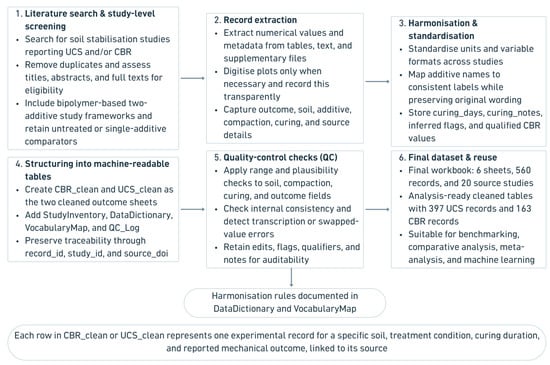
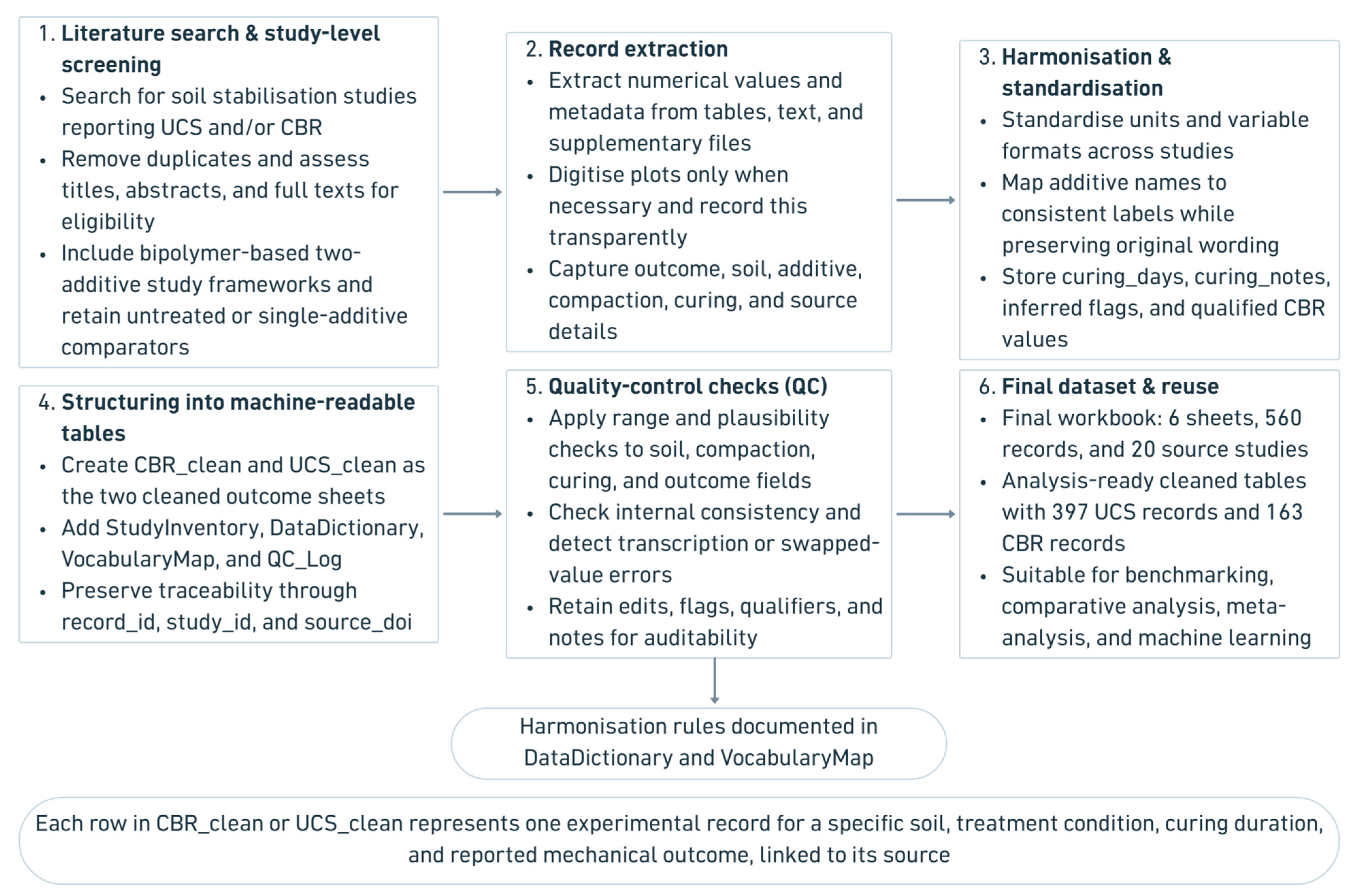
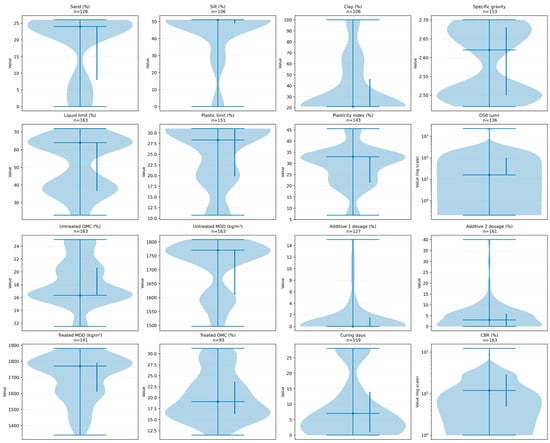
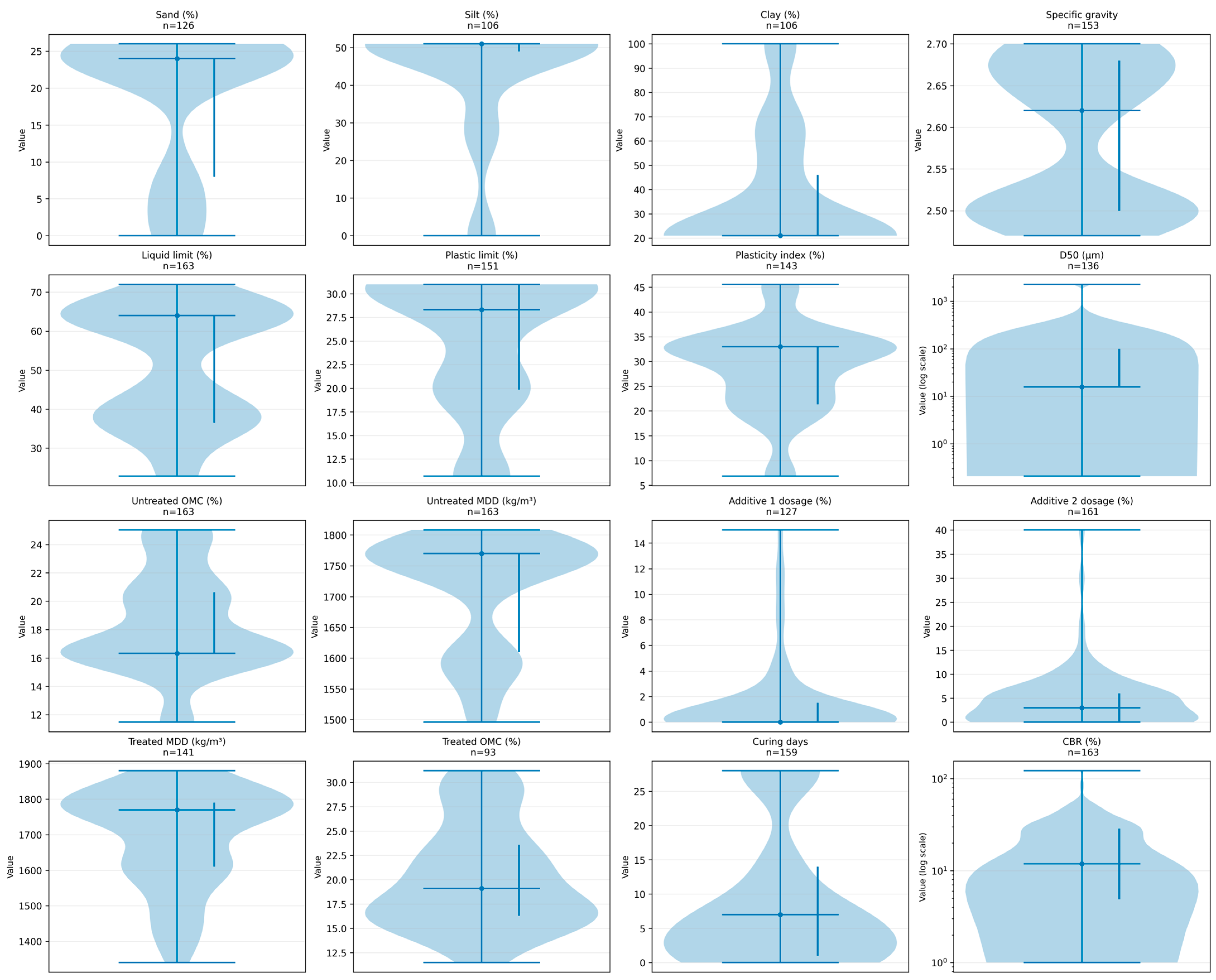
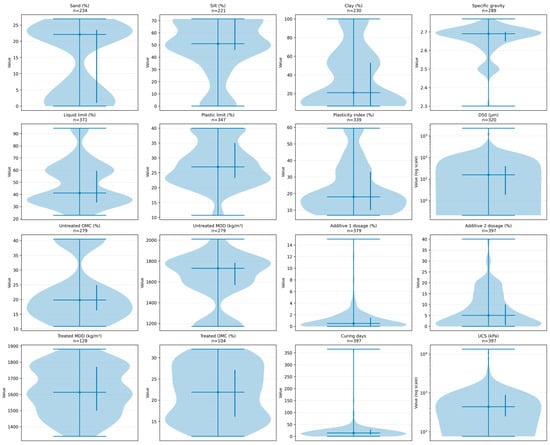
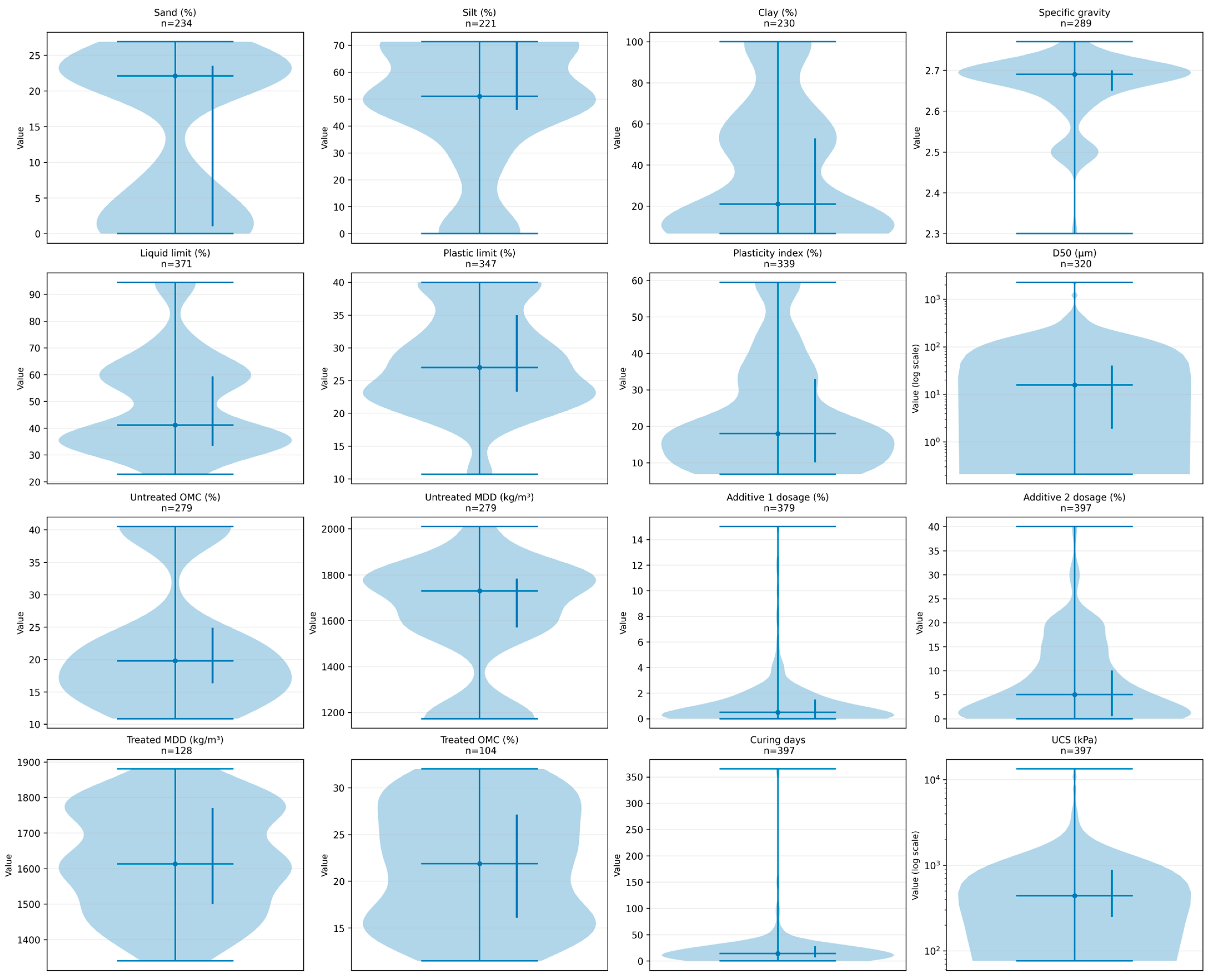
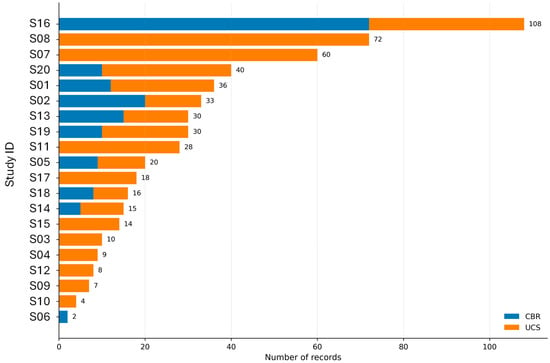
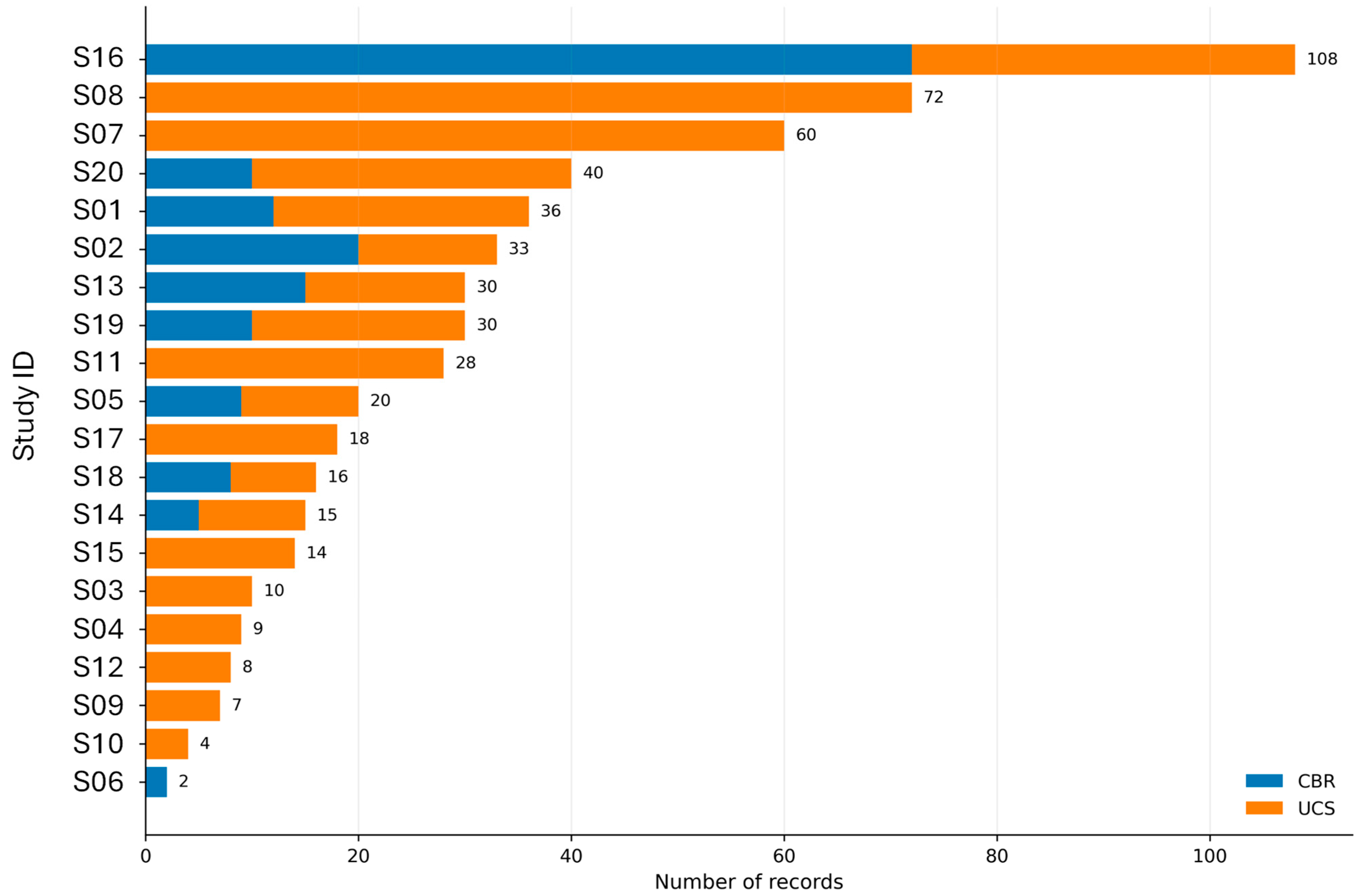
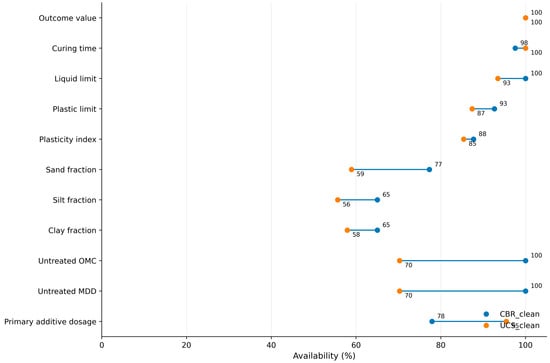
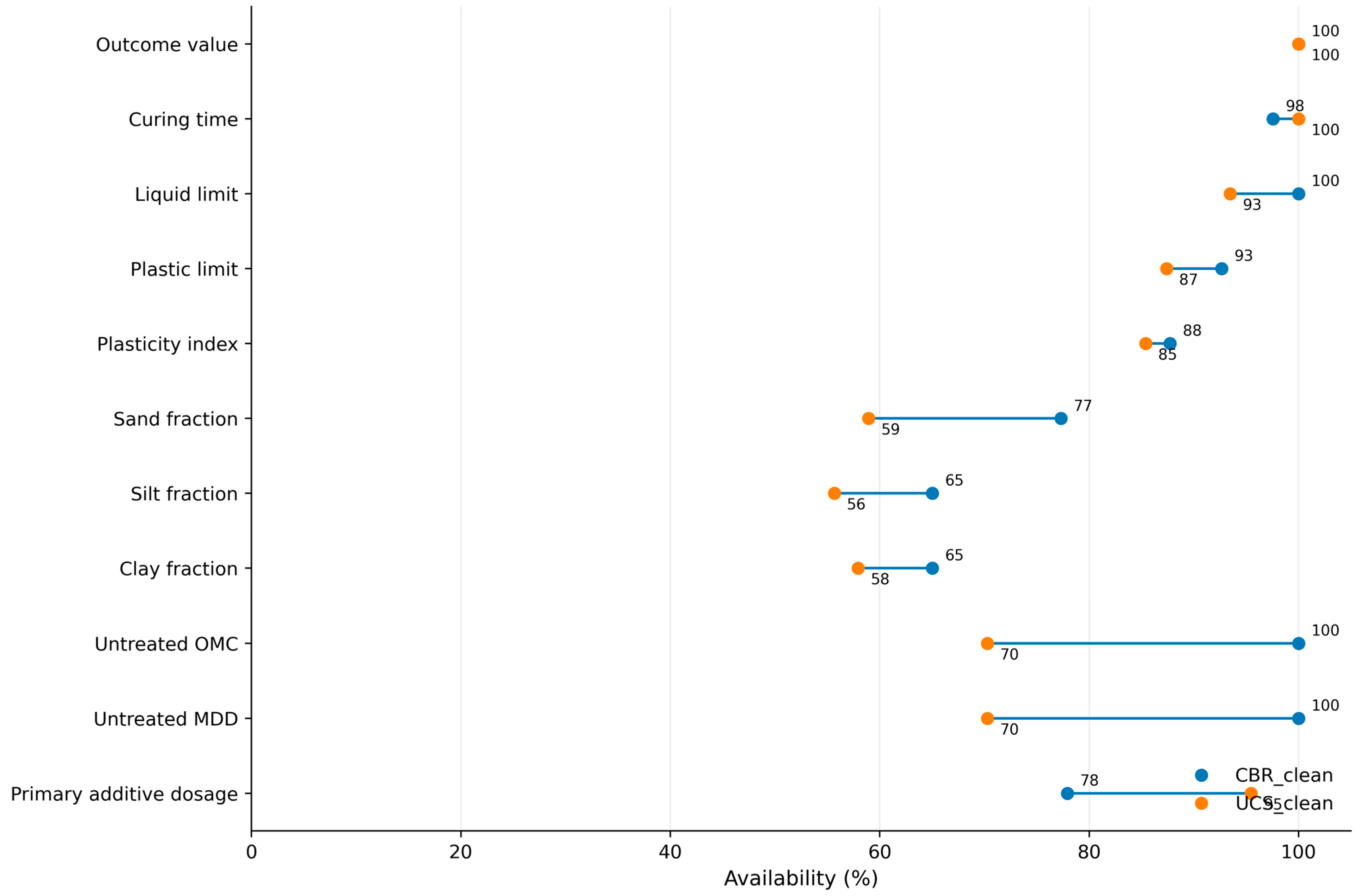
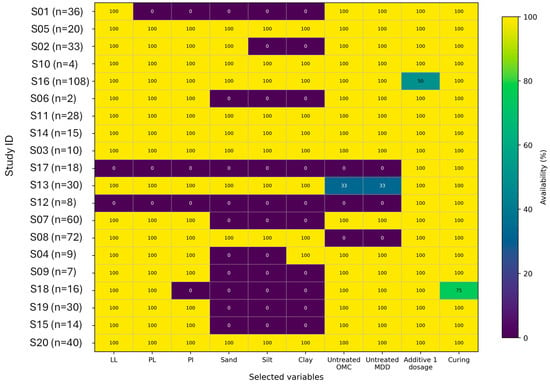
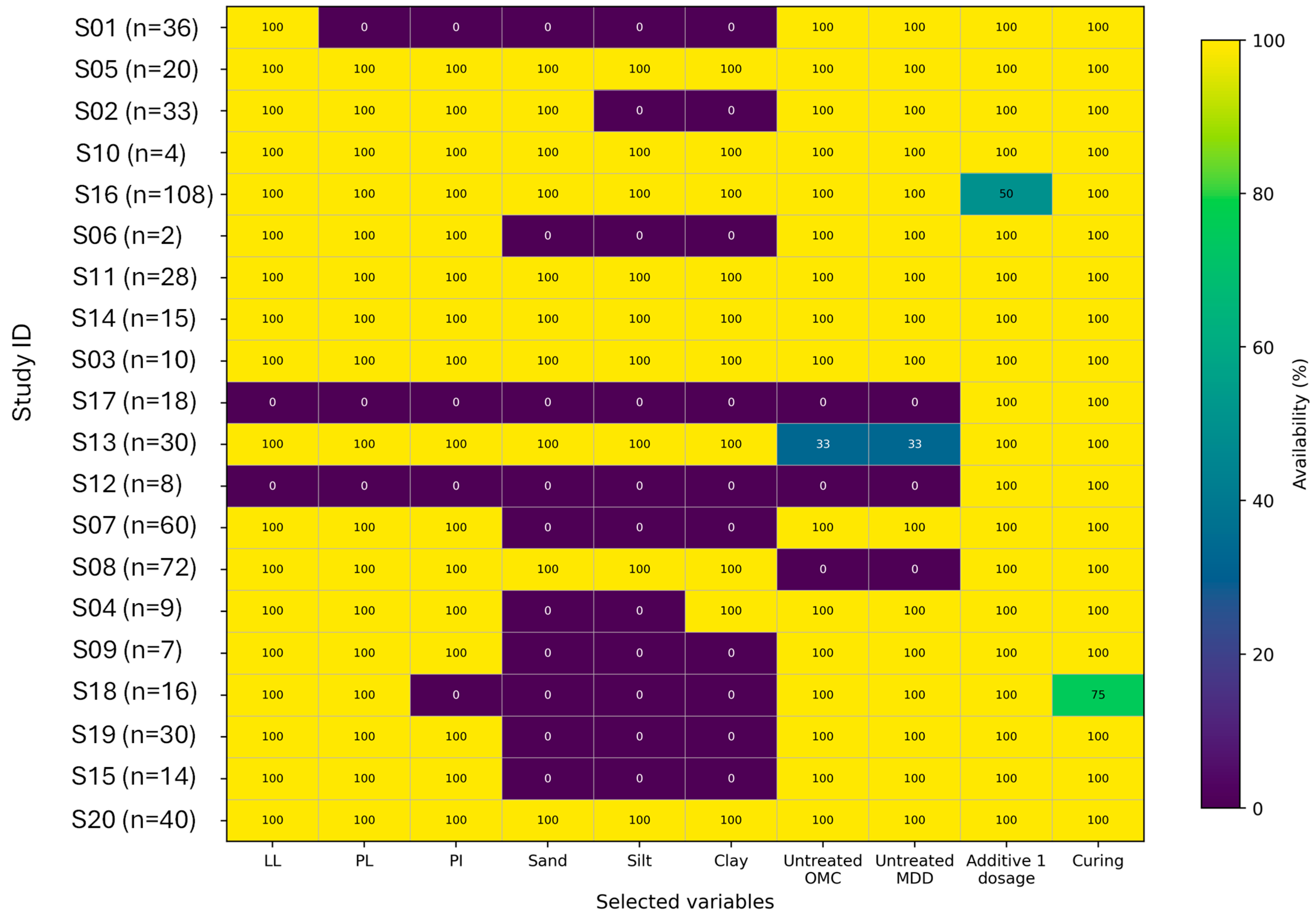
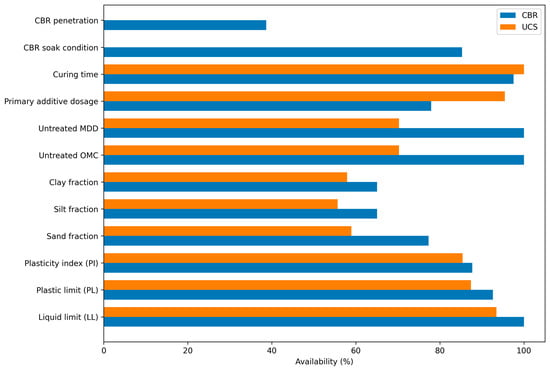
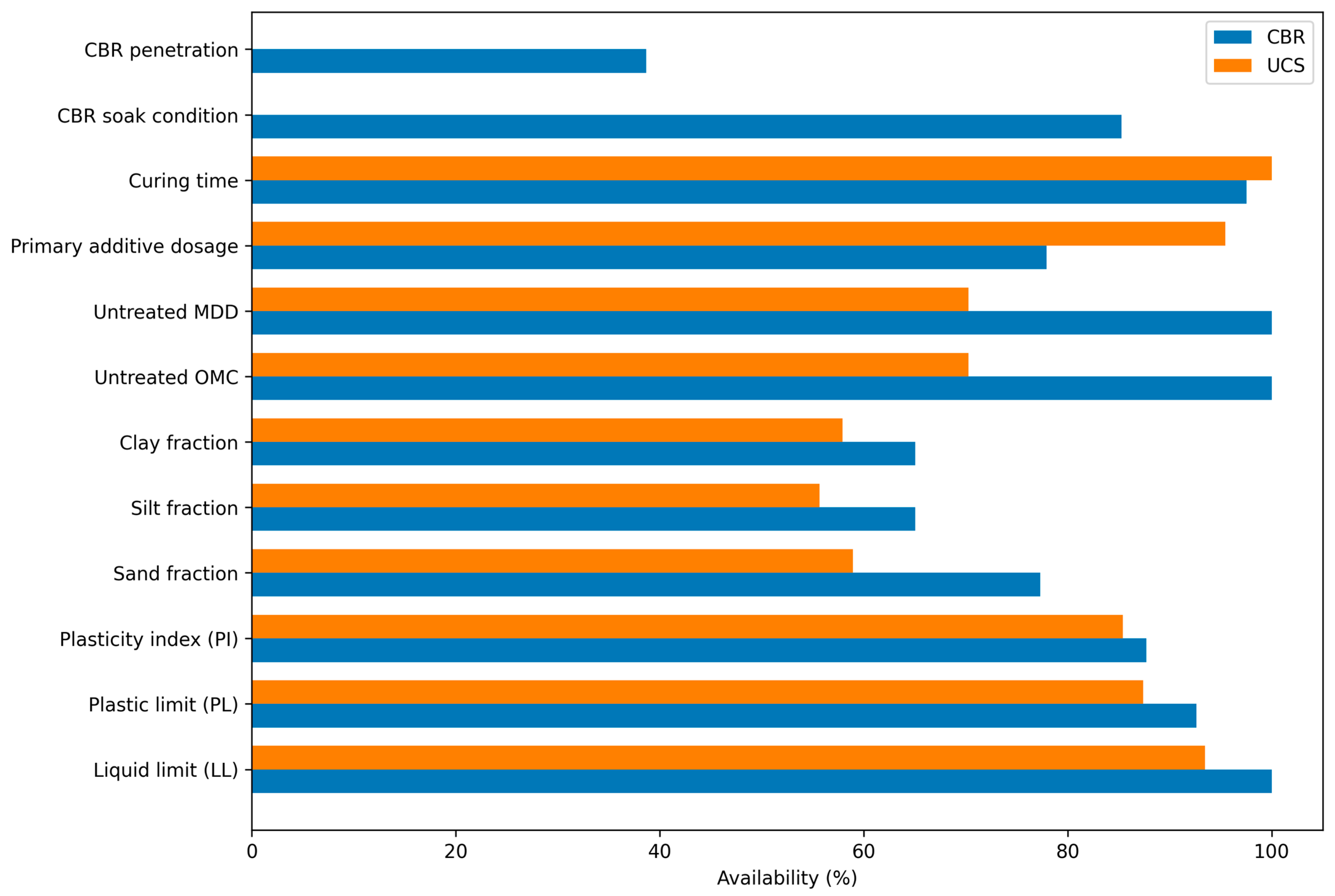
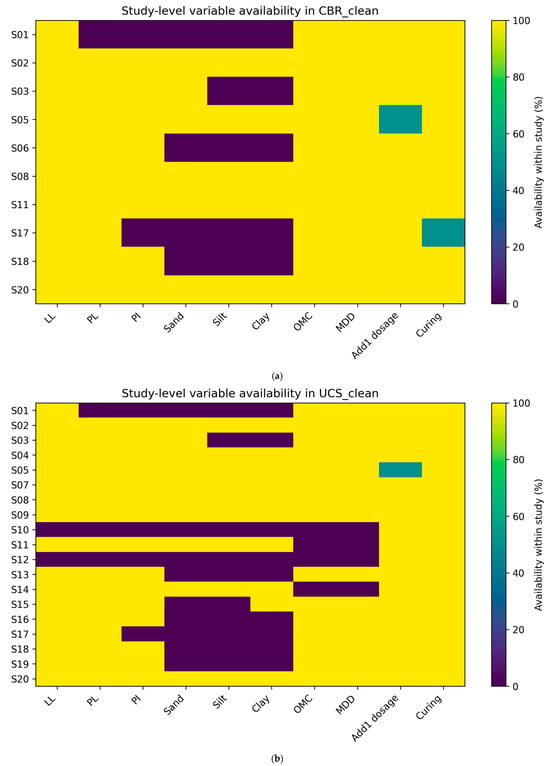
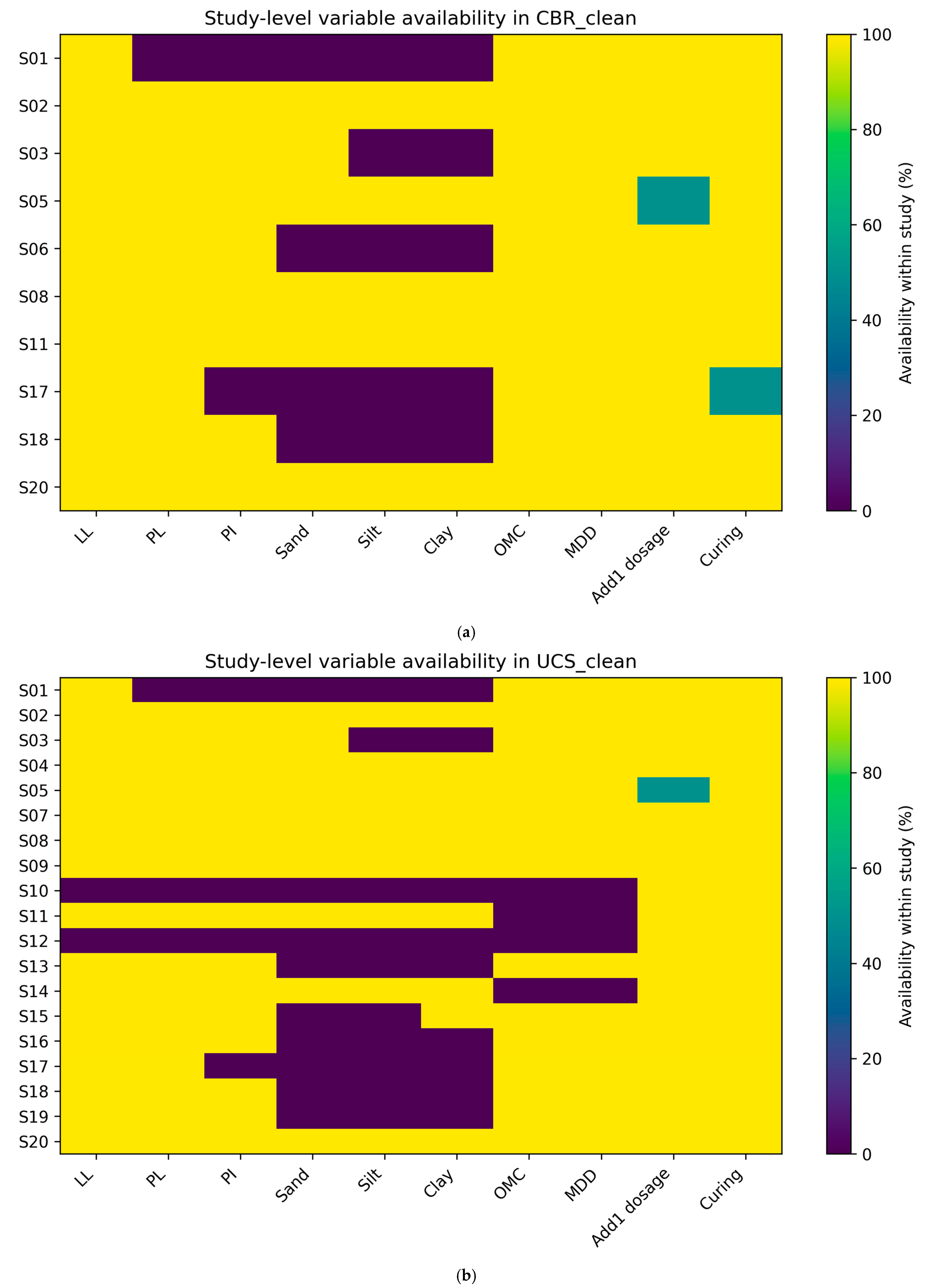
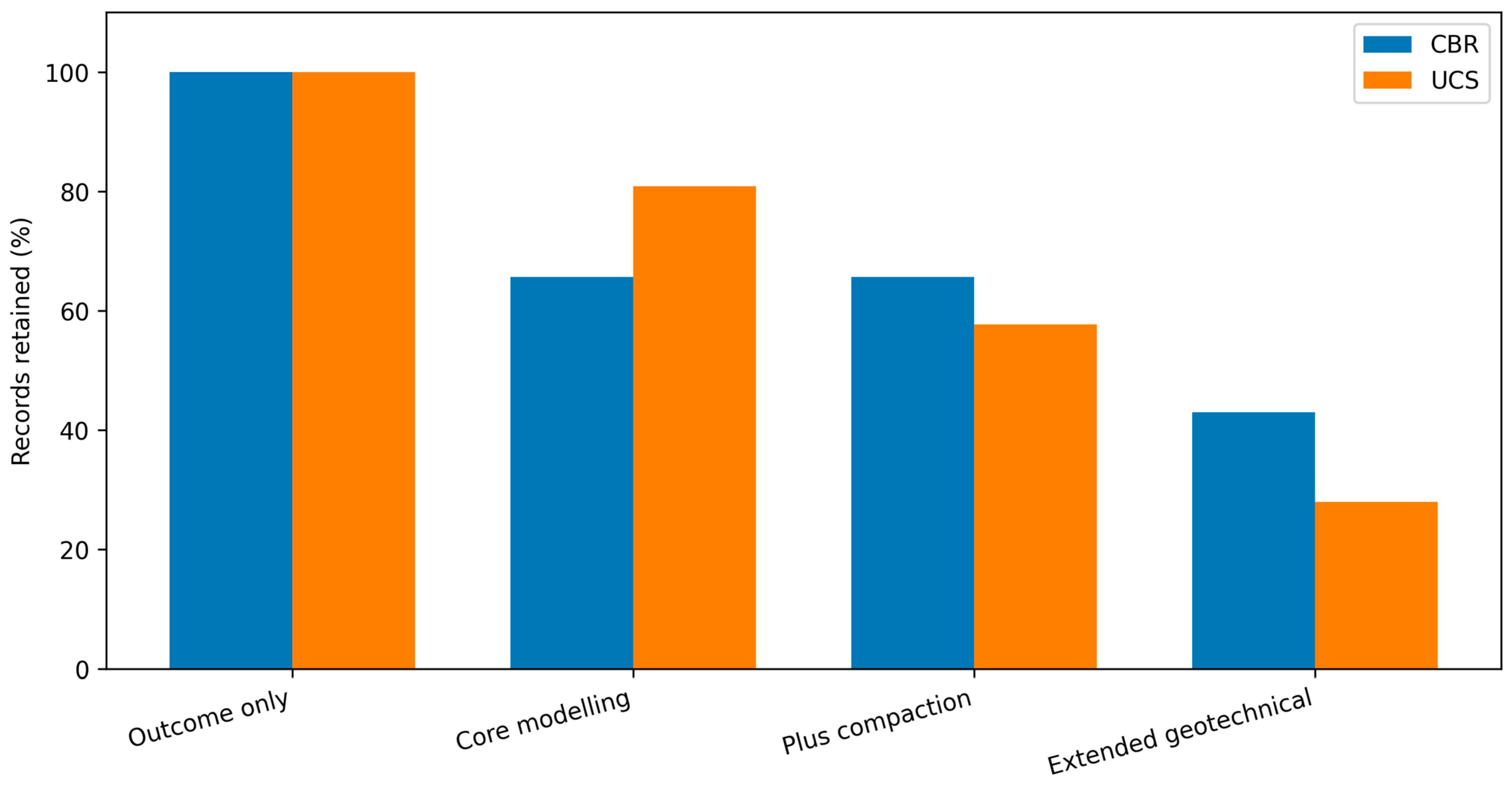
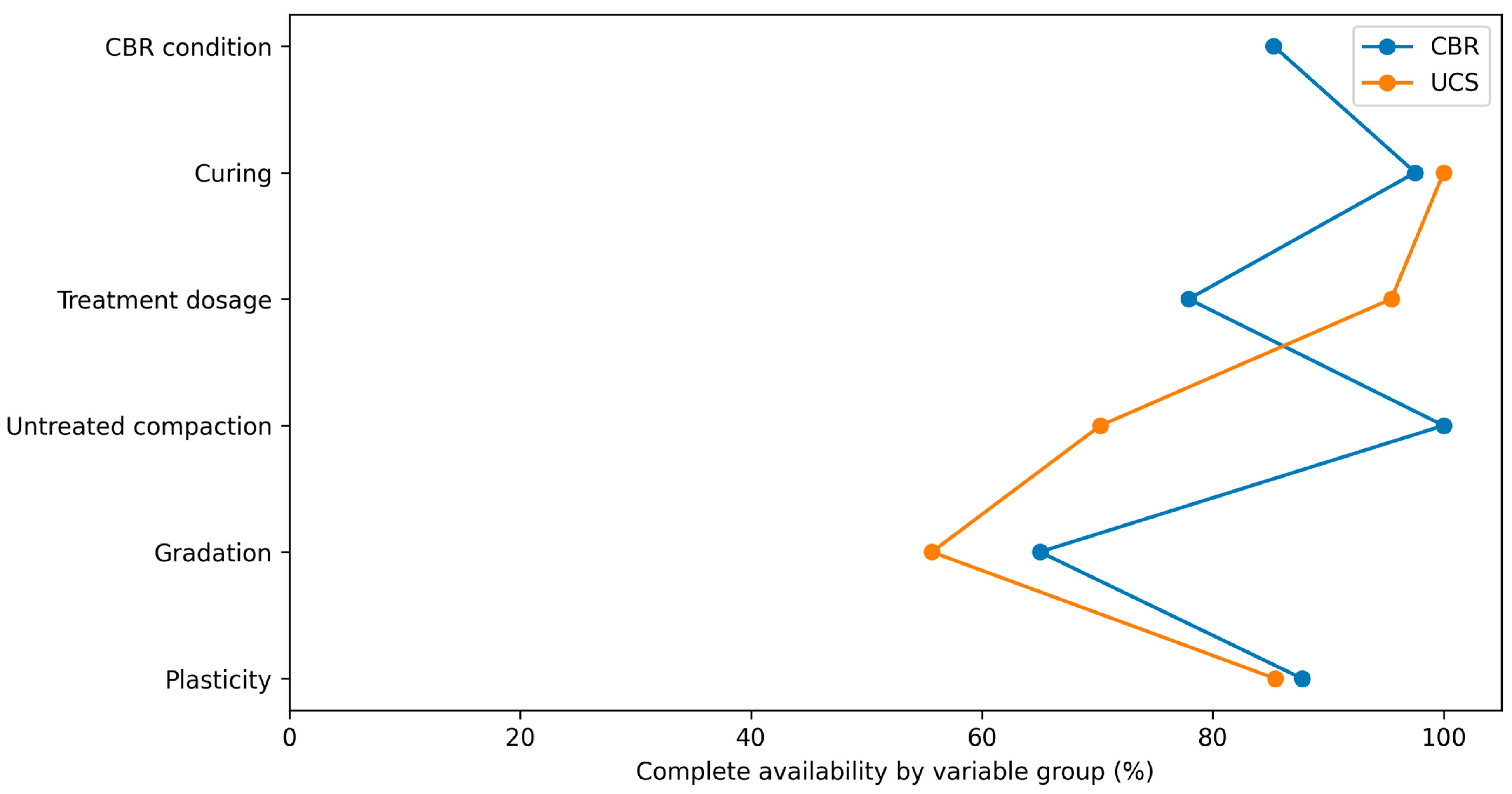
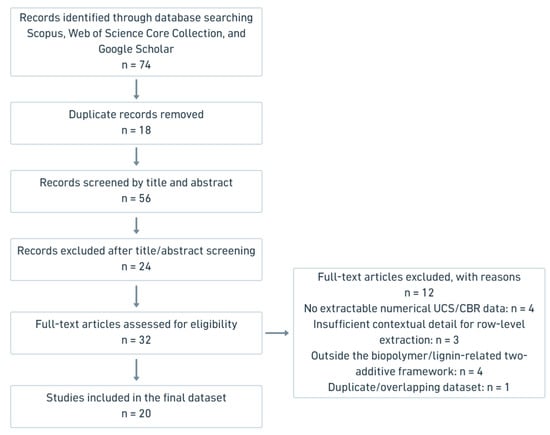
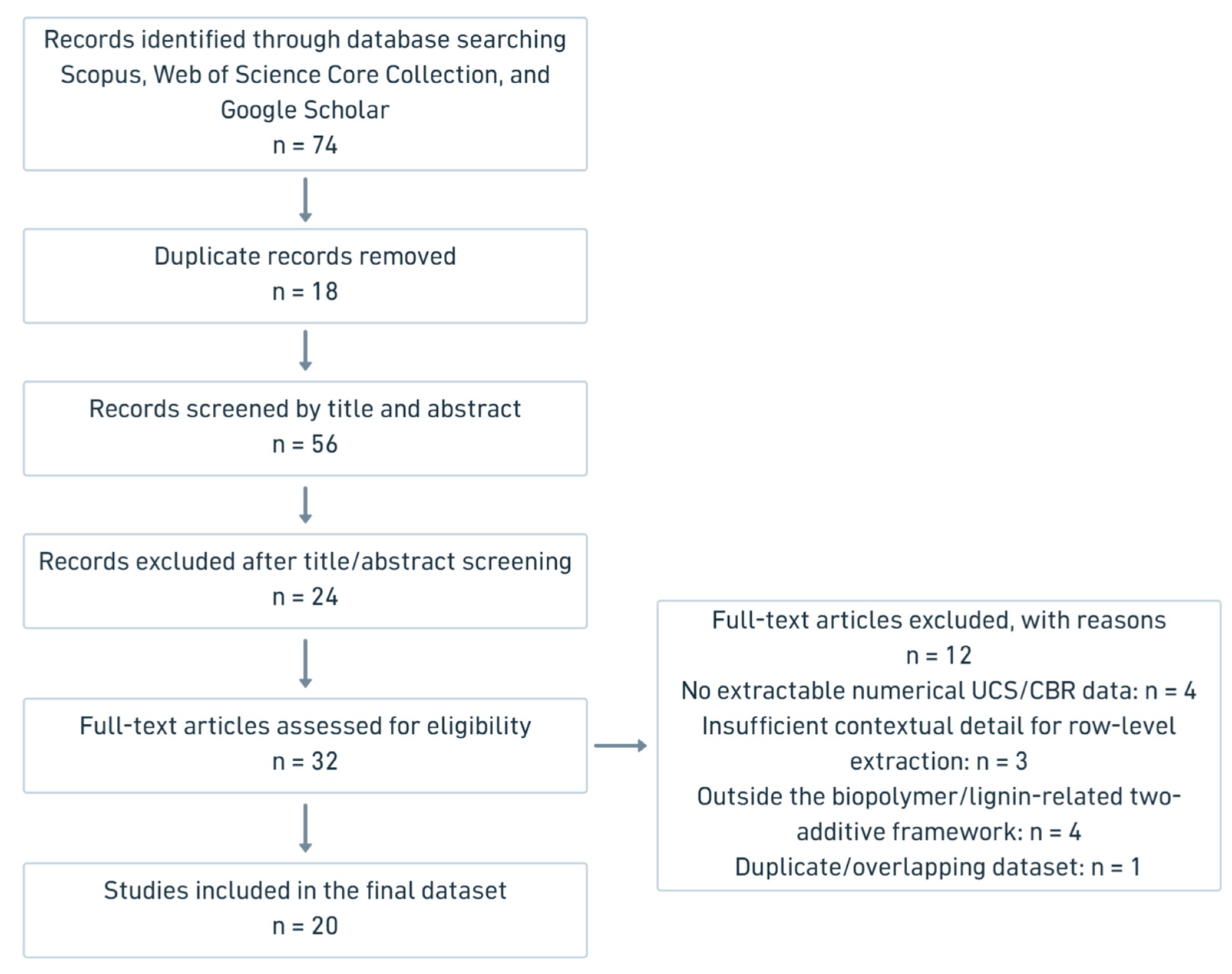

Disclaimer/Publisher’s Note: The statements, opinions and data contained in all publications are solely those of the individual author(s) and contributor(s) and not of MDPI and/or the editor(s). MDPI and/or the editor(s) disclaim responsibility for any injury to people or property resulting from any ideas, methods, instructions or products referred to in the content. |
© 2026 by the authors. Licensee MDPI, Basel, Switzerland. This article is an open access article distributed under the terms and conditions of the Creative Commons Attribution (CC BY) license.