Multifunctional Edible Amaranths: A Review of Nutritional Benefits, Anti-Nutritional Factors, and Potential in Sustainable Food Systems
 , ,
, ,  , ,
, ,
Abstract
1. Introduction
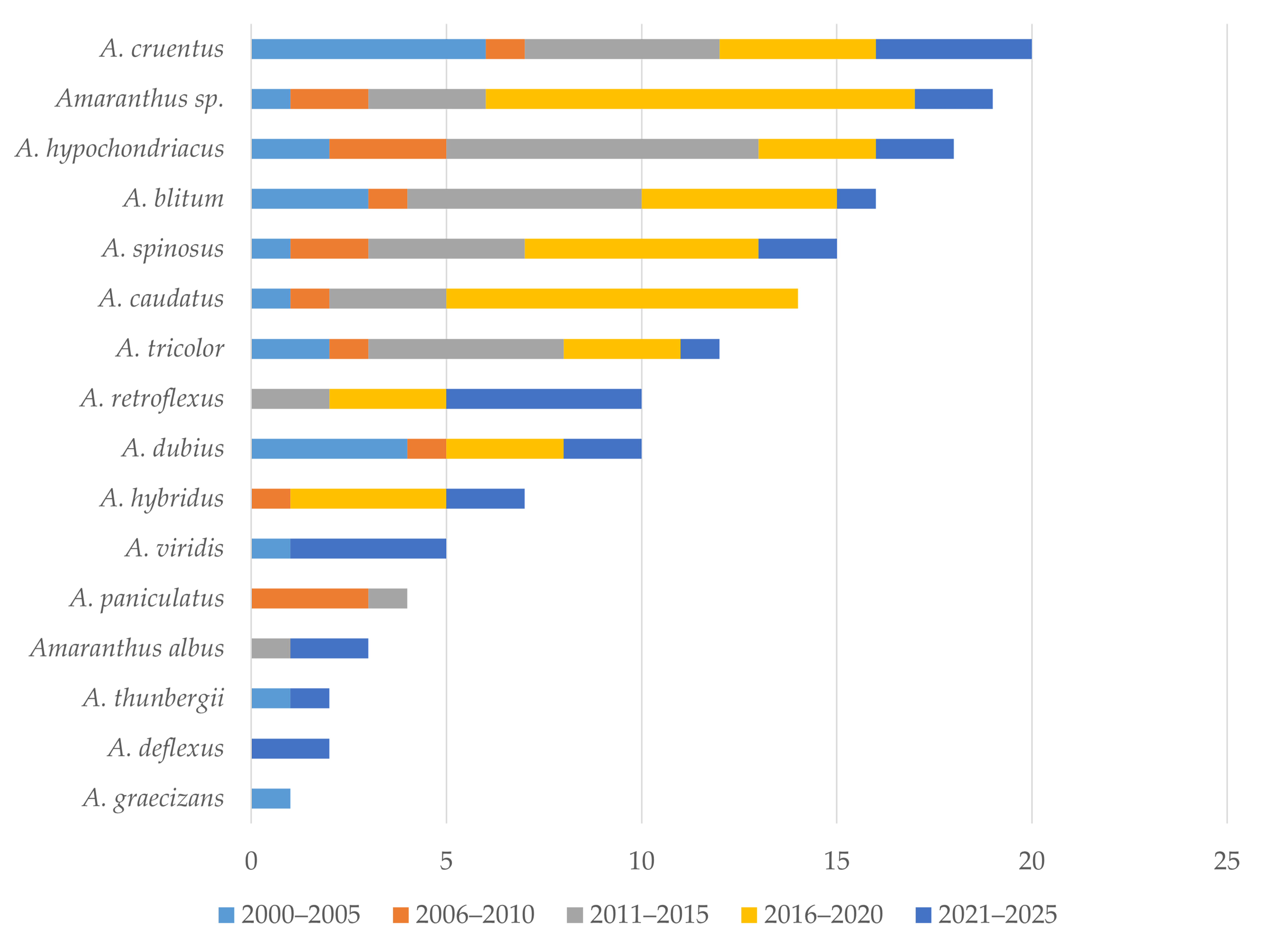
2. Materials and Methods
- Nutrition: “nutritional value,” “proximate composition,” and “amino acids.”
- Bioactivity: “bioactive compounds,” “phenolics,” and “antioxidants.”
- Safety: “anti-nutritional factors,” “oxalates,” and “phytates.”
- Sustainability: “sustainable agriculture,” “climate resilience,” and “food security.”
- Inclusion Criteria: Peer-reviewed original research articles and book chapters published in English were included. Eligible studies were required to provide quantitative data on the nutritional, bioactive, or agronomic profiles of edible Amaranthus species, with a clear focus on food science or sustainable production.
- Exclusion Criteria: Non-peer-reviewed materials—such as conference abstracts, theses, and technical reports—were excluded. Additionally, studies focusing exclusively on ornamental varieties or non-edible weed species were omitted to maintain the review’s focus on human nutrition and agriculture.
3. Results and Discussion
3.1. Amaranthus spp. as a Crop and Wild Edible Plant—Alimental Insights and Cultural Perspectives

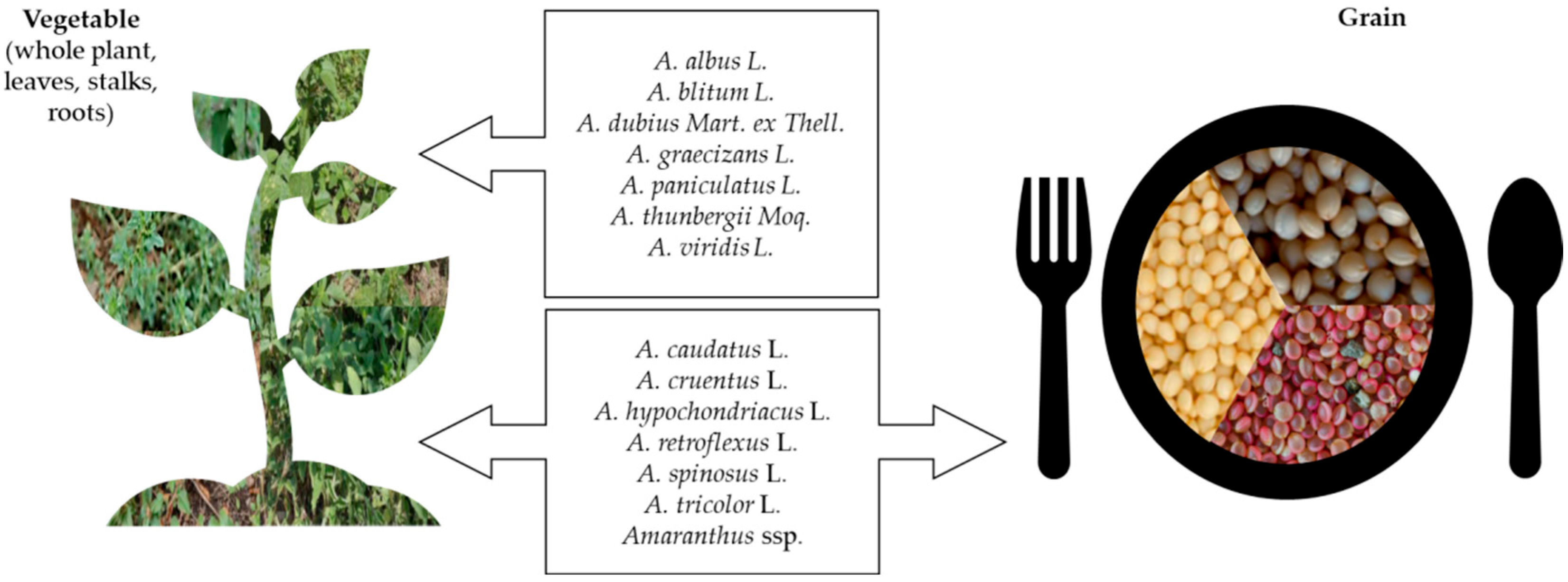
| Species | Edible Plant Parts | Main Food Uses | References |
|---|---|---|---|
| A. albus L. | aerial parts | vegetable | [40] |
| A. blitum L. (syn. A. lividus L., A. viridis All.) | aerial parts, leaves | vegetable, cooked leaf vegetable (fresh and dried) | [41,42,43,44,45,46] |
| A. caudatus L. (syn. A. mantegazzianus Passer) | leaves, seeds | biscuits, bread, crackers, flour, pasta, popping of amaranth grain, saag, vegetable | [47,48,49,50,51] |
| A. cruentus L. | leaves, seeds, stems | canned amaranth leaves, dried condiments, expanded seeds (popping), flakes, flour, fresh salads and dishes, instant noodles | [10,44,51,52,53,54,55,56,57,58] |
| A. dubius Mart. ex Thell. | leaves | steamed bread | [44,59,60] |
| A. graecizans L. | leaves | vegetable cooked leaf | [61] |
| A. hypochondriacus L. | amaranth sprouts, leaves, seeds | amaranth flour, amaranth seeds, baked products, bread, breakfast items, candies, chapati popped, fresh salads, high-antioxidant capacity beverages, molasses, pasta, roasted amaranth flour (beverage preparation), soups, vegetable cooked leaf | [44,61,62,63,64,65,66,67,68] |
| A. paniculatus L. | aerial parts | vegetable | [41,64] |
| A. retroflexus L. | aerial parts, leaves, seeds, whole plant | bread, dried, flours, fresh, raw or toasted, in pie fillings | [40,69,70] |
| A. spinosus L. | leaves, roots, seeds, whole plant | flour (bread), sauces, soups, vegetables | [9,42,44,63,68] |
| A. thunbergii Moq. | leaves | fresh or dried | [44,71] |
| A. tricolor L. (syn. A. gangeticus L., A. polygamus L.) | aerial parts, leaves, seeds | biscuits, vegetables | [41,42,44,72] |
| A. viridis L. | leaves, shoots, young plants | cooked vegetable, cooked vegetables, fried vegetable, steamed vegetable | [44,73] |
| Amaranthus spp. | aerial parts, leaves, seeds, seeds and leaves | bakery, biscuits, bread (popping, steaming), cakes, candies, cassava breads, condiment, cookies, crackers, high protein beverage, maize breads, noodles formation, pancakes, pasta, puree, salads, snack bar, snack cake, soups, starch flour bakery, thickener in sauces, tortillas, vegetable, wheat flour blended with high amaranth protein content to enhance the nutritional worth of final food products such as noodles, cookies, potatoes, and breads | [17,39,62,74,75,76,77,78,79,80,81,82,83,84,85,86,87,88] |
3.2. Nutritional Value and Health Benefits
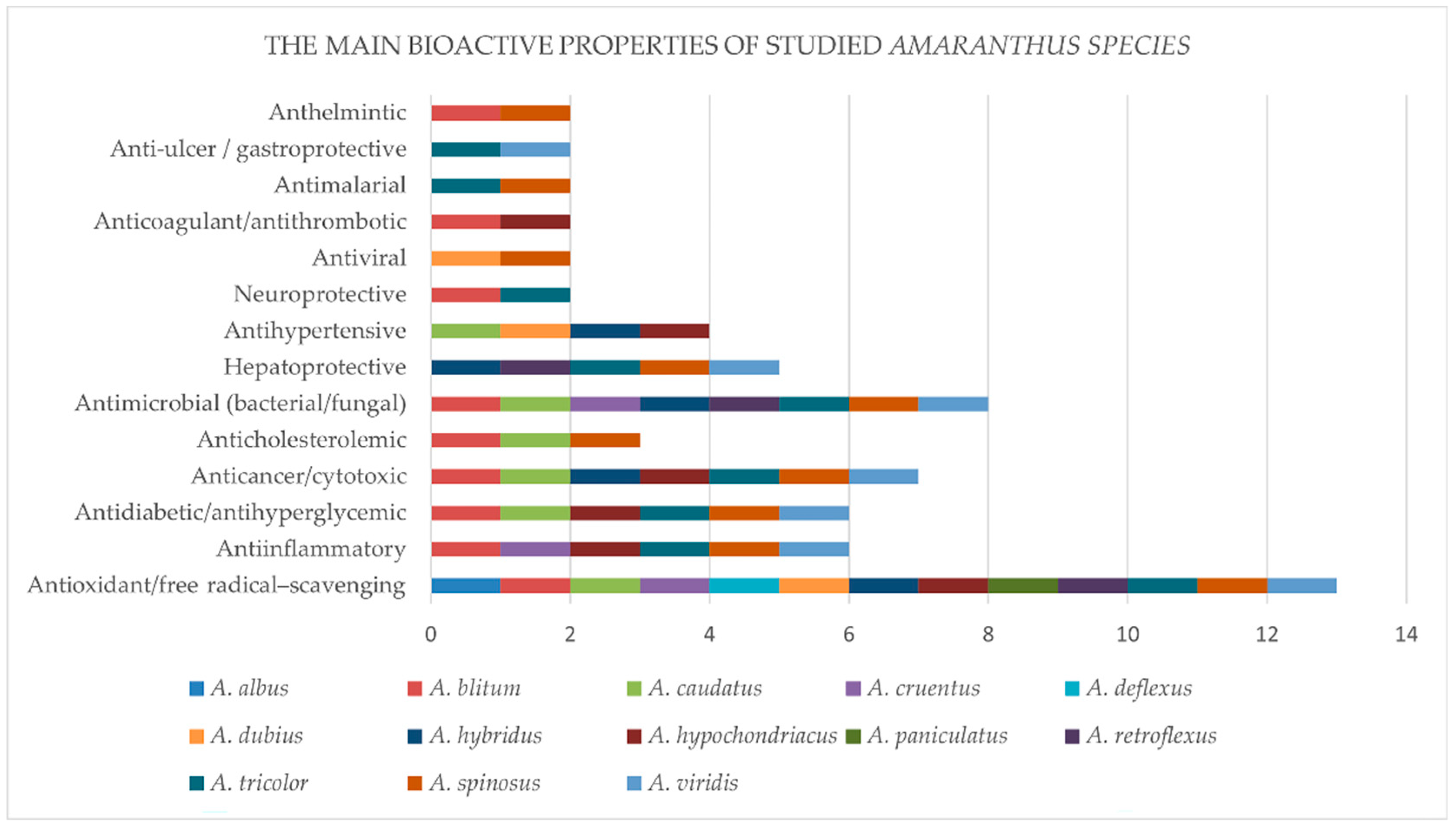
| Species | Plant Part | Experimentally Validated Biological Activity | Ethnomedicinal Uses | References |
|---|---|---|---|---|
| A. albus L. | aerial parts | pancreatic lipase inhibitory activity (anti-obesity potential) [114] | as food or tea, reported to influence digestion [40] | [40,114] |
| A. blitum L. (syn. A. lividus L., A. viridis All.) | aerial parts, aerial parts (ethanol extract and fractions), leaf decoction, leaf poultice, leaves, seeds, whole plant | antioxidant and free radical-scavenging activities [41,43]; antioxidant and neuroprotective activities [115]; neuroprotective and anti-inflammatory activities [116]; antihyperglycemic and hypolipidemic activities [117]; antidiabetic and anticholesterolemic activities [118]; strong antioxidant and DNA-protective activities [119]; anthelmintic, anti-platelet and anti-coagulant activities [120]; antioxidant and anticancer activities [60]; neuroprotective, anticancer, and antibacterial effects [121]. | leaves used for strangury, gonorrhoea, urinary stone removal, and as a skin tonic [42]; blood-purifier, diuretic; used in piles, strangury, dropsy, pulmonary issues, scrofula, ulcers, diarrhoea, oral/throat inflammation [122] | [41,42,43,44,60,115,116,117,118,119,120,121,122] |
| A. caudatus L. (syn. A. mantegazzianus Pass.) | aerial parts, leaves, roots, seeds, whole plant | antioxidant activity [18,110]; antidiabetic and anti-cholesterolemic activities [118]; strong iron-chelating antioxidant activity [123]; antitumor effect [124]; antimicrobial activity and growth-stage-dependent toxicity [125]; strong antidiabetic, insulin-boosting activity [126]; antioxidant, antihypertensive and antidiabetic activity [127] | [18,110,118,123,124,125,126,127] | |
| A. cruentus L. | aerial parts (leaves and stems), leaves, root decoction, seeds | antioxidant potential [123]; antioxidant and anti-inflammatory activities [128]; antifungal activity [129,130]; antioxidant and xanthine oxidase inhibitory activities [131] | for anaemia [44,132] | [44,123,128,129,130,131,132] |
| A. deflexus L. | leaves | antioxidant activity [133,134] | No specific data found. | [133,134] |
| A. dubius Mart. | fruits, leaves | antiviral activity [121,135]; antihypertensive activity [136] | for anaemia and general health [44]; anaemia [137]; for kidney issues, anaemia, fever, bleeding, stomach ailments, and hypertension [136] | [44,121,135,136,137] |
| A. hybridus L. | aerial parts (leaves and stems), leaves, seed extract, seeds, whole plant | antioxidant and anticancer activities [60]; strong antioxidant, anticancer, and antimicrobial properties [121]; antioxidant capacity [123]; antifungal effects [129]; strong antioxidant activity [131]; antihypertensive, antioxidant, antimicrobial, hepatoprotective, and anticancer activities [136]; antioxidant and antimicrobial potentials [138]; antioxidant, anticancer, and antimicrobial activities [60]; antioxidant activity [139] | for digestive discomfort and general weakness [44]; used to support general health and nutrition [136] | [44,60,60,121,123,129,131,136,138,139] |
| A. hypochondriacus L. | flowers, leaves, seeds | antioxidant activity [61,123]; anticarcinogenic and antihypertensive activities [66]; anticancer and antihypertensive activities [121]; antioxidant activity [123]; antidiabetic [140]; antithrombotic, antihypertensive, antioxidant and anti-inflammatory effects [141]; anti-inflammatory and antioxidant activities [142]; antioxidant activity [143] | for digestion and general health [44]; for ulcers, diarrhoea, and oral/throat inflammation [122] | [44,61,66,121,122,123,140,141,142,143] |
| A. paniculatus L. | aerial parts, leaves | antioxidant and free radical-scavenging activities [41]; antioxidant activity [144] | for antioxidant health benefits [144] | [41,144] |
| A. retroflexus L. | aerial parts, inflorescences, leaves, roots | antioxidant activity [69]; antifungal and antimicrobial activities [121]; antifungal activity [129]; antioxidant activity [123,145]; cytotoxic activity and cytotoxic effect on bovine kidney cells [146]; antioxidant and iron chelation activities [147]; antimicrobial and antioxidant activities [148] | to support digestion [40]; hepaticoprotective [149]; digestive, stomach-ache, diarrhoea [150] | [40,69,121,123,129,145,146,147,148,149,150] |
| A. tricolor L. (syn. A. gangeticus L., A. polygamus L., A. mangostanus L.) | aerial parts, crude extract of leaves, leaves, roots, roots, seeds, shoots, stems, whole plant, whole plant | antioxidant and free radical-scavenging activities [41]; antioxidant, antidiabetic, anti-inflammatory, diuretic, antimicrobial (bacterial, fungal), laxative, hepatoprotective, antimalarial, anti-ulcer, antipyretic and antinociceptive (analgesic) activities; immunomodulatory effects [113]; antioxidant and neuroprotective activities [115]; neuroprotective and anti-inflammatory activities [116]; antioxidant, anti-inflammatory, and antimicrobial activities [121]; antimicrobial activity [151,152] | astringent; used for diarrhoea, dysentery, haemorrhage, and for mouth/throat ulcers [42]; for digestion and general health [44]; used as laxative, diuretic; for fever, inflammation, diabetes, skin disorders, respiratory relief, anti-snake-venom use, and digestive issues [113]; used for fever, debility, antiseptic applications; as laxative, emollient, diuretic, spasmolytic; for allergic asthma/rhinitis (pollen), menstrual disorders (root), gastrointestinal issues, cough, bronchitis; externally emollient [122] | [41,42,44,113,115,116,121,122,151,152] |
| A. spinosus L. | aerial parts, leaves, roots, whole plants | antioxidant, anti-inflammatory, antimicrobial, antidiabetic activities [9]; antidiabetic, anti-cholesterolemic [118]; hepatoprotective, diuretic and antidepressant activities [121]; antifungal activities [153]; antimalarial activities [154]; hepatoprotective and antioxidant activities [155]; antidepressant activity [156]; cytotoxic impact and antioxidant activity [157]; antioxidant, anticancer, antiviral and anthelmintic activities [158] | as antidote/anti-snake venom [9]; for digestive discomfort and general health [44]; used as cooling stomachic and emollient; for biliousness and haemorrhagic diathesis [122] | [9,44,118,121,122,153,154,155,156,157,158] |
| A. viridis L. | leaves, seeds, young plants | gastroprotective, anti-ulcer, anti-inflammatory, and anticancer activities, with potential benefits for cardiovascular and degenerative diseases [14]; antioxidant activity [41]; antioxidant and anticancer activities [73]; antihyperglycemic and antioxidant activities [121]; antioxidant activity, cytotoxic impact [157]; antioxidant, anticancer, anti-inflammatory and antimicrobial activities [159]; antioxidant and anti-inflammatory activities [160]; hepatoprotective and antioxidant activities [161] | diuretic, purgative; used for inflammations, boils, abscesses, gonorrhoea, orchitis, haemorrhoids, intestinal pain, dysentery, anaemia, remugue; leaves considered febrifugal [44] | [14,41,44,73,121,157,159,160,161] |
3.3. Anti-Nutritional Compounds and Olfactory Issues
4. Perspectives for Adaptation to Climate Change
5. Relevance of the Topic and Current Research
6. Future Directions and Conclusions
Supplementary Materials
Author Contributions
Funding
Institutional Review Board Statement
Informed Consent Statement
Data Availability Statement
Conflicts of Interest
References
- Mlakar, S.G.; Turinek, M.; Jakop, M.; Bavec, M.; Bavec, F. Grain Amaranth as an Alternative and Perspective Crop in Temperate Climate. J. Geogr. 2010, 5, 135–145. [Google Scholar] [CrossRef]
- Granato, D.; Nunes, D.S.; Barba, F.J. An Integrated Strategy between Food Chemistry, Biology, Nutrition, Pharmacology, and Statistics in the Development of Functional Foods: A Proposal. Trends Food Sci. Technol. 2017, 62, 13–22. [Google Scholar] [CrossRef]
- Deka, S.C.; Seth, D.; Hulle, N.R.S. (Eds.) Food Bioactives; Includes Bibliographical References and Index; Apple Academic Press: Palm Bay, FL, USA, 2019; ISBN 9780429242793. [Google Scholar]
- Waisundara, V.Y. (Ed.) Nutritional Functional Value and Therapeutic Utilization of Amaranth; IntechOpen: London, UK, 2020; ISBN 978-1-83880-084-0. [Google Scholar]
- Iamonico, D. Nomenclature Survey of the Genus Amaranthus (Amaranthaceae): 12 Questions about Amaranthus caudatus. Plants 2023, 12, 1566. [Google Scholar] [CrossRef]
- Das, S. Amaranthus: A Promising Crop of Future; Springer: Singapore, 2016. [Google Scholar]
- Ghazanfar, S.A.; Edmondson, J.R. (Eds.) Flora of Iraq, Volume 5 Part 1: Elatinaceae to Sphenocleaceae; Royal Botanic Gardens, Kew: Richmond, UK, 2016; Volume 5, ISBN 978-1-84246-594-3. [Google Scholar]
- Dincă, L.; Dincă, M.; Pantea, S.; Timiș-Gânsac, V.; Onet, C. Amaranthus Plant—Between Myth and Usage. Nat. Resour. Sustain. Dev. 2018, 8, 9–16. [Google Scholar] [CrossRef]
- Ganjare, A.B.; Raut, N. Nutritional and Medicinal Potential of Amaranthus spinosus. J. Pharmacogn. Phytochem. 2019, 8, 3149–3156. [Google Scholar]
- Olusanya, R.; Unathi, K.; Nomali, N.; Chinsamy, M. Underutilization Versus Nutritional-Nutraceutical Potential of the Amaranthus Food Plant: A Mini-Review. Appl. Sci. 2021, 11, 6879. [Google Scholar] [CrossRef]
- Achigan-Dako, E.G.; Sogbohossou, O.E.D.; Maundu, P. Current Knowledge on Amaranthus spp.: Research Avenues for Improved Nutritional Value and Yield in Leafy Amaranths in Sub-Saharan Africa. Euphytica 2014, 197, 303–317. [Google Scholar] [CrossRef]
- Rastogi, A.; Shukla, S. Amaranth: A New Millennium Crop. Crit. Rev. Food Sci. Nutr. 2013, 53, 109–125. [Google Scholar] [CrossRef]
- Bressani, R. Composition and Nutritional Properties of Amaranth. In Amaranth Biology, Chemistry, and Technology; CRC Press: Boca Raton, FL, USA, 2018; pp. 185–205. [Google Scholar]
- Singhania, N.; Kumar, R.; Pramila; Bishnoi, S.; Ray, A.B.; Diwan, A. Bioactive Properties and Health Benefits of Amaranthus. In Harvesting Food from Weeds; Wiley: New York, NY, USA, 2023; pp. 351–383. [Google Scholar]
- Bender, D.; Schoenlechner, R. Recent Developments and Knowledge in Pseudocereals. Acta Aliment. 2021, 50, 583–609. [Google Scholar] [CrossRef]
- Trucco, F.; Tranel, P.J. Amaranthus. In Wild Crop Relatives: Genomic and Breeding Resources; Kole, C., Ed.; Springer: Berlin/Heidelberg, Germany, 2011; pp. 11–21. [Google Scholar]
- Park, S.-J.; Sharma, A.; Lee, H.-J. A Review of Recent Studies on the Antioxidant Activities of a Third-Millennium Food: Amaranthus spp. Antioxidants 2020, 9, 1236. [Google Scholar] [CrossRef] [PubMed]
- Jimoh, M.O.; Afolayan, A.J.; Lewu, F.B. Antioxidant and Phytochemical Activities of Amaranthus caudatus L. Harvested from Different Soils at Various Growth Stages. Sci. Rep. 2019, 9, 12965. [Google Scholar] [CrossRef]
- Hoidal, N.; Díaz Gallardo, M.; Jacobsen, S.E.; Alandia, G. Amaranth as a Dual-Use Crop for Leafy Greens and Seeds: Stable Responses to Leaf Harvest across Genotypes and Environments. Front. Plant Sci. 2019, 10, 452349. [Google Scholar] [CrossRef]
- Wang, S.T.; Ebert, A.W. Breeding of Leafy Amaranth for Adaptation to Climate Change. In Proceedings of the Regional Symposium on High Value Vegetables in Southeast Asia: Production, Supply and Demand (SEAVEG2012), Chiang Mai, Thailand, 24–26 January 2012; 2013; pp. 36–43. [Google Scholar]
- Martínez-Núñez, M.; Ruiz-Rivas, M.; Vera-Hernández, P.F.; Bernal-Muñoz, R.; Luna-Suárez, S.; Rosas-Cárdenas, F.F. The Phenological Growth Stages of Different Amaranth Species Grown in Restricted Spaces Based in BBCH Code. S. Afr. J. Bot. 2019, 124, 436–443. [Google Scholar] [CrossRef]
- Murthy, N.; Kumar, J.S.A. Grain Amaranth (Amaranthus sp.)—An Underutilized Crop Species for Nutritional Security and Climate Resilience. Mysore J. Agric. Sci. 2017, 51, 12–20. [Google Scholar]
- Matías, J.; Rodríguez, M.J.; Carrillo-Vico, A.; Casals, J.; Fondevilla, S.; Haros, C.M.; Pedroche, J.; Aparicio, N.; Fernández-García, N.; Aguiló-Aguayo, I.; et al. From ‘Farm to Fork’: Exploring the Potential of Nutrient-Rich and Stress-Resilient Emergent Crops for Sustainable and Healthy Food in the Mediterranean Region in the Face of Climate Change Challenges. Plants 2024, 13, 1914. [Google Scholar] [CrossRef]
- Sharma, A.; Qayyum, Z.A.; Neagu, M.B. Effect of Water Stress and Salinity Stress on Growth in Amaranth (Amaranthus retroflexus L.). Nepal. J. Agric. Sci. 2021, 20, 70–77. [Google Scholar]
- Sarker, U.; Oba, S.; Ercisli, S.; Assouguem, A.; Alotaibi, A.; Ullah, R. Bioactive Phytochemicals and Quenching Activity of Radicals in Selected Drought-Resistant Amaranthus tricolor Vegetable Amaranth. Antioxidants 2022, 11, 578. [Google Scholar] [CrossRef] [PubMed]
- Sarker, U.; Oba, S. Antioxidant Constituents of Three Selected Red and Green Color Amaranthus Leafy Vegetable. Sci. Rep. 2019, 9, 18233. [Google Scholar] [CrossRef] [PubMed]
- Maseko, I.; Mabhaudhi, T.; Tesfay, S.; Araya, H.T.; Fezzehazion, M.; Du Plooy, C.P. African Leafy Vegetables: A Review of Status, Production and Utilization in South Africa. Sustainability 2017, 10, 16. [Google Scholar] [CrossRef]
- Joshi, D.C.; Sood, S.; Hosahatti, R.; Kant, L.; Pattanayak, A.; Kumar, A.; Stetter, M.G. From Zero to Hero: The Past, Present and Future of Grain Amaranth Breeding. Theor. Appl. Genet. 2018, 131, 1807–1823. [Google Scholar] [CrossRef] [PubMed]
- Tyrus, M.; Lykhochvor, V.; Hnativ, P. Amaranth: A Multi-Purpose Crop for War-Torn Land. Int. J. Environ. Stud. 2023, 80, 497–506. [Google Scholar] [CrossRef]
- Arendt, E.K.; Zannini, E. Cereal Grains for the Food and Beverage Industries; Elsevier: Amsterdam, The Netherlands, 2013. [Google Scholar]
- Turner, M.I.; Adams, K.R.; Berkebile, J.N.; Dockter, A.R. Ancient Grains: New Evidence for Ancestral Puebloan Use of Domesticated Amaranth. Am. Antiq. 2021, 86, 815–832. [Google Scholar] [CrossRef]
- Hernández-Hernández, B.R.; Regino-Maldonado, J.; Miguel-Velasco, A.E. The Rural Social Enterprise and Its Contribution to the Conservation of Amaranth as an Agrifood Heritage. Rev. De Estud. Andal. 2020, 206–207. [Google Scholar] [CrossRef]
- Onur, M.; Sezgin, A.C. The Use of the Ancient Amaranth (Amaranthus) Grain in Traditional Turkish Cuisine. Turk. J. Agric.-Food Sci. Technol. 2024, 12, 2557–2570. [Google Scholar] [CrossRef]
- Bai, Y.; Li, X.; Feng, Y.; Liu, M.; Chen, C. Preserving Traditional Systems: Identification of Agricultural Heritage Areas Based on Agro-Biodiversity. Plants People Planet 2024, 6, 670–682. [Google Scholar] [CrossRef]
- Rojas-Rivas, E.; Espinoza-Ortega, A.; Thomé-Ortiz, H.; Moctezuma-Pérez, S. Consumers’ Perception of Amaranth in Mexico. Br. Food J. 2019, 121, 1190–1202. [Google Scholar] [CrossRef]
- Schnetzler, K.A. Food Uses and Amaranth Product Research: A Comprehensive Review. In Amaranth Biology, Chemistry, and Technology; Das, S., Ed.; Springer: Berlin/Heidelberg, Germany, 2018; pp. 155–184. [Google Scholar]
- Espitia-Rangel, E. Amaranth: A Pseudo-Cereal with Nutraceutical Properties. Agroproductividad 2016, 7, 1–9. [Google Scholar]
- Sánchez, K.; Navarrete, E. Amaranto En México: Viejas Estrategias Productivas y Nuevos Consumidores. Investig. Soc. 2017, 21, 45–57. [Google Scholar] [CrossRef][Green Version]
- Spurthi, N.; Lakshmi, K.; Lskshmi, J.; Raghavendra, M.; Nirmala Devi, G. Acceptability of Traditional Savories Made Using Puffed Amaranth Seeds. Pharma Innov. J. 2021, 10, 101–104. [Google Scholar]
- Dogan, A. Cultural Use and Ethnomedicinal Knowledge of Plants in Pülümür. Plants 2024, 13, 2104. [Google Scholar] [CrossRef] [PubMed]
- Amin, I.; Norazaidah, Y.; Hainida, K.I.E. Antioxidant Activity and Phenolic Content of Raw and Blanched Amaranthus Species. Food Chem. 2006, 94, 47–52. [Google Scholar] [CrossRef]
- Mathur, A.; Joshi, H. Ethnobotanical Studies of the Tarai Region of Kumaun, Uttarakhand, India. Ethnobot. Res. Appl. 2013, 11, 174–203. [Google Scholar]
- Sarker, U.; Oba, S. Nutrients, Minerals, Pigments, Phytochemicals, and Radical Scavenging Activity in Amaranthus Blitum Leafy Vegetables. Sci. Rep. 2020, 10, 3868. [Google Scholar] [CrossRef] [PubMed]
- Grubbens, G.J.H.; Denton, O.A. Plant Resources of Tropical Africa 2: Vegetables; PROTA Foundation/Backhuys Publishers/CTA: Leiden, The Netherlands, 2004. [Google Scholar]
- Nebel, S.; Pieroni, A.; Heinrich, M. Ta Chòrta: Wild Edible Greens Used in the Graecanic Area in Calabria, Southern Italy. Appetite 2006, 47, 333–342. [Google Scholar] [CrossRef]
- Pieroni, A.; Sulaiman, N.; Sõukand, R. Chorta (Wild Greens) in Central Crete: The Bio-Cultural Heritage of a Hidden and Resilient Ingredient of the Mediterranean Diet. Biology 2022, 11, 673. [Google Scholar] [CrossRef]
- Joshi, N.; Verma, K.C. A Review on Nutrition Value of Amaranth (Amaranthus Caudatus L.): The Crop of Future. J. Pharmacogn. Phytochem. 2020, 9, 317–319. [Google Scholar]
- Martinez, C.S.; Ribotta, P.D.; Añón, M.C.; Leon, A.E. Effect of Amaranth Flour (Amaranthus mantegazzianus) on the Technological and Sensory Quality of Bread Wheat Pasta. Food Sci. Technol. Int. 2013, 20, 127–135. [Google Scholar] [CrossRef]
- Lara, N.; Ruales, J. Popping of Amaranth Grain (Amaranthus caudatus) and Its Effect on the Functional, Nutritional and Sensory Properties. J. Sci. Food Agric. 2002, 82, 797–805. [Google Scholar] [CrossRef]
- Mekonnen, G.; Woldesenbet, M.; Teshale, T.; Biru, T. Amaranthus caudatus Production and Nutrition Contents for Food Security in Ethiopia. Nutr. Food Sci. Int. J. 2018, 7, 1–7. [Google Scholar]
- Gamel, T.H.; Linssen, J.P.; Mesallam, A.S.; Damir, A.A.; Shekib, L.A. Effect of Seed Treatments on the Chemical Composition of Two Amaranth Species. J. Sci. Food Agric. 2006, 86, 82–89. [Google Scholar] [CrossRef]
- Qumbisa, N.D.; Ngobese, N.Z.; Kolanisi, U.; Siwela, M.; Cynthia, G.F. Effect of Amaranthus Leaf Powder Addition on the Nutritional Composition, Physical Quality and Consumer Acceptability of Instant Noodles. S. Afr. J. Bot. 2022, 145, 258–264. [Google Scholar] [CrossRef]
- Onyeoziri, I.O.; Kinnear, M.; de Kock, H.L. Relating Sensory Profiles of Canned Amaranth (Amaranthus cruentus), Cleome (Cleome gynandra), Cowpea (Vigna unguiculata) and Swiss Chard (Beta vulgaris) Leaves to Consumer Acceptance. J. Sci. Food Agric. 2018, 98, 2231–2242. [Google Scholar] [CrossRef] [PubMed]
- Egbi, G.; Glover-Amengor, M.; Tohouenou, M.M.; Zotor, F. Contribution of Amaranthus cruentus and Solanum macrocarpon Leaves Flour to Nutrient Intake and Effect on Nutritional Status of Rural School Children in Volta Region, Ghana. J. Nutr. Metab. 2020, 2020, 1015280. [Google Scholar] [CrossRef]
- Ogrodowska, D.; Zadernowski, R.; Czaplicki, S.; Derewiaka, D.; Wronowska, B. Amaranth Seeds and Products—The Source of Bioactive Compounds. Pol. J. Food Nutr. Sci. 2014, 64, 165–170. [Google Scholar] [CrossRef]
- Ayo, J.A. The Effect of Amaranth Grain Flour on the Quality of Bread. Int. J. Food Prop. 2001, 4, 341–351. [Google Scholar] [CrossRef]
- Escudero, N.L.; De Arellano, M.L.; Luco, J.M.; Giménez, M.S.; Mucciarelli, S.I. Comparison of the Chemical Composition and Nutritional Value of Amaranthus cruentus Flour and Its Protein Concentrate. Plant Foods Hum. Nutr. 2004, 59, 15–21. [Google Scholar] [CrossRef]
- Sanz-Penella, J.M.; Wronkowska, M.; Soral-Smietana, M.; Haros, M. Effect of Whole Amaranth Flour on Bread Properties and Nutritive Value. LWT—Food Sci. Technol. 2013, 50, 679–685. [Google Scholar] [CrossRef]
- Jung, C.; Benno Meyer-Rochow, V.; Hammond, B.; Olusanya, R.N.; Kolanisi, U.; Ngobese, N.Z. Mineral Composition and Consumer Acceptability of Amaranthus Leaf Powder Supplemented Ujeqe for Improved Nutrition Security. Foods 2023, 12, 2182. [Google Scholar] [CrossRef]
- Al-Mamun, M.A.; Husna, J.; Khatun, M.; Hasan, R.; Kamruzzaman, M.; Hoque, K.M.F.; Reza, M.A.; Ferdousi, Z. Assessment of Antioxidant, Anticancer and Antimicrobial Activity of Two Vegetable Species of Amaranthus in Bangladesh. BMC Complement. Altern. Med. 2016, 16, 157. [Google Scholar] [CrossRef]
- Milán-Carrillo, J.; Montoya-Rodríguez, A.; Reyes-Moreno, C. High-Antioxidant Capacity Beverages Based on Extruded and Roasted Amaranth (Amaranthus hypochondriacus) Flour. In ACS Symposium Series Vol. 1109: Hispanic Foods: Chemistry and Bioactive Compounds; Tunick, M., González de Mejía, E., Eds.; American Chemical Society: Washington, DC, USA, 2012; pp. 199–216. ISBN 9780841227460. [Google Scholar]
- Martinez-Lopez, A.; Millan-Linares, M.C.; Rodriguez-Martin, N.M.; Millan, F.; Montserrat-de la Paz, S. Nutraceutical Value of Kiwicha (Amaranthus caudatus L.). J. Funct. Foods 2020, 65, 103735. [Google Scholar] [CrossRef]
- Gowele, V.F.; Kinabo, J.; Jumbe, T.; Kirschmann, C.; Frank, J.; Stuetz, W. Provitamin A Carotenoids, Tocopherols, Ascorbic Acid and Minerals in Indigenous Leafy Vegetables from Tanzania. Foods 2019, 8, 35. [Google Scholar] [CrossRef]
- Mhaiskar, M.; Shende, J.; Rajurkar, B. Ethnobotanical Study of Some Rarely Used Vegetables. J. Pharm. Res. Clin. Pract. 2014, 4, 29. [Google Scholar]
- Aphalo, P.; Martínez, E.N.; Añón, M.C. Amaranth Sprouts: A Potential Health Promoting and Nutritive Natural Food. Int. J. Food Prop. 2015, 18, 2688–2698. [Google Scholar] [CrossRef][Green Version]
- Silva-Sánchez, C.; Barba De La Rosa, A.P.; León-Galván, M.F.; De Lumen, B.O.; De León-Rodríguez, A.; González De Mejía, E. Bioactive Peptides in Amaranth (Amaranthus hypochondriacus) Seed. J. Agric. Food Chem. 2008, 56, 1233–1240. [Google Scholar] [CrossRef]
- Banerji, A.; Ananthanarayan, L.; Lele, S. Rheological and Nutritional Studies of Amaranth Enriched Wheat Chapatti (Indian Flat Bread). J. Food Process Preserv. 2018, 42, e13361. [Google Scholar] [CrossRef]
- Miranda-Ramos, K.C.; Sanz-Ponce, N.; Haros, C.M. Evaluation of Technological and Nutritional Quality of Bread Enriched with Amaranth Flour. LWT 2019, 114, 108418. [Google Scholar] [CrossRef]
- Fiorito, S.; Epifano, F.; Palmisano, R.; Genovese, S.; Taddeo, V.A. A Re-Investigation of the Phytochemical Composition of the Edible Herb Amaranthus retroflexus L. J. Pharm. Biomed. Anal. 2017, 143, 183–187. [Google Scholar] [CrossRef] [PubMed]
- Nedelcheva, A. An Ethnobotanical Study of Wild Edible Plants in Bulgaria. Eurasian J. Biosci. 2013, 7, 77–94. [Google Scholar] [CrossRef]
- Molapisi, M.; Tselaesele, N.; Makhabu, S.; Bultosa, G.; Haki, G.D.; Kobue-Lekalake, R.; Sekwati-Monang, B.; Seifu, E.; Phakama, T. Plant-Based Traditional Foods of Mogoditshane, Mmopane and Metsimotlhabe Villages, Botswana: Nutritional and Bioactive Compounds Potential, Processing, Values, and Challenges. Discov. Food 2024, 4, 81. [Google Scholar] [CrossRef]
- Sindhuja, A.; Sudha, M.L.; Rahim, A. Effect of Incorporation of Amaranth Flour on the Quality of Cookies. Eur. Food Res. Technol. 2005, 221, 597–601. [Google Scholar] [CrossRef]
- Cunha-Chiamolera, T.P.L.D.; Chileh-Chelh, T.; Urrestarazu, M.; Ezzaitouni, M.; López-Ruiz, R.; Gallón-Bedoya, M.; Guil-Guerrero, J.L. Crop Productivity, Phytochemicals, and Bioactivities of Wild and Grown in Controlled Environment Slender Amaranth (Amaranthus viridis L.). Agronomy 2024, 14, 2038. [Google Scholar] [CrossRef]
- Janssen, F.; Pauly, A.; Rombouts, I.; Jansens, K.J.; Deleu, L.J.; Delcour, J.A. Proteins of Amaranth, Buckwheat, and Quinoa: A Food Science Perspective. Compr. Rev. Food Sci. Food Saf. 2017, 16, 39–58. [Google Scholar] [CrossRef]
- Alvarez-Jubete, L.; Arendt, E.K.; Gallagher, E. Nutritive Value and Chemical Composition of Pseudocereals as Gluten-Free Ingredients. Int. J. Food Sci. Nutr. 2009, 60, 240–257. [Google Scholar] [CrossRef]
- Piga, A.; Conte, P.; Fois, S.; Catzeddu, P.; Caro, A.D.; Sanguinetti, A.M.; Fadda, C. Technological, Nutritional and Sensory Properties of an Innovative Gluten-Free Double-Layered Flat Bread Enriched with Amaranth Flour. Foods 2021, 10, 920. [Google Scholar] [CrossRef]
- Rodas, B.; Bressani, R. The Oil, Fatty Acid and Squalene Content of Varieties of Raw and Processed Grain Amaranth. Arch. Latinoam. Nutr. 2009, 59, 82–87. [Google Scholar]
- Zhu, F. Structures, Physicochemical Properties, and Applications of Amaranth Starch. Crit. Rev. Food Sci. Nutr. 2017, 57, 313–325. [Google Scholar] [CrossRef]
- Manassero, C.A.; Añón, M.C.; Speroni, F. Development of a High Protein Beverage Based on Amaranth. Plant Foods Hum. Nutr. 2020, 75, 599–607. [Google Scholar] [CrossRef] [PubMed]
- Sabbione, A.C.; Suárez, S.; Añón, M.C.; Scilingo, A. Amaranth Functional Cookies Exert Potential Antithrombotic and Antihypertensive Activities. Int. J. Food Sci. Technol. 2019, 54, 1506–1513. [Google Scholar] [CrossRef]
- Inglett, G.E.; Chen, D.; Liu, S.X. Physical Properties of Gluten-Free Sugar Cookies Made from Amaranth-Oat Composites. LWT—Food Sci. Technol. 2015, 63, 214–220. [Google Scholar] [CrossRef]
- Chauhan, A.; Saxena, D.C.; Singh, S. Physical, Textural, and Sensory Characteristics of Wheat and Amaranth Flour Blend Cookies. Cogent Food Agric. 2016, 2, 1125773. [Google Scholar] [CrossRef]
- Chauhan, A.; Saxena, D.C.; Singh, S. Total Dietary Fibre and Antioxidant Activity of Gluten Free Cookies Made from Raw and Germinated Amaranth (Amaranthus spp.) Flour. LWT—Food Sci. Technol. 2015, 63, 939–945. [Google Scholar] [CrossRef]
- Islas-Rubio, A.R.; Calderón de la Barca, A.M.; Cabrera-Chávez, F.; Cota-Gastélum, A.G.; Beta, T. Effect of Semolina Replacement with a Raw:Popped Amaranth Flour Blend on Cooking Quality and Texture of Pasta. LWT—Food Sci. Technol. 2014, 57, 217–222. [Google Scholar] [CrossRef]
- Alencar, N.M.M.; de Morais, E.C.; Steel, C.J.; Bolini, H.M.A. Sensory Characterisation of Gluten-Free Bread with Addition of Quinoa, Amaranth Flour and Sweeteners as an Alternative for Coeliac Patients. Int. J. Food Sci. Technol. 2017, 52, 872–879. [Google Scholar] [CrossRef]
- Filipcev, B.; Bodroza-Solarov, M.; Pestoric, M.; Simurina, O. Breadmaking Performance and Textural Changes during Storage of Composite Breads Made from Spelt Wheat and Different Forms of Amaranth Grain. Food Sci. Technol. Int. 2017, 23, 235–244. [Google Scholar] [CrossRef]
- García-Caldera, N.; Velázquez-Contreras, F. Amaranth Pasta in Mexico: A Celiac Overview. J. Culin. Sci. Technol. 2019, 17, 146–154. [Google Scholar] [CrossRef]
- Cárdenas-Hernández, A.; Beta, T.; Loarca-Piña, G.; Castaño-Tostado, E.; Nieto-Barrera, J.O.; Mendoza, S. Improved Functional Properties of Pasta: Enrichment with Amaranth Seed Flour and Dried Amaranth Leaves. J. Cereal Sci. 2016, 72, 84–90. [Google Scholar] [CrossRef]
- Ivanova, T.; Marchev, A.; Chervenkov, M.; Bosseva, Y.; Georgiev, M.; Kozuharova, E.; Dimitrova, D. Catching the Green—Diversity of Ruderal Spring Plants Traditionally Consumed in Bulgaria and Their Potential Benefit for Human Health. Diversity 2023, 15, 435. [Google Scholar] [CrossRef]
- Olusanya, R.N.; Kolanisi, U.; Ngobese, N.Z.; Mayashree, C. Dynamics of Amaranthus in Urban and Rural Value Chains in Communities of KwaZulu-Natal Province, South Africa. Resources 2024, 13, 161. [Google Scholar] [CrossRef]
- Drub, T.F.; Garcia dos Santos, F.; Ladeia Solera Centeno, A.C.; Capriles, V.D. Sorghum, Millet and Pseudocereals as Ingredients for Gluten-Free Whole-Grain Yeast Rolls. Int. J. Gastron. Food Sci. 2021, 23, 100293. [Google Scholar] [CrossRef]
- Patil, N.D.; Bains, A.; Chawla, P. Amaranth. In Cereals and Nutraceuticals; Springer Nature: Singapore, 2024; pp. 251–284. [Google Scholar]
- Alegbejo, J.O. Nutritional Value and Utilization of Amaranthus (Amaranthus spp.)—A Review. Bayero J. Pure Appl. Sci. 2013, 6, 136–143. [Google Scholar] [CrossRef]
- Coțovanu, I.; Stroe, S.-G.; Ursachi, F.; Mironeasa, S. Addition of Amaranth Flour of Different Particle Sizes into Wheat Flour. Foods 2023, 12, 133. [Google Scholar] [CrossRef]
- Dhillon, G.K.; Bhise, S.; Goel, R. Quinoa Flour as a Functional Ingredient for Improving the Nutritional Value of Maize Flatbread. Pharma Innov. J. 2022, 11, 3193–3199. [Google Scholar]
- Shyam, S.R.; Raghuvanshi, R.S. Standardization of Cakes Using Different Levels of Amaranth Flour. Int. J. Sci. Res. 2015, 4, 1859–1861. [Google Scholar] [CrossRef]
- Caselato-Sousa, V.M.; Amaya-Farfán, J. State of Knowledge on Amaranth Grain. J. Food Sci. 2012, 77, R93–R104. [Google Scholar] [CrossRef]
- Hozová, B.; Buchtová, V.; Dodok, L.; Zemanovič, J. Microbiological, Nutritional and Sensory Aspects of Stored Amaranth Biscuits and Amaranth Crackers. Nahrung-Food 1997, 41, 155–158. [Google Scholar] [CrossRef] [PubMed]
- de Beer, H.; Mielmann, A.; Coetzee, L. Exploring the Acceptability of Amaranth-Enriched Bread to Support Household Food Security. Br. Food J. 2016, 118, 2632–2646. [Google Scholar] [CrossRef]
- Zlatev, Z.; Baycheva, S.; Kolev, T.; Terzieva, S.; Grozeva, N.; Tzanova, M.; Dimitrova, D.; Ivanova, T. Evaluation of Whole Pigweed Stalk Meal as an Alternative Flour Source for Biscuits. Foods 2025, 14, 3924. [Google Scholar] [CrossRef] [PubMed]
- Barba de la Rosa, A.P.; Fomsgaard, I.S.; Laursen, B.; Mortensen, A.G.; Olvera-Martínez, L.; Silva-Sánchez, C.; Mendoza-Herrera, A.; González-Castañeda, J.; De León-Rodríguez, A. Amaranth (Amaranthus hypochondriacus) as an Alternative Crop for Sustainable Food Production: Phenolic Acids and Flavonoids with Potential Impact on Its Nutraceutical Quality. J. Cereal Sci. 2009, 49, 117–121. [Google Scholar] [CrossRef]
- Alemayehu, F.R.; Bendevis, M.A.; Jacobsen, S.E. The Potential for Utilizing the Seed Crop Amaranth (Amaranthus spp.) in East Africa as an Alternative Crop to Support Food Security and Climate Change Mitigation. J. Agron. Crop Sci. 2015, 201, 321–329. [Google Scholar] [CrossRef]
- Kalinova, J.; Dadakova, E. Rutin and Total Quercetin Content in Amaranth (Amaranthus spp.). Plant Foods Human. Nutr. 2009, 64, 68–74. [Google Scholar] [CrossRef]
- Soriano-García, M.; Aguirre-Díaz, I.S.; Soriano-García, M.; Aguirre-Díaz, I.S. Nutritional Functional Value and Therapeutic Utilization of Amaranth. In Nutritional Value of Amaranth; Waisundara, V., Ed.; IntechOpen: London, UK, 2019; p. 86897. ISBN 978-1-83880-084-0. [Google Scholar]
- Venskutonis, P.R.; Kraujalis, P. Nutritional Components of Amaranth Seeds and Vegetables: A Review on Composition, Properties, and Uses. Compr. Rev. Food Sci. Food Saf. 2013, 12, 381–412. [Google Scholar] [CrossRef] [PubMed]
- Coelho, L.M.; Silva, P.M.; Martins, J.T.; Pinheiro, A.C.; Vicente, A.A. Emerging Opportunities in Exploring the Nutritional/Functional Value of Amaranth. Food Funct. 2018, 9, 5499–5512. [Google Scholar] [CrossRef] [PubMed]
- Gorinstein, S.; Pawelzik, E.; Delgado-Licon, E.; Haruenkit, R.; Weisz, M.; Trakhtenberg, S. Characterisation of Pseudocereal and Cereal Proteins by Protein and Amino Acid Analyses. J. Sci. Food Agric. 2002, 82, 886–891. [Google Scholar] [CrossRef]
- Gorinstein, S.; Lojek, A.; Číž, M.; Pawelzik, E.; Delgado-Licon, E.; Medina, O.J.; Moreno, M.; Salas, I.A.; Goshev, I. Comparison of Composition and Antioxidant Capacity of Some Cereals and Pseudocereals. Int. J. Food Sci. Technol. 2008, 43, 629–637. [Google Scholar] [CrossRef]
- Jahaniaval, F.; Kakuda, Y.; Marcone, M.F. Fatty Acid and Triacylglycerol Compositions of Seed Oils of Five Amaranthus Accessions and Their Comparison to Other Oils. J. Am. Oil Chem. Soc. 2000, 77, 847–852. [Google Scholar] [CrossRef]
- Karamać, M.; Gai, F.; Longato, E.; Meineri, G.; Janiak, M.A.; Amarowicz, R.; Peiretti, P.G. Antioxidant Activity and Phenolic Composition of Amaranth (Amaranthus caudatus) during Plant Growth. Antioxidants 2019, 8, 173. [Google Scholar] [CrossRef]
- Nehal, N.; Mann, S.; Gupta, R. Nutritional and Phytochemical Evaluation of A. Lividus L. Syn. Amaranthus blitum Subsp. oleraceus (L.) Costea Leaves. Indian J. Tradit. Knowl. 2016, 15, 669–674. [Google Scholar]
- Odhav, B.; Beekrum, S.; Akula, U.S.; Baijnath, H. Preliminary assessment of nutritional value of traditional leafy vegetables in KwaZulu-Natal, South Africa. J. Food Compos. Anal. 2007, 20, 430–435. [Google Scholar] [CrossRef]
- Aneja, S.; Vats, M.; Aggarwal, S.; Sardana, S. Phytochemistry and Hepatoprotective Activity of Aqueous Extract of Amaranthus tricolor Linn. Roots. J. Ayurveda Integr. Med. 2013, 4, 211. [Google Scholar] [CrossRef]
- Şener, S.Ö.; Ciliz, E.; Öztekin, B.N.; Badem, M.; Özgen, U. Investigation of Selected Medicinal Plants for Their Anti-Obesity Properties. Turk. J. Pharm. Sci. 2022, 19, 498. [Google Scholar] [CrossRef]
- Amornrit, W.; Santiyanont, R. Neuroprotective Effect of Amaranthus lividus and Amaranthus tricolor and Their Effects on Gene Expression of RAGE during Oxidative Stress in SH-SY5Y Cells. Genet. Mol. Res. 2016, 15, 15027562. [Google Scholar] [CrossRef] [PubMed]
- Amornrit, W.; Santiyanont, R. Effect of Amaranthus on Advanced Glycation End-Products Induced Cytotoxicity and Proinflammatory Cytokine Gene Expression in SH-SY5Y Cells. Molecules 2015, 20, 17288–17308. [Google Scholar] [CrossRef]
- Girija, K.; Lakshman, K.; Pruthvi, N.; Chandrika, P.U. Antihyperglycemic and Hypolipidemic Activity of Methanolic Extract of Amaranthus viridis Leaves in Experimental Diabetes. Indian. J. Pharmacol. 2011, 43, 450–454. [Google Scholar] [CrossRef]
- Girija, K.; Lakshman, K.; Udaya, C.; Sabhya Sachi, G.; Divya, T. Anti-Diabetic and Anti-Cholesterolemic Activity of Methanol Extracts of Three Species of Amaranthus. Asian Pac. J. Trop. Biomed. 2011, 1, 133–138. [Google Scholar] [CrossRef]
- Kumari, S.; Elancheran, R.; Devi, R. Phytochemical Screening, Antioxidant, Antityrosinase, and Antigenotoxic Potential of Amaranthus viridis Extract. Indian. J. Pharmacol. 2018, 50, 130–138. [Google Scholar] [CrossRef] [PubMed]
- Abdel-Moez, G.; Sayed, H.; Khalifa, A.; Abd-Elrahman, S.; Osman, M.; Mohamed, S. Evaluating anthelmintic, anti-platelet, and anti-coagulant activities, and identifying the bioactive phytochemicals of Amaranthus blitum L. BMC Complement. Med. Ther. 2024, 24, 183. [Google Scholar] [CrossRef]
- Baraniak, J.; Kania-Dobrowolska, M. The Dual Nature of Amaranth-Functional Food and Potential Medicine. Foods 2022, 11, 618. [Google Scholar] [CrossRef]
- Khare, C.P. (Ed.) Indian Herbal Remedies; Springer: Berlin/Heidelberg, Germany, 2004. [Google Scholar]
- Akin-Idowu, P.E.; Ademoyegun, O.T.; Olagunju, Y.O.; Aduloju, A.O.; Adebo, U.G. Phytochemical Content and Antioxidant Activity of Five Grain Amaranth Species. Am. J. Food Sci. Technol. 2017, 5, 249–255. [Google Scholar]
- Quiroga, A.V.; Barrio, D.A.; Añón, M.C. Amaranth Lectin Presents Potential Antitumor Properties. LWT—Food Sci. Technol. 2015, 60, 478–485. [Google Scholar] [CrossRef]
- Jimoh, M.O.; Afolayan, A.J.; Lewu, F.B. Toxicity and Antimicrobial Activities of Amaranthus caudatus L. (Amaranthaceae) Harvested from Formulated Soils at Different Growth Stages. J. Evid. Based Integr. Med. 2020, 25, 15690X20971. [Google Scholar] [CrossRef]
- Zambrana, S.; Lundqvist, L.C.E.; Veliz, V.; Catrina, S.B.; Gonzales, E.; Östenson, C.G. Amaranthus caudatus Stimulates Insulin Secretion in Goto-Kakizaki Rats, a Model of Diabetes Mellitus Type 2. Nutrients 2018, 10, 94. [Google Scholar] [CrossRef] [PubMed]
- Vilcacundo, R.; Martínez-Villaluenga, C.; Miralles, B.; Hernández-Ledesma, B. Release of Multifunctional Peptides from Kiwicha (Amaranthus caudatus) Protein under in Vitro Gastrointestinal Digestion. J. Sci. Food Agric. 2019, 99, 1225–1232. [Google Scholar] [CrossRef]
- Tang, Y.; Tsao, R. Phytochemicals in Quinoa and Amaranth Grains and Their Antioxidant, Anti-Inflammatory, and Potential Health Beneficial Effects: A Review. Mol. Nutr. Food Res. 2017, 61, 1600767. [Google Scholar] [CrossRef]
- Jamiołkowska, A.; Skwaryło-Bednarz, B.; Kowalski, R.; Yildirim, I.; Patkowska, E. Antifungal Potency of Amaranth Leaf Extract: An In Vitro Study. Plants 2023, 12, 1723. [Google Scholar] [CrossRef] [PubMed]
- De Vita, D.; Messore, A.; Toniolo, C.; Frezza, C.; Scipione, L.; Bertea, C.M.; Micera, M.; Di Sarno, V.; Madia, V.N.; Pindinello, I.; et al. Towards a New Application of Amaranth Seed Oil as an Agent against Candida albicans. Nat. Prod. Res. 2021, 35, 4621–4626. [Google Scholar] [CrossRef]
- Nana, F.W.; Hilou, A.; Millogo, J.F.; Nacoulma, O.G. Phytochemical composition, antioxidant and xanthine oxidase inhibitory activities of Amaranthus cruentus L. and Amaranthus hybridus L. extracts. Pharmaceuticals 2012, 5, 613–628. [Google Scholar] [CrossRef]
- Szwejkowska, B.; Bielski, S. Pro-Health Value of Amaranth Seed (Amaranthus cruentus L.). Postępy Fitoterapii 2014, 4, 240–243. [Google Scholar]
- Reinert, G.; da Rosa Almeida, A.; Dutra de Armas, R.; Maciel, M.V.O.B. Physicochemical Analysis, Antioxidant Activity and Research of Saponins in Fresh and Blanched Caruru (Amaranthus deflexus Linn) and Ora-pro-Nóbis (Pereskia aculeata Miller) Leaves. Food Sci. Today 2023, 1. [Google Scholar] [CrossRef]
- Moura, I.O.; Santana, C.C.; Lourenço, Y.R.F.; Souza, M.F.; Silva, A.R.S.T.; Dolabella, S.S.; de Oliveira e Silva, A.M.; Oliveira, T.B.; Duarte, M.C.; Faraoni, A.S. Chemical Characterization, Antioxidant Activity and Cytotoxicity of the Unconventional Food Plants: Sweet Potato (Ipomoea batatas (L.) Lam.) Leaf, Major Gomes (Talinum paniculatum (Jacq.) Gaertn.) and Caruru (Amaranthus deflexus L.). Waste Biomass Valorization 2021, 12, 2407–2431. [Google Scholar] [CrossRef]
- Chang, Y.J.; Pong, L.Y.; Hassan, S.S.; Choo, W.S. Antiviral Activity of Betacyanins from Red Pitahaya (Hylocereus polyrhizus) and Red Spinach (Amaranthus dubius) against Dengue Virus Type 2 (GenBank Accession No. MH488959). Access Microbiol. 2020, 2, e000073. [Google Scholar] [CrossRef] [PubMed]
- Balogun, F.O.; Ashafa, A.O.T. A Review of Plants Used in South African Traditional Medicine for the Management and Treatment of Hypertension. Planta Med. 2019, 85, 312–334. [Google Scholar] [CrossRef] [PubMed]
- Tugume, P.; Kakudidi, E.K.; Buyinza, M.; Namaalwa, J.; Kamatenesi, M.; Mucunguzi, P.; Kalema, J. Ethnobotanical Survey of Medicinal Plant Species Used by Communities around Mabira Central Forest Reserve, Uganda. J. Ethnobiol. Ethnomed 2016, 12, 5. [Google Scholar] [CrossRef] [PubMed]
- Ndukwe, G.I.; Clark, P.D.; Jack, I.R. In vitro antioxidant and antimicrobial potentials of three extracts of Amaranthus hybridus L. leaf and their phytochemicals. Eur. Chem. Bull. 2020, 9, 164–173. [Google Scholar] [CrossRef]
- Tang, Y.; Xiao, Y.; Tang, Z.; Jin, W.; Wang, Y.; Chen, H.; Yao, H.; Shan, Z.; Bu, T.; Wang, X. Extraction of Polysaccharides from Amaranthus hybridus L. By Hot Water and Analysis of Their Antioxidant Activity. PeerJ Plant Biol. 2019, 2019, e7149. [Google Scholar] [CrossRef]
- Jorge, S.S.; Raúl, R.B.; Isabel, G.L.; Edith, P.A.; Bernardo, E.B.H.; César, A.P.J.; Gerardo, D.G.; Rubén, R.R. Dipeptidyl Peptidase IV Inhibitory Activity of Protein Hydrolyzates from Amaranthus hypochondriacus L. Grain and Their Influence on Postprandial Glycemia in Streptozotocin-Induced Diabetic Mice. Afr. J. Tradit. Complement. Altern. Med. 2015, 12, 90–98. [Google Scholar] [CrossRef]
- Vecchi, B.; Añón, M.C. ACE Inhibitory Tetrapeptides from Amaranthus hypochondriacus 11S Globulin. Phytochemistry 2009, 70, 864–870. [Google Scholar] [CrossRef]
- Sandoval-Sicairos, E.S.; Milán-Noris, A.K.; Luna-Vital, D.A.; Milán-Carrillo, J.; Montoya-Rodríguez, A. Anti-Inflammatory and Antioxidant Effects of Peptides Released from Germinated Amaranth during in Vitro Simulated Gastrointestinal Digestion. Food Chem. 2021, 343, 128394. [Google Scholar] [CrossRef]
- López, V.R.L.; Razzeto, G.S.; Giménez, M.S.; Escudero, N.L. Antioxidant Properties of Amaranthus hypochondriacus Seeds and Their Effect on the Liver of Alcohol-Treated Rats. Plant Foods Hum. Nutr. 2011, 66, 157–162. [Google Scholar] [CrossRef]
- Ali, S.S.; Kasoju, N.; Luthra, A.; Singh, A.; Sharanabasava, H.; Sahu, A.; Bora, U. Indian Medicinal Herbs as Sources of Antioxidants. Food Res. Int. 2008, 41, 1–15. [Google Scholar] [CrossRef]
- Lacatus, M.; Tarkanyi, P.; Pirvulescu, L.; Iancu, T.; Caba, I.L.; Vlăduț, N.V.; Borozan, A.B.; Alda, S.; Bordean, D.M. Nutrient Status and Antioxidant Activity of the Invasive Amaranthus retroflexus L. Sustainability 2025, 17, 5141. [Google Scholar] [CrossRef]
- Amoli, J.S.; Sadighara, P.; Barin, A.; Yazdani, A.; Satari, S. Biological screening of Amaranthus retroflexus L. (Amaranthaceae). Rev. Bras. Farmacogn. 2009, 19, 617–620. [Google Scholar] [CrossRef]
- Aytar, M.; Torunoğlu, E.İ.; Aytar, E.C.; Durmaz, A.; Aydın, B.; Gümrükçüoğlu, A. Investigation of the Antioxidant, Antibiofilm, and Endocrine-Disrupting Potential of Amaranthus retroflexus Methanol Extract Used as Food: Network and Molecular Docking Analyses. J. Food Sci. 2025, 90, e70325. [Google Scholar] [CrossRef] [PubMed]
- Marinaş, I.C.; Chifiriuc, C.; Oprea, E.; Lazăr, V. Antimicrobial and Antioxidant Activities of Alcoholic Extracts Obtained from Vegetative Organs of A. retroflexus. Roum. Arch. Microbiol. Immunol. 2014, 73, 35–42. [Google Scholar]
- Hosseini, S.H.; Bibak, H.; Ghara, A.R.; Sahebkar, A.; Shakeri, A. Ethnobotany of the Medicinal Plants Used by the Ethnic Communities of Kerman Province, Southeast Iran. J. Ethnobiol. Ethnomed. 2021, 17, 31. [Google Scholar] [CrossRef] [PubMed]
- Polat, R. Ethnobotanical Study on Medicinal Plants in Bingöl (City Center) (Turkey). J. Herb. Med. 2019, 16, 100211. [Google Scholar] [CrossRef]
- Moyer, T.B.; Heil, L.R.; Kirkpatrick, C.L.; Goldfarb, D.; Lefever, W.A.; Parsley, N.C.; Hicks, L.M. PepSAVI-MS Reveals a Proline-Rich Antimicrobial Peptide in Amaranthus tricolor. J. Nat. Prod. 2019, 82, 2744–2753. [Google Scholar] [CrossRef] [PubMed]
- Guo, L.; Wang, Y.; Bi, X.; Duo, K.; Sun, Q.; Yun, X.; Han, J. Antimicrobial Activity and Mechanism of Action of the Amaranthus tricolor Crude Extract against Staphylococcus Aureus and Potential Application in Cooked Meat. Foods 2020, 9, 359. [Google Scholar] [CrossRef]
- Jadhav, V.; Biradar, S.D. Evaluation of Antifungal Activity of Amaranthus spinosus L. (Amaranthaceae). Int. J. Curr. Microbiol. Appl. Sci. 2016, 5, 38–43. [Google Scholar] [CrossRef]
- Hilou, A.; Nacoulma, O.G.; Guiguemde, T.R. In Vivo Antimalarial Activities of Extracts from Amaranthus spinosus L. and Boerhaavia erecta L. in Mice. J. Ethnopharmacol. 2006, 103, 236–240. [Google Scholar] [CrossRef]
- Zeashan, H.; Amresh, G.; Singh, S.; Rao, C. V Hepatoprotective and Antioxidant Activity of Amaranthus spinosus against CCl4 Induced Toxicity. J. Ethnopharmacol. 2009, 125, 364–366. [Google Scholar] [CrossRef] [PubMed]
- Kumar, B.A.; Lakshman, K.; Velmurugan, C.; Sridhar, S.M.; Gopisetty, S. Antidepressant Activity of Methanolic Extract of Amaranthus spinosus. Basic. Clin. Neurosci. 2014, 5, 11. [Google Scholar]
- Faruq, M.O.; Rahim, A.; Arifuzzaman, M.; Ghosh, G.P. Phytochemicals Screening, Nutritional Assessment and Antioxidant Activities of A. viridis L. and A. spinosus L. Leaves: A Comparative Study. J. Agric. Food Res. 2024, 18, 101341. [Google Scholar] [CrossRef]
- Alsarhan, A.; Al-Khatib, A.; Sultana, N.; Kadir, M.R.A. Review on Some Malaysian Traditional Medicinal Plants with Therapeutic Properties. J. Basic Appl. Sci. 2014, 10, 149–159. [Google Scholar] [CrossRef]
- Ragasa, C.Y.; Austria, J.P.M.; Subosa, A.F.; Torres, O.B.; Shen, C.C. Chemical Constituents of Amaranthus viridis. Chem. Nat. Compd. 2015, 51, 146–147. [Google Scholar] [CrossRef]
- Salvamani, S.; Gunasekaran, B.; Shukor, M.Y.; Shaharuddin, N.A.; Sabullah, M.K.; Ahmad, S.A. Anti-HMG-CoA Reductase, Antioxidant, and Anti-Inflammatory Activities of Amaranthus viridis Leaf Extract as a Potential Treatment for Hypercholesterolemia. Evid.-Based Complement. Altern. Med. 2016, 2016, 8090841. [Google Scholar] [CrossRef]
- Ashok Kumar, B.S.S.; Lakshman, K.; Narayan Swamy, V.B.; Arun Kumar, P.A.; Sheshadri Shekar, D.; Manoj, B.; Vishwantha, G.L. Hepatoprotective and Antioxidant Activities of Amaranthus viridis Linn. Maced. J. Med. Sci. 2011, 4, 125–130. [Google Scholar] [CrossRef]
- Medoua, G.N.; Oldewage-Theron, W.H. Effect of Drying and Cooking on Nutritional Value and Antioxidant Capacity of Morogo (Amaranthus hybridus) a Traditional Leafy Vegetable Grown in South Africa. J. Food Sci. Technol. 2014, 51, 736–742. [Google Scholar] [CrossRef]
- Barba de la Rosa, A.P.; Barba Montoya, A.; Martínez-Cuevas, P.; Hernández-Ledesma, B.; León-Galván, M.F.; De León-Rodríguez, A.; González, C. Tryptic Amaranth Glutelin Digests Induce Endothelial Nitric Oxide Production through Inhibition of ACE: Antihypertensive Role of Amaranth Peptides. Nitric Oxide 2010, 23, 106–111. [Google Scholar] [CrossRef]
- Liubertas, T.; Kairaitis, R.; Stasiule, L.; Capkauskiene, S.; Stasiulis, A.; Viskelis, P.; Viškelis, J.; Urbonaviciene, D. The Influence of Amaranth (Amaranthus hypochondriacus) Dietary Nitrates on the Aerobic Capacity of Physically Active Young Persons. J. Int. Soc. Sports Nutr. 2020, 17, 37. [Google Scholar] [CrossRef] [PubMed]
- Thakur, P.; Kumar, K.; Dhaliwal, H.S. Nutritional Facts, Bio-Active Components and Processing Aspects of Pseudocereals: A Comprehensive Review. Food Biosci. 2021, 42, 101170. [Google Scholar] [CrossRef]
- Gélinas, B.; Seguin, P. Oxalate in Grain Amaranth. J. Agric. Food Chem. 2007, 55, 4789–4794. [Google Scholar] [CrossRef] [PubMed]
- Ram, S.; Narwal, S.; Gupta, O.P.; Pandey, V.; Singh, G.P. Anti-Nutritional Factors and Bioavailability: Approaches, Challenges, and Opportunities. In Wheat and Barley Grain Biofortification; Gupta, O.P., Pandey, V., Narwal, S., Sharma, P., Ram, S., Singh, G.P., Eds.; Woodhead Publishing: Cambridge, UK, 2020; pp. 101–128. ISBN 9780128184448. [Google Scholar]
- Aderibigbe, O.R.; Ezekiel, O.O.; Owolade, S.O.; Korese, J.K.; Sturm, B.; Hensel, O. Exploring the Potentials of Underutilized Grain Amaranth (Amaranthus spp.) along the Value Chain for Food and Nutrition Security: A Review. Crit. Rev. Food Sci. Nutr. 2022, 62, 656–669. [Google Scholar] [CrossRef] [PubMed]
- Babalola, O.O.; Tugbobo, O.S.; Daramola, A.S. Effect of Processing on the Vitamin C Content of Seven Nigerian Green Leafy Vegetables. Adv. J. Food Sci. Technol. 2010, 2, 303–305. [Google Scholar]
- Jan, N.; Hussain, S.Z.; Naseer, B.; Bhat, T.A. Amaranth and Quinoa as Potential Nutraceuticals: A Review of Anti-Nutritional Factors, Health Benefits and Their Applications in Food, Medicinal and Cosmetic Sectors. Food Chem. X 2023, 18, 100687. [Google Scholar] [CrossRef]
- Michell, K.A.; Isweiri, H.; Newman, S.E.; Bunning, M.; Bellows, L.L.; Dinges, M.M.; Grabos, L.E.; Rao, S.; Foster, M.T.; Heuberger, A.L.; et al. Microgreens: Consumer Sensory Perception and Acceptance of an Emerging Functional Food Crop. J. Food Sci. 2020, 85, 926–935. [Google Scholar] [CrossRef]
- Gamel, T.H.; Linssen, J.P.H. Flavor Compounds of Popped Amaranth Seeds. J. Food Process Preserv. 2008, 32, 656–668. [Google Scholar] [CrossRef]
- Chivenge, P.; Mabhaudhi, T.; Modi, A.T.; Mafongoya, P. The potential role of neglected and underutilised crop species as future crops under water scarce conditions in Sub-Saharan Africa. Int. J. Environ. Res. Public Health 2015, 12, 5685–5711. [Google Scholar] [CrossRef]
- Stetter, M.G.; Joshi, D.C.; Singh, A. Assessing and mining grain amaranth diversity for sustainable cropping systems. Theor. Appl. Genet. 2025, 138, 171. [Google Scholar] [CrossRef] [PubMed]
- Liu, F.; Stützel, H. Leaf water relations of vegetable amaranth (Amaranthus spp.) in response to soil drying. Eur. J. Agron. 2002, 16, 137–150. [Google Scholar] [CrossRef]
- Jamalluddin, N.; Massawe, F.J.; Mayes, S.; Ho, W.K.; Singh, A.; Symonds, R.C. Physiological screening for drought tolerance traits in vegetable amaranth (Amaranthus tricolor) germplasm. Agriculture 2021, 11, 994. [Google Scholar] [CrossRef]
- Nkuna, M.; Gavhi, P.; Kanyerere, A.M.; Ikebudu, V.C.; Ndou, N.; Faro, A.; Doumbia, I.Z.; Ajayi, R.F.; Mulidzi, A.R.; Lewu, N.; et al. Drought tolerance mechanisms in grain and vegetable Amaranthus species: Physiological, biochemical and molecular insights. Horticulturae 2025, 11, 1226. [Google Scholar] [CrossRef]
- Anand, S.R.; Basavaraja, B.; Rehaman, H.M.A.; Jain, J.A.; Nandini, R. Grain amaranth: A climate-smart and nutrient-rich potential crop. J. Sci. Res. Rep. 2025, 31, 1212–1230. [Google Scholar] [CrossRef]
- Clouse, J.W.; Adhikary, D.; Page, J.T.; Ramaraj, T.; Deyholos, M.K.; Udall, J.A.; Fairbanks, D.J.; Jellen, E.N.; Maughan, P.J. The amaranth genome: Genome, transcriptome, and physical map assembly. Plant Genome 2016, 9, plantgenome2015-07. [Google Scholar] [CrossRef] [PubMed]
- Netshimbupfe, M.H.; Berner, J.; Van Der Kooy, F.; Oladimeji, O.; Gouws, C. Influence of Drought and Heat Stress on Mineral Content, Antioxidant Activity and Bioactive Compound Accumulation in Four African Amaranthus species. Plants 2023, 12, 953. [Google Scholar] [CrossRef]
- Jamalluddin, N.; Symonds, R.C.; Mayes, S.; Ho, W.K.; Massawe, F. Chapter 6: Diversifying crops for food and nutrition security: A case of vegetable amaranth, an ancient climate-smart crop. In Galanakis CM. Food Security and Nutrition; Elsevier: Amsterdam, The Netherlands, 2021; pp. 125–146. [Google Scholar] [CrossRef]
- Shukla, S.; Bhargava, A.; Chatterjee, A.; Pandey, A.C.; Mishra, B.K. Diversity in phenotypic and nutritional traits in vegetable amaranth (Amaranthus tricolor), a nutritionally underutilised crop. J. Sci. Food Agric. 2010, 90, 139–144. [Google Scholar] [CrossRef]
- Kaur, N.; Kaur, S.; Agarwal, A.; Sabharwal, M.; Tripathi, A.D. Amaranthus Crop for Food Security and Sustainable Food Systems. Planta 2024, 260, 59. [Google Scholar] [CrossRef]
- Yadav, A.; Yadav, K. From humble beginnings to nutritional powerhouse: The rise of amaranth as a climate-resilient superfood. Trop. Plants 2024, 3, E037. [Google Scholar] [CrossRef]
- Aiking, H.; de Boer, J. The next protein transition. Trends Food Sci. Technol. 2020, 105, 515–522. [Google Scholar] [CrossRef] [PubMed]
- Barba de la Rosa, A.P.; de León-Rodríguez, A.; Laursen, B.; Fomsgaard, I.S. Influence of the growing conditions on the flavonoids and phenolic acids accumulation in amaranth (Amaranthus hypochondriacus L.) leaves. Rev. Terra Latinoam. 2019, 37, 449–457. [Google Scholar] [CrossRef]
- Boliko, M.C. FAO and the situation of food security and nutrition in the world. J. Nutr. Sci. Vitaminol. 2019, 65, S4–S8. [Google Scholar] [CrossRef] [PubMed]
- United Nations. (n.d.) The 17 Goals|Sustainable Development Goals. 2025. Available online: https://sdgs.un.org/goalssdgs.un.org (accessed on 27 November 2025).
- Page, M.J.; McKenzie, J.E.; Bossuyt, P.M.; Boutron, I.; Hoffmann, T.C.; Mulrow, C.D.; Shamseer, L.; Tetzlaff, J.M.; Akl, E.A.; Brennan, S.E.; et al. The PRISMA 2020 statement: An updated guideline for reporting systematic reviews. BMJ 2021, 372, n71. [Google Scholar] [CrossRef] [PubMed]


Disclaimer/Publisher’s Note: The statements, opinions and data contained in all publications are solely those of the individual author(s) and contributor(s) and not of MDPI and/or the editor(s). MDPI and/or the editor(s) disclaim responsibility for any injury to people or property resulting from any ideas, methods, instructions or products referred to in the content. |
© 2026 by the authors. Licensee MDPI, Basel, Switzerland. This article is an open access article distributed under the terms and conditions of the Creative Commons Attribution (CC BY) license.
Share and Cite
Terzieva, S.; Baycheva, S.; Tzanova, M.; Ivanova, T.; Dimitrova, D.; Grozeva, N.H. Multifunctional Edible Amaranths: A Review of Nutritional Benefits, Anti-Nutritional Factors, and Potential in Sustainable Food Systems. Foods 2026, 15, 130. https://doi.org/10.3390/foods15010130
Terzieva S, Baycheva S, Tzanova M, Ivanova T, Dimitrova D, Grozeva NH. Multifunctional Edible Amaranths: A Review of Nutritional Benefits, Anti-Nutritional Factors, and Potential in Sustainable Food Systems. Foods. 2026; 15(1):130. https://doi.org/10.3390/foods15010130
Chicago/Turabian StyleTerzieva, Svetoslava, Stanka Baycheva, Milena Tzanova, Teodora Ivanova, Dessislava Dimitrova, and Neli Hristova Grozeva. 2026. "Multifunctional Edible Amaranths: A Review of Nutritional Benefits, Anti-Nutritional Factors, and Potential in Sustainable Food Systems" Foods 15, no. 1: 130. https://doi.org/10.3390/foods15010130
APA StyleTerzieva, S., Baycheva, S., Tzanova, M., Ivanova, T., Dimitrova, D., & Grozeva, N. H. (2026). Multifunctional Edible Amaranths: A Review of Nutritional Benefits, Anti-Nutritional Factors, and Potential in Sustainable Food Systems. Foods, 15(1), 130. https://doi.org/10.3390/foods15010130