Abstract
Salmonella typhimurium is a global foodborne pathogen, and controlling its persistence is critical for public health. This study investigated the regulatory role of the PhoP/PhoQ two-component system (TCS) in biofilm formation under the acid adaptation condition. A phoP deletion strain (ΔphoP) was constructed and compared with the wild type (WT) after acid induction (pH 5.4). Without acid adaptation, ΔphoP and WT showed similar acid tolerance and biofilm formation. However, after acid induction, ΔphoP exhibited markedly reduced biofilm formation, swimming ability, metabolic activity, and extracellular polymer production. RNA-seq analysis further revealed defects in ΔphoP under acid-induced conditions: (i) first leads to downregulation of lipopolysaccharide biosynthesis, peptidoglycan synthesis, and cationic antimicrobial peptide resistance pathways, thereby weakening the bacteria’s envelope modification capacity and structural stability; (ii) it also disrupts signal regulations in acidic environments, further impairing energy metabolism, flagellar function, and chemotaxis, thereby affecting bacterial adhesion capacity and environmental adaptability. These results demonstrate that under acid adaptation, the PhoP/PhoQ TCS is critical for coordinating cell envelope remodelling, energy metabolism, and motility to support biofilm formation in S. typhimurium. Understanding the contribution of this system to biofilm formation is essential for addressing the stress resistance and persistence of Salmonella in the food industry.
1. Introduction
Salmonella can cause diarrhea, vomiting, fever, abdominal cramps, and other illnesses in humans. Salmonella enteritidis and Salmonella typhimurium are the most significant serotypes associated with human infections [1]. Despite the implementation of interventions aimed at reducing contamination during slaughter and processing, beef remains a common source of Salmonella outbreaks [2]. During beef cattle slaughter and processing, microorganisms found on fresh carcasses typically originate from feces, or hides [3,4]. A slightly acidic environment is very common during the slaughter of beef cattle. After slaughter, muscle glycogen in the carcass is broken down to produce lactic acid, and ATP is decomposed to release phosphate ions, lowering the carcass pH to approximately 5.4 [5]. This mildly acidic environment facilitates acid adaptation in Salmonella [6]. Acid-adapted Salmonella not only exhibits increased resistance to similar acidic conditions and induces acid-resistant responses, but may also enhance biofilm formation, posing a serious threat to the meat processing industry and food safety [7,8]. Under various stress conditions, biofilms represent a unique mode of bacterial growth, characterized by a three-dimensional structure composed of microbial cells and extracellular polymeric substances (EPS), adhering to both abiotic and biotic surfaces [9,10]. Here, the curli fimbriae synthesis mediated by the csgDEFG and csgBAC operons, as well as the cellulose production facilitated by the bcsABZC and bcsEFG operons, constitute the essential structural components of Salmonella biofilm formation [11,12]. The persistent formation of biofilms is a major contributor to bacterial infections and foodborne illnesses, presenting significant challenges in both clinical and food industry settings [13]. Biofilms enhance bacterial tolerance to harsh environmental conditions, making them more difficult to eliminate than their planktonic counterparts [14].
The role of the two-component system (TCS) is well recognized as a pivotal function in biofilm development and the regulation of virulence in numerous pathogenic bacteria [15,16]. In particular, the PhoP/PhoQ TCS is a key signal transduction regulator that senses environmental signals such as low Mg2+, acidic pH, antimicrobial peptides, and osmotic stress, thereby controlling genes involved in stress tolerance, virulence, adhesion, and invasion [17,18,19]. PhoQ, a membrane-bound histidine kinase, senses a variety of environmental signals and initiates a phosphorylation cascade that activates the response regulator PhoP, ultimately modulates the transcription of downstream target genes [20]. In general, the absence or inhibition of PhoP/PhoQ TCS function leads to reduced biofilm formation [21] and decreased antibiotic resistance in biofilm cells [22]. Previous studies have shown that the PhoP/PhoQ TCS plays diverse regulatory roles in biofilm formation across species, through the regulation of membrane proteins [23], motility [24], and polysaccharide biosynthesis [25]. However, although certain genes exist in different species, they function differently in various bacteria (i.e., their regulatory rules differ), and most PhoP-regulated genes are species- or strain-specific [26]. While most evidence points to the PhoP/PhoQ system contributing to biofilm formation in bacteria, limited (if any) information is available about how it works in S. typhimurium biofilm formation, especially when the bacteria are under acid stress. Our previous research has demonstrated that under the slightly acidic conditions (pH 5.4) encountered during beef cattle slaughter, the PhoP/PhoQ system of S. typhimurium plays a crucial role in regulating multiple stress responses, including acid, heat, osmotic stress, and antibiotic resistance [27].
To elucidate further this knowledge, i.e., to the precise genes and processes involved in the PhoP/PhoQ system concerning the issue of persistent survival in Salmonella, this study designed to investigate the effect of PhoP/PhoQ TCS on biofilm formation in S. typhimurium after acid induction. Initially, the complete biofilm formation process of phoP-deficient strains and their parental strains after acid induction was monitored over a period of 1–7 d, and the content of extracellular polymers was measured. During the biofilm maturation phase, confocal laser scanning microscopy (CLSM) and scanning electron microscopy (SEM) were employed to observe the impact of phoP gene deletion on biofilm structure. Finally, transcriptomic analysis was conducted to explore the complete regulatory network of phoP in biofilm formation in acid-adapted S. typhimurium.
2. Materials and Methods
2.1. Bacterial Strains Activation and Preparation of Adapted and Non-Adapted Strains
According to the description by Lang et al. [28], a phoP gene knockout strain (ΔphoP) was constructed using S. typhimurium ATCC 14028 as the wild-type (WT) strain. All strains were stored in LB (Luria–Bertani) broth medium (Land Bridge, Beijing, China) containing 30% (v/v) glycerol at −80 °C. The strain was continuously cultured at 37 °C in LB broth medium (Land Bridge, China) for 18 h twice to be activated. Activated strains were transferred into 50 mL of LB medium adjusted to pH 5.4 (Ultimate pH of chilled beef) with 3 M hydrochloric acid (acid stress treatment group) or unmodified LB medium (non-acid stress control group) and incubated at 37 °C for 4 h, resulting in the generation of acid-adapted and non-adapted strains, respectively. Samples of each treatment (non-adapted WT, Acid-adapted WT, non-adapted ΔphoP and Acid-adapted ΔphoP) were centrifuged (Eppendorf 5804R, Hamburg, Germany) at 10,000× g at 4 °C for 10 min. Finally, resuspend the resulting bacterial cells in LB broth and dilute to a cell concentration of 7 log CFU/mL for use in subsequent experiments.
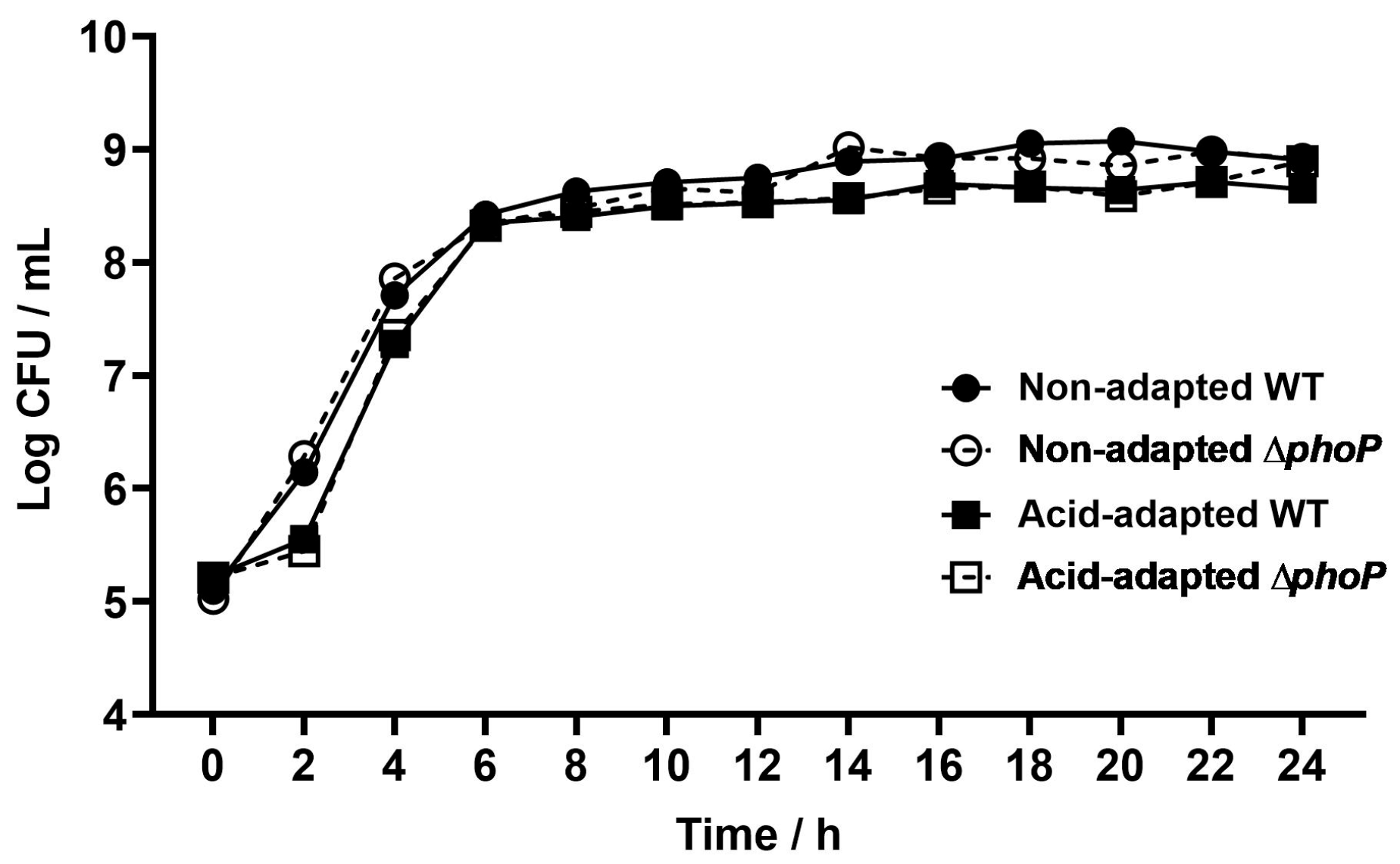
Additionally, activated WT and ΔphoP bacterial cultures were inoculated into neutral (pH 7.2) and acidic (pH 5.4) LB broth to assess whether the phoP gene deletion affected the growth of S. typhimurium. The bacterial cultures were incubated at 37 °C with shaking for 24 h. During this period, bacterial suspension was sampled every 2 h, diluted, and spread on Tryptose Soya Agar (TSA) (Land Bridge, China) plates. The plates were incubated at 37 °C for 24 h, after which colony counts were performed and growth curves plotted [29].
2.2. Acid Resistance
Acid-adapted or non-acid-adapted bacteria (1 mL, 7 log CFU/mL) were inoculated into 9 mL LB broth at pH 3.0 (adjusted by HCl) for 2 h at 37 °C for acid challenge, respectively. Bacterial cultures before (0 h) and after (2 h) acid challenge were diluted in sterile peptone solution (0.85% w/v) and spread on TSA medium. TSA plates were incubated at 37 °C for 24 h, and the number of viability cells was calculated at each time point. The survival rate was the ratio (%) of the number of cells (CFU/mL) after acid shock (2 h) to the number of initial cells (0 h).
2.3. Biofilm Formation Assay
Biofilm formation was assessed using the crystal violet staining method outlined by Yin et al. [30]. Acid-adapted and non-adapted cells (200 μL, 6 log CFU/mL) were inoculated into 96-well plates and incubated at 25 °C for 1 to 7 d. After each incubation, the plates were washed thrice to remove planktonic bacteria, then stained with 200 μL 0.25% (w/v) crystal violet for 30 min in the dark. After staining, the plates were washed again with sterile water, and 200 μL of 95% (v/v) ethanol was added to solubilise the stain. Absorbance was measured at 570 nm using a microplate reader (SpectraMax M5, San Jose, CA, USA).
2.4. Biofilm Cell Metabolic Activity
The metabolic activity of biofilm cells was assessed using the Cell Counting Kit-8 (CCK-8, Solarbio, Beijing, China) following the method by Liu et al. [31]. Biofilms were cultured in 96-well plates with LB medium as described in Section 2.3 and incubated at 25 °C for 3, 4, 5, and 7 d. After the incubation period, planktonic bacteria were removed, and 100 μL of sterile phosphate-buffered saline (PBS) (Solarbio, China) along with 10 μL of CCK-8 solution, was added to each well. The plates were then incubated in the dark at 25 °C for 4 h. Absorbance was measured at 450 nm using a microplate reader.
2.5. Cell Motility
Swimming plates were prepared as described by Yang et al. [32], according to a composition of 10 g/L tryptone, 5 g/L NaCl and 0.3% agar. 3 μL of acid-adapted or un-acid-adapted WT and ΔphoP bacterial solutions were inoculated in the centre of swimming plates and incubated at 25 °C for 24 h. The diameter of the motility zone (cm) was measured by vernier calliper.
2.6. Extracellular Polymeric Substances
A total of 1 mL of acid-adapted or non-acid-adapted WT and ΔphoP was cultivated in 24-well polystyrene microtiter plates (final concentration of 6 log CFU/mL). The plates were incubated at 25 °C for 3, 4, 5 and 7 d to form biofilms. After biofilm formation, the wells were washed with PBS to remove planktonic bacteria. Biofilm samples adhering to the bottom of these wells were scraped with a sterile spatula and 1 mL PBS was added to each well to collect biofilm samples. Subsequently, biofilm samples were added to 0.4 mL of 1 mol/L NaOH and shaken in a shaker (150 r/min) at 4 °C for 3 h. Then, 0.6 mL of saline solution was added to the mixture and centrifuged at 6000× g for 20 min. The supernatant was filtered through the 0.45 μm filter membrane and the filtrate was collected for determination of polysaccharide and protein content. Polysaccharide content in biofilms as determined by the phenol/ sulfuric acid method [33]. The protein in the biofilm content was measured using the BCA protein assay kit (Sangon Biotech, Shanghai, China) [34].
2.7. CLSE & SEM Analyses
For CLSM analysis, acid-adapted or non-acid-adapted WT and ΔphoP were cultured in 35 mm × 10 mm cell culture dishes (Sigma, Burlington, MA, USA) containing 4 mL of LB broth, achieving a final concentration of 6 log CFU/mL. The dishes were incubated at 25 °C for 4 d. After incubation, the biofilms were washed three times with sterile PBS to remove planktonic bacteria. The biofilms were stained for 30 min in the dark using the LIVE/DEAD BacLight kit L-7012 (Thermo Fisher, Waltham, MA, USA). This kit uses Syto 9 to stain intact bacterial membranes and propidium iodide to stain bacteria with damaged membranes. CLSM imaging was conducted using the LSM 880 (Zeiss, Oberkochen, Germany) with a 63 × oil immersion objective and 488 nm argon laser. Fluorescence was captured in two emission ranges: 480~500 nm for Syto 9 and 490~635 nm for propidium iodide. Three-dimensional projections were created from z-stack data using ZEN Blue Lite 2.3 software.
For SEM analysis, polystyrene sheets (2 mm thick, 8 mm diameter) were placed horizontally in 48-well plates. LB broth with acid-adapted or non-acid-adapted strains was added to each well, achieving a final bacterial concentration of 6 log CFU/mL. After incubation at 25 °C for 4 d, the sheets were washed with sterile PBS to remove planktonic bacteria. The biofilms were fixed in 2.5% glutaraldehyde for 24 h at 4 °C and then dehydrated in a series of graded ethanol concentrations (50%, 70%, 80%, 90%, and 100%) for 10 min each. Following critical point drying with liquid CO2 and gold coating, the samples were examined using a SU8020 SEM (Hitachi, Tokyo, Japan).
2.8. Transcriptomic Analysis
2.8.1. RNA Extraction
RNA extraction was performed from S. typhimurium with acid adaptation (pH 5.4 induced for 4 h) and non-acid adaptation (pH 7.2 LB medium) in Section 2.1. Total RNA was extracted using the RNAiso Plus Kit (Takara, Beijing, China) according to the instructions provided by the manufacturer. To minimize random errors, independent triplicates were used for RNA extraction.
2.8.2. RNA-Seq Analysis
RNA quality and integrity were assessed using the RNA Nano 6000 Assay Kit and the Bioanalyzer 2100 system. Once qualified, the libraries were pooled based on effective concentration and target sequencing data. The raw sequencing data was assessed for quality using FastQC (v0.10.0). Clean reads were aligned to the reference genome obtained from the NCBI RefSeq database (Accession number: GCF_000006945.2). Genes with Reads Per Kilobase per Million mapped reads (RPKM) values greater than 20 were considered highly expressed. Differential expression analysis was conducted between three groups: ΔphoP vs. WT, ΔphoP-acid-adapted vs. ΔphoP, and ΔphoP-acid-adapted vs. WT-acid-adapted. Adjusted p-values (Benjamini–Hochberg method) identified significantly differentially expressed genes at|log2 (fold change)|> 1 and p-adj < 0.05. Kyoto Encyclopedia of Genes and Genomes (KEGG) and Gene Ontology (GO) enrichment analyses were performed on differentially expressed genes (DEGs).
2.9. Quantitative Real-Time Polymerase Chain Reaction (qRT-PCR)
Total RNA was extracted from biofilms in each group as described in Section 2.8. RNA was used to synthesize complementary DNA with the Evo M-MLV reverse transcription kit (Accurate, Hunan, Changsha, China). The mRNA levels of biofilm-associated genes were quantified using SYBR Green Pro Taq HS Premix (Accurate, Hunan, Changsha, China) on a 96-well Real Time PCR System (Bio-Rad, Hercules, CA, USA). Primer sequences for each gene (Table A1) were designed using published GenBank sequences and the Primer3 Plus. The 16S rRNA gene was used as an internal reference.
2.10. Statistical Analysis
Each experiment was repeated on three separate occasions with three duplicates on each occasion. Data were presented as the mean ± standard error. Differences between the WT and ΔphoP strains were analyzed using the MIXED procedure (SAS, Version 9.0, Cary, NC, USA). Fixed factors included strain, acid adaptation, and incubation time, while random factors consisted of experimental replicates. The least square means for type-3 tests of fixed effects were separated using the PDIFF option and were considered significant at p < 0.05. Gene expression levels were analyzed using the 2−ΔΔCt method.
3. Results
3.1. Acid Tolerance Response
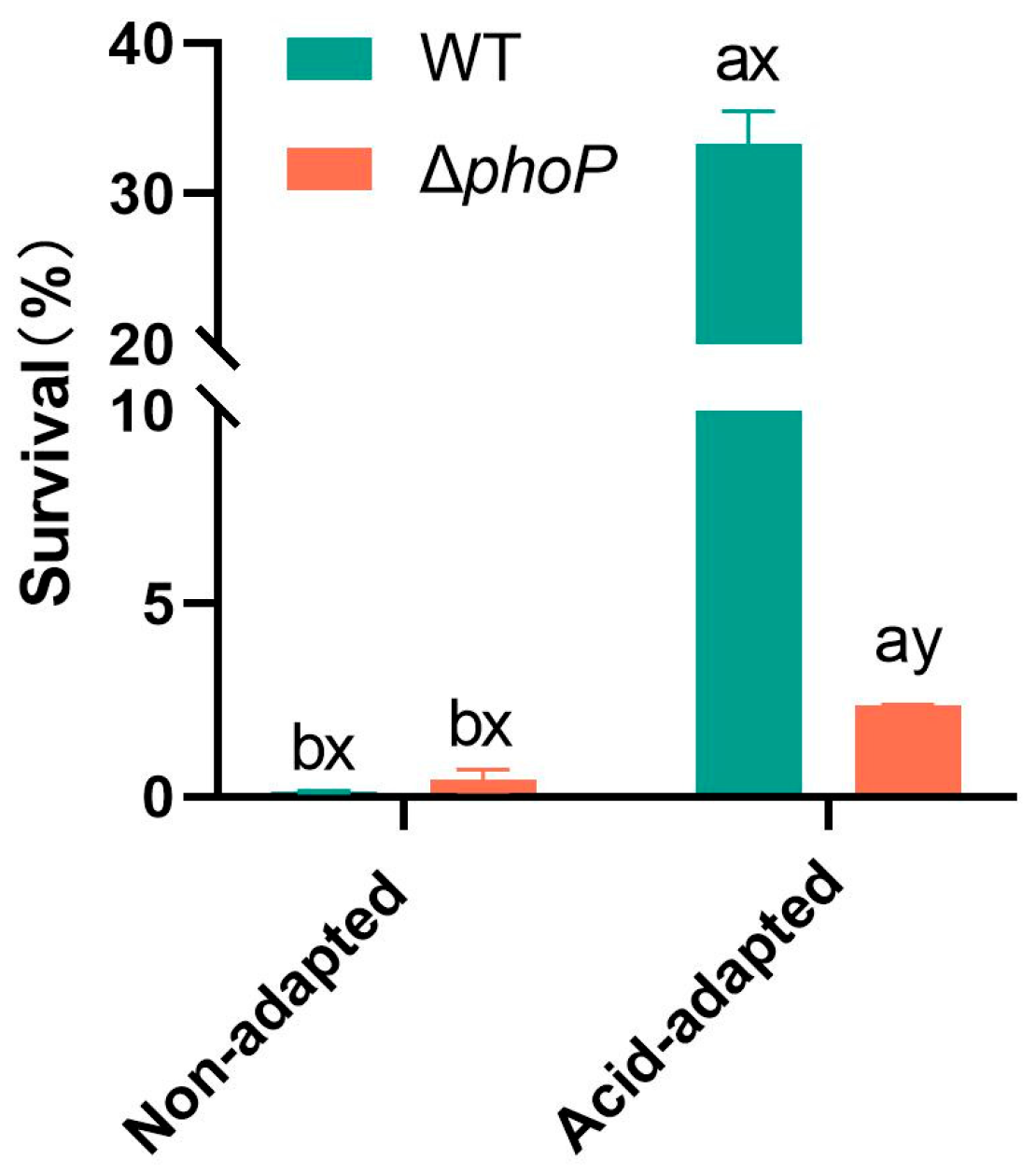
Compared to the WT, ΔphoP exhibited no obvious growth defects whether in acidic or non-acidic environments (Figure A1). Based on the above, this study proceeded to further acid challenge tests. Acid-adapted or non-acid-adapted WT and ΔphoP were acid-challenged under strong acid condition at pH 3.0, and their survival rates are shown in Figure 1. The survival rates of WT and ΔphoP under strong acidic condition without acid adaptation were 0.14% and 0.43%, respectively. After acid induction in a slightly acidic environment at pH 5.4, both strains developed the acid tolerance effect with significantly higher survival rates. In the control group, the survival rate was increased to 33%, while phoP deletion led to a significant reduction in acid tolerance to only 2.38%. This suggested that phoP was activated under slightly acidic condition and had a crucial role in the acid tolerance response of S. typhimurium.
Figure 1.
The effect of acid adaptation on the survival rate of Salmonella typhimurium and its phoP-deficient strain during acid challenge at pH 3.0. Different colours represent different experimental groups: green indicates Salmonella typhimurium ATCC 14028 wild-type strain (WT); red indicates Salmonella typhimurium phoP gene deletion strain (∆phoP). “a~b” indicates significant differences in survival rates of the same strain under different acid-adapted conditions. “x~y” indicates significant differences in survival rates of different strains under the same acid-adapted conditions. Data was presented as the mean ± standard error (n = 3).
3.2. Biofilm Formation Ability
The ability of S. typhimurium to form biofilms is significantly affected (p < 0.05) by the interaction of three factors: incubation time, acid adaptation and phoP gene (Table 1). Biofilm formation tended to increase significantly with increasing incubation time (p < 0.05). For WT, acid-adapted strains were able to form more biofilm structures in the later stages of incubation, and the biofilm-forming ability of WT in the acid-adapted state was significantly higher than that of the non-adapted strains after 4 d. The crystal staining values of non-adapted and acid-adapted WT biofilms increased from 0.15 and 0.16 on the 1st d to 2.14 and 3.10 on the 7th d, respectively. Notably, there was no significant difference in biofilm formation in S. typhimurium in the absence of acid signalling, whether the phoP gene was deleted. However, under acid-induced conditions, deletion of the phoP gene resulted in a significant reduction in the biofilm-forming ability of S. typhimurium, especially after 4 d. Until incubated for 7 d, the biofilm biomass of ΔphoP after acid adaptation was 67.10% of that of WT, indicating that the deletion of phoP gene affects the maximum amount of biofilm formed after acid adaptation. Thus, phoP not only has an important role in responding to acid signalling, but also in the regulation of biofilm development when it is activated. In summary, 4 d was the critical time point for biofilm formation of acid-adapted strains in this study; therefore, it will be identified as the critical time point to determine other indicators in subsequent experiments.
Table 1.
Effect of acid adaptation on the biofilm-forming ability of Salmonella typhimurium and its phoP gene deletion strain.
3.3. Biofilm Metabolic Activity
Biofilm metabolic activity of S. typhimurium is significantly (p < 0.05) affected by the interaction of three factors: incubation time, acid adaptation and phoP gene (Table 2). In WT, both biofilm cells of strains in the non-acid-adapted and acid-adapted states maintained high cellular metabolic activity during the biofilm growth period (4–7 d), which was higher in acid-adapted WT. After phoP deletion, there was no significant difference between the metabolic activities of WT and ΔphoP in the early stages of biofilm development (3–4 d) without acid adaptation, and there was no significant increase in the metabolic activity of biofilm cells with ΔphoP after 4 d. After acid adaptation, the cell metabolic activity of ΔphoP was lower than that of acid-adapted WT during the period of biofilm development (4–7 d), while this is also consistent with the entire trend of biofilm formation. These results suggested that the phoP gene is a key regulatory locus for enhancing the metabolic activity of biofilm cells under acid-induced conditions.
Table 2.
Effect of acid adaptation on the biofilm metabolic activity of Salmonella typhimurium and its phoP gene deletion strain.
3.4. Motility
Motility of S. typhimurium was significantly affected by the acid adaptation and the phoP gene deletion (Figure 2). Acid-adapted treatments significantly improved the swimming ability of WT and ΔphoP, and the diameter of WT and ΔphoP movement increased by 2.03 and 0.30 cm, respectively, after acid adaptation. However, compared to acid-adapted WT, the swimming ability of ΔphoP was significantly reduced due to the deletion of phoP, and the colony diameter of ΔphoP on semi-solid medium was only 58.6% of that of WT. This indicated that both acid adaptation and phoP contributed to the swimming ability of Salmonella.
Figure 2.
Effect of acid adaptation on the motility of Salmonella typhimurium and its phoP gene deletion strain. (A): Motility diameters of the wild-type strain and its phoP-deficient mutant on swimming plates under acid-adapted or non-acid-adapted conditions; (B): Colony images on swimming plates. Different colours represent different experimental groups: green indicates Salmonella typhimurium ATCC 14028 wild-type strain (WT); red indicates Salmonella typhimurium phoP gene deletion strain (∆phoP). “a~b”: Different letters indicate significant difference between acid-adapted and non-adapted at the same strain. “x~y”: Different letters indicate significant difference between WT and ∆phoP at the same stress treatment. Data was presented as the mean ± standard error (n = 3).
3.5. Extracellular Polymeric Substance
The interaction of inoculation time, acid adaptation status and the absence or not of the phoP gene on EPS in S. typhimurium biofilms was significant (Table 3). Changes in EPS with incubation time were consistent with biofilm formation, with all strains, whether acid-adapted or not, growing significantly (p < 0.05) after 4 d and beginning to form biofilm structures. Moreover, for WT, the extracellular polysaccharide and protein contents of strains in the acid-adapted state were significantly (p < 0.05) higher than those in the non-acid-adapted WT from 4 to 7 d. This indicated that acid adaptation promoted the production of extracellular polymers.
Table 3.
Effect of acid adaptation on extracellular polymeric substances (EPS) in biofilms of Salmonella typhimurium and its phoP gene deletion strain.
After deletion of the phoP gene, the extracellular polysaccharide content of acid-adapted ΔphoP was significantly (p < 0.05) higher than that of non-acid-adapted ΔphoP only at the 4th and 5th d. Its extracellular polysaccharide content on 7 d of incubation and its extracellular protein content during the entire incubation period (4 to 7 d) were not significantly different (p > 0.05) from that of the non-acid-adapted ΔphoP. Acid adaptation treatment did not enhance the production of extracellular proteins of ΔphoP. More importantly, the EPS production of ΔphoP throughout the incubation period (4–7 d) after acid adaptation was significantly (p < 0.05) lower than that of WT after acid adaptation. The above results indicated that phoP gene and acid adaptation treatment promote biofilm formation of extracellular polymeric substances in S. typhimurium.
3.6. CLSM & SEM
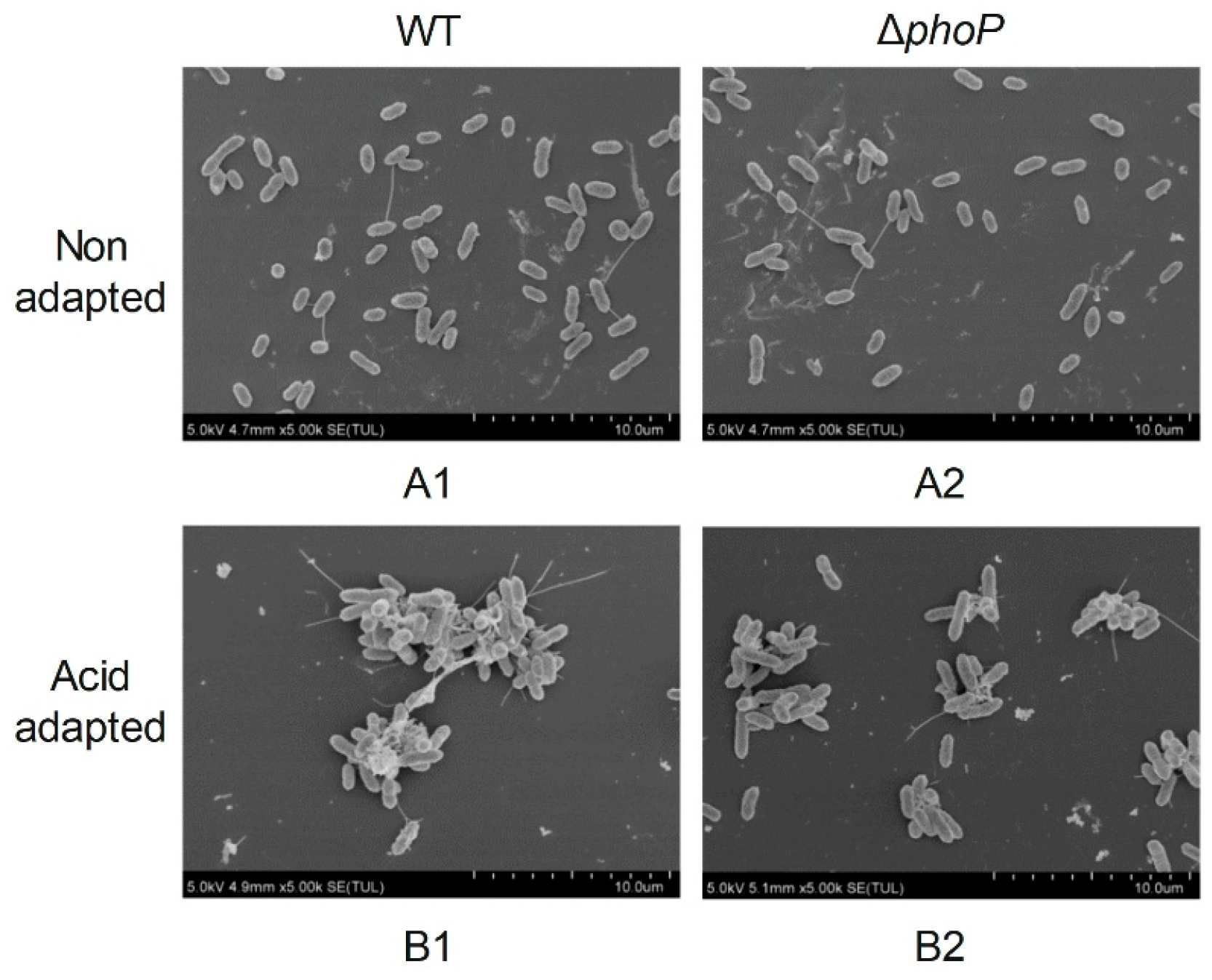
To explore the effect of phoP gene deletion and acid adaptation on the microstructure of S. typhimurium biofilm, the distribution of biofilm cells 4 d was observed by SEM (Figure 3) and CLSM (Figure 4), respectively. Under SEM at 5000× magnification, without acid-adapted treatment, the distribution of bacteria was more dispersed, with only a small amount of secretion on the surface of the bacteria, and there was no aggregation among the bacteria to form agglomerated structures (Figure 3(A1,A2)). After acid adaptation, WT and ΔphoP bacteria secreted more EPS on their surfaces, and the bacteria aggregated with each other and grew in clusters (Figure 3(B1,B2)). However, upon phoP deletion, a reduction in the cluster-like biofilm structure was clearly observed, and the acid-adapted state of ΔphoP (Figure 3(B2)) secreted fewer EPS than the acid-adapted WT (Figure 3(B1)). This suggested that acid induction and the phoP gene were beneficial in promoting EPS production in S. typhimurium biofilms, which was also consistent with the results of EPS content measurements.
Figure 3.
Scanning electron microscope images of different strains biofilm. WT: Salmonella typhimurium ATCC 14028 wild-type strain; ∆phoP: Salmonella typhimurium phoP gene deletion strain. (A): Non-acid-adapted strains; (B): acid-adapted strains. The number denotes the image arrangement sequence under acidic or non-acidic adaptation conditions.
Figure 4.
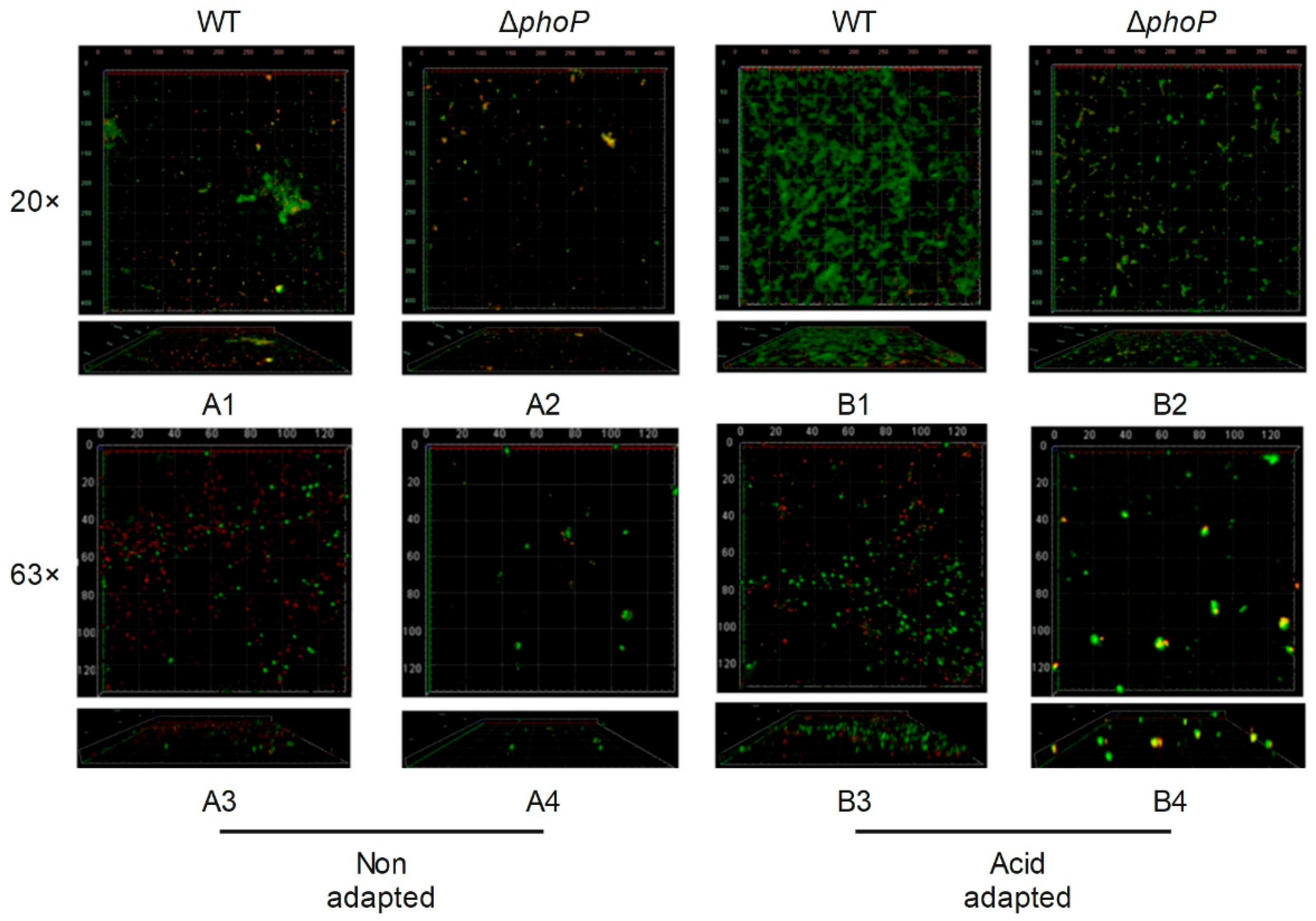
Confocal laser microscope images of different strains biofilm. WT: Salmonella typhimurium ATCC 14028 wild-type strain; ∆phoP: Salmonella typhimurium phoP gene deletion strain. (A): Non-acid-adapted strains; (B): acid-adapted strains; 20×, 63× indicates eyepiece magnification. The number denotes the image arrangement sequence under acidic or non-acidic adaptation conditions.
CLSM analysis was further performed by labelling live and dead cells with green and red fluorescence by SYTO-9 and PI probes, respectively (Figure 4). After acid adaptation, The WT strain formed a dense biofilm layer and the number of viable bacteria in the biofilm increased (Figure 4(B1)), compared to non-acid-adapted WT (Figure 4(A1)). In contrast, acid-adapted ΔphoP strains had significantly reduced biofilms (Figure 4(B2)), compared to acid-adapted WT (Figure 4(B1)). Acid adaptation could enhance the attachment of S. typhimurium, whereas phoP gene deletion reduced cells attachment.
3.7. RNA-Seq
3.7.1. GO Enrichment Analysis
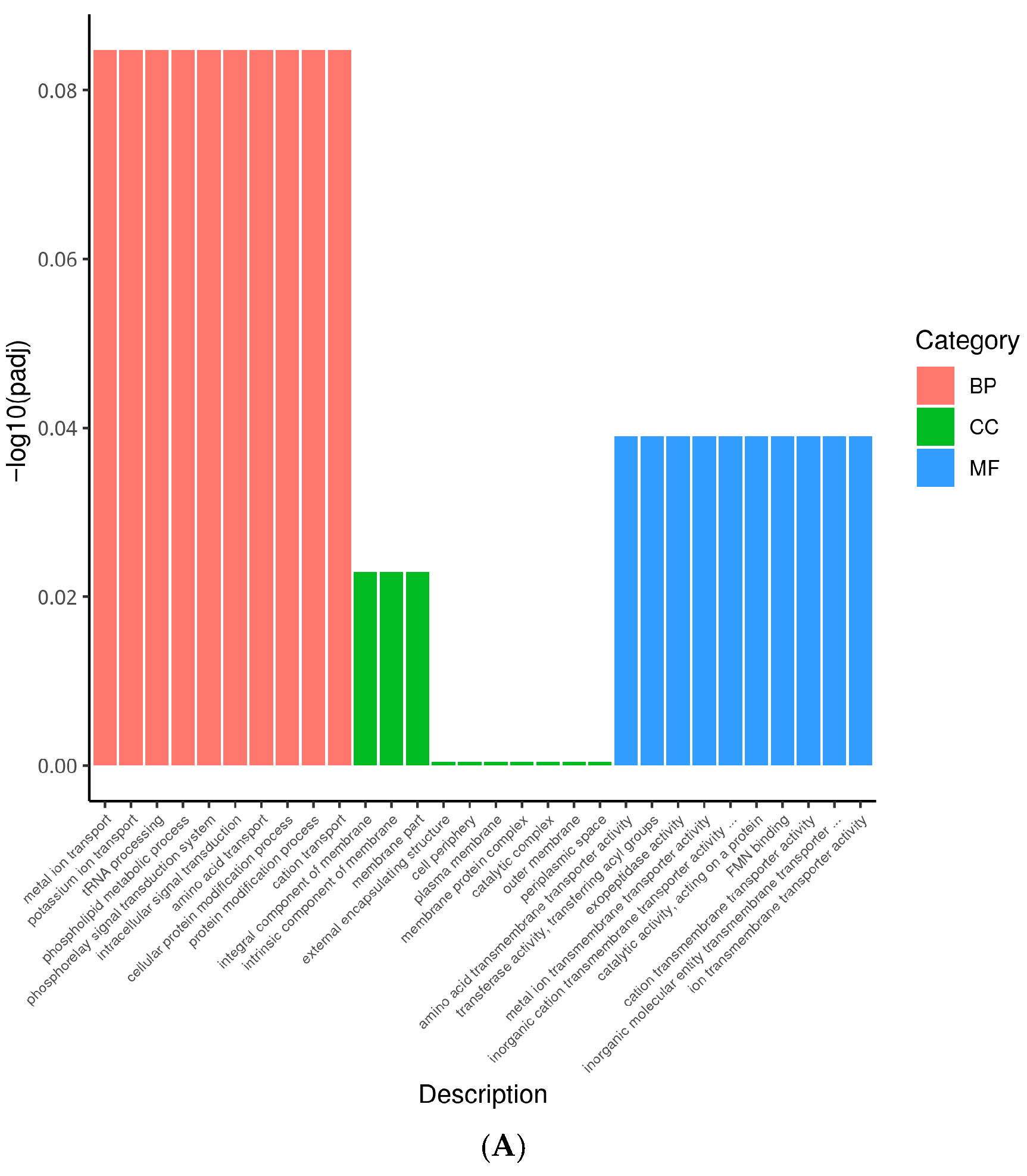
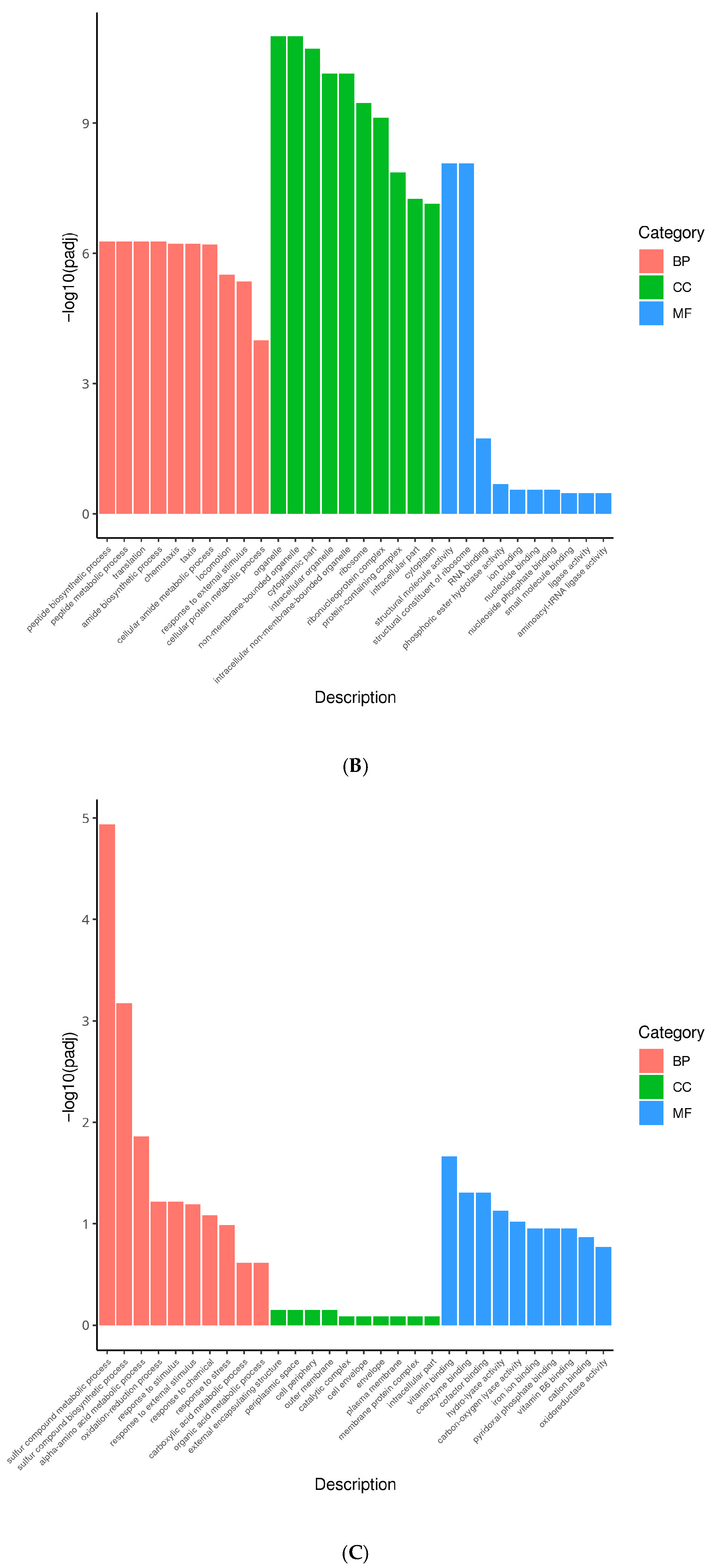
The DEGs were annotated to the GO database to obtain information about the possible functions of DEGs, which included biological process (BP), cellular component (CC) and molecular function (MF). In the absence of acid adaptation, multiple functional annotations involved in S. typhimurium PhoP/PhoQ TCS were enriched for down-regulation due to the absence of phoP (Figure 5A). In this study, the BP that showed enrichment in ΔphoP compared to the WT primarily includes intracellular signal transduction (GO:0035556), phosphorelay signal transduction system (GO:0000160), and cellular protein modification processes (GO:0006464). In terms of CC, the enriched categories included components of the outer membrane (GO:0016021), external encapsulating structures (GO:0030312), among others. Regarding MF, the enriched categories were amino acid transmembrane transport activity (GO:0015171), transporter enzyme activity, acyl group transferase activity (GO:0016746), and metal ion transmembrane transport activity (GO:0046873). Thus, the deletion of phoP first affects membrane components, including pagC, pagO, pagP, basS, araE, ybfM, kgtP, etc. Meanwhile, phoP, as a response regulator of the TCS, gene deletion reduced S. typhimurium signalling (rstA, phoQ, phoP, prpR, arcA, etc.) and transmembrane transporter protein activities (potE, ycaM, brnQ, yjeH, yaaJ, etc.) in BP and MF, respectively. Deletion of phoP may lead to alterations in signal transduction and transmembrane transport processes, which are essential for biofilm formation, by affecting key genes involved in membrane integrity and transport.

Figure 5.
GO analysis classification of differentially expressed genes. (A): GO enrichment of down-regulated genes in Non-adapted ∆phoP vs. Non-adapted WT; (B): GO enrichment of up-regulated genes in acid-adapted ∆phoP vs. Non-adapted ∆phoP; (C): GO enrichment of down-regulated genes in acid-adapted ∆phoP vs. acid-adapted WT. Different colours represent different functional annotation groups: red indicates biological processes (BP); green indicates cellular components (CC); blue indicates molecular functions (MF).
Compared to the non-acid-adapted ΔphoP, the acid-adapted ΔphoP showed significant enrichment in BP for peptide biosynthetic process (GO:0043043), locomotion (GO:0040011), and response to external stimulus (GO:0009605), among others. In CC, significant enrichment was found in organelle (GO:0043226) and cytoplasmic part (GO:0044444). In MF, significant enrichment was observed in structural molecule activity (GO:0005198), RNA binding (GO:0003723), and ion binding (GO:0043167), among others (Figure 5B). These activities reflect the adaptive mechanisms of acid stress response, where the acid-adapted ΔphoP enhances peptide synthesis, motility, and external stimulus response, alongside strengthening cellular structures and ion regulation, to better cope with the environmental stress.
However, ΔphoP showed limited mobilization in multiple genes during acid adaptation compared to the acid-adapted WT (Figure 5C). These down-regulated DEGs were significantly enriched in BP to oxidation-reduction process (GO:0055114), response to stimulus (GO:0050896), etc.; in CC to external encapsulating structure (GO:0030312), periplasmic space (GO:0042597), etc.; and MF was enriched for cofactor binding (GO:0048037). After acid adaptation, the redox and stress response ability of ΔphoP was significantly reduced compared with that of WT, which may further reduce the stress resistance and biofilm formation ability.
3.7.2. KEGG Enrichment Analysis
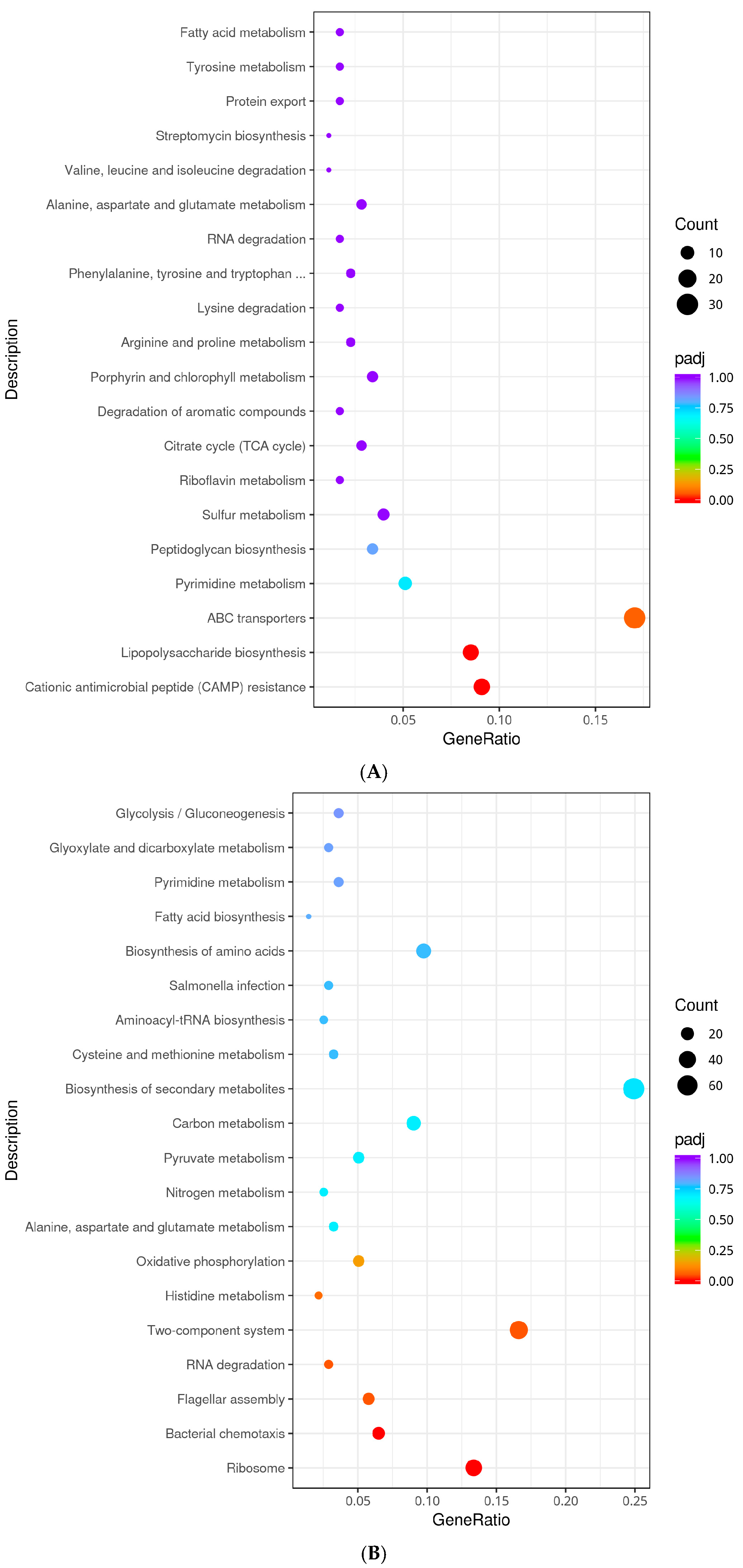
The regulatory pathways involved in DEGs were further obtained by pathway significant enrichment, and the results are shown in Figure 6. In the absence of acid adaptation, the ∆phoP mutant relative to the WT was enriched with 30 (ybjZ, cysW, mglB, etc.) and 21 (yfbE, rstA, phoQ, phoP, pagC, etc.) DEGs in the ABC transporters (seo02010) and two-component system (seo02020) pathways, respectively, which are related to environmental information processing. Furthermore, the ∆phoP mutant was enriched with 6 (ybjG, uppS, dacC, dacB, etc.) and 15 (lpxO, rfaQ, yrbH, yjdB, pagP, etc.) DEGs in the peptidoglycan biosynthesis (seo00550) and lipopolysaccharide (LPS) biosynthesis (seo00540) pathways, which are involved in membrane modification. Additionally, 16 DEGs (pmrD, yfbE, pmrF, yfbG, phoQ, phoP, etc.) were enriched in the cationic antimicrobial peptide (CAMP) resistance (seo01503) pathway (Figure 6A). This suggests that phoP deletion reduces mechanisms related to environmental sensing, membrane biosynthesis and stress resistance in S. typhimurium.

Figure 6.
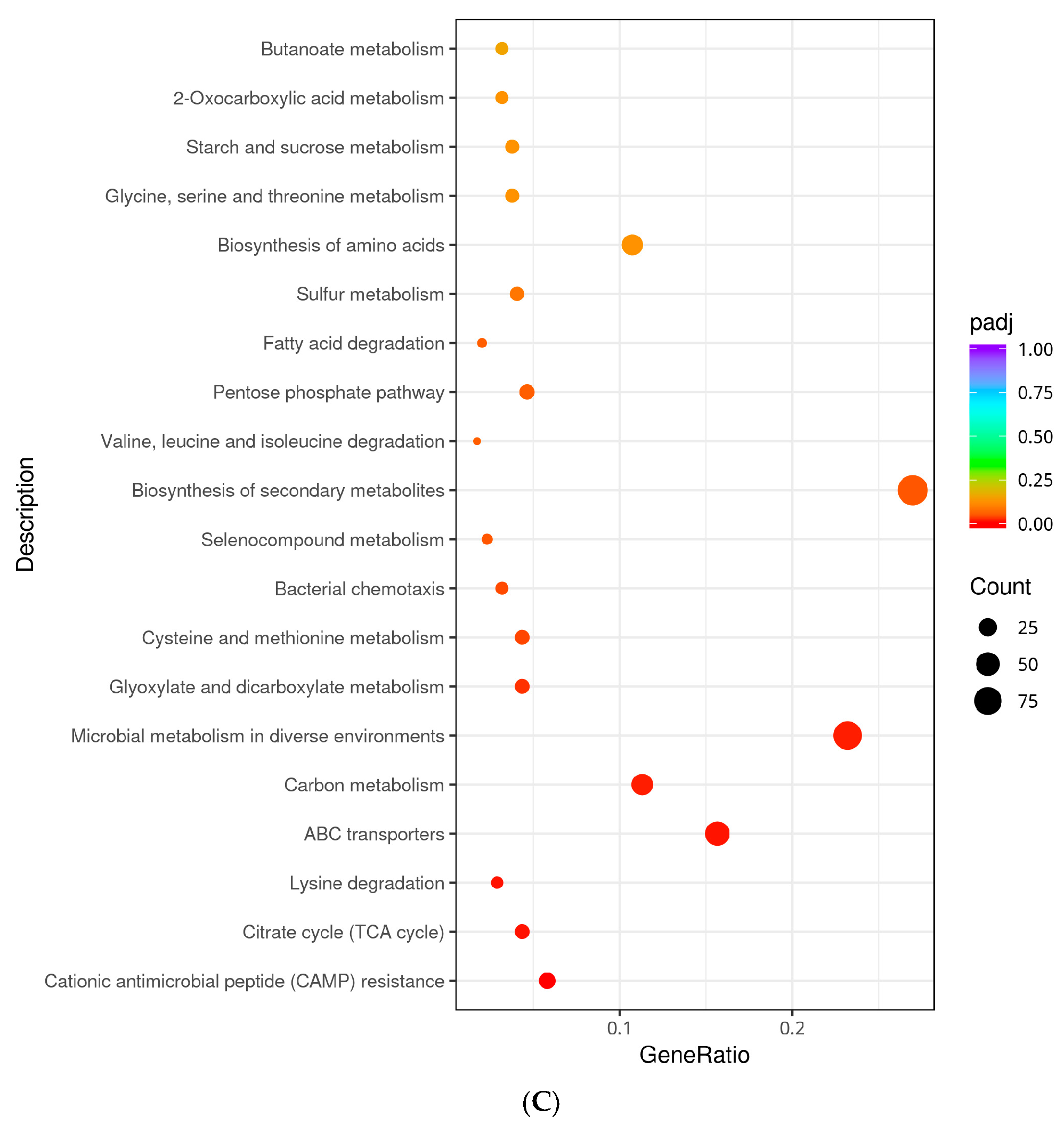
KEGG analysis classification of differentially expressed genes. (A): KEGG enrichment of down-regulated genes in Non-adapted ∆phoP vs. Non-adapted WT; (B): KEGG enrichment of up-regulated genes in acid-adapted ∆phoP vs. Non-adapted ∆phoP; (C): KEGG enrichment of down-regulated genes in acid-adapted ∆phoP vs. acid-adapted WT. The omitted portion in Figure A is fully titled “Phenylalanine, Tyrosine, and Tryptophan Biosynthesis.”
Under acid-inducing condition, compared to the non-acid-induced ∆phoP, the acid-adapted ∆phoP showed upregulated pathways mainly enriched in those related to peptide biosynthesis and motility, such as ribosome (seo03010) (rpmE2, rpsR, rplI, rpsF, rplA, etc.), bacterial chemotaxis (seo02030) (tcp, motA, motB, cheM, cheA, etc.), and flagellar assembly (seo02040) (flgM, flgN, flgK, fljB, flgL, etc.), which were enriched with 38, 18, and 16 DEGs, respectively. The TCS (seo02020) pathway, associated with signal transduction, was enriched with 46 DEGs. Additionally, metabolic processes related to global and overview metabolism, such as nitrogen metabolism (seo00910), pyruvate metabolism (seo00620), and carbon metabolism (seo01200), were also identified (Figure 6B). These pathways represent the mechanisms and compensatory responses of ∆phoP mutants to acid stress following phoP deletion, highlighting changes in peptide biosynthesis, motility, signalling and metabolism.
Under the same acid-adapted conditions, compared to WT, the deletion of phoP led to a significant downregulation of the CAMP resistance (seo01503) pathway (yfbE, pmrF, yjdB, basR, phoP, pqaB, phoQ, etc.). Furthermore, various global and overarching metabolic pathways, such as the citrate cycle (TCA cycle) (seo00020), carbon metabolism (seo01200), and microbial metabolism in diverse environments, were enriched in downregulated genes. Pathways related to amino acid metabolism, including lysine degradation (seo00310), cysteine and methionine metabolism (seo00270), and valine, leucine, and isoleucine degradation (seo00280), were also significantly downregulated. Moreover, pathways related to cell motility, such as bacterial chemotaxis (seo02030), and environmental information processing, such as ABC transporters (seo02010), were also enriched in downregulated genes, with 54 and 11 DEGs, respectively (Figure 6C). These pathways highlight the limited mobilization of the process after phoP deletion compared to WT, suggesting that although some of the pathways in ∆phoP were up-regulated under acid stress, those do not show the same level of activation as WT, which shows to a partial attenuation of the stress response.
3.8. qRT-PCR
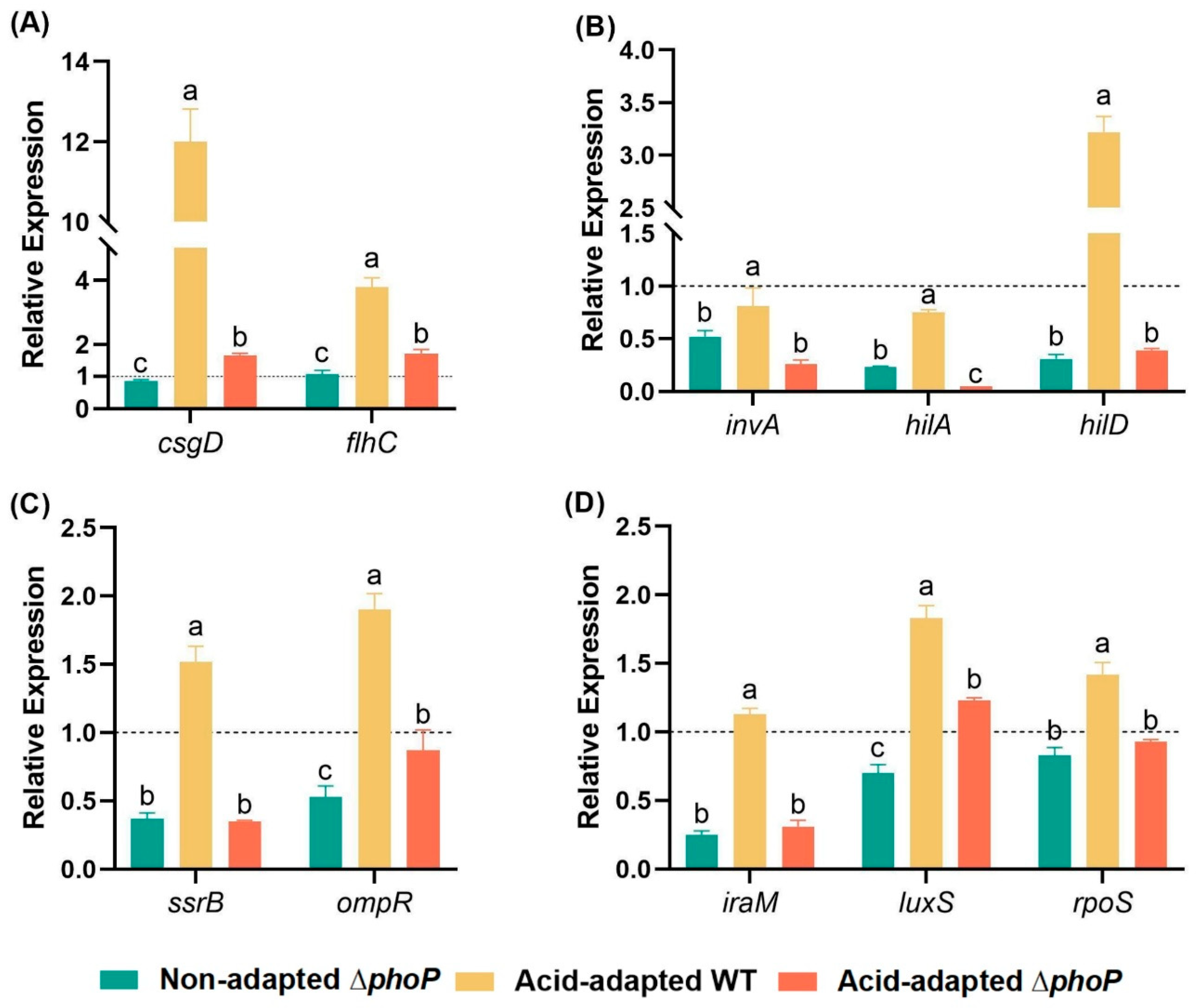
In this study, 10 S. typhimurium stress resistance-related genes were selected for qRT-PCR analysis based on RNA-seq and further validated the results of RNA-seq (Figure 7). The relative expression of genes in the non-acid-adapted ∆phoP mutant strain, the acid-adapted WT and the acid-adapted ∆phoP mutant strain were determined using the gene expression of the non-acid-adapted WT as a standard. The deletion of the phoP gene in S. typhimurium had an effect on the expression levels of flagellar and biofilm master regulator (flhC, csgD), virulence-related genes (invA, hilA, hilD), TCS-related genes (ssrB, ompR) and stress response-related gene (iraM, rpoS, luxS) in the ΔphoP were lower than those in the WT strain (p < 0.05). After acid induction, the expression of the measured genes was upregulated in both WT and ΔphoP mutant strains. Still, the gene expression of ΔphoP was significantly lower than that of WT in each case due to the absence of phoP. The qRT-PCR results confirmed that the deletion of phoP in S. typhimurium reduced the expression of key stress resistance-related genes, with trends consistent with the RNA-seq data.
Figure 7.
Effects of acid adaptation on flagellum and biofilm (A), virulence (B), two-component regulatory system (C) and stress response (D) gene expression in Salmonella typhimurium and its phoP-mutant strains. WT: Salmonella typhimurium ATCC 14028 wild-type strain; ∆phoP: Salmonella typhimurium phoP gene deletion strain. Different colours represent different experimental groups: green indicates non-acid-adapted ∆phoP; yellow indicates acid-adapted WT; red indicates acid-adapted ∆phoP. “a~c”: Different letters indicate significant difference (p < 0.05). Black dashed line: Non-acid-adapted WT gene expression as a baseline. Data were presented as the mean ± standard error (n = 3).
4. Discussion
The PhoP/PhoQ TCS is ubiquitous in Gram-negative bacteria and is associated with stress response and biofilm formation [23,24,25]. In this study, the ΔphoP mutant of S. typhimurium was constructed for analysis. The sensor histidine kinase PhoQ is sensed at acidic pH and mediates PhoP-dependent gene activation [18,35]. The results of this study showed that the acid tolerance response of S. typhimurium could be induced at the ultimate pH of chilled beef (pH 5.4), and the survival rate of acid-adapted strains in the acid-challenged environment was enhanced (Figure 1). Moreover, the biofilm-forming ability of S. typhimurium was significantly enhanced after acid adaptation (Table 1), while the acid tolerance and biofilm-forming ability of the ΔphoP mutant strain were decreased. This indicated that the absence of the phoP gene reduced the ability of S. typhimurium to respond to acid signalling in the stress environment via PhoP/PhoQ TCS and further affected its biofilm formation. This was also confirmed by the decrease in the swimming ability of ΔphoP (Figure 2) and the decrease in the ability to produce EPS (Table 3) under the same acid-induced conditions, compared to WT. It is well known that Salmonella flagellar motility mediates bacterial chemotaxis, which gives the bacteria an environmental advantage and is responsible for the search for suitable attachment sites during initial adhesion to biofilms [36,37]. Subsequent EPS production serves as a physical barrier that enhances the resistance of Salmonella to external stresses and promotes initial adhesion and stabilization of the biofilm [38,39]. Extracellular polysaccharides and proteins constitute the principal components of EPS [40]. Therefore, in the microstructural observation of acid-induced ΔphoP biofilm, it did not form larger clustered and aggregated cellular structures as compared to WT, which was replaced by a more dispersed biofilm (Figure 3). This is consistent with the findings of Ma et al. [24], who constructed the Cronobacter sakazakii ΔphoPQ deletion mutant for biofilm observation. Compared with WT, the ΔphoPQ strain exhibited reduced ATR-FTIR spectral peaks corresponding to extracellular proteins (1544 and 1649 cm−1) and polysaccharides (1080 and 1056 cm−1), and SEM revealed a sparse three-dimensional biofilm structure.
Notably, acid induction increased the metabolic activity of Salmonella biofilm cells, while phoP gene deletion resulted in a significant reduction in the metabolic activity of cells within the biofilm (Table 2). Similarly, in a study by Ma et al. [24], it was found that the absence of PhoP/PhoQ TCS function significantly reduced the metabolic activity of C. sakazakii biofilm cells. The formation of biofilms requires cell surface modification, adhesion, and EPS production, all of which are extremely energy-consuming processes [39]. Based on this result, it is likely that deletion of the phoP gene impairs the ability to mobilize sufficient energy, thereby limiting Salmonella motility and production of EPS, which are essential for biofilm formation. Although ΔphoP showed almost no growth defects under favourable conditions, it exhibited growth retardation and decreased survival in an acidic environment compared to WT strains, which indicates that ΔphoP is defective in the survival pathways it can mobilize in response to stressful environments [41].
Therefore, to investigate the potential contribution of PhoP/PhoQ TCS to biofilm formation in S. typhimurium, RNA-seq was performed in this study to identify the DEGs and their differential pathways in WT and ΔphoP strains before and after acidic induction. It was found that in the absence of acid adaptation (Figure 6A), phoP deletion resulted in significant downregulation of enriched gene functions mainly for signal transduction (GO:0007165), e.g., rstA, phoQ, phoB, basS, etc., and membrane part (GO:0044425), e.g., ybfM, pagC, yjdB, pagO, pagP. In KEGG analyses, these genes were mainly involved in the envelope modification-related LPS biosynthesis (seo00540) and peptidoglycan biosynthesis (seo00550) pathways, as well as the signalling-response-related two-component system (seo02020) pathway. Among them, the downregulation of pmrD, phoQ, phoP, yjdB, pagP, basS genes further led to downregulation of the CAMP resistance pathway (seo01503). This result is consistent with the regulatory function of PhoP/PhoQ TCS unearthed in previous studies. For Salmonella, the PhoP/PhoQ TCS is an important system required to regulate intracellular survival and resistance to CAMP. Defective function of the PhoP/PhoQ TCS often results in reduced Salmonella virulence, susceptibility to a wide range of antimicrobial peptides, as well as a reduced ability to respond to environmental signals and induce modifications in lipid A [42,43,44]. For example, mass spectrometry studies by Guo et al. [43] showed that S. typhimurium PhoP/PhoQ TCS modulates the structural modification of lipid A in the LPS host signalling fraction through the addition of aminoarabinose and 2-hydroxycrotonate, and that this modification alters LPS-mediated endothelial cell adhesion as well as the modulation of immune responses. Gunn et al. [42] further demonstrated that PhoP-PhoQ is a global regulator of the production of multiple envelopes or secreted proteins by S. typhimurium by studying the PhoP/PhoQ TCS-regulated pag loci (pagA and pagE-P).
However, PhoP/PhoQ TCS seemed not to be activated under normal culture conditions, and ΔphoP mutant strain did not show significant differences in acid tolerance (Figure 1), swimming ability (Figure 2), and biofilm formation (Table 1) compared to WT. In contrast, after acid adaptation in a slightly acidic stress environment, the ΔphoP mutant strain had significant defects in biofilm formation ability, suggesting that PhoP/PhoQ TCS has an important role in biofilm formation in low pH environments. After acid adaptation (Figure 6C), ΔphoP mutants were enriched for down-regulated pathways compared to WT, and CAMP resistance (yfbE, pmrD, yjdB, basR, basS, phoP, phoQ, pagP, etc.) was still the most significantly enriched pathway, with energy metabolism-related pathways also being the theme of the down-regulated pathway. These pathways include basic metabolic pathways such as the TCA cycle (seo00020) and pentose phosphate pathway (seo00030), multiple amino acid metabolism (seo00270, seo00260) and degradation (seo00310, seo00280), and the bacterial chemotaxis (seo02030), among others.
When bacteria are in an acidic environment, the integrity of the cell membrane and proton motive force are disrupted, leading to an excess of protons inside the cell and inhibiting bacterial growth [45]. To avoid cell membrane damage caused by acidic environments, Salmonella upregulates genes encoding membrane proteins as an important strategy to enhance acid resistance [46].
In this study, the deletion of phoP led to a significant downregulation of genes involved in LPS biosynthesis, both before and after acid induction, likely impairing biofilm formation. Notably, the genes pagP, which encodes lipid A palmitoyltransferase, and yjdB, encoding lipid A phosphoethanolamine (pEtN) transferase, were significantly downregulated. The structure of LPS is crucial for bacterial adhesion and biofilm formation [47]. Acylation modifications to LPS contribute to the hydrophobicity of the bacterial surface, enhancing its adaptability and growth in different environments [48]. In this study, the downregulation of pagP and yjdB suggests defects in LPS modification, which may have led to the observed reduction in biofilm formation.
In addition, the signal transduction protein PmrD, which is directly regulated by PhoP, was also downregulated following the deletion of phoP. PmrD plays a pivotal role in activating the PmrA/B TCS [49], which regulates LPS modification under acidic conditions. This process mainly involves the addition of 4-amino-4-deoxy-1-arabinose and pEtN to the phosphate group of lipid A [50,51,52]. Correspondingly, genes involved in this modification, such as yjdB, yfbG, and yfbE [53], were downregulated. Moreover, the BasSR TCS, a global transcription factor implicated in biofilm regulation [54], was also downregulated in the ΔphoP mutant. These findings suggest that the impaired sensing and regulatory systems in Salmonella, coupled with the reduced ability to modify the cell envelope, resulted in a biofilm lacking the necessary surface hydrophobicity and structural integrity. Consequently, this diminished Salmonella’s capacity to adapt to environmental changes and maintain cellular function, hindering the normal formation of biofilms.
On the other hand, the absence of phoP may lead to disruption of signal transduction pathways, resulting in impaired energy metabolism and bacterial chemotaxis. Compared to the WT strain, the ΔphoP mutant showed impaired stress response regulation in acidic environments, leading to reduced flagellar function and metabolic activity. Lang et al. [28] demonstrated that the PhoP/PhoQ TCS promotes acid tolerance of Salmonella in the pH environment of fresh chilled beef by regulating the amino acid metabolism system. In the present study, the ΔphoP strain, under acid induction, exhibited downregulation of several amino acid metabolic pathways, including arginine and lysine metabolism. This downregulation extended to broader metabolic networks, such as carbon metabolism (seo01200) and microbial metabolism in diverse environments (seo01120), which are critical for bacterial motility and energy production [55]. Meanwhile, energy metabolism pathways are also important factors supporting the initial adhesion of biofilm cells [32]. The RNA-seq analysis revealed that genes associated with bacterial chemotaxis, including cheY, cheM, cheB, and cheR, were significantly downregulated. This reduction in chemotaxis-related genes is consistent with findings by [56], who observed similar defects in C. sakazakii in amino acid-deficient media, impairing flagella formation and chemotaxis. Flagella, as the primary motility and attachment organ of Salmonella, play an essential role in the initial adhesion of biofilm cells [57]. Fan et al. [58] also demonstrated that cheY gene knockout strains exhibit defects in flagellar rotation, adhesion, and lower hydrophobicity, all of which are detrimental to biofilm formation. In addition to these pathways, other key genes regulating biofilm formation, such as the stress response factor RpoS [59] and the quorum-sensing (QS) molecule [60,61], were also identified as potentially influencing the bacterial capacity to adapt to external stresses and regulating biofilm formation mechanisms. For instance, Yan et al. [62] found that the PhoP/PhoQ TCS acts as a regulator of the PcoI/PcoR QS system in Pseudomonas fluorescens strain 2P24, thereby modulating group behaviours.
However, it should be noted that the enhanced biofilm formation observed after 4 d in this study may result from persistent physiological changes induced by acid adaptation, such as altered gene regulation and stress tolerance. Although acid exposure activates the PhoP/PhoQ TCS and promotes biofilm formation, the intervening regulatory steps require further temporal dynamic analysis to be fully unravelled.
In summary, phoP deficiency significantly disrupts biofilm formation in acid-induced Salmonella. The absence of phoP impairs the LPS biosynthetic pathway, resulting in a loss of the surface hydrophobicity and structural stability necessary for biofilm formation. Furthermore, the deletion of phoP compromises signal regulation systems, particularly under acidic conditions, leading to diminished flagellar function and metabolic activity, which in turn affects bacterial motility and adhesion. The study also suggests potential cross-regulation between multiple TCSs, highlighting the need for further research to explore whether these systems contribute synergistically to biofilm formation.
5. Conclusions
Preventing biofilm formation in every step of food production is critical for maintaining food safety, particularly in the food industry. This study demonstrates that in an acid-induced environment, ΔphoP exhibits reduced acid tolerance, motility, biofilm formation, and metabolic activity compared to acid-adapted WT strains. Under the slightly acidic conditions, RNA-seq analysis further revealed that the absence of phoP disrupts LPS biosynthesis, weakening surface hydrophobicity and biofilm structural integrity. On the other hand, the lack of phoP interferes with regulatory mechanisms in acidic environments, inhibiting (specific) metabolic pathways, flagellar function, and chemotaxis, which collectively hinder bacterial motility and adhesion. Future studies should focus on the cascade regulatory mechanisms triggered by acid-induced activation of the PhoP/PhoQ TCS to elucidate its role in Salmonella persistence more precisely. These findings underscore the importance of the PhoP/PhoQ TCS in regulating Salmonella biofilm formation and suggest that targeting this system could offer potential strategies for controlling S. typhimurium biofilms and associated food safety challenges.
Author Contributions
Conceptualisation, L.Z.; methodology, P.D.; validation, K.Y. and Y.L.; investigation, Y.Z.; data curation, P.D. and X.J.; writing—original draft preparation, H.Y.; writing—review and editing, G.-J.E.N. and Y.L.; supervision, L.Z.; funding acquisition, Y.Z., Y.L. and L.Z. All authors have read and agreed to the published version of the manuscript.
Funding
This work was supported by special fund for innovation team of Modern Agricultural Industrial Technology System in Shandong province (SDAIT-09-09), National Natural Science Foundation of China (32302181), Natural Science Foundation of Shandong Province (ZR2022QC182) and the earmarked fund for China Agriculture Research System (beef-CARS-37), Key R&D Program of Shandong Province, China (2023CXGC010708).
Institutional Review Board Statement
Not applicable.
Informed Consent Statement
Not applicable.
Data Availability Statement
The original contributions presented in the study are included in the article. Further inquiries can be directed to the corresponding authors.
Acknowledgments
We gratefully acknowledge M.L. from Yangxin Yiliyuan Halal Meat Company for his support in our investigation of acid-tolerant bacterial strains within the beef cattle processing factory.
Conflicts of Interest
The authors declare no conflicts of interest, and this manuscript has been approved by all authors for publication.
Abbreviations
The following abbreviations are used in this manuscript:
| CFU | Colony Forming Unit |
| BCA | Bicin-choninic Acid |
| ATR-FTIR | Attenuated Total Reflectance Fourier-Transform Infrared Spectroscopy |
Appendix A
Figure A1.
The growth ability of Salmonella typhimurium ATCC 14028 and its phoP-deficient strain in neutral (pH 7.2) and acid-adapted (pH 5.4) culture media. WT: Salmonella typhimurium ATCC 14028 wild-type strain; ∆phoP: Salmonella typhimurium phoP gene deletion strain.
Table A1.
Primers for real-time quantitative PCR evaluation of gene expression.
Table A1.
Primers for real-time quantitative PCR evaluation of gene expression.
| Gene | Primer | Sequence of Primers (5′–3′) |
|---|---|---|
| 16S rRNA | 16SrRNA-F | CAGCCACACTGGAACTGAGA |
| 16SrRNA-R | GTGCTTCTTCTGCGGGTAAC | |
| rpoS | rpoS-F | GTTGGACGCGACTCAGCTTT |
| rpoS-R | TTTTACCACCAGACGCAGGTT | |
| invA | invA-F | CCATCAGCAAGGTAGCAGTCA |
| invA-R | GTTCCGCAACACATAGCCAAG | |
| hilA | hilA-F | ACTCATACATTGGCGATACTTCCT |
| hilA-R | GGCAGTTCTTCGTAATGGTCAC | |
| hilD | hilD-F | CCTGGGATGTTGGTGCTCAAA |
| hilD-R | AAGTCGTTGCGTCGGTATCTC | |
| ompR | ompR-F | TCTGCTGACCCGTGAATCTTT |
| ompR-R | CTTCGCCGTGACCATAATGATC | |
| iraM | iraM-F | GGAATGGAAGGTCGTTGATACAGT |
| iraM-R | GGATGATAATGCTACCTGGAGGC | |
| csgD | csgD-F | TTCTGCGTGGCGAATGCTATT |
| csgD-R | CGATGAGTGAGTAATGCGGACT | |
| luxS | luxS-F | GATGGCGGATGTGCTGAAAGT |
| luxS-R | CTGAGCGAGTGCATCTGATACG | |
| flhC | flhC-F | TAGTTTATGCCAGCCGCCATC |
| flhC-R | GCCTGTTCGATCTGTTCATCCA | |
| ssrB | ssrB-F | CCGCAGGTGCTAATGGCTAT |
| ssrB-R | TTGGGTCAATGTAACGCTTGTT |
References
- European Food Safety Authority (EFSA). The European Union one health 2022 zoonoses report. EFSA J. 2023, 21, e8442. [Google Scholar]
- Canning, M.; Birhane, M.G.; Dewey-Mattia, D.; Lawinger, H.; Cote, A.; Gieraltowski, L.; Schwensohn, C.; Tagg, K.A.; Francois Watkins, L.K.; Park Robyn, M.; et al. Salmonella outbreaks linked to beef, United States, 2012–2019. J. Food Prot. 2023, 86, 100071. [Google Scholar] [CrossRef] [PubMed]
- Dong, P.; Zhu, L.; Mao, Y.; Liang, R.; Niu, L.; Zhang, Y.; Li, K.; Luo, X. Prevalence and profile of Salmonella from samples along the production line in Chinese beef processing plants. Food Control 2014, 38, 54–60. [Google Scholar] [CrossRef]
- Buncic, S.; Nychas, G.J.; Lee, M.R.; Koutsoumanis, K.; Hébraud, M.; Desvaux, M.; Antic, D. Microbial pathogen control in the beef chain: Recent research advances. Meat Sci. 2014, 97, 288–297. [Google Scholar] [CrossRef] [PubMed]
- Matarneh, S.K.; Scheffler, T.L.; Gerrard, D.E. Lawrie’s Meat Science, 9th ed.; Woodhead Publishing: Duxford, UK, 2023; pp. 159–194. [Google Scholar]
- Pradhan, D.; Negi, V.D. Stress-induced adaptations in Salmonella: A ground for shaping its Pathogenesis. Microbiol. Res. 2019, 229, 126311. [Google Scholar] [CrossRef] [PubMed]
- Liu, J.; Zhai, L.; Lu, W.; Lu, Z.; Bie, X. Amino acid decarboxylase-dependent acid tolerance, selected phenotypic, and virulence gene expression responses of Salmonella enterica serovar Heidelberg. Food Res. Int. 2017, 92, 33–39. [Google Scholar] [CrossRef]
- Gavriil, A.; Giannenas, I.; Skandamis, P.N. A current insight into Salmonella’s inducible acid resistance. Crit. Rev. Food Sci. Nutr. 2025, 65, 3835–3855. [Google Scholar] [CrossRef]
- Bai, X.; Nakatsu, C.H.; Bhunia, A.K. Bacterial biofilms and their implications in pathogenesis and food safety. Foods 2021, 10, 2117. [Google Scholar] [CrossRef]
- O’Leary, D.; McCabe, E.M.; McCusker, M.P.; Martins, M.; Fanning, S.; Duffy, G. Acid environments affect biofilm formation and gene expression in isolates of Salmonella enterica Typhimurium DT104. Int. J. Food Microbiol. 2015, 206, 7–16. [Google Scholar] [CrossRef]
- Counihan, K.L.; Tilman, S.; Uknalis, J.; Mukhopadhyay, S.; Niemira, B.A.; Bermudez-Aguirre, D. Attachment and Biofilm Formation of Eight Different Salmonella Serotypes on Three Food-Contact Surfaces at Different Temperatures. Microorganisms 2025, 13, 1446. [Google Scholar] [CrossRef]
- Li, Z.; Zhang, M.; Lei, G.; Lu, X.; Yang, X.; Kan, B. A single base change in the csgD promoter resulted in enhanced biofilm in swine-derived Salmonella typhimurium. Microorganisms 2024, 12, 1258. [Google Scholar] [CrossRef]
- Zhao, X.; Zhao, F.; Wang, J.; Zhong, N. Biofilm formation and control strategies of foodborne pathogens: Food safety perspectives. RSC Adv. 2017, 7, 36670–36683. [Google Scholar] [CrossRef]
- Yin, W.; Wang, Y.; Liu, L.; He, J. Biofilms: The microbial “protective clothing” in extreme environments. Int. J. Mol. Sci. 2019, 20, 3423. [Google Scholar] [CrossRef] [PubMed]
- Ahsan, R.; Kifayat, S.; Pooniya, K.K.; Kularia, S.; Adimalla, B.S.; Sanapalli, B.K.R.; Sigalapalli, D.K. Bacterial histidine kinase and the development of its inhibitors in the 21st century. Antibiotics 2024, 13, 576. [Google Scholar] [CrossRef] [PubMed]
- Liu, C.; Sun, D.; Zhu, J.; Liu, W. Two-component signal transduction systems: A major strategy for connecting input stimuli to biofilm formation. Front. Microbiol. 2019, 9, 3279. [Google Scholar] [CrossRef]
- Mao, M.; He, L.; Yan, Q. An updated overview on the bacterial PhoP/PhoQ two-component signal transduction system. Front. Cell. Infect. Microbiol. 2025, 15, 1509037. [Google Scholar] [CrossRef]
- Bearson, B.L.; Wilson, L.; Foster, J.W. A low pH-inducible, PhoPQ-dependent acid tolerance responseprotects Salmonella typhimurium against inorganic acid stress. J. Bacteriol. 1998, 180, 2409–2417. [Google Scholar] [CrossRef]
- Li, J.; Liu, S.; Su, Y.; Ren, J.; Sang, Y.; Ni, J.; Lu, J.; Yao, Y.F. Acetylation of PhoP K88 is involved in regulating Salmonella virulence. Infect. Immun. 2021, 89, e00588-20. [Google Scholar] [CrossRef]
- Velkinburgh, J.C.; Gunn, J.S. PhoP-PhoQ-regulated loci are required for enhanced bile resistance in Salmonella spp. Infect. Immun. 1999, 67, 1614–1622. [Google Scholar]
- Manjurul Haque, M.; Hirata, H.; Tsuyumu, S. Role of PhoP–PhoQ two-component system in pellicle formation, virulence and survival in harsh environments of Dickeya dadantii 3937. J. Gen. Plant Pathol. 2012, 78, 176–189. [Google Scholar] [CrossRef]
- Chambers, J.R.; Sauer, K. The MerR-like regulator BrlR impairs Pseudomonas aeruginosa biofilm tolerance to colistin by repressing PhoPQ. J. Bacteriol. 2013, 195, 4678–4688. [Google Scholar] [CrossRef] [PubMed]
- Li, Q.; Yin, L.; Xue, M.; Wang, Z.; Song, X.; Shao, Y.; Liu, H.; Tu, J.; Qi, K. The transcriptional regulator PhoP mediates the tolC molecular mechanism on APEC biofilm formation and pathogenicity. Avian Pathol. 2020, 49, 211–220. [Google Scholar] [CrossRef] [PubMed]
- Ma, Y.; Zhang, Y.; Shan, Z.; Wang, X.; Xia, X. Involvement of PhoP/PhoQ two-component system in biofilm formation in Cronobacter sakazakii. Food Control 2022, 133, 108621. [Google Scholar] [CrossRef]
- Liu, L.; Fang, N.; Sun, Y.; Yang, H.; Zhang, Y.; Han, Y.; Zhou, D.; Yang, R. Transcriptional regulation of the waaAE-coaD operon by PhoP and RcsAB in Yersinia pestis biovar Microtus. Protein Cell 2014, 5, 940–944. [Google Scholar] [CrossRef]
- Perez, J.C.; Shin, D.; Zwir, I.; Latifi, T.; Hadley, T.J.; Groisman, E.A. Evolution of a bacterial regulon controlling virulence and Mg2+ homeostasis. PLoS Genet. 2009, 5, e1000428. [Google Scholar] [CrossRef]
- Gao, X.; Han, J.; Zhu, L.; Nychas, G.J.E.; Mao, Y.; Yang, X.; Dong, P. The effect of the PhoP/PhoQ system on the regulation of multi-stress adaptation induced by acid stress in Salmonella Typhimurium. Foods 2024, 13, 1533. [Google Scholar] [CrossRef]
- Lang, C.; Zhang, Y.; Mao, Y.; Yang, X.; Wang, X.; Luo, X.; Dong, P.; Zhu, L. Acid tolerance response of Salmonella during simulated chilled beef storage and its regulatory mechanism based on the PhoP/Q system. Food Microbiol. 2021, 95, 103716. [Google Scholar] [CrossRef]
- Gu, D.; Xue, H.; Yuan, X.; Yu, J.; Xu, X.; Huang, Y.; Jiao, X. Genome-wide identification of genes involved in acid stress resistance of Salmonella Derby. Genes 2021, 12, 476. [Google Scholar] [CrossRef]
- Yin, B.; Zhu, L.; Zhang, Y.; Dong, P.; Mao, Y.; Liang, R.; Niu, L.; Xin, L. The characterization of biofilm formation and detection of biofilm-related genes in Salmonella isolated from beef processing plants. Foodborne Pathog. Dis. 2018, 15, 660–667. [Google Scholar] [CrossRef]
- Liu, Y.; Wu, L.; Han, J.; Dong, P.; Luo, X.; Zhang, Y.; Zhu, L. Inhibition of biofilm formation and related gene expression of Listeria monocytogenes in response to four natural antimicrobial compounds and sodium hypochlorite. Front. Microbiol. 2020, 11, 617473. [Google Scholar] [CrossRef]
- Yang, H.; Dong, P.; Huo, S.; Nychas, G.-J.E.; Luo, X.; Zhu, L.; Mao, Y.; Han, G.; Liu, M.; Liu, Y.; et al. Deciphering the inhibitory mechanisms of cinnamaldehyde on biofilm formation of Listeria monocytogenes and implement these strategies to control its transfer to beef surfaces. Food Res. Int. 2025, 204, 115946. [Google Scholar] [CrossRef] [PubMed]
- Zhuang, Z.; Yang, G.; Mai, Q.; Guo, J.; Liu, X.; Zhuang, L. Physiological potential of extracellular polysaccharide in promoting Geobacter biofilm formation and extracellular electron transfer. Sci. Total Environ. 2020, 741, 140365. [Google Scholar] [CrossRef] [PubMed]
- Kang, J.; Li, Q.; Liu, L.; Jin, W.; Wang, J.; Sun, Y. The specific effect of gallic acid on Escherichia coli biofilm formation by regulating pgaABCD genes expression. Appl. Microbiol. Biotechnol. 2018, 102, 1837–1846. [Google Scholar] [CrossRef] [PubMed]
- Prost, L.R.; Daley, M.E.; Le Sage, V.; Bader, M.W.; Le Moual, H.; Klevit, R.E.; Miller, S.I. Activation of the bacterial sensor kinase PhoQ by acidic pH. Mol. Cell 2007, 26, 165–174. [Google Scholar] [CrossRef]
- Gupta, P.; Sarkar, S.; Das, B.; Bhattacharjee, S.; Tribedi, P. Biofilm, pathogenesis and prevention--a journey to break the wall: A review. Arch. Microbiol. 2016, 198, 1–15. [Google Scholar] [CrossRef]
- Nahar, S.; Mizan, M.F.R.; Ha, A.J.W.; Ha, S.D. Advances and future prospects of enzyme-based biofilm prevention approaches in the food industry. Compr. Rev. Food Sci. Food Saf. 2018, 17, 1484–1502. [Google Scholar] [CrossRef]
- Hahn, M.M.; González, J.F.; Gunn, J.S. Salmonella biofilms tolerate hydrogen peroxide by a combination of extracellular polymeric substance barrier function and catalase enzymes. Front. Cell. Infect. Microbiol. 2021, 11, 683081. [Google Scholar] [CrossRef]
- Liu, Y.; Wu, H.; Sun, Z.; Xu, X.; Liu, F. Contamination and biofilm formation of foodborne and opportunistic pathogens in yellow-feathered chicken carcass. Foodborne Pathog. Dis. 2021, 18, 210–218. [Google Scholar] [CrossRef]
- Tsuneda, S.; Aikawa, H.; Hayashi, H.; Yuasa, A.; Hirata, A. Extracellular polymeric substances responsible for bacterial adhesion onto solid surface. FEMS Microbiol. Lett. 2003, 223, 287–292. [Google Scholar] [CrossRef]
- Ma, Y.; Zhang, Y.; Chen, K.; Zhang, L.; Xia, X. The role of PhoP/PhoQ two component system in regulating stress adaptation in Cronobacter sakazakii. Food Microbiol. 2021, 100, 103851. [Google Scholar] [CrossRef]
- Gunn, J.S.; Belden, W.J.; Miller, S.I. Identification of PhoP-PhoQ activated genes within a duplicated region of the Salmonella typhimurium chromosome. Microb. Pathog. 1998, 25, 77–90. [Google Scholar] [CrossRef] [PubMed]
- Guo, L.; Lim, K.B.; Gunn, J.S.; Bainbridge, B.; Darveau, R.P.; Hackett, M.; Miller, S.I. Regulation of lipid A modifications by Salmonella typhimurium virulence genes phoP-phoQ. Science 1997, 276, 250–253. [Google Scholar] [CrossRef] [PubMed]
- Tran, T.K.; Han, Q.Q.; Shi, Y.; Guo, L. A comparative proteomic analysis of Salmonella typhimurium under the regulation of the RstA/RstB and PhoP/PhoQ systems. Biochim. Biophys. Acta 2016, 1864, 1686–1695. [Google Scholar] [CrossRef] [PubMed]
- Xu, J.; Guo, L.; Zhao, N.; Meng, X.; Zhang, J.; Wang, T.; Wei, X.; Fan, M. Response mechanisms to acid stress of acid-resistant bacteria and biotechnological applications in the food industry. Crit. Rev. Biotechnol. 2023, 43, 258–274. [Google Scholar] [CrossRef]
- Bai, H.; Zhou, D.; Zhang, X.; Cao, Y.; Xiao, X.; Zhang, Y.; Yu, Y. The responses of Salmonella enterica serovar Typhimurium to vanillin in apple juice through global transcriptomics. Int. J. Food Microbiol. 2021, 347, 109189. [Google Scholar] [CrossRef]
- Huang, T.P.; Somers, E.B.; Wong, A.C. Differential biofilm formation and motility associated with lipopolysaccharide/exopolysaccharide-coupled biosynthetic genes in Stenotrophomonas maltophilia. J. Bacteriol. 2006, 188, 3116–3120. [Google Scholar] [CrossRef]
- Martynowycz, M.W.; Rice, A.; Andreev, K.; Nobre, T.M.; Kuzmenko, I.; Wereszczynski, J.; Gidalevitz, D. Salmonella membrane structural remodeling increases resistance to antimicrobial peptide LL-37. ACS Infect. Dis. 2019, 5, 1214–1222. [Google Scholar] [CrossRef]
- Winfield, M.D.; Groisman, E.A. Phenotypic differences between Salmonella and Escherichia coli resulting from the disparate regulation of homologous genes. Proc. Natl. Acad. Sci. USA 2004, 101, 17162–17167. [Google Scholar] [CrossRef]
- Gunn, J.S.; Ryan, S.S.; Van Velkinburgh, J.C.; Ernst, R.K.; Miller, S.I. Genetic and functional analysis of a PmrA-PmrB-regulated locus necessary for lipopolysaccharide modification, antimicrobial peptide resistance, and oral virulence of Salmonella enterica serovar typhimurium. Infect. Immun. 2000, 68, 6139–6146. [Google Scholar] [CrossRef]
- Zhou, Z.; Ribeiro, A.A.; Lin, S.; Cotter, R.J.; Miller, S.I.; Raetz, C.R. Lipid A modifications in polymyxin-resistant Salmonella typhimurium: PMRA-dependent 4-amino-4-deoxy-L-arabinose, and phosphoethanolamine incorporation. J. Biol. Chem. 2001, 276, 43111–43121. [Google Scholar] [CrossRef]
- Hua, J.; Jia, X.; Zhang, L.; Li, Y. The characterization of two-component system PmrA/PmrB in Cronobacter sakazakii. Front. Microbiol. 2000, 11, 903. [Google Scholar] [CrossRef] [PubMed]
- Tamayo, R.; Prouty, A.M.; Gunn, J.S. Identification and functional analysis of Salmonella enterica serovar Typhimurium PmrA-regulated genes. FEMS Immunol. Med. Microbiol. 2005, 43, 249–258. [Google Scholar] [CrossRef] [PubMed]
- Yu, L.; Wang, H.; Han, X.; Li, W.; Xue, M.; Qi, K.; Xue, T. The two-component system, BasSR, is involved in the regulation of biofilm and virulence in avian pathogenic Escherichia coli. Avian Pathol. 2020, 49, 532–546. [Google Scholar] [CrossRef] [PubMed]
- Martinez-Garcia, E.; Nikel, P.I.; Chavarria, M.; de Lorenzo, V. The metabolic cost of flagellar motion in Pseudomonas putida KT2440. Environ. Microbiol. 2014, 16, 291–303. [Google Scholar] [CrossRef]
- Chen, S.; Zhou, Q.; Tan, X.; Li, Y.; Ren, G.; Wang, X. The global response of Cronobacter sakazakii cells to amino acid deficiency. Front. Microbiol. 2018, 9, 1875. [Google Scholar] [CrossRef]
- Petrova, O.E.; Sauer, K. Escaping the biofilm in more than one way: Desorption, detachment or dispersion. Curr. Opin. Microbiol. 2016, 30, 67–78. [Google Scholar] [CrossRef]
- Fan, Y.; Qiao, J.; Lu, Z.; Fen, Z.; Tao, Y.; Lv, F.; Zhao, H.; Zhang, C.; Bie, X. Influence of different factors on biofilm formation of Listeria monocytogenes and the regulation of cheY gene. Food Res. Int. 2020, 137, 109405. [Google Scholar] [CrossRef]
- Hengge-Aronis, R. Signal transduction and regulatory mechanisms involved in control of the sigma(S) (RpoS) subunit of RNA polymerase. Microbiol. Mol. Biol. Rev. 2002, 66, 373–395. [Google Scholar] [CrossRef]
- Jesudhasan, P.R.; Cepeda, M.L.; Widmer, K.; Dowd, S.E.; Soni, K.A.; Hume, M.E.; Zhu, J.; Pillai, S.D. Transcriptome analysis of genes controlled by luxS/Autoinducer-2 in Salmonella enterica serovar Typhimurium. Foodborne Pathog. Dis. 2010, 7, 399–410. [Google Scholar] [CrossRef]
- Chorianopoulos, N.G.; Giaouris, E.D.; Kourkoutas, Y.; Nychas, G.J.E. Inhibition of the early stage of Salmonella enterica serovar Enteritidis biofilm development on stainless steel by cell-free supernatant of a Hafnia alvei culture. Appl. Environ. Microb. 2010, 76, 2018–2022. [Google Scholar] [CrossRef]
- Yan, Q.; Gao, W.; Wu, X.G.; Zhang, L.Q. Regulation of the PcoI/PcoR quorum-sensing system in Pseudomonas fluorescens 2P24 by the PhoP/PhoQ two-component system. Microbiology 2009, 155, 124–133. [Google Scholar] [CrossRef]
Disclaimer/Publisher’s Note: The statements, opinions and data contained in all publications are solely those of the individual author(s) and contributor(s) and not of MDPI and/or the editor(s). MDPI and/or the editor(s) disclaim responsibility for any injury to people or property resulting from any ideas, methods, instructions or products referred to in the content. |
© 2025 by the authors. Licensee MDPI, Basel, Switzerland. This article is an open access article distributed under the terms and conditions of the Creative Commons Attribution (CC BY) license (https://creativecommons.org/licenses/by/4.0/).