


Abstract
Background/Objectives: Photobiomodulation therapy (PBMT) is a non-invasive therapeutic modality that enhances tissue healing, modulates inflammation, and reduces pain. Despite increasing clinical use, evidence regarding PBMT in geriatric oral conditions has not been comprehensively synthesized. This systematic review aimed to evaluate the clinical efficacy and safety of PBMT in managing orofacial conditions in older adults. Methods: A systematic search of PubMed, Embase, Scopus, and Google Scholar was conducted to identify randomized controlled trials (RCTs) published between January 2000 and March 2025. Eligible studies included patients aged ≥60 years receiving PBMT for orofacial conditions. Study selection followed predefined criteria. Risk of bias was assessed using the Cochrane Risk of Bias 2 tool, and findings were narratively synthesized. Results: Twenty-three RCTs were included. Evidence for PBMT was most frequently reported in cancer therapy-induced oral mucositis (n = 8), with consistent reductions in lesion severity and pain. Studies on burning mouth syndrome (n = 7) and hyposalivation (n = 2) generally reported improvements in symptoms, although placebo effects were noted. Fewer studies evaluated postoperative pain (n = 2), oral lichen planus (n = 1), peri-implant conditions (n = 1), and implant osseointegration (n = 2). No clinically significant adverse events were reported. However, heterogeneity in PBMT parameters and outcome measures limited comparability. Conclusions: PBMT is a safe and clinically effective adjunctive therapy for managing orofacial conditions in older adults, particularly oral mucositis. These findings support its integration into geriatric oral care. Standardized protocols and well-designed RCTs are needed to determine optimal treatment parameters and long-term effectiveness.
1. Introduction
Aging is increasingly recognized as a nonlinear biological process characterized by dynamic molecular and physiological transitions occurring across the human lifespan. Recent multi-omics investigations have identified distinct waves of molecular dysregulation around 44 and 60 years of age, reflecting systemic alterations in immune regulation, metabolism, and tissue homeostasis that contribute to the increased risk of age-related diseases and functional decline [1]. In the oral cavity, aging is associated with structural and functional changes in the oral mucosa, including epithelial thinning, reduced keratinocyte proliferation, flattening of rete ridges, decreased fibroblast activity, diminished collagen synthesis, and reduced vascularization. These alterations increased tissue fragility, impaired regenerative capacity, and delayed wound healing [2]. Consequently, older patients were more susceptible to several orofacial conditions and complications. Clinically, aged oral mucosa was more vulnerable to cancer therapy-induced oral complications, including oral mucositis (OM), ulceration, and mucosal pain [3]. Among patients receiving radiotherapy or chemoradiotherapy, the prevalence of OM has been reported to range from approximately 38% to 80%, depending on treatment protocols and patient-related factors [4,5]. Age-related epithelial atrophy, neurosensory alterations, and salivary gland hypofunction have also been associated with burning mouth syndrome (BMS) and persistent oral burning sensations. Additionally, reduced salivary gland function contributed to hyposalivation and xerostomia, which compromised mucosal lubrication and delayed tissue repair [6]. Approximately 3% of female older than 50-year-olds was affected by BMS [7], whereas xerostomia was reported in up to 30% of older individuals [8]. Aging may further exacerbate chronic inflammatory conditions such as oral lichen planus (OLP) [9], with a prevalence of approximately 2% in people aged 40 and older adults [10]. Aging may further negatively influence implant osseointegration by reducing osteoblastic activity and slowing bone remodeling [11]. Given these biological changes, therapeutic strategies that enhanced tissue repair and modulated inflammatory responses are particularly important in older patients.
Photobiomodulation therapy (PBMT), first introduced by Endre Mester in 1967, has emerged as a promising therapeutic modality for modulating biological processes and promoting tissue repair [12]. Over the past two decades, clinical research investigating PBMT has expanded substantially across both medical and dental disciplines. From 2000 to 2025, the number of randomized controlled trials (RCTs) evaluating the clinical efficacy of PBMT increased markedly, with more than 50 PBMT-related RCT published annually in the PubMed database [13]. Accumulating evidence indicates that PBMT effectively enhanced wound healing, reduced inflammation, and alleviated pain through photochemical and photobiomodulation mechanisms [14,15].
In dentistry, recent systematic reviews have demonstrated the therapeutic potential of PBMT across a wide range of clinical applications. In terms of tissue repair, PBMT has been shown to accelerate healing of oral wounds [16,17,18], oral aphthous ulcers [19] and oral lichen planus [20]. PBMT has also demonstrated efficacy in enhancing salivary flow in patients with hyposalivation [21] and in the management of maxillofacial neuropathies [22]. Furthermore, PBMT has been reported to reduce the severity of oral mucositis [23] and alleviate symptoms of burning mouth syndrome [24]. In addition, evidence supports the adjunctive use of PBMT in the management of periodontal diseases [17,25], peri-implantitis [18,26,27], temporomandibular disorders [28,29] and root canal disinfection [30,31].
Despite the growing body of evidence supporting the clinical benefits of PBMT, its specific application in geriatric oral care remains insufficiently synthesized. Existing studies are fragmented across diverse clinical conditions, with substantial heterogeneity in PBMT parameters, outcome measures, and study designs. Moreover, limited integration of biological mechanisms, laser parameters, and clinical outcomes has hindered the translation of current evidence into standardized clinical protocols for older adults. Only one systematic review has explored the use of PBMT in older adults, with limited emphasis on orofacial conditions [32]. Therefore, a comprehensive and clinically oriented synthesis of randomized controlled trials is needed to clarify the therapeutic role and optimize the clinical application of PBMT in geriatric dentistry. This systematic review aimed to evaluate the existing RCTs assessing the clinical efficacy and safety of PBMT when applied to the oral and maxillofacial region in older adults aged 60 years and above.
2. Materials and Methods
This systematic review was designed in accordance with the Preferred Reporting Items for Systematic Reviews and Meta-Analyses (PRISMA) guideline 2020 [33]. The PRISMA 2020 checklist was provided as Supplementary File S1. In addition, this review protocol was also registered with PROSPERO under the number CRD420251012968.
2.1. Focused Question
In geriatric patients (≥60 years) with orofacial conditions, what is the clinical efficacy and safety of photobiomodulation therapy compared with sham, no intervention, or conventional treatment?
2.2. Study Selection Criteria
The eligibility criteria for this systematic review were established prior to the literature search, following the PICOS framework (Population, Intervention, Comparison, Outcome and Study design). Studies were included if they involved a population with a mean or median age of ≥60 years, representing older adults. Studies including mixed-age populations were eligible only if data for older participants could be clearly identified or if the overall mean age met the inclusion criterion. The intervention of interest was PBMT applied to the oral and maxillofacial region using any wavelength, power output, or irradiation protocol. Eligible comparison groups included those receiving no PBMT, sham, placebo lasers, or conventional therapies (e.g., pharmacological or standard dental care). Studies were required to report clinical outcomes such as wound healing, pain reduction, bleeding control, inflammation, salivary flow, oral function, overall recovery, oral indices or patient-reported outcomes. Only RCTs were considered for inclusion. Exclusion criteria for this systematic review encompassed studies involving participants with a mean or median age of <60 years or lacking clearly identifiable data for older adults. Studies employing high-intensity or ablative laser therapies were excluded to ensure consistency with PBMT. Non-randomized designs, including observational studies, case reports, case series, reviews, editorials, and conference abstracts, were not considered. Studies that did not report clinically relevant orofacial outcomes, were unavailable in full text, or were published in languages other than English were also excluded.
2.3. Search Strategy
In April 2025, a comprehensive search was conducted in the PubMed, Embase, Scopus, and Google Scholar electronic databases to identify RCTs that met the eligibility criteria. The search strategy focused on titles and abstracts, using specific keywords to retrieve studies investigating the use of PBMT in older populations. After eliminating duplicates, the two researchers independently screened the titles and abstracts of all retrieved articles. Any disagreements regarding study inclusion were resolved through discussion until a consensus was reached. The following combination of terms and Boolean operators was used to conduct literature searches for studies published from January 2000 to March 2025: (“Aged” OR “older adults” OR elderly OR senior OR geriatrics OR “mean age 60” OR “≥60 years”) AND (“photobiomodulation therapy” OR “PBMT” OR “low-level laser therapy” OR “LLLT” OR “low-intensity laser therapy” OR “LILT” OR “laser therapy” OR “light therapy”) AND (“orofacial” OR “oral cavity” OR “mouth” OR “jaw” OR “maxillofacial” OR “dentistry”) AND (“clinical trial” OR “randomized controlled trial” OR “RCT”). The detailed search strategies were provided in Appendix A (Table A1 and Table A2). Publications such as reviews, case reports, editorials and correspondence were excluded. Additionally, the reference lists of all included articles were manually reviewed to identify any further relevant studies. Deduplication of the articles was performed by Rayyan’s automated deduplication function, followed by manual verification to ensure accuracy. The selection process strictly followed the predefined eligibility criteria.
2.4. Risk of Bias Assessment and Data Extraction
Two reviewers (S.T. and P.S.) independently screened all records, assessed study eligibility, and extracted data using a standardized data extraction form. Any discrepancies were resolved through discussion until consensus was reached. Risk of bias was independently assessed by both reviewers using the Cochrane Risk of Bias 2 (RoB 2) tool [29], which evaluated five domains: (1) bias arising from the randomization process, (2) bias due to deviations from intended interventions, (3) bias due to missing outcome data, (4) bias in measurement of the outcome, and (5) bias in selection of the reported result. Each study was classified as having low risk, some concerns, or high risk of bias according to the RoB 2 guidelines.
The extracted data included the first author, year of publication, study design, article title and clinical outcomes. The RCTs that met the inclusion criteria were independently extracted by two researchers (S.T. and P.S.) using the same data extraction form. The following data were extracted: study characteristics (the first author, year of publication, study location, RCT design and duration, sample size, sex distribution, intervention and control groups, and the average age of participants), PBMT parameters (the laser device used, wavelength, power output, irradiation mode, irradiation time, energy delivered, spot size, number of treatment sessions, and irradiation sites) and results of the studies (outcome measurements, significant findings, reported clinical efficacy, and any adverse effects associated with PBMT). The data extraction process was not formally pilot-tested. Differences in data extraction were resolved through discussion until the agreement was obtained.
Due to substantial heterogeneity in study designs, PBMT parameters, and outcome measures, a meta-analysis was not performed, and findings were synthesized using a structured narrative approach. Consequently, formal assessment of publication bias was not conducted. However, the included studies reported both statistically significant and non-significant findings, suggesting that the synthesis was not limited to studies with positive outcomes.
3. Results
3.1. Search Results and Study Selection
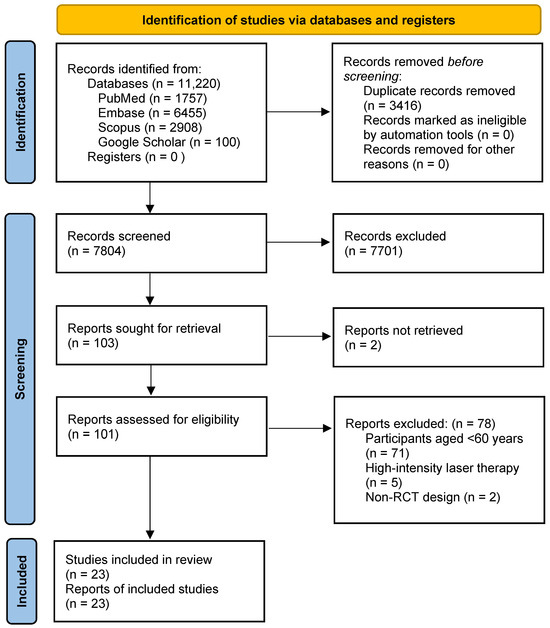
The database search identified a total of 11,220 records across PubMed (n = 1757), Embase (n = 6455), Scopus (n = 2908), and Google Scholar (n = 100). Due to the large volume of results and the decreasing relevance of records beyond the initial pages, only the first 100 records from Google Scholar were screened, consistent with common practice in systematic reviews. After removal of duplicates, 7804 records remained for title and abstract screening, of which 7701 were excluded based on predefined eligibility criteria. A total of 101 full-text articles were assessed for eligibility, and 78 studies were excluded due to ineligible population (n = 71), use of high-intensity laser therapy (n = 5), non-randomized design (n = 2), or unavailable full text (n = 2). Ultimately, 23 randomized controlled trials met the inclusion criteria and were included in the final analysis. (Figure 1). This rigorous selection process highlights the limited availability of high-quality RCTs specifically investigating PBMT in geriatric populations.
Figure 1.
Identification of studies based on PRISMA 2020 [33].
The 23 included RCTs were conducted across 11 countries, reflecting broad geographical representation and increasing global interest in PBMT applications in geriatric dentistry. Sample sizes ranged from 12 to 78 participants, with all studies including individuals aged 60 years or older. The included studies evaluated a wide range of clinical applications, including prevention and management of cancer therapy-induced oral complications, burning mouth syndrome, postoperative pain, hyposalivation, oral lichen planus, peri-implantitis, and implant osseointegration. Most trials employed single-, double-, or triple-blinded randomized designs, with intervention durations ranging from several days to 12 months of follow-up. Detailed characteristics of the included studies are presented in Table 1. However, substantial heterogeneity was observed across studies in terms of PBMT parameters, treatment protocols, and outcome measures, which limited direct comparability and precluded quantitative meta-analysis.
Table 1.
Characteristics of the included randomized controlled trials.
3.2. Analysis of Risk of Bias
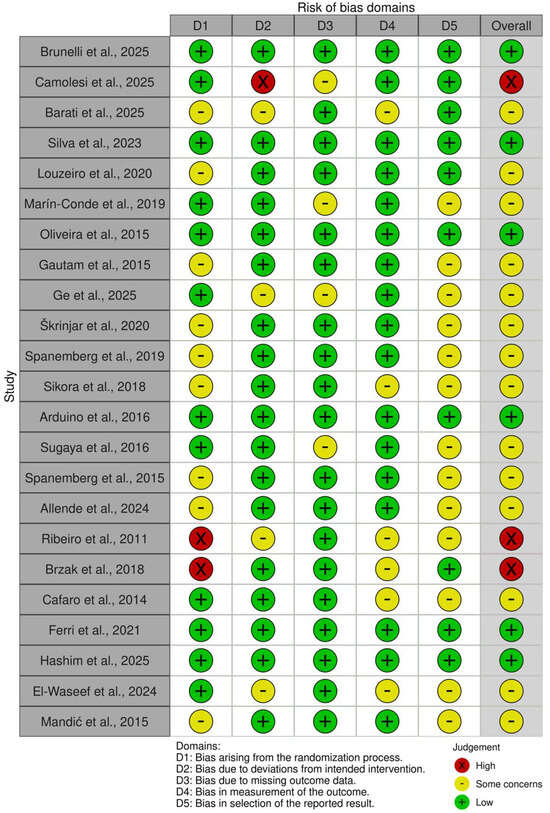
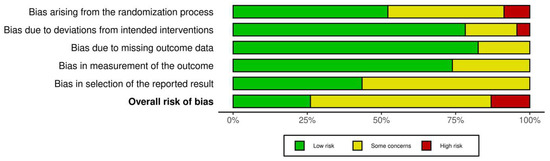
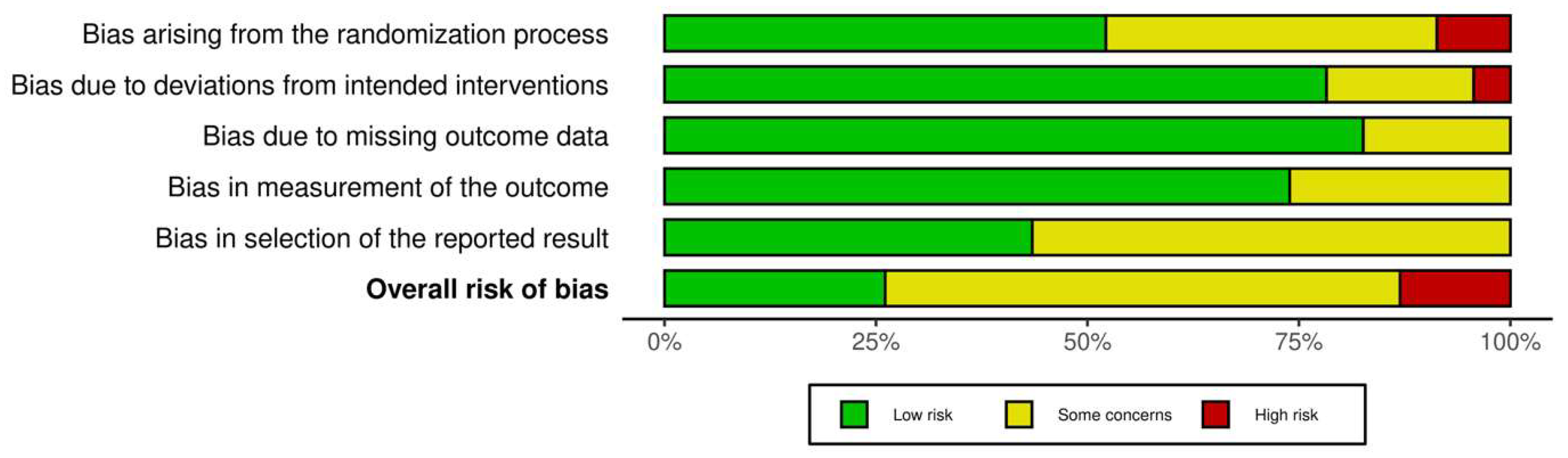
Risk of bias was assessed using RoB 2 tool across five domains: randomization process, deviations from intended interventions, missing outcome data, outcome measurement, and selection of reported results. Six trials were judged to have an overall low risk of bias, demonstrating adequate randomization procedures, appropriate blinding, minimal missing outcome data, and clearly prespecified outcome analyses. The majority of studies were assessed as having some concerns, primarily due to incomplete reporting of allocation concealment and the absence of predefined statistical analysis plans. Three trials were classified as having a high risk of bias, mainly related to insufficient reporting of randomization procedures, lack of blinding, or potential selective outcome reporting. The detailed domain-level assessments are presented in Figure 2 and Figure 3. Overall, the methodological quality of the included studies can be considered moderate, with limitations primarily related to reporting transparency rather than fundamental study design. These factors should be considered when interpreting the clinical findings of this review.
Figure 2.
Risk of bias assessment of included randomized controlled trials using the Cochrane Risk of Bias 2 tool [34,35,36,37,38,39,40,41,42,43,44,45,46,47,48,49,50,51,52,53,54,55,56].
Figure 3.
Summary of risk-of-bias judgments across domains for included randomized controlled trials assessed using the Cochrane RoB 2 tool.
3.3. PBMT’s Clinical Efficacy and Safety in Geriatric Dentistry
Across the included randomized controlled trials, the strength of evidence varied according to clinical application. The strength of evidence was interpreted based on the consistency of findings across studies and the potential influence of placebo effects. Conditions with consistent positive outcomes and no evident placebo effects were considered to have stronger supporting evidence, whereas conditions with a limited number of studies or with potential placebo influence were interpreted more cautiously as having moderate or limited evidence. The clinical outcomes and reported adverse events of the included studies were summarized in Table 2.
Table 2.
Clinical outcomes and adverse effects of photobiomodulation therapy in included randomized controlled trials.
The strongest and most consistent evidence was observed for the prevention and management of cancer therapy-induced oral mucositis, with eight RCTs demonstrating consistent improvements in clinical and patient-reported outcomes. Most studies consistently reported reductions in oral mucositis severity, delayed lesion onset, and decreased pain intensity in patients receiving PBMT during radiotherapy or chemoradiotherapy [35,36,39]. Improvements in patient-reported quality of life and reductions in analgesic consumption were also observed [36]. In addition, several studies reported improvements in patient-reported quality of life and reduced analgesic consumption, supporting the clinical relevance of PBMT in this setting.
Moderate evidence was identified for the management of burning mouth syndrome (n = 7) and hyposalivation (n = 2). RCTs evaluating PBMT for burning mouth syndrome reported reductions in burning pain intensity and improvements in oral health-related quality of life following treatment [42,43,44,45,46,47,48,49]. The wavelengths used in these studies ranged from 685 to 830 nm and were delivered over multiple treatment sessions. In some trials, improvements were observed in both PBMT and sham groups [45]. Studies evaluating salivary gland irradiation reported increases in salivary flow following PBMT treatment compared with baseline or control conditions [51,52].
In contrast, evidence for postoperative pain (n = 2), oral lichen planus (n = 1), peri-implant conditions (n = 1), and implant osseointegration (n = 2) remained limited. Although some studies reported reductions in postoperative pain, improvements in inflammatory parameters, and enhanced implant stability, findings were inconsistent. RCTS investigating postoperative pain reported lower pain scores in the PBMT group compared with control conditions following oral surgical procedures [50]. Additional studies evaluated the adjunctive use of PBMT in inflammatory oral diseases and peri-implant conditions. In patients with oral lichen planus, PBMT produced clinical improvements in pain and lesion severity comparable to those achieved with topical corticosteroid therapy [53]. Studies evaluating peri-implant conditions reported reductions in inflammatory parameters following adjunctive PBMT compared with mechanical debridement alone [54]. Two randomized controlled trials evaluated the effect of PBMT on implant stability and osseointegration. These studies reported higher implant stability quotient (ISQ) values and improved early implant stability in PBMT-treated implants compared with control groups [55,56].
Importantly, PBMT demonstrated an excellent safety profile across all included studies. No clinically significant adverse events related to laser irradiation were reported. Minor transient sensations, such as mild warmth during irradiation, were occasionally described but did not require intervention. Overall, PBMT appears to be a safe and clinically effective adjunctive therapy in geriatric dentistry, with the most robust evidence supporting its use in cancer therapy-induced oral mucositis.
3.4. Laser Parameters and Irradiation Protocols Used in the Included Studies
Considerable variability was observed in PBMT parameters across the included RCTs, reflecting differences in clinical indications and treatment objectives.
Wavelengths ranged from 632.8 to 980 nm, with red light (approximately 630 to 660 nm) and near-infrared wavelengths (approximately 808 to 830 nm) being the most frequently used. A consistent pattern emerged in which red wavelengths were predominantly applied for superficial mucosal conditions, whereas near-infrared wavelengths were more commonly used for deeper tissue targets, including salivary glands and peri-implant tissues. Of the 23 RCTs, 15 used single-wavelength PBMT, whereas 8 applied dual-wavelength PBMT regimens. Dual-wavelength protocols, typically combining intraoral red light with extraoral near-infrared irradiation, were frequently employed in the management of cancer therapy-related oral complications. Detailed PBMT parameters were summarized in Table 3.
Table 3.
Photobiomodulation parameters and treatment protocols used in the included randomized controlled trials.
Laser output power ranged from 5 to 500 mW, with 100 mW being the most commonly applied setting. Lower power levels were generally used in mucosal conditions while moderate power settings were more frequently applied in oral mucositis and peri-implant protocols.
Energy density varied widely across studies; however, most trials delivered between 1 and 10 J/cm2 per irradiation site or applying 1 to 6 J/point. This range appears to represent a clinically effective therapeutic window, consistent with the biphasic dose–response hypotheses described in PBMT. Lower energy doses were typically used in studies targeting oral mucositis and mucosal lesions, whereas higher energy densities were occasionally applied in protocols involving burning mouth syndrome or larger irradiation areas.
Irradiation time per point ranged from 5 to 381 s, with most studies applying 10 to 50 s per point, depending on the selected power output. Treatment frequency varied from single applications to repeated sessions over several weeks, with more intensive protocols commonly used in cancer therapy-related conditions. Overall, PBMT protocols were adapted according to tissue depth, clinical indication, and therapeutic goals.
Table 4 presented clinically relevant PBMT parameters derived from RCTs demonstrating superior or comparable outcomes, highlighting indication-specific protocols and a consistent therapeutic range across geriatric oral conditions.
Table 4.
Suggested photobiomodulation parameters for geriatric oral conditions based on included randomized controlled trials that demonstrated superior or comparable clinical outcomes.
4. Discussion
This systematic review synthesized evidence from RCTs evaluating the clinical efficacy and safety of PBMT in geriatric dentistry. The findings demonstrated that PBMT was a safe and clinically effective therapy for managing several orofacial conditions in older adults, with the strongest evidence observed in the prevention and management of cancer therapy-induced oral mucositis.
The therapeutic effects of PBMT were explained by its underlying photobiological mechanisms. At the cellular level, PBMT enhanced mitochondrial activity, stimulates cytochrome c oxidase, and increases adenosine triphosphate (ATP) production, while modulating reactive oxygen species and promoting nitric oxide release. These processes improved cellular metabolism, enhanced microcirculation, promoted angiogenesis, and accelerated tissue repair. In addition, PBMT modulated inflammatory pathways and reduced nociceptive signaling, contributing to its analgesic and anti-inflammatory effects [14,15]. These mechanisms were particularly relevant in older adults, in whom aging was associated with reduced cellular proliferation, impaired mitochondrial function, diminished collagen synthesis, and decreased vascularization of oral tissues, resulting in delayed wound healing and increased susceptibility to inflammatory oral diseases [1,2]. The ability of PBMT to enhance microcirculation, stimulate cellular activity, and modulate inflammation directly addressed these age-related biological limitations, supporting its clinical application in geriatric populations [57,58].
The present findings indicated that PBMT was most effective in the management of cancer therapy-induced oral mucositis. Multiple RCTs demonstrated significant reductions in mucositis severity, delayed onset of ulcerative lesions, and decreased pain intensity in patients receiving PBMT during radiotherapy or chemoradiotherapy [35,36,37,38,40,41,42]. Improvements in patient-reported outcomes, including reduced weight loss and improved quality of life, were also observed. These findings were consistent with previous systematic reviews and clinical guidelines recommending PBMT for oral mucositis management in oncology patients [3,59].
Moderate evidence was identified for BMS, a chronic neuropathic condition commonly affecting older adults. Several randomized controlled trials demonstrated reductions in burning pain intensity following PBMT treatment [44,46,47,48]. However, comparable improvements observed in sham-treated groups suggest that placebo effects and central pain modulation may contribute to clinical outcomes [43,45]. Given the multifactorial and neuropathic nature of BMS, PBMT may function primarily as a neuromodulatory therapy rather than a definitive disease-modifying intervention [60]. Mechanistically, PBMT may influence nociceptive pathways through modulation of neural activity, reduction in neuroinflammation, and enhancement of mitochondrial function in neural tissues, contributing to symptom relief [61].
PBMT also demonstrated beneficial effects in hyposalivation and xerostomia, conditions commonly associated with aging, polypharmacy, and systemic disease. Several RCTs reported significant improvements in salivary flow following PBMT application to major salivary glands [51,52]. These effects may be explained by enhanced microcirculation, stimulation of mitochondrial metabolism, and increased glandular cellular activity, resulting in improved secretory function [62].
In inflammatory oral diseases such as OLP, PBMT demonstrated reductions in pain intensity and lesion severity comparable to topical corticosteroid therapy [53]. These findings suggested that PBMT may serve as a viable alternative or adjunctive treatment, particularly in patients with contraindications to long-term corticosteroid use. The therapeutic effects were likely mediated through modulation of cytokine expression, reduction in oxidative stress, and promotion of tissue repair [63].
In peri-implant conditions and implant healing, PBMT was associated with improvements in peri-implant soft tissue health, reductions in inflammatory parameters, and enhanced early implant stability [54,55,56]. However, evidence regarding long-term implant success remained limited. Notably, surgical approaches demonstrated superior outcomes in peri-implantitis management compared with PBMT alone, although PBMT offers a minimally invasive adjunctive option [54].
An important methodological consideration identified in this review was the heterogeneity of PBMT irradiation parameters. The included studies applied wavelengths ranging from approximately 630 to 980 nm, with considerable variation in power output, energy density, irradiation time, and treatment frequency. These parameters critically determined tissue penetration and biological response, with red wavelengths primarily affecting superficial tissues and near-infrared wavelengths penetrating deeper structures [14].
Despite this variability, several patterns emerged. Effective protocols for oral mucositis commonly utilized red (approximately 630 to 660 nm) and near-infrared (approximately 800–830 nm) wavelengths delivered repeatedly during cancer therapy. In contrast, management of BMS and salivary gland dysfunction generally involved multiple sessions using near-infrared wavelengths, reflecting the need for deeper tissue penetration and neuromodulatory effects. For inflammatory conditions such as OLP, lower energy densities and localized application were frequently applied. These findings highlighted the importance of tailoring PBMT protocols according to tissue depth, disease pathophysiology, and therapeutic targets.
PBMT also exhibited a biphasic dose–response relationship, in which insufficient energy produced minimal therapeutic effects, whereas excessive energy may inhibit cellular activity [15]. However, variability in outcome measures and follow-up durations limits comparability across studies and affects interpretation of clinical effectiveness. In addition, methodological concerns, particularly related to allocation concealment and reporting transparency, were identified in some studies [29].
From a clinical perspective, PBMT represents a non-invasive, safe, and well-tolerated therapeutic modality that can be integrated into routine geriatric dental care. However, several barriers may limit its widespread implementation, including variability in laser systems, lack of standardized treatment protocols, operator training requirements, and economic considerations. Addressing these challenges through standardized clinical guidelines and training programs will be essential for broader clinical adoption.
Future research should prioritize the development of standardized PBMT protocols tailored to specific geriatric oral conditions. Large-scale, RCTs with extended follow-up periods are required to establish optimal treatment parameters and confirm long-term clinical effectiveness. Further investigation into the molecular mechanisms of PBMT in aging tissues may also enhance therapeutic precision and improve clinical outcomes.
Overall, this review provides a comprehensive synthesis of current evidence and highlights PBMT as a valuable adjunctive therapy in geriatric dentistry, particularly for conditions characterized by impaired healing and inflammation.
5. Conclusions
PBMT is a safe and clinically effective adjunctive modality for managing orofacial conditions in older adults, with the strongest evidence supporting its use in the prevention and management of cancer therapy-induced oral mucositis. Moderate evidence exists for its application in burning mouth syndrome and hyposalivation, while evidence for postoperative pain, oral lichen planus, and peri-implant conditions remains limited.
From a clinical perspective, PBMT may be considered as an adjunctive option for managing oral mucositis in older patients, particularly in oncology settings, and may be selectively applied in other conditions where moderate evidence supports symptom improvement. However, its use should be guided by available evidence.
The absence of standardized PBMT protocols and the heterogeneity of current evidence highlight the need for well-designed randomized controlled trials with consistent parameters and long-term follow-up. Future research should focus on establishing optimal treatment protocols and strengthening the evidence base for broader clinical applications.
Overall, PBMT represents a non-invasive therapeutic approach that may enhance clinical outcomes and improve quality of life in geriatric dental care.
Supplementary Materials
The following supporting information can be downloaded at: https://www.mdpi.com/article/10.3390/dj14040231/s1: File S1: PRISMA 2020 checklist.
Author Contributions
Conceptualization, S.T. and P.S.; methodology, S.T. and P.S.; validation, S.T. and P.S.; formal analysis, S.T. and P.S.; investigation, S.T. and P.S.; data curation, S.T. and P.S.; writing—original draft preparation, S.T.; writing—review and editing, S.T. and P.S.; visualization, S.T. and P.S.; supervision, P.S.; project administration, S.T.; All authors have read and agreed to the published version of the manuscript.
Funding
This research received no external funding.
Institutional Review Board Statement
Not applicable.
Informed Consent Statement
Not applicable.
Data Availability Statement
The original contributions presented in this study are included in the article and Supplementary Material. Further inquiries can be directed to the corresponding authors.
Conflicts of Interest
The authors declare no conflicts of interest.
Appendix A
Table A1.
Search strategy: keywords and MeSH terms used for literature retrieval based on study domains.
Table A2.
Detailed search strategies and number of records retrieved from each electronic database.
References
- Shen, X.; Wang, C.; Zhou, X.; Zhou, W.; Hornburg, D.; Wu, S.; Snyder, M.P. Nonlinear dynamics of multi-omics profiles during human aging. Nat. Aging 2024, 4, 1619–1634. [Google Scholar] [CrossRef] [Scilit] [PubMed]
- Nanci, A. Ten Cate’s Oral Histology: Development, Structure, and Function; Elsevier: St. Louis, MO, USA, 2018. [Google Scholar]
- Elad, S.; Cheng, K.K.F.; Lalla, R.V.; Yarom, N.; Hong, C.; Logan, R.M.; Bowen, J.; Gibson, R.; Saunders, D.P.; Zadik, Y.; et al. MASCC/ISOO clinical practice guidelines for the management of mucositis secondary to cancer therapy. Cancer 2020, 126, 4423–4431. [Google Scholar] [CrossRef] [Scilit] [PubMed]
- Rodríguez-Fuentes, M.E.; Pérez-Sayáns, M.; Carreras-Presas, C.M.; Marichalar-Mendia, X.; Bagán-Debón, L.; López-López, R. Prevalence of acute oral mucosal damage secondary to the use of systemic antineoplastics: A systematic review and meta-analysis. Oral Surg. Oral Med. Oral Pathol. Oral Radiol. 2023, 135, 385–395. [Google Scholar] [CrossRef] [Scilit]
- Sonis, S.T.; Elting, L.S.; Keefe, D.; Peterson, D.E.; Schubert, M.; Hauer-Jensen, M.; Bekele, B.N.; Raber-Durlacher, J.; Donnelly, J.P.; Rubenstein, E.B. Perspectives on cancer therapy-induced mucosal injury: Pathogenesis, measurement, epidemiology, and consequences for patients. Cancer 2004, 100, 1995–2025. [Google Scholar] [CrossRef] [Scilit]
- Pedersen, A.M.L.; Sørensen, C.E.; Proctor, G.B.; Carpenter, G.H.; Ekström, J. Salivary secretion in health and disease. J. Oral Rehabil. 2018, 45, 730–746. [Google Scholar] [CrossRef] [Scilit]
- Wu, S.; Zhang, W.; Yan, J.; Noma, N.; Young, A.; Yan, Z. Worldwide prevalence estimates of burning mouth syndrome: A systematic review and meta-analysis. Oral Dis. 2022, 28, 1431–1440. [Google Scholar] [CrossRef] [Scilit]
- Villa, A.; Connell, C.L.; Abati, S. Diagnosis and management of xerostomia and hyposalivation. Ther. Clin. Risk Manag. 2014, 10, 45–51. [Google Scholar] [CrossRef] [Scilit]
- Alrashdan, M.S.; Cirillo, N.; McCullough, M. Oral lichen planus: A literature review and update. Arch. Dermatol. Res. 2016, 308, 539–551. [Google Scholar] [CrossRef] [Scilit] [PubMed]
- Li, C.; Tang, X.; Zheng, X.; Ge, S.; Wen, H.; Lin, X.; Chen, Z.; Lu, L. Global prevalence and incidence estimates of oral lichen planus: A systematic review and meta-analysis. JAMA Dermatol. 2020, 156, 172–181. [Google Scholar] [CrossRef] [Scilit]
- Moraschini, V.; Poubel, L.A.D.C.; Ferreira, V.F.; Barboza, E.D.S.P. Evaluation of survival and success rates of dental implants: A systematic review. Int. J. Oral Maxillofac. Surg. 2015, 44, 377–388. [Google Scholar] [CrossRef] [Scilit]
- Mester, E.; Szende, B.; Gärtner, P. Effect of laser beams on the growth of hair in mice. Radiobiol. Radiother. 1968, 9, 621–626. [Google Scholar]
- National Library of Medicine. PubMed Database. Available online: https://pubmed.ncbi.nlm.nih.gov/ (accessed on 20 April 2025).
- Dompe, C.; Moncrieff, L.; Matys, J.; Grzech-Leśniak, K.; Kocherova, I.; Bryja, A.; Bruska, M.; Dominiak, M.; Mozdziak, P.; Skiba, T.H.I. Photobiomodulation—Underlying mechanism and clinical applications. J. Clin. Med. 2020, 9, 1724. [Google Scholar] [CrossRef] [Scilit]
- Hamblin, M.R. Mechanisms and mitochondrial redox signaling in photobiomodulation. Photochem. Photobiol. 2018, 94, 199–212. [Google Scholar] [CrossRef] [Scilit]
- Seyyedi, S.A.; Taram, S.; Heydari, M.; Valizadeh, R. Efficacy of low-level laser therapy in oral mucosal surgical wound healing. Explor. Med. 2022, 3, 451–460. [Google Scholar] [CrossRef] [Scilit]
- Zhao, H.; Hu, J.; Zhao, L. Low-level laser therapy as adjunct to periodontal surgery. Lasers Med. Sci. 2021, 36, 175–187. [Google Scholar] [CrossRef] [Scilit]
- de Almeida, M.C.L.; Rocha, R.G.G.; Magno, M.B.; Lima, R.R.; Saito, M.T. Palatal wound healing approaches. Clin. Oral Investig. 2024, 28, 347. [Google Scholar] [CrossRef] [Scilit]
- Al-Zainal, Z.; Ashraf, S.F.; Gopinath, D. Laser therapy for recurrent aphthous ulcers. Lasers Med. Sci. 2025, 40, 49. [Google Scholar] [CrossRef] [Scilit] [PubMed]
- Liu, P.; Zhou, Q.; Bao, J.; Chen, M.; Xu, M.; Bian, J.; Wen, Y.; Yan, J. Laser therapy in oral lichen planus. Lasers Med. Sci. 2025, 40, 151. [Google Scholar] [CrossRef] [Scilit] [PubMed]
- Mercadante, V.; Smith, D.K.; Abdalla-Aslan, R.; Andabak-Rogulj, A.; Brennan, M.T.; Jaguar, G.C.; Clark, H.; Fregnani, E.R.; Gueiros, L.A.; Hovan, A.; et al. A systematic review of salivary gland hypofunction and/or xerostomia induced by non-surgical cancer therapies: Prevention strategies. Support. Care Cancer 2025, 33, 87. [Google Scholar] [CrossRef] [Scilit]
- Díaz, L.; Basualdo, J.; Chaple-Gil, A.; Von Marttens, A.; Fernández, E. Effectiveness of low-level laser therapy in patients with maxillofacial neuropathies. A systematic review of randomized controlled trials. Photodiagn. Photodyn. Ther. 2025, 52, 104516. [Google Scholar] [CrossRef] [Scilit] [PubMed]
- Parra-Rojas, S.; Velázquez-Cayón, R.T.; Ciortan-Pop, M.E.; Martins, M.D.; Spanemberg, J.C. Preventive Photobiomodulation for Chemotherapy-Induced Oral Mucositis: A Systematic Review of Randomized Clinical Trials. Biomedicines 2025, 13, 268. [Google Scholar] [CrossRef] [Scilit]
- Okuhara, M.R.; Trevisani, V.F.M.; Macedo, C.R. Effects of Photobiomodulation on Burning Mouth Syndrome: A Systematic Review and Meta-Analysis. J. Oral Rehabil. 2025, 52, 540–553. [Google Scholar] [CrossRef] [Scilit] [PubMed]
- Ren, C.; McGrath, C.; Jin, L.; Zhang, C.; Yang, Y. The effectiveness of low-level laser therapy as an adjunct to non-surgical periodontal treatment: A meta-analysis. J. Periodontal Res. 2017, 52, 8–20. [Google Scholar] [CrossRef] [Scilit] [PubMed]
- Shahbazi, S.; Esmaeili, S.; Moscowchi, A.; Amid, R.; Romanos, G.; Kadkhodazadeh, M. Adjunctive photochemical therapy for management of inflammatory peri-implant diseases: A systematic review and meta-analysis. Photochem. Photobiol. 2025, 102, 163–197. [Google Scholar] [CrossRef] [Scilit] [PubMed]
- Rani, S.; Dhawan, P.; Kruthiventi, H. Clinical efficacy of photobiomodulation therapy in dental implant stability and crestal bone loss in implants placed in healed sites: A systematic review and meta-analysis of randomized clinical trials. Lasers Med. Sci. 2025, 40, 40. [Google Scholar] [CrossRef] [Scilit]
- Díaz, L.; Restelli, L.; Valencia, E.; Atalay, D.I.; Abarca, J.M.; Gil, A.C.; Fernández, E. Effectiveness of low-level laser therapy on temporomandibular disorders. A systematic review of randomized clinical trials. Photodiagn. Photodyn. Ther. 2025, 53, 104558. [Google Scholar] [CrossRef] [Scilit] [PubMed]
- da Silveira, R.B.; Ferreira, I.; Botelho, A.L.; Dos Reis, A.C. Effect of photobiomodulation treatment on pain control in patients with temporomandibular dysfunction disorder: Systematic review. Cranio 2022, 43, 117–127. [Google Scholar] [CrossRef] [Scilit]
- Kumar, N.K.; Abhishek, M.; Naik, B.S.; Brigit, B.; V, S.G.; Manimozhi, M. Evaluation of Effect of Laser in Root Canal Disinfection in Pulp Regenerative Therapy: A Systematic Review. Photobiomodul. Photomed. Laser Surg. 2024, 43, 53–58. [Google Scholar] [CrossRef] [Scilit]
- Elmsmari, F.; Shujaie, H.; Alzaabi, R.; González, J.A.; Aljafarawi, T.; Olivieri, J.G.; Jurado, C.A.; Afrashtehfar, K.I. Lasers efficacy in pain management after primary and secondary endodontic treatment: A systematic review and meta-analysis of randomized clinical trials. Sci. Rep. 2024, 14, 26028. [Google Scholar] [CrossRef] [Scilit]
- Godaert, L.; Dramé, M. Efficacy of Photobiomodulation Therapy in Older Adults: A Systematic Review. Biomedicines 2024, 12, 1409. [Google Scholar] [CrossRef] [Scilit]
- Page, M.J.; McKenzie, J.E.; Bossuyt, P.M.; Boutron, I.; Hoffmann, T.C.; Mulrow, C.D.; Shamseer, L.; Tetzlaff, J.M.; Akl, E.A.; Brennan, S.E.; et al. The PRISMA 2020 statement: An updated guideline for reporting systematic reviews. BMJ 2021, 372, n71. [Google Scholar] [CrossRef] [Scilit]
- Borghesi Brunelli, G.; Pinheiro, S.L. Combined extraoral and intraoral photobiomodulation for the prevention and management of oral mucositis and xerostomia caused by treatment of head and neck cancers. Lasers Med. Sci. 2025, 40, 295. [Google Scholar] [CrossRef] [Scilit]
- Vianna Camolesi, G.C.; Prado-Pena, I.B.; Gómez-Caamaño, A.; Victoria-Fernández, C.; Blanco-Carrión, A.; García-García, A.; Gándara-Vila, P.; Pérez-Sayáns, M. Photobiomodulation for the prevention of oral side effects secondary to head and neck cancer therapy: Results of a randomized, single-blind clinical trial. Oral Oncol. 2025, 164, 107266. [Google Scholar] [CrossRef] [Scilit]
- Barati, S.; Motevasseli, S.; Saedi, H.S.; Amiri, P.; Fekrazad, R. Effectiveness of photobiomodulation on oral mucositis induced by chemoradiotherapy in head and neck cancer patients. J. Photochem. Photobiol. B 2025, 264, 113115. [Google Scholar] [CrossRef] [Scilit]
- de Carvalho e Silva, R.M.; Mendes, F.M.; Degasperi, G.R.; Pinheiro, S.L. Photobiomodulation for the management of xerostomia and oral mucositis in cancer patients: A randomized clinical trial. Lasers Med. Sci. 2023, 38, 101. [Google Scholar] [CrossRef] [Scilit]
- Louzeiro, G.C.; Cherubini, K.; de Figueiredo, M.A.Z.; Salum, F.G. Effect of photobiomodulation on salivary flow and xerostomia during head and neck radiotherapy: A randomized controlled trial. J. Photochem. Photobiol. B 2020, 209, 111933. [Google Scholar] [CrossRef] [Scilit] [PubMed]
- Marín-Conde, F.; Castellanos-Cosano, L.; Pachón-Ibañez, J.; Serrera-Figallo, M.A.; Gutiérrez-Pérez, J.L.; Torres-Lagares, D. Photobiomodulation reduces oral mucositis caused by radiochemotherapy: A randomized controlled trial. Int. J. Oral Maxillofac. Surg. 2019, 48, 917–923. [Google Scholar] [CrossRef] [Scilit] [PubMed]
- de Oliveira, F.M.A.; Borges, M.M.F.; Malta, C.E.N.; de Moura, J.F.B.; Forte, C.P.F.; Barbosa, J.V.; de Barros Silva, P.G.; Dantas, T.S. Comparison of daily and alternate-day photobiomodulation protocols for prevention of oral mucositis: A triple-blind randomized trial. Med. Oral Patol. Oral Cir. Bucal 2024, 29, e430–e440. [Google Scholar] [CrossRef] [Scilit] [PubMed]
- Gautam, A.P.; Fernandes, D.J.; Vidyasagar, M.S.; Maiya, A.G.; Guddattu, V. Low-level laser therapy against radiation-induced oral mucositis in elderly patients: A randomized placebo-controlled trial. J. Photochem. Photobiol. B 2015, 144, 51–56. [Google Scholar] [CrossRef] [Scilit]
- Ge, X.L.; Sun, C.; Zhao, R.; Wang, H.Y.; Jiang, W.W. Comparative efficacy of diode laser wavelengths in burning mouth syndrome: A randomized trial. Lasers Med. Sci. 2025, 40, 165. [Google Scholar] [CrossRef] [Scilit]
- Škrinjar, I.; Brzak, B.L.; Vidranski, V.; Boras, V.V.; Rogulj, A.A.; Pavelić, B. Salivary cortisol and burning symptoms before and after low-level laser therapy: A randomized controlled trial. Acta Stomatol. Croat. 2020, 54, 44–50. [Google Scholar] [CrossRef] [Scilit]
- Spanemberg, J.C.; Segura-Egea, J.J.; Rodríguez-de Rivera-Campillo, E.; Jané-Salas, E.; Salum, F.G.; López-López, J. Low-level laser therapy in burning mouth syndrome: A randomized controlled trial. J. Clin. Exp. Dent. 2019, 11, e162–e169. [Google Scholar] [CrossRef] [Scilit] [PubMed]
- Sikora, M.; Včev, A.; Siber, S.; Boras, V.V.; Rotim, Ž.; Matijević, M. Low-level laser therapy in burning mouth syndrome: A pilot study. Acta Clin. Croat. 2018, 57, 312–315. [Google Scholar] [CrossRef] [Scilit]
- Arduino, P.G.; Cafaro, A.; Garrone, M.; Gambino, A.; Cabras, M.; Romagnoli, E.; Broccoletti, R. Low-level laser therapy versus clonazepam in burning mouth syndrome: A randomized pilot study. Lasers Med. Sci. 2016, 31, 811–816. [Google Scholar] [CrossRef] [Scilit]
- Sugaya, N.N.; da Silva, É.F.P.; Kato, I.T.; Prates, R.; de Barros Gallo, C.; Pellegrini, V.D. Low-intensity laser therapy in burning mouth syndrome: A randomized placebo-controlled study. Braz. Oral Res. 2016, 30, e108. [Google Scholar] [CrossRef] [Scilit] [PubMed]
- Spanemberg, J.C.; López-López, J.; de Figueiredo, M.A.Z.; Cherubini, K.; Salum, F.G. Low-level laser therapy for burning mouth syndrome: A randomized controlled trial. J. Biomed. Opt. 2015, 20, 098001. [Google Scholar] [CrossRef] [Scilit]
- Basualdo Allende, J.; Caviedes, R.; von Marttens, A.; Ramírez, F.G.; Piña, I.V.; Kuga, M.; Fernández, E. Low-level laser therapy for postoperative pain after dental implant surgery: A randomized clinical trial. Photodiagn. Photodyn. Ther. 2024, 49, 104293. [Google Scholar] [CrossRef] [Scilit] [PubMed]
- Ribeiro, A.S.; de Aguiar, M.C.F.; do Carmo, M.A.V.; de Abreu, M.H.N.G.; Silva, T.A.; Mesquita, R.A. 660 nm laser for pain relief after cryosurgery of oral leukoplakia. Photomed. Laser Surg. 2011, 29, 345–350. [Google Scholar] [CrossRef] [Scilit]
- Brzak, B.L.; Cigić, L.; Baričević, M.; Sabol, I.; Mravak-Stipetić, M.; Risović, D. Photobiomodulation protocols for hyposalivation. Photomed. Laser Surg. 2018, 36, 78–82. [Google Scholar] [CrossRef] [Scilit] [PubMed]
- Cafaro, A.; Arduino, P.G.; Gambino, A.; Romagnoli, E.; Broccoletti, R. Laser acupuncture for salivary flow in Sjögren’s syndrome. Lasers Med. Sci. 2015, 30, 1805–1809. [Google Scholar] [CrossRef] [Scilit] [PubMed]
- Ferri, E.P.; Cunha, K.R.L.; Abboud, C.S.; de Barros Gallo, C.; de Sousa Sobral, S.; Teixeira da Silva, D.F.; Horliana, A.C.R.T.; Franco, A.L.S.; Rodrigues, M.F.S.D. Photobiomodulation in oral lichen planus: A randomized controlled study. Oral Dis. 2021, 27, 1205–1216. [Google Scholar] [CrossRef] [Scilit]
- Hashim, D.; Courvoisier, D.; Cionca, N. Surgical versus non-surgical peri-implantitis treatment with adjunctive laser therapy: A randomized trial. Clin. Oral Investig. 2025, 29, 142. [Google Scholar] [CrossRef] [Scilit]
- El-Waseef, F.A.; Helmy, M.A.; Said Ahmed, W.M.; Hegazy, S.A.; El-Shaheed, N.H. Laser biostimulation in mandibular ridge splitting: A preliminary study. J. Prosthet. Dent. 2024, 132, 780.e1–780.e9. [Google Scholar] [CrossRef] [Scilit] [PubMed]
- Mandić, B.; Lazić, Z.; Marković, A.; Mandić, B.; Mandić, M.; Djinić, A.; Miličić, B. Effect of low-level laser therapy on osseointegration of implants. Vojn. Pregl. 2015, 72, 233–240. [Google Scholar] [CrossRef] [Scilit]
- Tanya, S.; Prajaneh, S.; Patcharanuchat, P.; Sattayut, S. Laser-mediated hemostasis for older patients receiving routine dental treatment. Dent. J. 2025, 13, 315. [Google Scholar] [CrossRef] [Scilit] [PubMed]
- Tanya, S.; Patcharanuchat, P.; Sattayut, S. A comparative study of photobiomodulation enhancing hemostasis in older patients at risk of extraction socket bleeding. Laser Ther. 2025, 32, 1. [Google Scholar] [CrossRef] [Scilit]
- Zadik, Y.; Arany, P.R.; Fregnani, E.R.; Bossi, P.; Antunes, H.S.; Bensadoun, R.-J.; Gueiros, L.A.; Majorana, A.; Nair, R.G.; Ranna, V.; et al. Systematic review of photobiomodulation for the management of oral mucositis in cancer patients and clinical practice guidelines. Support. Care Cancer 2019, 27, 3969–3983. [Google Scholar] [CrossRef] [Scilit]
- Scala, A.; Checchi, L.; Montevecchi, M.; Marini, I.; Giamberardino, M.A. Burning mouth syndrome: Overview and management. Crit. Rev. Oral Biol. Med. 2003, 14, 275–291. [Google Scholar] [CrossRef] [Scilit]
- Cheng, K.; Martin, L.F.; Slepian, M.J.; Patwardhan, A.M.; Ibrahim, M.M. Mechanisms and Pathways of Pain Photobiomodulation: A Narrative Review. J. Pain 2021, 22, 763–777. [Google Scholar] [CrossRef] [Scilit]
- de Freitas, L.F.; Hamblin, M.R. Proposed Mechanisms of Photobiomodulation or Low-Level Light Therapy. IEEE J. Sel. Top. Quantum Electron. 2016, 22, 7000417. [Google Scholar] [CrossRef] [Scilit]
- Hamblin, M.R. Mechanisms and applications of the anti-inflammatory effects of photobiomodulation. AIMS Biophys. 2017, 4, 337–361. [Google Scholar] [CrossRef] [Scilit] [PubMed]

Disclaimer/Publisher’s Note: The statements, opinions and data contained in all publications are solely those of the individual author(s) and contributor(s) and not of MDPI and/or the editor(s). MDPI and/or the editor(s) disclaim responsibility for any injury to people or property resulting from any ideas, methods, instructions or products referred to in the content. |
© 2026 by the authors. Licensee MDPI, Basel, Switzerland. This article is an open access article distributed under the terms and conditions of the Creative Commons Attribution (CC BY) license.