Article

Efficacy of the Sausage Technique in Rebuilding the Crestal Buccal Bone Thickness: A Retrospective Analysis


1
Private Practice, 20129 Milan, Italy
2
Implant Center for Edentulism and Jawbone Atrophies, Maxillofacial Surgery and Odontostomatology Unit, Fondazione IRCCS Cà Granda Ospedale Maggiore Policlinico, University of Milan, 20122 Milan, Italy
3
School of Dentistry, Department of Medicine and Surgery, University of Insubria, 21100 Varese, Italy
4
Department of Medicine and Technological Innovation, Unit of Oral Medicine and Pathology, ASST dei Sette Laghi, 21100 Varese, Italy
5
Department of Medicine and Technological Innovation, Research Center of Innovative Technology and Engineered Biomaterial, University of Insubria, 21100 Varese, Italy
*
Author to whom correspondence should be addressed.
Dent. J. 2024, 12(6), 180; https://doi.org/10.3390/dj12060180
Submission received: 17 March 2024 / Revised: 16 April 2024 / Accepted: 5 June 2024 / Published: 12 June 2024

Abstract

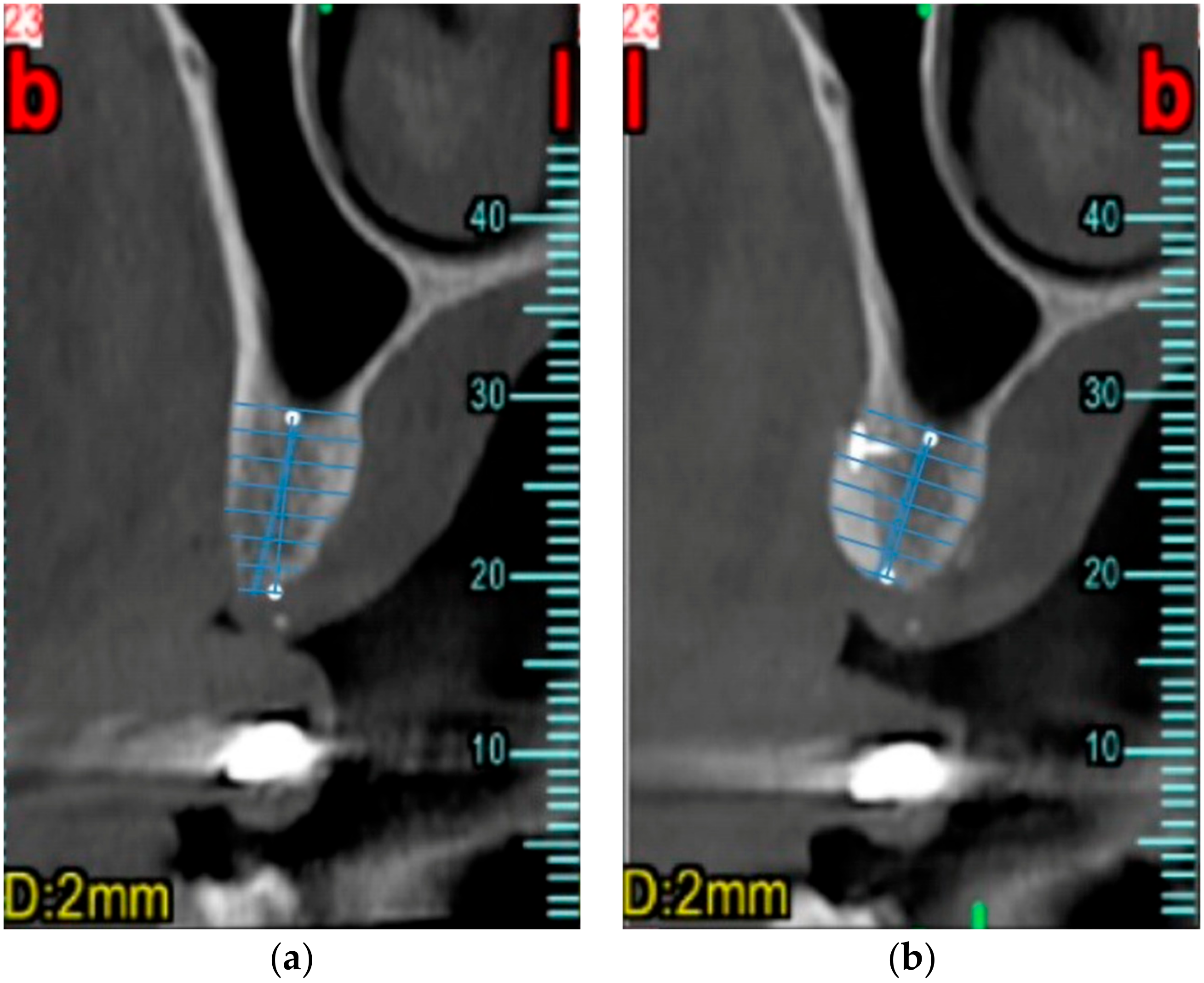
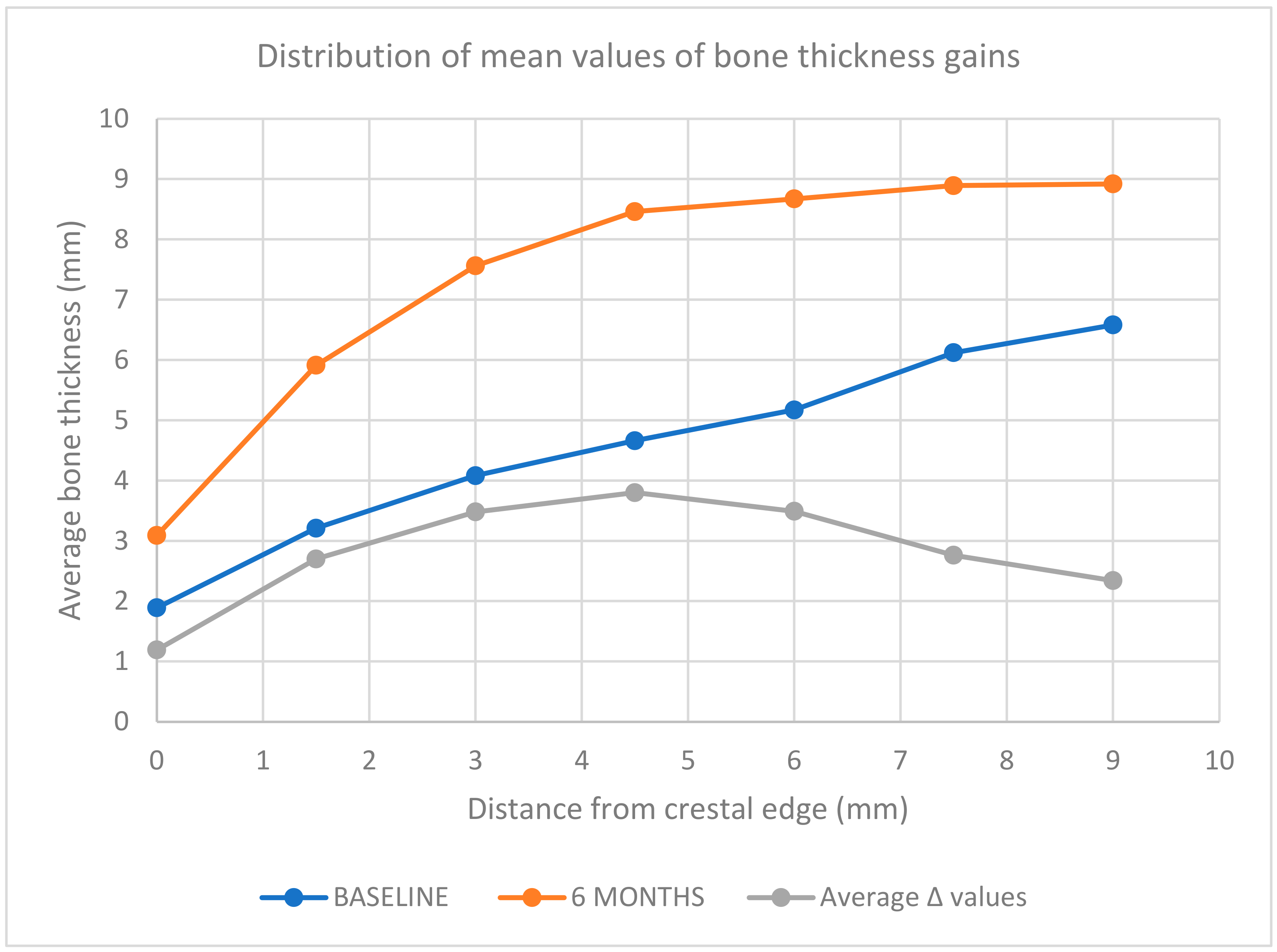
The goal was to evaluate the efficacy of the sausage technique in reconstructing the crestal buccal bone thickness, focusing on the distribution shape of the regenerated volume. Ten implants were placed in five patients with Cawood–Howell class IV defects. A cone beam computed tomography (CBCT) was executed at T0 (before surgery). Guided bone regeneration (GBR) with the sausage technique utilized a resorbable collagen membrane, made of a 50% autologous bone and a 50% anorganic bovine bone matrix (ABBM) mixture. After 6 months, a CBCT (T1) was performed before implant placement. Using CBCT software, a plane parallel to the implant axis intersected perpendicular planes every 1.5 mm from the crest level. T0 and T1 CBCT sections were analyzed, yielding 140 measurements. Statistical analysis via SPSS revealed a significant increase in thickness (average 2.82 ± 1.79 mm). Maximum gains occurred at 4.5 mm from the coronal crest line (3.8 ± 1.51 mm). The GBR sausage technique was effective with minimal post-operative complications, yielding the biggest gain at the mid-ridge sagittal area. Within the analysis limitations, it can be assumed that the sausage technique is effective for horizontal GBR in the maxilla, but a lesser volume might be achieved at the crestal level because it seems to follow a bowed regeneration shape.
Keywords: guided bone regeneration (GBR); sausage technique; bone volume; regeneration shape guided bone regeneration (GBR); sausage technique; bone volume; regeneration shape