


Abstract
Background: Stenotrophomonas maltophilia is a multidrug-resistant pathogen with limited therapeutic options that predominantly affects critically ill and immunocompromised patients. Trimethoprim–sulfamethoxazole (TMP/SMX) remains the conventional first-line therapy; however, emerging resistance and toxicity concerns necessitate alternative regimens. This study represents, to our knowledge, the first network meta-analysis (NMA) comparing the efficacy and safety of clearly defined monotherapy and combination antibiotic regimens for S. maltophilia infections. Materials and methods: A systematic search of PubMed, Cochrane Library, Web of Science, and ClinicalTrials.gov (inception to January 2026) identified eligible randomized-controlled studies and retrospective studies. Data were analyzed using a frequentist random-effects NMA with TMP/SMX as the reference. Evaluated regimens included TMP/SMX, fluoroquinolone (FQ), minocycline (MIN), TMP/SMX + FQ, TMP/SMX + MIN, FQ + MIN and FQ + other. Primary and secondary outcomes were all-cause mortality, clinical cure, and adverse effects. Results: Thirteen retrospective studies encompassing 2980 patients were included. Using TMP/SMX as the reference, network meta-analysis demonstrated heterogeneity in all-cause mortality across antimicrobial regimens. FQ and MIN monotherapies were associated with lower odds of mortality (effect sizes: 0.65, 95% CI: 0.49–0.85 and 0.50, 95% CI: 0.28–0.90), whereas combination therapy with TMP/SMX plus FQ was associated with higher mortality (effect size: 2.93, 95% CI: 1.18–7.31). Treatment ranking based on effect sizes suggested more favorable mortality profiles for MIN and FQ regimsens. No significant differences were observed in clinical cure, while FQ was associated with a lower incidence of adverse effects compared with TMP/SMX. Conclusions: This network meta-analysis suggests that FQ and MIN monotherapies may be associated with more favorable survival and tolerability compared with TMP/SMX monotherapy. No clear differences were observed for combination therapy relative to other active monotherapy options. Prospective randomized studies are required to validate these observations and to better inform the management of S. maltophilia infections.
1. Introduction
Stenotrophomonas maltophilia is a non-fermenting, Gram-negative bacillus that has emerged as a clinically relevant pathogen in modern healthcare settings, particularly in hospitalized and critically ill patients. It is widely distributed in soil, water, and hospital environments, with a strong propensity to colonize aqueous systems, ventilator circuits, and indwelling medical devices [1]. The organism has become an important cause of nosocomial infections, particularly among immunocompromised hosts, critically ill patients receiving prolonged mechanical ventilation, and those exposed to broad-spectrum antimicrobials. Global surveillance programs have demonstrated an increasing incidence of S. maltophilia in intensive care and oncology units, where it now ranks among the leading non-fermenters isolated from bloodstream and respiratory tract infections [2,3]. Reported mortality rates for S. maltophilia bacteremia and pneumonia range from 20% to 60%, reflecting both the vulnerability of affected patients and the lack of optimal therapy [4].
The management of S. maltophilia infection is challenging because of its remarkable intrinsic and acquired resistance mechanisms. The organism produces two chromosomally encoded β-lactamases L1, a metallo-β-lactamase, and L2, a serine β-lactamase that confer broad resistance to β-lactams and carbapenems [5]. In addition, multidrug efflux pumps, reduced outer membrane permeability, and plasmid mediated resistance genes contribute to its multidrug resistant phenotype [6]. As a result, empiric treatment is often inadequate until susceptibility data become available. Trimethoprim–sulfamethoxazole (TMP/SMX) remains the historical drug of choice and is recommended as first-line therapy for susceptible isolates. Nevertheless, increasing resistance rates ranging from 10% to 30% globally have been reported [7]. Resistance is mediated by mutations in folA and folP or by acquisition of sul1/sul2 genes [8]. Moreover, intolerance related to bone-marrow suppression, rash, and renal toxicity frequently limits its use in severely ill or hematologic patients. Among alternatives, fluoroquinolones (FQ) such as levofloxacin and moxifloxacin display variable activity, though resistance can emerge rapidly via gyrA and parC mutations [9]. Minocycline (MIN) demonstrates potent in vitro activity, including against TMP/SMX resistant isolates, and several retrospective studies have shown comparable or superior clinical outcomes [10]. Tigecycline and doxycycline have been utilized as adjunctive options, though their low serum concentrations limit efficacy in bacteremia. More recently, cefiderocol, a novel siderophore cephalosporin, has shown potent activity against multidrug resistant S. maltophilia, but clinical experience remains limited [11].
The role of combination therapy in the management of S. maltophilia infections remains controversial, largely owing to the absence of randomized evidence and the heterogeneity of available observational data. For isolates susceptible to at least one active agent, targeted monotherapy is generally considered sufficient; nevertheless, combination regimens are frequently employed in critically ill patients or during empirical treatment when susceptibility results are pending. Although in vitro studies have demonstrated synergistic activity for combinations such as TMP/SMX with ticarcillin-clavulanate, MIN with FQ, or β-lactams with tetracyclines, translation of these findings into consistent clinical benefit has been limited [12]. In a large multicenter cohort of 307 patients with S. maltophilia pneumonia, combination therapy, most commonly TMP/SMX plus a FQ was not associated with improved 30-day survival in the overall population, although lower mortality was observed in selected subgroups, including immunocompromised patients and those with severe disease [13]. In addition, other large retrospective studies focusing on critically ill patients with hospital-acquired or ventilator-associated S. maltophilia pneumonia reported no significant differences between combination therapy and monotherapy with respect to in-hospital mortality, clinical response, or microbiological eradication [14]. Notably, one study observed higher 30-day all-cause mortality in patients receiving combination regimens, a finding most likely attributable to confounding by indication, as dual therapy was preferentially prescribed to patients with greater illness severity [15]. Collectively, these findings underscore the substantial impact of baseline severity and treatment selection bias on observed outcomes and limit the interpretability of direct regimen to regimen comparisons.
In this context, network meta-analysis offers a structured approach to synthesizing 88 fragmented and heterogeneous evidence across multiple treatment strategies; however, such comparisons are inherently indirect and represent an artificial construct that may not fully reflect real-world clinical decision-making. Accordingly, results derived from NMA should be interpreted as comparative signals rather than causal estimates. Therefore, the primary objective of the present study was to systematically evaluate the comparative effectiveness and safety of different antimicrobial regimens, specifically monotherapy versus combination therapy, across major clinical outcomes including mortality, clinical cure, and adverse events in patients with S. maltophilia infections. By integrating both direct and indirect evidence, our network meta-analysis aims to provide a structured comparative framework and relative ranking of treatment strategies, offering contextualized evidence to support clinical judgment in the management of S. maltophilia infections.
2. Materials and Methods
This study followed the Preferred Reporting Items for Systematic Reviews and Meta-Analyses (PRISMA) extension for network meta-analysis (PRISMA-NMA) guidelines [16]. The study protocol was prospectively registered on the International Platform of Registered Systematic Review and Meta-analysis Protocols (INPLASY) under registration number INPLASY2025120093 [17]. As all data were derived from previously published studies, ethical approval and informed consent were not required.
2.1. Database Searches and Study Identification
Two reviewers (M.-Y.A. and W.-L.C.) independently searched PubMed, Cochrane Reviews, Cochrane Central Register of Controlled Trials (CENTRAL), Web of Science, and ClinicalTrials.gov for relevant studies. The search strategy used the terms (“Stenotrophomonas maltophilia“) AND (“mortality”). All studies published from database inception to 31 January 2026, were considered. Titles and abstracts were independently screened to determine eligibility, with disagreements resolved through consensus or consultation with a third reviewer. No language restrictions were applied.
2.2. Inclusion and Exclusion Criteria
The network meta-analysis was designed according to the PICO (Population, Intervention, Comparison, and Outcome) framework, which defined the study scope as follows: (1) Population (P): Human adult patients diagnosed with Stenotrophomonas maltophilia infection who received either monotherapy or combination antibiotic therapy. (2) Intervention (I): Patients treated with monotherapy or combination regimens composed of agents recommended for S. maltophilia infections specifically FQ, TMP/SMX, minocycline, ceftazidime, or cefiderocol based on their established antimicrobial activity against this pathogen. (3) Comparison (C): TMP/SMX monotherapy was used as the reference regimen. (4) Outcome (O): All-cause mortality, clinical cure, and adverse effects.
The inclusion criteria were as follows: (1) randomized controlled trials (RCTs), retrospective, or prospective studies involving patients with confirmed S. maltophilia infection who received antibiotic treatment; (2) studies with a minimum follow-up duration of one week; and (3) studies that explicitly reported at least one predefined outcome namely, all-cause mortality, clinical cure, or adverse effects. The primary outcome for assessing antimicrobial effectiveness was all-cause mortality, defined as death from any cause occurring within approximately 7 to 30 days of treatment initiation. The secondary outcomes included clinical cure, defined as the complete resolution of infection-related signs and symptoms at the end of therapy, and adverse effects, referring to any drug-related complications reported during the study period.
Studies were excluded if they met any of the following criteria: (1) case reports; (2) studies without confirmed S. maltophilia culture results and susceptibility; (3) studies lacking a clear diagnosis of S. maltophilia infection; (4) absence of infection site information; (5) concurrent infections caused by other Gram-positive cocci or other Gram-negative bacilli; (6) use of antimicrobial agents not recommended for S. maltophilia treatment (i.e., agents other than TMP/SMX, FQ, minocycline, ceftazidime, or cefiderocol); (7) incomplete or inaccessible outcome data despite attempts to contact the authors; or (8) overlapping patient populations already included in other eligible studies.
2.3. Modeling for Network Meta-Analysis
To ensure methodological consistency and minimize variability in our analytical model, this network meta-analysis was conducted according to predefined guidelines. Pairwise comparisons were restricted to evaluating different antimicrobial regimens for the treatment of Stenotrophomonas maltophilia infections. All infection sites caused by S. maltophilia were included to comprehensively assess the comparative efficacy and safety of various therapeutic options. However, studies lacking pathogen specific outcome data were excluded to avoid confounding and maintain the integrity of the analysis [18].
2.4. Methodological Quality Appraisal
To assess the methodological quality of the included studies, we applied the Newcastle-Ottawa Scale (NOS) for non-randomized studies [19]. This tool evaluates study quality across three key domains: the selection of study participants, the comparability of study groups, and the validity of outcome assessment. Each study was awarded up to nine points, with higher scores indicating better methodological quality.
2.5. Primary Outcome
In this study, the primary outcome was overall mortality among patients with Stenotrophomonas maltophilia infection. Treatment regimens were defined as the use of one or more antibiotics with documented activity against S. maltophilia. We further compared the effectiveness of different antimicrobial therapies based on all-cause mortality and clinical cure across various treatment strategies.
To address heterogeneity in outcome definitions across included studies, we conducted prespecified subgroup analyses stratified by the timing of mortality assessment. Studies were categorized according to reported mortality endpoints, including short-term mortality (30-day mortality) and in-hospital mortality, and network meta-analyses were repeated within each subgroup using the same frequentist random-effects framework as the primary analysis. In addition, a prespecified subgroup was performed among studies exclusively including patients with S. maltophilia bloodstream infections (BSI), applying the same analytical framework.
2.6. Secondary Outcomes
The secondary outcomes of this study were clinical cure and adverse effects associated with different antibiotic regimens. These analyses aimed to compare the efficacy and safety profiles of each antimicrobial treatment by assessing clinical cure rates and the incidence of adverse events across various therapeutic strategies.
2.7. Data Extraction, Management, and Conversion
Two authors (M.-Y.A. and W.-L.C.) independently conducted data extraction. The collected information included study design, patient demographics, intervention details, and data on both primary and secondary outcomes. All processes related to data extraction, transformation, and synthesis were performed in accordance with the recommendations of the Cochrane Handbook for Systematic Reviews of Interventions and other relevant methodological references [20].
2.8. Statistical Analyses
Given the variability among the included studies, a random-effects model was applied for the network meta-analysis. All analyses were conducted within a frequentist statistical framework using MetaInsight (version 4.0.2; Complex Reviews Support Unit, National Institute for Health Research, London, UK), a web-based platform for network meta-analysis that utilizes the netmeta package in R.
Initially, forest and network plots were generated to visualize pairwise comparisons among studies. Additional forest plots were constructed to estimate odds ratios for mortality, clinical cure, and adverse effects, using TMP/SMX as the reference group. Effect sizes were reported as point estimates with corresponding 95% confidence intervals (95% CI).
Each regimen was ranked based on its relative efficacy and safety, and both direct and indirect comparisons were summarized in tabular form. Inconsistency analyses were performed to identify potential discrepancies within the network. A two-tailed p value < 0.05 was considered statistically significant.
2.9. Sensitivity Analysis
To enhance the robustness of our findings, a one study removed sensitivity analysis was conducted. In this approach, each study was sequentially excluded to determine whether any single study had a disproportionate impact on the overall results. By systematically omitting each study from the analyses of all-cause mortality, clinical cure, and adverse effects, we evaluated the stability of the pooled estimates and the consistency of treatment rankings.
2.10. Publication Bias
Potential publication bias was evaluated in accordance with the recommendations of the Cochrane Handbook for Systematic Reviews of Interventions [21]. Funnel plots were generated using Comprehensive Meta-Analysis software (version 4; BioStat, Englewood, NJ, USA) to visually inspect asymmetry, focusing on comparisons against the TMP/SMX reference group. In addition, Egger’s regression test was applied to quantitatively assess the presence and magnitude of publication bias.
3. Results
3.1. Study Identification and Network Model Formation
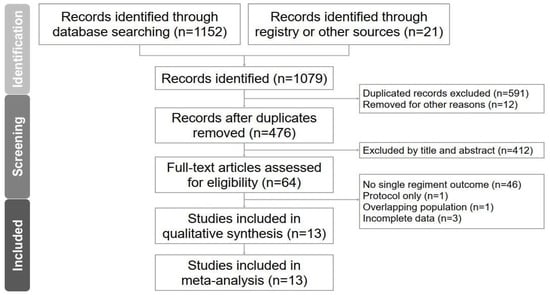
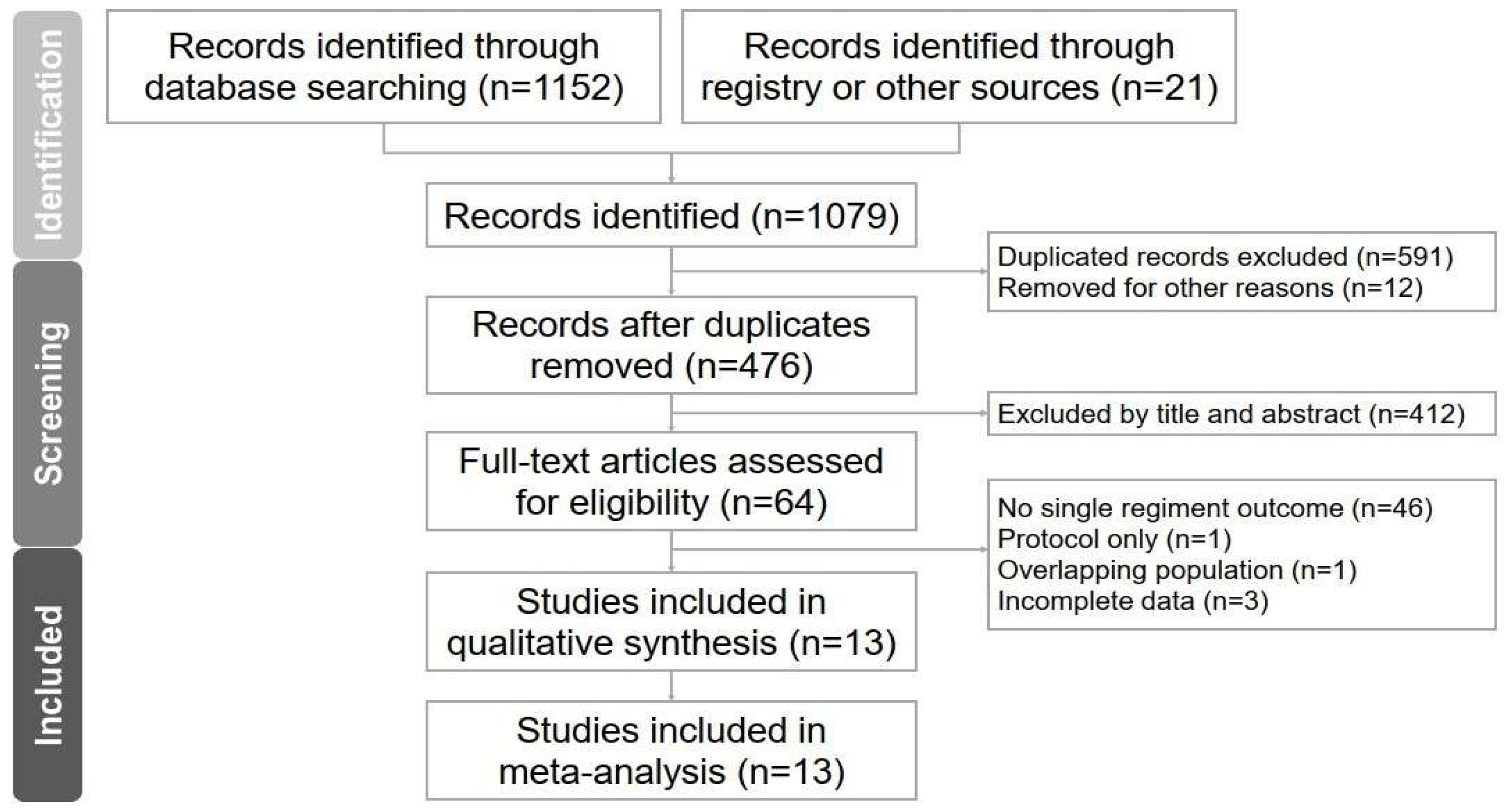
Figure 1 illustrates the PRISMA flowchart summarizing the literature search process. The PRISMA-NMA extension checklist is provided in Supplementary Table S1. After removing duplicate records and excluding studies unrelated to our research based on title and abstract screening, a total of 13 studies [22,23,24,25,26,27,28,29,30,31,32,33,34] were included in the final analysis. All included studies were retrospective in design.
Figure 1.
PRISMA flowchart.
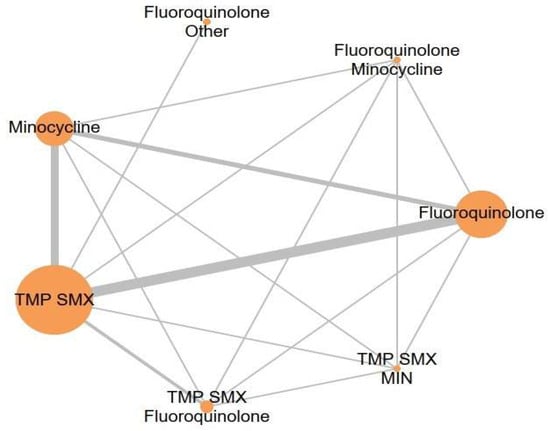
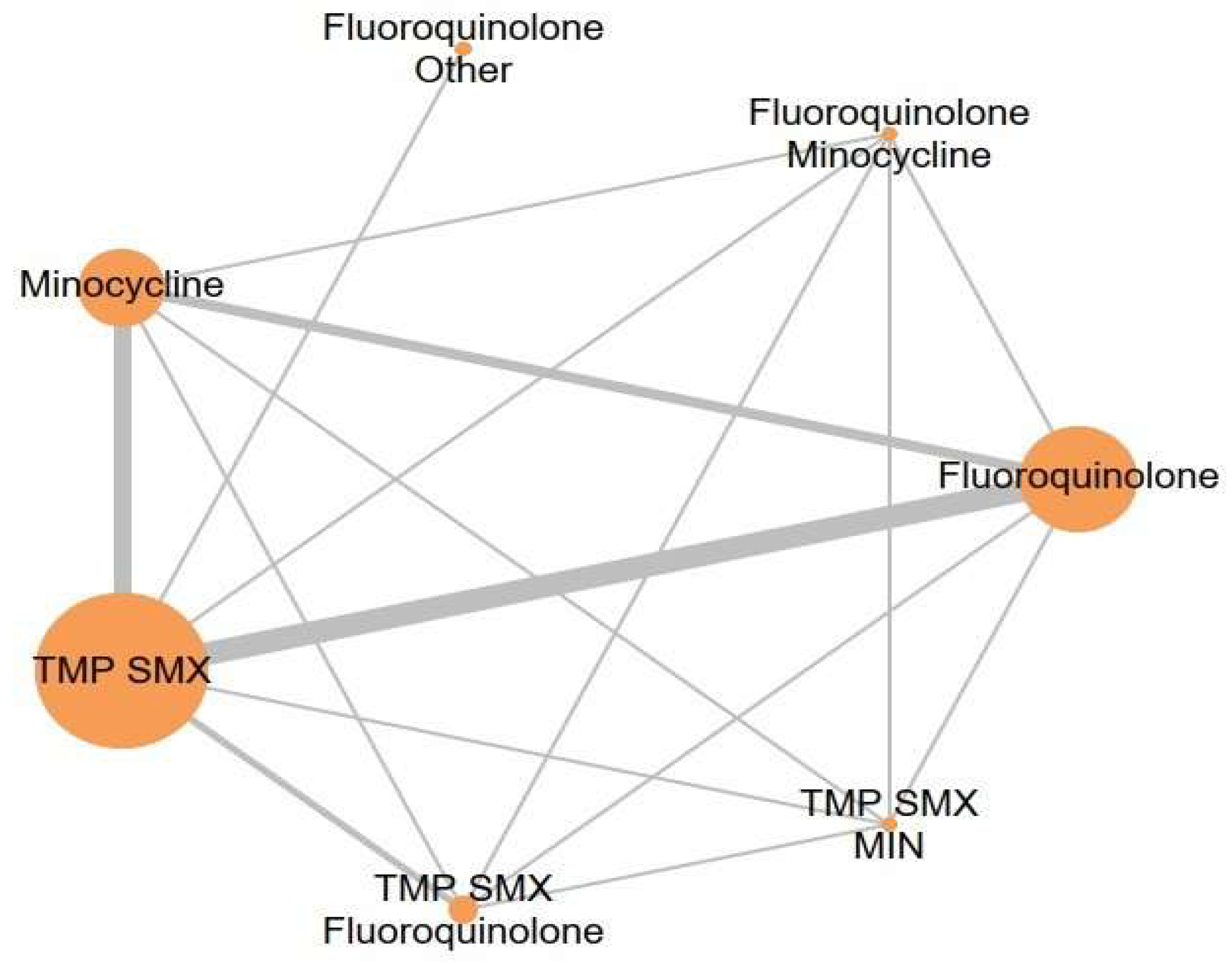
In total, 13 retrospective studies comprising 2809 participants were included in our analysis. The evaluated treatment regimens were TMP/SMX, MIN, FQ, TMP/SMX + FQ, TMP/SMX + MIN, FQ + MIN, and FQ + other. Figure 2 depicts the network model illustrating the comparisons among these regimens, and detailed inclusion criteria and study characteristics are summarized in Table 1.
Figure 2.
The network plots depict the comparative effects of various treatment regimens for Stenotrophomonas maltophilia infections on all-cause mortality and adverse effects. The size of each node represents the number of patients or studies included for each treatment, while the thickness of each connecting line indicates the number of direct comparisons between regimens.
Table 1.
Summary of included studies reporting clinical outcomes including all-cause mortality, clinical cure, adverse effects of different regimens used to treat Stenotrophomonas maltophilia.
3.2. Methodological Quality of the Included Studies
The methodological quality assessment of the included studies is summarized in Supplementary Table S2. Studies identified as having a potential risk of bias showed variations in study protocols among different groups, which may have influenced treatment adherence and, consequently, the reported outcomes.
3.3. Primary Outcome: All-Cause Mortality
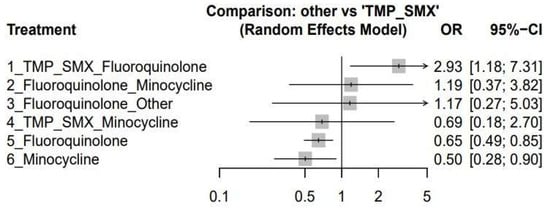
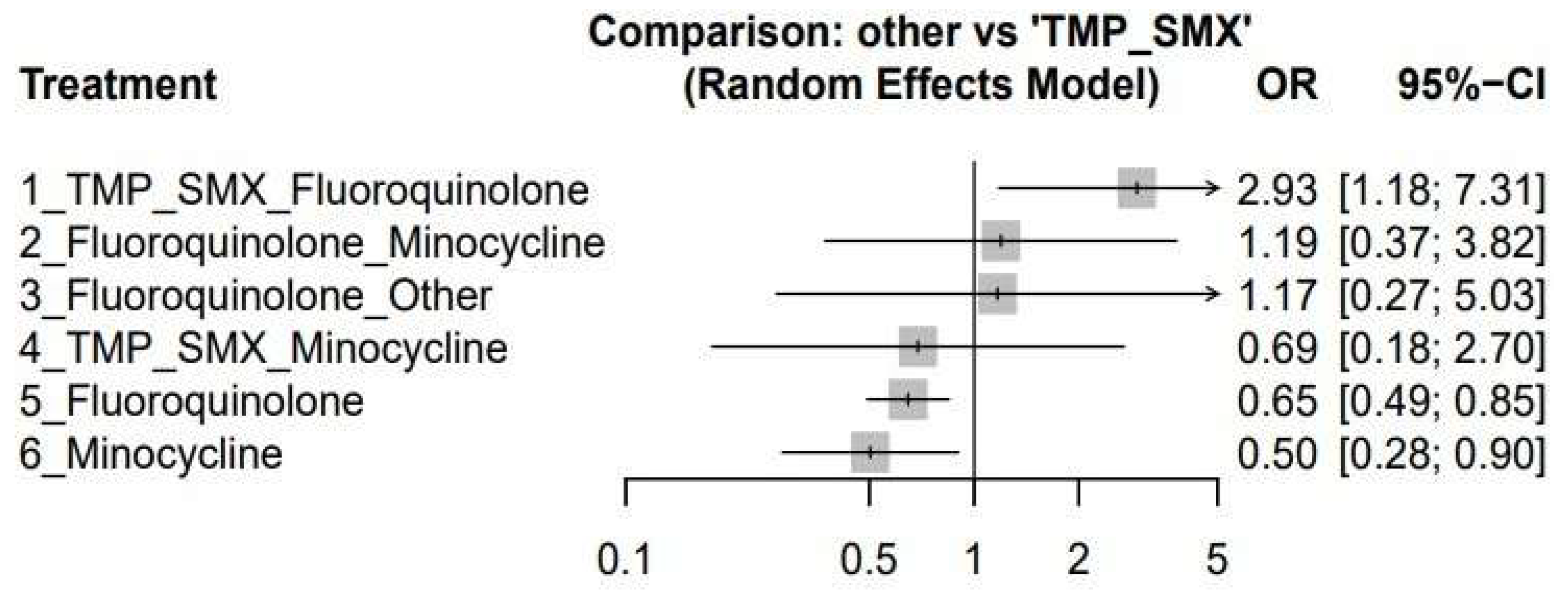
Using TMP/SMX as the reference regimen, network meta-analysis demonstrated significant differences in mortality across treatment strategies (Figure 3). FQ monotherapy was associated with a significantly lower odds of mortality compared with TMP/SMX (effect size: 0.65, 95% CI: 0.49–0.85), as was MIN monotherapy (effect size: 0.50, 95% CI: 0.28–0.90). Combination therapy with TMP/SMX + MIN did not show a statistically significant difference in mortality relative to TMP/SMX alone (effect size: 0.69, 95% CI: 0.18–2.70). Regimens combining TMP/SMX with FQ were associated with higher mortality compared with TMP/SMX (effect size: 2.93, 95% CI: 1.18–7.31), while FQ + MIN combination therapy and FQ-based regimens with other agents showed no significant differences (effect size: 1.19, 95% CI: 0.37–3.82; effect size: 1.17, 95% CI: 0.27–5.03).
Figure 3.
Forest plots presenting the odds ratios (ORs) for all-cause mortality among various treatment regimens evaluated for Stenotrophomonas maltophilia infections.
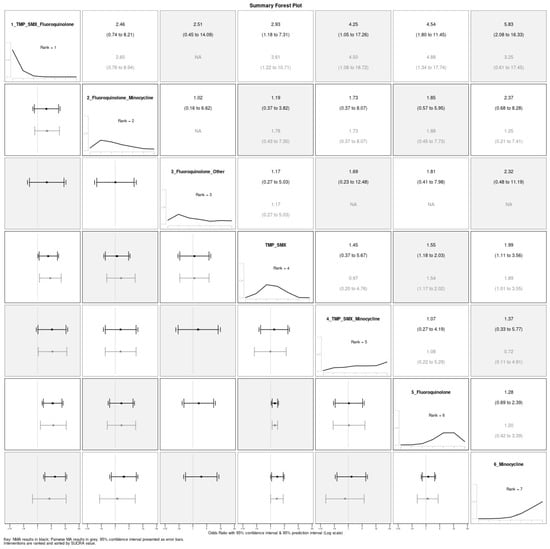
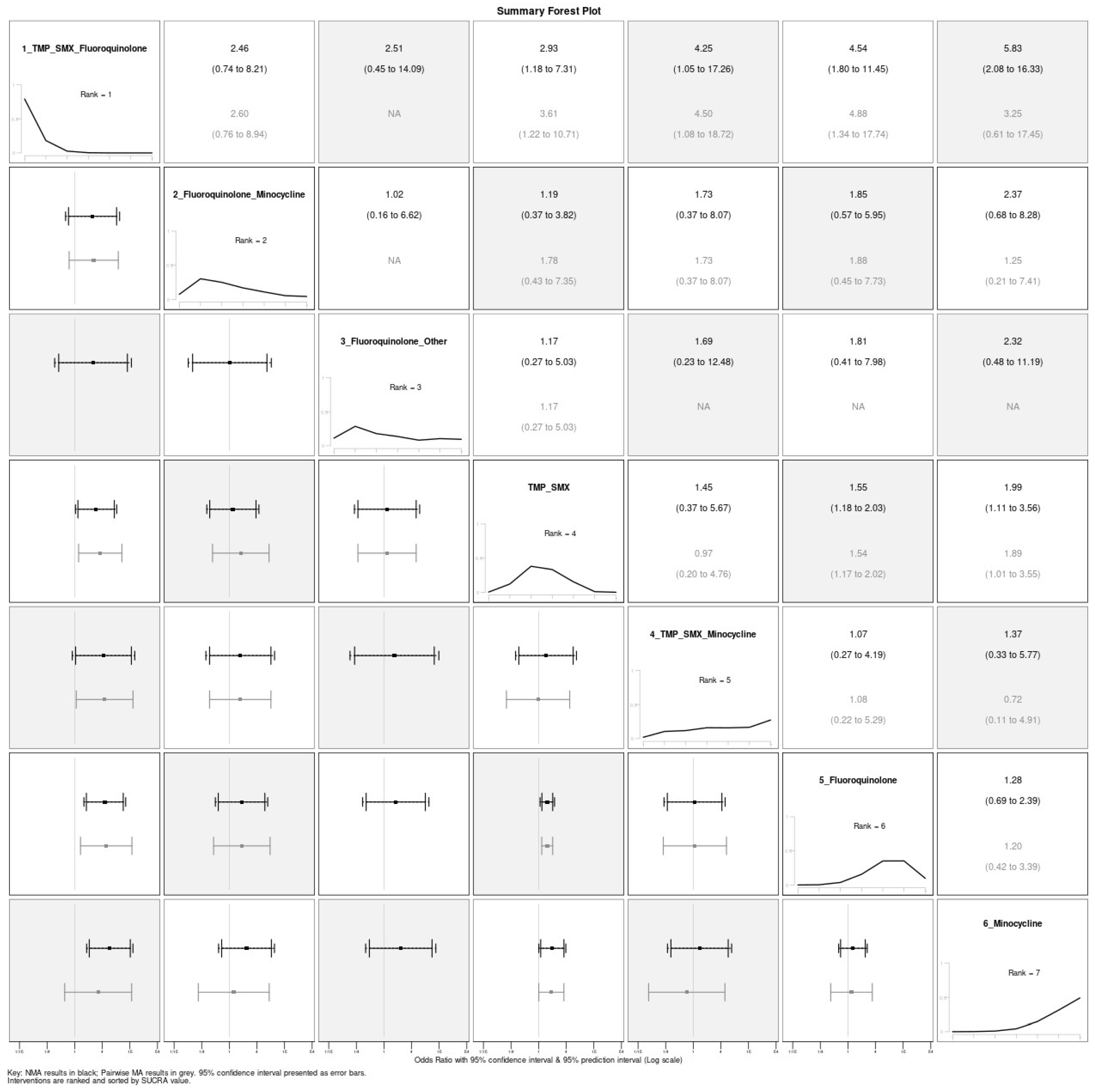
Based on the effect size for reducing mortality, antimicrobial regimens were ranked in order of performance, with MIN showing the greatest reduction in mortality, followed by FQ and the TMP/SMX + FQ combination. A complete ranking of all evaluated regimens is provided in Table 2 and Figure 4.
Table 2.
Pairwise comparisons and ranking of mortality associated with different regimens used to treat Stenotrophomonas maltophilia.
Figure 4.
Network meta-analysis-based treatment ranking and relative hierarchy of antimicrobial regimens for mortality in Stenotrophomonas maltophilia infections.
3.4. Subgroup Analyses by Mortality Endpoint and Infection Site
In the prespecified subgroup analysis restricted to studies reporting 30-day mortality, comparative effectiveness across antimicrobial regimens remained heterogeneous (Figure S1). Using TMP/SMX as the reference, FQ monotherapy was associated with a significantly lower odds of 30-day mortality (effect size: 0.59, 95% CI: 0.37–0.94). MIN monotherapy showed a numerically lower odds of mortality, although this did not reach statistical significance (effect size: 0.62, 95% CI: 0.23–1.65). Combination therapy with TMP/SMX + MIN was not associated with a significant difference in 30-day mortality compared with TMP/SMX alone (effect size: 0.69, 95% CI: 0.17–2.77). In contrast, regimens combining TMP/SMX with FQs were associated with higher 30-day mortality relative to TMP/SMX (effect size: 2.93, 95% CI: 1.14–7.52). No significant differences were observed for FQ + MIN combination therapy or FQ-based regimens with other agents.
The in-hospital mortality subgroup analysis included four studies and was limited to FQ and MIN monotherapy, as no studies evaluating combination regimens were available. Compared with TMP/SMX, neither FQ nor MIN monotherapy was associated with a statistically significant difference in in-hospital mortality (effect size: 0.57, 95% CI: 0.20–1.61 and effect size: 0.57, 95% CI: 0.17–1.94) (Figure S2).
The BSI subgroup analysis included five studies (Figure S3). Compared with TMP/SMX, FQ monotherapy was associated with a significantly lower odds of mortality (effect size: 0.44, 95% CI: 0.26–0.74), whereas MIN monotherapy showed no statistically significant difference (effect size: 0.49, 95% CI: 0.14–1.67). No significant differences were observed for combination regimens in this subgroup.
3.5. Secondary Outcome: Clinical Cure and Adverse Effects
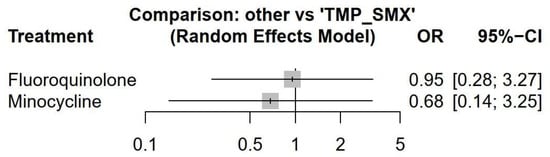
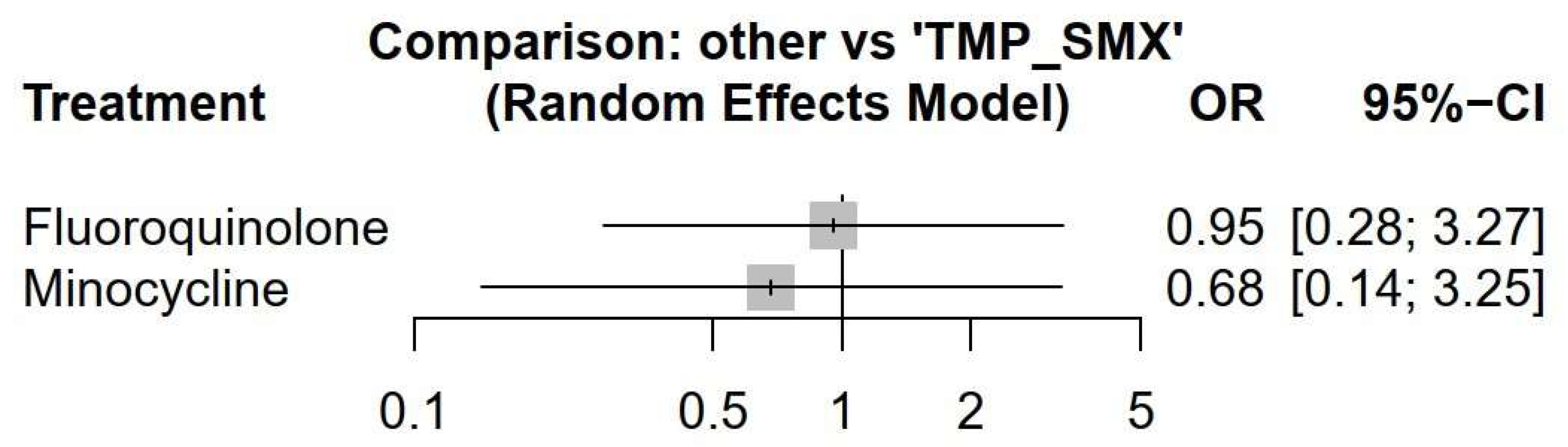
Regarding clinical cure, both MIN and FQ regimens showed no significant difference compared with the TMP/SMX regimen, with effect sizes of 0.68 (95% CI: 0.14–3.25) and 0.95 (95% CI: 0.28–3.27), respectively (Figure 5). Full effect size rankings are presented in Supplementary Table S3.
Figure 5.
Forest plots showing the odds ratios (ORs) for clinical cure among different treatment regimens evaluated for Stenotrophomonas maltophilia infections.
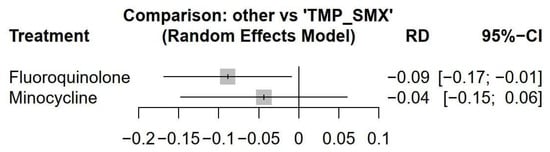
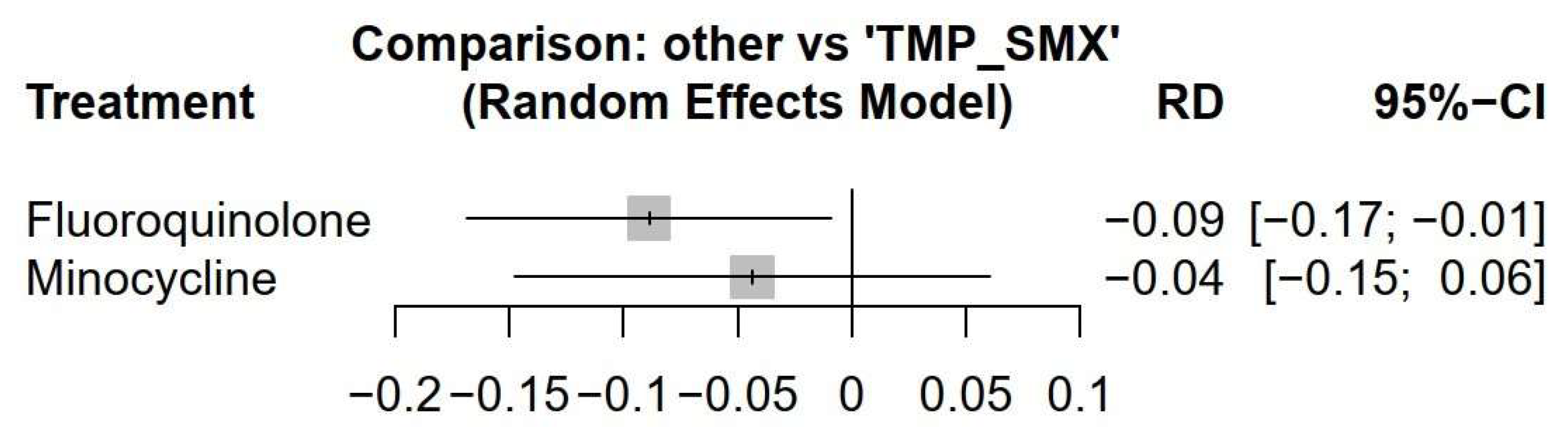
Adverse effects were compared across the evaluated regimens. FQ demonstrated a significantly lower incidence of adverse events compared with TMP/SMX (effect size: −0.09; 95% CI: −0.17 to −0.01). MIN also showed a lower rate of adverse effects than TMP/SMX, although the difference was not statistically significant (effect size: −0.04; 95% CI: −0.15 to 0.06) (Figure 6). The complete ranking of regimens by adverse effect profile is provided in Supplementary Table S4.
Figure 6.
Forest plots showing the odds ratios (ORs) for adverse effects among different therapeutic regimens used in the management of Stenotrophomonas maltophilia infections.
Detailed results of the direct pairwise comparisons among the included studies are presented in Supplementary Figures S4–S6.
3.6. Inconsistency Test
A network model was established in which each node represented a specific treatment regimen, enabling both direct and indirect comparisons. Inconsistency testing for all-cause mortality produced p-values > 0.05, indicating no significant inconsistencies within the network. Detailed inconsistency analyses for all-cause mortality, clinical cure, and adverse effects are presented in Supplementary Tables S5–S7.
3.7. Sensitivity Analyses
The one study removed sensitivity analysis confirmed the robustness of the treatment rankings. MIN and FQ consistently remained significantly associated with lower all-cause mortality across all analytical models (Supplementary Figure S7). Additional sensitivity analyses for clinical cure and adverse effects are presented in Supplementary Figures S8 and S9.
3.8. Publication Bias
The funnel plot is presented in Supplementary Figure S10. Egger’s regression test produced a p-value of 0.516, indicating no significant evidence of publication bias.
4. Discussion
Stenotrophomonas maltophilia remains a formidable therapeutic challenge because of its intrinsic resistance (L1/L2 β-lactamases, multidrug efflux pumps, biofilm formation) and the paucity of randomized trials to guide agent selection. Against this backdrop, our network meta-analysis provides, to our knowledge, the first comparative effectiveness synthesis that simultaneously estimates direct and indirect treatment effects across both monotherapies and explicitly defined drug combinations used for S. maltophilia infections. By restricting the analytic network to regimens with clear, single pathogen attribution (i.e., monotherapy or combination therapy directed at S. maltophilia alone) and excluding studies with ill defined “combination” exposure (e.g., mixed, non-standard multi-drug backbones or unclear co-administered agents targeting other pathogens), we substantially reduced exposure misclassification and pharmacologic heterogeneity that have clouded prior conventional meta-analyses and narrative reviews [1]. This design choice enhances internal validity and strengthens inference about how specific agents or specific combinations affect mortality in real-world care.
Several observations warrant consideration. First, FQ and MIN monotherapies were associated with lower mortality compared with TMP/SMX, the historical standard of care. Levofloxacin and moxifloxacin achieve high epithelial lining fluid concentrations and robust area-under-the-curve (AUC) to MIC ratios in the lung, the most common site of S. maltophilia infection, supporting superior target-site exposure compared with TMP/SMX in pneumonia [35,36]. Minocycline’s lipophilicity, extensive tissue penetration, and sustained post-antibiotic effects likewise favor efficacy in pulmonary foci; in vitro susceptibility frequently exceeds 90–95% in many collections [37,38], and clinical cohorts have reported outcomes comparable or superior to TMP/SMX [39]. In contrast, TMP/SMX’s performance may be attenuated by rising resistance mediated by sul1/sul2 and dfrA determinants and by fitness cost compensating mutations that reduce drug target binding [40,41]. Moreover, TMP/SMX’s toxicity profile renal dysfunction, hyperkalemia, marrow suppression, and hypersensitivity can constrain dose optimization and continuity of therapy, particularly in the critically ill [42]. Our safety analyses echo this experience: compared with TMP/SMX, alternative regimens generally exhibited fewer adverse events, a pattern consistent with prior observational data [43]. While this association is consistent with known pharmacokinetic and pharmacodynamic characteristics of these agents, it should be interpreted cautiously given the observational nature of the included studies.
Second, we observed no mortality trend change with the TMP/SMX + MIN, FQ + TMP/SMX and FQ + other combination versus TMP/SMX alone. Two non-exclusive explanations likely apply. Clinically, the combination may confer additive or modest synergistic killing (supported by in vitro checkerboard and time-kill signals with TMP/SMX plus levofloxacin in selected isolates) and may reduce on-therapy resistance emergence [44]. Methodologically, several included comparisons were underpowered; credible intervals were wide, suggesting that a moderate but real effect could be obscured by limited sample size and event counts. Our network framework by borrowing strength across loops mitigates but cannot fully erase imprecision when the underlying evidence base is small. In contrast, the higher mortality observed with TMP/SMX + FQ likely reflects residual confounding by indication rather than a true detrimental treatment effect. Across several contributing cohorts, dual therapy was preferentially prescribed to patients with greater baseline severity, including higher illness scores, septic shock, or refractory infection, prompting escalation in response to perceived treatment failure or elevated mortality risk. Although our random-effects network meta-analysis partially accounts for between study heterogeneity, incomplete adjustment for baseline severity and the timing of therapy escalation may bias effect estimates against combination regimens. Notably, similar directional trends were observed in subgroup analyses restricted to 30-day mortality, further supporting the likelihood of treatment selection bias rather than a causal association. Consequently, the observed association and the lack of statistical significance should be interpreted as hypothesis-generating and not as evidence of harm from TMP/SMX + FQ combination therapy.
Escalation to triple therapy (MIN + TMP/SMX + FQ) associated with no mortality benefit in previous study [45]. This aligns with pharmacodynamic reasoning: once two active agents with complementary mechanisms saturate target engagement and suppress high-frequency resistant subpopulations, a third agent with overlapping spectrum may add toxicity without increasing net bacterial kill [46,47,48]. Clinically, expanding beyond two drugs risks drug–drug interactions, cumulative adverse effects (electrolyte disturbances, QT prolongation, hepatotoxicity), and adherence or administration complexity costs unlikely to be repaid by improved outcomes in the absence of synergy [49]. Taken together, the available evidence does not support a routine role for triple therapy in the management of S. maltophilia infections. Its use, if considered, may be limited to selected salvage situations involving documented multi-class resistance, with careful attention to toxicity and close clinical monitoring.
Given the high prevalence of phenotypic resistance to ceftazidime among contemporary S. maltophilia isolates and the availability of more active intravenous alternatives, ceftazidime conferred no mortality benefit compared with TMP/SMX in previous study. Its use should therefore be limited to situations in which in vitro susceptibility is unequivocally documented and no preferable therapeutic options are available [4]. In several cohorts, ceftazidime was more likely to be prescribed in earlier treatment eras, in the absence of alternative agents [50].
Several novel antimicrobial agents with in vitro activity against S. maltophilia have recently emerged, including cefiderocol and combinations incorporating β-lactamase inhibitors with expanded spectra [51]. These agents offer theoretical advantages by circumventing established resistance mechanisms, such as intrinsic β-lactamase production and efflux-mediated resistance, and have shown encouraging microbiological activity in surveillance studies and selected clinical reports [52]. However, clinical evidence supporting their use in S. maltophilia infections remains limited. To date, there are no pathogen-specific randomized controlled trials, and available observational data are sparse, heterogeneous, and often restricted to small case series or mixed-pathogen cohorts. Consequently, the current evidence base is insufficient to support robust comparative analyses. As a result, these novel agents could not be incorporated into the present network meta-analysis, under-scoring an important evidence gap and the need for future well-designed studies focused specifically on S. maltophilia.
Site of infection nuance remains critical. In our study, most included cases involved bloodstream infections (BSI) and pneumonia, which together represented the predominant infection sites. Pharmacologic considerations suggest that regimen performance may differ across infection types. In pneumonia, FQ and MIN achieve higher lung exposure than TMP/SMX, a pharmacokinetic consideration that may be relevant to treatment selection [35,36,37]. In urinary tract infection, TMP/SMX’s high urinary concentrations might retain parity or superiority when isolates are susceptible [53]. In bacteremia, where bacterial inocula are typically higher, combination therapy may be hypothesized to reduce the risk of resistance emergence; however, in the present analysis this was reflected only as a non-significant trend toward higher mortality with TMP/SMX + FQ and should be interpreted cautiously. In our study, a prespecified subgroup analysis restricted to bloodstream infections was performed to explore whether this pattern differed by infection type. However, the direction and magnitude of the associations observed in the bacteremia subgroup were broadly similar to those of the overall analysis, and no statistically significant differences were identified. Further studies incorporating stratification by infection type, standardized outcome definitions, and pharmacokinetic assessment are needed to better inform optimal dosing and comparative effectiveness.
Resistance stewardship is integral. Global surveillance indicates rising TMP/SMX resistance [40] and variable but concerning trends for FQ and MIN resistance via gyrA/parC mutations, overexpressed RND efflux systems, or tetB-mediated efflux and ribosomal protection [54]. Novel agents deserve investigation. While cefiderocol exhibits in vitro activity against S. maltophilia, clinical signals are mixed and may be syndrome-dependent; aztreonam-avibactam plus cefiderocol or MIN combinations are under exploration [11]. Rigorous pathogen specific trials are urgently needed.
Adverse events warrant careful consideration. In our analysis, FQ and MIN regimens were associated with fewer reported toxicities compared with TMP/SMX. However, each alternative agent carries distinct safety concerns: FQ have been associated with QT prolongation, tendinopathy, and central nervous system effects, whereas MIN may cause vestibular symptoms, hyperpigmentation, and, rarely, hepatotoxicity [55]. Accordingly, treatment selection should account for patient-specific factors, including renal function, concomitant medications, arrhythmia risk, pregnancy status, and the feasibility of oral step-down therapy.
Our work differs from earlier syntheses in several important methodological aspects. First, this study applies a network meta-analysis framework to a prespecified set of S. maltophilia regimens, allowing both direct and indirect comparisons while accounting for between study heterogeneity through a random-effects model. Second, in contrast to prior meta-analyses that grouped heterogeneous “combination therapy” arms, we restricted inclusion to monotherapies or combinations explicitly directed at S. maltophilia (e.g., TMP/SMX + FQ) and excluded regimens involving additional agents targeting copathogens. This approach was intended to reduce treatment misclassification, improve pharmacologic coherence, and enhance the interpretability of comparative estimates. Third, to our knowledge, this analysis is among the first to examine mortality outcomes associated with specific drug combinations for S. maltophilia across different infection types. Collectively, these features provide a more granular and transparent comparison of clearly defined regimens, while acknowledging the inherent limitations of the underlying observational evidence.
Several important limitations should be acknowledged when interpreting the findings of this network meta-analysis. First, comparisons derived from NMA are inherently indirect and represent an artificial construct that may not fully reflect real-world clinical decision-making or causal treatment effects. Second, most contributing studies were retrospective observational cohorts, which are susceptible to confounding by indication and disease severity, as treatment selection was often influenced by clinical judgment. Although our frequentist random-effects NMA and sensitivity analyses, including one study removed analyses, demonstrated stable relative rankings, residual confounding cannot be excluded. Third, sample sizes were modest for several treatment contrasts, limiting statistical precision. In addition, heterogeneity in dosing strategies across studies such as variability in TMP/SMX dosing, MIN loading regimens, and FQ exposure targets as well as differences in infection sites (e.g., bloodstream infections versus pneumonia) may have influenced observed outcomes. Variability in susceptibility testing methods and clinical endpoint definitions across centers and study periods further limits comparability. Finally, in the absence of randomized controlled trials (RCTs), our findings should be interpreted as hypothesis-generating; future well-designed RCTs are warranted to validate and strengthen these observations.
In summary, our network meta-analysis focused on explicitly defined monotherapies and combinations for S. maltophilia suggests that FQ and MIN monotherapies were associated with lower mortality compared with TMP/SMX, combination regimens showed a non-significant trend toward improved survival. With respect to safety, FQ and MIN regimens were associated with fewer reported adverse events than TMP/SMX in the included studies. By restricting the analysis to clearly defined S. maltophilia directed regimens and excluding ill-defined combination arms, our study aimed to enhance the interpretability of comparative estimates. Our findings provide descriptive context for susceptibility- guided treatment selection and highlight areas where further prospective investigation is needed, particularly regarding the role of combination therapy and regimen choice in severe infections or settings with high resistance prevalence.
5. Conclusions
This network meta-analysis provides, to our knowledge, the first synthesis comparing clearly defined monotherapy and combination regimens for Stenotrophomonas maltophilia infections. In this predominantly observational evidence base, fluoroquinolone and minocycline monotherapies were associated with lower mortality compared with TMP/SMX. Most combination regimens did not demonstrate a clear survival advantage. Fluoroquinolones were also associated with fewer adverse effects than TMP/SMX. The findings should be interpreted with caution in light of confounding and heterogeneity inherent to retrospective studies. Prospective randomized trials are needed to confirm the comparative effectiveness and safety of treatment options for this challenging multidrug-resistant pathogen.
Supplementary Materials
The following supporting information can be downloaded at: https://www.mdpi.com/article/10.3390/germs16010007/s1, Figure S1: Forest plots presenting odds ratios (ORs) for 30-day mortality among antimicrobial treatment regimens evaluated for Stenotrophomonas maltophilia infections; Figure S2: Forest plots presenting odds ratios (ORs) for in-hospital mortality among antimicrobial treatment regimens evaluated for Stenotrophomonas maltophilia infections; Figure S3: Forest plots presenting odds ratios (ORs) for all-cause mortality among antimicrobial treatment regimens evaluated for Stenotrophomonas maltophilia bloodstream infections (BSI); Figure S4: Forest plot displaying pairwise comparisons of various treatment regimens for Stenotrophomonas maltophilia infections, summarizing the odds ratios (ORs) for mortality derived from the included studies; Figure S5: Forest plot summarizing pairwise comparisons of different treatment regimens for Stenotrophomonas maltophilia infections, presenting the odds ratios (ORs) for clinical cure derived from the included studies; Figure S6: Forest plot presenting pairwise comparisons of different therapeutic regimens for Stenotrophomonas maltophilia infections, showing the odds ratios (ORs) for adverse effects based on data from the included studies; Figure S7: Sensitivity analysis of mortality conducted using the one study removed method. Each of the 13 included studies was individually excluded sequentially to evaluate the stability of the pooled estimate. The resulting forest plots are displayed and labeled from A to M; Figure S8: Sensitivity analysis of clinical cure conducted using the one study removed method. Each of the 5 included studies was individually excluded sequentially to evaluate the stability of the pooled estimate. The resulting forest plots are displayed and labeled from A to D; Figure S9: Sensitivity analysis of adverse effect conducted using the one study removed method. Each of the 6 included studies was individually excluded sequentially to evaluate the stability of the pooled estimate. The resulting forest plots are displayed and labeled from A to F; Figure S10: The funnel plot displays all pairwise comparisons involving the common comparator, the placebo group. Egger’s test produced a p-value of 0.516, suggesting no significant indication of publication bias. Table S1: PRISMA for network meta-analysis checklist; Table S2: Comprehensive evaluation of the quality of included studies was conducted using the Newcastle Ottawa Scale (NOS); Table S3: Pairwise comparisons and ranking of clinical cure associated with different regimens used to treat Stenotrophomonas maltophilia; Table S4: Pairwise comparisons and ranking of side effects associated with different regimens used to treat Stenotrophomonas maltophilia; Table S5: Inconsistency test results for the odds ratios (ORs) of mortality across different regimens used to treat Stenotrophomonas maltophilia; Table S6: Inconsistency test results for the odds ratios (ORs) of clinical cure across different regimens used to treat Stenotrophomonas maltophilia; Table S7: Inconsistency test results for the risk difference (RD) of adverse effects across different regimens used to treat Stenotrophomonas maltophilia.
Author Contributions
Conceptualization, M.-Y.A.; methodology, M.-Y.A.; software, M.-Y.A.; validation, M.-Y.A. and W.-L.C.; formal analysis, M.-Y.A.; investigation, M.-Y.A.; resources, M.-Y.A. and W.-L.C.; data curation, M.-Y.A. and W.-L.C.; writing—original draft preparation, M.-Y.A.; writing—review and editing, W.-L.C.; visualization, M.-Y.A. and W.-L.C.; supervision, W.-L.C.; project administration, M.-Y.A. and W.-L.C. All authors have read and agreed to the published version of the manuscript.
Funding
This research received no external funding.
Institutional Review Board Statement
Not applicable.
Informed Consent Statement
Not applicable.
Data Availability Statement
No new data were generated in this review.
Conflicts of Interest
The authors declare no conflicts of interest.
References
- Brooke, J.S. Stenotrophomonas maltophilia: An emerging global opportunistic pathogen. Clin. Microbiol. Rev. 2012, 25, 2–41. [Google Scholar] [CrossRef] [Scilit] [PubMed]
- Gales, A.C.; Jones, R.N.; Andrade, S.S.; Sader, H.S. Antimicrobial susceptibility patterns of unusual nonfermentative gram-negative bacilli isolated from Latin America: Report from the SENTRY Antimicrobial Surveillance Program (1997–2002). Mem. Inst. Oswaldo Cruz 2005, 100, 571–577. [Google Scholar] [CrossRef] [Scilit] [PubMed]
- Denton, M.; Kerr, K.G. Microbiological and clinical aspects of infection associated with Stenotrophomonas maltophilia. Clin. Microbiol. Rev. 1998, 11, 57–80. [Google Scholar] [CrossRef] [Scilit] [PubMed]
- Chang, Y.T.; Lin, C.Y.; Chen, Y.H.; Hsueh, P.R. Update on infections caused by Stenotrophomonas maltophilia with particular attention to resistance mechanisms and therapeutic options. Front. Microbiol. 2015, 6, 893. [Google Scholar] [CrossRef] [Scilit]
- Avison, M.B.; Higgins, C.S.; Ford, P.J.; von Heldreich, C.J.; Walsh, T.R.; Bennett, P.M. Differential regulation of L1 and L2 beta-lactamase expression in Stenotrophomonas maltophilia. J. Antimicrob. Chemother. 2002, 49, 387–389. [Google Scholar] [CrossRef] [Scilit]
- Crossman, L.C.; Gould, V.C.; Dow, J.M.; Vernikos, G.S.; Okazaki, A.; Sebaihia, M.; Saunders, D.; Arrowsmith, C.; Carver, T.; Peters, N.; et al. The complete genome, comparative and functional analysis of Stenotrophomonas maltophilia reveals an organism heavily shielded by drug resistance determinants. Genome Biol. 2008, 9, R74. [Google Scholar] [CrossRef] [Scilit]
- Cho, S.Y.; Baek, J.Y.; Kang, C.I.; Kim, S.H.; Ha, Y.E.; Chung, D.R.; Lee, N.Y.; Peck, K.R.; Song, J.H. Extensively drug-resistant Streptococcus pneumoniae, South Korea, 2011–2012. Emerg. Infect. Dis. 2014, 20, 869–871. [Google Scholar] [CrossRef] [Scilit]
- Venkatesan, M.; Fruci, M.; Verellen, L.A.; Skarina, T.; Mesa, N.; Flick, R.; Pham, C.; Mahadevan, R.; Stogios, P.J.; Savchenko, A. Molecular mechanism of plasmid-borne resistance to sulfonamide antibiotics. Nat. Commun. 2023, 14, 4031. [Google Scholar] [CrossRef] [Scilit]
- Insuwanno, W.; Kiratisin, P.; Jitmuang, A. Stenotrophomonas maltophilia infections: Clinical characteristics and factors associated with mortality of hospitalized patients. Infect. Drug Resist. 2020, 13, 1559–1566. [Google Scholar] [CrossRef] [Scilit]
- Lee, Y.L.; Liu, C.E.; Ko, W.C.; Hsueh, P.R. In vitro susceptibilities of Stenotrophomonas maltophilia isolates to antimicrobial agents: Results from the ATLAS program, 2004–2020. Int. J. Antimicrob. Agents 2023, 62, 106878. [Google Scholar] [CrossRef] [Scilit]
- Soueges, S.; Faure, E.; Parize, P.; Lanternier-Dessap, F.; Lecuyer, H.; Huynh, A.; Martin-Blondel, G.; Gaborit, B.; Blot, M.; Magallon, A.; et al. Real-world multicentre study of cefiderocol treatment of immunocompromised patients with MDR Gram-negative infections: CEFI-ID. J. Infect. 2025, 90, 106376. [Google Scholar] [CrossRef] [Scilit] [PubMed]
- Maraolo, A.E.; Licciardi, F.; Gentile, I.; Saracino, A.; Belati, A.; Bavaro, D.F. Stenotrophomonas maltophilia infections: A systematic review and meta-analysis. Antibiotics 2023, 12, 910. [Google Scholar] [CrossRef] [Scilit] [PubMed]
- Chen, L.; Hua, J.; Hong, S.; Yuan, C.; Jing, R.; Luo, X.; Zhu, Y.; Le, L.; Wang, Z.; Sun, X.; et al. Assessment of the relative benefits of monotherapy and combination therapy approaches to the treatment of hospital-acquired Stenotrophomonas maltophilia pneumonia: A multicenter, observational, real-world study. Ann. Intensive Care 2023, 13, 47. [Google Scholar] [CrossRef] [Scilit] [PubMed]
- Guerci, P.; Bellut, H.; Mokhtari, M.; Gaudefroy, J.; Mongardon, N.; Charpentier, C.; Louis, G.; Tashk, P.; Dubost, C.; Ledochowski, S.; et al. Outcomes of Stenotrophomonas maltophilia hospital-acquired pneumonia in intensive care unit: A nationwide retrospective study. Crit. Care 2019, 23, 371. [Google Scholar] [CrossRef] [Scilit]
- Shah, M.D.; E Coe, K.; El Boghdadly, Z.; Wardlow, L.C.; Dela-Pena, J.C.; Stevenson, K.B.; E Reed, E. Efficacy of combination therapy versus monotherapy in the treatment of Stenotrophomonas maltophilia pneumonia. J. Antimicrob. Chemother. 2019, 74, 2055–2059. [Google Scholar] [CrossRef] [Scilit]
- Hutton, B.; Salanti, G.; Caldwell, D.M.; Chaimani, A.; Schmid, C.H.; Cameron, C.; Ioannidis, J.P.; Straus, S.; Thorlund, K.; Jansen, J.P.; et al. The PRISMA extension statement for reporting systematic reviews incorporating network meta-analyses. Ann. Intern. Med. 2015, 162, 777–784. [Google Scholar] [CrossRef] [Scilit]
- Ai, M.Y.; Chang, W.L. Comparative Effectiveness and Safety of Monotherapy and Defined Combination Regimens for Stenotrophomonas maltophilia. Infections: A Network Meta-Analysis. 2025. Available online: https://inplasy.com/inplasy-2025-12-0093/ (accessed on 29 December 2025).
- Zhang, J.; Yuan, Y.; Chu, H. The impact of excluding trials from network meta-analyses—An empirical study. PLoS ONE 2016, 11, e0165889. [Google Scholar] [CrossRef] [Scilit]
- Bae, J.M. A suggestion for quality assessment in systematic reviews of observational studies. Epidemiol. Health 2016, 38, e2016014. [Google Scholar] [CrossRef] [Scilit]
- Higgins, J.P.; Li, T.; Deeks, J.J. Choosing effect measures and computing estimates of effect. In Cochrane Handbook for Systematic Reviews of Interventions; Higgins, J.P.T., Thomas, J., Chandler, J., Cumpston, M., Li, T., Page, M.J., Eds.; Version 6.4 (Updated August 2023); John Wiley & Sons Ltd.: Chichester, UK, 2023; pp. 143–176. [Google Scholar] [CrossRef] [Scilit]
- Chaimani, A.; Caldwell, D.M.; Li, T.; Higgins, J.P.; Salanti, G. Choosing and interpreting network meta-analysis. In Cochrane Handbook for Systematic Reviews of Interventions; Higgins, J.P.T., Thomas, J., Chandler, J., Cumpston, M., Li, T., Page, M.J., Welch, V.A., Eds.; version 6.4 (updated August 2023); John Wiley & Sons Ltd.: Chichester, UK, 2023; pp. 285–320. [Google Scholar] [CrossRef] [Scilit]
- Wang, Y.L.; Scipione, M.R.; Dubrovskaya, Y.; Papadopoulos, J. Monotherapy with fluoroquinolone or TMP-SMX for Stenotrophomonas maltophilia infections. Antimicrob. Agents Chemother. 2014, 58, 176–182. [Google Scholar] [CrossRef] [Scilit]
- Hand, E.; Davis, H.; Kim, T.; Duhon, B. Minocycline or TMP-SMX monotherapy for Stenotrophomonas maltophilia infections. J. Antimicrob. Chemother. 2016, 71, 1071–1075. [Google Scholar] [CrossRef] [Scilit]
- Araoka, H.; Baba, M.; Okada, C.; Abe, M.; Kimura, M.; Yoneyama, A. Evaluation of trimethoprim-sulfamethoxazole based combination therapy against Stenotrophomonas maltophilia: In vitro effects and clinical efficacy in cancer patients. Int. J. Infect. Dis. 2017, 58, 18–21. [Google Scholar] [CrossRef] [Scilit]
- Ebara, H.; Hagiya, H.; Haruki, Y.; Kondo, E.; Otsuka, F. Clinical characteristics of Stenotrophomonas maltophilia bacteremia: A regional report and review of a Japanese case series. Intern. Med. 2017, 56, 137–142. [Google Scholar] [CrossRef] [Scilit] [PubMed]
- Watson, L.; Esterly, J.S.; Jensen, A.O.; Postelnick, M.J. Sulfamethoxazole/trimethoprim versus fluoroquinolones for treatment of Stenotrophomonas maltophilia bloodstream infections. J. Glob. Antimicrob. Resist. 2018, 12, 104–106. [Google Scholar] [CrossRef] [Scilit] [PubMed]
- Nys, C.; Cherabuddi, K.; Venugopalan, V.; Klinker, K.P. Clinical and microbiologic outcomes in patients with monomicrobial Stenotrophomonas maltophilia infections. Antimicrob. Agents Chemother. 2019, 63, e00788–19. [Google Scholar] [CrossRef] [Scilit]
- Junco, S.J.; Bowman, M.C.; Turner, R.B. Clinical outcomes of Stenotrophomonas maltophilia treated with TMP-SMX, minocycline, or fluoroquinolone. Int. J. Antimicrob. Agents 2021, 58, 106367. [Google Scholar] [CrossRef] [Scilit] [PubMed]
- Sarzynski, S.H.; Warner, S.; Sun, J.; Matsouaka, R.; Dekker, J.P.; Babiker, A.; Li, W.; Lai, Y.L.; Danner, R.L.; Fowler , V.G., Jr.; et al. TMP-SMX versus levofloxacin for Stenotrophomonas maltophilia infections. Open Forum Infect. Dis. 2022, 9, ofab644. [Google Scholar] [CrossRef] [Scilit]
- Hevia, E.C.; Wooten, L.; Carr, A.L. TMP-SMX vs minocycline for nonurinary Stenotrophomonas maltophilia infections. Ann. Pharmacother. 2024, 58, 698–704. [Google Scholar] [CrossRef] [Scilit]
- Graves, E.T.; Wardlow, L.; Ogake, S.; Bazan, J.A.; Coe, K.; Kuntz, K.; Elefritz, J.L. Comparison of trimethoprim-sulfamethoxazole versus minocycline monotherapy for treatment of Stenotrophomonas maltophilia pneumonia. J. Antimicrob. Chemother. 2025, 80, 988–995. [Google Scholar] [CrossRef] [Scilit]
- Curry, H.; Casaus, D.; Lucas, K.; Kunz Coyne, A.J. Comparative evaluation of definitive therapy for deep-seated Stenotrophomonas maltophilia infections. JAC Antimicrob. Resist. 2025, 7, dlaf215. [Google Scholar] [CrossRef] [Scilit]
- Zappulo, E.; Moriello, N.S.; Paolillo, R.; Zumbo, G.; Pinchera, B.; Catania, M.R.; Gentile, I. What Drives Mortality in S. maltophilia Bloodstream Infections? An Outcome-Focused Cohort Study of Treatment Strategies and Resistance Profiles. Microorganisms 2025, 14, 77. [Google Scholar] [CrossRef] [Scilit]
- Chen, C.-L.; Chen, W.-P.; Chang, F.-Y.; Yu, C.-M.; Siu, L.K.; Yang, Y.-S.; Lin, J.-C.; Wang, C.-H. Comparison of clinical and safety outcomes in patients with Stenotrophomonas maltophilia bacteremia: A trimethoprim/sulfamethoxazole versus levofloxacin monotherapy. J. Infect. 2026, 54, 459–471. [Google Scholar] [CrossRef] [Scilit]
- Batra, P.; Mathur, P.; Misra, M.C. Clinical characteristics and prognostic factors of patients with Stenotrophomonas maltophilia infections. J. Lab. Physicians 2017, 9, 132–135. [Google Scholar] [CrossRef] [Scilit] [PubMed]
- Sheng, W.H.; Wang, J.T.; Chen, Y.C.; Chang, S.C.; Luh, K.T. In vitro activity of moxifloxacin against common clinical bacterial isolates in Taiwan. J. Microbiol. Immunol. Infect. 2001, 34, 178–184. [Google Scholar] [PubMed]
- Fratoni, A.J.; Nicolau, D.P.; Kuti, J.L. Minocycline pharmacodynamics against Stenotrophomonas maltophilia in a neutropenic murine infection model. J. Antimicrob. Chemother. 2022, 77, 1052–1060. [Google Scholar] [CrossRef] [Scilit] [PubMed]
- Boonmee, P.; Nasomsong, W.; Lorchirachoonkul, N.; Pungcharoenkijkul, S.; Juntanawiwat, P.; Chaemchaeng, S.; Santimaleeworagun, W. The Activities of Antimicrobials Against Stenotrophomonas maltophilia Isolates and Evaluation of Clinical Outcomes Among Treatment Regimens in Patients with Stenotrophomonas maltophilia Infections: A Retrospective Multicenter Cohort Study. Infect. Drug Resist. 2023, 16, 5173–5184. [Google Scholar] [CrossRef] [Scilit]
- Bostanghadiri, N.; Sholeh, M.; Navidifar, T.; Dadgar-Zankbar, L.; Elahi, Z.; van Belkum, A.; Darban-Sarokhalil, D. Global mapping of antibiotic resistance rates among clinical isolates of Stenotrophomonas maltophilia: A systematic review and meta-analysis. Ann. Clin. Microbiol. Antimicrob. 2024, 23, 26. [Google Scholar] [CrossRef] [Scilit]
- Kanchanasuwan, S.; Rongmuang, J.; Siripaitoon, P.; Kositpantawong, N.; Charoenmak, B.; Hortiwakul, T.; Nwabor, O.F.; Chusri, S. Clinical characteristics, outcomes, and risk factors for mortality in patients with Stenotrophomonas maltophilia bacteremia. J. Clin. Med. 2022, 11, 3085. [Google Scholar] [CrossRef] [Scilit]
- Hu, L.-F.; Chen, G.-S.; Kong, Q.-X.; Gao, L.-P.; Chen, X.; Ye, Y.; Li, J.-B. Increase in the Prevalence of Resistance Determinants to Trimethoprim/Sulfamethoxazole in Clinical Stenotrophomonas maltophilia Isolates in China. PLoS ONE 2016, 11, e0157693. [Google Scholar] [CrossRef] [Scilit]
- Wang, C.H.; Lin, J.C.; Lin, H.A.; Chang, F.Y.; Wang, N.C.; Chiu, S.K.; Lin, T.Y.; Yang, Y.S.; Kan, L.P.; Yang, C.H.; et al. Comparisons between patients with trimethoprim-sulfamethoxazole-susceptible and trimethoprim-sulfamethoxazole-resistant Stenotrophomonas maltophilia monomicrobial bacteremia: A 10-year retrospective study. J. Microbiol. Immunol. Infect. 2016, 49, 378–386. [Google Scholar] [CrossRef] [Scilit]
- Gezer, Y.; Tayşi, M.R.; Tarakçı, A.; Gökçe, Ö.; Danacı, G.; Altunışık Toplu, S.; Erdal Karakaş, E.; Alkan, S.; Kuyugöz Gülbudak, S.; Şahinoğlu, M.S.; et al. Evaluation of clinical outcomes and risk factors associated with mortality in patients with Stenotrophomonas maltophilia bloodstream infection: A multicenter study. BMC Infect. Dis. 2024, 24, 1387. [Google Scholar]
- Micozzi, A.; Venditti, M.; Monaco, M.; Friedrich, A.; Taglietti, F.; Santilli, S.; Martino, P. Bacteremia due to Stenotrophomonas maltophilia in patients with hematologic malignancies. Clin. Infect. Dis. 2000, 31, 705–711. [Google Scholar] [CrossRef] [Scilit] [PubMed]
- Latzer, I.T.; Nahum, E.; Cavari, Y.; Lazar, I.; Ben-Ari, Y.; Ben-Shimol, S.; Ben-Shalom, G.; Geffen, Y.; Goldberg, L.; Rubinstein, M.; et al. Treatment outcomes of Stenotrophomonas maltophilia bacteremia in critically ill children: A multicenter experience. Pediatr. Crit. Care Med. 2019, 20, e231–e239. [Google Scholar] [CrossRef] [Scilit] [PubMed]
- Tamma, P.D.; Cosgrove, S.E.; Maragakis, L.L. Combination therapy for treatment of infections with gram-negative bacteria. Clin. Microbiol. Rev. 2012, 25, 450–470. [Google Scholar] [CrossRef] [Scilit] [PubMed]
- Doern, C.D. When does 2 plus 2 equal 5? A review of antimicrobial synergy testing. J. Clin. Microbiol. 2014, 52, 4124–4128. [Google Scholar] [CrossRef] [Scilit]
- Falagas, M.E.; Bliziotis, I.A. Pandrug-resistant gram-negative bacteria: The dawn of the post-antibiotic era? Int. J. Antimicrob. Agents 2007, 29, 630–636. [Google Scholar] [CrossRef] [Scilit]
- Biswas, S.; Berwal, A.; Chawla, K. A prospective study of microbiological characterization and clinical facets of Stenotrophomonas maltophilia infections. Iran. J. Microbiol. 2020, 12, 313–318. [Google Scholar] [CrossRef] [Scilit]
- Falagas, M.E.; Valkimadi, P.E.; Huang, Y.T.; Matthaiou, D.K.; Hsueh, P.R. Therapeutic options for Stenotrophomonas maltophilia infections beyond co-trimoxazole: A systematic review. J. Antimicrob. Chemother. 2008, 62, 889–894. [Google Scholar] [CrossRef] [Scilit]
- Sakoh, T.; Miyajima, E.; Endo, Y.; Baba, M.; Haraguchi, M.; Morishima, M.; Ogura, S.; Kimura, M.; Araoka, H. Cefiderocol susceptibility of 146 Stenotrophomonas maltophilia strains clinically isolated from blood in two Japanese hospitals over a 10-year period. Eur. J. Clin. Microbiol. Infect. Dis. 2024, 43, 2485–2488. [Google Scholar] [CrossRef] [Scilit]
- Rashid, M.H.; Bukhari, S.N.Y.; Mousa, A.; Aziz, A.A.; Hakobyan, K. Cefiderocol as a Treatment Option for Stenotrophomonas maltophilia Causing Hospital-Acquired/Ventilator-Associated Pneumonia. Cureus 2023, 15, e38613. [Google Scholar] [CrossRef] [Scilit]
- Chung, H.S.; Hong, S.G.; Kim, Y.R.; Shin, K.S.; Whang, D.H.; Ahn, J.Y.; Park, Y.J.; Uh, Y.; Chang, C.L.; Shin, J.H.; et al. Antimicrobial susceptibility and combination activity against Stenotrophomonas maltophilia isolates from Korea. J. Korean Med. Sci. 2013, 28, 62–66. [Google Scholar] [CrossRef] [Scilit]
- Wang, Y.; He, T.; Shen, Z.; Wu, C. Antimicrobial Resistance in Stenotrophomonas spp. Microbiol. Spectr. 2018, 6, 409–423. [Google Scholar] [CrossRef] [Scilit]
- Bonfiglio, G.; Cascone, C.; Azzarelli, C.; Cafiso, V.; Marchetti, F.; Stefani, S. Levofloxacin in vitro activity and time-kill evaluation of Stenotrophomonas maltophilia. J. Antimicrob. Chemother. 2000, 45, 115–117. [Google Scholar] [CrossRef] [Scilit]

Disclaimer/Publisher’s Note: The statements, opinions and data contained in all publications are solely those of the individual author(s) and contributor(s) and not of MDPI and/or the editor(s). MDPI and/or the editor(s) disclaim responsibility for any injury to people or property resulting from any ideas, methods, instructions or products referred to in the content. |
© 2026 by the authors. Published by MDPI on behalf of the Germs. Licensee MDPI, Basel, Switzerland. This article is an open access article distributed under the terms and conditions of the Creative Commons Attribution (CC BY) license.