


Abstract
Background: Venetoclax is an established treatment option for relapsed/refractory chronic lymphocytic leukemia (R/R CLL), but outcomes after prior Bruton tyrosine kinase inhibitor exposure may be influenced by treatment history and disease characteristics. Methods: This retrospective real-world study included 160 adults with R/R CLL treated with venetoclax-based therapy. Sixty-eight patients had received ibrutinib before venetoclax and 92 had not. Baseline characteristics, treatment response, adverse events, progression-free survival (PFS), and overall survival (OS) were compared according to prior ibrutinib exposure. Results: Patients with prior ibrutinib exposure had more previous treatment lines (2.6 ± 1.1 vs. 1.1 ± 0.9; p < 0.001), more frequent prior chemoimmunotherapy (89.7% vs. 57.6%; p < 0.001), and more bulky disease (29.4% vs. 14.4%; p = 0.02). Objective response rates were 85.3% and 92.4%, respectively (p = 0.15). Progression occurred in 16.2% versus 6.5% (p = 0.049), while death occurred in 45.6% versus 18.5% (p < 0.001). Corrected PFS analysis included 49 progression-or-death events; survival associations require interpretation in light of baseline imbalances and wide confidence intervals. Unadjusted OS and PFS HRs were 1.73 (95% CI 0.96–3.14) and 1.76 (95% CI 0.98–3.16), respectively; adjusted HRs were 2.062 (95% CI 0.936–4.543; p = 0.072) for OS and 1.814 (95% CI 0.878–3.749; p = 0.108) for PFS. Grade ≥3 anemia, thrombocytopenia, pneumonia, nausea, diarrhea, and febrile neutropenia were more frequent in the prior-ibrutinib group. Tumor lysis syndrome did not differ significantly between groups. Conclusions: Venetoclax-based therapy retained substantial clinical activity after prior ibrutinib exposure. Although crude progression, mortality, and several adverse-event rates were higher among previously exposed patients, significant differences in PFS or OS were not demonstrated. The marked baseline imbalances between groups support interpreting prior ibrutinib exposure within the broader context of treatment history and disease burden. Multivariable Cox analyses did not show statistically significant associations of prior ibrutinib exposure with OS (aHR 2.062, 95% CI 0.936–4.543; p = 0.072) or PFS (aHR 1.814, 95% CI 0.878–3.749; p = 0.108).
1. Introduction
The treatment landscape of chronic lymphocytic leukemia (CLL) has changed substantially with the introduction of targeted therapies, particularly Bruton tyrosine kinase inhibitors (BTKis) and the B-cell lymphoma 2 (BCL-2) inhibitor venetoclax. These agents have expanded therapeutic options for patients with relapsed or refractory (R/R) CLL and reduced reliance on conventional chemoimmunotherapy. However, the increasing use of targeted therapies across successive treatment lines has introduced new challenges in selecting subsequent treatment. Current therapeutic decisions require consideration of previous treatment exposure, disease-related and molecular risk factors, treatment tolerability, and the circumstances leading to discontinuation of earlier therapies. Accordingly, treatment sequencing remains an important clinical challenge in the management of R/R CLL [1,2,3].
Venetoclax, a selective BCL-2 inhibitor, has demonstrated substantial clinical activity in previously treated CLL. The randomized phase III MURANO trial established the efficacy of fixed-duration venetoclax plus rituximab compared with bendamustine plus rituximab, providing an important foundation for venetoclax-based treatment in R/R CLL [4]. As BTKis have become widely incorporated into CLL treatment, an increasing number of patients require subsequent therapy following BTKi exposure. Nevertheless, prior BTKi treatment represents a heterogeneous clinical scenario. Discontinuation may occur because of disease progression, treatment-related intolerance, or other circumstances, each of which may influence subsequent therapeutic decisions. Importantly, previous exposure to ibrutinib should not be interpreted as equivalent to ibrutinib resistance, particularly when the reason for treatment discontinuation is unknown [2,3].
The clinical activity of venetoclax following BTKi treatment has been investigated in prospective trials and observational studies. Jones et al. evaluated venetoclax in a multicenter phase II trial involving patients whose CLL had progressed during or after ibrutinib treatment, providing prospective evidence supporting BCL-2 inhibition in this setting [5]. Eyre et al. subsequently reported outcomes of venetoclax monotherapy following B-cell receptor pathway inhibitor treatment in a nationwide UK real-world cohort [6]. More recently, Ghosh et al. conducted an international real-world study evaluating venetoclax-based treatment after BTKi exposure, contributing additional evidence from contemporary clinical practice [7]. Although these investigations support the clinical role of venetoclax following BTKi treatment, differences in patient selection, previous treatment histories, treatment regimens, and follow-up complicate comparisons across studies. Furthermore, studies restricted to patients previously treated with BTKis cannot independently establish how subsequent venetoclax outcomes compare with those of patients without such exposure [5,6,7].
Additional observational research illustrates the clinical heterogeneity of patients receiving venetoclax-based treatment in routine practice. Lei et al. investigated venetoclax plus obinutuzumab in previously treated CLL or small lymphocytic lymphoma, including patients with different previous treatment histories [8]. The prospective Canadian DEVOTE study evaluated venetoclax initiation in routine clinical practice, with particular attention to safety, healthcare resource utilization, and health-related quality of life; most enrolled patients had previously received ibrutinib [9]. In addition, the prospective informCLL registry documented treatment patterns and clinical outcomes across different lines of CLL therapy in the United States [10]. Although these studies provide valuable information regarding real-world treatment, their objectives and populations differ from those of a direct comparison based on previous ibrutinib exposure. Such a comparison requires consideration of potential differences in prior treatment burden, disease characteristics, molecular risk profiles, and subsequent venetoclax regimens. These factors may influence observed outcomes and complicate the interpretation of unadjusted comparisons [8,9,10].
Against this background, the present study aims to investigate the association between prior ibrutinib exposure and clinical outcomes of venetoclax-based therapy in patients with R/R CLL. Specifically, we compare progression-free survival, overall survival, treatment response, and selected safety outcomes between patients with and without previous ibrutinib exposure. Baseline clinical characteristics, prior treatment burden, venetoclax regimens, and available molecular features will also be evaluated to contextualize potential differences between the groups. By examining both exposure groups within a comparative real-world cohort, this study seeks to complement existing evidence on venetoclax treatment following BTKi exposure and contribute to a more detailed understanding of treatment sequencing in R/R CLL.
Building on our previously reported real-world cohort, the present expanded multicenter study specifically evaluates the association between prior ibrutinib exposure and subsequent venetoclax treatment outcomes, aiming to provide clinically relevant evidence regarding treatment sequencing in patients with relapsed/refractory CLL.
2. Materials and Methods
2.1. Study Design and Patient Population
This retrospective, observational, multicenter real-world study included 160 adults with relapsed/refractory chronic lymphocytic leukemia (CLL) who received venetoclax-based treatment and had eligible clinical records available through to the data cutoff of 31 December 2025. Review of the venetoclax initiation dates in the final dataset identified treatment starts ranging from 20 January 2015 to 11 July 2025; the latter was the most recent initiation date. The study population was assembled retrospectively from participating-center records, rather than through prospective enrollment during a fixed treatment-initiation window. Eligibility required confirmed CLL, age ≥ 18 years, venetoclax treatment as monotherapy or combination therapy, and available outcome information.
Data collection was retrospective, and the database closure and administrative follow-up cutoff were 31 December 2025. Follow-up after this date was not analyzed. The most recently treated patient started venetoclax on 11 July 2025, leaving a maximum potential follow-up of 173 days (approximately 5.7 months) to the administrative cutoff; actual observation time depended on the last documented clinical contact.
Patients were categorized into two groups according to exposure to ibrutinib before the initiation of venetoclax-based therapy: patients with prior ibrutinib exposure and those without prior ibrutinib exposure. Prior ibrutinib exposure was defined as receipt of ibrutinib at any time before venetoclax initiation. The final study population comprised 160 patients, including 68 patients with and 92 without prior ibrutinib exposure.
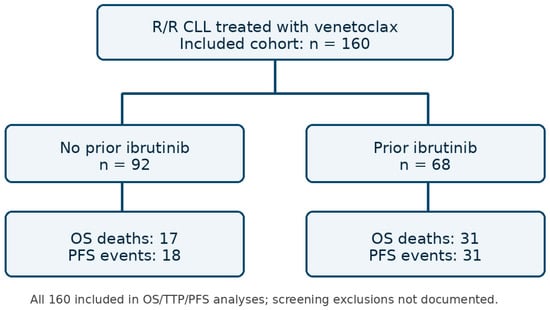
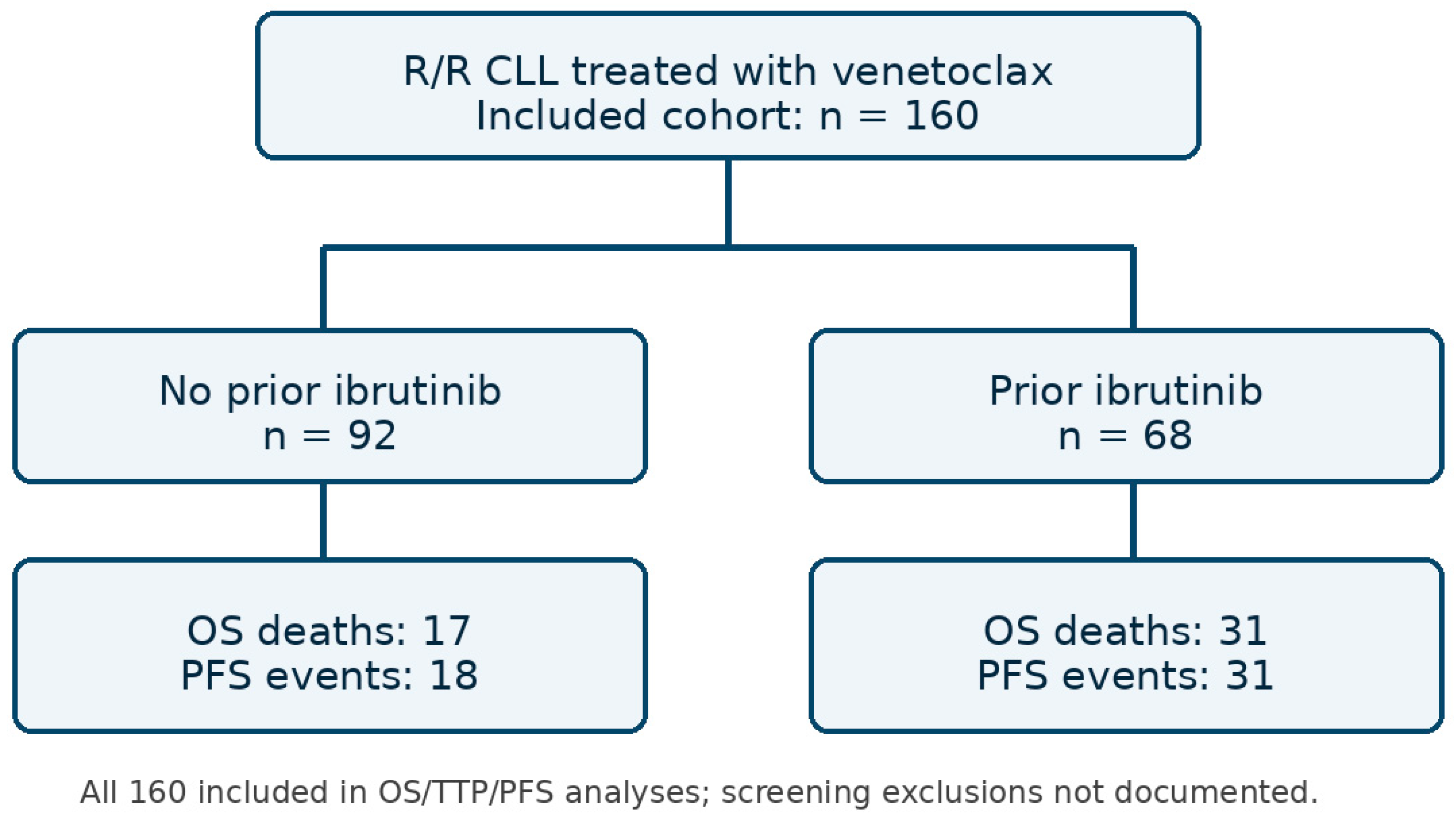
All 147 patients from our previously published real-world venetoclax cohort [11] are included in the present study. Thirteen additional eligible patients from the same study period, whose data were not available in time for the previous analysis, were included, yielding a total of 160 patients. The present investigation does not represent an extension of the follow-up period. Rather, it addresses a distinct research question through a within-cohort comparison of outcomes according to prior ibrutinib exposure. The previous publication focused on overall venetoclax effectiveness and safety; the current study focuses on exposure-group comparisons, including survival analyses and baseline imbalances. The cohort structure and exposure groups are illustrated in Figure 1.
Figure 1.
Study cohortflowchart by prior ibrutinib exposure; numbers are based on the available included cohort (screening exclusions not recorded).
A comparison of the previously published cohort and the current cohort is provided in Supplementary Table S1.
The study was conducted in accordance with the principles of the Declaration of Helsinki and was approved by the Ordu University Non-Interventional Clinical Research Ethics Committee (approval no. 2026/247; 25 September 2026). Given the retrospective nature of the study, the requirement for individual informed consent was handled in accordance with the decision of the ethics committee.
2.2. Data Collection and Study Variables
Demographic, clinical, laboratory, molecular, treatment-related, and outcome data were retrospectively extracted from medical records. Baseline clinical variables included age at CLL diagnosis, age at initiation of venetoclax, sex, Rai and Binet stages, Eastern Cooperative Oncology Group (ECOG) performance status, and the presence and size of bulky disease.
Available cytogenetic and molecular characteristics included del(17p), del(11q), trisomy 12, del(13q), TP53 status, IGHV mutation status, and complex karyotype. Because molecular and cytogenetic testing was not uniformly available for all patients, these variables were analyzed according to the available data rather than after imputation of missing values. The number of evaluable patients therefore varied across individual molecular variables.
Baseline laboratory parameters obtained before venetoclax initiation included hemoglobin, white blood cell count, lymphocyte count, platelet count, serum creatinine, albumin, lactate dehydrogenase (LDH), β2-microglobulin, and alanine aminotransferase (ALT).
Treatment-related variables included the number of previous treatment lines, previous chemoimmunotherapy exposure, prior ibrutinib exposure, venetoclax regimen, maximum venetoclax dose achieved, treatment discontinuation, and reason for discontinuation. Venetoclax-based regimens included venetoclax monotherapy, venetoclax plus rituximab, venetoclax plus obinutuzumab, and venetoclax plus ibrutinib. Reasons for discontinuation of prior ibrutinib were not collected in the study dataset and could not be categorized as progression or intolerance.
2.3. Treatment Response and Safety Assessment
Treatment response was assessed by the participating centers according to the 2018 International Workshop on Chronic Lymphocytic Leukemia (iwCLL) criteria and categorized as complete response (CR), partial response (PR), stable disease (SD), or progressive disease (PD). The objective response rate (ORR) was defined as the proportion of patients achieving either CR or PR. Clinical examination, hematological parameters, imaging studies, and bone marrow examination were used as required by the response criteria to establish the appropriate response category.
The best overall response documented during venetoclax-based treatment was reported by each center; no centralized response reassessment was performed.
Adverse events were graded according to the Common Terminology Criteria for Adverse Events (CTCAE), version 4.0. Safety outcomes included tumor lysis syndrome (TLS), anemia, neutropenia, thrombocytopenia, pneumonia, other infections, febrile neutropenia, nausea, diarrhea, headache, and fatigue. TLS was assessed by participating centers according to the Cairo–Bishop criteria and categorized as laboratory TLS only, clinical TLS only, or combined laboratory and clinical TLS. TLS status was recorded for 135 of 160 patients, including 44 with TLS and 91 without TLS; status was missing for 25 patients. The documented TLS proportion was 44/160 (27.5%) in the full cohort and 44/135 (32.6%) among patients with recorded TLS status. No centralized TLS reassessment was performed.
2.4. Outcomes
Overall survival (OS) was defined from venetoclax initiation to death from any cause, with patients alive censored at the last documented follow-up or the administrative cutoff, whichever came first. Progression-free survival (PFS) was defined from venetoclax initiation to the first occurrence of documented disease progression or death from any cause, whichever occurred first. Patients with neither event were censored at the last documented disease assessment or administrative cutoff, whichever came first. Death without previously documented progression was counted as a PFS event, not as evidence of absence of progression. Documented progression was additionally summarized descriptively and was not treated as synonymous with the composite PFS event.
Comparisons of these outcomes were performed between patients with and without prior ibrutinib exposure.
2.5. Statistical Analysis
Statistical analyses were performed using IBM SPSS Statistics version 25.0 and MedCalc version 23.0.3. Continuous variables were summarized as mean ± standard deviation (SD) or median with interquartile range (Q1–Q3), according to their distribution, whereas categorical variables were presented as frequencies and percentages. Continuous variables were compared using Student’s t-test or the Mann–Whitney U test, as appropriate. Categorical variables were compared using Pearson’s chi-square test with asymptotic or exact p-values, as appropriate, based on the expected cell frequencies. All tests were two-sided, and p < 0.05 was considered statistically significant. For variables with missing categorical observations, the chi-square comparisons were performed using available observations (complete cases for the respective variable); missing observations were displayed separately in the descriptive tables but were not treated as a clinical category in the hypothesis tests. Exact p-values were used where appropriate for sparse observed categories. These analyses therefore compare observed clinical categories and do not test between-group differences in missingness patterns.
Multivariable Cox proportional hazard models for OS and PFS included prior ibrutinib exposure (yes vs. no), age at venetoclax initiation (per year), bulky disease (yes vs. no), number of previous treatment lines (per line), and venetoclax regimen (venetoclax monotherapy [reference], venetoclax–rituximab [VR], venetoclax–obinutuzumab [VO], and venetoclax–ibrutinib [VI]). Covariates were entered simultaneously. Adjusted hazard ratios (aHRs), 95% confidence intervals (CIs), and two-sided p values were reported. These analyses were exploratory, given the retrospective design, possible residual confounding, and the limited numbers of events in some regimen subgroups.
3. Results
3.1. Baseline Patient Characteristics
A total of 160 patients with R/R CLL were included. The mean age at diagnosis was 60.1 ± 9.8 years and the mean age at venetoclax initiation was 64.1 ± 9.6 years. The cohort included 109 men (68.1%) and 51 women (31.9%). Detailed baseline clinical and biological characteristics are presented in Table 1.
Table 1.
Overall cohort characteristics, previous treatment, venetoclax outcomes, safety, and baseline laboratory parameters (n = 160).
3.2. Previous Treatment, Venetoclax Treatment, and Outcomes
Prior ibrutinib exposure was present in 68 patients (42.5%). Overall, 114 patients (71.3%) had received chemoimmunotherapy. Venetoclax was administered as monotherapy or in combination with rituximab, ibrutinib, or obinutuzumab. Complete response was achieved in 114 patients (71.3%) and partial response in 29 (18.1%), yielding an objective response rate of 89.4%. During follow-up, 17 patients (10.6%) had documented progression and 48 (30.0%) died. There were 49 PFS events (documented progression or death, whichever occurred first); undocumented progression before death could not be reliably ascertained. Full treatment and outcome data are shown in Table 1.
3.3. Safety Outcomes
Tumor lysis syndrome and treatment-emergent adverse events are summarized in Table 1. TLS was documented in 44 of 160 patients (27.5% of the total cohort; 32.6% of the 135 patients with recorded TLS status). TLS status was missing for 25 patients (15.6%). Grade ≥ 3 neutropenia, thrombocytopenia, anemia, pneumonia, and febrile neutropenia were among the clinically relevant adverse events.
3.4. Baseline Laboratory Characteristics
Baseline laboratory characteristics before venetoclax treatment are presented in Table 1. WBC, lymphocyte, and platelet values are expressed as ×109/L for consistency with hematology reporting conventions.
3.5. Comparison According to Prior Ibrutinib Exposure
Baseline demographic, clinical, and biological characteristics according to prior ibrutinib exposure are shown in Table 2. Rai stage distribution, bulky disease, and bulky disease size differed significantly between groups, whereas the evaluated cytogenetic and molecular variables did not show statistically significant between-group differences.
Table 2.
Baseline demographic, clinical, and biological characteristics according to prior ibrutinib exposure.
Venetoclax regimen distribution differed significantly by prior ibrutinib exposure (exact chi-square test, p < 0.001). Monotherapy was used in 25/68 (36.8%) previously exposed patients versus 12/92 (13.0%) unexposed patients. VR was used in 31/68 (45.6%) versus 39/92 (42.4%), VO in 5/68 (7.4%) versus 37/92 (40.2%), and VI in 7/68 (10.3%) versus 4/92 (4.3%), respectively. The group percentages use the full denominators of 68 and 92 patients.
Patients with prior ibrutinib exposure had more previous treatment lines and more frequent previous chemoimmunotherapy. Venetoclax regimen distribution and maximum dose also differed between groups (Table 3).
Table 3.
Treatment history, venetoclax characteristics, and clinical outcomes according to prior ibrutinib exposure.
Safety outcomes according to prior ibrutinib exposure are presented in Table 4. Grade ≥ 3 anemia, thrombocytopenia, pneumonia, nausea, diarrhea, and febrile neutropenia were significantly more frequent among patients with prior ibrutinib exposure, whereas TLS frequency did not differ significantly.
Table 4.
Tumor lysis syndrome and adverse events according to prior ibrutinib exposure.
Baseline laboratory characteristics according to prior ibrutinib exposure are shown in Table 5. Median WBC and platelet counts and mean albumin differed significantly between groups. WBC, lymphocyte, and platelet values are expressed as ×109/L; this is a unit conversion only and does not alter the underlying statistical results.
Table 5.
Baseline laboratory characteristics according to prior ibrutinib exposure.
3.6. Survival Outcomes
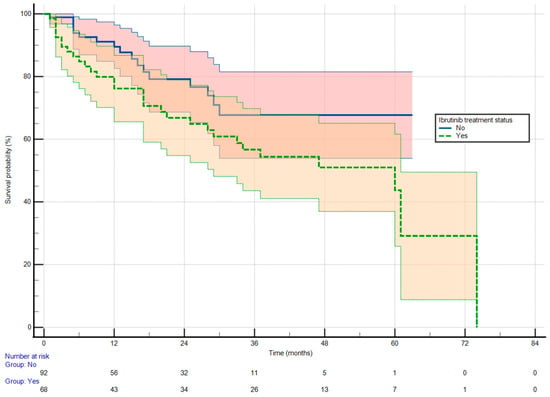
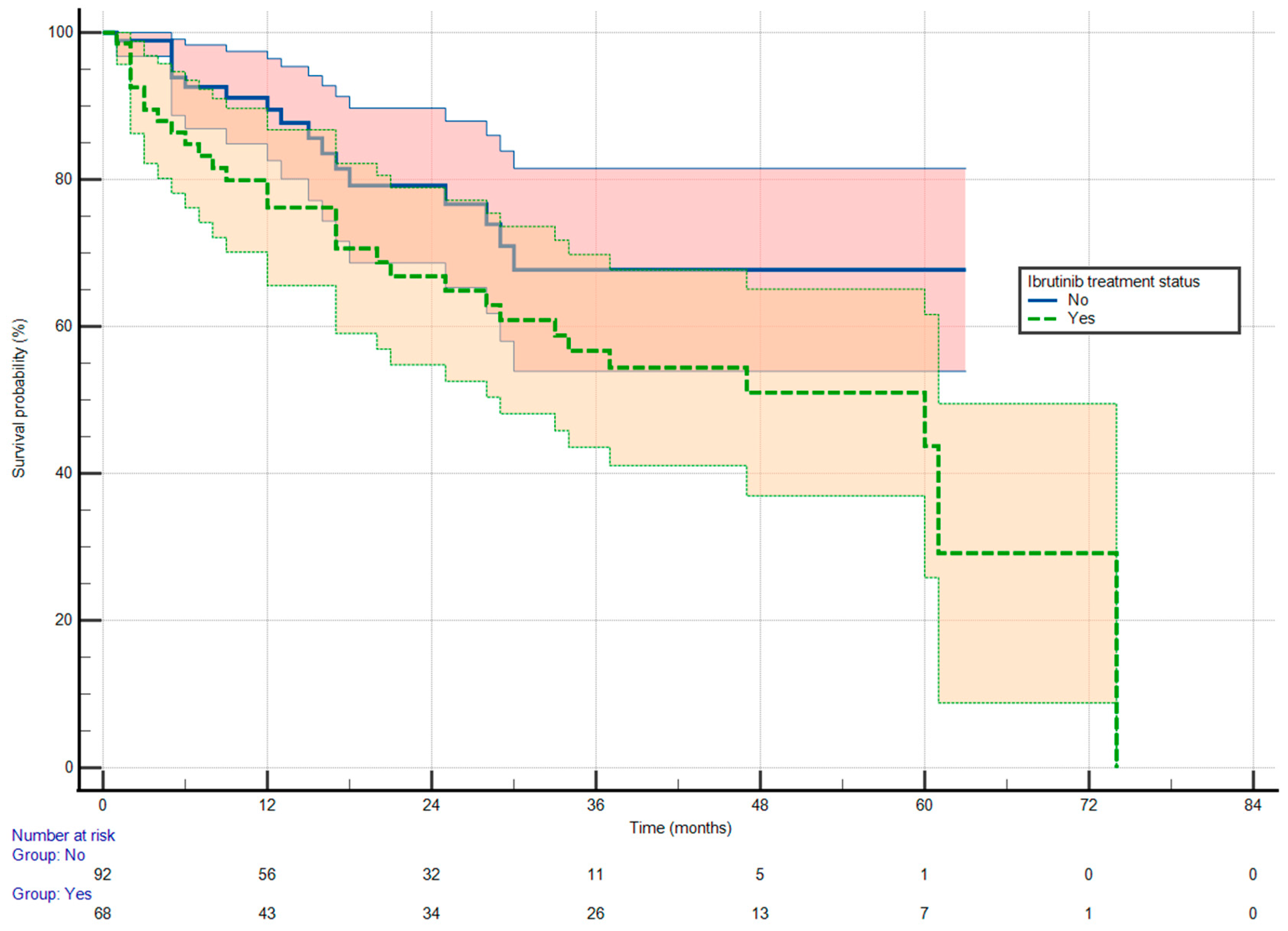
During follow-up, 48 of 160 patients (30.0%) died. Death occurred in 31 of 68 patients with prior ibrutinib exposure (45.59%) and in 17 of 92 without prior exposure (18.48%). In the Kaplan–Meier analysis, estimated mean OS was 43.3 months (95% CI 35.7–50.9) and 48.2 months (95% CI 42.1–54.3), respectively. The univariable hazard ratio was 1.73 (95% CI 0.96–3.14), with a log-rank p value of 0.07 (Table 6 and Figure 2).
Table 6.
Overall survival (OS) according to prior ibrutinib exposure.
Figure 2.
Kaplan–Meier overall survival curves according to prior ibrutinib exposure.
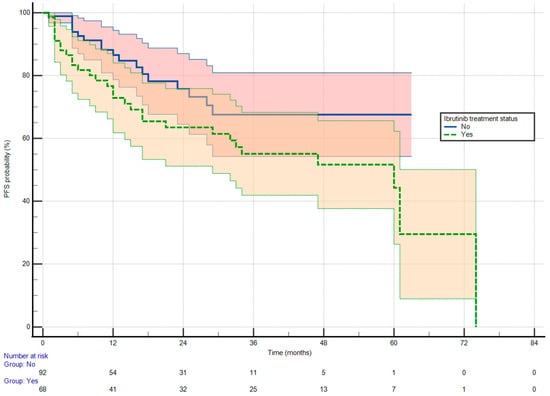
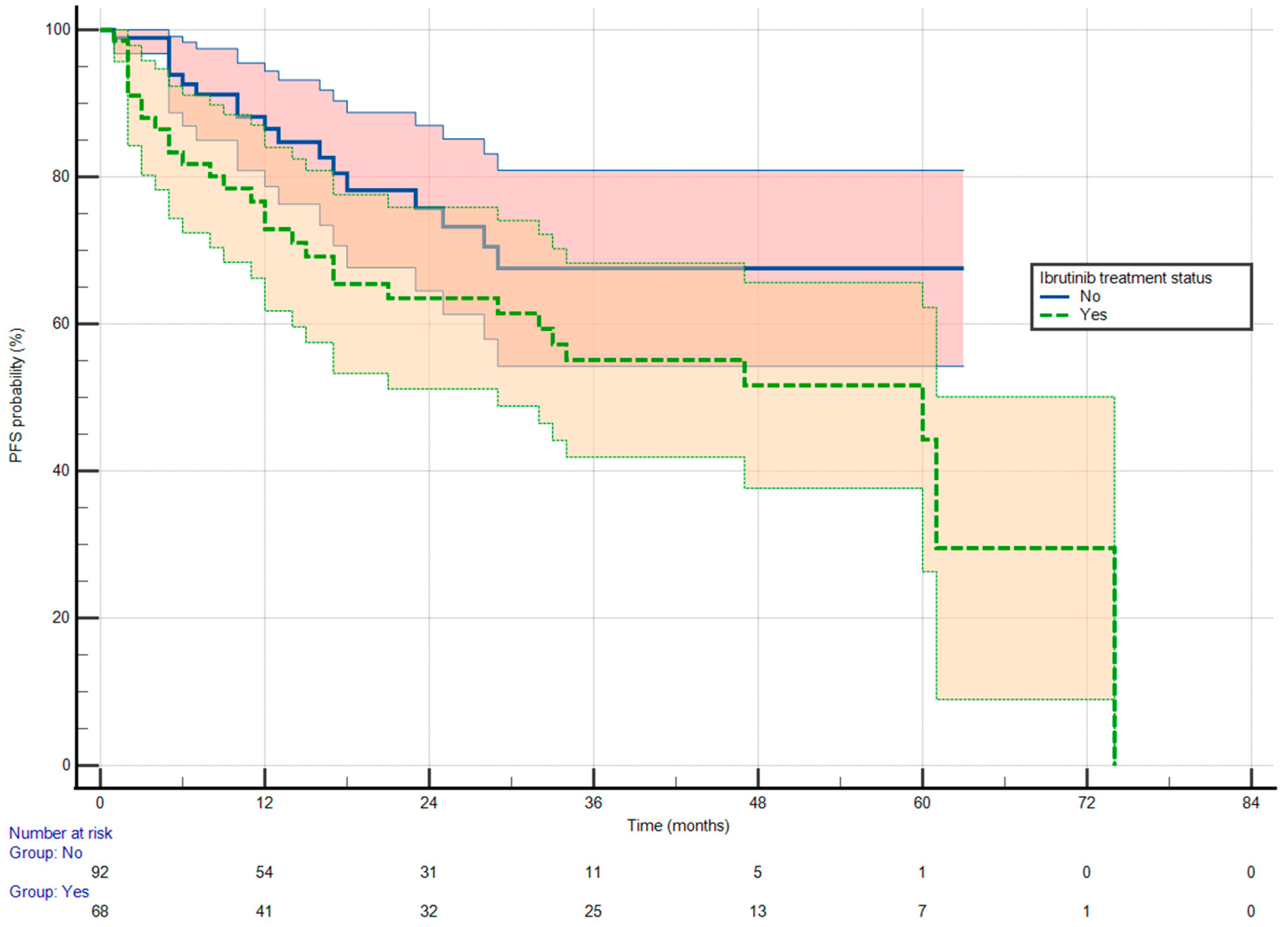
Documented progression was observed in 17 of 160 patients (10.6%): 11 of 68 (16.2%) with prior ibrutinib exposure and 6 of 92 (6.5%) without prior exposure. This descriptive progression count must not be interpreted as the PFS event count. The composite PFS endpoint (documented progression or death, whichever occurred first) occurred in 49 of 160 patients: 31 of 68 (45.6%) with prior exposure and 18 of 92 (19.6%) without. Estimated mean PFS was 42.7 months (95% CI 34.8–50.5) versus 47.7 months (95% CI 41.6–53.7), respectively. The univariable PFS HR was 1.76 (95% CI 0.98–3.16; log-rank p = 0.06) (Table 7 and Figure 3).
Table 7.
Progression-free survival (PFS; first documented progression or death) according to prior ibrutinib exposure.
Figure 3.
Kaplan–Meier progression-free survival curves according to prior ibrutinib exposure.
3.7. Multivariable Cox Regression Analyses
In the final multivariable models including prior ibrutinib exposure, age at venetoclax initiation, bulky disease, previous treatment lines, and venetoclax regimen, prior ibrutinib exposure was not significantly associated with OS (aHR 2.062, 95% CI 0.936–4.543; p = 0.072) or PFS (aHR 1.814, 95% CI 0.878–3.749; p = 0.108). Relative to venetoclax monotherapy, none of VR, VO, or VI showed a statistically significant association with OS or PFS in these models (Table 8 and Table 9). Confidence intervals were wide, particularly for VI, and adjusted associations should not be interpreted as causal treatment effects.
Table 8.
Multivariable Cox proportional hazards regression for overall survival (OS), including venetoclax regimen.
Table 9.
Multivariable Cox proportional hazards regression for progression-free survival (PFS), including venetoclax regimen.
3.8. Association of Venetoclax Treatment Regimen with Mortality
Across the four venetoclax regimens, death occurred in 17/37 (45.9%) patients receiving monotherapy, 19/70 (27.1%) receiving VR, 2/11 (18.2%) receiving VI, and 10/42 (23.8%) receiving VO (Pearson χ2(3) = 6.250; p = 0.100). This unadjusted comparison is descriptive; regimen-adjusted OS and PFS associations are reported in Table 8 and Table 9. Regimen-specific documented progression counts were not substituted for the composite PFS endpoint (Table 10).
Table 10.
Mortality according to venetoclax treatment regimen.
4. Discussion
Treatment regimen selection differed substantially according to prior ibrutinib exposure (p < 0.001): monotherapy was more common after prior ibrutinib, whereas VO was more common without prior exposure. Accordingly, the final OS and PFS Cox models included venetoclax regimen alongside prior ibrutinib exposure, age, bulky disease, and previous treatment lines. No regimen contrast reached statistical significance, but subgroup sizes and event counts were limited. Nonrandom regimen allocation, confounding by indication, and imbalanced baseline characteristics preclude causal interpretation.
In this real-world study of 160 patients with R/R CLL treated with venetoclax-based therapy, prior ibrutinib exposure identified a clinically distinct, more heavily pretreated population. Patients with prior ibrutinib exposure had received more previous treatment lines, were more frequently exposed to chemoimmunotherapy, and more often had bulky disease. Objective response rates remained high in both groups, whereas crude progression and mortality proportions were higher among previously exposed patients. However, these descriptive differences should not be interpreted as demonstrating an independent or causal effect of prior ibrutinib exposure. The contribution of the present analysis, relative to the previously published 147-patient cohort [11], is its direct comparison of patients with and without prior ibrutinib exposure within an expanded 160-patient cohort from the same observation period.
The preserved response to venetoclax-based therapy among patients previously exposed to ibrutinib is consistent with earlier evidence demonstrating clinically meaningful activity of BCL-2 inhibition after BTKi therapy. In the prospective phase II study by Jones et al., venetoclax monotherapy achieved an ORR of 65% among 91 patients with CLL that had progressed during or after ibrutinib treatment [5]. Notably, that population represented a particularly high-risk post-ibrutinib setting and therefore differs from our broader definition of prior ibrutinib exposure. Eyre et al. subsequently demonstrated the effectiveness of venetoclax in routine clinical practice after B-cell receptor pathway inhibitor therapy [6], while the more recent international real-world analysis by Ghosh et al. further supported the clinical activity of venetoclax-based treatment following BTKi exposure [7]. Consistent findings have also been reported with venetoclax plus obinutuzumab in previously treated CLL/SLL [8]. In the present study, the ORR was 85.3% among patients with prior ibrutinib exposure and 92.4% among those without prior exposure, with no statistically significant difference between the groups. Collectively, these findings support the continued clinical activity of venetoclax-based therapy after ibrutinib exposure. Nevertheless, direct numerical comparisons across studies should be interpreted cautiously because of differences in patient selection, reasons for BTKi discontinuation, prior treatment burden, venetoclax regimens, response assessment, and duration of follow-up.
In unadjusted analyses, prior ibrutinib exposure was associated with a numerically higher, but statistically nonsignificant, hazard of death (OS HR 1.73, 95% CI 0.96–3.14; log-rank p = 0.07) and of the composite progression-or-death endpoint (PFS HR 1.76, 95% CI 0.98–3.16; log-rank p = 0.06). In the final regimen-adjusted Cox models, prior ibrutinib exposure remained nonsignificant for OS (aHR 2.062, 95% CI 0.936–4.543; p = 0.072) and PFS (aHR 1.814, 95% CI 0.878–3.749; p = 0.108). The absence of statistical significance does not establish equivalence between exposure groups.
An important consideration is the substantial difference in pretreatment characteristics between the exposure groups. Patients with prior ibrutinib exposure had more previous treatment lines (2.6 vs. 1.1), more frequent chemoimmunotherapy (89.7% vs. 57.6%), and more bulky disease (29.4% vs. 14.4%). Venetoclax regimens and several laboratory characteristics also differed. Thus, prior ibrutinib exposure may reflect a more complex treatment history and disease profile rather than an isolated biological determinant of venetoclax outcome. Earlier real-world sequencing data likewise underscore the heterogeneity of patients receiving successive targeted therapies [12]. Mato et al. reported clinically meaningful venetoclax activity in a heavily pretreated real-world population [13]. Residual confounding, including differences in subsequent venetoclax regimens and incompletely measured molecular risk, remains possible despite multivariable adjustment.
Long-term follow-up of the MURANO trial provides an important benchmark for venetoclax-based therapy in R/R CLL. With a median follow-up of 7 years, venetoclax plus rituximab achieved a median PFS of 54.7 months, with 7-year PFS and OS rates of 23.0% and 69.6%, respectively [14]. Direct comparison with our cohort remains limited by differences in trial design, treatment regimens, previous exposure, and follow-up. Our corrected PFS analysis includes 49 progression-or-death events, rather than only the 17 documented progressions. The absence of statistical significance should not be interpreted as evidence that prior ibrutinib exposure has no influence on subsequent outcomes.
Safety findings also differed according to prior ibrutinib exposure. Higher frequencies of Grade ≥ 3 anemia, neutropenia, thrombocytopenia, pneumonia, and febrile neutropenia were recorded among previously ibrutinib-treated patients. Hematologic toxicity is well recognized during venetoclax-based therapy in routine clinical practice. In the multicenter real-world cohort reported by Mato et al., neutropenia, thrombocytopenia, and febrile neutropenia were clinically relevant toxicities during venetoclax treatment [13]. In our cohort, however, the greater burden of severe hematologic and infectious adverse events among patients with prior ibrutinib exposure should be interpreted cautiously. The previously exposed group was more heavily pretreated and differed in disease burden and in the distribution of venetoclax regimens. Therefore, the present findings do not establish prior ibrutinib exposure itself as the cause of increased toxicity.
TLS deserves separate consideration because its reported incidence varies substantially according to patient characteristics, tumor burden, risk stratification, prophylactic strategies, monitoring intensity, and the definitions used. In the present cohort, TLS was recorded in approximately one-third of evaluable patients, with no statistically significant difference according to prior ibrutinib exposure. This frequency was higher than that reported in several contemporary real-world series. In the prospective observational VeRVe study of 239 venetoclax-treated patients, laboratory TLS occurred in 6.3% and clinical TLS in 2.1% of patients [15]. Similarly, Valtis et al. evaluated 136 patients treated with venetoclax in routine clinical practice and reported laboratory TLS in 5.1%, with no cases of clinical TLS [16]. Earlier real-world experience also demonstrated variability in TLS incidence [13]. These differences emphasize the need for caution when comparing TLS rates across studies, particularly when retrospective documentation, patient selection, prophylactic practices, and TLS classification methods differ. Importantly, within our cohort, prior ibrutinib exposure was not associated with a statistically significant difference in either the overall occurrence or subtype distribution of TLS. The comparatively high overall TLS frequency observed in our study should therefore be interpreted in the context of its retrospective ascertainment and the characteristics of the treated population rather than as evidence of an exposure-specific safety signal.
From a clinical perspective, our findings are relevant to the increasingly complex issue of treatment sequencing in R/R CLL. Contemporary consensus recommendations recognize venetoclax-based therapy as an established treatment option after covalent BTKi therapy, while emphasizing that subsequent treatment selection should take into account the reason for discontinuation of the preceding BTKi, previous treatment exposure, disease characteristics, comorbidities, and patient preferences [2]. Prospective and real-world studies have demonstrated that clinically meaningful responses can be achieved with venetoclax after ibrutinib or other BTKi therapy [5,6,7,12]. Contemporary discussions of CLL treatment sequencing similarly emphasize that BTKi intolerance and disease progression during BTKi therapy represent clinically distinct scenarios with different implications for subsequent treatment selection [17]. This distinction is particularly relevant to the present study because prior ibrutinib exposure should not be regarded as synonymous with ibrutinib resistance. Our findings demonstrate a high response rate after previous ibrutinib treatment despite greater prior treatment burden and a higher frequency of bulky disease, but they do not establish that outcomes are equivalent between exposure groups. Rather, prior ibrutinib exposure represents one component of a broader treatment history that should be interpreted together with the reason for BTKi discontinuation, disease burden, previous therapies, and available molecular risk features.
Recent real-world evidence provides additional support for the continued activity of venetoclax-based treatment after covalent BTKi exposure. In a contemporary cohort of 37 patients with R/R CLL treated with venetoclax–rituximab, 13 had previously received a covalent BTKi; among evaluable BTKi-pretreated patients, the ORR was 87.5% [18]. Although the number of evaluable BTKi-exposed patients was small, the response rate is consistent with the preserved activity observed in our prior-ibrutinib group. Importantly, that study also distinguished BTKi discontinuation due to progression from discontinuation due to adverse events, illustrating the additional clinical information gained when the reason for previous BTKi cessation is available [18]. Such a distinction was not uniformly possible in our retrospective cohort and should be incorporated into future studies evaluating post-BTKi venetoclax outcomes.
Additional real-world evidence further illustrates both the effectiveness of venetoclax in heavily pretreated CLL and the increasing complexity of sequential targeted therapy. In the French compassionate-use cohort reported by Bouclet et al., 60 patients with CLL treated with venetoclax achieved an ORR of 75%, with 1-year PFS and OS rates of 61% and 70%, respectively; grade III/IV infections requiring hospitalization occurred in 24% of the overall cohort [19]. These findings reinforce the clinical activity of venetoclax in high-risk real-world populations while also highlighting the substantial toxicity burden that may accompany treatment outside clinical trials. At a broader population level, Huntington et al. demonstrated a marked increase in the use of sequential targeted therapies over time in US clinical practice, underscoring the growing relevance of treatment sequencing as patients are exposed to multiple targeted agents across successive lines of therapy [20]. Importantly, treatment exposure and treatment resistance should remain conceptually distinct. Acquired venetoclax resistance may involve specific molecular mechanisms, including BCL2 resistance-associated mutations. In a real-world cohort of 67 patients with R/R CLL receiving venetoclax, Kotmayer et al. detected BCL2 G101V and/or D103Y mutations in a subset of patients, with most mutation-positive patients experiencing clinical relapse during follow-up [21]. Similarly, the particularly poor outcomes reported in patients with documented sequential resistance to both BTK and BCL2 inhibition illustrate a clinical state fundamentally different from prior drug exposure alone [22]. These observations further support our cautious interpretation of prior ibrutinib exposure as a treatment-history variable rather than a surrogate for biological resistance, particularly because the reason for ibrutinib discontinuation was not uniformly available in our cohort.
Several strengths of this study should be acknowledged. The cohort reflects routine clinical practice and includes patients with heterogeneous previous treatment histories, venetoclax regimens, disease burden, and available molecular characteristics. In addition, the inclusion of both previously ibrutinib-exposed and ibrutinib-naïve patients within the same real-world cohort allowed a direct comparison of subsequent venetoclax-based treatment outcomes according to prior ibrutinib exposure. The evaluation of response, survival, treatment characteristics, TLS, and other adverse events also provides a broad assessment of the clinical course following venetoclax initiation. Furthermore, the present analysis addresses a distinct question from our previously reported overall venetoclax cohort [11] by focusing specifically on the clinical implications of previous ibrutinib exposure.
The study has several limitations. Its retrospective observational design introduces possible selection bias, incomplete documentation, and residual confounding. Exposure groups differed in previous treatment burden, chemoimmunotherapy, bulky disease, venetoclax regimen, and selected laboratory characteristics. Residual confounding cannot be excluded, and neither the unadjusted nor the multivariable associations establish causality. Although PFS was corrected to include progression or death, the number of events and the uncertainty around the HR estimates still limit precision. Reasons for prior ibrutinib discontinuation were not collected, preventing reliable distinction between progression/resistance and intolerance. Cytogenetic and molecular results were incompletely available. Multiple venetoclax-based regimens introduced treatment heterogeneity. Responses were assessed at participating centers according to the 2018 iwCLL criteria, as confirmed with the centers, without centralized reassessment; retrospective documentation may limit verification of assessment timing and procedures. Adverse-event data were retrospectively derived from clinical records, and differences in documentation or grading may have affected toxicity frequencies. Finally, the present cohort overlaps entirely with the previously published 147-patient cohort [11]; the current study adds 13 eligible patients from the same period and examines a distinct exposure-based comparison rather than representing independent validation or extended follow-up. The expanded multivariable Cox models included multiple clinically selected covariates; limited event counts and unmeasured confounding restrict the precision and interpretation of adjusted estimates. In particular, the extent of missing molecular and safety data may differ between exposure groups. Available-case comparisons cannot exclude selection or ascertainment bias arising from non-random missingness; consequently, nonsignificant comparisons should not be interpreted as evidence of equivalent underlying prevalences.
The final Cox models adjusted for age, bulky disease, previous treatment lines, and venetoclax regimen. However, previous chemoimmunotherapy exposure was not separately entered, and treatment selection was not randomized. Residual confounding related to treatment history and disease severity therefore remains possible. Limited events and imbalanced regimen subgroups reduce the precision and stability of adjusted estimates.
Reasons for discontinuation of prior ibrutinib therapy were not collected in the study dataset, preventing reliable distinction between progression, intolerance, and other causes; prior exposure therefore cannot be equated with confirmed BTK inhibitor resistance. Response and Cairo–Bishop TLS assessments were performed locally without centralized reassessment. TLS prophylaxis and monitoring details were not systematically collected, and TLS information was missing for 25 patients. The regimen comparisons were unadjusted and cannot establish treatment-specific effects on survival.
5. Conclusions
Venetoclax-based therapy demonstrated substantial clinical activity in R/R CLL, including among patients with prior ibrutinib exposure. Previously exposed patients had higher crude progression and mortality proportions, but multivariable Cox analyses did not identify a statistically significant association of prior ibrutinib exposure with OS or PFS, and did not demonstrate equivalence between groups. Baseline imbalances and the retrospective design require cautious interpretation. Prospective studies incorporating reasons for BTKi discontinuation and more comprehensive adjustment are needed.
Importantly, prior ibrutinib exposure should not automatically be considered an indicator of poor response to subsequent venetoclax-based therapy. However, the absence of information regarding ibrutinib discontinuation reasons and BTK inhibitor resistance status, together with potential residual confounding, limits the interpretation of these findings.
Supplementary Materials
The following supporting information can be downloaded at https://www.mdpi.com/article/10.3390/biomedicines14122733/s1: Table S1: Comparison of the previously published and current cohorts.
Author Contributions
Conceptualization, A.O.G.; Methodology, A.O.G. and D.Ö.; Formal analysis, A.O.G. and D.Ö.; Investigation, A.O.G.; Resources, A.O.G.; Data curation, A.O.G., D.Ö., M.A.E., A.K., G.S., F.H., Y.B., U.H., G.A.Ç., T.H., S.D., D.Y.A., C.D., Y.K., A.T., S.Y., İ.K., F.E., A.Y.Ö., M.S.D., S.B., S.K., T.U. and F.A.; Writing—original draft, A.O.G.; Writing—review and editing, A.O.G.; Visualization, A.O.G.; Project administration, A.O.G. All authors have read and agreed to the published version of the manuscript.
Funding
This research received no external funding.
Institutional Review Board Statement
The study was conducted in accordance with the Declaration of Helsinki and was approved by the Ordu University Non-Interventional Clinical Research Ethics Committee (approval no. 2026/247; 25 September 2026).
Informed Consent Statement
Due to the retrospective nature of the study, informed consent was managed in accordance with the ethics committee decision.
Data Availability Statement
The data that support the findings of this study are available from the corresponding author upon reasonable request. Due to patient privacy and ethical restrictions, the data are not publicly available.
Acknowledgments
The authors sincerely thank Elif Ertaş for her valuable assistance with the statistical analyses of this study. OpenAI’s ChatGPT was used to assist with English language editing, improving clarity and readability, manuscript formatting, and drafting responses to reviewers. The authors reviewed and verified the AI-assisted content and take full responsibility for the accuracy, integrity, and final content of the manuscript. Statistical analyses were performed independently by the study statistician.
Conflicts of Interest
The authors declare no conflicts of interest.
References
- Hallek, M. Chronic lymphocytic leukemia: 2025 update on the epidemiology, pathogenesis, diagnosis, and therapy. Am. J. Hematol. 2025, 100, 450–480. [Google Scholar] [CrossRef] [Scilit] [PubMed]
- Soumerai, J.D.; Barrientos, J.; Ahn, I.; Coombs, C.; Gladstone, D.; Hoffman, M.; Kittai, A.; Jacobs, R.; Lipsky, A.; Patel, K.; et al. Consensus recommendations from the 2024 Lymphoma Research Foundation workshop on treatment selection and sequencing in CLL or SLL. Blood Adv. 2025, 9, 1213–1229. [Google Scholar] [CrossRef] [Scilit] [PubMed]
- Bennett, R.; Seymour, J.F. Update on the management of relapsed/refractory chronic lymphocytic leukemia. Blood Cancer J. 2024, 14, 33. [Google Scholar] [CrossRef] [Scilit] [PubMed]
- Seymour, J.F.; Kipps, T.J.; Eichhorst, B.; Hillmen, P.; D’rOzario, J.; Assouline, S.; Owen, C.; Gerecitano, J.; Robak, T.; De la Serna, J.; et al. Venetoclax-rituximab in relapsed or refractory chronic lymphocytic leukemia. N Engl. J. Med. 2018, 378, 1107–1120. [Google Scholar] [CrossRef] [Scilit] [PubMed]
- Jones, J.A.; Mato, A.R.; Wierda, W.G.; Davids, M.S.; Choi, M.; Cheson, B.D.; Furman, R.R.; Lamanna, N.; Barr, P.M.; Zhou, L.; et al. Venetoclax for chronic lymphocytic leukaemia progressing after ibrutinib: An interim analysis of a multicentre, open-label, phase 2 trial. Lancet Oncol. 2018, 19, 65–75. [Google Scholar] [CrossRef] [Scilit] [PubMed]
- Eyre, T.A.; Kirkwood, A.A.; Gohill, S.; Follows, G.; Walewska, R.; Walter, H.; Cross, M.; Forconi, F.; Shah, N.; Chasty, R.; et al. Efficacy of venetoclax monotherapy in patients with relapsed chronic lymphocytic leukaemia in the post-BCR inhibitor setting: A UK wide analysis. Br. J. Haematol. 2019, 185, 656–669. [Google Scholar] [CrossRef] [Scilit] [PubMed]
- Ghosh, N.; Eyre, T.A.; Brown, J.R.; Lamanna, N.; Manzoor, B.S.; Coombs, C.C.; Tuncer, H.H.; Ujjani, C.; Leslie, L.A.; Roeker, L.E.; et al. Treatment effectiveness of venetoclax-based therapy after Bruton tyrosine kinase inhibitors in chronic lymphocytic leukemia: An international real-world study. Am. J. Hematol. 2025, 100, 511–515. [Google Scholar] [CrossRef] [Scilit] [PubMed]
- Lei, M.M.; Sorial, M.N.; Lou, U.; Yu, M.; Medrano, A.; Ford, J.; Nemec, R.A.; Abramson, J.S.; Soumerai, J.D. Real-world evidence of obinutuzumab and venetoclax in previously treated patients with chronic lymphocytic leukemia or small lymphocytic lymphoma. Leuk. Lymphoma 2024, 65, 653–659. [Google Scholar] [CrossRef] [Scilit] [PubMed]
- Banerji, V.; Aw, A.; Laferriere, N.; Abdel-Samad, N.; Peters, A.; Johnson, N.A.; Bernard, M.-P.; Gopalakrishnan, S.; Bull, S.-J.; Fournier, P.-A.; et al. Management and use of healthcare resources in patients with chronic lymphocytic leukemia initiating venetoclax in routine clinical practice. Leuk. Lymphoma 2024, 65, 609–617. [Google Scholar] [CrossRef] [Scilit] [PubMed]
- Ghosh, N.; Sharman, J.P.; Gutierrez, M.; Khan, W.; Qureshi, Z.P.; Raz, A.; Girardi, V.; Krigsfeld, G.S.; Barrientos, J.C. Real-world treatment patterns and outcomes by line of therapy and race in patients with chronic lymphocytic leukemia/small lymphocytic lymphoma treated in the United States: Results from the final analysis of the prospective, observational, informCLL registry. Clin. Lymphoma Myeloma Leuk. 2024, 24, e313. [Google Scholar] [CrossRef] [Scilit] [PubMed]
- Odabaşı Giden, A.; Ozatli, D.; Erkurt, M.A.; Karakus, A.; Sincan, G.; Hindilerden, F.; Bilen, Y.; Hatipoglu, U.; Cagliyan, G.A.; Hacibekiroglu, T.; et al. Real-world outcomes of venetoclax in relapsed/refractory chronic lymphocytic leukemia. Hemato 2026, 7, 16. [Google Scholar] [CrossRef] [Scilit]
- Mato, A.R.; Hill, B.T.; Lamanna, N.; Barr, P.M.; Ujjani, C.S.; Brander, D.M.; Howlett, C.; Skarbnik, A.P.; Cheson, B.D.; Zent, C.S.; et al. Optimal sequencing of ibrutinib, idelalisib, and venetoclax in chronic lymphocytic leukemia: Results from a multicenter study of 683 patients. Ann. Oncol. 2017, 28, 1050–1056. [Google Scholar] [CrossRef] [Scilit] [PubMed]
- Mato, A.R.; Thompson, M.; Allan, J.N.; Brander, D.M.; Pagel, J.M.; Ujjani, C.S.; Hill, B.T.; Lamanna, N.; Lansigan, F.; Jacobs, R.; et al. Real-world outcomes and management strategies for venetoclax-treated chronic lymphocytic leukemia patients in the United States. Haematologica 2018, 103, 1511–1517. [Google Scholar] [CrossRef] [Scilit] [PubMed]
- Kater, A.P.; Harrup, R.; Kipps, T.J.; Eichhorst, B.; Owen, C.J.; Assouline, S.; Lamanna, N.; Robak, T.; de la Serna, J.; Jaeger, U.; et al. The MURANO study: Final analysis and retreatment/crossover substudy results of VenR for patients with relapsed/refractory CLL. Blood 2025, 145, 2733–2745. [Google Scholar] [CrossRef] [Scilit] [PubMed]
- Schwaner, I.; Kuhn, T.; Losem, C.; Wolff, T.; Otremba, B.; Zaiss, M.; Hülsenbeck, J.; Famulla, K.; Nösslinger, T.; Rossi, D. Low incidence of tumor lysis syndrome in elderly patients with chronic lymphocytic leukemia treated with venetoclax under real-world conditions: Results from the prospective observational VeRVe study. Ann. Hematol. 2024, 103, 2013–2020. [Google Scholar] [CrossRef] [Scilit] [PubMed]
- Valtis, Y.K.; Nemirovsky, D.; Derkach, A.; Sharan, S.; Kabel, C.; Ortiz, R.; Thompson, M.C.; Roeker, L.E.; Geyer, M.B. Real-world incidence and prevention of tumor lysis syndrome in chronic lymphocytic leukemia treated with venetoclax. Blood Adv. 2024, 8, 5806–5813. [Google Scholar] [CrossRef] [Scilit] [PubMed]
- Fresa, A.; Innocenti, I.; Tomasso, A.; Stirparo, L.; Mosca, A.; Iadevaia, F.; Autore, F.; Ghia, P.; Laurenti, L. Treatment sequencing in chronic lymphocytic leukemia in 2024: Where we are and where we are headed. Cancers 2024, 16, 2011. [Google Scholar] [CrossRef] [Scilit] [PubMed]
- Dimou, M.; Fioretzaki, R.; Zerzi, C.; Konstantinou, E.; Asimakopoulos, J.V.; Arapaki, M.; Piperidou, A.; Machairas, A.; Kopsaftopoulou, A.; Liaskas, A.; et al. Venetoclax-rituximab and emerging treatment strategies after c-BTKi exposure in relapsed/refractory CLL: A real-world cohort and literature overview. Cancers 2025, 17, 3159. [Google Scholar] [CrossRef] [Scilit] [PubMed]
- Bouclet, F.; Calleja, A.; Dilhuydy, M.S.; Véronèse, L.; Pereira, B.; Amorim, S.; Cymbalista, F.; Herbaux, C.; de Guibert, S.; Roos-Weil, D.; et al. Real-world outcomes following venetoclax therapy in patients with chronic lymphocytic leukemia or Richter syndrome: A FILO study of the French compassionate use cohort. Ann. Hematol. 2021, 100, 987–993. [Google Scholar] [CrossRef] [Scilit] [PubMed]
- Huntington, S.F.; Cheng, W.Y.; Sarpong, E.M.; Leng, S.; Farooqui, M.Z.; Agu, U.S.; Catillon, M.; Lejeune, D.; Downes, N.; Matay, L.; et al. Real-world patterns and sequences of targeted therapy use in chronic lymphocytic leukemia and small lymphocytic lymphoma in the United States: A longitudinal study. Leuk. Lymphoma 2024, 65, 932–942. [Google Scholar] [CrossRef] [PubMed]
- Kotmayer, L.; László, T.; Mikala, G.; Kiss, R.; Lévay, L.; Hegyi, L.L.; Gróf, S.; Nagy, T.; Barna, G.; Farkas, P.; et al. Landscape of BCL2 resistance mutations in a real-world cohort of patients with relapsed/refractory chronic lymphocytic leukemia treated with venetoclax. Int. J. Mol. Sci. 2023, 24, 5802. [Google Scholar] [CrossRef] [Scilit] [PubMed]
- Lew, T.E.; Lin, V.S.; Cliff, E.R.; Blombery, P.; Thompson, E.R.; Handunnetti, S.M.; Westerman, D.A.; Kuss, B.J.; Tam, C.S.; Huang, D.C.S.; et al. Outcomes of patients with CLL sequentially resistant to both BCL2 and BTK inhibition. Blood Adv. 2021, 5, 4054–4058. [Google Scholar] [CrossRef] [Scilit] [PubMed]

Disclaimer/Publisher’s Note: The statements, opinions and data contained in all publications are solely those of the individual author(s) and contributor(s) and not of MDPI and/or the editor(s). MDPI and/or the editor(s) disclaim responsibility for any injury to people or property resulting from any ideas, methods, instructions or products referred to in the content. |
© 2026 by the authors. Licensee MDPI, Basel, Switzerland. This article is an open access article distributed under the terms and conditions of the Creative Commons Attribution (CC BY) license.