


Abstract
Fluoropyrimidines, principally 5-fluorouracil (5-FU) and capecitabine, remain foundational agents in the treatment of gastrointestinal, breast, and head and neck malignancies, but they are also among the most clinically important non-anthracycline causes of cancer therapy-related cardiovascular toxicity. Clinical manifestations range from asymptomatic electrocardiographic abnormalities and biomarker elevation to angina, coronary vasospasm, myocardial infarction, arrhythmias, heart failure, Takotsubo syndrome, and sudden cardiac death. Although coronary vasospasm remains the most recognized mechanism, contemporary evidence supports a multifactorial pathophysiology involving endothelial dysfunction, oxidative stress, direct myocardial injury, mitochondrial dysfunction, thrombosis, and microvascular dysfunction. The reported incidence varies widely because of differences in definitions, surveillance intensity, cancer populations, and fluoropyrimidine schedules. Management begins with immediate discontinuation of fluoropyrimidine and evaluation for acute coronary syndrome or other cardiac emergencies. A major unresolved question is whether fluoropyrimidine therapy can be safely resumed after cardiotoxicity. Older reports suggested high recurrence rates with rechallenge, whereas more recent cardio-oncology-guided series suggest that selected patients may successfully continue treatment using vasodilator prophylaxis, regimen modification, and close monitoring. This narrative review summarizes the epidemiology, mechanisms, clinical manifestations, diagnosis, acute management, rechallenge strategies, and alternatives to fluoropyrimidines when re-exposure is unsafe.
1. Introduction
Fluoropyrimidines have occupied a central place in systemic anticancer therapy for decades and continue to serve as the backbone of treatment in colorectal, gastroesophageal, pancreatic, breast, anal, and head and neck malignancies. Both intravenous 5-FU and the oral prodrug capecitabine are used across curative and palliative settings, including neoadjuvant, adjuvant, and metastatic treatment paradigms. Their continued importance in modern oncology means that even uncommon toxicities can have major practical consequences, particularly when those toxicities threaten continuation of otherwise highly effective therapy [1,2,3,4,5,6,7].
Among non-anthracycline cytotoxic agents, fluoropyrimidines are among the most clinically important causes of treatment-related cardiovascular toxicity. Historically, the syndrome was framed largely around coronary vasospasm, typically presenting as acute chest pain during infusion or shortly after treatment exposure. Over time, however, the literature has expanded the concept from isolated vasospasm to a broader fluoropyrimidine-associated cardiotoxicity syndrome encompassing myocardial ischemia, infarction, atrial and ventricular arrhythmias, left ventricular dysfunction, heart failure, and stress cardiomyopathy [1,3,4,5,6,7]. This broader framing better reflects clinical reality and helps explain why some patients present without classic vasospastic features or without clear obstructive epicardial coronary disease.
The clinical importance of this toxicity lies not only in the acute cardiac event itself but also in the therapeutic dilemma it creates. In many gastrointestinal malignancies, fluoropyrimidines remain essential components of standard regimens, and permanent discontinuation may compromise disease control, survival, or both. Conversely, rechallenge after cardiotoxicity raises concern for recurrent or more severe events. As a result, fluoropyrimidine cardiotoxicity has become a practical cardio-oncology problem requiring coordinated decision-making between oncology and cardiology rather than a purely theoretical adverse-effect discussion [2,3,8,9,10,11,12,13].
Despite decades of clinical recognition, several issues remain unsettled. The true incidence is difficult to define because studies vary markedly in surveillance methods and toxicity definitions. The pathophysiology appears multifactorial and incompletely resolved. Risk factors are incompletely predictive, and the optimal strategy for prevention, monitoring, and rechallenge remains uncertain. This review examines fluoropyrimidine-associated cardiotoxicity in a structured manner, focusing on epidemiology, mechanisms, clinical manifestations, diagnosis, acute management, rechallenge with vasodilator prophylaxis, and treatment alternatives when re-exposure is not appropriate.
Although previous reviews have comprehensively described the epidemiology, pathophysiology, and clinical manifestations of fluoropyrimidine-associated cardiotoxicity, important uncertainties remain regarding the safety and practical implementation of rechallenge following cardiovascular events. The 2022 ESC cardio-oncology guidelines provide recommendations for selected patients with suspected fluoropyrimidine-induced coronary vasospasm; however, the supporting evidence remains largely observational, and standardized approaches to patient selection, prophylaxis, and monitoring are lacking. The present review therefore places particular emphasis on critically evaluating contemporary rechallenge studies, distinguishing vasospastic from non-vasospastic clinical presentations, examining the evidence supporting vasodilator prophylaxis, and discussing alternative oncologic strategies when re-exposure is considered inappropriate. By integrating these findings, we aim to clarify the practical implications and limitations of the available evidence rather than propose an independently validated management guideline.
Literature Search and Selection
This narrative review was developed through a broad, non-systematic literature search across multiple electronic databases, including PubMed, ScienceDirect, and Scopus, supplemented by examination of the reference lists of relevant publications. The search was updated through June 2026 and employed combinations of terms related to fluoropyrimidine-associated cardiotoxicity, including “5-fluorouracil,” “capecitabine,” “coronary vasospasm,” “cardiotoxicity,” “rechallenge,” “vasodilator prophylaxis,” and “cardio-oncology.” Literature selection was guided by clinical relevance, scientific quality, and contribution to understanding the epidemiology, pathophysiology, clinical manifestations, management, and prevention of fluoropyrimidine-associated cardiovascular toxicity. Particular emphasis was placed on clinical guidelines, systematic reviews, meta-analyses, observational studies, and publications addressing rechallenge strategies and alternative treatment approaches. Relevant case reports and case series were also considered when they provided additional clinical insights. As this was a narrative rather than a systematic review, formal systematic screening procedures and predefined eligibility criteria were not applied.
The present review was intentionally designed as a narrative synthesis rather than a systematic or scoping review. Accordingly, the literature search was intended to identify clinically relevant and influential publications rather than to provide an exhaustive or quantitatively reproducible assessment of all available evidence. Study selection was based on clinical relevance, methodological quality, and contribution to the principal themes of this review. Consequently, formal systematic screening procedures, predefined eligibility criteria, and quantitative reporting of search results were not undertaken. This approach was considered appropriate for the primary objective of integrating mechanistic, clinical, and therapeutic evidence across heterogeneous study designs.
2. Epidemiology and Incidence
The epidemiology of fluoropyrimidine-associated cardiotoxicity has long been challenging to characterize because reported incidence varies widely across the literature. Early reports described rates ranging from approximately 1% to well above 10%, while broader series that included asymptomatic electrocardiographic abnormalities or less specific cardiovascular symptoms sometimes suggested even higher frequencies [1,3,4,5,6,7]. This heterogeneity reflects several methodological issues, including retrospective versus prospective case capture, differences in oncology populations, variation in fluoropyrimidine dosing and schedule, and inconsistent definitions of what qualifies as cardiotoxicity. A separate systematic review and meta-analysis focused specifically on fluoropyrimidine-related coronary disorders similarly emphasized substantial heterogeneity across studies and highlighted the need to interpret incidence estimates in relation to treatment schedule, definitions, and ascertainment methods [14].
The most informative pooled estimate comes from the 2023 systematic review and meta-analysis by Lu et al., which analyzed 211 studies involving more than 63,000 patients treated with fluoropyrimidines. In that study, the pooled incidence of all-grade cardiotoxicity was 5.04%, whereas grade 3 or higher cardiotoxicity occurred in 1.5% of patients and cardiotoxicity-related mortality was 0.29% [15]. These numbers are useful because they place fluoropyrimidine cardiotoxicity in a clinically important middle ground: severe toxicity is uncommon, but the overall burden is still substantial given the enormous number of patients exposed to these drugs worldwide.
Treatment schedule is one of the most consistently described determinants of risk. Continuous-infusion 5-FU has generally been associated with higher cardiotoxicity rates than bolus administration, likely because prolonged exposure increases the temporal opportunity for vasoreactive, endothelial, or direct myocardial effects to emerge [1,3,4,5,6,7,8]. Capecitabine is often informally viewed as more convenient and sometimes somewhat less cardiotoxic than continuous-infusion 5-FU, but the literature does not support the assumption that oral therapy is uniformly safer. Significant ischemic syndromes, arrhythmias, and other cardiac events have been reported with both formulations [1,3,4,5,6,7].
Prospective data suggest that clinically overt events may underestimate the true burden of fluoropyrimidine-related cardiovascular effects. The CHECKPOINT study by Lombardi et al. prospectively evaluated colorectal cancer patients receiving fluoropyrimidines with structured cardiologic assessment and found that both symptomatic and asymptomatic abnormalities could be identified during treatment [16]. This is particularly important because routine oncology practice often detects only the patients who present with prominent chest pain or require emergency evaluation, whereas milder ischemic episodes, transient rhythm disturbances, or silent ECG changes may pass unrecognized.
Another important epidemiologic feature is timing. Fluoropyrimidine cardiotoxicity typically occurs early, often during the first cycle and frequently within the first several days of treatment initiation [1,3,4,5,6,7,16]. This early clustering is clinically useful because it makes the temporal association with treatment a key diagnostic clue. When chest pain, dyspnea, or arrhythmic symptoms arise during infusion or shortly after the start of capecitabine, fluoropyrimidine cardiotoxicity should be actively considered even in patients without prior cardiovascular disease.
Risk factor identification remains clinically important but imperfect. Preexisting coronary artery disease, hypertension, diabetes mellitus, smoking, chronic kidney disease, prior cardiovascular disease, and concurrent cardiotoxic therapies have been associated with increased susceptibility in some studies, but these associations are inconsistent and do not provide a reliable predictive rule [1,4,6,7,17]. Importantly, fluoropyrimidine cardiotoxicity also occurs in young or otherwise low-risk patients without known cardiovascular disease, suggesting that treatment exposure itself can be sufficient to precipitate toxicity in susceptible individuals [4,17,18]. This limits the predictive value of traditional risk stratification and supports a low threshold for clinical suspicion when compatible symptoms develop during treatment, particularly during the first cycle or early after treatment initiation [2,16,18].
3. Pathophysiology
Coronary vasospasm is one of the most widely recognized mechanisms proposed to explain fluoropyrimidine-associated ischemic chest pain. Clinical observations supporting a vasospastic mechanism include the temporal association between symptoms and fluoropyrimidine exposure, transient ischemic electrocardiographic changes, the absence of obstructive coronary artery disease in some affected patients, and symptomatic improvement following treatment interruption and antianginal therapy [1,3,4,5,6,7]. Although these findings are compatible with coronary vasospasm, they do not independently establish vasospasm as the underlying mechanism in every patient, particularly when direct angiographic or functional confirmation is unavailable. Endothelial dysfunction, reduced nitric oxide bioavailability, increased endothelin-mediated vasoconstriction, and altered vascular smooth muscle reactivity have been proposed as contributing mechanisms [1,4,5,6,7,19,20]. At the molecular level, fluoropyrimidine-associated vasospasm appears to reflect an imbalance between endothelial vasodilatory and vasoconstrictive signaling. Endothelial injury may reduce nitric oxide bioavailability, thereby diminishing nitric oxide-mediated vascular smooth muscle relaxation, while increased production of vasoconstrictors such as endothelin-1 may further shift coronary vascular tone toward constriction. Increased circulating endothelin-1 has been reported during 5-FU exposure, including in patients developing cardiotoxic manifestations, although the relationship between circulating endothelin concentrations and coronary vasospasm is not uniform across studies [1,4,19]. Clinically, this phenotype most commonly presents with acute chest pain, transient ST-segment changes, angina-like syndromes, and occasionally acute coronary syndrome presentations despite angiographically normal coronary arteries [4,14,18,21]. Patients with predominantly epicardial vasospastic disease often respond favorably to nitrates and calcium channel blockers, further supporting this mechanistic pathway [9,10,22,23,24].
Nevertheless, coronary vasospasm alone may not fully explain the heterogeneous cardiovascular manifestations observed during fluoropyrimidine treatment. Clinical reports have documented troponin elevation, left ventricular dysfunction, heart failure, cardiogenic shock, and clinically significant arrhythmias, sometimes without features strongly suggestive of epicardial coronary vasospasm [1,4,5,6,7,25]. These observations have prompted investigation into additional mechanisms, including direct myocardial injury, oxidative stress, mitochondrial dysfunction, impaired cellular energetics, and toxic metabolite accumulation. However, the contribution of these proposed mechanisms to individual clinical presentations remains incompletely established, and much of the supporting evidence is experimental or indirect [1,4,5,6,7,19,25]. Altered fluoropyrimidine metabolism may provide another pathway to myocardial energetic dysfunction. Catabolism of 5-FU generates metabolites that have been proposed to interfere with the Krebs cycle, thereby disrupting mitochondrial energy production. Downstream fluorinated metabolites have been implicated in interference with normal oxidative metabolism and depletion of high-energy phosphate stores. This metabolic hypothesis provides a potential explanation for direct myocardial toxicity occurring independently of epicardial coronary vasospasm, although much of the supporting evidence remains experimental [1,19]. These proposed mechanisms may contribute to myocardial injury and ventricular dysfunction, but direct causal relationships between individual molecular pathways and specific clinical manifestations have not been conclusively demonstrated [4,6,25]. Therefore, ventricular dysfunction, troponin elevation, or arrhythmias should not be interpreted as definitive evidence of direct myocardial toxicity rather than coronary vasospasm or another cardiovascular mechanism.
Endothelial injury has been proposed as a potential mechanism linking several pathways implicated in fluoropyrimidine-associated cardiotoxicity. Experimental studies suggest that fluoropyrimidines may impair endothelial integrity, promote oxidative stress, enhance vasoconstrictor signaling, and facilitate platelet activation and thrombosis [1,4,5,6,7,14,18,20]. However, the extent to which these experimental findings contribute directly to clinical cardiovascular events remains uncertain. Experimental evidence further suggests that fluoropyrimidine exposure can produce structural endothelial injury, including endothelial cell contraction, cytolysis, and disruption of vascular endothelial integrity. Loss of an intact endothelial surface may promote platelet adhesion and aggregation and facilitate thrombus formation, while simultaneous impairment of endothelial-dependent vasodilation favors ischemia. Endothelial toxicity therefore provides a potential molecular and cellular link among vasospasm, thrombosis, and microvascular dysfunction rather than representing an entirely separate mechanism [1,4,19]. This proposed endothelial framework offers a plausible explanation for the potential coexistence of vasospasm, microvascular ischemia, thrombosis, and myocardial injury, although the relative contribution of these pathways in individual patients remains uncertain. Cucciniello et al. emphasized this diagnostic complexity by describing fluoropyrimidine cardiotoxicity as a puzzling clinical syndrome whose manifestations cannot always be cleanly divided into vasospastic versus non-vasospastic categories [18].
Microvascular dysfunction has also been proposed as a potential contributor to fluoropyrimidine-associated myocardial ischemia. Reports of ischemic symptoms, electrocardiographic abnormalities, or myocardial injury in patients without obstructive epicardial coronary artery disease suggest that mechanisms beyond fixed epicardial coronary stenosis may be involved [4,18,19,21]. However, these clinical findings do not specifically establish microvascular dysfunction, and direct assessment of coronary microvascular function has been limited in the available literature. Microvascular dysfunction has been proposed as one possible explanation for recurrent chest pain, persistent ischemic symptoms, or myocardial infarction with non-obstructive coronary arteries (MINOCA)-like presentations, although these findings are not specific to this mechanism [4,18,21]. The potential contribution of both epicardial and microvascular mechanisms within the same patient remains an area requiring further investigation.
The heterogeneity of fluoropyrimidine cardiotoxicity is further influenced by treatment exposure and host-specific factors. Continuous-infusion 5-FU appears to confer a higher risk of cardiotoxicity than bolus administration, potentially due to prolonged endothelial injury, sustained vasospastic stress, and cumulative myocardial exposure [1,3,4,17,19]. Interindividual pharmacogenomic variability may also influence fluoropyrimidine exposure. Dihydropyrimidine dehydrogenase (DPD), encoded by the DPYD gene, catalyzes the initial and rate-limiting step in fluoropyrimidine catabolism. Reduced DPD activity can substantially impair fluoropyrimidine clearance and increase systemic drug exposure, providing the molecular basis for the well-established association between clinically relevant DPYD variants and severe fluoropyrimidine toxicity [26]. However, the relationship between DPD deficiency and fluoropyrimidine-associated cardiotoxicity specifically remains incompletely defined. Accordingly, DPYD-related impairment of fluoropyrimidine metabolism should be considered a potential modifier of systemic exposure rather than an established molecular predictor of cardiotoxicity [19,26].
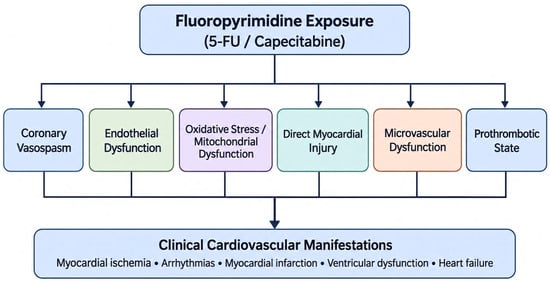
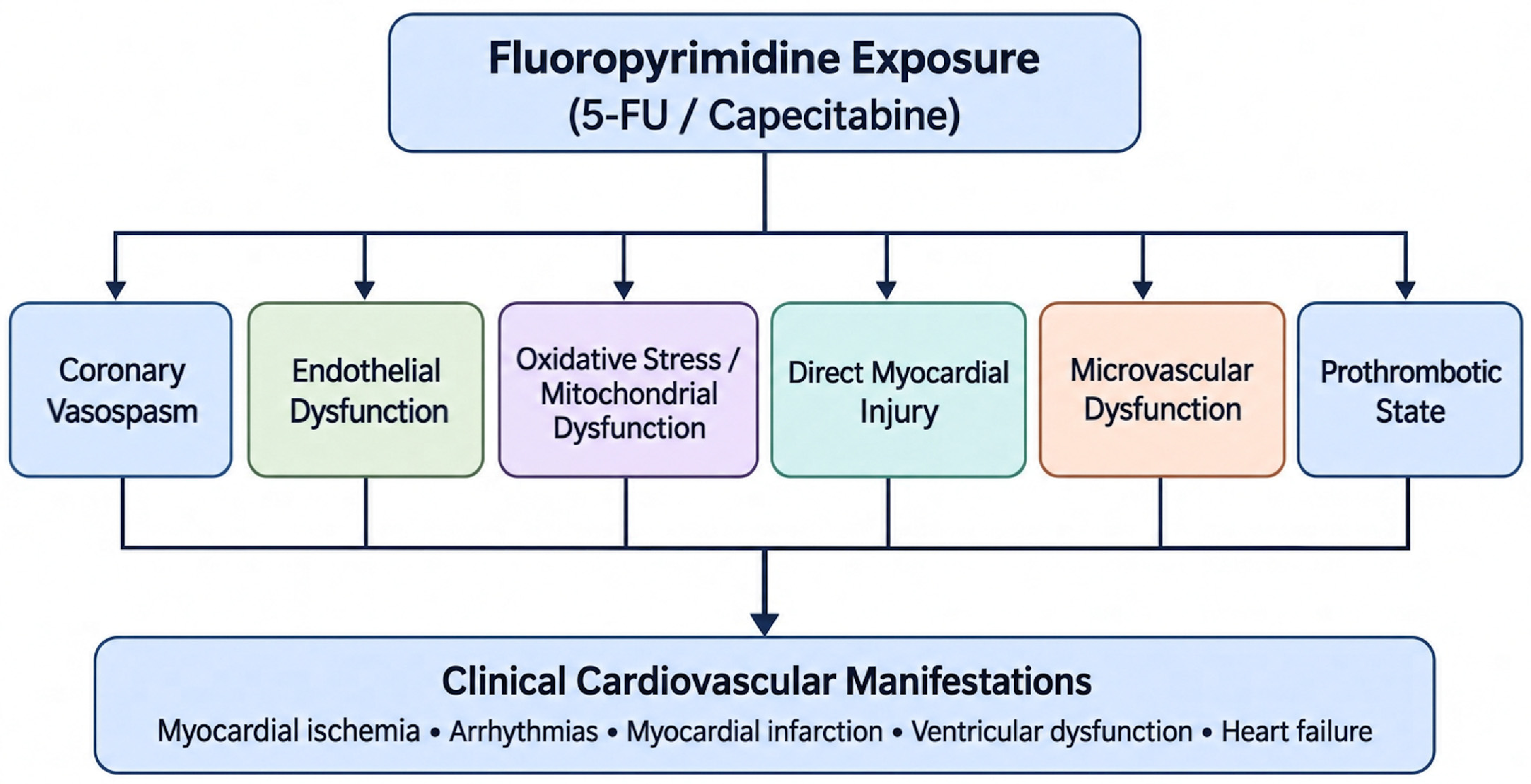
Taken together, the available evidence suggests that fluoropyrimidine-associated cardiotoxicity involves multiple potentially overlapping pathophysiological mechanisms. Coronary vasospasm remains one of the most clinically recognized mechanisms, supported by reports of transient ischemic electrocardiographic changes, angiographic observations, and symptomatic improvement following treatment interruption or vasodilator therapy as shown in Figure 1. However, the contributions of microvascular dysfunction, endothelial injury, oxidative stress, mitochondrial dysfunction, thrombosis, and direct myocardial toxicity remain less clearly established, with much of the supporting evidence derived from experimental investigations and indirect clinical observations. Although these mechanisms may plausibly contribute to different cardiovascular presentations, including myocardial ischemia, ventricular dysfunction, arrhythmias, and heart failure, definitive associations between individual mechanisms and specific clinical phenotypes have not been established. Accordingly, the proposed mechanistic pathways should be interpreted as complementary and potentially overlapping hypotheses rather than validated explanations for particular clinical manifestations. Further clinical and translational investigations are needed to clarify their relative contributions and implications for risk stratification and management [1,4,5,6,7,14,18,19,20,21,25].
Figure 1.
Proposed multifactorial mechanisms of fluoropyrimidine-associated cardiotoxicity. Fluoropyrimidines, including 5-fluorouracil (5-FU) and capecitabine, may contribute to cardiovascular toxicity through several potentially overlapping pathways, including coronary vasospasm, endothelial dysfunction, oxidative stress, mitochondrial dysfunction, direct myocardial injury, microvascular dysfunction, and prothrombotic mechanisms. Coronary vasospasm is a clinically recognized mechanism, whereas evidence supporting several other pathways is derived predominantly from experimental studies, mechanistic investigations, and indirect clinical observations. These proposed mechanisms may occur independently or coexist and may contribute to manifestations such as myocardial ischemia, arrhythmias, ventricular dysfunction, and heart failure. The illustrated relationships are conceptual and should not be interpreted as established causal pathways or validated associations between individual mechanisms and specific cardiovascular phenotypes.
4. Clinical Manifestations
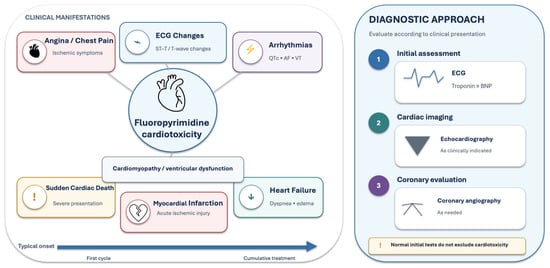
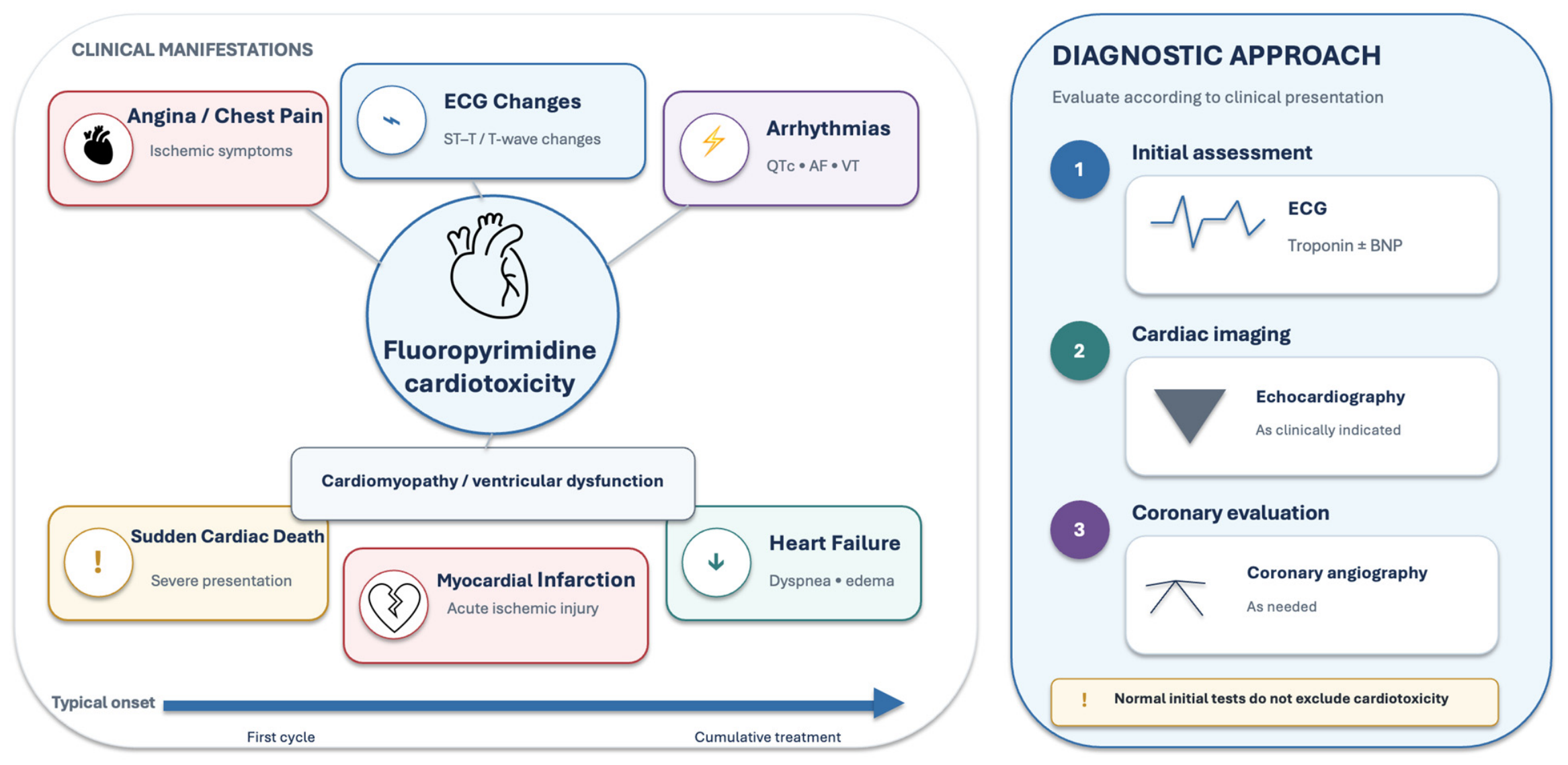
The most common presentation of fluoropyrimidine cardiotoxicity is acute chest pain, often angina-like in character and occurring during infusion or within days of treatment exposure [1,3,4,5,6,7,18]. Patients may describe substernal pressure, tightness, or discomfort radiating in a pattern similar to coronary ischemia. In some cases, however, symptoms are more nonspecific and include dyspnea, fatigue, palpitations, diaphoresis, presyncope, or generalized malaise, which can delay recognition if the temporal relationship to chemotherapy is not appreciated as shown in Figure 2.
Figure 2.
Clinical spectrum and diagnostic evaluation of fluoropyrimidine-associated cardiotoxicity. Presentations range from chest pain and ischemic ECG changes to arrhythmias, heart failure, myocardial infarction, Takotsubo syndrome, and sudden cardiac death. Initial evaluation includes ECG and cardiac biomarkers, with echocardiography and coronary evaluation considered when clinically indicated.
Electrocardiographic abnormalities are frequent during symptomatic episodes and may include ST-segment elevation or depression, T-wave inversion, QT prolongation, and nonspecific repolarization changes [1,3,4,5,6,7]. Arrhythmias have also been described, ranging from atrial fibrillation and supraventricular tachycardia to ventricular ectopy and, in rare cases, life-threatening ventricular tachyarrhythmias [1,3,4,5,6,7,18]. Troponin elevation is variable: some patients have convincing ischemic syndromes with minimal biomarker release, whereas others develop a biochemical injury pattern that raises concern for infarction or myocarditis-like injury.
Echocardiographic findings depend on the phenotype and severity of injury. Patients may have normal systolic function, transient regional wall-motion abnormalities, reduced ejection fraction, or patterns consistent with stress cardiomyopathy [1,4,5,6,7]. Severe presentations, although less common, include myocardial infarction, cardiogenic shock, acute heart failure, and sudden cardiac death [1,3,4,5,6,7]. The heterogeneity of these manifestations is one reason the syndrome is easy to underrecognize when clinicians focus too narrowly on classic vasospastic chest pain.
A key practical point is that normal initial testing does not exclude fluoropyrimidine-associated cardiotoxicity. When symptoms arise in the characteristic time window after drug exposure, the absence of immediate biomarker elevation or dramatic ECG changes should not lead to premature dismissal as seen in Table 1. Serial evaluation and careful attention to chronology often matter more than a single normal early test result.
Table 1.
Clinical phenotypes of fluoropyrimidine-associated cardiotoxicity.
Clinical recognition may be challenging because symptoms can be intermittent, nonspecific, or masked by cancer-related fatigue, anemia, dehydration, pain, anxiety, or treatment-related distress. This is particularly relevant in patients receiving capecitabine in the outpatient setting, where symptoms may develop outside direct clinical observation. Silent ischemia and transient ECG changes have also been reported, suggesting that symptom-based detection may underestimate the true burden of toxicity [4,6,16,18,27]. Therefore, clinicians should give substantial weight to the temporal relationship between symptom onset and fluoropyrimidine exposure, even when initial ECG or biomarker testing is nondiagnostic.
5. Risk Factors
Risk factors for fluoropyrimidine cardiotoxicity can be grouped into treatment-related and patient-related factors, although the predictive performance of either category remains imperfect. Among treatment-related factors, continuous-infusion regimens appear to confer greater risk than bolus administration, and higher exposure intensity has also been implicated [1,3,4,5,6,7,8]. Combination regimens may further complicate interpretation because accompanying agents can alter hemodynamics, endothelial function, or overall physiologic stress.
Patient-related risk factors include known coronary artery disease, hypertension, diabetes, chronic kidney disease, smoking, dyslipidemia, and prior thoracic irradiation, but these associations are not consistent enough to provide a reliable screening rule [1,3,4,5,6,7]. Importantly, fluoropyrimidine cardiotoxicity can also occur in patients without recognized cardiovascular disease, meaning that the absence of a cardiac history should not be falsely reassuring.
The prospective CHECKPOINT study is notable because it attempted active baseline cardiovascular assessment and prospective event capture, illustrating both the clinical relevance of traditional risk factors and their limitations in predicting who will actually develop toxicity [16]. In practice, clinicians should view cardiovascular comorbidity as a reason for heightened vigilance rather than as a definitive way to identify high-risk individuals.
Other potential contributors include older age, renal dysfunction, metabolic disease, prior thoracic radiation, concurrent cardiotoxic therapy, and interindividual variability in fluoropyrimidine metabolism [1,4,6,7,17,21,25,26]. Recent gastrointestinal oncology data further suggest that older age, diabetes, hyperlipidemia, capecitabine exposure, and combined radiotherapy may be associated with increased cardiotoxicity risk, although these findings require validation in broader prospective cohorts [28]. However, none of these factors reliably predicts toxicity on its own across heterogeneous cancer populations. Current evidence supports using these variables to identify patients who may require heightened vigilance rather than to determine who can safely receive fluoropyrimidines without monitoring [2,16,17].
Pharmacologic interactions and treatment context may further influence susceptibility to fluoropyrimidine-associated cardiotoxicity. Fluoropyrimidines are frequently administered in combination regimens, making attribution of cardiovascular events challenging. Concurrent exposure to other potentially cardiotoxic therapies, including platinum agents, anti-VEGF therapies, HER2-directed therapies, thoracic radiotherapy, and immune checkpoint inhibitors, may increase overall cardiovascular vulnerability through overlapping mechanisms involving endothelial dysfunction, vascular injury, myocardial stress, or inflammation [2,13,20,29]. In addition, interindividual differences in fluoropyrimidine metabolism may affect toxicity risk. Dihydropyrimidine dehydrogenase (DPD) deficiency results in reduced clearance of 5-FU and capecitabine and can lead to excessive systemic drug exposure [26]. Although DPD deficiency is most strongly associated with hematologic and gastrointestinal toxicities, increased exposure to fluoropyrimidines may plausibly contribute to more severe cardiovascular toxicity in susceptible patients [19,26]. Consequently, clinicians should consider both pharmacogenomic factors and concomitant therapies when assessing overall cardiotoxicity risk, even though their precise contribution to cardiovascular events remains incompletely defined.
6. Diagnosis and Initial Evaluation
When fluoropyrimidine cardiotoxicity is suspected, the diagnostic approach should follow standard cardiovascular principles rather than relying on the assumption that the syndrome is benign or self-limited. Immediate evaluation should include symptom assessment, ECG, cardiac biomarkers, and further testing as indicated by severity and differential diagnosis [2,8]. Patients with persistent chest pain, ischemic ECG changes, arrhythmia, syncope, or hemodynamic instability warrant urgent assessment and, when appropriate, hospital-based monitoring.
The diagnosis is often clinical and syndromic rather than based on a single definitive test. Features that support fluoropyrimidine-associated cardiotoxicity include onset during infusion or shortly after starting capecitabine, recurrence with re-exposure, symptom improvement after drug interruption, and a lack of another more likely explanation [1,3,4,5,6,7,8,18]. Coronary angiography may be required when acute coronary syndrome cannot be excluded, especially in patients with ongoing ischemia or substantial baseline coronary risk.
The 2022 ESC cardio-oncology guidelines provide the most authoritative modern framework for cardiovascular assessment in patients receiving cancer therapy and support a risk-adapted but clinically serious approach to suspected fluoropyrimidine toxicity [2]. In practical terms, this means that chest pain during treatment should be treated as a real cardiac event until proven otherwise, not as a minor or expected chemotherapy side effect.
Additional testing should be guided by clinical severity and the suspected phenotype. Serial ECGs and cardiac biomarkers may help detect evolving ischemia or myocardial injury when initial testing is nondiagnostic [2,4,8]. Transthoracic echocardiography is useful when dyspnea, biomarker elevation, hemodynamic instability, or concern for ventricular dysfunction is present, because it can identify reduced ejection fraction, regional wall-motion abnormalities, or stress cardiomyopathy patterns [2,5,6]. Coronary angiography should be considered when acute coronary syndrome cannot be excluded, particularly in patients with persistent symptoms, ischemic ECG changes, significant troponin elevation, or high baseline coronary risk [2,8]. Coronary CT angiography may be considered in selected lower-risk patients when noninvasive exclusion of obstructive coronary disease is appropriate [2]. Ambulatory ECG monitoring can be useful when intermittent symptoms, palpitations, silent ischemia, or transient arrhythmia are suspected, although routine use for all patients has not been established [2,16,18].
7. Management of Acute Events
Immediate discontinuation of the fluoropyrimidine is the cornerstone of acute management [2,8]. Once toxicity is suspected, continuing the infusion or oral course risks worsening injury. Supportive treatment depends on the clinical phenotype. Patients with suspected vasospastic or ischemic syndromes are typically treated with nitrates and often calcium channel blockers, while those with myocardial infarction, heart failure, or serious arrhythmias should receive guideline-concordant cardiology care based on the presenting syndrome [2,8].
Many patients with chest pain improve relatively quickly after drug withdrawal and anti-ischemic therapy, which reinforces the clinical suspicion of fluoropyrimidine-related toxicity. However, improvement after cessation should not obscure the need for appropriate cardiovascular workup, especially in those with recurrent pain, biomarker rise, or unstable features. The tendency to assume that all fluoropyrimidine-related chest pain represents harmless reversible vasospasm is one of the major pitfalls in real-world care.
Risk stratification should determine whether the patient can be managed with close outpatient follow-up or requires emergency department evaluation, telemetry, or hospitalization. Patients with persistent chest pain, ischemic ECG changes, troponin elevation, syncope, ventricular arrhythmia, heart failure, or hemodynamic instability should be managed as potential acute coronary syndrome or acute cardiac injury until proven otherwise [2,8]. In suspected vasospastic presentations, short-acting nitrates may provide symptomatic relief, and calcium channel blockers or long-acting nitrates are commonly used to prevent recurrence [4,8,9,17]. Supportive management should also address reversible contributors such as anemia, dehydration, electrolyte abnormalities, uncontrolled hypertension, and concurrent medications that may worsen ischemia or arrhythmia risk. However, improvement after drug cessation and vasodilator therapy should not be interpreted as proof that the event was benign, because obstructive coronary disease, myocardial infarction, myocarditis-like injury, stress cardiomyopathy, and arrhythmias may coexist or mimic vasospasm [2,4,8,18].
8. Rechallenge and Vasodilator Prophylaxis
Rechallenge after fluoropyrimidine-associated cardiotoxicity remains one of the most challenging decisions in contemporary oncology practice. Historically, re-exposure was often discouraged because recurrent cardiotoxicity was considered unpredictable and potentially more severe than the index event, leading many clinicians to permanently discontinue fluoropyrimidines after a single cardiac event [8,25]. While this cautious approach prioritizes patient safety, it may compromise oncologic outcomes in gastrointestinal and other malignancies where fluoropyrimidines remain foundational components of curative-intent or survival-prolonging treatment regimens [2,30,31].
Over the past decade, observational studies have suggested that carefully selected patients may undergo fluoropyrimidine rechallenge using structured cardio-oncology assessment, vasodilator prophylaxis, regimen modification, and close cardiovascular monitoring. Clasen et al. reported a single-center case series of 11 patients with suspected fluoropyrimidine-associated coronary vasospasm who underwent rechallenge with calcium channel blockers and long-acting nitrates [8]. Among eight patients initially receiving continuous-infusion 5-FU, recurrent chest pain during initial rechallenge attempts occurred in four patients, prompting treatment modification. Recurrent symptoms also limited capecitabine rechallenge in one of three patients. Although the planned treatment was ultimately completed in 10 patients and the remaining patient completed six months of treatment before discontinuation due to recurrent symptoms, the initial recurrence of chest pain should be distinguished from objectively documented major cardiovascular events. These findings illustrate the feasibility of individualized treatment modification while highlighting the persistence of ischemic symptoms despite prophylactic treatment.
In a larger retrospective cohort, Zafar et al. identified 115 patients with 5-FU-associated coronary vasospasm, of whom 81 continued fluoropyrimidine treatment and 34 discontinued therapy [9]. Among the 81 patients who continued treatment, 78 received prophylactic calcium channel blockers and/or long-acting nitrates, whereas three underwent rechallenge without prophylactic treatment. Recurrent chest pain without myocardial infarction was reported in 15 of 78 patients (19.2%) receiving prophylaxis and two of three patients (66.7%) without prophylaxis. Importantly, these proportions represent symptomatic chest pain recurrence rather than a composite endpoint of objectively documented cardiotoxicity. No myocardial infarctions were reported after rechallenge in the prophylaxis group. Although the findings suggest a possible benefit of vasodilator pretreatment, the small untreated comparison group, retrospective design, and nonrandomized treatment allocation substantially limit conclusions regarding prophylactic efficacy.
More recently, Réa et al. evaluated 141 patients hospitalized for cardiovascular events following fluoropyrimidine exposure, of whom 54 subsequently underwent fluoropyrimidine reintroduction [12]. Unlike studies focused primarily on suspected coronary vasospasm, this cohort included a broader spectrum of cardiovascular presentations, including coronary artery disease, atrial fibrillation, and heart failure. Following reintroduction, eight of 54 patients (14.8%) were rehospitalized for recurrent or different cardiotoxic events, including four patients (7.4%) rehospitalized for the same cardiac condition and one patient (1.9%) experiencing a recurrent coronary event. These endpoints differ from the recurrent chest pain outcomes reported in predominantly vasospastic rechallenge studies and should therefore not be interpreted as directly comparable measures of cardiovascular recurrence risk. Furthermore, the retrospective design, heterogeneous cardiovascular phenotypes, and selection of patients considered suitable for reintroduction limit conclusions regarding the generalizability and safety of rechallenge [12].
Importantly, the decision to consider fluoropyrimidine rechallenge should account for the clinical characteristics and severity of the initial cardiovascular event ass. Patients with presentations suggestive of coronary vasospasm, including transient chest pain, dynamic ischemic electrocardiographic changes, symptom resolution following treatment interruption, and absence of substantial myocardial injury, constitute the population most frequently represented in observational studies evaluating rechallenge with vasodilator prophylaxis [4,8,9,10,14,18]. However, these clinical features do not definitively establish coronary vasospasm, and the available evidence does not demonstrate that prophylactic treatment is more effective in this group than in other cardiovascular phenotypes. In contrast, the safety of rechallenge following substantial myocardial injury, myocardial infarction, persistent ventricular dysfunction, malignant ventricular arrhythmias, cardiogenic shock, or cardiac arrest remains particularly uncertain. These presentations warrant cautious individualized assessment because their underlying mechanisms may extend beyond isolated epicardial vasospasm [2,4,8,18,29].
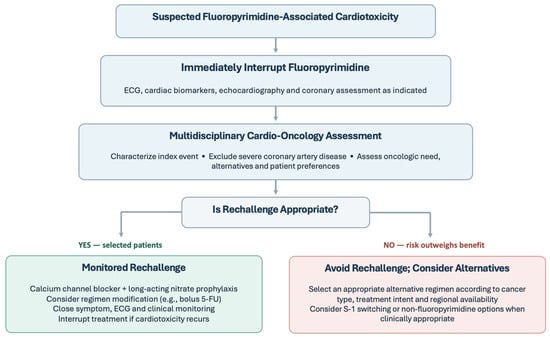
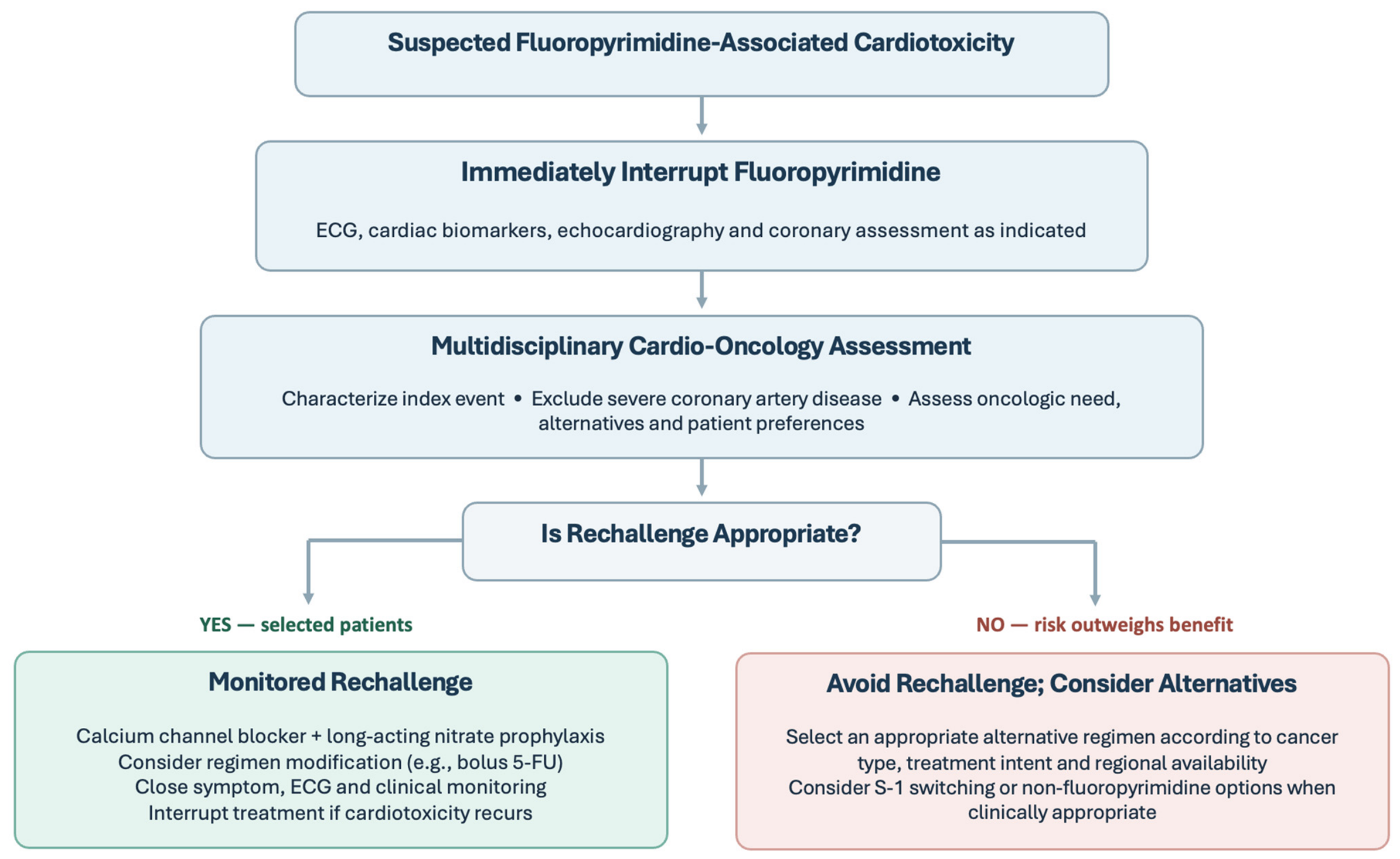
To facilitate clinical decision-making, we propose a five-step framework that integrates established guideline recommendations with findings from observational studies and expert-informed clinical considerations. The 2022 European Society of Cardiology (ESC) cardio-oncology guidelines indicate that fluoropyrimidine rechallenge following suspected coronary vasospasm may be considered in selected patients when alternative oncologic treatments are unavailable, severe coronary artery disease has been excluded, prophylactic treatment with long-acting nitrates and calcium channel blockers has been initiated, and treatment can be administered in an appropriately monitored setting following multidisciplinary evaluation [2]. Beyond these guideline-supported considerations, the proposed framework incorporates additional factors related to the severity of the initial cardiovascular event, cardiac biomarkers, ventricular function, treatment modifications, and individualized monitoring strategies. These additional considerations are derived primarily from observational evidence, case series, and clinical reasoning rather than prospectively validated eligibility criteria or standardized protocols [8,9,10]. Accordingly, the following framework represents an unvalidated clinical decision aid intended to support individualized multidisciplinary assessment rather than an established guideline or validated risk-stratification algorithm.
The following five-step framework is proposed as a practical approach to individualized clinical decision-making and should not be interpreted as a validated algorithm or an extension of formal guideline recommendations. The 2022 ESC cardio-oncology guidelines support consideration of fluoropyrimidine rechallenge in selected patients with suspected coronary vasospasm when alternative oncologic treatments are unavailable, severe coronary artery disease has been excluded, and prophylactic vasodilator therapy and appropriate monitoring can be provided following multidisciplinary evaluation [2]. Within the proposed framework, reassessment of the index event and multidisciplinary evaluation are informed by established cardiovascular principles and guideline recommendations, whereas specific eligibility characteristics, treatment modifications, biomarker surveillance, and monitoring strategies are largely informed by observational studies, case series, and expert-informed clinical practice as shown in Figure 3 [8,9,10]. Recommendations regarding physical activity and other supportive measures should be regarded as individualized precautions rather than evidence-based requirements. The proposed framework is therefore intended to support, rather than replace, individualized clinical judgment, and its safety and effectiveness have not been prospectively validated.
Figure 3.
Proposed, unvalidated clinical decision framework for fluoropyrimidine-associated cardiotoxicity. Suspected fluoropyrimidine-associated cardiotoxicity requires prompt treatment interruption and appropriate cardiovascular evaluation. Following multidisciplinary assessment, rechallenge may be considered in selected patients with suspected coronary vasospasm when suitable oncologic alternatives are unavailable, severe coronary artery disease has been excluded, and prophylactic treatment with long-acting nitrates and calcium channel blockers can be initiated in an appropriately monitored setting, consistent with the 2022 ESC cardio-oncology guidelines [2]. Additional considerations regarding the severity of the index cardiovascular event, cardiac biomarkers, ventricular function, treatment modifications, and surveillance strategies are based primarily on observational evidence and expert-informed clinical judgment [8,9,10]. This framework is proposed to support individualized decision-making and has not been prospectively validated. It should not be interpreted as a formal guideline, validated eligibility algorithm, or substitute for multidisciplinary assessment.
Step 1: Reassess the Index Event (Guideline-Informed Clinical Evaluation)
This step is based on established cardiovascular diagnostic principles and guideline-informed evaluation of suspected fluoropyrimidine-associated ischemia [2,8]. The findings should inform individualized clinical assessment rather than serve as formal eligibility criteria for rechallenge.
- Confirm the temporal association between cardiovascular symptoms and fluoropyrimidine exposure.
- Characterize the clinical phenotype, distinguishing suspected coronary vasospasm from myocardial injury, ventricular dysfunction, or arrhythmic presentations.
- Review electrocardiographic findings, cardiac biomarkers, echocardiography, and other relevant imaging studies.
- Exclude acute coronary syndrome and significant obstructive coronary artery disease using coronary computed tomography angiography or invasive coronary angiography, as clinically appropriate.
- Investigate alternative cardiovascular etiologies before attributing the event to fluoropyrimidine-associated vasospasm [2,8].
Step 2: Assess Rechallenge Suitability (Guideline Recommendations and Expert-Informed Considerations)
Rechallenge should be considered only following multidisciplinary discussion involving oncology and cardiology or cardio-oncology specialists. Consistent with ESC guidance, rechallenge after suspected fluoropyrimidine-induced coronary vasospasm may be considered when suitable oncologic alternatives are unavailable, severe coronary artery disease has been excluded, and vasodilator prophylaxis and appropriate monitoring can be provided [2]. The additional clinical characteristics outlined below represent proposed factors for individualized risk–benefit assessment, informed by observational evidence and clinical reasoning. They have not been prospectively validated as eligibility criteria or absolute contraindications [8,9,10].
Favorable characteristics include:
- Complete resolution of cardiovascular symptoms following fluoropyrimidine discontinuation.
- A clinical presentation consistent with reversible coronary vasospasm without significant myocardial injury.
- Preserved or recovered left ventricular systolic function without persistent clinically significant wall-motion abnormalities, considered as part of individualized assessment rather than a validated eligibility threshold.
- Exclusion of severe obstructive coronary artery disease.
- A substantial oncologic need for continued fluoropyrimidine treatment when suitable alternatives are unavailable.
- Availability of an appropriately monitored treatment setting.
Features arguing against rechallenge include:
- Persistent myocardial injury or unresolved cardiovascular instability.
- Significant ventricular dysfunction or severe arrhythmic complications.
- Cardiogenic shock or cardiac arrest associated with the initial event.
- Recurrent cardiotoxicity despite appropriate preventive measures.
- Severe coronary artery disease that has not been adequately evaluated or managed.
- Availability of an effective alternative oncologic treatment.
Importantly, these characteristics are intended to guide individualized risk assessment rather than serve as absolute contraindications applicable to every patient. Severe cardiovascular presentations generally favor avoidance of re-exposure, although final decisions require multidisciplinary assessment of the potential risks and oncologic benefits [2,8,9,10].
Step 3: Implement Preventive Measures (ESC Guidance and Supportive Clinical Measures)
Prophylactic treatment with long-acting nitrates and calcium channel blockers is supported by ESC guidance for selected patients undergoing rechallenge after suspected coronary vasospasm [2]. The additional measures listed below represent supportive, individualized clinical considerations and should not be interpreted as components of a prospectively validated prophylactic protocol [8,9,10].
- Initiate prophylactic calcium channel blockers and long-acting nitrates when rechallenge is pursued for suspected fluoropyrimidine-associated coronary vasospasm, provided there are no clinical contraindications [2,8,9,10].
- Provide short-acting nitrates for breakthrough anginal symptoms when appropriate.
- Optimize cardiovascular risk factors and address reversible contributors, including hypertension, electrolyte abnormalities, anemia, and dehydration.
- Review concomitant medications and potential interactions that may increase cardiovascular risk.
- Educate patients regarding symptom recognition, early reporting, and the need for immediate evaluation of recurrent cardiovascular symptoms.
Step 4: Consider Treatment Modifications (Observational Evidence and Expert-Informed Practice)
Modification in the fluoropyrimidine regimen may be considered in selected patients undergoing rechallenge, although evidence supporting specific dosing and administration strategies is predominantly observational. Switching from continuous-infusion to bolus 5-FU has been described in case series and retrospective studies, but its comparative safety has not been established in randomized trials [8,9,10,17]. Any modification should be determined collaboratively with the oncology team, considering the potential implications for anticancer efficacy.
- Consider modifying the fluoropyrimidine schedule, including switching from continuous-infusion 5-FU to bolus administration when oncologically appropriate [8,17].
- Consider dose or schedule modifications based on the anticipated oncologic benefit and individualized cardiovascular risk.
- Conduct rechallenge in an appropriately monitored clinical setting, with immediate access to cardiovascular assessment and emergency management [2].
- Coordinate the rechallenge protocol with the oncology and cardio-oncology teams before treatment initiation.
Step 5: Monitor During Re-exposure (Guideline-Informed and Individualized Surveillance)
Rechallenge should be undertaken in an appropriately monitored setting, consistent with ESC guidance for selected patients with suspected fluoropyrimidine-associated coronary vasospasm [2]. However, the optimal intensity and duration of cardiovascular monitoring have not been established. Specific strategies, including serial cardiac biomarkers, continuous electrocardiographic monitoring, and repeated cardiac imaging, should therefore be individualized according to the clinical presentation, severity of the initial event, and institutional capabilities rather than applied as universal requirements.
- Obtain a baseline electrocardiogram and consider additional electrocardiographic surveillance according to clinical risk, treatment setting, and the characteristics of the previous cardiovascular event.
- Consider serial cardiac biomarker assessment or repeat cardiac imaging when clinically indicated, particularly in patients with previous myocardial injury or concerning cardiovascular findings; routine testing in all rechallenged patients is not supported by established evidence.
- Monitor for recurrent chest pain, ischemic electrocardiographic abnormalities, arrhythmias, and hemodynamic instability.
- Maintain close coordination between oncology and cardiology or cardio-oncology specialists.
- Immediately interrupt fluoropyrimidine therapy and undertake cardiovascular reassessment if recurrent symptoms or objective evidence of cardiotoxicity develops [2,8,9,10].
Importantly, the proposed framework should be interpreted as an expert-informed synthesis rather than a validated clinical pathway. While selected elements are supported by ESC guideline recommendations, other considerations are derived from observational studies and clinical reasoning, and their individual contributions to the safety of fluoropyrimidine rechallenge remain uncertain.
Despite encouraging findings from observational studies, the evidence supporting fluoropyrimidine rechallenge and vasodilator prophylaxis remains limited by retrospective study designs, small or highly selected populations, heterogeneous prophylactic regimens, and the absence of randomized comparisons [8,9,12,22,23,24,32]. Reported recurrence rates vary across studies, reflecting differences in the clinical phenotype of the index event, treatment modifications, patient selection, and outcome definitions as shown in Table 2. Although vasodilator prophylaxis has been associated with successful treatment continuation in selected patients, recurrent ischemic symptoms and other cardiovascular events remain possible, and a causal reduction in recurrence risk has not been established. Similarly, observed survival advantages among patients who continue fluoropyrimidine treatment should be interpreted cautiously because these patients may differ substantially from those who discontinue treatment with respect to cancer type, disease stage, functional status, cardiovascular risk, treatment eligibility, and access to specialized care [9,12]. Accordingly, rechallenge should not be considered routinely safe or universally appropriate. Rather, it should remain an individualized decision made through multidisciplinary discussion, incorporating the severity and mechanism of the initial cardiac event, anticipated oncologic benefit, available alternatives, patient preferences, and institutional monitoring capabilities [2,8,9,10,11,12,29,30].
Table 2.
Summary of heterogenous clinical studies examining fluoropyrimidine rechallenge: populations, recurrence endpoints, and reported cardiovascular outcomes.
Taken together, these studies suggest that fluoropyrimidine rechallenge may be feasible in carefully selected patients, but the reported recurrence outcomes must be interpreted within the context of each study. Recurrent chest pain, objectively documented cardiovascular events, and hospitalization for cardiotoxicity represent distinct outcomes and should not be treated as interchangeable measures of rechallenge safety. Moreover, differences in the initial cardiovascular phenotype, patient selection, prophylactic strategies, and follow-up limit direct comparisons between studies. Consequently, the available observational evidence supports individualized consideration of rechallenge but does not establish a generalizable recurrence rate or definitive cardiovascular safety profile [8,9,12].
9. Alternatives When Rechallenge Is Unsafe
When fluoropyrimidine rechallenge is considered unsafe or clinically inappropriate, alternative anticancer strategies should be evaluated through multidisciplinary discussion, taking into account the severity of the cardiovascular event, tumor type, treatment intent, prior therapies, expected oncologic efficacy, and regional drug availability [2,13,31]. Available approaches include switching to a different fluoropyrimidine formulation, substituting a non-fluoropyrimidine antimetabolite, or selecting an alternative oncologic regimen. Importantly, switching to another fluoropyrimidine should be distinguished from rechallenge with the original agent, as differences in drug composition and metabolism may influence cardiotoxicity risk without completely eliminating it.
One alternative is S-1, an oral fluoropyrimidine composed of tegafur, gimeracil, and oteracil. Tegafur is converted to 5-FU, while gimeracil inhibits dihydropyrimidine dehydrogenase-mediated degradation of 5-FU, potentially reducing the formation of cardiotoxic metabolites. Oteracil is included to reduce gastrointestinal toxicity [31,33]. Unlike raltitrexed, S-1 remains a fluoropyrimidine; therefore, switching from 5-FU or capecitabine to S-1 represents a change in fluoropyrimidine formulation rather than complete avoidance of this drug class. The available evidence suggests that such switching may allow for continued fluoropyrimidine-based treatment in selected patients who previously experienced cardiotoxicity as shown in Table 3.
Table 3.
Proposed clinical considerations for individualized fluoropyrimidine rechallenge decisions: guideline-supported factors and expert-informed considerations.
In a multicenter retrospective observational study, Osterlund et al. evaluated 200 patients who were switched to S-1 following cardiotoxicity associated with capecitabine or 5-FU across 13 centers in six European countries [33]. The initial cardiotoxicity occurred during capecitabine treatment in 170 patients, continuous-infusion 5-FU in 22 patients, and bolus 5-FU in eight patients. After switching to S-1, recurrent cardiotoxicity was observed in eight patients (4%; 95% confidence interval, 2.02–7.89%), while 192 patients (96%) experienced no recurrence. All recurrent events were classified as grade 1–2, and the median follow-up after S-1 initiation was 33 months. Pre-existing ischemic heart disease was associated with an increased risk of recurrent cardiotoxicity (odds ratio 6.18; 95% confidence interval, 1.36–28.11). Although these findings support the feasibility of S-1 switching, the retrospective design, absence of a randomized comparator, heterogeneous cancer populations, and selection of patients considered suitable for continued fluoropyrimidine treatment limit definitive conclusions regarding its comparative cardiovascular safety [33]. Furthermore, the relatively low recurrence rate should not be interpreted as evidence of universally equivalent oncologic efficacy across different malignancies or treatment settings.
The clinical applicability of S-1 also depends on regulatory approval and regional availability. S-1 is used in several Asian and European countries, with its oncologic indications differing across jurisdictions. In the European Union, S-1 has an approved role in metastatic colorectal cancer when treatment with another fluoropyrimidine cannot be continued because of hand-foot syndrome or cardiovascular toxicity [34]. However, S-1 is not routinely available in the United States, and its use should not be assumed to be interchangeable with standard fluoropyrimidine regimens across all cancer types or treatment settings. Consequently, the decision to switch to S-1 should consider disease-specific evidence, treatment intent, regulatory restrictions, and institutional experience [33,34].
For patients in whom continued exposure to fluoropyrimidines is undesirable, raltitrexed represents a non-fluoropyrimidine alternative. Raltitrexed is a direct thymidylate synthase inhibitor that does not require conversion to 5-FU and avoids fluoropyrimidine-associated metabolic pathways. Kelly et al. described its use in patients with pre-existing cardiovascular disease or previous fluoropyrimidine-associated cardiotoxicity, while earlier clinical experience also supported its feasibility in selected patients with colorectal cancer [11,35]. Nevertheless, the available evidence is predominantly observational, and raltitrexed is not completely free of cardiovascular or other treatment-related toxicity. Its use is further constrained by differences in oncologic efficacy, tolerability, treatment-related toxicity, and regional availability. Although available in selected European and international markets, access remains limited in the United States [11,31,35]. Raltitrexed should therefore be considered a potential substitute in appropriate clinical circumstances rather than a universally equivalent replacement for 5-FU or capecitabine.
Additional alternatives include non-fluoropyrimidine chemotherapy regimens, treatment modification, or trifluridine/tipiracil (TAS-102) in selected patients with previously treated metastatic colorectal cancer [31]. TAS-102 contains trifluridine, a fluorinated nucleoside analog, and tipiracil, a thymidine phosphorylase inhibitor. Although its metabolic and pharmacologic characteristics differ from those of 5-FU and capecitabine, and available studies suggest a relatively low incidence of ischemic cardiovascular events, evidence specifically evaluating TAS-102 after fluoropyrimidine-associated cardiotoxicity remains limited [31]. Importantly, TAS-102 is generally used in later-line metastatic colorectal cancer treatment and should not be presented as an equivalent substitute for standard fluoropyrimidine-containing regimens in curative or adjuvant settings.
Ultimately, the selection of alternative therapy should be individualized according to the underlying malignancy, treatment stage, therapeutic intent, prior treatment exposure, anticipated efficacy, cardiovascular risk, regional availability, and patient preferences. Current evidence supports considering S-1 switching, raltitrexed substitution, or other disease-specific regimens in appropriately selected patients, but no single alternative can be universally recommended across all fluoropyrimidine-treated malignancies. Close collaboration between oncology and cardio-oncology teams remains essential to balance cardiovascular safety against the potential consequences of modifying effective anticancer treatment [2,13,31,33,34].
10. Prevention and Monitoring
Baseline prevention should include assessment of cardiovascular history, ischemic symptoms, arrhythmia history, heart failure, renal dysfunction, prior thoracic radiation, and conventional cardiovascular risk factors [2,13,17]. A baseline ECG is reasonable in many patients, while echocardiography should be considered in those with known structural heart disease, heart failure symptoms, or reduced cardiac reserve [2]. Optimization of modifiable cardiovascular risk factors, including blood pressure, lipids, diabetes, smoking, hydration status, and electrolyte abnormalities, is appropriate before and during treatment when clinically feasible [2,13]. No validated prediction model reliably identifies which patients will develop fluoropyrimidine cardiotoxicity [2,16,17].
Routine biomarker or ambulatory ECG monitoring for all patients is not currently supported by sufficient evidence [2,16]. However, selective surveillance may be reasonable in patients with prior cardiovascular disease, prior fluoropyrimidine cardiotoxicity, concerning baseline symptoms, or high-risk treatment plans [2,13,16]. Patient education is essential, particularly for those receiving outpatient capecitabine, because early reporting of chest pain, dyspnea, palpitations, syncope, or unexplained fatigue can allow for prompt drug interruption and cardiac evaluation [2,4,17,25]. A practical prevention strategy therefore relies less on universal prophylaxis and more on baseline risk recognition, patient counseling, rapid symptom response, and early cardio-oncology involvement when toxicity occurs [2,29].
11. Future Directions
Several key questions remain unanswered. First, the field still lacks randomized prospective evidence defining the optimal approach to rechallenge, vasodilator prophylaxis, and monitoring. Current practice is built primarily on retrospective cohorts, single-center experience, and expert guidance [2,8,9,10,11,12]. Second, there is a need for better mechanistic phenotyping. Fluoropyrimidine cardiotoxicity likely represents a set of overlapping syndromes rather than a single disease process, and improved distinction between vasospasm, endothelial dysfunction, direct myocardial injury, and arrhythmic phenotypes could refine both prevention and treatment.
Third, better risk stratification tools are needed. Conventional cardiovascular risk factors are informative but insufficiently predictive, and prospective biomarker or imaging-based strategies remain underdeveloped. Finally, future studies should address not only cardiovascular recurrence but also oncologic consequences of abandoning versus resuming fluoropyrimidine therapy, since the true clinical question is rarely cardiac safety alone. Prospective registries and multicenter studies are particularly needed because randomized rechallenge trials may be difficult to conduct in this population, and current practice remains based primarily on observational cohorts, case series, and expert-guided algorithms [8,9,10,11,12,22,23,24,27].
12. Limitations
This review should be interpreted in the context of several limitations. The evidence supporting fluoropyrimidine rechallenge and vasodilator prophylaxis consists predominantly of retrospective cohorts, small case series, and individual case reports, with no randomized trials directly establishing the efficacy of secondary vasodilator prophylaxis [8,9,10,11,12,22,23,24]. Differences in patient selection, cardiotoxicity definitions, rechallenge protocols, treatment modifications, and surveillance strategies limit comparisons across studies. Furthermore, patients selected for rechallenge may have more favorable cardiovascular characteristics, greater anticipated oncologic benefit, or better functional status than those who discontinue fluoropyrimidines, introducing selection bias and confounding by indication. Consequently, associations between prophylactic treatment, reduced symptom recurrence, treatment continuation, and improved survival cannot be interpreted as definitive evidence of causality. Publication bias may also favor reports of successful rechallenge, while recurrent or severe events may be incompletely captured [22,23]. These limitations underscore the need for prospective, multicenter investigations with standardized cardiovascular endpoints, clearly defined rechallenge protocols, and longer-term follow-up.
Another limitation is that fluoropyrimidine cardiotoxicity likely represents several overlapping clinical phenotypes rather than a single uniform syndrome. Patients with vasospasm, microvascular ischemia, direct myocardial injury, arrhythmias, and stress cardiomyopathy may be grouped together in observational studies despite having different recurrence risks and different responses to prophylaxis [4,17,18,19]. In addition, few studies provide long-term cardiovascular outcomes after rechallenge, and no validated risk prediction model currently identifies patients who can be safely re-exposed [2,16,17]. Therefore, recommendations regarding rechallenge should be viewed as individualized, multidisciplinary decision-making rather than evidence from randomized trials [2,8,9,10,11,12].
13. Conclusions
Fluoropyrimidine-associated cardiotoxicity is an important and probably underrecognized complication of widely used anticancer therapy. Coronary vasospasm remains the most recognized manifestation, but the clinical spectrum and underlying biology are broader than vasospasm alone, involving endothelial dysfunction, microvascular dysfunction, direct myocardial injury, oxidative stress, thrombosis, and arrhythmogenic effects. The syndrome may present with chest pain, ischemia, arrhythmias, ventricular dysfunction, Takotsubo syndrome, myocardial infarction, or sudden cardiac death, and should be approached with the same seriousness as other acute cardiovascular events. Immediate fluoropyrimidine interruption and appropriate cardiovascular evaluation remain essential. The major contemporary shift is the recognition that carefully selected patients may be rechallenged under structured cardio-oncology supervision using vasodilator prophylaxis, regimen modification, and close monitoring. However, rechallenge is not universally appropriate, and alternatives such as raltitrexed remain important when further fluoropyrimidine exposure is unsafe. Optimal management requires multidisciplinary judgment that balances cardiovascular risk, oncologic necessity, available alternatives, and patient preference. Prospective multicenter data are needed to refine risk prediction, standardize monitoring, and determine which rechallenge strategies provide the safest balance between cardiovascular protection and oncologic efficacy.
Author Contributions
Conceptualization, S.P., E.T., S.S. and L.V.N.; validation, S.P., E.T., S.S. and L.V.N.; formal analysis, S.P., E.T., A.H.A., A.A.A., D.D., S.K., S.S. and L.V.N.; investigation, S.P., E.T., A.H.A., A.A.A., D.D., S.K., S.S. and L.V.N.; resources, S.P., E.T., A.H.A., A.A.A., D.D., S.K., S.S. and L.V.N.; data curation, S.P., E.T., A.H.A., A.A.A., D.D. and S.K.; writing—original draft preparation, S.P., E.T., A.H.A., A.A.A., D.D., S.K., S.S. and L.V.N.; writing—review and editing, S.P., E.T., A.H.A., A.A.A., D.D., S.K., S.S. and L.V.N.; visualization, S.P., E.T., S.S. and L.V.N.; supervision, S.P., E.T., A.H.A., S.S. and L.V.N.; project administration, S.P., E.T., S.S. and L.V.N.; funding acquisition, S.S. All authors have read and agreed to the published version of the manuscript.
Funding
This research received no external funding.
Data Availability Statement
No new data were created or analyzed in this study.
Acknowledgments
This research was supported (in whole or in part) by HCA Healthcare and/or an HCA Healthcare affiliated entity. The views expressed in this publication represent those of the author(s) and do not necessarily represent the official views of HCA Healthcare or any of its affiliated entities.
Conflicts of Interest
The authors declare no conflicts of interest.
References
- Jurczyk, M.; Król, M.; Midro, A.; Kurnik-Łucka, M.; Poniatowski, A.; Gil, K. Cardiotoxicity of Fluoropyrimidines: Epidemiology, Mechanisms, Diagnosis, and Management. J. Clin. Med. 2021, 10, 4426. [Google Scholar] [CrossRef] [Scilit] [PubMed]
- Lyon, A.R.; López-Fernández, T.; Couch, L.S.; Asteggiano, R.; Aznar, M.C.; Bergler-Klein, J.; Boriani, G.; Cardinale, D.; Cordoba, R.; Cosyns, B.; et al. 2022 ESC Guidelines on cardio-oncology developed in collaboration with the European Hematology Association (EHA), the European Society for Therapeutic Radiology and Oncology (ESTRO) and the International Cardio-Oncology Society (IC-OS). Eur. Heart J. 2022, 43, 4229–4361. [Google Scholar] [CrossRef] [Scilit] [PubMed]
- Kanduri, J.; More, L.A.; Godishala, A.; Asnani, A. Fluoropyrimidine-Associated Cardiotoxicity. Cardiol. Clin. 2019, 37, 399–405. [Google Scholar] [CrossRef] [Scilit] [PubMed]
- Sara, J.D.; Kaur, J.; Khodadadi, R.; Rehman, M.; Lobo, R.; Chakrabarti, S.; Herrmann, J.; Lerman, A.; Grothey, A. 5-fluorouracil and cardiotoxicity: A review. Ther. Adv. Med. Oncol. 2018, 10, 1758835918780140. [Google Scholar] [CrossRef] [Scilit] [PubMed]
- Depetris, I.; Marino, D.; Bonzano, A.; Cagnazzo, C.; Filippi, R.; Aglietta, M.; Leone, F. Fluoropyrimidine-induced cardiotoxicity. Crit. Rev. Oncol. 2018, 124, 1–10. [Google Scholar] [CrossRef] [Scilit] [PubMed]
- Deac, L.A.; Burz, C.C.; Bocsan, I.C.; Buzoianu, A.D. Fluoropyrimidine-induced cardiotoxicity. World J. Clin. Oncol. 2020, 11, 1008–1017. [Google Scholar] [CrossRef] [Scilit] [PubMed]
- Layoun, M.E.; Wickramasinghe, C.D.; Peralta, M.V.; Yang, E.H. Fluoropyrimidine-Induced Cardiotoxicity: Manifestations, Mechanisms, and Management. Curr. Oncol. Rep. 2016, 18, 35. [Google Scholar] [CrossRef] [Scilit] [PubMed]
- Clasen, S.C.; Ky, B.X.; O’qUinn, R.; Giantonio, B.; Teitelbaum, U.; Carver, J.R. Fluoropyrimidine-induced cardiac toxicity: Challenging the current paradigm. J. Gastrointest. Oncol. 2017, 8, 970–979. [Google Scholar] [CrossRef] [Scilit] [PubMed]
- Zafar, A.; Drobni, Z.D.; Lei, M.; Gongora, C.A.; Quinaglia, T.; Lou, U.Y.; Mosarla, R.; Murphy, S.P.; Jones-O’connor, M.; Mahmood, A.; et al. The efficacy and safety of cardio-protective therapy in patients with 5-FU (Fluorouracil)-associated coronary vasospasm. PLoS ONE 2022, 17, e0265767. [Google Scholar] [CrossRef] [Scilit] [PubMed]
- Zafar, A.; Drobni, Z.D.; Mosarla, R.; Alvi, R.M.; Lei, M.; Lou, U.Y.; Raghu, V.K.; Murphy, S.P.; Jones-O’cOnnor, M.; Hartmann, S.; et al. The Incidence, Risk Factors, and Outcomes With 5-Fluorouracil-Associated Coronary Vasospasm. JACC CardioOncology 2021, 3, 101–109. [Google Scholar] [CrossRef] [Scilit] [PubMed]
- Kelly, C.; Bhuva, N.; Harrison, M.; Buckley, A.; Saunders, M. Use of raltitrexed as an alternative to 5-fluorouracil and capecitabine in cancer patients with cardiac history. Eur. J. Cancer 1990, 49, 2303–2310. [Google Scholar] [CrossRef] [Scilit] [PubMed]
- Réa, O.; Bouali, A.; Serraille, M.; Péron, J.; Falandry, C.; Fort, J.; François, L.; Harbaoui, B.; Lantelme, P.; Courand, P.-Y. Fluoropyrimidine-induced cardiotoxicity: Outcomes and safety of chemotherapy reintroduction in a retrospective cohort study. Support. Care Cancer 2026, 34, 293. [Google Scholar] [CrossRef] [Scilit] [PubMed]
- Zamorano, J.L.; Gottfridsson, C.; Asteggiano, R.; Atar, D.; Badimon, L.; Bax, J.J.; Cardinale, D.; Cardone, A.; Feijen, E.A.M.; Ferdinandy, P.; et al. The cancer patient and cardiology. Eur. J. Heart Fail. 2020, 22, 2290–2309. [Google Scholar] [CrossRef] [Scilit] [PubMed]
- Lu, Y.; Deng, S.; Dou, Q.; Pan, W.; Liu, Q.; Ji, H.; Wang, X.; Zhang, H.-M. Treatment-Related Coronary Disorders of Fluoropyrimidine Administration: A Systematic Review and Meta-Analysis. Front. Pharmacol. 2022, 13, 885699. [Google Scholar] [CrossRef] [Scilit] [PubMed]
- Lu, Y.; Pan, W.; Deng, S.; Dou, Q.; Wang, X.; An, Q.; Wang, X.; Ji, H.; Hei, Y.; Chen, Y.; et al. Redefining the Incidence and Profile of Fluoropyrimidine-Associated Cardiotoxicity in Cancer Patients: A Systematic Review and Meta-Analysis. Pharmaceuticals 2023, 16, 510. [Google Scholar] [CrossRef] [Scilit] [PubMed]
- Lombardi, P.; Aimar, G.; Peraldo-Neia, C.; Bonzano, A.; Depetris, I.; Fenocchio, E.; Filippi, R.; Quarà, V.; Milanesio, M.; Cavalloni, G.; et al. Fluoropyrimidine-induced cardiotoxicity in colorectal cancer patients: A prospective observational trial (CHECKPOINT). Oncol. Rep. 2023, 49, 31. [Google Scholar] [CrossRef] [Scilit] [PubMed]
- Polk, A.; Vaage-Nilsen, M.; Vistisen, K.; Nielsen, D.L. Cardiotoxicity in cancer patients treated with 5-fluorouracil or capecitabine: A systematic review of incidence, manifestations and predisposing factors. Cancer Treat. Rev. 2013, 39, 974–984. [Google Scholar] [CrossRef] [Scilit] [PubMed]
- Cucciniello, L.; Bidoli, E.; Viel, E.; Canale, M.L.; Gerratana, L.; Lestuzzi, C. The puzzling clinical presentation of fluoropyrimidines cardiotoxicity. Front. Cardiovasc. Med. 2022, 9, 960240. [Google Scholar] [CrossRef] [Scilit] [PubMed]
- Polk, A.; Vaage-Nilsen, M.; Vistisen, K.; Nielsen, D.L. A systematic review of the pathophysiology of 5-fluorouracil-induced cardiotoxicity. BMC Pharmacol. Toxicol. 2014, 15, 47. [Google Scholar] [CrossRef] [Scilit] [PubMed]
- Herrmann, J. Vascular toxic effects of cancer therapies. Nat. Rev. Cardiol. 2020, 17, 503–522. [Google Scholar] [CrossRef] [Scilit]
- Sorrentino, M.F.; Kim, J.; Foderaro, A.E.; Truesdell, A.G. 5-fluorouracil induced cardiotoxicity: Review of the literature. Cardiol. J. 2012, 19, 453–458. [Google Scholar] [CrossRef] [Scilit] [PubMed]
- Wanderley, M.R.B., Jr.; Rizzo, S.; Whooley, P.D.; Asnani, A.H.; Chang, J.D.; Upshaw, J.N.; Hoeger, C.W. Rechallenge of 5-Fluorouracil in a Patient With Coronary Vasospasm Unable to Receive Oral Medications. JACC Case Rep. 2025, 30, 104550. [Google Scholar] [CrossRef] [Scilit] [PubMed]
- Majmudar, U.V.; Dhamija, K.; Khan, E.; Caudill, A.; Ramanan, S.; Singh, J.; Monga, D.; Hilton, C.; Poornima, I.; Ivanova, V. Rechallenging Patients With Fluoropyridine-Induced Coronary Vasospasm: 5 Success Stories. JACC Case Rep. 2025, 30, 104750. [Google Scholar] [CrossRef] [Scilit] [PubMed]
- Zalaquett, Z.; el Helou, M.C.; Laderian, B.; Shukla, N.; Griffin, B.; Moudgil, R.; Collier, P. Contemporary clinical characteristics, management strategies, and outcomes of fluoropyrimidine-induced angina—A descriptive study. J. Cardiol. 2026, 87, 471–472. [Google Scholar] [CrossRef] [Scilit] [PubMed]
- Saif, M.W.; Shah, M.M.; Shah, A.R. Fluoropyrimidine-associated cardiotoxicity: Revisited. Expert Opin. Drug Saf. 2009, 8, 191–202. [Google Scholar] [CrossRef] [Scilit]
- Amstutz, U.; Henricks, L.M.; Offer, S.M.; Barbarino, J.; Schellens, J.H.; Swen, J.J.; Klein, T.E.; McLeod, H.L.; Caudle, K.E.; Diasio, R.B.; et al. Clinical Pharmacogenetics Implementation Consortium (CPIC) Guideline for DPD Genotype and Fluoropyrimidine Dosing. Clin. Pharmacol. Ther. 2018, 103, 210–216. [Google Scholar] [CrossRef] [Scilit] [PubMed]
- Upshaw, J.N.; O’Neill, A.; Carver, J.R.; Dimond, E.P.; Denlinger, C.S.; Kircher, S.M.; Wagner, L.I.; Ky, B.; Brell, J.M. Fluoropyrimidine Cardiotoxicity: Time for a Contemporaneous Appraisal. Clin. Colorectal Cancer 2019, 18, 44–51. [Google Scholar] [CrossRef] [Scilit] [PubMed] [PubMed Central]
- Wu, Y.; Lv, C.; Li, J.; Ma, Y.; Zhu, X. Risk factors for fluorouracil-induced cardiotoxicity in patients with gastrointestinal tumor. Front. Cardiovasc. Med. 2025, 12, 1515509. [Google Scholar] [CrossRef] [Scilit] [PubMed]
- Leong, D.P.; Waliany, S.; Abdel-Qadir, H.; Atkins, K.M.; Neilan, T.G.; Lang, N.N.; Liu, J.E.; Blaes, A.H.; Mian, H.S.; Moore, H.N.; et al. Cardiovascular Considerations During Cancer Therapy: Gaps in Evidence and JACC CardioOncology Expert Panel Recommendations. JACC CardioOncology 2024, 6, 815–834. [Google Scholar] [CrossRef] [Scilit] [PubMed]
- Sonbol, M.B.; Bekaii-Saab, T.; Larsen, C.M. Fluoropyrimidine Therapy in Gastrointestinal Cancer: Balancing Survival Benefits and Cardiotoxicity Risks. JACC CardioOncology 2025, 7, 357–359. [Google Scholar] [CrossRef] [Scilit] [PubMed]
- Saif, M.W. Alternative Treatment Options in Patients with Colorectal Cancer Who Encounter Fluoropyrimidine-Induced Cardiotoxicity. OncoTargets Ther. 2020, 13, 10197–10206. [Google Scholar] [CrossRef] [Scilit] [PubMed]
- von Stein, P.; Wörmann, J.; Pfister, R. Fluoropyrimidines: A Cardiotoxicity Case for Caution. JACC Case Rep. 2025, 30, 104738. [Google Scholar] [CrossRef] [Scilit] [PubMed]
- Osterlund, P.; Kinos, S.; Pfeiffer, P.; Salminen, T.; Kwakman, J.J.M.; Frödin, J.E.; Shah, C.H.; Sorbye, H.; Ristamäki, R.; Halonen, P.; et al. Continuation of fluoropyrimidine treatment with S-1 after cardiotoxicity on capecitabine- or 5-fluorouracil-based therapy in patients with solid tumours: A multicentre retrospective observational cohort study. ESMO Open 2022, 7, 100427. [Google Scholar] [CrossRef] [Scilit] [PubMed] [PubMed Central]
- Punt, C.J.A.; Heinemann, V.; Maughan, T.; Cremolini, C.; Van Cutsem, E.; McDermott, R.; Bodoky, G.; André, T.; Osterlund, P.; Teske, A.J.; et al. Fluoropyrimidine-induced hand-foot syndrome and cardiotoxicity: Recommendations for the use of the oral fluoropyrimidine S-1 in metastatic colorectal cancer. ESMO Open 2023, 8, 101199. [Google Scholar] [CrossRef] [Scilit] [PubMed] [PubMed Central]
- Köhne, C.H.; Thuss-Patience, P.; Friedrich, M.; Daniel, P.; Kretzschmar, A.; Benter, T.; Bauer, B.; Dietz, R.; Dörken, B. Raltitrexed (Tomudex): An alternative drug for patients with colorectal cancer and 5-fluorouracil associated cardiotoxicity. Br. J. Cancer 1998, 77, 973–977. [Google Scholar] [CrossRef] [Scilit] [PubMed]

Disclaimer/Publisher’s Note: The statements, opinions and data contained in all publications are solely those of the individual author(s) and contributor(s) and not of MDPI and/or the editor(s). MDPI and/or the editor(s) disclaim responsibility for any injury to people or property resulting from any ideas, methods, instructions or products referred to in the content. |
© 2026 by the authors. Licensee MDPI, Basel, Switzerland. This article is an open access article distributed under the terms and conditions of the Creative Commons Attribution (CC BY) license.