


Abstract
Wilson’s disease (WD) is a rare, treatable genetic disorder with multi-organ symptoms related mainly to copper accumulation. Most patients become aware of the disease as young adults, thus knowledge on fertility, pregnancy course and outcome is very important both for patients and physicians. The aim of this study was to perform a systematic review and meta-analysis of pregnancy outcomes in women with WD. This systematic literature review was performed according to Preferred Reporting Items for Systematic Reviews and Meta-Analyses (PRISMA) guidelines. Studies were identified by searching the PubMed database (up to 12 January 2022) and by screening reference lists. We found 49 publications, including 13 retrospective studies and 36 series and case reports on pregnancy outcomes in WD patients. In total, descriptions of 449 pregnant women with 822 pregnancies were retrieved. Successful deliveries were achieved in 78.3% (644/822) of all pregnancies. Spontaneous abortions were observed in 21.7% (178/822) of pregnancies, more frequently in patients who were untreated 68.6% (96/140). Analyzing maternal outcome, 2.2% (18/822) of pregnancies were associated with the aggravation of neurological symptoms. Symptoms of hepatic deterioration were observed in 4.6% (38/822) of cases. These were usually transient and recovered after pregnancy; however, death due to liver failure was observed in 0.2% (2/822) of cases. Birth defects occurred in 4.7% (39/822) of pregnancies. The available meta-analysis showed statistically significant positive associations between anti-copper treatment and pregnancy outcome. Our results document the significance of anti-copper treatment as the main factor leading to successful pregnancy, as well as positive outcomes for women with WD.
1. Introduction
Wilson’s disease (WD) is an inherited disorder of copper metabolism with copper accumulation in different organs and secondary damage of the affected tissues [1,2,3,4,5]. In concordance with WD pathogenesis, most patients present with hepatic manifestations (from clinically asymptomatic liver enzymes increase, through to hepatitis, liver cirrhosis as well as acute liver failure), with some patients experiencing neurological symptoms (such as a wide spectrum of movement disorders) and additionally, patients may present with mostly mild psychiatric symptoms [1,2,3,4,5]. WD is potentially treatable with anti-copper agents; however, treatment has to be introduced at an early phase of the disease (without severe liver or brain injury) and has to be lifelong, with compliance being essential for treatment outcome [1,2,3,4,5]. As WD is usually diagnosed in young adults, including women with childbearing potential, knowledge about pregnancy outcomes, the use of anti-copper treatment during pregnancy and breastfeeding, as well as potential teratogenic effects of treatment is important for women with WD and physicians [1,2,3,4,5].
Even in healthy women, physiological and hormonal changes during pregnancy may lead to changes resembling alterations that may occur in the course of liver disease, such as increased circulatory volume, cardiac output, maternal heart rate and decreased peripheral vascular resistance—similar to decompensated liver disease [6]. Small esophageal varices may be observed as a result of compression of the vena cava inferior by the growing uterus, which reduces venous return. Increases in estrogen in particular, but also progesterone and other hormones including human chorionic gonadotropin, prolactin, cortisol and human placental lactogen may also be observed, which can additionally affect liver function as well as copper metabolism [1,6]. Moreover, several liver disorders related only to pregnancy may occur, including hyperemesis gravidarum, gestational intrahepatic cholestasis, acute fatty liver of pregnancy and liver diseases related to hypertension (preeclampsia/eclampsia, subcapsular hematoma and liver rupture or HELLP syndrome (hemolytic anemia, elevated liver enzymes, and decreased platelet count)) [6]. Finally, some WD patients present with neurological deficits or psychiatric symptoms, which can impact the pregnancy and the delivery by itself or through their symptomatic treatment [7].
A limited number of retrospective studies and case/series reports [7,8,9,10,11,12,13,14,15,16,17,18,19,20,21,22,23,24,25,26,27,28,29,30,31,32,33,34,35,36,37,38,39,40,41,42,43,44,45,46,47,48,49,50,51,52,53,54,55] have evaluated maternal and newborn outcomes in WD, and here, we aimed to analyze these studies to provide a more comprehensive overview.
2. Methods
This systematic review was performed in concordance with the international accepted criteria of the Preferred Reporting Items for Systematic Reviews and Meta-analyses (PRISMA) statement [56].
Search Strategy, Eligibility Criteria and Meta-Analysis Methodology
We searched the PubMed database (up to 12 January 2022) for original studies (prospective and retrospective), and case and series reports analyzing pregnancies and their outcomes in patients with WD. Search terms included: (“Wilson’s disease/”Wilson disease” and “pregnancy”) and (“Wilson disease”/”Wilson disease” and “birth defect”). Studies eligible for further analysis were: (1) conducted with humans; (2) original studies (prospective or retrospective); (3) case and series reports of pregnant WD patients; (4) those written in the English language. The reference lists of extracted publications were also searched.
Firstly, title and abstracts were screened independently, according to study criteria by all authors (reviewers); duplicate records were removed. Incomplete reports, reviews, editorial, commentaries, conference proceedings, discussions, as well as overlapped data were excluded after extensive assessment and revisions.
Then, full texts were obtained and screened with the same mode.
Duplications, incomplete reports, reviews, editorials, commentaries, conference proceedings, discussions, and overlapped data were excluded.
All the identified studies were analyzed and verified independently by all authors to confirm the inclusion criteria and were grouped as: (1) prospective studies which aimed to analyze the course of pregnancies and their outcomes; (2) retrospective studies mostly presenting data from country registries of rare disease, according to pregnancies and their outcomes; (3) series reports; (4) case reports of pregnant women with WD. Additionally, a random effects meta-analysis was used to pool data from studies comparing the risk of spontaneous abortion between treated and untreated patients with WD (“meta” package for R). Heterogeneity was assessed with I2 and the chi-squared test for the Cochrane’s Q statistic.
The study protocol was registered and received INPALSY registration number: INPALSY202280003 (doi: 10.37766/inpalsy2022.8.00003)
3. Results
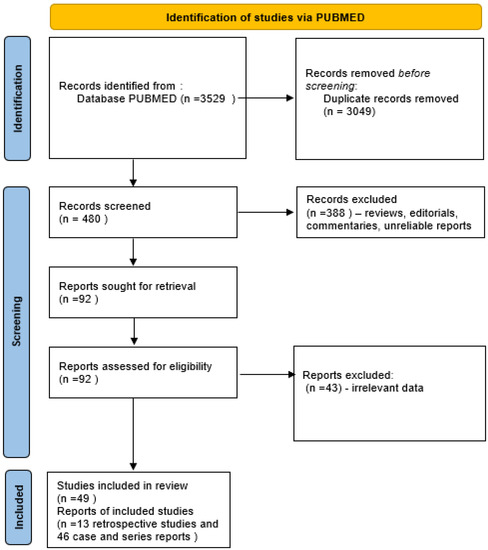
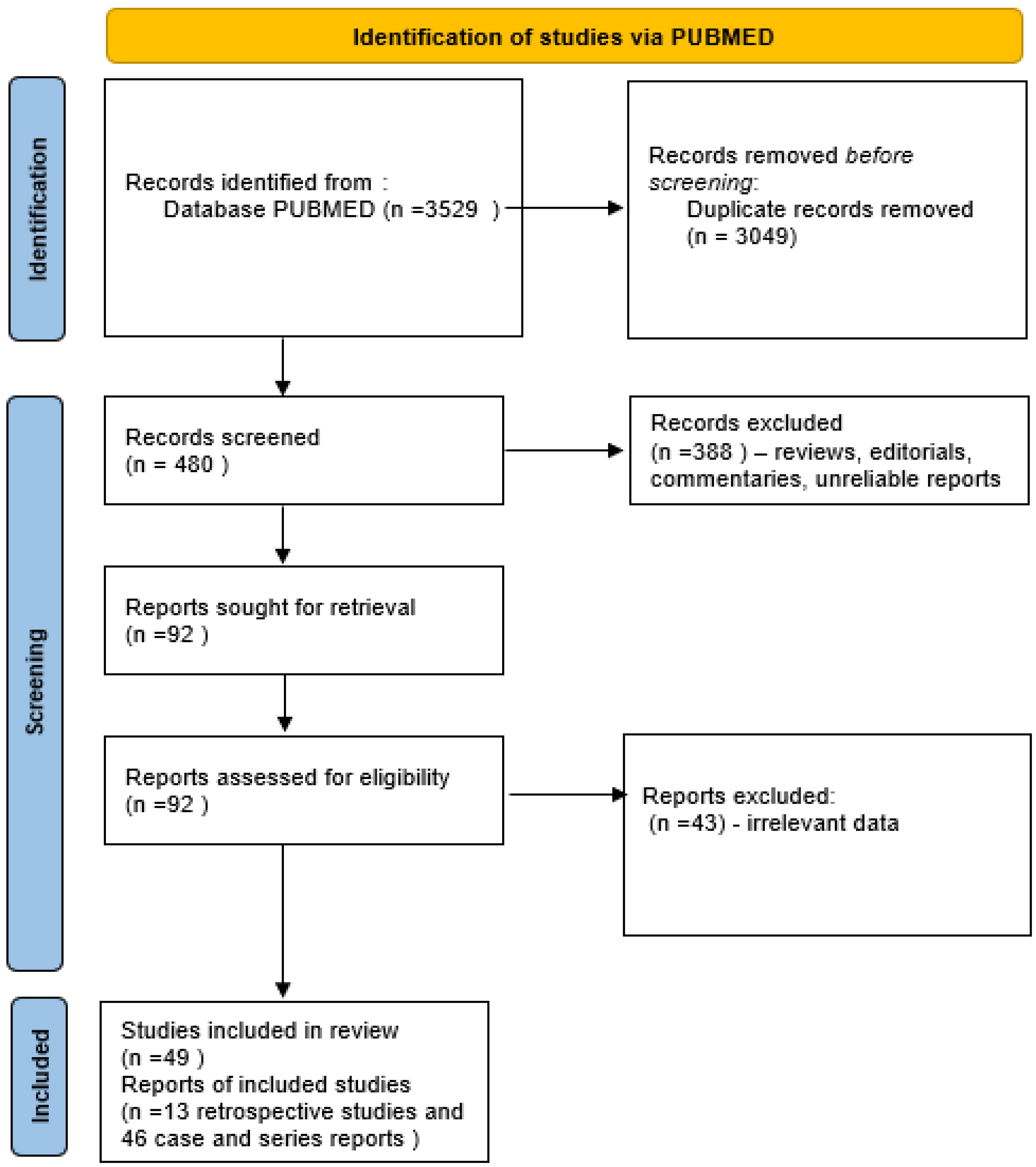
The study search and selection process are presented in Figure 1.
Figure 1.
Flow chart of the systematic literature search according to PRISMA guidelines. A total of 3529 articles were found during the initial screen and 49 articles were included in the qualitative synthesis.
Initially, we found 3529 records in total from PubMed searches. After duplicate papers removal, 480 publications remained. The title, abstracts and full texts were then screened for relevance, removing another 431 records. In total, 49 full-text articles on 449 patients (822 pregnancies) were included in the analysis.
There were no prospective studies. There were 13 retrospective studies presenting the results of pregnancies in WD patients based mainly on national WD databases (Table 1).
Table 1.
Summary of studies of pregnant patients with Wilson’s disease according to the time of diagnosis, anti-copper treatment, pregnancy and delivery complications, maternal and newborn outcomes, and birth defects.
There were also 36 case reports and case series presenting detailed descriptions of pregnant women with WD as well as maternal and pregnancy outcomes (Table 2).
Table 2.
Summary of case and series reports of pregnant patients with Wilson’s disease according to the time of diagnosis, anti-copper treatment, pregnancy and delivery complications, maternal and newborn outcomes, and birth defects.
Successful deliveries were achieved in 78.3% (644/822) of all pregnancies. Spontaneous abortions were observed in 21.7% of all pregnancies (178/822), more frequently in patients who were untreated (68.6% [96/140]) compared with those who were treated. Analyzing maternal outcome, there was aggravation of neurological symptoms in 2.2% of pregnancies (18/822) and of hepatic symptoms in 4.6% (38/822). Exacerbation was usually transient and recovered after pregnancy; however, death due to liver failure was reported in 0.2% (2/822) of cases. Birth defects occurred in 4.7% (39/822) of pregnancies.
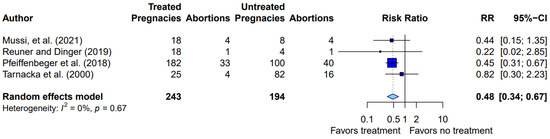
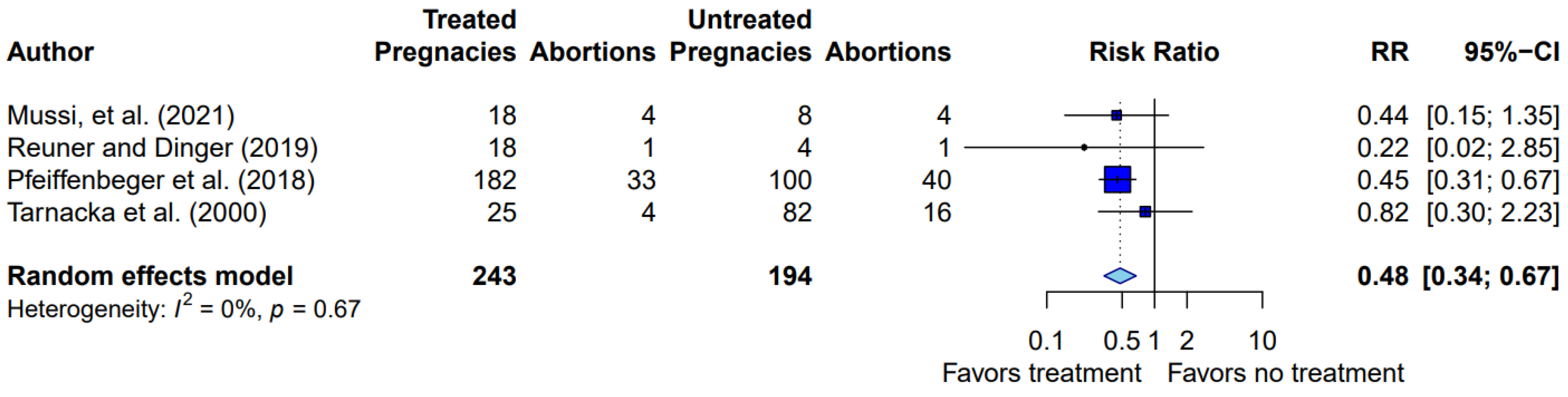
We were able to analyze four studies that compared the risk of spontaneous abortion between treated and untreated patients with WD [7,8,10,16]. A random effects meta-analysis of the studies showed that the risk of spontaneous abortion was reduced by 52% in treated patients (risk ratio = 0.48; 95% confidence interval, 0.34–0.67) (Figure 2). There was no significant heterogeneity between the studies (I2 = 0%, p = 0.67).
Figure 2.
Random effects meta−analysis of studies comparing the risk of spontaneous abortion between treated and untreated patients with WD (squares show risk ratios; square size represents study weight; error bars show 95% confidence intervals; diamond shows pooled effect).
4. Discussion
To our best knowledge, this is the first systematic review of the literature of patients with WD to present pregnancy outcomes as well as birth defects. As observed in the meta-analysis, the very high rate of spontaneous abortions in untreated patients versus treated women emphasizes the significance of anti-copper treatment before and during pregnancy. The rate of spontaneous abortion in treated WD patients was quite similar to that seen in healthy populations (21.7%) [11]. Consistent with the findings from the retrospective studies, case reports also highlight the significance of WD treatment during pregnancy. The study by Oga et al. [22] described a patient who stopped treatment 9 years before pregnancy where there was documented copper accumulation in the placenta (on the maternal side); higher copper levels in the amniotic fluid (seven times that in healthy women); as well as WD-like symptoms in the neonate, namely hepatomegaly with elevated liver enzymes with a high excretion of urinary copper. These data support that it is not only maternal outcome that is affected by incorrect anti-copper treatment during pregnancy, but newborns may also be affected by copper toxicity.
Our data strongly support the recommendation of the European Association for the Study of the Liver (EASL) for WD from 2012, which advocates that treatment for WD should be continued during pregnancy (Grade II-3, B, 1) [1]. These recommendations also advise a dose reduction for DPA and trientine from the first trimester; however, this guidance is mainly based on speculation rather than on data [1]. Despite our analysis of the all evidence to date, due to limited data, we are not able to support this recommendation further.
The aggravation of neurological symptoms of WD occurred in just 2% of patients, which may be due to stopping anti-copper drugs during pregnancy or dose reduction, but in most cases, the exacerbation was reversible after delivery and with the re-introduction of full-dose anti-copper treatment. There were also cases described with neurological symptoms recovery during the pregnancy and adequate WD treatment. Liver symptoms were aggravated in 4.6% of patients, highlighting the need to carefully monitor patients, as recommended in pregnant patients with liver cirrhosis [6].
Fetal defects occurred in 4.7% pregnancies, which is more frequent than in healthy populations [11]. However, it should be noted that we summarized data from 1959 to the present day, and more recent studies showed a lower number of birth defects, since healthcare has improved [1]. In the study by Pfeiffenberger et al. in 2018, [11] birth defects were only observed in up to 3.3% of newborns, which is similar to the general population [6].
Historically, before Walshe introduced DPA in 1956, [1] women with WD more frequently experienced infertility, spontaneous abortions and stillbirth [1,2,3,4,5,6]. As WD treatment was introduced, it improved fertility and pregnancies outcome [1,2,3,4,5,6,57,58,59,60,61,62,63]. Just after the introduction of DPA, Sherwin et al. [42]. published the case of a 24-year-old woman treated with DPA who had a successful pregnancy, highlighting no maternal or fetal adverse outcomes and even diminished neurological symptoms. During pregnancy, changes in copper metabolism such as increased serum levels of ceruloplasmin may have a protective effect on WD aggravation or symptoms in the child [34].
The first contemporary study with substantive numbers (46 women and 107 pregnancies) was performed in 2000 by Tarnacka, et al. [8]. The abortion/labour ratio in WD patients was found to be higher in untreated (1:3.8) and treated patients (1:5.5) than in the general Polish population (1:10). Moreover, the stillbirth ratio was higher in untreated (4.8%) and treated pregnancies (4%) than the Polish general population (0.1%). There was no evidence of increased teratogenicity during pregnancy between treated and untreated patients.
In the study performed by Pfeiffenberger et al. in 2018, [11] which involved the largest group of WD patients and pregnancies (136 women and 282 pregnancies), there was a high rate of spontaneous abortions (40.0%) in untreated WD patients and those who stopped anti-copper treatment during pregnancy compared with the general populations (10–20%). Analyzing different anti-copper drugs, the authors found a lower rate of abortions in all groups, apart from the trientine group (27.7% abortions), with the lowest abortion rate on zinc (10.0%). In a post hoc analysis, only DPA treatment diminished the abortion rate compared with non-treated WD patients. Fetal malformations were observed in 3.3% of babies from mothers on DPA, 2.7% on trientine (comparable with the general population) and none on zinc. Moreover, the authors identified the following risk factors at the time of conception for spontaneous abortion in WD: the presence of neurological symptoms (40% of abortions) and trends according to portal hypertension (29% of abortions) and liver cirrhosis (26% of abortions). Further observational studies in large groups of WD patients are needed to verify the association between birth defects and different types of anti-copper drugs, as well as different anti-copper treatment strategies (decreased dose, drug changes or pauses) [1,2,3,4,5,6,61,62,63].
Limitations
Our study has some limitations. Firstly, all of the studies and case reports were retrospectively collected over a long time period (almost 60 years), which has seen many changes in medical care. In most papers, pregnancy and maternal outcomes were well described, but data were missing in some cases, such as details on patient history and treatment regimens.
Moreover, in one of the oldest studies presenting the successful outcome of 29 pregnancies in 18 WD patients, in two patients, the data about multiple spontaneous abortions were provided (without details) [14]. However, the cause of the abortions could not be added to the analysis. Additionally, the studied groups were heterogenous, particularly with respect to treatment. Due to limited data, an analysis of fetal and maternal outcomes was not possible among patients who stopped treatment during pregnancy versus those who continued treatment.
5. Conclusions
Our study documented the good outcome of pregnancy in WD patients on anti-copper drugs with a very high rate of spontaneous abortions in untreated patients. The risk of aggravation of WD symptoms during pregnancy appeared low; however, due to physiological changes that can exacerbate hepatic injury during the course of pregnancy, liver function should be monitored in patients with WD before and during pregnancy. The number of birth defects in treated patients appears to be relatively small and should not cause treatment discontinuation, given its crucial role for maternal and pregnancy outcome.
Author Contributions
T.L.: conception, planning and supervising the work, planning the literature search, selecting the abstracts, extracting data from original papers, writing, revising, approving the manuscript; A.C.: study design, selecting the abstracts, extracting data from original papers, writing, revising, approving the manuscript; Ł.S.: study design, selecting the abstracts, extracting data from original papers, writing, revising, approving the manuscript, statistical analysis; J.B.: study design, interpretation, selecting the abstracts, extracting data from original papers, writing, revising, approving the manuscript; A.A.: study design, selecting the abstracts, extracting data from original papers, interpretation of the results, writing, revising, approving the manuscript; A.P.: study design, selecting the abstracts, extracting data from original papers, interpretation of the results, writing, revising, approving the manuscript; M.S.: selecting the abstracts, extracting data from original papers, interpretation of the results, writing, revising, approving the manuscript; I.K.-J.: selecting the abstracts, extracting data from original papers, interpretation of the results writing, approving the manuscript. The corresponding author attests that all listed authors meet the authorship criteria and that no others meeting the criteria have been omitted. All authors have read and agreed to the published version of the manuscript.
Funding
This research received no external funding.
Institutional Review Board Statement
Not applicable.
Informed Consent Statement
Not applicable.
Data Availability Statement
Not applicable.
Conflicts of Interest
The authors declare no conflict of interest.
References
- European Association for Study of Liver. EASL Clinical Practice Guidelines: Wilson’s disease. J. Hepatol. 2012, 56, 671–685. [Google Scholar] [CrossRef] [Scilit] [PubMed]
- Roberts, E.A.; Schilsky, M.L. Diagnosis and treatment of Wilson disease: An update. Hepatology 2008, 47, 2089–2111. [Google Scholar] [CrossRef] [Scilit] [PubMed]
- Członkowska, A.; Litwin, T.; Dusek, P.; Ferenci, P.; Lutsenko, S.; Medici, V.; Rybakowski, J.K.; Weiss, K.H.; Schilsky, M.L. Wilson disease. Nat. Rev. Dis. Primers 2018, 4, 21. [Google Scholar] [CrossRef] [Scilit] [PubMed]
- Socha, P.; Janczyk, W.; Dhawan, A.; Baumann, U.; D’Antiga, L.; Tanner, S.; Iorio, R.; Vajro, P.; Houwen, R.; Fischler, B.; et al. Wilson’s Disease in Children: A Position Paper by the Hepatology Committee of the European Society for Paediatric Gastroenterology, Hepatology and Nutrition. J. Pediatr. Gastroenterol. Nutr. 2018, 66, 334–344. [Google Scholar] [CrossRef] [Scilit]
- Nagral, A.; Sarma, M.S.; Matthai, J.; Kukkle, P.L.; Devarbhavi, H.; Sinha, S.; Alam, S.; Bavdekar, A.; Dhiman, R.K.; Eapen, C.E.; et al. Wilson’s Disease: Clinical Practice Guidelines of the Indian National Association for Study of the Liver, the Indian Society of Pediatric Gastroenterology, Hepatology and Nutrition, and the Movement Disorders Society of India. J. Clin. Exp. Hepatol. 2019, 9, 74–98. [Google Scholar] [CrossRef] [Scilit]
- Rahim, M.N.; Pirani, T.; Williamson, C.; Heneghan, M.A. Management of pregnancy in women with cirrhosis. United Eur. Gastroenterol. J. 2021, 9, 110–119. [Google Scholar] [CrossRef] [Scilit]
- Marecek, Z.; Graf, M. Pregnancy in Penicillamine-Treated Patients with Wilson’s Disease. N. Engl. J. Med. 1976, 295, 841–842. [Google Scholar] [CrossRef] [Scilit]
- Tarnacka, B.; Rodo, M.; Cichy, S.; Czlonkowska, A. Procreation ability in Wilson’s disease. Acta Neurol. Scand. 2000, 101, 395–398. [Google Scholar] [CrossRef] [Scilit]
- Yu, X.-E.; Pan, M.; Han, Y.-Z.; Yang, R.-M.; Wang, J.; Gao, S. The study of Wilson disease in pregnancy management. BMC Pregnancy Childbirth 2019, 19, 522. [Google Scholar] [CrossRef] [Scilit]
- Reuner, U.; Dinger, J. Pregnancy and Wilson disease: Management and outcome of mother and newborns—experiences of a perinatal centre. Ann. Transl. Med. 2019, 7 (Suppl. S2), S56. [Google Scholar] [CrossRef] [Scilit]
- Pfeiffenberger, J.; Beinhardt, S.; Gotthardt, D.N.; Haag, N.; Freissmuth, C.; Reuner, U.; Gauss, A.; Stremmel, W.; Schilsky, M.L.; Ferenci, P.; et al. Pregnancy in Wilson’s disease: Management and outcome. Hepatology 2018, 67, 1261–1269. [Google Scholar] [CrossRef] [Scilit] [PubMed]
- Dathe, K.; Beck, E.; Schaefer, C. Pregnancy outcome after chelation therapy in Wilson disease. Evaluation of the German Embryotox Database. Reprod. Toxicol. 2016, 65, 39–45. [Google Scholar] [CrossRef] [Scilit] [PubMed]
- Brewer, G.J.; Johnson, V.D.; Dick, R.D.; Hedera, P.; Fink, J.K.; Kluin, K.J. Treatment of Wilson’s disease with zinc. XVII: Treatment during pregnancy. Hepatology 2000, 31, 364–370. [Google Scholar] [CrossRef] [Scilit] [PubMed]
- Scheinberg, I.H.; Sternlieb, I. Pregnancy in Penicillamine-Treated Patients with Wilson’s Disease. N. Engl. J. Med. 1975, 293, 1300–1302. [Google Scholar] [CrossRef] [Scilit]
- Sinha, S.; Taly, A.; Prashanth, L.; Arunodaya, G.; Swamy, H. Successful pregnancies and abortions in symptomatic and asymptomatic Wilson’s disease. J. Neurol. Sci. 2004, 217, 37–40. [Google Scholar] [CrossRef] [Scilit]
- Mussi, M.C.L.; Nardelli, M.J.; Santos, B.C.; de Abreu, E.S.; Osório, F.M.F.; Cançado, G.G.L.; Ferrari, T.C.A.; Faria, L.C.; Couto, C.A. Pregnancy Outcomes in Wilson’s Disease Women: Single-Center Case Series. Fetal Pediatr. Pathol. 2021. [Google Scholar] [CrossRef] [Scilit]
- Roseira, J.; Lopes, R.; Silva, M.J.; Vieira, A.M.; Sampaio, M.; Calinas, F. Gynecological history up to diagnosis and pregnancy outcomes in diagnosed Wilson’s disease under therapy—A bicentric matched control cohort study. Rev. Esp. Enferm. Dig. 2022, 114, 198–203. [Google Scholar] [CrossRef] [Scilit]
- Walshe, J.M. The Management of Pregnancy in Wilson’s Disease Treated with Trientine. QJM Int. J. Med. 1986, 58, 81–87. [Google Scholar] [CrossRef] [Scilit]
- Walshe, J.M. Pregnancy in Wilson’s Disease. QJM Int. J. Med. 1977, 46, 73–83. [Google Scholar] [CrossRef] [Scilit]
- Shimono, N.; Ishibashi, H.; Ikematsu, H.; Kudo, J.; Shirahama, M.; Inaba, S.; Maeda, K.; Yamasaki, K.; Niho, Y. Fulminant hepatic failure during perinatal period in a pregnant woman with Wilson’s disease. Gastroenterol. Jpn. 1991, 26, 69–73. [Google Scholar] [CrossRef] [Scilit]
- Dupont, P.; Irion, O.; Béguin, F. Pregnancy in a patient with treated Wilson’s disease: A case report. Am. J. Obstet. Gynecol. 1990, 163, 1527–1528. [Google Scholar] [CrossRef] [Scilit]
- Oga, M.; Matsui, N.; Anai, T.; Yoshimatsu, J.; Inoue, I.; Miyakawa, I. Copper disposition of the fetus and placenta in a patient with untreated Wilson’s disease. Am. J. Obstet. Gynecol. 1993, 169, 196–198. [Google Scholar] [CrossRef] [Scilit]
- Chin, R. Pregnancy and Wilson’s disease. Am. J. Obstet. Gynecol. 1991, 165, 488–489. [Google Scholar] [CrossRef] [Scilit]
- Biller, J.; Swiontoniowski, M.; Brazis, P.W. Successful Pregnancy in Wilson’s Disease: A Case Report and Review of the Literature. Eur. Neurol. 1985, 24, 306–309. [Google Scholar] [CrossRef] [Scilit]
- Fukuda, K.; Ishii, A.; Matsue, Y.; Funaki, K.; Hoshiai, H.; Maeda, S. Pregnancy and Delivery in Penicillamine Treated Patients with Wilson’s Disease. Tohoku J. Exp. Med. 1977, 123, 279–285. [Google Scholar] [CrossRef] [Scilit]
- Avcıoğlu, S.N.; Altınkaya, S.; Küçük, M.; Zafer, E.; Sezer, S.D.; Odabaşı, A.R. Wilson’s disease presenting with HELLP syndrome; A case report. Turk. J. Obstet. Gynecol. 2015, 12, 56–59. [Google Scholar] [CrossRef] [Scilit]
- Bihl, J.H. The effect of pregnancy on hepatolenticular degeneration (Wilson’s disease). Am. J. Obstet. Gynecol. 1959, 78, 1182–1188. [Google Scholar] [CrossRef] [Scilit]
- Lee, H.J.; Seong, W.J.; Hong, S.Y.; Bae, J.Y. Successful pregnancy outcome in a Korean patient with symptomatic Wilson’s disease. Obstet. Gynecol. Sci. 2015, 58, 409–413. [Google Scholar] [CrossRef] [Scilit]
- Toaff, R.; Toaff, M.E.; Peyser, M.R.; Streifler, M. Hepatolenticular degeneration (Wilson’s disease) and pregnancy. Obstet. Gynecol. Surv. 1977, 32, 497–507. [Google Scholar] [CrossRef] [Scilit]
- Kurdi, M.S.; Sushma, K.S.; Kiran, P.B. Pregnancy with Wilson’s disease: An anesthetic experience with “Ketofol”. Anesth. Essays Res. 2017, 11, 806–807. [Google Scholar] [CrossRef] [Scilit]
- Saito, K.; Onishi, E.; Itagaki, J.; Toda, N.; Haitani, A.; Yamauchi, M. Perioperative anesthetic management for cesarean delivery of severe Wilson’s disease with liver failure: A case report. JA Clin. Rep. 2019, 5, 75. [Google Scholar] [CrossRef] [Scilit] [PubMed]
- Wan, Y.; Jiang, X.; Lin, X. Anesthetic management of cesarean delivery for a parturient with Wilson’s disease. Medicine 2018, 97, e10454. [Google Scholar] [CrossRef] [Scilit] [PubMed]
- Durairaj, J.; Shanbhag, E.R.; Veena, P.; Gowda, M.; Keepanasseril, A. Wilson’s disease presenting during pregnancy: A diagnostic and therapeutic dilemma. Obstet. Med. 2018, 11, 148–150. [Google Scholar] [CrossRef] [Scilit] [PubMed]
- Albukerk, J.N. Wilson’s Disease and Pregnancy. A Case Report. Fertil. Steril. 1973, 24, 494–497. [Google Scholar] [CrossRef] [Scilit]
- Członkowska, A.; Gromadzka, G.; Büttner, J.; Chabik, G. Clinical features of hemolysis, elevated liver enzymes, and low platelet count syndrome in undiagnosed Wilson disease: Report of two cases. Arch. Gynecol. Obstet. 2010, 281, 129–134. [Google Scholar] [CrossRef] [Scilit]
- Theodoridis, T.D.; Zepiridis, L.; Athanatos, D.; Dinas, K.; Tzevelekis, F.; Bontis, J.N. Placenta abruption in a woman with Wilson’s disease: A case report. Cases J. 2009, 2, 8699. [Google Scholar] [CrossRef] [Scilit]
- Hartard, C.; Kunze, K. Pregnancy in a Patient with Wilson’s Disease Treated with D-Penicillamine and Zinc Sulfate. Eur. Neurol. 1994, 34, 337–340. [Google Scholar] [CrossRef] [Scilit]
- Furman, B.; Bashiri, A.; Wiznitzer, A.; Erez, O.; Holcberg, G.; Mazor, M. Wilson’s disease in pregnancy: Five successful consecutive pregnancies of the same woman. Eur. J. Obstet. Gynecol. Reprod. Biol. 2001, 96, 232–234. [Google Scholar] [CrossRef] [Scilit]
- Malik, A.; Khawaja, A.; Sheikh, L. Wilson’s disease in pregnancy: Case series and review of literature. BMC Res. Notes 2013, 6, 421. [Google Scholar] [CrossRef] [Scilit]
- Sherwin, A.L.; Beck, I.T.; McKENNA, R.D. The course of Wilson’s disease (hepatolenticular degeneration) during pregnancy and after delivery. Can. Med Assoc. J. 1960, 83, 160–163. [Google Scholar]
- Masciullo, M.; Modoni, A.; Bianchi, M.L.E.; De Carolis, S.; Silvestri, G. Positive outcome in a patient with Wilson’s disease treated with reduced zinc dosage in pregnancy. Eur. J. Obstet. Gynecol. Reprod. Biol. 2011, 159, 237–238. [Google Scholar] [CrossRef] [Scilit] [PubMed]
- Rich, A.M.; Lajoie, T.M. Wilson’s Disease—Treatment of Psychiatric Manifestations in Pregnancy. J. Psychosom. Res. 2012, 53, 175–177. [Google Scholar] [CrossRef] [Scilit] [PubMed]
- Hanukoglu, A.; Curiel, B.; Berkowitz, D.; Levine, A.; Sack, J.; Lorberboym, M. Hypothyroidism and Dyshormonogenesis Induced by D-Penicillamine in Children with Wilson’s Disease and Healthy Infants Born to a Mother with Wilson’s Disease. J. Pediatr. 2008, 153, 864–866.e2. [Google Scholar] [CrossRef] [Scilit]
- Linares, A.; Zarranz, J.; Rodriguez-Alarcon, J.; Diaz-Perez, J. Reversible Cutis Laxa due to Maternal D-Penicillamine Treatment. Lancet 1979, 314, 43. [Google Scholar] [CrossRef] [Scilit]
- Devesa, R.; Alvarez, A.; Heras, G.D.L.; De Miguel, J.R. Wilson’s Disease Treated with Trientine during Pregnancy. J. Pediatr. Gastroenterol. Nutr. 1995, 20, 102–103. [Google Scholar] [CrossRef] [Scilit]
- Nunns, D.; Hawthorne, B.; Goulding, P.; Maresh, M. Wilson’s disease in pregnancy. Eur. J. Obstet. Gynecol. Reprod. Biol. 1995, 62, 141–143. [Google Scholar] [CrossRef] [Scilit]
- Berghella, V.; Steele, D.; Spector, T.; Cambi, F.; Johnson, A. Successful pregnancy in a neurologically impaired woman with Wilson’s disease. Am. J. Obstet. Gynecol. 1997, 176, 712–714. [Google Scholar] [CrossRef] [Scilit]
- Lao, T.T.H.; Chin, R.K.H.; Cockram, C.S.; Leung, N.W.Y. Pregnancy in a Woman with Wilson’s Disease Treated with Zinc. Asia-Oceania J. Obstet. Gynaecol. 1988, 14, 167–169. [Google Scholar] [CrossRef] [Scilit]
- Pinter, R.; Hogge, W.A.; McPherson, E. Infant with severe penicillamine embryopathy born to a woman with Wilson disease. Am. J. Med. Genet. A 2004, 128A, 294–298. [Google Scholar] [CrossRef] [Scilit]
- Soong, Y.K.; Huang, H.Y.; Huang, C.C.; Chu, N.S. Successful pregnancy after D-penicillamine therapy in a patient with Wilson’s disease. J. Formos. Med. Assoc. 1991, 90, 693–696. [Google Scholar]
- Mustafa, M.S.; Shamina, A.H. Five successful deliveries following 9 consecutive spontaneous abortions in a patient with Wilson disease. Aust. N. Z. J. Obstet. Gynaecol. 1998, 38, 312–314. [Google Scholar] [CrossRef] [Scilit] [PubMed]
- E Dreifuss, F.; McKinney, W.M. Wilson’s disease (hepatolenticular degeneration) and pregnancy. JAMA 1966, 195, 960–962. [Google Scholar] [CrossRef] [Scilit]
- Morimoto, I.; Ninomiya, H.; Komatsu, K.; Satho, M. Pregnancy and penicillamine treatment in a patient with Wilson’s disease. Jpn. J. Med. 1986, 25, 59–62. [Google Scholar] [CrossRef] [Scilit]
- Martinez-Frias, M.L.; Rodriguzez-Pinilla, E.; Bermejo, E.; Blanco, M. Prenatal exposure to penicillamine and oral clefts: Case report. Am. J. Med. Genet. 1998, 76, 274–275. [Google Scholar] [CrossRef] [Scilit]
- van Leeuwen, J.H.S.; Christiaens, G.C.; Hoogenraad, T.U. Recurrent abortion and the diagnosis of Wilson disease. Obstet. Gynecol. 1991, 78, 547–549. [Google Scholar]
- Liberati, A.; Altman, D.G.; Tetzlaff, J.; Mulrow, C.; Gøtzsche, P.C.; Ioannidis, J.P.; Clarke, M.; Devereaux, P.J.; Kleijnen, J.; Moher, D. The PRISMA Statement for Reporting Systematic Reviews and Meta-Analyses of Studies That Evaluate Health Care Interventions: Explanation and Elaboration. Ann. Intern. Med. 2009, 151, W65–W94. [Google Scholar] [CrossRef]
- Walker, L.R.; Rattigan, M.; Canterino, J. A Case of Isolated Elevated Copper Levels during Pregnancy. J. Pregnancy 2011, 2011, 385767. [Google Scholar] [CrossRef] [Scilit]
- Rosa, F.W. Teratogen update: Penicillamine. Teratology 1986, 33, 127–131. [Google Scholar] [CrossRef] [Scilit]
- Koçtürk, S.; Oktay, G.; Güner, G.; Pekçetin, Ç.; Güre, A. Effect ofD-penicillamine on rat lung elastin cross-linking during the perinatal period. Cell Biochem. Funct. 2006, 24, 167–172. [Google Scholar] [CrossRef] [Scilit]
- Endres, W. D-penicillamine in pregnancy—To ban or not to ban? Klin. Wochenschr. 1981, 59, 535–537. [Google Scholar] [CrossRef] [Scilit]
- Litwin, T.; Dušek, P.; Członkowska, A. Symptomatic treatment of neurologic symptoms in Wilson disease. Handb. Clin. Neurol. 2017, 142, 211–223. [Google Scholar] [CrossRef] [Scilit] [PubMed]
- Schilsky, M.L. Long-term Outcome for Wilson Disease: 85% Good. Clin. Gastroenterol. Hepatol. 2014, 12, 690–691. [Google Scholar] [CrossRef] [Scilit] [PubMed]
- Dzieżyc, K.; Karlinski, M.; Litwin, T.; Członkowska, A. Compliant treatment with anti-copper agents prevents clinically overt Wilson’s disease in pre-symptomatic patients. Eur. J. Neurol. 2014, 21, 332–337. [Google Scholar] [CrossRef] [Scilit] [PubMed]

Publisher’s Note: MDPI stays neutral with regard to jurisdictional claims in published maps and institutional affiliations. |
© 2022 by the authors. Licensee MDPI, Basel, Switzerland. This article is an open access article distributed under the terms and conditions of the Creative Commons Attribution (CC BY) license (https://creativecommons.org/licenses/by/4.0/).