1. Introduction
Kiwi wine (KW), which is produced through the fermentation of fresh kiwifruit (
Actinidia spp.), has attained considerable commercial popularity owing to its appealing sensory profile—characterized by freshness, well-balanced sweetness, and a delicate vinous aroma—as well as its bioactive [
1]. As key factors in quality optimization, enhancing flavor and antioxidant properties of KW not only facilitate KW producers, but also favorite by consumers.
Glutathione-enriched inactive dry yeast IDY (g-IDY) has been proved that can either release GSH directly into wine and/or provide precursors for GSH synthesis, thereby increasing GSH content in the wine [
2]. Glutathione (GSH)—a tripeptide consisting of L-glutamate, L-cysteine, and glycine—contributes to the preservation of desirable aromatic compounds, suppresses the development of off-flavors, and inhibits the formation of browning pigments [
3,
4,
5]. Additionally, g-IDY has been observed to release complex nitrogen-containing volatile compounds into wine, influencing its aroma profile [
6]. In our previous study, the addition of g-IDY was shown to significantly reduce the concentration of hexyl acetate while increasing the levels of 1-hexanol-M and pentanal in KW produced from both green- and yellow-fleshed kiwifruit [
7].
As a maceration technology, ultrasonic-assisted maceration offering reduced energy consumption and minimized solvent usage, while maintaining extraction efficacy [
8]. Till now, ultrasonic-assisted maceration has been widely applied to grape wine production, by improving the speed of phenolic compounds transfer from grape pomace tissues to wine [
9,
10,
11]. Meanwhile, Yang et al., has found that increasing both ultrasonic power (at a fixed 40 min duration) and treatment time (at a fixed 240 W power) significantly lowers the epicatechin level in KW, thereby improving its taste and mouthfeel [
7].
Based on these findings, we hypothesized that the combination of ultrasonic maceration and g-IDY supplementation would exert a synergistic effect, not only by improving the extraction efficiency of beneficial compounds but also by modulating yeast metabolic activity during fermentation, thereby comprehensively enhancing the flavor and functional properties of KW. To fulfill the above gaps, this study aims to investigate the combined application of g-IDY and ultrasound technology in KW processing, evaluating its impact on the flavor profile and antioxidant properties, with the goal of providing a novel approach for quality enhancement in KW production. Owing to the complexity of KW flavor profile, GC-MS and GC-IMS were applied, attributing to their extensive spectral libraries for identification and excellent trace-level sensitivity, respectively.
2. Materials and Methods
2.1. Raw Materials and Fermentation Protocol
All kiwifruits used in this study were transported to the laboratory immediately after harvest. Upon arrival, they were subjected to pretreatment, which involved cleaning, peeling, and crushing. Enzymatic digestion was then performed using pectinase (0.02 g/L, 100,000 U/g, SAS SOFRALAB, Magenta, France) for 2 h. The enzyme digestion temperature was con-trolled at 40 °C by an HH-8 thermostatic water bath (GUOHUA INSTRUMENT MANU-FACTURING Co., Ltd., Changzhou, China). Subsequently, potassium metabisulfite (70 mg/L, Shanghai Yuanye Bio-Technology Co., Ltd., Shanghai, China) was added to prevent browning, and sucrose was incorporated to adjust the initial sugar content to 23 °Brix. The addition rate of Saccharomyces cerevisiae RW (Angel Yeast Co., Ltd., Wuhan, Hubei, China) was 0.2 g/L. Group settings are as follows:
- (1)
CON: Control group, without ultrasonic treatment and g-IDY addition;
- (2)
GSH: g-IDY (0.25 g/L) added before fermentation;
- (3)
USL: 240 W ultrasonic treatment 40 min before fermentation;
- (4)
USL + GSH: 240 W ultrasonic treatment 40 min and g-IDY addition before fermentation;
- (5)
USM + GSH: 360 W ultrasonic treatment 40 min and g-IDY addition before fermentation;
- (6)
USH + GSH: 480 W ultrasonic treatment 40 min and g-IDY addition before fermentation.
Fermentation was carried out in a total volume of 200 mL at 25 ± 1 °C for 30 days, employing a DHP-9162D thermostat (Keelrein Instrument Co., Ltd., Shanghai, China). Subsequently, the KW samples were filtered through three layers of sterile gauze and stored at −80 °C pending further analysis.
2.2. GC-IMS Analysis
Gas chromatography–ion mobility spectrometry (GC-IMS) instrument (Flavourspe
®, G.A.S. Dortmund Company, Dortmund, Germany) was conducted a Restek MXT-5 column (30 m × 0.53 mm × 1 μm) was employed in GC, with the column and IMS temperatures set at 60 °C and 45 °C, respectively. Sample preparation involved transferring 1.5 mL aliquots into a 20 mL headspace glass sampling vial, spiked with 10 μL 2-octanol as internal standard (1 μg/mL in ethanol, chromatographic grade; Beijing Solarbio Science & Technology Co., Ltd., Beijing, China) for semi-quantitative analysis. The program settings are referred to Zhang et al. [
12]. Compound identification was performed by matching the acquired mass spectra against the NIST 2020 library and aligning the ion mobility separation (IMS) migration times. Quantitative analysis was conducted using normalized peak area ratios relative to the internal standard. All analyses were conducted in triplicate (
n = 3).
2.3. GC-MS Analysis
A 5 mL aliquot of each KW sample was transferred in a headspace vial with a volume of 20 mL. For semi-quantitative assessment of the aroma profile, 2-octanol (1 μg/mL in chromatographic-grade ethanol; Solarbio, Beijing, China) served as the internal standard. Volatile compounds were examined using a Thermo ISQ™ 7610 GC–MS system (Thermo Fisher Co., Ltd., Waltham, MA, USA) equipped with an autosampler. Headspace extraction was carried out with a DVB/CAR/PDMS (50/30 µm) SPME fiber. Prior to use, the fiber was reconditioned at 250 °C for 10 min. Samples were equilibrated at 50 °C for 15 min, after which the fiber was exposed to the vial headspace to adsorb volatile analytes. Extraction proceeded for 30 min under agitation at 300 rpm. The captured volatiles were then introduced into the system for analysis.
The chromatographic column used for GC–MS was a TG-WAXMSB (30 m × 0.25 mm, 0.25 µm). The program settings refer to previous studies [
13]. Volatile compounds were qualified by comparing the experimental mass spectra with the NIST 14 mass spectral library. Volatile compounds were quantified using the ratio of peak area of the volatile compound to the peak area of the 2-octanol internal standard. Each group underwent three replicates.
2.4. 1H-NMR Analysis
Proton NMR (
1H-NMR) measurements were performed according to a previously reported method, with slight adjustments [
14]. Briefly, 0.5 mL of each KW sample was centrifuged at 18,630×
g for 15 min at 4 °C. The resulting supernatant (0.35 mL) was then combined with an equal volume of bi-distilled water (0.35 mL) and 200 μL of a 10 mM TSP solution (3-trimethylsilyl propionic-2,2,3,3-d
4 acid sodium salt). The mixture was subjected to a second centrifugation using the same parameters.
1H-NMR spectra were recorded on a Bruker AVANCE III spectrometer (600.13 MHz; Wuhan, China) at 298 K. Data acquisition used a CPMG pulse sequence with solvent-signal suppression. The instrumental settings included a 32 k FID size, a spectral window of 12 ppm, 16 dummy scans, an acquisition time of 2.28 s, and a relaxation delay (d1) of 5 s.
Pre-processing and phase correction of the NMR spectra were carried out using Topspin 3.1, with TSP used both as the internal quantitative reference and for spectral calibration. Metabolite concentrations were obtained from the integrated areas of their respective resonances, which were extracted through global spectral deconvolution performed with MestReNova (version 14.2.0-26256; Mestrelab Research S.L., Santiago de Compostela, Spain). During processing, a line-broadening factor of 0.3 was applied, and baseline correction was executed using the Whittaker Smoother algorithm. Metabolite identification was achieved by matching chemical shifts and signal multiplicities against the reference spectra included in the Chenomx library (version 8.3, Chenomx Inc., Edmonton, AB, Canada). Signal integration for each metabolite was done using rectangular integration. To correct for dilution effects and improve comparability across samples, probabilistic quotient normalization (PQN) was applied to the spectral data.
2.5. Antioxidant Activity Analysis
The antioxidant activity of KW was determined with DPPH radical scavenging activity, hydroxyl radical scavenging activity, and superoxide anion radical (O
2•) scavenging activity, reference to the methods used in previous studies [
15].
2.6. Statistical Analysis
All computational procedures and principal component analysis (PCA) modeling were implemented in R (version 4.4.2, R Core Team). Prior to univariate analyses, data distributions were transformed for normality using Box and Cox methods [
16].
T-test and analysis of variance (ANOVA) with Tukey HSD post hoc test (
p < 0.05) was used to determine significant differences among groups. Radar charts were generated through the online platform Chiplot (version 2.3.2,
https://www.chiplot.online/ (accessed on 12 August 2025)).
3. Results
3.1. Metabolomic and Flavor Profiles of KW
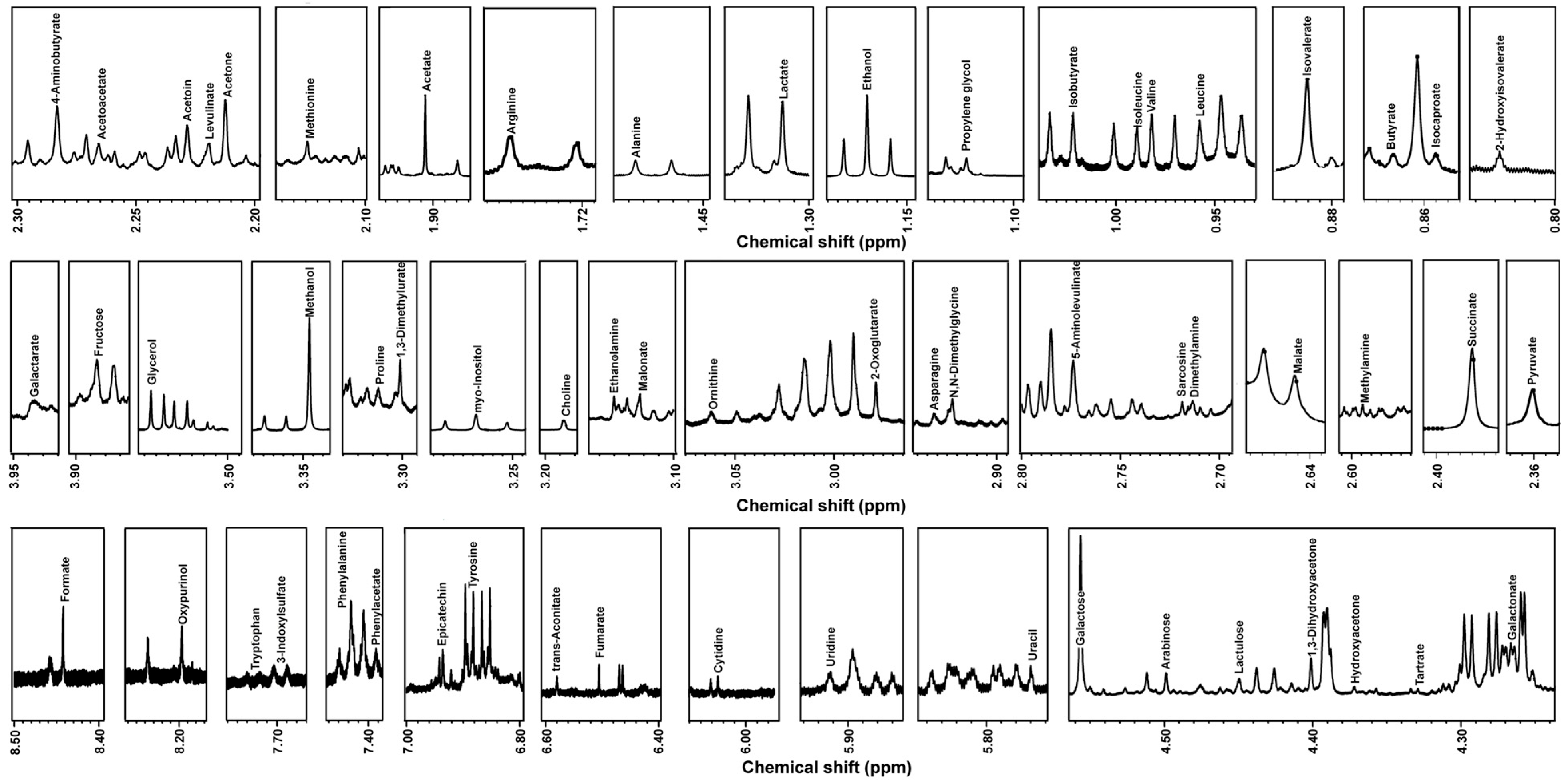
As shown in
Figure 1, a total of 61 water soluble molecules were detected by
1H-NMR, including alcohols and polyols (5), amino acids, peptides, and analogues (15), carbohydrates and carbohydrate conjugates (4), organic acids and derivatives (21), and miscellaneous (16), as shown in
Table S1.
In terms of volatile compounds, 27 VOCs were present in the samples detected by GC-IMS, including esters (21), alcohols (6), aldehydes (1), acids (2), and others (2), as shown in
Table S2. Moreover, 27 VOCs were present in the samples detected by GC-MS, including esters (10), alcohols (9), aldehydes (1), acids (4), and others (3), as shown in
Table S3.
3.2. Effect of g-IDY Addition on Metabolomic and Volatile Profiles of KW
PCA of the
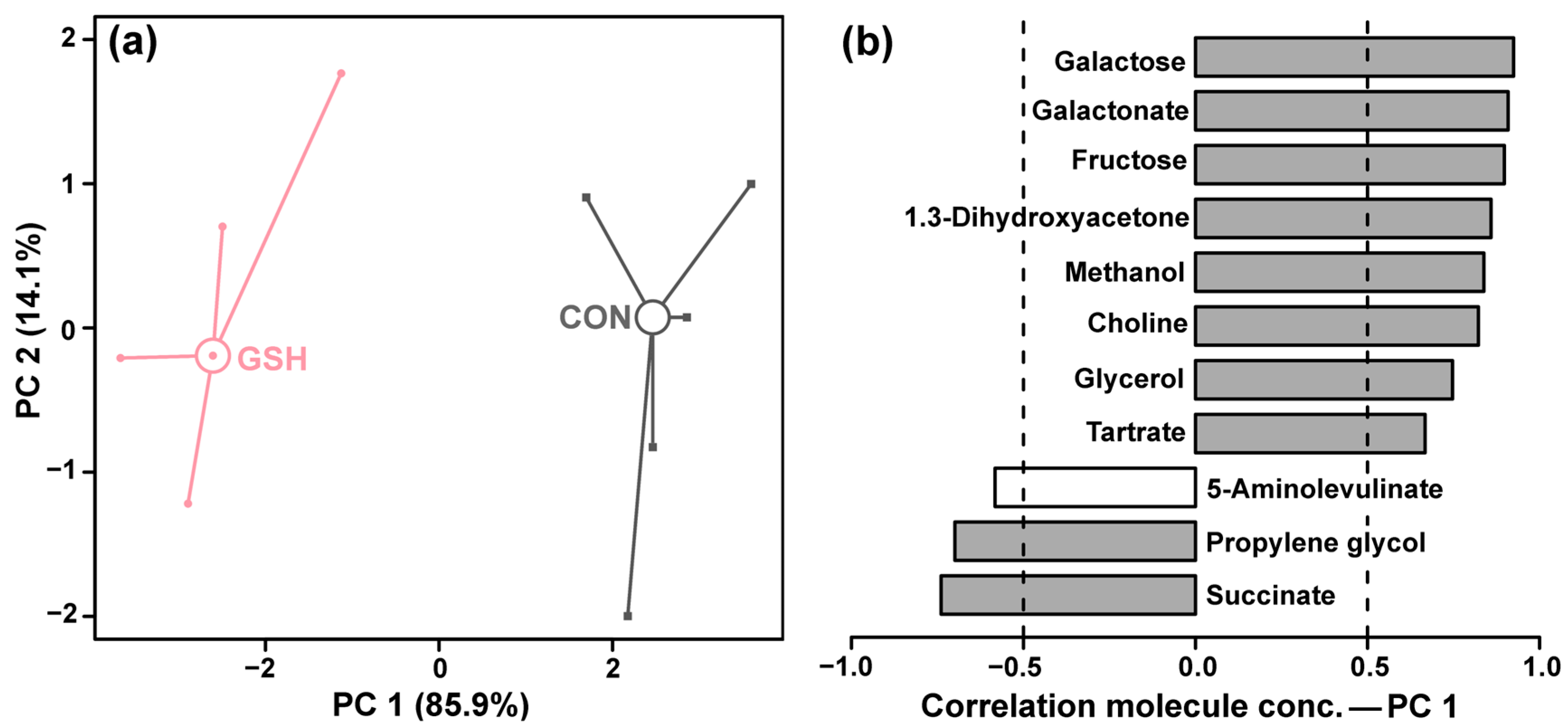
1H-NMR metabolomic profiles revealed a distinct separation between CON and GSH along the first principal component (PC1). As shown in
Figure 2a, PC1, which accounted for 85.9% of the total explained variance, clearly discriminated between the two groups. The loadings plot for PC1 (
Figure 2b) was analyzed to identify the metabolites responsible for this pronounced separation. The plot indicates that compounds such as galactose, galactonate, fructose, 1,3-dihydroxyacetone, methanol, choline, glycerol, and tartrate were positively correlated with PC1, suggesting their relative abundance was higher in the GSH group. Conversely, metabolites including 5-aminolevulinate, propylene glycol, and succinate showed a strong negative correlation with PC1, indicating their concentrations were higher in CON group.
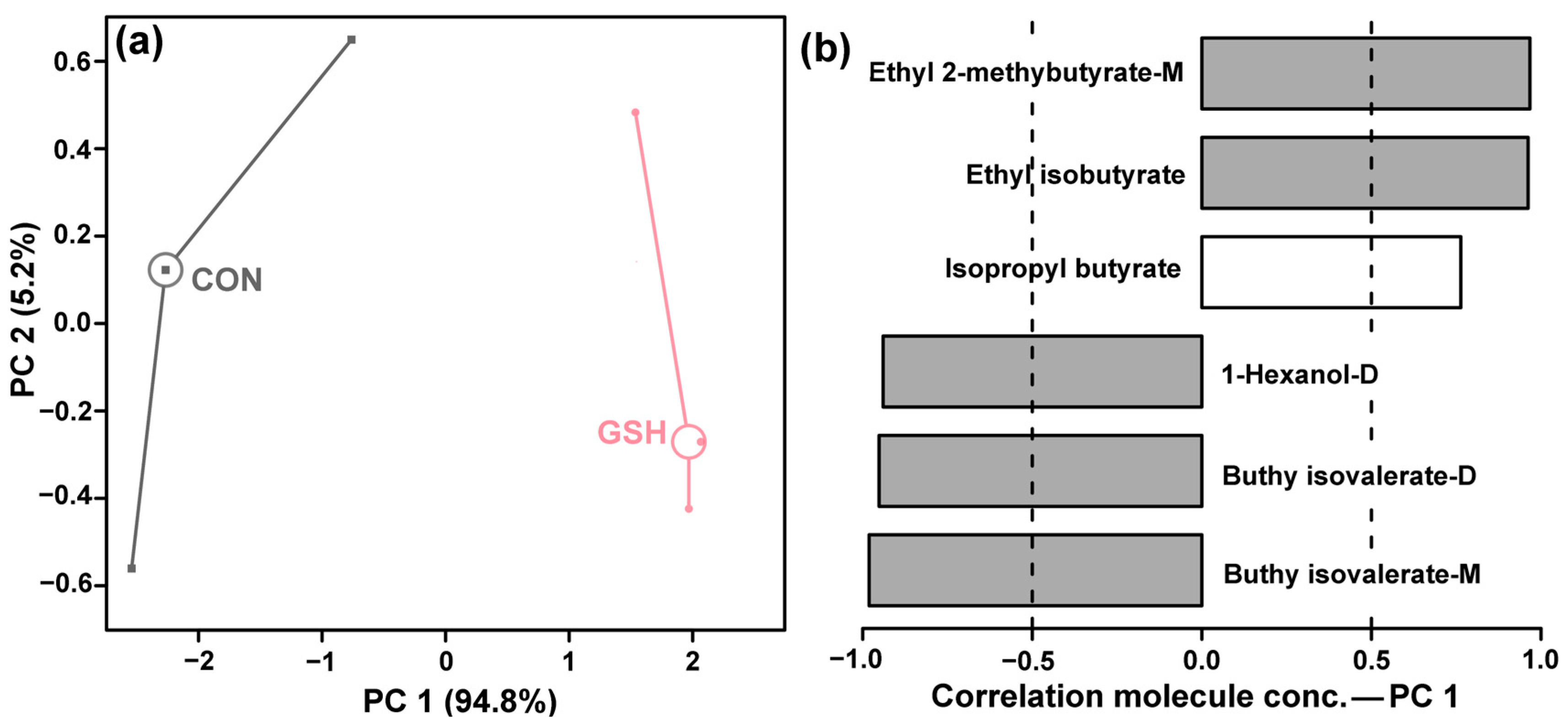
A clear and significant separation between CON group and GSH group was observed along PC1 in the scores plot (
Figure 3a). PC1 captured a dominant 94.8% of the total variance, indicating that the addition of g-IDY alone induced a profound and comprehensive shift in the volatile composition of KW. PC2 accounted for a minor portion (5.2%) of the variance. The loadings plot for PC1 (
Figure 3b) revealed the specific aroma-active compounds driving this separation.
3.3. Effect of Ultrasonic Treatments on Metabolomic Profile in KW
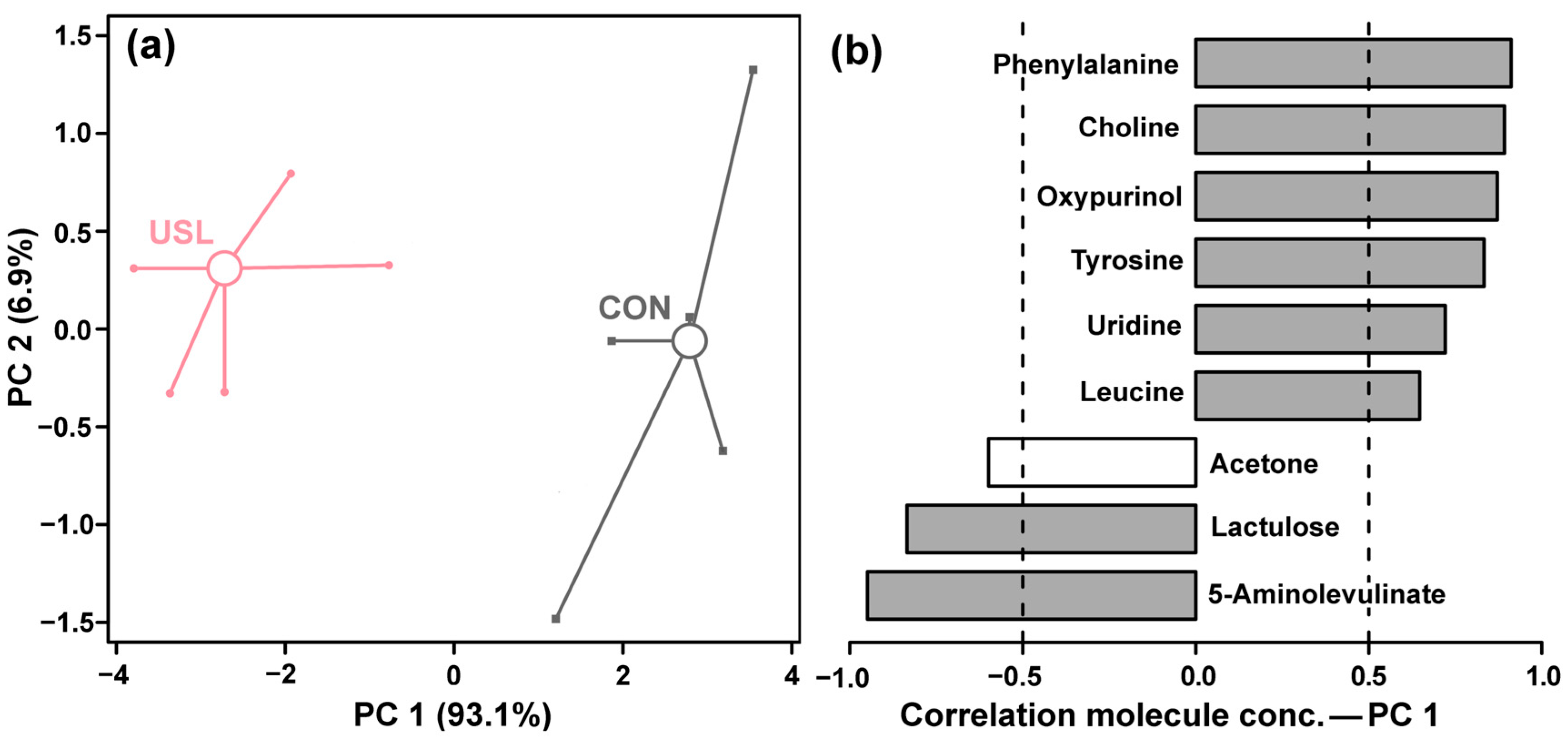
PCA was similarly employed to evaluate the metabolic impact of ultrasonic treatment alone compared to the control group. A pronounced separation between CON and USL groups was observed along PC1 in
Figure 4a. PC1 captured a dominant 93.1% of the total metabolic variance, indicating a very strong effect of ultrasonic maceration on the wine’s metabolome. PC2 explained a minor portion of the variance (6.9%).
The loadings analysis for PC1 (
Figure 4b) revealed the specific metabolites driving this separation. The concentrations of phenylalanine, tyrosine, leucine, choline, oxypurinol, uridine, and lactulose were positively correlated with PC1, showing a notable increase in the USL group. In contrast, the level of 5-aminolevulinate was negatively correlated with PC1, indicating its relative decrease following ultrasonic treatment. Acetone also exhibited a negative correlation, though to a lesser extent.
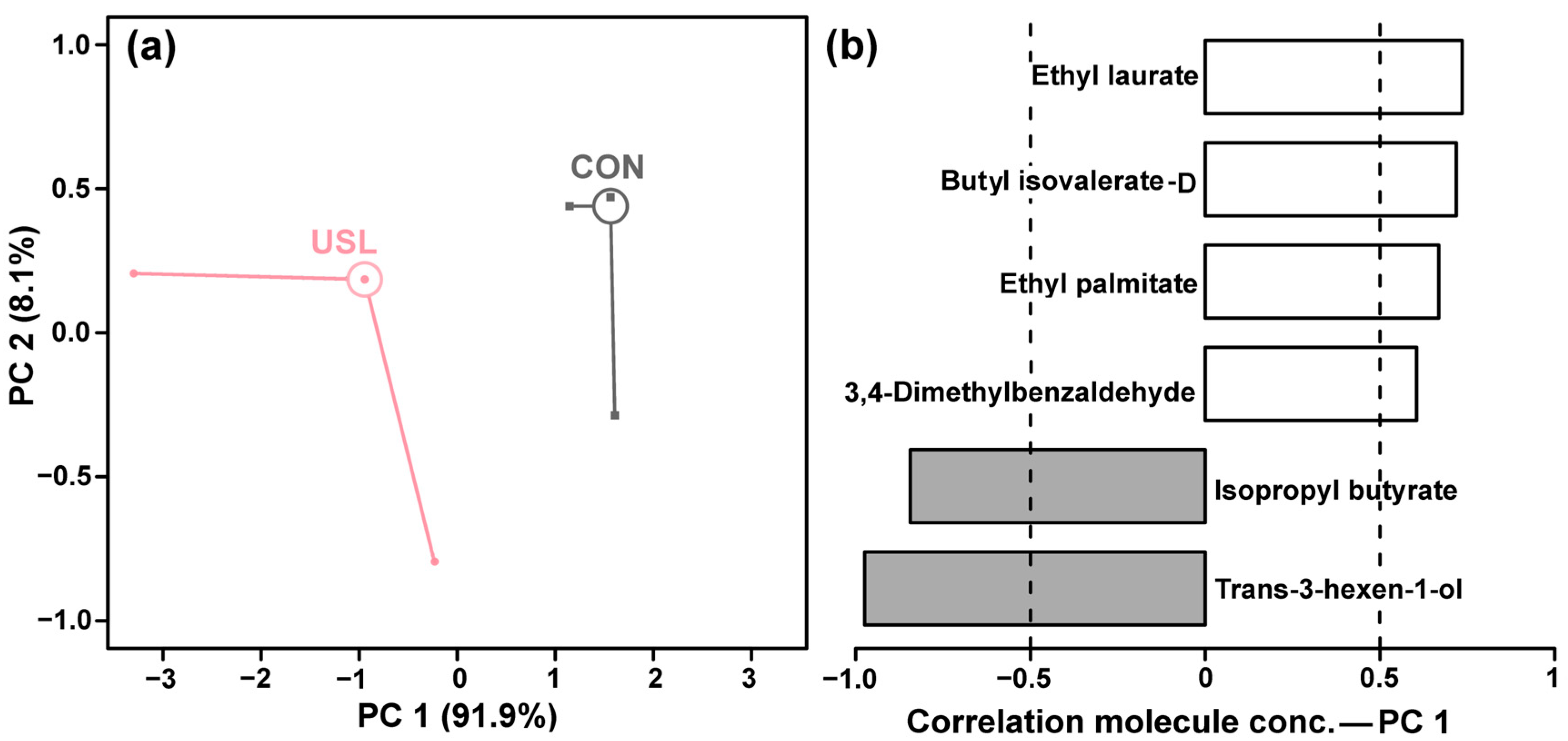
GC-MS and GC-IMS confirmed the substantial impact of ultrasonic maceration on the volatile composition of KW. PCA revealed a clear separation between CON and USL groups along PC1, which accounted for 91.9% of the total variance (
Figure 5a). PC2 explained an additional 8.1% of the variance.
The loadings plot for PC1 (
Figure 5b) identified specific volatile compounds responsible for this separation. Several esters showed strong positive correlation with PC1, including ethyl laurate, butyl isovalerate-D, ethyl palmitate, and isopropyl butyrate, indicating significantly increased concentrations of these compounds in the ultrasonically treated wines. Additionally, 3,4-dimethylbenzaldehyde also exhibited positive correlation with PC1. In contrast, trans-3-hexen-1-ol showed a strong negative correlation with PC1, suggesting decreased levels of this compound following ultrasonic treatment.
3.4. Effect of Different Ultrasonics Powers on the Metabolomic and Flavor Profiles in KW
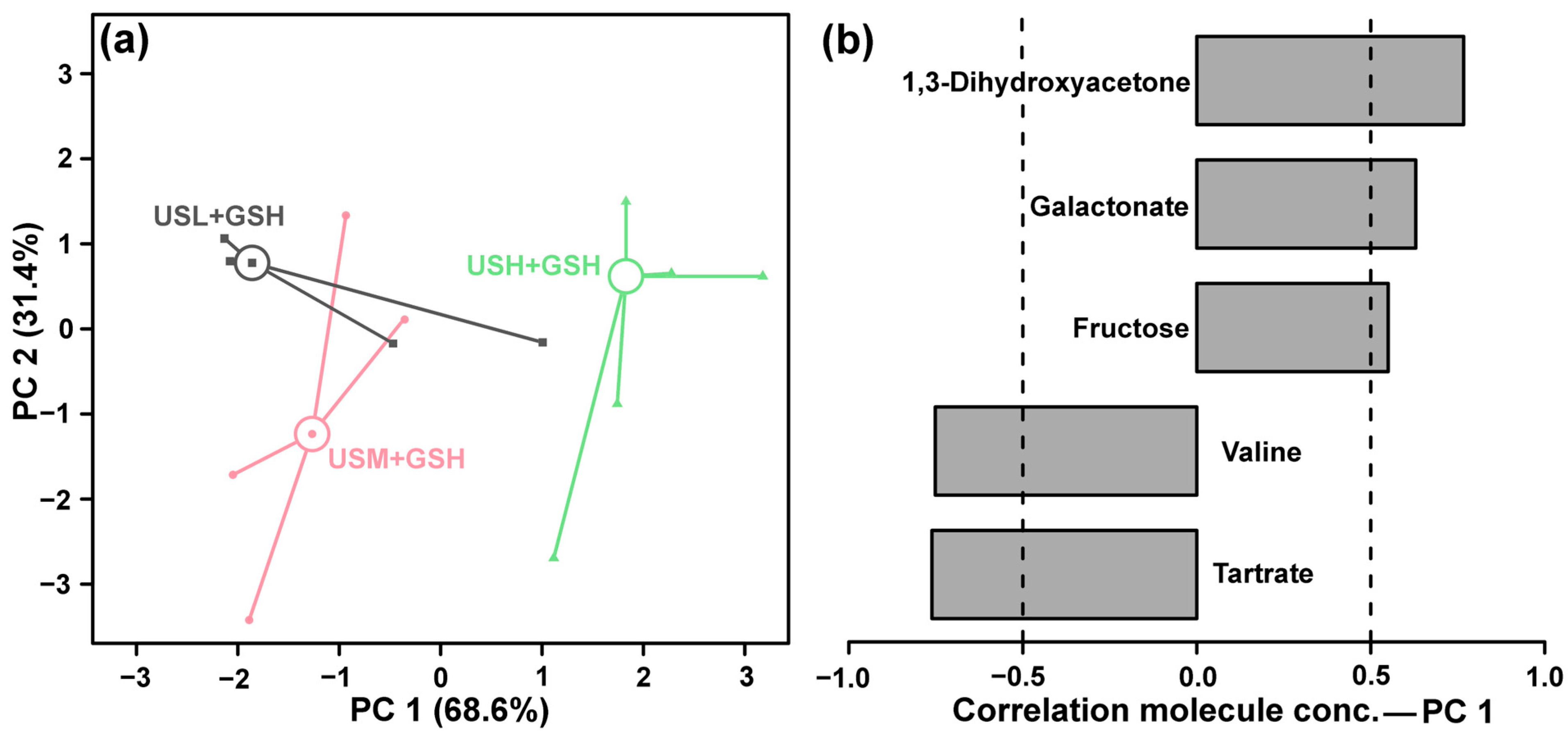
To investigate the synergistic effect of g-IDY and ultrasonic maceration, the metabolic profiles of KW produced with a combination of both treatments under different power levels (240, 360, and 480 W) were analyzed. PCA revealed a clear separation among the three treatment groups primarily along PC1, which explained 68.6% of the total metabolic variance (
Figure 6a). PC2, accounting for 31.4% of the variance, further resolved the differences, particularly for the group treated at 480 W (USH + GSH), suggesting a dose-dependent effect of ultrasonic power on the metabolome when combined with g-IDY.
The loadings plot for PC1 (
Figure 6b) was examined to identify the key metabolites driving this separation. Compounds such as 1,3-dihydroxyacetone, galactonate, fructose, exhibited a strong positive correlation with PC1. In contrast, valine and tartrate showed a significant negative correlation.
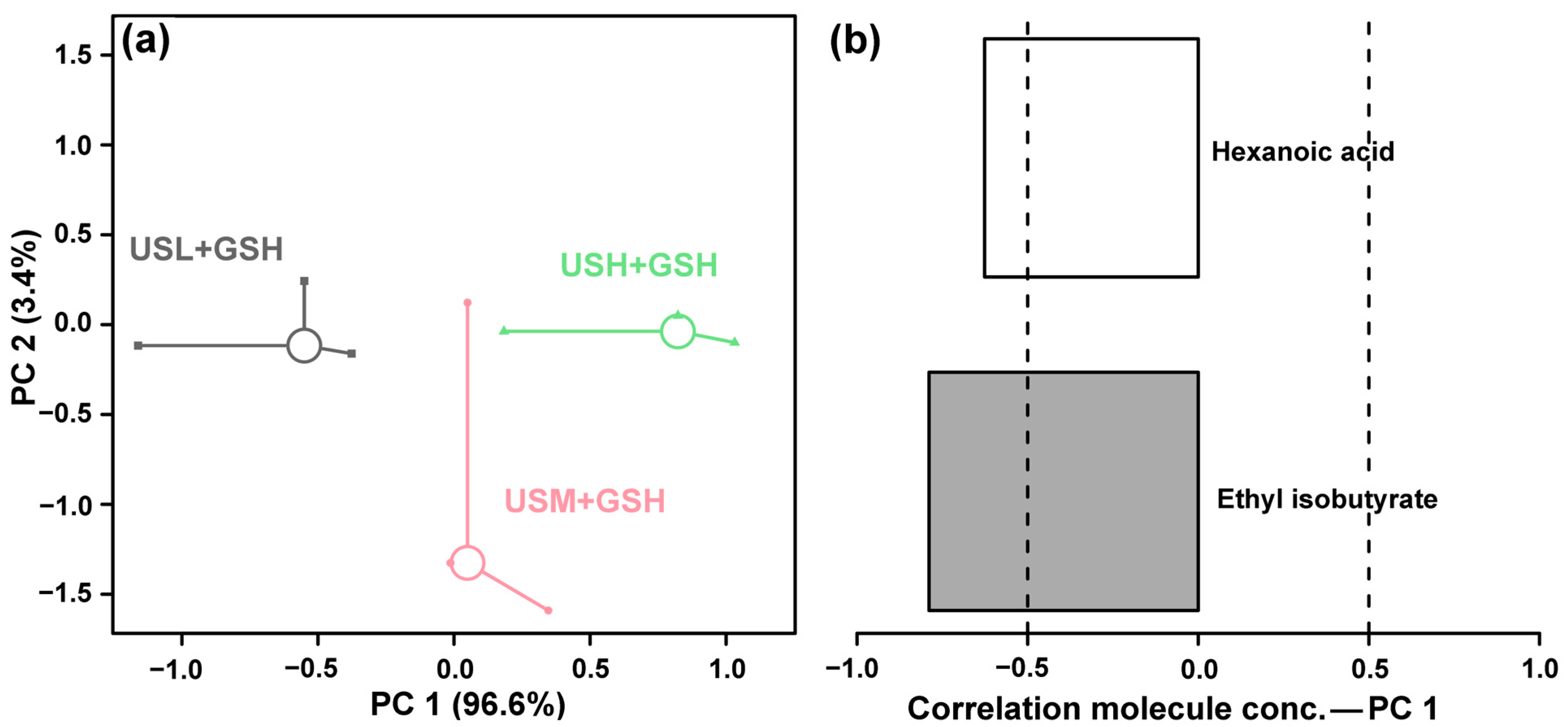
To elucidate the synergistic effect of ultrasonic maceration and g-IDY addition on the flavor profile, the volatile compounds of KW produced under three different ultrasonic power levels (240, 360, and 480 W), all with g-IDY addition, were analyzed by GC–MS and GC-IMS. PCA revealed a clear dose-dependent separation along PC1 among the three treatment groups (
Figure 7a). PC1 captured an overwhelming 96.6% of the total variance in the volatile dataset, highlighting that ultrasonic power is a decisive factor in shaping the aroma profile even when g-IDY is present. PC2 accounted for a minor 3.4% of the variance.
The loadings plot for PC1 (
Figure 7b) was critical for identifying the key aroma-active compounds driving this separation. The analysis indicated that the concentrations of ethyl isobutyrate and hexanoic acid were negatively correlated with increasing ultrasonic power in the presence of g-IDY.
3.5. Antioxidant Profiles
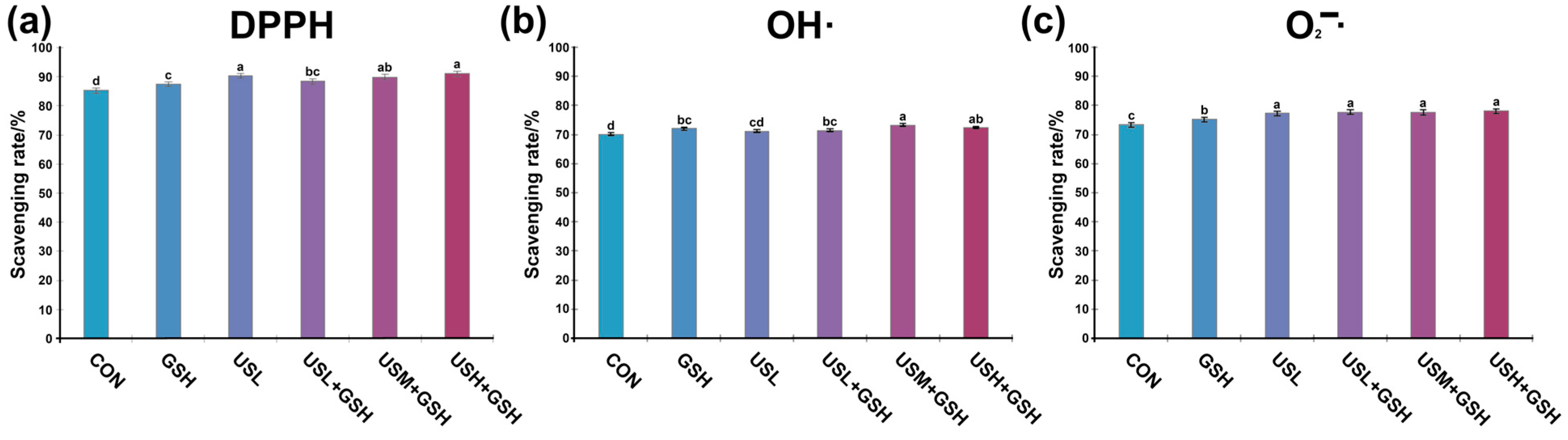
Evaluation of the antioxidant capacity through three distinct radical scavenging assays revealed significant differences among the treatment groups (
Figure 8). The CON group consistently demonstrated the lowest radical scavenging activity across all three assays.
For the DPPH radical scavenging rate, the individual treatments significantly enhanced DPPH scavenging capacity compared to CON (p < 0.05). The activity increased with ultrasonic power, yielding the order USH > USM > USL. The synergistic treatment by ultrasonics and g-IDY achieved the highest scavenging rate, which was significantly greater than all other groups (p < 0.05).
For the hydroxyl radical (OH•) scavenging activity, a similar trend was observed for •DH scavenging. All treated wines showed significantly higher activity than CON. The GSH group also showed markedly improved scavenging. In the group treated with ultrasonication and g-IDY in combination, the USM + GSH group exhibited the highest activity. Notably, the synergistic treatment by ultrasonics and g-IDY again resulted in the most potent effect, significantly outperforming even the highest single treatments.
For the superoxide anion radical (O2•−) scavenging activity, the capacity to scavenge O2•− was also significantly enhanced by the treatments. Ultrasonic processing again showed a power-dependent effect (USH > USM > USL > CON). Nevertheless, in the group synergistically treated with ultrasound and g-IDY, the superoxide anion scavenging activity did not exhibit significant differences with increasing ultrasound frequency.
The significantly improved antioxidant capacity across all three assays confirms that both ultrasonic maceration and g-IDY supplementation are effective strategies for enhancing the bioactive quality of KW. More importantly, the consistent superiority of the combined treatment demonstrates a clear synergistic interaction between physical processing technology and biochemical supplements.
The enhancement from ultrasonic treatment alone, which exhibited a power-dependent effect, can be primarily attributed to improved extraction efficiency. The cavitation effects disrupt plant cell walls more thoroughly at higher power levels, facilitating the release of bound phenolic compounds, flavonoids, and other native antioxidants from the kiwifruit pulp into the wine. This physical mechanism aligns with our earlier 1H-NMR findings, which showed altered levels of various metabolites, indicating enhanced extraction.
The efficacy of the g-IDY (GSH) treatment stems from the direct contribution of glutathione, a potent intracellular antioxidant, and its role in sustaining redox stability during fermentation. g-IDY may also supply peptides and amino acids that act as antioxidant precursors or synergists.
4. Discussion
The aims of the study were to test our hypothesis, which is the combination of ultrasonic maceration and g-IDY supplementation would exert a synergistic effect, not only by improving the extraction efficiency of beneficial compounds but also by modulating yeast metabolic activity during fermentation, thereby comprehensively enhancing the flavor and functional properties of KW.
Amino acids, commonly present in KW, significantly influence their taste profile [
17]. According to
1H-NMR results, ultrasonic treatment alone (USL) markedly elevated the concentrations of amino acids including phenylalanine, tyrosine, and leucine. This increase may further promote the formation of related aldehydes, higher alcohols, and volatile fatty acids. In contrast, under combined treatments (USL + GSH, USM + GSH, USH + GSH), the content of certain amino acids such as valine decreased. Branched-chain amino acids such as valine and leucine contribute to bitterness and act as key precursors for the synthesis of volatile aroma compounds by yeast during alcoholic fermentation [
18]. Specifically, valine can be transformed into isobutyraldehyde, isobutanol, and isobutyric acid via the Ehrlich pathway. The decline in valine under combined treatments is likely due to enhanced conversion into volatile compounds, thereby mitigating undesirable flavors in kiwifruit wine.
Sugars represent a critically studied class of compounds in KW systems [
19]. They function not only as the primary substrate for yeast alcoholic fermentation—directly influencing fermentation kinetics and ethanol yield—but also fundamentally define the KW wine’s sensory character by establishing the sweet baseline and interacting with acidity, tannins, and aroma-active compounds to shape overall flavor balance.
1H-NMR analysis revealed that the GSH group increased the levels of fructose, galactose, and 1,3-dihydroxyacetone. This suggests that g-IDY, as inactivated yeast, contributes residual sugars and glycolytic intermediates in addition to glutathione. 1,3-dihydroxyacetone, an intermediate in glycolysis, reflects modulated sugar metabolism activity in yeast. These carbohydrates may also serve as substrates for secondary reactions, such as esterification.
Organic acids are fundamental to KW wine acidity, pH, and sensory structure [
20]. Using
1H-NMR, 21 organic acids and derivatives were identified, with notable variations among treatments. the GSH group reduced succinic acid content. As one of the principal acids generated by yeast metabolism, succinic acid imparts sour, salty, and bitter notes and has a low sensory threshold (~35 mg/L) [
21]. Elevated levels can adversely affect wine quality. The glutathione in g-IDY may exert antioxidant effects that redirect yeast metabolism, suppressing succinate accumulation [
22]. The combined application of ultrasound and g-IDY led to a reduction in tartaric acid content. Tartaric acid, the most stable acid in wine and a major contributor to perceived acidity, is resistant to microbial degradation [
23]. Overall, the combined treatments (USL + GSH, USM + GSH, USH + GSH) optimized the organic acid profile by adjusting the ratios of key acids such as succinic and tartaric acid, thereby improving acidity balance, reducing potential bitterness, and enhancing freshness.
Alcohols, largely derived from yeast metabolism during fermentation, are crucial for wine aroma and ester formation [
24]. Higher alcohols—volatile compounds with more than two carbon atoms—are particularly influential. Their concentrations depend on yeast activity, wine style, and chemical makeup [
25]. GC-IMS analysis detected multiple alcohols whose variations significantly affected the aromatic profile. The USL group alone reduced the content of trans-3-hexen-1-ol, a compound with a grassy character. Its decrease favored a shift toward ripe fruit notes, improving overall aroma appeal.
Esters are key determinants of fruity aroma in fruit wines and serve as important markers of flavor quality [
26]. Formed mainly through yeast enzymatic activity and bacterial metabolism during fermentation, they define the aromatic signature. Esters were the dominant volatile class in KW samples [
27]. The USL group significantly enhanced several esters, including ethyl laurate (sweet) and butyl isovalerate (fruity), likely by improving the release and reactivity of esterification precursors—organic acids and alcohols.
The most pronounced positive effects were observed in combined treatments (USL + GSH, USM + GSH, USH + GSH). Ethyl isobutyrate, which exhibits intense fruitiness [
28], increased notably with ultrasonic power. This correlation suggests that higher ultrasound intensities enhance esterification efficiency or potentiate g-IDY-driven enzymatic processes, leading to elevated synthesis of desirable fruit esters [
7]. These findings align with ultrasound’s known role in intensifying reaction kinetics and precursor mobilization.
Thus, the integration of physical extraction (US) and biochemical modulation (g-IDY) creates a synergistic regime: ultrasound enriches precursor availability, while g-IDY likely supports yeast ester synthesis via cofactor supply or redox stabilization, collectively yielding a more complex and intense fruity aroma.
A notable functional outcome of this study is the enhancement of antioxidant capacity. Ultrasound facilitates the extraction of native kiwifruit antioxidants, such as polyphenols and flavonoids, via cell disruption [
29]. Meanwhile, g-IDY directly introduces glutathione—a potent endogenous antioxidant—and helps sustain redox homeostasis during fermentation, minimizing oxidative degradation of bioactive compounds [
6]. The combined treatments exhibited clear synergy, demonstrating superior radical scavenging activity in DPPH, hydroxyl radical, and superoxide anion assays compared to individual treatments. This confirms that the joint application of ultrasound (physical) and g-IDY (biochemical) yields a synergistic improvement in the health-promoting properties of KW.
The strong negative loading for hexanoic acid is particularly significant for quality optimization. This compound can contribute to undesirable sensory attributes at elevated concentrations [
30]. Its reduction suggests that the combined treatment, especially at higher power levels, may suppress the metabolic pathways leading to its formation or promote its conversion into other compounds, such as ethyl esters, thereby mitigating potential off-flavors and refining the overall aroma balance.
This powerful synergy indicates that ultrasonic power can be precisely calibrated alongside g-IDY addition to steer the fermentation and extraction processes toward a targeted flavor profile. Optimizing this combination is therefore a highly promising strategy for enhancing the sensory quality of KW, effectively increasing the complexity and pleasantness of its aroma while reducing the risk of off-flavor development.