


Abstract
Convergence education promotes learning experiences that integrate science, technology, engineering, and mathematics (STEM) to address complex real-world problems. However, secondary teachers often report limited access to professional development (PD) and curricular resources that support transdisciplinary instruction. This exploratory case study examines how four secondary teachers (three chemistry; one engineering) made sense of a transdisciplinary PD model, Convergence Research in STEM and Tradition (CReST), that leverages cultural heritage artifacts (Renaissance frescoes) as boundary objects to connect chemistry, engineering, world history, and technology. Teachers participated in a four-day immersive PD experience in Firenze (Florence) and Pisa, Italy, that included site-based learning, interaction with conservation scientists, and structured reflection. Data included daily reflective journals during the PD and semi-structured interviews following the experience, focused on teachers’ reflections on CReST and its implications for their instructional thinking. Using inductive thematic analysis, we identified patterns in teachers’ meaning-making about convergence instruction and the pedagogical possibilities the artifact opened for their classrooms. Findings indicate that (a) the fresco and associated conservation practices functioned as shared reference points for cross-disciplinary connections; (b) teachers reported shifts toward problem-centered, artifact-anchored pedagogy; and (c) sustained collaboration and shared tools were viewed as necessary for extending learning beyond the immersive experience. These findings indicate early, self-reported shifts in instructional planning, including artifact-based entry tasks, problem-centered instruction, and integration of real-world conservation practices. Implications are offered for designing science teacher PD that uses boundary objects to support coherent, culturally grounded STEM integration.
1. Introduction
Across the United States and internationally, reform efforts call for science learning that is coherent across disciplines and connected to real-world problems. In secondary classrooms, this often takes the form of integrated or transdisciplinary STEM instruction in which students use science ideas with engineering design, mathematical reasoning, and technologies to investigate phenomena and develop solutions. Yet, despite broad agreement on the importance of integrated STEM, teachers routinely report difficulties with planning, assessment, and the coordination of disciplinary goals, especially when integration is treated as “add-on” activities rather than as a principled approach to learning (Breiner et al., 2012; Kelley & Knowles, 2016; Schneider et al., 2022).
These challenges are particularly pronounced in disciplines such as chemistry, which is often perceived by students as abstract and disconnected from everyday experience. In the United States, chemistry is not consistently required for high school graduation, and students frequently characterize the subject as difficult and irrelevant. This persistent disconnect highlights the need for instructional approaches that situate chemistry within meaningful, real-world contexts and connect it to broader scientific and societal issues.
One response to these challenges is the growing emphasis on convergence as a framework for STEM integration. Convergence foregrounds problem-centered work that requires the coordination of multiple forms of expertise and the synthesis of methods, tools, and perspectives to address complex socio-scientific problems (Honey et al., 2014; National Research Council, 2014). In education, convergence-oriented instruction emphasizes authentic problems, consequential tasks, and productive collaboration across disciplinary lines, rather than treating integration as the simple combination of discrete STEM topics. Experiential learning theory is an approach, in alignment with convergence education, for the learner to better understand and transform their knowledge into real-world activities (Kolb, 1984). Prior research suggests that integrating problem-solving and engineering design within experiential models can positively influence student engagement and learning (Lestari, 2021; Long et al., 2020), positioning convergence as a promising lens for both student and teacher learning.
Professional development (PD) is a key leverage point for supporting convergence-oriented instruction. However, the integrated STEM PD literature reveals persistent limitations. Effective PD has been shown to play a critical role in shaping teachers’ instructional practices (Darling-Hammond et al., 2017; Desimone, 2009), and STEM integration depends on teachers’ ability to meaningfully coordinate disciplinary knowledge and practices (English, 2016; Kelley & Knowles, 2016). At the same time, research increasingly recognizes that teacher learning is not simply a matter of exposure to new strategies, but an interpretive process shaped by teachers’ prior knowledge, beliefs, and contextual conditions (Spillane et al., 2002; Coburn, 2001; Borko, 2004). Teachers actively make sense of professional learning experiences, determining what is relevant, how ideas connect to their practice, and whether new approaches are taken up, adapted, or resisted.
Despite this recognition, many PD experiences emphasize activities or materials without making explicit the learning mechanisms by which teachers come to reframe their practice, develop shared language for integration, or coordinate instructional goals across disciplines. Even when PD is intentionally designed, studies often report outcomes such as teacher satisfaction or self-reported intentions, leaving unclear how teachers’ sensemaking processes unfold during PD and what aspects of the experience are most consequential for their learning (Century et al., 2020; Desimone, 2009, 2011). Existing research on teacher sensemaking within professional development contexts highlights the importance of reflection, collaboration, and situated learning, but these studies are most often grounded in local, school-based, or short-duration initiatives (Clarke & Hollingsworth, 2002; Opfer & Pedder, 2011).
Experiential and immersive professional development models offer a different approach by situating teachers within authentic, often unfamiliar contexts that can prompt shifts in perspective and professional identity. Grounded in theories of experiential and transformative learning, such models suggest that novel or disorienting experiences can catalyze deeper reflection and meaning-making (Kolb, 1984; Mezirow, 1997; Dirkx, 2006). International professional development has the potential to place teachers within culturally and historically rich environments that foreground material practice, perspective-taking, and interdisciplinary thinking. However, empirical research examining how teachers interpret and construct meaning within immersive, international PD settings remains limited. Existing studies tend to focus on outcomes such as cultural awareness or instructional change, rather than the cognitive and interpretive processes that mediate those outcomes.
Sociocultural perspectives on learning offer a productive way to examine these questions because they treat teacher learning as situated in participation, tools, and interaction. From this view, teachers learn in and through the practices they take up, the artifacts they work with, and the relationships that shape what counts as meaningful knowledge in a given context (Wenger, 1998). Two constructs are particularly relevant for convergence-oriented PD. Boundary objects are artifacts that different communities can use and interpret in locally meaningful ways while still coordinating activity across boundaries (Star & Griesemer, 1989). Boundary crossing describes learning that occurs as individuals and groups engage across discontinuities in practice; mechanisms such as identification, coordination, reflection, and transformation can support new understandings and new forms of participation (Akkerman & Bakker, 2011). Together, these constructs offer conceptual lenses for examining how shared artifacts can anchor cross-disciplinary dialog and support the negotiation of meanings in complex learning environments.
International and experiential PD experiences may be especially conducive to boundary crossing because they immerse teachers in unfamiliar contexts that foreground material practice, collaboration, and perspective-taking. Such environments can create conditions for productive uncertainty and for reframing assumptions about teaching and learning (Burke, 2013). Yet there remains a limited empirical understanding of how teachers engage in sensemaking within immersive, international, and artifact-rich professional development contexts—particularly those designed to support convergence-oriented instruction. This gap is significant, as these forms of PD are increasingly promoted as innovative approaches to teacher learning, but the processes through which they influence teacher thinking and instructional practice remain underexplored.
To address this gap, Convergence Research in STEM and Tradition (CReST) was developed as an experiential curriculum and PD model that uses cultural heritage artifacts, specifically Italian Renaissance frescoes, as an anchor for transdisciplinary STEM learning. CReST engages teachers in hands-on conservation science (e.g., architectural substrate chemistry, pigment–matrix interaction), engineering design considerations (e.g., materials constraints and process), and historical and cultural analysis (e.g., place, tradition, and meaning making). In this context, the fresco functions as a boundary-crossing object that supports the coordination of disciplinary perspectives while grounding learning in questions of identity, tradition, and place.
This paper reports an exploratory case study of four secondary teachers’ learning during an immersive, international professional development experience centered on CReST. Interviews and teachers’ written reflections were analyzed thematically to examine how participants interpreted convergence-oriented instruction and how they articulated possibilities and constraints for applying these ideas in their local contexts. This study is guided by the following research question: How did secondary chemistry and engineering teachers characterize convergence-oriented, transdisciplinary STEM instruction as they reflected on an international, experiential CReST professional development experience?
2. Study Framework
Because convergence teaching requires the coordination of meanings and practices across disciplinary and institutional boundaries, this study adopts a sociocultural perspective on teacher learning. In this view, learning is not treated primarily as the acquisition of individual knowledge, but as changes in participation, discourse, and the use of cultural tools within particular activity systems (Wenger, 1998).
To examine how teachers made sense of convergence-oriented instruction during the CReST experience, this study draws on two complementary sensitizing constructs: boundary objects/boundary crossing and communities of practice. These constructs are used not only descriptively but analytically, to interpret how teachers engaged with shared artifacts, negotiated disciplinary perspectives, and articulated instructional meaning during and after the professional development experience.
2.1. Boundary Objects and Boundary Crossing
Boundary objects are artifacts that exist at the intersection of multiple communities of practice and can be used to coordinate work across differences while allowing for local interpretation (Star & Griesemer, 1989; Carlile, 2004). In educational contexts, boundary objects can support integrated STEM learning by providing a shared referent through which participants can bring different disciplinary perspectives into conversation.
In this study, boundary objects are operationalized as analytic lenses for examining how teachers engaged with and interpreted the central artifact of the CReST model—the Italian Renaissance fresco—and its associated conservation practices (e.g., plaster chemistry, sinopia underdrawings, pigment behavior, and material degradation). Specifically, analysis attends to how teachers referenced the fresco to (a) connect disciplinary ideas, (b) articulate instructional possibilities, and (c) negotiate the integration of content across subject areas.
Boundary crossing further extends this analysis by focusing on the processes through which learning occurs at the intersections of different practices. Akkerman and Bakker (2011) identify four mechanisms that support productive boundary crossing: identification (recognizing differences in perspectives), coordination (working across boundaries through shared references), reflection (reframing one’s own practice through engagement with others), and transformation (developing new practices or meanings). These mechanisms informed the coding and interpretation of teacher sensemaking by providing a framework for identifying how participants navigated disciplinary differences and constructed new understandings of convergence-oriented instruction.
2.2. Communities of Practice
Communities of practice (CoP) provide a complementary lens for understanding how learning occurs through participation in shared social and professional contexts. A community of practice is characterized by mutual engagement, a shared domain of interest, and a repertoire of practices that develop over time (Wenger et al., 2002). Within such communities, learning occurs as individuals negotiate meaning through interaction, drawing on diverse experiences, perspectives, and forms of expertise.
In this study, the CReST professional development experience is conceptualized as a temporary, intentionally designed community of practice in which teachers from different disciplinary backgrounds engage in collaborative inquiry centered on cultural heritage artifacts. The CoP framework is used analytically to examine how teachers participated in shared activities (e.g., hands-on conservation work, discussion, and reflection), how they drew on and contributed disciplinary knowledge, and how collective meaning-making shaped their interpretations of convergence-oriented instruction.
Together, the CoP and boundary crossing frameworks provide a complementary account of teacher learning: boundary objects highlight the role of shared artifacts in mediating cross-disciplinary interaction, while communities of practice emphasize the social processes through which meaning is negotiated and practices are developed. This combined framework supports a more nuanced analysis of how teachers constructed, shared, and applied understandings of transdisciplinary STEM teaching during the CReST experience. These constructs function as sensitizing concepts guiding the analysis.
3. Materials and Methods
This section describes the study participants (Section 3.1), the context and structure of the international PD experience (Section 3.2), and the data collection and analytic procedures used to examine teacher learning and sensemaking (Section 3.3).
3.1. Participants
This study employed an exploratory qualitative case study design to examine how secondary teachers made sense of an immersive, international professional development (PD) experience and its implications for instructional practice (Rittberg & Van Kerkhove, 2019). The bounded case is defined as a single cohort of teachers participating in the Convergence Research in STEM and Tradition (CReST) international PD and subsequent initial classroom implementation. The unit of analysis is the individual teacher, with cross-case analysis used to identify patterns in sensemaking across participants. This section describes the study participants (Section 3.1), the context and structure of the international PD experience (Section 3.2), and the data collection and analytic procedures used to examine teacher learning and sensemaking (Section 3.3).
Four secondary teachers—Victoria, Kim, Sarah, and David (pseudonyms)—participated in this study. Participants taught in two distinct school contexts and represented disciplinary backgrounds aligned with the CReST professional development focus. Three participants were chemistry teachers at Site 1, and one participant was an engineering teacher at Site 2. These participants collectively represent the bounded case of teachers engaged in the CReST professional development experience.
Site 1 was a suburban public high school in the mid-Atlantic United States serving grades 9–12, while Site 2 was an urban public high school in the southeastern United States serving grades 9–12. These contexts provided variation in instructional setting while maintaining a shared focus on secondary STEM education.
To protect participant confidentiality given the small sample size and identifiable school contexts, only role-relevant professional characteristics (e.g., subject area and years of teaching experience at the time of the study) are reported. Additional demographic details were not included, as they were not central to the analysis.
3.2. Context and International PD
The CReST study context included (a) revised classroom curriculum and (b) an international PD experience that supported teachers’ engagement with the curriculum’s central boundary object -the fresco- and related conservation practices.
3.2.1. CReST Classroom Curriculum
In response to feedback from the Ferri and White (2024) pilot study, the CReST classroom curriculum retained three core elements—STEM Context, Experiential Activity, and Historical Context with “Great Thinkers”—while refining instructional materials and teacher supports (Table 1).
Table 1.
The CReST Classroom curriculum outlines the six-instructional days with the three core elements.
Students explored materials design, environmental degradation, and conservation of Italian Renaissance frescoes, linking chemistry, engineering, and technology to cultural heritage conservation (Ferri & White, 2024).
3.2.2. International PD
Teachers participated in a four-day, site-based PD experience in Firenze and Pisa, Italy (Table 2). Activities included guided visits to cultural heritage sites (e.g., Santa Croce (Day 2)), learning sessions on fresco processes and conservation, and a visit to the Center for Colloid and Surface Science (CSGI) at the University of Firenze (Day 3) to examine contemporary conservation techniques (e.g., gel-based cleaning).
Table 2.
Teacher International PD Itinerary of Activities to Firenze and Pisa, Italy, Spring 2023 for CReST.
3.3. Data Collection and Analysis
This study is part of a larger, multi-phase research project examining the implementation and impacts of Convergence Research in STEM and Tradition (CReST) across both teacher and student populations (White et al., 2026). The present study focuses specifically on teacher learning and sensemaking during and following participation in the international professional development experience.
3.3.1. Case Definition and Participants
This research is designed as an exploratory qualitative case study. The bounded case is defined as a single cohort of secondary teachers (n = 4) participating in an immersive, international CReST professional development experience in Italy, followed by initial classroom implementation. The unit of analysis is the individual teacher, with cross-case analysis conducted to identify patterns in sensemaking across participants.
Participants were purposefully selected based on their involvement in the CReST PD and their roles as secondary STEM educators (chemistry and engineering). Inclusion criteria required full participation in the international PD experience and subsequent implementation of CReST-aligned instructional activities. Given the study’s focused scope and in-depth qualitative design, the sample size is consistent with case study research emphasizing depth over breadth. Following the principle of information power, the narrow aim of the study, the specificity of the sample, and the use of multiple qualitative data sources support the adequacy of the sample for generating meaningful insights (Malterud et al., 2016).
3.3.2. Data Sources
Two primary data sources were used to address the research question:
- Daily Reflective Journals
Teachers completed structured daily reflections during the international PD using five prompts designed to capture their experiences, learning, and anticipated instructional applications (Appendix A). These reflections provided contemporaneous accounts of teacher thinking during the immersive experience. A total of 31 pages of written reflections were collected across participants.
- 2.
- Semi-Structured Interviews
Semi-structured interviews (25–35 min) were conducted via Zoom following initial classroom implementation to capture teachers’ interpretations of transdisciplinary instruction, reported instructional decisions, and perceived supports and constraints (Appendix B). Interviews were audio recorded and transcribed verbatim, yielding 23 pages of transcript data.
The semi-structured interviews were intentionally designed to be focused and aligned with the study’s conceptual frameworks of boundary objects/boundary crossing and communities of practice. While relatively concise, depth in qualitative interviewing is determined by the richness and relevance of participant responses rather than duration alone (Kvale & Brinkmann, 2015).
The interview protocol included open-ended questions and targeted probes designed to elicit teachers’ sensemaking in relation to key constructs of the framework. For example, questions asking participants to describe which aspects of the international professional development were most useful and how their instructional delivery changed prompted reflection on how shared artifacts (e.g., frescoes, conservation practices) functioned as boundary objects in shaping instructional decisions. Questions related to transdisciplinary teaching and classroom implementation elicited evidence of boundary crossing, including how teachers coordinated disciplinary knowledge, reflected on their practices, and adapted instruction across contexts.
Additional questions focused on participants’ experiences of collaboration, shared learning, and shifts in pedagogical approaches, which align with communities of practice by capturing how teachers engaged in collective meaning-making and developed a shared repertoire of instructional strategies. Follow-up probes encouraged participants to provide specific examples of classroom enactment, further supporting the generation of detailed, experience-based accounts of teacher learning.
The interview protocol was reviewed for clarity and coherence by colleagues with expertise in science education and qualitative research, and the depth of responses is reflected in the detailed participant excerpts presented in the Results section. This alignment between interview design and conceptual framework ensured that data collection directly supported the subsequent theoretically informed analysis.
Although the study relies on self-reported data sources, the use of both contemporaneous reflections and retrospective interviews provides a form of methodological triangulation by capturing teacher thinking across different time points and contexts (Patton, 2015).
3.3.3. Data Analysis
Data were analyzed using an inductive thematic approach informed by iterative, reflexive qualitative analysis practices (Braun & Clarke, 2016; Saldaña, 2021). This approach allowed for the identification of patterns in teacher sensemaking across both reflective journals and interview data while remaining grounded in participants’ perspectives.
First, all journal entries and interview transcripts were read in full to develop familiarity with the dataset and to gain a holistic understanding of participants’ experiences. Initial open coding was conducted to identify meaningful units related to teacher interpretations of convergence-oriented instruction, disciplinary integration, and instructional decision-making. Codes were both descriptive (e.g., references to chemistry concepts, engineering design, or classroom application) and interpretive (e.g., shifts in perspective, perceived challenges, or moments of uncertainty), consistent with first-cycle coding methods (Saldaña, 2021).
Second, codes were iteratively refined and grouped through axial coding to develop broader categories and relationships across the dataset (Creswell & Poth, 2018). This constant comparative process allowed for examination of similarities and differences across participants, supporting the development of cross-case patterns in teacher sensemaking (Miles et al., 2014).
Third, categories were synthesized into themes that captured recurring patterns in how teachers interpreted and articulated convergence-oriented instruction. Themes were then interpreted through the study’s conceptual framework of boundary objects and boundary crossing (Akkerman & Bakker, 2011; Star & Griesemer, 1989), enabling analytic connections between empirical findings and theoretical constructs. This process reflects a theoretically informed yet inductive analytic approach in which concepts serve as sensitizing lenses rather than predetermined categories (Blumer, 1969).
To enhance analytic transparency and consistency, a codebook was developed that included code definitions, inclusion criteria, and representative data excerpts. The iterative refinement of the codebook supported clarity in coding decisions and alignment between data and emerging themes. Representative excerpts are included in the findings to illustrate the connection between raw data and thematic interpretation.
3.3.4. Trustworthiness and Rigor
To ensure the quality and rigor of the qualitative analysis, multiple strategies were employed to address credibility, dependability, confirmability, and transferability (Lincoln & Guba, 1985).
Credibility was supported through data triangulation and member checking. Triangulation was achieved by analyzing two complementary data sources—teachers’ contemporaneous reflective journals and post-implementation interviews—allowing for comparison between in-the-moment reflections and retrospective interpretations (Patton, 2015). Member checking was conducted by sharing thematic summaries with participants and inviting feedback on the accuracy and resonance of the interpretations. Participants affirmed that the findings reflected their experiences.
Dependability was addressed through a systematic and transparent analytic process. Data analysis followed an iterative coding procedure informed by thematic analysis (Braun & Clarke, 2016), including open and axial coding, supported by the development of a detailed codebook that included code definitions, inclusion criteria, and representative examples (Saldaña, 2021). An audit trail was maintained to document coding decisions, theme development, and revisions throughout the analytic process.
Confirmability was strengthened by minimizing researcher bias through collaborative coding and reflexive practices. A second coder independently reviewed a subset of the data and the coding scheme to assess alignment between codes and themes. Intercoder agreement was calculated at 96%, indicating strong consistency in code application. Discrepancies were discussed and resolved through refinement of code definitions. Additionally, analytic decisions were grounded in participants’ language with direct evidence excerpts, supporting transparency between data and interpretation.
Transferability was supported using thick description, including detailed accounts of the professional development context, participant roles, and instructional setting. While the study is not intended for statistical generalization, these contextual details allow readers to determine the applicability of the findings to similar settings.
3.3.5. Limitations of Design
This study is exploratory in nature and is not intended to establish causal relationships between participation in CReST and changes in instructional practice. The absence of baseline measures, comparison groups, and longitudinal follow-up limits the ability to attribute changes specifically to the PD experience. Additionally, reliance on self-reported data introduces the potential for response bias. However, the study is designed to provide in-depth insight into teacher sensemaking processes within a bounded, immersive context, offering analytic generalizability rather than statistical generalization.
3.3.6. Ethical Considerations
This study was approved by the Virginia Commonwealth University Institutional Review Board (IRB #HM20026464) and the Old Dominion University IRB (Project #2042918), as well as participating school divisions. Teachers provided informed consent prior to participation and were informed of their right to withdraw at any time. Interviews were conducted following classroom implementation in May and June 2023.
4. Results
Findings are presented first as individual teacher cases (Victoria, Kim, Sarah, and David; pseudonyms), followed by cross-case thematic analysis aligned with the conceptual framework.
4.1. Victoria
Victoria is a certified chemistry teacher at Site 1. With six years of teaching experience, she transitioned into education after serving four years in the U.S. Navy. During the study, she taught three chemistry sections, comprising 77 students, and has also taught introductory biology and chemistry at the collegiate level.
Victoria’s experience in Firenze was marked by personal reflection, as she described the city as a place where “history is on full display” following the Day 1 evening walking tour. She also shared in her journal, “I know little of my own culture heritage and background. It demonstrates the importance in conservation of cultural heritage, as it can be easily lost.” By Day 3, her journaling highlighted a deepening personal exploration by writing,
After visiting the Uffizi, I realized that I would like to investigate my own cultural heritage. It was not something discussed as a family as I was growing up, so I would like to investigate, now that I am an adult and have children of my own.
Victoria reiterated this personal awareness in her post-intervention interview.
The presentation and lab tours from CSGI, University of Firenze, impacted Victoria as she saw conservation in action and thought about future infusion of this process during the implementation in her high school classroom. Her journal entry from Day 3 shared,
[Today we toured] the reactors used to synthesize the nanoparticles and [saw] examples of the pieces they made to test the gels. I would like to incorporate gel making in some form in the classroom. I think a lab where students can explore what specifications are needed to create a gel would be good for hands-on application of conservation techniques.
While Victoria had a profound experience at CSGI, Day 4 in Pisa most strongly influenced her instructional thinking. At Campo Santo, she viewed full-sized frescoes and observed the final plaster (intonachino) layer. She then visited the Museo delle Sinopie, where she saw the underdrawings of the corresponding frescoes. Victoria wrote, “Seeing the full frescoes in the cemetery followed by the Sinopie museum allows you to put all the pieces of fresco creation together. The size of the frescoes showed how it took a whole team.”
In terms of classroom transferability, Victoria shared:
…we [science teachers] did for our day one hands on was the gallery walk and marking flood height. So that was very good. On day one of CReST, I just told them to go out there and take out their notebooks and just look at things because they didn’t really know much of anything because we did it kind of early on… And then we went to the gallery again at the end on day six [of CReST]. And so, we walked around and I went to the different groups and talked to them. Okay. Well, what do you know about this now that you didn’t know before? A lot of them were like, oh, that’s Santa Croce. Oh, that’s a synopia. I just thought it was dirty…
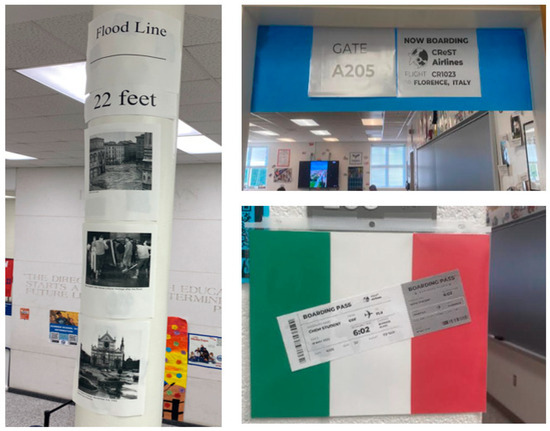
Figure 1 displays a result of the science teacher CoP following the international PD given Victoria’s description above as what the science teachers developed for Day 1 as a gallery walk on the second floor of the school building. This showcases the ‘Flood line of Firenze in 1966′ with photos from the flood as well as photos of Florence taken from the international PD throughout the hallway.
Figure 1.
Day 1 of CReST Instructional Hallway Transformed into a Gallery and Flood Line of Firenze 1966 through teacher CoP.
Victoria’s reflections illustrate early instances of identification and coordination, as she began connecting disciplinary elements through the shared artifact of the fresco and its conservation practices.
4.2. Kim
Kim is a certified chemistry and AP chemistry teacher at Site 1, holding a master’s degree in Curriculum and Instruction—Secondary Education. With twelve years of teaching experience, in this study, she taught two sections of general chemistry, totaling 51 students.
On Day 2 of the PD, Kim discussed in her journal the significance of the flood line at Santa Croce and its potential use in her classroom. She expanded on this idea during her interview,
And then when we talked about the flood and s[aw] how high those 22 feet are, that was very powerful. And to just be there and see all those great people who are buried there. And I think that gave it a lot of contexts in terms of bringing it back to my school and having that firsthand visit. I was able to, I think, execute the history and the feel of the culture a little bit better this time around than I was last year.
On Day 3 of the PD, Kim, like Victoria, visited the University of Firenze and CSGI, journaled about incorporating gels into her teaching. In her interview, she highlighted the transdisciplinary nature of the CReST curriculum, noting how the CSGI visit provided real-world applications.
…we talked about Baglioni [founder of CSGI], we talked about nanoparticles, we talked about CSGI, and this is a real industry. And so, I think it is transdisciplinary that it is involving those disciplines, but then also it’s connecting to a real-world problem. I think delivering a transdisciplinary curriculum was very powerful and it allows me to see that, okay, it’s not just chemistry curriculum, just, there’s just so much more out there. It’s not just about atoms and these elements and solubility rules and stoichiometry. It’s really the application of it all and how it’s useful in other industries and bringing other disciplines along with it. And how it all works together and how it’s moving towards a bigger picture, which is how to use this knowledge to solve things in the real world. That’s the whole end goal.
Analogous to Victoria, on the day trip to Pisa, Kim also explained that it was a profound experience for her to be able to see the fresco components up close, “Got to see the strappo technique up close with the intonachio!” Kim was able to really connect the engineering of the leaning tower of Pisa with the engineering planning process of the sinopia drawings and take this back into her classroom.
Kim was able to identify ways to transfer this new perspective of conservation of heritage into her instructional planning as she explained in her interview,
…you just get a vibe walking the streets of Florence (Firenze) of how life is here. And I was thinking about my own family and my own heritage and what the artifacts that we have like in our homes now, because my family hasn’t always lived here in the United States, it’s just interesting to see. Okay, well, we have these things that my family from previous generations have brought over from another country and have that in our homes. And seeing those artifacts in Italy made me think about those artifacts that I have even in my own house. And being able to talk to that, talk about those things with my own students. For example, what if your house was on fire or there was a flood? Like what would you grab fast? Like what has meaning to you? What tells a story to your family?
Day 1 of the CReST curriculum, she and the other teacher participants introduced house fire questions to help students relate to cultural heritage conservation. The CReST curriculum also sparked increased openness in Kim’s classroom, leading to organic discussions. During her interview she noted, “Students who typically don’t engage in chemistry spoke up and shared about their own traditions and heritage.”
Kim’s accounts reflect processes of coordination and reflection, particularly in linking disciplinary content to real-world applications and reframing chemistry instruction within a broader transdisciplinary context.
4.3. Sarah
Sarah is a certified Chemistry teacher at Site 1 with 19 years of experience. She taught two sections of general chemistry, totaling 49 students.
Sarah was asked about changes in her delivery of the CReST curriculum from year 1 to year 2. She highlighted Day 2 of the PD at Santa Croce with the integration of engineering with architectural designs and explained how the inclusion of ‘Great Thinkers’ influenced her instruction.
The students were able to focus; I was able to see the bigger picture more. I really enjoyed just seeing the images up close. Seeing what Vasari was able to do so long ago. Seeing the Duomo and the construction of it. Brunelleschi’s engineering mind was able to construct it and that way I could break this excitement, this energy with it for them to understand and grasp. Because I had that personal experience, that personal visual moment with the artwork and the construction of, you know, the Duomo and the frescoes themselves.
Like her colleagues, Sarah highlighted the impact of her visit to Pisa, particularly the Learning Tower and Sinopia Museum, on her teaching. She noted how this experience influenced her pedagogical shift from year 1 to year 2.
I felt like this year; I was able to teach the information because I knew it more. I understood it more. I saw the different layers of a fresco, especially in the SinopiaMuseum versus what it was called, the graveyard where you got to see the frescoes, and then you went into the museum, and you saw the two connecting images in one location versus the other.
Sarah explained that experiencing the artifact firsthand, particularly the fresco, helped clarify its components and improve her teaching practices.
When asked about the transdisciplinary nature of CReST, Sarah discussed in her interview how the structure of the CReST curriculum supported cross-disciplinary connections.
…definitely transdisciplinary. The engineering aspect, the chemistry aspect, the history aspect, the art aspect, they were all discussed most days. [We] definitely [focused on] engineering. We started talking about the construction of the dome and then with Pisa, and I mean, for sure, every day we started a little bit about the art, a little bit about the history… Definitely history every day…Definitely chemistry every day.
Sarah confirmed that CReST exemplifies a transdisciplinary learning approach.
Sarah’s experience highlights reflection and emerging transformation, as deeper understanding of the artifact supported changes in instructional delivery and emphasis.
4.4. David
David is a second-year engineering teacher at Site 2. The CReST PD shifted David’s instructional planning, prompting him to frame 50% classroom direct learning and about 50% hands-on. He found the “Great Thinkers” especially relevant after visiting Santa Croce and reflecting on the burial sites of influential artists. He often referenced this experience in class, using notes, photos, and videos to make lessons more engaging and personal. He explained, “It wasn’t like I was reading from a textbook; it made it more interactive and interesting for the students.” David further explains this concept:
It [PD] gave a lot of relevance to the pictures and sharing and places I had been. And I think it made it more interesting for the kids not only because I’m talking from my experience, but they could see [photos] I was in these places and I had seen it. It wasn’t like I was reading from a textbook. So, I think that made it more interesting for the kids to follow through the curriculum because that way you could see pictures of me in these places every single day.
David also shared that the PD experience deeply influenced his instructional delivery, fostering a personal connection with the content. This connection helped create more engaging lessons, where students felt comfortable and expressed pride in their own traditions through their fresco designs.
David’s reflections suggest reflection and early transformation, as experiential knowledge informed shifts toward more interactive and personally grounded instruction.
4.5. Collectively
The teachers collectively explained how seeing the Keith Haring mural Tuttomondo in Pisa was a good platform to incorporate modern art into the instructional days within their classrooms. Following the visit to the University of Firenze, they learned how the Keith Haring mural was conserved with gels from CSGI. As an extension of what the teachers had facilitated in the classroom, the gels are a variation in the conservation technique used. In the future, an interest to incorporate the more modern conservation approach, gels into their classrooms were suggested.
Additionally, the teachers all mentioned when delivering the CReST curriculum, they had real stories to share with the students in the classroom from their experiences during the international PD. Teachers also described specific classroom implementations, including the transformation of physical spaces (e.g., hallway gallery walk), use of artifact-based prompts, and incorporation of conservation techniques into instruction. Collectively, these shared experiences contributed to the development of a shared repertoire, a key feature of communities of practice, as teachers identified common artifacts, examples, and instructional strategies that could be adapted across contexts.
4.6. Limitations
Several limitations should be considered when interpreting these findings. First, the study involved a small, purposefully selected sample of four teachers within a bounded case, limiting transferability beyond similar contexts. Second, evidence of teacher learning and instructional change is based primarily on self-reported data (journals and interviews), without classroom observations, artifact analysis, or student outcome measures. Third, the immersive and international nature of the professional development introduces potential novelty effects that may influence participants’ perceptions and reported changes.
Additionally, the study does not include baseline measures of teacher beliefs or a comparison group (e.g., non-immersive PD), limiting the ability to attribute observed shifts specifically to the CReST model. Finally, the study captures teacher sensemaking at a single point following implementation and does not include longitudinal follow-up to examine sustained changes in practice. These limitations position the findings as exploratory and interpretive, offering analytic insights rather than causal claims.
5. Discussion and Conclusions
This study examined how secondary teachers made sense of convergence-oriented, transdisciplinary STEM instruction during an immersive, artifact-centered international professional development experience. Interpreted through the lens of boundary objects and communities of practice, the findings illuminate how teachers coordinated cross-disciplinary meanings and what conditions they reported as enabling or constraining.
Beyond immediate reflections on the international experience, teachers described concrete shifts in instructional planning and delivery. These included the integration of artifact-based entry tasks (e.g., gallery walks and flood line simulations), increased use of problem-centered and discussion-based approaches, and the incorporation of real-world conservation practices such as gel-based cleaning into laboratory design. While these changes are self-reported, they provide evidence of how the PD informed teachers’ instructional reasoning and classroom enactment.
Across journals and interviews, teachers described convergence instruction as becoming more concrete when anchored in shared, place-based experiences with the fresco and its conservation. Three themes merged in how teachers perceived transdisciplinary instruction and the CReST convergence approach. These findings are interpreted through the analytic lenses of boundary crossing mechanisms and communities of practice to examine how teachers constructed and shared meaning around convergence-oriented instruction.
5.1. Theme 1: Use of Boundary Objects for Cross-Disciplinary Approach
Through the mechanisms of boundary crossing (identification, coordination, reflection, and transformation), teachers positioned the fresco and related conservation practices as shared reference points that supported cross-disciplinary meaning-making. For example, Victoria described how seeing full-scale frescoes and then viewing corresponding sinopia underdrawings “allows you to put all the pieces of fresco creation together,” highlighting how physical encounters made disciplinary connections visible.
The mechanisms of identification and coordination were discussed by the teachers with their interactions with CSGI. Kim emphasized the value of linking conservation science to authentic industry contexts such as Baglioni and CSGI. Teachers also identified specific conservation tools as teachable anchors. After learning about gel-based cleaning at CSGI, Victoria wrote, “[Today we toured] the reactors used to synthesize the nanoparticles and [saw] examples of the pieces they made to test the gels. I would like to incorporate gel making in some form in the classroom. I think a lab where students can explore what specifications are needed to create a gel would be good for hands-on application of conservation techniques.”
Within this study, the fresco and conservation practices functioned as boundary objects that supported boundary crossing across STEM and humanities domains (Star & Griesemer, 1989; Leung, 2020). Rather than treating integration as an abstract mandate, teachers used shared encounters with artifacts, sites, and technologies to coordinate understanding across disciplines (e.g., chemistry of plaster and gels, engineering of structures, historical contexts of production and preservation). This suggests that PD designs that foreground a tangible object and provide opportunities to engage with expert practices around those objects, may foster transformation and support more coherent teacher reasoning about convergence aims (Akkerman & Bakker, 2011).
The immersive and experiential transdisciplinary PD provided the high school teachers with the mechanisms of reflection with an invaluable source of first-hand knowledge of Renaissance, Chemistry, restoration technologies, and engineering. This aligns with the work done by Yang et al. (2018) where students who had teachers who completed more than 150 h of PD hours on interdisciplinary science performed significantly better on assessments given the transformation of teachers’ knowledge and practice. Further research into the effect of this intervention on student academic performance should be investigated. This demonstrates how boundary objects functioned not only as shared artifacts but as analytic anchors through which teachers coordinated disciplinary understanding and instructional reasoning.
5.2. Theme 2: Shifts in Pedagogical Reasoning Towards Problem-Centered, Artifact-Anchored Instruction
Teachers’ accounts indicated shifts in how they reasoned about lesson design and student engagement. Kim described her intention to incorporate more problem-based learning to introduce chemistry concepts and ‘make lessons more authentic through a converging lens.” She also described students’ increased participation when instruction invited connections to tradition and heritage: “Students who typically don’t engage in chemistry spoke up and shared about their own traditions and heritage.”
Sarah highlighted how the immersive experience supported her ability to communicate “excitement” and “energy” to students because she could draw on personal, visual encounters with sites, engineering problems, and artwork. David similarly described moving away from textbook-centered delivery toward more interactive instruction: “It wasn’t like I was reading from a textbook; it made it more interactive and interesting for the students.” Collectively, these accounts suggest that the PD experience strengthened teachers’ pedagogical justifications for convergence teaching even as evidence of classroom enactment remains self-reported.
Teachers described shifts in pedagogical reasoning towards problem-centered artifact-anchored instruction. This is depicted in Figure 1 where the teachers had transformed the school hallway to simulate the flood line and artifacts from Firenze. While the data do not permit causal claims about verified classroom enactment, teachers’ accounts align with literature emphasizing that effective PD supports teachers in developing new instructional explanations, examples, and rationales that can later be enacted in practice (Guskey, 2002; Desimone, 2011; Shernoff et al., 2017). The present study extends this literature by illustrating how such rationales can be built through boundary objects that invite culturally grounded relevance without requiring teachers to treat culture as an “add-on” (Lave & Wenger, 1991; Wenger, 1998; Vescio et al., 2008; Han et al., 2021). Sensemaking was treated as a collective, socially mediated process (Weick, 1995; Coburn, 2001; Spillane et al., 2002). These shifts were not solely individual but were shaped through interaction and shared discourse, reflecting learning processes consistent with communities of practice. Importantly, these accounts extend beyond general perceptions of engagement to include specific instructional moves and design decisions, suggesting that the PD influenced not only how teachers conceptualized convergence-oriented instruction but how they enacted it in their classrooms.
5.3. Theme 3: Emerging Shared Repertoire and Conditions for Sustained Collaboration
Teachers referenced a developing shared repertoire, a defining feature of communities of practice (Wenger, 1998), including examples, tools, and instructional strategies (e.g., Santa Croce flood history, conservation technologies, the Keith Haring mural in Pisa) that they viewed as adaptable for their local contexts. As a group, they highlighted the Keith Haring mural, Tuttomondo, as an opportunity to connect modern art and tradition while revisiting advanced materials technologies-based approaches to conservation techniques introduced during the university visit. Teachers also described an expanded interest in identifying local artifacts as potential boundary objects that could connect disciplines beyond the Italian Renaissance.
At the same time, participants framed sustained collaboration as necessary to extend learning beyond the immersive experience. Teachers emphasized the value of shared planning time, access to curricular resources, and continued interaction with content experts-conditions consistent with sociocultural accounts of learning that require ongoing participation and shared tools rather than one-time exposure. These findings highlight how the PD functioned as an initial community of practice, while also underscoring the need for sustained structures to support continued participation and learning.
5.4. Conclusions
Taken together, the findings suggest an important design implication for teacher professional development: using boundary objects as organizing anchors can help teachers explain, justify, and adapt convergence instruction across contexts. Future research should triangulate teacher self-report with enacted lesson artifacts and classroom observations to examine how boundary-object-anchored PD influences practice over time. While based on self-reported data, the findings provide evidence of early instructional shifts, including changes to lesson structure, use of artifacts, and increased emphasis on real-world problem framing. These conclusions reinforce the role of boundary objects and communities of practice as complementary mechanisms supporting teacher learning in convergence-oriented professional development. Key conclusions from this study include:
- Cultural heritage artifacts can function as boundary objects that help teachers articulate and coordinate cross-disciplinary connections central to convergence education.
- Immersive, site-based PD may strengthen teachers’ pedagogical reasoning and the instructional examples they use to justify transdisciplinary teaching; however, claims about classroom change should be supported with observational or artifact-based evidence.
- Short-term PD can seed a shared repertoire, but sustained communities of practice require ongoing structures (time, resources, and continued collaboration) to support teachers’ continued development of convergence pedagogy.
Author Contributions
Conceptualization, J.K.F. and R.S.W.; methodology, R.S.W., K.S.G., and J.K.F.; formal analysis, R.S.W., K.S.G., and J.K.F.; investigation, J.K.F. and R.S.W.; resources, J.K.F.; data curation, R.S.W.; writing—original draft preparation, R.S.W.; writing—review and editing, J.K.F., K.S.G., and R.S.W.; visualization, J.K.F. and R.S.W.; supervision, J.K.F. and K.S.G.; project administration, R.S.W.; funding, J.K.F. All authors have read and agreed to the published version of the manuscript.
Funding
This research received no external funding.
Institutional Review Board Statement
This study was approved by the Virginia Commonwealth University Institutional Review Board (IRB #HM20026464, on 15 March 2023) and the Old Do-minion University IRB (Project #2042918), as well as participating school divisions. Teachers provided informed consent prior to participation and were informed of their right to withdraw at any time. Interviews were conducted following classroom implementation in May and June 2023.
Informed Consent Statement
Informed consent was obtained from all subjects involved in the study.
Data Availability Statement
Anonymized data are available upon reasonable request from the corresponding author.
Acknowledgments
The authors would like to thank the participating teachers and school division for their partnership and involvement with this project. I would also like to acknowledge the Department of Chemical and Life Science Engineering, Virginia Commonwealth University, for supporting this research.
Conflicts of Interest
The authors declare no conflicts of interest.
Appendix A
- What did you do today?
- List one name of an important person from today.
- List one or more historical events, fun facts, or technology that you learned about today.
- What did you learn today that made you think about your own culture and tradition?
- What did you experience today that could be beneficial to implement into your classroom instruction? Why?
Appendix B
- Which parts of the international professional development to Italy did you find to be useful when implementing this learning approach in your classroom?
- How did your instructional delivery of the CReST curriculum alter from last year to this year following international professional development?
- How has this intervention changed your experiences as a teacher? Has there been any transfer from this experience into your other pedagogical approaches?
- Would you describe the CReST curriculum as transdisciplinary? If so, what was your experience in delivering transdisciplinary learning?
- How did the international PD make you think about your own culture and others? Did this have any impact on your instructional delivery?
- What suggestions, if any, do you have to improve the CReST curriculum to better support student learning?
References
- Akkerman, S. F., & Bakker, A. (2011). Boundary crossing and boundary objects. Review of Educational Research, 81(2), 132–169. [Google Scholar] [CrossRef] [Scilit]
- Blumer, H. (1969). Symbolic interactionism: Perspective and method. University of California Press. [Google Scholar]
- Borko, H. (2004). Professional development and teacher learning: Mapping the terrain. Educational Researcher, 33(8), 3–15. [Google Scholar] [CrossRef] [Scilit]
- Braun, V., & Clarke, V. (2016). Using thematic analysis in psychology. Qualitative Research in Psychology, 3(2), 77–101. [Google Scholar] [CrossRef] [Scilit]
- Breiner, J. M., Harkness, S. S., Johnson, C. C., & Koehler, C. M. (2012). What is stem? A discussion about conceptions of STEM in education and partnerships. School Science and Mathematics, 112(1), 3–11. [Google Scholar] [CrossRef] [Scilit]
- Burke, B. M. (2013). Experiential professional development: A model for meaningful and long-lasting change in the classrooms. Journal of Experiential Education, 36(3), 247–263. [Google Scholar] [CrossRef] [Scilit]
- Carlile, P. R. (2004). Transferring, translating, and transforming: An integrative framework for managing knowledge across boundaries. Organization Science, 15(5), 555–568. [Google Scholar] [CrossRef] [Scilit]
- Century, J., Ferris, K. A., & Zuo, H. (2020). Finding time for computer science in the elementary school day: A quasi-experimental study of a transdisciplinary problem-based learning approach. International Journal of STEM Education, 7(1), 20. [Google Scholar] [CrossRef] [Scilit]
- Clarke, D., & Hollingsworth, H. (2002). Elaborating a model of teacher professional growth. Teaching and Teacher Education, 18(8), 947–967. [Google Scholar] [CrossRef] [Scilit]
- Coburn, C. E. (2001). Collective sensemaking about reading: How teachers mediate reading policy in their professional communities. Educational Evaluation and Policy Analysis, 23(2), 145–170. [Google Scholar] [CrossRef] [Scilit]
- Creswell, J. W., & Poth, C. N. (2018). Qualitative inquiry and research design: Choosing among five approaches (4th ed.). SAGE Publications. [Google Scholar]
- Darling-Hammond, L., Hyler, M. E., & Gardner, M. (2017). Effective teacher professional development. Learning policy institute. [Google Scholar]
- Desimone, L. M. (2009). Improving impact studies of teachers’ professional development: Toward better conceptualizations and measures. Educational Researcher, 38(3), 181–199. [Google Scholar] [CrossRef] [Scilit]
- Desimone, L. M. (2011). A primer on effective professional development. Phi Delta Kappan, 92(6), 68–71. [Google Scholar] [CrossRef] [Scilit]
- Dirkx, J. M. (2006). Engaging emotions in adult learning: A Jungian perspective on emotion and transformative learning. New Directions for Adult and Continuing Education, 2006(109), 15–26. [Google Scholar] [CrossRef] [Scilit]
- English, L. D. (2016). STEM education K-12: Perspectives on integration. International Journal of STEM Education, 3(1), 3. [Google Scholar] [CrossRef] [Scilit]
- Ferri, J. K., & White, R. S. (2024). Culturally relevant STEM (CReST): An integrated support curriculum for high school chemistry and world history. Education Sciences, 14(2), 182. [Google Scholar] [CrossRef] [Scilit]
- Guskey, R. T. (2002). Professional development and teacher change. Teachers and Teaching: Theory and Practice, 8(3), 381–391. [Google Scholar] [CrossRef] [Scilit]
- Han, J., Kelley, T. R., Mentzer, N., & Knowles, J. G. (2021). Community of practice in integrated STEM Education: A systematic literature review. Journal of STEM Teacher Education, 56(2), 5. [Google Scholar] [CrossRef] [Scilit]
- Honey, M., Pearson, G., & Schweingruber, H. (2014). Stem integration in K-12 education: Status, prospects, and an agenda for research. National Academies Press. [Google Scholar] [CrossRef] [Scilit]
- Kelley, T. R., & Knowles, J. G. (2016). A conceptual framework for integrated STEM Education. International Journal of STEM Education, 3(1), 11. [Google Scholar] [CrossRef] [Scilit]
- Kolb, D. A. (1984). Experiential learning: Experience as the source of learning and development. Prentice-Hall. [Google Scholar]
- Kvale, S., & Brinkmann, S. (2015). InterViews: Learning the craft of qualitative research interviewing (3rd ed.). Sage. [Google Scholar]
- Lave, J., & Wenger, E. (1991). Situated learning: Legitimate peripheral participation. Cambridge University Press. [Google Scholar]
- Lestari, I. F. (2021). Experiential learning using STEM approach in improving students’ problem-solving ability. Journal of Physics: Conference Series, 1806, 012005. [Google Scholar] [CrossRef] [Scilit]
- Leung, A. (2020). Boundary crossing pedagogy in STEM education. International Journal of STEM Education, 7(1), 15. [Google Scholar] [CrossRef] [Scilit]
- Lincoln, Y., & Guba, E. (1985). Naturalistic inquiry. SAGE Publications. [Google Scholar]
- Long, N. T., Yen, N. T. H., & Van Hanh, N. (2020). The role of experiential learning and engineering design process in K-12 STEM education. International Journal of Education and Practice, 8(4), 720–732. [Google Scholar] [CrossRef] [Scilit]
- Malterud, K., Dybå, V., & Siersma, A. D. (2016). Sample size in qualitative interview studies: Guided by information power. Qualitative Health Research, 26(13), 1753–1760. [Google Scholar] [CrossRef] [Scilit] [PubMed]
- Mezirow, J. (1997). Transformative learning: Theory to practice. New Directions for Adult and Continuing Education, 1997(74), 5–12. [Google Scholar] [CrossRef] [Scilit]
- Miles, M. B., Huberman, A. M., & Saldaña, J. (2014). Qualitative data analysis: A methods sourcebook (3rd ed.). Sage. [Google Scholar]
- National Research Council. (2014). Convergence: Facilitating transdisciplinary integration of life sciences, physical sciences, engineering, and beyond. National Academies Press. [Google Scholar] [CrossRef] [Scilit]
- Opfer, V. D., & Pedder, D. (2011). Conceptualizing teacher professional learning. Review of Educational Research, 81(3), 376–407. [Google Scholar] [CrossRef] [Scilit]
- Patton, M. Q. (2015). Qualitative research & evaluation methods (4th ed.). Sage. [Google Scholar]
- Rittberg, C. J., & Van Kerkhove, B. (2019). Studying mathematical practices: The dilemma of case studies. ZDM, 51(5), 857–868. [Google Scholar] [CrossRef] [Scilit]
- Saldaña, J. (2021). The coding manual for qualitative researchers. SAGE. [Google Scholar]
- Schneider, B., Krajcik, J., Lavonen, J., Salmela-Aro, K., Klager, C., Bradford, L., Chen, I.-C., Baker, Q., Touitou, I., Peek-Brown, D., Dezendorf, R. M., Maestrales, S., & Bartz, K. (2022). Improving science achievement—Is it possible? Evaluating the efficacy of a high school chemistry and physics project-based learning intervention. Educational Researcher, 51(2), 109–121. [Google Scholar] [CrossRef] [Scilit]
- Shernoff, D. J., Sinha, S., Bressler, D. M., & Ginsburg, L. (2017). Assessing teacher education and professional development needs for the implementation of integrated approaches to STEM education. International Journal of STEM Education, 4(1), 13. [Google Scholar] [CrossRef] [Scilit] [PubMed]
- Spillane, J. P., Reiser, B. J., & Reimer, T. (2002). Policy implementation and cognition: Reframing and refocusing implementation research. Review of Educational Research, 72(3), 387–431. [Google Scholar] [CrossRef] [Scilit]
- Star, S. L., & Griesemer, J. R. (1989). Institutional ecology, ‘translations’ and boundary objects: Amateurs and professionals in Berkeley’s museum of vertebrate zoology, 1907–39. Social Studies of Science, 19(3), 387–420. [Google Scholar] [CrossRef] [Scilit]
- Vescio, V., Ross, D., & Adams, A. (2008). A review of research on the impact of professional learning communities on teaching practice and student learning. Teaching and Teacher Education, 24(1), 80–91. [Google Scholar] [CrossRef] [Scilit]
- Weick, K. E. (1995). Sensemaking in organizations. SAGE Publications. [Google Scholar]
- Wenger, E. (1998). Communities of practice: Learning, meaning, and identity. Cambridge University Press. [Google Scholar]
- Wenger, E., McDermott, R., & Snyder, W. M. (2002). Seven principles for cultivating communities of practice. Harvard Business School Press. [Google Scholar]
- White, R. S., Gutierrez, K., & Ferri, J. (2026). Artifact centered interdisciplinary instruction supports secondary student learning in chemistry history and engineering. Discover Education. Accepted for publication 4/28/26.
- Yang, Y., Liu, X., & Gardella, J. A. (2018). Effects of professional development on teacher pedagogical content knowledge, inquiry teaching practices, and student understanding of interdisciplinary science. Journal of Science Teacher Education, 29(4), 263–282. [Google Scholar] [CrossRef] [Scilit]

Disclaimer/Publisher’s Note: The statements, opinions and data contained in all publications are solely those of the individual author(s) and contributor(s) and not of MDPI and/or the editor(s). MDPI and/or the editor(s) disclaim responsibility for any injury to people or property resulting from any ideas, methods, instructions or products referred to in the content. |
© 2026 by the authors. Licensee MDPI, Basel, Switzerland. This article is an open access article distributed under the terms and conditions of the Creative Commons Attribution (CC BY) license.