


Next Issue
Volume 14, September
Previous Issue
Volume 14, July


Pharmacy, Volume 14, Issue 5 (August 2026) – 16 articles
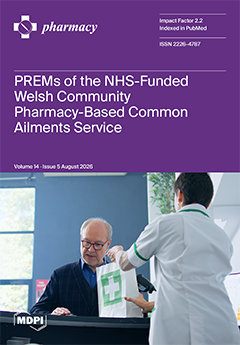
Cover Story (view full-size image): The NHS-funded Common Ailments Service (CAS) in Wales enables community pharmacists to manage 28 common ailments by providing advice and/or medication free of charge without the need for patients to book an appointment. Our study evaluated the patient experience of the CAS using patient-reported experience measures (PREMs). Overall experience reported in 3660 completed surveys was rated as excellent by 95.1% of participants, and 97.8% of respondents had their minor health issue fully managed directly inside the community pharmacy. A theory-based framework analysis of 1499 free-text comments across the six domains of healthcare quality confirmed the high standard of care provision, primarily influenced by consultation quality, convenience, accessibility, and short waiting times. View this paper
  • Issues are regarded as officially published after their release is announced to the table of contents alert mailing list.
  • You may sign up for e-mail alerts to receive table of contents of newly released issues.
  • PDF is the official format for papers published in both, html and pdf forms. To view the papers in pdf format, click on the "PDF Full-text" link, and use the free Adobe Reader to open them.
Order results
Result details
Section
Select all
Export citation of selected articles as:
16 pages, 2649 KB  
Article
A Cross-Sectional Analysis of Deprescribing Curricular Exposure, Attitudes, and Preparedness Among Undergraduate Pharmacy Students in Saudi Arabia
by Lina Altayeb, Hend Talkhan, Rayah Asiri, Rawan Aloqran, Arwa Al Saeed and Khalid Orayj
Pharmacy 2026, 14(5), 124; https://doi.org/10.3390/pharmacy14050124 - 21 Aug 2026
Viewed by 332
Abstract
Objectives: This study aimed to assess pharmacy students’ curricular exposure to deprescribing, their attitudes and preparedness to perform core deprescribing steps, and their understanding of interprofessional roles in the deprescribing process. Methods: A cross-sectional online survey that included undergraduate pharmacy students in their [...] Read more.
Objectives: This study aimed to assess pharmacy students’ curricular exposure to deprescribing, their attitudes and preparedness to perform core deprescribing steps, and their understanding of interprofessional roles in the deprescribing process. Methods: A cross-sectional online survey that included undergraduate pharmacy students in their fifth or sixth year of study, who were enrolled in Saudi universities during the academic year 2025/2026. A 43-item self-administered validated questionnaire was used. The independent-samples t-test was used to examine differences in attitudes and preparedness among participants via SPSS 27. Results: In total, 367 students from 23 universities participated in the study; 54.0% were female, and 62.1% were in their fifth year. Familiarity with the term ‘deprescribing’ was reported by 55.3% of participants. Participants demonstrated highly positive attitudes toward the benefits of deprescribing, moderate toward misconceptions, and low toward barriers, with mean percentage scores of 85.08%, 66.50%, and 41.93%, respectively. Participants indicated moderately positive perceptions toward the non-experiential curriculum preparedness to identify and practice deprescribing and self-perception of the ability to perform core deprescribing steps, with mean percentage scores of 70.2% and 77.24%, respectively. Statistically significant differences were observed in the perception of curriculum preparedness by gender (p = 0.038), familiarity with the term deprescribing (p < 0.001), and exposure to deprescribing in the required pharmacy curriculum (p < 0.001). Participants perceived clinical pharmacists as having the greatest role across most stages of the deprescribing process. Conclusions: Undergraduate pharmacy students in Saudi Arabia recognize the value of deprescribing but have limited curricular exposure and moderate perceived preparedness to deprescribe. Full article
Show Figures

Figure 1

15 pages, 752 KB  
Article
Beyond the Counter: Assessing NSAIDs Dispensing and Use Among Community Pharmacies in Saudi Arabia’s Eastern Region: A Cross-Sectional Study
by Mohamed A. Albekery, Helal F Hetta, Shatha A. Almikhlal, Aisha Y. Alfraih, Nora Aldhuhayyan, Zahra Alarbsh, Abdulrahman Abdullah Alnijadi, Monther Alsultan and Abdullah Al Hamid
Pharmacy 2026, 14(5), 123; https://doi.org/10.3390/pharmacy14050123 - 20 Aug 2026
Viewed by 358
Abstract
Background: Non-steroidal anti-inflammatory drugs (NSAIDs) are widely used for pain, inflammation, and fever. Although many NSAIDs are available without a prescription, inappropriate use may increase the risk of renal, gastrointestinal, and cardiovascular complications. This study evaluated NSAID dispensing patterns and potential risk practices [...] Read more.
Background: Non-steroidal anti-inflammatory drugs (NSAIDs) are widely used for pain, inflammation, and fever. Although many NSAIDs are available without a prescription, inappropriate use may increase the risk of renal, gastrointestinal, and cardiovascular complications. This study evaluated NSAID dispensing patterns and potential risk practices in community pharmacies in the Eastern Province of Saudi Arabia. Methods: A cross-sectional study was conducted in 90 community pharmacies across Al-Ahsa, Al-Dammam, and Jubail Industrial City between February and March 2025. Data on demographics, NSAID type, indication, dosage, frequency, duration, and concomitant medication use were collected and analyzed descriptively. Results: Among the 171 documented NSAID dispensing cases, 98 (57.3%) occurred without a prescription, whereas 73 (42.7%) involved prescription-based dispensing. Ibuprofen (62%) and diclofenac (36.3%) were the most commonly dispensed agents, with oral tablets being the preferred formulation (76.6%). Most documented treatment durations were short (3–7 days) with once- or twice-daily dosing. Common documented indications included dental conditions, pain, and inflammation, although the indication was not specified in 57.3% of cases. At least one potential interaction was identified in 11(7.8%, 95% CI 4.4–13.4%) of the 141 cases with concomitant medication use, corresponding to 13 (5.9%, 95% CI 3.5–9.9%) potential interaction pairs. Conclusions: Frequent non-prescription NSAID dispensing, incomplete documentation, and potentially clinically relevant drug interactions highlight the need to strengthen medication review, documentation, public awareness, regulatory oversight, and pharmacist counseling in community pharmacy practice. Full article
(This article belongs to the Topic Optimization of Drug Utilization and Medication Adherence)
Show Figures

Figure 1

13 pages, 2924 KB  
Article
Safe Handover or Lost in Transition?—A Retrospective Evaluation of Pharmacist Referrals to Primary Care Following Hospital Discharge
by Katarina Wickman, Cecilia Lenander, Gabriella Caleres and Sara Modig
Pharmacy 2026, 14(5), 122; https://doi.org/10.3390/pharmacy14050122 - 20 Aug 2026
Viewed by 267
Abstract
The medication-related problems identified by clinical pharmacists during hospitalisation may be better addressed after patient discharge and recovery from acute illness. This approach enables follow-up and may reduce the risks associated with multiple medication changes. However, inadequate information transfer at discharge is a [...] Read more.
The medication-related problems identified by clinical pharmacists during hospitalisation may be better addressed after patient discharge and recovery from acute illness. This approach enables follow-up and may reduce the risks associated with multiple medication changes. However, inadequate information transfer at discharge is a recognised patient safety risk. Referral-based communication between clinical pharmacists and general practitioners (GPs) is a novel procedure in southern Sweden. This retrospective observational study aimed to describe the patient population, medication-related problems, their clinical relevance, and resulting GP actions. Data were collected from pharmacist referrals and electronic medical records between Q4 2021 and Q4 2023. Medication-related problems were categorised, recommendations were assessed for clinical relevance, and follow-up within six months after discharge was analysed to determine whether GPs accepted the recommendations. Forty patients with 58 medication-related problems were included. Women accounted for 70% of the patients, the median age was 79.5 years, and 75% had extensive polypharmacy. Adherence problems were most common (22%). Overall, 98% of the recommendations were considered clinically relevant. Of the 48 assessable recommendations, 77% were implemented in primary care. No statistical association between clinical relevance and implementation was detected (odds ratio 2.27, p = 0.247, CI 0.57–9.04). Pharmacist referrals at discharge may support information transfer and provide clinically relevant recommendations that improve medication safety. Full article
Show Figures

Graphical abstract

10 pages, 297 KB  
Article
A Novel Fixed-Dose Activated Prothrombin Complex Concentrate Regimen for Warfarin-Associated Hemorrhages: A Retrospective Cohort Comparison of Two Regimens
by Francisco Ibarra, Jr., Evan Cheng and Benjamin Falkenstein
Pharmacy 2026, 14(5), 121; https://doi.org/10.3390/pharmacy14050121 - 19 Aug 2026
Viewed by 221
Abstract
The optimal fixed-dose strategy for managing warfarin-associated hemorrhages remains unknown and few studies have evaluated the use of Factor VIII Inhibitor Bypass Activity (FEIBA). This retrospective cohort study’s primary efficacy outcome was the percentage of patients who achieved a post-FEIBA INR ≤ 1.5 [...] Read more.
The optimal fixed-dose strategy for managing warfarin-associated hemorrhages remains unknown and few studies have evaluated the use of Factor VIII Inhibitor Bypass Activity (FEIBA). This retrospective cohort study’s primary efficacy outcome was the percentage of patients who achieved a post-FEIBA INR ≤ 1.5 following receipt of the old and new dosing regimens. In the old group patients received 500 or 1000 units for an INR < 5 or ≥5, respectively. In the new group patients received 1000, 1500, or 2000 units for an INR < 5, 5–9.9, or ≥10, respectively. Eighteen patients were included in each group. The median (IQR) pre-FEIBA INR in the old and new groups was 6.1 (3.1–12.9) and 5.3 (3.4–13.0), respectively [difference: −0.8 (95 CI%, −7.2 to 6.5)]. The median (IQR) post-FEIBA INR in the old and new groups was 1.6 (1.4–2.1) and 1.4 (1.2–1.5), respectively [difference: −0.2 (95% CI: −0.6 to 0.0)]. A post-FEIBA INR ≤ 1.5 was achieved in 14 (78%) patients in the new group and 9 (50%) patients in the old group (relative risk: 1.56; 95% CI, 0.91 to 2.7; p = 0.16). The post-FEIBA INR values in the patients who did not achieve a post-FEIBA INR ≤ 1.5 in the new group were 1.6, 1.6, 1.8, and 2.4. Among patients with a baseline INR ≥ 10, significantly more patients in the new group achieved a post-FEIBA INR ≤ 1.5 compared to the old group (86% vs. 17%, respectively). These findings suggest that the new FEIBA dosing regimen may improve INR reversal compared with the previous regimen, particularly among patients with a baseline INR ≥ 10, but larger studies are needed to confirm this observation. Full article
(This article belongs to the Section Pharmacy Practice and Practice-Based Research)
Show Figures

Figure 1

15 pages, 1438 KB  
Article
A Retrospective Cohort Study to Optimize Piperacillin/Tazobactam Dosing in Routine Intensive-Care Patients via a Newly Designed Clinical Pharmacy Service Including TDM- and Algorithm-Based Recommendations
by Johanna Dicken, Daniel Dönisch, Jan Hensen, Olaf Zube and Thilo Bertsche
Pharmacy 2026, 14(5), 120; https://doi.org/10.3390/pharmacy14050120 - 17 Aug 2026
Viewed by 279
Abstract
Background: Therapeutic drug monitoring (TDM) for piperacillin/tazobactam has become established in intensive care. TDM should be used in a structured approach to optimize dosing. We evaluated a newly designed TDM- and algorithm-based clinical-pharmacy-service to determine whether it is appropriate for optimization. Methods: We [...] Read more.
Background: Therapeutic drug monitoring (TDM) for piperacillin/tazobactam has become established in intensive care. TDM should be used in a structured approach to optimize dosing. We evaluated a newly designed TDM- and algorithm-based clinical-pharmacy-service to determine whether it is appropriate for optimization. Methods: We developed a clinical pharmacy service providing algorithmic recommendations for optimizing piperacillin/tazobactam dosing based on piperacillin TDM. After implementing the clinical pharmacy service, we evaluated the treatment of intensive-care patients with piperacillin/tazobactam in terms of achieving the minimum-inhibitory-concentration-(MIC)-related target concentration at the following four time points: t1, t2, t3, and t4 (1–4 working days after piperacillin/tazobactam therapy was started). Results: A total of 132 patients (including 36% women), median age 78 years, received piperacillin/tazobactam therapy. Sepsis or septic shock was the most common indication (43%), while a pulmonary focus was most frequent (40%). From 132 patients (t1), 19% had “too low piperacillin concentrations”, 20% “appropriate concentrations”, and 61% “too high concentrations”. After recommendations were given (acceptance rate 100%) the corresponding numbers from 93 remaining patients (t2) were 16%, 35%, and 48%, from 49 patients (t3) 8%, 53%, and 39% and from 29 patients (t4) 38%, 45%, and 17%. In (t1), dose reduction was the main recommendation (49%). The number of patients with “appropriate concentrations” increased in one comparison (t1–t2: n.s.; t1–t3: p = 0.0013; t1–t4: n.s.; Bonferroni-corrected McNemar test), while “too high concentrations” decreased (t1–t2: p = 0.0080; t1–t3: p = 0.0056; t1–t4: p = 0.0095). “too low concentrations” were not influenced (t1–t2: n.s.; t1–t3: n.s.; t1–t4: n.s.). Conclusions: Inappropriate piperacillin plasma concentrations were common. A TDM- and algorithm-based clinical-pharmacy-service especially decreased the number of overdosed patients in routine practice. Full article
Show Figures

Graphical abstract

11 pages, 931 KB  
Article
The Implementation and One-Year Evaluation of a Pre-Admission Pharmacist for Obstetric Admissions
by Bridget Clark, Nabeelah Mukadam, Tamara Lebedevs and Stephanie Wai Khuan Teoh
Pharmacy 2026, 14(5), 119; https://doi.org/10.3390/pharmacy14050119 - 17 Aug 2026
Viewed by 286
Abstract
(1) Objective: This study aims to evaluate the pre-admission clinic (PAC) pharmacist for high-risk obstetric patients’ admissions on medication management processes, workflow efficiency, and staff satisfaction. (2) Methods: Data collected over a 12-month period, from March 2025 to February 2026, were analysed. Data [...] Read more.
(1) Objective: This study aims to evaluate the pre-admission clinic (PAC) pharmacist for high-risk obstetric patients’ admissions on medication management processes, workflow efficiency, and staff satisfaction. (2) Methods: Data collected over a 12-month period, from March 2025 to February 2026, were analysed. Data collected included clinic type, patient attendance, mode of pharmacist review, and follow-up requirements. Multidisciplinary healthcare professionals were invited to complete a satisfaction survey to identify themes relating to service value, workflow impact, and opportunities for improvement. (3) Results: A total of 1039 interviews with obstetric patients, equating to an average of 19.98 interviews per week. A total of 999 patients were involved in the 1039 interviews held, 40/999 (4%) patients required additional follow-up telephone interview and 14 patients (14/999, 1.4%) required in-person interview for interpreter services, detailed discussion or hearing impairment. Thirty-two staff responded to a survey and demonstrated a consistent trend across anaesthetists, nursing and midwifery staff, and pharmacists. All respondents either agreed or strongly agreed that a PAC pharmacist in the obstetric setting was valuable and beneficial to clinical workflow and medication management processes, and that they were satisfied with the PAC pharmacy service. (4) Conclusions: The PAC pharmacist demonstrated a positive impact on medication management for obstetric patients within the pre-admission setting. Full article
(This article belongs to the Special Issue Advancing Pharmacy Practice: Innovations and Expanding Horizons)
Show Figures

Graphical abstract

13 pages, 943 KB  
Article
Patterns and Safety-Related Aspects of Antidepressant and Anxiolytic Use Among Healthcare Students and University Staff at a Brazilian Public University: A Cross-Sectional Study
by Núbia Vieira Alves, Geórgia Almeida Sant’Ana, Jorge Fernando Carrozza, Gabriela Moraes Oliveira, Carlos Ferreira Santos and Adriana Maria Calvo
Pharmacy 2026, 14(5), 118; https://doi.org/10.3390/pharmacy14050118 - 13 Aug 2026
Viewed by 292
Abstract
Background/Objectives: The use of antidepressants and anxiolytics has increased worldwide, raising concerns about treatment patterns, medication safety, and rational use. This study aimed to characterize the frequency, utilization patterns, and safety-related aspects of antidepressant and anxiolytic use among healthcare students and university staff [...] Read more.
Background/Objectives: The use of antidepressants and anxiolytics has increased worldwide, raising concerns about treatment patterns, medication safety, and rational use. This study aimed to characterize the frequency, utilization patterns, and safety-related aspects of antidepressant and anxiolytic use among healthcare students and university staff at a Brazilian public university. Methods: A cross-sectional study was conducted between September 2024 and June 2025 using an online questionnaire administered to students and staff at the University of São Paulo, Brazil. Descriptive statistics and multivariable logistic regression were applied to characterize medication utilization patterns and evaluate factors associated with antidepressant and/or anxiolytic use. Results: Among the 300 participants, 167 (55.7%) reported antidepressant and/or anxiolytic use during the previous six months. Most users reported treatment for more than one year (59.9%), anxiety as the primary indication (68.3%), and prescription by a healthcare professional (93.4%). A total of 203 medications were reported, with selective serotonin reuptake inhibitors being the most common pharmacological class (42.4%). Among users, 99 (59.3%) reported at least one self-reported adverse effect, most commonly excessive drowsiness, reduced libido/sexual dysfunction, dry mouth, headache, and nausea. No statistically significant independent associations were identified between antidepressant and/or anxiolytic use and the evaluated sociodemographic characteristics. Conclusions: Antidepressant and anxiolytic use was frequently reported and was characterized by predominantly long-term, professionally prescribed treatment and frequent self-reported adverse effects. These findings may inform institutional strategies to improve access to mental healthcare while promoting the rational and safe use of psychotropic medications within university settings. Full article
Show Figures

Graphical abstract

13 pages, 1366 KB  
Article
Frequency and Profiles of Drug Combinations Constituting the Triple Whammy in Japan: An Analysis of a Patient Estimation Database
by Mari Maese, Nozomi Ito, Haruka Shiokawa, Shingo Kondo, Yuko Okamoto, Hiroki Iwata, Shunsuke Urushibata and Katsunori Yamaura
Pharmacy 2026, 14(5), 117; https://doi.org/10.3390/pharmacy14050117 - 8 Aug 2026
Viewed by 387
Abstract
“Triple whammy” prescriptions, combining non-steroidal anti-inflammatory drugs (NSAIDs), renin–angiotensin system (RAS) inhibitors, and diuretics, increase acute kidney injury (AKI) risk. To clarify the frequency and profiles of these prescriptions and identify vulnerable populations, we analyzed the AHI partners database to estimate the number [...] Read more.
“Triple whammy” prescriptions, combining non-steroidal anti-inflammatory drugs (NSAIDs), renin–angiotensin system (RAS) inhibitors, and diuretics, increase acute kidney injury (AKI) risk. To clarify the frequency and profiles of these prescriptions and identify vulnerable populations, we analyzed the AHI partners database to estimate the number of individuals prescribed these three drug classes. In the single-agent analysis, loxoprofen was the most commonly prescribed NSAID (66.3%), olmesartan (19.4%) and telmisartan (15.9%) were the predominant RAS inhibitors, and furosemide (19.6%) and spironolactone (16.0%) were the most frequently used diuretics. Dual-drug combinations showed patterns consistent with the single-agent results for NSAIDs and diuretics. By contrast, sacubitril/valsartan was the most common RAS inhibitor when combined with diuretics, frequently utilized for heart failure management. In triple whammy prescriptions, NSAIDs and diuretics patterns mirrored those of single-agents. The annual number of triple whammy prescriptions showed a statistically significant downward trend over the study period by the Mann–Kendall trend test (p = 0.048). Notably, sacubitril/valsartan was the leading RAS inhibitor (46/199 patients, 23%), showing a higher proportion than its single-agent use (7.4%). Heart failure patients prescribed these two causative drugs are highly vulnerable to “triple whammy” prescriptions. Awareness of inadvertent NSAID additions is warranted to mitigate potential AKI risks. Full article
Show Figures

Graphical abstract

13 pages, 1362 KB  
Article
Medicine Inventories and Practices of Self-Medication in Households of Medical and Pharmacy Students at the University of Rijeka, Croatia: A Cross-Sectional Study with Implications for Healthcare Professions Education
by Vedrana Aljinović-Vučić and Jasenka Mršić-Pelčić
Pharmacy 2026, 14(5), 116; https://doi.org/10.3390/pharmacy14050116 - 7 Aug 2026
Viewed by 433
Abstract
Background/Objectives: Self-medication and keeping medicine inventory in households are common practices, even among healthcare professionals and healthcare professions students. Despite their knowledge of appropriate medicine use and storage, these practices are not always responsible and may pose health risks. This study aimed to [...] Read more.
Background/Objectives: Self-medication and keeping medicine inventory in households are common practices, even among healthcare professionals and healthcare professions students. Despite their knowledge of appropriate medicine use and storage, these practices are not always responsible and may pose health risks. This study aimed to describe self-medication practices, contents of home pharmacies, and habits of keeping medicine inventories in households of medical and pharmacy students at the Faculty of Medicine, University of Rijeka. Methods: In this cross-sectional study conducted in 2025, 60 third-year medical and pharmacy students interviewed members of their households regarding contents of home pharmacies and self-medication practices and compiled inventories of medicines kept at home. Results: Of the participating students, 70.0% were female. Healthcare professionals (physicians or pharmacists) were present in 23.3% of households. Medicines were stored in a designated location (“home pharmacy”) in 65.0% of households, whereas only one household reported having no medicines. Expired medicines and/or medicines with an unknown purpose were found in 41.6% of households. No household reported that medicines were accessible to children younger than 14 years. Inventories of stored medicines were obtained from 54 households (90.0%). Analgesics and antipyretics were present in 92.6% of households and were used for self-medication in 96.0% of them. Cough and cold preparations were found in 35.2% of households and used for self-medication in 94.7%. Antibiotics were present in 31.5% of households and used for self-medication in 52.9%, while anxiolytics were found in 16.7% of households and used for self-medication in 33.3%. Conclusions: Stocking medicine supplies and practicing self-medication are common among households of third-year medical and pharmacy students at the Faculty of Medicine, University of Rijeka. Analgesics and antipyretics were the most frequently stored medicines used for self-medication. The presence of expired medicines and the self-medication of prescription-only medicines highlight the need for greater emphasis on responsible self-medication, safe medicine storage, and rational medicine use within healthcare professions education. Full article
(This article belongs to the Section Pharmacy Education and Student/Practitioner Training)
Show Figures

Figure 1

14 pages, 247 KB  
Article
Integration and Outcomes of Entrustable Professional Activities Performed by PharmD Trainees at Hospital Practice Sites
by Tania Bayoud, Sarah Alghanem, Fajer Al-Sejari, Mai Alhazami and Pierre Moreau
Pharmacy 2026, 14(5), 115; https://doi.org/10.3390/pharmacy14050115 - 6 Aug 2026
Viewed by 376
Abstract
Objectives: Our primary objectives were to evaluate the integration and impact of Entrustable Professional Activities (EPAs) within a competency-based add-on PharmD curriculum and to describe the types and frequency of EPAs performed by PharmD trainees as an assessment tool during their placements at [...] Read more.
Objectives: Our primary objectives were to evaluate the integration and impact of Entrustable Professional Activities (EPAs) within a competency-based add-on PharmD curriculum and to describe the types and frequency of EPAs performed by PharmD trainees as an assessment tool during their placements at secondary and tertiary care practice sites. A secondary objective was to report, categorize, and quantify patients’ drug therapy problems (DTPs) with the rate of recommendations’ acceptance by preceptors. Methods: A descriptive study for 2437 EPAs (concerning 1295 patients) was performed by 56 PharmD trainees during their experiential training year from January 2018 to November 2021. Results: The most frequent EPA performed by trainees was Medication Therapy Management (MTM) (718; 29.5%), followed by Medication Reconciliation (MedRec) (636; 26.1%), prescription/order review (546; 22.4%), and medication counseling (284; 11.7%). A total of 1224 DTPs were encountered through MTM, MedRec, and prescription/order reviews, with “drug not indicated” being the most common DTP (16.7%). Anti-infectives (25.1%), cardiovascular (21.8%), endocrine (12.5%), and gastrointestinal (12.1%) agents made up most of the 1612 medicines involved in medication-related DTPs. The majority of interventions were accepted by preceptors (91%). The rejection rate was 3.6%, owing primarily to medical expertise, clinical judgment, and the personal opinion of preceptors. Patients’ age (older adults), gender (females), and admission type (newly admitted patients) were associated with a higher risk of experiencing DTPs. Conclusions: Our findings demonstrate that incorporating EPA-based practice and assessment into pharmacy training can ensure graduates are not only knowledgeable but also trusted to perform essential tasks independently, ultimately optimizing the safety and quality of patient care. Full article
(This article belongs to the Section Pharmacy Education and Student/Practitioner Training)
12 pages, 208 KB  
Article
Building Tobacco Treatment Capacity and Sustainability: A Qualitative Study on Implementation of Community Pharmacy Technicians as Community Health Workers
by Cindy V. Valencia, Robin L. Corelli, Shin-Ping Tu, Melissa M. Gosdin and Elisa K. Tong
Pharmacy 2026, 14(5), 114; https://doi.org/10.3390/pharmacy14050114 - 3 Aug 2026
Viewed by 447
Abstract
Community pharmacies are increasingly providing health care services like tobacco treatment and disease-related management but need sustainable models for implementation. As several state Medicaid programs reimburse for community health worker (CHW) services, one promising model is to have pharmacy technicians engage with patients [...] Read more.
Community pharmacies are increasingly providing health care services like tobacco treatment and disease-related management but need sustainable models for implementation. As several state Medicaid programs reimburse for community health worker (CHW) services, one promising model is to have pharmacy technicians engage with patients as designated CHWs. This qualitative study interviewed staff in seven California pharmacies about their experience with and perspectives on implementing community pharmacy technicians as CHWs. Guided by implementation science frameworks, data were hand-coded and analyzed iteratively using thematic analysis. Relative advantage and compatibility of CHWs was high across all pharmacies. Pharmacy culture aligned with CHW values, and CHW integration helped formalize the work that pharmacy staff were already doing. Challenges included the complexity of billing and obtaining payment for services provided. Despite these barriers, pharmacies successfully integrated and expanded their CHW services, ranging from social service connections to tobacco treatment or disease-related management education. Pharmacy peer networks, health plan champions and patient outcome improvements accelerated diffusion. Community pharmacies provide a trusted setting for delivering both CHW education and extending health care services, but broad implementation will need health plans to improve policy and procedure with guidance specifically for the pharmacy context that helps overcome administrative barriers. Full article
(This article belongs to the Section Pharmacy Practice and Practice-Based Research)
15 pages, 435 KB  
Review
The Risks to Patients Associated with Using Artificial Intelligence Tools in Pharmacy Practice: A Scoping Review
by Tracy Zhang, Minh-Hien Le, Noah Zlotnik, Amanda Yee, Anjali Patodia and Zubin Austin
Pharmacy 2026, 14(5), 113; https://doi.org/10.3390/pharmacy14050113 - 3 Aug 2026
Viewed by 785
Abstract
Artificial intelligence (AI) tools are being used in pharmacy practice in a variety of ways, such as enhancing the safety and efficiency of dispensing, compounding medications and helping pharmacists identify drug–drug interactions. The further development and use of these innovative technologies will be [...] Read more.
Artificial intelligence (AI) tools are being used in pharmacy practice in a variety of ways, such as enhancing the safety and efficiency of dispensing, compounding medications and helping pharmacists identify drug–drug interactions. The further development and use of these innovative technologies will be necessary to ensure patients can continue to access high-quality care amidst a growing health human resource crisis. However, in the field of pharmacy practice, little is known about actual or potential risks these tools pose to patients. A scoping review was conducted to map these risks. A database search of Ovid Medline, Ovid Embase, Ebsco CINAHL, and Web of Science, and a grey literature search were conducted. Three major potential risks were described in the literature: inaccuracies associated with AI outputs, privacy and data security concerns, and risks associated with algorithmic bias. Despite these potential risks, there is still a large gap in the literature regarding the study of risks of AI in pharmacy practice. While characterizing all risks associated with this rapidly changing technology may be impossible, further exploration of risk, perhaps using novel approaches to understanding risk itself, is warranted if these technologies are to be adopted responsibly and used safely. Full article
(This article belongs to the Special Issue AI Use in Pharmacy and Pharmacy Education)
Show Figures

Figure 1

19 pages, 5504 KB  
Article
“It’s Worth Its Weight in Gold”: Patient Reported Experience Measures of a National NHS-Funded Community Pharmacy-Based Common Ailments Service
by Efi Mantzourani, David McRae, Egerton Hunter, Grace Naylor, Emma Hinks, Andrew Evans and Rebecca Cannings-John
Pharmacy 2026, 14(5), 112; https://doi.org/10.3390/pharmacy14050112 - 3 Aug 2026
Viewed by 598
Abstract
The NHS-funded Common Ailments Service (CAS) in Wales enables community pharmacists to manage 28 common ailments by providing advice and/or medication free of charge without the need for patients to book an appointment. The aim of this study was to evaluate the patient [...] Read more.
The NHS-funded Common Ailments Service (CAS) in Wales enables community pharmacists to manage 28 common ailments by providing advice and/or medication free of charge without the need for patients to book an appointment. The aim of this study was to evaluate the patient experience of the CAS using patient reported experience measures (PREMs) and determine the feasibility of digital data capture collected directly from patients through a pharmacist-led manual recruitment model. The study used prospective, primary data collected through an online survey accessible via a Quick Response code and census recruitment. A total of 3660 surveys were included in the analysis, completed between 27 October 2025 and 31 March 2026. Overall experience was rated as excellent by 95.1% of participants. A theory-based framework analysis of 1499 free-text comments across the six domains of healthcare quality confirmed the high standard of care provision, primarily influenced by consultation quality, convenience, accessibility, and short waiting times. It also identified targeted areas for improvement, such as the need for seamless referrals from other areas of primary care and consistent availability of the service across all pharmacies. While digital PREMs captured high-quality insights, the pharmacist-led recruitment model reached a “feasibility ceiling”, with an overall response rate of 3.2%. Full article
(This article belongs to the Section Pharmacy Practice and Practice-Based Research)
Show Figures

Figure 1

23 pages, 538 KB  
Communication
Embedding Resilience Activities Across an Undergraduate Pharmacy Degree: An Educational Improvement Initiative and Cross-Sectional Evaluation
by Abdullah Al-Juhaishi, Nilushi Karunaratne, Annie Chen-Chen, Anisha Kaur Sandhu, Kirsten Galbraith and Betty Exintaris
Pharmacy 2026, 14(5), 111; https://doi.org/10.3390/pharmacy14050111 - 3 Aug 2026
Viewed by 406
Abstract
Resilience, the capacity to recover from adversity, manage stress, and maintain well-being, is vital for pharmacy students to manage academic stress, clinical challenges, and future professional demands. Despite its recognised importance, pharmacy curricula often lack structured resilience education. This pilot study aimed to [...] Read more.
Resilience, the capacity to recover from adversity, manage stress, and maintain well-being, is vital for pharmacy students to manage academic stress, clinical challenges, and future professional demands. Despite its recognised importance, pharmacy curricula often lack structured resilience education. This pilot study aimed to design, implement, and evaluate resilience-focused activities within Monash University’s Bachelor of Pharmacy (Hons)/Master of Pharmacy program. This study employed a descriptive cross-sectional educational evaluation design using a single post-intervention survey to explore student perceptions following participation in curriculum-integrated resilience activities within the Skills Coaching program. Sessions used reflective frameworks and interactive small-group activities facilitated by staff and pharmacists across the Australian and Malaysian campuses. In 2022, 1061 students participated, with feedback response rates between 26 and 40%. Students reported perceived improvements in their understanding of resilience following participation in the sessions. Likert-scale responses indicated improved understanding of resilience and highlighted strong engagement with case discussions and reflective exercises. Findings from this pilot inform curriculum refinement, assessment design, and faculty development to support sustainable integration of resilience education in pharmacy programs. This work also supports the lead author’s doctoral research to develop a comprehensive resilience curriculum for undergraduate pharmacy education. Full article
(This article belongs to the Section Pharmacy Education and Student/Practitioner Training)
Show Figures

Figure A1

13 pages, 435 KB  
Article
Management of Acute Sore Throat in Community Pharmacies: Insights from a Survey of Italian Pharmacists
by Rachele Aspesi, Paolo Levantino, Giulia Ciancarella, Andrea Nacci, Pietro Tasegian and Diego Maria Michele Fornasari
Pharmacy 2026, 14(5), 110; https://doi.org/10.3390/pharmacy14050110 - 25 Jul 2026
Viewed by 818
Abstract
Background: Acute sore throat (pharyngitis) accounts for 10–30% of ambulatory visits annually. Bacterial etiology, primarily Group A Streptococcus, is confirmed in only 20–34% of cases, and inappropriate antibiotic administration remains frequent, contributing to antimicrobial resistance. Community pharmacists play a key role in [...] Read more.
Background: Acute sore throat (pharyngitis) accounts for 10–30% of ambulatory visits annually. Bacterial etiology, primarily Group A Streptococcus, is confirmed in only 20–34% of cases, and inappropriate antibiotic administration remains frequent, contributing to antimicrobial resistance. Community pharmacists play a key role in symptomatic management and stewardship, but real-world practices remain underexplored. Methods: A 16-item online questionnaire surveyed 629 Italian community pharmacists via professional networks, covering demographics, diagnostic tools, symptom assessment, treatment preferences, and follow-up. Responses were analyzed using descriptive statistics and interpreted within a multidisciplinary expert framework. Results: Italian community pharmacists (n = 629), predominantly mid-career and experienced individuals, prioritize targeted symptom questioning (flu-like signs (59.96%), fever (48.73%), pain intensity (49.64%)) and medical referral over formal diagnostic tools like the Centor criteria (unused in 53.66% of cases). A total of 46.74% report performing a Strep A test in fewer than 20% of patients. Topical sprays (83.33%) and lozenges (44.69%), especially containing flurbiprofen (94.19%), dominate recommendations, followed by systemic analgesics (45.79%). For mild cases, anti-inflammatory/analgesic sprays/lozenges (35.42%) and antiseptic lozenges (35.61%) dominate, while in severe cases, drugs with anti-inflammatory or analgesic effects are often preferred (72.47%). Most pharmacists request a follow-up (73.22%). Conclusions: Italian community pharmacists report a predominantly topical-first approach focused on symptomatic treatment and referral when appropriate. Diagnostic gaps and inconsistent follow-up represent actionable targets. The findings inform training outputs prioritizing simplified triage, expanded symptom checklists, spray/lozenge optimization, and 3–5-day call-backs. This work aims to promote pharmacists’ antimicrobial stewardship to reduce antibiotic use while enhancing patient-centred sore throat care in Italy’s pharmacy network. Full article
(This article belongs to the Section Pharmacy Practice and Practice-Based Research)
Show Figures

Figure 1

19 pages, 343 KB  
Article
An Underused Competence: Clinical Pharmacists’ Experiences of Writing Referrals in Transitions of Care
by Katarina Wickman, Sara Modig, Cecilia Lenander and Gabriella Caleres
Pharmacy 2026, 14(5), 109; https://doi.org/10.3390/pharmacy14050109 - 23 Jul 2026
Cited by 1 | Viewed by 543
Abstract
Older people are at increased risk of medication-related problems, which may be identified by clinical pharmacists during hospital medication reviews. Some problems are better managed in primary care, where follow-up is possible. Medication-related communication by pharmacists may improve information transfer in care transitions, [...] Read more.
Older people are at increased risk of medication-related problems, which may be identified by clinical pharmacists during hospital medication reviews. Some problems are better managed in primary care, where follow-up is possible. Medication-related communication by pharmacists may improve information transfer in care transitions, but this practice remains uncommon in Sweden. This qualitative study explored clinical pharmacists’ experiences and perceptions of writing referrals to primary care. Data were collected through four focus groups and three supplementary interviews with 19 clinical pharmacists from hospitals and primary care, and analysed using qualitative content analysis. Eleven participants had experience writing referrals, although none did so regularly. Four categories emerged: role of the pharmacist, current work procedures, pharmacist–physician relationship and facilitating factors. Pharmacists believe they can contribute to patient safety through involvement in transitions of care. An overall concept of an underused competence permeated the categories. Referrals identifying medication-related problems are hindered by limited pharmacist integration into the healthcare team and limited continuity. Writing referrals was considered a new procedure requiring collaboration with unfamiliar partners. Organisational changes, including increased pharmacist continuity and clearer pharmacist roles, are needed to implement referral practices. Further research is needed to evaluate effects on medication treatment and patient outcomes. Full article
Show Figures

Graphical abstract

Previous Issue
Back to TopTop
