


Abstract
Gene-editing technology provides innovative strategies for coping with crop stress, enhancing resistance to biotic stresses (fungal, bacterial, viral infections) and abiotic stresses (salinity, drought, heavy metals, temperature extremes). The CRISPR/Cas9 system is widely used to knock out susceptibility genes, activate resistance genes, or modulate stress-response genes, yielding many stress-resistant crop varieties. However, off-target effects, chimeric effects, and the complexity of multi-gene synergistic editing limit its application. By optimizing and integrating with other cutting-edge technologies, gene editing is expected to yield highly stress-resistant and high-yielding crop varieties, contributing significantly to sustainable agricultural development and ensuring global food security. Rice, a key staple and model plant, has been extensively studied in gene-editing-based research on stress resistance. The practical potential of gene editing for agricultural improvement has been demonstrated by the effective modification of many genes linked to drought, salinity, temperature extremes, and disease resistance using CRISPR/Cas9 and related technologies. This review discusses gene-editing applications in crop stress research, examining the effects of various stresses on crops and the use of gene editing to develop stress-tolerant varieties. It offers substantial guidance for improving crop stress tolerance through gene editing, creating highly resilient cultivars with greater adaptation to complex, variable environments.
1. Introduction
In recent years, climate change has massively affected crop production, and climate change and food security are interrelated [1,2,3]. Against the backdrop of global climate change, the continuous growth of the worldwide population, and the intensification of climate change [4,5,6], these factors pose unprecedented challenges to crop production [7]. Abiotic stresses such as drought, flooding, high and low temperatures, and salinity, as well as biotic stresses such as pests and diseases, severely affect crop growth, development, and yield [8,9,10,11]. In recent years, according to data from the Food and Agriculture Organization (FAO), about 2% of global crops are lost each year due to adverse stresses caused by climate change [12,13]. This is equivalent to nearly one million hectares of crops being affected each year, leading to a decrease in production. If drought stress leads to soil water deficiency [14], plants cannot obtain enough moisture to maintain normal growth and metabolism, resulting in slowed growth or even cessation [15,16]. Low-temperature freezing damage can cause ice to form inside cells and dehydrate protoplasts, leading to frostbite and the death of crops [17]; pest and disease pressures can directly eat away at or infect crops, leading to reduced yields or even total crop failure [18,19]. Therefore, improving crop stress resistance is imperative. However, using traditional breeding methods to screen for highly resistant varieties presents challenges such as lengthy breeding cycles and the difficulty of simultaneously concentrating multiple genetically controlled desirable traits within a single favorable genetic background. Therefore, gene-editing technology offers a simple and efficient tool for improving crop quality and enhancing stress tolerance. Mutations can be verified by CRISPR-based crop editing [20], followed by sequencing of the target region to confirm the occurrence of the desired mutations, with gene knockout conferring enhanced crop stress tolerance. Alternatively, high-throughput sequencing [21] of edited plants and their wild-type counterparts enables genome-wide analysis of structural variants (SVs), insertions/deletions (InDels), and single-nucleotide variants (SNVs), facilitating assessment of genomic stability post-gene editing. Gene-editing technology, as an emerging genetic engineering technique [22], provides us with a brand new means to directly edit key genes in crops, enhancing their tolerance to various stresses and strengthening global food security [23]. This ensures food security and the sustainable development of agriculture, offers new methods and pathways to address crop stress issues, and shows excellent potential to improve crop resistance. This review systematically summarizes recent research progress in the use of gene-editing technologies to enhance crop stress tolerance. We will focus on case studies of how the identification of key stress-tolerance genes has been applied in stress-tolerance breeding, thereby providing a theoretical framework for leveraging gene-editing technologies to ensure global food security (Figure 1).
Figure 1.
Precise genome editing for improving crop resistance to biotic and abiotic stresses. Temp: temperature; HM: heavy metal.
2. From Traditional Breeding to Gene Editing
Traditional breeding refers to the use of natural variation in biology or artificially created variations, followed by selection and cultivation methods to obtain superior varieties, thereby enhancing the crop’s resilience [24]. Traditional breeding, such as mutation and hybrid breeding, has improved crop yields and played an essential role in the development of agricultural production, providing humans with a wealth of agricultural products and helping ensure food security [25,26]. However, when screening for complex traits controlled by multiple genes, the limitations of traditional breeding become apparent: the screening process is time-consuming and labor-intensive [27], thereby limiting its effectiveness in breeding superior varieties. Breeders select for excellent traits through methods such as hybridization and backcrossing to improve crop yield and quality [28] (Figure 2a). However, because it takes a long time to produce and identify new types with excellent traits, conventional breeding methods have their limits, often requiring several years or even decades to develop a new variety [28,29,30]. Moreover, selection efficiency is relatively low, requiring observation and screening of a large number of descendants to find individuals with the desired traits [31], and it is not easy to select multiple excellent traits simultaneously [32,33].
Figure 2.
Comparison of conventional breeding and genome-editing-based crop improvement pipelines and the principle of gene editing technology. (a) Conventional breeding involves identification of desired traits, parental selection and hybridization, segregation and line development, multi-year selection, stability testing, regional field evaluation, and eventual release of improved varieties. (b) Genome-editing-based breeding includes target site design, vector construction and genetic transformation, generation of edited plant lines, selection of homozygous plants, molecular validation, field verification, and final variety approval. The schematic highlights the reduced time and greater precision associated with genome editing approaches compared with conventional breeding. (c) The principle and application of gene editing technology to enhance the desired traits. WT: wild type.
In addition, traditional breeding methods have relatively limited use of genetic resources and make it difficult to achieve precise improvement of complex traits; it is also difficult to combine desirable traits controlled by multiple genes within a single favorable genetic background [34]. For example, when developing rice varieties resistant to rice blast [35] or when developing high-yielding, disease-resistant, and lodging-resistant corn plants, traditional breeding methods require extensive hybridization and screening to identify parent plants carrying different resistance genes and to integrate their desirable traits into the target varieties [36]. This process is not only time-consuming and labor-intensive but may also introduce undesirable traits through genetic linkage, affecting the yield and quality of rice. However, the emergence of gene-editing technology has provided new approaches and hope for crops to cope with stress. Gene editing, also known as genome editing, is a molecular technology that causes specific changes in the genome by deleting, inserting, or replacing a segment or specific bases [37]. Using this technology, one can precisely target a specific site on the genome, cut the target DNA fragment, and insert a new DNA fragment [38], thereby causing mutations in the gene sequence at that site [38,39] and achieving genetic modification of the DNA sequence. The emergence of gene-editing technology is based on the discovery of Mendel’s laws of inheritance [40], the proposal of the DNA double helix structure [41], and a series of major discoveries, including the discovery of restriction enzymes [42], laying the foundation for gene editing. Compared with traditional breeding methods, gene-editing technology offers advantages such as simplicity of operation, high efficiency, and a short cycle [43]. Through gene-editing technology, scientists can develop crop varieties with specific stress-resistant traits in a short period of time, greatly shortening the breeding cycle [44] (Figure 2b,c). Gene-editing technologies alter plant gene sequences through precise genome modification, including CRISPR/Cas, ZFN, and TALEN technologies [45]. For example, the CRISPR/Cas9 technology [46] can precisely target specific gene loci, like “molecular scissors,” to directly edit DNA sequences, thereby obtaining the desired trait genes.
In contrast, traditional breeding methods can take several years. ZFN and TALEN technologies are early gene-editing tools, but their development has been somewhat limited by high design complexity, high costs, and complex construction processes [47]. Currently, the CRISPR/Cas9 technology has become an important tool for modifying crop genes. It features a simple design, low vector construction cost, and high editing efficiency, and is a commonly used technical method in gene editing [48,49]. In addition, gene-editing technology can break reproductive isolation between species and facilitate cross-species gene transfer, providing richer genetic resources for breeding crops that are resistant to stress. For example, introducing drought-resistant genes from other plants into wheat is expected to result in wheat varieties with enhanced drought resistance.
3. Crop Stress
Crop stress refers to a phenomenon in which crops are affected by various adverse environmental factors during growth and development, leading to inhibition or damage of growth, development, physiological functions, and other aspects, thereby affecting crop yield and quality [50,51]. Crop stress is primarily categorized into two major types: biotic stress and abiotic stress [52] (Figure 3).
Figure 3.
Schematic overview of major biotic and abiotic stresses affecting rice plants and their consequences. Rice plants are subjected to herbivory (leaf gnawing), pest and disease pressure, excess or stagnant water leading to poor root development, nutrient-deficient soils causing plant malnutrition, and high-temperature stress (≈37 °C) that can result in plant death. Arrows indicate the progression from stress exposure to visible growth impairment and yield loss. HR, ROS, RWC, gs, ABA, and ChI represent hypersensitive response, reactive oxygen species, relative water content, stomatal conductance, abscisic acid, and chlorophyll, respectively. ↑: increase; ↓: decrease.
3.1. Biotic Stress
Biotic stress refers to adverse effects on crops caused by other biological factors, generally classified into diseases, insect pests, and weed infestations. These biological factors compete with crops for nutrients, water, and space [53], affecting normal growth and development, reducing yield and quality, and even leading to crop failure or death [50]. Biotic stress not only causes direct economic losses to agricultural production but also negatively impacts the ecological environment.
3.1.1. Diseases
Diseases caused by fungi, bacteria, and viruses are the primary cause of reduced crop yields [54]. When crops are infected with diseases, abnormalities occur in their morphological, physiological, and biochemical characteristics, severely affecting crop yield and product quality [52,53,54,55]. Among these, common diseases in rice include rice blast, bacterial leaf streak, and brown spot [56,57]. Rice blast is the most detrimental, significantly impeding rice plant growth and development, resulting in reduced yields or complete crop failure [58]. Furthermore, wheat rust is a major cause of yield losses in wheat, accounting for up to 20% [59,60].
3.1.2. Pests and Weeds
Weeds and pests in farm fields pose a significant threat to crop growth [61,62,63,64,65]. Excessive weeds in farmland can reduce direct-seeded rice yields by 70–80% [66]. Invasions by herbivorous insects result in a reduction in global agricultural production by about one-fifth each year [67,68]. When weeds grow vigorously in farm fields, they compete with crops for water, nutrients, sunlight, and other resources [69,70], and impede crop growth and development. At the same time, weeds may provide breeding grounds for pathogens and pests [71,72]. Pests such as rice leafhoppers and cotton bollworms feed on crops, hindering their growth and development, and causing significant economic losses to rice and cotton crops each year [73,74,75].
3.2. Abiotic Stresses
Abiotic stress denotes the detrimental impacts on crops resulting from abiotic factors, namely, environmental factors, and it also affects interactions between organisms [76]. They are generally adverse effects caused by factors such as drought, high and low temperatures, flooding, and salinization, which have seriously affected crop food security [77,78]. It is predicted that global climate change will increase food demand, while extreme weather will reduce crop yields and nutritional quality [79,80,81]. The damage caused by abiotic stress has far exceeded that caused by biotic stress.
3.2.1. Drought and Flooding
Drought caused by water scarcity is the most severe non-biotic factor affecting global crop yields and the most devastating natural disaster [82,83,84]. During water stress, it affects stomatal closure and inhibits photosynthesis [85,86]. It also disrupts hormonal balance, protein synthesis, and enzyme activity in crops, leading to stunted growth and delayed development [87,88]. The rice root system is extremely vulnerable to water deficit. When the soil water supply is insufficient, the crop roots cannot absorb enough water to meet transpiration and metabolic needs, resulting in water deficiency in the plants [89,90]. At the same time, crop root systems are extremely sensitive to moisture [91]. During periods of water shortage, the upward transport of water from the roots is impeded, severely affecting crop yield and product quality [92,93,94]. On the contrary, in recent years, frequent flooding has severely affected crop yields [95]. Excessive waterlogging reduces oxygen supply to the roots, leading to the accumulation of harmful substances [96]. At the same time, prolonged submersion of the aboveground parts reduces photosynthetic activity [97,98], and impaired respiration ultimately leads to reduced crop yields [99].
3.2.2. Extreme Temperature
In recent years, the frequent occurrence of extreme temperatures (both high and low) has severely impacted agricultural production and threatened food security [100,101,102]. It reduces seed yield by affecting key growth stages of crops (such as the grain-filling stage and the heading and flowering stages), thereby inhibiting the development of floral organs and pollen viability [103,104], resulting in slowed crop growth and development [91,105], growth and metabolic disorders [106,107], heat damage-induced accumulation of ROS, reduced grain-filling rate, lower crop quality, and decreased yield [108,109,110]. In severe cases, the crops die [98].
3.2.3. Salinity and Alkalinity, and Heavy Metal Stress
In addition, soil salinization and heavy metal contamination also pose major challenges to agricultural production [111,112]. Salinity and alkalinity stress trigger a series of physiological and biochemical changes in crops [113,114,115], inhibiting rice growth and nutrient uptake, and reducing grain yield [116]. Salinity stress can also cause iron deficiency in rice, reduce leaf photosynthetic efficiency, and inhibit yield growth [117]. At the same time, salinity and alkalinity stress cause severe damage to the root system, affecting its growth and development [118], and hindering nutrient absorption and the transport of organic matter, leading to reduced yields or plant death [119]. Heavy metals, on the other hand, can directly participate in numerous physiological processes related to plant development and metabolism, including the regulation of enzyme activity and metabolic processes [120,121,122,123,124]. However, when soil heavy metal concentrations exceed the crop tolerance threshold [125,126], these elements can shift from essential to stress factors for crop growth, becoming toxic and posing a threat to crops [127,128,129,130,131]. When soil heavy metal concentrations reach a certain level, they can severely disrupt the soil microbial community and the activity of rhizosphere microorganisms [132]. This triggers a series of stress responses that affect crop growth and development [133]. The accumulation of heavy metals can disrupt crop physiology and damage cellular defense systems by generating excessive reactive oxygen species (ROS) [134,135] and by reducing crop photosynthesis and respiration rates [136]. These effects not only impact crop growth and development but also hinder root growth. Changes in reactive oxygen species negatively impact crop growth and quality [137]. Heavy metals and metalloids markedly impede the growth of polyploid and diploid rice by elevating ROS and altering cellular and antioxidant defense mechanisms [138,139,140,141,142].
In summary, complex and ever-changing biotic and abiotic stresses represent the primary bottlenecks constraining current and future global food security. Traditional breeding methods are characterized by long breeding cycles and low selection efficiency when addressing these stresses. Therefore, the use of emerging gene-editing technologies to precisely modify crop genomes and develop new, high-resistance varieties has become an inevitable choice for ensuring global food security.
4. Application of Gene Editing in Biotic Stress
4.1. Improvement of Disease-Resistant Genes
Rice blast, caused by the fungus Magnaporthe oryzae, is a devastating rice disease known as the “cancer of rice” and is widely distributed in rice-growing regions worldwide. The occurrence of rice blast has a significant impact on the yield and quality of rice, posing a substantial threat to global food security [133]. According to statistics, the annual loss of rice yield caused by rice blast worldwide can be as high as 30–50% [136]. In some severely affected areas, it may even lead to total crop failure [143]. With ongoing advances in gene-editing technology, sequence-specific nucleases (SSNs) are powerful tools for improving crops, and CRISPR/Cas9 is among the most effective. Scientists have used gene-editing tools such as CRISPR/Cas9 to precisely edit genes associated with rice blast resistance, achieving several important results. In recent years, researchers have developed various gene-editing strategies to enhance crop stress tolerance. For example, in the regulation of rice blast disease, OsGLP2-1 and OsMESL represent two distinct regulatory mechanisms.
The germin-like protein (GLP) gene family is a significant defensive gene family that has been documented to participate in plant disease resistance. Studies have shown that OsGLP2-1, one of the rice GLP genes, is significantly induced by Magnaporthe oryzae. To demonstrate the gene’s function, researchers used gene overexpression techniques to precisely regulate its expression. The study found that an increase in rice resistance to bacterial blight, panicle blast, and leaf blast is observed when OsGLP2-1 is overexpressed [144]. A new disease-resistant mutant gene, methyl esterase-like (OsMESL), has been identified in rice, which involves creating functional mutations through gene editing. OsMESL affects the accumulation of ROS by interacting with thioredoxin in rice, thereby enabling rice to exhibit substantial tolerance to bacterial blight (Xanthomonas oryzae), sheath blight (Rhizoctonia solani), and rice blast [145].
In addition, multi-gene-editing strategies are also an important approach in gene-editing technology. For example, maize leaf blight is caused by the fungal pathogen Setosphaeria turcica, with lesions primarily appearing on leaves. Infected leaves exhibit wilting and even necrosis, which severely impairs leaf photosynthesis [146,147]. Studies have shown that four genes, namely Ht1, Ht2, Ht3, and Htn1, confer resistance to the fungus Setosphaeria turcica. Maize inbred lines carrying Ht2 and Ht3 were crossed with susceptible parental lines and then backcrossed to develop derived lines. Infected control groups were established, and cultivar specificity was determined by setting up differential groups carrying major Ht genes. Finally, it was found that these genes enhance basal defense capacity against pathogens and improve maize stress tolerance [148].
4.2. Research on Herbicide Resistance
Due to excessive weed growth in farmland, herbicide applications may affect crop growth and development, or even cause crop death. Therefore, it is necessary to use gene-editing tools—particularly the CRISPR/Cas9 system—to develop herbicide-resistant (HR) crops to eliminate weeds and increase crop yields [149]. The CRISPR/Cas9 technology can be used to research herbicide-resistant crops [150]. Zhang et al. found that, through precision editing of the SH4 and qsh1 genes, which control grain shattering in rice, and by introducing specific genetic mutations, the genetically modified weedy rice lines exhibited a significantly lower tendency to shatter their seeds, thereby reducing yield losses [151]. Second, for herbicides such as glyphosate, which are lethal to both weeds and major crops, targeted base editing is achieved through CRISPR/Cas9-mediated homology-directed repair (HDR), which introduces base substitutions into endogenous genes in rice. To address the sensitivity of crops to glyphosate, gene editing was employed to generate T2-edited plants containing mCcEPSPS, which were studied. These plants demonstrated persistent inheritance of mutations, reduced glyphosate-binding affinity, and retained optimal photosynthetic and agronomic characteristics after glyphosate application, thereby enhancing crop stress resistance.
4.3. Research on Insect Resistance
Pest infestations are one of the main factors contributing to reduced global food crop yields. CRISPR/Cas9 technology can alter insect DNA to trigger gene mutations or combat insect resistance to specific insecticides [152]. For example, Spodoptera frugiperda is an extremely destructive agricultural pest [153]. Since dsx regulates sexual differentiation in insects, researchers used CRISPR/Cas9 technology to target this gene precisely and found that adult male pests with dsx mutations are unable to mate with other males, thereby reducing the pest population. This represents an effective pest control method [154]. Meanwhile, the promoters or other regulatory regions of insect resistance-related genes in crops can be targeted for disruption, substitution, or modification of key cis-acting elements within the promoter, thereby finely tuning their expression levels and patterns and enhancing crop insect resistance.
Research has found that the expression of trypsin inhibitor genes in rice increases when the plant is infested by pests, thereby inhibiting pest growth by suppressing enzyme activity within their bodies. By using CRISPR/Cas9 technology to precisely modify the promoter region of the pest-resistant gene, researchers have significantly inhibited the growth and development of pest larvae, thereby reducing the damage they cause [155].
5. Application of Gene Editing in Abiotic Stress
5.1. Research on Drought Resistance
Due to climate change, drought has severely impacted rice growth, development, and yield worldwide [156]. Researchers are employing a variety of research and development strategies to address the risks posed by climate-induced droughts.
The OsMYBR1 gene was identified by investigating MYB proteins. Plants overexpressing OsMYBR1 were produced using gene editing and subjected to drought tolerance investigation by assessing various physiological indicators, including free proline, soluble sugar concentrations, and abscisic acid (ABA) sensitivity, in comparison to wild-type plants. The results demonstrated that overexpression of OsMYBR1 resulted in a buildup of soluble sugars and free proline, reduced susceptibility to abscisic acid, and thereby enhanced drought resistance in plants [157]. It primarily responds to drought stress by altering physiological indicators. In addition, a gene, OsWIH2, was identified that potentially participates in the induction of plant drought resistance. Using Nipponbare as the genetic background, they generated OsWIH2-overexpressing (OsWIH2-OE) and RNA interference (OsWIH2-RNAi) lines. Subsequent drought treatment and rehydration assays revealed that compared to OsWIH2-RNAi and WT plants, the survival rate of OsWIH2-OE plants under drought stress was substantially greater. Moreover, OsWIH2-OE plants exhibited reduced ROS accumulation, thereby enhancing their resistance to drought stress [158]. This gene primarily focuses on post-stress recovery. In contrast, Liu et al. investigated the role of Osgf14b in rice drought tolerance. Compared to the wild-type, osgf14b mutants altered the expression of multiple stress-related genes, making them more resistant to drought and osmotic stress. osgf14b mutants enhanced crop drought tolerance, whereas OsGF14b overexpression lines were more sensitive to drought stress [159]. This reminds us that, for certain genes, CRISPR/Cas9 knockout may confer greater resistance than overexpression. For example, Ye et al. used CRISPR/Cas9 to modify the Rc gene, thereby eliminating the harmful husk trait in wild rice and improving the drought tolerance of its seeds during germination [160]. Furthermore, in an experimental environment simulating drought conditions, the yield of gene-edited rice increased by more than 30% compared with the unedited control. The miR1432-OsCaML2 module studied by Luo et al. fine-tunes downstream target genes by regulating microRNAs; miR1432 influences rice drought tolerance by directly targeting the OsCaML2 gene [156] (Table 1).
5.2. Research on High-Temperature Tolerance
Using CRISPR/Cas9 gene-editing technology, researchers introduced a heat-stable Rubisco activase into Arabidopsis and into heat-adapted wild rice species, either by targeted knock-in of the heat-stable gene or by replacing the endogenous Rubisco activase gene. This precise gene-editing approach increased Rubisco activase activity, boosting photosynthesis and promoting plant growth under high temperatures. Recently, significant progress has been made in elucidating the biochemical, physiological, and molecular mechanisms of heat tolerance using gene-editing technology. In terms of the stress response, heat shock proteins (HSPs) are the first line of defense against heat stress in plants. For example, Hsp101, BOBBER1, and Hsa32 have been shown to be important for inducing and maintaining heat tolerance. The downstream target genes and upstream regulatory factors of HsfA2, including Hsa32 and Apx2, as well as heat shock transcription factor-binding proteins, are involved in regulating heat tolerance [161].
In contrast, Xiao Langtao’s team’s research on RARE1 has revealed another heat-tolerance strategy. The study unexpectedly found that plants exhibited pronounced high-temperature intolerance after knocking out the RARE1 gene. Further studies revealed that both the expression of the RARE1 gene and the corresponding editing efficiency of accD respond to temperature changes. Artificially increasing the editing efficiency of accD in plants could significantly enhance their high-temperature tolerance, indicating a positive correlation between accD editing efficiency and plant high-temperature tolerance. In-depth investigations showed that changes in accD editing efficiency directly affect the activity of acetyl-CoA carboxylase (ACCase), a key enzyme in fatty acid synthesis, thereby regulating the production of unsaturated fatty acids and impacting how well biological membranes withstand elevated temperatures. This study not only comprehensively uncovers the molecular mechanism by which RNA editing of the chloroplast accD gene in plants participates in regulating ACCase activity and fatty acid synthesis to respond to high-temperature stress, but also expands the theoretical understanding of RNA editing under stress conditions, and has important guiding significance for molecular plant breeding [162]. Researchers focused on the PIF7 gene in Arabidopsis thaliana, a bHLH transcription factor that plays a crucial role in the transcriptional regulatory mechanism in response to high-temperature stress [163].
5.3. Research on Submergence Tolerance
Prolonged submergence leads to hypoxia in plants, which impairs their growth and development. Plants have evolved two opposed survival strategies in response to waterlogging stress: the “elongation strategy” and the “stasis strategy.” A differentially expressed gene, HvERF62, was identified via a genome-wide association study (GWAS) on barley populations. CRISPR/Cas9-mediated knockout mutants of this gene exhibited sensitivity to submergence, reduced adventitious root formation, and decreased chlorophyll content. This gene regulates stomatal formation in plant tissues and ROS homeostasis [164]. Among these, the flood-tolerant locus Sub1A-1 represents the dormancy strategy, while the floating genes SNORKEL1 (SK1) and SNORKEL2 (SK2) represent the elongation strategy, regulating different flood responses in rice [165]. Varieties carrying Sub1A-1 exhibit restricted elongation and carbohydrate conservation, whereas SK1/SK2 promote rapid internode elongation, together contributing to improved survival under submergence stress. The submergence responses in rice are hormonally regulated: SUB1A-1 promotes quiescence by suppressing gibberellin-mediated elongation, while SK1/SK2 enhances internode elongation through ethylene–GA signaling, thereby improving survival under flooding stress [166].
Gammanpila et al. [167] reported that hypoxia-responsive transcription factors, particularly SUB1A and AP2/ERF family members, regulate anaerobic metabolism, conserve energy, and improve rice survival under flooding stress by inhibiting elongation growth while submerged. Interestingly, indigenous rice landraces were screened for the submergence tolerance loci Sub1A and SNORKEL (SK1/SK2), and it was found that several genotypes simultaneously carried both loci, enabling either quiescence or elongation strategies and thereby enhancing survival under mixed flooding conditions [168]. In addition, the CRISPR/Cas9 gene-editing system was used to generate a targeted knockout mutant of the SAB23 gene in rice. This mutant, along with overexpressed lines and wild-type plants, was subjected to submergence assays to investigate the gene’s function. The results showed that under submergence stress, the SAB23 knockout mutant exhibits significantly reduced endogenous GA4 levels, resulting in stunted growth, delayed seed maturation, and reduced seed set. Thus, SAB23 regulates submergence tolerance in rice by mediating GA4 levels.
5.4. Research on Salt-Alkali Tolerance
One salt stress-responsive gene, OsSalT, was found on rice chromosome 1 QTL. The findings linked OsSalT to the plant adaptive stress response and demonstrated that it operates via pathways that are dependent on abscisic acid and gibberellic acid. When it is overexpressed in plant models, they become more resistant to drought and salt. Additionally, plants that have been transformed with OsSalT show improved seed germination, earlier flowering, and stronger root growth. Using the elite three-line restorer gene R192 as the recipient in breeding, CRISPR/Cas9 was employed to target OsRR22, a major gene controlling salt tolerance in rice. To determine the seedlings’ salt tolerance, they were exposed to 0.4% and 0.8% NaCl solutions when they had three leaves. The study’s results establish a standard for future efforts to increase rice’s salt tolerance; specifically, the novel germplasm with an OsRR22 mutation produced by CRISPR/Cas9 shows promise in this regard [169].
The WRKY family of transcription factors is highly prominent in plants. Along with controlling plant development and growth, it also participates in regulating plants’ ability to deal with biotic and abiotic stressors. The PtWRKY39-overexpressing transgenic lines showed drought resistance and salt-alkali tolerance at the germination and seedling stages. Under root irrigation stress, phenotypic analysis demonstrated that transgenic lines exhibited substantially superior growth compared to the wild type (WT) in transgenic seedlings with seven leaves subjected to saline-alkali soil extract and sodium chloride treatment. The results of this work show that transgenic plants can better regulate their resistance to drought, salt, and alkali when the PtWRKY39 gene is overexpressed during vegetative growth. The AT1 gene plays a vital role in rice’s salt-alkali tolerance mechanism. Studies have found that when crops are damaged by salt and alkali, cells will produce ROS. An appropriate amount of ROS can act as signal molecules to regulate metabolic reactions, such as plant stomatal closure and disease defense. However, excessive accumulation disrupts the balance of reactive oxygen species in crop cells, affecting crop growth and development. Aquaporins can “pump” excess reactive oxygen species inside cells to the outside of cells, and only phosphorylated aquaporins have this function. The AT1 gene inhibits the phosphorylation of aquaporins; knocking out AT1 through gene editing can enhance rice salt tolerance [170,171] (Figure 4).
Figure 4.
Applications of gene editing in crop improvement.
Gene editing expedites breeding by reducing breeding cycles and facilitating the development of novel germplasm. These applications promote crop traits, including yield enhancement and quality improvement, while bolstering crop resilience by boosting resistance to diseases, pests, and insects, as well as abiotic stresses.
5.5. Research on Heavy Metal Tolerance
In recent years, due to land pollution, an increasing number of heavy metals have accumulated in soil, exerting a range of toxic effects on crops. Breeders have explored stress-resistant genes through gene editing, such as CRISPR-Cas9, to perform targeted knockouts, replacements, or regulation of gene expression involved in heavy metal tolerance, mitigating the effects of heavy metals on crops [171]. Zhou et al. used CRISPR-Cas9 to edit the wheat epigenome, thereby enhancing its tolerance to heavy metal stress and elucidating the gene functions underlying its response to heavy metal stress [134]. The effects of cadmium (Cd) stress on rice growth were investigated using wild-type rice and Osnramp5 mutant rice generated via CRISPR/Cas9 technology. Arbuscular mycorrhizal fungi (AMF) can regulate the absorption of heavy metal ions by plant roots. The study found that Cd treatment upregulated the expression of the OsNRAMP5 gene in rice leaves. Notably, inoculation with Rhizophagus irregularis (Ri) significantly inhibited Cd translocation from rice roots to leaves, which may be attributed to AMF-mediated modulation of heavy metal transport. Additionally, the Cd content in Osnramp5 mutants was significantly lower than that in wild-type rice, indicating that the OsNRAMP5 gene is a key regulator controlling Cd ion transport in rice [172] (Table 1). This gene-editing approach, which involves targeted gene knockout, effectively reduces cadmium accumulation in crops. In addition, the OsNRAMP family plays a crucial role in rice tolerance to heavy metal stress. Studies have shown that OsNRAMP1 mutants enhance crop tolerance by regulating ROS and heavy metal ion transport [173]; the OsNRAMP2 mutant regulates the transport of heavy metal ions to the aboveground parts of the plant, thereby reducing their accumulation in the grains [174]; and OsNRAMP3/4/6/7 contribute to stress resistance by regulating the homeostasis of trace elements [175].
The OsHMA family serves as a key regulatory hub in crop responses to heavy metal stress. Research findings indicate that OsHMA2 mutants can transport both the essential nutrient zinc and the toxic heavy metal cadmium, thereby promoting the translocation of cadmium to the aboveground parts of the plant [176]; in contrast to the transport function of OsHMA2, OsHMA3 serves as the first line of defense against cadmium toxicity, preventing its upward transport [177]; functional loss mutations in the OsHMA4 gene lead to increased copper transport into the grains, resulting in excessively high copper levels in the grains [178]; and overexpression of OsHMA5 significantly increases copper transport to the aboveground parts, whereas knocking out OsHMA5 reduces copper content in the aboveground parts [179].
Heavy metals are absorbed by plants in ionic form at the roots and translocated upwards. Rapeseed (Brassica napus) is considered a promising candidate for phytoremediation due to its ability to accumulate high concentrations of heavy metals [180]. Zhang et al. performed targeted knockout of two homologous copies of the BnABCG36 gene (a PDR family member) in rapeseed using CRISPR-Cas9. The study found that the knockout mutants exhibited enhanced cadmium (Cd) ion absorption, resulting in a significant increase in shoot Cd accumulation compared with the wild type. Therefore, BnABCG36 is involved in Cd ion efflux, and its knockout leads to a substantial accumulation of Cd ions in the shoots [180].
Studies have shown that sucrose transporters (SUTs) significantly impact plant responses to various forms of abiotic stress [181]. Zheng et al. employed OsSUT2/OsSUT4 double mutants to investigate the impacts of these two genes on sucrose transport under cadmium stress. Stress treatments were conducted on OsSUT2 and OsSUT4 knockout mutants, followed by the determination of differences in sugar metabolism. The results demonstrated that CRISPR/Cas9-mediated targeted knockdown of sucrose transporters OsSUT4 and OsSUT2 reduces rice resistance to cadmium stress by disrupting sugar transport, suppressing chlorophyll accumulation, elevating ROS levels, and lowering antioxidant defenses [182].
Table 1.
Summary of key stress-responsive genes in major crops.
6. Future Outlook
Against the backdrop of global climate change and continued population growth, ensuring food security and sustainable agricultural development has become a major challenge for humanity [227]. As a key breakthrough in modern biology, gene-editing technology offers a novel solution for addressing biotic and abiotic stresses faced by crops, with extensive application prospects. Gene-editing technology is constantly evolving. On one hand, editing tools are becoming increasingly diverse, precise, and efficient. The CRISPR/Cas system can recognize different PAM sequences, expanding the targeting range of gene editing. Base editing technology enables precise alterations of single or multiple bases in genes, markedly enhancing editing accuracy while minimizing unintended effects on adjacent genomic regions. The integration of gene editing with other cutting-edge technologies is improving. When integrated with artificial intelligence, it can utilize AI’s advanced data analysis and predictive abilities to efficiently identify and design optimal gene-editing targets, minimize off-target effects as much as possible [228], simulate the effects of editing, and shorten the research and development timeline. For example, computer-based tools can be used to predict gRNA cleavage efficiency, eliminate unnecessary target genes, and shorten the R&D cycle [229]. By identifying patterns of gene expression, the machine can predict which genes will be expressed in response to stress, thereby helping the organism cope with the stress [230]. The intersection with synthetic biology enables the design and construction of entirely new biological components and regulatory networks from scratch, allowing for more complex and precise editing of crop stress resistance. This includes creating new stress response regulatory modules and introducing them into crop genomes.
From the perspective of applications in crop stress resistance breeding, gene-editing technology is expected to cultivate a large number of new crop varieties with multiple resistances and wide adaptability. For biotic stresses, it can precisely knock out or modify susceptibility genes in crops that are exploited by pathogens, enabling them to acquire durable resistance to multiple pathogens. Meanwhile, by activating or overexpressing the crop’s own resistance genes, the crop’s immune system can be enhanced and its resistance spectrum expanded, allowing crops not only to resist common diseases and pests but also to have a certain defense capability against newly emerging or mutated pathogens. In the face of abiotic stresses, gene editing can be used to regulate key genes in crops involved in stress response pathways, including drought, salinity, and high and low temperatures. For example, it can regulate the expression of genes related to osmotic adjustment substance synthesis, antioxidant enzyme genes, ion transporter genes, etc., to breed crop varieties that can efficiently utilize water in arid areas, grow normally in saline-alkali land, and maintain yields under extreme temperatures. Moreover, in the future, it may be possible to simultaneously edit multiple genes conferring different forms of stress resistance, enabling crops to exhibit comprehensive stress resistance and adapt to more complex, variable environments.
In the field of the ecological environment, gene-editing technology will also play a positive role. On the one hand, it can reduce agricultural production’s dependence on chemical pesticides and fertilizers, thereby lowering agricultural pollution. By cultivating crop varieties resistant to diseases, pests, and abiotic stresses, the use of pesticides and fertilizers can be reduced, thereby alleviating their pollution of soil, water, and air and protecting the ecological balance and biodiversity. On the other hand, it can help repair polluted and degraded ecosystems. For example, editing genes in certain plants to enable them to hyperaccumulate heavy metals can be used for phytoremediation of soil heavy metal pollution, or enhancing plants’ tolerance to harsh environments can be applied to vegetation restoration in mine waste lands, desertified lands, etc., promoting the restoration and reconstruction of ecosystems.
Gene-editing technology offers considerable potential for alleviating biotic and abiotic stress. Despite the promising potential of gene-editing technology, it faces various challenges. Off-target effects constitute a significant concern that requires immediate attention. Moreover, achieving effective and sustained gene transfer and editing requires ongoing research to improve editing efficacy and success rates. Regulatory policies for gene-edited crops differ across countries and sectors. To ensure the safe and healthy growth of the technology while preventing potential problems, there needs to be greater international communication and cooperation to create a unified, scientific, and acceptable regulatory framework. Promoting long-term agricultural growth, guaranteeing the world’s food supply, and safeguarding the ecological environment are all crucial to ensuring a better future for humanity. Technological advancements, along with their consistently expanding applications and effective responses to challenges, will surely play an indispensable role in these endeavors.
Author Contributions
M.Q.S. designed and conceived the idea. M.S., F.G., M.W., A.A., M.A.N., G.W., F.S.B. and M.Q.S. collected the data and wrote the paper. The manuscript was reviewed and approved in its final form by all authors. All authors have read and agreed to the published version of the manuscript.
Funding
This work was supported by the National Natural Science Foundation of China (NSFC) (32350610253).
Data Availability Statement
No new data were created or analyzed in this study.
Acknowledgments
For their help with content collection and article preparation, the authors would like to express their gratitude to their lab mates.
Conflicts of Interest
The authors declare that they have no competing interests.
Abbreviations
CRISPR: Clustered Regularly Interspaced Short Palindromic Repeats; gRNA: guide RNA; dsx: doublesex; SUT: sucrose transporter; OsHMA: Oryza sativa heavy metal ATPase; OsNRAM: Oryza sativa natural resistance-associated macrophage protein; ZmHAK: Zea mays high-affinity K+ transporter.
References
- Scherer, L.; Verburg, P.H. Mapping and Linking Supply- and Demand-Side Measures in Climate-Smart Agriculture. A Review. Agron. Sustain. Dev. 2017, 37, 66. [Google Scholar] [CrossRef]
- Xu, Y. Envirotyping for Deciphering Environmental Impacts on Crop Plants. Theor. Appl. Genet. 2016, 129, 653–673. [Google Scholar] [CrossRef] [PubMed]
- Esham, M.; Jacobs, B.; Rosairo, H.S.R.; Siddighi, B.B. Climate Change and Food Security: A Sri Lankan Perspective. Environ. Dev. Sustain. 2018, 20, 1017–1036. [Google Scholar] [CrossRef]
- Bowling, L.C.; Cherkauer, K.A.; Lee, C.I.; Beckerman, J.L.; Brouder, S.; Buzan, J.R.; Doering, O.C.; Dukes, J.S.; Ebner, P.D.; Frankenberger, J.R.; et al. Agricultural Impacts of Climate Change in Indiana and Potential Adaptations. Clim. Change 2020, 163, 2005–2027. [Google Scholar] [CrossRef]
- Kiani Ghalehsard, S.; Shahraki, J.; Akbari, A.; Sardar Shahraki, A. Assessment of the Impacts of Climate Change and Variability on Water Resources and Use, Food Security, and Economic Welfare in Iran. Environ. Dev. Sustain. 2021, 23, 14666–14682. [Google Scholar] [CrossRef]
- Liu, Y.; Li, N.; Zhang, Z.; Huang, C.; Chen, X.; Wang, F. Climate Change Effects on Agricultural Production: The Regional and Sectoral Economic Consequences in China. Earth’s Future 2020, 8, e2020EF001617. [Google Scholar] [CrossRef]
- Nguyen, H.; Randall, M.; Lewis, A. Factors Affecting Crop Prices in the Context of Climate Change—A Review. Agriculture 2024, 14, 135. [Google Scholar] [CrossRef]
- Sharma, S.; Kumar, A.; Kumari, N.; Walia, A. RNAi as a Tool to Enhance Crop Yield and Biotic Stress Management in the Plants. Plant Cell Tissue Organ Cult. PCTOC 2023, 152, 437–454. [Google Scholar] [CrossRef]
- Zhao, Y.; Zheng, R.; Zheng, F.; Zhong, K.; Fu, J.; Zhang, J.; Flanagan, D.C.; Xu, X.; Li, Z. Spatiotemporal Distribution of Agrometeorological Disasters in China and Its Impact on Grain Yield under Climate Change. Int. J. Disaster Risk Reduct. 2023, 95, 103823. [Google Scholar] [CrossRef]
- Meng, Y.; Yu, S.; Yu, Y.; Jiang, L. Flooding Depth and Duration Concomitantly Influence the Growth Traits and Yield of Rice. Irrig. Drain. 2022, 71, 94–107. [Google Scholar] [CrossRef]
- Bogenreuther, J.; Bogner, C.; Siebert, S.; Koellner, T. Heat, Drought, and Compound Events: Thresholds and Impacts on Crop Yield Variability. Agric. For. Meteorol. 2025, 375, 110836. [Google Scholar] [CrossRef]
- Khan, Z.A.; Imran, M.; Umer, J.; Ahmed, S.; Diemuodeke, O.E.; Abdelatif, A.O. Assessing Crop Water Requirements and a Case for Renewable-Energy-Powered Pumping System for Wheat, Cotton, and Sorghum Crops in Sudan. Energies 2021, 14, 8133. [Google Scholar] [CrossRef]
- Sharma, J.K.; Sihmar, M.; Santal, A.R.; Singh, N.P. Impact Assessment of Major Abiotic Stresses on the Proteome Profiling of Some Important Crop Plants: A Current Update. Biotechnol. Genet. Eng. Rev. 2019, 35, 126–160. [Google Scholar] [CrossRef] [PubMed]
- Zhangjin; Soothar, R.K.; Shar, S.U.; Alharthi, B.; Shaikh, I.A.; Laghari, M.; Das Suthar, J.; Samoon, A.; Jamali, N.A.; Fiaz, S.; et al. Responses of Cotton Yield and Water Productivity to Irrigation Management: Assessment of Economic Costs, Interactive Effects of Deficit Irrigation Water and Soil Types. Discov. Life 2025, 55, 1. [Google Scholar] [CrossRef]
- Cao, Y.; Yang, W.; Ma, J.; Cheng, Z.; Zhang, X.; Liu, X.; Wu, X.; Zhang, J. An Integrated Framework for Drought Stress in Plants. Int. J. Mol. Sci. 2024, 25, 9347. [Google Scholar] [CrossRef]
- Yang, F.; Cen, R.; Feng, W.; Liu, J.; Qu, Z.; Miao, Q. Effects of Super-Absorbent Polymer on Soil Remediation and Crop Growth in Arid and Semi-Arid Areas. Sustainability 2020, 12, 7825. [Google Scholar] [CrossRef]
- Jia, Y.; Liu, H.; Wang, H.; Zou, D.; Qu, Z.; Wang, J.; Zheng, H.; Wang, J.; Yang, L.; Mei, Y.; et al. Effects of Root Characteristics on Panicle Formation in Japonica Rice under Low Temperature Water Stress at the Reproductive Stage. Field Crops Res. 2022, 277, 108395. [Google Scholar] [CrossRef]
- Zhao, G.; Zhang, Y.; Lan, Y.; Deng, J.; Zhang, Q.; Ma, J.; Huang, X.; Zhang, Z.; Li, Z.; Liu, L. Application Progress of UAV-LARS in Identification of Crop Diseases and Pests. Agronomy 2023, 13, 2232. [Google Scholar] [CrossRef]
- Xu, W.; Li, W. Deep Residual Neural Networks with Feature Recalibration for Crop Image Disease Recognition. Crop Prot. 2024, 176, 106488. [Google Scholar] [CrossRef]
- Sheng, X.; Ai, Z.; Tan, Y.; Hu, Y.; Guo, X.; Liu, X.; Sun, Z.; Yu, D.; Chen, J.; Tang, N.; et al. Novel Salinity-Tolerant Third-Generation Hybrid Rice Developed via CRISPR/Cas9-Mediated Gene Editing. Int. J. Mol. Sci. 2023, 24, 8025. [Google Scholar] [CrossRef]
- Gilbertson, L.; Puchta, H.; Slotkin, R.K. The Future of Genome Editing in Plants. Nat. Plants 2025, 11, 680–685. [Google Scholar] [CrossRef] [PubMed]
- Ma, Z.; Wei, M.; Zhang, Y.; Qin, G.; Liu, C.; Li, Z.; Huang, D. Development of CRISPR_Cas9 Genome Editing System and Its Application in Rice Molecular Breeding. Vitro Cell. Dev. Biol.-Plant 2021, 57, 700–708. [Google Scholar] [CrossRef]
- Scheben, A.; Edwards, D. Genome Editors Take on Crops. Science 2017, 355, 1122–1123. [Google Scholar] [CrossRef]
- Krishna, T.P.A.; Veeramuthu, D.; Maharajan, T.; Soosaimanickam, M. The Era of Plant Breeding: Conventional Breeding to Genomics-Assisted Breeding for Crop Improvement. Curr. Genom. 2023, 24, 24–35. [Google Scholar] [CrossRef] [PubMed]
- Tester, M.; Langridge, P. Breeding Technologies to Increase Crop Production in a Changing World. Science 2010, 327, 818–822. [Google Scholar] [CrossRef]
- Shiferaw, B.; Smale, M.; Braun, H.-J.; Duveiller, E.; Reynolds, M.; Muricho, G. Crops That Feed the World 10. Past Successes and Future Challenges to the Role Played by Wheat in Global Food Security. Food Secur. 2013, 5, 291–317. [Google Scholar] [CrossRef]
- Guo, Y.; Zhao, G.; Gao, X.; Zhang, L.; Zhang, Y.; Cai, X.; Yuan, X.; Guo, X. CRISPR/Cas9 Gene Editing Technology: A Precise and Efficient Tool for Crop Quality Improvement. Planta 2023, 258, 36. [Google Scholar] [CrossRef] [PubMed]
- Haroon, M.; Wang, X.; Afzal, R.; Zafar, M.M.; Idrees, F.; Batool, M.; Khan, A.L.; Imran, M. Novel Plant Breeding Techniques Shake Hands with Cereals to Increase Production. Plants 2022, 11, 1052. [Google Scholar] [CrossRef]
- Ahmar, S.; Gill, R.A.; Jung, K.-H.; Faheem, A.; Qasim, M.U.; Mubeen, M.; Zhou, W. Conventional and Molecular Techniques from Simple Breeding to Speed Breeding in Crop Plants: Recent Advances and Future Outlook. Int. J. Mol. Sci. 2020, 21, 2590. [Google Scholar] [CrossRef]
- Chen, J.; Miao, Z.; Kong, D.; Zhang, A.; Wang, F.; Liu, G.; Yu, X.; Luo, L.; Liu, Y. Application of CRISPR/Cas9 Technology in Rice Germplasm Innovation and Genetic Improvement. Genes 2024, 15, 1492. [Google Scholar] [CrossRef]
- Zhu, X.-G.; Zhu, J.-K. Precision Genome Editing Heralds Rapid de Novo Domestication for New Crops. Cell 2021, 184, 1133–1134. [Google Scholar] [CrossRef]
- Zsögön, A.; Cermak, T.; Voytas, D.; Peres, L.E.P. Genome Editing as a Tool to Achieve the Crop Ideotype and de Novo Domestication of Wild Relatives: Case Study in Tomato. Plant Sci. 2017, 256, 120–130. [Google Scholar] [CrossRef]
- Zhang, K.; Kang, Z.; Zhao, D.; He, M.; Ning, F. Effect of Green Wheat Flour Addition on the Dough, Gluten Properties, and Quality of Steamed Bread. J. Food Process. Preserv. 2022, 46, e16827. [Google Scholar] [CrossRef]
- Escolà, G.; González-Miguel, V.M.; Campo, S.; Catala-Forner, M.; Domingo, C.; Marqués, L.; San Segundo, B. Development and Genome-Wide Analysis of a Blast-Resistant Japonica Rice Variety. Plants 2023, 12, 3536. [Google Scholar] [CrossRef] [PubMed]
- Dolferus, R.; Ji, X.; Richards, R.A. Abiotic Stress and Control of Grain Number in Cereals. Plant Sci. 2011, 181, 331–341. [Google Scholar] [CrossRef]
- Li, B.; Sun, C.; Li, J.; Gao, C. Targeted Genome-Modification Tools and Their Advanced Applications in Crop Breeding. Nat. Rev. Genet. 2024, 25, 603–622. [Google Scholar] [CrossRef] [PubMed]
- Wagner, A.; Seiler, J.; Beye, M. Highly Efficient Site-Specific Integration of DNA Fragments into the Honeybee Genome Using CRISPR/Cas9. G3 2022, 12, jkac098. [Google Scholar] [CrossRef] [PubMed]
- He, C.; Ding, C.H.Q. DIAGEMHMM: HMM Based on Diagonal Occupation Matrices and EM Algorithms for Mendel’s Law of Heredity. Appl. Math. Model. 2025, 139, 115832. [Google Scholar] [CrossRef]
- Tamura, K. Toward the ‘New Century’ of Handedness in Biology: In Commemoration of the 100th Anniversary of the Birth of Francis Crick. J. Biosci. 2016, 41, 169–170. [Google Scholar] [CrossRef]
- Zhang, Y.; Agresti, J.J.; Zheng, Y.; Weitz, D.A. High-Throughput Direct Screening of Restriction Endonuclease Using a Microfluidic Fluorescence-Activated Drop Sorter Based on the SOS Response in Escherichia Coli. Analyst 2024, 149, 3575–3584. [Google Scholar] [CrossRef]
- Tian, S.-W.; Xing, S.-N.; Xu, Y. Advances in CRISPR/Cas9-Mediated Genome Editing on Vegetable Crops. Vitro Cell. Dev. Biol.-Plant 2021, 57, 672–682. [Google Scholar] [CrossRef]
- Gudi, S.; Kumar, P.; Singh, S.; Tanin, M.J.; Sharma, A. Strategies for Accelerating Genetic Gains in Crop Plants: Special Focus on Speed Breeding. Physiol. Mol. Biol. Plants 2022, 28, 1921–1938. [Google Scholar] [CrossRef] [PubMed]
- Graff, G.D.; Sherkow, J.S. Models of Technology Transfer for Genome-Editing Technologies. Annu. Rev. Genom. Hum. Genet. 2020, 21, 509–534. [Google Scholar] [CrossRef]
- Warman, M.L.; Williams, B.O. CRISPR/CAS9 Technologies. J. Bone Miner. Res. 2017, 32, 883–888. [Google Scholar] [CrossRef]
- Thangaraj, A.; Kaul, R.; Sharda, S.; Kaul, T. Revolutionizing Cotton Cultivation: A Comprehensive Review of Genome Editing Technologies and Their Impact on Breeding and Production. Biochem. Biophys. Res. Commun. 2025, 742, 151084. [Google Scholar] [CrossRef]
- Tanveer, M.; Ameen, M.; Alawadi, H.F.N.; Mahmood, A.; Khan, B.A.; Kamran, T.A.; Wahid, A.; Asseri, T.A.Y.; Abbas, F.M.; Erden, Z.; et al. Sculpting the Future of Rice: CRISPR/Cas9 Gene Precision. Not. Bot. Horti Agrobot. Cluj-Napoca 2025, 53, 14275. [Google Scholar] [CrossRef]
- Wang, H.; La Russa, M.; Qi, L.S. CRISPR/Cas9 in Genome Editing and Beyond. Annu. Rev. Biochem. 2016, 85, 227–264. [Google Scholar] [CrossRef]
- Zhang, Z.; Chen, Z.; Song, H.; Cheng, S. From Plant Survival to Thriving: Exploring the Miracle of Brassinosteroids for Boosting Abiotic Stress Resilience in Horticultural Crops. Front. Plant Sci. 2023, 14, 1218229. [Google Scholar] [CrossRef] [PubMed]
- Huang, S.; Jin, S. Melatonin Interaction with Other Phytohormones in the Regulation of Abiotic Stresses in Horticultural Plants. Antioxidants 2024, 13, 663. [Google Scholar] [CrossRef]
- Dresselhaus, T.; Hückelhoven, R.; Dresselhaus, T.; Hückelhoven, R. Biotic and Abiotic Stress Responses in Crop Plants. Agronomy 2018, 8, 267. [Google Scholar] [CrossRef]
- Singh, A.; Ganapathysubramanian, B.; Singh, A.K.; Sarkar, S. Machine Learning for High-Throughput Stress Phenotyping in Plants. Trends Plant Sci. 2016, 21, 110–124. [Google Scholar] [CrossRef] [PubMed]
- Kaur, N.; Prashanth, K.H.; Bhatti, M.S.; Pati, P.K. OsSalT Gene Cloned from Rice Provides Evidence of Its Role in Salinity and Drought Stress Tolerance. Plant Sci. 2022, 320, 111306. [Google Scholar] [CrossRef]
- Sasi, G.S.; Matcher, S.J.; Chauvet, A.A.P. Optical Coherence Tomography for Early Detection of Crop Infection. Plant Methods 2025, 21, 92. [Google Scholar] [CrossRef] [PubMed]
- Dass, A.; Shekhawat, K.; Choudhary, A.K.; Sepat, S.; Rathore, S.S.; Mahajan, G.; Chauhan, B.S. Weed Management in Rice Using Crop Competition-a Review. Crop Prot. 2017, 95, 45–52. [Google Scholar] [CrossRef]
- Yu, S.-F.; Wang, C.-L.; Hu, Y.-F.; Wen, Y.-C.; Sun, Z.-B. Biocontrol of Three Severe Diseases in Soybean. Agriculture 2022, 12, 1391. [Google Scholar] [CrossRef]
- Lehoczky, É.; Márton, L.; Nagy, P. Competition for Nutrients between Cold-Tolerant Maize and Weeds. Commun. Soil Sci. Plant Anal. 2013, 44, 526–534. [Google Scholar] [CrossRef]
- Plénet, D.; Lemaire, G. Relationships between Dynamics of Nitrogen Uptake and Dry Matter Accumulation in Maize Crops. Determination of Critical N Concentration. Plant Soil 1999, 216, 65–82. [Google Scholar] [CrossRef]
- Horvath, D.P.; Clay, S.A.; Swanton, C.J.; Anderson, J.V.; Chao, W.S. Weed-Induced Crop Yield Loss: A New Paradigm and New Challenges. Trends Plant Sci. 2023, 28, 567–582. [Google Scholar] [CrossRef]
- Douglas, A.E. Strategies for Enhanced Crop Resistance to Insect Pests. Annu. Rev. Plant Biol. 2018, 69, 637–660. [Google Scholar] [CrossRef]
- Naik, V.C.B.; KB, S.; Kranthi, S.; Nagrare, V.S.; Kumbhare, S.; Gokte-Narkhedkar, N.; Waghmare, V.N. Pink Bollworm, Pectinophora gossypiella (Saunders) (Lepidoptera: Gelechiidae) Survival on Transgenic Cotton in India. Egypt. J. Biol. Pest Control 2021, 31, 40. [Google Scholar] [CrossRef]
- Aswathi, K.P.R.; Ul-Allah, S.; Puthur, J.T.; Siddique, K.H.M.; Frei, M.; Farooq, M. The Plant Mind: Unraveling Abiotic Stress Priming, Memory, and Adaptation. Physiol. Plant. 2025, 177, e70372. [Google Scholar] [CrossRef] [PubMed]
- Mahanta, D.K.; Jangra, S.; Priti; Ghosh, A.; Sharma, P.K.; Iquebal, M.A.; Jaiswal, S.; Baranwal, V.K.; Kalia, V.K.; Chander, S. Groundnut Bud Necrosis Virus Modulates the Expression of Innate Immune, Endocytosis, and Cuticle Development-Associated Genes to Circulate and Propagate in Its Vector, Thrips Palmi. Front. Microbiol. 2022, 13, 773238. [Google Scholar] [CrossRef]
- Bhoi, T.K.; Samal, I.; Majhi, P.K.; Komal, J.; Mahanta, D.K.; Pradhan, A.K.; Saini, V.; Nikhil Raj, M.; Ahmad, M.A.; Behera, P.P.; et al. Insight into Aphid Mediated Potato Virus Y Transmission: A Molecular to Bioinformatics Prospective. Front. Microbiol. 2022, 13, 1001454. [Google Scholar] [CrossRef]
- Singh, S.; Bhoi, T.K.; Majhi, P.K.; Vyas, V.; Singh, I.; Khan, I.; Rathi, A. Emergent Tools and Techniques in Diagnosis of Soil-Borne Phytopathogens. In Detection, Diagnosis and Management of Soil-Borne Phytopathogens; Springer: Singapore, 2023; pp. 41–66. [Google Scholar]
- Mahanta, D.K.; Bhoi, T.K.; Komal, J.; Samal, I.; Nikhil, R.M.; Paschapur, A.U.; Singh, G.; Kumar, P.V.D.; Desai, H.R.; Ahmad, M.A.; et al. Insect-Pathogen Crosstalk and the Cellular-Molecular Mechanisms of Insect Immunity: Uncovering the Underlying Signaling Pathways and Immune Regulatory Function of Non-Coding RNAs. Front. Immunol. 2023, 14, 1169152. [Google Scholar] [CrossRef]
- Yan, X.; Zhao, Z.; Feng, S.; Zhang, Y.; Wang, Z.; Li, Z. Multi-Omics Analysis Reveal the Fall Armyworm Spodoptera frugiperda Tolerate High Temperature by Mediating Chitin-Related Genes. Insect Biochem. Mol. Biol. 2024, 174, 104192. [Google Scholar] [CrossRef] [PubMed]
- Kamatham, S.; Munagapati, S.; Manikanta, K.N.; Vulchi, R.; Chadipiralla, K.; Indla, S.H.; Allam, U.S. Recent Advances in Engineering Crop Plants for Resistance to Insect Pests. Egypt. J. Biol. Pest Control 2021, 31, 120. [Google Scholar] [CrossRef]
- Mahanta, D.K.; Komal, J.; Samal, I.; Bhoi, T.K.; Dubey, V.K.; Pradhan, K.; Nekkanti, A.; Gouda, M.N.R.; Saini, V.; Negi, N.; et al. Nutritional Aspects and Dietary Benefits of “Silkworms”: Current Scenario and Future Outlook. Front. Nutr. 2023, 10, 1121508. [Google Scholar] [CrossRef]
- Kopecká, R.; Kameniarová, M.; Černý, M.; Brzobohatý, B.; Novák, J. Abiotic Stress in Crop Production. Int. J. Mol. Sci. 2023, 24, 6603. [Google Scholar] [CrossRef]
- Rahman, M.-U.; Zulfiqar, S.; Raza, M.A.; Ahmad, N.; Zhang, B. Engineering Abiotic Stress Tolerance in Crop Plants through CRISPR Genome Editing. Cells 2022, 11, 3590. [Google Scholar] [CrossRef]
- Rivero, R.M.; Mittler, R.; Blumwald, E.; Zandalinas, S.I. Developing Climate-Resilient Crops: Improving Plant Tolerance to Stress Combination. Plant J. 2022, 109, 373–389. [Google Scholar] [CrossRef]
- Zandalinas, S.I.; Fritschi, F.B.; Mittler, R. Global Warming, Climate Change, and Environmental Pollution: Recipe for a Multifactorial Stress Combination Disaster. Trends Plant Sci. 2021, 26, 588–599. [Google Scholar] [CrossRef]
- Raza, A.; Khare, T.; Zhang, X.; Rahman, M.M.; Hussain, M.; Gill, S.S.; Chen, Z.-H.; Zhou, M.; Hu, Z.; Varshney, R.K. Novel Strategies for Designing Climate-Smart Crops to Ensure Sustainable Agriculture and Future Food Security. J. Sustain. Agric. Environ. 2025, 4, e70048. [Google Scholar] [CrossRef]
- Debnath, S.; Alqahtani, T.; Alqahtani, A.; Alharbi, H.M.; Akash, S. Lupenone, a Wonder Chemical Obtained from Euphorbia Segetalis to Boost Affinity for the Transcriptional Factor Escalating Drought-Tolerance in Solanum Lycopersicum: A Cutting-Edge Computational Biology Approach. PLoS ONE 2023, 18, e0281293. [Google Scholar] [CrossRef]
- Lin, J.; Qian, T.; Schubert, S. Droughts and Mega-Droughts. Atmosphere-Ocean 2022, 60, 245–306. [Google Scholar] [CrossRef]
- Ahmadi, N.; Audebert, A.; Bennett, M.J.; Bishopp, A.; de Oliveira, A.C.; Courtois, B.; Diedhiou, A.; Diévart, A.; Gantet, P.; Ghesquière, A.; et al. The Roots of Future Rice Harvests. Rice 2014, 7, 29. [Google Scholar] [CrossRef] [PubMed]
- Yang, Y.; Yu, J.; Qian, Q.; Shang, L. Enhancement of Heat and Drought Stress Tolerance in Rice by Genetic Manipulation: A Systematic Review. Rice 2022, 15, 67. [Google Scholar] [CrossRef]
- Krishnan, P.; Ramakrishnan, B.; Reddy, K.R.; Reddy, V.R. Chapter Three—High-Temperature Effects on Rice Growth, Yield, and Grain Quality. In Advances in Agronomy; Sparks, D.L., Ed.; Academic Press: Cambridge, MA, USA, 2011; Volume 111, pp. 87–206. [Google Scholar]
- Gaballah, M.M.; Metwally, A.M.; Skalicky, M.; Hassan, M.M.; Brestic, M.; El Sabagh, A.; Fayed, A.M. Genetic Diversity of Selected Rice Genotypes under Water Stress Conditions. Plants 2020, 10, 27. [Google Scholar] [CrossRef] [PubMed]
- You, C.; Chen, L.; He, H.; Wu, L.; Wang, S.; Ding, Y.; Ma, C. iTRAQ-Based Proteome Profile Analysis of Superior and Inferior Spikelets at Early Grain Filling Stage in Japonica Rice. BMC Plant Biol. 2017, 17, 100. [Google Scholar] [CrossRef]
- Kim, Y.; Seo, C.-W.; Khan, A.L.; Mun, B.-G.; Shahzad, R.; Ko, J.-W.; Yun, B.-W.; Park, S.-K.; Lee, I.-J. Exo-Ethylene Application Mitigates Waterlogging Stress in Soybean (Glycine max L.). BMC Plant Biol. 2018, 18, 254. [Google Scholar] [CrossRef]
- Koevoets, I.T.; Venema, J.H.; Elzenga, J.T.M.; Testerink, C. Roots Withstanding Their Environment: Exploiting Root System Architecture Responses to Abiotic Stress to Improve Crop Tolerance. Front. Plant Sci. 2016, 7, 1335. [Google Scholar] [CrossRef]
- Kaashyap, M.; Ford, R.; Kudapa, H.; Jain, M.; Edwards, D.; Varshney, R.; Mantri, N. Differential Regulation of Genes Involved in Root Morphogenesis and Cell Wall Modification Is Associated with Salinity Tolerance in Chickpea. Sci. Rep. 2018, 8, 4855. [Google Scholar] [CrossRef] [PubMed]
- Salgotra, R.K.; Chauhan, B.S. Ecophysiological Responses of Rice (Oryza sativa L.) to Drought and High Temperature. Agronomy 2023, 13, 1877. [Google Scholar] [CrossRef]
- Bohra, A.; Choudhary, M.; Bennett, D.; Joshi, R.; Mir, R.R.; Varshney, R.K. Drought-Tolerant Wheat for Enhancing Global Food Security. Funct. Integr. Genom. 2024, 24, 212. [Google Scholar] [CrossRef]
- Lou, D.; Wang, H.; Liang, G.; Yu, D. OsSAPK2 Confers Abscisic Acid Sensitivity and Tolerance to Drought Stress in Rice. Front. Plant Sci. 2017, 8, 993. [Google Scholar] [CrossRef] [PubMed]
- Zhang, B.; Wu, S. A High Temperature-Dependent Mitochondrial Lipase EXTRA GLUME1 Promotes Floral Phenotypic Robustness against Temperature Fluctuation in Rice (Oryza sativa L.). PLoS Genet. 2016, 12, e1006152. [Google Scholar] [CrossRef]
- Saxena, N.P.; John, O.C. Field Screening for Drought Tolerance in Crop Plants with Emphasis on Rice; International Crops Research Institute for the Semi-Arid Tropics: Hyderabad, India, 2002. [Google Scholar]
- Poulson, M.E.; Boeger, M.R.T.; Donahue, R.A. Response of Photosynthesis to High Light and Drought for Arabidopsis Thaliana Grown under a UV-B Enhanced Light Regime. Photosynth. Res. 2006, 90, 79–90. [Google Scholar] [CrossRef]
- Zhu, Y.-X.; Gong, H.-J.; Yin, J.-L. Role of Silicon in Mediating Salt Tolerance in Plants: A Review. Plants 2019, 8, 147. [Google Scholar] [CrossRef]
- Rosenzweig, C.; Iglesias, A.; Yang, X.B.; Epstein, P.R.; Chivian, E. Climate Change and Extreme Weather Events; Implications for Food Production, Plant Diseases, and Pests. Glob. Change Hum. Health 2001, 2, 90–104. [Google Scholar] [CrossRef]
- Sharma, R.; Sudan, J.; Sharma, R.; Kumari, S.; Salgotra, R.K.; Singh, R. Terminal Heat Stress-Responsive Genes Analysis in Heat Susceptible HDR77 Genotype of Wheat (Triticum aestivum L.) by Using Semi-Quantative RTPCR. Electron. J. Plant Breed. 2017, 8, 1124–1132. [Google Scholar] [CrossRef]
- Arora, N.K. Impact of Climate Change on Agriculture Production and Its Sustainable Solutions. Environ. Sustain. 2019, 2, 95–96. [Google Scholar] [CrossRef]
- Yang, E.-Y.; Sherzod, N.; Cho, M.-C.; Jeong, H.-B.; Chae, W.-B. Factors Affecting Tolerance to Low Night Temperature Differ by Fruit Types in Tomato. Agriculture 2021, 11, 681. [Google Scholar] [CrossRef]
- Xiong, Z.; Zheng, F.; Wu, C.; Tang, H.; Xiong, D.; Cui, K.; Peng, S.; Huang, J. Nitrogen Supply Mitigates Temperature Stress Effects on Rice Photosynthetic Nitrogen Use Efficiency and Water Relations. Plants 2025, 14, 961. [Google Scholar] [CrossRef]
- Mitra, D.; Díaz Rodríguez, A.M.; Parra Cota, F.I.; Khoshru, B.; Panneerselvam, P.; Moradi, S.; Sagarika, M.S.; Anđelković, S.; Santos-Villalobos, S.d.l.; Das Mohapatra, P.K. Amelioration of Thermal Stress in Crops by Plant Growth-Promoting Rhizobacteria. Physiol. Mol. Plant Pathol. 2021, 115, 101679. [Google Scholar] [CrossRef]
- Goswami, A.K.; Maurya, N.K.; Goswami, S. Physio-Biochemical and Molecular Stress Regulators and Their Crosstalk for Low-Temperature Stress Responses in Fruit Crops: A Review. Front. Plant Sci. 2022, 13, 1022167. [Google Scholar] [CrossRef] [PubMed]
- Tian, L.-X.; Zhang, Y.-C.; Chen, P.-L.; Zhang, F.-F.; Li, J.; Yan, F.; Dong, Y.; Feng, B.-L. How Does the Waterlogging Regime Affect Crop Yield? A Global Meta-Analysis. Front. Plant Sci. 2021, 12, 634898. [Google Scholar] [CrossRef] [PubMed]
- Wang, X.; Qian, L.; Dong, C.; Tang, R. Evaluating the Impacts of Waterlogging Disasters on Wheat and Maize Yields in the Middle and Lower Yangtze River Region, China, by an Agrometeorological Index. Agronomy 2023, 13, 2590. [Google Scholar] [CrossRef]
- Manghwar, H.; Hussain, A.; Alam, I.; Khoso, M.A.; Ali, Q.; Liu, F. Waterlogging Stress in Plants: Unraveling the Mechanisms and Impacts on Growth, Development, and Productivity. Environ. Exp. Bot. 2024, 224, 105824. [Google Scholar] [CrossRef]
- Ren, X.; Wang, S.; Yang, P.; Tao, Y. Experimental and Modeling Evaluation of Siphon-Type Subsurface Drainage Performance in Flooding and Waterlogging Removal. Agric. Water Manag. 2023, 275, 108031. [Google Scholar] [CrossRef]
- Yan, K.; Zhao, S.; Cui, M.; Han, G.; Wen, P. Vulnerability of Photosynthesis and Photosystem I in Jerusalem Artichoke (Helianthus tuberosus L.) Exposed to Waterlogging. Plant Physiol. Biochem. 2018, 125, 239–246. [Google Scholar] [CrossRef]
- Peraudeau, S.; Lafarge, T.; Roques, S.; Quiñones, C.O.; Clement-Vidal, A.; Ouwerkerk, P.B.F.; Van Rie, J.; Fabre, D.; Jagadish, K.S.V.; Dingkuhn, M. Effect of Carbohydrates and Night Temperature on Night Respiration in Rice. J. Exp. Bot. 2015, 66, 3931–3944. [Google Scholar] [CrossRef]
- Karwa, S.; Bahuguna, R.N.; Chaturvedi, A.K.; Arya, S.S.; Chinnusamy, V.; Pal, M. Phenotyping and Characterization of Heat Stress Tolerance at Reproductive Stage in Rice (Oryza sativa L.). Acta Physiol. Plant. 2020, 42, 29. [Google Scholar] [CrossRef]
- Easterling, W.E.; Aggarwal, P.K.; Batima, P.; Brander, K.M.; Erda, L.; Howden, S.M.; Kirilenko, A.P.; Morton, J.; Soussana, J.-F.; Schmidhuber, J.; et al. Food, Fibre and Forest Products. Clim. Change 2007, 2007, 273–313. [Google Scholar]
- Li, G.; Chen, T.; Feng, B. Respiration, Rather Than Photosynthesis, Determines Rice Yield Loss Under Moderate High-Temperature Conditions. Front. Plant Sci. 2021, 12, 678653. [Google Scholar] [CrossRef] [PubMed]
- Choudhary, M.; Yan, G.; Siddique, K.H.M.; Cowling, W.A. Heat Stress during Meiosis Has Lasting Impacts on Plant Growth and Reproduction in Wheat (Triticum aestivum L.). Agronomy 2022, 12, 987. [Google Scholar] [CrossRef]
- Aryan, S.; Gulab, G.; Habibi, N.; Kakar, K.; Sadat, M.I.; Zahid, T.; Rashid, R.A. Phenological and Physiological Responses of Hybrid Rice under Different High-Temperature at Seedling Stage. Bull. Natl. Res. Cent. 2022, 46, 45. [Google Scholar] [CrossRef]
- Zahra, N.; Hafeez, M.B.; Ghaffar, A.; Kausar, A.; Zeidi, M.A.; Siddique, K.H.M.; Farooq, M. Plant Photosynthesis under Heat Stress: Effects and Management. Environ. Exp. Bot. 2023, 206, 105178. [Google Scholar] [CrossRef]
- Santiago, J.P.; Sharkey, T.D. Pollen Development at High Temperature and Role of Carbon and Nitrogen Metabolites. Plant Cell Environ. 2019, 42, 2759–2775. [Google Scholar] [CrossRef]
- Ullah, A.; Nadeem, F.; Nawaz, A.; Siddique, K.H.M.; Farooq, M. Heat Stress Effects on the Reproductive Physiology and Yield of Wheat. J. Agron. Crop Sci. 2022, 208, 1–17. [Google Scholar] [CrossRef]
- Hassani, A.; Azapagic, A.; Shokri, N. Predicting Long-Term Dynamics of Soil Salinity and Sodicity on a Global Scale. Proc. Natl. Acad. Sci. USA 2020, 117, 33017–33027. [Google Scholar] [CrossRef]
- Melino, V.; Tester, M. Salt-Tolerant Crops: Time to Deliver. Annu. Rev. Plant Biol. 2023, 74, 671–696. [Google Scholar] [CrossRef]
- Raza, A.; Zaman, Q.U.; Shabala, S.; Tester, M.; Munns, R.; Hu, Z.; Varshney, R.K. Genomics-Assisted Breeding for Designing Salinity-Smart Future Crops. Plant Biotechnol. J. 2025, 23, 3119–3151. [Google Scholar] [CrossRef]
- International Encyclopedia of Geography: People, the Earth, Environment and Technology, 15 Volume Set|Wiley. Available online: https://www.wiley.com/en-us/International+Encyclopedia+of+Geography%3A+People%2C+the+Earth%2C+Environment+and+Technology%2C+15+Volume+Set-p-9780470659632 (accessed on 23 July 2025).
- Daliakopoulos, I.N.; Tsanis, I.K.; Koutroulis, A.; Kourgialas, N.N.; Varouchakis, A.E.; Karatzas, G.P.; Ritsema, C.J. The Threat of Soil Salinity: A European Scale Review. Sci. Total Environ. 2016, 573, 727–739. [Google Scholar] [CrossRef]
- Kamran, M.; Parveen, A.; Ahmar, S.; Malik, Z.; Hussain, S.; Chattha, M.S.; Saleem, M.H.; Adil, M.; Heidari, P.; Chen, J.-T. An Overview of Hazardous Impacts of Soil Salinity in Crops, Tolerance Mechanisms, and Amelioration through Selenium Supplementation. Int. J. Mol. Sci. 2020, 21, 148. [Google Scholar] [CrossRef] [PubMed]
- Gao, D.; Zhao, S.; Huang, R.; Geng, Y.; Guo, L. The Effects of Exogenous Iron on the Photosynthetic Performance and Transcriptome of Rice under Salt–Alkali Stress. Agronomy 2024, 14, 1253. [Google Scholar] [CrossRef]
- Wang, F.; Qiao, K.; Wang, H.; Wang, H.; Chai, T. MTP8 from Triticum Urartu Is Primarily Responsible for Manganese Tolerance. Int. J. Mol. Sci. 2022, 23, 5683. [Google Scholar] [CrossRef] [PubMed]
- Grattan, S.R.; Zeng, L.; Shannon, M.C.; Roberts, S.R. Rice Is More Sensitive to Salinity than Previously Thought. Calif. Agric. 2002, 56, 189–198. [Google Scholar] [CrossRef]
- Singh, S.; Parihar, P.; Singh, R.; Singh, V.P.; Prasad, S.M. Heavy Metal Tolerance in Plants: Role of Transcriptomics, Proteomics, Metabolomics, and Ionomics. Front. Plant Sci. 2016, 6, 1143. [Google Scholar] [CrossRef]
- Stachowicz, K. Regulation of COX-2 Expression by Selected Trace Elements and Heavy Metals: Health Implications, and Changes in Neuronal Plasticity. A Review. J. Trace Elem. Med. Biol. 2023, 79, 127226. [Google Scholar] [CrossRef]
- Banerjee, A.; Roychoudhury, A. Dissecting the Phytohormonal, Genomic and Proteomic Regulation of Micronutrient Deficiency during Abiotic Stresses in Plants. Biologia 2022, 77, 3037–3058. [Google Scholar] [CrossRef]
- Arif, N.; Yadav, V.; Singh, S.; Singh, S.; Ahmad, P.; Mishra, R.K.; Sharma, S.; Tripathi, D.K.; Dubey, N.K.; Chauhan, D.K. Influence of High and Low Levels of Plant-Beneficial Heavy Metal Ions on Plant Growth and Development. Front. Environ. Sci. 2016, 4, 217521. [Google Scholar] [CrossRef]
- Charbonnier, M.; González-Espinoza, G.; Kehl-Fie, T.E.; Lalaouna, D. Battle for Metals: Regulatory RNAs at the Front Line. Front. Cell. Infect. Microbiol. 2022, 12, 952948. [Google Scholar] [CrossRef]
- Gruszka, D.; Gruss, I.; Szopka, K. Assessing Environmental Risks of Local Contamination of Garden Urban Soils with Heavy Metals Using Ecotoxicological Tests. Toxics 2024, 12, 873. [Google Scholar] [CrossRef] [PubMed]
- Rizvi, A.; Zaidi, A.; Ameen, F.; Ahmed, B.; AlKahtani, M.D.F.; Khan, M.S. Heavy Metal Induced Stress on Wheat: Phytotoxicity and Microbiological Management. RSC Adv. 2020, 10, 38379–38403. [Google Scholar] [CrossRef]
- Ávila, P.F.; Ferreira da Silva, E.; Candeias, C. Health Risk Assessment through Consumption of Vegetables Rich in Heavy Metals: The Case Study of the Surrounding Villages from Panasqueira Mine, Central Portugal. Environ. Geochem. Health 2017, 39, 565–589. [Google Scholar] [CrossRef]
- Mushtaq, Z.; Liaquat, M.; Nazir, A.; Liaquat, R.; Iftikhar, H.; Anwar, W.; Itrat, N. Potential of Plant Growth Promoting Rhizobacteria to Mitigate Chromium Contamination. Environ. Technol. Innov. 2022, 28, 102826. [Google Scholar] [CrossRef]
- Arif, N.; Yadav, V.; Singh, S.; Kushwaha, B.K.; Singh, S.; Tripathi, D.K.; Vishwakarma, K.; Sharma, S.; Dubey, N.K.; Chauhan, D.K. Assessment of Antioxidant Potential of Plants in Response to Heavy Metals. In Plant Responses to Xenobiotics; Singh, A., Prasad, S.M., Singh, R.P., Eds.; Springer: Singapore, 2016; pp. 97–125. [Google Scholar]
- Terrón-Camero, L.C.; Peláez-Vico, M.Á.; Del-Val, C.; Sandalio, L.M.; Romero-Puertas, M.C. Role of Nitric Oxide in Plant Responses to Heavy Metal Stress: Exogenous Application versus Endogenous Production. J. Exp. Bot. 2019, 70, 4477–4488. [Google Scholar] [CrossRef] [PubMed]
- Khanale, V.; Bhattacharya, A.; Prashar, M.; Char, B. Genome Editing Interventions to Combat Rice Blast Disease. Plant Biotechnol. Rep. 2023, 17, 1–13. [Google Scholar] [CrossRef]
- Arif, N.; Sharma, N.C.; Yadav, V.; Ramawat, N.; Dubey, N.K.; Tripathi, D.K.; Chauhan, D.K.; Sahi, S. Understanding Heavy Metal Stress in a Rice Crop: Toxicity, Tolerance Mechanisms, and Amelioration Strategies. J. Plant Biol. 2019, 62, 239–253. [Google Scholar] [CrossRef]
- Zhou, M.; Zheng, S. Multi-Omics Uncover the Mechanism of Wheat under Heavy Metal Stress. Int. J. Mol. Sci. 2022, 23, 15968. [Google Scholar] [CrossRef]
- Nalley, L.; Tsiboe, F.; Durand-Morat, A.; Shew, A.; Thoma, G. Economic and Environmental Impact of Rice Blast Pathogen (Magnaporthe oryzae) Alleviation in the United States. PLoS ONE 2016, 11, e0167295. [Google Scholar] [CrossRef]
- Rai, P.K.; Sonne, C.; Kim, K.-H. Heavy Metals and Arsenic Stress in Food Crops: Elucidating Antioxidative Defense Mechanisms in Hyperaccumulators for Food Security, Agricultural Sustainability, and Human Health. Sci. Total Environ. 2023, 874, 162327. [Google Scholar] [CrossRef]
- Yuan, Z.; Cai, S.; Yan, C.; Rao, S.; Cheng, S.; Xu, F.; Liu, X. Research Progress on the Physiological Mechanism by Which Selenium Alleviates Heavy Metal Stress in Plants: A Review. Agronomy 2024, 14, 1787. [Google Scholar] [CrossRef]
- Liu, J.; Ghouri, F.; Sun, L.; Lin, Z.; Zhong, M.; Farooq, M.; Shahid, M.Q. Polyploidy and Zinc Nanoparticles Enhanced Cadmium Tolerance by Regulating Antioxidants and Transport Proteins. Plant Cell Rep. 2026, 45, 68. [Google Scholar] [CrossRef]
- Shahid, M.Q.; Sun, L.; Hashim, M.; Haider, F.U.; Sarwar, S.; Zhong, M.; Yang, H.; Ali, S.; Liu, X.; Ghouri, F. Harnessing Polyploidy and Nitric Oxide for Improved Arsenic Tolerance in Oryza sativa. BMC Plant Biol. 2025, 25, 1593. [Google Scholar] [CrossRef]
- Xia, W.; Jin, J.; Ali, S.; Zheng, Z.; Wang, J.; Ghouri, F.; Shahid, M.Q. Oryza Rufipogon and Nanoparticles Mitigate Nanoplastic Toxicity by Modulating Lignin, Cell Wall Thickening, and Carbohydrate Metabolism. Int. J. Biol. Macromol. 2025, 324, 147190. [Google Scholar] [CrossRef]
- Ghouri, F.; Jin, J.; Ali, S.; Zhong, M.; Liu, J.; Xia, W.; Jin, F.; Shahid, M.Q. Metabolomic, Biochemical, and Cytological Observations Reveal β-Pinene’s Protective Effects against Cadmium Toxicity in Salt-Tolerant Rice. J. Environ. Manag. 2025, 385, 125655. [Google Scholar] [CrossRef] [PubMed]
- Ghouri, F.; Shahid, M.J.; Zhong, M.; Zia, M.A.; Alomrani, S.O.; Liu, J.; Sun, L.; Ali, S.; Liu, X.; Shahid, M.Q. Alleviated Lead Toxicity in Rice Plant by Co-Augmented Action of Genome Doubling and TiO2 Nanoparticles on Gene Expression, Cytological and Physiological Changes. Sci. Total Environ. 2024, 911, 168709. [Google Scholar] [CrossRef] [PubMed]
- Khush, G.S.; Jena, K.K. Current Status and Future Prospects for Research on Blast Resistance in Rice (Oryza sativa L.). In Advances in Genetics, Genomics and Control of Rice Blast Disease; Springer: Dordrecht, The Netherlands, 2009; pp. 1–10. [Google Scholar] [CrossRef]
- Liu, Q.; Yang, J.; Yan, S.; Zhang, S.; Zhao, J.; Wang, W.; Yang, T.; Wang, X.; Mao, X.; Dong, J.; et al. The Germin-like Protein OsGLP2-1 Enhances Resistance to Fungal Blast and Bacterial Blight in Rice. Plant Mol. Biol. 2016, 92, 411–423. [Google Scholar] [CrossRef] [PubMed]
- Hu, B.; Zhou, Y.; Zhou, Z.; Sun, B.; Zhou, F.; Yin, C.; Ma, W.; Chen, H.; Lin, Y. Repressed OsMESL Expression Triggers Reactive Oxygen Species-Mediated Broad-Spectrum Disease Resistance in Rice. Plant Biotechnol. J. 2021, 19, 1511–1522. [Google Scholar] [CrossRef]
- Shukuru, B.N.; Archana, T.S.; Kangela, A.M. Rapid Screening for Resistance of Maize Inbred and Hybrid Lines against Southern Corn Leaf Blight. J. Phytopathol. 2023, 171, 452–469. [Google Scholar] [CrossRef]
- Navarro, B.L.; Hanekamp, H.; Koopmann, B.; von Tiedemann, A. Diversity of Expression Types of Ht Genes Conferring Resistance in Maize to Exserohilum Turcicum. Front. Plant Sci. 2020, 11, 607850. [Google Scholar] [CrossRef]
- Yang, P.; Scheuermann, D.; Kessel, B.; Koller, T.; Greenwood, J.R.; Hurni, S.; Herren, G.; Zhou, S.; Marande, W.; Wicker, T.; et al. Alleles of a Wall-Associated Kinase Gene Account for Three of the Major Northern Corn Leaf Blight Resistance Loci in Maize. Plant J. 2021, 106, 526–535. [Google Scholar] [CrossRef]
- Green, J.M. The Benefits of Herbicide-resistant Crops. Pest Manag. Sci. 2012, 68, 1323–1331. [Google Scholar] [CrossRef] [PubMed]
- Kuang, Y.; Yu, H.; Qi, F.; Zhou, X.; Li, X.; Zhou, H. Developing Herbicide-Resistant Crops through Genome Editing Technologies: A Review. Crop Prot. 2024, 183, 106745. [Google Scholar] [CrossRef]
- Zhang, Y.-L.; Xia, Q.-Y.; Jiang, X.-Q.; Hu, W.; Ye, X.-X.; Huang, Q.-X.; Yu, S.-B.; Guo, A.-P.; Lu, B.-R. Reducing Seed Shattering in Weedy Rice by Editing SH4 and qSH1 Genes: Implications in Environmental Biosafety and Weed Control through Transgene Mitigation. Biology 2022, 11, 1823. [Google Scholar] [CrossRef] [PubMed]
- Kumari, R.; Saha, T.; Kumar, P.; Singh, A.K. CRISPR/Cas9-Mediated Genome Editing Technique to Control Fall Armyworm (Spodoptera frugiperda) in Crop Plants with Special Reference to Maize. Physiol. Mol. Biol. Plants 2024, 30, 1161–1173. [Google Scholar] [CrossRef]
- Goergen, G.; Kumar, P.L.; Sankung, S.B.; Togola, A.; Tamò, M. First Report of Outbreaks of the Fall Armyworm Spodoptera frugiperda (J E Smith) (Lepidoptera, Noctuidae), a New Alien Invasive Pest in West and Central Africa. PLoS ONE 2016, 11, e0165632. [Google Scholar] [CrossRef]
- Gu, J.; Wang, J.; Bi, H.; Li, X.; Merchant, A.; Zhang, P.; Zhang, Q.; Zhou, X. CRISPR/Cas9-Mediated Mutagenesis of Sex-Specific Doublesex Splicing Variants Leads to Sterility in Spodoptera frugiperda, a Global Invasive Pest. Cells 2022, 11, 3557. [Google Scholar] [CrossRef]
- Quilis, J.; López-García, B.; Meynard, D.; Guiderdoni, E.; San Segundo, B. Inducible Expression of a Fusion Gene Encoding Two Proteinase Inhibitors Leads to Insect and Pathogen Resistance in Transgenic Rice. Plant Biotechnol. J. 2014, 12, 367–377. [Google Scholar] [CrossRef]
- Luo, G.; Li, L.; Yang, X.; Yu, Y.; Gao, L.; Mo, B.; Chen, X.; Liu, L. MicroRNA1432 Regulates Rice Drought Stress Tolerance by Targeting the CALMODULIN-LIKE2 Gene. Plant Physiol. 2024, 195, 1954–1968. [Google Scholar] [CrossRef]
- Yin, X.; Cui, Y.; Wang, M.; Xia, X. Overexpression of a Novel MYB-Related Transcription Factor, OsMYBR1, Confers Improved Drought Tolerance and Decreased ABA Sensitivity in Rice. Biochem. Biophys. Res. Commun. 2017, 490, 1355–1361. [Google Scholar] [CrossRef]
- Gu, X.; Gao, S.; Li, J.; Song, P.; Zhang, Q.; Guo, J.; Wang, X.; Han, X.; Wang, X.; Zhu, Y.; et al. The bHLH Transcription Factor Regulated Gene OsWIH2 Is a Positive Regulator of Drought Tolerance in Rice. Plant Physiol. Biochem. 2021, 169, 269–279. [Google Scholar] [CrossRef]
- Liu, J.; Sun, X.; Liao, W.; Zhang, J.; Liang, J.; Xu, W. Involvement of OsGF14b Adaptation in the Drought Resistance of Rice Plants. Rice 2019, 12, 82. [Google Scholar] [CrossRef]
- Kong, M.; He, X.; Yin, Z.; Chen, X.; Zhang, Y.; Shi, Z.; Song, X.; Qiang, S.; Dai, W. Removing Harmful Pericarp Character of Weedy Rice as the First Step of Domestication towards Direct-Seeding Rice Using CRISPR/Cas9-Targeted Mutagenesis. Agronomy 2023, 13, 1130. [Google Scholar] [CrossRef]
- Song, L.; Zhao, H.; Jiang, Y.; Hou, M. Acquired Thermotolerance in Plants. Plant Cell Tissue Organ Cult. PCTOC 2012, 111, 265–276. [Google Scholar] [CrossRef]
- Huang, C.; Liu, D.; Li, Z.-A.; Molloy, D.P.; Luo, Z.-F.; Su, Y.; Li, H.-O.; Liu, Q.; Wang, R.-Z.; Xiao, L.-T. The PPR Protein RARE1-Mediated Editing of Chloroplast accD Transcripts Is Required for Fatty Acid Biosynthesis and Heat Tolerance in Arabidopsis. Plant Commun. 2023, 4, 100461. [Google Scholar] [CrossRef]
- Yang, C.; Zhu, T.; Zhou, N.; Huang, S.; Zeng, Y.; Jiang, W.; Xie, Y.; Shen, W.; Li, L. PIF7-mediated Epigenetic Reprogramming Promotes the Transcriptional Response to Shade in Arabidopsis. EMBO J. 2023, 42, e111472. [Google Scholar] [CrossRef]
- Zhu, J.; Zhang, Y.; Zhang, M.; Hong, Y.; Sun, C.; Guo, Y.; Yin, H.; Lv, C.; Guo, B.; Wang, F.; et al. Natural Variation and CRISPR/Cas9 Gene Editing Demonstrate the Role of a Group VII Ethylene Response Factor, HvERF62, in Regulation of Barley Waterlogging Tolerance. J. Exp. Bot. 2025, 76, 5071–5085. [Google Scholar] [CrossRef] [PubMed]
- Phukan, U.J.; Jindal, S.; Laldinsangi, C.; Singh, P.K.; Longchar, B. A Microscopic Scenario on Recovery Mechanisms under Waterlogging and Submergence Stress in Rice. Planta 2023, 259, 9. [Google Scholar] [CrossRef] [PubMed]
- Mittal, L.; Tayyeba, S.; Sinha, A.K. Finding a Breather for Oryza sativa: Understanding Hormone Signalling Pathways Involved in Rice Plants to Submergence Stress. Plant Cell Environ. 2022, 45, 279–295. [Google Scholar] [CrossRef]
- Gammanpila, H.; Sashika, M.A.N.; Priyadarshani, S.V.G.N.; Gammanpila, H.; Sashika, M.A.N.; Priyadarshani, S.V.G.N. Transcription Factors in Rice (Oryza sativa) Agriculture: Enhancing Resilience to Environmental Stress and Global Food Security. Stresses 2025, 5, 55. [Google Scholar] [CrossRef]
- Han, X.; Chen, Z.; Li, P.; Xu, H.; Liu, K.; Zha, W.; Li, S.; Chen, J.; Yang, G.; Huang, J.; et al. Development of Novel Rice Germplasm for Salt-Tolerance at Seedling Stage Using CRISPR-Cas9. Sustainability 2022, 14, 2621. [Google Scholar] [CrossRef]
- Niu, Y.; Li, X.; Xu, C.; Ajab, Z.; Liu, Q.; Majeed, Z.; Guan, Q. Analysis of Drought and Salt-Alkali Tolerance in Tobacco by Overexpressing WRKY39 Gene from Populus Trichocarpa. Plant Signal. Behav. 2021, 16, 1918885. [Google Scholar] [CrossRef] [PubMed]
- Sun, W.; Zhang, H.; Yang, S.; Liu, L.; Xie, P.; Li, J.; Zhu, Y.; Ouyang, Y.; Xie, Q.; Zhang, H.; et al. Genetic Modification of Gγ Subunit AT1 Enhances Salt-Alkali Tolerance in Main Graminaceous Crops. Natl. Sci. Rev. 2023, 10, nwad075. [Google Scholar] [CrossRef] [PubMed]
- Yadav, B.S.; Singh, S.; Srivastava, S.; Mani, A. Analysis of Chickpea Gene Co-Expression Networks and Pathways during Heavy Metal Stress. J. Biosci. 2019, 44, 99. [Google Scholar] [CrossRef]
- Bao, X.; Liu, J.; Qiu, G.; Chen, X.; Zhang, J.; Wang, H.; Zhang, Q.; Guo, B. The Effect of Rhizophagus Intraradices on Cadmium Uptake and OsNRAMP5 Gene Expression in Rice. Int. J. Mol. Sci. 2025, 26, 1464. [Google Scholar] [CrossRef]
- Chu, C.; Huang, R.; Liu, L.; Tang, G.; Xiao, J.; Yoo, H.; Yuan, M. The Rice Heavy-Metal Transporter OsNRAMP1 Regulates Disease Resistance by Modulating ROS Homoeostasis. Plant Cell Environ. 2022, 45, 1109–1126. [Google Scholar] [CrossRef]
- Chang, J.-D.; Xie, Y.; Zhang, H.; Zhang, S.; Zhao, F.-J. The Vacuolar Transporter OsNRAMP2 Mediates Fe Remobilization during Germination and Affects Cd Distribution to Rice Grain. Plant Soil 2022, 476, 79–95. [Google Scholar] [CrossRef]
- Huang, Q.; Wu, L.; Jiang, H.; He, Y.; Liu, S.; Yang, C.; Liang, Y. NRAMPs: Versatile Transporters Involved in Metal Ion Homeostasis and Their Applications in Rice Breeding. Rice Sci. 2026, 33, 39–58. [Google Scholar] [CrossRef]
- Satoh-Nagasawa, N.; Mori, M.; Nakazawa, N.; Kawamoto, T.; Nagato, Y.; Sakurai, K.; Takahashi, H.; Watanabe, A.; Akagi, H. Mutations in Rice (Oryza sativa) Heavy Metal ATPase 2 (OsHMA2) Restrict the Translocation of Zinc and Cadmium. Plant Cell Physiol. 2012, 53, 213–224. [Google Scholar] [CrossRef]
- Yan, H.; Jiao, X.; Chen, Y.; Liang, H.; Liang, W.; Liu, C. Knockout of OsHMA3 in an Indica Rice Increases Cadmium Sensitivity and Inhibits Plant Growth. Plant Growth Regul. 2024, 103, 635–646. [Google Scholar] [CrossRef]
- Huang, X.-Y.; Deng, F.; Yamaji, N.; Pinson, S.R.M.; Fujii-Kashino, M.; Danku, J.; Douglas, A.; Guerinot, M.L.; Salt, D.E.; Ma, J.F. A Heavy Metal P-Type ATPase OsHMA4 Prevents Copper Accumulation in Rice Grain. Nat. Commun. 2016, 7, 12138. [Google Scholar] [CrossRef] [PubMed]
- Deng, F.; Yamaji, N.; Xia, J.; Ma, J.F. A Member of the Heavy Metal P-Type ATPase OsHMA5 Is Involved in Xylem Loading of Copper in Rice. Plant Physiol. 2013, 163, 1353–1362. [Google Scholar] [CrossRef] [PubMed]
- Zhang, X.D.; Meng, J.G.; Zhao, K.X.; Chen, X.; Yang, Z.M. Annotation and Characterization of Cd-Responsive Metal Transporter Genes in Rapeseed (Brassica napus). BioMetals 2018, 31, 107–121. [Google Scholar] [CrossRef]
- Sun, L.; Deng, R.; Liu, J.; Lai, M.; Wu, J.; Liu, X.; Shahid, M.Q. An Overview of Sucrose Transporter (SUT) Genes Family in Rice. Mol. Biol. Rep. 2022, 49, 5685–5695. [Google Scholar] [CrossRef]
- Zheng, Z.; Ghouri, F.; Ali, S.; Xia, W.; Li, Z.; Sun, L.; Shahid, M.Q. Sucrose Transporters and Calcium Oxide Mitigate Cadmium Toxicity in Rice by Regulating Carbohydrate Metabolism, Metal Transporters, and Oxidative Stress. Environ. Chem. Ecotoxicol. 2025, 7, 2728–2743. [Google Scholar] [CrossRef]
- Yuan, G.; Lu, X.; Wang, X.; Li, M.; Wang, S.; Huang, Z.; Zhang, F.; Zhang, X.; Yang, J.; Guo, H.; et al. Inactivating a Β1 Subunit of SnRK1 Promotes Broad-Spectrum Disease Resistance in Rice. bioRxiv 2025. [Google Scholar] [CrossRef]
- Zhou, Y.; Xu, S.; Jiang, N.; Zhao, X.; Bai, Z.; Liu, J.; Yao, W.; Tang, Q.; Xiao, G.; Lv, C.; et al. Engineering of Rice Varieties with Enhanced Resistances to Both Blast and Bacterial Blight Diseases via CRISPR/Cas9. Plant Biotechnol. J. 2022, 20, 876–885. [Google Scholar] [CrossRef]
- Khong, G.N.; Pati, P.K.; Richaud, F.; Parizot, B.; Bidzinski, P.; Mai, C.D.; Bès, M.; Bourrié, I.; Meynard, D.; Beeckman, T.; et al. OsMADS26 Negatively Regulates Resistance to Pathogens and Drought Tolerance in Rice. Plant Physiol. 2015, 169, 2935–2949. [Google Scholar] [CrossRef]
- Li, L.-L.; Xiao, Y.; Wang, B.; Zhuang, Y.; Chen, Y.; Lu, J.; Lou, Y.; Li, R. A Frameshift Mutation in JAZ10 Resolves the Growth versus Defense Dilemma in Rice. Proc. Natl. Acad. Sci. USA 2024, 121, e2413564121. [Google Scholar] [CrossRef]
- Cao, Y.; Ma, J.; Cheng, Z.; Xia, L.; Wang, L.; Li, J.; Zhang, X.; Han, S.; Tian, Y.-P.; Li, M.; et al. The Zma-miRNA319-ZmMYB74 Module Regulates Maize Resistance to Stalk Rot Disease by Modulating Lignin Deposition. Plant Biotechnol. J. 2026, 24, 1598–1619. [Google Scholar] [CrossRef]
- McCallum, B.D.; Hiebert, C.W. Interactions Between Lr67 or Lr34 and Other Leaf Rust Resistance Genes in Wheat (Triticum aestivum). Front. Plant Sci. 2022, 13, 871970. [Google Scholar] [CrossRef]
- Fan, A.; Wei, L.; Zhang, X.; Liu, J.; Sun, L.; Xiao, J.; Wang, Y.; Wang, H.; Hua, J.; Singh, R.P.; et al. Heterologous Expression of the Haynaldia villosa Pattern-Recognition Receptor CERK1-V in Wheat Increases Resistance to Three Fungal Diseases. Crop J. 2022, 10, 1733–1745. [Google Scholar] [CrossRef]
- Li, P.; Zhu, X.; Zhao, R.; Luo, M.; Wang, G.; Li, H.; Huang, W.; Ma, W.; Zhang, H.; Cheng, S.; et al. Targeted Editing of TaROD1 Confers Disease Resistance to Both Fusarium Head Blight and Powdery Mildew in Wheat without Growth Penalty. Plant Commun. 2026; in press. [CrossRef]
- Ning, Y.; Jantasuriyarat, C.; Zhao, Q.; Zhang, H.; Chen, S.; Liu, J.; Liu, L.; Tang, S.; Park, C.H.; Wang, X.; et al. The SINA E3 Ligase OsDIS1 Negatively Regulates Drought Response in Rice. Plant Physiol. 2011, 157, 242–255. [Google Scholar] [CrossRef]
- Wang, B.; Wang, Y.; Yu, W.; Wang, L.; Lan, Q.; Wang, Y.; Chen, C.; Zhang, Y. Knocking Out the Transcription Factor OsNAC092 Promoted Rice Drought Tolerance. Biology 2022, 11, 1830. [Google Scholar] [CrossRef] [PubMed]
- Wang, Y.; Chen, M.; Wu, D.; Li, R.; Wei, H.; Meng, L.; Qin, X.; Sun, J.; Ouyang, T.; Cen, W.; et al. OsPP2C03 Positively Regulates Rice Drought Stress Resistance through a Non-Canonical ABA Pathway. Plant Sci. 2026, 362, 112772. [Google Scholar] [CrossRef]
- Gayen, D.; Kumar, S.; Barua, P.; Lande, N.V.; Karmakar, S.; Dey, A.K.; Gayali, S.; Maiti, T.K.; Molla, K.A.; Murumkar, S.; et al. OsDUF2488 Acts Synergistically with OsPrx1.1, Regulates ROS Metabolism and Promotes Dehydration Tolerance in Rice. Plant Biotechnol. J. 2025, 23, 3879–3899. [Google Scholar] [CrossRef]
- Zhang, Y.; Ikram, M.; Khan, N.; Zhao, N.; Derakhshani, B.; Usman, B.; Wang, H.-F. Machine Learning and Functional Validation Identify OsRAV11/12 as Negative Regulators of Drought Tolerance and Early Flowering in Rice. Int. J. Biol. Macromol. 2025, 329, 147709. [Google Scholar] [CrossRef] [PubMed]
- Yang, Y.; Li, A.; Liu, Y.; Shu, J.; Wang, J.; Guo, Y.; Li, Q.; Wang, J.; Zhou, A.; Wu, C.; et al. ZmASR1 Negatively Regulates Drought Stress Tolerance in Maize. Plant Physiol. Biochem. 2024, 211, 108684. [Google Scholar] [CrossRef] [PubMed]
- Yang, Z.; Wang, C.; Zhu, T.; He, J.; Wang, Y.; Yang, S.; Liu, Y.; Zhao, B.; Zhu, C.; Ye, S.; et al. An LRR-RLK Protein Modulates Drought- and Salt-Stress Responses in Maize. J. Genet. Genom. 2025, 52, 388–399. [Google Scholar] [CrossRef]
- Zong, N.; Li, X.; Wang, L.; Wang, Y.; Wen, H.; Li, L.; Zhang, X.; Fan, Y.; Zhao, J. Maize ABP2 Enhances Tolerance to Drought and Salt Stress in Transgenic Arabidopsis. J. Integr. Agric. 2018, 17, 2379–2393. [Google Scholar] [CrossRef]
- Liu, S.; Liu, X.; Zhang, X.; Chang, S.; Ma, C.; Qin, F. Co-Expression of ZmVPP1 with ZmNAC111 Confers Robust Drought Resistance in Maize. Genes 2023, 14, 8. [Google Scholar] [CrossRef]
- Wang, H.; Ru, Y.; Zhao, X.; Liu, F.; Yang, B.; Gao, R.; Song, J.; Wu, D.; Wang, M.; Sun, X.; et al. The LBD Transcription Factor TaLBD16 Positively Regulates Drought Tolerance in Wheat. Plant Physiol. Biochem. 2025, 229, 110697. [Google Scholar] [CrossRef] [PubMed]
- Wang, B.; Li, L.; Peng, D.; Liu, M.; Wei, A.; Li, X. TaFDL2-1A Interacts with TabZIP8-7A Protein to Cope with Drought Stress via the Abscisic Acid Signaling Pathway. Plant Sci. 2021, 311, 111022. [Google Scholar] [CrossRef] [PubMed]
- Qi, Y.; Sangarwut, N.; Tongmark, K.; Chakhonkaen, S.; Wang, L.; Muangprom, A. Effects of GS3 Editing in Japonica Rice ‘Nipponbare’ on Grain Morphology, Yield Components, and Response to Heat Stress at the Reproductive Stage. Plants 2025, 14, 2897. [Google Scholar] [CrossRef]
- Lu, J.; Chen, J.; Chen, H.; Fan, Z.; Lin, L.; Liu, C.; Wu, X.; Huang, J.; Liu, Z.; Li, J.; et al. Heat Shock Transcription Factor OsHsfc1a Enhances Rice Seedling Thermotolerance by Regulating OsMFT1 and Preserving Chloroplast Structure Under Heat Stress. Plant Biotechnol. J. 2026, 24, 1898–1915. [Google Scholar] [CrossRef] [PubMed]
- Liu, X.; Ji, P.; Liao, J.; Duan, X.; Luo, Z.; Yu, X.; Jiang, C.-J.; Xu, C.; Yang, H.; Peng, B.; et al. CRISPR/Cas Knockout of the NADPH Oxidase Gene OsRbohB Reduces ROS Overaccumulation and Enhances Heat Stress Tolerance in Rice. Plant Biotechnol. J. 2025, 23, 336–351. [Google Scholar] [CrossRef]
- Zhao, Y.; Du, H.; Wang, Y.; Wang, H.; Yang, S.; Li, C.; Chen, N.; Yang, H.; Zhang, Y.; Zhu, Y.; et al. The Calcium-Dependent Protein Kinase ZmCDPK7 Functions in Heat-Stress Tolerance in Maize. J. Integr. Plant Biol. 2021, 63, 510–527. [Google Scholar] [CrossRef]
- Xie, C.; Yang, L.; Jia, G.; Yan, K.; Zhang, S.; Yang, G.; Wu, C.; Gai, Y.; Zheng, C.; Huang, J. Maize HEAT UP-REGULATED GENE 1 Plays Vital Roles in Heat Stress Tolerance. J. Exp. Bot. 2022, 73, 6417–6433. [Google Scholar] [CrossRef]
- Liu, Z.; Li, G.; Zhang, H.; Zhang, Y.; Zhang, Y.; Duan, S.; Sheteiwy, M.S.A.; Zhang, H.; Shao, H.; Guo, X. TaHsfA2-1, a New Gene for Thermotolerance in Wheat Seedlings: Characterization and Functional Roles. J. Plant Physiol. 2020, 246–247, 153135. [Google Scholar] [CrossRef]
- Wei, J.-T.; Zheng, L.; Ma, X.-J.; Yu, T.-F.; Gao, X.; Hou, Z.-H.; Liu, Y.-W.; Cao, X.-Y.; Chen, J.; Zhou, Y.-B.; et al. An ABF5b-HsfA2h/HsfC2a-NCED2b/POD4/HSP26 Module Integrates Multiple Signaling Pathway to Modulate Heat Stress Tolerance in Wheat. Plant Biotechnol. J. 2025, 23, 4735–4751. [Google Scholar] [CrossRef]
- Zhao, Z.; Xie, Y.; Tian, M.; Liu, J.; Chen, C.; Zhou, J.; Guo, T.; Xiao, W. Enhancing Coleoptile Length of Rice Seeds under Submergence through NAL11 Knockout. Plants 2024, 13, 2593. [Google Scholar] [CrossRef]
- Yu, F.; Liang, K.; Fang, T.; Zhao, H.; Han, X.; Cai, M.; Qiu, F. A Group VII Ethylene Response Factor Gene, ZmEREB180, Coordinates Waterlogging Tolerance in Maize Seedlings. Plant Biotechnol. J. 2019, 17, 2286–2298. [Google Scholar] [CrossRef]
- Fu, L.; Zhang, X.; Tu, Y.; Chen, M.; Xu, X.; Su, T.; Wang, F.; Wu, D.; Shen, Q.; Zhang, G. OsNAC10 Negatively Regulates Salt Tolerance by Repressing OsHKT1;5 Expression and Reducing Shoot-to-Root Na+ Recirculation in Rice. Plant Commun. 2026, 101771, Epub ahead of printing. [Google Scholar] [CrossRef] [PubMed]
- Aycan, M.; Nahar, L.; Baslam, M.; Mitsui, T. B-Type Response Regulator Hst1 Controls Salinity Tolerance in Rice by Regulating Transcription Factors and Antioxidant Mechanisms. Plant Physiol. Biochem. 2023, 196, 542–555. [Google Scholar] [CrossRef] [PubMed]
- Tian, Y.; Zeng, H.; Wu, J.-C.; Dai, G.-X.; Zheng, H.-P.; Liu, C.; Wang, Y.; Zhou, Z.-K.; Tang, D.-Y.; Deng, G.-F.; et al. The Zinc Finger Protein DHHC09 S-Acylates the Kinase STRK1 to Regulate H2O2 Homeostasis and Promote Salt Tolerance in Rice. Plant Cell 2024, 36, 919–940. [Google Scholar] [CrossRef] [PubMed]
- Zhou, Y.-B.; Liu, C.; Tang, D.-Y.; Yan, L.; Wang, D.; Yang, Y.-Z.; Gui, J.-S.; Zhao, X.-Y.; Li, L.-G.; Tang, X.-D.; et al. The Receptor-Like Cytoplasmic Kinase STRK1 Phosphorylates and Activates CatC, Thereby Regulating H2O2 Homeostasis and Improving Salt Tolerance in Rice. Plant Cell 2018, 30, 1100–1118. [Google Scholar] [CrossRef]
- Lei, L.; Cao, L.; Ding, G.; Zhou, J.; Luo, Y.; Chen, L.; Ren, Y.; Wang, J.; Liu, K.; Lei, Q.; et al. OsAld-Y on qATS6 Links to Alkalinity Tolerance at the Seedling Stage in Oryza sativa L. ssp. Japonica. Front. Plant Sci. 2026, 17, 1716444. [Google Scholar] [CrossRef]
- Zhang, M.; Liang, X.; Wang, L.; Cao, Y.; Song, W.; Shi, J.; Lai, J.; Jiang, C. A HAK Family Na+ Transporter Confers Natural Variation of Salt Tolerance in Maize. Nat. Plants 2019, 5, 1297–1308. [Google Scholar] [CrossRef]
- Liang, X.; Wang, L.; Pan, Y.; Jing, W.; Wang, H.; Liu, F.; Jiang, C. The Natural Variation in Shoot Na+ Content and Salt Tolerance in Maize Is Attributed to Various Minor-Effect Variants, Including an SNP Located in the Promoter of ZmHAK11. Plant Biotechnol. J. 2025, 23, 983–985. [Google Scholar] [CrossRef]
- Wang, M.; Cheng, J.; Wu, J.; Chen, J.; Liu, D.; Wang, C.; Ma, S.; Guo, W.; Li, G.; Di, D.; et al. Variation in TaSPL6-D Confers Salinity Tolerance in Bread Wheat by Activating TaHKT1;5-D While Preserving Yield-Related Traits. Nat. Genet. 2024, 56, 1257–1269. [Google Scholar] [CrossRef] [PubMed]
- Yang, Z.; Yang, R.; Bai, W.; Chen, W.; Kong, X.; Zhou, Y.; Qiao, W.; Zhang, Y.; Sun, J. Q Negatively Regulates Wheat Salt Tolerance through Directly Repressing the Expression of TaSOS1 and Reactive Oxygen Species Scavenging Genes. Plant J. 2024, 119, 478–489. [Google Scholar] [CrossRef] [PubMed]
- Hu, S.; Zhou, L.; Wang, J.; Mawia, A.M.; Hui, S.; Xu, B.; Jiao, G.; Sheng, Z.; Shao, G.; Wei, X.; et al. Production of Grains with Ultra-Low Heavy Metal Accumulation by Pyramiding Novel Alleles of OsNramp5 and OsLsi2 in Two-Line Hybrid Rice. Plant Biotechnol. J. 2024, 22, 2921–2931. [Google Scholar] [CrossRef]
- Emamverdian, A.; Ding, Y.; Xie, Y.; Sangari, S. Silicon Mechanisms to Ameliorate Heavy Metal Stress in Plants. BioMed Res. Int. 2018, 2018, 8492898. [Google Scholar] [CrossRef]
- Kim, Y.-H.; Khan, A.L.; Kim, D.-H.; Lee, S.-Y.; Kim, K.-M.; Waqas, M.; Jung, H.-Y.; Shin, J.-H.; Kim, J.-G.; Lee, I.-J. Silicon Mitigates Heavy Metal Stress by Regulating P-Type Heavy Metal ATPases, Oryza sativalow Silicon Genes, and Endogenous Phytohormones. BMC Plant Biol. 2014, 14, 13. [Google Scholar] [CrossRef] [PubMed]
- Liu, X.S.; Feng, S.J.; Zhang, B.Q.; Wang, M.Q.; Cao, H.W.; Rono, J.K.; Chen, X.; Yang, Z.M. OsZIP1 Functions as a Metal Efflux Transporter Limiting Excess Zinc, Copper and Cadmium Accumulation in Rice. BMC Plant Biol. 2019, 19, 283. [Google Scholar] [CrossRef]
- Judesse Soviguidi, D.R.; Ping, H.; Pan, B.; Lei, R.; Liang, G. Oryza sativa Iron Regulated Transporter 1 (OsIRT1) and OsIRT2 Are Involved in Ferrous Iron Uptake in Rice. Plant Physiol. Biochem. 2025, 226, 110059. [Google Scholar] [CrossRef]
- Ma, L.; An, R.; Jiang, L.; Zhang, C.; Li, Z.; Zou, C.; Yang, C.; Pan, G.; Lübberstedt, T.; Shen, Y. Effects of ZmHIPP on Lead Tolerance in Maize Seedlings: Novel Ideas for Soil Bioremediation. J. Hazard. Mater. 2022, 430, 128457. [Google Scholar] [CrossRef]
- Wang, H.; Wei, J.; Li, M.; Liao, S.; Zhu, B.; Yin, H.; Du, X. TaHSP17.8 Regulates TaJUB1D in the Management of Low Cadmium Accumulation in Wheat. Environ. Exp. Bot. 2021, 184, 104374. [Google Scholar] [CrossRef]
- Abbas, S.; Haider, A.; Kousar, S.; Lu, H.; Lu, S.; Ahamad, M.I.; Liu, F.; Li, H.; Miao, C.; Feng, W.; et al. Climate Variability, Population Growth, and Globalization Impacting Food Security in Pakistan. Sci. Rep. 2025, 15, 4225. [Google Scholar] [CrossRef]
- Li, Z.; Khan, W.U.; Bai, G.; Dong, C.; Wang, J.; Zhang, Y.; Wang, C.; Zhang, H.; Wang, W.; Luo, M.; et al. From Code to Life: The AI-Driven Revolution in Genome Editing. Adv. Sci. 2025, 12, e17029. [Google Scholar] [CrossRef]
- Wessels, H.-H.; Stirn, A.; Méndez-Mancilla, A.; Kim, E.J.; Hart, S.K.; Knowles, D.A.; Sanjana, N.E. Prediction of On-Target and off-Target Activity of CRISPR–Cas13d Guide RNAs Using Deep Learning. Nat. Biotechnol. 2024, 42, 628–637. [Google Scholar] [CrossRef]
- Smet, D.; Opdebeeck, H.; Vandepoele, K. Predicting Transcriptional Responses to Heat and Drought Stress from Genomic Features Using a Machine Learning Approach in Rice. Front. Plant Sci. 2023, 14, 1212073. [Google Scholar] [CrossRef]
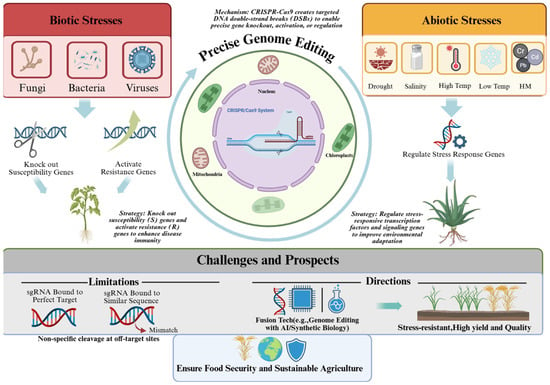
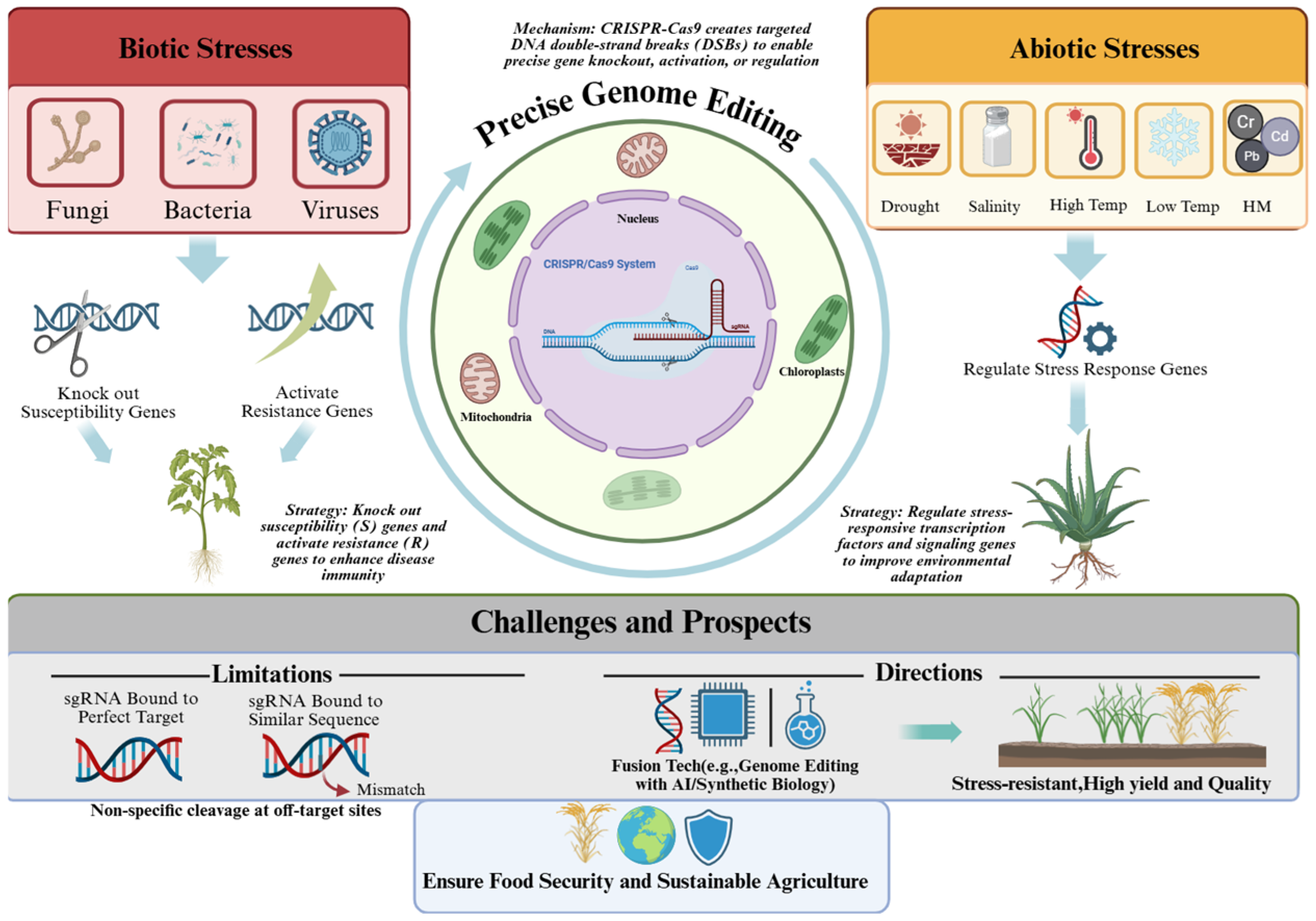
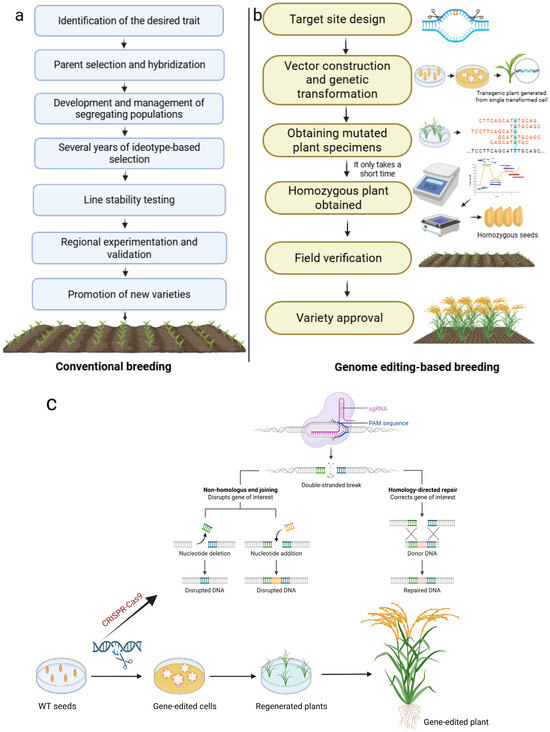
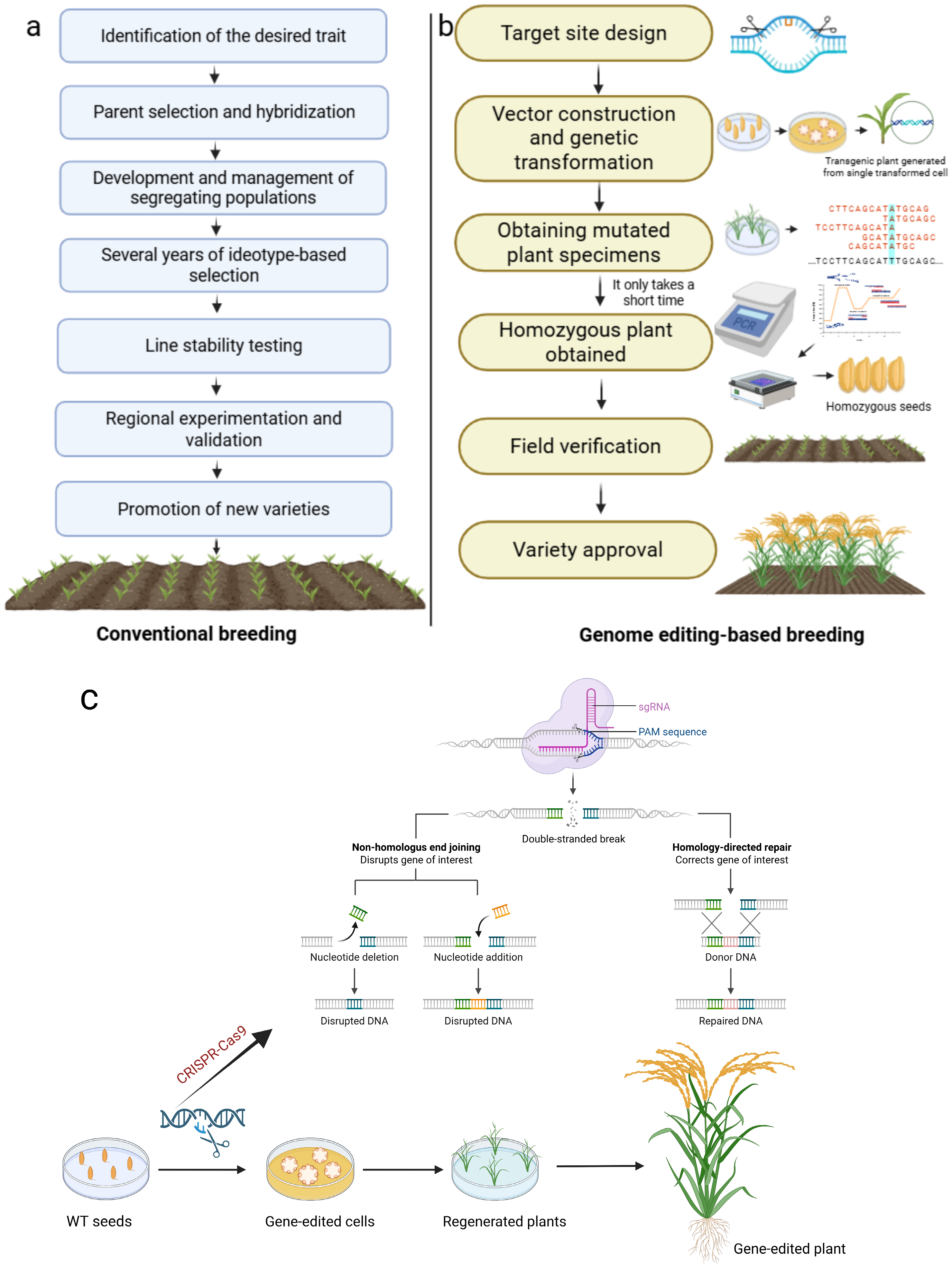
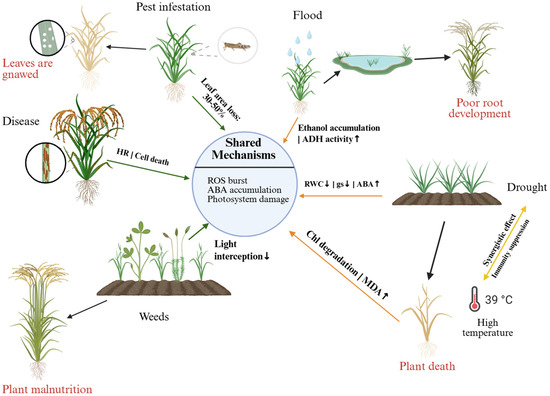
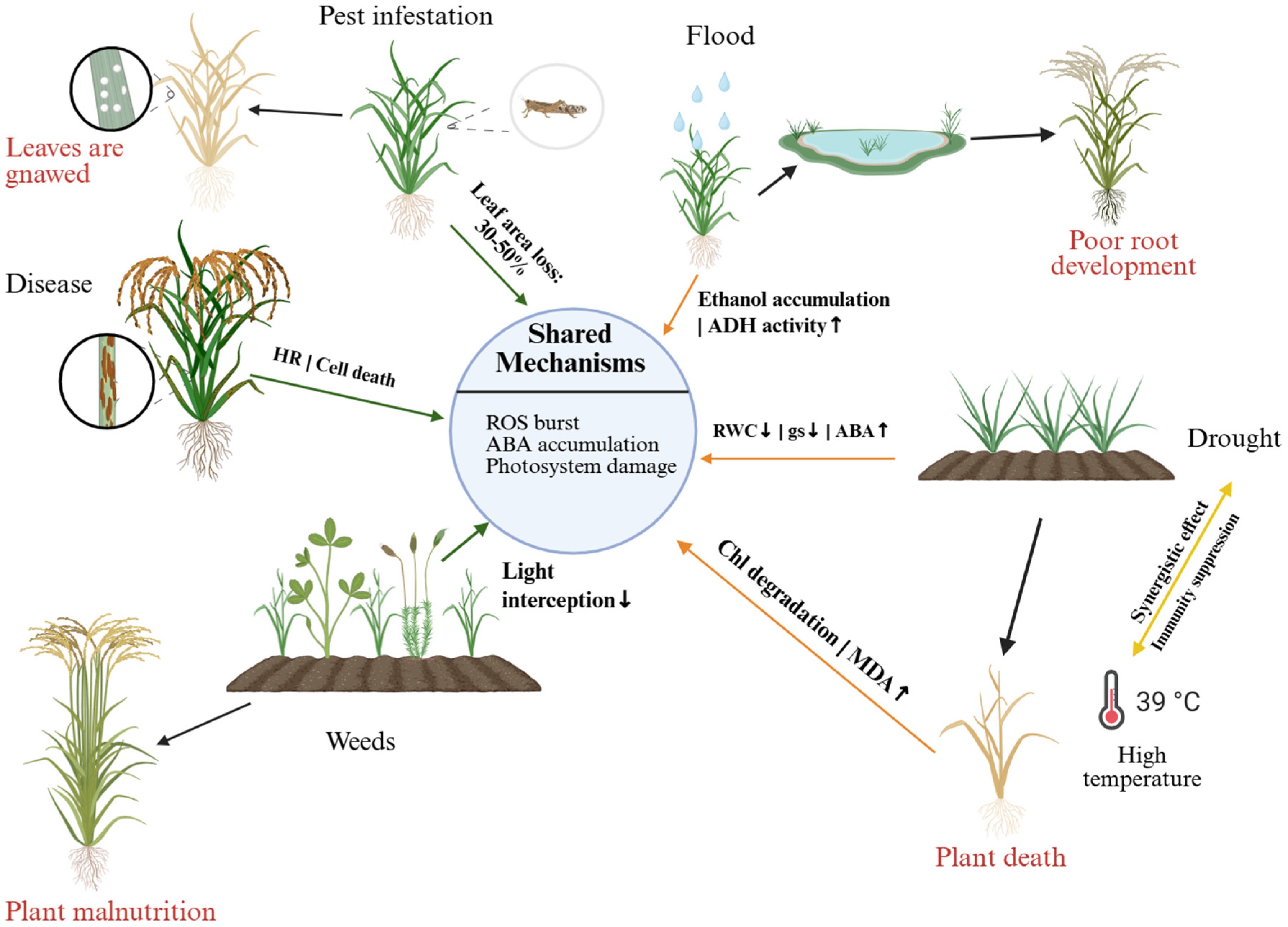
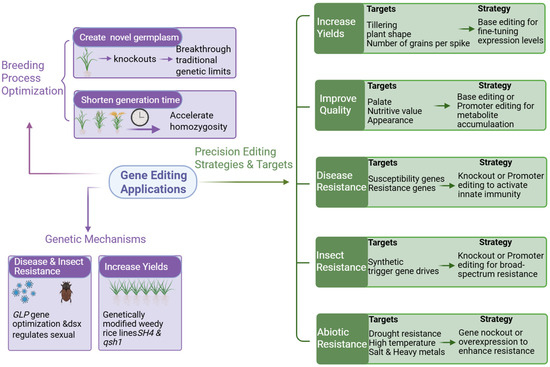
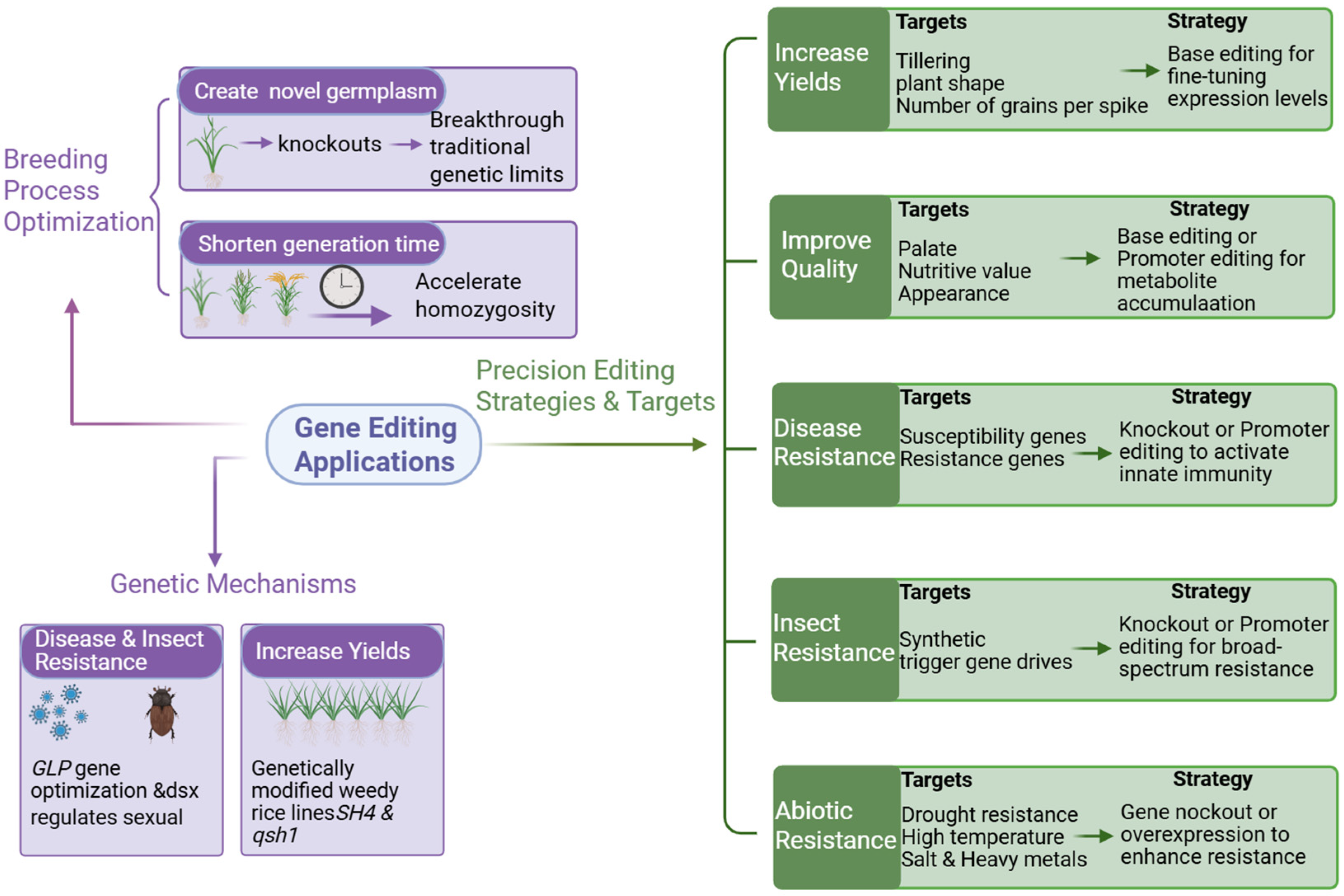
Disclaimer/Publisher’s Note: The statements, opinions and data contained in all publications are solely those of the individual author(s) and contributor(s) and not of MDPI and/or the editor(s). MDPI and/or the editor(s) disclaim responsibility for any injury to people or property resulting from any ideas, methods, instructions or products referred to in the content. |
© 2026 by the authors. Licensee MDPI, Basel, Switzerland. This article is an open access article distributed under the terms and conditions of the Creative Commons Attribution (CC BY) license.