


Abstract
Soft continuum robots exhibit highly nonlinear and configuration-dependent dynamics, making accurate trajectory tracking challenging under model uncertainty and external disturbances. This paper presents an adaptive Koopman-based model predictive control (MPC) framework for a tendon-driven soft continuum robot and evaluates its performance through comprehensive closed-loop simulations. A lifted linear Koopman model is identified from experimentally collected robot data and incorporated into an MPC formulation to provide computationally efficient prediction while capturing dominant nonlinear behavior. To compensate for plant–model mismatch and time-varying uncertainties, an online Recursive Least Squares (RLS) adaptation mechanism is integrated into the Koopman–MPC framework, enabling continuous model refinement during closed-loop operation without repeated offline retraining. The proposed controller is evaluated through comprehensive closed-loop simulations on circular, triangular, helical, and figure-eight trajectories under stochastic disturbances and structured parametric bias conditions using a Koopman model identified from experimentally collected robot data. Results demonstrate consistent improvements in tracking performance compared with fixed Koopman MPC while maintaining real-time computational feasibility. Under structured parametric bias, the proposed controller reduces the mean tracking error from 9.30 mm to 1.36 mm during circular trajectory tracking and achieves sub-millimeter accuracy in several operating conditions. These findings highlight the potential of online Koopman model adaptation for predictive control of soft continuum robots operating under uncertainty.
1. Introduction
Soft robots have emerged as a promising paradigm in modern robotics due to their inherent compliance, adaptability, and safe interaction capabilities in unstructured environments [1,2]. Unlike conventional rigid-link manipulators, soft continuum robots exhibit highly nonlinear, strongly coupled, and configuration-dependent dynamics, which complicate both modeling and control [3]. These properties enable applications in minimally invasive surgery, rehabilitation systems, industrial inspection, and human–robot collaboration [4,5]. However, the same compliant structure that enables safe interaction also introduces significant challenges for accurate dynamic modeling and real-time trajectory tracking.
Beyond continuum manipulators, soft robotic technologies have also been successfully applied to compliant grasping systems. For example, variable-stiffness soft grippers have demonstrated the ability to safely manipulate fragile and irregular objects while adapting their mechanical properties to different task requirements, further illustrating the versatility of soft robotic systems across diverse manipulation applications [6].
Recent advances have considerably expanded the application landscape of soft robotics beyond traditional manipulation and rehabilitation. In particular, soft microrobots and wireless soft robotic systems have demonstrated significant potential for minimally invasive medicine, targeted drug delivery, localized therapeutic interventions, and untethered navigation within confined anatomical environments [7,8]. These emerging biomedical applications require highly accurate, reliable, and robust motion control despite uncertainties arising from complex tissue interactions, material variability, and environmental disturbances. Consequently, the development of adaptive control strategies capable of maintaining prediction accuracy and trajectory tracking performance under uncertain operating conditions has become increasingly important for the practical deployment of soft robotic systems.
Classical physics-based approaches, including Piecewise Constant Curvature (PCC) models and Cosserat rod theory, have been widely employed to describe the behavior of soft continuum robots [3,9,10]. Although these methods provide valuable physical insight, they often rely on simplifying assumptions and become computationally demanding under large deformations and complex environmental interactions [11]. Consequently, their applicability in real-time control frameworks remains limited, particularly in the presence of uncertainty, actuator nonlinearities, and external disturbances.
In addition, hybrid rigid–flexible–soft robotic mechanisms have been developed to combine the structural rigidity required for force transmission with the compliance of soft materials. Such hybrid architectures improve manipulation capability while introducing additional kinematic complexity that further motivates the development of advanced data-driven modeling and control strategies [12].
To overcome these limitations, data-driven and learning-based methods have attracted increasing attention for approximating complex nonlinear dynamics directly from experimental data [13,14,15,16].
Recent work on antagonistic pneumatic artificial muscle systems has demonstrated the use of locally linearized neural-network-based NARX models within constrained MPC, together with online disturbance estimation to improve robustness against external loads and unmodeled dynamics [16]. This study demonstrates the potential of combining learned nonlinear models with computationally efficient predictive control while explicitly handling actuator and system constraints. Nevertheless, neural-network-based approaches generally require extensive training data and may introduce additional computational complexity during model inference and online optimization, motivating the investigation of alternative data-driven representations that retain nonlinear dynamics while reducing the computational burden of predictive control.
Bio-inspired soft robotic manipulators, such as octopus-inspired soft arms, have further demonstrated the remarkable dexterity and adaptability achievable with continuum structures. Nevertheless, their highly nonlinear and continuously deformable behavior continues to pose significant challenges for accurate prediction and real-time control, motivating the investigation of efficient predictive control frameworks [17].
Recently, Koopman operator theory has emerged as an effective framework for nonlinear system identification and control [18,19,20]. By lifting nonlinear dynamics into a higher-dimensional latent space where the system evolves approximately linearly, Koopman-based representations enable the use of efficient linear MPC formulations while preserving dominant nonlinear system behavior [20]. Compared with purely neural-network-based approaches, Koopman-based MPC offers a balance between modeling accuracy, interpretability, and computational efficiency, making it attractive for soft robotic applications [21].
Several studies have applied Koopman-based MPC to nonlinear and continuum robotic systems [22,23]. In particular, an implicit robust Koopman–MPC framework has been proposed for underwater manipulators to account for model uncertainty and improve robustness during predictive control [24]. Although demonstrated on an underwater robotic system rather than a soft continuum robot, this work illustrates the potential of combining Koopman-based prediction with robust MPC formulations for uncertain robotic dynamics. For continuum robots specifically, recent work has integrated Koopman-based MPC with an adaptive Kalman filtering strategy to improve tracking performance in the presence of modeling errors and measurement disturbances, with validation through both simulation and physical experiments [25]. This study further demonstrates the benefit of incorporating online estimation mechanisms into Koopman-based predictive control when model inaccuracies and measurement disturbances affect the control process.
Nevertheless, many existing Koopman-based approaches rely on models identified offline from pre-collected datasets. This assumption limits robustness under real-world operating conditions, where model mismatch, parametric uncertainty, and external disturbances are unavoidable. In soft robots, variations in material properties, tendon friction, actuator nonlinearities, and environmental interactions can introduce both stochastic disturbances and structured parametric bias [23,26]. Since MPC performance strongly depends on prediction accuracy, even small deviations between the identified model and the true system may lead to tracking degradation.
In this work, the Koopman model is identified using experimentally collected data from a tendon-driven soft continuum robot equipped with an IMU6050 inertial sensing unit and an Intel RealSense vision system. The sensing setup enables acquisition of robot tip motion under realistic operating conditions. To improve robustness against uncertainty and model mismatch, an online adaptation mechanism based on Recursive Least Squares (RLS) is integrated into the Koopman framework. Unlike computationally intensive deep adaptive approaches, RLS provides lightweight online parameter estimation while preserving real-time computational feasibility [27].
Recent studies have also investigated adaptive, learning-based, and robust predictive control strategies to improve the performance of nonlinear robotic and soft-robotic systems under uncertainty. Learning-based control approaches for continuum robots have been investigated with emphasis on robustness, efficiency, and generalizability [28], while Koopman-based model-following control has also been explored for robotic manipulators [29]. In addition, adaptive and learning-based predictive control has been investigated from the perspectives of stability and real-time implementation [30]. Collectively, these studies demonstrate the growing interest in integrating learning, adaptation, and predictive control, while highlighting the importance of balancing robustness, computational efficiency, and reliable closed-loop performance.
Despite these developments, important gaps remain in the application of lightweight adaptive predictive control to tendon-driven soft continuum robots. In particular, limited attention has been devoted to integrating lightweight online adaptation directly within a Koopman–MPC framework while explicitly distinguishing stochastic disturbances from structured parametric uncertainty. Such a distinction is important for soft continuum robots, where random disturbances and systematic model mismatch can affect the prediction model in fundamentally different ways.
To address this gap, this work proposes an adaptive Koopman–RLS–MPC framework for robust trajectory tracking of tendon-driven soft continuum robots under stochastic disturbances and structured parametric uncertainty. The proposed framework integrates lightweight online adaptation of a reduced-order prediction model initialized from the offline Koopman representation and subsequently adapted online using RLS estimation, while maintaining computational feasibility for real-time implementation. The framework is systematically evaluated under both stochastic disturbances and structured parametric bias to assess its robustness, prediction accuracy, and closed-loop trajectory tracking performance.
1.1. Related Work
Recent advances in data-driven control have significantly expanded the applicability of soft continuum robots in real-time trajectory tracking and predictive control applications. Early studies based on Piecewise Constant Curvature (PCC) and Cosserat rod formulations provided interpretable representations of soft robot kinematics and dynamics; however, these methods often struggle to maintain accuracy under large deformations while requiring considerable computational resources for real-time implementation [3,9,10]. Consequently, their applicability in adaptive and uncertainty-aware control frameworks remains limited.
Koopman operator theory has recently emerged as an effective framework for representing nonlinear systems through lifted linear dynamics [18,19]. Foundational studies established the integration of Koopman representations within Model Predictive Control (MPC), enabling nonlinear control problems to be approximated using efficient linear optimization techniques [18,20]. Subsequent research extended Koopman-based MPC to continuum and soft robotic systems, demonstrating improved computational efficiency and competitive trajectory tracking performance compared with nonlinear MPC formulations [22,23].
In parallel, data-driven and learning-based predictive models have demonstrated strong capability in capturing the complex nonlinear behavior of soft robots [14,15,16]. Approaches such as neural-network-based MPC (NN-MPC) can achieve high trajectory tracking accuracy due to their expressive representational capacity; however, this often comes at the expense of extensive training requirements and increased computational complexity during inference and online optimization. Recent learning-based control research has further investigated continuum robots with emphasis on robustness, efficiency, and generalizability [31], while Koopman-based model-following control has also been explored for robotic manipulators [32]. In addition, adaptive and learning-based predictive control has been investigated from the perspectives of stability and real-time implementation [33].
Despite these advances, most existing Koopman-based control approaches rely on fixed offline-identified models and primarily focus on nominal operating conditions. As a result, robustness against stochastic disturbances and structured parametric bias remains insufficiently investigated, particularly for soft continuum robotic systems. Furthermore, limited attention has been given to lightweight online adaptation strategies capable of compensating for model mismatch while preserving real-time computational feasibility.
1.2. Contributions
This work proposes an adaptive Koopman–RLS–MPC framework for robust trajectory tracking of tendon-driven soft continuum robots under uncertainty. The main contributions of this work can be summarized as follows.
First, a systematic uncertainty-aware evaluation framework is developed to analyze Koopman-based MPC under two distinct uncertainty regimes: stochastic mismatch introduced through random perturbations in the system matrices, and deterministic bias represented as structured offsets in the system dynamics. Explicit comparative evaluation between stochastic disturbances and structured parametric bias has received limited attention in the existing soft robotic control literature.
Second, an online adaptation mechanism based on Recursive Least Squares (RLS) is integrated into the Koopman prediction model to enable continuous real-time updating of the system matrices during closed-loop operation with low computational overhead. The proposed adaptive strategy preserves the computational efficiency of linear Koopman MPC while improving robustness against plant–model mismatch and time-varying uncertainty.
Third, a comparative analysis between adaptive and non-adaptive Koopman MPC formulations is performed under multiple uncertainty conditions. Four control configurations are evaluated, including fixed Koopman MPC under stochastic mismatch, fixed Koopman MPC under deterministic bias, adaptive Koopman–RLS–MPC under stochastic mismatch, and adaptive Koopman–RLS–MPC under deterministic bias. This analysis isolates the operating conditions under which online adaptation provides measurable performance improvement.
Fourth, the proposed framework is validated on circular, triangular, helical, and figure-eight trajectories with varying geometric and dynamical complexity. The obtained results demonstrate reduced tracking error under stochastic uncertainty, effective compensation of bias-induced drift through online adaptation, and improved low-error trajectory tracking performance under adaptive operating conditions.
Finally, this study provides insight into the impact of structured parametric bias on Koopman-based soft robot control. The results demonstrate that deterministic bias can introduce systematic trajectory drift that cannot be effectively compensated using fixed Koopman models, highlighting the importance of adaptive or uncertainty-aware predictive control formulations for robust soft continuum robot operation.
The remainder of this paper is organized as follows. Section 2 presents the proposed adaptive Koopman MPC framework, including the Koopman modeling procedure, uncertainty modeling, RLS-based online adaptation mechanism, MPC formulation, and simulation setup. Section 3 presents and discusses the trajectory tracking results under nominal conditions, structured parametric bias, and stochastic disturbances. Finally, Section 4 concludes the paper and outlines directions for future work.
2. Materials and Methods
This section presents the proposed adaptive Koopman-based Model Predictive Control (MPC) framework developed for robust trajectory tracking of tendon-driven soft continuum robots under modeling uncertainty. The framework combines experimentally identified Koopman linear representations with online Recursive Least Squares (RLS) adaptation to compensate for plant–model mismatch during closed-loop operation [30]. Unlike conventional fixed Koopman–MPC approaches, the proposed method continuously updates the prediction model using streaming state–input measurements, enabling improved robustness against stochastic disturbances and structured parametric bias.
Figure 1 presents the structure of the proposed tendon-driven soft continuum robot together with its tendon layout, bending mechanism, and actuation principle.
Figure 1.
Structure, tendon layout, bending principle, and actuation mechanism of the tendon-driven soft continuum robot.
Following the robot description, the overall adaptive control architecture consists of four main components:
- (i)
- Experimental data acquisition using IMU6050 and Intel RealSense sensing;
- (ii)
- Koopman operator-based system identification using EDMD;
- (iii)
- Finite-horizon MPC optimization;
- (iv)
- Online parameter adaptation through Recursive Least Squares (RLS).
At each sampling instant, the reduced-order prediction model is updated using newly acquired state–input measurements, and the adapted model is incorporated into the MPC optimization problem in a receding-horizon manner. The overall sensing, identification, and control architecture of the proposed adaptive Koopman–RLS MPC framework is illustrated in Figure 2.
Figure 2.
Architecture of the proposed adaptive Koopman–RLS MPC framework for tendon-driven soft continuum robot control.
While Figure 2 illustrates the overall sensing, identification, and control architecture of the proposed adaptive Koopman–RLS MPC framework is illustrated, Figure 3 presents the detailed computational workflow of the proposed adaptive Koopman–RLS MPC algorithm, highlighting the recursive interaction among the online RLS identifier, the adaptive prediction model, and the MPC optimizer during closed-loop operation.
Figure 3.
Online adaptation procedure of the proposed adaptive Koopman–RLS MPC framework.
2.1. System Description and Problem Formulation
The considered platform is a tendon-driven soft continuum robot with a total length of 206 mm, tendon routing radius of 23 mm, and spool radius of 15 mm [34]. The robot is actuated through four tendon-driven inputs that generate continuous three-dimensional deformation of the robot backbone and tip motion.
As shown in Figure 1a, the experimental platform consists of a tendon-driven soft continuum robot actuated by four tendons routed through spacer disks. The tendon arrangement is illustrated in Figure 1b, while the bending mechanism generated by differential tendon actuation is presented in Figure 1c. The complete actuation chain is summarized in Figure 1d. The robot bends toward the tendon being tensioned. Specifically, increasing the tension of the +X, −X, +Y, or −Y tendon causes the compliant backbone to bend toward the corresponding Cartesian direction while the robot base remains fixed. Differential tendon actuation enables continuous planar and spatial deformation of the backbone, allowing accurate three-dimensional positioning of the robot tip.
Robot tip position measurements were obtained using a hybrid sensing framework combining an MPU6050 inertial measurement unit (TDK InvenSense, San Jose, CA, USA) and an Intel RealSense D435 depth camera (Intel Corporation, Santa Clara, CA, USA). The MPU6050 was used for inertial measurements at the robot tip, while the Intel RealSense D435 provided depth-based measurements for Cartesian tip-position estimation. The sensing architecture enabled acquisition of experimentally measured motion trajectories used for Koopman model identification and closed-loop state feedback. The RealSense D435 was interfaced using Intel RealSense SDK 2.0, version 2.54.2.
Before introducing the mathematical formulation, it is important to distinguish between the different system representations employed throughout this work. The physical soft continuum robot is inherently governed by nonlinear dynamics in the original Cartesian state space. To enable computationally efficient model predictive control, these nonlinear dynamics are approximated offline using a lifted linear Koopman representation identified from experimental data. Subsequently, this offline model is used to initialize a reduced-order linear predictor operating directly in the original state space, which is recursively updated online through Recursive Least Squares (RLS). This distinction is maintained consistently throughout the manuscript to clearly separate the roles of the offline Koopman identification, the online adaptive predictor, and the simulated ground-truth plant.
The system state is defined as:
where xk = [x, y, z]T represents the Cartesian position of the robot tip at sampling instant k.
The control input is defined as:
where uk corresponds to the four tendon actuation commands applied to the robot.
The nonlinear dynamics of the physical robot are expressed as:
where denotes the unknown nonlinear dynamics of the soft continuum robot.
Given a reference trajectory , the control objective is to compute a sequence of inputs uk such that the tracking error is minimized while satisfying the system dynamics and actuator constraints:
A data-driven modeling approach is adopted, where the system dynamics are identified from experimentally collected input–output measurements of the physical robot. This experimental identification procedure enables the learned model to capture realistic nonlinear behavior, actuator coupling effects, tendon-driven hysteresis, and structural compliance observed in the physical platform. It should be emphasized that Equation (1) represents the unknown nonlinear dynamics of the physical robot and serves only as the conceptual system description. Since the analytical nonlinear model is unavailable, the predictive model employed by the controller is obtained entirely through data-driven identification from experimentally acquired state–input measurements.
All simulations, numerical computations, and data-processing procedures were implemented in Python 3.10.0 using NumPy 1.26.4, SciPy 1.11.2, scikit-learn 1.3.2, pykoop 2.0.1, CasADi 3.7.2, and do-mpc 5.1.1. Koopman operator identification using extended dynamic mode decomposition (EDMD) was performed using pykoop 2.0.1, while the MPC optimization problems were formulated using CasADi 3.7.2 and implemented through do-mpc 5.1.1. The resulting nonlinear programming problems were solved using the IPOPT solver, version 3.14.11. All computational experiments were performed on a computer equipped with an Intel Core i7-5600U processor operating at 2.60 GHz and 12 GB of RAM under Windows 11 Pro. The same software environment and controller implementation were used for all simulations to ensure consistency and reproducibility.
2.2. Koopman Operator-Based Modeling
To enable computationally efficient predictive control of the nonlinear soft continuum robot, the Koopman operator framework is employed to approximate the nonlinear system dynamics using a linear representation in a lifted space [18,20]. The Koopman operator is an infinite-dimensional linear operator acting on observable functions of the system states and inputs. For a nonlinear discrete-time dynamical system, the Koopman operator is defined as:
where denotes an observable function and represents the Koopman operator associated with the nonlinear system dynamics.
Instead of directly modeling the nonlinear state evolution, the system states and control inputs are mapped into a higher-dimensional lifted space through a nonlinear lifting function:
where zk ∈ Rnz represents the lifted state vector. In this work, the lifting function consists of second-order polynomial observables including linear, quadratic, and cross-product terms of the system states and control inputs. The resulting observable dictionary produces a 30-dimensional lifted feature space that captures nonlinear interactions between the robot states and tendon actuation inputs.
Within the lifted space, the nonlinear system evolution is approximated using linear dynamics of the form:
where A ∈ R30×30 and B ∈ R30×4 denote the offline Koopman state-transition and input matrices identified from experimental data, respectively.
The lifted Koopman model described by (5) is employed exclusively during the offline identification stage to construct an initial linear predictive representation of the nonlinear robot dynamics. During closed-loop operation, these matrices remain fixed and are not updated recursively. Instead, they are used only to initialize the reduced-order predictor employed by the MPC controller. The reduced-order predictor operates directly in the original Cartesian state space and is subsequently adapted online using Recursive Least Squares (RLS), as described in Section 2.4.
Experimental data were collected from the tendon-driven soft continuum robot using the hybrid sensing framework described in Section 2.1, which combines an MPU6050 inertial measurement unit with an Intel RealSense vision system. The MPU6050 was used to estimate the robot bending variables (κ and φ), whereas the Intel RealSense system independently measured the Cartesian tip position (x, y, z). The bending variables estimated from the IMU were subsequently converted into Cartesian coordinates using the robot kinematic model and compared with the corresponding RealSense measurements. This cross-validation procedure reduced measurement uncertainty and increased confidence in the experimentally acquired dataset used for Koopman model identification. Approximately 36,000 synchronized state–input measurement pairs were acquired at a sampling frequency of 100 Hz under diverse tendon actuation sequences designed to excite the robot over its operational workspace. The collected dataset was randomly divided into 80% training data for Koopman model identification and 20% validation data for performance evaluation. Prior to EDMD identification, the input and state variables were normalized to improve numerical conditioning and enhance the stability of the least-squares estimation process.
The fixed Koopman matrices A and B are identified from experimentally collected robot data using Extended Dynamic Mode Decomposition (EDMD) with ridge regularization [35]. Let the lifted-state snapshot matrices be defined as:
The Koopman matrices are obtained by minimizing the prediction error between successive lifted-state snapshots. The identification problem is formulated as the following regularized least-squares optimization:
where denotes the number of training samples and is the ridge regularization coefficient introduced to improve numerical conditioning and reduce overfitting.
This lifted linear representation enables the use of computationally efficient linear MPC formulations while preserving the ability to approximate the nonlinear behavior of the soft robotic system. Compared with nonlinear predictive models, the Koopman-based formulation significantly reduces online computational complexity while maintaining accurate trajectory prediction capabilities [21,35].
Although the system evolution is represented in the lifted space, the MPC tracking objective is formulated with respect to the original Cartesian tip-position states to preserve physical interpretability of the control objective.
Although the lifted Koopman representation provides an accurate linear approximation of the nonlinear robot dynamics around the operating conditions represented in the experimental dataset, the identified matrices A and B remain fixed after the offline identification stage and are not updated during closed-loop operation. Consequently, their prediction accuracy may deteriorate when the actual system deviates from the conditions represented in the identification dataset due to model mismatch, unmodeled dynamics, actuator nonlinearities, tendon friction, material hysteresis, sensing uncertainty, or environmental interactions [36]. Instead of recursively updating the full lifted Koopman operator, the fixed Koopman model is used to initialize the reduced-order prediction model described in Section 2.4, whose parameters are recursively adapted online using Recursive Least Squares (RLS). This strategy preserves the computational efficiency of the offline Koopman representation while enabling the prediction model to compensate for time-varying uncertainties during closed-loop operation. These observations motivate the adaptive reduced-order prediction strategy presented in the following section.
2.3. Uncertainty Modeling
The performance of Koopman-based MPC depends critically on the accuracy of the predictive model. In practical soft robotic systems, discrepancies between the identified model and the true system dynamics are unavoidable due to unmodeled nonlinearities, actuator imperfections, sensing noise, and environmental interactions [36,37]. To systematically evaluate controller robustness, uncertainty is intentionally introduced into the system dynamics during simulation. In this work, two representative uncertainty regimes are considered: stochastic disturbances and structured parametric bias.
2.3.1. Stochastic Disturbances
Stochastic uncertainty is modeled as random perturbations affecting the system dynamics at each time step. The true system evolution is expressed as:
where wk ∈ R3 represents a zero-mean stochastic disturbance, while and denote the unknown true system matrices used to represent the actual plant dynamics. The controller does not have access to these matrices and instead relies on the fixed offline Koopman prediction model identified in Section 2.2.
where denotes the disturbance covariance matrix.
In this setting, the mismatch arises between the fixed offline Koopman prediction model and the true system dynamics due to time-varying random perturbations. These disturbances introduce variability in the state evolution that cannot be fully captured by a deterministic prediction model. Consequently, even a well-identified Koopman representation exhibits residual prediction errors that propagate through the MPC prediction horizon, leading to degraded trajectory tracking accuracy and increased variability in closed-loop performance [38].
2.3.2. Structured Parametric Bias
In contrast, structured uncertainty is modeled as a deterministic deviation in the system parameters. This form of mismatch captures persistent errors arising from actuator offsets, calibration inaccuracies, tendon friction, material hysteresis, and modeling simplifications commonly observed in tendon-driven soft robotic systems [37,38].
The biased system dynamics are defined as:
where
represent constant modeling errors intentionally introduced during simulation to emulate persistent plant–model mismatch such as calibration errors, actuator bias, tendon friction, and material hysteresis.
Unlike stochastic disturbances, structured parametric bias introduces persistent and systematic prediction errors in the system evolution. Since the offline Koopman prediction model remains fixed during operation, it cannot compensate for these deterministic deviations. As a result, prediction errors accumulate over time, potentially causing steady-state offsets, trajectory drift, and degradation in tracking performance.
2.3.3. Impact on Predictive Control
Stochastic disturbances primarily increase the variance of the tracking response and introduce localized prediction errors over the MPC horizon. Because these perturbations are random and zero-mean, their effects may partially average out over time.
In contrast, structured parametric bias introduces persistent mismatch between the prediction model and the true plant dynamics. Since MPC repeatedly relies on forward predictions generated using the fixed offline prediction model, systematic prediction errors accumulate over the receding horizon, potentially leading to steady-state tracking offsets, trajectory drift, and degraded closed-loop stability [38,39].
Consequently, structured bias is generally more challenging for fixed Koopman models than stochastic disturbances, motivating the development of online adaptive model correction mechanisms.
2.3.4. Motivation for Online Adaptation
The distinction between stochastic disturbances and structured parametric bias highlights the necessity of adaptive modeling strategies for soft robotic control systems. While stochastic disturbances are inherently random and cannot be completely eliminated, structured bias corresponds to systematic and potentially learnable deviations between the identified model and the true plant dynamics [39]. In practical soft continuum robots, these deviations may arise from actuator nonlinearities, tendon friction, material hysteresis, sensor drift, and calibration inaccuracies.
Because conventional Koopman-based MPC relies on fixed offline-identified system matrices, its predictive capability may deteriorate when the operating conditions deviate from those observed during the identification stage. As prediction errors accumulate over the receding MPC horizon, the resulting model mismatch can significantly degrade trajectory tracking performance and reduce robustness.
To address these limitations, an adaptive reduced-order prediction framework initialized from the offline Koopman model and updated using Recursive Least Squares (RLS) is introduced in the following section. The objective is to continuously update the reduced-order prediction matrices during closed-loop operation using streaming state–input measurements. By recursively adapting the reduced-order system matrices:
the predictive model can progressively track changes in the underlying system dynamics and compensate for time-varying uncertainties with minimal computational overhead [27,39]. This adaptive mechanism enables improved robustness, reduced steady-state tracking error, and enhanced predictive accuracy under both stochastic disturbances and structured parametric bias.
2.4. Adaptive Koopman Model via Recursive Least Squares (RLS)
Although Koopman-based lifted linear predictors provide computationally efficient approximations of nonlinear soft robot dynamics, fixed offline-identified models may experience performance degradation when the true system dynamics deviate from nominal operating conditions [39,40].
In soft continuum robots, such mismatch may arise from tendon friction variation, material hysteresis, actuator nonlinearities, sensor drift, and unmodeled environmental interactions. To improve robustness against these effects, an online adaptive reduced-order identification mechanism based on Recursive Least Squares (RLS) is integrated into the proposed control framework [27,41]. Unlike computationally intensive nonlinear retraining approaches, the proposed adaptation strategy continuously updates a reduced-order linear prediction model directly from streaming state–input measurements with minimal computational overhead, making it suitable for real-time MPC implementation. It should be emphasized that the online adaptation is not applied directly to the full lifted Koopman operator in the high-dimensional observable space. Instead, the Koopman framework is used to obtain an initial data-driven linear predictive representation, from which a locally adaptive reduced-order predictor is constructed in the original Cartesian state space for online MPC prediction and control. The objective of the adaptive mechanism is therefore to recursively update the reduced-order prediction matrices initialized from the offline Koopman model during closed-loop operation, such that the predictive model remains consistent with the true system dynamics under stochastic disturbances and structured parametric uncertainty.
As illustrated in Figure 3, the reduced-order prediction matrices are initialized from the offline Koopman model and recursively updated online using the RLS algorithm. The updated matrices are supplied to the MPC controller at every sampling instant, enabling the prediction model to compensate for structured model mismatch and stochastic disturbances while maintaining computational efficiency.
The proposed adaptation strategy does not seek to recursively identify the full Koopman operator in the lifted observable space. Instead, the offline Koopman identification provides a linear predictive model that captures the dominant nonlinear dynamics within the operating region. The reduced-order predictor employed by the MPC is obtained from this Koopman representation and directly governs the state evolution used for prediction and optimization. Consequently, updating the reduced-order prediction matrices is sufficient to compensate for changes in the local input–output behavior that affect closed-loop prediction accuracy. Since the MPC optimization depends exclusively on the prediction model in the original Cartesian state space rather than on the full lifted-state evolution, adapting the reduced-order predictor preserves the practical benefits of the Koopman framework while significantly reducing the computational complexity associated with online adaptation of the high-dimensional lifted operator.
2.4.1. Motivation for Online Adaptation
Instead of assuming fixed prediction matrices throughout operation, the system dynamics are represented using a time-varying parameterized linear predictor of the form:
where
are time-varying matrices updated online during closed-loop operation. These matrices should not be confused with the fixed offline Koopman matrices introduced in Equation (5). They represent the reduced-order prediction model employed by the MPC controller and are recursively updated online using RLS.
For online adaptation, the adaptive prediction model is initialized from the offline identified Koopman model and formulated directly in the original Cartesian state space. The adaptive model therefore operates directly on the measured robot tip states used by the MPC controller.
The initial reduced-order prediction matrices and are obtained from the offline identified Koopman model after the EDMD identification stage and serve as the initial parameter estimates for the RLS algorithm. During closed-loop operation, only the reduced-order prediction matrices are recursively updated, while the offline identified Koopman model remains unchanged.
For compact representation, the prediction model is rewritten as:
where
denotes the parameter matrix estimated online, while
represents the regression vector composed of the current states and control inputs.
This formulation enables efficient recursive parameter estimation using low-complexity linear identification techniques [38].
2.4.2. Recursive Least Squares Update Law
At each sampling instant, the parameter matrix is updated recursively using the RLS algorithm. Given the prediction error:
the parameter update law is defined as:
where the adaptive gain matrix is computed as:
and the covariance matrix update is given by:
where
is the covariance matrix, and
is the forgetting factor controlling the adaptation rate.
The forgetting factor determines the trade-off between adaptation speed and parameter smoothness. Values close to one provide smoother parameter evolution and improved noise robustness, whereas smaller values allow faster adaptation to rapidly changing system dynamics.
The convergence of the Recursive Least Squares (RLS) estimator depends on well-established conditions in adaptive estimation theory. In particular, convergence of the parameter estimates requires the regression vector to remain sufficiently informative (persistent excitation) throughout the estimation process. In the proposed trajectory-tracking framework, the reference trajectories continuously excite the robot along different Cartesian directions while simultaneously varying the tendon actuation inputs, thereby providing informative state–input data for recursive parameter estimation.
The forgetting factor was selected as , representing a compromise between rapid adaptation and robustness to measurement noise. In addition, the covariance matrix was initialized as
providing sufficiently large initial uncertainty to enable rapid adaptation during the transient phase while maintaining good numerical conditioning.
The recursive update is therefore applied only to the reduced-order prediction matrices used by the MPC controller, avoiding the computational burden associated with re-identifying the high-dimensional lifted Koopman operator online. This strategy improves numerical conditioning and preserves computational efficiency.
Throughout all simulated scenarios, the proposed online RLS estimator exhibited stable numerical behavior, with no evidence of parameter divergence or estimator drift during the recursive adaptation process. Moreover, the robustness results provide empirical evidence of the practical robustness of the proposed adaptive prediction framework under structured model mismatch.
The RLS algorithm is widely employed in adaptive estimation and online system identification due to its fast convergence characteristics and low computational complexity [33,41,42].
2.4.3. Integration with MPC
The updated parameter estimates are directly incorporated into the MPC prediction model at every control step. The updated reduced-order matrices and extracted from are used to construct the prediction dynamics:
The reduced-order matrices are assumed to be constant across the finite prediction horizon but are recursively re-estimated at the subsequent sampling instant using newly measured data. Consequently, the controller operates using a time-varying linear MPC formulation that preserves the computational efficiency of linear MPC while improving robustness against plant–model mismatch.
At each control iteration, the adaptive closed-loop process proceeds as follows:
- Measure the current state ;
- Solve the MPC optimization problem using the current model;
- Apply the first optimal control input ;
- Measure the next state ;
- Update the reduced-order prediction matrices using RLS;
- Repeat for the next sampling instant.
Although the offline Koopman operator remains fixed after the identification stage, the reduced-order predictor derived from the Koopman representation is recursively updated online. Therefore, the proposed approach preserves the global data-driven structure provided by the Koopman model while locally adapting the prediction dynamics used by the MPC controller to compensate for model mismatch and time-varying uncertainties.
2.4.4. Adaptive Control Algorithm
Algorithm 1 summarizes the proposed adaptive Koopman–MPC framework with online RLS updates:
| Algorithm 1: Adaptive Koopman–MPC with Online RLS Adaptation |
| 1: Initialize the reduced-order prediction matrices A0 and B0 by fitting an equivalent linear predictor to the offline identified Koopman model using least-squares regression. 2: Initialize parameter matrix Θ0 and covariance matrix P0 3: for k = 0,1,2,… do 4: Measure current state xk 5: Solve MPC optimization problem using current Ak and Bk 6: Apply optimal control input uk 7: Measure next state xk + 1 8: Construct regression vector ϕk = [xk; uk] 9: Update Θk using RLS algorithm 10: Extract updated reduced-order matrices Ak + 1 and Bk + 1 11: end for |
2.5. Model Predictive Control Formulation
The adaptive reduced-order Koopman predictor is integrated within a finite-horizon Model Predictive Control (MPC) framework to achieve accurate trajectory tracking while satisfying actuator constraints [43,44]. At each sampling instant, the controller computes an optimal sequence of control inputs by minimizing a quadratic objective function over a finite prediction horizon.
The MPC optimization problem is formulated as:
subject to the prediction dynamics:
where and denote the current reduced-order prediction matrices obtained from the online RLS adaptation.
And actuator constraints:
where
- denotes the prediction horizon;
- is the state-tracking weighting matrix;
- is the control-effort weighting matrix;
- represents the reference trajectory over the prediction horizon.
The optimization problem is solved recursively in a receding-horizon manner. At each control step, only the first optimal control input is applied to the robot, after which the prediction horizon is shifted forward and the optimization problem is re-solved using updated state measurements and adapted model parameters.
Because the prediction model is continuously updated online through the RLS adaptation mechanism, the MPC controller operates using a time-varying linear predictor that improves robustness against plant–model mismatch and structured uncertainty while preserving the computational efficiency of conventional linear MPC formulations.
2.6. Simulation Setup
To evaluate the performance of the proposed adaptive Koopman-based Model Predictive Control (MPC) framework, comprehensive closed-loop simulations were conducted using the do-mpc toolbox with CasADi as the underlying optimization engine [43,44]. The closed-loop simulations employed the offline identified Koopman model to initialize the reduced-order prediction model, while online adaptation was performed exclusively on the reduced-order predictor using the RLS algorithm described in Section 2.2, Section 2.3 and Section 2.4. Both the fixed Koopman MPC and the adaptive Koopman–RLS MPC were evaluated under identical operating conditions to ensure a fair and controlled comparison of tracking performance and robustness.
Four reference trajectories with varying geometric and dynamical complexity were considered, namely circular, triangular, helical, and figure-eight trajectories. These trajectories were selected to impose different levels of curvature continuity, directional variation, and dynamic excitation, thereby providing a comprehensive benchmark for evaluating controller robustness and prediction accuracy under varying motion conditions. All trajectories were scaled to remain within the robot workspace, with a nominal radius of approximately 16 mm and a vertical offset of , consistent with the robot resting configuration.
Each simulation was executed for 200 discrete time steps using a sampling interval of 0.01 s. The MPC prediction horizon was set to steps, providing a finite look-ahead window that balances trajectory tracking performance and computational efficiency.
The quadratic cost-function weighting matrices were selected as:
where penalizes the Cartesian trajectory-tracking error, while regularizes the control effort applied to the tendon actuators. The weighting matrices were selected empirically to achieve an appropriate compromise between tracking accuracy, control smoothness, and numerical stability.
The control input represents the commanded angular positions of the four tendon-driving servo motors and is therefore expressed in radians rather than actuator force or torque. Since the physical robot is actuated by position-controlled servo motors, the MPC directly optimizes the commanded servo angles. To reflect the practical operating range adopted during experimental data collection and controller implementation, the control inputs were constrained as:
These limits correspond to the allowable servo operating range used throughout the experiments. They were selected to prevent excessive tendon displacement, avoid undesirable robot configurations, and ensure safe and stable robot operation. Moreover, the offline Koopman model was identified using experimental data collected within the same operating range. Consequently, enforcing these input constraints ensures that the controller operates within the validity domain of the identified prediction model, thereby improving prediction reliability and avoiding extrapolation beyond the training dataset.
Unless otherwise stated, the same controller parameters, prediction horizon, and input constraints were maintained throughout all comparative simulations to ensure a fair evaluation of the proposed and baseline controllers.
To assess robustness under uncertainty, two distinct uncertainty scenarios were explicitly introduced into the system dynamics.
In the first scenario, stochastic disturbances were modeled as additive Gaussian perturbations affecting the system evolution, representing unstructured and time-varying uncertainty.
In the second scenario, structured parametric bias was introduced through constant deviations in the system matrices, capturing systematic modeling errors commonly encountered in soft robotic systems, including actuator offsets, calibration inaccuracies, tendon friction variation, and unmodeled nonlinear effects [23,26,40].
For each uncertainty scenario, both the fixed Koopman MPC and the adaptive Koopman–RLS MPC were evaluated. Specifically, four experimental configurations were considered: fixed Koopman MPC under stochastic disturbances, fixed Koopman MPC under structured parametric bias, adaptive Koopman–RLS MPC under stochastic disturbances, and adaptive Koopman–RLS MPC under structured parametric bias.
Performance evaluation was conducted using multiple quantitative metrics to capture complementary aspects of control quality and robustness. The evaluated metrics included the mean tracking error, root mean square error (RMSE), maximum tracking error, tracking accuracy within a 2 mm tolerance, and tracking accuracy within a 5 mm tolerance.
All error metrics were computed in millimeters using the Cartesian tip-position tracking error relative to the reference trajectory. These measures provide complementary assessment of average tracking performance, worst-case deviation, and practical trajectory-tracking reliability under uncertainty conditions.
In addition to tracking accuracy, computational performance was evaluated using the mean MPC solution time and the 95th-percentile solve time to assess real-time feasibility of the proposed adaptive control framework.
To ensure consistency and reproducibility, all simulations were initialized from the first point of the corresponding reference trajectory, and identical controller parameters were maintained across all comparative experiments.
3. Results and Discussion
The performance of the proposed adaptive Koopman-based Model Predictive Control (MPC) framework was systematically evaluated under multiple uncertainty conditions, including stochastic disturbances and structured parametric bias. In addition to nominal trajectory tracking performance, the robustness of the proposed adaptive prediction strategy against plant–model mismatch was investigated across four representative reference trajectories: circular, triangular, helical, and figure-eight motions.
Performance evaluation was conducted using the quantitative metrics defined in Section 2, including mean tracking error, root mean square error (RMSE), maximum tracking deviation, tracking accuracy within predefined tolerance bounds, and computational solve time. Comparative analysis was performed between the fixed Koopman–MPC formulation and the proposed adaptive Koopman–RLS–MPC framework to assess the effectiveness of online model adaptation under uncertainty.
The following subsections present the model identification results, nominal trajectory tracking performance, robustness under structured and stochastic uncertainties, and the computational performance of the proposed controller.
3.1. Model Identification Results
To evaluate the predictive capability of the identified Koopman representation, one-step prediction experiments were conducted using held-out validation data not employed during the identification stage. The objective of this analysis is to assess how accurately the identified lifted linear model captures the underlying nonlinear dynamics of the tendon-driven soft continuum robot.
Table 1 summarizes the prediction accuracy of the identified Koopman model using the root mean square error (RMSE), mean absolute error (MAE), and coefficient of determination (R2). All error metrics are reported in millimeters (mm).
Table 1.
One-step prediction accuracy of the identified Koopman model on validation data.
The results demonstrate that the identified Koopman model achieves high one-step prediction accuracy, with sub-millimeter mean absolute error and an R2 value approaching unity. These results indicate that the lifted linear representation successfully captures the dominant nonlinear behavior of the soft robotic system within the operating region represented by the training data.
The high prediction fidelity obtained during system identification provides a suitable foundation for predictive control implementation. However, despite the strong nominal prediction performance, offline-identified Koopman models remain sensitive to plant–model mismatch and uncertainty during closed-loop operation. Consequently, the following sections investigate the robustness limitations of fixed Koopman–MPC and evaluate the effectiveness of the proposed adaptive online update mechanism under uncertain operating conditions.
3.2. Experimental Data Replay Validation Using Real-Robot Measurements
Although the proposed adaptive Koopman–RLS MPC framework is primarily evaluated through closed-loop simulations, an experimental data replay validation was additionally performed using measurements collected from the physical tendon-driven soft continuum robot. This experiment complements the simulation-based evaluation by assessing the predictive capability of the identified Koopman model on real experimental data.
Unlike the simulation studies presented in the following sections, this validation employs previously recorded trajectories acquired using the sensing framework described in Section 2, where the robot tip position was measured using the hybrid IMU6050–Intel RealSense system while the corresponding tendon actuation commands were simultaneously recorded. The recorded actuator commands and measured robot states were replayed through the identified Koopman predictor without performing any online parameter adaptation or model re-identification. Consequently, the obtained results evaluate the generalization capability of the offline-identified prediction model on unseen experimental measurements without any parameter tuning or model recalibration.
Figure 4 presents the coordinate-wise comparison between the experimentally measured Cartesian positions and the corresponding one-step predictions generated by the identified Koopman model along the X-, Y-, and Z-axes. Excellent agreement is observed throughout the complete experimental dataset, including trajectory segments involving rapid directional changes and varying curvature.
Figure 4.
Coordinate-wise comparison between experimentally measured and Koopman-predicted Cartesian positions during experimental data replay validation.
Figure 5 illustrates the corresponding three-dimensional trajectories reconstructed from the experimental measurements together with the trajectories predicted by the Koopman model. The predicted trajectory closely overlaps the measured robot motion throughout the operating workspace, demonstrating that the identified lifted linear representation accurately captures the dominant nonlinear dynamics of the physical soft continuum robot.
Figure 5.
Three-dimensional comparison between experimentally measured and Koopman-predicted trajectories obtained during experimental data replay.
To further quantify the prediction performance, Figure 6 presents the Euclidean one-step prediction error over the entire experimental dataset. The prediction error remains consistently small, with only brief transient increases during rapid changes in robot motion. The overall prediction performance achieved an RMSE of 1.12 mm, an MAE of 0.65 mm, and an R2 value of 0.9989, confirming excellent agreement between the identified Koopman model and the experimentally observed robot behavior. These quantitative results are consistent with the one-step prediction accuracy reported in Table 1, demonstrating that the identified Koopman model maintains comparable prediction performance when evaluated on experimentally recorded trajectories.
Figure 6.
Euclidean one-step prediction error during experimental data replay validation.
It should be emphasized that this experiment represents an experimental data replay validation rather than a real-time closed-loop control experiment. During this evaluation, the controller itself was not executed on the physical robot; instead, previously recorded experimental measurements were replayed through the identified prediction model to assess its ability to reproduce the measured robot dynamics. The excellent agreement between the measured and predicted trajectories demonstrates that the identified Koopman model accurately represents the physical system under real experimental conditions. Because the proposed adaptive Koopman–RLS MPC directly employs this identified prediction model within its optimization framework, these replay results provide experimental evidence supporting the suitability of the prediction model for predictive control. A full hardware closed-loop implementation will be investigated in future work to further validate the proposed framework under real-time operating conditions.
3.3. Nominal Trajectory Tracking
The nominal trajectory-tracking performance of the Koopman-based MPC framework was first evaluated in the absence of external disturbances and structured model mismatch. Under these ideal operating conditions, the identified Koopman predictor accurately captured the dominant nonlinear dynamics of the tendon-driven soft continuum robot, enabling highly accurate closed-loop trajectory tracking.
Across all evaluated trajectories, the controller consistently achieved sub-millimeter-to-millimeter-level tracking accuracy, demonstrating the effectiveness of the Koopman lifting representation and the suitability of the identified linear predictor for MPC-based control. The obtained results indicate that the polynomial EDMD observables successfully preserve the dominant nonlinear behavior required for predictive trajectory tracking within the robot operating region.
For the circular trajectory, the controller achieved a mean tracking error of 0.21 mm with a maximum deviation below 1 mm. Similarly, the triangular trajectory achieved highly accurate tracking despite the sharp directional transitions at the trajectory corners. The helical trajectory produced slightly larger errors due to the coupled three-dimensional motion and continuous variation along the vertical axis, while the figure-eight trajectory maintained stable tracking performance despite repeated curvature reversals and directional changes.
Figure 7 illustrates the nominal trajectory-tracking performance for all evaluated reference trajectories. The tracked trajectories closely overlap the reference trajectories across all motion patterns, confirming the prediction consistency of the Koopman-based MPC framework under nominal operating conditions.
Figure 7.
Nominal trajectory-tracking performance of the fixed Koopman–MPC controller for circular, triangular, figure-eight, and helical reference trajectories.
The coordinate-wise comparisons between the reference and tracked Cartesian positions along the X-, Y-, and Z-axes are further presented in Figure 8. These results demonstrate smooth closed-loop behavior with minimal steady-state error and negligible oscillatory response.
Figure 8.
Trajectory tracking under structured parametric bias using fixed and adaptive Koopman–RLS MPC.
Overall, the nominal experiments establish an upper-bound tracking performance for the fixed Koopman–MPC framework prior to the introduction of uncertainty and model mismatch. Although highly accurate tracking is achieved under nominal conditions, the performance of the fixed offline-identified Koopman model deteriorates in the presence of disturbances and structured uncertainty, as investigated in the following sections.
3.4. Performance Under Structured Parametric Bias
To evaluate the robustness of the proposed controller against persistent model mismatch, structured parametric bias was introduced into the system dynamics. This form of uncertainty produces deterministic deviations between the identified prediction model and the true plant dynamics, leading to accumulated prediction errors over the MPC prediction horizon.
Under structured parametric bias, the fixed Koopman MPC exhibited significant degradation in tracking performance across all reference trajectories. The mean tracking errors increased to 9.30 mm for the circular trajectory, 6.40 mm for the triangular trajectory, 5.12 mm for the helical trajectory, and 8.35 mm for the figure-eight trajectory. In several cases, the fixed controller failed to maintain accurate trajectory tracking, with nearly zero percentages of trajectory samples remaining within the 2 mm tolerance bound.
In contrast, the proposed adaptive Koopman MPC effectively compensated for the structured model mismatch through online RLS-based parameter adaptation. The adaptive framework reduced the mean tracking error to 1.36 mm for the circular trajectory, 0.28 mm for the triangular trajectory, 0.10 mm for the helical trajectory, and 0.61 mm for the figure-eight trajectory. Particularly significant improvement was observed for the helical trajectory, where the adaptive controller achieved an RMSE of only 0.12 mm while maintaining 100% of the trajectory samples within both the 2 mm and 5 mm tolerance bounds.
To further assess the robustness of both controllers under varying levels of model uncertainty, the magnitude of the structured parametric bias was systematically increased by varying the perturbation level applied to the plant matrices over five mismatch levels (δ = 0, 0.0005, 0.001, 0.002, and 0.005) while maintaining the same stochastic process noise level throughout all experiments.
As the model mismatch increased, the tracking performance of the fixed Koopman MPC deteriorated rapidly, with the average tracking error increasing from 1.64 mm under nominal conditions to 21.11 mm at the highest perturbation level (δ = 0.005). In contrast, the proposed adaptive Koopman–RLS MPC maintained consistently accurate tracking performance, with the average error remaining within the narrow range of 1.76–1.89 mm over the entire mismatch range. At the largest perturbation magnitude, the adaptive controller reduced the average tracking error by approximately 91% compared with the fixed Koopman MPC, demonstrating its capability to effectively compensate for severe model uncertainty.
These results confirm that the online adaptive mechanism successfully compensates for persistent parametric deviations and mitigates the accumulation of prediction errors over the receding MPC horizon. Unlike the fixed Koopman model, which suffers from increasing prediction mismatch as the model uncertainty grows, the adaptive framework continuously updates the prediction model using streaming measurements, thereby preserving prediction accuracy and improving closed-loop robustness. Furthermore, the robustness evaluation demonstrates that the proposed adaptive Koopman–RLS MPC maintains stable tracking performance even under progressively increasing model mismatch, highlighting its suitability for practical soft robotic systems operating under uncertain and time-varying dynamics.
Trajectory tracking comparisons under structured parametric bias are illustrated in Figure 8, while the corresponding tracking error profiles are presented in Figure 9. The robustness evaluation over increasing model mismatch magnitudes is summarized in Table 2 and illustrated in Figure 10, further demonstrating the superior robustness of the proposed adaptive Koopman–RLS MPC.
Figure 9.
Tracking error under structured parametric bias for different reference trajectories.
Table 2.
Average tracking performance under different structured model mismatch magnitudes.
Figure 10.
Average tracking error versus model mismatch magnitude (δ) for the fixed and adaptive Koopman–RLS MPC controllers.
These results indicate that the proposed adaptive Koopman–RLS MPC becomes increasingly advantageous as the level of model mismatch increases, whereas the performance degradation of the fixed Koopman MPC is approximately proportional to the mismatch magnitude.
As shown in Figure 10, the tracking error of the fixed Koopman MPC increases rapidly as the model mismatch grows, whereas the proposed adaptive Koopman–RLS MPC maintains nearly constant tracking performance over the entire range of mismatch levels.
3.5. Performance Under Stochastic Disturbances
The robustness of the proposed framework was further evaluated under stochastic disturbances modeled as additive Gaussian perturbations affecting the system dynamics at each sampling instant. Unlike structured parametric bias, stochastic uncertainty introduces random time-varying perturbations that cannot be completely eliminated through deterministic model adaptation.
Under stochastic disturbances, the fixed Koopman MPC exhibited noticeable tracking degradation across all trajectories. The mean tracking errors reached 5.40 mm for the circular trajectory, 5.33 mm for the triangular trajectory, 7.18 mm for the helical trajectory, and 5.53 mm for the figure-eight trajectory. In particular, the helical trajectory produced the largest tracking error due to the combined effects of three-dimensional motion and accumulated prediction uncertainty over time.
The proposed adaptive Koopman MPC with online RLS updates consistently improved tracking performance under stochastic uncertainty. The mean tracking error was reduced to 3.12 mm for the circular trajectory, 2.84 mm for the triangular trajectory, 5.45 mm for the helical trajectory, and 2.93 mm for the figure-eight trajectory. Similarly, substantial improvements were observed in RMSE and tolerance-based tracking accuracy metrics. For example, the percentage of states within the 5 mm tolerance increased from 40.00% to 97.33% for the circular trajectory and from 40.67% to 97.33% for the figure-eight trajectory.
Although stochastic disturbances inherently limit the achievable prediction accuracy due to random variability in the system evolution, the adaptive framework effectively reduced the impact of noise-induced model mismatch by continuously updating the prediction model online. The results demonstrate that the proposed adaptive Koopman–RLS framework improves closed-loop robustness and maintains more consistent trajectory tracking performance under uncertain operating conditions compared with the fixed Koopman MPC.
Trajectory tracking comparisons under stochastic disturbances are illustrated in Figure 11, while the corresponding tracking error profiles are presented in Figure 12.
Figure 11.
Trajectory tracking under stochastic disturbances using fixed and adaptive Koopman–RLS MPC.
Figure 12.
Tracking error under stochastic disturbances for different reference trajectories.
Overall, the stochastic disturbance experiments demonstrate that the proposed adaptive Koopman–RLS MPC consistently outperforms the fixed Koopman MPC by reducing the adverse effects of random process disturbances while maintaining real-time computational performance. Although stochastic disturbances cannot be completely compensated because of their inherently random nature, the online adaptation mechanism continuously refines the prediction model, resulting in improved tracking accuracy and enhanced closed-loop robustness. These findings complement the structured parametric bias analysis presented in Section 3.3 and further demonstrate the effectiveness of the proposed adaptive framework under different classes of uncertainty.
To further address the online adaptation behavior of the proposed Koopman–RLS MPC framework, the one-step prediction error of the adaptive predictor was monitored throughout the closed-loop experiments under representative structured model mismatch conditions. Figure 13 illustrates the prediction error evolution for the four evaluated reference trajectories.
Figure 13.
One-step prediction error of the adaptive Koopman–RLS predictor during online parameter adaptation under structured parametric bias for the four evaluated reference trajectories.
As shown in Figure 13, the prediction error remains bounded throughout the entire experiment for all trajectories. Although small fluctuations are observed due to recursive online parameter updates and measurement noise, no evidence of divergence or instability is observed. The prediction error typically remains within approximately 1–3 mm, with only occasional transient peaks during rapid trajectory transitions. These results indicate that the adaptive predictor continuously maintains an accurate local approximation of the system dynamics despite persistent plant–model mismatch.
It should be noted that the recursive least-squares adaptation mechanism is designed to continuously track variations in the system dynamics rather than converge to a fixed parameter vector. Consequently, the estimated Koopman matrices remain adaptive throughout the experiment and do not necessarily approach constant values. For this reason, the bounded one-step prediction error observed in Figure 13 provides a more meaningful indicator of successful online adaptation than parameter convergence itself. These results demonstrate that the proposed adaptive Koopman–RLS framework continuously updates its prediction model while maintaining stable and accurate predictive performance under persistent structured model mismatch.
For completeness, Figure 14 provides a representative closed-loop example illustrating the tracked trajectory, tracking error, and corresponding MPC inputs during circular trajectory tracking under stochastic disturbances. The control inputs remain within or on the prescribed actuator bounds throughout the experiment.
Figure 14.
Representative closed-loop trajectory tracking, tracking error, and MPC control signals during circular trajectory tracking under stochastic disturbances.
3.6. Comparative Analysis
The comparative evaluation of the fixed and adaptive Koopman MPC frameworks reveals consistent performance trends across all trajectories and uncertainty scenarios. Under nominal operating conditions, both controllers achieved sub-millimeter tracking accuracy, indicating that the Koopman-based linear representation is sufficiently expressive to capture the dominant nonlinear dynamics of the soft continuum robot when the operating conditions remain close to the identification regime.
However, significant differences emerged in the presence of uncertainty and model mismatch. Under structured parametric bias, the fixed Koopman MPC exhibited substantial degradation in tracking performance due to the accumulation of persistent prediction errors over the receding prediction horizon. In contrast, the proposed adaptive Koopman–RLS framework effectively compensated for these systematic deviations through continuous online parameter adaptation.
The improvement was particularly evident for trajectories involving strong nonlinear deformation and directional variation. For example, in the helical trajectory under structured bias, the adaptive framework reduced the RMSE from 5.51 mm to 0.12 mm while achieving 100% tracking accuracy within both 2 mm and 5 mm tolerance bounds. Similar improvements were consistently observed across the circular, triangular, and figure-eight trajectories, demonstrating the ability of the adaptive framework to mitigate steady-state drift and maintain prediction consistency under persistent model mismatch.
Under stochastic disturbances, both controllers experienced performance degradation due to random time-varying perturbations. Nevertheless, the adaptive Koopman framework consistently achieved lower mean tracking error, lower RMSE, and higher tolerance-based accuracy compared with the fixed Koopman MPC. Although stochastic disturbances cannot be fully compensated because of their inherently random nature, the online RLS adaptation mechanism improved robustness by continuously refining the prediction model using streaming measurements.
In addition to improved tracking performance, the proposed adaptive framework preserved computational efficiency compatible with real-time MPC implementation. Across all experiments, the average MPC solution time remained within the range of approximately 30–50 ms despite the inclusion of online parameter adaptation. This demonstrates that the proposed method enhances robustness without introducing the computational burden typically associated with nonlinear adaptive predictive control approaches.
Overall, the results confirm that fixed Koopman MPC provides accurate trajectory tracking only when the identified model remains consistent with the true system dynamics. By contrast, the proposed adaptive Koopman–RLS framework significantly improves robustness against both stochastic disturbances and structured parametric uncertainty while preserving the computational advantages of linear MPC formulations. These findings demonstrate the practical potential of lightweight online adaptation for robust real-time control of soft continuum robotic systems operating under uncertain conditions.
Table 3 summarizes the quantitative performance comparison for all trajectories and uncertainty scenarios, while the corresponding accuracy and computational performance trade-offs are illustrated in Figure 15 and Figure 16.
Table 3.
Quantitative performance comparison between the fixed Koopman MPC and the proposed adaptive Koopman–RLS MPC under nominal conditions, structured parametric bias, and stochastic disturbances across all reference trajectories.
Figure 15.
Comparison of mean and maximum trajectory tracking errors for the fixed Koopman MPC and the proposed adaptive Koopman–RLS MPC under stochastic disturbances and structured parametric bias across different reference trajectories.
Figure 16.
Computational performance and tracking accuracy comparison between the fixed and adaptive Koopman MPC frameworks across different reference trajectories.
Table 3 further confirms that the proposed adaptive Koopman–RLS MPC consistently improves tracking accuracy under both structured and stochastic uncertainties while preserving real-time computational performance.
4. Conclusions and Future Work
This study proposed an adaptive Koopman-based Model Predictive Control (MPC) framework for robust trajectory tracking of tendon-driven soft continuum robots under uncertain operating conditions. Unlike conventional Koopman-based MPC approaches that rely on a fixed prediction model, the proposed framework combines an offline data-driven Koopman representation with an online Recursive Least Squares (RLS) adaptation mechanism, allowing the prediction model used by the MPC controller to continuously adapt to changes in the system dynamics while preserving the computational efficiency of linear predictive control.
The results demonstrate that online adaptation substantially improves robustness against both structured parametric uncertainty and stochastic disturbances, consistently reducing tracking errors while maintaining computational efficiency. In addition to the closed-loop simulation studies, experimental data replay validation using measurements collected from the physical tendon-driven soft continuum robot demonstrated excellent agreement between experimentally measured and Koopman-predicted trajectories, supporting the predictive capability of the identified Koopman model on real robot data.
An important contribution of this work is demonstrating that combining offline Koopman identification with lightweight online adaptation provides a practical balance between prediction accuracy, robustness, and computational efficiency for predictive control of soft continuum robots.
Although the identified prediction model has been experimentally validated through real-robot data replay, the proposed adaptive Koopman–RLS MPC has not yet been implemented in a fully closed-loop hardware experiment. Real-time deployment and experimental validation of the complete adaptive controller on the physical robot therefore constitute the next stage of this research.
Future Work: We will focus on implementing the proposed adaptive Koopman–RLS MPC framework in a fully closed-loop configuration on the physical tendon-driven soft continuum robot to evaluate its real-time control performance under practical operating conditions, including tendon friction, actuator hysteresis, sensing noise, calibration errors, communication delays, and external disturbances. Building upon the experimental data replay validation presented in this work, the complete hardware implementation will enable direct assessment of the online adaptation mechanism during real-time operation. The proposed adaptation strategy will also be evaluated in more challenging manipulation scenarios involving payload variations, contact-rich interactions, and dynamically changing environments. Furthermore, the framework will be extended to other soft continuum robotic platforms and compared with alternative adaptive data-driven predictive control strategies to further assess its robustness, scalability, and generalization capability.
Author Contributions
Conceptualization, A.A. and H.E.-H.; Methodology, A.A. and H.E.-H.; Software, A.A. and H.E.-H.; Validation, A.A. and H.E.-H.; Formal analysis, H.E.-H.; Investigation, H.E.-H.; Data curation, A.A.; Writing—original draft, A.A. and H.E.-H.; Writing—review & editing, H.E.-H.; Supervision, A.A.N. and H.I. All authors have read and agreed to the published version of the manuscript.
Funding
This research received no external funding.
Data Availability Statement
The datasets generated and analyzed during the current study are available from the corresponding author upon reasonable request.
Acknowledgments
During the preparation of this manuscript, the authors used ChatGPT (OpenAI, GPT-5.6 Luna) for language polishing, grammar correction, and improving clarity and readability. The authors reviewed and edited all AI-assisted outputs and take full responsibility for the content of this publication.
Conflicts of Interest
The authors declare no conflicts of interest.
Abbreviations
The following abbreviations are used in this manuscript:
| Abbreviation | Definition |
| MPC | Model Predictive Control |
| RLS | Recursive Least Squares |
| EDMD | Extended Dynamic Mode Decomposition |
| IMU | Inertial Measurement Unit |
| MPU6050 | Six-axis inertial measurement unit (IMU) sensor |
| RGB-D | Red–Green–Blue–Depth |
| DOF | Degrees of Freedom |
| RMSE | Root Mean Square Error |
| MAE | Mean Absolute Error |
| MSE | Mean Squared Error |
| R2 | Coefficient of Determination |
| Probability Density Function | |
| MIMO | Multiple-Input Multiple-Output |
| CPU | Central Processing Unit |
| Hz | Hertz |
| mm | Millimeter |
| m | Meter |
| N | Prediction horizon length |
| RLS Gain | Recursive Least Squares Gain Matrix |
References
- Rus, D.; Tolley, M.T. Design, fabrication and control of soft robots. Nature 2015, 521, 467–475. [Google Scholar] [CrossRef] [Scilit]
- Laschi, C.; Mazzolai, B.; Cianchetti, M. Soft robotics: Technologies and systems pushing the boundaries of robot abilities. Sci. Robot. 2016, 1, eaah3690. [Google Scholar] [CrossRef] [Scilit]
- Webster, R.J.; Jones, B.A. Design and kinematic modeling of constant curvature continuum robots: A review. Int. J. Robot. Res. 2010, 29, 1661–1683. [Google Scholar] [CrossRef] [Scilit]
- Kim, S.; Laschi, C.; Trimmer, B. Soft robotics: A bioinspired evolution in robotics. Trends Biotechnol. 2013, 31, 287–294. [Google Scholar] [CrossRef] [Scilit]
- Cianchetti, M.; Laschi, C.; Menciassi, A.; Dario, P. Biomedical applications of soft robotics. Nat. Rev. Mater. 2018, 3, 143–153. [Google Scholar] [CrossRef] [Scilit]
- Ham, K.; Han, J.; Park, Y.-J. Soft Gripper Using Variable Stiffness Mechanism and Its Application. Int. J. Precis. Eng. Manuf. 2018, 19, 487–494. [Google Scholar] [CrossRef] [Scilit]
- Ren, Z.; Fan, X.; Xie, H.; Sun, M. 4D-Printed Soft Microrobots: Manufacturing, Materials, Actuation and Applications. Soft Sci. 2026, 6, 6. [Google Scholar] [CrossRef] [Scilit]
- Wang, T.; Wu, Y.; Yildiz, E.; Kanyas, S.; Sitti, M. Clinical translation of wireless soft robotic medical devices. Nat. Rev. Bioeng. 2024, 2, 470–485. [Google Scholar] [CrossRef] [Scilit]
- Renda, F.; Boyer, F.; Dias, J.; Seneviratne, L. Discrete Cosserat approach for multisection soft manipulator dynamics. IEEE Trans. Robot. 2018, 34, 1518–1533. [Google Scholar] [CrossRef] [Scilit]
- Burgner-Kahrs, J.; Rucker, D.C.; Choset, H. Continuum robots for medical applications: A survey. IEEE Trans. Robot. 2015, 31, 1261–1280. [Google Scholar] [CrossRef] [Scilit]
- Sadati, S.M.H.; Naghibi, S.E.; Shiva, A.; Noh, Y.; Gupta, A.; Walker, I.D.; Althoefer, K.; Nanayakkara, T. A Geometry Deformation Model for Braided Continuum Manipulators. Front. Robot. AI 2017, 4, 22. [Google Scholar] [CrossRef] [Scilit]
- Lu, Y.; Chang, Z.; Lu, Y.; Wang, Y. Development and kinematics/statics analysis of rigid-flexible-soft hybrid finger mechanism with standard force sensor. Robot. Comput.-Integr. Manuf. 2021, 67, 101978. [Google Scholar] [CrossRef] [Scilit]
- Grube, M.; Wieck, J.C.; Seifried, R. Comparison of modern control methods for soft robots. Sensors 2022, 22, 9464. [Google Scholar] [CrossRef] [Scilit]
- Bruder, D.; Fu, X.; Gillespie, R.B.; Remy, C.D.; Vasudevan, R. Data-driven control of soft robots using Koopman operator theory. IEEE Trans. Robot. 2021, 37, 948–961. [Google Scholar] [CrossRef] [Scilit]
- Han, L.; Peng, K.; Chen, W.; Liu, Z. A Data-driven Koopman Modeling Framework With Application to Soft Robots. Int. J. Control Autom. Syst. 2025, 23, 249–261. [Google Scholar] [CrossRef] [Scilit]
- Truong, G.M.; Dao, Q.-T.; Bui, N.-T. Model Predictive Control Using Linearized Neural Network-Based NARX Modeling for Antagonistic Pneumatic Artificial Muscle Systems. IEEE Access 2026, 14, 103071–103087. [Google Scholar] [CrossRef] [Scilit]
- Laschi, C.; Cianchetti, M.; Mazzolai, B.; Margheri, L.; Follador, M.; Dario, P. Soft Robot Arm Inspired by the Octopus. Adv. Robot. 2012, 26, 709–727. [Google Scholar] [CrossRef] [Scilit]
- Korda, M.; Mezić, I. Linear predictors for nonlinear dynamical systems: Koopman operator meets model predictive control. Automatica 2018, 93, 149–160. [Google Scholar] [CrossRef] [Scilit]
- Shi, L.; Liu, Z.; Karydis, K. Koopman Operators for Modeling and Control of Soft Robotics. Curr. Robot. Rep. 2023, 4, 23–31. [Google Scholar] [CrossRef] [Scilit]
- Kaiser, E.; Kutz, J.N.; Brunton, S.L. Sparse identification of nonlinear dynamics for model predictive control in the low-data limit. Proc. R. Soc. A 2018, 474, 20180335. [Google Scholar] [CrossRef] [Scilit]
- Wang, J.; Xu, B.; Lai, J.; Wang, Y.; Hu, C.; Li, H.; Song, A. An Improved Koopman-MPC Framework for Data-Driven Modeling and Control of Soft Actuators. IEEE Robot. Autom. Lett. 2023, 8, 616–623. [Google Scholar] [CrossRef] [Scilit]
- Chen, J.; Dang, Y.; Han, J. Offset-free model predictive control of a soft manipulator using the Koopman operator. Mechatronics 2022, 86, 102871. [Google Scholar] [CrossRef] [Scilit]
- Guan, S.; Liu, Z. BKMPC-ESO: A data-driven bilinear model predictive control framework for soft robots with unknown nonlinear dynamics compensation. Control Eng. Pract. 2025, 162, 106390. [Google Scholar] [CrossRef] [Scilit]
- Yang, G.; Xu, J.; Li, L.; Liu, W. Implicit Robust Model Predictive Control Based on Koopman Operator for Underwater Manipulators. Control Eng. Pract. 2026, 173, 106965. [Google Scholar] [CrossRef] [Scilit]
- Liang, H.; Yu, P.; Tan, N. Koopman-Based Model Predictive Control for Continuum Robots via Adaptive Kalman Filter. In Proceedings of the 2025 5th International Conference on Computer, Control and Robotics (ICCCR); IEEE: New York, NY, USA, 2025. [Google Scholar] [CrossRef] [Scilit]
- Bruder, D.; Bombara, D.; Wood, R.J. A Koopman-based residual modeling approach for the control of a soft robot arm. Int. J. Robot. Res. 2025, 44, 388–406. [Google Scholar] [CrossRef] [Scilit]
- Ljung, L. System Identification: Theory for the User, 2nd ed.; Prentice Hall: Upper Saddle River, NJ, USA, 1999. [Google Scholar]
- Ortigosa-Martínez, R.; Martínez-Frutos, J.; Mora-Corral, C.; Pedregal, P.; Periago, F. Mathematical modeling, analysis and control in soft robotics: A survey. SeMA J. 2024, 81, 147–164. [Google Scholar] [CrossRef] [Scilit]
- Meng, F.; Shen, X.; Karimi, H.R. Emerging methodologies in stability and optimization problems of learning-based nonlinear model predictive control: A survey. Int. J. Circuit Theory Appl. 2022, 50, 4146–4170. [Google Scholar] [CrossRef] [Scilit]
- Rabiei, S.; Nalkenani, S.S.; Sharifi, I.; Talebi, H.A. Fault tolerant position control of soft bending actuator in the presence of actuator leakage. Robot. Auton. Syst. 2025, 188, 104944. [Google Scholar] [CrossRef] [Scilit]
- Yu, P.; Tan, N. On the learning-based control of continuum robots with provable robustness, efficiency, and generalizability. Int. J. Robot. Res. 2026, 45, 308–327. [Google Scholar] [CrossRef] [Scilit]
- Hancıoğlu, O.K.; Efe, M.Ö. Koopman Explicit Model Following Control Framework for a Robotic Manipulator. IEEE Access 2026, 14, 6229–6237. [Google Scholar] [CrossRef] [Scilit]
- Hewing, L.; Wabersich, K.P.; Menner, M.; Zeilinger, M.N. Learning-Based Model Predictive Control: Toward Safe Learning in Control. Annu. Rev. Control Robot. Auton. Syst. 2020, 3, 269–296. [Google Scholar] [CrossRef] [Scilit]
- Della Santina, C.; Duriez, C.; Rus, D. Model-Based Control of Soft Robots: A Survey of the State of the Art and Open Challenges. IEEE Control Syst. 2023, 43, 30–65. [Google Scholar] [CrossRef] [Scilit]
- Shi, L.; Haseli, M.; Mamakoukas, G.; Bruder, D.; Abraham, I.; Murphey, T.D.; Cortés, J.; Karydis, K. Koopman Operators in Robot Learning. IEEE Trans. Robot. 2026, 42, 1088–1107. [Google Scholar] [CrossRef] [Scilit]
- Singh, R.; Sah, C.K.; Keshavan, J. Adaptive Koopman embedding for robust control of nonlinear dynamical systems. Int. J. Robot. Res. 2025, 44, 2235–2261. [Google Scholar] [CrossRef] [Scilit]
- Zhang, X.; Pan, W.; Scattolini, R.; Yu, S.; Xu, X. Robust tube-based model predictive control with Koopman operators. Automatica 2022, 137, 110114. [Google Scholar] [CrossRef] [Scilit]
- Adetola, V.; Guay, M. Robust adaptive MPC for constrained uncertain nonlinear systems. Int. J. Adapt. Control Signal Process. 2011, 25, 155–167. [Google Scholar] [CrossRef] [Scilit]
- Guay, M.; Adetola, V.; DeHaan, D. Robust and Adaptive Model Predictive Control of Nonlinear Systems; The Institution of Engineering and Technology: Stevenage, UK, 2015. [Google Scholar] [CrossRef] [Scilit]
- Schwenzer, M.; Ay, M.; Bergs, T.; Abel, D. Review on model predictive control: An engineering perspective. Int. J. Adv. Manuf. Technol. 2021, 117, 1327–1349. [Google Scholar] [CrossRef] [Scilit]
- Rawlings, J.B.; Mayne, D.Q.; Diehl, M. Model Predictive Control: Theory, Computation, and Design, 2nd ed.; Nob Hill Publishing: Madison, WI, USA, 2020. [Google Scholar]
- Camacho, E.F.; Bordons, C. Model Predictive Control, 2nd ed.; Springer: London, UK, 2007. [Google Scholar] [CrossRef] [Scilit]
- Fiedler, F.; Karg, B.; Lüken, L.; Brandner, D.; Heinlein, M.; Brabender, F.; Lucia, S. Do-mpc: Towards FAIR nonlinear and robust model predictive control. Control Eng. Pract. 2023, 140, 105676. [Google Scholar] [CrossRef] [Scilit]
- Andersson, J.A.E.; Gillis, J.; Horn, G.; Rawlings, J.B.; Diehl, M. CasADi: A software framework for nonlinear optimization and optimal control. Math. Program. Comput. 2019, 11, 1–36. [Google Scholar] [CrossRef] [Scilit]
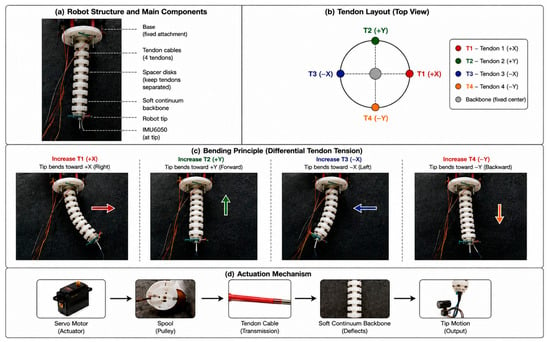
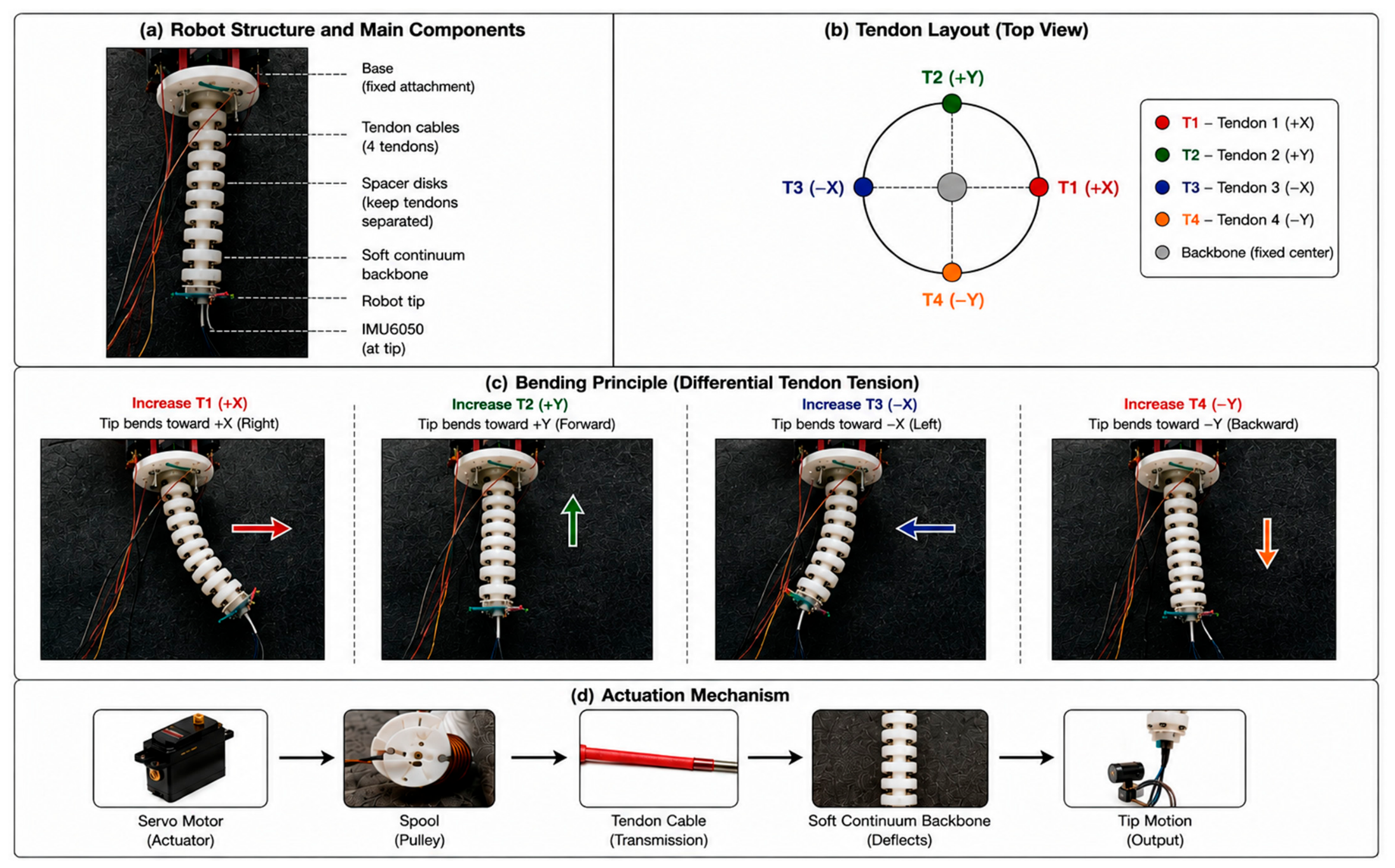
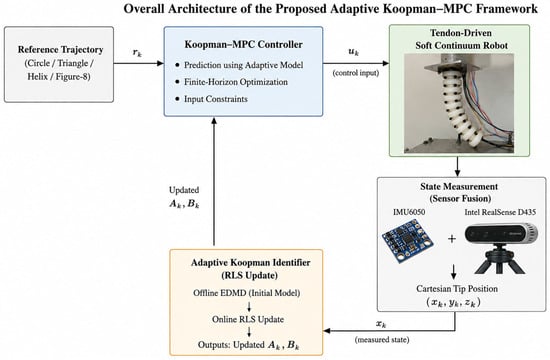
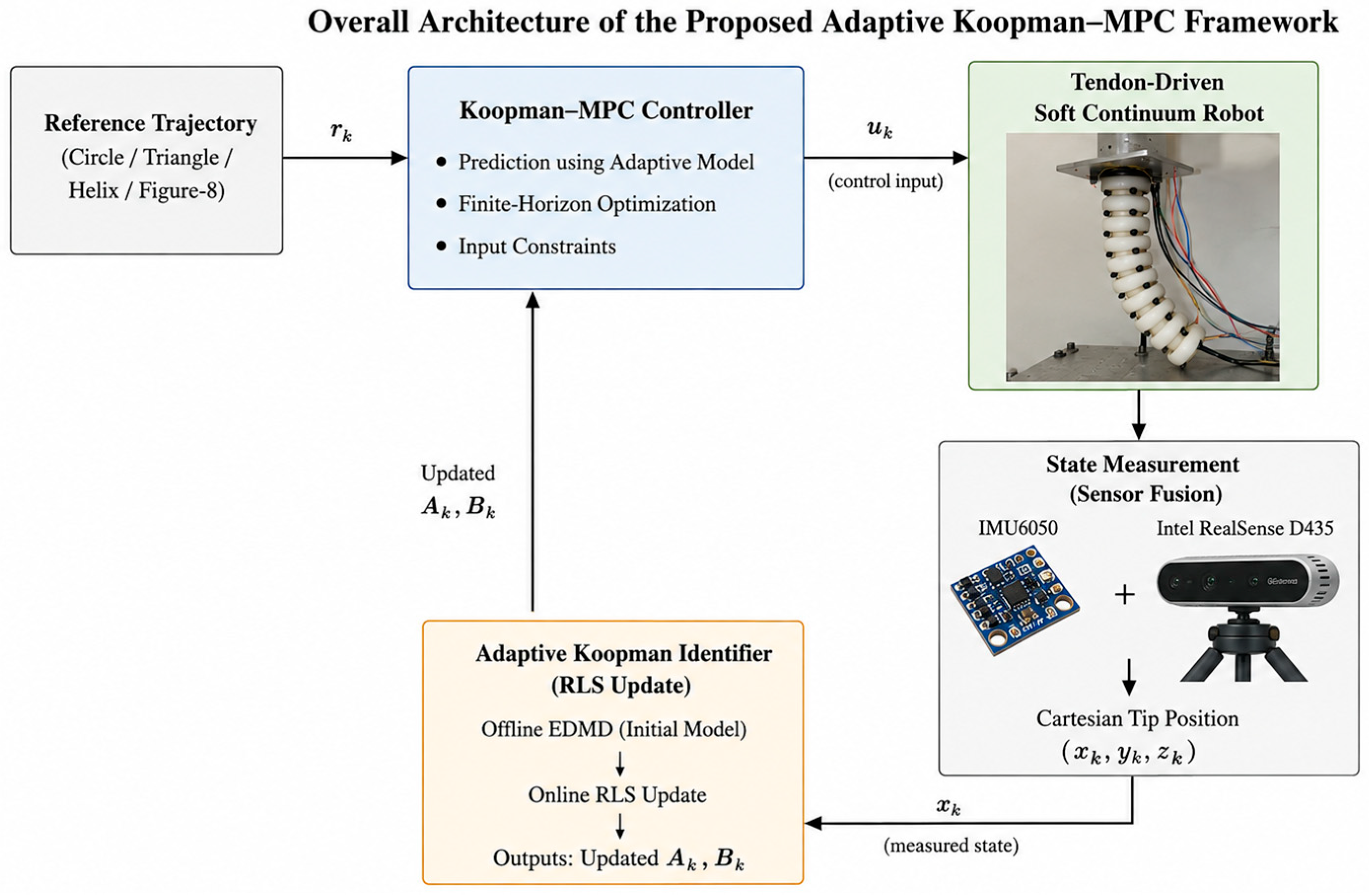
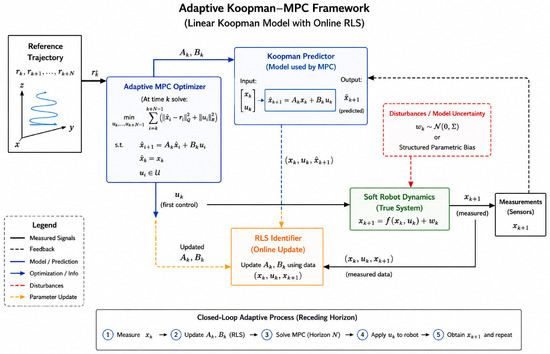
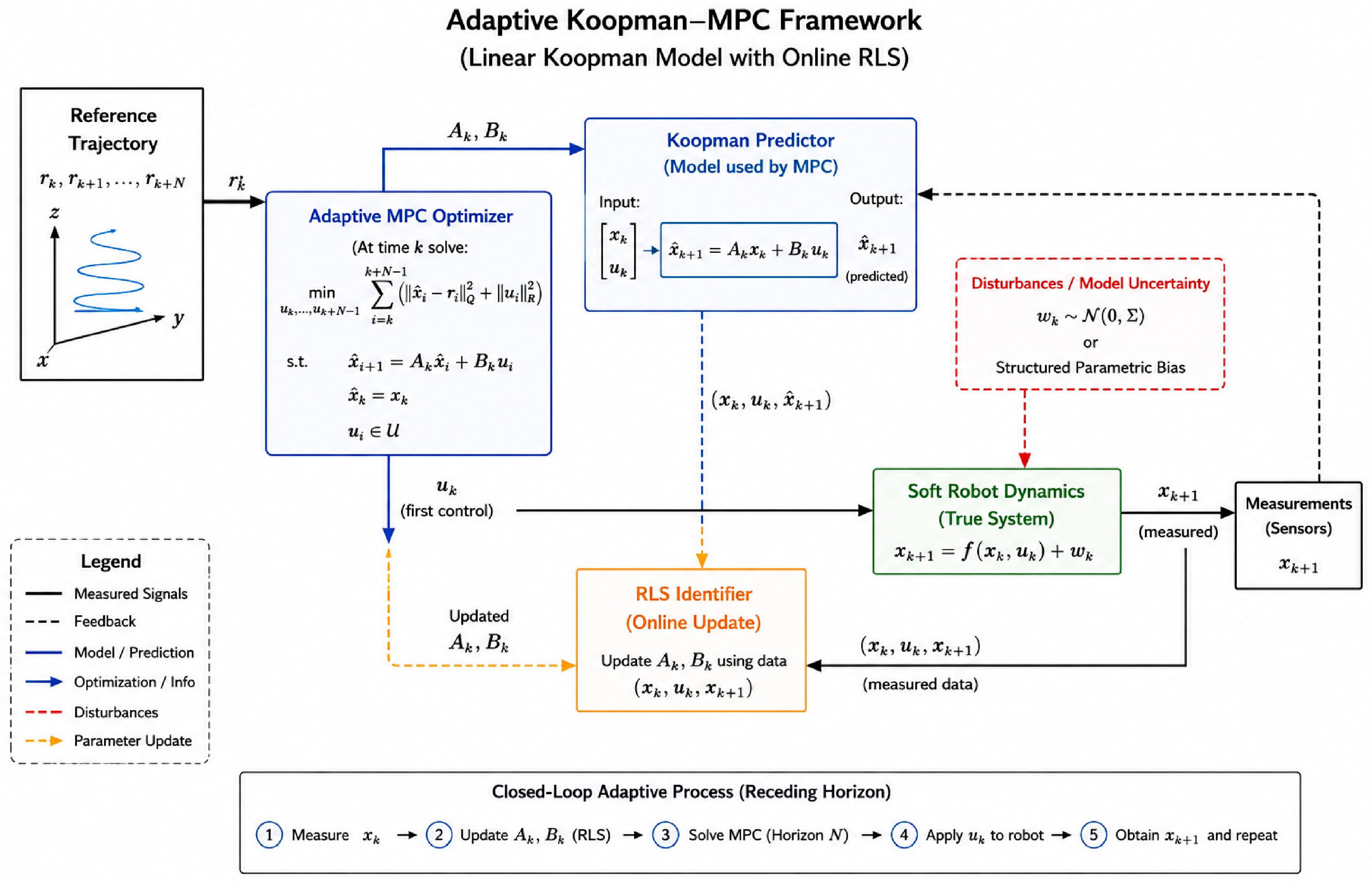
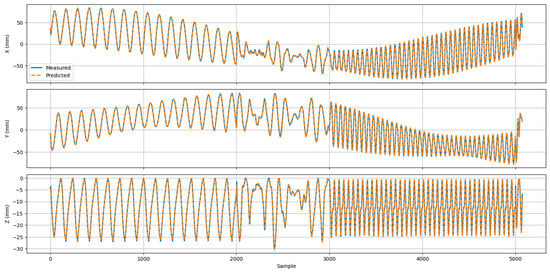
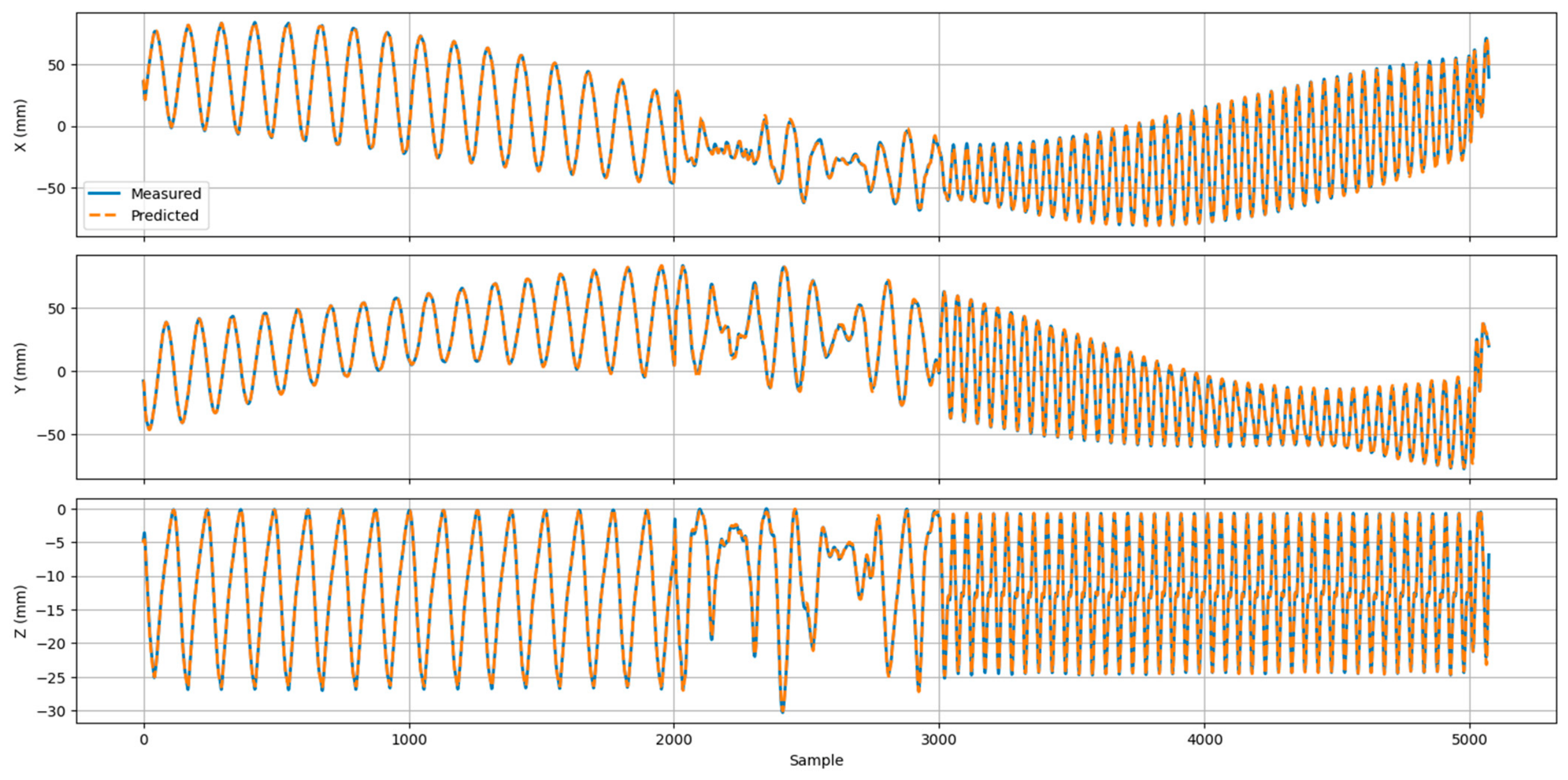
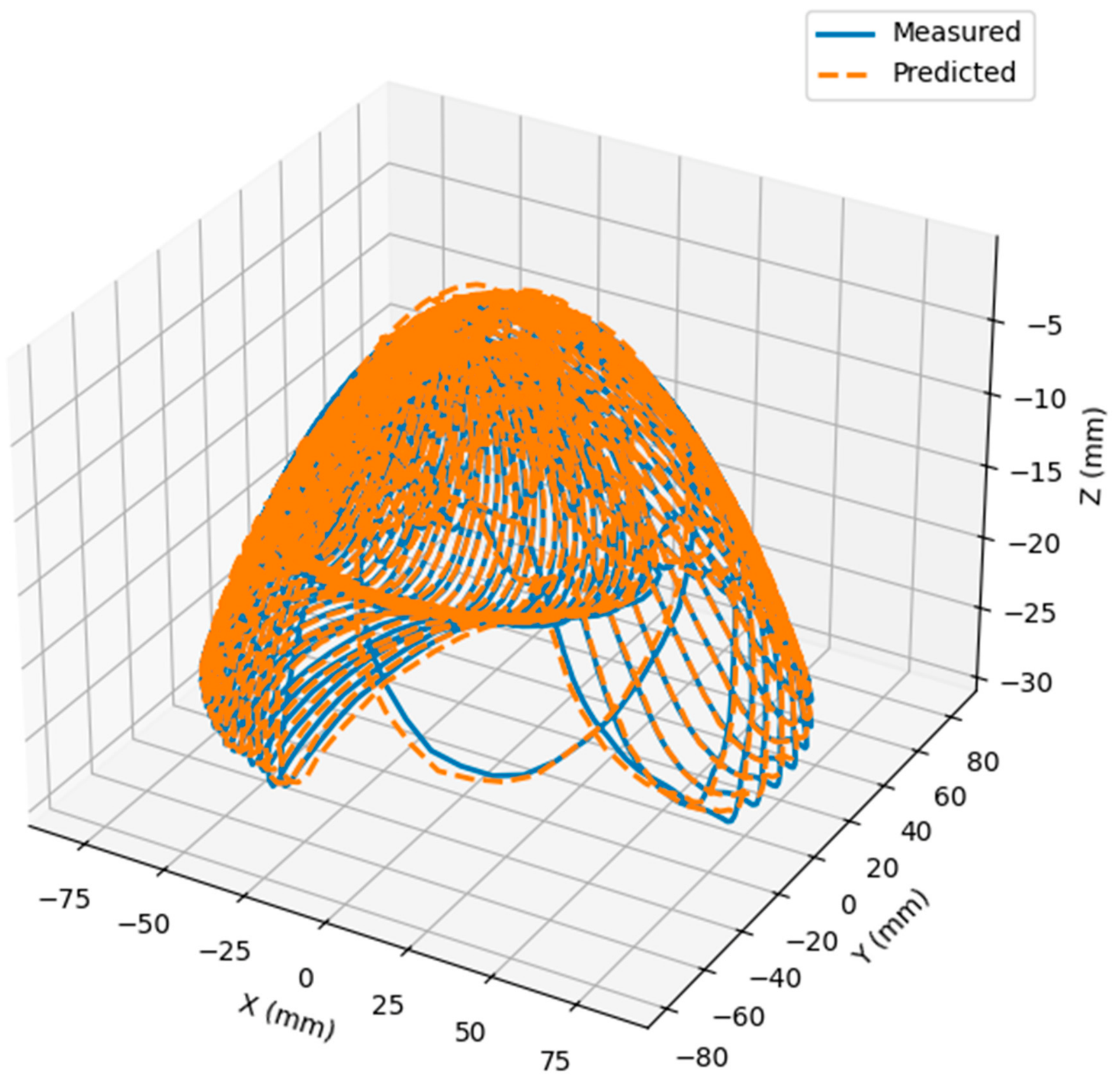
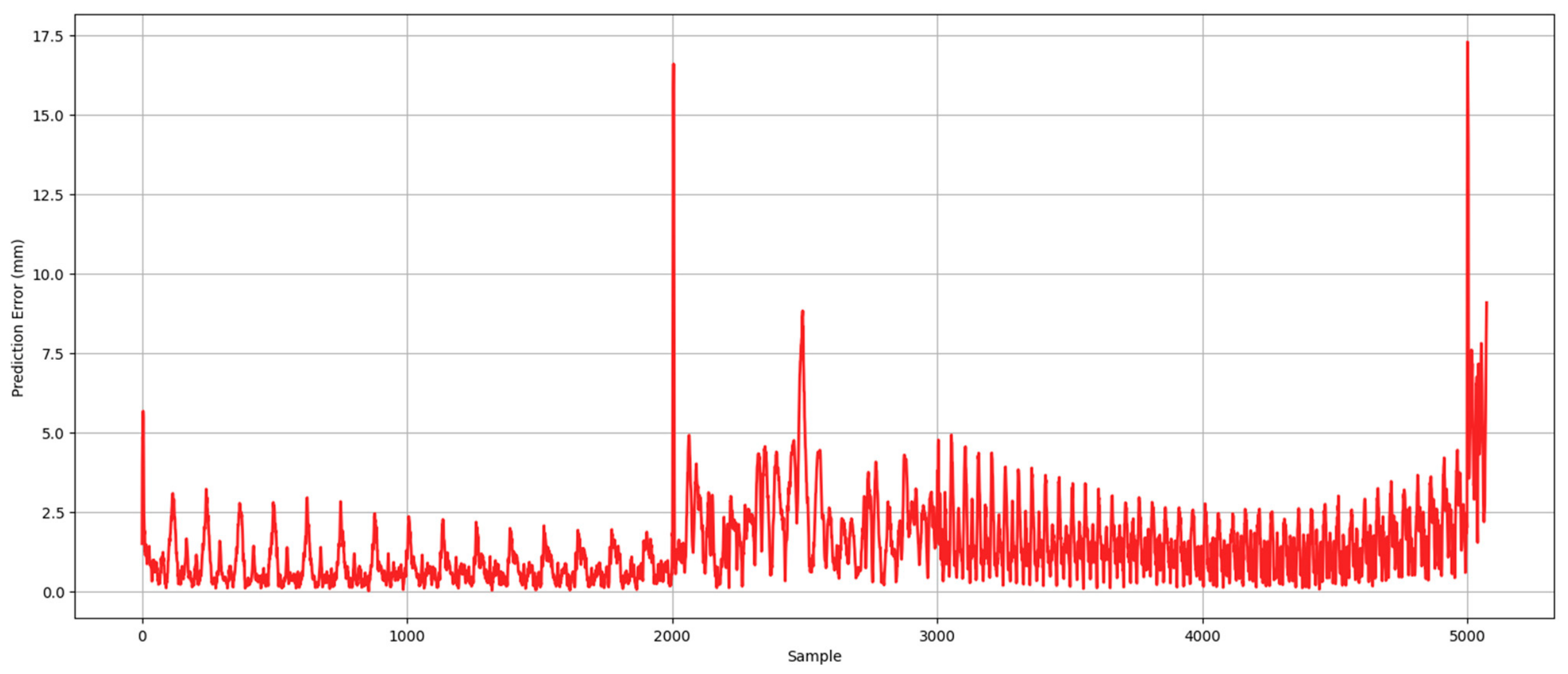
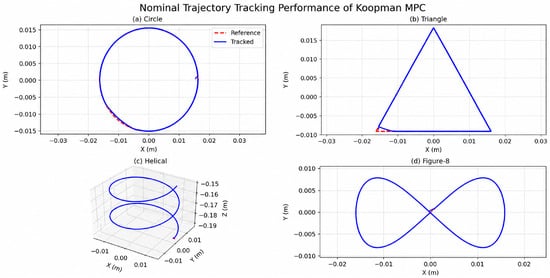
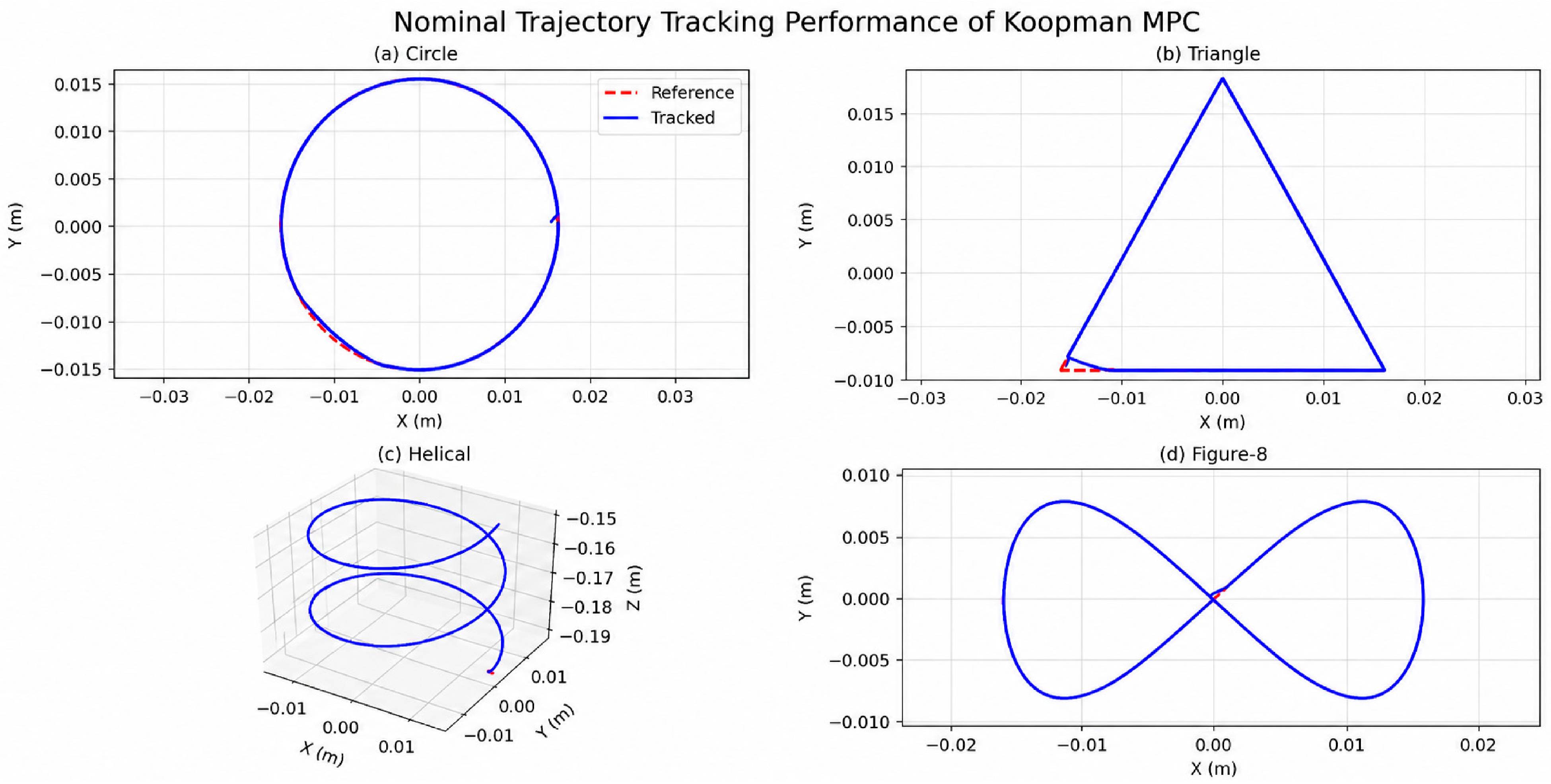
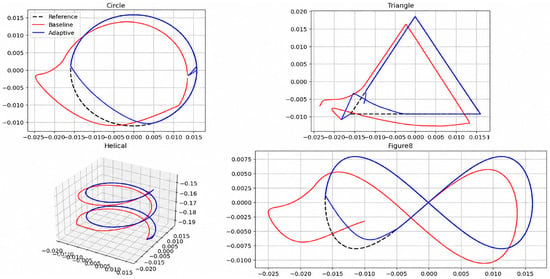
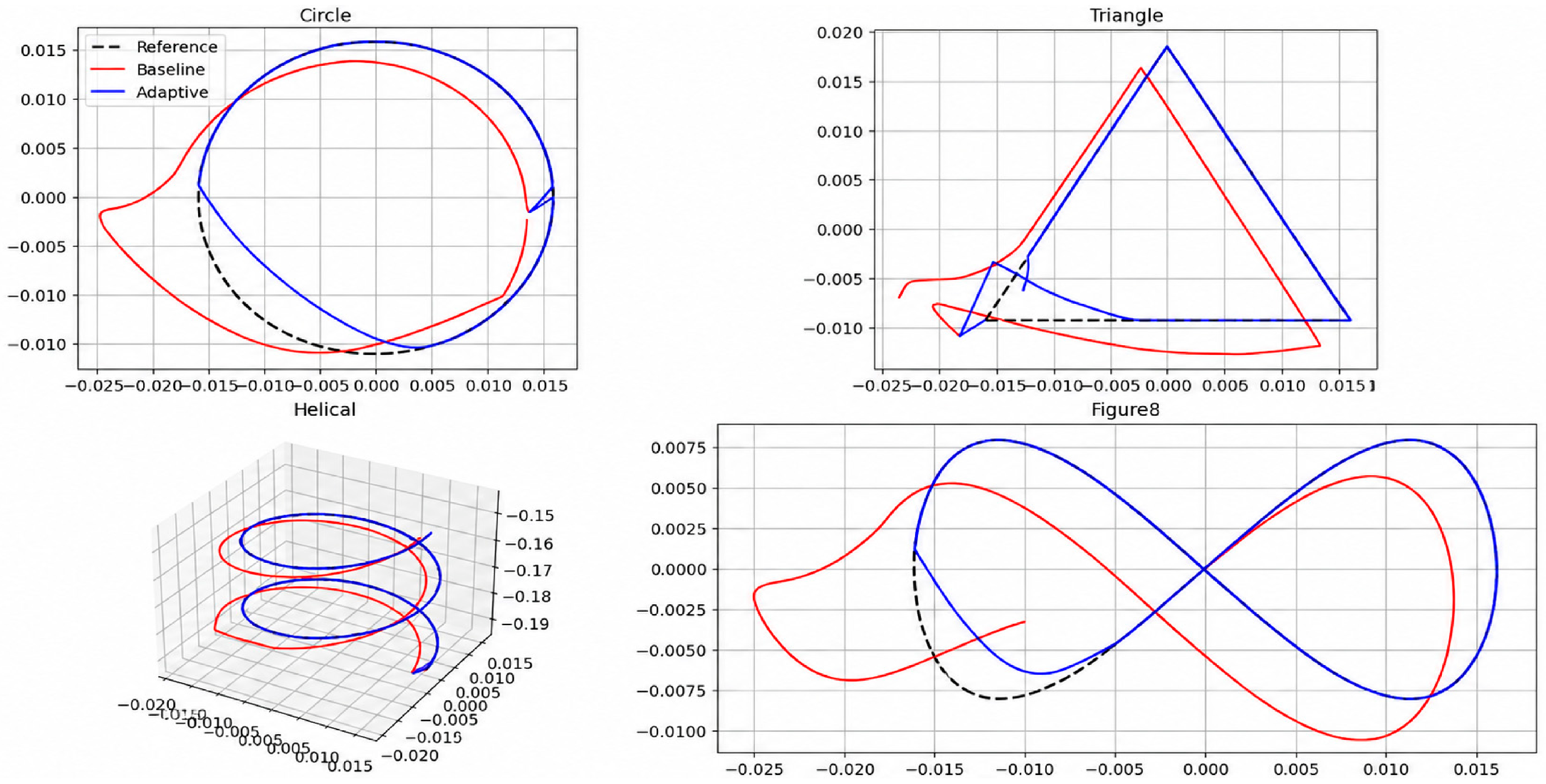
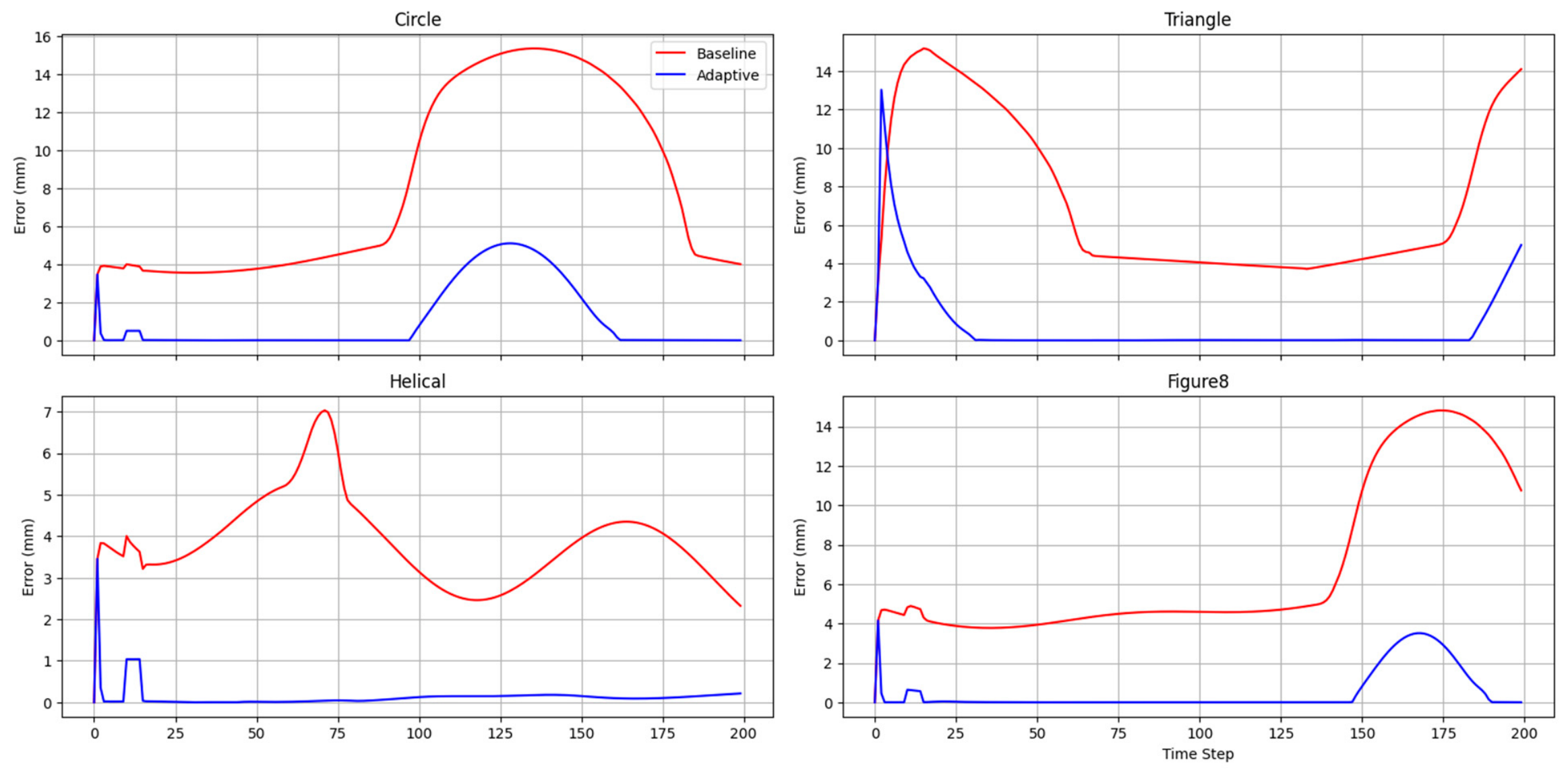
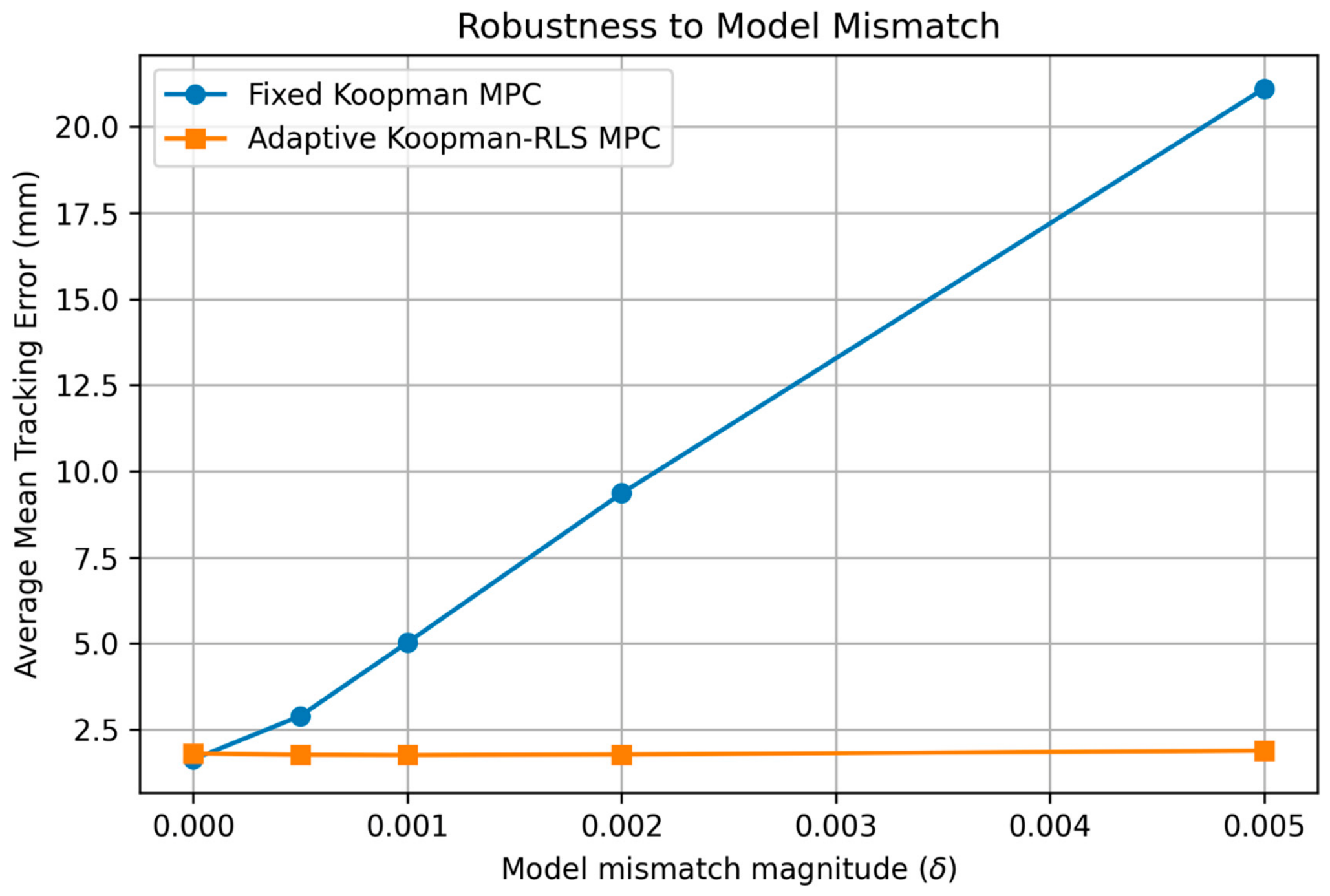
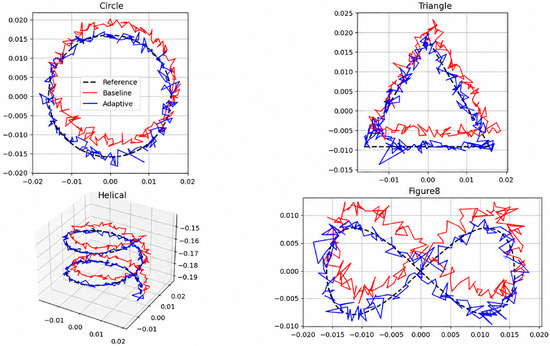
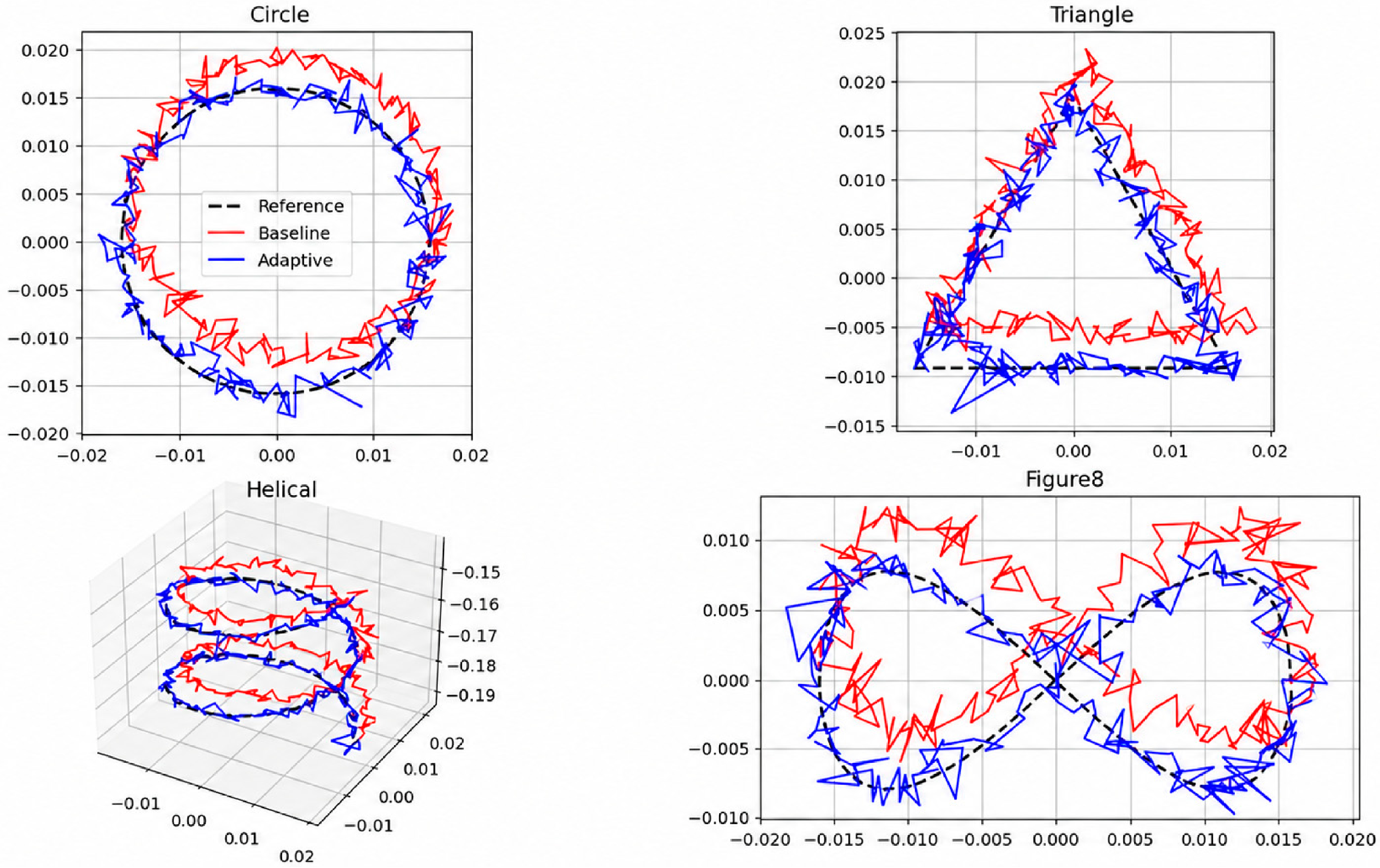
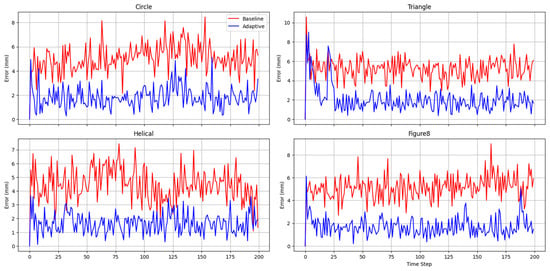
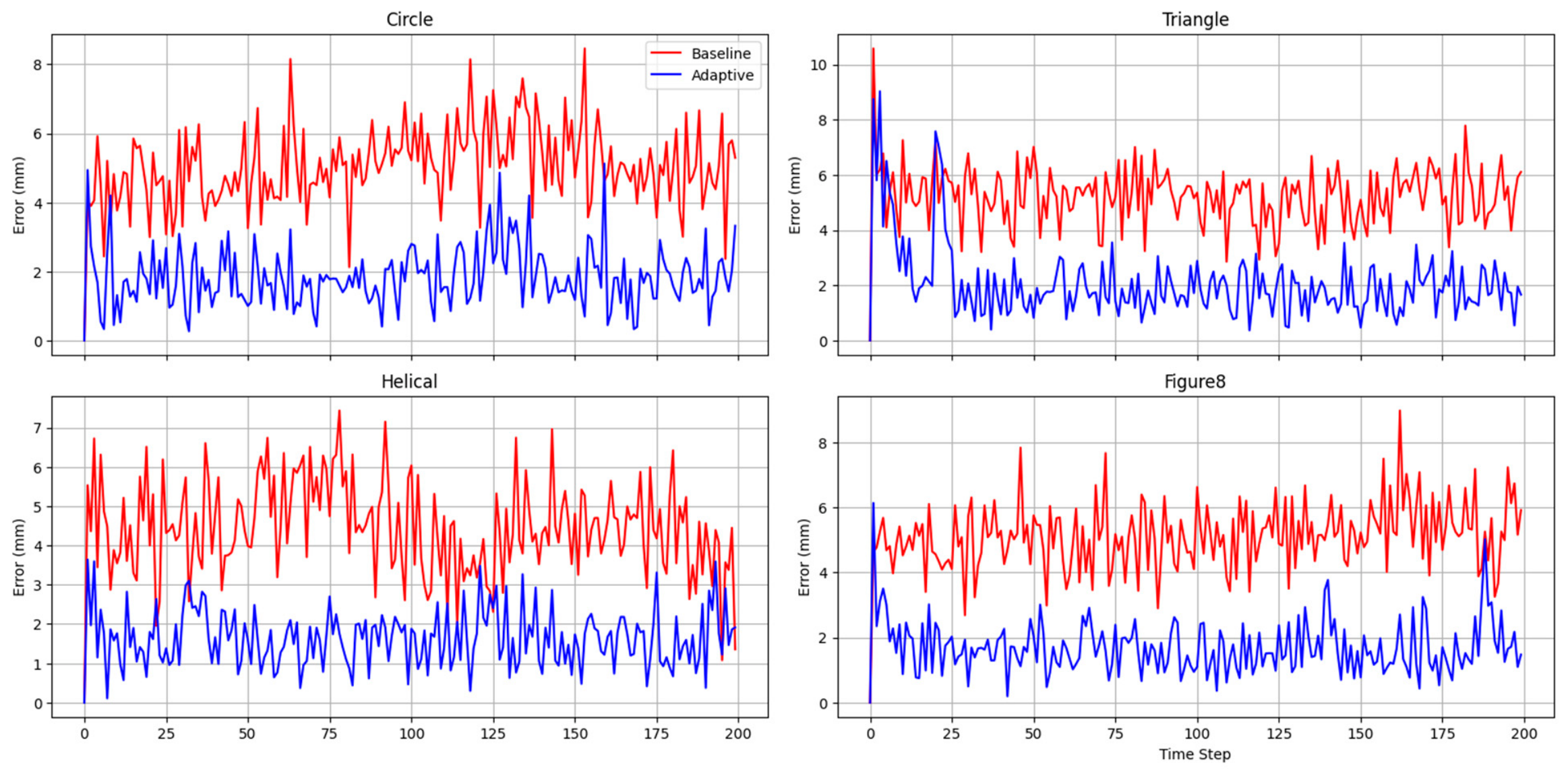
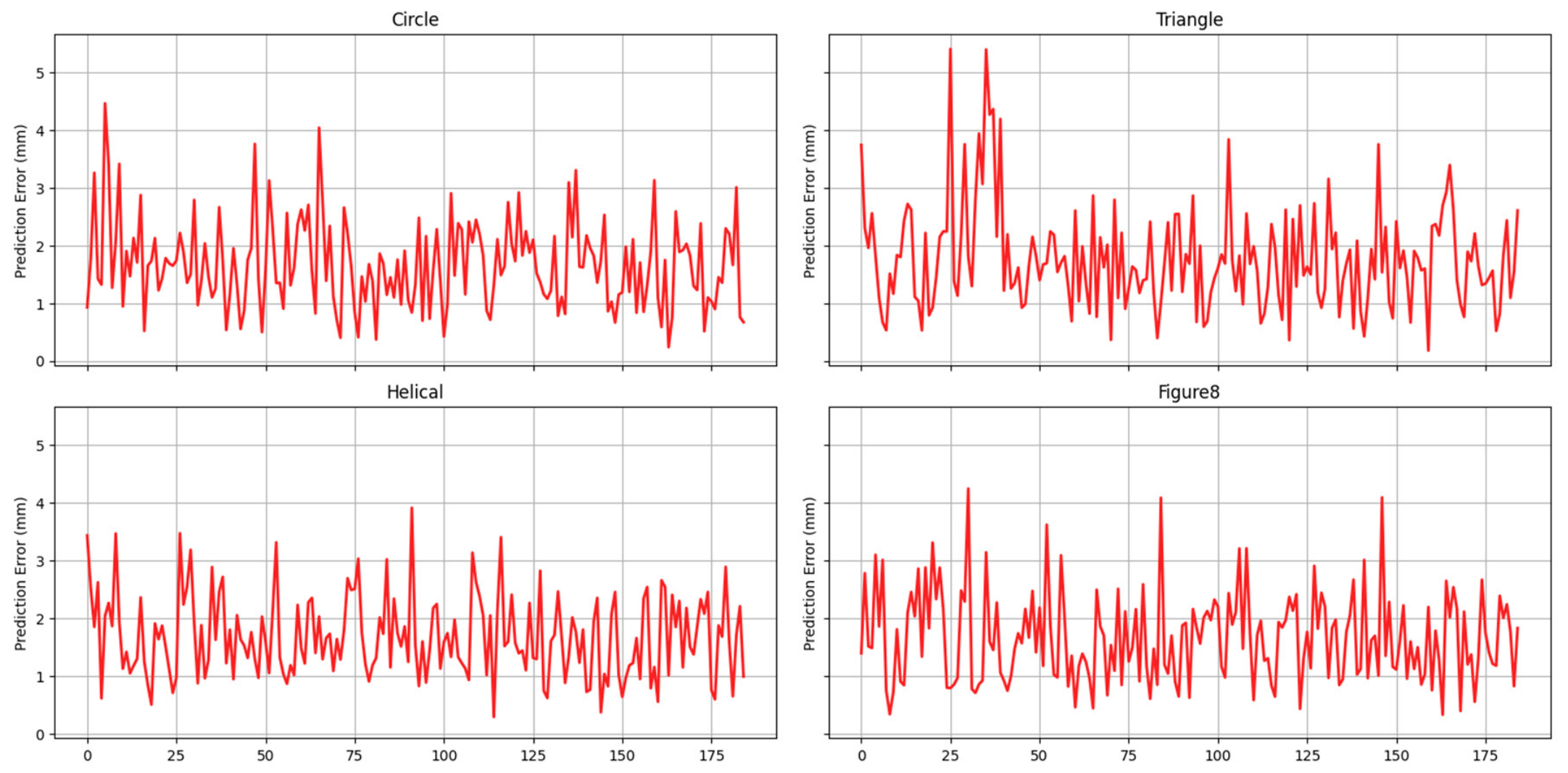
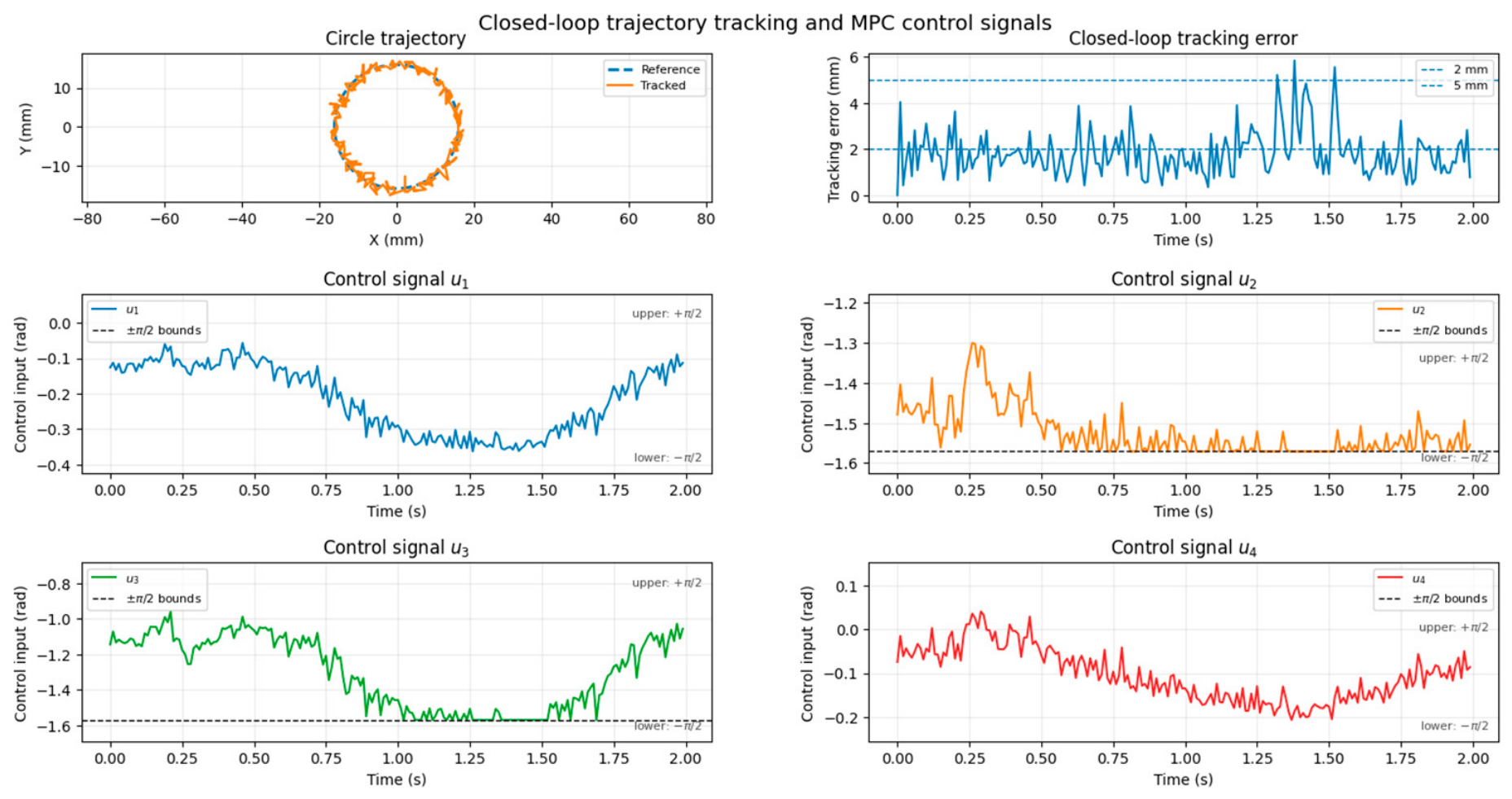
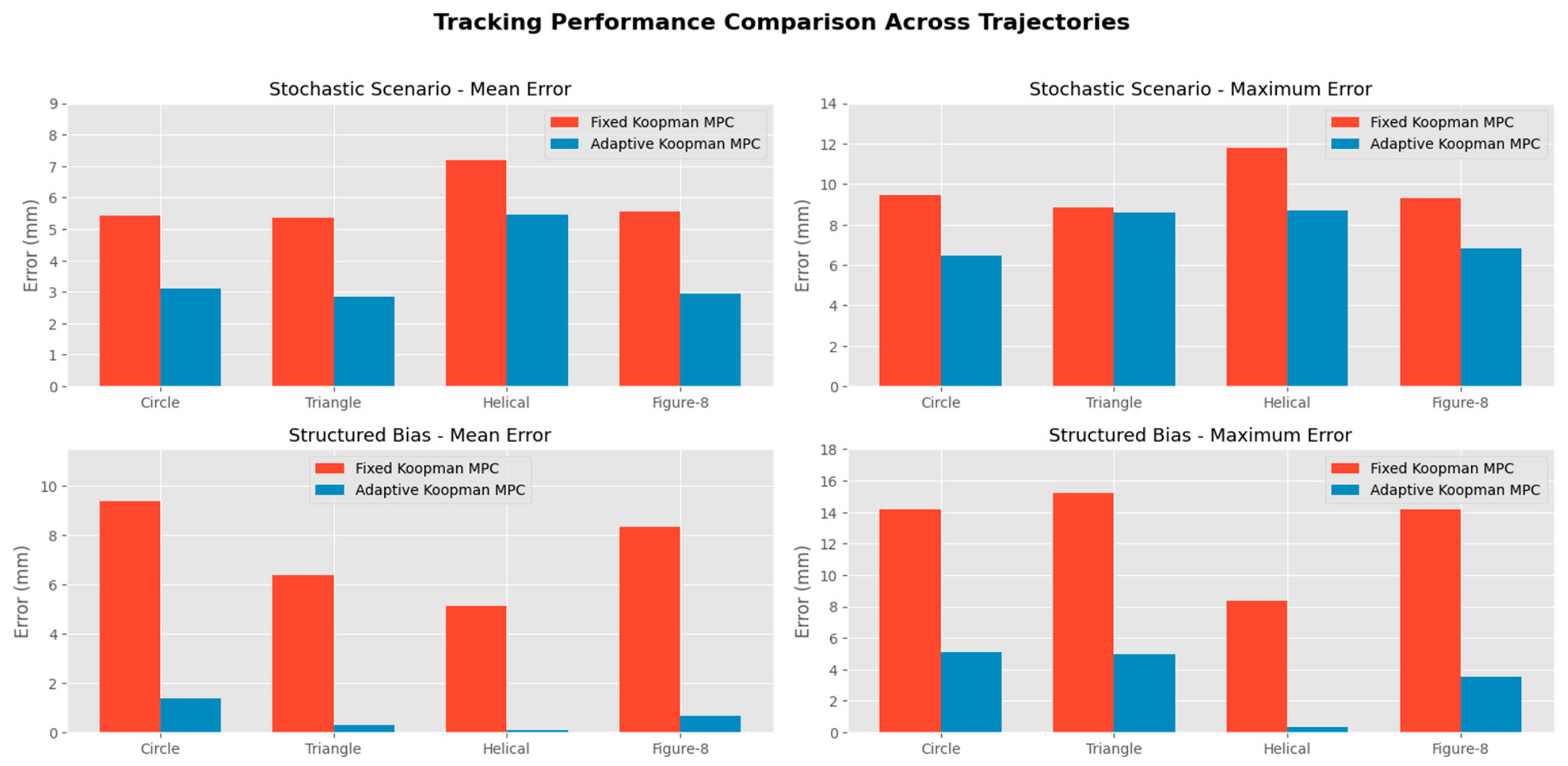
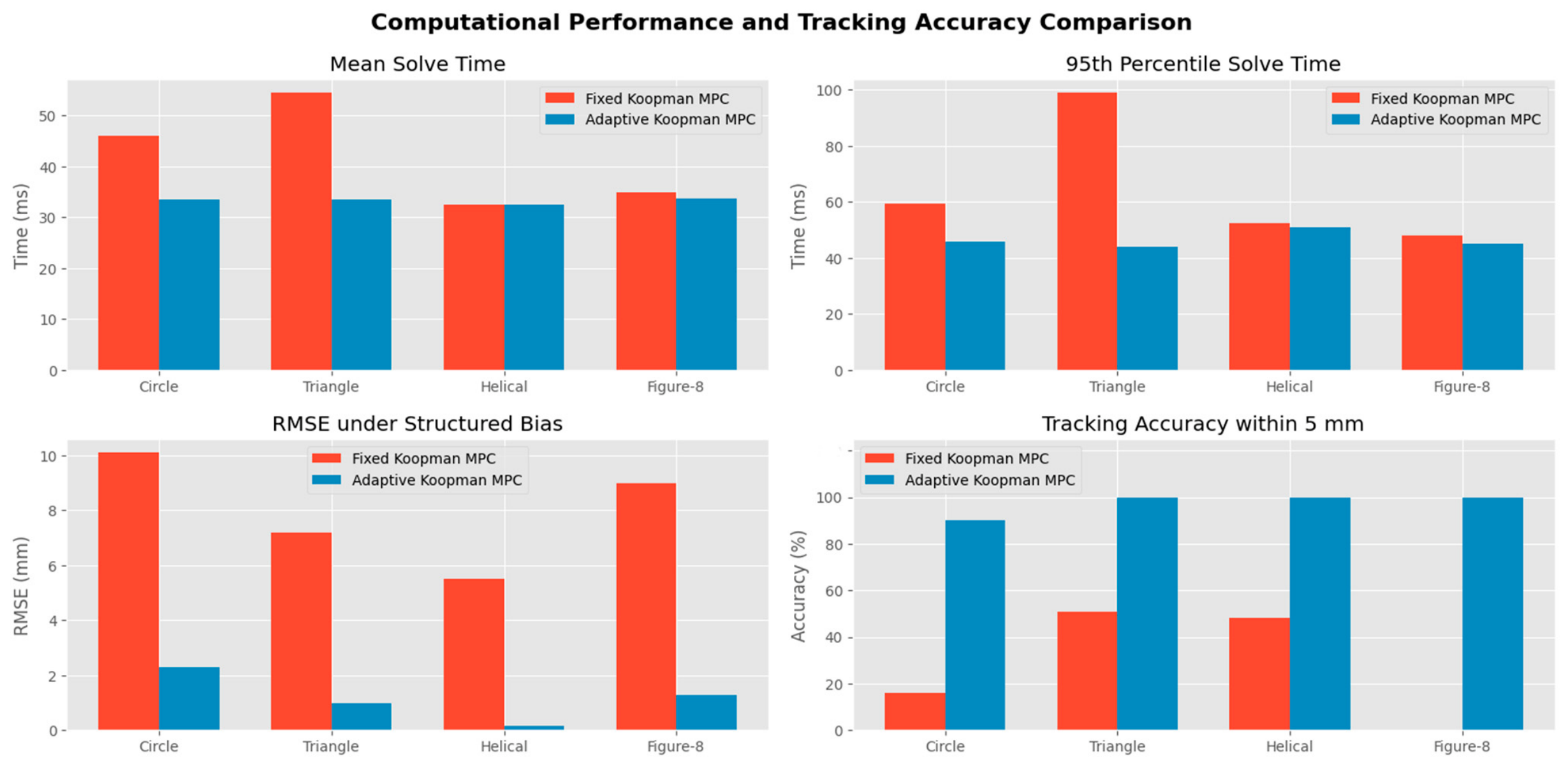

Disclaimer/Publisher’s Note: The statements, opinions and data contained in all publications are solely those of the individual author(s) and contributor(s) and not of MDPI and/or the editor(s). MDPI and/or the editor(s) disclaim responsibility for any injury to people or property resulting from any ideas, methods, instructions or products referred to in the content. |
© 2026 by the authors. Licensee MDPI, Basel, Switzerland. This article is an open access article distributed under the terms and conditions of the Creative Commons Attribution (CC BY) license.