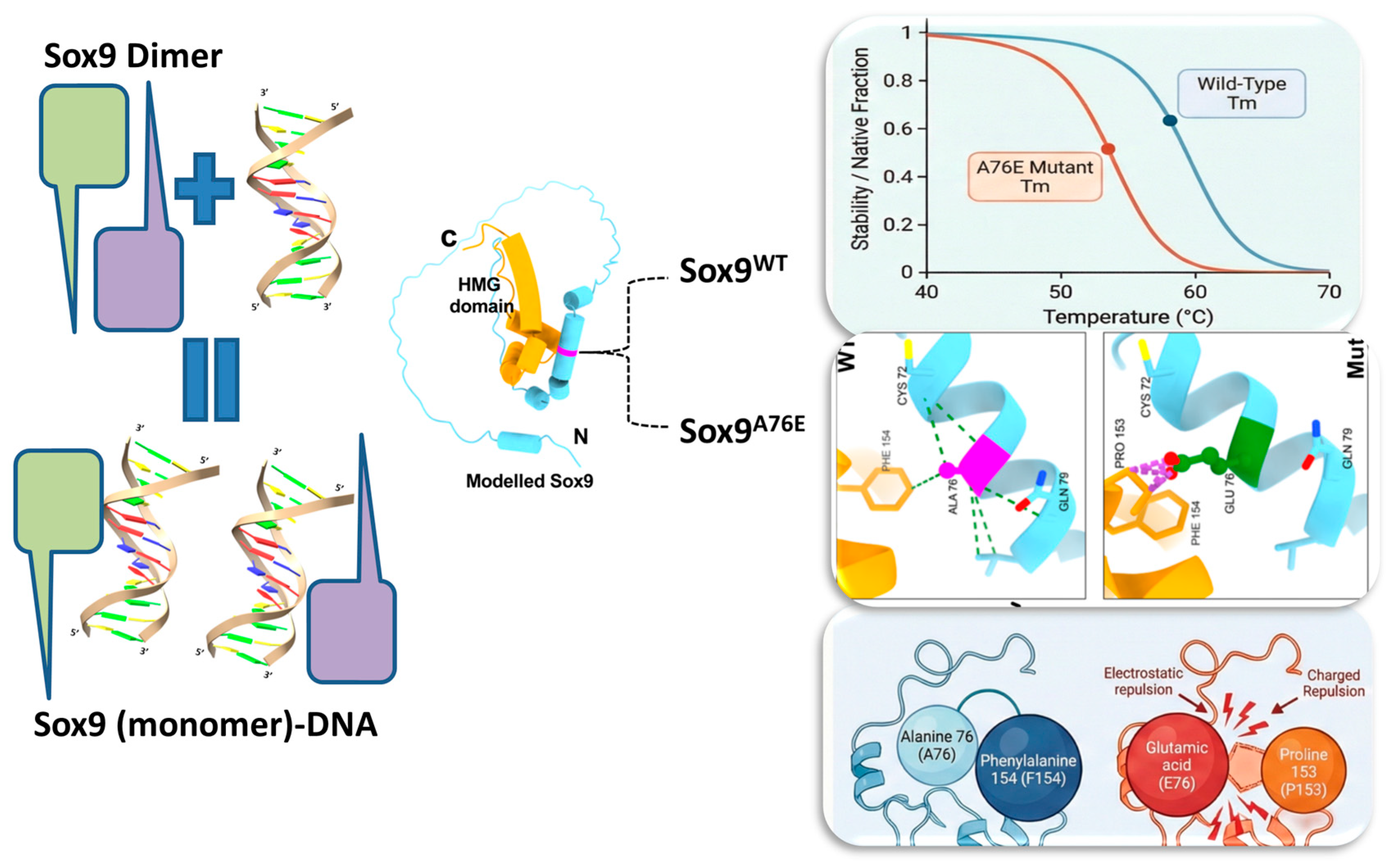
A Campomelic Dysplasia A76E Mutation in Sox9 Destabilizes Protein and DNA Binding Dynamics


Abstract
1. Introduction
2. Material and Methods
2.1. Conservation and Predictive Analysis of A76E Using Sequence-Based Tools
2.2. Sox9 A76E Recombinant Protein Expression and Purification
2.3. Size Exclusion Chromatography
2.4. Circular Dichroism (CD) Studies
2.5. Differential Scanning Fluorimetry (DSF) Assay
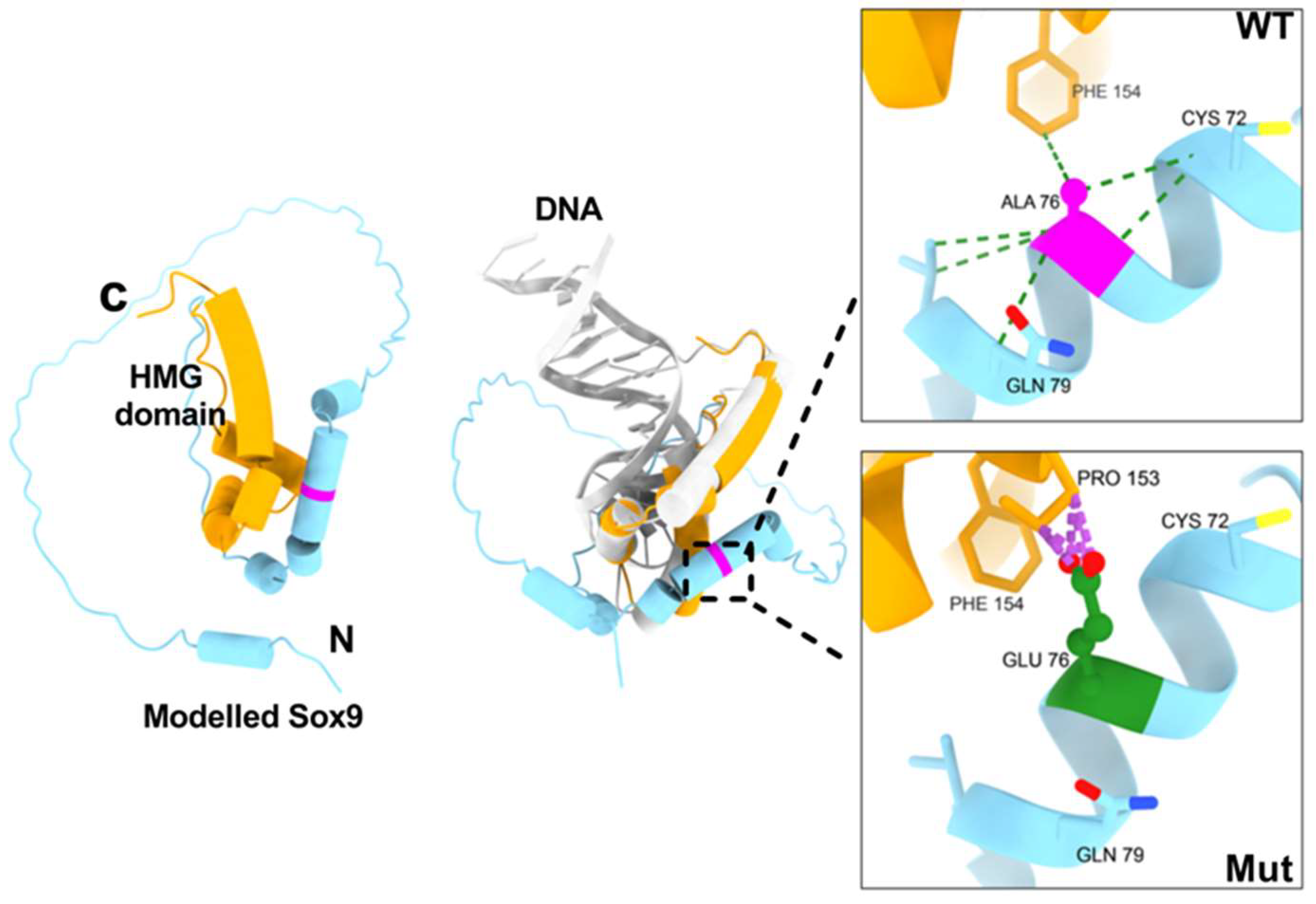
2.6. Modelling of Sox9 Protein and In Silico Analysis of Sox9 Structure upon A76E Mutation
3. Results
3.1. Conservation of Position 76 and Functional Effect of A76E on Sox9
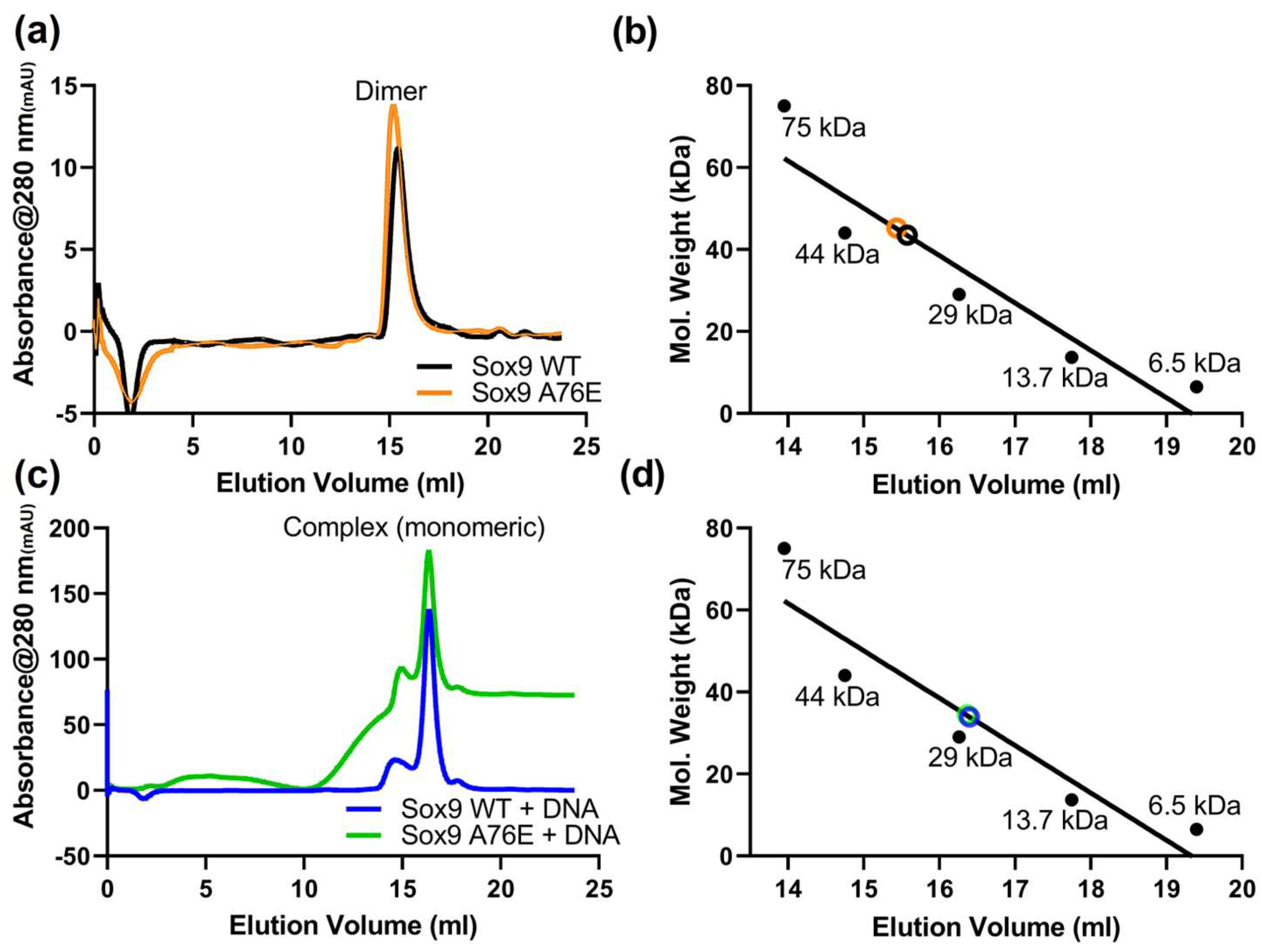
3.2. Oligomeric Characterization of WT and A76E Sox9
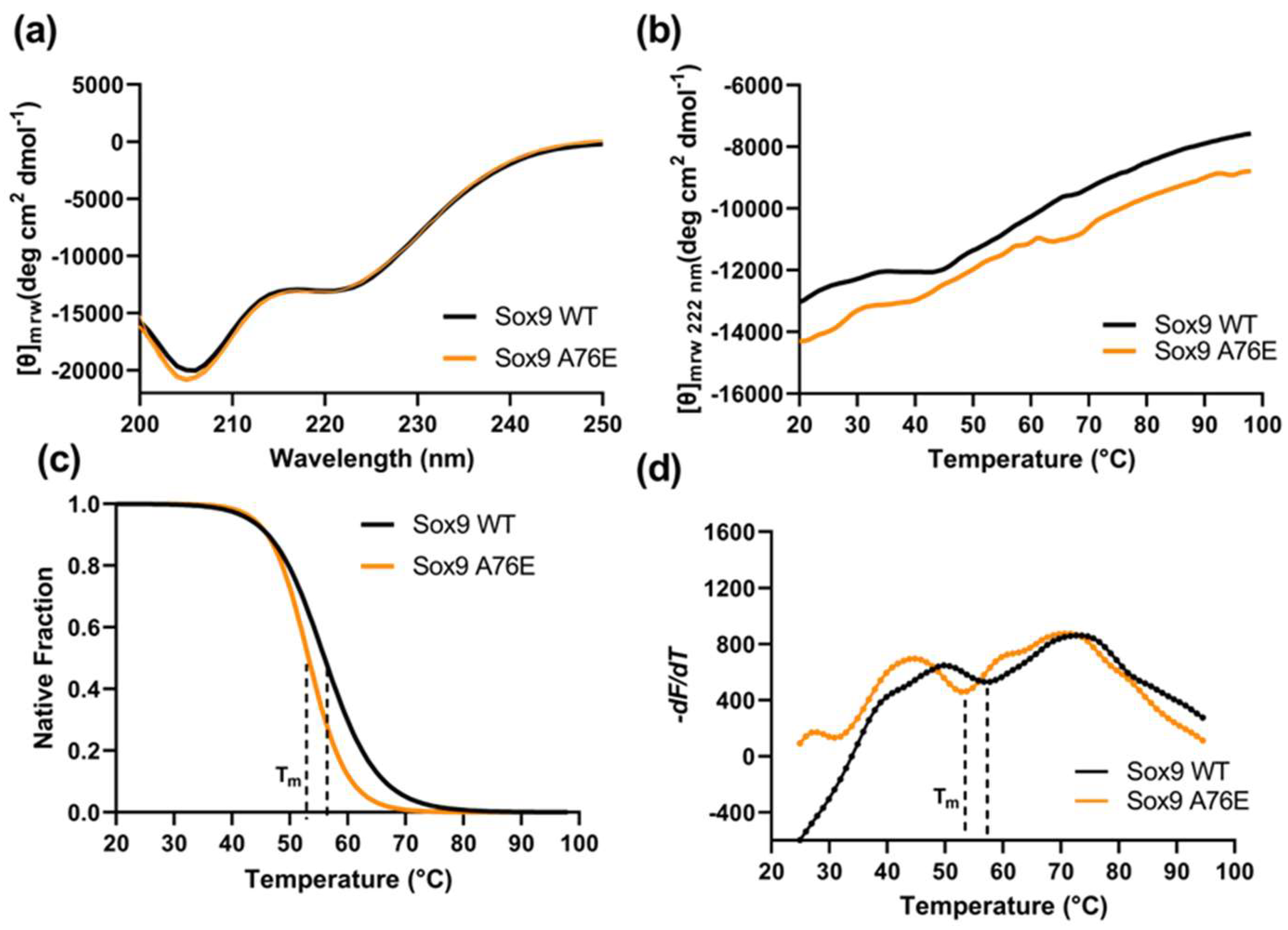
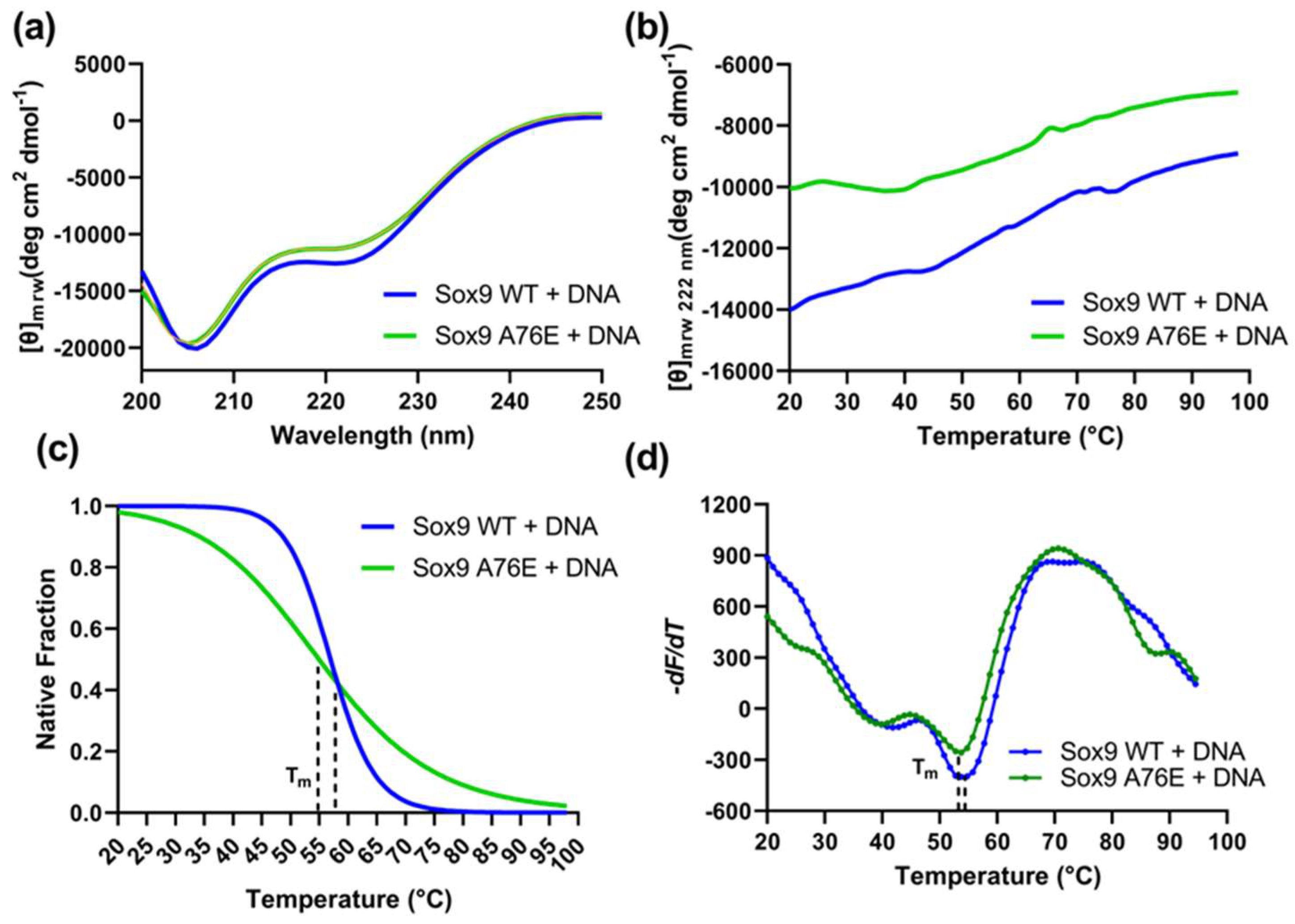
3.3. Comparative Folding and Thermal Stability of A76E Sox9
3.4. Sox9 Modelling and Predicting the Impact of A76E on Sox9 Stability
3.5. Structural Analysis of A76E Mutant on Sox9 Interactions
4. Discussion
5. Conclusions
Supplementary Materials
Author Contributions
Funding
Institutional Review Board Statement
Informed Consent Statement
Data Availability Statement
Conflicts of Interest
References
- Allen, B.L.; Taatjes, D.J. The Mediator Complex: A Central Integrator of Transcription. Nat. Rev. Mol. Cell Biol. 2015, 16, 155–166. [Google Scholar] [CrossRef] [Scilit]
- Lambert, S.A.; Jolma, A.; Campitelli, L.F.; Das, P.K.; Yin, Y.; Albu, M.; Chen, X.; Taipale, J.; Hughes, T.R.; Weirauch, M.T. The Human Transcription Factors. Cell 2018, 172, 650–665. [Google Scholar] [CrossRef] [Scilit]
- Soutourina, J. Transcription Regulation by the Mediator Complex. Nat. Rev. Mol. Cell Biol. 2018, 19, 262–274. [Google Scholar] [CrossRef] [Scilit]
- Moody, S.E.; Perez, D.; Pan, T.C.; Sarkisian, C.J.; Portocarrero, C.P.; Sterner, C.J.; Notorfrancesco, K.L.; Cardiff, R.D.; Chodosh, L.A. The Transcriptional Repressor Snail Promotes Mammary Tumor Recurrence. Cancer Cell 2005, 8, 197–209. [Google Scholar] [CrossRef] [Scilit]
- Reinke, L.M.; Xu, Y.; Cheng, C. Snail Represses the Splicing Regulator Epithelial Splicing Regulatory Protein 1 to Promote Epithelial-Mesenchymal Transition. J. Biol. Chem. 2012, 287, 36435–36442. [Google Scholar] [CrossRef] [Scilit]
- Islam, Z.; Ali, A.M.; Naik, A.; Eldaw, M.; Decock, J.; Kolatkar, P.R. Transcription Factors: The Fulcrum Between Cell Development and Carcinogenesis. Front. Oncol. 2021, 11, 681377. [Google Scholar] [CrossRef] [Scilit]
- Berta, P.; Hawkins, J.R.; Sinclair, A.H.; Taylor, A.; Griffiths, B.L.; Goodfellow, P.N.; Fellous, M. Genetic Evidence Equating SRY and the Testis-Determining Factor. Nature 1990, 348, 448–450. [Google Scholar] [CrossRef] [Scilit]
- Bowles, J.; Schepers, G.; Koopman, P. Phylogeny of the SOX Family of Developmental Transcription Factors Based on Sequence and Structural Indicators. Dev. Biol. 2000, 227, 239–255. [Google Scholar] [CrossRef] [Scilit]
- Wegner, M. From Head to Toes: The Multiple Facets of Sox Proteins. Nucleic Acids Res. 1999, 27, 1409–1420. [Google Scholar] [CrossRef] [Scilit]
- Harley, V.R.; Clarkson, M.J.; Argentaro, A. The Molecular Action and Regulation of the Testis-Determining Factors, SRY (Sex-Determining Region on the Y Chromosome) and SOX9 [SRY-Related High-Mobility Group (HMG) Box 9]. Endocr. Rev. 2003, 24, 466–487. [Google Scholar] [CrossRef] [Scilit] [PubMed]
- Wagner, T.; Wirth, J.; Meyer, J.; Zabel, B.; Held, M.; Zimmer, J.; Pasantes, J.; Bricarelli, F.D.; Keutel, J.; Hustert, E.; et al. Autosomal Sex Reversal and Campomelic Dysplasia Are Caused by Mutations in and around the SRY-Related Gene SOX9. Cell 1994, 79, 1111–1120. [Google Scholar] [CrossRef] [Scilit] [PubMed]
- Foster, J.W.; Dominguez-Steglich, M.A.; Guioli, S.; Kwok, C.; Weller, P.A.; Stevanović, M.; Weissenbach, J.; Mansour, S.; Young, I.D.; Goodfellow, P.N. Campomelic Dysplasia and Autosomal Sex Reversal Caused by Mutations in an SRY-Related Gene. Nature 1994, 372, 525–530. [Google Scholar] [CrossRef] [Scilit] [PubMed]
- Cheung, M.; Briscoe, J. Neural Crest Development Is Regulated by the Transcription Factor Sox9. Development 2003, 130, 5681–5693. [Google Scholar] [CrossRef] [Scilit]
- Pritchett, J.; Athwal, V.; Roberts, N.; Hanley, N.A.; Hanley, K.P. Understanding the Role of SOX9 in Acquired Diseases: Lessons from Development. Trends Mol. Med. 2011, 17, 166–174. [Google Scholar] [CrossRef] [Scilit] [PubMed]
- Wright, E.; Hargrave, M.R.; Christiansen, J.; Cooper, L.; Kun, J.; Evans, T.; Gangadharan, U.; Greenfield, A.; Koopman, P. The Sry-Related Gene Sox9 Is Expressed during Chondrogenesis in Mouse Embryos. Nat. Genet. 1995, 9, 15–20. [Google Scholar] [CrossRef] [Scilit]
- Bi, W.; Huang, W.; Whitworth, D.J.; Deng, J.M.; Zhang, Z.; Behringer, R.R.; de Crombrugghe, B. Haploinsufficiency of Sox9 Results in Defective Cartilage Primordia and Premature Skeletal Mineralization. Proc. Natl. Acad. Sci. USA 2001, 98, 6698–6703. [Google Scholar] [CrossRef] [Scilit] [PubMed]
- Lefebvre, V.; Dumitriu, B.; Penzo-Méndez, A.; Han, Y.; Pallavi, B. Control of Cell Fate and Differentiation by Sry-Related High-Mobility-Group Box (Sox) Transcription Factors. Int. J. Biochem. Cell Biol. 2007, 39, 2195–2214. [Google Scholar] [CrossRef] [Scilit]
- Lincoln, J.; Kist, R.; Scherer, G.; Yutzey, K.E. Sox9 Is Required for Precursor Cell Expansion and Extracellular Matrix Organization during Mouse Heart Valve Development. Dev. Biol. 2007, 305, 120–132. [Google Scholar] [CrossRef] [Scilit]
- Seymour, P.A.; Freude, K.K.; Tran, M.N.; Mayes, E.E.; Jensen, J.; Kist, R.; Scherer, G.; Sander, M. SOX9 Is Required for Maintenance of the Pancreatic Progenitor Cell Pool. Proc. Natl. Acad. Sci. USA 2007, 104, 1865–1870. [Google Scholar] [CrossRef] [Scilit]
- Tanaka, J.; Mabuchi, Y.; Hata, K.; Yasuhara, R.; Takamatsu, K.; Kujiraoka, S.; Yukimori, A.; Takakura, I.; Sumimoto, H.; Fukada, T.; et al. Sox9 Regulates the Luminal Stem/Progenitor Cell Properties of Salivary Glands. Exp. Cell Res. 2019, 382, 111449. [Google Scholar] [CrossRef] [Scilit]
- Huang, W.; Zhou, X.; Lefebvre, V.; de Crombrugghe, B. Phosphorylation of SOX9 by Cyclic AMP-Dependent Protein Kinase A Enhances SOX9’s Ability to Transactivate a Col2a1 Chondrocyte-Specific Enhancer. Mol. Cell. Biol. 2000, 20, 4149–4158. [Google Scholar] [CrossRef] [Scilit]
- Lee, P.-C.; Taylor-Jaffe, K.M.; Nordin, K.M.; Prasad, M.S.; Lander, R.M.; LaBonne, C. SUMOylated SoxE Factors Recruit Grg4 and Function as Transcriptional Repressors in the Neural Crest. J. Cell Biol. 2012, 198, 799–813. [Google Scholar] [CrossRef] [Scilit] [PubMed]
- Liu, J.A.J.; Wu, M.-H.; Yan, C.H.; Chau, B.K.H.; So, H.; Ng, A.; Chan, A.; Cheah, K.S.E.; Briscoe, J.; Cheung, M. Phosphorylation of Sox9 Is Required for Neural Crest Delamination and Is Regulated Downstream of BMP and Canonical Wnt Signaling. Proc. Natl. Acad. Sci. USA 2013, 110, 2882–2887. [Google Scholar] [CrossRef] [Scilit]
- Islam, Z.; Aldous, N.; Choi, S.; Schmidt, F.; Mifsud, B.; Abdelalim, E.M.; Kolatkar, P.R. Flavin Adenine Dinucleotide (FAD) and Pyridoxal 5’-Phosphate (PLP) Bind to Sox9 and Alter the Expression of Key Pancreatic Progenitor Transcription Factors. Int. J. Mol. Sci. 2022, 23, 14051. [Google Scholar] [CrossRef] [Scilit]
- Remenyi, A.; Reményi, A.; Lins, K.; Nissen, L.J.; Reinbold, R.; Schöler, H.R.; Wilmanns, M. Crystal Structure of a POU/HMG/DNA Ternary Complex Suggests Differential Assembly of Oct4 and Sox2 on Two Enhancers. Genes Dev. 2003, 17, 2048–2059. [Google Scholar] [CrossRef] [Scilit]
- Werner, M.H.; Huth, J.R.; Gronenborn, A.M.; Clore, G.M.; Marius Clore, G. Molecular Basis of Human 46X,Y Sex Reversal Revealed from the Three-Dimensional Solution Structure of the Human SRY-DNA Complex. Cell 1995, 81, 705–714. [Google Scholar] [CrossRef] [Scilit]
- Williams, D.C.; Cai, M.; Clore, G.M. Molecular Basis for Synergistic Transcriptional Activation by Oct1 and Sox2 Revealed from the Solution Structure of the 42-KDa Oct1·Sox2· Hoxb1-DNA Ternary Transcription Factor Complex. J. Biol. Chem. 2004, 279, 1449–1457. [Google Scholar] [CrossRef] [Scilit]
- Harley, V.R.; Lovell-Badge, R.; Goodfellow, P.N. Definition of a Consensus DNA Binding Site for SRY. Nucleic Acids Res. 1994, 22, 1500–1501. [Google Scholar] [CrossRef] [Scilit] [PubMed]
- Lovell-Badge, R. The Early History of the Sox Genes. Int. J. Biochem. Cell Biol. 2010, 42, 378–380. [Google Scholar] [CrossRef] [Scilit] [PubMed]
- Bernard, P.; Tang, P.; Liu, S.; Dewing, P.; Harley, V.R.; Vilain, E. Dimerization of SOX9 Is Required for Chondrogenesis, but Not for Sex Determination. Hum. Mol. Genet. 2003, 12, 1755–1765. [Google Scholar] [CrossRef] [Scilit]
- Sock, E.; Pagon, R.A.; Keymolen, K.; Lissens, W.; Wegner, M.; Scherer, G. Loss of DNA-Dependent Dimerization of the Transcription Factor SOX9 as a Cause for Campomelic Dysplasia. Hum. Mol. Genet. 2003, 12, 1439–1447. [Google Scholar] [CrossRef] [Scilit] [PubMed]
- Staffler, A.; Hammel, M.; Wahlbuhl, M.; Bidlingmaier, C.; Flemmer, A.W.; Pagel, P.; Nicolai, T.; Wegner, M.; Holzinger, A. Heterozygous SOX9 Mutations Allowing for Residual DNA-Binding and Transcriptional Activation Lead to the Acampomelic Variant of Campomelic Dysplasia. Hum. Mutat. 2010, 31, E1436–E1444. [Google Scholar] [CrossRef] [Scilit]
- Bagheri-Fam, S.; Combes, A.N.; Ling, C.K.; Wilhelm, D. Heterozygous Deletion of Sox9 in Mouse Mimics the Gonadal Sex Reversal Phenotype Associated with Campomelic Dysplasia in Humans. Hum. Mol. Genet. 2021, 29, 3781–3792. [Google Scholar] [CrossRef] [Scilit]
- Madeira, F.; Park, Y.M.; Lee, J.; Buso, N.; Gur, T.; Madhusoodanan, N.; Basutkar, P.; Tivey, A.R.N.; Potter, S.C.; Finn, R.D.; et al. The EMBL-EBI Search and Sequence Analysis Tools APIs in 2019. Nucleic Acids Res. 2019, 47, W636–W641. [Google Scholar] [CrossRef] [Scilit]
- Ashkenazy, H.; Erez, E.; Martz, E.; Pupko, T.; Ben-Tal, N. ConSurf 2010: Calculating Evolutionary Conservation in Sequence and Structure of Proteins and Nucleic Acids. Nucleic Acids Res. 2010, 38, W529–W533. [Google Scholar] [CrossRef] [Scilit]
- Adzhubei, I.A.; Schmidt, S.; Peshkin, L.; Ramensky, V.E.; Gerasimova, A.; Bork, P.; Kondrashov, A.S.; Sunyaev, S.R. A Method and Server for Predicting Damaging Missense Mutations. Nat. Methods 2010, 7, 248–249. [Google Scholar] [CrossRef] [Scilit]
- Frazer, J.; Notin, P.; Dias, M.; Gomez, A.; Min, J.K.; Brock, K.; Gal, Y.; Marks, D.S. Publisher Correction: Disease Variant Prediction with Deep Generative Models of Evolutionary Data. Nature 2022, 601, E7. [Google Scholar] [CrossRef] [Scilit]
- Shihab, H.A.; Gough, J.; Cooper, D.N.; Stenson, P.D.; Barker, G.L.A.; Edwards, K.J.; Day, I.N.M.; Gaunt, T.R. Predicting the Functional, Molecular, and Phenotypic Consequences of Amino Acid Substitutions Using Hidden Markov Models. Hum. Mutat. 2013, 34, 57–65. [Google Scholar] [CrossRef] [Scilit]
- Micsonai, A.; Wien, F.; Bulyáki, É.; Kun, J.; Moussong, É.; Lee, Y.H.; Goto, Y.; Réfrégiers, M.; Kardos, J. BeStSel: A Web Server for Accurate Protein Secondary Structure Prediction and Fold Recognition from the Circular Dichroism Spectra. Nucleic Acids Res. 2018, 46, W315–W322. [Google Scholar] [CrossRef] [Scilit] [PubMed]
- Abramson, J.; Adler, J.; Dunger, J.; Evans, R.; Green, T.; Pritzel, A.; Ronneberger, O.; Willmore, L.; Ballard, A.J.; Bambrick, J.; et al. Accurate Structure Prediction of Biomolecular Interactions with AlphaFold 3. Nature 2024, 630, 493–500. [Google Scholar] [CrossRef] [Scilit] [PubMed]
- Pires, D.E.V.; Ascher, D.B.; Blundell, T.L. MCSM: Predicting the Effects of Mutations in Proteins Using Graph-Based Signatures. Bioinformatics 2014, 30, 335–342. [Google Scholar] [CrossRef] [Scilit]
- Pandurangan, A.P.; Ochoa-Montaño, B.; Ascher, D.B.; Blundell, T.L. SDM: A Server for Predicting Effects of Mutations on Protein Stability. Nucleic Acids Res. 2017, 45, W229–W235. [Google Scholar] [CrossRef] [Scilit]
- Parthiban, V.; Gromiha, M.M.; Schomburg, D. CUPSAT: Prediction of Protein Stability upon Point Mutations. Nucleic Acids Res. 2006, 34, W239–W242. [Google Scholar] [CrossRef] [Scilit]
- Pettersen, E.F.; Goddard, T.D.; Huang, C.C.; Meng, E.C.; Couch, G.S.; Croll, T.I.; Morris, J.H.; Ferrin, T.E. UCSF ChimeraX: Structure Visualization for Researchers, Educators, and Developers. Protein Sci. 2021, 30, 70–82. [Google Scholar] [CrossRef] [Scilit]
- Haseeb, A.; Lefebvre, V. The SOXE Transcription Factors-SOX8, SOX9 and SOX10-Share a Bi-Partite Transactivation Mechanism. Nucleic Acids Res. 2019, 47, 6917–6931. [Google Scholar] [CrossRef] [Scilit]
- Han, Y.; Lefebvre, V. L-Sox5 and Sox6 Drive Expression of the Aggrecan Gene in Cartilage by Securing Binding of Sox9 to a Far-Upstream Enhancer. Mol. Cell. Biol. 2008, 28, 4999–5013. [Google Scholar] [CrossRef] [Scilit]
- Renard, E.; Porée, B.; Chadjichristos, C.; Kypriotou, M.; Maneix, L.; Bigot, N.; Legendre, F.; Ollitrault, D.; De Crombrugghe, B.; Malléin-Gérin, F.; et al. Sox9/Sox6 and Sp1 Are Involved in the Insulin-like Growth Factor-I-Mediated Upregulation of Human Type II Collagen Gene Expression in Articular Chondrocytes. J. Mol. Med. 2012, 90, 649–666. [Google Scholar] [CrossRef] [Scilit] [PubMed]
- Leung, V.Y.L.; Gao, B.; Leung, K.K.H.; Melhado, I.G.; Wynn, S.L.; Au, T.Y.K.; Dung, N.W.F.; Lau, J.Y.B.; Mak, A.C.Y.; Chan, D.; et al. SOX9 Governs Differentiation Stage-Specific Gene Expression in Growth Plate Chondrocytes via Direct Concomitant Transactivation and Repression. PLoS Genet. 2011, 7, e1002356. [Google Scholar] [CrossRef] [Scilit] [PubMed]
- Yano, F.; Ohba, S.; Murahashi, Y.; Tanaka, S.; Saito, T.; Chung, U. Runx1 Contributes to Articular Cartilage Maintenance by Enhancement of Cartilage Matrix Production and Suppression of Hypertrophic Differentiation. Sci. Rep. 2019, 9, 7666. [Google Scholar] [CrossRef] [Scilit]



| Mutation | Predicted Score | Outcome/Overall Stability | |||
|---|---|---|---|---|---|
| Sequence-based predictors | PolyPhen -2 | EVE | FATHMM | ||
| WT | 00 | 00 | 00 | - | |
| A76E | 1.000 | 0.995 | −7.99 | Deleterious/pathogenic | |
| Predicted ΔΔG (kcal/mol) | |||||
| Structure-based predictors | mCSM | SDM | CUPSAT | ||
| WT | 00 | 00 | 00 | - | |
| A76E | −2.00 | −3.06 | −3.10 | Destabilizing | |
Disclaimer/Publisher’s Note: The statements, opinions and data contained in all publications are solely those of the individual author(s) and contributor(s) and not of MDPI and/or the editor(s). MDPI and/or the editor(s) disclaim responsibility for any injury to people or property resulting from any ideas, methods, instructions or products referred to in the content. |
© 2026 by the authors. Licensee MDPI, Basel, Switzerland. This article is an open access article distributed under the terms and conditions of the Creative Commons Attribution (CC BY) license.
Share and Cite
Islam, Z.; Kolatkar, P.R. A Campomelic Dysplasia A76E Mutation in Sox9 Destabilizes Protein and DNA Binding Dynamics. Biomolecules 2026, 16, 646. https://doi.org/10.3390/biom16050646
Islam Z, Kolatkar PR. A Campomelic Dysplasia A76E Mutation in Sox9 Destabilizes Protein and DNA Binding Dynamics. Biomolecules. 2026; 16(5):646. https://doi.org/10.3390/biom16050646
Chicago/Turabian StyleIslam, Zeyaul, and Prasanna R. Kolatkar. 2026. "A Campomelic Dysplasia A76E Mutation in Sox9 Destabilizes Protein and DNA Binding Dynamics" Biomolecules 16, no. 5: 646. https://doi.org/10.3390/biom16050646
APA StyleIslam, Z., & Kolatkar, P. R. (2026). A Campomelic Dysplasia A76E Mutation in Sox9 Destabilizes Protein and DNA Binding Dynamics. Biomolecules, 16(5), 646. https://doi.org/10.3390/biom16050646