


Abstract
Natural ingredients are an important source of bioactive compounds. Among these bioactive compounds, polyphenols are the most interesting because of their health benefits. Catechins are a class of polyphenol compounds that exhibit a range of activities, with applications in the pharmaceutical and cosmetic industries. These include antimicrobial, antioxidant, anti-inflammatory, and other therapeutic effects. In cosmetic formulations, catechins can be used as anti-acne agents. Reducing the particle size of catechins affects several of their physicochemical properties and can also increase their absorption rates and solubility. This article discusses the physicochemical properties of catechins and their potential applications as antimicrobial agents.
1. Introduction
The development of new drugs from natural ingredients is the focus of much research worldwide, as natural ingredients are an important source of bioactive compounds [1]. Among the various bioactive compounds, polyphenols stand out for their many health benefits.
A catechin is a polyphenol compound with diverse biological activities [2], including antimicrobial and antioxidant properties [3]. It has been shown to aid in healing burns, treating diarrhea, and relieving canker sores [4], and is used as an oral antiseptic, anti-inflammatory, and anti-allergic agent [5]. Additionally, catechin exhibits antihyperlipidemic, thermogenic, anticarcinogenic, and probiotic effects [6], making it a valuable raw material in cosmetics, particularly for its anti-acne applications [4].
Recent research highlights the potential of catechins as a cosmetics ingredient, particularly due to their antibacterial properties. Numerous formulations involving catechins have been developed, ranging from catechin-based soaps to transparent soap formulations. These advances have opened many paths for cosmetic formulation, such as anti-acne creams or catechin-based sunscreens. Cosmetics play a significant role in daily life, serving to improve or change appearance, so it is not surprising that cosmetic users continue to increase in number from year to year. Growth is also experienced by the cosmetics industry; for instance, BPOM reported a 20.6% growth in the industry in 2022. This growth has been accompanied by a rising industrial demand for imported raw materials. Consumers also have increasing expectations for the quality of cosmetic products, such as effectiveness, safety, and extended shelf life [7].
2. Physicochemical Properties of Catechins
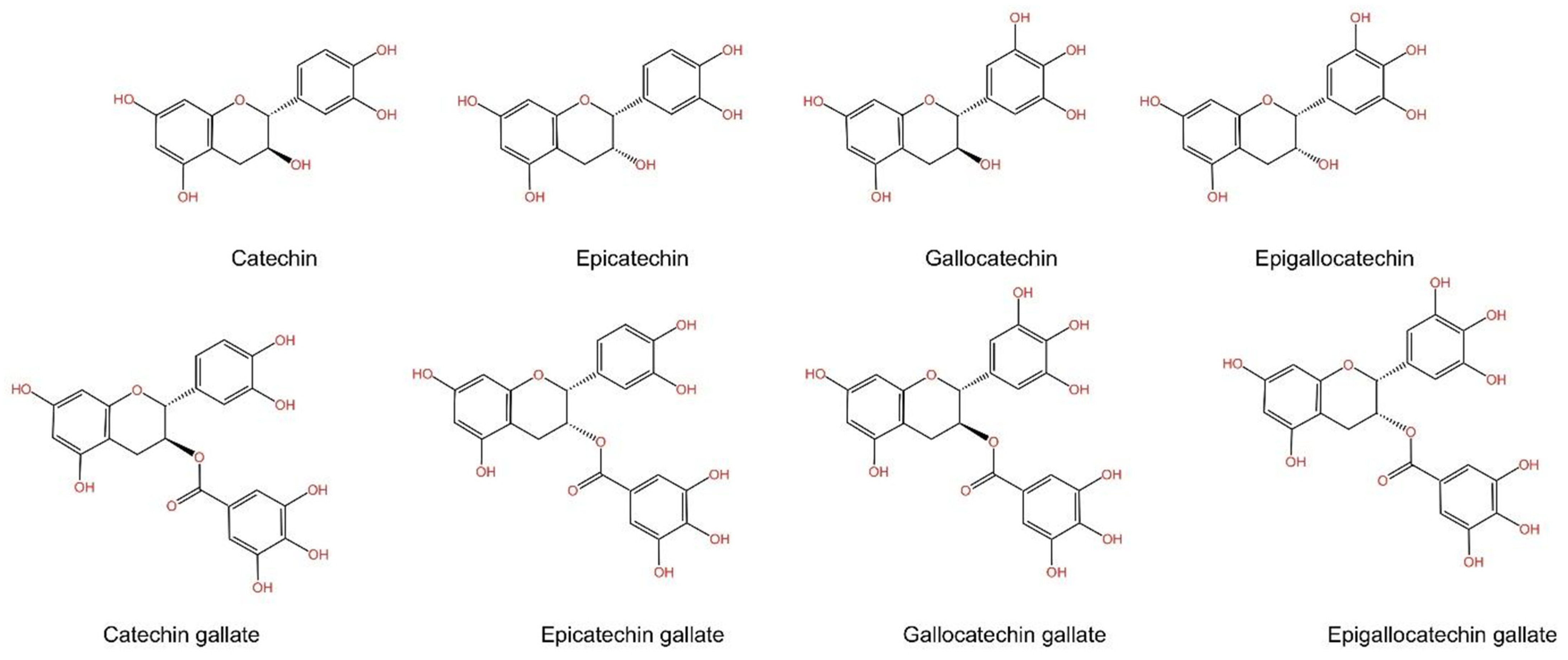
A catechin is a phenolic molecule containing a ketone group. It exists as various derivatives (Figure 1), including catechins, epicatechins, gallocatechins, epigallocatechins, catechin gallates, epicatechin gallates, gallocatechin gallates, and epigallocatechin gallates [8,9]. Catechins have received a safety certification from the US Food and Drug Administration [10]. However, due to their low pH, oxidation, and light sensitivity, bitter taste, and poor solubility in water, catechins are not commonly used in the food sector [10,11].
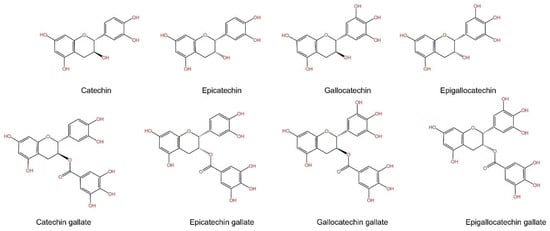
Figure 1.
Various types of catechin structures.
2.1. Physicochemical of Catechin
Computational methods provide initial descriptions of the physicochemical properties, toxicological effects, and potential targets of various compounds. These methods are expected to provide comparative data for in vivo and in vitro tests, helping to reduce the use of experimental animals. Previous research has identified pure catechin isolate using computational methods and provided this information in [12].
The critical point refers to the temperature at which a compound can no longer transition into a liquid state regardless of the pressure applied, while the critical pressure point (critical press) is the minimum pressure required to bring the liquid to a critical temperature. The critical point and critical pressure point for catechin isolates are 964.3 K and 68.3 Bar, respectively. The molecular weight of pure catechin isolate is 290.27 g/mol [12].
The boiling point is the temperature at which the vapor pressure of a liquid is equal to the overall pressure experienced by the liquid. Catechin isolate has a boiling point of 1049.1 K. The topology polar surface area (TPSA) in medicinal chemistry is used to evaluate the polarity of a molecule. The TPSA value for catechin isolate is 10.38 PSA, which is considered favorable for bioavailability, as compounds that have a TPSA value in the range of 20–130 PSA are considered to have favorable bioavailability [12,13]. Additional details regarding the physicochemical properties of catechin are presented in Table 1.

Table 1.
Physicochemical properties of catechin [12,13].
2.2. Source of Catechin Extraction
Catechin isolate is an active compound derived from various plant sources, such as Uncaria gambir Roxb [8], green tea (Camellia sinensis) [14], and Canarium patentinervium Miq [15]. In addition, catechins are produced from several fruits, such as grapes, apples, pears, and cherries [16].
Tea (Camellia sinensis) has become the most popular drink in the world, after mineral water. Currently, four types of tea are generally consumed by people: green, black, oolong, and pu-erh tea. Types of tea can be differentiated based on their production processes, which result in different levels of oxidation and fermentation [17]. Green tea contains many bioactive compounds, and nearly all of them are catechin derivatives. Green tea has gained widespread popularity due to its many recognized health benefits, such as anti-inflammatory, antioxidant, antibacterial, and anticancer properties [18].
Wungu (Graptophyllum pictum L.) is a purple ornamental plant that is widely cultivated in Indonesia. The leaves of the wungu plant contain several compounds, including tannins, alkaloids, saponins, glycosides, and flavonoids, all of which belong to the catechin group. The isolated catechin compound has been found to be effective as a sunscreen. Uncaria gambir Roxb is a plant originating from Indonesia in West Sumatra and South Sumatra [19]. Its primary phenolic component consists of catechin compounds.
Canarium patentinervium Miq. is a plant originating from the Asia–Pacific region, including Malaysia and Brunei, where it has been used for healing wounds [20]. Canarium patentinervium Miq. leaf extract is known to have antibacterial activity against E. coli [15]. The optimal homogenization time needed to produce nano-sized catechins and catechin particle size variations have an impact on their chemical and physical characteristics [13].
3. Catechin as Antimicrobial
Catechins, as antibacterial agents, have several mechanisms of action. The potential of catechins as antibacterial agents can be categorized based on their mechanisms against bacteria, such as their disruption of cell walls and cell membranes, virulence factor suppression, oxidative stress mechanism, DNA damage, and synergistic relationship with antibiotics [21,22]. Catechins have a significant bactericidal effect, with a minimum inhibitory concentration (MIC) range of 1–2 mg/mL and a minimum bactericidal concentration (MBC) range of 2–4 mg/mL. Catechins also show a high synergistic effect when combined with tetracycline at MBC levels. The minimum inhibitory concentration (MIC) is the lowest antimicrobial concentration that will stop visible bacterial growth after overnight incubation. In contrast, the minimum bactericidal concentration (MBC) is the lowest antimicrobial concentration that will stop the growth of organisms after subculturing on antibiotic-free media [15].
3.1. Catechin Mechanism of Membrane Disruption
The catechin mechanism of disruption of the cell wall and cell membrane happens due to polyphenol reactions. Polyphenol reactions are thought to be responsible for the deposition of bacterial cell membrane proteins, which are connected to the antibacterial function of polyphenols [23]. It has been shown that a number of phenolic acids and flavonoids can perforate cell membranes and/or reduce membrane fluidity, which damages the cytoplasmic membrane [24].
Catechins have the ability to attach onto membrane cells. This can interrupt a variety of processes, which is important for bacterial growth, resulting in lethal membrane cells. From a mechanism perspective, catechins are able to modify peptidoglycan biosynthesis, which prevents the production of penicillin binding protein 2, also known as PBP2. This interference could diminish the resistance to beta lactam. Catechins are also able to disrupt formation of the biofilms of various bacteria, such as S. mutans, E. coli, and others. These conditions, where biofilm formation is disrupted, can inhibit the bacteria from developing.
Catechins have a strong affinity for biomacromolecules, such as lipids, proteins, hydrocarbons, and nucleic acids. They are abundant in phenolic hydroxyl groups and polycyclic structures. Because of their strong affinity, catechins can react with the bacterial cell membrane, altering its fluidity, damaging its integrity, and destabilizing the cell. In addition to their antiviral properties, catechins exhibit a wide range of antimicrobial activities, such as the efficient suppression of bacterial toxins and the protection of food poisoning-causing microorganisms [25].
3.2. Catechin Mechanism of DNA Damage
A specific mechanism of catechins that is worth noting is its potential to cause DNA damage. This mechanism may occur through the direct interaction and inhibition of DNA repair. Catechins are able to produce hydrogen peroxide, as indicated by a positive result of the catalase test. This hydrogen peroxide is a reactive oxygen compound that can harm cells by causing oxidative stress effects. Mechanistically, catalase can break down H2O2 into water (H2O) and oxygen (O2) to protect bacteria from toxic exposure to hydrogen peroxide, thereby preventing oxidative damage to cells [26,27].
The presence of catechins reduces the expression of the acrA gene, which is connected to the formation of biofilms by E. coli and resistance to many drugs. Strongly bound to catechins is the AcrB protein, one of the AcrAB-TolC efflux pump proteins that support multidrug resistance against E. coli. The AcrAB-TolC efflux pump, a tripartite efflux pump of the RND type, is one of the primary drivers of multidrug resistance in Gram-negative bacteria [15].
3.3. Research on Antibacterial Activities of Catechins
Natural deep eutectic solvents (NADES) were employed to boost the efficacy of antimicrobial drugs against four different forms of catechins: epicatechin (EC), epicatechin gallate (EKG), epigallocatechin (EGC), and epigallocatechin-3-gallate (EGCG) [25]. Choline chloride/glycerol (ChG), one of the eight common NADES, was shown to enhance the thermal stability and storage of catechins. The development of a hydrogen bond network between ChG and catechins is the reason for this. Pseudomonas putida (P. putida) and Staphylococcus aureus (S. aureus) were the subjects of tests.
When dissolved in ChG, catechins exhibited a ten- to one-fold increase in antibacterial activity compared to ai. Furthermore, employing both water and ChG solvents, EGCG, EGC, and EC demonstrated higher inhibition against Gram-positive bacteria compared to Gram-negative bacteria. This could be the result of tiny molecules being able to pass through the thick peptidoglycan that encircles the single membrane of Gram-positive bacteria [25]. Gram-negative bacteria, on the other hand, have a thin lipopolysaccharide coating covering their thin polysaccharide wall, which modifies the accessibility of the cell to antiseptics and other small chemicals.
ECG inhibited Gram-negative bacteria more in water than Gram-positive bacteria. More research is necessary since the mechanism underlying this is currently unknown. ChG is a natural solvent with excellent potential for boosting catechins’ antibacterial action [25].
A well-known broad-spectrum antibiotic called reuterin is used to control dangerous germs. An investigation of the combination of catechins with the antimicrobial agent reuterin examined the antibacterial activity of both agents, either alone or in combination, against the bacterium Streptococcus mutans (S. mutans) [28].
When the combination group was compared to the other groups, the development of S. mutans was considerably suppressed (p < 0.05). This work demonstrates that reuterin and catechins together have synergistic antimicrobial effects by suppressing S. mutans proliferation, EPS formation, biofilm biomass, and virulence gene expression [28].
As previously mentioned, catechin chemicals, which are commonly employed as antimicrobials, may be found in tea. Previous research examined the antimicrobial properties of catechin compounds found in four distinct tea extract varieties: fuzhuan tea, black tea, green tea, and oolong tea [24]. The bacteria studied included Gram-positive (S. aureus and E. coli) and Gram-negative (E. coli and S. typhimurium).
It has been demonstrated that all tea extracts have antibacterial qualities. Moreover, bacteria classified as Gram-positive (Enterococcus faecalis and Staphylococcus aureus) were more susceptible to tea extracts than bacteria classified as Gram-negative (Escherichia coli and Salmonella typhimurium). Compared to oolong, black, and fuzhuan teas, green tea extract is more effective in suppressing pathogenic microorganisms. Catechins have antibacterial properties via binding to the peptidoglycan layer of Gram-positive bacteria. However, they are less effective in penetrating the lipopolysaccharide layer of Gram-negative bacteria [24].
Structural variations in the cell walls of Gram-positive and Gram-negative bacteria may account for suspicion that the antibacterial action of tea extract is more significant against the former than the latter [24,25]. Gram-positive bacteria’s cell walls are mostly made of peptidoglycan and teichoic acids, which are permeable to most ions, sugar, and amino acid solutes. Nonetheless, the bacterial cell wall of Gram-negative species is intricate and has an exterior membrane composed of lipopolysaccharide and peptidoglycan, making it resistant to external damage [24].
Microbes’ production of biofilms is thought to be one of the covert methods of multidrug resistance. Bacteria that produce biofilm are hard to eradicate because they may spread their resistance genes across the biofilm population, which can lead to recurring infections. Cells create complex matrices known as biofilms, which are composed of polysaccharides, nucleic acids, proteins, lipids, water, various ions, and other organic components to withstand harsh conditions, such as host defense and the accumulation of various harmful substances and antimicrobial agents [15].
The antibacterial, synergistic, and antibiofilm activities of catechins extracted from the Canarium patentinervium Miq plant showed promising results against fifteen clinical isolates obtained from patients with urinary tract infections in Baghdad, Iraq, as well as against three strains of E. coli [15]. The synergistic effect was evaluated using several antimicrobial agents, namely rifampicin, tetracycline, erythromycin, clindamycin, azithromycin, vancomycin, and gentamicin.
4. Catechins and Their Synergetic Effects with Antibiotics
Antibiotics are drugs used as treatments for infection. The overuse and misuse of antibiotics can lead to resistance. The term “resistance” in microbiology means the ability of bacteria to further weaken the potential of antibiotics. With resistance, bacteria become immune to the presence of antibiotics, preventing the antibiotic from killing or inhibiting the growth of bacteria. This resistance can be prevented with the proper usage of antibiotics or with the usage of another substance that can provide the effect without the usage of antibiotics. Recently, catechins have been observed to have the ability to inhibit a variety of bacteria. The usage of catechins alone can produce promising antimicrobial activity. Catechins have also been reported to have synergetic effects with a lot of antibiotics, which can be observed in Table 2 and Table 3.
Table 2.
Overview of catechins and antibiotics.
Table 3.
Synergism of catechins and antibiotics.
The combination of catechins and antibiotics can minimize the frequent usage of antibiotics alone and may also provide more effective microbial activity when needed. However, there are limited data available. A variety of experiments have shown the effects of the addition of catechins in trials, including microbiological and direct experiments performed on rats. Most of these experiments used strains of S. aureus and E. coli. These two bacteria were chosen because S. aureus represents Gram-positive bacteria while E. coli represents Gram-negative bacteria. The other reason for choosing these two bacteria is because catechins have general antimicrobial properties, meaning they can exhibit antimicrobial activities against both Gram-positive and Gram-negative bacteria. The current research on the synergetic effects of catechins with antibiotics can be observed in Table 3.
Based on the observed data, catechins as antimicrobial agents display various reactions when combined with specific antibiotics against bacterial samples, like Staphylococcus aureus, representing Gram-positive bacteria, and Escherichia coli, representing Gram-negative bacteria. Some of the reactions showed antagonism, which is when the value of activity decreases. A specific type of synergy was observed with certain antibiotics, like erythromycin, tetracycline, etc., while some other antibiotics did not show synergistic results. Currently, there is limited research covering the role of catechins in synergetic effects through experiments. However, combining the theories and currently available data, it is safe to say that catechins can be used as a promising candidate to boost the antibiotic effects of specific types of antibiotics [32].
5. Further Use of Catechins in Cosmetics
Cosmetics are items used in many formulations to achieve better and cleaner skin conditions, also regarded as skin care. Cosmetic products are currently in high demand, which can be observed in the trends and the many inventions and brands dedicated to promoting cosmetic needs. Cosmetics can be defined as products that improve or change the appearance of the skin to promote beauty and maintain healthy skin conditions [27]. In the pharmaceutical context, skincare has many functions, such as sun protection, anti-aging, anti-acne, skin brightening, exfoliants, and many more [22,33]. Cosmetic usage and safety regulation differ in each region. For example, in Japan, cosmetics are regulated under the Pharmaceutical and Medical Devices Act (PMD Act), which is maintained by the health ministry. In South Korea, the regulation of cosmetics is maintained by the Ministry of Food and Drug Safety. In Indonesia, cosmetics are regulated by the National Agency of Drug and Food Control, also known as BPOM. Cosmetic products within the country must be registered with the BPOM system before being made available for public use.
One of the functions of catechins in cosmetics is as preservative compounds. The Indonesian BPOM regulation states that cosmetic preparations should not contain microbial contamination. Cosmetics that meet the requirements based on BPOM regulation must be free from Pseudomonas aeruginosa, Enterobacter aerogenes, and Staphylococcus aureus. Catechins can inhibit these bacteria by their antimicrobial mechanism. Catechins exhibit antimicrobial activity against S. aureus, with MIC and MBC values of 62.5 µg/mL and 500 µg/mL [25]. Catechins also show antimicrobial activity against P. aeruginosa, with MIC and MBC values of 125 µg/mL and 500 µg/mL [34]. Additionally, catechins from green tea demonstrate antimicrobial activity against E. aerogenes at a concentration of 500 µg/mL [35]. Catechins from green tea also show antimicrobial activity against Candida albicans by inhibiting 90% at a concentration of 2 mg/mL and Aspergillus niger at a concentration of 15 ppm [36,37].
Catechins are a promising ingredient for cosmetic purposes [38,39]. From a pharmacological perspective, catechins have apparent effects that make them suitable for cosmetic formulations. Catechins can act as antibacterial agents, as noted in the previous section, demonstrating both a direct resistance effect against various bacteria and synergism with antibiotics. Besides antibacterial properties, catechins have UV protection, anti-inflammatory, and antioxidant activities [40,41].
Catechin, as cosmetics ingredients, have the potential to be developed into several types of formulations (presented in Table 4). The addition of catechins to these formulations enhances their antibacterial activity, UV protection (SPF), and protect skin through antioxidant mechanisms. Each formulation has a distinct formulation, such as serum, that can be formulated on a watery or liquid basis. The facial wash in the table is a liquid, while solid soap usually has a pH that needs to be adjusted to 8–9. The cream has many variations, differentiated by its usage, such as day and night creams; by its texture, such as cold and oil-based cream; or by its function, such as cream for cleansing and moisturizing. Moisturizer, foundation, vanishing, and hand–body protective creams function differently.
Table 4.
Formulation of Catechin [22].
6. Conclusions
As antibacterial agents, catechins show many promising effects from both cosmetical and pharmacological perspectives. They have not been used in cosmetic compositions as preservatives or antibacterial agents. Despite this, catechins have the potential to act as a cosmetic ingredient. This is because catechins produce antibacterial activity that can target specific sites and work synergistically with antibiotics. In addition to antimicrobial activity, catechins also have various pharmacological properties, including anti-inflammatory, UV protection, antioxidant, and anti-aging effects. When used under the proper conditions, they can multi-function roles in cosmetics.
Author Contributions
Conceptualization, S.R.M., N.I.M. and R.P.H.; methodology, S.R.M. and N.I.M.; software, R.P.H.; validation, S.R.M., S.A.F.K., S.S. and N.I.M.; formal analysis, S.R.M., S.S. and N.I.M.; investigation, S.R.M., R.P.H. and N.I.M.; resources, S.R.M., R.P.H. and N.I.M.; data curation, N.I.M.; writing—original draft preparation, N.I.M.; writing review and editing, S.R.M. and R.P.H.; supervision, S.R.M., S.A.F.K. and S.S.; project administration, S.R.M.; funding acquisition, S.R.M. and S.S. All authors have read and agreed to the published version of the manuscript.
Funding
This review was funded by the Universitas Padjadjaran through Review Article Grant (grant number 2260/UN6.3.1/PT.00/2024), and the APC was funded by the Academic Leadership Grant Universitas Padjadjaran of Prof. Sriwidodo (grant number 1556/UN6.3.1/PT.00/2024).
Institutional Review Board Statement
Not applicable.
Conflicts of Interest
The authors declare no conflicts of interest.
References
- Kurnia, D.; Ramadhanty, Z.F.; Ardani, A.M.; Zainuddin, A.; Dharsono, H.D.A.; Satari, M.H. Bio-mechanism of catechin as pheromone signal inhibitor: Prediction of antibacterial agent action mode by in vitro and in silico study. Molecules 2021, 26, 6381. [Google Scholar] [CrossRef]
- Munggari, I.P.; Kurnia, D.; Deawati, Y.; Julaeha, E. Current research of phytochemical, medicinal and non-medicinal uses of uncaria gambir roxb.: A review. Molecules 2022, 27, 6551. [Google Scholar] [CrossRef]
- Rosaini, H.; Makmur, I.; Lestari, E.A.; Sidoretno, W.M.; Yetti, R.D. Formulation of gel peel off catechins mask from gambir (Uncaria gambir (Hunter) Roxb) with the PVP K-30 concentration variation. Int. J. Res. Rev. 2021, 8, 205–211. [Google Scholar]
- Kamal, S.; Surya, S.; Krismon, E.M. The formulation of lip balm by using gambir catechin (Jncaria Gambir Roxb.) and its hedonic test. In Proceedings of the Seminar Nasional 1 Baristand Industri Padang, Padang, Indonesia, 11 November 2020; pp. 33–38. [Google Scholar]
- Ningsih, E.; Rahayuningsih, S. Extraction, Isolation, Characterisation and Antioxidant Activity Assay of Catechin Gambir (Uncaria gambir (Hunter). Roxb). Al-Kim. 2019, 7, 177–188. [Google Scholar] [CrossRef]
- Alioes, Y.; Sukma, R.; Sekar, S. Effect of gambir catechin isolate (Uncaria gambir Roxb.) against rat triacylglycerol level (Rattus novergicus). In Proceedings of the IOP Conference Series: Earth and Environmental Science; IOP Publishing: Bristol, UK, 2019; p. 012020. [Google Scholar]
- Nowak, K.; Jabłońska, E.; Ratajczak-Wrona, W. Controversy around parabens: Alternative strategies for preservative use in cosmetics and personal care products. Environ. Res. 2021, 198, 110488. [Google Scholar] [CrossRef]
- Bae, J.; Kim, N.; Shin, Y.; Kim, S.-Y.; Kim, Y.-J. Activity of catechins and their applications. J. Biomed. Dermatol. 2020, 4, 8. [Google Scholar] [CrossRef]
- Isemura, M. Catechin in human health and disease. Molecules 2019, 24, 528. [Google Scholar] [CrossRef]
- Han, Y.; Jia, F.; Bai, S.; Xiao, Y.; Meng, X.; Jiang, L. Effect of operating conditions on size of catechin/β-cyclodextrin nanoparticles prepared by nanoprecipitation and characterization of their physicochemical properties. LWT 2022, 153, 112447. [Google Scholar] [CrossRef]
- Sha, H.; Cui, B.; Yuan, C.; Li, Y.; Guo, L.; Liu, P.; Wu, Z. Catechin/β-cyclodextrin complex modulates physicochemical properties of pre-gelatinized starch-based orally disintegrating films. Int. J. Biol. Macromol. 2022, 195, 124–131. [Google Scholar] [CrossRef] [PubMed]
- Putra, P.P.; Fauzana, A.; Lucida, H. In Silico analysis of physical-chemical properties, target potential, and toxicology of pure compounds from natural products. Indones. J. Pharm. Sci. Technol. 2020, 7, 107–117. [Google Scholar] [CrossRef]
- Malrianti, Y.; Kasim, A.; Asben, A.; Syafri, E.; Yeni, G.; Fudholi, A. Catechin extracted from Uncaria gambier Roxb for Nanocatechin production: Physical and chemical properties. Des. Nat. Ecodynamics 2021, 16, 393–399. [Google Scholar] [CrossRef]
- Suryo, J. Herbal Penyembuh Wasir dan Kanker Prostat; Bentang Pustaka: Yogyakarta, Indonesia, 2010. [Google Scholar]
- Jubair, N.; Fatima, A.; Mahdi, Y.K.; Abdullah, N.H. Evaluation of catechin synergistic and antibacterial efficacy on biofilm formation and acrA gene expression of uropathogenic E. coli clinical isolates. Antibiotics 2022, 11, 1223. [Google Scholar] [CrossRef]
- Mita, S.R.; Abdassah, M.; Supratman, U.; Shiono, Y.; Rahayu, D.; Sopyan, I.; Wilar, G. Nanoparticulate system for the transdermal delivery of catechin as an antihypercholesterol: In vitro and in vivo evaluations. Pharmaceuticals 2022, 15, 1142. [Google Scholar] [CrossRef]
- Abudureheman, B.; Yu, X.; Fang, D.; Zhang, H. Enzymatic oxidation of tea catechins and its mechanism. Molecules 2022, 27, 942. [Google Scholar] [CrossRef]
- Kong, C.; Zhang, H.; Li, L.; Liu, Z. Effects of green tea extract epigallocatechin-3-gallate (EGCG) on oral disease-associated microbes: A review. J. Oral Microbiol. 2022, 14, 2131117. [Google Scholar] [CrossRef] [PubMed]
- Rahmi, M.; Rita, R.S.; Yetti, H. Gambir Catechins (Uncaria gambir Roxb) Prevent Oxidative Stress in Wistar Male Rats Fed a High-Fat Diet. Maj. Kedokt. Andalas 2021, 44, 436–441. [Google Scholar]
- Mogana, R.; Adhikari, A.; Tzar, M.; Ramliza, R.; Wiart, C. Antibacterial activities of the extracts, fractions and isolated compounds from Canarium patentinervium Miq. against bacterial clinical isolates. BMC Complement. Med. 2020, 20, 1–11. [Google Scholar] [CrossRef]
- Alkufeidy, R.M.; Altuwijri, L.A.; Aldosari, N.S.; Alsakabi, N.; Dawoud, T.M. Antimicrobial and synergistic properties of green tea catechins against microbial pathogens. J. King Saud Univ.-Sci. 2024, 36, 103277. [Google Scholar] [CrossRef]
- Mita, S.R.; Husni, P.; Putriana, N.A.; Maharani, R.; Hendrawan, R.P.; Dewi, D.A. A Recent Update on the Potential Use of Catechins in Cosmeceuticals. Cosmetics 2024, 11, 23. [Google Scholar] [CrossRef]
- Makarewicz, M.; Drożdż, I.; Tarko, T.; Duda-Chodak, A. The interactions between polyphenols and microorganisms, especially gut microbiota. Antioxidants 2021, 10, 188. [Google Scholar] [CrossRef]
- Liu, S.; Zhang, Q.; Li, H.; Qiu, Z.; Yu, Y. Comparative assessment of the antibacterial efficacies and mechanisms of different tea extracts. Foods 2022, 11, 620. [Google Scholar] [CrossRef]
- Zhou, P.; Tang, D.; Zou, J.; Wang, X. An alternative strategy for enhancing stability and antimicrobial activity of catechins by natural deep eutectic solvents. LWT 2022, 153, 112558. [Google Scholar] [CrossRef]
- Erttmann, S.F.; Gekara, N.O. Hydrogen peroxide release by bacteria suppresses inflammasome-dependent innate immunity. Nat. Commun. 2019, 10, 3493. [Google Scholar] [CrossRef] [PubMed]
- Ayub, A.; Cheong, Y.K.; Castro, J.C.; Cumberlege, O.; Chrysanthou, A. Use of Hydrogen Peroxide Vapour for Microbiological Disinfection in Hospital Environments: A Review. Bioengineering 2024, 11, 205. [Google Scholar] [CrossRef]
- Zhang, G.; Tan, Y.; Yu, T.; Wang, S.; Liu, L.; Li, C. Synergistic antibacterial effects of reuterin and catechin against Streptococcus mutans. LWT 2021, 139, 110527. [Google Scholar] [CrossRef]
- Singh, S.P.; Qureshi, A.; Hassan, W. Mechanisms of action by antimicrobial agents: A review. McGill J. Med. 2021, 19, 1–10. [Google Scholar] [CrossRef]
- Miklasińska, M.; Kępa, M.; Wojtyczka, R.D.; Idzik, D.; Dziedzic, A.; Wąsik, T. Catechin hydrate augments the antibacterial action of selected antibiotics against Staphylococcus aureus clinical strains. Molecules 2016, 21, 244. [Google Scholar] [CrossRef] [PubMed]
- Lee, Y.S.; Han, C.H.; Kang, S.H.; LEE, S.J.; Kim, S.W.; Shin, O.R.; SIM, Y.C.; LEE, S.J.; CHO, Y.H. Synergistic effect between catechin and ciprofloxacin on chronic bacterial prostatitis rat model. Int. J. Urol. 2005, 12, 383–389. [Google Scholar] [CrossRef] [PubMed]
- Reygaert, W.C. Green tea catechins: Their use in treating and preventing infectious diseases. BioMed Res. Int. 2018, 2018, 9105261. [Google Scholar] [CrossRef]
- Yamada, M.; Mohammed, Y.; Prow, T.W. Advances and controversies in studying sunscreen delivery and toxicity. Adv. Drug Deliv. Rev. 2020, 153, 72–86. [Google Scholar] [CrossRef] [PubMed]
- Bazzaz, B.S.F.; Sarabandi, S.; Khameneh, B.; Hosseinzadeh, H. Effect of catechins, green tea extract and methylxanthines in combination with gentamicin against Staphylococcus aureus and Pseudomonas aeruginosa:-combination therapy against resistant bacteria. J. Pharmacopunct. 2016, 19, 312. [Google Scholar] [CrossRef] [PubMed]
- Aponte, T.R. Green Tea Polyphenol EGCG-S as an Antimicrobial Agent. Master’s Thesis, Montclair State University, Montclair, NJ, USA, 2018. [Google Scholar]
- Hirasawa, M.; Takada, K. Multiple effects of green tea catechin on the antifungal activity of antimycotics against Candida albicans. J. Antimicrob. Chemother. 2004, 53, 225–229. [Google Scholar] [CrossRef]
- Liu, T.; Zhou, G.; Du, M.; Zhang, X.; Zhou, S.; Chen, G.; Liao, Z.; Zhong, Q.; Wang, L.; Xu, X. The interplay between (−)-epigallocatechin-3-gallate (EGCG) and Aspergillus niger RAF106, an EGCG-biotransforming fungus derived from Pu-erh tea. LWT 2023, 180, 114678. [Google Scholar] [CrossRef]
- Syukri, D.; Azima, F.; Aprialdho, R. Study on the Utilization of Catechins from Gambir (Uncaria gambir Roxb) Leaves as Antioxidants Cooking Oil. Andalasian Int. J. Agric. 2022, 3, 12–25. [Google Scholar] [CrossRef]
- Zillich, O.; Schweiggert-Weisz, U.; Eisner, P.; Kerscher, M. Polyphenols as active ingredients for cosmetic products. Int. J. Cosmet. Sci. 2015, 37, 455–464. [Google Scholar] [CrossRef] [PubMed]
- Zheng, M.; Liu, Y.; Zhang, G.; Yang, Z.; Xu, W.; Chen, Q. The applications and mechanisms of superoxide dismutase in medicine, food, and cosmetics. Antioxidants 2023, 12, 1675. [Google Scholar] [CrossRef]
- Jesus, A.; Mota, S.; Torres, A.; Cruz, M.T.; Sousa, E.; Almeida, I.F.; Cidade, H. Antioxidants in sunscreens: Which and what for? Antioxidants 2023, 12, 138. [Google Scholar] [CrossRef] [PubMed]
Disclaimer/Publisher’s Note: The statements, opinions and data contained in all publications are solely those of the individual author(s) and contributor(s) and not of MDPI and/or the editor(s). MDPI and/or the editor(s) disclaim responsibility for any injury to people or property resulting from any ideas, methods, instructions or products referred to in the content. |
© 2025 by the authors. Licensee MDPI, Basel, Switzerland. This article is an open access article distributed under the terms and conditions of the Creative Commons Attribution (CC BY) license (https://creativecommons.org/licenses/by/4.0/).